abandoned

Abandoned village where nature has taken over for nearly 100 years

The abandoned village was once home to 2,000 people who worked at the nearby Quarry – but in 1927, they were all relocated to a brand new village, leaving their old home to be reclaimed by nature

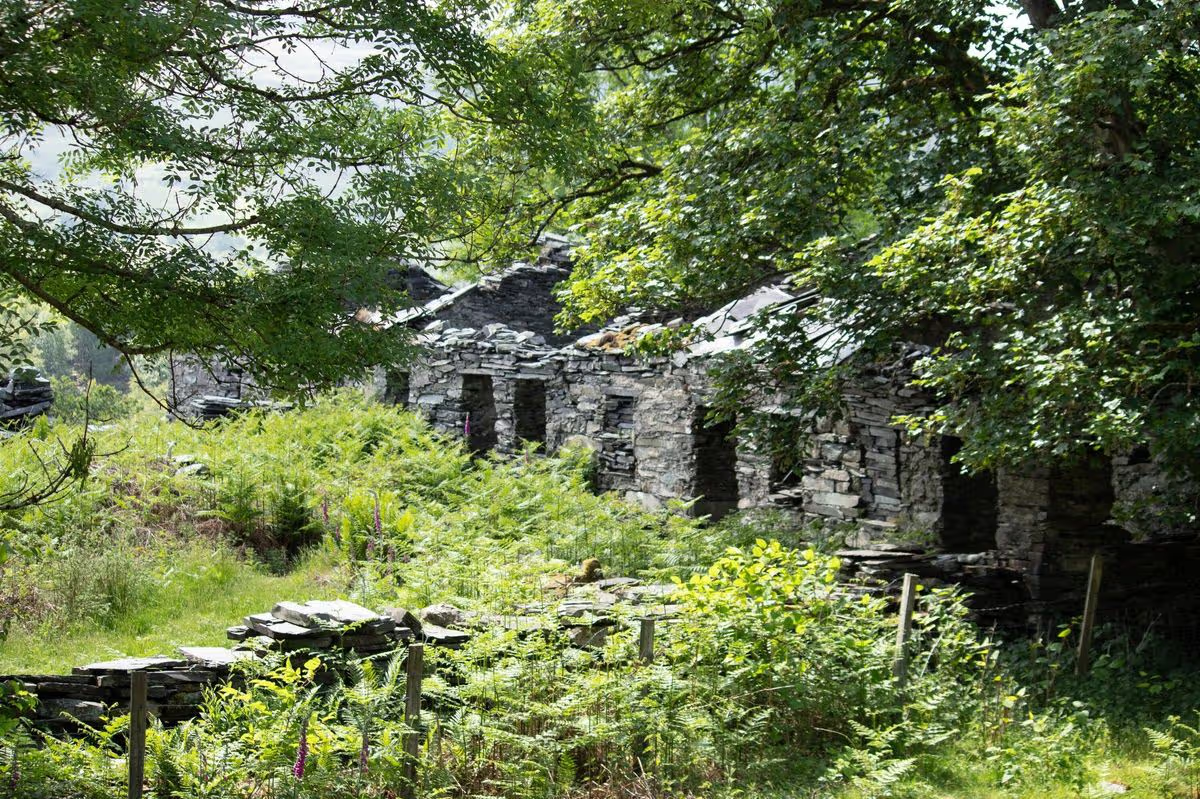
An entire village was created after all 2,000 of its residents were forced to up sticks and relocate. All that remains of what was once a bustling community are buildings completely reclaimed by nature, smothered in moss and vegetation.

The deserted village of Talysarn, nestled in the Nantlle Valley of Gwynedd, North Wales, is a former settlement that has been slowly swallowed up by the earth as the years have passed. It was once home to workers and industrial buildings serving the nearby Dorothea Quarry slate mine.

Throughout the 19th century, these mines provided a vital source of income for thousands of people across Wales, but as the quarries expanded, the village was forced to grow alongside them. Eventually, when 1927 arrived, the decision was taken to move thousands of residents to a brand new village built from scratch.

By the 1840s, production at Dorothea had climbed to a remarkable 5,000 tonnes annually, but output would soon soar even higher. By the 1870s, that figure had surged to more than 17,000 tonnes — well over three times what had been produced just 30 years earlier.

Despite the quarry’s seemingly promising future, it was plagued by severe flooding problems. This was tragically highlighted in 1884, when several men lost their lives after the pit was overwhelmed by water while they were working on site.

In response, the river was realigned and deepened to better manage the flow, and while this resolved the issue temporarily, it would go on to cause further problems further down the line. To combat the problem, a Cornish beam engine was constructed on the site to replace the waterwheels, and it still stands there to this day.

Indeed, this is one of the abandoned village’s most impressive sights — a towering structure with its original machinery still intact.

Another focal point of the old village is its 18th-century hall, which has remained untouched since 1946 and now stands as an ivy-covered building, heavily daubed with graffiti, its brickwork slowly crumbling away.

The abandoned village as a whole has become a hugely popular destination for avid explorers and walkers eager to unearth its secrets and snap an eerie photograph of the overgrown ruins. Today, the site sits within the UNESCO Slate Landscape of Northwest Wales and is protected as a piece of history, frozen in time.

Wild Guide Wales author Daniel Start wrote about what remains of the site, likening the ruins to a Welsh Angkor Wat. He said: “Only the baboons are missing. It’s a vast, wild site with many fascinating, overgrown ruins, including a Cornish beam engine and the overgrown remains of the chapel at Plas Talysarn.”

The quarry finally closed in 1970 and has since flooded, creating a lake reportedly exceeding 100m in depth in certain areas. This too forms part of the Slate Landscape of Northwest Wales World Heritage Site.

One visitor left spellbound by the village’s remnants is photographer Tony Harnett, who runs the website Gems of Snowdonia. He previously told WalesOnline: “I’d seen photos of Plas Talysarn and knew it was an interesting place, but I thought that’s all there was.

“When I went there, I did not expect to find so many other old buildings in the area. Some I just stumbled across, others I could see in the distance but didn’t have time to visit.

“I arrived late in the day, for the golden hour for photography, so I only had two hours there. But I could easily have stayed for the whole day, there’s so much to explore.”
Source link

Abandoned airport home to one of UK’s longest runways set to reopen as soon as next year

AN ABANDONED airport home to one of the UK’s longest runways is set to reopen as early as next year.

Commercial passenger flights at the airfield are expected to restart sometime in the next two years.

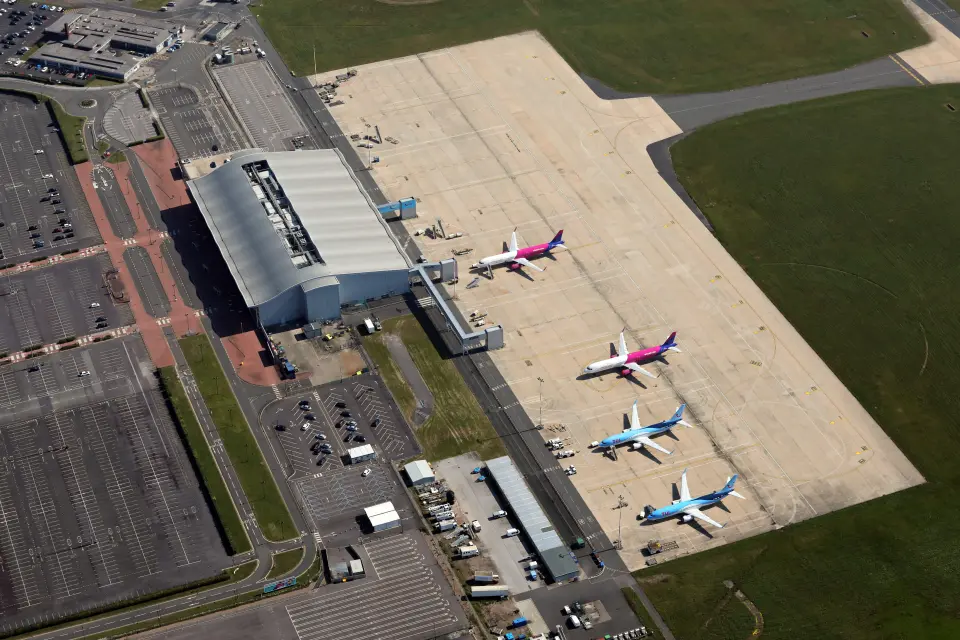
Aerial view of an airport tarmac with two pink and two blue airplanes parked next to a large building, with parking lots and grass visible.
An abandoned UK airport is set to reopen as soon as this year Credit: Alamy
Exterior view of Doncaster Sheffield Robin Hood Airport.
Doncaster Sheffield Airport previously closed in 2022 for financial reasons, but has been undergoing a major redevelopment Credit: Alamy

Doncaster Sheffield Airport is set to reopen as soon as this year after shutting down in 2022.

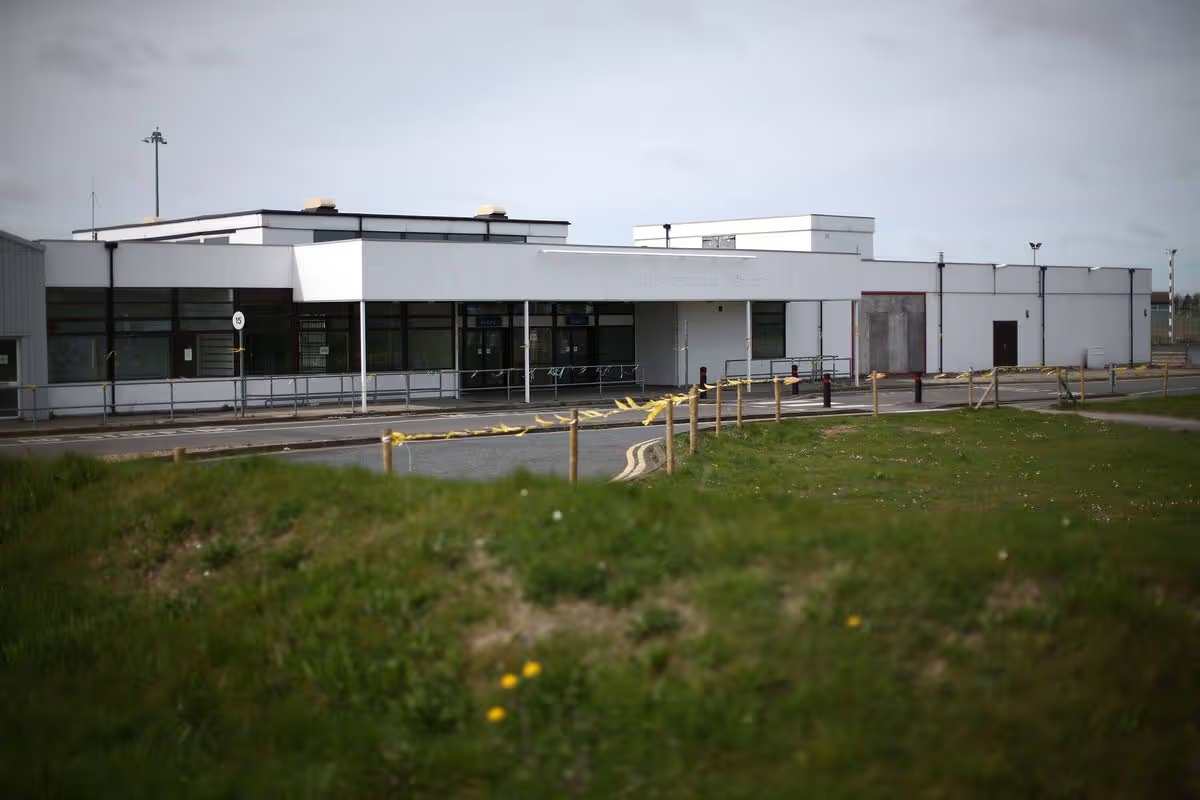
The site was previously considered no longer financially sustainable and since closing has remained abandoned and partially derelict.

During this time, regional developers have been pushing for a major overhaul of the former transport hub, costing around £160 million through a public-funded reopening programme.

The proposals have received the support of local councils, and the site is projected to resume cargo operations as early as this year, with passenger flights slated to resume in late 2027 or early 2028.

HOLA NEW ERA

Abandoned airport in Spain with one of Europe’s longest runways reopens


FIELD OF DREAMS

New ‘state-of-the-art’ hub the size of 150 football pitches is coming to UK

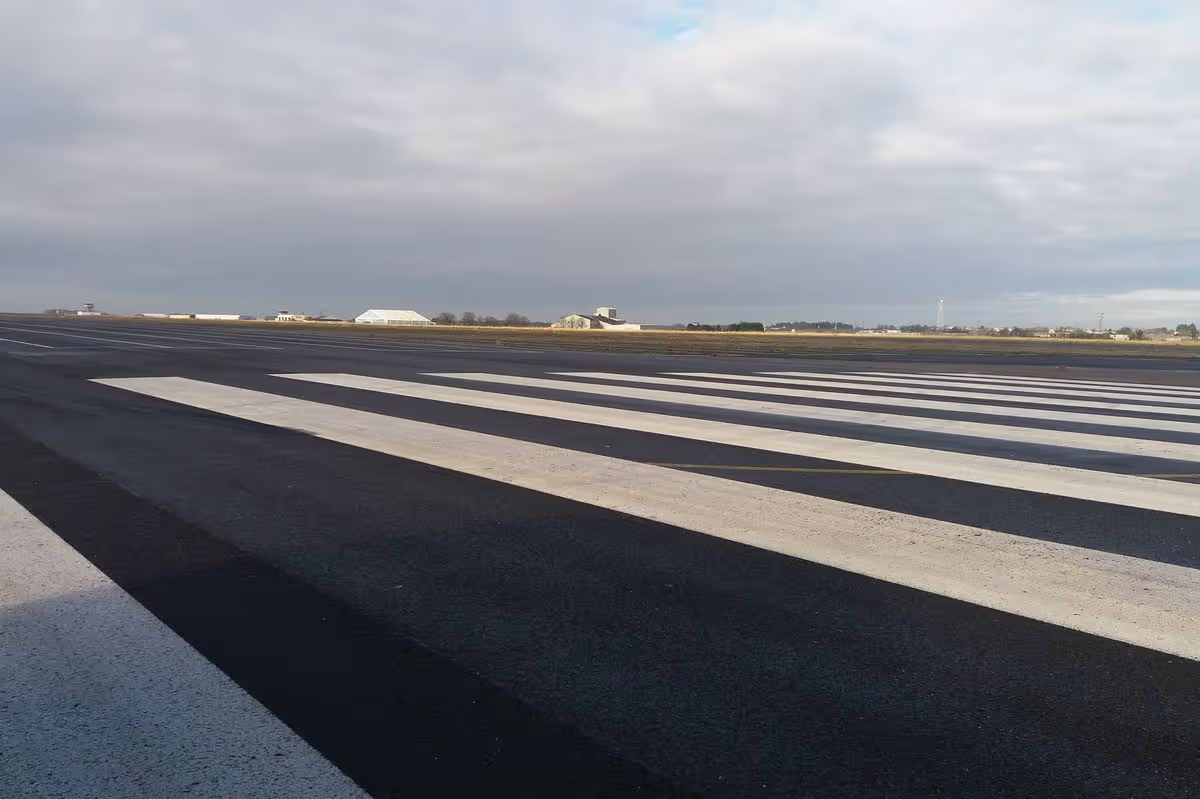
The airfield also boasts one of the UK’s longest runways, measuring 1.8miles and once operational again, will be the eighth longest commercial runway in England.

The longest runway can be found at London Heathrow, measuring 2.4miles, and runs parallel with the second longest runway also found at the airport, measuring 2.2miles.

Executive director for Airport Operations at FlyDoncaster, Simon Hinchley, said: “As we work towards re-opening Doncaster Sheffield Airport, our focus is firmly on building a safe, efficient and operationally robust airport that is ready to serve a broad range of users from day one.”

Director of FlyDoncaster, Christian Foster, previously revealed that the airport revamp was progressing well, but that the extensive development and new recruitment process takes time.

Airlines such as TUI and Wizz Air used to be found at Doncaster Sheffield Airport, but currently it has not been confirmed who will be flying to and from the transport hub.

The airport is also keen to showcase the region, having independent vendors on-site rather than larger chains.

The airport will be kitted out with the latest technology and security lanes and systems are expected to move as their original location was in an unideal area of the site.

A project of this size has previously been described as transformative for the area.

The South Yorkshire Mayoral Combined Authority, which is one of the backers on the project, previously stated their rationale for investing in the development.

They said: “Doncaster Sheffield Airport closed in November 2022, leaving South Yorkshire one of the largest UK city regions without an international aviation presence.

“South Yorkshire’s Mayor, Oliver Coppard, and Council Leaders have taken a historic decision to reopen Doncaster Sheffield Airport, approving a £160 million funding package that will see commercial flights return to the region.”

Doncaster Sheffield Airport first opened in 1915, and operated as a Royal Flying Corps airfield in the First World War.

The transport hub then served as an RAF base before being transformed into a commercial airport in 2005.

The airport was previously called Robin Hood Airport, referencing the folklore of the region.

Source link

Abandoned airport in Spain with one of Europe’s longest runways reopens after 14 years

AN ABANDONED airport in Spain is set to reopen after 14 years.

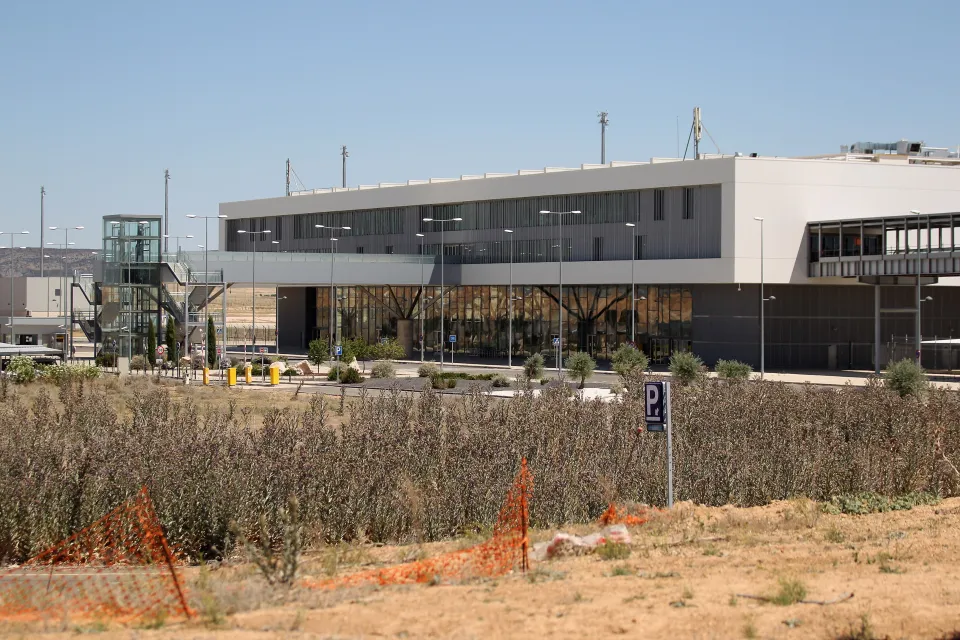
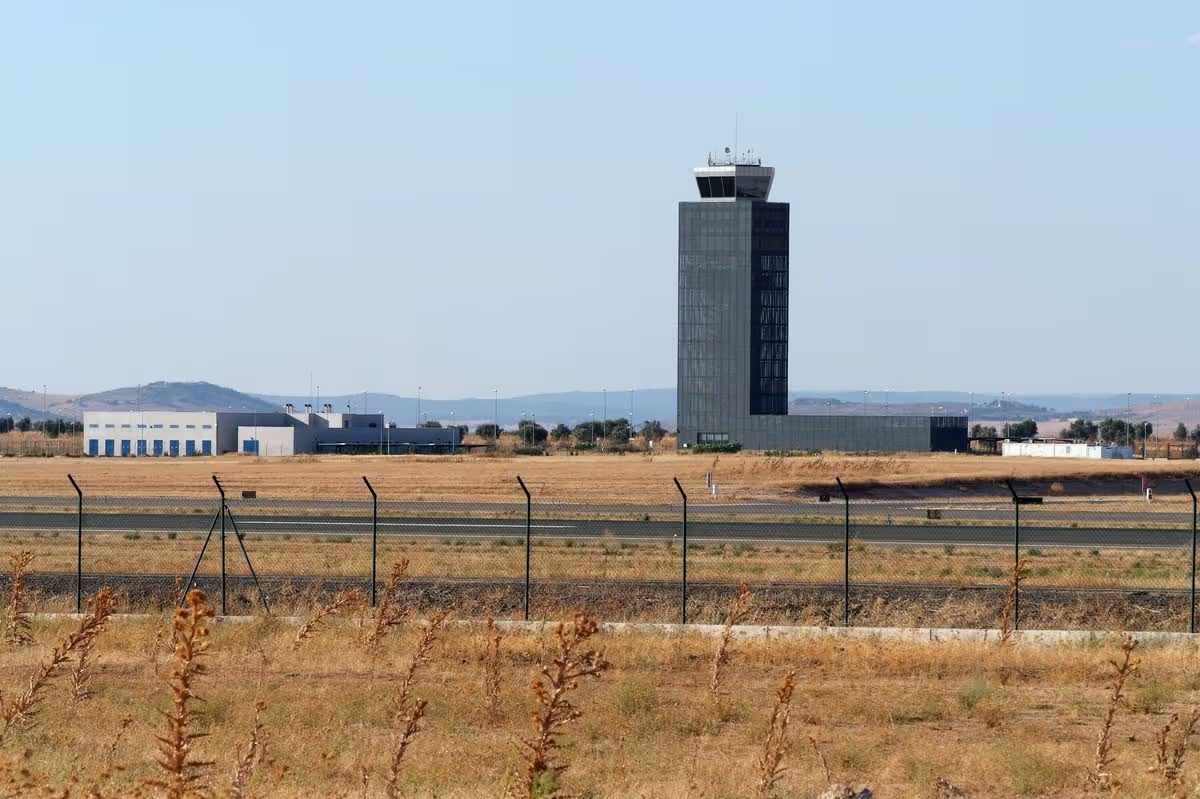
Nicknamed Spain’s “ghost airport”, the vast airfield boasts one of Europe’s longest runways.

The mothballed Cuidad Real International Airport.
An abandoned Spanish airport is set to reopen after 14 years Credit: Getty Images
The mothballed Cuidad Real International Airport in Spain.
Located 235km from Madrid, the airport has one of Europe’s largest runways Credit: Getty Images

Ciudad Real International Airport will reopen in 2026, despite being abandoned for well over a decade.

Having stood largely empty for the past 14 years and used for long-term aircraft storage, it has now been revealed the airfield will be opening its doors again under a new owner, resuming passenger flights this year.

Managing director of Ciudad Real International Airport, Rafael Gómez Arribas, has said that the site will only operate private flights, mainly from Europe and the US.

Located 235km south of Madrid, the Spanish airport was initially set to be the country’s second largest airport and an alternative to Madrid’s Barajas airport.

FIELD OF DREAMS

New ‘state-of-the-art’ hub the size of 150 football pitches is coming to UK


HIGH FLYER

World’s most beautiful airports revealed ‘city of flowers’ to indoor sky forests

Opening in 2008, the aviation site cost more than €1 billion to build, and included one of Europe’s longest runways.

Measuring 13,451 ft, the strip was constructed to accommodate the Airbus A380, the world’s biggest commercial aircraft.

Despite plans to be a commercial flight hub for around 2.5 million passengers a year, the site struggled financially, mainly down to its remote location miles away from Madrid.

The airport soon went bankrupt and closed just four years later in 2012, earning the nickname of Spain’s “ghost airport”.

In 2015, the abandoned airport was won in a bankruptcy auction by Tanzeen International for just €10,000.

It was eventually converted into a temporary storage facility during the pandemic, and held grounded planes from European airlines while flights were not operating.

After the closure of the airport in 2012, large yellow crosses were painted on the runway as a visual warning to planes flying overhead that the site was no longer operational and the runway was unsuitable for landing.

Source link

Ghost airport with one of Europe’s longest runways reopens after being abandoned for 14 years

During the Covid pandemic, the airport served as a temporary storage facility for grounded aircraft

Ciudad Real International Airport, in Spain, opened its doors again earlier this year after being abandoned for 14 years. The airport originally opened in 2008 but shut down after filing for bankruptcy in April 2012, earning itself the title of Spain’s “ghost airport”.

The deserted airfield was subsequently used for long-term aircraft storage until the airport’s operator announced its reopening under new ownership, with passenger flights set to resume in 2026. The managing director of Ciudad Real International Airport, Rafael Gómez Arribas, confirmed that the airport will handle only private flights, mainly from Europe and the United States.

The Spanish airport reportedly cost €1billion (£864million) to build and was originally intended to serve as Madrid’s second-largest airport.

Despite this, Ciudad Real Airport struggled as a commercial hub, largely due to its isolated location, some 150 miles from the capital.

The airport boasts one of Europe’s longest runways, a massive 4,100-metre strip built to handle the world’s biggest commercial aircraft, the Airbus A380.

It was originally named Don Quixote Airport after the beloved fictional hero from the classic Spanish novel Don Quixote.

During the Covid pandemic, the airport served as a temporary storage facility for grounded aircraft from major European airlines.

Following its closure in 2012, large yellow crosses were painted over the airport’s runway — a visual warning to pilots indicating that the airport is no longer operational and that the runway is unfit for landing.

The Mirror has contacted Ciudad Real International Airport for comment.

Source link

European ghost village abandoned for 40 years after tragic plane crash

This once charming village has been abandoned since a tragic accident decades ago.

Just a stone’s throw from one of the world’s most bustling capital cities lies a town that has been eerily silent for four decades, deserted by all those who once made it their home. Goussainville-Vieux Pays sits roughly half an hour’s drive north of Paris, and once upon a time, it was the picture of a quintessential French village.

Yet as the world moved on, a cruel twist of fate consigned Goussainville-Vieux Pays to history. The beginning of the end for this charming French settlement was the scene of a harrowing disaster

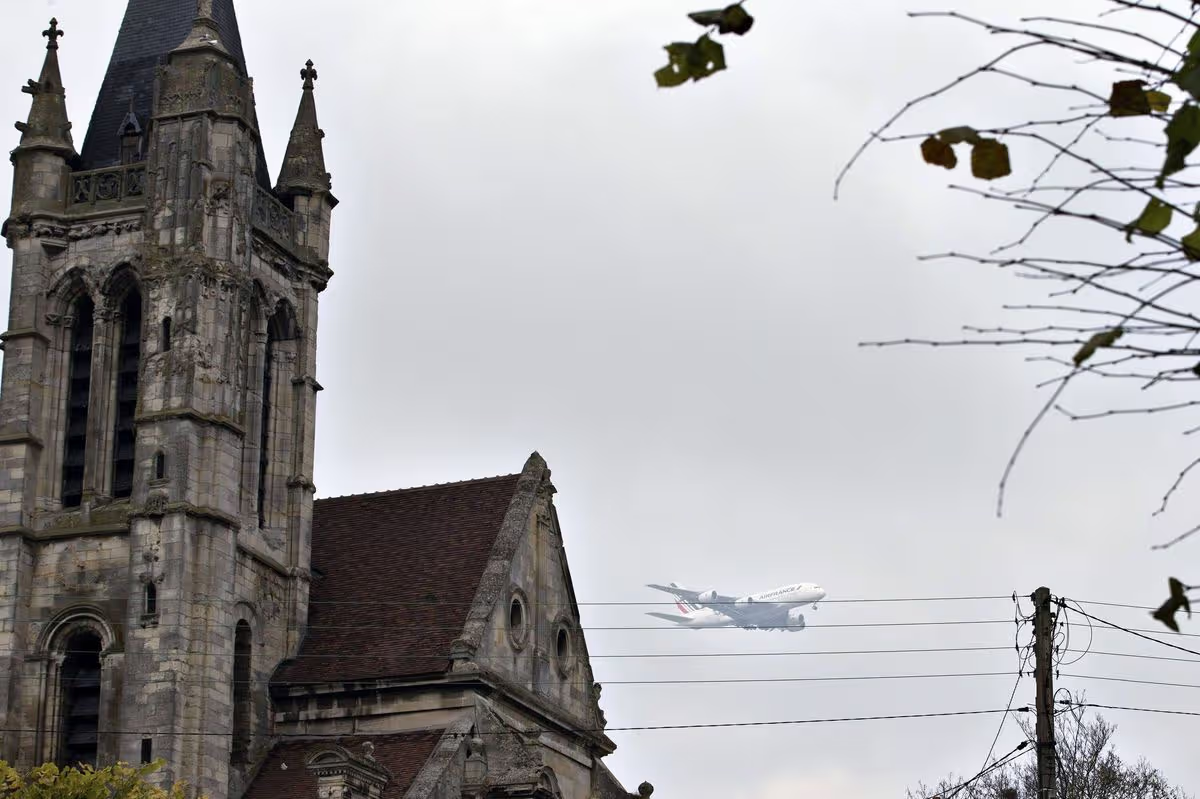
In 1973, a Russian aircraft had been performing aerobatic manoeuvres at the Paris Airshow when it stalled at low altitude and came crashing down.

The plane plummeted into the village, claiming 14 lives – including six crew members .

The wreckage obliterated 15 homes and the local school.

In the wake of the devastating incident, the village desperately tried to rebuild, but fate dealt another cruel blow.

The very next year, in 1974, Charles de Gaulle Airport opened its doors, placing Goussainville squarely beneath the flight path of one of Europe’s busiest airports.

The relentless roar of overhead aircraft proved not only an unbearable disruption for local residents, but served as a constant and harrowing reminder of the tragedy that had torn through their community just a year before, reports the Express.

Most villagers simply upped and left, many without even bothering to sell their properties.

The airport was subsequently compelled to purchase more than 100 of the deserted homes and pledged to maintain them.

Sadly, those houses have since been left to crumble.

Among the most arresting sights in this abandoned village are the crumbling remains of a sprawling old manor house, set within an overgrown and neglected garden.

Graffiti has spread across the settlement, and nowadays its only genuine signs of life are inquisitive tourists arriving to catch a glimpse of the village that time forgot.

Source link

Abandoned venue that was beloved by 90s kids is about to become a mega Wetherspoons

In the 1990s this iconic building was the ultimate destination for kids and teenagers before it was abruptly abandoned, and it’s now set to get one of the city’s largest

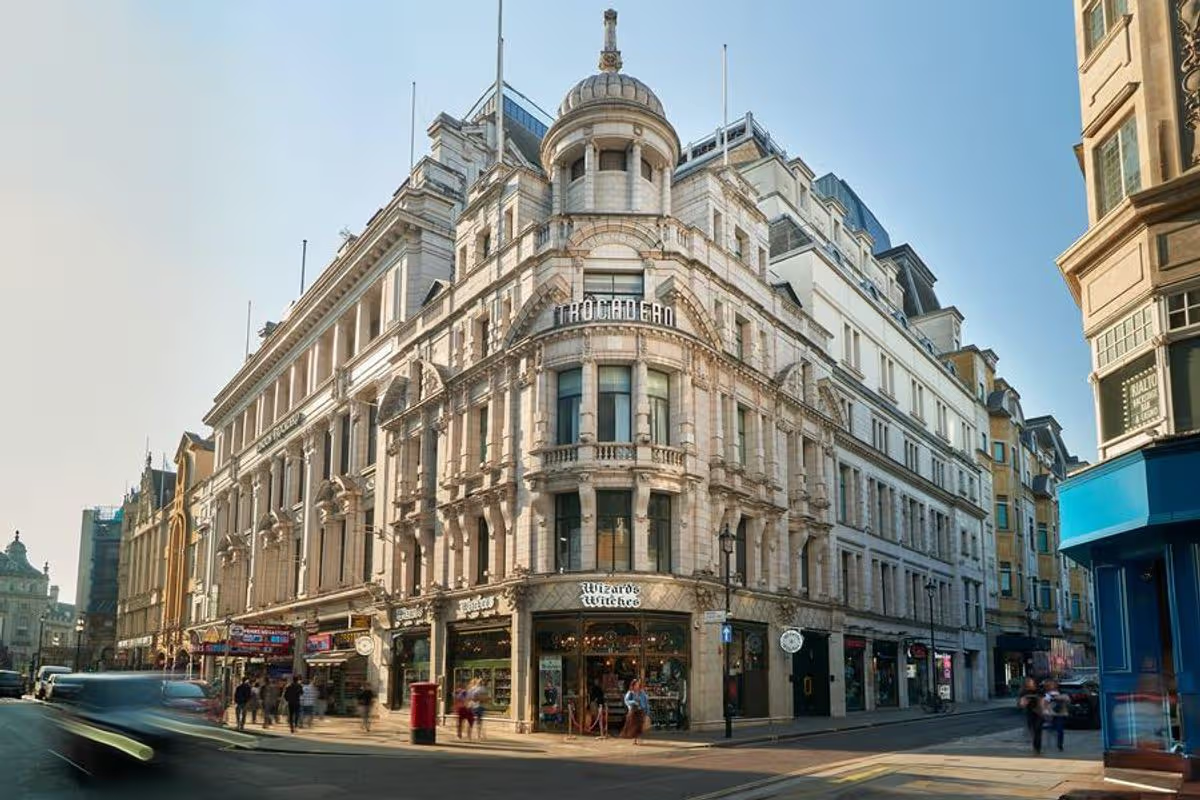
If you were a child in the 90s, or just a kid at heart, then there was one place you would have no doubt wanted to visit on a trip to the capital. London Trocadero, an iconic building set at 30 Shaftesbury Avenue has had many different uses over the years, but among millennials it’s perhaps best known for its time as the ultimate indoor amusement park.

From 1996 to 2011, the Trocadero was home to SegaWorld, later renamed to Funland, a sprawling seven-floor, neon-lit complex that was accessed by a long enclosed ‘Rocket Escalator’. It’s perhaps best remembered for the huge indoor drop ride in the centre, and the floor after floor of coin operated arcade machines from the golden era of gaming.

However, after closing, the venue’s future remained uncertain, and the building lie abandoned for many years. The space had a variety of uses over the years, until 2025 when the Zedwell Piccadilly took over a large part of it, creating a pod hotel with 728 windowless rooms and a large rooftop bar.

Now, there are plans to turn part of the building into a giant branch of JD Wetherspoon, creating one of the largest branches in the capital, and the pub chain’s first-ever venue in London’s Theatreland.

The new pub will be called Piccadilly Hall, taking its name from a historic hall which gave Piccadilly Circus its name back in the 17th-century. It’ll span over 3,600 square feet, offering a massive 280 covers, and will open from 7am until midnight seven days a week.

The venue will serve Wetherspoon’s breakfasts and all-day food and drink menus, and is expected to attract theatre audiences, tourists, and locals thanks to its central location. At the moment, there’s no confirmed opening date for this new London branch.

Earlier this year, Wetherspoon opened its first branch outside of the UK, offering British pub food and Spanish favourites to travellers passing through Alicante-Elche Miguel Hernández Airport near Benidorm. The chain also expanded its portfolio with four new branches opening within Haven holiday parks.

Other upcoming openings for the brand include The Sir Ronald Wates in Guildford, which will have the distinction of being the first university-owned Spoons set on a University of Surrey campus. A large branch will also open in Edinburgh in September named The William Chambers, in a building that was once a multi-storey bar and club.

Founder and chairman of JD Wetherspoon, Tim Martin, said: “We are delighted to be opening our first venue in Theatreland in partnership with Criterion Capital. The West End is one of the world’s great hospitality destinations, attracting millions of visitors each year, and we believe this site is exceptionally well suited to the Wetherspoon model of offering good-quality food and drink at reasonable prices in well-managed and historically interesting buildings.”

He added: “We look forward to becoming part of this vibrant area of the West End.”

Have a story you want to share? Email us at webtravel@reachplc.com

Source link

Abandoned UK airport set to reopen following 12-year closure

This airport has been closed since 2014, but new £750m plans could see it reopen as a major cargo hub by 2029

The disused Manston Airport in Kent could be back in operation by 2029 if fresh proposals get the green light. The airport, which shut its doors in 2014, is earmarked to reopen as a cargo hub before the decade is out.

Briefly utilised as a lorry park during the coronavirus lockdown, the site has otherwise lain dormant for the past 12 years. Since 2019, an investment firm has been working to get the facility up and running again.

RiverOak Strategic Partners (RSP) bought the airport for £16.5 million back in 2019, with an initial target to reopen by 2025, though this was delayed owing to escalating costs.

As RSP presses ahead with business development talks with airlines and freight operators, the planning process has now reached its third phase.

From Monday, March 16, to Monday, June 22, the public are being consulted on the proposed airspace modifications.

The suggested changes are being put before residents, local communities, and broader stakeholders.

Tony Freudmann, Director at RiverOak Strategic Partners, stated: “This consultation is an important step in our ambitions to reopen Manston Airport.

“[It’s] representing a once-in-a-generation opportunity to deliver new runway capacity to support the UK air cargo market and to transform the economic landscape in east Kent.

“We know Manston holds a special place in the area’s history, we would encourage people to find out more about our proposal and provide any feedback they might have to help shape our plans.”

When the initial proposals for Manston were drafted, the projected cost stood at £400 million; however, this has since soared to £750 million.

It’s believed that once the redevelopment is finished, Manston will be capable of handling more than a million tonnes of freight annually.

Source link

Butlin’s abandoned UK’s ‘worst seaside town’ with no sign it ever existed

A once-thriving seaside town on the east coast was home to a huge Butlin’s holiday resort, but has since been ranked one of the UK’s worst seaside towns — and there’s barely a trace left of the famous camp

A once-bustling seaside town that has tumbled down the rankings used to be home to a massive Billy Butlin’s resort — though you’d never know it today.

Celebrated for its award-winning pier, sweeping sandy beaches and classic fairground rides, Clacton-On-Sea was once a glorious coastal destination that drew holidaymakers in their droves from across Britain. However, last year, Clacton, in Essex, came third-from-last in Which?’s annual ranking of the UK’s finest seaside towns.

The town scraped a paltry 42 per cent — a stark contrast to Bamburgh, which topped the charts with an impressive 84 per cent destination score.

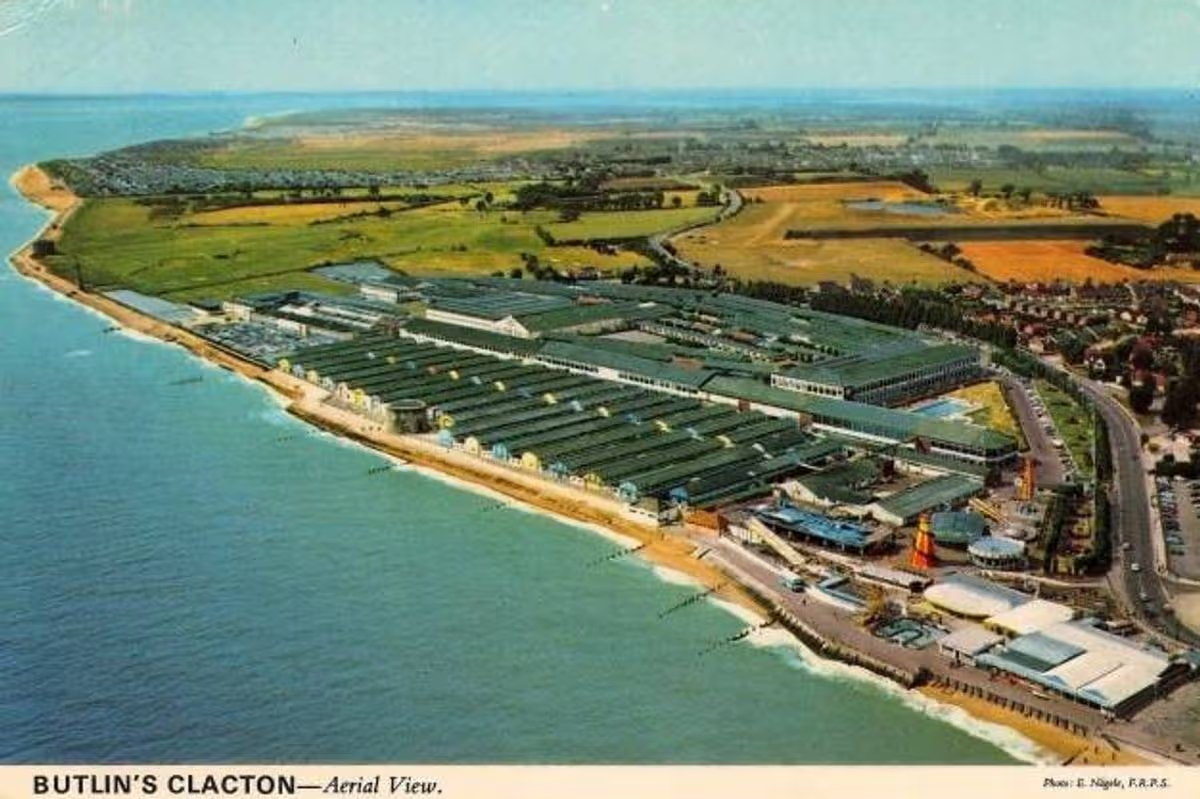
Yet in its heyday, before the Benidorm boom tempted Brits away from British shores in favour of budget package holidays to Spain, Clacton was a very different place. In 1936, Billy Butlin purchased the West Clacton Estate — which already boasted a miniature golf course and boating lake — and transformed it into the iconic Red Coat resort that became a beloved British institution.

The resort shut down when war broke out, with the Army temporarily commandeering the site. However, in 1946, it was relaunched as a holiday camp — and subsequently acquired neighbouring land for expansion.

“By the late 1950s, Butlin’s had become a national institution and to some extent, Clacton was able to bask in its reflected glory,” Clacton History explained. “The combination of Butlin’s and Clacton had become firmly established and for both their futures as family holiday venues seemed unshakeable.”

As with other Butlin’s locations, visitors flocked to enjoy the extensive amenities available, including comfortable chalets, an enormous outdoor swimming pool, fairground attractions, a ballroom for dancing, a bowling green, retail outlets, a miniature railway, and top-notch entertainment. Stars such as the Beverley Sisters, Michael Holliday, and Jack Douglas are said to have graced the camp’s stages during their early careers.

However, unable to match the appeal of affordable flights to sunny Spain, and damaged by rowdy teenagers treating the venue as a drinking destination, Butlin’s tragically shut its gates in 1983 — the same year the Filey resort was also closed down.

According to Butlin’s Memories, the site was snapped up for approximately £2 million by Amusement Enterprises Ltd — who revealed bold proposals to transform the complex into a ‘Disneyland’ style theme park. With a fresh identity, Atlas Park, the site reopened in 1984 but stayed largely as it was during the Butlin’s years. The project lasted just four months before encountering financial troubles, and the land changed hands once more. By 1987, everything had been torn down.

The location now functions as a housing estate for local residents, perfectly positioned close to the seafront. It feels a far cry from Butlin’s heyday — which is still fondly remembered by many locals.

Despite sitting just 60 miles from London – one of the richest cities in Europe – Clacton and Jaywick suffer from low wages and poor public perception, with dark tourists and American influencers venturing there to report on their struggles.

Happily, there is a lot of hope on the horizon for the area. The District Council is working on a raft of regeneration projects across Clacton, Jaywick Sands and Dovercourt after successfully applying for millions of pounds in Government funding.

The Council entered into a Community Regeneration Partnership (formerly the Levelling Up Partnership) in late 2024 and was awarded £20million in funding from the Ministry of Housing, Communities and Local Government to regenerate Clacton and Jaywick Sands.

In Clacton, these include proposals to repurpose the 200-year-old Martello Tower on Clacton seafront and bring it into regular use, in a project TDC says will convert “a disused public convenience close to Clacton Pier into a vibrant cultural venue and providing a free-to-use BMX pump track, learn-to-cycle and climbing facility at Clacton Leisure Centre.”

A further £20million was also secured from the Local Regeneration Fund (formerly Levelling Up Fund) for Clacton Town Centre which was granted to create the new ‘Clacton Civic Quarter’.

Clacton Library is also being redeveloped into a new multi-story building that will be built on the current library site, to include a centre for Adult Community Learning and local registration services.

Source link

Abandoned WWII torpedo testing site to be turned into massive holiday resort with hotels, glamping and playparks

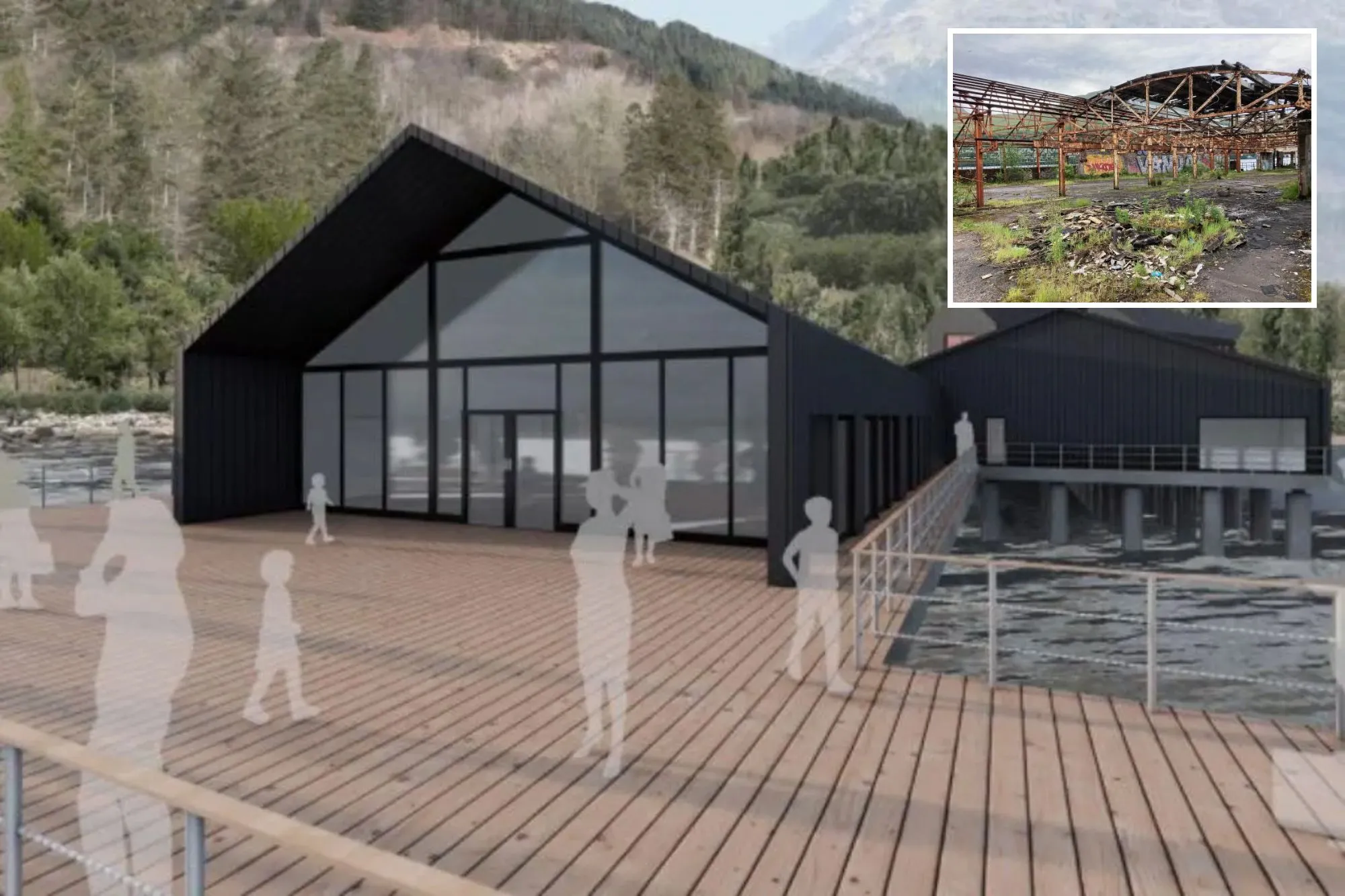
An image collage containing 2 images, Image 1 shows Illustration of the proposed holiday resort at the former Ministry of Defence testing station, featuring modern black buildings with large windows, a wooden pier, and translucent figures representing people, Image 2 shows Abandoned and dilapidated former torpedo factory

A HOLIDAY park with glamping pods and lodges could be built on an old torpedo site in Scotland.

The former testing area for missiles has been derelict for 40 years, but could soon be completely transformed and become a go-to staycation spot.

An abandoned torpedo site could be completely transformed Credit: Friends of Loch Lomond and The Trossachs
A holiday park with glamping pods and lodges could be built on the site Credit: Framed Estates

Follow The Sun’s award-winning travel team on Instagram and Tiktok for top holiday tips and inspiration @thesuntravel.

On the shores of Loch Long in Argyll & Bute is an old Ministry of Defence site that was used been 1912 and 1986.

It was predominantly used during World War Two, and as many as 12,000 torpedoes were fired down Loch Long.

Since its closure 40 years ago, the site in Arrochar has been abandoned and left derelict.

TRAVEL TIP

The £2.99 SIM hack that can save Brits HUNDREDS abroad


TOP PARKS

The MEGA UK holiday parks with water worlds, Wetherspoons and more – from £3 pp

A planning application to redevelop the area was first submitted in 2023.

Three years on, Loch Lomond & The Trossachs National Park Authority has approved a mixed-use tourism development by Ardnagal Estates.

Former proposals for the site included 14 holiday homes, 34 holiday lodges, and a 34-bedroom budget hotel.

Also included in the initial plans was a cafe, shop, a 40-bed bunkhouse, six motorhome pitches and 20 glamping pods as well as parking, composting toilets and shower block.

Another proposed feature was to revitalise the pier so that the public and community could access the loch.

Leisure on the site would include a play park that will add “family-friendly amenity for residents and visitors”.

Proposed plans are for a holiday park to be built on the former site Credit: Framed Estates

Previous plans were to build a 130-bedroom hotel although it isn’t clear if this is part of the current plans.

Claire Chapman, the park authority’s planning and access committee chairwoman, said: “The approval of this long-standing derelict site’s redevelopment is a significant step forward in addressing what has been a blight on both the local community and the environment.

“The site has been identified in both the existing local development plan, which guides new development in the National Park, and in the community’s local place plan.”


Source link

Abandoned airport with famously-long runway set for £750m reopening – but there’s an issue

Closed since 2014, the airport was briefly brought back into use as a lorry park during the pandemic, but the reopening plans have hit a snag after the local council raised concerns

An abandoned airport boasting the UK’s 11th-longest civilian runway has hit a significant obstacle ahead of its long-anticipated reopening. Plans to restore Manston Airport, near Ramsgate in Kent, back to full operation have been in motion since 2019, with the project anticipated to cost somewhere between £500m and £750m.

The site has stood idle since 2014 but was given a new lease of life during the Covid-19 pandemic as a lorry park. Current owner RiverOak Strategic Partners Ltd (RSP) is aiming to relaunch the airport as a global air freight hub, alongside offering commercial flights by 2029.

In March, RSP launched a public consultation on the proposals. Its director, Tony Freudmann, invited people to “provide any feedback they might have to help shape our plans”.

At that point, the firm anticipated construction work beginning early next year. However, in May, Ramsgate Town Council announced it would raise concerns over proposed changes to flight paths and airspace as part of the Stage 3 consultation.

Shuttered since 2014, the site was temporarily repurposed as a lorry park during the Covid-19 pandemic. RSP acquired Manston in 2019, with the Development Consent Order (DCO) granting approval for the reopening signed off in 2020.

This faced legal challenges, though an updated DCO was approved in 2022. Ramsgate Town Council contended that the proposed flight paths would result in aircraft passing over heavily populated areas of Ramsgate at low altitudes.

It was noted in the proposals that the airport could see up to 14,000 air traffic movements a year by 2038—about 38 flights a day. The council highlighted the potential impact this could have on residents.

RTC highlighted potential adverse health consequences stemming from noise exposure, as outlined in the proposal. These include disrupted sleep, a heightened risk of strokes and heart attacks, loss of amenity and possible links to dementia.

In fact, the applicant’s own plans put the potential cost of noise-related health conditions at more than £20.8 million over 10 years. RTC said it had further concerns, too.

It argued that the size of the intended operations is much larger in scale compared to past levels. RTC also suggested that there was a lack of evidence regarding secured funds or operators.

Also, it claimed demand had not been independently verified. In addition, the council didn’t believe that the consultation was enough for the size of the proposal, citing a limited number of engagement events.

RTC chairperson Cllr Steve Albon told The Isle of Thanet News: “Ramsgate Town Council recognises the importance of this issue to residents and is committed to ensuring that local concerns are clearly and professionally represented.

“The council will continue to engage with relevant authorities and stakeholders to try to ensure that any decisions relating to Manston Airport fully consider the impact on Ramsgate’s community.”

Source link

Abandoned 129-year-old English train station reopens after £50,000 upgrade

AN abandoned English train station has been revamped with a £50,000 upgrade.

After years of disrepair, the 19th century station has now transformed into a luxury retreat that is opento the public.

Rowden Mill Station in North Herefordshire has been transformed in a £50,000 renovation Credit: SWNS
Owners Cecilia Chavez-Brandon and Paul Kirwan have kept the authentic 1950s feel Credit: SWNS

Rowden Mill Station in North Herefordshire has been renovated into a vintage-inspired hotel, offering the perfect retreat for keen trainspotters.

Cecilia Chavez-Brandon and husband Paul Kirwan took on this dream renovation project in 2017, paying £395,000 for the 2.7 acre site that had been abandoned since the 1950s.

The site was primarily used for moving injured soldiers to field hospitals during the war and transporting livestock, losing its appeal as cars became more popular in the 1950s.

Inside were original buildings and a set of train tracks, which they have modernised into an experience that transports visitors back to the 1950s and 1960s.

FLOAT UP

UK lake with bright blue waters and aqua park that ‘feels more like the Med’


AIR TIME

Major cruise ship reveals huge new ‘open air’ theme park onboard

To add to the vintage feel, they bought an 18ft inspection saloon coach, coated with British Railway livery for historic railway fans.

Cecilia told SWNS: “It was not until the 1980s that the former owners found the station and bought it from the farmers.

“They built the rail track back. We arrived after they had been here 32 years and helped modernise it.

“They restored the station building and the parcel office and converted it into accommodation rather than a station.

“The booking office is now the kitchen, the waiting room is now the lounge. The gentleman’s toilet is now a full bathroom.

“The parcel office is a separate building and we converted it and put central heating in and new carpets. We turned that into a full studio with an ensuite.”

A steady stream of visitors can look around the renovated station, which has transformed ladies’ waiting areas into main bedrooms and carriages into accommodations.

Tourists can pay £260 per night to enjoy a luxurious stay overlooking the countryside in their renovated coaches fitted with an en suite and heating.

Visitors can pay £260 per night to stay in renovated train coaches Credit: SWNS
The location is an ideal spot for trainspotting enthusiasts who enjoy a countryside retreat Credit: SWNS

The main station building also has accommodation at £430 for two nights, or the Parcel Office studio at £220 for two nights.

Cecilia said: “We have a parcel office with a studio for two on the main platform. For anyone staying here, it’s like waking up in a railway station from the 1950s and 60s.”

The couple also bought an original 20-tonne brake van back in 2018 to create another luxury accommodation for the site.

Maintaining this beloved location has become a career for the couple: “We didn’t really start out as railway buffs but you obviously become one. It’s like going down a rabbit hole.

“You end up being a whole network of railway people and it’s really something amazing.

“The very first guest arrived in September 2017 and they came with books and were clear railway buffs and knew more about the branch line than we did at the time.

“In terms of guests we obviously have the railway buffs, even children with technical knowledge. We have station masters and train drivers – we get quite a range of fans.

“The whole site is great. It’s so peaceful, with gorgeous views and our other passion is nature. We’ve got our own meadows, hedgerows and wildlife ponds.”

Source link

Abandoned UK island where disease left behind a ghost town

This remote island was once a thriving town – but now all that remains are ruins.

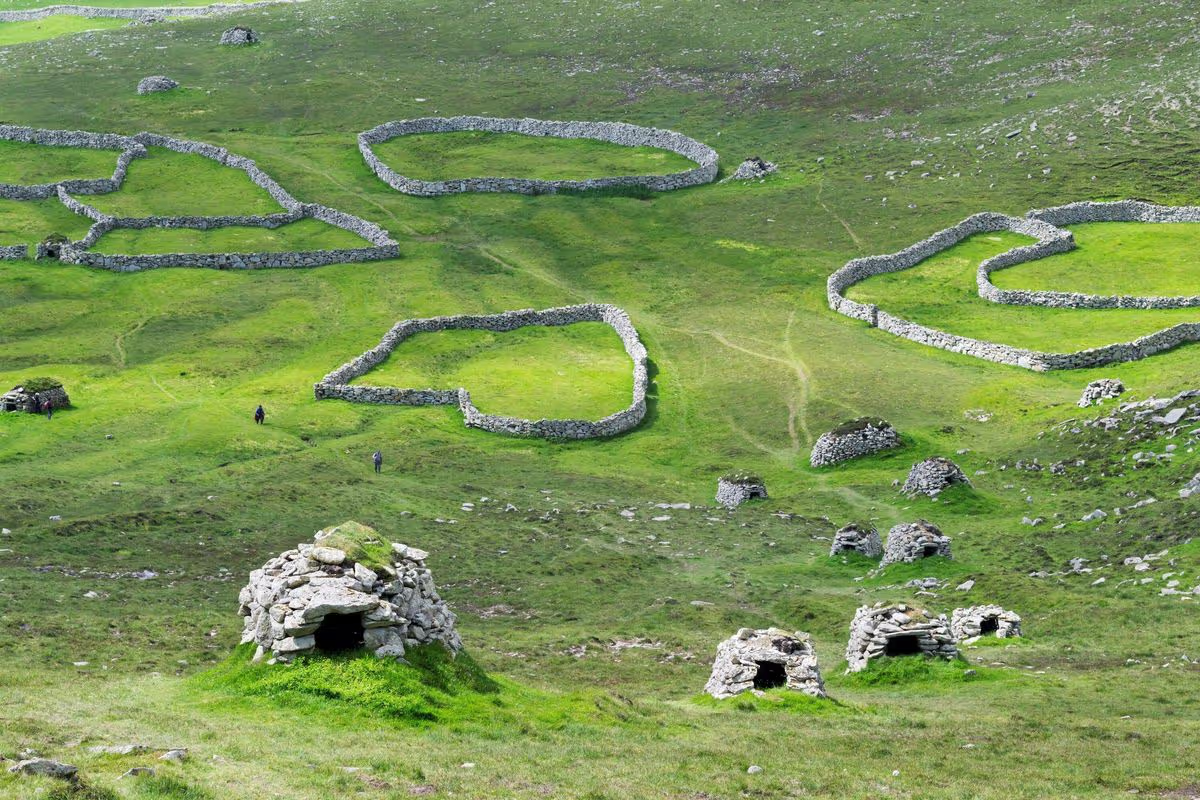
Hidden away in a far-flung Scottish archipelago lie the remains of a once-bustling settlement, deserted by all who called it home. The island of Hirta in the Outer Hebrides was occupied for 2,000 years, but during the 1930s, its final inhabitants evacuated due to health concerns.

It’s so isolated that it’s often omitted from maps altogether and can only be reached by boat – weather permitting.

It’s one of 40 islands in the St Kilda archipelago and now hosts the world’s largest gannet colony alongside some of the biggest puffin populations. During its inhabited years, islanders depended heavily on these seabirds – not merely for sustenance but for commerce.

They traded every component of the birds from feather to flesh.

Today, the population has vanished but a handful of military structures remain scattered across the island, overshadowing the crumbling stone cottages that once housed the community.

The structures line what was formerly Hirta’s main thoroughfare – now occupied solely by sheep, reports the Express.

Existence there was extraordinarily harsh, with severe weather conditions and scarce resources available.

To stay warm throughout the lengthy winters, inhabitants would bring livestock inside their basic stone dwellings and allow the waste from cattle and sheep to serve as insulation.

At its height in 1851, Hirta was inhabited by 112 people but this number rapidly dwindled over subsequent years.

Medical provision on the island had always been severely restricted, and as visitors began arriving on the isolated outpost as tourists, they introduced unfamiliar illnesses that the islanders were poorly prepared to combat.

During the 1930s, following the death of a young woman from appendicitis and pneumonia — conditions that might have been treatable on the mainland — the inhabitants of Hirta took the difficult decision to abandon the island.

The residents were evacuated by vessel in August that year and transported to mainland Scotland.

Following their local custom, islanders left a plate of oats and an open bible in every dwelling before stepping aboard the ship.

The final surviving former inhabitant of St Kilda, who was eight years old when the island was evacuated, passed away in 2016.

Source link