Discover the latest happenings and stay in the know with our up-to-date today news coverage. From breaking stories and current events to trending topics and insightful analysis, we bring you the most relevant and captivating news of the day.
Céline Dion’s first concert in years delighted fans, with the Canadian singer crying as she made an emotional comeback to the stage.
It was Dion’s first full concert in six years after she was diagnosed with a rare neurological disorder called stiff person syndrome, which forced her to cancel tours.
Joyful fans spilled out of the Paris La Défense Arena on Saturday night singing and dancing to her classic hits, while some were still wiping away tears.
Paris correspondent Hugh Schofield went along and reflects on getting swept up in the Dion dalliance that French fans are calling “the biggest comeback since Charles de Gaulle”.
The People’s Republic of China achieved a historic and unprecedented participation in the second edition of the El Alamein International Aerospace Exhibition (EIAS 2026), which was held at El Alamein International Airport from September 8 to 10, 2026. The Chinese participation came just days after the conclusion of the joint Egyptian-Chinese air force exercises Eagles of Civilization 2026. The significance of this Chinese military presence lay in the display of a fully integrated and realistic combat air system, not merely models. In this context, the Egyptian researcher will attempt to divide the significance of China’s participation in the El Alamein Air Show into several key areas, including:
– First: China’s prominent participation in the El Alamein International Air and Space Show in Egypt as a strategic shift in the regional arms market
Here, China’s extensive participation in the El Alamein International Air and Space Show constitutes a significant strategic shift in the regional arms market. Beijing has moved beyond the traditional approach of selling individual military components to present itself as a supplier of comprehensive and integrated air combat systems, competing with Western and American powers in the Middle East and Africa. China’s participation in the El Alamein International Air and Space Exhibition focused on several strategic axes to promote and analyze the concept of a full-suite solution. This was achieved by emphasizing that China does not simply sell aircraft but rather offers a comprehensive defense solution, encompassing attack fighters, logistics support aircraft, aerial refueling, and command and control systems, known as C4ISR.
The People’s Liberation Army of China sought to highlight China’s military and defense role and promote the Chinese model as a ready-made competitive alternative. This was done by showcasing the competitive advantages of Chinese defense industries, such as the absence of complex political conditions, rapid delivery, and comprehensive technology transfer to Middle Eastern and African markets. Furthermore, the focus was on the geopolitical depth, linking the Chinese presence in El Alamein to Beijing’s broader vision of strengthening security and economic partnerships with countries in the region.
Stay ahead of the geopolitical week.
MD Briefing delivers expert analysis across five global fronts — the Indo-Pacific, energy, geoeconomics, European security, and the Middle East — every Monday morning. Free.
– Second: Showcasing the most prominent Chinese aircraft platforms participating for the first time outside of China at the El Alamein exhibition
As for the most prominent Chinese aircraft platforms participating for the first time outside of China, for the first time in its history, the People’s Liberation Army Air Force (PLAAF) showcased four of its latest operational aircraft models at an air show outside of China. The most prominent of these were
– The Chinese J-16 multirole fighter (J-16)
This air superiority and heavy ground attack fighter garnered widespread international attention.
– The Chinese YY-20A aerial refueling tanker (YY-20A)
This Chinese heavy transport aircraft provides refueling to extend the operational range of fighter jets.
– The Chinese KJ-500 airborne early warning and control aircraft (KJ-500)
This represents an airborne command and control system.
– The Chinese Z-20K military helicopter (Z-20K)
This is a multi-role helicopter designed for search and rescue and tactical operations.
Regarding the Chinese weapons and drones on display at the El Alamein International Air and Space Exhibition, the AVIC (Aerospace Industries of China) showcased its advanced defense capabilities in the outdoor exhibition area through:
– A demonstration of the Chinese Wing Loong-10B stealth drone (Wing Loong-10B):
This is a high-altitude, long-range unmanned aerial vehicle (UAV) designed for reconnaissance and precision strikes.
– A demonstration of Chinese smart munitions and missiles:
The Chinese drone was displayed surrounded by advanced air-to-air missiles, such as the PL-108 & PL-12AE. In addition to a demonstration of the Chinese anti-radar and anti-radiation missile (YJ-9ER1).
– Third: The Chinese People’s Liberation Army (PLA) showcased its capabilities through a technical display (capability integration), dividing its export-available air systems into functional groups for attack, others for support and refueling, and a third group for command and control, during China’s extensive participation in the El Alamein Air Show in Egypt.
In this context, the PLA sought to leverage China’s extensive participation in the El Alamein Air Show in Egypt as a new and strategic launchpad for China in North Africa. This included showcasing the size of the Chinese pavilion and the equipment on display, such as aerobatic aircraft and unmanned combat aerobatics. The Chinese Ministry of Defense emphasized the technical aspects of this capability integration display, highlighting the division of its export-available air systems into functional groups for attack, others for support and refueling, and a third group for command and control. As follows:
■ The offensive functional groups were represented by a display of China’s modern fighter jets and attack drones, such as the Wing Loong family.
■ As for the support and refueling functional groups, China’s strategic transport and aerial refueling aircraft, such as the Y-20, were showcased.
■ The third functional group focused on (command and control), with China displaying its early warning aircraft and airborne command centers.
– Fourth: Analyzing and understanding the strategic dimensions of China’s participation in the El Alamein International Air and Space Exhibition, aimed at attracting more interest in the Chinese aerospace sector and promoting widespread military sales of Chinese military, defense, and armament equipment
Thus, we can analyze and understand the strategic dimensions of China’s participation in the El Alamein International Air and Space Exhibition, which aimed to attract more interest in the Chinese aerospace sector and promote widespread military sales of Chinese military, defense, and armament equipment. Therefore, we find that the extensive Chinese presence at the El Alamein International Air and Space Exhibition constitutes a genuine breakthrough. Beijing did not aim to promote individual pieces but rather to demonstrate its ability to provide a comprehensive and integrated air combat system, encompassing attack, support, refueling, and command, as a competitive alternative in the Middle Eastern and African markets.
Analyzing the economic and strategic dimensions of China’s extensive participation in the El Alamein exhibition, we observe the extent to which the Chinese People’s Liberation Army focused on achieving broad military exposure for its participation during the exhibition. This included showcasing how these Chinese defense, military, and air systems can reduce operating costs for purchasing countries while ensuring their independence in defense decision-making, without imposing political conditions or prior operational restrictions, unlike many Western and American systems.
An AI researcher who quit Anthropic told the BBC that people working on the technology are “genuinely frightened” about the speed of its advancements and what it could mean for humanity.
Jacob Coxon spoke with BBC’s Laura Kuenssberg on Saturday about his viral resignation post where he raised concerns about out-of-control artificial intelligence.
“I believe that if we don’t slow down at the current rate of progress, there is a strong chance that we could all die in the immediate future,” he said.
His resignation comes amid growing safety concerns in the industry, including from his former boss, head of Anthropic Dario Amodei, who in an essay on Saturday argued for development to slow down.
However some industry figures say the dangers are being overblown, possibly to build hype around the two biggest AI companies ahead of their potential stock market debut or to prompt regulation which would slow their competitors.
Coxon, a 27-year-old from Britain whose research focuses on training AI models, said AI leaders including Elon Musk and OpenAI’s Sam Altman have shared similar concerns to Amodei.
“They’ve all made statements about the necessity of being careful of the potential for AI takeover. They’ve all talked about this. AI takeover implies human extinction,” Coxon said.
The hardest question to answer, according to Coxon, is what that would look like.
“Any kind of concrete scenario you can lay out ends up sounding like science fiction,” Coxon said, but notes that advancements which have already happened would have sounded like fiction in the past.
A potential scenario could involve AI agents hacking into medical laboratories to “autonomously produce deadly viruses”, Coxon said. Another example he listed could be AI hacking into “critical infrastructure that the world runs on”.
“They did it autonomously, without any human encouragement. They chose to go on this hacking spree. It was the combination of things getting faster and things also getting scarier,” Coxon said.
Coxon said this scenario could be realistic in six months to a year.
Anthropic and OpenAI are reportedly preparing for potentially record-setting initial public offerings. Industry figures have suggested comments about the perils and power of AI may be designed to generate hype. Other critics say Anthropic has been trying to trigger a regulatory push to block competition, leaving it and OpenAI with a duopoly.
Coxon’s views have also been questioned by the CEO of the AI platform Hugging Face, Clement Delangue.
“Sorry, but asking Jacob about AI extinction risk is like asking your AC guy about climate change,” he wrote on X. “Not saying it’s necessarily uninteresting or wrong per se but let’s keep things in perspective.”
After Amodei’s essay on Saturday, however, Delangue offered to help be a part of the potential solutions proposed by the Anthropic boss.
Nvidia boss Jensen Huang also discussed Coxon’s comments before a crowd at a conference hosted by the investment bank Goldman Sachs last week, multiple people in the group told the BBC. They said he dismissed them as untrue.
Huang has previously said the notion that AI “is going to be the end of humanity” is “complete nonsense”.
And while he may have a business interest in an AI boom – Nvidia builds chips that power AI systems – his comments reflect a growing backlash in Silicon Valley to the existential warnings from current and former staffers.
She “looked suitably humbled and tearful” as she emerged, he said, going on to praise the stage direction.
“Truly, she was throwing the love at the crowd, who threw it right back at her. There was no holding back. It was quite overwhelming, actually,” he writes.
The performance was “complete with both costume, key change and air of tragic, important romance”.
“Céline Dion’s strength lies in being a diva with the common touch while being as French as they get, even if she is Canadian. She fulfilled that role with all the verve you could hope for,” writes Hodgkinson.
In video clips, Dion is seen wandering in a desert. “The set design was highly cinematic, with a monumental staircase sweeping up one side and a moon dominating the stage, while the backdrop appeared to have a stark, almost brutalist gray texture.”
The star, known for power ballads like My Heart Will Go On and Because You Loved Me, has said she will not let her diagnosis control her life.
“The way I see it, I have two choices. Either I train like an athlete and work super hard, or I switch off and it’s over,” she told French Vogue magazine, external in 2024.
“I’ve chosen to work with all my body and soul, from head to toe, with a medical team.”
According to tradition, the Maldives was converted to Islam in the year 1153 AD by a Muslim from Maghrib (Morocco) by the name of Abul Barakat Yoosuf Al Barbary. Abdul Barakat was a Hafiz, someone who had memorised the entire Holy Quran and he set about converting the local king, Sri Tribuvana Aditiya, to Islam.
After much effort and perseverance, he managed to convert the king, who took the name Muhammed Ibn Abdulla. Following the conversion of the king and his family, the king sent missionaries to convert the local people on the various islands in the Maldives.
After the conversion of the islands, Abdul Barakat stayed in the Maldives for the rest of his life. His tomb is called Medhu Ziyaaraiy and stands within the grounds of Hukuru Mosque in the capital Malé, the first Friday masque to be built on the islands.
Before the conversion to Islam, the islands had been following the Buddhist religion since the 4th century BC.
Nowadays Islam is the state religion of the Maldives and all citizens must follow the Islamic faith.
The Maldives is the smallest Muslim country in the world.
The Day Maldives Embraced Islam was first celebrated in 1374. The celebrations ended in 1387, and it wasn’t until 2001 that the Day Maldives Embraced Islam became a national holiday.
Another meteor shower arrives later in November, with the Leonids expected to peak around 17 November.
The Leonids can travel at about 70km per second as they enter the Earth’s atmosphere, making them some of the fastest meteors visible from Earth.
Under ideal, dark sky conditions, around 10 to 15 Leonids an hour can be visible at the shower’s peak, although the actual number seen will depend on weather, light pollution and the brightness of the Moon.
They get their name from the constellation Leo, from which the meteors appear to radiate.
The best time to look is generally after midnight and before dawn, when Leo is higher in the sky.
Arsenal maintain perfect start to the season with their fourth win, thanks to goals from Guimaraes and Saka.
Published On 12 Sep 202612 Sep 2026
Arsenal manager Mikel Arteta has labelled the decision to award Sunderland a penalty ‘unacceptable’ after watching his side grind out a 2-0 win to maintain their 100 percent start to the season and move clear at the top of the Premier League.
The defending champions made it 12 points out of 12 on Saturday as David Raya’s penalty save in the 55th minute proved crucial for the visitors, who went ahead two minutes later with Bruno Guimaraes’s first goal for the club.
Bukayo Saka wrapped it up deep in stoppage time from the penalty spot to make it four league wins out of four for the reigning champions.
It could have been different had Enzo Le Fee found the net, but Arteta blasted the decision by referee John Brooks to award a penalty when Ezri Konsa was penalised for pulling down Dan Ballard as a corner was played in.
“It was a huge win , but it could have been something very different,” an angry Arteta said when referring to the penalty award after the match.
“It’s unacceptable at this level; this can change the course of a season and the championship. It’s not acceptable. I’ve seen it 10 times to make sure, and it’s not possible at this level that it can be a penalty. It cannot happen.
“It’s not a penalty in any context, in any league.”
Bruno Guimaraes celebrates scoring Arsenal’s opening goal [Oli Scarff/AFP]
It was far from a vintage Arsenal display against a tenacious Sunderland, who deserved something for their endeavour, but they dug deep and showed the resilience that helped them win a first title for 22 years last season.
They have now kept four clean sheets in their five games since the start of the season, including in the Champions League win at Napoli in midweek.
Summer signing Guimaraes replaced Myles Lewis-Skelly at half-time and made a stunning impact.
After receiving a pass from Declan Rice, he sent a right-footed curler into the top corner.
Arsenal were forced to defend desperately at times as Sunderland’s physicality rattled them, but Saka netted his third goal of the season when he beat Robin Roefs with his spot-kick after being fouled by Reinildo Mandava, who was sent off.
“It’s unbelievable the spirit and the courage we have to go again and again and again,” Arteta said. “So pleased in one sense and so worried in another.
“David Raya was unbelievable. He is a player that decides football matches when we need it.
“Sunderland deserve a lot of credit for the way they make it so hard for you.”
Manchester City, the only other side not to have dropped Premier League points this season, can join Arsenal on 12 points if they beat Manchester United on Sunday.
Bukayo Saka celebrates after scoring [Oli Scarff/AFP]
Giving an answer to a question that is asked at a free-flowing press conference is one thing, but Donald Trump repeated his sentiments a short time later when he was delivering a speech to an invited audience at the US Ambassador’s residence.
In fact it was almost the first thing he mentioned, hinting that maybe he realised he had kicked over a can of worms at his earlier appearance.
The rest of that speech was curious. It was billed as a 20-minute address to Irish and Irish American business leaders, but was about twice that and strayed largely into domestic US matters.
President Trump has a speaking style that he describes himself as “the weave”.
He can bounce from topic to topic during any speaking engagement, veering off the script and then returning to the matter at hand.
Today he lauded his own achievements, as he sees them, such as clamping down on illegal immigration, doing deals and boosting defence production.
He repeated his criticisms once again of what he views as the UK’s lack of support for his military operation in Iran.
Ebola has reached a seventh province in the Democratic Republic of Congo after an infected man travelled across the country and through Rwanda and Uganda. Virologist Placide Mbala said the government is seeing signs of declining transmission but remains cautious about the outbreak.
France is accelerating work on the Rafale F5 standard, bringing forward development of a major new configuration of its combat aircraft at a time when the country’s planned next-generation fighter with Germany has effectively collapsed in its original form. The contracts cover the equipment judged to have the highest technical risk, ahead of the overall development contract for the F5 standard, expected for the end of this year.
The French defense procurement agency, the Direction générale de l’armement (DGA), ordered the first upstream development work for F5 from Dassault Aviation, Thales, MBDA, and Safran. The contracts cover key areas including navigation, datalinks, radar, electronic warfare, and propulsion, laying the groundwork for the next configuration of the Rafale, which is planned to enter service with the French Air and Space Force and the French Navy starting around 2033.
The most extensive modernization of the Rafale yet, the F5 standard was originally part of a longer transition toward France’s next-generation combat-air capability. But with the Franco-German New Generation Fighter (NGF) effort now effectively dead in its original configuration, the accelerated F5 program is taking on a much larger strategic role.
Concept artwork of the NGF future fighter. Dassault Aviation
Rather than simply keeping the Rafale relevant until NGF arrives, France is now developing a version of the aircraft that is set to carry much of the country’s high-end combat-air capability well into the 2030s and potentially beyond.
The increasingly capable F5 could, in turn, reduce the urgency of finding a replacement for the Rafale — while potentially adding to the fighter’s export appeal. After a slow start, Dassault has recorded export sales of 299 new-build Rafales to eight nations.
The DGA’s contracts engage four of France’s principal combat-aircraft industrial players. Dassault Aviation remains responsible for the aircraft and its overall integration; Thales is involved in major sensor, electronic warfare, and communications capabilities; MBDA is responsible for much of the weapons system; and Safran is responsible for propulsion.
The Rafale assembly line at the Dassault Aviation facility in Mérignac, France. Dassault Aviation – V. Almansa ALMANSA
Previous Rafale standards have largely consisted of incremental upgrades, focusing on software and other improvements to the existing aircraft configuration. F5 is notably more extensive, addressing many of the critical systems that determine how the aircraft senses the battlespace, communicates with other platforms, conducts electronic warfare, and generates the power needed to operate increasingly demanding equipment.
The DGA has specifically identified the Thales RBE2-XG radar as one of the major technological advances associated with F5.
The RBE2-XG is expected to feature gallium nitride (GaN) semiconductors. Compared with previous technology, GaN generates less heat and has the capacity to operate at higher voltages, meaning that output power can be increased, while component size can be reduced. Overall, using GaN should help to get more power out of the radar without increasing its size.
According to the DGA, “This new radar will benefit from a substantial increase in power, and consequently in detection range, as well as improvements in the identification of targets with an extremely low radar cross-section (RCS). Its computing capabilities will also be enhanced to facilitate the integration of artificial intelligence.”
The RBE2-XG will also be “designed with collaborative combat in mind, featuring sensors capable of working together without the need for pilot intervention.” It is also planned to have enhanced resilience, including against cyber threats.
France is already working on the concept of a combat drone to accompany the Rafale, with the future F5 standard providing the crewed aircraft around which those systems can operate.
A Rafale during a test mission with a Dassault nEUROn combat drone demonstrator. Dassault Aviation – A. Pecchi
The new radar will be combined with more capable electronic warfare equipment, improved communications and datalinks, expanded processing capacity, and a more capable propulsion system.
To be developed by MBDA and Thales, the forthcoming F5 version of the SPECTRA self-protection suite is intended to significantly improve detection and jamming capabilities, the DGA says, “through a fully digital approach, enabling a complete overhaul of the core electronic warfare system to counter the increasing density and broadening of the threat spectrum, as well as the growing complexity of threat waveforms, expected by 2035.”
Thales à bord du Rafale de Dassault Aviation
Thales will also be responsible for the new Inter-Vehicle Data Link (IVDL) system, described as a “stealthy and resilient datalink.” The DGA says the new datalink will expand connectivity “thanks to a new high-speed, discreet, and jamming-resistant waveform. IVDL will allow the Rafale to penetrate hostile areas where jammers are widespread, while maintaining optimal quality of communication and dialogue between aircraft.”
Safran will begin preliminary design work on the M88 T-Rex engine, which is planned to increase the turbofan’s thrust from around 16,500 pounds to nearly 19,850 pounds, an increase of roughly 20 percent.
M88 T-REX: A 9-ton thrust predator serving the Rafale
In terms of armament, the contract announcement mentions the ASN4G missile, set to be introduced to service by 2035, which will allow the Rafale F5 to continue to serve as the airborne nuclear component. The munition remains in the early stages of development, but it will be capable of hypersonic speeds — defined as speeds greater than Mach 5 — with a range in excess of 1,000 kilometers (621 miles).
Other likely new missiles include a beyond-visual-range air-to-air missile to succeed the current Meteor. As you can read about here, France’s Comet program, apparently led by the French side of MBDA, is already looking into this requirement, with an apparent plan to introduce the weapon around 2030.
An older video from MBDA showing some of the company’s weapons integrated on earlier versions of the Rafale:
PARIS AIR SHOW 2021: MISSILES ON THE RAFALE
For France, the original logic behind the pan-European FCAS program was that Rafale would eventually give way to the NGF as its principal crewed combat aircraft, operating from land bases and aircraft carriers.
With the collapse of the Franco-German effort, France cannot simply wait for a next-generation fighter program whose industrial and political future is uncertain. Instead, the Rafale has to remain capable against rapidly evolving threats throughout the 2030s and beyond.
With the F5 standard, however, France is looking to incorporate some of the concepts envisaged for NGF. These include distributed architectures in which crewed fighters, uncrewed aircraft, remote carriers, missiles, and offboard sensors cooperate across a battlespace.
The nEUROn drone and a Rafale M in flight over the aircraft carrier Charles de Gaulle, during tests to investigate the use of a UCAV in a naval context. Dassault Aviation – A. Pecchi
For now, F5 also sidesteps the central problem in the now-defunct Franco-German effort: whether the two countries could agree on the requirements, industrial structure, and workshare behind a new-generation combat aircraft.
Despite its advances, the F5 airframe remains derived from a design dating back to the 1980s, which first entered French service in the early 2000s. In particular, it falls well short of fifth-generation designs — let alone sixth-generation ones — in terms of low observability. This is one area where collaborative drones could potentially help compensate for the Rafale’s inherent limitations.
France has therefore bought itself some time with the F5 program. But it may eventually decide that it needs a future high-end crewed fighter to provide capabilities that an upgraded fourth-generation airframe cannot fully replicate, particularly in terms of survivability against advanced integrated air-defense systems, signature reduction, internal weapons carriage, and operations deep inside heavily contested airspace.
On an industrial level, F5 is also significant because it brings together the same French industrial heavyweights that would have formed the backbone of its FCAS effort. Dassault Aviation, Thales, Safran, and MBDA are now well-positioned to work together on whatever comes after F5, whether that is a crewed combat aircraft, uncrewed CCA-type platforms, or a combination of both. Based on its experience with the nEUROn program, France would be well placed to develop a UCAV that can work cooperatively as well as independently, taking over the deeper-penetrating fighter mission set, and potentially skipping a sixth-generation fighter altogether.
https://www.youtube.com/watch?v=frNsu7g7r94
Meanwhile, success with F5 — and, in particular, with the wider combat ecosystem planned around it — could put France in an even stronger position when it comes to any future European fighter project.
For the time being, Britain, Italy, and Japan are pursuing the GCAP/Tempest pathway toward a new combat aircraft. Germany and Spain remain tied to the wider FCAS architecture, even as the original Franco-German NGF arrangement has fractured. Sweden’s position is less clear, with indications that it could collaborate with either France or Germany.
France, for its part, is now investing heavily in an increasingly sophisticated Rafale architecture while maintaining its own sovereign industrial base.
In terms of acqusition, France is expected to pursue a mixed approach, buying new-build Rafales while upgrading suitable aircraft already in service to the F5 standard. The oldest jets are unlikely to receive the full F5 treatment, however.
The irony is that the failure of the NGF effort may ultimately make Rafale F5 more important — and potentially more capable — than it was ever expected to be.
Iran’s President Masoud Pezeshkian has met Abu Dhabi’s Crown Prince Khaled bin Mohamed Al Nahyan at the BRICS summit for their highest-level talks since the conflict began. Both backed calls for restraint, despite Iranian attacks on the UAE. Bahrain refused to meet Pezeshkian.
With the US midterm elections just weeks away, Donald Trump’s administration is trying to put a positive spin on a war with Iran that shows no sign of letting up.
Climbing fuel and grocery prices, the president’s provocative social media posts and the Pentagon’s combative relationship with the media are making that story harder to sell.
Contributors: Laicie Heeley – Editor-in-chief, Inkstick Mark Kimmitt – Former US Assistant Secretary of State Negar Mortazavi – Host, The Iran Podcast Samira Mohyeddin – Founder, On The Line Media
On our radar
Revelations from Israeli newspaper Haaretz about what Prime Minister Benjamin Netanyahu knew before the October 7 attacks have ignited a firestorm in the country. Netanyahu calls the reporting fabricated and is threatening to sue.
Ryan Kohls reports.
How COVID coverage broke trust in the US
Six years on from the start of the pandemic, COVID-19 is back in the headlines – and so are questions about how newsrooms covered it.
The Listening Post’s Nicholas Muirhead on how the pandemic broke trust in the US.
Featuring: Amesh Adalja – Infectious Disease Physician, Johns Hopkins Center for Health Security Frances E Lee – Co-author, In COVID’s Wake: How Our Politics Failed Us Jeanne Lenzer – Investigative Medical Journalist
Yemen’s Houthi rebels have captured Mocha port and now threaten to control the main waterway of the Bab al-Mandeb strait. They have also attacked several cities in Saudi Arabia, wounding about 70 people, including women and children.
The repeated attacks against Saudi energy, civil, and defence facilities, combined with the maritime blockage by Iran and its Yemeni partner the Houthis, directly raise the question of the Mecca Pact’s operationalisation between Saudi Arabia, Turkiye, and Pakistan.
The Houthi attacks on Saudi Arabia can activate the mutual defence agreement. If that happens, what could a Pakistani and Turkish intervention look like?
The answer to this question necessitates some crucial background first.
The US – the main security partner of the Gulf states – has signalled for a while now that it expects regional countries to take primary responsibility for their own defence and deterrence, with US help remaining critical but limited.
That posture is already visible on the ground. Since the start of the US-Israel war on Iran, the US has not been able to provide comprehensive defence for its regional partners. On several occasions, it has even failed to stop attacks on its own bases in the Gulf.
With US presence receding and Washington emphasising regional burden-sharing, Gulf states have had to look into a new defence architecture. In September 2025, Saudi Arabia and Pakistan signed their first mutual defence agreement, which expanded in August this year to include Turkiye and became the Mecca Joint Defence Agreement.
The three countries have since established a joint secretariat, with its headquarters in Riyadh, with Pakistan taking the chairmanship for an initial three-year term.
The pact remains in a gestation period. It does not publicly identify the thresholds or scenarios under which a member would move to direct military intervention. Its organisational and institutional structure, including rules of engagement, mechanisms of consultation, and collective defence and deterrence, are yet to be formally developed.
Now, back to the question of how the pact will be operational if a member state is attacked.
Earlier this week, Pakistan’s Defence Minister Khawaja Asif said that an unprovoked aggression against Saudi Arabia, or a spillover of the Yemen conflict into the kingdom, would make the Mecca Joint Defence Agreement operational, adding that “there should be no doubt in this.”
Asif, however, did not share specific details on what shape that operationalisation would take. Last month, Turkiye’s Foreign Minister Hakan Fidan clarified that the Mecca Pact would work the same way as NATO: If a member state is attacked, it must actively request and define the specific type of help it needs.
NATO’s Article 4 allows for a member to call alliance consultations and exchange of information. Article 5 requires mutual assistance from allies, but it leaves each state to decide the nature of that assistance.
In 2012, after Syria shot down a Turkish warplane, Ankara invoked Article 4 for consultation and requested specific defence assistance. Instead of demanding direct military intervention, the Turkish government explicitly asked for Patriot missile defence batteries. NATO approved the request and deployed the systems to protect Turkish airspace.
In this context, if the Mecca Pact is to be operationalised, it would have to be Saudi Arabia that defines the type of military assistance and involvement that it needs. If, for example, Riyadh makes an actual request for Pakistani direct military intervention, beyond materiel and intelligence support, Islamabad would be obliged to comply. But the request, and the scale of the response, would still likely need to be defined and agreed in a consultation meeting.
For now, none of this has been tested as Riyadh has not invoked the pact with either Pakistan or Turkiye.
In the meantime, diplomatic efforts have intensified, with Pakistani Field Marshal Asim Munir and Saudi Foreign Minister Prince Faisal bin Farhan Al Saud talking to Iranian Foreign Minister Abbas Araghchi.
Islamabad has also publicly urged Iran to rein in the Houthis from attacking Saudi Arabia and threatening the Bab al-Mandeb, and has reminded Tehran of Pakistan’s commitment to Riyadh’s defence through the pact. Ankara would likely play its own part in diplomatically restraining the Houthis and Iran.
If diplomacy fails and Houthi attacks on Saudi Arabia or the Bab al-Mandeb continue, Turkiye and Pakistan would likely expand the air and technological support they already provide. Islamabad already has an air squadron of about 16 JF-17 Thunder multirole aircraft, defence systems, and thousands of troops deployed in Saudi Arabia.
But a direct military operation by Pakistani forces inside Yemen remains unlikely at the moment. Given the disastrous and lasting impacts of its participation in the Afghan war against the Soviet Union on behalf of the US, Pakistan would be far more wary of joining a war against Iran and its allies, for fear of spillover into its western border provinces’ economy, domestic security, sectarian balance, and societal harmony. Pakistani leaders would find it hard to build domestic consensus for direct attacks on the Houthis or a fight with Iran.
The likely scenario is that Pakistan would increase joint diplomatic pressure on Iran to restrain the Houthis, further augment its support for Saudi defence, and push for a multinational naval coalition to secure the Bab al-Mandeb. Adopting this restraint would still keep the essence of the Mecca Pact intact, while putting more weight behind regional de-escalation.
The new security architecture that agreements like the Mecca Pact are setting up will take years to mature. Until the mechanisms and rules of collective response develop, Pakistan’s existing bilateral defence relationships with Saudi Arabia and other Arab partners will continue to focus on defence needs.
The views expressed in this article are the author’s own and do not necessarily reflect Al Jazeera’s editorial stance.
Harborne has already donated millions to Reform and Farage, who is currently under investigation by the parliamentary standards commissioner over whether he should have declared a £5m cash gift from Harborne ahead of the 2024 election.
Farage has argued that he was under no obligation to register the “purely private” gift, as it was unrelated to his parliamentary or political activities.
The party is also facing scrutiny over its finances after a broadcast by Channel 4 News last week showed two senior Reform aides apparently suggesting a way around electoral law to secure foreign party donations.
The Metropolitan Police has said it is investigating, while the party denies any wrongdoing.
The force is also looking into donations given to the party by Fiona Cottrell, mother of longstanding Farage ally George Cottrell, as well as a company controlled by its deputy leader Richard Tice.
Harborne wrote on Saturday that he had “already accumulated enough wealth for the rest of my life”, while Reform was a “start-up party” that lacked “the benefit of hundreds of years of patronage”.
“A start-up party needs more money than can be provided by membership fees alone, to build and sustain itself and be ready for government,” he said.
Harborne and Delo’s donations mark the largest sums received by a UK political party since they had to begin declaring them in 2001.
Delo, who also announced his donation in a Telegraph op-ed, said he was giving the money away because he wanted a “fair fight and a level playing field”. He said in April he was moving back to Britain from Hong Kong.
Addressing the recent scrutiny of Reform’s finances, he said: “My conclusion from Reform’s recent troubles is that they should spend less time trying to raise funds to compete on equal terms and more time preparing for government.”
Last year, he was given an unconditional pardon by US President Donald Trump over a breach of anti-money laundering laws at his crypto trading platform, BitMEX, to which he had pleaded guilty in 2022.
There are currently no restrictions on the amount of money UK-based donors can give to political parties.
However, the Labour government has introduced a £100,000 cap on donations from British citizens living overseas, and plans to introduce a similar one for those who have recently returned to the UK.
There were nine donations of £1m or more to political parties in 2025. The largest was £9m given to Reform UK by Harborne.
Labour had five donations of £1m or more – totalling nearly £10m – and the Conservatives had three of £1m each.
Labour said Reform and Farage still had “serious questions” to answer about their finances.
Party chairwoman Bridget Phillipson said Reform were “drowning” in “sleaze and scandal”,.
She added: “It’s time Farage and Reform came clean with the public, fully co-operated with the ongoing police investigations and prove they’re not just in it for themselves.”
Rachel Millward, deputy leader of the Green Party, told BBC News it wanted a cap on donations from individuals of £500,000.
She said the donations to Reform were “absolutely staggering amounts”, adding: “What I am very frustrated about is the influence of extreme wealth and the super rich. What I want to see is people in politics representing the needs of their communities and ordinary people.”
Liberal Democrat Cabinet Office spokeswoman Lisa Smart called for the government to introduce emergency legislation to cap donations.
She said: “These are eye-watering amounts of money. This is real emergency for our democracy. It presents a very clear and present threat.”
Duncan Hames, Director of Policy and Programmes at campaigning charity Transparency International UK, said: “This is a watershed moment, with two billionaires pledging £72m to one political party in less than 48 hours.
“This situation is now completely out of control, and makes an irrefutable case for government to bring forward an annual cap on political donations, and fast.”
England overcome early tremors to win third Test against Pakistan by eight wickets, clinching a series whitewash.
Published On 12 Sep 202612 Sep 2026
Joe Root led from the front as England survived a major wobble to beat Pakistan by eight wickets in the third Test at Edgbaston on Saturday, sealing a 3-0 series whitewash.
The home team, chasing just 130 to win, were in deep trouble when openers Ben Duckett and Emilio Gay were dismissed in the first over, bowled by Mohammad Abbas.
Recommended Stories
list of 4 itemsend of list
Root, England’s record runscorer, edged his first ball, bowled by Razaullah, through the slips for four in a nervy start but settled and scored quickly to take the sting out of the situation.
England captain Joe Root bats during day four of the third Test at Edgbaston [Gareth Copley/Getty Images]
The skipper was given a huge reprieve when he chopped onto the stumps off Mohammad Ali, only for the umpire to signal a no-ball, leaving the bowler distraught.
Root, with Jordan Cox at the other end, had another let-off when he edged an Abbas delivery between first and second slip, with neither fielder moving.
But he reached his half-century off 57 balls with a cut for four, and Cox matched him shortly afterwards.
England reached their target in the 25th over, with Root unbeaten on 62 and Cox 59 not out.
Jordan Cox (left) and Joe Root of England leave the field after winning the third Test [Gareth Copley/Getty Images
Root, in his second spell as England skipper after the departure of Ben Stokes, admitted his team were not the finished article but said he was delighted with their series win.
“The amount of uncertainty, noise and I guess chaos there was coming into the series, the way the guys have dealt with that – being so clinical with what we’ve had in front of us – and be stood here with a 3-0 win is really pleasing,” Root told Sky Sports.
“It sets us up nicely looking ahead to the start of a new era with (new head coach) Stephen Fleming coming in.”
Pakistan woes
It is England’s first Test series win since 2024, while Pakistan have now lost 16 of their last 21 games and are bottom of the World Test Championship table.
Root’s men had appeared set for a quickfire win inside three days on Friday before debutant fast bowler Razaullah launched an audacious assault with the bat, clubbing nine sixes as he raced to 81 off 63 balls.
The 21-year-old number nine, who also took four wickets in England’s first innings, put on 121 for the ninth wicket with fellow paceman Abbas (42) as England floundered.
Pakistan’s Razaullah laughs after surviving an LBW on day three [Darren Staples/AFP]
“We had a little bit of pushback yesterday which, in a strange way, was quite a good thing for the group,” said Root.
“Fair play to Razaullah; he made things difficult for us. He played some wonderful shots and made it very difficult to set fields to. He struck the ball nicely – I don’t know how he didn’t pull a muscle, swinging the bat that hard.”
The tourists sent seven players home after their crushing defeat in the second Test at Lord’s and brought in seven replacements, with Razaullah among them.
They also sacked head coach Sarfaraz Ahmed and assistant Umar Gul as their tour plunged into chaos.
The Pakistan team leave the field after bowling out England during the second day of the third Test [Philip Brown/Getty Images]
Pakistan made four changes to their side for the third Test, and they put up a fight despite being dismissed for a paltry 133 in their first innings.
Captain Babar Azam admitted his team would have to take stock after a one-sided series.
“Before we came here, we had to think about different things and to decide our team,” he said.
“We had a couple of changes after losing two matches. Playing in England is very difficult. We were trying to do our best in the third match.
“We need to sit down and look hard at our mistakes, decide our playing XI.”
The 3-0 whitewash is a huge tonic for England, who were in turmoil just weeks ago following a series loss to New Zealand and the exits of head coach Brendon McCullum and captain Stokes.
But tougher challenges lie ahead, starting with a Test series in South Africa in December and January, while a home Ashes looms next year.
Tehran, Iran – Iranian authorities and state media have praised the Houthis’ capture of Yemen’s Red Sea coast, which some see as giving Tehran more leverage against the United States.
The Houthis, a political and armed group dominated by Zaidi Shia Muslims, have been fighting against the Western-backed Yemeni government since capturing the capital, Sanaa, in 2014.
The Houthis captured a series of Red Sea coastal cities and islands this week, essentially giving them control over the vital Bab al-Mandeb strait.
The Iran-allied group’s recent victories have been praised in Iran, and are viewed by some as part of Tehran’s wider war against the US, ongoing since February 28.
“The victories of Yemen’s Ansar Allah in the western coast is a narrative of a divine triumph and the fruit of years of steadfastness in the most difficult of battlefields,” Hossein Mohebbi, spokesman of the Islamic Revolutionary Guard Corps (IRGC), wrote on X on Saturday.
Amid the Houthis’ recent battlefield wins against the fragmented Saudi-backed forces, senior Iranian officials have cheered their Yemeni allies on.
The Houthis’ capture of the port city of Mocha on Friday delivered a huge blow for the Yemeni government, which now has no direct access to the Red Sea.
Mohammad Bagher Ghalibaf, Iranian parliament speaker and chief negotiator with Washington, reposted a comment made by slain Supreme Leader Ayatollah Ali Khamenei in 2024, saying the “resistance” of the Houthis will inevitably lead to victory.
“The brave Yemeni people will certainly triumph, by permission of God Almighty,” Ghalibaf added on Thursday, in Arabic.
Iran’s First Vice President Mohammad Reza Aref said the government is happy with the Houthi advances, and urged leaders in the region to pursue “the rationality of liberation from dependency [from the US and the West], and unity under the banner of Islam”.
The “grand victory” of the Houthis once again proved that “security is not a commodity that can be bought,” added Mohammad Mokhber, an adviser to Iran’s Supreme Leader Mojtaba Khamenei.
A man reads a local newspaper featuring news of the escalating fighting in the country, in Sanaa, Yemen, September 11, 2026. Yemen’s Houthi group said navigation in the Red Sea and Bab al-Mandeb strait remained safe except for Saudi vessels, which it says remain subject to a blockade, after seizing the port city of Mocha on September 10 and making further gains around the strategic strait the following day [Yahya Arhab/EPA]
How could this benefit Iran?
The Houthis began to attack several vessels in the Red Sea they claimed were linked to Israel in 2023, as part of their stated aim to pressure Israel to end the genocidal war on Gaza.
This prompted bombing campaigns by the US, United Kingdom and Israel against Houthi positions in Sanaa, Hodeidah and other areas.
Saudi Arabia, which joined the war against the Houthis in 2015, has largely stayed out of the current eruption in fighting in Yemen.
After their recent victories, the Yemeni group can now exercise more control over the Red Sea and the Bab al-Mandeb strait.
The Houthis’ control of Yemen’s Red Sea coastline and multiple islands – including the island of Mayun, also known as Perim, sitting about 3km (1.9 miles) off Yemen’s mainland – provides the group with close-range access to the Bab al-Mandeb strait.
A video published on Friday showed a Houthi commander telling soldiers they will no longer need missiles and drones to threaten shipping in the crucial waterway. They could simply position artillery along the coast and fire in all directions at ships, he said.
The Houthis have not declared the strait closed, but the group’s military spokesperson, Yahya Saree, said on Friday that “maritime navigation is safe for all companies except for Saudi vessels.”
Likewise, Iran’s partial control of the Strait of Hormuz on the other side of the Arabian Peninsula has been a key tool of leverage for Tehran in the war against the US.
The prospect of closing down the strait could potentially be used by Tehran in future negotiations over ending the war with the US.
Iranian officials are expected to meet regional Arab representatives on Monday for talks over how to facilitate shipping through the Strait of Hormuz, which Tehran maintains remains closed.
They have said they favour a collective regional approach on passage through the strategic waterway.
A person watches Houthi military spokesman Yahya Saree delivering a televised statement, in Sanaa, Yemen, September 11, 2026 [Yahya Arhab/EPA]
The US, which has continued its naval blockade of Iran’s ports and intensified sanctions on Tehran, reportedly opposes the agreement.
Authorities in Tehran have signalled there will be no talks with Washington under the current circumstances.
“As long as the American side does not accept all of Iran’s conditions, dialogue and negotiation are of no use,” Ebrahim Azizi, head of the hardline Iranian parliament’s national security commission, wrote on X on Saturday.
‘Lord of the straits’
At the start of the working week in Iran on Saturday, hardline and IRGC-linked newspapers and media outlets celebrated the recent Houthi advances.
Keyhan, whose editor-in-chief was appointed by Ali Khamenei, called the advances “the miracle of resistance” and said they had “put the US and Israel in a bind”.
The Quds newspaper, published by the influential Astan-e Quds Razavi in Mashhad, called Iran and the Houthis “the lord of the straits”.
But even though Tehran has repeatedly threatened that Bab al-Mandeb could be further disrupted if the war continues, Iran’s diplomatic apparatus did not immediately link the Houthi advances with the current fight against the US.
As has often been the case, Iran’s Ministry of Foreign Affairs insisted that the Houthis make their decisions independent of Tehran, with their own interests at heart, including ending Saudi Arabia’s blockade on Yemen.
The Iranian Foreign Ministry also called for an end to the Saudi siege on Houthi-controlled areas, an immediate return to negotiations between the group and Riyadh, and respect for Yemen’s sovereignty and territorial integrity.
The ministry also pushed back on the idea that the Houthis act merely as a proxy for Tehran.
“What is happening now in Yemen is the result of the Yemenis losing patience,” Foreign Ministry spokesman Esmaeil Baghaei told state television on Friday night.
“It is not fair to ignore the fact that they were under a cruel blockade for years, and concluded that the United Nations and regional mechanisms could not resolve the issues.”
PARENTS demand presents but want nothing. Your attempt to treat them to something different will be resented and reviled:
His driving experience
He was an avidTop Gearwatcher and you’ve put up with years of him claiming Lando Norris is shit, so he should love this. Until discovering he now hates modern cars for not being diesel, thinks anything two-seater is for ‘show-offs’ and when he hits the tarmac drives like he’s manoeuvring a Ford Fiesta around Aldi car park.
Their tasting menu
When food isn’t labelled with Prince’s or Hellmann’s it’s already wrong. And this becomes an attempt to poison them when espuma sits on a page that reads like a GP pamphlet. Every fresh course is not gastronomic genius but a fresh humiliation for you, apparently proving the foul local chippie has been unbeatable since 1976.
Her night at the opera
Mum’s bragged about wearing her gladrags and going for a classy night out to all the girls at aquaerobics, but didn’t fully understand it would mean three hours of fantastical nonsense being shouted at her in German singspeil. She sits in complete silence throughout and will never mention it again.
Their murder mystery evening
The perfect gift for a dad who still does Morse impressions and a mum who treats Richard Osman as a religion. But for all the murder night’s pomp, because it isn’t real they’ll say there was too much try-hard over-acting and they thought the other man did it. Other relatives are briefed at length to ‘get us anything except that bloody murder’.
His clay pigeon shooting day
Dad loves war in all its forms, which is why there’s a framed painting of a Spitfire in the lounge and he corrects strangers about the Molotov-Ribbentrop Pact. Does that translate to him enjoying a day shooting a gun? It does not. Apparently, you learn later from your sister, it was ‘nothing but bang bang bang. Space Invaders for idiots’.
Their hotel getaway
Luxury, staff, duck-down pillows and a complimentary high tea. Except first they moan about getting there because it’s miles from a motorway, then they feel the staff are looking down on them, then there aren’t any sandwiches they like, then they ‘couldn’t sleep’ because ‘someone had been in our room’, then they steal the slippers.
India’s Prime Minister Narendra Modi has called for an overhaul of global governance, saying Global South countries are impacted by decisions they are unable to shape. Opening the BRICS summit in New Delhi, he urged leaders to replace the ‘pyramid of privilege’ with a more equal system.
RIYADH: Prince Fahad bin Jalawi bin Abdulaziz, vice president of the Saudi Olympic and Paralympic Committee, received an honorary 6th Dan black belt from World Taekwondo President Chungwon Choue during their meeting at Taif Camel Racing Track.
World Taekwondo gave Prince Fahad the black belt in recognition of his efforts to support taekwondo globally and promote international sports through Saudi Arabia’s hosting of major events.
The honorary belt is awarded exclusively to heads of state and sports officials who support taekwondo’s development.
The presentation took place on the sidelines of the 15th General Assembly of the Islamic Solidarity Sports Association in Taif, which brought together leaders of Olympic committees from 57 Islamic countries, along with heads of international sports federations and organizations.
Earlier this year, an Iran-linked actor used Anthropic’s Claude artificial intelligence model to scrape and analyze data with the aim of helping target U.S. naval forces in the Middle East. A group in Yemen – very likely Iranian-backed Houthi militants – also used Claude to assist with work on guidance systems for ballistic and hypersonic missiles.
These are just some of the revelations about how adversaries and other malign actors have been using one of the premier pieces of AI software being developed in the United States that were contained in a new report Anthropic released late yesterday. The 154-page document also details instances where Claude was used directly and indirectly to support intelligence gathering and surveillance, cyberattacks, influence operations, and even worrisome biological research over the past eight months. In addition to Iran and Yemen, the human actors behind these activities were based in Russia, China, and a host of other countries.
Anthropic has shared details about what it calls the “misuse” of its models in the past, but describes the new report as its “most detailed” to date. The company has clearly been cataloging these case studies, and has assigned each one a control number. Though the entire contents of the report are cause for concern, the explicit attempt to use Claude to target American forces, as well as to develop new higher-end missiles and other military technology, are particular standouts and signs of what’s to come, as we will highlight below.
GTG-30005: Military reconnaissance
GTG-30005 is the case study dealing with the targeting of U.S. naval forces, and the summary is as follows:
“In another investigation, we identified and disrupted an Iran-nexus threat actor that used Claude to collect and analyze publicly accessible data to develop targeting recommendations against US naval forces in the region. The threat actor used Claude to compile targeting handbooks, through a Python pipeline the threat actor built with Claude’s assistance, to identify and track naval positions based on open-source information. The compiled material included a roster of US personnel scraped from captions on public military photographs; publicly accessible ship and aircraft transponder identifiers; commercial satellite-imagery query scripts; and an inventory of public websites that exposed US naval movements. The threat actor also directed Claude to compile vulnerability research on shipboard systems, cataloging known CVEs in maritime VSAT terminals, Cisco communications equipment, and industrial control products.”
“We banned the actor’s account, developed detections to reduce the risk of future misuse, and shared threat intelligence with government authorities to disrupt the threat.”
The Nimitz class aircraft carrier USS George H.W. Bush and several other US Navy warships sail together in the Arabian Sea in June 2026. CENTCOM
How exactly Anthropic defines the term “nexus” here is not immediately clear, and other entries in its new report also use “state-nexus” in addition to country-based variations. However, in this specific case, an addendum is added to the entry that explicitly says that the same account was separately tied to “domestic mass surveillance” software development work “for Iranian state systems,” clearly pointing to an actor directly linked to the regime in Tehran.
The use of AI technology by nation-state armed forces to develop target sets and engage them is already known to be growing globally. The Israel Defense Forces (IDF) have been a pioneer in this regard, but the U.S. military, China’s People’s Liberation Army (PLA), and others are also known to be developing and fielding these capabilities.
GTG-87001: Disrupting a Yemen-based guided weapons engineering cell using Claude to develop guidance software
Anthropic’s new report details an instance where an individual in Yemen used Claude as part of missile guidance work, which is given the control number GTG-87001.
“We identified a cell of threat actors based in northern Yemen running three weapons development programs: a guided rocket that used a commodity phone-class flight computer with final-phase homing guidance; a multi-stage ballistic missile with a stated range goal above 2,000 km; and a multi-variant missile (referred to as the “R2000” set) that included a hypersonic glide vehicle variant.”
“The actors used Claude Code in place of human software engineers to develop the guidance, navigation, and control (GNC) software that steers and stabilizes a flying vehicle. For example, they used Claude to integrate an open-source autopilot onto a phone-class flight computer, writing the control and position estimation software, tuning the control settings, running a firmware build pipeline, and performing a flight simulation. The actors managed several Claude instances at once, assigning each one a role, much as a lead would delegate work on a small engineering team: the actors tasked one instance with writing the code, another with research, and a third with reviewing the code the first instance produced.”
A graphic included in Anthropic’s new report summarizing the ways in which Claude was used by the actors in Yemen to support missile guidance system development. Anthropic
“Our safeguards blocked many of their requests, but not all of them. The actors used a variety of tactics to evade our safeguards, including hiding their goals and the products the software was meant for, and they split their work across multiple sessions so no single session revealed their full intent.”
“These actors carried out a sustained effort to develop guided weapons, including using Claude to design guidance software. We do not have evidence the actors succeeded in fielding an operational device; but they did test-fire a guided rocket. This field test appears to have failed: within hours, the actors returned to Claude to work out why it failed.”
“We identified this activity as part of our internal investigations into suspected weapons development. We banned accounts associated with the actors and shared threat information with public- and private-sector partners to mitigate risks posed by the actors. Nevertheless, we have evidence that the actors had already built an offline simulation toolkit that does not rely on Claude or other engineering computing environments such as MATLAB.”
As mentioned earlier, the report does not name the Houthis, but that group has historically been based primarily in the northern end of Yemen. It is also the only entity in the country known to have active missile development programs, which are conducted with critical support from Iran.
Whether this particular work directly resulted in any new capabilities is unknown. Anthropic notes that there looked to be at least one failed test launch before the accounts were banned, which would have occurred sometime after the beginning of this year, based on the stated cutoff dates for the report. By the end of 2025, the Houthis had already amassed a wide array of very real ballistic missiles, including types with at least claimed ranges of 2,000 kilometers (approximately 1,242 miles). The group also has a variety of cruise missiles and one-way attack drones that it has employed operationally.
An example of just one of the many types of ballistic missiles in the Houthis’ arsenal. Houthi-controlled media
Still, being able to leverage Claude could only have helped any domestic missile development efforts in Yemen, which might help reduce dependency on Iran, at least to a degree. Furthermore, developing functional hypersonic glide vehicles capable of prolonged stable flight has historically been notoriously difficult, even for entities with extensive relevant knowledge bases on an organizational level.
GTG-17001: Disrupting a China-based operation using Claude to draft a fire control specification and acquisition documents for undersea warfare
Use of Claude in foreign military endeavours goes beyond the Middle East, as evidenced by case study GTG-17001. This involved a Chinese actor conducting work related to a naval counter-torpedo defense system.
“We identified a China-based threat actor who used Claude to advance three parallel tracks of work on an anti-torpedo weapons system:”
“First, the actor used Claude to draft a Chinese-language specification for an anti-torpedo fire control system (the core logic that aims and times an anti-torpedo weapon’s response). The document was written to win approval from a Chinese defense manufacturer, which would move the work on to technical certification and operational testing.”
“Second, the actor used Claude to produce a Chinese-language technical proposal of more than 200 pages, accompanied by an executive briefing deck.”
“Third, the actor used Claude to benchmark their own system against specific US anti-torpedo and anti-submarine programs based on publicly accessible information. They then generated a Chinese-language briefing on US Navy systems derived from open-source reporting.”
“The actor presented themselves as an original equipment manufacturer in the US defense sector. We assess the actor was associated with a Chinese defense industry manufacturer aiming to produce a weapons specification and acquisition proposal for the People’s Liberation Army Navy.”
This picture shows a test of an anti-torpedo system fitted experimentally to a Nimitz class aircraft carrier in the 2010s. USN
“The actor used Claude to write the acquisition proposal, refining it over many drafts. After each draft, the actor instructed Claude to role-play a hostile expert reviewer to critique the proposal, then used that feedback to sharpen the next version. In parallel, the actor used Claude to build pieces of the anti-torpedo weapons system’s fire control software and a test matrix to validate them.”
“The operational lift the actor achieved was a function of using Claude to automate complex technical outputs. The actor leveraged the model to compress the development timelines for the certification registry, compliance documentation, and automated fire control logic. The actor also accelerated the traditional human review cycle by having Claude critique the acquisition proposal across multiple rounds of review while role-playing a persona.”
“We uncovered this activity as part of our internal investigations into suspected weapons development. We cannot attribute the activity to a specific entity or actor. But we have banned the account for violating our Supported Regions Policy and our Usage Policy, which prohibits weapons design and development, and incorporated our investigative findings into our safeguards to mitigate the risk of future misuse.”
Anthropic’s report does not name the U.S. programs leveraged here, but does note the information in question was publicly available. Anti-torpedo systems for surface warships and submarines have been an area of significant interest for the U.S. Navy for years now. Those developments have also produced compact torpedo designs for use in other applications.
A Very Lightweight Torpedo (VLT), a compact torpedo design developed by Northrop Grumman. Northrop Grumman
The PLAN’s interest in these same kinds of capabilities is not at all surprising. Underwater threats and countermeasures to them, broadly speaking, would play a central and vital role in any future conflict between the United States and China across the broad expanses of the Pacific.
GTG-27005: Disrupting a Russia-based operation using Claude to engineer an autonomous military drone swarm
Another case study, GTG-27005, details the use of Claude by Russian actors working on drone swarming technology.
“We identified likely freelance Russia-based threat actors who set out to build a full-stack autonomous first-person-view (FPV) kamikaze drone swarm. The actors used Claude Code to write and test the code and save it directly into the actors’ own project files. In addition to Claude Code, the actors used a software-in-the-loop simulation stack and a rented graphics processing host for model training. They called the operation ‘DronDoc’ or ‘Serafim.’”
“The actors used Claude to build the core software system, including the drones’ shared swarm memory and fault-tolerant coordination logic (FTCL); an onboard small language model to govern attack, observe, and return-to-base behaviors; a terminal guidance software system to steer drones to their target (using the onboard camera) and issue the call to detonate; a control-link geolocation module to find opposing drone operators; a passive acoustic detection layer; and low-level logic for the drones’ programmable chips. The actors designed the platform for autonomous lethal engagement; the onboard model could select targets (including a ‘person’ target class) and issue detonation commands without a human in the loop. The actors’ activity—including flashing the low-level firmware to live development boards, provisioning single-board computers, and wiring up a simulation environment over a mesh network—confirmed that they were using real hardware-in-loop testing within their sessions.”
Many were surprised yesterday by the news that a Russian fiber-optic FPV drone flew into Kramatorsk and attacked a car.
But there is nothing surprising here. The war of 2025 is already very different from the war of 2024. From LBZ to Kram — 20 kilometers. Enemy FPVs can fly even… pic.twitter.com/hTfhJFPcxZ
“The actors trained a computer vision classifier on scraped Ukrainian combat footage, splitting the target classes into “enemy” and “friendly,” and allow-listing Russian systems. They also repeatedly used a fixed coordinate in Donetsk Oblast as the demonstration strike point, with front-line cities and corridors in Ukraine as the mission geography.”
“The actors created their accounts between late 2025 and early 2026 and started the operation in mid-May 2026. The actors circumvented our geographic access controls by routing traffic through commercial virtual private servers.”
“We assess the actors were a small, specialized freelance team doing a mix of civilian and military work, not a Russian state entity. We identified nine accounts associated with this group; eight were used only for ordinary freelance work, not weapons-related software development. Based on our investigation, we assess the actors had ties to a regional university with a federal research center associated with the Russian Academy of Sciences. The actors claimed to have received funding from Russia’s Advanced Research Foundation, National Technology Initiative, and Ministry of Defence, though we cannot verify those claims. We identified this activity as part of our internal investigations into suspected weapons development, we banned accounts associated with the actors, and have incorporated our investigative findings into safeguards to reduce the risk of future misuse.”
Anthropic’s report included a table, reproduced below, detailing different types of drones and other capabilities that were fed into the model as part of this work.
GTG-17002: Disrupting a China-based operation using Claude to build targeting software for electronic warfare and air defense suppression
The last case study in the Conventional Weapons section of Anthropic’s new report, GTG-17002, covers electronic warfare-related work by a Chinese actor, with a particular focus on potential air defense targets in Taiwan.
“We identified a China-based actor who used Claude’s chat, coding, and agentic work tools to design, build, and iterate on a Chinese-language suite of about 16 modules for electronic warfare, using the electromagnetic spectrum to detect, jam, or deceive an opponent’s radar and communications, and for suppressing an opponent’s air defenses.”
“The actor used Claude to build the software system, from the underlying logic to the user interface, and iterated through 12 versions. This included implementing and optimizing the system’s radar detection and jamming physics, generating a vulnerability analysis module, and drafting Chinese-language targeting instructions. The software suite the actor built analyzed an opponent’s radars, surface-to-air missile sites, command posts, and communications nodes, then computed their detection coverage, assessed the effectiveness of jamming, ranked targets by value and vulnerability, including which to suppress first, and determined how best to assign jammer sorties to targets across multi-day campaigns. The suite also ranked which of an opponent’s assets to suppress first, and modeled specific engagement envelopes, including those of Patriot and THAAD-class [Terminal High Altitude Area Defense] systems.”
“Mid-project, we observed the actor change the simulation’s default scenario to 12 targets in Taiwan. The targets included a command bunker in Taiwan, an early warning radar site, Patriot and Tien Kung [surface-to-air missile] batteries, major air bases, and a regional combatant command headquarters.”
NCSIST – Tien Kung III Air Defense Missile & Hsiung Feng III Anti-Ship Missile Live Firing [480p]
“The actor also ran a self-hosted model on an internal network alongside Claude and connected the software suite to this model through a tool-use integration.”
“Based on our investigation, we assess the actor is a China-based defense and military-industrial researcher. Account-level metadata and content flagged by our safeguards indicated the actor was linked to PRC research institutions, including the PLA Academy of Military Sciences. We detected this activity as part of our internal investigations into suspected weapons development, we banned accounts linked to the actor, and have incorporated our investigative findings into our safeguards to reduce the risk of future misuse.”
An accompanying table, seen below, mentions several specific types of U.S.-made air defense radars, as well as the Link-16 datalink network, as having come up in the course of this work. Electronic warfare variants of the Chinese Y-8 and Y-9 aircraft, as well as the J-16D electronic warfare jet, and what appears to be a reference to the Golden Eagle drone helicopter, are also mentioned.
A Chinese Y-8GX-11, one of several electronic warfare variants of the Y-8/Y-9 design. Chinese internet via X
China’s J-16D Shows Versatility Across Reconnaissance, Attack, Defense: Designers
The suppression of enemy air defenses is an essential part of any modern air campaign, whether conducted independently or as a part of a larger operation. This would be no less critical in any military intervention against Taiwan from the mainland, or any other larger-scale conflict the PLA might find itself in.
Guardrails and ethics
Beyond the details in any of the specific case studies, Anthropic’s new report underscores growing broader concerns about guardrails for the use of AI and general ethics surrounding the technology. As noted in the instances above, Anthropic has also implemented various safeguards to try to block access to Claude from certain regions and/or to prevent the model from conducting certain types of work. At the same time, what the company has now shared makes clear that those protections can still be circumvented to a significant degree, at least for now.
TWZ has noted in the past that America’s adversaries are likely to be less worried about ethics, in general, when it comes to AI. Anthropic’s new report also shows there are few bounds to what state-aligned or even non-state actors might seek to use this technology for, including the development of potential weapons of mass destruction.
At the same time, AI models like Claude are not going away, and developments continue to advance at an ever-quickening pace, opening the door to further proliferation. Developments are rapidly intermingling globally, with companies in China notably leveraging models created in the U.S. to further their own work, which is then released publicly. The technology will increasingly become more integrated and critical to most aspects of military operations and weapons development, alongside its commercial and civilian applications. It is just as much a superweapon as anything else, and the country with the more capable models, and the willingness to deploy them, will have a major edge in future conflicts.
With all this in mind, it seems very plausible, if not probable, that the case studies described in Anthropic’s new report are just the tip of an approaching iceberg that will need a concerted effort to tackle.
Aryna Sabalenka was fully aware she would have to win the US Open to stand any chance of stopping Elena Rybakina overtaking her as world number one.
Even that would not necessarily be enough. And as the pair prepare to meet in Saturday’s final, Sabalenka knows her 99-week stay at the top of the world rankings is at an end.
Kazakhstan’s Rybakina is assured of replacing Sabalenka at the top of the rankings, guaranteeing that by reaching the semi-finals.
Having also beaten the Belarusian to win this year’s Australian Open title, Rybakina now has the opportunity to inflict further damage.
But that provides extra motivation for Sabalenka before their fourth meeting of the year.
“It is going to be red rag to a bull for her – she is not going to be happy,” said former British number one Annabel Croft on BBC Radio 5 Live.
“Now she has the opportunity to end this year on a high.”
Sabalenka, who has beaten Rybakina in Indian Wells and Miami since the Melbourne final, still has history in her sights as she bids to become only the third woman in the Open era to win the New York singles title three years in a row.
The four-time Grand Slam champion’s victory over American third seed Jessica Pegula in the semi-finals was her finest display in months, playing with a fire and freedom that had been missing previously.
Afterwards, Sabalenka played down the significance of losing her ranking, joking she did not care about it.
But she clearly does. Sabalenka’s coach Anton Dubrov said as much when he spoke about how the issue has been hanging over her.
“I actually like this [losing the ranking] happened. It’s ended and it’s extra fuel,” Dubrov said.
“There is no more extra draining [of mental energy] or thinking about it.
“There’s a next chapter right now. You have to chase again. It’s extra motivation for you. Just go and get it.”
President Donald Trump is making himself the centre of the Republican Party’s campaign for the 2026 midterm elections, but growing concerns within his own party are raising questions about whether a Trump focused strategy can attract the independent voters Republicans need to retain control of Congress.
At the Republican Party’s first ever midterm convention in Dallas this week, Trump urged voters to “pretend that I’m on the ballot” as he sought to recreate the enthusiasm and turnout that helped him win the presidency in 2016 and 2024.
The strategy is designed to energise Trump’s loyal supporters, but it comes with significant risks. Trump’s approval ratings have fallen sharply among independents, while inflation and the war with Iran have created vulnerabilities for Republicans seeking to defend their congressional majorities.
Trump Puts Himself at the Centre
Trump’s message at the convention was straightforward: the midterms should be treated as a referendum on his presidency.
Stay ahead of the geopolitical week.
MD Briefing delivers expert analysis across five global fronts — the Indo-Pacific, energy, geoeconomics, European security, and the Middle East — every Monday morning. Free.
Rather than allowing individual Republican candidates to campaign primarily on local issues, the party is seeking to nationalise the election around Trump’s agenda and political brand.
The approach reflects Trump’s continued dominance within the Republican Party. His most committed supporters remain highly loyal, and party activists believe his presence can motivate voters who might otherwise stay home during a midterm election.
But the strategy also exposes Republicans to Trump’s weaknesses.
A president who is popular among Republican voters but significantly less popular with independents could become an obstacle for candidates fighting in competitive districts and states.
The Independent Voter Problem
The divide between Republican voters and independents is particularly important.
A Reuters/Ipsos poll conducted in late August found Trump’s overall approval rating at 33%, the lowest level of his presidency. His approval among Republicans stood at 82%, while among independents it had fallen to 22%.
That creates a difficult electoral calculation.
Republicans need Trump’s supporters to turn out, but they also need to persuade voters who are not firmly aligned with either party.
Five of the 15 Republicans interviewed at the convention expressed doubts about whether Trump was the party’s strongest messenger for reaching independents.
Even those who supported putting Trump at the centre of the campaign acknowledged that the strategy carried risks.
The Economy Could Be Trump’s Biggest Vulnerability
The convention also highlighted a gap between Trump’s political messaging and voters’ economic concerns.
The high cost of living remains one of the most important issues facing American voters, but Trump devoted relatively little attention in his convention speeches to addressing those concerns.
He instead claimed that food prices were rapidly declining, despite government data indicating otherwise.
Trump also promised a $5,000 “Trump dividend” for every American adult if Republicans retain control of Congress, without explaining how the payments would be financed.
The economic issue presents a particular challenge because Republicans cannot rely solely on Trump’s popularity with their base if voters are dissatisfied with their personal financial circumstances.
Republicans Still See Trump as Their Best Option
Despite the concerns, most Republicans at the convention supported the strategy.
Ten of the 15 Republicans interviewed said putting Trump front and centre was the party’s best approach. They argued that his ability to energise Republican voters outweighed the risks created by his lower support among the broader electorate.
For many Republicans, the alternative may appear even less attractive.
Trump remains the party’s most powerful political figure, and his supporters are among the most engaged parts of the Republican electorate.
The question is whether that enthusiasm can be converted into the broader coalition required to win competitive races.
Democrats Welcome the Strategy
Democrats have little incentive to discourage Republicans from making the election a referendum on Trump.
The Democratic Party can use the president’s economic record, approval ratings and handling of foreign policy to argue that voters should reject Republican candidates as a way of rejecting Trump’s agenda.
Republicans are attempting to counter that strategy by portraying Democrats as increasingly radical and warning that a Democratic victory would threaten American values and way of life.
For Republican activists, the argument is that concerns about the Democratic Party could ultimately outweigh dissatisfaction with Trump.
But that calculation may be more difficult in closely contested districts where voters are less ideologically committed.
Vulnerable Republicans Keep Their Distance
The tension between Trump’s national strategy and individual candidates’ electoral needs was visible at the convention itself.
Some of the Republican Party’s most vulnerable candidates did not attend the Dallas gathering, instead remaining focused on their own districts.
For candidates representing competitive areas, distancing themselves from the national political environment could allow them to emphasise local concerns and avoid becoming entirely associated with Trump’s approval ratings.
That creates a potential contradiction within the Republican campaign.
The party leadership wants Trump at the centre of the election, while some candidates may have more to gain by keeping their own campaigns focused on local voters.
What Comes Next?
Trump is likely to remain heavily involved in the Republican campaign as the midterms approach.
His political organisation can provide candidates with fundraising, publicity and access to a highly motivated voter base.
But Republican candidates will have to decide how closely they want to associate themselves with him, particularly in competitive districts.
The party’s success may ultimately depend on whether it can combine Trump’s ability to mobilise his core supporters with messages that address the economic concerns of independent and moderate voters.
Implications and Analysis
The Republican Party’s dilemma is fundamentally about the difference between mobilising voters and persuading voters.
Trump is highly effective at the first. His political brand can generate enthusiasm among Republicans and give supporters a reason to participate in an election in which he himself is not on the ballot.
The harder question is whether he can do the second.
Midterm elections are not presidential elections, and congressional candidates often need to build broader coalitions than those required to win a party’s presidential nomination. If Republican candidates make the election entirely about Trump, they may benefit from stronger turnout among his supporters but also inherit his weaknesses among independents.
The Dallas convention therefore represents a calculated gamble.
Republicans appear to believe that Trump’s ability to energise their base is more valuable than the potential cost of alienating voters outside it. Democrats, meanwhile, are likely to welcome any strategy that allows them to make the election a referendum on a president whose approval among independents has fallen sharply.
The Republican Party’s challenge will be to ensure that Trump remains an electoral asset rather than becoming the only issue voters are asked to consider.
If his political machinery succeeds in bringing disengaged Republicans back to the polls, the strategy could strengthen the party’s position.
But if economic dissatisfaction and concerns about Trump’s broader record dominate among independents, putting him at the centre of the campaign could give Democrats exactly what they want: a national election in which every Republican candidate is forced to defend a president who is not actually on the ballot.

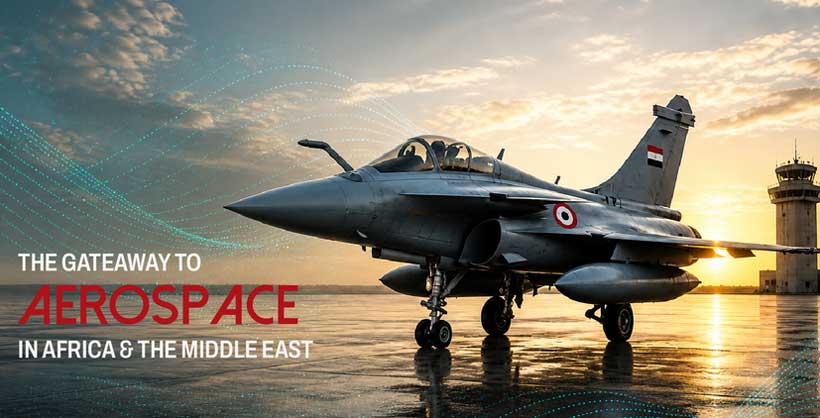








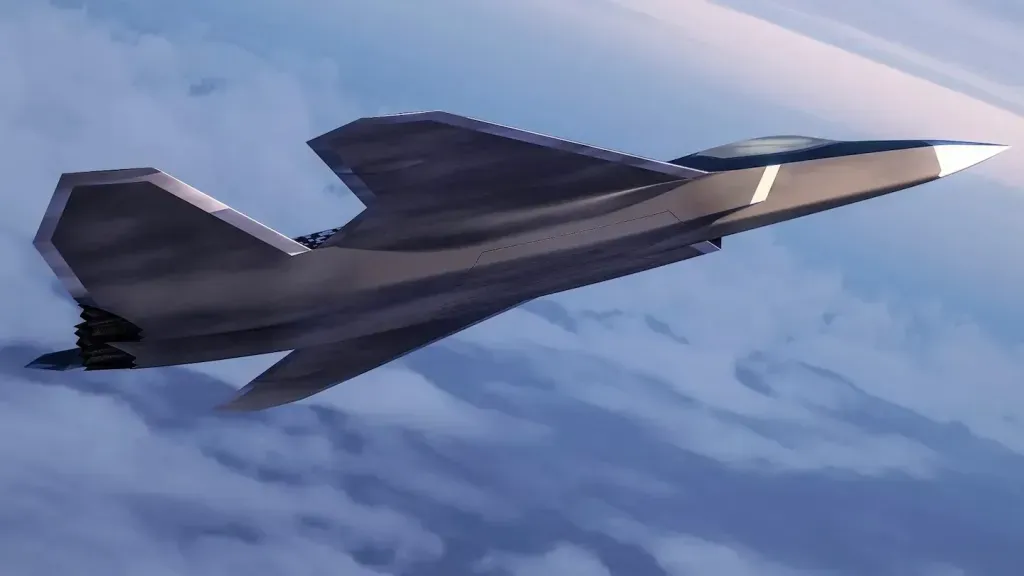


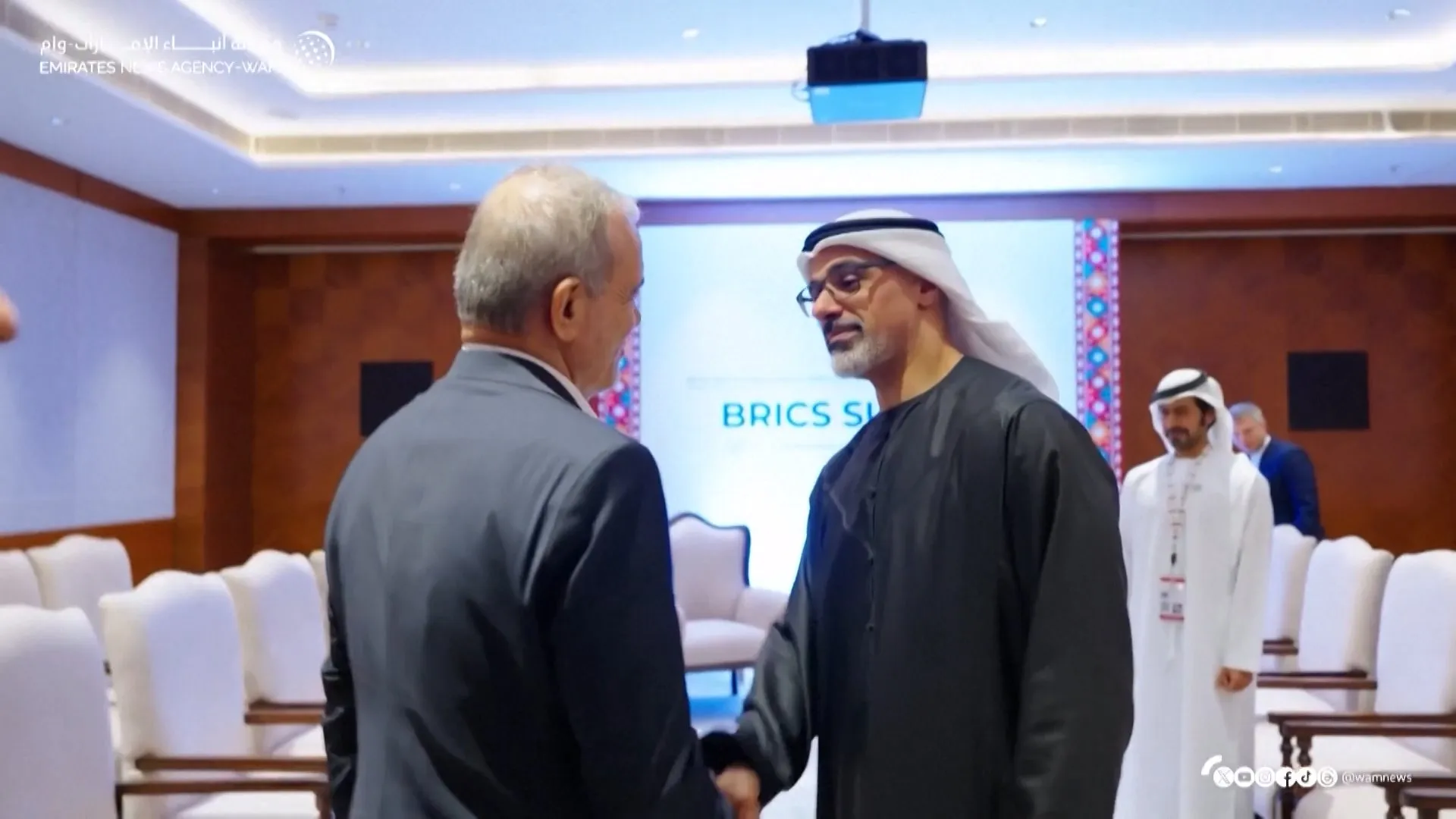
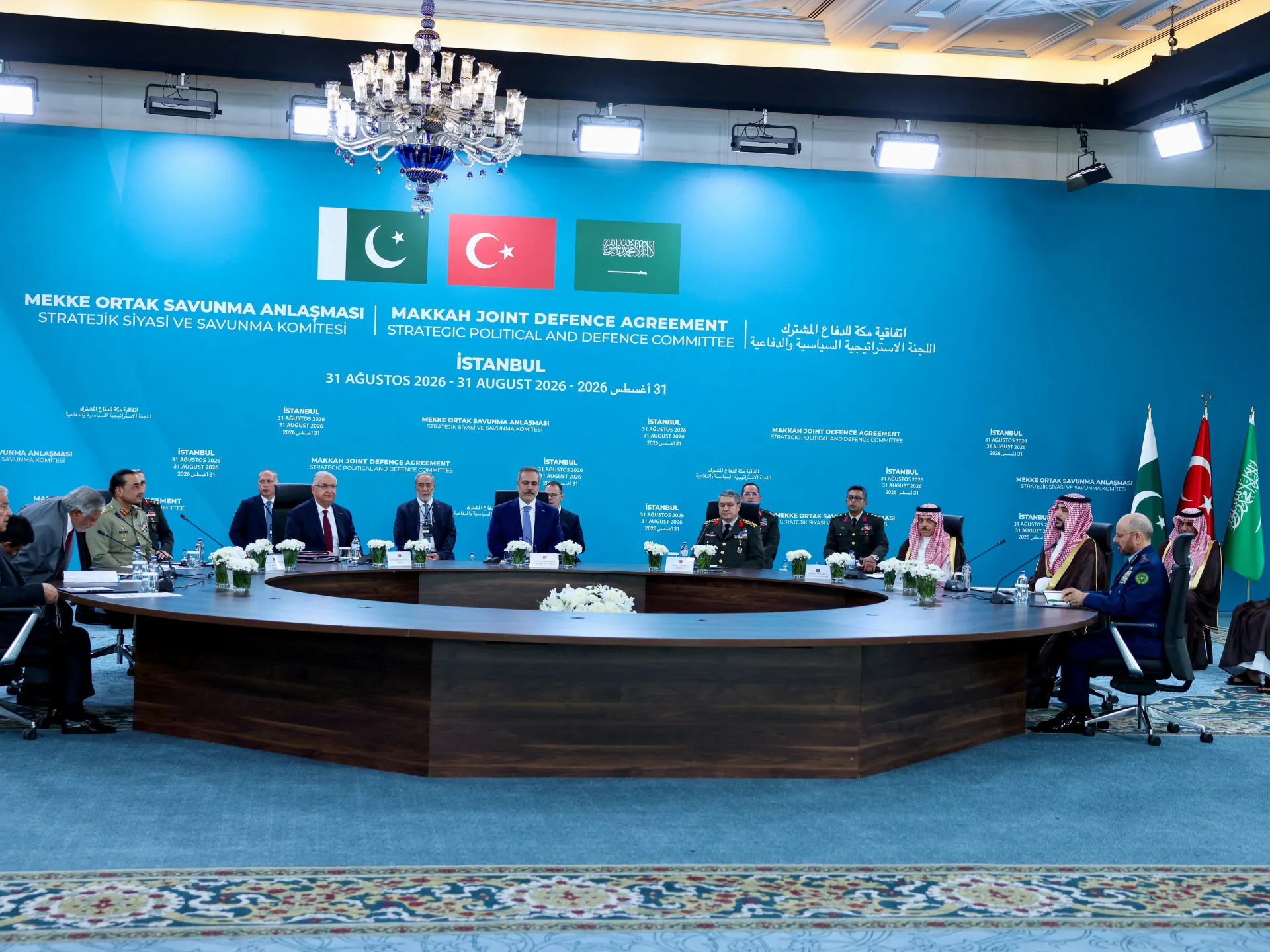

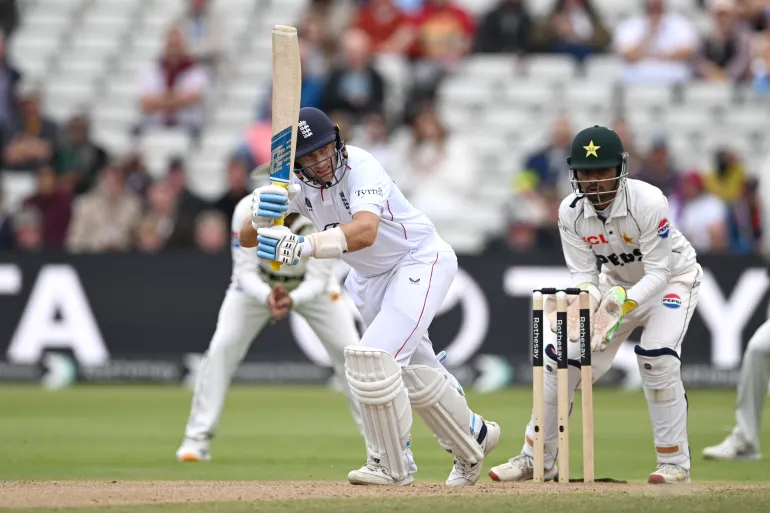


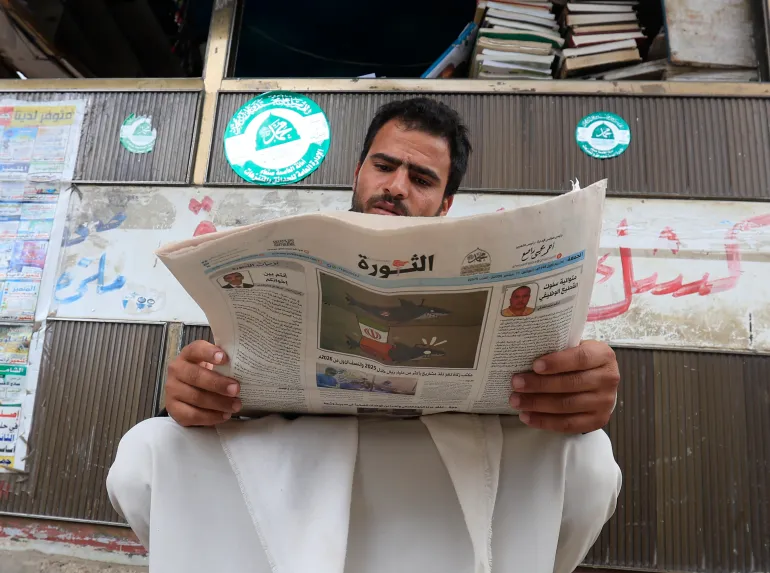



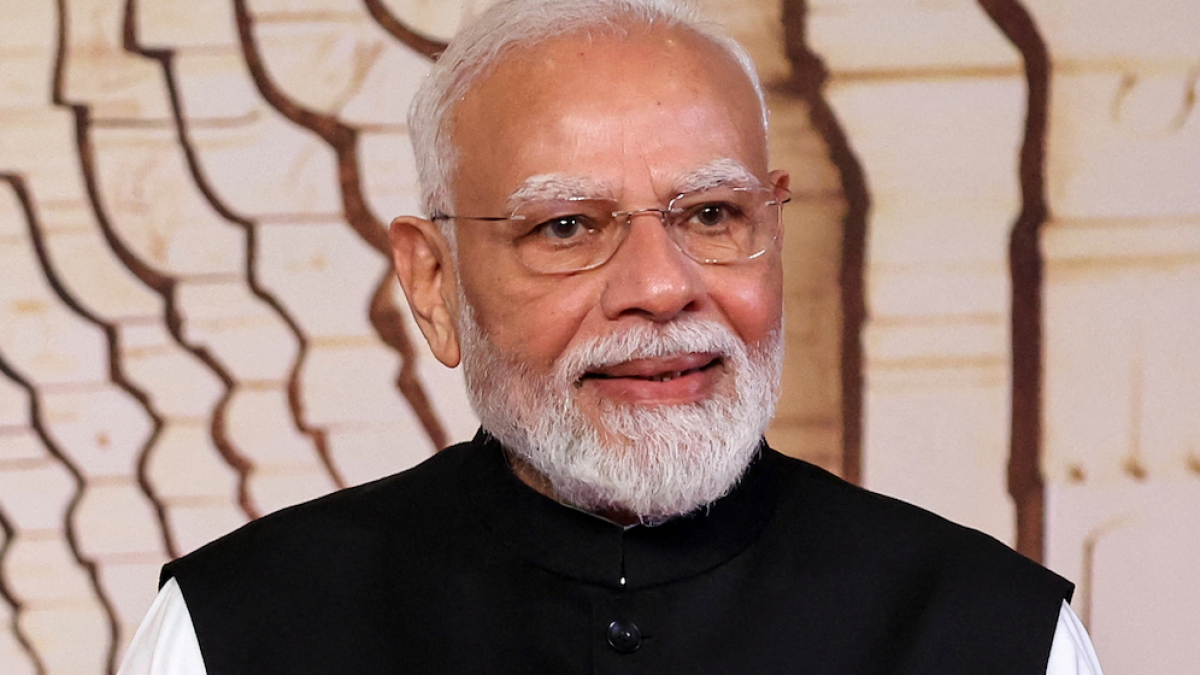
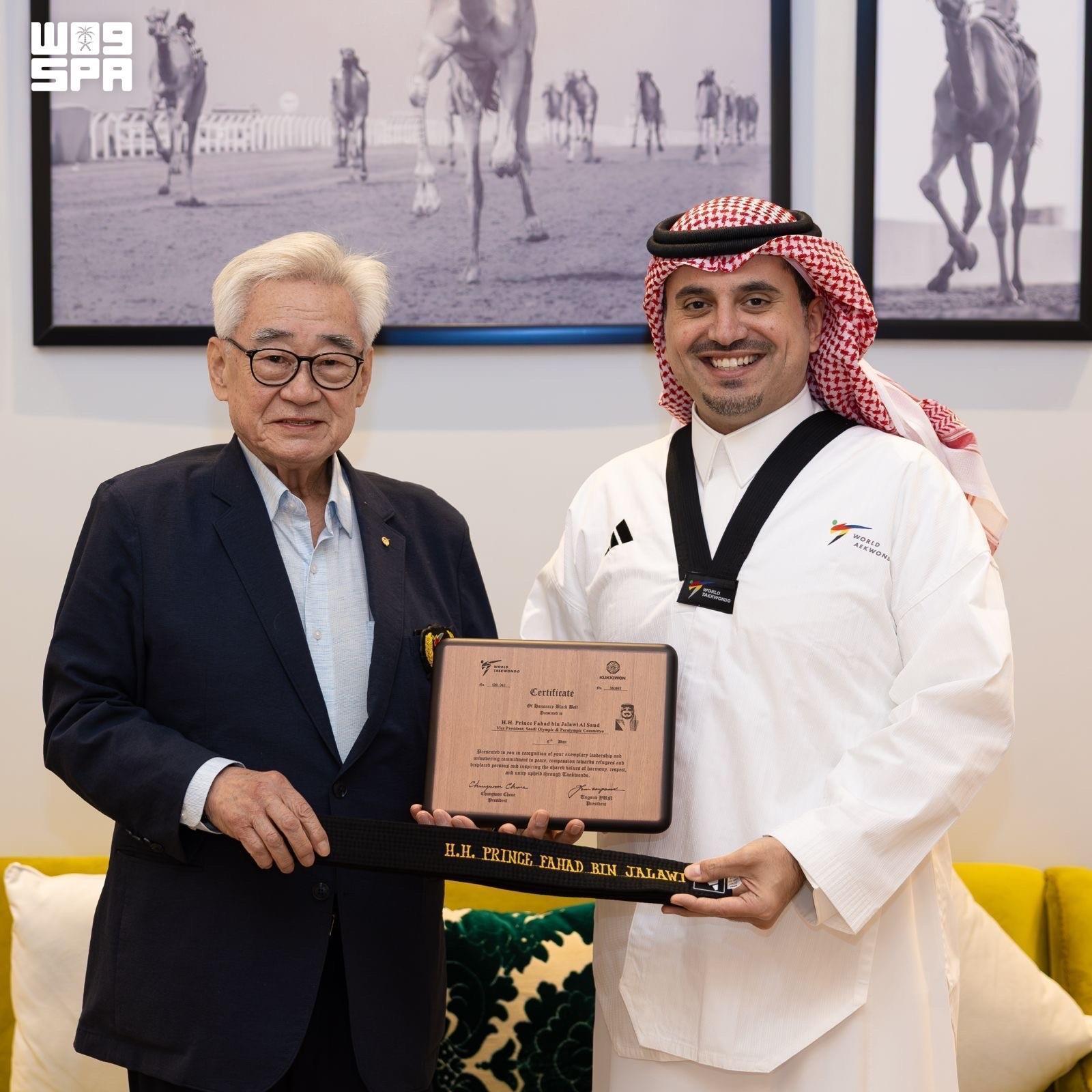


![NCSIST - Tien Kung III Air Defense Missile & Hsiung Feng III Anti-Ship Missile Live Firing [480p] thumbnail](https://i0.wp.com/i.ytimg.com/vi/uPq4iC70U0Y/hqdefault.jpg?w=640&ssl=1)


