Discover the latest happenings and stay in the know with our up-to-date today news coverage. From breaking stories and current events to trending topics and insightful analysis, we bring you the most relevant and captivating news of the day.
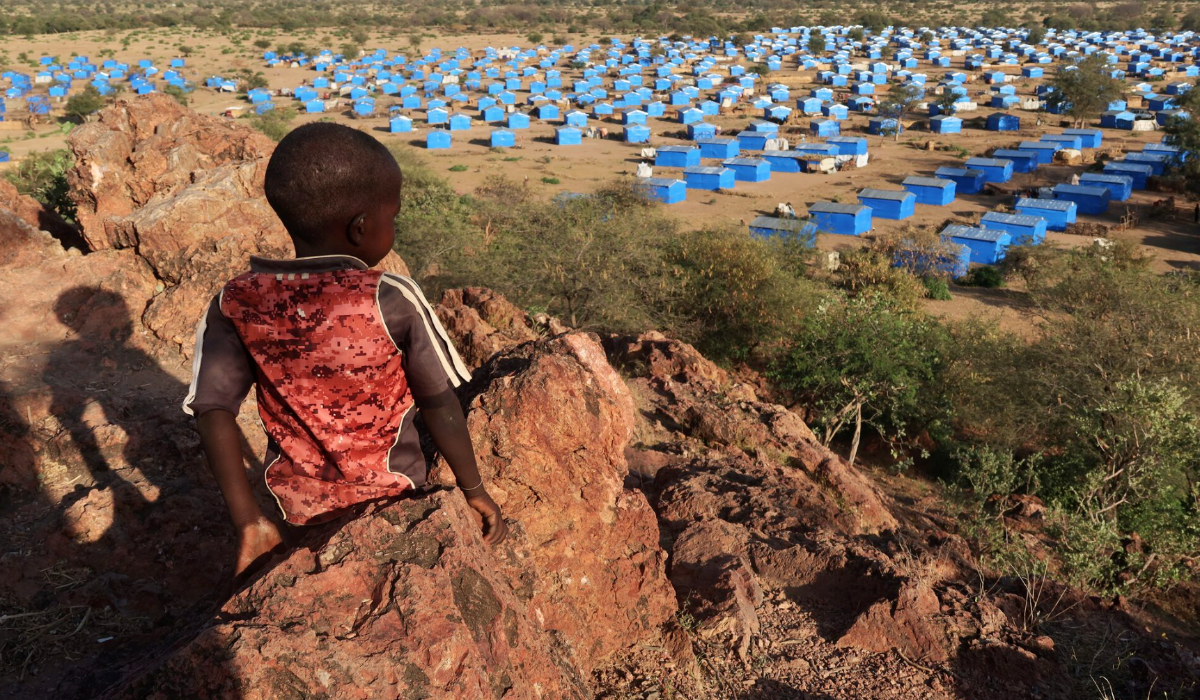
KHARTOUM: The World Food Programme’s funding for Sudan — the world’s largest hunger crisis — has fallen by about half this year, its acting head told Reuters, as war drives more people into hunger while the regional crisis raises prices and aid budgets plummet.
Speaking from the Darfur region after a trip across the country, acting Executive Director Carl Skau said that while access had represented humanitarians’ largest obstacle in the past, now “we have (a) presence that we are not fully utilising because of the lack of funding.”
The gap to sustain current operations was just short of $300 million, he said.
This year, we’re about half what we were in terms of funding last year, says Carl Skau, Acting executive director of The World Food Programme
“This year, we’re about half what we were in terms of funding last year,” Skau said. Last year, the agency received $645 million, but almost three-quarters into this year funding is only at $206 million.
The war between Sudan’s army and the paramilitary Rapid Support Forces has devastated wide swathes of the country, displacing up to 14 million people, ruining harvests and decimating the economy.
Almost 20 million people face hunger in Sudan, but budget cuts have forced the agency to focus efforts on the 5 million most in need, of whom it has recently scaled up to reach 4 million people.
Even then, the organization, the UN’s largest by budget, is forced to make difficult decisions.
In Tawila, North Darfur, the makeshift home to about 1 million people, the agency is able to reach everyone monthly but with only a half ration that covers two weeks’ food, Skau said.
“It’s not clear how they really are surviving the other two weeks,” he said.
In El-Obeid, the central Sudanese city where about 1 million and counting have sought refuge since the start of the war in April 2023, the agency is only able to provide help to those who arrived in the past several months.
“We are providing, but less and less. A year ago it was better because of resources,” Skau said.
agency recently began providing aid in the city of Al-Fashir, once home to 1 million people, where an RSF attack last year, “bore the hallmarks of genocide,” according to investigators. Skau said, “there is little sign of life having returned.”
His organization is not the only one struggling as major donors reduce aid. The International Organization for Migration said on Monday that emergency relief supplies for hundreds of thousands of people displaced by the war could run out within weeks unless donors step in with urgent funding.
The UN agency said supplies of shelter materials, sanitation items and emergency household goods are expected to run out by the end of September. The aid system itself can only keep functioning until December without more money.
Aid groups like IOM are struggling with funding shortfalls after the Trump administration — the US was previously the world’s biggest aid donor — cut billions of dollars in foreign assistanceto UN agencies and charities over the past year. Other major donor countries have also cut aid budgets, citing tight finances and higher defense spending.
“We simply can’t turn our back on the people of Sudan,” IOM Director General Amy Pope said in a statement, adding: “The entire humanitarian system could collapse within weeks if we don’t act now.”
IOM says 8.6 million people remain displaced within Sudan, while another 4.9 million have returned to their homes. The agency says it needs $15 million to keep the aid pipeline running for the rest of the year, supporting about 305,000 people. Without it, more than 100 humanitarian organizations would struggle to quickly deliver lifesaving aid.
Central banks’ record, price-insensitive gold buying is a more credible signal of the dollar’s structural trajectory than this year’s currency markets, because FX markets are structurally bad at pricing the discontinuous, wartime-style tail risk central banks are actually hedging — so this autumn’s calmer dollar should not reassure anyone that de-dollarization has stalled.
In June, the European Central Bank made an announcement most people missed: gold has overtaken US Treasuries as the world’s single largest reserve asset. Central banks bought 289 tonnes of it in the second quarter alone — a record for that quarter and five times Q1’s pace — with Poland’s central bank openly telling investors it was “buying the dip.” Here is the part that should stop you: gold’s price fell 22% between January and September. Central banks were never more convinced buyers of an asset than while it was crashing. Either the reserve managers are wrong, or currency markets — which show none of this urgency — are the ones asleep at the wheel.
Gold peaked at $5,589 an ounce on 28 January, the same month the dollar index hit a four-year low of 95.5 and the dollar’s share of global reserves fell toward its lowest level since 1995. Both moves reflected the same story: Fed rate cuts through 2025, a US debt load past $37 trillion, and BRICS states settling more trade outside the dollar. Then the picture split. Kevin Warsh, confirmed as Fed chair in May, signalled a hawkish pivot in August; the Iran war pushed oil and inflation higher through September, and markets began pricing a rate hike rather than a cut. The dollar index clawed back to 99.46. Gold fell to $4,330. Central-bank buying did not follow the price down — Poland alone added 82 tonnes this year toward a 700-tonne target, and a World Gold Council survey found a record 45% of central banks plan to buy more within twelve months.
State the gap plainly. Two signals, same underlying question — is the dollar-centred monetary order changing — and they disagree by a wide margin. The buying signal says yes, decisively: record quarterly purchases, gold displacing Treasuries at the ECB’s own reckoning, 74% of surveyed reserve managers expecting the dollar’s reserve share to keep falling over five years, and buyers adding tonnage through a 22% drawdown rather than fleeing it. The price signal says not yet: the dollar just posted one of its sharper rallies of the year, gold is down sharply from its high, and nothing in currency markets shows the kind of stress a genuine regime shift would produce.
Stay ahead of the geopolitical week.
MD Briefing delivers expert analysis across five global fronts — the Indo-Pacific, energy, geoeconomics, European security, and the Middle East — every Monday morning. Free.
The strongest objection to trusting the buying signal is a good one, and it needs to be taken seriously rather than waved away: foreign exchange is the deepest, most liquid market in the world, turning over more than $7 trillion a day. A few hundred tonnes of central-bank gold buying — perhaps $30–40 billion a quarter — is a rounding error against that. If professional currency traders, sitting on far more capital and far better short-term information than a handful of reserve managers, saw a serious de-dollarization story unfolding, it would already be in the price. Instead the dollar just rallied. On this view, central banks are not seeing something markets are missing; they are pattern-matching off 2022, when Russia’s $300 billion in reserves was frozen overnight, and over-hedging a tail risk that has not recurred and mostly will not.
That objection assumes FX markets and central-bank reserve committees are pricing the same kind of risk, on the same time horizon, and they are not. Currency markets are exceptionally good at pricing continuous, high-frequency variables — rate differentials, growth surprises, this week’s inflation print — because that is what moves flows daily. They are structurally poor at pricing discontinuous, low-probability events until those events occur: equity volatility did not price 2008 in 2007; sovereign spreads did not price the Russia reserve freeze in the weeks before it happened. A reserve freeze, a secondary-sanctions campaign, or exclusion from SWIFT-style settlement infrastructure is exactly that kind of event — binary, rare, and catastrophic for whoever it hits — which is precisely why Poland’s central bank governor, Adam Glapiński, described his buying not as a trade but as insurance: reserves that keep the state secure “under all circumstances, including wartime, which of course we’re not expecting.” That is not the language of someone chasing momentum. It is the language of someone who manages the one asset class that keeps its value if their country is ever cut off from the dollar system, and who would rather hold it and be wrong for a decade than not hold it and be wrong once.
The buying pattern itself supports that reading. Momentum money sells into a 22% drawdown; insurance money adds to it. Central banks did the latter through the first half of this year, which is the behavioural signature of a structural reallocation program with a fixed multi-year target — Poland’s is explicit, 700 tonnes — not speculative flow riding gold’s rally. Meanwhile the dollar’s autumn recovery has an identifiable, largely cyclical cause: a new, more hawkish Fed chair and a war-driven oil shock forcing a rate-hike repricing. Neither event reverses the debt trajectory, the BRICS settlement trend, or the reserve-freeze precedent that pushed the dollar to a four-year low in January. A rally built on this year’s Fed chair and this year’s war is not proof that last year’s structural story is over; it is evidence that a cyclical force is currently strong enough to mask it.
The Scenarios
Base case (55%): The gap persists rather than resolves. The dollar holds most of its autumn gains through the current rate-hike cycle, gold range-trades below its January peak, and central banks keep buying at a steadier, slower pace toward stated targets like Poland’s 700 tonnes. Nobody is “proven right” on any particular Tuesday, because reserve diversification is a decade-scale hedge, not a trade with a catalyst date. This is the least satisfying outcome for anyone wanting a verdict, and the most likely one.
Downside case (for dollar holders): A discrete trigger — a fresh reserve-freeze or secondary-sanctions episode, plausibly connected to the still-live US-Iran war spilling into action against a third country’s assets, or a shock to Fed independence under a more political Warsh chairmanship — crystallizes the exact tail risk central banks have been hedging. Gold spikes back through its January high, the dollar index breaks below its 95.5 low, and the gap closes in weeks rather than years, vindicating the reserve managers all at once and catching FX markets flat-footed exactly as the theory predicts.
Upside case (for the dollar): The Iran war resolves, Warsh’s rate hikes cool inflation without a recession, US fiscal metrics stabilize, and BRICS local-currency settlement growth stalls on friction between its own members. Central-bank gold buying does not reverse but plateaus as reserve managers hit conventional diversification ceilings — most target 15–20% of reserves in gold, not open-ended accumulation. The gap closes gradually as price drifts up toward the buying signal over several years, with no crisis required to force the reconciliation.
The Takeaway
The dollar’s calmer autumn is not evidence the de-dollarization hedge was a mistake; it is evidence that currency markets and central-bank reserve committees are pricing two different things on two different clocks, and only one of those clocks rings in a crisis. Central banks bought through a 22% drawdown because the point of the position was never this quarter’s return.
Watch for: the World Gold Council’s Q3 2026 Gold Demand Trends report, expected in early November. A third consecutive quarter of buying that ignores price direction will confirm this is policy, not opportunism — and the moment currency markets have to agree with that policy will not be a quiet one.
North Korea, enjoying support in the stands, were up 7-0 by half-time and are the favourites for the gold.
Published On 14 Sep 202614 Sep 2026
North Korea’s formidable women’s football team, cheered on by several hundred pro-Pyongyang fans in Osaka, Japan, launched their Asian Games campaign with a 10-0 hammering of Bangladesh.
The North Koreans have enjoyed stunning international success at the youth level and start among the favourites for gold in Japan.
Recommended Stories
list of 4 itemsend of list
They were far too hot for Bangladesh to handle and were seven goals ahead by half-time on Monday.
Striker Ri Song-a, who was born and raised in Japan, was in North Korea’s starting lineup and scored in the second half.
North Korea were cheered on by a large group of red-clad fans, who sang and chanted throughout the match.
The men’s and women’s football teams were welcomed by supporters waving flags as they arrived for the games last week wearing white blazers and pink ties.
More than 100 North Koreans are set to compete in 14 sports at the games, which take place in Nagoya-Aichi and officially open on September 19.
North Korea suspended participation in international sporting competitions during the COVID-19 pandemic, but returned at the Asian Games in China in 2023 and also took part in the Paris Olympics.
North Korea’s women face South Korea in a Group F grudge match on September 21.
The men’s team begin their campaign against China on Wednesday.
North Korean fans cheer for their team during the women’s group B football match [AFP]
America’s nuclear weapons deterrent and how it is controlled is increasingly critical in the face of the rapidly-expanding arsenals across multiple adversaries. A new fleet of E-4C nuclear-hardened survivable airborne operations center aircraft is now in development, as is the U.S. Navy E-130J, which will provide next-generation communications with nuclear ballistic missile submarines deep beneath the waves. Focus is also turning to a mission that’s dedicated to emergency communications with the U.S. nuclear forces in times of crisis, a role known as Operation Looking Glass, which is also poised for updating under a program dubbed Looking Glass-Next.
The comprehensive modernization of America’s nuclear strike muscle involves three major elements – new B-21 Raider stealth bombers, the LGM-35A Sentinel intercontinental ballistic missile (ICBM) program to replace Minuteman IIIs, and new Columbia-class nuclear ballistic missile submarines. A fourth facet that ties all these new elements, as well as existing ones, together is the next generation nuclear command, control, and communications (NC3) architecture. It securely connects nuclear weapons systems to decision-makers. Without it, America’s nuclear deterrent isn’t a deterrent at all.
A USAF E-4B assigned to the 595th Command & Control Group at Offutt Air Force Base, Nebraska. USAF/TSgt Codie Trimble
America’s nuclear modernization is set against a backdrop of rapidly-developing nuclear strength across adversaries and pacing threats, which could threaten not only U.S. fighting forces, but also the existing aging NC3 infrastructure. This could impede the collective responsiveness and effectiveness of the American nuclear enterprise. For example, a coordinated attack on NC3 could degrade the National Command Authority chain, which could prevent communications that are necessary to conduct a retaliatory strike.
If fixed underground command posts are targeted and rendered inoperable, the current strategy would involve turning to a set of highly-survivable air assets that are designed to be on hand to execute emergency war orders. This includes the U.S. Air Force’s E-4B National Airborne Operations Center (NAOC) “Nightwatch” aircraft, and the E-6B Mercury that is operated by the U.S. Navy.
A major recapitalization effort is already underway for the NAOC E-4Bs, which are being superseded under the E-4C Survivable Airborne Operations Center (SAOC) contract. It is being led by defense contractor SNC. The new SAOC aircraft are based on the far more modern 747-8i, and are planned to have a much broader mission set than the four E-4B Nightwatch types they are set to replace, as you can read more about here.
The Navy’s E-6B Take Charge and Move Out (TACAMO) aircraft have a primary role of strategic connectivity with the ballistic missile submarine fleet. These converted 707s also execute another mission known as the Airborne National Command Post (ABNCP), more recently renamed “Looking Glass.” For this they are manned by U.S. Air Force missileers and U.S. Strategic Command (USSTRATCOM) battle managers who are responsible for running the airborne nuclear NC3 systems.
An E-6B Mercury flies over U.S. and UK submarines during a joint exercise. U.S. Navy
The joint service team on Looking Glass mirrors some operations performed by USSTRATCOM’s underground command posts, and a small portion of what the NAOC executes. The Looking Glass mission is really focused on performing an airborne backup mission solely for USSTRATCOM to ensure another means of communicating with fielded nuclear bombers, their assigned tankers, ICBMs and deployed nuclear submarines. It is best known for its ability to supply airborne communications connectivity to the USAF’s ICBM force on the ground and can command remote launches of those weapons if necessary.
Additional NC3-related modernization is coming on the heels of SAOC, with the new E-130J set to assume the Navy’s TACAMO role from the ageing E-6Bs, assuming strategic connectivity for nuclear ballistic submarines. It means that at some point roughly two-thirds of the E-6 current mission will go to the new E-130J aircraft – raising the question of what will fulfill the critical Looking Glass mission.
Since the E-130J is not planned to take on the Looking Glass role, the USAF is in the early stages of what’s dubbed Looking Glass-Next (LG-N), which presents the future pathway for USSTRATCOM’s mobile contingency operations. This could take on a number of forms, including NC3 communications functions being increasingly moved to space-based assets and more distributed operations across the ground, although an air platform is still likely to form a major part of the overall capability.
The need to modernize America’s NC3
Brian Golden is a retired USAF colonel who intimately understands nuclear command and control (NC2) and the associated NC3 equipment and processes from both a service and industry perspective. As a subject matter expert for SNC, he draws on his extensive experience as a former E-4B NAOC commander and he commanded much of the USAF’s multi-domain NC3 systems, including the Airborne Launch Control System onboard the current E-6B Looking Glass. He is also extremely familiar with all the nation’s continuity of government and continuity of operations missions for both Congressional and executive branches of the U.S. government.
“Everyone referred to the nuclear triad as the platforms that were controlled through the NC3 architecture,” Golden told TWZ during a detailed discussion. “Those platforms received their messages and executed their missions. But this isn’t just about that platform triad. The U.S. nuclear enterprise has four primary pillars, and nuclear command, control, and communications is a critical part of it. Without a robust NC3 system, it’s like having a brand new Bugatti Veyron but without the keys! It looks awesome on the driveway, but you can’t drive it.”
Secretary of War Pete Hegseth working aboard an E-4B Nightwatch. USAF/SrA Madelyn Keech
Golden explains that the current NC3 enterprise consists of a series of exquisite systems that are extremely reliable, but that are in need of modernization to stay ahead of the steepening threat curve, and stay in front of supply chain constraints. “What we have currently is very reliable, robust, and very survivable, but it can be difficult to maintain some of our legacy systems. Additionally, as threats evolve we must ensure our communications pathways also evolve.
“Our nation’s industrial base engineers figured out extremely robust methods of nuclear communications when these systems were fielded. Looking at the overall command and control [NC2], and then the NC3 communications pathways, any new systems that we introduce must be sustainable, scalable and modular.”
The U.S. nuclear enterprise is facing greater threats than ever with adversaries challenging U.S. nuclear infrastructure in multiple domains: space, cyber, ground, air. Because of this, NC3 demands a continuous process of improvement.
Going forward, the NC3 enterprise will likely need to integrate upgraded proven legacy systems with all-new technology. “Sometimes the physics of radio waves may dictate the need for a legacy approach with upgraded systems, such as communicating with a submarine that’s very deep in the ocean.”
Golden’s view is that NC3 requires a layered, open architecture approach as modernization is evaluated. “Applying those same physics and then adding new layers such as artificial intelligence may determine a better way of doing things.”
Upgrading to SAOC
Golden points to the SNC-led E-4C SAOC program as a clear example of critical NC3 modernization, while emphasizing that the NC2 mission is far from being the primary role of the E-4B and its forthcoming successor. “Nuclear command and control is only a fraction of what the current NAOC does and what the future SAOC will do for our nation and our allies and partners.”
An E-4B Nightwatch at Yokota Air Base, Japan. USAF/A1C David S. Calcote
The E-4B initially featured just a handful of communications systems, which have grown over time, leading to what Golden calls the “King Kong” of communication capabilities today. The E-4 is not a battlefield communications platform, its mantra is all about supporting Presidential-level requirements across the board. It does possess an extensive NC3 suite, but it also serves the White House Communications Agency (WHCA) and the Department of Homeland Security, through the Federal Emergency Management Agency (FEMA), in many other crisis roles. Another mission the E-4B fleet performs is to safely transport the Secretary of War on trips within the United States and abroad.
The E-4B NAOC and Looking Glass are two complementary tiers of the same survivable architecture. The NAOC (and future SAOC) is designed to anchor national-level decision-making and government continuity from the very top, while Looking Glass provides USSTRATCOM with the dedicated airborne command and battle-management capacity required to direct forces. Both roles are critical and non-negotiable.
An artist’s rendition of the new E-4C SOAC. SNC
“The new E-4C SAOC, like the E-4B before it, will deliver an expansive communications suite and increased capacity supported by a larger fleet,” Golden explains. “SAOC is built to ensure the President and national leadership can direct the entire country through any crisis. Looking Glass supports an equally vital and highly specialized mission. It is dedicated to USSTRATCOM’s operational needs, connecting directly to bombers, ICBMs and submarines. Attempting to merge these unique missions on a single airframe would compromise the unique, essential role that each was created to perform.”
Looking Glass-Next
The Looking Glass role and the platform that fulfills it is not classified as a national-level mission. As Golden alluded to earlier, it’s not assigned to the Chairman of the Joint Chiefs or to the Secretary of War. It’s exclusively assigned to USSTRATCOM; however, without the Looking Glass mission being upgraded soon, America has a gaping hole in its nuclear architecture.
An E-6B Mercury flying over Colorado. USAF/Greg L. Davis
The commander of USSTRATCOM is the customer and ultimately the decision-maker when it comes to Looking Glass-Next, and the USAF has been tasked by the Secretary of War to develop and field it. SNC is looking at several options for the requirement, with some sort of air platform at its core, which Golden refers to as an “E-6C.” He endorses that the current E-6B is one of the “cogs in the wheel that has to be replaced,” but adds that this doesn’t mean the next-generation Looking Glass is just an aircraft.
“At SNC, we have significant expertise and experience with mission system integration,” says Golden, adding that SNC is evaluating what he calls “aggressively creative options,” for the modernization requirement. He further noted that the modern threat is driving a requirement for Looking Glass-Next to be very difficult to target and must be dispersed.
“Having an aircraft as the only option for this USSTRATCOM mission is a legacy mindset,” Golden states. “We have advanced multi-domain capabilities, including numerous space capabilities available through the Sierra Space Corporation. Future mission resilience requires a creative and integrated approach.”
“We believe a creative approach to provide NC3 options will ensure a robust, reliable, survivable and cost-effective solution.”
Golden endorses this approach to creativity and development and indicated that SNC will continue to inform and respond to the ongoing Looking Glass-Next requests for information that may result in a future program.
One of the 747-8is that is being modified by SNC in Dayton, Ohio, to become an E-4C SAOC. SNC
“SNC has leaned heavily into the nuclear command, control, and communications architecture and it’s a natural fit for us, building on our work with the Department of War and our subcontractors on the E-4C SAOC. Our Looking Glass-Next responses and inputs will leverage relevant work and experience gained from SAOC, but we are also focused on being creative. We’re small enough to be agile, but big enough to deliver. That’s why we think we’re very well positioned in the NC3 space.”
The majority of SNC’s work on the E-4C SAOC is being completed at the NC3 Center of Excellence, housed in the Aviation Innovation and Technology Center (AITC) in Dayton, Ohio.
Golden believes the timing couldn’t be better to deliver bold and creative NC3 solutions. “The USAF is already asking the right questions, and industry is really able to innovate, which will result in a transformational era for nuclear command, control and communications.”
RIYADH: The performing arts in the Kingdom is undergoing a transformation driven by cultural investment, new venues, international collaboration, and a growing network of local professional and academic institutions, making it tempting for young Saudis to pursue.
While academic study in the field is comparatively new, Saudi theatrical production is not. The Kingdom has long produced recognized theater throughout the Gulf and regionally, but many practitioners studied overseas.
Today, Saudi Arabia is localizing the education of its creative talent through academic and professional training in the country.
Since 2020, Saudi has dedicated a Theater and Performing Arts Commission to regulate and develop a sector encompassing theater, dance, circus, improvisational comedy, street performance, ballet and opera.
Not only through training but also national competitions and workshops.
Undergraduate programs are offered at King Saud University, Princess Nourah University and most recently the Riyadh University of Arts. While the Royal Institute of Traditional Arts provides postgraduate and diploma-level education, Scene Institute, and Ithra have further professional training.
As Saudi universities begin their academic year, many students are continuing their conventional degrees. Other creatives are pursuing their passions academically, making the most of the opportunities the Kingdom has to offer.
Osama Almutairi, a final-year Bachelor of Arts in Theater student at King Saud University, spoke to Arab News about the feasibility of his academic choice.
“My love and passion for the arts, particularly theater, naturally led me to this specialization.”
Theater was not his first choice. “I initially considered studying political science but was accepted into theater as part of the first cohort at the College of Arts,” he said.
“Despite my initial interest in pursuing a conventional degree in the humanities, the continuous development of Saudi Arabia’s arts sector encouraged me to take this step.”
Saudi Arabia has been taking proactive measures while localizing performing arts scholarships.
The Ministry of Culture has been running a fully funded Cultural Scholarship Program that supports creative specializations at 278 approved institutions across 15 countries, including performing arts.
One beneficiary is Majed Al-Muwallad, an actor and theater teacher at Afaq Academy, who completed his Bachelors in Theater Studies at Royal Holloway, University of London.
“I travelled to London in 2021. During my studies, I participated in several theatrical productions, ranging from small projects to larger, more academically oriented university productions.
“I had loved acting since I was about 14 years old. I loved films, acting, stories and dramatic texts. When the scholarship opportunity appeared, I thought: ‘Why should I let this opportunity pass?’ I decided to take it.”
Al-Muwallad said he left a job at Aramco to pursue his childhood dream, although members of his community were uncertain about his unconventional choice.
“They were not sure about the professional opportunities available or where such a career could lead,” he said.
“It was a major career change, and leaving Aramco to pursue acting was an unfamiliar idea. People do not usually leave Aramco to become actors,” he added.
Now that he has graduated and is teaching Saudi youth to act, Al-Muwallad believes it was a good decision.
He is even considering pursuing a master’s degree in the performing arts, specifically in performance design. For him, the opportunities are not limited to acting. He hopes to build on his studies in costume, lighting and set design.
“Every theatrical production needs design. It requires a set, costumes and lighting. Rather than limiting myself to the acting and performance side of theater, I would like to develop expertise in design and contribute to the audience’s overall visual experience.”
Almutairi believes perceptions will continue to change as Saudi artists demonstrate the value of academic training.
“The future is wide open for the arts and artists. Society’s perception will continue to change as academically trained Saudi artists demonstrate their ability to represent their communities and country.
“This change is already becoming evident, with society playing an increasingly important role in supporting the success of Saudi artists nationally and internationally.”
For Al-Muwallad, theater should be approached holistically — not only as a career or degree, but also as a journey of self-discovery.
“I learned a great deal before I even began teaching the students. I had to learn how to communicate theatrical knowledge and present information in a way students could understand.
“The experience has taught me a lot about communication and how to identify students’ talents. Theater teaches communication and helps students discover themselves.”
Al-Muwallad encourages young people in Saudi Arabia to pursue their passions academically. “My advice is not to treat university as merely a stage that you pass through and finish,” he said.
“Students should engage with the experience deeply and benefit from it in every possible way.”
He said soft skills can be learned through theater, including communication, emotional intelligence and teamwork.
“Another piece of advice we were always given in London was to always ask questions. A question produces an answer, and that answer often generates another question.
“Asserting that openness and eagerness to learn is vital to a good actor, theater itself is founded on curiosity.
“Students should watch a wide variety of theater and explore different traditions, including Arab, English, Greek and Russian theater, as well as influential approaches such as Russian (theatre practitioner Konstantin) Stanislavski’s.”
On Saudi having a relatively emerging academic orientation to performing arts, Almuwallad sees it as a big opportunity rather than a challenge or a barrier.
“Saudi Arabia is still developing in this field, which means students now have an opportunity to participate in shaping it. What they create can become visible and make an impact relatively quickly.”
“Students should recognize that they are important. They should not treat themselves as secondary characters in this development. They have the opportunity to play a central role because the field is still new.”
For Saudi youth choosing an arts degree over a safer, conventional path, there is an opportunity to turn passion into a profession, and ultimately shape the nation’s creative scene.
GENEVA: The United Nations rights chief called Monday for countries and “frontier” artificial intelligence companies to act urgently to rein in a technology he warned posed “unprecedented risks”.
In a letter sent to countries and AI developers and shared with the media, Volker Turk cautioned that the world was “on the cusp of irreversible change, affecting not just us but generations of humanity to come”.
“The current race towards ever more powerful AI is a step change towards greater existential risks to every aspect of our lives.”
He sent the letter at a time when worries over the risks of “superintelligent” computer systems have been on full display, after a researcher publicly resigned from leading AI firm Anthropic over fears that the technology could escape human control.
Another Anthropic employee, who did not resign, stated publicly that “we really do earnestly believe AI could kill all humans”, and that he thought the chances were greater than “10 percent within the next decade”.
Amid the outcry, Anthropic CEO Dario Amodei called Saturday for AI companies to “pace the frontier” — or coordinate a slowdown in the technology’s development, with his chief competitors, xAI’s Elon Musk and OpenAI’s Sam Altman, publicly supporting him.
“In today’s world, we are almost entirely reliant on a small number of powerful companies to make the right choices on Al development for all of humanity,” Turk lamented.
“I call on States and companies to mobilise urgently through multilateral fora to chart a path for action to govern advanced, frontier AI models, grounded in international human rights law.”
Tehran, Iran – Another attempt to clinch a deal between Iran and Oman to restore some traffic to the Strait of Hormuz has been set back by a lack of regional consensus on the future of the waterway.
Officials from Iran, Iraq and the Gulf Cooperation Council (GCC) nations – minus objecting Bahrain – were scheduled to meet in Oman’s port city of Salalah on Monday to confer on new temporary routes in the Strait of Hormuz amid Tehran’s ongoing hot-and-cold war with the United States.
Recommended Stories
list of 4 itemsend of list
On Sunday night, the region’s officials announced the postponement of the meeting, without giving a new date. None of the stakeholders gave any indication that the postponement was directly linked to recent Houthi and Iraqi militia attacks on Saudi Arabia.
However, Iran’s Ministry of Foreign Affairs said Saudi objection was the reason for the postponement, without providing further details.
US media outlets Axios and CNN reported that Saudi Arabia had submitted amendments to the Iran-Oman proposal for Hormuz because it had concerns that the wording would establish a new status quo which would be unacceptable to Riyadh.
It comes days after Saudi Arabia shut down its critical East-West oil pipeline – the kingdom’s key route for energy exports – after drone attacks in the area originating from Iraq. US President Donald Trump said these attacks were likely conducted at Tehran’s behest.
Saudi Arabia has also faced repeated attacks by the Houthis, who took control of Yemen’s Red Sea coast over the weekend.
Hours after the Salalah meeting was postponed, the Saudi civil defence issued alerts for Abha, Khamis Mushait, Jazan and Najran in southern and western parts of the kingdom. The Houthis claimed to have fired dozens of ballistic missiles and drones at military facilities in Khamis Mushait, in retaliation for air strikes across Yemen, which it blames on Saudi Arabia.
With continued disruptions to the passage of vessels through the strait, Iran has signalled that it intends to continue pursuing the bilateral agreement with Oman over Hormuz, which it said was finalised last month.
“In consultation with Oman, in the next step, we will make a decision on how to announce or register the agreement,” Ministry of Foreign Affairs spokesman Esmaeil Baghaei told reporters during a weekly news conference on Monday.
When the two countries initially advanced the bilateral deal, Trump threatened to bomb Oman if it “gets in the way” of US talks with Iran.
Ali Vaez, deputy director of the Middle East and North Africa programme at the Crisis Group, told Al Jazeera that Tehran wants to use its leverage over Hormuz for regional legitimacy – and ultimately to pressure the US.
“The broader the regional buy-in, the harder it becomes for the US to dismiss the arrangement as an Iranian diktat,” he told Al Jazeera.
GCC states, suffering from a sharp decrease in energy receipts, want ships moving and their economies insulated from a war they neither started nor can end. But Vaez said Washington is unlikely to lift the blockade on Iran even if the region blesses the arrangement between Muscat and Tehran.
“[The US] will find it much harder to sustain a policy that its own partners increasingly see as perpetuating the crisis,” Vaez said
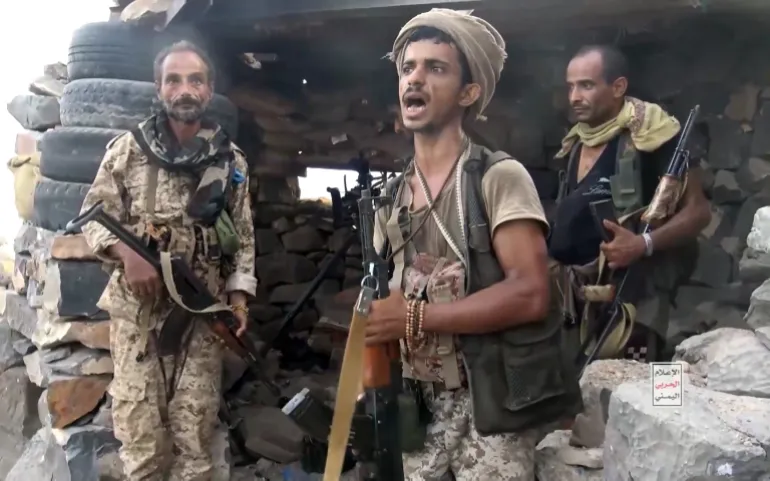
Houthi fighters stand guard at a seized camp during an offensive in the port city of Mocha, Yemen [Handout/Houthi Military Media Centre via EPA]
Temporary entry and exit
The Omani-Iranian planned agreement envisions temporary entry and exit routes for commercial vessels in the strait, with Tehran repeatedly stating that this would not mean that the Strait of Hormuz has reopened.
Iran and Oman are the only two countries with territorial waters in the Strait of Hormuz. The proposed inbound corridor reportedly goes through Iranian waters, while the outbound corridor mostly passes through Omani waters, with small parts still in Iranian territory.
During Monday’s scheduled meeting, Iran and Oman were supposed to share precise maps and discuss the details of the routes with GCC members Saudi Arabia, the United Arab Emirates, Qatar and Kuwait, and Iraq, which is outside the bloc. The deal could reportedly include voluntary tolls to fund navigation, environmental protection and search-and-rescue operations.
Bahrain, which has borne the brunt of Iranian attacks since the US-Israel war on Iran started at the end of February, said it would not participate in the forum since it would amount to “appeasement”. The Tasnim news outlet, affiliated with Iran’s Islamic Revolutionary Guard Corps (IRGC), claimed Israel pushed Bahrain to refuse participation.
How does Yemen fit in this picture?
The latest diplomatic movement comes after days of explosive developments in Yemen, when the Houthis, officially known as Ansar Allah, essentially took control of the Bab al-Mandeb strait and the Red Sea after a lightning offensive against government forces.
Thomas Juneau, assistant professor in the Graduate School of Public and International Affairs at the University of Ottawa, said the Houthi advances represent a significant gain for Iran. Its Yemeni allies’ position in the Red Sea offers Iran an important new bargaining chip in future negotiations with the US.
“The Houthis are not a simple arm of Iranian foreign policy. They operate largely based on their own interests, and do not take and execute Iranian commands,” he told Al Jazeera. “But Houthi and Iranian interests are largely, if not always fully, aligned. They cooperate closely on the basis of those shared interests.”
Juneau sees the ability for Iran and the Houthis to potentially partially block traffic in the Strait of Hormuz and the Bab al-Mandeb – two of the world’s most crucial maritime bottlenecks – would give them tremendous influence over the global economy, and thus the US.
The Houthis are trying to seize the opportunity to “institutionalise the de facto reality of their veto on maritime traffic” in the southern Red Sea and replicate partial Iranian success in doing the same in the Strait of Hormuz, Juneau said.
Iran has stressed that their allies’ gains in the Red Sea cannot be separated from the Saudi-led blockade and attacks on Houthi areas in Yemen since 2015.
“We know very well that continued war between Islamic countries in the region only has one winner, and that winner is no one but the Zionist regime, which is after persisting tensions and conflict in our region and between Islamic countries,” Iranian spokesperson Baghaei said.
Spanish manager has been appointed South Korea’s interim head coach following a disastrous World Cup campaign.
Published On 14 Sep 202614 Sep 2026
South Korea’s new interim football coach Robert Moreno has denied allegations that he relied on artificial intelligence during his last coaching role but admitted to using technology in his work.
Addressing his first news conference as the Taegeuk Warriors’ temporary coach on Monday, Moreno promised to make South Korean football fans “happy”.
The Spaniard was appointed as the Asian giants’ temporary coach following a disastrous few months for the team and the country’s football federation, during which on-field results and off-field controversies left the fans bitterly disappointed.
Moreno, who was forced to deny earlier this year that he used ChatGPT to prepare for games, will be in charge for friendly matches in the coming months.
He addressed allegations that he used artificial intelligence during his time in charge of Russian club Sochi, saying “It was a piece of news that is completely false and went viral.”
Moreno left the top-flight side in September 2025 after a poor run of results, and reports said he had heavily relied on ChatGPT in his role, even using it to decide between potential signings.
“Obviously, I use technology,” he said.
“Anyone who spends 10 minutes looking into it can see that everything has been taken out of context and put together to cause harm.”
The Korea Football Association (KFA) said Moreno could stay on for the Asian Cup in Saudi Arabia in January-February, “subject to an evaluation”.
Moreno named captain Son Heung-min in his squad for four upcoming home friendlies and said he wanted to put a smile back on South Korean fans’ faces.
“We’re going to try to do our work honestly and with the aim of making all Korean football fans happy,” said the 48-year-old, who is the first Spaniard to coach South Korea.
“Good matches, and trying to help the players.”
Moreno will lead the team against Ecuador and Uruguay in September and Venezuela and Uzbekistan in October.
South Korea had been without a coach since Hong Myung-bo quit following their shock group-stage exit from the World Cup in North America in June.
Son Heung-min led the South Korean team that was ousted from the FIFA World Cup in the group stage [File: Raquel Cunha/Reuters]
Hong’s departure did little to quell public outrage over the disappointing campaign and added fuel to pre-existing questions about how he was hired.
Police raided KFA headquarters last month as part of an investigation into Hong’s 2024 appointment.
The KFA also apologised for allegations that it provided sexual entertainment for foreign referees.
Moreno named striker Son, now in the United States’ Major League Soccer with Los Angeles FC, in his first squad along with Atletico Madrid’s Lee Kang-in and Bayern Munich’s Kim Min-jae.
Hong’s decision to leave Son on the bench in the first half of the decisive match against South Africa at the World Cup baffled and angered many supporters.
“We’re all aware of Son’s versatility,” said Moreno.
At least 51 people rescued as search operation continues off the island of Gavnos near Crete.
Published On 14 Sep 202614 Sep 2026
One person has died, 25 are missing and 51 people have been rescued after a boat carrying migrants sank off a Greek island near Crete, according to the country’s coastguard.
“Fifty-one were picked up by two boats that were in the area,” a coastguard spokesman said on Monday.
Recommended Stories
list of 3 itemsend of list
He said survivors had reported that 77 people were on board when the boat went down near the island of Gavdos.
Search and rescue efforts were ongoing, with four ships, boats, Frontex aircraft and a coastguard helicopter operating in the area, Greece’s public broadcaster ERT News reported.
The 51 rescued people were due to be brought to Crete, “where the prescribed procedures will be followed”, ERT reported.
After arriving in Crete, undocumented migrants generally face immediate arrest and temporary confinement before being transferred to closed detention camps on the Greek mainland. Under Greek law, individuals are subject to extended administrative detention, severe penalties and fast-track deportation.
Strong winds blowing through the area have been hampering the search operation, ERT said.
In late August, Greece’s ANA news agency published figures from the Ministry of Migration and Asylum that indicated that migrant arrivals in the country fell from about 61,000 in the year to August 2025 to 42,000 in the following 12 months – a decline of about 31 percent.
Greece’s conservative government in July suspended all asylum claims for migrants arriving by sea from North Africa for three months, a move it argued helped deter crossings.
The ban passed in parliament amid a surge in asylum seekers reaching Crete and after talks with Libya’s Benghazi-based government to stem the flow were cancelled in July.
The government remains at odds with regional authorities in Crete over a plan to build a permanent transit facility on the island. It is preparing draft legislation that would mandate imprisonment for people whose asylum claims are denied and require ankle monitors during a 30-day compliance period before deportation.
Authorities in Europe have tightened their immigration rules over recent years as far-right, anti-immigrant political parties have won increasing support throughout the continent.
Greece has been in discussions with Germany and several other European Union countries on setting up “return hubs” outside the bloc for processing migrants’ claims.
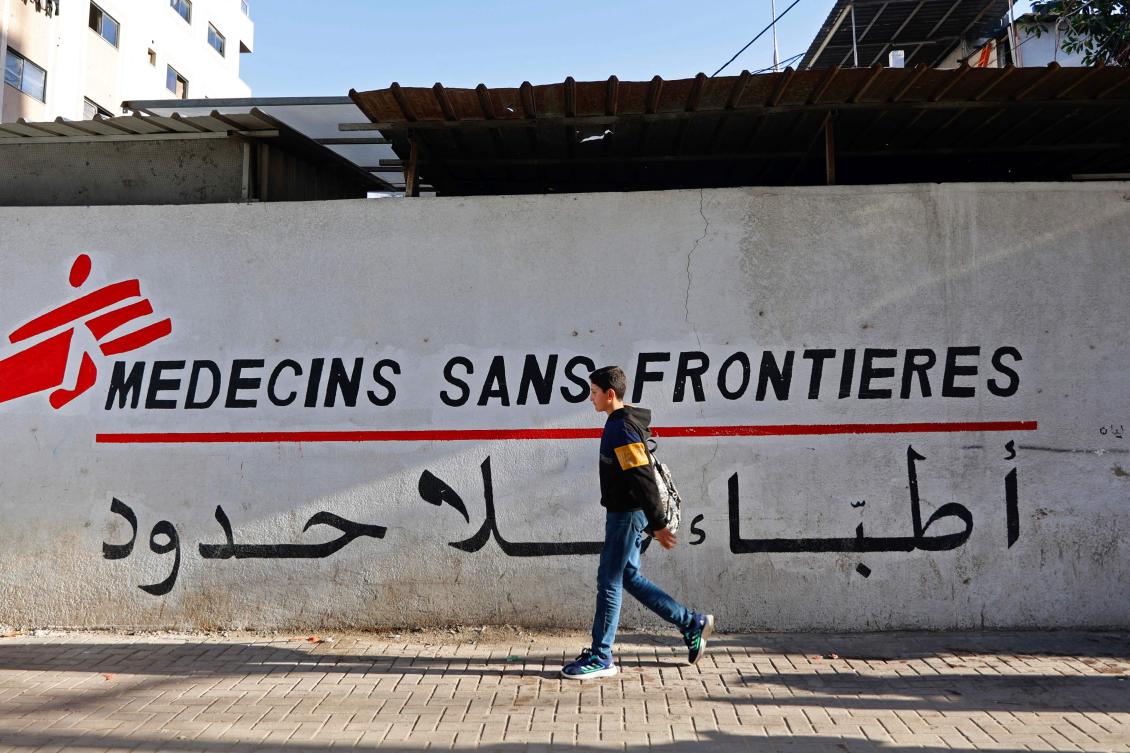
DUBAI: Medecins Sans Frontieres has rejected claims by Israeli authorities that it employed individuals with links to Hamas in Gaza, saying the allegations were only brought to the organization after the accused were killed.
“Medecins Sans Frontieres unequivocally refutes the allegations made by the Israeli authorities that we knowingly hired people with ‘ties to terrorism,’” MSF told Arab News in a statement.
“MSF would never knowingly employ anyone involved in military activities, which contradicts our core values and ethics. The MSF staff members whom Israel has alleged to have ‘ties to terrorism’ were only reported as such to our organization after they had been killed.”
On Friday, British newspaper The Telegraph revealed that Israeli lobby group UK Lawyers for Israel had written to British Home Secretary Shabana Mahmood, urging that the humanitarian organization be banned for its links to terrorism.
A report, produced by UKLFI, alleged links between MSF employees and militant groups, including Fadi Jihad Mohammed Al-Wadiya, an accused Palestinian Islamic Jihad member who was killed in Gaza City last year.
Al-Wadiya, a physiotherapist employed by MSF from 2018 to 2022 and again from Oct. 7, 2023, was killed in an Israeli airstrike in Gaza City on June 25, 2024. MSF condemned the strike at the time.
MSF initially rejected claims linking Al-Wadiya to the group. However, on Feb. 24 this year, Palestinian Islamic Jihad published a poster naming him as a “martyr commander” and identifying him as deputy head of its military manufacturing unit.
The charity later updated its post about Al-Wadiya, who remained listed as an employee on its website, to note that Palestinian Islamic Jihad had publicly stated on Feb. 24, 2026, that he had been a member of the group.
The report also accused Nasser Hamdi Abdelatif Al-Shalfouh, an MSF driver, of being a sniper for the Hamas Jabaliya battalion.
MSF questioned the reliability as well as the intention of Israeli authorities, who failed to consult with the organization prior to killing the supposed members.
“If Israeli authorities had reliable information about any MSF staff involvement in military activity, they never shared it with us before their deaths.”
The organization told Arab News that the latest allegations were part of a broader disinformation and smear campaign seeking to discredit it.
“For months, MSF has been the target of a disinformation campaign, and we strongly condemn the intentional spread of false allegations.”
Founded in 1971, MSF, also known as Doctors Without Borders, is an international medical humanitarian organization that provides emergency healthcare in conflict zones, disease outbreaks and other crises.
In Gaza, MSF’s teams provide surgical care, wound and burn treatment, maternal and pediatric services, physiotherapy, vaccinations, mental health support, water and sanitation assistance, and treatment for chronic diseases through hospitals, field hospitals and clinics.
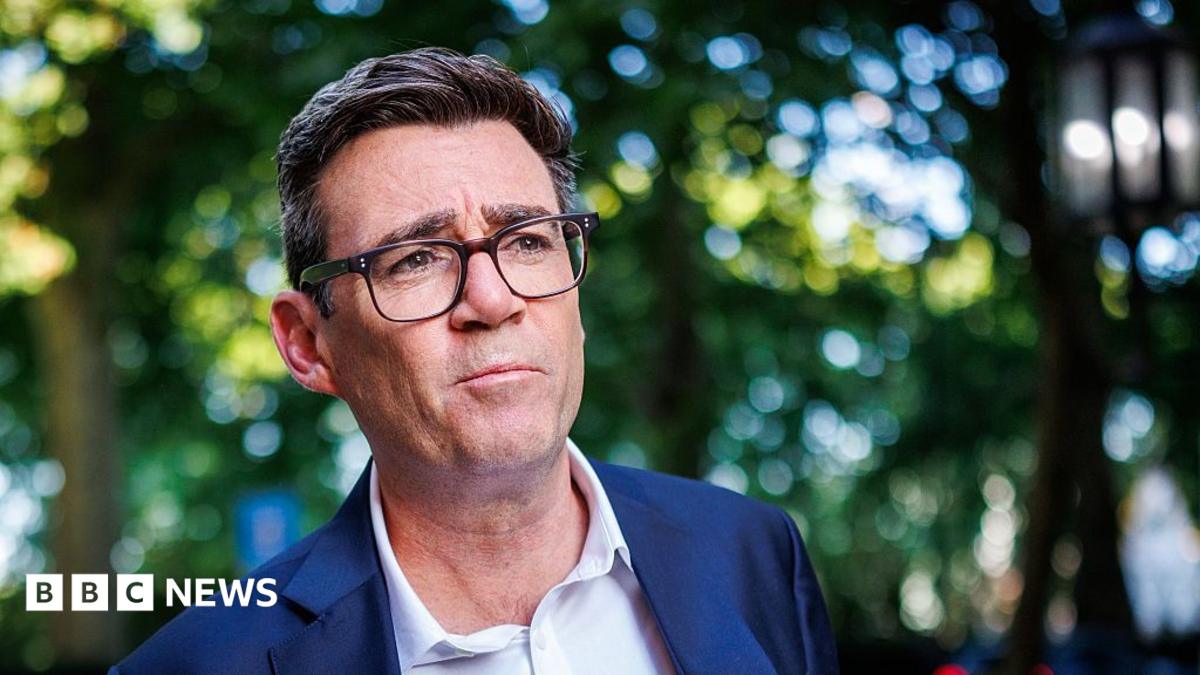
The UK needs a “culture shift” in how it does business, Andy Burnham has said ahead of a meeting with some of Britain’s biggest bosses.
The prime minister said those who take risks in business should be backed by government and local leaders should have the power to work with companies.
The Labour government has been criticised for increasing costs for firms, such as with the employer national insurance and minimum wage changes under Burnham’s predecessor Sir Keir Starmer.
The meeting comes as Chancellor John Healey prepares for his first Budget next month, with rising borrowing costs in recent weeks adding to the pressure on government finances.
Downing Street said Burnham will meet the chief executives of BP, Shell, HSBC, Morrisons, Sainsbury’s, BT, Vodafone, Rolls-Royce and several others at Number 10.
Ahead of the meeting, Burnham said he would give people “the confidence that if they have a great idea, they’ll get all the support they need to bring it to life”.
“When local leaders have the tools to get things done and government works in partnership with business, you can pull in investment, create jobs and transform communities,” he said.
He added the government would be “a partner for growth to make every part of Britain better off”.
Burnham will host a reception for the business community where local leaders are invited before a private engagement with senior chief executives at Downing Street on Monday evening.
The meeting comes as higher borrowing costs in the UK and other countries present problems for governments looking to spend money on business support or investment.
Separately, hundreds of hospitality businesses have written to the prime minister, calling on him to cut VAT for the sector.
More than 800 pub, restaurant and hotel bosses – include celebrity chefs Heston Blumenthal and Tom Kerridge – signed the letter asking for the hospitality VAT rate to be reduced from 20% to 10%.
When he was still Mayor of Greater Manchester, Burnham said he would argue for the tax to be in line with the lower rates seen in other European countries.
In a summary of its 100-page report, external, the JCHR points out that AI has been responsible for numerous abuses of human rights.
It cites as examples the use of AI to create sexualised images of women and girls and scanning people’s faces without their consent.
The JCHR advocates the creation of a “single, independent AI oversight body… on a statutory basis”.
It argues that the current legal framework which applies to AI is “fragmented and difficult to navigate”, “leaving gaps in protection”.
“The AI Bill should establish a regulatory regime that classifies different risk levels and mandate more demanding obligations for higher risk AI systems and models,” it says.
“Obligations should be placed on all stages of the AI lifecycle, ensuring those responsible in the supply chain for designing, amending and utilising AI systems are aware of their obligations and they are effectively addressed.
“Some uses of AI should be prohibited outright because they are incompatible with human rights. Potential areas for action include subliminal techniques, and inappropriate use of profiling or biometric data.”
“AI is heralded as an unprecedented era of technological development with the potential to transform our lives for better or for worse,” said Sobel.
“It is moving with such speed and complexity that its impact is hard to accurately predict. What is clear is that at present we are unprepared to deal with its consequences however potentially dire they may be.”
The JCHR’s 12 members are drawn from both Houses of Parliament and they currently include MPs and peers from the Labour, Conservative and Liberal Democrat parties.
Monday’s report comes amid growing general anxiety over the challenges AI poses.
Jacob Coxon, an AI researcher who quit Anthropic, told the BBC this weekend that staff developing the systems were “genuinely frightened” for the future of humanity.
An Anthropic spokesperson told BBC News that it was building “models with some of the strongest safeguards in the industry”.
Demonstrators burn tyres and block highways as protests over increased fuel prices grip Syrian cities.
Published On 14 Sep 202614 Sep 2026
Protests have erupted across several cities in Syria after the government increased fuel prices, with demonstrators blocking a main highway for several hours.
The government raised prices on Sunday by up to 40 percent on diesel and 28 percent on petrol, in what it said were temporary increases caused by a sharp rise in the global cost of securing fuel.
Syria’s government also cited an overhaul of the critical Baniyas refinery for higher prices, saying it will raise capacity from 80,000 to 130,000 barrels per day.
A protester burns tyres on the highway between Aleppo and Turkiye to protest against fuel price increases in Syria on September 13, 2026 [Mahmoud Hassano/Reuters]
Protests were reported in Hama, Khan Sheikhoun and Maarat al-Numan. Footage published by Al Jazeera shows crowds gathering on the street and burning tyres. The price increases also prompted fierce debate on social media.
The country is currently producing about 102,000 barrels of oil per day, while it needs about 325,000 barrels per day for domestic consumption and is relying on imports to make up the difference, Syrian Energy Minister Mohammed al-Bashir said on Saturday.
The Ministry of Energy said it would continue to review prices as global market conditions change and would work over the long term to expand refining and storage capacity, according to the state-run Syrian Arab News Agency (SANA).
Syria’s fuel supplies are key to the country’s economic recovery as it seeks to rebuild after 14 years of war.
Last week, Miami authorities identified the five people who died as Rolando Aleman Leon, 55; Yoel Rodriguez Naranjo, 53; Julio C Pineda, 75; Carlos Acosta Fajardo, 53; and Javierkys Reyes Quevedo, 47.
Five others were also injured.
“Our deepest condolences are with the families and loved ones of those who lost their lives,” 21 Air chief executive Keith Winters previously said.
“Our immediate priorities are supporting those affected, assisting the appropriate authorities, and ensuring that accurate and verified information is communicated as it becomes available,” he added.
NTSB chairwoman Jennifer Homendy called the crash site a scene of “utter devastation”.
The safety board’s investigators have recovered the flight recorders to analyse the conditions leading up to the crash.
Investigators released details that a pilot onboard the cargo plane noted that it was going too fast before it overshot the runway, the NTSB said in the early stages of investigation.
It said that one of the pilots warned the other pilot multiple times about “the aircraft’s excessive speed” but noted “there was not a consistent verbal response”, even as an altitude alarm sounded.
There were other electronic warnings designed to alert the pilots to danger while landing, investigators reported.
Cochabamba is a city in central Bolivia located in a valley in the Andes mountain range. It is the fourth largest city in the country and capital of the Cochabamba Department.
The city was part of the Incan empire when the Spanish arrived in the 16th century.
A new Spanish settlement, called Villa de Oropesa, was founded in August 1571 by order of Viceroy Francisco de Toledo, Count of Oropesa. The viceroy died in 1573 and for reasons that remain unclear to this day, a second foundation took place on September 14th 1574 by the conquistador Sebastián Barba de Padilla.
In 1786, Villa de Oropesa was elevated to city status in 1786 and adopted its name from Incan times, Cochabamba, meaning “a plain full of small lakes.”
This second foundation is celebrated as the day of the city and department. It also gives the name to the square in the city where the events of 1574 took place – La Plaza 14 de Septiembre.
The official foundation of the Cochabamba Department took place on January 23rd 1826.
Vandals spray red paint on Charlie Kirk statue days after its unveiling to mark one year since his death.
Published On 14 Sep 202614 Sep 2026
A new memorial statue of the slain right-wing activist Charlie Kirk has been vandalised days after it was installed outside Turning Point USA’s headquarters, the youth-focused organisation he co-founded.
Turning Point chief operating officer Tyler Bowyer said on Sunday that the bronze statue, alongside an accompanying sign, was defaced with red spray paint in Phoenix, Arizona.
“This morning we woke up to radical criminals vandalizing our Headquarters. Crossing over Charlie’s face, scratching out Jesus and the Cross & spraying red paint on his neck,” Bowyer wrote on X.
The statue was unveiled on Thursday to mark one year since Kirk’s death. Kirk, a co-founder of Turning Point and staunch ally of US President Donald Trump, was fatally shot while speaking to students at Utah Valley University.
The man accused of killing Kirk, Tyler Robinson, faces a possible death penalty after pleading not guilty to murder charges earlier this month.
Phoenix police said they received calls on Sunday morning about a vandalised memorial outside Turning Point’s headquarters.
Turning Point accused the vandals of intentionally spraying the statue’s neck, the spot where Kirk was shot in the attack, which was captured on video.
“We will restore the statue and replace the signs, but we are also reviewing the footage of the incident and are working with law enforcement to identify who did this and hold them accountable,” Turning Point said in a post on X.
For Cami, a content creator and podcast host from Northampton, September spells the end of summer spontaneity and a time to restore order.
“If you’ve been away for the summer you’ve probably not had a massive routine,” she says. “And if you’re a parent, then you’ve got kids at home and it’s just a bit more chaotic,” she says.
September feels like “back to school…getting back into your own rhythm”, she adds.
It is the perfect time to “get everything sorted”, she says “So when you get to January you’re not trying to do everything at once.
For Bas Verplanken, professor emeritus of social psychology at the University of Bath, September is a chance to “reorient yourself”.
He says his research suggests people who experienced a big change such as moving house “were more responsive to an intervention aimed at promoting sustainable behaviours” than comparable people who had not moved house.
“It’s really an exciting way of looking at disruption,” he told Chris and Xand van Tulleken on their What’s Up Docs? podcast.
If your daily commute or school run works for you then relax back into them.
“But if there are alternative ways of doing things, explore it, this is the time to do it, and to make those changes,” says Verplanken.
The Americans won both the 100m and 200m at the Ultimate Championship that saw elite athletes win $150,000 each.
Americans Kenneth Bednarek and Melissa Jefferson-Wooden have claimed the sprint double to close off an action-packed weekend in Budapest that saw elite track and field athletes crowned inaugural Ultimate Champions and pocket $150,000 in prize money.
Bednarek stormed to victory in a 19.52s world lead – the season’s best performance globally – ahead of Olympic champion Letsile Tebogo of Botswana (19.76s) and American Courtney Lindsey (19.79s) as Jamaican sprint legend and Ultimate Champion ambassador Usain Bolt gave his nod of approval from the stands on Sunday.
Recommended Stories
list of 4 itemsend of list
A day earlier, Bednarek finally emerged from the shadow of compatriot sprinter Noah Lyles to claim the 100m crown in 9.85s and edge out world champion Oblique Seville of Jamaica (9.90s) and USA’s Ronnie Baker (9.93s).
It was a repeat of the Tokyo World Championship double for Jefferson-Wooden, whose 21.47s world lead time made her the third-fastest woman in 200m history as she eased past compatriots Gabrielle Thomas, the Olympic champion (21.77s) and Kayla White (21.93s).
In the 100m, Jefferson-Wooden’s time of 10.62s held off Olympic champion Julien Alfred of Saint Lucia (10.74s) and compatriot Sha’Carri Richardson (10.76s), who clinched her world title in the same stadium three years ago.
Melissa Jefferson-Wooden repeated her double from the Tokyo World Championships when she won the 100m and 200m sprints in Budapest Matthias Schrader/AP]
Earlier on Sunday, Jasmine Jones opened the final day of competition with a shakeup in the women’s 400m hurdles.
The American clocked 52.45s to edge out Slovakia’s Emma Zapletalova (52.68s) and compatriot, world leader, and favourite Anna Cockrell (53.09s), who settled for third after an almost unbeaten season. Teammate Dalilah Muhammad graciously retired from track and field with a fourth-place season’s best of 53.11s.
Reigning javelin king Rumesh Pathirage launched a monstrous 91.09m final throw for the win to continue his unbeaten streak this season.
The Sri Lankan’s throw proved too much for Grenada’s Anderson Peters (86.18m) and third-place Julian Weber of Germany (85.89m), while world champion Keshorn Walcott was disappointed with yet another fourth-place finish (82.41m).
Italy’s Gianmarco Tamberi literally soared to new heights with a 2.37m clearance that amazed the crowd – and himself – well after USA’s JuVaughn Harrison jumped 2.30m for second in the men’s high jump and Mexico’s Erick Portillo cleared 2.26m for third.
Gianmarco Tamberi’s 2.37m jump was a world-leading mark this year [Matthias Schrader/AP]
Josh Kerr of Great Britain kept the 1500m win predictable (3:29.35) after Algeria’s Djamel Sedjati (1:41.91) flipped the script on 800m world and Olympic champion Emmanuel Wanyonyi (1:42.44), who settled for third behind Canada’s Marco Arop (1:42.28) in a stunning finish.
Ethiopia’s Likina Amebaw dominated to claim the women’s 5,000m (14:30.36) while Saly Sarr of Senegal (15.06m) stole the triple jump spotlight from world leader Thea Lafond (14.47m) after the Dominican failed to perform in the Hungarian capital.
Crowd favourite Mondo Duplantis opened the show on Friday with a casual 6.20m jump to reign supreme in the men’s pole vault, although close friend and rival Emmanouil Karalis of Greece continued to close the gap between world number one and two with 6.15m for second.
Over on the women’s side, it was an emotional win for USA’s Sandi Morris when she cleared 4.90m for her first global outdoor title.
Jakob Ingebrigtsen shifted gears to dominate the men’s 5,000m in a comeback like never before (12:59.24), leaving USA’s Cole Hocker (13:00.05) and Parker Wolfe (13:00.13) in his trail.
Jakob Ingebrigtsen of Norway crosses the line to win the men’s 5,000 metres final [Denes Erdos/AP]
The Americans predictably dominated the hurdles as Masai Russell clocked 12.22s in the women’s 100m hurdles to cap off an unbeaten season while Diamond League champion Ja’Kobe Tharp dazzled with 12.94s in the men’s 110m hurdles.
Other predictable wins came from Greece’s Miltiadis Tentoglou in the men’s long jump (8.35m), Switzerland’s Audrey Werro in the women’s 800m (1:55.88), Brazil’s Alison dos Santos in the men’s 400m hurdles (45.98s), Dominican Marileidy Paulino in the women’s 400m (49.07s) and male counterpart Collen Kebinatshipi with a 43.39s Botswana national record.
A cozy, unbothered Yaroslava Mahuchikh rested in her sleeping bag in between jumps that saw her add another high jump title to her collection at 1.99m ahead of Nicola Olyslagers of Australia.
Meanwhile, the women’s javelin saw a clash of old and new as Japan’s Haruka Kitaguchi set a national record (68.92m) en route to reclaiming the throne, while Chinese teen sensation Yan Ziyi retired hurt but claimed her first silver of the season with 68.05m.
Larissa Iapichino of Italy claimed the long jump crown (6.90m) just hours after her grandmother died, while Germany’s Merlin Hummel claimed a shock win in the men’s hammer throw after world and Olympic champion Ethan Katzberg simply could not perform on the day.
Sweden has two major political blocs featuring four parties on the right and four on the left – meaning coalition and minority governments are relatively common.
Andersson’s party, the Social Democrats, have been a major force in Swedish politics since the end of World War Two.
But SD – founded by Nazi sympathisers in the 1980s – had been shunned for years until 2022 when it became the country’s second largest party after campaigning on violent crime and immigration.
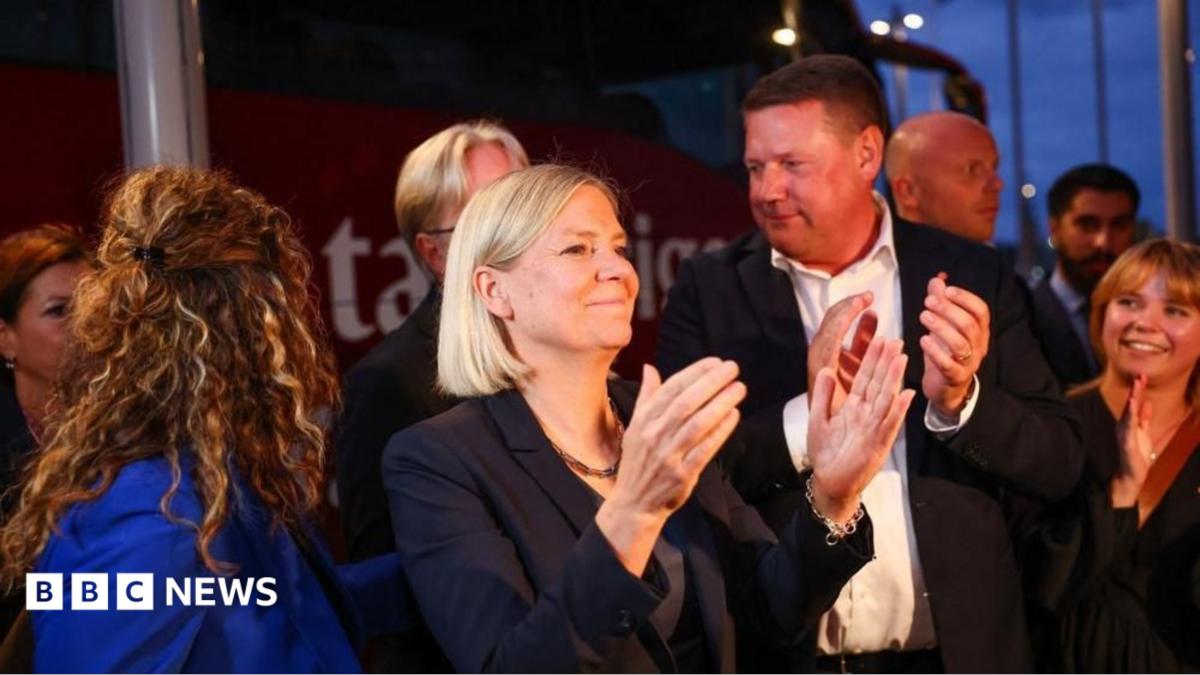
After casting her vote on Sunday, Andersson laid out the choice facing the Swedish public: “Should we have a government entirely dominated by the Sweden Democrats, something that has never happened in Sweden before? Or should we have a government led by me, which will steer Sweden in a new spirit of co-operation?”
Kristersson, for his part, said it was important he and his alliance were able to continue their work.
“I think there is a genuine enthusiasm for us being able to continue our important work,” he said after casting his ballot in his home municipality of Strangnas.
National security, gang crime and welfare spending dominated the election campaign.
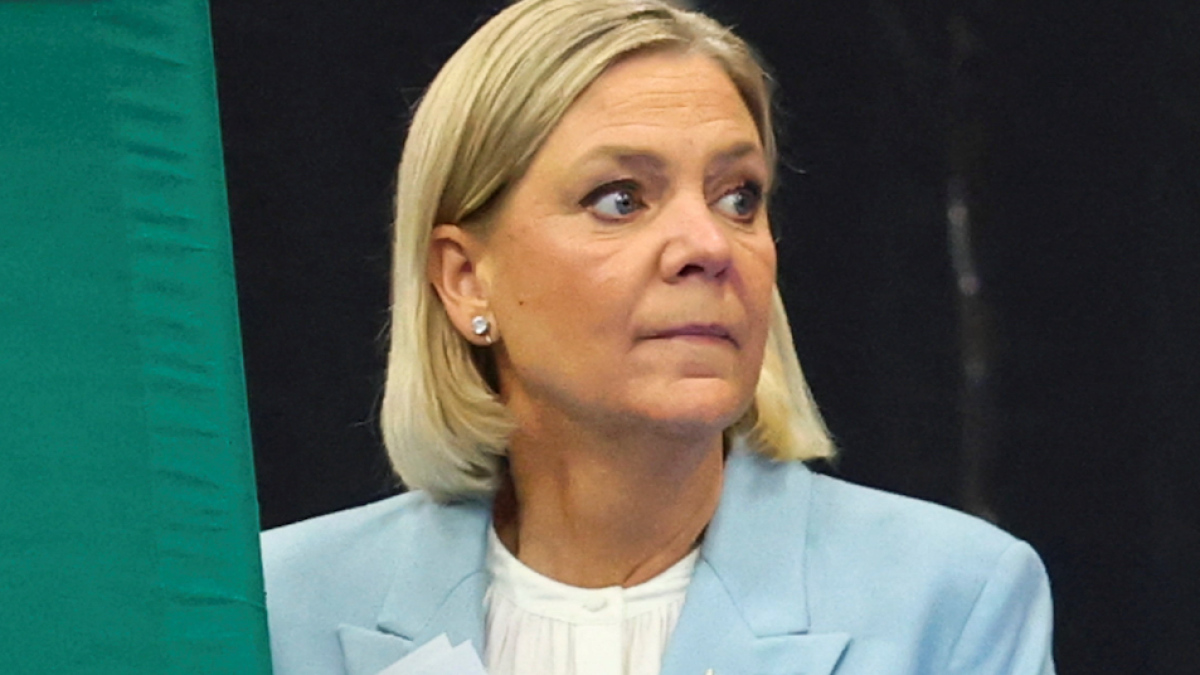
Voting is under way in Sweden in a closely fought election that could see the far-right Sweden Democrats enter government for the first time, or centre-left leader Magdalena Andersson return to power.
A child has been killed after an explosive object detonated when he touched it near Damascus. Relatives identified him as Khaled al-Ajeelah. Explosive remnants of war continue to endanger civilians across Syria. Warning: Contains distressing images.