Discover the latest happenings and stay in the know with our up-to-date today news coverage. From breaking stories and current events to trending topics and insightful analysis, we bring you the most relevant and captivating news of the day.
Birao, Central African Republic – When Islam Ibrahim fled Sudan after her father was killed during the siege of el-Fasher, she thought she had escaped the worst of the war.
The 20-year-old pharmacy student fled with her mother and six sisters to the neighbouring Central African Republic (CAR), leaving behind her pharmacy studies.
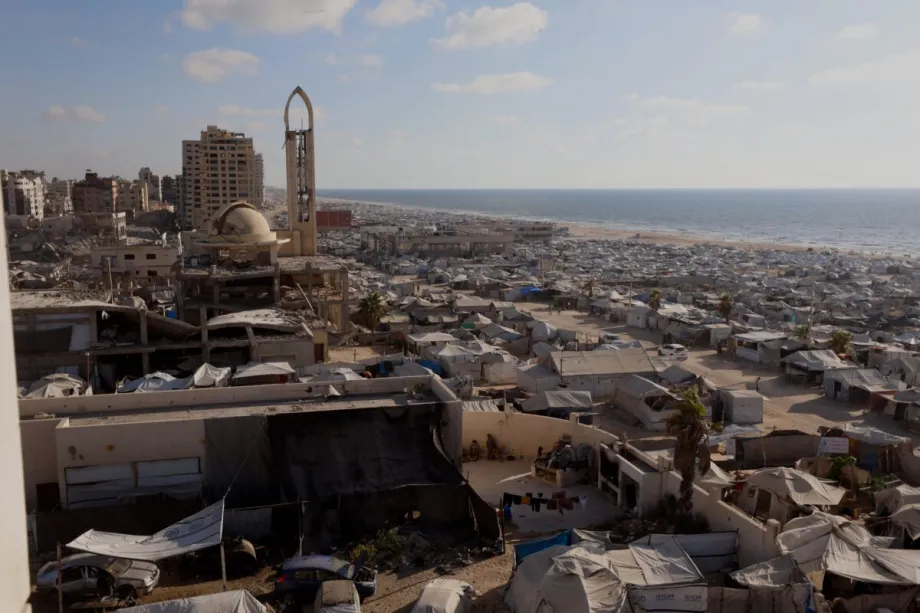
Now in Korsi refugee camp, she spends her days helping newly arrived Sudanese women and girls. Drawing on the medical knowledge she gained before war interrupted her studies, she volunteers to support refugees arriving exhausted after dangerous journeys from Darfur.
But even in exile, Islam says she cannot escape the pressures that followed her from home.
Her uncles have travelled to the refugee camp urging the family to return to Sudan, so her mother can settle her late father’s estate. Islam fears that returning would not only place them back in an active conflict zone but also expose her and her sisters to pressure to marry relatives against their wishes.
“I only want to go back to Sudan if it’s to continue my education,” Islam told Al Jazeera. “I don’t want to go back to Darfur to divide my father’s inheritance.”
Islam’s story is echoed across Korsi refugee camp, where an entire generation of Sudanese students is trying to salvage futures interrupted by war.
More than 30 Sudanese university students interviewed over several days described lives put on hold by a conflict that has uprooted families, shattered ambitions and left many wondering whether they will ever return home. Most are in their 20s and come from Amdafock, a border town in Darfur that became both a refuge and later a departure point as families fled escalating violence.
Many believed their displacement would be temporary. They imagined returning home to complete their degrees once the fighting stopped.
Instead, that hope has grown increasingly distant.
Their experiences reflect a wider educational divide created by Sudan’s war. Millions of school pupils and university students in Darfur and other areas controlled by the Rapid Support Forces (RSF) have now gone more than three years without regular schooling or access to nationally recognised examinations. In contrast, despite repeated disruptions caused by the conflict, many students in areas held by the Sudanese army have gradually returned to classrooms and sat their exams, widening disparities in educational opportunities between young people on opposite sides of the war.
Lost years
Amdafock was recently seized by fighters from the Seleka rebel coalition operating across the border in the CAR, further diminishing any realistic prospect of return for many of the families originally from the town.
With support from UNHCR, dozens of Sudanese refugees have secured places at the University of Bangui, offering a fragile path back into education after years of disruption.
But returning to university has proved far from simple.
Baderelddian Issa dreams of completing his university education despite the challenges of life in exile [Zeinab Mohammed Salih/Al Jazeera]
Having completed their schooling in Arabic, they must now study in French, learning an entirely new language while trying to keep pace with university demands. Many say the additional years required, coupled with financial hardship and the psychological toll of displacement, make it feel as though they are losing time they can never recover.
“We have already lost so many years,” several students told Al Jazeera.
Among them is Gamar el-Shaikh, a sociology student at the University of Bangui.
“We left Birao refugee camp, promising our loved ones that we would return with university certificates,” Gamar told Al Jazeera. “But with the educational environment we are in, and all the difficulties we face, it feels almost impossible to keep that promise.”
Another student, Baderelddian Issa, said his family fled after his father, an imam in Amdafock, was persecuted by the RSF for criticising them during sermons at the mosque.
Baderelddian told Al Jazeera that his father’s position made the family a target, forcing them to flee Sudan for the CAR, where he is now trying to continue his studies, while watching the possibility of return slip further away.
Painful choices
For some students, displacement has demanded even more painful choices.
Intisar el-Sadig lost her husband during the war before fleeing to the CAR with her young child. After UNHCR secured her a place at the University of Bangui, she made the difficult decision to leave her three-year-old son in Korsi refugee camp with her mother so she could continue her studies in the capital.
She travels back whenever she can, but says every separation is painful.
“I am studying because I don’t want this war to take everything from us,” Intisar told Al Jazeera. “If I stop now, then we will have lost not only our home and my husband, but also our future.”
Gamar el-Shaikh is studying sociology at the University of Bangui after fleeing Sudan’s war [Zeinab Mohammed Salih/Al Jazeera]
Ahmed knows how quickly those hopes can collapse.
Before the war, he was studying law and dreamed of becoming a judge. His father, a Sudanese army officer, was killed during the fighting in el-Fasher. The family fled to Nyala, believing they had reached safety, but Ahmed says fighters from the RSF attacked them there. During the assault, his mother was beaten so severely that her arm was broken.
The family eventually reached the CAR.
Now living in exile, Ahmed’s studies have been put on hold, and his ambitions have narrowed to survival.
Enduring hope
Across Korsi, that sense of loss is shared in different ways.
Students who once imagined futures as pharmacists, judges, engineers, teachers and academics now spend their days navigating life in exile, learning a new language and trying to rebuild their education in an unfamiliar system while worrying about relatives still trapped in Sudan.
For young women like Islam, displacement has also brought renewed pressure over inheritance and marriage. For others, the loss is measured in years of interrupted education that may never be recovered.
Islam continues volunteering in the camp, while Gamar, Baderelddian and Intisar persist with their studies despite extraordinary obstacles. Ahmed still clings to his dream of becoming a judge.
For these young Sudanese, education has become both refuge and resistance, a fragile attempt to rebuild meaning in lives shattered by war.
“We are the lost generation of Sudan,” Ahmed told Al Jazeera through tears. “We lost everything in this war.”
Spanish star has scored just one goal in the World Cup, where he’s been sharing celebrations with his little brother.
Published On 11 Jul 202611 Jul 2026
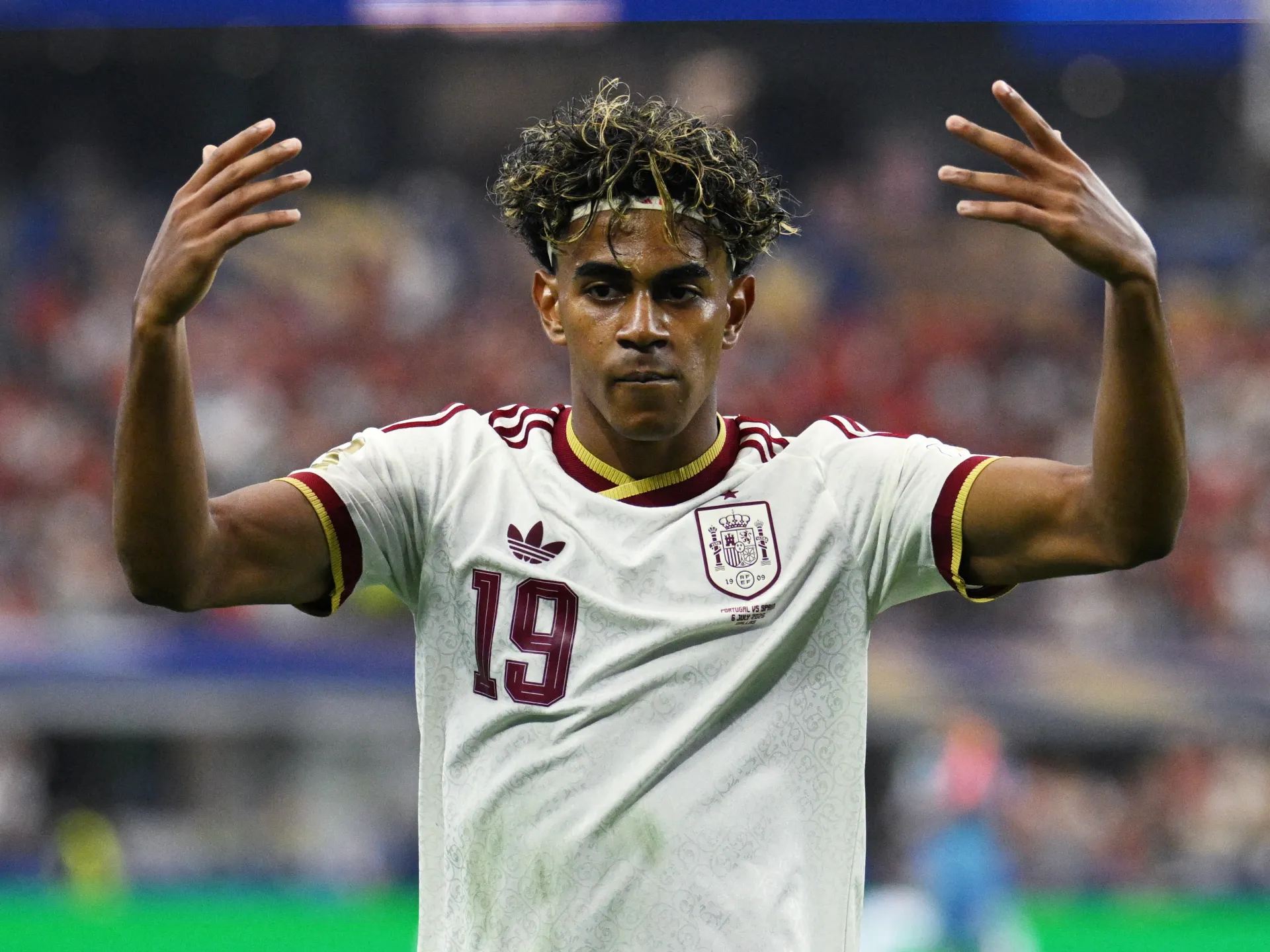
Despite not scoring a goal in Spain’s quarterfinal win over Belgium, Lamine Yamal was named the player of the match for his contributions and capped off the win by sharing a touching moment with his little brother during the post-match celebrations in Los Angeles.
Yamal, who has not scored since Spain’s group-stage win over Saudi Arabia on June 21, said after the match on Friday that nobody will care about his lack of goals if Spain win the World Cup.
Recommended Stories
list of 4 itemsend of list
At a tournament where stars like Lionel Messi, Kylian Mbappe, Erling Haaland and Harry Kane have been prolific, 18-year-old Yamal has just one goal to date, in a routine 4-0 group drubbing of Saudi Arabia. He failed to find the net once again as Spain booked their place in the World Cup semifinals for the second time.
“Obviously I want to score, but I don’t go onto the pitch thinking about that. I do it thinking about helping the team,” said Yamal.
“If we win the World Cup, no one will remember whether I scored goals … The important thing is winning,” said the Barcelona star, after the victory in Los Angeles set up a semifinal clash with France.
“I know I can contribute even if I don’t score. I know my movements draw in many opponents, so I do everything I can to help the team,” he said.
Despite the lack of goals, Yamal has performed consistently for La Roja and has also broken records along the way.
On Friday, he made his sixth FIFA World Cup appearance, the outright most by a player aged 18 or younger in the competition.
Breakout star
Two years ago, then aged 16, Yamal was the breakout star of the Spanish team that won the European Championships in Germany.
“There’s an idea that I should be scoring more, like at the Euros, but we won the Euros with me scoring just one goal. And I have one goal here too, so I’m relaxed about it,” he said, with a smile.
But Spain will be hoping Yamal, who turns 19 the day before the semifinal, can bag further goals if his side is to see off the free-scoring tournament favourites France.
“There are two possibilities – either they reach three consecutive World Cup finals, or we beat them three times in a row. We’ll see what happens,” said Yamal.
“We aren’t afraid at all.”
Yamal shares endearing moment with brother Keyne
Amid Spain’s post-match celebrations, Yamal and his half-brother Keyne were caught in a sweet moment when the younger sibling was shown on the big screen.
The three-year-old was screaming and stuck his tongue out when the camera panned on him. Keyne then blew a kiss at his brother, making the teen Spanish star laugh and wave at him.
Keyne, who often accompanies Yamal to award shows and other public events, has been a fan favourite for the crowds at the World Cup.
He has been picked up by the cameras on multiple occasions, drawing a chuckle from his older brother and cheers from the crowd around him.
Kenye, younger brother of Yamal, is seen on the screen at the quarterfinal in Los Angeles [David Ramos/Getty Images via AFP]
From an ad hoc podium Maria Corina Machado addresses the gathered reporters sprawled out on the White House lawn before her. “Good morning. Yes, I had a meeting with Mr. President just now,” she says, “and we were invited [to the White House] because he’s very interested to know the perspective of civil society about democratic values and the spread of democracy in particular in my country, Venezuela.” Machado is the founder and director of Súmate (Join Up), a Venezuelan non-governmental organization (non-Venezuelan government, that is). Her close ties to the White House, however, have been cause for concern in Venezuela for some time, where Súmate’s alleged neutrality has been called into question ever since it was founded in 2002.
According to Machado, Súmate is an objective non-partisan civil association. Súmate is the third NGO founded and directed by Machado, including one that worked with Venezuelan municipalities in the 1990s to privatize homeless shelters. To date, Súmate’s only political experience has been to agitate for the removal of Chávez by way of a recall referendum last August, though Chávez won nonetheless with 60 per cent of the vote. Their controversial role conducting flawed exit polls during the referendum—specifically criticized by the Carter Center and OAS observation missions in Venezuela—and their subsequent rejection of the referendum results, though both the Carter Center and the OAS declared them to be free and fair, have cast doubt on Súmate’s professed “neutrality.” When asked why Súmate has worked exclusively with the Venezuelan opposition since its inception in 2002, Machado said that their overtures to the government were regularly rebuffed. She did not specify whether her presence at the swearing-in of the illegal government of Pedro Carmona during a short-lived April 2002 coup may have sullied her reputation with Chávez’s government.
On April 11th of that year Venezuelan President Hugo Chávez—democratically elected in 1998 and again in 2000—was overthrown in what proved to be a short-lived coup. Before he was restored to power by massive popular protests and loyal elements of the military, however, a “transition government” was set up, and business leader Pedro Carmona Estanga sworn in as provisional President. Carmona’s first act as provisional Venezuelan leader was to abolish the Bolivarian Constitution—ratified by popular referendum in 1999—as well as the Supreme Court, the National Assembly and the Human Rights Ombudsman in what became known as the “Carmona Decree.” Present at Carmona’s swearing-in ceremony were several hundred prominent Venezuelans, including business-leaders, media barons, politicians, and members of “civil society,” whose signatures (below) confirmed their attendance. Machado was one of the latter.
“Attendance at the Swearing-in of the Governing Junta.” Maria Corina Machado’s signature appears bottom left. Source: Venezuelafoia.info
Less than 48-hours after coming to power, however, Carmona’s illegal junta was overthrown, and as the now defunct April 11th-government sped out the backdoor of the palace into their tinted SUVs and back into Caracas’ posh gated communities, his allies began back-pedaling. In a recent article, Machado told Newsday that she did not know what she was signing, saying she innocently signed a blank piece of paper she had assumed was a reception sheet. Yesterday, her story changed again. Still flushed from her tête-á-tête with George W. Bush, Machado claimed that the Venezuelan government “know[s] clearly that I did not sign the decree. I was not present at the event,” she said. Yet the evidence would appear to suggest otherwise.
The fact that Súmate has received a series of grants from the National Endowment for Democracy (NED) and the United States Agency for International Development (AID) does not speak to their neutrality. Neither organization has a history of objectivity; they are both on the frontlines of attempts to spread US influence under the rubric of “promoting democracy.”
Subverting Democracy in the Name of Democracy
The NED was formed in 1983, as US foreign policy shifted from a focus on “national security,” which often involved alliances with and support for authoritarian regimes, to “democracy promotion.” The National Endowment for Democracy (NED) was formed, along with a series of other foundations, think tanks, and NGOs, and given funding from congress and a mandate to “promote democracy” as a new and more effective way to support United States policies abroad.
Two of the first test cases are particularly relevant to present-day Venezuela: the democratization movement in the Philippines that culminated in the election of Corazon “Cory” Aquino in 1986, and Violeta Chamorro’s defeat of the Sandinistas in the Nicaraguan elections of 1990. According to veteran journalist and academic William I. Robinson who teaches at the University of California-Santa Barbara, the US successfully intervened in the Philippines to prop up an elite leadership of the democratization movement calling for an end to Marcos’ dictatorship. Only months before the scheduled elections, US Chargé d’Affaires Philip Kaplan convinced the divided anti-Marcos elite to unite and Cory Aquino was selected as the opposition’s candidate.[1]
Four years later a similar model was employed in Nicaragua, where the US had waged a decade-long illegal insurgency against the Sandinista government, destroying the Nicaraguan economy and holding the specter of continued aggression over voters’ heads. Again, just months before scheduled elections, the US—operating through a complex web of government, non-governmental, and private sector proxies—united the fractured anti-Sandinista opposition. According to ex-CIA agent Philip Agee who spoke with Venezuelanalysis.com last March, the US managed to unify the Nicaraguan opposition primarily through bribes.
The Formula
“In order to get the anti-Sandinista vote out and to monitor the elections,” says Agee, “the CIA and NED established a civic front called Via Civica and their ostensible job was political education and activism…non-partisan civic action. When in actual fact all their activities were designed to strengthen the anti-Sandinista side.” US “democracy promotion” theory may have been young in the mid-1980s, but by 1990 in Nicaragua a formula had been developed. It consisted more or less of three stages, including the formation of a political alliance, a civic alliance, and an opposition-wide unified front. “First there was the Coordinadora,” says Agee, referring to the Coordinadora Democratica Nicaraguense, “then Via Civica, and finally the unification of the opposition.”[2]
Venezuela has its own Coordinadora—the Coordinadora Democratica (CD)—or it did, until it imploded last September after Chávez’s referendum victory, which had grouped all of the major anti-Chávez parties and NGOs. Venezuela’s version of Via Civica is Súmate, which will likely evolve into a national civic alliance, perhaps renamed Via Civica, or Alianza Civica—something “civica” anyway. The dissolution of the CD is irrelevant to the opposition since, according to their “democracy promotion” schedule, it’s about time for stage three: the unification of the opposition into a new organization and the nomination of a common candidate.
According to Robinson, who has theorized the “democracy promotion” strategy in Promoting Polyarchy: Globalization, US Intervention, and Hegemony (1996), this strategy “as it actually functions, sets out not just to secure and stabilize elite-based polyarchic systems, but to have the United States and local elites thoroughly penetrate civil society, andfrom therein assure control over popular mobilizations and mass movements.”[3]
A Bush-Machado alliance in Venezuela, then, is key.
President George W. Bush and Súmate director Maria Corina Machado pose for a photo-op in the Oval Office on Tuesday. Source: www.whitehouse.gov
Presidential Grooming?
In Nicaragua, once the US had secured a unified opposition candidate in the person of Violeta Chamorro, the White House arranged for a variety of photo-opportunities: Chamorro with Bush, Thatcher, even John Paul II. As news of Machado’s meeting with Bush spread in Caracas yesterday, the possibility that Machado could be Chávez’s contender in the 2006 Presidential elections seemed to grip the country all at once. Pro-Government Congresswoman Iris Varela told the press that the meeting could not possibly mean anything else. And US-Venezuelan lawyer and Freedom of Information activist Eva Golinger appeared on television in the early evening to say the same, drawing a parallel to Chamorro. “There they are sitting together, holding hands, smiling, one hiding a terrorist and the other backing a coup,” said lawmaker Cilia Flores, who called for Machado’s prosecution. “She went there to receive instructions, to see what other mischief they can get up to in Venezuela,” she said.
Robinson describes the strategy during Chamorro’s time fittingly. “The purpose of these visits [to the US], in which photo-opportunities were stressed and statements kept to a minimum, was to have the image of Chamorro beside world leaders reverberate in the minds of the Nicaraguan electorate.” Machado’s meeting with Bush apparently lasted only 15 minutes, but judging from the crowd in the above photo, it would appear to have been a success.
Nor is this the first such visit Machado has had with state leaders and high-level foreign diplomats. In January, the Súmate leader was in Ottawa meeting with representatives of Canada’s Foreign Affairs department and NGO and business leaders. According to a spokesperson at the Canadian embassy in Caracas, Súmate came away with a grant of approximately US$18,000 from the Canadian Embassy in Venezuela. And one month later, during his February visit to Venezuela, Machado met with Spanish Prime Minister José Luis Zapatero.
This weekend Machado will get a chance to plead her case before the entire hemisphere as one of the civil society groups given permission to present before the Organization of American States when the group meets in Fort Lauderdale, Florida, from June 5 to 7. The US has been pushing for the OAS to acquire some teeth in its mandate to protect democracy in the hemisphere, but representatives from other countries see the move as a poorly camouflaged attack on Venezuela. Another initiative supported by the US is the creation of a mechanism to give civil society a voice in the Permanent Council—the group’s day-to-day governing body—to denounce threats to democracy in their countries. Machado is clearly thrilled at the prospect. At her press conference yesterday on the White House lawn, she voiced her support for opening the OAS to civil society groups, and the private sector as well.
But wait. The Private sector needs a voice at the OAS? The concept, though absurd, is perhaps understandable coming from Machado, whose comments were directed not so much towards Venezuelans, as towards private and “civil society” actors in the US and the Americas who stand to gain from the fusion of democracy and capitalism. Reflecting Bush administration rhetoric, Lawrence J. Korb of the New York think-tank Council on Foreign Relations noted recently, “contrary to what some believe, democracy and capitalism do not spread inexorably on their own. The United States therefore needs to assume a leadership role in spreading and accelerating the growth of free-market democracies.”
Groups like Súmate, the NED, USAID, Development Alternatives Incorporated (the consulting firm distributing US-beneficence in Venezuela) are not so much interested in promoting democracy—if they were they’d be more impressed by the nine elections Chávez has won in the past six years—as they are in promoting a particular limited form of democracy that dovetails nicely with capitalist globalization—what William Robinson calls “low-intensity democracy.”
In a forthcoming interview with Venezuelanalysis.com, Robinson states it plainly: “This is a full-blown operation, a massive foreign-policy operation to undermine the Venezuelan revolution, to overthrow the government of Hugo Chávez, and to reinstall the elite back in power in Venezuela.” “‘Democracy promotion’ will continue unhindered,” says Robinson, “and if the chance and the opportunity arises for…Venezuela to be isolated by international organizations such as the Organization of American States (OAS), the United Nations, and so forth, then the US will go ahead and promote that type of diplomatic aggression.”
Is Machado launching a presidential bid backed and organized, like her ideological predecessors Aquino and Chamorro, by Washington? Maybe. But a more likely scenario in the short-term is the Súmate-led formation of a Venezuelan civic alliance, a key component of any anti-Chávez strategy hiding behind the cynical rhetoric of democracy. And the OAS convention on Sunday would be the place to do it.
[1] William I. Robinson, Promoting Polyarchy: Globalization, US Intervention, and Hegemony (Cambridge University Press, 1996).
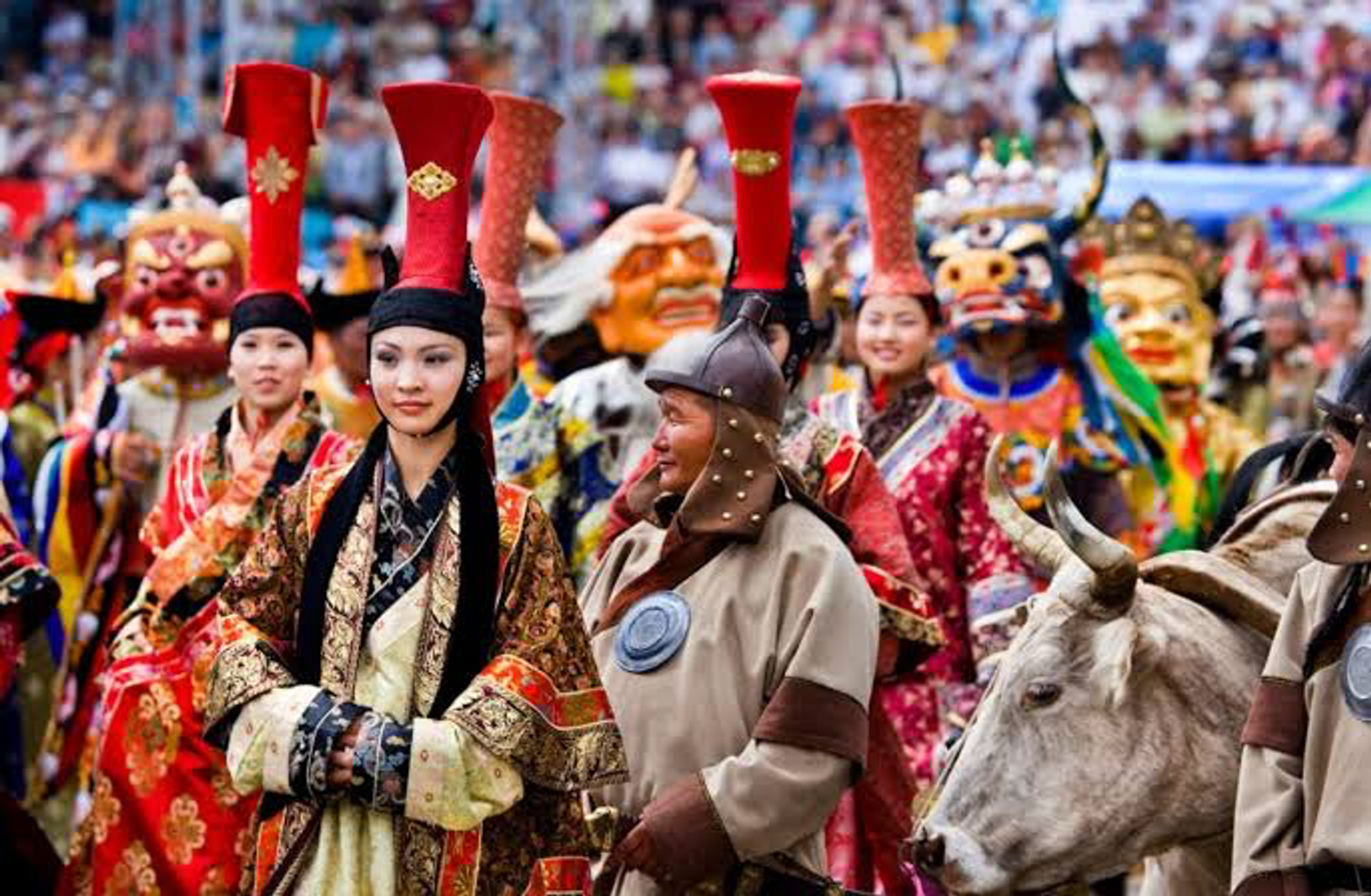
During the Naadam Festival, Mongolians participate in the “Three Manly Games” of archery, wrestling and horseback riding which represent the heritage of the nation.
The festival originated in the 12th century as a way for Mongolians to demonstrate their military prowess. From the 17th century, Naadam contests were held during religious holidays. Since 1922, they have been held on Revolution Day, the anniversary of the People’s Revolution.
The coldest capital in the world is not in Russia or Canada, but is Ulaanbaatar, Mongolia. The annual average temperature in the city is -1.3°C.
The main Naadam festival takes place in the country’s capital Ulaanbaatar and opens with a cultural performance with ethnic dancing and music before the games get underway. Everyone, young and old are encouraged to participate in the games.
Wrestling is usually the first sport. The main wrestling event is a knockout competition involving 512 or 1,024 participants. The participants are all men and have to enter the ring bare-chested as legend has it that a woman once infiltrated the games beating the men, so now all the wrestlers have to show they are male before the grappling begins.
Unlike international wrestling events, there are no weight classes and the rules are also simpler – if a wrestler touches the ground with any part of their body apart from their feet and arms, they lose.
The second sport is Archery. From the time of Ghengis Khan, Mongolian archers were famed for their skill and precision with a bow. At its time, the recurved Mongol bow was a weapon without compare on the Eurasian battlefields of the steppe and deep into Western Europe. The games consist of three categories of archery – Buriat, Khakh and Uriankhai – which have differing bows, arrows and distances.
Edward Pinto, co-director of the American Enterprise Institute Housing Center argues that the new US housing bill is unlikely to significantly ease the country’s housing crisis. He says it’s too limited to address the core issues – like restrictive local zoning. For the full segment, watch Al Jazeera’s ‘This is America’.
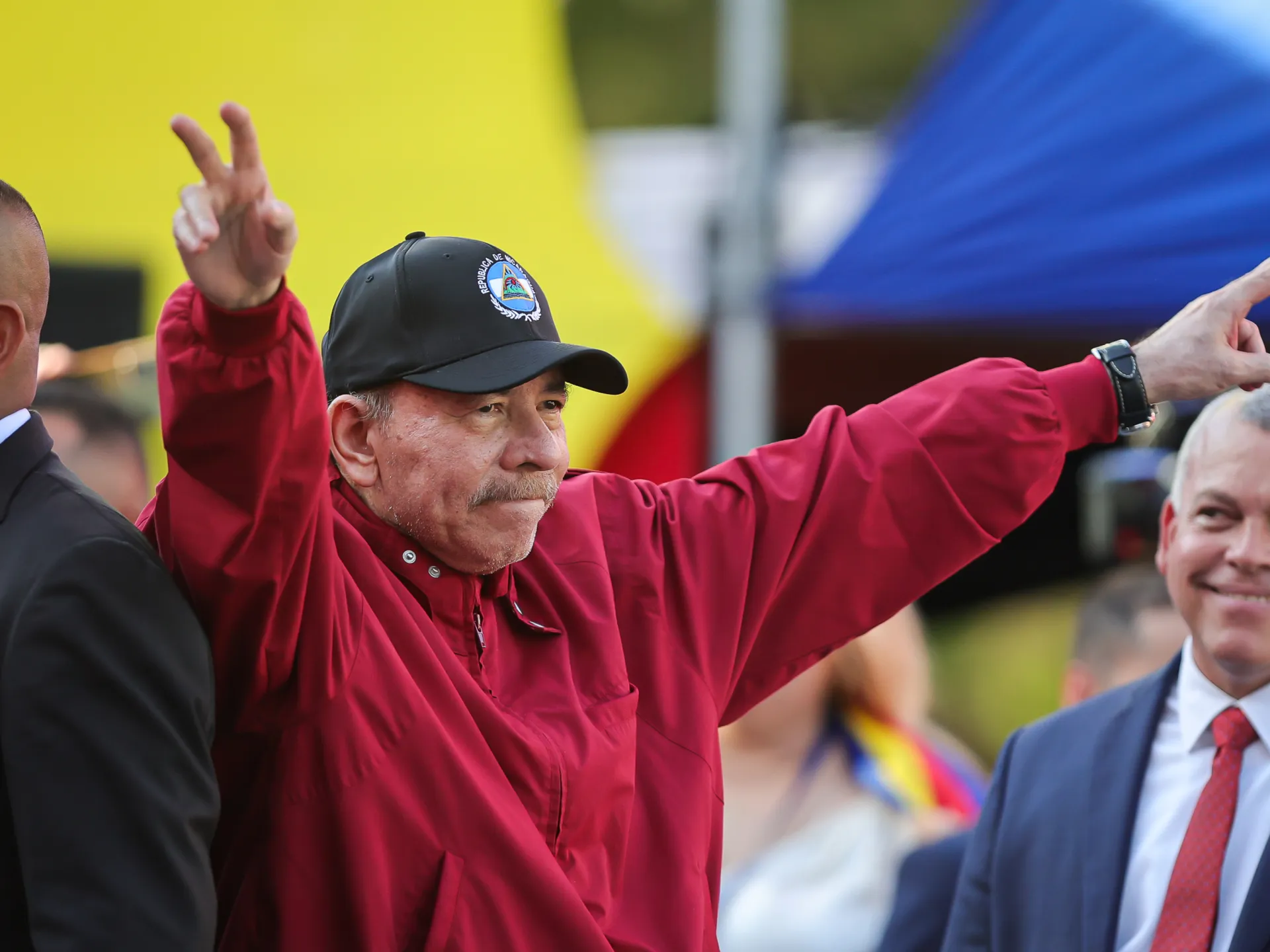
The government of Daniel Ortega and Rosario Murillo has been accused of human rights abuses against critics.
Published On 10 Jul 202610 Jul 2026
Nicaragua’s government has stripped masses of lawyers of their licences to practise, in what critics see as yet another attack on the country’s critics.
On Friday, a United Nations expert called the government’s actions a “purge of the legal profession”, aimed at eroding the country’s final shreds of democratic checks and balances.
Recommended Stories
list of 3 itemsend of list
Nicaragua’s husband-wife co-presidents, Daniel Ortega and Rosario Murillo, have led a government that has increasingly carried out an all-out crackdown on dissent.
That effort intensified after mass social protests in 2018 that the government violently repressed.
Since then, the government has imprisoned adversaries, religious leaders, journalists and others, forcing thousands to flee the country. It has also stripped hundreds of their Nicaraguan citizenship and possessions.
Since 2018, it has also shut down more than 5,000 nongovernmental organisations, largely religious groups, but also local rotary clubs and scouting organisations.
In recent days, lawyers noticed that their licences to practise law in Nicaragua were removed without explanation from the Supreme Court of Justice’s registry, according to Reed Brody, an American human rights lawyer and member of a UN panel of experts on the Central American country.
Other lawyers also confirmed their certifications were revoked.
There was no official notification by the government, and Nicaragua’s government did not respond to a request for comment by The Associated Press news agency.
Brody said the full scope of the revocation was not immediately clear, but it “would certainly appear to be at least hundreds, if not thousands of lawyers” who were affected.
“This follows the pattern that we’ve been seeing for years. First, they closed the NGOs, the universities, the independent media. You know, they’ve gone after the churches, and now it seems the legal profession,” Brody said. “Anyone who might stand between the government and citizens.”
Brody said he knew of at least 20 lawyers who had been affected.
Juan Diego Barberena, a lawyer and human rights defender exiled in Costa Rica since 2022, was among those stripped of his official certification and said he knew of at least 25 more colleagues like him.
On Thursday, Barberena tried to access his legal accreditation on the government’s database and said his name and licence number were wiped clean from the system.
“This is a means of exercising totalitarian control over the legal profession,” Barberena said. “This means that the dictatorship can decide who gets to practise and who doesn’t.”
The move echoes other steps the government has taken in recent years.
Many Nicaraguan exiles who were stripped of their citizenship and rendered “stateless” have reported similar stories. They or their family members would search for their birth certificates and other legal documents in official databases, only to be told they do not exist.
But Barberena and Brody said the move this week by authorities went a step further, noting that those erased from the system were not just dissenters. Some were simply Nicaraguans living abroad.
Others practised criminal or family law that didn’t touch on politics, while some were government sympathisers, Barberena said.
Brody framed it as a move to whittle away at any last remaining shred of independence in a judicial system already firmly under control of Ortega and Murillo.
“On one hand, it’s an arbitrary measure to punish political dissent,” Barberena said. “On the other, it’s the dictatorship looking medium-term and wanting to prevent lawyers, experts and academics from participating in the future of the country’s institutions.”
Campaz was threatened after failing to score in the last-16 match against Switzerland, which Colombia lost on penalties.
Published On 10 Jul 202610 Jul 2026
Colombia’s Jaminton Campaz has received death threats following his team’s exit from the World Cup, the country’s football federation said, as it condemned the threats.
“No athlete, nor any member of their inner circle, should be subjected to intimidation for representing their country in a sporting arena,” the Colombian Football Federation (FCF) said in a statement on Friday.
Colombia’s tournament ended Tuesday in a penalty shootout loss to Switzerland in the round of 16. During extra time, Campaz — who plays for Argentine club Rosario Central — missed a critical scoring opportunity when his shot went wide.
On Instagram, Campaz shared a photo of himself covering his face in frustration, alongside a plea for respect.
“Football is also made up of difficult moments,” he wrote. “My Colombia, please let us never lose sight of respect. We may think differently or feel frustration and sadness, but no passion justifies hatred or living in fear.”
In response to the harassment, the Colombian federation has urged the country’s attorney general’s office to expedite an investigation to identify those behind the threats.
“Football must be a space for unity, respect, and hope — never a setting for hatred, intimidation or violence,” the federation said, calling on fans to ensure that sporting disappointments never translate into real-world aggression.
The threats evoke a dark chapter in Colombian football history. During the 1994 World Cup in the United States, defender Andres Escobar scored an own-goal in a 2-1 loss to the host nation. Days after the team was eliminated and returned home, Escobar was murdered in Medellin.
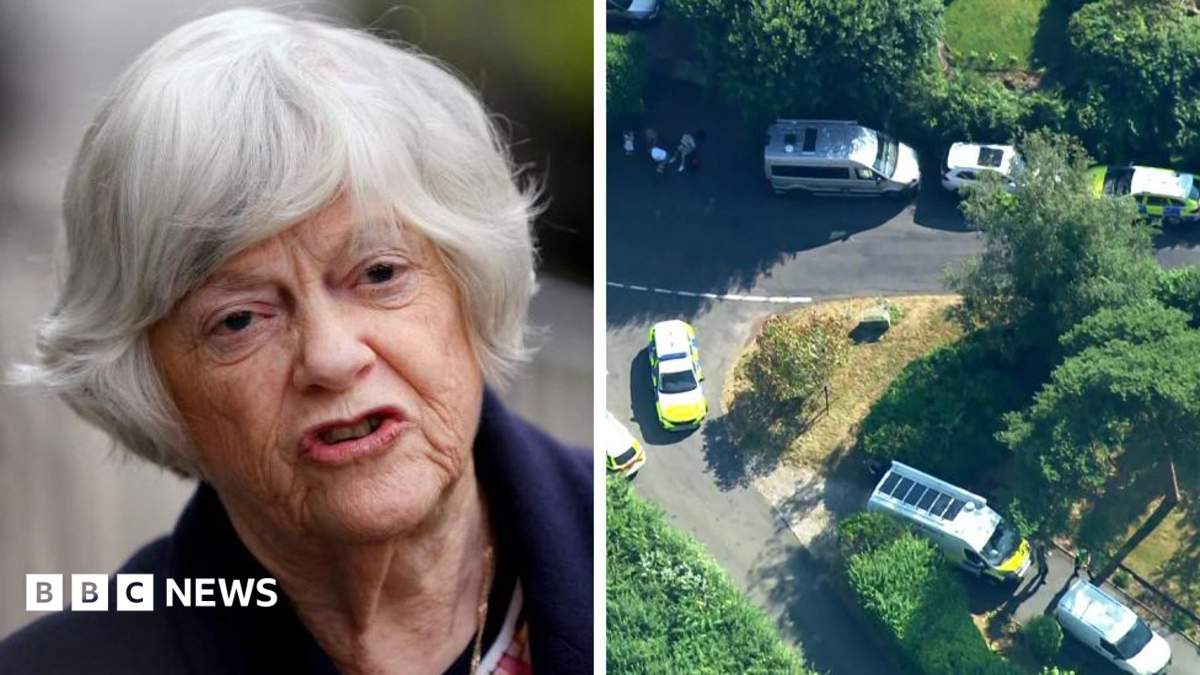
A 26-year-old man has been arrested on suspicion of murder following the death of former MP and government minister Ann Widdecombe.
Devon and Cornwall Police confirmed the man, who is a white British national, was arrested at an address in Newton Abbot, Devon, on Friday and is in custody.
The body of the 78-year-old former Conservative minister and Reform UK spokesperson was found by police with serious injuries at her home in Haytor, a rural village on Dartmoor in Devon, at about 11:40 BST on Thursday.
The incident is not being treated as terrorism, after counter-terror policing was involved as part of “initial enquiries”.
Assistant Chief Constable Matt Longman told a news conference on Friday they currently have “no information to believe that that is a politically motivated crime” – and it was “too early” to comment on whether or not the suspect was known to Widdecombe.
He said the investigation was in the early stages and urged anyone with information to come forward.
Widdecombe’s next of kin have been informed and are being supported by specially trained officers.
The prime minister and other political leaders said they were stunned by the development on Friday afternoon.
Sir Keir Starmer said it was “really shocking”, while Conservative leader Kemi Badenoch said she was “stunned to hear this awful news”.
Reform UK leader Nigel Farage said he was “deeply, deeply upset by the nature of her death”.
Widdecombe’s political career spanned decades. She served as MP for Maidstone in Kent for 23 years, and worked as a Home Office and employment minister in Sir John Major’s government between 1994 to 1997.
After leaving Parliament she embarked on a showbiz career, appearing on Strictly Come Dancing in 2010 and Celebrity Big Brother in 2018.
A staunch supporter of the UK’s departure from the EU, she became an MEP for the Brexit Party, representing South West England in the European Parliament between 2019 and 2020.
In 2023, Widdecombe joined Farage’s Reform UK party, after it changed its name from the Brexit Party, and made a number of appearances as the party’s immigration and justice spokesperson.
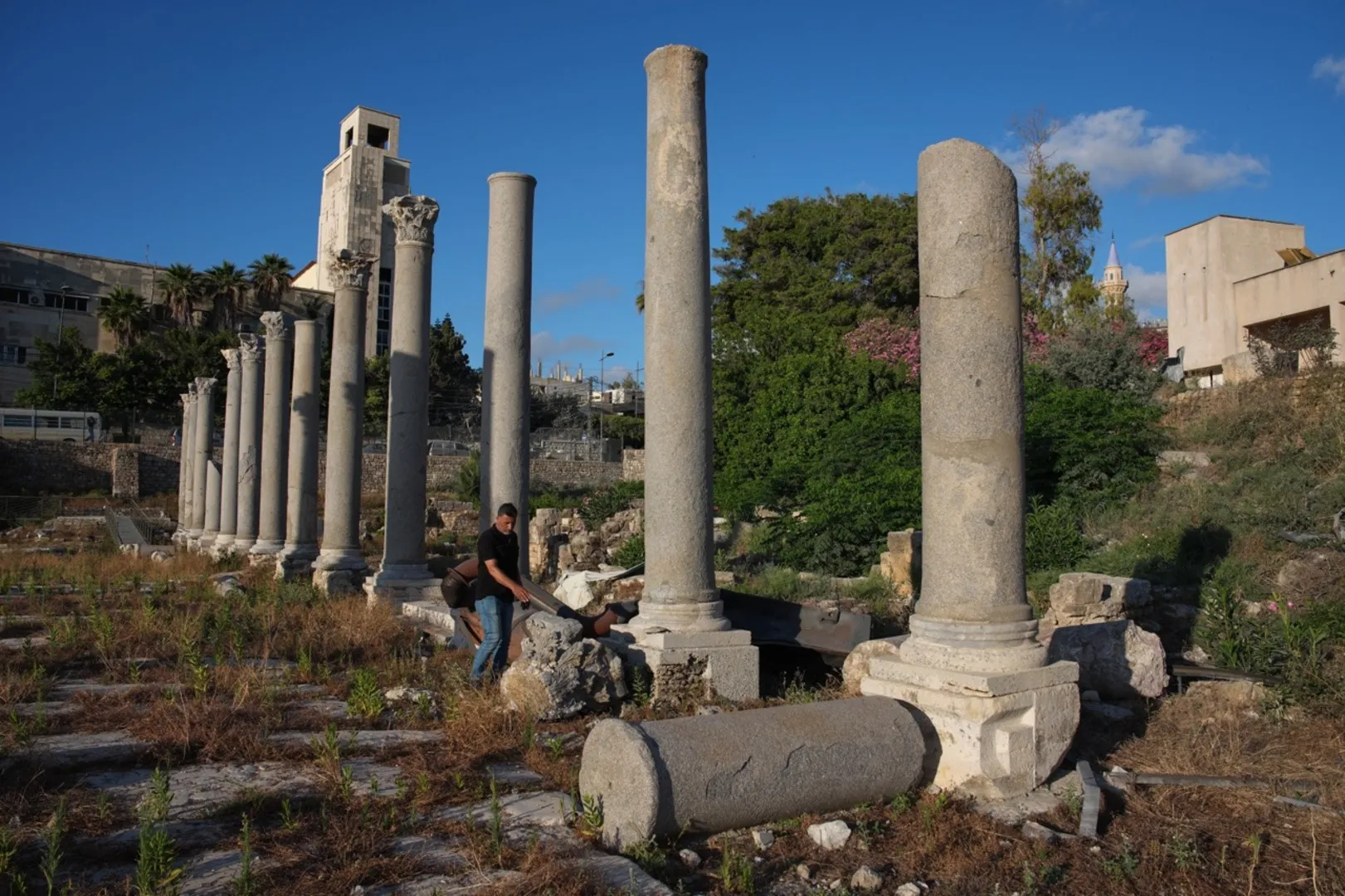
Israeli air strikes on southern Lebanon have caused catastrophic destruction and damaged historic landmarks, including the ancient city of Tyre, one of the world’s oldest continuously inhabited settlements. Rob McBride visited the UNESCO World Heritage site to see the impact first hand.
France faced Morocco in a rematch of the 2022 World Cup semi-final. Al Jazeera’s Samantha Johnson was in Boston to soak up the atmosphere, speak to fans from both sides, and see whether Morocco would finally get their revenge.
India slumped to a nine-wicket defeat in the fourth T20 against England, following a 2-0 series whitewash in Ireland.
Published On 10 Jul 202610 Jul 2026
India’s cricket board will review the T20 team’s performance after a dismal run that saw the world champions lose successive series in Ireland and England, a top official said.
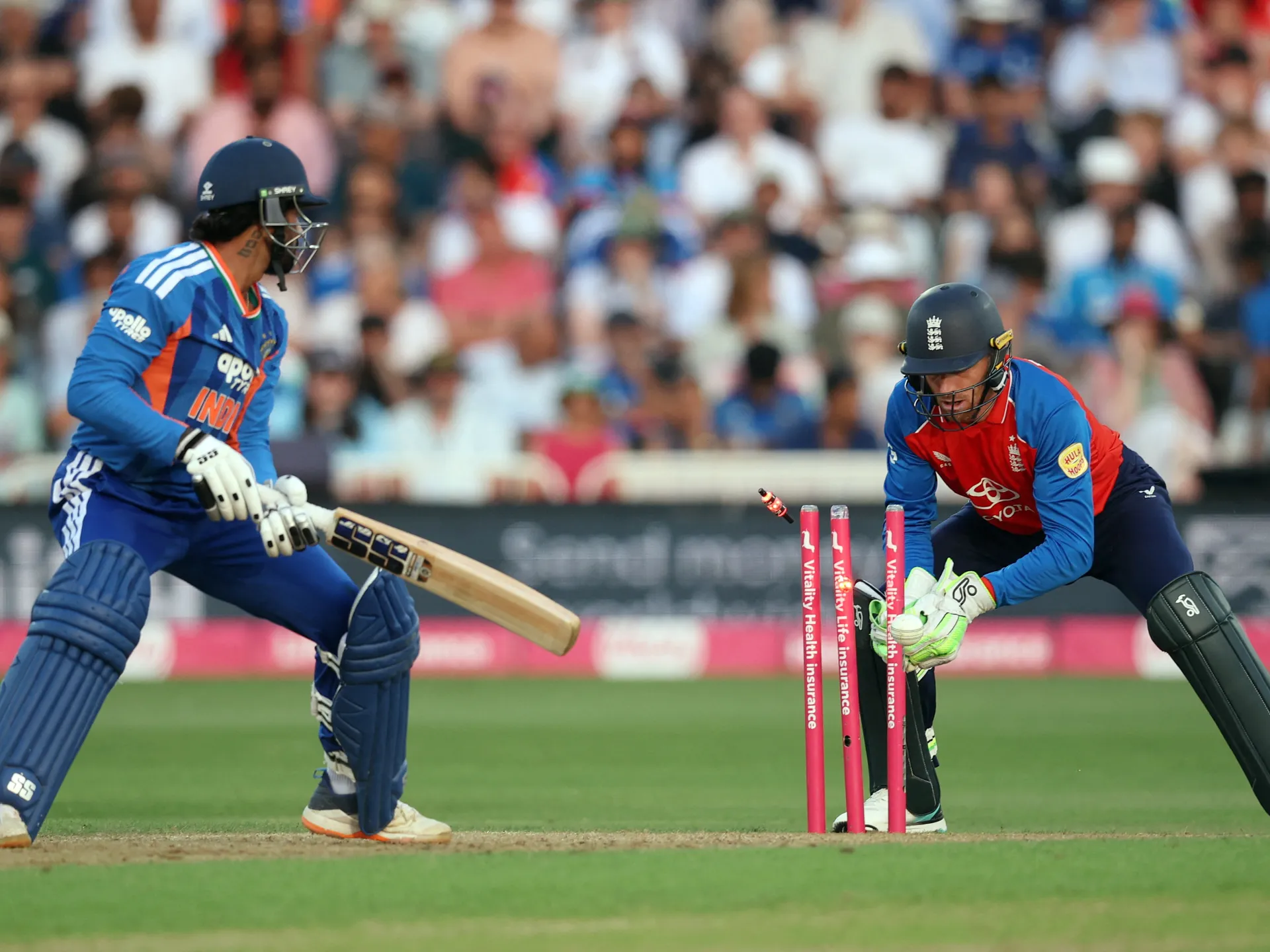
India slumped to a nine-wicket defeat in the fourth T20 against England on Thursday, handing the hosts an unassailable 3-0 lead with one match remaining after the opener was washed out.
Recommended Stories
list of 4 itemsend of list
The loss was India’s fifth straight defeat, following a 2-0 series whitewash in Ireland last month.
The Board of Control for Cricket in India (BCCI) will meet to discuss the reasons for the team’s performance after the England tour ends on July 19, secretary Devajit Saikia said on Friday.
“The BCCI is currently observing the performance of the Indian T20 team which has not been up to the mark in the ongoing series against England,” Saikia, who is in Edinburgh for the annual conference of the International Cricket Council, told the news agency AFP in a phone interview.
“We will have a review meeting with the core members of the team to discuss what went wrong in England.”
India, who lifted the T20 World Cup in March, have endured a dramatic dip in form. On Thursday, they managed 158-7 in Bristol, a target England chased down with nine wickets and more than six overs to spare.
The defeat came days after India were dismissed for just 76 in Nottingham, suffering their heaviest T20 loss by a margin of 125 runs.
Saikia described the slump as a temporary setback.
“This is not something abnormal and can happen in international cricket. We consider it as a purely bad phase,” he said.
India, coached by Gautam Gambhir, has been without pace spearhead Jasprit Bumrah and all-rounder Hardik Pandya because of workload and injury-management concerns.
Teenage batting sensation Vaibhav Sooryavanshi, handed his long-awaited debut aged 15, has struggled to make an impact, with scores of 14, 13 and 15 in his three innings.
The teams meet in the fifth and final T20 in Southampton on Saturday before a three-match ODI series.
Weekly insights and analysis on the latest developments in military technology, strategy, and foreign policy.
The Kremlin today confirmed it’s in contact with Turkey over the fate of Ankara’s Russian-made S-400 air defense systems. Reports have emerged that Turkey could soon transfer the controversial missiles to an unnamed Gulf state in a move aimed at convincing Washington to lift sanctions and clear the way for Ankara’s return to the F-35 program.
Asked Friday whether Turkey had sought Russia’s approval for the reported transfer, Kremlin spokesman Dmitry Peskov declined to comment on the substance of the report but confirmed Moscow is discussing the issue with Ankara.
“I can say one thing here: this is an extremely sensitive issue. However, we have been in contact with the Turkish side on this matter, and we will continue to maintain contact with them on this issue.”
Reports in the Turkish media say that Ankara is considering transferring its S-400 systems to an unspecified Gulf country, but the Turkish government has not confirmed that.
“According to the information I’ve gathered, the S-400s have been sold to a third country,” journalist Abdulkadir Selvi wrote in the Turkish newspaper Hürriyet on Friday. “The sale will be announced today. The S-400s are going to a country in the Gulf.”
Both the United Arab Emirates and Qatar have been named as potential candidates to receive the systems.
Turkey will announce today the sale of its S-400 batteries to the United Arab Emirates, in order to lift the restrictions on the sale of F-35s to the country.
There were indications at the NATO Summit in Ankara earlier this week that the United States was considering softening its stance on the issue of F-35s for Turkey.
“Why wouldn’t we do that?” U.S. President Trump said when asked if he would let Turkey back into the program. “Turkey, in many ways, has been much more loyal than other countries that we think would be loyal.”
Nevertheless, Turkey’s possession of the S-400 remains a sticking point.
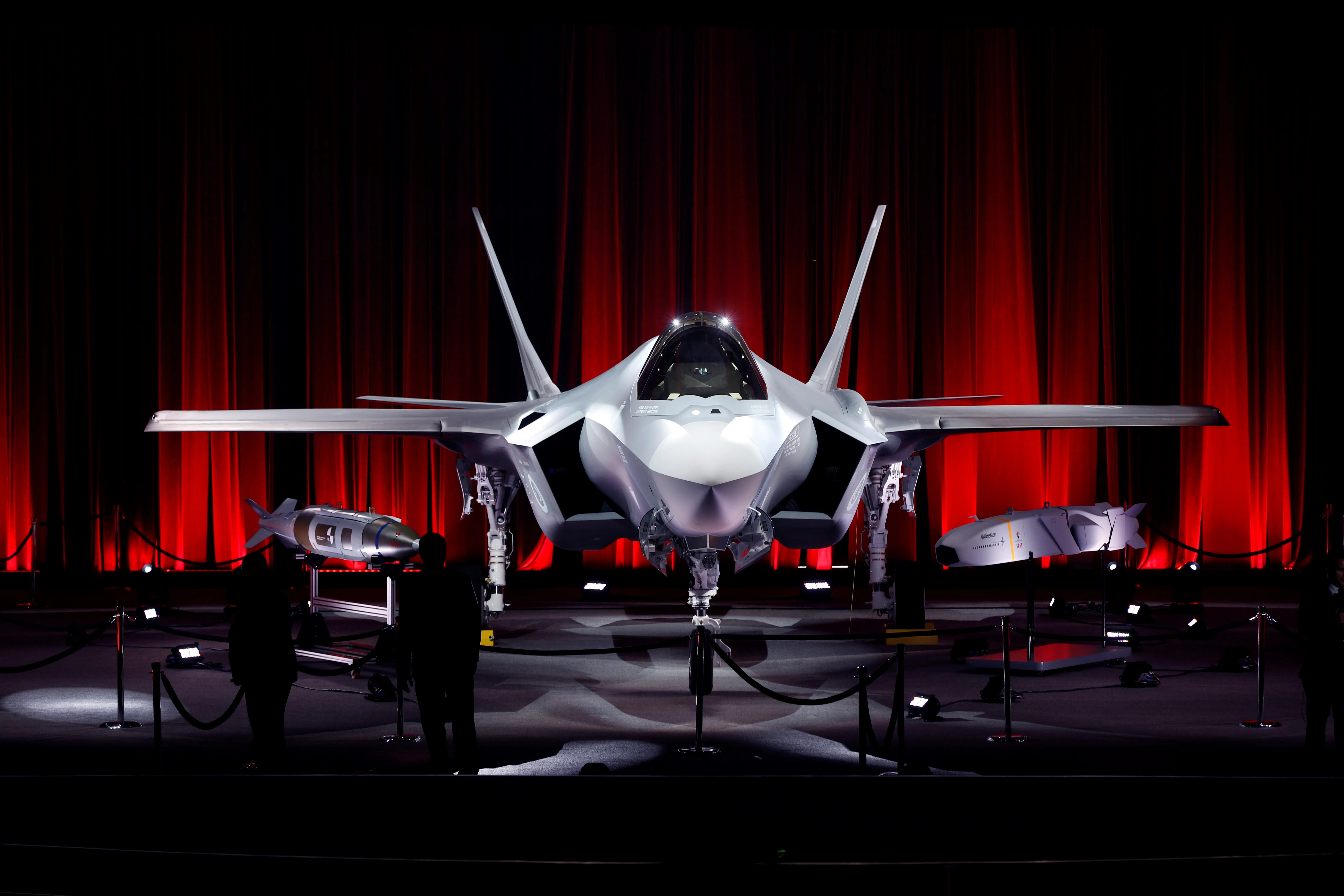
Roll-out of the first F-35A for Turkey during a ceremony at the Lockheed Martin plant in Fort Worth, Texas, United States on June 21, 2018. Photo by Atilgan Ozdil/Anadolu Agency/Getty Images Anadolu
Washington took that decision after Turkey refused to abandon its purchase of S-400 systems, amid security concerns around the Russian-made system and the F-35. By that time, around 30 F-35As had been built for Turkey. Most of these were later transferred to the U.S. Air Force.
It now seems that Turkish President Recep Tayyip Erdogan is willing to give up the S-400s to regain access to the F-35 program.
Turkey bought the S-400 in 2017, but the systems have reportedly spent most of their service life in storage. Separate reports have also questioned the S-400’s combat performance in Indian service during last year’s India-Pakistan conflict.
A view of Murted Air Base, Turkey, as cargo aircraft carrying components of S-400 systems land on July 14, 2019. Photo by Gokhan Balci/Anadolu Agency/Getty Images Anadolu
From Turkey’s perspective, regaining access to the F-35 would deliver far greater long-term military and industrial benefits than retaining the S-400. Lockheed Martin anticipates that by the 2030s, more than 600 F-35s will be operated from more than 10 European countries, including two U.S. Air Force squadrons in the United Kingdom. Turkey would be able to benefit from a significant European operator footprint and, potentially, could reinstate lucrative local production for F-35 components.
In the past, Moscow has said that contractual obligations from the S-400 acquisition prevent it from being resold or transferred by Turkey without formal authorization. However, there is now also the possibility that Russia might want to take back the S-400s to bolster its own air defenses, which are increasingly strained by the ongoing war in Ukraine. As Kyiv piles on the pressure with long-range drone and cruise missile strikes against Russia, getting more S-400s for homeland defense would also be very welcome.
Operators of the NGU special unit “Lasar’s Group” struck an S-400 air defense launcher in the Belgorod region using a heavy bomber drone.
The operation was carried out jointly with the 429th Separate UAV Battalion and the Joint Forces Grouping. pic.twitter.com/FnQp82ZjGc
On the other hand, there will still be some resistance to Turkey’s readmission to the F-35 program. Any kind of major defense deal with Turkey involves some kind of pushback from U.S. lawmakers.
As well as the S-400 issue, U.S. lawmakers have historically been concerned about Turkey’s relations with Greece, its other connections with Russia and Azerbaijan (which included the deployment of F-16s to the latter country), its conduct in the Syrian civil war, and human rights abuses. Previously, Turkey’s opposition to Sweden joining NATO also proved to be a significant hurdle.
The process to get Turkey back into the F-35 program would involve a lifting of the sanctions placed on it under the Countering America’s Adversaries Through Sanctions Act (CAATSA). To do this, Trump would need to formally notify Congress that the S-400s are no longer operational, that Turkey no longer possesses any of the systems, and that Ankara has pledged not to pursue similar defense ties with Russia in the future. Congress could still put the matter to a vote if lawmakers were still unconvinced that these conditions have been met.
An infographic outlining U.S. sanctions on Turkey over its S-400 purchase. Photo by Muhammed Ali Yigit, Sadik Kedir Abdu/Anadolu Agency via Getty Images Anadolu
There have been recent signs that, under Trump in particular, Turkey is getting more access to high-end defense equipment. This reflects broader improvements in Washington’s relationship with Ankara, with Erdogan frequently receiving praise from the U.S. leader.
Last month, reports emerged that the Trump administration planned to go ahead with the sale of dozens of F110 engines required to power Turkey’s homegrown TF Kaan combat jet, despite some resistance from Congress. You can read more about that here.
In early 2024, the U.S. State Department finally approved a possible Foreign Military Sale to Turkey of 40 new F-16C/D Block 70 fighters, which Ankara had long campaigned for, plus the upgrade of 79 existing aircraft to F-16V configuration.
A Turkish Air Force F-16C during air refueling operations in Exercise Ramstein Flag 25 over the North Sea, March 31, 2025. U.S. Air Force photo by Senior Airman Christopher Campbell Senior Airman Christopher Campbell
Ankara’s push to regain access to the F-35 has taken on added urgency as rival Greece moves ahead with its own approved purchase of the stealth jets. We explored how that rivalry is reshaping both countries’ air forces in this previous feature.
Moreover, Turkey is looking to modernize its fighter fleet and, denied the F-35 and with F-16 deals moving forward only slowly, it has been forced to look elsewhere to meet its short-term fighter needs. Most notably, it signed a deal for 20 Eurofighter Typhoon jets last year.
A Turkish return to the F-35 program would also have implications for the Kaan program. Renewed defense ties with Washington could ease access to critical technologies and support for the homegrown jet, while acquiring the F-35 would also reduce some of the urgency behind the Kaan, which was accelerated in part after expulsion from the Joint Strike Fighter program. Even so, Ankara has consistently presented the Kaan as a long-term strategic project intended to give it an independent fighter capability rather than simply replace the F-35. It also comes with the option for lucrative exports.
With the strongest signs yet that Ankara is ready to relinquish its S-400s, it would represent a remarkable reversal of one of the most consequential defense procurement decisions in Turkey’s recent history. Whether that proves sufficient to reopen the door to the F-35 program, however, will ultimately depend as much on Congress as on the White House.
The housing legislation will become US law at midnight with or without President Donald Trump’s signature.
Published On 10 Jul 202610 Jul 2026
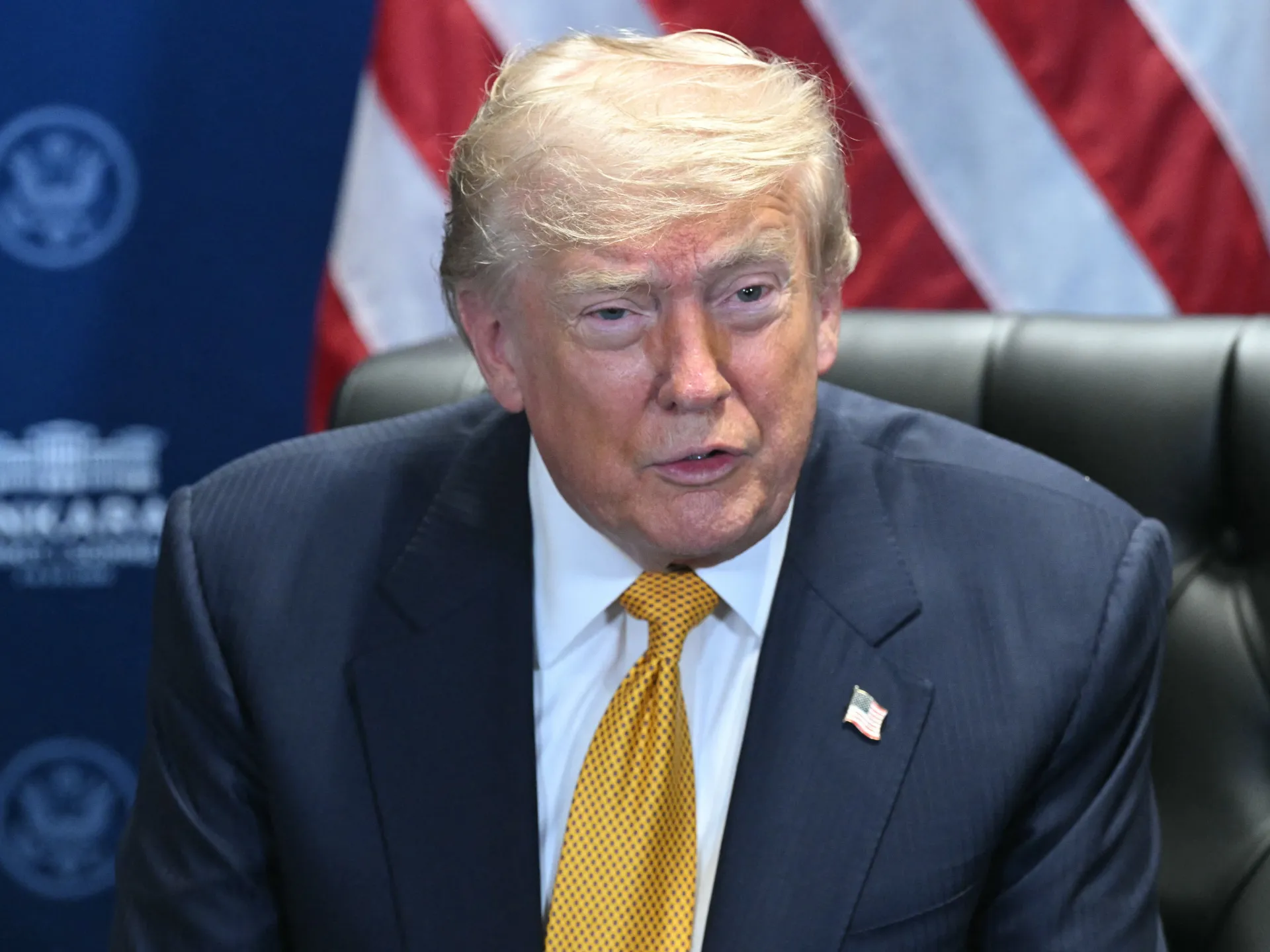
United States President Donald Trump says he will not sign a bipartisan housing affordability bill in protest at the Senate not passing the controversial SAVE America Act voting legislation.
In a post on Truth Social on Friday, Trump said he would not support signing the unrelated housing bill, which would speed up environmental reviews for construction projects, expedite development, and limit the number of single-family homes institutional investors can buy.
Recommended Stories
list of 4 itemsend of list
The bill will become law with or without the president’s signature. Once a bill reaches the president’s desk, the officeholder has 10 days to either sign it into law or veto the legislation. If he does neither, it becomes law at midnight.
House Speaker Mike Johnson said the president is unlikely to issue a last-minute veto.
The housing legislation, known as the 21st Century ROAD to Housing Act, which Trump called a “yawn” on June 29, was a rare moment of bipartisan agreement in a starkly divided US Congress. It passed the Senate by a vote of 85-5 and the House by a vote of 358-2.
The provisions included in the legislation are popular. A Bipartisan Policy Center poll suggested that 70 percent of Americans support banning institutional investors that own more than 350 homes from buying additional single-family homes.
The legislation would also establish incentive programmes for communities to build more housing and encourage the development of modular homes. It also includes provisions that would make it easier for communities to convert underutilised land into residential housing.
Housing remains a major pressure on Americans, with 79 percent saying the cost of housing is either “an extremely important” or “very important” issue, according to the Bipartisan Policy Center.
The US median home price hit a record $440,600 in June, while mortgage rates remain elevated. The average 30-year fixed mortgage rate is currently at 6.49 percent.
Voting act pressures
Trump cancelled the original signing ceremony for the housing legislation on June 24 in an effort to pressure Republicans to pass the SAVE America Act. Among its provisions, the bill would require proof of citizenship to register to vote and create a national voter database using state records.
It would also impose new limitations on mail-in voting, even though roughly one-quarter of Republicans voted by mail in the 2024 presidential election, according to an MIT survey.
A version of the voting legislation passed the House but failed to clear the Senate’s 60-vote filibuster threshold.
Under current election law, states administer elections, not the federal government.
The White House did not respond to Al Jazeera’s request for comment.
A Palestinian family in the northern Gaza town of Jabalia has been reunited with their son after believing for a year that he had been killed by Israeli army fire, only to discover he had been held in an Israeli prison throughout that time.
Inside the family’s home, which was damaged by Israeli bombardment, relatives broke down in tears of joy as 23-year-old Hamada Al-Banna returned unexpectedly after they had lost hope of ever seeing him again.
His family had believed that Hamada and his brother, Adham, were shot dead by Israeli forces while on their way to collect food aid during the peak of the famine that hit the Gaza Strip in the summer of 2025.
On Monday, Israeli authorities released Hamada along with 16 other Palestinian detainees. The International Committee of the Red Cross transferred them to Al-Aqsa Martyrs Hospital in Deir al-Balah in central Gaza before he returned to his family in the north of the territory.
His mother, Widad, fainted after hearing her son’s voice for the first time in a phone call following his release. Hours later, she collapsed again as she embraced him when he arrived home.
An Anadolu correspondent witnessed the family’s emotional reunion, in a story reflecting the suffering of hundreds of Palestinian families who remain unaware of the fate of their relatives since the start of Israel’s military campaign in Gaza on 8 October 2023.
Three wins to go. How can your team reach the final and win the World Cup 2026? Click here to find out.
Who: Norway vs England What: FIFA World Cup 2026 – Quarterfinals Where: Miami Stadium, Miami Gardens, Florida, the United States When: Saturday, July 11, at 5pm (21:00 GMT) How to follow: We will have all the build-up on Al Jazeera Sport from 18:00 GMT before our live text commentary stream.
Recommended Stories
list of 3 itemsend of list
Four weeks ago, if you told Norwegians their team would be in the World Cup quarterfinals, they might have laughed it off. But this weekend, the Scandinavian country is set to break new ground.
Norway’s dream run in North America enters a new chapter when the tournament’s dark horses take on title contenders England for a place in the semifinals.
It took Norway a whopping 28 years to return to the sport’s biggest stage, and they have made their mark in style – from their traditional Viking row celebrations capturing global attention to striker Erling Haaland becoming the internet’s darling.
A lethal presence in the box and a goofy, no-nonsense personality off the pitch, Haaland has become somewhat of an all-round entertainer for viewers. His exemplary goal-scoring figures make you almost forget he’s playing in his debut World Cup – and next up, the towering striker will go toe-to-toe with England’s Harry Kane, another number nine who delivers when it matters most.
How did Norway and England reach the round of 16?
Norway finished second in Group I with six points, beating Senegal and Iraq and losing to France. They started their knockout phase with a late 2-1 win over the Ivory Coast before stunning Brazil by the same scoreline to reach the quarterfinals for the first time.
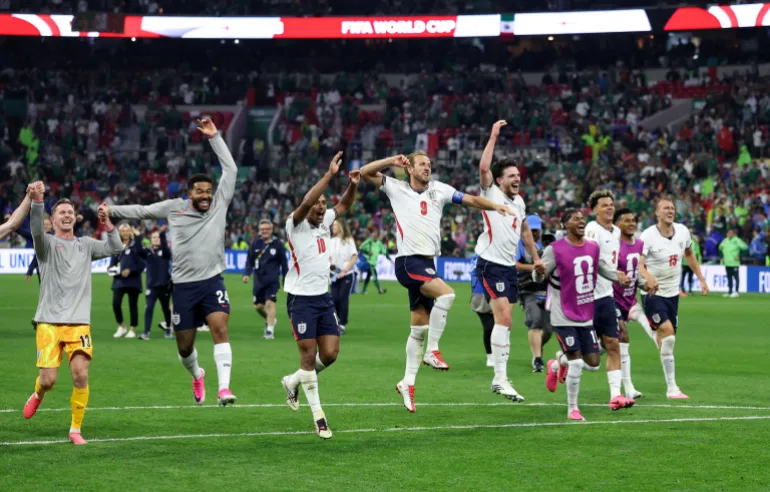
England topped Group L with seven points, beating Croatia and Panama and drawing with Ghana. They needed a second-half comeback to beat the Democratic Republic of the Congo in the round of 32 and knocked out cohosts Mexico 3-2 in a scintillating last-16 contest at the iconic Azteca Stadium.
England players celebrate after reaching a third consecutive quarterfinal [Paul Childs/Reuters]
Pressure firmly on England
The chants of “It’s Coming Home” were louder than ever when England’s fighting spirit – against the background of high altitude, history and a red card – steered them to victory against the home side Mexico.
Sharing 10 of the team’s 11 goals between them, the dynamic duo of Kane and Jude Bellingham has kept England alive in the title race, especially at a time when there are defensive deficiencies in the squad.
The in-form side, which also boasts more World Cup experience than Norway, are deemed favourites to reach the semifinals for the first time since 2018.
“We’ve been here a few times,” said England winger Bukayo Saka. “But the best team on the day is going to be the team that wins, so we’re aware of that and that’s where our focus is.”
England’s leaky defence – which has kept only two clean sheets in five games – will face its toughest test yet against Haaland, whose seven goals rank him third in the Golden Boot race, only behind Lionel Messi and Kylian Mbappe.
Haaland: The most recognisable face at the World Cup
In their first World Cup since 1998, Norway, a nation of just more than five million people, has exceeded expectations.
After stunning the record five-time world champions Brazil to reach their first-ever quarterfinal, Norway will be eager to take down another giant and extend their fairytale run.
As much as their success has been a team effort, the spotlight has centred on their poster boy, Haaland – the blond, pony-tailed, 1.95-metre- (6ft4-) tall striker and a new social media sensation.
With his nonchalant replies in news conferences, awkward post-match selfies on Snapchat and a glittering collection of luxury handbags, the striker has drawn attention for more than just his goal-scoring prowess. In fact, “Haaland mania” has reached a fever pitch during the course of the World Cup.
Instagram is flooded with AI-generated and animated videos of him, stitched with his now-famous song “Ha-ha-ha-Haaland”.
“It’s important to joke around … I like to joke a little bit, and I like to have fun,” Haaland said. “That’s a key for my daily life – to joke around and, of course, train well and prepare well.”
Haaland’s top-notch preparation has delivered outcomes that even the 25-year-old did not expect.
“To be in the quarterfinals with Norway in the World Cup is quite surprising, even for me,” he said.
“Just to be able to play in the World Cup is, for me, a huge honour, and it was a huge goal for me in my career. To be able to be here and play on the biggest stage with my Norwegian friends against the best teams in the world, it’s really special.”
Norway vs England predictions
The Opta supercomputer gives England a 50.4 percent likelihood of winning in regulation time, while Norway’s chances of winning are 25.1 percent.
The model estimates a 24.6 percent probability of the game going to extra time.
What time is Norway vs England?
Norway: NRK1, NRK2, TV 2 (11pm, Central European Summer Time)
United Kingdom: STV, STV Player, ITV1, ITVX (10pm, British Summer Time)
To check the TV listings for your country, head to FIFA’s TV listing schedule here.
Who will the winner face in the semifinals?
The winner of the Norway vs England match will play Argentina or Switzerland in the semifinals in Atlanta on Wednesday.
Norway vs England: Head-to-head
Norway and England have never met at the World Cup, but have previously faced each other 12 times. England have won seven times, Norway twice, while three matches ended in a draw.
Their most recent encounter came in a 2014 international friendly, which England won 1-0 at Wembley.
Norway vs England: Team news
England will be without defender Jarell Quansah after he was handed a two-match ban for picking up a red card in the game against Mexico. He will miss the quarterfinal and a potential semifinal should England advance.
Centre-back Marc Guehi has a slight hamstring strain and will be assessed later on Friday to see if he is fit to play, while Reece James remains doubtful with a hamstring injury.
Defensive midfielder Jordan Henderson has been ruled out of the rest of the tournament with a broken wrist.
With Jess, not her real name, your Gen X TikTok beauty influencer baffled as to why they haven’t put stem cells in her night cream
GETTING older is a natural process and nothing to be ashamed of. And if you believe that, please exit the dating market and go to an open space to die.
But, in a 21st century so aging for those of us unfortunate enough to be born in the last one, it’s not just women who need to be eternal. It takes only 3.14 seconds for a woman to clock your weird gnome features and suboptimal height. Ample time to fix it with make-up products like these.
All men want to be taken seriously on the world stage, and who’s taken more seriously than JD Vance? When those dark-rimmed peepers lock on you, he’s exactly like the Red Light Green Light girl inSquid Game, only with more arbitrary deaths.
You too can wield power like this with JD’s go-to kohl pencil: L’Oreal’s Black Death Vector Injector in shade Erotic Necrotic, currently available on subscription only. But to enter the lottery to be put on the waiting list is only £85 a month!
And you’re rightly embarrassed about your weak jawline. But you can go from Gail Platt to R-Pattz in seconds with the actor’s own line in men’s contouring: The Bat-Mandible Structural Reconstruction Protocol, available on the darknet for just 22 bitcoin.
As for the hair loss? Hey, it happens to all men apart from the rich, famous ones. Have you considered going to Turkey? Then normal people wouldn’t have to see you.
Also, if you’re a Gen X man? Stop going on about the 90s, they weren’t that great, it’s creepy that you listen to Olivia Rodrigo, we can all tell you drink, getting your nipple pierced was a mistake then and is a mistake now and stop dating 20somethings.
I’m here like I always was, waiting to be claimed like a hold-all full of Primark underwear at a lost luggage auction, only much, much dirtier. You should never have left me.
There is almost no landscape across the West African Sahel that cannot be accessed from the back of a motorcycle. That is why terrorists operating in the region prize them so highly. In various terror operations, motorcycles are used not only as vehicles, but as weapons, and even as a form of currency.
In April, terrorists abducted five residents from their farms in Anka, Zamfara State, in Nigeria’s North West, and demanded a ₦3.8 million ransom. After the affected families managed to raise the money and paid it, the abductors issued another demand: they were to return with motorcycles before the hostages would be released.
“They told the families that they would kill the victims if they did not bring a motorcycle,” Ciroma Ade* said. He was tasked with travelling to parts of Sokoto, or somewhere else, to buy the motorcycles and deliver them to a location that would be communicated to him later, in his experience, usually around Gurusu Forest between Anka and Gusau.
It was not the first time he had made the run. Over time, he unintentionally became a ‘middleman’ in the motorcycle ransom economy. He was also one of its victims. In 2024, he bought motorcycles to secure the release of many of his relatives. Buying a ransom vehicle is never straightforward because the region is now more conscious of its purchase, and many vendors will no longer sell the vehicle in that part of the country.
Sometimes the terrorists arrange for an anonymous ‘middleman’ to travel far, often to the trading hubs in Kano, to source motorcycles on their behalf. Ciroma has his own networks. He knows which traders to approach in Sokoto or Zuru, in Kebbi State, despite the growing difficulty of buying the machines.
Over the years, he has repeatedly relied on those contacts to secure abducted villagers, including many of his relatives. Once the motorcycles were purchased, the terrorists would arrange a meeting point for delivery. He did the same this time. Most of the time, the hostages returned alive. The terrorists appeared to understand the continuing value of keeping captives alive; they were useful leverage for future negotiations.
This time was different. The victims were killed anyway.
An emerging trend has taken hold across parts of northern Nigeria. Terrorists have created a self-sustaining system in which motorcycles have become a form of ransom. Each abduction helps replenish the very machines used to carry out the next one. The motorcycle has become both the means of violence and its reward.
HumAngle learned that terrorists in the region frequently use commercially available motorcycles, especially Honda models, for their durability, availability, and suitability for rough terrain. They ride them into battle, use them to swarm a target, and conduct large-scale operations like mass abductions.
Ciroma, for one, knows this too. As one of the reluctant middlemen who helped bring ransom motorcycles into the system, he believes his community has become both a source of motorcycles for terrorists and one of the least safe places in the country.
While researching how motorcycles have become inseparable from conflict in the Sahel, I could not find many stories that told the tales of war from the motorcycle’s perspective. Almost every day brings reports of non-state armed groups using motorcycles to attack villages, ambush troops, abduct civilians, or simply move from one place to another. Yet the motorcycle itself rarely occupies the centre of those stories.
Conflict reporting understandably focuses on bloodshed, casualties, military operations, and the growing sophistication of insurgents’ weaponry. Compared with assault rifles, rocket launchers, or improvised explosive devices, motorcycles appear almost mundane. But this overlooks one of the constants of modern insurgency.
Across Nigeria’s conflict theatres, and much of the wider Sahel, the motorcycle is present regardless of the group, geography, or operation. It functions simultaneously as a transport, a logistics platform, an escape vehicle, and a weapon. There should be a literature that treats it as the protagonist rather than merely part of the scenery.
This is what we are attempting to do.
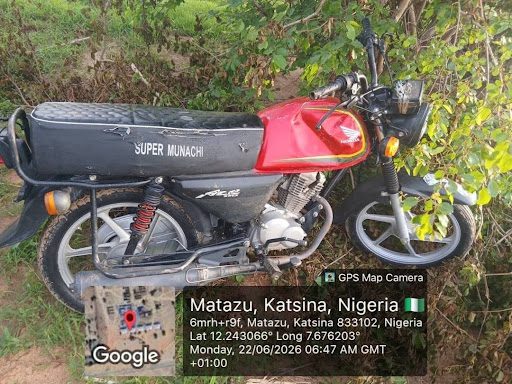
A motorcycle recovered by the Nigerian army after a raid in the Matazu Forest in Katsina State.
Ciroma had just returned from the cemetery, where he and other villagers buried five people killed by the terrorists, when he heard that a journalist wanted to know about the motorcycle ransom economy. He spoke passionately about the suffering of his community.
During his final assignment, he deliberately delayed delivering the motorcycles until every option had been exhausted. After the victims were killed, he sold the motorcycles and distributed the proceeds back to their families.
As he told members of his community, he wanted nothing more to do with the “thieves”, including playing a part in the supply chain that sustained them.
If soldiers were willing to follow the motorcycle tracks into the forests, he said, he would guide them himself. He knew the routes. He knew the delivery points. Together with the local vigilantes, they could reach the camps where he had previously delivered motorcycles. “They could clear the thieves out,” he said.
The rider
Back in Abuja, I needed more perspective if I was going to write this story.
I left my estate and approached a commercial motorcyclist waiting by the roadside. He eyed me suspiciously. He wanted no association with terrorists, even if it meant nothing more than answering a journalist’s questions.
Get our in-depth, creative coverage of conflict and development delivered to you every weekend.
Subscribe now to our newsletter!
Standing nearby was another rider, Musa Abba. He waved me over, introduced himself, and agreed to speak, but only off camera. I asked him what it felt like to ride his bike every day.
“There is no place I cannot reach with this machine,” he said.
Musa trusts his motorcycle more than anything else. He kicked the engine to life and gestured for me to climb on. He had decided the interview would be better conducted while we were moving.
As I settled in behind him, my thoughts drifted, not to motorcycles, but to horses. I found myself thinking about how civilisations across the ancient world discovered the extraordinary power of a mounted rider. Horses became indispensable: first for farming and transport, then, most significantly, for war. They were the all-important multipurpose machines of their age.
They could hardly have imagined that one day a two-wheeled machine would replicate the power of a cavalry many times over. Perhaps they wondered about it. Back then, even with other machines of war, such as the horse-drawn cart, the camel caravan, and eventually some mechanised infantry, the role of the rider in battle remained central.
Motorcycles have inherited that role.
Some recent research has begun to recognise this. Analysts have documented the emergence of a ransom economy in which insurgents increasingly demanded motorcycles instead of cash. Communities are taxed to replace bikes lost during military operations. The most in-depth literature was compiled by the Global Initiative, an international think tank that interviewed people across the West African Sahel and found that motorcycles were stolen and trafficked over the years to sustain transnational criminal operations in Mali, Niger, Burkina Faso, and the Republic of Benin.
Not much was said about Nigeria in the report. However, the Nigerian Army has, in press statements, documented the seizure of thousands of motorcycles in counterinsurgency operations in Nigeria. Beyond those records, evidence also lies along the routes connecting illicit smuggling and trafficking hubs, with networks tracing back to the organised trans-Saharan trade from the 8th to the 16th centuries. Today, those same corridors still carry motorcycles used for smuggling and for slipping along clandestine routes that let riders avoid conventional roads and border checkpoints.
The motorcycle is now so woven into life across West Africa, the Sahel, and the Lake Chad Basin that the mobility it provides sustains entire communities, and many people in the lower and middle classes cannot imagine life without it.
As we continued the ride, Abba said, “When it is time to work, the only road I cannot enter is a place I am not allowed to work.”
File: Civilians across the country, especially in rural areas, also depend on motorcycles for mobility through rough terrain. Photo provided by Huzaifa Shehu, a resident of Magami in Zamfara State,
The war machine
How does a bike measure up to the cavalry? Scottish engineer James Watt coined the term ‘horsepower’ in the late 18th century, defining one horsepower as the daily output of a strong working horse. In reality, a horse sustains only about half that output over the course of a day.
I wondered whether the rider ever feels limited by terrain, and what it must feel like to have such command of the road.
“Surely you cannot climb rocks with it,” I said in Hausa, pointing at a hill we were riding past. “There is no place I cannot reach with this machine,” he repeated over the soft rush of wind. “Wannan karfe ne,” he continued. This is metal.
His Hausa made the argument sound more emphatic.
“It is not like rubber-rubber,” he went on, referring to the flashier plastic-bodied motorcycles. “A bike like this,” he said, gesturing at his motorcycle, “is the most durable of them all. You don’t need to maintain it much, and it doesn’t consume as much fuel as most other brands. You can change the oil just once in a while if you like. It can go anywhere, enter almost anywhere, and its second-hand value is even better than rubber-rubber [brands].”
Abba went on and on about what makes a motorcycle valuable in everyday life, and in doing so, he laid out exactly what makes it valuable to a terrorist across the conflict zones of Nigeria.
Measured by sustained power output, a Honda CG125 delivers roughly the equivalent of about 16 working horses. By that measure, a single terrorist on a motorcycle is riding with the power of about 16 horses at a time.
What we found
Over months of work, we built a database by measuring hundreds of military operations conducted over the past decade, logging every reported incident of motorcycle seizure and the count attached to it. Between February 2015 and November 2025, the Nigerian Army reportedly seized at least 2,607 motorcycles across 300 separate encounters. Taken together, this aggregated press data describes the logistical philosophy of the terror groups that the troops fight.
The seizure records also reveal distinct phases. At various points, different armed groups appear to have dominated motorcycle use, and there were periods when almost every operation reported by the military involved recovering bikes. Yet the headline figure of 2,607 motorcycles over ten years tells only part of the story.
In the early years of military engagement in the insurgency, the totals were driven by a handful of major discoveries, followed by long runs of tens of operations, each yielding only a single vehicle. These recoveries were not sustained by patrol pressure; they came when a campaign stumbled on a cache.
Over time, however, the army evolved its tactics. It pushed deeper into the terror enclaves in the forests, adopting specialised strategies, including the so-called strangulation strategy of the late 2010s, which was designed to starve the groups of the fuel and resources that kept their motorcycles running, and in many ways they set up the clearance operations that produced the few thousand vehicles in the record.
The earliest phase of this campaign against the motorcycle is unclear in the data. In late 2015 and 2016, at the peak of the Boko Haram insurgency, motorcycles were still being treated as secondary characters in the war. At the time, Boko Haram could field a 15-gun-truck convoy against a Forward Operating Base in Borno, sustain multi-wave assaults with machine guns and specialised Type-36 hand grenades in a single engagement, and then publish videos of the attack to showcase its strength and firepower.
Counterinsurgency reports from the period mention motorcycles only in passing. The focus was on weapons recovered, fighters neutralised, and territories retaken. But the bikes grew more prominent as larger caches began to appear in the record around 2017. Most seizure events still involved a single motorcycle, but occasionally the numbers jumped to a few or to a large cache, almost always the product of a one-off encounter or an ambush on a terrorist base.
As the military expanded its operations deeper into the forest to dislodge the groups, recoveries increased, especially in the northeastern region. I designate this as the first of two eras of riders, as the aggregated data reveal the core role of motorcycles in the wars.
The era of riders
On Feb. 17, 2016, soldiers of the 7 Division Garrison, on a clearance mission, entered Gulumba in Bama Local Government Area in Borno State. They found what they described as a small city where they had expected a makeshift camp. Inside were medical supplies stored in a field hospital, a sizable market, two logistics trucks, a grinding machine, and an industrial 100KVA Mikano generator. The most important find, though, was the transport garage of 180 motorcycles and 750 bicycles. In a single operation, at least 930 potential combatants were denied transport that day.
The period between 2016 and 2017 belonged to Boko Haram’s riders. Operation Lafiya Dole, a counterinsurgency operation of the Nigerian government, alone accounts for 57 per cent of all seizures in the dataset, with 1,792 motorcycles across 96 records, almost all recovered during camp-clearance operations in Borno. That works out to an average of 19.7 motorcycles per recorded operation.
Viewed over the full 2015–2025 period, the distribution of motorcycle seizures tells the story of two distinct conflicts. The first peaks in 2016; the second begins to emerge after 2022.
The defining year is 2016. Alone, it accounts for almost half of all motorcycles recorded in the dataset: roughly 1,300 bikes recovered across just 86 records, an average of 17 per record, far above any other year. This was the peak of Operation Lafiya Dole’s deepest push into Boko Haram’s territorial strongholds in Borno, where large-scale camp clearances dismantled the insurgency’s mobile logistics in bulk.
The pattern continued into 2017. Although the database contains only 10 records for that year, it accounts for 331 bikes, carried almost entirely by a single cache of 301 bikes recovered at Njibulwa, an insurgent enclave in Borno State.
After that, the numbers collapsed. Between 2018 and 2022, annual recoveries averaged just 49 motorcycles.
The second era of riders
Then there was another uptick in 2023, but it is a different case from 2016. This time, the centre of gravity shifted westwards. Kaduna led the increase, accounting for 88 recovered motorcycles, mostly linked in military reports to “terrorists”. The change reflected the growing prominence of motorcycle-riding armed groups in north-western Nigeria from around 2020 onwards.
Unlike the Boko Haram years, recoveries were no longer dominated by massive camp clearances. Instead, the database settles into a consistent pattern of around five to eight motorcycles per record, with a steady climb. The groups they were recovered from were labelled by the security forces as “bandits”, not Boko Haram.
After 2022, the number of seizure records rose sharply, even as the number of motorcycles recovered in each operation remained relatively low. Instead of discovering large transport depots, security forces were finding motorcycles in small clusters during repeated engagements. Operation Shaaran Daji became the leading source of recoveries in the northwestern region, signalling that the motorcycle had become embedded not in large insurgent camps but in dispersed, highly mobile armed networks.
The informal motorcycle networks through the Sahel
There are dirt roads in the desert that cross international borders and run through the Sahel’s sands, following routes that have connected communities for centuries. Many trace the arteries of the trans-Saharan trade, linking illicit hubs of smuggling and trafficking through networks first established hundreds of years ago. These pathways did not disappear as modern states emerged across the Sahel. Instead, they evolved alongside them. Most still exist today, at least as part of a broader web of formal and informal routes connecting contemporary roads to historical trading corridors that continue to facilitate cross-border movement.
Consider the recent ruins of Metele, which is comparatively recent than the historical networks, a Borno town brought down to rubble by the Boko Haram insurgency and abandoned for years, and crumbling into building blocks. After a decade of silence, the one thing that has only grown more visible is the roads, and in particular the ones made by motorcycle tracks. These have deepened with continued use, suggesting activities likely by insurgents operating in the area.
Metele and hundreds of villages in northern Borno around it have been abandoned, leaving only insurgent camps and military bases that occasionally clash in the parts where these routes link them. Yet the old roads have only grown deeper, and new paths have opened across the empty ground, as seen in the satellite imagery below.
Satellite imagery showing motorcycle track junctions 2km from the ruins of Metele. At least two of these networks lead through the abandoned community. Imagery: Google Earth Pro.
Let’s follow the Metele tracks eastward and see where it leads. It runs for about eight kilometres of the bike route, crossing onto the shore of an island in Lake Chad, and continuing from there across the flat terrain of the island, with many sub-tracks splitting off toward different corners, while the main track presses on east, along the shore and onto a much larger island with road networks also branching off on every side and onto other islands. We stop here because this island matters for a particular reason. Among its thousands of tracks sits a largely isolated compound in the island’s north.
In May 2026, US forces, working with Nigerian Army intelligence, carried out an airstrike on that compound and killed a senior ISWAP commander, Abu Bilal Al-Minuki. The site was geolocated using video of the strike released by United States Africa Command (AFRICOM).
Al-Minuki served as a liaison between ISWAP’s various commands across the Lake Chad Basin and the wider Islamic State organisation. Different factions of the group operate on multiple fronts, with administrative functions carried out in locations such as this island. Senior commanders often gathered in secluded places like these, whether in forest compounds in Sambisa or in camps scattered across the islands of Lake Chad.
When fighters enter Nigeria, they may arrive by boat from neighbouring islands, or blend in with ordinary travellers using the road network. Once inside the theatre of conflict, however, the motorcycle becomes the preferred means of movement. It allows commanders to visit training camps, inspect fighters on different fronts, and travel rapidly between operational bases.
Imagery: Google Earth Pro.
The compound and the road network on the island were not present in the previously available satellite imagery of the area, which was taken about five years ago. The tracks show significant activity. Imagery: Google Earth Pro
These tracks travel far and wide, meeting at certain points across the Sahel. They run north into Lake Chad, or northwest toward the Niger Republic. Cross-border routes make neighbouring communities, places like Diffa in Niger, feel as close as the other side of the street. The motorcycle gives its riders command at border crossings, and they hardly worry about checkpoints on official roads unless they intend to attack the location and run into state forces on either side.
Here, the border itself counts for far less. This indistinguishable, landlocked frontier has been reshaped by centuries of informal movement, by daily life that transcends the very idea of nationality. These places have long borne the brunt of regional security forces unable to fully command the area, and in a geography this vast, with so many options and pathways, smuggling and trafficking are barely a challenge.
The network of informal motorcycle routes is still more intricate. Some lead into the ruins of the hundreds of villages, like Metele, abandoned across the area. The ruins of Metele is within 50 kilometres of the nearest fringe of communities where people still live. The tracks also connect to minor and major roads leading to inhabited areas, giving the motorcycles access for incursions.
Eventually, these routes connect to every community in the region. Across the flatlands of Metele and Lake Chad through the desert of the border country, the motorcycle is highly effective, and this is why it is such a powerful weapon in the typical insurgent arsenal, despite the secondary attention it tends to receive next to the AK-47s and rocket launchers recovered alongside it in a raid.
The forest route
You will rarely hear about motorcycle–riding terrorists being caught at a military checkpoint, on their way to an operation or simply travelling. For anyone who knows the terrain, there is often no need to cross a major road on most journeys in the region.
The forests of Sambisa, Kyumbana, Mando, and the Mandara Mountains welcome the tyres of the war machine. HumAngle has previously reported on fighters travelling, moving, even migrating to another state through the interconnected, ungoverned forest reserves of the region, which give them multi-state reach and the ability to turn up in almost any part of the country.
Lines illustrating the generic route linkage through ungoverned forest hotspots that motorcycle-riding terrorists use to move across northern Nigeria. Map illustrated by Mansir Muhammed/HumAngle
Once through the forests and the mountain wilderness of the northeastern region, riders reach the other end of the country, though not necessarily in one go. They drop down now and then onto the main road, sometimes to refuel; there are reports of the military intercepting them and warning filling stations not to serve them. They settle for a while in certain towns, or in camps near towns, using the towns as supply bases before picking up the trail back into the wilderness and on toward their destination.
The machines are useful throughout the journey, should they wish to travel from the northeast to the northwest. In 2022, HumAngle reported how fighters from the forests of the northwestern region, such as the Birnin Gwari and Kamuku forests, often travel through towns, stopping at communities where they are repeatedly reported to assault local residents, particularly women, often sexually, before continuing toward an operation elsewhere. The very sight of them on their bikes has already terrified those communities into compliance with whatever they demand. It has become a kind of tradition in Kaduna, in Niger, and even in Kwara State when these riders come into town.
From this end, too, groups like the Lakurawa have been reported riding into Nigeria. Locals often describe them as Arab-looking non-Nigerians entering through the porous borders in the northwest, and a similar pattern is evident along the Lake Chad Basin on the other side of the north. Recent reporting has confirmed the group as a faction of the Islamic State operating in West Africa, and in Nigeria in particular.
They move through the Sahara along a network of ancient routes and illicit hubs where trafficking and underground resources are available to anyone on the road. This underworld of hubs and crossings is what lets riders pass between countries.
The Sahel underworld
When the collapse of Muammar Gaddafi’s regime released Libya’s vast weapons stockpiles into the region, it was this same illicit Sahelian underworld that carried many of those weapons into West Africa, including Nigeria.
Before he was killed, the terrorist kingpin Halilu Sububu was reported to ride with his gang across this terrain, loaded with gold sourced from the artisanal mining pits they controlled, and to return to Nigeria with weapons traded for that gold. Those weapons became the lifeblood of banditry in the country’s northwestern region and made Sububu the chief arms supplier to the various groups there.
His advantage was not simply access to weapons, but access to the routes. He reportedly knew how to travel to the Sahel and return with arms without significant interference. His command of the motorcycle corridors enabled his network to move across borders with relative ease. The same routes connected him to weapons originating from the post-2011 Libyan arms outflow, and even allowed combat vehicles acquired by his organisation to be delivered through the network.
Smuggling routes link arms trafficking networks through illicit hubs and border crossings at the West African end of the trans-Saharan network. Map by Mansir Muhammed/HumAngle
Critical transit and logistics networks span multiple border regions across the Sahel and West Africa, including the Burkina Faso–Côte d’Ivoire border, the Côte d’Ivoire–Mali–Burkina Faso tri-border area, and the Ghana–Burkina Faso frontier, where Hamile, Tumu, and Bawku serve as key crossing points. Further north, Ansongo in Mali, Arlit and Agadez in Niger, and numerous settlements across the Mali–Niger–Burkina Faso tri-border region function as centres for acquiring, consolidating, and redistributing illicit resources.
Perhaps the most famous network that leads into northern Nigeria is the one from Libya. It crosses through illicit hubs and artisanal mining sites, most of which are controlled by armed groups. The network of arms smuggling runs from Libya, usually from the desert oasis of Sabha; the journey flows through Fazzan in southern Libya and crosses the infamous Salvador Pass into the Republic of Niger, where illicit hubs and mining networks link to Sokoto, Borno and Zamfara states, connecting through Niger Republic routes from Agadez, Maradi, Tahoua, following ancient trade routes that continue to shape movement today.
These hubs share a profile of remote geography, thin state presence, weak governance, and established illicit trade networks that move goods and people across borders.
Motorcycles rule in this terrain.
The same network used to bring weapons into West African Sahel states is also used to move gold to Dubai. Map by Mansir Muhammed, based on the following sources: Illicit hub mapping in West Africa 2025 byLyes Tagziria and Lucia Bird, and The West Africa–Sahel Connection by Mangan and Matthias Nowak.
Of middlemen and motorcycle bans
We met another middleman, Abu Dogara*. Unlike Ciroma, he was not interested in sharing his experience, as his job still leaves a bad taste in his mouth. He answered mostly with short replies, with the occasional long clarification about the details of his involvement in the motorcycle ransom economy.
Earlier, we talked about the middlemen: the mostly anonymous intermediaries who know how to secure the motorcycle for victims’ families when all other options are lost. Abu was a middleman, at least until terrorists abducted his sister-in-law. He wanted me to understand that the last time he was on the job, he had not dealt with the terrorists himself. They had taken his younger brother’s wife, so it was his brother who spoke to them. He had played the same role as always, travelling to buy the motorcycles.
As awareness of the terrorists’ reliance on motorcycles has grown, buying one anywhere near the axis has become increasingly difficult. Most of the people we spoke to about sourcing a ransom vehicle named far-off places like Kano, Kebbi, and even Lagos. This is part of what has driven the rise of the anonymous middleman, sometimes known to the kidnappers, and sometimes hired by the victim’s family.
Abu travelled to Sokoto to buy the bikes. He searched and found nothing. An issue he hadn’t faced before. But finally, he met a vendor with a single one in stock, a Honda, exactly the kind the kidnappers wanted. The vendor let him have his last one, but warned that they were getting harder and harder to find in the area.
Across northern Nigeria, state governments have introduced strict motorcycle bans and usage restrictions to counter-terrorism and “banditry”. Niger State went so far as to ban motorcycle sales outright, specifically targeting high-capacity models such as Hondas, which are frequently demanded as ransom. Elsewhere, the measures range from outright commercial bans to localised movement restrictions, all intended to disrupt terrorist logistics. Katsina and Zamfara states have also introduced night-time curfews and complete movement bans in forested areas.
Abu does not like to dwell on the last job. He remembers only that the motorcycle cost more than ₦2 million, and that finding it was painfully difficult. At one point, he even asked his brother to persuade the kidnappers to accept cash instead. They refused. In the end, the Honda he bought in Sokoto secured his sister-in-law’s freedom.
In Kano and Kebbi, the approach moved away from banning sales altogether, focusing instead on restricting how the bikes can be ridden to stop criminals from using them for quick getaways and remote logistics. Many sources we spoke with named Kano, Kebbi (Zuru), and Sokoto as sources for the machines, with Kano and Kebbi most consistently described as the last resort.
The Motorcycle Regulatory Framework in Northern Nigeria.
The machine they cannot beat
To replace the motorcycles seized by the troops, terrorist groups tax the very communities near where those seizures take place. In one incident, terrorists taxed a community that had narrowly escaped a planned terror attack, saved only because soldiers happened to be in the village at the time. In another, one kingpin abducted a district head and party chieftain in a village in Zamfara, saying that his confiscated motorcycles were the reason for his actions, and he must be compensated.
Across much of Nigeria’s North, attacks launched from the back of a motorcycle are becoming more common. The country is still dealing with motorcycle-facilitated crises at both extremes. It is the one insurgent tactic the Nigerian security forces have not been able to beat. Not with trenches on the battle fronts of the northeastern region, nor in the communities across the country where these raids have become a regular part of recent reporting.
The Nigerian Army has itself adopted motorcycles for parts of the same war. Boko Haram deserters recruited to support counterinsurgency operations ride ahead of advancing troops on motorcycles, scouting for ambushes, improvised explosive devices, and landmines. The machine has become indispensable to both sides.
For many survivors, the sound of a motorcycle engine will always bring up the worst of their memories.
The names of the middlemen have been changed to protect their identities.
In the aftermath of that incident, England players were issued new guidance, as reported by the Telegraph, external.
The updated policy confirms the midnight curfew is in place on every day of a series at home or on tour.
It also recommends that no alcohol be consumed on the day immediately before, during or the day immediately after a match. If, for example, a Test runs the full five days, the recommendation extends to the following day.
The head coach and director of cricket, in this instance Brendon McCullum and Rob Key respectively, have the discretion to relax the recommendations when they see fit.
That way, the hierarchy can allow players the freedom to celebrate a win or keep with traditions such as an end-of-series drink with the opposition at the conclusion of an Ashes series.
Players were allowed to drink immediately after the third Test against New Zealand at Trent Bridge, to mark Stokes’ international retirement.
The recommendations apply only to players, rather than staff.
If players do choose to drink in the period before, during or after matches, it should not be in public.
They have also been strongly discouraged from drinking in private, in order to aid preparation, recovery and professionalism.
It has not been confirmed if the guidelines apply only to the England senior men’s teams, or all England teams – including the senior women and pathway programmes.
Regarding the curfew, there are periods when players would naturally leave the England camp, either because there is a long gap between matches or they have been released to their counties. It is unclear if the curfew would still apply.
Susannah Streeter, chief investment strategist at Wealth Club, said Apollo was focusing on EasyJet’s potential.
“While the carrier has been buffeted recently by higher fuel costs and geopolitical turbulence, it has built a resilient European network, a strong balance sheet and, crucially, a fast-growing holidays business. That’s likely to be one of Apollo’s biggest attractions.”
“Package holidays generate higher margins and more predictable revenues than airline tickets alone,” she added.
“For passengers, it’s very much business as usual for now, with flights, bookings and loyalty schemes unaffected while any deal works its way through the regulatory process.”
The latest statement from EasyJet does not mean a deal has been confirmed. Apollo has been set a deadline of 17:00 on 7 August to either make a firm bid for EasyJet or walk away. Castlelake’s deadline to make a firm offer is 3 August.
However, on Sunday, EasyJet said it had reached an agreement in principle with Castlelake, a US investment firm, over a potential takeover offer worth around £5.2bn.
One significant regulatory hurdle to any EasyJet takeover is that European Union regulations stipulate the carrier must be majority-owned by EU citizens.
Castlelake had proposed going into partnership with two EU nationals, businessmen Peter Bellew and Mark Breen. They would own an EU-based company that would have majority control of the airline.
Apollo said it will take “all necessary steps” to meet any EU conditions surrounding the deal.
EasyJet said the offer from Apollo represented an 81% increase from its share price of £3.94 on 28 May, the last day of trading before the takeover interest from Castlelake was made public.
Until EasyJet reached agreement with Castlelake, it had accused the US firm of being “highly opportunistic” with its bids, arguing that its share price had been “temporarily depressed” partly due to the impact of Iran war on the travel sector.
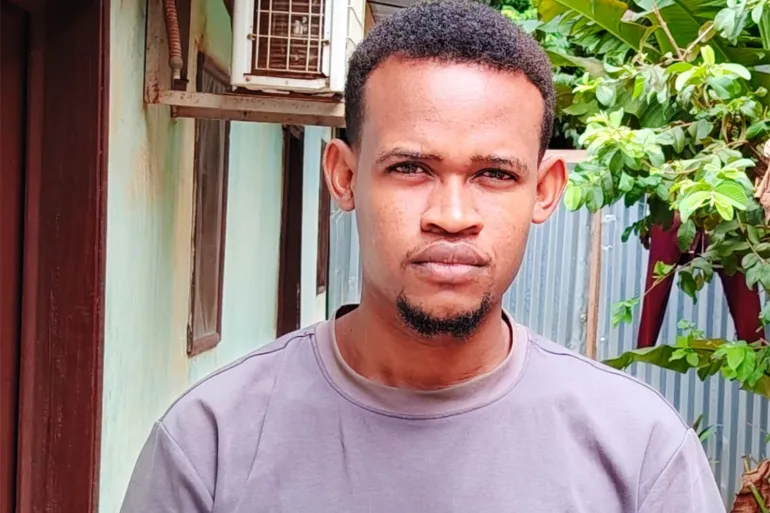
![Baderelddian Issa dreams of completing his university education despite the challenges of life in exile [Zeinab Mohammed Salih/Al Jazeera]](https://i0.wp.com/www.aljazeera.com/wp-content/uploads/2026/07/IMG_2800-1-1783602170.jpg?w=640&ssl=1)
![Gamar El-Shaikh is studying sociology at the University of Bangui after fleeing Sudan's war [Zeinab Mohammed Salih/Al Jazeera]](https://i0.wp.com/www.aljazeera.com/wp-content/uploads/2026/07/IMG_2803-1-1783602167.jpg?w=640&ssl=1)