Discover the latest happenings and stay in the know with our up-to-date today news coverage. From breaking stories and current events to trending topics and insightful analysis, we bring you the most relevant and captivating news of the day.
At least one person was killed and several injured when Israeli drones hit a group of Palestinians near Gaza’s Al-Aqsa Hospital. Al Jazeera’s Tareq Abu Azzoum was outside the hospital as the attack happened. Here’s his report.
Weekly insights and analysis on the latest developments in military technology, strategy, and foreign policy.
Raytheon has touted a new domestic order for PAC-2-series interceptors for the Patriot surface-to-air missile system. This is the first time the U.S. military has bought any new PAC-2s in more than 30 years, according to the company. This comes amid persistent concerns about the sufficiency of American stockpiles of high-end anti-air interceptors and other critical munitions, with alarm bells now ringing very loudly due to the conflict with Iran. Global demand for Patriot systems and interceptors for them, in general, is at a high point, driven heavily by fighting in the Middle East and the ongoing war in Ukraine. Patriot has been seeing a broader renaissance in recent years amid an evolving threat ecosystem, emanating especially from Russia and China.
Patriot was an important topic of discussion during a Raytheon quarterly earnings call this morning. Raytheon is the prime contractor for the Patriot system and the PAC-2 interceptor. Lockheed Martin is the prime contractor for the separate PAC-3 family of interceptors for Patriot.
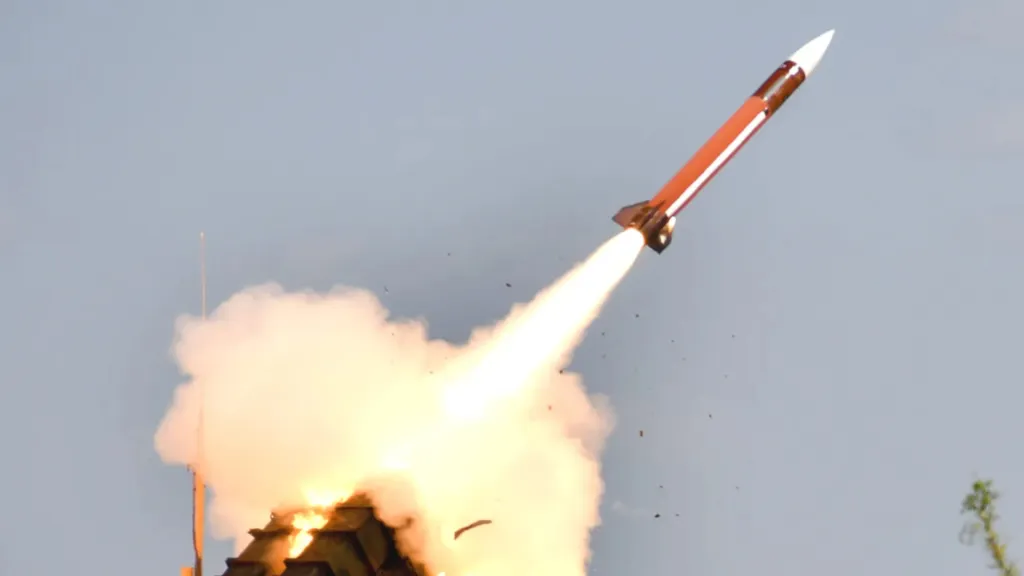
A PAC-series interceptor seen being fired. US Army
“Raytheon booked nearly $20 billion of awards, resulting in a book-to-bill [ratio] in Q2 [second quarter of the 2026 fiscal year] of 2.4[%],” Christopher Calio, President and CEO of Raytheon (now formally called RTX), said on today’s call. “These bookings included over $5 billion of GEM-T Patriot effectors, driven by international customers, and our first domestic GEM-T production order in over 30 years.”
Calio did not elaborate on the domestic order, but this appears to be a reference to a contract the U.S. Army quietly awarded back in April. That deal was valued at $441.6 million and was said to be in support of Operation Epic Fury against Iran.
The U.S. Army awarded Raytheon a $442 Million contract modification on April 30, 2026, for PATRIOT PAC-2 GEM-T missiles in support of Operation Epic Fury. Looks like the Army is scooping up ‘in-production’ GEM Tangos straight off Raytheon’s production line. Work completion on… pic.twitter.com/QaMiDDMBab
— Air-Power | NatSec Ledger (@NatSecLedger) May 2, 2026
Before the contract in April, it’s not entirely clear when the U.S. Army last ordered any new-production PAC-2 series interceptors, and the nomenclature here can be a little confusing. Raytheon began production of the baseline Guidance Enhanced Missile (GEM) variant, also designated the MIM-104D, in the mid-1990s. Compared to earlier versions of the PAC-2, GEM had improved engagement capability against smaller targets or ones otherwise with smaller radar cross-sections thanks to a new seeker. Changes were also made to the missile’s fuze to improve effectiveness against fast-moving ballistic missiles. A GEM+ configuration was subsequently developed, offering even better accuracy, performance, and reliability.
The U.S. Army subsequently sent stocks of baseline GEM and other older PAC-2 interceptors back to Raytheon to be brought up to the GEM+ standard. The resulting missiles were collectively designated MIM-104Es, with deliveries starting in the early 2000s. The GEM-T moniker was originally applied to MIM-104Es rebuilt from MIM-104Ds, which were further optimized against tactical ballistic missiles in the process. You can read more in detail about the PAC-2 lineage, as well as that of the separate PAC-3 series, in this previous TWZ piece.
Whether or not the new U.S. order for GEM-T interceptors is entirely for American military use, or includes purchases on behalf of allies and partners, is unclear. GEM-T remains in active U.S. Army service, as well as with other Patriot operators globally, even as newer PAC-3 interceptors have arrived. Current-generation trailer-mounted Patriot launchers can be loaded with mixtures of PAC-2 and PAC-3-series missiles at the same time, increasing their flexibility against different threats. PAC-2 missiles are distinctly larger than PAC-3 types.
A graphic showing interceptor mixes that can be loaded on different trailer-based Patriot launchers. Lockheed Martin
However, as Raytheon has highlighted today, the U.S. military had not placed any orders for new-production GEM-Ts in decades. Members of the House Armed Services Committee notably questioned this logic just in June, in a report accompanying a draft of the annual defense policy bill, or National Defense Authorization Act, for Fiscal Year 2027.
“The committee supports the Army’s continued investment in Integrated Air and Missile Defense (IAMD) to address the spectrum of current and future aerial threats and notes the ongoing efforts to address munitions production capacity within the domestic defense industrial base,” per that report. “The committee further notes that the Army’s procurement of Patriot interceptors in recent budget requests has been for the Patriot Advanced Capability-3 Missile Segment Enhancement (PAC-3 MSE), and not for the PAC-2 Guided Enhanced Missile-Tactical (GEM-T), which has complemented the MSE in real-world engagements.”
US Army personnel seen loading PAC-2 interceptors onto a Patriot launcher somewhere in the Middle East on July 14, 2026. US Army
At that time, the House Armed Services Committee also asked for the Secretary of the Army to provide a briefing, no later than March 1, 2027, on Patriot interceptor inventories. Lawmakers specifically asked for the briefing to include the following:
“An overview of the capabilities and limitations of both PAC-2 and PAC-3 interceptors against current and emerging theater ballistic missile and air breathing threats.”
“Current stockpile levels for PAC-2 and PAC-3 interceptors, planned deliveries of both types across the Future Years Defense Plan (FYDP), and an assessment of inventory sufficiency relative to approved force growth, and remaining shelf-life.”
“A description of the Army’s Total Munitions Requirement for the Patriot family of interceptors.”
“Any recommendations to address shortfalls in inventory, to include additional procurement of PAC-2 interceptors, modernization of the PAC-2 missile, and development of a new interceptor for the Patriot system.”
Whether or not the committee was aware at that time of the GEM-T contract earlier this year is unclear. When missiles from that order are expected to start arriving is also unknown. PAC-2 and PAC-3 interceptors are long-lead-time items, and it typically takes years for deliveries to come after a contract award.
All of this speaks to the larger issues around Patriot interceptor stockpiles, which become something of a poster child for munitions supply chain concerns more broadly. Questions surrounding munitions expenditures in the course of fighting against Iran this year were front and center at a Senate Appropriations Committee hearing just yesterday. The Trump administration is currently seeking $67.1 billion in supplemental funding to help cover the costs of the conflict, including replenishing stockpiles of critical munitions.
Just how many Patriot interceptors the U.S. Army has expended in the course of operations related to Iran this year is unknown. A detailed report the Center for Strategic and International Studies (CSIS) think tank published in May estimated the figure to be somewhere between 1,060 and 1,430. Those numbers were not further broken down between PAC-2 and PAC-3 variants.
The U.S. Army, as well as the armed forces of Israel and Gulf Arab states, have fired even more Patriot interceptors in the course of a succession of crises in and around the Middle East in the past few years. The Ukrainian military has been another heavy user of Patriot in its ongoing fight against Russia. In all of these instances, demand for Patriot, specifically, has been heavily driven by ballistic missile threats, which is exactly what PAC-2 GEM-T is optimized against. For Ukraine, in particular, Patriot systems loaded with PAC-2 and PAC-3 interceptors are its primary answer to incoming barrages of Russian ballistic missiles.
Concerns have been raised for years now about the impacts this is having on stockpiles of Patriot interceptors in the U.S. and elsewhere globally. There have been efforts to address this surging demand. This includes Raytheon’s establishment of a first-of-its-kind production facility for GEM-T missiles in Germany in cooperation with MBDA Deutschland.
Lockheed Martin has separately been working to dramatically ramp up production of PAC-3 interceptors. This week, the company also unveiled a new PAC-3 variant, called the Adapted Capability Effector (ACE), designed to be lower cost and easier to produce.
Introducing PAC‑3 ACE™ 🚀
A low‑cost, high‑performance interceptor built on the trusted PAC‑3® family. One missile, one mission: neutralize aircraft, cruise missiles and short‑range ballistic threats. Ready to hit the battlefield—defense fast and affordable. pic.twitter.com/eUZorfV0rG
Earlier this month, U.S. President Donald Trump said he would grant Ukraine a license to domestically produce PAC-2 and/or PAC-3 interceptors. However, there has been no clarity yet on what the timeline might be for any such deal to be finalized. Though this would be a boon for Ukraine, especially in the long-term, it is years away at best from yielding fruit, as TWZ previously explored in detail.
The U.S. Army has also put forward its own requirement for a new interceptor compatible with Patriot with a unit cost of no more than $1 million. For comparison, the price of a single current-generation PAC-3 MSE variant is $5.3 million, according to the Army’s 2027 Fiscal Year budget request. With a lack of U.S. orders for GEM-Ts for years now, the price point for those missiles has become more opaque, but it has been reported to be at least in the $2 million range, if not much more expensive.
In the meantime, strain on existing Patriot interceptor supply chains, as well as for complete Patriot surface-to-air missile systems, has created problems for current and future customers. Switzerland notably saw its orders for new Patriot batteries deferred last year due to demand from Ukraine. In April, Swiss authorities raised the prospect of canceling the deal altogether due to the delays. Concerns have been raised about the ability of Raytheon and Lockheed Martin to meet even Ukraine’s needs. Earlier this year, Lockheed Martin also reportedly warned Germany, Japan, Poland, the United Arab Emirates (UAE), and Saudi Arabia about potential uncertainty surrounding PAC-3 deliveries.
The U.S. Army’s first PAC-2 GEM-T order in decades makes clear that domestic need for Patriot interceptors is now pushing American authorities to other sources of supply, and toward maxing out production of PAC-2 and PAC-3 types. Though perhaps less capable than the latest PAC-3 MSE variant, GEM-Ts are clearly still operationally relevant, and represent an additional avenue to bolster stockpiles. Not every target necessarily requires the employment of the highest-end interceptor, either. This is something Lockheed Martin has been stressing around its announcement of the new ACE variant of the PAC-3, which is explicitly stated to be less capable than the MSE version.
With this in mind, the first U.S. GEM-T order in decades is a significant development, but one that also speaks to the immense strains on stockpiles and supply chains, which could take years to fully address.
Four other Palestinians were also killed by Israeli air strikes, and a policeman died from wounds sustained last week.
Published On 25 Jul 202625 Jul 2026
The head of the Hamas-led police force in northern Gaza has been killed by an Israeli air strike, while other attacks have claimed the lives of five more Palestinians, the Hamas-run interior ministry and medics said.
Brigadier-General Abdel-Nasser Al-Maqadma, who also served as governor of northern Gaza, was targeted in the Sheikh Radwan area north of Gaza City on Saturday. The Israeli military said he had also been a member of the military wing of Hamas.
Recommended Stories
list of 3 itemsend of list
Israeli strikes also killed a Palestinian medic in the Nuseirat refugee camp, and two people in a house in Khan Younis. Israel’s military said the house was attacked to target a member of the Islamic Jihad group
Later on Saturday, another air strike on Khan Younis killed high school student Khaled Al-Breim. Relatives said he was killed as he sought to bring sweets to distribute to relatives and friends who had flocked into his family home to offer their congratulations as he had just concluded high school and was preparing for university.
A sixth death was a policeman who was wounded by an Israeli strike last week and died from his injuries on Saturday.
In recent months, Israel has killed dozens of members of the Hamas-led police force, alleging that many were tied to Hamas’ armed wing and represented an active threat.
Hamas accuses Israel of deliberately targeting the force to destabilise the enclave, calling it a further breach of the US-brokered ceasefire reached in October.
The ceasefire deal has been mostly ignored by Israel. Since the truce agreement was signed, Israeli attacks have killed more than 1,180 Palestinians, mostly civilians, according to Gaza’s health ministry. Over the same period, four Israeli soldiers have been killed in attacks in Gaza.
Lando Norris took his first pole position of the year in Hungary but is cautious about whether he can follow it up with his first victory as world champion.
Perhaps the McLaren driver was casting his mind back to Miami in early May, when he was leading towards the end of the first stint of the race, only for his team to make a strategic mis-step and allow Mercedes driver Kimi Antonelli to sneak in for a win.
“You can’t just rely on one good qualifying, so I need a good race tomorrow,” Norris said.
“Then we obviously have a nice summer break, but after that we need to try and repeat it several more times.
“We’ve been working hard. We know we’ve been on the back foot, but we’re making progress and today certainly shows that.”
Much of the attention at the Hungarian Grand Prix has been on the massive upgrade made by Aston Martin on their recalcitrant car, which has provided the troubled team with a major step forward and allowed Fernando Alonso to escape the first qualifying session for the first time all season.
That meant McLaren’s own upgrade went under the radar somewhat, but it has been effective.
Still, team principal Andrea Stella, while expressing his satisfaction that the upgrades had enabled them to engage in a fight for pole they did not expect, said Norris’ pole was an “overachievement”.
McLaren’s own good execution of qualifying was one factor, he said, in addition to an under-performance from Ferrari, and perhaps even Antonelli and Mercedes.
Ferrari came into Hungary as most people’s favourite, including McLaren’s, on the basis that their car is the fastest in the corners, but lacks engine performance, and this is one of the least power-sensitive tracks on the calendar.
Lewis Hamilton was fastest after the first runs in the final part of qualifying but did not improve on his final lap. Shortly after completing it, he blocked Norris’ team-mate Oscar Piastri and the stewards imposed a three-place grid penalty for impeding the Australian.
Ferrari boss Frederic Vasseur said the team took responsibility for that because they did not warn Hamilton in time.
The seven-time world champion later posted on Instagram:, external “Sometimes you just can’t catch a break. Another weekend when I’ve been feeling great throughout all the sessions, but then it just falls apart.”
Referencing penalties he had been given in the previous two races in Britain and Belgium, Hamilton added: “I always do my best to keep positive – sport is always about the highs and lows, but it’s also in the margins. Every point counts and you have to seize every opportunity. After three penalties in three weekends, it’s becoming difficult to hang on to that positivity.
“Still, I won’t let the setbacks take away from the progress we’ve been making as a team. With the pace we have, I’m hopeful we can get something out of the race tomorrow.”
Nairobi, Kenya – The death toll from the latest Ebola outbreak in the Democratic Republic of Congo has surged above 1,309, an extraordinary rise of more than 40 percent in just five days, government figures show, as a leading public health consultant says the virus is “spreading like a wildfire”.
Updated data released by the government on Saturday showed that as of Thursday, the total number of confirmed cases, including deaths, had climbed to 2,973. This was a 27 percent rise from the figure last Saturday.
Recommended Stories
list of 3 itemsend of list
The unprecedented rate at which cases are increasing and deaths are mounting has made the DRC epidemic the fastest-spreading Ebola outbreak ever documented.
Compounding the danger, the virus spreading in the DRC is Bundibugyo, which is the rarest of the four variants of Ebola known to affect humans and currently has no approved vaccines or treatments.
Abdulsalami Nasidi, a public health consultant who helped establish the Africa Centres for Disease Control and Prevention (Africa CDC), the African Union’s public health agency, told Al Jazeera the lack of a proven vaccine meant the virus was “spreading like a wildfire.”
Nasidi said the epidemic was unfolding in an area of active hostilities, compounding the shortage of public health resources common to African governments confronting outbreaks.
Scientists are racing to find a way to slow the epidemic, and the University of Oxford’s Oxford Vaccine Group said a volunteer had received the first dose of a rapidly developed experimental vaccine on Friday.
“This is an important milestone for the trial, and marks the next phase in our multinational collaborative journey to develop a Bundibugyo ebolavirus vaccine,” said the Oxford team’s chief investigator, Katrina Pollock.
The largest and deadliest Ebola outbreak in history killed more than 11,000 people out of at least 28,000 cases between 2013 and 2016, primarily in West Africa across Guinea, Liberia and Sierra Leone.
That outbreak took about eight months to reach the first 1,000 deaths. The latest epidemic in the DRC has done so in less than 10 weeks.
“We must act now,” Africa CDC Director-General Jean Kaseya wrote in a post on X last week. “If we do not stop it today, this will become the worst outbreak the world has ever documented.”
Al Jazeera’s Alain Uaykani, reporting from the DRC city of Goma, said the government’s response had lacked coordination and urgency, leaving medical personnel overstretched and working in poor conditions.
He said the death toll among health workers continued to climb on Saturday, with a doctor and a health worker among the latest victims.
More than 100 health workers have been infected since the outbreak was declared in May, and around 35 have died, a toll compounded by shortages of protective equipment and, in some communities, hostility from residents who question whether the disease is real.
An increasing number of healthcare workers at several medical facilities in the northeastern province of Ituri, the epicentre of the outbreak, have gone on strike over unpaid wages and unsafe working conditions.
Last week, dozens of workers at Rwampara General Hospital near Bunia went on strike. The hospital operates a major Ebola treatment centre, parts of which were set ablaze in May by angry residents who also chased after health workers fleeing in trucks.
The latest strike began on Saturday at the Elikya Ebola Treatment Centre in the provincial capital of Bunia. Activities were largely paralysed as doctors, nurses and security staff stopped work.
Approximately 100 workers held a protest outside the centre, saying unpaid bonuses were undermining morale and disrupting patient care.
“We need to be paid, because in the meantime the disease is spreading at the treatment centre,” Martin Bolombi, one of the striking workers, told The Associated Press. “I’ve already had five people die who are still inside there. A solution must be found for us,”
WHO Director-General Tedros Adhanom Ghebreyesus has warned that the true number of cases could be more than double the official count, as insecurity continues to restrict access to affected communities.
Contact tracing now reaches roughly 80 percent of known contacts, he said, but response teams still cannot reach every village or deploy where they are needed most.
The United States and Canada have both restricted entry for travellers who have recently been in the DRC, measures that run counter to the WHO’s own guidance issued in May, when it declared the outbreak a global health emergency.
Tedros has called for a ceasefire in the conflict gripping eastern DRC, arguing that medical resources alone are not enough to tackle the crisis, and political action is needed to open up access for responders before the virus takes hold in provinces not yet affected.
Tehran, Iran – A public rift has emerged between Iran’s government and state television over how to portray the state of war and negotiations with the United States, as mediators try to nudge both countries towards diplomacy.
The Government Information Council on Friday accused state broadcaster IRIB of “censorship” after parts of a speech by President Masoud Pezeshkian earlier in the week were not shown to the public.
The broadcaster, whose head is appointed by the supreme leader, issued a response on Saturday rejecting the government’s “accusations and improper attributions”, and emphasised that it has a duty to prevent “an incorrect and unreal suggestion of duality in the country’s leadership pillars”.
In his speech, Pezeshkian had pointed out that after last year’s 12-day war with Israel, former Supreme Leader Ayatollah Ali Khamenei publicly said there would be no negotiations with Washington – but privately had given his approval.
“We went to the dear leader, explained the situation, and asked him what to do since he had said the ‘no war, no peace’ conditions are bad for the country,” the president said. “He ordered us to go negotiate. We started the talks based on his order.”
The government said in its statement the move to cut that section of the speech was part of a series of “unusual actions” taken by state television concerning recent comments made by the heads of the government, parliament and judiciary.
It pointed out that earlier this month, a part of the parliament speaker and chief negotiator Mohammad Bagher Ghalibaf’s interview with state television dealing with negotiations had also been cut. The government council added that a part of a speech earlier this week by judiciary head Gholam-Hossein Mohseni-Ejei was not aired either, in which he expressed backing for the president.
Foreign Minister Abbas Araghchi has also separately criticised IRIB, saying during an interview with a state-linked outlet released on Saturday that he “fought with a sword” in wartime interviews with US media such as Fox, CNN and others. The chief diplomat said he expected state television to show how Iran’s case was being strongly presented to US audiences and policymakers, but only one or two subtitles from the interviews ended up going on air.
Araghchi also rejected a notion raised by hardliners that the now-suspended memorandum of understanding signed with the US last month was “imposed” on new Supreme Leader Mojtaba Khamenei, as some hardliners have claimed. He characterised it as the best possible agreement under the circumstances.
In its own statement, the government blamed the actions on “a political faction within” state television, in an apparent reference to the Paydari Front of ultrahardliners, and said their actions could serve to undermine national security and social cohesion.
IRIB, in a statement published by its public relations department, countered that broadcasting the president’s segment would have propagated an appearance of division.
Both sides accused each other of undermining the decree issued last week by Mojtaba Khamenei to reach a “sacred unity” in face of military, economic and diplomatic pressure by the US.
Mohammad Mirzaei, a member of parliament and spokesperson of a committee tasked with exerting oversight on IRIB, said on Saturday that directors of the state broadcaster have been warned about the necessity to display different viewpoints and to act as a “sign of national unity”.
Conservative journalist Mohammad Mohajeri told local media that the broadcaster is now at its most expensive and least effective. Reformist activist Mohammad-Sadegh Javadi-Hesar described the deeper problem as “one government being installed and another government called IRIB operating against it”.
Reformist Entekhab news outlet reported, citing an unnamed source, that Pezeshkian sharply reprimanded IRIB chief Peyman Jebeli at a cabinet meeting after the row over the negotiations. Jebeli, who was appointed by Ali Khamenei in 2021, was media deputy at the Supreme National Security Council when Saeed Jalili, the only council member said to have voted against an interim deal with the US last month, was its secretary.
Hardline lawmaker Meysam Zohourian said the president has threatened to cut state television’s budget, but the administration has not confirmed this.
As the public sparring unfolded, mediators from Oman were in Tehran on Friday to discuss the management of the Strait of Hormuz, a vital waterway whose control has become a central point of contention between the US and Iran.
US President Donald Trump argued on Friday the war was going “extremely well” and that Israeli Prime Minister Benjamin Netanyahu will visit Washington in the coming days.
He said the two sides continued to talk through mediators, but that he did not expect any agreement soon.
The US president also refused to answer whether realising his threat of systematically attacking power plants and bridges in Iran in case of a war escalation would constitute war crimes.
Mohammad Bagher Zolghadr, the secretary of Iran’s Supreme National Security Council, on Saturday responded by saying missile and drone launches across the region will continue “until the full surrender of the enemy” and avenging the blood of civilians killed during the war.
Norris said: “Very happy to be back on top, especially at a track where you certainly want to be on pole.
“I had confidence the whole of today. My laps in Q3 were not the best, even the one at the end, so pleasantly surprised to be on top.”
Hamilton was a second slower on his second run than on his first, was unhappy he had been sent out for it first, and he also faces an investigation for impeding McLaren’s Oscar Piastri at Turn One after he finished his final lap.
“I had a clean out-lap, and when I started my lap, already into Turn One I had a snap and I was already 0.15secs down,” Hamilton said. “It just cascaded from there.
“So, the last lap was the worst lap of all, and all the other laps were really good. We clearly had the car to be on pole today, and I just didn’t deliver. So that’s tough to swallow.”
On the impeding scenario, Hamilton said he had not been warned of Piastri’s approach by the team: “I was told literally when he was at the apex behind me, so I had no idea he was coming. I thought everyone was on an out-lap.
“Everyone came out behind me. I was the first out, so I thought everyone had finished their lap. Charles, I think, was the car that was behind me when I left the pit lane, as far as I was aware. So, yeah, crazy, because it had been clean, and obviously it wasn’t intentional.”
Antonelli is another driver off to the stewards, in his case for an alleged yellow-flag infringement.
Verstappen, who railed about the unpredictable handling of the Red Bull over the radio after his spin, managed to take sixth, ahead of Russell and the second Red Bull of Isack Hadjar, Racing Bulls’ Arvid Lindblad and Audi’s Nico Hulkenberg.
The world claims to regard education as a universal right. Its financial system tells a different story.
New figures released by UNESCO show that 113 countries with a total population of 6.1 billion now spend more on servicing debt than educating their people. In low-income countries, debt payments are nearly four times education expenditure. In 18 of the most heavily indebted countries, governments spend at least five times more on debt than on education.
These are not merely signs of strained public finances. They reveal a stark political hierarchy.
Creditors possess enforceable claims on government revenues. Children possess declarations, development goals and promises. When the two collide, creditors are paid first.
The consequences are visible in overcrowded classrooms, deteriorating school buildings, teacher shortages, unaffordable school fees and children leaving education prematurely. Yet these outcomes are generally described as funding gaps or failures of domestic governance, as though governments had freely decided to neglect their schools.
In reality, many governments are operating inside an international financial order that sharply restricts what they can choose.
The World Bank reports that developing countries transferred $741bn more to external creditors in principal and interest between 2022 and 2024 than they received in new financing. This was the largest net debt outflow in at least 50 years. In 2024 alone, low and middle-income countries paid a record $415bn in interest.
In other words, the financial flows are frequently moving in the opposite direction from the one suggested by the language of development assistance.
Poorer countries are commonly portrayed as beneficiaries of Western generosity. But vast amounts of public wealth are travelling from debtor countries to bondholders, commercial banks, multilateral institutions and wealthier creditor governments.
Money that could hire teachers, provide school meals or build classrooms is instead leaving the country.
This is particularly perverse because education is not simply another item of government consumption. It is an investment in a society’s future capacities. Cutting it may make debt payments easier today, but it will weaken productivity, public revenues and social resilience tomorrow.
Debt contracts are treated as binding obligations whose breach can trigger credit downgrades, capital flight, lawsuits and exclusion from financial markets. The right to education, by contrast, carries no comparable machinery of enforcement.
No ratings agency downgrades creditors when a country cannot afford enough teachers. No financial penalty is imposed on bondholders when debt service forces children out of school. Markets do not panic when classrooms collapse.
The system disciplines governments for failing creditors, not for failing children.
UNESCO has proposed expanding debt-for-education swaps. Under these arrangements, a creditor cancels or restructures part of a country’s debt in exchange for government investment in agreed educational programmes.
Such initiatives can produce tangible gains. A 2023 agreement with France helped Ivory Coast finance more than 30 schools in underserved areas. A German agreement with Egypt supported school feeding and basic services, while an earlier Spain-Peru programme funded education projects across vulnerable regions.
These programmes are worthwhile. But they are not a solution to the larger debt crisis.
Debt swaps typically cover only a small fraction of what countries owe. They are negotiated selectively, depend on creditor consent and may add new layers of external monitoring to domestic spending. Most importantly, they leave untouched the principle that creditors are entitled to repayment unless they voluntarily concede otherwise.
The question becomes how to persuade creditors to permit a little more education, rather than why the claims of creditors should take priority in the first place.
That question is especially urgent because education aid is also falling. UNESCO projects that international assistance for education could decline by as much as 30 percent between 2023 and 2027.
Debtor countries are therefore being squeezed from both sides: aid is retreating while debt payments continue.
The familiar recommendation that developing countries should mobilise more domestic resources is inadequate. Progressive taxation and reduced corruption matter. But additional revenues will not transform education systems if they are immediately diverted towards debts contracted at high interest rates, or made more expensive by currency depreciation.
Nor can the problem be solved by demanding ever more austerity. Education budgets consist largely of recurring expenditure, especially teachers’ salaries. When governments are instructed to freeze public-sector wage bills, they cannot solve teacher shortages or expand access, however often international institutions proclaim education a priority.
A more serious response would begin with large-scale debt cancellation for countries in distress, automatic suspension of payments during economic and climate emergencies, far cheaper concessional financing and a fair multilateral mechanism for restructuring sovereign debt.
At present, debt negotiations are fragmented among private creditors, bilateral lenders and international institutions. Debtor governments must bargain with powerful financial actors while trying to avoid being punished for seeking relief.
A binding United Nations framework for sovereign debt could establish shared rules, require both borrowers and lenders to act responsibly and prevent holdout creditors from obstructing restructuring. It could also make social rights central to assessments of what a country can genuinely afford to repay.
The world needs to move towards the idea that debt repayment cannot come at any human cost. A debt is not sustainable when paying it requires dismantling the institutions on which a society’s future depends.
The views expressed in this article are the author’s own and do not necessarily reflect Al Jazeera’s editorial stance.
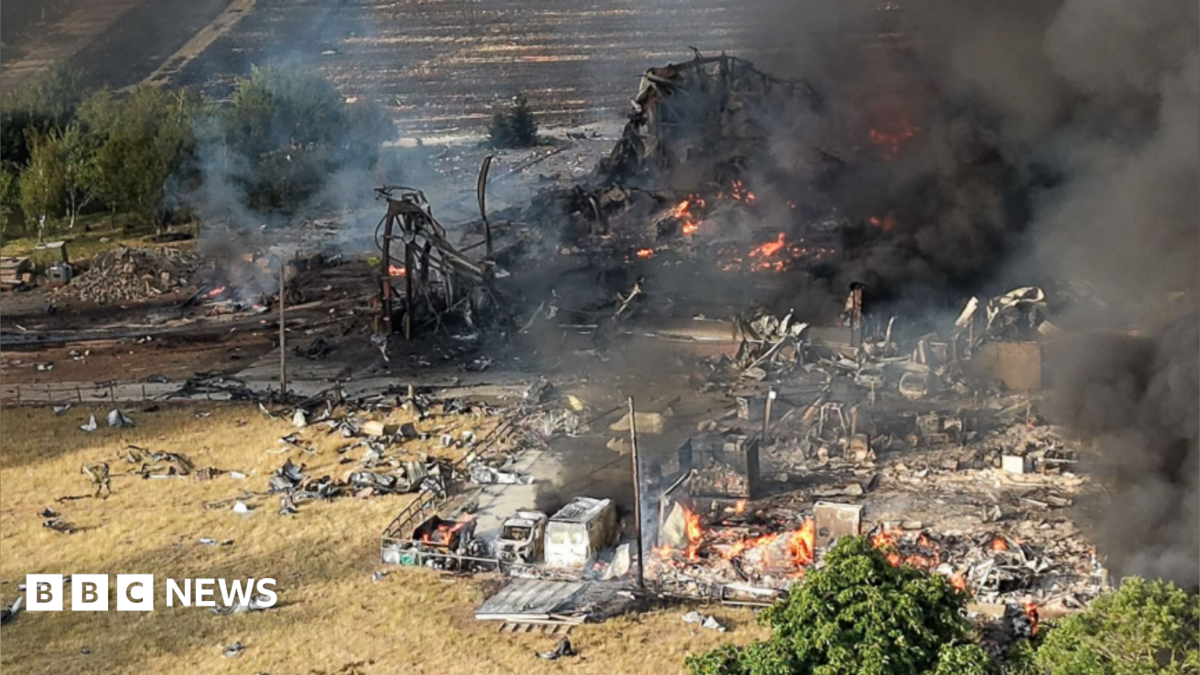
Twenty firefighters were taken to hospital after a blaze ripped through an industrial unit and spread to a fertiliser store, triggering a major explosion.
The fire service declared a major incident on Friday, as more than 100 firefighters tackled the flames at Highlands Farm, near the village of Rettendon, Essex.
Three fire engines and two fire service cars were destroyed in the blaze.
Speaking at a media conference on Saturday, Rick Hylton, Essex’s chief fire officer, praised the “remarkable professionalism, courage and commitment” of the fire crews.
HE’S been sitting there all evening and you know, and he knows you know, it’s his round. Use these ways to gently point it out to the scrounging bastard:
The Casual Head Nod
Gaze at your empty glass, then him, then the bar, before giving a gentle nod in that direction. If he asks what you’re looking at, simply reply ‘Your future, mate’. If he still doesn’t get it, point out the bar again, asking if he needs you to mark it on Apple Maps.
The Phantom Wallet Search
Pat your own pockets theatrically before saying ‘Thank God it’s your round because I’ve left my…’ and trail off. Gauge his reaction. Like David Attenborough filming a rare woodland stoat, you’ve startled the round-dodger into revealing his natural defence mechanisms. Namely, staring at the floor, checking his phone or suddenly needing a piss.
Buy Everyone Else a Drink
Return with fresh pints for everyone except him. When he asks where his is, smile warmly and say that that buying him one would only confuse him further about how rounds work. Add ‘You need to master the basics before we move on to advanced round-buying,’ and ask it he’s considered evening classes.
The Public Service Announcement
Raise your empty glass and loudly ask if anyone else wants one. Watch him stare into the middle distance as if pretending not to understand English will save him thirty quid. Then, scratch frantically at your throat, pretending to die of thirst. Saying you fancy a drink isn’t sufficient as the scumbag will respond that he’s ‘alright actually, thanks’.
The Barman Assist
Catch the bartender’s eye and when he asks ‘who’s next?’ point to your friend and his sealed wallet. He’ll already have noticed and, like any decent server of alcohol, considers it a personal insult to civilisation. And his livelihood. Round-avoiders are the only customers publicans despise more than those who order mocktails at peak times.
The Nuclear Option
Pick him up bodily and drag him to the f**king bar. Hold his phone up to his face until it unlocks, then complete the transaction before his flight instinct kicks in. Hold him there even if it does. This is male bonding.
101 East meets the doctors using drones to fight tuberculosis and save lives in remote communities in the Philippines.
Tuberculosis is a leading cause of death in the Philippines, killing an estimated 98 people each day.
The infectious disease is particularly grave in remote communities, where medical services are limited and delayed diagnosis and treatment can be fatal.
But a Filipino doctor is determined to change that with modern innovations.
Dr Heidi Sampang uses drones to fly samples and speed up testing.
The technology can help save lives by expediting the delivery of essential medical supplies in a country with thousands of mountainous islands.
101 East meets the medical teams using drones to fight tuberculosis in the Philippines.
Weekly insights and analysis on the latest developments in military technology, strategy, and foreign policy.
Helicopters played a major role in this year’s Rim of the Pacific (RIMPAC) sinking exercise (SINKEX), with at least three allied rotorcraft types employing weapons against retired U.S. Navy vessels. U.S. Army AH-64 Apache attack helicopters fired Spike NLOS (Spike Non-Line of Sight) missiles at the guided missile cruiser ex-USS Mobile Bay, a Royal New Zealand Navy SH-2G(I) Seasprite struck the amphibious assault ship ex-USS Peleliu with an AGM-119 Penguin missile, a Royal Australian Navy MH-60R Seahawk launched an AGM-114N Hellfire missile against a target ship, and an Italian Navy SH-101 helicopter launched a Marte anti-ship missile.
WATCH: Ships and aircraft participating in the Exercise RIMPAC 2026 conducted a sinking exercise and sank decommissioned USS Mobile Bay (CG 53) on July 12 and decommissioned USS Peleliu (LHA 5) on July 17, more than 50 nautical miles off Kauai.https://t.co/dNmo55FsUJpic.twitter.com/C6mlma8YiJ
Collectively, the engagements underscored how helicopters are emerging as key contributors to distributed maritime strike, complementing fighters, warships, submarines, and land-based missile batteries with precision-guided anti-ship weapons.
The Apache strike, conducted July 11, saw AH-64s assigned to the 16th Combat Aviation Brigade, 7th Infantry Division, Multi-Domain Command–Pacific engage the former Ticonderoga-class cruiser ex-USS Mobile Bay during the live-fire SINKEX. The Army’s previous demonstration of an Apache destroying a much smaller boat with a Spike NLOS was something TWZ was first to report, but employing the weapon against a full-sized cruiser during the world’s premier maritime exercise marks another significant milestone in the service’s expanding maritime mission.
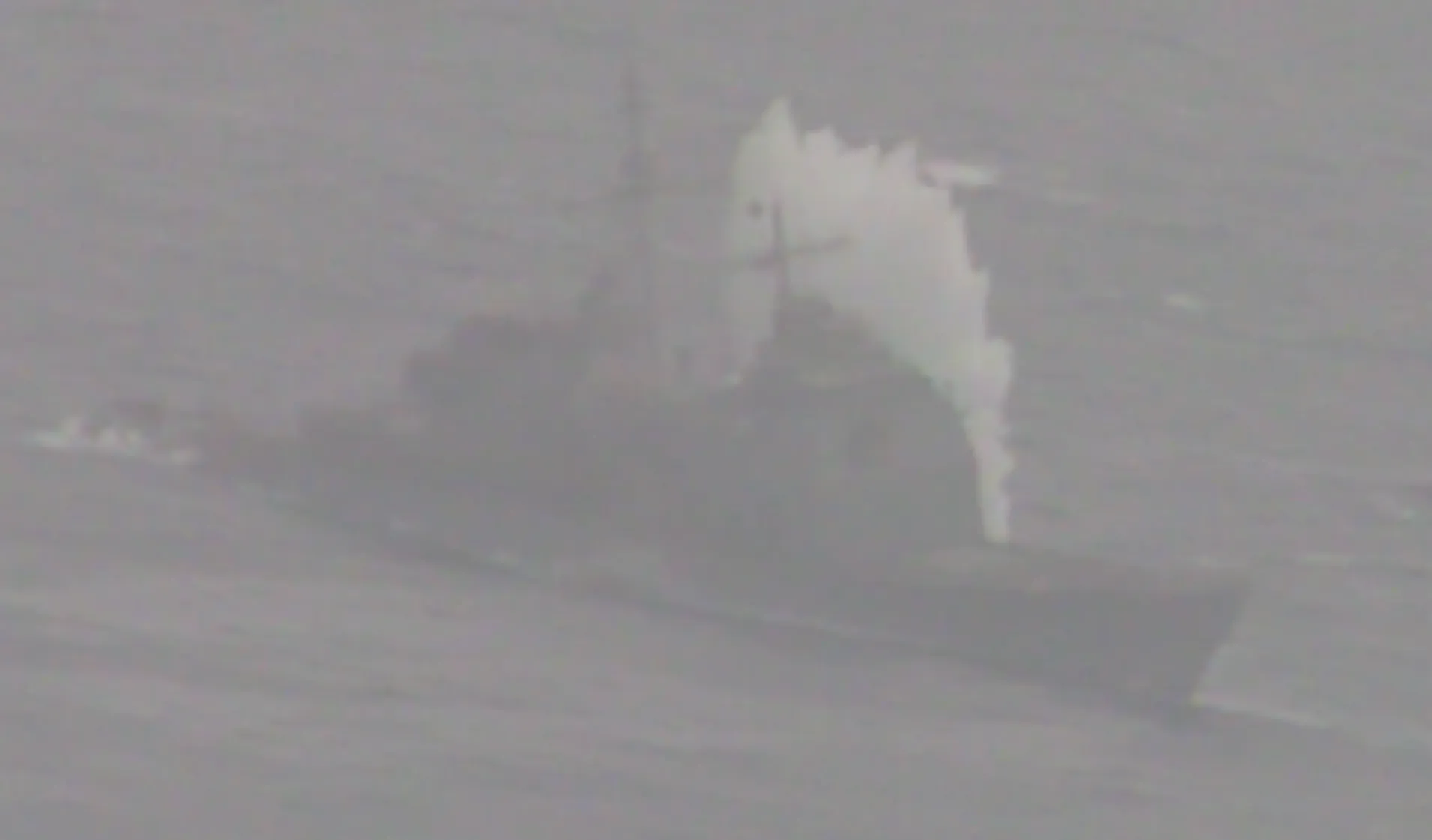
A major impact on the side of the ex-USS Mobile Bay during a sinking exercise (SINKEX) at RIMPAC 2026. U.S. Navy screencapThe ex-USS Mobile Bay sinks below the waves, as seen from an attack submarine’s periscope. U.S. Navy screencap
The Apache’s participation in RIMPAC reflects the Army’s steadily growing role in maritime operations across the Indo-Pacific. Long associated with close air support and anti-armor missions, the AH-64 is increasingly being tasked with engaging naval targets. This is something that has also played out in recent combat operations against Iran.
Spike NLOS has emerged as one of the key tools enabling that mission. The Israeli-developed missile provides an operator-in-the-loop datalink that allows course corrections and aimpoint refinement throughout much of the missile’s flight. That capability makes it particularly useful against moving or time-sensitive maritime targets, where target discrimination and battle damage assessment can be especially challenging.
AH-64 fires Spike NLOS during integration tests at the U.S. Army Yuma Proving Ground in 2023:
Spike missile integrated into AH-64 at Yuma Proving Ground
Compared with the AGM-114 Hellfire and AGM-179 Joint Air-to-Ground Missile (JAGM), Spike NLOS dramatically extends the Apache’s reach while retaining the flexibility to engage both land and maritime targets.
According to manufacturer Rafael, the latest version of Spike NLOS has a maximum range of roughly 20 miles, giving it a substantial stand-off advantage over the Hellfire and JAGM. The variants of those weapons currently fielded on U.S. Army Apaches have maximum ranges of less than 10 miles, though they are typically employed at considerably shorter distances in operational use. At the same time, extended-range versions of both missiles have been demonstrated, with Hellfire tested at approximately three times its standard range and JAGM at roughly double its baseline reach.
A U.S. Army graphic gives an idea of how much more reach the Spike NLOS gives Apaches compared to other weapons options, including the extended-range JAGM. U.S. Army
The Royal Australian Navy’s contribution highlighted another facet of the growing helicopter anti-ship mission. An MH-60R Seahawk embarked in the Arleigh Burke class destroyer USS Wayne E. Meyer conducted a live AGM-114N Hellfire engagement against a target ship. While Hellfire lacks the standoff reach of Spike NLOS and is primarily associated with engaging smaller surface vessels, it remains a highly capable maritime strike weapon and is a standard part of the MH-60R’s surface warfare arsenal.
Imagery released by the New Zealand Defense Force showed a Royal New Zealand Navy SH-2G(I) Seasprite embarked aboard the Anzac class frigate HMNZS Te Mana launching an AGM-119 Penguin anti-ship missile against the decommissioned amphibious assault ship ex-USS Peleliu. According to the NZDF, the missile penetrated the hull before detonating inside the vessel, inflicting significant internal damage and compromising its integrity.
Launch of an AGM-119 Penguin anti-ship missile from a Royal New Zealand Navy SH-2G(I) Seasprite helicopter. New Zealand Defense ForceNew Zealand Defense ForceThe ex-USS Peleliu after being hit by an AGM-119 Penguin anti-ship missile and other weapons. New Zealand Defense Force Sargentina, Scott
The Italian Navy also revealed that an SH-101 helicopter embarked aboard the multirole combat ship Giovanni delle Bande Nere launched a Marte anti-ship missile during RIMPAC 2026, although it did not specify which target the missile was fired against.
Together, the Apache, Seahawk, Seasprite, and SH-101 illustrated just how diverse helicopter-based maritime strike has become. Although each of the weapons described above is optimized for different targets and mission profiles, all three point toward helicopters assuming an increasingly prominent role in coalition anti-surface warfare operations.
The U.S. Army’s maritime application for Spike NLOS aligns closely with the Army’s Multi-Domain Operations concept, which increasingly envisions aviation units contributing to sea-denial missions alongside their more traditional roles. Apache crews have repeatedly demonstrated maritime strike capabilities during exercises across the Pacific, and RIMPAC provides one of the largest and most complex venues yet to refine those tactics alongside allies and partners.
A U.S. Army AH-64 helicopter assigned to 25th Combat Aviation Brigade, 25th Infantry Division, prepares to land aboard the Wasp class amphibious assault ship USS Essex as part of RIMPAC 2026 in the Pacific Ocean, July 19, 2026. U.S. Army photo by Sgt. Olivia Cowart
Beyond the Army’s work with Spike NLOS, the U.S. Marine Corps has been experimenting with arming its AH-1Z Viper attack helicopters with small cruise missiles, dramatically expanding their reach and giving them the ability to strike ships from well beyond the range of traditional helicopter-launched weapons. Above all else, it’s yet another example of the attack helicopter’s changing role in the maritime environment.
Although helicopters featured prominently, they represented just one layer of the larger SINKEX strike package.
Video released this week also showed a U.S. Navy F/A-18F Super Hornet carrying AGM-158C Long Range Anti-Ship Missiles (LRASM), along with live launches from U.S. Army M142 High Mobility Artillery Rocket System (HIMARS) and Japan Ground Self-Defense Force Type 12 coastal defense missile batteries. U.S. Navy P-8 Poseidon maritime patrol aircraft were also seen supporting the event. Based on the imagery that has been published, submarines were also involved in the SINKEX strikes. Full details of which weapons and platforms ultimately sent which retired ships to the bottom remain unclear, and TWZ has asked officials for additional information.
An AGM-158C Long Range Anti-Ship Missile (LRASM) under the wing of a U.S. Navy F/A-18F Super Hornet. U.S. Navy screencapLaunch of a rocket from a U.S. Army M142 High Mobility Artillery Rocket System (HIMARS). U.S. Navy screencap
As well as the decommissioned Ticonderoga class guided missile cruiser, the Tarawa class amphibious assault ship ex-USS Peleliu also served as a SINKEX target. As we have discussed previously, the pair represented two very different classes of major warship, providing participants with valuable opportunities to employ and evaluate a wide range of anti-ship capabilities.
An impact on the Tarawa class ex-USS Peleliu amphibious assault ship. U.S. Navy screencap
Live-fire events like RIMPAC’s SINKEX remain among the most valuable aspects of the exercise, providing opportunities that are difficult to replicate in synthetic training environments. They allow participating forces to observe weapon performance against full-sized ships, refine targeting procedures, and integrate air, sea, and land-based fires while operating within a coalition framework.
RIMPAC 2026 brings together 30 nations, more than 30 surface ships, five submarines, 15 national land forces, over 206 aircraft, and approximately 30,000 personnel operating in and around the Hawaiian Islands from June 24 through July 31. Now in its 30th iteration since beginning in 1971, RIMPAC remains the world’s largest international maritime exercise, designed to improve interoperability while strengthening the partnerships that underpin maritime security and freedom of navigation across the Indo-Pacific.
While long-range anti-ship missiles launched by fighters, warships, submarines, and coastal batteries remain central to modern naval warfare, this year’s RIMPAC SINKEX also demonstrated that helicopters are increasingly indispensable members of the maritime strike team. Whether armed with Spike NLOS, Hellfire, Penguin, or Marte missiles, allied rotorcraft showed they are increasingly expected to contribute directly to the joint force’s anti-ship kill chain. For a region where distributed operations and coalition interoperability are becoming ever more important, that evolution is likely only to accelerate.
Telegram has removed accounts linked to a Hausa-language network that openly sold child sexual abuse material across northern Nigeria, following an inquiry by HumAngle, but the platform has not explained how the network survived repeated suspensions over three months before our investigation was published.
In an email response to HumAngle, a Telegram spokesperson confirmed that moderators had “processed the content reported and removed anything they could identify as breaching our terms.” The platform also provided a formal statement defending its broader moderation record, saying it had removed more than 305,000 groups and channels related to child sexual abuse material in 2026 alone.
“The distribution of CSAM is explicitly forbidden by Telegram’s terms of service and we use industry-leading moderation techniques to remove it,” the statement read.
The response came hours after HumAngle published an investigation documenting a network of Hausa-language Telegram channels, X accounts, and TikTok profiles selling access to child sexual abuse material through paid VIP groups priced at up to ₦100,000, distributing non-consensual intimate videos of women, and advertising sexual services using photographs stolen from unsuspecting social media users. The investigation, published on July 23, traced two central operators identified through payment records as Fatima Mahmud, who used the name “Teema” or “TeemaTV,” and Khadijah Adamu, who operated under the identities “Khadeeja Deejah,” “Deejah,” “Nanadady,” and “Deharjah.”
Before publication, HumAngle sent Telegram a detailed request for comment, summarising the findings and posing specific questions about the platform’s moderation of Hausa-language content and its capacity to detect coordinated networks of replacement channels. The reply arrived hours after publication.
Alongside the statement to HumAngle, Telegram said it scans all media uploaded to its public platform against a hash database of previously removed Child Sexual Abuse Material (CSAM), supplemented with datasets from the Internet Watch Foundation and the Indian Cybercrime Coordination Centre. The platform added that it processes CSAM reports from authorities and NGOs around the world.
Those measures, if applied consistently, should in theory have flagged material within the network HumAngle documented. But the investigation found that administrators avoided posting child sexual abuse material directly on public channels, instead using screen records and screenshots of media catalogues as proof of possession before directing paying customers into private conversations. That structure, common across similar networks documented by investigations in India, Sudan, Malaysia, and Brazil, appears designed to stay one step ahead of hash-matching tools that identify known material rather than advertisements for it.
What was taken down
HumAngle’s own review found that most, although not all, of the accounts and channels documented in the original investigation had been taken down. Fatima Mahmud’s administrator account, @teematv2, was no longer active, along with several of her channels, including @teematv7 and @teematv9, and other successive replacements identified during the monitoring period.
One channel, @teematv8, remained accessible after the takedowns, however. On X, Fatima’s account also remains active.
Within the wider network, HumAngle also identified accounts tied to Khadijah Adamu, including @Deekano and @realsadiyaharka, as well as channels operating as @arewagidanharka1 and @gidanharkaxx. HumAngle shared these identifiers with Telegram directly, while noting that the ecosystem documented in the original investigation was larger than what could be fully captured during three months of monitoring, and that additional accounts likely remain. At the time of publishing this report, Khadija Adamu remains active.
What the response does not address
Telegram’s statement points to a large-scale, ongoing moderation effort. They sit, however, alongside a specific finding from the original investigation: the network, monitored for three months, rebuilt through replacement accounts faster than individual removals could disrupt it, with no public indication that Telegram’s existing systems had identified it as a coordinated network rather than a series of isolated violations.
Telegram did not address HumAngle’s questions about what proactive measures exist to detect coordinated replacement networks, the moderation capacity the platform applies to Hausa-language content specifically, whether any of the documented channels had been previously reported before HumAngle’s inquiry, or whether the platform coordinates with Nigerian authorities such as the National Agency for the Prohibition of Trafficking in Persons (NAPTIP) when CSAM-related accounts are removed.
HumAngle’s requests for comment to X and to NAPTIP remain outstanding at the time of publication.
Telegram has taken down accounts linked to a Hausa-language network engaging in the sale of child sexual abuse material in northern Nigeria after an investigation by HumAngle.
Despite removing content, the platform has not clarified how the network persisted through multiple suspensions over several months. HumAngle’s investigation identified key operators using aliases such as “TeemaTV” and “Deejah,” and found that while some accounts were removed, others remained active.
Telegram responded, highlighting its use of leading moderation techniques and a hash database to filter and remove such content. However, the investigation revealed that the network circumvented detection by redirecting users to private groups, a tactic previously seen in similar networks across various countries. Notably, Telegram did not respond to questions about proactive detection of coordinated networks or collaboration with Nigerian authorities, and related inquiries to other stakeholders remain unanswered.
A major incident has been declared by Police Scotland as emergency services continue to tackle a wildfire which has been burning in the Cairngorms National Park for 10 days.
The force said it followed “a significant change in weather conditions” which has increased the risk of fire spreading towards the village of Nethy Bridge.
All Nethy Bridge residents have been evacuated as a precaution to allow emergency services to continue their response.
But a local resident told the BBC the wildfire should have been declared a major incident sooner and the lack of communication from authorities had been “pretty poor”.
The BBC has contacted the Scottish government and Police Scotland for comment.
First Minister John Swinney, who held a meeting of the Scottish government’s resilience room early on Saturday, said additional police resources were being deployed to assist with the Nethy Bridge evacuation.
He urged people to “respect the exclusion zone that’s been put in place”, adding that the change in weather conditions illustrated “the scale and difficulty of the situation that we are managing”.
Supt Judy Hill said weather conditions “experienced within the Cairngorms over the last 24 hours have added further complexities to this situation”.
“With evidence suggesting the fire is spreading towards Nethy Bridge, the decision has been taken to declare a major incident and evacuate residents as a precaution.”
She said additional police resources were being deployed to help contact those who need to leave their properties.
After beginning his professional career with Dinamo Zagreb at the age of 16, highly rated Croatian midfielder Alen Halilovic earned a permanent move to Barcelona, where he spent two years before joining Hamburg for a further two seasons.
During his time at the Nou Camp, he played primarily for Barcelona B before spending the 2015–16 season on loan at Sporting Gijon.
After joining Hamburg in 2016, he was loaned out to La Liga side Las Palmas during the 2017–18 campaign.
In 2018, shortly after his 22nd birthday, he signed for AC Milan, the sixth club of his career – while Italy became the fourth different country in which he had played.
The midfielder later had spells with Birmingham City and Reading. He now plays for Fortuna Sittard in the Netherlands.
Weekly insights and analysis on the latest developments in military technology, strategy, and foreign policy.
Russian military bloggers have published what appears to be the first imagery showing the remains of a Ukrainian-operated Ruta Block 1 low-cost cruise missile following an operational strike. The weapon is another addition to an increasingly diverse arsenal that can hold targets even deep inside Russia at risk.
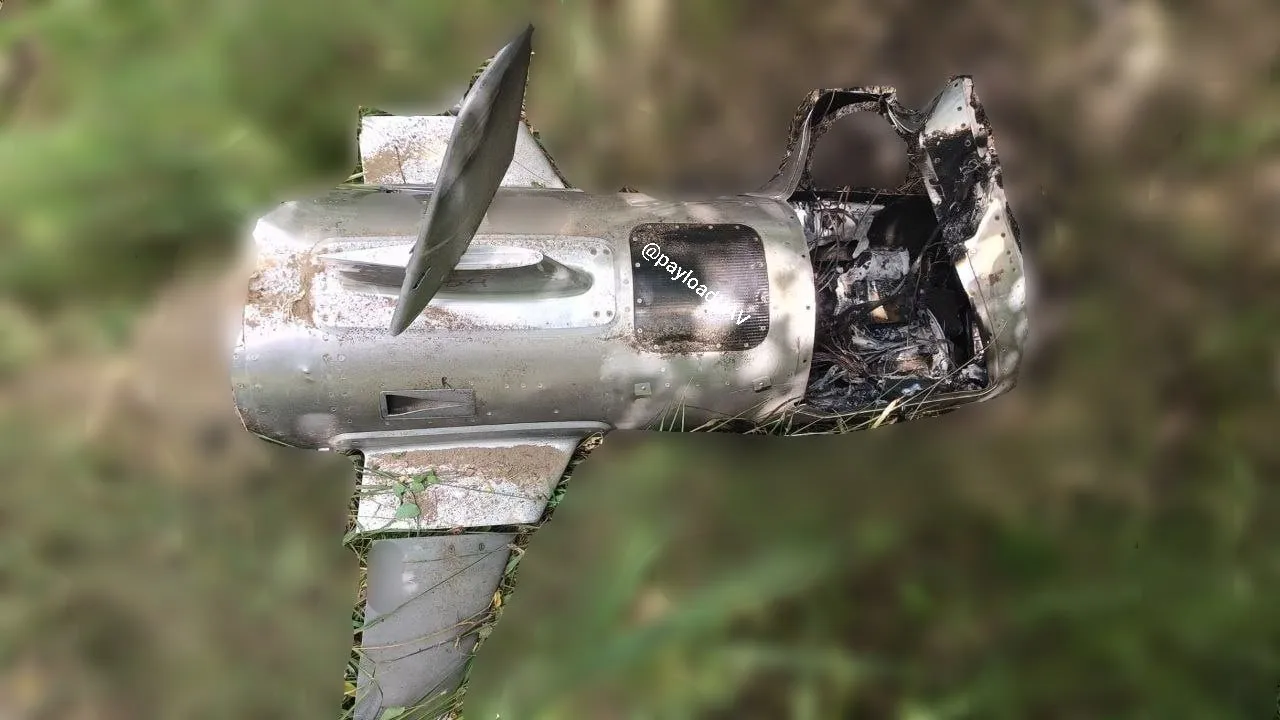
Photos that began circulating on Russian Telegram channels show wreckage consistent with the Dutch-produced Ruta Block 1. While the exact location and target of the strike remain unclear, the images represent the first publicly available evidence that the new long-range weapon has entered combat use.
The tail section of the apparent Ruta Block 1 cruise missile wreckage. via X
The recovered debris includes fuselage sections, internal components, and part of the missile’s tailfin assembly. Although the imagery has not been independently verified, the remains appear consistent with the known design characteristics of the Ruta Block 1. The possibility cannot be ruled out entirely that the wreckage represents a previously undisclosed Ukrainian cruise missile design with broadly similar characteristics. Russian military bloggers claimed air defenses intercepted the missile, though that cannot currently be independently verified.
A view along the missile body, from front to rear. via X
Footage purportedly showing a Ruta Block 1 missile flying toward its target has also appeared.
The Ruta Block 1 is a product of the Netherlands-based Destinus company, founded by the Russian exile Mikhail Kokorich. Earlier reporting indicated that the Block 1 was already being manufactured in the Netherlands and had been delivered to Ukraine since at least 2024.
A lot of people would be very surprised to learn how many of these Ukraine has received since at least 2025.
Also, whether or not you think it was the right call, the Dutch government has been extremely effective at keeping deliveries of these missiles, and especially their… https://t.co/3PESUlzE7U
Last month, then-Ukrainian Minister of Defense Mykhailo Fedorov announced that the Netherlands was paying for approximately 700 cruise missiles for Ukraine — almost certainly referring to the Ruta Block 1 — as part of a wider package worth more than $500 million.
According to the manufacturer, the Ruta Block 1 has a range of more than 300 kilometers (186 miles) and carries a payload of 150 kilograms (330 pounds).
A mockup of the Ruta Block 1 is displayed at the Brussels European Defence Exhibition & Conference (BEDEX) on March 13, 2026, in Brussels, Belgium. The missile body here appears broader than in other images, but may be a function of perspective or a less accurate model. Photo by Omar Havana/Getty Images Omar Havana
The missile is ground-launched via a booster, then flies to its target at low altitude, using a combination of inertial, satellite, and visual navigation systems, providing resilience also in GPS-contested environments. The weapon is intended to strike high-value fixed targets and features pre-programmed terminal guidance.
Unlike larger and more expensive cruise missiles, Ruta has been presented as a mass-producible weapon optimized for deep strikes against military infrastructure. The missile is designed around affordability and production scale, enabling Ukraine to conduct sustained long-range precision attacks while reducing reliance on scarce, more exquisite Western-supplied weapons. The Block 1 also comes with the major advantage that its turbojet engine is also manufactured by Destinus, so the company doesn’t rely on the United States for this part.
Engine No. 1000: Destinus reaches industrial-scale turbojet production in Europe
Ukraine has generally remained silent regarding operational use of many of its newest indigenous strike systems until well after they have entered service. Confirmation of the introduction of other long-range weapons often came first from Russian photographs of intercepted missiles or strike aftermath before official acknowledgment from Kyiv.
For Ukraine, the Ruta Block 1 forms part of a broader effort to diversify its expanding arsenal of deep-strike capabilities, alongside long-range drones, indigenous cruise missiles, as well as missile-drone hybrids. As production ramps up, these systems are playing an increasingly important role in sustained attacks against Russian energy infrastructure, as well as command centers, logistics hubs, airbases, ammunition depots, and defense-industrial facilities far behind the front lines. Ukraine is currently ramping up its long-range strikes on all fronts and doing major damage.
Destinus is also working on additional members of the Ruta family.
Earlier this year, the company presented the Ruta Block 2, which increases the missile’s range to over 800 kilometers (around 500 miles) and boosts its payload capacity to 250 kilograms (550 pounds).
Ruta B2 Flight Test | European Canister-Compatible Cruise Missile | Destinus
Meanwhile, the Ruta Block 3 will have a range of 2,000 kilometers (around 1,200 miles) with a 550-kilogram payload. Block 3 is expected to enter flight testing in 2027 and is also suitable for air launch.
As well as bolstering the Ukrainian arsenal, the Ruta Block 3 has relevance for European nations looking to build up their long-range conventional strike capabilities.
Ruta B3 and the Future of European Deep Strike
Russia’s extensive use of ground-launched missiles in Ukraine, along with its deployment of long-range weapons in Kaliningrad, has highlighted the deficiencies in Europe’s deep-strike capabilities as NATO seeks to strengthen conventional deterrence against Moscow. The Block 3 could be part of the answer to emerging requirements, including the European Long-Range Strike Approach (ELSA), which involves France, Germany, Italy, Poland, Sweden, and the United Kingdom, and which seeks to bring new systems into service in the 2030s.
Destinus is also working to expand its production capacity, including through a joint venture with Rheinmetall that will make use of that company’s manufacturing facilities in Germany.
Overall, the Ruta series is part of a wider trend toward lower-cost, highly producible cruise missiles, something also evidenced in the United States. Examples of these include CoAspire’s Rapidly Adaptable Affordable Cruise Missile-Extended Range (RAACM-ER), which you can read more about here, and the Family of Affordable Mass Missiles-Beyond Adversary’s Reach (FAMM-BAR) effort, which is seeking lower-cost designs with maximum ranges of 1,000 nautical miles or more.
Whether this particular missile reached its intended target or was intercepted remains unknown. What is clear, however, is that we have the strongest evidence to date that the Ruta Block 1 has transitioned from an announced development program into an operational weapon being employed against Russian targets.
A fertiliser explosion at a farm in Essex triggered a major incident. Dozens of firefighters worked to contain the large industrial fire and protect nearby homes.
Weekly insights and analysis on the latest developments in military technology, strategy, and foreign policy.
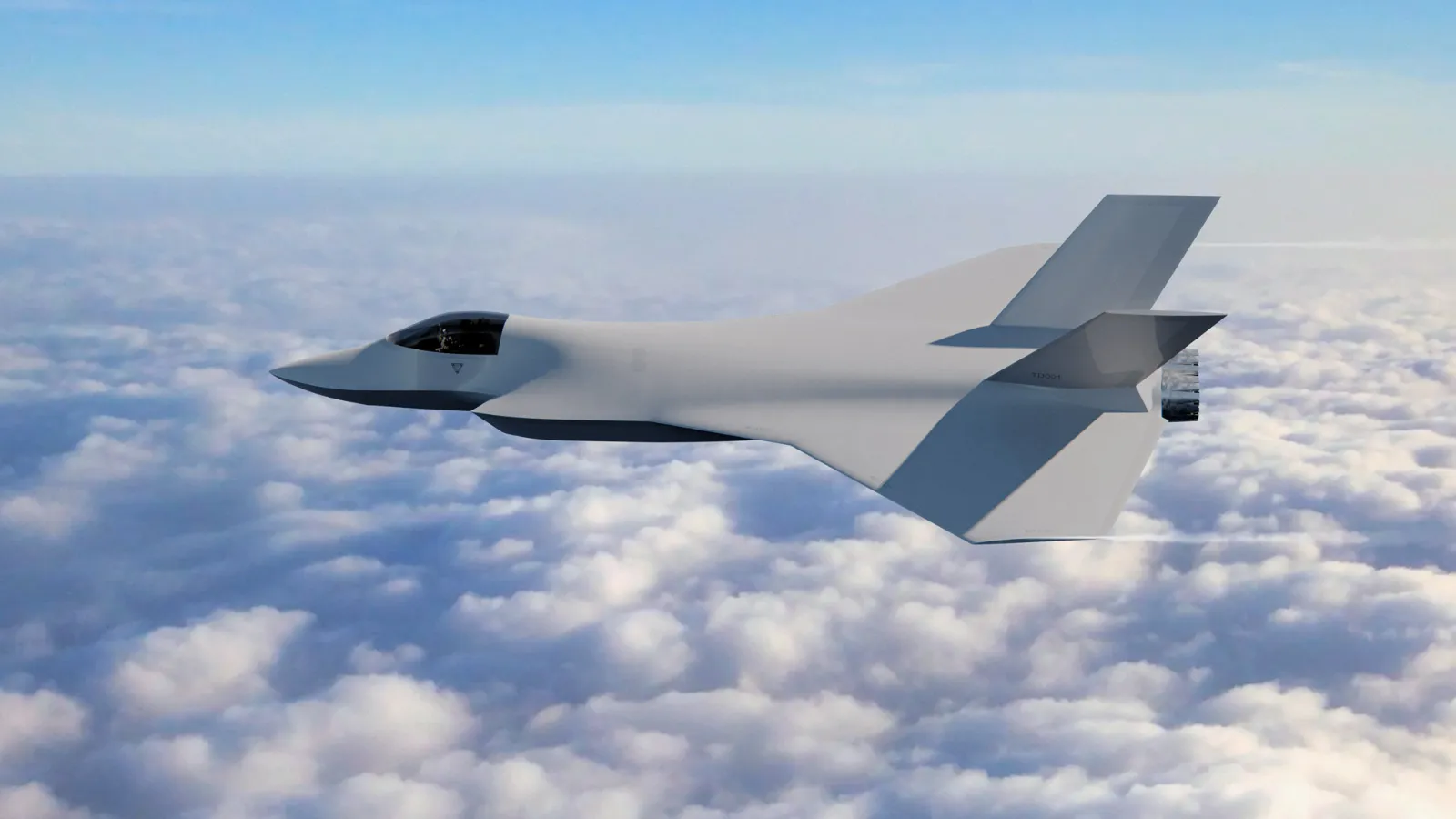
When BAE Systems unveiled the first rendering of the United Kingdom’s Combat Air Flying Demonstrator last year, it finally gave us a look at the test aircraft that will spearhead development of the Global Combat Air Program (GCAP), at the center of which is the stealthy Tempest fighter. Now, new images, as well as a scale model, provide more details and a better idea of its scale.
The company has released its clearest official photograph yet of the demonstrator under construction. Seen at the top of this story, it shows the fuselage of the jet being built at the BAE Systems facility in Samlesbury. Meanwhile, the wings and fins are being built at Warton, from where the aircraft is due to fly before the end of 2027.
A company rendering of the Combat Air Flying Demonstrator. BAE Systems
In aerospace, a demonstrator (or technology demonstrator) is an aircraft built primarily to prove technologies, manufacturing methods, aerodynamic concepts, and systems integration, rather than to become an operational weapon system. As a precursor to a prototype that would more closely represent a final configuration, they are nearly always smaller, simpler designs that leverage off-the-shelf components wherever possible to get them into the air faster and to prove core concepts and/or a package of concepts. The last such known fighter demonstrator in this class built in the United Kingdom was the British Aerospace EAP that first flew in 1986 and proved the concept for the Typhoon that followed it.
The Combat Air Flying Demonstrator will inform the sixth-generation Tempest fighter, which is being developed for the air forces of the United Kingdom, Italy, and Japan, for service in the 2040s and beyond. Canada also recently joined the program as an observer, and there are reports that Germany might also be considering coming on board.
We are delighted to welcome Canada as our first #GCAP Observer!
Read the quadrilateral joint statement to find out why this is an important moment for our programme and how Canada will benefit from being a GCAP Observer:https://t.co/iLwh3YehQY
A model of the Combat Air Flying Demonstrator presented at the Farnborough International Airshow in England earlier this week:
The new scale model confirms that the twin-engine aircraft has outward-canted twin fins and no horizontal tails. Another major difference that we know about relates to the powerplant. The Combat Air Flying Demonstrator will use the same EJ200 turbofans as the Typhoon. The production Tempest will feature an all-new powerplant that is now under development. Nevertheless, officials have said that the demonstrator will have fighter-style handling, despite its size and lack of thrust compared to the Tempest.
Overall, the demonstrator aircraft has some similarities to the F-35 (except the horizontal tails), including forward-swept intakes that are a DSI design and a prominent ‘chine’ on the forward fuselage. The center fuselage section is notably long and broad, something carried over, but to a lesser degree, from Tempest renderings and models.
The very first official rendering of the Combat Air Flying Demonstrator. BAE Systems
The inboard leading edge of the wing is slightly cranked, there is some forward sweep on the trailing edge, and the wingtips are severely cropped. The result is something of a modified cropped-delta wing, very different to the lambda wing that appeared on the very first Tempest concept and closer to the large-area delta that appears on later Tempest concepts. As for the demo jet’s tailfins, these are simpler than those on the latest Tempest mockup, being trapezoidal rather than having five ‘sides’.
The canopy also appears to offer limited rearward visibility. The underside of the fuselage almost has area-ruled, hour-glass-like contours.
The factory-floor photograph includes technicians, assembly tooling, work platforms, and production fixtures that immediately provide useful reference points. Even allowing for perspective effects, the demonstrator’s center fuselage appears broad and deep.
Looking down the spine of the aircraft, the width of the centerbody is especially striking. The absence of skin panels exposes a substantial internal space, which accommodates low-observable serpentine intakes, while the distance between the outer mold line on each side further hints at the generous internal volume available inside the aircraft.
A view of the ducting inside the center fuselage section. BAE Systems
Of course, perspective can exaggerate proportions, and this remains a technology demonstrator rather than the final operational GCAP fighter, let alone a Tempest prototype. The aircraft that eventually enters service in the mid-2030s will undoubtedly differ in various respects.
An earlier view of the Combat Air Flying Demonstrator taking shape on the production line. Team Tempest
Air Commodore Martin Lowe, the Future Combat Air System (FCAS) program director at the U.K. Ministry of Defense, has stressed this exact reality. He highlights that the Combat Air Flying Demonstrator is not a Tempest prototype, particularly not “in terms of shape or size.” The final configuration of the Tempest has yet to be settled, but it will surely be bigger and more complex than the demonstrator. A new, full-size mockup of the Tempest was also presented at the Farnborough International Airshow in England this week.
The latest full-size mockup of the Tempest. GCAP
While the Combat Air Flying Demonstrator has a definite F-35 ‘look,’ the latest Tempest mockup owes more to the F-22 Raptor. In fact, in at least one recent render, seen below, it appears like a wider, squatter F-22, suggesting an even more generous internal capacity.
@shinjirokoiz/via X
As TWZpreviously reported, the future combat aircraft is being designed around “really extreme range” and a payload approximately double that of the F-35A. Just in terms of internal and external ordnance, for the F-35A, this equates to more than 18,000 pounds, according to the manufacturer. This would suggest the Tempest’s internal payload will be around 10,000 pounds compared to the F-35A’s 5,000 pounds.
A 2024 mockup of the Tempest combat jet. Leonardo
Those requirements point toward a substantially larger aircraft with dramatically greater internal volume than today’s fighters. They also reflect similar concerns that have driven the development of the U.S. Air Force’s Boeing F-47 under the Next Generation Air Dominance (NGAD) initiative.
Range is heavily dictated by fuel load, which the Tempest will carry internally to preserve its stealth qualities. At the same time, carrying significantly more — and larger — internal weapons than current fighters demands larger weapons bays. Sixth-generation aircraft are also expected to require unprecedented electrical power generation and cooling capacity to support advanced sensors, electronic warfare suites, communications systems, onboard computing, and potentially future capabilities such as directed-energy weapons.
A rendering of a pair of Tempests overflying the U.K. coastline. BAE Systems
Previous renderings gave us an idea of the shape of Britain’s future stealth fighter demonstrator. However, the new model and photos from the production line provide useful new detail of the Combat Air Flying Demonstrator, including a better appreciation of its scale. Ultimately, once the Tempest appears, it will likely be an even bigger and more impressive aircraft.
President Donald Trump has ordered signs to be placed outside the Smithsonian National Museum of American History, to caution visitors about exhibits his administration views as “inaccurate”.
The order directs the Department of Interior to issue the warnings, and also to direct people about where they can find “accurate information regarding America’s history”.
The Trump administration has often accused the Smithsonian Institution, the world’s largest research museum, as well as other academic organisations of harbouring an anti-American bias.
The Smithsonian did not immediately respond to the BBC’s request for comment.
The order on Friday – titled Restoring Trust in the Smithsonian Institution – accuses museum leadership of not doing enough to celebrate America’s founders on the country’s 250th anniversary of independence, which took place on 4 July.
It says the museum’s leadership team “views American history as a ‘prime tool’ to advance ideas of social justice and the radical transformation of our society”.
Democrats who oversee the Smithsonian condemned the order.
“This EO is a clear political overreach, driven by an ideological agenda to rewrite American history,” congresswoman Melanie Stansbury, ranking member of the House Administration Committee, wrote on X.
“Our Smithsonian institutions do not belong to the President, but to the American people and so does our nation’s history.”
The executive order comes just days after Smithsonian director Anthea Hartig was grilled by Republican lawmakers in two congressional hearings, where the museum was accused of being “infected by a woke ideology that seeped into public displays, educational materials and planning documents”.
Earlier this month, the White House Domestic Policy Council released a scathing report, claiming that the museum “erases our heritage”.
Trump has set out to radically reshape American culture, which he says has been contaminated by “woke” left-wing ideology.
He has signed several orders that are intended to eliminate diversity, equity and inclusion programmes from the federal government – some of which led to legal challenges.
In March, he issued a separate order against the Smithsonian, directing it to “eliminate improper, divisive, or anti-American ideology”.
The Smithsonian is largely funded by the federal government. Its museums offer free entry to some 15 to 30 million visitors each year. It operates 21 museums in Washington, Virginia and New York.
They include the National Museum of American History, the National Portrait Gallery, the American Art Museum, the National Zoo and more than a dozen others.
In south-west France, authorities have evacuated around 200,000 people after wildfires ripped through the Gironde and Landes regions.
In the early hours of Saturday, four towns near Bordeaux were evacuated “as a precaution”.
The towns were Saint-Médard-en-Jalles, Saint-Jean d’Illac, Martignas-sur-Jalles, and Saint-Aubin de Médoc, which Le Monde reported had a total population of 58,400 residents.
The Gironde blaze, described by local prefect Sophie Brocas as an “XXL fire”, has burned through more than 19,000 hectares (46,000 acres) of forest and destroyed about80 homes.
Officials evacuated the entire Cap Ferret peninsula on the south-west coast, with hundreds escaping by boat after flames swept through the popular tourist destination.
The area has a year-round population of just under 8,000 people, but numbers can increase 10 fold during the summer holiday season.
Fire and rescue chief Marc Vermeulen said conditions were more severe than during the devastating fires that hit the region in 2022, with drought enabling the blaze to continue spreading through the night.
“We have never seen a convective fire of this magnitude,” France’s Interior Minister Laurent Nuñez told French broadcaster TF1, adding that around 50 firefighters had been injured.
He said the blaze was “self-sustaining” and changing direction, with the fire moving east towards Bordeaux on Friday evening.
“We are going to reorganise our response so we can fight it from the ground and prevent it from advancing toward Bordeaux,” he said.
EU accuses US tech giant of favouring its own services in search results, as Trump lashes out against bloc.
Published On 25 Jul 202625 Jul 2026
United States President Donald Trump has threatened the European Union with steep tariffs and a new trade investigation, saying that the bloc “will pay a very big price” after Brussels fined Google $1bn over antitrust violations.
Trump called penalties against Google and other US tech firms “highly unethical”, saying on Friday that the US “is not a ‘PIGGYBANK’ for Europe”.
Recommended Stories
list of 3 itemsend of list
“This illegal and highly discriminatory practice started at these high levels during the first year of the Sleepy Joe Biden Administration, but it’s not going to continue during the Trump Administration,” he wrote in a social media post.
The European Commission had imposed the fine on Thursday, ruling that Google had breached the bloc’s Digital Markets Act by favouring its own services in search results and restricting app developers from directing users elsewhere.
The penalty adds renewed strain to US-EU relations at a moment when trade tensions between Washington and Brussels had appeared to ease.
Regulators said Google gave preferential placement to its own shopping, travel and other services over rival offerings, and blocked app developers from steering customers towards deals outside its Play Store.
The EU Commission split the penalty roughly in half between the two breaches, giving Google 60 days to change its practices or face periodic fines of up to 5 percent of its average daily turnover.
Teresa Ribera, the commission’s executive vice president overseeing competition policy, on Thursday called the action “decisive yet balanced”, arguing that products should succeed on merit rather than ownership.
Kent Walker, a Google executive, described the ruling as “product degradation” driven by a small number of complainants, insisting that regulation should improve products rather than weaken them.
The EU has fined Google repeatedly since 2017, including a $4.5bn penalty over its Android operating system, upheld on appeal this month, and a $3.4bn fine last year targeting its advertising business.
The latest penalty also reignites friction with Washington.
Jamieson Greer, the US trade representative, warned this week that Brussels’s approach towards American tech firms risks unravelling a trade deal struck in Turnberry, Scotland, last year that capped US tariffs on European goods.
EU officials have pushed back, insisting they answer to their own laws rather than outside pressure.
Trump threatened to launch a probe under Section 301, a US tool for probing unfair trade practices, but the move could take months to produce results, though tariffs could follow far sooner.