Discover the latest happenings and stay in the know with our up-to-date today news coverage. From breaking stories and current events to trending topics and insightful analysis, we bring you the most relevant and captivating news of the day.
An Indian police officer has been suspended after firing an AK-47 rifle at students protesting over leaked exam papers. The protests, which led to the education minister’s resignation, have sparked accusations of excessive police force.
Andy Burnham has told the BBC “the NHS will collapse” if social care is not reformed but said he could not put a timeline on changes.
In his first major interview since becoming prime minister, Burnham said he would not want to leave office without bringing in “substantial change” to the social care system.
The prime minister also suggested making it harder to claim benefits, saying the country had to get serious about getting the welfare bill down.
Conservative leaderKemi Badenoch has meanwhile written to the prime minister, saying he should rule out tax rises or increased borrowing to fund social care reform.
Burnham told the BBC that if the government did not reform social care, the NHS would “collapse under the weight of trying to care for people who’ve really not needed to end up in the NHS system”.
But pressed on whether he would create a new system before the next election, he said he “couldn’t put a timeline on it right here, right now”, though he would put “whatever political capital I have into fixing broken social care”.
Burnham first proposed a universal system of social care in England in 2009 when he was health secretary under Gordon Brown and pursued the idea of a compulsory levy to fund it.
That Labour government also floated the idea of allowing people to defer the payment until after they died, which led to the Tories branding it a “death tax”.
Burnham is due to make a speech on adult social care on Wednesday.
The BBC understands the PM will stop short of unveiling plans for a new system in this speech, instead announcing he is speeding up the Casey Commission, an independent review that has been considering possible solutions for social care.
Baroness Louise Casey is not expected to give her final recommendations until 2028, but Burnham wants to bring her schedule forward.
Adult social care provides state support to help people live more independently, including assistance at home.
Unlike the NHS, social care is not free at the point of use. In England and Northern Ireland, people with savings worth more than £23,250 are not entitled to help with care costs from their council.
In Wales and Scotland, different rules apply in terms of eligibility.
Sarah Woolnough, chief executive of healthcare think tank the King’s Fund, said the current “punitive system” meant that “quite a lot of people go without care that they need”, with one in seven paying in excess of £100,000 for social care.
While Burnham has not yet outlined any plans, Woolnough told the BBC Radio 4’s Today programme that reforms could range from making social care free at the point of need to placing a cap on the amount people spend.
“The PM has for a long time mooted the idea of a social care system similar to NHS,” she said.
“It would be expensive but on the scale of what we spend on other public services – around £200bn on the NHS – we are talking for some of these options low billions per year.”
Adult social care has proved a complex issue to tackle for successive governments.
Two years ago Sir Keir Starmer was criticised when Labour scrapped plans for an £86,000 cap on the amount people in England would spend on social care in their lifetime.
Badenoch wrote in her letter to Burnham that “any solution to the issues around social care must also be fair to those who have made provisions and saved up over the course of their lives”.
Layla Moran, the Liberal Democrat MP who chairs the Health and Social Committee, told the Today programme: “We do need to discuss where the money is going to come from but also we need to all be putting our political capital into this.”
Lib Dem leader Sir Ed Davey said he was ready to do “whatever I can to find a real and lasting consensus on social care”.
“Family carers must be at the heart of any new system, everyone must get the care they need and no one should lose their home as a result,” he said.
Reform Treasury spokesman Robert Jenrick said social care needed fixing but warned the party would fight any proposal for a “universal death tax”.
He said: “It’s not fair to raid people’s life savings and drags hundreds of thousands more families into paying tax when their loved ones pass away.”
No word on jailed Tunisian opposition leader Ghannouchi for 11 days, his son tells Al Jazeera.
Published On 27 Jul 202627 Jul 2026
The son of jailed Tunisian opposition leader Rached Ghannouchi says his family and lawyers have been unable to see or contact the 85-year-old for 11 days since he was hospitalised after collapsing in prison.
In an interview with Al Jazeera on Monday, Moadh Ghannouchi said the last time lawyers saw his father was days before he temporarily lost consciousness on July 17, and that requests to visit him in hospital, including one submitted to the public prosecutor, had been refused, leaving the family with no confirmation of his whereabouts or condition.
Recommended Stories
list of 3 itemsend of list
“It is like a situation of enforced disappearance,” he said.
Ghannouchi said his father, who has high blood pressure and difficulty breathing, had been left exposed to a severe heatwave in a prison with no air conditioning.
“We hold the authorities fully responsible for his condition,” he said, alleging that his father’s confinement in a stiflingly hot prison was intended to worsen his health.
“It was not enough to imprison him – they want to torment him further,” Moadh told Al Jazeera.
“This is stressful for us and certainly for him as well because he’s used to always having a number of visits every week from lawyers and from family – so it has been 11 days cut off from everything, from every visit, from everyone.”
Ghannouchi said conflicting rumours had spread on social media, with some placing his father at the Rabta public hospital in Tunis, others at a military hospital, and some claiming he had suffered a heart attack. But the family has received no official information, he said, with the authorities refusing to communicate.
In a statement on his official Facebook page on Monday, Ghannouchi’s defence team demanded information on his condition. An Ennahda party spokesperson told Al Jazeera that it did not know which hospital he is in or his state of health.
The former speaker of parliament and most prominent figure detained in President Kais Saied’s crackdown on opponents has been jailed since April 2023 after receiving a life sentence that his supporters say was politically motivated. Saied’s government denies that prosecutions of opponents are politically driven.
Rached Ghannouchi lost consciousness last week as temperatures inside Mornaguia prison climbed, according to Haifa Chebbi, daughter of another imprisoned opposition figure. She said she witnessed the incident and that the temperature reached 52C (126F). His lawyers said on Thursday that his condition was “critical.”
The UN Working Group on Arbitrary Detention previously found that Ghannouchi’s detention was arbitrary and called for his immediate release, a ruling his son said authorities ignored.
On Sunday, the National Salvation Front, a broad opposition coalition, urged the authorities to issue an immediate statement on his health and Amnesty International called for the protection of prisoners during the heatwave.
Finding the perfect property in Cyprus can quickly become stressful. With thousands of listings to sort through, buyers may encounter outdated ads or unreliable agents. Choosing the right search platform can save both time and money. This ranking looks at which Cyprus real estate websites provide useful tools, current listings, and reliable support.
Top 5 Platforms for Property Search
The housing market on the island offers many options, but the search for a quality property requires careful research and sound judgment. Most clients face information overload, with countless listings making it difficult to separate active, legitimate listings from properties that are no longer available or may have legal or technical issues. That is why choosing a reliable, user-friendly property platform is an important step toward making a sound investment or planning a smooth relocation.
Modern and reliable online resources not only save time but can also improve transparency and help reduce transaction risks. They provide clearer information about pricing, fees, and transaction procedures, provide access to up-to-date market analytics, and help you quickly understand Cyprus’s legal and administrative requirements. The list below demonstrates digital platforms that offer practical value to buyers, tenants, and investors.
1. MySpace
MySpace combines property listings with legal, relocation, and property management services. The platform offers a more integrated approach to property search, providing full expert support from the initial search to contract signing, property registration, and relocation support.
Stay ahead of the geopolitical week.
MD Briefing delivers expert analysis across five global fronts — the Indo-Pacific, energy, geoeconomics, European security, and the Middle East — every Monday morning. Free.
Why it ranks first:
Maximum transparency of all stages, careful verification of listings and property documentation, and the ability to handle legal and administrative matters through a single point of contact.
Pros:
A full cycle of services from search to property management.
Listings are reviewed to reduce outdated, duplicate, or misleading ads.
Very fast and intuitive site interface.
Direct access to specialists without being passed from one intermediary to another.
Market analytics tools based on current pricing data.
Cons:
The platform focuses mainly on mid-range and premium properties.
The selection of budget short-term rentals is limited.
The platform’s wide range of features may take some time to explore.
A well-established real estate agency with an extensive office network. The company has an established presence in the Cyprus property market and is often mentioned among established real estate agencies in Cyprus.
Why 2nd place:
The agency has a strong offline presence and authority, but its digital experience feels dated compared with newer platforms.
Pros:
A large team of brokers with excellent local knowledge.
Physical offices operate in every major city.
Strong local presence and brand recognition.
Cons:
The website design feels dated, and some pages may load slowly.
Browsing listings on a smartphone can be inconvenient.
Listing updates may lag behind actual availability.
3. Bazaraki
One of Cyprus’s largest local classifieds platforms. Here, locals list a wide range of products and properties every day, from small appliances to villas by the sea.
Why 3rd place:
The platform attracts a large daily audience, but property searches on the platform require additional due diligence because listings are user-generated and verification may be limited.
Pros:
An opportunity to contact property owners directly without paying for the services of a broker.
Very fast publication of your own ads.
Huge daily audience of the site.
Cons:
A higher risk of encountering fraudulent or misleading listings.
Limited filters for high-end properties.
Listing photos are not always independently verified.
4. Dom.com.cy
A large property aggregator featuring listings from multiple developers and agencies. International buyers researching property prices often come across this platform because of its large listing inventory.
Why 4th place:
A huge selection of options, but listing moderation and availability updates may be inconsistent.
Pros:
A broad selection of properties across different price ranges.
Detailed filters for finding specific types of property.
Convenient multilingual pages for foreigners.
Cons:
Some listings may remain online after the property has been sold or rented.
The same property may be listed by several agents at different prices.
Buyers still need independent legal due diligence before completing a transaction.
5. Index.cy
A relatively new, technology-focused property platform. Among newer real estate platforms in Cyprus, Index.cy stands out for its minimalist design and modern presentation of listings.
Why 5th place:
A good tool with innovative features, but its listing inventory is still smaller than that of more established competitors.
Pros:
Clean, visually appealing property listing cards.
Map integration that helps users review nearby amenities and infrastructure.
Detailed property specifications.
Cons:
The total number of offers is significantly smaller compared to competitors.
Little analytical information for beginners.
A limited selection of commercial properties.
Ranking Criteria and the Winner
We ranked the platforms using a set of practical criteria. The ranking criteria included:
The proportion of active, verifiable listings without misleading photos or unrealistically low prices.
Mobile usability for property searches on the go.
Customer support response times.
The availability of legal, relocation, and post-purchase support.
MySpace ranks first because of its end-to-end service model. The company does more than list properties: it supports the needs of international buyers throughout the purchase and relocation process. The database is constantly updated, and the company emphasizes listing accuracy, legal support, and transaction management. Industry expertise, customer support, and well-designed digital tools make it a strong option for buyers seeking comprehensive support.
Months after the United Nations Security Council backed a comprehensive framework to end Israel’s genocidal war on Gaza, Israel’s security cabinet has approved a highly constrained pilot project to allow foreign security forces into a narrow pocket of the devastated territory.
Israeli media reported on Sunday that the so-called International Stabilization Force (ISF), part of United States President Donald Trump’s 20-point “peace plan”, will include 200 members from countries such as Morocco and Uganda deploying to a designated “test” zone in the southern city of Rafah.
While international officials have welcomed the move, analysts describe the limited deployment as a calculated diplomatic gesture with little practical effect that comes as the US-backed peace process has largely stalled and as Israel’s deadly attacks continue.
Instead of a genuine transition towards peace, they argue, the move is a political manoeuvre designed to deflect US pressure ahead of Prime Minister Benjamin Netanyahu’s visit to Washington this week, while simultaneously entrenching the geographic fragmentation of the Gaza Strip.
“Netanyahu is going to Washington to say ‘no’ to the broader demands of withdrawal” from the Strip, says Wissam Afifa, a Gaza-based political analyst. “Instead, he is offering this alternative: ‘Take this small appetiser, take this minor achievement, and play within this highly restricted space.’”
Scaled-back forces and ‘rubber batons’
The Israeli daily Haaretz reported that the original plan anticipated the deployment of 500 Moroccan troops to a refugee camp in the city. The drastic reduction to just 200 troops may indicate that Israel’s political-security cabinet has decided to divide the deployment into even smaller, heavily controlled stages.
The force will operate in full coordination with the Israeli military. According to the Israeli news outlet Ynet, National Security Minister Itamar Ben-Gvir was the sole cabinet member to vote against the measure, arguing that the Palestinian group Hamas had failed to fulfill its commitment to disarm and insisting that “the solution in Gaza is to encourage migration”.
Israeli media also reported that the government maintains that the Israeli military will retain control of the “Yellow Line” – a unilaterally imposed boundary that effectively places up to 70 percent of the Gaza Strip under tight Israeli control – and that no withdrawal will take place until Hamas has fully disarmed.
The original framework endorsed by UNSC Resolution 2803 called for the deployment of an international force alongside a transitional Palestinian administration.
Earlier this month, Hamas announced it would dissolve its government in Gaza and hand over power to a new, Palestinian technocratic governing authority called the National Committee for the Administration of Gaza (NCAG).
Analysts said Hamas’s move was likely designed to apply pressure on Israel and demonstrate the group’s commitment to handing over governance and allowing the rebuilding of the territory.
The pilot programme also envisions the NCAG’s entry to oversee civil affairs in Gaza. Yet, according to Haaretz, the Palestinian police accompanying them will be stripped of firearms, permitted to carry only “rubber batons and tasers”.
Meanwhile, preparations on the ground appear to be moving forward to accommodate this new security architecture. Israeli Army Radio recently broadcast a video showing a military base under construction in the southern “Gaza envelope” near the Karem Abu Salem (Kerem Shalom) crossing.
The station reported that the sprawling facility is being built specifically to host the incoming multinational forces before their deployment.
Despite the severe Israeli restrictions, Nickolay Mladenov, the high representative for the Board of Peace, welcomed the Israeli cabinet’s decision, praising it as a “critical part of the agreed framework for stabilizing Gaza, supporting demilitarization, and enabling the transition to effective Palestinian transitional administration”.
A ‘sweetener’ for Washington
To understand the timing and motivation behind the decision, experts pointed to the diplomatic deadlock surrounding the US-brokered peace initiative. Trump’s plan envisioned a phased approach, bridged by the handover of Gaza to a technocratic committee. However, this framework has been stalled by Israel’s refusal to link a ceasefire to the broader political situation and its rejection of a phased withdrawal.
Afifa said the “failure” of the US administration’s flagship initiative had left it “embarrassed” as the project that was repeatedly highlighted by Trump “as a great achievement, resulted in zero”.
With Netanyahu heading to Washington, the Israeli prime minister desperately needed a deliverable, said Afifa. The cabinet’s decision, passed hastily via a telephone vote during a Knesset recess to avoid internal coalition fractures, provides exactly that, he added.
Mamoun Abu Amer, an expert on Israeli affairs, echoed this assessment. He viewed the rushed cabinet vote as an attempt to preempt US pressure and present an image of compliance to Trump, while fundamentally altering the agreement’s core terms to suit Israel’s long-term security strategy.
Abu Amer also said that Israel has effectively turned Resolution 2803 upside down through selective and highly conditional implementation.
“This is an inverted process,” said Abu Amer. The original text implied that the NCAG would enter Gaza, the ISF would deploy and the Israeli military would withdraw to new lines to allow for stabilisation. Instead, Israel is demanding unilateral disarmament first, while keeping the technocratic committee besieged within an Israeli security envelope.
Abu Amer also suggested the requirement for the Palestinian police force to only carry rubber batons and tasers reflects a premeditated Israeli strategy to strip the Palestinian administration of genuine law enforcement capabilities, reducing them to subcontractors managing municipal decay in a thoroughly devastated environment under a strict military occupation.
The NCAG itself appeared to reject this Israeli paradigm. In a recent statement, the committee declared it would only assume responsibility for Gaza after UNSC approval of the force’s deployment and, crucially, a full Israeli military withdrawal.
‘False witnesses’
The spatial realities of the Israeli plan reveal a strategy of deep fragmentation and long-term control, experts said, pointing to the cabinet’s decision to explicitly restrict the ISF and the technocrats to operating strictly outside the “Yellow Line”.
Afifa warned that transforming a small pocket of Rafah into an “experimental bubble” subverts the idea of Gaza as a single, contiguous territorial entity.
“This raises a massive question about the fate of two million people,” he said. “If this entire project is reduced to a few thousand individuals selected under Israeli criteria, it means a tacit agreement from the international community to leave two million Gazans hostage to a catastrophic humanitarian crisis while Israel claims to be implementing a peace plan.”
This also carries significant diplomatic risks for the participating nations. Israeli media reported the cabinet’s decision stipulated that ISF contributors must be nations that have peace agreements with Israel and do not pursue legal actions against it in international forums.
“It is not wise for an Arab country like Morocco to be a party to helping Netanyahu implement his political agenda,” said Abu Amer, urging participating nations to reject the altered Israeli formula and insist on a comprehensive withdrawal.
Failing to do so, he cautioned, would reduce foreign troops to mere security buffers, acting as “false witnesses” to the continuation of the occupation and the destruction of the Palestinian society.
Wildfires are rampaging through vast areas of land in southwestern Europe, forcing France and Spain to evacuate more than 325,000 people from their homes.
Some of the worst fires in France since World War II come just weeks after record-breaking heatwaves scorched Europe. Authorities have deployed thousands of firefighters to battle the blazes.
Recommended Stories
list of 3 itemsend of list
On Sunday, France’s Interior Minister, Laurent Nunez, said about “115,000 hectares (284,171 acres) have burned in wildfires in France since the start of the year”. In Spain, 119,458 hectares (295,187 acres) of land have been burnt as of July 22 , according to data from the Copernicus European Forest Fire Information System (EFFIS).
More than 150,000 hectares have burned across Spain since January, said Prime Minister Pedro Sanchez – that’s six times the area destroyed during the same period last year.
Wildfires destroyed 2.2 million hectares (5.4 million acres) of land in Europe in 2025 – up from 1.4 million hectares (3.5 million acres) in 2022, according to the United Nations.
What is the main cause of the wildfires and why are authorities struggling to contain them?
What has happened?
Since early July, wildfires have been burning across southern and western Europe, with France and Spain being the worst hit.
About 220,000 people have been evacuated from their homes in France, about 75,000 people in Spain, and around 30,000 others there ordered to shelter in place, according to authorities.
In Spain, a fast-moving wildfire in the Andalusia region killed at least 12 people on July 10 . By July 20 , the fires had spread hundreds of kilometres to the capital, Madrid. At least 10,000 people have been evacuated following wildfires in the central region of Madrid. On July 24 , Spanish authorities declared a national emergency, saying two major blazes were “out of control”.
Over the weekend, a separate blaze in Spain’s eastern Castellon province ravaged more than 4,300 hectares (10,625 acres), regional authorities said.
“The fire is out of control, it’s very difficult to extinguish from a technical standpoint, especially because of the adverse weather conditions that will continue throughout the day,” the regional leader of Valencia, Juanfran Perez, told reporters near the site.
The wildfire in Spain has now entered the Sierra de Espadan natural park, containing large forests of pine trees and cork oaks.
In France, the wildfires are among the country’s worst since World War II and have particularly ravaged the Cap Ferret peninsula, an exclusive holiday destination on France’s southern Atlantic coast about 70km (43 miles) from Bordeaux.
Reporting from Maubec, near Toulouse, Al Jazeera’s Nina Montagu-Smith said: “When I visited Arcachon, a seaside town just across the bay from Cap Ferret on Thursday last week, we could see the fires on the peninsula. Within hours, the sky had blackened and the smoke was thick over Arcachon town.”
“All trains from Arcachon were cancelled, apparently due to an ‘electrical fault’,” she added. “Fire engines were lining the A63 from Bordeaux towards Arcachon on Thursday evening as I drove eastwards to Libourne, which is 100km from the fires in the Gironde region,” she said.
Our correspondent noted that after the wind picked up on Thursday evening, smoke from the blaze reached Libourne, where ash was falling from the sky.
“We have since relocated further east in France towards Toulouse, where the sky is very grey and we could still smell the smoke on Sunday night,” she added.
Fires on the Cap Ferret peninsula in southwest France, as seen from across the bay in Arcachon, a town on the French Atlantic coast [File: Courtesy of Nina Montagu-Smith]
The wildfires have now spread through areas surrounding Bordeaux, where firefighters were trying to prevent the flames from reaching the regional capital.
Bordeaux Mayor Thomas Cazenave said the fire was just 15km (nine miles) from entrances to the main city.
“We have a fire that is not under control and which is moving in the direction of the city area,” Interior Minister Laurent Nunez told France 2 TV on Sunday evening. “The overall situation is very unfavourable, we are in a situation that is unprecedented.”
So far, authorities have moved 197,000 people from areas around Bordeaux – including popular holiday spots which are generally crowded at this time of the year.
The Bordeaux region is famed for its vineyards and the city is one of the main transport hubs for tourists visiting nearby holiday resorts on the Atlantic coast.
Cazenave said earlier on Sunday that there were no plans yet to evacuate Bordeaux, whose wider metropolitan area has a population of about 850,000. Nunez said authorities would continue to assess the situation calmly and realistically, and the government has warned against road or rail travel to the area.
The wildfires disrupted Sunday’s Tour de France finale in Paris, which organisers shortened from 133 to 89 kilometres (83 to 55 miles) after security forces originally assigned to the race were redeployed to fight the fires instead.
Why are these fires so bad?
Scientists are warning that pyrocumulonimbus clouds – unprecedented in southwest Europe – are forming.
According to the British Royal Meteorological Society, these are thunder clouds “created by intense heat from the Earth’s surface”. They can make conditions almost impossible for firefighters.
They are formed similarly to normal clouds, but “the intense heat that results in the vigorous updraft comes from fire, either large wildfires or volcanic eruptions”, the society said. It explained that there may be a burst of rain because of them but warned that this rain “can then carry embers from the fire, igniting spot fires away from the source. In some cases, dry lightning from these storms can strike without rain, further spreading the wildfire”.
A spokesman for France’s National Firefighters Federation of France (FNSPF) told the AFP news agency: “Lightning forms within the cloud, striking the embers on the ground and further fuelling the fire … It produces a low, rumbling sound. While this type of fire occurs regularly in Canada and Australia, it is unprecedented in France,” he said on Sunday.
“We have reached a point of ‘operational impossibility’ that requires us to accept the need for strategic retreat – to understand and acknowledge a natural force beyond our control,” he said.
“It calls for … knowing what can be done and, above all, what cannot. The situation on the ground is defensive rather than offensive; it is a war-like scenario where we are under constant bombardment and must get everyone to safety,” he added.
What are authorities doing now?
Spanish and French authorities say firefighters alone cannot fight the blaze and have appealed for international help.
On Sunday, Spanish PM Pedro Sanchez visited fire-hit areas in Avila, one of three central provinces affected by major blazes alongside Madrid and Toledo, where more than 45,000 hectares (111,000 acres) have burned.
“We have a window of opportunity this weekend to fight the wildfire and, therefore, to protect lives, protect population centres and, ultimately, to bring this very serious wildfire under control as far as possible,” he said.
Sanchez said his government will declare a civil protection emergency for the central provinces plagued by the wildfires on Tuesday, unlocking additional recovery funding.
French Prime Minister Sebastien Lecornu wrote on X on Saturday: “The fires which are hitting our country have reached a level that has never been seen before”.
Lecornu called another government crisis meeting on Saturday for ministers to discuss the response to the emergency, the second such meeting in as many days.
The European Union’s civil protection mechanism is monitoring the situation and has been assisting. Under the mechanism so far, Greece and Italy have sent firefighting aircraft to Spain, while Portugal has deployed more than 100 military personnel, along with equipment.
Two more aircraft will arrive “as soon as possible” from Turkey, the Spanish interior ministry added on X.
Why are these fires becoming so much harder to contain?
Wildfires have been a common occurrence in Europe in recent years, but authorities have increasingly been struggling to contain them.
Sanchez said the growing scale of the fires and their intensity, fuelled by increasingly extreme weather such as the heatwaves this summer, require policies grounded in climate science.
Eduardo Rojas, chairman of the Board at the Programme for the Endorsement of Forest Certification told Al Jazeera’s Inside Story programme on Sunday that there are multiple factors causing the wildfires which also need attention.
He said the fires in the wild lands of the country have occurred where the “urban interface is extraordinarily complex”. He noted that some areas were “built up in the 60s, 70s and 80s without a proper city plan and with lack of infrastructure, lack of water availability…and with a lack of knowledge of the neighbourhoods.” When a fire occurs, therefore, there is a “lack of knowledge” about how to deal with them.
“The fire in west Madrid is a kind of fire that doesn’t burn a huge area but creates a lot of hesitation,” he said.
“We also have farms where cereals are harvested and even [with] a small lightning [strike], the cereal can start to burn and at the end a big agricultural area ends up burning which is a big damage for farmers,” he noted.
“These kinds of fires need to be tackled in a totally different way because their cause and their environment and conditions are incomparable with one another,” he added.
Laurie Laybourn, executive director of Strategic Climate Risks Initiative, a non-partisan thinktank told Al Jazeera that governments across the continent are unable to cope with the pace at which climate change is occurring.
“All governments develop what are called reasonable worst-case scenarios to inform their planning and in many instances the events that we’re seeing are going beyond even those. So what that tells us is that the tools that we’ve got, the analysis that is informing government planning is a step behind how fast climate change and its supercharging of disasters is,” he said.
So is this all mainly because of climate change?
According to the European Forest Institute, a wildfire “is a chemical reaction of combustion, which requires a source of heat (lightning, an agricultural “burn” which escapes, or a spark originating in an electric line), oxygen and fuel (forests, shrubs or pastures) to get started.”
“Wildfire risks are increasing worldwide because of climate change and land use change,” the institute added in a July 9 report.
In a recent report, the World Health Organization’s regional director for Europe issued a warning about climate change, saying it is directly responsible for intensifying wildfires and their increasing frequency.
There are clear indications that climate change is “supercharging” incidents such as wildfires, Laybourn told Al Jazeera.
“Any disaster is very complex. The causes are multilayered, including how we build and how we use land…But climate change is supercharging the conditions that make us vulnerable to things like wildfires and that has been something that’s been predicted now for many decades and tragically becoming true in front of our eyes,” he said.
According to Copernicus, the European Union’s climate change service, Europe is now the fastest warming continent on Earth, with temperatures increasing twice as fast as the global average since 1980.
Laybourn explained that this summer’s heatwaves were also caused by climate change.
He warned and stressed that governments need to prioritise tackling the issue.
“This should be a moment of profound alarm and reflection, particularly for governments.”
TV presenter and comedian Bill Oddie has died at the age of 85, his agent has said.
Oddie became a household name in the 1970s as part of zany TV comedy trio The Goodies, before concentrating on his love of wildlife, as one of the original hosts of BBC TV’s Springwatch and other shows about birdwatching.
In a statement, David Foster said: “It is with deep sadness that I announce the passing of Bill Oddie, the country’s best-loved birder.
“Bill was a multi-talented celebrity – wildlife presenter, broadcaster, comedian, writer, songwriter, musician and conservationist. Yet it was never fame that he valued. Instead he encouraged us to respect and protect the environment.”
Weekly insights and analysis on the latest developments in military technology, strategy, and foreign policy.
Anduril has revealed a new hybrid-electric-powered tiltrotor combat drone called Thunder, which it has developed in partnership with Archer Aviation. Thunder is envisioned as a highly autonomous pilotless wingman able to fly fast and low in formation with crewed helicopters and tiltrotors like the AH-64 Apache and MV-75 Cheyenne II. The drones could help hunt down targets, including fleeting ones, while allowing their human teammates to stay further away from threats. Thunder is also being designed to help provide an extra layer of close-in defense for friendly rotorcraft, including against the growing threat of air-to-air drone attacks. All of this is part of a detailed teaming concept Anduril has outlined to fill what it says are critical operational gaps in current and future conflicts.
Anduril and Archer rolled out Thunder today, around the biennial Farnborough International Airshow in the United Kingdom. A mockup, which Anduril says reflects a “mature” outer mold-line of the design, will be on display at the show.
“Thunder is very much an attack aircraft, so it is designed for very high performance, [and] low-level [flight],” Shane Arnott, Senior Vice President of Maneuver Dominance at Anduril, told TWZ and other outlets during a press call ahead of today’s announcement. “Very much in that Apache space, say, versus a high-flying surveillance aircraft.”
A mockup of the Thunder tiltrotor drone. Anduril
At the time of writing, Anduril has only released relatively broad details about the expected performance and other specifications of the drone, which has been under development for around three years now. A first flight is currently targeted for some time next year, and full-scale production could be underway by the end of the decade, depending on demand. The company has also already been working on Thunder together with “government customers,” but has explicitly declined to name any of them.
It’s also worth noting that a version of Thunder configured for commercial applications is also in the works, with Archer Aviation set to release more details on that later this week.
What we know about the Thunder design
Thunder is a clean-sheet design with a relatively traditional tiltrotor layout featuring a high-mounted, straight main wing on top of the fuselage. The wing has a single tilting rotor pod at each tip. It also has a V-tail.
The modern battlefield is a robotic kill zone.
Attack helicopters and their crews face more sophisticated threats than ever before.
In this new era of maneuver warfare, we need eyes for what’s ahead and a shield for what we can’t afford to lose.
In terms of overall size and performance, Anduril describes Thunder as a Group 5 design. The U.S. government breaks uncrewed aerial systems into five categories. Group 5 is the highest tier, covering anything with a maximum takeoff weight of 1,320 pounds or more, and that can fly at altitudes of 18,000 feet or higher.
“It will have the ability to work at that at [18,000 feet], but the intent is for it to be nap-of-the-earth for most of its life,” Anduril’s Arnott noted. “That’s where it’ll be spending its time. Think about the Apache kind of profile. So you’ll hit certain altitudes to get your ferry ranges, etc. But when you’re in the AO [area of operations] and in combat, you’re as close to the dirt as you can get.”
An AH-64E Apache seen conducting nap-of-the-earth flight training over the Nisqually River near Yelm, Washington. US Army/Capt. Kyle Abraham
Arnott also described Thunder as having the same general top speed and range as the MV-75 Cheyenne II, which is now under development for the U.S. Army. The Army is reportedly expecting the MV-75 to boast a top speed of 320 miles per hour and have an unrefueled range of 920 miles. This is far above the range and speed offered by any current Army helicopter. Beyond teaming with Apaches and similar attack helicopters, being able to keep pace with the Cheyenne II could be an especially important feature for the Thunder, as we will touch on again later.
A rendering of a pair of MV-75 Cheyenne II tiltrotors. Bell
Anduril has also described Thunder as being smaller than the Apache and able to be broken down for transport inside a standard 40-foot shipping container. As an aside, it is unclear exactly how much time is necessary to get the tiltrotor drone out of a container and flying again. Getting it loaded in the first place does require separating the wing structure from the fuselage, at least in the design’s current form, according to the company. The drone will also have the speed and range necessary for self-deployment.
When it comes to propulsion, “a series hybrid-electric powertrain enables Thunder to achieve significant range and endurance, while still maintaining the necessary precision to closely optimize power through the full range of flight conditions,” according to a press release from Anduril. “Meanwhile, Optimum-Speed Tiltrotors (OSTR) vary rotor RPM [rotations per minute] to maintain efficiency across flight regimes, reducing power demand and fuel burn in cruise and minimizing acoustic signature to enhance survivability during low-altitude ingress.”
“From a survivability standpoint, one of the big tells for helicopters today, is just they’re very noisy, and the threat can hear when they’re coming,” Anduril’s Arnott also added when speaking to TWZ and other outlets. “We’re at orders of magnitude below the sound level with this particular system than the current systems that are out there today.”
The partnership with Archer Aviation, a company whose public profile is focused on crewed fully electric-powered vertical takeoff and landing aircraft, has been key here. Anduril also cited Archer’s motor technology as being a key feature of the hybrid-electric Omen tail-sitting vertical takeoff and landing drone, which was unveiled last year.
Tech Short | Midnight’s Proprietary eVTOL Engine Dynos
During the press call ahead of today’s unveiling, Chris Brose, Anduril’s President and Chief Strategy Officer, said that he felt that leveraging the immense investment by companies like Archer in the electric vertical takeoff and landing (eVTOL) development space had “made Thunder possible in a way today that it just wouldn’t have been possible five, 10, certainly 15 years ago.”
“So this is not electric, this is a hybrid-electric system,” Anduril’s Arnott also stressed. “But in doing so, it actually reduces the complexity of the drive trains, etc.”
Rotor technology for another firm, Karem, has also been leveraged in the development of Thunder. Karem has a long history in the tiltrotor design space, including work done for the U.S. Army and the Defense Advanced Research Projects Agency (DARPA).
A rendering Karem previously released showing a crewed attack reconnaissance tilt-rotor aircraft concept. Karem
“Karem’s military-grade rotor systems are among the most advanced Army-validated technologies in the world,” Adam Goldstein, Archer Founder and CEO, said in a press release about a new collaboration between the two companies in December 2025. “Integrating them into our next-gen hybrid VTOL [vertical takeoff and landing] platform positions Archer to move faster and deliver capabilities that legacy systems simply can’t match.”
The unnamed “next-gen hybrid VTOL platform” at the center of Archer’s December announcement has now been confirmed to be Thunder.
Modular capabilities and advanced autonomy
Capability-wise, Thunder is a highly modular design with reconfigurable payload bays in the nose and the center of the fuselage.
The term launched effects is used today to collectively refer to drones configured to perform a variety of missions, including serving as loitering munitions, which can be fired from air, ground, and/or maritime platforms. Anduril specifically mentioned its ALTIUS-600 design as one potential option for Thunder. ALTIUS-600 can be set up to perform surveillance and reconnaissance and electronic warfare tasks, act as a decoy, and launch kinetic attacks.
A close-up of the Thunder mock-up showing it depicted armed with, from left to right, six AGM-114 Hellfires, four air-launched effects, and a 19-shot 70mm rocket pod. The nose bay is also seen open, revealing launchers for kinetic anti-drone interceptors. Anduril
The company has also specifically highlighted the ability of the bay in the nose to hold launchers for kinetic interceptors to take down incoming drones, something we will come back to later on. It is worth noting that APKWS II is already a combat-proven, lower-cost counter-drone weapon, including in the air-to-air mode. However, it is employed in more traditional counter-air applications, like intercepting one-way attack munitions and cruise missiles, not for defending the shooting platform itself against incoming high-speed anti-aircraft drones.
Both the nose and main payload bays could accommodate other systems, such as electronic warfare suites, additional sensors, and/or communications packages. Each Thunder will also have its own built-in sensor suite to support surveillance and reconnaissance, as well as target acquisition tasks.
In addition, Thunder will have passive sensing capabilities to support general operation and navigation. This will be especially important for enabling high-speed nap-of-the-earth flight profiles. It will also be essential for providing situational awareness and flight safety margins while operating in relatively close proximity to crewed teammates, as well as other drones.
A stock picture of a pair of US Army AH-64 Apaches. US Army
“We’ve spent the last couple of years working with technologies that are coming out of the self-driving car industry, plus some of that are coming out of the Anduril sensor/imaging kind of groups, in order for us to detect a terrain, [and] do that in a passive sense, so we’re not giving away our position,” according to Anduril’s Arnott. The sensors will also “be able to detect weapons coming at us, power lines, that type of thing, and have it such that you can have three to six of these things flying with a two-ship [group] of Apache, for instance, to provide that loyal wingman nature.”
“Thunder’s multi-modal machine perception stack and sensor suite combines passive and selective active sensors with onboard computer vision, map data, and edge compute, enabling Thunder to continuously detect, classify, and track terrain, obstacles, and threats,” Anduril has also explained in a blog post accompanying today’s announcement. “That sensor data provides the inputs necessary to facilitate the visual navigation, inertial positioning, and terrain feature mapping that enable Thunder to remain on course when GPS, visibility, and communications are degraded or denied.”
“With sophisticated onboard machine perception, vehicle autonomy, and flight-proven collaborative mission autonomy software, Thunder can maneuver with the formation, share data in real time, coordinate effects, and act on pilot intent, delivering a trusted autonomous wingman that can keep up with, defend, and empower the pilots flying the most congested airspace on the battlefield,” the blog post adds.
Anduril’s Lattice proprietary artificial intelligence-enabled software package will underpin Thunder’s overall autonomous capabilities. The company says other autonomous software could also be integrated to meet particular customer demands. Anduril has already conducted testing of some components of Thunder’s autonomy and sensing systems using unspecified surrogate aircraft.
Lattice for Mission Autonomy: An Unfair Advantage for Unrivaled Deterrence
Just one part of a full concept of operations
What has been shared so far about Thunder’s capabilities brings us to the larger concept of operations Anduril envisions for the drone. The company says the war in Ukraine has had an especially heavy influence on its thinking around the design. This is very interesting, as this particular conflict has prompted serious questions about the future relevance of traditional helicopters on modern battlefields where the threat ecosystem continues to grow in scale and scope.
Anduril acknowledges the breadth of dangers that helicopters and tiltrotors already face. This is perhaps best evidenced by the touting of Thunder’s ability to defend against air-to-air drone attacks, something the ongoing fighting in Ukraine has shown to be a real threat, as seen in the video below. Anduril’s Arnott also explicitly mentioned the threat posed by shoulder-fired surface-to-air missiles, also known as man-portable air defense systems (MANPADS), while speaking to TWZ and other outlets.
🔥🚁Rarog drone operators of the Ukraine’s Unmanned Systems Forces struck a Russian Mi-28 attack helicopter with FPV drone, hitting its tail boom directly.
— Special Kherson Cat 🐈🇺🇦 (@bayraktar_1love) July 15, 2026
At the same time, Anduril argues that there are critical missions rotorcraft perform today that cannot be fully transposed onto other kinds of platforms, and that drone wingmen like Thunder will therefore be an essential addition to the equation. The company has not yet shared a projected unit cost for the drone, but has also stressed that it fits in with a broader understanding of a need for platforms that are lower cost and more readily producible to create sufficient operational capacity, or ‘mass,’ for forces to succeed in future conflicts. Anduril’s Brose said that Thunder will be a “fraction” of the cost of something like an Apache or an MV-75, and operators will be able to “afford to lose it if you have to.”
“Many of the things that we’ve designed and engineered into Thunder are really based on the lessons that the United States and our European allies are learning in Ukraine, and this whole question of how do you bring mass to the battlefield in a tactical environment where you have to be able to engage in the deep fight,” Brose explained in more detail about Anduril’s overall thinking around Thunder. “We’re looking at the proliferation of robotic systems, and drones, and sensors, and that’s all very good and very important. But you also raise the question of, well, how are you going to get that stuff farther downrange into the environments where you need it to be able to conduct those more sophisticated and more challenging missions, again on behalf of U.S. and NATO militaries?”
To meet those operational needs, “you have to have the ability to launch and recover combat power without runways. You have to be able to do this in expeditionary environments,” he continued, underscoring the value of a VTOL platform. “When your runways get cratered, you have to have the ability to conduct the mission.”
So, “in terms of how you then get a greater quantity of sensors and weapons into the fight to support those manned systems, to support the ground force to be able to conduct those long-range missions from a maneuver warfare standpoint, and really make maneuver central to warfare again, we really see this system in Thunder being absolutely central to that,” Brose added.
“A lot of those longer-range one-way attack missions, they’re going after fixed targets,” he said. “They’re slower flights out. It’s [the total duration of the strike mission] going to play out over a longer period of time. They’re hitting critical infrastructure, military installations, production capacity, et cetera. Basically, GPS points that aren’t moving.”
“What this is focused on is the ability to transit through the operational environment,” he continued. “To survive and then to persist once you get there, so that you can provide effects to attack aviation elements in the air that are conducting missions or ground forces that are conducting missions on the land. That immediately gets into a time-sensitive, dynamic targeting kind of mission space that a system like this has to be able to survive and persist and operate effectively in.”
It is important to note here that new targeting capabilities have already been emerging in the realm of longer-range one-way attack drones. LUCAS and many Ukrainian designs now have satellite communications-enabled man-in-the-loop functionality, allowing them to hit dynamic/moving targets. Driven by advances in artificial intelligence-driven technologies, drones are set to steadily gain greater ability to find and choose targets autonomously, something TWZ has previously explored in detail. This being said, they are still single-use weapons that offer very different capabilities from what Anduril is aiming for with Thunder.
Anduril’s Arnott also questioned the relevance of existing higher-flying armed drones to meet these kinds of operational needs. The MQ-9 Reaper has been very much in public consciousness recently due to its heavy use in the conflict with Iran, but also substantial combat losses. The U.S. Air Force has described the MQ-9 as a star player in operations against Iran, despite having lost dozens of them.
A US Air Force MQ-9 Reaper. USAF
“As we got further and further up and higher and higher, [we] got comfortable because we own the air, but things have changed,” Arnott said. “We’re seeing that in [Operation] Epic Fury, the Iranians, etc. have got systems that are just knocking that type of CONOP off its feet, and it’s just not relevant anymore. So that’s why we’ve gone back to the surface. That’s where the survivability is for these types of systems, to fly low and fast.”
“Right now, we don’t see another solve [sic; solution] for that, and this is probably the ugliest of all the warfighting domains, where you still need a human … to do the sorting of the targets on friend and foe, etc,” he added. “The only way you can do that is to have a quarterback, say, with an Apache, and then these loyal wingmen, if you will, to enable their survivability, but also to project a lot more mass in the deep [fight].”
Despite all the talk of lessons learned from contemporary conflicts, Anduril has made clear that its view of future ‘deep fights’ goes well beyond Europe and the Middle East. He said that Thunder’s speed and range, and the basic choice of a tiltrotor conflict, were also intended to make it very relevant for a conflict in the broad expanses of the Pacific. The U.S. Army’s decision to acquire the MV-75 was notably driven by the same general factors.
“This is a gap. There is actually no way when you fast forward into full theater conflicts in the Pacific, even the Taiwanese, if you play through the war games and things get entrenched, there isn’t a way in other than these types of techniques,” Arnott told TWZ directly in a separate interview about Thunder ahead of today’s announcement. “If Russia does start their activity into the High North [in and around the Arctic region,] as well as China, you get to the same situations. You can’t do all your warfare from 30 or 15,000 feet. It just does not work, apart from the fixed targets.”
A more detailed notional Thunder vignette
Anduril’s Arnott also described more detailed notional operational scenarios involving Thunder to us during that interview:
“The concepts to date have been primarily driven around that you’ve got a two-ship [of] Apache, very traditional formation. You would then, depending on the mission, whether it’s a protective mission for the two ship, whether it’s a deep strike mission, or an ISR [intelligence, surveillance, and reconnaissance] type mission, you’d have between three and six thunders for every two ship ARH [armed reconnaissance helicopter], and the intent there being that that’s a lot of metal in the air and a lot of things to manage.”
“So very much for it to be the command as opposed to control, where in effect, the way that the team presents to the Apache cockpit, whoever’s kind of got the leash, is it looks like another Apache. So it basically comes across [on] very similar data links to what the aircraft has. We call this concept ‘polite participant.’ So we don’t force any new software onto the host aircraft, or the mothership, or the quarterback, I should say. And in doing so, those teammates or wingmen are smart enough to be able to navigate and aviate in such a way that you don’t get in the way to be able to give them the similar level of command that you would to a wingman, wing person, if you will, and that they’re able to array themselves.”
A pair of US Army AH-64 Apache helicopters during training. US Army A pair of AH-64 Apaches assigned to the 4th Combat Aviation Brigade. US Army
“And whether it’s a chevron formation in front, whether it’s some sort of formation around the outside at cardinal points around the aircraft for a protective – a force protection mission, where you’re utilizing the counter-UAS systems that are on thunder and also electronic protection. But basically, you would put them into postures, and you command these postures that reflect themselves in formation, and then activation of various payloads that they have on board, and that may change also through the mission.”
“So you may have a setup where you’ve got the Apaches at the FOB [forward operating base]. You’ll have either at the FOB or somewhere nearby the Thunders. These guys come together and they form up. They move out. Initially, you’re just in [a] train, so you’re tracking into the AO [area of operations]. You come into … the forward line of troops. You then may move into a configuration where you’re at the cardinal points around the outside of the Apache, because part of the problem with the land domain is that the threats can come at any angle to you, and [you] have activated the counter-UAS systems and the electronic protect systems, for instance. So the Thunders would be either radiating or waiting for irradiation [sic] from an electronic attack standpoint, based on certain signals, or having their doors open as it relates to the counter-UAS, the kinetic kill payloads, that are on there, as you then transit through certain areas.”
A pair of US Army AH-64s at a FOB in Iraq in 2017. US Army
“That may then change, where the counter-UAS payloads are in the nose, for instance, they would close, and then you go into the direct attack, which would be the main payload bay that you’ve seen the doors that are coming out. They may be fitted with direct attack weapons like Hydras [70mm unguided rockets], APKWS, or Hellfires, for instance, and then be in fire support to the Apaches in a similar way that the Apaches work together to – one set of aircrew can designate and shoot off the other[‘s targeting data]. For instance, it’s a very similar workflow, so it’s not a new workflow for direct attack.”
“Or it could be, ‘hey, I need to go and find something out there.’ So today, they’ll use the M-TADS [Modernized Target Acquisition and Designation Sight] for the video. They’ll use the fire control radar to scan an area. It’s a similar kind of workflow where they’re like, “Hey, I need to find out about something out there. The Thunders could release launched effects, for instance, like the ALTIUS product that we have, but it could be [an AeroVironment] Switchblade, it could be something else, and they would then talk back to the Thunders. So we’d have that concept of tiering out in front. The ALTIUS are then out there, and they’re finding targets autonomously with their computer vision. They’re then providing back a track picture, so icons, if you will, that come back to the Thunder. The Thunder then talks back to the Apache via the Apache data link, and the symbols appear on their map display or their FCR [fire control radar], just like they would if they were self-identified or coming from one of their formation, as well.”
Apache Fire Control: Modernized Target Acquisition Designation Sight/Pilot Night Vision Sensor
Boeing AH-64D Longbow Apache
“So the intent is these workflows are exactly the same. How it presents to the warfighter is the same. It’s just more. You can see further. You can shoot more. But the workflow, in effect, is effectively the same. So that is the whole concept of this polite participant construct that we have.”
Arnott stressed that his use of Apache here was as a generic example and that this overall concept could work with other helicopters serving in the quarterback role. Anduril also envisions command and control of the Thunders being executed by helicopter crews through existing cockpit displays rather than a tertiary device, such as a tablet. There has been much debate over the years about the physical user interface that is most suitable for use on crewed aircraft of any kind to direct uncrewed teammates.
Competition in a growing market space
Anduril is certainly not alone in seeing a market space emerging for this kind of teaming with existing and future crewed helicopters and tiltrotors, at least in broad strokes. Boeing and Sikorsky (a subsidiary now of Lockheed Martin) both unveiled vertical takeoff and landing capable loyal wingman-type drone designs around the Association of the U.S. Army’s (AUSA) main annual conference last year. Boeing’s Collaborative Transformational Rotorcraft (CxR) is also a tiltrotor.
A rendering of Boeing’s Collaborative Transformational Rotorcraft (CxR). BoeingA rendering of a proposed larger, armed member of the Nomad drone family that Sikorsky rolled out last year. This feature has a so-called rotor-blown wing configuration. Sikorsky/Lockheed Martin
A rendering depicting a V-280 Valor tiltrotor with a V-247 Vigilant drone following behind. Bell
“So, last fall, we actually asked industry what they can provide for a Group 4 VTOL/STOL [vertical takeoff and landing/short takeoff and landing] perspective,” Brig. Gen. David Phillips, head of the Army’s Program Executive Office for Aviation (PEO-Aviation), said at a roundtable at AUSA. “So we use that as a great set of information on what the state of the art of technology is from a range, speed, payload, and really effects perspective. What can we bring to bear, given modern technology versus some of our older UAS [uncrewed aerial systems].”
The only difference between the Group 4 and Group 5 drone categories is operating altitude, with the designs in the former tier not being able to fly above 18,000 feet.
“When you look at a CCA role for – really linked to rotary wing, that is a different dynamic than you have at 20-to-30,000 feet,” Brig. Gen. Phillips added at that time. “So it’s a whole set of different behaviors, a whole set of different capability you need to marry that up with an aircraft that’s flying at 100 feet, at 150-plus knots, at night. So that is what we’re really looking at, is what is the state of technology right now to develop a requirement that we can deliver.”
In the context of the U.S. Army, specifically, the concepts of operations Anduril has outlined for Thunder have also prompted comparisons to the previous pairing of Apaches with crewed OH-58D Kiowa Warrior armed scout helicopters. The Army retired the very last of its OH-58Ds in 2017 without a direct replacement. Several unsuccessful attempts were made before and after the Kiowa’s retirement to find a direct successor, the most recent of which was the Future Attack Recon Aircraft (FARA) program. The Army cancelled FARA in 2024 as part of a larger shakeup of aviation programs that put renewed emphasis on new uncrewed capabilities.
An OH-58D Kiowa Warrior, in the foreground, flies together with an AH-64 Apache over Iraq in 2006. US Army
“We’re looking to recreate similar concepts to be able to enable deep strike missions, all the things that Apache was originally designed for with the Kiowa,” Anduril’s Arnott said.
Thunder, like the other designs emerging in space now, could also be of interest to the U.S. Marine Corps and U.S. special operations forces, which are facing the same kinds of operational realities. The Army’s elite 160th Special Operations Aviation Regiment is already in line to acquire a version of the MV-75, which could also benefit very much from a drone wingman able to keep pace in terms of range and speed. The 160th has already been working to expand crewed-uncrewed teaming concepts using its existing helicopters and the MQ-1C Gray Eagle drone.
This all goes beyond the U.S. military, too. Last year, the U.K. Ministry of Defense also picked Anduril and three other companies to develop drone demonstrators that could be paired with British Army Apaches. Anduril’s press release at the time mentioned a partnership on that effort, which is called Project NYX, with Archer Aviation and several other firms. Anduril has explicitly declined to confirm or deny whether Thunder is its offering for that program.
British Army Apaches seen during operations in Afghanistan. Crown Copyright
The Apache, in particular, has a substantial and still growing global operator base, opening the door to other potential customers for drones like Thunder. As already noted, uncrewed wingmen could be valuable for extending the operating reach and reducing the vulnerability of other helicopter types, too.
Anduril is clearly putting a major foot forward in this space with Thunder, and the detailed concepts of operations it already has in mind to go with it. At the same time, the company has never built a tiltrotor, let alone a full-size helicopter, at least that we know of, unlike some of the other companies already in this space. Pairing with Archer and Karem on this project does offer major benefits. Archer has yet to bring an aircraft to production, as well.
Still, these same issues were often highlighted when Anduril joined the competition for the extremely high-profile and critical first phase, or Increment 1, of the U.S. Air Force’s Collaborative Combat Aircraft (CCA) program. Anduril had submitted a design called Fury, which TWZ previously explored the full history of in an extensively detailed feature you can find here. Widely considered an underdog in the competition, Anduril was subsequently chosen as one of two firms in the final Increment 1 down-select, with the other being General Atomics. The Air Force has now decided to order production examples of both Increment 1 designs.
Anduril’s Fury, now designated the YFQ-44A, seen during its first flight in October 2025. Anduril Courtesy Photo via USAF
Now we’ll have to see if a similar story repeats itself for Thunder, as competition in the market space for drone wingmen for crewed helicopters and tiltrotors continues heating up.
The Tour triumph marks the Slovenian’s third win in a row and draws him level with four others on the all-time list
Published On 27 Jul 202627 Jul 2026
Slovenia’s Tadej Pogacar secured a record-equalling fifth Tour de France title on Sunday after safely navigating the final stage, won by Mathieu van der Poel, to seal a third consecutive crown in cycling’s greatest race.
The 27-year-old UAE Team Emirates XRGcyclist, affectionately known as “Pogi”, only needed to avoid a race-ending mishap on the run into Paris to join Jacques Anquetil, Eddy Merckx, Bernard Hinault and Miguel Indurain as a five-time Tour champion.
Recommended Stories
list of 3 itemsend of list
Belgium’s Remco Evenepoel finished second overall, while Mexico’s Isaac del Toro rounded out the overall podium in third.
“Thank you to all the fans and to all of France for hosting this great race,” Pogacar said.
“Thank you to my competitors for putting on a great show. We fought hard over the last three weeks.”
Van der Poel takes final stage
Pogacar and Van der Poel broke away on the final ascent of Montmartre with about 10km (6 miles) remaining and took a slender advantage into the run to the Champs-Elysees as the chasing group closed relentlessly.
The Slovenian’s challenge faded inside the final kilometre, but Van der Poel pressed on to secure victory in a photo finish ahead of Alpecin-Premier Tech teammate Jasper Philipsen, with Mads Pedersen of Lidl-Trek in third.
“When I was sick last year, and I had to watch the stage on television, I was already thinking about this moment,” Van der Poel, 31, said.
“The way it went, it’s a dream. It’s incredible. It was super hard, and to be up there with the best rider in the world, all my respect for Tadej.
“I thought we were going to get caught back, then I was just thinking about this moment. I put my head down in the last 500 metres. I just went as hard as I could.
“I’m super happy. I have a few races I still wanted to win in my career, and this was one of them.”
Premier Tech’s Mathieu Van Der Poel holds a bouquet on the podium after winning stage 21 [Papon Bernard/Reuters]
Supreme Pogacar
Pogacar underlined his supremacy throughout the Tour by claiming five stage victories.
His path to a third straight yellow jersey became less complicated when two-time Tour winner Jonas Vingegaard, widely regarded as his principal challenger, withdrew after a crash on Stage 15.
The Tour’s traditional finale in Paris was shortened after security forces were redeployed to help tackle wildfires near Bordeaux. As a result, Stage 21, which customarily takes the peloton into Paris before several laps of the Champs-Elysees, was reduced to 89km from the 133km originally scheduled.
This year’s race also produced a remarkable first: no rider from France, Italy or Spain won a stage, making it the first Tour de France without a stage victory from any of the three nations that created and host cycling’s Grand Tours.
Pogacar’s latest triumph caps three weeks of racing since the Grand Depart in Barcelona and further cements his status as the dominant rider of his generation.
UAE Team Emirates XRG’s Tadej Pogacar, wearing the yellow jersey, and UAE Team Emirates XRG’s Isaac Del Toro, wearing the white jersey, celebrate with their teammates after stage 21 [Garnier Etienne/Reuters]
President Donald Trump has paused attacks on Iran for the second night in a row to give diplomacy more time, the US ambassador to the UN said.
Speaking to Fox News on Sunday, ambassador Mike Waltz said the president was “giving talks some space, he’s giving it a little bit of room”.
An Iranian army spokesperson said on Sunday that Tehran had halted “retaliatory” attacks in the region in response.
The pause follows nearly two weeks of daily US strikes and tit-for-tat attacks, effectively unravelling the ceasefire struck in June.
Asked whether Trump had decided against escalation for now, Waltz told NBC: “I wouldn’t go that far at all. The president is keeping all options on the table.”
Waltz also rejected reports in the New York Times, external that administration officials had warned expanding hostilities could dangerously drain a diminished stockpile of air defence munitions.
“The US military… has everything that it needs to conduct this campaign as effectively as it needs to be,” he said.
As of Sunday evening, Trump had not spoken publicly on the latest developments, but earlier posted computer-generated images on his Truth Social account that depicted US military planes bombing Iranian ships and Kharg island.
Meanwhile, Iran and Oman held several rounds of technical talks in Tehran on Friday and Saturday to discuss management of the Strait of Hormuz, according to Iranian foreign ministry spokesman Esmail Baghaei.
Disputes over control of the strait reignited US-Iran tensions earlier this month and it remains a major block to permanently ending the war.
Iran and the US signed a memorandum of understanding in June to halt military operations and reopen the strait, as well as to reach an agreement to end the war over the following 60 days.
But after Iranian forces attacked tankers in the Strait of Hormuz on 13 July, the US resumed airstrikes on the country and reinstated its naval blockade on Iranian ports.
Iran retaliated with attacks on US military facilities and bases across the Middle East, killing four American soldiers. The US strikes have since killed dozens of people, according to Iran’s health ministry.
In the UK, new Defence Secretary Wes Streeting said he would meet his US counterpart Pete Hegseth in the coming week to discuss the strait, which is one of the world’s key transport routes for oil, liquid natural gas and other essential commodities.
“When it comes to securing maritime freedom and free commercial shipping in the Strait of Hormuz, that’s where we are absolutely aligned,” Streeting told the BBC.
Earlier this week, oil prices hit $100 a barrel for the first time since May, as the renewed fighting stoked fears over global energy supplies.
As the war nears its fifth month, it remains largely unpopular in the US, with a new poll from CBS/YouGov suggesting 57% of Americans are frustrated about the conflict and only 19% optimistic.
Thousands of people have been killed across the Middle East since the US-Israeli war with Iran began in February, official figures show, with the vast majority coming from Iran and Lebanon.
President Trump is set to meet Israeli Prime Minister Benjamin Netanyahu in the White House on Tuesday.
Ifugao, Philippines – At first light, the village of Batad begins to stir to life beneath the towering cliffs surrounding its amphitheatre-like rice terraces, a UNESCO World Heritage Site.
Apu Penneng, an Ifugao elder who owns one of the village’s largest tracts of ricefields, struts with youthful confidence along a narrow and steep path in this highland community 1,100 metres (3,608ft) above sea level.
Dressed in a traditional loincloth, shawl and headgear, he is heading for the Tanig, an elaborate morning ritual before the harvest begins. At a courtyard next to rows of huts, dozens of village women also gather for the Bullogan chi Munbotoh, the procession to the harvest site.
Against the glow of the rising sun, the centuries-old terraces finally come in full view as if cascading from the sky. The fields of Tinawon rice grains, moist from the drizzle the night before, glimmer like morsels of gold ready for picking.
But the otherwise majestic landscape is punctuated by the sight of collapsed earth and boulders, right in the middle of the terraces.
Village elder Apu Penneng, who is regarded as the custodian of his family’s vast rice paddies in Batad, heads to the harvest site during this year’s Tinawon rice harvest festival [Ted Regencia/Al Jazeera]
In November last year, Super Typhoon Fung-wong triggered a landslide that killed two locals and demolished one of the centuries-old canals irrigating the rice paddies. About 2.2 hectares (5.4 acres) of rice fields were damaged, affecting 150 farmers.
“It was the worst we’ve seen here,” Apu Penneng calmly said, as he pointed to a deforested patch of land above the terraces. From afar, it looked like it had been slashed with a giant blade.
The wreckage has been an unwelcome reminder for villagers of the destructive nature of extreme weather conditions, which have been increasing in frequency in recent years.
Batad was also struck with landslides in 2011, 2023 and 2025. With the emerging threat of this year’s Super El Nino, a climate phenomenon that increases global temperatures and drives more extreme weather and rainfall patterns, the Ifugao people worry about more damage to come.
A wide crack marking the path of a deadly landslide in November 2025 remains visible in the upper left corner of the terraces, as dozens of female residents of Batad join in the Bullogan chi Munbotoh, the traditional procession to the harvest site [Ted Regencia/Al Jazeera]
Across the world, 80 percent of UNESCO’s World Heritage Sites are facing climate-induced stress, according to an August 2025 study published in the scientific journal Nature.
The study found that UNESCO sites in low and middle-income countries receive the least conservation support, making them even more vulnerable to harsh climatic conditions. It added that in tropical monsoon areas, those conditions include record-breaking heatwaves, extended droughts and sudden drenching rainfall – much like what struck Batad in November 2025.
“Climate change is really aggravating the situation on the ground,” said lawyer Marlon Martin, head of the Save the Ifugao Terraces Movement (SITMO).
For the rice terraces to stay intact and stable, the soil needs to maintain a certain level of moisture year-round. But because of recent bouts of dry spells, deep cracks have developed, making the terraces prone to erosion, said Martin.
“When sudden bursts of rain occur, the water would seep into the cracks too abruptly, resulting in erosion” and even soil collapse, he added, warning that the Super El Nino could only mean more trouble ahead.
Batad resident Joel Langihon, 52, arranges piles of rocks and mud to fortify a damaged portion of his family’s rice paddy that was washed out as a result of Super Typhoon Fung-wong last November [Ted Regencia/Al Jazeera]
According to Steve Baccay, head of Ifugao’s Provincial Agriculture and Environment Office, an equivalent of $500,000 is needed for the restoration work in Batad following last November’s landslide.
Since the disaster, Batad residents themselves have come together a few times to do voluntary communal work called bachang to fix the demolished irrigation canal.
The social welfare and labour departments have also extended emergency food and cash assistance to affected farmers. However, additional national government aid is unlikely until the next fiscal year.
Climate change is nothing new, and for centuries people in Ifugao have adapted to the changes using Indigenous engineering techniques to protect the terraces, said Martin. But for Batad to withstand more frequent and more extreme weather, national intervention is needed, he added.
Batad village chairman Romeo Heppog (standing left) said it is crucial for the Philippine government to allocate enough funds to speed up the repair of the rice terraces [Ted Regencia/Al Jazeera]
For Batad village chief Romeo Heppog and his family, the rice terraces are not just a source of their livelihood, but part of their identity and their way of life.
Organising the annual rice harvest festival is his way of honouring their ancestors and renewing their “sacred oath” to preserve the terraces for the generations to come, he said.
At the Tanig pre-harvest sacred ritual, Heppog watches closely alongside Apu Penneng as Apu Buy-a Nadyug, Batad’s chief Indigenous priest known as Mumbaki, leads the harvest rituals, including the pouring and drinking of fresh rice wine.
Tinawon, meaning ‘once a year’, is Batad’s heirloom organic rice harvested only once annually [Ted Regencia/Al Jazeera]
Hunched on the ground next to a pair of wooden Bulul, which embody invisible spiritual beings of the Ifugaos, the octogenarian Apu Buy-a Nadyug recites verses seeking blessings and protection for the harvest.
With the help of another village elder, Apu Penneng then leads the slaughter of chickens as a symbolic offering to Ifugao ancestors and the spiritual beings.
In one of the final acts of the hour-long sacred ritual, Mumbaki Apu Buy-a Nadyug then scrutinises the guts of the chicken, and pronounces another year of “bountiful harvest”.
Apu Penneng and Heppog then lead the banging of gongs signifying merriment and the start of the joyful harvest.
Apu Buy-a Nadyug [centre], the chief Indigenous priest of Batad, joins two other village elders during the Tanig, a blessing ritual before the start of the harvest festival [Ted Regencia/Al Jazeera]
For a moment, the worries of the villagers of Batad are drowned out by the loud rhythmic sound that has been passed from generation to generation.
Apu Penneng then proceeds to his ricefield for the harvest. Amid the uncertainties for his community, his face beams with pride as he gazes at the panoramic view of Batad.
From a distance, the 2,702 metres (8,865ft) Mount Amuyao, the country’s 10th highest peak, towers over Batad, as if guarding it from the threats of nature.
“We will get through this,” said Apu Penneng.
Marlon Martin, head of the Save the Ifugao Terraces Movement, said Batad farmers need regular subsidies to encourage them to continue farming while also financially sustaining their families [Ted Regencia/Al Jazeera]
UK Prime Minister Andy Burnham told Laura Kuenssberg his dog Axel will be staying in Greater Manchester and will not be moving to No 10 Downing Street.
Burnham revealed he does not think his poodle-mix would get along with Larry the cat, who has lived at the residence for 15 years.
Watch Panorama Andy Burnham: The Laura Kuenssberg Interview on iPlayer from 06:00BST, and on BBC One at 20:00BST on Mon 27 Jul 2026.
Kyiv says Russian strikes killed six, including a child at a supermarket, as Moscow says Ukrainian strikes killed four.
Published On 27 Jul 202627 Jul 2026
Russian forces have killed at least six people in Ukraine, according to officials, after launching ballistic missile attacks on the capital, Kyiv, and strikes on other regions, including a supermarket in the northern city of Chernihiv.
The attacks on Sunday came as Russian officials said that Moscow-occupied areas of Ukraine had also come under fire, with four people killed in a Ukrainian drone strike on the occupied city of Horlivka.
Recommended Stories
list of 3 itemsend of list
Ukraine’s air force said Russia had launched seven ballistic missiles and 136 drones at Ukraine overnight. Kyiv, Chernihiv, Zaporizhzhia and Kharkiv cities were all hit.
In northern Chernihiv, officials said a Russian drone hit a supermarket, killing two people, including a nine-year-old girl, and wounding 25 others.
Ukrainian President Volodymyr Zelenskyy described the attack as a “deeply cynical drone strike on an ordinary supermarket”.
In the eastern city of Kharkiv, one person was killed and 16 others required medical attention after a daytime drone attack, the local mayor said.
“This is deliberate Russian terror with absolutely no military justification,” Zelenskyy said.
Separately, Regional Governor Ivan Fedorov said a glide bomb attack killed one person and wounded six in the southern city of Zaporizhzhia, which has been under heavy bombardment in recent months.
In Kyiv, Mayor Vitali Klitschko said one blaze had broken out on the seventh and eighth floors of a multistorey apartment block in a central district after the overnight missile attack. Three people were wounded in the capital, and images released by the state emergency services showed vehicles in flames.
In Sloviansk, one of several targets of Russia’s slow advance through eastern Ukraine’s Donetsk region, the national oil and gas company Naftogaz said two of its employees died in a Russian attack while trying to help residents affected by an earlier strike.
In Horlivka, a city in the Russian-occupied part of the Donetsk region, Russian-installed Mayor Ivan Prikhodko said four civilians had been killed in a Ukrainian drone strike. Prikhodko later said a Ukrainian drone hit an emergency vehicle, injuring three medics and another resident.
At least 12 people, including two children, were also hurt in a Ukrainian drone attack on Belgorod, a Russian city close to the Ukrainian border, Russian authorities reported.
The attacks came a day after Moscow said a Ukrainian strike on a Russian-occupied town on the Azov Sea killed 12 people.
Both Moscow and Kyiv deny targeting civilians in the war that started with Russia’s full-scale invasion of its neighbour in February 2022. But civilian casualty rates have climbed sharply in 2026 in both Russia and Ukraine, according to the United Nations.
Analysts say this is because of the growing use of short-range drones, glide bombs, and intensified strikes on infrastructure in both Russia and Ukraine.
UN officials say 1,396 civilians have been killed and 7,978 wounded in Ukraine in the first six months of 2026. In Russia, 250 civilians have been killed and 1,596 injured.
United States-led talks on ending fighting have stalled. The Kremlin occupies swaths of eastern and southern Ukraine and has repeatedly said it intends to seize the rest of eastern Ukraine by force.
Shein says it swung to a quarterly loss as its sales slowed after US President Donald Trump removed an import duty exemption on small packages.
It also comes as uncertainty remains over the tit-for-tat US-China tariffs wars, which is currently paused.
The fast-fashion giant, which has its headquarters in Singapore but was founded in China, said it lost $99m (£74.1m) in the first three months of the year, compared with a net income of $395m a year earlier.
The announcement is part of the firm’s preparations ahead of its stock market debut in Hong Kong, although the filing did not give any details on the size, timetable or pricing of the planned initial public offering (IPO).
“In response to the increased duties and taxes, we are pursuing a wide range of options, including increasing our prices in the US market to offset a portion of the increased costs,” Shein said in the filing.
The company also said the Iran war had hit demand, increased costs and caused delays of deliveries in some markets.
The first-quarter figures also partly reflected a paper loss of $328m due to an accounting change for special investor shares. The shares can be turned into ordinary stock later, and their value can change before a listing.
The filing showed that in the year to the end of March 2026 Shein had 281 million active customers – a rise of more than 16% on a year earlier – who placed a total of more than one billion orders.
On 10 July, the China Securities Regulatory Commission (CSRC) gave Shein approval for a Hong Kong share sale after failed attempts to list in New York and London.
The Hong Kong share listing is expected to take place in the coming months.
That order, which came into effect on 29 August 2025, broadened an earlier presidential action which specifically targeted cheap products from China and Hong Kong to cover the rest of the world.
The so-called de minimis exemption had allowed goods valued at $800 or less to enter the US without paying any tariffs. US consumers relied on the exemption to buy cheap goods from online commerce sites like Shein and Temu.
The White House said the global exemption was being used to “evade tariffs and funnel deadly synthetic opioids” to the US.
“The removal of the US de minimis exemption has had an adverse impact on our sales in the US and the overall growth of our net revenues,” Shein said in the filing.
UN Secretary-General Antonio Guterres toured the notorious former ‘Assad prison’ in Sednaya during the first visit by a serving UN chief to Syria since 2009. Known as the Assad regime’s flagship prison, Sednaya was dubbed Syria’s ‘slaughterhouse’ where thousands were tortured and killed.
They say that the Rio Carnival is the greatest show on Earth as the streets of Rio de Janeiro explode in a riot of colour and noise as partygoers from across the world welcome the onset of Lent in early spring. That tradition had made its way from medieval Europe via Africa to the Americas during the age of exploration and the slave trade.
It wasn’t just Brazil that began a tradition of Carnival. From Louisiana in the USA, across the Caribbean and into South America, different geographic, ethnic and religious influences shaped each Carnival to form its unique identity.
Take the Saba Summer Festival as an example. Part of the Kingdom of the Netherlands, Saba is a tiny island only five square miles nestled in the northeastern Caribbean, yet its colourful and exuberant annual festival packs enough “spice per mile” to compete with the grandest of carnivals!
According to Saba Tourism Bureau, Carnival, also known as Saba Summer Festival has been taking place since 1975. It’s held in July as many Sabans living abroad, in particular students furthering their education elsewhere, return home for the Summer holidays. The Saba Summer Festival may use terms familiar to Lent Carnivals such as Jouvert and Last Lap, but the focus here is on having fun rather than a last splurge before the austerity of Lent.
The public holiday for Carnival Monday replaced Whit Monday, which is no longer observed as a public holiday.
Highlights of the festival include the Opening Night Jump-Up, which is when islanders parade through the street, dancing and revelling in the joy of the celebration, live concerts, various competitions, comedy shows, costume competitions, and the costumed parades that take place on the final Saturday and Sunday.
Iran’s supreme leader calls for ‘absolute, unconditional termination’ of Israel’s attacks on Lebanon amid reports of renewed diplomacy.
Published On 26 Jul 202626 Jul 2026
Iran’s Supreme Leader Mojtaba Khamenei has said that peace between Tehran and the United States is contingent on Israel stopping its attacks on Lebanon.
Khamenei made the statement in a post on X on Sunday.
Recommended Stories
list of 3 itemsend of list
Iran “has designated the preservation of Lebanon’s territorial integrity, and the absolute, unconditional termination of the Zionist regime’s aggression as the primary condition for any agreement to ending the imposed war against the aggressive US,” he wrote.
Khamenei also voiced his support for the Lebanese group Hezbollah, its former leader, Hassan Nasrallah, and the people of southern Lebanon – the focal point of Israel’s attacks – in a series of posts.
“The Islamic Republic of Iran considers the defense of these oppressed yet powerful mujahideen [of Hezbollah] to be its strategic mandate,” Khamenei said.
Iran has insisted on an end to Israeli strikes on Lebanon a precondition for ending the war, enshrining that demand in the first clause of the Memorandum of Understanding signed between the two countries in June.
That agreement has since collapsed amid a dispute over the Strait of Hormuz.
Lebanon was drawn into the conflict in March after Hezbollah launched strikes on northern Israel, citing both the killing of then-Supreme Leader Ali Khamenei on the war’s first day, February 28, and Israel’s near-daily bombardment of Lebanese territory – attacks it says violated a ceasefire that had ended an earlier round of hostilities in 2024.
On June 26, following the signing of the US-Iran MoU, Lebanon and Israel signed a US-mediated framework agreement stipulating a phased Israeli withdrawal from occupied Lebanese territory, but without a timetable for the withdrawal.
Instead, it said Israel will withdraw from occupied territories once Hezbollah is disarmed.
Iran and Hezbollah, which was not a party to the talks, have rejected the deal.
While the first phase is Israel’s withdrawal from three “pilot zones”, the Lebanese army said on Sunday that Israeli forces are obstructing the process, including by refusing to withdraw from designated territories.
As of Sunday, Israel was still bulldozing, shelling and conducting combing operations with machineguns across large areas of southern Lebanese territory it is occupying.
At least 4,329 people have been killed, while 37 Israeli soldiers and four Israeli civilians have died in the latest round of violence in Lebanon.
Israel violated a previous ceasefire between Hezbollah and Israel more than 10,000 times, according to UN peacekeepers.
Mojtaba Khamenei is the son of the former Iranian Supreme Leader Ali Khamenei. He was selected as supreme leader after the US and Israel’s assassination of his father.
Khamenei’s statement on Lebanon comes as war spreads into Yemen, with reports of an exchange of attacks between the Houthis and Saudi Arabia.
Weekly insights and analysis on the latest developments in military technology, strategy, and foreign policy.
Lockheed Martin has unveiled the PAC-3 Adapted Capability Effector (ACE), a lower-cost interceptor for the Patriot surface-to-air missile system. By leveraging the existing PAC-3 fire-control architecture and Integrated Battle Command System (IBCS), the company says the new interceptor will cost less than half as much as the in-production PAC-3 Missile Segment Enhancement (MSE) while providing a high-volume option for defeating aircraft, cruise missiles, and shorter-range ballistic missile threats. Based on the ballpark figure provided by Lockheed Martin, a single PAC-3 ACE missile would cost around $2.5 million, compared to roughly $5 million for the PAC-3 MSE. The announcement comes as Patriot missile stocks are under immense pressure globally and after the U.S. Army made its hunt for lower cost interceptors official.
“American and allied warfighters need a solution that is battle-tested and budget-smart, and PAC-3 ACE delivers exactly that by building on the unrivaled performance of the PAC-3 MSE,” said Tim Cahill, president, Lockheed Martin Missiles and Fire Control. “As we look to partner with our allies, we can further enhance resiliency and ensure our forces can swiftly counter emerging threats today and tomorrow.”
.@LockheedMartin introduces PAC‑3 ACE™ – a low‑cost, high‑performance interceptor built on the trusted PAC‑3® family. Designed for our allies, it delivers rapid‑field capability against short‑range ballistic, cruise and air‑breathing threats. pic.twitter.com/YW87z3Mq9f
— Lockheed Martin Europe (@LMEuropeNews) July 20, 2026
Lockheed Martin said the PAC-3 ACE is designed to provide allied forces with a “rapidly fielded complement to existing Patriot interceptors.” The company plans to work with U.S. and European industrial partners on development and production, with the goal of expanding manufacturing capacity and strengthening the resilience of the transatlantic defense industrial base. The idea of the new missile as a complementary effector is especially noteworthy, indicating that the PAC-3 MSE would be reserved for the most challenging or high-risk threats, while the PAC-3 ACE can be used for everything else.
Other than the price point, it’s unclear to what degree the PAC-3 ACE missile differs from the PAC-3 MSE. A rendering released by Lockheed Martin — seen at the top of this story — appears to show a shorter, more compact interceptor. Coupled with the substantially lower cost, the new missile will offer a more degraded capability set than the MSE. This could include shorter range, lower ceiling, and a reduced ability to engage the most advanced threats Patriot batteries face. Notably missing in the rendering is the PAC-3 MSE Attitude Control Section — the ring of tiny rocket motors that wraps around its forward section — that gives it enhanced agility. Sacrificing exactly this kind of feature could lower costs in exchange for capability. In addition, the new missile may not feature the PAC-3 MSE’s “Lethality Enhancer” warhead, for instance, and could just provide a strictly hit-to-kill capability or some other warhead solution to save on cost. Using a less advanced seeker is also highly probable. We have reached out to the company for additional details.
It is notable, however, that the ability to engage short-range ballistic missiles, at least to a degree, is inherited from the PAC-3 MSE.
PAC-3 Missile: How The System Works
Patriot’s ability to engage short-range ballistic missiles in their terminal phase has never been more important, particularly in light of the ongoing conflict with Iran, the war in Ukraine, and the continuing spread of those weapons worldwide. A lower-cost interceptor that can perform that mission for at least some threat profiles would help make missile defense more sustainable in future conflicts.
Overall, the concept behind the PAC-3 ACE suggests that Lockheed Martin is looking to offer a missile that’s closer to the PAC-3 Cost Reduction Initiative (CRI), which is no longer in production.
We do know that the PAC-3 ACE will leverage existing Patriot weapon system hardware, including the PAC-3 fire-control system and the IBCS. These measures should ensure that the process of developing, testing, and deploying the new missile can be accelerated considerably. Essentially, PAC-3 ACE will provide existing PAC-3 operators with a new common interceptor that can slot straight into the air defense system.
Northrop Grumman Integrated Air Missile Defense Battle Command System (IBCS) Flight Test
Northrop Grumman’s IBCS was designed from the start with a modular, open-systems approach to make it easier to integrate new systems and functionality as time goes on. You can read more about IBCS in detail in this past TWZ feature.
Having access to a significantly cheaper alternative to the PAC-3 MSE effector, while maintaining many of its capabilities in terms of the kinds of threats it can target, is a big deal.
An infographic showing the key features of the MSE variant of the PAC-3 missile. Lockheed Martin
A cheaper effector means the cost-per-kill against man target types can be significantly lower. It also helps increase magazine depth, with operators able to buy larger stocks of missiles, addressing a problem that has been encountered in war zones, in particular Ukraine, where Patriot effectors have been expended at such a rate that the supplies have gotten close to being totally exhausted. Recent operations have reinforced the importance of maintaining sufficient inventories of interceptors and other high-demand munitions to meet both operational and strategic requirements — for example, a future high-intensity conflict against China. Under a contract with the Pentagon inked in January, Lockheed is already committed to boosting annual production of the PAC-3 MSE to 2,000, an increase from roughly 600.
When it comes to the cost of the PAC-3 MSE, each interceptor comes with a price tag of approximately $5.3 million, according to the Army’s latest proposed budget for the 2027 Fiscal Year. In the past, a single missile cost around $4 million.
A PAC-3 interceptor seen at the moment of launch. U.S. DoD
Just as critical as cost is speed and scalability of production. PAC-3 ACE has been adapted with this in mind, and drawing upon production facilities outside the United States will also help. Having plentiful supplies of Patriot missiles will only become more critical once they are introduced by the U.S. Navy as well as the Army. The Navy is now working to integrate PAC-3 MSE into the Mk 41 Vertical Launch System (VLS), adding a valuable new anti-air interceptor to its sea-based arsenal, but also further increasing demand that the PAC-3 ACE could help meet.
Back in May, TWZreported on how the U.S. Army’s Low Cost Interceptor (LCI) initiative was looking for proposals for a new effector for the Patriot with a unit cost under $1 million. This amounts to about a fifth of the price of a single PAC-3 MSE missile.
Like the PAC-3 ACE, the U.S. Army said it was looking for a missile that can be integrated into existing M903 trailer-based launchers and leverage the service’s IBCS network. The M903 is already capable of accommodating newer PAC-3 series interceptors, including the MSE variant, as well as older PAC-2 types that remain in use.
A graphic showing various load configurations for the M903 launcher, as compared to the previous M901 and M902 launchers. Lockheed Martin
As we noted at the time, the goal of acquiring an anti-air interceptor capable of engaging everything from lower-tier air-breathing threats to SRBMs, at no more than $1 million per missile, is ambitious.
The Army has already stated that the LCI missile and missile subsystem competition is intended to result in multiple awards that can lead to multiple different yet affordable missile interceptor solutions. PAC-3 ACE could be part of that equation for the U.S. Army if the higher price point is deemed acceptable, but clearly the concept will have considerable value for any of the more than a dozen Patriot operators, especially those facing the reality of limited magazine depth in conflict situations. Having a lower-cost effector available could also open the PAC-3 up to additional markets, too.
Even if PAC-3 ACE falls short of the Army’s ambitious sub-$1 million interceptor target, it underscores a reality that has become impossible to ignore. The era of relying exclusively on premium, very high-cost interceptors is giving way to a more layered approach, where lower-cost missiles can absorb a significant share of engagements against cruise missiles, drones, and other less demanding targets. If Lockheed Martin can deliver on its roughly half-price Patriot missile offering while still providing highly relevant capabilities, PAC-3 ACE could become an important addition to the growing effort to make high-end air defense more sustainable in prolonged conflicts.
In celebration of the 99th anniversary of the founding of the Chinese People’s Liberation Army (PLA), established in August 1927, the PLA commemorates its founding on August 1st each year (remembering the Nanchang Uprising of 1927). This anniversary is marked amidst ongoing efforts to modernize its defense capabilities, alongside diplomatic and military endeavors to strengthen dialogue, partnerships, and the exchange of experiences with European, Asian, and international militaries. The PLA is considered the cornerstone of China’s national defense, and Chinese military leaders at all embassies and consulates worldwide organize numerous official events to mark its founding on August 1st each year. Chinese embassies and military attachés around the world, such as the Chinese Embassy in Belgium and other European countries, host official receptions to highlight the PLA’s role in maintaining global peace and stability, as well as its development capabilities and readiness. The PLA is focused on transforming into a modern, integrated military force encompassing land, sea, and air.
China’s military relations with European militaries reflect the logic of military diplomacy, as China seeks to deepen military ties with its European allies and partners within its strategy of mutual military engagement, cooperation, and learning opportunities. Here, Chinese military channels with European countries serve as avenues for dialogue and the exchange of views on regional and international security to achieve balance and stability. Beijing, through its diplomatic activities, emphasizes the importance of balanced partnerships with the European Union and its member states to provide stability and certainty to the world. In this context, Beijing’s relationship with European militaries takes on a dual character of strategic competition and mutual caution, especially given Washington’s efforts to utilize NATO to contain Chinese power. Consequently, tension has arisen between the Chinese military and NATO due to China’s rejection of NATO’s Asian expansion into its regional sphere. Beijing views NATO’s attempts to broaden its security engagement with Asia-Pacific countries as a threat to stability and incompatible with the multipolar world order, while China rejects the logic of military hegemony. The Chinese military, in its strategic literature, emphasizes its opposition to American power and hegemonic policies implemented through the NATO military alliance. China and the People’s Liberation Army also strongly reject NATO’s involvement in Asia-Pacific affairs, viewing it as interference that threatens regional and global stability and leads to confrontations between military blocs.
Herein lies the official Chinese military stance on the NATO military alliance, describing it as a relic of the Cold War that extends beyond its original geographical scope. China explicitly accuses NATO of instigating tensions and provoking confrontations in Asia. Furthermore, China warns against the militarization of the region through NATO partnerships with countries such as Japan and Australia. The Chinese People’s Liberation Army (PLA) maintains that China’s defense policy aims to protect national sovereignty and regional security, viewing Western actions as attempts to contain Chinese influence and impose American hegemony. Therefore, Chinese intelligence, military, defense, and security circles reject the logic of linking Euro-Atlantic security to issues in the Indo-Pacific region.
The most significant dynamics of the Chinese military relationship with European armies are characterized by the maintenance of strategic autonomy. Some European capitals seek to avoid full involvement in the US-China conflict, preferring to preserve commercial interests and pursue self-sufficiency. This is further complicated by technological and industrial competition between European armies and the Chinese People’s Liberation Army. NATO closely monitors the development of the Chinese military’s cyber capabilities and artificial intelligence, viewing them as strategic challenges impacting global supply chains. Meanwhile, China perceives NATO’s policies as subservient to US interests at the expense of European national security. NATO’s ongoing monitoring of Chinese cyber capabilities and the escalating technological competition between China, Europe, and the United States for leadership in the digital and economic future are noteworthy. These tensions manifest in mutual concerns regarding cybersecurity and global supply chains, which raise serious concerns for NATO due to the numerous strategic challenges and cyber threats they pose. Here, NATO monitors digital operations and hybrid attacks linked to Beijing-affiliated actors targeting critical infrastructure and technological security, according to NATO’s military perspective. NATO’s military strategies focus on protecting technological superiority in artificial intelligence and semiconductors to prevent any potential disruption to global supply chains.
Stay ahead of the geopolitical week.
MD Briefing delivers expert analysis across five global fronts — the Indo-Pacific, energy, geoeconomics, European security, and the Middle East — every Monday morning. Free.
For this reason, China’s stance toward NATO is characterized by accusations of American political dominance. Beijing believes that NATO’s expanding policies and transatlantic orientation serve the US strategic agenda at its expense and in confrontation with China, which, from the Chinese perspective, affects European security itself. China considers NATO’s increasing involvement in Asia-Pacific issues and technological confrontation not to serve Europe’s own security interests but rather to threaten international stability as a whole. Thus, China’s position on NATO is based on the accusation that it serves American hegemony and threatens security and stability in Asia and Europe. Beijing views NATO as a tool for implementing America’s strategic plans, aiming to mobilize member states of the military alliance to pursue a policy of Asian expansion in the face of China. China and the People’s Liberation Army reject NATO’s involvement in Asia-Pacific issues, arguing that NATO’s policies harm Europe’s economic and technological security. From a Chinese perspective, the alliance’s technological confrontation poses a threat to international stability and European security, with China believing that NATO’s policies ultimately undermine Europe’s own security.
The ISF, to be staffed by ‘friendly countries’, will operate in areas of the Palestinian enclave that are outside Israel’s military control.
Published On 26 Jul 202626 Jul 2026
Israel’s government has approved the entry of the International Stabilization Force (ISF), part of United States President Donald Trump’s 20-point “peace plan,” to Gaza.
An Israeli official reported on Sunday that Israel’s security cabinet had approved the key legal measures and that the force would operate “in full coordination with” the Israeli military, according to the Times of Israel.
Recommended Stories
list of 3 itemsend of list
There was no timeframe given for when the ISF, which will include 200 people from “friendly countries such as Uganda and Morocco”, according to the Reuters news agency, will be deployed.
The cabinet determined that Israel will have the authority to approve which countries can send forces.
Following the implementation of Trump’s deal, Israel dictates who can and cannot enter the Gaza Strip, along with how much aid and food can enter, in the wake of Israel’s two-year, genocidal war on Gaza.
Though a “ceasefire” between Hamas and Israel was agreed in October, reports of killings of Palestinians by the Israeli military occur almost daily.
The Palestinian Ministry of Health reports that 1,200 Palestinians have been killed since the deal was implemented, with 3,888 wounded.
The plan also called for an international “Board of Peace” to oversee the administration and reconstruction of the strip, for the creation of a National Committee for the Administration of Gaza (NCAG) technocratic governing body, and for Hamas to disarm and Israel to withdraw from the strip.
Nickolay Mladenov, the director-general of the Gaza Board of Peace – which the vast majority of Western countries refused to join – welcomed the news.
The former Bulgarian foreign minister and defence minister said Israel enabling the deployment was “a critical part of the agreed framework for stabilising Gaza, supporting demilitarisation, and enabling the transition to effective Palestinian transitional administration” under the NCAG.
The cabinet’s approval comes a day before Israeli Prime Minister Benjamin Netanyahu is due to travel to Washington, DC in the United States.
Israel currently occupies close to 70 percent of Gaza. Its population of almost two million has been forced to live in a diminishing fraction of the strip, as Israel continues to move the “Yellow Line” it created to demarcate areas it withdrew to under the first phase of the deal.
The ISF will operate in the areas that are not under Israeli control.
One of the most entertaining riders in the race was Ecuador’s Richard Carapaz of EF Education-Easypost. He toiled earlier in the race before coming into great form to claim the king of the mountains’ polka dot jersey.
He won stage 18 and Saturday’s stage 20 after topping the race’s highest point first and after 5,450km of climbing.
The green points jersey was awarded to Pedersen of Lidl-Trek, after tenacious riding on climbs he is not typically strong on to hoover up mid-stage points, alongside winning stage four.
He beat a number of sprinters to the jersey, including Japser Philipsen of Alpecin-Premier Tech. Philipsen won stage 17 and fellow Belgian Tim Merlier of Soudal-Quick Step won three bunch sprint stages.
Tour de France stage 21 results
1. Mathieu van der Poel (Ned/Alpecin-Premier Tech) 1hr 58mins 49secs
2. Jasper Philipsen (Bel/Alpecin-Premier Tech) same time
3. Mads Pedersen (Den/Lidl-Trek)
4. Max Kanter (Ger/XDS-Astana)
5. Olav Kooij (Ned/Decathlon-CMA CGM)
6. Matej Mohoric (Slo/Bahrain-Victorious)
7. Rick Pluimers (Ned/Tudor Pro-cycling)
8. Anthony Turgis (Fra/Total Energies)
9. Milan Fretin (Bel/Cofidis)
10. Clement Russo (Fra/Groupama-FDJ United)
Tour de France general classification after stage 21
1. Tadej Pogacar (Slo/UAE Team Emirates-XRG) 73hrs 56mins 26secs
Weekly insights and analysis on the latest developments in military technology, strategy, and foreign policy.
During a recent tour TWZ took of the RTX-owned Pratt & Whitney’s jet engine assembly plant in Middletown, Connecticut, nearly everything was quiet on the line following a major push to complete outstanding deliveries by the end of the second quarter on July 1. But the Bearing Automation Robotic Builder – known familiarly as BARB – remained calmly at work, completing assembly processes for the #2, #5, and #6 bearings on the company’s commercial 1100G – one of the company’s GTFs, or geared turbofan engines, powering several Airbus and Embraer fleets.
While robotic assembly machines are a commonplace sight on factory floors building everything from cars to electronics, Pratt & Whitney’s assembly lines are still largely human-dependent. That’s a function, in part, of the exacting and unforgiving work of building jet engines, which require a carefully policed logbook of production steps executed to keep the process error-free. Throughout the factory floor, “Foreign Object Debris” bins remind workers to keep areas clear of any loose materials, from stray threads to gum wrappers. Even small pieces of detritus can become deadly if they end up in a jet intake. Company staff stressed that ensuring a machine could operate error-free in a range of conditions was a time-consuming and critical prerequisite for embracing automation.
BARB robot. (Pratt & Whitney)
BARB, which fits the mold of a factory robot out of central casting with its upright stance and long yellow arms, is the product of a $20 million investment the company has made into automation. It’s a modest first step at integrating automation more fully throughout jet engine assembly – both on the civilian side and in the somewhat more complex military engine business on a parallel production line in the same facility.
According to Ted Sluis, vice president and manager of Product Delivery Centers at Pratt & Whitney, BARB arrived in Middletown around late 2024, but only came online this spring after extensive testing that ensured the robot’s cameras and sensors could reliably identify parts and consistently perform the correct operations.
“There is a visual inspection aspect of it, and when we were doing the initial trials of the parts, we were using scrap parts,” Sluis said. “But the scrap parts were old, and we went to make production parts on it, those were new and shiny. The vision system started having issues because it wasn’t used to shiny parts; it was used to like the old parts … little things like that, that we had not anticipated. And so a lot of learning meant that it took us all the way through last year, into the beginning of this year to get it to where it could repeatedly get through the entire cycle without a person intervening to do something.”
According to public production and training manuals, the 1100 engine, which is assembled in a horizontal position, has seven total bearings requiring assembly. The #2 bearing is a ball bearing that supports the front of the low-pressure (LP) rotor, which extracts energy to power the engine fan and reaches maximum speeds above 10,000 RPM. The #5 and #6 bearings are rear roller bearings.
Sluis said engine assembly involves bearing sub-assembly, including the bearing, housing components, and affiliated seals and covers.
“So it’s a handful of parts that you have to get put together into a sub-assembly,” he said. “With the types of operations that we’re doing, different parts have different clearances. And so to get them to go together, you have to heat one part and cool another part, and you have to orient those in the right way, press them together, let it normalize, inspect it to make sure that it actually meets the right dimensional requirements.”
(Pratt & Whitney)
In the traditional engine assembly process, he said, a mechanic would sign a record at every stage verifying the prescribed action had been completed in the correct order. Integrating the assembly robot into the record-keeping process has been another deliberate effort, Sluis said.
“If a person is doing that work, they would be signing with their badge all the different sequences to say ‘I completed this work..’ In this case, the mechanic is basically signing, saying, ‘I provided the parts to the machine, the machine is tracking, I did this, I did this, I did this,’ and that’s going to be part of the engine build record. The mechanic signs, saying, ‘I received the assembly from the automation machine, and I’m going back to the normal process.’”
While the approach to integrating automation into an exacting assembly process has been small-scale to start, Sluis said the benefits in efficiency have been immediately clear, with an 80% reduction in ‘touch time.’ When reporters visited the production line July 1, the robot appeared still, but it was in reality actively supervising the heating of parts in an oven while standing by to complete the next assembly steps. But the biggest benefit to bringing BARB online, Sluis said, has been the proven error-free repeatability.
“If you look at the yield of that sub-assembly, it’s essentially 100%,” he said. “I think that, of all the ones that we’ve made since we went into serial production with it, we had one that had an issue and it was something that had to do with the part going in, as opposed to what the machine was doing with the parts.”
That deliberate work has taken place in parallel with Pratt & Whitney’s efforts to integrate AI into engine production. It recently debuted an AI-assisted borescope inspection software for its powerful commercial V2500 engine and has already completed pilot test cycles on both the GTF commercial engines and the F135 engine, which powers all variants of the F-35 Joint Strike Fighter.
(Pratt & Whitney)
The AI support tool purports to help human inspectors by applying trained analysis to video of the borescopes to identify any variations more quickly and consistently.
“Broadening the integration of AI-assisted inspection capability strengthens our ability to detect issues earlier, improve turnaround times, increase time on wing and reduce operational disruption for our customers,” Rob Griffiths, senior vice president of Commercial Engines Operations, said in a released statement. “It will fundamentally reshape how engines and components are inspected, maintained and supported throughout their lifecycle, as we increase its application across Pratt & Whitney.”
(Pratt & Whitney)
The notion behind both technology applications is that a meticulously trained robot will beat even a seasoned human inspector for accuracy and consistency.
“I think our biggest benefit will actually be in the quality signature,” Sluis said.
The multi-year plan for automation will gradually branch out to more complex automation applications, Sluis said, moving next to “small modules that do not have rotating parts” before moving to those that do have moving components.
The next spot for an automation machine has already been chosen: it will be the 1100G’s central diffuser module that has fuel nozzles mounted to it and is positioned in front of the high-pressure turbine. Pratt & Whitney is currently building a 2,600-square-foot site where the robotic assembly can take place, Sluis said, with a robot six times as large as the roughly human-sized BARB. The company expects it to be up and running on the line a lot sooner after delivery than its first robot.
“Our lead time from when it arrives to when we’re making modules off of it should be much, much shorter than we experienced with BARB,” Sluis said.
Military customers, company execs said, have already expressed “tremendous interest” in building automation into their engine assembly plans. Sluis and Chris Olivo, the Middletown product delivery center customer and event manager who led the production line tour, said the long-term goal saw every line benefiting from BARB-like robots.
One hurdle is the way the engines are assembled. While the 1100G and F139 engines, the latter used for the Air Force’s KC-46 Pegasus, both tip horizontally for assembly, the F135 is assembled vertically in pits on the floor. This makes it more difficult for a non-human operator to isolate and access some assembly processes.
(Pratt & Whitney)
Then, Sluis said, the higher dexterity needed for a lot of engine assembly processes required additional testing and development. He cited, in particular, fixing nuts and bolts onto assemblies as processes conducive to human dexterity. Once those issues are solved, dissemination of jet-assembly automation technology could move quickly.
“From there, it all depends on volume, business case or interest,” Sluis said. “But at least the capability will be foundationally established.”
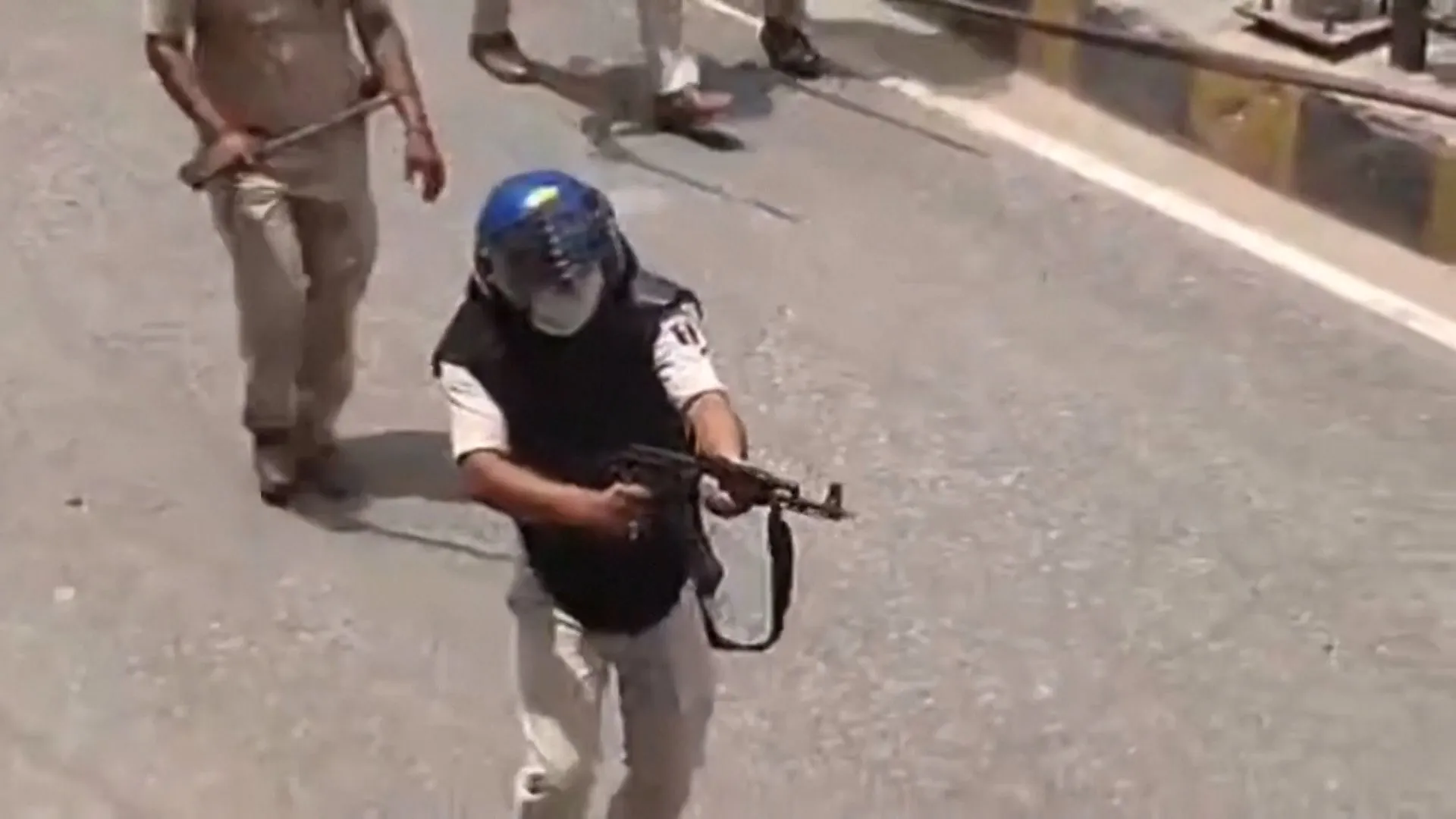



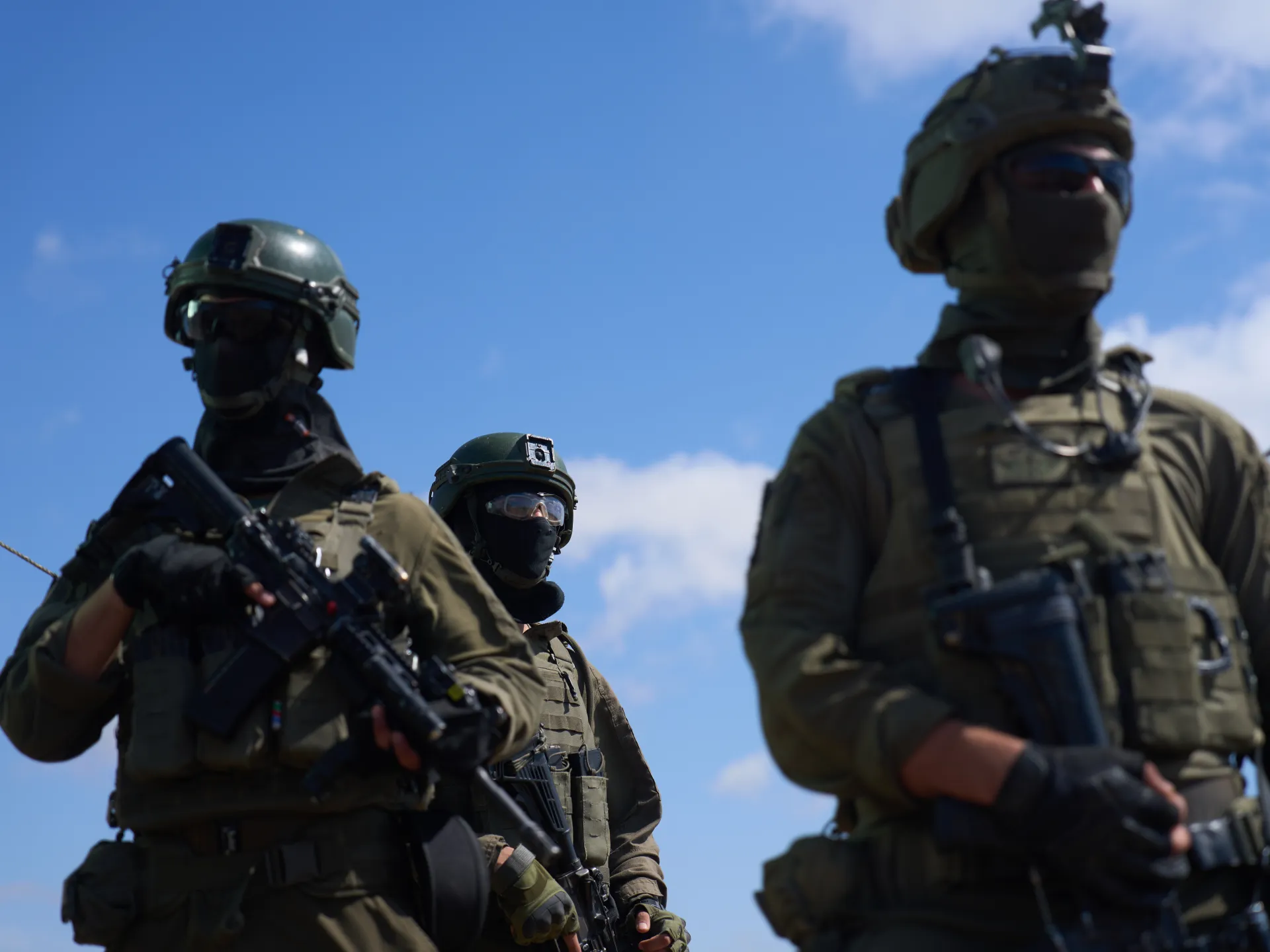
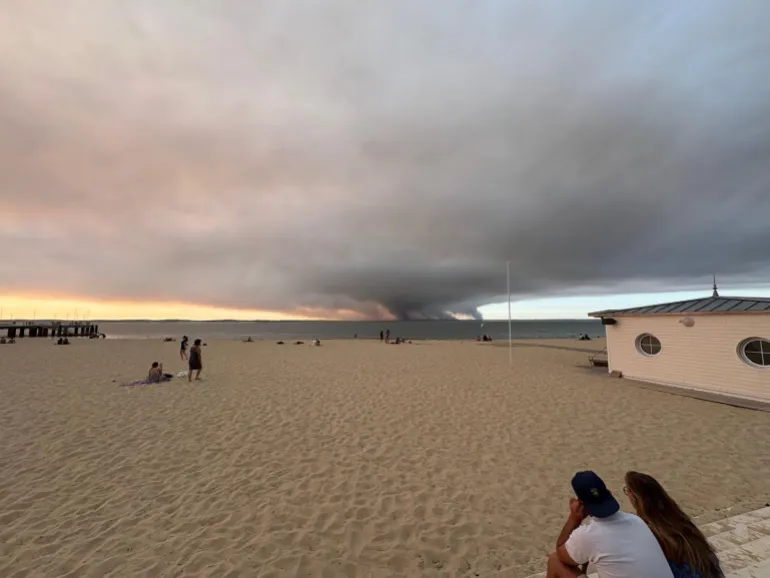

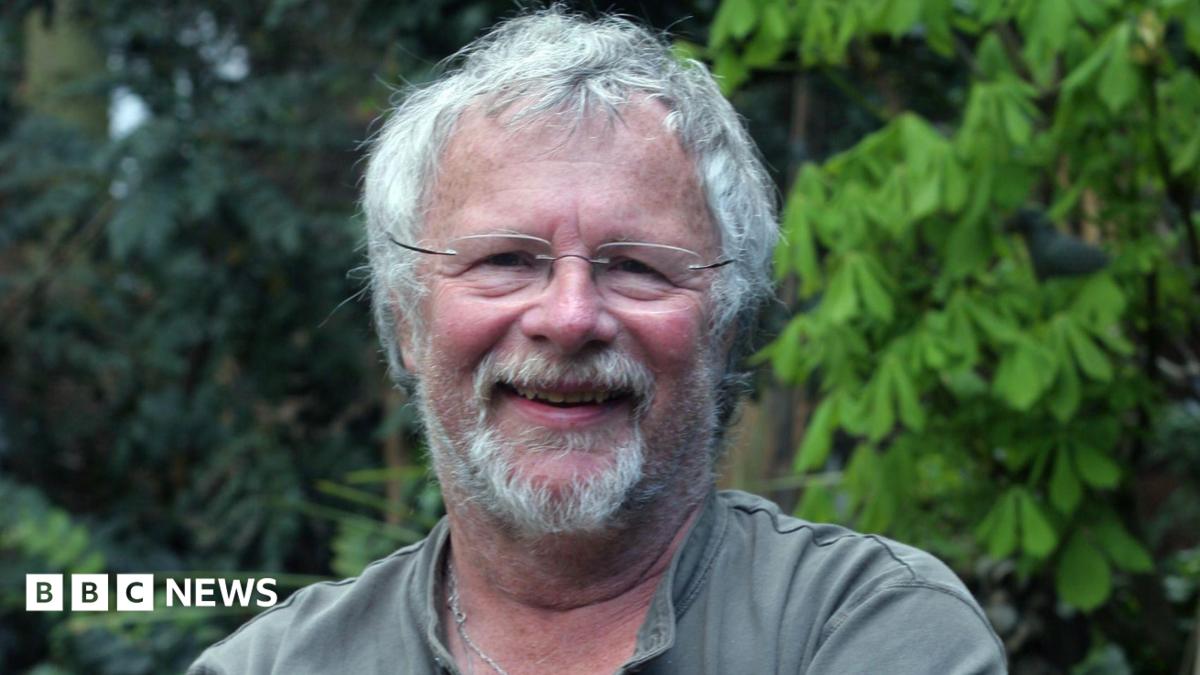










![Batad village chairman Romeo Heppog [standing left] said it is crucial for the national government of the Philippines to allocate enough funds in order to speed up the repair of the rice terraces following the November 2025 landslide.](https://i0.wp.com/www.aljazeera.com/wp-content/uploads/2026/07/PHOTO5-1784532889.jpg?w=640&ssl=1)

![Apu Buy-a Nadyug [centre], the chief indigenous priest of Batad, joins two other village elders during the Tanig, a blessing ritual before the start of the harvest festival.](https://i0.wp.com/www.aljazeera.com/wp-content/uploads/2026/07/PHOTO2-1784532893.jpg?w=640&ssl=1)