Discover the latest happenings and stay in the know with our up-to-date today news coverage. From breaking stories and current events to trending topics and insightful analysis, we bring you the most relevant and captivating news of the day.
As the FIFA World Cup 2026 reached its final week, Gourav Roy, an Indian software engineer living in San Francisco, drove more than 9,650 kilometres (6,000 miles) across the United States to attend both the semifinals and the final.
For Roy, it was the next best thing to what he had grown up dreaming of: seeing India play in the World Cup.
Recommended Stories
list of 4 itemsend of list
But the possibility of that dream coming true is looking ever more distant as deep-rooted systemic issues and the failure to implement reforms have left the country of 1.45 billion ranked a lowly 138th in the world, failing to even qualify for the 2027 Asian Cup.
“I’ve learned to love without expectation. That’s the burden of the Indian football fan,” said Roy.
While countries with tiny populations like Curacao and Cape Verde qualified for the 2026 World Cup, India remains a prime example of wasted potential in the planet’s most popular sport.
Those working in Indian football say the problems range from poor youth development systems, a lack of popularity, and a national federation (the All India Football Federation) struggling to implement a uniform vision with a loose patchwork of state associations.
“If you ask me, to clean up the system and reorganise it will take a full cycle of four years,” Ravi Puskur, the CEO of Indian Super League (ISL) club FC Goa, told Reuters.
“Then it’s another 20-25 years to get us to the World Cup.”
Children play football in front of cutouts of Portugal’s Cristiano Ronaldo and Brazil’s Neymar Jr put up by supporters ahead of the 2026 FIFA World Cup, in Kozhikode, India, on June 9, 2026 [CK Thanseer/Reuters]
Confined to pockets
In cricket-mad India, football remains popular only in a handful of states like West Bengal, Goa, Kerala, Mizoram and Manipur.
The ISL, launched in 2014 with the backing of Reliance Industries, one of India’s biggest conglomerates, tried to change that with limited success.
In 2025, the AIFF and Reliance did not renew their partnership as negotiations stalled amid a Supreme Court case to implement a new constitution for the federation.
This year, under new management led by clubs, the ISL is yet to finalise a broadcaster and announce fixtures.
NorthEast United CEO Mandar Tamhane, who previously led Bengaluru FC, said clubs alone cannot fix Indian football.
“You’re talking about the government, corporate India… it has to be a collective effort,” he said.
“The federation has to make sure the clubs, state associations, the corporates and other stakeholders all work together.”
Weak youth development
AIFF executive committee member and Mizoram’s sports minister Lalnghinglova Hmar said the government can help with infrastructure, but for Indian football to improve, the country’s youth development system needs a drastic overhaul.
“In South Korea and Japan, kids play over 40 competitive matches per season. This is missing in India,” he said.
“We start developing players too late. Most under-15 players get only 12 to 15 competitive games yearly. Some get called up to the youth national camp after playing less than 20 competitive games.
“We’re short on qualified coaches. Many states don’t even have a youth league… we just can’t compete like that.”
But India’s size, the very thing that makes it an attractive sports market and led to the huge success of cricket’s Indian Premier League, also makes it difficult for the AIFF to implement widespread reforms.
“If even half the states were doing a proper job at grassroots, things would grow,” Hmar added.
The uncertainty over the ISL, which forced some teams to suspend player salaries last year, also dealt a blow to the clubs’ development programmes.
“If you can provide stability, gradually the investment will increase,” Puskur said.
Global football stars like Lionel Messi of Argentina (centre) – seen here at the Arun Jaitley Stadium, New Delhi, India on December 15, 2025 – have a high fan profile in India, despite the national team’s underwhelming on-field performance [Adnan Abidi/Reuters]
A limited window
With India bidding to host the 2036 Olympics, the government is considering the launch of a “sports passport” that allows Indian-origin athletes to represent the country.
The AIFF leadership has backed the initiative, believing it will help improve the national team’s performances. But the proposal is still far from becoming law, and Hmar said Indian football needs to act fast.
“The other nations aren’t sitting idle… if we don’t match them, even if we improve, we will remain where we are,” he said.
While Indian football hangs in limbo, fans like Roy can only live in hope.
“They are talking about a 64-team World Cup,” he said. “It won’t gift us anything, but more places mean more hope.”
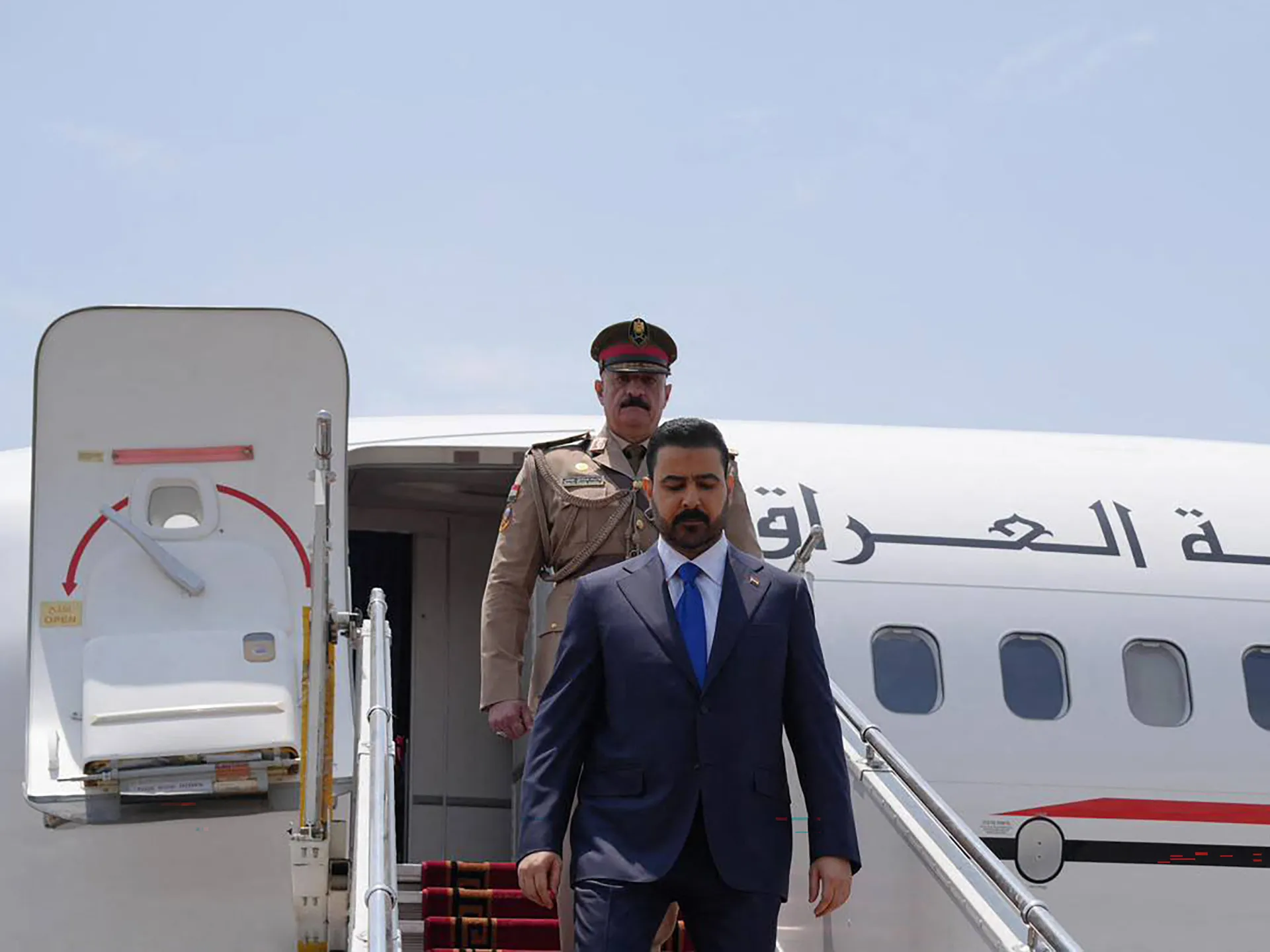
Iraqi Prime Minister Ali al-Zaidi is leading a high-level delegation to Turkiye, in his first visit to the neighbouring country since taking office in May.
Accompanied by ministers and senior officials, al-Zaidi’s visit on Tuesday will focus on “strategic cooperation” between the two countries, as well as issues related to security, water and the economy, according to government spokesman Haider al-Aboudi.
Relations between Iraq and Turkiye have fluctuated over the past decade but remained a priority for both sides, particularly for Iraq in relation to oil and water resources.
And the launch of the US-Israel war on Iran in February and the subsequent closure of the Strait of Hormuz have elevated Ankara’s importance for Baghdad, prompting it to press Turkish authorities to resume and increase the exporting of oil through the Iraqi-Turkiye pipeline after years of suspension.
New oil agreement
The two countries are seeking to sign an oil pipeline agreement that governs the export of Iraqi oil after the expiration of the previous deal on Monday.
A source from Iraq’s Ministry of Oil told Al Jazeera that a technical delegation arrived in Ankara late last week to finalise a one-year extension of the old oil-exporting agreement until a new deal is concluded.
“The new Turkish terms regarding a new agreement are very difficult to be accepted by Iraq. For this reason, no one other than the Iraqi council of ministers is to take such a decision regarding this issue,” said the official on condition of anonymity.
”Turkiye wants to increase the interest from $1.35 for each barrel to $7, and the export capacity must not be less than 1.5 million bpd [barrels per day], whether Iraq can reach this level or not,” the source added.
Part of al-Zaidi’s plan is to find new energy deals and secure alternate routes to export Iraqi crude via Turkiye and Syria and to the Mediterranean Sea.
Iraq signed energy deals estimated at $200bn with US companies during al-Zaidi’s visit to the United States earlier this month, and the government aims to increase its oil and gas production, as well as to diversify exporting options.
“There is an urgent need to find new export outlets away from the Strait of Hormuz, which no longer meets Iraq’s requirements. We must expedite and shorten the timeframe for negotiations and contracting in order to establish new export routes,” said Iraqi Oil Minister Basim Khudair.
Development Route
During his visit, al-Zaidi is also expected to pursue the establishment of strong trade, development and economic ties while seeking to draw from Turkiye’s experience across different industries.
A government source told Al Jazeera that the prime minister will highlight the importance of utilising Turkish expertise in the energy, infrastructure and transport sectors to boost Iraq’s development initiatives.
Among the main projects is the so-called Development Route – a vital transport project that connects Iraq’s al-Fao port in the south all the way north to the Iraq-Turkiye-Syria border triangle through a 1,200km (746-mile) rail and a highway network that passes through 10 Iraqi provinces.
Abd al-Jabar Ahmad, a professor of political science, said continued attacks by armed groups “have effectively derailed” the project.
He also cast doubt al-Zaidi visit’s will yield major results in relation to it, pointing to Ankara’s involvement in a transport corridor seeking to link Turkiye to Jordan through Syria and then Saudi Arabia.
“In my view, the Saudi project stripped Iraq’s Development Road Project of much of its economic and investment appeal,” he added.
Water and security
Water management is also expected to be prioritised during al-Zaidi’s discussions in Turkiye.
Iraq blames Turkiye for building dams that have affected the flow of water from its two main rivers – the Tigris and the Euphrates – which originate in Turkish territory.
“Iraq views it as an issue that impacts the future of millions of Iraqis,” said the government source.
But the most complicated and sensitive issue concerns security – particularly, the presence of Turkish forces on Iraqi soil to fight the Kurdistan Workers’ Party, or PKK, which Turkiye, the US and European Union have designated as a “terrorist” group.
Military estimates suggest that Turkiye has about 50 small and big bases in three Iraqi provinces – Erbil, Duhok and Nineveh – hosting some 5,000 soldiers and weaponry, including artillery and armoured vehicles, as well as heavy and medium arms.
In mid-2025, the PKK announced it had taken its first steps towards disarmament as part of a wider peace deal with Ankara to end 40 years of war against the Turkish state in a conflict that has killed more than 40,000 people. Still, Turkiye continues to view the armed group’s presence in different mountainous areas in northern Iraq as a national security threat.
But despite the challenges, there is wide support in Iraq to strengthen relations with Turkiye, driven by the belief that ties with the neighbouring country remain important and serve Iraq’s national interests.
“There is a strong Iraqi desire to deepen relations with Turkiye in many aspects, especially in oil as Turkiye becomes one of the most important countries in the region in terms of transit routes for exporting oil to Europe and the rest of the world,” said Issam al-Faily, a political science professor.
“The problem lies in the nature of the Iraqi political climate, which is affected by the ongoing power struggles. The covert Turkish–Iranian rivalry may be one of the reasons that could prevent al-Zaidi from achieving his aspirations in relations with Turkiye. He should balance these very critical issues, if he wants this visit to be successful,” added al-Faily.
‘Here’s a more natural flowing version of that section…’
Canadian politician Bill Oliver has gone viral after he appeared to accidentally read AI-generated editing instructions aloud, not once, but twice, during a speech to lawmakers in early June.
Weekly insights and analysis on the latest developments in military technology, strategy, and foreign policy.
Balloon-maker Aerostar says recent tests of its Lightning design as a launch platform for a single surveillance drone open a path to a larger “mothership” concept. The company envisions its high-altitude balloons carrying multiple high-endurance uncrewed aircraft that could search for targets and otherwise monitor broad swaths of the battlespace, and do so persistently for days or even weeks on end. These balloon motherships could also carry payloads configured for other missions, such as electronic warfare jamming, signal relay, or even attacking targets. These are capabilities the U.S. Army and other branches of the U.S. military are actively pursuing, and that other countries, including China and Ukraine, have been developing and fielding to varying degrees, as well.
Aerostar put out a press release last week regarding the testing of the Lightning balloon paired with the Apollo-R from drone-maker Icarus. TWZ subsequently reached out for more information.
“In the current test configuration with the Aerostar Lightning balloon, it’s one Apollo UAS [uncrewed aerial system] per balloon — the Lightning is our smaller, tactical micro-balloon designed to carry a single payload. However, the architecture is scalable,” Russ Van Der Werff, Aerostar’s Vice President of Stratospheric Solutions, told TWZ. “Our larger Aerostar Thunderhead platform can serve as a ‘mothership,’ carrying multiple Apollo-R’s (or other payloads).”
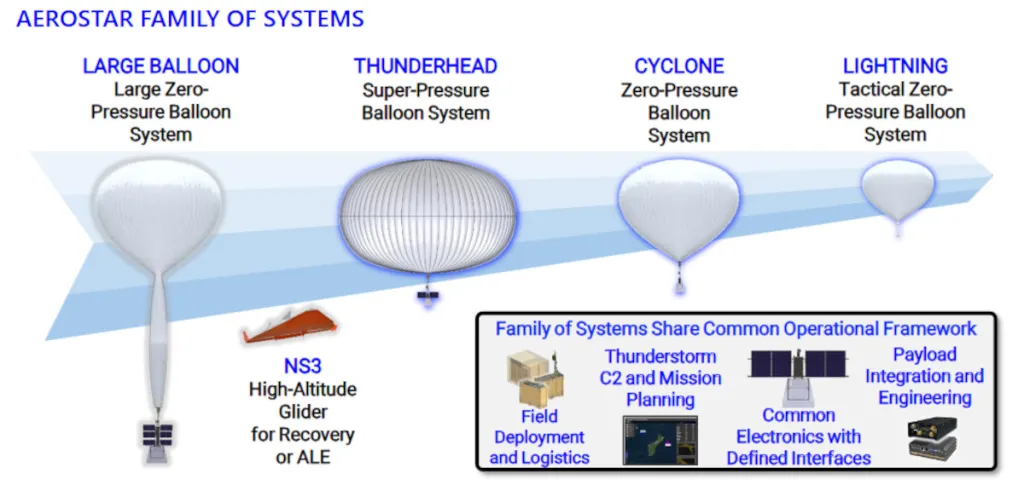
A graphic offering a general overview of Aerostar’s full family of high-altitude balloons. Aerostar
The balloons in Aerostar’s portfolio are modern high-altitude designs with GPS-assisted navigation systems that can transit to areas of interest and then, in many cases, hold their general position despite prevailing winds. By moderating their altitudes, they can remain on station persistently for long periods at a time. Control is exercised via satellite communication suites and/or line-of-sight links, the latter of which can also be used in relay as part of a mesh network made up of multiple balloons.
The Lightning design is capable of operating for up to three days while soaring at typical altitudes between 50,000 and 78,000 feet, and can carry payloads weighing up to 45 pounds, according to a company fact sheet. The larger Thunder has similar altitude performance (typical operations at between 55,000 and 75,000 feet), but can stay aloft for 60 days or more and has a payload capacity of up to 200 pounds.
The Apollo-R drone is a solar-powered, glider-like design that is also optimized for high-endurance flights at very high altitudes. The exact capabilities of the R model are not entirely clear, but Icarus has said in the past that the baseline Apollo design can fly up to 60,000 feet and remain airborne for weeks at a time.
“The Apollo-R is a powered UAS – not a one-way munition – so it’s designed to be recovered after completing its mission. It flies under its own power after separation from the balloon and can land at a designated recovery point,” Aerostar’s Van Der Werff also told us. “This recoverability is part of what makes the system cost-effective for ISR and communications relay missions, where the UAS can be reflown and payloads be recovered and reused. Should the mission dictate, the Apollo-R could be used in a one-way capability, with its price point in the low-six figures, this could be an attractive use case for certain end users.”
Aerostar Thunderhead Balloon System Full Video Updated 1 5 23
“In this case, the Icarus Apollo uses its own BLOS [beyond-line-of-sight] radio so it doesn’t need the balloon for comms after drop. However, in support of other UAS, the Aerostar balloon systems can also serve as a stratospheric communications relay node,” Van Der Werff added. Aerostar’s platforms carry mesh-networking radios that provide high-bandwidth, line-of-sight data links with ranges exceeding 100 miles and throughput up to 40 Mbps. The UAS communicates with the balloon’s onboard radio, and the balloon relays that data back to ground stations — effectively giving the drone a much longer communications reach than it could achieve on its own at lower altitudes.”
“The balloon essentially acts as a high-altitude communications tower, extending the UAS’s effective operating range far beyond what a ground-based radio link could provide for normal military operations,” he also noted.
As already mentioned, Van Der Werff made clear that Aerostar sees the Lightning/Apollo combination as a step toward a larger capability set, and that the company’s Thunderhead could carry several Apollo-R drones on a single mission. The same scalable architecture could potentially support “deploying multiple effects from a single, persistent stratospheric platform,” which might include “multiple ALE kits,” he said.
ALE here is the abbreviation for “air-launched effects,” a term the U.S. military now commonly uses to collectively talk about air-launched drones configured for a wide array of missions. The ALE umbrella encompasses designs that can be used for surveillance and reconnaissance, electronic warfare tasks, or signal relay, as well as act as a decoy. It also includes loitering munitions, also often referred to as kamikaze drones, capable of carrying kinetic attacks. The ALE term has also been broadened more recently to just “launched effects” to cover uncrewed systems that can also be launched from platforms on the ground or at sea.
Aerostar’s Van Der Werff also highlighted benefits that using high-altitude balloons can offer in terms of flexibility, especially in the context of expeditionary and distributed operations where access to traditional runways that support crewed or uncrewed aircraft may be limited or unavailable entirely. There are also certain advantages in terms of survivability and cost.
Thunderhead Balloon System Launch
“An Aerostar Lightning balloon with an Icarus UAS can be launched by a small team from almost anywhere – no runway, no fixed site. It operates in the stratosphere, above conventional air defense threat envelopes, and provides persistent coverage measured in days or weeks rather than hours,” he explained. “For distributed operations, this means a forward-deployed unit can establish its own organic sensing and communications relay capability without depending on theater-level ISR [intelligence, surveillance, and reconnaissance] assets or vulnerable fixed infrastructure.”
“The system is inherently survivable because it’s small, operates at extreme altitude, is difficult to detect and target, and is inexpensive enough to be treated as attritable if necessary — unlike a[n RQ-4] Global Hawk or [MQ-9] Reaper [drone] that represents hundreds of millions in sunk cost,” he added. “You can distribute many of these across a theater and create a mesh of persistent sensing that’s resilient to individual node loss.”
TWZ has been drawing attention to the military utility of high-altitude balloons for ISR and other missions for exactly these reasons for years now. Aerostar has a long history now in this market space, too, but is not the only company advancing these kinds of capabilities, which are themselves not entirely new.
SNC’s Lighter-Than-Air High-Altitude Platform Station (LTA-HAPS) solutions provide global, persistent ISR, integrated mission systems, payloads & command/control capabilities to meet the unique needs of the Australian warfighter from the stratosphere. #Avalon2023#TeamSNCpic.twitter.com/7VK7K9vzTe
— Sierra Nevada Corporation (@SierraNevCorp) March 1, 2023
An Urban Sky high-altitude balloon carries an Apollo-R drone aloft during Exercise Valiant Shield 2026. US Army/Sgt. 1st Class Ondirae Abdullah-Robinson
U.S. military personnel prepare to launch balloons with drones attached from the USAV Maj. Gen. Charles P. Gross during Exercise African Lion 26. Zachary Pickard/US Military
The U.S. Marine Corps, the U.S. special operations community, and other elements of the U.S. military are also actively pursuing high-altitude balloon-based systems to perform various missions. The U.S. Naval Research Laboratory (NRL) notably conducted extensive testing of drones launched from single high-altitude balloons in the 2010s as part of a project called Close-in Covert Autonomous Disposable Aircraft (CICADA). Those tests also demonstrated a tiered capability in which slightly larger drones launched the smaller CICADAs after being released from the balloons.
A Tempest drone, with a CICADA under each wing, falls from a high-altitude balloon during a test. USN
This being said, the Army has been a clear leader in the U.S. military in this regard. The service has previously outlined a vision for establishing “persistent, all-domain sensor architecture for the Indo-Pacific theater” in which high-altitude balloons are a central component. The Army has also talked in the past about using high-altitude balloons to deploy swarms of drones and loitering munitions, as well as seed remotely-operated sensors on the ground, deep inside enemy territory.
A graphic the Army previously released showing a notional “operational view” for a Multi Domain Sensing System (MDSS), a system of systems that would include high-altitude balloons and other assets. US Army
Last year, the Army disclosed plans to launch as many as 100 high-altitude balloons, and maybe even more, in an upcoming exercise. In that instance, the service also highlighted how these lighter-than-air platforms could offer a hedge against the loss of critical space-based capabilities.
“Our primary goal is to demonstrate autonomous swarming capabilities that generate a persistent, cost-effective presence in the stratosphere,” Andrew Evans, Director of Strategy and Transformation with the Office of the Deputy Chief of Staff of the Army, or G-2, told Breaking Defense in an interview in August 2025. “Once operationalized, this type of capability will enable us to conduct a range of military operations including enhanced intelligence, surveillance, and reconnaissance (ISR), the extension of tactical communications, and the rapid reconstitution of on-orbit capabilities when space is denied or degraded.”
These are capabilities that U.S. forces, among others, could employ beyond the Pacific region, too.
“The challenge on the eastern flank [of NATO in Europe] is fundamentally one of persistence, survivability, and logistics. Legacy ISR approaches – manned aircraft, large UAVs, fixed ground sensors – are increasingly vulnerable in contested environments with advanced integrated air defense systems,” Aerostar’s Van Der Werff told us, outlining another regional use case. “They require significant ground infrastructure, large runways, and complex logistics chains. In a distributed operations concept across vast areas like the Baltics or Eastern Europe, those dependencies become liabilities.”
Ukrainian forces are using balloons to transport kamikaze drones over long distances, then launching the drones toward their targets after delivery. #Ukrainepic.twitter.com/Prz1oMPQol
TWZ has previously outlined major investments in balloon-launched drone swarm capabilities in China, as well, as you can read more about here. High-altitude-balloons, in general, became a global cause célèbre after a Chinese intelligence-gathering type passed over parts of the United States and Canada, before being shot down over the Atlantic Ocean, in 2023.
For Aerostar, the company now sees ‘drone mothership’ as another important role on the horizon for its Thunderhead high-altitude balloon. The smaller Lightning design paired with the Apollo-R drone is providing a stepping stone toward that concept, while also capability that could still be valuable, if more limited, in the near term.
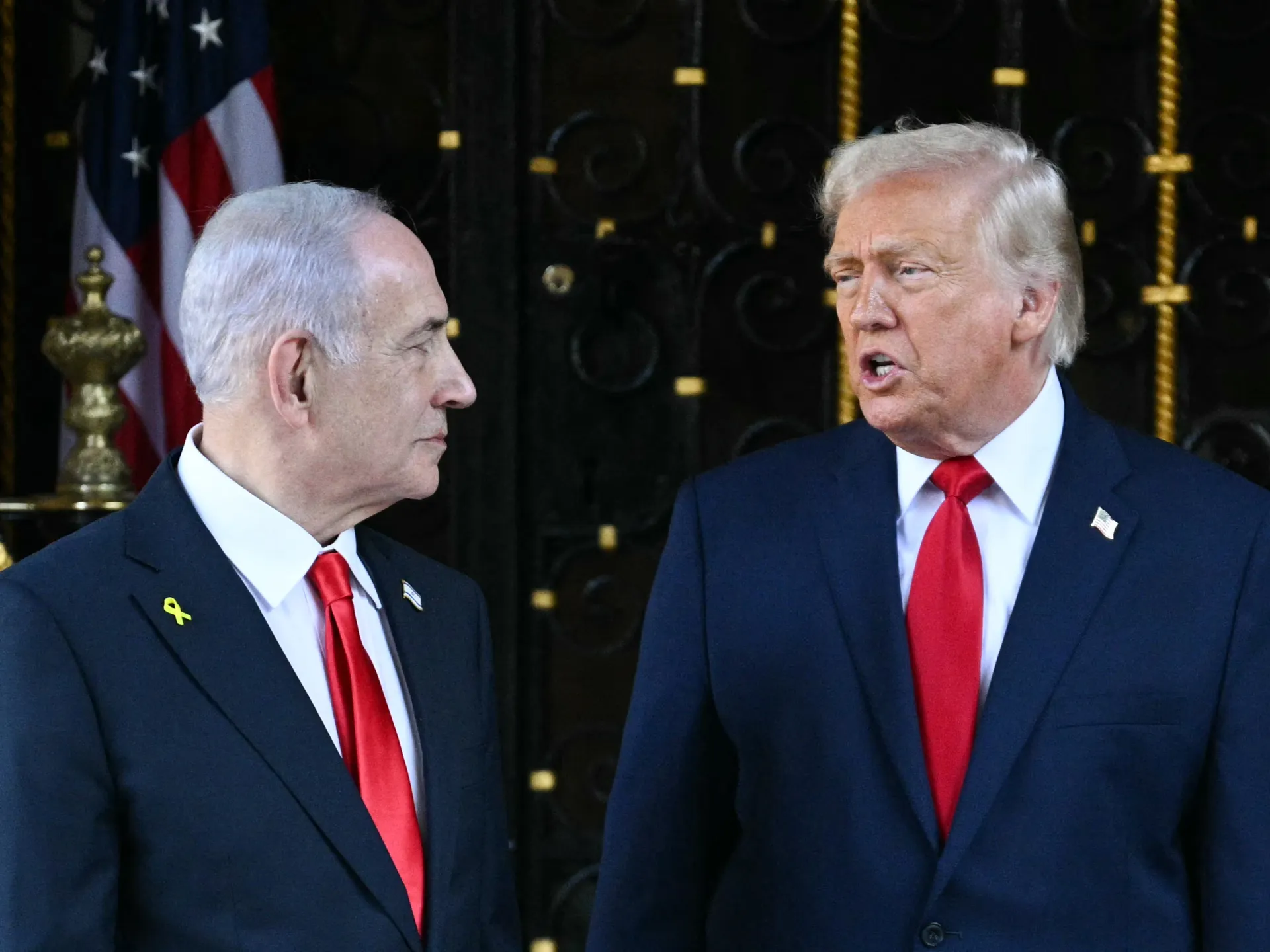
Israeli Prime Minister Benjamin Netanyahu has arrived in Washington, DC, and will visit the White House on Tuesday, with the war on Iran topping the agenda.
Netanyahu’s visit is his first for talks with President Donald Trump since the United States and Israel launched their war on Iran with strikes on Tehran on February 28. It also comes amid increasing Israeli raids and arrests in the occupied West Bank and three months before elections in Israel.
Recommended Stories
list of 3 itemsend of list
He has visited the White House more times under the Trump administration than under any other US president. Political analysts say Netanyahu is seeking Trump’s support for re-election.
What are the two leaders likely to discuss and what happens next in the US-Israel war on Iran?
Here’s what we know:
Why are Trump and Netanyahu meeting now?
Netanyahu is primarily in the US to attend the funeral ceremony of Republican Senator Lindsey Graham, who died on July 11.
Graham was a close Trump ally in the Senate, both on domestic and international matters, including the war on Iran, as well as a staunch supporter of Israel. His funeral ceremony will take place on Tuesday in Washington, DC, beginning at 2pm (19:00 GMT).
Before attending Graham’s memorial, Netanyahu is also expected to meet Trump at 11am (15:00 GMT) in Washington, DC, where protesters have lined the streets in anticipation of his visit.
He is scheduled to fly back to Israel on Wednesday.
What are Trump and Netanyahu likely to discuss?
A White House official told the Reuters news agency that the two leaders were likely to discuss the war on Iran as well as Israeli strikes and occupation of Lebanon, whose president Trump hosted last week. Israel says it is targeting strongholds of the Iran-backed group Hezbollah, which began firing rockets into its north shortly after the war on Iran began. However, Iran says it will not agree to a peace deal unless Israeli forces withdraw from Lebanon.
Reporting from Washington, DC, Al Jazeera’s Alan Fisher said many people in Israel believe the US should not make a deal with Iran and should instead resume the war. He said some in the US support this view.
“Now, Trump has expressed his frustration with Netanyahu and has said several times that he feels the Israeli leader is not seeing the big picture. And sometimes you’re not sure whether both men are on the same page or whether they are diametrically opposed to one another. So it will be interesting to see if we get any readout from either side after that meeting,” he said.
Fisher, however, added that the outcome of the meeting between Trump and Netanyahu is currently not expected to be made public.
The White House official also told Reuters that the two leaders would also discuss the Abraham Accords, the series of agreements between Israel and Arab and other nations which Trump began brokering during his first term as US president to normalise diplomatic relations. So far, only the United Arab Emirates, Bahrain, Morocco, Sudan and Kazakhstan have agreed to sign.
Netanyahu’s visit to Washington, DC comes amid intensifying pogroms and violence by Israeli settlers against Palestinian communities across the occupied West Bank over the weekend following a deadly shootout in the town of Tal, in which two Israelis and four Palestinians were killed.
Israeli settlers have been making a push to increase the number of illegal settlements in the occupied West Bank since 2022, when Netanyahu formed the most far-right government in the country’s history, including ministers who are leading figures in the settler movement.
Expanding the illegal settlements would help Netanyahu garner the far right’s support in the upcoming elections, political observers say.
However, in a letter published on Tuesday, about 600 former Israeli officials appealed to Trump, saying he is the only one capable of helping to avoid the “calamity” of escalating violence in the West Bank and its implications for Israeli, US and regional security.
“Unless arrested swiftly and decisively, escalating violence in the West Bank is poised to ignite the region and carries severe ramifications for both Israeli security and US regional interests,” the letter, written by lobby group Commanders for Israel’s Security (CIS), stated.
“It is our professional judgment that no one but you, Mr President, can avert this calamity.”
CIS is a movement of more than 550 retired Israeli army colonels and generals, as well as equivalent ranks in the intelligence agency Mossad, the internal security agency Shin Bet, police, the foreign service and other corps.
What do Trump and Netanyahu currently disagree on?
The two leaders once appeared politically inseparable, with Netanyahu describing Trump as the “greatest friend Israel has ever had in the White House” last October. Trump returned the praise. During a 2025 appearance in Israel, he joked, “He’s not easy – not the easiest guy to deal with – but that’s what makes him great.”
But Israel’s hostilities with Iran have showcased a crack in Netanyahu and Trump’s alignment.
War on Iran
Last month, Trump reportedly called Netanyahu “f****** crazy” during a phone call and accused him of undermining US diplomatic efforts to end the war on Iran by continuing attacks on Lebanon, among other issues. He warned that Israel’s military escalation risked derailing peace talks with Iran.
“He will have no choice,” Trump told the Financial Times when asked about the likelihood of Netanyahu approving a possible peace agreement with Iran. “I call the shots. I call all the shots. He doesn’t call the shots.”
Political observers say the two leaders are each driven by their own political interests, which are on a collision course. In the US, the war with Iran is deeply unpopular, so Trump needs to reach a deal with Iran to end the war. Netanyahu, on the other hand, could benefit politically at home if it were to continue.
‘Regime change’ in Iran
“Regime change” in Iran appears to be a major sticking point between the two leaders.
Alex Vatanka at the Middle East Institute told Al Jazeera that Netanyahu is likely to try and “sell the idea of regime change again in Tehran” when he meets Trump at the White House on Tuesday.
“I don’t think it will go down well with President Trump because he doesn’t want to do that,” Vatanka said. “Politically, in the US, this war is hugely unpopular, so it remains to be seen what Prime Minister Netanyahu gets out of this meeting.”
He added that previous meetings between Trump and Netanyahu in Washington, DC, have often preceded a flare-up in tensions with Iran, and it remains to be seen whether this one breaks that pattern.
Vatanka said Israelis are still unhappy with the Trump administration about the memorandum of understanding agreed with Tehran, because they “have a different sense of threat perception when it comes to Iran”.
Israeli officials will want Netanyahu to continue to press Trump on Iran’s ballistic missile and nuclear programmes, he said.
“The Trump administration’s counter to that is there is only so much the US can do militarily unless they decide to go in and occupy Iran, and this is something nobody really takes seriously,” he added.
But in a video statement before departing for Washington, DC, Netanyahu said: “In these complex times, you need to act with both great determination and great wisdom. We will discuss all the issues on the agenda, primarily Iran.”
“Of course, our goal is to protect our security and also to expand the circle of peace around us,” he added.
Lebanon
Israel has also refused to withdraw from Lebanon, insisting that it has the right to bomb the country at any time to respond to “threats”.
According to Axios, in a phone call in early June, Trump told Netanyahu: “Everybody hates you now … everybody hates Israel because of this.”
According to an Israeli official quoted by CNN, Netanyahu told his security cabinet on Sunday that the Trump administration wants Israel to withdraw from Lebanon, Syria and Gaza but he would oppose the idea.
US-Turkiye aircraft deal
Al Jazeera’s Fisher noted that another point of friction between the two leaders is Washington’s sale of F-35 aircraft to Turkiye.
“Netanyahu doesn’t want that to happen. Trump was asked about it in the last few hours, and he said we will sell to whoever he wants. So it could be a very interesting meeting at the White House on Tuesday,” Fisher said.
In July, in an interview with Fox News, Netanyahu said: “I don’t think they [Turkiye] should be given F-35s or the engines for their fighter jets because that’ll upset the power balance in the Middle East, which is ultimately guaranteed by Israeli air superiority, and also by, I think, by America’s posture in the Middle East.”
So, do Trump and Netanyahu agree on anything?
Currently, there are frictions between the two leaders’ policies towards the June 17 MoU between the US and Iran that made provision for a regional ceasefire, including in Lebanon.
In February, a White House official told reporters that the Trump administration also opposes any Israeli annexation of the occupied West Bank.
Netanyahu has, however, brushed off frictions with Trump and said their ties are “fine”.
In an interview with Fox News in early July, Netanyahu heaped praise on the US and Trump.
“America has been a tremendous force for good, and without America, there won’t be any democracy in the world, and there won’t be any freedom in the world,” he said.
Netanyahu said there may be some differences between the US and Israel, but the two countries are “model allies”.
“My relationship with the president is fine, and we have a way of ironing out our differences as allies who respect each other,” he said, adding that he would smooth things over.
But an Israeli official told CNN on Monday that it had taken time to schedule the meeting with Trump, and that Netanyahu got confirmation only once Graham’s funeral had been announced.
Speaking to reporters about the war on Iran on board Air Force One while travelling to Michigan on Monday, Trump said Israel “needs the US”.
“You know who wouldn’t survive without us? Israel. Bibi’s coming, he’ll tell you,” he said.
“If I didn’t get involved, and I didn’t blow up those nuclear, essentially, soon-to-be nuclear weapons to dust, Israel would have been terminated months ago.”
Trump added that he and Netanyahu remain “pretty close”.
What happens next?
Amid frictions, it is unclear whether the meeting will end with Israel and the US continuing their war on Iran and Israel continuing its attacks on southern Lebanon, Gaza and in the occupied West Bank.
Therefore, it is going to be a high-stakes meeting for Netanyahu.
Sources have also told Reuters that Netanyahu would use the meeting to lobby for Trump’s support for his re-election campaign ahead of an October 27 vote.
A meeting with Trump will, he hopes, showcase what has traditionally been a close relationship between the two leaders and could help Netanyahu at home, where he is struggling in opinion polls.
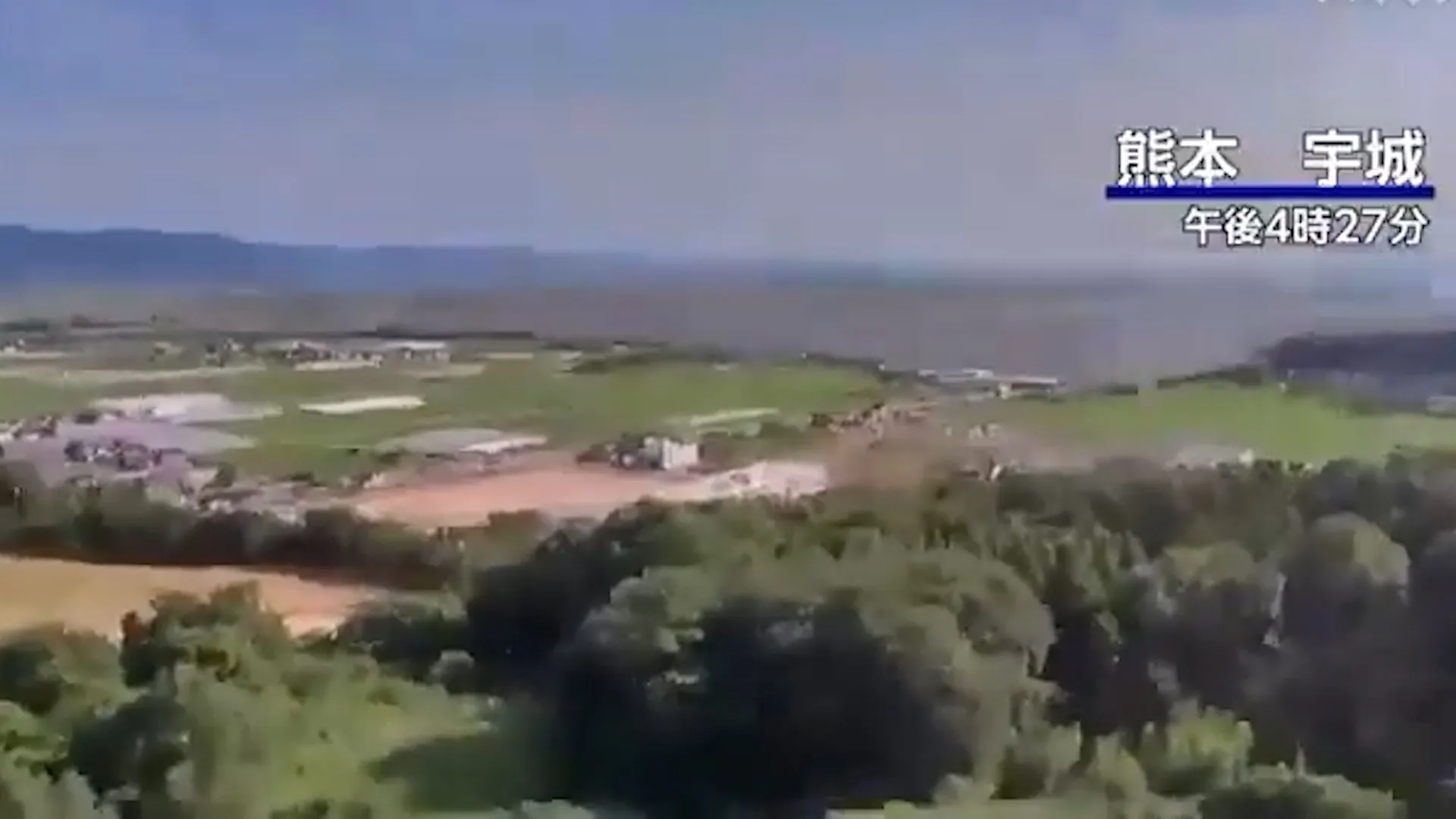
A magnitude 7.1 earthquake has hit Kumamoto on Japan’s southern island of Kyushu, sending buildings swaying as people rushed to safety. Authorities have issued a tsunami alert following the quake.
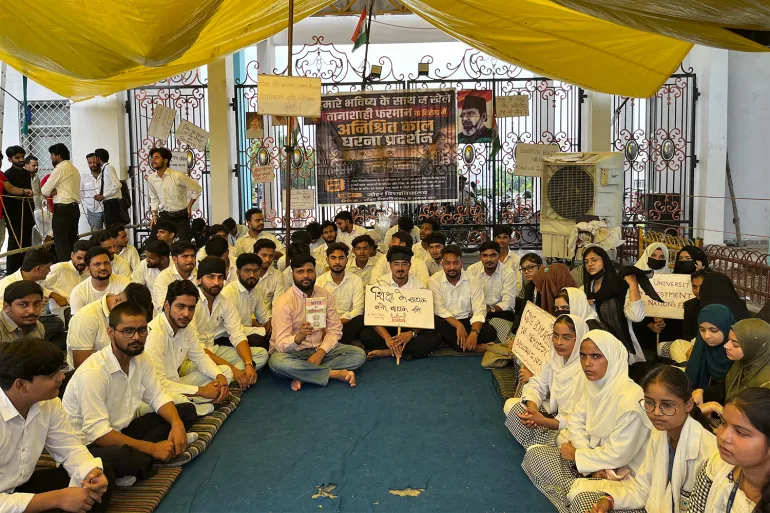
Rampur, India – More than 100 people sit cross-legged on mats, braving the brutal July heat, as they raise slogans and wave the national flag in a north Indian town.
Barely 200km (132 miles) from the capital, New Delhi, where thousands of youths demanding education reforms just forced a minister to resign, a group of students, alumni and residents are holding an indefinite sit-in to oppose the planned demolition of 38 of Mohammad Ali Jauhar University’s 40 buildings.
Recommended Stories
list of 4 itemsend of list
Named after a freedom fighter who fought against British rule, the university was founded by prominent Muslim politician Azam Khan in Rampur district of Uttar Pradesh state. Khan established the Mohammad Ali Jauhar Trust in 2003, which oversaw the university’s establishment three years later.
On July 15, when protests led by the Cockroach Janta Party (CJP) – a youth movement born out of a joke – were at their peak, the Rampur district administration issued an order to demolish most of the university’s buildings, alleging they flouted regulatory guidelines.
Only two structures, including a proposed medical college block, were built with valid approvals, the authorities claimed, as they ordered the university to take down the “illegal” buildings by August 5. If they failed to do so, the authorities said they will move in with bulldozers and recover the cost of the demolition from the university.
Protesters hold an indefinite sit-in outside the gate of Mohammad Ali Jauhar University in Rampur, Uttar Pradesh, India [Asad Ashraf/Al Jazeera]
On Monday, the state administration issued an interim stay on its order, but did not explicitly state whether the demolition was halted.
Jauhar University’s vice chancellor, Zaheeruddin, told Al Jazeera the stay order does not mean the demolition has been called off.
“It means that the demolition will not take place by the August 5 deadline set by the RDA. The university is now seeking a verdict that quashes the demolition order outright,” he said, using the acronym for Rampur Development Authority.
‘Stop the demolition’
For nearly 3,000 students pursuing dozens of courses at the 250-acre campus, the government move is a bolt from the blue.
Since July 15, a group of university students and alumni has been sitting outside its main gate, demanding the withdrawal of the demolition order.
“If a [federal] minister can be forced to resign following the CJP protest, why can’t the Uttar Pradesh government be forced to stop the demolition of the university when so many students are agitating here,” asked Usama Tayyab, who graduated from Jauhar University in 2019.
Uttar Pradesh – home to about 240 million people – has been governed by the right-wing Bharatiya Janata Party (BJP) since 2017. The state’s chief minister, Yogi Adityanath, is a saffron-clad hardline Hindu monk, known for his anti-Muslim hate speech and policies.
The main entrance gate of Mohammad Ali Jauhar University, Rampur, India [Usman Ali/Al Jazeera]
Khan, the 77-year-old founder and lifelong chancellor of the university, had been one of the most stringent critics of the BJP in Uttar Pradesh. He is one of the founders of the Samajwadi Party (“samajwadi” means socialist in Hindi), a political group popular among the state’s 38 million Muslims, as well as a large majority of its underprivileged caste Hindu voters.
Khan studied law in the 1970s at the Aligarh Muslim University, India’s largest minority institution, about 160km (100 miles) from Rampur. At Aligarh, he made a mark as a fiery student leader, and later as a politician who took on a former royal family, which for decades had dominated the politics in Rampur, a district with nearly 50 percent Muslims, according to the last census conducted in 2011.
He joined electoral politics in 1980 and represented Rampur in the Uttar Pradesh Legislative Assembly for 10 terms, also serving as a minister in several state governments and as leader of the opposition. He was also elected to the lower house of Indian Parliament from Rampur and sent to the upper house later by his party. In 2003, he established a Mohammad Ali Jauhar Trust, which oversaw the establishment of the university three years later, and cemented his position as one of the most prominent Muslim leaders in northern India.
And that brought him into the crosshairs of the BJP.
‘Vendetta politics’
Shortly after coming to power in 2017, Adityanath’s government filed nearly 100 cases against Khan, charging him with landgrab, forgery and hate speech. Dozens of those cases against him relate to Jauhar University.
Khan spent more than two years in jail before the Supreme Court granted him bail in 2022. The next year, a court in Rampur convicted him, his wife Tazeen Fatima and their son Abdullah Azam Khan, also a former legislator, of using forged birth certificates.
He is currently serving a two-year sentence handed down in May this year for making “provocative remarks” during the 2019 general elections, alongside his conviction in a separate case related to a fake income tax document.
Supporters say the cases against Khan and his family are politically motivated. The state government denies the allegation.
Samajwadi Party MP Javed Ali Khan, unrelated to Azam Khan, told Al Jazeera the Jauhar University demolition order was “vendetta politics by a ruling dispensation opposed to education and intent on keeping people illiterate”.
“There are many reasons why this university is being targeted. First, it was founded by Azam Khan. Second, its foundation stone was laid by Mulayam Singh, the Samajwadi Party patriarch. Third, it was inaugurated by Akhilesh Yadav, the former chief minister of the state. And fourth, it is a minority university,” he said.
Mulayam Singh Yadav, the main founder of the Samajwadi Party, died in 2022. His son Akhilesh now heads the party and is a member of the anti-BJP coalition that includes the Indian National Congress, India’s main opposition party.
Azam Khan, centre, with Akhilesh Yadav, left, and Mulayam Singh Yadav at a public rally in Prayagraj, India, March 2, 2014 [Rajesh Kumar Singh/AP]
BJP spokesman Rakesh Tripathi said the demolition order is “in line with legal procedures against illegal construction”, and accused the Samajwadi Party of playing “appeasement politics”.
“Can anyone deny that Azam Khan built this university on illegal land? He used his position and power during the Samajwadi Party government to construct this university on illegal land and erect illegal buildings. What we are doing is simply following the law on illegal construction, and that means the university should be demolished,” Tripathi told Al Jazeera.
‘Girls will never get another chance’
But anger over the imminent demolition of Rampur’s only full-fledged university is growing. The district is ahead of only four among Uttar Pradesh’s 75 districts in terms of literacy rate, according to the 2011 census.
Also, nearly half of the students at Jauhar University are females, according to chief proctor, Gulrez Nizami.
Iqra, a fifth-year law student who goes by only one name, told Al Jazeera she had chosen the university for a reason.
“Our parents were satisfied with the atmosphere here, and with the safety it offers to women students over other universities,” she said.
“If this university is demolished, girls like us will never get another chance to study anywhere else. Our parents will not be convinced to send us elsewhere. They chose this place because they believed Muslim girls were safe here,” Iqra said.
Iqra at the protest site outside the university gate [Asad Ashraf/Al Jazeera]
Iqra said the government is running a counselling camp to advise the students on joining another college or university to continue their education. “But we don’t want to go there. We chose this institution for a reason,” she said.
And it is not just Muslims who are protesting against the university’s planned demolition – more than a third of its students are Hindus.
“They may call it a Muslim university, and yes, it is indeed a minority university by legal status, but that does not mean others do not study here,” Chandni Diwakar, a first-year paramedical student, told Al Jazeera.
“I have been a part of the university for the past year and have never once felt like a non-Muslim in a minority university. Everyone here is friendly, teachers and students alike,” she said at the sit-in site.
Paramedical student Chandni Diwakar says many Hindus also study at the university [Asad Ashraf/Al Jazeera]
The RDA says its action follows a report by a regional officer who flagged the alleged violations. A meeting with lawyers representing both the university and the RDA was held on July 15.
“They were given notice, and they have since given a written response. Out of the 40 buildings constructed at Jauhar University, only two were considered acceptable. The other 38 were proven invalid,” Ajay Kumar Dwivedi, district magistrate and RDA vice chairperson, told reporters on July 15.
But Vice Chancellor Zaheeruddin dismissed the charge, claiming the institution located in Rampur’s Singankhera village came under RDA jurisdiction only in September 2024, years after the buildings were constructed.
Approval, added Zaheeruddin, was therefore not required at the time of construction and cannot be demanded now.
“There was no RDA jurisdiction in Singankhera at the time the university was formed. We are running courses approved by different government bodies, which grant approval only once we meet all their criteria,” he told Al Jazeera, calling the RDA’s move a violation of the constitutional right to education.
“They are simply using this as a tool against the visionary Azam Khan, who created this university for the upliftment of the minorities, the poor, and the underprivileged,” he said.
Mohammad Ali Jauhar University’s Vice Chancellor Zaheeruddin at his office [Asad Ashraf/Al Jazeera]
But the officials say the alleged violations cannot be regularised under the existing laws, leaving demolition as the only legal remedy.
Al Jazeera made repeated attempts to contact Dwivedi for his comments and even visited his office in Rampur. But he declined to meet or respond to requests for an interview.
‘Police coming to our houses’
The university has challenged the RDA order as protests grow on campus.
“If others can achieve results through a peaceful protest, why can’t we, as Muslim students, achieve our legitimate goal of stopping the demolition of our university? If this requires sacrifice, we are willing to give it. But we will not accept this injustice against us any longer,” Usman Ali, a law graduate from the university, told Al Jazeera.
He alleged that police are visiting the homes of students on strike to pressure their families into calling off their protest. “Police are coming to our houses and threatening our parents with consequences, but we will not back down.”
On Sunday, the protesters were joined by a delegation of Samajwadi Party parliamentarians, including Javed Ali Khan, Ziaur Rahman Barq of Sambhal and Iqra Choudhary of Kairana.
“There are multiple dimensions to it [demolition]. One, it was meant to create a spectacle out of confronting powerful Muslims in front of its Hindu voters. Second, there has been a sustained campaign throughout this government’s tenure against minority institutions. And third, it does not want mingling between Hindus and Muslims, of which universities are a stronghold,” Apoorvanand, a teacher of Hindi literature at the University of Delhi who goes by a single name, told Al Jazeera.
Since 2014, when BJP’s Narendra Modi became prime minister, India has seen a spike in demolitions of homes, mosques, shops and other properties in a pattern that rights groups say disproportionately affects Muslims. Authorities claim they are targeting “illegal encroachments”.
Back in Rampur, Abdul Kaleem Ansari, another Jauhar University graduate, draws a parallel between their protest and the CJP movement that forced India’s Education Minister Dharmendra Pradhan to resign over a series of examination paper leaks.
Ansari, who attended both, said he was surprised that calls for education reforms, which drove the “Cockroach” protesters to the streets, do not include the imminent demolition of a full-fledged university as part of their agenda.
“It is astonishing that they are talking about education reforms, but saying nothing about the demolition notice served to Jauhar University, a minority university situated just a few hundred kilometres from Delhi,” he said.
“The futures of all its students and alumni are at stake, and we do not know where to go from here.”
It was at 11:21 a.m. on Sunday, June 21, that things started to fall apart. Aliyu Muhammad was in the Malali area, Kaduna, northwestern Nigeria, working underneath a car when he missed a call from his wife. When he called back, someone else answered and asked him if he knew the owner of the phone.
“He said whatever he would tell me are just unconfirmed suspicions,” he recounted. “Then, he told me some women saw my wife and suspected she was a child kidnapper. I told him that I left her at home and she was supposed to attend an event. He said that’s exactly what she told them, but the people, seeing a stranger with a hijab and niqab talking to some children while there is a high rate of kidnapping, were suspicious. He asked me to send a representative since I wasn’t around.”
The man who called introduced himself as the Mai Anguwa (community head). Aliyu sent his friend, Suleiman Isa, to fill in for him. Fortunately, the man knew the friend.
Ummulkhairi left her home in Sabon Gari Marraraban Jos, Kaduna, that morning to attend an Islamic lecture in Madrasat Tashiyhul Iman, an area she wasn’t familiar with. This led her to ask a group of children for directions. However, being a fully covered Muslim woman with a hijab and a face veil (niqab), some of the residents profiled her as dangerous. They mistook her for a child kidnapper. Within a short time, a mob gathered, and they eventually killed her, then set her body on fire, despite attempts to save her life.
The Kaduna State Police Command claimed that officers attempted to save her life, but the mob stormed the police station, overpowered them, and forcefully took Ummulkhairi out. However, eyewitness accounts tell a different story.
Zainab Musa, Ummulkhairi’s sister-in-law, who was at the scene, said it was the Divisional Police Officer (DPO), CSP Abdullahi S. Akai, who handed her over to the mob, and that she tried to pull Ummulkhairi away from him but to no avail. Other witnesses, including Ummulkhairi’s co-wife, Hussaina Sani, corroborated this account.
HumAngle visited the police station in Marrarraba Jos, where sources said the DPO “had been transferred to the Force Headquarters for investigation”. On the afternoon of Jul 16, we met DSP Mansir Hassan, the Kaduna Police spokesperson, who said he could not answer any questions because the case is under investigation and officers were not allowed to comment outside the earlier press statement.
The compound of the Police Station in Marrarraban Jos, where it happened. Photo: Hauwa Saleh Abubakar/HumAngle.
After she was lynched, the DPO visited her house with some journalists, who interviewed him right in their compound at the centre of the family’s grief.
“[The DPO] lifted his trousers to show us the injury he sustained from the mob. He even told us that his car was damaged, and all I could think was how any of that concerns us,” said Aminatu Isa Abdullahi, Ummulkhairi’s mother-in-law.
On the day it happened
As Aliyu struggled to reach the scene after the phone call, each passing second deepened his fears. “It was hard to get a bike from where I was in Malali Low-cost, so I had to walk,” he recalled. “While I was walking, I was anxiously calling my friend [Suleiman], but his number wasn’t connecting. I rushed to get my brother-in-law in Kawo Park, and we flagged down a bike.” He also called Zainab, his sister, who in turn contacted Ummulkhairi’s colleagues, who were also supposed to attend the event.
The bike ride felt slow that day, and Aliyu’s anxiety worsened as he started receiving calls from people asking where he was as the crowd was becoming more erratic. When they reached the Marrarraban Jos Bridge, he saw cars and lorries parked on the road. The motorcyclist dropped them on the other side, and they continued on foot.
He saw smoke from a distance. Then, as if on cue, his second wife called.
“They have killed her,” she said.
Those words echoed in Aliyu’s head. He was struggling to hear what she was saying because she couldn’t stop crying, and when he started to ask questions, she couldn’t respond. Instead, she ended the call.
“When I arrived there, I saw her friend. They were all crying,” he said.
Eventually, he saw his sister and second wife returning with a piece of clothing he immediately recognised as his wife’s hijab. The lemon-green fabric was torn.
The last thing Ummulkhairi was wearing – her shoes, torn hijab, and cell phone, which were later returned to the family. Photo: Hauwa Saleh Abubakar/HumAngle.
Aliyu had spent the previous night with Ummulkhairi. Every evening, even on the nights he stayed with his second wife, he would stop by to see her and the children. Every morning, before leaving for work, he did the same.
The evening before Ummulkhairi was killed was no different. She told him about her day, served him tuwo and vegetable soup, and they talked as they usually did.
“I will always remember this as the last meal I had from her,” he said.
The following morning, when he returned for his daily greetings, he found her seated at her favourite place, with her Qur’an open in front of her. “She reminded me to greet a sick neighbour who was her friend. I told her I would do so when I return,” he recalled.
It was then she informed him about the programme in Madrasat Tashiyhul Iman to which she was invited. He wished her well, and she asked the children to pray for him.
Neither of them knew they were saying the final goodbye, nor did he know that hours later he would be standing at the police station, where her remains were.
“I saw my wife’s body, burned and covered with a leaf,” Aliyu recounted.
That day, he granted some interviews to journalists before the police released Ummulkhairi’s body to the family. “We returned her home and buried her,” he said. It was only afterwards, he said, that another loss struck him. “The phone you saw me give my daughter earlier was her phone, and something that further triggered me was when it was returned to me, I realised that I didn’t even think where her things were. The Mai Anguwa sent someone to give it to me, but he returned her shoes to me himself.”
Witnesses to tears
When Suleiman Isa answered Aliyu’s call for help that morning, he didn’t know how the day would fracture his friend’s life. He arrived before the situation spiralled, helping to secure Ummulkhairi inside the police station. Believing she was safe, he stepped out to answer a phone call and meet a potential business customer. When he returned to the police station, he didn’t know she had already been dragged out and handed to the mob.
“I started asking people where she was, and they told me that she had already been killed. At that point, my head turned, and I just started crying,” Suleiman recounted.
He walked through the back entrance to the main gate, where Ummulkhairi’s body lay. “Some of us tried to stop the burning, after which we covered her body in leaves and put her on a stretcher,” he said. The family later took her home for burial.
Although Suleiman and Ummulkhairi were not particularly close, he said the events of that afternoon left him shaken.
Hussaina Sani in Ummulkhairi’s living room. Photo: Hauwa Saleh Abubakar/HumAngle.
Grief was the last reason Ummulkhairi visited Hussaina Sani, her co-wife. Now, it is the reason Hussaina spends her day in the family compound, where Ummulkhairi lived, helping to hold together the space she left behind.
Though the two women lived in different neighbourhoods and rarely saw one another, their relationship was warm whenever they met, Hussaina recounted.
She had rushed to the police station after their husband called to tell her what had happened. When she arrived, Ummulkhairi had already been placed in a separate room. Inside the station, Hussaina encountered two women accusing her co-wife of being a child kidnapper.
“They seemed angry, saying that they would not tolerate what happened. One of them got into a scuffle with the police officers,” she recounted. Unable to stay silent, Hussaina confronted one of the women herself. “I got upset and asked her if she saw her kidnapping any child. The woman said her child was kidnapped before. I asked her if it was Ummulkhairi who was responsible, and we kept going back and forth.”
Outside, the crowd grew increasingly restless. Police officers fired tear gas over the station walls in an attempt to disperse them, but it did little to calm the situation. Soon, stones began raining into the compound.
The officers moved the women into another room for safety and told them that reinforcements had been called. They also said Ummulkhairi would be transferred to Kaduna. Then the DPO arrived.
“The first thing he said was, ‘Where is the culprit?’ Our sister-in-law then said, ‘Do you mean to say the suspect?’ and pointed to the room she was kept in. However, he came out dragging her, and my sister-in-law demanded to know where he was taking her. When she couldn’t stop her, she helped Ummulkhairi remove her niqab, and the DPO reached for her hijab, but Ummulkhairi held onto it tighter.” Despite the sister-in-law’s attempt to pull her back, he still pulled her outside and handed her to the mob.
They heard her scream as the mob descended on her, but none of them could intervene because of the overwhelming crowd. Hussaina’s voice started rising as she recalled the events of the day.
She rejected the police’s account that the crowd had stormed the station.
“I have no idea how many people there were,” he voice cracked. “There were hundreds, including men, women, and even children. At one point, both roads were filled with people; how could she even fight them?”
Their sister-in-law, Zainab, ran into the streets pleading with the crowd to listen, explaining that Ummulkhairi was innocent. No one did. At one point, a police officer grabbed Zainab and warned that if she didn’t lay low, the mob might turn on her as well. Zainab was later taken out through a backdoor.
The ones left behind
Aliyu Muhammad, Ummulkhairi’s husband, in his sitting room. Photo: Hauwa Saleh Abubakar/HumAngle.
On the morning of July 2, when HumAngle visited, Ummulkhairi’s home was thick with grief. In the midst of it, her children were playing about. Nearby, her mother-in-law, sister, and co-wife were moving around the hearth, trying to fill in the space her absence had left behind. The grief had thickened into the walls, but its weight was evident, even when they welcomed me with a warm smile.
If Ummulkhairi were there, she would have woken up for dawn prayers, swept the house, and ensured her children were bathed and fed. She would have thrown danwake (bean dumplings) into a pot over the fire, like she did the day she was killed, and sliced pieces of onions into the hot oil. She would have plated it on the colourful plates her sister was now washing.
Afterwards, she would have taken down her bag from the wall and revised what she would teach her students in her next class or left for school. If she did go to school, she would have returned around 2 p.m. Had I visited then, she would almost certainly have insisted on serving me a plate of food, even if it meant going without herself.
“Tell me about Ummulkhair,” I asked as I sat across from her younger sister, Ruqayyah Abbah, on the multicoloured mat in the sitting room. Ruqayyah had travelled from Gombi, Adamawa State, in northeastern Nigeria, after the news wrecked their home. She paused, as though weighing the question, before she started to speak.
“Ummulkhairi had always taken care of the people around her. Ever since I knew her, she had always been one to feed and take care of any child. I can confidently say she is the kindest among us all,” she started. “But in a span of a day, all that was taken away when she was wrongly accused. I know she is innocent because I have known her all my life, and even if she wasn’t my sister, I would have said the same.”
Ruqayyah recounted memories from when they were kids, how Ummulkhairi, who is fondly called Ummi by her family, always stayed away from fights, even when she was teased. As a child, she often preferred to play alone.
A photograph of Ummulkhairi (left) with friends during her secondary school years. Photo: Hauwa Saleh Abubakar/HumAngle.
Ummi Abba Gambo was her maiden name. She attended Gombi Primary School and Government Girls Secondary School, Gombi, for her secondary school. After marrying and relocating to Kaduna State, she enrolled in an Islamic school. Upon graduating, she was retained as a teacher due to her diligence. She taught both the children and adult sections. She last visited her family home nine months ago for her father’s funeral.
“I would say she was the most easily terrified person I know. She always avoided things that would put her in scary or uncomfortable situations. After how she was attacked that day, even if they had left her alive, I don’t think she would have avoided being traumatised by the whole situation,” Ruqayyah said.
When the news of Ummulkhairi’s death reached Gombi, it landed first in Ruqayyah’s ear. That morning, she and their mother had been trying to reach Ummulkhairi to talk about her youngest daughter’s education.
“She hasn’t been put in school yet due to financial problems, and our mother wanted to send her the money. After Zuhr (midday) prayers, I tried her number to let her know, but I couldn’t reach her,” she recalled. “I informed my mother, and we decided to call her later in the day, not knowing that she had already been killed at that point. By the time he called me, they were either about to go bury her or were coming back from it.”
The details came in bits and pieces, because the grief hit before she could hear the rest of it. She learnt about the gut-wrenching details from their older sister, whom she called after she managed to stop crying.
Ruqayyah arrived at Marraraban Jos on Tuesday, June 23, two days after the incident, but the reality of her sister’s death did not fully settle until she reached the family home. The first sign of absence was the lack of phone calls from her sister, who often called en route to see how her journey was going and to ask what she wanted to eat when she arrived. That had been the routine every time she travelled to Kaduna in the past.
This time, the phone never rang, at least not from Ummulkhairi.
Ruqayyah Abbah in Ummulkhairi’s home. Photo: Hauwa Saleh Abubakar/HumAngle.
“To think she couldn’t find safety in the police station. What’s the point of authorities that can’t protect someone in that situation?” The anger found its root in her voice. It wasn’t just that her sister died; it was that the system designed to protect her failed to. Her voice softened as one of Ummulkhairi’s daughters walked into the room.
Seeing her nieces and nephews the day she arrived, she said, was the moment the reality of the loss finally overwhelmed her.
“I just hope the government gets us justice, so that these children and their father can get some peace. I feel so bad for the children. I know how much their mother loved them and how she could breathe for them if she could,” she added.
Ruqayyah reached for a lemon-green storage box filled with the things her sister treasured. Inside were photographs from her youth and with her family. In one, she was holding one of her children, her eyes looking straight into the camera. In another, she was with friends, her face glowing with the promise of youth.
As we looked through the pictures, three of her children gathered around, adding the little they knew to the history her sister was sharing. It was then that her second son, Usman Aliyu, brought me her favourite Qur’an, its battered pages, evidence of her love.
Ummulkhairi’s second son, Usman Aliyu, holding her favourite Qur’an. Photo: Hauwa Saleh Abubakar/ HumAngle.
Ummulkhairi is not the only victim of mob violence in Nigeria. It has become a recurring feature of public life in Nigeria, fuelled by distrust of formal justice systems and the widespread belief that communities must protect themselves.
Suleiman Usman Yusuf, a security consultant and human rights advocate, said the roots of the problem lie not simply in public anger, but institutional failure.
“The biggest reason is institutional failure compounded by deliberate impunity. When citizens repeatedly watch genuine criminals walk free, whether because evidence disappears, witnesses are intimidated, prosecutors receive phone calls, or judges grant bail to [people] who return to terrorise the same communities, a dangerous conclusion takes root in the public mind: that the formal justice system is not for them,” he said.
He added that mob justice is not primarily a product of ignorance or barbarism. It is a deeply wrong response to a system that has consistently failed to deliver consequences.
“People do not burn suspects because they enjoy violence. They do it because they have been taught, through repeated experience, that violence is the only language that produces results,” he added. “The second layer is impunity for the mobs themselves. When a crowd kills someone, and nothing happens, that crowd becomes a template. The next community that is angry enough simply follows the same script.”
Ummulkhairi on her school graduation poster. Photo: Hauwa Saleh Abubakar/HumAngle.
He pointed to a pattern stretching across more than a decade. “We saw it with the Aluu Four in 2012. We saw it with Major General Idris Alkali in 2018. We saw it with Deborah Samuel in 2022. We are seeing it now with Malama Ummulkhairi in 2026.”
Although the incidents occurred years apart and in different parts of the country, he said, they shared a common thread.
“Nobody was ever made to pay a price serious enough to deter the next mob,” he said.
Suleiman believes legislation remains necessary, but it must be matched by visible accountability. He argues that Nigeria needs at least one high-profile conviction that would send an unambiguous message across the country to stop the cycle. He has been advocating for the Prohibition and Protection of Persons from Lynching, Mob Action, and Extrajudicial Bill passed by the Senate in 2017 to be signed into law. He has written formal letters to the House of Representatives, the President of the Senate, and others.
Amnesty International recorded at least 555 victims of mob violence in Nigeria between 2012 and 2023, with 33 people burnt to death. The regions with the highest cases were the North West (100) and the South West (98), mostly as a result of being accused of witchcraft, theft, blasphemy, or taking part in rituals.
In Ummulkhairi’s family, however, mob violence is no longer a mere figure. It is a loved one, whose absence is felt every second. Her mother collapsed after hearing the news of her daughter’s death. Family members in Gombi said she remained in a state of deep distress, unable to eat or move normally after the incident. Due to pre-existing issues with hypertension and back pain, the journey was impossible for her to make down to Kaduna, but every time she remembered how her daughter died, the memories triggered another health crisis.
Aminatu Isa Abdullahi, Ummulkhairi’s mother-in-law, in their home. Photo: Hauwa Saleh Abubakar/HumAngle.
The last meal Ummulkhairi prepared for her family was danwake, but it was forgotten when the news reached the family. The next day, it was thrown into a basket as it had started to spoil. What happened next will haunt their paternal grandmother, Aminatu Isa Abdullahi, forever.
Twelve-year-old Usman, Ummulkhairi’s second son, attempted to eat the spoilt meal. “He looked at us and vowed that he must eat it even if it was spoiled,” Aminatu recounted. They watched him as he shoved handfuls into his mouth, an attempt to save his mother’s last meal, further breaking their hearts.
“One day I was sitting with her youngest daughter, and she said to me: ‘Will you stay with us until our mother comes back?’” That was another exchange that shattered Aminatu’s heart, and recalling the memory made her break down in tears. She promised her she would stay as long as she was needed, not having the heart to explain that her mother was never returning.
Aminatu called for justice. Her prayers echoed through the wall, her pain spreading through it. When she arrived at Marraraban Jos after she got the news, the town was in uproar. As they tried to get a bike to take them to the house, someone warned her to stop crying so hard in case people suspect they are Ummulkhairi’s relatives and try to attack them too.
“We couldn’t even do the funeral bath for her; we just had to sprinkle water on her burnt body,” Aminatu said. She had declined to see the body, afraid of what would stick in her memory. “They bought some security personnel with guns around the house, and all I could think was what they thought they were trying to protect when we had already lost her.”
Hamza Dantani, a human rights lawyer, has since submitted a petition calling for a thorough investigation into the circumstances of this case. The alleged negligence contravenes the Police Act 2020 and violates Sections 33 and 34 of the 1999 Nigerian Constitution, which protect the fundamental rights to life and dignity.
A history of violence
About seven years ago, Marraraban Jos started having security issues; before then, stories like that were tales coming from far-away places. Sometimes, others from neighbouring villages would call residents to ask if they saw kidnappers approaching their side. This earned the neighbourhood its nickname, Sambisa.
Things have eased up a little for the neighbourhood, as it was a lot worse three years ago. They hardly went a week without someone being kidnapped there. The men formed a night neighbourhood watch to protect what they could. The women at home live with anxiety every time their husbands and sons go out, not knowing how the night would end up for them. Aliyu was among the men who used to patrol the community.
Ummulkhairi’s family moved to the neighbourhood in 2020 and had lived in their current house for about two years. Right behind the house stretched acres of empty land, extending beyond what the eyes can see.
“The men usually go out around 11 p.m. to start their patrol. Sometimes, they come back with wounds as a result of hiding in the bushes. I sometimes hear gunshots from my room, especially when one of our neighbours was kidnapped. I started to sleep fully dressed; I would wear trousers and keep a hijab beside me just in case I get kidnapped,” said Habiba Muhammad, Ummulkhairi’s friend and neighbour.
Habiba Muhammad in Ummulkhairi’s sitting room. Photo: Hauwa Saleh Abubakar/ HumAngle.
Recently, residents said kidnapping rates had reduced, but cattle and animal rustling still happens often around that area. Still, they have never seen security personnel posted to their neighbourhood. Years of living with fear had made residents increasingly suspicious of strangers. There were times when people fled their homes simply because they feared an attack was coming.
“We can’t leave because we don’t have money to go elsewhere, and even if they kidnap us, they won’t get much. When we used to run, I would go to my grandmother’s place in Kaduna town. It disrupts our children’s education too; sometimes, they close up the schools when the kidnappings worsen. But now, I have accepted this fate; I don’t want to run anymore,” Habiba said.
This anxiety is shared with several other people HumAngle spoke to in the area. However, some unanimously agreed that even though kidnapping was common in their part of Marraraban Jos, child kidnapping on its own rarely happens.
“Sometimes when they can’t find the men, they will kidnap their wives, except in some circumstances where they would kidnap an entire family,” she said. Habiba recalled the experience of one neighbour whose family was attacked. “Because his wife was pregnant and couldn’t walk, they beat her up and abandoned her on the way. They also threw down one of her children when he peed on their body, and he even broke his arm.”
The unoccupied land behind Ummulkhairi’s house. Photo: Hauwa Saleh Abubakar/HumAngle.
Retracing memory
Aliyu has a lot to say about Ummulkhairi; her loss is overwhelming.
“She was very kind to me, and there were many times I would be in distress, and she would offer warmth and support, even when we were going through hard times,” he recalled. “This place you are sitting in used to be her favourite place, and when she is not busy with other tasks, she prefers to sit there and study her books. Sometimes, other women from the neighbourhood come in so she can help them with theirs.”
Ummulkhairi’s favourite sitting place in her sitting room. Photo: Hauwa Saleh Abubakar/ HumAngle.
As he dug into his memory to answer the questions, his second son lay down the mat as he slyly tried to take his father’s phone as he spoke. When he succeeded, his legs swung in an upward motion as he lay on his stomach, playing with the phone as we spoke about his mother, a contrast from the young child who shoved pieces of spoiled food in his mouth over a week ago.
“There are so many things I can tell you about Ummulkhairi, but I don’t even have the words. God knows I have suffered such a great loss; the only thing I can do now is pray for her,” he said.
Uba Sani, the Kaduna State Governor, has claimed that “about 41 persons have been charged with culpable homicide. And about 41 went through investigation also; that’s 82. Thirty suspects have also been charged with unlawful assembly”.
A June 24 report shows that 24 alleged suspects – 20 males and 4 females – have been arraigned on charges of criminal conspiracy, inciting public disturbance, mischief, mischief destruction of public and police property, and culpable homicide.
This news reached Aliyu and his family through social media. “They said they were taken to court, but I don’t know much about that. The video I saw showed some people lined up, but I couldn’t really see their faces clearly; I only recognised one face, an old man that I see around,” he explained.
The family, still waiting for answers about the circumstances surrounding Ummulkhairi’s death, felt excluded from the process meant to deliver justice. “No one briefed us; we have to depend on rumours for information. Her youngest son told me yesterday that if they get justice for what was done to their mother, he thinks he will be better, and I could only try not to cry,” Aliyu’s brother, Abubakar Muhammad, added.
Ummulkhairi’s school bag hanging on the wall of her sitting room. Photo: Hauwa Saleh Abubakar/HumAngle.
The recorded videos of the lynching are also a huge wound to the family, and they couldn’t bring themselves to watch them. “I cannot watch these kinds of videos. I avoid social media for that reason. I usually only go in to respond to condolence messages,” Aliyu said. He wished people cared more about how things like this would affect them.
Abubakar said Aliyu often told him that he was worried about his wife during the past few months due to the loss of her father, as it seemed to be taking a toll on her. But even then, she had continued to live life as she always had.
“The most painful part was hearing what the oldest son was saying about taking vengeance for what was done to his mother. I tried to placate him. I even tried to close his mouth, but he pushed my hand away. Things like this can only be solved by justice; only that can give us relief. And if this keeps happening, no one is safe,” Abubakar said.
Ummulkhairi did not disappear with the smoke that burned her alive in broad daylight that day. She is present in the edges and corners of the house, on the walls where her bag lies, in the kit where she once kept everything that matters, and in the memories of her loved ones.
Major central banks are confronting an increasingly difficult inflation landscape as multiple price pressures converge, raising questions over whether policymakers can continue treating inflation shocks as temporary.
The U.S. Federal Reserve, the Bank of Japan and the Bank of England all meet this week against a backdrop of elevated inflation driven by rising energy costs, geopolitical tensions, supply chain disruptions, fiscal stimulus, labor market tightness and climate related risks.
While central banks have traditionally argued that isolated price shocks eventually fade without requiring aggressive monetary tightening, economists warn that today’s inflation environment is no longer defined by a single disruption but by several overlapping forces reinforcing one another.
Inflation remains well above target
The Federal Reserve’s preferred inflation measure, the Personal Consumption Expenditures (PCE) Price Index, is expected to remain significantly above the central bank’s 2 percent target.
Stay ahead of the geopolitical week.
MD Briefing delivers expert analysis across five global fronts — the Indo-Pacific, energy, geoeconomics, European security, and the Middle East — every Monday morning. Free.
Economists expect headline PCE inflation to stand at 3.7 percent and core inflation, which excludes food and energy, at 3.3 percent.
Inflation has remained above the Fed’s target for more than five consecutive years, complicating expectations that price growth will naturally return to normal levels.
Energy prices return as a major concern
Renewed military tensions in the Middle East have pushed crude oil prices sharply higher, adding fresh uncertainty to the global inflation outlook.
Brent crude briefly climbed above $100 per barrel before easing, while volatility in oil markets has increased as conflict around the Gulf and Red Sea threatens global energy supplies.
Higher crude prices have translated into rising fuel costs, with average U.S. gasoline prices now more than 30 percent above levels recorded a year earlier.
For central banks, energy inflation remains particularly difficult because monetary policy cannot directly resolve geopolitical conflicts or supply disruptions.
Food inflation adds further pressure
Food prices are emerging as another source of concern.
Annual U.S. food inflation already stands near 3 percent, while forecasts suggest stronger El Niño weather conditions could reduce agricultural production and lift global food prices over the coming months.
Some projections indicate food inflation could approach 5 percent next year, adding further upward pressure to overall consumer prices worldwide.
Unlike financial market volatility, rising food and fuel costs directly affect households and often shape public perceptions of inflation more than broader economic indicators.
Core inflation refuses to ease
Although policymakers often focus on core inflation because it removes volatile food and energy prices, underlying price pressures remain stubbornly elevated.
Persistent wage growth, continued strength in consumer spending and resilient labor markets have prevented meaningful progress toward the Fed’s inflation target.
Economists also warn that prolonged increases in food and energy prices eventually feed into broader consumer prices, making it increasingly difficult to separate temporary inflation from structural trends.
Tariffs and artificial intelligence create new price risks
Additional inflationary risks are emerging from trade policy and technological investment.
President Donald Trump’s renewed tariffs on imported goods could increase costs across multiple industries, while continued demand for artificial intelligence infrastructure has intensified shortages in advanced semiconductor markets.
Higher chip prices are expected to affect consumer electronics and industrial production, creating another potential source of inflation in manufactured goods.
Meanwhile, expansionary fiscal policies and strong financial conditions continue to support consumer demand, limiting the slowdown in prices that central banks have been seeking.
Strong labor markets complicate policy
Employment conditions remain exceptionally resilient across advanced economies.
In the United States, unemployment has remained near historically low levels, while wage growth above 3 percent continues to support household spending.
Although robust labor markets are generally viewed as positive for economic growth, they also contribute to persistent service sector inflation by increasing business labor costs.
This has made it harder for central banks to achieve price stability without risking slower economic growth.
Analysis: Inflation risks are becoming structural
The challenge facing central banks is no longer whether one inflation shock will fade but whether multiple overlapping shocks are creating a new inflation environment.
Energy markets remain vulnerable to geopolitical conflict. Climate related disruptions continue to threaten food production. Trade barriers are increasing production costs, while the rapid expansion of artificial intelligence is reshaping industrial demand and supply chains. At the same time, strong labor markets and expansionary fiscal policies continue to support consumer spending.
Individually, policymakers can argue that each of these factors is temporary or outside the influence of interest rates. Collectively, however, they reinforce one another and increase the likelihood that inflation remains above target for longer than anticipated.
For the Federal Reserve and other major central banks, the risk is no longer simply misjudging one temporary shock. The greater challenge is determining whether today’s inflation reflects a lasting structural shift in the global economy. If these pressures persist simultaneously, policymakers may be forced to maintain higher interest rates for longer, even at the cost of slower growth, making the path back to price stability significantly more difficult than markets currently expect.
New York City Mayor Zohran Mamdani has announced a new plan to sell grocery baskets at city-run stores at 30% below retail prices. The baskets will be sold at five city-run stores and are his latest effort to offer savings to New Yorkers.
Regulator proposes checks on 453 US-registered jets over seats that may be incorrectly installed.
Published On 28 Jul 202628 Jul 2026
The US aviation authority has warned that seats on hundreds of Boeing 737 MAX planes could have been installed incorrectly and may require inspection.
The Federal Aviation Administration (FAA) said on Monday that the issue relates to 453 jets registered in the US and proposed requiring airlines to inspect the seats.
Recommended Stories
list of 2 itemsend of list
If not installed correctly, the seats could come loose during an emergency landing and “injure passengers and crew members”, the FAA said, adding that they could also “block the aisle and slow an evacuation”.
The proposed order would apply only to US-registered planes because the FAA does not regulate foreign airlines.
Regulators in other countries, however, often follow FAA orders when the issue affects aircraft operating in their markets.
A Boeing spokesperson told the Reuters news agency that the company had issued guidance to operators on the matter in December 2025.
“We support the FAA making that guidance mandatory,” the spokesperson said in an email.
The warning adds to years of scrutiny of Boeing’s safety record.
A cabin panel blew off an Alaska Airlines 737 MAX 9 in January 2024, forcing an emergency landing and prompting the FAA to ground 171 jets.
Investigators later found that the panel was missing four key bolts.
The scrutiny intensified after a spate of other accidents around the world, as well as the death of Boeing whistleblower John Barnett in March 2024 while he was providing evidence for a safety lawsuit against the firm.
In June 2025, the US National Transportation Safety Board said Boeing had failed to provide adequate training, guidance and oversight to prevent the Alaska Airlines incident.
There are nearly 2,300 737 MAX jets operating around the world, including 823 in the US, according to aviation advisory and intelligence firm IBA.
The US Senate will vote Tuesday on Russian sanctions, days after Ukraine attacked an Iranian vessel in the Caspian Sea.
Ukrainian President Volodymyr Zelenskyy is expected to meet United States President Donald Trump in the White House on Tuesday, a meeting that could coincide with the introduction of tough new sanctions on Russia.
Zelenskyy, who will attend the funeral of US Senator Lindsey Graham, is also scheduled to meet with the Senate on Tuesday evening, the Reuters news agency reported, citing two Senate aides.
Recommended Stories
list of 3 itemsend of list
The vote on Russia sanctions, legislation that has been pending for months and was championed by Graham, could happen that same day.
If enacted, the Russian sanctions bill would ratchet up pressure on Moscow by imposing 100 percent tariffs on goods from the five largest importers of Russian oil and gas, including China and India.
In a last-minute intervention, Trump sought to add sanctions on Iran to the same bill. Zelenskyy told Trump ally Laura Loomer last week that he thinks the move is a “great idea”.
Iran and Ukraine wars converge
The two wars, taking place roughly 2,500km (1,550 miles) apart, have converged in recent days.
On Saturday, Ukraine attacked an Iranian tanker in the Caspian Sea that Ukraine’s ambassador to Israel, Yevgen Korniychuk, said was carrying drones and military components from Iran to Russia. Iran has promised to retaliate.
By attacking Iranian ships, Kyiv is not only doing itself a favour but also attacking Washington’s “enemy number one”, which will please the US, former US ambassador to Kazakhstan and Georgia, William Courtney, told Al Jazeera.
But while Zelenskyy supports Iranian sanctions as part of the Russian sanctions bill, Ukraine is unlikely to want to be too closely associated with the “unpopular” US war on Iran, he added.
The US no longer provides direct financial aid to Ukraine for its war against the Russian invasion, but it still provides crucial intelligence for long-range strikes and sells weapons to Europe that are then passed on to Ukraine.
Trump-Zelenskyy relationship
While their relationship seemed tense during a heated exchange in the White House in February 2025, relations between Zelenskyy and Trump have improved significantly in recent months.
The two leaders agreed earlier this month to allow Ukraine to jointly produce Patriot air defence interceptors, a crucial component for the country’s defence against Russian aerial attacks.
Ukraine and the US are also moving closer to a deal on joint drone production, a move that could help the US catch up with Ukraine in this crucial military technology.
Ukraine is on track to produce 6 to 7 million short-range attack drones this year, while the Pentagon’s $1.1bn production programme will have ordered just under 200,000 drones cumulatively by February 2027.
Fighting continues
Heavy fighting continues on Ukraine’s front lines, and long-range strikes are taking place almost every day.
On Monday, Russian strikes on eastern Ukraine killed seven people and injured more than 20, officials said.
In Russia’s Belgorod region, a Ukrainian drone struck a commercial building, killing one person and injuring two.
Fighting is heaviest in Ukraine’s Konstantinyvka and Pokrovsk directions, both of which are in the Donetsk region.
Weekly insights and analysis on the latest developments in military technology, strategy, and foreign policy.
The U.S. Air Force is “threaded in tight” with the work Australians are doing with the MQ-28 Ghost Bat uncrewed aircraft, according to the service’s top officer in the Pacific. This was underscored by the MQ-28’s participation at a major exercise earlier this year, lessons from which are feeding into the Air Force’s evolving plans for its forthcoming Collaborative Combat Aircraft (CCA) drone fleets. Deep integration between the U.S. Air Force and the Royal Australian Air Force (RAAF) opens the door to American personnel potentially ordering Australian MQ-28s around in the future, too.
Air Force Gen. Kevin Schneider, head of Pacific Air Forces (PACAF), discussed the importance of the inclusion of the MQ-28 in Exercise Valiant Shield 2026, as well as other topics, earlier today. Schneider’s remarks came during a talk the Air & Space Force Association’s Mitchell Institute for Aerospace Studies hosted online.
“Grateful that we were able to incorporate some of this in Valiant Shield or to be a part of it. I’d say most of the interaction in Valiant Shield was within our test community,” Schneider said when asked about the involvement of the MQ-28 in the exercise. “The experimental operations squadron that we have looking at U.S. Air Force CCA platforms was really threaded in tight with what the Australians were doing. So the cross flow of information within the test and development effort is really strong.”
MQ-28 Ghost Bat Makes Its Debut — F-2, F-35B & P-8 Join Valiant Shield 2026
The experimental squadron Schneider mentioned here is formally called the Experimental Operations Unit (EOU), and is headquartered at Nellis Air Force Base in Nevada. The EOU was first established in 2023 and expanded into a full squadron-sized formation last year. The unit is specifically tasked with supporting the development of new concepts of operations for fielding and employing CCAs, as well as tactics, techniques, and procedures to go with them. The Air Force’s initial CCA force is set to consist of a mixture of General Atomics FQ-42 Dark Merlin and Anduril FQ-44 Fury drones. These are the two types now in development as part of the initial phase, or Increment 1, of the program.
The MQ-28, which Boeing has been developing for the Royal Australian Air Force (RAAF) since the 2010s, is not formally part of the Air Force’s CCA program at present, at least as far as we know. The Air Force has said in the past that it has used at least one of these drones to support work on advanced autonomous capabilities and other related developments. To date, the RAAF has received eight Ghost Bats, all in pre-production Block 1 configuration. Boeing is now working on the first batch of Block 2 MQ-28s, an improved version that is seen as a direct stepping stone toward the now-in-development Block 3 type. The Block 3 will be substantially different from its predecessors, with a longer main wing, internal weapons bays, and other new design elements, as you can read more about here.
✅ >25% larger wing ✅ Increased fuel and payload capacity ✅ Beyond Line of Sight capability ✅ Internal weapons stations for greater mission configurability
MQ-28 Ghost Bat enhancements deliver flexibility, range and capacity advancements.
A rendering of a RAAF E-7A Wedgetail flying together with a pair of MQ-28s. Boeing
“As that continues to play out and evolve, then we can start looking at operator-to-operator, between the RAAF and the PACAF and USAF, to look at command and control architectures, authorities, exactly how we would use this,” Gen. Schneider continued. “I’m really impressed with how that program, the Ghost Bat program, is going, and what it sets as an example for others that are going down this road with CCAs.”
Being able to pool CCA-like drone capacity, even during a heated and complex fight, based on common architectures, rather than necessarily common platforms, would be of major benefit to all involved. This would extend beyond the tactical realm to maintenance and logistics. TWZ previously laid out a detailed case for exactly this level of deep cooperation, particularly between the United States and Australia, as well as the United Kingdom, as part of the trilateral AUKUS defense cooperation agreement.
A quartet of RAAF MQ-28s. Boeing
Schneider was also asked later in the talk to elaborate on the current state of the Air Force’s own CCA plans in light of his comments about the MQ-28.
“I’m going to give you an unsatisfactory answer. I would say that of my many flaws, one of them is I am somewhat trapped in the present and the here and now. So my sight picture is from today to about three to five years in the future,” the PACAF commander said. “Where CCAs are sitting right now in terms of their development, that’s kind of the edge of my radar scope.”
“Headquarters Air Force is thinking long and hard about this, and especially as they look at future [force] design,” he continued. “So there are others that are more certainly thinking the big thoughts, trying to understand what it is that we need going forward, especially as we look at what are the Increment 2, the second generation of CCAs, what those requirements are, and then how we would incorporate those.”
“I absolutely do see value and opportunity,” Schneider added. “There’s discussion about what are the specific use cases and and how we would employ them. But I would say the better people to pose those questions to are probably sitting in the Pentagon and sitting in Headquarters A5/7 [the office of the Deputy Chief of Staff for Air Force Futures] right now.”
A pre-production YFQ-44A Fury drone seen during a test to demonstrate how CCAs can be deployed and sustained in a contested environment earlier this year. USAF
“Platforms are important, the high-end exquisite platforms, but rails and munitions, and just in a broad sense, I owe the combatant commander options on how to deal with operational problems,” the head of PACAF also said, talking more generally. “I don’t want to be in a position to go, boss, [and say] ‘I can only offer you this one solution to a operational problem set.’”
“I do think our ability to mass fires and to do a lot of things at at once is also required,” he continued. “You know there is a mix, and we are having the conversation in the Air Force: is what’s the right mix of exquisite to to to exquisite capabilities and mass capabilities, and we’re taking a hard look at all of that.”
It’s also worth noting here that the Air Force already has a formal agreement with the U.S. Marine Corps and the U.S. Navy to develop common control architectures that will enable the seamless transfer of control of CCAs between the services during future operations. Gen. Schneider’s comments today point to the possibility of a similarly deep level of future interoperability with the RAAF, if that isn’t already on the official agenda. There is already direct foreign participation in the Air Force’s CCA program, with the service formalizing a partnership with the Netherlands earlier this year.
Australia is a major U.S. ally, and Gen. Schneider highlighted the especially deep level of integration that already exists between his service and the RAAF during today’s talk.
“Jumping back to [Exercise] Southern Cross in Australia, I am watching American F-35 pilots, not exchange pilots, but American F-35 pilots from an operational unit get into Australian F-35s,” Schneider said. “The Australian air chief [Australia’s Chief of Air Force Air Marshal Stephen Chappell] signed an interfly agreement allowing U.S. Air Force line pilots to fly his airplanes.”
A US Air Force pilot sits in the cockpit of an Australian F-35A Joint Strike Fighter during Exercise Talisman Sabre 25 under the interfly agreement. USAF
“There’s a little bit of a risk associated with that, I’m sure. There’s a burden with that, but you know allies and partners are stepping up at all levels to share that burden. And I was tremendously impressed with Chaps [Air Marshal Chappell] and his team for their willingness to do that,” the PACAF commander continued. “We’re getting towards interchangeability where we can do each other’s jobs, and in this case, the Australians letting us fly their airplanes, which again is tremendous work.”
Gen. Schneider was also asked about the Air Force’s Agile Combat Employment (ACE) concepts of operations. At its core, ACE is centered on rapid and irregular deployments to far-flung operating locations, often with limited logistics support. The concept has been baked into the service’s CCA requirements from the start. This was underscored by an exercise involving both Increment 1 designs that the EOU ran out of Creech Air Force Base in Nevada just last week, which TWZ was first to report on. ACE is also seen as especially critical for future operations in the Indo-Pacific region, particularly during a high-end fight with China. The concept has been evolving now for more than a decade.
Visualizing ACE
“To see how much we had evolved from that initial conversation [about ACE] that I was aware of in 2015 to where we are today has been revolutionary, more than evolutionary,” Schneider said. “I give great credit to the units. When we task the units to go out to do exercises, they have really refined how they operate, what they need to operate, how they get down to the minimum amount of kit to do this.”
“There are lessons from existing conflicts, and I would say how Ukraine has been able to operate over the four -plus years of that fight, still to be able to generate air power, has been informative to us. How they collect information, how their I&W [indications warning] of incoming attacks, dispersal, moving around,” he added. There have also been “observations from how Israel over months and years has continued to generate air power in the wave [sic; face of waves] of high-intensity attacks.”
“Again, not going into details, but we do pay attention to that, and that has shaped us,” the PACAF commander explained. “There’s an indication and warning piece, there’s a dispersal piece, there’s camouflage, and concealment and deception, all of which we pay attention to. And we’re looking to continue to build out those capabilities within our formations.”
“And then there’s the active defense piece,” he continued. “You know, as the Air Force continues to look to field systems, sensors, and effectors, PACAF has a large voice in what that looks like, and is able to have influence in the Air Force as we pursue those capabilities.”
Schneider said that physical hardening is part of the equation, too, but did not offer more granular details in that regard. The optimal mix of active and passive defenses to best protect air bases and other critical installations from a growing array of aerial threats that range from ballistic missiles to drones continues to be a very hot topic of debate. This is something TWZ has been following very closely for years now. This discussion is set to become complex in new ways as the Air Force moves to take on additional base defense roles and responsibilities that have historically been assigned to the U.S. Army. The service is very much in the early stages of determining what that will entail and what force posture changes this will require.
A US Air Force F-16 fighter sits inside a hardened aircraft shelter. USAF
“Air superiority is never going to go away. It is a core function of the United States Air Force. Those who seek to change it or redefine it, I would question their doctrinal foundation or their understanding of history,” Gen. Schneider said today. “Air superiority is absolutely essential, and the flexibility that air superiority allows for every other mission to happen is enduring. That is not going to go away.”
“While I certainly appreciate and desire long-range kill chains, there will be vulnerabilities with data paths in whatever we do. I think there’s organic capability that is always going to be important and required for us to have,” he added, speaking more generally. “It’s difficult to predict how a fight is going to go or what capabilities that we will have to face, but our ability to sense our environment organically and to be able to employ [capabilities] based off that information is, I think, a requirement – step one for anything that we do going forward.”
“The long-range kill chain, tremendously important, but if that goes away or is affected or impacted somehow, we have to be able to do what we do based on the information that we can generate ourselves,” he added.
Gen. Schneider noted in passing here in this context that he agreed with Chief of Staff of the Air Force Gen. Kenneth Wilsbach’s assessment that the MQ-9 Reaper has been a key asset in the current conflict with Iran, despite heavy combat losses. “I have desires and designs on that platform, as well, for use in the Pacific.”
A stock picture of a US Air Force MQ-9 Reaper. USAF
It should be pointed out here that the Air Force is now pursuing yet another effort to acquire a direct MQ-9 replacement, with a heavy emphasis on lower costs and modular capabilities, as you can read more about here. This is distinctly separate from the CCA program.
Overall, during today’s talk, Gen. Schneider made clear that a mix of capabilities, and flexible concepts of operations, will be essential for success in future conflicts, especially across the broad expanses of the Pacific. In that context, CCAs and close cooperation with allies and partners, including drones they operate, like MQ-28, will be especially vital.
Protesters burner US and Israeli flags. (Trias Frank)
Caracas, July 27, 2026 (venezuelanalysis.com) – Hundreds of Venezuelan activists took to the streets on Friday, July 24, to denounce the US and Israeli presence in the Caribbean nation.
The rally “against imperialism and Zionism” took place in Caracas’ Plaza Bolívar and was organized by the Anti-Imperialist Front, a newly-formed coalition of grassroots movements that reject Washington’s growing influence over Venezuelan affairs.
The demonstrators chose July 24, commemorating the 1783 birth of independence hero Simón Bolívar, to emphasize the importance of national independence and sovereignty.
“Popular movements from Caracas and Miranda State, armed with class conscience and anti-imperialism, are going to resist imperialism,” activist Miguel Mora told reporters. “No matter how powerful the US empire is in its technology, we will resist by any means necessary.”
Mora lamented that Venezuelans were “not allowed to fight” during the January 3 US military strikes and kidnapping of President Nicolás Maduro.
“Venezuelans are not cowards. We are going to fight and expel the invading gringo from our homeland!” he vowed.
Since the January incursion, the Acting Delcy Rodríguez government has fast-tracked diplomatic rapprochement with Washington. Rodríguez has pushed through multiple pro-business reforms that favor Western energy and mining corporations, while the Trump administration presently manages Caracas’ export revenues, particularly from oil sales, deposited in US-based Treasury Department accounts.
Following the June 24 double earthquake, the US military deployed hundreds of troops on the ground to run operations at the Simón Bolívar International Airport and La Guaira port. The Southern Command (SOUTHCOM) announced on Saturday that its team had departed Venezuela.
Organizer Orlando Vega urged Venezuelan authorities to “put their ear to the ground, because there is a lot of discontent among the Chavista bases.”
“We have to be very vigilant about the US and Zionist presence here,” he continued. “Trump and Netanyahu are war criminals. They cannot pretend to care about the Venezuelan people.”
Speakers roundly condemned the post-earthquake deployment of an Israeli military and diplomatic mission, while others present burned US and Israeli flags.
“We’re here to fight for the Palestinian people,” affirmed Hindu Anderi, coordinator of the International Platform in Solidarity with the Palestinian Cause. “For us, this [Israeli presence] is a setback.”
The Tel Aviv delegation featured multiple IDF officers, including Yossi Pinto and Roni Kaplan, who have taken part in military campaigns in Gaza and Lebanon. Acting President Rodríguez met with the Israeli team on multiple occasions, praising its members as “highly trained and professional” and thanking them for their on-the-ground work.
Former President Hugo Chávez severed ties with Israel in 2009, firmly condemning the US ally for committing genocide and voicing solidarity with the Palestinian cause. His stance was maintained by Maduro, who publicly backed South Africa’s activation of the Genocide Convention against Israel at the International Court of Justice (ICJ) in 2024.
Anderi emphasized the urgency of defending longstanding ties with the Palestinian cause and stressed that “Venezuela is being occupied.” “In Venezuela there is an occupation project, a blatant plunder of our natural resources,” she said.
The July 24 rally followed on the heels of several public statements from Venezuelan grassroots organizations denouncing the rapprochement with Tel Aviv and broader geopolitical realignment with Washington.
The Coordinadora Simón Bolívar, a historic collective from the working-class barrio 23 de Enero, called the Israeli presence a “silent invasion” and blasted the Trump administration’s “supreme cynicism” in claiming to be a “friend” to Venezuela after imposing a punishing economic blockade and kidnapping Maduro.
For its part, grassroots media outlet Tatuy Tv stated that Tel Aviv is the “enemy of humanity” and rejected “normalization” of Israeli genocide. The organization likewise warned against a growing US military footprint in the South American country that could be used to “project its destructive hegemony in the whole continent.”
Peru was first colonised by the Spanish in the 15th century. Despite the wars of independence being fought across Latin America in the early 19th century, Peru remained loyal to the Spanish crown. There had been some insurrection but this had been quashed by the government.
The Viceroy of Peru then initiated a military campaign against Chile and their fight for independence. Despite some early success, the tide turned against the Viceroy and the Royalist forces. Argentina and Chile then signed a treaty to pursue the ‘liberation’ of Peru. On entering Lima, the Argentinian commander, Jose San Martin declared the independence of Peru on July 28th 1821, with the phrase: “Peru is from this moment free and independent by the general will of the people and by the justice of its cause that God defends.”
However, it wasn’t until 1824, following the decisive victory at the Battle of Ayacucho under the leadership of Simón Bolívar and José de San Martín, that independence was achieved.
Journalist Savannah Guthrie has made an emotional public appeal for information about her missing mother, Nancy Guthrie, saying her family is living through “a nightmare that will not end.” The plea comes after investigators said kidnapping notes linked to the case were fake.
US accused France of “condescending” rhetoric over its human rights stances
Published On 27 Jul 202627 Jul 2026
United States diplomats walked out of a United Nations Security Council meeting on Russia’s war against Ukraine as France’s delegation took the floor.
The walkout on Monday came two days after an online exchange between US and French officials over Washington voting against renewing the four-year term of UN human rights chief Volker Turk.
Recommended Stories
list of 2 itemsend of list
France’s UN Mission in Geneva wrote on Saturday that the US was no longer a “beacon of human rights” and stood isolated alongside North Korea, Nicaragua, Mali and Russia.
US Ambassador to the UN Mike Waltz replied on X that France had voted for a rights chief who “has been lecturing free, sovereign democracies like the United States, the UK, and Israel, while cozying up to the world’s worst oppressors”.
After the walkout, Dan Negrea, an alternate US representative, told the council that his delegation would keep walking out until France renounced its “condescending and disrespectful rhetoric”.
France’s ambassador, Jerome Bonnafont, did not mention the walkout when he spoke, saying France was working to preserve the UN’s independence and its capacity to act.
Turk, who has criticised violations of international law by Israel and the US in Palestine and Iran, was reappointed by a UN General Assembly vote of 144 in favour, 10 against and 13 abstentions.
The administration of US President Donald Trump has cut funding to UN agencies and withdrawn from dozens of UN entities since 2025. It had also threatened to reassess its engagement over Turk’s mandate.
A lower court blocked the mail-in ballot restrictions, ruling Trump lacked authority to change state election rules.
Published On 27 Jul 202627 Jul 2026
The administration of United States President Donald Trump has asked the Supreme Court to allow it to move ahead with sweeping restrictions on mail-in voting ahead of November’s midterm elections, as it continues its push to reshape how federal elections are run.
In an emergency filing on Monday, the Justice Department asked the country’s highest court to pause a lower court ruling that blocked parts of Trump’s March executive order in 23 Democratic-led states and Washington, DC. The pause would remain in effect as the legal challenges play out, per the request.
Recommended Stories
list of 4 itemsend of list
The executive order directed federal agencies to help create state lists of eligible voters and required the US Postal Service to deliver mail ballots only to people on those lists. It also instructed the Justice Department to prioritise investigations into election officials accused of issuing ballots to ineligible voters.
US District Judge Indira Talwani blocked the order in June, ruling that Trump lacked the authority to unilaterally change how states administer federal elections. She noted that under the Constitution, states oversee voter-eligibility requirements.
Over the weekend, the First US Circuit Court of Appeals declined to pause that ruling, prompting the administration to take the issue to the Supreme Court.
In its request to the top court, the administration argued that the order amounted to “general policy guidance” rather than a directive dictating how states should administer elections.
Solicitor General John Sauer wrote: “The injunction is especially indefensible because the agencies are still deliberating over how (if at all) to implement the Order, yet the district court preemptively decided that whatever the agencies may choose to do will necessarily be unlawful.”
He urged the Supreme Court to act quickly as the new policy would have to be in place by August to be effective by the midterm election in November.
Trump has long claimed, without evidence, that widespread voter fraud undermined the 2020 presidential election and has repeatedly questioned the security of mail-in voting, despite studies showing that such fraud is rare.
He has promised to end the widespread use of mail ballots before the midterms, which will determine which party takes control of the US House of Representatives and Senate.
Voting rights advocates say restricting mail-in voting could disproportionately affect Democratic voters, who have historically been more likely than Republicans to cast their ballots by mail.
Weekly insights and analysis on the latest developments in military technology, strategy, and foreign policy.
Though ostensibly aimed at giving diplomacy another shot at ending the conflict with Iran, the Trump administration’s pause in attacking the Islamic Republic reportedly comes as concerns linger over the supply of munitions, especially air defense interceptors. It is a notion that the president again dismissed on Monday; however, the lack of sufficient magazine depth is an issue that TWZ has raised frequently for years, and especially in regard to America’s air and missile defenses, in particular. In fact, we laid out in detail these exact concerns and how they would be a major issue in war with Iran just prior to the conflict starting in a feature you can read in full here. Meanwhile, amid the lull in fighting between the U.S. and Iran, Saudi Arabia and Jordan say they are still being attacked.
The U.S. and Iran stopped firing at each other late last week, leading to a pause after 13 straight days of continuous tit-for-tat operations. There hasn’t been a U.S. strike on Iranian territory since last Thursday. On Monday, President Donald Trump claims the U.S. has sufficient weapons stockpiles.
“…we have a lot,” Trump proclaimed to reporters aboard Air Force One when asked if he is concerned about a shortage of high-end munitions like interceptors for Patriot and Terminal High Altitude Area Defense (THAAD) systems. “We have a lot of the mid-level stuff too. Maybe more than we could ever use, no matter what. But we have a lot. I’d like to have more, to be honest.”
After again blaming the Biden administration for giving away too many weapons to Ukraine, Trump said the U.S. is restocking.
“So we’re building it very rapidly,” he exclaimed. “Plants are being built. A lot of equipment’s being built. The Patriots, in particular, are being built. That system is going up. We have a lot. Every one of our contractors is building four to five plants right now, and we’re in very good shape. But for some of the more sophisticated stuff, we certainly like that part.”
.@POTUS: “We have a lot of ammunition—different types. Biden gave a lot to Ukraine, and so we’re building that up, but we have a lot. We have a lot of the mid-level stuff, too—I mean more than we could ever use, no matter what.” pic.twitter.com/cP3kgCwPEh
— Rapid Response 47 (@RapidResponse47) July 27, 2026
Before Trump spoke, the Pentagon on Monday announced that it signed “two landmark seven-year framework agreements” with Lockheed Martin and L3Harris “to expand production capacity for key components of the Patriot Advanced Capability-3 (PAC-3) Missile Segment Enhancement (MSE) interceptor and the Terminal High Altitude Area Defense (THAAD) weapon system.”
“Under this agreement, L3Harris will accelerate the production of its advanced two-pulse solid rocket motor, Attitude Control Motors, and the Lethality Enhancer,” the Pentagon said in a media release. “The motors deliver the critical speed, extended range, and precise maneuverability the PAC-3 MSE needs to defeat advanced tactical ballistic missiles, cruise missiles, and enemy aircraft.”
Concurrently, “the THAAD interceptor propulsion agreement, signed by the DoW, L3Harris, and Lockheed Martin, will expand manufacturing of two critical components: the solid rocket boost motor that launches the interceptor and the highly responsive Liquid Divert and Attitude Control System (LDACS),” the Pentagon added. “The LDACS provides the vital in-flight maneuverability required to engage and neutralize ballistic missile threats both inside and outside Earth’s atmosphere.”
THAAD firing during a test. (MDA)
As we have noted in previous reporting, current production PAC-3 MSE “is around the baseline rate of 650 interceptors per year, with half the deliveries going to the United States and the rest to allies and partners,” CSIS postulated in a May report about the severity of the depletion of U.S. offensive and defensive weapons during the 39 days of Epic Fury.
Still, the supply of these weapons remains a major issue.
The Wall Street Journal on Sunday reported that questions about the supply of U.S. offensive and defensive weapons are a large factor in the Trump administration’s reasons for halting attacks on Iran.
“The U.S. military had been poised Friday to launch an intensive series of strikes against Iran, which could have lasted up to two weeks,” the Journal noted, citing officials.
But the operation was delayed “so diplomacy could proceed and as officials discussed the effect a major attack could have on the U.S.’s shrinking stocks of Patriot and other air defense interceptors,” the publication added. “The president could still order an attack, officials said, noting that the situation remains fluid.”
The White House “has been informed of the declining inventories of air defense interceptors by Gen. Dan Caine, the chairman of the Joint Chiefs of Staff,” the publication continued. “The issue is a concern for Caine, who believes that the low inventories wouldn’t preclude a resumption of major combat operations against Iran, but would add to the risk.”
Several officials said Adm. Brad Cooper, who leads U.S. Central Command (CENTCOM), “believes the U.S. can cope with the limited stocks of Patriot and other air defense interceptors because stepped-up U.S. strikes, if they are approved by Trump, would blunt Iran’s ability to launch large numbers of missiles.”
We reached out to CENTCOM for comment.
Trump insisted to WSJ that “we have far more munitions than anyone in the world, and far more than we need.”
At the same time, the WH said national security would be at risk if news organizations reported updated figures on Patriot and Thaad expenditures https://t.co/uyRqaiz1VZ
Questions about American stocks of high-end weapons also extend to Europe and Asia.
“U.S. officials now worry that President Vladimir V. Putin of Russia and Xi Jinping of China could be factoring the shortages into calculations of their next moves, in Ukraine and Europe for Mr. Putin and perhaps against Taiwan for Mr. Xi,” The New York Times posited on Sunday.
“U.S. officials now worry that President Vladimir V. Putin of Russia and Xi Jinping of China could be factoring the shortages into calculations of their next moves, in Ukraine and Europe for Mr. Putin and perhaps against Taiwan for Mr. Xi.” @SangerNYThttps://t.co/vHbgCQWuf9
Trump also claimed that the Iranians are eager to reach a peace accord.
Iranian leaders requested a meeting and “the only reason they want to meet is because we’ve been hitting them very hard,” Trump told reporters.
Asked how much patience he has for negotiations, he said: “I have a lot of patience.”
“We’ll see what happens,” the president added. “I think there is a good chance that something could happen. If it doesn’t, we go back to doing what we were doing two days ago.”
.@POTUS: “We’re going to use Iran’s money to pay for the damage they did. In other words, the Iran money that we control will be used to pay for damages.” pic.twitter.com/s5F08gik9V
— Rapid Response 47 (@RapidResponse47) July 27, 2026
Officials in Tehran scoffed at Trump’s assertion, saying there are no direct negotiations taking place.
The American leader also dismissed an assertion by Ukrainian President Volodymy Zelensky that Russia was providing Iran with satellite imagery used to help Iran strike U.S. an allied targets in the Middle East.
“We’ll find out if that’s true,” Trump told reporters. “I’ll ask Putin about it. It hasn’t had much impact, because we knocked the hell out of them.”
Though kinetic exchanges have abated for the time being at least, the situation could always flare up again. CENTCOM is still maintaining its renewed blockade of Iranian ports and on Monday said on X that it “has redirected 17 commercial vessels, disabled two, and boarded two to ensure compliance.”
A U.S. sailor stands watch aboard USS Frank E. Petersen Jr. (DDG 121) as the ship patrols the Arabian Sea supporting the U.S. blockade against Iran. CENTCOM has redirected 17 commercial vessels, disabled 2, and boarded 2 to ensure compliance. pic.twitter.com/O20NSE3dTP
On top of that, the region is still in turmoil. Iranian-backed Houthis of Yemen, who have already struck Saudi ships and refineries after imposing a blockade on the Bab al-Mandab Strait (BAM), on Monday said they hit a Saudi Yanbu facility on the Red Sea. Saudi Arabia said it also came under fire from Iranian-aligned militias in Iraq.
“By God’s grace, a number of sensitive targets and points related to the supply and transportation of crude oil from eastern Saudi Arabia to Yanbu were targeted with a number of drones, in response to the Saudi-backed enemy’s drone incursions into Yemeni airspace,” Houthi spokesman Brig. Gen. Yahya Sare’e claimed on Telegram.
تم بحمد الله استهداف عدداً من الأهداف والنقاط الحساسة لإمدادات ونقل النفط الخام من شرق السعودية إلى ينبع بعدد من الطائرات المسيرة وذلك رداً على اختراق المسيرات التابعة للعدو السعودي للأجواء اليمنية.
While the Saudis didn’t immediately respond to the Houthi claims, they did acknowledge being targeted from Iraq.
“Air defenses intercepted and destroyed a number of drones during the past hours that attempted to target petroleum facilities in the Eastern Region and Riyadh,” Saudi Arabian Defense Ministry spokesman Maj. Gen. Turki Al-Maliki said on X. “These terrorist attempts were launched from Iraqi territory and carried out by Iranian-backed terrorist militias, affirming the Kingdom’s legitimate right to defend itself and its capabilities, and its retention of the right to respond at the appropriate time and place.”
وزارة الدفاع: اعتراض وتدمير عدد من المسيّرات قادمة من الأراضي العراقية.
صرح المتحدث الرسمي باسم وزارة الدفاع اللواء الركن تركي المالكي أن الدفاعات الجوية اعترضت ودمرت عددًا من المسيّرات خلال الساعات الماضية والتي حاولت استهداف منشآت بترولية بالمنطقتين الشرقية والرياض.
The latest attacks on Saudi oil infrastructure follow those on Saturday, when the Houthis said they fired ballistic missiles and drones at facilities belonging to the state oil company, Aramco, in the Red Sea towns of Yanbu and Jazan.
🛰 🇸🇦 Sentinel-2 satellite imagery captured yesterday clearly shows the fire still burning at the same oil storage tank at Saudi Aramco’s Jazan Oil Refinery in southern Saudi Arabia, with large plumes of thick black smoke still rising from the site. https://t.co/Ua0sce5JCjpic.twitter.com/KIzCebO3oO
A major fire is still burning at Saudi Aramco’s Jizan refinery more than 48 hours after Houthi ballistic missile and drone strikes overnight on 25 July.
Satellite imagery and NASA thermal data confirm damage to storage tanks and pipelines at the eastern half of the $21 billion,… pic.twitter.com/dxAxbZI6nS
As we have frequently detailed, a Houthi blockade of the BAM threatens to add far greater pressure on oil exports from the Middle East, already drastically affected by the Iranian closure of the Strait of Hormuz and the resumption of the U.S. blockade on Iranian ports. The Yemeni rebel group has expanded its target set, hitting oil terminals and infrastructure Saudi Arabia is using to pump supplies to tankers in the Red Sea. The kingdom has diverted millions of barrels of oil per day through pipelines to its Yanbu port on the Red Sea in an effort to minimize the energy shortages due to the hostilities in the Persian Gulf. Even with the BAM closed, oil exports could still head to the West, via the Suez Canal. But if the infrastructure used to convey these energy products is put out of action, the consequences could be even more severe, with far less or even no energy supplies from Saudi Arabia moving out of the Red Sea. The closing of the BAM also raised the specter of the U.S. having to get as involved as it did during the previous Houthi campaign against shipping that ended last September, which could pull resources away from Iranian-focused operations.
The deaths of 1st Lt. Tyler James Feehan, Sgt. Angel Rampersad and Pvt. Isabella Gonzales – all killed at MSAB – and Sgt. Michael Emmanuel Swinton, killed in action during a controlled detonation of a downed One-Way Unmanned Aerial System on July 19, 2026, at Erbil Air Base, Iraq, are all now listed in a separate category.
Today, we honor four American heroes who made the ultimate sacrifice in service to our nation.
May God hold them in His eternal embrace and comfort their grieving families, and may God forever… pic.twitter.com/P5NA59ltAU
— Rapid Response 47 (@RapidResponse47) July 22, 2026
The new casualty category is called “Overseas Operations” and includes all deaths and injuries from July 7 onwards, the date the administration considers Operation Epic Fury (OEFU) to have ended. All told, since the launch of OEFU, there have been 18 troops killed. The recent rework of the Pentagon’s casualty reporting system also shows that there have been at least 621 troops wounded, a boost of more than 200 than was previously known.
For now, there is an uneasy lull in the fighting between the U.S. and Iran. However, as we noted in this story, there are many factors that could lead to a resumption of hostilities.
Weekly insights and analysis on the latest developments in military technology, strategy, and foreign policy.
Just weeks after the U.S. military publicly acknowledged using kamikaze drone boats in combat for the first time, the Navy has confirmed that its Global Autonomous Reconnaissance Craft (GARC) uncrewed surface vessel (USV) took part in its first live-fire training exercise. The kamikaze drone boat was employed during RIMPAC 2026, attacking the ex-USS Peleliu in one of the operation’s high-profile sinking exercises (SINKEX). You can learn more about this latest round of SINKEXs here.
On July 24, the Navy released a video showing USVs taking part in the SINKEX in the Pacific Ocean, which targeted the decommissioned Tarawa class amphibious assault ship, but it was hard to tell what the USV in question was. The event itself had taken place on July 17 and saw the former USS Peleliu pummeled by multiple U.S. and allied assets. The video shows significant damage already inflicted on the assault ship, especially around the waterline, and water already being taken onboard. The footage was captured by the second drone boat, as it inspected the damage done by all the fires.
Amazing Footage from USV’s as they Attack the USS Peleliu (LHA 5)
Yesterday, Sarah Weinstein, a Surface Warfare Officer currently serving as the first commanding officer of Unmanned Surface Vessel Division 32, posted on LinkedIn, stating that she was “honored that USVDIV-32 was given the opportunity to execute the Navy’s first GARC Live Fire during RIMPAC 2026.”
Impacts on the former USS Peleliu as seen from the perspective of a drone boat. U.S. Navy screencap U.S. Navy screencapThe ex-USS Peleliu after being hit by various weapons in the SINKEX on July 17. New Zealand Defense Force
A product of Baltimore-based BlackSea Technologies, the GARC is the major platform used by USVDIV-32, a unit that was established early this year. According to the Navy, USVDIV-32 is “tasked with maintaining and implementing unmanned vessels … the division’s sailors regularly conduct exercises and training with multiple platforms, with the most common being Global Autonomous Reconnaissance Craft, or GARC.”
GARC: The Most Proven Tactical USV
“It was incredible to watch my team execute with precision, and we were thrilled to provide a perspective of the former USS Peleliu that isn’t often captured in a SINKEX,” Weinstein added.
A source familiar with the SINKEX operation today told TWZ’s Howard Altman that there were two GARCs present at the SINKEX, but only one was used destructively in an end-to-end attack. The USV used a full autonomy package, in the shape of Anduril’s Lattice. It carried a 1,000-pound payload, although it remains unclear how much of that weight was accounted for by the warhead. We have reached out to RIMPAC officials and others for additional details.
A drone boat’s-eye view of damage close to the waterline on the former USS Peleliu. U.S. Navy screencap
Other specifications of the GARC include a length of around 16 feet, a full-load displacement of 4,800 pounds, and a range of 700 nautical miles at a speed of 22 knots.
USVDIV-32 took its GARC drone boats to exercise Baltic Operations (BALTOPS) 2026 last month. On that occasion, the USVs operated alongside the Blue Ridge class command and control ship USS Mount Whitney. The Navy confirmed that USVDIV-32 was providing realistic counter-USV training to NATO allies while in the Baltic.
Sailors assigned to Unmanned Surface Vessel Squadron (USVRON) 3 Division 32 push a GARC off the wall during a pier-side launch into the Polish port of Gdynia during exercise Baltic Operations (BALTOPS) 2026, June 12, 2026. U.S. Navy photo by Chief Mass Communication Specialist Sandi Grimnes Moreno Chief Petty Officer Sandi Grimnes Moreno
“The first difficult part is spotting the USV,” Weinstein said at the time. “What does it look like? What are the telltale signs that it might be a USV? How to tell if it’s coming inbound, and its different behaviors that it’s able to display as it gets closer to the ship”
A defining feature of USVDIV-32 is its inclusion of a new rate, Robotics Warfare Specialist (RW), who are trained to operate and maintain vessels such as GARCs.
In a Navy release last month, Chief Robotics Warfare Specialist Christian Butler explained: “I think most commands, if not all commands, are going to have some component of RWs. Just because there’s no going away from unmanned systems at this point, they’re only going to grow in scale, and you’re going to need RWs to carry that weight.”
Before USVDIV-32 stood up, the GARC took part in maneuvers in the Atlantic Ocean during the UNITAS multinational maritime exercise in September 2025. This was part of an effort that tested the ability of “unmanned and remotely operated vehicles and vessels [to] extend the capability of interconnected manned platform sensors to enhance capacity across the multinational force,” the Navy disclosed.
A U.S. Navy GARC maneuvers in the Atlantic Ocean during UNITAS 2025. Official U.S. Navy photo MCSN Jasmin L. Aquino
Yemen’s Houthi rebels were at the forefront of employing kamikaze USVs operationally. We first reported on the capability in January 2017, after an explosive-laden Houthi drone boat struck a Saudi frigate. The technology traces back to Iran, which developed a variety of rudimentary one-way attack USVs before transferring the capability to its Houthi proxies, who became the first to use them in combat in the Red Sea.
Repeated successful strikes against Black Sea Fleet vessels and naval infrastructure forced Russia to relocate much of its fleet from occupied Crimea to the relative safety of bases in mainland Russia.
The U.S. military employed USVs as offensive strike weapons in combat for the first time on July 12 during a wave of attacks against “dozens” of Iranian targets, according to U.S. Central Command (CENTCOM). The strikes, which involved Saronic-built Corsair USVs, occurred amid an escalating exchange of attacks between the United States and Iran centered on the Strait of Hormuz. Among the targets of the attack was an Iranian Ghadir class diesel-electric midget submarine.
Yesterday, using multiple one-way attack surface drones, CENTCOM forces successfully struck a submarine and ship maintenance facility in Iran. Three Corsair unmanned surface vessels hit the port at Bandar Abbas Naval Base, marking the first time American forces have employed sea… pic.twitter.com/bOM2kmgRxz
Earlier this month, another Saronic Corsair USV rescued the crew of a U.S. Army AH-64 Apache that crashed in the Gulf of Oman after it was downed by Iran. That was the first known instance of a drone boat being used to recover personnel as part of a search and rescue mission, and further underscored how the U.S. Navy’s use of drone boats in combat is really ramping up.
As we have discussed in the past, the U.S. military’s employment of drone boats in a kinetic strike role sets a new precedent not only for operations in the CENTCOM area of responsibility, but also for potential conflicts elsewhere. The U.S. Navy now has this capability and is gearing up to employ it in the Pacific, which will be yet another threat to deal with for adversaries. With exercises like RIMPAC, the Navy can evolve its playbook for the employment of USVs as kinetic weapons.
With a mission that includes helping the Navy and its allies counter the growing USV threat while refining offensive concepts of operation for one-way attack drone boats, USVDIV-32 appears poised to play an increasingly important role here. As the service pushes toward a hybrid fleet of crewed and uncrewed vessels, GARC is also emerging as one of its most significant new capabilities.
Prince William wrote in a post on X: “Our thoughts are with everyone affected by the devastating wildfires across France, Spain and the UK.”
“We are deeply grateful to the firefighters, emergency services and volunteers working tirelessly in extraordinarily difficult conditions.
“These events are a stark reminder of the challenges posed by an increasingly extreme climate and the importance of protecting both people and nature.”
Climate change is driving up temperatures around the world – but particularly in Europe. It is the fastest warming continent, heating up twice as fast as the global average, according to the Copernicus climate service.
This is causing increased summer heatwaves, greater pressure on Europe’s water supply, and more intense wildfires.
France has seen its worst fires in two decades, while officials in the Spanish capital Madrid say they are the worst the region has ever experienced.
In the UK, an assessment by the Met Office showed that fires could be exceptionally severe by Wednesday if they were to start in parts of London, the south east or the east of England as a result of hot, dry conditions.
London Fire Brigade said it dealt with more than 1,300 incidents over the weekend – including grass fires, property fires and rescuing a person from the Thames.
It has urged people to avoid disposable barbecues, dispose of smoking materials and put litter in the bin or take it home to avoid starting wildfires.
According to provisional Met Office data, the month of July has been 3C above average across the UK, which could see it end up as one of the hottest Julys on record.
Reform UK say they are reporting Green Party leader Zack Polanski to the police after he shared a post to his Instagram which included a photo of a man wearing a top featuring the name “Nigel” alongside an image of a guillotine.
Polanski accepted a request to collaborate with another account and shared a series of pictures of a Green Party event on Sunday with his 713,000 followers.
One of the images showed a man wearing a T-shirt which said: “We’re only making plans for Nigel”.
A Green Party spokesperson said: “Once this image was brought to [Zack’s] attention he immediately unshared the post. He unequivocally does not support this type of dangerous message.”
The Reform UK leader, Nigel Farage, criticised Polanski on X.
Sharing a screenshot of what Polanski had reposted, he said: “If I was to post anything as inciteful then I would expect to be arrested, and so should Polanski.”
It is understood Reform UK are reporting Polanski to the police. The party’s home affairs spokesperson, Zia Yusuf, said “this is incitement to murder”.