Discover the latest happenings and stay in the know with our up-to-date today news coverage. From breaking stories and current events to trending topics and insightful analysis, we bring you the most relevant and captivating news of the day.
Swiss voters reject a proposed population cap that would cap the country’s population at 10 million. The plan, championed by the right-wing Swiss People’s Party, was supported by 45% of voters.
To provide the best experiences, we use technologies like cookies to store and/or access device information. Consenting to these technologies will allow us to process data such as browsing behavior or unique IDs on this site. Not consenting or withdrawing consent, may adversely affect certain features and functions.
The technical storage or access is strictly necessary for the legitimate purpose of enabling the use of a specific service explicitly requested by the subscriber or user, or for the sole purpose of carrying out the transmission of a communication over an electronic communications network.
The technical storage or access is necessary for the legitimate purpose of storing preferences that are not requested by the subscriber or user.
The technical storage or access that is used exclusively for statistical purposes. The technical storage or access that is used exclusively for anonymous statistical purposes. Without a subpoena, voluntary compliance on the part of your Internet Service Provider, or additional records from a third party, information stored or retrieved for this purpose alone cannot usually be used to identify you.
The technical storage or access is required to create user profiles to send advertising, or to track the user on a website or across several websites for similar marketing purposes.
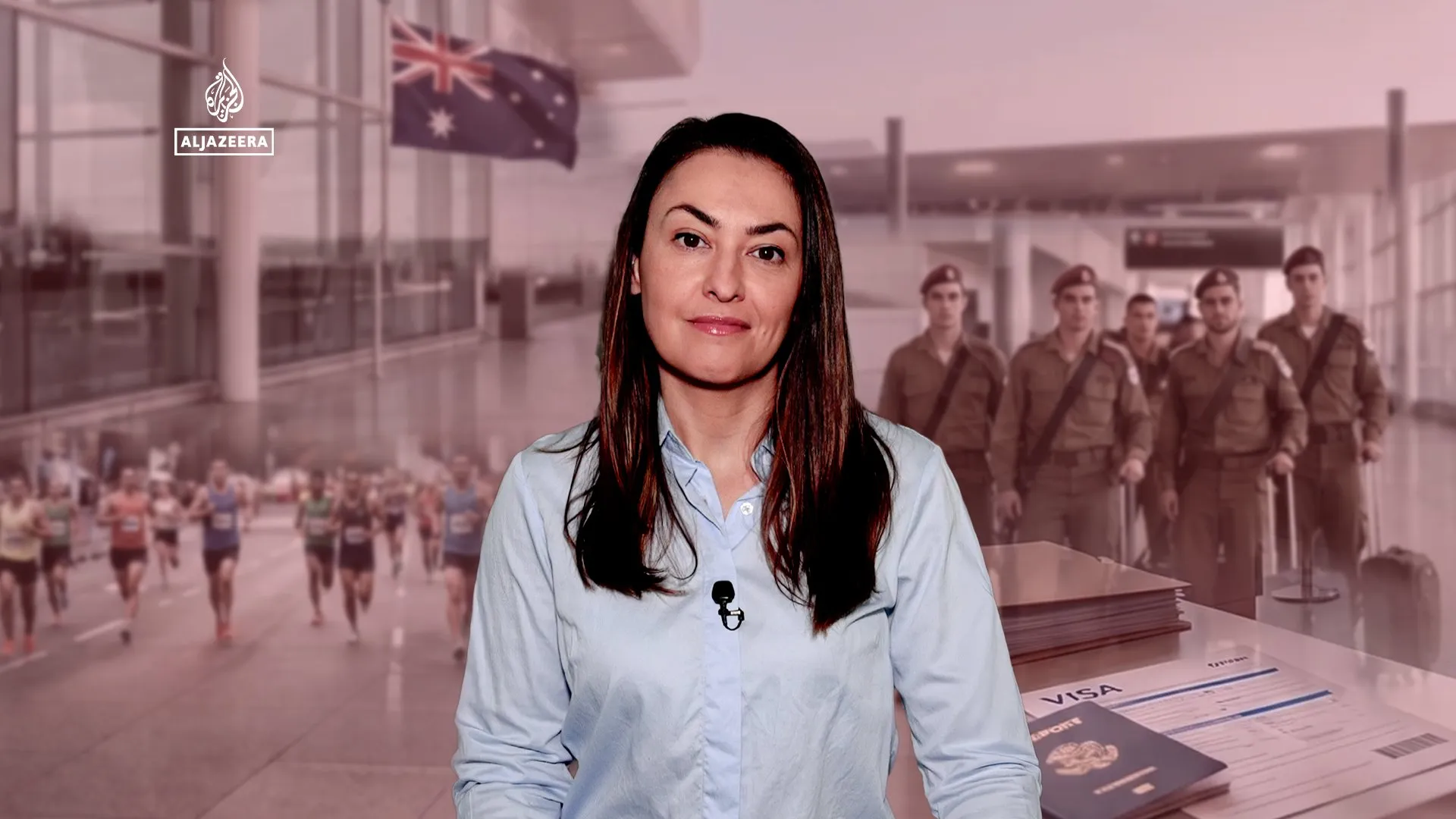
Al Jazeera’s Heidi Pett reports from the site of an Israeli attack on a residential building in southern Beirut, which Israel calls a Hezbollah command centre. The strike came hours before President Trump said a US-Iran deal was meant to be signed.
Weekly insights and analysis on the latest developments in military technology, strategy, and foreign policy.
In a significant development for Europe’s future air combat ambitions, Airbus is trying to restart the program to develop a sixth-generation combat jet, now under German and Spanish leadership. This comes less than a week after the Franco-German-led New Generation Fighter (NGF) effort effectively collapsed in its original form, amid acrimony between Paris and Berlin. The NGF was planned as the crewed centerpiece of the pan-European Future Combat Air System (FCAS), which Airbus, as the leading European aerospace corporation, now hopes to get back on track.
An exciting step for European sovereignty at ILA Berlin: “Team Gen 6”, a group of eight leading German defence and aviation companies signed a strategic positioning paper. The German and French governments have announced a realignment of the European Future Combat Air System… pic.twitter.com/aZcjAaO6dE
Airbus’s Defense and Space unit launched the ‘Team Gen 6’ initiative today with a message on X, declaring that it was “an exciting step for European sovereignty.” So far, eight German defense and aerospace contractors have signed a strategic positioning paper as part of the effort. Those firms are Autoflug, Diehl Defense, Hensoldt, Liebherr, MBDA Germany, MTU Aero Engines, and Rohde and Schwarz.
Reflecting the German-Spanish nature of the new program, those companies are now “closely integrated” with firms from Spain, comprising GMV, Grupo Oesia, Indra, ITP Aero, and Sener.
“While the development of the overarching [FCAS] ‘system of systems’ is progressing as before, the sixth-generation fighter aircraft integrated within it requires a new, agile industrial setup,” Airbus said.
A screencap from an Airbus video showing a notional future fighter working with remote-carrier-type drones. Airbus screencap
“As Team Gen 6, we have the capabilities and the capacities. Now, we are looking for close alignment with policymakers and the air force[s] to drive forward a superior European air combat system for collective security,” the X post stated.
Airbus also presented a video showing a notional concept aircraft flying with multiple uncrewed platforms. While not too much (as in not much at all) should be read into this, the crewed aircraft features canard foreplanes, a chin intake, and an unusual cranked wing.
Speaking just ahead of the announcement, at the ILA Berlin airshow today, where TWZ was in attendance, Jean-Brice Dumont, head of air power at Airbus Defense and Space, said the company remains committed to delivering a sixth-generation combat jet. “There is a need for a bit of a reshaping and reconsidering the reality of today,” Dumont added.
German Federal Chancellor Friedrich Merz (second from left) and Jean-Brice Dumont (second from right), head of air power at Airbus Defense and Space, stand in front of a drone during a tour of the International Aerospace Exhibition (ILA). Photo by Sebastian Gollnow/picture alliance via Getty Images
Dumont explained that the now-abandoned NGF was one of seven separate “pillars” of technology development being worked on under FCAS. As well as the crewed jet, pillars include powerplant, remote carrier vehicles, precision-guided weapons, and data connectivity.
“We have to consider safeguarding areas where it works, and how we reshape,” he added. “At the moment, we are going to seek guidance from our governments [on] what they want us to do. There has to be demonstrated an industrial feasibility of what is being asked — not only technical. That’s probably a lesson now,” Dumont added.
Dumont continued: “The world in 2026 is very different to the world of 2017 when the [FCAS] programme was launched. We have to accept that fact and reshape it — we need another way to get to the same goal, with faster milestones.”
“The problem we had is that we had drawn a line to 2040, and new technologies for everything,” Dumont added, referring to the goal of having the FCAS, including the NGF, in service by that date. “Today, you see demonstrations of connectivity, systems of systems and unmanned vehicles all around the world. The need is there, and in the countries that we are competing with, they are using it already.”
According to Dumont, the company has “put a number of options on the desk of our ministers and ministries of defense,” and is now awaiting further guidance from officials.
As the centerpiece of FCAS, in its original form, the NGF element was the most high-profile and challenging component of the project. However, it had long been dogged by disagreements over industrial workshare and leadership between Airbus and Dassault Aviation, which were the prime contractors for Germany and Spain, and France, respectively.
A 1:1 scale model of the NGF is unveiled at the Paris Airshow in 2019. Dassault Aviation
Dassault had demanded that it play the defining role in NGF, reflecting key requirements for the jet driven by the French Armed Forces. These included the ability to operate from aircraft carriers, and provision to deliver nuclear weapons. Germany or Spain needed neither of these functions.
Despite the disagreements that derailed NGF, Dumont argued that there had still been useful lessons learned from the FCAS program.
“What Phase 1A and 1B [of the program] have given is a very thorough analysis of the repartition of the work between the crewed and uncrewed platforms, and this remains. That kind of shapes what the manned aircraft will have to do.”
As an example of this work, Dumont pointed to ongoing work that will involve trials of a Eurofighter operating as a “command fighter” — a crewed jet that can operate in collaboration with drones, or what Airbus now refers to as uncrewed collaborative combat aircraft (UCCAs). The tests will see a Eurofighter fitted with a Rafael Litening 5 targeting pod modified to serve as the interface between the crewed jet and UCCAs. This should pave the way toward an in-service command fighter capability being introduced to the Eurofighter, something that will be incorporated in the sixth-generation combat jet from the outset.
A German Eurofighter with a Litening laser targeting and reconnaissance pod on the centerline station. Crown Copyright
Initial trials will involve a Learjet test configured as a surrogate command fighter and flying with drones in an “enhanced teaming” mode. Airbus hopes to have the command fighter-configured Eurofighter ready for operational service in 2029.
“The demand from the customers is: be ready early,” Dumont explained. “This is not a contradiction to the Future Combat Air System challenge — it is the need to have our platforms evolved earlier than we had traditionally planned.”
A model of a notional sixth-generation fighter displayed at ILA as part of a command fighter study by the German Aerospace Center (DLR). Thomas Newdick
The termination of NGF and the launch of Team Gen 6 leaves plenty of questions over the future of Europe’s air combat landscape.
TWZ spoke to Douglas Barrie, senior fellow for military aerospace at the International Institute for Strategic Studies (IISS) research institute in London, for his take on what might happen next.
On the matter of Germany and Spain now teaming up under the Airbus umbrella, Barrie said that the relationship makes a lot of sense, but its success is far from certain. On the one hand, the two countries already work together within Airbus, and both Germany and Spain are seeking a replacement for their Eurofighter fleets.
A pair of Spanish Air and Space Force Eurofighters. Spanish Ministry of Defense
“In terms of Team Gen 6, I do wonder if there’s an element of trying to kind of scramble to recover something from the wreckage of NGF, as it were, that the collapse of NGF doesn’t signal the end of Spanish industrial interest in next-gen combat aircraft development,” Barrie said. “But if somebody asked me, do I think between Germany and Spain, they can put together a credible program if nobody else is involved? I think that the numbers would be very difficult to stack up.”
Putting the German and Spanish future fighter requirements together, the two countries might, at best, need to build 300 new combat jets, with a figure of 250 more likely, Barrie contended. Team Gen 6 would then face a real struggle to break even.
This reality will, Barrie believes, force Germany and Spain to look for other partners, which will likely come down to a choice between the British-led Global Combat Air Program (GCAP) and the Swedish next-generation combat aircraft program, led by Saab. Of these, GCAP has the Tempest crewed fighter as its centerpiece, and also involves Italy and Japan. Sweden’s crewed fighter requirements are less clear at this point.
A scale model of a possible Tempest configuration, in Italian Air Force markings. Leonardo
Building a role for Airbus in GCAP would be difficult at this point. With the industrial architecture already in place, bringing not one, but two more partners into that program would be disruptive, particularly in terms of timeline. Already, the Japanese in particular are concerned about the pace of the program, especially since the United Kingdom has not yet fully committed to it in terms of funding.
“My own view is that the United Kingdom remains committed to the program, but there are financial pressures elsewhere,” Barrie noted. “I think that the more likely outcome in all of this is a kind of German, Spanish, Swedish tie-up. The kind of requirements in some ways are aligned a bit better.”
This extends to the size of the aircraft, Barrie observed.
“The kind of aircraft that the Swedes seem to be thinking about, the crewed element is probably more of a bigger Gripen E/F, heading towards Typhoon, in terms of size. This is more in keeping with what the Germans and the Spanish seem to be looking for. Obviously, the United Kingdom and Japan, in particular, need something with longer legs and bigger internal payload, hence GCAP.”
The Saab Gripen E. Saab
“GCAP will be highly capable,” Barrie continued. “That will come with a unit cost to go with it. Maybe what the Swedes, the Germans, and the Spanish might do will be cheaper.”
Provided a German, Spanish, Swedish teaming arrangement could work, the resulting combat jet could still enter a space where it would face competition for important export orders from France, which looks set to continue the development of the Rafale, especially now that NGF has collapsed. Further competition could be provided by South Korea with further developments of its KF-21 and Turkey with the TF Kaan, although these are notably less-ambitious fifth-generation designs.
The Tempest, as currently envisaged, with its very different set of requirements, would not necessarily be a direct competitor to Team Gen 6, Barrie argued, since it would be a closer match to the F-47 in terms of size, capabilities, and cost. While the potential size of this market would be more limited, probably U.S. reluctance to export the F-47 would play in the Tempest’s favor.
An official rendering of the Boeing F-47. U.S. Air Force
As to the possibility of the United States offering a ‘watered-down’ export model of the F-47, Barrie considers this unlikely to generate much interest.
“Yeah, you can have a downgraded version of my super airplane — as a kind of marketing slug that hardly sells, does it?” Barrie continued. “Even if it’s 10 percent less capable, even if it’s 10 percent less expensive, it’s still a likely unit cost of $250 million or more, which is eye-watering.”
This leaves us with the French, and what they might be able to recover from NGF.
If France goes it alone with a sixth-generation combat jet, Dassault will likely be strongly backed by the French government, and the company has traditionally punched well above its weight.
In the medium term, Dassault has a healthy backlog of orders for the Rafale and is very much at the right end of the cost curve. Barrie considers that the Rafale will remain a profitable airplane for the foreseeable future, but at some point, France will need to think about a successor based on an all-new airframe. Industrially, France has the capability to go alone with this, but they would likely look to a partner or partners to come on board. The likelihood of those partners coming from Europe has now been reduced, but other possibilities might be found in the Gulf states.
A pair of Rafales from the Qatar Emiri Air Force. Dassault Aviation www.twz.com
Then there is the question of India, which may still buy more Rafales but which, in the fullness of time, is likely to look for a new-generation fighter, and could be a potential partner for France.
“I don’t see the Indians ever being fully committed to only one country,” Barrie continued. India has already hinted that it might want to try and join the pan-European FCAS or GCAP. Meanwhile, Russia has been a long-term military partner for India, and Barrie thinks that the recent appearance of a two-seat version of the Su-57 Felon may well indicate another effort to sell that fighter to India.
The previously unknown two-seat version of the Sukhoi Su-57 Felon, which appeared earlier this year. UAC UAC
Were India to continue its pattern of buying Russian combat aircraft, that would give any potential European partner serious pause for thought, based on the security implications. Meanwhile, India also remains committed to developing its own next-generation fighter.
What the NGF debacle has demonstrated is that any potential partner with France on its next-generation combat aircraft program will likely have to be happy taking a junior role, with Dassault calling the shots.
The collapse of the New Generation Fighter could well be a pivotal moment for European defense cooperation, but it does not signal the end of Europe’s sixth-generation combat aircraft ambitions.
Airbus’s Team Gen 6 announcement marks the start of a German-Spanish-led industrial approach that its backers hope will be more agile and less contested than its Franco-German-led predecessor. However, significant political, financial, and industrial challenges remain, including the search for a reliable partner, or partners. As with NGF, the success of Team Gen 6 will ultimately depend on whether European governments can align their strategic priorities and industrial interests to deliver a sovereign future air combat capability.
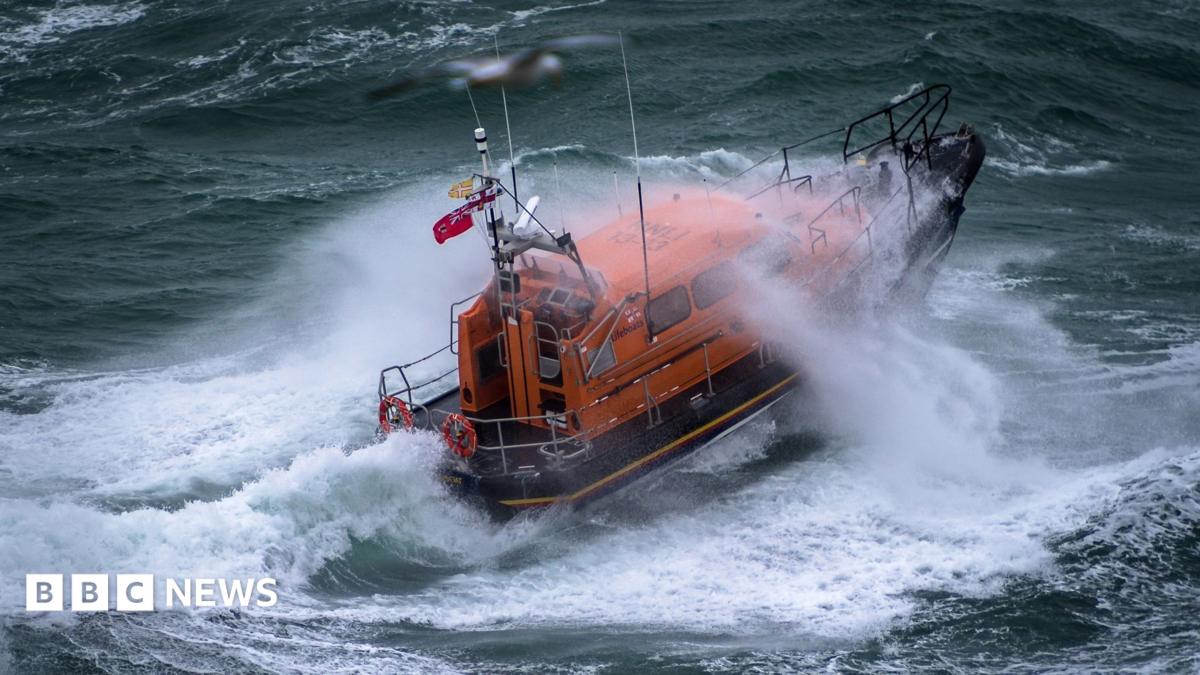
British armed forces intercepted an oil tanker believed to be part of Russia’s sanctioned shadow fleet. The oil tanker ‘SMYRTOS’ was taken in an first-ever operation by the British military in the English Channel.
The European Union will begin accession talks with Ukraine and Moldova after Hungary’s new government withdrew its veto, paving the way for negotiations. Both countries believe EU membership would provide them with greater security against Russian aggression.
Al Jazeera’s Basel Ghazoghli traces the documented record from 1948 to the present. Sexual violence against Palestinians in Israeli custody is often framed as a post-October 7 issue. But historical records, academic research, and legal testimony suggest a much longer history.
ALL homeworkers are completing their allotted tasks and attending meetings entirely naked, they have confirmed.
Across the country, anyone working from home is typing with their laptop mere inches from their exposed, perspiring genitalia and will not mention it if you do not ask.
Jordan, not his real name, said: “In a heatwave you should open windows at night and keep curtains closed by day. And with all the curtains closed only a fool’s wearing underpants.
“If you’re in an office? You’ve got air-con as reward for your sweaty frottering commute. I don’t have that luxury. I’m forced to use more primal methods.
“No, I will not be turning my camera on for the meeting. I think we both know why, and I urge you not to press the issue. It wouldn’t just be the background that needed blurring.
“I’m clocking in, I’m doing my job, there will be no complaints about the quality of my work. What does it matter to you I’m doing it as naked and unashamed as Adam and Eve before the serpent? ROIs are ROIs.”
Office manager Joanna, not her real name, said: “So you mean in the call with Sally this morning, she was nude? I’m not sure how I feel about that. She’s got massive tits.”
Pre-tournament favourites Spain open their Group H campaign with a match against World Cup debutants Cape Verde.
Published On 14 Jun 202614 Jun 2026
The 2026 World Cup will have 13 different kickoff times. You can use the Al Jazeera Sport widget to find out exactly when your team is playing in your local time.
Who: Spain vs Cape Verde What: FIFA World Cup 2026 Group H match Where: Mercedes-Benz Stadium, Atlanta, United States When: Monday, 12pm local time (16:00 GMT) How to follow: Catch all live updates on Al Jazeera Sport
Recommended Stories
list of 4 itemsend of list
Spain, the reigning European champions and strong favourites for the 2026 World Cup, begin their title bid on Monday by facing minnows Cape Verde in Atlanta.
Since winning their maiden world title in 2010, Spain have endured a dismal run in the following three campaigns, bowing out in the group stage in 2014 and exiting in the round of 16 in 2018 and 2022.
But their Euro 2024 success and a new golden generation of Lamine Yamal, Pedri, Gavi, Ferran Torres and others have prompted bookmakers to keep Spain at the top of the potential winners‘ list.
La Roja – known for playing entertaining, attacking football – have become unshakeable over the last four years, going 30 matches unbeaten since a 1-0 friendly loss to Colombia at Wembley in March 2024.
Spain will arguably be the team to beat in North America, with Opta’s supercomputer handing them a 15.94 percent probability to lift the title, and France a close second at 13.62 percent odds.
Spain’s Lamine Yamal, Ferran Torres and Gavi during training [Brett Davis/Imagn Images via Reuters]
Will Yamal play in Spain vs Cape Verde?
Yamal single-handedly stole the show in Germany two years ago en route to their Euro title, and will hope to repeat that form at the June 11 – July 19 tournament.
But the teen sensation may have to wait a little longer to make his World Cup debut.
Spain could take a cautious approach for the Cape Verde opener with winger Yamal and young forward Nico Williams in the final stages of recovery from hamstring injuries sustained in April.
Both returned to training with their teammates on Thursday, but De la Fuente could opt to name them on the bench or keep them out of the matchday squad until they reach full fitness.
Lamine Yamal will make his World Cup debut at the 2026 tournament [Florencia Tan Jun/Getty Images]
Cape Verde to break new ground in North America
Known for its crystal-clear waters and sandy white beaches, Cape Verde will make noise for different reasons this North American summer.
The archipelago of 10 islands in the Atlantic Ocean will make its World Cup debut on Monday, arriving at the global showpiece as one of 10 African representatives.
After their fairytale qualification, which coincided with its 50th anniversary of independence from Portugal, Cape Verde – with fewer than 600,000 inhabitants – became the third smallest country by population to reach the tournament after Iceland in 2018 and Curacao, also in 2026.
The team has slowly built credibility in recent years. Their international breakthrough came in 2013 when they qualified for their first Africa Cup of Nations (AFCON) and reached the quarterfinal stage.
Cape Verde has spread the national team net wide with starters based in several countries, including Portugal, the Netherlands, and the United States.
Cape Verde beat record African World Cup qualifiers Cameroon to seal their spot in the finals [File: Cristiano Barbosa/AP]
Spain vs Cape Verde prediction
Spain are strong favourites to win this match, having an 87.2 percent probability of walking away with three points. Cape Verde have a slim 4.8 percent chance of victory, while a draw has an 8.15 percent chance.
Overall, Spain have a 76.53 percent probability to win Group H, which also includes Saudi Arabia and Uruguay.
How to watch Spain vs Cape Verde?
The following is the list of broadcasters and platforms to watch the game in these countries:
Spain: LA 1, DAZN Mundial, RTVE Play
Cape Verde: New World TV, SuperSport
United Kingdom: ITVX, ITV1, STV Player, STV
USA: FOX, FOX One, Telemundo App, Telemundo Network, Peacock
Vinicius Junior scored a brilliant goal to dig Brazil out of trouble after Ismael Saibari had put Morocco ahead.
A moment of magic from Vinicius Junior salvaged Brazil a point against Morocco in New Jersey, as the five-time World Champions made a shaky start to the tournament.
Ismael Saibari ran through to give Morocco a 21st-minute lead with a clever scoop in the Group C opener on Saturday, but a solo effort from Vinicius ensured the points were shared in this much-anticipated group match.
Recommended Stories
list of 4 itemsend of list
Here are the biggest takeaways from the 1-1 draw at New York New Jersey Stadium.
Brazil coach Carlo Ancelotti at half time [Jeenah Moon/Reuters]
Brazil make a slow start
Brazil are chasing a record sixth World Cup title, 24 years after last lifting the trophy, but this performance suggests there is a lot of work to be done by Carlo Ancelotti’s side.
They showed signs of nerves during the early stages of the game and struggled to cope with a lively Morocco attack.
A fifth-placed finish in South American qualifying underlined the scale of the challenge facing Ancelotti, and this performance has done little to ease concerns about the quality of the Brazil squad.
A number of their players struggled to cope with the intensity of the Moroccan team, with midfielder Casemiro subbed off at half-time after a difficult opening 45 minutes in the heat.
The World Cup final is a long way off in New Jersey, but Brazil will have to vastly improve if they are to have any hope of making it.
Morocco look like the real deal
The Atlas Lions stunned the world of football in 2022 as they made it all the way to the semifinals in Qatar.
Four years later, Morocco have the chance to show that it was not a one-off run to the last four and they are the real deal.
Judging by their performance in New Jersey on Saturday, the North African nation are truly a force to be reckoned with.
They arrived in North America as African Cup of Nations champions, after being retrospectively awarded the title following a controversial final defeat to Senegal, and they continued their strong form with a commanding performance against Brazil, playing with a high level of confidence and plenty of attacking threat.
Morocco appear set for another strong tournament showing.
Vinicius Junior showed his importance to Brazil with a brilliant solo goal in the first half [Jewel Samad/AFP]
Vinicius shows his top quality
If Brazil are to make it to the latter stages of this tournament, they will rely heavily on Vinicius to provide goals and assists in North America.
The Real Madrid man has consistently scored for his club this season, including 16 goals in La Liga and five in the Champions League, and it now appears that he is bringing this form to the world stage.
With Brazil struggling in the first half, Vinicius received the ball from Bruno Guimaraes on the left side of the area before cutting back onto his right foot and hammering into the far corner past Yassine Bounou.
It was the kind of magic moment that he regularly produces for Real Madrid, and the Selecao will be looking for more individual brilliance in their coming games.
Neymar injury hangs over Brazil
The Neymar soap opera is set to dominate another tournament for Brazil, with the 34-year-old on the sidelines for yet another major tournament match.
Brazil’s all-time record goalscorer is still recovering from a calf injury, having not played for his country since 2023.
He was dramatically recalled to the national squad, despite not featuring in Ancelotti’s plans during the Italian’s year in charge, but he remains under scrutiny over his fitness and form following years of injury trouble and an underwhelming spell back at Santos.
It is unclear exactly when Neymar will be fit enough to return to first-team action, but judging by the media’s focus on him during Saturday’s match, this saga is set to dominate discussion around Brazil.
Brazil’s Neymar Jr reacts after the match in New Jersey [Caean Couto/Reuters]
Draw leaves Group C wide open
Brazil and Morocco are the clear heavyweights in their group, but Saturday’s draw in New Jersey has left Group C somewhat in the balance.
Scotland currently sit top of the table after a 1-0 victory over Haiti in Boston, and they will now be eyeing the chance to reach the knockout stages for the first time in their history.
Morocco and Brazil remain heavy favourites to finish in the top two automatic qualification spots, but Scotland know that any points in their final two group games will almost certainly book their spot in the round of 32.
Adrian Vestea nominated as prime minister after previous choice, Eugen Tomac, withdraws.
Published On 14 Jun 202614 Jun 2026
Romanian President Nicusor Dan has nominated Adrian Vestea, a National Liberal Party member and former mayor, as prime minister to form a new government after the previous choice for the post withdrew.
“Eugen Tomac withdrew his mandate this morning and as such I nominate Adrian Vestea as prime minister,” Dan, a centrist, said in a post on X on Sunday.
Recommended Stories
list of 3 itemsend of list
Vestea, 52, is the county council president of the central Romanian county of Brasov. Eugen Tomac had been seeking to lead a government of technocrats but lacked support from the parties in parliament.
Vestea, who served as a development minister from 2023 to 2024, said in a statement that he wants a “political government that will undertake real reforms and keep Romania on a pro-Western path”.
“We are the sixth largest country in Europe, and we need to put a major emphasis on development. Which I will do from day one,” he said.
Dan’s two nominations for the prime ministerial role this month come after a no-confidence vote toppled former Prime Minister Ilie Bolojan in May. A general election is not scheduled until 2028.
Dan said Vestea was suitable for the role because he had “gone through all the administrative stages” throughout his political career.
“He was a successful mayor, a successful county council president, a successful minister, and he attracted European funds, being focused on development, for example the Brasov airport, which is a success,” Dan said.
Parliamentary parties have previously said a minority government, whose members do not hold a majority of the seats in parliament, would be better than a government of technocrats.
Vestea will have 10 days to form a government and must win a parliamentary vote of confidence to take up his new post.
Romania has one of the highest budget deficits in the European Union and suffers from rampant inflation and a technical recession.
When a coalition government came to power in June 2025, it made reducing the budget deficit a priority. Bolojan was sworn in with the aim of ending one of Romania’s worst political crises in its post-communist history, but his government lasted less than a year.
Weekly insights and analysis on the latest developments in military technology, strategy, and foreign policy.
In another indication of the growing military and economic importance of the Arctic, Russia and NATO are increasing their buildup of forces and facilities in the region. Recent media investigations found that Russia is constructing new bases near Finland to eventually house tens of thousands of troops while NATO on Saturday stood up a long-planned new battalion battlegroup. It is a force that will operate in Finland and Sweden as a deterrent against Russia.
While Russia remains totally bogged down and suffering high attrition in Ukraine with little chance of moving masses of troops to the Arctic at the moment, concern over the future has spurred NATO to bolster its presence along the Finnish border. Having moved to a wartime economy during the full-on conflict with Ukraine, Russia could leverage that in a post-Ukraine war future to threaten NATO’s borders.
A NATO official told us Friday morning that while the alliance assesses that the chances of a near-term conflict are low given the war in Ukraine, “Moscow could seek to expand westward into the Nordic and Baltic nations after a ceasefire with Ukraine.”
Swedish soldiers take part in training on the Finland/Norway border during the Nordic Response military exercise on March 09, 2024 in Kivilompolo, Finland. (Photo by Leon Neal/Getty Images) LEON NEAL
Russia appears to be investing in infrastructure in preparation of such a contingency. A joint report by several Nordic and Baltic media outlets published earlier this week has found that Russia is expanding military facilities along its borders with Norway and Finland to accommodate tens of thousands of new troops.
“New satellite images show that Russia is increasing its armament in [the] vicinity,” the report stated. “SVT, together with media partners in several countries, has examined how Russia is preparing for 80,000 soldiers… It is a threat that we should take seriously, says Thomas Nilsson, head of Sweden’s military intelligence service (MUST).”
The images “show new barracks for thousands of soldiers, long lines of military vehicles and ammunition storage,” the report further noted. “All winter, Russia has been building new military structures in several places on the other side of the Finnish border.”
“We expect to have 80,000 soldiers on our border and that can be compared to the fact that we previously had 20,000,” Finnish Army Chief Pasi Välimäki told the joint investigation.
A joint investigation by Nordic and Baltic media outlets found that these developments could enable Russia to deploy a force of up to 115,000 military personnel in the Northern European and Baltic regions. pic.twitter.com/ZiVpsP3fEz
A separate report by the Finnish Yle media outlet found that the Russians are expanding a base in the town of Novaya Vilga to hold as many as 6,000 Russian troops. It is located about 100 miles east of the Finnish border.
Breaking News: Where exactly is Russia building its massive new military garrison? 🛰️
“NATO has monitored a buildup of military infrastructure in Russia along NATO’s Eastern Flank, particularly along Finland’s border,” the NATO official told us earlier this week. “The real question is what becomes of the infrastructure? Will, for example, Russian troops now in Ukraine be relocated there after the war? It’s something we certainly need to consider, and we do.”
“That’s why NATO and nations are working to deliver real military capabilities to the alliance now, not five to ten years from now, which is so very, very important,” the official added.
A Swedish soldier takes part in a training exercise during the Nordic Response military exercise on March 09, 2024, in Kivilompolo, Finland. LEON NEAL
One of those efforts, as we noted earlier in this story, was stood up on Saturday, involving NATO’s two newest members.
NATO’s Forward Land Forces (FLF) Finland began operations in Finland and Sweden, according to the alliance. The FLF will include NATO’s newest multinational battlegroup, led by Sweden, “to support the defense of NATO’s northeastern flank.”
The establishment of FLF Finland places a Swedish battlegroup based in Boden, Sweden, and a Multinational Staff Element in Rovaniemi, Finland, under the command of the Supreme Allied Commander Europe (SACEUR) and NATO.
The NATO Forward Land Forces Finland (FLF) was established on June 6, 2026. (NATO Photo by OR-7 Dennis Sattler) MSgt OR-7 Dennis Sattler; DEU Army
“Sweden is contributing a battalion battlegroup that, together with a Multinational Staff Element in Rovaniemi, will form the core of FLF Finland,” NATO added. “The Swedish battalion battlegroup is prepositioned in Boden, with capacity to operate in the North Calotte and, where necessary, rapidly reinforce the presence in northern Finland. In 2026, Sweden’s contribution to FLF Finland will total around 600 personnel, with the option to expand to 1,200 personnel if needed.”
“This region is one of the most strategically significant and environmentally challenging areas in the world,” said U.S. Air Force Gen. and SACEUR Alexus G. Grynkewich. “FLF Finland, just like Arctic Sentry, will leverage NATO’s strength to defend our territory and ensure the Arctic and High North remains secure, especially considering Russia’s military activity and China’s growing interest there.”
Activated: NATO Multinational Battlegroup (FLF Finland)
The U.S. too is working to improve its presence and operations in the region. During last month’s SOF Week symposium in Tampa, Florida, the head of U.S. Northern Command (NORTHCOM) announced the formation of Nordic Bridge to “tie together” the work of U.S. European Command, North American Aerospace Defense Command (NORAD) and SACEUR.
Air Force Gen. Gregory Guillot provided no real details about Nordic Bridge at the time, so we reached out to NORTHCOM for additional details.
“The Nordic Bridge concept seeks to enhance Arctic integration between U.S. Northern Command and U.S. European Command and enhance cooperation between NORAD and NATO in order to expand domain awareness, strengthen deterrence, and improve interoperability,” a NORTHCOM spokesperson told us last month. “It envisions increased participation in each other’s training and exercises, increased data sharing (such as air pictures), deconflicting conferences to maximize personnel availability and participation, etc.”
Last month, Guillot visited Grynkewich “to discuss opportunities under this concept,” the NORTHCOM spokesperson told us.
U.S. Marine Corps Lance Cpl. Thomas Teague, a motor vehicle operator assigned to Combat Logistics Battalion 6, Combat Logistics Regiment 2, 2nd Marine Logistics Group, provides security for a convoy during offensive and defensive operations in Syndalen, Finland during exercise Freezing Winds 23 (FW23), Nov. 30, 2023. (U.S. Marine Corps photo by Lance Cpl. Christian Salazar) Cpl. Christian Salazar
All this is taking place, of course, against the backdrop of President Donald Trump’s frequent insistence that the U.S. subsume Greenland to provide better Arctic protection for the U.S. homeland. The issue reached a fever pitch earlier this year, causing a serious rift with NATO after the president threatened to invade the world’s largest island. You can read more about that in our story about the crisis here.
While there are no indications that the Arctic region is about to break out into open conflict, there are several indications that Russia, NATO and the U.S. are increasing preparations for such an eventuality.
Scotland’s players and fans sing Flower of Scotland at a World Cup for the first time in 28 years before their match against Haiti at the Boston Stadium.
On April 2nd 1982, Argentina invaded and occupied the Falkland Islands. Argentina asserted that the islands are Argentine territory.
Three days later, the British government dispatched a naval task force to engage the Argentine Navy and Air Force before making an amphibious assault on the islands.
The conflict lasted just over ten weeks and ended with an Argentine surrender on June 14th, returning the islands to British control.
In total, 649 Argentine military personnel, 255 British military personnel, and three Falkland Islanders died during the hostilities.
The winning UJTS design will replace the Navy’s T-45 jet trainers, one of which is seen here. USN
“Boeing is focused on meeting our commitments, and we bid for programs where we believe we can provide the right solution tailored to our customers’ needs and requirements,” a Boeing spokesperson told TWZ. “After careful evaluation, we have determined the T-7A does not meet the U.S. Navy’s Undergraduate Jet Training System requirements.”
“We have therefore informed the Navy that we will not bid on the current RFP. We remain committed to delivering the T-7A as a modern, growth-oriented training solution for 4th, 5th and 6th generation pilots as requirements evolve,” they added. “We look forward to providing and sustaining both current and future capabilities for the Navy.”
Boeing says its decision on UJTS is tied to the General Electric F404 turbofan. The company has stressed that the F404 is a proven design with millions of flight hours on multiple platforms, including the T-7A, and is a clear example of a ready-to-field design. Still, Boeing’s view is that the UJTS engine qualification requirements would require additional long-cycle development work, and potentially limit its ability to meet the Navy’s initial operational capability target for the new jet trainers.
All this being said, it is still not entirely clear what the specific issues might be, given that the F404 is such a well-established design that has been and continues to be used on a variety of military aircraft. This includes several other land-based jet trainer designs beyond the T-7, like the Scaled Composites Model 400, which competed against the Red Hawk in the Air Force’s T-X competition, and the Turkish Aerospace Industries Hürjet.
Maintainers work on the F404 engine on a US Air Force T-7A Red Hawk. USAF/Zelideth Rodriguez
Most notably, the F404 also powers the TF-50N that Lockheed Martin and KAI had put forward for UJTS. At the time of writing, neither Lockheed Martin nor KAI looks to have offered a detailed explanation for the decision to withdraw from the Navy jet trainer competition.
A rendering of the TF-50N. Lockheed Martin
The T-7A has also suffered from various technical and other issues over the course of its development, which has led to significant delays in its entry into Air Force service. The service is now hoping to reach initial operational capability with the Red Hawk next year. Any potential for direct synergies in terms of support and sustainment between the Air Force and Navy jet trainer fleets is now off the table.
It is worth pointing out that the TF-50N and the T-7 are also both single-engine designs. The Beechcraft M-346N that Leonardo and Textron have put forward is powered by a pair of Honeywell F124 turbofans. Two Williams FJ44-4M turbofans power SNC’s Freedom Jet, which is also the only clean-sheet design in the running for UJTS. This may point to a general view of the UJTS requirements that make single-engine designs less attractive.
A rendering of the M-346N. Textron/BeechcraftA rendering of a pair of SNC Freedom Jets. SNC
The Freedom Jet design is also tailored to meet now-axed requirements for UJTS to be able to perform carrier qualifications and simulated carrier touch-and-goes at base on land. The requirements for so-called Field Carrier Landing Practice (FCLP) training at facilities ashore have historically been structured specifically in a way that “simulates, as near as practicable, the conditions encountered during carrier landing operations,” according to the Navy.
F-18 Field Carrier Landing Practice (FCLP). Touch-and-Go Landing.
SNC says its choice to build an aircraft that can still perform these tasks is deliberate, and offers the Navy what could still be important capability and flexibility in the future, as you can read more about here.
The Navy’s decision to remove carrier qualifications and otherwise alter key aspects of the tactical jet aviator training pipeline has been and continues to be controversial. The service has argued that substantial investments in virtualized training and assisted carrier landing capabilities, such as Magic Carpet and its successors, have fundamentally changed the landscape when it comes to training future pilots for carrier-based operations.
Flight Ready: Magic Carpet
Flight Ready: Live, Virtual, Constructive
Earlier this month, the Navy also confirmed that it had raised the total cost ceiling for the prospective UJTS contract from approximately $1.8 billion to $2.7 billion.
“The Government updated the price cap to reflect a change in the program cost estimate due to new information received,” Naval Air Systems Command (NAVAIR) subsequently explained, according to Breaking Defense.
The substantial increase in the projected cost has raised its own questions about the outlook for the competition and the development program that is expected to follow. The Navy’s decisions to scale back its training requirements had previously been seen as opening the door to existing land-based jet trainer designs, or derivatives thereof, like the T-7 and the TF-50N. That, in turn, was viewed as a potential way for the service to help keep costs and risk low.
A rendering of the version of the T-7 Boeing had previously planned to submit to the UJTS competition. Boeing
The Navy’s T-45 replacement plans have already been delayed multiple times, with the service originally planning to pick a winning design this year and to have the first example enter operational service in 2028. The goal now is to award a contract in the middle of next year.
Asian Cup holders Qatar level in injury time to draw 1-1 with Switzerland in World Cup 2026 opening game.
Published On 13 Jun 202613 Jun 2026
Boualem Khoukhi scored an equalising goal on a header in the fourth minute of stoppage time, and Qatar spoiled a dominant day by Switzerland in a 1-1 draw in Group B of the World Cup.
Several of the Qatari players fell to the ground on Saturday in celebration of the late goal, as others ran to each other to embrace.
Recommended Stories
list of 4 itemsend of list
Breel Embolo scored for Switzerland from the penalty spot in the first half just over a week after being cleared to enter the US following a visa delay, but the Swiss failed to capitalise on multiple other scoring chances.
In the 13th minute, Embolo was fouled by Qatar goalkeeper Mahmoud Abunada, who received a yellow card on the play. Abunada lay face down and appeared motionless for a couple of minutes before he began to move his legs and was able to stand up again.
When Embolo calmly sent his penalty into the upper left corner in the 17th minute, it sent the red-clad Swiss fans into a dancing frenzy in the stands of San Francisco Bay Area Stadium.
The 29-year-old forward applied for an urgent visa at the United States embassy in Bern on June 3, one day after he was denied boarding the team’s flight to travel for his third World Cup because of a 2018 criminal conviction that was only finalised in April.
Switzerland dominated the possession game on an unseasonably warm June afternoon — with sprinklers running during a first-half break.
Qatar’s Boualem Khoukhi scores their first goal past Switzerland’s Gregor Kobel [Eloisa Lopez/Reuters]
There were thousands of empty seats scattered throughout Levi’s Stadium, home of the NFL’s San Francisco 49ers. Brazil and Colombia drew 70,971 two years ago in a group match at the Copa America. The stadium in Santa Clara staged the Super Bowl only four months ago.
Switzerland goalkeeper Gregor Kobel made a save in the second minute after Edmilson Junior got through the defence for a one-on-one. Kobel corralled the ball again in the 90th on a close-range attempt by Ahmed Alaaeldin.
Switzerland is hoping to advance further than its round-of-16 showing four years ago before losing 6-1 to Portugal — when Goncalo Ramos delivered an improbable hat-trick playing in place of benched star Cristiano Ronaldo. The loss prompted Switzerland midfielder Xherdan Shaqiri to apologize the the fans.
The Swiss used consistency and experience to go unbeaten through qualifying against Sweden, Kosovo and Slovenia. Coach Murat Yakin’s team produced four wins and two draws to secure its sixth straight World Cup appearance and hasn’t missed one since 2002, but the team has never gotten beyond the quarterfinals.
Qatar, led by Spanish coach Julen Lopetegui, had to qualify through a playoff in November — beating the United Arab Emirates and Oman — after missing an opportunity from its group stage of Asian qualifying.
The Gulf state country became the first host nation to lose all of its group matches four years ago. It lost to Senegal, Ecuador and the Netherlands in the 2022 tournament, scoring its lone goal in a 3-1 loss to Senegal.
For two weeks, the fate of Major General Rabe Abubakar (rtd) had become a barometer for testing whether Nigerian authorities could secure the release of a high-ranking military officer from the hands of terrorists operating in the northwestern region.
The answer came on Saturday, June 13, in a press statement by Nasiru Muazu, Katsina’s Commissioner for Internal Security and Home Affairs. The retired general could not be rescued, the Katsina government itself said. Rabe, who served as the Director of Defence Information at Nigeria’s Defence Headquarters between 2015 and 2017, died while in detention at the hands of the terrorists who abducted him.
Rabe was abducted alongside his wife, Hajia Amina, on May 30. A native of Batsari from Katsina State, he was kidnapped on the Matazu–Sayaya road, a road that has now become one of the most volatile in the North West.
“It is with profound sadness that we confirm the General’s death while in bandits’ captivity. Despite the relentless and concerted efforts of the State Government and various Security Agencies to secure his safe release, the situation ended in this tragedy. The deceased Retired General died a natural death from complications of diabetes and hypertension,” Nasiru said in the statement.
File: Major General Rabe Abubakar in service.
The abduction of the general had exposed how deeply terrorism has eaten into the fabric of Nigeria, especially the North West, where criminals have turned into full-time armed gangs that engage in kidnapping, pillaging, and other forms of terrorism.
For over a decade, Katsina and other states in the region have faced incessant attacks from these terrorists, forcing local authorities to consider a “reconciliation” with the armed groups to restore peace. Some local government areas in Katsina, such as Jibia, Batsari, Kurfi, Safana, Danmusa, Matazu, Musawa, Kankara, Faskari, Malumfashi, and Bakori, have agreed to establish peace accords with terrorists in their areas.
However, while some of these areas have seen relative calm, the situation in Matazu, Bakori, Musawa, Kankia, and Malumfashi has only deteriorated. The Marabar Musawa – Musawa – Matazu – Kafin Soli road (where the General was abducted) became volatile after the peace deal broke.
Even before May 30, there were several cases of abduction on the road as well as attacks on communities and towns in the area. HumAngle reports that Muhammadu Fulani, the terrorists’ leader in the Matazu – Musawa area, is accusing the state government of arresting three of his men and seizing his livestock.
Ambush on a wedding road
Rabe was travelling with his driver and wife to Katsina for a wedding ceremony when the terrorists emerged near a village called Zakin Baure, blocked the road, and opened fire on his vehicle, a red coloured Peugeot 406 car, according to media reports. That forced the vehicle to a halt, enabling the terrorists to abduct him and his wife and push them into a nearby forest. His driver, however, escaped with gunshot injuries and was later admitted to a hospital.
File: The Rabe’s family. Photo: Mohammed Danjuma Katsina.
They were heading toward Katsina city for a family wedding through the perilous corridor, Marabar Musawa–Musawa–Matazu–Kafin Soli, which sits at the fault line of a regional peace architecture that has become increasingly fragile.
Abductiontimeline
June 6: The terrorists released a video clip of the couple begging for the government to rescue them. The wife, who spoke, asked the government to facilitate the release of some three terrorists arrested by security agents in exchange for the couple’s freedom.
June 8: The terror group leader, Muhammadu Fulani, said he would not release the wife of the General, Amina, as promised, after the government dispatched security agents to the area to fight him.
The remains of Maj. Gen. Rabe Abubakar during his funeral rites in Katsina on June 13. Photo: Mohammed Babangida Mafara/HumAngle
June 11: A video clip of the General, his wife and four others went viral on social media. HumAngle checks revealed that the other four persons in the video were members of the All Progressive Congress (APC) from Danja Local Government Area of the state who were abducted last month on the same road.
June 12: A special prayer session was organised at the Sa’ad Bin Abi Waqqas Mosque in Barhim Estate, Katsina city, at 5 p.m.. Several relatives and friends of the Major General attended the prayer session, where the Imam called on the government to ensure the safe return of Rabe, his wife, and all abducted victims.
June 13 (morning): A WhatsApp message began circulating, especially in Katsina. The message said the General had died Friday night, June 12. “Innalillaihi wa ina ilaihil rajiun. This is to announce on a sad note. The death of General Rabe Abubakar last night at the hands of the bandits.” A HumAngle reporter also received a message from a retired civil servant asking for confirmation.
June 13 (afternoon): The Katsina State government, through the Ministry of Internal Security and Home Affairs, confirmed the General’s death, saying that he died “a natural death from complications of diabetes and hypertension”.
Get our in-depth, creative coverage of conflict and development delivered to you every weekend.
Subscribe now to our newsletter!
General Rabe’s death has reverberated through Nigeria’s security establishment and social media platforms precisely because of who he was: a man who had once stood before cameras explaining the state’s fight against terrorism. It also brings renewed attention to Nigeria’s growing terrorism and persistent security challenges facing several northern states despite ongoing military operations against the armed groups.
Dikko Umaru Radda, the Katsina State governor, called the episode a “dark moment,” saying it highlighted the urgent need for a stronger, more coordinated security response, while pledging that those responsible would be pursued.
For residents of Katsina’s volatile corridors, Rabe’s death is a confirmation of what many have long understood: on the state’s insecure roads, rank, fame, and a lifetime of service offer no immunity at all.
His wife’s status was not addressed in Saturday’s statement, and her deceased husband was buried according to Islamic rites, but sources told HumAngle she was released alongside her husband’s remains.
Major General Rabe Abubakar, a retired officer from Nigeria’s Defense Headquarters, was abducted along with his wife on May 30, 2023, by terrorists in the volatile northwestern region of Nigeria. Despite efforts from the government and security agencies, he died in captivity on June 12 from complications of diabetes and hypertension. His death underscores Nigeria’s persistent battle with terrorism, especially in the North West, where areas have seen increasing attacks and failed peace agreements.
The abduction occurred as the couple traveled to a wedding, bringing attention to the terror threats on roads like the Marabar Musawa-Matazu-Kafin Soli corridor. Nigerian authorities have been criticized for their inability to secure his release, highlighting the deep-rooted insecurity facing the region. Rabe’s death, confirmed by the Katsina State government, signals urgent needs for coordinated security efforts, as eloquently stated by the Katsina State governor, Dikko Umaru Radda. Rabe’s abduction and demise spotlight the widespread and growing terrorism despite ongoing military interventions in northern Nigeria.
Weekly insights and analysis on the latest developments in military technology, strategy, and foreign policy.
Welcome to Bunker Talk. This is a weekend open discussion post for the best commenting crew on the net, in which we can chat about all the stuff that went on this week that we didn’t cover. We can also talk about the stuff we did or whatever else grabs your interest. In other words, it’s an off-topic thread.
This week’s caption reads:
FEB 22 1981; Federal Emergency Management Agency (Underground Bunker At Den Fed CTR); (Photo By Dave Buresh/The Denver Post via Getty Images)
Prime Directives:
If you want to talk politics, do so respectfully and know that there’s always somebody that isn’t going to agree with you.
If you have political differences, hash it out respectfully, stick to the facts, and no childish name-calling or personal attacks of any kind. If you can’t handle yourself in that manner, then please, discuss virtually anything else.
No drive-by garbage political memes. No conspiracy theory rants. Links to crackpot sites will be axed, too. Trolling and shitposting will not be tolerated. No obsessive behavior about other users. Just don’t interact with folks you don’t like.
Do not be a sucker and feed trolls! That’s as much on you as on them. Use the mute button if you don’t like what you see.
So unless you have something of quality to say, know how to treat people with respect, understand that everyone isn’t going to subscribe to your exact same worldview, and have come to terms with the reality that there is no perfect solution when it comes to moderation of a community like this, it’s probably best to just move on.
Finally, as always, report offenders, please. This doesn’t mean reporting people who don’t share your political views, but we really need your help in this regard.