Discover the latest happenings and stay in the know with our up-to-date today news coverage. From breaking stories and current events to trending topics and insightful analysis, we bring you the most relevant and captivating news of the day.
KNVB invites associations and confederations to a summit to discuss the overhaul of FIFA and how it runs football.
Published On 30 Aug 202630 Aug 2026
FIFA president Gianni Infantino must be replaced by 2027, along with an overhaul of football’s global governing body, the Dutch football association (KNVB) has said.
The KNVB, one of FIFA’s founding members in 1904, issued a scathing statement on Sunday, saying it had lost confidence in Infantino and wanted to reshape the body rather than just change leadership at the top.
The Dutch body wants to host an international summit in Amsterdam and has invited football associations and confederations from around the world to participate.
Infantino is expected to run for re-election to the FIFA presidency in March, but world regional football bodies have considered a vote of no confidence after his aborted proposal to sell a stake in FIFA events like the World Cup to private equity investors.
“The KNVB no longer has confidence in the leadership of FIFA President Gianni Infantino. We believe FIFA needs new leadership from 2027 onwards,” it said in the statement.
“But a new president alone is not enough. The way FIFA is governed must change as well.
“The KNVB supported Infantino in the most recent presidential election. That support was never unconditional.”
The KNVB proposed an “International Summit on the Future of FIFA”, emphasising it should determine “what kind of FIFA we want” before identifying new leadership.
“We see too much power concentrated around the FIFA president and insufficient separation between the President and the FIFA administration,” they added.
FIFA did not respond to Al Jazeera’s request for a comment on KNVB’s statement and proposed plans for a summit.
Calls to revamp FIFA’s power structure
Among KNVB’s key demands was a revamp of the decision-making process in the organisation. It called for FIFA’s congress to take the call on key decisions under the governance and supervision of its council.
It proposed a shift of power, whereby the organisation’s secretary-general leads and the president plays the role of representing FIFA globally.
The Dutch body outlined three reform priorities: better governance with stronger checks and balances, putting human rights and sustainability at the heart of decision-making and stronger international cooperation.
It also wants FIFA to work towards reinvesting up to 90 percent of its distributable revenue in football development.
Infantino said last week it was FIFA’s job to close the gap between its wealthy members and those that have few financial resources.
“This should not be a European plan for the rest of the world,” the KNVB said.
“We want to develop this new direction together with FIFA’s 211 Member Associations and the confederations from all parts of the world.”
The KNVB is part of UEFA, which asked a United States federal court for permission to obtain testimony and documents from FIFA entities in Florida for use in a planned criminal complaint in Switzerland against Infantino.
Ontario premier Doug Ford has unveiled a massive billboard-size ‘Lake Ontario’ sign in response to Trump ordering US federal agencies to refer to it as ‘Lake America’ amid a trade war between Canada and the US. Ford said Trump can ‘call it whatever he wants’ but that the world will keep using its original name.
Iceland has rejected the government’s proposal to hold accession talks with the European Union, public broadcaster RUV has reported, with only a small number of votes left to be counted.
Filip Hrgovic is the first Croatian to become a world heavyweight boxing champion after beating Briton Moses Itauma.
Published On 30 Aug 202630 Aug 2026
Filip Hrgovic of Croatia beat Britain’s Moses Itauma via a ninth-round stoppage to win the vacant International Boxing Federation (IBF) world heavyweight title in a thrilling contest in London.
Itauma, bidding to become the second-youngest heavyweight world champion after Mike Tyson, was on top during the fight’s early stages but had to be carried from the ring on a stretcher and taken to hospital from the O2 Arena on Saturday.
Facing the toughest test of his 15-fight professional career against an experienced Olympic medal winner, the 21-year-old Itauma tired against an opponent with a granite chin.
Itauma’s trainer Ben Davison threw in the towel in the ninth round, but by that time referee Howard Foster had stopped the fight in Hrgovic’s favour as the Croat won the world heavyweight title vacated by Ukrainian boxing great Oleksandr Usyk.
It was Itauma’s first time beyond the sixth round and at one point in the ninth he looked as if he was about to topple.
Hrgovic in action against Itauma [Peter Cziborra/Action Images via Reuters]
“I don’t know from where I got energy in that [ninth] round,” said the 34-year-old Hrgovic, almost as spent physically as his beaten opponent.
“It was really not my strength. It was Holy Spirit. He gave me strength in this camp to endure everything, to have [the] best camp of my life, he put me in touch with this great coach Abel Sanchez.”
Hrgovic saluted the courageous Itauma by adding: “I’m the present, and he’s definitely [the] future. He’s an amazing fighter. He’s one of a kind. He’s the best I’ve been in a ring with, but he needed more experience.
“I felt the pace of the fight. I knew I was losing rounds, but I knew that I had that pace in my favour. He was gassing out.”
Itauma landed with several straight left hands early on and Hrgovic was given a standing eight count in the second after being caught with a right hook.
Itauma’s uppercut at the end of the fifth round had home fans in a partisan crowd standing in appreciation.
But come the eighth, both boxers appeared out on their feet, with Hrgovic somehow still standing despite several punishing blows.
Hrgovic was landing powerful shots of his own and, with a dazed Itauma lurching around the ring, Foster called a halt in the ninth round.
Promoter Frank Warren said after the bout that Hrgovic is set to next fight Cuban Frank Sanchez, but the Croatian himself said he instead wants to take on WBO champion Daniel Dubois and then WBC title holder Agit Kabayel — both of whom were ringside at the O2 Arena.
“I want unification. Frank Sanchez will wait,” Hrgovic said.
Hrgovic’s only loss came to Dubois in 2024. Hrgovic was bleeding from deep cuts above his eyes that time when the ringside doctor recommended the fight be stopped.
Weekly insights and analysis on the latest developments in military technology, strategy, and foreign policy.
Indonesia is about to become the second Southeast Asian country to operate an aircraft carrier, nearly three decades after Thailand became the first with HTMS Chakri Naruebet. The latest addition to the region’s small carrier club is the former Italian Navy carrier Giuseppe Garibaldi, which departed Italy earlier this week, bound for Indonesia, where it will eventually become KRI Gajah Mada. Indonesian Navy Chief of Staff Admiral Muhammad Ali confirmed the ship’s departure on Tuesday.
Garibaldi is expected to spend more than 20 days making the journey from Italy to Indonesia, passing through the Suez Canal and Red Sea. Italian frigates are accompanying the carrier during the transit.
The Italian aircraft carrier Giuseppe Garibaldi alongside the Arleigh Burke class destroyer USS Forrest Sherman in the U.S. Sixth Fleet area of operations in 2022. U.S. Navy photo by Naval Air Crewman (Helicopter) 2nd Class Reuben Richardson
According to Admiral Ali, the ship is scheduled to reach Indonesia between September 15 and 20.
The carrier will retain its Italian identity throughout the voyage, sailing as Giuseppe Garibaldi under the Italian flag until the formal transfer, when it will be renamed and placed under Indonesian command.
Commissioned in 1985, Garibaldi was initially described as a “helicopter cruiser” before being redesignated as an aircraft-carrying cruiser in 1989 and receiving the Italian Navy’s AV-8B Harrier II jump jets. The ship subsequently served as Italy’s flagship and later shifted toward amphibious operations and command-and-control duties after the larger Cavour entered service.
Marina Militare – In addestramento con nave Garibaldi nel Golfo di #Taranto
At around 13,850 tons full load, Garibaldi combined a relatively compact aviation capability with a multirole weapon and sensor fit, at least in its early period of service. Its armament historically included two octuple launchers for Sea Sparrow/Aspide surface-to-air missiles, four Otomat Mk 2 anti-ship missiles, two 2 triple torpedo tubes, and three twin Oto Melara 40mm guns.
The Giuseppe Garibaldi underway in the Mediterranean during its early period of Italian Navy service. Note the Mk 29 octuple launcher for Sea Sparrow/Aspide immediately in front of the bridge. In the background is the Spanish Navy aircraft carrier Príncipe de Asturias, on which the Chakri Naruebet is closely based. U.S. Department of Defense
Indonesia is acquiring the ship through an intergovernmental grant arrangement rather than purchasing it through a conventional commercial transaction.
Although it has spent almost four decades in Italian service, the ship offers considerable flexibility, combining a large aviation facility with the ability to serve as a command and support platform.
Jakarta says it plans to use the ship primarily as a helicopter-capable aviation platform, with aircraft from the Indonesian Navy, Air Force, and Army expected to operate from its deck.
An Indonesian Navy AS565 Panther helicopter lands on the flight deck of the amphibious transport dock ship USS Green Bay, during a cross-deck exercise in the Java Sea in 2024. U.S. Marine Corps photo by Lance Cpl. Peter J. Eilen
Ahead of the ship’s arrival, preparations have included establishing a training facility at Juanda Naval Air Station/International Airport in Sidoarjo, East Java. Here, the large outline of a carrier flight deck has been painted on an apron/helipad area on the southern side of the installation, to familiarize naval pilots and deck crews with carrier flight-deck procedures.
The carrier flight deck outline at Juanda Naval Air Station. TNI AL
Thailand’s experience provides useful context here. When Chakri Naruebet entered service in 1997, it was configured to operate AV-8S Harriers as well as helicopters. The Harriers were subsequently retired, leaving the ship to perform a much broader range of roles, including helicopter operations, disaster response, training, and VIP duties. TWZ has previously examined that unusual evolution in detail.
HTMS Chakri Naruebet underway in the South China Sea in April 2001 with a single AV-8S and an S-70B seen on the deck. U.S. Navy
Royal Thai Navy AV-8S Matadors aboard HTMS Chakri Naruebet
Once in service, Indonesia will likely operate the Gajah Mada as a mobile aviation base. This will allow helicopters to provide transport, surveillance, logistics, search and rescue, disaster relief, and potentially anti-submarine warfare and amphibious support capabilities over much greater distances than when operating from land bases, and in much larger numbers than operating from other Indonesian Navy vessels.
The potential mission set is particularly relevant for Indonesia, whose territory stretches across thousands of islands.
Occupying a strategic position at the southern end of the South China Sea, Indonesia is also locked in a maritime dispute with China, including incidents in which Chinese fishing boats accompanied by Chinese Coast Guard vessels have entered Indonesia’s exclusive economic zone in the South China Sea. The tense situation as regards China seems to be driving something of a defense spending spree in Indonesia, with high-profile acquisitions including French-made Rafale fighters and submarines.
Meanwhile, in peacetime, disaster response is also a significant consideration for Indonesia. The Gajah Mada will be able to bring helicopters, personnel, supplies, and command-and-control capabilities to areas where local infrastructure has been damaged or where access is otherwise difficult.
The ship is also likely to take part in maritime security missions and regional deployments including multinational training exercises.
There is potential for Indonesia to adapt the warship for drone operations too, something that Italian shipbuilder Fincantieri has previously proposed. While Indonesia has not announced such a capability as part of the ship’s initial configuration, it has acquired Turkish-made Bayraktar TB3 drones, which have demonstrated operations from carrier decks.
Infographic on the TB3’s operational capabilities. Baykar
A Bayraktar TB3 on the deck of Anadolu during an exercise in the Eastern Mediterranean in April 2026. Photo by Orhan Cicek/Anadolu via Getty Images Anadolu
For Indonesia, a future combination of helicopters and drones could provide the Gajah Mada with persistent surveillance and potentially strike capabilities without requiring the country to develop a conventional fixed-wing carrier air wing.
How extensively Indonesia eventually makes use of any of its capabilities will depend on its ability to sustain the ship and build the associated aviation infrastructure and expertise.
The Indonesian Navy is constructing the warship’s future base in Lampung, on the southern tip of the Indonesian island of Sumatra. The facility is expected to be finished around the time the ship arrives and operational by the end of September.
The Italian carrier Giuseppe Garibaldi (C551) and the USS America (CV-66) conduct joint operations in the Adriatic Sea off the coast of Croatia in 1996. The image provides a good size comparison between the Italian warship and even a non-nuclear U.S. Navy aircraft carrier. DoD photo by Petty Officer 3rd Class Michael D. Flinn, U.S. Navy
The ship’s formal transformation into an Indonesian warship is planned for September 25. A commissioning and flag-changing ceremony is scheduled for that date, with President Prabowo Subianto expected to attend and officiate.
At that point, the carrier will become KRI Gajah Mada, taking its name from the famous Majapahit-era military commander and statesman.
The Navy plans to include the ship in celebrations marking the 81st anniversary of the Indonesian National Defense Forces, or TNI, in October.
Thailand’s experience with the Chakri Naruebet, which only very rarely goes to sea for any length of time, underscores the fact that buying a carrier is the relatively easy part. Creating a sustainable carrier aviation capability around it is much more challenging.
Nevertheless, the Gajah Mada gives Jakarta something it has never previously possessed: a large, dedicated maritime aviation platform capable of carrying helicopters from multiple services. As such, it could prove useful across a wide spectrum of missions.
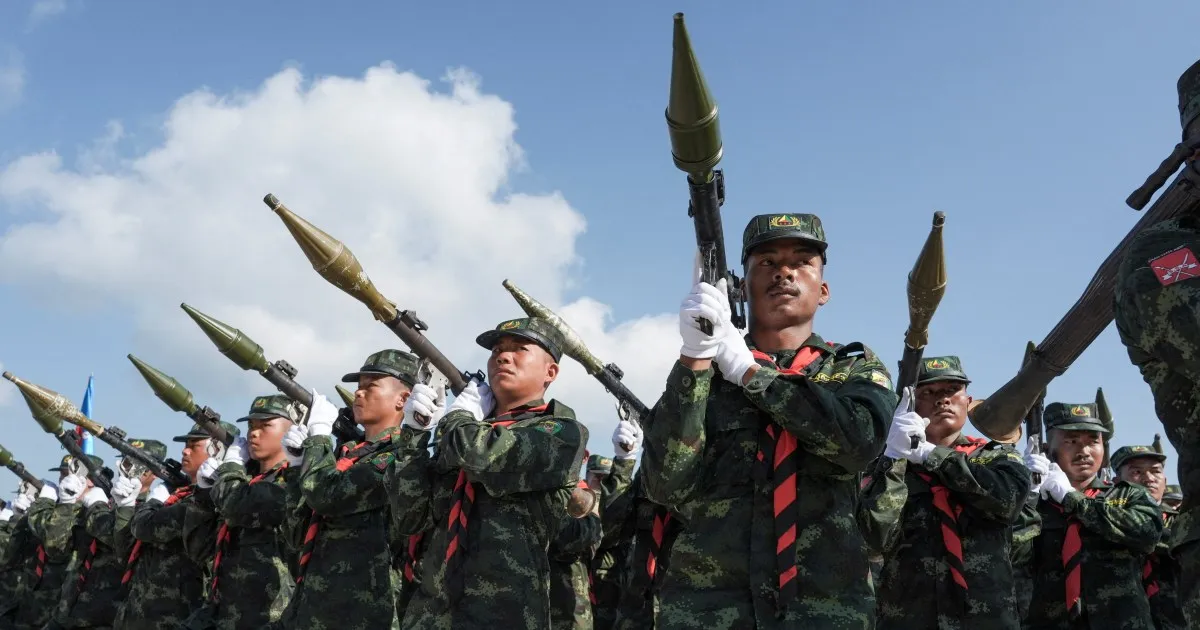
The rebel fighters who abandoned Falam in Myanmar in April said they gave up the strategic border town near India only after running out of bullets.
The fighters had endured a six-month assault by Myanmar’s military, including more than 2,500 air strikes and a ground assault by roughly 1,000 troops. The fall of the town, which had been under opposition control for a year, marked a strategic victory for the military: Falam is home to the only airport in Chin State and commands a trade route to the Indian border.
Recommended Stories
list of 4 itemsend of list
Within weeks, three more towns in Chin had fallen, and by late May, the military was claiming control of the entire northern part of the state.
“Falam taught us an important lesson,” said Salai William Chin, a member of the rebel Chin Brotherhood. “Capturing a town and holding it are two very different challenges,” he said, noting that maintaining control required manpower, logistics, administration, as well as “the ability to withstand repeated attacks, especially from the air”.
But he promised to keep fighting.
“I would not measure success only by whether we permanently hold every town,” he told Al Jazeera. “Where the military has a significant advantage, especially through airpower, mobile warfare may sometimes be more effective. The important thing is to preserve our forces, protect civilians and maintain our ability to continue the struggle.”
‘War of attrition’
The retreat is part of a broader reversal. Myanmar’s opposition – a loose coalition of militias and ethnic armed organisations fighting the military that seized power in a 2021 coup – has been weakened. Their gains in 2023 and 2024, when coordinated offensives stripped the military of dozens of towns, have given way to a steady withdrawal from the urban centres the rebels had captured.
Analysts say the shift has been driven by several factors: a mass conscription drive that has refilled the military’s ranks with tens of thousands of troops, a devastating air campaign that has killed hundreds of civilians, and backing from China, which has brokered ceasefires between the military and some powerful ethnic armed groups while helping choke off weapons supplies to others.
But the military is unlikely to score “existential or politically decisive wins” against the opposition, wrote Su Mon, an analyst at the Armed Conflict Location and Event Data (ACLED) project. She warned in a recent briefing note that the country “faces a protracted war of attrition” and a mounting humanitarian crisis in the coming months.
The war, which began in the wake of a military coup in February 2021, is now in its fifth year. It began following a brutal crackdown on unarmed protesters, with young people taking up arms and forming militias known as the People’s Defence Forces (PDF). They were aided by powerful armed ethnic organisations who control Myanmar’s borderlands, some of which have fought for autonomy since the country’s founding in 1948.
According to ACLED, deaths in the conflict have now surpassed 100,000, while the United Nations says 3.9 million people have been displaced and an estimated one in three people requires humanitarian assistance.
Earlier this year, Senior General Min Aung Hlaing, who led the 2021 power grab, presided over tightly controlled elections, with major opposition parties barred from participating and voting impossible, or boycotted, across much of the country. He was sworn in as president in April, completing his passage from commander-in-chief to head of a nominally civilian government in Naypyidaw.
Min Aung Hlaing now says his government wants peace talks with armed opponents, including in Chin.
But the fighting continues.
Capture of strategic towns
The military has opened new operations this year in Chin, Kachin, Kayin and Rakhine States, and according to ISP-Myanmar, an independent think tank, it has now retaken 22 of the 101 towns it lost after the coup. That amounts to 9 percent of the lost territory, but the areas are strategically located and include key trade corridors linking border areas to central Myanmar, where the military’s main bases are located.
Their capture has disrupted the “economic and logistical capacity of many resistance groups”, according to Su Mon at ACLED. And “while the military has yet to fully restore its own regime administration in these areas”, she wrote, “the victories have effectively hindered resistance coordination”, and are pushing the opposition groups “away from large-scale coordinated offensives to defensive guerrilla warfare”.
The Myanmar military has lauded the battlefield wins.
Speaking in Bangkok this month, Min Aung Hlaing said Myanmar was “on the path of democracy and heading towards a better future”, while state media has run photographs of what it described as triumphant troops returning from operations around the country.
Anthony Davis, a Bangkok-based security analyst, said a mass conscription drive and Chinese support have proven pivotal for the military.
Close to 150,000 troops have been added to its combat ranks since 2024 through conscription, he said, with many of the conscripts barely trained, but numerous enough to grind forward. Pressure from China has pulled two powerful opposition forces, the Myanmar National Democratic Alliance Army and the Ta’ang National Liberation Army, out of the fight, freeing the military to redeploy troops elsewhere. Beijing also pressed the United Wa State Army, one of Myanmar’s strongest ethnic armed groups, to stop selling weapons to opposition groups, contributing to ammunition shortages nationwide.
“Unchallenged airpower has from the beginning of the war provided the [military] with a crucial advantage,” Davis added, both in resupplying troops and in carrying out attacks against opposition forces. At the same time, “the rapid proliferation of drone technology in both surveillance and strike roles, along with improved battlefield coordination between different combat arms, have both boosted [the military’s] capability”, he said.
Air campaign
The toll on civilians has been severe.
The Myanmar Internet Project counted 520 air strikes from April through June, hitting 87 townships and killing at least 314 civilians, including 41 children. Chin State was hit hardest, with 122 strikes, followed by Sagaing with 101, and Rakhine with 98.
Phil Robertson, the director of Asia Human Rights and Labour Advocates organisation, said that “the inability of the resistance to counter the military’s air superiority” had weakened drive among opposition forces.
“Air attacks demoralise PDFs and other resistance troops, and scatter civilians who have supported the rebels,” he told Al Jazeera.
Still, the anti-military forces insist that the war is not lost.
Thinzar Shunlei Yi, an activist living in exile, said opposition networks are still training organisers and building support. “Even in the face of mass murder, in the face of massive violations, we have that courage and integrity that we resist, and we reject,” she said. “Myanmar people keep up that spirit, and we will keep on going.”
In Chin, Salai William Chin remained resolute.
“We do have further plans, but it is still too early to speak publicly about them,” he said. “I would not say that airpower has permanently decided the battlefield. It remains a serious challenge, but warfare continues to evolve, and resistance forces also continue to learn and adapt.”
Afghan national granted protection in the US is one of dozens of people deported to the war-torn Central African Republic.
Published On 30 Aug 202630 Aug 2026
The administration of United States President Donald Trump has deported dozens of people to the Central African Republic, including an Afghan whose family members collaborated with the US military, his lawyer and advocacy groups said.
The Afghan man, who is in his early 20s, was granted protection against deportation to Afghanistan by a US judge due to fears of persecution by the Taliban, his lawyer, Alma David, said.
Recommended Stories
list of 3 itemsend of list
Advocacy organisations AfghanEvac, a US-based group that assists Afghan allies, the American Civil Liberties Union, and Human Rights First also confirmed his deportation.
His family in Afghanistan had received threats from the Taliban, which governs the country, because of his brothers’ involvement in supporting the US military, according to court documents seen by The Associated Press news agency.
One of the Afghan man’s brothers lives in the US and served in the Afghan National Army, which collaborated with the US military before the Taliban seized power in 2021, David said.
Another brother was a pilot trained by the US and later killed by the Taliban, she added.
According to The New York Times, which identified the Afghan man only as Khalil, his sister and father also worked alongside US forces.
The deportation flight landed in the Central African Republic’s capital, Bangui, on Saturday, carrying 12 Afghans and eight Iranians, as well as several people from Nepal and Nicaragua, said Savi Arvey, director of policy, refugee and immigrant rights at Human Rights First.
It was the third deportation flight from the US to the Central African Republic this year, according to the rights organisation.
Under a series of often quietly struck agreements, the Trump administration has sent thousands of people to third countries where they have no ties as it pushes ahead with an immigration crackdown.
The latest US State Department Travel Advisory warns citizens not to travel to the African country for any reason, citing risks of unrest, crime, kidnapping, health, and “terrorism”.
Weekly insights and analysis on the latest developments in military technology, strategy, and foreign policy.
Russia has suddenly ramped-up the number of attacks, and their duration, on Kyiv. Ukrainian officials state there was a record number of waves of one-way attack drones on the capital on Thursday. This is in contrast to the typical Russian mass barrages that launch a larger number of missiles and drones that strike over a short period in an attempt to overwhelm defenses and inflict maximum damage. The change from prioritizing amplitude to frequency of these assaults indicates that Moscow could be switching to a new strategy aimed at wearing down the populace, halting commerce and exhausting air defenders.
“Again and again throughout the day, sirens sounded as Russia launched drones in small groups towards the Ukrainian capital,” the Ukrainian Foreign Affairs Ministry noted on X. “Each new threat put people at risk and forced them to seek safety – while repeatedly interrupting work, public services, transport, and everyday plans. In total, Kyiv spent 872 minutes – almost 15 hours – under air raid alert that day.”
Kyiv faced 13 separate air raid alerts on 27 August.
Again and again throughout the day, sirens sounded as Russia launched drones in small groups towards the Ukrainian capital. Each new threat put people at risk and forced them to seek safety – while repeatedly interrupting… pic.twitter.com/hTxOipgx0I
This was reportedly the largest number of air raid alerts experienced in Kyiv since the opening days of the all-out war. “The previous record appeared to be set on March 1, 2022, when Kyiv was placed under air raid alert 12 times in a single day,” the Kyiv Independent explained.
In addition, “the capital saw eight more air raid alerts by the morning of Aug. 28 as Russian forces continued attacking Kyiv and the surrounding areas overnight,” the publication added.
Kyiv
Russia’s attacks on Kyiv and the surrounding region continue almost nonstop for a second day. Other regions of Ukraine were also targeted overnight.
▪️ A Russian strike with guided aerial bombs in Sumy killed a 61-year-old civilian. Seven other people were injured. Residential… pic.twitter.com/XUHlw9CKUG
“For over 40 hours straight, Russia has been terrorizing Ukraine’s capital with combined barrages, setting a new grim record for the number of air raid alerts and destroyed civilian infrastructure sites,” Terekh stated on X Friday. “The enemy has long employed this tactic in frontline cities, scorching the earth and any chances of normal life. Its goal is to make our hands drop in despair. To make us search for culprits among ourselves. To make us snap at our own. To make us peer into the future with squinted eyes. To leave not a single minute when it’s appropriate to rejoice in anything: from life’s little joys to our successes on the front lines. To let exhaustion win.”
Вже понад 40 годин поспіль росія тероризує українську столицю комбінованими обстрілами, встановлюючи черговий антирекорд за кількістю повітряних тривог і знищених обʼєктів цивільної інфраструктури. Цю тактику ворог давно застосовує у прифронтових містах, випалюючи землю і…
A former high-ranking Ukrainian military officer offered us a similar assessment, though he surmised that it could backfire on Moscow.
“They want to keep constant pressure on the population and plant a fear of losing lives, increasing starvation, demoralizing the population, plant panic etc.,” the retired officer told us. “My belief is that they won’t achieve such strategic objectives. It is too late. It could have the opposite effect: more hate, more aggression and anger toward Russians.”
A helicopter extinguishes a fire in warehouses damaged by Russian drone strikes on August 27, 2026, in Kyiv, Ukraine. Russian forces launched a massive attack on Kyiv with drones, hitting warehouses. (Photo by Ivan Antypenko/Suspilne Ukraine/JSC “UA:PBC”/Global Images Ukraine via Getty Images) news
The retired officer posited that this spike in the pace of Russian strikes could be part of the escalation Russian President Vladimir Putin recently threatened. Still, it remains unknown at this point whether this is a one-off or the sign of things to come. The coming days should give us an indication of that.
The Latest
Most of the fiercest fighting at this point is centered around Kupyansk in Kharkiv Oblast and Slovyansk in Donetsk. Here are some key takeaways from the latest Institute for the Study of War (ISW) assessment:
Kharkiv: Russian forces continued offensive operations in northern Kharkiv Oblast on August 26 and 27 but did not advance as Ukrainian forces counterattacked. The Russians also continued offensive operations in the Kupyansk direction on August 26 and 27 but did not advance as Ukrainian forces counterattacked.
Donetsk: Russian forces continued offensive operations in the Slovyansk direction on August 26 and 27 but did not make confirmed advances as Ukrainian forces counterattacked around Lyman. Russian forces also continued offensive operations in the Dobropillya tactical area, Pokrovsk, near Novopavlivka itself and northeast and south of Oleksandrivka on August 26 and 27 but did not make confirmed advances.
Zaporizhia: Russian forces continued limited offensive operations in western Zaporizhia Oblast on August 26 and 27 but did not advance.
Kherson: Neither Russian nor Ukrainian forces reported ground activity in the Kherson direction on August 27.
Ukrainian officials are investigating why weapons were stored in a residential neighborhood after a deadly Russian drone attack on a warehouse in a village near Kyiv. Ukrainian President Volodymyr Zelensky said the investigation centers on negligence. The strike and resulting secondary explosions at the facility in the village of Myla killed at least 37 people and injured at least another 15, according to Ukraine’s Defense Ministry (MoD).
Zelensky didn’t specify the exact variants of the weapons stored, but the Russians claimed they struck a warehouse containing the Fire Point company’s FP-1 and FP-2 drones and another one in a different Kyiv suburb that stored Flamingo cruise missiles.
TWZ cannot independently verify this Russian claim and Ukriane did not confirm the attack on the warehouse containing the Flamingos. We’ve reached out to Fire Point for more details.
“Since yesterday evening and throughout the day today, I have been receiving reports on the situation in the village of Myla, Kyiv region, where detonation began following a Russian strike,” Zelensky stated on X. “A terrible situation and terrible negligence on the part of those who stored explosives right next to people. Another such crime – after what happened in Vyshneve – is absolutely unacceptable.”
Since yesterday evening and throughout the day today, I have been receiving reports on the situation in the village of Myla, Kyiv region, where detonation began following a Russian strike. A terrible situation and terrible negligence on the part of those who stored explosives… pic.twitter.com/YyRpBxQ8Kz
— Volodymyr Zelenskyy / Володимир Зеленський (@ZelenskyyUa) August 29, 2026
Vyshneve is a town where an ammunition depot belonging to the Ukrainian defense conglomerate Ukroboronprom, the country’s largest weapons manufacturer, was attacked in July. The secondary explosions killed seven and wounded 29 others, according to the Kyiv Independent.
“I expect the details to be presented to the public promptly,” the Ukrainian leader added. “The first strike was on an ammunition storage site that definitely shouldn’t have been there – a Defense Forces storage facility. Shells, mines, other ammunition, and drones detonated. The scale is significant. We have already spoken with the Prosecutor General, the Ministry of Internal Affairs, the Security Service of Ukraine, and the Commander-in-Chief – they have everything necessary for the investigation. I want to separately thank everyone who is there on the ground and at other sites of Russian strikes, doing everything possible to help and save people.”
Smoke is still rising from the ammunition depot in the village of Myla, Bucha District, Kyiv Oblast, which was targeted by Russian Geran-4 drone strikes.
The reported death toll has risen to 37, with at least 42 others injured and 381 people evacuated.
The retirement home at Myla near Kyiv where twenty people died after a Russian strike caused secondary detonations at a secret ammunition depot placed amidst dense suburbia. pic.twitter.com/iPhODiVXJ7
The Ukrainian MoD called for a full accounting of all weapons and ammunition storage locations.
“Siting depots holding explosives next to civilians is unacceptable,” MoD stated on X. “The heads of all relevant components of the Security and Defence Forces and of Ukraine’s defence industry must carry out a full audit of the sites where weapons and ammunition are stored. Facilities of this kind must not stand next to residential buildings where people live.”
We bow our heads in deep sorrow together with every family that has lost loved ones in the terrible tragedy in the village of Myla, Kyiv region.
As of 15:00 on 29 August, 37 people are known to have been killed and 15 injured. Two more are still being searched for under the…
As we noted earlier in this story, the Russian Defense Ministry (MoD) claims it hit “an ammunition depot in [Myla] (Fire Point LLC), where components and launch boosters for long-range FP-1/FP-2 unmanned aerial vehicles were stored in warehouses.”
The MoD also claims it struck the “Fim Service transport and logistics centre in Chayki” whose “warehouses were used to store Flamingo long-range cruise missiles.” The village is also near Kyiv; however, there have been no reports of collateral damage. Ukrainian officials have not independently confirmed that weapons were stored there. The Kyivschina24 media outlet reported that the Chayki attack struck a tile warehouse owned by the Agromat company, not a weapons storage area.
Russian Defense Ministry (MoD)
Whether it was the case in these instances or not, it should come as absolutely no surprise that Moscow would do everything possible to target Fire Point standoff munitions and their supply chain, considering how big of a threat they have become. Regardless, while Ukrainian officials are now investigating why explosives were stored so close to a residential neighborhood, the incident highlights the precarious nature of the country’s weapons production. Due to repeated Russian attacks, this work is widely distributed to avoid having a single point of failure.
“Well, the logistics are hell, to be frank,” she told us. “But we do not have the luxury to have the factory in a classic way, with the walls and roof, … when I say factory — and we have 90 of them in the moment — when I say factory I mean this whole ecosystem with logistics, with warehouses, everything is hidden and dissolved in a way that the critical components are always duplicated, triplicated, quadruplicated. It’s a lot of additional investments and, of course, a lot of risks and a lot of additional time for logistics specifically, but again, we do not have any other choice. Therefore, the factory in this matter is a whole ecosystem.”
Footage of the production and testing of the FP-1/2 attack UAVs and the FP-5 Flamingo cruise missile
In the wake of the Vyshneve attack, Ukroboronprom fired two of its directors after Zelensky said that the ammunition depots were stored too near to civilian areas “in violation of Ukrainian law and orders from military leaders,” the Kyiv Independent noted. The criminal investigation in that case is ongoing.
It is too early to say what will happen with this latest incident. The investigation into the Myla case has just started and there is no immediate word about whether Ukraine is also investigating the storage of weapons in Chayki. We will monitor this situation and provide updates when warranted. A satellite image obtained by TWZ appears to back up Ukrainian President Volodymyr Zelensky’s claim that his country’s Alpha Unit destroyed a Tu-95MS Bear bomber during a drone attack on Russia’s Engels Air Base. The facility is located about 350 miles east of Ukrainian-held territory.
The satellite image, provided by Vantor, shows the right wing of the bomber partially severed. It is unclear from the image how extensive any damage was caused by shrapnel.
Ukraine has frequently attacked Engels in its effort to destroy the bombers housed there. Russia, trying to defend against this ‘kill-the-archer’ approach, is building protective shelters for its military aircraft, which now extend to long-range bombers, an unprecedented development for the Russian Aerospace Forces.
Engels, also known as Engels-2, is one of the most important airfields of Russia’s Long-Range Aviation Branch. It is home to the 22nd Heavy Bomber Aviation Division, which is responsible for Russia’s only squadron of Tu-160s, plus another squadron of Tu-95MS bombers.
Both of those types have been widely employed in the conflict in Ukraine and especially in the standoff strikes that have targeted Ukraine’s energy infrastructure, among other objectives, civilian and military, across the country.
“Today, we received information from the American side about the meetings in Moscow that took place the other day,” the Ukrainian leader stated on X. “There was a series of meetings. We spoke before the meetings, and we have spoken again now with the Americans. Thank you for the information – and for the necessary tone of the conversation with Russia.”
“We value the alignment of steps and the fact that America is advancing a realistic vision of what needs to be done and what must be achieved,” he added. “Russia must end its war, and all the necessary conditions must be created to make that happen.”
Ratcliffe’s visit has sparked a wide range of conjecture, and disparate reports about the purpose. The New York Times, for instance, wrote that the journey was made “to privately share his bleak assessment of the state of the Russian war against Ukraine, and to urge the Russians to cut a deal before their military and economic situation gets worse.”
President Donald Trump, for his part, tried to downplay the whole thing, calling it “semi-routine,” which doesn’t exactly square with the fact that this was the first publicly known visit of a CIA director to Moscow since November 2021, just months before Putin launched his full-on invasion.
Today, we received information from the American side about the meetings in Moscow that took place the other day. There was a series of meetings. We spoke before the meetings, and we have spoken again now with the Americans.
— Volodymyr Zelenskyy / Володимир Зеленський (@ZelenskyyUa) August 28, 2026
Kyrylo Budanov, the Head of the Office of the President, said the Armed Forces of Ukraine need to mobilize 30,000 every month in order to keep defending against Russia. He made the comments during an interview on the national nightly newscast.
“Unfortunately, we have to accept it [mobilization] as it is,” Budanov explained. “We cannot do otherwise. We have to find the courage and honestly say: we cannot mobilize fewer than 30,000 people a month. This is the minimum number needed to maintain what we have.”
Budanov’s comments come as Ukraine is struggling to put enough troops on the front lines and is facing opposition to how recruits are often forced into service, sometimes physically.
“So, no matter how we say that we are now going to recruit people differently, the numbers will not change,” Budanov added. “And that means the number of dissatisfied people will not change either. There is nothing we can do about it.”
Meanwhile, Budanov expressed hope that it would be possible to change the approach to what he described as “forceful mobilization” to some extent.
“I hope we can change the approach to this forceful mobilization, which sometimes takes place,” Budanov acknowledged. “It is not happening everywhere, but such cases do occur. We need to tackle this.”
Kyrylo Budanov: “Unfortunately, we have to accept it [mobilization] as it is. We cannot do otherwise. We have to find the courage and honestly say: we cannot mobilize fewer than 30,000 people a month. This is the minimum number needed to maintain what we have.”… pic.twitter.com/csebu3b3cV
As we have frequently noted, AI plays a key role for Ukraine, especially helping guide weapons to target. To help improve these functions, Ukraine has created a sandbox of sorts where weapons developers can fine-tune their AI systems with real-world data.
“In the past, coordinating a fire mission – from an observer detecting a target to the actual opening of fire – could take 15–20 minutes, or even longer, when done manually,” the Ukrainian Defense Ministry (MoD) explained. “In modern warfare, such a delay is effectively unacceptable. This is where artificial intelligence comes in to assist human operators.”
“At the find stage of the kill chain, reconnaissance drones can use visual data repositories to detect objects,” the MoD noted. “For this purpose, the Brave1 defense innovation cluster created Brave1 Dataroom, a secure platform that provides developers with access to structured datasets for testing, training, and fine-tuning military AI solutions.”
“The platform specializes in detecting and intercepting aerial targets, including Shahed-type drones,” the ministry proffered. “To train drone AI systems using real-world battlefield data, the Ministry of Defence of Ukraine has provided Ukrainian developers with access to Avengers Labs. The platform provides access to an annotated dataset of 5 million frames collected during military missions.”
The dataset is regularly updated, with Ukraine’s homegrown DELTA battlefield management and situational-awareness system serving as its primary source.
“Targets included in the dataset range from tanks, artillery, and air defense systems to enemy infantry groups and aerial targets, including reconnaissance UAVs and Shahed-type drones,” according to the ministry.
Coordinating a fire mission manually once took 15-20 minutes. In this war, that’s a lifetime.
Avengers AI, trained on 5M annotated battlefield frames and integrated into DELTA, now flags 70% of enemy equipment in real time across 100,000+ video streams a month.
The city of Druzhkivka, in Ukraine’s eastern Donetsk region, is on the front line of a grinding battle. It is part of the so-called fortress belt of cities where ensconced Ukrainian forces have held off brutal waves of Russian attacks for years. Recently released drone video shows the extent of the damage, with virtually no building untouched and vast swaths of the city completely abandoned.
Irish journalist Caolan Robertson provides a gripping view of another fortress belt city, Kramatorsk, and the last power plant in the region, which is a frequent target of Russian attacks.
Another Ukrainian city is being wiped out right now while the world looks away
Here’s what’s happening in Kramatorsk:
• Glide bombs & FPVs pound the city to make them unliveable.
• Civilians evacuated every day but not everyone is leaving.
Ukrainian Parliament Commissioner for Human Rights Dmytro Lubinets made the statement during a press conference held at the publication, focused on Russian disinformation concerning prisoners of war, exchanges, and people missing in action.
According to the ombudsman, the 345 documented executions involved Ukrainian soldiers who had clearly surrendered, including by laying down their weapons, raising their hands, or lying on the ground to demonstrate that they were no longer taking part in hostilities.
Footage shows a house surrounded by raging floodwaters at the Nepal-Tibet border, with people trapped on rooftops and balconies. Authorities say at least 675 people have been killed and nearly 2,500 remain missing.
Saint Rose of Lima was born on April 20th 1586 in Lima, Peru. Her father was Spanish, her mother was of indian descent and Rose was one of 13 children. Her real name was Isabel, but she was such a beautiful baby with rosy cheeks, that she soon came to be called ‘Rose’.
From an early age, she showed great devotion to god. Her parents had hoped that her good looks would enable her to marry well and help the family escape poverty but Rose decided to follow a religious life dedicating herself to god. Rose was too poor to join a monastery, so she lived in a small cottage making money to support her family and her charity work by selling needlework and flowers. She looked after the sick and needy people in Lima, bringing them to her cottage to feed and care for them.
Her efforts were soon noticed by the Dominican Order who allowed her to join without any payment.
While continuing her service to the people of Lima, Rose practiced some extreme forms of devotion; eating only bread and water and wearing a spiked crown around her waist under her clothes. Rose died at the age of 31. When she died, her funeral had to be be delayed by two days due to the amount of people who wanted to pay their respects.
Rose was beatified in 1667, making her the first person born in the Americas to become a saint.
Her feast day was added to the Roman Catholic calendar in 1729 as August 30th. The date of her death, August 24th was already snaffled by Saint Bartholomew the Apostle and 30 August was the closest available date. In 1969, revisions to the calendar meant August 23rd could be allocated as her feast day; however Peru and some other Latin American countries use the old date.
Somali authorities say 14 pirates were killed in the 10-day operation to free a Cameroon-flagged cargo vessel.
Published On 30 Aug 202630 Aug 2026
Turkish and Somali forces have freed a cargo ship held captive by pirates off the coast of Somalia’s semi-autonomous Puntland state, according to authorities.
In a statement on X on Saturday, the Somali Ministry of Defence said that “14 pirates” died in the operation to free the Cameroon-flagged MV Latuf.
Recommended Stories
list of 3 itemsend of list
Four of their boats were also destroyed, it said.
The Defence Ministry said that “sustained pressure from the forces ultimately compelled the remaining pirates to abandon the vessel”, allowing the forces to take control of the ship.
The rescue operation was conducted under a defence cooperation agreement between Somalia and Turkiye, aimed at strengthening maritime security, protecting Somalia’s coastline and combating piracy, it said.
The Somali Defence Ministry did not provide details about any casualties or the wellbeing of the ship’s crew.
A local elder, Abdullahi Warsame, from the Jiifle community in the Godob Jiraan district of Puntland’s Nugal region, told The Associated Press news agency that the vessel and its crew had been freed.
The MV Latuf left the Turkish Port of Tekirdag in late July. It was hijacked on August 17 in waters off the coast of the Nugal region of Puntland, a semi-autonomous federal state in northeastern Somalia.
According to the Marine Traffic website, the cargo ship has continued its voyage to its reported destination in Dar-es-Salaam in Tanzania.
Piracy was rampant off the coast of Somalia in the 2000s, peaking in 2011, before being curbed by international naval deployments and new protection measures for commercial shipping.
But attacks have surged since April, with at least 15 attacks off the coast of Somalia this year, the highest since 2013, according to figures from the International Maritime Organization. At least five cargo ships have been held hostage, the last of which was seized on August 20 off the coast of Yemen.
Since January, the acting Rodríguez government has reformed its energy sector to favor US interests. (ABC)
Caracas, August 28, 2026 (venezuelanalysis.com) – US President Donald Trump has announced a major energy agreement with Venezuela to “more than double US oil reserves.”
“The US has just entered into the biggest oil deal in history with Venezuela,” he wrote on social media. “Working with highly respected [Venezuelan Acting President] Delcy Rodríguez, and through a partnership with private business, [the US] has secured majority control of more than 65 billion barrels of proven Venezuelan oil reserves.”
Trump added that the purported agreement would lower US fuel prices “long into the future” while setting Venezuela “on a course toward tremendous success and great prosperity.”
US Secretary of State Marco Rubio called the reported deal “a huge win for both the American and Venezuelan people” and claimed it would bring “nearly US $100 billion in private investment” to the Caribbean nation. Trump and Rubio disclosed no specifics about the arrangement.
Venezuelan Acting President Delcy Rodríguez confirmed the “historic agreement” via a social media message on Friday night.
“I extend my deepest gratitude to Trump, Rubio, and the US government for their support in developing this agreement, which represents a historic milestone in US-Venezuela relations,” she wrote.
Rodríguez stated that the deal will involve private corporations developing 17 “strategic fields” with 65 billion barrels of proven reserves. She echoed Rubio’s $100 billion investment claim and pledged that the projects would yield $209 billion in tax revenues. According to the acting president, the announced agreement “ushers in a new era of growth and prosperity.”
The high-level negotiations were first reported by Axios on Thursday.
The Venezuelan Constitution establishes that all mineral and hydrocarbon resources are “inalienable public domain” goods. Transferring ownership of oil reserves would require a constitutional reform.
According to Reuters, the deal could take the form of a long-term lease, with the Trump administration then auctioning or allocating fields to select corporations. Bloomberg reported that the lease could be as long as 100 years.
The seventeen fields in question are said to include undeveloped extra-heavy crude projects in the Orinoco Oil Belt and mature light crude fields in Lake Maracaibo. The resulting supply would be “guaranteed” for the US as part of efforts to rein in rising fuel costs amid the ongoing standoff with Iran in the Persian Gulf.
Bloomberg additionally reported that Washington’s direct involvement in Venezuela’s oil industry could be conducted by the Pentagon’s Office of Strategic Capital (OSC) in partnership with Venezuelan oil mogul Alejandro Betancourt. The Biden administration created the OSC in 2022 to fund private sector initiatives deemed vital for US national security interests.
Since the January 3 US military strikes and kidnapping of Venezuelan President Nicolás Maduro, the acting Rodríguez administration has fast-tracked a diplomatic rapprochement with Washington while also opening the country’s energy and mining sectors to Western companies.
A new Hydrocarbon Law and associated regulations were drafted in consultation with oil executives and US officials. The reform slashed royalties and taxes and ceded control over operations and sales to private firms under joint venture or concession-type models. Caracas also acceded to foreign companies’ demands in allowing for legal disputes to be settled by international arbitration bodies.
The legislative overhaul replaced the 2001 Hydrocarbon Law approved by former President Hugo Chávez and subsequent decrees that established a leading role for the Venezuelan state in the energy sector, which in turn fueled the country’s economic and social progress in the 2000s.
The US Treasury has maintained wide-reaching sanctions in place while issuing licenses to hand-picked companies and barring the participation of enterprises from China, Iran, and Russia. Furthermore, Venezuelan oil revenues are presently deposited in a US Treasury account, with the disbursement timings and amounts left at Trump officials’ discretion.
On Thursday, the US Treasury’s Office of Foreign Assets Control (OFAC) amended eight sanctions waivers concerning oil, mining, and telecommunications. OFAC removed a requirement that contracts signed with Venezuelan state entities be drafted in accordance with US laws or jurisdiction. The agency stated that “investment-related reforms” by the acting Rodríguez government had made the clause unnecessary.
Venezuela’s investor-friendly regulatory environment has led to industry giants, including Chevron, Repsol, and Shell, striking new deals or renegotiating existing ones for crude and natural gas exploration. Companies with no energy track record such as Lionheart Capital and Crossover Energy are likewise set to take control of strategic oilfields.
Oil services company SLB, formerly Schlumberger, recently signed an agreement with PDVSA for reservoir studies and service provision. SLB has set the reactivation of 15 oil rigs in the South American country as a short-term priority.
According to Reuters, the multinational firm will also access prized data on Venezuela’s oilfields, from reservoir characterization to real-time output information. SLB allegedly seeks to “make Venezuela’s oil data reliable again.”
In another indication of Caracas’ dramatic diplomatic realignment with Washington, Venezuelan officials are reportedly mulling the possibility of exiting the Organization of Petroleum Exporting Countries (OPEC).
Venezuela played a leading role in the creation of OPEC in 1960 as it sought to bring together Global South oil-producing nations to secure better and more stable oil prices in global markets. Former President Chávez also prioritized revamping OPEC after a prior “Oil Opening” under US-aligned governments had oriented the industry toward US interests and undermined the organization.
Edited by Lucas Koerner in Philadelphia, USA.
[Updated on August 28 at 8.30 pm ET following Trump’s announcement.]
Chantelle Cameron produced one of the finest displays of her career to beat Mikaela Mayer and add the WBA and WBC light middleweight titles to her WBO belt.
An engrossing encounter was narrowly won by the British fighter by unanimous decision – 97-93 on two scorecards and 96-94 on the other.
American Mayer disagreed with the decision, claiming she “outboxed” Cameron – leading to an angry exchange of words in the ring.
The possibility of a rematch was also floated, with Mayer also suggesting Cameron had benefited from home advantage – to the champion’s chagrin, as she said “talk is cheap”.
It means Cameron remains unbeaten since her second fight with Katie Taylor in 2023, and with 23 victories in 24 professional encounters.
And this was one of her best displays. These fighters were evenly matched in every metric – from punch rate to height and weight, even hairstyle.
But Cameron won out thanks to her unrelenting pressure, which never allowed the usually adaptable Mayer to figure out a winning gameplan.
Mayer was the more imposing figure early on, but Cameron played counterpuncher until she could get onto the front foot.
Cameron forced Mayer against the ropes in round four, and again at the start of the fifth. Increasingly confident to take the initiative, she was roared on by a partisan but disappointingly small home crowd.
Mayer was unable to get in behind her jab for long periods and was bleeding and breathing heavily by round six.
The home favourite was cut in the final rounds but pushed through and was lifted shoulder high by her team before her biggest win since beating Taylor in Dublin three years ago was announced.
For three-weight world champion Mayer, this is the third defeat of her 25-fight career and costs her the WBA and WBC belts, which Cameron now puts with her WBO title.
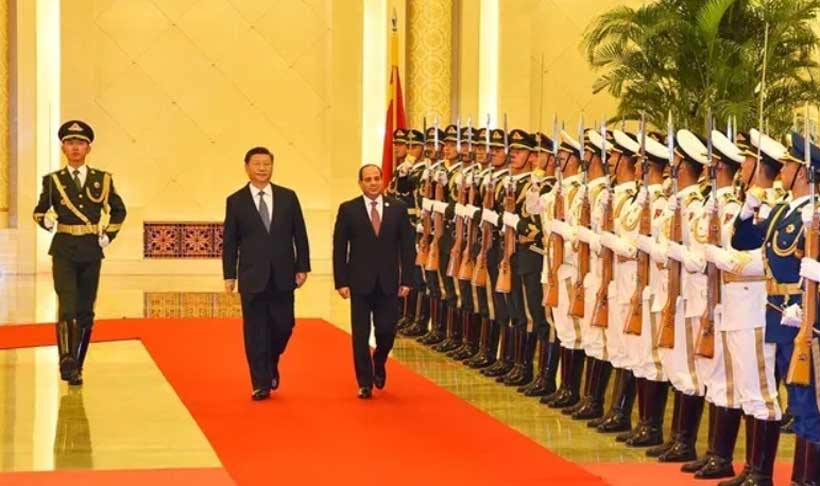
The upcoming official visit of Chinese President Xi Jinping to Egypt, scheduled for August 30 to September 3, 2026, coincides with the Shanghai Cooperation Organisation (SCO) summit. The visit will address economic and technological cooperation, as well as regional and international issues, and marks the 70th anniversary of diplomatic relations between Egypt and China. The visit aims to strengthen the comprehensive strategic partnership between the two countries and expand Beijing’s economic and political influence in the Middle East amidst escalating regional and international tensions, while also bolstering China’s role in the Global South.
As an Egyptian academic specializing in Chinese politics and the policies of the ruling Communist Party of China, I can analyze and summarize the significance of President Xi Jinping’s visit to Cairo and his meeting with his Egyptian counterpart, President Abdel Fattah El-Sisi, and its importance to China’s influence in the Middle East and the Global South through the following points:
– First: What does China hope to achieve with Xi Jinping’s visit to Egypt at this particular time?
This visit of President Xi Jinping to Cairo (the first by a Chinese president to Cairo in nearly a decade) coincides with the 70th anniversary of the establishment of diplomatic relations between the two countries. It carries several key objectives, including political and international dimensions related to Chinese coordination with Egypt on Middle Eastern issues. The visit comes at a sensitive time, as the region is experiencing tensions linked to the conflict between Iran and the United States and its repercussions on maritime security in the Strait of Hormuz and global energy markets. Beijing also seeks to strengthen its strategic balance and reaffirm its diplomatic presence as an international power that supports diplomatic solutions and cooperates with pivotal countries like Egypt to achieve stability. This follows President Xi Jinping’s participation in the Shanghai Cooperation Organisation summit. President Xi Jinping’s visit to Cairo also carries several economic and trade dimensions, such as expanding the economic partnership and capitalizing on the significant increase in trade between the two countries to deepen cooperation. Furthermore, China will support infrastructure and energy projects in Egypt by boosting Chinese investments in Cairo, including renewable energy sectors such as wind turbine manufacturing plants, transportation deals, and electric trains, in addition to extending currency swap agreements between the two central banks.
Stay ahead of the geopolitical week.
MD Briefing delivers expert analysis across five global fronts — the Indo-Pacific, energy, geoeconomics, European security, and the Middle East — every Monday morning. Free.
The visit also aims to discuss the technological and artificial intelligence file in China’s relations with Cairo, particularly major technological offers, most notably the offer from the Chinese company Huawei to build data and artificial intelligence centers in Egypt. This project is viewed with apprehension by intelligence, military, political, and strategic circles in Washington, which are attempting to offer Cairo alternatives from major American technology companies such as Microsoft, Nvidia, and AMD.
– Second: Does the visit carry political messages that extend beyond bilateral relations, especially regarding the Middle East and Africa?
Yes, Chinese President Xi Jinping’s visit carries major strategic political messages that transcend the framework of bilateral cooperation. It aims to reshape the international order and build a multipolar world, starting with the Global South. The visit also carries messages that go beyond bilateral relations, pushing for a Global South leadership role. Beijing seeks to garner African and Arab support to assert its position as a major power, offering an alternative to Western and American competition and influence. China also aims to promote multilateralism by urging countries in the region to adopt common positions that support international stability and security, moving away from the unilateral polarization of the United States. Furthermore, President Xi Jinping’s visit signals China’s desire to secure its economic interests. Chinese actions are focused on ensuring the security of maritime routes and the stability of energy and trade markets within the framework of the Belt and Road Initiative. Here, President Xi’s visit to Cairo coincides with the launch of the second iteration of the massive joint air exercises, Eagles of Civilization, in August 2026 at Egyptian air bases. These exercises, which follow the first iteration in May 2025, will involve advanced fighter jets from both sides. This sends political and strategic messages to Washington and Tel Aviv about the new military partnership between Egypt and China, the diversification of arms sources, and the independence of Egyptian military and political decision-making in diversifying its partnerships.
Furthermore, the Chinese president’s visit to Cairo carries support for Egypt’s regional role in the Middle East and Africa, reaffirming the pivotal role of Egypt. Choosing Egypt as a starting point reflects Beijing’s understanding of its geopolitical importance as a key link between the Arab world and the African continent and its commitment to addressing regional repercussions. China is also demonstrating its readiness to cooperate with its African and Arab partners to contain the economic crises resulting from conflicts in the Middle East. In addition to China’s anticipated plan to expand alliances by strengthening the integration of Chinese development projects with major economic blocs such as BRICS, the Shanghai Cooperation Organisation (SCO), and the Asian Infrastructure Investment Bank, this visit also aims to coordinate common positions on de-escalation and maintaining peace and security in the Middle East and to discuss regional conflicts, particularly in the wake of the Gaza and Iran wars.
– Third: What economic files could witness new agreements or steps between Cairo and Beijing?
Economic relations between Cairo and Beijing are increasingly moving towards signing new agreements and taking new steps focused on strengthening joint investments and supporting financial stability. The most prominent joint economic and investment files between Egypt and China are based on supporting financial partnership and currency diversification. This involves renewing and strengthening local currency swap agreements between the Central Bank of Egypt and its Chinese counterpart to facilitate trade and support monetary stability, independent of international currencies. Economic cooperation and currency swaps will be among the top economic priorities of the visit through monitoring the surge in trade and extending the local currency swap agreement to enhance economic partnership within the BRICS framework.
Furthermore, there is a shared Chinese-Egyptian desire to localize industry and technology in Cairo by attracting substantial Chinese investments in electric vehicle manufacturing, new and renewable energy sectors, and advanced technology industries. With the expansion of Chinese projects in the Suez Canal Economic Zone, through the expansion of Chinese industrial and logistical projects within the Suez Canal Corridor, a major value-added production base is being established. China is also supporting Egypt in achieving food security and agricultural development by preparing joint Egyptian-Chinese alliances targeting large-scale agricultural land reclamation projects to enhance food security. This is happening concurrently with Chinese support for infrastructure and smart cities in Egypt through cooperation in urban development projects and modern smart cities.
– Fourth: Can China strengthen Egypt’s role as a key hub for its projects in the Middle East and Africa?
Yes, China is already strengthening Egypt’s role as a key and central hub for its strategic projects in the Middle East and Africa. The pillars of Chinese strategic cooperation with Egypt are based on China’s projects and investments within the Belt and Road Initiative. China considers Egypt a strategic gateway and a vital corridor for the maritime and land Silk Road, given the Suez Canal’s role as a global trade artery. With the diversification of Chinese partnerships and investments in the Suez Canal Economic Zone, given the concentration of major industrial projects by Chinese companies in the zone, such as the China-Egypt Economic and Trade Cooperation Zone (TEDA). China aims to access African markets through Egypt. Chinese companies utilize Egyptian land and ports as a joint manufacturing base and a launchpad for exporting products and services to markets across Africa and the Middle East. China also seeks to achieve developmental and security integration with Egypt, aligning its five-year development plans with Egypt’s Vision 2030. This is further evidenced by the development of joint military cooperation and air exercises between Egypt and China, such as the Eagles of Civilization exercises between the Egyptian and Chinese air forces, the first iteration of which took place in May 2025 and the second in August 2026.
Beijing also seeks to disseminate artificial intelligence and innovation technologies through Egypt to the African continent, the Middle East, and the Global South. Especially since Egypt hosts a number of Chinese companies across various sectors, particularly technology, such as Huawei, Xiaomi, Oppo, ZTE, Midea, and Haier. Furthermore, a $300 million investment fund has been established with Tsinghua University in China, focusing on artificial intelligence and semiconductor design.
– Fifth: To what extent can the Egyptian-Chinese partnership affect the balance of American influence in the region?
The Egyptian-Chinese partnership significantly impacts American influence in the Middle East by diversifying China’s economic and political alliances in the region. However, it does not eliminate the strategic alliances between the United States and several countries in the region, particularly the Gulf states. The partnership between Egypt and China is based on the economic and financial dimension, including major Chinese investments in Egypt. China is pouring billions of dollars into infrastructure projects and the Suez Canal region. China also supports Egypt’s bid to join the BRICS group, led by China and Russia, to reduce its dependence on the dollar and the Western and American financial system. Furthermore, China is keen to closely integrate its Belt and Road Initiative projects with the Egyptian economy. The partnership between Egypt and China also rests on the diplomatic and strategic dimension as well as the diversification of alliances. Egypt pursues a balanced foreign policy that is not limited to a single ally. Here, the partnership with China grants Egypt greater freedom of movement and a wider margin to maneuver, free from American political conditions and pressures, particularly in the areas of armament and military deals. This creates a delicate balance for Egypt, as it refuses to fully align itself with one power against another, maintaining its security partnership with Washington alongside its relationship with Beijing.
In this context, Beijing does not view Egypt merely as an economic partner, but rather as a strategic gateway and a pivotal pillar of its geopolitical influence in the Middle East and Africa, countering American penetration. This approach stems from China’s desire to fill the political and military vacuums resulting from the decline or fluctuation of the Western and American presence in the region. To this end, China leverages Cairo’s historical and political weight as a platform to expand its diplomatic influence and build partnerships with other countries in Africa and the Arab world. China’s support for Egypt’s membership in the BRICS bloc has provided Beijing with a strong regional ally, bolstering its vision for reshaping the global financial system into a multipolar order in the face of the United States’ unilateral hegemony in the region. This is especially significant given that Egypt represents a crucial land and sea crossroads for China’s Belt and Road Initiative via the Maritime Silk Road, considering the strategic and vital importance of the Suez Canal.
– Sixth: Does Beijing want Egypt merely as an economic partner, or does it see it as a strategic gateway for its influence in the Middle East and Africa?
Beijing views Egypt as a major strategic gateway for its influence, not just an ordinary economic partner. The relationship combines commercial interests with broad geopolitical ties. The economic dimension is based on the importance of the Suez Canal. China considers the Suez Canal a key artery for its trade with Europe and the rest of the world, and it is investing heavily to connect Egyptian ports and roads to its major commercial projects related to its Belt and Road Initiative. In addition to China’s role as a major logistics hub in the Suez Canal Economic Zone, numerous Chinese companies have established factories there to export goods. This is further compounded by Egypt’s strategic and political importance, as well as its sensitive geographical location, which is crucial to China’s interests. Egypt’s position at the crossroads of Africa, Asia, and Europe serves China’s regional influence. This coincided with China’s support for Egypt’s formal accession to the BRICS group, a move fully backed by China to bolster both countries’ political and economic weight globally.
Beijing also focuses on the growing security and military dimension of its relationship with Cairo to secure investments and international maritime routes. Chinese ambitions extend beyond simply selling goods; it seeks a greater role in protecting its interests and citizens by strengthening military cooperation with Cairo and diversifying defense partnerships with countries in the Middle East, Africa, and the Global South through Egypt. Beijing sees the growing military cooperation and arms sales to Egypt and the region as an opportunity to undermine Western and American military influence and to forge closer ties with the Egyptian army, one of the largest armies on the African continent. This is the true objective of China in transforming Egypt into a political and military hub that guarantees Beijing’s vital interests in the Middle East, Africa, and the Global South.
Accordingly, Chinese President Xi Jinping’s visit to Cairo comes at a time when Beijing seeks to strengthen its engagement in the Middle East and expand its relations with developing countries and the Global South, coinciding with escalating competition with the United States for economic and technological influence. Xi’s visit to Cairo also carries significance that transcends bilateral relations, given the ongoing repercussions of a potential US war with Iran and the instability in global energy markets. Therefore, China seeks to leverage Egypt’s pivotal role in achieving regional stability, mitigating crises, and protecting its interests in the Middle East and Africa.
Officials at Gaza’s Al-Aqsa Martyrs Hospital say cancer medicines have completely run out across the besieged enclave, after an Israeli strike damaged the facility’s water tanks, laboratory equipment, and storage areas in Deir el-Balah.
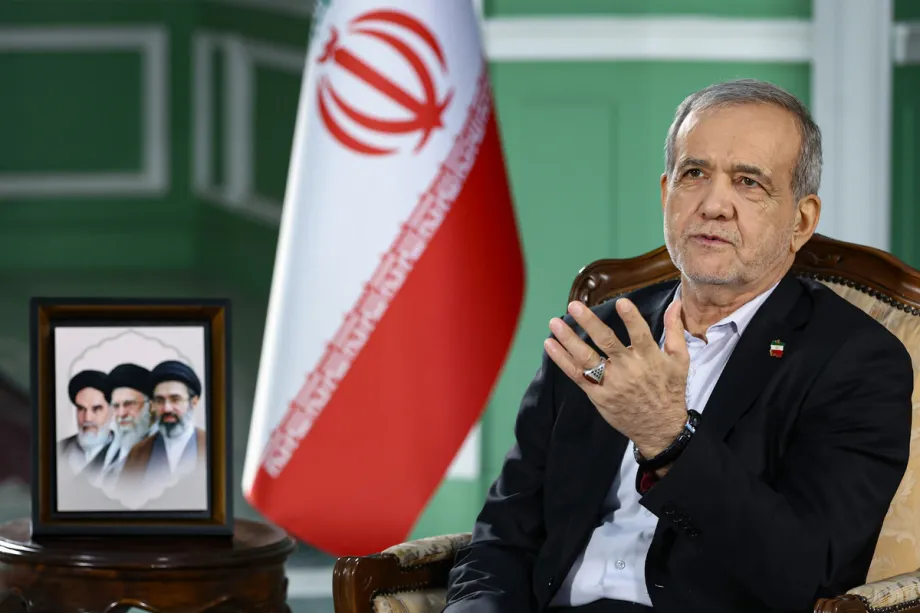
Iranian President Masoud Pezeshkian on Saturday urged US President Donald Trump to avoid creating turmoil, saying problems could be resolved through dialogue and implementation of a memorandum of understanding, Anadolu reports.
“If we proceed through dialogue and on the basis of the memorandum of understanding, we will resolve the problems and secure our rights,” Pezeshkian said in a ceremony in Tehran, as cited by Mehr News Agency.
“It is in the interest of the country, the region and the world that Trump does not create turmoil and that Israel does not cause insecurity and aggression,” he added.
Pezeshkian said Iran does not favor war but would respond firmly to any assaults.
“We do not like war, but we will stand with strength against aggression and defend ourselves,” he said, adding that no power could force a united nation determined to defend its territory to surrender.
He said Tehran was seeking to resolve problems through dialogue, but stressed that the Iranian people, officials and military commanders would “never surrender” in the face of threats and aggression.
The president also accused Israel of seeking to sow divisions among Muslim countries, saying greater unity among Islamic nations could thwart such efforts.
Turning to domestic issues, Pezeshkian said maintaining industrial production during the coming winter was a “red line,” stressing that supplies of gas, electricity and water to production facilities should not be interrupted.
He said the government would manage consumption of water, electricity, gas and fuel and, if restrictions became necessary, would first impose them on government offices and public buildings rather than shift the burden onto the public.
Pezeshkian called on the public to cooperate with the government to maintain stability, saying Iran’s adversaries should not believe that pressure would force the country to surrender.
The US-Israeli war against Iran began on Feb. 28, with attacks targeting military, nuclear and infrastructure sites across the country. Iran responded with missile and drone strikes against Israel and US military facilities across the region.
Iran and the US reached a 14-point memorandum of understanding in June, mediated by Pakistan and Qatar, aimed at ending hostilities and opening a 60-day window for negotiations toward a broader agreement.
The memorandum also addressed the reopening of the Strait of Hormuz and lifting of the US naval blockade, as well as sanctions and Iran’s frozen assets.
Tehran has maintained that further progress in talks depends on Washington fulfilling its commitments under the memorandum, while Iranian officials have said the Strait of Hormuz will not fully reopen until those obligations are implemented.
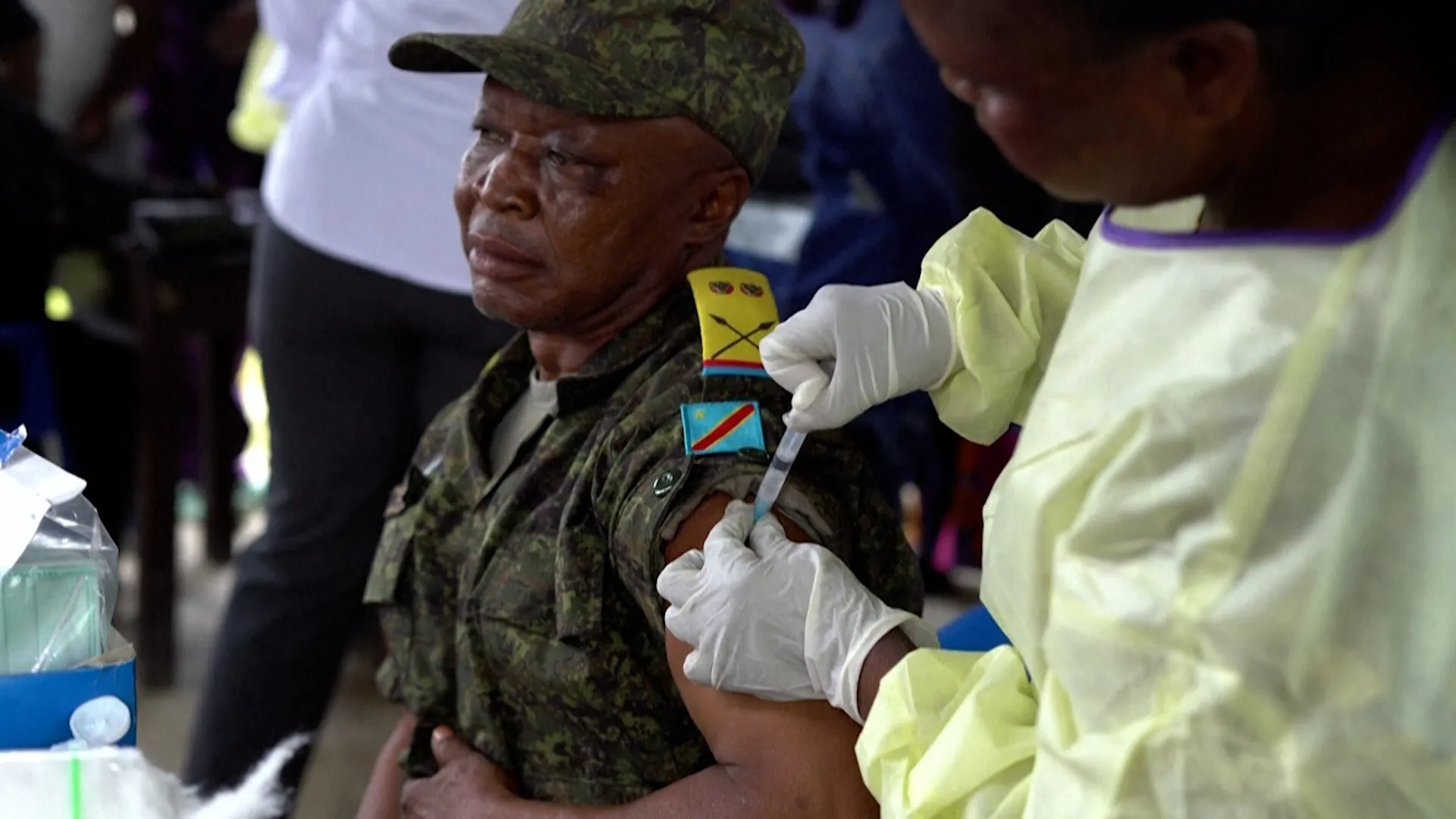
DR Congo has begun vaccinating against its largest and deadliest recorded Ebola outbreak. However, the vaccine has not been proven effective against the Bundibugyo strain, which has killed 2,786 people out of 5,795 confirmed cases since May.
Weekly insights and analysis on the latest developments in military technology, strategy, and foreign policy.
The U.S. military is planning to revamp Moron Air Base in Spain, including creating new parking spaces for as many as nine additional B-52 Stratofortress strategic bombers. This effort comes even after Spain denied permission to use the base, and its naval station in the country, for direct strike operations on Iran during Operation Epic Fury. Long-range strikes by bombers flying from Europe played a major role in that operation. It also comes as the Pentagon is reviewing its posture in Europe, which could include major basing changes that fit the Trump administration’s vision for NATO and who it prefers to work with the closest, as well as tactical and strategic concerns.
The makeover is part of a nearly half-billion dollar construction program for U.S. facilities primarily in the Rota, Spain, area, which provide a great deal of support for American forces in Europe, Africa and the Middle East. It was announced on Thursday in a pre-solicitation notice posted on the government’s contracting portal that a contract is expected to be awarded next month.
Moron, located in southern Spain, is a Spanish Air Force Base, used by the U.S. Air Force to provide expeditionary combat support and the bed-down of transient aircraft. It also plays a major role in the “staging of aircraft and personnel in support of U.S. and NATO plans, exercises and contingency operations; and to provide Base Operating Support to tenant units,” according to the Air Force Fiscal Year 2027 Military Construction plan.
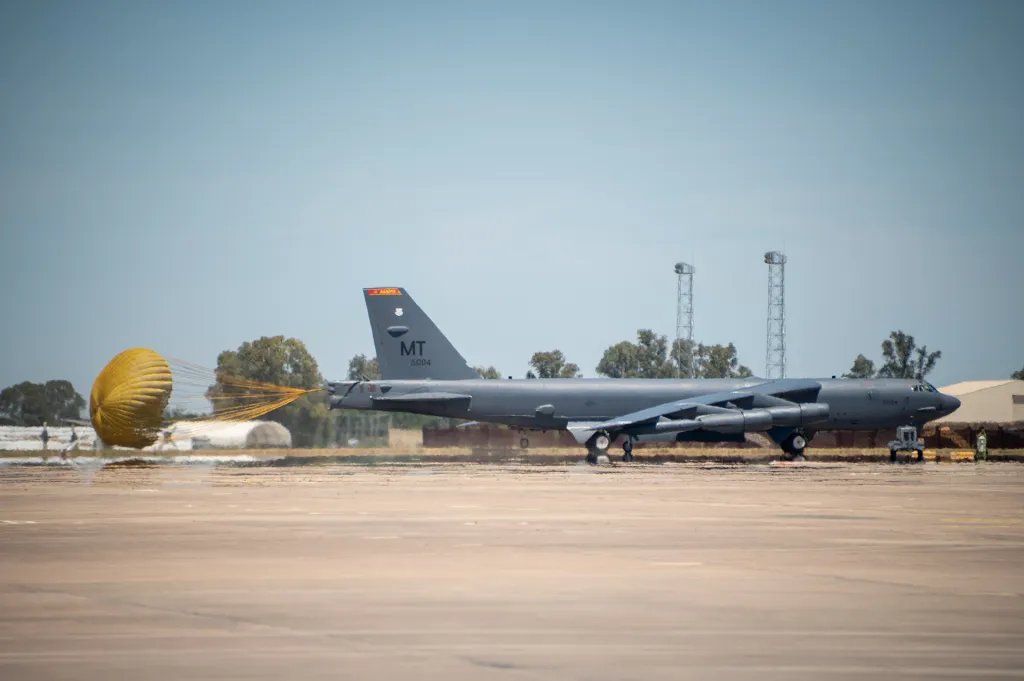
A U.S. Air Force B-52 Stratofortress assigned to the 5th Bomb Wing deploys a drag chute to slow down after landing at Morón Air Base, Spain, during a Bomber Task Force Europe deployment, May 20, 2025. (U.S. Air Force photo by Cristina Oliveira) Cristina Oliveira
The first order of business is “a Combat Aircraft Parking Apron in Moron, Spain,” the recent pre-solicitation notice states. The plan calls for the “expansion of the Aircraft Parking Apron to provide nine (9) new aircraft parking spots in an unloaded condition, or three (3) new B-52 aircraft parking spots in a live ordnance [sic] loaded condition.”
The issue of being able to store live ordnance is critical, since extra space is needed for safety purposes in case of an unintended explosion.
“The current apron is not capable of supporting any loaded strategic bombers due to limiting factors associated with unrelated facilities violating inhabited building safety arcs,” the Air Force budget document explains.
U.S. Air Force 23rd Expeditionary Bomb Squadron aircrew prepare a B-52 Stratofortress aircraft for flight during a Bomber Task Force mission at Moron Air Base, Spain, May 27, 2025. (U.S. Air Force photo by Staff Sgt. Bryan Guthrie) Staff Sgt. Bryan Guthrie
Beyond the new parking spaces, the planned expansion at Moron also calls for 10 new fuel pits and associated piping, the relocation of aCivil Engineer Storage Complex – including a new covered storage building and an open storage yard – and the extension of apron shoulders and access roads, among other items.
The Air Force sees these improvements as an imperative.
“This project is required to enhance readiness capabilities at Moron Air Base, Spain,” the Air Force Fiscal Year 2027 military construction budget documents note. “A key enabler for training and combat operations is substantial infrastructure, promoting a quick response and positioning of forces within prescribed response times. The expanded Strategic Bomber Aircraft parking apron will increase Moron Air Base’s ability to meet future mission requirements.”
If these improvements are not made, “[a]dequate airfield infrastructure will not be available to the DoW [Department of War] or its allied partners, and personnel, aircraft, and resources will lack key facilities and infrastructure to support expanded airfield operations for training and contingency environments,” the budget document warns. “This limitation will impede sortie generation and flying schedules, directly limiting airfield presence and impairing airfield capability and readiness. Therefore, responsiveness for bilateral and multilateral exercises and training missions would be compromised, directly limiting theater presence and impairing mission capability, readiness, and contingency support.”
The project has a price tag of between $25,000,000 and $100,000,000 and is “expected to be completed 1,038 calendar days after notice to proceed,” according to the pre-solicitation notice.
Moron Air Base, Spain. (Google Earth)
In addition, the Multiple Award Construction Contract (MACC) calls for new construction, renovations, alterations, demolition, repair work, and any necessary design to a wide range of U.S. assets in the region. This includes “airfield, industrial, infrastructure, administrative, training, retail, food service, munition storage, community support facilities and both vertical and horizontal construction in the Rota, Spain region or other areas managed by NAVFAC EURAFCENT, [Naval Facilities Engineering Systems Command/Navy Region Europe, Africa, Central],” the pre-solicitation notice explains. “This tool may also be used throughout the NAVFAC area of responsibility (AOR), worldwide.”
However, as the Air Force budget documents stress, the Moron project is a priority.
The installation has long played an important role for American airpower. It has served as a host for B-1B Lancer and B-52 Bomber Task Force missions and as a way station for a wide array of other aircraft from fighters to aerial refueling tankers.
A B-1B Lancer assigned to the 9th Expeditionary Bomb Squadron from Dyess Air Force Base, Texas, departs Morón Air Base, Spain, in support of Bomber Task Force Europe, April 12, 2024. (U.S. Air Force photo by Airman 1st Class Emma Anderson)
“Morón Air Base is a vital link in any operation moving east from the United States due to its strategic location close to the Mediterranean and the Middle East, its massive flight line, long runway, aircraft refueling systems and excellent weather,” according to the 496th Air Base Squadron, the facility’s host unit.
In March, Spanish Prime Minister Pedro Sánchez, one of Europe’s most vocal critics of Epic Fury, refused to allow the U.S. to use its bases in his country for direct attacks on Iran. In addition, Sánchez denied permission for the U.S. to use Spanish airspace for Epic Fury, creating a logistics headache for American aircraft movements to the Middle East.
U.S. Air Force Staff Sgt. Arturo Herrera, 496th Air Base Squadron Operational Support Team tower watch supervisor, observes two B-1B Lancers taxiing at Morón Air Base, Spain, April 17, 2024. (U.S. Air Force photo by Airman 1st Class Eve Daugherty) 2nd Lt. Eve Daugherty
Sanchez’s decision affected Naval Station Rota, another major U.S. installation in that country. Rota supports the movement of personnel, equipment, fuel, and supplies through its three operational piers. It also has a 670-acre airfield capable of supporting U.S. Navy and Air Force aviation operations, and some of the largest weapons and fuel storage facilities in Europe.
Rota is also the home of Destroyer Squadron 60 (DESRON 60), one of three U.S. Navy destroyer squadrons permanently based outside the continental United States and the only one of these to call Europe home.
The Arleigh Burke class guided-missile destroyers USS Porter (DDG 78), front, USS Donald Cook (DDG 75), USS Carney (DDG 64) and USS Ross (DDG 71), moored at Naval Station Rota, Spain. (Specialist 3rd Class Robert S. Price/Released)
Sanchez’s moves set off U.S. President Donald Trump, who was already angered by Spain’s refusal to raise defense spending to 5% of GDP, previously agreed to at last year’s NATO summit. In March, the American leader called Spain “a terrible partner” and threatened to cut off trade.
The situation reached a critical juncture at the NATO Summit in Turkey in July, with Trump again threatening Madrid.
“We don’t want to do any trade business with Spain anymore… I’d like you to cut it off,” Trump fumed in Ankara to Treasury Secretary Scott Bessent during a press conference with NATO Secretary General Mark Rutte. “Spain is a terrible partner in NATO. They don’t participate; they don’t pay. I don’t want anything to do with Spain. Cut off all trade with Spain, please, including visits. Watch them, watch them come running back; oh, they’ll come running back.”
However, the rift eased after Sánchez agreed to bump up his country’s defense budget, Trump claimed.
On his way back to the United States after the summit, he told reporters aboard Air Force One: “I did have issues, and I still do. But Spain, they came back all the way today. Spain was very generous today.”
Asked what Spain had done, he said: “They honored a request for lots of payments, and if they didn’t, we wouldn’t have even talked to them.”
The two leaders displayed new-found cordiality for the cameras while sharing a box at the World Cup Final between Spain and Argentina at MetLife Stadium in New Jersey.
President of the United States Donald J. Trump greets Spanish Prime Minister Pedro Sánchez during the FIFA World Cup 2026 Final match between Spain and Argentina at New York New Jersey Stadium on July 19, 2026, in East Rutherford, New Jersey. (Photo by Europa Press Sports/Europa Press via Getty Images) Europa Press Sports
Though the Moron construction planning predated any of the political drama, as we noted earlier, the Pentagon is reviewing how many troops it will maintain in Europe and where it will base them. Undersecretary of War Elbridge Colby made a rare visit to NATO headquarters on Thursday to meet with officials to discuss the way forward. There, he pointed out that the Pentagon’s review is “designed to ensure that NATO is moving fast and irreversibly toward Europe leading, stepping up to take primary responsibility for the defense of Europe, stepping up to ensure our forces are postured for America’s global needs, and making sure that our access, basing, and overflight are clearly delineated and assured.”
Despite the geopolitical tiffs between the two nations, the investment in Moron and the larger construction package for Spain is a clear signal of how much the military and Congress value having access to bases in that country.
Conservative MP Sir James Cleverly has said he is resigning from the shadow cabinet to run for London mayor.
“I am putting myself forward to be the Conservative candidate for mayor of London, because our capital needs more than an administrator,” he wrote in the Times.
Sir James said he has told Tory leader Kemi Badenoch he is stepping down as shadow housing secretary, saying: “I must be free to speak about every aspect of London’s future and concentrate fully on winning this race.”
The capital is not set to vote on a new mayor until May 2028. Labour incumbent Sir Sadiq Khan is yet to confirm whether he will seek an unprecedented fourth term.
The Conservatives are yet to pick their candidate for the London mayoral race.
A source close to Badenoch said Cleverly “is a formidable politician and will out-campaign Khan”.
Sir James, who was foreign secretary under former Prime Minister Rishi Sunak, wrote that he intended to make London a city to be proud of again.
“We must rebuild its reputation and make it, once again, the best place in the world to live, work, invest and build a business,” he added.
A senior Conservative politician, Sir James has held a number of ministerial positions under three prime ministers – including roles as home secretary and education secretary.
The army reservist represented the Tories on the London Assembly before his election as MP for Braintree in 2015.
After rising through the backbenches, he unsuccessfully ran for Conservative party leader in 2024, losing out to Badenoch.
Reacting to Sir James’s announcement, a source said Badenoch “really didn’t want James to leave shadow cabinet”, but believed “he will be a big asset in London”.
Current London Mayor Sir Sadiq began his first term in 2016. Cleverly wrote that the capital has been “let down by Labour”.
He accused Prime Minister Andy Burnham of treating London as a “cash cow: somewhere to tax, regulate, raid and blame”.
Sir James said: “Londoners need homes they can afford to buy or rent. Entrepreneurs need to be able to start and grow businesses without being strangled by cost and regulation.”
The last time Londoners voted for their mayor in May 2024, Sir Sadiq beat Conservative rival Susan Hall by more than 275,000 votes – representing a swing of 3.2% to Labour.
The mayor won nine of the 14 constituencies including two gains from the Tories, and gained 43.8% of the vote share.
Cleverly’s announcement follows speculation in recent weeks that he would step down and launch a bid to become London’s next mayor.
During his time at the London Assembly, Cleverly chaired the London Fire and Emergency Planning Authority, and also worked for Boris Johnson while he was mayor of London.
Weekly insights and analysis on the latest developments in military technology, strategy, and foreign policy.
The People’s Republic of China (PRC) is rapidly expanding a secretive airbase in the northwest of the country that is loosely akin to America’s top-secret proving ground at Area 51. The facility is used to test experimental platforms and next-generation combat aircraft, sporting one of the longest runways in the world at 16,400 feet. It has transformed from a relatively austere and remote airstrip into an increasingly sprawling People’s Liberation Army (PLA) flight-test center over the past few years, and there is no sign that construction will slow anytime soon. In fact, it’s accelerating, and one of its newest features is of significant interest.
Satellite imagery taken by Planet Labs on August 27, 2026, shows the scale and scope of the buildout in high-resolution detail.
TWZ/IAN ELLIS-JONES WITH DAMIEN SYMON (HIGH RESOLUTION)
The installation is located near the infamous Lop Nur Nuclear Test Base in the desolate, arid Xinjiang autonomous region of northwestern China. Lop Nur is the PRC’s primary testing facility for nuclear weapons and where China detonated its first nuclear device, codenamed Project 596, in 1964, becoming the world’s fifth nuclear power.
Location of Lop Nur Airbase in the Xinjiang region of northwestern China. Photo: Google Earth
Last year, TWZspotted both of China’s sixth-generation stealth fighter designs, the J-36 and J-XDS, at the base for the first time − far from the home airfields of their respective manufacturers, Chengdu and Shenyang. Before supporting the development of advanced air combat technologies, the facility was linked to military space development efforts and testing reusable space planes as far back as 2020. At that point, the site was nothing more than a 3.1-mile runway with a small hangar and a few scattered vehicles.
In 2023, the main apron was significantly expanded, and a new large hangar was added. In 2025, new hangars were added on both sides of the main ramp area via extensions. These shelters appeared to be optimized for tactical fixed-wing aircraft. Not long after those facilities were complete, the two 6th-generation fighter aircraft showed up. The pace of further construction ramped in May 2025 and hasn’t let up since. The time-lapse below visualizes the gradual, then all-at-once progression over the past six years.
“New taxiways, aircraft turning pads, hangars and possible fuel-storage infrastructure substantially increase the airfield’s capacity to support aircraft movements and sustained flight-test activity,” Damien Symon, a geo-intelligence researcher and friend of TWZ, told us. Symon assisted TWZ in identifying the new structures.
Several key areas of the site have been reshaped since the beginning of the year, marked on the annotated graphic near the top of this story.
Below the southern end of the runway, construction is moving fast on a new taxiway extension running parallel to the runway, connecting it to the central apron and main hangar. The nearly completed route will allow additional aircraft to move more freely without having to back-taxi on the runway, which is a huge problem for higher operations tempos and more complex sortie launches and recoveries.
“Of particular interest are several large aircraft hangars in the southern section of the airbase, each measuring approximately 80 by 40 meters (262 by 131 feet),” Symon said of the three hangars grouped together that are being constructed on the south ramp. A fourth appears on its own just farther south on the apron, with different dimensions. The hangars, with direct access to the new southern taxiway, are sized to accommodate all of the tactical and strategic aircraft in the PLA’s current fleet. For scale, the PRC’s only strategic bomber in active service, the Xi’an H-6, has a wingspan of approximately 108 feet. But what’s already flying operationally isn’t the focus of these new facilities, it’s a unique class of aircraft, some of which are in testing now and more will be in the future.
The hangars’ wide proportions are similar to those of new ones found at China’s other secretive major test airbase in Xinjiang, located near Malan, which is largely focused on unmanned aircraft. The buildout comes as two massive stealth flying wing drones are in flight testing and we await the H-20 stealth bomber. It remains unclear where the H-20, which still hasn’t made a public appearance, will be tested. However, Lop Nur would be an ideal locale considering how sensitive the program is, and these new hangars could very well be in preparation for its arrival. It’s also worth noting that this installation appears more focused on crewed platforms, not drones, like at Malan. So sending the H-20 here for at least part of its test program would make sense, although this is just speculation at this time.
An image of the two massive flying wing drones, one as large as a B-2 bomber, operating out of Malan. The third aircraft appears to be a high-performance unmanned combat air vehicle/collaborative combat aircraft also undergoing test. The large flying wings have similar wide and low-slung hangars built for them as part of a new advanced test facility recently constructed at the base. TWZ/IAN ELLIS-JONES
Broad construction continues behind the central apron area, with several buildings that were in development late last year now completed. A cluster of prefabricated containers arranged in tight rows for storage and accommodation has appeared since our last review. The additional laborers, materials, or equipment could be housed there to support the aggressive pace of development, as a much larger workforce would be required to speed up the construction process. Excavation and construction have started at other locations nearby, but they are in the early stages of development and their future purpose is unknown. Farther east, on the outskirts of the facility, a concrete batching plant with wash-water ponds and segregated aggregate stockpiles was recently built.
Grading is underway for another taxiway that will connect the central apron to the northern part of the main runway. The latest imagery suggests that concrete has just started to be poured. A circular pad with a 400-foot diameter has taken shape at the northern end with direct access to both the runway and the main base, which TWZ assesses to be an engine run and turnaround pad. If a shelter were added, it could also act as a “scoot and hide” area for keeping sensitive test articles from being seen by satellites passing overhead. An apron extension near the circular pad is also under construction, with at least two large hangars being built there, although they will have more traditional proportions compared to the four wide ones on the south ramp.
Additionally, Symon identified possible fuel-storage infrastructure under construction that would “further expand the base’s aviation-support capacity.” If confirmed, “the additional infrastructure could support a higher sortie rate and longer periods of sustained flight activity, consistent with an expansion in the scale or tempo of operations at Lop Nur,” he added.
The facility is clearly in the process of taking on a very important role in China’s advanced aerospace development ecosystem, and its significance will only grow as it expands to accommodate more, and bigger, airframes. With the hangar additions we are seeing, major programs are about to migrate there, even on a detachment basis, for extensive testing. The new southern hangars, in particular, suggest the PLA expects to be testing aircraft with far wider wingspans in the not-too-distant future.
Contact the author: ian.ellis-jones@recurrent.ioor on X @ianellisjones
Author’s note: Special thanks to Damien Symon for assisting with the imagery analysis, be sure to follow him on X at @detresfa_