Discover the latest happenings and stay in the know with our up-to-date today news coverage. From breaking stories and current events to trending topics and insightful analysis, we bring you the most relevant and captivating news of the day.
At least four Palestinians are trapped inside the home, while settlers have set fire to nearby Palestinian land.
Published On 29 Aug 202629 Aug 2026
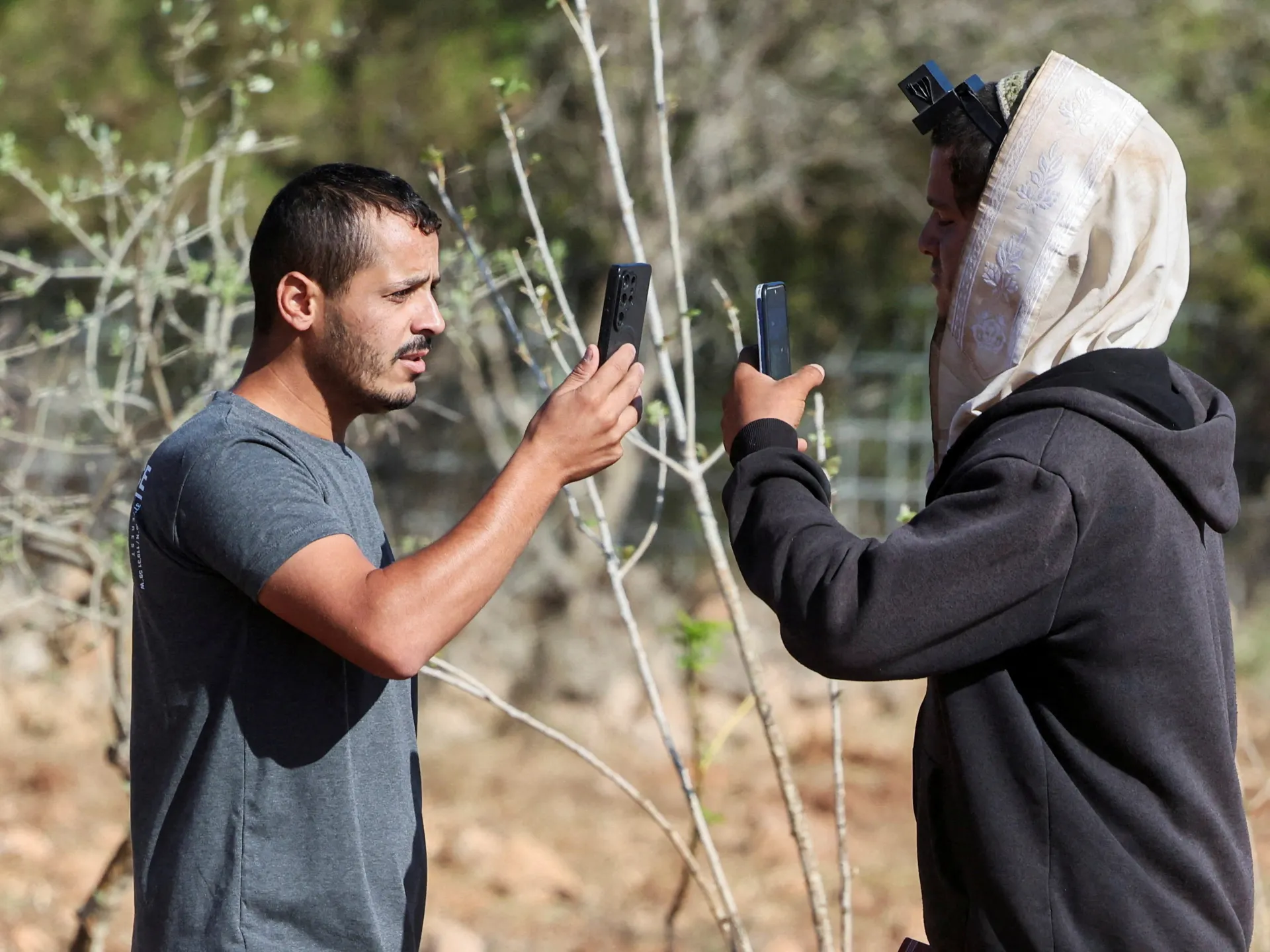
Israeli settlers, backed by Israeli forces, have surrounded a Palestinian home in the village of Qusra, south of Nablus in the occupied West Bank.
At least four Palestinians are trapped inside the home while settlers have set fire to nearby land, according to Al Jazeera journalists.
Recommended Stories
list of 4 itemsend of list
Coordination is under way to allow ambulances to reach the area and evacuate one injured person.
Qusra has faced an escalating campaign of settler violence over the past month.
Settlers set fire to a mosque in the village in July, and since August 9 have besieged three Palestinian homes in the Ras al-Ain area, cutting access to water, electricity and other essential supplies.
“We’re not allowed to live freely in and out of our houses; no one is allowed to bring us any food or visit us from family members or friends,” Loui Abu Raideh, a resident trapped in his home, told Al Jazeera.
He said residents have to coordinate with the mayor of Qusra to get food and supplies, and it can take three to four days to get approval.
Israeli forces have declared the area a closed military zone and restricted Palestinians from entering and leaving, placing a gate at the main entrance of Qusra itself. Palestinians travelling into the village are forced to take alternative routes which are often blocked by Israeli forces.
On Wednesday, the Israeli military erected three new roadblocks at locations that encircled the top of the Ras al-Ain hill, disconnecting homes from the area below it.
Raideh said the feeling of being trapped is “a nightmare … 21 days, we can’t even sleep, we have to stay up at night [and] keep watching the security cameras, because those settlers can attack any time”.
Settler attacks – supported by the Israeli military – on Palestinian homes, businesses and farmland across the West Bank have been common for decades as illegal settlements have expanded across the territory.
The attacks have increased in intensity and frequency since Israel launched its genocidal war against Palestinians in Gaza in October 2023, in response to the Hamas-led attack on southern Israel.
A SOCIAL butterfly of a 41-year-old claims to know three whole people he can readily classify as friends.
Thanks to his gregarious lifestyle of working in an office and monthly pub visits, Joe, not his real name, has amassed a large, close-knit social circle consisting of three people he broadly tolerates.
He said: “Apparently there’s a male loneliness epidemic? I wouldn’t know. My magnetic personality has drawn three mates towards me over four decades, and I see them up to four times a year.
“I met Steve when we shared the same table at lunch, Jimmy is an old school friend, and the third is my wife’s best mate’s husband. We’re pretty close. I think he’s called Matt.
“We meet up once every few months to talk about films we didn’t enjoy and complain about the price of petrol. Separately, of course. All four at once would be overwhelming. There wouldn’t be time for any silences.
“Once I did try befriending a fourth bloke but realised it was too much. I barely had a month clear to myself. Also when he found out I already had three friends he called me a whore.
He added: “To be honest I’m thinking of scaling down to two. Better a couple of close pals than a load of superficial ones, and I think Steve might be a toxic fake bitch.”
The crash occurred when a truck overtook another vehicle and struck the minibus, police say.
Published On 29 Aug 202629 Aug 2026
At least 27 people have been killed after a minibus carrying members of a church collided head-on with a haulage truck in central Zimbabwe, police say.
The crash happened at about 18:30 GMT on Friday near Chivhu, about 140km (87 miles) south of the capital, Harare, police spokesperson Paul Nyathi said on Saturday.
Recommended Stories
list of 4 itemsend of list
The truck was trying to overtake another vehicle when it crashed with the minibus taxi, which was carrying members of a popular African Christian denomination who were travelling for a conference, he said.
State-run broadcaster ZBC News, quoting a provincial government minister, said 23 people died at the scene, while others succumbed to their injuries after being admitted to a local hospital.
Footage shared on social media by ZBC showed the mangled minibus charred to a shell, with the truck on the opposite side of the road.
The crash occurred in a flat, remote stretch of road, with low vegetation lining the roadside and open terrain beyond.
The incident is the latest in a string of deadly crashes on Zimbabwe’s roads, which are riddled with potholes after years of underfunding and neglect.
For everyday transport, many Zimbabweans rely on the privately run minibus taxis, known locally as kombi, but they are often criticised for overloading.
In April, at least 18 people were killed when a minibus burst into flames on a highway in the south, while earlier that month a woman and her five children died when their vehicle collided with a haulage truck on another highway linking Zimbabwe and South Africa.
The 23-year-old French forward would bolster new boss Andoni Iraola’s squad after the departure of Mohamed Salah.
Published On 29 Aug 202629 Aug 2026
Liverpool have finalised an agreement to sign France forward Bradley Barcola from European champions Paris Saint-Germain in a deal worth up to 123 million pounds ($166m), media reports said, with the 23-year-old set to become the latest high-profile addition to Andoni Iraola’s squad.
The 20-time English champions will pay a package worth 106 million pounds ($143m), with add-ons potentially rising to 17 million pounds ($23m), for Barcola, the BBC reported on Saturday. The Athletic reported that he is set to sign a five-year contract.
Recommended Stories
list of 4 itemsend of list
Barcola joined PSG from his boyhood club Olympique Lyonnais in 2023 and went on to enjoy a trophy-laden spell in the French capital, winning back-to-back Champions League titles in 2024-25 and 2025-26, three Ligue 1 crowns and two French Cups, among other honours.
He made 152 appearances in all competitions for PSG, scoring 39 goals and supplying 37 assists.
He had two years remaining on his PSG contract.
Barcola would be the latest addition to new manager Iraola’s squad following the close-season arrivals of Uruguayan defender Ronald Araujo on loan, French centre back Jeremy Jacquet and Spanish forward Victor Munoz.
Liverpool’s attacking options currently include British record signing Alexander Isak, Cody Gakpo, Rio Ngumoha and Munoz as the Merseyside club adjusts to life after talisman Mohamed Salah’s departure. Forward Hugo Ekitike is sidelined with a long-term injury.
King Harald, Europe’s oldest monarch, was viewed as a reformer who embraced inclusivity.
Published On 29 Aug 202629 Aug 2026
Norwegians are saying goodbye to King Harald at the Royal Palace in Oslo where he lies in state, with many well-wishers remembering a unifying leader who was on the throne for 35 years.
A national period of mourning was declared in the Nordic kingdom following the death of Europe’s oldest monarch on Friday, aged 89. Thousands have gathered in the capital since then to pay their respects and lay flowers. He was known in Norway as a reformer and the embodiment of a tolerant and open nation who embraced inclusivity.
Recommended Stories
list of 4 itemsend of list
“He has meant a great deal and has been a unifying king,” Line Stousland, 49, told AFP news agency. “He has been a king of the people, like a grandfather to the whole nation”.
King Harald died in Oslo University Hospital where he had been since August 17. He was suffering from haemolytic anaemia, a condition caused by an abnormally rapid destruction of red blood cells that leads to fatigue and shortness of breath.
A date for the funeral has not yet been set.
Flags are flying at half-mast throughout Norway with portraits of him in gala uniform spotted everywhere, from bus stops to offices, shops and public buildings.
As Norwegians mourned, the transition to a new reign began immediately. Harald’s 53-year-old son, who will be known as King Haakon VIII, became Norway’s new monarch the moment his father passed away. He is due to take the oath in front of parliament on Tuesday, when he will swear to defend Norway’s constitution and laws.
A police investigation was opened into former Prime Minister Thorbjorn Jagland on suspicion of corruption, while the princess’ 29-year-old son, Marius Borg Hoiby, the new king’s stepson, was sentenced in June to four years in prison on two counts of rape and 32 other charges, including domestic violence.
“An era has ended. A new one begins. The king is dead. Long live the king,” Prime Minister Jonas Gahr Store said in a speech shortly after meeting the new monarch. “We will remember King Harald for his love for his people, for his humour and warmth and for his unwavering faith in us.”
Who: Chelsea vs Brighton What: English Premier League Where: Stamford Bridge, London, United Kingdom When: Sunday, August 30, at 2pm (13:00 GMT) How to follow:Al Jazeera Sport will bring you all the build-up from 10:00 GMT ahead of our live text commentary stream
Chelsea and Brighton will look to build on decent starts to the season, as the Blues welcome the Seagulls to Stamford Bridge.
Chelsea began life under new coach Xabi Alonso with a breathless 3-2 victory at West London neighbours Fulham in the Premier League on Monday as their exciting front three of Joao Pedro, Morgan Rogers and Cole Palmer all found the net.
They then followed that up with a solid 2-0 win over Luton in the League Cup on Thursday.
But Fabian Hurzeler’s Brighton side also came into the game in a buoyant mood after recording back-to-back 4-0 home wins over Aston Villa in their Premier League opener last weekend and against Norwegian side Tromso in a Europa Conference League playoff on Thursday.
Brighton will also fancy their chances against Chelsea, having won their last three league games against the Blues while finding the net three times on each occasion.
Fernandez’s Chelsea future uncertain as Alonso seeks commitment
Alonso said he wants players that “feel a desire” to play for Chelsea after Enzo Fernandez was left out of Thursday’s League Cup win over Luton.
The Argentina midfielder has been linked with a move to Manchester City, but no suitor has yet met Chelsea’s reported 120 million-pound ($162m) valuation of Fernandez.
The 25-year-old came off the bench in the Blues’s 3-2 win over Fulham to give Alonso a winning start to his reign in the Premier League on Monday.
However, the former Real Madrid boss hinted that Fernandez may not be involved against Brighton.
“We need to take everything into consideration: players that are in good moments, players that are not feeling that energy to play. For me, it’s very important that they feel that desire to play and to have good preparation,” said Alonso.
“We talked and we decided that [for Luton] it was better not to be part of the squad. He’s a top player, there’s no doubt about that.”
Alonso arrives at Stamford Bridge for the game against Luton [Peter Cziborra/Reuters]
Alonso happy with squad ‘balance’ amid busy transfer window
Selling Fernandez would ease the pressure on Chelsea to meet financial sustainability regulations after another window of heavy investment in the transfer market.
Morgan Rogers, Maxence Lacroix, Marco Palestra, Valentin Barco, Pep Chavarria, Danny Welbeck, Emmanuel Emegha and Geovany Quenda have arrived at Stamford Bridge for combined fees in excess of 300 million pounds ($406m).
Aston Villa’s Emiliano Martinez is also set to join to replace the error-prone Robert Sanchez as Chelsea’s first-choice goalkeeper.
There have also been a number of departures from the club in recent days, including strikers Liam Delap and Nicolas Jackson.
Alonso, who previously said his bloated squad size needed to be drastically cut, is satisfied with the clear-out.
“We are quite close to the plan that we had. We will see where we finish, if it’s fully executed or there are some things still to be done,” he added.
“But overall the balance of what we have is going to be good. We need to see how the last few days develop.”
Martinez has been signed from Villa but may not make the starting XI for the game against Brighton [Vincent Carchietta/Imagn Images via Reuters]
Hurzeler warns of Cole Palmer threat
After a poor season, Palmer looked back to his best against Fulham as he thrived while roaming in a free role under Alonso.
During his pre-match news conference, Hurzeler warned his side cannot defend against Palmer on a “one-to-one” basis and must be collectively strong to stop the playmaker and Chelsea’s other talents.
The German coach said he was happy with his own squad as the transfer window is set to close.
“There’s a minor issue with small injuries but I’m not here to complain; I’m here to find solutions together with my team and that’s what we try to do since day one, so yes, I’m happy with the squad,” he said.
He said new signings Jaouen Hadjam and Promise David should be available for the Chelsea game.
I think they are two great players. Two great personalities. They make our squad stronger,” he said.
David in action for Canada during the World Cup as he challenges Morocco’s Yassine Boubou [Troy Taormina/Reuters]
Prediction
The Opta supercomputer has made Chelsea the favourites, with a win probability of 49.6 percent. Brighton were given a 26 percent chance of winning, while a draw was estimated at a 24.4 percent likelihood.
Head-to-head
The two clubs have faced each other 28 times, with Chelsea winning 16 games, Brighton winning 7, and five matches ending as draws.
Brighton have won the last four encounters between the two sides, with Chelsea’s last victory in the tie coming back in September 2024.
Last five encounters:
April 21, 2026: Brighton 3-0 Chelsea (Premier League)
September 27, 2025: Chelsea 1-3 Brighton (Premier League)
February 14, 2025: Brighton 3-0 Chelsea (Premier League)
February 08, 2025: Brighton 2-1 Chelsea (FA Cup fourth round)
September 28, 2024: Chelsea 4-2 Brighton (Premier League)
What happened the last time the two clubs met?
Brighton’s Ferdi Kadioglu netted an early opener, and Jack Hinshelwood and Danny Welbeck scored in the second half to pile more misery on floundering Chelsea in a 3-0 Premier League victory back in April.
The result saw Brighton climb above their visitors to sixth in the table, with Chelsea in the midst of a dire run of results that would see them miss out on European football this season.
Kadioglu celebrates scoring his team’s first goal at the Amex Stadium on April 21, 2026 [Warren Little/Getty Images]
Chelsea’s team news
Marco Palestra remains unavailable with an injury, as is Jordan Henderson, who continues to recover from a broken wrist sustained while celebrating England’s last-16 World Cup win over Mexico.
However, Alonso said he was hopeful that key midfielder Moises Caicedo will be fit enough to face his former club, while Levi Colwill and Geovany Quenda are also in contention to play.
Defender Wesley Fofana returns after serving his suspension for a red card on the final day of last season at Sunderland.
Alonso suggested that the unsettled Enzo Fernandez may not feature as he is being linked with a move to Manchester City.
Yankuba Minteh, Kaoru Mitoma, Stefanos Tzimas and Evan Ferguson are all long-term absentees for Brighton.
Jack Hinshelwood and Georginio Rutter are doubts after picking up knocks. If Rutter is unable to feature, then either Charalampos Kostoulas or new loan signing Promise David could start up front.
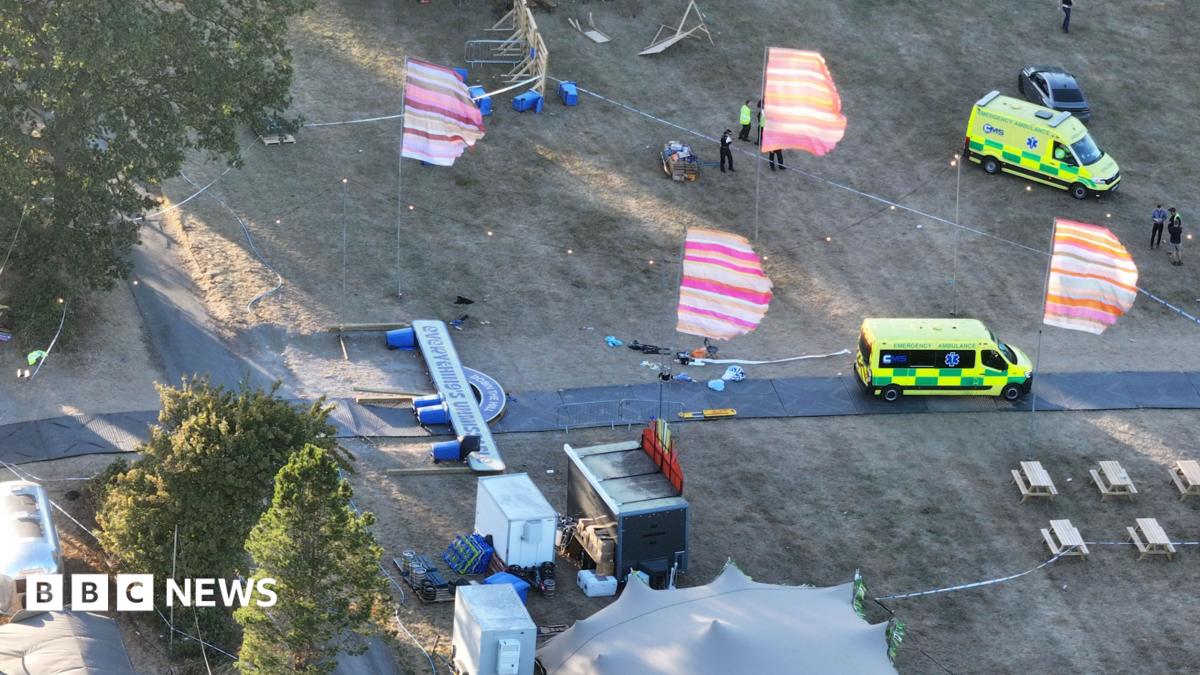
The festival began on Friday and was due to continue until Sunday, but a decision was made by organisers to cancel the remainder of the event after the incident .
“We are working with the emergency services, police and the Health and Safety Executive as they establish the circumstances surrounding today’s incident,” the organisers said.
“We are incredibly grateful to everyone who responded, and to our teams and community for the care they have shown one another.”
Christian parent support charity ParentFuel said its people at the festival were all safe.
“We cannot praise the BCF (Big Church Festival) team enough for the way things have been handled,” they said on social media on Saturday morning.
“We are currently sat in the volunteer tent with a brew in hand, worship music being played and the warmth of chatter around us.”
The charity said it was a “freak accident”.
“Life is so precious and so, so short. This weekend brought that ever closer for us all,” they added.
Weekly insights and analysis on the latest developments in military technology, strategy, and foreign policy.
Welcome to Bunker Talk. This is a weekend open discussion post for the best commenting crew on the net, in which we can chat about all the stuff that went on this week that we didn’t cover. We can also talk about the stuff we did or whatever else grabs your interest. In other words, it’s an off-topic thread.
This week’s caption reads:
Cutaway display of a concrete masonry basement fallout shelter with an exercise bike, television and library, 1950s. (Photo by Pictorial Parade/Getty Images)
PRIME DIRECTIVES:
If you want to talk politics, do so respectfully and know that there’s always somebody that isn’t going to agree with you.
If you have political differences, hash it out respectfully, stick to the facts, and no childish name-calling or personal attacks of any kind. If you can’t handle yourself in that manner, then please, discuss virtually anything else.
No drive-by garbage political memes. No conspiracy theory rants. Links to crackpot sites will be axed, too. Trolling and shitposting will not be tolerated. No obsessive behavior about other users. Just don’t interact with folks you don’t like.
Do not be a sucker and feed trolls! That’s as much on you as on them. Use the mute button if you don’t like what you see.
So unless you have something of quality to say, know how to treat people with respect, understand that everyone isn’t going to subscribe to your exact same worldview, and have come to terms with the reality that there is no perfect solution when it comes to moderation of a community like this, it’s probably best to just move on.
Finally, as always, report offenders, please. This doesn’t mean reporting people who don’t share your political views, but we really need your help in this regard.
Icelanders head to the polls on Saturday to decide whether their country should reenter negotiations to join the European Union, a vote that could have economic and security implications beyond the small Arctic country.
The election comes 13 years after Iceland, under a Eurosceptic government, paused the last EU accession talks, believing the country would fare better outside the bloc.
Recommended Stories
list of 3 itemsend of list
But much has changed since then.
Arctic security concerns have grown amid Russia’s war against Ukraine and United States President Donald Trump’s threats to invade neighbouring Greenland, the cost of living has climbed and Iceland’s currency has kept wavering.
Prime Minister Kristrun Frostadottir, whose Social Democrats party is pro-EU, said she will honour whatever choice the public makes.
If Icelanders vote “yes”, the country would likely start years of negotiations with Brussels to hammer out membership terms. It would then hold a second referendum on whether to formally become part of the EU.
Frostadottir has said a “yes” vote would see the nation “enter negotiations with our heads held high and stand together in seeking a good agreement”.
If the result is “no”, “all speculation about what [EU membership] might involve will be set aside”, she said.
Knife-edge vote
Recent surveys show Icelanders are almost evenly split on the proposal.
A Gallup opinion poll conducted this week found that 51.6 percent of respondents were against new EU membership talks, while 48.4 percent favoured them.
An earlier survey by Icelandic pollster Maskina showed a narrow majority of 51.3 percent of respondents backing new EU accession talks.
Gabriella Gricius, associate professor of strategy at the Norwegian Military Academy, said Iceland’s lack of armed forces has always left it “reliant on NATO and specifically the US for its security”.
“As the US has grown more unpredictable, and specifically, its rhetoric around Greenland has grown more concerning, it is not surprising that Iceland is seeking additional security guarantees through the EU,” Gricius told Al Jazeera.
Adam Fishwick, a lecturer in international relations at the University of Iceland, said the expected benefits of membership would be reduced inflation, a more stable currency and fewer customs barriers for consumers.
“There may also be opportunities for regional development in Iceland, which is an important issue here, with access to dedicated EU funds,” he told Al Jazeera.
However, the debate over EU accession remains “quite polarised”, he noted. Opponents fear the small nation of 395,000 people would “lose control over everyday policy decisions” and have limited sway in a bloc filled with larger European powers, Fishwick said.
Voters to weigh impact on inflation, currency
The benefits of EU membership for Iceland are not as obvious as for other potential candidates.
Iceland is a relatively wealthy country that, as a member of Schengen and the European Economic Area, already gets a lot of the single-market access that would come with EU membership.
However, the country has experienced growing economic pains in recent years, primarily regarding the cost of living. Consumer prices in 2025 exceeded those of any EU state and were 87 percent higher than the EU average.
Iceland’s currency, the krona, meanwhile, has been prone to exchange-rate swings that opponents say lower investment confidence and make it more costly to borrow money. Earlier this year, the Ministry of Finance and Economic Affairs concluded that the costs of maintaining Iceland’s own currency probably outweigh the benefits. Adopting the euro, it said in a report, may help reduce interest rates and transaction costs.
Joining the EU could help address both issues.
Iceland would become a part of the bloc’s customs union, in which goods move freely between members and face a common tariff when imported from non-member countries. It could also adopt the more stable euro as its currency.
Fishing industry concerns: ‘Backbone of the economy’
A major concern, though, is the impact on the country’s fishing industry, an economic pillar that in 2024 directly contributed about 8 percent of gross domestic product (GDP) and much more indirectly.
By joining the EU, Iceland would become subject to the EU’s Common Fisheries Policy, which governs European fishing fleets and fish stocks.
Iceland’s fishing industry fears this change could lead to new catch quotas, increased foreign competition and, more broadly, less control over local fishing policy.
A fishing boat battles rough seas in Grindavik, Iceland [File: Brook Mitchell/Getty Images]
“The fundamental objection to EU membership is that Iceland would not retain full control over its fisheries – the traditional backbone of the economy,” Valur Ingimundarson, professor of contemporary history at the University of Iceland, told Al Jazeera.
Even if Icelanders vote “yes” to proceed with EU negotiations, the country is unlikely to go forward with EU membership unless it secures “ironclad” exemptions regarding its fishing industry, said Ingimundarson.
‘Additional security guarantees’
Mounting security pressures in the Arctic, coupled with uncertainty about US commitment to its traditional European partners, are also contributing to Iceland’s renewed interest in the EU, say analysts.
Though Iceland is a founding member of NATO and has a 75-year defence treaty with the US, it has no standing armed forces of its own and is located in a geopolitical hotspot that both Russia and the US have sought to project power in.
While Russia has expanded its military presence in the Arctic in recent years, President Trump has repeatedly threatened to use force to seize nearby Greenland.
Ingimundarson said pro-EU Icelanders see “the EU as a source of political and economic protection for a small state confronted by coercive great-power politics and uncertainty about the US as a reliable security partner”.
Iceland’s Foreign Minister Thorgerdur Gunnarsdottir has said membership would be “a valuable addition” for Iceland, even though NATO and the US would still be its core security partners.
In comments to Reuters, Gunnarsdottir said Iceland has been “disappointed” with the US’s “pressure campaign waged against both Greenlanders and Denmark”.
Russia poses a security threat “in our waters and nearby, in the North Atlantic”, said Gunnarsdottir.
For the EU, bringing Iceland into its orbit would expand EU territory much deeper into the North Atlantic, potentially deepening its strategic focus there, said Gricius, the professor.
“Icelandic membership in the EU wouldn’t necessarily change Arctic security dynamics, as Iceland is and will continue to be an Arctic state,” she said. “However, it may influence how the EU behaves in the Arctic, as the EU would then include four of the eight Arctic states – Iceland, Finland, Sweden and Denmark.”
US President Donald Trump has claimed the US and Venezuela have reached the ‘biggest oil deal in world history’, which will give the US control over 65 billion barrels of Venezuelan oil. Critics say it’s predatory. Soraya Lennie explains what we know.
US president says deal secures majority US control of more than 65 billion barrels of proven oil reserves in Venezuela.
Published On 29 Aug 202629 Aug 2026
The United States has struck a deal with Caracas that would give them control of some 65 billion barrels of Venezuela’s proven oil reserves, President Donald Trump has announced, while reviving the OPEC nation’s battered energy industry.
In a post on Truth Social, Trump said the “historic transaction more than doubles American oil reserves” and “will substantially lower gas prices for all Americans”.
Recommended Stories
list of 3 itemsend of list
“At my direction, Secretary of State Marco Rubio, and Secretary of War Pete Hegseth, working closely with Highly Respected Interim President of Venezuela, Delcy Rodriguez, and, through a partnership with private business, have secured majority US control of more than 65 BILLION BARRELS of proven Oil Reserves in Venezuela, at no cost to the American Taxpayer,” Trump wrote.
Venezuela’s interim President Delcy Rodriguez welcomed the deal [File: Efrain Gonzalez/AFP]
Venezuela’s interim President Delcy Rodriguez welcomed the deal, which is expected to bring about $209bn to the state’s treasury.
The announcement followed weeks of negotiations over an agreement that would give American companies long-term access to a group of Venezuelan oilfields and guarantee the resulting crude supply to the US.
Venezuelan officials are preparing to sign agreements next week granting new oil exploration and production rights to a number of companies, particularly US firms.
Sources previously told Reuters news agency that a lease model was under consideration, with fields potentially auctioned to US producers, but the arrangement could face legal and constitutional challenges in Venezuela, where the state retains control over core oil industry activities.
The new deal would represent a dramatic expansion of Washington’s role in Venezuela’s oil industry as the Trump administration seeks to revive the country’s production and secure more crude for US refineries. Venezuela holds the world’s largest proven oil reserves, but produces only 1.25 million barrels per day, far below its potential after years of underinvestment, mismanagement and sanctions.
Trump did not disclose the structure of the agreement, the fields or companies involved, nor how the US would exercise majority control over the reserves.
Secretary of State Marco Rubio described the agreement as a win for both countries, saying on X that it would secure stable, low-cost oil for the US and help lower petrol prices.
For Venezuela, Rubio said the deal would bring nearly $100bn in private investment, support thousands of high-paying jobs and help rebuild the country’s economy.
Top envoy for the US-led Board of Peace says Gaza is at risk of being ‘gone for good’ without reconstruction, Israeli withdrawal and demilitarisation in the territory. Nikolay Mladenov tells Al Jazeera worsening conditions for Palestinians could fuel another security crisis.
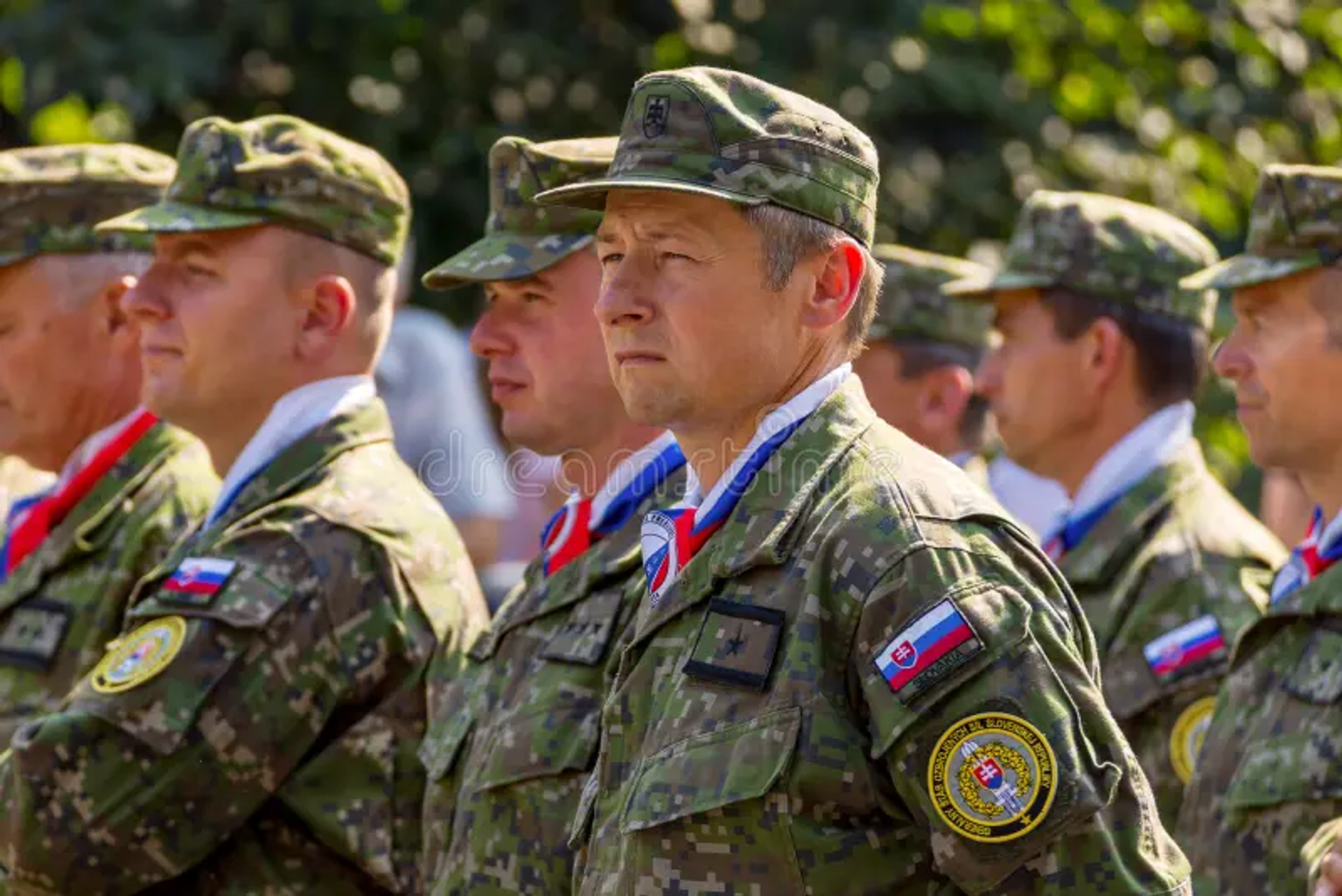
In 1938, the Munich agreement established the independent Slovak state, led by Jozef Tiso. In June 1944 Tiso declared martial law allowing the German army to occupy the country on August 29th.
Up to that point, there had been limited and sporadic guerrilla resistance operations across Slovakia. To counteract the planned occupation, a formal military plan was put in action by the exiled Czechoslovak government, Slovak partisans and deserters from the Slovak army. Headquartered in central Slovakia, the forces of the uprising consisted of several armoured units as well as part of the Slovak Air Force.
Despite some limited support from the allies, the uprising was crushed by the German forces before the end of October 1944. After the defeat, the remaining forces of the uprising continued with small guerrilla actions until the end of the war.
Rayan Cherki refuses to hide his emotions, an open book for all to see and hear in times of joy and disappointment.
Moments after Manchester City had put down their first heavyweight marker of the post-Pep Guardiola era by brushing aside Crystal Palace, he was asked live on TV how much he enjoyed the game. Rather than providing the usual textbook answer, he instead gave a colourfully uncomplimentary – and unprintable – description of his own first-half performance.
Erling Haaland, standing alongside Cherki as he waited to hand over the player-of-the-match award, could only laugh at the France attacker’s sweary honesty.
Indeed, the 23-year-old also refuses to hide his talent, making a nonsense of his self-criticism by unveiling a Selhurst Park masterclass with two brilliant second-half goals in the 4-1 victory.
Cherki made his impact under Guardiola last season, although there was always a feeling the mercurial signing from Lyon for a bargain £30m could produce more. He made 33 Premier League appearances – but 14 of those were as a substitute.
And there is a sense that he already has something to prove under new boss Enzo Maresca amid City’s vast attacking resources, coming off the bench to assist the two late goals that gave them victory against Bournemouth on the opening weekend.
Cherki was seen in animated conversation with Maresca after the final whistle, but his reward was a start at Selhurst Park and he delivered the sort of irresistible performance he, as well as City, needed.
DRC’s is the fastest-spreading Ebola outbreak ever recorded, with 5,794 confirmed cases and 2,786 deaths.
Published On 28 Aug 202628 Aug 2026
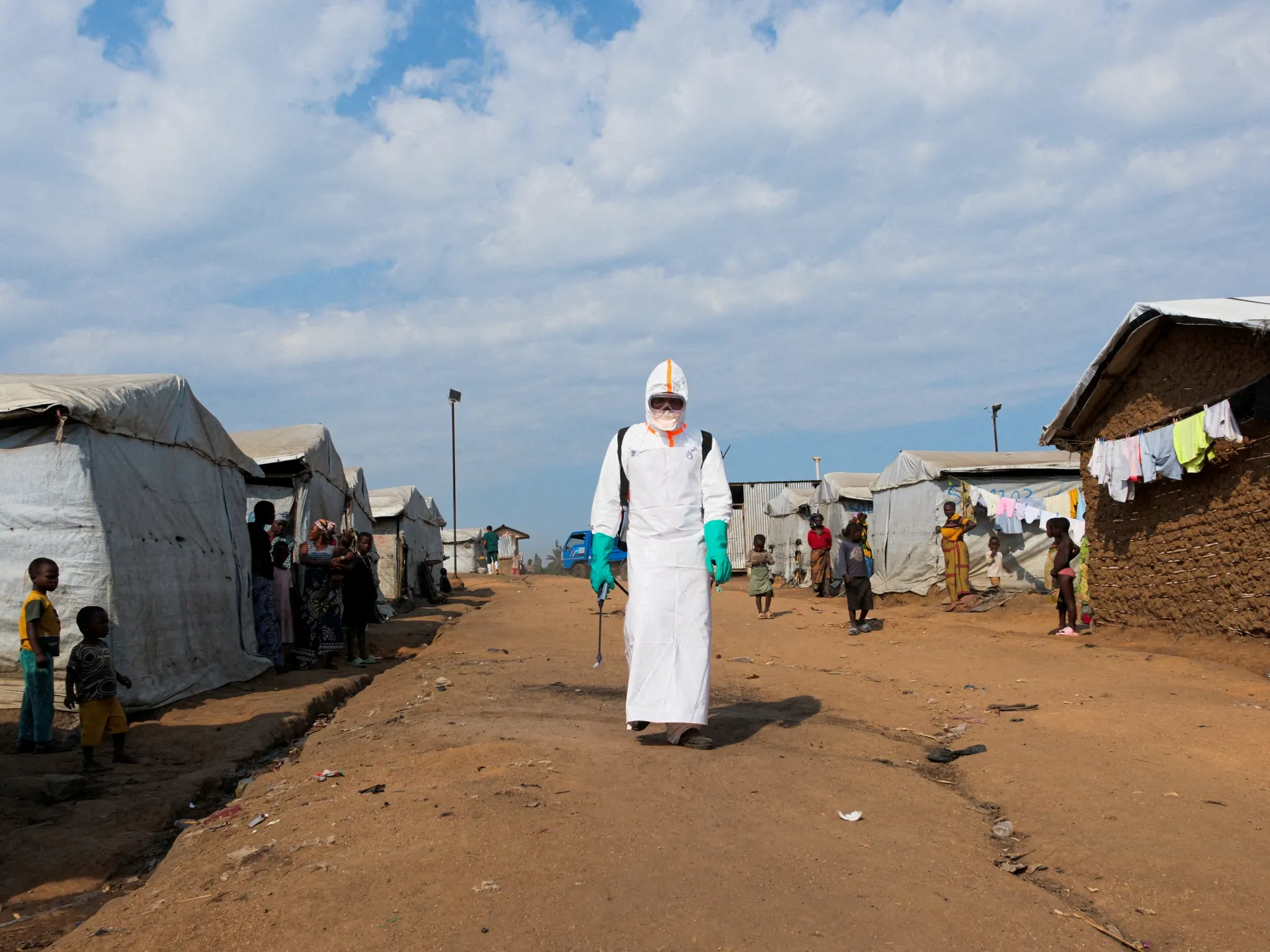
The fastest-spreading Ebola outbreak in history has reached two new health zones in eastern Democratic Republic of the Congo (DRC), with a total of 60 areas now affected, according to the latest government figures.
The two new zones affected are Biena and Manguredjipa in DRC’s North Kivu province, where the fatality rate is much higher than the overall rate of 48 percent, partly due to delayed response efforts, according to data by the Ministry of Health released on Friday.
Recommended Stories
list of 4 itemsend of list
The ministry said the outbreak in DRC has recorded 5,794 confirmed cases, including 2,786 deaths, and is spreading at an unprecedented speed – faster than efforts to track and slow it.
Efforts to contain the outbreak have been hampered by armed conflict in the affected provinces, displacement, attacks on medical personnel and facilities, a mobile working population, and a lack of critical infrastructure.
The outbreak is now on track to surpass the deadliest Ebola epidemic on record – the 2014 to 2016 outbreak in West Africa that killed more than 11,000 people.
Meanwhile, aid group Doctors Without Borders – known by its French acronym MSF – said on Friday it had opened a new treatment centre in Beni in North Kivu in the country’s northeast to enable a faster response in what it said was one of the hardest-hit areas.
Beni has recorded 122 confirmed cases and 87 deaths since the start of the outbreak in mid-May, with an Ebola fatality rate of close to 69 percent, one of the highest in the country, according to the latest government figures.
Aid workers have said that a shortage of bed capacity is one of the factors hampering the response to the outbreak. The new centre “enables the rapid treatment of patients, strengthens contact tracing and supports the health authorities in their efforts to contain the spread of the virus,” MSF said in a statement.
There is no approved vaccine or treatment for this particular strain of Ebola, known as Bundibugyo, which is rarer than the virus type behind most past outbreaks. This means that relief workers are more reliant on traditional methods like tracing contacts and isolating patients to try to control its spread.
MSF currently has 1,400 staff in DRC supporting the response, and operates treatment centres with a total of 400 beds.
“Early diagnosis and treatment as soon as the first symptoms appear significantly increase people’s chances of survival, whilst reducing the risk of transmission within families and communities,” MSF emergency coordinator Albert Stern said.
UN Secretary-General Antonio Guterres warned on Thursday that Ebola is spreading faster than efforts to contain it.
“The Ebola outbreak in the Democratic Republic of the Congo is the fastest-spreading Ebola epidemic ever recorded,” he said in a post on US social media company X. “It’s growing faster and wider than the response to contain it.
“We know how to contain Ebola and save lives. The world must urgently step up action to get it under control.”
Before-and-after satellite images reveal the scale of destruction from Nepal’s catastrophic flash floods, with entire communities, roads and bridges swept away. Nearly 600 people have been killed and more than 2,400 are reported missing.
British right-wing political commentator Milo Yiannopoulos has apparently been detained by Immigration and Customs Enforcement (ICE), according to the agency’s records.
Yiannopoulos, 41, a former editor of Breitbart News and a onetime employee of rapper Kanye West, appears to be held in Louisiana, according to a search of ICE’s inmate registry.
The self-styled provocateur has called himself the “most fabulous supervillain on the internet”. His critics call him a purveyor of hate speech.
Neither ICE nor Yiannopoulos has responded to the BBC’s request for comment, but his name and British origins appear in a search of detainees nationwide.
The circumstances around his apparent detention were unclear. Yiannopoulos, who grew up in Kent in the south of England, has been residing in the US.
He was an early supporter of Donald Trump during the 2016 election, headlining an event that year called Gays for Trump during the Republican National Convention.
But he fell out with Trump’s movement. Yiannopoulos still voices support for the Republican president’s agenda. “Total legal immunity for ICE agents when they’re on duty,” he posted on X last year.
But he posted in March this year on X that Trump “has lost his way, bought off by foreign interests”.
Yiannopoulos has courted controversy with his comments on transgender people, Muslims, Black Lives Matter, feminists and gay people, even though he himself identified as gay. He now calls himself an “ex-gay”.
He has written columns titled “Birth Control Makes Women Unattractive and Crazy” and “Would You Rather Your Child Had Feminism or Cancer?”
In 2017, Yiannopoulos was uninvited from speaking at CPAC, a US conservative conference that also hosted Trump, after footage emerged of him appearing to condone paedophilia. He also later apologised and resigned from Breitbart.
He denied the allegations, and said he had been speaking about his own experiences as a child.
Yiannopoulos was once regularly linked with the alt-right, a disparate group that is outspoken against political correctness and feminism and which includes neo-Nazis and white supremacists.
He has said he does not consider himself part of the alt-right, although he has called it “energising and exciting”.
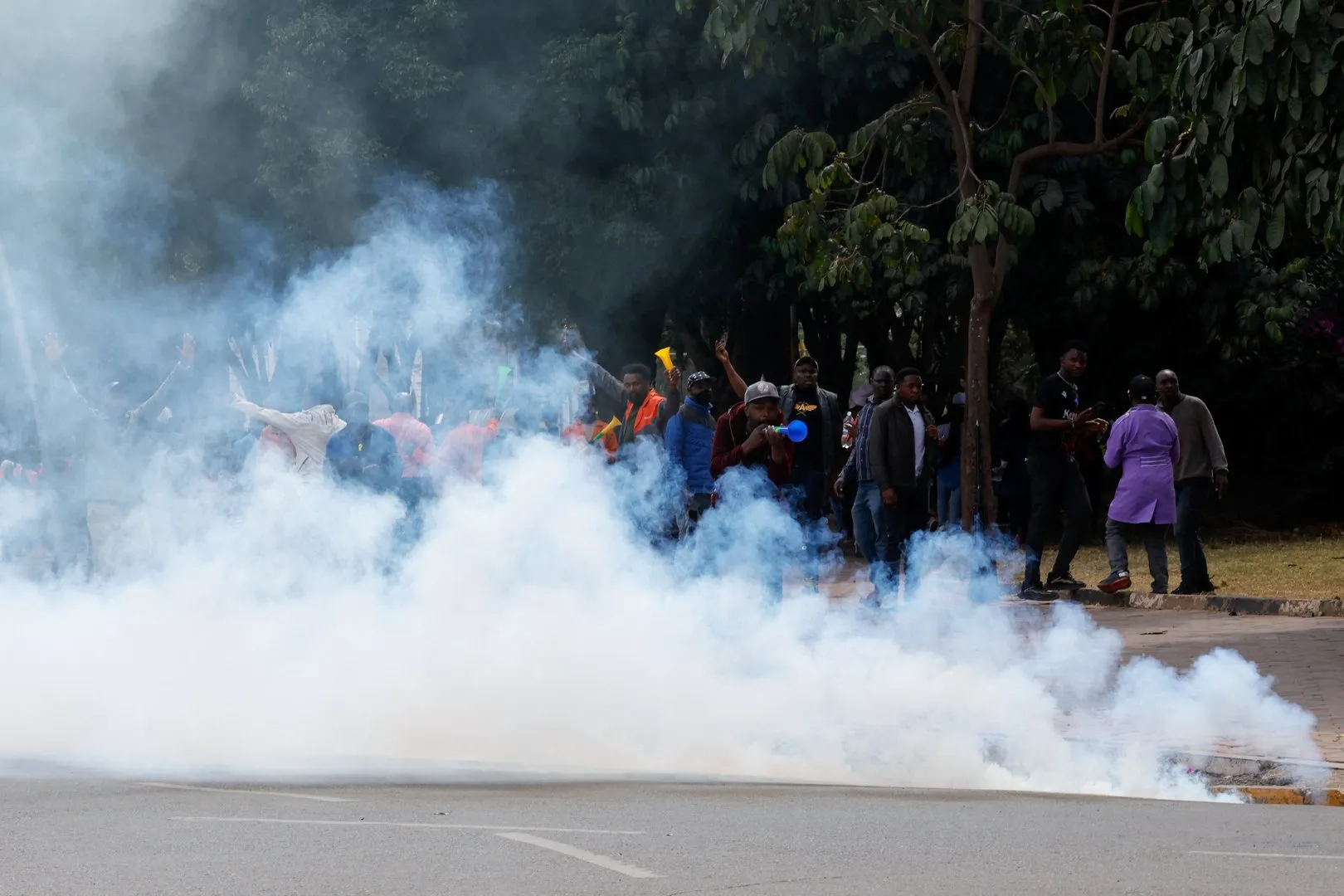
Kenyan police fired teargas at traders in the capital Nairobi on Friday, during a protest against higher taxes on imports introduced by the government. The new tax rules raise the minimum import fee for a shipping container by nearly 30 percent.
Weekly insights and analysis on the latest developments in military technology, strategy, and foreign policy.
The U.S. Air Force has stood up a new squadron at Andrews Air Force Base to manage the arrival of HH-60W Jolly Green II helicopters to replace aging UH-1N Twin Hueys. Originally designed for combat search and rescue (CSAR) missions, the HH-60Ws assigned to the 5th Helicopter Squadron will be in a specialized configuration to take on the tasks of ferrying VIPs around the nation’s capital and supporting continuity of government plans. Questions have been raised about using Jolly Green IIs in these roles, and how this may impact the ability of the overall fleet of these helicopters to meet CSAR demands.
The Air Force held a ceremony at Andrews yesterday to mark the formal activation of the 5th Helicopter Squadron, also sometimes abbreviated as 5 HS. The 1st Helicopter Squadron (1 HS), with its UH-1Ns, will continue to operate throughout the transition to the HH-60W, which is expected to be completed in 2030, to avoid any gaps in capacity to meet critical operational requirements. A total of 26 Jolly Green IIs are set to be based at the facility, which is situated just outside Washington, D.C., a one-for-one replacement for the Twin Hueys that are there now. The arrival of the new helicopters will also lead to a small increase in total personnel, 60 in total, at Andrews.
A view from yesterday’s ceremony marking the activation of the 5th Helicopter Squadron at Andrews. An HH-60W Jolly Green II is seen at top right. USAF
The Air Force originally planned to supplant all of its UH-1Ns worldwide with new MH-139 Grey Wolf helicopters, which is a more direct replacement in terms of size and capability. The service is still acquiring MH-139s to supplant UH-1Ns elsewhere, including ones assigned to Air Force Global Strike Command (AFGSC) units that help provide security around Minuteman III intercontinental ballistic missile (ICBM) silos. We will come back to this later on.
The first Air Force Global Strike Command (AFGSC) MH-139A at Malmstrom Air Force Base in Montana, with a UH-1N seen flying in the background. USAF The first AFGSC MH-139A at Malmstrom Air Force Base in Montana, with a UH-1N seen flying in the background. USAF
“The HH-60W’s increased speed, range and carrying capacity will better deliver safe operations for U.S. senior leaders, service members, and the communities around the region,” the Air Force said in a press release regarding the 5th Helicopter Squadron’s activation.
The Jolly Green II also has in-flight refueling capability, something that is not found on the UH-1N or MH-139, and could be very valuable for missions around Washington, D.C. The HH-60Ws heading to Andrews are set to receive additional modifications, including to the main cabin seating arrangement, communications suite, and defensive capabilities, as you can read more about here.
Combat Rescue Helicopter Successfully Executes Major Test Milestone: Aerial Refueling
Graphics depicting how the HH-60W’s cabin can be configured now for CSAR missions. Lockheed Martin
“In the next few years, the 5 HS will train aircrew and maintainers, establish operational and maintenance processes, and receive new aircraft as it prepares to execute the national security mission within the National Capital Region,” the release yesterday added.
National Capital Region (NCR) refers to a larger area that surrounds Washington, D.C., proper. Air Force operations in and around the NCR are primarily managed through a unit called the Air Force District of Washington (AFDW).
The HH-60Ws will be taking over an AFDW mission set from the UH-1Ns that currently includes daily airlift sorties transporting U.S. and foreign VIPs around the nation’s capital. The helicopters will also be in position to swing into action as part of continuity of government plans. In such a scenario, the Jolly Green IIs would be tasked to help rush senior officials and lawmakers to safety to ensure the continued functioning of federal authorities following an attack or a similarly serious contingency. 1st Helicopter Squadron’s role in responding to the terrorist attack on the Pentagon on 9/11 was highlighted during the activation ceremony at Andrews yesterday.
A stock picture of 1st Helicopter Squadron UH-1Ns. USAF
The NCR presents particular challenges for crisis response missions and routine day-to-day flight operations. The airspace around Washington, D.C., is most densely defended and heavily monitored anywhere in the United States, and packed full of military and civilian air traffic every day. Where and when military helicopters can operate over the nation’s capital has been a hot topic of debate since a fatal mid-air collision involving an Army UH-60 Black Hawk and a PSA Airlines Bombardier CRJ700 regional jet in January 2025. The Black Hawk was conducting a continuity of government training flight at the time. This has been more recently highlighted by an incident involving a Marine One helicopter carrying President Donald Trump earlier this month. A subsequent Federal Aviation Administration (FAA) investigation has highlighted communication issues and factors tied to the construction of a new helipad at the White House.
It is also worth noting here that Marine Helicopter Squadron One (HMX-1), the primary unit responsible for the Marine One presidential helicopter mission, would play a role in any continuity of government scenario in the NCR. Helicopters from the U.S. Park Police, as well as ones belonging to other law enforcement and civilian agencies, would be utilized, too.
Military and police helicopters land at the US Capitol this evening.
As mentioned, there are significant questions about the impacts of basing HH-60Ws at Andrews will have on the rest of the Air Force’s Jolly Green II fleet. This is something TWZ highlighted when the Air Force confirmed it was moving ahead with the AFDW HH-60W plan with the release of its 2027 Fiscal Year budget request earlier this year.
A particular issue is the Air Force’s decision years ago to scale back total purchases of HH-60Ws, from 113 helicopters down to 91. If the service does not order more Jolly Green IIs in the coming years, this will mean that roughly a third of the entire fleet will be assigned to the AFDW mission.
Up close with the HH-60W Combat Rescue Helicopter at Nellis AFB for The War Zone.
The Air Force previously confirmed the plan will involve taking HH-60Ws out of “back up inventory.” In the past, the service has defended this decision as being “more cost effective” than a move to “procure additional MH-139A aircraft” to meet AFDW requirements. Whether or not there were other specific operational considerations that factored into the decision to use Jolly Green IIs to meet these needs instead is unknown. The acquisition plan for the Grey Wolf has also been significantly truncated, with the Air Force now planning to buy just 56 of these helicopters instead of 80.
“The MH-139A Grey Wolf was competitively selected to replace the UH-1N for intercontinental ballistic missile security and National Capital Region missions, including continuity of government and transport of United States government officials and security forces,” members of the House Armed Services Committee wrote in a report accompanying a draft of the annual policy bill, or National Defense Authorization Act (NDAA), for the 2027 Fiscal Year, back in May. “The committee remains concerned regarding the justification for transitioning these missions to an alternate rotary-wing platform and seeks additional details on cost and operational implications.”
At that time, the House Armed Services Committee explicitly directed “the Secretary of the Air Force to submit a report to the congressional defense committees not later than December 1, 2026, assessing operational, cost, infrastructure, and readiness impacts of assigning any non-MH-139A rotary-wing aircraft to continuity of government and transport of United States government officials and security forces in the National Capital Region.” The lawmakers stressed that the report had to include “a comparison of procurement cost, cost per flight hour, infrastructure and aircraft modification requirements, and training and manpower impacts” and an assessment of the cost, schedule, and operational disruption associated with required upgrades to Joint Base Andrews facilities for each aircraft type.”
Separate questions have been raised in recent years about the utility of traditional CSAR helicopters in future operations, especially in the context of a high-end fight, such as one between the United States and China in the Pacific. Air Force officials openly talked about exploring alternatives for rescuing aircrew downed deep inside contested environments, but details about those plans remained limited.
At the same time, demand for traditional CSAR capabilities has certainly not gone away entirely. This was underscored by the operation to retrieve the crew of an F-15E Strike Eagle that went down inside Iran in April. HH-60Ws were part of the larger force package sent into Iranian airspace to help recover those aviators.
Wild footage from a USAF C-130 fueling two helicopters over Iran shared by telegram channels. The cars & the dialect are Iranian and from southwest. pic.twitter.com/K9cufOOY26
In the meantime, the Air Force’s UH-1Ns, a type the service first began operating in the early 1970s. are only getting older and harder to sustain, too. Three of the UH-1Ns currently assigned to 1st Helicopter Squadron saw combat during the Vietnam War. Just last week, one of the unit’s Twin Hueys made a precautionary landing in an open field in Maryland “after experiencing unusual mechanical noise” while on a training flight. This is hardly the first time such an incident has occurred.
There is a possibility that Congress could more directly intervene in the Air Force’s move to start flying HH-60Ws around Washington, D.C. With the expectation that UH-1Ns will remain in service at Andrews for another four years, there is time for the service’s own plans to evolve further.
With the activation of 5th Helicopter Squadron, the Air Force has now taken an important step toward an all-new helicopter force in the nation’s capital.
Canada’s economy has rebounded sharply in the second quarter after six months of virtually no growth, aided by a strong jump in exports and solid domestic demand, though a new round of tariffs from the United States brings renewed uncertainty.
The economy grew at an annualised rate of 3.3 percent in the second quarter, the fastest rate since 2023, after a revised 0.3 percent increase in the first quarter, Statistics Canada said on Friday.
Recommended Stories
list of 4 itemsend of list
The upward revision to first-quarter growth means Canada was not in a technical recession, usually defined as two straight quarters of contraction.
Healthy domestic demand, led by consumer spending and business investment, signals the economy is slowly brushing off the impacts of more than 18 months of US import tariffs that upended North American supply chains and increased costs.
Renewed tariff dispute
A strong domestic consumption and expenditure pattern puts Canada on a firm footing to withstand a new 50 percent US import tariff that President Donald Trump imposed this week on $20bn of Canadian exports. Canada retaliated with its own countermeasures on US imports.
“It seems like households and businesses were beginning to find ways of navigating the trade-related uncertainty before the latest round of tariffs,” Royce Mendes, managing director and head of macro strategy at Desjardins, wrote in a note.
“While it helps that the economy was on stronger footing heading into August, the fresh wave of protectionism injects a significant amount of uncertainty into the outlook,” Mendes said.
Michael Davenport, senior Canada economist at Oxford Economics, said in a note to Al Jazeera that while the gross domestic product (GDP) growth was along expected lines, “the economy is set to slow in the coming quarters amid escalating US-Canada trade policy uncertainty, new bilateral tariffs, and a shrinking population”.
The Canadian dollar weakened slightly after the GDP data, with the loonie trading down 0.01 percent at 72.17 US cents.
On a quarterly basis, GDP grew 0.8 percent for the period ended June, from an upwardly revised 0.1 percent in the previous quarter.
Second-quarter annualised growth was higher than the Bank of Canada’s July forecast of 2.5 percent growth.
Higher exports were one of the main contributing factors for the second-quarter growth, with outbound shipments growing 3.6 percent, the biggest increase in over three years, Statistics Canada (StatsCan) said.
Stronger household spending
Final domestic demand, the sum of all consumption and capital spending and a crucial metric to assess domestic health, rebounded to 1 percent in the second quarter, from a minor contraction in the first quarter.
Domestic demand has been muted for several quarters as consumers and businesses remain cautious while Canada navigates its trade war with the US.
But household final consumption expenditure, the main indicator of consumer spending, rose 0.8 percent, its highest level in three quarters, highlighting stronger household spending. This was mainly driven by higher wages and government benefits, economists said.
Business investment, or business gross fixed capital formation, sprang to a solid 2.3 percent growth in the second quarter from a contraction of 1.3 percent, the first time in the last year and a half that business investment has expanded.
That growth was led by investment in both residential and non-residential structures, machinery and equipment, StatsCan said.
However, the general gross fixed capital formation, essentially government expenditure for creating assets, continued to decline with a second-quarter contraction of 2.9 percent, after shrinking 2.6 percent in the previous quarter.
On a month-to-month basis, GDP for June grew 0.3 percent against a forecast of 0.2 percent, and an advance indicator showed that the economy was largely flat in July, the statistics agency said.
Weekly insights and analysis on the latest developments in military technology, strategy, and foreign policy.
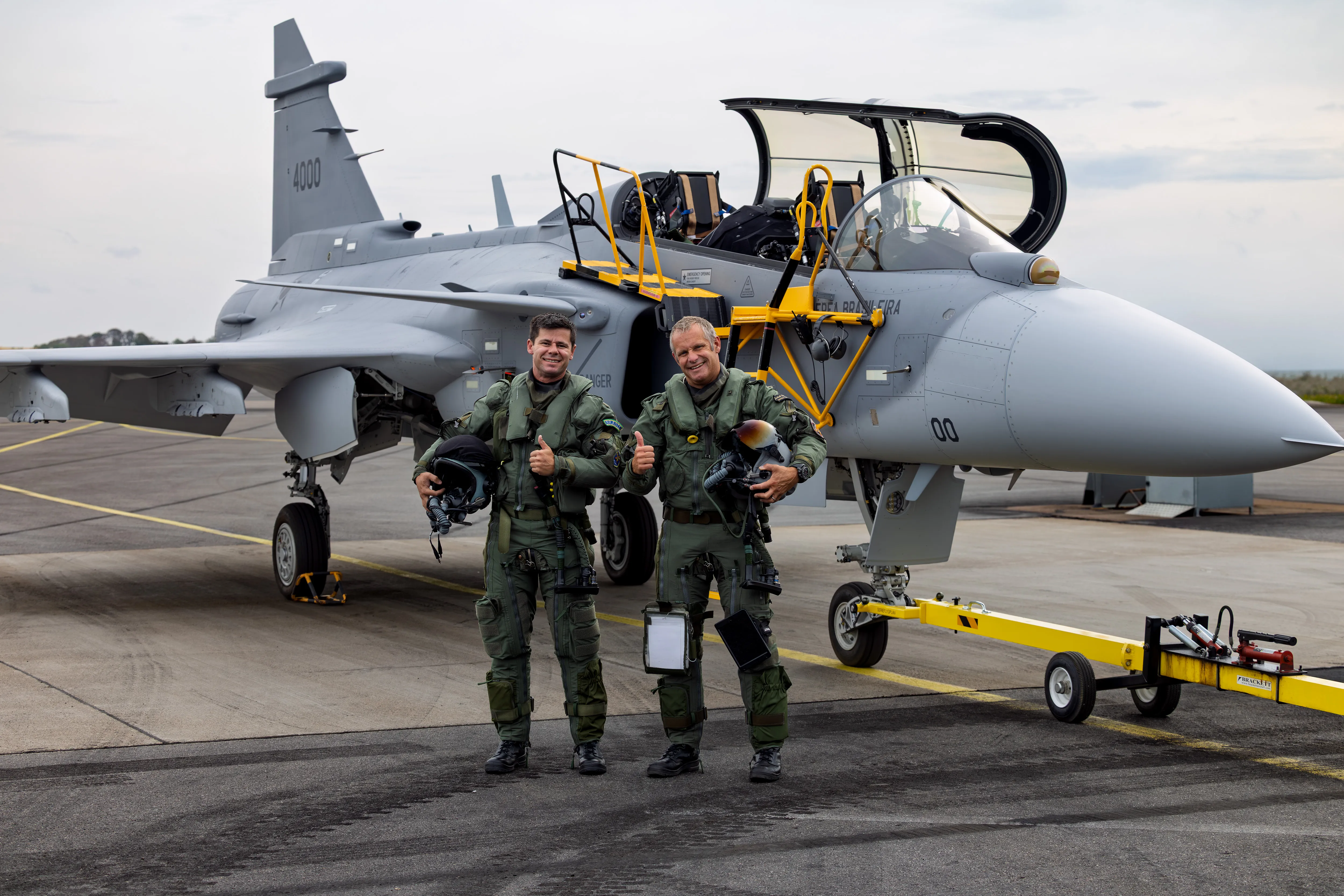
Saab’s first Gripen F two-seat fighter has taken to the air, marking the beginning of the flight-test campaign for a variant being developed in close cooperation with Brazil.
The aircraft departed Saab’s airfield at Linköping, Sweden, at 9:40 a.m. local time today and remained airborne for approximately 40 minutes. Saab chief test pilot Jakob Högberg and Brazilian Air Force test pilot Lt. Col. Aviator Abdon de Rezende Vasconcelos were in the cockpit for the inaugural sortie.
Gripen F test pilots Jakob Högberg and Lt. Col. Aviator Abdon de Rezende Vasconcelos. Saab
According to Saab, the flight was intended primarily to verify the aircraft’s core systems and initial flying characteristics. The company says the aircraft will now enter a more extensive test program, including progressive expansion of its permitted flight envelope.
That work will eventually cover the aircraft’s speed, altitude, G-loading, and angle-of-attack limits, as well as the tactical capabilities and systems associated specifically with the rear cockpit.
“This first flight represents an important step forward for both Saab and the Brazilian Air Force,” said Lars Tossman, head of Saab business area Aeronautics. “Seeing Gripen F take to the skies is particularly significant for all the Swedish and Brazilian teams whose years of engineering work have helped turn this aircraft into a reality. It is designed to accelerate pilot training while and enhancing operational performance in advanced combat missions.”
First flight of the Gripen F, with landing gear extended. Saab
The Gripen F is the two-seat derivative of the Gripen E, but it is not simply a conventional trainer version of the single-seat fighter. Saab has designed the rear cockpit to be independently functional, allowing the aircraft to retain an operational combat role while carrying a second crew member.
The configuration is therfefore intended to support conversion training and mission preparation while also offering potential advantages during complex combat missions through the division of cockpit workload. This could also include as a ‘drone controller,’ a growing area of interest for many air forces and something that Saab is also working toward with its uncrewed aircraft plans.
The Gripen F before its first flight. Saab
Combining the Gripen F, in particular, with a high-end drone of the kind that Saab envisages, would make a good deal of sense.
Saab has already pitched its stealthy, supersonic Autonomous Collaborative Platform (ACP) ‘fighter drone’ as an adjunct for the single-seater, describing it as “a great asset to the Gripen E.” Saab envisages the Gripen E serving as a tactical mission commander for one or more ACPs, working in conjunction with the company’s GlobalEye airborne early warning and control (AEW&C) aircraft.
The Saab A3 concept for its future Autonomous Collaborative Platform (ACP) ‘fighter drone.’ Thomas Newdick Thomas Newdick
The dual-crew benefits of the Gripen F, combined with the ACP, could give Saab an even more compelling route into the CCA market. After all, a fourth-generation fighter like the Gripen (Saab, it should be noted, rigorosly avoids using this generational terminology), can remain highly relevant when teamed with CCAs, and a high-performance, stealthy drone like the ACP could make that combination even more potent. It could, at least possibly in some cases, allow air forces to skip the sixth-generation crewed combat air platforms altogether, or at least greatly reduce the need for them.
Brazil is central to the Gripen F program. The country was the launch customer for the two-seat variant and participated directly in its development as part of the broader technology-transfer arrangement underpinning its Gripen acquisition.
The first Gripen F was formally rolled out at Saab’s Linköping facility in June. Brazil’s original 2014 agreement with Saab covers 36 aircraft, in the form of 28 single-seat Gripen E fighters and eight Gripen F two-seaters. Deliveries of Brazilian Gripens began in 2020.
Rollout of the Gripen F. Saab
The F-model has also attracted interest beyond Brazil. Saab has subsequently received Gripen F orders from Thailand and Colombia. The South American nation will get two Gripen Fs, while the breakdown of Thailand’s Gripen E/F order has not been revealed. According to Saab, the 16 new-build Gripens ordered for Ukraine will all be single-seaters.
As for the Swedish Air Force, this plans to buy 60 single-seat Gripen Es, but bearing in mind the changing security situation in Europe, and the increasing focus on uncrewed aircraft, a future Gripen F order should not be ruled out. In particular, Saab has said it expects the Swedish government to acquire new Gripen E/Fs to backfill the 12 earlier Gripen C/D variants it has donated to Kyiv, and which are expected to arrive in Ukraine early next year.
Ukraine intends to purchase 20 Gripen E/F aircraft. In conjunction with the sale, Sweden will donate up to 16 Gripen C/D, including advanced ammunition. To replace the donated aircraft, new modern Gripen E/F will be procured for the Swedish Air Force. https://t.co/kPHjVDXnSbpic.twitter.com/IxEhsy2yvN
— Försvarsdepartementet (@ForsvarsdepSv) May 28, 2026
Saab also remains upbeat about the prospect of a Canadian order for the Gripen E/F.
Days after trade talks between Ottawa and Washington collapsed this month, further straining the Canada-United States relationship, Saab chief executive Micael Johansson told TWZ and other journalists that Gripen would be the “perfect” option if Canada moves ahead with a joint fighter purchase. The Swedish jet would add “combat mass” alongside the F-35, according to Johansson.
“I don’t think Canada will give up the F-35 completely; they will go forward with that to some extent,” Johansson said.
Johansson also pointed to the Gripen’s ability to operate from highway strips as well as conventional runways: “You get to use all kinds of airstrips that you cannot use with the F-35,” he added.
Gripen practicing landing and take off from a road base
Part of the Saab pitch to Canada is the establishment of a new domestic final assembly line for the Gripen E/F, which woud be the third such facility after Sweden and Brazil.
As for the Brazilian connection, this extends well beyond aircraft procurement. Saab says more than 350 Brazilian engineers, technicians, and pilots have participated in activities covering Gripen development, production, flight testing, and maintenance. Brazilian industry, including Embraer, has consequently become deeply involved in the program.
A Brazilian Air Force Gripen E. Saab
Meanwhile, Saab is continuing to expand what the fighter can actually do once it leaves the factory.
Recent work has included a test launch of the Taurus KEPD 350 cruise missile, as well as last year’s integration of Helsing’s Centaur AI agent, which was tested in a beyond-visual-range combat scenario.
🇸🇪 TAURUS LAUNCH Today a TAURUS KEPD 350 cruise missile was launched from a Swedish JAS 39 Gripen for the first time. The test was conducted at the Vidsel Test Range in Norrbotten. Today TAURUS is a long-range cruise missile that introduces a new deep-strike capability. 📷 FMV pic.twitter.com/vYcL75Lu4p
Speaking last week, Johan Segertoft, head of Saab’s Gripen business unit, points to the fighter’s digital architecture as a key enabler of the rapid integration of new capabilities. The company says the Centaur integration took just 10 weeks.
“We chose BVR because it’s one of the most complex things to prove that we could take third-party software and do it, but there’s a lot of things in an aircraft and outside an aircraft that benefit from the advancement of software,” Segertoft said.
Since the Gripen E first flew in 2017, Saab has implemented around 300 capability upgrades, according to Segertoft. He contrasts that with what he describes as a theoretical maximum of around five upgrades for competing aircraft.
The Gripen E used in the Centaur AI trials. Saab
That approach is summed up by Saab’s internal mantra, Segertoft says: “code in the evening, deploy in the morning, learn by lunch.”
The Gripen F test campaign will now move beyond basic systems checks toward progressively more demanding flight conditions. Saab’s Flight Test Center in Sweden will conduct the campaign before the aircraft undergoes the remaining acceptance procedures and is eventually handed over to the Brazilian Air Force.
The first flight therefore represents a milestone not only for Saab’s new two-seat fighter but also for the industrial partnership that produced it. Potentially, that model could be repeated in Canada in the future.
At a Kathmandu hospital, families peer at lists of those who are critical, dead — or have been released.
Published On 28 Aug 202628 Aug 2026
Kathmandu/Nuwakot/Trishuli, Nepal – Loknath Chaulagain is looking for his 23-year-old nephew Sudarshan at Tribhuvan University Teaching Hospital in Kathmandu, Nepal’s capital.
A bus conductor, Sudarshan was waiting at the checkpoint in Timure, a town bordering Tibet, when the flash flood that devastated parts of Nepal and Tibet struck on Wednesday. His family says a phone call went through to his number at 9:54am local time – after the flash flood struck the border region – but Sudarshan did not pick up the call. Since then, his phone has been unreachable.
The family has been searching for him – near where the floods struck, and now in Kathmandu’s hospitals, where some survivors have been brought. But so far, they’ve had no luck.
They’re not alone. Thousands of families in Nepal are still stranded in the no-man’s land between hope and fear: hopes of an impossible miracle and worst fears of losing someone they love.
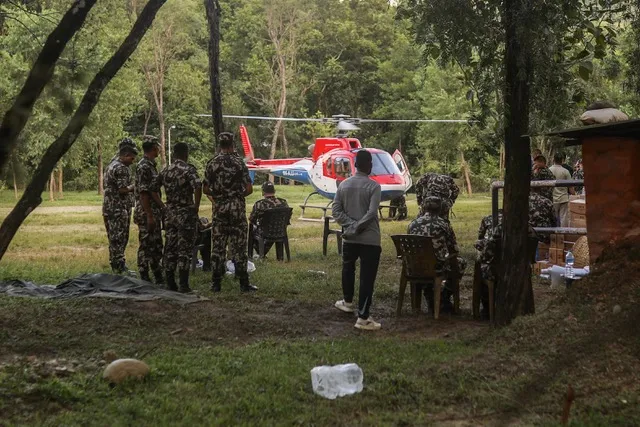
An army camp in Nuwakut, Nepal, where helicopters are being used for rescue efforts [Mohammad Meherban/Al Jazeera]
Two days after the flash flood swept away much of what lay in its path along the Bhotekoshi River in the northern Himalayan region bordering Tibet, the full scale of devastation is yet to be ascertained in Nepal. The death toll is on the rise, with nearly 500 bodies recovered. The missing toll is well over 1,000 and is expected to rise further.
The wall of water with ice and mud that surged downstream with fury on August 26 caused maximum damage to Timure, Rasuwagadhi and Syabrubesi in the higher Rasuwa region nearer to Tibetan border checkpoints.
Downstream, it washed away buildings, electric poles, bridges, markets, homes and vehicles that stood in its path in Trishuli and Nuwakot regions.
The usually buzzing Trishuli market is today covered in mud, sludge and debris. Locals, including many Indians who have made the area their home for many years, beg and plead with relief workers to take them to their destroyed homes in earthmovers to retrieve whatever may be left of their belongings.
Trishuli market, covered in sludge, in Trishuli, Nepal [Mohammad Meherban/Al Jazeera]
Helicopters whirred nonstop on Wednesday and Thursday in these areas, trying to rescue those trapped under the rubble or washed away and stranded in dangerous situations. Those rescued with lighter injuries are being treated at the army camp helipad medical unit, while those with grievous injuries are being airlifted to bigger facilities in Kathmandu.
At the Tribhuvan University Teaching Hospital, people come by and plaster posters on walls with photographs and contact details of missing friends and family. Other hospital pillars bear lists of those who have been admitted or are in critical condition – or those who have been killed: five-year-old Ishara Tamang in paediatric surgery; 30-year-old Tej Bhadur Tamang in the ICU; 25-year-old male Kusal Magar, listed as dead. Multiple pairs of concerned eyes gaze intensely at these lists, hoping to find their loved ones there.
Among them is Sohan, a young man who does not want to speak to journalists on camera. He is searching for his 42-year-old father, Gyan Bahadur Rana Magar. “Three days on, we are searching and still trying to find him,” he says. His father went with Indian tourists as a guide to Rasuwa, the border district with Tibet that is one of the worst affected.
When the lists on pillars offer no answers, people searching for their loved ones head to the mortuary where photographs of some of the recovered bodies have been glued to the gates. Many bodies were found dismembered; some were missing limbs. When someone finds a hint of familiarity, they inform security officials, who let them in after some identification check to take a look at the body.
Dressed in a red saree and blouse, and wearing a red pothe necklace – a traditional glass-bead necklace worn by married women in Nepal – Lal Kumari is desperately looking for her husband, Arjun Shreshtha. A tourist van driver in his late 40s, he was swept away by the flood in Rasuwa district. Kumari has three children, including a married daughter and a grandchild, and her only question is: Could her husband, miraculously, still be alive?
Lal Kumari, one of thousands still searching for loved ones, is looking for her husband, Arjun Shreshtha, a tourist van driver missing since the floods [Mohammad Meherban/Al Jazeera]












![Venezuela's interim President Delcy Rodriguez, Caracas, Venezuela, January 30, 2026 [Efrain Gonzalez/AFP]](https://i0.wp.com/www.aljazeera.com/wp-content/uploads/2026/01/AFP__20260131__94MV49Z__v1__HighRes__VenezuelaUsConflictCrisis-1-1769837471.jpg?w=640&ssl=1)











![Trishuli market, covered in sludge, in Trishuli, Nepal [Mohammad Meherban/Al Jazeera]](https://i0.wp.com/www.aljazeera.com/wp-content/uploads/2026/08/Trishuli-market-1787926143.jpeg?w=640&ssl=1)
