Stay informed and up-to-date with the latest news from around the world. Our comprehensive news coverage brings you the most relevant and impactful stories in politics, business, technology, entertainment, and more.
The Manchester City striker scored his first goals at a major international tournament as Norway powered past Iraq.
Published On 17 Jun 202617 Jun 2026
Erling Haaland scored twice in his World Cup debut as Norway powered past Iraq to win 4-1 in their Group I opener in Boston.
The Manchester City striker scored his first goals at a major international tournament on Tuesday as Norway returned to the World Cup for the first time in 28 years.
Recommended Stories
list of 4 itemsend of list
Haaland turned in from close range to give Norway the lead on 29 minutes, but Aymen Hussein’s header brought Iraq level.
Haaland then pounced on an error at the back to put Norway ahead again before half-time and take his goal tally at international level to 57 in just 51 matches.
Leo Ostigard headed in a third for Norway moments after coming off the bench to effectively wrap up the victory. Norway then got a fourth deep into stoppage time through a Hussein own goal.
The win left Norway on top of Group I on goal difference, level with France on three points after Les Bleus overcame Senegal 3-1 earlier in the day. The Norwegians face the African powerhouses in their next game in New Jersey on June 22 .
No team has endured a longer or more perilous road to the World Cup than Iraq, who secured their place as the 48th and final qualifiers in March after a 21-match campaign that stretched across 867 days.
Hussein, the scorer of the decisive goal in the play-off win over Bolivia, was held and questioned for hours by US immigration officials after arriving with the squad ahead of Iraq’s first World Cup since 1986.
Norway’s impressive return
Norway last played at the tournament in 1998, when coach Stale Solbakken was a member of the squad that famously beat Brazil in the group stage before exiting in the last 16. He also featured at Euro 2000.
After breezing impressively through qualifying, twice thrashing Italy, they are hoping a golden generation of players – led by Haaland and Arsenal midfielder Martin Odegaard – can break new ground in North America.
Solbakken predicted that Haaland would make a “very big impact” at his first major finals, and the Manchester City star was quick to deliver on that promise.
Antonio Nusa’s trickery was a problem for Iraq, and his incisive pass released the overlapping David Moller Wolfe clear before Haaland stretched to steer in the low cross from the left.
Iraq, who lost all of their group games in their only previous appearance, did not let that get to them as they equalised 10 minutes later.
Amir Alammari found space just inside the area and clipped in a cross, with Hussein rising brilliantly to power a header past Orjan Nyland.
But Iraq only had themselves to blame as they gift-wrapped Haaland’s second of the contest.
Goalkeeper Jalal Hassan was slow to react to a softly hit back pass, his attempted clearance smacking off Haaland’s shin and ricocheting into the net.
Iraq again responded well with Ibrahim Bayesh denied by a desperation block, Ali Alhamadi dribbling an effort wide, and centre-back Akam Hashim lashing a spectacular volley just over the bar.
Ostigard nodded in Odegaard’s corner on 76 minutes to seal the points for Norway, before Haaland was thwarted by Hassan when another loose pass sent him clean through and seeking his hat-trick.
Haaland, nonetheless, had a hand in Norway’s late fourth, his looping header back across goal deflecting off Hussein before trickling over the line.
Israeli Finance Minister Bezalel Smotrich says Israel has transferred authority over Hebron to the army. It includes control of the key holy site, Cave of the Patriarchs. Al Jazeera’s Nour Odeh explains.
Mehdi Torabi issued a new visa after previous one expired when team returned to Mexico following the New Zealand game.
Published On 16 Jun 202616 Jun 2026
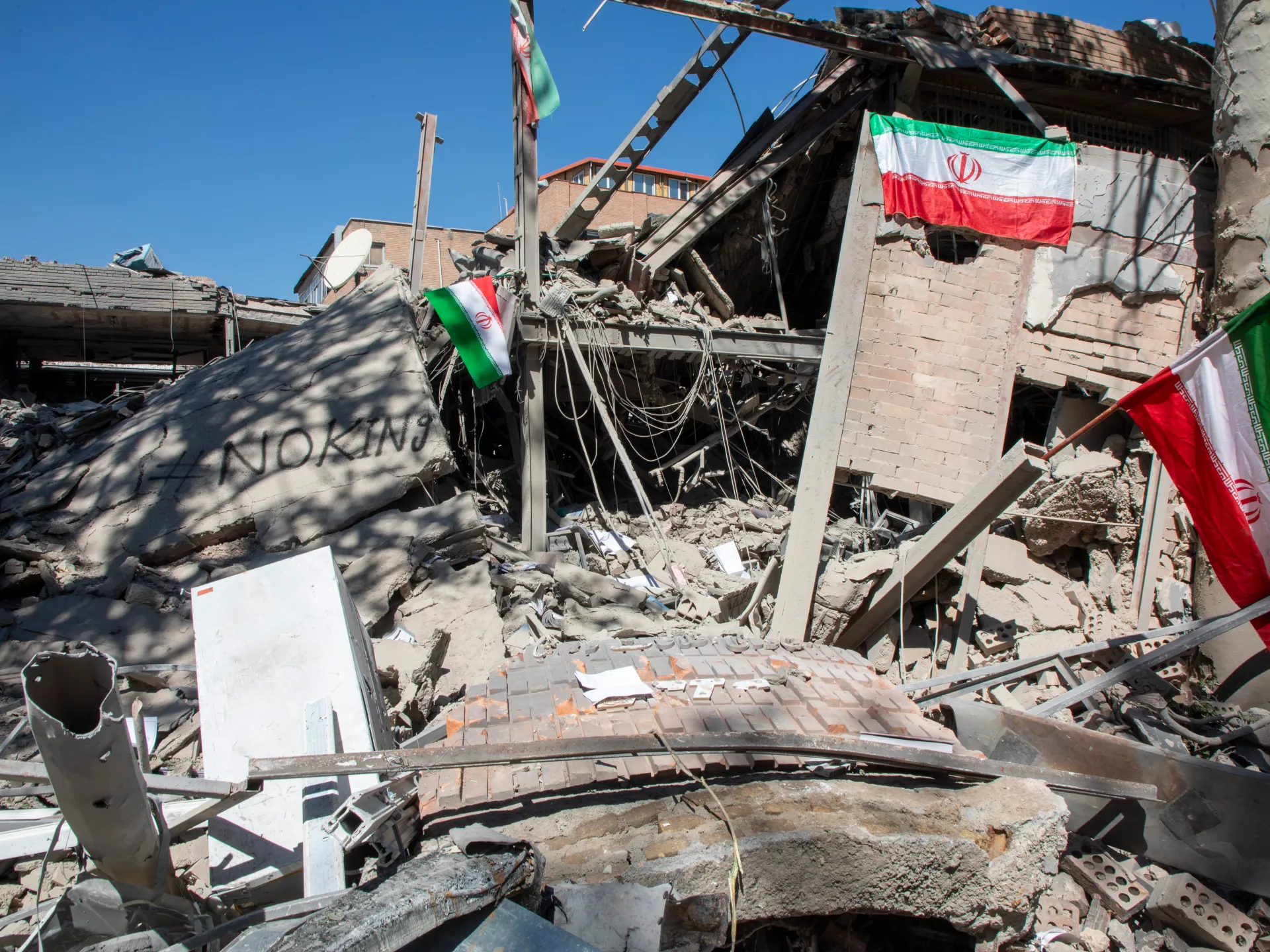
United States officials have confirmed that Iran’s team will have to leave the country within hours of the full-time whistle at their World Cup group games in Los Angeles and Seattle.
“We were clear this was the process,” Andrew Giuliani, the executive director of the White House FIFA Task Force, told The Associated Press news agency.
Team Melli drew with New Zealand in a politically charged Group G game in Los Angeles on Monday following months of uncertainty over the team’s participation in the World Cup amid the US-Israel war on Iran.
The Iranian delegation left the US hours after the match ended at about 8pm local time (03:00 GMT) and returned to their base camp in Mexico, prompting criticism of the US handling of their visas as the team did not get a day to recover at their hotel.
Iran coach Amir Ghalenoei said after the match that his team had been ordered to leave the US and return to Mexico only a few hours later. Ghalenoei said the team had expected to spend the night in California to maximise the normal recovery process after their opening game.
The US faced further pushback as Iran winger Mehdi Torabi’s entry visa expired after the first game. Team officials confirmed Tuesday afternoon that they had secured him a new, multiple-entry visa allowing him to travel into the US for future matches.
“This issue has been resolved,” the US Department of State said.
“As soon as we became aware of the issue, we worked to ensure that the player can participate in every game.”
Mehdi Torabi, number 16, was issued a new visa after his previous one expired following the first game [Gary Vasquez/Reuters]
Giuliani said during an interview broadcast Monday night on CBS News that some of the Iranian team’s support staff and team officials were denied entry into the US, but all the players and coaches had received visas.
He also outlined the conditions by which the Iranian team would be able to come into the US for their games.
“The team will be allowed to come in, match day minus one, so the day before the match. They’ll be asked to leave the day that the match wraps up, so the evening of the match. And they’ll be able to do that again in Los Angeles. They’ll be able to do it again in Seattle,” Giuliani said.
When asked about why some support staff and team officials had been denied entry, Giuliani wouldn’t go into details but referred to previous comments made by Secretary of State Marco Rubio about denying entry to people with direct ties to Iran’s Islamic Revolutionary Guard Corps (IRGC).
“Secretary Rubio said very clearly: Anybody with direct ties to the IRGC is not coming into the United States of America, and they’re not going to let the World Cup be the reason why they can come in,” Giuliani said. “So I think it’s very clear why.”
Iran captain Mehdi Taremi said the team endured five hours of travel and security checks during what’s normally a very short trip from Tijuana to the Los Angeles area on Sunday.
“I think FIFA have to help us more than this,” Taremi said.
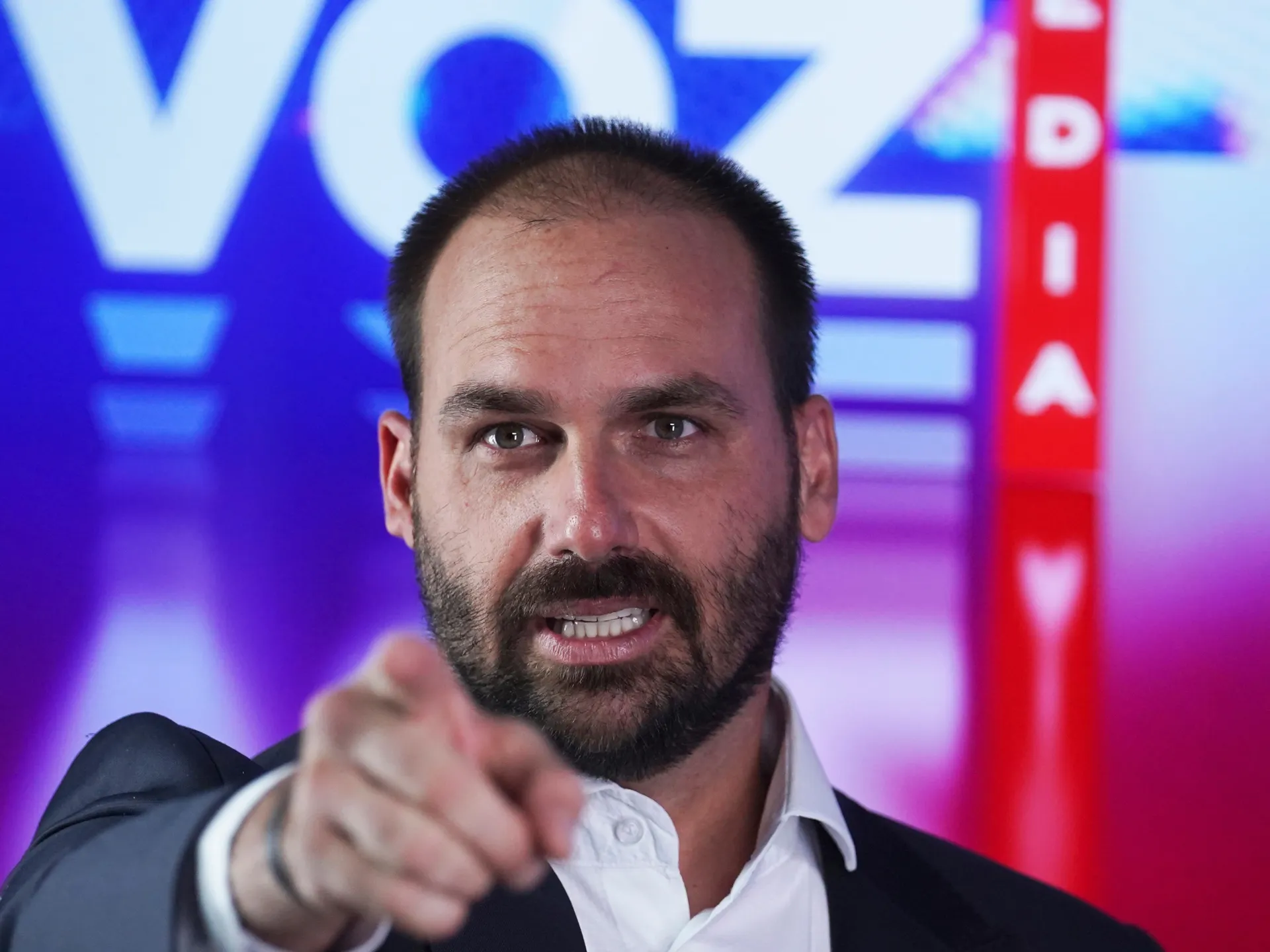
A panel on the Brazilian Supreme Court has voted to convict Eduardo Bolsonaro of lobbying the United States to interfere in the trial of his father, former right-wing President Jair Bolsonaro.
On Tuesday, three of the four justices on the panel voted in favour of conviction, with one remaining justice yet to vote.
Recommended Stories
list of 3 itemsend of list
They determined that Eduardo Bolsonaro’s actions amounted to coercion against Brazil’s justice system and sentenced him to four years and two months in prison.
“It wasn’t merely an expression of opinion or a political stance, but rather conduct that clearly threatened Brazilian authorities and Brazilian citizens themselves,” Justice Cristiano Zanin said, calling Eduardo Bolsonaro’s actions “illegitimate and criminal”.
The conviction is the latest legal setback for the Bolsonaro family, which remains a dominant force on Brazil’s political right.
Jair Bolsonaro is serving a 27-year prison sentence for his efforts to remain in power after losing the country’s 2022 election.
Prosecutors described his actions as an attempted coup. Bolsonaro and his family have portrayed the trial as a political witch-hunt.
The ex-president’s third son and a member of Brazil’s Chamber of Deputies, Eduardo Bolsonaro has been active in his father’s defence.
In March 2025, he pledged that he would move to the US full time to “focus 100 percent” of his energy on “a single cause”: freeing his father.
Prosecutors accused him of mounting an illegal campaign to court US President Donald Trump and use foreign influence to pressure Brazilian officials to drop the case against Jair Bolsonaro.
Trump, an ally of Bolsonaro, had likewise tried to remain in office despite his loss in the 2020 election and has accused Brazilian officials of persecuting right-wing voices like Bolsonaro.
In July 2025, Trump issued a letter announcing 50 percent tariffs on certain Brazilian products, citing Jair Bolsonaro’s trial, specifically, as a reason.
“This Trial should not be taking place,” Trump wrote at the time. “It is a Witch Hunt that should end IMMEDIATELY.”
Trump also issued an executive order sanctioning one of the Brazilian Supreme Court justices involved in the Bolsonaro case, Alexandre de Moraes, on the basis that he worked to “target political opponents” and “suppress dissent”.
He called de Moraes a “threat” to the US, and his administration later expanded the sanctions to include the justice’s family members, as well as other Brazilian judicial officials.
Brazil’s current president, Luiz Inacio Lula da Silva, has denounced those actions as an attempt to interfere in Brazil’s domestic affairs.
As relations with Lula grew more cordial, the Trump administration relaxed its tariffs against Brazil. In December, it also repealed the sanctions against de Moraes and his family.
Lula, meanwhile, visited the White House in May and praised what he described as a productive meeting with his US counterpart.
But it remains unclear what role Trump may seek to play in Brazil’s upcoming presidential elections.
The left-wing Lula is campaigning for a fourth term, and he is likely to face his stiffest competition from Jair Bolsonaro’s eldest son, Senator Flavio Bolsonaro.
A CNT/MDA poll released on Tuesday projected that Lula would receive 49.3 percent of the vote in a run-off election against the senator’s 40.2 percent.
Flavio Bolsonaro has faced his own legal trouble in recent months, with police opening a probe in April into whether he defamed Lula. His connections to a disgraced banker have also raised media scrutiny.
Jair Bolsonaro, meanwhile, faced questions this week about the presence of a firearm in his home in Brasilia, where he is serving three months of his sentence on medical grounds.
Justice de Moraes likewise asked the elder Bolsonaro’s legal team to explain the presence of the weapon, which police discovered during a routine inspection on Monday.
A security guard for Bolsonaro initially said the 9mm Glock pistol was his own, but it was later revealed to be the ex-president’s.
De Moraes gave Bolsonaro’s legal team 24 hours to explain why “the convicted man kept a firearm at home”.
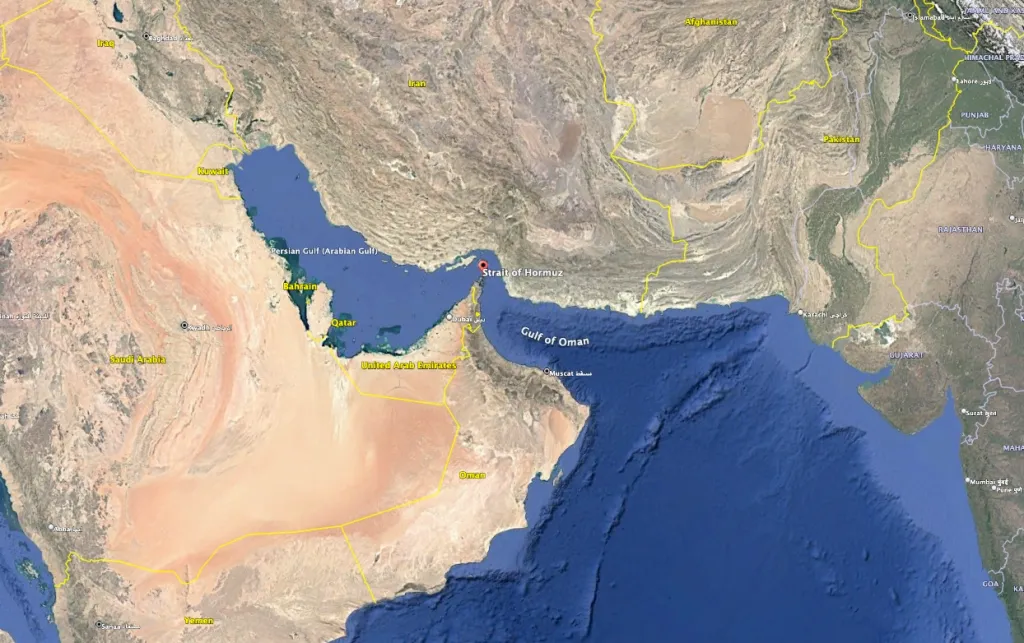
Beijing warmly welcomes the peace agreement and memorandum of understanding between the United States and Iran, considering it an important step toward de-escalating regional tensions. China supports the diplomatic path to resolving the crisis, based on a clear strategy aimed at protecting its economic and strategic interests. Beijing emphasizes that a permanent ceasefire, the protection of national sovereignty, the reopening of the Strait of Hormuz, and ensuring the safety of international navigation are top priorities. China contributed behind the scenes to shaping the negotiating framework and influencing Tehran to accept the agreement with the United States in order to safeguard its vital interests in the continued flow of Iranian oil. Accordingly, China officially welcomed the memorandum of understanding between the United States and Iran, affirming that the agreement represents a crucial step toward de-escalating regional tensions. The Chinese diplomatic welcome focused on the key provisions of the agreement, as stated by the spokesperson for the Chinese Foreign Ministry. These provisions guarantee a comprehensive ceasefire, freedom of navigation, energy security, an end to the naval blockade, and the reopening of the Strait of Hormuz to global trade and energy supplies. China considers this essential for its energy and economic security. This agreement, along with the nuclear framework and negotiations, marks the conclusion of the first phase, followed by a 30-60 day negotiation period to discuss the Iranian nuclear program (uranium enrichment and the lifting of sanctions). This Chinese announcement came in support of international mediation efforts ahead of the official signing ceremony in Geneva.
The most prominent points welcomed by China in the US-Iranian agreement, according to announcements and follow-up by Chinese diplomatic channels and as included in the key provisions of the memorandum of understanding, were a cessation of military operations; an immediate and permanent ceasefire on all fronts, including the Lebanese front; freedom of navigation through a commitment to end the naval blockade and open the Strait of Hormuz to global trade and energy supplies; and the nuclear framework, with the conclusion of a phase one agreement stipulating that negotiations on the Iranian nuclear program (uranium enrichment and sanctions relief) would take place within a specified timeframe of 30 to 60 days following the signing.
China has played a pivotal, often unacknowledged, role as a diplomatic bridge between Tehran and Washington to protect its strategic and economic interests in the Middle East. The dimensions of China’s behind-the-scenes role include ensuring the flow of energy. Beijing seeks to maintain stability in the Gulf region to guarantee the uninterrupted supply of Iranian oil and to protect its interests and investments in the Belt and Road Initiative. Iran represents a crucial geographical and strategic hub in China’s ambitious Belt and Road Initiative. To this end, Beijing has sought to leverage its strong economic ties and strategic partnership with Tehran to persuade it to make flexible concessions during critical times, while offering support to avoid military escalation. Beijing fears that the collapse of diplomatic channels could lead to a regional war that would jeopardize its extensive investments in the region.
On the other hand, Beijing seeks to counterbalance American influence. China prefers a negotiated framework between Tehran and Washington that limits American unilateral hegemony and positions itself as a responsible international player capable of peacemaking. China’s vision for diplomatic balancing between Washington and Tehran is shaped by several key strategic axes, most importantly (establishing the principle of a political settlement). Here, Beijing consistently emphasizes that dialogue is the only solution to the Iranian crisis, rejecting military escalation that harms the security of navigation and global trade. This is coupled with regional and international networking, where China supports parallel diplomatic efforts, such as Pakistani mediation. Beijing maintains continuous communication with the parties to the crisis to ensure the opening of indirect negotiation channels that prevent a full-scale confrontation and safeguard vital interests. China has maintained the flow of Iranian oil while simultaneously strengthening its extensive economic partnerships with the Gulf states, granting it unique diplomatic weight and influence that Western powers lack. Despite this notable progress, Beijing faces ongoing challenges due to US containment policies. China rejects Washington’s classification of its major technology companies as military entities and threatens retaliatory measures, making Beijing’s attempts to create a strategic balance with the United States an extremely delicate and sensitive process.
Based on the preceding understanding and analysis, we can see how successful Beijing has been in transforming escalating tensions in the Middle East into strategic gains. China has played an active mediating role by supporting diplomatic talks and the memorandum of understanding for peace between Washington and Tehran, thus positioning itself as a responsible international power seeking to establish stability and move away from unilateral hegemony.
The number of confirmed cases in the country has increased to 837, including 196 deaths.
Published On 16 Jun 202616 Jun 2026
The current Ebola outbreak in the Democratic Republic of Congo (DRC) could become deadlier than the worst outbreak on record, which killed more than 11,000 people, says the head of Africa’s Centres for Disease Control and Prevention (Africa CDC).
The number of confirmed cases in the country has increased to 837, including 196 deaths, government data showed on Tuesday.
Recommended Stories
list of 3 itemsend of list
“If we don’t stop the outbreak very soon, it will be worse than what we had in West Africa and eastern DRC,” Africa CDC Director-General Jean Kaseya said during a virtual meeting of African leaders and international donors in Burundi on Tuesday.
Speaking to Al Jazeera, Kaseya said tens of thousands of people who may have been exposed to Ebola had not yet been traced or contacted.
“The contact tracing is a major indicator and a major issue. We are missing more than 26,000 people, and we don’t know where they are, and we don’t know if they are contaminating other people.”
A Red Cross official said that the epidemic had not yet peaked in the country.
“We are afraid that this could last one year to end this disease,” Bruno Michon, operations manager for the International Federation of Red Cross and Red Crescent Societies, said.
The response has been hampered by a lack of treatment centres and by community resistance to stringent hygiene measures. Health officials said that, more than a month since the outbreak was declared, the true scale was still unknown.
The bodies of Ebola victims are highly infectious after death, and unsafe traditional burials – in which family members handle the body without proper protective equipment – are a leading driver of transmission.
So far, the continent has raised less than a fifth of the $518 million it is seeking to bolster measures to contain the outbreak, according to Burundi’s President Evariste Ndayishimiye, who also chairs the African Union.
The shortfall has raised concern among authorities, who fear the consequences could be devastating if the virus is not brought under control quickly.
There is no approved treatment or vaccine for this strain of Ebola. The World Health Organization (WHO) says it could take up to nine months for a vaccine to be ready.
Neighbouring Uganda has recorded 19 cases, 14 of them among people who had travelled from the DRC. The country has also reported two deaths.
Drone attacks target vehicles in Nabatieh amid fragile ceasefire negotiations between Iran and the US.
Published On 16 Jun 202616 Jun 2026
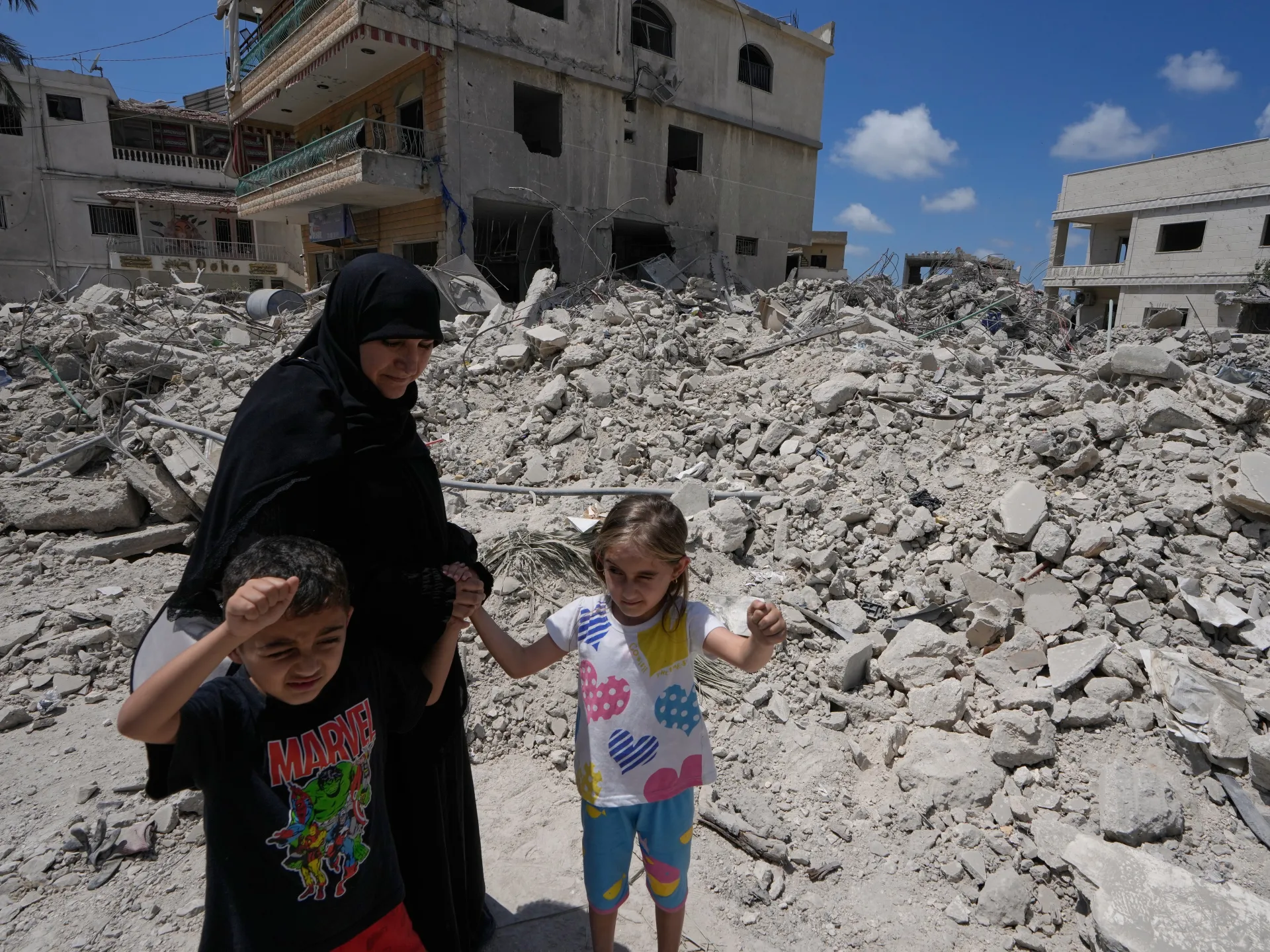
Multiple Israeli strikes have killed at least four people in southern Lebanon’s Nabatieh governorate, according to Lebanon’s National News Agency (NNA), despite a ceasefire and a recent understanding between the United States and Iran to end the war on all fronts.
Tuesday’s killing took place as separate drone attacks targeted two vehicles in Mayfadoun. A third vehicle was also targeted in the village of Shoukin, the agency said.
Recommended Stories
list of 3 itemsend of list
Throughout the often fragile negotiations between Iran and the US, Iranian officials repeatedly said that any ceasefire arrangement would need to include an end to Israeli attacks on Lebanon.
While the final text of the memorandum of understanding has not yet been made public, the prime minister of Pakistan, which is acting as one of the mediators in the conflict, said on Monday that the agreement envisaged an immediate halt to military operations “on all fronts, including Lebanon”.
Iran’s Foreign Minister Abbas Araghchi said on Tuesday that Israel’s continued occupation of southern Lebanon would violate the deal, adding that “without the withdrawal of Israeli forces from the territories they occupied during this war, the war has not fully come to an end”.
In a phone conversation with Lebanon’s Parliament Speaker Nabih Berri, Iran’s top negotiator, Mohammad Bagher Ghalibaf, called for the US to compel Israel to end its war on Lebanon, stop home demolitions, and withdraw from occupied Lebanese territory.
Soon after the announcement of the deal between the US and Iran, Israel’s Prime Minister Benjamin Netanyahu said that Israel will continue to occupy southern Lebanon.
Meanwhile, Lebanese group Hezbollah says it has received assurances from Iran that Tehran will demand a withdrawal of Israeli troops from Lebanon in its next phase of talks with the US, the Reuters news agency reported.
Since the resumption in fighting on March 2, at least 3,826 people have been killed by Israeli attacks in Lebanon and 11,851 wounded, according to the country’s health ministry.
Rodríguez thanked US Chargé d’Affaires John Barrett for helping establish ties with US corporations. (Prensa Presidencial)
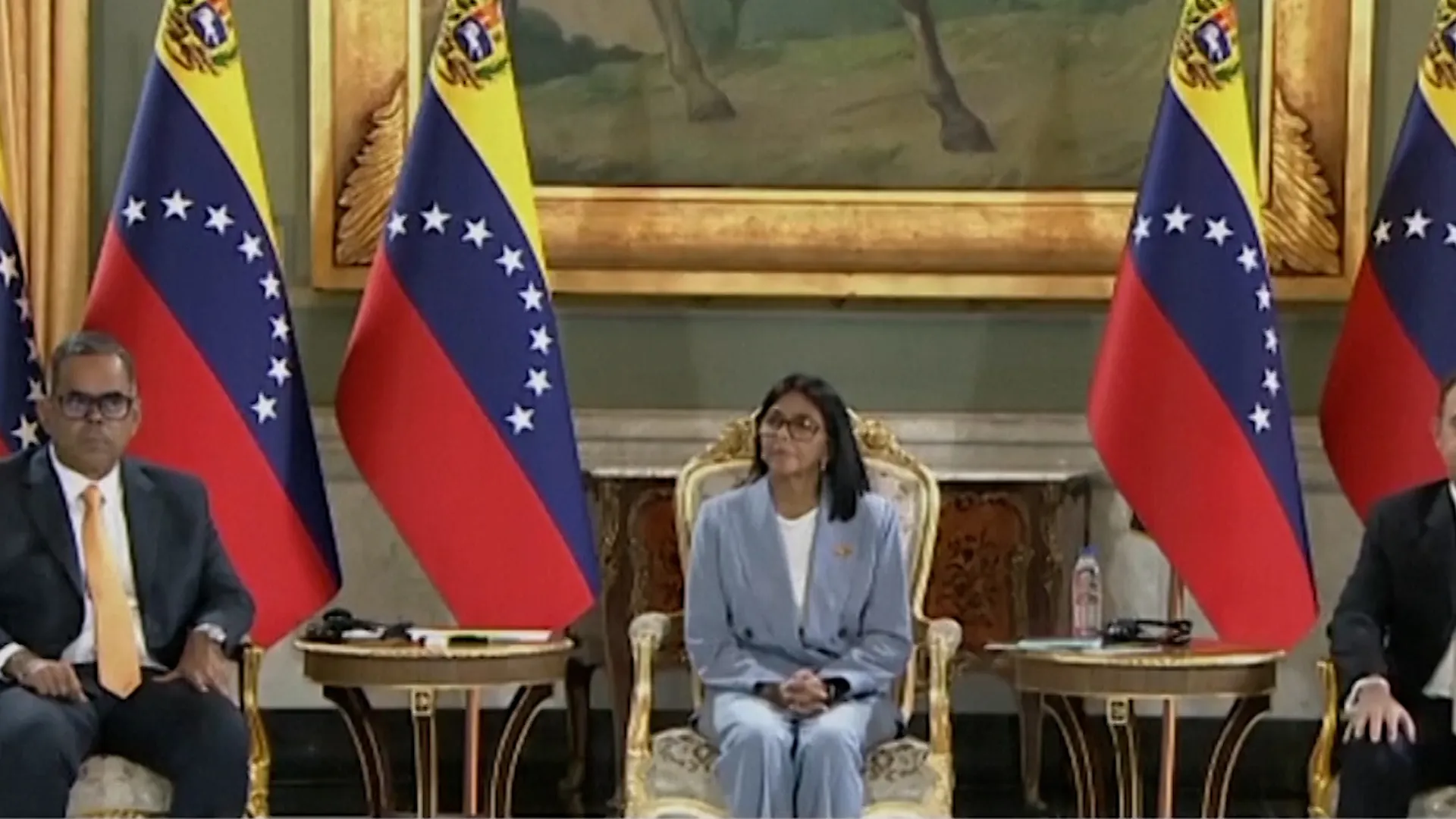
Mérida, June 16, 2026 (venezuelanalysis.com) – The Venezuelan government has signed two agreements with foreign companies as part of efforts to bolster the country’s National Electric System (SEN).
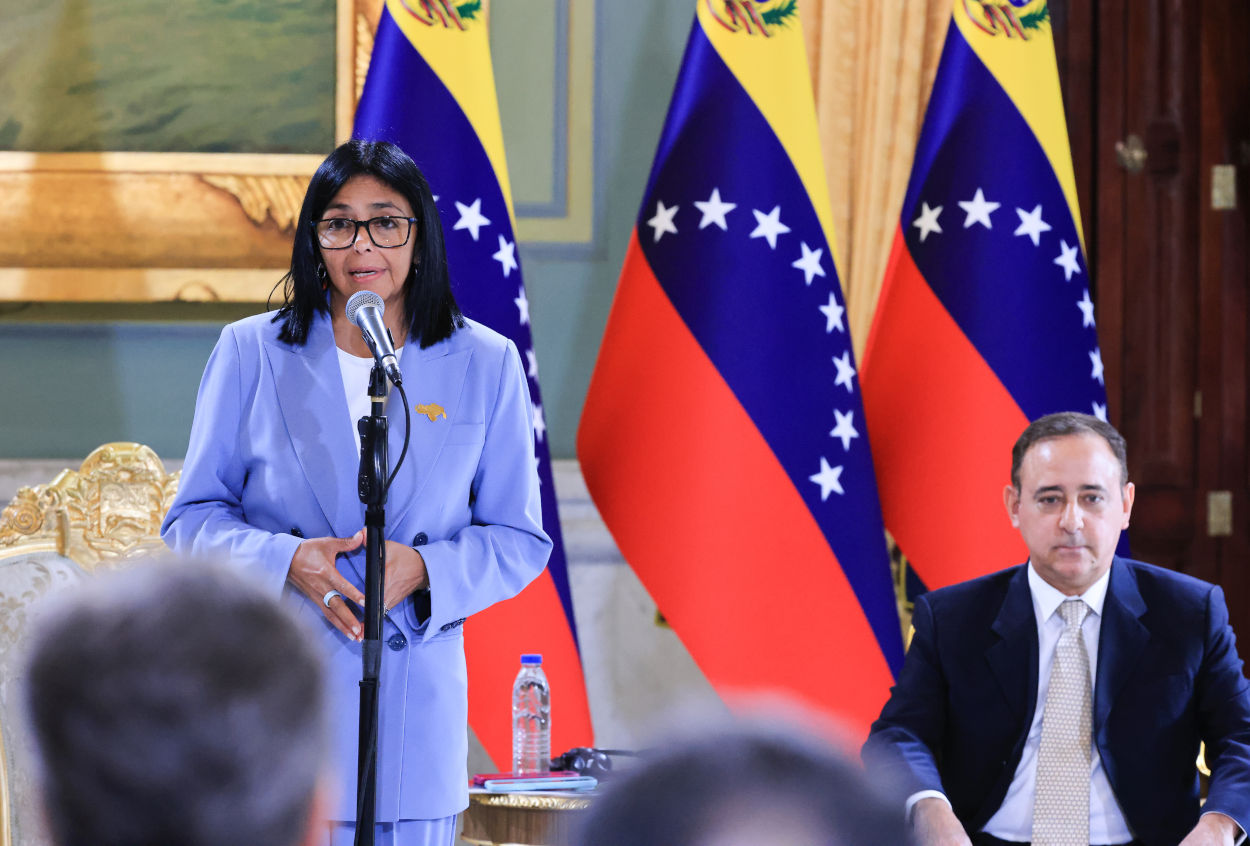
On Monday, Acting President Delcy Rodríguez penned a memorandum of understanding with GE Vernova, a company formed from the 2024 breakup of US conglomerate General Electric, at Miraflores Palace in Caracas.
“This memorandum is historic for Venezuela, so we can recover such an essential service for the Venezuelan people,” she stated during a televised broadcast. “I have asked the teams to convert this memorandum into a contract as soon as possible and start the works.”
According to Rodríguez, the agreement will incorporate 1,000 Megawatts (MW) into Venezuela’s electricity grid in the next 24 months, and 5,000 MW over four years. The acting president added that GE technicians have spent “six weeks” in the country assessing conditions of electric equipment.
Rodríguez did not disclose what the deal entails, nor what components of the electric grid will be turned over to GE Vernova, but stated that the plan concerns generation, transmission, and electricity substations.
The Venezuelan acting leader went on to thank US Chargé d’Affaires John Barrett, who was present at the ceremony, for promoting engagement with major US corporations like GE. Company executives Roger Martella and Eric Gray were likewise in attendance. Martella stated that GE’s objective was to quickly reactivate electricity generation.
“We want to move quickly so the system can work as best as possible in a few months. We already have an agreement on technical details,” he said.
Two days earlier, Venezuelan authorities announced a separate accord with Argentina-based firm Industrias Metalúrgicas Pescarmona (IMPSA) to rehabilitate the Manuel Piar and Antonio José de Sucre hydroelectric projects, known as the Tocoma and Macagua dams. Both are located in the Caroní river, in Bolívar state, which also supplies the Simón Bolívar Hydroelectric Plant, known as the Guri Dam.
The official release indicated that the agreement aims to inject 2,640 MW into the grid. IMPSA President Jorge Salcedo clarified on social media that the company’s initial target is to restore 672 MW of capacity from Tocoma within 19 months.
“This agreement launches a broader effort to strengthen Venezuela’s power system through a comprehensive plan that could deliver up to 2,160 MW at Tocoma and 480 MW at Macagua over the next five years,” he wrote.
The Tocoma project dates back to the 2000s. In 2008, Venezuela’s state electricity company CORPOELEC hired a construction consortium headed by Brazilian firm Odebrecht to build the dam, with IMPSA tasked with supplying machinery.
However, despite costs running over US $9.3 billion, more than triple the original $3 billion budget, the project was not culminated. Venezuelan authorities reported that construction was at 90 percent completion in 2016. A $1.2 billion debt owed by CORPOELEC saw IMPSA suspend activities with only two of the ten projected turbines partially installed.
According to Reuters, IMPSA is holding most of the contracted equipment in storage and will replace the missing or obsolete ones with new technology.
IMPSA was temporarily owned by the Argentine state before being privatized by the Milei administration in February 2025. The company was acquired by the US-based consortium Industrial Acquisition Fund (IAF). IAF’s main partner is ARC Energy, headed by close Trump ally and donor Jason Arceneaux.
Venezuela’s electrical system has suffered under years of US sanctions as well as underinvestment, lack of maintenance, and corruption. Around 40 percent of its installed 30,000 MW capacity is currently operational, with generation deficit around 3,000 MW meaning regular blackouts in most of the country.
Strengthening the electrical supply is a precondition for the country’s economic recovery, with growing oil production placing an additional burden on the grid.
The Rodríguez acting government has sought to address the issue by opening the electricity system to the private sector, with GE and IMPSA the first corporations formally engaged.
On June 4, the National Assembly preliminarily approved a reform of the Organic Law of the National Electricity System. The new legal framework breaks with the 2007 legislation under Hugo Chávez that centralized the grid under CORPOELEC and defined all stages of electricity generation and distribution as “strategic for the nation.”
The reform allows for private sector participation in generation, transmission, distribution, and commercialization ativities through concessions lasting up to 25 years. It also envisions new tariff structures based on “real costs and reasonable returns” for investors.
Meanwhile, shipping companies, the U.N. and a maritime security company tell us they are taking a wait-and-see attitude before changing current operations or offering advice to do so. As Trump noted over the weekend, the Strait needs to be fully de-mined while Iranian officials say they will still impose fees for transit.
“The blockade is ongoing and is expected to remain in place until the signing [of the memorandum of understanding] on Friday,” the source, speaking on condition of anonymity to discuss operational details, told us.
The U.S. naval blockade of Iranian ports will remain in effect until a deal is signed on Friday, a source familiar with the process told us. (Google Earth)
The official declined to tell us whether that means the U.S. will fire on vessels trying to run the blockade or turn ships back, as they have in the past.
As of June 12, U.S. Central Command (CENTCOM) said it disabled nine vessels trying to run the blockade and redirected 139 others. You can read more about how those ships were disabled here.
U.S. forces continue to strictly enforce the blockade against Iran. CENTCOM has redirected 139 compliant commercial ships and disabled 9 non-compliant vessels since April 13. pic.twitter.com/Sl8x1fF2wM
Iran’s reopening of the Strait of Hormuz, combined with the U.S. ending the blockade that went into effect on April 13, is a major component of the U.S.-Iran agreement. Iran closed the Strait to most shipping after it was attacked by the U.S. and Israel on Feb. 28. As we have frequently reported, that had a cascading effect on the global economy, sending oil prices higher.
President Trump says a historic peace agreement is set to be signed Friday in Switzerland after more than 100 days of war. The deal is expected to reopen the Strait of Hormuz, allowing oil to flow again and, according to Trump, helping bring peace and security to the region.… pic.twitter.com/EUh0rSSyeV
During a press conference and in a message on Truth Social, Trump on Monday said the Strait of Hormuz was already “partially opened.”
“Ships are starting to move, many loaded up with Oil, out of the Strait of Hormuz,” the president said on his social media site. “They are going along the Southern ‘Highway,’ which is totally safe, secure, and pristine. There are other areas of travel, also!!!”
“Ships are starting to go out now,” Trump added later at a press conference in France. “By Friday it will completely opened.”
As we previously reported, ships had been transiting the Strait via a southern route close to the United Arab Emirates and Oman under the overwatch of the U.S. military. Last week, Trump revealed that the U.S. had enacted a secret plan to get hundreds of ships out of the Strait; however, that still pales in comparison to the number of ships transiting before the war broke out.
NOW: Trump on Iran:
The strait is already partially open… by Friday, it will be completely open.
As for the blockade, Iranian officials on Monday said it was their understanding it would be lifted right away.
“Under the agreements reached, the war and military operations on all fronts, including Lebanon, will come to an immediate and permanent end beginning tonight,” the Secretariat of Iran’s Supreme National Security Council stated early Monday morning EDT, according to Iran’s official IRNA media outlet. “Furthermore, the naval blockade against Iran will be lifted immediately and completely.”
Also on Monday, Iran’s Foreign Ministry Spokesman, Esmail Baghaei, said the country will continue to charge vessels transiting the Strait for services rendered.
“According to the MoU, Iran and Oman will be responsible for managing passage through the Strait of Hormuz,” he stated. “Iran is not seeking to impose tolls. However, in return for navigation services, environmental protection, insurances and other maritime services, Iran will collect the necessary fees.”
JUST IN: Iran’s Foreign Ministry Spokesman, Ismael Baqaei on the Strait of Hormuz:
“According to the MoU, Iran and Oman will be responsible for managing passage through the Strait of Hormuz.
Iran is not seeking to impose tolls. However, in return for navigation services,… pic.twitter.com/HrpmE9kKtc
A day earlier, Trump addressed the blockade in two statements on his Truth Social site.
“This Great Deal will bring Peace and Security to the whole Region. Many presidents have tried to make Peace with Iran, and all have failed before me,” the president said in the second of the two posts, issued at 6:27 P.M. EDT. “The Leaders of the Region have, for the first time, found a President who can help them achieve real Peace. With the opening of the Strait upon the signing of the Deal on Friday, for purposes of mine removal, oil will flow on both ends again for the Region, and the World!”
A little less than an hour earlier, Trump said he was authorizing “the immediate removal” of the blockade.
“The Deal with the Islamic Republic of Iran is now complete. Congratulations to all! I hereby fully authorize the toll free opening of the Strait of Hormuz, and, simultaneously herewith, authorize the immediate removal of the United States Naval blockade. Ships of the World, start your engines.”
We reached out to the White House for further clarification.
Though both Trump and Iranian officials have weighed in on this deal, much about it remains unknown, something Vice President JD Vance explained Monday morning.
Vance told CNBC’s “Squawk Box” program that though the U.S. and Iran struck a preliminary deal, there are “a lot” of details that remain to be ironed out, but he expressed confidence that America has “all the cards” in subsequent talks.
Vance told the network that Iran’s foreign minister Abbas Araghchi is expected to be involved in those upcoming discussions — as well as its parliamentary speaker, Mohammad Bagher Ghalibaf. He is a hard-liner, Squawk Box noted, whose participation could signal that the regime’s conservative faction is on board with the deal.
“The agreement reached Sunday would extend the U.S.-Iran ceasefire for 60 days and set up a framework for future negotiations about Tehran’s nuclear program and other key issues,” CNBC further explained. “The preliminary deal has yet to be signed and its text has not been released.”
The sides have given themselves “60 days to reach a technical agreement on how to down-blend Iran’s highly enriched uranium and both freeze and monitor its nuclear program going forward,” Axios reported. “That’s a tall order given how difficult it was to reach the much less detailed memorandum of understanding.”
The U.S. “insists Iran is incentivized to reach a final agreement because sanctions relief and access to frozen funds depend on progress on the nuclear front,” Axios added. “Some hawks in the U.S. and Israel worry there will never be a final deal and the war will end with the nuclear questions unresolved.”
Trump told the New York Times on Sunday afternoon that the agreement he had reached with Iran would ultimately assure that the Strait of Hormuz was “permanently toll-free,” a seeming sticking point with Iranian expectations as we discussed earlier in this story.
Trump also insisted that if Iran failed to reach a final nuclear accord with the United States, he would restart military attacks on Tehran or make the United States “the guardian of the Middle East” in return for 20 percent of the region’s revenues.
Given that the U.S. began building up forces in the region in January, many of the ships, aircraft and troops will have to retrograde out of the CENTCOM area of responsibility in the coming weeks. So exactly what the American footprint will be in the CENTCOM area of responsibility in two months is questionable.
There is also massive global and domestic political pressure to end the war, which, as we noted earlier, has created economic upheaval around the world. Moreover, the conflict has not been popular at home, and American voters go to the polls in November for the midterm Congressional elections with Trump’s Republican party struggling to maintain control. Starting the war again, especially knowing how it went this time around and failed to deliver a deal on top of it, would see these pressures magnify.
President Donald Trump tells the New York Times if Iran failed to reach a final nuclear accord with the United States, he would restart military attacks on Tehran. pic.twitter.com/kuCpXU3WUv
Regardless of the diplomatic breakthrough, shipping companies tell us that they are not changing course when it comes to transiting the region.
“The announced agreement is a welcome and positive development, but publicly available details are still limited, and it is too early to assess how it will impact logistics and maritime operations in the Middle East,” a spokesperson for Maersk told us. “At this stage, there are no changes to our operations in the region.”
A spokesperson for Hapag-Lloyd expressed similar sentiments.
“The latest developments give reason to hope that the security situation in the Strait of Hormuz will improve,” the spokesperson told us. “We are currently reviewing the information available and are in close contact with relevant authorities and our security partners. At this stage, our risk assessment remains unchanged and the Strait of Hormuz remains closed for Hapag-Lloyd transits until further notice. The safety of our crews and vessels, and the security of our customers’ cargo, remain our highest priority.”
The U.N.’s International Maritime Organization (IMO) told us that it too was waiting for further details to emerge before offering any concrete new advice to commercial vessels sailing in the region.
“Details of the agreement are due to be released, which will provide more clarity on how restoring full trade can return through the Strait of Hormuz,” IMO told us.
The organization “is working with relevant countries, particularly Oman, Iran and the rest of the coastal States, on the safe route to be used for the evacuation of seafarers on trapped vessels and for trade to resume,” IMO added. “We are assessing the feasibility for vessels to transit and conduct the trade safely and securely, avoiding possible hazards like mines as well as congestion which could lead to accidents.”
I welcome with great satisfaction the peace agreement reached. A first step to restoring safety in this vital corridor,particularly for our seafarers. And for IMO to advance the evacuation plan, which requires safety & security guarantees from all parties. https://t.co/uBCjkD84wypic.twitter.com/PoQH4Q1vlq
An official with the Ambrey maritime security company said there is still a long way to go before commercial vessels can navigate these waters securely.
“The proposed deal still requires meaningful implementation across multiple governments, which will take time,” Joshua Hutchinson, a former Royal Marine commando now serving as the company’s Managing Director of Risk and Intelligence, told us. “Furthermore, over 1,000 vessels remain in the Persian Gulf, and the threat of mines looms; clearing such a large number of vessels will take several months of coordination.”
In addition, “reports say that the agreement will allow the Iranian Maritime Authority to retain control of the Strait of Hormuz through a clearance system, and, for the time being, this will be one of the major concerns that ship operators and owners need to understand,” Hutchinson added.
Another factor in all this remains Israel. Officials in Jerusalem have stated that they will not withdraw from southern Lebanon and will continue to strike Hezbollah targets they deem necessary. The Israeli airstrike on a Hezbollah site in Beirut on Sunday reportedly almost derailed the announcement of the MOU, with an Iranian missile attack on Israel scrubbed at the last moment.
BREAKING: Israel won’t withdraw from land seized in Lebanon, Syria and Gaza, its defense minister says, hours after an interim Iran-U.S. deal was announced. Israel Katz’s remarks are the first official Israeli comments since the announcement. https://t.co/KdVpD2iaxq
Though the preliminary agreement marks the biggest diplomatic breakthrough since hostilities began, there is still a long way to go until Friday in a region known for its volatility. As we have previously reported, several rounds of tit-for-tat attacks between the U.S. and Iran threatened to derail the shaky ceasefire in the past.
Even if Friday’s milestone signing should be reached, questions still remain about whether peace will ultimately be achieved. Given everything at stake, the world awaits warily to see what happens next.
Gaza’s football fans once watched the World Cup from the comfort of their homes. Now, displaced in schools and tents, they face power cuts, sparse internet access and the threat of Israeli attacks.
The court found he had controlled her through threats of violence and security cameras. He was convicted of offences including attempted rape, aggravated pimping, assault and unlawful threats following a trial in Härnösand, on Sweden’s eastern coast.
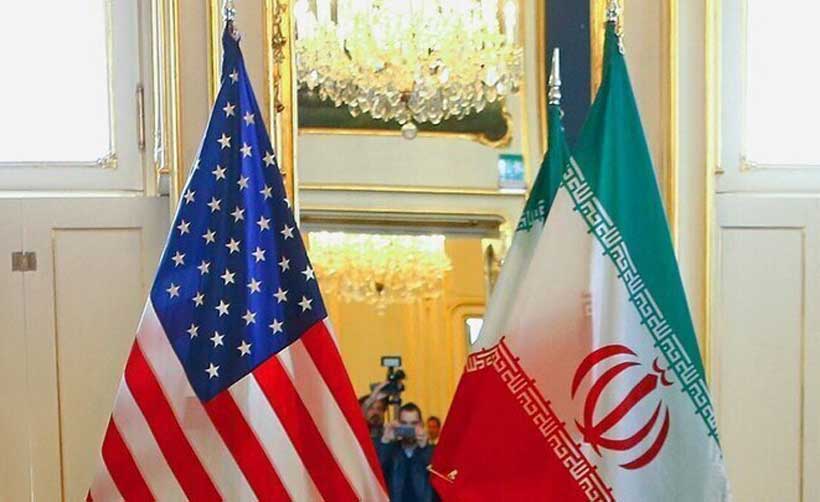
The US-Iran memorandum of understanding expected to be formally signed in Switzerland on Friday could allow for the establishment of a $300bn investment fund for Iran, as part of a broader settlement to end the war that triggered a global energy crisis and upended markets worldwide.
US Vice President JD Vance told CBS News on Monday that the incentives would be connected to Iran’s “performance” in adhering to the deal, which was digitally signed by both sides on Sunday.
Recommended Stories
list of 3 itemsend of list
The scale of the financial incentives grabbed the headlines due to US President Donald Trump’s longstanding criticism of a 2015 nuclear accord that he claimed delivered economic benefits to Tehran.
In a bid to manage perceptions around this politically sensitive issue, Trump took to his Truth Social platform to claim that “the story that the US is paying Iran 300 million Dollars is Fake News,” while Vance told CBS News that the money would not be a US payout in exchange for Iran’s enriched uranium.
“When people say that billions of dollars of assets will be released, that’s not true,” the vice president told the CBS Morning programme. “What is true is that Iran will have a much better and much more prosperous future if they meet the obligations they make in this agreement.”
What do we know about the $300bn investment fund?
Vance said the deal “fundamentally extends a hand to Iran and says, ‘Look, if you guys are willing to honour your obligations, if you’re willing to allow real inspections of your nuclear programme, then we will welcome you back into the world economy.’
“That’s the sort of thing they could have access to, funded by the Gulf Coast coalition, so long as they honour their end of the obligation,” Vance told CBS. He also claimed that while US money would not be injected, economic opportunities could arise once Iran repositions itself in the global economy.
The New York Times quoted sources saying the fund would not come from governments but be created for companies eager to invest in Iran.
Muhanad Seloom, a non-resident senior fellow at the Middle East Council on Global Affairs, said the setup was a no-lose solution for Washington. “If Iran reforms, the administration owns the peace; if it doesn’t, the US loses nothing and the Gulf carries the risk,” he told Al Jazeera.
What about the Iranian frozen assets?
Seloom said the idea of an investment fund was built precisely to escape the optics of releasing Iran’s frozen funds. While the exact amount of Iran’s frozen assets is unclear, official Iranian reports and experts have set the total amount at more than $100bn.
Iran’s economy has been crippled due to years of sanctions imposed on the country by the United States and other nations following the Islamic revolution in 1979, and then amplified over Iran’s nuclear and ballistic missiles programmes. These measures have restricted Tehran’s ability to access its own assets, such as revenues from oil sales, which have been frozen in foreign banks.
Tehran was granted sanctions relief in the wake of the landmark 2015 nuclear deal signed under President Barack Obama, but Trump tore it up in 2018 during his first term. The 2015 deal had put limits on Iran’s nuclear enrichment in exchange for sanctions relief.
Iran’s state-affiliated Mehr News agency reported on Sunday that the 14-point draft memorandum of understanding provided for the release of $24bn in frozen Iranian assets.
Pressed by CBS News on the possibility of releasing frozen funds, Vance said the $24bn figure “just doesn’t appear anywhere in any of the texts that we’ve talked about with the Iranians”.
“What we have said is that we’re willing to talk about unfreezing assets, but a much, much bigger deal is unsanctioning their economy – so long as they make the long-term commitments on the nuclear programme,” the vice president added.
For Iran, where the war inflicted an estimated $29bn damage and the population is struggling with the highest inflation rate since 1942, the investment fund may constitute a much-needed lifeline.
But the optics will not be as favourable, raising a “dignity problem”, Seloom said. “Tehran reads this as supervised, conditional money rather than sovereign relief,” the analyst told Al Jazeera.
Which other contentious issues will be discussed after signing the deal on Friday?
One of the US’s main declared objectives has been to assuage concerns surrounding Iran’s nuclear programme, including a stockpile of more than 440kg (970lbs) of enriched uranium.
The memorandum extends an existing ceasefire arrangement for another 60 days, during which the two sides are expected to hold further negotiations on issues including the disposal of the enriched uranium.
Vance said Tehran had agreed to surrender its stockpile, undergo regular inspections and refrain from producing or buying nuclear weapons, but the full text of the memorandum of understanding has yet to be disclosed.
The reopening of the Strait of Hormuz, which has been subject to competing blockades by the US and Iran, has also been a point of contention. Trump suggested an agreement to reopen the waterway had been reached when he announced a deal on Sunday with the words: “Let the oil flow!”
Speaking to CNBC, however, Vance acknowledged that not all sticking points surrounding the passageway had been resolved. “Well, our expectation is that the strait is gonna be opened in a toll-free way for the long term, and that’s the sort of thing that we’re gonna figure out in these technical negotiations,” he said.
Israel’s ongoing aggression on Lebanon is also expected to create friction, as Iran has insisted any ceasefire deal must include the allied nation. Israel has so far rejected any arrangement that would limit its ability to strike what it says are Hezbollah targets. Defence Minister Israel Katz on Friday said the military would continue operating in Lebanon regardless of any agreement with Tehran.
Mixed reactions to the agreement
Iranian Foreign Minister Abbas Araghchi said the memorandum of understanding would reap economic benefits for Iran but stressed that Tehran would not rely on those benefits for all of its needs.
“We have a history of broken promises, non-compliance, and the tearing up of agreements,” Araghchi said on Monday, according to Press TV. He said discussions about the lifting of US sanctions and Iran’s nuclear programme would be held during a 60-day period of negotiations following the official signature on Friday.
Iran’s new supreme leader, Mojtaba Khamenei, has yet to comment. Some Iranian observers objected to the timing of the announcement, which coincided with Trump’s birthday. Referring to the assassination of former Supreme Leader Ayatollah Ali Khamenei at the beginning of the US-Iran war, conservative journalist Parisa Nasr wrote on X: “Was giving a birthday gift to the killer of the martyred Leader also one of the unwritten conditions of the deal?”
Iranian President Masoud Pezeshkian said Iran’s Supreme National Security Council had approved the deal so that “America’s genuine commitment to respecting the rights of the Iranian nation could be tested in practice.”
Speaking at the G7 summit in France on Tuesday, Trump described the deal with Iran as “fair”, “good”, and under which Iran “can’t have a nuclear weapon” or “they get blown up.”
Qatar’s Emir Sheikh Tamim bin Hamad Al Thani, who is also attending the summit, said the Iran-US agreement will result in positive outcomes for the region.
“This is a very important deal, there’s still a lot of work to be done, but with this momentum – if we continue like that, Mr President – I think we can achieve and do great things in the region,” Sheikh Tamim said.
US Democratic lawmakers welcomed a deal to halt the war with Iran but stressed that its terms must be made public. Senator Gregory Meeks said “any final agreement must be durable, enforceable, transparent” and more than “vague announcements or political spin”.
US Republican Senator Lindsey Graham on Sunday said he was “pleased” about the deal but also “somewhat concerned that Iran’s view of the agreement seems different than what the American negotiating team is claiming”.
Seloom, at the Middle East Council on Global Affairs, said the different narratives underlined that the two sides were “not really talking to each other”. “They’re talking past each other, to domestic audiences,” he said. “Each side has to sell this as a victory it cannot sell honestly.”
Weekly insights and analysis on the latest developments in military technology, strategy, and foreign policy.
The saga of the Constellation class frigate is emblematic of so many chronic issues with the Navy’s way of procuring warships. The vessel that was supposed to make the wrongs of the Littoral Combat Ship debacle right failed spectacularly and the timing couldn’t have been worse. Now Constellation is dead and the Trump administration is building a different frigate from a different yard. While the Navy has said why it is moving on, we wanted the other side of the story. We recently had a conversation with George Moutafis, CEO of Fincantieri Marine Group, to get exactly that.
Before we get to the questions and answers, however, here is the backstory.
The U.S. Navy needed the Constellation class frigate, badly, and the program to construct it seemed built to deliver. Rather than a clean-sheet design, the service chose the proven Franco-Italian FREMM as its parent design, betting that adapting an existing platform would be far faster and cheaper, and overall less risky than starting from scratch.
It wasn’t. Among the issues plaguing the program, constant change orders pushed the design far from its origins. Two years into construction, the first ship was barely 10% complete while its design was still being finalized. Meanwhile, costs and schedules blew well past original projections.
In the wake of the program’s implosion, the Navy created the Vessel Construction Manager (VCM) system. It uses a hired manager to hold the prime contract and run the show, overseeing shipyard performance, controlling subcontracts, and acting as a buffer between the service and the builder to keep costs and schedules on track.
In a wide-ranging, hour-long exclusive interview, Moutafis – appointed CEO on July 1, 2025 as the wheels were already falling off this project – gave us unique insights into Fincantieri’s version of how Constellation turned into a debacle and what needs to change as a result. He also touched on an array of other topics, which we will address in future installments.
Some of the questions and answers have been edited for clarity.
Fincantieri Marine Group CEO George Moutafis. (Fincantieri)
Q: Why was the Constellation class frigate cancelled from your point of view? What happened that caused the program – which was seen as a must-succeed endeavor, and hugely promising – to get to the point where it was shuttered?
A: It’s for sure a tricky situation. On one hand, the way the Constellation class program was initially laid out and envisioned – potentially a lot of the things that were driving it may have been ahead of its time.
So, while you’re saying you want to attempt to do one thing, but at the same time you’re not evolving the way you execute can lead you to an undesired effect. And I say this because in my eyes, some of those lessons learned out of Constellation are being manifested in the things that the Navy has been rolling out the past few months – a new approach that empowers PAEs [Navy Portfolio Acquisition Executives] to make decisions, to minimize change, to embrace innovation and new technologies. All these elements that we see now being rolled out, I think to a certain degree, connect back to lessons that have been learned out of the Constellation class journey.
A rendering of the now-cancelled Constellation class frigate. USN
Q: What lessons, specifically?
A: Figure out what you want to prioritize, to what extent you want to prioritize schedule, and what’s the best way to say this. When you know when you need something delivered and at what pace, then enable the right level of decision-making. Because otherwise – I don’t want to sound this the wrong way – but perfection sometimes is the enemy of more than good enough.
Going beyond the Constellation class, now the needs are for vessels to be out there for the warfighter as soon as possible. For sure, we will see many cases where it will be considered that a vessel with these capabilities – even though potentially, in some areas, it may not have enough tons of steel on its sides, or whatever – it will be good enough to assist the warfighter as they head into harm’s way.
Those trade-offs are now being placed at the PAE level, allowing Navy leaders at that level to make the right decisions – figuring out whether to continue going down a design spiral versus just moving out with production and enabling us to have the right capabilities on time for the warfighter.
You can see former Navy Secretary John Phelan announce the cancellation of the Constellation class in the following video.
From day one I made it clear: I won’t spend a dollar if it doesn’t strengthen readiness or our ability to win.
To keep that promise, we’re reshaping how we build and field the Fleet—working with industry to deliver warfighting advantage, beginning with a strategic shift away… pic.twitter.com/pbTpIPDfR8
— Archive: Secretary of the Navy John C. Phelan (@SecNavPhelan) November 25, 2025
Q: Could the Constellation class have been salvaged? What would have needed to change to get it to a place where it was affordable, on time and efficient?
A: I think the initial and envisioned approach was a healthy one. Had we kept on track with what was, back then, the principles that led to the selection – but also how it was originally set up – we probably would have kept closer to the original design. And thus allowing [us] to be closer to the original schedule. And thus allowing [us] also to build the vessel that was desired, without delays or major changes.
On our end, from day one or day two – let me say that once the Navy decided their shift, we opted to consciously become a true partner and showcase that we are a true partner to the Navy and the nation. We said, ‘Okay, we will adjust, we will move forward.’ And it’s a clear reality that what we have in Wisconsin is an asset for the Navy, especially in a time like this that leaves all of us eager to serve the way you would need us to serve – whether it’s today through serial production of landing ships and/or icebreakers or others. And in the future, should the small surface combatant segment have additional needs, it’s obvious that the infrastructure [in Wisconsin] has been built to ideally serve that type of vessel, so we’re ready to answer the calling.
President Donald Trump speaks to workers during a visit to the Fincantieri Marinette Marine shipyard on June 25, 2020 in Marinette, Wisconsin. (Photo by Scott Olson/Getty Images) Scott Olson
Q: Why didn’t the Navy just take the base class and do minimal modifications to it? It became what seemed like a totally new ship.
A: That’s a great question, Howard, but I would need to speculate to answer that one, and I wouldn’t want to do that, because you’re right. But at the same time – what’s the saying? Hindsight is 20/20. It’s probably one of those occasions at this point. But it’s a great question. I’d love to be with you when we pose it to the right folks.
Q: But what do you think is the answer to that question, from your point of view?
A: From our point of view – from the get-go, when the award was made, it was made because there was a review of the requirements, a review of the design, and a review of all the elements that led to recognition that the parent design possessed exactly the right features to represent the path forward. So collectively, we had marched on that path. We might find ourselves in a different situation right now, but like I said, it’s one thing asking somebody to change their M.O. and adopt a new approach without fully empowering them or doing something drastic to signal that type of transformation. And it’s another where we said ‘we will try this new approach.’ But there was a lot of follow-through that was needed.
Everybody has developed experiences in certain ways, and everybody – especially when you have folks that have been doing it for decades – has developed their own rules of thumb and approaches to dealing with certain situations. It’s not easy to pivot an entire structure to a new idea or a new approach. So like I said, probably it was the right idea, but a little bit ahead of its time.
The Italian FREMM Carabiniere. (Photo by Francesco Militello Mirto/NurPhoto) NurPhoto
Q: What do you think of the lessons that should be learned from the Constellation class’s story?
A: I want to be a glass-half-full type of guy, so that’s why I connected back the things that I’ve been seeing being rolled out by our Navy the last few months as indeed adopting some of those lessons learned. So I’ll go back to the fact that they’ve decided to find new ways to apply the principle that schedule is king. And those new ways include changes that are not just at the leadership level, not just at the level following that, but indeed of restructuring and reorganizing the teams that are there to implement those guidelines – because that’s key in order to be able to change your ways and adopt lessons learned.
So I’m hopeful that this new approach of the PAE setup will be an enabler to adopt the lessons learned: of how to move fast, of how not to mess with a design especially when it’s meeting and exceeding requirements, of how to manage change – not in the rollout of a change, but in the decision-making of whether to adopt change or not. So a lot of those new ideas that they’ve been trying to apply are promising to that effect.
The future USS Pittsburgh under construction at Ingalls Shipbuilding in Pascagoula, Miss. (Ingalls Shipbuilding)
Q: The Navy adopted the new VCM program to oversee construction of the new Landing Ship Medium (LSM) vessels you are working on. This is a direct result of what happened with the Constellation class, right?
A: I would definitely think so, because it indicates the whole idea that the Navy is recognizing – instead of applying the typical layers of full team presence in the shipbuilder’s yard, additional layers of engineering design, etc. – we’re saying, ‘Okay, in a case where we want to go fast, let’s make our decisions ahead of time, select the design, check it quickly ahead of time, and assign it as a production-related design in the hands of that VCM, and allow an industry set of characters between the VCM and the shipbuilder to deliver.’
Renderings of the Navy’s Landing Ship Medium (LSM) vessels. (USN)
Q: What does Fincantieri have to give up in this VCM approach?
A: Thinking on this – Fincantieri, as a global group, likes to be end-to-end with the end customer. Our strategy is to develop the design according to the needs and requirements, move forward all through construction, and even post-construction to provide full support throughout almost the entire lifecycle of a vessel. That’s the Fincantieri model around the globe.
In this case, we’re looking to adjust to the approach that the Navy is looking to apply – and we can view it as a benefit. We can take it on as a build-to-print: be the shipbuilder that respects this design, doesn’t try to mess with it, just works out all the kinks to ensure producibility, and then moves swiftly into quick serial production.
From that perspective, we’re not really giving up something – we’re just placing at the disposal of the nation the assets that are already in place, and looking to produce as many vessels as quickly as possible.
The launching ceremony of the Italian Navy ship Trieste in the shipyard of Fincantieri at Castellammare di Stabia on May 25, 2019. (Photo by Paolo Manzo/NurPhoto via Getty Images) NurPhoto
Q: How will this speed up U.S. shipbuilding?
A: How I interpret this strategy is the Navy saying: in programs that work, find an approach that allows them to almost get out of the picture. They recognize schedule is priority number one and a quality vessel is priority number two. In order to enable that ‘build more and build fast’ approach, they’re seeking to place somebody – the VCM – to take on the construction, provide them with a mature, production-ready design with no changes to it, and enable the kind of interaction you’ve seen in commercial shipbuilding. That allows those two parties – the VCM and the shipbuilder – to work fast through daily decision-making in a way that favors schedule without compromising quality.
They’re seeking to equip the VCM with a design that will not be touched – a build-to-print situation – and empower them to make these types of decisions daily, so that at the end of the day they simply deliver a vessel to the Navy, minimizing the Navy’s need or propensity to intervene.
It’s an innovative approach, and it definitely requires all parties to give up habits and practices that have taken hold in the past. As long as parties stick with this new approach, it has a great chance of success. On our end, we’re trying to be disciplined in respecting it and pushing forward.
Our next installment of this interview focuses on how Fincantieri is planning to help build Trump’s Golden Fleet and the challenges ahead.
The World Cup on Tuesday features tournament heavyweights Argentina and France, who are beginning their campaigns.
France, the 2018 World Cup winners, take on Senegal in East Rutherford, New Jersey, in a repeat of their famous opener in the 2002 edition while Lionel Messi’s reigning champions Argentina face Algeria in Kansas City, Missouri. In Tuesday’s other matches, Norway return to the World Cup for the first time in 28 years against Iraq, and Austria meet Jordan in the day’s final fixture.
Away from the games, Cape Verde are still celebrating their historic draw with Spain while Iraq’s return to the tournament has sparked both happiness and frustration among their supporters.
Here’s what to watch on Day 6 of the World Cup:
What is the schedule for Tuesday?
Four more teams begin their campaigns on Tuesday.
France vs Senegal at New York New Jersey Stadium is scheduled to kick off at 3pm (19:00 GMT).
Later, Norway return to the World Cup for the first time since 1998 when they take on Iraq at Boston Stadium in Massachusetts with kickoff at 6pm (22:00 GMT).
And Argentina will also play against Algeria at Kansas City Stadium at 8pm (01:00 GMT on Wednesday) before Austria meet Jordan at San Francisco Bay Area Stadium in California at 9pm (04:00 GMT on Wednesday).
What are the predictions for France vs Senegal?
France head into the tournament as one of the favourites, sitting third in FIFA’s world rankings. But African powerhouse Senegal, ranked 16th, are expected to provide a stern early test in their opening match.
The teams’ only previous World Cup meeting came in the opening match of the 2002 tournament when tournament debutants Senegal stunned defending champions France 1-0. Papa Bouba Diop’s memorable winner sparked celebrations across Dakar, and then-President Abdoulaye Wade declared a national holiday. Senegal went on to reach the quarterfinals while France exited without winning a game.
Opta’s supercomputer still gives France a clear edge at New York New Jersey Stadium, assigning Les Bleus a 64.8 percent chance of victory. Senegal’s chances of pulling off another upset stand at 14.9 percent while the probability of a draw is put at 20.3 percent.
What are the predictions for Iraq vs Norway?
Tuesday’s Group I clash will be the first meeting between Iraq and Norway, and it will be the Nordic country’s first World Cup match against a team from the Asian Football Confederation.
Norway have relished their return to the World Cup after a long hiatus from the tournament. Fans have drawn attention with their synchronised “Viking row” celebrations while Erling Haaland shared a Viking-themed team photo on social media, describing the tournament as “a dream 28 years in the making”. Led by Haaland and Martin Odegaard, the Norwegians arrive with high hopes.
Opta’s supercomputer expects Norway to start strongly, giving them a 77.4 percent chance of victory. A draw is rated at 14 percent while Iraq have an 8.6 percent chance of pulling off an upset.
What are the predictions for Argentina vs Algeria?
Argentina and Algeria have never faced each other at the World Cup although they did meet in a friendly in 2007 when Argentina came from behind to secure a thrilling 4-3 win at Barcelona’s Camp Nou. A teenager by the name of Lionel Messi scored the first two goals of his international career that day.
History also favours the South Americans. Argentina have won each of their last six World Cup matches against African opponents, rebounding from their shock 1-0 defeat to Cameroon in 1990. Algeria, meanwhile, have enjoyed mixed fortunes against South American sides at the tournament, beating Chile in 1982 before losing to Brazil four years later.
Opta’s supercomputer expects Argentina to make a winning start in Group J. After 25,000 simulations, Lionel Scaloni’s side emerged victorious 68.2 percent of the time. Algeria were given a 13.2 percent chance of causing an upset while a draw was the outcome in 18.6 percent of the projections.
What are the predictions for Austria vs Jordan?
Austria enter the match as the clear favourites on paper. Ranked 25th in the world, they sit 39 places above Jordan, who are 64th in FIFA’s standings, and the Europeans are widely expected to challenge for a place in the knockout rounds.
Opta’s supercomputer strongly backs Austria to open their campaign with a victory in San Francisco, giving them a 70.3 percent chance of taking all three points. Jordan have been assigned a 12.9 percent probability of pulling off an upset while the likelihood of a draw stands at 16.9 percent.
Looking beyond this match, Austria are considered Argentina’s main challengers in Group J. They have an 18 percent chance of finishing top of the group, compared with just 2.9 percent for Jordan.
What else is shaping the World Cup?
Cape Verde celebrate historic point
Cape Verde’s 0-0 draw with Spain led to wild celebrations among fans, including in Boston, home to a large Cape Verdean community. Supporters said they were proud to see their country shine on the World Cup stage.
“Everyone thought Spain would beat us,” one fan said. “We’re a small country, but we have a big heart.”
According to a report on the NBC TV network, goalkeeper Vozinha also became an overnight social media sensation with his Instagram following soaring after the game. NBC said the goalkeeper went from 50,000 followers on Instagram to 4.9 million.
Cape Verde fans watch the World Cup group stage match against Spain from Praia, Cape Verde, on June 15, 2026 [Danilson Sequeira/Reuters]
Saudi Arabia deny Uruguay victory
Saudi Arabia looked set for another famous World Cup upset after Abdulelah Alamri gave the Green Falcons the lead against Uruguay, four years on from their shock win over Argentina.
But Uruguay’s Maximiliano Araujo struck 10 minutes from time to earn Uruguay a 1-1 draw. Saudi goalkeeper Mohammed Alowais then made several key saves to preserve the point, leaving Group H finely balanced after the opening round of matches.
Abdulelah Al-Amri #4 of Saudi Arabia scores his team’s first goal against Uruguay during the FIFA World Cup 2026 Group H match at Miami Stadium on June 15, 2026 [Lars Baron/Getty Images/Getty Images via AFP]
Tunisia sack coach after heavy defeat
Tunisia have dismissed Sabri Lamouchi after their 5-1 loss to Sweden in their World Cup opener. Mondher Kebaier is set to take over on an interim basis as Tunisia try to revive their campaign before matches against Japan and the Netherlands.
Meet Merlin, Mexico’s unlikely mascot
A duck named Merlin became one of the World Cup’s first viral stars after appearing in Mexico City celebrations dressed in the national team’s colours. Fans on social media called the two-year-old a “national treasure” and even called for him to attend matches as the tournament’s unofficial mascot.
Norway embrace their Viking roots
Norway have brought Viking fever to the tournament. Fans have debuted a synchronised “Viking row” celebration in the stands while the team posed for a Viking-themed photoshoot that sparked both excitement and debate back home. The images, shared by Erling Haaland, have become one of the tournament’s early talking points.
FIFA clears VAR official Shaun Evans
FIFA said it found “no evidence” to support allegations that video assistant referee Shaun Evans breached its disciplinary code after he was accused of making a white supremacist hand gesture during Germany’s World Cup opener against Curacao. Evans, an Australian, said the gesture was an involuntary movement and denied any intent to communicate a racist message.
For many Iraqis, qualifying for the World Cup has brought a rare moment of joy after decades of conflict and hardship.
Fans said the team’s return to football’s biggest stage after more than 40 years offers people a chance to unite and move away, even briefly, from the tensions in the region.
“We haven’t felt this happy in a long time,” Ahmed Salman, an Iraqi fan, told Al Jazeera.
“This is a chance for people to come together and move away from the atmosphere of war, especially given the tense situation in the region.”
But the celebrations have also been mixed with frustration over restrictions that some said have prevented Iraqi supporters from attending the tournament in the United States.
“Banning the fans is a very negative step because sports have nothing to do with politics,” Salman said. “People are coming to celebrate.”
Another Iraq supporter described the emotions as bittersweet.
“As Iraqis, after more than 40 years, we have qualified for the World Cup,” Taha Mohamed said. “It brings a feeling of joy and comfort, … but regarding the fans, it is frustrating.”
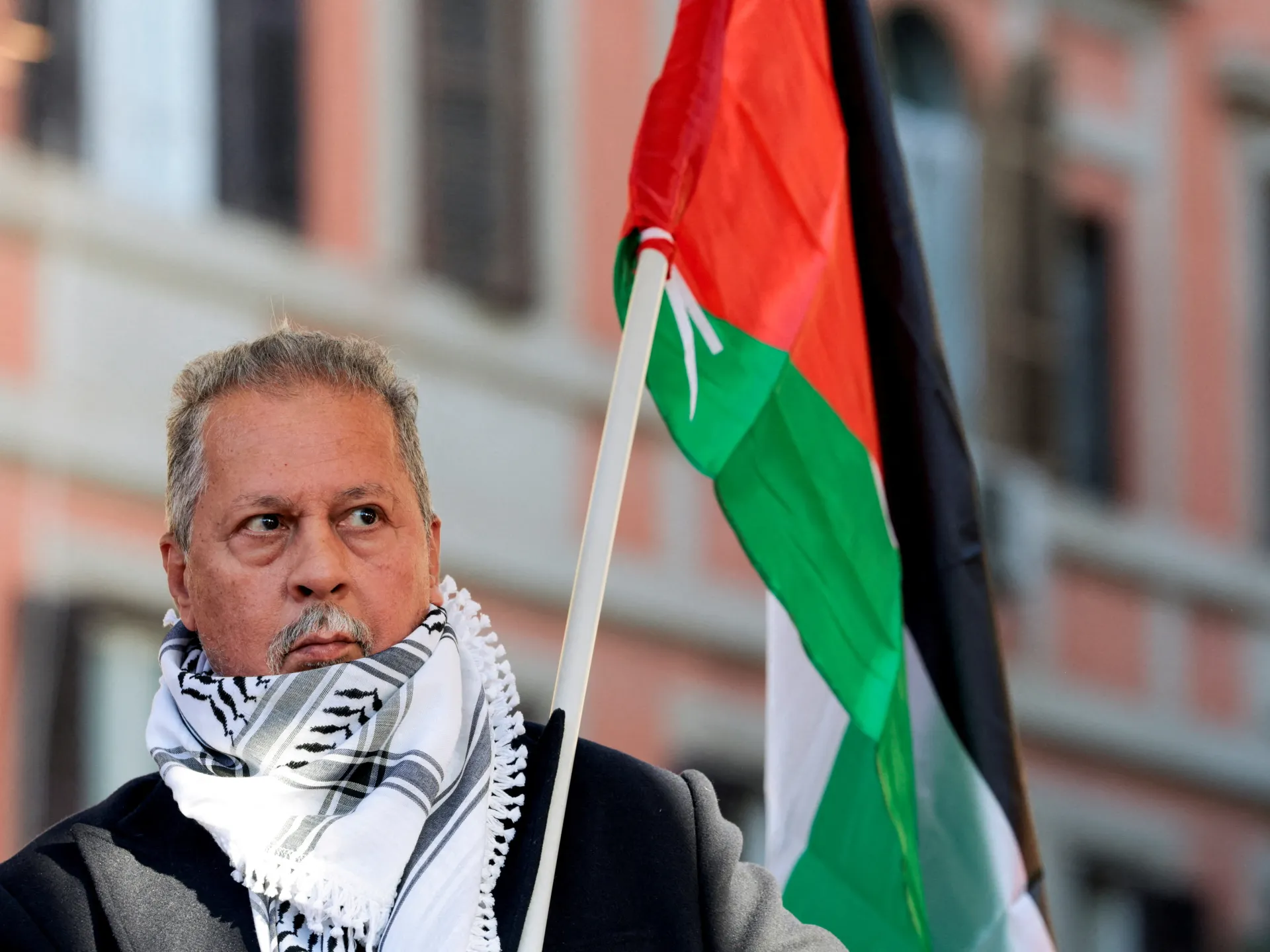
Since Israel launched its latest war on Gaza, Palestinian activist Mohammad Hannoun has been a figurehead in demonstrations across Italy.
Wrapped in a keffiyeh and waving the national flag, as head of the Palestinian Association in Italy he delivered impassioned speeches condemning the Italian government’s military cooperation with Israel and demanding an end to the genocide in Gaza.
Recommended Stories
list of 3 itemsend of list
The 63-year-old Jordanian national, who lives in the port city of Genoa and is an architect by profession, was arrested in December, under the accusation of having raised around 7 million euros ($8.1m) through his non-profit Association of Solidarity with the Palestinian People (ABSPP) that allegedly ended up in Hamas’s coffers.
Italian Prime Minister Giorgia Meloni expressed “appreciation and satisfaction” when the so-called “Operation Domino” led to the arrest of nine people, including Hannoun, described by investigators as the “head of the Italian cell of the Hamas organisation”.
But Italy’s Supreme Court of Cassation last month demanded a “comprehensive re-evaluation” of the evidence, describing it as too “generic”, according to the ruling seen by Al Jazeera.
The material presented in court consisted of Israeli intelligence sent to Italian authorities, as well as open-source online information whose provenance and reliability had not been established.
Hannoun’s case is not an isolated one.
Last month, Amin Abu Rashid, a Dutch national of Palestinian origin, was acquitted in the Netherlands by the Rotterdam District Court of financing Hamas, after a years-long legal battle landed him in jail for a year. Similarly, the evidence had relied on Israeli government reports and unverified newspaper articles.
The UK-based advocacy organisation CAGE International described Abu Rashid’s acquittal as a “direct rebuke of the use of Israeli intelligence as the basis for prosecuting Palestinian humanitarian organisers in Europe”.
Anas Mustapha, head of public advocacy at CAGE, told Al Jazeera that relying on Israeli evidence to prosecute Palestinians was tantamount to relying on Chinese information to try Hong Kong dissidents.
This practice constitutes a “major threat to the rule of law in Europe”, he said.
“Israeli intelligence is being laundered through European legal systems to suppress Palestinian civil society,” said Mustapha. “The aim is to disrupt and restrict activism and action against the state of Israel.”
‘Battlefield evidence’
Nicola Canestrini, who is among the lawyers representing the nine defendants including Hannoun, liaised with Abu Rashid’s representatives over the course of several months to challenge the use of so-called “battlefield evidence” in both Italian and Dutch courts.
The term refers to evidence collected by military forces during active hostilities or combat operations. Just like a standard crime scene, the collection of this type of evidence under European requirements must be presented with a chain of custody – the chronological documentation of the seizure, transfer, analysis, and storage of the materials.
In Hannoun’s case, the files alleging cooperation between the ABSPP and Hamas’s military wing were not accompanied by a chain of custody, but sent by an Israeli official “whose personal details remain confidential”, according to court documents.
The only indication of their provenance was the word “Avi”, which Canestrini said was later found to mean Israeli intelligence official Avi Abramson.
The evidence purportedly originated from hard drives found in Gaza’s hospitals as they were taken over by Israeli forces, namely in al-Shifa, al-Rantisi and Jabalia, as well as the Maghazi refugee camp and other locations across the Gaza Strip.
United Nations experts and organisations, including Human Rights Watch, have found that Israeli military actions in Gaza, including the forcible displacement of patients from those hospitals, amount to war crimes.
Canestrini and his legal team argued in court that unverifiable evidence collected by a state undergoing trial at the International Criminal Court (ICC) and the International Court of Justice (ICJ) was inadmissible.
“There’s a short-circuit in the legal system that is very troublesome for the rule of law,” the lawyer told Al Jazeera. “We’re seeing a foreign state under investigation for war crimes and crimes against humanity bringing evidence forward, and Italian authorities copying and pasting it in their reports.”
Additionally, rather than file an arrest warrant through established international cooperation channels, Israel sent the documents through a “spontaneous information exchange”. That measure bypasses oversight mechanisms established by the European Union Agency for Criminal Justice Cooperation (Eurojust) and the UN Military Evidence Guidelines.
“I believe this was done wilfully to avoid checks and balances that guarantee the respect of human rights,” the lawyer said.
Al Jazeera contacted Italian officials Riccardo Perisi, director of the Service for Combatting Extremism and External Terrorism, and District Attorney Marco Zocco, who declined to comment on Hannoun’s case due to ongoing legal proceedings. Avi Abramson, the Israeli intelligence official identified as the source of the evidence, did not respond to requests for comment.
According to the European Legal Support Center (ELSC), an independent organisation offering legal assistance to organisations and individuals advocating for Palestine, European states have systematically deployed “counterterrorism” and “public order” measures against Palestine solidarity efforts.
ELSC found a pattern of repression to “demobilise opposition to the Israeli genocide against Palestinians” in the United Kingdom, Germany, the Netherlands, and France, “advanced through alliances between state actors, Zionist lobby groups, and arms manufacturers”.
In Italy, activities around Palestinian solidarity are increasingly “equated with terrorism,” Italo Di Sabato, the national coordinator of Osservatorio Repressione (Observatory on Repression), an Italian organisation focused on tracking state control and defending the right to protest, told Al Jazeera.
The observatory documented cases in which pro-Palestinian activists were targeted by lawsuits, searches and administrative sanctions. “The objective is stifling any real form of solidarity with the Palestinian people,” Di Sabato said.
He argued that accepting opaque evidence to be used against Hannoun would have created a dangerous legal precedent.
“Israel’s aim was to have a free zone where everything is permitted,” Di Sabato said. “The political meaning of the Supreme Court of Cassation’s ruling is that the rule of law cannot be suspended when we deal with Palestine.
“What today constitutes the basis for the repression of Palestinian activism could tomorrow be the basis for the repression of any form of dissent.”
Venezuela has signed an agreement with General Electric Vernova aimed at boosting electricity generation as the country seeks to improve a power system plagued by years of outages. Officials say the deal could add 5 gigawatts of capacity over four years.
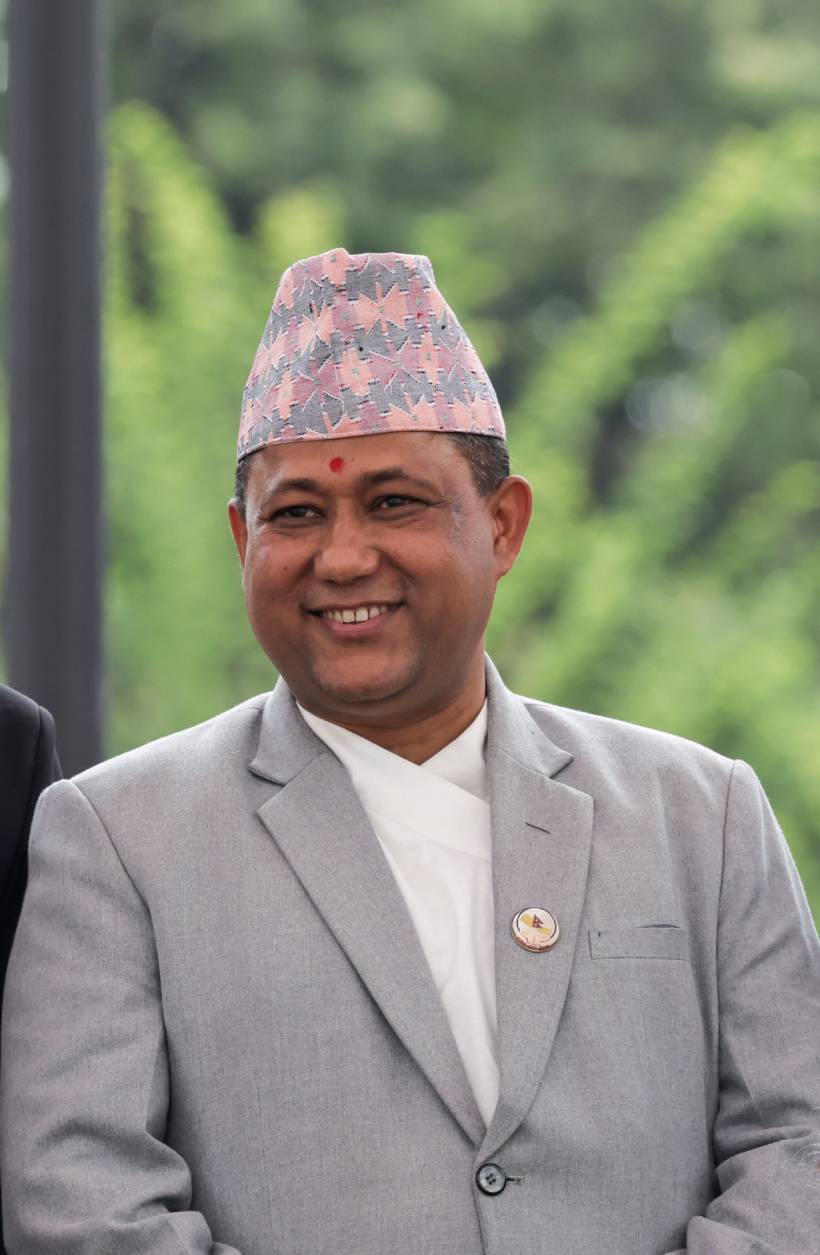
Nepalese Foreign Minister Shisir Khanal met Chinese Foreign Minister Wang Yi in Beijing on Monday, marking his first visit to China since Nepal’s Rastriya Swatantra Party won elections in March and formed a new government. The trip came just days after Khanal visited India, underscoring Kathmandu’s efforts to maintain strong ties with both regional powers.
China has long viewed Nepal as a key partner in its neighborhood diplomacy and has invested heavily in infrastructure projects under the Belt and Road Initiative. However, several projects have faced delays and financing disputes, limiting progress in bilateral cooperation.
Why It Matters
Nepal’s new government is reshaping the country’s foreign policy at a time of growing competition between China and India for influence across South Asia. While China has sought deeper economic and strategic engagement with Nepal, the Himalayan nation remains closely linked to India through geography, trade, employment, and cultural ties.
Analysts say Kathmandu’s willingness to engage both powers gives it greater diplomatic leverage. The new government has signaled that it wants improved relations with India while also keeping Chinese investment and infrastructure cooperation on track. This balancing strategy could strengthen Nepal’s bargaining position as Beijing and New Delhi compete for regional influence.
The visit also comes as China faces questions about the effectiveness of some Belt and Road projects in Nepal, including concerns over costs and implementation delays at major infrastructure developments such as Pokhara International Airport.
What’s Next
Nepal is expected to continue pursuing a balanced foreign policy that avoids choosing sides between China and India. Beijing will likely push to accelerate infrastructure cooperation and demonstrate the benefits of its investments, while India will seek to strengthen ties with Nepal’s new leadership.
The success of this approach will depend on whether Nepal can secure tangible economic benefits from both neighbors while maintaining its strategic autonomy. Upcoming decisions on infrastructure financing, trade cooperation, and anti-corruption investigations could shape the future of Nepal’s relationships with Asia’s two largest powers.
Weekly insights and analysis on the latest developments in military technology, strategy, and foreign policy.
Here’s TWZ’s weekly carrier tracker monitoring America’s flattop fleet, including deployed Carrier Strike Groups (CSG) and Amphibious Ready Groups (ARG), using publicly available open-source information. Check out last week’s report here.
The U.S. naval blockade of Iranian ports remains in full effect, for now, pending the execution of the ceasefire agreement, scheduled to be formally signed on Friday in Geneva, according to a notice released today by NAVCENT. U.S. Central Command (CENTCOM) forces launched multiple waves of strikes last week against Iran following the shootdown of a U.S. Army Apache helicopter, and disabled an additional two commercial vessels that tried to skirt the blockade, bringing the total to nine. Two carriers, USS Abraham Lincoln and USS George H.W. Bush, embarked with a combined seven squadrons of F/A-18E/F Super Hornets, two squadrons of EA-18G Growlers, and one squadron of F-35C Lightning IIs, continue to support “self defense” strikes and blockade operations.
The Lincoln CSG has been deployed for nearly seven months and would likely be among the first naval assets to rotate out of the theater if the blockade winds down. The details, and scale, of the drawdown of forces in the CENTCOM area of responsibility (AOR), as agreed upon in the memorandum of understanding (MOU), are murky as of publication. More than 20 U.S. Navy surface combatants have been operating in the region.
U.S. Navy fighter jets and command and control aircraft prepare to take off from USS Abraham Lincoln (CVN 72) as the ship transits the Arabian Sea. pic.twitter.com/SAGl2e7y0e
USS Nimitz entered the final leg of her homeport shift to Norfolk, operating off the east coast in U.S. 2nd Fleet AOR after a monthslong circumnavigation of South America, according to flight tracking data and public AIS. Nimitz conducted operations northwest of Cuba and the Bahamas last week. On Thursday, six Super Hornets, attached to the “Kestrels” of Strike Fighter Squadron (VFA) 137, carried out an air power demonstration and show of force, dropping MK-82/BLU-111 bombs on a simulated target in the Gulf of America.
U.S. Navy photo by LT Will “Simple Will” Shortal LT Will “simple Will” ShortalU.S. Navy photo Petty Officer 2nd Class Peter McHaddad
On the west coast, USS Theodore Roosevelt continues working up in preparation for a future deployment. The flattop got underway on June 10 for INSURV inspections to verify readiness and returned to San Diego the following day. The group was also spotted conducting a live fire exercise with the Mk 38 25mm machine gun. USS Carl Vinson got underway for sea trials after a nine-month Planned Incremental Availability (PIA) and moored at port in San Diego on June 13.
U.S. Navy photo by Mass Communication Specialist Seaman Devin Kraemer Seaman Recruit Devin Kraemer
In the Western Pacific, USS George Washington is on a summer patrol and operating in the Philippine Sea. The CSG conducted a replenishment-at-sea with USNS Earl Warren and helo operations while underway in the vicinity of Guam last week. Destroyer USS Shoup, part of the CSG, pulled into Apra Harbor early this morning, according to AIS.
Eyes in the sky.
An MH-60S Sea Hawk assigned to Helicopter Sea Combat Squadron (HSC) 12 operates above Nimitz-class aircraft carrier USS George Washington (CVN 73) while underway in the Philippine Sea.
Two ARG-MEUs are currently deployed. Forward-deployed USS Tripoli continues operations in the CENTCOM AOR, and USS Boxer is underway in the Indo-Pacific (INDOPACOM) AOR, operating in the South China Sea. For a detailed review of America’s amphibious assault fleet, check out our recent report here.
Note: Positions are general approximations.Non-deployed LHA/LHD amphibious warships are not shown.
Contact the author: ian.ellis-jones@teamrecurrent.io
Ukraine has officially opened the first phase of membership talks with the European Union on Monday. President Volodymyr Zelenskyy welcomed the opportunity and said it sent a clear message that “Europe’s progress cannot be stopped.”