NEWS

Stay informed and up-to-date with the latest news from around the world. Our comprehensive news coverage brings you the most relevant and impactful stories in politics, business, technology, entertainment, and more.

EC-130H Compass Call Electronic Warfare Plane Joins Growing U.S. Force In Caribbean

One of the U.S. Air Force’s last remaining EC-130H Compass Call electronic warfare planes is now in Puerto Rico, video emerging on social media shows. The arrival marks the latest in an increasing buildup of military assets in the region to pressure Venezuelan dictator Nicolas Maduro and for what seems increasingly likely to be a contingency for a sustained kinetic operation over Venezuela.

You can catch up with our latest coverage on Operation Southern Spear in the Caribbean here.

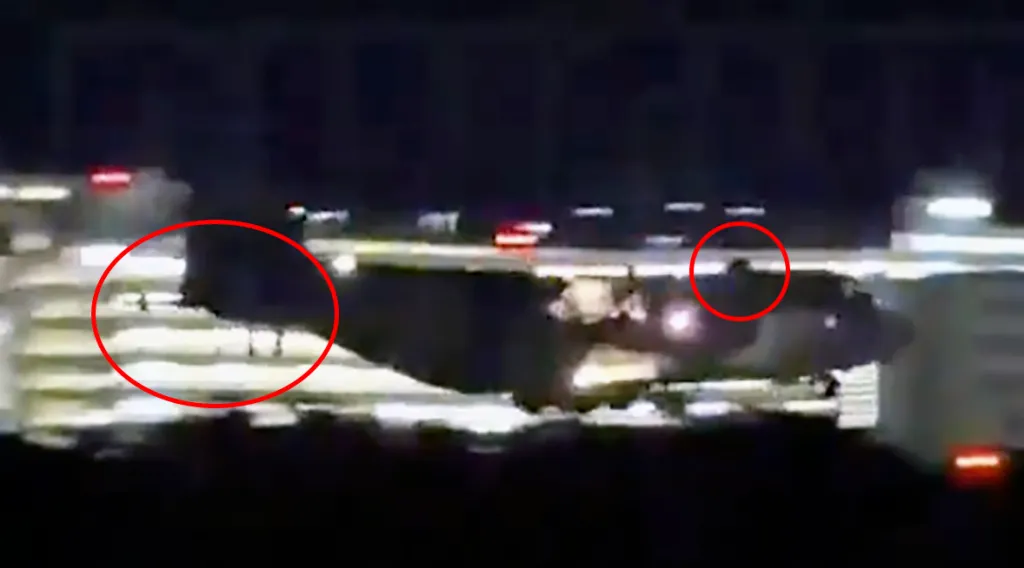
The Compass Call landed 10 p.m. on Saturday at the Luis Muñoz Marin International Airport in Puerto Rico, the videographer, an aircraft spotter who uses the Instagram handle Pinchito.Avgeek, told us. Other aircraft spotters told The War Zone that this is the first confirmed Compass Call to be seen in Puerto Rico as of late. The airport is also home to the Puerto Rico Air National Guard’s 156th Wing and has seen C-17 Globemaster III and other military aircraft operating there for Southern Spear.

A video posted to social media yesterday (20 Dec) shows the arrival of a USAF EC-130H at Luis Muñoz Marin International Airport (SJU/TJSJ) in Puerto Rico.

There are only a few EC-130Hs left in USAF inventory.

Credit/permission: pinchito.avgeek (IG). pic.twitter.com/IxqBaKSBtE

— LatAmMilMovements (@LatAmMilMVMTs) December 22, 2025

While there are a number of C-130 Hercules variants in Puerto Rico, a screencap of that video shows that antennas under the tail and on top of the aircraft behind the cockpit conclusively show this is an EC-130H Compass Call.

EC-130H. (Screencap via Pinchito.Avgee Instagram account.)

Though the Air Force is phasing these aircraft out in favor of EA-37B Compass Call jets, the EC-130H brings capabilities that would be called upon for an attack on Venezuela should one be ordered. The heavily modified C-130 Hercules cargo planes carry a suite of electronic attack gear that can find and track “emitters” like radios and radars and then scramble their signals. This equipment can also jam cell phones.

A U.S. Air Force EC-130H Compass Call aircraft taxis on the flightline at Davis-Monthan Air Force Base, Ariz., July 18, 2024. The EC-130H allowed the Air Force to jam communications, navigation systems, early warning and acquisition radars during tactical air, ground and maritime operations. (U.S. Air Force photo by Airman 1st Class Jasmyne Bridgers-Matos)
A U.S. Air Force EC-130H Compass Call aircraft taxis on the flightline at Davis-Monthan Air Force Base, Ariz., July 18, 2024. The EC-130H allowed the Air Force to jam communications, navigation systems, early warning and acquisition radars during tactical air, ground and maritime operations. (U.S. Air Force photo by Airman 1st Class Jasmyne Bridgers-Matos) Senior Airman Jasmyne Bridgers-Matos

The equipment aboard the Compass Call would help to blind Venezuelan air defenses, communications and command and control, making it harder to respond to attacks by combat aircraft and cruise missiles. The four-engine aircraft can fly for many hours without refueling and much longer with tanker support, giving U.S. Southern Command a long-loitering airborne EW platform.

As we noted in an earlier story: “Previous iterations of the EC-130H-based Compass Call system have proven their value in combat zones on multiple occasions in the past two decades. A contingent of these aircraft was continuously forward-deployed in the Middle East, from where they also supported operations in Afghanistan, between 2001 and 2021. EC-130Hs supported the raid that led to the death of Al Qaeda founder Osama Bin Laden in Pakistan in 2011 and prevented the detonation of an improvised explosive device that might have killed then-Maj. Gen. James Mattis, who later rose to the rank of General and also served as Secretary of Defense under Trump, in Iraq in 2003, among many other exploits, according to a recent story from Air Force Times.”

Maintenance troops and aircrew members prepare a U.S. Air Force EC-130H aircraft for its final departure from an undisclosed air base on Aug. 29, 2010. (U.S. Air Force photo by Maj. Dale Greer) Maintenance troops and aircrew members prepare a U.S. Air Force EC-130H aircraft for its final departure from an undisclosed air base on Aug. 29, 2010. Credit: U.S. Air Force photo by Maj. Dale Greer

The current status and location of the Compass Call are not publicly known. The videographer told us he only saw it land. A U.S. official we spoke with could not comment on the arrival of the EC-130H but told us that there have been no new military orders for Southern Spear.

The EC-130H joins a squadron of E/A-18G Growler electronic attack jets, deployed on the aircraft carrier USS Gerald R. Ford, as well as another squadron on land, as airborne electronic warfare assets now operating in the Caribbean. While Compass Calls offer some overlapping capabilities and some significantly different ones than the Growlers, the arrival of the EC-130J is another indication that electronic warfare is clearly taking a lopsided focus compared to the size of the rest of the fighting force deployed in the region.

A contingent of six U.S. Navy EA-18G Growler electronic warfare jets, roughly a full squadron, is now forward-deployed at the former Naval Station Roosevelt Roads in Puerto Rico.
A stock picture of a US Navy EA-18G Growler. USAF/Staff Sgt. Gerald Willis

While it is unclear if the Compass Call has performed any of its offensive operations yet, both the U.S. and Venezuela are using defensive jamming to protect assets. This has become an increasing problem for the region as tensions rise.

“At least some of the U.S. warships that have deployed to the Caribbean in recent months have been jamming GPS signals in their vicinity,” The New York Times reported, citing an analysis of data provided by Stanford University and a U.S. official who spoke on the condition of anonymity to discuss operational matters.

In an effort to protect important resources, “the armed forces of President Nicolás Maduro of Venezuela have jammed the GPS signals around the country’s critical infrastructure, including military bases, oil refineries and power plants,” the publication noted, citing an analysis by Spire Global, a satellite data firm.

Combined, the jamming is raising concerns for aviation.

“Whether jamming is due to the U.S. or Venezuelan forces, it really doesn’t matter: You don’t want an aircraft going in there,” Gen. Willie Shelton, the former head of the U.S. Air Force’s Space Command, told The Times.

The US has issued a flight warning for Venezuela, but it has been mostly silent about the impact of its warships’ GPS jammers on tourism-dependent Caribbean islands. “We just lost our GPS,” a Copa pilot reported over Trinidad on Dec. 10. w/ @riley_mellen https://t.co/Sd8KkvgzwH

— Anatoly Kurmanaev (@AKurmanaev) December 22, 2025

As for the EC-130Hs, the aircraft is being retired from the Air Force inventory.

“Currently, the U.S. Air Force is operating and maintaining eight EC-130H aircraft,” Capt. Ridge Miller, a spokesperson for Air Combat Command (ACC) told The War Zone Monday afternoon. “A total of 10 EA-37B aircraft are on track to be delivered while simultaneously retiring the EC-130H fleet in a phased approach. Both platforms currently operate out of the 55th Electronic Combat Group at Davis Monthan AFB in Arizona.”

The EA-37B is based on a heavily modified version of the Gulfstream G550 airframe.

The US Air Force's future EC-37B electronic warfare jets are now EA-37Bs, which is meant to highlight their ability to not only find and attack various types of targets, but destroy them.
An EA-37B Compass Call jet. (L3Harris) L3Harris

In addition to the Compass Call, other C-130 variants are operating out of Puerto Rico. One of which is the Marine Corps’ KC-130J Hercules tanker/transport aircraft. The KC-130Js uses the probe-and-drogue method for Navy and Marine Corps aircraft, and is used to refuel fixed-wing fighter aircraft and helicopters.

Plane spotter @LatAmMilMovements told us that at least one of these aircraft, and sometimes two, have had a steady presence ever since Marine F-35B Lightnings arrived in Puerto Rico in September. This matches the imagery and satellite photos we have seen of the installation for months now. AV-8B Harriers, MV-22 Ospreys, and CH-53 Sea Stallions, all from the USS Iwo Jima and its flotilla, are also using the base regularly and they can all refuel from the KC-130J.

Air Force HC-130J Combat King II combat search and rescue (CSAR) planes are also flying out of Puerto Rico. Traditionally, they provide fuel to HH-60W Jolly Green Giant II CSAR helicopters, CV-22 Ospreys, and, to a lesser degree, the 160th Special Operations Aviation Regiment (SOAR) helicopters.

These types are just part of a growing fleet of aerial refuelers in the region. The Air Force has also deployed KC-135 Stratotankers and KC-46 Pegasus tankers to the Dominican Republic and U.S. Virgin Islands.

A U.S. Marine Corps KC-130J aircraft taxis before takeoff past parked U.S. Marine Corps F-35B and U.S. Air Force F-35A fighter jets on the apron at the former Roosevelt Roads naval base in Ceiba, Puerto Rico, December 21, 2025. REUTERS/Ricardo Arduengo pic.twitter.com/MhQqrCrK0j

— Idrees Ali (@idreesali114) December 21, 2025

As more tanker aircraft arrive in Puerto Rico, they are also building up at MacDill Air Force Base in Tampa, Florida. Aerial images show at least 28 KC-135s at the base. The image also shows at least two E-3 Sentry Airborne Warning and Control System (AWACS) aircraft are operating from MacDill, located about 1,400 miles northwest of Venezuela. As we pointed out last week, at least one Sentry was recently tracked on FlightRadar24 flying close to the Venezuelan coast. 

Flying over MacDill this morning, seeing a significantly lot more aircraft than last month:
1 C-32
1 C-17 Globemaster
2 E-3 Sentry’s
8 UHi60 Blackhawk’s
28 KC-135 Stratotanker’s pic.twitter.com/g7zi9AnraA

— Chris (@flyrogo) December 21, 2025

While E-3s may have been present but not trackable over the Caribbean in recent days, this one being trackable was not a mistake. U.S. military aircraft executing easily trackable sorties very near Venezuelan airspace have been a key component of the pressure campaign placed on Maduro. 

In addition to the growing military pressure on the Venezuelan leader, the U.S. is also raising the stakes economically. Since President Donald Trump declared a blockade against sanctioned oil tankers, U.S. authorities have seized two tankers. On Sunday, the Coast Guard was in “active pursuit” of the massive tanker Bella 1 after it refused to submit to U.S. seizure efforts. The status of that effort was unclear as of Monday afternoon. We have reached out to the Coast Guard for more details.

??????? BREAKING: The oil tanker Bella 1 was not seized by United States forces and has continued its voyage from Iran to Venezuela. The vessel remains en route, signaling a completed avoidance of interdiction during its transit. pic.twitter.com/denLoaDhRR

— Defense Intelligence (@DI313_) December 22, 2025

Though the military and economic pressure are building on Maduro, Trump’s exact intentions remain an open question, although they appear to be becoming clearer by the day. During his announcement of the new Trump class battleships Monday afternoon, the president again said that the U.S. would soon be going after drug cartels on land; however, he explained that would not just be focused on Venezuela.

Contact the author: howard@thewarzone.com

Howard is a Senior Staff Writer for The War Zone, and a former Senior Managing Editor for Military Times. Prior to this, he covered military affairs for the Tampa Bay Times as a Senior Writer. Howard’s work has appeared in various publications including Yahoo News, RealClearDefense, and Air Force Times.


Source link

#HumAngle2025RoundUp: Here are Our Top 5 Investigations of the Year

The year started slowly. Then it moved fast. 

Many reporters at HumAngle wondered what 2025 would bring. But as the year ran fast, the foot soldiers ran even faster, creating a monumental investigative reporting archive across multiple platforms. In this newsroom, everyone is an investigative journalist — from editors, interns, reporters and the Editor-in-Chief/Chief Executive Officer.

We told raw stories and terror tales, and conducted human-centred investigations that uncovered what would otherwise have been covered up. Most of our 2025 investigations tackled insecurity, exposed social injustices, unravelled the vulnerability of communities to terrorists, and set the record straight amid disinformation wildfires. 

Illustration of a person at a laptop, with hands typing on a keyboard overlaid. Blue accents, HumAngle logo in the corner.
Illustration by Akila Jibrin/HumAngle.

In 2025, we redefined our journalism models, focusing on impact-driven investigations and stories that really matter. Here are our best investigations for the year.

1. The Making and Unmaking of Abubakar Shekau

Cartoon of a militant holding a rifle and paper, standing over fallen soldiers with a background of destruction.
Illustration by Akila Jibrin/HumAngle.

When the notorious terrorist Abubakar Shekau died in 2021, tons of stories and narratives were pushed around the circumstances leading to his death. One question many failed to ask: How did Shekau emerge from nowhere to command an army of villains, inflicting lifelong pain and anguish on many? Only a few terrorism experts could answer that question with details and rigour. One such person is Ahmad Salkida, the CEO and Editor-in-Chief at HumAngle.

Four years after Shekau’s death, his investigative piece appeared on the internet’s fringes: The Making and Unmaking of Abubakar Shekau. Ahmad Salkida has studied Boko Haram for over a decade, from its inception to the point of vile insurgency and massive attacks against unarmed civilians.

HumAngle probed and profiled how Shekau rose from humble beginnings in Yobe State to become one of Africa’s most notorious insurgent leaders, transforming Boko Haram into a movement defined by mass abductions, suicide bombings, and indiscriminate killings. Initially a perfume seller and Qur’anic student, his life changed after meeting radical cleric Muhammad Yusuf, whose death in 2009 propelled Shekau into leadership. 

2. What Happened to Gallari’s 42 Men After 12 Years in Military Detention?

That story on Shekau’s legacy of terror went viral. But before then, we had investigated the illegal incarceration of 42 village men of Gallari, a community in Borno, northeastern Nigeria, by men of the Nigerian military. They were arrested in 2011 during military raids targeting Boko Haram suspects, with little or no evidence against them. 

HumAngle’s investigation exposed how the villagers were held in Giwa Barracks and other facilities under harsh conditions, enduring torture, starvation, and disease. Their families faced stigma, poverty, and displacement, with wives forced into single parenthood and children growing up without fathers. Upon release, some of the men returned to find their homes destroyed, loved ones lost, and communities fractured. The story highlights the broader consequences of Nigeria’s counterinsurgency strategy, where mass arrests and indefinite detentions have left deep scars on civilian populations. 

For many months, Usman Zanna, a HumAngle reporter, documented this story after speaking with victims locked in military confinement for over 12  years. One of them came out blind from detention, another had lost one of his ears, and another had torture scars all over his body. During an advocacy meeting facilitated by HumAngle and Amnesty International in Borno State, however, civic leaders and media practitioners took a step to spotlight the investigation that opened a can of worms on the military’s gross violation of human rights in the arrest of the 42 Gallari men.

3. From Elephants to Warthogs: The Shadow Wildlife Trade Financing Boko Haram in Nigeria

A large wild boar lies on the open tailgate of a pickup truck with containers and equipment around it under clear skies.
Photo: HumAngle.

As Boko Haram entrenched and spread across Borno’s forested areas,  terrorists invested heavily in the ivory trade to sustain their operations. They poached elephants for years until the dynamics of the ivory trade shifted dramatically. Armed groups occupied critical elephant habitats like Sambisa, transforming them into fortified strongholds. The conflict, coupled with indiscriminate hunting, led to a drastic reduction in elephant sightings.

When elephants vanished from the region’s forests, however, Boko Haram terrorists turned to warthogs, an overlooked species with tusks just as valuable. With little regulation and growing global demand, warthog ivory is now fuelling a new black market. At the heart of it lies a deadly trade financing terror and deepening regional instability.

HumAngle exposed how local and international black markets helped patronise the terrorists’ ivory exploits, especially warthog trading, to fund their operations. We used OSINT and human intelligence.

4. Surrendered Terrorists Evade Official Rehabilitation Programme, Reinfiltrate Nigerian Communities

One interesting investigation we published in 2025 was an in-depth report on the complex lives of individuals who were once affiliated with Boko Haram. The story sheds light on their recruitment processes, experiences within the group, and efforts to reintegrate into society. It reveals personal stories, such as those of Abubakar Adam and Rawa Ali, who voluntarily distanced themselves from the insurgency but faced significant obstacles upon returning, often lacking sufficient government support.

Other accounts, including those of Falmata Abba and Aisha Mohammed, reveal a spectrum of emotions from regret to relief about leaving the militant group, while Rukayya’s story focuses on her health struggles. The piece also discusses the varied reactions from communities toward these returnees and critiques the shortcomings of Nigeria’s efforts in deradicalisation and rehabilitation.

The investigation raises concerns about trust and security in communities where former insurgents reappear without completing official reintegration programs, underscoring the need for comprehensive, transparent approaches to facilitate effective societal reintegration and maintain stability.

5. The Boys Lured into Boko Haram’s Enclave with Food Rations

Abstract artwork of a boy against a textured blue background. HumAngle logo is in the top right corner.
Illustration by Akila Jibrin/HumAngle.

Amid the escalation of insurgency in North Central Nigeria, terrorists devised a new way of recruiting children into their ranks. Boko Haram fighters lure children with food rations, handing guns to them after feeding them. Ibrahim Adeyemi, HumAngle’s investigations editor, followed the story in Niger state, speaking to survivors and parents of children caught in terrorists’ enclaves.

The insurgents exploit hunger as a recruitment tool, deliberately destroying farms and food supplies to create scarcity, then luring vulnerable children into their camps with food rations. Once inside, boys are trained as fighters or spies. At the same time, girls are forced into marriages and servitude, all under the command of leaders like Mallam Sadiqu, who manipulate desperation to sustain the group’s ranks. 

HumAngle’s investigation, which took several months, focused on identifying underage boys and girls who were deceived into entering the terrorists’ territory. 

In 2025, HumAngle conducted a series of impactful investigations focusing on human rights and terrorism. Their detailed reporting highlighted social injustices, such as the illegal detention of 42 village men in Borno by the Nigerian military, and the subsequent human rights violations exposed during their time in confinement.

Another investigation shed light on the shadow wildlife trade financing Boko Haram, revealing how local and international markets for warthog ivory funded the group’s operations.

HumAngle also explored how Boko Haram recruits children by exploiting hunger, using food as a lure. Moreover, they reported on the complexities faced by former Boko Haram insurgents trying to reintegrate into society, illustrating the inadequacies of Nigeria’s rehabilitation efforts.

Each investigation was driven by a commitment to uncovering the truth and crafting narratives that address critical issues in society.

Source link

Venezuelan Armed Forces Vow to Defend Airspace as US Increases Warplane Deployment

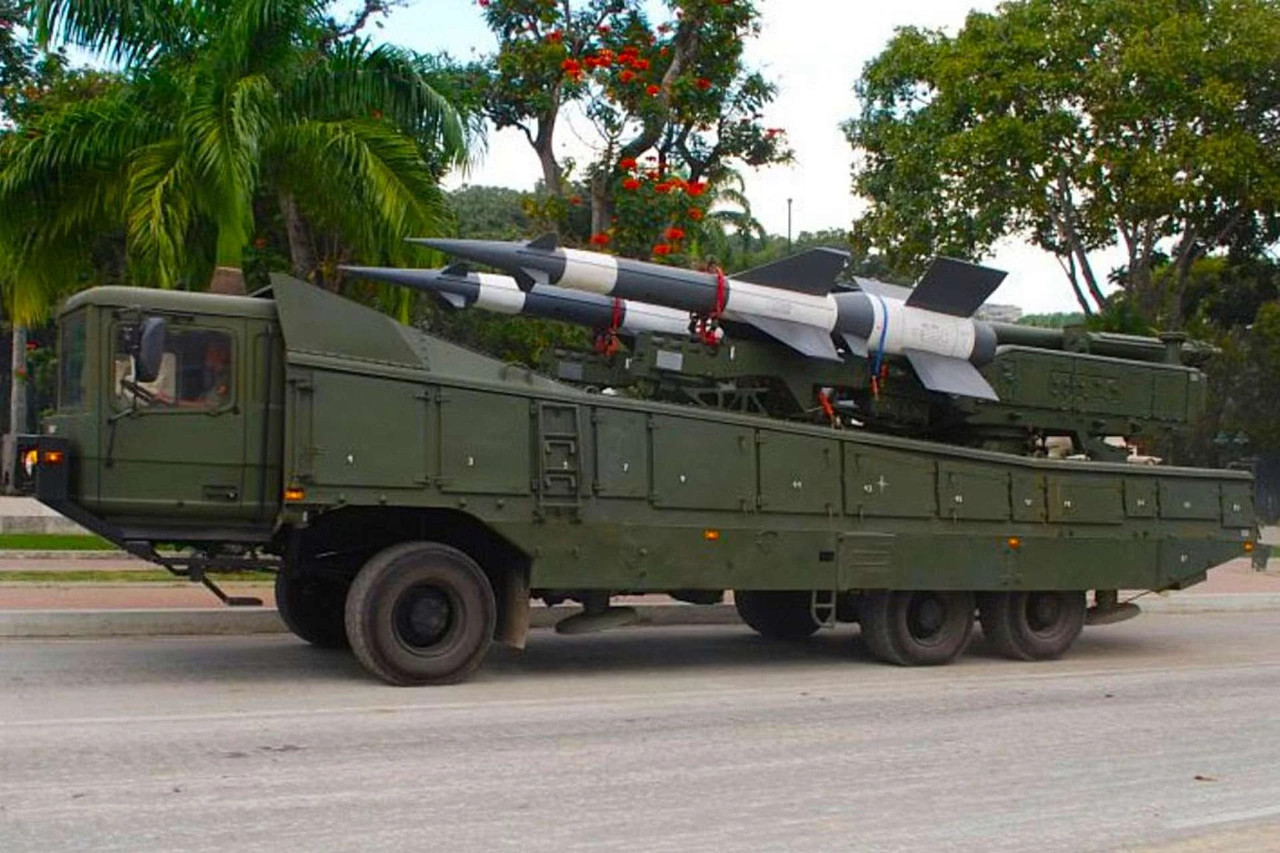
Venezuela’s air defenses include Russian-supplied S-125 Pechora systems. (Venezuelan Defense Ministry)

Caracas, December 15, 2025 (venezuelanalysis.com) – The Venezuelan Armed Forces reiterated their commitment to defend the Caribbean nation’s airspace amid an escalating US military buildup and provocations.

Defense Minister Vladimir Padrino issued a statement Sunday to mark the 47th anniversary of the Venezuelan Integral Airspace Defense Command (CODAI), hailing the system’s “effective and immediate” response capabilities against “imperialist threats.”

“With its modern radars, missile systems and surface-to-air artillery, CODAI has become the vanguard of the country’s defense,” Padrino wrote on social media. The defense minister went on to highlight CODAI’s “technological independence.”

Padrino’s comments occurred amid a large-scale US military buildup in the Caribbean in a self-declared anti-narcotics mission. The Trump administration has repeatedly threatened to launch strikes against purported drug targets inside Venezuelan territory.

After moving their largest US aircraft carrier, the USS Gerald R. Ford, to the region in November, US forces have likewise ramped up warplane deployments to bases in Puerto Rico. According to reports, the US Navy moved six EA-18G Growler electronic warfare jets to the island’s Roosevelt Roads naval station.

Designed by Boeing, the EA-18G Growlers have advanced capabilities to disrupt and deceive enemy military electronic systems, including air defenses.

Open-access flight tracking websites have shown EA-18G Growlers operating in the Caribbean in recent days.  On Tuesday, F/A-18 Super Hornet fighter jets flew for 40 minutes close to the Gulf of Venezuela in the country’s west. Analysts argued that the warplanes could have been mapping air defense systems spotted in the region days before.

On Friday night, social media users watching flight trackers reported that a Growler, codenamed GRIZZLY2, and a Super Hornet, codenamed RHINO61, were flying over Venezuela’s Los Roques archipelago and continental mainland, respectively. However, the false positions were a consequence of trackers such as Flight Radar 24 extrapolating an aircraft’s position for a limited time after losing signal on the basis of the last measured position and speed.

The Venezuelan government and armed forces have consistently denounced the US military maneuvers, accusing Washington of attempting to fabricate a false flag incident to justify an open conflict.

The US’ increased military activity has also affected commercial aviation. On Sunday, JetBlue denounced that an airplane on a Curaçao-New York had to halt its ascent due to the presence of a US Air Force refueling tanker in its path. Curaçao is 40 miles away from Venezuela’s coast.

US authorities have also issued a Notice to Airmen (NOTAM) urging extra caution to planes flying in Venezuela’s Flight Information Region (FIR). For his part, Trump wrote on social media that Venezuela’s airspace should be “considered closed.”

International airlines flying to and from Caracas have suspended their services. Venezuelan companies continue to offer connections to regional destinations including Panama City, Bogotá and Santo Domingo.

ALBA alliance condemns US threats

Amidst the ongoing US military threats and buildup, the Nicolás Maduro government has received diplomatic backing from its main allies. Last week, the Venezuelan leader held phone calls with his Russian, Iranian and Brazilian counterparts to discuss bilateral relations and the threats to peace in the region.

On Sunday, the Bolivarian Alliance for the Peoples of Our America (ALBA-TCP) held a virtual summit and issued a statement condemning the Trump administration’s declared intentions to enforce the Monroe Doctrine in the hemisphere.

The regional body likewise condemned recent US hostile actions, including the seizure of a tanker carrying Venezuelan crude last week. The US Treasury Department followed by imposing new sanctions, blacklisting shipping companies allegedly involved in transporting Venezuelan oil.

Venezuela’s state oil company denounced a cyberattack targeting its operational capabilities but stated that its effects had been minimized. According to Bloomberg, the reported attack caused loading delays in Venezuela’s main oil terminal.

The White House has justified its military buildup and coercive measures escalation with “narcoterrorism” charges against Maduro and other top Venezuelan officials. However, US agencies have not provided court-tested evidence to back the claims, while reports from specialized agencies have shown Venezuela to play a marginal role in global drug trafficking.

International leaders and foreign policy analysts have stated that Washington’s ultimate goal is regime change to seize control of Venezuela’s natural resources.

Edited by Cira Pascual Marquina in Caracas.


Source link

Why Did Trump Send His Warships to Venezuela?

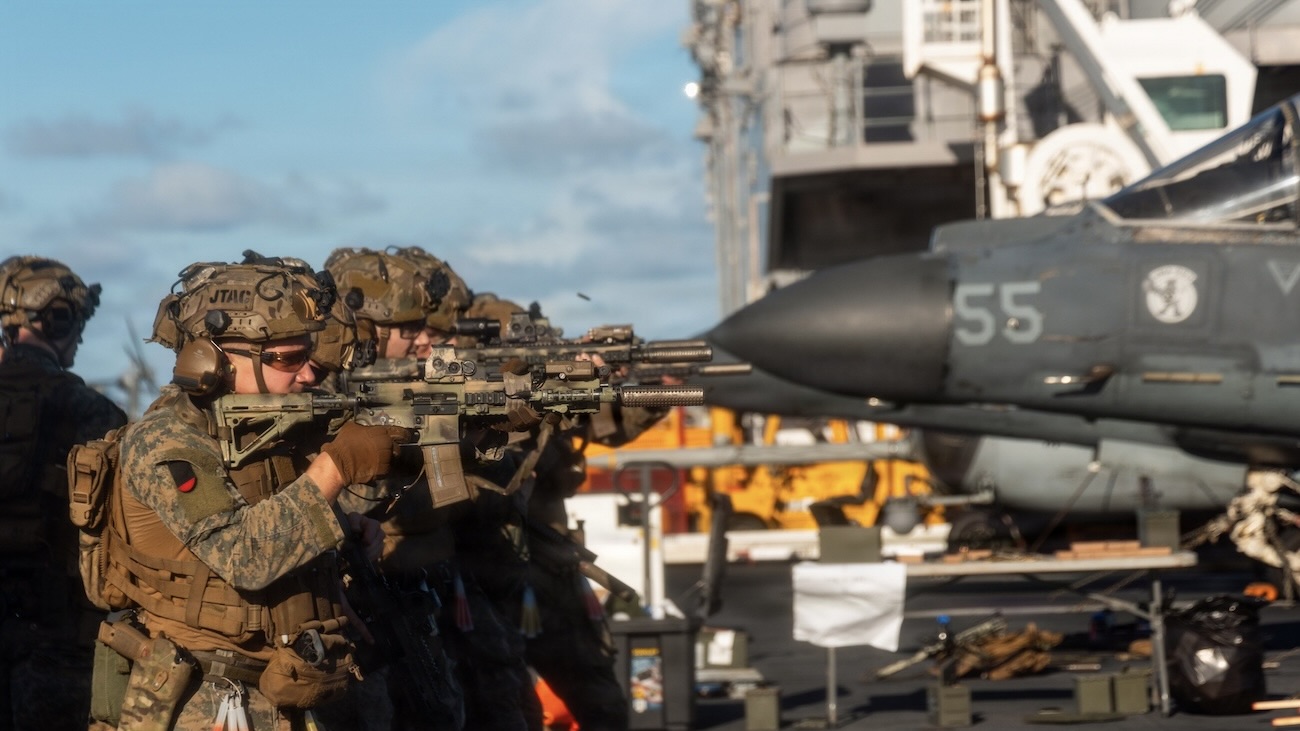
US Marines carrying out exercises on USS Iwo Jima as part of SOUTHCOM’s Operation Southern Spear in the Caribbean Sea. (SOUTHCOM)

Ever since Hugo Chávez came to power in 1998, the United States has attempted to overthrow the Bolivarian Revolution. They have tried everything short of a full-scale military invasion: a military coup, selecting a substitute president, cutting off access to the global financial system, imposing layers of sanctions, sabotaging the electricity grid, sending in mercenaries, and attempting to assassinate its leaders. If you can think of a method to overthrow a government, the United States has likely tried it against Venezuela.

However, in 2025, the escalation became unmistakable. The US sent its warships to patrol Venezuela’s coast, began sinking small boats and killing those on board as they left the South American mainland, and seized an oil tanker bound for Cuba. The quantity of attacks on Venezuela has increased, suggesting the quality of the threats has now reached a different magnitude. It feels as if the United States is preparing for a full-blown invasion of the country.

Donald Trump came to office saying that he was opposed to military interventions that did not further US interests, which is why he called the illegal US war on Iraq a waste of “blood and treasure”. This does not mean Trump is against the use of the US military – he deployed it in Afghanistan (remember the “Mother of all Bombs”) and Yemen, and has fully backed the US/Israeli genocide against the Palestinians. His formula is not for or against war categorically, but about what the US would gain from it. With Iraq, he stated that the problem was not the war itself, but the failure to seize Iraqi oil. Had the US taken Iraq’s oil, Trump would likely have been in Baghdad, ready to build – with Iraqi treasure – a Trump hotel on one of the former presidential properties.

Naturally, the US military buildup in the Caribbean is about Venezuelan oil – the largest known reserves in the world. The US-backed politician, Maria Corina Machado, awarded the Nobel Peace Prize just this week after supporting the Israeli genocide and calling for a US invasion of her own country, is on record promising to open up her country’s resources to foreign capital. She would welcome the extraction of Venezuela’s wealth rather than allow its social wealth to better the lives of its own people, as is the goal of the Bolivarian Revolution started by Hugo Chávez. A hypothetical “President Machado” would immediately surrender any claim to the Essequibo region and grant ExxonMobil full command of Venezuela’s oil reserves. This is certainly the prize.

But it is not the immediate spur. A close reading of the 2025 National Security Strategy of the United States shows that there is a renewed emphasis on the Western Hemisphere. The Trump Corollary to the 1823 Monroe Doctrine is clear: the Western Hemisphere must be under US control, and the United States will do what it takes to ensure that only pro-US politicians hold power. It is worth reading that section of the National Security Strategy:

“After years of neglect, the United States will reassert and enforce the Monroe Doctrine to restore American pre-eminence in the Western Hemisphere, and to protect our homeland and our access to key geographies throughout the region. We will deny non-Hemispheric competitors the ability to position forces or other threatening capabilities, or to own or control strategically vital assets, in our Hemisphere. This ‘Trump Corollary’ to the Monroe Doctrine is a common-sense and potent restoration of American power and priorities, consistent with American security interests.”

When Argentina faced local elections, Trump warned that the US would cut off external financing if candidates opposing pro-US President Javier Milei lost. In Honduras, Trump intervened directly to oppose the Libre Party, even offering to release a convicted drug trafficker (and former President). The United States is moving aggressively because it has accurately assessed the weakness of the Pink Tide and the strength of a new, far-right “Angry Tide”. The emergence of right-wing governments across South America, Central America, and the Caribbean has emboldened the US to squeeze Venezuela and thereby weaken Cuba – the two major poles of the Latin American left. Overturning these revolutionary processes would allow a full-scale Monroe Doctrine domination of Latin America and the Caribbean.

Since the 1990s, the United States began to speak of Latin America as a partner for shared prosperity, emphasizing globalization over direct control. Now, the language has changed. As the Trump Corollary asserts: “We want a Hemisphere that remains free of hostile foreign incursion or ownership of key assets and that supports critical supply chains…We want to ensure our continued access to key strategic locations.” Latin America is seen as a battlefield for geopolitical competition against China and a source of threats like immigration and drug trafficking. The attack on Venezuela and Cuba is not merely an assault on these two countries; it is the opening salvo of direct US intervention on behalf of the Angry Tide. This will not deliver better lives for the population, but greater wealth for US corporations and the oligarchies of Latin America.

Trump is ready to revive the belief that any problem can be solved by military force, even when other tools exist. The Trump Corollary promises to use its “military system superior to any country in the world” to steal the hemisphere’s resources.

The aggression against Venezuela is not a war against Venezuela alone. It is a war against all of Latin America.

Vijay Prashad is an Indian historian, editor, and journalist. He is a writing fellow and chief correspondent at Globetrotter. He is an editor of LeftWord Books and the director of Tricontinental: Institute for Social Research. He has written more than 20 books, including The Darker Nations and The Poorer Nations. His latest books are On Cuba: Reflections on 70 Years of Revolution and Struggle (with Noam Chomsky), Struggle Makes Us Human: Learning from Movements for Socialism, and (also with Noam Chomsky) The Withdrawal: Iraq, Libya, Afghanistan, and the Fragility of US Power. Chelwa and Prashad will publish How the International Monetary Fund is Suffocating Africa later this year with Inkani Books.

Source: Globetrotter

Source link

Waterskiing Santas and giant cuts of meat

Getty Images Workers sell off cuts of meat during the traditional Christmas Eve auction at Smithfield meat market in London, UK on 24 December 2025.Getty Images

Workers sell off cuts of meat during the traditional Christmas Eve auction at Smithfield meat market in London, UK

From skiing Santas in the US and Mass with Pope Leo XIV at the Vatican, to giant cuts of meat being thrown into crowds in London, Christmas celebrations around the world are in full swing.

Worshippers in Ukraine, China and Pakistan gathered for Christmas Eve services at their local churches.

While most Christians mark Christmas on 25 December, many Orthodox Christians do not celebrate until 7 January.

Here are some of the best images of the holiday cheer around the world.

Reuters Pope Leo XIV holds a figurine of baby Jesus during Christmas Eve Mass in St. Peter's Basilica at the Vatican, 24 December 2025.Reuters

Pope Leo holds a figurine of Baby Jesus during Christmas Eve Mass in St Peter’s Basilica at the Vatican, Italy

Getty Images Two women take a photo in front of the Christmas tree in Nativity Square in Bethlehem in the occupied West Bank.Getty Images

Two women take a photo in front of the Christmas tree in Nativity Square in Bethlehem, held to be the birthplace of Jesus Christ, in the occupied West Bank

Getty Images A woman lights a candle with her son during an Christmas Eve service in Kyiv, Ukraine on 24 December 2025.Getty Images

A woman lights a candle with her son during a Christmas Eve service in Kyiv, Ukraine

Getty Images Worshippers attend a Christmas Eve mass at the Church of the Saviour in Beijing, China on 24 December.Getty Images

Worshippers attend a Christmas Eve mass at the Church of the Saviour in Beijing, China

Getty Images Pakistani Christians attend midnight Christmas Mass at Central Brooks Memorial Church in Karachi, Pakistan on 24 December 2025.Getty Images

Christians attend midnight Mass at Central Brooks Memorial Church in Karachi, Pakistan

Getty Images A man decorates a Christmas tree during Christmas Eve celebrations in Islamabad, Pakistan on 24 December 2025.Getty Images

A man decorates a Christmas tree during Christmas Eve celebrations in Islamabad, Pakistan

Getty Images Girls stand alongside a Christmas nativity scene depicting the birth of Jesus during a Christmas mass at St Mary's Church in the village of Uswetakeiyawa, Sri Lanka on 25 December 2025. Getty Images

Girls stand alongside a Christmas nativity scene at St Mary’s Church in the village of Uswetakeiyawa, Sri Lanka

Reuters Women hold candles as they attend a Christmas Eve mass in Nairobi, Kenya on 25 December 2025.Reuters

Women hold candles as they attend a Christmas Eve mass in Nairobi, Kenya

Getty Images The Notre-Dame Cathedral is illuminated in bright colours ahead of midnight Christmas mass in Paris, France on 24 December 2025.Getty Images

The Notre-Dame Cathedral is illuminated in bright colours ahead of midnight Mass in Paris, France

Getty Images A skiing Santa delights crowds during an annual Waterskiing Santa event in Alexandria, Virginia in the US on 24 December 2025.Getty Images

A skiing Santa delights crowds during an annual Waterskiing Santa event in Alexandria, Virginia, in the US

Getty Images People wearing Santa costumes walk along the sand of Bondi Beach in Sydney, Australia on 25 December 2025.Getty Images

People wearing Santa costumes walk along the sand of Bondi Beach in Sydney, Australia

Getty Images Police officers deliver gifts on Christmas Eve in Lima, Peru on 24 December 2025Getty Images

Police officers dressed in festive gear deliver gifts on Christmas Eve in Lima, Peru

Getty Images Fishermen dressed as Santa and the Grinch on a boat in Valparaiso Bay, Chile on 24 December.Getty Images

Fishermen dressed as Santa and the Grinch on a boat in Valparaiso Bay, Chile

Getty Images Two men dressed as Santas take a selfie in the snow in Gulmarg in Indian-administered KashmirGetty Images

Two men dressed as Santas take a selfie in the snow in Gulmarg in Indian-administered Kashmir

Source link

Majority of Russians expect Ukraine war to end in 2026, state survey finds | Russia-Ukraine war News

‘Main reason for optimism’ is a belief that war in Ukraine will end in 2026 with Moscow’s ‘objectives’ achieved,’ pollster says.

A majority of Russians expect the war in Ukraine to end in 2026, a state-owned research centre said, as Russian forces make advances on the battlefield and efforts intensify to reach a ceasefire deal between Kyiv and Moscow.

VTsIOM, Russia’s leading public opinion research centre, said on Wednesday that its annual survey of sentiment around the outgoing year and expectations for the coming year found Russians are viewing 2026 with “growing optimism”.

Recommended Stories

list of 4 itemsend of list

“Expectations for next year traditionally look much more optimistic … In other words, while the negative perception of the current situation persists, Russians have become more likely to accept (or believe, hope?) future improvements this year, but they still do so with caution,” the organisation said in a review of its survey findings released online.

In a year-end presentation, VTsIOM deputy head Mikhail Mamonov said 70 percent of 1,600 people surveyed ​viewed 2026 as being a more “successful” year for Russia than this year, with 55 percent of respondents linking hope for a better year ‍to a possible end to what Russia officially calls its “special military operation” in Ukraine.

“The main reason for optimism is the possible completion of the special military operation and the achievement of the stated objectives, in line with the national interests outlined by the president,” Mamonov ‍said at the ⁠presentation.

Mamonov pointed to the Russian military’s ongoing offensive in Ukraine, Washington’s reluctance to finance the Ukraine war and the European Union’s inability to fully replace the ‌United States’ role in Ukraine – financially and militarily – as key factors behind the prospects for an eventual deal to end the fighting.

At the conclusion of the conflict, reintegration of Russian military veterans into society and the reconstruction of Russian-controlled regions of Ukraine, as well as Russian border areas, will be the main priorities, Mamonov added.

While the actual level of Russian public fatigue with the war is difficult to measure due to strict state controls on the media, expressions of public dissent as well as the prosecution of those who criticise Moscow’s war on its neighbour, approximately two-thirds of Russians support peace talks, according to independent pollster Levada, the highest number since the start of the war in 2022.

Ukrainian President Volodymyr Zelenskyy said in comments released on Wednesday that he would be willing to withdraw troops from Ukraine’s eastern industrial heartland as part of a plan to end the war, if Moscow reciprocated by also pulling back its forces and allowed the area to become a demilitarised zone monitored by international forces.

In comments to reporters about an overarching 20-point plan that negotiators from Ukraine and the US had hammered out in Florida in recent days, Zelenskyy also said that a similar arrangement could be possible for the area around the Zaporizhzhia nuclear power plant, which is currently under Russian control.

Russia has given no indication that it will agree to any kind of withdrawal from land it has seized in Ukraine and has long insisted that Kyiv must give up the remaining territory it still holds in the Donbas industrial area before any discussions on the cessation of fighting.

Russia has captured most of Luhansk and about 70 percent of Donetsk – the two regions that make up the Donbas.

Zelenskyy also said that figuring out the future control of the Donbas as part of the plan was “the most difficult point”, and creating a demilitarised economic zone in the region would require difficult discussions on how far troops would be required to move back and where international forces would be stationed.

Such discussions should be held at the leaders’ level, he said.

Source link

Trump-backed candidate Nasry Asfura wins Honduras presidential election

Nasry Asfura has been declared the winner of Honduras’ razor-thin presidential election, after weeks of delays following technical problems and allegations of fraud.

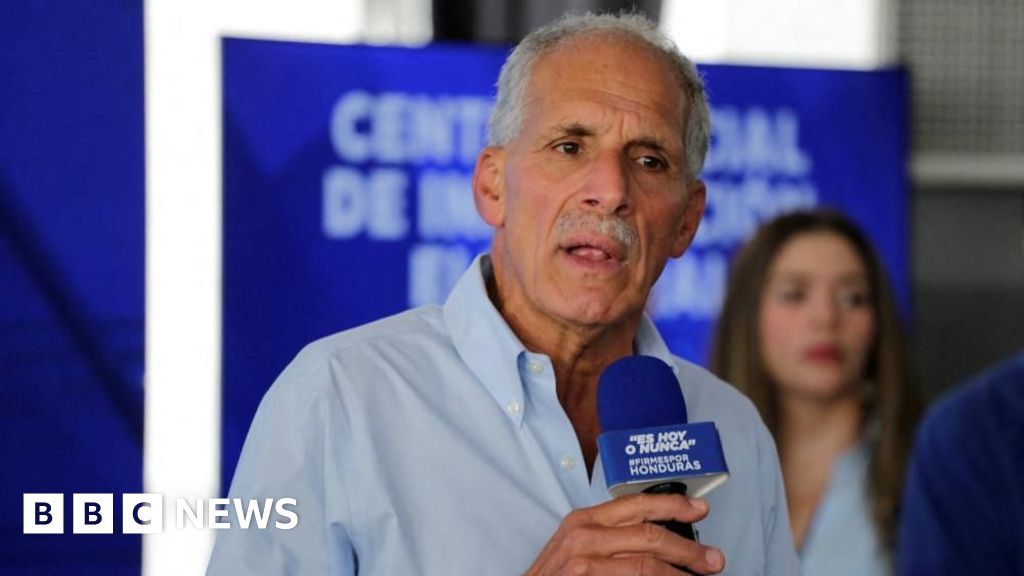
The conservative National Party candidate – backed by US President Donald Trump – won with 40.3% of the vote, according to the National Electoral Council (CNE), edging out Salvador Nasralla of the centre-right Liberal Party, who got 39.5%.

In a post on X, Asfura said: “Honduras: I am ready to govern. I will not let you down.”

Meanwhile, Nasralla said at a press conference: “I will not accept a result built on omissions.” But he also urged his supporters to remain calm.

US Secretary of State Marco Rubio urged all parties to respect the result “so that Honduran authorities may ensure a peaceful transition of authority”.

But the president of the country’s Congress, Luis Redondo, posted saying the result was “completely illegal”.

The vote was held on 30 November but the count was delayed twice by technical outages, which electoral officials called “inexcusable”.

The president of the CNE, Ana Paola Hall, blamed the private company tasked with tabulating the results for the delay.

She said the firm had carried out maintenance without warning or checking with the CNE.

The stoppage came a day after the portal displaying real-time results had crashed.

Results of the election were tight and, because of the tumultuous nature of the processing system, around 15% of the tally sheets had to be counted by hand for the winner to be decided.

There have been tensions in Honduras as a result of the delays with protests held across the country last week.

Thousands of supporters of the governing Libre party demonstrated in the capital Tegucigalpa over what they considered fraud in the vote.

The outgoing President, Xiomara Castro, had alleged that an “electoral coup” was taking place and earlier this month said the election was being marred by “interference” from Trump.

When he endorsed Asfura for president, Trump said there would be “hell to pay” if his very narrow lead was overturned in the count.

He also threatened to withdraw financial support from the US if Asfura didn’t win.

In a surprise move, the US president also pardoned Juan Orlando Hernández, a member of Asfura’s National Party, who was serving a 45-year jail sentence in the US on drug and weapons charges.

Castro was barred by the constitution from standing for a second term.

Nine days after the vote, Nasralla accused “corrupt people” of manipulating the vote count in the Central American nation. He also said Trump’s comments had damaged his chances of winning.

In his statement following the announcement of the result, Rubio said the US would “look forward to working with his incoming administration to advance our bilateral and regional security co-operation”, adding the two countries would “end illegal immigration” to the US, while strengthening economic ties.

Source link

Chinese Fighter Jet Exports Set To Grow Significantly

China’s military aerospace sector is clearly in a period of rapid growth and innovation right now. As it continues to roll out new combat aircraft designs, crewed and uncrewed, for domestic use, it’s also lining up new exports of at least three of its in-production fighters. That’s one finding from the unclassified version of an annual Pentagon report to Congress on China’s military, released yesterday.

The latest Pentagon assessment of the military and security developments involving China doesn’t include much in the way of new information on the individual aircraft programs for the People’s Liberation Army (PLA).

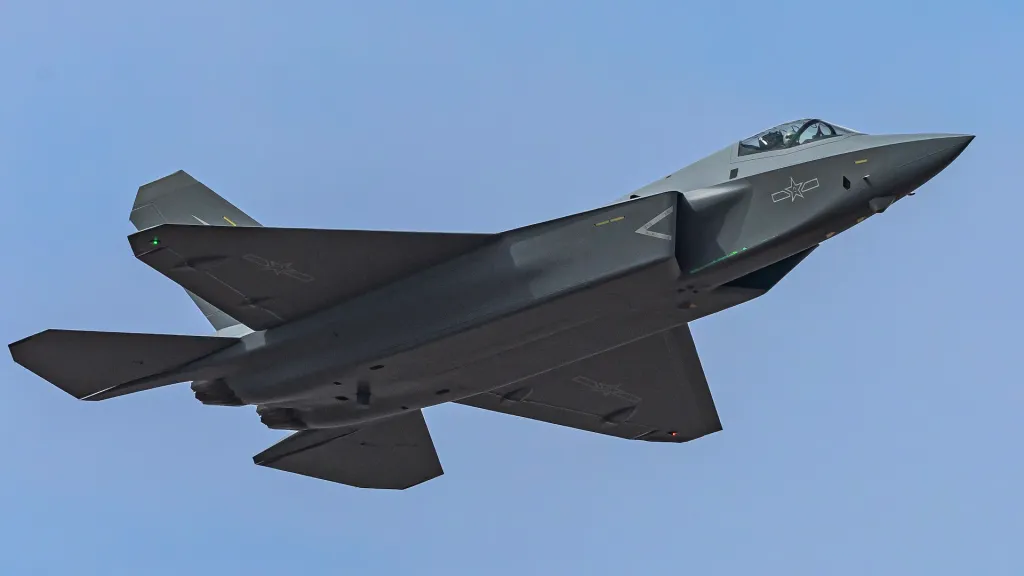
The report does mention the debut in the last 12 months of “two stealth aircraft with novel tailless design features,” the aircraft that are now known informally as the J-36 and the J-XDS. Other debuts highlighted include the land-based J-35A fifth-generation combat aircraft and the J-15D carrier-borne electronic warfare aircraft. Also of note is the statement that the new airborne early warning and control aircraft based on the Y-20B transport is “meant to identify and track advanced stealth aircraft.”

ZHUHAI, CHINA - NOVEMBER 09: A J-35A stealth fighter conducts adaptive training for the upcoming 15th China International Aviation and Aerospace Exhibition, or Airshow China 2024, on November 9, 2024 in Zhuhai, Guangdong Province of China. The 15th China International Aviation and Aerospace Exhibition will be held in Zhuhai from November 12 to 17.
A J-35A conducts adaptive training for the upcoming Airshow China 2024, on November 9, 2024, in Zhuhai, Guangdong province of China. Photo by Qian Baihua/VCG via Getty Images Photo by Qian Baihua/VCG via Getty Images

Perhaps the most significant military aerospace development is the assertion in the report that China aims to produce six aircraft carriers by 2035, which would provide a total of nine (China’s third, the Fujian, began its inaugural sea trials in May). Recent imagery indicates that China is progressing with work on a new aircraft carrier, its fourth, which is expected to introduce nuclear propulsion. There are increasing reports that Beijing may also still be working on at least one more conventionally powered carrier, too. If these plans are accurate, then the gap between China’s fleet of carriers and the U.S. Navy’s 11 active nuclear-powered supercarriers is growing smaller at an even faster pace.

When it comes to China’s fighters for export, the report identifies the fifth-generation Shenyang FC-31 (export variant of the J-35), the fourth-generation Chengdu J-10C, and the JF-17, which it defines, somewhat puzzlingly, as a light combat aircraft. The last of these, also named Thunder, is a China-Pakistan coproduction, not used by the PLA.

In terms of orders already achieved, the Pentagon states that, as of May 2025, the FC-31 has no sales. However, it does say that there are “interested clients,” which include Egypt, Saudi Arabia, and the United Arab Emirates (UAE).

The first prototype FC-31 took to the air in 2012 and was followed, in 2016, by a significantly reworked and greatly refined version, which we discussed in detail at the time. More recently, developmental focus has been on the J-35 version for carrier-based service with the PLA Navy. Alongside this, Shenyang has also developed the J-35A, a land-based stealth fighter that has been under development for some time and which publicly emerged late last year.

The long-term PLA Air Force plans for the J-35A remain unclear, but the carrier-capable J-35 may well now be in operational PLA Navy service. Since the base design was developed primarily for export, foreign sales are almost certainly still being sought.

Somewhat surprising is the fact that the Pentagon doesn’t link Pakistan with a potential FC-31 order. After all, there had been a previous announcement of official Pakistani plans to acquire a land-based version of the jet.

Pakistan is interested in buying FC-31.

The details are subject to further negotiations, but it’s unlikely we’ll sell the AF version of the J-35 (more developed form of FC-31).

It’s more likely a bespoke version of FC-31 for Pakistan
1/2 pic.twitter.com/X4PdRNSpAy

— Zhao DaShuai 东北进修?? (@zhao_dashuai) January 3, 2024

As for Egypt, Saudi Arabia, and the United Arab Emirates, all these nations are known to be looking for new fighters.

Egypt was once destined to receive 24 Su-35s from Russia, before the threat of U.S. sanctions and a teased offer of F-15s put an end to that sale. In particular, Washington had said it would put sanctions on Cairo under the Countering America’s Adversaries Through Sanctions Act (CAATSA). In the event, it appears those same Su-35s, or at least some of them, ended up in Algeria.

One of the Su-35s produced for Egypt but never delivered to that country. @nskplanes 

In Saudi Arabia, meanwhile, the FC-31 would join a relatively packed list of competitors for that country’s next batch of fighters.

Saudi Arabia was long expected to buy more Eurofighter Typhoons, in a deal that would be brokered by BAE Systems of the United Kingdom. With that potential deal held up by concerns over Saudi human rights abuses, Saudi Arabia entered talks to buy 54 Dassault Rafale fighters, as we reported back in 2023. More recently, Boeing confirmed that it was offering the F-15EX Eagle II to Saudi Arabia, while last month it was reported that the Trump administration was weighing up the sale of up to 48 Lockheed Martin F-35As to the kingdom.

Selling the stealth jet to Saudi Arabia would be a significant policy shift, with Washington previously being unwilling to export F-35s to Arab states in the region, for fear of upsetting the strategic balance in relation to Israel. The same applies to the United Arab Emirates, where, like in Saudi Arabia, Beijing seems to be offering its stealthy FC-31 as a direct alternative to the F-35.

A U.S. Air Force F-35A performs during the 2023 Dubai Airshow on November 13, 2023. Photo by GIUSEPPE CACACE/AFP via Getty Images

An arms package for the United Arab Emirates, approved at the end of the previous Trump administration and valued at up to $23.37 billion, included 50 F-35As, among other weapons. In 2021, the Emirati government reportedly said it wanted to scrap the plan, due to concerns over stringent safeguards to protect these systems — somewhat ironically — against Chinese espionage.

For the J-10C, the report notes that the only exports of this type are the 20 units delivered to Pakistan. These are part of two previous orders from Islamabad totaling 36 aircraft since 2020. It’s unclear when the remaining jets are set to be delivered to the Pakistan Air Force. Since entering Pakistani service, the J-10C saw its combat debut in this year’s clashes between India and Pakistan. Many observers pointed to the potentially significant impact made by the jets, especially in conjunction with their much-vaunted PL-15 air-to-air missiles — the latter of which you can read about in depth here. Regardless, China went into overdrive to publicize the claimed success of the J-10C and its Chinese-made missiles in Pakistan Air Force hands.

An unarmed Pakistan Air Force J-10C carrying three external fuel tanks. Pakistan Air Force

Meanwhile, Egypt, Uzbekistan, Indonesia, Iran, and Bangladesh are all said to have expressed interest in the J-10C.

Aside from the aforementioned Egypt, Indonesia, Iran, and Bangladesh are all known to be looking for new fighter equipment.

Indonesia signed a contract for the 42 Rafales, which it followed up by announcing plans to buy up to 24 F-15EX fighters, specifically a derivative known as the F-15IND, as you can read more about here.

Dassault Rafale (T0302) Multirole Fighter destined for Indonesia spotted at Bordeaux–Mérignac Airport.

?: Willy Josse – Bordeaux Mérignac Spotters pic.twitter.com/8cmgU6PmQB

— OSINTWarfare (@OSINTWarfare) November 8, 2025

The prospects of a J-10C sale in Iran may be somewhat better.

Iran’s geriatric air force has been particularly hobbled by historic arms embargoes and the country’s increasing pariah status in the global community. In the past, Iran has been linked with a potential transfer of Su-35s, which so far hasn’t materialized, while the country’s fighter force almost certainly suffered heavy attrition in the conflict with Israel earlier this year.

As for Bangladesh, this country may also now be out of the market for a new fighter. Earlier this month, it was reported that it had signed a letter of intent with Italy’s Leonardo to buy an undisclosed number of Typhoons.

Turning to the JF-17, which is the lowest-end and cheapest offering of the three fighters, has also done the best in terms of exports.

As of May 2024, the Pentagon records JF-17 sales to Azerbaijan, Burma, and Nigeria, as well as Pakistan. The report also says that, as of 2024, negotiations were underway regarding a possible JF-17 transfer to Iraq.

PAC JF-17 Thunder multirole combat aircraft, a fighter jet made in China and Pakistan. The Pakistani plane is painted with the country's flag as it belongs to Pakistan Air Force. The aircraft performed a flight demo, flying demonstration at the 53rd Paris Air Show at Le Bourget Airport in France on June 2019. The advanced and sophisticated fighter jet is developed jointly by the Pakistan Aeronautical Complex (PAC) and the Chengdu Aircraft Corporation (CAC) of China. (Photo by Nicolas Economou/NurPhoto via Getty Images)
A JF-17 Thunder fighter at the Paris Air Show in June 2019. Photo by Nicolas Economou/NurPhoto Nicolas Economou

Iraq is an intriguing candidate customer. Although it has been a keen customer of Chinese arms for many years, the country’s fighter needs would appear to be well met by its Lockheed Martin F-16s — provided they are still operational.

Back in 2023, the Pentagon reported that the F-16IQ had become Iraq’s most reliable platform for carrying out airstrikes against ISIS terrorists, at least in part due to a shortage of spare parts for Iraq’s Russian-made attack helicopters as a result of the war in Ukraine. U.S. and Iraqi authorities were said to be looking into the possibility of modernizing the F-16IQ’s notoriously limited air-to-air capabilities.

It’s unclear why Iraq might have started to look at buying JF-17s. One possibility is simply to increase the size of its fighter fleet and do it more cheaply, but it’s also possible that Iraq’s F-16s may be suffering from some of the same kinds of problems they did in the past. Indeed, as of 2020, it was announced that the withdrawal of maintenance teams from Iraq meant that its F-16 fleet was at risk of effectively ceasing to exist.

A trio of Iraqi F-16IQ Vipers. U.S. Air Force

Overall, we don’t know how accurate the Pentagon’s assessments of potential export sales for China’s fighters are, but they remain interesting.

Not least for the fact that China, the world’s fourth-largest arms supplier, is increasingly active at the higher end of military aerospace exports. Indeed, with three different fighter designs on offer, it is well able to meet different requirements in terms of costs and capabilities. With its stealthy FC-31, China can offer a competitor not only to the F-35 but also to the Turkish TF Kaan and the South Korean KF-21 Boramae at the lower end of that segment.

Furthermore, China is increasingly well-positioned to offer complementary drones to operate alongside these crewed fighters. China is currently making great leaps in drone technology and is in hot pursuit of equivalents to the U.S. Collaborative Combat Aircraft (CCA). Such designs could be offered paired with these fighters, putting even smaller countries within reach of the latest concept of operations and airpower capabilities.

In addition, as the Pentagon report notes, “arms transfers are a component of China’s foreign policy and complement assistance and initiatives that are part of the Belt and Road Initiative. Many developing countries, especially in Africa, purchase China’s weapons systems because they are less expensive than Western systems.” This latter point certainly holds true for the JF-17, in particular, although that jet has added significant new capabilities in its later versions, including an active electronically scanned array (AESA) radar.

Beijing is also more willing than most Western nations to offer financial incentives such as trade for minerals and flexible payment options.

Overall, all three fighters, like all Chinese weapons designs, also have the major advantage of being immune to the tight export restrictions that typically apply to Western products. The story of Beijing’s fighter exports indicates that it is far more likely to grant export licenses to countries that might be prohibited from buying a Western design.

Provided China can secure an export sale for the FC-31, this would be a hugely significant development, greatly helping China break farther out into the higher-end fighter marketplace — especially if it is offered at an attractive price. At the same time, foreign orders for the jet would help offset further development costs and lower production costs, making it even more attractive on the export market.

Contact the author: thomas@thewarzone.com

Thomas is a defense writer and editor with over 20 years of experience covering military aerospace topics and conflicts. He’s written a number of books, edited many more, and has contributed to many of the world’s leading aviation publications. Before joining The War Zone in 2020, he was the editor of AirForces Monthly.


Source link

Russia-Ukraine war: List of key events, day 1,400 | Russia-Ukraine war News

These are the key developments from day 1,400 of Russia’s war on Ukraine.

Here is where things stand on Thursday, December 25:

Fighting

  • An explosion in Moscow killed three people, including two police officers, just days after a car bomb killed a high-ranking Russian general in the same area of the capital.
  • An official from Ukraine’s military intelligence, known as GUR, told The Associated Press news agency that the attack had been carried out as part of a Ukrainian operation and the two police officers were targeted for taking part in Russia’s war in Ukraine.
  • ‍Russian air ‍defence units downed 16 Ukrainian drones en route to Moscow throughout Wednesday, the capital’s Mayor Sergei Sobyanin said.
  • Sobyanin said the drones were repelled ​over a period of about 17 hours, and emergency ‍crews were examining fragments where the drones hit the ground, but no damage was reported.
  • Two of four major airports ‍servicing Moscow were forced to limit operations for a time due to the drone attacks, Russia’s civil aviation authority said on Telegram.
  • Russia’s Ministry of Defence said its aerial defence units destroyed 172 Ukrainian drones overnight, nearly half of them over regions bordering Ukraine.
  • Ukraine said its drones ​had struck the Yefremov synthetic rubber plant ‌in Russia’s Tula region, south of Moscow, and a storage facility for marine drones in Russian-occupied Crimea.
  • Tula regional governor, Dmitry Milyaev, said ‌debris from a downed Ukrainian drone ignited a fire at an industrial ‌site, and Russian air defence units destroyed 12 Ukrainian drones over the region.
  • A sunflower oil spill, caused by Russian aerial bombardments, has contaminated the shoreline around the southern Ukrainian city of Odesa, killing wildlife and triggering warnings from conservationists, the AFP news agency reports.
  • “The cause was damage to sunflower oil tanks as a result of massive enemy attacks on port infrastructure, causing some of the oil to spill,” Odesa Governor Oleh Kiper said in a statement. The Pivdenny port in the region was temporarily closed on Wednesday to help with the cleanup.
  • A Russian-backed court in occupied Ukraine sentenced a Colombian man to 19 years in prison for fighting for Kyiv’s army.
  • Russia’s Prosecutor General said the Supreme Court in the Russian-controlled area of Ukraine’s Donetsk region sentenced Oscar Mauricio Blanco Lopez, 42, to 19 years in jail. The Colombian arrived in Ukraine in May 2024 to sign up with the Ukrainian army and had been “taken prisoner by Russian servicemen” in December 2025.

Ceasefire talks

  • Ukrainian President Volodymyr Zelenskyy revealed for the first time details of an agreement between the United States and Ukrainian negotiators on ending the war with Russia. The 20-point plan, agreed on by US and Ukrainian negotiators after marathon talks, is now being reviewed by Moscow.
  • As part of the plan, President Zelenskyy said Ukraine would be willing to withdraw troops from the country’s eastern industrial heartland if Moscow also pulled back and the area becomes a demilitarised zone monitored by international forces.
  • A similar arrangement could be possible for the area around the Zaporizhzhia nuclear power plant, which is currently under Russian control, Zelenskyy said. The Ukrainian leader said that any peace plan would need to be put to a referendum in Ukraine.
  • Asked about the latest development in ceasefire talks, Kremlin spokesperson Dmitry Peskov said Moscow would decide its position based on information received by Russian presidential envoy Kirill Dmitriev, who met with US envoys in Florida over the weekend.
  • Russia has given no indication that it will agree to any kind of withdrawal from land it has seized in Ukraine. Moscow has also insisted that Ukraine relinquish the remaining territory it still holds in the Donbas. Russia has captured most of Luhansk and about 70 percent of Donetsk – the two areas that make up the Donbas.


Politics and diplomacy

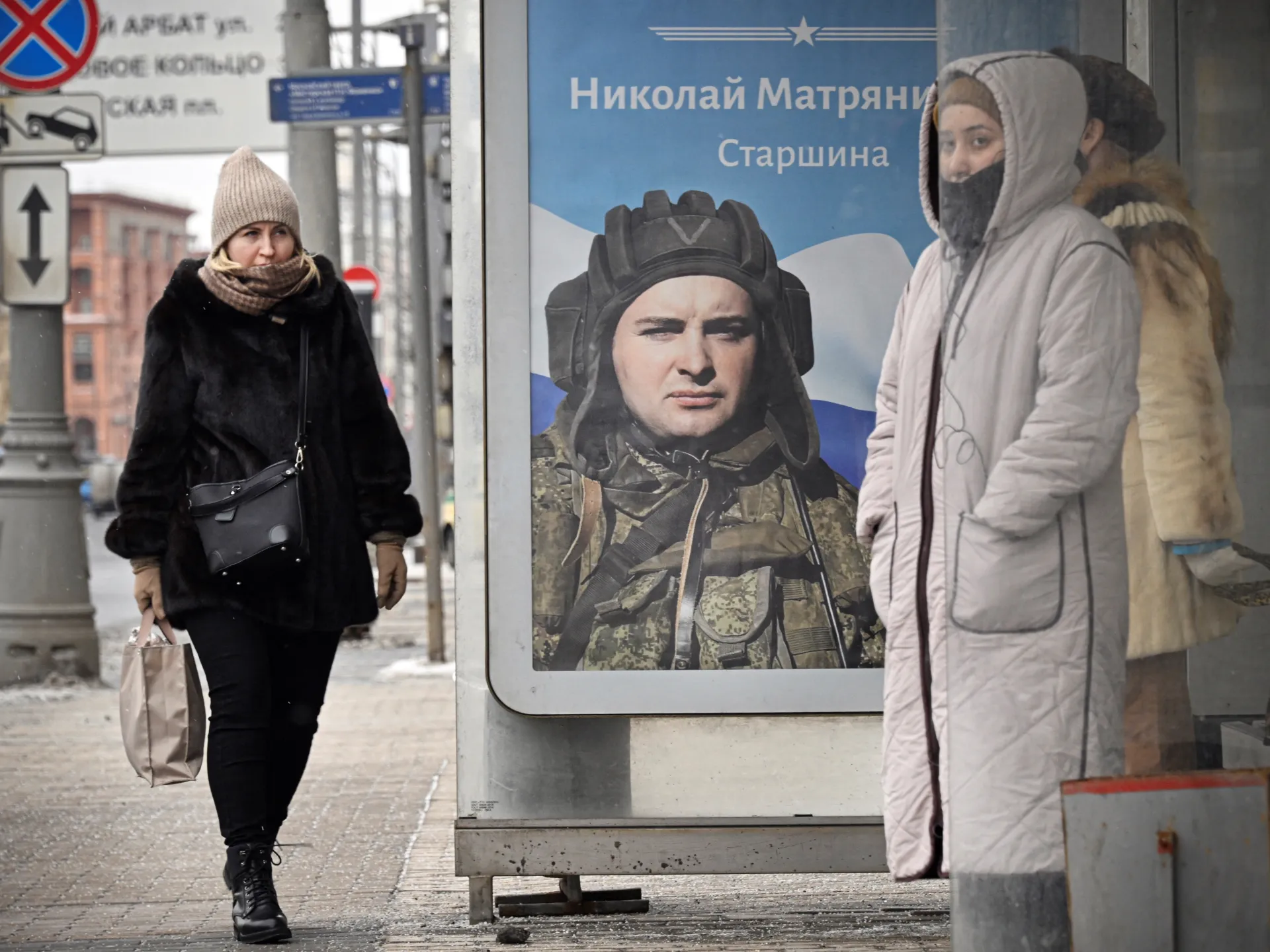
  • A majority of Russians expect the war in Ukraine to end in 2026, Russia’s state pollster VTsIOM said, in a sign that the Kremlin could be testing public reaction to a possible peace settlement as diplomatic efforts ⁠to end the conflict intensify.
  • During the pollster’s year-end presentation, VTsIOM Deputy Head Mikhail Mamonov said 70 percent of the 1,600 respondents ​saw 2026 as a more “successful” year for Russia than 2025, while for 55 percent that hope ‍was linked to a possible end to Russia’s war in Ukraine.
  • A Russian court has scheduled the first public hearing in a criminal case against German sculptor Jacques Tilly, who is accused of discrediting the Russian military through his satirical Carnival floats depicting Russia’s President Vladimir Putin.
  • The court in Moscow said the trial will begin on December 30 and proceedings will be held in absentia, as Tilly – who faces up to 10 years in jail or a fine – is not in Russia.
  • Zelenskyy said in his Christmas address on Wednesday that despite marking the holiday at a “difficult” time, the nation’s unity remains intact. “Ukrainians are together tonight,” Zelenskyy said, adding the country had “without a doubt” been changed by the war. “It hardly matters what dishes are on the table – what matters is who is at the table,” he said.
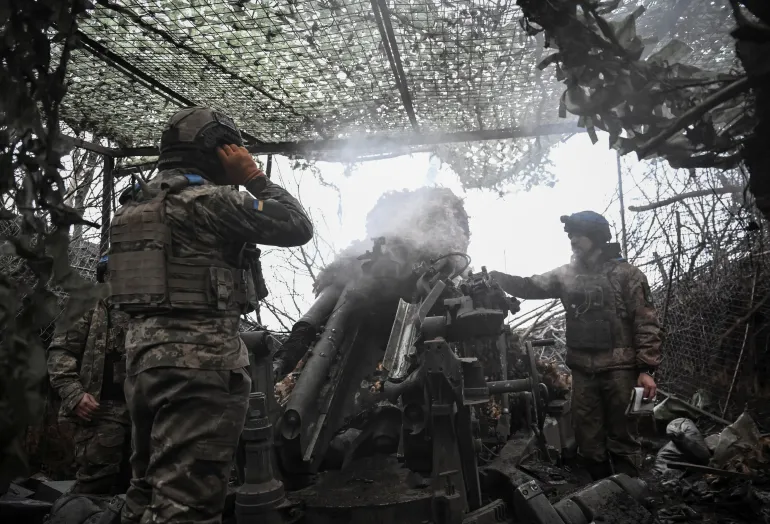
Artillerymen of the 44th Separate Artillery Brigade in Ukraine's Dnipropetrovsk region
Artillerymen of the 44th Separate Artillery Brigade fire a M777 Howitzer towards Russian troops, amid Russia’s attack on Ukraine, in Dnipropetrovsk region, Ukraine, on December 24, 2025 [Reuters]

Regional security

  • France’s ‍President Emmanuel Macron said he spoke ⁠with NATO ​chief Mark Rutte to ‍discuss the situation in Ukraine and ‍the work undertaken ⁠by the “coalition of the willing”. “Starting in January in Paris, we ​will ‌continue the work begun within this framework to provide ‌Ukraine with solid security ‌guarantees, a ⁠prerequisite for a robust and lasting peace,” Macron ‌said on social media.
  • Democratic senators in the US have urged President ‍Donald Trump to ‍reverse a recall of nearly 30 career ambassadors, warning the move leaves a dangerous leadership vacuum that allows adversaries like Russia and China to expand their influence. The Trump administration in recent days has ordered career diplomats serving across Europe, Asia, Africa and Latin America back to Washington to ensure US missions abroad reflect its “America First” priorities.

Economics

  • Kazakhstan’s exports of its flagship CPC Blend of oil will be their lowest in 14 months in December, as bad weather delays efforts to repair Russian loading infrastructure after Ukrainian drone strikes last month, two sources told the Reuters news agency.
  • On November 29, Ukrainian drones hit the Caspian Pipeline Consortium terminal located near ‍Russia’s Black Sea port ⁠of Novorossiysk, leaving just one out of three jetties operational and prolonging export delays. Poor weather has added to the difficulty of carrying out maintenance work necessary to allow exports to recover.
  • Ukraine’s Ministry of Finance said ‍it ‍completed the settlement of a deal to restructure $2.6bn of growth-linked debt.


Source link

Explosion rocks crowded mosque in Nigeria, killing several people: Reports | Armed Groups News

The blast tore through a mosque in Maiduguri as worshippers gathered for evening prayers, witnesses say.

An explosion has ripped through a mosque in northeastern Nigeria as worshippers gathered for their evening prayers, killing and wounding several people, according to media reports.

The blast took place at about 6pm on Wednesday (17:00 GMT) in the city of Maiduguri in Borno State, the Reuters and AFP news agencies reported, citing witnesses.

Recommended Stories

list of 3 itemsend of list

Police spokesman Nahum Daso confirmed the explosion and told AFP that an explosive ordnance team was already on site at the mosque in Maiduguri’s Gamboru market.

There was no official word on casualties.

But mosque leader Malam Abuna Yusuf told the AFP at least eight people had died, while a militia leader, Babakura Kolo, put the figure at seven.

Another witness, Musa Yusha’u, told AFP that he saw “many victims being taken away for medical treatment”.

The cause of the blast was not immediately known, but it occurred ‍in a ⁠city that has been at the heart of an armed rebellion waged by Boko Haram and ISIL’s (ISIS) offshoot in the region, the Islamic State West Africa Province, for nearly two decades.

The conflict has killed at least 40,000 people and displaced about two million from their homes since 2009, according to the United Nations.

Though the violence has waned since its peak about a decade ago, it has spilt into neighbouring Niger, Chad and Cameroon.

Concerns are also growing about a resurgence of violence in parts of the northeast, where armed groups remain capable of mounting deadly attacks despite years of sustained military operations.

Maiduguri itself – once the scene of nightly gun battles and bombings – has been calm in recent years, with the last major attack recorded in 2021.

Source link

Lawmaker sues to remove Trump’s name from Kennedy Center

Watch: President Trump’s name added to facade of Kennedy Center

Democratic US Representative Joyce Beatty has filed a lawsuit seeking to remove President Donald Trump’s name from the John F. Kennedy Center for the Performing Arts.

Last week, the board of the Kennedy Center – which Trump filled with allies – voted to rename the performing arts centre the Trump-Kennedy Center.

Beatty is one of several Democratic lawmakers designated as members of the board by US law. She claimed in her lawsuit that the renaming was illegal because changing the name requires “an act of Congress”.

The suit says Beatty had called into the meeting about the name change but was muted when she tried to voice her opposition.

Beatty argues that Congress intended for the centre to be a “living memorial” to former President Kennedy.

“[I]n scenes more reminiscent of authoritarian regimes than the American republic – the sitting President and his handpicked loyalists renamed this storied center after President Trump,” the lawsuit states.

In a statement provided to the BBC, the White House said Trump had “stepped up” and saved the Kennedy Center “by strengthening its finances, modernizing the building, and ending divisive woke programming”.

“As a result, the Board of the Kennedy Center voted unanimously to rename it the Trump-Kennedy Center — a historic move that marks a new era of success, prestige, and restored grandeur for one of America’s most iconic cultural institutions,” White House spokesperson Liz Huston said.

On Friday, the president’s name was added to the exterior of the building, and the centre’s website logo now reads “The Trump Kennedy Center”.

The name change has been met with harsh criticism, particularly in Washington DC where the centre has been an iconic landmark since it was built and named for Kennedy.

Bloomberg via Getty Images Workers outside the Kennedy Center are on lifts in front of the building, where a sign now says "The Donald J. Trump and The John F. Kennedy Memorial Center for the Performing Arts" Bloomberg via Getty Images

Construction began on a performing arts centre in the 1950s and after Kennedy was assassinated in 1963, Congress decided to name it after him.

Shortly after taking office, Trump fired a slew of the centre’s board members and replaced them with allies, who then voted to make him chairman of the board. His close adviser Richard Grenell became board president.

The centre’s board of trustees currently has 34 members appointed by Trump and 23 others designated as members by US law, according to the centre’s website.

Trump also secured about $257m (£190m) in congressional funding to pay for major renovations and other costs at the venue, saying it was in “bad shape”.

Several members of the Kennedy family took to social media to criticise the name change.

Joe Kennedy III, a former House member and grandnephew of the late president, said that “the Kennedy Center is a living memorial to a fallen president and named for President Kennedy by federal law”.

“It can no sooner be renamed than can someone rename the Lincoln Memorial, no matter what anyone says,” he added.

Source link

Syria says key ISIL leader Taha al-Zoubi captured near Damascus | ISIL/ISIS News

Syrian officials confirm the arrest of ISIL leader Taha al-Zoubi in a security operation near Damascus.

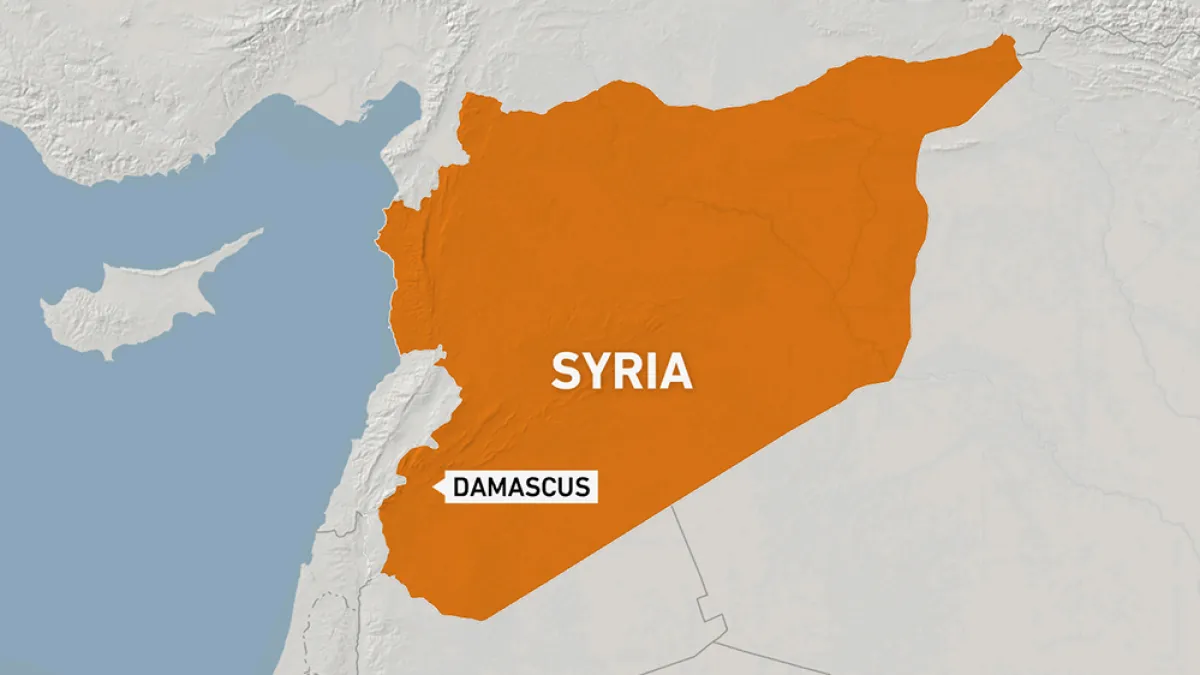
Syria’s Ministry of Interior has announced the arrest of Taha al-Zoubi, a leading figure in the ISIL (ISIS) group, in the Damascus countryside, the country’s SANA news agency reported.

The report said a “tightly executed security operation” was carried out that led to the arrest of al-Zoubi, adding that “a suicide belt and a military weapon were seized in his possession”.

SANA quoted Brigadier General Ahmad al-Dalati, head of internal security in the Damascus countryside, as saying the raid targeted an ISIL hideout in Maadamiya, southwest of Damascus, and was carried out “in cooperation” with an anti-ISIL alliance that includes the United States-led coalition fighting the group.

The US Central Command (CENTCOM) has not publicly confirmed the operation.

Al-Dalati said al-Zoubi, also known as Abu Omar Tibiya, served as the group’s “wali”,or governor, of Damascus and that several alleged aides were also detained.

The official added that the arrest dealt a “crippling blow” to ISIL networks in the capital region and showed the “readiness of the security apparatus”.

“We send a clear message to anyone who dares to engage in the project of terrorism or lend support to ISIS: The hand of justice will reach them wherever they are,” al-Dalati said.

ISIL, which views the new government in Damascus as illegitimate, has mainly concentrated its activities against Kurdish forces in the north.

At its peak, ISIL ruled an area half the size of the United Kingdom, spanning across Iraq and Syria, with Raqqa in the latter being the capital of the armed group’s self-declared “caliphate”.

The group was notorious for its brutality, carrying out massacres of Syrians and Iraqis and beheadings of foreign captives.

ISIL was defeated in Iraq in 2017 and in Syria two years later, but its fighters and cadres of armed group members still carry out deadly attacks in both countries and elsewhere, including in Africa and Afghanistan.

Source link

Venezuela Condemns Trump’s Blockade as Illegal, Popular Organizations Vow Resistance

President Nicolás Maduro called for a global response by the international working class in the face of US aggression against Venezuela. (Prensa Presidencial)

Mexico City, Mexico, December 17, 2025 (venezuelanalysis.com) – Venezuela accused US President Donald Trump of threatening its sovereignty and violating international law, rejecting Washington’s efforts to seize its natural resources and impose a naval blockade. 

“Donald Trump launched a reckless and grave threat against the Bolivarian Republic of Venezuela, violating international law, free trade, and free navigation,” read the statement by the Venezuelan government in response to a social media post by the US president.

Trump threatened a “total and complete blockade of oil tankers” going in and out of Venezuela, claiming that the Caribbean country had “stolen land, oil and other assets” from the US. He did not add any explanation to his claims.

Caracas said in its statement Tuesday that it will denounce the United States at the United Nations (UN) after Trump’s de facto naval blockade and his attempt to claim ownership over Venezuela’s oil and mineral wealth

The UN Charter expressly prohibits all Member States from using or threatening force against the territorial integrity or political independence of another state. Blockades imposed without a declaration of war or that are not sanctioned by the UN Security Council are not considered legal.

Ryan Goodman, professor at NYU Law, affirmed that Trump’s actions were not only a violation of the UN Charter but actually constituted a “crime of aggression” against Venezuela.

The Wall Street Journal reported that Trump’s order for a complete blockade of sanctioned oil tankers, as well as last week’s seizure of an Asia-bound tanker, had resulted in the disruption of Venezuela’s oil traffic, with several vessels reportedly idling in port or diverting away from the region.

Venezuela’s state oil company PDVSA likewise reported a cyber attack on Monday. Nonetheless, PDVSA said in a statement that crude and refined product exports are continuing normally and that tankers are operating under full security and legal guarantees. Chevron’s activities allegedly have been unaffected, with the WSJ reporting that two vessels carrying US-bound crude for the US oil company departed from Lake Maracaibo.

Venezuela insisted that despite Trump’s “warmongering threats” it would continue to “exercise its freedom, jurisdiction, and sovereignty.”

In its statement, Caracas urged “the people of the United States and the peoples of the world” to reject Trump’s threat, framing the standoff as a global fight over international law, free navigation, and the plunder of sovereign resources rather than a narrow bilateral dispute.

Trump’s attempt to impose a naval blockade came amid the largest US military deployment in the region in decades. US assets include the Gerald R. Ford, the world’s largest aircraft carrier, and US warplanes have repeatedly flown close to Venezuelan territory in recent weeks. The White House has declared that the military buildup aims to combat drug trafficking.

Speaking before a labor congress at Caracas’ Teresa Carreño Theater, Venezuelan President Nicolás Maduro called for an international protest by oil, gas, and merchant marine workers against what he described as US piracy.

Trump’s aggressive actions against Venezuela have prompted a large-scale mobilization of the country’s armed forces. In a statement to mark the 47th anniversary of the Venezuelan Integral Airspace Defense Command (CODAI), Defense Minister Vladimir Padrino reiterated the  commitment of the Armed Forces to defend the Caribbean nation’s airspace amid an escalating US military buildup and provocations.

The rhetoric has extended beyond state institutions, with the Fuerza Patriotica Alexis Vive issuing its own statement that cast Trump’s remarks as an act of “naked expression of an imperialist policy of war, plunder, and punishment.” The statement invoked Venezuela’s revolutionary tradition of popular resistance, and warned that any escalation would trigger consequences the US could not control.

“In the face of this imperialist offensive, the Venezuelan people respond with the war of all the people, not as an abstract slogan but as a concrete practice of defending life, territory, and sovereignty,” read the statement issued from the El Panal Commune in Caracas. “The war of all the people is organized communes, conscious neighborhoods, and territory in resistance. It is civic–military–police unity in the service of the working people.”

Trump’s announcement of a blockade of Venezuela also drew criticism from US lawmakers, with US Representative Joaquin Castro calling the order “unquestionably an act of war” and warning that it represents an unauthorized and dangerous escalation with potentially catastrophic consequences. 

Representative Jim McGovern also labeled Trump’s threats as potential “acts of war.” Meanwhile, Representative Nydia Velazquez called on Congress to exercise its constitutional authority to prevent a unilateral military escalation.

“This is not about drugs or making America safer; it’s about regime change,” wrote Velazquez. “Americans do not want war with Venezuela. Congress must act now and stop this.” Recent polls have shown that a majority of the US public rejects military attacks against Venezuela.

The seizure of a Venezuelan oil tanker had already drawn bipartisan backlash. Congress is expected to vote Wednesday on two War Powers resolutions, including one to block Trump’s military actions related to the blockade of Venezuelan oil tankers.

Edited by Ricardo Vaz in Caracas.

Source link

More than a million Epstein-related documents discovered; release delayed | Donald Trump News

US Justice Department says it requires weeks to process newly found Epstein-related files under transparency and court rules.

More than a million additional documents that are potentially related to late sex offender and financier Jeffrey Epstein have been uncovered, according to the United States Department of Justice (DOJ).

In a social media post on Wednesday, the DOJ said it is reviewing the documents and will need “a few more weeks” before proceeding with a congressionally mandated release of the information.

Recommended Stories

list of 3 itemsend of list

“The US Attorney for the Southern District of New York and the FBI have informed the Department of Justice that they have uncovered over a million more documents potentially related to the Jeffrey Epstein case,” the DOJ said in a statement, adding that more time is needed to comply with the Epstein Files Transparency Act, the law enacted last month that requires the government to open its files on Epstein and his longtime confidante Ghislaine Maxwell.

The DOJ insisted in its statement that its lawyers are “working around the clock” to review those documents and make the redactions required under the law, passed nearly unanimously by Congress.

“Due to the mass volume of material, this process may take a few more weeks. The Department will continue to fully comply with federal law and President [Donald] Trump’s direction to release the files,” the DOJ said.

Full disclosure

A dozen US senators are calling on the Justice Department’s watchdog to examine the department’s failure to release all records pertaining to Epstein by Friday’s congressionally mandated deadline, saying victims “deserve full disclosure” and the “peace of mind” of an independent audit.

Senator Lisa Murkowski, a member of Trump’s Republican Party, joined 11 Democrats in signing a letter on Wednesday urging Acting Inspector General Don Berthiaume to audit the Justice Department’s compliance with the Epstein Files Transparency Act.

“Given the [Trump] Administration’s historic hostility to releasing the files, politicisation of the Epstein case more broadly, and failure to comply with the Epstein Files Transparency Act, a neutral assessment of its compliance with the statutory disclosure requirements is essential,” the senators wrote.

Full transparency, they said, “is essential in identifying members of our society who enabled and participated in Epstein’s crimes”.

Republican Representative Thomas Massie, a co-sponsor of the transparency act, posted on Wednesday on X: “DOJ did break the law by making illegal redactions and by missing the deadline.”

Despite the deadline, the Justice Department has said it plans to release records on a rolling basis. It blamed the delay on the time-consuming process of obscuring survivors’ names and other identifying information.

More batches of records were released over the weekend and on Tuesday. The department has not given any notice when more records might arrive.

“The reason why we are still reviewing documents and still continuing our process is simply to protect victims,” Deputy Attorney General Todd Blanche told the NBC television network’s Meet the Press programme on Sunday.

“So the same individuals that are out there complaining about the lack of documents that were produced on Friday are the same individuals who apparently don’t want us to protect victims,” he argued.

Source link

Bunker Talk: Silent Night Edition

We want to wish our commenting crew the most wonderful holiday with their families and friends! Enjoy, relax, discuss, and have a very merry Christmas!

Welcome to Bunker Talk. This is a weekend open discussion post for the best commenting crew on the net, in which we can chat about all the stuff that went on this week that we didn’t cover. We can also talk about the stuff we did or whatever else grabs your interest. In other words, it’s an off-topic thread.

This week’s caption reads:

Boys at a Dr Barnardo’s home have fun in the air raid shelter they built themselves at Christmas, 17th December 1940. (Photo by David Parker/Fox Photos/Hulton Archive/Getty Images)

Also a reminder:

Prime Directives!

  • If you want to talk politics, do so respectfully and know that there’s always somebody that isn’t going to agree with you. 
  • If you have political differences, hash it out respectfully, stick to the facts, and no childish name-calling or personal attacks of any kind. If you can’t handle yourself in that manner, then please, discuss virtually anything else.
  • No drive-by garbage political memes. No conspiracy theory rants. Links to crackpot sites will be axed, too. Trolling and shitposting will not be tolerated. No obsessive behavior about other users. Just don’t interact with folks you don’t like. 
  • Do not be a sucker and feed trolls! That’s as much on you as on them. Use the mute button if you don’t like what you see.  
  • So unless you have something of quality to say, know how to treat people with respect, understand that everyone isn’t going to subscribe to your exact same worldview, and have come to terms with the reality that there is no perfect solution when it comes to moderation of a community like this, it’s probably best to just move on. 
  • Finally, as always, report offenders, please. This doesn’t mean reporting people who don’t share your political views, but we really need your help in this regard

Tyler’s passion is the study of military technology, strategy, and foreign policy and he has fostered a dominant voice on those topics in the defense media space. He was the creator of the hugely popular defense site Foxtrot Alpha before developing The War Zone.


Source link

Bangladesh opposition leader Tarique Rahman set for historic homecoming | Elections News

BNP plans historic rally as Rahman, seen as a key leader, marks his highly anticipated homecoming.

Bangladesh’s main opposition party says it is preparing a vast show of support as its leader, Tarique Rahman, prepares to return home after nearly 17 years in exile.

The Bangladesh Nationalist Party (BNP) aims to mobilise up to five million supporters in the capital to welcome Rahman, who is widely viewed as the party’s prime ministerial frontrunner for the country’s parliamentary elections scheduled for February.

Recommended Stories

list of 3 itemsend of list

His expected arrival from London on Thursday comes as the BNP regains momentum after the removal of longtime leader Sheikh Hasina in a student-led uprising last year.

Rahman, 60, is the son of former Prime Minister Khaleda Zia and currently serves as the BNP’s acting chairman.

Since 1991, power in Bangladesh has largely alternated between Zia and Hasina, apart from brief caretaker administrations. With Hasina’s Awami League barred from contesting the February 12 vote, the BNP now appears positioned to dominate the race.

‘A defining political moment’

BNP leaders say they are coordinating security arrangements with authorities for what they call an “unprecedented” mobilisation, with supporters expected to line the route from the airport to the reception venue.

“This will be a defining political moment,” senior BNP leader Ruhul Kabir Rizvi said.

Rahman has lived in London since 2008 after facing multiple criminal convictions in Bangladesh, including money laundering and charges linked to an alleged plot to assassinate Hasina. Courts acquitted him following Hasina’s removal from office, removing the legal obstacles that had delayed his return.

BNP officials said Rahman will proceed directly from the airport to the rally venue before visiting his mother, who has been seriously ill for months.

The homecoming unfolds during a fragile transition overseen by an interim government led by Nobel laureate Muhammad Yunus. The election is seen as a critical test of Bangladesh’s ability to restore democratic legitimacy after years of political turmoil.

Concerns persist over sporadic violence and recent attacks on media outlets, raising questions about the state’s capacity to ensure a credible vote.

The National Citizen Party (NCP), which emerged from the youth protest movement that toppled Hasina, welcomed Rahman’s return.

“Rahman was forced into exile under severe pressure and threats, so his homecoming carries symbolic weight,” said NCP spokesperson Khan Muhammad Mursalin. “His arrival will undoubtedly energise party leaders and supporters … On the path to democracy, we will stand with him.”

Source link

Two police officers killed in explosion in Moscow

Three people – including two police officers – have been killed in an explosion in Moscow, Russian authorities have said.

Two traffic police officers saw a “suspicious individual” near a police car on the city’s Yeletskaya Street, and when they approached the suspect to detain him, an explosive device was detonated, Russia’s Investigative Committee has said.

Reports in Russia say the third person killed was the suspect, but this has not been officially confirmed.

The blast took place close to the location where a senior Russian general was killed in a car bombing in the capital on Monday. Lt Gen Fanil Sarvarov died after an explosive device – which had been planted under a car – was detonated.

Investigate Committee spokesperson Svetlana Petrenko said in a statement on Telegram that a criminal case was being investigated in Moscow “regarding an attempt on the lives of traffic police officers”.

The officers have been named by Russian media as Ilya Klimanov, 24, and Maxim Gorbunov, 25.

Sources in Ukraine’s military intelligence agency, HUR, told the BBC that a local resident, eliminated two representatives of the Russian law enforcement agency, “as a sign of disagreement with the Kremlin’s aggressive policy” and said that a man “threw an explosive package through the car window, causing an explosion”.

According to the HUR sources, two other people were taken to hospital with serious injuries.

Ukrainian military sources also told the BBC on Wednesday that the two officers killed had “participated in hostilities against Ukraine,” and added there was “evidence of their involvement in the torture of Ukrainian prisoners of war”.

There are no details and Moscow has not commented.

Speaking to Reuters news agency, Alexander, a resident who lives close by, said: “There was an explosion.

“It was loud bang – like with the car a few days ago.”

Russia said it suspected Ukraine was behind Monday’s explosion, without providing any evidence.

However Ukraine has not said whether it was involved in Fanil Sarvarov’s death.

It is also not known whether the two explosions are linked.

Sarvarov, 56, was the head of the armed forces’ operational training department.

He was the third military official to have been killed in bomb attacks in the Russian capital over the last year.

Source link

French Empire: Civilising Mission | History

How the French Empire built power through language, schooling and cultural assimilation and what it means today.

Beyond armies and violence, France built its empire through language, schooling and cultural influence. This film explores how assimilation became a method of rule and a source of resistance.

At the heart of French colonial rule was the mission “civilisatrice”, a doctrine that claimed to lift up colonised societies through education, administration and the French language. In practice, this system sought to reshape colonised people’s identities, loyalties and cultures, replacing local traditions with French norms while maintaining strict political and economic control. Schools, legal systems and bureaucracies became tools of empire as powerful as armies.

Through case studies in Algeria, Indochina and West Africa, the documentary shows how colonial administrations operated on the ground. In Algeria, settler colonialism and mass repression led to war. In Indochina, education and bureaucracy coexisted with exploitation and nationalist resistance. In West Africa, language policy and indirect rule reshaped social hierarchies and governance.

This episode examines how resistance movements challenged the promise of civilisation, forcing France to confront the contradictions at the heart of its empire. Anticolonial struggles, intellectual movements and armed uprisings not only weakened imperial rule but reshaped French politics, culture and identity itself.

The documentary also places French colonial strategies in a broader modern context. In the contemporary world, the United States projects influence less through formal empire and more through soft power. Hollywood cinema, television and digital platforms circulate American values, lifestyles and narratives globally, shaping cultural imagination in ways that echo earlier imperial projects. At the same time, US dominance in higher education, academic publishing and institutional standards helps define what knowledge is valued, taught and legitimised worldwide.

It also draws direct connections between French colonialism and the modern world. Contemporary debates over language, immigration, secularism and inequality are deeply rooted in colonial systems designed to classify, discipline and extract. Many modern state institutions, education models and economic relationships reflect structures first imposed under empire.

By tracing how cultural control, education and administration functioned as instruments of power, the documentary reveals how the legacy of French colonialism continues to shape modern capitalism, global inequality and postcolonial relations today.


Source link

Colorado woman accused of killing her children extradited from UK to US

A Colorado mother who is accused of murdering two of her children has been extradited from the UK to the US, authorities say.

Kimberlee Singler, 37, is alleged to have carried out the attack in Colorado before fleeing to London, where she was arrested in December 2023.

She challenged her extradition at Westminster Magistrates Court – reportedly on the basis that her sentence, if she was convicted, would break European human rights law. But she was unsuccessful.

A district attorney in Colorado confirmed on Tuesday that Ms Singler was back in the US and was in custody. She was being held without bond and was expected to appear in court “in the coming days”.

The district attorney, Michael Allen, said Ms Singler was facing charges of two counts of first-degree murder, one count of attempted murder, three counts of child abuse and one count of assault.

At the extradition hearing in London, the court heard that Ms Singler’s alleged crimes were “committed against the backdrop of acrimonious court proceedings” relating to the custody of her children with her ex-husband.

Prosecutor Joel Smith said police in Colorado Springs responded to a 911 call reporting a burglary at a Colorado residence at 00:29 local time (06:29 GMT) on 19 December 2023.

When officers arrived at the defendant’s address, they found her 9-year-old daughter and 7-year-old son dead and a “blood-stained handgun”, which was discovered on the floor of the bedroom.

Mr Smith said DNA tests were carried out on the gun and a knife which revealed the presence of mixed profiles matching the children and Ms Singler.

A third child, who has not been named, was found with a serious injury to her neck. She was taken to hospital and survived.

Mr Smith said Ms Singler blamed her husband for the attack, but it was found he had been driving a “GPS-tracked truck” in Denver, giving what the prosecutor described as a “complete and verifiable alibi”.

Speaking to reporters on Tuesday, Adrian Vasquez, the Colorado Springs police chief, said the extradition of Ms Singler was “a significant milestone” in the investigation.

Chief Vasquez added: “I know these acts have deeply impacted this community, and our hearts remain with the victims.”

Source link