Stay informed and up-to-date with the latest news from around the world. Our comprehensive news coverage brings you the most relevant and impactful stories in politics, business, technology, entertainment, and more.
Jarell Quansah is set to start at right-back for England against Mexico in the World Cup last-16 tie at the Azteca Stadium.
Wingers Bukayo Saka and Anthony Gordon are also expected to come into the side in place of Noni Madueke and Marcus Rashford.
Bayer Leverkusen defender Quansah starts ahead of Djed Spence, who complained of a muscle niggle on Sunday morning.
BBC Sport expects the England XI to be: Jordan Pickford; Jarell Quansah, Ezri Konsa, Marc Guehi, Nico O’Reilly; Declan Rice, Elliot Anderson; Bukayo Saka, Jude Bellingham, Anthony Gordon; Harry Kane.
Quansah, 23, is available for selection having returned to full training after suffering an ankle injury in the group-stage win over Panama.
Monday’s game from Mexico City kicks off at 01:00 BST, live on BBC One and iPlayer.
A dead whale weighing about 12 tonnes has been recovered from the beaches of Muanda after washing ashore on the Atlantic coast.
Officials used a 42-tonne crane to remove it following two days of unsuccessful attempts with tractors and other lifting equipment, as large crowds gathered to watch the operation.
The left is rising because Americans ‘want more from the Democrats’, US Representative Jim McGovern argues.
Progressive Democratic politicians who refuse to take donations from pro-Israel groups have won several party primary elections across the United States.
Democratic Congressman Jim McGovern tells host Steve Clemons that the left is rising because Americans “want more from Democrats”.
“Right now, we’re doing a lot of bad things all around the world, and people need to protest,” McGovern says. On US policy ranging from Cuba to Israel, he argues that Congress has become “just a rubber stamp on whatever this president wants to do”.
“We need to fight for the soul of this country,” McGovern adds.
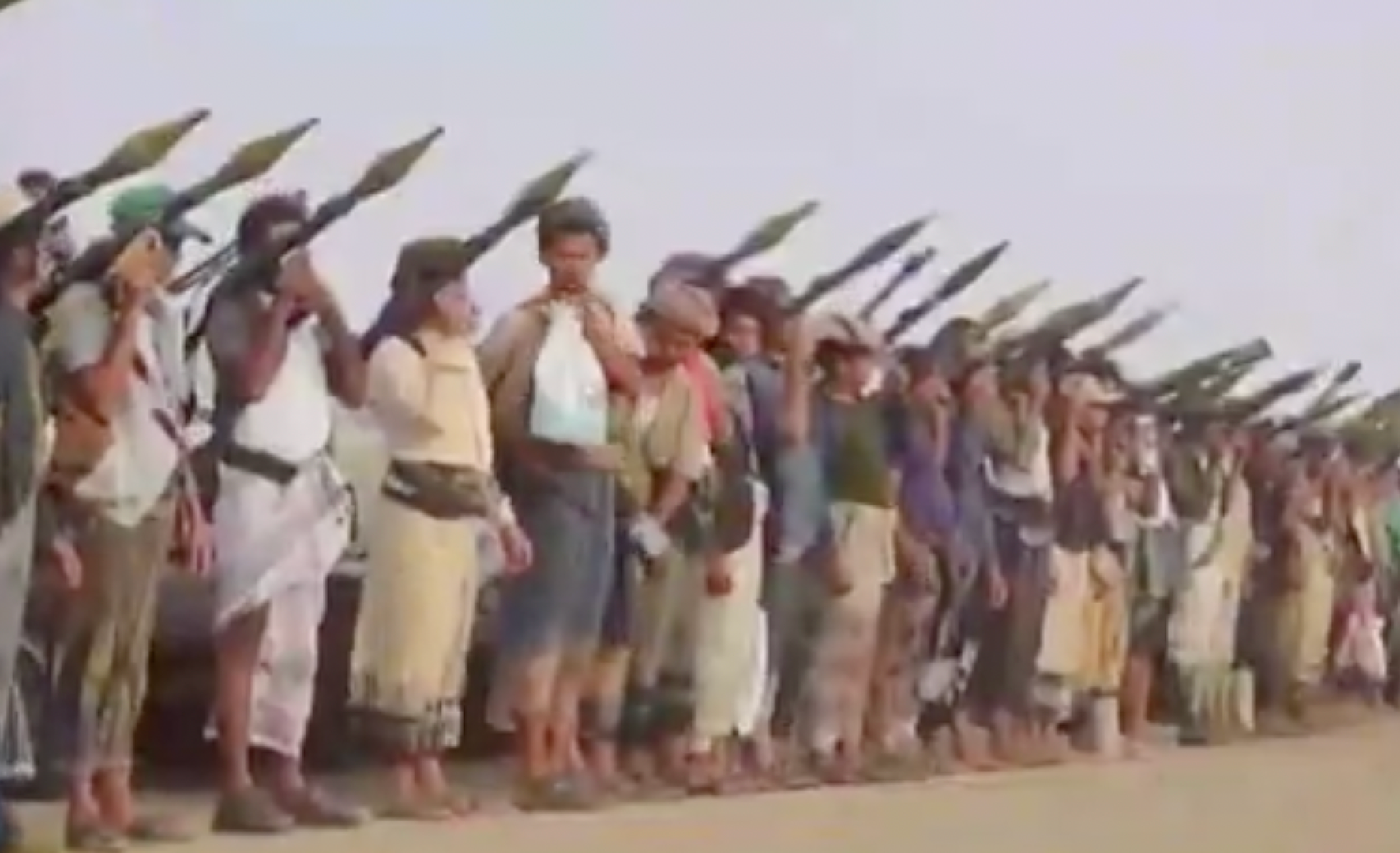
Yemeni government officials say the Houthis launched a surprise offensive targeting army barracks in southern Hodeidah as fighting intensifies across western Yemen.
The renewed clashes come as both sides seek to regain territory and strengthen control over the strategic Red Sea coast.
The transitional parliament aims to draft a new elections law during its 30-month term.
Published On 5 Jul 20265 Jul 2026
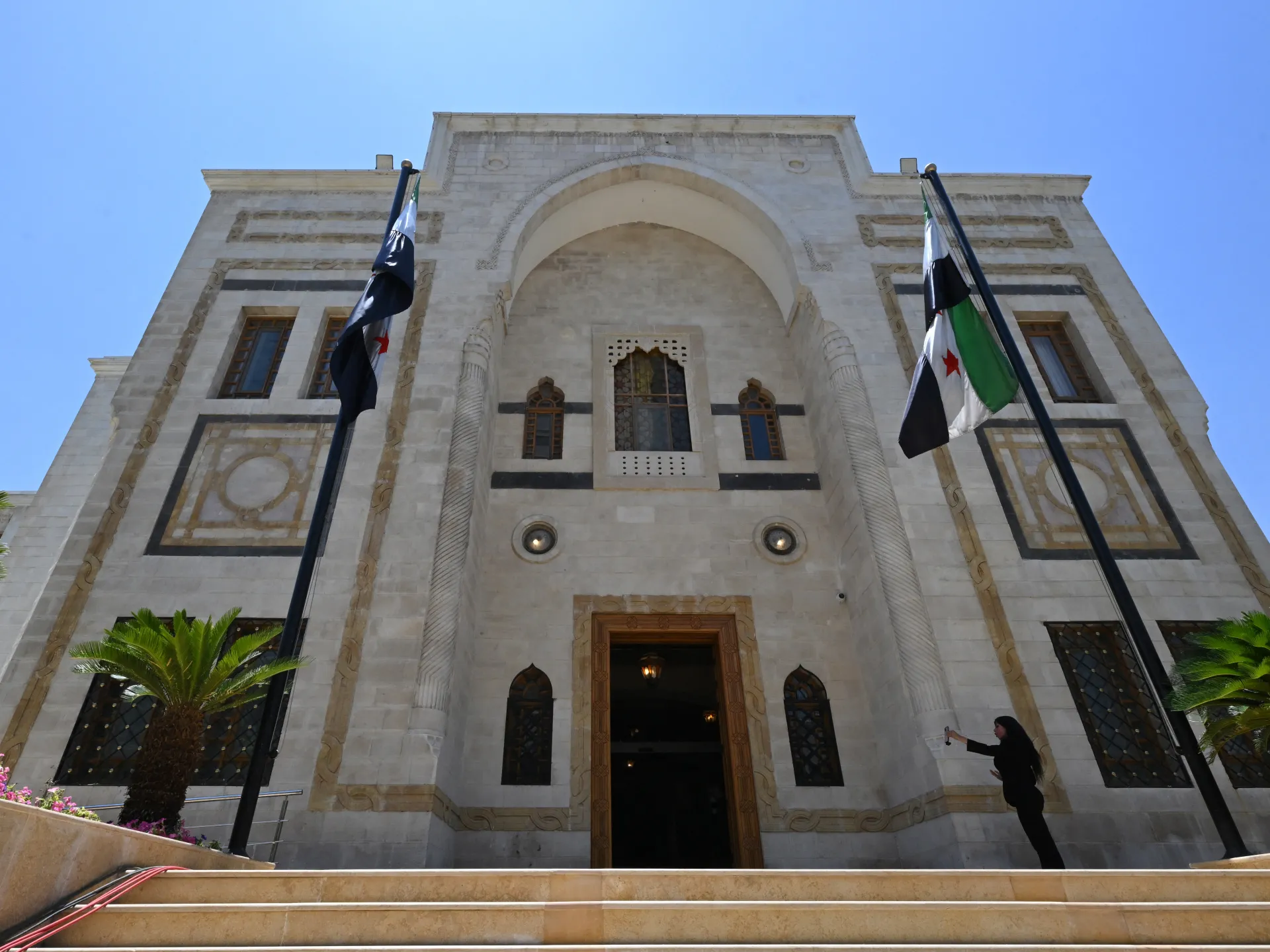
Syrian authorities have postponed the first meeting of the new transitional parliament, days after announcing the inaugural session had been scheduled for Monday.
“The convening of the first session of the people’s assembly has been postponed to a date to be determined later,” state television reported on Sunday, citing an electoral official and without specifying a reason.
Recommended Stories
list of 3 itemsend of list
Syria’s new authorities dissolved the country’s rubber-stamp legislature after toppling longtime ruler Bashar al-Assad in December 2024, following almost 14 years of civil war which killed about half a million people.
In March 2025, new President Ahmed al-Sharaa signed a temporary constitution that will be in force for a five-year transitional period.
In October, local committees appointed by the electoral commission, which was in turn appointed by al-Sharaa, began selecting two-thirds of the 210 members of the new parliament, with Sharaa to appoint the remaining third.
He appointed 70 members this week.
Druze-majority Suwayda province in the south has still not designated its members, after sectarian bloodshed there last year.
Electoral authorities have said the selection process would be held there when conditions are “appropriate”.
The selection process was held in formerly Kurdish-run areas of the north and northeast earlier this year after authorities in the capital Damascus assumed control there and signed a deal on integrating Kurdish institutions into the state.
The new parliament will have a 30-month term and work on a new elections law while preparing the ground for a popular vote, according to the head of the electoral committee, Mohammed Taha al-Ahmad.
Cape Verde’s football team is getting a hero’s welcome on its return home after a historic World Cup run, in which it became the smallest nation by population ever to reach the tournament’s knockout rounds.
But England do not have to remove direct play from their game entirely.
By managing the space and speed of the game, they can pick their moments to release the likes of Noni Madueke, Anthony Gordon, Marcus Rashford and Jude Bellingham.
If England do opt to play more slowly, they will also be hoping these ‘boring’ spells of play work to silence the Mexican home crowd.
The decision to pick a squad of similar profiles might be one of the more astute decisions Tuchel has made as England boss when it comes to this game too.
With a tactical plan in mind, making five substitutions that do not alter the dynamic of the game greatly, but instead reinforce the plan with freshness and energy as Mexico begin to tire could be the difference.
This could indeed be a match full of mini-games and picking moments in which to change things will be key.
Tuchel, as we’ve seen throughout his club career, and most recently against DR Congo, has a knack for getting mid-game tweaks right but the many variables of the game against Mexico make this one of his toughest challenges yet.
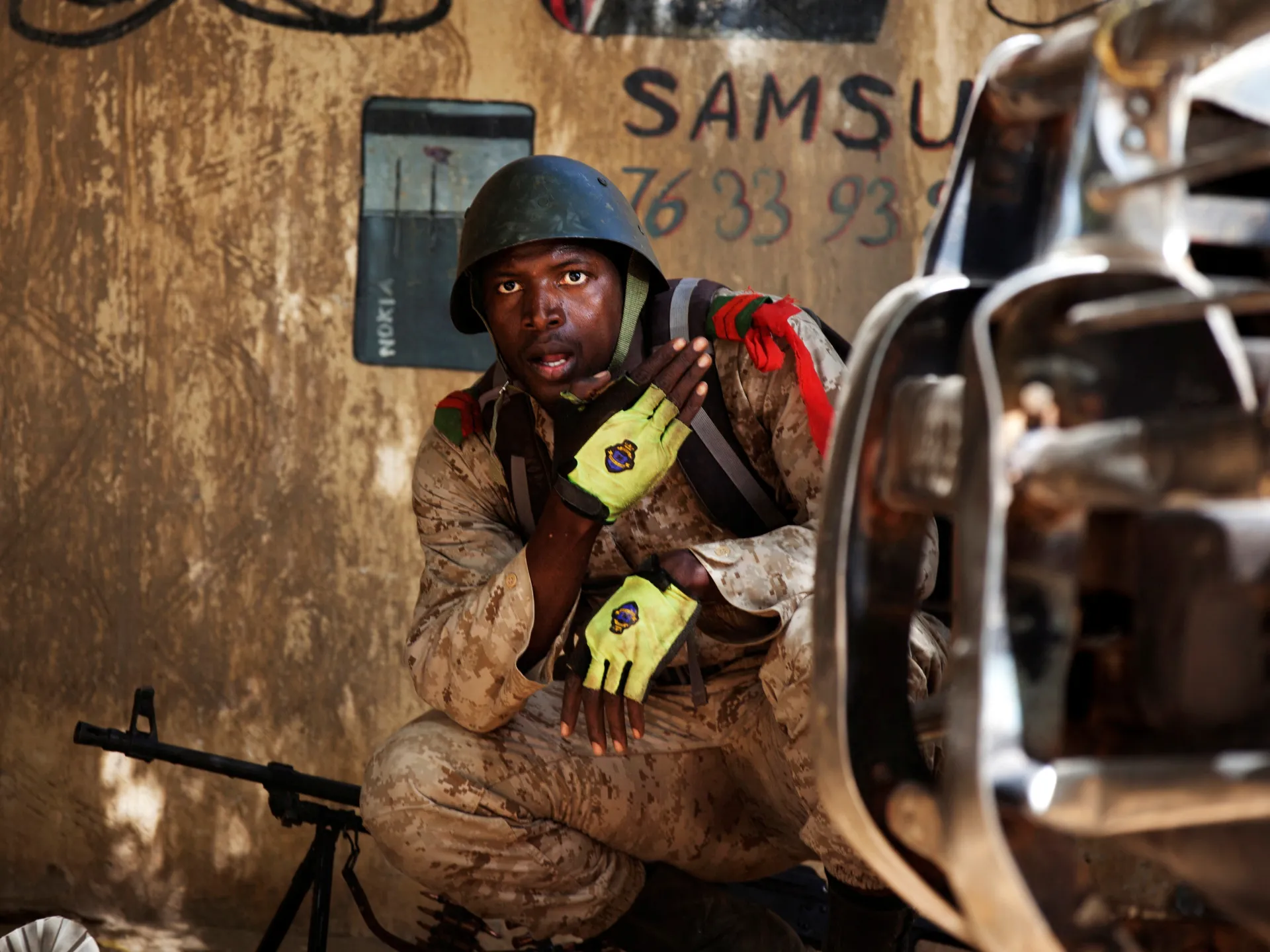
Armed groups in military-run Mali have launched renewed coordinated attacks in several towns across the country.
The assaults on Saturday targeted army positions, including a base used by its troops and Russian forces.
Recommended Stories
list of 3 itemsend of list
A separatist Tuareg-led group and a regional al-Qaeda affiliate claimed responsibility for the attacks, which took place more than two months after the capital, Bamako, and several other locations were targeted in a coordinated assault by the same groups.
Here’s what to know:
Where did the attacks take place?
In an initial statement, the Malian army confirmed attacks on five positions: in Aguelhok, Anefis and Gao in the north; Sevare in central Mali; and Kenieroba in the south.
The army later said the situation was “totally under control”, adding that 20 “terrorists” were killed in Sevare and six in Gao. One pro-government fighter was killed in Gao and four others were wounded, it said.
In a separate statement later on Saturday, the army said it had also repelled attacks in the central towns of Konna and Somadougou with the help of Africa Corps, a Russian-backed paramilitary group.
Videos posted on the Africa Corps’ Telegram channel on Sunday purported to show a drone attack targeting a rebel position in Anefis and a Russian soldier on top of a building at a base in Aguelhok. The footage could not be independently verified.
In Kenieroba, a major prison complex where members of Mali’s political opposition are held reportedly came under attack.
Who was behind the attacks?
A spokesperson for the Tuareg-dominated rebel group, the Azawad Liberation Front (FLA), told the Reuters news agency it was involved in the attacks.
The al-Qaeda-linked group Jama’at Nusrat al-Islam wal-Muslimin (JNIM) also claimed responsibility, saying in a statement it had attacked and taken control of at least seven positions held by the army or pro-government fighters. The claims could not be independently verified.
Who are these groups?
JNIM was formed in 2017 as a coalition between the Saharan branch of al-Qaeda in the Islamic Maghreb and Malian armed groups Ansar Dine, Katina Macina and al-Mourabitoun.
It is led by Iyad Ag Ghali, who founded Ansar Dine in 2012, and has fighters across the border areas of Mali, Niger and Burkina Faso.
JNIM’s main goal is to capture and control territory and to expel Western influences in its region of control. Some analysts suggested that JNIM may be seeking to control major cities and, ultimately, to govern the country as a whole.
The FLA was formed in 2024 from a coalition of separatist forces in northern Mali. Led by Alghabass Ag Intalla, it is engaging in the latest in a series of rebellions by the Tuareg fighting for self-determination and independence.
While often at odds, fighters from the two groups or their predecessors have also partnered on occasion to fight common enemies, namely Mali’s government and its allies.
In late April, they were behind a series of coordinated attacks that targeted locations across Mali and killed Defence Minister Sadio Camara.
What is Mali’s security situation?
Since gaining independence in 1960, Mali has experienced alternating cycles of political stability and instability, punctuated by rebellions, financial woes and military coups.
In 2012, ethnic Tuareg separatists, allied with fighters from an al-Qaeda offshoot, launched a rebellion that took control of the country’s north.
But the al-Qaeda-linked fighters swiftly pushed out the Tuareg rebels and seized key northern cities, triggering French military intervention in early 2013 at the request of the government.
In September 2013, Ibrahim Boubacar Keita was elected as Mali’s president. Under his government, the United Nations brokered a peace deal between the government and northern Tuareg groups fighting for an independent Azawad in 2015.
Keita was deposed in a military coup in August 2020 after months of mass protests over severe economic woes and the poor security situation.
In September that year, retired colonel and former Defence Minister Bah Ndaw was sworn in as interim president and coup leader Assimi Goita as vice president to lead a transitional government.
In May 2021, Goita seized power in a second coup and pledged to restore security. His government cut ties with Mali’s former colonial ruler, France, and expelled French forces and UN peacekeepers.
In December 2021, Goita invited the Russian mercenary group Wagner to support the military government in its fight against armed groups.
In June last year, Wagner said it would withdraw from Mali after more than three and a half years deployed there, but Russian mercenaries have remained in the country under the banner of the Africa Corps.
Alex Vines, the Africa programme director at the European Council on Foreign Relations, told Al Jazeera the recent attacks have squeezed the control of Malian authorities into “securitised enclaves and corridors”.
“This has not improved overall security,” he said, noting that armed groups in the country have been coordinating their military action rather than competing with each other.
“In this context, foreign military support has limited success,” he added.
Farage served as Reform’s honorary president between March 2021 and June 2024. On 3 June 2024, he confirmed he was returning as party leader and standing in the general election. He became Clacton MP in July 2024.
Under parliamentary rules, new MPs must declare financial interests and “registrable benefits” received in the 12 months before their election.
The guidelines say purely personal gifts or benefits do not need to be registered.
When he became an MP, Farage registered a £9,253 trip to Belgium in April 2024 donated by Cottrell, and later added a £15,276 donation from Cottrell for a US domestic flight he provided in December 2024.
A spokesman for Farage said: “It comes as no surprise that the Sunday Times has chosen to publish this baseless and contrived story, covering a period of time when Nigel Farage was not even an active politician let alone an elected one, given that the newspaper backed the Labour Party at the last general election.
“Contrary to the story’s tone, no parliamentary rules have been broken.”
A source said Reform paid for Farage’s security and staff after his return to politics.
The source also denied Farage received accommodation from Cottrell – saying the MP did not stay at the London property.
The Parliamentary Standards Commissioner, Daniel Greenberg, is currently investigating whether Farage broke the rules over the £5m gift from British cryptocurrency investor Christopher Harborne in early 2024.
Farage has said Harborne gave him the money to pay for his personal security, adding the gift was “purely private” and “wasn’t political in any sense at all”.
Lib Dem MP Josh Babarinde has asked Greenberg to “get to the bottom” of the latest allegations linked to Farage’s support from Cottrell.
Babarinde has also asked Greenberg to confirm whether he will investigate the claims as part of the existing inquiry or as a separate matter.
A Labour Party spokesperson said: “Nigel Farage and Reform are engulfed in a huge and growing scandal.
“These new allegations of secret payments from a wealthy convicted criminal are on top of the ongoing scandal of his secret £5m gift from a crypto billionaire.
“How much money has he been given, what did his donors get in return, and why has he tried to cover them up and avoid legitimate questions?”
Responding to Jenrick’s interview, Labour said Reform “can’t shrug this scandal off and hope it goes away”.
Europe’s defense transformation is not a spending problem that more money will solve, rather it’s a doctrinal crisis, and the gap between the warfare Europe has been preparing for and the warfare Ukraine has demonstrated reveals that the continent’s most urgent investment is not in platforms but in fundamentally rethinking how its armies plan, target, and fight.
The Wake-Up Call That Came From an Exercise Field in Estonia
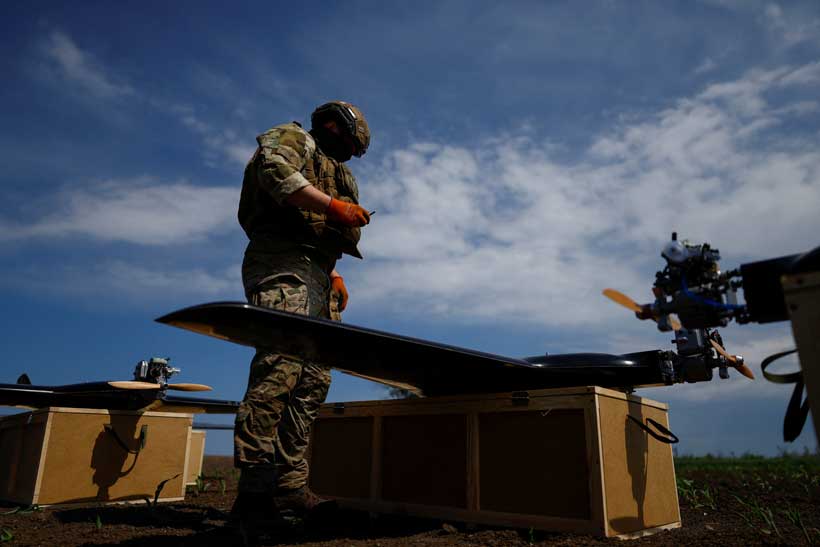
At Exercise Hedgehog 2025 in Estonia, roughly ten Ukrainian drone operators spent a day systematically destroying nearly twenty NATO armored vehicles in a simulated engagement. NATO forces tried to hide under tree lines. They parked armored vehicles in visible positions. They built command stations in exposed terrain. They did everything that Ukrainian soldiers have long since learned will get you killed. The Ukrainian operators, accustomed to battlefields where drone saturation is double what the exercise permitted, found it straightforward.
The exercise was designed to test readiness and interoperability. What it revealed instead was that NATO forces have not been forced by the realities of war to adapt the way Ukraine has. Movement patterns, command structures, and the basic assumptions about how to survive on a modern battlefield, all of it was calibrated for a threat environment that no longer exists. NATO’s deputy supreme allied commander in Europe, Air Chief Marshal Sir Johnny Stringer, said it plainly at a defense conference in London last week: “The threat we face is at 360 degrees.” The German army’s commander, Lieutenant General Christian Freuding, went further, saying that land warfare is “fundamentally changing” and that Europe must “fundamentally adapt how we will fight.” These are not politicians speaking. They are the senior military officials responsible for defending the continent, and they are saying, as clearly as their institutional language permits, that Europe is preparing for the wrong war.
To read the full analysis, please subscribe to our MD Briefing here
Stay ahead of the geopolitical week.
MD Briefing delivers expert analysis across five global fronts — the Indo-Pacific, energy, geoeconomics, European security, and the Middle East — every Monday morning. Free.
The online campaign stoking South Africa’s latest xenophobic backlash.
South Africa is experiencing an ugly wave of xenophobia driven by a coordinated digital campaign by anti-migrant groups.
As prejudiced rhetoric seeps into mainstream news coverage, a growing number of South African journalists are trying to figure out who’s really pulling the strings behind the movement.
Contributors: Qaanitah Hunter – Host, The Debrief Aimee-Noel Mbiyozo – Senior research consultant, Institute for Security Studies Haru Mutasa – Correspondent, Al Jazeera English Herman Wasserman – Department of Journalism, Stellenbosch University
On our radar
In Venezuela, a natural disaster has exposed the state’s failures and officials have imposed tight controls on journalists trying to cover the story.
Tariq Nafi looks at the government’s heavy-handed methods to control the narrative.
Governments around the world are trying to solve one of the defining parenting challenges of the digital age: what to do about teenagers and social media. The Listening Post‘s Meenakshi Ravi reports on the politics behind social media bans – whether governments are solving the right problem – and who should take responsibility for keeping young people safe online.
Featuring: Preston Byrne – Tech and free speech lawyer Daisy Greenwell – Cofounder, Smartphone Free Childhood Tama Leaver – Professor of internet studies, Curtin University Kate Sim – Director, Children’s Online Safety and Privacy Research Program
The power of the people is what makes the Azteca truly special.
Whether cheering on Mexico, home club sides Club America or Cruz Azul, or hosting neutral sides in the World Cup, the Azteca crowd is renowned for generating a ferocious soundtrack like nowhere else.
“It is next to impossible to communicate on the pitch because the Azteca is full of sound swirling all around you”, says Jason de Vos, one of the few men to have both played and coached against Mexico at the stadium, doing so with the Canadian national team.
“The Mexicans know they have an advantage because of the crowd and they try to swarm you on the pitch too.
“When you arrive the team bus drives under the stadium, down a ramp and then you walk to the dressing room.
“When you walk to the pitch you have to go through a very tight tunnel and you can hear a buzzing sound, like a swarm of bees.
“To get outside, you approach the pitch from below, going up a staircase, and when you crest the top and see the light, you realise that the buzzing is the people.
“It’s the vibration of the horns, the screaming, the jumping. It’s crazy
“But that’s exactly why you want to play football.”
Four wins to go. How can your team reach the final and win the World Cup 2026? Click here to find out.
Who: Brazil vs Norway What: FIFA World Cup 2026 – Round of 16 Where: New York New Jersey Stadium, East Rutherford, New Jersey, US When: Sunday, July 5, at 4pm (20:00 GMT) How to follow: We will have all the build-up on Al Jazeera Sport from 17:00 GMT before our live text commentary stream.
Recommended Stories
list of 3 itemsend of list
Two of the world’s most exciting forwards, Vinicius Jr and Erling Haaland, will light up Sunday evening in New Jersey when Brazil face Norway in a blockbuster round of 16 clash.
For all their dominance on the world stage, Brazil have historically struggled to find a way past Norway, and after four failed attempts, the Selecao will hope the fifth time is the charm.
Carlo Ancelotti’s talented side has its fair share of flaws, and having narrowly escaped elimination in the last 32 against Japan, they need an improved performance against Norway – one of the dark horses at this tournament.
Spearheaded by Haaland and Martin Odegaard, Norway arrive with bragging rights – they are one of only three countries Brazil have faced at a World Cup without registering at least one victory.
How did Brazil and Norway reach the round of 16?
Brazil finished at the top of Group C, with wins over Scotland and Haiti, and a draw with Morocco. They fought from a goal down to beat Japan 2-1 in stoppage time in the last 32.
Norway came second in Group I, winning against Iraq and Senegal and falling to France. They sealed a late 2-1 victory over Ivory Coast in the last 32 – the Scandinavian nation’s first World Cup knockout victory after previous exits to Italy in 1938 and 1998.
Can Haaland extend Norway’s dream run?
Be it for club or country, towering forward Haaland’s impact cannot be understated.
Of the 10 goals Norway have scored at the tournament, Haaland is responsible for half – numbers that are remarkable for a 25-year-old making his World Cup debut.
Come Sunday, Norway will need their 1.95-metre- (6.4ft)-tall, pony-tailed talisman to strike again if they are to reach the quarterfinals for the first time.
Brazil will be wary of Norway’s lethal striker Erling Haaland [Paul Ellis/AFP]
Norway could take inspiration from their 1998 World Cup side, which famously beat Brazil 2-1 in a group game. And they need not look further than their coach Stale Solbakken – a midfielder in that Norwegian squad – for words of advice.
“Brazil are favourites, of course they are, but we are hopeful that we will give them a match, and we are not playing the game for fun – we are playing to win the game and to reach the quarterfinals,” said Solbakken. “It’s possible, but it’s very difficult.”
The Norwegians will be wary of Brazil’s very own trump card Vinicius, whose four goals at the tournament have made him the team’s leading scorer and most influential player. Vinicius became the first Brazilian since Ronaldo and Rivaldo in 2002 to score in all three group stage matches at a World Cup. That was the last time Brazil lifted the trophy.
Brazil vs Norway prediction
The Opta supercomputer gives Brazil a 53.6 percent likelihood of winning in regulation time, while Norway’s chances of winning are 22.4 percent.
The model estimates a 24 percent probability of the game going to extra time.
Brazil vs Norway: Kickoff time, TV channel
Brazil: SBT, CazeTV (4pm, Brasilia Standard Time)
Norway: TV2, NRK (9pm, Central European Summer Time)
United Kingdom: ITV1, ITVX, STV, STV Player (8pm, British Summer Time)
United States: FOX, FOX One, Telemundo App, Telemundo Network, Peacock (4pm, Eastern Daylight Time)
To check the TV listings for your country, head to FIFA’s TV listing schedule here.
Norway fans do the traditional rowing celebration in the stands [Dylan Martinez/Reuters]
Who will the winner face in the quarterfinals?
The winner of the Brazil vs Norway match will face either Mexico or England in the quarterfinals in Miami on Saturday, July 11.
Brazil vs Norway: Head-to-head
Norway hold the rare distinction of never having lost to Brazil, with two wins and two draws from their four previous meetings, including a memorable 2-1 victory over Brazil in the group stage of the 1998 World Cup.
Brazil and Norway last met in a friendly in 2006, which ended 1-1.
More worryingly for Ancelotti, Brazil have been eliminated from each of their last six World Cup knockout ties against European opponents since beating Germany in the 2002 final.
Brazil vs Norway: Team news
Brazil’s Lucas Paqueta picked up a hamstring injury in the last game, while Raphinha, who also picked up the same issue in the second game, has resumed individual training and could make the bench.
Norway’s Julian Ryerson is out with a thigh injury.
Brazil’s Bruno Guimaraes has four assists at the World Cup – only Pele recorded more (six) for the five-time world champions at a World Cup [Annegret Hilse/Reuters]
A Native American lawyer confronts ICE as he channels generational resistance into a fight for justice in the US.
Chase Iron Eyes drops everything following Renee Good’s killing by ICE to join protests on the streets of Minneapolis. Chase, a resident of the Pine Ridge reservation, is a lawyer whose life and work are shaped by generations of Native American resistance.
With 3,000 federal agents deployed to the Minneapolis-Saint Paul area as part of Operation Metro Surge, Chase sees the impact of the crackdown for himself. When ICE begins targeting Native Americans in Minnesota, he works to move street-level resistance into the courtroom.
Chase, alongside other human rights lawyers, mounts a legal challenge and pursues class-action lawsuits against ICE and the Department of Homeland Security.
Native Americans Resisting ICE is a documentary film by Joi Lee and Ed Ou.
Garoua and Tiko, Cameroon – A year ago, Oumarou Sanda, mayor of Garoua 2 in northern Cameroon, raised a trophy above his head after his municipality was named Cameroon’s Citizenship Champion for its efforts to expand birth registration.
The recognition, awarded through UNICEF-supported initiatives in partnership with the Cameroonian government, marked months of work to address one of the country’s most persistent but often invisible child protection gaps: the absence of legal identity for thousands of children.
Under Cameroon’s civil status law, every child has the right to a birth certificate. Parents are expected to register births within 90 days at no cost. After that period, registration becomes more complex, and after one year, families must go through court procedures that are often costly, time-consuming, and difficult to navigate.
For many parents, that system remains out of reach.
“One of my eldest children was sent home years ago from school because we didn’t have his official papers,” says Aissatou Bouba, a mother of four living in Garoua 2.
That changed in 2024 when she brought her youngest child to a local health facility where staff registered the birth immediately after delivery, issuing the documents needed to establish his legal identity.
Her experience reflects a wider reality. According to Cameroon’s Ministry of Basic Education, more than 1.5 million children, about 30 percent of primary school pupils, are enrolled without birth certificates.
Without that documentation, the consequences often emerge later in life.
School children receiving birth certificates in Tiko, Cameroon [Lucrece Armande/Al Jazeera]
“If a child stays without a birth certificate, the child will not have admission into secondary school,” says Anna Enanga epse Itoe, head of the civil status bureau at the Tiko Council in Cameroon’s southwest region.
“It will be impossible to sit for public examinations. It will also be impossible to obtain a national identity card, which is needed to access many services,” she told Al Jazeera.
UNICEF estimates that, of the 560,000 births recorded in health facilities in 2023, only 43.77 percent were officially registered. The gap leaves many children exposed to risks that extend beyond education.
“Children without documentation are harder to trace, monitor, or protect,” says Alexis Mayang, a UNICEF child protection specialist based in Yaounde. “They can be moved across borders with fewer checks,” he told Al Jazeera.
He added that in conflict-affected areas, the lack of identification increases vulnerability to exploitation, including recruitment into armed groups.
A response to a protection gap
The push to address these gaps gained momentum after the first Mayors’ Forum on Birth Registration in April 2024, where local authorities signed a charter committing to strengthen civil registration systems in their municipalities.
Following the forum, UNICEF, working with the government and local partners, supported the rollout of the “My Name” campaign, aimed at identifying and registering children without legal documentation across Cameroon’s 360 councils and 14 cities.
Members of the Tiko Council team conduct a community sensitisation session for pregnant women at a local health centre to highlight the importance of early birth registration [Lucrece Armande _ Social Voices]
Since its launch, officials involved in the programme say more than 17,000 children have been registered.
Municipalities were assessed based on how effectively they improved registration systems, including setting up civil registration services within health facilities and identifying out-of-school children without documentation.
In Tiko, in the southwest, officials brought registration services closer to remote communities, working with traditional leaders to collect birth declarations from rural areas.
“In Tiko, people are coming every day to register their children and obtain birth certificates,” says Enanga. “We have issued documents to thousands of children.”
To manage demand, local chiefs played a central role in documenting births in hard-to-reach areas before forwarding records to council offices.
In Garoua 2, authorities took a different approach. Faced with delays caused by handwritten registers, the municipality shifted to digital civil status systems, allowing certificates to be issued within minutes.
Barriers that remain
Despite these gains, officials say significant challenges remain.
In many communities, birth registration is still not prioritised, with some parents only engaging with the system when children are denied access to schooling or barred from sitting national examinations.
Mayors from Cameroon’s top-performing municipalities, including Mayor Oumarou Sanda of Garoua 2, centre, are awarded for their exceptional efforts in deriving grassroots civil registration [Salomon Beguel/UNICEF]
Schools often become the first point of enforcement, particularly at primary level, where pupils without documentation are turned away from key assessments.
Deeper social barriers also remain. Child protection workers say that in some rural communities, harmful norms persist, including beliefs that girls do not require formal documentation or education. These practices contribute to undocumented children and increase the risk of early or forced marriage.
Officials and community workers say traditional and religious leaders are increasingly being engaged in awareness campaigns aimed at changing these perceptions and encouraging earlier registration of births.
Globally, UNICEF estimates that 166 million children under the age of five remain unregistered. In Cameroon, officials say closing that gap will depend not only on administrative reform, but also on shifting how communities define a child’s legal existence.
“I was happy knowing that my son could get educated without any hindrance,” Bouba told Al Jazeera.
On Thursday morning, a small group of advocates gathered outside the United States federal courthouse in San Diego, California.
One of them pointed to a poster of a young man in a US Navy uniform, three golden medals pinned to his chest.
“This is my brother, Benito Miranda Hernandez, US Navy veteran,” said James Smith, the founder of Black Deported Veterans of America.
Smith and the other advocates had organised the demonstration on behalf of Hernandez, who was miles away at that moment, stuck in an immigration detention facility.
Brought from Mexico to the US as a baby, Hernandez had completed three tours of duty with the US military during the Iraq war. His military service was meant to be his path to citizenship.
But now, Hernandez is among the immigrant veterans fighting deportation under US President Donald Trump.
“These men and women were promised that they were going to get their citizenship if they served,” Smith said. “Help this brother come home.”
Trump has pledged to prioritise immigrants with criminal records in his push for mass deportation.
But advocates for US military members argue that veterans are particularly vulnerable, given their over-representation in prisons and jails. The majority have reported suffering from mental health problems after their service.
Hernandez, for instance, said he struggled to reintegrate into civilian life after leaving the military. But on June 14, he had finally completed his years-long sentence for a drug conviction.
As he waited for his mother, Maria Miranda, to pick him up, agents from US Immigration and Customs Enforcement (ICE) detained him.
Only afterwards did Miranda and her other son arrive. They spent hours that day looking for him, not knowing where he had gone.
“He was doing things right,” Miranda told Al Jazeera in Spanish. “He had so many hopes, so many dreams.”
Benito Miranda Hernandez stands outside the reentry programme where he recently worked, before he was detained by immigration officials in June [Anna Oakes/Al Jazeera]
Hernandez has since been transferred to the Otay Mesa Detention Center in San Diego. He faces deportation, despite having received his green card for permanent residency earlier this year. He previously spoke to Al Jazeera about his experiences for an article published in April.
Hernandez’s detention is part of a trend under the Trump administration.
While the exact number of deported veterans is impossible to pin down – ICE has long failed to collect the veteran status of the people it detains, as is required – several advocates told Al Jazeera that they have been witnessing a rise in the deportations of US veterans during Trump’s second term.
The New York Times reported in March that at least 34 veterans have been placed in deportation proceedings in the last year.
Some cases have received media attention. But advocates say other immigrant veterans have avoided the spotlight, fearing it may have a negative impact on their immigration cases.
“As the ICE raids continue and revamp across the country, there’s going to be people that are veterans that have not become US citizens that unfortunately will end up falling through the cracks,” said Robert Vivar, cofounder of the Tijuana-based Unified US Deported Veterans Resource Center.
Veterans, like other immigrants across the country, have been detained while pursuing the mandatory steps in their immigration process, according to Danitza James, the president of Repatriate our Patriots, an advocacy group.
They are often flagged for having outstanding warrants or criminal convictions that have not been vacated. James said she is in contact with about six veterans who had been detained by ICE in 2026 alone.
“Our government, they don’t place any value in the service that our immigrants have,” James, who is herself a veteran and naturalised citizen, told Al Jazeera. “They honestly see us as disposable.”
Danitza James, a former US military member, has led a push to repatriate deported veterans [Alejandro Cossio/Al Jazeera]
For decades, the US military has recruited immigrants to enlist in its wars abroad to help address staffing shortages.
Recruiters often tell immigrant enlisters that military service offers a shortcut to naturalised citizenship.
In theory, it should. But while deployed, many immigrant soldiers, like Hernandez, have reported delays in the naturalisation process.
By the time Hernandez was called for his citizenship interview in 2006, two years had passed since he finished his last deployment. He had a criminal conviction by that point – and his citizenship case was denied.
The failure to protect immigrant veterans is representative of the government’s larger failures to reckon with its military policies, according to advocates like Smith.
“The United States government is failing to take accountability for what they’ve created,” Smith told Al Jazeera. “You bring us in and strip us of part of our humanity so that we can kill without repercussions.”
“Then, when you get out, there is no process that gets you ready to be in the civilian world.”
Several bills to protect immigrant veterans are currently under consideration in Congress. But recruiters continue to target immigrant communities with the promise of expedited citizenship.
The next steps for Hernandez are not yet clear. At Thursday’s rally, a lawyer with a local immigration nonprofit told Smith and other advocates that the group may be interested in helping with Hernandez’s case.
In the meantime, Hernandez’s mother has been trying to keep his spirits up.
Miranda takes his calls from the ICE detention centre and sees him during the facility’s visiting hours on Saturdays. But the two-hour drive from Anaheim to San Diego is difficult for her health.
“On Saturday, when I saw him, he was very, very depressed,” Miranda told Al Jazeera.
“He said, ‘I don’t want to cause you any more problems. I don’t want to upset you any more, Mom. I’m doing things right. I’m praying for myself,'” Miranda recalled, in tears.
“They clipped the wings of a bird, and all the hopes he had. They threw them in the trash.”
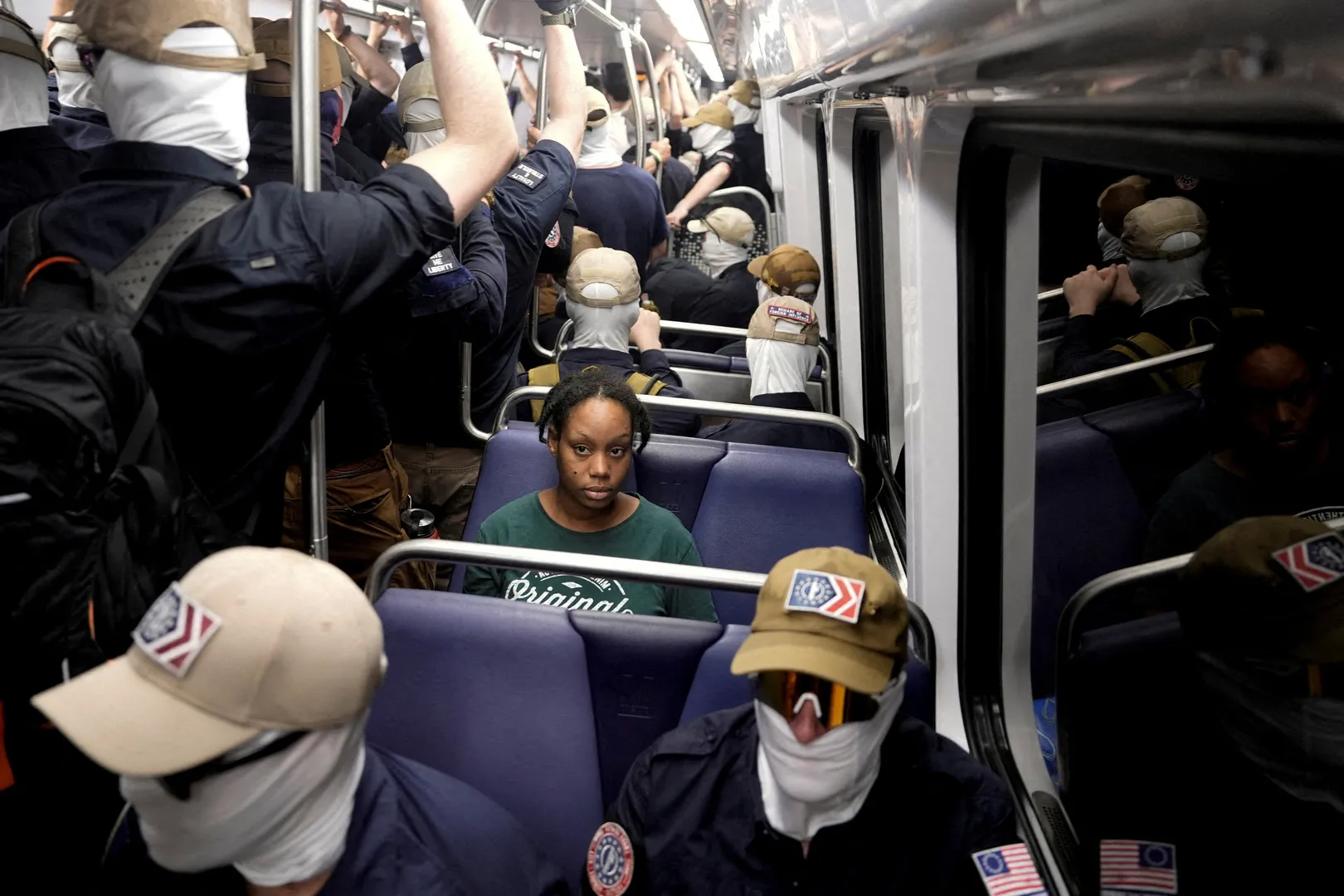
Hundreds of masked white nationalists marched on Washington DC waving Confederate flags and chanting anti-immigrant slogans on the 250th anniversary of the founding of the United States.
Weekly insights and analysis on the latest developments in military technology, strategy, and foreign policy.
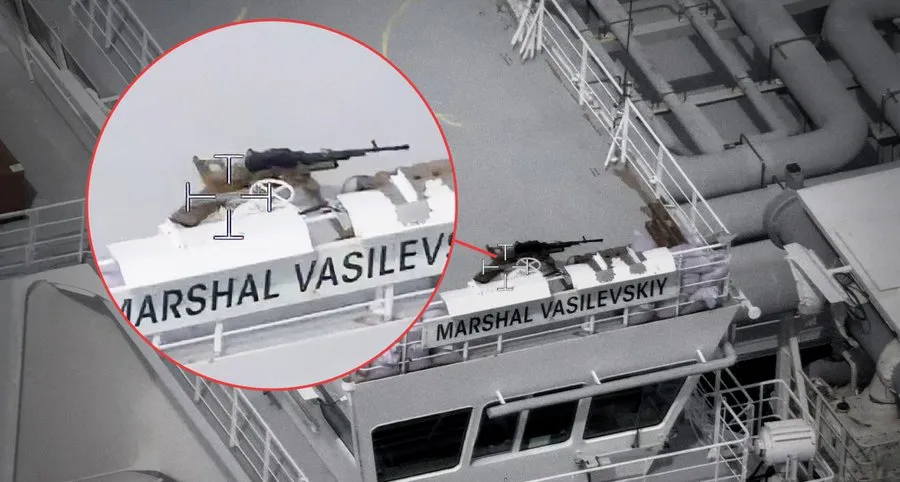
One of Russia’s commercially flagged vessels in the Baltic has appeared armed with heavy machine guns, and it isn’t just any cargo hauler. The weapons fit is likely intended to provide close-in protection against naval drone attacks but is also evidence of increasingly bold measures taken by Moscow to ensure that military bases in its strategically important Kaliningrad exclave continue to be supported. After all, the ship in question, the Marshal Vasilevskiy, is a highly strategic one — Russia’s only floating storage and regasification vessel — that plays a key role in supporting Kaliningrad.
This comes at the same time that Russia ramps up efforts to protect its notorious ‘shadow fleet,’ used to circumvent Western sanctions on oil exports, despite efforts to interdict it.
Evidence of the armed tanker development was brought to light in an exclusive report from Holger Roonemaa, an investigative journalist working for Delfi Estonia, an Estonia-based news website.
Roonemaa secured the release of imagery from the Estonian Border Guard showing the Marshal Vasilevskiy operating in the Baltic Sea last month, with machine gun positions on either side of the deck above the bridge.
A close-up view of one of the heavy machine guns on the bridge of the Marshal Vasilevskiy. PPA/Delfi Estonia, with permission
The Marshal Vasilevskiy, a 945-foot liquefied natural gas (LNG) tanker of 118,000 gross tonnage, was spotted by an Estonian Border Guard surveillance aircraft as it was sailing past Estonia’s western islands toward the Russian port of Bolshoi Bor in the Gulf of Finland.
The sandbagged gun positions were armed with 12.7mm Kord heavy machine guns, a belt-fed weapon that is used by infantry, as well as being mounted on vehicles and ships.
KORD Heavy Machine Gun
The Marshal Vasilevskiy is not a part of the shadow fleet, but it has been subject to sanctions. Moreover, this appears to be the first direct evidence of Russia installing weapons on a civilian ship in the Baltic region.
The vessel is owned by the Gazprom company and regularly supplies Kaliningrad with natural gas, with four such voyages identified since last August.
A rear view of the Marshal Vasilevskiy. PPA/Delfi Estonia, with permission
Almost certainly, the guns on the Marshal Vasilevskiy are intended to help defend against Ukrainian drone attacks.
The Kord fires at a rate of 600-650 rounds per minute and has an effective range of around 2,000 yards.
Earlier this month, Ukraine used aerial drones to attack the prestigious Russian Navy base at Kronstadt, near St. Petersburg, in what appears to have been the first strike of its kind against the Baltic Fleet.
KRONSTADT (St. Petersburg), June 3. Birds of the @1usc_army, @usf_army hunted down and set ablaze the corvette Boikiy, a guided missile weapons carrier.
06:35, 03.06.26. Veleshchynskyi Dry Dock, Kronstadt (St. Petersburg) – the cradle of the russian Navy.
— 414 Magyar’s Birds (@414magyarbirds) June 3, 2026
By targeting Kronstadt, Ukraine signaled the opening up of a new front in its drone war with Russia, namely against the Baltic Fleet while it is in port.
Previously, Ukraine’s naval campaign had focused overwhelmingly on the Russian Black Sea Fleet. Many successful attacks have been recorded against Black Sea Fleet vessels and facilities, forcing the general evacuation of Russian naval assets from occupied Crimea and to bases in Russia proper. Ukrainian attacks on Russian-linked shipping have also extended, to a more limited extent, into the Mediterranean.
These attacks have also involved a growing and increasingly advanced array of uncrewed surface vessels (USVs, or ‘drone boats’) as well as uncrewed underwater vessels (UUVs).
A video published online shows a Ukrainian FP-1 drone flying just a few meters above the water in the Gulf of Finland during the morning attack on Saint Petersburg. pic.twitter.com/ZTtGb71zdT
While Ukraine, as far as is known, has not launched any USV or UUV attacks in the Baltic, it would certainly be within its capabilities to do so.
At the same time, Russia has no doubt also considered the possibility of an Operation Spiderweb-type attack in the Baltic, in which short-range drones could be launched covertly, in mass, from locations much closer to their targets.
On June 1, the Security Service of Ukraine carried out a brilliant operation— on enemy territory, targeting only military objectives, specifically the equipment used to strike Ukraine. Russia suffered significant losses.
In the same way that Operation Spiderweb used commercial trucks as covert launch platforms for one-way aerial attack drones, any suitable vessel could be used in the same way by Ukraine in the Baltic, whether to launch aerial drones, USVs, or UUVs.
In this context, the Marshal Vasilevskiy would be a particularly prized tanker. It is currently Russia’s only floating storage and regasification vessel, a ship that takes on board super-cooled LNG and then converts it into gas that is then fed into pipelines, in this case, in Kaliningrad.
As well as countering potential drone attacks, putting guns on the Marshal Vasilevskiy sends a signal to NATO forces not to interfere with it. Warning shots could be fired to send a message to boarding parties or helicopters. Russia’s willingness to use warning shots was demonstrated in the English Channel earlier this month. With the Kord gun, the vessel could bring down a helicopter with ease, forcing a boarding force to kinetically attack the ship before attempting boarding.
Typically, the crew of a vessel such as the Marshal Vasilevskiy would not be trained to operate heavy machine guns. This raises the likelihood that the ship’s crew includes members of the Russian military or, more likely, the Federal Security Service (FSB), Russia’s principal security agency. It is not inconceivable that man-portable air defense systems (MANPADS) could also be stowed below decks to defend against an aerial drone attack.
The development comes as Russia takes increasingly forceful measures to protect the vessels of its shadow fleet. These provide Russia with a critical lifeline, allowing oil to be sold and funds generated to continue the country’s war against Ukraine. Both China and India regularly accept such deliveries.
Over the past year, European authorities have intercepted shadow fleet tankers on several occasions, typically on the grounds of flying a false flag or for being suspected of damaging undersea cables.
The Russian shadow fleet vessel Smyrtos is boarded by Royal Marines from 42 Commando and U.K. law enforcement officers on June 14. Crown Copyright
There have been previous reports indicating that shadow-fleet oil tankers regularly include former mercenaries and soldiers among their crews.
Holger Roonemaa has helped establish that almost half of the “passengers” listed as going aboard the Marshal Vasilevskiy also have backgrounds in the Russian military, the National Guard, and/or the FSB.
At the same time, Russian Navy warships are increasingly used for escort, monitoring, and security missions for shadow fleet tankers as they transit the Baltic Sea carrying sanctioned Russian oil to markets prepared to bypass Western restrictions. You can read more about this here.
Returning to this vessel, the appearance of heavy machine guns on it is significant because it illustrates Russia’s militarization of civilian shipping supporting critical operations. There are many historical precedents of merchant vessels being armed during wartime, but it remains unusual to see a commercially flagged tanker openly carrying heavy machine guns in this region. In areas with piracy, it is not uncommon for security crews on vessels to be equipped with small arms, but this is a different kind of weapon, and the ship is operating in waters with no piracy risk attached.
The Marshal Vasilevskiy photographed in port in 2019. Kees Torn
In practical terms, a pair of Kord machine guns could be effective against small drones or boats at close range, but would offer little protection against larger, coordinated attacks, let alone modern anti-ship missiles.
With that in mind, it’s possible Russia might further boost the weapons fit of the Marshal Vasilevskiy to provide a more comprehensive defense. After all, this vessel is a critical asset, due to its unique capabilities in the Russian merchant fleet, and its special role supporting Kaliningrad. This makes it a strategic vulnerability that demands protection. If lost, it could have an asymmetric impact, threatening the ability to keep military assets in the exclave operational.
More broadly, this is evidence of Russia’s growing concern that logistics vessels, including civilian ones supporting critical infrastructure, could become targets in the Baltic region, too, as the war increasingly extends beyond traditional battlefields and further from Ukraine.
Weekly insights and analysis on the latest developments in military technology, strategy, and foreign policy.
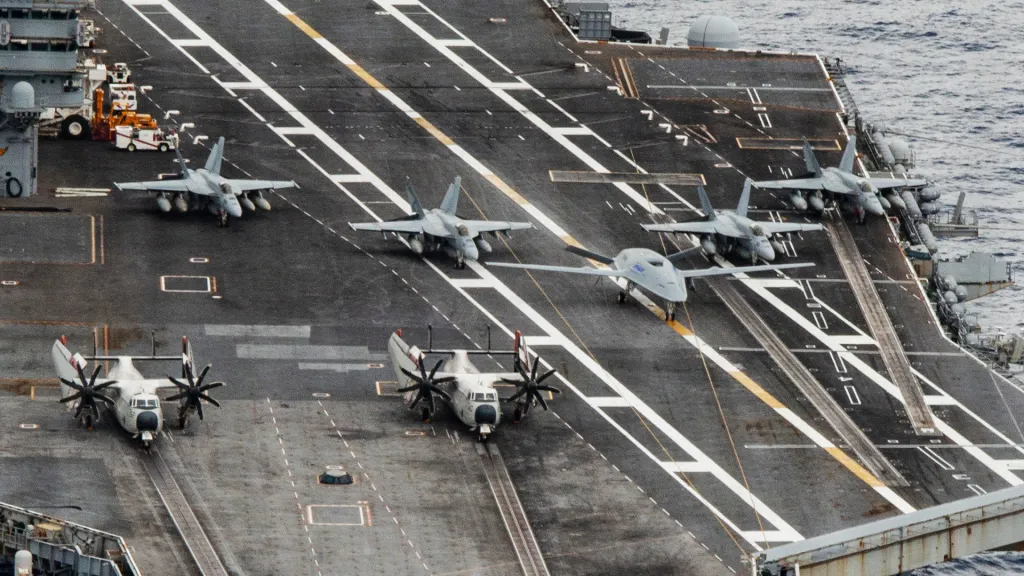
The U.S. Navy has confirmed to TWZ that the MQ-25 Stingray demonstrator drone, also known as T-1, is embarked on the supercarrier USS Nimitz. Pictures of Nimitz with the uncrewed aircraft on its deck had prompted questions about whether the initial production representative MQ-25, which made its maiden flight in April, had now gone aboard a carrier for the first time. We now know that is not the case. Regardless, the images of T-1 aboard Nimitz still underscore just how big the Navy’s first advanced carrier-based drone actually is, especially when placed next to other aircraft in the air wings. Production MQ-25s will be an important and imposing presence when they enter operational service, something the service hopes will finally start next year.
“We do indeed have a Boeing-owned T-1 prototype currently onboard,” a Navy spokesperson told TWZ today when asked about the drone seen on Nimitz‘s deck.
A view of T-1 and other aircraft on the deck of USS Nimitz. USN/Seaman Johnathan McCune
The spokesperson directed us to contact Naval Air Systems Command (NAVAIR) for more information about the current status of the MQ-25 program. T-1 has been flying since 2019 and has taken part in a slew of testing in support of the development of the Stingray in the air and on the ground. This also includes deck handling testing aboard the Nimitz class carrier USS George H.W. Bush in December 2021, something we will come back to later on. T-1 has never taken off from or landed aboard a Navy carrier, and would have had to be transported aboard Nimitz.
Another view of Nimitz, with the T-1 MQ-25 demonstrator and other aircraft on its deck, taking part in a group sail photo op as part of Fleet Exercise 250 on June 25, 2026. USN
“To honor the United States’ 250th anniversary, the MQ-25A T1 prototype is aboard the USS Nimitz, offering a glimpse of the Navy’s carrier air wing of the future,” Boeing has now also written in a post on X. “The special ‘Boeing Backs America’ mark highlights our support for U.S. aviation.”
The USS Nimitz has been sailing in the Atlantic Ocean as part of Fleet Exercise 250 (FLEETEX 250). This is a large, multi-national event that is running concurrently with several celebrations marking the 250th anniversary of the United States. In addition to the United States, Belgium, Brazil, Canada, Cameroon, Côte d’Ivoire, Cyprus, Denmark, France, Germany, Mexico, Morocco, the Netherlands, Norway, Peru, Senegal, Spain, Turkey, and the United Kingdom are also taking part, according to the Navy. As part of FLEETEX 250 activities last week, Nimitz had taken the lead in a group sail photo exercise that included 25 other naval vessels from 13 of the participating countries.
A full view of the ships participating in the FLEETEX 250 group sail photo op on June 25, 2026. USN
“USS Nimitz is underway taking part in Fleet Exercise (FLEETEX) 250 alongside 25 other warships, multi-national aircraft, and their crews, conducting a series of structured training events at-sea,” a Navy spokesperson had also told TWZ last week in response to queries about that ship after it was spotted leaving Mayport, Florida, on June 25. “Following FLEETEX, we are scheduled to take part in another major event celebrating our nation’s 250th birthday.”
The T-1 demonstrator was lashed to the carrier’s deck for the pictures, along with four F/A-18E Super Hornet fighters and two C-2A Greyhound carrier onboard delivery aircraft. The drone notably has new “250” markings written in blue on both sides of the fuselage.
A picture offering a look at the current markings on T-1. US Navy via BoeingAnother view of T-1’s new markings. USN
As noted, T-1’s size stands out when parked next to the F/A-18Es, which are themselves not small aircraft. The production MQ-25 has a wingspan of 75 feet, according to Boeing. With its wings folded, the drone is still 31.3 feet across, as well as 51 feet long. For comparison, the Super Hornet’s wingspan is nearly 45 feet and it is just over 60 feet long, per the Navy.
T-1 looks large even when contrasted with the C-2As, at least with their wings folded. With its wings extended, the Greyhound is 80 feet, seven inches from tip to tip, according to the Navy. It is also 56 feet, 10 inches in length.
A close-up view of T-1 on Nimitz’s deck offering more of a visual comparison to the F/A-18Es parked alongside, as well as the C-2A at bottom left. USN
All of this underscores the amount of work the Navy will have to do to get production MQ-25s ready for routine operational use. As we wrote roughly a year ago, when the start of ground testing of the production representative Stingray was announced:
The Stingrays will also have to be woven into the existing cadence of flight deck operations, including just figuring out how to move them around amid the hustle and bustle of other activity. Carrier decks are very constrained environments physically, and present very different conditions to operate in compared to bases on land. This is true even for crewed aircraft operations, where individuals onboard can provide additional situational awareness. A wearable glove-like system that personnel could use for deck handling was notably used during testing of the X-47B. A different kind of portable control device has been used in testing of the T-1 MQ-25 demonstrator in the past, as well. The video released today does not appear to offer any major new insights into how the Navy plans to maneuver the Stingray around on carrier decks.
T-1 seen during deck handling testing aboard the USS George H.W. Bush. USN
This is on top of more general flight testing, including demonstrating that the drones can safely take off from and land on Navy carriers, as well as integration with the control systems on those ships. The MQ-25 will bring new tactics, techniques, and procedures to the service’s carrier air wings, as well as open the door to further operational developments.
Right now, the MQ-25’s principal mission will be extending the reach of other aircraft in the carrier air wing. This is a critical capability for the Navy as adversary anti-access and area denial bubbles, especially ones that China’s People’s Liberation Army (PLA) has established and continues to expand, threaten to push carriers out of reach of target areas.
By extension, the Stingray will also eliminate the need to use crewed F/A-18F Super Hornets in the tanker role, freeing them up for other missions and reducing wear and tear on those airframes.
The drones will also come with a built-in secondary intelligence, surveillance, and reconnaissance (ISR) capability, thanks primarily to a sensor turret under the nose. The size of the MQ-25, its extreme range potential, and other attributes of the design could well lead it to be adapted to other roles in the future, such as a long-range strike platform, as TWZ has previously explored in detail.
A look at T-1 in flight from below. Boeing
Showcasing the T-1 during FLEETEX 250 does highlight the Stingray program and its importance to the Navy. The effort has faced significant delays and cost growth in recent years, with the original goal being for the MQ-25 to have reached initial operational capability (IOC) in 2024. As noted, the first production representative example only flew in April, despite a major push by the Navy and Boeing to hit that milestone before the end of 2025. When that drone might make its first appearance on a carrier deck remains to be seen, but the Navy is now aiming to reach IOC sometime next year.
As an aside, carrying T-1 for display during FLEETEX 250 and associated events may be the extent to which Nimitz ever embarks any MQ-25s. The Navy has extended the carrier’s service life due to a number of factors, but only into March of next year. The USS George H.W. Bush received a first-of-its-kind drone control center in 2024. The Navy subsequently moved to install that equipment on the USS Carl Vinson, USS Theodore Roosevelt, and USS Ronald Reagan, creating an initial group of Nimitz class carriers that will be able to operate the Stingrays.
USN
The Navy also sees the MQ-25 as a ‘pathfinder’ to future uncrewed additions to its carrier air wings. This is set to include carrier-based Collaborative Combat Aircraft (CCA) drones, an effort that is still very much in its infancy. Navy officials have talked in the past about a goal to see the makeup of future carrier air wings be 60 percent or more uncrewed.
In the meantime, T-1’s latest appearance on the deck of the USS Nimitz has already underscored the big changes coming to Navy carrier air wings, both figuratively and literally.
In many ways, Saturday was a typical July 4 holiday in the United States.
The country marked the anniversary of its Declaration of Independence with hotdog-eating contests, parades, fireworks and baseball games.
But this Independence Day was different, not least because it marked the country’s semiquincentennial: the 250th year since the US’s founding.
It also was one of the most politically charged Independence Day celebrations in recent memory.
President Donald Trump is expected to speak this evening from the National Mall in Washington, DC, right before what has been billed as the “world’s largest fireworks display”.
More than 850,000 fireworks are expected to launch from barges in the Potomac River, lighting up the sky above the capital.
But while Independence Day festivities have long been billed as non-partisan events, Trump has pledged to make the night’s celebration “the most spectacular TRUMP RALLY of them all”.
The event comes as Trump’s Republican Party seeks to defend its control of Congress in November’s midterm elections, with a heated primary season already under way.
Trump’s involvement in the semiquincentennial has long been controversial.
On January 29, 2025 — just nine days into his second term as president — Trump issued an executive order establishing a White House task force to oversee celebrations for the 250th anniversary. Trump named himself its chair.
That task force would eventually set the groundwork for Freedom 250, a public-private partnership that organised some of the biggest events of the semiquincentennial, including the Great American State Fair on the National Mall.
But Freedom 250 was accused of funnelling resources away from America250, a congressionally approved panel that had likewise been charged with planning semiquincentennial celebrations since its founding in 2016.
The existence of the two groups has also spurred confusion. In late May, for instance, a suite of performers dropped out of the Great American State Fair, alleging they had been misled about its affiliation with Trump.
Before Saturday’s events, Democrats in the House of Representatives released a report (PDF) accusing Trump of using Freedom 250 for political purposes, including by awarding contracts to Trump allies.
It also alleges that Freedom 250 has been “operating outside the transparency and accountability requirements” Congress imposes on such celebrations — and that it may even have committed wire fraud by redirecting “unsuspecting donors” away from America250 and towards its own programmes.
“Under President Donald Trump, this anniversary has been hijacked and perverted into a hotbed of corruption and self-enrichment,” the report reads.
But speaking at a naval parade in New York City on Saturday, Vice President JD Vance brushed aside the criticisms. He called on revellers to reject the “small but loud voices” that “speak obsessively” of the US’s “imperfections”.
“What I’d ask you to do, my fellow Americans, on our 250th birthday, is to reject the two-dimensional view of your fellow citizens and reject the two-dimensional view of your country,” he said.
“Reject that America is a place for zero-sum thinking because it is not. Our history is one of people carving a great civilisation out of the wilderness. Reject the view of your nation that sees only its sins but not its grace and its greatness.”















![Members of the Tiko Council team conduct a community sensitization session for pregnant women at a local health center to highlight the importance of early birth registration [Lucrece Armande _ Social Voices]](https://i0.wp.com/www.aljazeera.com/wp-content/uploads/2026/06/Members-of-the-Tiko-Council-team-conduct-a-community-sensitization-session-for-pregnant-women-at-a-local-health-center-to-highlight-the-importance-of-early-birth-registration-Lucrece-Armande-_-Social-Voices-1782791789.jpg?w=640&ssl=1)
![Mayors from Cameroon's top-performing municipalities, including Mayor Oumarou Sanda of Garoua 2 (center), are awarded for their exceptional efforts in deriving grassroots civil registration [Salomon Beguel _ UNICEF]](https://i0.wp.com/www.aljazeera.com/wp-content/uploads/2026/06/Mayors-from-Cameroons-top-performing-municipalities-including-Mayor-Oumarou-Sanda-of-Garoua-2-center-are-awarded-for-their-exceptional-efforts-in-deriving-grassroots-civil-registration-Salomon-Beguel-_-UNICEF-1782791781.jpg?w=640&ssl=1)