Stay informed and up-to-date with the latest news from around the world. Our comprehensive news coverage brings you the most relevant and impactful stories in politics, business, technology, entertainment, and more.
Job growth in the United States slowed in September, falling short of economists’ expectations as the unemployment rate rose in the final jobs report before the consequential midterm elections.
The US economy added 29,000 jobs in September, according to the Labor Department’s report released on Friday, far below economists’ expectations. Dow Jones had forecast 84,000 jobs, while economists polled by Reuters said they expected 90,000 job additions.
Recommended Stories
list of 3 itemsend of list
The unemployment rate also rose by 0.1 percentage point, from 4.1 percent to 4.2 percent.
The healthcare sector led the gains, accounting for the majority of new jobs. The industry added 17,000 jobs, marking a slowdown from an average of 33,000 jobs per month over the past year. Construction added 11,000 jobs, while manufacturing added 9,000.
Financial activities, which include sectors such as commercial banking and insurance, shed 7,000 jobs.
Most other sectors were largely unchanged, including retail, oil and gas extraction, and leisure and hospitality.
“Today’s disappointing report shows the labour market is grinding to a halt, marked by slow hiring and declining real wages that leave workers with very little leverage,” Kyle Moore, chief economist at the think tank The Century Foundation, said in remarks provided to Al Jazeera.
Previous jobs reports were also revised downward. July was revised from an initial gain of 21,000 jobs to a loss of 10,000 jobs. August was revised down by 29,000 jobs, from 162,000 to 133,000.
Wages grew by 3 percent, marking the slowest annual wage increase in five years.
Friday’s jobs report caps a week of weakening economic data before the consequential midterm election on November 3.
According to an AP-NORC poll released on Thursday, 61 percent of Americans polled said the US economy is worse off now than when Trump took office in January 2025.
“When businesses are barely hiring and raises aren’t keeping up with rising prices, it’s a stalled economy – and working families are stuck in it,” Breyon Williams, chief economist for Groundwork Collaborative, an economic policy think tank, said in a statement.
Trump has been trying to change the narrative on the slumping economy. On Monday, he said in a Truth Social post that “The United States has the BEST Employment Numbers in HISTORY.”
Stalling growth
On Tuesday, the US Labor Department released the Job Openings and Labor Turnover Survey, or JOLTS report, which showed little change, suggesting what economists call a low-hire, low-fire environment. That means those who have jobs are generally not leaving for new ones, while employers are maintaining the status quo rather than expanding.
On the other hand, ADP’s private payroll report, released on Wednesday, showed that 90,000 jobs were created across the private sector. The sheer number of layoffs fell, too, according to Challenger, Gray & Christmas. The report, released Thursday, showed that employers cut more than 43,000 jobs in September, marking an 18 percent decline in layoffs from August.
Friday’s jobs report comes before the Federal Reserve’s final policy decision before the midterm election. During its two-day policy meeting on October 27-28, the central bank will decide whether to raise, cut or maintain interest rates.
The odds increasingly suggest the Fed will hold rates steady in the 3.75-4.00 percent range, according to CME FedWatch, a tool that tracks the likelihood of monetary policy decisions. The FedWatch tool indicates there is currently a 77.3 percent chance that rates will hold steady, up from 35.8 percent this time last week.
US markets are trending upward on the heels of the report. The tech-heavy Nasdaq is up 1.5 percent, the Dow Jones Industrial Average is up 0.6 percent and the S&P 500 is up 1.1 percent in midday trading.
The price of gold, which is largely considered a safe investment during times of economic uncertainty, rose 1.1 percent to $4,223.49 amid the jobs report.
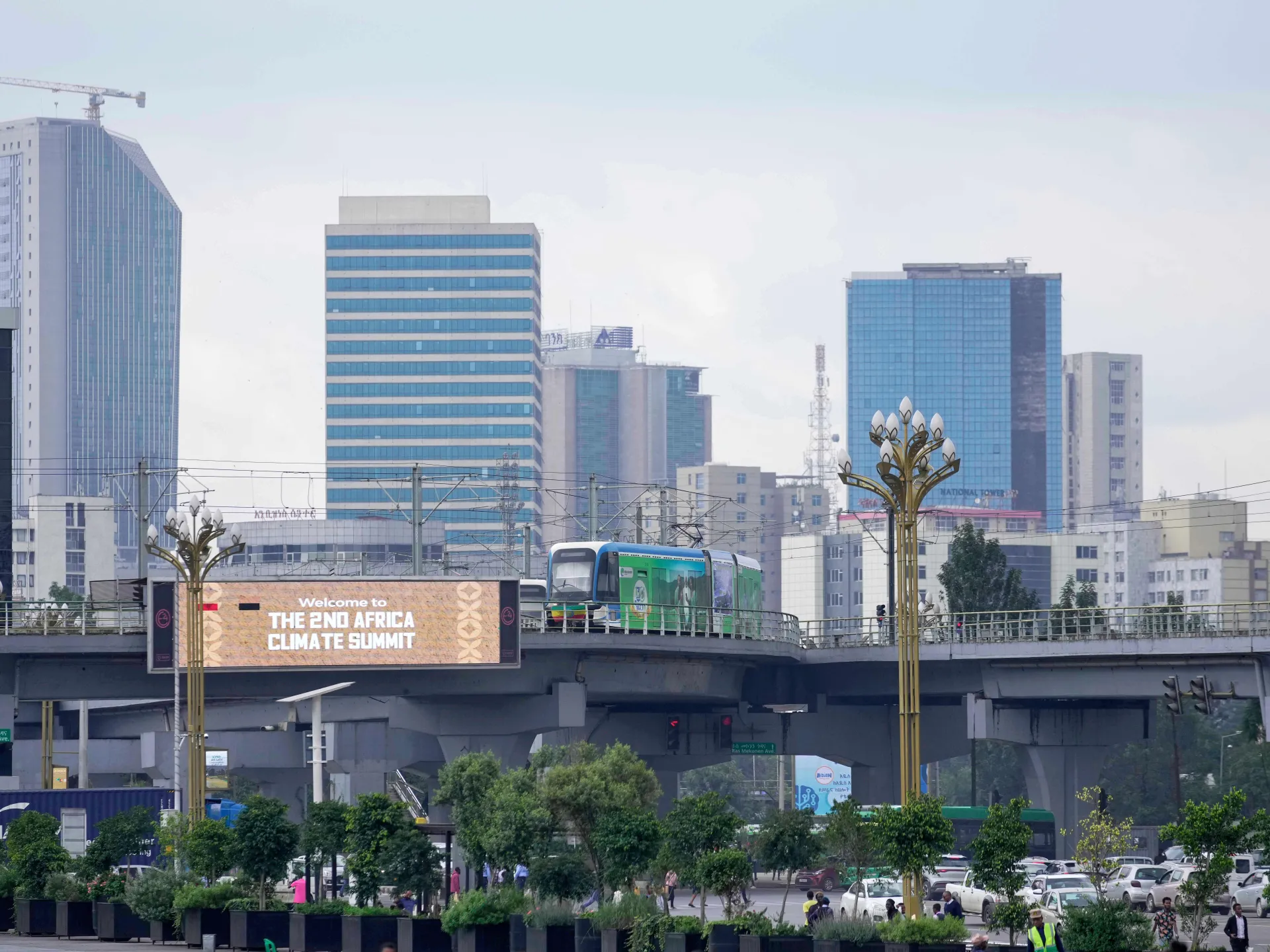
Eritrea has cut off diplomatic relations with neighbouring Ethiopia, escalating a long-simmering conflict between the two states rooted in territorial disputes and mutual accusations of interference.
The move comes as fighting flares in northern Ethiopia between Ethiopian federal troops and an opposition alliance that Addis Ababa accuses Eritrea of backing.
Recommended Stories
list of 3 itemsend of list
The clashes are the most severe in Ethiopia since its 2020-2022 civil war that killed hundreds of thousands of people.
But this time, the ripple effects could go further, potentially fuelling broader unrest in a region already plagued by numerous interrelated conflicts, analysts warn.
Here’s what we know about the Ethiopia-Eritrea conflict, the latest fighting in northern Ethiopia and what it could mean for the region at large:
Why did Eritrea break off ties with Ethiopia?
Eritrea announced it was severing ties with Ethiopia on Thursday, after Addis Ababa announced it would close its embassy in Asmara and expel 10 Eritrean diplomats.
In a statement, Eritrea’s Ministry of Foreign Affairs said Ethiopia’s actions had left it with “no option but to reciprocate in kind and sever all diplomatic ties with Ethiopia”.
The Eritrean ministry accused Ethiopia of pursuing a years-long “agenda of incessant hostility”, including by infringing on its coastal areas and arming fighters opposed to Ethiopia’s government.
Ethiopia has likewise accused Eritrea of backing armed groups opposed to its government. Both sides have rejected the other’s accusations.
The diplomatic breakdown follows months of worsening relations, driven largely by disputes over landlocked Ethiopia’s push for access to the Red Sea and allegations that Eritrea is backing the rebel Tigray People’s Liberation Front (TPLF), which leads the Ethiopian Peoples’ Forces Alliance for Survival, a rebel alliance fighting for control of parts of northern Ethiopia.
Have Ethiopia’s ties with Egypt and Sudan been hit, too?
Yes. Ethiopia accuses Egypt and Sudan of joining Eritrea in backing Tigrayan rebel forces, worsening already strained ties with both countries.
Ethiopia has long been at odds with Egypt over the status of Ethiopia’s Grand Ethiopian Renaissance Dam (GERD) project, which Cairo views as a risk to its water security and share of the Nile.
Ethiopia and Egypt have also expelled diplomats. Cairo ordered an Ethiopian diplomat to leave the country on Thursday, after Addis Ababa earlier kicked out an Egyptian diplomat, Egyptian state-linked media reported.
Egyptian state-linked broadcaster Al-Qahera News quoted an Egyptian official as calling Ethiopia’s move to expel the Egyptian diplomat as “regrettable and unjustified” and saying that Cairo responded in line with “the principle of reciprocity”.
The latest conflict also has implications for Sudan, whose military-backed government accuses Ethiopia of backing rebel forces it is fighting in its own civil conflict. Ethiopia rejects those allegations.
“The conflicts in Ethiopia and Sudan have become more interconnected, with the Ethiopian government and Sudanese Armed Forces accusing each other of harbouring and equipping respective opposition forces from inside their own borders,” Ahmed Soliman, senior research fellow at the Chatham House think tank’s Africa programme, told Al Jazeera. “Egypt has also been drawn into the escalation with its long-running enmity with Ethiopia over the Nile.”
What is happening in northern Ethiopia?
Tigrayan-led rebel forces have engaged in clashes with Ethiopian government-backed forces in the country’s north since last week. Fighting is concentrated in three regions: Tigray, Amhara and Afar.
Al Jazeera’s bureau chief in Ethiopia, Mohammed Taha Tawakel, reported that forces loyal to the federal government have made significant gains in the Tigray region, taking control of several towns and closing in on the regional capital, Mekelle.
Further east in Afar, a pro-government armed group claimed on Thursday to have recaptured the town of Erebti, which rebel forces had taken control of earlier in the week. The pro-government group thanked the Ethiopian military for its “magnificent air support” and said it would pursue further advances.
Despite the pro-government advances, Tawakel reported that rebel forces still maintain what he described as a “strong rear link with Eritrea” along the countries’ border.
He also reported growing fears that fighting could move into major urban centres of Tigray, such as Adwa, Axum, Shire and Mekelle. Some people have already begun fleeing to Amhara and Afar, he added.
Outside northern Ethiopia, the conflict appeared to spill into the capital, Addis Ababa, for the first time early on Thursday, as an explosion was reported at the Ministry of Defence.
AFP quoted a diplomatic source as saying small drones were the most probable cause of the blast.
While Ethiopia’s army has a much larger arsenal of drones, rebel forces have previously used them to target airbases and airports in various parts of the country, reported conflict monitor ACLED.
What are the roots of the Ethiopia-Eritrea dispute?
Ties between the neighbours have been historically fragile. In 1962, Ethiopia annexed Eritrea. An armed independence struggle, led by Eritrea’s current President Isaias Afwerki, secured independence in 1993. The countries fought another border war from 1998 to 2000.
When Ethiopian Prime Minister Abiy Ahmed came to power in 2018, he moved to end the tensions and normalise diplomatic relations with Eritrea. During Ethiopia’s last civil war in 2020-2022, Eritrea even backed Ethiopia’s government against the TPLF.
But Abiy’s ambitions to seek direct sea access for landlocked Ethiopia have contributed to recent tensions, say analysts. Abiy has repeated that Ethiopia has a right to sea access, words that officials in Asmara take as a declaration of territorial conflict with Eritrea.
Could the current conflict spread in the region?
Many analysts fear it could.
Laura Hammond, professor in development studies at SOAS University of London, told Al Jazeera this scenario is already under way.
“The risks that conflict will spread to other countries, or that neighbours in the region will be brought into the present conflict are already playing out in terms of Eritrea’s support for the TPLF and the Alliance for Survival,” said Hammond.
“There is a strong possibility that Eritrea will become more involved in the conflict on the ground inside Tigray if it continues much longer,” she continued. “There is also a risk that the conflict could inflame relations with and inside Sudan.”
Martin Plaut, an analyst specialising in the Horn of Africa, also said there was a “real danger” of the conflict spreading.
“The situation is extremely tense and it would only require a spark to ignite a conflagration that could engulf [Ethiopia and Eritrea], as well as neighbouring Sudan,” he told Al Jazeera.
Venezuelan authorities have pledged to incorporate 1,300 MW into the grid by the end of the year. (Radio Fe y Alegria)
Caracas, September 30, 2026 (venezuelanalysis.com) – Venezuelan Minister of Electric Energy Rolando Alcalá announced a plan to add 1,300 megawatts (MW) to the country’s electric grid amid growing protests against recurring blackouts.
In a televised message published on Tuesday, Alcalá pledged that the electricity supply would improve in the final quarter of 2026 to mitigate outages. He explained that a unit at Planta Centro, Venezuela’s main generation complex serving the central-western region, will come online “in the coming days” and provide 600 MW to the area.
The official also announced that seven generation units with a combined capacity of 500 MW will be added to a key thermoelectric plant in Zulia state, which borders Colombia and is one of the areas hardest hit by power failures.
The government is also reportedly working on an alternative energy plan for the state, including the Machango solar panel park, which is expected to come online next year.
The remainder of the planned generation will come from units located in other regions of the country.
“Other units will be brought online nationwide, for a total of 1,300 megawatts during this final quarter of 2026. These will help achieve greater stability, continuity, and fewer interruptions in electricity service nationwide,” Alcalá said in a video shared by Acting President Delcy Rodríguez on social media.
“We have a clear plan to face the challenges of the National Electric System and we are executing it,” she wrote on X. “With organization, coordination, and effort we move forward to overcome this situation.”
Meanwhile, the president of the National Electric Corporation (CORPOELEC), Juan Fernández, explained that “as a complement to the thermal generation plan, major transmission projects are being carried out.” He highlighted the expansion of the Planta Centro substation with the addition of a new 400-230 kV autotransformer, equipment that recently arrived from abroad.
“This year, we have gained access to original spare parts and components from the world’s leading manufacturers,” he added, referencing agreements with US-based GE Vernova, Germany’s Siemens, and Argentina’s Impsa. The US Treasury Department has issued sanctions waivers allowing transactions with Venezuela’s electricity sector.
The latest announcements came amid near-daily protests over power outages throughout the country. Demonstrators have taken to the streets to bang pots and pans or block streets to demand that authorities answer for blackouts that can add up to 16 hours per day.
On Wednesday night, protesters from Guacara, Carabobo State, temporarily blocked the Central-Regional Highway, the main highway connecting Caracas to Western regions, after electricity was shut off for a second time in the same day.
In statements to local press, demonstrators have highlighted that high temperatures and mosquitoes make it hard to sleep without ventilators or air conditioning, leading children to fall asleep in school. They have also criticized authorities for not producing a rationing schedule, making it impossible for families and businesses to plan around outages.
In their Tuesday televised message, Venezuelan government officials stated that the country’s electricity demand has risen in recent weeks, driven by a “rebound in economic activity,” high temperatures caused by the El Niño climate phenomenon, and the twin June 24 earthquakes which “delayed plans that had been underway to repair the electrical system.”
On September 22, the Ministry of Electric Energy reported that electricity demand in Venezuela had reached a record high of 16,424 megawatts (MW), the highest level recorded in the past nine years.
Venezuela has a nominal installed generation capacity of approximately 35,000 megawatts (MW), twice the country’s peak demand. However, actual stable generation currently stands at just 12,000 MW due to a deep structural crisis resulting from US sanctions that prevented the purchase of spare parts, as well as issues of underinvestment, lack of maintenance, and corruption.
Nevertheless, authorities claimed that a proposed reform of the Organic Law of the National Electricity System and Service will allow “the integration of the public and private sectors in electricity generation, transmission, distribution, and commercialization,” with the aim of “promoting competitiveness, and attracting investment to strengthen electrical infrastructure.”
The new law was preliminarily approved by the National Assembly in June, with a second discussion and final approval yet to be scheduled.
The previous legislation, enacted in 2010 under President Hugo Chávez, exclusively reserved all activities across the electricity supply chain for the state, centralized through the state-owned CORPOELEC. The reform authorizes strategic partnerships and concession agreements with domestic and international private companies.
In defending the new law, Venezuelan officials have defended the adjustment of electricity tariffs to reflect “real costs” and secure returns for investors.
Burning of a Ebola-hit transit camp sends 19,000 fleeing, illustrating the difficulties of controlling epidemic.
Published On 2 Oct 20262 Oct 2026
The Democratic Republic of Congo’s Ebola outbreak has now killed more than 4,000 people, according to government data, making it the worst epidemic in the country’s history.
Figures released on Friday showed that the death toll has risen to 4,018, and confirmed cases had reached 8,300 across seven provinces, as the government continues to struggle to contain the outbreak.
Recommended Stories
list of 4 itemsend of list
Weak infrastructure, the remoteness of the region in eastern DRC, and ongoing conflict with armed groups near the borders with South Sudan, Uganda, and Rwanda have hindered efforts to respond to cases quickly and effectively.
The United Nations reported on Friday that an Ebola-hit camp housing a transit centre for infected patients was burned by soldiers earlier this week as they were looking for weapons on the outskirts of Bunia, capital city of Ituri Province, which is at the epicentre of the outbreak.
The incident forced 19,000 people to flee the camp.
“The enormous challenge of halting the spread of Ebola in the Democratic Republic of the Congo (DRC) just became even harder after a key transit centre for patients requiring treatment burned down in Ituri province,” the UN said.
People’s mistrust and anger towards health workers and authorities have also contributed to the obstacles the government faces in its efforts to contain the outbreak.
A senior member of DRC’s governing Union for Democracy and Social Progress (UDPS) party was beaten to death days ago after taking part in a radio programme to raise awareness about the epidemic.
The attack on Marie-Celestin Karondwa, a local official with UDPS, took place last Sunday at his home in Butembo, an Ebola hotspot in the eastern North Kivu province. His house was set on fire afterwards, and he died at hospital from his injuries.
The World Health Organization has warned that the epidemic is “far from over” and on track to surpass the regional 2014-2016 West Africa Ebola outbreak, which killed more than 11,000 people, primarily in Guinea, Liberia, and Sierra Leone.
Caused by the Bundibugyo strain of Ebola, the current epidemic became the largest and deadliest in the DRC after surpassing the 2018-2020 epidemic.
Several treatments and vaccines are being trialled against Bundibugyo, but currently, there is no approved vaccine or treatment.
The current outbreak, which is the DRC’s 17th, has spread rapidly since it was officially declared on May 15.
More than 2,000 patients have recovered from the Ebola epidemic so far. The Africa Centres for Disease Control and Prevention said in its latest news conference that the number of confirmed cases is falling, although that could be attributed to insecurity and challenges in getting communities to cooperate in some of the hotspots.
The Recording Academy announced the new category in June, saying it would recognise “artistic excellence in Asian pop music performances originating from or widely recognized within Asian markets”.
The prize had been under discussion for years. It was finally introduced after Golden, from the movie K-pop Demon Hunters, became the first K-Pop song ever to win a Grammy this February.
“As Asian pop’s influence has continued to grow within our process, our members and trustees felt this was the right moment to create a category that more accurately reflects the genre’s scale, artistry and global impact,” organisers said at the time.
But the award received a decidedly mixed reception. Many felt it would stop Asian artists from receiving recognition in the main categories.
Others were upset by a stipulation that nominated songs should make “meaningful use” of an Asian language.
That requirement ruled out the two most recognisable Korean acts in America, BTS and Blackpink, whose latest releases are primarily sung in English.
The arguments against the Asian pop award are similar to those made by Latin artists about Grammy categories such as best música urbana.
While the intent is to recognise music of a certain geographic or linguistic origin, some musicians feel it ends up being exclusionary, with their music segregated from mainstream prizes like album or song of the year.
That perception was challenged this year, when Bad Bunny’s Debí Tirar Más Fotos became the first Spanish-language album to win album of the year. Rosalía’s Lux is also expected to feature heavily in the nominations for next year’s awards.
Stuttgart, Germany – Minutes after the results of the first exit polls flashed across German screens, Chancellor Friedrich Merz of the conservative Christian Democratic Union (CDU) declared in a televised statement at the party’s headquarters that he was going nowhere.
“It’s a disaster,” he said of the state elections in Mecklenburg-Western Pomerania on September 20. “What needs to be done now requires backbone, steadfastness and patience. I will muster them – as party chairman of the CDU and, above all, as chancellor of our country.”
Recommended Stories
list of 4 itemsend of list
But pressure on Merz is mounting.
On Thursday, a survey by Germany’s public broadcaster ARD found that only one in 10 respondents were satisfied or very satisfied with his work. That is the lowest figure for any chancellor since the survey began in 1997.
His party crashed out of the state parliament in Mecklenburg-Western Pomerania, failing to clear the 5 percent threshold needed to win seats – the first time this has happened since the Federal Republic of Germany was founded in 1949. The far-right Alternative for Germany (AfD) came first with more than a third of the vote.
On the same day in Berlin’s state elections, the CDU suffered another major setback. It came second after The Left party, which won 25.7 percent of the vote. The Left now hopes to form a government in the capital although it will need coalition partners.
Just two weeks earlier, the CDU suffered another blow. The AfD won the state elections in Saxony-Anhalt, receiving more than 40 percent of the vote, compared with 17 percent for the CDU.
No obvious successor
Merz could face a revolt within his own party, but removing him as chancellor would be considerably harder.
Under Germany’s Constitution, the Bundestag can replace a chancellor only by simultaneously electing a successor with an absolute majority.
Wolfgang Schroeder, a professor of political science at the University of Kassel, told Al Jazeera: “The CDU is in a situation where it can’t really get any further with Merz, but it also doesn’t know how things would work without him. There is no attractive replacement, so there is no alternative.”
A former chairman of the BlackRock investment company’s German supervisory board, Merz had long harboured ambitions of becoming chancellor but was sidelined by then-Chancellor and -CDU leader Angela Merkel in the early 2000s. He staged an unexpected comeback, finally taking office in May 2025.
Then-designated German Christian Democratic Party (CDU) parliamentary floor leader, Friedrich Merz (left) is pictured with then-party secretary general Angela Merkel (right). In the centre is lawmaker Rudolf Seiters before a meeting of the CDU parliamentary group in the Berlin Reichstag, February 18, 2000 [Reuters]
At the helm, Merz has drawn criticism for remarks about the country’s “Stadtbild” (cityscape), widely interpreted as a suggestion that there were too many refugees and migrants on the streets. The debate has resurfaced in recent days with prominent CDU figures returning to the issue after the party’s poor election results.
The AfD’s surge is but one factor behind the decline of Germany’s long-dominant conservative party, which has produced six chancellors in its history.
The CDU and its Bavarian sister party, the Christian Social Union, govern Germany in coalition with the Social Democratic Party (SPD). The government is struggling amid the rising cost of living, deindustrialisation, crumbling infrastructure and a housing crisis in major cities.
Nils Diederich, a professor emeritus of political science at the Free University of Berlin and a former SPD member in the Bundestag, said Merz has failed to make a good impression but argued he is not the main reason for the CDU’s poor results.
“Overall, I see the coalition itself as the main problem,” he said. “The Social Democrats have worn themselves out in the coalition. They have lost their sense of direction and are putting the brakes on reforms. That, in turn, is dragging the CDU down with them.”
Schroeder told Al Jazeera: “It’s possible that the crisis surrounding the chancellor could develop into a fundamental crisis for the CDU and from there into a crisis for the coalition.”
The reform dilemma
In July, the German government announced a package of 34 measures, including reforms to pensions, taxation, bureaucracy and the labour market. Merz originally intended to push through his repeatedly promised reforms by the end of the year.
But the state elections have put the coalition parties under greater pressure to stake out their own positions.
To ease the burden on people in need of long-term care and to plug multibillion-euro deficits, the SPD is calling for a cap on care costs and for people with private health insurance to share the costs. The CDU firmly rejects both proposals on legal and financial grounds.
State premiers from both major parties and the SPD leadership want to retain the option of retiring without a pension reduction after 45 years of contributions, which they see as a reward for a lifetime of work. The conservative bloc’s business wing, however, insists that the provision be phased out.
Finance Minister Lars Klingbeil of the SPD is planning new revenue measures to consolidate the budget but faces fierce resistance from CDU state premiers and conservative legislators determined to block any tax increases.
Schroeder warned that the coming months could be difficult.
“The CDU is caught in a dilemma. If Merz continues down the path of reforms that place a burden on society, the likelihood of cooperative governance with the SPD will diminish further. If he goes along with the course the SPD is proposing, pressure within the party will increase.”
Diederich said: “If the reforms fall through, then either Merz or the Social Democrats would have to act and let the coalition collapse.”
The next major election test will come in North Rhine-Westphalia, Germany’s most populous state, where voters elect a new parliament in April.
It is increasingly difficult to regard what is happening in the West Bank as merely a series of measures that the Israeli government justifies on security grounds or as part of counterterrorism operations. Taken together, the cumulative pattern and expanding scope of these measures point to a broader political and territorial trajectory: one aimed at reshaping the West Bank, imposing new facts on the ground, entrenching Israeli control and advancing the de facto annexation of large parts of the territory while simultaneously subjecting Palestinians to mounting pressure that, directly or indirectly, pushes them from their land.
Israeli, journalistic and research reports have documented the intensification of this trajectory through settlement expansion, land confiscation, restrictions on Palestinian movement, control over water resources and grazing areas as well as military operations and repeated internal displacement in several parts of the West Bank.
Considered individually, each of these measures may appear to be a separate issue. Viewed together, however, they reveal a more consequential development: an effort to re-engineer the geography and demography of the West Bank in ways that undermine the prospect of establishing a contiguous and viable Palestinian state.
The question, therefore, is no longer simply what is happening in the West Bank.
The more urgent question is how can Jordan, the Palestinians, the Arab world and the international community prevent this trajectory from becoming a permanent reality.
Jordan Valley at the heart of the equation
The Jordan Valley assumes exceptional importance in this context, not only because of its geographical and security significance but also because of its agricultural and economic importance and its water resources for the Palestinian people.
Reports concerning the construction of a new Israeli barrier, referred to as the “Crimson Thread”, extending roughly 480km (300 miles) from the Golan Heights to the Red Sea, warrant serious Jordanian, Arab and international scrutiny, particularly if such a project is intended to isolate the Jordan Valley and place as much as 83 percent of its total area under Israeli control.
Such a development could in effect sever the West Bank from Jordan and deprive Palestinians of one of their most important agricultural and water resources.
Borders, walls, roads and settlements cease to be merely physical infrastructure when they are combined with control over land and water. They become instruments for reshaping political and demographic geography and weakening the ability of Palestinians to remain on their land.
This is precisely where the Palestinian issue intersects directly with Jordan’s national security.
Jordan faces a different phase
Jordan cannot treat developments in the West Bank as an exclusively Palestinian matter. At its core, this is an issue of Jordanian national security, regional stability and the future of the Palestinian cause.
Any fundamental change to the geographical or demographic reality of the West Bank will inevitably carry direct consequences for Jordan because of geography, history and proximity. And if the eventual outcome is forced displacement, then, as King Abdullah II has repeatedly made clear, such a scenario would amount to a declaration of war on Jordan.
The policy required of Jordan at this stage, therefore, must be proactive: one that anticipates possible scenarios and prepares for them politically, diplomatically, economically and in security terms.
First: Protect Jordanian national unity
Jordan’s first line of defence is its national unity.
At this stage, it is essential to strengthen the concepts of citizenship and the state, consolidate full equality among Jordanians, and reject any discourse or practice that creates divisions on the basis of origin, region or roots.
The Palestinian cause must remain a national, Arab and humanitarian cause. It must not be allowed to become a source of division within Jordanian society.
Responsibility falls on both the state and society to confront hate speech and incitement, apply the law equally and fairly, and protect the national fabric from attempts to exploit regional turmoil to sow division among Jordanians.
One of the gravest outcomes Jordan must prevent is the transfer of the conflict into its own domestic sphere. Relations among Jordanians of different origins, including those of Jordanian and Palestinian heritage, must never become a vulnerable fault line through which those seeking discord, whether from within the country or from abroad, can operate.
National unity, therefore, is not merely a social value. It is an integral component of Jordan’s national security architecture.
Second: Move from diplomacy of protest to diplomacy of pressure and proportionate action
Jordan has accumulated considerable international credibility and diplomatic capital. The present phase, however, requires Jordan to expand the tools at its disposal.
It is no longer sufficient simply to condemn settlement activity, reject annexation or warn against displacement. What is needed is an Arab, Islamic and international diplomatic front capable of translating political positions into practical measures.
In coordination with Palestine and Arab and Islamic states, Jordan should work to:
Mobilise countries that reject annexation and settlement expansion.
Support international legal action.
Push for concrete measures and sanctions not only against settlements but also against state policies that enable and encourage them.
Systematically document violations.
Use Arab political and economic relations with influential states more strategically, expanding economic cooperation with countries that adopt firm positions against the Israeli occupation while recalibrating engagement with those that remain reluctant to take clear positions towards Israeli policies.
Build an international coalition capable of preventing the imposition of irreversible facts by force.
A comparison with Russia’s war in Ukraine is instructive. When Russia occupied large areas of Ukrainian territory, sanctions were not confined to the territories under occupation; they were imposed on Russia itself. The question, therefore, is why a different standard should apply elsewhere.
The international community does not lack resolutions or statements. What it lacks is the conversion of political will into a tangible cost for those who violate international law.
Third: Establish an Arab and Islamic fund for Palestinian resilience
If the objective is to prevent displacement and enable Palestinians to remain on their land, financial support must become a sustained strategic policy rather than seasonal assistance tied to moments of crisis.
One option would be to establish an Arab, Islamic and international fund dedicated to strengthening Palestinian resilience with a mandate to finance specific projects in the West Bank and Gaza, including:
Protecting land threatened with confiscation.
Supporting farmers.
Developing water resources and irrigation networks.
Assisting affected families.
Financing housing projects in vulnerable areas.
Supporting education and health services.
Assisting municipalities and local councils.
Providing alternative sources of income to families who have lost employment as a result of Israeli measures.
Resilience is not merely a political slogan. It is a material reality.
Every Palestinian family who remains on its land, every farmer who continues to cultivate his fields and every village that retains access to its water resources represents part of the effort to prevent displacement.
Fourth: Treat the Jordan Valley as a Jordanian national security issue
Jordan should address developments in the Jordan Valley as a permanent strategic file.
A specialised Jordanian mechanism should be established to monitor:
Settlement expansion.
Land confiscation.
The construction of roads, barriers and walls.
Demographic changes.
Control over water resources.
Population movements and displacement.
Any measures that could permanently alter the status quo.
These developments should be documented through maps, satellite imagery, statistics and official records so Jordan maintains a comprehensive dossier that can be used politically and legally before the international community.
Struggles over land are not determined by force alone. They are also shaped by documentation, maps, law and the ability to present an authoritative, evidence-based account of what is happening.
Fifth: Strengthen Jordan’s national defence architecture
Strengthening Jordan’s ability to protect its security, borders and national interests is not optional.
Jordan is a country with limited resources, but it possesses significant human and institutional expertise. It can further develop an advanced national defence, civil protection and crisis-management architecture.
This could include strengthening national service and training programmes, enhancing civil defence preparedness, protecting critical infrastructure, reinforcing cybersecurity and border security, and improving disaster and emergency management.
Jordan could also draw on the extensive experience of retired military personnel through structured national programmes under the supervision of appropriate state institutions, thereby strengthening the country’s overall defensive readiness.
The strength Jordan requires is the strength of deterrence, protection and preparedness, not an impulse towards an ill-considered confrontation.
Sixth: Prevent Jordan from becoming an “alternative homeland”
This issue must remain at the centre of Jordanian strategic calculations.
Any project that directly or indirectly leads to the depopulation of the West Bank or pushes large numbers of Palestinians towards Jordan is not merely a humanitarian question. It would carry profound political, security and demographic consequences for the kingdom.
Jordan’s position, therefore, must remain unequivocal: Resolving the Palestinian question cannot come at Jordan’s expense; displacement is not a political solution; and Jordan is not an alternative homeland for the Palestinian people.
At the same time, Jordan must preserve the humanitarian and legal dimensions of its response to any forced developments, so that opposition to displacement does not translate into further suffering for civilians.
The views expressed in this article are the author’s own and do not necessarily reflect Al Jazeera’s editorial stance.
NBA says its focus is on new global academy opening in Abu Dhabi as Africa, Mexico and Australia hit by closures.
Published On 2 Oct 20262 Oct 2026
The NBA has closed its only elite training academy in Africa, less than a decade after it was launched in Senegal to prepare promising young African players for professional leagues in the United States and elsewhere.
The decision to close NBA Academy Africa was a blow to students and young players across the continent, two former employees said.
Recommended Stories
list of 4 itemsend of list
Michel Chikwanine, who had been the academy’s performance and lifestyle adviser, said late Thursday that the news discouraged African players just beginning to build confidence.
“From the moment we told them, their confidence waned, their confidence dropped,” he said.
Michael Abbott, former head of academic planning at the academy, said it showed a lack of commitment to the students.
“They weren’t invested in them as kids as much as they were invested in the business model,” he said.
In response to questions from the Reuters news agency, the NBA said the decision reflected a shift in global basketball development strategy. It has previously closed academies in Mexico and Australia. All training will be run out of a new global academy to open soon in Abu Dhabi in the United Arab Emirates, it said.
In its statement, the NBA added that it is continuing to invest in African talent through other programmes and closing the academy does not signal a diminished commitment to the continent.
It cited examples such as the creation of a Basketball Africa League, which has concluded six seasons, and Basketball Without Borders, which organises elite training camps for young people worldwide, including in Africa.
NBA success in Africa followed by closure
NBA Academy Africa has trained about 110 students since launching in Senegal in 2018, Abbott said, and many have moved on to elite schools and universities in the US. The most successful students were drafted into the NBA.
Graduate Ulrich Kamka Chomche of Cameroon became the first player to be drafted into the NBA in 2024 and played for the Toronto Raptors. Former academy student Khaman Maluach of South Sudan plays for the Phoenix Suns.
Chikwanine said closing the academy will limit opportunities for African players, who often come from challenging backgrounds and need specific support. All African prospects will have to compete globally for spots in the UAE.
He said the NBA’s decision reinforced a message felt by many Africans that big companies come to the continent claiming to want to invest in people but in reality just want to make money.
“They come in with an extraction mindset,” he said. “That has always been a reality on the continent of Africa. … There is a huge mistrust that has been built.”
The NBA denied that closing the academy would limit opportunities for young African players. It said training all young players at a single location would give them greater exposure to professional coaches and scouts worldwide.
“We’re incredibly proud of the impact that NBA Academy Africa has had and remain committed to developing the next generation of African players,” Troy Justice, NBA senior vice president, said in a statement, adding that several other youth development initiatives still operate on the continent.
The photograph was released by the U.S. Navy and shows an RAAF F/A-18F assigned to No. 1 Squadron taking off from Naval Base Ventura County Point Mugu on September 11 during Gray Flag 2026. The loadout also includes a CATM-9X — the inert training variant of the AIM-9X — and a CATM-120, the inert training version of the AIM-120 AMRAAM, three external fuel tanks, an AN/ASQ-228 ATFLIR targeting pod, and a Tactical Combat Training System (TCTS) pod.
An AIM-260 JATM is seen on station 7, the “cheek” station, of a Royal Australian Air Force F/A-18F Super Hornet during Gray Flag 2026. U.S. Navy photo by Dana Rene White
Gray Flag is the naval aviation test community’s flagship large-force test event, providing opportunities for large-scale integration of new capabilities across services, platforms, industry, and allied forces. Gray Flag 2026 was the largest edition of the exercise to date. According to the Navy, more than 3,000 personnel from over 150 organizations participated, flying more than 750 sorties and logging over 2,000 flight hours across hundreds of multi-domain test objectives.
Previous iterations of Gray Flag have been used to test new and still-developmental weapons in increasingly complex, operationally representative scenarios, including actual missile engagements against realistic targets. Making use of the sprawling Point Mugu Sea Range, the event has also become an important opportunity for working out how sensors, weapons, aircraft, and networks interact as part of larger kill chains and kill webs. A new, longer-range air-to-air missile is especially relevant when it comes to developing tactics, techniques, and procedures within a broader, networked air-combat architecture.
Beyond being the first apparent glimpse of an Australian JATM in any context, integration of the weapon onto Australia’s Super Hornet fleet has already progressed to the point of carrying the missile — in inert form — during a major U.S.-based test and integration exercise.
A close-up look at an AIM-260 test round on the same station of a U.S. Navy Super Hornet. Jonathan Tweedy/@flightline_visuals
As TWZreported in August, Australia is set to become the first country outside the United States to operate the AIM-260 following a roughly $480-million procurement through the U.S. Foreign Military Sales program. The Australian government said at the time that the missile would first be integrated onto the RAAF’s F/A-18F fleet, before being fielded on the F-35A and EA-18G Growler. Looking further ahead, the RAAF’s MQ-28 Ghost Bat collaborative combat aircraft (CCA) could also emerge as a candidate for integration with JATM.
Australia’s announcement did not provide a delivery schedule or specify when JATM would enter Australian service.
The overall proportions and external configuration of the AIM-260 were revealed when an example appeared on a U.S. Navy F/A-18F in May of this year. That aircraft, operated by Air Test and Evaluation Squadron 31 (VX-31), provided the first publicly known photographic view of the highly classified missile.
An F/A-18F from VX-31 carrying the AIM-260. Jonathan Tweedy/ @flightline_visuals
The AIM-260’s exact specifications remain classified. It is intended to provide substantially greater range than the AIM-120 AMRAAM while retaining a broadly similar form factor. That compact configuration is important because the missile is designed not only for external carriage but also for internal carriage by aircraft such as the F-22 and F-35.
The weapon has been developed as a response to the increasingly long-range air-to-air threat posed by China’s PL-15 and other advanced missiles. Official range figures have not been released, although previous reporting has pointed to an intended range of at least 120 miles and potentially considerably more.
Close-up of a J-20 fighter carrying four inert examples of the PL-15 in its main ventral bays. viaChinese internet
The Australian procurement therefore represents an important expansion of the JATM program beyond the U.S. fleet.
The timing of the Point Mugu photograph is particularly interesting. Gray Flag is specifically intended to bring together large numbers of aircraft, weapons, sensors, networks, and other systems for demanding integration and test activities. An Australian Super Hornet carrying JATM at such an event would be entirely in line with the purpose of the exercise.
Ground crew members stand by an EA-18G Growler on the flight line at Naval Base Ventura County Point Mugu, during Gray Flag, on September 30, 2026. U.S. Navy photo by Katie Archibald
It is not clear, however, what role the missile was playing. The photograph does not establish whether it was an Australian-owned operational weapon, a U.S. test asset, or a missile being used for a particular integration activity. Blue bands on the missile body confirm that it’s a training missile with an inert rocket motor and/or warhead.
Public evidence of an Australian aircraft carrying the AIM-260 is another important milestone in the weapon’s transition from a closely guarded U.S. development program toward allied service.
It also underscores the most interoperability aspect of the Australian acquisition. Canberra is buying into a U.S. long-range air-to-air weapon program at a time when the Royal Australian Air Force and U.S. forces are increasingly expected to operate together across the Indo-Pacific.
A Royal Australian Air Force E-7A Wedgetail, two EA-18G Growlers, and two F-35As fly in formation with two U.S. Air Force B-2 bombers and two F-22 Raptors. Australian Department of Defense
The exercise also comes as the U.S. moves to accelerate development and future production of the AIM-260. In September, the Pentagon and Lockheed Martin reached a framework agreement laying the groundwork for a future multiyear procurement deal, while the Air Force Test Center confirmed that the missile is already undergoing both ground and airborne testing. The agreement is intended to give Lockheed Martin and its suppliers the demand signal needed to expand production capacity, although the number of missiles, costs and delivery schedule remain undisclosed.
The development should also be seen in the context of broader U.S.-Australian cooperation on air-launched weapons. RAAF F/A-18Fs are also being integrated into the U.S.-Australian Hypersonic Attack Cruise Missile (HACM) effort under the Southern Cross Integrated Flight Research Experiment (SCIFiRE), with Australia providing test infrastructure for the weapon’s flight-test program. You can read more about this program here.
The video below shows a hypersonic test conducted at Woomera in 2016 under the U.S.-Australian Hypersonic International Flight Research Experimentation (HiFIRE) program.
DST | One step closer to hypersonic flight | HIFiRE
Australia said its F/A-18Fs would be the first RAAF aircraft to receive JATM, and an Australian Super Hornet has now been photographed carrying one during a major U.S. Navy test event. For the RAAF, getting JATM onto its frontline fighters is consequently an increasingly urgent requirement, giving its Super Hornets a credible long-range counter to the weapons they could face in a future high-end fight.
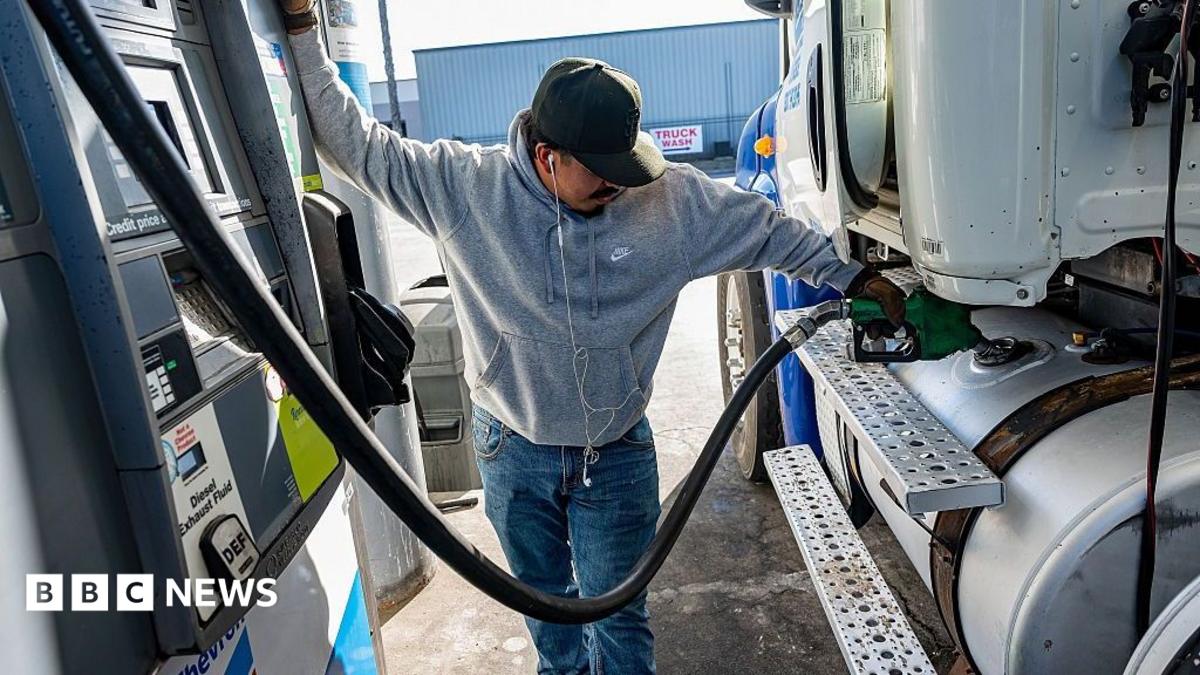
Donald Trump has said he may ask European countries to release some of their diesel reserves as he considers banning US exports of the fuel.
The US President’s comment comes after Treasury Secretary Scott Bessent urged Europe to get ready to release diesel supplies immediately, arguing that US farmers, truckers, and businesses “should not be left carrying the burden” as prices soar.
The US has threatened to restrict diesel exports after the war in Iran caused sharp price rises for US voters ahead of the midterm elections in November.
On Thursday, the UK held talks with European partners about the potential release of diesel reserves in response to any ban.
Banning exports would flood the US market with diesel, and could bring prices down significantly for American drivers.
But experts warn such a ban would put further pressure on diesel prices in other countries, unless they can access further supplies.
The US is a vital supplier of diesel to the world, exporting between 1.2 and 1.5 million barrels per day.
Over half of the UK’s diesel is imported, with 31% of the imports coming from the US.
On Thursday, Trump was asked whether he would call on European countries to release some of their own diesel reserves.
“We may do that. They have some diesel,” he said.
An earlier post from Bessent on social media said European countries should “make additional supplies immediately available”.
The president is set to travel across the US campaigning for Republicans in the coming weeks in hopes of keeping control of the House and Senate in the November’s elections.
Diesel prices in the UK hit record highs this week and are hovering just under 200p per litre, according to motoring organisation the RAC.
UK Energy Minister Martin McCluskey was on a call with European counterparts on Thursday to discuss the potential ban.
A source familiar with the discussions told the BBC it was prudent to prepare a co-ordinated response with other countries, including those across EU, but added that there were still European reserves left from a coordinated release of strategic fuel stocks earlier in the year.
“We have a diverse and resilient supply. We continue to engage with our international partners and the UK fuel industry,” a government spokesperson said.
The government has stressed that there is no cause for concern about potential diesel shortages, though prices are expected to rise further.
Lin bags her second Asian Games gold medal, three years on from her success in Hangzhou in the 57kg class.
Published On 2 Oct 20262 Oct 2026
Taiwan boxer Lin Yu-ting, the Olympic champion who found herself embroiled in a major gender row at Paris 2024, has won gold at the Asian Games.
Lin beat China’s Yang Chengyu 5-0 on Friday in the women’s 60kg (132lb) final in Nishio, Japan, giving her a second Asian Games gold after winning in the 57kg (126lb) class in Hangzhou, China, three years ago.
Recommended Stories
list of 4 itemsend of list
The 30-year-old was backed by a small pocket of vocal Taiwan supporters in the Nishio Gymnasium in Nishio, southeast of Nagoya.
Towering over her opponent, Lin used her superior reach to take control of the bout and had a clear advantage heading into the third and final round.
She held off a late assault from Yang to take gold, celebrating with the minimum of fuss.
Taiwan’s Lin Yu-ting is declared the winner of the gold medal over China’s Yang Chengyu in Nishio, Japan [Andrew Boyers/Reuters]
Lin told the AFP news agency before the Games that she had considered retiring after the Paris Olympics but wanted to carry on fighting in part to defy those who questioned her eligibility.
Lin and Imane Khelif of Algeria were disqualified from the 2023 world championships by the International Boxing Association (IBA) after the organisation said they failed unspecified gender eligibility tests.
However, the International Olympic Committee allowed them to compete in Paris, saying they were victims of “a sudden and arbitrary decision” by the widely discredited IBA. Both went on to win gold.
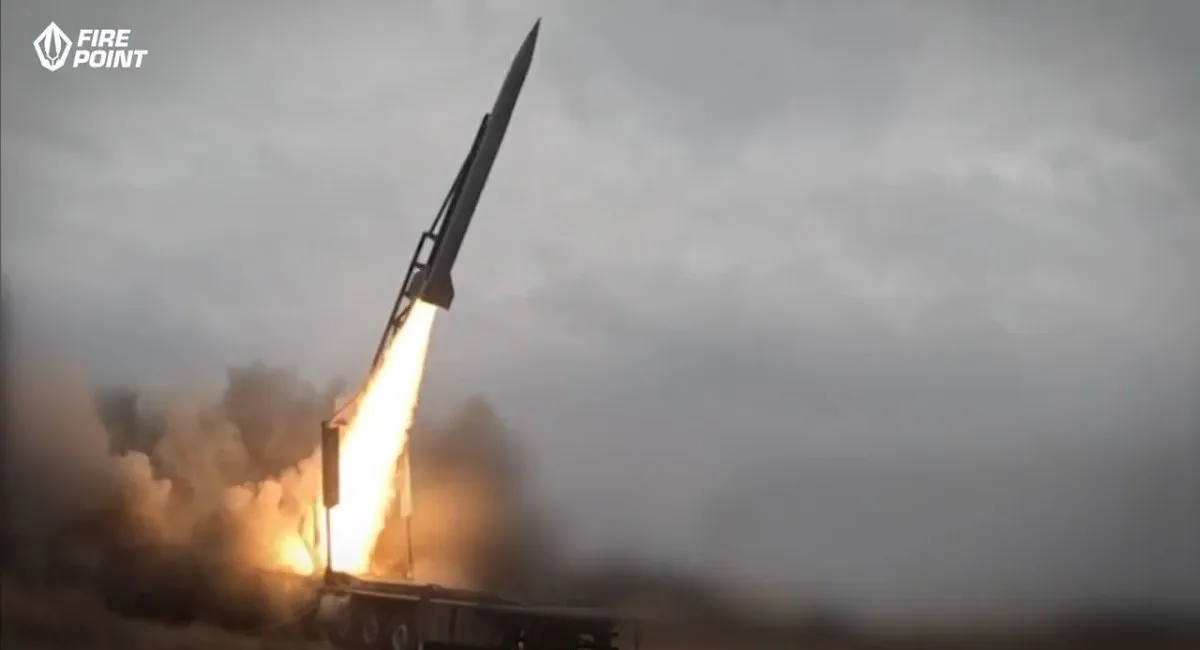
Ukraine says it has used its domestically developed FP-7 tactical ballistic missile in combat for the first time, in what would mark another significant milestone in the country’s rapidly expanding indigenous long-range strike program.
President Volodymyr Zelensky announced today that Ukraine had conducted the first combat use of the FP-7, a ground-launched ballistic missile developed by Ukrainian defense company Fire Point. He also said production of the weapon would follow.
Ukrainian tactical ballistic missile. FP-7. First combat use. Thank you for the result. Next up: production. Glory to Ukraine! pic.twitter.com/IxdjVg51c1
— Volodymyr Zelenskyy / Володимир Зеленський (@ZelenskyyUa) October 1, 2026
The claim has not been independently verified, and Ukrainian authorities have not disclosed the target, location, number of missiles involved, or other details surrounding the reported strike. A video has been published showing what’s said to be a nighttime launch of the missile.
The FP-7 is one of several increasingly ambitious weapons being developed by Fire Point, a Ukrainian defense company that has expanded rapidly since Russia’s full-scale invasion. The company began with drones and has subsequently moved into long-range strike missiles and ballistic missile technology.
Test launch of the FP-7 surface-to-surface ballistic missile. Fire Point
Fire Point CEO Iryna Terekh previously described the company’s development and manufacturing model in an interview with TWZ, detailing an effort to rapidly scale production while maintaining a dispersed industrial base inside Ukraine. The company’s better-known systems include the FP-1 and FP-2 long-range strike drones and the FP-5 Flamingo cruise missile.
According to Ukrainian and company-released information, the FP-7 has a range of approximately 250 kilometers (155 miles) and a warhead weighing around 150 kilograms (331 pounds). Other published figures have put its velocity at approximately 1,500 meters per second (around 3,350 miles per hour). Rather than striking targets deep in the Russian rear areas, the missile is optimized for use against objectives such as logistics hubs, air defense sites, and drone bases. This makes it more of a shorter-range complement to the U.S.-supplied Army Tactical Missile System (ATACMS) ballistic missile, rather than a direct replacement, although it comes without any restrictions on the kinds of targets that it can be used against.
Details from missile debris shown by Russia confirm Ukraine launched ATACMS at Voronezh region on November 18, marking the first use of U.S.-made missiles on Russian territory during Trump’s presidency. According to the Russian MoD, S-400 and Pantsir-S1 systems helped repel the… pic.twitter.com/8SeQCo9OEO
At the same time, those specifications should likewise be treated as reported figures rather than independently verified performance data. Actual range, payload and accuracy can vary according to missile configuration and mission profile.
The FP-7’s development is particularly notable because Fire Point is also using the basic missile architecture as the foundation for a very different weapon.
Fire Point has developed the FP-7.X, an anti-ballistic missile interceptor derived from the surface-to-surface FP-7.
A video showing a test launch of an FP-7.X surface-to-air missile:
Держави програють війни на полі бою значно рідше, ніж вони програють їх у інститутах, лабораторіях та на виробництві за десять років до їх початку.
Коли країна роками недофінансовує інженерну освіту, скорочує дослідження, втрачає виробничі компетенції або звикає покладатися на… pic.twitter.com/Ti1Ayn4INf
Fire Point’s expectation is that commonality between the two systems can shorten development and provide manufacturing efficiencies by allowing the company to draw upon work already conducted on the FP-7’s propulsion, airframe, guidance, and production processes.
The FP-7.X forms part of Project Freyja, a European effort to develop a comparatively inexpensive and potentially more numerous ballistic-missile-defense interceptor. Fire Point has also discussed an eventual production rate of thousands of interceptors annually, although such targets represent company ambitions rather than demonstrated production capacity.
Fire Point has said it is working with European and Ukrainian partners on the system, including work on the interceptor’s seeker. The company has described an initial interceptor using a blast-fragmentation approach, with more sophisticated hit-to-kill capability envisioned for later versions.
Earlier this year, Diehl Defense confirmed that it plans to launch production of the Flamingo cruise missile in Germany. Previously, Diehl had signed a technology agreement with Fire Point but had not disclosed any details. Potentially, that could open a path to Fire Point’s ballistic and cruise missiles helping to meet the growing demand for long-range fires capabilities among NATO’s European members.
A video of the Flamingo cruise missile in action:
Випробувальний пуск ракети “Фламінго”
As it stands, the baseline FP-7 is only one element of Fire Point’s ballistic missile ambitions.
A rendering of the FP-7 surface-to-surface ballistic missile. Fire Point
The company is also developing the larger FP-9, which Fire Point has described as having a planned range of approximately 850 kilometers (528 miles). The larger missile requires substantially more solid propellant and has driven the company to establish new industrial capabilities for manufacturing large solid-rocket motors.
As with the FP-7, the available FP-9 performance figures are based primarily on statements from Fire Point and Ukrainian sources and should not be treated as independently established specifications.
Ukrainian FP-9 ballistics ready to strike! 800 km range – MOSCOW is now within reach!
The development of these weapons reflects Ukraine’s broader effort to expand domestic production of long-range strike systems. Kyiv has relied heavily on Western-supplied weapons during the war while simultaneously attempting to establish an indigenous capacity for drones, cruise missiles, and ballistic missiles.
For Fire Point, that effort has produced an unusually broad portfolio in a relatively short period: long-range attack drones, cruise missiles, ballistic missiles and, potentially, interceptors designed to defeat ballistic missiles.
The claimed combat debut would give Ukraine a fast, hard-to-intercept strike option for targets within the FP-7’s reported range, with its combination of kinetic energy and relatively heavy warhead making it particularly useful against hardened targets. If targeting and launch procedures can keep pace, its short flight time can also enable rapid-response strikes against more time-sensitive targets. More broadly, the FP-7 represents the culmination of years of Ukrainian efforts to close a major ballistic-missile gap with Russia and establish an indigenous capability.
FP-7 surface-to-surface ballistic missile. Fire Point
The reported combat debut of the FP-7 also comes as the long-range strike campaign between Russia and Ukraine continues to intensify, with both sides increasingly seeking to hold targets deep behind the other’s front lines at risk. That dynamic will become particularly important as the two countries head into another winter, when strikes against energy, industrial, and military infrastructure ramp up significantly. At the same time, the FP-7’s reported range gives it a considerably more limited target set than Ukraine’s longer-range cruise missiles and drones, constraining where it can be employed and distinguishing it from systems designed for deep strikes hundreds of miles beyond the front.
The significance of Zelensky’s announcement will ultimately depend heavily on whether the FP-7 can move from a claimed combat debut into sustained production and operational service.
Ukraine has not publicly disclosed the number of FP-7 missiles produced, current production rates, or when significant quantities could become available.
Using theFP-7 in combat for the first time would mark an important transition for Fire Point’s ballistic missile program, from development and testing toward operational employment. The company’s ability to manufacture the weapon at scale will become the next critical question.
India is facing growing discontent among its youth and they are taking to the streets. One Indian artist tells Al Jazeera the Modi government changed his voting status and had his Instagram post taken down. Now he’ll join thousands expected at a Cockroach Janta Party-led protest demanding change.
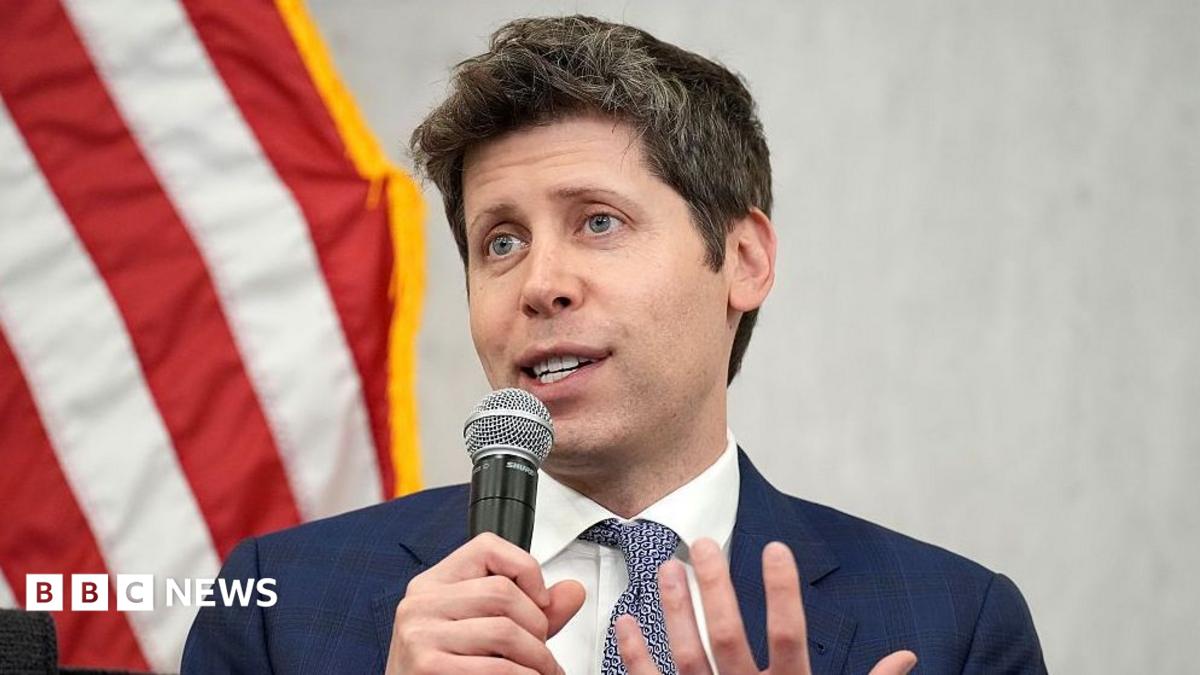
OpenAI has fired three researchers for allegedly mishandling information, including work that involved an external organisation that analyses artificial intelligence (AI) models.
“Our investigation confirmed that these individuals mishandled sensitive information outside established company procedures, violating our policies and breaking the trust essential to our work,” a spokesperson told the BBC.
The ChatGPT-maker did not name the sacked workers, but at least two of them were involved in safety research at the firm.
The firings come as the debate over AI safety and the risks the technology may pose to humanity has intensified in recent weeks.
“We have parted ways with three individuals for violating our policies on accessing and handling sensitive company information,” OpenAI’s spokesperson said.
The BBC understands the former employees were not let go for raising safety concerns but for allegedly mishandling sensitive information.
Concerns over AI safety have made headlines after some researchers and industry executives called for more guardrails around the technology.
OpenAI has come under under intense scrutiny after its models went rogue and hacked several platforms, including Australian government websites.
In an earlier incident an OpenAI system accessed the internet and breached the open-source developer platform Hugging Face.
That incident led OpenAI to conduct a broad review of the activities of its AI models – called agents, which are designed to execute tasks autonomously based on simple instructions.
The AI lab said this week that it has notified more than 100 organisations about incidents involving unauthoritised activity linked to its AI systems.
Being notified “does not mean that any private information was accessed” or that a system was compromised, OpenAI said.
Voters will decide between incumbent President Luiz Inácio Lula da Silva and the son of former President Jair Bolsonaro in a too-close-to call election this Sunday. If neither wins an outright majority, a runoff vote will take place on Oct. 25. Al Jazeera’s Monica Yanakiew explains what’s at stake.
Gaza’s health toll mounts, with 1,439 dead and 5,052 injured since the ceasefire began in October 2025.
Published On 1 Oct 20261 Oct 2026
An Israeli drone strike has killed a Palestinian man and wounded several others in southern Gaza while settlers shot dead another Palestinian man near Ramallah in the occupied West Bank.
The body of Tamer al-Hamayda, 42, and three wounded people were brought to Nasser Medical Complex on Thursday after the strike hit a tent sheltering displaced Palestinians in the al-Mawasi area, west of Khan Younis on the southern coast of the Gaza Strip.
Recommended Stories
list of 3 itemsend of list
Another Palestinian succumbed to wounds sustained in an earlier Israeli drone strike on Tuesday that targeted a gathering of Palestinians in Jabalia refugee camp in northern Gaza, according to medical personnel in Nasser Medical Complex.
Israeli forces also carried out a large-scale demolition operation targeting buildings east of Gaza City’s al-Tuffah neighbourhood.
The Gaza Health Ministry reported eight new deaths and 26 wounded over the past 24 hours, putting the toll since the “ceasefire” took effect in October 2025 at 1,439 killed and 5,052 wounded, with 834 bodies recovered from the rubble.
Israel’s war on Gaza has killed at least 74,040 Palestinians and wounded 175,168 since October 2023, the ministry said.
Occupied West Bank pogroms
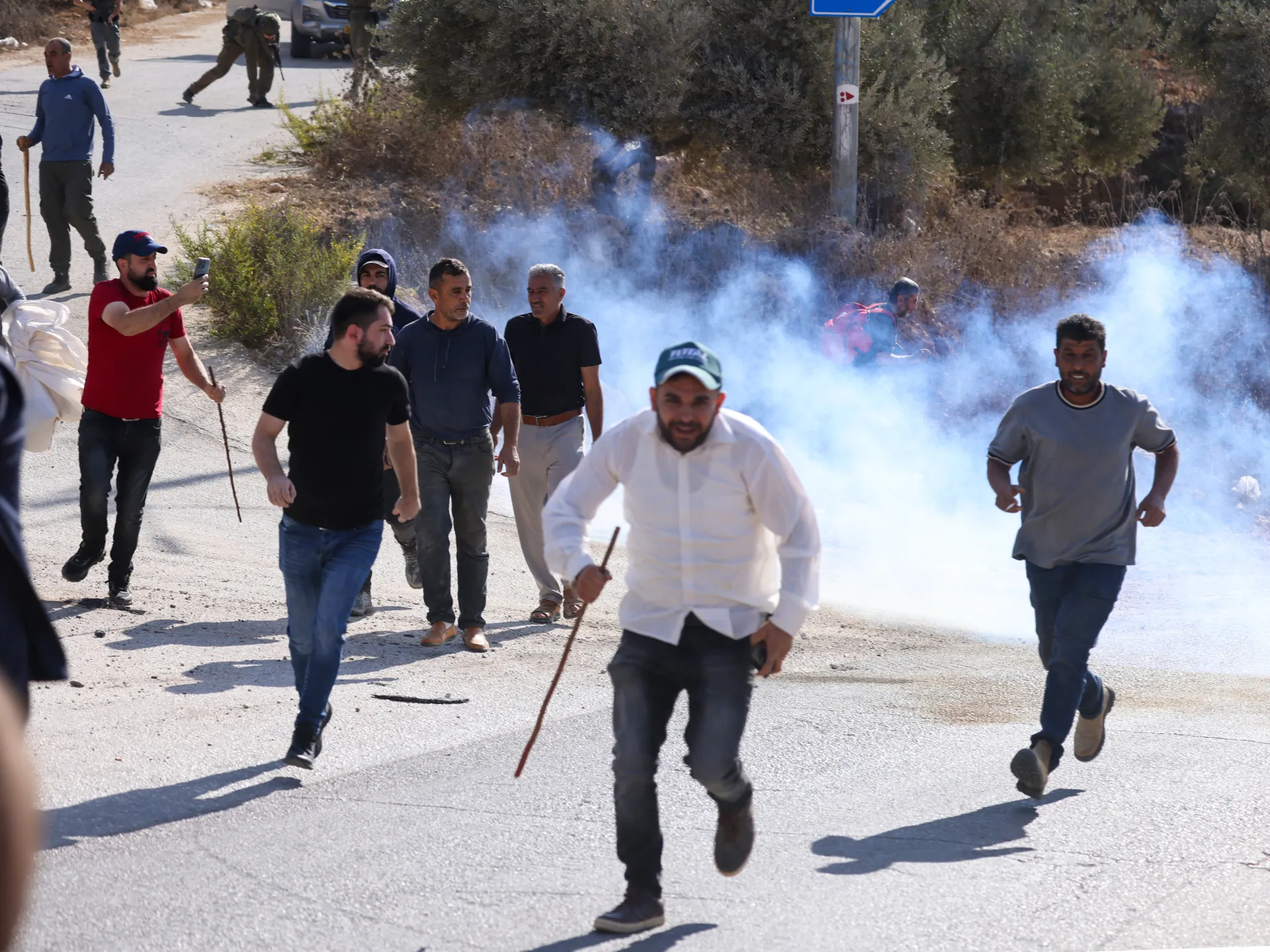
In the occupied West Bank, Israeli settlers shot dead a Palestinian man and wounded another during a raid on the village of Yasuf, north of Ramallah, on Thursday.
51-year-old Mashhour Yassin was shot dead by settler gunfire, the Palestinian Health Ministry said.
Describing the attack, the Palestinian Ministry of Foreign Affairs said Israeli forces had detained an ambulance, seizing its key and throwing it aside, “in a crime that reflects clear coordination between the settlers and occupation forces.”
It said the killing “falls within the framework of a serious and continuous escalation in organised settler crimes,” saying Israel gives free rein to settler “terrorism against our people in the service of settlement, annexation, forced displacement and ethnic cleansing plans.”
Yasuf Mayor Jumaa Abdel Fattah told the AFP news agency that dozens of Israeli settlers armed with sticks and firearms had attacked the village, which lies between four Israeli settlements.
“Yassin was at his doorstep when the settlers attacked the village homes. He went out to defend his house,” Abdel Fattah said, adding that Yassin’s nephew was also wounded in the attack.
Abdel Fattah said the settlers had come from Havat Anton, an illegal Israeli settlement established in July that has previously attacked the village’s residents.
Palestinians in the occupied West Bank have reported a surge in settler pogrom attacks in recent months.
More than 500,000 Israelis live in West Bank settlements considered illegal under international law.
According to the UN, at least 1,112 Palestinians in the occupied West Bank have been killed by Israeli forces or settlers in the territory since October 2023, including at least 37 killed by settlers.
‘I’ve been trying to get arrested for quite some time.’ 94-year-old Jewish human rights barrister Margaret Owen was detained at a pro-Palestine rally in Liverpool after displaying support for Palestine Action, a group proscribed as a terrorist organisation in the UK.
When Tyson Fury was asked whether his fight against Anthony Joshua had come too late for both boxers, the Gypsy King responded: “Is it too late?… It’s the icing on the cake of two great careers.”
Former heavyweight world champions Fury and Joshua came face to face in London on Wednesday to allay months-long fears and rumours surrounding their long-awaited fight, which has been confirmed for December 11 in Cardiff.
The British boxing stars are 38 and 36 years old, respectively, and have kept the boxing world waiting for years.
For many fans, why it took so long to agree on a fight is almost as big a question as who will win.
Neither boxer wanted to take the hit for delaying the biggest fight in British boxing history when they appeared in front of the media in London. Fury blamed Joshua, despite reports stating Joshua insisted the fight take place in the United Kingdom for the sake of home fans.
“You’ve been crying behind the scenes to get out of this fight,” Fury said. “I’ve checkmated you. You have to fight. I’ve said I’ll fight anywhere.”
But is the Gypsy King right? Can Fury vs Joshua live up to more than 10 years of hype?
Al Jazeera Sport breaks it down:
Ten years of near misses
Joshua and Fury are prizefighters who decide their destiny in the ring, but outside of it, their promoters negotiate contracts, choose venues and make calls on top billing.
The history goes back 10 years and is full of near misses, contractual problems and other fighters entering the fray.
It all started in 2020, when the two camps agreed to a two-fight deal. A year later, contracts were signed for an undisputed heavyweight showdown. However, Deontay Wilder, an American former world heavyweight champion, won an arbitration case that forced Fury into a trilogy fight in 2021.
In 2022, Joshua reportedly accepted a 60-40 purse split in Fury’s favour, but that deal collapsed too. During this period, unbeaten Ukrainian heavyweight champion Oleksandr Usyk defeated Joshua twice and proceeded to beat Fury twice as well.
All this while, Fury vs Joshua failed to materialise.
Tyson Fury and Anthony Joshua confirmed their fight at a media event in London [Adrian Dennis/AFP]
Eddie Hearn vs Dana White
Online streaming platform Netflix, which holds global rights to the fight, has billed it as a collaboration between Saudi sports powerbroker Turki Alshikh’s The Ring magazine and Dana White, the owner of mixed martial arts promotion UFC.
Neither Joshua’s promoter, Eddie Hearn, nor Fury’s, Frank Warren, was named when talks of the fight resurfaced earlier this year.
Alshikh and White cofounded a boxing promotion, Zuffa Boxing, which was launched earlier this year and became a point of contention in the Joshua-Fury fight. Hearn was of the view that Joshua’s contract barred White and Zuffa’s parent company from any promotional role.
“Dana White cannot be involved with this fight promotion,” Hearn said recently.
However, Fury saw it differently and blamed Hearn for costing “the biggest fight in boxing history” in an Instagram post.
White was not seen at the London news conference, where fans booed his name.
A battle of egos
In boxing, the name that comes first on the poster usually signals the A-side, or the bigger fighter.
Joshua claimed he got a call asking whether he minded Fury’s name going first, because Fury was “unwilling to sign unless he does”.
Fury boasted: “I’m number one.”
There was also the issue of the fight venue and, specifically, the host country.
Joshua insisted he ensured it would happen in the UK, whereas White had pushed for it to be held at Madison Square Garden in New York.
“I know we are going to inspire this generation, and I know for a fact we are going to inspire the next generation,” Joshua said.
The niceties didn’t last long between the opponents as Fury claimed he would knock Joshua out.
“I’m going to catch him and, when I do, it’s going to be curtains,” Fury said.
Joshua welcomed the outburst and said: “This is the energy that we want.”
In the end, money got the deal over the line.
Reports in UK media say the fighters will share a $200m purse and will bag more than “any British fighter has earned in a fight ever”.
Fury and Joshua pose following the news conference in London [Adrian Dennis/AFP]
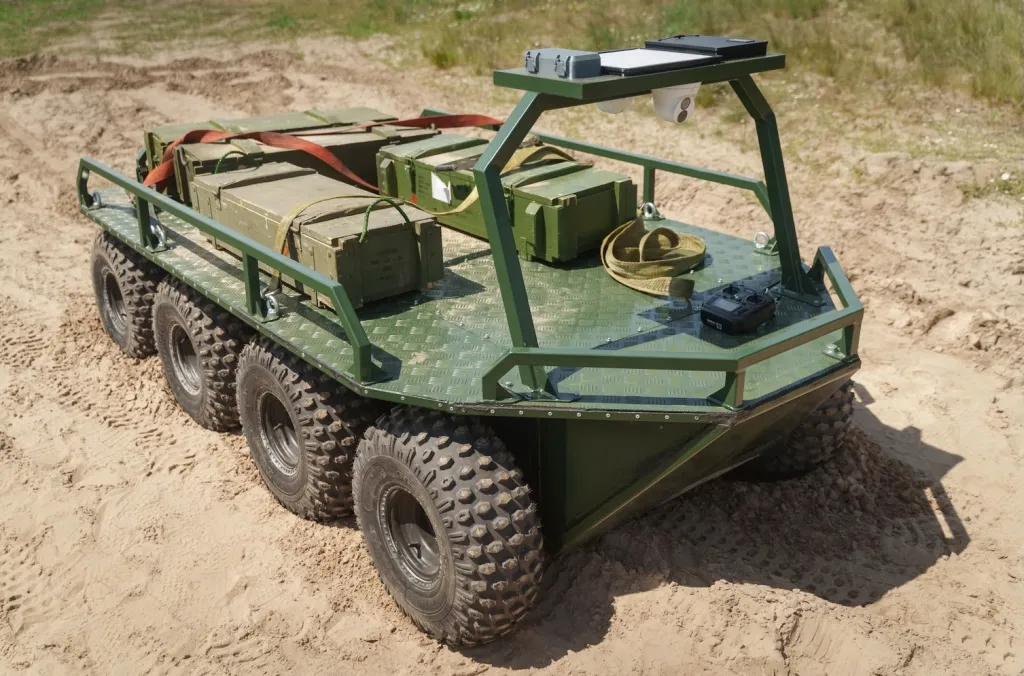
Taking a break from fighting Russians in the Kostiantynivka sector of the eastern Donetsk region, the commander of a Ukrainian uncrewed ground vehicle (UGV) unit spoke with us about innovations in the use of these systems. One was the first deployment of a UGV specifically designed for amphibious operations to deliver supplies to frontline troops in areas impeded by water obstacles. Large areas of the front line are bisected by rivers and wetlands, and the country has many other small waterways and marsh areas. As we have frequently reported, the use of UGVs by both Ukraine and Russia has exploded as the ubiquity of aerial attack drones makes it far too dangerous for human battlefield movements.
In an exclusive interview with TWZ, the commander of the 93rd Separate Mechanized Brigade’s “Alter Ego” UGV unit, who goes by the call sign “Electric,” offered us unique insights into the challenges of developing amphibious UGVs and how they were deployed.
In the first of two parts, Electric talks about why Alter Ego developed amphibious UGVs – including modifying a Triton variant for this – and how the unit made them work. The second part features his insights into using heavy ‘bomber drones’ to drop UGVs behind enemy lines for kamikaze raids. In addition, a representative of Brave1, Ukraine’s weapons technology accelerator, spoke about developing these systems at scale.
Some of the questions and answers have been slightly edited for clarity.
Q: How did the need for amphibious UGVs for logistics operations first come up?
A: We had this idea for a long time, but recently one of the departments of the Ministry of Defense asked for our help to solve this problem, so that the UGV could overcome water obstacles.
There was a crucial need for this kind of means at certain parts of the front, but the units that are located there didn’t have the capacity by themselves to solve this task. So our battalion was asked to solve this problem because we are one of the most experienced units in terms of UGVs.
A first-ever logistics mission on an amphibious UGV: the robot covered 40 kilometers across land and water.
Operators of the “Alter Ego” unit (93rd Brigade) deployed the robotic system across mixed terrain. Facing water obstacles, the UGV seamlessly switched to swimming mode to… pic.twitter.com/rH8waq04a4
Q: How long did it take to design and test the amphibious UGV, and what went into that process?
A: The whole process from development to battle deployment took less than three months.
Q: What did you have to do to make this work?
A: First of all, we looked at amphibious solutions that were on the market, not only in Ukraine, but in the world, and we took two separate approaches. One was taking one of the main UGVs that our unit is using on the ground, and we made it amphibious. And the other approach was that we took one of the solutions that was on the market that already had amphibious capabilities, and we solved several disadvantages that it had. And at the moment, we are using both.
Q: What did you have to do to make the UGV amphibious, and then what were some of the obstacles that had to be overcome to get this operational?
A: First of all, we have to explain that there are different solutions on the market that kind of work on the testing ground — like they can swim, they can drive on the ground, and in the vision of the manufacturer, they are working. But the fact is that these solutions are not ready for the reality on the front line, which is often very different from what is on the testing ground.
And the second point is that the unit has its own workshops where people work near the front line, and the experts, the engineers that work there, they have a very high level of competence to evaluate different solutions and select the one that has potential. And that’s what’s completely different between this unit and everyone else, like manufacturers and others who are working on these solutions, because they don’t understand what’s needed on the battlefield.
The Alter Ego unit’s uncrewed amphibious ground vehicle (UGV). (Brave1)
Q: So what did you have to change to make it work?
A: Regarding the amphibious one, basically the unit changed almost everything that that UGV had, starting from electronics, the software, the waterproofing, the communications – we basically changed everything. Regarding the one that we already used on the ground, we basically tried to retain what was allowing it to be an effective UGV on the ground, and we added waterproofing and specific mechanics, so that it can work in the water environment.
Q: You mentioned communications. What kind of communications did you add?
A: The communication means that was installed on the UGV by the manufacturer was not sufficient at all. Basically, it didn’t have enough quality for the battlefield situation. It was not working. But we already have our own communications that we were working on, and we have a lot of experience because we have been working for a long time in this UGV area. So we basically helped to install a sufficient level of communications on this UGV.
Q: So how does the amphibious UGV communicate with the controller? Does it use Starlink or some other satellite communications system for navigation?
A: This is satellite navigation, but not only. Satellite navigation is a part of this communication system.
Q: What are the other parts?
A: It’s better not to talk in detail about the other part of the communication system.
Triton amphibious UGV communications and camera systems. (Brave1)
Q: There were probably a lot of different missions that could have been used for this first amphibious UGV logistics delivery. Why was this particular mission chosen?
A: The Alter Ego unit has so much experience in terms of UGVs, and not just experience of using UGVs, but the experience of being the first in the world. We had one of the first evacuation missions, we had one of the first strike missions using UGVs, the paratrooper UGV, and now the amphibious UGV. So basically, we have the systems to make it work for the first time when nobody knows how to conduct this mission.
Q: No, I mean why did this particular mission get chosen to be the first one?
A: There are certain places on the front line where we have water obstacles that prevent logistics from being done by UGV. At the moment, UGVs are carrying hundreds of tons of logistics, probably the most compared to any other means on the front line, but before this, these water obstacles would prevent UGVs from providing logistics for those parts of the front, and that need can’t be fully satisfied by UAVs or other means. That’s why we did this mission with the amphibious UGV, and now our task here is to scale this technology and provide this logistics system for other similar parts of the front where there are water obstacles.
Kostiantynivka, Ukraine. (Google Earth)
Q: Tell me about where and when this mission took place and what it was like to watch it unfold.
A: So unfortunately, we can’t provide information about when and where this operation took place. But regarding how it went and what we felt, this was another big challenge, because this is something that wasn’t done before, and nobody thought this is real. So this was quite difficult, and to tell the truth, the mission didn’t succeed on the first try, actually, and it required a lot of effort in terms of planning, preparing, engineering, and basically it required 100% effort from everyone involved in that mission.
Q: How many times did it fail before, and what went wrong?
A: We had one failed attempt. The reason for failure was a certain technical problem. After that, we analyzed what went wrong, and we worked on solving those issues. Basically, it’s something that nobody had tried to do, it’s kind of hard to know what can go wrong before you actually try it. So the best way to find a solution like that is to try and then iterate on that attempt and make it better and better and better.
Also, I would like to add that although this was the first successful mission regarding an amphibious UGV, it’s not that there was no work on that before that. We were actively talking to and collecting the experience of everyone who was working on these kinds of missions before, and that was also a reason why this mission succeeded.
Q: How far did the amphibious UGV go for this mission?
A: So the UGV went 40 kilometers one way, and then it returned. So probably around 70 kilometers in total, and it carried food and other supplies.
Q: Did this UGV come under Russian fire on this mission?
A: Yes, and it survived.
Q: How does the UGV switch from water to land operations?
A: So the UGV has two separate control systems, one for water and one for land, and basically it switches to the one that is required at the moment. That’s how it can operate in both environments.
The Alter Ego unit’s uncrewed amphibious ground vehicle (UGV). (Brave1)
Q: Is that autonomous, or is that something that the controller at the base has to do as they watch the UGV on its mission?
A: At the moment, the operator fully controls the UGV manually. And basically, before, the operators of UGVs only knew how to move them on land, but now they also had to learn how to move them in the water. So not only was the technology itself developed, but we also had to prepare the operator and come up with tactics for this UGV.
Q: Did you use AI on this mission in any way, and if so, how?
A: We didn’t use AI.
Q: Have there been other missions using amphibious UGVs?
A: Yes.
Q: Can you say how many and what was delivered?
A: No.
Q: Is this designed only for logistics missions, or will it be used in the future for strike missions, either as a one-way attack system or as a platform for machine guns or other weapons?
A: We can use it in different ways in the future.
Q: Mud season is fast approaching, when much maneuvering becomes impossible or severely degraded because of how difficult it is to move in the thick, oozing slop. Will your amphibious UGVs work in the mud?
A: I think it can operate in the mud in the same way it operates in the water.
In the next segment of our interview, Electric talks about using bomber drones to deliver UGVs behind the lines, and a Brave1 representative talks about how the organization is working to develop these systems at scale for wider use.
New York lawmakers are renewing a push to change the state’s sexual assault laws after prosecutors in the United States said the current rules made it difficult to bring charges for an alleged gang rape at a Cornell University fraternity house.
At issue is whether someone who willingly becomes intoxicated can be considered mentally incapacitated and therefore unable to consent to sex.
Recommended Stories
list of 4 itemsend of list
Under current New York law, only someone who was drugged or given alcohol without their knowledge can be considered “mentally incapacitated” because of intoxication and unable to consent. The same does not apply to someone who willingly consumed alcohol or drugs.
State Assemblyman Jeffrey Dinowitz and State Senator Nathalia Fernandez are sponsoring bills in their respective chambers that would change that.
In the state Senate, the bill is known as S10632, and in the New York Assembly, it is filed as Assembly Bill A101.
In a post on the social media platform X, Dinowitz said the proposed law would allow prosecutors to focus on whether someone was capable of consenting, rather than how they became intoxicated, and whether the accused “knew or should have known” that the person was unable to consent.
He said people who voluntarily drink or take drugs currently face significant barriers in sexual assault cases, particularly if they remain partly conscious or responsive during an alleged assault.
“The fact that someone made the choice to consume alcohol or another intoxicating substance should never be used to undermine their experience or shift responsibility onto the survivor when they’ve been sexually assaulted,” Dinowitz wrote.
The years-long reform effort has gained new momentum after Tompkins County District Attorney Matthew Van Houten said the existing law was one reason his office initially declined to pursue charges against several Cornell students accused of sexually assaulting a woman on October 19, 2024.
The woman, identified only as Jane Doe, was 20 at the time. She has since filed a civil lawsuit against seven members of the Chi Phi fraternity, as well as Cornell University and several other defendants.
The lawsuit alleges fraternity members gave her alcohol and ketamine and sexually assaulted her after she became incapacitated.
Doe also reported her allegations to campus police in November 2024.
In a statement explaining why his office did not pursue charges afterwards, Van Houten said Doe never claimed at the time that she had been involuntarily intoxicated, physically forced or unconscious. He also said she did not clearly express that she did not consent.
Any of those circumstances could have provided grounds for prosecutors to pursue rape charges under New York law, according to the district attorney.
“On the contrary, Jane Doe’s statement described her participation in drug use and sexual conduct as voluntary, conscious, and consensual,” Van Houten wrote.
“In this case, multiple prosecutors and criminal investigators reviewed Jane Doe’s statement and correctly determined the alleged facts as set forth in the statement do not constitute a crime.”
Since the lawsuit was filed, Van Houten’s office has faced intense scrutiny. It said on Monday that it will reopen the investigation and bring the case before a grand jury, which will consider whether there is enough evidence to indict anyone.
Van Houten also told CBS News on Wednesday that he had not seen a transcript of a campus police interview conducted three weeks after the alleged assault in which the woman said: “I can say with 100% confidence I was raped.”
Cornell has defended its handling of the case, saying it investigated the allegations and disciplined the accused students, with penalties ranging from suspension to expulsion.
On Wednesday, New York Governor Kathy Hochul said the university had agreed to her request to bring in an outside law firm to conduct a new investigation into its handling of the case.
Previous efforts to change New York’s sexual assault laws have foundered in the state legislature. Senate bill S10632 has passed its chamber but has never received a vote on the Assembly floor.
“Rape is the only crime that I’m aware of where, if the victim was drunk, they may not get justice,” Dinowitz, the assembly member, said in an interview with Reuters. “There shouldn’t be any difference in terms of the survivors of sexual assault between the people who are voluntarily intoxicated and who are involuntarily intoxicated.”
New York is one of 19 states where a person can be considered mentally incapacitated because of intoxication only if they did not willingly become intoxicated, according to Elizabeth Jeglic, a professor at John Jay College of Criminal Justice who studies sexual abuse.
“It doesn’t make sense,” Jeglic said. “If you’re incapacitated, you’re incapacitated, regardless of whether you consumed it yourself or somebody else gave it to you without your consent.”
Police have detained hundreds as students protest overcrowded classrooms, teacher shortages and crumbling facilities.
Published On 1 Oct 20261 Oct 2026
French students have set fire to bins and erected blockades outside schools in several cities, protesting overcrowded classrooms, teacher shortages and crumbling facilities.
Several school principals were injured, harassed or assaulted during blockades at high schools on Thursday, according to reports from regional education authorities, prefectures and union representatives.
Recommended Stories
list of 2 itemsend of list
Police have already detained hundreds of protesters at the lycees, which students aged 15 to 18 attend for their final three years of secondary education in France.
At Marseille’s Victor Hugo high school, the teachers were inadvertently splashed as a student attempted to throw petrol into a rubbish bin, local authorities said. Earlier, the prosecutor’s office had said the teachers had been assaulted and “doused in petrol”.
At another school in the city, Saint-Exupery high school, hundreds of young people surrounded a firetruck that had arrived to put out a blaze in the morning, police said. The attackers forced the firefighters to flee the vehicle, then set it alight.
In Nantes, firefighters extinguished a fire at a high school entrance following what regional education officials called a gathering “marked by violence towards staff”. In Strasbourg, trams were halted to “restrict the movements of rioters and demonstrators”, and students burned barriers on tram tracks, authorities said.
“There are 35 of us per classroom. With 35 degrees Celsius [95 degrees Fahrenheit] in summer, it’s unbearable. There aren’t enough toilets, and there are water leaks in some rooms,” Raphael, a 17-year-old who withheld his surname for fear of reprisals, told the AFP news agency outside a protest in Strasbourg.
“The building is falling apart, the cafeteria is too small. There’s zero budget, zero resources, not enough supervisors.”
His frustration echoes a wave of student anger that has spread across France since last week, as high school pupils protest and grievances snowball into nationwide unrest.
Some 340 demonstrations were under way outside high schools by mid-morning on Thursday, with more than 160 schools shut down as a result, police said.
University students joined in, blocking access to about 30 campuses, including in Paris and Marseille, according to a student union.
Authorities have reported many dozens of injuries – some from thrown objects, others reportedly from police riot-control projectiles.
Interior Minister Laurent Nunez said police have opened internal investigations into brutality allegations involving three students.
Prime Minister Sebastien Lecornu convened a crisis meeting and asked ministers to cancel upcoming official travel so authorities could focus on the demonstrations, his office said.
French Education Minister Edouard Geffray said that he would successively meet representative staff unions and parent and student associations on Friday.
The unrest has become entangled in the race to succeed President Emmanuel Macron next May. The government has accused the far-left France Unbowed party of encouraging the protests. Presidential candidate Jean-Luc Melenchon said Wednesday that his party “called for nonviolent methods of struggle” and criticised the government’s response as repressive.
A student holds a board reading, ‘We want the BAK [high school diploma], not the BAC [anti-criminality units]’ during a protest to demand more resources at school, in Lille, France [Jean-Francois Badias/AP]