Stay informed and up-to-date with the latest news from around the world. Our comprehensive news coverage brings you the most relevant and impactful stories in politics, business, technology, entertainment, and more.
Israel imprisons hundreds of Palestinian children at a time, holding them indefinitely in military detention systems that traumatise the children. Their suffering was discussed during an event on the sidelines of the UN General Assembly High-Level Week.
Counter-terrorism police also questioned a UK national, days after five others were arrested and released on bail.
Published On 1 Oct 20261 Oct 2026
A man with dual UK-Iranian citizenship has been arrested in connection with an alleged security incident at an airbase in southwest England over the weekend.
British counter-terrorism police said on Thursday that a “27-year-old man, a dual UK/Iranian national, was arrested” in central London.
He was detained “on suspicion of preparation of terrorist acts” as part of an investigation into the events Sunday near RAF Fairford.
A second man, 26 – a UK national – was also “questioned under caution”, the police statement added.
The RAF base 160km west of London has been used by US bombers during decades of conflicts in the Middle East, including the US and Israel’s war on Iran, which began in February.
On Sunday, five men, all in their 20s and from London, were arrested on suspicion of explosives offences and “terrorism” over the incident at RAF Fairford. They have since been released on bail.
“The investigation into circumstances surrounding events in Gloucestershire is hugely complex, and our specialist teams are interrogating multiple lines of enquiry,” Vicki Evans, the senior national coordinator for counter-terrorism policing for the Metropolitan Police, said in a statement.
“As we’ve made clear, we’re looking at all possible angles – including possible foreign state involvement.”
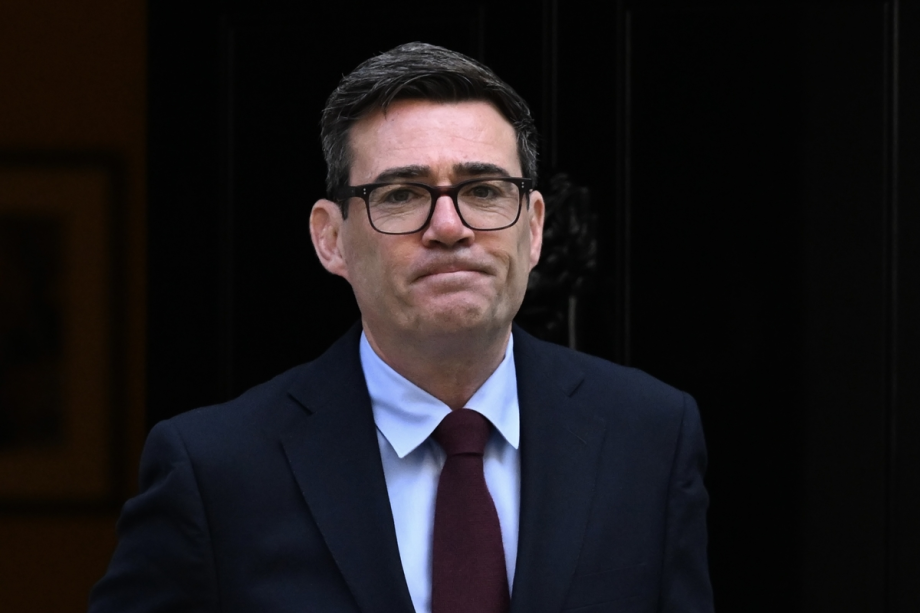
Earlier, UK Prime Minister Andy Burnham said there were “strong indications” that Iran played a role in an alleged security incident.
Iran, however, strongly denied any involvement in the incident and the country’s foreign minister, Abbas Araghchi, hit back at Burnham’s allegations.
Executions in Tennessee have been halted for the rest of the year, Governor Bill Lee has said, after two attempts to execute death row inmate Christa Pike by lethal injection failed.
In a statement to CBS News, the BBC’s US partner, Lee said lawful executions were among the state’s “most serious responsibilities”, adding that he has ordered a third-party review “to determine exactly what occurred”.
Tennessee prison officials on Wednesday attempted to administer two lethal doses of pentobarbital to Pike but she survived and was taken to hospital. Her medical condition is unclear.
Pike, 50 was sentenced to death in 1996 for the murder of Colleen Slemmer.
She was 18 when she and her then-boyfriend, Tadaryl Shipp, beat, tortured and killed 19-year-old Slemmer.
Pike would have been the first woman to be executed in Tennessee for over 200 years.
Speaking to reporters at a ribbon-cutting ceremony on Thursday morning, Lee said: “I’m highly disappointed, along with Tennesseans, about what happened last night.”
Governor Lee has not made clear who will conduct the independent review of the state’s execution procedures.
His order to pause all executions will overlap with the planned 3 December execution of convicted murderer Gary Sutton.
In court filings, Pike’s lawyers said she needed “life-saving measures” after her botched execution.
The Tennessee Department of Correction, which handled the execution, issued a statement defending its handling of the case.
“The Tennessee Department of Correction followed every step of the State’s lawful, established execution protocol approved by the attorney general’s office,” the statement said.
“The lethal injection chemical in the protocol has consistently been effective, and the protocol does not allow for additional procedures beyond what was carried out this evening.”
This is the second time in 2026 Tennessee officials attempted and failed to execute a prisoner.
Facing deportation from Japan, a Ugandan filmmaker makes a samurai film inspired by his own life.
For more than 15 years, Sunday, a Ugandan asylum seeker, has lived in limbo in Japan. Once detained at the Shinagawa immigration centre, he must now regularly report to the authorities and rely on charity to help feed his children.
Changes to Japan’s immigration laws mean he could face deportation. Refusing to be reduced to a statistic, Sunday throws himself into an unlikely project: a samurai film inspired by Yasuke, remembered as Japan’s first Black samurai. For Sunday, filmmaking becomes an act of survival, dignity and hope.
Sunday in Japan is a documentary film by Antonio Rui Ribeiro, Leo Nelki and Golriz Kolahi.
He thought at first that this was simply because of an air pocket, but “it took a lot of time, almost a minute”.
Everyone who had not been seated fell to the floor, the 40-year-old said.
“After a couple of seconds, we started to hear screams. ‘There is blood, there is stabbing, we need help’,” Polovincik said.
“At the end of the day, you understand very, very quickly that literally there is nothing that you can do at this point in time,” he said.
Polovincik, a performance marketing analyst, said he tried to “be cool” for his children.
“You just tell them, yeah, everything’s going to be all right. It’s just a malfunction in the aeroplane, there is a crew under control, the passengers are helping them, [you] hug them really hard and try to keep your face so it doesn’t look very panicked, try to keep your tone of voice.”
But he said there was naturally a “high degree of panic” on the flight.
There were lots of families with children on the plane because the flight took place towards the end of a Jewish holiday period.
After about 10 to 15 minutes, he said a passenger in the cockpit told them the incident was “under control” and other staff were flying the plane.
In a video released by Netanyahu’s office, passenger Yaniv Hayun described putting the attacker in a chokehold and pulling him out of the cockpit before other passengers helped pin him down.
Two other pilots who were onboard the flight then took over the controls and safely landed the plane, which had been carrying more than 150 passengers.
Polovincik said: “After they told us that the situation is, again, ‘under control’, then it was a bit harder to tell the kids that it’s malfunctioned because people start to walk around the aeroplane covered with blood.”
Polovincik was praised Indian pilot, Capt Smit Machchhar, who fought off his attacker and opened the door to the cockpit, allowing passengers to step in.
“Without him opening the door, we’re probably not speaking here right now,” he said, adding that he “can’t even start saying our gratitude for this human being”.
Polovincik said that, although he was not religious, he could not escape “the feeling that it was the hand of God yesterday” that had put “the pieces on the board in the way that they did”.
Last year Johal was acquitted in a case where he was accused of financially supporting the KLF terror group.
He remained in prison because he faces federal charges in eight other cases, for which he potentially faces the death penalty.
However, his legal team argues that these cases are almost identical and that the other charges should be dismissed.
There have been hundreds of hearings over the past nine years and the bail order concludes that the trial is “certainly not likely to conclude anytime soon”.
His brother Gurpreet Singh Johal – who has lobbied successive governments calling for his release – said the decision to grant bail had been a “really important milestone”.
“It is just a first step, but it is a step in the right direction,” he said.
The move was also welcomed by politicians and the legal charities Redress and Reprieve, who represent Johal in the UK.
Reprieve’s deputy executive director Dan Dolan said the release was “a really important moment” – but that Johal still faced the death penalty on “trumped up charges”.
“It is really important that we recognise he’s not out of the woods yet,” he said.
“We now really need to push to get him home.”
Redress said Johal’s release from prison could not undo “the intolerable suffering caused by nine years of arbitrary detention”.
The Trump administration has warned France and Germany to release emergency diesel reserves to help lower global fuel prices or risk facing a potential US ban on diesel exports, according to people familiar with the discussions.
The warning represents a sharp escalation in Washington’s pressure on European allies as President Donald Trump looks for ways to increase fuel supplies and bring down prices ahead of the November midterm elections.
US officials have become increasingly frustrated with France and Germany, which Washington believes have not fully acted on earlier commitments to release emergency oil and petroleum reserves as global fuel markets face mounting disruptions.
“It is in Europe’s best interest to work with the United States as we pursue multiple pathways to boost the supply of refined products and lower costs for consumers,” a US official told Reuters.
Stay ahead of the geopolitical week.
MD Briefing delivers expert analysis across five global fronts — the Indo-Pacific, energy, geoeconomics, European security, and the Middle East — every Monday morning. Free.
A second source familiar with the discussions said the United States had asked the European Union to release 120 million barrels of diesel over the next six months.
The demand highlights the growing importance of Europe’s fuel reserves at a time when disruptions to major energy-producing regions are tightening global supplies.
Washington Raises Pressure on Europe
The US administration’s warning comes as Trump considers restricting US diesel exports as part of a broader effort to increase domestic supplies and reduce fuel prices for American consumers.
The approach creates a difficult balance for Washington. Limiting exports could increase the amount of diesel available inside the United States, potentially putting downward pressure on domestic prices. But it could simultaneously reduce supplies available to international markets, particularly Europe, which has become increasingly dependent on imported refined fuels.
US Energy Secretary Chris Wright said on Wednesday that the administration expected European countries to announce additional diesel supplies soon.
“We’ve lost some diesel exports from the Middle East, although we’re restoring those, and we’ve lost diesel exports from China,” Wright told reporters.
The disruptions have exposed the vulnerability of global refined fuel markets to geopolitical conflicts and changes in trade flows.
Germany’s economy ministry did not immediately respond to a request for comment, while France’s energy ministry declined to comment.
The White House’s pressure also appears to have become a broader diplomatic issue among Western allies.
An official at the French presidency said Trump and French President Emmanuel Macron did not discuss the issue when they met on the sidelines of the UN General Assembly in New York last week.
Macron, however, plans to convene a video conference of G7 leaders to address rising fuel prices and the availability of refined petroleum products.
The discussions are expected to include coordination over the release of emergency reserves in cooperation with the International Energy Agency.
Why Europe Matters to the Fuel Market
Europe’s position in the global fuel market has changed substantially since Russia’s invasion of Ukraine.
European countries previously relied heavily on Russian crude oil and refined petroleum products. The subsequent sanctions and restrictions on Russian energy imports forced European governments and companies to find alternative suppliers.
The result has been greater dependence on imports from countries including the United States and suppliers in the Middle East and Asia.
That dependence has become more significant as the conflict involving the United States, Israel and Iran has disrupted energy flows from the Middle East.
The loss or reduction of refined fuel exports from major suppliers can quickly affect diesel markets because refining capacity cannot always be shifted between regions immediately.
Diesel is particularly important because it powers much of Europe’s commercial transport, heavy industry, agriculture and logistics sectors. Sustained shortages can therefore affect the broader economy rather than simply increasing prices at fuel stations.
The US Faces Its Own Fuel Dilemma
For Trump, the issue also has a strong domestic political dimension.
Fuel prices are highly visible to American consumers, making gasoline and diesel costs politically sensitive ahead of the November midterm elections.
The administration is therefore examining multiple ways to increase available supplies and reduce costs.
But a potential US diesel export ban could have consequences beyond America’s borders.
The United States has become an important supplier of refined petroleum products to international markets. Restricting those exports could tighten supplies elsewhere, potentially pushing international prices higher even if American prices fall.
That creates a difficult policy tradeoff for Washington.
The administration wants to protect US consumers from high fuel costs while maintaining sufficient supply in global markets. European governments, meanwhile, face pressure to use their own emergency reserves even as they seek to maintain energy security following the loss of Russian supplies.
Europe Seeks a Coordinated Response
France appears to be pursuing a broader G7 response rather than treating the issue as a bilateral dispute with Washington.
Macron’s planned meeting would allow the world’s major industrial economies to discuss the availability of refined products and potentially coordinate emergency stock releases through the International Energy Agency.
Such coordination could help prevent individual countries from taking measures that unintentionally worsen shortages elsewhere.
But disagreements over how much fuel should be released, when reserves should be used and who should bear the cost could complicate the process.
Emergency reserves are designed primarily to protect countries against severe supply disruptions. Releasing large quantities can provide temporary relief, but it also reduces the buffer available if another disruption occurs.
That makes Europe’s response particularly consequential at a time when energy markets remain exposed to geopolitical shocks.
A New Test for Transatlantic Energy Relations
The dispute illustrates how the global energy system has become increasingly intertwined with broader geopolitical and trade relationships.
Europe needs reliable fuel supplies after cutting its dependence on Russian energy, while the United States is attempting to use its position as a major energy producer and exporter to address domestic price pressures.
Trump’s warning to France and Germany adds another layer to that relationship by linking European reserve policy to continued access to US diesel exports.
Whether Europe ultimately releases the amount of diesel Washington has requested will depend on national assessments of market conditions, domestic energy security and the risks of further supply disruptions.
For now, the dispute signals that the energy consequences of conflicts in the Middle East are reaching far beyond the region itself.
As the United States and its European allies try to contain fuel prices, they face a common problem but increasingly different pressures over how the burden of stabilising global energy markets should be shared.
Greaney said blame rested with Travelodge as an organisation rather than with individual staff, and a culture had developed in which room intrusions were regarded as “one of those things”.
The woman emailed a complaint to Travelodge in January 2023, addressed to chief executive Jo Boydell and others.
The review concluded the email was handled by her office without her knowledge, and did not come to Boydell’s attention until March 2026.
The woman’s complaint was instead investigated by a manager who was himself criticised in it, and the customer services team offered her a refund for her night’s stay, which she understood to be £30.
Boydell stepped down as chief executive in August following criticism over the company’s handling of safety complaints. The review said she deserved credit for driving improvements from March.
The attack became national news in March after the woman contacted the BBC, saying the case raised serious questions about room security at Travelodge hotels.
Then prime minister Sir Keir Starmer wrote to Boydell in March urging her to “seriously engage” with the government over security. Greaney was appointed to lead the review the following month.
Artificial intelligence (AI) could trigger financial market shocks and the UK needs to be prepared for them, the governor of the Bank of England has warned.
Andrew Bailey said the central bank is watching the huge amounts of money being invested in AI “very carefully” and cautioned that “not everybody always wins”.
The money that has been spent on and loaned to AI firms over the last few years in the hope of large returns is causing markets to value some of them as multi-trillion dollar businesses.
Asked if he believed an AI bubble could burst, Bailey said: “You could see some correction of asset prices at some point.”
He was speaking exclusively to the BBC about what the risks and benefits of AI could be for the UK economy.
Bailey said he believed the technology has “great potential to strengthen growth in our economies”, adding that this was something the country needed.
“But it also brings with it substantial risks and so we have to be on top of both of those.”
One such risk is what happens if the big bets being made on AI don’t pay off.
AI chipmaker Nvidia is currently the world’s most valuable listed company, with a market valuation of $5.5tn (£4.14tn), thanks largely to investors who believe in the big profits AI could create.
Meanwhile, tech giants Alphabet, Meta, Microsoft, and Amazon are spending hundreds of billions of dollars on the technology.
And two of the largest AI companies in the world – Anthropic and OpenAI – are also preparing to sell shares in their firms on the US stock market in moves which many believe will lead to hundreds of billions of dollars more flowing into the industry.
“There is a large, very large, amount of investment going into this sector now, and of course that’s natural because it’s a major area of growth,” said Bailey.
“And of course you see that the asset prices of the companies that are developing it have gone up a lot and that reflects the fact that there are high expectations of what it can deliver.”
“Everybody is currently priced to be a winner,” he added, but warned that “you look back at the past, not everybody is a winner”.
“Google was not the first market leader in internet search. It was Netscape. Nobody can remember Netscape today. It doesn’t exist. So not everybody always wins.
“We are prepared for the fact that there will be, I think, some shocks come along to markets and we have to deal with that. We have to make sure the system is resilient.”
Fighting in Sudan’s Kordofan region has intensified since late 2025, turning it into one of the main battlegrounds in the war between the Sudanese Armed Forces (SAF) and the paramilitary Rapid Support Forces (RSF), now in its fourth year.
The vast region, which comprises North, West and South Kordofan states, lies where the two sides’ areas of control meet, between the army-held central region and the RSF-controlled Darfur in the West. In recent months, the SAF has pushed the RSF out of much of North Kordofan.
The battle is increasingly being fought from the air. Drone strikes on towns in North Kordofan are growing more frequent and deadly, and civilian infrastructure has been hit across the region.
Since the war began in April 2023, one in five recorded attacks in Sudan has taken place in Kordofan.
Al Jazeera maps where the fighting is concentrated in Kordofan and across Sudan, and the displacement that has followed.
Who controls what on the ground?
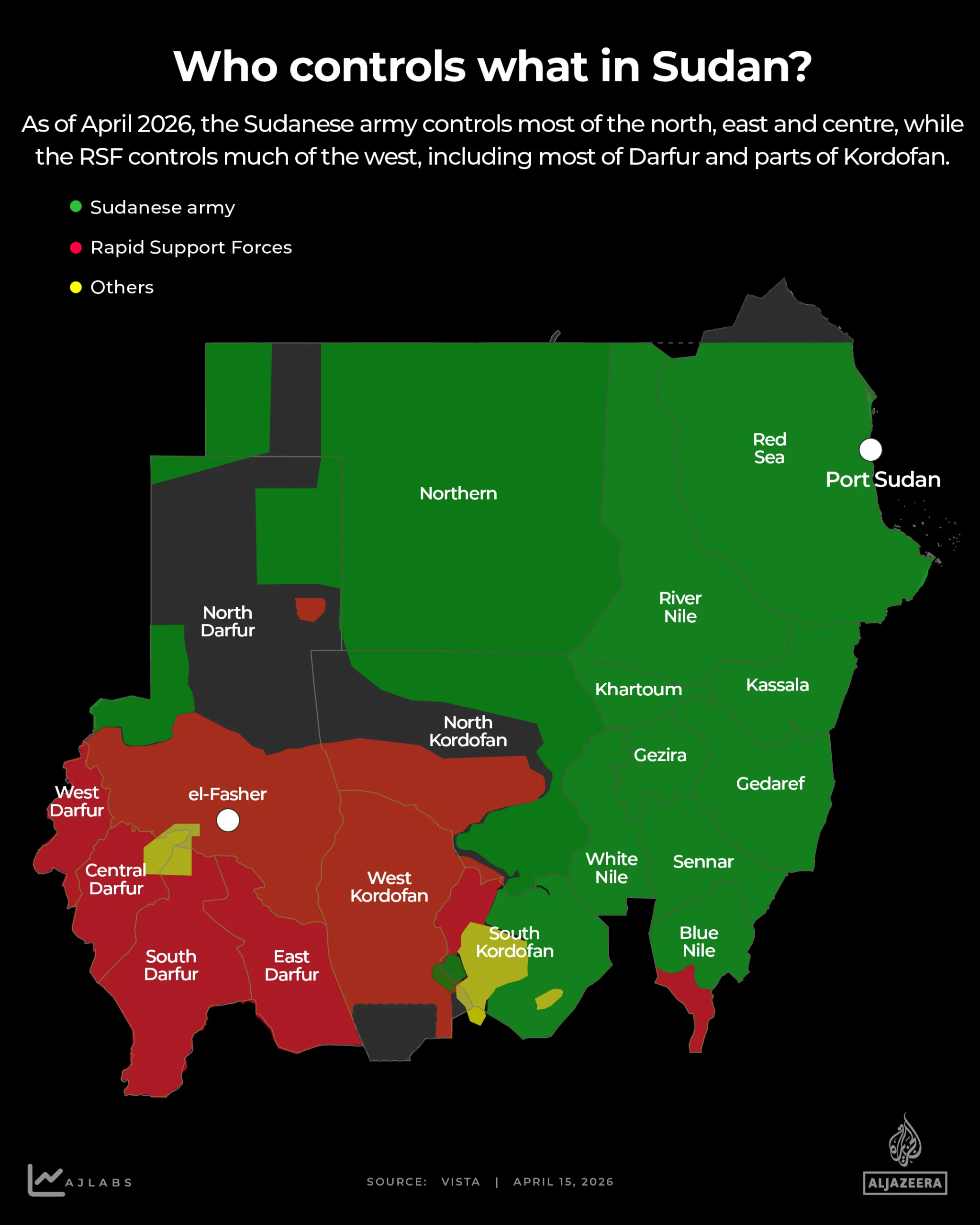
Sudan is broadly divided between the two sides. The SAF controls the capital, Khartoum, and most of the north, east and centre, while the RSF controls the west, including almost all of Darfur and parts of Kordofan. Smaller armed groups, including the RSF-allied Sudan People’s Liberation Movement-North (SPLM-N), hold pockets of territory in the south.
The army has the upper hand in the north, the RSF in the west, and South Kordofan remains contested.
Where have most attacks occurred?
According to an Al Jazeera analysis of data from the Armed Conflict Location and Event Data (ACLED), an independent conflict monitor, there were 14,648 recorded attacks between the start of the war on April 15, 2023, and September 19, 2026.
The four most affected states include:
Khartoum: The capital region has seen the most, with 5,719 attacks, or 39 percent of the total, almost three times as many as North Darfur, the second-highest
North Darfur has witnessed 1,999 attacks (13.7 percent)
Gezira state has seen 1,435 attacks (9.8 percent)
Kordofan emerged as a major centre for fighting. North, South and West Kordofan together recorded 2,876 attacks, or about 19.7 percent of all recorded attacks, putting the region behind only Khartoum when considered collectively.
Who has carried out the most attacks?
The SAF is associated with the largest share of recorded attacks between April 15, 2023 and September 19, 2026, accounting for just over half (52 percent), compared with just over a third (34.7 percent) for the RSF and 13.3 percent for other actors.
Smoke billows after drone strikes by the paramilitary Rapid Support Forces (RSF) targeted the northern port in the Red Sea city of Port Sudan, Sudan, on May 6, 2025 [AP Photo]
The balance of attacks has shifted over time. The SAF was associated with more recorded attacks than the RSF in the first year and a half of the war, before the RSF overtook it in number of attacks from late 2024 to mid-2025.
Since August 2025, the two sides’ monthly attack counts have been closer, with the SAF generally recording slightly more, even as the overall number of attacks has fallen sharply.
Where have attacks in Kordofan occurred?
After the fall of el-Fasher, the last major Darfur city held by the army and its allies, in October 2025, attention shifted to Kordofan. The region sits between RSF-held Darfur and the army-held centre, north and east, forming a corridor between the two sides’ heartlands.
Kordofan’s three states recorded 2,717 attacks: North Kordofan had 1,205 (44 percent), South Kordofan 789 and West Kordofan 723. Adding Abyei, a disputed oil-rich area on the Sudan-South Sudan border that was historically part of Kordofan, brings the total to 2,878.
Soldiers arrive at the Allafah market, in an area recently recaptured by Sudan’s army from the Rapid Support Forces paramilitary group, in the al-Kalalah district, south of Khartoum, Sudan, on March 27, 2025 [AP Photo]
The concentration of attacks differs from state to state. In North Kordofan, Sheikan locality alone accounted for 497 attacks, or 41 percent of the state’s total. Sheikan is home to the state capital, el-Obeid, a commercial and administrative hub linking central Sudan with the west. Taking the city would open a route east towards Khartoum for the RSF.
On September 9, a drone strike on a college in el-Obeid tore the roof off the building and killed a security guard, the college’s dean, Abdel Aziz al-Sheikh, told Reuters.
“As you can see, the entire faculty is destroyed and we feel that our dreams are destroyed, our future is destroyed,” Omnia Aboul Gassim, a student who had sat her exams at the el-Obeid college just one day before the attack, told Reuters.
In South Kordofan, Dilling locality was the main hotspot, with 242 attacks (31 percent), followed by Kadugli with 107 (14 percent) and Al Quoz with 94 (12 percent).
Attacks in West Kordofan were spread more evenly across localities. Babnusa recorded the most, with 142, followed by En Nuhud (119), Al Khiwai (112) and Abu Zabad (111).
ACLED has recorded at least 12,314 reported fatalities in Kordofan since April 2023.
The SAF was associated with 1,323 attacks (46 percent) across all three states in Kordofan, compared with 920 (32 percent) for the RSF and 633 (22 percent) for other actors.
How many people are displaced?
About 8.6 million people remain internally displaced across Sudan, according to the latest United Nations figures, down from a peak of 11.6 million in January 2025 as millions returned home to areas retaken by the army. New displacement continues in Kordofan, Darfur and Blue Nile.
Darfur hosts the largest concentrations of internally displaced people (IDPs), particularly South and North Darfur.
Returns have steadily increased since 2025, reaching about 5.1 million by August 2026. Khartoum has seen a major return of displaced people, with about 2.7 million returnees.
A displaced woman from Dalanj braids her grandmother’s hair at a displacement registration centre in El Obeid, North Kordofan State, Sudan, on January 15, 2026 [El Tayeb Siddig/Reuters]
Despite the decline, millions remain displaced more than three years into the war. The International Organization for Migration (IOM) says the number of people newly displaced in Kordofan since fighting escalated in October 2025 has risen 65 percent in four months, from more than 132,000 in February to at least 219,000 by late June.
The agency has warned that el-Obeid, which shelters about 500,000 people, including more than 83,000 displaced, faces a looming threat of a full-scale invasion.
“The warning signs are impossible to ignore,” said IOM Director General Amy Pope earlier this month. “Across Sudan, families are fleeing violence, losing access to water, electricity and healthcare, and now facing the added burden of destructive floods.”
New Delhi, India — Speaking at an event in New York this week, India’s Foreign Affairs Minister S Jaishankar offered a blunt assessment of Washington: It has been an insensitive partner to India’s concerns over “terrorism”; has warmed to its arch-rival Pakistan; and has pursued “self-centered” trade policies that have disproportionately hurt the Global South.
That tone marks a new edge in how New Delhi is dealing with US President Donald Trump’s administration in Washington, analysts say, on the back of rising bilateral tensions between the capitals.
For decades, India has dealt with divisive issues with otherwise friendly nations quietly behind the scenes, away from spectacle. That has especially been New Delhi’s approach with Washington, where the relationship has broadly enjoyed wide bipartisan support.
However, after months of tensions, New Delhi is adopting a more openly critical tone towards Washington to address the volatility and uncertainty that Trump brings to the White House.
The changing tune in New Delhi also comes at a critical time for Prime Minister Narendra Modi, who faces mounting domestic pressure and criticism from the opposition for allegedly bowing down to US pressure, time and again. On Wednesday, Modi held a telephone call with Trump, which the Indian PM called “productive” — a cold and formal depiction far removed from his description of the US president as a “good friend” in previous years.
Chietigj Bajpaee, a senior research fellow for South Asia at the Chatham House think tank, said that Jaishankar’s remarks “offer a frank assessment” on the current state of the India-US relationship. “Clearly, the shine has come off the bilateral relationship after India was initially among the most optimistic about a second Trump term,” he said.
Indian Minister of External Affairs Subrahmanyam Jaishankar addresses the 81st United Nations General Assembly at UN headquarters in New York City, US, September 26, 2026 [Eduardo Munoz/Reuters]
India’s pain points
Jaishankar addressed frictions between India and the US while speaking at an Asia Society event after the UN General Assembly in New York ended on Monday.
“If I stand back and look at the [India-US] relationship, I note that much of the world has had a more difficult relationship with the US,” he said. “I mean that may not be a consolation, but that’s a reality.”
Trade
Trade has been one of the flashpoints. Washington is India’s largest trading partner, with bilateral goods trade reaching $149.1 billion in 2025; but the relationship remains tilted towards India with a $58.4 billion goods surplus.
Jaishankar started by noting: “Countries should not be so self-centred that you’re in your own world and take your decision and say, ‘Well, it was not my intention to make your life difficult’.”
The minister was partly referring to the economic spillover of the wars in Iran and Ukraine, urging that “sound common sense” should ensure that the basic needs of countries were not neglected.
But then, he referred to the trade negotiations between India and the US, that have so far yielded a roadmap to a deal — but not a deal itself. “Apart from the per capita gap between India and the United States, the nature of production and the nature of society is very different,” he noted.
The agricultural sector has been among the most contested points between the two, where India has kept its market largely closed for decades to safeguard its farmers. “The expectation that it could rapidly move forward was tested against the ground reality, which was much more complex,” he said, adding that “there is more or less an understanding on the trade agreement.”
At one point, India was among the countries facing the worst tariff rates imposed by Trump. After the US Supreme Court struck down Trump’s sweeping tariffs in February, his administration swiftly turned to other tools, including a new 10 percent global tariff. Earlier this month, Trump signed a law under which the US can impose up to 100 percent tariffs on countries like India that purchase Russian oil.
Jaishankar pointed to these changes, noting that the negotiations created “bumps last year for the relationship,” and added that once the deal is closed, it “would contribute to a better relationship.”
Ajay Bisaria, a retired diplomat who served as high commissioner to Canada and Pakistan, and as ambassador to Poland, told Al Jazeera that with Washington, in particular, “India has decided to be more public because there has been a lot of public criticism and a sentiment that the US is bullying India and India has been silent.”
The new 100 percent tariff on India, due to come into effect in less than a month, “is sort of a deal breaker in the relationship right now,” said Bisaria. “If that becomes reality, then all Indian efforts [to reach out to the US] would come under scrutiny.”
‘Terrorism’
But trade isn’t the only challenge in the relationship. A major rupture emerged in May last year, when New Delhi engaged in a four-day war with its bitter neighbour, Pakistan, after an attack by armed fighters in Indian-administered Kashmir killed 26 civilians.
New Delhi was upstaged as President Trump announced a ceasefire, claiming that he threatened both countries with economic damage if they didn’t stop fighting. For India, any question on Kashmir is strictly bilateral with Pakistan, with no room for so-called third-party intervention.
Nevertheless, Trump has gone on to claim dozens of times that he brokered the crucial ceasefire — as recently as at the UNGA in New York — that halted the war between two nuclear-armed neighbours. India took offence to these claims.
On the other hand, Pakistan’s leaders cozied up to Trump, showered high praise, and nominated him for a Nobel Peace Prize. Since then, the relationship between Islamabad and Washington has bloomed, to New Delhi’s obvious irk.
For India, Jaishankar said, “particularly important is the issue of terrorism.”
“As a country, perhaps there are very few countries which have been subjected to the kind of terrorism that we have from a neighbour as part of a deliberate, conscious policy over many, many decades,” Jaishankar said, referring to Pakistan.
“Now, if something which matters so deeply to us, there isn’t enough understanding or appreciation or empathy of that, I think that creates a problem too,” he said, adding that India’s primary concerns are “not fully appreciated” by its partner, the US.
New Delhi’s changing tone while addressing Washington “is a lesson learnt from its experiences,” said Bisaria, the former diplomat. “After the ceasefire issue, the moods changed — and it all became worse.”
Harsh Pant, vice president of the Observer Research Foundation, a New Delhi-based think tank, said that “the obsession with Pakistan in the Trump administration without taking India’s sensitivities into account contributed to the sense that, look, we need to start articulating it.”
“When at the top level, you don’t see reciprocity, then calculations change and decisions are taken to bring differences out in the open,” Pant told Al Jazeera, referring to Jaishankar’s comments.
India’s Prime Minister Narendra Modi offers a hand to US President Donald Trump during a family photo before a cultural performance and concert during the G7 summit, in Evian-les-Bains, France, June 16, 2026 [Evelyn Hockstein/Reuters]
Domestic Pressure
Indians have been the biggest beneficiaries of the US’s H1B programme which allows hiring of foreign workers with training in specialty fields. But that has come under fire from Trump, under whose watch Washington has raised barriers and fees for applicants, amid growing criticism of the scheme from supporters of his MAGA movement.
“For many years, mobility was seen as an economic gain. Today the economics of mobility and the politics of mobility are at odds with each other, at least in some quarters,” Jaishankar said, referring to Trump’s anti-immigration politics.
“That certainly in public perception is an issue,” the minister said.
Domestic pressure appears to be finally catching up in New Delhi. “Modi is feeling domestic pressure, with key state elections coming up next year, especially amid some anti-incumbency,” said Bisaria. “It dictates that the government’s posture should not be one of taking bullying from the US.”
Pant said issues like migration impact the general public in India, with the world’s largest population. For years, such connections made the US “an attractive partner for a large mass of Indians.” But today, he said, ”the same issues are becoming a negative drag on the relationship.”
“The public mood in India is also changing perceptibly towards the US. And I think the government is articulating that negative sentiment now publicly,” Pant said.
President Donald Trump and India’s Prime Minister Narendra Modi shake hands during a news conference in the East Room of the White House, Thursday, February 13, 2025, in Washington. (Alex Brandon/AP Photo)
‘Waiting out Trump’
When Trump returned to the White House for his second presidential run, many in New Delhi’s strategic community were optimistic about bilateral relations, because of the US president’s warm personal relations with PM Modi during his first term.
But things unravelled in the coming months.
Still, Chatham House’s Bajpaee said that despite widening divisions between the US and India, “both have not given up on reviving their relationship”.
He pointed to Jaishankar’s remarks that India isn’t singled out in having a difficult relationship with the US. “Rather, the downturn in India-US relations is a reflection of the Trump administration’s transactional and often unpredictable or erratic foreign policy,” he told Al Jazeera.
“This offers a potential off-ramp for an eventual reset in relations. The conclusion of a bilateral trade agreement is a key watchpoint for this,” Bajpaee added.
For New Delhi, Pant said, “it is now just the question of waiting Mr. Trump out.” Though he added, with a laugh, that India is not alone in that queue.
“Everyone is waiting him out. President Trump has little respect for conventions and norms of inter-state behaviour. How do you just deal with that individual?” Pant said.
The Wall Street Journalreported Wednesday that more than half of Ukraine’s F-16s are currently in what a Western source described as “maintenance limbo.” The same source told the newspaper that, at the current rate of operations and maintenance, Ukraine could exhaust the remainder of its available aircraft by the end of the year.
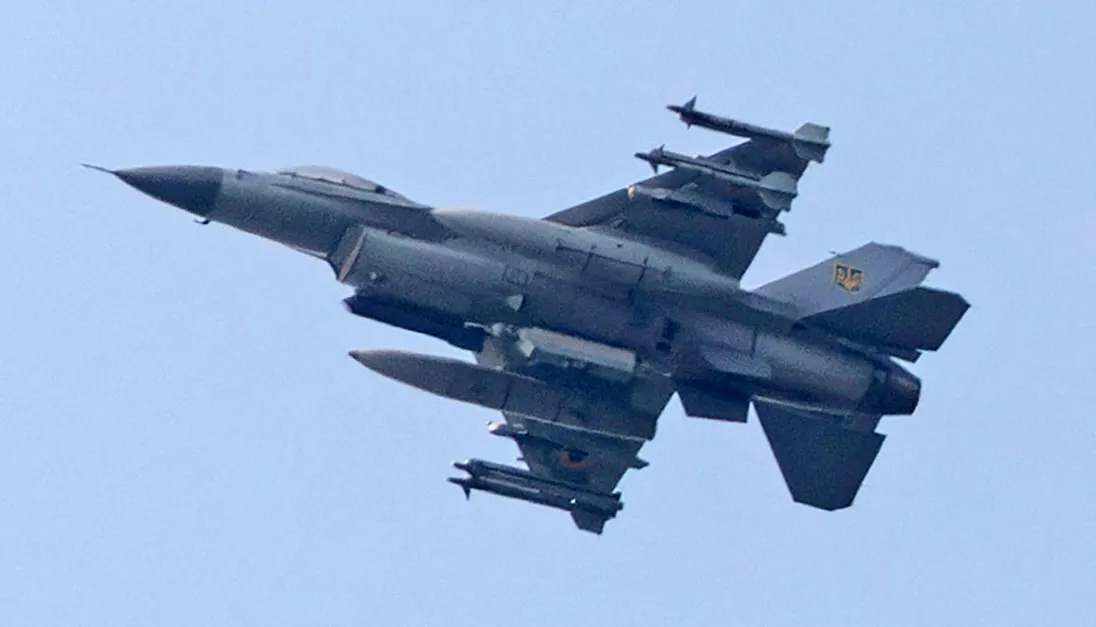
An F-16 over the Kyiv region on August 18, 2026. The jet carries four Sidewinder missiles, a Sniper targeting pod, and an AN/ALQ-131 electronic countermeasures pod. Photo by Roman PILIPEY / AFP ROMAN PILIPEY
The Ukrainian Air Force declined to provide the WSJ with figures on the status of the fleet. Open-source analysis suggests that Ukraine may have received around 40-50 F-16s so far. However, a proportion of these are held back for training elsewhere in Europe, while there have been five confirmed losses. Approximately 110 F-16s have now been promised by a coalition comprising Belgium, Denmark, the Netherlands, and Norway.
This is a growing issue, especially because right now F-16s are playing an important role in intercepts of jet powered Geran-4/5. https://t.co/ZtMFBSLAy1
The report follows TWZ’s recent reporting on a separate constraint affecting the F-16 force: Ukraine is struggling to maintain adequate stocks of air-to-air missiles for its fighters. AIM-9 Sidewinders and AIM-120 Advanced Medium-Range Air-to-Air Missiles (AMRAAM) have been heavily used against Russian cruise missiles and drones, and Ukrainian F-16 pilots have reportedly had to ration their missile shots. Aircraft have increasingly had to rely on their internal 20mm cannon when suitable missiles are not available. This is a far from ideal substitute, as you can read about here, but Kyiv is reportedly now negotiating for tens of thousands of additional rounds of 20mm ammunition.
Ukrainian F-16s have apparently been carrying laser-guided 70mm Advanced Precision Kill Weapon System II (APKWS II) rockets, which should provide an extremely valuable, lower-cost option for engaging long-range drones and subsonic cruise missiles. The exact status of this weapon in Ukrainian hands is unclear, but there is so far limited evidence of extensive use by its F-16s, at least in the public domain.
All these problems are closely related because the same high operational tempo that is consuming Ukraine’s missile stocks is also putting additional hours on the already well-worn F-16 airframes.
The aircraft have become a critical important component of Ukraine’s air-defense effort, particularly as Russia has expanded its use of increasingly sophisticated one-way attack drones, as we wrote about only yesterday. WSJ reports that Russia has launched around 2,000 jet-powered drones against Ukraine this month, compared with approximately 350 in June. The newer, jet-powered drones can reportedly reach speeds of up to 375 miles per hour, making them more difficult for Ukraine’s interceptor drones to engage and increasing the importance of conventional fighters. At the same time, the stocks of effectors for ground-based air defense systems are being reduced, in some cases to a critical level, increasing the reliance on crewed fighters to take up the slack.
A Ukrainian drone attempts to intercept a Russian Geran-4 jet-powered drone. GUR
F-16s are well-suited to the counter-drone and counter-cruise missile mission, but using them extensively against large numbers of relatively inexpensive targets presents a difficult sustainment problem. In fact, the lower speed and altitude differential between the F-16 and a jet-powered drone, compared to a propeller-driven one, makes the higher-performance weapon an easier target for the crewed fighter in most scenarios.
However, every sortie adds flight hours to the aircraft, while each missile engagement draws from an inventory that Ukraine and its Western partners have to replenish. As the aircraft accumulate hours, they reach scheduled inspection and maintenance intervals, increasing demand on a maintenance network that is already supporting a fleet operating under wartime conditions.
The United States has established a substantial support arrangement for that purpose. In January, the Pentagon awarded Belgian company Sabena Aerospace Engineering a contract with a ceiling of approximately $235.5 million for intermediate- and depot-level maintenance of Ukrainian F-16 aircraft and engines, together with associated material-management support. The contract runs through January 2029, with approximately $69.7 million initially obligated.
The contract provides an indication of the scale of the infrastructure required to keep the Ukrainian F-16 fleet operational. It also highlights why the reported turnaround times in Belgium are significant. A typical phase-inspection that would normally take approximately two to six weeks in the United States is reportedly taking as long as 40 weeks in Belgium.
A 40-week turnaround does not necessarily mean that an aircraft spends 40 weeks continuously undergoing a phase inspection. The overall period an aircraft is unavailable can also include waiting for parts, additional repairs, scheduling, and other work. It is unclear exactly how many Ukrainian F-16s are currently affected by these various factors.
U.S. Air Force engine shop where airmen remove the engine of an F-16 during a phase maintenance inspection in the United States. U.S. Air National Guard photo by Master Sgt. Christopher Stewart/Released Master Sgt. Christopher Stewart
At the same time, the reported turnaround times do point to a substantial capacity problem. Ukraine operates a relatively small F-16 fleet, so aircraft that remain unavailable for extended periods have a disproportionate effect on the number of fighters that can actually be generated for combat missions. Its mission spectrum also includes air-to-ground sorties, putting more demand on the hard-pressed F-16 fleet.
F-16 fighters are the best way to counter new Russian jet-powered drones.
Ukrainian F-16 aces have shot down about 2,500 drones of all types and about 650 cruise missiles.
Jet drones are exactly the kind of target F-16s shoot down very well, and it usually costs $25,000 or… pic.twitter.com/ajxYN9K0yK
The F-16s have finite airframe lives, require increasingly substantial inspections as they accumulate hours, and depend on a supply chain for engines, components and other parts. The missiles used to destroy the targets are another finite resource. It should also be recalled that the jets supplied to Ukraine are among the oldest still in operational service. Although upgraded to F-16AM/BM standard, the airframes have accumulated a lot of hours and fatigue.
There is an additional complication with the air-to-air missile inventory, too. AMRAAM is not used only by Ukrainian F-16s, but also employed by its NASAMS ground-based air-defense systems. Sidewinders, too, have both air-launched and surface-launched applications. The same broader Western supply chain therefore has to support both fighter operations and some of Ukraine’s surface-to-air missile systems. Stocks of both AMRAAM and Sidewinder have been eroded by Ukraine, as well as by combat actions in the Middle East.
Southern Ukraine, a Ukrainian NASAMS surface to air missile system intercepts a Russian drone with an (SL)AIM-120B AMRAAM. pic.twitter.com/LTeDDHaECp
At the same time, Ukraine is continuing to receive additional F-16s. Belgium has said it will transfer three more aircraft to Ukraine before the end of this year. More aircraft will increase the potential size of the force, but they will also add to the requirement for spare parts, engines, technicians and depot capacity.
“There is an important agreement with Belgium on the transfer of three F-16 fighter jets by the end of this year,” Ukrainian President Volodymyr Zelensky wrote on X. “We will work to receive these aircraft through an accelerated procedure.”
There is an important agreement with Belgium on the transfer of three F-16 fighter jets by the end of this year. We will work to receive these aircraft through an accelerated procedure. We have already received urgent deliveries of F-16 ammunition from Belgium and other…
— Volodymyr Zelenskyy / Володимир Зеленський (@ZelenskyyUa) September 29, 2026
Zelensky said Ukraine had already received “urgent deliveries” of F-16 weapons from Belgium and Spain, among other countries.
The alternatives to the F-16 are also limited in the near term. Ukraine continues to operate the Soviet-era MiG-29 Fulcrum and a small number of Su-27 Flankers, but these aircraft are themselves aging and are also required for strike missions. In their favor, the Soviet types were designed around a different concept of operations, making them easier to maintain in the field, and Ukraine has its own support infrastructure to sustain them.
The French Mirage 2000-5F force provides another Western option, but deliveries have been relatively limited, and additional aircraft are arriving incrementally rather than in numbers that can quickly compensate for a major reduction in F-16 availability. The longer-term fighter replacement plan is more ambitious. Sweden has agreed to provide 16 Gripen C/D fighters, with the first aircraft expected in early 2027, while a separate agreement covers the purchase of 16 new Gripen E fighters whose deliveries are not scheduled to begin until early 2029.
🇫🇷🇺🇦 French-delivered Dassault Mirage 2000-5F fighter jet in service of the Ukrainian Air Force during flight somewhere over Ukraine. pic.twitter.com/eBCjtx2Gjc
That leaves the F-16 as the principal Western fighter capability available to Ukraine for the immediate future, increasing the significance of any prolonged disruption to its maintenance pipeline or its supply of air-to-air weapons. Ukraine needs enough aircraft to maintain a meaningful combat presence, enough missiles to arm them for the missions they are being asked to fly, and enough maintenance capacity to keep those aircraft available as their flight hours accumulate.
All this is becoming more important as Russia’s aerial campaign evolves. If the increase in faster jet-powered drones continues, Ukraine may have to devote still more fighter sorties to countering them at the very same time that a large portion of its existing F-16 fleet is reportedly unavailable and its stocks of air-to-air missiles are under serious pressure.
On a hazy, humid Sunday morning, just before 9:30 a.m. local time, the USS Theodore Rooseveltsailed out of San Diego Bay for a much-anticipated but little-advertised deployment. The Nimitz class flagship of Carrier Strike Group 9 (CSG-9), nicknamed “The Big Stick,” departed on September 27 and is expected to head to the Middle East to relieve one of the two carriers on station supporting operations against Iran, according to USNI News. As is common with deployments from the West Coast, the departure was not announced by the Navy publicly, although there were several unconfirmed claims on social media that highlighted the impending cruise.
The three-ship Makin Island Amphibious Ready Group (ARG), packed with thousands of Marines who specialize in expeditionary operations, followed Roosevelt’s path out of the harbor the next day. While the Makin Island ARGs ultimate destination is unclear, the Boxer ARG, currently operating in the Middle East, left the United States on March 18 and is due for relief.
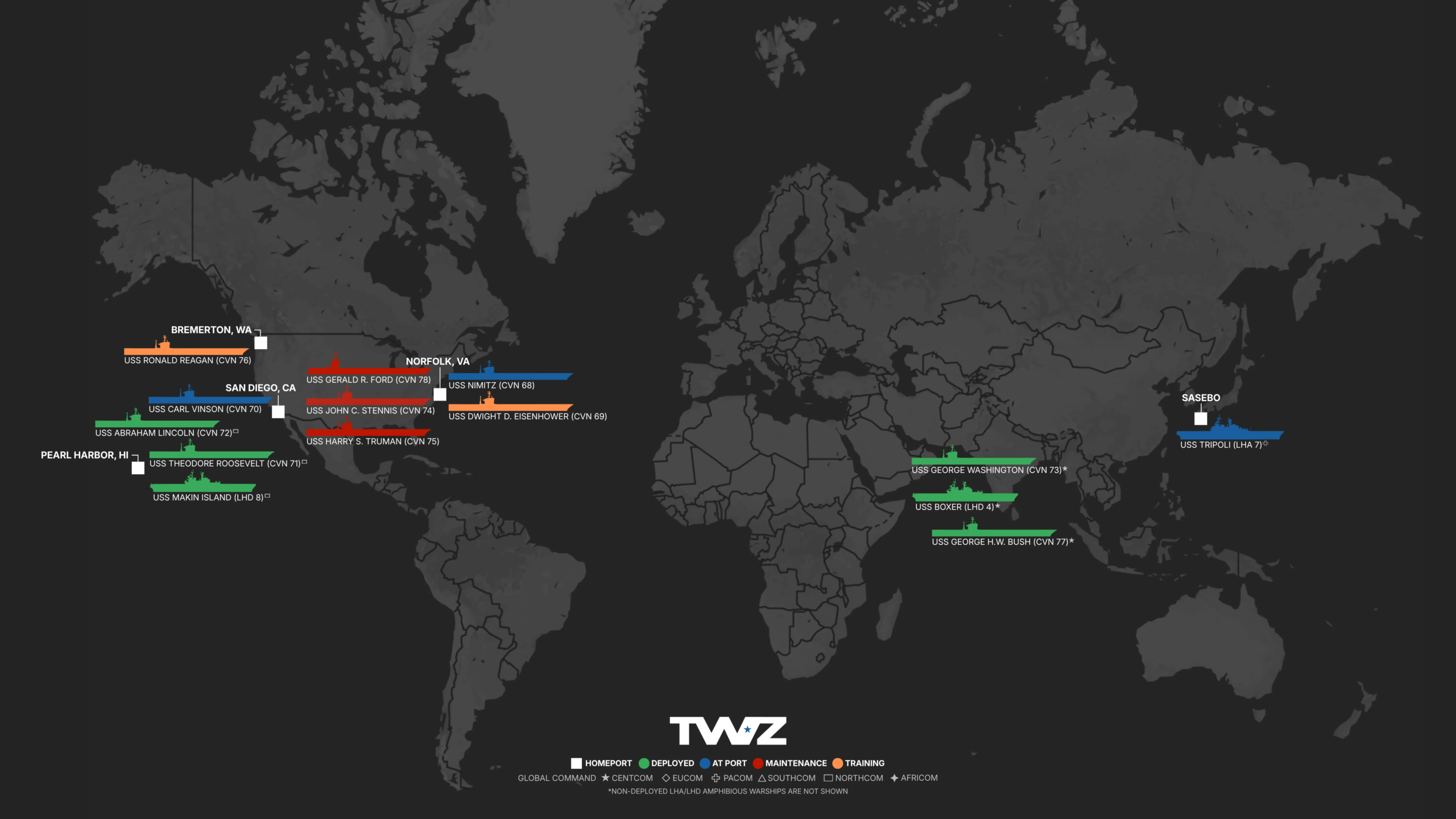
Here’s TWZ’s weekly carrier tracker monitoring America’s flattop fleet, including deployed CSGs and ARGs, using publicly available open-source information. Check out last week’s report here.
TWZ/IAN ELLIS-JONES
Theodore Roosevelt Carrier Strike Group Deploys, Reportedly Bound For The Middle East
USS Theodore Roosevelt keyed her Automatic Identification System (AIS) transponder on at 9:10 a.m. Pacific Daylight Time on September 27, broadcasting her precise position publicly via MarineTraffic, and got underway less than 20 minutes later with the help of a few tugs. The supercarrier steamed past Point Loma at seven knots before sailing west and picking up speed, topping 24 knots, then made a hard turn south and stopped transmitting on AIS roughly three hours after departing. She briefly flipped AIS back on again, 55 nautical miles southwest of her previous location, but has been dark since.
USS Theodore Roosevelt’s transit leaving San Diego. Source: MarineTraffic/KPLER (Reprinted with permission)
Three guided-missile destroyers, USS Paul Hamilton, USS Decatur, and USS Carl M. Levin, are part of CSG-9 and will escort the flattop, TWZ has learned. Rounding out the five-ship CSG is Ticonderoga class guided-missile cruiser USS Chosin, which will serve as the Integrated Air and Missile Defense (IAMD) commander for the CSG. The IAMD warfare commander is responsible for coordinating air defense for the entire strike group − a vital role since Roosevelt will be entering an active combat zone. Tico cruisers have 122 Vertical Launch System (VLS) cells, more than the 90 to 96 that Arleigh Burke destroyers are equipped with, and are being retired without a comparable cruiser lined up to replace the aging fleet; however, the newest Flight III Burke destroyers will take on the air warfare commander role.
The carrier has embarked, or is in the process of taking on, Carrier Air Wing (CVW) 11 off the West Coast before beginning the long journey toward the Western Pacific. CVW 11 includes a squadron of stealthy fifth-generation F-35C Lightning IIs, in addition to three squadrons of F/A-18E/F Super Hornets and one of EA-18G Growlers. Support squadrons of E-2D Hawkeyes, MH-60R Seahawks, and MH-60S Seahawks are also aboard, as well as a detachment of CMV-22B Ospreys.
Flight deck of USS Theodore Roosevelt. U.S. Navy photo MH-60S Sea Hawk on USS Theodore Roosevelt. U.S. Navy photo
USNI News was the first outlet to confirm the deployment and suggests the CSG is headed to the Middle East. “The Theodore Roosevelt Carrier Strike Group is expected to move to U.S. Central Command to relieve the Japan-based USS George Washington (CVN-73),” they wrote in a report published on Monday.
In response to a request to confirm the deployment, a Navy official told TWZ, “The Theodore Roosevelt Carrier Strike Group is underway conducting routine operations in the U.S. 3rd Fleet area of operations. U.S. 3rd Fleet leads naval forces in the region and provides the realistic, relevant training necessary to execute our Navy’s role across the full spectrum of military operations – from combat operations to humanitarian assistance and disaster response. U.S. 3rd Fleet works together with allies and partners to advance freedom of navigation and overflight, the rule of law, and other principles that underpin security for the region.”
The underway was live-streamed on San Diego Web Cam, which had a few hundred viewers at the peak. TWZ was monitoring the feed at the time after rumors surfaced that a departure was imminent. Notably, Sailors were not spotted manning the rails, which is usually an easy tell that a warship is deploying rather than training. However, several public posts on social media by individual Sailors, as well as their friends and family, pointed to the ship heading on its long-awaited cruise.
USS Theodore Roosevelt (CVN-71) Departs San Diego on Deployment | San Diego Web Cam
Video: @SanDiegoWebCam/YouTube
Video: @SanDiegoWebCam/YouTube
Roosevelt has been preparing for the cruise for the better part of a year. The CSG last deployed from January 11 to October 15, 2024, to the U.S. 5th and 7th Fleet areas of responsibility (AOR) in support of Operation Prosperity Guardian. After arriving back home nearly two years ago, the carrier underwent an eight-month Planned Incremental Availability (PIA). Following the PIA, she completed flight deck certification and carrier qualifications from July 23 to July 29, 2025. In 2026, the carrier conducted Composite Unit Training Exercise (COMPTUEX) from April 14 to May 15, and then steamed to Hawaii for the large-scale, biennial Rim of the Pacific (RIMPAC) exercise from June 24 to July 28. Most recently, Roosevelt completed a brief pierside availability prior to deploying, as TWZfirst reported.
In February, Vice Adm. Brendan McLane told reporters at WEST 2026 that a medium unmanned surface vessel (MUSV) would deploy with the strike group for the first time. During COMPTUEX and RIMPAC, the Roosevelt CSG drilled alongside Leidos’ MUSV Seahawk, which TWZ was the first to report. We asked the Navy to confirm whether an MUSV would accompany the group, but have not received a response. As of publication, Seahawk was still pierside in San Diego, and it’s unclear if the drone boat will operate with the CSG or remain in San Diego.
Transit of USS Theodore Roosevelt and MUSV Seahawk during COMPTUEX training. Source: MarineTraffic/KPLER (Reprinted with permission) and DVIDS
Makin Island Amphibious Ready Group Also Deploys, Destination Unknown
The three-ship Makin Island ARG, with the 13th Marine Expeditionary Unit (MEU) embarked, got underway for a deployment on September 28, a Navy official also confirmed to USNI News. In addition to the flagship Wasp class amphibious assault ship (LHD), USS Makin Island, two San Antonio class amphibious transport dock ships (LPD), USS John P. Murtha and USS Anchorage, left on the same day and round out the expeditionary group.
USS Makin Island (LHD 8) Departs San Diego on Deployment
Video: @SanDiegoWebCam/YouTube
Video: @SanDiegoWebCam/YouTube
No destination has been formally announced. However, there is an obvious candidate for relief: the Boxer ARG. Currently on station in the U.S. Central Command (CENTCOM) AOR supporting blockade and interdiction operations in the Arabian Sea and Indian Ocean, the group has been deployed since mid-March. The amphibious fleet is notorious for experiencing maintenance issues, and these ships have been pushed hard without a port call in months. Amphibious ships move slower than carriers, and if CENTCOM turns out to be the final destination, the Makin Island ARG would have to hustle to arrive before November.
Makin Islandembarks short takeoff and vertical landing (STOVL) F-35B Lightning IIs, assigned to the “Wake Island Avengers” of Marine Fighter Attack Squadron (VMFA) 211, and MV-22B Ospreys with Marine Medium Tiltrotor Squadron (VMM) 364 (Reinforced). The Bravos recently conducted a simulated airstrike off the coast of California.
13th MEU conducts a simulated airstrike aboard USS Makin Island (LHD 8) off the coast of California. U.S. Navy video
Abraham Lincoln Days Away From Well-Deserved Homecoming
Acting Secretary of the Navy Hung Cao flew out to the flight deck of USS Abraham Lincoln as she was sailing eastbound in the Hawaiian Islands operating area, en route to her homeport in San Diego. “Today, our warfighters aboard USS Abraham Lincoln demonstrated the overwhelming capacity and capability that they brought to bear on our adversaries for the last 10 months,” he wrote in a post on Sunday.
USS Abraham Lincoln transiting in the U.S. 7th Fleet AOR. U.S. Navy photo
USS Frank E. Petersen Jr., a destroyer that escorted Lincoln throughout the 10-month deployment, peeled off and moored at Joint Base Pearl Harbor-Hickam on Monday. “Over the course of 300 days, Frank E. Petersen Jr.’s crew conducted 45 replenishments-at-sea, sailed over 85,000 nautical miles, safely transferred over 7,544,486 gallons of F-76 fuel and 175,288 gallons of JP-5 fuel, and completed 1,094 hours of flight quarters,” according to a press release. The statement also confirmed that the warship served as IAMD commander for the group. The destroyer defended against more than 100 missile and drone attacks, Stars and Stripes recently reported.
Petersen Jr. and USS Michael Murphy became the first U.S. warships to transit the Strait of Hormuz since the war began when they entered the Persian Gulf in April in support of mine-clearance efforts.
USS Frank E. Petersen Jr. returns to Pearl Harbor. U.S. Navy photo
Lincoln is now 314 days into her deployment and less than two weeks shy of surpassing the 326-day record USS Gerald R. Ford set in May. Approximately 2,000 nautical miles separate Hawaii from Naval Air Station North Island, but assuming a straight shot, it does not appear Lincoln will break the record.
Growler Mishap On Dwight D. Eisenhower
Two crew members from an EA-18G Growler embarked on the aircraft carrier USS Dwight D. Eisenhower (Ike) were rescued after ejecting due to an arresting gear failure, the Navy announced in a statement. The incident took place on Monday around 6:18 p.m. Eastern Daylight Time as the vessel was underway off the coast of Virginia.
The aviators, assigned to the “Zappers” of Electronic Attack Squadron (VAQ) 130 and attached to CVW 3, “safely returned to the ship and are being evaluated by medical personnel,” according to the release. The “Dusty Dogs” of Helicopter Sea Combat Squadron (HSC) 7 recovered the crew using MH-60S Seahawk helos.
Transit of USS Dwight D. Eisenhower off the East Coast. Source: MarineTraffic/KPLER (Reprinted with permission)
Four shipboard personnel “were also injured during the mishap and are receiving medical care,” the Navy said. “One Sailor is being transported to a Norfolk-area hospital for treatment of non-life-threatening injuries,” according to the original statement. In total, eight sailors were evaluated by the ship’s medical team.
The cause of the accident is still under investigation, and it’s unclear whether the aircraft was lost or if there was any damage to the carrier. TWZ has reached out to the Navy to find out more details.
A Growler landing on the USS Dwight D. Eisenhower. U.S. Navy photo/Released
Eisenhowerwrapped an extended 15-month PIA earlier this year in April. The flattop had been pierside at Naval Station Norfolk since September 2 after being at sea for 12 days completing Fleet Replacement Squadron and Training Command Carrier Qualifications (CQ) in the Virginia Capes and Jacksonville operating areas. She got underway again on the afternoon of September 28, based on public AIS data, for Tailored Ship’s Training Availability, Final Evaluation Problem, and CQ, one of the final steps before onloading ammunition for COMPTUEX, where the full strike group certifies for deployment.
Ike is working up in preparation for a future deployment scheduled for the first half of 2027, TWZpreviously reported.
Reports Surface That George H.W. Bush Is Headed To Thailand For A Port Call
Multiple news outlets in Thailand reported Tuesday that USS George H.W. Bush and destroyer USS Delbert D. Black, which have both been in the Middle East in support of operations against Iran, will make a port call in Phuket in early October. If such a transit occurs, this would leave one carrier, the USS George Washington, on station in the U.S. 5th Fleet AOR for the first time since April. The Navy has not formally made an announcement, and TWZ has not verified the accounts.
USS George H.W. Bush operating in CENTCOM. U.S. Navy photo Super Hornet on USS George H.W. Bush. U.S. Navy photo
The reports are based on a meeting that representatives of the U.S. Embassy in Thailand allegedly held with the Patong police to discuss security protocols during the stop. “The visit has prompted coordination between Thai authorities and US officials over security, public order, and the movement of visiting military personnel during shore leave,” Phuket News wrote. According to the article, Patong police met with two deputy assistant defense attachés, Lou Pham and Robert Robinson, to discuss the visit. U.S. personnel were advised to comply with Thai laws during their stay, a specific request that may have been triggered by the recent visit of Lincoln.
There are conflicting accounts of when Bush would arrive in Phuket’s deep-sea port, but the visit will likely last five or six days, which is similar to Lincoln’s recent port call in the Southeast Asian country. If the timeline holds, it means Bush is likely already en route from her station in the Arabian Sea, where the CSG was most recently operating as of September 25, according to DVIDS. The Bangkok Post and Thai Examiner also reported the upcoming visit.
Notably, the reports do not mention any of the other warships that have been part of the Bush CSG in the past, including USS Donald Cook, USS Ross, USS Mason, or USS Princeton. The composition of the Bush CSG has shifted throughout the cruise.
Big Deck Fleet At A Glance
Overall, four U.S. carriers are deployed (with one heading home), three are working up in various states of readiness, three are in current or upcoming maintenance, one is being used primarily for training before deactivation next year, and the future USS John F. Kennedy, the second Ford class carrier, has received preliminary acceptance ahead of delivery in spring 2027. Two amphibious ready groups are deployed, one is forward-deployed, three are working up or in port, and three are in maintenance.
Note: Positions are general approximations.Non-deployed LHA/LHD amphibious warships are not shown.
For aerospace aficionados, it’s like we have entered into an alternate dream reality. The idea that we are seriously talking about the possibility of bringing back the SR-71 Blackbird to flight status is hard to comprehend, but amazingly this is where we are at. The biggest question I am getting about all this is why? We touched on the likely primary answer to that in our original reporting — high-speed is back in tactical vogue, and the Blackbird can sustain it in a realm of great interest, between Mach 3 and 4, and do it over and over again. It can also carry very large things and even launch them off its back at those extreme speeds. But those are not the only potential reasons for taking on such a gargantuan, high-profile, and costly technical challenge. Learning from the journey itself could be just as valuable as the actual flight test data a revived SR-71 produces.
Let me explain.
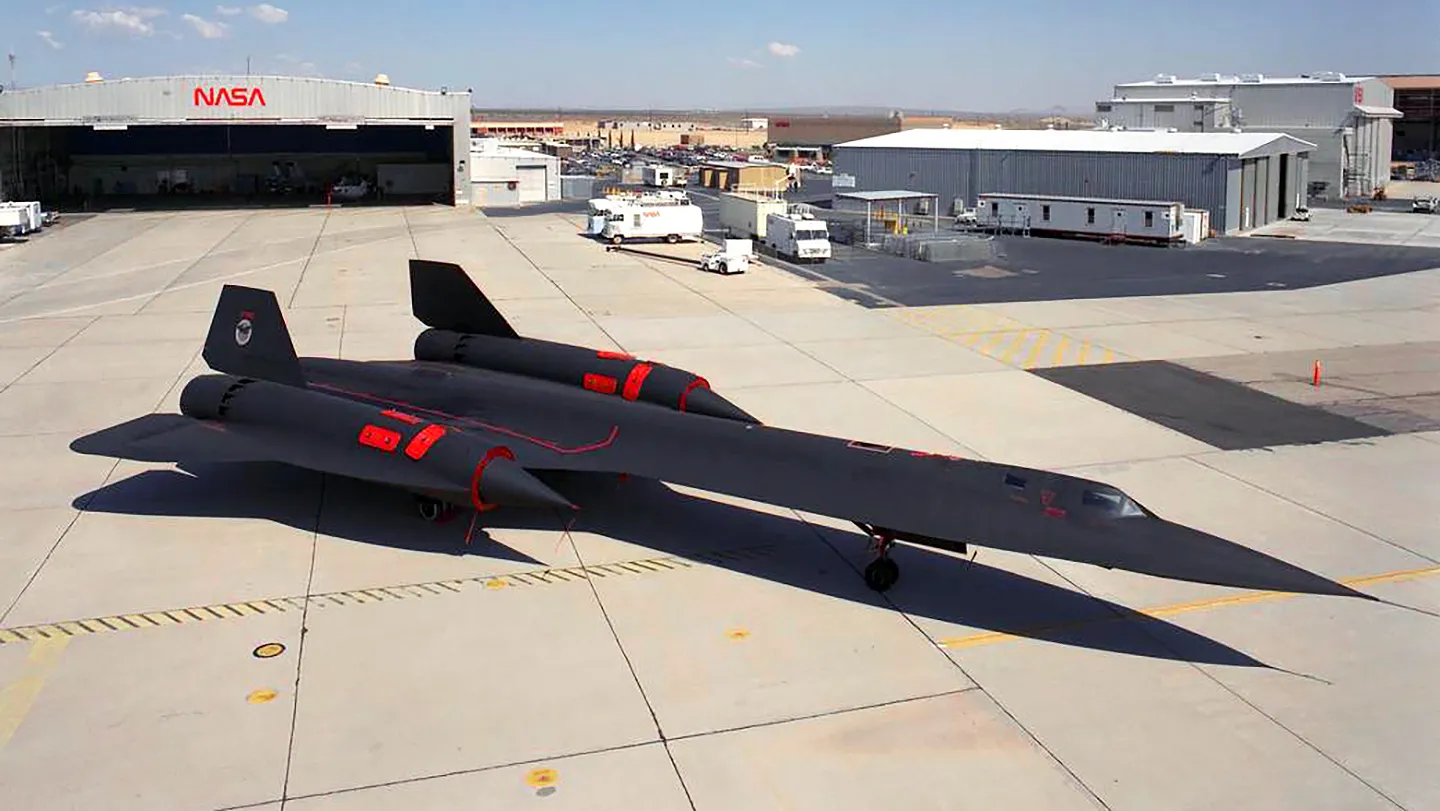
(NASA)
The Blackbird was as close to alien tech as it gets over 60 years ago, and even today, we have nothing like it in known operation. Yet it has been dormant for nearly three decades. Much of the expertise that built, supported, and operated it is sadly gone. But the exercises of reverse engineering and leveraging breakthroughs in additive manufacturing and rapid prototyping, as well as injecting new material sciences, avionics, propulsion and other technologies where applicable, and above all else, building the digital toolkit to make it all happen as fast and efficiently as it can be done, are all of extreme learning value.
I would not be surprised if a ‘digital twin’ is being created right now of the SR-71 using NASA’s SR-71 tail number 844 — the jet in question that has mysteriously disappeared from its display pad. Once such a model exists, breakthroughs in digital engineering can be brought to bear to see how fast the program can be accelerated, both in terms of development and flight testing. This could include not only getting the SR-71 back in the air, but improving its performance and reliability, possibly substantially, using all the new technologies we have today. It’s even possible a clone of sorts leveraging all these advances could be built using digital engineering tools.
The SR-71 served as an integral part of NASA’s flight test fleet at Dryden Flight Research Center, located on the premises of Edwards AFB. (NASA)
This is not necessarily an unprecedented concept. Just look at similar exploratory engineering programs like the X-55. But when it comes to partially reverse-engineering an airframe you have no support for, and few, if any, spare parts, America’s highly-secretive foreign materiel exploitation (FME) community could potentially lend a hand.
Operating in the shadows, they have been able to not only get totally foreign aircraft divorced from American supply chains pieced back together and flying, but they sustained them for years in total secrecy. They also did this long before the advent of rapid prototyping and digital engineering assets that we have today. Imagine what they can do now. They could be a top source for NASA to pull in to help in its far less sensitive but uniquely similar endeavor. This is just one example of many of how government and industry could come together to support and benefit from the SR-71 resurrection program.
Now, about those supply chains. During its heyday, the SR-71’s logistical tail was one of the most exotic ever created. It supported the Blackbird, as well as its progenitor, the A-12, for the better part of half a century. Reestablishing this supply chain would be a highly challenging, but rewarding exercise that could have major impacts across the aerospace industry, as well as others. So, how can we use all the capabilities we have now to jump-start the sustainment of the highest-performing air vehicle from an era of slide rules and drafting tables?
NASA SR-71 on the ramp in the evening. (NASA)
The idea of putting aircraft out of production back into production is not a foreign one to the U.S. military, either. NASA’s SR-71 program could serve as a pathfinder for better evaluating such proposals and their costs, while pushing the envelope forward on exactly how it can be done efficiently. The same can be said for simply keeping aging aircraft (or any vehicle or system for that matter) operating longer and for cheaper, by applying cutting-edge technologies and practices. NASA can create the playbook for doing so, and that playbook could end up being more valuable than the flight testing a reborn SR-71 does.
I think it’s fairly clear that we have lost something when it comes to aerospace engineering as of late. With all our advances and incredible tools even legendary Skunk Works founder Kelly Johnson could have only dreamed of, it seems like we have to relearn even simple lessons from decades ago, and oftentimes that can be a very expensive, time consuming, and even deadly process. In some ways, it seems like we have gone backward, or at least stalled out in certain engineering areas. The simple things become hard and hard things have become simpler. How did they do so much protractors and pencils way back then? Getting a Blackbird flying again can help explore and possibly answer this and other questions, and help mitigate these deficiencies going forward, as well.
NASA Blackbird tail 844 refueling behind the specialized, JP-7-filled KC-135Qs that supported the program. (NASA)
Even if NASA’s dormant SR-71 never ends up getting back in the air, even attempting such a challenge could be considered a success. Doing so could identify core areas across multiple disciplines that could be improved and areas of existing technology that could be better exploited for a whole array of tasks. It can also develop and refine new technologies in the process. All this sits at the core of NASA’s mission, and there is no vehicle on Earth that could drive people and organizations to give it their all for such a comeback dream as the Blackbird. It’s even possible that we could see corporations or even individuals help foot the bill for it.
And yes, all these benefits need to be weighed against cost. Surely there is a limit to how much the government can invest in such a program. Now corporations and individuals, that’s a different story.
So, yes, the main goal of this effort will likely be high-speed flight testing, but so much can be learned in the journey to get there that it must be quantified in the ‘business case’ for reviving the Blackbird.
Witnesses say Tennessee officials were unable to execute Christa Pike after a lethal injection attempt.
Published On 1 Oct 20261 Oct 2026
Officials in the United States have failed to put a Tennessee woman to death for a murder she committed in 1995, after the lethal injection was halted for hours as courts considered a last-minute appeal to stay her execution.
Christa Gail Pike, 50 had been scheduled to die on Wednesday for a killing she committed at age 18, after the US Supreme Court overturned an appeals court ruling that stopped the lethal injection just an hour before it was to start.
Recommended Stories
list of 4 itemsend of list
Her death would have been Tennessee’s first execution of a woman in at least 200 years.
Following the top court’s ruling, officials attempted to go ahead with the execution as planned and appeared to give Pike two doses of the sedative pentobarbital, according to media witnesses.
At 7:46pm local time, prison officials closed the curtain separating Pike from the media viewing room. It was raised three minutes later, when witnesses said Pike could be heard loudly snoring.
The curtain was closed again at 8:06pm. Witnesses continued to hear Pike snoring until the microphone was switched off at about 8:53pm, when they were told to leave the area. The Associated Press news agency reported that emergency vehicles were seen coming and going from the prison.
The Tennessee Department of Correction did not immediately explain why the execution had not been completed.
Supreme Court ruling
Pike had initially been scheduled to die on Wednesday morning, and witnesses had already gathered at the Riverbend Maximum Security Institution in Nashville when the 6th Circuit US Court of Appeals voted 2-1 to issue a stay.
The appeals court said a delay was needed to consider whether Pike’s allegations of childhood sexual abuse were fully considered during her sentencing.
Later on Wednesday, the Supreme Court cleared the way for the execution to proceed. Its conservative majority did not explain the decision, while the three liberal justices dissented.
Justice Sonia Sotomayor wrote that vacating the stay “unnecessarily prevents” the appeals court from giving due consideration to Pike’s claim.
Tennessee’s attorney general had argued that delaying the execution traumatised the family of Pike’s victim, Colleen Slemmer, and rewarded what it called “abusive delay tactics”.
1995 killing
Pike and her boyfriend, Tadaryl Shipp, were convicted of the fatal stabbing and beating in 1995 of 19-year-old Slemmer, their classmate at a job training facility in Knoxville.
Shipp was 17 when the crime happened and received a sentence of life in prison with the possibility of parole. Pike was the only one sentenced to death.
Pike does not deny committing the killing, but her supporters argue the state should consider her age at the time, her mental illness and her allegations of severe sexual abuse, including that she was raped from early childhood.
“It is inconceivable that in the 21st century, the criminal justice system is poised to execute a survivor of rape and child sexual abuse whose jury never had the opportunity to consider those facts in weighing the defendant’s moral culpability,” her lawyers wrote in a filing.
After the killing, Pike was diagnosed with bipolar disorder and post-traumatic stress disorder. In her clemency petition, she said she had initially intended to fight Slemmer but killed her in a frenzied attack when she could not “put the brakes on”.
“I was a mentally ill 18-year-old kid. It took me numerous years to even realise the gravity of what I’d done. Even more to accept how many lives I affected. I took the life of someone’s child, sister, friend. It sickens me now to think I had the ability to commit such a crime,” Pike said in a statement.
Slemmer’s mother has said she wants Pike’s death sentence carried out after waiting decades for the execution.
Tennessee has not executed a woman for at least 200 years, according to the Death Penalty Information Center.
Since the Supreme Court reinstated the death penalty in 1976, 18 women have been executed in the US, representing about 1 percent of all executions, according to the centre.
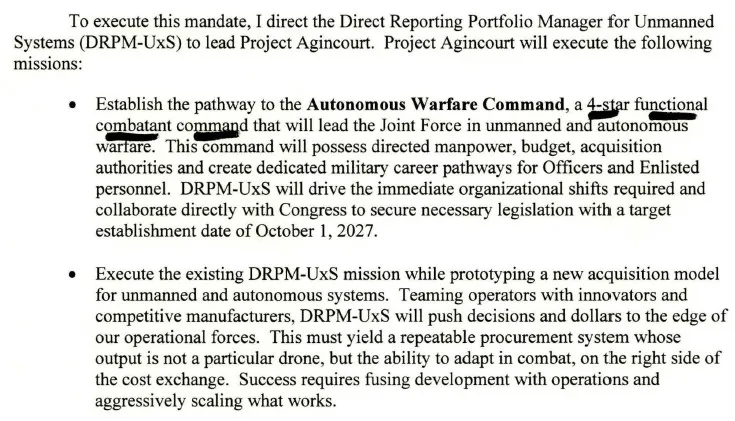
The Pentagon has announced plans for a new functional combatant command, very broadly akin to U.S. Special Operations Command (SOCOM) or U.S. Space Command (SPACECOM), but for operational activities involving autonomous and robotic capabilities. Secretary Pete Hegseth has also announced new initiatives to help further accelerate the fielding of uncrewed systems in the air, at sea, and on land, as well as explore future warfighting challenges. All of this builds on previous and long-overdue efforts to prioritize the fielding of various tiers of drones, as well as artificial intelligence (AI) and other emerging technologies, across domains, but there are questions about how these new efforts will translate into tangible developments.
Secretary Hegseth unveiled plans for what is tentatively dubbed Autonomous Warfare Command (AUTOWARCOM), as well as the aforementioned initiatives, called Project Agincourt and Project Meridian, during a speech to service members today at the U.S. Marine Corps’ base in Quantico, Virginia. Hegseth called this a State of the Force address, and said he planned to make it an annual event.
.@SECWAR “Today, at my direction—we are announcing the creation of Autonomous Warfare Command, or AutoWarCom:
A new 4-star combatant command—with service-like authorities—built to scale autonomous and robotic capabilities across the Joint Force in the fastest peacetime shift in… pic.twitter.com/kYWBxy6Dij
“At my direction, we are announcing the creation of Autonomous Warfare Command, or AUTOWARCOM, a new four-star combatant command with service-like authorities built to scale autonomous and robotic capabilities across the joint force in the fastest peacetime shift in modern military history,” Hegseth declared. “Drone warfare supercharged by SI-enabled targeting is the biggest battlefield revolution in generations. You already know that. Yet when I was sworn in to the Department of Defense, there was scant urgency in this domain.”
Hegseth called attention to the Drone Dominance initiative he unveiled last year, as well as the establishment of Joint Interagency Task Force 401 (JIATF-401), as examples of steps the Department has already taken in this regard. JIATF-401 is notably focused on counter-drone capabilities, as you read more about here.
“It’s a good start, but it’s certainly not enough. The pace of war is changing faster than the process to support it. Cheap compute, super intelligence, and advanced commercial manufacturing have enabled the proliferation of low-cost, high-precision strikes,” Hegseth continued. “For 40 years, the United States relied … primarily on expensive weapons that placed quality over quantity. Now, that approach gave us a lot of enormous advantages, and we need to preserve those capabilities. But today we need both quality and quantity. The term you know is high-low mix. An analogy is a thunderstorm. We need bolts of lightning high, our existing high-end kill chains capable of striking unexpectedly and decisively. We also need steady wind and rain, mass drones and other autonomous attritable systems that flip the cost exchange and impose unrelenting pressure on an adversary on the battlefield.”
Hegseth highlighted lessons learned from the ongoing conflict in Ukraine as underscoring these points.
.@SECWAR “Ukraine’s lesson is not that one type of drone wins wars but rather the need for a purpose-built system that maximizes the ability to adapt.
We will fuse procurement with operations at scale – and allow our warfighters, engineers, and entrepreneurs to learn, adapt, and… pic.twitter.com/x7iNMAbU0t
“So today, with Autonomous War Command, AUTOWARCOM, we institutionalize and we supercharge the era of SI, robotics, and autonomous systems, all in order to win,” he added.
A memo the Pentagon has now released makes clear that the establishment of this command is contingent on Congressional approval, and the current goal is for it to be established by October 1, 2027.
“Autonomous Warfare Command will define joint needs and integrate Service-provided forces in support of geographic combatant commanders,” the memo also notes. “It will test equipment and force designs with realistic opposition in demanding exercises and rugged environments, modify rapidly, and field what works. We must build a wartime arsenal whose main product is adaptation at the edge.”
Many questions remain to be answered about how these activities with work being done now within the individual services, and how all of that will translate into operational activities. Part of Project Agincourt’s role will be working to help answer the questions above. The name here is a reference to the battle in 1415 in which British forces prevailed over their French opponents, famously in part through the application of a particular military technology, the longbow.
The two main tasks outlined in a memo today on Project Agincourt, one of which is laying the groundwork for AUTOWARCOM. US Military
The office of the Direct Reporting Portfolio Manager for Unmanned Systems (DRPM-UxS) will lead this initiative. Owen West, head of the Pentagon’s Defense Innovation Unit (DIU), and U.S. Navy SEAL Senior Chief Max Strasiser are set to serve as the Chief Executive Officer and Chief Operating Officer of the DRPM-UxS, respectively.
Project Agincourt will also “prototype a new construct called warfighting acquisition, not just acquisition that happens at the Pentagon,” according to Hegseth. “This model fuses operators with entrepreneurs in rapid adaptation cycles while distributing decisions and dollars closer to frontline units, to combatant commands. Realistic training exercises, and when possible, the crucible of combat, will be used to compress innovation timelines and scale what works.”
“Also today, we are phasing in new MOS [Military Occupational Specialty] frameworks within each military department to support our shift to autonomy,” the Secretary also noted during his speech in the context of Project Agincourt and the plan for AUTOWARCOM. “We need institutional knowledge and career paths for a new generation of autonomous warfighters.”
Project Meridian sits adjacent to these efforts and has a broader mandate to explore ways to ensure the U.S. military maintains its technological edge on future battlefields.
“Project Meridian, the future of warfare, is not about developing new strategies or new policies. We already do that. Rather, its purpose is to creatively look to the future, and identify the domains that we must conquer, and capabilities we must master,” Hegseth said. “We need to be looking forward into the future to achieve technological and military dominance on the battlefield for decades to come. It is futuristic on purpose. Their work will be focused on discovering, developing, and fielding the weapons and systems that our children and our grandchildren will need in their lifetimes, without any creative limitations or restrictions, on any future battlefield, from under the Earth to beyond the Moon.”
“Project Meridian will study the battlefields of the future, identify which weapons and technologies warfighters will need to harness to dominate in these environments, and propose actionable solutions to start developing, testing and fielding these capabilities such that America will have overmatch for the 21st century and beyond,” according to a separate memo the Pentagon put out today. “The Joint Staff and all services should be prepared to connect their future warfare efforts and research to Project Meridian.”
The full text of the Project Meridian memo put out today. US Military
Furthermore, “Project Meridian will leverage critical perspectives from outside the Pentagon, drawing upon a group of top technologists, innovators, business leaders, policy makers, and national security experts,” according to the memo. “Project Meridian’s primary function will be to map the trajectory of future warfare, identify critical capability gaps, and propose actionable solutions in furtherance of the identified goals in the 2026 National Security Science and Technology Strategy.”
This is also very much a near-term initiative, with Hegseth demanding a final report no later 120 days from now, or January 28, 2027. The Pentagon’s Chief Technology Officer, Emil Michael, has been directed to set up this project. Today, Hegseth also named Elon Musk, Palmer Luckey, and Newt Gingrich as key members.
Elon Musk, founder of SpaceX, which dominates the commercial space launch and services market globally, as well as the host of other companies, has had an on-again-off-again relationship with the Trump Administration. Palmer Luckey is another entrepreneur now best known for founding Anduril, which has increasingly a major player in the U.S. defense industry. Newt Gingrich, a highly influential member of Trump’s Republican Party and former Speaker of the U.S. House of Representatives, has more recently become an outspoken advocate of advancing AI technology in the United States.
A screen capture from today’s livestream of Secretary Hegseth’s speech. From left to right, Palmer Luckey, Newt Gingrich, and Elon Musk. US Military capture
The inclusion of Musk and Luckey does raise ethical questions, as they both lead companies with major U.S. government contracts already, and which could be in line to see more opportunities based on Project Meridian’s findings. What guardrails might be put in place to prevent conflicts of interest is unclear.
To reiterate, it remains to be seen how all of these efforts will progress and how, or if, they will ultimately translate to more tangible developments. The U.S. military has a long history now of launching high-profile initiatives that still struggle to demonstrate real progress, despite widespread support for accelerating the fielding of uncrewed systems, AI, and other advanced technologies. The Pentagon has certainly produced tangible results through other organizational shifts in recent years, including the aforementioned Drone Dominance initiative and JIATF-401, as well as the Replicator initiative under President Joe Biden.
At the same time, there are real potential hurdles to these new plans. The Pentagon has itself already acknowledged that support from Congress will be key to the AUTOWARCOM vision. Annual budgeting, and the uncertainty that often surroudns that will also be a factor. There is also the matter of efforts to expand the U.S. defense industrial base. The limitations of existing U.S. industrial capacity and supply chains have already become a matter of national debate in light of concerns about dwindling stockpiles of critical munitions as a result of the ongoing conflict with Iran, as well as a succession of other global crises in recent years.
During his speech, Hegseth called attention to efforts to broaden the defense industrial base with new, smaller firms, as well as agreements with large established contractors to expand on their existing capacity. He also highlighted the Trump administration’s $1.5 trillion defense spending plan for Fiscal Year 2027 and issued a new call on Congress to pass an additional $350 billion reconciliation package.
With today’s announcements, the Pentagon has certainly reinforced its commitment to expanding the fielding of uncrewed and other high-tech capabilities across all branches of the U.S. military, but there is clearly work still to be done to turn those visions into realities.
Israeli passengers tell of the horror onboard the Flydubai flight that was diverted after the pilot stabbed his co-pilot in the cockpit. The plane dropped 17,000 feet during the fight from Dubai to Tel Aviv, but landed safely after being diverted to land in Saudi Arabia.
Crowds cheered and waved national flags as two Shahed drones were paraded through Tehran. Iranian-made, low-cost Shahed drones have become a major feature of modern warfare, used in attacks across the Gulf and extensively by Russia in its war in Ukraine.
The US Supreme Court has cleared the way for Tennessee inmate Christa Pike to be executed, overturning a last-minute reprieve.
The killing by lethal injection was scheduled for Wednesday morning before judges from the Sixth Circuit Appeals court halted the execution. Tennessee’s attorney general then immediately requested the Supreme Court to overrule the lower court’s stay.
Pike, 50, has been awaiting execution since she was convicted and sentenced to death in 1996 for the murder of Colleen Slemmer.
If the execution proceeds, Christa Pike will be the first woman to be executed in Tennessee in more than 200 years. It was not immediately clear when the execution would take place.
Supreme Court Justice Brett Kavanaugh granted the application to vacate the stay of the execution. No explanation for lifting the stay was provided in the order.
The top court’s three liberal justices – Justices Sonia Sotomayor, Elena Kagan and Ketanji Brown Jackson – dissented in Wednesday evening’s order.
Sotomayor wrote that she dissents because the decision cleared the way for Tennessee to execute Pike before her pending legal challenges to her conviction “can be properly considered”.
“Tennessee’s desire to expedite Pike’s execution by a few days or even weeks cannot outweigh her ‘fundamental interest in [her] own life,” she said.
In a ruling earlier on Wednesday, judges from the Sixth Circuit Appeals court paused the execution saying they needed more time to consider the arguments in Pike’s case.
Pike’s lawyers said that for years, the state of Tennessee argued in court that she had lied about being sexually abused as a child.
But at a recent hearing about her execution method, the state said it did not dispute she suffered sexual abuse and rape.
Pike’s legal team asked the appeals court to send her motion back to the district court, arguing that if the federal courts based their ruling on the state’s earlier claim that she was lying, then the federal review was affected.
Earlier this week, the Supreme Court refused to hear a different appeal from Pike.
Tennessee governor also denied a clemency request this week from the death row inmate.
Pike was 18 when she and her then-boyfriend, Tadaryl Shipp, beat, tortured and murdered Colleen Slemmer, a 19-year-old they met at a job training camp for troubled teens.
There is a “strong indication” that Iran played a role in Sunday’s suspected terror plot near Royal Air Force (RAF) Fairford base in South West England, the prime minister confirmed Wednesday, Anadolu reports.
“There is indeed a strong indication that Iran played a part,” Andy Burnham confirmed in an interview with Sky News.
However, he added: “This remains, though, a complex and very serious police investigation. So I can’t say any more at this stage.”
Five men from London, age between 23 and 25, were arrested on suspicion of explosives offences and terrorism.
The incident came after a farmer discovered three vans blocking a road near the RAF base in Gloucestershire at 1.30 am local time (0030GMT).
Later, it was understood that one of the suspects had contacted authorities around an hour before, a development first reported by The Times newspaper.
Protesters urged Venezuelan authorities to understand the right to abortion as a public healthcare issue. (Maureen Riveros)
Caracas, September 30, 2026 (venezuelanalysis.com) – Venezuelan feminist organizations protested on Monday to mark International Safe Abortion Day and demand reforms to advance sexual and reproductive rights in the Caribbean nation.
Around 100 activists gathered in Plaza Venezuela, Caracas, to debate the conditions facing working-class women and urge responses from Venezuelan authorities.
“We are here to protest against the absence of inclusive public policies,” Jackeline López, spokesperson for the Clara Zetkin Women’s Movement, told press. “Abortion remains a taboo subject for Venezuelan authorities, whose response is to criminalize it.”
López went on to stress that unsafe abortions mostly plague Venezuelan working-class women.
“The current wages do not allow women access to family planning or contraceptive methods,” she continued. “The right to decide over our bodies is a key public healthcare issue, and leaving it unattended means criminalizing poor women.”
Comunes, Pan y Rosas, and Mujeres en Lucha were some of the other grassroots movements present at the protest. “We have to abort this patriarchal system” was one of the main chants in Monday’s rally. Feminist collectives also organized smaller rallies or public discussion forums in other parts of the country.
Venezuela has one of the most draconian abortion laws in Latin America, with termination of pregnancy only allowed if a doctor determines that the woman’s life is in danger. Women who perform abortions risk six-month to two-year sentences, while doctors who facilitate the procedure face up to three years in prison.
Though the country’s Penal Code was last updated in 2005, articles governing abortion were left unchanged from their original 1915 version.
In recent years, women’s rights organizations have engaged with Venezuelan institutions, including the National Assembly and the Supreme Court, proposing the opening of public debates on sexual and reproductive rights and initiatives to reform the criminal code. However, the projects have not gained traction.
María Alejandra Reyes, an activist from Faldas-R, told Venezuelanalysis that support networks and sources of information for women in need of abortions have “grown organically” in Venezuela despite a lack of institutional progress.
The activist highlighted findings from Faldas-R’s safe abortion hotline, including that more than 50 percent of women who seek information had used some kind of contraceptive method. “This underscores that we are dealing with a public healthcare issue, not just a matter of women being ‘careless’,” she said.
“Also, nearly 40 percent of the women who reach out to us already have kids,” she added. “So they are conscious of what motherhood implies and their decision is driven mostly by the present conditions in Venezuela.”
Reyes warned that the growing influence of conservative religious groups, especially evangelical churches, stands as an obstacle to women’s rights, as well as the country’s “political instability.”
“Women’s rights are never seen as a priority because there is always something urgent going on, whether it’s a [US] economic blockade, or military strikes, or something else,” she explained. “However, we are talking about basic rights for half of the population.”
In recent years, the Venezuelan government, under President Nicolás Maduro and Acting President Delcy Rodríguez, forged close ties with Venezuelan evangelical groups, granting them a public holiday and funding programs. In March, Rodríguez administration officials additionally hosted high-profile international pentecostal pastors, including Trump ally Ramiro Peña.
Israeli attacks on residential areas across Gaza killed at least eight civilians and wounded others on Wednesday. In Gaza City, an Israeli strike hit a minibus in the Tel al-Hawa area, killing six people and wounding 15 others, according to Palestinian medical officials.