NEWS

Stay informed and up-to-date with the latest news from around the world. Our comprehensive news coverage brings you the most relevant and impactful stories in politics, business, technology, entertainment, and more.

Iran war day 98: Tehran raises doubts on deal as Lebanon fighting continues | US-Israel war on Iran News

Israel strikes Lebanon despite ceasefire, while Hezbollah rejects deal as death toll tops 3,500.

Israel has continued to carry out deadly strikes across Lebanon despite the announcement of a new US-brokered ceasefire agreement reached by Lebanese and Israeli officials in Washington, DC.

The violence has pushed the number of casualties higher, with Lebanon’s Ministry of Public Health reporting that at least 3,526 people have been killed and 10,733 wounded in Israeli attacks since March 2.

Meanwhile, Hezbollah leader Naim Qassem has dismissed the ceasefire as a “farce”, warning that northern Israel will remain a target as long as Israeli forces continue bombing Lebanon, raising more doubts about the prospects for a lasting truce.

Here is what we know:

In Iran

  • Iran adviser flags concerns over draft deal: Mohsen Rezaei, an adviser to Iran’s Supreme Leader Mojtaba Khamenei, said the draft memorandum of understanding being negotiated to end the war still contains “ambiguities” that need to be clarified. Speaking to Iranian state television, Rezaei also accused US President Donald Trump of trying to pressure Tehran into accepting Washington’s terms while keeping Iran’s own conditions “in a vague state”.

War diplomacy

  • Questions over US strategy: Reporting from Washington, DC, Al Jazeera’s Kimberly Halkett said the White House is facing growing questions over why a negotiated agreement with Iran is still needed after President Donald Trump repeatedly claimed US military action had “obliterated” Iran’s nuclear programme. Halkett said critics are asking: “If these military objectives have been achieved, then is there still a need for talks?” She added that “with each passing week that this war drags on” and negotiations remaining stalled, it is becoming increasingly difficult for the administration to reconcile its claims of success with the continued push for diplomacy.
  • Hezbollah rejects conditional ceasefire: Hezbollah leader Naim Qassem rejected the limited truce agreed to by Lebanese and Israeli representatives in the US, demanding a complete ceasefire and a full Israeli pullout from the country. Qassem also warned of more attacks on northern Israel, highlighting the difficulties in reaching a lasting peace. Both sides have blamed each other for breaking a previous ceasefire announced in April.

The Gulf

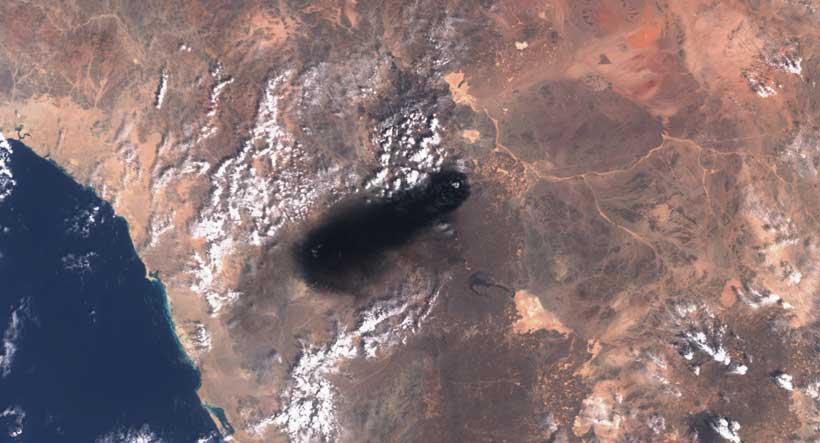
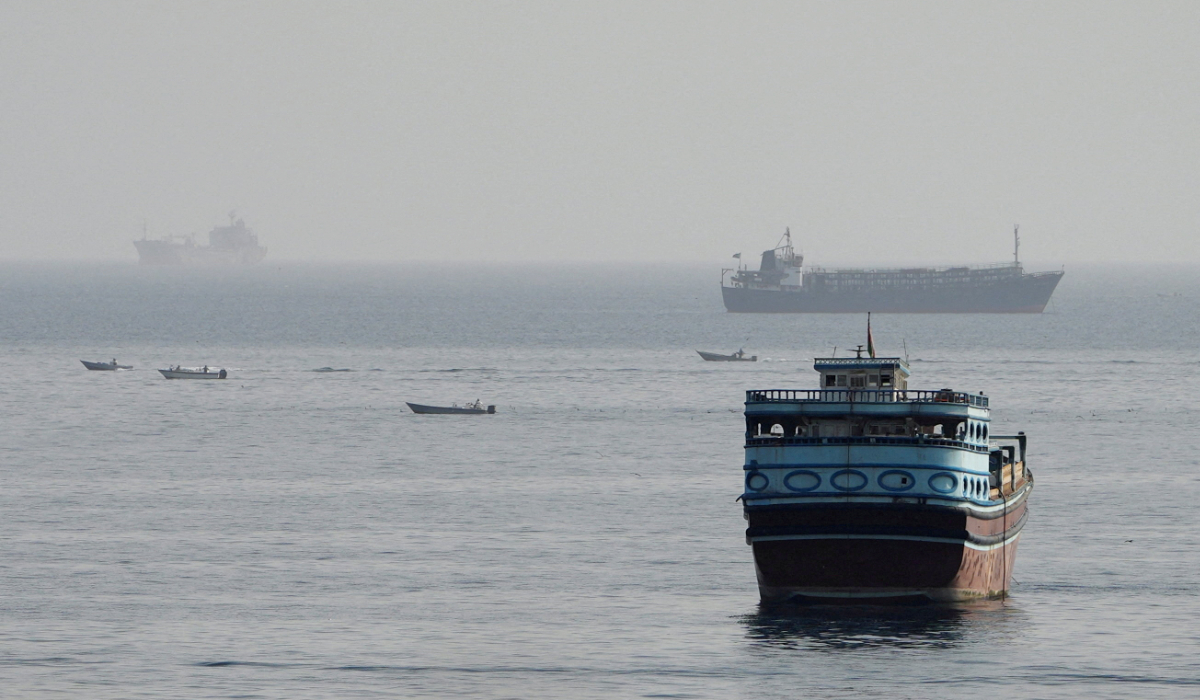
  • Oman oil terminal disruption: Reuters reported that Oman has suspended crude oil loading operations at its key Mina al-Fahal terminal after an explosion near its single-buoy mooring (SBM) berths. Citing unnamed sources, the agency said the blast occurred between SBM 1 and SBM 2 and was allegedly caused by a drone attack.

In the US

  • Trump says US does not need a deal to access Iran’s uranium: The US president said Washington could access Iran’s enriched uranium without reaching an agreement with Tehran, arguing the material is effectively “entombed”. Trump also said he does not plan to meet Iran’s Supreme Leader Mojtaba Khamenei, but he suggested a meeting could be possible if a deal is eventually reached, adding that “if it happened … I’d be respectful”.

In Israel

  • Ultra-Orthodox protest blocks major highway: Hundreds of ultra-Orthodox Israelis blocked Highway 1 in protest against the government’s enforcement of military conscription for religious students, according to Israel’s Channel 10. The demonstrations began after police stopped two ultra-Orthodox students and transferred one to military authorities. Large numbers of police and border guards were deployed to clear the highway and disperse protesters.

In Lebanon

  • Hezbollah rejection raises fears of escalation: Reporting from Beirut, Al Jazeera’s Ali Hashem said Hezbollah remains the key actor on the Lebanese side when it comes to decisions about fighting and any potential halt to hostilities with Israel, “regardless of what the Lebanese government says”. Given Hezbollah’s rejection of the US-brokered ceasefire, Hashem warned that further escalation is likely from both Hezbollah and Israel. He noted that southern Lebanon and the western Bekaa Valley experienced significant Israeli air and ground attacks on Thursday, adding that Hezbollah’s position suggests “it is going to be a very difficult situation” in the days ahead.

Source link

Shimon Peres: Israeli war criminal whose victims the West ignored – Middle East Monitor

Shimon Peres, who passed away Wednesday aged 93 after suffering a stroke on 13 September, epitomised the disparity between Israel’s image in the West and the reality of its bloody, colonial policies in Palestine and the wider region.

Peres was born in modern day Belarus in 1923, and his family moved to Palestine in the 1930s. As a young man, Peres joined the Haganah, the militia primarily responsible for the ethnic cleansing of Palestinian villages in 1947-49, during the Nakba.

Shimon Peres (1923-2016)

  • Best known in the West for role in Oslo Accords
  • Family moved to Palestine in the 1930s
  • Fought with the Haganah during the Nakba
  • Described as the architect of Israel’s clandestine nuclear programme
  • Saw Palestinian citizens as a ‘demographic threat’
  • Played key role in early days of West Bank settlements
  • Responsible for Qana massacre in Lebanon in 1996
  • Defended Gaza blockade and recent Israeli offensives

Despite the violent displacement of the Palestinians being a matter of historical record, Peres has always insisted that Zionist forces “upheld the purity of arms” during the establishment of the State of Israel. Indeed, he even claimed that before Israel existed, “there was nothing here”.

Over seven decades, Peres served as prime minister (twice) and president, though he never actually won a national election outright. He was a member of 12 cabinets and had stints as defence, foreign and finance minister.

He is perhaps best known in the West for his role in the negotiations that led to the 1993 Oslo Accords which won him, along with Yitzhak Rabin and Yasser Arafat, the Nobel Peace Prize.

Yet for Palestinians and their neighbours in the Middle East, Peres’ track record is very different from his reputation in the West as a tireless “dove”. The following is by no means a comprehensive summary of Peres’ record in the service of colonialism and apartheid.

Nuclear weapons

Between 1953 and 1965, Peres served first as director general of Israel’s defence ministry and then as deputy defence minister. On account of his responsibilities at the time, Peres has been described as “an architect of Israel’s nuclear weapons programme” which, to this day, “remains outside the scrutiny of the International Atomic Energy Agency (IAEA).”

In 1975, as secret minutes have since revealed, Peres met with South African Defence Minister PW Botha and “offered to sell nuclear warheads to the apartheid regime.” In 1986, Peres authorised the Mossad operation that saw nuclear whistle-blower Mordechai Vanunu kidnapped in Rome.

Targeting Palestinian citizens

Peres had a key role in the military regime imposed on Palestinian citizens until 1966, under which authorities carried out mass land theft and displacement.

One such tool was Article 125 which allowed Palestinian land to be declared a closed military zone. Its owners denied access, the land would then be confiscated as “uncultivated”. Peres praised Article 125 as a means to “directly continue the struggle for Jewish settlement and Jewish immigration.”

Another one of Peres’ responsibilities in his capacity as director general of the defence ministry was to “Judaise” the Galilee; that is to say, to pursue policies aimed at reducing the region’s proportion of Palestinian citizens compared to Jewish ones.

In 2005, as Vice Premier in the cabinet of Ariel Sharon, Peres renewed his attack on Palestinian citizens with plans to encourage Jewish Israelis to move to the Galilee. His “development” plan covered 104 communities – 100 of them Jewish.

In secret conversations with US officials that same year, Peres claimed Israel had “lost one million dunams [1,000 square kilometres] of Negev land to the Bedouin”, adding that the “development” of the Negev and Galilee could “relieve what [he] termed a demographic threat.”

Supporting illegal settlements in the West Bank

While Israel’s settlement project in the West Bank has come to be associated primarily with Likud and other right-wing nationalist parties, it was in fact Labor which kick-started the colonisation of the newly-conquered Palestinian territory – and Peres was an enthusiastic participant.

During Peres’ tenure as defence minister, from 1974 to 1977, the Rabin government established a number of key West Bank settlements, including Ofra, large sections of which were built on confiscated privately-owned Palestinian land.

Having played a key role in the early days of the settlement enterprise, in more recent years, Peres has intervened to undermine any sort of measures, no matter how modest, at sanctioning the illegal colonies – always, of course, in the name of protecting “peace negotiations”.

The Qana massacre

As prime minister in 1996, Peres ordered and oversaw “Operation Grapes of Wrath” when Israeli armed forces killed some 154 civilians in Lebanon and injured another 351. The operation, widely believed to have been a pre-election show of strength, saw Lebanese civilians intentionally targeted.

According to the official Israeli Air Force website (in Hebrew, not English), the operation involved “massive bombing of the Shia villages in South Lebanon in order to cause a flow of civilians north, toward Beirut, thus applying pressure on Syria and Lebanon to restrain Hezbollah.”

The campaign’s most notorious incident was the Qana massacre, when Israel shelled a United Nations compound and killed 106 sheltering civilians. A UN report stated that, contrary to Israeli denials, it was “unlikely” that the shelling “was the result of technical and/or procedural errors.”

Later, Israeli gunners told Israeli television that they had no regrets over the massacre, as the dead were “just a bunch of Arabs”. As for Peres, his conscience was also clean: “Everything was done according to clear logic and in a responsible way,” he said. “I am at peace.”

Gaza – defending blockade and brutality

Peres came into his own as one of Israel’s most important global ambassadors in the last ten years, as the Gaza Strip was subjected to a devastating blockade and three major offensives. Despite global outrage at such policies, Peres has consistently backed collective punishment and military brutality.

In January 2009, for example, despite calls by “Israeli human rights organisations…for ‘Operation Cast Lead’ to be halted”, Peres described “national solidarity behind the military operation” as “Israel’s finest hour.” According to Peres, the aim of the assault “was to provide a strong blow to the people of Gaza so that they would lose their appetite for shooting at Israel.”

During “Operation Pillar of Defence” in November 2012, Peres “took on the job of helping the Israeli public relations effort, communicating the Israeli narrative to world leaders,” in the words of Ynetnews. On the eve of Israel’s offensive, “Peres warned Hamas that if it wants normal life for the people of Gaza, then it must stop firing rockets into Israel.”

In 2014, during an unprecedented bombardment of Gaza, Peres stepped up once again to whitewash war crimes. After Israeli forces killed four small children playing on a beach, Peres knew who to blame – the Palestinians: “It was an area that we warned would be bombed,” he said. “And unfortunately they didn’t take out the children.”

The choking blockade, condemned internationally as a form of prohibited collective punishment, has also been defended by Peres – precisely on the grounds that it is a form of collective punishment. As Peres put it in 2014: “If Gaza ceases fire, there will be no need for a blockade.”

Peres’ support for collective punishment also extended to Iran. Commenting in 2012 on reports that six million Iranians suffering from cancer were unable to get treatment due to sanctions, Peres said: “If they want to return to a normal life, let them become normal.”

Unapologetic to the end

Peres was always clear about the goal of a peace deal with the Palestinians. As he said in 2014: “The first priority is preserving Israel as a Jewish state. That is our central goal, that is what we are fighting for.” Last year he reiterated these sentiments in an interview with AP, saying: “Israel should implement the two-state solution for her own sake,” so as not to “lose our [Jewish] majority.”

This, recall, was what shaped Labor’s support for the Oslo Accords. Rabin, speaking to the Knesset not long before his assassination in 1995, was clear that what Israel sought from the Oslo Accords was a Palestinian “entity” that would be “less than a state”. Jerusalem would be Israel’s undivided capital, key settlements would be annexed and Israel would remain in the Jordan Valley.

A few years ago, Peres described the Palestinians as “self-victimising.” He went on: “They victimise themselves. They are a victim of their own mistakes unnecessarily.” Such cruel condescension was characteristic of a man for whom “peace” always meant colonial pacification.

Source link

Venezuela: National Assembly Pushes Reform to Open Electricity to Private Sector

Private and mixed companies will be allowed to participate in electricity generation, transmission, distribution, and commercialization. (AFP)

Caracas, June 4, 2026 (venezuelanalysis.com) – The Venezuelan National Assembly preliminarily approved on Tuesday a reform to the country’s Organic Law of the National Electricity System and Service, proposing a structural overhaul of the National Electricity System (SEN).

One of the most significant changes is the incorporation of the private sector in electricity generation, transmission, distribution, and commercialization activities, breaking with two decades of state monopoly through the National Electric Corporation (Corpoelec).

According to the draft text seen by Venezuelanalysis, private corporations and joint ventures will be able to operate in the electric grid in what is termed a “diversification of actors in the service chain.” The mixed ventures, where the state can hold majority or minority stakes, will be approved directly by the government and not by the National Assembly.

“In recent decades, the electric system has showcased structural and financial limitations […] as a result of the productive reality and the negative impact of unilateral coercive measures,” the proposed law reads. “Faced with this reality, the Venezuelan state must assume an institutional and judicial reengineering.”

The bill establishes concessions with a maximum duration of 25 years, renewable for a further 15 years under specific conditions. Once a concession expires, all infrastructure, assets, substations, and data will automatically revert to the state in good condition and without compensation.

The proposed legislation announces the creation of a new tariff scheme “based on real costs and a reasonable return for investors.” Electricity, like most public services, has been heavily subsidized in recent decades in the Caribbean nation. The bill additionally introduces obligations for electricity distributors to compensate users for damages caused by blackouts or other failures.

The reform likewise establishes the possibility for the executive branch to grant tax exemptions to projects linked to renewable energy, rural electrification, or strategic investments in the electricity sector.

The 42-article legislation will now be subject to discussions and amendments before a second and decisive vote. 

If approved, it would repeal the Organic Law for the Reorganization of the Electricity Sector, enacted by former President Hugo Chávez on July 31, 2007, which merged the country’s seven existing electricity companies through the creation of the National Electric Corporation. The legislation also defined all stages of electricity generation and distribution as “strategic for the nation.”

During Tuesday’s parliamentary session, United Socialist Party (PSUV) lawmaker Orlando Miranda argued that the electricity reform represented a “mixed and private capital strategy under a rigorous regime of concessions and public supervision.” 

He noted that government plans to reinforce the grid with thermoelectric plants in the past 15 years were hampered by US economic sanctions. Miranda went on to add that increased tariffs are being studied to reflect the “real costs” of the system.

For his part, opposition legislator Ezio Angelini (Un Nuevo Tiempo) demanded that the reform address corruption, which he identified as a key factor behind Venezuela’s recurring power outages.

Angelini stated that in 2019 Venezuela generated around 20,000 megawatts (MW) while consuming approximately 12,000. Today, he claimed, the country produces close to 12,000 MW, roughly 40 percent of installed capacity, while demand has risen to 14,000. On May 11, Interior Minister Diosdado Cabello stated that electricity demand had surpassed 15,500 MW due to increased oil production.

Zulia state, considered the cradle of Venezuela’s oil industry, and other western regions have experienced daily blackouts lasting between eight and twelve hours in recent weeks. Supply instability also affects other services such as water pumping and cooking gas distribution.

Frequent power outages have also gripped oil fields in the Orinoco Belt, as crude extraction relies on electric motors that are vulnerable to tension fluctuations. According to Bloomberg, the Venezuelan government is urging international energy companies to generate their own electricity for oil and natural gas projects in an effort to shield the grid from the additional load.

Delegations from Siemens and General Electric visited the country in April and held talks with the Venezuelan government headed by Acting President Delcy Rodríguez. However, the two corporate giants are reportedly “hesitant” to take part in major projects due to doubts over Caracas’ financial capabilities.

Additionally, in mid-May, US Chargé d’Affaires in Venezuela John Barrett held a meeting with Electricity Minister Rolando Alcalá to discuss plans to “restore a reliable energy supply through US investment and collaboration.”

Electricity generation in Venezuela depends heavily on the 10 MW-capacity Guri hydroelectric complex in Bolívar state, making the system particularly vulnerable to climatic factors such as the high temperatures affecting the country. Venezuela suffered nationwide blackouts in 2019, with authorities blaming US-led cyberattacks.

The electricity reform follows legislative overhauls to the hydrocarbon and mining sectors that likewise curtailed the state’s role and responsibilities while granting private corporations expanded control over operations and sales, slashed royalties and taxes, and the ability to bring disputes to international arbitration bodies.

Edited by Ricardo Vaz in Caracas.


Source link

Hezbollah rejects US-brokered ceasefire deal between Israel and Lebanon | Newsfeed

NewsFeed

Hezbollah has condemned a US-brokered ceasefire framework accepted by Israel and Lebanon, describing it as harmful to Lebanon’s interests. The plan would establish Lebanese army-controlled security zones near the border, contingent on Hezbollah withdrawing its fighters.

Source link

Democrats force vote on Trump’s $1.8bn settlement fund in ‘vote-a-rama’ | Donald Trump News

Republicans in the United States Senate have renewed their push to pass a controversial $70bn immigration-enforcement funding bill, a top policy priority for President Donald Trump.

But the effort on Thursday faced a series of hurdles, with Democrats forcing votes on several amendments that highlighted controversies related to the Trump presidency.

Recommended Stories

list of 3 itemsend of list

The rapid-fire votes on the amendments were dubbed a “vote-a-rama“, and they are slated to include issues ranging from Trump’s White House ballroom to his tariff policies and the US-Israel war on Iran.

“Amendment after amendment, vote after vote, Republicans are going to have to answer to the American people,” Senate Minority Leader Chuck Schumer said.

Early on, Republicans were forced to confront a topic that has dominated headlines in recent weeks: Trump’s proposed $1.776bn “anti-weaponisation” fund.

The fund has been controversial on both sides of the aisle, with critics calling it a slush fund for Trump’s allies.

Several Republicans indicated that the optics of such a fund could be politically catastrophic ahead of November’s midterm elections, and the Department of Justice has since backed away from the scheme.

But Trump himself has avoided saying whether the fund was dead, or just on hold.

It was created as part of a settlement following a lawsuit Trump filed against the Internal Revenue Service (IRS), a part of his government, and it was designed to award payouts to alleged victims of politically motivated prosecution.

Senate Democrats have repeatedly called for such a fund to be banned outright, rather than relying on the Trump administration’s commitment not to revive it.

Nevertheless, on Thursday, Senate Republicans rejected the Democrats’ measure to permanently block the fund.

Republican Tom Tillis introduced a second amendment, which would have also banned the settlement fund. Instead, the legislation would have redirected the allocated funds to a separate anti-fraud fund within the Justice Department. That, too, was rejected.

Thursday’s votes on the “anti-weaponisation” fund were just the start of several rounds of voting on issues uncomfortable to the Republican Party.

Schumer, the top Democrat, signalled that other amendments would tackle another part of the IRS settlement: the permanent immunity from tax audits that Trump had secured for himself and his family.

Trump’s controversial immigration enforcement campaign and other issues were also scheduled to be taken up in the day’s amendments.

Senate Majority Leader John Thune said he was not sure whether Republicans would defeat every measure, with some members of the party showing an increasing willingness to stand up to Trump.

“I can’t predict how it comes out,” he said.

Immigration funding bill

The situation on Thursday was the result of a standoff between Democrats and Republicans over the Trump administration’s approach to immigration enforcement.

Democrats had pledged not to approve further funding for Immigration and Customs Enforcement (ICE) and Customs and Border Protection (CBP), following the killing of two US citizens during immigration operations in Minneapolis, Minnesota.

Republicans control 53 seats in the 100-seat chamber, short of the 60-vote threshold needed to overcome a filibuster.

They have instead been forced to pursue a lengthy procedural manoeuvre to bypass the filibuster, which has taken weeks.

The $70bn funding bill had been stalled by the Trump administration’s demand to include $1bn for security upgrades for Trump’s White House ballroom project.

The request came after the president had repeatedly said that no taxpayer dollars would go towards the project.

The security funding, which roiled several Republicans, was subsequently dropped before the voting started.

The Senate’s parliamentarian, an official who interprets the chamber’s rules, had previously ruled that adding ballroom funding to the $70bn bill would make it ineligible for the budget reconciliation process, which allows the passage of fiscal-related bills with a simple majority.

If Senate Republicans remain unified, they are expected to pass the funding bill late Thursday night or early Friday.

The Republican-controlled House of Representatives is expected to take up the bill shortly after.

Source link

Why Mogadishu clashes are deepening Somalia’s political crisis again | Conflict News

Mogadishu, Somalia – Mustafa, 33, dreads election time in Somalia. He drives a bajaj — a three-wheeled taxi — and says that when tensions rise, as they always do when polls are near, the whole city feels it, and drivers like him are among the first.

On Wednesday, he was passing through the Hawl Wadaag district when heavy gunfire between government and opposition forces erupted all around him.

Recommended Stories

list of 2 itemsend of list

“I couldn’t even think. Everyone was shouting and running for their lives, and we all fled from the bullets,” he told Al Jazeera. “We haven’t seen fighting this bad in years.”

The shooting that began that afternoon around the homes of former Prime Minister Hassan Ali Khaire and, later, former President Sheikh Sharif Sheikh Ahmed, came as opposition figures were planning to organise protests against what they describe as an illegal term extension by incumbent President Hassan Sheikh Mohamud.

Khaire and Sharif Sheikh Ahmed were among opposition leaders spreadheading the planned protests amid rising tensions with the federal government.

The government said the planned protests would undermine security in a city still grappling with persistent armed violence.

Hundreds of families fled neighbourhoods near the fighting, and by the next day, many of the capital’s central areas had emptied. The sudden eruption of violence ended a period of improving security in Mogadishu, shattering the perception that the city had begun turning a corner.

“The most frustrating thing is that we have nothing to do with it, and it impacts so many of us,” Mustafa said. “We make our living in this city”.

Security forces sealed Maka al-Mukarama Road, one of Mogadishu’s main arteries, while Bakara market, the largest commercial hub in the city, was effectively closed for business.

Maka Al-Mukarama Road, Mogadishu’s main thoroughfare, is usually a bustling commercial hub.
Maka al-Mukarama Road, Mogadishu’s main thoroughfare, is usually a bustling commercial hub, but recently, it has been largely empty, with the exception of military vehicles [Faisal Ali/Al Jazeera]

“Look, it’s midday, and there’s almost no one here, shops are closed, and usually by this time the place is jammed,” Ahmed, a street vendor at Bakara market, told Al Jazeera, gesturing at shuttered stalls.

Ali Wardheere, the deputy central bank governor, estimated the direct cost to businesses and services at $3.8m, though he stressed the figure was a model-based projection, not an official or final tally.

Like most Somalis, Mustafa has never voted for a president or a member of parliament. The country has not held a direct election for national leadership since the late 1960s.

Since the state was re-established in 2012 after its 1991 collapse, leaders have been selected through an indirect system negotiated by clan elders and political elites.

As presidential terms near their end, low trust among political actors often leads to intense competition over power — and at times violence — as disputes over the electoral timetable come to a head.

At a press conference in late May, Sharif warned that the political deadlock could turn violent if negotiations failed.

“Where do things stand? [We say] Leave, and [you say] I won’t leave. What comes next? Bullets.”

The warning echoed events in 2021, when then-President Mohamed Abdullahi Farmaajo remained in office more than a year beyond the end of his term, triggering clashes in Mogadishu before a political agreement was reached.

Higher stakes this election

This time, the political standoff carries higher stakes.

President Hassan Sheikh Mohamud says that constitutional amendments approved by parliament extended his mandate by an additional year from May 15. The opposition rejects that and has begun referring to him as a “former president”.

Two of Somalia’s most influential federal states also reject the amendments, leaving the country divided over the constitutional framework governing the next election, with no constitutional court to resolve the dispute.

After parliament approved the changes, Mohamud declared that the “provisional constitution, and the provisional era, was a sun which set yesterday,” signalling that his administration would press ahead despite objections from its opponents.

Tensions had been building for days. Ahead of a protest planned for Thursday, opposition leaders left the heavily fortified “green zone” near Mogadishu’s airport and returned to their residences across the city.

Some opposition figures said they would deploy their own armed guards at the demonstration, a proposal Mohamud rejected. The dispute heightened fears of a confrontation before fighting eventually broke out.

Both sides blame the other for starting the clashes. Khaire accused Mohamud of directing a “sustained and indiscriminate military assault” that lasted more than 20 hours, a claim Sharif echoed after fighting reached his own residence.

Ahmed Moalim Fiqi, the defence minister, accused the opposition of militarising the standoff, likening it to Sudan’s Rapid Support Forces and alleging that opposition figures had “distributed mortars and artillery across the capital”.

“Force and militias,” he said, would no longer be allowed to “seize power or block the state.”

How it came to this

The roots of the crisis run back to the 2012 provisional constitution, which set up a federal, parliamentary system built on broad consensus and clan-based power-sharing, which every government since has promised to achieve and failed to attain.

This year, after a long review, parliament amended the constitution through a disputed process that split the political class. The government has insisted that the new constitution advances the statebuilding process and that the Somali public should be allowed to directly elect its representatives.

For Ahmed Abdi Koshin, a federal MP who boycotted the draft, the danger is that the whole settlement comes apart. The process, he said, “clearly doesn’t have buy-in,” and the original constitution, for all its faults — “an imperfect product of compromise” — was the “only glue holding Somalia together”.

Koshin is not against a direct vote in principle, he said, but does not believe the country is ready for one. “We don’t have legislation for a direct vote; censuses and the security situation remains compromised. It really is up to the president to either reach a deal and save Somalia, or watch it fall apart,” he said.

The opposition, organised as a coalition known as the Somali Future Council and including two serving federal-state presidents, former prime ministers and a former president, has pressed Mohamud to accept that his mandate has ended and negotiate a new electoral framework, as in past transitions.

It alleges that his push for a direct vote is a pretext for extending his term and potentially securing another.

The government rejects that, casting a national one-person, one-vote election — the first since the 1960s — as essential to a drawn-out state-building project. When electoral talks collapsed on May 15, the Ministry of Information accused the opposition of bringing demands that ran counter to “the citizen’s fundamental right to vote and to be voted for”, and vowed to press ahead.

Mohamed Ibrahim Moalimuu, a lower-house MP who backed the amendments, said further delay could not be justified. “We’ve waited for more than 12 years,” he told Al Jazeera.

“If they had arguments against them, they should have taken part in the process and raised their issues. A constitution isn’t a Quran, and they should come back and work through parliament to make their views clear.”

A whole generation of Somalis, he noted, have never cast a ballot, and a real election “would be a major milestone and would bring some hope”.

The old indirect system, he added, was notoriously corrupt, with parliamentary seats changing hands for anywhere from $100,000 to as much as $1.3m. “This system is too dirty and keeps people out,” said Maliumuu. “It needs to be changed.”

A deeper problem

A regional official, speaking on condition of anonymity because he was not authorised to talk to the media, described an elite “divided strategically over what type of country they want, whether a strong centralised state or a weak decentralised one, and tactically over who the right candidate is to take them there”.

Mohamud, the official said, had moved from a decentralised vision for Somalia that embraces federalism towards a stronger executive, and his early, promising relationships with the federal-state leaders had since soured.

Those fractures have opened on several fronts at once.

Somaliland, which declared independence in 1991 and has stayed out of the constitutional review entirely, was recognised by Israel late last year after earlier courting Ethiopia.

Puntland and Jubaland, two of Somalia’s six federal states, have withdrawn from the federal system over the new constitution, while more than 100 MPs and senators from both boycotted the final vote.

Broader regional crises, from Sudan’s civil war to disease outbreaks elsewhere on the continent, have pushed Somalia further down the list of international priorities, leaving international engagement more fragmented and inconsistent.

The country is also grappling with a deepening humanitarian crisis and aid cuts, prompting famine monitors to warn of a heightened risk of hunger in parts of Somalia.

Yusuf Aynte, a veteran religious leader and former MP, said Somalia’s leaders needed to build consensus rather than push through changes that risk deepening divisions.

“The president says what he is doing is good, and that may be so,” he told Al Jazeera. “But the most important thing is what everyone can agree on.

“At the moment, Somalia has too many problems, and can’t afford to be distracted like this.”

Jamal Shiil, a youth activist, told Al Jazeera that Somalia’s large youth population would ultimately bear the cost of the persistent instability.

“Young people want to make a living here, for Somalia to be peaceful and not to have to leave because of the problems,” he said. “But if things don’t change it won’t leave them much of a choice”.

Source link

Democrat fails to block US measure to deepen Israel military cooperation | Israel-Palestine conflict News

A congressional panel in the United States has rejected an effort to revoke a provision from the defence budget that would further integrate the US and Israeli militaries.

An amendment to sink the pro-Israel measure, introduced by Democratic Congressman Ro Khanna, failed in a voice call on Thursday in the House Armed Services Committee.

Recommended Stories

list of 3 itemsend of list

That defeat paves the way for the proposal to advance to the floor of the House of Representatives.

Khanna had argued that the provision in the National Defense Authorization Act (NDAA), formally called Section 224, rewards Benjamin Netanyahu at a time when the Israeli prime minister is trying to dictate US policy in the Middle East.

The progressive Democrat cited recent reports that President Donald Trump is angry at Netanyahu over Israel’s escalation in Lebanon.

“Everyone in America — whether you’re a Republican, an independent or a Democrat — says that we need to tell Netanyahu that America calls the shots, not the prime minister of any other country,” Khanna said.

“They want less cooperation and blank checks to Israel, not more. Only the United States Congress would dream up at this moment, ‘Let’s actually do more for Israel.’”

The vote on the amendment was taken by calling on committee members to say aloud either “yes” and “no”, and the “nays” clearly were more numerous. It was not recorded as a roll-call vote, which would require each member’s preference to be logged.

Section 224 would require the Pentagon chief “to designate an executive agent responsible for synchronising cooperative efforts between the United States and Israel”.

That official would be in charge of overseeing several joint initiatives, “including bilateral defence technology research, development, testing, evaluation, integration, and industrial cooperation”, the NDAA reads.

Netanyahu’s endorsement

Critics have raised concern that Section 224 may make US military aid to Israel more opaque, concealing the assistance as cooperation rather than a separate expense.

The measure also risks tethering the US military to its Israeli counterpart technologically at a time when the American public is rapidly turning against Israel, according to recent public opinion polls.

“As political pressure builds to reduce US military assistance to Israel, Section 224 provides the framework for continuing — and expanding — US-Israel military ties by entrenching Israeli technology within the US defense supply chain in a way that would shield it from the annual appropriations process,” the nonprofit lobbying group A New Policy said in a brief last week.

“The use of must-pass legislation as the NDAA as a mechanism of integration speaks to the plummeting popularity of continuing unconditional support to Israel.”

The measure comes as Netanyahu pushes to transform US aid to Israel from direct assistance to military “cooperation”.

The Israeli prime minister wrote a letter to Republican Congressman Marlin Stutzman endorsing a bill facilitating that transition.

In the letter, Netanyahu said, “The time has now arrived for us to move from aid recipient to partner.”

He added he supported Stutzman’s plan for a “new framework of joint defense cooperation, codevelopment, coproduction and mutual investment in areas including advanced missile defense, artificial intelligence … and next generation military platforms”.

Referencing the letter on Thursday, Khanna argued that Section 224 “directly” follows Netanyahu’s language.

“I am for Team America. I am for the interests of this country, and I believe that when Donald Trump ran, he ran ‘America First’,” the Democrat said.

“That includes American interests against any foreign country. We should have American sovereignty and make it clear that we strike 224. If we want to give aid to Israel, if we want to sell them weapons, that should be a vote for the entire Congress.”

But both Democrats and Republicans pushed back against his argument, saying that the provision aims to streamline existing cooperative programmes that benefit the US.

Key Democrat backs Section 224

Congressman Adam Smith, the top Democrat on the panel, said he was “very sympathetic” to Khanna’s frustration with Netanyahu.

“Mr Netanyahu insisted on this war with Iran that has strengthened Iran and weakened our position. I do not like his leadership of Israel or where he is going,” Smith said.

But he added that it is in the US’s interests to have deep military ties with Israel, a country accused by leading rights groups and United Nations investigators of committing genocide in Gaza.

“The reason that we have these partnerships with Israel, where we may not have as many developed partnerships with other NATO countries, is because Israel has actually been having to fight,” Smith said.

“They have faced drone attacks and missile attacks. They have had to develop new technologies, technologies that we’ve benefitted from.”

Rights advocates often decry the promotion of Israel’s weapons as “battle-tested” — because they have been tested on the Palestinian and Lebanese communities that they devastated, killing tens of thousands of people along the way.

Earlier on Thursday, Palestinian rights advocates warned against approving Section 224 during a news conference on Capitol Hill.

“It is unfathomable that this is the American response to a country that has, over the past two and a half years, carried out a genocide against Palestinians and started wars in both Iran and Lebanon,” said Margaret DeReus, the executive director at the Institute for Middle East Understanding (IMEU).

Republican Congressman Thomas Massie has promised to introduce an amendment to revoke Section 224 when the NDAA goes to a full House vote.

Source link

Kenyan president defends US Ebola facility amid deadly protests | Ebola News

NewsFeed

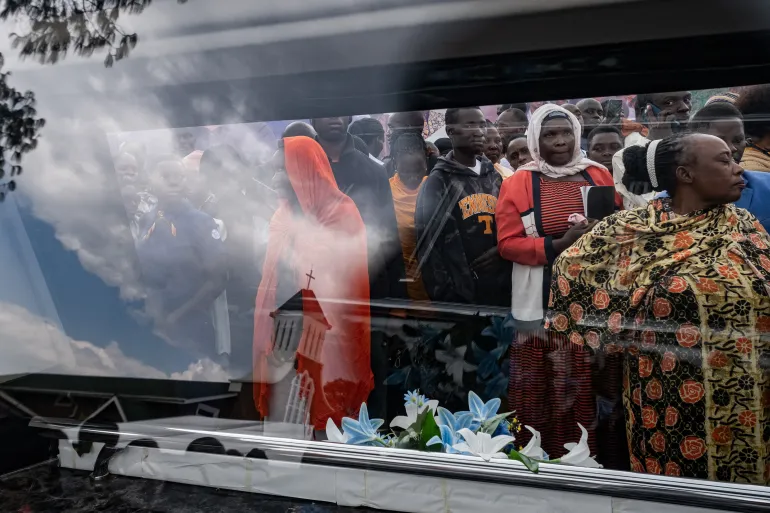
Kenyan President William Ruto said allowing the US to build an Ebola quarantine facility in Kenya was the “right thing”. At least two people were killed this week in protests against the facility, which is being built on a US air force base for Americans exposed to the virus.

Source link

Ukraine Tests New Missile In Hopes Of Leading To Low Cost Patriot Alternative

Tests of Ukraine’s new FP-7.X missile could pave the way to a cheaper and more plentiful, albeit far less capable, alternative to the U.S.-made Patriot air defense system effectors. A recent uptick in Russian missile and drone attacks against Ukraine, combined with a critical shortage of Patriot interceptors, underscores the need for more robust air defenses, especially with anti-ballistic missile capabilities. The development parallels a similar program in the United States, which seeks a drastically lower-cost interceptor for the Patriot system.

A video showing a test launch of an FP-7.X missile was published yesterday by its manufacturer, Fire Point, also responsible for the FP-5 Flamingo cruise missile and a series of long-range one-way attack drones. Fire Point’s chief technology officer Iryna Terekh described the depicted test as a “fully controlled maneuvering flight” conducted “just the other day.” The pink-painted missile recalls the early Flamingoes, and now seems to have been adopted as something of a company trademark.

The FP-7.X missile is planned as the stepping-stone toward the productionized Freyja missile, which is primarily intended to provide Ukraine with its first homegrown anti-ballistic missile defense system. While ballistic missile threats are being prioritized here, the system would be equally able to defend against a variety of crewed aircraft threats, as well as drones and cruise missiles.

“No matter how unrealistic and ambitious this goal may sound today, we are exerting all possible and impossible efforts to make it a reality as soon as possible, so that Ukraine can close its skies on its own,” Terekh wrote.

Back in April, Fire Point’s co-founder and chief designer Denys Shtilierman told Reuters that the company was aiming to develop an anti-ballistic missile with a unit cost of less than $1 million.

A rendering of the FP-7 surface-to-surface ballistic missile on which the FP-7.X missile is based. Fire Point

“If we can decrease it to less than $1 million, it will be … a game changer in air defense solutions,” Shtilierman said. “We plan to intercept the first ballistic missile at the end of 2027,” he added, apparently referring to the aim to field the Freyja system by that date.

This compares to a unit price of approximately $5.3 million for each example of the most modern and highly capable PAC-3 MSE variant, which is one of the types provided to Ukraine. This figure comes from the Army’s latest proposed budget for the 2027 Fiscal Year. This is up from a historical average of around $4 million for each one of these missiles. These munitions also take years of lead time to produce, meaning that managing limited stocks is a big challenge.

Fire Point has developed the FP-7.X missile on the basis of the previous FP-7 surface-to-surface ballistic missile, a weapon with a range of around 124 miles, and a warhead of approximately 331 pounds. Deriving an anti-ballistic missile from a ballistic missile is an unusual move, but Fire Point will hope that the commonality should accelerate the process.

As it stands, Ukraine’s anti-ballistic missile capabilities are strictly limited. It relies heavily upon the Patriot, batteries and components of which have been provided by Germany, the Netherlands, and the United States.

When the Patriot began to arrive in 2023, it provided Ukraine with an enhanced long-range, high-altitude engagement capability that was previously only offered, to a lesser degree, by Ukraine’s S-300s, with their depleting stocks of missiles. Importantly, the Patriot also brought an anti-ballistic missile capability, something that was previously only provided by the small number of Ukrainian S-300V1 systems, and even those don’t come anywhere close to the Patriot in this regard.

Providing somewhat similar capabilities to the Patriot is the SAMP/T, a joint Franco-Italian SAM system, which has also been supplied to Ukraine, but only in limited numbers. Overall, the SAMP/T is limited simply by the fact that it is produced in relatively small numbers.

As for the Patriot, this has claimed notable successes and high-profile victims in Ukrainian hands. However, as Russia has adapted its ballistic missiles, specifically adding enhanced maneuvering capabilities, the effectiveness of the U.S.-made system has been reduced.

A screen capture of a Ukrainian Air Force video shows images of three Russian helicopters and two Russian fighters painted on the side of a Patriot air defense battery. Defense Industry of Ukraine image

According to Shtilierman, the Patriot system often requires two or three air defence missiles, each costing several million ​dollars, to bring down a ballistic projectile. This is a mismatch that Fire Point also hopes to address with the Freyja.

It is notable that the U.S. Army is currently also pressing defense contractors to come up with proposals for a new interceptor for the Patriot system with a unit cost under $1 million, as you can read more about here. Whether by design or coincidence, U.S. Army Maj. Gen. Frank Lozano, the Army’s Portfolio Acquisition Executive for Fires (PAE Fires), included a rendering of the FP-7.X in a recent LinkedIn post, as seen below, to illustrate a notional low-cost interceptor.

The latest development comes as Ukraine’s political and military leaders continue to warn about critical shortcomings in the country’s air defense capabilities. As well as expending the missiles it already has, the United States has reportedly suspended further Patriot deliveries to Ukraine because of concerns over the state of its own stockpile.

Ukrainian President Volodymyr Zelensky has repeatedly urged U.S. President Donald Trump and members of Congress to provide additional missiles for its Patriot systems, warning that Ukraine faces a severe air defense shortfall.

Yesterday, Zelensky said that Ukrainian officials have one week to finalize outstanding legal, financial, and technical issues related to the purchase of additional Patriot systems.

Zelensky said that a political agreement to buy the systems has already been reached, but the process has stalled.

Ukraine’s ambassador to the United States, Olha Stefanishyna, added that Kyiv is prepared to finance additional Patriot systems and interceptor missiles if Washington agrees to deliver them.

Ukrainian personnel remove camouflage netting from a Patriot launcher, which is loaded with missile canisters associated with older interceptors like the PAC-2-series. Ukrainian Air Force

Commander-in-Chief of the Armed Forces of Ukraine Oleksandr Syrsky also recently pointed to Ukraine’s lack of sufficient modern air defense systems and interceptor missiles.

Clearly, continued Russian missile and drone strikes are putting a heavy strain on Ukraine’s air defenses.

Plugging the gaps with the Freyja system would make a lot of sense, providing a locally developed and manufactured solution to the problem, provided that the technical hurdles can be overcome.

Even so, the deadline of the end of 2027 is very ambitious for such a project.

With that in mind, Ukraine is also looking to foreign support for the Freyja program.

Earlier this year, Fire Point confirmed it was in talks to get European and Middle Eastern companies onboard the program. With various nations struggling to meet their air defense needs amid the demands of the conflicts in Ukraine and the Middle East, investing here could also bring dividends.

This photograph shows parts of long-range drones stored in a workshop of the Fire Point company which manufactures FP-1 deep-strike drones and FP-2 strike drones in an undisclosed location in Ukraine on January 29, 2026, amid the Russian invasion of Ukraine. (Photo by Serhii Okunev / AFP via Getty Images)
Parts of long-range drones stored in a workshop of the Fire Point company at an undisclosed location in Ukraine on January 29, 2026. Photo by Serhii Okunev / AFP SERHII OKUNEV

Shtilierman told Reuters in April that he was awaiting government approval for an investment in Fire Point by a Middle Eastern conglomerate, which would provide a major boost to Freyja and other programs, including longer-reaching ballistic missiles.

In terms of European companies, Shtilierman mentioned his interest in collaborating on radar, missile target-seeking, and communications systems. He named Hensoldt, Saab, and Thales as potential suppliers of radar solutions, an area where Fire Point lacks expertise.

Fire Point has also previously described the Freyja interceptor being fitted with an infrared imaging seeker for the terminal phase, as well as a semi-active radar homing seeker from Diehl Defence of Germany.

Few details are available about the launch system, other than reports of a lightweight, mobile launcher of domestic origin.

Globally, there is a clear demand for alternatives to the increasingly hard-to-source Patriot, especially for anti-ballistic missile defense.

A video shows a PAC-2 in a test against a Lance ballistic missile:

MIM-104C Patriot PAC-2 vs. Lance TBM thumbnail

MIM-104C Patriot PAC-2 vs. Lance TBM


Ukraine’s combination of battlefield experience, rapid innovation, and low-cost defense technologies could put it in a good position to fill the gap. Even if the Freyja ends up with a significantly lower kill rate per missile than the Patriot, if it is far cheaper, that would be less of a problem.

At the same time, it remains unclear if Fire Point is able to fulfil the promises it has made in terms of output. In the past, the company has said it aims to build at least seven of its Flamingo cruise missiles per day, for a total of 2,555 built annually. To reach this target, the firm might need to call upon foreign partnerships to help expand its production capacity. The same would likely be the case for Freyja. By way of comparison, in 2024, Lockheed Martin produced more than 500 PAC-3 MSEs, with a plan to increase this to 600 in 2025.

A video of the Flamingo cruise missile in action:

Випробувальний пуск ракети “Фламінго" thumbnail

Випробувальний пуск ракети “Фламінго”


One unknown factor in this is the possibility that Ukraine and/or NATO allies in Europe might obtain additional licenses for local production of Patriot missiles. Zelensky wants Patriot production in Ukraine and has said he has been discussing it with the United States. Still, while these might address the production capacity issues for the weapons, it would still be a more expensive solution than what Fire Point is proposing and it would take years to realize any output.

For now, the FP-7.X appears to be an early-stage technology demonstrator, and turning it into the operational Freyja interceptor by 2027 will require overcoming massive technical and logistical hurdles — as well as holding off Russian air attacks in the meantime.

However, the program reflects a broader trend in Ukraine’s wartime defense sector: rapidly developing indigenous capabilities to fill critical gaps left by limited and/or unreliable foreign supplies. If Fire Point can translate its ambitions into a viable anti-ballistic missile system, Ukraine could gain not only a more sustainable means of defending its skies, but also a potentially attractive export alternative in a global market increasingly hungry for affordable air defense solutions.

Contact the author: thomas@thewarzone.com

Thomas is a defense writer and editor with over 20 years of experience covering military aerospace topics and conflicts. He’s written a number of books, edited many more, and has contributed to many of the world’s leading aviation publications. Before joining The War Zone in 2020, he was the editor of AirForces Monthly.


Source link

Liverpool appoint Spaniard Iraola as new manager in place of Slot | Football News

Andoni Iraola left his role at Bournemouth at the end of the season and takes over at Liverpool in place of Arne Slot.

Liverpool has named Andoni Iraola as their new manager after sacking Arne Slot following a calamitous Premier League title defence.

Iraola quickly emerged as Liverpool’s top target to replace Slot, whose two-year reign came to a shock end when he was dismissed last Saturday.

Recommended Stories

list of 4 itemsend of list

Liverpool gave no indication as to the length of the 43-year-old Spaniard’s contract, but British media have reported that he has signed a two-year deal.

“Really excited, really excited, because obviously you know about Liverpool, you know that it’s a big club, a massive club, one of the biggest in the world,” Iraola, who called time on his impressive spell with Bournemouth at the end of this season, said on Liverpool’s official website on Thursday.

“But feeling inside and understanding a little bit more of this club, I always thought it’s a special club.

“You don’t need a lot of things to get attracted by Liverpool. Liverpool is Liverpool.”

After criticism of Liverpool’s lacklustre performances in Slot’s second season at Anfield, Iraola is expected to deliver a more urgent, aggressive style of football, which characterised the team under beloved former manager Jurgen Klopp.

Iraola earned rave reviews for Bournemouth’s sixth-place finish in England’s Premier League this season, which secured the club’s first qualification for Europe, in the Europa League.

He arrived at the south coast club from Raya Vallecano in 2023, having previously managed Mirandes and AEK Larnaca in Cyprus.

Bournemouth improved each year under Iraola, finishing 12th, ninth and sixth.

The former defender was praised for his astute tactics and development of youngsters including Eli Junior Kroupi and Alex Scott.

Prior to leaving Liverpool at the end of the season, Egypt star Mohamed Salah recently called for a return to the “heavy metal football” that led to so much success under Klopp, heaping pressure on the beleaguered Slot.

Iraola has previously talked about his desire for his teams to play with an attacking, high-pressing style, in contrast to Slot’s more controlled approach.

Born in Spain’s Basque Country, Iraola played more than 500 games for Athletic Bilbao before a stint in Major League Soccer with New York City, where he teamed up with Frank Lampard and Andrea Pirlo.

He will arrive on Merseyside with Liverpool at a crossroads after Slot’s failure to maintain the club’s position at the summit of English football.

Slot had the tough task of replacing Klopp, who left in 2024 after winning the Premier League and Champions League during a golden nine-year spell at Anfield.

The former Feyenoord boss made a strong start, leading Liverpool to a record-equalling 20th English league title in his debut season, spearheaded by Salah’s 29 goals.

But Slot was unable to halt Liverpool’s slide in the 2025-26 season as the Reds collapsed from late September onward, finishing a turbulent season without a trophy.

The death of Liverpool forward Diogo Jota in a car crash last July had an immeasurable impact on the squad, while the club’s  450-million-pound ($605m) splurge on new signings failed to pay off.

Slot’s relationship with Salah also deteriorated, while Liverpool fans turned on the manager due to his team’s lifeless displays and poor results.

The club limped to a fifth-place finish, 25 points behind champions Arsenal, which at least guaranteed qualification for next season’s Champions League.

Source link

Ecuador’s disappeared: Inside one family’s search for answers | Human Rights News

While it might be true that the cases are progressing, families of the missing argue they are moving at a snail’s pace.

Since early December, Fault Lines has spent time with families who are pushing for accountability and pleading with the government to learn what happened to their loved ones.

In some cases, they have spent years without receiving any direct response.

“It gets harder every time my nephew asks when his father will come home and I don’t have any answers,” said Rosario Villon, whose brother, Jonathan Villon, has been missing for almost a year and a half.

The 31-year-old father of three was last seen on December 9, 2024, when he left to pick up groceries in his hometown of Guayaquil.

Addressing a vigil for Jonathan last December, Rosario explained the toll his disappearance has taken on her family.

“Seeing my mother cry for her son, not knowing what to do next to bring him home — it isn’t easy,” she said.

The three children of Jonathan Villon in Ecuador
Jonathan Villon, who disappeared in the custody of Ecuadorian soldiers, leaves behind a partner and three children, pictured here [Fault Lines/Al Jazeera]

Fault Lines has reviewed footage of the day Jonathan was detained. Security cameras show soldiers patrolling Jonathan’s neighbourhood, Nueva Prosperina.

A neighbour’s mobile phone video also captures the moments after Jonathan was forced into the truck’s bed, under a wooden bench. The truck then drives off, and he has not been seen since.

The family recorded the licence plate numbers of the municipal vehicle the soldiers were using, but the military has refused to respond to requests about Jonathan’s case.

“We have the evidence, we have videos, we have the licence plates of the truck, and they won’t give us a concrete and exact answer. What happened to my husband?” asked Jonathan’s partner, Yadira Bohorquez.

Lawyers representing the family say the military simply declared that it had no operations in that area on that date, despite the video evidence.

“The case of Jonathan Villon is completely paralysed by the refusal of the Ministry of Defence to cooperate in handing over information that the Prosecutor’s Office has already requested,” said Fernando Bastias, a lawyer with CDH Guayaquil, a human rights nonprofit representing the family.

Source link

Israel must allow ICRC to visit Palestinians in prison, Supreme Court rules | Israel-Palestine conflict News

Israel’s Supreme Court rejects government ban on prisoner visits, affirming Red Cross access under international law.

Israel’s Supreme Court has unanimously rejected a government policy banning representatives of the International Committee of the Red Cross (ICRC) from visiting Palestinian detainees in Israeli prisons.

The court ruled on Wednesday that by preventing the Red Cross from visiting prisoners, the government had contravened Israeli and international law, and therefore the policy must be repealed.

Recommended Stories

list of 3 itemsend of list

It also ruled that the government failed to present a legal foundation for its policy on annulling all visits after the Hamas-led attack on October 2023, in which more than 1,100 people were killed and more than 240 were taken captive.

The assault triggered a brutal war in Gaza, which has been defined as a genocide by several prominent scholars and an independent United Nations inquiry. The Israeli army killed more than 72,950 people in the enclave, according to Gaza’s Health Ministry, and reduced most of the besieged territory to rubble, and forced the displacement of nearly 1.9 million Palestinians.

Violence across the occupied West Bank perpetrated by Israeli forces also intensified to unprecedented levels. All visits to prisoners were halted, and information about them was not shared – something that used to be standard practice before the war. Back then, Israeli authorities accused Hamas of failing to secure access to the captives in Gaza.

It was the first time in 50 years that Israel prevented Red Cross visits, according to the Association for Civil Rights in Israel (ACRI), which filed the petition.

“For the first time in nearly three years, the over 9,000 Palestinian security prisoners being held in Israeli prisons and military detention centers will receive Red Cross visits,” ACRI said. The ban remained in place even after a “ceasefire” was agreed last October.

Initial petition

The petition by ACRI, Physicians for Human Rights, Israeli rights group HaMoked and Israeli NGO Gisha against the government policy was first filed in Israel’s High Court in February 2024. But the state of Israel asked for 27 extensions before a hearing was held at the end of October last year.

The ICRC welcomed the decision, saying it was ready to resume its visits. “We are continuing our dialogue with the Israeli authorities to resume our work in detention as soon as possible,” it said in a statement. It added that access to detainees and the ability to meet with them privately are obligations under international law.

Wednesday’s decision comes amid growing concerns over the ill-treatment of Palestinian detainees in Israeli prisons.

Last week, the United Nations released its annual report on conflict-related sexual violence verified in 2025. It cited torture, rape, gang rape, forced nudity and “cavity searches conducted without apparent security justification perpetrated” by Israeli armed forces and security forces primarily during detention and interrogation and across several sites, including the infamous Sde Teiman military camp, among others.

Source link

Ronaldo, Messi at World Cup: Who else is playing their final tournament? | World Cup 2026 News

The FIFA World Cup 2026 could be the final act for some of football’s finest talents.

Although some of this tournament’s players will set a men’s football record by appearing in their sixth World Cup, age is catching up, and other players have struggled with injuries.

Recommended Stories

list of 4 itemsend of list

Al Jazeera takes a look at who might be making their final bow on the global stage at the tournament in North America:

Cristiano Ronaldo – Portugal

Although fitness has been one of Ronaldo’s biggest strengths during his illustrious career, at 41, the Portugal forward knows his playing days are numbered.

Numbers have always been on the former Manchester United and Real Madrid forward’s side, though, and he fired in 30 in 37 matches for Al-Nassr this season, while his tally for Portugal currently sits at 143 goals.

The second-oldest player at this year’s tournament, only behind Scotland’s 43-year-old Craig Gordon, Ronaldo heads to his record sixth World Cup, well aware it could be his final chance to lift the coveted golden trophy: the only one missing from his glittering cabinet.

Ronaldo clenches his fists as he celebrates
Cristiano Ronaldo will play in his sixth, and possibly his last, World Cup this year [Pedro Nunes/Reuters]

Lionel Messi – Argentina

Like Ronaldo, Messi is also off to his record sixth finals appearance, one where he will lead Argentina’s defence of the title they won in Qatar four years ago.

Argentina’s all-time leading scorer and appearance holder, Messi, has struggled with injury in the build-up to the tournament, raising doubts about whether he will feature in each game and if his body can keep up with the gruelling demands of an expanded World Cup.

The eight-time Ballon d’Or winner’s impact and talent, however, are such that, even at 38, he remains the heartbeat of the football-crazy South American nation.

FILE PHOTO: Soccer Football - World Cup - South American Qualifiers - Argentina v Bolivia - Estadio Mas Monumental, Buenos Aires, Argentina - October 15, 2024 Argentina's Lionel Messi celebrates scoring their first goal REUTERS/Matias Baglietto/File Photo
Injuries have cast doubt over Lionel Messi’s involvement in the upcoming World Cup [File: Matias Baglietto/Reuters]

Luka Modric – Croatia

After playing a key role in Croatia’s run to the 2018 final and a third-place finish in 2022, Modric is ready for his fifth and final appearance at the World Cup. As the 40-year-old heads to the tournament after undergoing cheekbone surgery, the veteran knows the team still relies heavily on him for his playmaking prowess.

The ageing midfielder, also the Balkan nation’s captain, still enjoys a hero’s status within a side that has often defied expectations on the global stage. Enjoy his magic in midfield before he bows out.

FILE PHOTO: Soccer Football - World Cup - UEFA Qualifiers - Group L - Croatia v Montenegro - Stadion Maksimir, Zagreb, Croatia - September 8, 2025 Croatia's Luka Modric in action REUTERS/Antonio Bronic/File Photo
Luka Modric, Croatia’s midfield magician, is set for his swansong [File: Antonio Bronic/Reuters]

Neymar Jr – Brazil

At 34, Brazil‘s all-time leading scorer Neymar is much younger than Messi or Ronaldo, but unlike the two greats of the game, his place in the national team is not guaranteed. Neymar’s comeback in the Brazil squad after a two-and-a-half-year hiatus electrified football fandom, and only time will tell whether it was a gamble or a tactical masterclass by coach Carlo Ancelotti.

With a history of fitness issues, a series of injuries and mounting age (he would be 38 by the 2030 World Cup), what looks more certain is that this could be Neymar’s fourth and final act at the tournament.

FILE PHOTO: Soccer Football - FIFA World Cup Qatar 2022 - Quarter Final - Croatia v Brazil - Education City Stadium, Doha, Qatar - December 9, 2022 Brazil's Neymar celebrates scoring their first goal with Marquinhos REUTERS/Dylan Martinez/File Photo
Brazil’s beloved Neymar Jr is off to the World Cup after a two-and-a-half-year hiatus from the national set-up [File: Dylan Martinez/Reuters]

Manuel Neuer – Germany

Such is the “aura” of Neuer, as coach Julian Nagelsmann said last month, that the 40-year-old came out of retirement to be named Germany‘s first-choice goalkeeper for the 2026 World Cup. Back in the squad after nearly two years, fans will have a final chance to see him at the World Cup.

Widely regarded as one of the greatest goalkeepers, Neuer has played at four World Cups, most notably having a key role in Germany’s 2014 World Cup triumph on Brazilian soil.

FILE PHOTO: Soccer Football - Euro 2024 - Round of 16 - Germany v Denmark - Dortmund BVB Stadion, Dortmund, Germany - June 29, 2024 Germany's Manuel Neuer celebrates after Jamal Musiala scores their second goal REUTERS/Kai Pfaffenbach/File Photo
Manuel Neuer reversed his retirement decision to play for Germany at the World Cup for the final time [File: Kai Pfaffenbach/Reuters]

Mohamed Salah – Egypt

Arguably Africa’s greatest player of all time, Salah became a global superstar on the back of his success at Liverpool, where he won nine trophies. At 33, and no longer at the peak of his powers, this could be the forward’s second, and possibly final, World Cup.

An underwhelming season and his subsequent departure from Liverpool may have tempered expectations. Yet Egyptians continue to place their faith in their beloved number 10, hoping he can inspire the nation and help deliver something it has never experienced before: the joy of celebrating a World Cup victory.

Soccer Football - CAF Africa Cup of Nations - Morocco 2025 - Third Place Match - Egypt v Nigeria - Mohammed V Stadium, Casablanca, Morocco - January 17, 2026 Egypt's Mohamed Salah misses a penalty during the penalty shootout REUTERS/Siphiwe Sibeko
Egypt are back at the World Cup for only the third time, and Mohamed Salah’s second [File: Siphiwe Sibeko/Reuters]

Kevin de Bruyne – Belgium

A big part of Belgium’s “golden generation” between 2014 and 2022, playmaker De Bruyne continues to flourish in his duties for club and country. Age, however, is starting to catch up with the playmaker, who turns 35 later this month.

The Napoli midfielder’s performance is central to Belgium’s odds of a deep run at the 2026 World Cup, and he will be eager to drive them to a memorable finish in what will be his fourth and presumably final appearance at the tournament.

FILE PHOTO: Soccer Football - Euro 2024 - Group E - Belgium v Romania - Cologne Stadium, Cologne, Germany - June 22, 2024 Belgium's Kevin De Bruyne reacts after the match REUTERS/Wolfgang Rattay/File Photo
Kevin De Bruyne will appear at this fourth World Cup [File: Wolfgang Rattay/Reuters]

Virgil van Dijk – Netherlands

Experienced centre-back van Dijk is not quite the force he was a few years ago, when he won the Champions League and Premier League in back-to-back seasons with Liverpool.

The Netherlands captain turns 35 next month, and the Dutch could move on with a younger defensive core by the time the 2030 edition comes around.

After reaching the 2022 World Cup quarterfinals and Euro 2024 semifinals, van Dijk will hope to take the team one step further in what will be his third finals.

FILE PHOTO: Soccer Football - World Cup - European Qualifiers - Group G - Netherlands v Malta - Euroborg Stadion, Groningen, Netherlands - June 10, 2025 Netherlands' Virgil van Dijk celebrates scoring their third goal REUTERS/Piroschka Van De Wouw/File Photo
Netherlands captain Virgil van Dijk turns 35 on July 8 [Piroschka Van De Wouw/Reuters]

Sadio Mane – Senegal

Widely regarded as one of the world’s best wingers, Mane heads to the World Cup seeking to make up for the disappointing leg injury that denied him a shot at Qatar 2022.

At 34, the Senegal international is far from the peak of his career, which saw him enjoy trophy-laden spells at Liverpool and Bayern Munich.

Despite his mounting age, Mane remains the team’s source of inspiration and creativity, and he was an integral part of the side that beat Morocco in the Africa Cup of Nations final – only for the result to be overturned due to Senegal’s mid-game protest.

Mane will feature in his third, and likely final, World Cup, given that the Teranga Lion has said the last AFCON was his last, although the coaching team have said they have not given up on changing his mind.

FILE PHOTO: Soccer Football - Africa Cup of Nations - Round of 16 - Senegal v Ivory Coast - Charles Konan Banny Stadium, Yamoussoukro, Ivory Coast - January 29, 2024 Senegal's Sadio Mane celebrates after he scores a penalty during the shoot-out REUTERS/Siphiwe Sibeko/File Photo
Sadio Mane is Senegal’s top scorer with 53 goals [Siphiwe Sibeko/Reuters]

Guillermo Ochoa – Mexico

Part of an esteemed group which includes Messi and Ronaldo, Ochoa is also set to play at a record sixth World Cup. The goalkeeper, who will turn 41 next month, had not been part of the national squad in recent years, but was picked for the tournament, which is being co-hosted by his country, Mexico.

Known for being a formidable figure in Mexico’s previous World Cup campaigns, Ochoa will retire at the end of the team’s run at the tournament.

FILE PHOTO: Soccer Football - FIFA World Cup Qatar 2022 - Group C - Saudi Arabia v Mexico - Lusail Stadium, Lusail, Qatar - November 30, 2022 Mexico's Guillermo Ochoa in action REUTERS/Kai Pfaffenbach/File Photo
Guillermo Ochoa is the first Mexican to play at six World Cups [Kai Pfaffenbach/Reuters]

The FIFA World Cup begins on June 11. You can follow the action on Al Jazeera’s dedicated World Cup 2026 page with all the latest news, match build-up and live text commentary, and keep up to date with group standings, real-time match results and schedules.

Source link

Russia’s Baltic Fleet Successfully Attacked By Ukrainian Drones

The prestigious Russian Navy base at Kronstadt, near St. Petersburg, came under Ukrainian drone attack overnight, in what may well be the first strike of its kind against the Baltic Fleet. Ukrainian drones targeted the naval base, including the Project 20380 Steregushchiy class corvette Boikiy, highlighting the fact that Russian warships are vulnerable even when hundreds of miles from Ukraine’s borders.

According to the official account of the Ukrainian 414th Separate Unmanned Strike Aviation System Brigade on X, the corvette was set ablaze while in the Veleshchynskyi dry dock in Kronstadt, where it is said to have entered scheduled maintenance in February of this year. The same account posted a video showing the attack. While we are used to kamikaze drone video feeds cutting out just before detonation, the fact that multiple drones were involved means we can see the burning vessel from several angles.

Reportedly, the drones that hit the corvette were from the 1st Separate Center of Ukraine’s Unmanned Systems Forces. Considering the long distance to the target, it is interesting to note that video from the seekers was available. This indicates that either a local operator on the ground was involved in targeting and recording the feed, or otherwise a satcom link was used to do the same. While it is conceivable that the drones used autonomous guidance, they would still have needed someone nearby or connected via satcom to record the seeker’s view. Another possibility is that shorter-range drones were used for the attack, something that Ukraine has done before for attacks deep in Russia, although this seems less likely here.

A drone’s eye view of the Russian corvette Boikiy ablaze in the Veleshchynskyi dry dock in Kronstadt. Ukrainian Ministry of Defense screencap

Ukraine’s Unmanned Systems Forces stated that the Boikiy was involved in escorting ships associated with Russia’s so-called shadow fleet, the collection of older tankers operating under foreign flags that Moscow relies on to export oil despite Western sanctions. According to Ukrainian officials, Russia has increasingly tasked Baltic Fleet vessels with escort, monitoring, and security missions for these tankers as they transit the Baltic Sea carrying sanctioned Russian oil to markets prepared to bypass Western restrictions.

The Steregushchiy class ships are among Russia’s more modern corvettes. With a standard displacement of 1,800 tons, a length of 343 feet, and a flight deck for a helicopter, the corvettes are closer to frigates, according to some classification systems. Their primary armament consists of two quadruple launchers for Uran anti-ship missiles, a 12-cell Redut vertical launch system for various air defense missiles, and two quadruple tubes for Paket-NK anti-torpedo/anti-submarine torpedoes.

The British offshore patrol vessels HMS Mersey and HMS Severn shadow the Russian corvette Boikiy in the English Channel in 2017.

The attack on the naval base was part of a wider Ukrainian drone barrage directed against other military and energy sites in and around St. Petersburg early on Wednesday. Footage of the attacks showed drones, reportedly FP-1/2 types, low over the Gulf of Finland and in the skies above the city.

The attacks occurred just hours before international guests gathered for the city’s flagship economic forum. “The Petersburg forum is opening with a nice plume of black smoke in the background after Ukrainian strikes,” posted Serhiy Sternenko, an adviser to the Ukrainian defence minister.

Several long-range drones also crashed into oil storage facilities in St. Petersburg after Russian air defenses reportedly tried unsuccessfully to shoot them down. Loud explosions were heard, and black smoke could be seen rising from the blazing oil terminal, one of the largest on Russia’s Baltic Sea coast.

Russian authorities confirmed that the attacks had taken place, with St. Petersburg’s governor, Alexander Beglov, saying that the Kirovsky and Krasnoselsky districts had been targeted.

Ukrainian President Volodymyr Zelensky, writing on social media, said that drones had hit “important facilities on Russian territory,” including the St. Petersburg oil terminal, the Kronstadt base, and a weapons factory in the Tambov region.

“I thank our warriors for their precision. Ukraine’s plan for long-range sanctions is being implemented exactly as needed to bring peace closer,” Zelensky said.

The significance of the strikes is manifold.

First off, the drone strikes have a highly symbolic value, and will be especially embarrassing for the Kremlin, since they come immediately in advance of the three-day annual summit being held in St. Petersburg, and billed as Russia’s answer to Davos.

Guests arrived for today’s opening ceremony under a pall of thick smoke, and Russian President Vladimir Putin is due to make a keynote speech at the event on Friday. There was further disruption for arriving guests as St. Petersburg’s airport was temporarily closed.

Secondly, the drone strikes underscore Ukraine’s ability to strike targets deep within Russia, using a growing array of long-range one-way attack drones and cruise missiles. The targets are around 680 miles from the nearest Ukrainian border.

The approximate location of Kronstadt and St. Petersburg in relation to Ukraine. Google Earth

Finally, by targeting Kronstadt, the attacks also signify the opening up of a new front in the drone war, namely against the Baltic Fleet while it is in port.

Located on Kotlin Island in the Gulf of Finland, about 18 miles west of St. Petersburg, Kronstadt is one of the principal bases associated with the Baltic Fleet. Today, it primarily hosts corvettes and patrol vessels, naval support ships, training units, as well as repair and maintenance facilities. Since any naval threat approaching St. Petersburg from the Gulf of Finland must pass near Kronstadt, the base effectively acts as the maritime gateway to Russia’s second-largest city.

The approximate location of Kronstadt, at the gateway to St. Petersburg, and at the far east end of the Baltic. Google Earth

There have been very few confirmed Ukrainian attacks of any kind on the Baltic Fleet compared with the extensive campaign waged against Russia’s Black Sea Fleet.

In April 2024, there was a fire on a Russian warship at Baltiysk in Kaliningrad. The fire damaged communications and electronic systems aboard the Buyan class corvette Serpukhov. A Ukrainian military intelligence official subsequently claimed that this was the result of a covert joint operation conducted by his GUR agency and a pro-Kyiv Russian military group.

So far, of course, Ukraine’s naval campaign has focused overwhelmingly on the Russian Black Sea Fleet. Many successful attacks have been recorded against Black Sea Fleet vessels and facilities, forcing the general evacuation of Russian naval assets from occupied Crimea and to bases in Russia proper.

In recent months, Ukraine has waged an aerial campaign to disrupt Russia’s economy. Long-range drones have hit ports and oil storage facilities, military factories, and airbases. There has also been an uptick in attacks against tankers and trucks moving between occupied southern Ukraine and Crimea, leading to fuel shortages across the peninsula.

Meanwhile, the scale of Russian missile and drone attacks on Ukraine remains undiminished. On Monday, a barrage of Russian strikes killed 23 people across Ukraine and injured many more. This led Zelenskyy to renew his plea for the U.S. government to provide Kyiv with more Patriot missiles. Today, he said that “an agreement at the highest political level on the purchase of Patriot systems […] is awaiting implementation at the financial, legal, and technical levels.”

Whether or not the overnight strike caused significant damage, its strategic message was unmistakable. By reaching Kronstadt, one of Russia’s most historic naval bases, Ukraine demonstrated that even the Baltic Fleet is no longer beyond its reach. The attack highlights Kyiv’s growing long-range capabilities and signals that Russia’s efforts to protect both its regular fleet and its shadow oil-export network may face increasing pressure, even far from the front lines.

Contact the author: thomas@thewarzone.com

Thomas is a defense writer and editor with over 20 years of experience covering military aerospace topics and conflicts. He’s written a number of books, edited many more, and has contributed to many of the world’s leading aviation publications. Before joining The War Zone in 2020, he was the editor of AirForces Monthly.


Source link

Iran footballers describe how war with US-Israel affects their World Cup | World Cup 2026 News

Iran is heading to the World Cup while the country is at war with a host nation, a situation that is unique in the tournament’s history.

The United States-Israel war on Iran began on February 28, and there has been an uneasy ceasefire in place since April 8, but the uncertainty – and occasional flare-up in hostilities – means an end to the conflict is far from certain.

Recommended Stories

list of 4 itemsend of list

For the Iranian players and staff, the situation has thrown their World Cup preparations into chaos – all of their matches are scheduled to be played in the US.

The Iran team has spent more than two weeks in Turkiye, mostly practising at the coastal resort Antalya, and some travelled to the capital, Ankara, to submit visa applications at the US embassy.

The team’s participation in the event in the US, Canada and Mexico has long been in doubt and, with the visa situation still up in the air, nothing can yet be fully guaranteed.

“Well, to be honest, it’s not easy,” said Saeid Ezatolahi, a 29-year-old midfielder who also played for Iran in the 2018 and 2022 World Cups.

“This is going to be my third World Cup. So for me and some of the other players, it might be easier to manage these kinds of things,” he told The Associated Press news agency in English on the sidelines of a training session on Wednesday.

“But at the end … it is going to be difficult for us because, at the same time, we are following the news in our country and the political things, of course, can affect the mind of the players and the people.”

The team is set to travel to Mexico this weekend after receiving visas from the Mexican embassy in Ankara. The team said Thursday that the process of obtaining entry permits had been finalised for all members of the squad.

Problems with visa processing meant Iran’s World Cup training base was moved from Tucson, Arizona, to Tijuana, on Mexico’s border with California.

Iran will play its first two games near Los Angeles, which has a large Iranian community, many of whom oppose the current government.

“So for sure, we are expecting to have a lot of fans during our games at the stadium,” Ezatolahi said. “And this is going to be a lot of pressure for us because the expectation is going to be high. I just wish we can make them proud and show them that Iranians, they are prepared for every hard job in the world,” he said.

Iran's players work out during a training session, in Antalya, southern Turkey,
Iran’s players work out during a training session in Antalya, southern Turkiye [Khalil Hamra/AP]

Mohammad Ghorbani, 24, is going to his first World Cup for Iran.

“It’s true that we are facing special circumstances right now, but we are football players, and we have to play, practise, and prepare ourselves for the competitions we have ahead,” the Abu Dhabi-based player said in Farsi.

“On the other hand, we know that our people have been going through a lot of difficulties throughout the war, and we are going there for them, to get the best results for their joy and the joy of the people of our country.”

The US and Israel killed Iran’s supreme leader and other top officials in their initial attacks. Iran responded with strikes targeting Israel, US forces and the Gulf Arab states. It also has maintained a chokehold on the Strait of Hormuz, the narrow mouth of the Gulf, imperilling global energy supplies.

Despite the nominal ceasefire, Iran and the US have yet to negotiate a permanent end to the war, and attacks continue in the region.

Iran is in Group G with New Zealand, Belgium and Egypt and Iran’s team is not required to enter the US until June 14, one day before its first match against New Zealand at the Los Angeles Rams’ stadium in Inglewood.

Iran returns to Inglewood to face Belgium on June 21 and completes Group G in Seattle, against Egypt on June 26.

“I’m really proud to be part of my national team,” said Ezatolahi, whose career has taken him to play for clubs in Spain, Russia, England, Belgium, Denmark, Qatar and now Dubai in the United Arab Emirates.

“We need to clear up our minds and be fresh because our target and our duty is to fight for our people, to represent our country and to show how good we are,” he said.

Ghorbani agreed, saying the team wants to bring joy to Iranians.

“The best message I can give right now is that the Iranian team is showing what it means to be a team,” he said. “We are showing that we are one team under one flag that can bring joy to our whole country, and to show the power of Iranian players and Iranian people to the world.”

The FIFA World Cup begins on June 11. You can follow the action on Al Jazeera’s dedicated World Cup 2026 page with all the latest news, match build-up and live text commentary and keep up to date with group standings, real-time match results and schedules.

Source link

Who does Foreign Office Minister Alistair Burt really work for? – Middle East Monitor

The promotion of Conservative MP Alistair Burt to Minister for the Middle East within Britain’s Foreign and Commonwealth Office (FCO) demonstrates that the UK’s friendship with the Saudi-aligned Gulf Cooperation Council (GCC) states will remain toxic.

Between May 2010 and October 2013, Burt was only an Under-Secretary of State at the FCO, with responsibility for “Counter Terrorism, Counter Proliferation, Counter Piracy, North America, Middle East and North Africa, the Maldives and Sri Lanka.” As of earlier this month, he is now a full minister of state, responsible solely for the Middle East; he also holds a second ministerial position at the Department for International Development.

As Under-Secretary, Burt had a long record of protecting the Bahrain-Britain intimate relationship. It was not just, as one activist put it, the usual “meaningless FCO shtick” in which he repeatedly claimed that progress was being made on reforms even when it patently wasn’t. It was a serious of smears, lies and fabrications which went above and beyond the call of duty. There is no reason to believe that his time as a full minister will be any different; in his time out of government office he engaged deeply with GCC lobbyists.

That the lobbyists were interested in him is unsurprising. From 2011 (“the Arab Spring”) until he left the FCO in 2013, despite repeated requests, Burt never admitted that British equipment had been used against pro-democracy demonstrators in Bahrain. He claimed there was no evidence that British-supplied shotguns, teargas and stun grenades had been used in the suppression of protests, despite ample photographic proof. When asked whether AssetCo, a private fire equipment company based in Britain, was involved in the crackdown, he twisted away from the truth; it was.

It was BAE Systems armoured cars, manufactured in Newcastle, which were used by the Saudis when they intervened to save the Al-Khalifa ruling family from wipe-out by deploying troops during the Bahrain protests. Burt claimed meekly that they were only there to “safeguard installations.” The Campaign Against The Arms Trade (CAAT) pointed out that even if this was the case, “the Saudi presence in that country increases the capacity of the Bahraini authorities to suppress protests.”

Burt then smeared a Bahraini human rights organisation for offering criticism of the regime; a group which had, coincidentally, helped to organise the 2011 protests.

In the summer of 2013, a Labour MP asked about rights allegations raised by “the Bahrain Youth Society for Human Rights”. “I have not seen the report,” Burt replied bluntly. The report in question dealt with specific cases of the abuse of prisoners, but he still seemed to know a lot about the specific society. It was almost as if he had been briefed on what to say. He told parliament that the BYSHR was merely “an unregistered non-governmental organisation… and its credibility is untested.” It was a naked attempt to discredit the group.

Mohammed Al-Maskati founded the BYSHR some six years previously. He had applied for it to be registered under Bahrain’s onerous charity regulations, but had been turned down for being too critical of the state. His father-in-law is a prominent political prisoner.

Al-Maskati is now a senior consultant for the highly credible Frontline Defenders organisation. In 2011, Amnesty International adopted his case after the regime sent out a mass text message calling for his death because his society had been a leading organisation in the Pearl Roundabout protests.

Since the mid-2000s, Al-Maskati has been subject to constant judicial and other forms of harassment, including public discrediting. Minister Alistair Burt has looked comfortable about joining in with these attacks.

Burt also displayed studied indifference to anyone facilitating the crackdown and refused to engage with the organisers of the Formula One Grand Prix who were heavily criticised for repeatedly hosting their events in Manama in subsequent years. He also refused to raise with European allies the allegations that they were shipping surveillance technologies to the regime in Bahrain, and completely ignored reports that a British social media monitoring firm, Olton, was also involved, working for the Bahrain ministry of the interior.

What Burt has done since October 2013 until his re-appointment as a senior minister is even more of a concern. He is clearly a man beholden to Saudi-aligned GCC interests. Two months after he stepped down, the Bahrain parliament paid for him to attend the Manama Dialogue, arranged by the PR firm Meade Hall & Associates.

Although he was despatched temporarily to the Department of Health for another ministerial role, when the Saudi Arabian Shura (Consultative) Council arrived on a flying visit to London in 2015, Burt sat down with its members for a cosy meeting.

The new minister’s relationship with the UAE has also remained close. This April, before he was re-appointed to the FCO, Burt took it upon himself to lead a delegation of British MPs to the country, and appeared in the de facto state-controlled media encouraging further economic co-operation. He also became chairman of the All Party Parliamentary Group (APPG) for the UAE.

Burt has also maintained a relationship with Bell Pottinger, the PR firm enlisted to defend the State of Bahrain during the 2011 crackdown. In 2015, he was appointed as a non-executive director of the oil and gas exploration company President Energy, whose own lobbying and public relations are also handled by Bell Pottinger. The PR agency also handles secretariat functions for the APPG on Bahrain, a pressure group for Bahraini state interests; Burt is a member. There is an alternative grouping for those British politicians in favour of democratisation, known as the APPG for Democracy in Bahrain; Burt is not a member.

Even after Alistair Burt left the Foreign and Commonwealth Office, the APPG Bahrain continued to court him, perhaps in the hope that, one day, he might be returned to greater office; so did the UAE and Saudi Arabia, and he has. The minister is clearly the GCC’s man at the FCO; we should be wary about who he really works for.

The views expressed in this article belong to the author and do not necessarily reflect the editorial policy of Middle East Monitor.

Source link

Are Hidden Oil Flows From Hormuz Reshaping the Energy Market?

Oil shipments passing through the Strait of Hormuz have quietly increased in recent weeks, but traders say the movement reflects a fragmented and opaque energy market rather than a full recovery in global supply flows.

More than four months into the ongoing conflict involving Iran, tanker traffic remains heavily disrupted, with shipping patterns increasingly shaped by risk, secrecy and shifting political arrangements.

Tanker Traffic Shows Limited but Rising Movement

Shipping data suggests that only a small number of tankers are currently crossing the Strait of Hormuz compared with pre conflict levels.

Monitoring firms including LSEG and Kpler estimate that an average of just a few vessels per day are now passing through the strait, far below normal volumes.

Despite this, analysis of oil stored on tankers in the Gulf indicates that outflows have gradually increased, suggesting more crude is leaving the region than official shipping visibility shows.

Hidden Shipping Patterns and “Dark” Tankers

A growing share of tankers are reportedly turning off tracking systems during transit through the strait, a practice known as going dark.

This involves disabling Automatic Identification System signals, making it harder to track vessel movements in real time.

According to shipping analytics firms such as Vortexa, a large majority of outbound tankers recently used this method, reflecting rising caution among operators.

This has made it significantly harder for markets to accurately assess global supply flows and has increased uncertainty in oil pricing.

Oil Stored on Tankers Shows Gradual Decline

One key indicator of market movement is the volume of oil stored on ships inside the Gulf, often referred to as oil on water.

Estimates from Kpler suggest that volumes have fallen from a peak of around 184 million barrels in March to roughly 148 million barrels more recently.

This decline indicates that more oil is gradually leaving the region, even if it is not fully visible through standard tracking systems.

Analysts estimate that outflows have increased over recent weeks, suggesting a slow and uneven recovery in shipping activity.

Security Risks Continue to Disrupt Shipping

The ongoing conflict involving Iran has significantly disrupted maritime trade through the Strait of Hormuz, one of the world’s most important oil transit routes.

Limited access to the strait has forced producers to reduce output in some cases, while storage constraints have added pressure to supply chains across the Gulf.

Some shipping routes are reportedly being managed through informal arrangements or alternative corridors, while others rely on higher risk transit strategies to avoid detection or confrontation.

Recovery Remains Uncertain

Despite signs of increased movement, analysts warn that the situation is far from a return to normal.

A sustained recovery in oil flows would require consistent shipping access, stable security conditions and sufficient tanker availability to support exports.

Many shipowners remain reluctant to operate in the region due to elevated insurance costs and the risk of vessels being stranded or targeted.

Long Term Structural Change Possible

Industry observers warn that even if diplomatic progress leads to a formal reopening of the strait, the global oil market may not return to previous conditions.

There is growing discussion that Iran could attempt to impose tolls or control systems on shipping through the waterway, which would fundamentally alter global energy logistics.

Such a scenario could force Gulf producers to seek alternative export routes or invest in new infrastructure to reduce dependence on the strait.

Analysis: Market Stability Replaced by Managed Uncertainty

The situation in the Strait of Hormuz highlights a shift from predictable global energy flows to a more fragmented and opaque system.

While oil continues to move out of the Gulf, the lack of transparency in shipping routes is creating uncertainty for traders and pricing benchmarks.

The increased use of stealth navigation and alternative transit arrangements reflects a market adapting to geopolitical risk rather than resolving it.

As long as tensions persist, energy markets are likely to remain volatile, with supply visibility as important as supply itself in determining global prices.

Conclusion

Oil shipments through the Strait of Hormuz are slowly increasing, but hidden tanker movements and ongoing conflict mean the global energy market remains deeply uncertain. Without stable political conditions and transparent shipping routes, a full recovery in oil flows is unlikely in the near term, keeping traders cautious and markets volatile.

With information from Reuters.

Source link

They Once Fought For Boko Haram. Now They Fight For Nigeria

Across northeastern Nigeria, former Boko Haram insurgents now move with Nigerian troops into forests they once controlled. They identify footpaths that insurgents use after attacks, point out where improvised explosive devices are most likely buried beneath soft sand roads, and decode habits, voices, and movement patterns invisible to the average soldier. They explain how camps are structured during the rainy season and identify commanders at a distance. Some of these ex-insurgents die in combat fighting the same insurgency they once served.

One of the first such defectors was Abubakar Umar from Bama in Borno State. Soldiers called him Small and say he was presumably in his mid-20s when he died in 2023. Before then, he had fought on the frontlines of multiple operations across Sambisa, Timbuktu, and the Lake Chad basin.

Before surrendering, Small spent years in the insurgency as a Naqeeb, a low-ranking fighter, enabling him to know the terrain intimately. By the time he defected to the Nigerian Army, he already knew which routes disappeared under floodwater during the rains, where insurgents buried weapons before abandoning camps, and how insurgents escaped after raids. He understood the logic behind ambushes because he had once planned and carried out attacks against the same army he would later fight beside.

Others followed a similar path. Among them was Zakariyya from Pulka in Gwoza, another ex-insurgent who later supported military operations across Borno and Yobe. He died in late 2025.

At first, many soldiers distrusted them, especially as some of them had lost close friends and colleagues to Boko Haram attacks. For them, accepting a former insurgent carrying a rifle beside them was never easy. Operation after operation changed the relationship, however. According to military sources familiar with the missions, Small and Zakariyya repeatedly identified patterns that helped troops avoid deadly traps and ambushes. With time, commanders began listening whenever they spoke.

Then came a particular operation deep inside Sambisa in 2023. Small moved ahead of the troops in a way one soldier later described to HumAngle as “fearless, almost reckless,” as though death no longer frightened him, having already crossed too many moral boundaries to fear its arrival. He never returned.

Three individuals in headscarves and uniforms holding weapons, with "RIP" labels over two of them, standing in an outdoor setting.
Ex-surgents who defected and were actively engaged in combat against Boko Haram. Late Abubakar Umar “Small” is seen in the middle in this file photo.

The soldiers who survived that operation spoke about him afterwards with the kind of tone usually reserved for men buried in decorated military uniforms. 

There are many stories like this now scattered across the northeastern region–former insurgents fighting alongside the state. 

From the islands and marshes of Lake Chad to the forests of Zamfara, Sokoto, Kaduna, Niger, Kebbi, and the roads stretching toward Kwara, Nigeria is confronting a conflict system that has changed shape. In response, security forces are increasingly turning toward defectors.

The unseen war

For years, the Nigerian state has made progress against the Boko Haram war. When villages like Bama and Gwoza fell to the terror group, the military reclaimed them very quickly. They have also killed commanders over time, while still exploring non-kinetic approaches that made it possible for insurgents to surrender. Through this approach, defections occurred at an unprecedented rate. 

Boko Haram fractured internally as ISWAP consolidated its presence in parts of the Lake Chad Basin. Many did not want to remain in the Lake Chad theatre, but they also did not trust a formal surrender to Nigerian authorities, so some of them moved to other parts of Nigeria.

HumAngle has tracked the movement of former Boko Haram elements to the North West region and parts of central Nigeria as far back as 2020. Some joined criminal armed groups, others became trainers, bomb makers, couriers, informants, guards, or logistics brokers. Others disappeared into cities following the death of Abubakar Shekau and clashes between factions within the group.

In Kano and several urban areas, defectors and affiliates blended into urban life. Some became labourers, mechanics, phone repairers, commercial drivers, or petty traders. Some drifted into robbery and informal criminal economies, while others married and completely concealed their past.

This creates a difficult security dilemma for many reasons. How does a state track men who have left the insurgency but not entered any formal process? How does it distinguish between a deserter seeking anonymity and one rebuilding operational networks elsewhere? How does it protect communities without criminalising everyone who once lived under insurgent rule?

Nigeria has not answered those questions through a coherent national framework. Instead, it improvises.

The intelligence war nobody sees

When HumAngle spoke with soldiers and intelligence officers who served in the North East, their language was different. They do not romanticise former Boko Haram insurgents nor do they describe them as heroes, but they call them assets.

Before defectors became operationally useful, troops often entered unfamiliar terrain with insufficient intelligence from local hunters, the civilian joint task force, and satellite imagery. Equipment like drones and maps was useful but had limitations, as it could not predict movement patterns or likely landmines. Former insurgents helped dismantle part of that advantage. According to several defectors interviewed for this report, many military successes now depend partly on information provided by them.

“Whenever soldiers go for operations,” one explained, “some of us move ahead because we know the roads, the bushes, and where bombs are planted. We tell them which road not to use.”

Another former insurgent described how they identified hidden weapon caches and camp positions.

“Some of us know where weapons were kept. So when operations happen, we guide soldiers directly to those places.”

They also described helping troops understand insurgent movement patterns after attacks.

“When fighters escape,” one said, “we know the routes they use because we ourselves used those routes before.” The source added, “We advised soldiers to evacuate the women and children left behind by fighters to Maiduguri, which encouraged a lot of the fighters to defect from the group easily at a later date.”

The moral fracture

For victims, however, these battlefield contributions rarely erase memory. A widow whose husband was executed does not easily accept that the man who once terrorised her community now works alongside soldiers. A farmer whose village was burned does not find emotional comfort in hearing that a former insurgent helped identify buried bombs. A displaced family living with hunger in an abandoned resettled community does not easily understand why former insurgents appear to receive rehabilitation support while survivors struggle alone.

That anger has become one of the deepest unresolved tensions inside Nigeria’s reintegration strategy. Many affected communities perceive former insurgents as receiving privileges unavailable to victims. Some surrendered members received food support, accommodation, vocational training, phones, stipends, or reintegration assistance. Meanwhile, many survivors still live with displacement, trauma, hunger, unemployment, grief, and insecurity.

Nigeria's reintegration includes 129,000 surrendered persons: fighters, families, and followers, emphasizing rehabilitation beyond surrender.
Infographics: Akila Jibrin/HumAngle. 

One former insurgent described how resentment intensified after communities observed rehabilitated insurgents riding motorcycles, carrying weapons alongside soldiers, wearing jeans and clean clothes, and moving relatively freely.

“What happened was mostly hatred and resentment,” he said. “People saw the boys looking comfortable and became angry.”

Kabiru Adamu, the Managing Director of Beacon Consulting, comments on this imbalance. “When we look at this from a transitional justice perspective,” he said, “the current imbalance is a significant vulnerability.”

According to him, communities may interpret reintegration programmes as rewarding violence while neglecting victims.

“If the state appears to reward insurgency while neglecting victims, it breeds a deep sense of injustice. Unaddressed grievances are the primary fuel for cyclical violence.”

Former insurgents speak

The former insurgents interviewed by HumAngle described themselves not as forgiven men, but as useful men. “There are those who go to war,” one former fighter said, “And there are informants.” He explained that some maintain communication with active insurgents and relay intelligence to security agencies.

“If attacks are being planned, information is passed quickly to intelligence officers so security can be strengthened.”

Others described identifying civilians secretly supplying insurgents with food, fuel, or information. “There are people in town transporting petrol, food, and information,” one explained. “Those who surrendered know many of them because they worked together before.”

According to the former insurgents, these intelligence networks disrupted insurgent logistics and prevented attacks. Some defectors also described participating directly in combat operations.

“They gave some of us motorcycles and guns,” one said. “Sometimes, operations happen without soldiers even accompanying us.”

Another described units led by surrendered insurgents moving independently through forests to intercept attacks or recover weapons.

“Some commanders are given twenty or thirty motorcycles and sent to carry out patrols,” he said. “They stop attacks and return with captured weapons… Nearly 40 per cent of ground troops’ successes achieved in the past three years in this war come from the contribution of surrendered fighters.”

HumAngle cannot independently verify this claim. Still, several military and intelligence sources who spoke to HumAngle on the condition of anonymity admit that defectors remain useful in operations. What is less clear is whether relying on them will be safe or sustainable in the long run.

Security expert Kabiru Adamu described former insurgents as “force multipliers” rather than the decisive force behind military gains. According to him, conventional military operations, air power, and the Civilian Joint Task Force remain central to weakening insurgent networks.

“Ex-fighters provide precision,” he explained. However, he warned that the strategic dangers remain severe. “The risks include infiltration, double agents, human rights concerns, institutional degradation, and loss of civilian trust.”

The risk of dependence also concerns some analysts and security officials. If military units become too reliant on defectors for intelligence, what happens when defectors lie, or when personal grudges shape accusations, or when former insurgents return to active criminal networks or, as in some cases, return to Boko Haram carrying sensitive operational knowledge? What happens when military institutions fail to build independent intelligence systems because surrendered insurgents appear easier to use?

The northwestern region is quite different from the North East. Boko Haram and ISWAP emerged through ideological insurgency structures combining theology, coercion, governance, taxation, and violence. In contrast, the armed groups in the northwestern region emerged differently, engaging in criminal activities such as cattle rustling, communal conflict, illegal mining, vigilante reprisals, extortion, kidnapping, and governance collapse.

Yet over time, the distinction blurred. Armed groups across Zamfara, Sokoto, Katsina, Kaduna, Niger, and Kebbi increasingly adopted tactics associated with insurgent warfare: IEDs, ambushes, and rural territories being subject to armed taxation systems.

Abubakar Abdullahi, a journalist who has reported extensively from Zamfara, said Boko Haram-linked elements have become increasingly visible inside parts of the northwestern region.

“In areas such as Dutsin Maiqardaji mountain,” he said, “Boko Haram members have a heavy presence. Both Lakurawa and Boko Haram terrorists preach to residents they keep under siege in ungoverned spaces. Ongoing armed operations in the North East pave the way for fighters to find Zamfara as a haven,” he explained.

Therefore, the state’s decision to use surrendered insurgents in counterinsurgency operations across parts of the northwest follows a grim internal logic.

Trauma beneath the surface

The psychological burden of the insurgency now stretches across an entire generation. In Maiduguri, Monguno, Bama, Dikwa, Gwoza, Damboa, Pulka, Banki, and dozens of smaller communities scattered across Borno and the wider Lake Chad region, trauma shows up in ordinary routines. Some people report waking suddenly at night whenever motorcycles pass too quickly outside their compounds. Parents instinctively gather children indoors whenever rumours of attacks on nearby roads spread. Men who once farmed freely now calculate distance from military formations before deciding whether land is safe enough to cultivate.

For many survivors, peace itself feels temporary.

Kauna Malgwi, a clinical psychologist directly affected by the insurgency during its early years, described northeastern Nigeria as a society living in a prolonged psychological survival mode.

“Prolonged violence keeps societies in chronic hypervigilance,” she explained. “People shift from acute stress into collective survival mode. Nervous systems remain activated for years. Unresolved trauma normalises fear, weakens communities, and erodes cohesion. Ongoing violence keeps trauma active and prevents healing.”

The effects appear everywhere: overcrowded displacement settlements, classrooms where children struggle to concentrate because conflict has interrupted the normal architecture of childhood, families where fathers withdraw emotionally after years of violence, and young men who have grown up around guns, funerals, military convoys, and uncertainty.

“Children in chronic conflict develop emotional, learning, and behavioural problems that, if unaddressed, persist into adulthood and become the generational norm,” Malgwi warned

She listed the consequences as cycles of violence, emotional detachment, chronic anxiety, educational disruption, social mistrust, difficulty forming secure relationships, and increased vulnerability to recruitment by armed groups.

“If trauma among children is ignored,” she warned, “national stability itself is at risk. Peacebuilding that ignores collective healing produces fragile and temporary peace. When victims feel forgotten as ex-fighters are supported, trauma deepens and trust in institutions erodes. Forgiveness must not be forced. Communities require safety and acknowledgement before reconciliation.”

According to her, communities need public acknowledgement of suffering before reintegration can become emotionally sustainable.

“Victim-centred support systems are essential. Communities need visible justice, visible care, and transparent communication before trust can begin to recover.”

She also warned about the development of emotional desensitisation among conflict-affected populations.

“Without support, grief becomes anger or despair,” she explained. “Violence itself can become normalised.”

Many young people in northeastern Nigeria have never experienced sustained normalcy. They grew up hearing stories about massacres the way previous generations heard folktales. They learned directions through checkpoints and geography through displacement.

Kauna Malgwi believes recovery in such environments cannot depend solely on psychiatrists or formal hospitals because the scale of trauma is too large.

“Community healing includes training community health workers in psychosocial support, group therapy, trauma-informed schools, faith-based healing spaces, and safe storytelling forums,” she explained, stressing the importance of collectively restoring dignity. “The goal is not only treatment. The goal is restoring function, trust, and resilience across society.”

For many survivors, however, the war never became a discussion about tactical adaptation. It remained personal. A missing daughter. A burned house. A father was executed beside a road. A child was buried after an explosion and nights of screaming.

A life divided permanently into before and after.

The state’s impossible calculation

For Kabiru Adamu, the question is not whether the state should use former insurgents operationally. The deeper issue is whether Nigeria can do so without weakening its own legitimacy. He described the current approach as a fragile balancing act between military necessity, transitional justice, and social stability.

“The Nigerian military faces a highly asymmetric threat,” he said. “Using former fighters offers distinct immediate operational advantages because these individuals possess granular, real-time intelligence. They know Sambisa Forest, the Mandara Mountains, the Lake Chad islands, and the internal communication structures of factions like JAS and ISWAP.”

Still, he repeatedly returned to the dangers. “The strategic risks are severe and multifaceted.” The operational usefulness of former insurgents can serve as an excuse to abandon accountability. “There must be transparent triage,” he argued. “Low-level associates and coerced participants cannot be treated the same way as high-level perpetrators. Most residents of Borno, Adamawa, and Yobe reject blanket amnesty for commanders associated with mass atrocities.”

For Adamu, reintegration without visible justice creates long-term instability.

“If communities feel abandoned by the state in favour of their attackers, it erodes the social contract. It opens the possibility of vigilantism or future militant mobilisation driven by resentment. Demobilisation is not simply a military process,” he said. “Reintegration is generational and should remain civilian-led.”

He pointed to global examples from Iraq, Afghanistan, and Colombia as warnings.

“When stipends dry up without sustainable livelihoods, ex-combatants often return to criminal economies.”

According to him, Nigeria risks repeating similar mistakes unless rehabilitation becomes economically viable. “Cash support alone is not enough. Long-term reintegration requires market-driven livelihoods and ongoing monitoring.”

He also warned against grouping defectors into separate armed formations.

“Never create isolated paramilitary monopolies from ex-combatants,” he said. “If they are used operationally, strict oversight and accountability systems are essential.”

Perhaps most importantly, he insisted that reintegration cannot survive politically unless victims see equal investment in their own recovery.

A group of seated individuals in uniformed khaki outfits, numbered on their backs, listen to military personnel on an airfield.
A group of former Boko Haram insurgents who were rehabilitated by Nigeria’s Operation Safe Corridor programme in northeastern Nigeria. 

“For every dollar spent on DDR,” he argued, “an equal or greater amount should be visibly invested in victims and receiving communities.”

Without that balance, he believes the state risks winning short-term tactical gains while deepening long-term social fractures.

The soldiers and the boys

One of the strangest transformations inside this war is the relationship between soldiers and former insurgents. Many soldiers lost friends to insurgent attacks, some carry visible scars, and others carry memories they rarely discuss. Meanwhile, former insurgents themselves live in a state of permanent ambiguity. They are neither fully accepted civilians nor recognised soldiers. They exist inside a grey zone.

According to the former insurgents HumAngle spoke to, several surrendered members deployed to Zamfara and other northwestern states were killed during operations against armed groups.

“In this war,” one said, “many of those helping the government have lost their lives. Some died fighting people they once called brothers.”

A Nigerian soldier told HumAngle he never imagined he would one day fight alongside former Boko Haram members.

“I thought the only relationship I would ever have with these bastards was to kill them or be killed,” he said, speaking on condition of anonymity because he’s not permitted to speak to journalists on this matter

Now deployed with some of the defectors against their former comrades, the soldier said the experience has reshaped parts of his perception over time. Some of the former insurgents have proven useful in combat operations, particularly because of their familiarity with insurgent tactics and terrain.

“They have been very helpful since we started working with them. They are constantly watched and supervised, but the contributions of some of them have been priceless,” said the staff sergeant.

What a serious framework would require

Nigeria does not need to pretend former insurgents are useless. Evidence from the field suggests they have helped disrupt attacks, expose explosives, identify camps, trace logistics, and support military operations. At the same time, experts say the state cannot continue to manage reintegration through improvisation and silence. A credible framework would require clear categories that separate coerced associates from high-level perpetrators. It would require transparent accountability systems. Victims would receive compensation, trauma support, livelihood recovery, education, and public acknowledgement.

The northwest would be treated as its own conflict system requiring tailored responses rather than simple transplantation of northeastern models.

Repentant volunteers

The former insurgents interviewed for this report did not seem to want public sympathy. Most acknowledged that many Nigerians would always see them as part of the violence they once took part in. Yet, beneath their answers was a recurring theme. They insisted they no longer recognised the movement they had joined years earlier.

Abu Muhsin, now 38, said he entered Boko Haram as a teenager after preachers repeatedly visited his village.

“I joined them when I was around 16 years old,” he said. “They used to come and preach in our village, near Damasak. I got convinced, and I joined them.”

Over time, he rose within the movement and eventually became a Naqeeb, a field commander operating around the Lake Chad region. But years inside the insurgency changed his view of the organisation.

“We saw that the group was not following the rules of Islam,” he said. “They kill people and loot their properties. We started communicating with those who surrendered before us. They directed us and later escaped from the bush with some of our families.”

After surrendering, Abu Muhsin said he volunteered to support military operations because former insurgents understood terrain and insurgent movement patterns better than most troops.

“No one forced us to volunteer,” he said. “We just felt we should assist the military since we know the bush better than they do.”

For that assistance, he said, volunteers receive irregular payments. “They give us some allowance. They pay us ₦100,000, sometimes ₦50,000 or ₦30,000.”

Another former insurgent, Ibn Mus’ab, traced his recruitment to family influence. “My cousins were already members and used to visit us,” said the 35-year-old former fighter from Wulgo in Gamboru Ngala. “They used to preach their doctrines to us. Later, they convinced me, and I followed them to the bush.” That was in 2014. 

Inside the insurgency, Ibn Mus’ab became Amirul’Uddah, responsible for weapons management. Like several defectors interviewed for this report, he framed his disillusionment in religious terms.

“I left them because some of their activities are becoming un-Islamic,” he said. “They kill people unnecessarily. They kill someone for taking drugs, which is not so in Sharia.”

His departure from Boko Haram was shaped partly by internal persecution. He said he was accused of an offence and that members of the group declared him wanted. “I escaped to Giedam, not even knowing that the military was accepting people who surrendered,” he recalled. “I was later told I could submit myself, and I surrendered to them.”

He escaped alone, and his family joined him later. Asked why he now assists the military against former comrades, he answered without hesitation.

“I decided to assist because those people are no longer following the Sharia accordingly. There are many of us who are ready to assist, and a lot are doing well.”

Like others, he described financial incentives as modest and inconsistent.

“The usual pay is ₦100,000, sometimes ₦50,000,” he said. “If they can pay more than this, many more would be willing to volunteer.”

Abu Faruq’s story begins differently. Unlike some defectors who joined as adults through ideological persuasion, he said he was absorbed into the movement as a child during Boko Haram’s expansion across Gwoza.

“They took me when I was a kid,” the 35-year-old said. “It was in Gwoza when they were preaching. I grew up in their place and got married.”

He said he became part of the Rijaal, the fighting cadre within the insurgency structure.

Years later, he concluded that the movement no longer reflected the religious principles it claimed to defend. “I left them because they were not practising what the Qur’an and Hadith say about Sharia,” he explained. “They kill innocent people, they loot and destroy people’s properties.”

According to him, communication with earlier defectors again played a critical role in encouraging surrender. “Some of our friends have earlier surrendered, and they told us how they were received warmly,” he said. “They directed us on the phone on how we could come out and meet the military.”

After leaving the bush, Abu Faruq eventually joined operations supporting Nigerian troops, including deployments far beyond the northeast. “Yes, I did,” he said when asked whether he travelled with soldiers to the northwest. “They selected some of us to assist them in Zamfara and Sokoto.”

According to him, defectors participated in operations across multiple villages affected by armed groups. “They first took us to Sokoto, and from there we went to many villages in both Sokoto and Zamfara for operations.”

He said he remained there for about two months. For that deployment, he received what he described as ranger allowances. ‘They pay us ₦100,000 per month as rangers.”

These stories show men trying to find a new place for themselves in a war that has already taken over much of their lives. But none of their reasons answers the deeper moral question about Nigeria’s use of former insurgents.

Source link

Israel and Lebanon agree on ceasefire framework in US-led talks | Donald Trump

NewsFeed

The US announced a ceasefire framework between Israel and Lebanon, which includes expanded Lebanese army control and a halt to Hezbollah attacks. Al Jazeera’s Manuel Rapalo explains how Hezbollah’s rejection of the talks leaves enforcement uncertain.

Source link