NEWS

Stay informed and up-to-date with the latest news from around the world. Our comprehensive news coverage brings you the most relevant and impactful stories in politics, business, technology, entertainment, and more.

The Adamawa Towns Emptied by Boko Haram Insurgency

At the end of every farming season, farmers across Kwapre, an agrarian community in Hong Local Government Area (LGA) of Adamawa State in northeastern Nigeria, come together to mark an annual event. Known for their guinea corn farming, the men in Kwapre take turns harvesting each other’s farms. A date is fixed for each farmer, and the rest join him on the farm. While the men work, a set of drummers line up behind them, and the women scatter across the field, singing and dancing to the melody of the talking drum.

Harvest season here was always a farming festival that held the community together for generations. It was the celebration of a bountiful harvest, and after every farmer’s crop had been harvested, the whole community came together to drink and make merry. The festival, however, would later stop as insurgency and violence steadily eroded the safety and cohesion of the community.

Buba Baba, a farmer who used to live in Kwapre, remembers the festival with nostalgia. 

“We were living well. We had an abundant food supply, and our families were well taken care of,” he recounted. 

Everything changed in 2014. The insurgency in the region intensified. The Boko Haram terror group peaked and began spreading its influence across Borno State through sustained attacks and by asserting control over captured communities. From Bama in Borno to Sambisa Forest, the group pushed into hinterland settlements, imposing its rule in areas under its control while terrorising those beyond it.

This influence extended across border communities, cutting through the edges of Borno and spilling into northern Adamawa. Violence moved easily through these indistinguishable boundaries, reaching rural communities in Adamawa. Places like Kwapre, Shuwari, Kaya, and several localities across Madagali, Hong, and Michika LGAs fell within the terror group’s reach. Across these local governments, communities faced the threat of displacement from their land and the loss of their ancestral culture, a fate that soon reached Kwapre. 

That same year, terrorists invaded the community. The annual farming festival became inconsistent over the years and eventually stopped when the once-vibrant area was finally completely abandoned in 2025. 

The violence that broke ties 

Buba is among the over 200,000 persons who have been displaced by Boko Haram in Adamawa State, with most of them from Michika and Madagali local government areas.

He told HumAngle that Boko Haram first attacked his community in 2014, and residents fled the area. After a year, the locals returned, but the terrorists kept storming the area at intervals. Some left for good, while others, like Buba, stayed behind, clinging to their ancestral inheritance and hoping that the violence would end. 

“We go back when everything is calm and flee when the conflict starts again, but by 2025, we have all left, and there is currently no one in Kwapre,” Buba said. 

Boko Haram has been displacing residents in Adamawa since 2014. About 40 people were killed after the terrorists attacked seven villages in Michika and its environs in 2014. In 2016, the group invaded the Kuda Kaya village of Madagali LGA and killed 24 people during indiscriminate shooting. 

In 2019, Boko Haram struck again, but some of them were killed in Madagali after they tried to infiltrate a military camp. However, one soldier and a civilian were killed. In 2020, Kirchinga village in Madagali was attacked after the insurgents stormed the area. Houses were razed and shops looted, causing residents to flee. 

Other attacks were unreported. Data from the International Organisation for Migration (IOM) shows that a total of 665 individuals from 133 households were displaced from their communities in Madagali by a non-state armed group in June 2022. 

Chinapi Agara, a resident of Garaha, another community in Hong, told HumAngle that when the Islamic State West Africa Province (ISWAP), a Boko Haram breakaway group, attacked a military base in the area in February, communities within Garaha had experienced a surge in kidnappings in the last few years, which had forced many to flee. 

“Lots of communities like Kwapre, Gabba, and Lar have been completely displaced,” he said. Chinapi’s relative died from a stray bullet during the attack. 

Shuwari in Kirchinga, under the Madagali LGA of Adamawa State, is one community that has been deserted following insurgents’ attacks in the area. Despite the recurring attacks in the last decade, locals stayed back, but in February, the entire village was deserted after Boko Haram stormed the area and opened fire on locals. HumAngle learned that 21 people were killed, including the Shuwari community leader. 

Bitrus Peter, a resident of Kirchinga, told HumAngle that this was not the first Boko Haram attack in the area. “Since we came back from displacement in 2015, we have been facing this challenge. Sometimes, they give a break of a year or two and then return,” he said.  

Gambo Stephen, a survivor of the February attack in Shuwari who has since fled the area, told HumAngle that residents have now been scattered across various places.

Back in Shuwari, Gambo owned a barbing salon that brought in a modest income to support his wife and four children. “I opened the shop immediately after I was done with my tertiary education, and for years, it helped me to provide for my family,” he noted. 

On February 24, when Boko Haram raided Shuwari, Gambo’s salon was burnt to the ground alongside other houses and properties in the area. “I narrowly escaped because five people who were running with me were all shot dead,” Gambo said. 

‘Geographically threatened’

These localities around Kirchinga are geographically at risk of cultural loss.

Kirchinga town itself is a border settlement between Adamawa and Borno states. It lies along the banks of a large river that sustains a livelihood built around fishing. Even with seasonal drying of the water, satellite imagery shows stretches of low-lying land between the levelled terrain,  supporting farming during the dry season.  

Beyond this, the area serves as a pathway between Borno and Adamawa, with a road tracing the river’s path and linking a chain of localities. Agricultural fields, water sources, and this road network connect these settlements across the local government area through markets and other primary commercial activities. 

The land around the settlement dwarfs it. The road sustains movement and exchange, but along that same path is the spread of insurgent influence.

Illustration of a group of people walking while carrying bundled items on their heads, with trees in the background.
Illustration: Akila Jibrin/HumAngle 

Zooming out from Kirchinga through satellite imagery reveals the other settlements facing similar patterns of displacement and abandonment. To the north lies Bikiti. While its layout differs from Kirchinga, the parallels are clear in the vast cultivation fields surrounding the settlement. Alongside these are a mix of swampy wetlands and local streams, supporting a range of ecosystem services, from farming to aquatic life and small game. 

Beyond this lies a large stretch of uninhabited land, many times larger than the settlement itself, composed almost entirely of cultivated fields. Further out, this landscape opens into forested areas that connect toward Sambisa Forest, long associated with insurgent strongholds.

Though these places differ in their satellite layouts, their cultural identities are evident from above. Whether through farming, fishing, hunting or trade, the patterns on the land reflect the life of the people who lived there. These are the same patterns that begin to disappear as displacement takes hold.

Kuda Kaya, another such settlement, offers another case in point. Located northeast of Kirchinga, it has become known for both attacks and displacement. 

It is a small settlement, easy to miss at a wider satellite scale. Within its tight layout are key structures: a primary school, a health post, and an administrative building, surrounded by clusters of homes. The settlement itself is heavily vegetated, with tree cover rising to roof level. Beyond this, shorter grasslands spread into cultivated fields, intersected by small streams. While hunting may not be the dominant activity, the landscape supports tree crops and grain farming.

Aerial view shows settlements, agricultural land, and a wetland/stream labeled in the Kaya landscape.
Kuda Kaya is known for both attacks and displacement. Satellite illustration: Mansir Muhammed/HumAngle

The intent behind settlement patterns becomes clear when looking at historical imagery, even as far back as 2004, available on Google Earth. The ancestral communities chose flat terrain near rivers or streams, or large forest areas, settling in compact clusters while using the surrounding land for food production.

At present, signs of abandonment are not always as obvious as in parts of Borno or Benue in the country’s North Central. Some of these communities endured repeated attacks, with residents returning each time. But over time, the strain of persistent insecurity led to wider displacement and, in most recent cases, total abandonment.

In a few years, many of these buildings will begin to collapse. Roofs will give way, and some structures will be burned, patterns already observed across abandoned communities affected by insurgency in Nigeria. What will also become visible is the absence of farming. Recent imagery already shows early signs of neglect across what were once actively cultivated lands. 

The same likely extends to the rivers. While satellite imagery cannot fully capture changes in aquatic life, the absence of regular human activity around these waters will affect both the ecosystem and the human systems tied to it, similar to what has been observed in parts of the Lake Chad region.

Zooming further out shows northern Adamawa marked by these border communities, many of which are now within displacement hotspots.

Map showing locations in Adamawa and Borno, Nigeria, with marked points such as Izge, Kaya, and Uba along a dotted border.
Some abandoned communities in northern Adamawa state. Map illustration: Mansir Muhammed/HumAngle

Today, many of their residents live in resettled communities and displacement camps still active across the region, some farther away, removed from the cultural heritage their ancestral lands once provided. They adapt to the host communities, the only available way for them. They can no longer point to land and trace ownership or inheritance. Even when they take up familiar activities like farming, fishing, or hunting, they remain outsiders for a time.

The geographic shift may not always be extreme, but the separation from their roots is. The connection is severed, even when practices are carried into new environments. For those displaced, especially across generations or into prolonged uncertainty, that break becomes harder to repair. It is reinforced by the trauma of the violence that forced them out.

Some still hold on to the hope of return. Others are already preparing to move on, regardless of what becomes of home.

Resettlement 

When the terrorists returned to Kwapre in 2025, Buba faced a near-death experience, and that was the last straw. He fled with his wife and five children alongside other community members when the village was being set ablaze. 

“I left home empty,” he stated, adding that his family didn’t flee with any belongings. 

Buba moved into Hong town, where he settled with his family. With each passing day, he remembered home, but he knew it would be unwise to return. It’s been about a year since Buba resettled in Hong town. He describes the last couple of months as hell. 

“We are suffering, and since I was born, I have never suffered like this,” he said. Buba is unsure of his exact age, but is estimated to be in his 50s. “We have to pay for house rent, and there is no money to do so. We are always pleading with the landlord. We are also managing food supply,”  he lamented. 

Back at Kwapre, Buba had his own house. As a full-time farmer, he said his harvest was always bountiful, and his family was always cared for, but now, they even struggle to feed themselves. He currently works as a labourer on a construction site. His task is to fill up trucks with sand and transport them, but the wage barely covers his family’s needs. Since he has been a farmer all his life, Buba acquired a plot of land in his new area so he could cultivate crops, keep some, and sell the rest to augment his income from his labouring job. 

“I cultivated last year, but it was destroyed by cattle, and I couldn’t get even a bag of maize during the harvest,” he said. 

While he considers himself lucky to be alive, Buba says life has taken a difficult turn. “I can’t even pay my children’s school fees. I registered them in a school here in Hong town but they have just been sent back home,” he said. 

After making it out of Shuwari, Gambo travelled to Yola, the capital of Adamawa State, and settled in an old secondary school in Saminaka, a neighbourhood in the city. 

“I didn’t leave with anything because they burnt everything, so someone gave me a student mattress to lie on,” he said. 

After taking shelter at the school, he was able to phone his wife, who had made it out safely with his four children. 

“They are currently staying with her relatives in Madagali town,” he said. 

Gambo feels his family is better off without him because he has nothing to offer them. 

“Thank God for relatives because they do buy things and give them, and also some friends. If I had left home with some of my valuables, I would have started a business, but I don’t have anything on me. They (Boko Haram) also burnt my farm produce, slaughtered all my cattle alongside others in the village,” he said. 

If the violence ever ceases and peace is permanently restored, Gambo said he would never return to Shuwari, for he had seen enough. 

“My friends died there, and it’s only God that protected me, especially my wife and children,” he said. 

Gambo told HumAngle that the community is completely deserted and that his main concern right now is raising capital to start a business at his new location in Saminaka. If things somehow get better, he would send for his family to join him. 

In 2025, HumAngle reported how many displaced persons from Adamawa are stuck in displacement camps for about a decade because their hometowns remain unsafe. 

Ghost towns

While he has not kept in touch with anyone from his community since he fled, Buba fears that the name ‘Kwapre’ will be erased from history, as the once-lively village now lies empty and silent. He wished things were different. He dreams of a time when the terrorists will stop invading the area, and his people will return and carry on with their regular lives. He looks forward to the annual harvest festival, but he believes his aspirations are not enough to hold water. 

“People from Kwapre have been scattered across different regions. It’s even difficult to keep in touch with close relatives,” Buba said. 

But if the violence ceases and peace is permanently restored, Buba said he will return home even if it means he will be the only one living there. At least, he’ll have his house, his large farmlands and grains filled in his store. His children won’t go hungry, and he won’t have to labour day and night. 

However, some questions linger in his mind: When will the violence end, and even if it does, will Kwapre be the same again?

According to Gambo, the fact that he misses Shuwari can’t be denied. It was the only home he had known all his life. “We used to celebrate together when we were in the village. We lived peacefully, but when the insurgency started, everything crumbled,” he said.

While he misses the community that has stood by him his whole life, Gambo has made up his mind: he is done with Shuwari.

“I won’t go back because the village is on the border of Sambisa Forest,” he said. 

Studies have shown that the Boko Haram insurgency in Adamawa, which targets communities near the Sambisa Forest, has caused several communities within the Northern Senatorial District of the state to vanish. Madagali, Michika and Hong local governments specifically have the highest number of abandoned communities as attacks continue to intensify. From 2023 to 2025, villages in Kwapre, Zah, Kinging, Mubang, and Dabna in the Hong local government, with a combined population of over 10,000, were said to have been massively displaced, with many residents fleeing to safer towns. 

Burnt-out car on a dirt road with two people nearby and a tree in the foreground.
Boko Haram insurgency in Adamawa targets communities at the Borno border, especially near the Sambisa Forest, causing several communities within the state’s northern region to vanish. Photo: Cyrus Ezra

Sini Peter, the youth leader of Kirchinga community in Madagali, told HumAngle that a lot of cultural festivals have stopped due to Boko Haram’s consistent attacks in the area. 

The Yawal festival, the most popular cultural event in the area, was held annually in the middle of the year and is no longer held. 

“A grass would be tied to a guinea corn stem, which is a year old, and we would go out early in the morning, around 3 a.m., to chant,” Sini recalls how the festival used to be held. 

The Yawal festival was so significant to the Kirchinga people that the ritual had to be completed before locals could carry out their daily activities. The chants were traditional songs believed to ward off death from the community and were sung every morning on the day of the festival. Locals were always eager to participate in the ritual and sing the song until terrorists started invading the area.

However, they no longer believe in the ritual’s efficacy or mark the festival, according to Sini. “Boko Haram attacks made death a normal thing to us today,” he said. 

According to the youth leader, the February attack on Shuwari, which had caused residents to flee the area completely, shows a broader displacement pattern across Madagali communities that have been affected in the area. 

“Villages like Imirsa, Madukufam, Balgi and Yafa, which are bordering Kirchinga, are empty due to the Boko Haram issues,” he said, adding that the terrorists have been looting properties like roofing sheets in some of these communities from time to time. 

While many have deserted these areas for good, including Kirchinga town, Sini is among those who stayed behind. “I know that wherever a Marghi man goes, he will remember home because he will not enjoy anywhere like home. Even with the killings, we don’t have anywhere like Kirchinga,” he stated. 

A burned motorcycle lies on the ground in a dirt alley. A group of people stand in the background, gathered in a discussion.
One of the Motorcycles burnt in the Wagga-Mongoro community of Madagali after terrorists invaded the area in 2025 and killed civilians. Photo: Cyrus Ezra 

Speaking on the security situation in the area, he noted that the security architecture in Kirchinga is very poor. “What should be done is not done because fear is all over us, including the security personnel,” he said. 

When Ahmadu Fintiri, the governor of Adamawa State, visited the area following the attack in Shuwari, he vowed to secure the area, but Sini fears the promise will not translate into action. 

“There are people trained now; they are called Forest Guards, and when the attacks happen, they do not have arms, but after the governor left, they were given AK-47s, but when they want to go for duty, they have to go to Shuwa to get the arms and return them after duty,” Sini said. 

He explained that this strategy might not work, as the forest guards spend over ₦1,000 daily to obtain and return arms in Shuwa, as protocol demands. 

It’s been a month since people treaded the Shuwari path, and with the community now completely deserted, Gambo fears that his children might never know their ancestral homes or experience the cultural heritage that once united their people. 

What’s left of the ghost towns?

The analysis of satellite imagery from 2013 to 2025 across 14 communities in Adamawa State, using specialised satellite sensors (Landsat/Sentinel), shows environmental change linked to abandonment and displacement. When fields are left uncultivated, the land does not simply freeze in time. In some areas, weeds overtake cultivation, while in others, the soil and greenery collapse, leaving the land barren. 

Map showing areas with circular overlays in green and red near locations Yaza, Bitiku, Kaya, Kirchinga, Shuwa, and Kopa.
The vicinity of the abandoned communities. Green shows shrub reclamation. Red shows the growing barrenness of abandoned lands. Data source: Landsat & Sentinel/ illustration: Mansir Muhammed/HumAngle.

In communities like Larh and Dabna, the data shows a steady increase in shrubs and bushes. In recent times, peak vegetation values in Larh have risen by nearly 12 per cent, as weeds are left unattended in places where farmlands used to be. 

The seasonal variation has also increased, indicating that the lands now support vegetation growth in response to rainfall rather than following a stable, cultivated rhythm. Mubang and Banga show similar trends, with significant growth in peak farmland weed growth over the same period. The land is reclaiming itself in a chaotic, unregulated way, with invasive, fast-growing plants dominating.

On the other hand, several communities tell a different story. Kirchinga and Kopa have experienced dramatic declines in greenness, with vegetation dropping by 27 per cent and 23 per cent, respectively. These are areas where abandonment appears to have compounded other pressures, such as erosion, burning, or neglect, leaving the soil exposed and vulnerable. 

Shuwari and Yaza have also lost nearly one-fifth of their peak greenness over the same period. Unlike Larh or Dabna, these communities are not witnessing vigorous shrub growth. Instead, the land shows signs of degradation, with both peak greenness and seasonal variability shrinking, suggesting that vegetation’s capacity to recover is weakening. 

This has long-term implications for returnees. The data highlights a dual response to abandonment. In some areas, the absence of farming has allowed nature to fill the gaps, though not always in ways that benefit local livelihoods. In others, the land deteriorates quickly once cultivation stops, leaving behind increasingly unproductive expanses. 

These two observed outcomes will shape the future of the homes should locals return. 

Source link

Venezuelan National Assembly Picks New Attorney General, Ombudswoman

The new officials were backed by a large majority of the legislature. (Archive)

Mérida, April 14, 2026 (venezuelanalysis.com) – The Venezuelan National Assembly (AN) appointed Larry Devoe as the new Attorney General and Eglée González Lobato as the Ombudswoman during an ordinary session on Thursday, April 9.

The appointments were the result of a parliamentary selection process in the wake of the resignations of Tarek William Saab and Alfredo Ruiz, who previously held the positions, in February. The new officials will assume their roles immediately.

The National Assembly finalized the appointments following the review of a list of 71 candidates for Attorney General and 61 for Ombudsman. According to official reports, the selection focused on technical and academic backgrounds, while multiple deputies spoke of the need to select “consensus” candidates.

Devoe is a lawyer who has held various legal and diplomatic positions within the Venezuelan government, having served as the Executive Secretary of the National Human Rights Council. In recent years, he represented Venezuela before the United Nations (UN) and the Organization of American States (OAS) on human rights matters.

Devoe had taken over the Attorney General post on an interim basis following Saab’s resignation. Saab had served as the country’s top prosecutor since 2017. Following his appointment and swearing-in, Devoe used his official channels to vow that his office would be committed to “defending human rights” and “protecting our people.”

For her part, new Ombudswoman González is also an attorney and a university professor specializing in Administrative Law at the Central University of Venezuela (UCV).

She served as the Director of the UCV’s Democracy and Elections Chair and has worked as an institutional and electoral analyst. The parliamentary nominations committee highlighted González’s academic background and experience in human rights as primary factors for her selection to replace Ruiz.

Devoe and González were ratified on the posts with the approval of 275 of 285 National Assembly deputies, receiving the endorsement of the ruling Socialist Party (PSUV) and allies, as well as part of the opposition.

González, who has been identified as representing a sector of the moderate opposition, was proposed by David Uzcátegui from the Fuerza Vecinal party. Devoe’s candidacy was put forward by the PSUV.

Addressing the chamber, National Assembly President Jorge Rodríguez emphasized the importance of reaching political agreements and “respecting differences.”

The right-wing Libertad faction opposed the appointments, with legislator Henri Falcón stating that the appointees did not meet “autonomy and democratic plurality” criteria.

“In the past, the institutions have been used as politically partial spaces and ideological trenches,” stressed Falcón, a former presidential candidate.

The renewal of the Attorney General and Ombudsman’s Office coincides with the processing of thousands of amnesty requests currently under review by judicial authorities. According to the National Assembly, the Amnesty Law approved in February has benefited more than 8,000 beneficiaries in less than two months.

“The economy is the most important thing”

Parliamentary leader Jorge Rodríguez stressed the importance of “dialogue” among different political factions and working to “strengthen” state institutions in a recent interview with Spanish daily El País.

“We are rapidly pushing for changes so that people feel the country’s democratic institutions are functioning properly,” he stated.

When asked about the possibility of holding elections, Rodríguez argued that the country’s economy is “the most important thing right now.”

Since January, the Venezuelan legislature has fast-tracked a number of important new laws with support from the acting Delcy Rodríguez administration, including pro-business reforms to the country’s hydrocarbon and mining frameworks.

“The Venezuelan economy needs to gain enough momentum so that the population feels this entire process was worth it,” he added, in reference to the January 3 US bombings and kidnapping of President Nicolás Maduro which Rodríguez described as a “traumatic event.”

The Venezuelan official went on to argue that “there is much work to be done” ahead of an eventual electoral process, including the selection of an electoral authority that all political organizations can “trust.”

Edited by Ricardo Vaz in Caracas.

Source link

South Africa appoints former apartheid-era negotiator as US ambassador | Donald Trump News

Roelf Meyer will replace the South African ambassador who was expelled from the US by President Donald Trump in 2025.

South Africa has appointed Roelf Meyer, who helped negotiate the end of white minority rule in his country in the 1990s, as the next ambassador to the United States, according to local media.

Meyer’s appointment is seen as a sign that Pretoria is aiming to improve its relations with Washington following a “turbulent year”, according to the South African Broadcasting Corporation.

Recommended Stories

list of 4 itemsend of list

South Africa has gone without diplomatic representation in Washington, DC, since March 2025, when US President Donald Trump expelled Ambassador Ebrahim Rasool for his criticism of the Make America Great Again (MAGA) movement.

Posting on social media at the time, US Secretary of State Marco Rubio accused Rasool of being a “race-baiting politician” who hates the US and Trump.

Rubio’s post linked to a story by US conservative news site Breitbart that reported on a talk Rasool gave on a webinar organised by a South African think tank. Rasool had spoken in academic terms of the Trump administration’s crackdown on diversity and equity programmes, as well as immigration, and mentioned the possibility of a future US where white people would no longer be in the majority.

South African President Cyril Ramaphosa (CL) and Former Minister and constitutional negotiator Roelf Meyer (CR) looks at attendees during the first National Convention at the University of South Africa (UNISA) in Pretoria on August 15, 2025. The first National Convention marks the start of the National Dialogue (a chance where all South Africans come together to discuss the country's challenges) at local meetings, national discussions and public platforms aimed at shaping a better future for the next thirty years. (Photo by Phill Magakoe / AFP)
South African President Cyril Ramaphosa, centre left, and former minister and constitutional negotiator Roelf Meyer, centre right, during the first National Convention at the University of South Africa, Pretoria, in August 2025 [File: Phill Magakoe/AFP]

Trump last year also issued an executive order freezing most foreign assistance to South Africa amid the country’s legal action at the International Court of Justice over Israel’s genocide in Gaza and the passage of a controversial South African law aimed at correcting historic racial disparities in land ownership.

Tensions escalated further when Trump then launched a refugee programme for white South Africans, whom the US president claims face government-led persecution in their home country.

Meyer, 78, is a seasoned negotiator with experience working under pressure. As a member of South Africa’s white Afrikaans minority, he once served as a minister under the apartheid Nationalist Party government.

He rose to prominence in the 1990s, during the final days of apartheid, as the Nationalist Party held talks with the African National Congress (ANC) to end segregation and white minority rule. The talks paved the way for South Africa’s first democratic elections in 1994.

As the chief negotiator, Ralph had become acquainted with South Africa’s current president, Cyril Ramaphosa, who was then an ANC negotiator.

Meyer himself later joined the ANC in 2006.

He is set to take up the post as US ambassador once all protocols are complete in Washington, DC, according to Ramaphosa’s office.

Source link

Navy Turns Around Ships Trying To Run Blockade Of Iran (Updated)

A day into the U.S.-imposed military blockade of the Strait of Hormuz, several ships have apparently transited the narrow waterway, including at least two that reportedly had previously stopped at Iranian ports. However, U.S. Central Command (CENTCOM) is pushing back against claims that vessels ran the blockade. As we noted yesterday, CENTCOM said the maritime exclusion operation would be “enforced impartially against vessels of all nations entering or departing Iranian ports and coastal areas, including all Iranian ports on the Arabian Gulf and Gulf of Oman.”

Meanwhile, there are indications that the U.S. and Iran may continue seeking a diplomatic offramp to the crisis, which began Feb. 28 when America and Israel began bombarding the Islamic Republic. We will discuss that in greater detail later in this story.

Strait of Hormuz (Google Earth)

Christianna, a Liberia-flagged cargo ship, “exited the Persian Gulf through the strait on Monday night, after leaving the Iranian port city of Bandar Imam Khomeini,” The New York Times reported, citing the global trade intelligence firm Kpler. It said the ship was not carrying any cargo.

In addition, Elpis, a methanol carrier, “traversed the strait roughly around the time that the U.S. blockade began, according to ship-tracking data,” the newspaper added, “Kpler said that the vessel had been at the Iranian port of Bushehr. The United States had placed sanctions on the ship last year under an earlier name, Chamtang, over its connections to the Iranian oil trade.”

It is unclear if these two ships fell within CENTCOM’s “grace period” around the deadline, had gained permission to pass or had somehow bypassed the blockade, the Times noted. We have reached out to CENTCOM and the White House for more details.

CENTCOM stated on X that during “the first 24 hours, no ships made it past the U.S. blockade and 6 merchant vessels complied with direction from U.S. forces to turn around to re-enter an Iranian port on the Gulf of Oman.”

“The blockade is being enforced impartially against vessels of all nations entering or departing Iranian ports and coastal areas, including all Iranian ports on the Arabian Gulf and Gulf of Oman,” the command reiterated. “U.S. forces are supporting freedom of navigation for vessels transiting the Strait of Hormuz to and from non-Iranian ports.”

All told, more than “10,000 U.S. Sailors, Marines, and Airmen along with over a dozen warships and dozens of aircraft are executing the mission to blockade ships entering and departing Iranian ports,” CENTCOM explained.

More than 10,000 U.S. Sailors, Marines, and Airmen along with over a dozen warships and dozens of aircraft are executing the mission to blockade ships entering and departing Iranian ports. During the first 24 hours, no ships made it past the U.S. blockade and 6 merchant vessels… pic.twitter.com/dpWAAknzQp

— U.S. Central Command (@CENTCOM) April 14, 2026

Several other Iranian-linked ships also exited the Strait, however, there was no indication they stopped at any Iranian port and thus would not have been subject to the blockade.

The Rich Starry, “sanctioned by the US for Iran-related trade, sailed east from Sharjah in the UAE through the strait overnight, data shows,” according to BBC. “The tanker Murlikishan, which is also under US sanctions for Iran-related trade, sailed from Lanshan in China and headed west through the strait overnight.”

BREAKING: US-sanctioned tanker, Chinese-owned Rich Starry, transited through the Strait of Hormuz on Tuesday despite a US blockade of the vital oil chokepoint, shipping data from LSEG showed. pic.twitter.com/yrIRltDvrI

— Al Jazeera Breaking News (@AJENews) April 14, 2026

Overall, shipping in the region has largely remained at a standstill. There are concerns this could exacerbate economic woes across the globe sparked by Iran’s near total closure of the Strait in the wake of U.S. and Israeli attacks. At the moment though, Brent Crude, a petroleum benchmark, was trading at just over $95 a barrel as of Tuesday at 11 a.m. EDT. That’s down from a high of nearly $110 a barrel on April 6, according to OilPrice.com.

“Little traffic is entering and leaving Iranian ports in the Persian Gulf and the Gulf of Oman on the first full day of the US-declared blockade,” CNN reported, citing ship-tracking data. “Shipping through the Strait of Hormuz also remains severely curtailed, with just a handful of tankers and bulk carriers transiting the waterway in the last day.”

Traffic deflates further after US blockade takes effect

Commercial traffic through the Strait of Hormuz remains well below typical levels, with just six vessels crossing on 13 April compared with 14 the previous day. While a ceasefire and the US naval blockade are now in place,… pic.twitter.com/swZQ6OYgPh

— Kpler (@Kpler) April 14, 2026

“Maritime activity in the Strait of Hormuz is entering its first full day under active U.S. enforcement, with early vessel behavior indicating a fragmented response to the blockade,” according to the latest report from Windward Maritime Intelligence

Initial movements “show a mix of continued transit, route deviation, and potential blockade evasion,” Windward explained. “Sanctioned and falsely flagged vessels remain active, with some proceeding through the Strait while others delay, reverse, or shift routing patterns.”

At the same time, “Iranian oil flows continue to rely on indirect distribution networks, with significant volumes accumulating offshore rather than moving directly through the Strait,” the company continued. “Taken together, the operating environment is shifting from uncertainty to active enforcement dynamics, where compliance, evasion, and selective movement are all occurring simultaneously.”

Activity in the Strait of Hormuz is intensifying as sanctioned dark fleet vessels navigate the newly imposed blockade.

Two critical movements unfolding this morning:

• Starry Rich: A U.S.-sanctioned, falsely flagged tanker signaling laden. After reversing course yesterday, it… pic.twitter.com/lzBSBHljnL

— Windward (@WindwardAI) April 14, 2026

Amid all this, Iran “is considering a short-term pause to shipments through the Strait of Hormuz to avoid testing a US blockade and scuppering a fresh round of peace talks,” Bloomberg reported, citing a person familiar with Tehran’s deliberations.

“The potential pause reflects a desire to avoid immediate escalation at a sensitive diplomatic juncture as Washington and Tehran sort logistics for another face-to-face meeting, the person said.”

China’s Foreign Ministry strongly condemned the blockade on Tuesday.

“The US’s targeted blockade and its increased military deployment are dangerous and irresponsible,” said ministry spokesperson Guo Jiakun. “At a time when the parties concerned have reached a temporary ceasefire arrangement, the blockade will only aggravate tensions, further destabilize the situation, undermine the already fragile ceasefire, and further jeopardize navigational security in the Strait of Hormuz.”

The US’s targeted blockade and its increased military deployment are dangerous and irresponsible, said a spokesperson for China’s Foreign Ministry on April 14, 2026.

Chinese FM Spokesperson Guo Jiakun was speaking on Tuesday, a day after the US military announced a blockade of… pic.twitter.com/81zAizEHUN

— China Military Bugle (@ChinaMilBugle) April 14, 2026

As the blockade continues, several countries have called for the Strait and by implication surrounding waterways to be reopened. Several hundred miles of Iran’s coastline sits along the Gulf of Oman, which is also included in the CENTCOM blockade.

“We have been clear from the outset that the security of the Strait of Hormuz must not be harmed by any escalatory moves,” said Majed Al-Ansari, a spokesman for the Qatari Foreign Ministry. “We reject any attempt to politicize the Strait and call for the immediate resumption of maritime activity without pre-imposed conditions, given its importance to the global economy. We are engaging with regional and international partners toward a solution. Regarding the talks in Islamabad, we remain in contact with Pakistan and support their mediation efforts, while focusing on strengthening regional coordination around this process.”

Dr. @majedalansari , Advisor to the Prime Minister and Spokesperson for the Ministry of Foreign Affairs, during the weekly media briefing:

We have been clear from the outset that the security of the Strait of Hormuz must not be harmed by any escalatory moves. We reject any… pic.twitter.com/4IEhz8bBl5

— Ministry of Foreign Affairs – Qatar (@MofaQatar_EN) April 14, 2026

French President Emmanuel Macron called for the Strait to “be reopened unconditionally, without restrictions or tolls, as soon as possible. Under these conditions, negotiations should be able to resume quickly, with the support of the key parties concerned.”

He added that “France and the United Kingdom will also host a conference in Paris this Friday, bringing together by videoconference non-belligerent countries ready to contribute, alongside us, to a multilateral and purely defensive mission aimed at restoring freedom of navigation in the strait when security conditions allow.”

Yesterday, I spoke with Iranian President Massoud Pezeshkian, as well as with U.S. President Donald Trump.

I urged the resumption of the negotiations suspended in Islamabad, the clearing up of misunderstandings, and the avoidance of any further escalation.…

— Emmanuel Macron (@EmmanuelMacron) April 14, 2026

UPDATES

We have concluded our coverage for the day.

UPDATE: 5:26 PM EDT –

To execute the blockade, American naval assets are not lingering near Iranian ports or in the Strait of Hormuz itself, The Washington Post noted

“Iranian forces mined the strait, one of several flash points in negotiations, soon after hostilities began more than six weeks ago,” the newspaper reported. “The narrow, shallow corridor also leaves any vessels there vulnerable to attack.”

“Our net is the Gulf of Oman,” said one of the officials, who explained that the U.S. warships involved wait for an opportune moment — after observing vessels leave Iranian facilities and clear the strait — before intercepting the merchant ships and forcing them to turn around.

“There’s one way in and one way out,” the official said. “We’ve got the whole thing on lockdown.”

.@USNavy is watching each ship — and waiting for them to exit the Strait of Hormuz where more than a dozen U.S. warships await. “Our net is the Gulf of Oman,” one official said. Whether a vessel is stopped or not depends on it it was in an Iranian port after 10 am EST April 13.…

— Tara Copp (@TaraCopp) April 14, 2026

UPDATE: 4:52 PM EDT –

There have been no indications yet reported during the CENTCOM blockade, but more than 20 commercial ships have passed through the Strait of Hormuz recently, The Wall Street Journal reported. The publication added that it marks “an improvement in the flow of vessels through a critical chokepoint.”

WSJ: More than 20 commercial ships have passed through the Strait of Hormuz in the past 24 hours, according to two U.S. officials… Ships that aren’t visiting Iran’s ports aren’t subject to the blockade and are being allowed to transit freely.

— Annmarie Hordern (@annmarie) April 14, 2026

UPDATE: 4:08 PM EDT –

Following today’s trilateral meeting with Israel’s Ambassador to the U.S., Yechiel Leiter, said his country won’t allow Hezbollah to fire missiles into Israel.

Israeli Ambassador to U.S.:

“We will not allow a terror organization to continually fire missiles into our population centers,” after his meeting with Rubio and the Lebanese Ambassador, in Washington D.C.. pic.twitter.com/fEdmkyvgyI

— Open Source Intel (@Osint613) April 14, 2026

UPDATE: 3:58 PM EDT –

UN Secretary-General Antonio Guterres stated that it’s “highly probable” talks to end the war will resume. He spoke after meeting with the Deputy Prime Minister of Pakistan.

UN Secretary-General Antonio Guterres says it’s “highly probably” talks to end the US-Israel war on Iran will resume.

He spoke after meeting with the Deputy Prime Minister of Pakistan. pic.twitter.com/hAhjVztKAc

— Al Jazeera Breaking News (@AJENews) April 14, 2026

UPDATE: 3:35 PM EDT –

CENTCOM offered some additional details about its blockade of Iran.

“An F-35B stealth fighter jet is prepared for flight aboard USS Tripoli (LHA 7) as the amphibious assault ship sails in the Arabian Sea,” CENTCOM stated on X. “Tripoli and its 3,500 Sailors and embarked Marines are executing the mission to blockade ships entering and departing Iranian ports. The blockade is being enforced impartially against vessels of all nations.”

An F-35B stealth fighter jet is prepared for flight aboard USS Tripoli (LHA 7) as the amphibious assault ship sails in the Arabian Sea. Tripoli and its 3,500 Sailors and embarked Marines are executing the mission to blockade ships entering and departing Iranian ports. The… pic.twitter.com/TrrT8qKT5t

— U.S. Central Command (@CENTCOM) April 14, 2026

UPDATE: 3:09 PM EDT –

The U.S. State Department provided some details of the trilateral meeting between the U.S., Israel and Lebanon. This meeting “marked the first major high-level engagement between the governments of Israel and Lebanon since 1993. The participants held productive discussions on steps toward launching direct negotiations between Israel and Lebanon,” the department stated.

“The United States congratulated the two countries on this historic milestone and expressed its support for further talks, and for the Government of Lebanon’s plans to restore the monopoly of force and to end Iran’s overbearing influence,” the State Department said in an email. “The United States expressed its hope that talks can exceed the scope of the 2024 agreement and bring about a comprehensive peace deal. The United States expressed its support for Israel’s right to defend itself from Hizballah’s continued attacks. The United States affirmed that any agreement to cease hostilities must be reached between the two governments, brokered by the United States, and not through any separate track. The United States underscored that these negotiations have the potential to unlock significant reconstruction assistance and economic recovery for Lebanon and expand investment opportunities for both countries.”

The State of Israel “expressed its support for disarming all non-state terror groups and dismantling all terror infrastructure in Lebanon and expressed its commitment to working with the Government of Lebanon to achieve that goal to ensure security for the people of both countries,” the message added.  “Israel expressed its commitment to engage in direct negotiations to resolve all outstanding issues and achieve a durable peace that will strengthen security, stability and prosperity in the region.“

UPDATE: 3:01 PM EDT

Stepping up the pressure on Tehran in what it calls Economic Fury, the Treasury Department said the short-term authorization permitting the sale of Iranian oil already stranded at sea is set to expire in a few days and will not be renewed.

Treasury is moving aggressively with Economic Fury, maintaining maximum pressure on Iran. Financial institutions should be on notice that the department is leveraging the full range of available tools and authorities and is prepared to deploy secondary sanctions against foreign…

— Treasury Department (@USTreasury) April 14, 2026

UPDATE: 2:41 PM EDT –

The New York Post said Trump informed them during a phone interview that additional US-Iran peace talks “could be happening over next two days” in Pakistan’s capital.

Trump initially claimed that discussions were “happening, but, you know, a little bit slow” before indicating that a second round of direct negotiations to end the seven-week war would likely happen somewhere in Europe, the newspaper added.

About half an hour later, Trump called back with an update.

“You should stay there, really, because something could be happening over the next two days, and we’re more inclined to go there,” he said of Islamabad. “It’s more likely, you know why? Because the field marshal is doing a great job.”

Trump was referring to Pakistan Field Marshal Gen. Asim Munir.

BREAKING: President Trump tells a New York Post journalist to stay in Pakistan, saying peace talks are so close they could break at any moment.

Peter Doocy says the president believes a deal is now within reach over the next couple of days.

DOOCY: “Good afternoon, President… pic.twitter.com/quxaTfRXt4

— Overton (@overton_news) April 14, 2026

Days after in-person peace talks between the U.S. and Iran ended with no agreement, the two sides are still talking. There are also reports that there may be another round of meetings later this week.

“The United States and Iran have traded proposals for a suspension of Iranian nuclear activities but remain far apart on the length of any agreement,” The New York Times reported, citing Iranian and U.S. officials.

During the negotiations in Islamabad, “the United States asked Iran for a 20-year suspension of uranium enrichment,” the newspaper added. “The Iranians, in a formal response sent on Monday, said they would agree to up to five years, according to two senior Iranian officials and one U.S. official. Mr. Trump rejected Iran’s offer, according to a U.S. official.”

NYT: The US proposed a 20-year “suspension” of all nuclear activity. That would allow the Iranians to claim they had not permanently given up their right, under the Nuclear Nonproliferation Treaty, to produce their own nuclear fuel.
In response, Iran renewed a proposal that it…

— Annmarie Hordern (@annmarie) April 14, 2026

Still, despite the impasse and the U.S. imposed blockade on Iranian ports, “U.S. officials are discussing details for a potential second in-person meeting with the Iranians,” CNN noted.

Trump administration officials are discussing another meeting with Iranian negotiators before the ceasefire ends, with possible dates and locations under review, CNN reports. pic.twitter.com/vS6F3Ik1ll

— Open Source Intel (@Osint613) April 13, 2026

Meanwhile, as the fighting continues in Lebanon between Israel and Hezbollah, Jerusalem and Beirut are scheduled to hold talks in Washington today. The first direct diplomatic discussion between the two nations in more than 30 years is aimed at preparing negotiations to end the conflict. However, there is little hope of any quick resolution.

Lebanon’s pre-condition is a full ceasefire, something Israel is refusing to do, CBC noted. Hezbollah’s chief Naim Qassem has called the discussions “pointless” and said just talking to Israel is akin to surrendering. 

Hezbollah is a separate entity from the Lebanese government and is fighting Israel, not that nation. However, Beirut called for the meeting to discuss “the announcement of a ceasefire” between the warring parties “and the date for starting negotiations between Lebanon and Israel under American sponsorship,” The Washington Post explained.

The State Department said the talks will focus on “how to ensure the long-term security of Israel’s northern border and to support the Government of Lebanon’s determination to reclaim full sovereignty over its territory and political life,” the publication added.

“We’re not about to release the peace doves,” an Israeli official told The Times of Israel. As Israel prepares for its most senior in-person engagement with Lebanon in its 78-year history, expectations are being managed.

There is one problem preventing the flight of those… pic.twitter.com/gke7Ew7mrO

— Amit Segal (@AmitSegal) April 14, 2026

On the battlefield, the Israeli Defense Forces (IDF) and Hezbollah continue to attack each other.

The IDF claimed that “three soldiers were severely injured, and an additional soldier was moderately injured in a close-quarters encounter in southern Lebanon.”

It also said it struck more than 150 Hezbollah targets across southern Lebanon.

🎯⏰24HR RECAP: ~150 Hezbollah targets were struck in numerous areas across southern Lebanon.

Accomplishments:
– Rocket launchers & UAVs struck
– Military structures, anti-tank missile launch points & terror command centers were targeted
– Terrorist cells that attempted to carry… pic.twitter.com/FYbntP7ml6

— Israel Defense Forces (@IDF) April 13, 2026

Hezbollah said it struck the Yiftah military barracks in northern Israel.

Hezbollah has released footage showing the targeting of the Yiftah Barracks in northern Israel using Sayyad-2 (also known as T2 and Sayyad-107) loitering munitions. pic.twitter.com/5vsNJlXDCJ

— OSINTWarfare (@OSINTWarfare) April 14, 2026

Mossad operated “in the heart of Tehran” during the recent US-Israeli campaign against Iran, the Israeli intelligence agency’s Director David Barnea said at a Holocaust Remembrance Day ceremony.

“We brought precise intelligence to the Air Force, and we hit missiles that threatened Israel,” he explained.

“But our mission has yet to be completed,” the spy chief added. “We didn’t think that this mission would be completed immediately with the end of the battles. But we planned intensively for our campaign to continue and achieve results even in the period after the strikes in Tehran.”

Mossad Director David Barnea:

Our mission will only be complete when the extremist regime in Iran is replaced.

We did not believe the mission would be finished immediately after the fighting subsided, but we did plan—indeed carefully—that our campaign would continue and be… pic.twitter.com/WvIaNQX54N

— Clash Report (@clashreport) April 14, 2026

Chinese President Xi Jinping weighed in on the tense situation in the Middle East, issuing “four propositions on safeguarding and promoting peace and stability” in the region, according to Mao Ning, spokesperson for the Chinese Foreign Affairs ministry.

Xi is calling for commitments to preserving “peaceful coexistence…the principle of national sovereignty…the rule of law” and “a balanced approach to development and security.” 

President Xi Jinping made four propositions on safeguarding and promoting peace and stability in the Middle East.

1️⃣ Stay committed to the principle of peaceful co-existence. The Gulf states in the Middle East are close neighbors that cannot move away. It’s important to support… pic.twitter.com/dBfGZCV9TF

— Mao Ning 毛宁 (@SpoxCHN_MaoNing) April 14, 2026

The Chinese MFA took a much harsher stance in response to Trump’s threat to impose a 50% tariff on Chinese imports if it provides arms to Iran. Trump issued that warning in an interview on Sunday with Fox News. He was reacting to reports that U.S. intelligence determined Beijing was providing military support to Tehran.

“China always acts prudently and responsibly on the export of military products, and exercises strict control in accordance with China’s laws and regulations and due international obligations,” the MFA proclaimed on X. “Media reports accusing China of providing military support to Iran are purely fabricated. If the U.S. goes ahead with the tariff hikes on China on the basis of these accusations, China will respond with countermeasures.”

The MFA did not specify what those countermeasures might be.

China always acts prudently and responsibly on the export of military products, and exercises strict control in accordance with China’s laws and regulations and due international obligations.

Media reports accusing China of providing military support to Iran are purely… pic.twitter.com/cMW2EDhEZP

— CHINA MFA Spokesperson 中国外交部发言人 (@MFA_China) April 14, 2026

Author’s Note: We have adjusted the headline to better reflect the story.

Contact the author: howard@thewarzone.com

Howard is a Senior Staff Writer for The War Zone, and a former Senior Managing Editor for Military Times. Prior to this, he covered military affairs for the Tampa Bay Times as a Senior Writer. Howard’s work has appeared in various publications including Yahoo News, RealClearDefense, and Air Force Times.


Source link

US forces kill 4 people in latest strike on vessels in eastern Pacific | Donald Trump News

The killings mark the fourth US deadly strike in the past four days on vessels in the eastern Pacific Ocean.

The US military has killed four more people in its fourth deadly attack on vessels in the eastern Pacific Ocean over the past four days.

US Southern Command (SOUTHCOM) announced the attack in a social media post on Tuesday, alongside a video that showed a stationary boat with outboard engines being hit by a missile and exploding into a huge ball of flames.

Recommended Stories

list of 4 itemsend of list

SOUTHCOM, which is responsible for US military operations in Latin America and the Caribbean, claimed that the four people killed were “narco-terrorists”, but provided no evidence to support its claims.

Justification for the lethal attack, according to SOUTHCOM, was due to intelligence – details of which were not provided – that confirmed that “the vessel was transiting along known narco-trafficking routes in the eastern Pacific and was engaged in narco-trafficking operations”.

The latest killing of people on board vessels in international waters in the eastern Pacific Ocean and Caribbean brings the overall death toll to at least 175 since early September, when US President Donald Trump ordered the attacks to stop what the White House claims are Latin American cartels transporting drugs to the US.

Tuesday’s killings came after two people were killed in a US strike on Monday, and five people were killed in two separate strikes on Saturday, also in the eastern Pacific.

The Associated Press news agency reported that the US coastguard has suspended a search for one survivor from the two attacks reported on Saturday.

International legal experts and rights groups say the US military campaign amounts to “extrajudicial killings” in international waters and that the attacks have targeted civilian fishing boats.

Legal experts have said that if some vessels were involved in drug trafficking, those on board should face the law, rather than deadly attacks.

Critics have also questioned the effectiveness of the US military operation in part because the fentanyl behind many fatal overdoses in the US, which Trump has used to justify his campaign, is typically trafficked to the US over land from Mexico, where it is produced with chemicals imported from China and India.

Source link

Israel and Lebanon hold direct talks for first time in decades | Israel attacks Lebanon

NewsFeed

After the first direct talks in decades, Israel and Lebanon have agreed to begin ongoing negotiations for the ‘security of both countries’. Al Jazeera’s Mike Hanna explains why US Secretary of State Marco Rubio sees this ‘milestone’ meeting as just the ‘start of the process’.

Source link

Haiti’s Culture Ministry fires workers over citadel stampede that killed 25 | Government News

At least nine people have been arrested following the stampede, including police officers and ministry employees.

Haiti has begun three days of national mourning, following a deadly stampede at the Citadelle Laferriere in the northern part of the country.

At least 25 people were killed in the crush that formed at the entrance of the popular tourist site on Saturday, with some visitors pressing to exit while others pushed to enter.

Recommended Stories

list of 3 itemsend of list

On Tuesday, the Ministry of Culture and Communication announced that two government officials were fired in the aftermath of the stampede.

One, a director with the Institute for the Preservation of National Heritage, was accused of “serious negligence”. The other, who served in the Ministry of Culture and Communication, was criticised for “biased passivity”.

“The Ministry of Culture and Communication, without going into the details of the criminal investigation, believes that the tragedy at La Citadelle is the result of administrative negligence,” it said in a statement.

The government, it added, “will fully assume its responsibilities”, as the event “must outrage the public conscience”.

The tragedy marks one of several crises the Haitian government is facing as it approaches its first round of general elections later this year.

Already, nine suspects have been arrested in connection with the deadly stampede, including five police officers and two employees from the Institute for the Preservation of National Heritage.

The crush of people took place as a local DJ held an event at the citadel, a 19th-century fortress commissioned after the Haitian Revolution, when Haiti’s enslaved population overthrew French colonial rule.

Since its construction, the citadel has become a symbol of Haitian sovereignty.

But the stampede on Saturday was exacerbated by stormy weather conditions, as rain pummelled northern Haiti and participants at the event ran for cover.

Elsewhere in the country, approximately 12 people died due to the heavy downpours, and at least 900 homes and one hospital have been flooded.

The Haitian government has also been grappling with the threat of gang violence, particularly since the assassination of then-President Jovenel Moise in 2021.

His death left a power vacuum in the government that criminal networks have sought to exploit. Federal elections have been repeatedly postponed for much of the last decade.

Earlier this month, a United Nations-backed Gang Suppression Force began to arrive in the country to help address the violence.

From March 2025 through mid-January of this year, the UN has counted at least 5,519 gang-related deaths in Haiti. Roughly 16,000 people have been killed since 2022, and more than 1.5 million have been displaced.

Authorities called for more aid on Tuesday, as the violence continued. In the Marigot commune, seven people were killed and a police station was burned in an overnight gang attack.

Marigot Mayor Rene Danneau described the victims as informants who helped the police. He called on Haiti’s government to step in.

“We are asking the prime minister to take all necessary measures,” he told Radio Television Caraibes.

Source link

Navy MQ-4C Triton Surveillance Drone Crash In The Middle East Finally Confirmed

The U.S. Navy has finally confirmed that an MQ-4C Triton surveillance drone crashed back on April 9. The circumstances that led to the loss of the uncrewed aircraft remain unknown, but the incident has now been described as a mishap. The uncrewed aircraft had vanished unexpectedly from online flight tracking sites while flying over the Persian Gulf, but where exactly where it went down is unclear.

You can read more about what was already known about the fate of the MQ-4C in our initial reporting here.

Naval Safety Command’s latest publicly available mishap summary report, which appears to have been published today, includes the following brief entry:

“9 Apr 2026 (Location Withheld – OPSEC [Operational Security]) MQ-4C crashed, no injury to personnel.”

Not surprisingly, this is categorized as a Class A mishap, which is defined as one that causes more than $2 million in damages, results in one or more individuals dying or being permanently disabled, or any combination of the above. Navy budget documents last pegged the unit price of an MQ-4C at just over $238 million. As of 2025, the Navy had 20 of these drones in service in total, with plans to acquire seven more.

A list of recent Class A mishaps included in the Naval Safety Command’s latest publicly available mishap summary report. USN

TWZ reached out to the Navy and CENTCOM for comment. The Navy directed us to contact CENTCOM, and the command declined to comment.

The MQ-4C was widely assumed to have gone down last week. Right before the flow of online tracking data stopped, a huge and sudden loss of altitude, from a typical cruising altitude of around 50,000 feet down to below 10,000 feet, was recorded. At the time, the drone looked to be heading back to its base at Naval Air Station Sigonella in Italy after completing a surveillance mission over the Persian Gulf and Strait of Hormuz.

The drone’s transponder had also been broadcasting (or “squawking”) the code 7700, which is a general declaration of an in-flight emergency, at the time. However, as TWZ noted at the time, the code, by itself, does not provide details about the nature or severity of the emergency. There were also reports that the Triton had initially squawked 7400, a different code used to declare the drone had lost its connection with controllers on the ground.

On its way back to base, the US Navy MQ-4C Triton reconnaissance drone that had been patrolling the Strait of Hormuz took a turn towards Iran, squawked code 7700 (general emergency), and started descending, falling off ADS-B as it dropped under 10k feet. pic.twitter.com/1Ki8OsEk9k

— OSINTtechnical (@Osinttechnical) April 9, 2026

As noted, where exactly the drone went down is not clear. It was last tracked flying in international airspace over the Persian Gulf in the direction of Iran, but there is no evidence it went down in that country.

It is also unknown what steps may have been taken, or still be underway, to recover the downed MQ-4C. Each one of the drones carries a powerful active electronically scanned array (AESA) multi-mode radar, electro-optical and infrared video cameras in a turret under the nose, and electronic support measures systems for collecting electronic intelligence passively. The Navy, in cooperation with prime contractor Northrop Grumman, has also been working to upgrade the signals intelligence suites on these drones in recent years.

A stock picture of an MQ-4C. USN

If an adversary could recover any of these systems largely intact, it could represent a significant intelligence loss. Though there are no indications whatsoever that the MQ-4C went down due to hostile fire, recovery of the wreckage could still be of benefit for propaganda purposes, especially for Iran in the context of the latest conflict.

Iran did shoot down a Navy RQ-4 Broad Area Maritime Surveillance-Demonstrator (BAMS-D) drone while it was flying over the Gulf of Oman in 2019, and promptly put what remained of the uncrewed aircraft on display. The BAMS-D was a precursor to the MQ-4C. The Triton is derived from the core RQ-4 Global Hawk design, but is optimized for long-duration overwater missions.

As an aside, another MQ-4C was tracked flying a routine mission over the Persian Gulf today. This was the first such sortie visible online since April 9, which could reflect a pause in operations following the crash. Last week, TWZ pointed out that Tritons were likely to play an important role in surveilling the Persian Gulf, as well as the Strait of Hormuz, amid a fragile ceasefire between the United States and Iran. The capabilities the drones offer are likely to be even more important now as the U.S. military works to enforce a blockade of Iranian ports and to reopen the Strait of Hormuz to regular maritime traffic to and from other countries in the region.

We will provide additional details about the crash of MQ-4C if and when they become available.

Contact the author: joe@twz.com

Joseph has been a member of The War Zone team since early 2017. Prior to that, he was an Associate Editor at War Is Boring, and his byline has appeared in other publications, including Small Arms Review, Small Arms Defense Journal, Reuters, We Are the Mighty, and Task & Purpose.


Source link

Hugo Ekitike: Liverpool striker’s injury ‘looks really bad’, says Arne Slot

Liverpool boss Arne Slot says Hugo Ekitike’s injury “looks really bad” after the France striker was taken off on a stretcher during Tuesday’s Champions League loss to Paris St-Germain.

Ekitike went down off the ball 30 minutes into the quarter-final second leg, which the Reds lost 2-0 on the night and 4-0 on aggregate.

He was seen holding his ankle and was visibly in discomfort before being taken off the pitch.

“Hugo looks really bad but it is difficult to say how bad,” Slot said after the game.

“Let’s see. It doesn’t look good, that is clear. I didn’t see him at half-time and after the game he was already home. I have not spoken to him yet.”

Ekitike is playing his first season at Liverpool after signing last summer from Eintracht Frankfurt and has scored 17 goals in 45 games in all competitions.

A lengthy period of time out for the Frenchman will be a real blow to his hopes of being part of the France squad at this summer’s World Cup in North America.

Ekitike’s club and international team-mate Ibrahima Konate said this moment will be “very hard” for him.

“I think it is bad,” he told Amazon Prime.

“I don’t know, I have heard many things, I have no word to talk about that because with the World Cup coming it is very, very hard for him and I send him my prayers.”

Source link

Palestinian-Israeli conflict critical for BRICS

Long before South African President Cyril Ramaphosa chaired a video summit with BRICS leaders (Brazil, Russia, India and China) with participation of new members on November 21 to discuss the Israel-Hamas conflict, there have been some differences in perceptions and approaches among them, so it was not surprising that the BRICS bloc did not agree on issuing a joint declaration.

Last August when BRICS held its 15th summit, South Africa’s position was entirely different on the International Criminal Court arrest warrant for President Vladimir Putin. But today, South Africa has vehemently called to an arrest warrant to be issued, without further delay, for Prime Minister Benjamin Netanyahu, in the ongoing bombardment and ground invasion of the Gaza Strip.

On November 20, South Africa urged the International Criminal Court (ICC) to issue an arrest warrant for Prime Minister Benjamin Netanyahu by mid-December. Minister in the Presidency Khumbudzo Ntshavheni said failure to do so would signal a “total failure” of global governance.

Some experts think Israel’s approach and strategy should be a lot more targeted and tactical to avoid civilian casualties, South Africa should be critical of their buddy Putin who has been supporting Hamas and facilitating the initial attack. The hypocrisy is suffocating. Having Putin there especially, is hypocrisy in the extreme. They do not want to meet about Ukraine, a sovereign nation that was attacked without cause nor do they want to meet about conflicts in Africa (Sudan, DRC, Somalia, S. Sudan, Nigeria, Ethiopia, et cetera.)

At the end of their lengthy discussions on November 21, leaders of the BRICS bloc, despite their comprehensive analysis of the Palestinian-Israeli conflict that began October 7, were not keen on issuing any joint declaration. It has already been interpreted as a weakness on the part of BRICS. Understandably BRICS is not a political group, as it has often been explained previously during several of its summits. But there must be stern collective decisions from such blocs as BRICS to support United Nations’ efforts toward finding resolution to the conflict has affected millions of civilians, and children in the Gaza Strip.

The virtual talks organized by current BRICS chair South Africa were the first between the group’s leaders since Israel invaded Gaza in retaliation for a deadly raid by militant group Hamas on Israel on October 7. BRICS comprises Brazil, Russia, India, China and South Africa. In August, the grouping agreed to admit Saudi Arabia, Iran, Ethiopia, Egypt, Argentina and the United Arab Emirates from January, in a move aimed at accelerating its push to reshuffle a Western-dominated world order it sees as outdated.

South African President Cyril Ramaphosa has condemned Hamas for its attack on Israeli civilians that sparked the conflict and said both sides were guilty of violating international law. “The collective punishment of Palestinian civilians through the unlawful use of force by Israel is a war crime. The deliberate denial of medicine, fuel, food and water to the residents of Gaza is tantamount to genocide. In its attacks on civilians and by taking hostages, Hamas has also violated international law and must be held accountable for these actions,” Ramaphosa said.

He, however, explained during his discussions that the diplomats did not have sufficient time to draft a declaration. “We’ve called upon all parties to exercise maximum restraint,” Ramaphosa said in his summary of the discussions. “We affirmed … that a just and lasting solution to the Palestinian-Israeli conflict can be achieved by peaceful means.”

Among the BRICS, South Africa has for years compared Israel’s policies in Gaza and the West Bank with its own past apartheid regime of racial segregation. South Africa recalled its ambassador to Israel and withdrew all its diplomatic staff. It has absolutely severed diplomatic ties over the war, taking the lead over Israel who only recalled its Ambassador Eliav Belotserkovsky to South Africa for discussions. Our monitoring shows that apart from South Africa, no other from the BRICS bloc torn down diplomatic relations with Israel.

While South African leader accuses Israel of war crimes, Putin and Xi strike more cautious note at meeting attended by Saudi Arabia, Argentina, Egypt, Ethiopia, Iran and the United Arab Emirates, which are set to join the bloc in January 2024, calling for a cease-fire and the release of civilian hostages but not launching the same level of criticism of either side as Ramaphosa.

Russian President Vladimir Putin blamed the crisis on the failure of U.S. diplomacy in the Middle East. “We call for joint efforts of the international community aimed at de-escalating the situation, a ceasefire and finding a political solution to the Palestinian-Israeli conflict. And the BRICS states… could play a key role in this work,” Putin said, and commended colleagues from the Middle East in the meeting, particularly by holding the Peace Summit in Egypt and the extraordinary Arab-Islamic Summit in Saudi Arabia.

Putin also mentioned there was a “humanitarian catastrophe” unfolding in Gaza and it was “shocking to watch how surgeries are performed on children without anesthesia.” He again blamed the crisis on what he called failed diplomacy by the United States.

“All these events, in fact, are a direct consequence of the U.S. desire to monopolize mediation functions in the Palestinian-Israeli settlement,” Putin said while appearing on teleconference from the Kremlin. He called for a cease-fire in Gaza, the freeing of hostages and the evacuation of civilians from the Gaza Strip.

Putin’s comments were in line with Russia’s careful approach to the Israel-Hamas war, which may present an opportunity for it to advance its role as a global power broker. Putin proposed last month that Moscow could mediate in the conflict due to its relationships with both Israel and the Palestinians. He said that the BRICS bloc could play “a key role” in finding a political settlement.

Different leaders emphasized different points in their remarks. Argentina’s Foreign Minister Santiago Cafiero said his country recognised Israel’s right “to legitimate self-defence while strictly respecting humanitarian international law”, while China’s Xi Jinping appeared to show more sympathy for the Palestinians.

Chinese Jinping called for the release of all civilians detained during the Israel-Hamas war and reiterated his call for an immediate cease-fire. “China believes that the following is urgent and imperative: first, all the parties to the conflict must end hostilities and achieve a cease-fire immediately,” Xi said, addressing leaders from countries including Brazil, Russia, India, South Africa and Iran by video. “All the parties must stop all violence and attacks against civilians, release civilians held captive, and act to prevent loss of more lives and spare people from more miseries.”

“The root cause of the Palestinian-Israeli situation is the fact that the right of the Palestinian people to statehood, their right to existence, and their right of return have long been ignored,” Xi said. China has historically been sympathetic to the Palestinians and supportive of a two-state solution to the Israeli-Palestinian conflict.

In his speech, Xi finally urged the international community to take concrete measures to prevent the escalation of the conflicts and the impact on the stability of the entire Middle East. He also called for a prompt convening of an international peace conference to build consensus for peace and work toward an early comprehensive, just and sustainable solution.

Russia and China are leading voices in BRICS, which has largely cast itself in recent years as standing against the perceived dominance of the West in global affairs. But it has struggled to adopt united policies or positions on many issues because of the differing priorities of the five current members. India, which also wants to be seen as a leader of the developing world, has long walked a tightrope between Israel and the Palestinians and historically has close ties to both.

Many foreign leaders have called on on the International Criminal Court to institute investigations into the military operations of the Israeli Army. The Spokesperson of the Palestinian Government, Ibrahim Milhem, said that the International Criminal Court should take an action on the genocide as it pertains by the international standard.

As confirmed by ICC chief prosecutor Karim Khan, countries such as South Africa, Bangladesh, Bolivia, Comoros, and Djibouti, which are all ICC members. Five nations are calling on the International Criminal Court to launch an investigation into Israel’s indiscriminate war and genocide on Gaza and the situation in the state of Palestine.
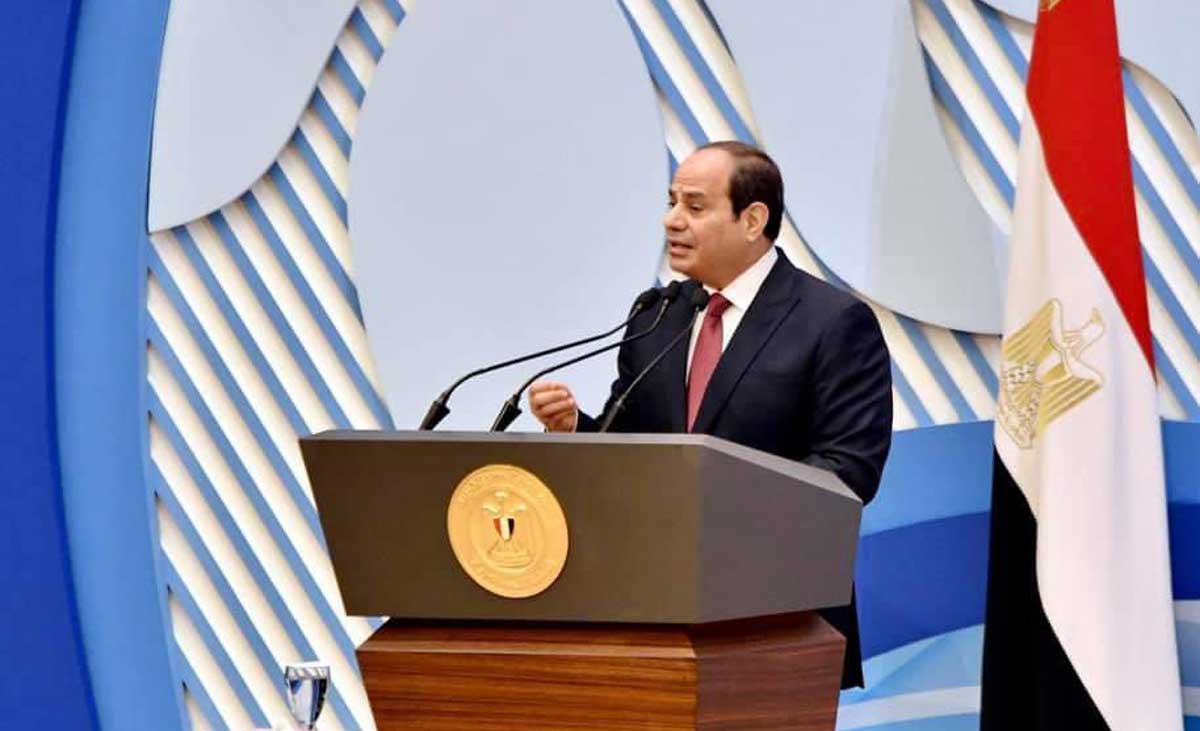
Turkey has also filed a case against Netanyahu with the ICC, accusing him of committing genocide against the Palestinians. Turkish President Recep Tayyip Erdogan confirmed to reporters on November 4 that Turkey is no longer considering Netanyahu as its interlocutor, but the head of the Turkish National Intelligence Organization, Ibrahim Kalin, remains in contact with Israel.

In addition, for instance, the President of Algeria called the lawyers of the Arab world and human rights groups to file a claim against Israel in the International Criminal Court for the war crimes in the Gaza Strip. Colombian President Gustavo Petro said Bogota would support Algeria’s case at the International Criminal Court (ICC) over war crimes committed by Israel, led by the Israeli occupation Prime Minister Benjamin Netanyahu, in the ongoing bombardment and ground invasion of the Gaza Strip.

According reports, more than 12,700 Palestinians have been killed in Gaza, according to the Palestinian Health Ministry in the West Bank. Officials there say another 4,000 are missing. Around 1,200 people have been killed on the Israeli side, mainly civilians during the Hamas attack.

The foreign ministers of Saudi Arabia, Jordan, Egypt, Indonesia and Palestine, as well as OIC Secretary General Hissein Brahim Taja, also discussed the situation around Gaza with Russian Foreign Minister Sergey Lavrov on the same day, November 21 and jointly concluded that self-defense is not a justification for what the Israeli military is doing in Gaza. The US and European Union have designated Hamas as a terrorist organization. According to Turkey’s Anadolu news agency, the delegation would also travel to the United Kingdom, France and the United States. 

Source link

Aid groups bidding to boost relief shipments into Iran | US-Israel war on Iran News

Supply of humanitarian aid for people displaced by the conflict has been complicated by air and sea route closures.

Aid groups have said they’re seeking to boost humanitarian relief shipments into Iran as the effects of the United States-Israeli war hit the population.

The International Federation of Red Cross and Red Crescent Societies (IFRC) said on Tuesday that it had delivered “life-saving” aid and medical supplies, marking one of the first humanitarian shipments since the war began.

Recommended Stories

list of 4 itemsend of list

The shipment entered the country through Turkiye on Sunday, IFRC spokesman Tommaso Della Longa said in a statement. Iran faces a deepening humanitarian crisis after nearly six weeks of conflict that has killed more than 3,000 people, according to Iranian authorities, and displaced up to 3.2 million, he stressed.

“The operation is critical as humanitarian supply chains into Iran have been severely disrupted in recent weeks due to the conflict, making it increasingly difficult and more costly for essential medical and relief items to reach those in need,” the spokesman said.

The convoy, which departed from the Turkish capital Ankara on Friday, carried around 200 trauma kits containing emergency medical supplies along with tents and blankets.

epa12886919 People gather and view photographs of people killed in a US-Israeli airstrike on a residential building, displayed in front of the same building that was hit in Tehran, Iran, 13 April 2026. Iran and the US have failed to reach an agreement after peace talks held in Islamabad on 11 April. EPA/ABEDIN TAHERKENAREH
A residential building that was hit by a strike in Iran’s capital, Tehran  [Abedin Taherkenareh/EPA]

‘Needs are high’

The Turkish Red Crescent Society also dispatched four trucks separately carrying 48 tonnes of aid, including emergency shelters, hygiene kits and first-aid supplies.

“Needs are high, medical needs in particular, but also the psychological toll on people is immense,” Della Longa said.

He noted the toll on the Iranian Red Crescent Society has been high, confirming that the organisation had lost four relief workers in the line of duty.

The effort to respond to humanitarian needs in Iran is growing.

The International Committee of the Red Cross (ICRC) said on Tuesday that it had dispatched 14 trucks from Jordan carrying household supplies for around 25,000 people, including mattresses, jerry cans, kitchen sets and solar lamps.

In addition, ICRC said, 200 generators and 100 motor pumps purchased locally had been donated to the Iranian Red Crescent Society to support relief and rescue operations

Air and sea routes have been blocked by the conflict, it said, making overland crossings through Turkiye and Jordan critical for aid delivery.

The relief comes amid a fragile two-week ceasefire between the United States and Iran.

According to the Turkish Red Crescent Society’s president, Fatma Meric Yilmaz, around 3.6 percent of Iran’s 90 million people have been displaced, while 62,000 homes and more than 20,000 businesses have been destroyed.

Source link

No ships ‘make it past US blockade’ in Hormuz strait in first day: Pentagon | US-Israel war on Iran News

CENTCOM contradicts reports on ships breaking blockade as Trump says US-Iran talks could resume in the next two days.

The Pentagon says no ships “made it past” the United States military blockade in the Strait of Hormuz in its first 24 hours and six merchant ships followed orders to turn around.

The statement on Tuesday from the US military’s Central Command (CENTCOM) was the first update since US President Donald Trump announced the blockade of the waterway after US-Iran talks over the weekend in Pakistan failed to yield an agreement on ending the war the US and Israel launched on February 28.

Recommended Stories

list of 3 itemsend of list

CENTCOM said the blockade applies only to vessels “entering and exiting Iranian ports” and other vessels remain free to transit the waterway.

It added: “US forces are supporting freedom of navigation for vessels transiting the Strait of Hormuz to and from non-Iranian ports.”

The Reuters news agency reported at least three vessels transited the strait during the first 24 hours of the blockade, citing shipping data. They included two tankers sanctioned by the US. The three ships were not heading to Iranian ports, according to Reuters.

However, the AFP news agency and several US media outlets, citing data from the maritime tracker Kpler, reported two ships had transited the waterway after leaving Iranian ports on Monday.

CENTCOM said 10,000 US sailors, Marines and airmen were involved in the operation, along with more than a dozen US warships and dozens of aircraft.

Military observers have widely said US forces have the capability to maintain the blockade for the foreseeable future but the continued pressure increases the likelihood of Iranian attacks. That in turn could see a two-week ceasefire that began on Wednesday collapse.

Meanwhile, any efforts to intercept vessels from strategic foes, including China, could create new escalations. The strategy is also likely to continue to roil global oil markets.

Iran has decried the US approach as “piracy” while Trump on Monday promised to “eliminate” any Iranian ships that seek to break the blockade.

Trump says more talks are possible

The update on Tuesday came as both sides signalled they would be open to further talks after failing to reach a breakthrough during 21 hours of negotiations between a US delegation led by Vice President JD Vance and an Iranian delegation led by parliamentary Speaker Mohammad Bagher Ghalibaf.

The talks were the highest-level face-to-face contact between the two countries since the 1979 Islamic revolution.

Key unresolved sticking points include control of the Strait of Hormuz, the future of Iran’s nuclear programme and whether the ceasefire extended to Israel’s ongoing invasion and bombardment of Lebanon.

In an interview with the New York Post newspaper on Tuesday, Trump said “something could be happening over the next two days” in Islamabad as he hailed Pakistani Field Marshal Asim Munir, who has been among the officials shepherding the negotiations.

Reporting from Tehran, Al Jazeera’s Ali Hashem said sources stated there are already messages being exchanged regarding what both sides consider to be “bridgeable issues”.

“Iran is open to talks, and it showed that from last week when it went to Islamabad. The main hurdle always is the mistrust, distrust between both sides,” Hashem said.

“For the Iranians, they’ve been repeating that they’re open. If the Americans want to fight, they’re going to fight. And if they want to talk, they can talk.”

Source link

Historic but not enough? Colombia’s Gustavo Petro defends cocaine seizures | Drugs News

Pushing back on Washington

Petro, however, has highlighted his interdiction efforts as a means of refuting Trump’s claims that he has allowed cocaine to flow unchecked.

The subject reportedly came up during a call between the two heads of state in January. Petro suggested that Trump had been unfamiliar with the amounts of cocaine Colombia has seized.

“The United States doesn’t know anything about that,” he told CBS News after the call.

At other times, Petro has leaned on his interdiction record to push back on Trump’s hardline anti-narcotics policy.

In September, Trump and his allies announced a campaign to bomb boats suspected of carrying drugs, arguing the strategy was more efficient than interdiction.

“Interdiction doesn’t work,” US Secretary of State Marco Rubio said. “What will stop them is when you blow them up, when you get rid of them.”

Since then, the US military has bombed 47 boats, killing at least 163 people. Petro has condemned the strikes as “murders”, arguing they violate due process and international law.

He has also held up his own interdiction strategy as a more effective model.

When Colombia and the US led a joint maritime operation in February that resulted in nearly 10 tonnes of cocaine seized, Petro touted the outcome as proof that anti-narcotics efforts need not be lethal.

“The Colombian Navy seized the submarine without killing anyone,” Petro said during a cabinet meeting.

Still, experts have pointed out that Petro has bent to US demands in other areas.

While Petro had pledged not to target coca farmers, he announced in December that security forces would deploy drones to spray crops with glyphosate, an herbicide.

That plan — to forcibly eradicate coca crops by air — faced strong local opposition due to concerns over the herbicide’s health and environmental impacts.

Rueda said the move, which has yet to be implemented, signalled that Petro, like many presidents before him, had yielded to US pressure.

“The US government always wins,” said Rueda. “It always has more power over us, and we end up having to give in — and so does Petro.”

Whether Petro’s decision holds weight with his electoral base is less certain. While protests initially erupted in coca-growing regions, they subsided after meetings with his administration.

Rueda suspects officials reassured protesters they wouldn’t carry out the fumigations, which could have cost Petro in the upcoming elections.

“Petro’s decision highlights his inconsistencies when it comes to the policy he put forward,” Rueda said. “But in the end, the fumigations never happened, so the political impact likely wasn’t as significant as it could have been.”

Source link

Spain’s Guardemo still critical in ICU 2 weeks after cycling crash with car | Cycling News

Jaume Guardeno sustained serious injuries after collision with a car at the end of a Volta a Catalunya cycling race.

Young Spanish rider Jaume Guardeno remains in a critical condition in hospital two weeks after a crash while training.

“Jaume continues his fight in the intensive care unit of Tauli Hospital in Sabadell, where he’s been since March 31, when he suffered an accident while training,” the Caja Rural-Seguros RGA team said in a statement on Tuesday.

Recommended Stories

list of 4 itemsend of list

The 23-year-old Guardeno sustained serious injuries when he collided with a vehicle, reportedly head injuries, after his bicycle struck a rock, days after he finished 29th in the Volta a Catalunya race.

Guardeno finished 14th in the Spanish Vuelta last year, and Caja Rural-Seguros RGA is due to make its Tour de France debut this year.

“His condition remains critical, although stable within the seriousness of his condition. He is under constant monitoring and is scheduled to undergo further procedures in the coming days to aid his recovery,” the team added.

Cycling is enjoying a resurgence in popularity thanks to young riders Tadej Pogacar, Mathieu van der Poel, Wout van Aert, Remco Evenepoel and Jonas Vingegaard, but dangers remain. Last month, Olympic champion Tom Pidcock pulled out of the Volta a Catalunya after crashing down a ravine, and Italian cyclist Debora Silvestri was hospitalised after crashing during the women’s Milan-San Remo one-day classic.

Source link

Venezuela’s Rodríguez Signs Chevron Deals Awarding New Oil Drilling Areas, Increased Stakes

Chevron will expand its foothold in the Orinoco Oil Belt, the largest crude deposit in the world. (Archive)

Caracas, April 13, 2026 (venezuelanalysis.com) – Venezuelan Acting President Delcy Rodríguez inked new agreements with Chevron on Monday allowing the US energy giant to expand its presence in the country’s oil industry.

In a televised broadcast, Rodríguez, who was accompanied by officials from Venezuelan state oil company PDVSA and the Hydrocarbon Ministry, praised Chevron’s “commitment” to Venezuela.

“Chevron, with more than a century of presence in Venezuela, is an example of an oil company committed to Venezuela,” she said. “I salute this agreement as an example that there are legal pathways for investment to be assured and prosper.“

The Venezuelan acting president reiterated calls for the lifting of US sanctions against the Caribbean nation. US Chargé d’Affaires to Venezuela Laura Dogu was present at the ceremony and exchanged brief words with Rodríguez. US Assistant Energy Secretary Kyle Haustveit was also in attendance with a delegation from the US Energy Department.

The new contracts grant Petropiar, a joint venture with Chevron participation, the Ayacucho 8 bloc as the Houston-based conglomerate looks to expand its production of extra-heavy crude in the Orinoco Oil Belt. PDVSA completed exploration and appraisal of the 500 square-kilometer bloc but development has been limited.

Chevron owns minority stakes in four joint projects with PDVSA that currently produce about a quarter of Venezuela’s oil output. The agreements with the Venezuelan government will also see Chevron increase its stake in Petroindependencia, another mixed venture with PDVSA, from 36 to 49 percent. In exchange, it will relinquish its stakes in the offshore Loran natural gas field.

For his part, Chevron executive Javier La Rosa, thanked the Venezuelan and US governments for their support and praised the “strengthening” of Chevron’s position in the Orinoco Oil Belt. “Chevron is determined to be a reliable partner and establish win-win relations,” he said.

The exploration of the 7.3 trillion cubic feet (tcf) Loran field, which is part of the Loran-Manatee joint deposit with Trinidad and Tobago, will reportedly be turned over to Shell. The UK-based multinational is also involved in several natural gas projects in Venezuelan waters and similar agreements with the Rodríguez administration are expected in the coming days.

In addition, Shell also closed a deal to take over the Carito and Pirital oilfields from PDVSA’s Punta de Mata division in eastern Monagas state. The projects produce light and medium crudes, as well as natural gas.

The new contracts were signed under the pro-business provisions established by a January overhaul of Venezuela’s Hydrocarbon Law. In a recent interview, National Assembly President Jorge Rodríguez stated that the reform incorporated “suggestions” from Western corporate giants, including Repsol.

The updated legislation grants private corporations expanded control over operations and sales, slashes royalties and income tax, and allows legal disputes to be settled in international arbitration bodies. The reform likewise allows PDVSA to lease out projects to private companies in exchange for a fixed share of the output.

Since the January 3 US bombings and kidnapping of President Nicolás Maduro, the Trump administration has exerted control over the Venezuelan oil industry, granting waivers to boost the involvement of Western conglomerates and mandating that royalty, tax, and dividend payments owed to Venezuela be made to US Treasury-run accounts. 

Financial sanctions against PDVSA, as well as threats of secondary sanctions against firms that do not receive Washington’s green light, remain in place. On Monday, Secretary of State Marco Rubio vowed that the US “would not allow” geopolitical adversaries such as China, Iran, and Russia to have a significant presence in the Venezuelan oil industry.

“We don’t need Venezuela’s oil,” he said in an interview. “What we’re not going to allow is for the oil industry in Venezuela to be controlled by adversaries of the United States.”

Venezuelan crude production increased in March to 988,000 barrels per day (bpd), up from 909,000 bpd in February, according to OPEC secondary sources. The figure is the highest output since the imposition of a US export embargo in January 2019.

For its part, PDVSA reported 1.095 million bpd of production last month, with a 75,000 bpd increase compared to February. The direct and secondary measurements have differed over time due to disagreements over the inclusion of natural gas liquids and condensates. Venezuelan Oil Minister Paula Henao announced a 1.3 million bpd target for the end of 2026.

According to Reuters, Venezuelan oil exports surpassed 1 million bpd in March, driven by several shipments to India’s leading refiner, Reliance Industries, amid the US-Israeli war against Iran and the latter’s closure of the Strait of Hormuz that has disrupted global energy flows and sent crude prices upwards of $90 per barrel

However, Venezuelan authorities have offered no information about the US-controlled oil exports, including details regarding the transfer of proceeds to Caracas. The White House has confirmed the return of US $500 million to Caracas out of an initial deal estimated at $2 billion, while Venezuelan officials have reported the purchase of US-manufactured medicines and equipment using “unblocked” funds.

Edited by Lucas Koerner in Fusagasugá, Colombia.

Source link

Jailed Senegal fans deny wrongdoing in AFCON final chaos in Morocco | Football News

Jailed Senegal fans await judge’s reply to their denial of wrongdoing at the Africa Cup of Nations final in Morocco.

Eighteen Senegalese football supporters convicted over a pitch invasion during the chaotic Africa Cup of Nations final in Rabat in January have denied any wrongdoing.

A Moroccan court in February sentenced the 18 Senegalese football fans to prison terms ranging from three to 12 months on charges of hooliganism.

Recommended Stories

list of 4 itemsend of list

Prosecutors sought stiffer penalties in the appeals court in Rabat, but the initial sentences were upheld on Monday.

The Senegalese argued that they had been forced onto the pitch because of a surging crowd or to avoid being spat upon and projectiles thrown towards them.

They said it was not to protest against a refereeing decision at the end of the contentious AFCON final on January 18, which Senegal won 1-0. Senegal Prime Minister Ousmane Sonko spoke out to decry the decision.

The Confederation of African Football (CAF) reversed Senegal’s win last month, awarding the title to Morocco two months after the final.

The Senegalese Football Federation immediately instructed its lawyers to appeal to the Court of Arbitration for Sport (CAS).

Defence lawyer Naima El Guellaf asked on Monday that videos of the incidents be shown to verify the identities of the 18 Senegalese in court.

It is a move rejected by the prosecution, who said the Senegalese were caught in the act.

“The entire world saw these terrible images live,” it argued.

The judge is yet to respond to the request to replay videos of the incidents.

“There have been mistakes; the people involved in what happened are currently in Senegal and are not present here,” a second defence lawyer, Patrick Kabou, told the AFP news agency.

Source link

Who controls the Strait of Hormuz? | US-Israel war on Iran

A US move to block the strait has intensified a broader struggle over who controls access and under what terms.

Now, the United States is the one shutting the Strait of Hormuz, even as President Donald Trump was calling for it to reopen just a few days ago. He said ships entering or leaving Iranian ports would be stopped by the navy after talks between Tehran and Washington fell apart.

However, this is not just about a blockade. Iran is tightening its grip on the strait, demanding the right to impose tolls on ships passing through it.

The ripple effects could go beyond energy and trade flows, challenging the dominance of the US dollar in global shipping.

Source link