Stay informed and up-to-date with the latest news from around the world. Our comprehensive news coverage brings you the most relevant and impactful stories in politics, business, technology, entertainment, and more.
Prosecutors have requested a 45-year jail sentence for Thaci and three wartime commanders accused of war crimes.
Published On 16 Sep 202616 Sep 2026
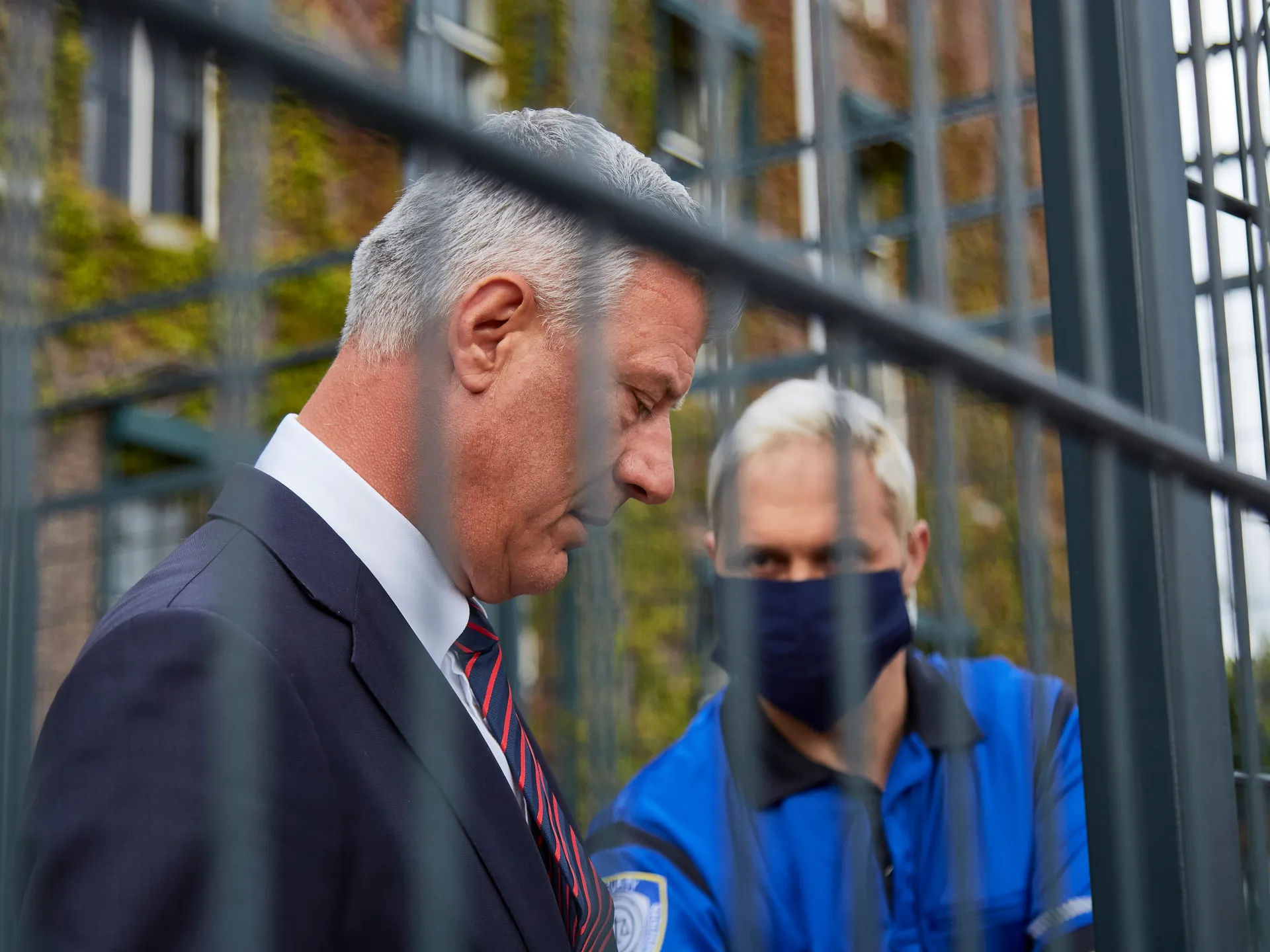
The Kosovo war crimes tribunal will on Wednesday deliver its verdicts in the case of former President Hashim Thaci and several wartime commanders accused of murder and torture during the self-declared republic’s break from Serbia.
Thaci, 58, is facing several counts of war crimes and crimes against humanity, including murder, torture and persecution, along with three former commanders from the ethnic Albanian Kosovo Liberation Army (KLA), a separatist militia that fought Serbian troops.
Recommended Stories
list of 3 itemsend of list
Thaci and the other former high-ranking commanders, Jakup Krasniqi, Rexhep Selimi and Kadri Veseli, deny the charges.
Prosecutors have requested 45-year prison sentences for each of the men.
The case is extremely contentious within Kosovo, where Thaci remains a revered figure for many Kosovan Albanians due to his role in the 1998-99 independence war.
On Saturday, tens of thousands gathered in the capital, Pristina, to call for their acquittal in the latest of several rallies since the trial began. Portraits of the four former KLA fighters have been plastered across the city along with a huge digital clock counting down to the verdicts.
“In the name of the people, declare them innocent,” one banner read.
According to prosecutors, the men targeted political opponents and civilians perceived as collaborators and traitors during their time in the KLA.
Thaci’s lawyers argued in February there is no evidence that directly links him to any of the crimes.
“There are no orders in the record from Thaci to perpetrators of crimes. There are no reports from perpetrators of crimes to Thaci,” lawyer Luka Misetic told judges at the Kosovo tribunal in February.
Most of the 13,000 people who died in the war in Kosovo were ethnic Albanians. A 78-day campaign of NATO air attacks against Serbian forces ended the fighting. About one million ethnic Albanian Kosovars were driven from their homes.
In 2008, Kosovo declared its independence from Serbia, a move that Belgrade refuses to recognise. Ties between Kosovo and Serbia remain tense, despite years of negotiations mediated by the European Union.
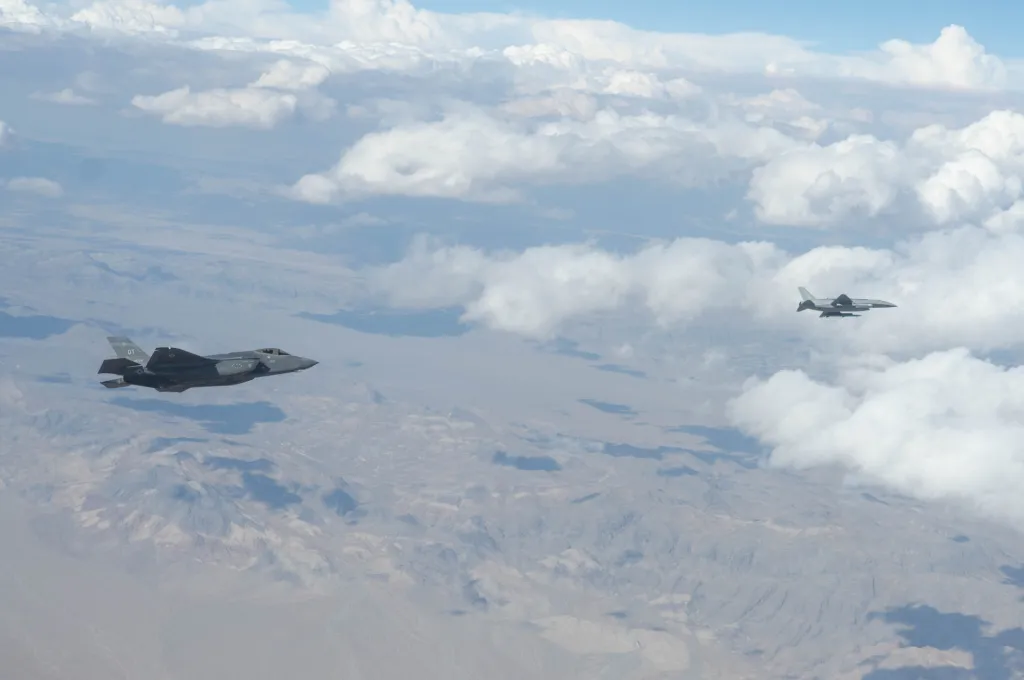
U.S. Air Force Collaborative Combat Aircraft (CCA) are set to take part in a large-force employment (LFE) exercise for the first time later this year. Sending CCAs to the next iteration of the Emerald Flag test exercise is another important new stepping stone toward fielding the drones operationally.
“We have not yet done a LFE with these [CCAs], for real. The first one is going to be Emerald Flag. That’s in December,” Lt. Col. Lyndon “OTTO” Bartlett, Director of Operations for the Experimental Operations Unit (EOU) at Nellis Air Force Base in Nevada, said earlier today. “That’ll be our first tip dip of the toe in an actual force integration.”
One of the Air Force’s YFQ-44A Fury CCA drones flies together with an F-35 Joint Strike Fighter. Anduril
It is worth noting here that Boeing’s MQ-28 Ghost Bat, a CCA-type design, did take part in Valiant Shield 26, another LFE exercise, earlier this year. The EOU was also involved. However, the MQ-28, originally developed for the Royal Australian Air Force, is not officially part of the Air Force’s CCA program at present.
Emerald Flag in December “will, in OTTO’s mind, be the first time that we will ever do some CCA end-to-end chain [demonstration] live. That’s the first time we’ll ever be integrated in a fourth- and fifth-gen combined OCA [offensive counter air] push,” Lt. Col. Bartlett added. “It’ll be small, but those type [sic] of building blocks are where I think you get the intangibles like trust in the CCA.”
“Those learnings are going to be just as valuable as the technical, [like] does the radio work properly? Does the button I push to say ‘target’ work properly?” he continued.
A General Atomics YFQ-42A CCA drone during an earlier test flight. General Atomics
“If it’s in a simulated environment, it’s immediate,” Lt. Col. Bartlett said during the panel when asked about the “feedback loop” in testing the EOU is already taking part in. In that environment, “when the mission autonomy iterations are happening, our guys are literally with the programmers … They give the feedback, and if it’s possible to do immediately, they take that feedback. If not, then they work on it on the next turn of the software.”
Real-world testing, of course, offers opportunities to explore additional aspects of future CCA operations, including when it comes to loading weapons and maintenance. A key component of the Air Force’s vision for CCA employment is being able to forward deploy the drones to far-flung locations, including airstrips with limited infrastructure and access to logistics chains. Rapid, distributed deployments like this are central to still-evolving concepts of operations currently referred to collectively as Agile Combat Employment (ACE). The EOU has been involved in at least two rounds of ACE-focused testing this year, one at Edwards Air Force Base in California in April and another at Creech Air Force Base in Nevada in July. TWZ was the first to report on the latter event.
Visualizing ACE
During the panel today, Lt. Col. Bartlett also talked more generally about work EOU has done to date. This has included exploring “sortie generation, how easy they are to maintain, [and] how small a footprint could be.”
“We’ve been pleasantly surprised. The jets are extremely easy to maintain,” he continued. “We’re at a one-to-one maintainer-to-airplane ratio, which is crazy small.”
With “CCAs, [it] seems like because they’re a little bit simpler, because their role is so focused, what we found is that just about any – not just about, but we found that any AFSC [Air Force Specialty Code; alphanumeric codes used to identify specific jobs within this service] can be trained to generate sorties to load weapons, and we’ve done some of those things already,” he further explained. “It’s our job to bring them [CCAs] out and make sure that, beyond the technical specifications of it, that we’re kind of experimenting with the more complex things like logistics, and C2 [command and control], and how do we battle manage these things.”
Airmen prepare to load an inert AIM-120 Advanced Medium Range Air-to-Air Missile onto a YFQ-44A CCA drone. USAF/Senior Airman Renee Blundon
The head of the EOU did acknowledge challenges that still have to be surmounted. This notably includes hurdles currently imposed by Federal Aviation Administration (FAA) regulations on the operation of fully uncrewed aircraft, even by the U.S. military, within U.S. airspace. This is further compounded by the explicit intention to operate CCAs with far more minimal human engagement compared to most existing drones.
“Mission autonomy is going to be the secret sauce that lets these things become decisive or not, and we’ll know that over the next couple years as that develops,” according to Bartlett. “If I were to identify the two biggest problems from the trenches of the EOU, [one] is FAA integration or policy implications to an autonomous airplane.”
“So these things don’t have pilots. They’re not RPAs [remotely-piloted aircraft]. They’re not manned fighters. They have no pilots,” he continued. “Our system is not set up for that, and that is a challenge that we are finding extremely hard to navigate through, and to not go around, but to make a policy.”
“We need to make sure the Air Force is ready for these things, to set policies that make sure the enterprise and the country is [sic] ready to receive these, and internalize an autonomous fighter that does not have a pilot that is running on a mission autonomy agent that doesn’t listen to ATC [air traffic control],” he added.
Another look at a YFQ-44A prototype during at test in 2026. USAF
The second problem, per Bartlett, is making sure the Air Force develops new internal policies and doctrine that are not “copy and pastes from old regulations” that do not take into account the specific nuances that CCAs will bring. What the service needs is “something that enables us to move quickly with these things, to weigh what we need, and to experiment with novel types of air superiority.”
All of this circles back to the discussion of trust in autonomous capabilities. It also speaks to the potential for future operations where CCAs could operate far more independently.
“It’s in the name that they’re collaborative,” Bartlett said. “Taking them out of that could technically be effective, but would not enhance the joint force the way that we see a collaborative, integrated force package to be.”
“What we need autonomously to do is written down. I won’t discuss the particulars in this forum, but we know what we need it to do, or we know what we think it really needs to do,” he noted. “We’ve structured our experimentation game plan to analyze ‘can it do those things?,’ and if not, then how do they need to be different? And then as they iterate on it, which we’ve already seen a couple times, we get that at the EOU, we get the new version down, we fly it again. Is it fixed? Yes or no.”
A General Atomics YFQ-42A seen from another angle during earlier testing. General Atomics
Some members of industry are clearly envisioning futures with different definitions of ‘collaborative’ that could lean more toward independent operations involving highly autonomous drones.
What “the whole entire program is trying to do is [figure out] what is the requirement to put out into the field to get to the warfighter and to start operating this thing this [sic; in] real time?” Robert “Otis” Winkler, Vice President of Corporate Development & National Security Programs at dronemaker Kratos, another one of the panelists, said. “The collaborative part of this makes it a much easier, I think, technical problem to be able to limit and grow the autonomy as you field this.”
“I think eventually we may see these aircraft utilized as collaborative aircraft, but not in conjunction with your traditional pulsed operation, but in support of that pulsed operation when the pulse isn’t there yet. But I do think that that is a bit of a stretch goal that’s going to be down the road.”
CCAs “have been designed really around increasing both survivability and lethality of current force packages. So there are many manned platforms that you would describe in the exact same fashion,” Jason Levin, Senior Vice President for Air Dominance and Strike at Anduril, who was also on the panel, said. He was responding here to a specific question about whether his use of the term “fighter” to describe these drones implied more emphasis on independent operations.
All of this underscores the importance of bringing CCAs to Emerald Flag in December, as well as other events in the future offering opportunities to see how the drones really fit in with other crewed platforms. The Air Force is hoping to start seeing CCAs enter operational service around the end of the decade, and have 500 of them, at least, in inventory by 2032.
During the panel today, the EOU’s Lt. Col. Bartlett made clear that “we’re going to learn a lot over the next couple years.”
WASHINGTON: For a third time, the US House has voted to end the war in Iran, approving a war powers resolution that would halt President Donald Trump’s ability to continue military action without congressional approval.
The roll call late Tuesday, 220-204, was similar to earlier efforts this summer, with a few more Republicans joining all Democrats voting to bring an end to the conflict. None of the resolutions have made it to the president’s desk, where Trump would almost certainly veto the measure.
“Remember when Donald Trump said that this war would last just a few weeks?” said Rep. Seth Moulton, D-Mass., who served as a Marine during the Iraq War and pushed the resolution forward.
He said it’s time for Congress to “actually ask tough questions, as the Constitution directs us to do, rather than be subservient to another warmongering administration.”
Republican Rep. Brian Mast of Florida, the chairman of the House Foreign Affairs Committee, questioned which military resources Democrats would want to remove from the region where he said Iran remains a threat.
Mast said Trump is against “forever wars, and that is what he is ending” — the decades of hostilities from Iran.
“They are a continuous ongoing threat to the United States,” Mast said. “Enough is enough.”
Last war powers vote before the midterms
The action is likely the last House vote on the Iran war ahead of the midterm elections, where the conflict overseas is playing a substantial role in the political campaigns. The war that Trump launched Feb. 28 has dragged, with on-again, off-again deadly missile strikes being exchanged and causing havoc in the region for nearly seven months.
Lawmakers are heading home at the end of the week to campaign nearly full-time, with less than 50 days to go before the elections that will determine control of Congress as Democrats try to wrest power from Republicans.
Voters are confronting high prices, particularly for gas at the pumps, as the conflict disrupts the flow of oil resources through the vital Strait of Hormuz.
The Congressional Budget Office said Tuesday that the war has cost more than $38 billion, as of Aug. 1, and is projected to be costing between $2 billion and $3 billion monthly, depending on the intensity of the fighting. The budget office projected inflation will be 0.5 percentage points higher than expected heading into 2027 due to the war.
Trump himself had promised not to involve the U.S. in foreign wars when he won a second term in the White House, and his actions against Iran are weighing on the Republican Party that controls the House and Senate. Most Americans say the war in Iran has not been worth fighting, according to an AP-NORC poll in July.
In the previous House actions, four Republicans voted to halt the war in Iran, but that number rose to seven in Tuesday’s war powers vote, including GOP lawmakers from battleground Iowa, Rep. Zachary Nunn and Rep. Mariannette Miller-Meeks, and retiring Rep. Nancy Mace of South Carolina.
They joined GOP Reps. Tom Barrett of Michigan, Warren Davidson of Ohio, Brian Fitzpatrick of Pennsylvania and Rep. Thomas Massie of Kentucky voting in favor of the war powers resolution, with all Democrats.
War powers being put to the test
Congress has tried repeatedly to alter the trajectory of the war against Iran, but efforts to limit the Trump administration’s military action remain a longshot so long as the president is able to fend off or veto the measures.
The House first approved a war powers resolution in June, and followed up with another one in July, all seeking to halt U.S. action in Iran. The Senate on its 10th try also approved a war powers resolution to end the conflict, but GOP senators quickly reversed course the next day after Trump berated them during a closed-door lunch.
While the Constitution gives Congress the authority to declare war, it also gives the president authority as the commander in chief to engage in some military actions. The War Powers Act, created in the aftermath of the Vietnam conflict, sought to put a more specific time limit on the president’s power, requiring congressional approval for sustained military actions after 60 or 90 days.
House Speaker Mike Johnson acknowledged at a press conference Tuesday the need to bring gas prices down.
But the Republican speaker said he believes the Iran conflict is entering a “new phase” as allies step up to help stabilize the region. When that happens, he said, “you’re going to see, as the president said, anytime gas prices will go down again, the cost of groceries will as well.”
Johnson said Trump expects the shift after the election, and the speaker added, “I’d love it to happen today.”
The US has poured billions into cancer research, yet it remains one of the country’s biggest killers. Ted Okon, executive director of the Community Oncology Alliance, tells Al Jazeera’s ‘This is America’ that even with a cure, the US wouldn’t be able to treat everyone.
Anthropic’s CEO says he ‘didn’t appreciate’ the speed with which AI’s growth would underpin the global economy. His call to slow down AI development sent shockwaves in global stock markets, but was supported by other tech leaders who believe better safeguards are needed.
OpenAI boss Sam Altman thinks people should have more faith in his company and others like it to do the right thing when it comes to artificial intelligence (AI) development amid rising public concerns about all the risks.
“The world should trust that we are going to do the right thing because it’s the right thing and we feel the magnitude of this,” Altman said on Tuesday during a conference in San Francisco.
However, Altman noted that people were justified in their fears around AI, as the capability of the tools has progressed rapidly.
“It doesn’t take as much imagination as it used to for [us] to imagine how this could go wrong,” he said. “I think the world is right to be afraid of this.”
Altman’s comments came during an appearance at an annual conference hosted by software firm Salesforce.
It was the first time he had spoken publicly since a post went viral last week by a researcher who quit the AI firm Anthropic. The researcher claimed AI could kill all humans by the end of the decade if left unchecked.
A handful of other AI executives and experts responded by saying they agreed with the assessment, though they didn’t explain how they came to their conclusions or how exactly AI could accomplish such a thing.
The fervor over the claims has led to more scrutiny of AI development in recent days, and in response, Anthropic chief executive Dario Amodei called for the pace of all AI development to slow, external and urged governments to regulate the industry.
The post was applauded by Altman, as well as co-founder of Google’s DeepMind Demis Hassabis, and Elon Musk, owner of social media site X and AI assistant Grok.
By Tuesday, more AI leaders were voicing support for self-regulation rather than government involvement.
Altman said that he felt AI companies like his own were capable of essentially regulating themselves.
“We will get it right, I’m very confident in our company’s and industry’s ability to do this safely,” Altman said, adding that he was sure that they would “keep alignment and safety way ahead of capabilities” and if they couldn’t, they would “slow down or stop”.
After Altman’s comments, Meta boss Mark Zuckerberg wrote on X that every AI lab has the ability and the incentive “to take its own actions” towards making AI tools and models that are designed for safety.
“Any lab that doesn’t focus on alignment will fall behind,” Zuckerberg wrote. “Labs face significant liability if their models cause harm, so they have a strong incentive to prevent this as well.”
Jensen Huang, head of Nvidia, also said at the same Tuesday conference that the AI firms should decide if new versions of the technology should be released and not be managed by outside forces.
“We don’t need new laws or regulations,” Huang said, adding that there should not be a “false choice” between the speed of innovation and the safety of AI products.
Nvidia is the biggest company in the world by valuation, with its profits having boomed as a result of rampant demand for the AI computing chips it makes.
“Safety is paramount. However, safety is an engineering problem,” Huang said.
He added that if at any time a leader of an AI company lacks confidence in their product they should choose to not release it.
“That’s a very obvious thing to do,” Huang said. “Run as fast as you can, but if at any time you feel the institution is not in control, take a pause.”
Some industry figures have argued resurgent AI fears were overblown and were being jumped on to generate hype for the industry.
During the conference, Altman addressed a crowd of hundreds of business people, telling them they should use AI tools to aid in their work, but also needed them in order to protect their businesses from potentially AI-enabled cyber attacks.
The idea of AI executives being left to entirely regulate themselves has struck some in the industry as a bad idea.
Jack Clark, an Anthropic executive and co-founder, told the BBC on Monday that leaving AI to be a “totally unregulated industry” was “rolling dice with immense risks”.
“The only institution that Americans might trust less than Washington these days is Silicon Valley. I have worked and lived in both and I assure you both have earned this scepticism,” Hillman said.
“If you believe what you are building is dangerous, show us what you are prepared to stop doing,” he added.
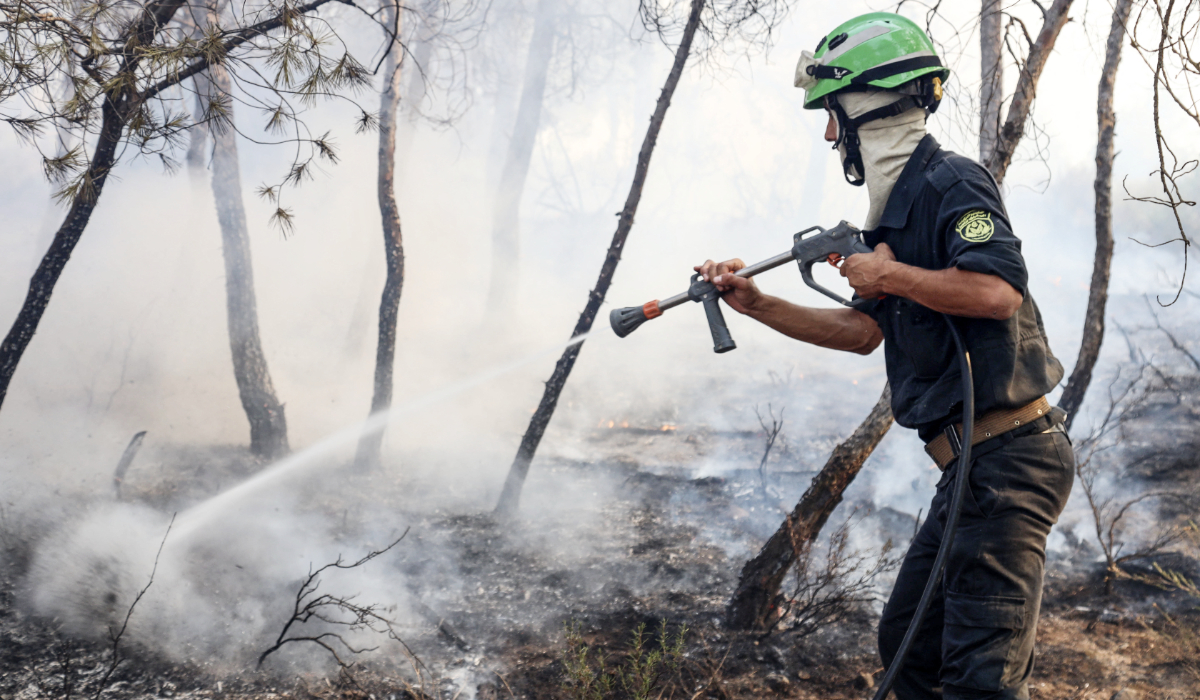
TUNIS: Amnesty International urged Algeria’s government on Tuesday to abandon plans to resume executions after it pledged to give the death penalty to those responsible for wildfires following deadly blazes last month.
Algeria struggled to put out fires that swept through its northeast and killed 12 people last month, according to an official tally, while witnesses spoke of dozens of deaths.
A member of a civil protection unit battles a wildfire in a mountainous area near the town of Al Hachimia, Bouira Province, on July 21, 2026. (AFP)
The North African country has not carried out executions since 1993 but has handed down the death sentence in some instances, including terror-related cases, without carrying it out.
Last month President Abdelmadjid Tebboune ordered the justice minister to amend the penal code to impose the death penalty for people who start wildfires after the deadly blazes.
“Algeria’s authorities must immediately abandon any plans to expand the scope of the death penalty or resume executions after more than three decades without carrying one out,” Amnesty said in a statement.
It also called for the country to impose an official moratorium “as a first step toward fully abolishing the death penalty.”
Tebboune also said that people sentenced to death should be executed right after exhausting their right to appeal.
The government began looking at draft penal code amendments this month.
Tebboune said “child abductors and abusers” would also be included in the expanded death penalty plans.
Forest fires occur regularly in northern Algeria during the summer, but climate change is amplifying their impact by causing increasingly frequent droughts and intense heat.
But Tebboune alleged that there was “something criminal” about the recent blazes.
Amnesty also said “credible sources have since reported significantly higher casualties” than the official tally in the latest wildfires, “including over 70 deaths in a single municipality.”
More than 30 people were killed in July 2023 when fires tore through thousands of hectares of forests and farmland in Algeria, as well as hundreds of homes.
In 2023, Algeria handed the death penalty to more than 50 people — some in absentia — over the lynching of a 38-year-old man who was falsely accused of starting deadly forest fires two years earlier.
The US defence department’s inspector general says the war with Iran has led to “shortfalls” in munitions and a bottleneck in resupply, contradicting President Donald Trump who has repeatly denied the US is facing shortages.
Trump has claimed US munitions supplies are “virtually unlimited” and said reporting otherwise is “fake news”.
But the independent watchdog said the US spent more than $22 billion on munitions from February through June, leading to “strategic inventory shortfalls”.
The BBC has contacted the White House for comment about the discrepancy.
The new report provides a first-of-its-kind, independent glimpse into US weapons stockpiles, data that is typically classified.
Over the course of the war, US forces have expended vast quantities of both long-range ground attack systems and the air and missile defences used to intercept incoming Iranian attacks.
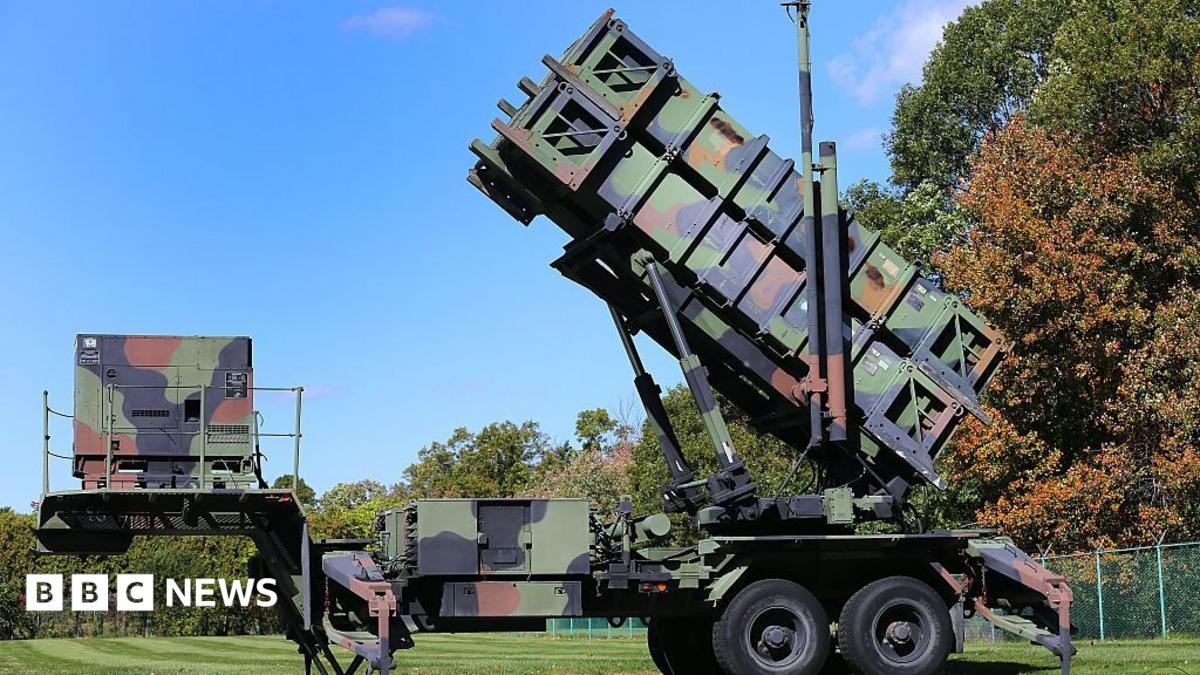
A late July estimate from the Center for Strategic and International Studies, or CSIS, found that stocks of some interceptors – such as the Patriot missile and Terminal High Altitude Area Defense, or THAAD – were significantly depleted, in some cases by more than half.
The inspector general’s report did not disclose exactly how many of the weapons remain.
It did, however, note the inventory shortfalls and reveal “industrial base bottlenecks” for munitions resupply.
The report added that the defence department is now working to “streamline procurement processes and production lead times” to address the shortages and “respond rapidly to a contingency”.
In a 4 August X post, for example, Defence Secretary Pete Hegseth described news reporting on the shortages as “not true”.
And in a lengthy Truth Social post on 3 September, Trump claimed that the US had “virtually unlimited” amounts of ammunition and is “stockpiling and preparing for any contingency that could happen”.
The watchdog’s report also notes that equipment losses have totaled $3.7bn, with other $7.4bn in other expenditures. Overall, the US spent $33.4bn (£24.7bn) on the war from 28 Feb to 30 Jun.
A separate estimate released on Tuesday by the Congressional Budget Office put the total cost of the war at higher at $38bn, which includes replaced expended munitions and equipment lost in battle, increased flying hours and greater fuel costs.
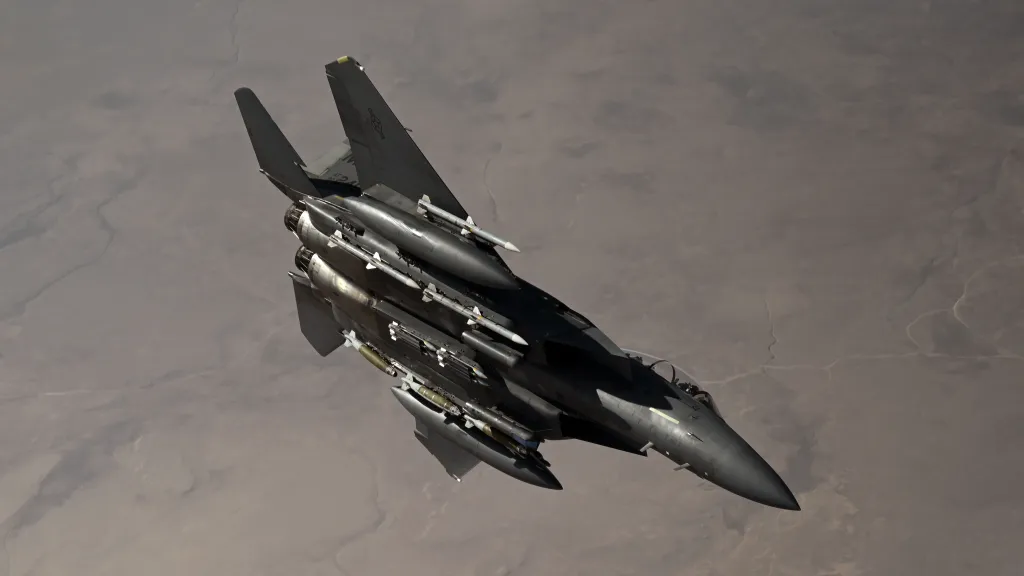
Among the losses have been four F-15e fighter jets, a highly advanced F-35 Joint Strike Fighter and 30 MQ-9 drones destroyed in “various circumstances”.
When US and Israeli strikes began, Trump repeatedly said that the conflict would be over within weeks.
More recently, he said the conflict might not end until “right after” the November midterm elections in the US.
Polls show that the war is unpopular among Americans.
One Reuters/Ipsos poll released in early September found that only 23% of Americans – and only half of Republicans – believe the US to be in a stronger position with Iran compared with before hostilities broke out.
Another Metropolitan Police officer has been dismissed following BBC Panorama’s undercover investigation into the force’s Charing Cross station.
PC Mason O’Connor was sacked after a hearing found he had breached standards of professional behaviour, relating to a comment he made to a female colleague, the Met said.
O’Connor was reported to a “proactive wider investigation” following the broadcast of the programme in October 2025 and he has become the 13th officer to be sacked since then, the force added.
Other officers who were covertly filmed for the documentary were seen calling for immigrants to be shot, boasting about excessive use of force and joking about rape and sexual assault.
O’Connor’s dismissal relates to a comment he is alleged to have made to a female colleague while off-duty in a pub in October 2024.
A hearing held on Tuesday found he had breached standards of professional behaviour for authority, respect and courtesy, equality and diversity, and discreditable conduct.
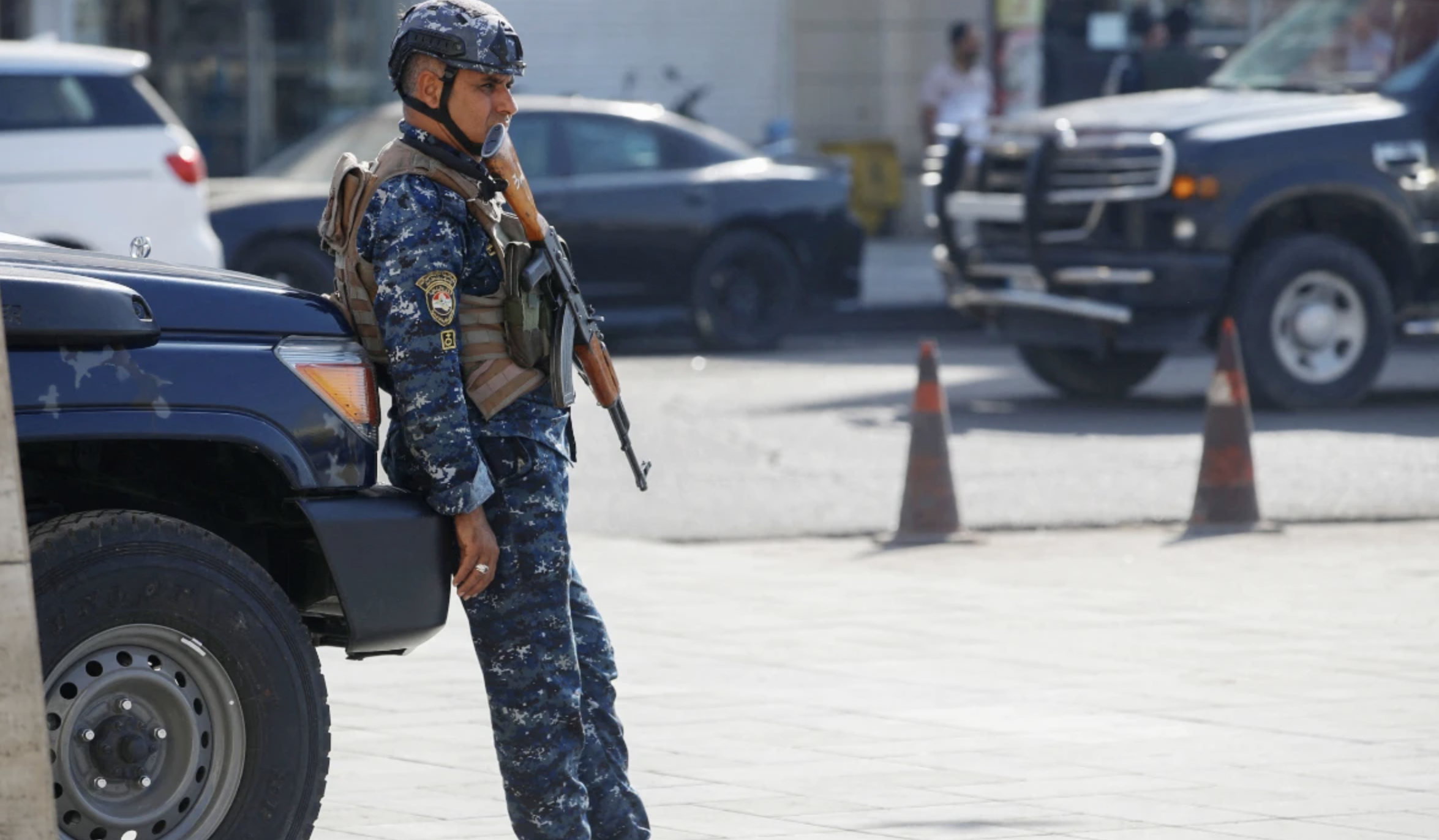
At a highly sensitive juncture, and amid increasing talk regarding the possibility of a third round of regional escalation, Iraqis are confronted with a fateful question: Is there someone seeking to make Iraq a part of this conflict – not merely a venue from which messages are dispatched or through which pressure is managed, but rather one of its open arenas?
There can be no avoiding the question, as the answer is linked to Iraqi blood, state sovereignty, the future of the economy, and Iraq’s standing among its brethren, neighbors, and the world. The matter is no longer a limited security issue; rather, it is a question of statehood, destiny, and direction, as well as a question of Iraq’s ability to protect itself from being dragged into what it does not want.
Repeated attempts to use Iraqi territory to target fraternal and neighboring Arab countries – the latest of which was the announced targeting of Saudi Arabia, preceded by the United Arab Emirates, Kuwait, Bahrain, and Jordan – reveal that we are facing a systematic trajectory rather than an isolated incident. If not decisively resolved, this trajectory could transform into a de facto policy.
Should the state succumb to the blackmail of forces acting outside its authority, it loses not only its security decision-making power but the very meaning of statehood itself. Iraq must not remain a conduit for messages, a proxy mailbox for others, a negotiating card in their conflicts, or an arena pushed forward during every regional escalation.
The problem is no longer about issuing a statement after each incident or settling for a reassuring narrative that does not prevent the recurrence of danger. The deeper problem is the existence of a repeating pattern that consumes Iraq’s political and moral capital, leaving the government to face the consequences of actions that do not reflect its own decisions. The longer a decisive resolution is delayed, the more a dangerous perception takes root abroad that the Iraqi state alone does not control its security decisions. This is an unfair image of Iraq and harmful to its interests, but it cannot be corrected by words alone.
Sovereignty is not safeguarded through slogans; rather, it is maintained by the state’s capacity to serve as the sole authority for force and decision-making. Consequently, restricting weapons to state control is neither a stance against any faction nor a detraction from anyone’s sacrifices. Instead, it is a prerequisite for the survival of the state and the protection of everyone. A state that does not hold exclusive authority over the decisions of war and peace can neither demand that others respect its borders, reassure its citizens, nor build stable relations with its neighborhood. It is in the interest of all forces, above all others, for the state to be strong, because a weak state protects no one; instead, it leaves everyone exposed.
Today, under highly sensitive circumstances, the Iraqi government is working to reconnect Iraq with its Arab, regional, and international surroundings, and to sincerely leverage available support and openness to serve the interests of Iraqis. These efforts deserve support – not because they are the efforts of a specific government, but because they represent the trajectory of a state. However, there are those, both internally and externally, who do not want Iraq to move past the logic of conflict and axes, and who seek to undermine any attempt to solidify its position as a balanced, secure partner state that is capable of speaking for itself, rather than for others.
The truth is that the Arabs, despite all the complexities that have affected the relationship, have not turned their backs on Iraq; rather, they have continued to view it as a pivotal country indispensable to regional stability. Throughout the difficult years, there remained an Arab readiness to embrace Iraq and restore it to its natural position, out of belief in its role, presence, and civilized and political depth. The problem has never been an Arab desire to break ties with Iraq; rather, it lay in Iraq’s ability to present itself as a state with a single decision-making authority – not a country where decisions are contested between the government and factions, the constitution and weapons, and national interest and wills that do not emanate from Iraqi state institutions. It is unfortunate that opportunities for openness and trust are squandered due to practices that reflect neither the will of Iraqis nor the interest of their state.
The risk of slipping today is greater than some believe. Every uncalculated action could drag Iraq into a confrontation it does not want, and every use of its territory outside state decisions could push it an additional step toward isolation. Isolation is neither heroism, an interest, nor a viable option in a world where countries thrive on economy, partnerships, investment, and trust. Every armed message launched outside the state is met with a message of concern from the investor, the partner, and the fraternal state, and every new disruption reflects on the market, labor, energy, banks, and Iraq’s image in the world. Iraq needs projects, energy, job opportunities, education, infrastructure, and openness – not more anxiety, armed messages, and alignments that deplete it.
We must be candid with our people: statements are no longer enough. Neither the domestic public is convinced by statements, nor is the outside world reassured by them. What preserves Iraq’s standing is action: a professional investigation, fair accountability, real control, and a clear decision that no entity, regardless of its title, can place the country in war, isolation, or economic loss. Backing the government along this path is a national duty, because it is a support for the state, its right to protect sovereignty, preserve relations, and build the future.
Iraq is subordinate to no one, an enemy to no one, and an arena for no one. It is a great homeland, and the decision of war and peace within it belongs to the Iraqis and their state alone. This is the hour of the state, the hour of reason, and the hour to say clearly: Iraq first.
It’s been more than six years since teenager Noah Donohoe was found dead 600m into a freezing underground water tunnel in Belfast.
His death – and the speculation over what happened to him in the week between his daylight disappearance and the discovery of his body – became a huge news story that provoked countless unanswered questions.
Now, after an inquest and months of exhaustive hearings and long deliberations by a jury, there is a verdict – but much is still unknown about what happened to Noah.
Why, the night before he disappeared, did he leave his home in the middle of the rain-soaked night? Where did he go? Why did he come back 34 minutes later, as documented by CCTV, barefoot?
Hours later, on Sunday 21 June 2020, he left the south Belfast home he shared with his mother for the final time.
Why did he leave and go to an unfamiliar part of north Belfast? Why was the teenager naked when he was last seen in the area of the water tunnel entrance?
And what might have been if he had seen the social media message sent him by one of two friends he planned to meet in north Belfast telling him their plans were cancelled?
An autopsy found Noah had died from drowning, with the tunnel he was found in heading towards Belfast Lough and its tides.
Now, after years of delays, a jury has found that it was possible, but not probable, that failings by the Department of Infrastructure over the tunnel in which he was found contribute to his death.
They also found 13 failings by the Police Service of Northern Ireland (PSNI) but that these did not in any way contribute to the 14-year-old’s death.
Having spent months in court following all the evidence, it was clearly not an easy process for the men and women of the jury.
They heard from dozens of witnesses and received voluminous amounts of official and expert documentation.
This week they deliberated on Monday and Tuesday. But it came more than two months after the inquest was dramatically adjourned in the early hours after three days of deliberations did not lead to a verdict.
“No more imported rice” sign at a recent protest. (Archive)
Caracas, September 14, 2026 (venezuelanalysis.com) – The US Department of Agriculture’s (USDA) Foreign Agricultural Service announced a package of measures to boost US agricultural exports to Venezuela amid growing concerns about the South American country’s national production.
According to the USDA, the plan will facilitate Venezuelan corporations’ purchase of US food products and agricultural commodities through government-backed credit and will include the delivery of food assistance and training for Venezuelan technicians.
“The Trump administration is committed to Venezuela’s economic prosperity, and USDA is leveraging its export financing, market development programs, technical scholarships, and food assistance initiatives to address this situation,” said Under Secretary for Trade and Foreign Agricultural Affairs Luke J. Lindberg.
Lindberg added that he “looks forward to positioning US agriculture to help meet needs and build lasting trade relationships.” The US official visited Venezuela as part of an official delegation in early July.
Washington’s credit program for food exports will be provided through the reactivation of the GSM-102 guarantee program. The mechanism offers guarantees to exporters that reduce the risk for financial institutions backing the transactions in case importers fail to meet their commitments.
The Agriculture Department also announced that it will lift restrictions to allow foreign banks to back Venezuela-related transactions.
A USDA report had already estimated that Venezuela would need to import 1.5 million metric tons of wheat during the 2026-2027 marketing year. Corn and soybeans are likewise identified as key staples to be exported to the Caribbean nation. The latest initiative
The Trump administration also lifted restrictions under its Feed the Future Agricultural Resilience Mission Initiative and plans to include Venezuela in a regional agribusiness trade mission scheduled for early 2027.
A bigger influx of US farm products will place an additional strain on Venezuelan food production, with local campesinos increasingly protesting against imports from agribusiness corporations that seek to drive crop prices down.
On September 9, rice growers from Guárico and nearby states organized a “tractorazo,” blocking a major highway in Calabozo with trucks and tractors to demand that the government halt the entry of imported rice during the domestic harvest season and ensure that agroindustrial companies adhere to established prices.
Protesters complained that imports from countries where food production is subsidized, including the US, create unfair competition and risk driving Venezuelan campesinos bankrupt. The latest mobilization was sparked by the reported arrival of a shipment of 355 thousand tons of rice, more than half of the Venezuelan production in 2025.
Rural organizations have likewise denounced the exoneration of tariffs and import taxes as another factor putting national production at a disadvantage. Venezuelan authorities, including the National Assembly and the Agriculture Ministry, have vowed to review the import issue but have offered no measures to date.
In the Calabozo protest, producers denounced that imported rice had saturated silos and storage facilities during the 2025-2026 winter-summer crop cycle, forcing them to sell below production cost or lose their crops altogether. Demonstrators demanded a $0.25-per-kilogram subsidy from the state to compensate for the losses incurred and vowed to take the protests to Caracas if they receive no response from authorities.
The September 9 “tractorazo” was the latest in a series of mobilizations in recent months in Venezuela’s main agricultural states. Rice growers have complained about high fuel and input costs and urged the government to establish and enforce fair crop prices.
According to agriculture lobby FEDEAGRO, more than 2.2 million metric tons of white corn, yellow corn, and rice have entered the country so far in 2026, more than triple the recent combined high of 709,000 metric tons in 2023.
“We cannot continue depending on a neighbor’s pantry. That is a failure. In Venezuela, we have the land, a committed agricultural sector, and people investing in farming, but excessive imports place us at a dramatic disadvantage,” stressed FEDEAGRO President Osman Quero.
Quero stressed that foreign producers have access to credit programs, fuel and fertilizer subsidies, and better infrastructure, while Venezuelan farmers face inflation and a lack of financing programs.
The United States Supreme Court has rejected Donald Trump’s bid to restrict voting by mail ahead of the November midterm elections, in a setback to the US president’s efforts to change rules governing elections.
The ruling on Monday by the conservative supermajority court allows states to continue sending out mail ballots as they have done for years, dealing a blow to Trump’s plans to stop the ballots before the elections and halting possible last-minute legal actions as voting begins in some states.
Recommended Stories
list of 4 itemsend of list
Trump has repeatedly cast doubt on the security of mail-in voting, citing debunked claims of widespread election fraud associated with it. That is despite the president voting by mail himself, including during the 2024 election.
Mail ballots, in place for decades, have been found to increase voter turnout and currently account for a third of all votes cast in the US.
Here’s what we know about the legal challenge to overturn them:
President Trump speaks at the Republican National Midterm Convention in Dallas, Texas, US, September 9, 2026 [Evan Vucci/Reuters]
What are mail-in votes?
Voting by post works by sending ballots to the homes of registered voters, who then mail them back before a deadline.
Eight states, several of them Democratic-leaning – California, Colorado, Hawaii, Nevada, Oregon, Utah, Vermont and Washington – as well as the District of Columbia, allow all elections to be conducted entirely by mail.
Others only allow smaller elections to be conducted by mail.
Although there are cases of forgery or repeat voting, they are rare and amount to just four in 10 million mailed votes, according to the Brookings Institution.
What has Trump said about the mail-in votes?
Trump falsely blamed his 2020 presidential election loss on mail-in voting fraud. He and his supporters also opposed changes made during the COVID pandemic to expand mail-in voting.
During the 2020 Republican National Convention, Trump called mail-in voting changes “the greatest scam in the history of politics”.
His attempt to push the SAVE America Act, which calls for sweeping voting laws, has stalled in the US Senate. The bill, passed in the House of Representatives in February, faces opposition over concerns that millions of voters will be disenfranchised.
How did Trump target mail-in votes?
In March 2026, Trump signed an executive order directing the US Postal Service to take control of mail voting by designing new envelopes with special barcodes that would allow the federal government to ensure ballots are only from eligible voters.
For the midterms, that move would force all states to adopt a uniform envelope style in a short time.
The order also required states to provide the US Postal Service with a list of eligible voters ahead of elections. Several government departments, including Homeland Security and US Citizenship and Immigration Services, would also have the voters’ lists.
The postal agency was additionally empowered to deny mailed ballots if they did not comply with new standards or were not associated with registered voters on the states’ lists.
What happened to the order?
Democrats and activists challenged the order in several courts, resulting in a series of back-and-forth rulings between May and August.
US District Judge Indira Talwani imposed an injunction against the rule in June on the basis that it likely violated the US Constitution. Talwani also noted in her injunction that Trump’s executive order would be impossible to apply when the midterms were already so close.
But her ruling was overturned by the conservative-majority Supreme Court in late August in a temporary judgement.
The Supreme Court had not decided at the time whether Trump’s move was constitutionally legal. Rather, it only sided with the Trump administration on procedural grounds after the administration argued that Democrats sued too soon.
What does the latest judgement mean?
In the latest and final decision, the Supreme Court refused to lift Judge Talwani’s injunction.
In a brief written order that did not go into detail, the court noted that the administration was likely to fail in its push to restrict mail-in votes ahead of the midterms.
Justice Brett Kavanaugh, who was appointed by Trump, voted with the majority against the administration, though he indicated he could support the policy at a later stage. Two judges, Samuel Alito and Clarence Thomas, dissented.
Critics have long warned that restricting mail-in ballots could disenfranchise some voters who typically rely on this method.
It could also disrupt the delivery of mailed votes, as some states, including Alabama, North Carolina and Wisconsin, have begun sending in midterm ballots.
Artificial intelligence is increasingly being treated not simply as a technology sector but as a strategic capability tied to economic power, national security and geopolitical competition. Recent warnings from leading AI researchers and executives that increasingly autonomous systems could pose extreme risks have intensified debate over whether development should be slowed.
Yet the same warnings could make a slowdown less likely. If advanced AI can provide major military, economic and technological advantages, governments may view continued development as a strategic necessity. The result could be a paradox in which growing concerns about the dangers of AI encourage countries to accelerate the race to control it.
The United States and China are at the center of this competition. Both governments have strong incentives to maintain their technological advantage, while companies are investing enormous sums in data centers, chips and computing infrastructure.
The scale of investment shows why reversing course would be difficult. Goldman Sachs estimates that cumulative global AI spending through the end of the decade could reach as much as 5% of global GDP. At the same time, financial markets are increasingly sensitive to whether the extraordinary investment in AI infrastructure will ultimately generate sufficient economic returns.
Stay ahead of the geopolitical week.
MD Briefing delivers expert analysis across five global fronts — the Indo-Pacific, energy, geoeconomics, European security, and the Middle East — every Monday morning. Free.
Why it matters
The central question is no longer simply whether AI development should be regulated. It is whether governments can realistically agree to meaningful limits while competing for technological dominance.
A country that slows development unilaterally risks allowing competitors to move ahead. That creates a classic security dilemma: measures intended to reduce risk can themselves create strategic vulnerability.
The problem is particularly significant because AI has applications far beyond commercial technology. Advanced systems could affect cybersecurity, intelligence, military planning, financial markets, biotechnology and critical infrastructure.
That makes AI different from many previous technology debates. Governments may be willing to regulate individual applications, but they are less likely to accept restrictions that could permanently reduce their strategic advantage.
The investment dilemma
The AI boom has already become deeply connected to wider economic growth.
Companies are spending heavily on computing capacity and data centers, while investors have placed enormous valuations on firms expected to benefit from AI adoption. A significant slowdown could therefore have consequences far beyond technology companies.
Morgan Stanley has estimated that almost $200 billion in U.S. data center projects were cancelled or delayed amid political resistance to new infrastructure. The bank has also argued that capital expenditure linked to AI could account for roughly one third of U.S. GDP growth over the current period.
This creates another obstacle to restraint. AI investment is no longer only a corporate decision. It has become connected to employment, infrastructure, financial markets and national economic growth.
The longer the investment cycle continues, the more difficult it becomes for governments and companies to voluntarily step away from it.
Washington and Beijing
The geopolitical dimension makes a coordinated slowdown even harder.
U.S. policymakers increasingly view technological leadership in AI as an element of national power. China, meanwhile, sees AI development as part of its broader effort to reduce dependence on Western technology and strengthen its own economic and strategic capabilities.
That means Washington and Beijing have incentives to monitor each other’s progress rather than simply establish limits.
The political rhetoric surrounding AI increasingly reflects this competition. Trump has portrayed opposition to AI infrastructure as benefiting China, while Chinese state media has described warnings about AI as part of a broader geopolitical strategy against Beijing.
The result is a familiar strategic dilemma: if either side believes the other may continue developing advanced AI, neither has much incentive to slow down first.
Can international rules work?
Meaningful AI restrictions would ultimately require international cooperation.
Individual countries can establish domestic safety standards, require companies to conduct risk assessments or impose restrictions on specific applications. But those measures cannot fully address the geopolitical problem if competitors outside those jurisdictions remain free to develop more powerful systems.
The nuclear comparison illustrates the difficulty. The first nuclear weapon was developed in 1945, but the Nuclear Non-Proliferation Treaty did not emerge until 1968. Even after the treaty, nuclear proliferation continued beyond the five states formally recognized as nuclear-weapon states.
AI could present an even more complicated challenge because it is not confined to a small number of military facilities. Its development involves thousands of companies, researchers, data centers and computing systems spread across multiple countries.
Economic security could become the new arms race
The most important shift may be that AI competition does not need to resemble a conventional military arms race to produce similar strategic pressures.
Advanced AI could generate advantages in productivity, financial markets, scientific research, cybersecurity and military technology. Falling behind could therefore be perceived as an economic and national security threat even without the development of an explicit weapon.
This could produce what might be described as mutually assured economic dependence. Countries may recognize the dangers of uncontrolled AI while simultaneously believing that abandoning the technology would be even more dangerous.
That dynamic makes voluntary restraint increasingly difficult.
Implications and analysis
The growing warnings about AI may therefore have an unintended geopolitical consequence: they could accelerate the race they are intended to constrain.
If governments become convinced that highly capable AI could fundamentally alter national power, they are unlikely to leave its development to private companies or accept restrictions that allow competitors to gain an advantage. Instead, the technology could become more closely integrated with national security policy.
That could eventually mean greater government involvement in AI companies, computing infrastructure, semiconductor supply chains and access to advanced models.
The biggest danger is therefore not simply that AI becomes too powerful to control technologically. It may become too strategically important for governments to willingly slow down.
For meaningful safeguards to emerge, major powers would need to treat AI safety as a shared security interest rather than another arena of geopolitical competition. Without that shift, every warning about the potential consequences of advanced AI could strengthen the argument for moving faster.
The paradox is clear: the more dangerous AI becomes, the more governments may feel they need to control it. And the more they compete to control it, the harder it becomes to slow the race.
Jean Smart earns fifth Emmy for “Hacks,” becoming the first to win lead comedy actress for every show season.
Published On 15 Sep 202615 Sep 2026
Emergency room drama “The Pitt” and comedy-horror “Widow’s Bay” have won television’s highest honours, the 78th Primetime Emmy Awards, presented in Los Angeles.
Set in a cursed New England town, “Widow’s Bay” won the best comedy series prize on Monday, overcoming last season’s winner, “Hacks”.
Recommended Stories
list of 3 itemsend of list
Matthew Rhys, starring in “Widow’s Bay”, made history by becoming the first person to win two lead acting honours at the same ceremony. Fellow actor in the TV series, Stephen Root, won best supporting actor in a comedy, beating favourite Harrison Ford of “Shrinking”.
“Thank you, sir, for all your many years of great, great, great acting,” Root told Ford during his acceptance speech.
“Hacks” actress Jean Smart won her fifth Emmy for portraying stand-up comic Deborah Vance, making her the first actress to win the award for best lead comedy actress for every season of a show’s run. Smart has won eight Emmys overall in her acting career.
“What a ride this has been,” Smart said after receiving a standing ovation.
Jean Smart accepts the award for outstanding lead actress in a comedy series for “Hacks” during the 78th Emmy Awards at the Peacock Theater in Los Angeles on September 14, 2026 [Chris Pizzello/AP]
Actress Julia Louis-Dreyfus is the only performer to come close to Smart’s comedy lead actress sweep, having won the award for six of the seven seasons of the political satire “Veep”.
Noah Wyle, who starred as Dr “Robby” Robinavitch on “The Pitt”, told the Emmy audience it felt overwhelming to win his second straight Emmy for best lead drama actor.
“The Pitt”, set in a Pittsburgh emergency department, won its second consecutive Emmy award for best drama series, beating fellow nominees including “Pluribus”, “Paradise” and “The Diplomat”.
“This is the only club I’ve ever wanted to join. Thank you for accepting me,” Wyle said while accepting the award.
US actor Noah Wyle, winner of Outstanding Lead Actor in a Drama Series and Outstanding Drama Series for “The Pitt”, poses in the press room during the 78th Primetime Emmy Awards at the Peacock Theater at LA Live in Los Angeles on September 14, 2026 [Frederic J. Brown/AFP]
Rhea Seehorn won best actress in a drama for playing the lone character on “Pluribus”, after being nominated twice without receiving any honours for her breakthrough role on “Better Call Saul”.
Vince Gilligan, who created “Breaking Bad” and its spin-off “Better Call Saul”, won best drama writing for “Pluribus”.
“The Late Show with Stephen Colbert” won for best variety series, concluding its farewell season with six total Emmys after CBS cancelled the programme, citing financial pressures.
Colbert rejected that explanation, accusing network executives of succumbing to pressure from President Donald Trump over his frequent mockery of the administration.
The Emmy Awards take place in Los Angeles on Monday, with The Pitt, Hacks and Beef among the shows competing for trophies.
Many of this year’s prizes have already been handed out at the earlier Creative Arts Emmys, leaving only the most high-profile categories for the big night.
Here are the nominations for the main ceremony in full. This list will be updatied live throughout the night.
Drama series
Comedy series
Limited or anthology series
Lead actor in a drama series
Sterling K Brown – Paradise
Gary Oldman – Slow Horses
Mark Ruffalo – Task
Rufus Sewell – The Diplomat
Noah Wyle – The Pitt
Lead actress in a drama series
Carrie Coon – The Gilded Age
Chase Infiniti – The Testaments
Keri Russell – The Diplomat
WINNER: Rhea Seehorn – Pluribus
Zendaya – Euphoria
Lead actor in a comedy series
Yahya Abdul-Mateen II – Wonder Man
Steve Carell – Rooster
Matthew Rhys – Widow’s Bay
Jason Segel – Shrinking
Martin Short – Only Murders In The Building
Lead actress in a comedy series
Quinta Brunson – Abbott Elementary
Ayo Edebiri – The Bear
Elle Fanning – Margo’s Got Money Troubles
Lisa Kudrow – The Comeback
WINNER: Jean Smart – Hacks
Lead actor in a limited or anthology series or movie
Riz Ahmed – Bait
Jason Bateman – Black Rabbit
Charlie Hunnam – Monster: The Ed Gein Story
Oscar Isaac – Beef
WINNER: Matthew Rhys – The Beast In Me
Lead actress in a limited or anthology series or movie
Claire Danes – The Beast In Me
Sally Field – Remarkably Bright Creatures
Carey Mulligan – Beef
Sarah Pidgeon – Love Story: John F Kennedy Jr & Carolyn Bessette
Sarah Snook – All Her Fault
Supporting actor in a drama series
Patrick Ball – The Pitt
Billy Crudup – The Morning Show
Shawn Hatosy – The Pitt
Gerran Howell – The Pitt
Jack Lowden – Slow Horses
Tom Pelphrey – Task
Carlos-Manuel Vesga – Pluribus
Supporting actress in a drama series
Taylor Dearden – The Pitt
Fiona Dourif – The Pitt
WINNER: Allison Janney – The Diplomat
Katherine LaNasa – The Pitt
Sepideh Moafi – The Pitt
Julianne Nicholson – Paradise
Karolina Wydra – Pluribus
Supporting actor in a comedy series
Colman Domingo – The Four Seasons
Paul W Downs – Hacks
Harrison Ford – Shrinking
Nick Offerman – Margo’s Got Money Troubles
Stephen Root – Widow’s Bay
Michael Urie – Shrinking
Tyler James Williams – Abbott Elementary
Supporting actress in a comedy series
Dale Dickey – Widow’s Bay
Hannah Einbinder – Hacks
Janelle James – Abbott Elementary
WINNER: Kate O’Flynn – Widow’s Bay
Michelle Pfeiffer – Margo’s Got Money Troubles
Megan Stalter – Hacks
Jessica Williams – Shrinking
Reality competition programme
Dancing With the Stars
RuPaul’s Drag Race
Survivor
Top Chef
The Traitors
Variety series
Outstanding writing for a drama series
Debora Cahn – The Diplomat
Kirsten Pierre-Geyfman, R. Scott Gemmill – The Pitt
Valerie Chu – The Pitt
Vince Gilligan – Pluribus
Will Smith – Slow Horses
Brad Ingelsby – Task
Outstanding writing for a comedy series
Quinta Brunson – Abbott Elementary
Tim Robinson – The Chair Company
Michael Patrick King – The Comeback
Lucia Aniello – Hacks
Anthony King – Jury Duty Presents: Company Retreat
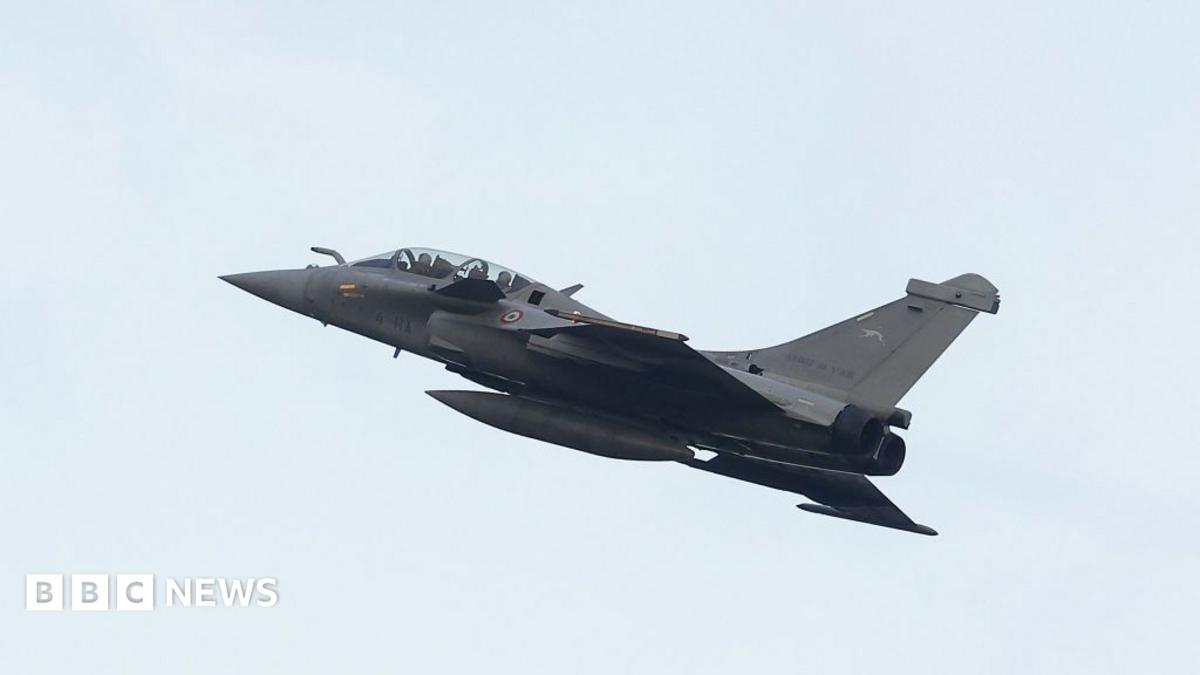
Nato fighter pilots have shot down a drone that entered Lithuania’s airspace overnight, the Lithuaninan president said.
Authorities said the drone likely entered southern Lithuania, near the second-largest city of Kaunas, from Belarus shortly after midnight on Tuesday.
Lithuanian President Gitanas Nausėda wrote in a statement on X: “A drone that just entered Lithuanian airspace was destroyed by NATO fighter jets.”
The origins of the drone are yet to be determined, a spokesperson for the Lithuanian national crisis management centre said.
Drone alerts sounded across the capital Vilnius and surrounding region earlier on Tuesday.
Nausėda’s post on social media added: “With Russia intensifying its aggression against Ukraine, such readiness is vital for our region. Together with our NATO Allies, Lithuania will defend its airspace.”
Lithuania shares a large part of its southern and eastern border with Belarus, a key Russian ally.
Military drone incursions have become increasingly common across Europe since the beginning of Russia’s full-scale of invasion of Ukraine.
Indigenous groups, environmentalists, and locals in several states have opposed the border wall construction.
Published On 14 Sep 202614 Sep 2026
A group of landowners, ranchers, businesses and a non-profit organisation have sued the administration of United States President Donald Trump to stop construction of a wall along the country’s border with Mexico in the remote Big Bend region of the southern state of Texas.
Trump officials “were woefully unprepared for the hornet’s nest they stirred up because they had no idea how much we love this place”, David Keller, an archaeologist and historian who specialises in the Big Bend and lives in the region, said in a news conference announcing the lawsuit on Monday.
Recommended Stories
list of 3 itemsend of list
“For us, the Big Bend is not an empty place on the map,” he said. “It is our home.”
The lawsuit was filed by Conserve Big Bend and six landowners, with the support of dozens more people along the border.
It comes as the Trump administration is ramping up a $46bn effort to line the roughly 3,219km (2,000-mile) border with a collection of 9-metre (30-foot) steel bollard walls, vehicle barriers and technology intended to keep out smugglers and migrants.
In Arizona, federal officials are pushing ahead with construction of the border infrastructure, even though it cuts through land belonging to the Tohono O’odham Nation, an Indigenous tribe that has said it does not want the barrier and that it is unnecessary.
In Texas, the effort has run up against numerous lawsuits and bipartisan opposition from sheriffs, elected officials, tour guides, environmental groups and landowners.
As part of its wall-building efforts, the administration has waived numerous regulations and statutes designed to protect the environment, archaeology or wildlife, on the basis that there is an urgent need to protect the border in what the US Department of Homeland Security has called areas of “high illegal entry”.
But in the lawsuit announced on Monday, the plaintiffs argue that when it comes to the Big Bend region, that is not an accurate description. They cite historical statistics from US Customs and Border Protection showing how few people cross the border in Big Bend compared with other areas along the US-Mexico border.
Big Bend has about 805km (500 miles) of border, roughly one quarter of the total length of the border with Mexico from the Pacific Ocean to the Gulf of Mexico. But the region accounted for only about 1 percent of arrests, according to the lawsuit.
“Since becoming the chief, I’ve had the privilege of spending time with airmen throughout CENTCOM [U.S. Central Command],” said Wilsbach, who assumed the position in November. “I have walked flight lines, visited maintenance hangars, and stood inside operations centers where young Americans were managing missions overhead. Let me tell you about a few courageous airmen I met on my recent trip to the Middle East. They told me about their experience on the flight line during an attack.”
Burning Hangar
“As missiles were inbound, airmen sprinted toward bunkers,” the service chief said, without providing details about which base. “Moments later, a missile struck nearby in a hangar, and the aircraft inside burst into flames. The bunker withstood the blast, but the force of the impact damaged the door so badly it wouldn’t open, trapping the airmen inside.”
“Picture the scene,” Wilsbach explained. “Fire was spreading, an aircraft was burning only feet away, their teammates were trapped inside, and they had no way out. Despite the danger, airmen ran toward the flames.”
“A security forces NCO grabbed a pry bar and forced the door open,” he continued. “Calmly communicated with the airmen trapped inside. Seconds later, the ejection seat on the burning aircraft ignited, sending glass and metal fragments through the air. Finally, the door gave way, and the airmen escaped and ran for cover.”
“Wherever I went, I saw airmen with that steely-eyed look of warriors, determined to get the mission done and protect their fellow airmen,” the chief noted. “More than 30,000 airmen deployed in support of Epic Fury to a dozen locations. They served alongside soldiers, sailors, Marines, Guardians, and Coalition partners.”
Launching F-15Es Under Fire
“Operation Epic Fury will be studied for its scale, precision, and speed,” said Wilsbach. “Over 38 days of combat operations, the Joint Force struck more than 13,000 military objectives. Five hundred aircraft executed 10,000 sorties, an average of more than 250 sorties every day. Our airmen accomplished this through 1,200 alarm reds while executing 48 airfield repairs and completing more than 420 reportable explosive ordnance disposal, long lonely walks.”
“That walk is exactly what the name suggests,” Wilsbach proffered. “EOD technician leaving a place of relative safety and approaching a suspected bomb or unexploded munition to render it safe for everyone else.”
“Behind those numbers were thousands of decisions made by airmen who had to keep the mission moving while the enemy was actively trying to stop them,” Wilsbach stated. “One was Garrett, a staff sergeant F-15E crew chief from East Texas. He joined the Air Force to travel and see the world. We sure allowed him to achieve that goal, but I’m not sure the Middle East was exactly what he had in mind. On the second day of Epic Fury, Garrett was on the flight line launching four Strike Eagles when alarm red sounded. Airmen around him started running for shelter. Garrett’s adrenaline spiked. He knew exactly what that alarm meant. Danger was inbound, but his launch was not complete.”
A U.S. Air Force F-15E Strike Eagle in the CENTCOM region. (U.S. Air Force photo by Staff Sgt. Gerald R. Willis) Tech. Sgt. Gerald Willis
“A young airman was working with him, and Garrett sent him to the bunker,” the service chief continued. “Garrett stayed. The rest of the team was separated, so he armed the weapons and cleared the jet. Proceed… While everyone else ran for cover, he decided to stay. Garrett understood why those Strike Eagles were in theater. He knew they were one of their best lines of defense, so he stayed until the job was done. Only after the last fighter taxied out, Garrett finally took cover. Later, when someone asked why, his answer was simple: his fellow airmen needed those airplanes in the air.”
Swatting Down Drones Under Fire
“Hundreds of miles away, two senior airmen, Shanae and Nolan, tracked a swarm of enemy drones headed toward their base,” Wilsbach pointed out. “Shanae joined the Air Force to provide for her family. During the opening days of Epic Fury, she found herself protecting another family – the hundreds of airmen depending on her.”
“People sprinted for shelter as alarm red announced an incoming attack, but Shanae and Nolan stayed focused on the screens in front of them because every inbound track could be a weapon aimed at their teammates,” the general said. “Shanae is 27 years old, and Nolan is 21. Think about the responsibility we placed on these two airmen. Hundreds of lives depended on them to identify the threats and employ countermeasures. Every second mattered. The stakes were life and death. Together, Shanae and Nolan achieved more than 10 surface-to-air kills that night, defeating threat after threat before it could reach the airmen they were protecting. There were moments when they were afraid, and most people would be, but courage is not the absence of fear. Courage is overcoming it. They stayed locked on, trusted their training, and did the job everyone around them was counting on.”
Picking Up The Pieces After An Attack
“Peter is a senior airman from New York who spent nine months in the Middle East as an air transportation airman,” Wilsbach said. “With his team, he moved heavy ordnance, prepared missile systems, and downloaded Patriot equipment, while ballistic missiles and attack drones repeatedly target their airfield.”
“One of those attacks became very personal,” the service chief noted. “Enemy fire destroyed Peter’s living quarters and nearly everything he had brought from home. Imagine coming back after a 12-hour shift to find the wreckage of your hooch. The few pieces of home he carried halfway around the world were gone. Peter’s response told me everything I needed to know about him. He said that his possessions could be replaced, but the mission could not.”
Keeping The Reapers Flying
“More than 4,000 dynamic targets had to be found, identified, validated, and engaged,” Wilsbach said. “Remotely piloted aircraft, airborne ISR platforms, cyber operators, space professionals, and countless others turn enormous amounts of data into intelligence commanders could use.”
“Suit is a first lieutenant with a family tradition of excellence,” Wilsbach said of one MQ-9 Reaper pilot. “Both of his grandfathers served in the Army. I’m sure they wanted a better life for their kids, which is why his parents chose the Air Force. Today, Suit flies the MQ-9 and carries his family tradition forward. He also scored a perfect 100 on its physical assessment this year, so apparently excellence runs in the family.”
MQ-9 Reaper (USAF)
“MQ-9s flown by pilots like Suit supplied critical ISR and kinetic strike capabilities, launching them from bases within range of enemy fires,” said Wilsbach. “Suit planned and launched an MQ-9 combat sortie during an active attack. While missiles hit the airfield, Suit taxied out and got his Reaper airborne. He handed off control to another crew, then switched to the ground control station to recover a different MQ-9. His crew destroyed a priority target and then turned their sensors back toward their own airfield to inspect the runway for damage and determine whether operations could continue.”
“The MQ-9 was a workhorse for combatant commanders during Epic Fury. It provided real-time intelligence, struck 860 targets, and gave our forces the edge while denying the enemy freedom of movement. Airmen-like Suit made sure this asset stayed in the fight and maximized its impact. The MQ-9 success demonstrates the need for a capable follow-on aircraft that achieves the same effects with greater survivability, adaptability, and at a lower cost.”
Rescuing An F-15E Crew Shot Down Over Iran
“Peaches is an air battle manager from Texas,” the chief stated. “During Epic Fury, she found herself in the middle of a story of her own her family will be telling for generations. Peaches led 134 joint and coalition operators responsible for command and control across a complex battle space. Her team supported operations involving more than 1,000 one-way attack drones and 1,200 enemy ballistic missile threats. Those numbers are difficult to comprehend, but for Peaches, command and control was not a collection of symbols moving across the screen.”
“Every symbol represented something real: an aircraft, a threat, a crew, an airman,” he explained. “It was during this time two of those airmen became isolated inside of Iran. What followed became one of the defining moments of the operation. Over 50 hours, Peaches was one of the many who coordinated the combat search and rescue effort, leading her team to integrate 176 aircraft, fighters, bombers, tankers, intelligence platforms, and Air Force Special Operations Command forces that converged on one objective: bringing those Americans home.”
“Think about the complexity of that problem,” Wilsbach noted. “Aircraft operating at different speeds, altitudes, fuel states, with different sensors, weapons, and responsibilities, while an adversary was actively trying to stop them. Maintenance teams generated additional fighters. Tanker crews extended the range and endurance of the force, intelligence professionals track the threats. AFSOC [Air Force Special Operations Command] airmen brought specialized capabilities need[ed] to reach out to our isolated teammates and get them out. Every one of those airmen was doing something different, yet all were contributing to the same mission.”
“The Dude 44 rescue demonstrates why integration matters,” Wilsbach added. “To someone outside of our profession, committing that much combat power to recover two people might appear extraordinary. To an airman, the reason is simple: we make a promise to one another in our Airman’s Creed. I will never leave an airman behind. If you are isolated, injured, or trapped behind enemy lines, we are coming to get you. The courage and performance displayed during that mission was so impressive that 10 airmen received battlefield promotions. I had the distinct honor of promoting six of those heroes, ranging from staff sergeant to chief master sergeant during a recent trip. Everyone understood that their success depended on someone else doing their job. That is how our air and space forces fight.”
An artificial intelligence “kill switch” which can be checked by a third-party may need to be mandatory for companies, a co-founder of one of the world’s largest AI firms has said.
Jack Clark, one of seven founders of Anthropic, said a way of shutting off AI software completely if it gets too dangerous was the kind of thing society “might want to eventually pass rules around”.
Clark said “most labs have different ways of being able to pull the plug”, including Anthropic, but said policymakers may need to enforce having one.
The rapid development of AI and fears over the risks that the technology poses to humanity have been thrust into the spotlight by a series of warnings from executives and staff at AI firms.
Some have said publicly there is a chance that the technology could, if unchecked, kill all humans.
Anthropic head Dario Amodei over the weekend called for the pace of AI development to slow and be more closely monitored, as the company has done before, though some have questioned the motivations behind this.
Amodei did not say how exactly how AI development could be slowed down and said any action to reign in AI development should be done “without sacrificing commercial advantage”.
Clark told the BBC that specifics around “kill switch” requirements and verification should be part of “the larger policy conversation” taking place around AI.
“Should you mandate for companies to definitely have a kill switch? Is that kill switch verifiable by a third party?” he asked.
“I think that’s the kind of thing society is going to want to know and might want to eventually pass rules around.”
Anthropic, which was formed in 2021 by a group of former employees of its rival OpenAI, is currently at the centre of a debate around AI safety.
Last week, a post from an artificial intelligence researcher who quit Anthropic over concerns AI could wipe out humanity went viral.
In response, Anthropic scientist Evan Hubinger said he personally thought the possibility of human extinction from AI was “>10% within the next decade”.
Asked what percentage he would put on all humans being killed by AI, Clark said: “I don’t think these statistics are that useful”, but added that allowing AI to continue as a “totally unregulated industry” was a bad idea.
“We are rolling dice with immense risks,” Clark said. “And the point is, we have to change the course of this industry.”