Stay informed and up-to-date with the latest news from around the world. Our comprehensive news coverage brings you the most relevant and impactful stories in politics, business, technology, entertainment, and more.
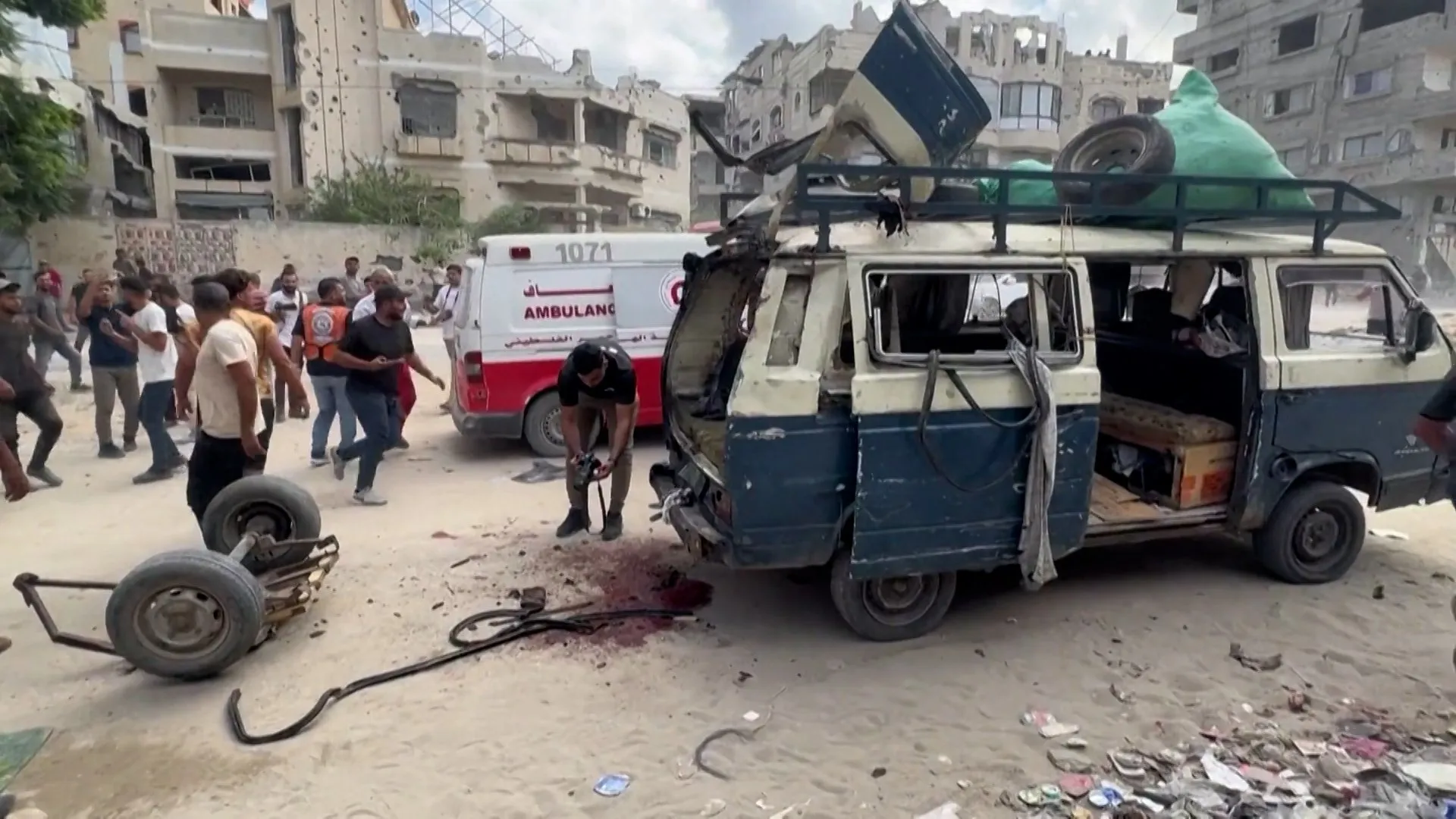
Israeli attacks on residential areas across Gaza killed at least eight civilians and wounded others on Wednesday. In Gaza City, an Israeli strike hit a minibus in the Tel al-Hawa area, killing six people and wounding 15 others, according to Palestinian medical officials.
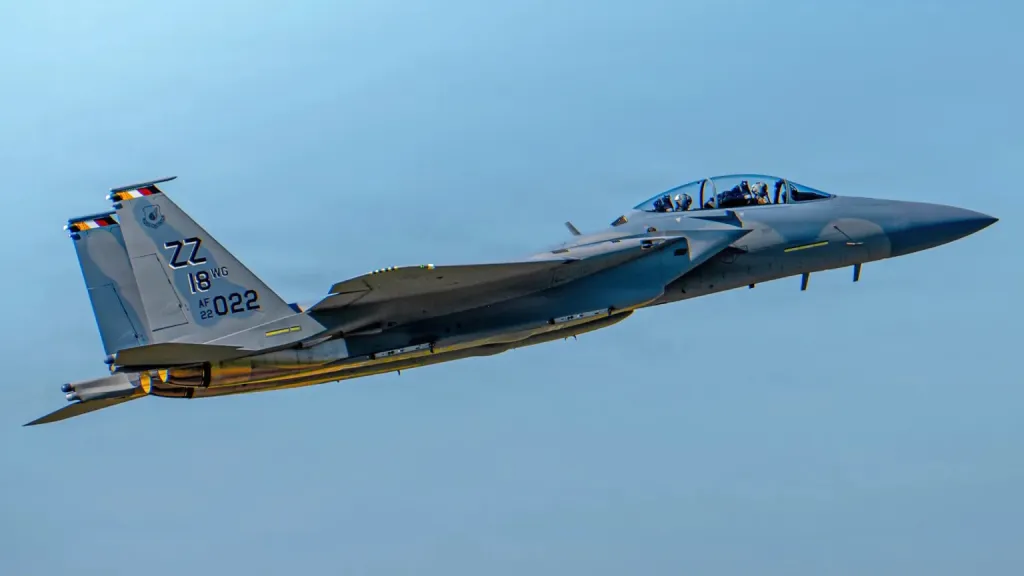
The U.S. Air Force is looking at adding a missile warning system (MWS) to its new F-15EX Eagle II fighters. This will give the aircraft a way to optically detect incoming missile threats, especially passively guided ones like heat-seeking infrared-guided missiles, which they currently lack. The continued absence of an MWS has become more pronounced in light of recent combat experiences over Iran.
The F-15EX is derived from earlier F-15 variants that all have MWSs, and it had seemed logical to expect the Eagle II would feature this capability. So it was puzzling when the first examples rolled out without such a system, and no apparent plans to install one on a jet already costing upwards of $100 million. The omission has been glaring for years now, especially given that the aircraft has all the provisions for such a system, including blanked-over spots for the sensors.
The 22nd F-15EX for the US Air Force seen departing Boeing’s plant in St. Louis, Missouri, in August 2026. USAF/Senior Airman Melany Bermudez
Now, the Air Force Life Cycle Management Center’s (AFLCMC) Fighters & Advanced Aircraft Directorate “is seeking sources for the procurement of an operationally qualified threat missile launch and approach warning system for rapid integration into the United States Air Force (USAF) F-15EX Eagle II fighter aircraft,” per a contracting notice put out yesterday. “The MWS must alert the F-15EX aircrew to the presence of missiles that may threaten the aircraft without unreasonably distracting the aircrew with false alarms.”
As mentioned, the F-15EX is already configured to accommodate an MWS, inside and out, something AFLCMC’s notice emphasizes. This is a result of the Eagle II having been directly derived from the F-15QA variant for Qatar, which itself was an outgrowth of the F-15SA for Saudi Arabia. While many of the F-15EX’s advances come from these aircraft, the first F-15 variant to get an MWS was actually Singapore’s F-15SG. The Advanced Eagle line and the F-15SG are part of Boeing’s extended F-15E Strike Eagle family.
A pair of Qatari F-15QA Advanced Eagles. USAF
“The MWS must use the six (6) pre-existing F-15EX sensor locations, data cables, power cables, and cooling,” the contracting notice says. “It must be easily, safely, rapidly, and organically installable and removable in the field by USAF military aircraft maintenance personnel without requiring any change to aircraft configuration beyond installation of MWS line replaceable units (LRUs) in the six (6) pre-existing locations in the aircraft dedicated for missile warning.”
Those most visually prominent of those pre-existing sensor locations are two horn-like sponsons, one on each side of the forward fuselage right below the cockpit canopy. There are two more locations at the ends of the jet’s tail booms. The last two locations are situated so additional sensors can face straight up and down to provide total 360-degree coverage.
A closer look at the nose end of an F-15EX, with the right-side horn-like sponson under the cockpit plainly visible. USAF/Master Sgt. Steph SawyerThe F-15EX also has pre-existing locations for MWS sensors at the ends of its tailplanes, as can be seen in this picture. USAF
The sources sought notice does not mention any specific MWS and invites prospective vendors to submit proposals. It also stresses that the Air Force is still in the “market research” phase of the contracting process and that it “does not constitute [a] solicitation and shall not be construed as a commitment” to buy such a system.
The F-15SA uses the AN/AAR-57 Common Missile Warning System (CMWS), and this system is understood to also be found on the F-15QA. Beyond F-15 variants, versions of the AN/AAR-57, for which BAE Systems is currently the prime contractor, are fielded today on a wide variety of other fixed-wing aircraft and helicopters, including various types in U.S. military service. CMWS variants are notably found across the U.S. Army’s AH-64, UH-60, and CH-47 helicopter fleets.
A picture of a Saudi Arabian F-15SA Advanced Eagle. Jamie HunterAnother close-up look at a Saudi F-15SA, offering a particularly good view of one of the aircraft’s missile warning sensors. USAF/Staff Sgt. Isaiah Soliz
All versions of the CMWS consist of several electro-optic missile sensors (EOMS), the number of which varies from platform to platform, linked to a central electronic control unit (ECU). The system is also designed to be integrated into larger defensive suites.
A picture showing five of the electro-optic missile sensors (EOMS) used in the AN/AAR-57, as well as the electronic control unit. BAE Systems
While the AN/AAR-57 is a proven system with years of successful integration on the F-15 and other platforms, it is just one option of the open market today. The Air Force could choose to take another route, possibly with a new system that offers added functionality.
The addition of any MWS will give the F-15EX a valuable, if not increasingly critical, boost in defensive capability. The Eagle II does already have an extremely powerful self-protection suite, including the Eagle Passive/Active Warning Survivability System (EPAWSS). However, it is heavily geared toward defending against radar-based threats that pump out signals that can be detected and jammed. Infrared-homing anti-air missiles zero in on their targets passively.
Eagle Passive Active Warning Survivability System (EPAWSS) l BAE Systems
In general, MWSs also typically make use of passive infrared sensors to spot the heat plumes of missile launches and the thermal signatures of those threats as they continue their approach. BAE Systems says current-generation versions of the AN/AAR-57 are sensitive enough to detect infantry anti-armor rockets being launched, as well as small arms fire from the ground, under the right circumstances. Though an MWS is not an active countermeasure unto itself, the early warning it provides gives critical time to deploy flares or employ other defensive capabilities, or just take evasive action.
TWZ touched on all of this last month after The New York Times reported new details about the shootdown of an F-15E Strike Eagle over Iran in April. A shoulder-fired, heat-seeking surface-to-air missile, also known as a man-portable air defense system (MANPADS), is said to have been responsible, thought his remains unconfirmed. The Strike Eagle also lacks an MWS. The Times‘ story said that the F-15E’s defensive suite provided the crew with only half a second of warning. As we noted at the time, it would actually have provided no warning given that the Strike Eagle also lacks an MWS.
A picture showing one of the tailfins of the F-15E shot down over Iran in April 2026. Iranian state media
Even before the current conflict with Iran broke out, TWZ had questioned the F-15EX’s lack of this capability given the general focus on increased survivability to match expanding threat ecosystems globally. EPAWSS is already a reflection of that reality, and could be made even more capable when tied together with an MWS. In May, we had reached out to the Air Force about any plans to integrate an MWS onto the F-15EX in light of observations from the ongoing conflict with Iran. The service told us then that it had no details to share. Whether the service now has any plans to add MWSs to the Strike Eagle fleet, which would require more significant integration work, is also unknown.
Buying F-15EX and not springing for the missile approach warning system is absolutely the dumbest thing. $100M fighter, but let’s save a few bucks on a key defensive advantage. You are not always going to get a radar spike from a threat, even at altitude.
Infrared homing anti-air missiles, as well as air defense systems that use passive infrared sensors for target detection and cueing, are certainly not threats limited to Iran. In Yemen, Iranian-backed Houthi militants have been making good use of these capabilities for years now, something else we have explored in great detail in the past. The Houthis claimed to have downed a Saudi Arabian F-15 just earlier this month and, per a now-long standing modus operandi, subsequently released video captured through a ground-based forward-looking infrared (FLIR) system as evidence. The group also shared images of the wreckage of what looked to be an F-15SA Advanced Eagle, underscoring the dangers posed even to aircraft equipped MWSs.
These threats are not limited to the Middle East more broadly, either, and are only increasingly likely to be encountered in future conflicts globally. The emergence of ever-more capable and longer-range anti-air missiles with infrared or dual-mode guidance systems is a significant factor in all this. Expanding use of passive infrared search and track (IRST) systems on aircraft and infrared sensors on ground-based air defense systems are part of this larger equation, as well.
How the Air Force ultimately decided to proceed with the integration of an MWS onto the F-15EX fleet remains to be seen. However, the Eagle II’s lack of this capability is only becoming more striking, especially in light of the conflict with Iran.
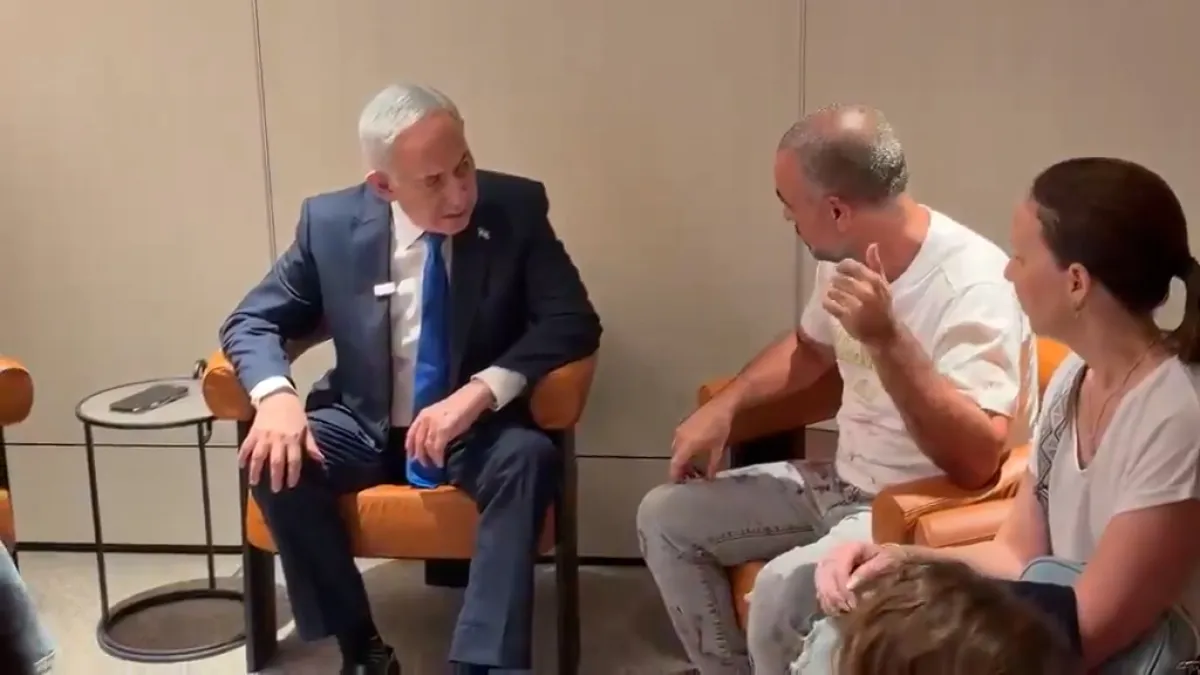
Israeli Prime Minister Benjamin Netanyahu has met Yaniv Hayun, the Flydubai passenger that helped restrain a pilot who stabbed a colleague. Netanyahu called the passenger a ‘hero’ during a meeting at Ben Gurion Airport in Tel Aviv shortly after the flight landed.
Siegfried Muresan’s loss of the confidence motion increases the prospect for snap elections.
Published On 30 Sep 202630 Sep 2026
Romania’s pro-European Prime Minister-designate Siegfried Muresan has failed to win a parliamentary vote of confidence, prolonging a political crisis seen as a boost for the rising far right.
Muresan, a liberal European Parliament member who was the latest of three designated prime ministers, secured only 182 votes out of the 233 required to secure the confidence motion on Wednesday, according to the official count.
Recommended Stories
list of 3 itemsend of list
The far-right Alliance for the Union of Romanians (AUR) largely boycotted the vote.
The 45-year-old had proposed what he described as a “reform-oriented” governing programme under his centre-right National Liberal Party (PNL), which teamed up with the Save Romania Union party, or USR, and the small ethnic Hungarian UDMR party.
President Nicusor Dan said he would nominate a new prime minister candidate on Monday afternoon, after holding talks with the leaders of the parliamentary parties, to avoid snap elections.
Siegfried Muresan addresses delegates of the Romanian Parliament prior to a vote at the parliament in Bucharest, Romania, on September 30, 2026 [AFP]
Romania saw the collapse of a pro-European coalition government in May, when governing social democrats, together with the opposition far right, ousted liberal Prime Minister Ilie Bolojan in a no-confidence motion at that time.
The far right, which comprises about a third of Parliament, threatened to impeach the president if he does not call early elections once the conditions are met.
Romania, a member of the EU and NATO that borders Ukraine, has not held snap elections since the fall of communism in 1989.
Political analyst Cristian Pirvulescu told the AFP news agency that snap elections would lead to another fragmented Parliament, but with an emboldened far right.
“Early elections mean that, from the moment they are called, it would take four months before a new government could be formed,” Pirvulescu told AFP. “Due to political instability, Romania finds itself in a very complicated economic situation. Four months is already a very long time.”
The country of 19 million has been struggling for months with the highest public deficit and inflation in the European Union.
Supporters of Romania’s far-right politician and former presidential candidate Calin Georgescu, not in picture, cheer as he leaves the Court of Appeal in Bucharest on September 28, 2026, following a new hearing in the case in which he and other defendants are accused of actions against Romania’s constitutional order [AFP]
Portadown, Northern Ireland – On the Garvaghy Road in Northern Ireland, residents have spent days gathering to stand guard in their community.
They have linked arms and blocked their road, preparing to stop a Protestant Orange Order parade from attempting to march through this predominantly Catholic area for the first time in 28 years.
Recommended Stories
list of 3 itemsend of list
Some pitched tents. Others brought food and stayed through the night, keeping watch.
“We’ll be here as long as we have to be,” said one local woman, who asked not to be identified for fear of violent reprisals. “I’ve seen the fighting when those Orangemen come along here, and I’m not having it back here – none of us are.”
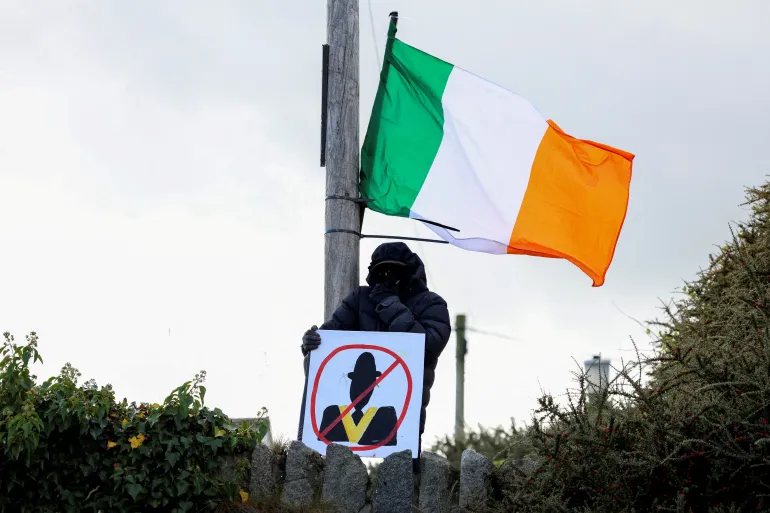
A demonstrator holds a placard, as people protest on the Garvaghy Road, a Catholic enclave in the largely Protestant town of Portadown, against the Protestant Orange Order’s annual Drumcree parade, in Northern Ireland, September 27, 2026 [Cathal McNaughton/Reuters]
The Orange Order, a Protestant organisation with a historically anti-Catholic tradition, has been banned from marching on Garvaghy Road for the last 28 years.
The High Court order has overturned that ban. Now, a small group of Orangemen gathers at Drumcree Church each day in their traditional regalia, ready to march.
But they have not been able to get beyond the end of the road. Police stand in their way, refusing them permission to pass and citing the risk of violence with so many protesters waiting a few hundred metres away.
This has infuriated the Orange Order, which has called for the Police Service of Northern Ireland chief constable, Jon Boutcher, to be removed. The group believe they have a legal right to march and accuse police of yielding to the protesters.
“We hold a positive determination issued by the Parades Commission and reinforced by the High Court judge,” Nigel Dawson, district master of the Portadown Orange Lodge, told Al Jazeera. “The chief constable must comply with the law.”
In the 1990s, there were protests and violence when the Orange Order tried to return from Drumcree Parish Church along the road.
When asked how much longer the Orangemen are prepared to wait, Dawson said, “I’ve been at Drumcree for 28 years.”
Dawson warned of a dangerous precedent in which “might makes right”.
If a protest is big enough, the police can refuse to uphold a court ruling, he said, adding, “We have the law on our side here.”
Ultan Larkin, a protester who travelled to Portadown from the neighbouring town of Armagh to show support for the Garvaghy Road residents, said, “The law is on their side, but justice is not on their side.
“There’s hurt here. There’s pain here. Just because you can doesn’t mean you should.”
The standoff has so far been peaceful. But history tells the story of why this confrontation has a real risk of escalation.
‘Justice is not on their side’
Garvaghy Road was one of the most potent flashpoints of The Troubles – a 30-year conflict between mostly Protestant unionists who fought for Northern Ireland to remain part of the UK, and predominantly Catholic republicans who want a united Ireland.
Orange marches through the Catholic area were usually accompanied by some of the worst sectarian violence Northern Ireland has seen.
The peace deal known as the Good Friday Agreement was signed in 1998, and it transformed Northern Ireland.
Large-scale violence largely ended, former enemies shared power in a devolved assembly at Stormont, and a generation grew up in an era of peace without soldiers manning checkpoints on their streets.
Following this peace process, the Orange Order was prevented from parading along Garvaghy Road – an effective ban that has lasted almost three decades, until now.
In an unexpected decision, the Northern Ireland Parades Commission allowed for a scaled-down Orange march to go ahead under strict conditions. Only 35 Orangemen could take part in the march, and they would have to do so in silence without their usual flutes and drums.
Residents of Garvaghy Road were appalled and legally challenged this ruling.
A High Court judge initially granted an injunction preventing the parade, but the Court of Appeal overturned that ruling late on Saturday, clearing the legal way for the march to proceed on Sunday morning.
A further High Court challenge was subsequently dismissed.
Ultan grew up during the Troubles. He was convicted for having a senior role in the Real IRA and was sentenced to four years in prison – a conviction quashed years later on appeal.
“We have to live together, and to do that we have to respect each other,” he said. “But where is the respect if you’re marching through a community that doesn’t want you and where the people of that community are asking you to march somewhere else?”
“On the Irish tricolour we have green, white, and orange. The green is for the Irish Catholics here, and the orange is for the Protestant community, with white symbolising peace. We all have our place.”
He said there are old wounds on Garvaghy Road.
“People here suffered a lot when the Orange marches came. They remember how bad things were here – the intimidation and that sort of thing – and some people just aren’t able to forgive that.”
Political fallout
The standoff has become a political crisis in Northern Ireland, affecting the power-sharing government that runs the country.
Sinn Fein First Minister Michelle O’Neill visited Garvaghy Road to stand beside the protesters, alongside Sinn Fein President Mary Lou McDonald.
The Democratic Unionist Party (DUP) accuses nationalist politicians of breaking the law by supporting a protest that blocked Garvaghy Road, and observers have questioned how the first minister can continue in her role when she has openly rejected a High Court ruling.
The confrontation is particularly awkward as the DUP and Sinn Fein are supposed to govern together, representing the two principal political traditions that emerged from the conflict as part of the peace process.
The language between them has become increasingly bitter, and in less than nine months, Northern Ireland faces an Assembly election.
For now, the DUP and Sinn Fein remain in government together, while accusing the other of threatening the political settlement that followed the Good Friday Agreement.
Meanwhile, attempts to find a resolution continue.
Northern Ireland Secretary Chris Bryant has met representatives of the two communities, but talks have so far failed to produce a breakthrough.
His future is also now on the line over this.
Bryant could revoke the Orange Order’s right to march, but he has not exercised this power. Unionists have threatened to call for his resignation if he tries. Irish nationalists say they will do likewise if this parade goes ahead.
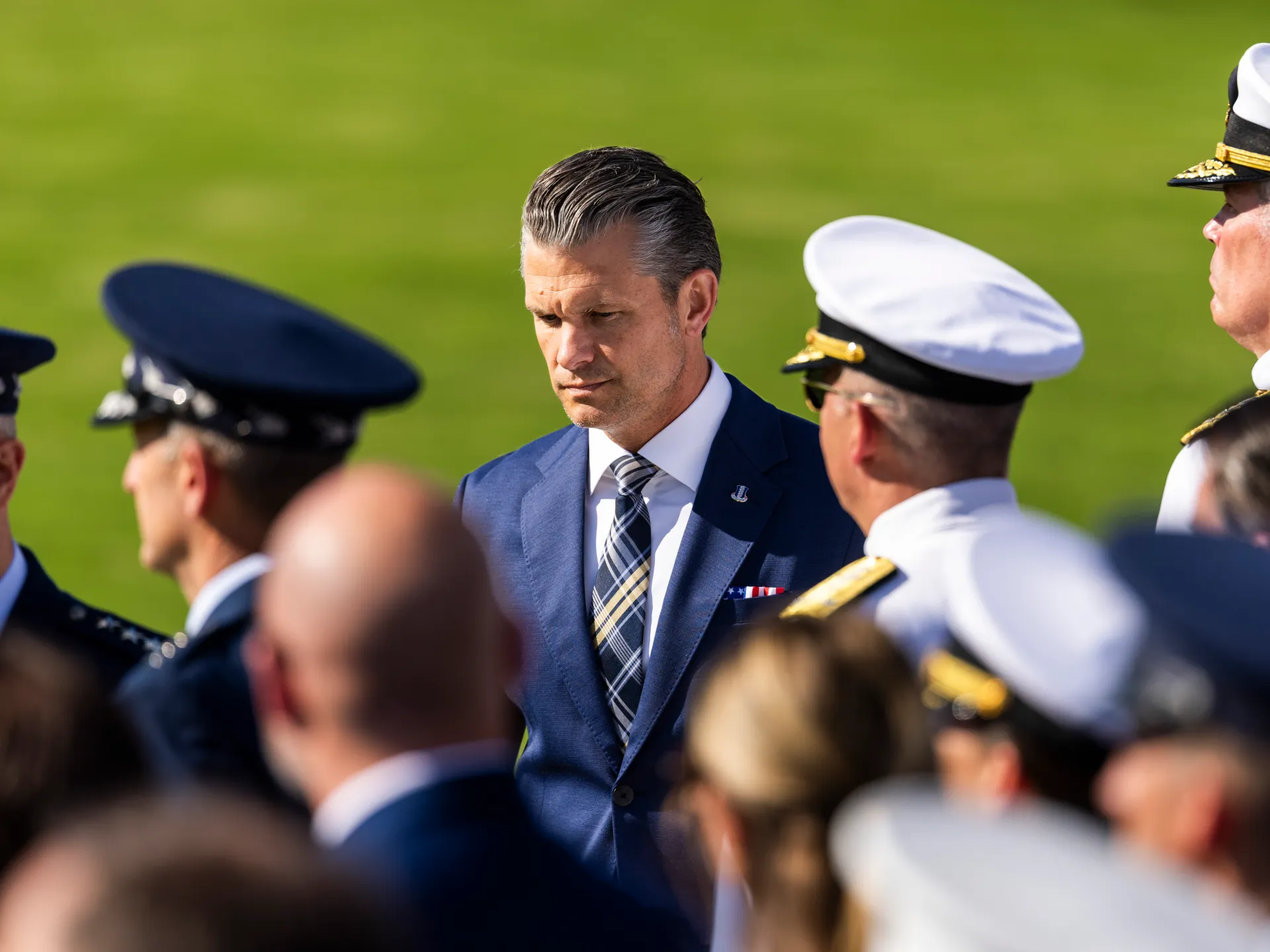
United States Defense Secretary Pete Hegseth plans to cut the number of positions in the US military reserved for generals and admirals by 20 percent, raising concerns about political interference in the military’s leadership amid strained relations with senior Pentagon officials.
An announcement is expected on Wednesday when Hegseth gives his “State of the Force” address to junior officers and enlisted personnel at Marine Corps Base Quantico in Virginia.
Recommended Stories
list of 4 itemsend of list
The Pentagon has presented previous cuts as a way to reduce bureaucracy. But analysts say Hegseth’s latest changes may be aimed at sidelining experienced commanders, discouraging dissent and appointing more officers loyal to President Donald Trump to the ranks.
So is the US military too top-heavy, and what could the cuts mean? Here’s what we know.
What is Hegseth planning?
Citing Pentagon officials, The Associated Press news agency has reported that Hegseth will double the 10 percent reduction in top-ranking personnel ordered last year, bringing the total decrease to 20 percent by January 1, 2027. The plan affects roughly 800 general and admiral positions across the one- to four-star ranks.
Congress sets statutory limits on the number of generals and admirals. A Congressional Research Service report recorded 848 active-duty generals and admirals in September 2025, below the authorised maximum of 857.
Cutting positions does not necessarily mean immediately dismissing everyone occupying them. An official told the Reuters news agency that some roles would be eliminated, while others would be assigned to lower-ranking officers.
Why are top-ranking military positions being removed?
The argument for reducing senior ranks predates Hegseth’s tenure, with supporters saying fewer layers of command would reduce administrative work and give officers closer to operations greater authority.
Walter Ladwig, a political scientist specialising in US foreign policy at King’s College London, said there is a credible case for reform. “Since the end of the Cold War, the overall size of the force has declined significantly, but we haven’t seen a corresponding reduction in the number of flag officers,” he told Al Jazeera.
“At the same time, we’ve seen headquarters and staffs proliferate.”
Trump and Hegseth have already fired or pushed into retirement more than two dozen military leaders since Trump took office in January 2025.
Those removed include General Randy George, the US Army’s top uniformed officer, in April, and Admiral Lisa Franchetti, the chief of naval operations, in February 2025. The administration also dismissed the only two women serving as four-star officers, alongside other senior female officers.
In February 2025, Trump also fired Air Force General CQ Brown as chairman of the US Joint Chiefs of Staff as part of a wider shake-up of top military leadership.
Other departures have been of civilian leaders. Army Secretary Dan Driscoll resigned in late August after reported disagreements over Hegseth’s handling of senior military personnel.
The dismissals, alongside blocked promotions, have raised questions about how the administration selects commanders and whether professional disagreements could jeopardise careers. Robert Ralston, a lecturer in political science and international studies at the University of Birmingham in the United Kingdom, said the proposed reductions should be weighed alongside these earlier decisions.
“These cuts appear to be part of a broader, sustained effort by Hegseth to fill the ranks based on political, rather than meritocratic, considerations,” he told Al Jazeera.
“Politics is driving these decisions, in my view.”
What political fallout could there be from this?
Democratic Senator Mark Kelly of Arizona criticised Hegseth’s changes at the Pentagon. “The US military doesn’t need more testosterone; it needs better leadership at this point,” Kelly told MS NOW’s Morning Joe programme last week.
“The consequences of firing all these admirals and generals are that we’re losing a portion, a good portion, of a generation of great leadership.”
David Galbreath, professor of war and technology at the University of Bath in the UK, told Al Jazeera that resistance from Congress and military leaders could complicate the changes.
He pointed to the opposition that arose to President Jimmy Carter’s plans to withdraw US ground troops from South Korea as an example of how military and congressional pressure can constrain a president.
“I suspect that after the election, we are likely to see a much more confrontational Congress with investigations and impeachments of Hegseth,” he said.
Whether that prediction comes true will likely depend on November’s congressional elections and whether the Republican Party retains control of both chambers of Congress.
What criticisms have been made of Hegseth?
Hegseth’s tenure at the Pentagon has been marked by controversy and tensions with senior officials. In March 2025, he shared details of forthcoming strikes on Yemen in a Signal chat group which inadvertently included The Atlantic’s editor-in-chief.
A number of US media reports about the dwindling supplies of weapons in the Middle East prompted his department to investigate leaks and restrict journalists’ access earlier this year. The New York Times reported in August that about 50 Joint Staff military and civilian officials had undergone polygraph tests amid growing mistrust inside the Pentagon.
Hegseth has meanwhile made ending what he calls “woke” culture a central priority, introducing new physical fitness requirements and abolishing diversity policies.
Ralston said the combination of dismissals and blocked promotions could damage morale and the military’s future leadership. “His relationship with senior military leaders has been adversarial, his scuttling of promotions has undoubtedly damaged morale, and will have long-term consequences for leadership pipelines within the Department of Defense,” he said.
King’s College’s Ladwig also described Hegseth’s relationship with senior Pentagon leaders as unusually confrontational but cautioned against interpreting every proposed cut as a power struggle.
“When a military is under civilian control, it means that the elected government has the right to determine defence priorities and reorganise the armed forces accordingly,” he said.
But Ladwig warned that the changes could encourage officers to hold back their professional recommendations when advising senior politicians. “That might create incentives for military officers to censor themselves rather than provide candid professional military advice, particularly if being politically aligned with the administration is seen as a path to success,” he said.
“This is a very worrisome pathology, and it’s the kind of thing that produces ineffective militaries in dictatorships.”
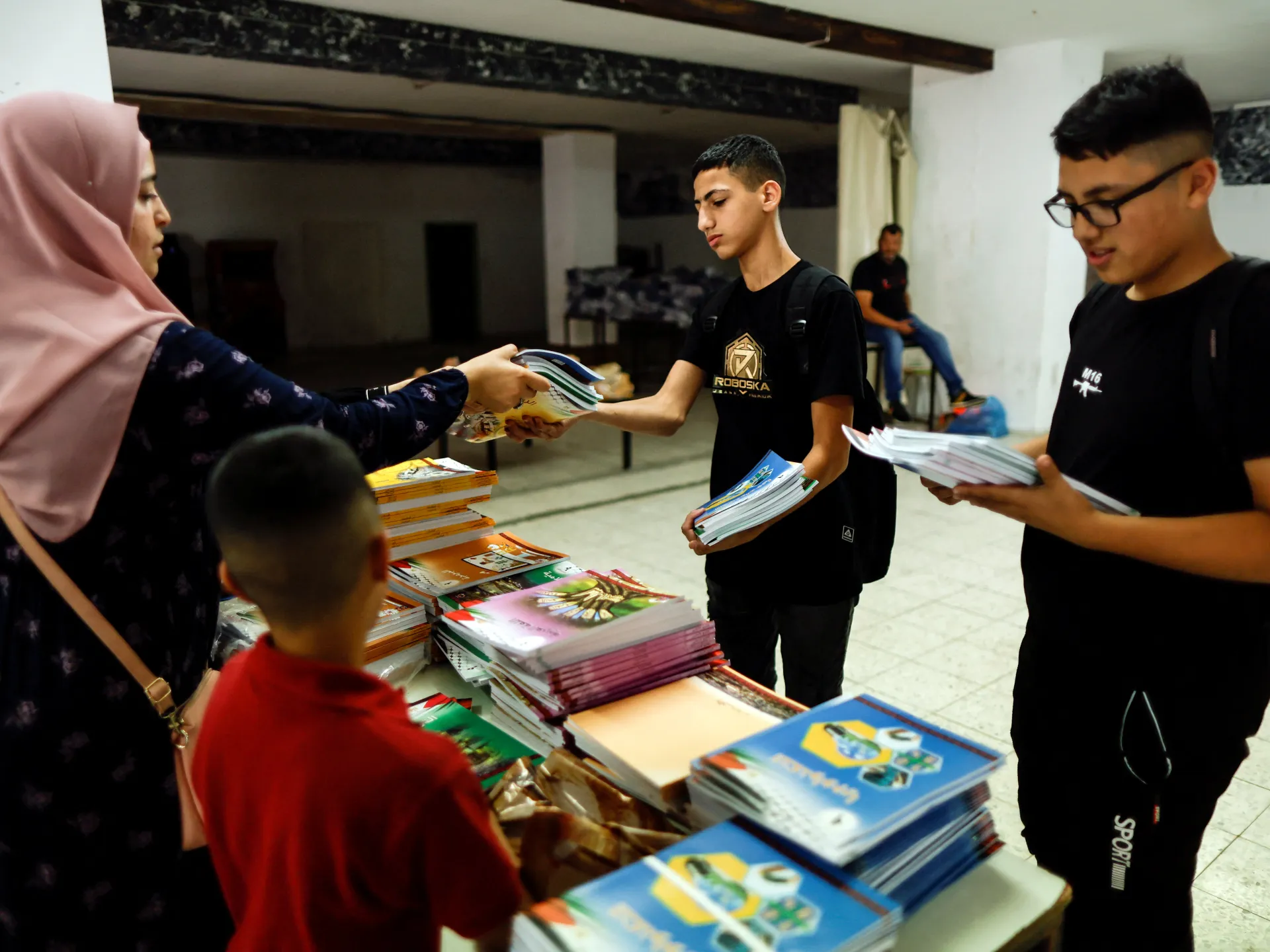
The school year started in occupied East Jerusalem with the news that 45,000 Palestinian children are now studying a curriculum put together by the Israeli authorities. That is more than a third of the Palestinian students in the occupied territory and almost double the number from the previous year.
Meanwhile, Christian schools started the school year with a strike, as many of their teachers who live in the occupied West Bank were not granted permits to enter the city.
For the Palestinian population of occupied East Jerusalem, this is yet another form of encroachment on their national rights by the occupation authorities. For Israel, this is a justified intervention because Palestinian textbooks produced by the Palestinian Ministry of Education and Palestinian teachers trained in Palestinian Authority (PA) institutions “teach hate”.
According to international humanitarian law, an occupying power must facilitate the normal operation of educational institutions and avoid interference in their affairs. Recently updated commentary by the International Committee of the Red Cross, the institution tasked with overseeing the application of the Geneva Convention, says an occupying power must not replace the existing education system with its own structures or impose new curricula.
Yet Israeli interference in Palestinian education is extensive and reaches well beyond occupied East Jerusalem – into the occupied West Bank and, more recently, the Gaza Strip. For years, successive Israeli governments have demanded that the United States and European governments pressure the PA to revise its textbooks by conditioning aid. Meanwhile, the devastation of Gaza’s education system has allowed NGOs funded by Western donors to introduce curriculums approved by Israel.
The Israeli argument that all this is necessary to prevent Palestinian children from learning “to hate” in school does not stand up to scrutiny.
Academic research, including a study funded by the US Department of State and prepared by both Palestinian and Israeli scholars, found that Palestinian textbooks do not promote hate and dehumanisation of Israelis.
So what is Israel actually looking to revise in Palestinian textbooks?
Studies comparing Palestinian textbooks with the Israeli-edited versions used in occupied East Jerusalem have documented the removal or alteration of references to Palestinian national symbols, such as the national flag and anthem, Palestinian sovereignty and history.
A 2025 study of primary-school textbooks found that Israeli modifications included replacing “Palestine” with “Israel” in some contexts and removing passages about the realities of occupation.
Israel wants references to the occupation, Palestinian history and self-determination erased from Palestinian textbooks not because they “teach hate”, but because they teach Palestinian children national consciousness – something Israel has fought against since its own creation, claiming “there is no such thing as a Palestinian people”.
This is why Palestinian resistance to curriculum changes in East Jerusalem should not be understood only as resistance to an Israeli textbook. For many parents, teachers and schools, the fear is that accepting the Israeli curriculum also means accepting the Israeli annexation of Jerusalem and its erasure of Palestinian identity inside it.
Removing concepts such as the occupation, the Nakba, refugees, the right of return, Palestinian sovereignty and national symbols from education materials can gradually detach Palestinian political identity from the historical narrative that gives those claims meaning.
While Israel gets to censor and shape Palestinian curriculums, there is little scrutiny by its Western allies of what Israeli curriculums teach Israeli children.
For her book Palestine in Israeli School Books, Israeli philologist Nurit Peled-Elhanan studied Israeli history and geography textbooks published in the post-Oslo years and discovered the extensive use of racist tropes and erasure of Palestinians. In the conclusion, she expressed concern that Israeli students graduate from Israeli schools and enter mandatory military service having “been taught to resent and fear” Palestinians and having no knowledge of their “life-world”.
Another more recent study of 123 textbooks used in Jewish Israeli schools by Israeli scholar Yael Teff-Seker found strong ethnocentric framing, a persistent sense of Jewish victimhood and relatively little space for Palestinian narratives. The author notes that while the concept of peace with Arab nations is described positively, the occupation is “described impartially, without judgement”, while the occupied Palestinian territory is sometimes referred to with Israeli names, for example, Judea and Samaria instead of the occupied West Bank.
A research paper coauthored by another Israeli academic, Roy Weintraub, explores how Israeli state curricula cover the Nakba, one of the central events that shapes Palestinian identity and political realities. The term is “partially present” in Israeli textbooks and teaching materials and “most teaching materials justify the actions taken by Israeli forces during the 1948 War”. The paper concludes: “Inclusion of difficult histories in the curriculum does not necessarily encourage a critical understanding of the suffering and injustices experienced.”
The issue with the curricula in Israel-Palestine is larger than education. It is about power. When one side controls land, movement, permits, budgets and institutions, and can also influence the language through which the other side describes that reality to its children, the classroom becomes another arena of the conflict itself.
The struggle over Palestinian textbooks is not only about what children should learn. It is also about who has the authority to decide what counts as legitimate history in the first place.
The views expressed in this article are the author’s own and do not necessarily reflect Al Jazeera’s editorial stance.
Deputy assistant commissioner Kevin Southworth said a team of 220 investigators had worked hard on the case but he appreciates “it has taken nine years to get to this point”.
“As we have said before, this is one of the most complex investigations ever undertaken by any UK law enforcement agency – the scale is truly enormous.
“While we know this has had a significant impact on those waiting for answers, it has necessarily taken this long to ensure our investigation is meticulous and presents the very best possible evidence to the CPS for charging decisions,” he added.
The CPS will decide whether there is a realistic prospect of conviction, as well as considering whether bringing charges is in the public interest.
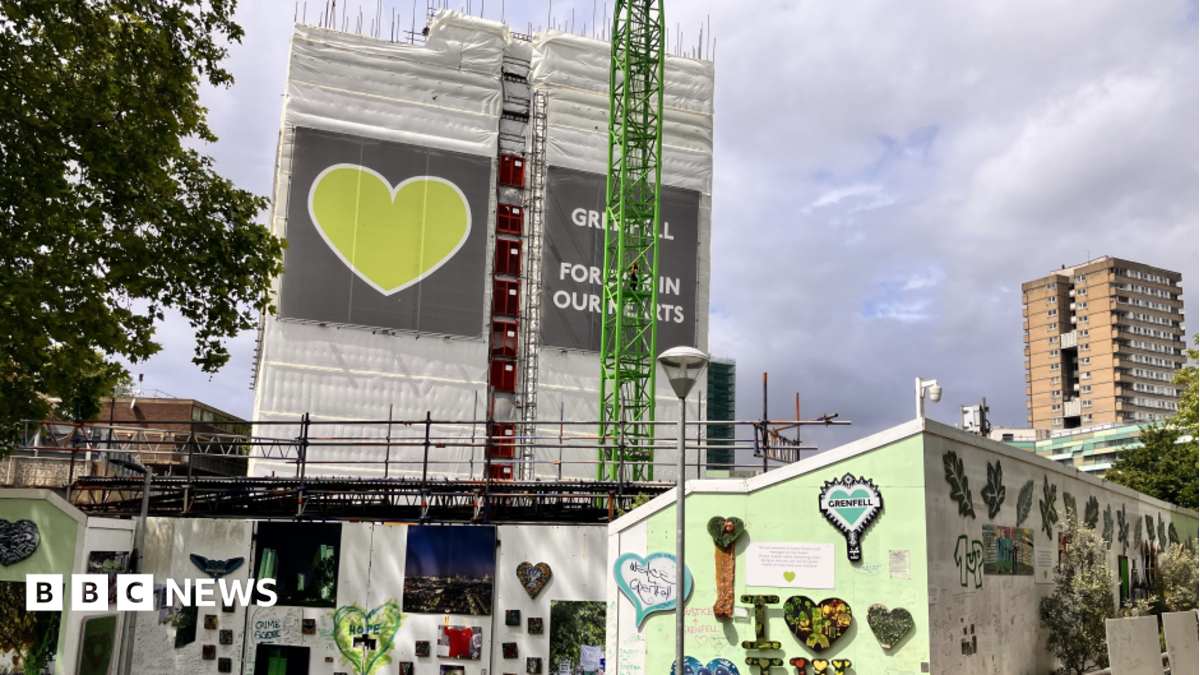
In anticipation of possible criminal proceedings, the Met has said it is building a £2m replica of a section of the tower, which is being dismantled, to help future jurors understand its layout.
Frank Ferguson, head of the CPS special crime and counter terrorism division, said it marked “an important step”.
“We recognise that the journey to this point has been long and difficult.
“Charging decisions will be made independently by CPS prosecutors following a thorough and careful review of all the evidence gathered by the Metropolitan Police Service,” he added.
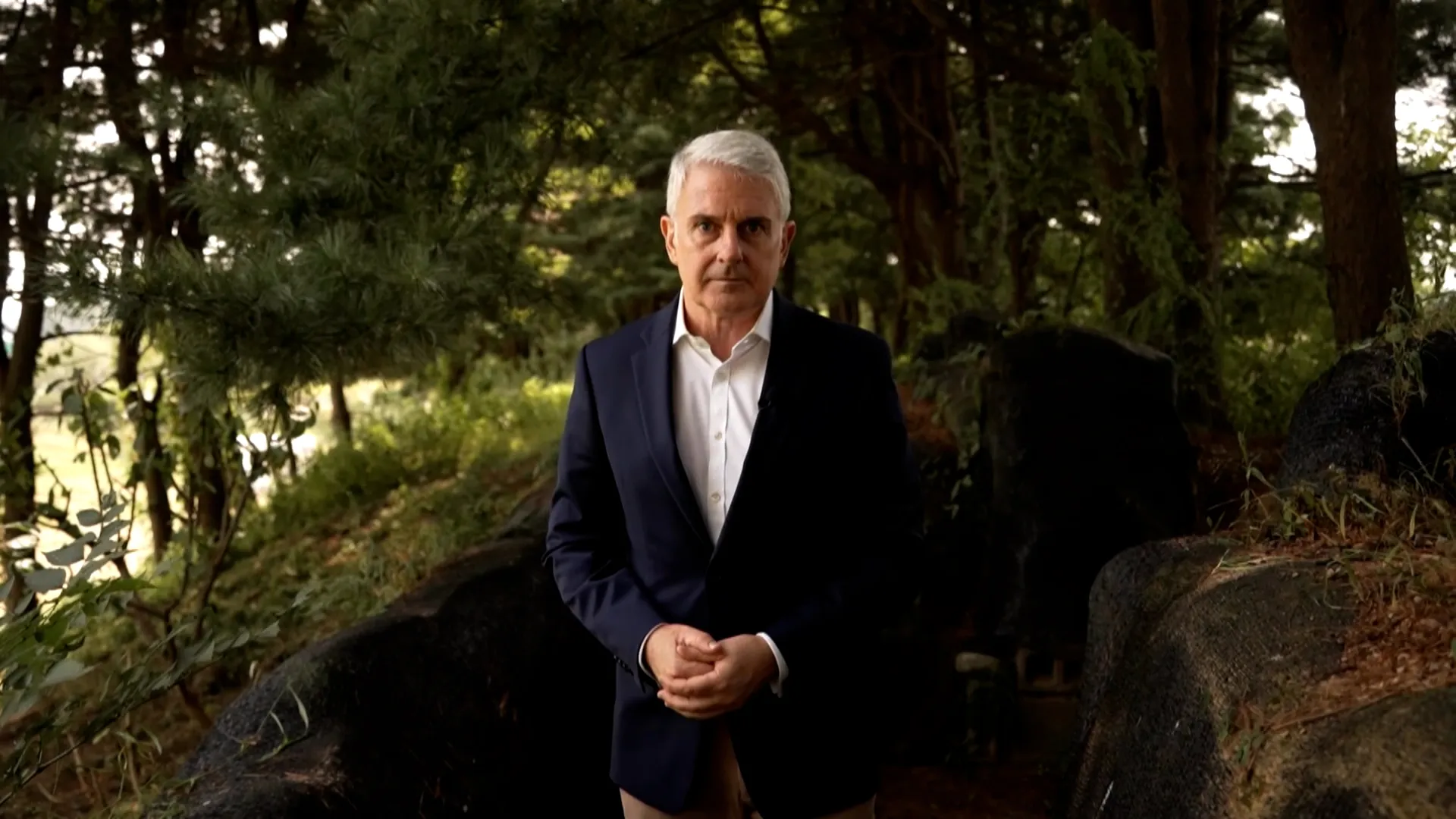
A landmine explosion which injured three South Korean soldiers in the Korean Demilitarized Zone last week, has prompted Seoul to accuse North Korea of deliberately planting mines south of the Military Demarcation Line. Pyongyang denies the allegations and has threatened to retaliate. Al Jazeera’s Jack Barton reports from the DMZ.
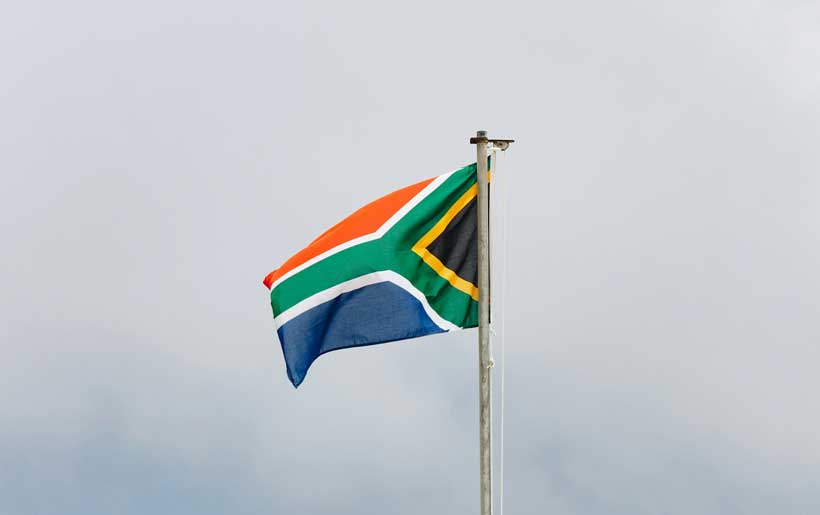
South African President Cyril Ramaphosa has described violence against women as a “national shame” after the discovery of another woman’s body intensified public anger over the country’s persistent gender-based violence.
Eleven women’s bodies have been found in Ekurhuleni, a municipality east of Johannesburg, since July, prompting renewed fear and outrage after years of government promises to tackle violence against women.
Most of the victims were in their 20s or 30s. Some were found stripped and showing signs of sexual violence, according to authorities.
“There are women lying tonight in government mortuaries waiting to be identified, waiting for someone to claim them, waiting to be taken home and laid to rest,” Ramaphosa said in a televised address late on Tuesday.
Stay ahead of the geopolitical week.
MD Briefing delivers expert analysis across five global fronts — the Indo-Pacific, energy, geoeconomics, European security, and the Middle East — every Monday morning. Free.
“How can our hearts not be broken? How can we not be angry?”
He described violence against women as a source of “profound pain and national shame” and acknowledged growing anger among South African women.
Investigation Into the Killings
Ramaphosa said police had so far found no evidence that a serial killer was responsible for the 11 deaths. He stressed, however, that investigators were continuing to examine all possibilities.
Authorities have made arrests in connection with three of the killings, while investigations into the remaining deaths are continuing.
The president said none of the cases would be allowed to go cold, amid growing concerns over whether South Africa’s law enforcement agencies can adequately investigate violent crimes against women.
The latest deaths have revived criticism of the government’s efforts to tackle gender-based violence, despite repeated national campaigns and commitments aimed at reducing the problem.
South Africa’s Wider Crime Crisis
The killings are unfolding against a broader backdrop of severe violent crime in South Africa.
The country has one of the highest murder rates per capita in the world, while corruption, limited resources and weaknesses within the policing system have made it difficult to investigate and prosecute cases effectively.
Only about one in 10 murders is solved, highlighting the scale of the challenge facing investigators.
For communities in Ekurhuleni, the discovery of 11 women’s bodies has therefore become more than a series of individual criminal investigations. It has renewed questions about public safety, accountability and whether years of government commitments are translating into effective protection for women.
Ramaphosa’s remarks reflect the political pressure surrounding the issue as authorities face renewed demands to identify the victims, establish who was responsible for their deaths and prevent further violence.
Video shows female students in tears as they leave a secondary school in Azerbaijan after reportedly being denied entry for wearing headscarves, following changes to uniform rules.
A flight from Dubai to Tel Aviv was unexpectedly diverted after a physical fight between the pilots, Israeli officials told local media.
The Flydubai plane – which took off from Dubai International Airport in the United Arab Emirates early on Wednesday morning – signalled an emergency code two hours into the journey, flight tracking website Flightradar24 said.
Minutes later it switched to a code used to report a hijacking, but was later turned back to the general emergency signal, the website reported.
The incident was not believed to have been a hijacking, the Israeli prime minister’s office said.
Instead, the signal was thought to be issued following an altercation between the pilot and co-pilot, local media reported citing Israeli defence officials.
The plane – carrying around 150 people, most of whom are Israeli – was due to land at Ben-Gurion Airport but instead landed at Tabuk Airport in northeastern Saudi Arabia.
The Israeli air force dispatched fighter jets in response to the incident and Prime Minister Benjamin Netanyahu held urgent consultations on the incident.
US president’s comments came after he was asked why North Korea can have nuclear weapons when Iran cannot.
Published On 30 Sep 202630 Sep 2026
United States President Donald Trump has described North Korean leader Kim Jong Un as “a friend” and played down concerns about Pyongyang’s nuclear arsenal, saying, “as long as I’m around, he’s going to be fine”.
Trump made the remarks in Washington, DC, on Tuesday after a reporter asked him why North Korea could have nuclear weapons but Iran could not.
Recommended Stories
list of 3 itemsend of list
“That’s interesting. You know why? Because you had a different president, and they could have stopped him,” he said, referring to previous US administrations.
“He happens to be a friend of mine, Kim Jong Un, he’s a friend of mine. He likes Trump, doesn’t like a lot of other people. I’m about the only person in the entire world that he likes, and I like him,” he said.
He said North Korea’s nuclear capacity was “pretty large” but “not like us”.
“You know what, as long as I’m around, he’s going to be fine,” he added. “You know why? Because he respects me and he likes me.”
South Korea’s Defence Minister Ahn Gyu-back said last week that its northern neighbour possessed between 80 and 120 nuclear warheads. The figure is significantly higher than Trump’s recent assertion that Pyongyang has 57 nuclear weapons.
Trump is seeking to re-engage with Kim and secure a win on the international stage as the US and Israel’s war on Iran enters its eighth month.
The US president launched the war along with Israel on February 28, saying Iran could not have a nuclear weapon. Iran has denied seeking a weapon, noting it had signed an agreement with world powers in 2015 that curbed its nuclear programme in exchange for sanctions relief. But Trump abandoned the agreement during his first term in 2018.
The US-Israel war on Iran has disrupted global energy supplies, raised fuel costs and hurt Trump’s popularity ahead of the November midterm elections.
Trump held summits with North Korea’s Kim in 2018 and 2019, but diplomacy broke down over US demands that Pyongyang give up its nuclear weapons. Since then, Kim has expanded his arsenal of nuclear-capable missiles and strengthened his diplomatic footprint by aligning with Russia over its war in Ukraine and tightening relations with China.
Trump had earlier said he planned to hold in-person talks with Kim before the end of the year.
Political strategist Celinda Lake says that young voters don’t usually cast their ballots in midterm elections, but they’re ‘very unhappy about the war’ and the rising cost of living in the US. Democrats see the youth vote as a key trigger to flip power in Congress.
Pentagon official says the plan will be announced in the defence secretary’s ‘State of the Force’ address in Virginia.
Published On 30 Sep 202630 Sep 2026
United States Defense Secretary Pete Hegseth will cut the number of positions reserved for generals and admirals by 20 percent, a Pentagon official has told Al Jazeera, in a change that will affect leadership across the Army, Navy and Air Force.
Hegseth is expected to announce the decision on Wednesday during a visit to the Marine Corps Base Quantico in Virginia, where he will deliver his “State of the Force” address in front of junior officers and enlisted officials, the official said.
Recommended Stories
list of 3 itemsend of list
The Associated Press news agency, citing Pentagon officials, reported that Hegseth will direct all the military services to double the 10 percent reduction that he ordered last year to the roughly 800 flag and general officer positions. This would make it a 20 percent total decrease and is to be completed by January 1, 2027.
Fox News reported the new reductions could include any one-star general or above or officer of equivalent Navy rank.
The Washing Post reported that the cuts could affect the careers of “hundreds of current and rising military leaders following scores of firings and denied promotions”.
US President Donald Trump or Hegseth have fired, or pushed into retirement, more than two dozen military leaders since taking office in January 2025, including the Army’s top uniformed officer, General Randy George, in April.
The administration also fired the only two women serving as four-star officers, along with several other senior female officers. Other top officials have left through retirements and resignations, including the Army secretary, Dan Driscoll, who resigned this month after repeated clashes with Hegseth.
When the defence secretary first announced the effort to trim the highest levels of the military ranks, he argued it was intended to remove “redundant force structure to optimise and streamline leadership”. And in a memo released in May 2025, he added that his aim was to free the military from “unnecessary bureaucratic layers”.
At this time last year, Hegseth also declared an end to “woke” culture and announced new directives for troops that included “gender-neutral” or “male-level” standards for physical fitness.
Senator Jack Reed, a Rhode Island Democrat and ranking member of the Senate Armed Services Committee, expressed concern over Hegseth’s latest move in a statement. He said eliminating senior leadership positions must be done in consultation with Congress and warned that the planned cuts “should alarm every American”.
“Congress has been clear with the Secretary that he must consult this body and explain his reasoning for senior officer removals and promotion holds. To date, we have not received satisfactory answers,” Reed said.
“Our military is conducting major operations around the world, and the force is already under strain,” he added.
The number of general officer positions is set by law, but positions can be left unfilled if the administration does not submit nominees to Congress.
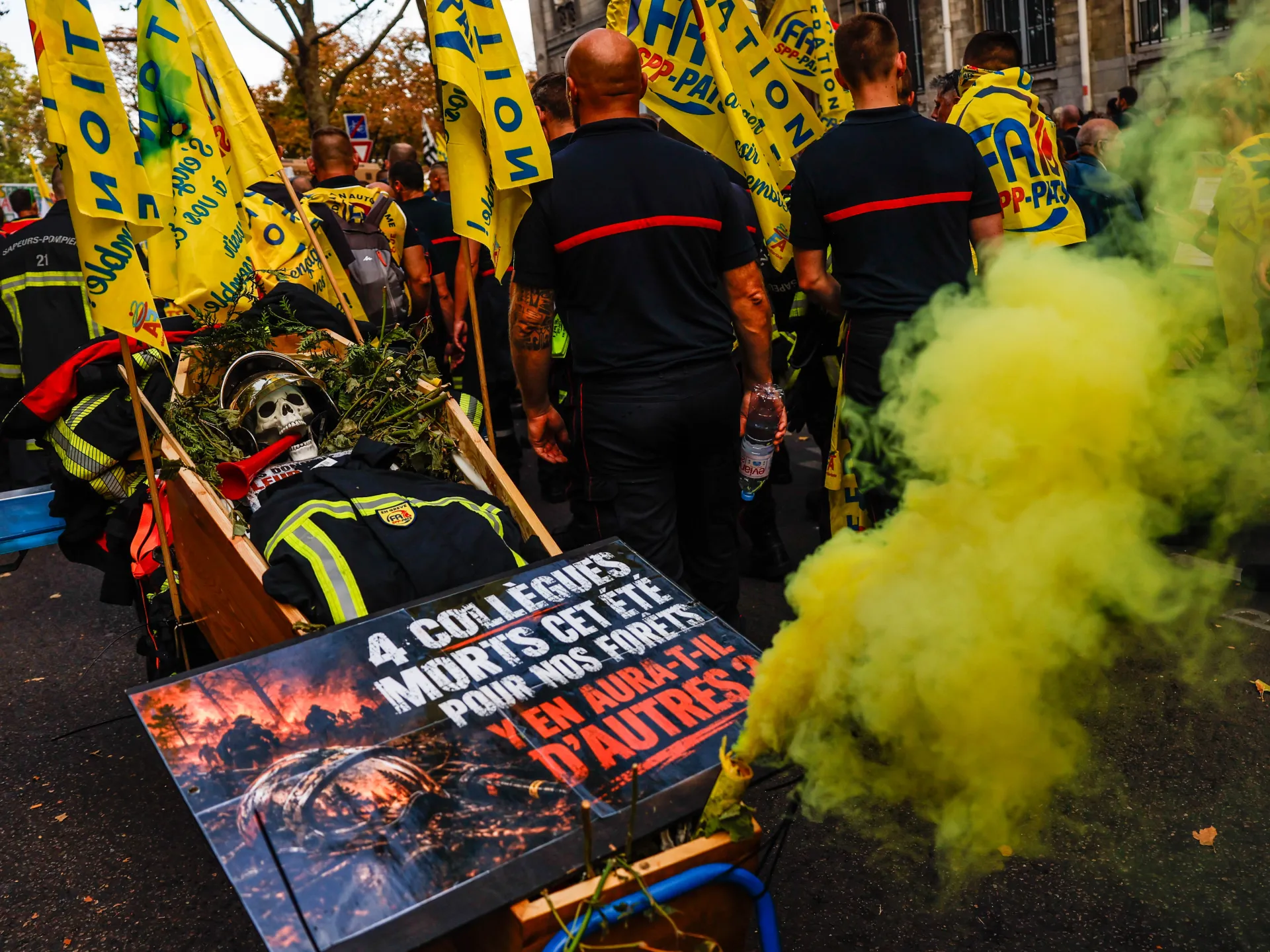
Tens of thousands of civil servants, including teachers, firefighters and healthcare workers, have marched in cities across France to demand higher pay, as students clashed with the police in separate protests over conditions at their schools.
Unions said some 300,000 people took part in the one-day strike action nationwide, while police on Tuesday estimated a turnout of 30,000 in the capital, Paris. The workers also demanded better working conditions and expressed anger at the government’s planned budget cuts.
Recommended Stories
list of 3 itemsend of list
Protests also took place at more than 400 schools, about 40 of which were blockaded and 44 of which faced attempted blockades.
Ten people, both students and staff members, were wounded, and at least 440 were detained, officials said.
The strikes and the student unrest came two days before the government is to unveil its draft budget and seven months before the presidential election. According to unions, the government proposes freezing base salaries for state employees in 2027 to save 2 billion euros ($2.3bn).
It would be the fourth consecutive annual freeze and the eighth during President Emmanuel Macron’s tenure. Unions say the freezes have cost workers a double-digit share of their purchasing power, and they are demanding a 6 percent raise.
‘Red alert’
Sophie Binet, general secretary of the General Confederation of Labor, called the protests “a red alert”.
“This anger is not going away. The government must look again at the budget,” she told Al Jazeera. She gave the government 48 hours to reverse the planned cuts before her union decides on further strike action.
The Education Ministry said just more than 11 percent of teachers and other school staff went on strike. French teachers are paid less on average than their counterparts in other European countries.
Fewer than 1 in 10 other civil servants took part, and fewer still in hospitals, with the loss of a day’s pay a likely factor in the turnout. France’s civil aviation regulator had warned of flight disruptions at some airports.
Professional firefighters, who say this summer’s huge wildfires exposed a lack of resources, were among those marching.
The government has already unveiled measures to help households cope with a spike in energy prices driven by the United States and Israel’s war on Iran, but it has failed to quell the discontent with Macron and his administration.
Student unrest
Students, meanwhile, have been protesting outside hundreds of schools over timetables, class sizes, teacher shortages and overheated classrooms during this year’s heatwaves. The demonstrations began in the Ile-de-France region around Paris and spread to other cities.
In addition to the 10 students and staff members who were hurt, 48 law enforcement officials were injured, authorities said, as students in some places set fire to rubbish bins and hurled projectiles, and officers responded with batons and tear gas.
Interior Minister Laurent Nunez told BFMTV that 440 people had been detained.
“We don’t have the final tally yet, but I’m told two thirds led to police custody,” he said. “Violence is never legitimate. There is nothing that justifies violence.”
Education Minister Edouard Geffray condemned the clashes on social media.
“This violence is unspeakable,” he wrote, adding that legal proceedings had begun. “To legitimize it or… call for an expansion of the blockades is to endanger both our students and public officials. It is irresponsible.”
‘Fewer cops, more money’
In Seine-Saint-Denis, a low-income suburb of Paris, Bally Bagayoko, the district’s mayor and a member of the hard-left France Unbowed party, joined hundreds of students protesting at the Lycee Paul-Eluard.
He led them in singing the national anthem and called the protests “completely legitimate”, saying poorer areas received fewer resources than wealthier ones.
Outside the Arago school in Paris, students, some with their faces covered, sat on dumpsters to block the entrance beneath a placard reading “Macron explosion”. A banner at the Helene-Boucher school read “Fewer cops, more money”.
“We want fewer police because we think there is a huge amount of police repression, both against high school student movements and social movements more generally,” said Mael Breton, a final-year student there. “This is a real problem, especially when there is such a lack of funding… here at our school and in the national education system more broadly.”
Prime Minister Sebastien Lecornu on Monday condemned the high school protests as irresponsible but acknowledged that the “difficulties of high schools must be heard and addressed”.
Jean-Luc Melenchon, a hard-left presidential contender, accused the government of steadily dismantling public services as he addressed protesters in Paris and urged his supporters to mobilise against the draft budget.
A Toluna Harris poll on Monday suggested that Melenchon and Marine Le Pen, the leader of the far-right National Rally, would advance to next year’s presidential run-off, with Le Pen best placed to win.
US President Donald Trump and leading tech companies have signed a voluntary agreement to regulate AI that includes internal reviews and joint monitoring, but falls short of introducing concrete ‘guardrails’.
The resolution cites a ‘lack of accountability’ by Israel’s government and an ‘inability to secure justice’ by the US.
The United States Senate has blocked a resolution that would have required President Donald Trump’s administration to report on the killing of nine Americans in the occupied West Bank and on Israel’s treatment of Palestinian children in military detention.
The resolution failed 47-53 on Tuesday, with senators voting largely along party lines.
Recommended Stories
list of 4 itemsend of list
It was brought to the floor by Senator Chris Van Hollen, a Democrat from Maryland, and cited a “lack of accountability” from the government of Israeli Prime Minister Benjamin Netanyahu and an “inability to secure justice” from the US government.
Senator John Fetterman of Pennsylvania was the only Democrat to vote against advancing the resolution, while Senator Rand Paul, a Republican from Kentucky, joined Democrats in supporting it.
Van Hollen forced the vote under the Foreign Assistance Act of 1961, which allows individual members of Congress to demand a formal State Department report on the human rights practices of any country that receives US security assistance.
“Violence is raging in the West Bank, & despite the deaths of nine Americans, the wrongful detention of even more, & the daily torment of Palestinians, we have no accountability from the U.S. or Israeli govt”, Van Hollen wrote on X before the resolution was brought to a vote.
Nine Americans killed
The resolution called for an unclassified report within 30 days of adoption. It would have detailed investigations into the deaths of the Americans, the treatment of US citizens held in Israeli prisons, and the conditions facing Palestinian children in Israeli military detention.
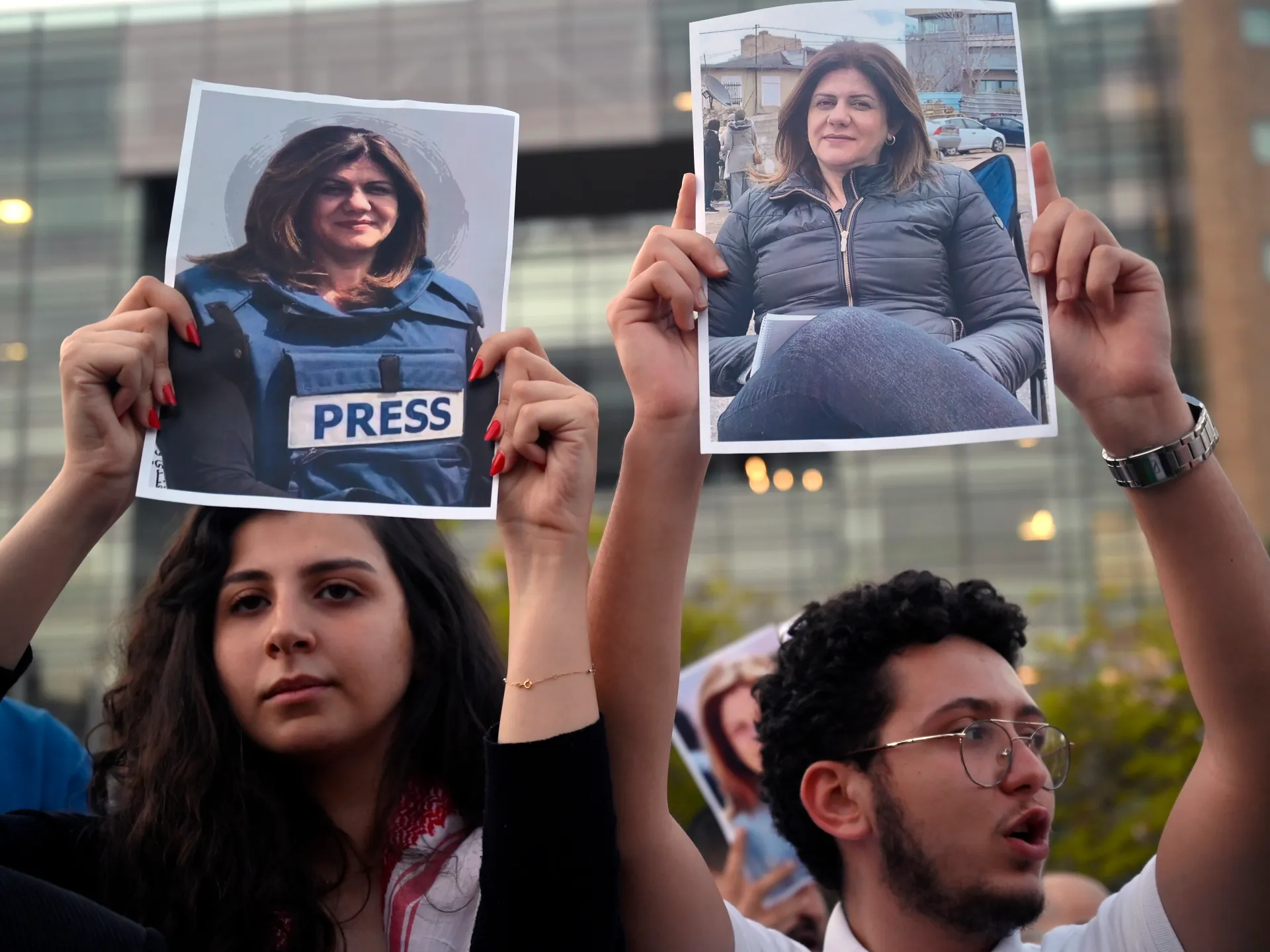
The measure cited the deaths of nine American citizens in the occupied West Bank since January 2022, including Shireen Abu Akleh, a Palestinian-American journalist and Al Jazeera correspondent who was shot in the head and killed in May 2022 while reporting in the city of Jenin.
It also included Aysenur Ezgi Eygi, who was shot in the head and killed by an Israeli soldier in September 2024, and Sayfollah Kamel Musallet, who was beaten to death by Israeli settlers in July 2025.
The others were Amer Mohammad Saada Rabee, who was 14; Tawfic Abdel Jabbar and Mohamed Ahmad Alkhdour, both 17; Omar Assad; Khamid Ayyad; Nasrallah Abu Siyam; and Khamis Rabee Jabara.
The resolution also noted the arrests of several Palestinian-American children by Israeli forces.
Among them was Mohammed Ibrahim, a 16-year-old from Florida, who was arrested in February 2025 and held in pretrial detention for nine months without contact with his family. It noted that US embassy officials and lawyers who met him told his family that he had lost nearly a quarter of his body weight, contracted scabies, and was beaten and tortured.
Other Palestinian Americans who remain in custody include Adam Wajeh Abdelfattah Karakrah, 16, and Sama Safi, 20, a student detained in June in raids targeting students at Birzeit University.
The resolution cited rights groups that have documented the deaths of at least 44 Palestinians in Israeli military camps since the Hamas-led attacks of October 7, 2023. Those groups, it said, have documented widespread abuses, including beatings, sexual violence, harassment and threats, “pointing to systemic and deliberate mistreatment”.
It also went on to note a sharp escalation in Israeli settler pogroms in the occupied West Bank, and stressed that there have been no convictions for the killings of Palestinian civilians by Israeli settlers since 2020.
Warden among five officials suspended over the discovery of an apartment-style compound for inmates at the Cibinong prison.
Published On 30 Sep 202630 Sep 2026
A prison warden in Indonesia has been suspended, along with four other officials, after investigators discovered a compound of luxury apartment-style residences allegedly used by inmates at a penitentiary near the capital, Jakarta.
The action was announced on Tuesday by Rudi Setiawan, the inspector general of the Ministry of Immigration and Corrections. “We have suspended five structural officials, including the Cibinong prison chief, who are suspected of being responsible for the incident uncovered by the Ombudsman,” he said.
Recommended Stories
list of 3 itemsend of list
Dozens of inmates and prison employees have been questioned, he said.
The units, more than 10 in all, stood apart from the regular cellblocks at Cibinong prison in Bogor, near Jakarta.
They were found on September 23 during a surprise inspection by Indonesia’s Ombudsman, the government’s public-service watchdog.
Investigators said the residences contained air-conditioners, big-screen televisions, refrigerators, sofas and dining areas. They also reported finding a gym, a golf simulator under construction, and luxury vehicles on the grounds.
“We found strong indications that certain inmates had access to special facilities unavailable to ordinary prisoners,” Syafrida Rachmawati Rasahan, an Ombudsman member, said at a news conference.
“We encountered inmates inside the residential compound and discovered facilities resembling homestays, apartments and villas rather than prison housing,” she said.
The buildings were originally intended as official housing for prison personnel, but investigators are examining whether they were converted into unauthorised accommodations for inmates.
The incident has drawn widespread public attention and renewed scrutiny of Indonesia’s prisons, which have long faced allegations that wealthy or well-connected inmates can obtain preferential treatment through bribery.
The Cibinong prison, which sits on 4 hectares (10 acres), holds a mix of inmates, including people convicted of corruption and other high-profile prisoners. The identities of those who lived in the compound have not been officially disclosed.
Lawmakers, anticorruption activists and watchdog groups have urged authorities to identify which prisoners occupied the facilities and whether prison officials accepted payments in exchange for the privileges.
The case is the latest embarrassment for the Indonesian corrections system, which has struggled for years with overcrowding, corruption and repeated allegations that affluent inmates can buy privileges unavailable to the broader prison population.
An investigation into Indonesia’s prisons in 2010 already found that some inmates live a life of luxury behind bars.
One of five men arrested near RAF Fairford in the early hours of Sunday morning had dialled 999 himself, the BBC understands.
The suspect called the police at 00:45 BST, almost an hour before a female farmer also dialled 999 after seeing men in balaclavas.
The five were arrested on suspicion of explosives offences and later terrorism offences after three vans were spotted, sparking a major security incident around the Gloucestershire base which the US military operates.
They were released on bail on Monday in what police described as an “investigative decision” “grounded in experience and strategy”.
Police say a quantity of petrol but no explosive devices were found during searches of the vans.
Police were alerted to “three suspicious vehicles” in Whelford, a village which lies directly east of the base, by the farmer.
She told the BBC it was “pure luck” she had spotted them, having arrived home to find the road blocked and a “large group of hooded and masked men”.
“I believe that my 999 call foiled whatever plans they had,” she said.
A bomb disposal team arrived on scene shortly afterwards and a 400m (1,312ft) cordon was put in place.
But Assistant Commissioner Laurence Taylor, head of Counter Terrorism Policing, told reporters on Tuesday that the police response that morning had been due to “a range of information”.
Police cordons near the base are expected to be completely lifted on Wednesday, while residents from the 85 homes evacuated on Sunday have been allowed to return to their properties.
The five men are all UK nationals aged between 23 and 25. Four of them live in Westminster and one in Camden, and searches of their homes are now complete.
Taylor previously said their bail was “subject to stringent conditions on their movement and contact with others” as they remained under investigation.
“The safety of the public is at the forefront of our investigative decision-making, and this was certainly the case yesterday,” he said on Tuesday.
“I understand why this development was surprising to some, but I would like to reiterate that this is an investigative decision and one which is grounded in experience and strategy.”
The RAF base has been used as a forward operating location by the US Air Force for decades.
In recent months, US bombers have taken off from the base for the Middle East, after the UK approved a US request to use it for defensive strikes on Iran.
US President Donald Trump on Tuesday told journalists he was “disappointed” the five men had been released on bail.
Rodríguez publicly thanked Trump in her UN speech. (Presidential Press)
Photographic evidence
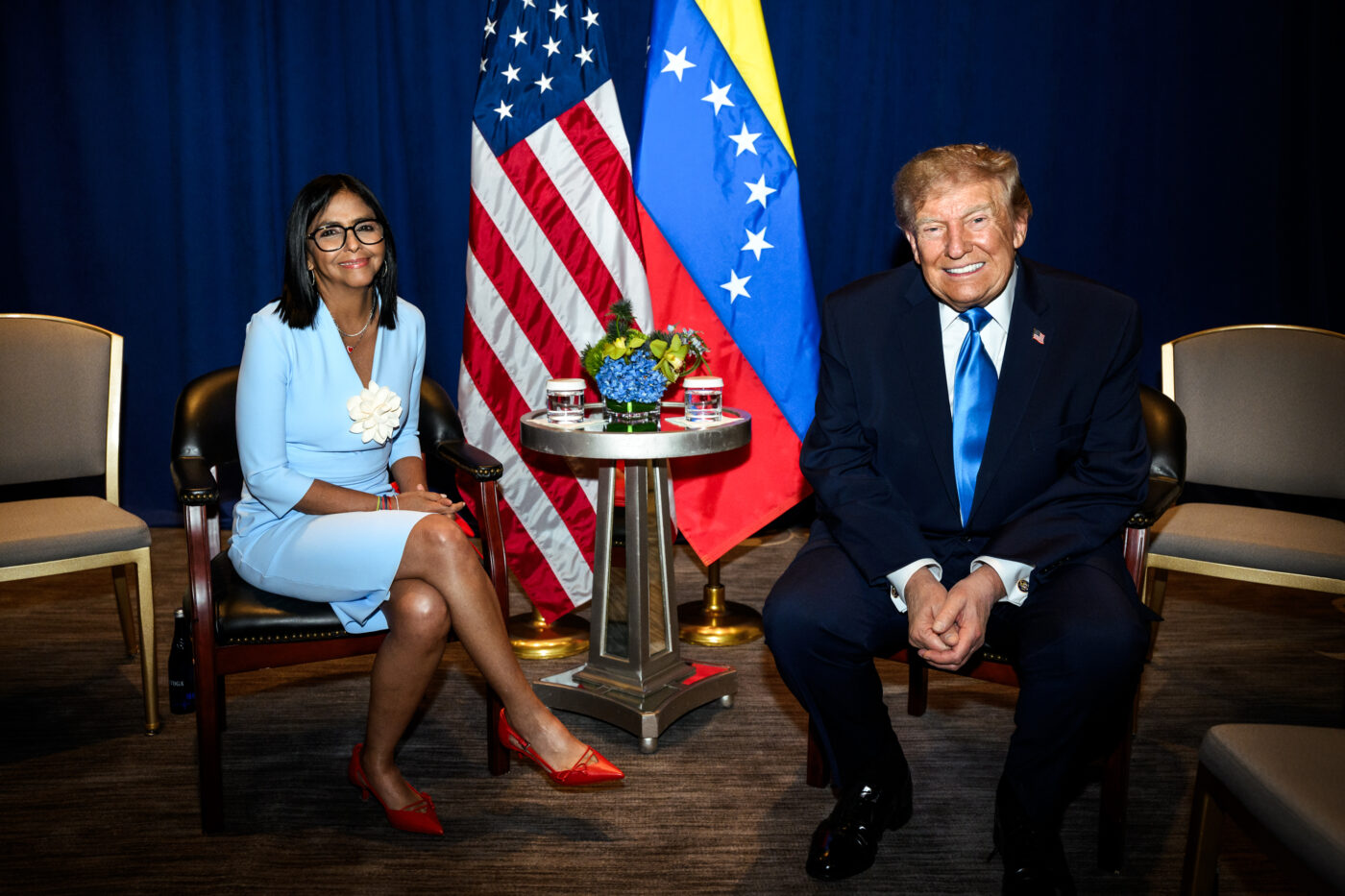
There is a photograph that serves as evidence: Delcy Rodríguez and Donald Trump, together, smiling, in New York. Hundreds of narratives can be constructed around that photo. Diplomatic, tactical, or strategic explanations can be devised. Some may speak of pragmatism, power dynamics, negotiation, or political necessity. All of that is open to debate. But there is something that remains true regardless of any narrative: the photograph is evidence and depicts a specific scene. And that scene is difficult to reconcile with much of the political tradition from which Delcy Rodríguez hails.
Because there is another image from the same day that completes the picture: Delcy Rodríguez approaching [Spanish President] Pedro Sánchez while he is on the phone, waiting for him to finish so she can greet him. The image conveys something difficult to reconcile with the power of the Bolivarian Revolution’s historic leadership: a desire to reach out, almost like a student waiting for the other person to hang up the phone so she can greet him; an attitude that seems a far cry from the dignity and authority with which Chavismo once stood up to global powers. And a few hours later, the photo-op with Trump appears. Two images from the same day that speak for themselves, because diplomacy is one thing, and the position from which it is exercised is another; negotiating is one thing, and showing subordination is another. That is what it looks like.
Chavismo’s tradition
And what we see today is a far cry from Hugo Chávez’s “Go to hell, you fucking Yankees.” It’s a far cry from that rebellious Chavismo that could stand up to the King of Spain, that could publicly confront the United States, and that built much of its political identity around an idea of sovereignty, dignity, and resistance in the face of imperial power. There was a political force there, a capacity to stand up to power, a way of exercising leadership, that is hard to find in these recent images.
When the narrative trumps reality
We live, at the same time, in a dystopian world in which artificial intelligence, technological advances, and algorithms often lead us to be unaware of reality or to experience it from a perspective different from what is actually observed. We can construct stories, narratives, and entire universes around a single scene until the narrative ends up overtaking reality. While the world’s wealthy talk about moving to Mars or colonizing other planets, perhaps the biggest debate we face is much more fundamental: aligning stories, narratives, and algorithmic trends with reality.
Assuming that reality is something different from what we see often leads us to explore ideas, utopias, or even political stances from a perspective increasingly distant from what is actually happening. And perhaps today, a revolutionary leap would be to align reality with what is being recounted or narrated. Ideas, utopias, and political stances need to stem from reality—not from a reality constructed to align with what we need to believe. When the narrative begins to take the place of facts, we stop interpreting reality and start adapting it to our needs.
The power of what is seen
That is why the power lies in what is seen. And what is seen is not just a photograph of Delcy Rodríguez and Donald Trump. That photograph appears in the wake of a US military intervention in Venezuela, which led to the kidnapping of Nicolás Maduro and Cilia Flores, and after Trump publicly took credit for the operation. What we see is Delcy Rodríguez standing before the man who brags about this operation and presents its outcome as a victory. And this matters because the photograph isn’t floating in a vacuum: it has a context—it involves deaths, a military attack, a captured Venezuelan president, strategic resources at stake, and a US president claiming credit for the outcome of that operation.
At this very moment, paradoxically and surprisingly, an entire epic narrative of triumph and “peace diplomacy” is emerging, a grandiloquent celebration of a supposed victory. And the important thing is to state something very simple: defeat is not epic. A defeat can simply be a defeat. What can be discussed is how one faces it, what stance one takes in the face of it, and what dignity one maintains when conditions are adverse. But a defeat does not become a victory simply because we construct a grand narrative around it. Reality retains a dimension that rhetoric cannot erase.
The words of the victor
What we see is a Delcy Rodríguez who tolerates Trump saying outrageous things. Trump spoke of the US operation in Venezuela in terms of victory and the victor; he justified the use of force and even spoke of the spoils that belong to the victor. This is an offensive affront to the dead—who are not only Venezuelans but also Cubans—and, fundamentally, to those killed in an intervention on Latin American soil. That context does not disappear simply because a diplomatic facade is later constructed or by conjuring a strategic explanation for every gesture.
It happened. And it is incomprehensible that Delcy Rodríguez would then appear in a triumphant, smiling manner in the face of that display of power and in the presence of the very person who has abducted Venezuela’s President Nicolás Maduro and Cilia Flores. We can discuss the reasons for the negotiations, the balance of power, the tactical necessities, the circumstances, and the alternatives. All of that is part of politics and can be analyzed. But there is something that comes before all those explanations: what actually happened.
Tactics and consistency
And this raises a question we should not shy away from: What is the difference between Milei’s stance and Delcy Rodríguez’s stance with regard to the US? No doubt, in the coming hours, explanations will emerge aimed at establishing profound differences between the two, and we will be told that they follow different logics, that one expresses subordination and the other a tactic, that one represents a political project and the other a historical necessity. All of that is open to debate. But it is important to look at the concrete attitude, because if politics can always be explained away as a tactic, then consistency begins to lose all specific weight. And when consistency loses its specific weight, almost anything can become a strategy: a concession can be presented as a victory, subordination as pragmatism, a defeat as peace diplomacy, and a photograph as an epic moment. Reality, however, remains.
A model of dignity
If there is a model to look to today—as we saw on January 3—it was Cuban dignity, which fought to the very end against US troops and delivered a fierce, dignified response, despite being outmatched in firepower and at a disadvantage in every respect. At the UN General Assembly, too, it was the Cuban delegation that stood up and walked out [during Trump’s speech]. Therein lies a model of dignity—a model from which to fight and from which to view ourselves. There are moments when politics needs to reclaim the ability to set boundaries against power.
And this matters especially for those of us who see ourselves within a tradition of the left, of sovereignty, of emancipation, and of transformation. Because we cannot lose the ability to recognize a point of reference when we see it. We cannot construct an artificial epic around something that offers us no point of reference. And we cannot turn a scene of subordination into a revolutionary one simply because we need to preserve a certain narrative.
Surrender is also conceptual
If we fall into this pragmatic, tactical logic—where consistency seems to carry little weight and reality can be distorted through grandiloquent rhetoric—we lose something far more important than a short-term political debate: we lose the ability to think. What we see is a very happy Delcy Rodríguez standing next to Trump. What we see is a Venezuelan historical process that we have admired but which no longer serves as a point of reference, because today it is part of mechanisms that strengthen Donald Trump and of a strategic surrender of resources—not only natural ones but also conceptual and ideological ones.
And the latter is perhaps even more important, because it is not just about oil, natural resources, or economic agreements. Symbols, references, words, and political traditions are also being surrendered. A tradition that for years was built around resistance to imperialism may end up being used to legitimize a new relationship of subordination. And when that happens, the surrender is not only material—it is also conceptual. A part of what for years allowed us to construct a worldview, a way of interpreting sovereignty, and a way of understanding emancipation is being surrendered.
Intellectual honesty
So there is no turning back. As a matter of dignity, as activists, it is important not to betray our intellect and to realize that this is what it looks like.
Some will come forward in the next few hours to say, “No, it’s a tactic.” Well, but no revolutionary process has ever come about that way. Can you imagine Fidel Castro celebrating with Kennedy after the Bay of Pigs? It would be something similar. The comparison may seem harsh, but it actually helps us understand the problem: it’s one thing to negotiate with an adversary and quite another to stage a celebration with someone who has just bragged about a military intervention; it’s one thing to manage a defeat and quite another to build an epic out of a defeat.
Back to reality
Perhaps the problem of our time is precisely this: we have learned to construct narratives capable of altering our perception of reality. Artificial intelligence can do it, algorithms can do it, political narratives can do it, the great powers can do it, and we ourselves can do it when we need reality to resemble what we want to believe. That is why, perhaps, a revolutionary leap today is something much more fundamental and, at the same time, much more difficult: returning to reality, aligning what is with what is reported and narrated; not abandoning utopias but preventing them from becoming an excuse to ignore the facts; not abandoning politics but preventing politics from forcing us to deny what is right before us; not ceasing to think strategically but reclaiming coherence as a dimension of strategy.
And perhaps the first obligation of those of us who still believe that politics can transform reality is not to betray our intellect in order to save the narrative. To look at reality, to think from within it, and to hold our ideas up against what is actually happening. Because before any explanation, before any epic, and before any narrative construction, there is something that remains right before us.





![Supporters of Romania’s far-right politician and former presidential candidate Calin Georgescu, not in picture, cheer as he leaves the Court of Appeal in Bucharest on September 28, 2026, following a new hearing in the case in which he and other defendants are accused of actions against Romania’s constitutional order [AFP]](https://i0.wp.com/www.aljazeera.com/wp-content/uploads/2026/09/afp_6abd16ba6649-1790777018.jpg?w=640&ssl=1)