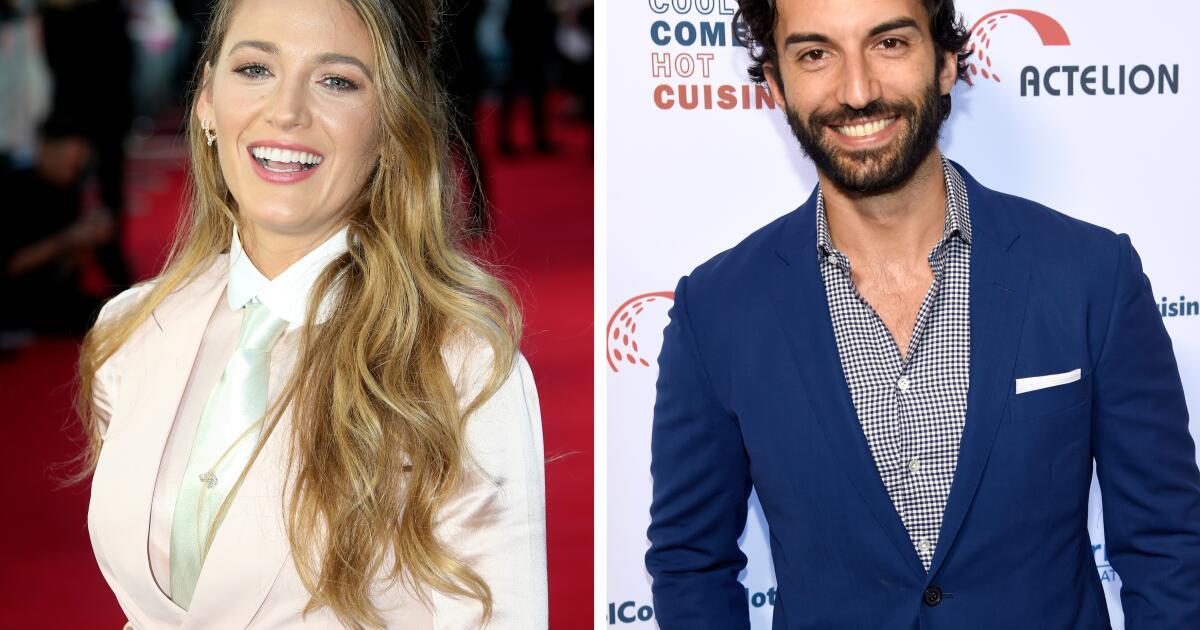
A federal judge has dismissed Blake Lively’s sexual harassment claims against her “It Ends With Us” co-star and director Justin Baldoni, sharply narrowing a case that has become one of Hollywood’s most closely watched legal battles.
In a ruling issued Thursday, U.S. District Judge Lewis Liman threw out 10 of the 13 claims in Lively’s suit, including harassment, defamation and conspiracy claims. The remaining claims — centered on retaliation, along with breach of contract and related allegations — will proceed to trial.
Sigrid McCawley, a member of Lively’s legal team, said the case will now move forward on retaliation claims, which they described as its central focus from the outset.
“This case has always been and will remain focused on the devastating retaliation and the extraordinary steps the defendants took to destroy Blake Lively’s reputation because she stood up for safety on the set, and that is the case that is going to trial,” McCawley said. “She looks forward to testifying at trial and continuing to shine a light on this form of online retaliation.”
McCawley added that the dismissal of the harassment claims was based on the court’s determination that Lively was an independent contractor rather than an employee, not a finding that the alleged conduct did not occur.
The decision marks the latest turn in a sprawling dispute that has played out across multiple lawsuits and raised broader questions about workplace conduct, free speech and the limits of retaliation claims in the post-#MeToo era.
The legal fight traces back to the production and release of “It Ends With Us,” the 2024 romantic drama that grossed roughly $350 million worldwide but became overshadowed by reports of a rift between its two leads.
In late 2024, Lively accused Baldoni of inappropriate on-set behavior, including comments about her appearance and alleged retaliation after she raised concerns. Baldoni has denied the allegations, arguing that Lively sought to wrest creative control of the film and damage his reputation.
The case has unfolded alongside a parallel legal offensive from Baldoni, who filed a sweeping $400-million countersuit accusing Lively, her husband Ryan Reynolds and others — including the New York Times — of defamation and extortion. That lawsuit was dismissed in June, with Liman finding the claims legally insufficient.
At the same time, Lively has sought to frame the dispute as a test case for California’s relatively new law protecting people who speak publicly about sexual misconduct. Advocacy groups including Equal Rights Advocates, Child USA and Sanctuary for Families have backed her efforts, warning that allowing retaliatory defamation claims to proceed could chill survivors from coming forward. The statute, enacted in 2023, is designed to shield individuals from being sued for speaking out about harassment, provided their statements are not made with actual malice — a legal standard that has become central to the broader fight between the two sides.
Thursday’s ruling does not resolve the broader questions raised by the case but significantly narrows the terrain ahead of a trial scheduled to begin in May. While the judge found that Lively’s harassment claims did not meet legal standards and will not go to a jury, he ruled that some of the underlying conduct could still be considered as part of her retaliation claims.
The two sides previously attempted mediation in February without reaching a settlement.
Representatives for Baldoni did not immediately respond to a request for comment.