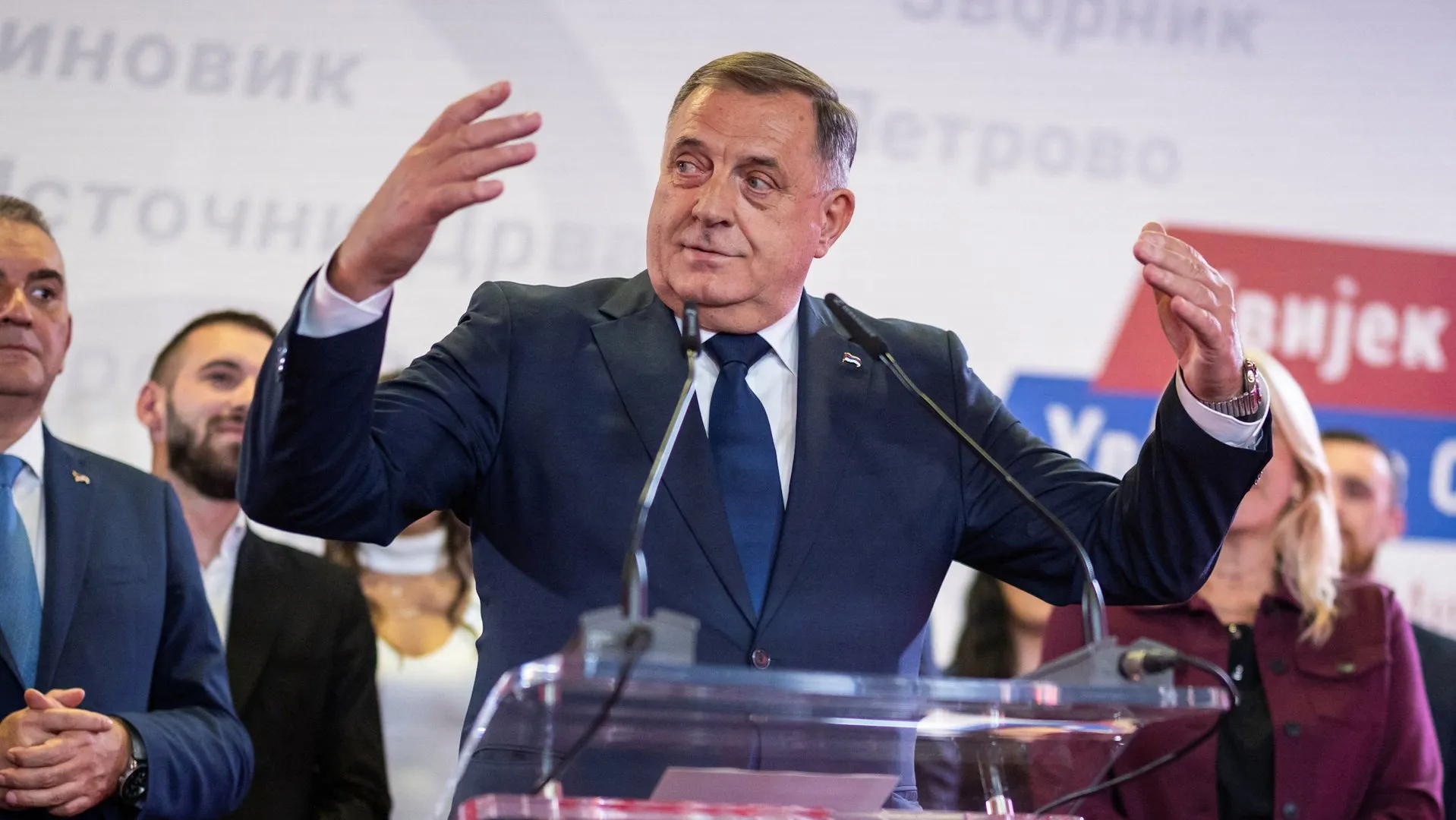
Bosnian Serb nationalist Milorad Dodik claimed victory for his party as Bosnia’s presidential elections reinforced its deep political and ethnic divisions. The presidency is made up of three members who rotate the leadership every eight months.
Government forces close a key crossing connecting Houthi-held al-Houban to government-held Taiz city.
Published On 3 Oct 20263 Oct 2026
Yemen’s internationally recognised government forces have carried out nearly 500 military operations, killing or wounding 1,540 Houthi rebels in the past 24 hours, according to the army.
Warplanes, drones, artillery, missiles and rocket launchers were used to target Houthi positions in various parts of Yemen, military spokesman Colonel Majed Abdullah al-Nazili said on Friday evening.
Recommended Stories
list of 3 itemsend of list
Most of the casualties came in the governorate of Taiz where the operations halted the Houthi advance, al-Nazili said. The government-held city of Taiz has become a focal point of the renewed fighting.
The army spokesman did not mention any casualties among government forces.
Key border crossing closed
On Saturday, the army’s media official Ammar al-Sami’i told Al Jazeera that the government had closed the al-Houban crossing in Taiz.
The crossing had previously been closed for nine years and was later reopened to civilians in 2024 for “humanitarian reasons”, Sami’i said, as the road is one of Yemen’s most important connections between territory held by the opposing sides. It connects Houthi-held al-Houban to government-held Taiz city.
Sami’i said security reasons are behind the closure, following an attempt by the Houthis to infiltrate Taiz via the road, attacks in the vicinity and a general military buildup.
A fragile truce struck between the government and the Houthis in 2022 collapsed in July this year, and fighting in Yemen has escalated significantly since then.
In mid-September, the Houthis swept across parts of western Yemen, seizing the port city of Mocha and key strategic islands in the Bab al-Mandeb strait.
Since then, anti-Houthi forces have largely stabilised the front lines.
Yemen has been embroiled in civil war since the Houthis seized the capital of Sanaa in 2014, forcing the internationally recognised government to retreat to Aden.
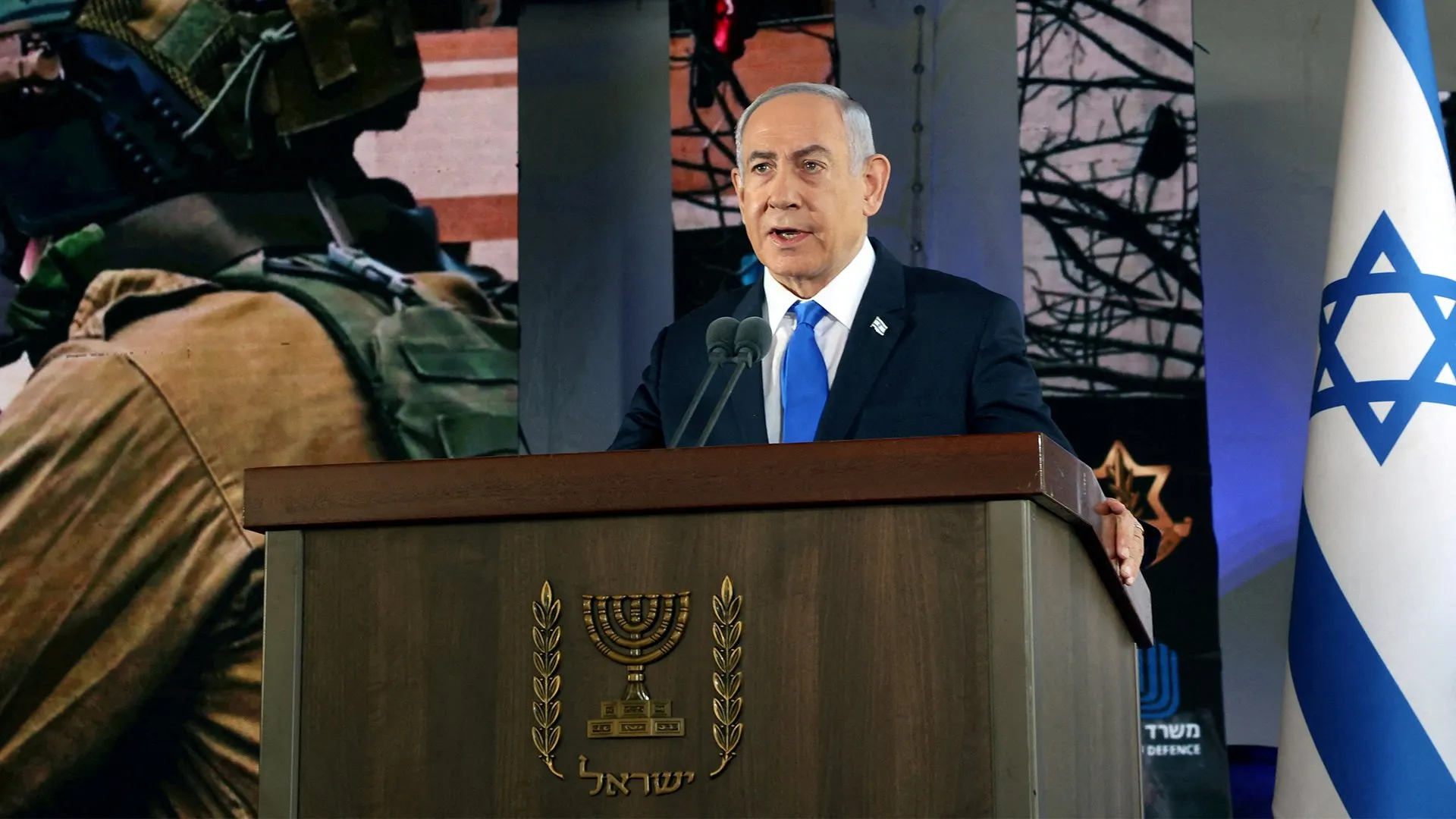
More reports are emerging that Israeli PM Benjamin Netanyahu rejected a Hamas proposal to release all civilian captives taken on October 7, 2023. Netanyahu’s actions have become a key topic less than a month before national elections.
Halle Berry is speaking out against her ex-husband Olivier Martinez, after he accused the actor of physically abusing their 12-year-old son and was granted a restraining order against the Oscar winner.
Marina Beck, an attorney for the 60-year-old “Catwoman” and “John Wick: Chapter 3” star, in a statement downplayed Martinez’s protective order, granted Thursday by a Los Angeles Superior Court judge.
“To say this filing is entirely meritless and deliberately misleading would be an understatement,” Beck said, later accusing Martinez of repeatedly violating court orders and interfering with “necessary therapeutic and educational interventions to the detriment” of his son with Berry.
The attorney added: “In a way, today’s filing is not entirely unexpected from an individual with a well-documented history of erratic, possessive and violent behavior. Fortunately, Halle is used to this kind of outrageous conduct from Mr. Martinez and, while she is deeply saddened, she will not allow it to deter her from fighting for Maceo’s best interests and providing him with the love and support he needs.”
Patrick Baghdaserians, an attorney for Martinez, did not comment on the statement from Berry’s legal team, but said the welfare and safety of Berry and Martinez’s child remains paramount.
According to the order reviewed by The Times, Berry is prohibited from contacting Martinez, 60, and their son Maceo beyond the terms of her August 2023 split-custody agreement. The judge also modified the actor’s visitation time, limiting her hours with her son to Mondays, Tuesdays and weekends between 10 a.m. and 8 p.m.
Berry and Martinez wed in France in July 2013, shortly after confirming they were expecting a baby together. They welcomed their son in October. Berry shares a daughter with ex-boyfriend Gabriel Aubry. The actor was also previously married to ex-MLB pro David Justice and singer-actor Eric Benét and is currently engaged to musician Van Hunt.
Berry filed to divorce Martinez in October 2015. Their divorce finally came to an end after eight years in August 2023, when they agreed to joint custody of their son and Berry agreed to pay Martinez $8,000 a month in child support. The “Monster’s Ball” actor was also ordered at the time to also pay Martinez 4.3% of any income she receives above $2 million.
Martinez’s request for a domestic violence restraining order centered on an alleged Sept. 26 incident involving Berry and their son. Martinez alleged the actor “physically abused our son, Maceo, by jumping on him, putting her hands around his neck, and choking him.”
The financial terms of their divorce also appeared to be central to another alleged incident in 2023, when Berry allegedly told Maceo, then 9, that his father is “ ‘a white b— trying to rob a Black woman’ due to child support issues,” the request said. Martinez’s filing included a declaration of Berry’s alleged history of abuse, screenshots of his text conversation with Berry following the alleged September incident in which she appears to have written, “I feel terrible about what happened last night.”
Martinez requested sole legal and physical custody of Maceo. He also asked that Berry refrain from drinking or partaking in other substances during her visitation time and asked that she complete sobriety testing “before, during and after” her visitation, according to court documents. The judge denied those sobriety testing requests until a further hearing for the order on Oct. 16.
Berry has been a vocal supporter for victims of domestic violence and a volunteer at the Jenesse Center, a nonprofit organization dedicated to domestic violence intervention and prevention. The actor has also spoken about her own experience with domestic violence growing up. She recalled her father’s abusive treatment of her mother during a gala in 2015.
“She stayed for too long and her children, my sister and I, saw far too much and I’ve suffered the damage of being a child of domestic violence,” Berry said at the time.
Former Times staff writer Jonah Valdez contributed to this report.
United States President Donald Trump has said Europe has agreed to release a “massive amount” of their diesel stockpile, although no European parties have confirmed the claim.
Trump made the statement on his Truth Social account on Friday as he has heaped pressure on European countries to release diesel stockpiles to ease soaring prices caused by the US-Israel war with Iran and the resulting constriction of traffic via the Strait of Hormuz.
Trump had previously floated banning US diesel exports if European countries did not comply. The European Union had earlier on Friday said it “fully rejects” the threat.
Ukraine says it has used its domestically developed FP-7 tactical ballistic missile in combat for the first time, in what would mark another significant milestone in the country’s rapidly expanding indigenous long-range strike program.
President Volodymyr Zelensky announced today that Ukraine had conducted the first combat use of the FP-7, a ground-launched ballistic missile developed by Ukrainian defense company Fire Point. He also said production of the weapon would follow.
Ukrainian tactical ballistic missile. FP-7. First combat use. Thank you for the result. Next up: production. Glory to Ukraine! pic.twitter.com/IxdjVg51c1
— Volodymyr Zelenskyy / Володимир Зеленський (@ZelenskyyUa) October 1, 2026
The claim has not been independently verified, and Ukrainian authorities have not disclosed the target, location, number of missiles involved, or other details surrounding the reported strike. A video has been published showing what’s said to be a nighttime launch of the missile.
The FP-7 is one of several increasingly ambitious weapons being developed by Fire Point, a Ukrainian defense company that has expanded rapidly since Russia’s full-scale invasion. The company began with drones and has subsequently moved into long-range strike missiles and ballistic missile technology.
Test launch of the FP-7 surface-to-surface ballistic missile. Fire Point
Fire Point CEO Iryna Terekh previously described the company’s development and manufacturing model in an interview with TWZ, detailing an effort to rapidly scale production while maintaining a dispersed industrial base inside Ukraine. The company’s better-known systems include the FP-1 and FP-2 long-range strike drones and the FP-5 Flamingo cruise missile.
According to Ukrainian and company-released information, the FP-7 has a range of approximately 250 kilometers (155 miles) and a warhead weighing around 150 kilograms (331 pounds). Other published figures have put its velocity at approximately 1,500 meters per second (around 3,350 miles per hour). Rather than striking targets deep in the Russian rear areas, the missile is optimized for use against objectives such as logistics hubs, air defense sites, and drone bases. This makes it more of a shorter-range complement to the U.S.-supplied Army Tactical Missile System (ATACMS) ballistic missile, rather than a direct replacement, although it comes without any restrictions on the kinds of targets that it can be used against.
Details from missile debris shown by Russia confirm Ukraine launched ATACMS at Voronezh region on November 18, marking the first use of U.S.-made missiles on Russian territory during Trump’s presidency. According to the Russian MoD, S-400 and Pantsir-S1 systems helped repel the… pic.twitter.com/8SeQCo9OEO
At the same time, those specifications should likewise be treated as reported figures rather than independently verified performance data. Actual range, payload and accuracy can vary according to missile configuration and mission profile.
The FP-7’s development is particularly notable because Fire Point is also using the basic missile architecture as the foundation for a very different weapon.
Fire Point has developed the FP-7.X, an anti-ballistic missile interceptor derived from the surface-to-surface FP-7.
A video showing a test launch of an FP-7.X surface-to-air missile:
Держави програють війни на полі бою значно рідше, ніж вони програють їх у інститутах, лабораторіях та на виробництві за десять років до їх початку.
Коли країна роками недофінансовує інженерну освіту, скорочує дослідження, втрачає виробничі компетенції або звикає покладатися на… pic.twitter.com/Ti1Ayn4INf
Fire Point’s expectation is that commonality between the two systems can shorten development and provide manufacturing efficiencies by allowing the company to draw upon work already conducted on the FP-7’s propulsion, airframe, guidance, and production processes.
The FP-7.X forms part of Project Freyja, a European effort to develop a comparatively inexpensive and potentially more numerous ballistic-missile-defense interceptor. Fire Point has also discussed an eventual production rate of thousands of interceptors annually, although such targets represent company ambitions rather than demonstrated production capacity.
Fire Point has said it is working with European and Ukrainian partners on the system, including work on the interceptor’s seeker. The company has described an initial interceptor using a blast-fragmentation approach, with more sophisticated hit-to-kill capability envisioned for later versions.
Earlier this year, Diehl Defense confirmed that it plans to launch production of the Flamingo cruise missile in Germany. Previously, Diehl had signed a technology agreement with Fire Point but had not disclosed any details. Potentially, that could open a path to Fire Point’s ballistic and cruise missiles helping to meet the growing demand for long-range fires capabilities among NATO’s European members.
A video of the Flamingo cruise missile in action:
Випробувальний пуск ракети “Фламінго”
As it stands, the baseline FP-7 is only one element of Fire Point’s ballistic missile ambitions.
A rendering of the FP-7 surface-to-surface ballistic missile. Fire Point
The company is also developing the larger FP-9, which Fire Point has described as having a planned range of approximately 850 kilometers (528 miles). The larger missile requires substantially more solid propellant and has driven the company to establish new industrial capabilities for manufacturing large solid-rocket motors.
As with the FP-7, the available FP-9 performance figures are based primarily on statements from Fire Point and Ukrainian sources and should not be treated as independently established specifications.
Ukrainian FP-9 ballistics ready to strike! 800 km range – MOSCOW is now within reach!
The development of these weapons reflects Ukraine’s broader effort to expand domestic production of long-range strike systems. Kyiv has relied heavily on Western-supplied weapons during the war while simultaneously attempting to establish an indigenous capacity for drones, cruise missiles, and ballistic missiles.
For Fire Point, that effort has produced an unusually broad portfolio in a relatively short period: long-range attack drones, cruise missiles, ballistic missiles and, potentially, interceptors designed to defeat ballistic missiles.
The claimed combat debut would give Ukraine a fast, hard-to-intercept strike option for targets within the FP-7’s reported range, with its combination of kinetic energy and relatively heavy warhead making it particularly useful against hardened targets. If targeting and launch procedures can keep pace, its short flight time can also enable rapid-response strikes against more time-sensitive targets. More broadly, the FP-7 represents the culmination of years of Ukrainian efforts to close a major ballistic-missile gap with Russia and establish an indigenous capability.
FP-7 surface-to-surface ballistic missile. Fire Point
The reported combat debut of the FP-7 also comes as the long-range strike campaign between Russia and Ukraine continues to intensify, with both sides increasingly seeking to hold targets deep behind the other’s front lines at risk. That dynamic will become particularly important as the two countries head into another winter, when strikes against energy, industrial, and military infrastructure ramp up significantly. At the same time, the FP-7’s reported range gives it a considerably more limited target set than Ukraine’s longer-range cruise missiles and drones, constraining where it can be employed and distinguishing it from systems designed for deep strikes hundreds of miles beyond the front.
The significance of Zelensky’s announcement will ultimately depend heavily on whether the FP-7 can move from a claimed combat debut into sustained production and operational service.
Ukraine has not publicly disclosed the number of FP-7 missiles produced, current production rates, or when significant quantities could become available.
Using theFP-7 in combat for the first time would mark an important transition for Fire Point’s ballistic missile program, from development and testing toward operational employment. The company’s ability to manufacture the weapon at scale will become the next critical question.
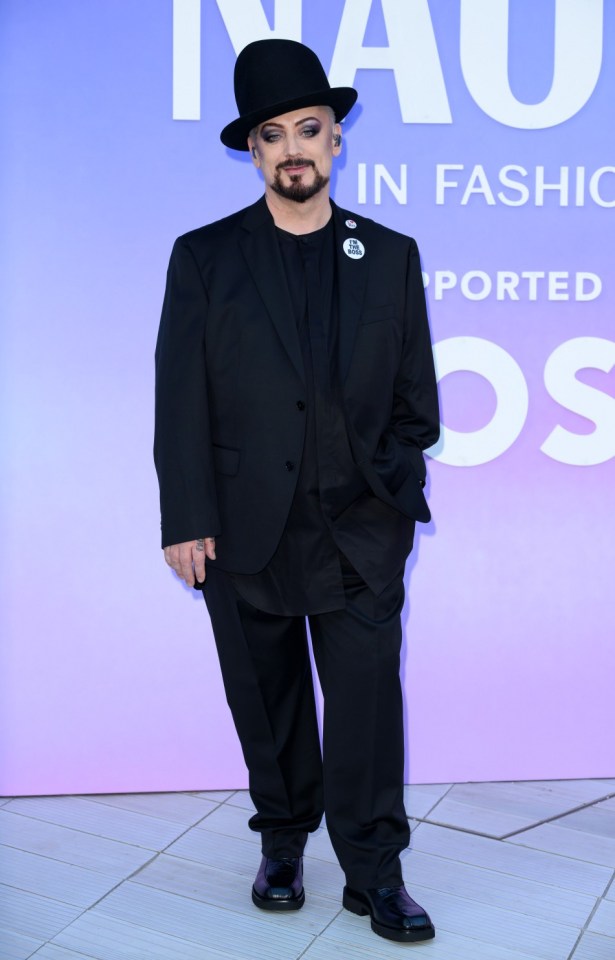
BOY George has claimed he was uninvited to a friend’s memorial while paying tribute to them in a touching social media post.
The Culture Club, 65, singer took to social media to remember his friend and fashion designer Pam Hogg, who died in November last year aged 74.
Boy George has claimed he was uninvited to a friend’s memorial a year on from her deathCredit: WireImageGeorge and Pam – pictured in 1997 – first met in the eightiesCredit: Getty Images
Today George shared an image of Pam – who dressed the likes of Kate Moss, Beyonce, Debbie Harry and Princess Eugenie – and wrote: “Remembering my friend Pam Hogg who is being celebrated today by friends.
“I was uninvited but I am there in spirit. God Bless you Pam.”
Sign up for the Showbiz newsletter
Thank you!
George and Pam were friends for decades, having first met in the eighties at Covent Garden’s Blitz club where he worked the cloakroom before finding fame with Culture Club.
They were present for huge milestones in each other’s lives, with George sitting front row at many of her fashion shows and Pam attending events including his 50th birthday party.
Fans were quick to comment on George’s post, with one writing: “It’s always sad when politics divide friends. Stay strong George, you don’t need to be invited to a party in order to remember your friend.”
Another said: “That’s low to uninvite you, I hope you can celebrate her on your own or with other good friends.”
And a third added: “That is sad on so many levels. I’m sorry for the loss of your friend.”
At the time of Pam’s death last year, George shared his sadness and spoke of the designer’s legacy.
He said: “I’m sad to learn of the death of Pam Hogg who was a true original and who knew absolutely everyone on the London fashion and art scene.
“It’s quite shocking how many true originals are leaving us of late.”
JAKE Humphrey candidly revealed how fellow kids TV presenter Holly Willoughby robbed him of his “big moment” in a new interview with Davina McCall — only for the clip to mysteriously disappear.
During an emotional chat with Davina’s Begin Again podcast, Jake, 47, opened up about his childhood bullying trauma, his relationship with his grandfather and a brutal rejection from BBC Sport earlier in his career.
Jake Humphrey talked openly about difficult moments from his life that shaped the man he’s becameCredit: Begin AgainHolly Willoughby decided to defect to ITV instead of signing up for a CBBC kids’ TV show with JakeCredit: CBBC
He also spoke about his friendship and working partnership on CBBC with Holly. The pair were popular with young viewers in the early 2000s and presented CBBC’s coverage of talent show Fame Academy.
Jake revealed the pair’s chemistry was so good that channel bosses proposed they have their own show which they would have complete creative control over.
Sign up for the Showbiz newsletter
Thank you!
A delighted Jake saw it as his “big moment” and couldn’t wait to get planning, but his dreams disappeared the following day when Holly tentatively called him and said she wanted to pursue a presenting career with ITV.
Jake said the blow taught him a valuable lesson about the industry and not relying on others to share your vision.
Jake thought the kids’ show was going to be his ‘big moment’Credit: Begin AgainThe pair remain good friends, and Holly now has her own YouTube channelCredit: Shutterstock Editorial
The clip was published on the Begin Again TikTok and Instagram accounts before seemingly being pulled and edited out of the podcast.
The Sun has contacted a representative for Begin Again for comment.
In an unearthed interview from 2012, Jake told The Mirror that while he and Holly were working on Celebrity Fame Academy, she would stay at his flat in London as she was based in Brighton.
Jake recalled: “Eventually, it got to the point where we couldn’t be bothered to get the blow-up bed out so for about six months we slept in the same bed.”
Jake stressed that “nothing ever happened” romantically between him and Holly, but joked that may have been a different story if he hadn’t been dating.
Jake teased: “I wouldn’t want to say I met my wife too early but I would just say Holly’s worst habit is she sleeps naked – joking, of course.
“Holly’s a good mate but I look back on my time with her and wonder what might have been but I was going out with Harriet at the time and she lived in Leeds.”
Holly’s career in the spotlight began when she was scouted by a model agency at the Clothes Show Live aged just 14.
She then broke into television presenting, hosting shows on CBBC, before landing a job with its telly rival CITV.
That springboarded her career towards This Morning, which she signed for in 2009, and she worked on the ITV daytime show up until last year.
Holly has now swapped terrestrial TV for her own YouTube show, Together, which is produced by husband Dan’s Hungry Bear Media and currently has over 26,000 subscribers.
On Sunday, NBC News reported that Marines were injured during an Iranian cruise missile attack while transiting the Strait of Hormuz on Sept. 14. The network’s sources said the Marines were not on a U.S. Navy ship, but they did not identify which vessel they were on. However, a former Royal Mail vessel that at one point was being converted into a floating armory stands out as a strong possibility.
While much remains unclear about the Sept. 14 incident, there was only one vessel known to have been struck that day, according to the United Kingdom Maritime Trade Operations (UKMTO) and a maritime security official we spoke with. The ship was eventually identified by several maritime media outlets as the M/V St. Helena. Again, the St. Helena’s involvement remains unconfirmed, but the ship’s interesting background is of particular note.
The St Helena logistics ship during the Saudi Arabia on March 30, 2021. Photo by Colin McMaster
“Eight U.S. Marines were injured two weeks ago when an Iranian cruise missile attacked the ship they were operating on in the Strait of Hormuz,” NBC reported, citing three U.S. officials. “The Marines were not seriously injured, but they sustained smoke inhalation and possibly traumatic brain injuries, as they had symptoms of concussions, such as headaches, the officials said.”
“The Marines, seven of them enlisted and one officer, all returned to duty soon after the Sept. 14 attack, the U.S. officials said,” according to the network. “The officials said the Marines were operating as part of a battalion landing team during the Iranian anti-ship cruise missile attack.”
TWZ cannot independently confirm that Marines were on board the St. Helena or that they were injured. We reached out to the Pentagon and U.S. Central Command (CENTCOM) for more information. The Pentagon referred us to CENTCOM, and CENTCOM declined comment.
The incident took place amid an uneasy truce between Iran and the U.S. broken up by sporadic Iranian attacks on ships transiting the Strait of Hormuz. At the same time, the U.S. military is enforcing a blockade on Iranian ships, during which it has struck several for trying to bypass that effort as well as in retaliation for Iranian attacks on shipping. Negotiations between Washington and Iran have ebbed and flowed, and U.S. President Donald Trump is once again mulling a choice between continuing talks or renewing large-scale attacks.
As we noted earlier in this piece, after the vessel was struck, several maritime industry trade publications identified it as the St. Helena.
“Iran has attacked a historic former British Royal Mail passenger ship in the Strait of Hormuz,” TradeWinds News reported on Sept. 15, a day after the incident. “Maritime security sources identify the 6,800-gt St Helena (built 1989) as the latest vessel to be hit by an ‘unknown projectile’ in the war-torn waterway. The attack was reported late on Monday, according to UK Maritime Trade Operations, which cited a ‘verified source’ for the incident without identifying the vessel.”
Aerial view of the St Helena transport ship in the sea off Porto Pino during the Sardinia on July 4, 2022. Photo by Sam Bagnall
“UKMTO has received a time late report of an incident within the Strait of Hormuz,” the organization reported on Sept. 15, citing an incident that took place a day earlier. “A verified source has reported that a vessel has been struck by an unknown projectile.”
“There is no reported damage or environmental impact,” UKMTO added. “Authorities are investigating.”
According to Lloyd’s List, the ship was being operated by the Ambrey maritime security firm at the time it was struck. Ambrey declined to comment.
Shipping expert Sal Mercogliano and open-source investigator Tom Bike were among those suggesting the St. Helena could have been the vessel at the heart of the NBC report.
So piecing together the evidence it appears that the US may have converted St Helena into a armed merchant cruiser.
The Marines looked at putting Armed Guards on board commercial ships three years ago as reported by @USNINews.
— Sal Mercogliano (WGOW Shipping) 🚢⚓🐪🚒🏴☠️ (@mercoglianos) September 28, 2026
Exactly what the St. Helena was doing at the time it was struck is unclear; however, the ship has had a very unusual past.
The vessel entered into service in 1990 and “sailed between Cape Town, South Africa and Saint Helena and Ascension Islands, carrying both passengers and cargo, some of which was Royal Mail, earning her the rare RMS designation,” according to Cruise Arabia and Africa.
The St. Helena was Britain’s last working postal ship, according to Maritime Executive. After it was retired in 2018 because it was no longer needed for that function, things got really interesting.
Two different organizations took over the vessel, including, as we noted earlier in this story, a company that was planning to use it as a floating armory in the Middle East.
“Renamed MNG Tahiti, the 103-meter (340-foot) ship is being readied by her new owner MNG Maritime to become a floating armory working in the Gulf of Oman,” Maritime Executive wrote on April 22, 2018. “She will deliver security guards and weapons to vessels sailing through the region and is expected to be operational in her new role in the next few months.”
It is unclear what happened to that plan. However, two years later, an off-road racing series called Extreme E said that it “secured exclusive use of the former Royal Mail ship in 2018.” After that, the ship underwent “an extensive refurbishment process, which has included total overhaul of steelwork, engines, generators, propellers, interior and cabin space, and more, making it not only fit for purpose, but also as efficient as possible ahead of its new mission.”
Aerial view of the St Helena transport ship in the sea off Porto Pino during the Sardinia on July 4, 2022. Photo by Sam Bagnall
The ship was “specifically designed to transport all the infrastructure and equipment the Extreme E needs for their race weekends,” the organization stated. The plan was to have the ship serve “as its freight and logistics hub due to her versatility and ability to carry and unload a mixture of cargo, like all 10 of the championship’s ODYSSEY 21’s [electric off-road racecar], as well as team members and guests. This was also fit with a Science Laboratory so research can be conducted enroute to the race locations.”
On Sept. 17, 2024, the St. Helena was put up for sale, according to Horizon Ship Brokers. The current ownership is unclear. We reached out to Horizon Ship Brokers for more details.
Horizon Ship Brokers
Last year, the saga of the St. Helena took a new turn. A company called Terra Nova Expeditions chartered the vessel for Antarctic cruises, but those plans were scrubbed last month because the vessel was stuck in the Persian Gulf and was no longer available for the Antarctic sailing season.
While we can’t confirm that Marines were onboard when St. Helena was hit, Marines have been training for this exact mission set. USNI News reported in 2023 that a “force of 100 Marines, newly trained by Navy personnel,” stood ready “to respond, if ordered, to provide armed security aboard foreign commercial ships transiting the Strait of Hormuz.”
Those Marines were members of the 26th Marine Expeditionary Unit (MEU) embarked on the three-ship Bataan Amphibious Ready Group (ARG), USNI added at the time.
It is unclear if those plans are still in place and if Marines in the region have actually been ordered to provide armed security for foreign vessels sailing through or near the strait. Regardless, Marines could be quickly trained to take on this mission set and have drilled for ship boarding and searches for years, especially special operations and specially-tasked units. CENTCOM declined to comment when we asked if there are U.S. personnel embarking on commercial ships transiting the Strait of Hormuz.
At the same time, it is possible that the unique attributes of St. Helena made it a convenient host ship for sea base operations for U.S. forces in the region specifically for this crisis. Adapting commercial vessels for exactly this purpose has a long history around the Strait of Hormuz, as it was a central facet of the Tanker Wars during the 1980s, that saw U.S. forces operate from barges in the region. Today, commercial vessels remarkably similar to St. Helena operate in similar roles, especially in support of special operations and interdiction operations.
The special mission ship U.S. Motor Vessel Kellie Chouest steams in the Caribbean Sea while participating in a passing exercise (PASSEX), with the Dominican Republic Navy and USS Billings (LCS 15) Oct. 24, 2021. Kellie Chouest is deployed to the U.S. 4th Fleet area of operations to support Joint Interagency Task Force South’s mission, which includes counter-illicit drug trafficking missions in the Caribbean and Eastern Pacific. Photo by Petty Officer 2nd Class Austin C
Once again, we have no idea what the ship’s mission was at the time of the incident and if Marines were simply helping it transit safely out of the Persian Gulf or something more, but the attack did expose the fact that individual Marines are more involved with activities in this tumultuous body of water than it may seem.
US State Department Spokesman Tommy Pigott says President Donald Trump ‘holds all of the cards’ in talks with Tehran. Officials from both countries met with mediators on the UNGA sidelines, but so far, there is no deal.
His political superpower has never been his breadth of knowledge, intelligence, compassion or his empathy. Rather, it’s Trump’s ability to overcome outrages that would buckle mere mortals, and that’s a function of sheer velocity. One offense is almost immediately superseded by the next, leaving little time to react, much less absorb their individual meaning and consequence.
Expert columnists cover the insights, legislation, players and politics you need to know.
By continuing, you agree to our Terms of Service, which include arbitration and a class action waiver. You agree that we and our third-party vendors may collect and use your information, including through cookies, pixels and similar technologies, for the purposes set forth in our Privacy Policy such as personalizing your experience and ads.
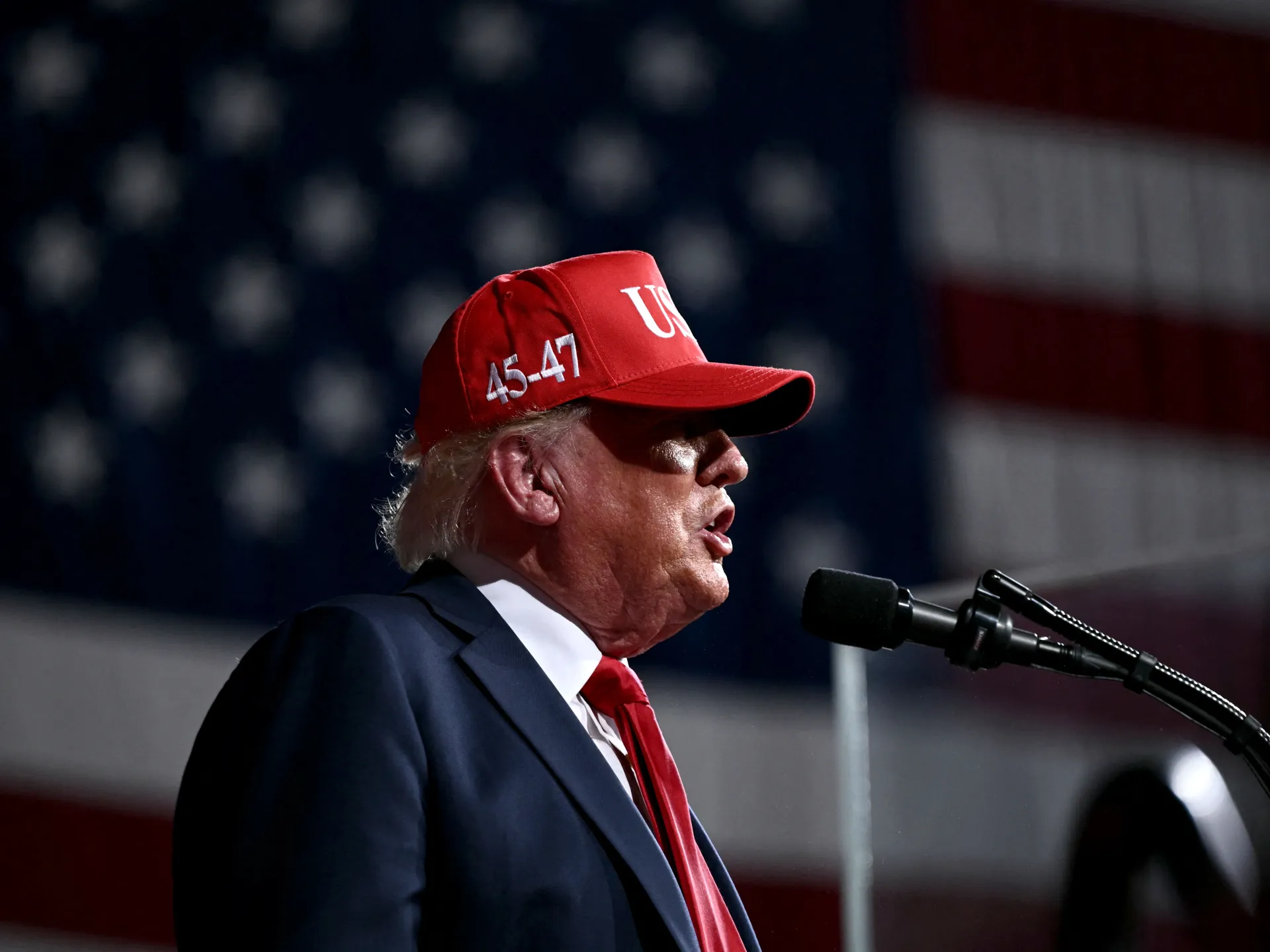
The setting was the recent Republican midterm convention in Dallas, a pageant of Trump’s ego and insecurities in full-parade dress. On the final night, in the second of two keynote speeches, Trump asked those in attendance to raise their right hands and swear to the following:
“I pledge, to the greatest president in the history of the United States, that loves us so much he can’t even breathe, that I will go out with my family, my friends, I’ll do it any way, I don’t care if I’m registered or not, I’m gonna try and cheat like hell like [Democrats] do” — here supplicants regaled Trump with laughter — “I am gonna go out and I’m going to get my friends and family and we are going to vote on November 3rd, or we are going to vote before that!”
Trump’s performance as president has always been layered with a certain amount of shtick, especially when he’s placed in his preferred setting, which is standing before a microphone in front of a rapturous crowd. Lest it be forgotten, Trump stepped into the political arena from the world of reality television, which supposedly made him more authentic. His violation of norms and trampling of protocols has come to be known — and celebrated by acolytes — as simply “Trump being Trump.”
Still, it’s a remarkable thing when the president of the United States urges people to cheat.
Justin Levitt, a Loyola Law School professor, can’t recall any president ever saying anything remotely similar.
“It’s an example of how manifestly unfit [Trump] is to serve as the chief executive with a constitutional imperative to ‘take care that the laws be faithfully executed,’” Levitt, who worked on voting rights in the Biden administration, wrote in an email. “Exhorting your own followers to break the law is pretty directly inconsistent with his own oath of office.”
And it is, as Levitt noted, not the first time Trump transgressed his sworn vow to “preserve, protect and defend the Constitution.”
As the subversive Dallas “pledge” makes clear, Trump’s exertions have never been about ensuring free and fair elections. Instead, he’s trying to rig the system to avoid what could be a midterm nightmare for the beleaguered president and his fellow Republicans.
Levitt said there’s no reason to think Trump supporters will cheat en masse, any more than one should believe Trump when, as seems inevitable, he cries fraud if results fail to go his way on Nov. 3. “For him, it’s all just vibes,” Levitt said, “with no factual content.”
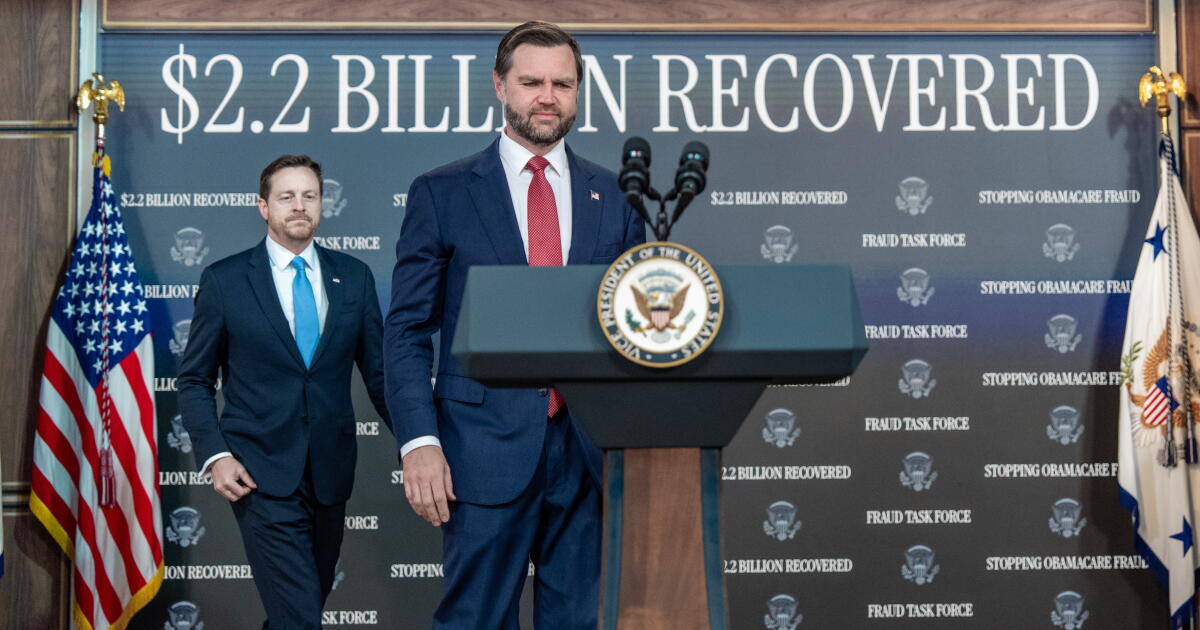
WASHINGTON — Vice President JD Vance and other Trump administration officials said Tuesday they plan to remove 760,000 Affordable Care Act enrollees from public healthcare exchanges, alleging that the individuals were fraudulently enrolled in the program, or simply do not exist.
Vance said the discovery and canceled subsidy payments for hundreds of thousands of people from the exchanges would result in $2.2 billion in cost savings.
“We’re actually making sure that the people receiving Obamacare subsidies are actually entitled to receive them,” Vance, who leads a government-wide task force to eliminate fraud, said in a public address at the White House, Tuesday. He was flanked by Dr. Mehmet Oz, the administrator for the Centers for Medicare and Medicaid Services, and other administration officials.
The Trump administration also announced a six-month suspension on new brokers who sign up enrollees for healthcare coverage, who officials say commit a disproportionate amount of the fraud they uncovered.
Tuesday’s announcement is the latest in an administration-wide initiative to address fraud around the country, including in federal healthcare programs, which officials say is needed to rein in runaway spending and protect taxpayers.
The announcement comes as inflation and rising healthcare costs pressure the Trump administration to come up with a plan to bring down costs for Americans heading into the midterms.
The price of ACA insurance has skyrocketed for many Americans during Trump’s second term, after Republicans opposed extending COVID-era subsidies that had helped offset the costs of health insurance for most enrollees during Biden’s term.
Premiums doubled or tripled for many enrollees, prompting millions to downgrade their plans or exit the program entirely after the Republican-led Congress allowed the subsidies to expire this year.
Roughly 19.2 million Americans are actively enrolled in ACA marketplace health plans as of early 2026, according to the HHS website.
The White House referred The Associated Press to the Vice President’s team for additional comment on bigger plans to address healthcare affordability.
The Wall Street Journal first reported the news of the Trump administration’s plan to remove ACA enrollees from public exchanges.
Hussein writes for the Associated Press. AP writer Michelle Price contributed to this report.
Mourinho brought printouts of screenshots to the post-match news conference, claiming Atletico should have been given two red cards in the first half.
Writing in response to an article in the Spanish media which claimed there is a “conspiracy” against Real, Tebes dismissed the allegations.
“Claiming that referees are directed against Real Madrid is living in another galaxy,” Tebas said on social media.
“That narrative serves as an excuse to cover up other shortcomings that are plain to see in these first matches of the season.
“It’s more comfortable to point to a conspiracy than to explain what’s happening on the pitch.”
Real are fourth in La Liga, six points behind Barcelona who top the table on 21 points after winning all seven of their league games this season.
After defeat by Atletico, where Real went down to 10 men in a feisty encounter after defender Dean Huijsen was sent off, Mourinho blamed the officiating.
“We can skip the press conference because the story of the match is right here,” Mourinho said as he showed media the printed images.
“Those were two clear red cards. Given the difficulties we faced afterwards playing 11 against 10, we can only imagine what 50 minutes of 11 against nine would have been like.”
Madrid boss Jose Mourinho accuses officials of bias after his side’s 2-1 derby defeat by Atletico Madrid.
Published On 22 Sep 202622 Sep 2026
La Liga President Javier Tebas has hit out at what he calls accusations of a refereeing “conspiracy” by Real Madrid after their derby loss to Atletico Madrid.
Real Madrid coach Jose Mourinho brought two printed screenshots of what he thought were red-card tackles committed by Atletico players to his post-match news conference after Sunday’s 2-1 defeat.
Tebas responded to a pro-Real article on social media with a lengthy riposte on Tuesday to allegations of a “conspiracy” against the 15-time European champions.
“Here they go again, the mouthpieces and the regime’s television, building the same old narrative – the permanent conspiracy,” said Tebas, who has often been at odds with Real Madrid and the club’s outspoken president, Florentino Perez.
“This article goes further. It claims that referees harm ‘the business that feeds them’.
“What exactly is it asking for? Refereeing based on revenue, viewership or the badge? What a way to understand equality in the competition.
“Real Madrid are crucial to La Liga. But claiming that ‘La Liga is worth nothing’ without them reveals the disdain for the other clubs, their fans and their history. The competition belongs to no one.”
Madrid have made a stuttering start to the season and already sit six points behind reigning champions and early leaders Barcelona in the La Liga table.
“Claiming that referees are directed against Real Madrid is living in another galaxy,” Tebas added.
“That narrative serves as an excuse to cover up other shortcomings that are plain to see in these first matches of the season.
“It’s more comfortable to point to a conspiracy than to explain what’s happening on the pitch.”
Mourinho returned for a second spell in charge at the Santiago Bernabeu in the close season, tasked with ending a two-year spell without a major trophy.
After the heated capital derby on Sunday, Mourinho was furious that Atletico defender Cristian Romero was not sent off for a stamp on Jude Bellingham and also complained about a challenge by Lee Kang-in on Federico Valverde before the visitors were themselves reduced to 10 men five minutes after half-time.
Valverde finished the match but was later diagnosed with “severe trauma to his left ankle”, the club said in a statement. The midfielder will undergo further tests, it added.
“We could skip the press conference because the story of the match is right here,” Mourinho said, holding up the images in what was the start of a near five-minute rant.
“Those were two clear red cards. The difficulties we’ve faced since the sending-off: 11 against 10. Well, we can imagine what 50 minutes of 11 against nine would have been like if justice had been done.”
DAVID Walliams’ entire children’s book catalogue has been dropped by publisher HarperCollins.
The author and TV star, 55, was let go by the company last year after it had been reported that he “harassed” young female staff.
David Walliams’ entire children’s book catalogue has been dropped by publisher HarperCollinsCredit: GettyWalliams was let go by the company last year after it had been reported that he ‘harassed’ young female staffCredit: Getty
A junior employee had complained about Walliams’ conduct, prompting an internal investigation.
HarperCollins will now phase out physical copies in bookshops before removing ebook and audiobook versions.
Sign up for the Showbiz newsletter
Thank you!
His back catalogue of titles includes Billionaire Boy and Gangsta Granny.
In December 2025 the publisher said it would not publish any new titles by Walliams, saying it “takes employee wellbeing extremely seriously”.
Denmark and Greenland plan to sign a US defence pact next week, pending approval from both parliaments.
Published On 18 Sep 202618 Sep 2026
United States President Donald Trump claimed on Friday that Washington has entered into an agreement with Denmark and Greenland that gives the United States “permanent control over security and all other needs”.
In a post on his Truth Social platform, Trump said, “At my direction, we worked with representatives of Denmark and Greenland to guarantee that the US will FOREVER have the complete ability to do what is necessary in Greenland”.
Recommended Stories
list of 3 itemsend of list
He added that US adversaries will be barred from establishing military bases or personnel in Greenland unless they receive written authorisation from the United States.
Trump alleged that plans will begin immediately to build a significant US military footprint in suitable areas across Greenland, noting there are numerous potential locations.
Denmark and Greenland released a joint statement on Friday indicating that a pact with the US is set to be signed during next week’s high-level United Nations General Assembly summit.
The statement added that the agreement remains subject to formal parliamentary approval in both Nuuk and Copenhagen.
Denmark’s Prime Minister Mette Frederiksen said the agreement “recognizes the sovereignty and territorial integrity of the Kingdom and the right of the Greenlandic people to self-determination.”
In the memoir, Earl Spencer writes of his sister’s troubled marriage – claiming a friend of Diana’s had told him that on the eve of their wedding in July 1981, Prince Charles had told her he was “very happy to marry her, but… not actually in love with her”.
Things became “very difficult indeed” in the marriage early on, Earl Spencer writes, adding that he is “sure that both spouses despaired of the other at times”.
He now believes his sister had attention deficit hyperactivity disorder, external (ADHD), and as part of her condition suffered from Rejection Sensitive Dysphoria – describing the latter as an “intense emotional pain in the face of others’ rejection or criticism”.
In her later years, he writes, Princess Diana considered taking her own life on more than one occasion but love for her sons “stopped her from going further”.
The former press secretary to Queen Elizabeth II described the latest claims serialised in the Daily Mail of Charles sounding “giddily elated” as “hogwash”.
Dickie Arbiter, who was press secretary to the late Queen at the time of Princess Diana’s death and funeral, told BBC Newsnight that Charles was “devastated at the time” and that “it’s not in his character”.
“There’s no way he could have ever said anything like that. Charles Spencer is just talking hogwash,” he added.
Royal commentator Jennie Bond meanwhile said Earl Spencer’s “vindictive account” was “extraordinary”.
“I have no reason to disbelieve this is his memory of what happened, but there are usually two sides to a conversation and a story,” she told BBC Breakfast.
Amid the royal drama, Prince Harry, the Duke of Sussex, attended the inaugural Invictus Spirit Awards in Greenwich on Thursday evening.
In his first public appearance since moving back to the UK, Prince Harry posed for photographs for the press and selfies with veterans, before delivering a speech.
President Donald Trump says the United States is “hopefully toward the end” of its war with Iran, claiming that he has directly spoken to officials in Tehran, raising the prospect of renewed diplomacy even as fighting has erupted in Yemen.
However, there is still no confirmation from Tehran that direct negotiations with Washington have resumed. Just a day earlier, a senior Iranian official publicly rejected talks unless Iran’s conditions were met. Tehran, which has, in effect, closed the Strait of Hormuz, has been demanding that the US honour the terms of the deal signed in June.
Recommended Stories
list of 3 itemsend of list
Trump’s comments come as the conflict has expanded into Yemen, putting increasing pressure on global energy supplies amid an Iran-imposed blockade of the strait through which a fifth of global oil and gas passes. Oil prices crossed $100 per barrel last week and continue to rise as Iran-linked Houthis have damaged Saudi oil installations amid renewed fighting.
So, what is the latest on the diplomatic front, and will the war end soon?
What is Trump saying?
“Well, hopefully we are toward the end of the war,” he told reporters on Wednesday. “They want to make a deal. We’ll see how that works out.”
When asked by a reporter whether he had recently heard from the Iranian side, Trump said he had spoken with them “directly”.
The comments come after Trump on Monday said he was open to talks, and added that Iran “wants to make a deal, quickly and badly” and that he would decide whether Washington would engage with Tehran.
However, Mohsen Rezaei, secretary of Iran’s Supreme National Security Council, accused Trump of sending “mixed signals” and said “no talks until Iran’s conditions are met”.
Trump’s claim that he has heard from Iran “directly” is significant because negotiations between Washington and Tehran have repeatedly depended on intermediaries, including Qatar, Pakistan and Oman. This is not the first time that Trump has claimed direct communication with Iran.
Former Iranian diplomat Abbas Khameyar dismissed Trump’s claims. “I don’t think there has been any additional effort beyond what was already under way in recent weeks,” he told Al Jazeera.
There is a US narrative, he stated, “with tweets and statements by President Trump claiming that the Iranians are calling, pleading and asking for a meeting. But nobody believes this, and matters have not unfolded in that way.”
He added that Iran’s diplomatic activity has not moved beyond the framework already in place in recent weeks, centred on securing enforcement of the existing Memorandum of Understanding (MoU) rather than opening new negotiations.
What is the latest on the US-Iran diplomacy front?
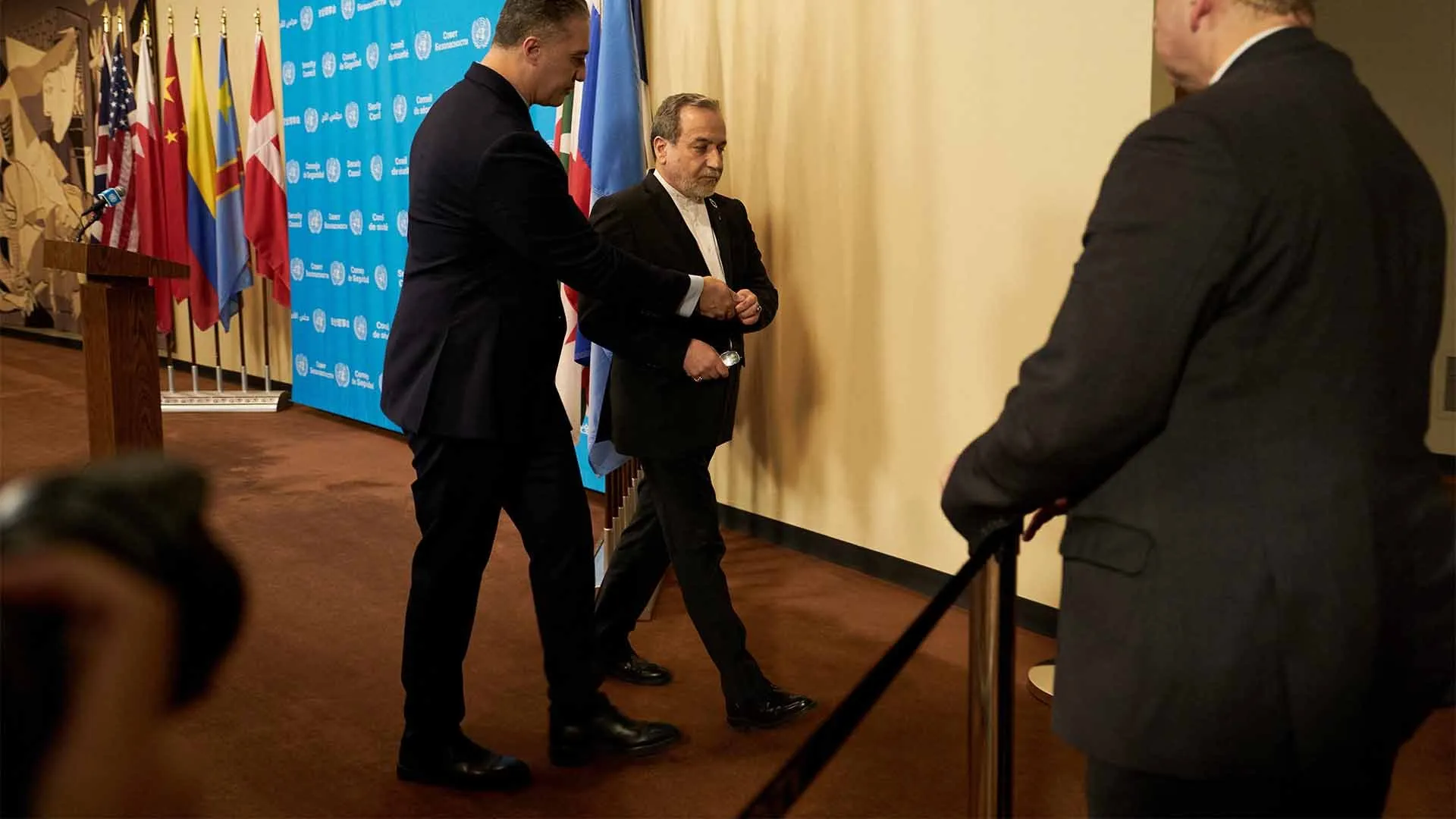
On Thursday, Iran’s semiofficial Tasnim news agency reported that Iran’s Foreign Minister Abbas Araghchi held a telephone call with Pakistani army chief Field Marshal Asim Munir, who has been leading the high-stakes diplomatic and mediation efforts between Washington and Tehran.
Araghchi held the phone call while still in Beijing, during which they discussed and consulted on the latest regional developments and issues of mutual interest, according to Tasnim.
A day earlier, Chinese Foreign Minister Wang Yi called on the US and Iran to exercise restraint and “reopen the Strait of Hormuz at an early date”, following his meeting with Araghchi in Beijing.
Araghchi, in a statement after the meeting, said that Tehran seeks “the restoration of calm to the region and friendly and peaceful relations with our neighbours”.
“In this regard we have begun dialogue with the countries of the region,” he added.
In a post on X, Araghchi described consultations with Chinese officials as “successful”, saying Tehran values the strategic partnership it has built with Beijing.
“Today’s decisions will decide the future strategic balance in the region, with immeasurable knock-on effects,” Araghchi said on Thursday.
China has avoided direct involvement in the war, but President Xi Jinping, at the BRICS summit in New Delhi over the weekend, offered Beijing’s willingness to play a role in peace efforts. He called on BRICS nations to advance peace in the Middle East.
Huiyao Wang, president of the Center For China and Globalization think tank in Beijing, says China’s role in international affairs is increasing in importance during the current geopolitical turmoil.
“China has an enormous role to exercise if needed. So the mere fact that the two fighting parties have no end in sight shows the need for a big guarantor to come in … I think the US wants to end this war and they also need China’s help,” Wang told Al Jazeera.
Meanwhile, US media outlet Axios is reporting that Trump is expected to meet Gulf leaders on the sidelines of the UN General Assembly next week to discuss the conflict, which has hugely affected oil exports from the Middle Eastern countries.
Diplomatic efforts have repeatedly stalled since a Pakistan-brokered MoU signed by Washington and Tehran collapsed last month, as the two sides accused each other of violating their commitments.
The MoU was supposed to kick-start a 60-day period for peace talks between the warring sides and included provisions for the reopening of the Strait of Hormuz, which has become a major flashpoint in the war.
Iranian President Masoud Pezeshkian said earlier this month that Tehran would return to the agreement if Washington did the same.
What do we know about the Houthi meeting with US officials?
US officials met representatives of Yemen’s Houthi movement at the US embassy in Muscat over the weekend, five sources told Reuters news agency. Oman helped organise the meeting.
The Houthis told US officials they did not intend to attack American vessels and remained committed to their 2025 ceasefire with Washington, according to two sources.
One source said they also pledged not to target Israeli or other commercial vessels, with the exception of Saudi ships.
The conflict had largely subsided in recent years after a 2022 ceasefire between the Saudi-backed government and the Iran-aligned Houthis, but reignited in July.
In recent weeks, the Houthis have seized Yemen’s entire Red Sea coastline to cement their grip on the key Bab al-Mandeb strait – a vital maritime route connecting Asia with Europe – while declaring a blockade on Saudi shipping.
The strategic waterway is a critical maritime corridor linking the Red Sea with the Gulf of Aden and has become an alternative shipping route as the US war against Iran choked the Strait of Hormuz.
DUBAI: Medecins Sans Frontieres has rejected claims by Israeli authorities that it employed individuals with links to Hamas in Gaza, saying the allegations were only brought to the organization after the accused were killed.
“Medecins Sans Frontieres unequivocally refutes the allegations made by the Israeli authorities that we knowingly hired people with ‘ties to terrorism,’” MSF told Arab News in a statement.
“MSF would never knowingly employ anyone involved in military activities, which contradicts our core values and ethics. The MSF staff members whom Israel has alleged to have ‘ties to terrorism’ were only reported as such to our organization after they had been killed.”
On Friday, British newspaper The Telegraph revealed that Israeli lobby group UK Lawyers for Israel had written to British Home Secretary Shabana Mahmood, urging that the humanitarian organization be banned for its links to terrorism.
A report, produced by UKLFI, alleged links between MSF employees and militant groups, including Fadi Jihad Mohammed Al-Wadiya, an accused Palestinian Islamic Jihad member who was killed in Gaza City last year.
Al-Wadiya, a physiotherapist employed by MSF from 2018 to 2022 and again from Oct. 7, 2023, was killed in an Israeli airstrike in Gaza City on June 25, 2024. MSF condemned the strike at the time.
MSF initially rejected claims linking Al-Wadiya to the group. However, on Feb. 24 this year, Palestinian Islamic Jihad published a poster naming him as a “martyr commander” and identifying him as deputy head of its military manufacturing unit.
The charity later updated its post about Al-Wadiya, who remained listed as an employee on its website, to note that Palestinian Islamic Jihad had publicly stated on Feb. 24, 2026, that he had been a member of the group.
The report also accused Nasser Hamdi Abdelatif Al-Shalfouh, an MSF driver, of being a sniper for the Hamas Jabaliya battalion.
MSF questioned the reliability as well as the intention of Israeli authorities, who failed to consult with the organization prior to killing the supposed members.
“If Israeli authorities had reliable information about any MSF staff involvement in military activity, they never shared it with us before their deaths.”
The organization told Arab News that the latest allegations were part of a broader disinformation and smear campaign seeking to discredit it.
“For months, MSF has been the target of a disinformation campaign, and we strongly condemn the intentional spread of false allegations.”
Founded in 1971, MSF, also known as Doctors Without Borders, is an international medical humanitarian organization that provides emergency healthcare in conflict zones, disease outbreaks and other crises.
In Gaza, MSF’s teams provide surgical care, wound and burn treatment, maternal and pediatric services, physiotherapy, vaccinations, mental health support, water and sanitation assistance, and treatment for chronic diseases through hospitals, field hospitals and clinics.
Los Angeles County launched a probe into Farmers Insurance Company’s handling of claims by policyholders impacted by last year’s devastating Eaton and Palisades wildfires, after a growing number of residents complained of delays, denials and underpayments.
In a letter sent to Farmers on Wednesday, the county’s lawyers said if the company is engaging in any unlawful or unfair business practices, it must immediately stop.
“Eaton Fire survivors did everything right—responsibly paying their premiums year after year—but when disaster hit, Farmers left them with a contaminated home and refused to pay for testing and cleanup,” said Los Angeles County Supervisor Kathryn Barger, who represents Altadena, in a statement.
“My constituents shouldn’t have to walk back into homes with lead and asbestos because an insurance company won’t pay for the test that would prove it’s there,” she added.
Farmers disputed the county’s claims.
“As always, we operate in accordance with applicable laws and regulations,” the insurer said in a Thursday statement. “We do not believe the inquiry accurately characterizes our actions or practices and will cooperate through the appropriate process.”
“Serving our customers during difficult times is at the heart of what we do, which is why each claim is reviewed individually, taking into account the specific circumstances of the loss and the coverage provided under the policy,” the company said. “We remain focused on handling claims with care, consistency and attention to each customer’s unique situation.”
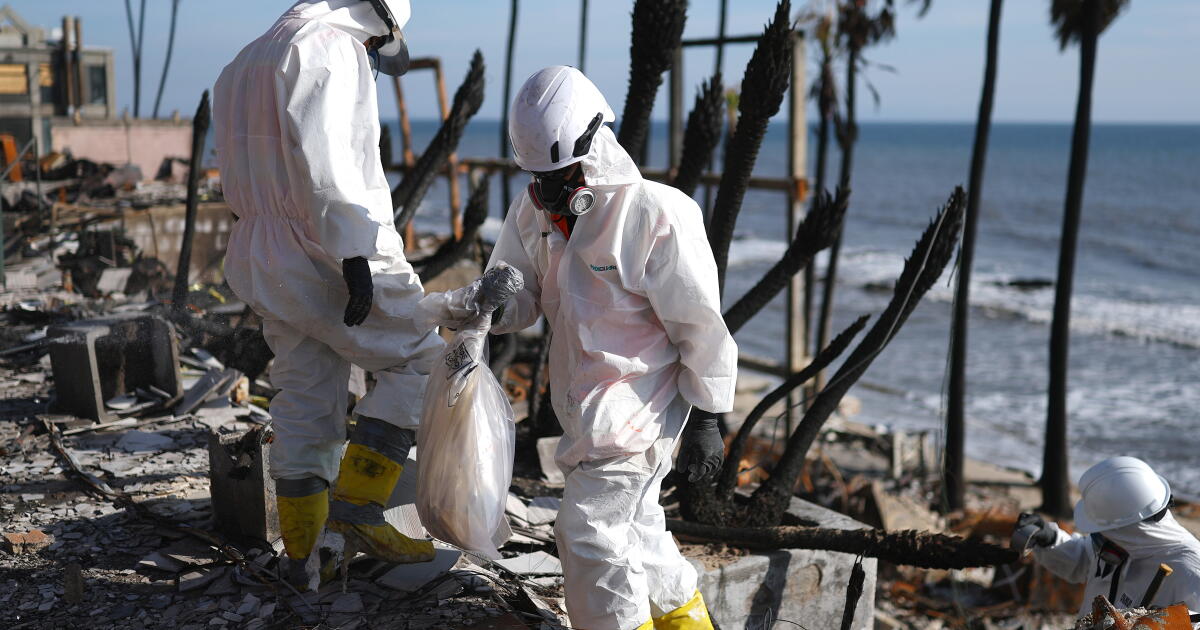
County officials said that at a recent meeting with Eaton fire survivors, those with Farmers policies said the insurer had been slow or resistant to pay for toxin testing by qualified industrial hygienists, forcing residents to pay for it themselves.
The testing revealed that many homes were contaminated with unsafe levels of lead, asbestos, chromium, and other toxic substances, the county said.
The residents also told the county that Farmers has refused to pay for adequate remediation of the contaminants and declined to cover ongoing living expenses.
“After paying millions of dollars in premiums, policyholders deserve the benefits and support they paid for,” said Supervisor Lindsey Horvath, whose district includes Pacific Palisades. “Families whose homes survived the Palisades and Eaton Fires but remain damaged or contaminated should not be forced to choose between returning to an unsafe home and financial devastation.”
The new investigation comes after the county filed a lawsuit against State Farm on Aug. 31 for its handling of Eaton and Palisades fire claims. The county claims State Farm engaged in illegal and deceptive business practices that kept victims from receiving what they were entitled to under their policies. State Farm denied the county’s claims.
Israeli prime minister denies claim that UAE president warned him of Hamas plans before the 2023 attacks.
Published On 10 Sep 202610 Sep 2026
Israel’s Prime Minister Benjamin Netanyahu has said he will sue the Haaretz newspaper over a report that claimed he was warned of Hamas’s plans for an offensive days before the attacks of October 7, 2023.
In a statement on X on Wednesday, Netanyahu called the report “fabricated” and “false” and said he had instructed his lawyers to also sue Haaretz and the authors of the report, Shlomi Eldar and Ruth Yaval.
Recommended Stories
list of 4 itemsend of list
The report, published on Tuesday, claimed that the president of the United Arab Emirates, Mohammed bin Zayed had warned Netanyahu about a possible attack by Hamas 10 days before the events of October 7, 2023.
Palestinian fighters killed at least 1,195 people in southern Israel on that day, and took some 251 others captive. The attacks prompted Israel’s genocidal war on Gaza, in which at least 73,669 Palestinians have been killed.
The Haaretz report claimed that the UAE president, who is also known as MBZ, spoke to Netanyahu by phone and warned him of a threat from then-Hamas leader Yahya Sinwar.
According to Haaretz, Sinwar – who was angered by stalled prisoner exchange talks and Israel’s continued blockade of Gaza – had relayed the warnings to the UAE through an intermediary. He said he was preparing a “huge surprise” and told contacts to tell Israel “to expect an earthquake”, according to the report.
It said MBZ and his aides read this as a sign of an impending full-scale attack and passed the intelligence to Israel’s Shin Bet agency. But the internal security agency dismissed the threat.
MBZ then raised the warning directly with Netanyahu, who also brushed it aside, the report said.
The UAE has declined to comment on the allegations.
Its Ministry of Foreign Affairs issued a statement on Tuesday saying that “the UAE government does not comment on media stories or speculation regarding conversations between government leaders”.
The Haaretz report comes at a time when Netanyahu is trying to secure his position as prime minister in the upcoming Knesset elections in October. Netanyahu has been trailing in the polls, facing a fierce challenge from former military chief Gadi Eisenkot.
Netanyahu on Wednesday called the Haaretz report “politically motivated” and part of the “left’s election campaign”.
He also denied its claims of a phone call with MBZ.
“The National Security Council and the Military Secretary meticulously reviewed the Prime Minister’s call log for those days—and found no trace of it whatsoever,” he said.
In a separate statement, Netanyahu also claimed that the person responsible for Haaretz’s “false report” was the Palestinian political figure, Muhammad Dahlan.
Dahlan was expelled from the Fatah party in 2011 after a power struggle with the current president of the Palestinian Authority, Mahmoud Abbas, and lives in the UAE.
Dahlan’s representatives have rejected the claim, according to Israeli media.