It takes between 15 and 20 minutes to drive across
15:15, 02 Oct 2026Updated 15:45, 02 Oct 2026
Europe’s longest submerged road disappears under the sea twice a day
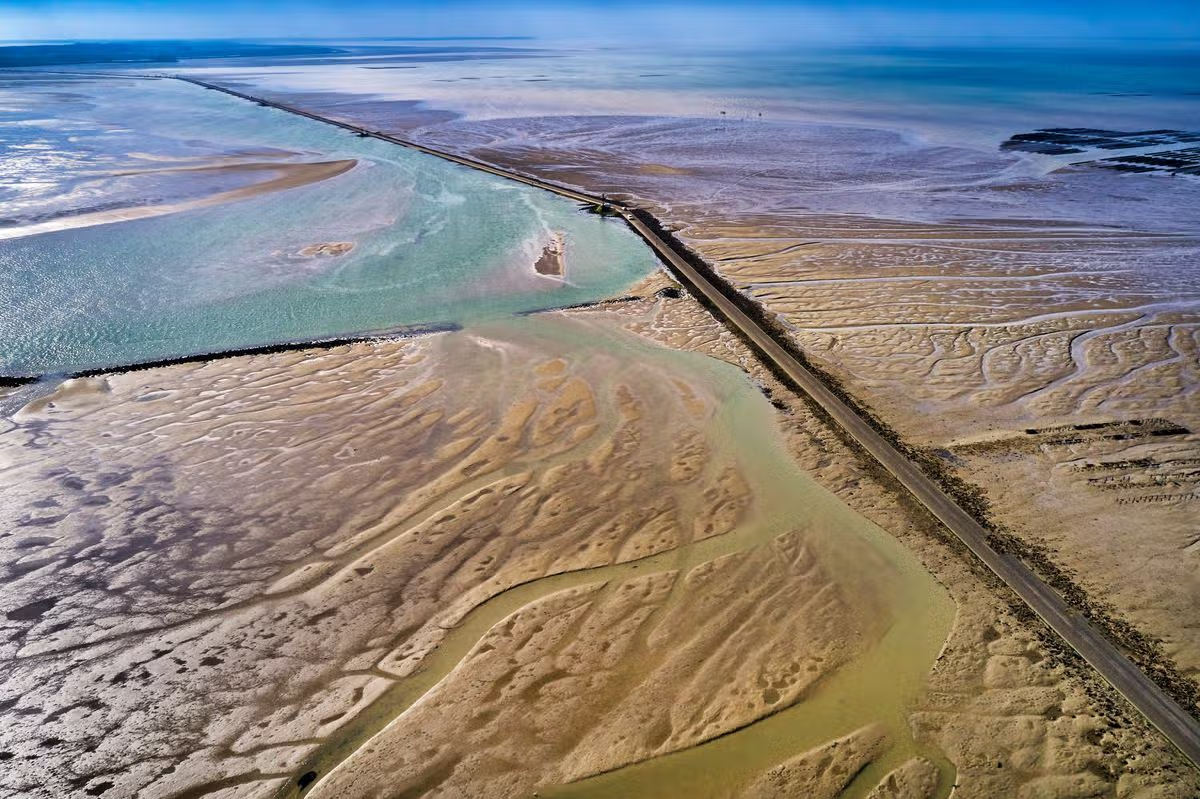
The Passage du Gois, in France, is one of the most popular underwater roads connecting the Île de Noirmoutier to the French mainland. The 2.6 miles road vanishes under the sea twice every day, turning a scenic drive into a journey that must be timed around the tide.
High tides submerge the Passage du Gois under 1.5 to four meters (five to 13 feet) of Atlantic Ocean water most of the day. Drivers have to carefully plan their journey as they can only cross during a short window of about three hours.
Nine raised refuge markers stand along the Gois for people caught by rising water. Officials warn that the road should never be treated as passable when it’s flooded, just because another vehicle has entered it.
Alternatively, visitors can use the Noirmoutier bridge to reach Île de Noirmoutier, located 5.3 miles from the Passage du Gois.
Travel experts at Lapland Famille warned drivers and holidaymakers to plan their trips carefully. Alex Dyer, managing director at Lapland Famille, said: “A tide window can look generous until a meal stop runs late or a child needs an unexpected break.
“I’d keep the bridge route ready and treat the Gois as a bonus, because that removes the pressure to race the final minutes with the sea already on its way back in.”
On TripAdvisor, a visitor described the road as “absolutely unique”. They said: “I have known the Passage du Gois since I was a little girl; it is absolutely incredible and unique in the world.
“This road is revealed every six hours, depending on the tide. Of course, you absolutely must know the tide times and coefficients to know how much time you have to be able to cross it and not be caught off guard by the sea.
“The island of Noirmoutier was connected for years only by this passage before the bridge in 1971.
“Many people stop there for shore fishing. Magnificent photos can be taken, and every year, there is a race organised against the clock on the Passage du Gois.”
Other famous underwater roads in Europe are the Lindisfarne Causeway and the Strood, both in England.
The Lindisfarne Causeway is a three-mile paved road connecting the Northumberland mainland to the Holy Island of Lindisfarne, as the North Sea tides cover the road twice daily. The Strood, in Essex, is covered by water during high spring tides, temporarily cutting access to Mersea Island.
SEVERAL new passenger rights are set to come into force across the UK and Europe.
It’s good news for Brits as there are new passenger rights coming into force that could save families hundreds.
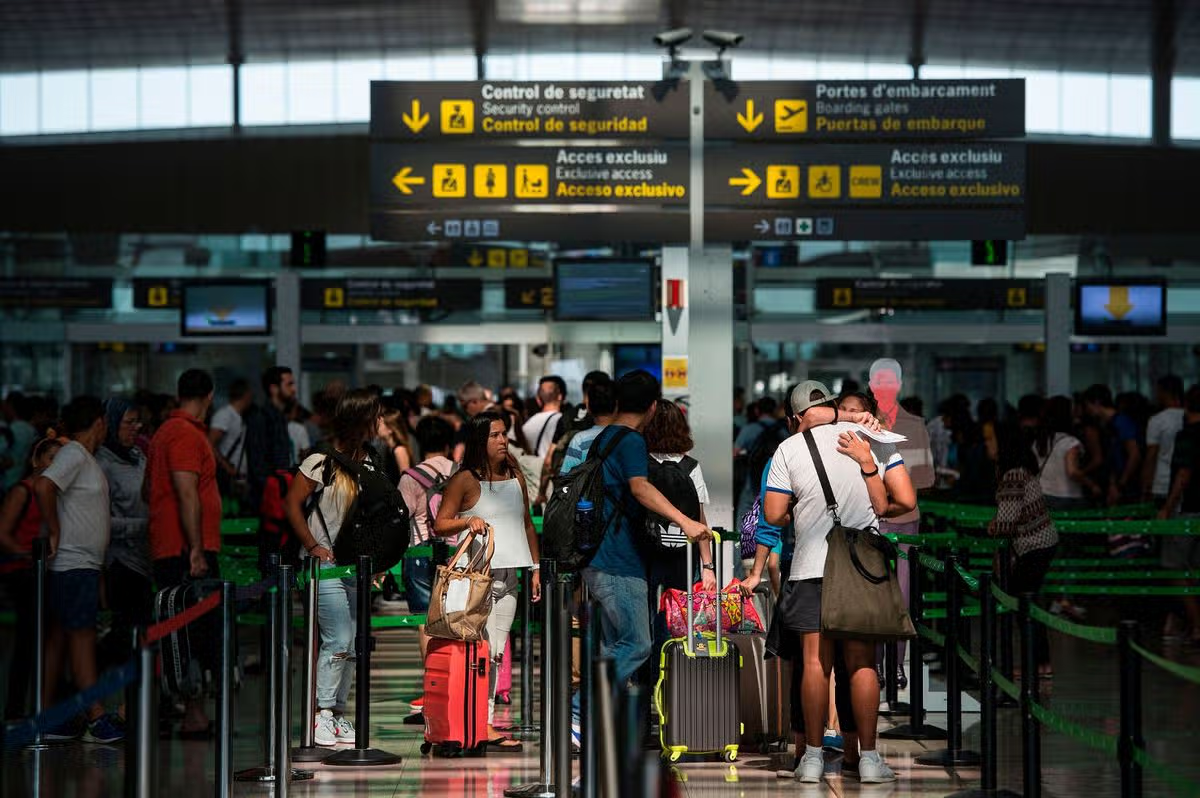
New passenger rights are being introduced in the UKCredit: Alamy
From parents being allowed to sit with their child for no extra cost to new luggage rules, travellers won’t have to fork out as much for hidden extra costs.
Here’s a rundown of all the new rules coming into force across the UK and Europe:
Sign up for the Travel newsletter
Thank you!
Sitting with children
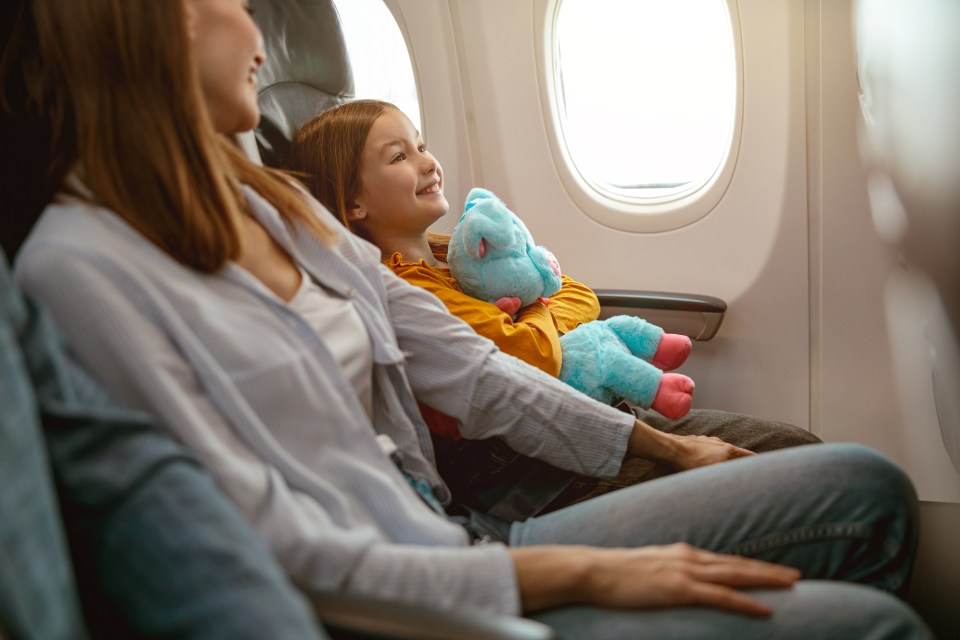
Under the new rules, airlines can no longer charge for certain extras including parents wanting to sit with their child.
According to the Government, a parent and child are charged up to £104 on a return journey for sitting together.
Prime Minister Andy Burnham said: “Charging parents just to sit with their children is a rip-off, plain and simple.”
Transport Secretary Heidi Alexander said: “Parents should not have to feel the pinch just to sit next to their child on a flight, or for amending a simple booking error.
“That’s why we’re scrapping these unnecessary charges for all airlines.
“Another everyday fix to help put money back in people’s pockets and give households more breathing room.”
It will bring UK traveller rights more in line with EU traveller rightsCredit: Alamy
Booking error corrections
Another rule being introduced means that passengers will have greater flexibility to correct name errors on bookings for free.
If you needed to correct something on your booking before, such as a spelling mistake in your name, then it could have cost you as much as £40 to change.
Andy Burnham added: “Being hit with a hefty fee for a simple spelling mistake on a booking form isn’t right.
“People are fed up with these little charges that add up, so I’m putting a stop to them.
“This is what our everyday fixes are all about.
“Giving people room to breathe by tackling the small irritations that catch people out, waste their time and cost them money.”
Changing your booking details could have cost you £40 previouslyCredit: AlamyEurope is in the process of changing luggage rulesCredit: Alamy
Luggage fees – Europe only
The EU is looking to make hand luggage free as part of a major overhaul of passenger rights.
Back in June, the European Parliament and EU member states agreed on new air passenger rules, which would include allowing passengers to have two pieces of hand luggage free of charge.
This would be one small personal item that usually fits under the seat in front of you and a larger cabin bag weighing up to 7kg.
The new rules are expected to come into force in October 2027 at the earliest.
However, for Brits, the rules won’t apply on outbound journeys – say from London to Majorca, in Spain.
It will apply to UK passengers on their return leg, though from an EU country, so theoretically if you wanted to do lots of shopping abroad you won’t have to pay for that extra case on the way back home.
Airlines, such as easyJet, are currently reviewing their luggage rules though and the UK Government could also make the same rule in the future.
With easyJet for example, if you want a cabin bag measuring up to 56 x 45 x 25cm, you’ll need to pay extra for it and the price varies depending on demand, the route, your flight date and the time of booking.
Though if you get to the gate and haven’t paid for a cabin bag but have one with you, you will be charged £60.
For Ryanair, if you want a cabin bag measuring up to 55 x 40 x 20cm, then it will cost you between £12 and £36 at the time of booking, or between £20 and £60 when at the airport.
For a family of four, this could cost as much as an additional £240 per way, so £480 per return flight.
A TINY island off the coast of the UK has closed earlier than expected amid fears of incoming bad weather conditions.
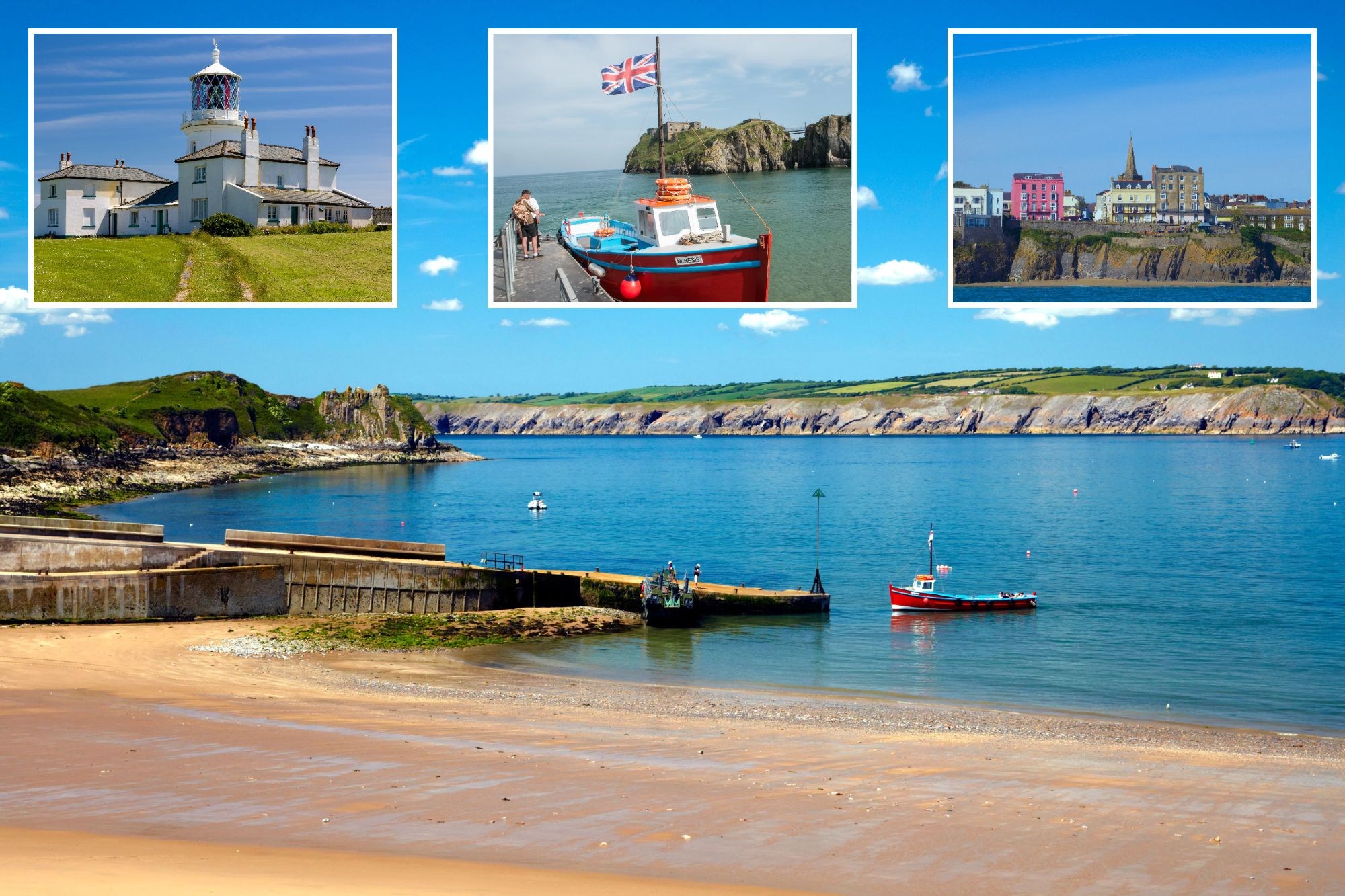
Caldey Island is a short, 20-minute boat ride from Tenby in Wales, with just 40 people living there.
Caldey Island has closed a month earlier than plannedCredit: AlamyThe only way to get to the island is by boatCredit: Alamy
However, in the summer months, tourists flock to the island when it reopens from Easter to the end of October.
Yet the island has since stopped boats almost a month early, citing upcoming weather concerns including high pressure and fog.
Sign up for the Travel newsletter
Thank you!
The island, owned by a group on monks, explained on social media: “After careful consideration, we have made the difficult decision to close Caldey Island for the remainder of the 2026 season.
“With the weather forecast for October looking particularly challenging, we feel it is the right decision to bring the season to a close a little earlier than usual.”
They added that it had been a “record-breaking season,” having been open for 64 days in a row from July to August.
The island will now stay closed until next year, likely opening in spring 2027.
But if you are planning your trip there next year, there is lots to do for a day trip to the ‘paradise’ island.
It is one of the UK’s holy islands, having been owned by monks for more than 1,500 years.
One of the main attractions is the lighthouseCredit: AlamyYou can expect a very quiet beach on the islandCredit: AlamyThere is also a small village with shops and cafesCredit: Alamy
Priory Bay is the beach that is open to tourists, with the golden sands often devoid of crowds.
The island also has a chocolate factory to explore, along with a cafe, tea garden and gift shop.
Along with five walking trails (where you can spot rare red squirrels), a playground and a lighthouse attraction, a new Visitor Centre is also set to open.
If you want to stay, there are three options – St Philomena’s, with full-board stays costing £75pp and St Teilo’s cottage which is £65 a night.
Otherwise there are some rooms in the Monastic Guesthouse, which is only for men, and must work with assisting the monks.
To visit the island, it costs £24.95 for adults and £12.95 for kids, with reduced rates for seniors and families.
Actor Wilmer Valderrama, who plays Special Agent Nick Torres on CBS’ long-running procedural “NCIS,” has chased bad guys all across Los Angeles. While he appreciates the geographic diversity of the region, Valderrama says his love for the city is actually tied to “the gift of being an immigrant.”
Valderrama moved to L.A. in 1994 from Venezuela with his family. He remembers how scary it was to come to the City of Angels, not knowing how to speak English. The family arrived “right before the Northridge earthquake, so that was our welcome to L.A.,” he says, adding that his family was living nearby in Van Nuys.
In Sunday Funday, L.A. people give us a play-by-play of their ideal Sunday around town. Find ideas and inspiration on where to go, what to eat and how to enjoy life on the weekends.
But growing up in Los Angeles, he found a sense of belonging in a multicultural community that gave him an appreciation for different cultures, cuisines and music. “There are so many different cities and ZIP codes here that make for a multifaceted and multi-heartbeat city,” he says.
Valderrama, who starts his 10th season on “NCIS” on Tuesday, founded the production company WV Entertainment, which released the documentary “Suárez,” about the first Mexican-born driver to win a NASCAR Cup Series race, in September on FS1. He also launched WV Sound, to help curate iHeartMedia’s slate of Latin-focused podcasts, and is active in numerous philanthropies, such as co-founding Harness with America Ferrera and Ryan Piers Williams to amplify the voices of underrepresented communities.
Today, Valderrama lives in Tarzana with his wife, model and PADI divemaster Amanda Pacheco, and their two children, Nakano Oceana, 5, and Wolf Monte, 1. He was finishing “That ‘70s Show” in 2006, when he noticed that Chuck Norris was selling his house in Tarzana. “I was 26 years old and realized I didn’t know if I was ever going to work as an actor again,” Valderrama says. “I bought this little house and the kids were born here. So it’s been kind of a dream to be here long enough to see that happen.”
Here’s a look at the actor’s ideal Sunday with family.
This interview has been lightly edited and condensed for length and clarity.
7 a.m.: Wake up and go for a walk
My son wakes up and Nakano starts asking for mac and cheese. Instead of mac and cheese, we go for a walk to our favorite coffee shop, Laidrey Coffee Roasters in Tarzana. They roast their own coffee beans and have an amazing pastry selection. Everybody’s in their sweats and pajamas, we hang out with some of our local baristas, and have a good time. I’m obsessed with coffee. My grandfather was a coffee farmer in Pereira, Colombia. I grew up with a level of appreciation for coffee that was just insane. For me, coffee is as good as tasting different types of wines. I love going to places that put a lot of emphasis on the curation of their coffee beans and the essence and the blends. How they serve their cappuccino is really important to me. I think it’s a perfect blend of broth and roast. And if the barista wants to add an artistic element, then they have successfully elevated my cappuccino experience. A kiss of hazelnut as a finishing touch too.
9 a.m.: Naps and playtime at the playground
As soon as it hits 9ish, my son needs a nap, so while he sleeps, Nakano and I go to a little playground, and I just let her run off some of her morning energy.
11 a.m.: Brunch at the beach
Then, we’ll go to the Malibu Farm Pier Cafe, and have a really great brunch. I like their chorizo burrito, and I add bacon and avocado to it. Their hot sauce is ridiculous. Nakano gets the Swedish mini pancakes, and Amanda loves the Surfer’s Rancheros.
1 p.m.: Paddleboarding in the Pacific
At this point, we just walk the beach, and maybe paddleboard around the pier. The waters are pretty calm around that time. My wife is a mermaid. She’s a divemaster, so the ocean is something that’s very important to her. So we’ll always try to find ourselves at the beach. We have our own paddleboards, but there are tons of shops where you can rent boards on PCH.
3 p.m.: Time for a snack
Around that time, I’ll get hungry again, and everyone’s like, how can you be hungry? We just ate. We’ll go to Neptune’s Net, which is a nice little coastal drive north on PCH. Neptune’s was famous for being in “The Fast and the Furious.” It’s a really great spot for burgers, fish and steaks, so we’ll just go there for a little snack, and I’ll be the only one eating, because everyone’s still full. I get the fried fish and chips.
4 p.m.: Fun on the Santa Monica Pier
We’ll go for a little drive after that. Sometimes, we’ll take Nakano to the Santa Monica Pier. She loves playing the games, and doing the roller coaster stuff. It tends to be pretty fun and lively.
5 p.m.: Slow drive back to the Valley
Then we slowly snail pace across PCH, and go over Topanga Canyon to get back into the Valley. At that point, the kids are taking a major nap in the car. By the time we get back to the Valley, I’ll probably pitch what dinner is. And they’re like, how can you still be thinking about food?
6 p.m.: Early dinner means Korean barbecue or sushi
We usually end up at this Korean barbecue place called the House of Galbi in Encino. It’s my favorite. They have a great all-you-can-eat menu with really great meats and an assortment of sauces and condiments. They have a prime rib that is phenomenal. Ask for the house hot sauce. It’s probably one of the best things to go with any piece of meat and seafood there. On a Sunday, normally there’s certain games, and they have big TVs in there, so you can watch the game while you’re having family time. I completely overeat on a Sunday.
If not there, we’ll go to Okumura in Encino. A young Japanese man trained these amazing Mexican guys to be incredible sushi chefs. The place is wonderful. It’s been my sushi place for a very long time. There’s a lot of fancy sushi places, but these little hole-in-the-walls are the ones you kind of hang on to, right? They know your usual dishes. They know how to make something up, right? They do this blue crab hand roll and they add some jalapeno and give you a ponzu sauce to dip it in. It’s really special.
8 p.m.: Head home and relax
We get back to the house, and by then, my daughter’s like a bobblehead, trying not to fall asleep. My son is out, so we just take the kids in and put them down. We’ll have a little us time, so we’ll just sit together and chat, talk about the week ahead. We try to watch something together and have movie night as much as we can on Sunday. Sometimes we’ll just pass out on the couch because we’re so tired. We’ll wake up at 2 in the morning and zombie our way to bed, you know?
There is no love like municipal infrastructure love.
It was late in the 20th century when my wife, Mary Frances, and I moved into Los Feliz. Quickly we learned that our corner of the neighborhood was known as Franklin Hills, and that just about every eastward outing would take us across a funny little bridge with eight pointy turrets. That bridge was the Shakespeare Bridge.
As a teacher at nearby Ivanhoe Elementary, Mary Frances crossed the bridge twice every school day for more than 20 years. As a student there, our daughter Grace crossed it for six years, usually with me as chauffeur.
We’ve crossed it at all hours in every kind of weather, on foot, on bikes and in cars, talking about school, work, family and, lately, the fractured state of the nation and world.
Now that bridge on Franklin Avenue at St. George Street is near its 100th anniversary and an Oct. 10 neighborhood celebration is in the works, complete with a street party and procession. As the day approaches, I keep thinking about how large a funny little bridge can become in the lives of its neighbors.
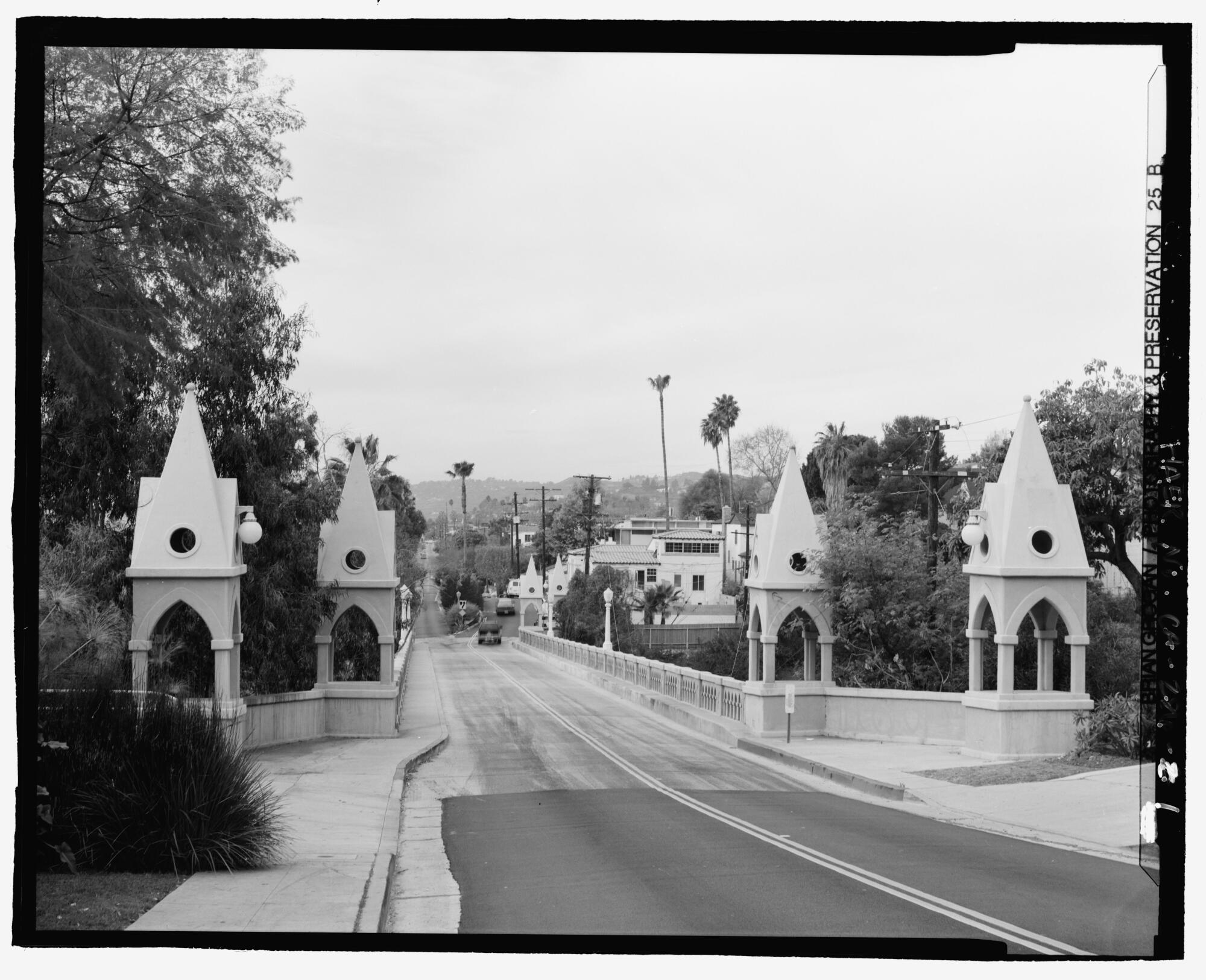
This view looks westward across L.A.’s Franklin Avenue Bridge, also known as the Shakespeare Bridge.
(Library of Congress)
Originally it was the Franklin Avenue Bridge, designed by J.C. Wright of the city’s civil engineering department in the mid-1920s, when a twenty-something cartoonist named Walt Disney was new to the neighborhood and the Vitagraph Studios, a block away, were transitioning from silent films to talkies.
Paid for by a controversial city assessment of neighbors, the bridge is 262 feet long and 30 feet wide — a pipsqueak compared with landmarks like Pasadena’s Colorado Street Bridge or the 6th Street Bridge between Boyle Heights and downtown L.A.’s Arts District. Its three open-spandrel arches were made using Portland cement.
Nobody knows where the Shakespeare nickname came from, but city officials designated the bridge as L.A.’s Historic-Cultural Monument No. 126 in 1974 and retrofitted it in the 1990s to better withstand earthquakes. Crucially, city staffers preserved those charming and entirely unnecessary turrets, which deserve their own sonnet, if you ask me.
“Back then, people put some thought into these things,” City Council aide Tom LaBonge told this newspaper in 1988, years before he became councilman (2001-15) for the district that includes the bridge.
Since 2017, neighbors have tended a Shakespeare Bridge Garden beneath the span. The neighbors (a.k.a. the Franklin Hills Residents Assn.) also pay to keep up the landscaping on the nearby traffic island.
When the bridge went up, L.A. “was becoming a city,” said Alison Wallace, president of the FHRA. “We were trying to look legit, and people were adding all of these amazing public works.”
The result, Wallace said, was a span that eased connections between neighborhoods and “helped us become a community.”
This view looks from below the Franklin Avenue Bridge, also known as the Shakespeare Bridge.
(Library of Congress)
Many architectural sources call its style Gothic Revival. Some see Moorish influence. Researcher Tiger Shankman has hailed its “perky, anachronistic beauty.” In “An Architectural Guidebook to Los Angeles,” authors David Gebhard and Robert Winter suggest that the ornate ends of the bridge “cry out for sculptured saints.”
Instead of saints, however, the bridge has seen a lot of actors and film crews. The bridge turns up in the movies “Dead Again” (1991) and “I Love You, Man” (2009), the Netflix series “Nobody Wants This” (in 2025) and the HBO series “I Love L.A.” (also 2025). My favorite clip is a chase sequence from a 1971 “Mannix” episode — excruciatingly slow-paced by 2026 standards, and shot long before the FHRA tore out the city’s blacktop median and planted greenery.
Given all of its neighborhood fame, it surprised me to hear how few Angelenos know about the bridge. When Charlie Ryan and Thom Vest started offering LA Explained walking tours early this year, they expected the Disney history would be a popular part of their Los Feliz itinerary, but the bridge quickly emerged as another central element.
Because most of those who sign up for the Los Feliz tour live elsewhere, they have never crossed the bridge “and don’t know it’s there,” Ryan said. “Out of all the tours that I do, it’s the one that brings the most surprise to people.”
An aerial view of the Shakespeare Bridge, formally known as the Franklin Avenue Bridge, in the Franklin Hills area of Los Feliz.
(Allen J. Schaben / Los Angeles Times)
But plenty of those who live nearby have deep connections with the bridge, including Charley and Shirley Mims, who got married there on Oct. 21, 2000.
To open the ceremony, Shirley strolled from the west end of the bridge to the east, where Charley was waiting. (They still live in the neighborhood and plan to be at the centennial party.)
“When you see the bridge and cross it,” my neighbor Dave McDonald said the other day, “you feel like you’re home. It’s like a welcoming beacon.”
“It’s a real local’s way of getting around,” said Matteo Chizzola, who moved to Los Angeles four years ago and settled in Los Feliz two years ago. Last year, when Chizzola decided to start selling matcha from a sort of grown-up street-corner lemonade stand, he chose a patch of sidewalk at Franklin Avenue and Talmadge Street, two blocks from the bridge.
A jogger crosses the Shakespeare Bridge.
(Allen J. Schaben / Los Angeles Times)
“It is beautiful and it’s weird. If you go at the right time of day, at sunset, it’s an incredible view,” he said.
Chizzola said he isn’t getting rich running the stand, Fridays through Sundays, but “it has become something that puts a huge smile on my face.”
He’ll be on hand for the bridge’s centennial parade, along with invited local luminaries including Victor the fruit guy (who worked a corner near Marshall High School for more than a decade) and Dora Herrera of the much-loved Yuca’s restaurant on Hillhurst Avenue.
A pedestrian crosses the Shakespeare Bridge,which was completed in 1926.
(Allen J. Schaben/Los Angeles Times)
Sometimes, when Mary Frances and I are on a neighborhood walk, we stop mid-span. In the distance to the south, you see the downtown skyline. In the arroyo below the bridge (officially the Arroyo de Sacatela) you see the private homes and yards along Monon Street and Myra Avenue. You also see the Los Feliz campus of the International School of Los Angeles (1960), the only school designed by modernist architect John Lautner.
Then there are the decorations. Every few months, in a tradition started by departed neighbor Chris Boutelle, Mary Frances joins a team of FHRA board members and other volunteers who put up hearts for Valentine’s Day, shamrocks for St. Patrick’s Day, Pride and Juneteenth flags in June, American flags and bunting in the lead-up to July 4, and so on.
Most of these costume changes are seamless. But in June 2023, someone tore down the Pride flags. Neighbors quickly replaced them. They came down again. Neighbors replaced them again. The back-and-forth went on for weeks. A suspect was arrested, released, then re-arrested.
Shakespeare Bridge in Los Feliz was the site of controversy in June 2023, when someone repeatedly stole Pride flags from a bridge display. Neighbors replaced the flags and police made an arrest.
(Gary Coronado / Los Angeles Times)
“It was almost every day for a month. People really came together,” said Wallace. The vandal surely didn’t mean to, but Wallace contends that he wound up uniting the neighborhood as never before.
The Oct. 10 bridge celebration, organized by the FHRA, will begin with a noon procession to the bridge from Marshall High School (another neighborhood Gothic Revival landmark), featuring a marching band, several vintage cars and a costumed dog parade.
At the end of that short walk, there’s a party planned from 1-5 p.m. at the end of Monon Street , right under the bridge. There will be snacks, drinks, live music, kid crafts, a bouncy house, a handful of actors in Shakespearean garb and scads of neighbors being neighborly.
I’ll be there for all of it. In times like these, every bridge needs celebrating.
Shakespeare Bridge, formally known as the Franklin Avenue Bridge, spans a ravine in the Franklin Hills with downtown Los Angeles in the background.
DITCH the rock-hard plastic airport seats and those wildly overpriced soggy meal deals – you don’t need to spend thousands on a first class plane ticket to kick off your next holiday in style.
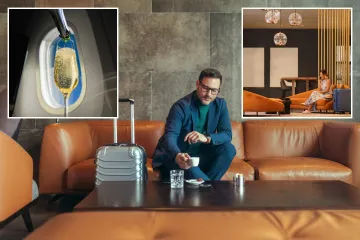
Instead of stressing over departure boards and trying to find a seat in a packed terminal, you could be stretching out on a plush sofa in a private lounge before your next flight.
Relax in a comfy airport lounge instead of an overwhelming airport terminal with Priority PassCredit: getty
Save 20% on Priority Pass across 1,900+ airport lounges
Here you can tuck into a complimentary buffet, sip on free alcoholic beverages or even have a quick nap in a private sleep pod.
The secret to this pre-flight luxury is bagging a Priority Pass. Right now, Sun readers can slash 20% off the annual membership fee by clicking here.
Sign up for the Travel newsletter
Thank you!
Priority Pass members get access to over 1,900 airport lounges across the globe, including those in popular UK airports like London Heathrow, Gatwick, East Midlands, Manchester and Birmingham.
Lounges available depend on which airport you are flying from, but they include the luxurious Aspire Lounge with complimentary food and alcoholic drinks, as well as No. 1 Lounges, Skylife Lounge, Escape Lounges and more.
A standard membership normally costs £69 a year, but our discount for Sun readers drops the price to just £55.
Once you have your pass, you simply pay £24 each time you want to visit a lounge.
All Priority Pass member benefits
Priority Pass members get access to the following:
Complimentary food and drinks
Sleep pods to rest at certain airport locations
Be Relax spa treatments (at select lounges)
Bring along a guest (£24 Guest visit fee)
Discounts on more airport dining and spa treatments
The option to re-book selected lounges for a supplementary fee
Free membership to the WithU Fitness app (worth £79.99 per year)
And with all the complimentary food and free-flowing drink inside, you can easily make your money back with all your savings from skipping pricey terminal restaurants and bars.
Beyond the free food, the lounges offer high-speed Wi-Fi, plenty of charging points, comfy sofas and quiet zones.
Depending on the airport, you can even find dedicated workspaces, hot showers, and sleep pods to refresh yourself.
The VIP perks also extend beyond the lounge doors. Priority Pass members get access to Be Relax spa treatments, meaning you can treat yourself to a pre-flight massage or manicure at participating airports.
Enjoy complimentary alcoholic drinks at a variety of airport lounges with Priority PassCredit: AlamySwap those hard airport chairs for a cheeky drink at the airport loungeCredit: Getty
Save 20% on Priority Pass across 1,900+ airport lounges
You also get a brilliant freebie to use at home: complimentary access to the WithU Fitness app, which is normally worth £79.99.
The app creates you a personalised exercise program for the gym or home, complete with guided audio workouts coached by professionals.
So not only are you travelling well-fed and well-rested, but you’ve now got a fresh manicure to show off on holiday and a free workout program to take home and on your travels.
Does travelling in style get any better than this?
Priority Pass plan options
Standard Plan is on a pay-as-you-go basis – all lounge visits are charged £24 at the time of usage to your payment card.
£69 £55 for first year (20% discount) / £4.60 per month
Standard Plus includes 10 free visits during your membership year, visits after this will be charged £24 to your payment card.
£229 £206 for first year (10% discount) / £17.17 per month
The Prestige Plan is unlimited free member lounge visits. Under all three plans members can take accompanied guests into the lounges for the visit fee stated which is charged to your payment card.
£419 per year / £34.92 per month
Save 20% on Priority Pass across 1,900+ airport lounges
The provided text from Occasional Digest focuses on the observance of Discovery of America Day in Honduras, which honors the historic moment Christopher Columbus arrived in the Americas. The source explains that while Columbus’s initial 1492 journey sparked European expansion across the Atlantic, he actually first reached a Bahamian island rather than the mainland. Additionally, the article clarifies that this milestone did not occur until his third voyage in 1498. Furthermore, the text points out that Columbus was neither seeking the Americas initially—as he was hunting for a maritime path to India—nor was he truly the first European explorer to set foot in the New World.
However, no airlines have been confirmed for the airport yet.
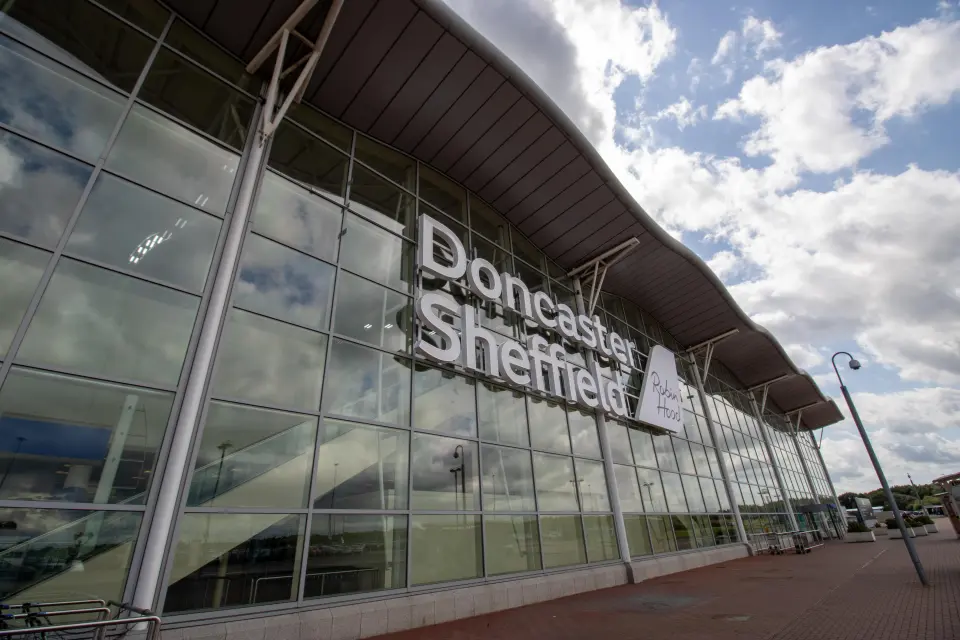
Christian Foster, Director of FlyDoncaster – the company set up to manage the airport – told Sun Travel: “It does feel like the world has changed post-Covid, whereas people were focused two weeks in Spain or Greece, nowadays we’re seeing a lot of people keen to take city breaks.
“We’d love to fly to places like Croatia, and other destinations that are a bit more quirky like Azerbaijan.
“We’re keen to look at emerging places to visit as well, like India.“
It closed back in 2022 and has been left abandoned sinceCredit: Alamy
Inside, there are plans to fill the airport terminal with local businesses instead of your usual Costa or Starbucks.
There would be a mixture of restaurants, bars and shops.
Back in July, the airport also gained approval was given by the Civil Aviation Authority (CAA) to move forward with a public consultation.
During the public consultation, locals can express their opinions on the reopening of the airport before October 4.
In the airport’s latest update, three fire appliances have also been ordered for the airport ahead of its reopening next year and before welcoming passengers in 2028.
While many may flock to the huge French resorts of Val D’isere or Chamonix, for a more intimate romantic ski getaway one hidden Austrian getaway scoops the title
09:00, 02 Oct 2026Updated 09:28, 02 Oct 2026
Is Austria’s Gastein valley one of Europe’s most romantic winter getaways(Image: Atelier Wolkersdorfer)
There are ski resorts built for thrill seekers, and there are ski resorts built for those searching for glamour. Then there is the Gastein Valley in Austria, a place that seems designed for something else entirely – romance.
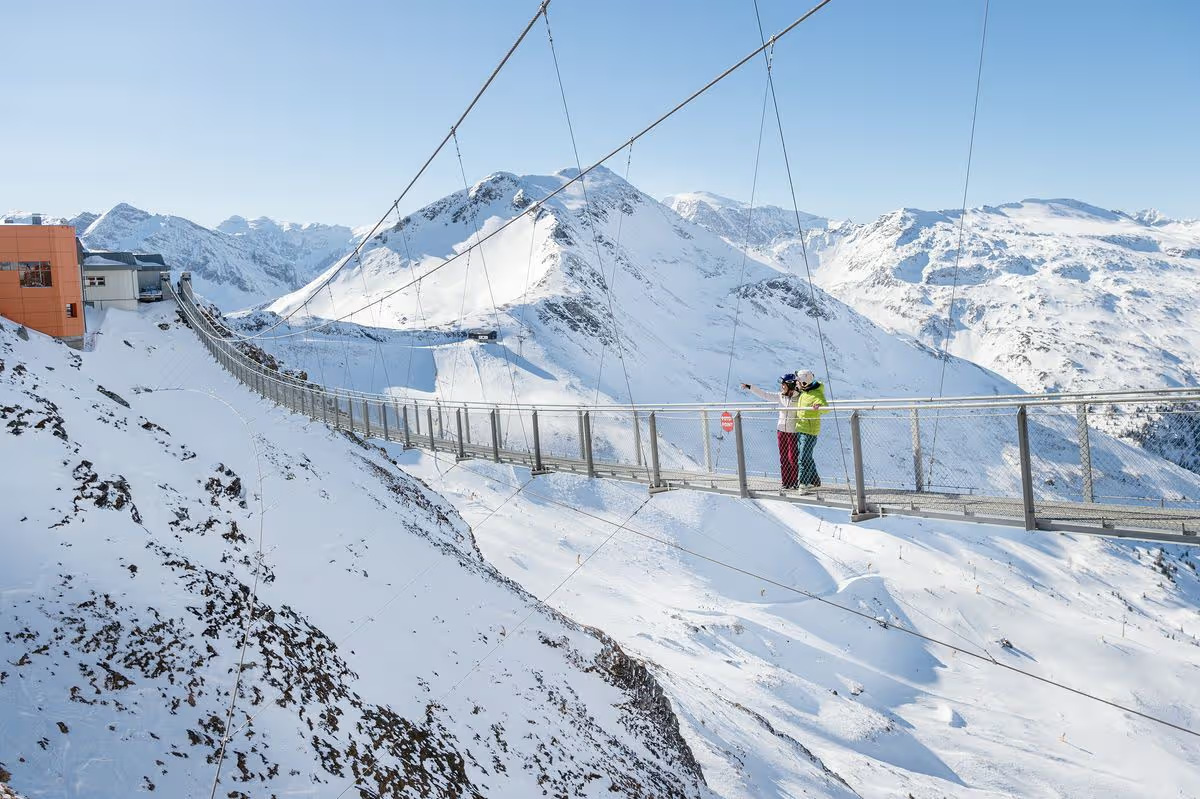
Hidden deep within the Alps in the province of SalzburgerLand, the valley’s twin spa towns of Bad Gastein and Bad Hofgastein combine sweeping mountain scenery, healing thermal waters and classic wooden ski huts that ooze quintessential Austrian charm.
While German may not be known as a romantic language, the Austrian alpine culture all but makes up for it with its cosy wooden lodges with roaring fires, extremely good local wines (I promise it’s not just Riesling), and let’s not forget about the fondue. Something I indulged in for the first time on a recent trip, surrounded by a roaring fire in said cosy lodge, at Bellevue Alm Gastein. Washed down with a good quantity of schnapps, of course.
Do you have a travel story to share? Email webtravel@reachplc.com
With plenty of lodges to curl up in, it’s clear why the region has quietly gained a reputation as one of the Alps’ most romantic winter destinations. The resort of Bad Gastein itself is unusual. Rather than spreading gently across a valley floor like most Alpine resorts, it clings dramatically to the side of a steep gorge.
After a walk around the town during golden hours on a brisk February evening, looking at the mountain views and the marvels of architecture that surrounded me, it hit me – I’m in a Wes Anderson film. The streets were lined with grand pastel coloured hotels perched perilously onto the mountainside, just like in one of my personal favorite films, The Grand Budapest Hotel. I walked through the flakes, feeling as though I had just stumbled onto a film set with Ralph Fiennes and Bill Murray.
But this wasn’t just a figment of my imagination. The cult-classic director is said to have traveled to Bad Gastein, seeking alpine inspiration for the Oscar-nominated hit. Clearly, he found it. It is especially easy to spot when looking up at the façade of the Grand Hotel de l’Europe. The hotel looks out over a cliff, a gentle waterfall crashing below, with all but a bright pink 19th-century funicular distinguishing it from the film itself.
As I continued my wander, the noise of the waterfall offered its own theatrical backing track – and one that becomes even more magical in winter, when mist from the waterfall freezes into crystals and snow dusts the pastel-coloured buildings. This is a magic that has been enchanting people for centuries, with the town having inspired many Romantic composers.
Franz Schubert and Johann Strauss found musical inspiration from the valley, while it is said Mozart himself was born in Bad Gastein before his pregnant parents moved to the nearby city of Salzburg.
Today, that historic grandeur remains, giving the resort a slightly surreal atmosphere that feels part Hollywood and the perfect place for a day together on the slopes.
Ryanair has consistently railed against Nats(Image: Mrkit99 via Getty Images)
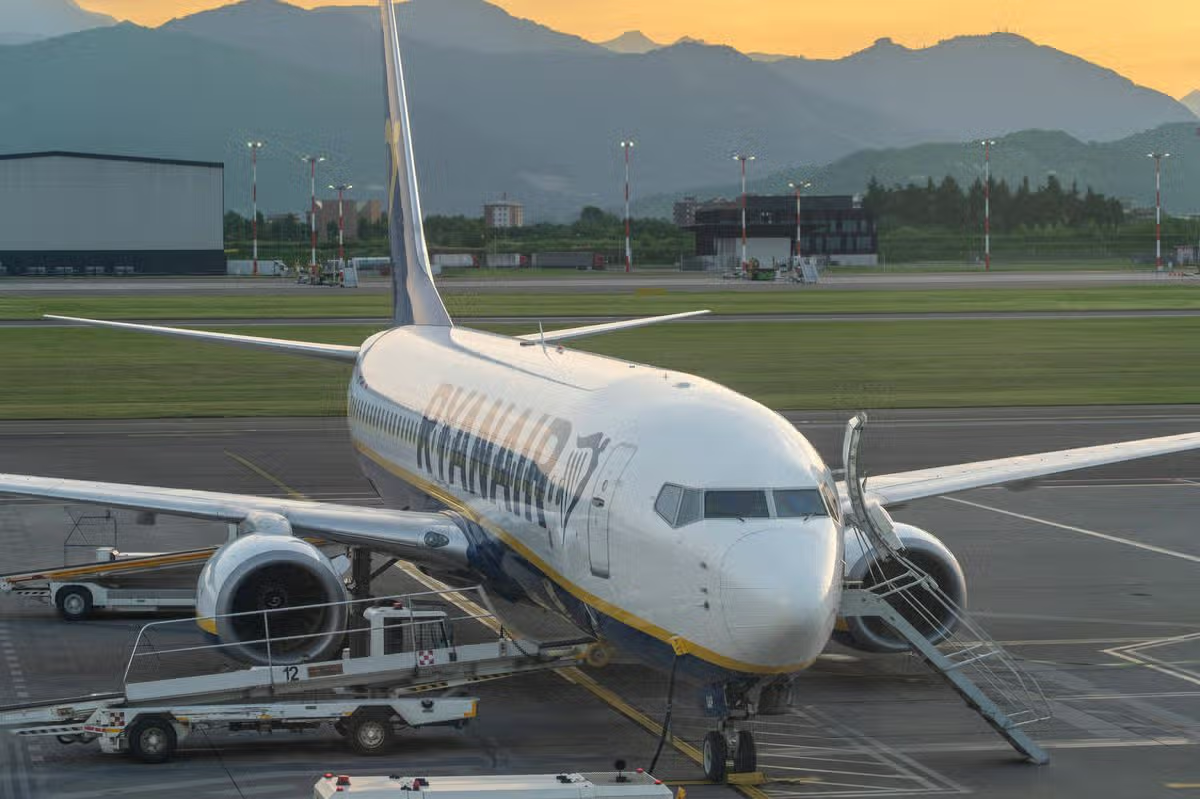
Budget carrier Ryanair has issued an update, confirming that it cancelled 1,000 flights.
It partly attributed the recent “collapse” of Britain’s air traffic control system for the scrapping more than 1,000 flights in September. The Irish airline said the cancellations stemmed from two separate air traffic control (ATC) failures within a fortnight of one another last month, alongside ATC strikes in Belgium and widespread disruption across Europe caused by volcanic ash clouds from eruptions at Mount Etna.
The head of Britain’s National Air Traffic Services (Nats), Martin Rolfe, has faced mounting calls to quit following a string of air traffic failures that led to thousands of flight cancellations across the industry last month, leaving hundreds of thousands of passengers stranded.
The most recent incident was triggered by a “connectivity issue” at its Prestwick centre in Scotland, which was unrelated to an ATC software fault on September 8 that sparked widespread travel chaos.
Ryanair has been among those demanding Mr Rolfe’s resignation, while Transport Secretary Heidi Alexander has arranged a meeting with Nats chairman Sir Warren East, the former chief executive of Rolls-Royce, in the coming weeks to address the ongoing issues.
Latest Ryanair figures
Ryanair’s most recent traffic statistics revealed the airline operated over 111,700 flights last month, carrying 20.1 million passengers, a rise of 4% year on year. Wizz Air also released passenger data showing a 24% increase year on year in passengers flown last month, reaching 7.78 million, with capacity up 25.3%.
Yet Wizz announced recently it would slash its flight schedule by 5% over the second half of 2026 owing to broader Iran war pressures on the travel sector and spiralling fuel costs.
Following the latest disruption, easyJet said it “calls into question the resilience of Nats’ systems” and Jet2 said customers and airlines need “action, accountability and proper resilience”.
Calls to resign
On September 21, chief operations officer for Ryanair Neal McMahon said: “Martin Rolfe has presided over repeated system failures, repeated passenger disruption and repeated failures to deliver an effective back-up system.
“Enough is enough. Martin Rolfe should resign today.”
Tim Alderslade, chief executive of industry body Airlines UK, said ATC was “critical national infrastructure” which “must be resilient enough to keep people moving”.
He added: “Yet another Nats failure is causing delays and disruption for passengers and airlines alike, and comes just days after its report into the most recent major outage. Passengers and airlines deserve better and the independent CAA (Civil Aviation Authority) report, together with the forthcoming Civil Aviation Bill, must address the underlying weaknesses in the system so that these failures stop happening.”
Winning tip: History, buns and Italianate porticoes in Münster
In an often overlooked corner of Germany, near the Dutch border, Münster is an absolute gem. Covered porticos will convince you you’re in northern Italy, gothic churches will remind you you’re in Mitteleuropa and the buns from Zeit für Brot will insist you’re in heaven. Nature-lovers can take in the Botanical Gardens and relax by the Münstersche Aa river. Those of a historical bent can peek into the room where the Treaty of Westphalia was signed in 1648 and mull the report card of nation states in the nearly 400 years since. But really, it’s a great place just to drop-anchor and lose a few days. Jeremy
Germany’s highest railway bridge, near Düsseldorf
Photograph: Hackenberg-Photo-Cologne/Alamy
In the verdant countryside near Düsseldorf, the 129-year-old Müngsten Bridge, the country’s highest railway bridge, rises 107 metres above the River Wupper. The impressive iron and steel structure is billed as Germany’s answer to the Eiffel Tower (yes, really!) and if you’ve got a head for heights, you can don a harness and make the exhilarating climb to the highest point. You’ll be rewarded with incredible views across the valley, especially if you steel yourself (!) for the nerve-racking walk across the narrow beam that spans the top of the bridge. Eat your heart out, Sydney Harbour Bridge. Bex
Profile
Readers’ tips: send a tip for a chance to win a £200 voucher for a Coolstays break
Show
Guardian Travel readers’ tips
Every week we ask our readers for recommendations from their travels. A selection of tips will be featured online and may appear in print. To enter the latest competition visit the readers’ tips homepage
–
A wild North Sea island made for cycling
The North Sea island of Sylt. Photograph: Westend61 /Alamy
Sylt is more than a North Sea island to us. My German grandmother met my British army grandfather, and Sylt became my mother’s childhood island. It feels made for cycling, with peaceful paths winding between grassy dunes, sweeping beaches and little villages. Spend the day riding, watching the surfers and eating warm Nutella crepes by the sea, before settling into a traditional hooded Strandkorb (hooded beach chair) to listen to the waves. Bike hire costs €8-€10 per day. It is wild, windswept and magical, somewhere our family history becomes real every time we return. Fay
Tour the country for a month for €63
Photograph: Imago/Alamy
Get the Deutschlandticket! An entire month of public transport for €63 – buses, trains, trams, ferries … The only thing that isn’t included is faster long-distance trains, but you can figure out how to get from A to B using the Deutsche Bahn website, which has a special “Deutschlandticket only” filter; the need to change trains means you’ll end up discovering places you wouldn’t otherwise visit. It’s worth it just for a week, or, if you do want to travel long distances quickly, just for inner-city transport. Use the German public transport app Mopla to buy one at any time. Joseph
Cologne’s world-class cocktails bars
Cologne’s famous cathedral dominates the skyline and tops most travel itineraries. But having visited for a day on a previous trip, we returned for a city break with one thing in mind: cocktails. The mixology scene here is world-class. The jewel in the crown is Seiberts (pictured), which often and rightly features in lists of the world’s best bars, but Little Link, Woods and Ona Mor all contend and offer different vibes. While not sat at the bar, you’ll find excellent 20th-century art, street art and a lifesized Milka cow at the chocolate museum. John
On a warm autumn afternoon in Berlin, a friend and I rented classic Dutch bikes to explore the city. As the golden hour approached we discovered Tempelhofer Feld. Used as an airfield during a darker era, today it’s a vast recreational green space. Biking on the disused runway was enjoyably bizarre. Berliners and visitors alike were picnicking, kite flying, inline skating, lolling about on bales of hay, skateboarding, tightrope walking, birding … you name it. It is also an important site for rare flora and fauna and grazing animals. Sarah
Ebikes are the perfect way to explore the beauty and vastness of the Black Forest. Powering up gravel tracks that would be impossible on a push bike was so fun and a real hit with the teenager. Setting off from the astonishingly well preserved town of Gengenbach, we headed to the viewpoint at Moosturm observation tower and the Lothar Monument (pictured), where we were rewarded with a glorious 360-degree view of hills patterned with colour and wisps of cloud. On the way down it seemed churlish not to stop at the NaturfreundehausKornebene mountain hut and restaurant for possibly the best sausages of my life. A thoroughly deserved reward: ebiking counts as exercise, right? Alex
500 years of architecture in Görlitz
Photograph: Albazil/Alamy
Görlitz, near the Polish border, merited more than just the day trip I had planned from Dresden so I returned later in my holiday to explore its delights. It’s chock-a-block with charming, colourful buildings, making it beloved of German and international film-makers. Strolling through the cobbled streets of the old town is like leafing through a lavish picture book of 500 years of German architecture, from gothic through the renaissance to art nouveau – don’t miss St Peter’s Church. Eat hearty Silesian sausages at beer houses and if you feel like a swim head out by bus to Lake Berzdorf, with views of the mountains from the sandy beach – or even the middle of the lake where I ventured to. April
Take the family car around a racing circuit in Nürburg
Photograph: Xavier Bonilla/Getty Images
When my son turned 16 we drove to Munich so he could buy his first beer legally. Breaking up the journey we stopped overnight near the Nürburgring racetrack, to take the family estate car around the Nordschleife circuit. You turn up, pay €30-€35, and get in the queue. We were overtaken by everything apart from a coach full of Italian tourists and an ice cream van. Tim
A spectacle of water in Kassel
Photograph: DPA /Alamy
The unexpected highlight of our German road trip was Kassel’s extraordinary Bergpark Wilhelmshöhe, a Unesco world heritage site. On water feature days, park below Wilhelmshöhe Palace (€8.50 per car, including bus travel for up to seven), ride to the Hercules monument, then follow the water downhill on foot. The free spectacle sends 750,000 litres tumbling without pumps through baroque cascades, waterfalls and a Roman-style ruined aqueduct, culminating in a soaring 52 metre fountain. Following the rushing water from one dramatic stage to the next was an adventure, and after the 2.3km descent, your car is waiting at the bottom. Mary
PARENTS will no longer be stung with rip-off fees just to sit next to their children on flights.
Airlines will be forced to seat under 14s beside a mum, dad or an accompanying adult for free.
Parents will no longer be stung with rip-off fees just to sit next to their kidsCredit: GettyAirlines will be forced to seat under 14s beside a mum, dad or an accompanying adult for freeCredit: Getty
It could save families up to £104 on a return trip.
Passengers will also be able to fix simple spelling mistakes on bookings without being hit with charges of up to £40.
Sign up for the Travel newsletter
Thank you!
PM Andy Burnham said: “People are fed up with these little charges that add up.
Holidaymakers will also be given greater flexibility to correct simple name errors including spelling mistakes on bookings for free – rather than facing charges
Airline charges including hidden fees for parents to sit next to children under 14 will be banned(Image: Getty Images)
Rip-off airline charges including hidden fees for parents to sit next to children under 14 will be banned under government plans.
Holidaymakers will also be given greater flexibility to correct simple name errors including spelling mistakes on bookings for free – rather than facing charges.
Under the proposals unveiled today, airlines will be required to seat children under the age of 14 with a parent or adult accompanying them free of charge.
Andy Burnham said: “Charging parents just to sit with their children is a rip-off, plain and simple. And being hit with a hefty fee for a simple spelling mistake on a booking form isn’t right either.
“People are fed up with these little charges that add up, so I’m putting a stop to them. This is what our everyday fixes are all about. Giving people room to breathe by tackling the small irritations that catch people out, waste their time and cost them money.”
Earlier this year the Competition Markets Authority (CMA) investigated budget airline Ryanair over such charges costing around £8 each way.
Under the airline’s old policy parents had to book a “mandatory family seat” to sit with their children aged 2-11 in order to secure a seat when they flew.
But Ryanair – which the CMA said was the only major operator to charge such a fee – changed its policy in June with kids up to the age of 11 seated next to their parents free of charge.
It’s website now states: “For safety reasons, children aged between 2 and 11 years must sit next to an accompanying adult, and infants (8 days to 23 months inclusive) must sit on an accompanying adult’s lap. Families may choose either to reserve seats or select free random allocation.
“If random allocation is selected, children will be seated next to an accompanying adult on the same reservation free of charge. Other adults and teens on the booking may be allocated seats separately.”
The government said that while some airlines already offer protections on fees, the reforms will guarantee the same rights for passengers – despite who they fly with.
British Airways policy already makes clear children up to the age of 12 will be seated for free. It states: “To ensure your family has the best seats when you fly, we recommend choosing yours in advance when you book. There may be an additional fee for this.
“If you don’t choose your seats in advance, we always do our best to seat your family together based on flight seat availability. This may mean that you’ll be seated in adjacent rows or across the aisle. All children under 12 will be seated with an accompanying adult.”
EasyJet’s policy adds:”If you leave it to the last minute it’s possible that there may not be enough seats left for us to seat your family next to each other.
“We’ll still make sure each child under 12 is seated close to an adult on your booking. However we may only be able to arrange this at the airport or on board, which can cause delays for you and other passengers, and not everyone may be seated together.”
The government said the move was the latest in the PM’s attempts to give people breathing space, including action already unveiled on costly subscription traps and school uniform rip-offs.
Heidi Alexander, Transport Secretary, said: “Parents should not have to feel the pinch just to sit next to their child on a flight, or for amending a simple booking error. That’s why we’re scrapping these unnecessary charges for all airlines – another everyday fix to help put money back in people’s pockets and give households more breathing room.
“And everyone deserves to travel knowing their flight isn’t going to be disrupted by bad behaviour from a small minority. These common-sense reforms will make flying safer for staff and passengers and protect people from unnecessary charges, whoever they fly with.”
Rory Boland, Editor of Which? Travel, added: “It’s clearly unfair to force parents and children as young as three to pay an extra fee just to sit together. Airlines that have separated families are putting profit ahead of passenger peace of mind.
“Which? has successfully pressured many airlines into dropping these fees over the past ten years. So it’s welcome to see the government taking firm action on this by outlawing these charges completely and finally putting an end to this rip off.
“It is also positive to see greater flexibility to amend simple mistakes, protecting consumers from unnecessary charges.”
Last year chef Debbie Lee debuted her long-awaited pocha in Highland Park: Yi Cha, one of L.A.’s best new bars, where Lee serves modern Korean bites that pair with artful cocktails and imported soju. Now she’s opened Mokja, a tandem cafe and market for Korean-leaning coffees, sandwiches, pastries and pantry goods. Enter Mokja through Yi Cha’s back alley and find sweet corn iced lattes, coffees topped with misugaru cold foam, and banana matcha lattes served alongside oxtail hand pies, Seoul-style breakfast plates, gochujang short rib onigiri, tomato-muchim pork belly BLTs, and a DIY ramyun station. In a hurry? Grab Lee’s premade bibimbap, mayak eggs, mandu, japchae and more from the refrigerators. If you’re shopping for your home, find coffee, mochi mixes, ice cream, hot sauce, black sesame spreads and other goods from local makers, plus imported Korean Oreos and chips, on the shelves around the cafe.
This summer, Southern California hiker Mark Orr spotted a hazard he struggled to stop thinking about: a crumbling, narrowing section of the Devil’s Backbone Trail near Mt. Baldy.
Orr wanted to help.
In early August, he trekked about 5.6 miles from the trailhead near Manker Flat campground to the site, hauling 85 pounds of gear with him over two trips. Orr first spent two hours digging out a wider route and then built what he dubbed an “anti-erosion fence” by installing 30-inch rebar stakes, stainless steel wire, clamps, aluminum flashing and zip ties. A few weeks later, Orr posted a video documenting his work to his YouTube channel, where he’d previously shared about hiking and other DIY projects. In the video, which Orr has since made private, he said he’d never performed trail work.
A view from Baldy Road leading up the Mt. Baldy Notch in the San Gabriel Mountains.
(Jaclyn Cosgrove / Los Angeles Times)
The people of the internet were initially grateful. “I can’t imagine doing this in my backyard let alone at 9,350 ft. You are THE MAN,” one YouTube user wrote. “I’ve hiked the backbone dozens of times and will remember you with gratitude every time I come across this section,” another person said. One person said his son was one of the three people who died while hiking the Backbone Trail in late December, and he wanted to connect with Orr.
But, as the video’s view count ticked up, concern over Orr’s work mounted into rage.
Two camps developed: Those who lauded Orr’s efforts and those who felt he should be held accountable for what they argued was damage to the trail. “I give this guy an A+ on his intentions and effort,” a Reddit user wrote on a post about Orr’s video. “If a section is dangerous, it should ‘look’ dangerous. To make it look safe, creates a bigger hazard as people will come to rely/trust in what is actually a DIY retaining wall. What happens when that eventually gives way? What if someone is hurt/killed as a direct result of this DIY project?”
You are reading The Wild newsletter
Sign up to get expert tips on the best of Southern California’s beaches, trails, parks, deserts, forests and mountains in your inbox every Thursday.
By continuing, you agree to our Terms of Service, which include arbitration and a class action waiver. You agree that we and our third-party vendors may collect and use your information, including through cookies, pixels and similar technologies, for the purposes set forth in our Privacy Policy such as personalizing your experience and ads.
In this edition of The Wild, our weekly outdoors newsletter, I will report out the current status of the trail where Orr completed his work. I will discuss how we got here — where an individual, not the U.S. Forest Service, tackled a trail repair — and where we go from here, including how you can do your part without upsetting half the outdoors corner of the internet and violating federal policy.
First, let’s talk about Mt. Baldy and how people usually get there.
A segment of the Devil’s Backbone Trail that hikers take to the Mt. Baldy summit.
(Jaclyn Cosgrove / Los Angeles Times)
Mt. San Antonio, commonly referred to as Mt. Baldy for its appearance, is a 10,064-foot peak in the San Gabriel Mountains and is the highest point in Los Angeles County.
Outside of winter, when much of the trail can become covered in snow and ice, most hikers reach Mt. Baldy via two routes. They start near the Manker Flat campground and walk Falls and Baldy roads until they either turn north-ish onto the Baldy Bowl Trail, often referred to as the “Ski Hut” route because hikers pass the Sierra Club’s green building, or hikers continue on Baldy Road until they reach the Mt. Baldy Notch. From here, hikers start the Devil’s Backbone Trail first by trekking up a fire road and then taking on a grueling, narrow 1.9(ish)-mile jaunt that gains about 1,500 feet and always makes me question my life choices about halfway through.
The Devil’s Backbone is named as such because of its shape, including segments where hikers walk a narrow stretch with steep drop-offs on both sides. This steepness is part of what makes it susceptible to erosion — and why only serious, well-equipped mountaineers should traverse it during the winter.
The Devil’s Backbone Trail, per the U.S. Forest Service, is 3.24 miles long, starting at Baldy Notch and ends at Mt. Baldy Summit.
(Jaclyn Cosgrove / Los Angeles Times)
On Sunday, I headed up Baldy Road to see how Orr’s repairs were holding. I am active in the r/socalhiking Reddit community, where I first learned of the story, and had already seen images showing a hole developing at the start of Orr’s repairs.
But no one had pinpointed exactly where they were.
Once I reached the Devil’s Backbone, a hiker warned me about a particularly steep and narrow section he’d just traversed.
“Is this the part with the repairs?” I asked.
“No, that part is way up, and it is already breaking down,” he told me.
I then chatted with two high schoolers coming back from summiting Baldy, one of whom hopes to attend a University of California school to study environmental science. “A little bit of rain,” and it’s gone, he said of Orr’s repairs.
A segment of a repair performed by a local hiker that has started to fail.
(Jaclyn Cosgrove / Los Angeles Times)
Just over a mile into the Devil’s Backbone, I spotted the shiny aluminum of Orr’s anti-erosion fence. And I spotted the hole where fill dirt has fallen through. Before Orr started his work, the trail was narrow — his work did widen the route, but how long will it hold?
Alan Coles, a trail crew leader with the San Gabriel Mountains Trailbuilders, which maintains routes in the backcountry and Baldy area, told me the answer is probably not long, especially given the rain and snow we could get this winter from El Niño.
A segment of the Devil’s Backbone Trail where a hiker attempted to widen and repair the crumbly trail.
(Jaclyn Cosgrove / Los Angeles Times)
“Taking another look at the video, the problem with the trail may be due to a buildup of material washing down from above,” said Coles, who has 35 years of trail maintenance experience. “Often the best solution is to dig it out and lower the trail to the original alignment, which will also widen it. The problem with the repair is that the hardware he installed would make that difficult. In time, the material he used will come apart, and those stakes will get more exposed, leading to problems with people tripping on them, especially if there is snow.”
Coles said to begin work in Angeles National Forest, he must submit a list of trails that his organization wants to work on to the U.S. Forest Service. The agency’s archaeologist, biologist and other technical experts will review his list. If there are any issues with a particular trail that Coles has identified needs repairs — like if an endangered species is known to live in a creek next to the trail — the Forest Service could deny his request, thus leaving the trail unmaintained.
A hiker walks near the hole created by unauthorized repairs performed in early August.
(Jaclyn Cosgrove / Los Angeles Times)
Coles said the Devil’s Backbone Trail is a “very difficult repair” for a lot of reasons, including its high altitude and the need for a crew to get permission to use the fire roads to shorten the distance they have to haul their gear. Coles said hikers often ask him when his crew will work on the Three T’s Trail, as the route has several downed trees and other issues, and his crew faces similar access issues.
Coles said he sympathizes with Orr’s reasoning for repairing the trail: People died in that area.
“His heart’s in the right place, but it really needs to be done with someone who says, ‘OK, here’s how you properly do a repair like that,’” Coles said.
It’s impossible when thinking about Orr’s repairs not to think about the old adage of, “The road to hell is paved with good intentions,” and the brutal irony is that, once you reach the Devil’s Backbone, you’re going to need more than that.
Two hikers navigate down the Devil’s Backbone Trail after summiting Mt. Baldy, the highest point in L.A. County.
(Jaclyn Cosgrove / Los Angeles Times)
When I spoke to Orr after my hike, he said he hopes that he can join the trail crew to remove what he did and repair the trail properly.
“The first thing is, it was nothing but well intentions by somebody who loves the mountain and wants it to be safer for everybody,” Orr said. “I totally get that my first crack at this, I didn’t do everything right, and I’m actively working with the San Gabriel Mountains Trailbuilders to get it right before this winter.”
The final challenge, though, will be getting officials at the U.S. Forest Service to approve the work plan. A spokesperson at Angeles National Forest did not respond to my request for a comment or an interview for this story.
Orr’s trail repairs come at a time when outdoors lovers are feeling particularly protective of public lands. The Trump administration has continued its efforts to peel back layers of environmental protections, like the Roadless Rule, raising the alarm of park advocates who fear not even Yosemite is safe from development.
The sunset as viewed Sunday on a trail often referred to as the “Ski Hut” route.
(Jaclyn Cosgrove / Los Angeles Times)
At the same time, the U.S. Forest Service and National Park Service have both seen massive staffing cuts during Trump’s second term, and this comes after decades of underfunded trail construction and repair.
In the early 1980s, “each of the five Angeles Forest districts had a full-time, paid trail crew of eight to 10 members. Now there are only summertime crews with three to four members. Forest Service officials and the agency’s critics agree that if it were not for the volunteer corps of 700 trail builders, the mountain paths would not be repaired for years,” according to a 1993 Times story.
Those crews, Coles said, were one of the casualties from a swath of federal budget cuts in the 1980s. A 1986 Times story noted that, in just four years, “the amount of federal money allocated for trail maintenance nationwide and in Southern California … dropped about 50%.”
“For the most part, without the volunteers, you wouldn’t have a trail system today,” Angeles National Forest official Don Gilliland told The Times in 1993.
The sun goes down, casting orange and pink hues through the clouds above the San Gabriel Mountains near Mt. Baldy Village.
(Jaclyn Cosgrove / Los Angeles Times)
The agency continues to rely heavily on volunteers. The U.S. Forest Service estimates that it has about $10.8 billion in deferred maintenance, including $241 million in deferred trail maintenance and almost $70 million in trail-bridge deferred maintenance, according to a recent budget document.
In an analysis of that backlog of work, officials with the U.S. Government Accountability Office heard from one regional official who told them that the trail maintenance program “is held together by Band-Aids and baling wire.”
If you’d like to be part of that baling wire, you can join Orr in joining a local trail crew. There are several who service the San Gabriel Mountains and their foothills.
It is easy to read about Orr’s efforts and point out the obvious mistakes he made. It’s another thing to take action, whether that’s donating to local trail crews or volunteering on their work days. I’ll see you out there, focusing on the latter.
3 things to do
A coyote drinks water puddling near the golf course at Griffith Park.
(Mel Melcon / Los Angeles Times)
1. Document dicots and deer in L.A. The Los Angeles Public Library, along with other city agencies, will launch this year’s L.A. Nature Quest at 9 a.m. Saturday at the Griffith Park Visitor Center. The L.A. Nature Quest is an annual monthlong effort to document as much of L.A.’s flora and fauna as possible using iNaturalist, a citizen science app. Attendees will be guided by rangers and other experts in a morning of outdoor exploration and nature journaling. Downloading iNaturalist beforehand is recommended. Register at eventbrite.com.
2. Sit down and spy birds in Pasadena The Pasadena Audubon Society will host a seated birding experience at 8 a.m. Saturday on the Gamble House lawn (4 Westmoreland Place in Pasadena). Guests should bring water, sunscreen, a lawn chair or blanket, and a hat. Participants can bring their own binoculars, but there will be some to loan out for those without. Register at eventbrite.com.
3. Marvel at mushrooms in Monrovia Monrovia’s Canyon Park Nature Center will host the opening reception for the Mushrooms of the San Gabriel Mountains at 10 a.m. Sunday. Mycologist Aaron Tupac will share with guests about how and why they photographed the specimens shown in the exhibit, along with sharing information about our local fungi populations. Learn more at Tupac’s Instagram page.
The must-read
Biologists collect olive ridley sea turtle eggs from nests on Southern California beaches.
(Huntington Beach Police Dept.)
In mid-September, two heart-shaped olive ridley sea turtles made history when they dug nests on Seal and Huntington beaches, marking the first documented natural sea turtle nests on the U.S. West Coast. Times staff writer Corinne Purtill wrote that biologists and cheloniophiles barely had time to celebrate before realizing that these nests were at risk of being destroyed by incoming storm surges and high tides. Biologists recovered just over 200 eggs. “We had to make some quick decisions,” said biologist Jonathan Snyder of the U.S. Fish and Wildlife Service at the Aquarium of the Pacific in Long Beach on Friday. “This is the decision that we made, and I think it’s the best one for species recovery.”
Happy adventuring,
P.S.
Montrose Search and Rescue recently highlighted the perils of taking the wrong route to hike Strawberry Peak. Strawberry Peak, visible from several L.A. hikes, is the highest point in the front range of the San Gabriel Mountains. Montrose Search and Rescue recently rescued hikers, though, who’ve ended up on the mountaineering route. Their video highlights how crucial it is to know your route before you go — and to ensure you have a physical map with you in case you get lost. Stay safe out there, folks! (And don’t hike Strawberry Peak right now — it’s too hot.)
For more insider tips on Southern California’s beaches, trails and parks, check out past editions of The Wild. And to view this newsletter in your browser, click here.
A PRETTY English seaside town could soon get a massive upgrade.
Gorleston in Norfolk is home to Gorleston-on-Sea Beach which was recently named one of Europe’s best beaches in Tripadvisor’s Travellers‘ Choice Awards.
Gorleston in Norfolk could be getting a new waterfront attraction with a soft play area and wellness centre
And now the seaside destination could be getting even better with a new waterfront attraction.
The Ocean Room used to be a thriving nightclub with bands like Blur and Pink Floyd performing there.
Sign up for the Travel newsletter
Thank you!
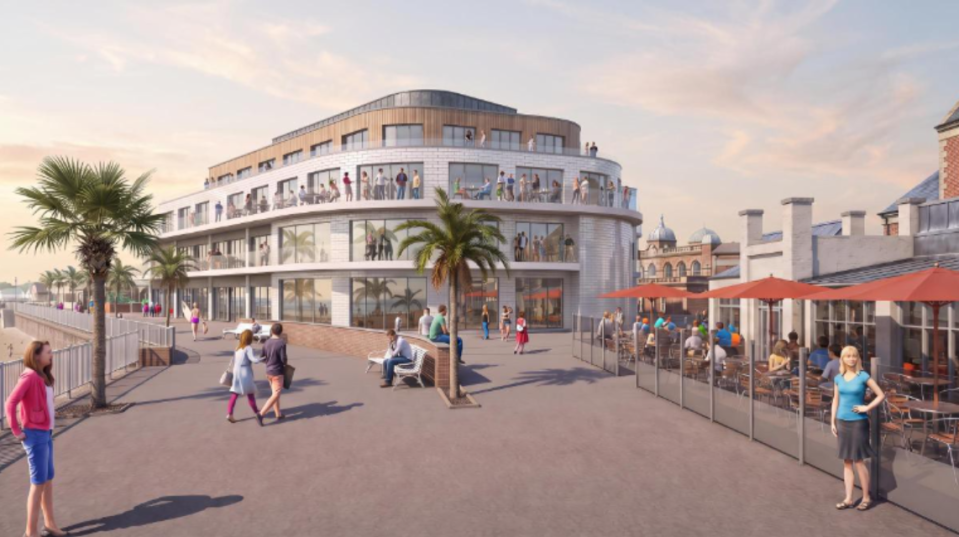
Now, the council has sold the building for £500,000 with future plans looking to replace the building with a soft play area, indoor games space, a coffee shop and a wellness centre with a spa.
The surrounding area would be redeveloped too with connections to the nearby Gorleston Pavilion Theatre and the bandstand.
If The Ocean Room was to be saved, the local council has estimated it would cost £1million to repair the building.
According to the BBC, the developer said: “The Ocean Room holds a special place in the hearts of many and the team recognises the building’s removal will be a source of genuine disappointment for the community.
“However, it should be noted that the council itself identified significant structural concerns with the building before the site was sold.”
While formal plans have not been submitted to the council yet, the round, Art Deco building could be facing its last days.
It would be built where the current Ocean Room is
The Ocean Room originally opened back in 1939 and used to host dinner dances, boxing events, nightclub evenings and concerts.
It then closed in 2024 after its tenants went into administration and the building has remained empty since.
But the island is popular with wildlife lovers, with exotic birds, deer and free roaming peacocks.
It has a huge red squirrel population too, with around 250, best spotted in the morning.
The 16th century Brownsea Castle, built by Henry VIII, is the main building on the island, but you won’t be able to stay there as it is sadly privately owned.
Instead there is the Brownsea Island Campsite, with 40 pitches in the summer, or a number of lodges sleeping from 2 to 12 people.
It will reopen again in March 2027Credit: Alamy
There is an adventure playground for kids, with everything from den building to obstacles.
You’ll have to leave the dogs at home sadly, as only assistance pets are allowed.
Daily guided tours take place too twice a day.
Otherwise you can fill your stomach at the Vilano Cafe which has snacks, drinks and a snack van in the summer.
Looking for your next coastal getaway? We have teamed up with family-owned coach holiday specialist Daish’s Holidays to give two lucky readers the chance to win a £400 voucher towards a UK break
Enjoy a seaside escape with Daish’s Holidays
Looking for a charming seaside break? Daish’s Holidays, a UK based family-owned coach holiday specialist, is giving two lucky readers the chance to win a £400 voucher to spend on a UK getaway at one of its 11 hotels.
Picture days spent strolling along scenic coastlines, exploring picturesque seaside towns and villages, unwinding in welcoming accommodation, and enjoying good food and live entertainment. It’s a perfect recipe for a relaxing coastal getaway with Daish’s.
Each winner will enjoy a half-board, four-night stay at one of 11 charming Daish’s hotels across Britain’s favourite seaside destinations:
Newquay: Barrowfield Hotel
Bournemouth: Bournemouth Sands Hotel
Isle of Wight: Daish’s Hotel
Torquay: Devonshire Hotel | Abbey Lawn Hotel
Scarborough: Esplanade Hotel
Weymouth: Hotel Prince Regent | The Russell Hotel
Eastbourne: Imperial Hotel
Weston-Super-Mare: Sandringham Hotel
Llandudno: Somerset Hotel
Travel by coach from one of Daish’s Holidays’ many pick-up points across England, from West Yorkshire to Cornwall, or make your own way and enjoy a self-drive break.
Whether you’re looking for fresh sea air, sightseeing or simply a chance to relax and unwind, a Daish’s Holidays break could be the perfect seaside escape.
To be in with a chance of winning, simply fill in the form below. If you can’t see the form, click here.
For full details and to explore all destinations, visit www.daishs.com.
Brits are continuing to face delays due to the EES system, and queues of five hours were reported just last week at a popular city break destination for those visiting from outside the EU
The long queues seen over the summer seem to be continuing for Brits(Image: JOSEP LAGO/AFP via Getty Images)
European Entry/Exit System (EES) continues for Brits with a major European airport confirming that non-EU visitors faced five hour queues last week.
The Brussels Times reports that non-European travellers, including Brits and Americans, were forced to go through staffed control posts leading the the huge queues. In a statement to the Belgian news outlet, the airport confirmed that additional police officers are being trained for the border control posts and they were seeking “structural solutions”.
When contacted for comment, a spokesperson from Brussels Airport said: “Since the introduction of the European Entry/Exit System (EES), border checks for travellers covered by this system have taken longer, as is the case at many other airports. In addition, passengers from certain non-EU countries can no longer use the e-gates. As a result, more passengers need to go through staffed border control points, which has increased waiting times.”
They added: “All parties involved continue to work together on long-term solutions.” The airport spokesperson confirmed the airport had added two extra border control booths for the Federal Police at departures, in addition to two booths that were added at arrivals before the introduction of EES.
They went on to say: “The Federal Police also increased staffing levels on a permanent basis during the summer, and further reinforcements have been planned. More police officers are also being trained to ensure sufficient staffing at border control points, and additional infrastructure needs are being assessed.
“In addition, 60 EES pre-registration kiosks have been installed. These allow non-EU travellers to submit some of their information in advance. The connection between the e-gates and the pre-registration kiosks is still being tested so that, in the future, passengers from certain non-EU countries may be able to use the e-gates again.”
EES launched nearly a year ago, on October 12 2025, before officially becoming operational on April 10 2026. However, over the summer months holidaymakers have reported a myriad of issues with the system.
But no sooner was it launched than countries started to pause, or even shelve the scheme, due to the huge queues snaking through airports. Nine countries have put full EES implementation on hold, despite the fact that the EU said there would be no extension to the deadline. Holiday hotspots such as Greece briefly made an exemption for British holidaymakers over the summer, which has now been reversed, putting them back in the queue.
Over on Reddit, a poster took to the R/Belgium sub with a post titled: “Brussels airport queues should be a national scandal”, asking: “Why are they so bad? EES isn’t new anymore. They hardly have anyone checking passports. Are people in Belgium aware that queuing for 1hr + isn’t normal?”
One poster replied: “If you’ve got a kid under 12 you have to go through a manual check and can’t use the kiosks, and while usually shorter than the all passports line, it can sometimes be long as well. We waited 20-30 minutes last Friday mid morning. The all passport line was all the way along the back of the security screening area. I don’t remember the last time I’ve seen more than 3 agents working and an all passport line shorter that didn’t back up into the arrivals corridor. “
Reviews of the airport on Google tell the same story. One visitor said: “The passport control situation at Brussels Airport is completely unacceptable. Every time I arrive and have to use the “All Nationals” queue, I face the same problem: an enormous line and an extremely long wait, sometimes lasting hours.”
They added: “This is an international airport and one of the main gateways to the capital of Europe. Yet the passport control capacity seems completely inadequate for the number of arriving passengers. Hundreds of people are forced to stand in line after long flights because there are simply not enough control points operating to process passengers within a reasonable time.”
Have a story you want to share? Email us at webtravel@reachplc.com
IF you want beautifully hot winters without the long, stopover flights, then an island is about to be on your list.
The island of Mauritius, just off the coast of Madagascar in East Africa, has seen a drop in passengers in recent years.
Mauritius is set to be even easier to get toCredit: AlamyThe island has beachfront resorts and 30C wintersCredit: supplied
According to Travel Gossip, visitor numbers fell by 11 per cent, linked to the Middle East conflict due to the majority of flights operating via Dubai.
However, it also rose slightly back in August, with last-minute bookings to the island.
Sign up for the Travel newsletter
Thank you!
Airline Air Mauritius – who currently operates flights from London Gatwick – could add even more from the UK.
Dinesh Burrenchobay, Chairman of the Mauritius Tourism Promotion Authority, said: “Air Mauritius has committed to increase its frequency back to five flights a week, maybe even six or seven.
“It didn’t commit to a timeline, but I think we will get extra flights from the UK by nextsummer.”
The UK is one of the island’s biggest markets, with as many 150,000 visiting a year.
Air Mauritius UK Country Sales Manager Allan Owen added: “We are looking at the tourist board to increase knowledge of Mauritius and what it has to offer and we will increase capacity in line with rising demand.”
Direct flights from the UK to Mauritius take just under 12 hours.
Le Morne Beach is known for being one of the world’s best beachesCredit: Alamy
However, the time difference can be as little as 3-4 hours, so jet lag is minimal.
Not just that, but January is one of its hottest months with highs of 30C, so its the ideal escape from the cold UK.
When it comes to visiting the island, the north is popular with fly-and-floppers with most resorts lining the beaches.
Otherwise the south of the island is more for the nature fans, with waterfalls and tropical jungles.
One of it’s most famous beaches is Le Morne Beach, often named one of the best in the world.
We’ve found some very cheap holiday deals – local B&B breaks start from £739pp (with flights and seven nights) while beachside resorts start from £999pp on loveholidays.
The rules come under Public Spaces Protection Orders (PSPOs), which can result in fixed penalties when breached.
In this case, first-time offenders may be given a penalty of £100, with a maximum fine of £500.
However, even with the ban lifted, some councils still require dogs to be on leads while walking on footpaths, promenades, piers and zig zags.
The seasonal ban comes every year with the aim of keeping beaches clean and safe during the busier summer months, especially when children may be visiting the coast.
Foul left behind by pets can also act as a major health hazard – even if the majority of dog owners are responsible enough to pick it up.
The rules do not apply to guide dogs, who are allowed on beaches at all times while working and in a harness.
Antler’s bag is ideal for running around all day or taking as hand luggageCredit: Antler
A GREAT work bag is hard to find, so when one comes along at half the RRP, well, that’s tough to resist.
Antler’s Icon Tote Bag in a beige sand hue has dropped from £120 to £60, bagging shoppers a tidy £60.
The tote bag is easy to pack and comfortable to carryCredit: Antler
Icon Tote Bag, £60 (was £120), from Antler
Shoppers have given the tote a five-star rating, describing it as being ‘very practical’ for travelling as a carry-on, but also for getaways or office days, with one noting: “This is the perfect work bag that I have been searching long and high for.
Sign up for the Travel newsletter
Thank you!
“It’s roomy enough to hold my laptop and headset, with a coffee and water bottle, notebook and possibly more.”
A second added: “Perfect for both work and social outings, 100% recommend.”
It comes in khaki and black for £72, and is made from 100% recycled, water-resistant fabric and features a full zip-top closure, so your precious belongings are protected whatever the weather.
It can fit laptops up to 16-inches, and there are eight internal slip pockets to keep everything in place.
And that’s not all: the tote features a water bottle holder too, while the external front pocket offers easy access for essentials.
Antler has also slashed the price of the Expandable Cabin Suitcase (now £105, down from £175) and the Medium Suitcase (now £164.50, down from £235.00), just in time for the October half term for those planning a family trip.
The tote comes in two other colour optionsCredit: Antler
It boasts a 4.9 rating based on 360 reviews: “It’s so spacious with lots of compartments that makes it perfect for travelling or if you have a busy job.”
There’s also the Typo Mode Tote from Cotton On, available in strawberry milk and cloud, which has been reduced from £30 to £15.
If you’re going away, this top-rated electric toothbrush is £185 off at Boots and comes with a travel case — the high street retailer has also launched a Fragrance Advent Calendar with several minis, perfect for slipping into your new tote bag.