The station is located next to the famous Cambridge Biomedical Campus and boasts four platforms that will see up to nine trains per hour pass through.
The site also offers over 1,000 bicycle parking spots, ticket vending machines and lifts that provide step-free platform access.
The arrival of the new station will “deliver better transport options and connectivity for 1.8 million passengers”.
It’s also hoped the transport boost will “grow and level up the economy” by increasing employment opportunities.
Paul Bristow, Mayor of Cambridgeshire and Peterborough, said: “With up to nine trains per hour and all passing services stopping, Cambridge South will make a real difference from day one.
“Cambridge South will bring London, Stansted Airport and international markets closer, supporting the investment and skilled people we need, and creating opportunities locally too.”
Looking nervously to my right, I see a small avalanche careering down the side of Mont Blanc.
It’s a not-so-subtle reminder that the ropes around our waists are the only things that might offer protection if the glacier beneath our feet suddenly shifts.
But despite the snow on the ground, I’m soon stripping off my layers because the temperatures can reach balmy heights in this gorgeous Italian Alpine region during summer.
To arrive here, I hopped on the Skyway Monte Bianco cable car which whizzed me 3,466 metres up to the glacier from the village of Courmayeur in ten minutes — with a stop at 2,173 metres to switch cabs.
The cable car costs £50 in advance to go to the top — but this does include entrance to a variety of attractions including an Alpine garden, kids’ play area and Europe’s highest library.
As well as a chance to refuel in its restaurants, the middle Skyway station offers another treat — a cave where they mature a vintage wine grown here.
And even if you’re not drinking wine, you’ll be able to drink in the amazing views of Italy’s Aosta Valley.
Skyway Monte Bianco slowly rotates so you don’t miss any of the incredible scenery.
Back in the sun-drenched valleys, there’s not a speck of snow in sight — but we still eat for winter, piling our plates with gourmet raclette and classic Italian pastas.
The region’s restaurant highlights include Cadran Solaire, whose wild-boar ragu is the stuff foodie dreams are made of.
But if your stomach is firmly in summer mode, you can tuck into lighter home-cooked delights at La Terrazza, where the owner has brought southern Italian delicacies to the Alps.
Classics like carbonara are on offer, as well as starters of anchovies with mozzarella.
Live the high life on the Skyway Monte BiancoCredit: GettyEnjoy stunning mountain viewsCredit: Getty
If you’re worried about all those calories, the slopes of Courmayeur will be your saviour.
The mountains become a walkers’ paradise in summer, with unbelievable trails from the two valleys either side.
One morning, I headed to Val Ferret, which can be accessed by bike, a free bus or car.
It’s flanked by the Mont Blanc Massif, Mont Dolent and Tour Noir.
From here you can see the gigantic Brenva Glacier — the second-longest glacier in Italy.
The valley can be enjoyed on foot, or on horseback for around €30 (£25) an hour.
But for those who prefer something more challenging, the ski area Checrouit offers uphill walks where you climb 300 metres in just an hour.
Thank goodness for the heated pool and sauna back at the Gran Baita.
I’m not sure how my limbs would have recovered without them.
GO: COURMAYEUR
GETTING THERE: easyJet flies to Geneva from £36.49 or Turin from £40.99.
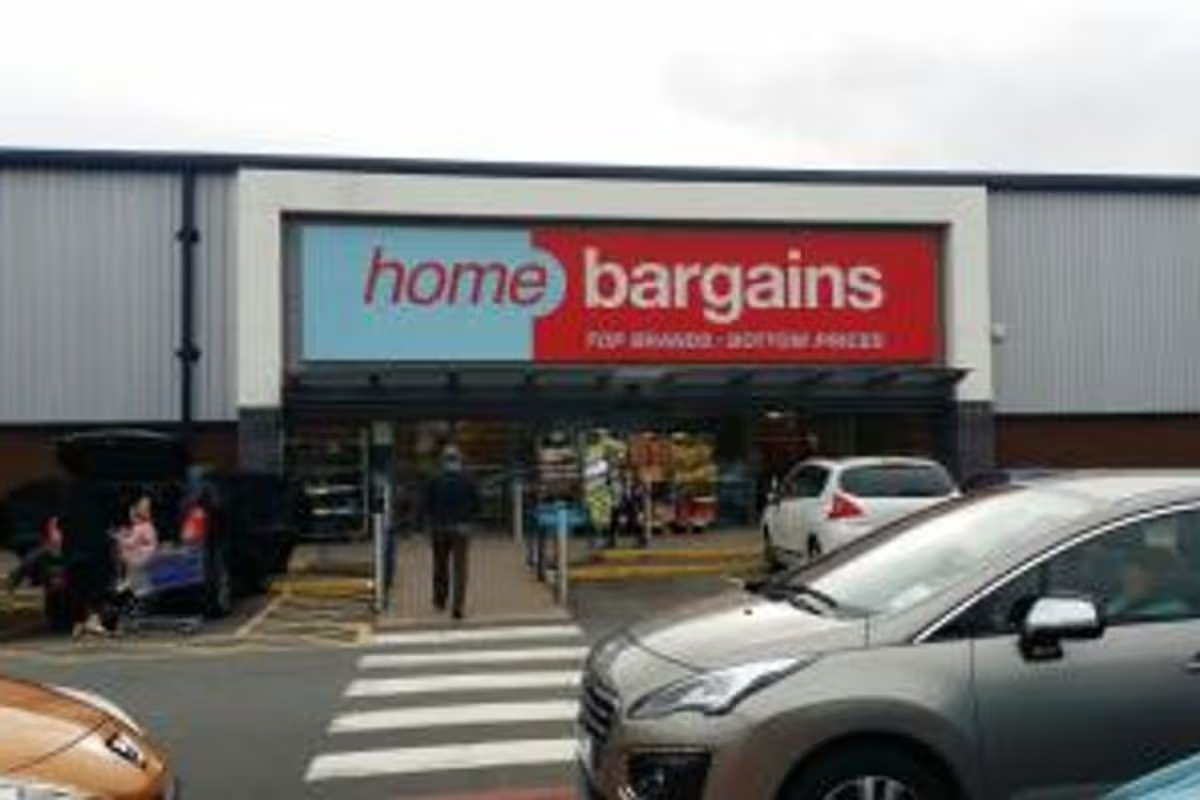
A budget-friendly cabin bag from Home Bargains is available to buy right now while stocks last
Home Bargains is selling a budget-friendly cabin bag(Image: Home Bargains)
A “versatile” cabin bag described as a “fantastic size” has landed on shelves at Home Bargains, and it could take the hassle out of getting ready for your next trip. The wallet-friendly purchase is designed to provide ample packing room while remaining compatible with a number of airlines operating throughout the UK.
The popular high street retailer is widely recognised for its extensive range of homeware and furnishings, but it has also been steadily growing its selection of budget travel accessories. Step forward the Salisburys Under Seat Bag, which will set you back just £9.99.
Describing the item, Home Bargains said: “Meet the Salisburys Under Seat Bag – your perfect travel companion! With its spacious zipped compartments and sleek design, it’s ideal for keeping your essentials close at hand while you jet off on your next adventure.
“Salisburys presents its broadest line-up of tried and tested luggage solutions with contemporary features to help the modern tourist navigate the hurdles of twenty-first century travel.
“Salisbury Under Seat Bags solve modern travel issues of the check-in case. A fantastic size bag that is versatile for the needs of your modern travel. Large open zipped storage compartment with small zip side pouch.”
Coming in four colours — black, green, light pink and purple — the bag boasts a rectangular design, complete with two carry handles at the top and an adjustable shoulder strap on each side. It comes with a zip fastening along the top, a padded exterior featuring stitched horizontal pockets at the front, plus several zip compartments throughout.
With dimensions of 40cm x 20cm x 25cm, the bag falls within the free under-seat cabin baggage allowances offered by a number of major airlines. It is compatible with carriers including Ryanair, and also fits comfortably within the larger free personal item allowances provided by the likes of easyJet, Jet2, TUI and British Airways.
Holidaymakers are nonetheless urged to double-check their airline’s most up-to-date baggage policy prior to travelling, as regulations can differ depending on ticket type and route. Those keen to find out more are encouraged to head over to the Home Bargains website.
The bag is available both in-store and online, with Home Bargains offering standard home delivery across the UK mainland for £3.95, and free delivery on orders over £100. Larger furniture pieces carry a £10 delivery charge, and standard parcels typically land within four working days.
A night on the beers could start in a jail cell in this unique pub, but it’s just one of the unusual buildings that has seen new life after being turned into a ‘Spoons – here’s a roundup of some unique places you can enjoy Curry Club or just a quiet pint
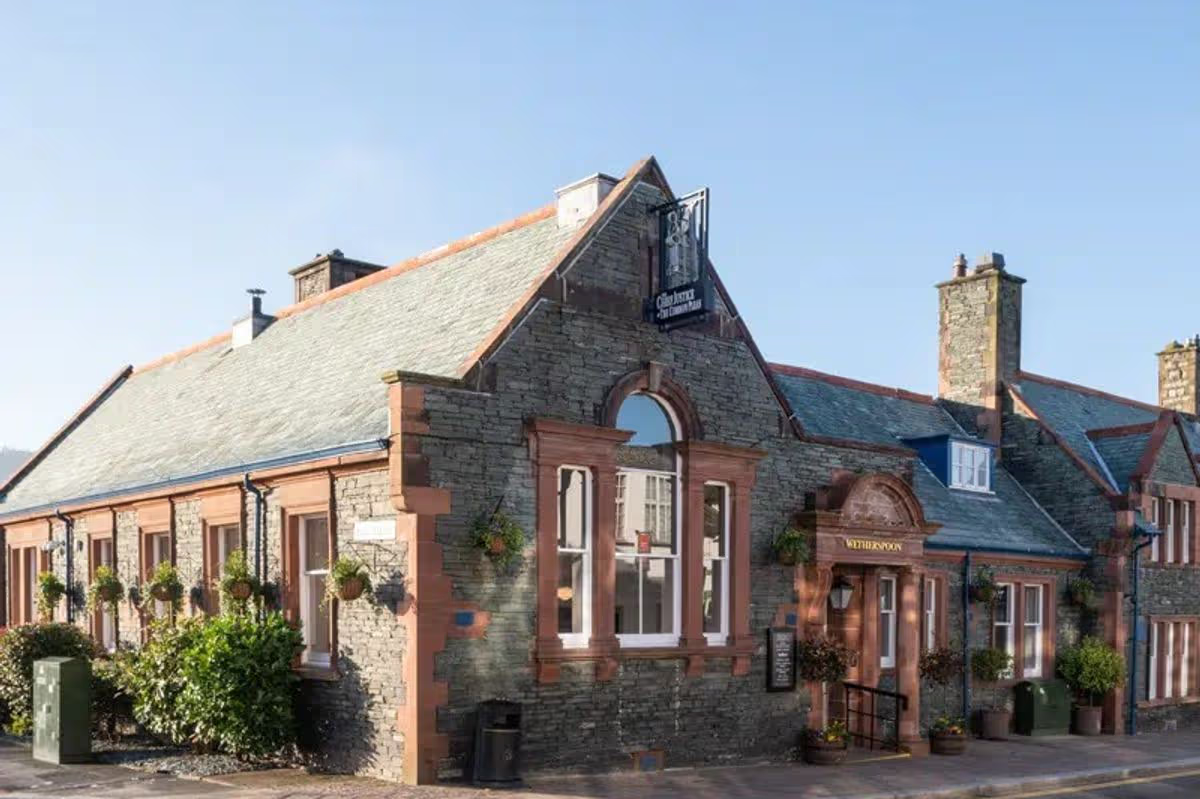
This Lake District pub is a unique place for a pint(Image: J D Wetherspoon plc)
Love or hate Wetherspoons, you have to admit that the giant pub chain has a knack for turning some unique venues into places to grab a pint and enjoy a cheap lunch.
Across the UK, many abandoned buildings are being turned into drinking venues, and while the settings are unique, all the places have the same classic ‘Spoons menu and deals, so you know what you’re getting when you visit.
Here are some of the weirdest venues snapped up by Wetherspoons, from an old bank where you can sit in the vault, to a dramatic opera house that has kept its opulent vibes for a classy start to your night on the town.
1. The Chief Justice of the Common Pleas – a courthouse with jail cells
Built around 1901 in the Lake District town of Keswick, The Chief Justice of the Common Pleas was originally a magistrates’ court and a police station, where unlucky criminals would often be caught and thrown in one of its cells for the night before trial. No doubt many a drinker ended up here after a few too many beers.
Nowadays, the sturdy brick cells have been turned into booths where you can enjoy a drink with friends, and while there’s a much cheerier atmosphere, you can still see the remains of the building’s old life. There are heavy metal doors with locks and high windows covered with bars that once kept people securely inside. However, punters are free to roam outside for a drink in the beer garden, surrounded by the classic Lake District stone buildings of this charming market town.
2. The Rawson Spring – former swimming pool
Kids who grew up in the 70s and 80s around Sheffield may well have taken their first dip in the former Hillsborough Baths, which are now a ‘Spoons called The Rawson Spring. These vast council-run baths opened in 1926 and closed in 1991, hosting many decades of swimming lessons and summer fun.
The cavernous space has since been turned into a giant Wetherspoons, and many of the original features may still be recognised by eagle-eyed former customers. The balcony around the top where spectators once stood is still intact, and you can still see the old poolside changing rooms where tables are now set up.
3. Opera House
If you’re looking for a classy and cultural setting in which to enjoy your chicken basket, then head to the Opera House in Tunbridge Wells. The name pretty much sums it up. This ornate Grade II listed building was designed by famous architect John Priestley Briggs and completed in 1902, becoming a bingo hall in the 60s before Wetherspoons snapped it up in 1996.
Its red interiors with gold accents and chandeliers still make it feel much like a space for a grand performance, and occasionally the local opera group will put on a show worthy of this beautifully preserved building.
4. The Counting House – former bank with vault
Wetherspoon has converted plenty of old banks over the years, but one of the most notable is The Counting House in Glasgow, where you can drink inside a former vault.
Once a major branch of the Bank of Scotland, this Italian Renaissance-style building was constructed between 1867 and 1870, with a high domed ceiling, marble fireplaces, Corinthian columns, and stone statues. Nowadays, the main bar sits under the dome, and punters can also sit behind bars in the old vault. Although luckily, with Wetherspoons prices, you won’t need to rob a bank to get a round in.
5. Piccadilly Hall – former amusement park loved by 90s kids
If you were a 90s kid on a day out to the capital, odds were you’d beg your parents to take you to London Trocadero. This iconic building set at 30 Shaftesbury Avenue was once the ultimate indoor amusement park, with several floors of arcade machines and even an indoor drop ride at its centre. It’s perhaps best remembered as the home of SegaWorld, which was reached by a giant rocket escalator.
When Trocadero closed, parts of it became a pod hotel, and now there are plans to turn some of the building into one of London’s largest ‘Spoons in the heart of Theatreland. Reportedly set to open in late 2026, Piccadilly Hall will span over 3,600 square feet, offer a massive 280 covers, and open from 7am until midnight, seven days a week.
Have a story you want to share? Email us at webtravel@reachplc.com
Millions of Brits are due to pack up the budgie smugglers and inflatable doughnuts and head abroad – but there are plenty of sneaky charges and questionable practices that can easily ruin a holiday
Don’t get caught out this summer(Image: encrier via Getty Images)
Are you due to travel abroad for a holiday in the coming months? You’re not alone.
Despite dire warnings of cancelled flights, raising prices and stifling heatwaves, millions of Brits are due to pack up the budgie smugglers and inflatable doughnuts and head abroad.
However, there are lots of extra charges, shoddy practices and other travel traumas that can catch out the unwary traveller. So here’s my guide to some of the holiday horrors that you might not be aware of, so you can get away without a care in the world.
Don’t get caught out by a non-compliant cabin bag
So you’re travelling with just a cabin bag, but it’s looking a bit overstuffed. Beware…
Airlines all have specific rules around the size of your cabin bag (the bigger one) and your hand luggage (the smaller one). Despite what it may say on your suitcase, there is no definitive size for cabin bags, though as a general rule the standard is 56 x 45 x 25cm for the cabin bag and 40cm x 30cm x 15cm for an under-seat (hand)bag. There are also weight restrictions too, with most cabin bags limited to a maximum of 7kg to 10kg.
Standard sizes are all well and good, but airlines can set their own, more restrictive rules around the size of both types of carry-on luggage. So before you travel, it’s vital that you understand their rules – and the consequences of not meeting them.
You’ll need to measure the height, depth and width of your carry-on bags. Missing off the wheels when you check the height is one of the more common mistakes.
But the biggie is over-stuffed bags. Having a bag that meets the criteria when empty doesn’t mean it does when you’ve jammed it full of holiday items. Remember that the bag must fit in to that metal box at the boarding gates if you want to get on your flight without paying extra.
Cheeky add-on charges on your flights
Chances are you’ve already booked your luggage costs as part of your flight booking. But make sure you pack your bags a few days before you travel so you know if you need to add on a hold bag, or are at risk of being caught out by those cabin bag rules.
The closer you get to travel, the higher the price you pay for your bags. So if you’ve not paid for your luggage yet, do it now.
So how much extra will you pay for essential add-on charges? By my calculations, the average prices hover around:
£40 to £50 if you want to take a 23kg hold bag one way.
£30 to £50 for an overhead cabin bag (this has almost doubled since last year – it might be cheaper to share a hold bag for two people).
£6 to £25 for the most basic seat reservation
That’s £76 to £125 each way or £152 to £250 for a return. However, you’ll pay more the closer you are to your flight date.
In addition, watch out for charges to book a specific seat. I was charged over £320 for two return flight seat reservations alone through British Airways recently, just so I could sit with my partner! For shorter haul, the seat prices aren’t as high, but are still outrageous.
In fact, Ryanair has U-turned on charging £8 for families to sit with kids after the the Competition and Markets Authority (CMA) announced an investigation.
You can usually book a specific seat 24 to 48 hours before check in opens. But watch out! There’s usually a massive rush to book and you may miss out. I tested the BA website after I’d paid for my shocking seat prices and the website and app went down on both occasions when check in opened.
Apartment traps and questionable locations
Using online travel marketplaces and apartment rental websites can be a great way to find a fabulous place to stay for your big holiday. But you do have to be a bit cautious about what’s on offer and you’ll need to check to see if the places you like are as good as they seem.
You may already be aware of the warnings about ‘tickers’ – those on-screen alerts that say there are only two rooms left in the hotel, or things are ‘booking fast’. Despite numerous warnings and fines, the industry is still finding sneaky ways to panic us in to buying without checking things thoroughly.
But there are other things to watch out for. Many websites offer hotels and aparthotels alongside private lets. There’s nothing wrong with a private let in theory, but with a hotel, you can complain to the reception if things aren’t as advertised, whereas a private let might limit your options if the host is a bit rubbish.
Check photos thoroughly to see if the advertised facilities are all there, ask questions before booking and look at the reviews – focus on recent ones. Watch out for things like extra bedrooms that turn out to be a sofa bed in the living room. I always look for a personal handover and return of keys too as this is a guide to how good your host is.
The latest thing to watch out for is the location of the property. Many sites list properties as being ‘500 metres from the centre’.
Yet, some of the sites I checked don’t specify which centre. You may find that you’re not 500 meters from the centre of Barcelona, but 500 meters from the centre of a suburb nearby. Check out a map online so you know where the main tourist areas are for your destination and cross reference with the details on the booking website.
Martyn James is a leading consumer rights campaigner, TV and radio broadcaster and journalist
A tourist who has been on holiday in Tenerife has been praised for “getting her own back” on alleged “rude” holidaymakers who were apparently reserving sunbeds with towels. Ellie McAdams decided to take action
08:43, 28 Jun 2026Updated 08:43, 28 Jun 2026
The tourist managed to get her own back (stock image)(Image: Peter Cade via Getty Images)
A woman has been praised for “getting her own back” on “rude” tourists who allegedly used their towels to reserve sunbeds that weren’t in use, and it’s not the first time such an event has happened. Ellie McAdams recently opened up about her experience in Tenerife where she claimed some people were trying to “hog” sunbeds that weren’t in use.
She explained what happened in a TikTok video when she was relaxing by the pool recently while on holiday, and she admitted she doesn’t think people should be able to “reserve” their sunbeds for hours without using them. In her opinion, other people should be able to enjoy them instead.
Ellie said: “So we’ve been wondering aimlessly all morning, looking for a sun lounger, and we then notice that there was a group of sun loungers right by the pool that have been currently unoccupied for four hours. So, what did we do?
“We removed their towels and sat on the beds. We went and asked the lifeguard, and said ‘they haven’t been there for four hours, maybe move their towels?’ and he said ‘yeah, go for it’.
“So, stay tuned and see if we end up having an argument, but it’s our last day, so we don’t really care.” A while later, she added: “Just an update, it is now 1.15pm, those beds were unoccupied for five hours, so I’m very happy that we moved those towels off.
“And did we put them back? No. You can’t claim beds and then f*** off out for the day. You can’t do it. It’s rude and it’s selfish.”
The video has been viewed over 11,000 times since it was shared, and people were quick to comment too. Hundreds chimed in to express their thoughts, and many offered praise.
One said: “No sun lounger should be reserved and unoccupied for more than an hour.”
Another added: “No problem in reserving sunbeds before breakfast and then having breakfast before you occupy the sunbeds. But for people who claim them first thing in morning then not to be seen most of the day is not on.”
A third replied: “Well done. I remove towels every day when I’m away on holiday. People have to learn.”
Meanwhile, a fourth commented: “I find people absolutely selfish for even putting towels down, first come first served. Don’t blame you moving them, we do it all the time.”
What are the rules when it comes to reserving sunbeds?
When it comes to reserving sunbeds, there is no universal rule. However, some hotels and resorts enforce their own specific guidelines, so it’s always best to check.
Many resorts have a policy stating that towels left on unoccupied loungers for one to two hours will be removed by staff and placed in lost property to free them up for other guests. Then, there are other hotels where pre-booking is required.
Some resorts allocate sunbeds to specific rooms or require you to reserve a parasol at reception when you arrive. Other hotels may not have any rules in place at all.
However, according to online forums like Reddit, the act of “reserving” beds by putting towels down at dawn and returning hours later is generally frowned upon. Many deem the act as “selfish”, and it can cause tension.
However, in Ellie’s case, she did point out that it wasn’t a problem throughout the whole holiday. In the comments, she added: “I’ll be honest, we never once woke up early to get a bed, and we never struggled.
“There was three of us and one little boy. This was our last couple hours by the pool before our transfer, and was the only time we walked about and couldn’t find one!”
Crete welcomed approximately 6.6 million visitors last year, with British tourists averaging 8.1-night stays — but the Mirror has discovered the hidden gems of the island away from the beaches…
Crete’s beaches and coves are delightful
Goats bleat and their bells clang as they amble through the steep hillside shrubs, pausing to graze on wild thyme beneath a cloudless Cretan sky. I peer in the other direction and see the Aegean Sea sparkle, with waves kissing the rugged coastline.
Beaches are within a stone’s throw to my left – a northerly direction – yet I can pick my way to the right – to the south – and wander through grassland and hills to explore a trove of history. Crete, the largest and most populous island of Greece, offers that fascinating beauty – coasts and mountains in one spectacle.
It makes for a great holiday. The island is defined by rugged mountains, fertile valleys and endless olive groves. I made my home near Mochlos, a fishing village in the northeast of the island, which meant I could spend a couple of hours splashing in the sea at the beach in the mornings before exploring the history and nature inland in the afternoons.
The hills are dotted with historical attractions, including Toplou Monastery. Founded in the 14th century, it is still functioning. The monks there make wine and treat me to a splendid tasting session.
Crete’s history stretches back far beyond classical Greece. Archaeological evidence suggests people have lived here for more than 130,000 years, making it one of Europe’s oldest inhabited regions.
Tourism arrived in earnest during the late 1960s and early 1970s, when artists such as Joni Mitchell and Cat Stevens helped put the island on the map. While modern tourism has transformed parts of the coastline, much of Crete retains its timeless character.
And I enjoyed this charm along the north coast. One afternoon, I travelled west along the coast, hopped on a little boat and spent a short while on Spinalonga. This island, maintained as a fortress for centuries under Venetian rule, became a leper colony in the early 20th century. It has been uninhabited since 1962, and is now the second-most visited tourist site in Crete.
Head to Archanes, a town with roots stretching back some 5,000 years to the Minoan civilisation. The cobbled streets there are particularly beguiling. There is not a tourist in sight and barely an English voice to be heard. It feels as though little has changed for centuries.
But the atmosphere there and across the rural charms of northern Crete feels wonderfully authentic. Elderly locals in padded jackets sip beer, smoke cigarettes and play backgammon as the afternoon drifts by.
Venture into most of these rural towns and villages, and you’ll see colorful houses draped in bougainvillea. It is stunning to discover such genuine slices of Cretan life in a region that attracts so many visitors.
But this agricultural heritage is one of Crete’s greatest treasures — and the tourism helps protect and sustain it. This glorious island has indeed struck a chord between the modern sun-kissed holiday trap and the quaint traditional charm.
Book it
Rooms at Ella Rocrita start from approx. £184 per night, depending on season.
The travel expert said it had an exceptional safety record
Simon Calder’s opinion was met with surprise by podcast host Greg Dickinson
Travel expert Simon Calder has revealed which airline he believes is the best in the world. Speaking on his The Travel Expert podcast on the Daily Telegraph, he said that budget carrier Ryanair deserves the top position.
He pointed to safety, value for money, and the crew as crucial factors behind his choice. The verdict may surprise some, with Ryanair frequently receiving flak for its bare-bones flying experience, its multitude of extras when purchasing a ticket, and its uncompromising enforcement of baggage rules.
It is also unashamedly combative on social media, while CEO Michael O’Leary is renowned for his forthright and commercially-driven views. Nevertheless, it does possess an outstanding safety record and an extensive range of flights at remarkably cheap prices.
This has enabled it to emerge as the largest airline in Europe by scheduled passengers transported annually. Across the globe, it is the biggest airline by international passengers flown.
Justifying his verdict, Mr Calder said: “Ryanair is not just the biggest budget airline in Europe, I think it’s probably the best carrier in the world.”
“The world? !” host Greg Dickinson replied, taken aback. “It’s got the best safety record of any airline, it’s flown 2.2 billion people without any fatal accidents. It’s mostly on time, I found the staff to be uniformly very friendly and hospitable, and best of all is the price,” Mr Calder continued.
Content cannot be displayed without consent
“For my three flights, I paid a grand total of £52, and I didn’t have any paninis.
“I think sometimes, Simon, we will just have to agree to disagree,” Mr Dickinson answered.
In 2025, Ryanair ran more routes than any other airline across the globe, serving 5,400 airports. Italy remains its most sought-after destination with 46 million seats per annum, with Spain close behind at nearly 39 million seats.
The budget carrier has established itself as Italy’s biggest domestic airline, commanding 48 per cent of the market in 2025. London Stansted remains its busiest hub, with Dublin coming in second place.
This year, Ryanair posted an operating profit of €2,374.2m, operating a short-haul fleet of 647 aircraft and carrying 208 million booked passengers.
A ranking of Europe’s most underrated cities has named a historic spot that many Brits may not have even heard of, and visitors can explore Roman ruins, gothic monasteries, and a doll museum
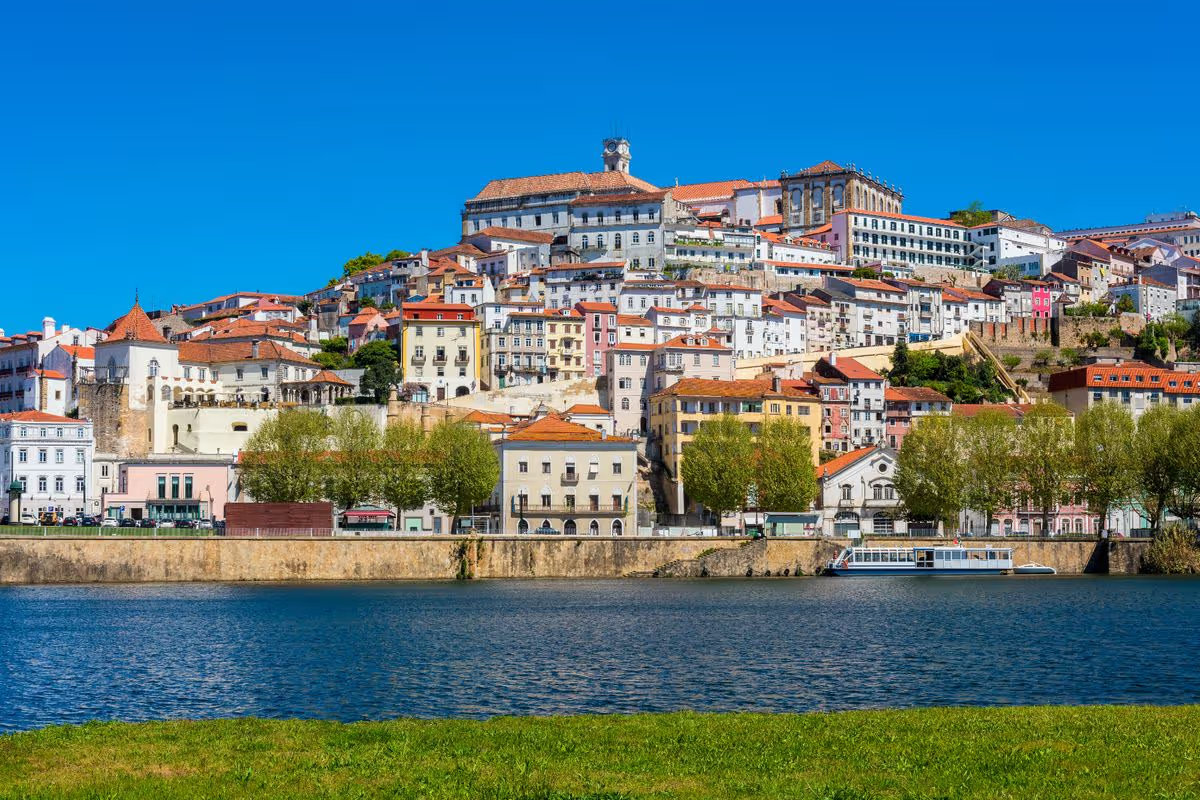
The riverfront city was once Portugal’s capital(Image: Getty Images)
Portugal has long been a major city break destination for Brits, and while most head to either Porto to explore its colourful, hilly streets, or Lisbon for a lively, cultural atmosphere, there’s one spot that gets overlooked.
For over a hundred years, Coimbra was Portugal’s capital, a thriving walled city that had monasteries, grand cathedrals, and a university that’s still operational today making it one of the world’s oldest. When the King moved the capital to Lisbon, it became a centre of Renaissance art, bringing French and Italian influences to the area and becoming a town where intellectuals flocked, inspired by the peaceful riverfront scenery.
Recently, Which? identified Coimbra as one of Europe’s underrated cities, noting: “It’s a historic, cultural and academic hub, with a Unesco-listed university complete with a gilded baroque library that’s open to the public for visits and tours.
There’s also a winding old town that, unlike Lisbon and Porto, isn’t bottlenecked with tourists in peak season — and you’ll also find plenty of atmospheric tascas for truly Portuguese lunches and dinners.”
Despite its close proximity to Lisbon and Porto, trains take 90 minutes and an hour, respectively.
It’s not a destination visited by many Brits. It’s perfect for a day trip from the Portuguese coast, although you may want to stay longer and soak up the authentic atmosphere among its sun-soaked streets.
Visit the ruins of Mosteiro de Santa Clara-a-Velha, a Gothic monastery that dates back to the 1300s, which has become a major archaeological site, and explore a museum full of treasures from ancient tombs.
Santa Cruz Church is another must-see in the town. The whitewashed church has incredible blue-tiled mosaic murals that cover entire walls, and a peaceful, if eerie, mausoleum that is the final resting place of Portugal’s first king.
National Museum Machado de Castro has artworks and sculptures from the Renaissance artists who once lived in this town and honed their skills.
Built on a set of Roman tunnels, the museum is housed in a serene 11th-century cloister where you can enjoy the peaceful atmosphere of its cool marble walls.
A short drive outside the city are a number of tiny Schist Villages, traditional mountain settlements that are being restored to capture the country’s heritage. There are 12 villages in the Lousã Mountain, and from Coimbra you can take a guided tour through the winding mountain roads to explore these areas where time stands still.
Popular stops include Cerdeira, once abandoned but now the home of an arts and crafts school, and Talasnal – famous for its rustic stone cottages and incredible views across the pine-covered. mountains. On the way back, visit Arouce Castle, a medieval fortress that overlooks a river beach. There are areas for swimming in the pure mountain waters, and waterfalls that add to the untamed scenery.
Have a story you want to share? Email us at webtravel@reachplc.com
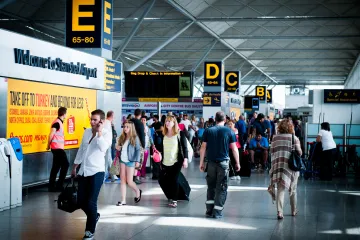
Many Brits heading to the EU are dreading their journey through the airport due to the new European Entry/Exit System (EES), but many don’t realise there’s an app available to cut waiting times at certain destinations
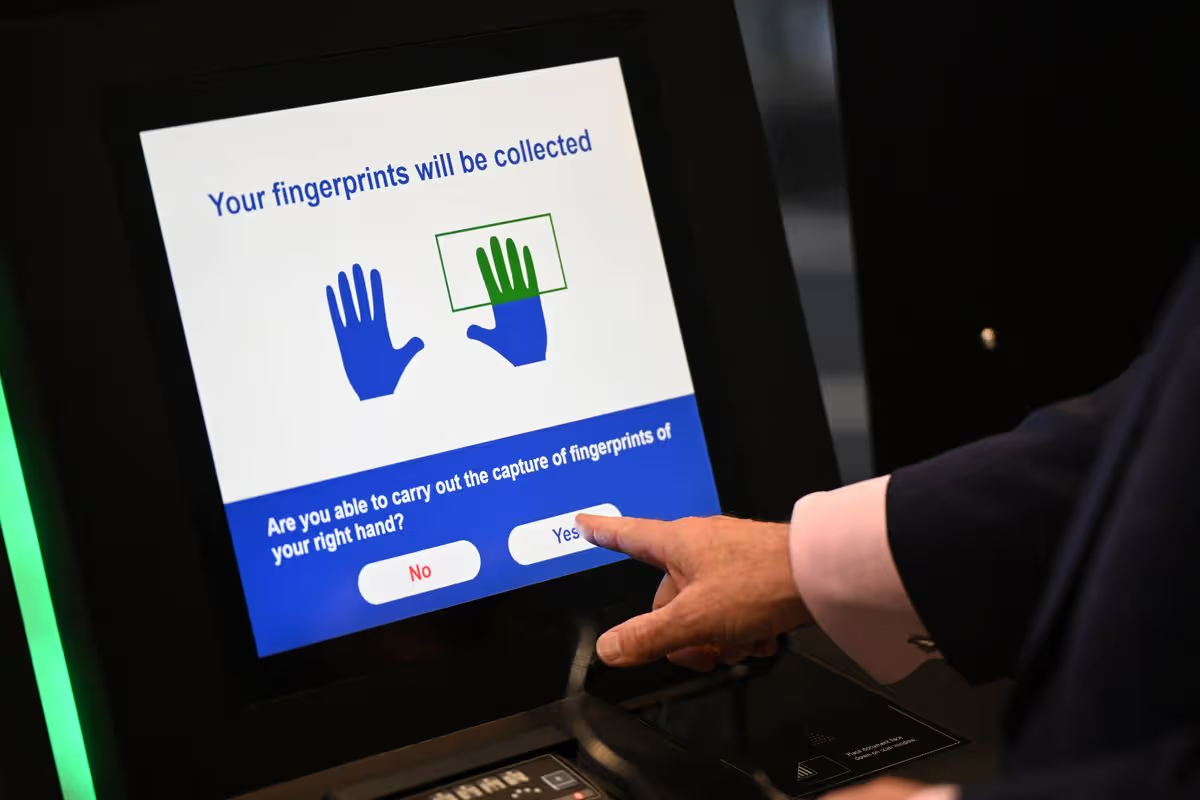
The app could save you the hassle of using a European Union Entry/Exit System (EES) kiosk(Image: Justin TALLIS / AFP via Getty Images)
Peak holiday season is upon us, and the launch of the European Entry/Exit System (EES) is reportedly causing queues at destinations such as Spain, Greece, and France.
Local media in Spain has warned that Brits could face six-hour queues, and there have been reports of passengers missing flights, with airports blaming “additional processing requirements”. All non-EU visitors to the European Union, including Brits, are now required to have biometric information such as facial images and fingerprints taken on arrival, and must also use the machines on departure to help the EU flag overstays.
One of the reasons why Brits often face longer queues at the airport is that, while EU passport holders have their own lanes, Brits have to queue alongside other non-EU nationalities. But for those going to Portugal or Sweden this summer, there is a way to speed up the process.
An official (but not very well-known) app could potentially get you through the airport quicker. At the moment, the Travel to Europe app is only available for visitors to two EU countries, but it could be rolled out to other destinations in the future, according to its developers.
Brits heading to these countries can download the app on the App Store or Google Play – making sure you download the right app and not a third-party one.
Create a new journey by selecting the country you’re arriving in or departing from, this can be done up to 72 hours before your travels begin. You can then add a border crossing point and your estimated time of arrival.
Travellers can then scan the personal details page and chip of their passport, take a selfie to confirm their identity, and answer a few questions about their plans. Normally, these steps would be done at the EES kiosks, so by doing them on the app at home, you can save time at the airport.
Families travelling together can also add other passengers before submitting their journey. Once registered, you’ll get confirmation that your journey has been accepted. Then you simply need to follow the signs at the airport to make your way through security. The app developers are careful to point out that using the app doesn’t guarantee border entry, and that anyone passing through the airport can still be flagged for additional checks.
But for the majority of holidaymakers, this could cut down on the time they spend queuing and waiting to enjoy the Portuguese sunshine.
Reviews of the app have been mixed so far. One user said: “Pointless to have an app that supports only one country – I understand it is optional for Member States to incorporate the app into their systems, but it doesn’t mean this couldn’t have been arranged better.” But there were success stories, with one user saying: “I went to Stockholm…. long queues for UK passports. I had already used the app, and used the pre-registered lane. Two people in front of me. The whole process took about three minutes. Very impressed!!”
Around 2.4 million British tourists visit Portugal every year, making up the majority of the country’s tourism, although this is a fraction of the 19 million British visitors Spain saw in 2025. Overall, foreign tourists contribute €5.2 billion a year to the country’s economy (about £4.5 billion), with Brits as the biggest spenders followed by Germans.
Have a story you want to share? Email us at webtravel@reachplc.com
The UK is home to some of the most beautiful seaside towns, but one stands out for a key reason
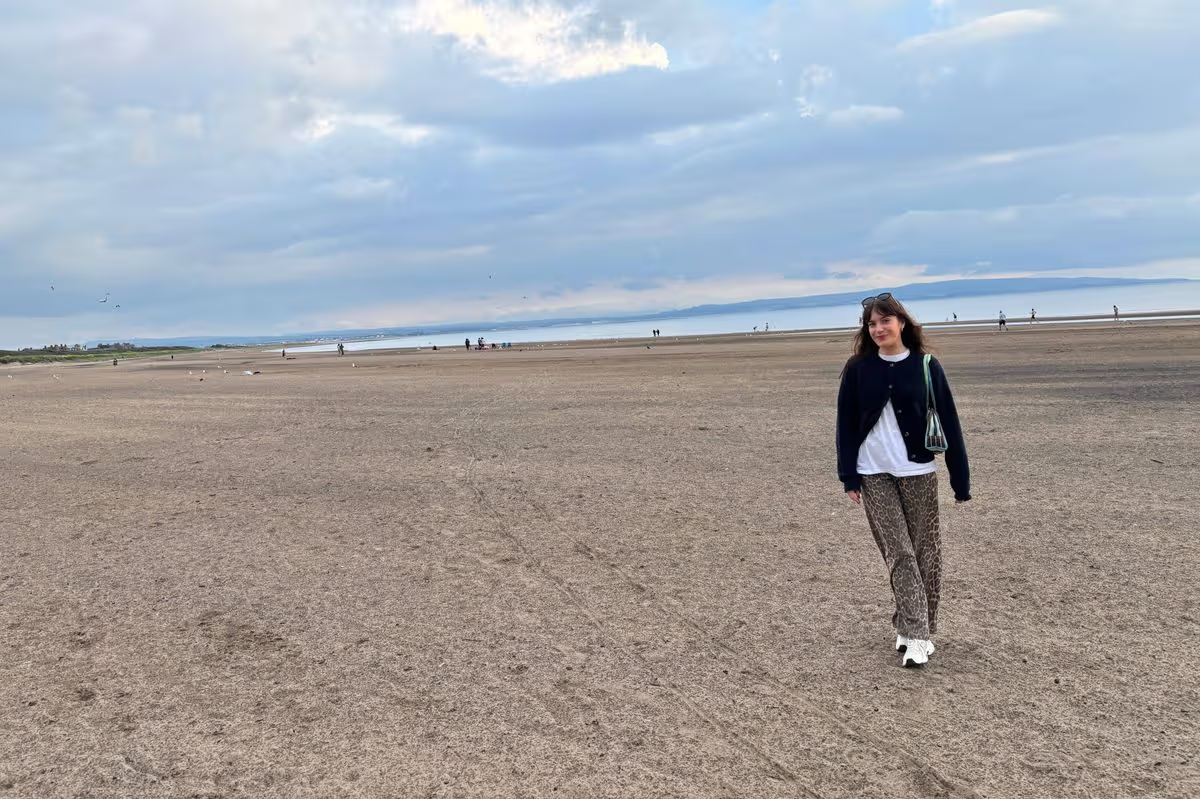
The small beach town is perfect to visit in summer(Image: Nicola Roy)
The UK has been so hot this week that I made three trips to the beach in seven days, despite not living particularly close to one. Still, an hour or so’s drive is a small price to pay when there’s a brilliant day or evening by the sea waiting for you.
I’m aware the pleasant weather won’t stick around, which explains my eagerness to spend as much time outdoors as I can. Of my several seaside trips, one location really caught my attention for one particular reason — the food.
Troon, roughly 45 minutes from my home city of Glasgow, proved the ideal spot to spend a warm evening as the heatwave drew to a close.
It’s been over six months since I last went to Troon, which was on a bitterly cold and snowy January day. This week’s outing couldn’t have been more different. After finishing work one evening, we hopped in the car and made our way down to the coastal town overlooking the Firth of Clyde, with one clear goal in mind.
Despite Scotland’s heatwave coming to a sudden halt during the day with a torrential thunderstorm, the sun managed to emerge once more as we strolled along the shoreline. Likely due to the earlier weather, it was pleasantly peaceful, with just a handful of people wandering about on the sand.
While it was lovely to be able to walk on the beach without the bitter wind battering us like last time, the stroll was fairly brief, as it was time to head up to the harbour to get some food. We finally managed to make it to The Wee Hurrie for dinner.
The Scottish fishing fleet had been tied up back in January so it hadn’t been open, which although was our own fault for not checking, still put a major dampener on the day — especially given the icy cold weather.
This award-winning chippy is renowned for its fresh seafood and its prime spot right on the harbour. And it was 100% worth the hype, being one of the best meals I’ve ever had the pleasure of eating.
The scampi was incredibly fresh, coated in a delicate batter that left me feeling neither bloated nor uncomfortable afterwards — a genuine rarity for a chip shop. Choosing just one dish was actually really hard, given how varied and imaginative the menu is.
Where else would you find fritto misto, noodles and lobster all on the same menu?
It arrived alongside a gorgeous tartare sauce and a wedge of lemon, generously seasoned with salt and vinegar. Despite being light and crispy, it was wonderfully filling and satisfying, and the portion sizes were spot on.
At £14.30, it was worth every single penny, and I genuinely can’t stop thinking about it.
It’s a takeaway so you can’t sit in, but loads of people were queuing up to order before taking it home in their cars. We ate standing up outside the shack, which I think says everything about how tasty it was.
The food may have been our main reason for heading to Troon that evening, but with the weather still pleasantly warm after we’d finished eating, a stroll down the high street seemed the perfect way to round off the night.
By this point it was around 7pm, so many of the smaller independent shops and cafes had shut up for the day, but the pubs appeared reasonably busy, with people popping in and out of takeaways, restaurants, shops or simply strolling about as we were.
If I hadn’t been driving, I would have definitely nipped into Lido on the high street for a couple of drinks, but sadly it wasn’t to be on this occasion.
It was a shorter visit than previously, but far more enjoyable thanks to the delicious food and the beautiful evening sunshine. Whether you’re in the area with a few hours to spare, or travelling from further away, Troon is a wonderful place to explore.
Tourists have been told they need change a key phone setting before travelling to airports. Failing to do so could land them with a “major problem”, so it’s best to act
15:41, 22 Jun 2026Updated 07:02, 28 Jun 2026
Tourists need to make a phone setting change (stock image)(Image: Getty Images)
There’s so much to think about when you travel abroad, but something that probably slips your mind is safely using your phone during your journey. It’s something you need to pay attention to, as you are required to follow a few rules to keep safe.
While it may be something that rarely crosses your mind, it should actually be on the top of your travel list, as making some simple mistakes can be super costly when you’re on a holiday adventure. We all use our mobile phones when we’re at airports but, little you may know, some dangers can come with making the decision to use them in certain ways.
Free airport Wi-Fi feels like a small win when you’re killing time before a flight. However, William Thackray, IT expert at AGT Computer Services, claims it’s one of the riskiest things you can do on your phone.
What you need to know
William explained: “The biggest threat isn’t the airport’s actual network. It’s the fake ones sitting right next to it.
“Criminals can set up a hotspot called something like ‘Heathrow Free Wi-Fi’ or ‘Gatwick Passenger Network’ that looks completely legitimate. The moment you connect, they can intercept your data including passwords, emails, anything you’re sending or receiving.”
This technique, known as an “evil twin” attack, is increasingly common in busy public spaces and airports and, with thousands of distracted travellers all hunting for a signal, they are prime targets.
You may not realise, but connecting to airport Wi-Fi can leave your personal data exposed to hackers in seconds. Criminals can set up fake networks designed to look identical to the real thing.
Airport Wi-Fi is rarely considered completely safe. While it is generally fine for browsing the news or checking your flight status, public networks leave you vulnerable to hackers, phishing attempts and rogue “evil twin” hotspots.
You should avoid online banking or entering passwords without taking precautions. This is why the guidance is so essential.
However, one simple phone setting can keep you protected without costing you a penny. It’s easy to sort out once you know what to do.
How to avoid a problem
The fix is straightforward. Before you leave for the airport, go into your phone’s Wi-Fi settings and turn off “Auto-Join” or “Auto-Connect” for public networks. On iPhone, you can also go to Settings > Wi-Fi and toggle off “Ask to Join Networks”.
That way your phone won’t go hunting for a signal without your say-so. “Better still, use your mobile data if you have it,” added William.
“It costs a little more, but it’s your own private connection. If you do need to use airport Wi-Fi, avoid logging into anything sensitive like banking, work email, anything with a password – until you’re somewhere you trust.”
The rule of thumb? If you didn’t set up the network yourself, treat it with caution. This is a rule that’s really worth paying attention to, as failing to follow it could lead to major problems.
I first went to a bouchonas a 20-year-old Erasmus student. I’d accidentally ended up spending a semester of my year abroad in the Auvergne countryside, which meant every weekend I’d thumb a ride to the nearest big city – Lyon. I didn’t know much about Lyon, except that it was famous for its food – in particular the hearty fare served up at these traditional restaurants with their red gingham tablecloths and chalkboard menus. So when I found myself eating stringy, overpriced beef muscle that cost more than my night at a hostel, I wondered what the hype was about.
But after nearly five years living in the city, I’ve now learned how to avoid the tourist traps (which largely line Vieux Lyon between souvenir shops selling fridge magnets and sweet shops). Historically, most bouchonsweren’t in Lyon’s old town anyway, writes Yves Rouèche in Histoire(s) De La Gastronomie Lyonnaise, but in the neighbourhoods of Vaise, Croix-Rousse and La Guillotière, the gateways to the city in the Renaissance period where merchants and travellers stopped for the night.
Elsewhere in France, bouchontranslates as “traffic jam”, “wine cork”, or (if you ever need to converse with a medieval peasant) a “wisp of straw”. I’d assumed the name came from the wine cork, as Beaujolais and Rhône Valley wines are served liberally in these establishments,but, as one bouchonowner tells me, it’s more likely to come from the straw: bunches of straw were often used to mark the doors of auberges (inns) that were open and serving food. Shared tables, checked tablecloths and pots de vinare all hallmarks of a bouchon, but the real defining feature is the quantity of meat served, particularly offal – enough to surprise even devout carnivores.
The restaurantsreally took off in the 19th century, when they were largely run by women, known as MèresLyonnaises (Lyonnaise mothers). They dished up andouillette(tripe sausage), rognon de veau (calf’s kidneys) and cervelle de canut(silk worker’s brain, actually a soft cheese infused with shallots, garlic and herbs) to silk merchants and weavers. The Michelin guide discovered one of these “mothers” in 1933, and awarded Eugénie Brazier six Michelin stars, three for each of her restaurants. For the 65 years that followed, she was the most decorated chef in history, and her success put Lyon and its bouchonsfirmly on the map.
I drank wine at breakfast and consumed a veritable slaughterhouse worth of offcuts to find the best.
I was excited about this spot, because it has won awards for its quenelles. These sausage-shaped egg, flour and butter dumplings remind me of toad-in-the-hole batter, and in a bouchon, they’re usually stuffed with pike and covered in sauce aux écrevisses (crayfish sauce).
The restaurant is busy with local diners, and busy in decor. The red and white curtains are patterned with chickens, and the chandeliers and lamps on the bar are frilly and ornate. There’s already rosette(salami) and cervelle de canut on the table.
My quenelle is almost as large as a loaf of bread , but I finish up the lot, enjoying the contrast between the crisp, oven-browned top of the quenelle and the doughier part that’s been saturated in sauce. It’s buttery and tastes like marmite, and reminds me of British comfort food staples such as yorkshire puddings and dumplings. It’s very good, but, just like getting excited for several months about going to watch Avatar, I’d set my expectations too high. Quenelles with crayfish sauce €24. Bouchon rating: 7/10
I arrive at 9am – and feel as though I’ve got there late. All of the other tables are full, the carafes of wine sitting on them half empty. La Meunière upholds the tradition of mâchon, Lyon’s answer to the bottomless brunch, only with hearty quantities of meat washed down with red wine. Originally, this would have served as lunch for hungry canuts (silk weavers), but now it’s popular with office workers and anyone else looking for an excuse for a midweek breakfast booze.
There’s no choice of menu (“salad” is a loose term for the starter). There’s not a vegetable in sight, rather tongue, ivory-coloured slices of cold pig’s trotters, lentils and pâté. So much cold meat early in the morning turns my stomach a little, but other than the pig’s trotters – possibly a mental block rather than a gustatory one – it’s all pretty good. The main course goes down easier: new potatoes roasted in their skins, pork that falls apart when I dig my fork into it, slices of sausage and bacon that’s more fat than meat, all in a rich gravy and garnished with parsley. I don’t manage lunch that day. Mâchon:€34. Bouchon rating: 8/10
A local I speak to outside says it’s “excellent”, which abates my fears over having selected a bouchoncalled Jura, surely a slanderous move when the Jura region is around 90 miles from Lyon. “It’s historic,” says the owner, as he shows me its magnificent wine cellar, filled with enormous, dusty bottles of Chartreuse (a herbal liqueur) as long as my torso. “A wine merchant from Jura was the first person to set up a restaurant here.”
In a moment of bravery – and in spite of the smell – I try my friend’s andouillette. It takes liberal quantities of the accompanying mustard sauce to choke down the mouthful. My own pistachio-infused sausage with new potatoes is way more palatable, although the presentation reminds me of my grandparents’ “meat and potatoes” approach to cooking. The standout is the pâté en croûte, like a giant pork pie with a jelly made from port, cognac and cherry liqueur.
For dessert I order an iced souffle infused with Chartreuse. It’s wonderfully rich, but I can’t really tell the difference between an iced souffle and a very decadent ice-cream. Pâté en croûte: €17.50. Bouchon rating: 7.5/10
This is the only old town bouchon I try, and there are far more tourists in here than any of the others. Unusually, there’s a vegetarian option; theravioles, miniature ravioli in a vermouth cream sauce, are baked and topped with copious amounts of melted cheese.
Looking forward to a pig trotter-free meal, I order it, but am promptly told off by the owner. It’s only there so groups don’t have to leave the veggie at home, he says. So I double up, and order an oxtail macaroni gratin with foie gras, which is the house speciality – and infinitely more flavourful. I follow it up with a sticky pink praline tart with praline ice-cream that is so sweet it almost makes my teeth hurt. Oxtail macaroni gratin: €30. Bouchon rating: 7/10
This pint-sized bouchonis owned and run by Fatima Zerrouki (in the kitchen) and Paola de Almeida Rocha (front of house), the fourth generation of women to run it. There is a short set menu, which helps with my indecisiveness, and I start with chicken liver pâté, sprinkled with hazelnuts and gherkins to add a little crunch.
Next up is poulet au vinaigre, the largest chicken leg I’ve ever seen, served in a sauté pan. The sauce is pure indulgence, made with vinegar, tomato pulp, heaps of onions and garlic, white wine and cream – and after eating it I finally understand why Michelin inspectors put Lyon’s bouchonson a pedestal a century ago. If I had the choice between this poulet auvinaigreand my mum’s Sunday roast, I’d choose the former. Sorry mum. Two-course set menu: €30. Bouchon rating: 9/10
This article explores the historical journey and cultural significance of Independence Day in Djibouti, which is celebrated annually on June 27th. After decades of French colonial rule and several disputed referendums, the nation finally achieved sovereignty in 1977 as the last French colony in Africa to do so. The text highlights Hassan Gouled Aptidon as a pivotal figure who transitioned from an activist to the country’s first president. Modern festivities are characterized by military parades in the capital, political addresses, and vibrant public celebrations involving fireworks and music. Furthermore, the source notes the importance of traditional cuisine, su …
STEP into your own David Attenborough show on a dreamy family staycay.
From a gorgeous country estate on the England/Wales border, to seal-spotting and wild swimming while kipping in sleepy Harleston
Sign up for the Travel newsletter
Thank you!
Be the queen of the castle exploring PowisCredit: Alamy Stock PhotoThe gorgeous country estate is brimming with nature on the England/Wales borderCredit: Supplied by PR
Marrington Escapes, Shropshire
Expect country-chic vibes at MarringtonCredit: Supplied by PRThe stunning Dingle Valley is home to all sorts of wildlifeCredit: Getty Images
Lifestyle Editor Catherine Bennion-Pedley and her gang found a gorgeous country estate brimming with nature on the England/Wales border.
A grazing pony, strutting pheasants and hopping hares are just a few of our neighbours on the glorious, family-owned Marrington Estate.
And we’ve spied them all before we even embark on an hour’s walk down through the stunning Dingle Valley, where the babbling River Camlad is home to crayfish, otters and kingfishers.
We’re kipping in one of the estate’s biggest properties, Marrington Farmhouse, which sleeps 10 under cloud-like duvets – although the dining room is better-suited to eight – and which comes with a kitchen proper cooks will love.
A large hot tub, The Traitors board game complete with cloak, a verdant lawn and an apple orchard brimming with harvest make it an idyllic spot and, come evening, we toast marshmallows on the firepit and stargaze.
Our welcome hamper includes pistachio sablés from What A Pickle! in the county’s foodie capital Ludlow and a bottle of zingy Shropshire Lady white wine using Solaris grapes from Kerryvale Vineyard, 10 minutes’ drive away.
But with little ones in tow, we resist a vineyard tour and tasting, £25 per person (Kerryvalevineyard.co.uk), and instead take a trip across the border to Wales on board a steam train.
The nearby Welshpool & Llanfair Light Railway trundles us through the rolling hills and, once we arrive in Llanfair, Poppy, seven, and Raffy, four, are thrilled when the friendly driver spots them looking on wide-eyed in awe and invites them into his cabin to pull the steam whistle.
Return tickets cost £27 per adult, £10 per child (Wllr.org.uk). We’re also close to several castles, from which we pick the striking 13th-century Powis Castle, a 20-minute drive away.
Its baroque terraces are a spectacular display of colour, and feasting on a cream tea, £7.50, among the blooms before a stroll through the woodlands is heavenly.
On our way back, we make a pitstop at The Nags Head Inn in Garthmyl for the Sunday roast of dreams, tucking into a delicate crab salad with watermelon and pineapple salsa, before tackling ginormous three-meat platters with all the trimmings in the lively dining space (Nagsheadgarthmyl.co.uk).
Two courses cost from £24.45, and we haven’t had a roast that good since!
Stays at Marrington Farmhouse, sleeping 10, cost from £30 per person, per night (Marringtonescapes.com).
Mendham Mill, Suffolk
Tree cheers for the setting of Mendham MillTrot along the coastline at Horsey GapCredit: Alamy Stock PhotoThe beaches are sealy amazingCredit: Shutterstock / Kirsty Nadine
Writer Ellie O’Mahoney and her family spotted seals and tried wild swimming while kipping in sleepy Harleston.
Paddling in canoes up the River Waveney, it feels like we are in the middle of a painting.
We’re staying at Mendham Mill Holiday Cottages on the Norfolk/Suffolk border, and canoes here are free to borrow, from which we spot newly hatched goslings, grazing cows and a hovering kestrel.
We’re bedding down in wheelchair-friendly North Meadow Cottage, which sleeps six, and our children, Elliot, 11, and Molly, nine, whoop for joy when they find the games room with table tennis and a pool table.
Later, we take a bracing swim in the river at the bottom of the garden, then warm up under the outdoor shower.
Norfolk is famous for its seal colonies, so we make the hour’s drive to one of the UK’s largest, Horsey Gap, to spot them (Horseygap.co.uk).
Close by is wooden marvel BeWILDerwood, where the kids burn off their energy exploring the treehouses, zip wires, mazes and slides.
Tickets cost from £20.95 for those over 92cm (Bewilderwood.co.uk). Another day, Framlingham Castle, inspo for Ed Sheeran’s Castle On The Hill, proves the perfect spot for playing warring knights.
Later, we get a Michelin-recommended taste of old-school Suffolk at The Peacock Inn in Chelsworth, a 14th-century Grade-II-listed pub in the prettiest of villages.
Battered haddock with koji tartar sauce, £18, is standout, while the mousse, £11, made with 85% chocolate from local chocolatier Pump Street is to die for (Thepeacockchelsworth.com).
Stays at Mendham Mill Holiday Cottages, sleeping six, cost from £35 per person, per night (Premiercottages.co.uk).
OR GO REALLY WILD…
The Reserve, Cheshire
Enjoy a family stay at The ReserveCredit: Supplied by PRThere’s lots to like about the Reserve’s lodgesCredit: Supplied by PRSwing into action at Chester ZooCredit: Supplied by PR
Wake up to giraffes as campmates at Chester Zoo, says Lifestyle Editor Catherine Bennion-Pedley.
Stuffing play balls with lucerne hay, my kids are thoroughly enjoying preparing teatime treats for giraffes with zookeeper Sophie, while learning about their surprisingly small poos and why their long tongues are black (to protect them from the sun, FYI).
The excitement continues when later we join an after-hours tour to catch a glimpse of nocturnal animals waking, including aardvarks, and learn about the incredible cancer-fighting superpower of naked mole rats.
By sleeping over, guests are helping the conservation efforts here and The Reserve’s reception, restaurant and bar ooze sophistication.
Welcome cocktails of sapling vodka, lime and honey – and juices for the kids – are quickly slurped, and the 51 lodges are swishly furnished, although our lakeside pad is without much of an actual lake view and comes with the buzz of traffic that leaves us feeling very much still in England when on our veranda.
Pricier lodges overlook the giraffe enclosure and, on our stroll to the plentiful breakfast, we spot the majestic creatures through gaps in the foliage.
As well as exclusive animal tours and fireside stories in the lounge, overnight guests also get to step into the zoo early, and it is undoubtedly one of the UK’s best – home to more than 500 species, including orangutans, elephants, leopards and lions.
All in all, our little ones think this is a roar-some mini-break.
Family stays for four at The Reserve cost from £306 B&B, including two-day zoo access (Chesterzoo.org).
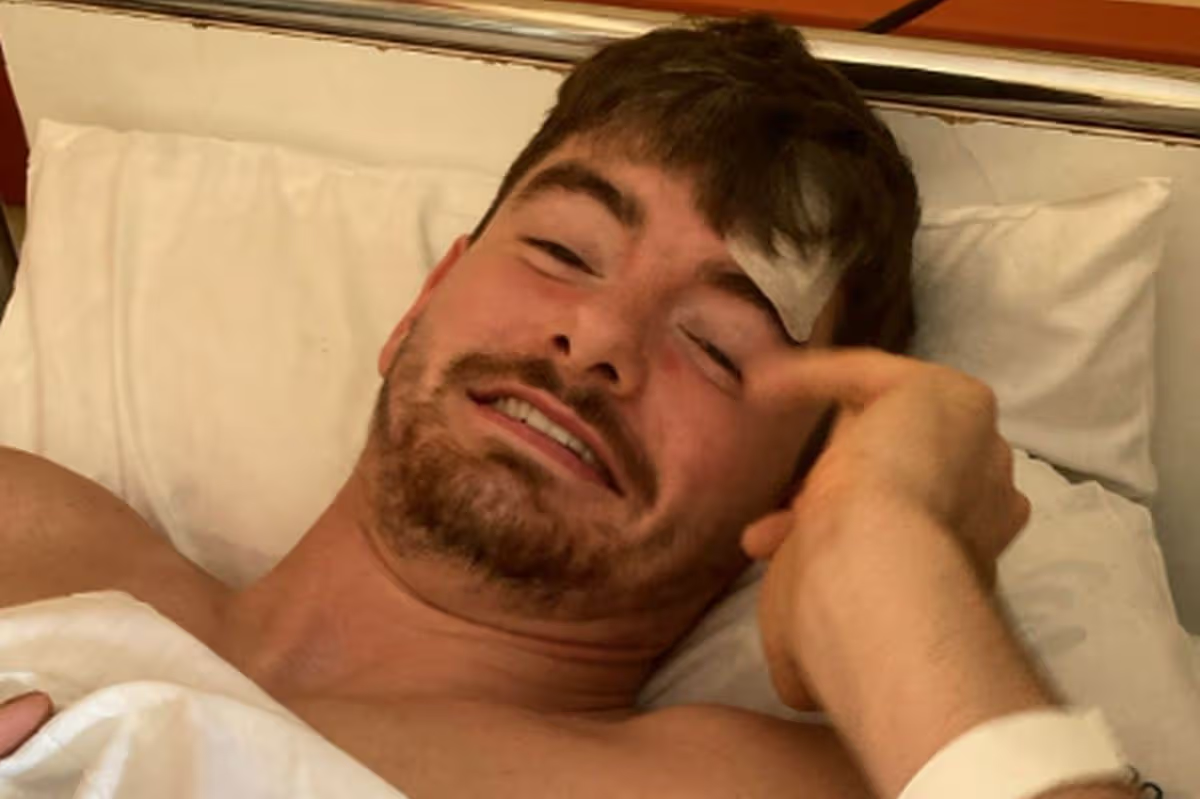
Jakob Davies, 25, suffered severe injuries after falling from a three-storey balcony during a stag do in Albufeira, Portugal, as his family launches a fundraiser to help him
Jakob Davies remains in hospital after falling from a balcony in Portugal(Image: Kennedy News and Media)
The devastated family of a Brit who plunged from a three-storey balcony during a stag do in Portugal fear his travel insurance may not cover his mounting medical bills because he had been drinking.
Jakob Davies, 25, remains in hospital in Faro after suffering catastrophic injuries in a fall at a hotel in Albufeira earlier this month. His loved ones say they are still waiting to hear whether his insurer will pay out after tests showed alcohol in his system.
The factory worker, who is from Scarborough, North Yorkshire, had travelled to the Portuguese party hotspot with around 30 work colleagues for a stag weekend on June 4.
His mum, Claire Gerrard, fears the family could be left facing huge costs after doctors warned Jakob he may never walk again without urgent surgery.
The 51-year-old woman said: “He’s totally on his own. I need to know what’s going to happen to him. He was told if you don’t have this operation immediately then you won’t walk again.
“He does have travel insurance but because of the alcohol that he’s drunk it’s not looking like they will pay. We’ve contacted the insurance company and they wanted all the reports so I sent the reports.
“The doctor gave Jakob his alcohol levels with his bloods done and it did show alcohol in his system, which unfortunately they will not pay out.
“25 [years old] on a stag party he’s not going to have none is he? They’ve not said no yet, we’re still waiting on information. I think it should be made more clear to people, especially to youngsters. You’re going on holiday to a stag party and you can’t drink, they don’t listen, they just go and have a drink.”
Jakob had chosen to stay behind at the accommodation on June 5 to play football while the rest of the stag group headed out.
But when his friends returned later that day, they were alarmed to see fire engines, police cars and ambulances rushing towards their hotel.
Claire expained: “I think there were about 30 of them and it was somebody from work’s stag party. It’s all really, really vague, Jakob has no recollection of it whatsoever.
“He had been playing football with some other guys, his party were leaving and Jakob had said ‘I’m going to continue to play football’.
“I don’t even think he remembers playing football but that’s what he was doing. When the party was returning back to the hotel there were fire engines flying past and then the police came past and then the ambulances came past and had turned into their hotel so they thought ‘oh gosh something is going on’.
“When they got there Jacob was unconscious on the floor with severe head injuries and broken bones, it looked pretty horrific initially. When they got him in the ambulance, he had regained consciousness and he was speaking but he wasn’t aware of what had happened.”
Believed to have fallen from a three-storey balcony, Jakob was initially taken to a local hospital before being transferred to a larger hospital in Faro.
Doctors later discovered he had suffered a serious head injury, broken feet and ankles, as well as fractures to both his L1 and L4 vertebrae.
Recalling the moment she learned about the horror fall, the worried mum said: “I got a phone call at around 11am on Saturday morning [June 6] to say Jakob’s fallen from a three-storey balcony. My initial feelings from then on were absolute dread.”
As Jakob continues his recovery overseas, family and friends have launched a GoFundMe appeal to help cover medical expenses and the cost of bringing him back to the UK.
Travel insurance experts warn that some policies contain exclusions relating to alcohol or drug use, although terms and conditions vary between providers. Holidaymakers are urged to check the small print of their policies before travelling, particularly if they are planning to drink while abroad.
Had enough of the heat? Grab your bags and enjoy utter luxury with Club Med prices in July
This article contains affiliate links, we will receive a commission on any sales we generate from it. Learn more
Escape the heat with a dip in the pool on a luxury stay, for less(Image: Getty Images)
Club Med has officially unveiled an enticing selection of last-minute summer holiday offers, giving spontaneous travellers the chance to save up to 15% on last-minute breaks. Tailored for those prepared to jet off at a moment’s notice, this time-limited promotion delivers sunshine, sandy shores and luxury at a fraction of the usual cost.
Holiday seekers will need to move quickly, however, as spaces are restricted across selected dates and properties. To maintain the excitement, Club Med will be introducing fresh departure offers every Friday, reports the Manchester Evening News.
Renowned for its upmarket all-inclusive holidays, Club Med provides idyllic getaways to stunning locations across the globe. Each package bundles together high-end accommodation with fine dining, unlimited activities and childcare into one transparent price, allowing guests to unwind and savour a much-needed escape.
READ MORE:
From the sun-kissed coastal havens of Europe to the palm-lined shores of the Caribbean, we’ve compiled some of the finest resorts for a last-minute holiday you’ll treasure forever.
Club Med Magna, Marbella
The 12-acre Club Med Magna Marbella is a sun-soaked resort ideally situated for reaching central Marbella. Visitors can unwind beside the family lagoon pool and the adults-only Zen Zone or get involved in numerous activities such as padel tennis.
The resort also features outstanding dining experiences at the sophisticated Suenos restaurant and the Tierra Gourmet Lounge, which offers regional specialities such as jamón ibérico. Additionally, there are four distinct bars where guests can savour a holiday drink.
Travel dates are available until July, with new deals added every Friday
As the sun-kissed shores of Marbella continue to be a favourite amongst British tourists, holidaymakers can also discover reduced Spanish getaways with savings of up to £600 through TUI. Budget-conscious last-minute escapes are also on offer for under £500 with Love Holidays.
TripAdvisor users have given the resort glowing reviews, with one describing it as ‘THE family destination’. One visitor said: “Our stay was simply amazing, everything is thoughtfully designed with families in mind. Our 4-year-old absolutely loved the kids’ club… the food was exceptional. There were so many spaces to explore with our children, and a great range of sports and activities to enjoy – paddle, tennis, Pilates and more.”
Another guest did observe that the location was an “Isolated village, without much personality, but a hotel of good quality, made for sport and sun.”
On the whole, though, the prevailing view mirrored this assessment, stating: “Very good experience at Club Med Magna Marbella. Everything was perfect, buffet, kids club and entertainment.”
Club Med Da Balaia, Algarve
Perched atop the famous red cliffs of the Algarve, Club Med Da Balaia is a paradise for golf enthusiasts. Visitors can also unwind beside the unique natural eco-pool or try their hand at numerous activities, including flying trapeze and archery.
The resort also features excellent dining at the Balaïa Restaurant and the relaxed lounge, offering authentic Portuguese fare alongside stunning ocean vistas. There’s also a spa on-site providing bespoke treatments and ample indulgence.
The Algarve remains a firm favourite holiday destination for Brits seeking a getaway. Currently, Love Holidays has last-minute, room-only Portugal breaks from £119 per person, while Golf Breaks provides specially designed escapes for devotees of the sport.
At Club Med, TripAdvisor reviewers are full of praise for the resort, with one declaring: “Our stay at Club Med La Balaia was simply fantastic from start to finish. Set in a stunning location overlooking a beautiful, family-friendly beach, the resort offers the perfect balance of activity and relaxation.”
While one visitor mentioned the pool was “ok, maybe a bit warmer may have been ideal,” the overall sentiment mirrored this review: “We had an absolutely wonderful week at Club Med de Da Balaia…three young children, parents and grandmother. Everything was there for a successful holiday: sunny weather and beautiful surroundings.”
Cefalù, Sicily
The flagship Exclusive Collection Cefalù is a luxury resort superbly located on the iconic Italian island of Sicily. Guests can unwind in the restored 18th-century palazzo lounge or participate in numerous activities, including sunset yoga and Europe’s first stand-up paddleboarding school.
After an action-packed day, the resort features impressive dining options to satisfy every appetite. Visitors are then treated to a delectable Sicilian-inspired menu that perfectly captures the authentic flavours of the region.
Travellers unlucky enough to miss out on a Club Med stay could try booking a break to Italy with British Airways Holidays instead. Alternatively, Citalia offers a range of specially selected tours and holidays in the region.
Guest reviewers overwhelmingly praise the resort, with one hailing it as a ‘magical place’ where “the food is to die for’. They also praise the stunning views and say that just being 10-15 minutes away from Cefalu town in Sicily ‘is something very special.”
While one guest noted that, unlike some other Club Med locations, there was “no show at happy hour, no barbecue, no themed evening.”
Most, however, enjoyed their stay with another adding: “We had an absolutely exceptional time at Club Med de Céfalù! The setting is simply magical: breathtaking views of the Tyrrhenian Sea, elegant architecture perfectly integrated with nature, and a serene atmosphere that immediately invites relaxation.”
Club Med Palmiye, Turkey
Positioned south of Antalya close to the Taurus mountains, Club Med Palmiye is a beachfront resort nestled along a Mediterranean shoreline. Holidaymakers can opt to unwind beside the family pool or the adults-only Zen pool, or take part in numerous activities including flying trapeze and wakeboarding..
When it comes to dining, the resort provides multiple choices to cater for varying preferences. Guests can sample Turkish cuisine in a restaurant boasting a duck pond moat. There’s also a vibrant beach bar to enjoy as evening approaches.
Turkey’s southern coastline delivers budget-friendly entertainment and warm weather. Some other excellent bargains to the area include all-inclusive getaways with On The Beach, and Mr and Mrs Smith provide thoughtfully selected stays in upscale accommodations.
As you’d anticipate from Club Med, the Palmiye resort has also garnered numerous positive reviews on TripAdvisor. One said: “A great place for early birds and those who like to do a lot of different activities, to learn tennis and padel, circus trapeze, sailing basics and waterski.”
While one visitor mentioned slight annoyances with “long lines” for waterskiing, the overall verdict reflected the sentiment of an ideal family retreat. Another repeat guest proclaimed: “We came here after 2 years again, it was a good experience, so we come again, and we will come every year.”
For those contemplating a long-haul escape, the Punta Cana Resort in the Dominican Republic offers particular appeal to families.
A perfect choice for summer holidays, it features Club Med’s biggest water park, boasting more than 20 slides and splash zones, alongside a luxurious spa..
With a 4.4-star rating on TripAdvisor, guests commend the beautiful beach and the expert instructors who help families master new pursuits, including golf and tennis. Meanwhile, the Club Med resort in Marrakech has been described as a ‘magical destination’ where visitors can swap unpredictable weather for golden sunsets, colourful souks and the enchanting scent of spices wafting through the streets.
THE ongoing heatwave has caused chaos at the UK’s airports with more than 1,000 flights either delayed or cancelled.
Airports affected on Saturday include Heathrow, Gatwick, and Edinburgh, with 1,019 flights delayed and 160 axed, as air traffic restrictions were put in place overnight.
Sign up for the Travel newsletter
Thank you!
Passengers wait for their flights at the North Terminal at Gatwick Airport (archive photo)Credit: AlamyLightning strikes over London hitting Canary Wharf in the early hours of the morningCredit: Alamy
London Heathrow had 440 flights delayed, Gatwick 425, 120 at Edinburgh, Leeds Bradford had 20 and London City had 14, according to the tracking website FlightRadar.
Heathrow had 103 flights cancelled, while Gatwick had 46, there were six at London City and five at Edinburgh.
A British Airways (BA) flight from Santiago, Chile, was the longest delayed, it had been due to land at 10am but is now expected to arrive at 9pm.
London saw its skies light up as lightning hit and downpours came in following day of extreme temperatures that saw the month’s record temperature broken on three consecutive days.
London Heathrow had 103 flights cancelled and 440 flights delayed (archive photo)Credit: AlamyImpressive lightning storm over the Rampion Offshore Wind Farm late last nightCredit: Story Picture Agency
Thunderstorms forced airports to limit the number of flights that could take off and land, meaning holidaymakers were left stranded or facing severe delays.
BA put the delays down to London’s “weather conditions,” pointing to the Met Office’s amber “extreme heat” warning which covered the capital, the south-east and East Anglia.
This has now been extended by the Met Office to cover Sunday until 9pm.
Gatwick Airport urged passengers to contact their airline to check the status of their flight.
A spokesperson said that temporary air traffic restrictions had caused flight cancellations and delays “due to thunderstorms”.
A spokesman for London City Airport said: “Flights are gradually returning to normal following this morning’s weather-related air traffic restrictions.
“There have been some associated delays and cancellations.”
The thunderstorm also caused Edinburgh Airport to be hit by the air space restrictions with four arrivals and 15 departures delayed.
Leeds Bradford Airport also suffered with three departures delayed Saturday morning.
A spokesman for British Airways said: “Like other airlines, we’ve had to make some adjustments to our schedule today due to Air Traffic Control restrictions caused by adverse weather conditions affecting parts of UK airspace.
“While the vast majority of our customers will be unaffected, we apologise for the inconvenience caused and our teams are working hard to help those impacted get their journeys back on track.”
A spokesman for NATS, which runs air traffic control in Britain, said: “Forecasted severe weather across the south-east of England is causing disruption to flights today, with aircraft needing to avoid affected areas.
“Our teams are managing traffic safely and working to reduce delays, but weather disruption is expected to continue through the rest of today.
“Passengers should contact their airline for the latest information on their flight.”
While temperatures are predicted to fall over the weekend the Met Office still has an amber extreme heat warning in place until 9pm on Sunday.
An amber warning means officials expect significant impacts on health and social care services, with an increased risk of illness and deaths among older and vulnerable people.
The cooler weekend comes in the wake of several days of rare red heat warnings, the most severe warning where there is a danger to life.
WHEN it comes to a holiday in Egypt, most Brits head to Hurghada or Sharm el Sheikh.
But there is a lesser-known spot in Egypt that people say feels like going back in time.
Sign up for the Travel newsletter
Thank you!
Siwa Oasis in Egypt is home to a number of salt poolsCredit: Alamy
Siwa Oasisis home to salt pools that are more concentrated than the Dead Sea, clay houses and miles of desert.
You can float in the bright blue waters – just make sure to wash off when you come out with tap water as the salt can irritate your skin.
The pools are surrounded by desert, where you can do a number of other activities including sandboarding and ‘dune bashing’ where you race around in 4x4s.
For another swimming experience, visitors can head to Cleopatra’s Bath – a natural spring with crystal waters.
Local legend has it that Queen Cleopatra used to swim in the circular pool and visitors can do the same today, as long as your shoulders and ankles are covered.
Around the pool there are even a number of cafes serving Siwan mint tea as well as freshly made juices.
And there are natural pools which Cleopatra is rumoured to have usedCredit: Alamy
Near the bath is also the Temple of the Oracle, dating back to the 26th Dynasty.
The temple sits on the top of a hill and is known for being the spot where Alexander the Great was named the son of Amun in 331 BCE.
Even though much of the temple today is ruined, visitors can climb to the highest point where they will get panoramic views with palm groves, salt lakes and desert.
The town of Siwa Oasis itself is home to hundreds of clay buildings, with the Shali Fortress standing in the middle.
The fortress dates back to the 13th century and is made of kershef, which is a blend of salt, mud and clay – all from the local lakes.
Despite heavy rain causing damage to the fortress in 1926, it still stands today with a number of alleyways and sets of stairs to explore.
In the main town, you will find clay buildings including a fortressCredit: Alamy
One person said on TikTok: “The town itself feels like you’re stepping back in time.”
There is a catch, however – to get there, you will have to drive 10 hours from Cairo and pass through several military checks on the way.
You can fly to Cairo from the UK in July from £165 one-way.
With GetYourGuide, you could then head off on a three-day tour from Cairo to Siwa Oasis, staying in a lodge in Siwa Oasis for one night and a Bedouin Camp for the second night.
The tour includes exploring Siwa Oasis as well as the El Alamein Military Museum, Mountain of the Dead with the tombs of Si-Amun, dipping in Cleopatra’s pool and visiting the city of Shali.
Also included in the tour is a dune buggy ride and sandboarding.
To get to Siwa Oasis you’ll need to drive from Cairo which takes around 10 hoursCredit: Alamy
window.itgHolidayConnectHolidayDealsFrames =
window.itgHolidayConnectHolidayDealsFrames || [];
window.itgHolidayConnectHolidayDealsFrames.push({
cid: “99a9d895”,
pid: “8925dc20-49c7-4663-9c7c-547ad29879e4”,
config: {
“poweredBy”:”icelolly”,”intro”:”Best value deals “,”title”:”The Sun Travel Eygpt all-inclusive deals under £600pp”,”destination”:”9546″,”boardBasis”:”AI”,”maxPrice”:”60000″,”maxDepartureDate”:”plus60″,”utm_campaign”:”The Sun Travel Eygpt all-inclusive deals under £600pp”,”layout”:”carousel”,”container”:”false”
},
});
Alternatively, you could head on a three-day tour with Viator heading to Marsa Matrouh, which Viator claims to be “one of the most beautiful cities on the Mediterranean” before reaching Siwa Oasis.
Similar to GetYourGuide, Viator’s tour will also take you to the Mountain of the Dead.
The tour also includes a dune buggy ride, camping in Siwa Oasis, stargazing and meditation, a tour of the Temple of the Oracle and a visit to Darker mountain.
It has to be Københavns Bageri; they upgrade beloved Danish classics using the best ingredients. The cardamom buns are second to none, but the “potato cake” – that’s a choux bun filled with vanilla custard and topped with a cocoa-dusted marzipan disc to resemble a potato – might be my favourite. MF
For bread, go to Tír Bakery in the morning and stand in line – they sell out every day, but their bread is the best. For croissants, go to Bageriet B and sit outside and enjoy a good filter coffee. TH
Tempting pastries at Juno the Bakery. Photograph: Juno the Bakery
Hands down, Juno the Bakery. Founded by pastry chef Emil Glaser, the space was designed so you can see the bakers at work. What makes it special is the level of technique and consistency; they’re known for their cardamom buns, which are buttery, fragrant … perfect, and their sourdough and croissants are flawless. I usually order a cardamom bun, perhaps a pistachio croissant (if it’s available), and a sourdough roll with comté. Then I sit with a coffee and watch the production. KB
My go-to right now is Albatross & Venner in Torvehallerne. We have our original taqueria nearby, so I love walking over to grab a quick pastry – usually the spandauer – before work. I love that they’re baking every day in this tiny space, serving pastries that are often still warm from the oven. Insider tip: they sell fresh baguettes, which is rare in the city. RS
Coffee
Det Vide Hus on Gothersgade, Copenhagen. Photograph: Boaz Rottem/Alamy
Det Vide Hus in the heart of Copenhagen is a hidden gemmuch loved by locals, and it’s a favourite breakfast spot among Copenhagen chefs. Everything from seasonal pastries to the decadent ice-cream bars are made in house. MF
I am a bit of a traditionalist when it comes to coffee; I never understood why filter coffee became a pour-over, so I go to one of Original Coffee’s places and order traditional beans. For an independent place, go to Enghave Kaffe for some Danish hygge – the coffee is really good, as is the BMO (bun with cheese and butter). TH
Copenhagen is incredibly lucky when it comes to coffee. If I’m near Sanchez restaurant, I’ll go to Prolog Coffee Bar in the Meatpacking District because the coffee is always excellent, the team are lovely, and the atmosphere feels relaxed but focused. If I’m looking to sit and have a pour-over moment, I love April Coffee. RS
Breakfast
Classic … coffee and pastry at Andersen & Maillard. Photograph: PR Image/Andersen & Maillard
Apotek 57, located inside the Frama store, is one of the prettiest eateries in Copenhagen. Chef-owner Chiara’s Italian roots are at the heart of her food, with an emphasis on seasonal vegetables, fragrant herbs and a generous drizzle of olive oil. Try the porridge with apple, thyme and Piedmont hazelnuts. MF
Cycle to Nordhavn and start at Andersen & Maillard. Get a BMO, coffee and pastry – a classic Danish breakfast – then cycle to nearby Skudehavnen, where you’ll find small fishing huts, boatsheds and a harbour. It’s a pocket from the past; find a tranquil spot at one of the piers, have your breakfast and dip your toes in the water. TH
Atelier September is an effortless meeting point between design, creativity and good food. I love the breakfast selection: eggs, avocado, vegetarian dishes – all delicious. There’s an energy; you feel connected to the city’s cultural pulse simply by sitting there. KB
I don’t typically go out for breakfast, but if I do, I love Amator, where they specialise in omelettes served with slices of bread and wonderful sides. The menu is small, but they’re dedicated to making everything the best it can be, which I always appreciate. Get the omelette with chilli, and always end with a lemon tart. RS
Cheap eats
Relaxed and with genuinely good food … Slurp. Photograph: Tim Lusher
There are so many great choices, but nothing beats soaking up the sun with a wedge of Diamond Slice pizza and a glass of wine. Even pineapple haters succumb to the Canadiana with fermented pineapple, ham and pickled jalapeños. MF
It’s hard to decide what I love most, books or food, but it is heaven when they go together. Brøg Litteraturbar has a great selection of both Danish and English titles, and a nice small cafe where they do an excellent lunch for a fair price. I get the tart or soup of the day, and this is hygge and full of love. TH
One of my favourite spots for a laid-back weekday meal is Slurp. Its ramen is exactly the kind of comfort I crave when I don’t feel like cooking: pure flavour and thoughtful but unfussy toppings. I’d recommend the house pork bone broth with chashu, spring onions and a soft‑boiled egg, or go for the miso‑based bowl for something a little lighter. It’s the sort of place I’d take my family for something quick and easy – relaxed and with genuinely good food. KB
I highly recommend Poulette and their spicy fried chicken sandwich. They’ve been around for some years now and are always consistent: very tasty, deeply comforting, and extremely filling and affordable. The sandwiches are made with their own spicy blend, the chicken is marinated in-house, and the crust somehow stays crisp. I also love that there’s nothing quite like it in Copenhagen. To elevate things beyond a quick meal, grab a glass of wine next door at Pompette and enjoy it outside. RS
Splurge meals
When I feel like spoiling myself, one of the best places is the newly renovated Krogs Fiskerestaurant overlooking the canals at the old fish market. It uses classic French techniques with the best local seafood and seasonal produce to make the most delicious food. The menu changes often but if you see anything with beurre blanc and four types of roe, choose that! MF
A local classic … Rhubarb and seaweed at Krogs Fiskerestaurant. Photograph: PR Image/Krogs Fiskerestaurant
Mikkel Mårbjerg is one of a few chefs that represent modern Danish cooking – they call VIE in Nordhavn a modern inn. He gets his produce from his daughter’s regenerative farm, and you feel his love of vegetables. They cook cabbage like only a few do, served with langostino and bisque, and their potato bread with löjrom and creme fraiche is a must. If sandart (a local freshwater fish) is in season, please try it, and then finish with the almond cake and ice-cream – it’s divine. TH
For fine dining, it has to be Geranium. There’s a clarity and precision in every dish that’s hard to find elsewhere. Located on the eighth floor of Parken Stadium, overlooking Fælledparken, it holds three Michelin stars and is an experience from start to finish. The concept centres on a plant‑forward tasting menu, and the attention to detail is extraordinary. The pacing, the wine pairings, the service – everything is perfectly in sync. The bread course, with whipped butter and seasonal oils, and its signature raw scallop dish, have stayed with me. KB
I would definitely go to Akmē; it’s not necessarily three-star Michelin expensive, but it feels like a splurge (in the best way). I love that you simply go with the menu and let the team cook – there’s a real sense of trust in the experience. The food feels creative, and the hospitality is warm and genuine. Lately, it has become one of my favourite places for a special occasion, or even just to go to feel inspired. RS
One of the best dinner spots in “the meat town” is fishy. Kødbyens Fiskebar, which sits under a fresco of a bull at the entrance to the old meat market, serves incredibly pretty dishes in this buzzy but unpolished food quarter: brill with a deep blush of rhubarb, topped with samphire and chive blossoms; bright orange roe crowned with scarlet nasturtium petals, to heap on a seaweed waffle; prawns in a buttermilk sauce marbled with emerald herb oil. It all looks exquisite and it’s not a hearty menu, although you could go for, say, the mussels steamed in a cream-laden cider.
Dolly Parton once said: “It takes a lot of time and money to look this cheap.” The nearby Superbon has only been around a few years but has the vibe of a generations-old family business, with its seemingly random but carefully curated 1970s velvet-and-chrome decor and 80s video games arcade on the way to the bathroom. The menu is Asian, delicious and affordable by Copenhagen standards – pork gyoza, soft-shell crab, lychee salad, bao with hoisin duck and pickled daikon, huge chicken leg with green sambal. Afterwards, go for an ice-cream at Ismagieret – the menu changes but you might try the amarena cherry or the marzipan with pistachio ganache. Young visitors could end their evening in one of the packed bars but you could also start your day with a cheese roll or a cardamom croissant at Hart Bageri, one of the bakery’s eight branches in the city. Opposite is Prolog Coffee, which has a range of speciality beans from Peru, Colombia and Kenya, and a small selection of Juno pastries, saving you from the social influenza of the queue at their Østerbro shop. TL
Cocktails
There are many great cocktail bars in Copenhagen, but none like Geoffrey Canilao’s crazy, cosy bar, Balderdash. The motto is: “Keep it hygge.” The Blonde Ambition with gin, elderflower, cardamom and bergamot is a forever favourite. MF
K-bar was one of the first places to take cocktails seriously in Copenhagen, and I’ve been coming here since it opened. I like to go there early for a classic negroni – there’s beautiful outside seating in the summer with a view to the old town. For a wine bar, I like Ancestrale, which is organic certified. I go here for a glass of red wine and cheese with hazelnuts and brown butter – one of its classics. TH
I go to Tadaima to dream as much as I do to buy pieces for my ever-growing collection of kitchenware. From porcelain egg cups to sculptural shelving systems, everything is carefully curated with a Japanese/Scandinavian minimalist aesthetic. It also has pieces from one of my favourite craftsmen/artists, the Danish glass blower Nina Nørgaard. MF
The best kitchen shop I know is Kunst og Køkkentøj in the centre of Copenhagen. Competent staff, a great cookbook selection, a specially made baking tin for rye bread, knives, baking equipment, and the best large tweezer I know. They wrap everything in brown paper, and you feel special when you leave the shop. TH
I like to visit Frama for homeware; I’m really drawn to the balance between warmth and simplicity in its designs. And I especially appreciate a lot of its soaps and scents. Frama is also associated with a number of restaurants and cafes that they have designed, so it’s always interesting to see how they curate spaces and atmospheres that feel calm and lived in. RS
HOLIDAYS to Dubai are back on track. The UK Foreign Office last week scrapped the advice against all but essential travel to the UAE, as well as nearby destinations such as Qatar and Bahrain.
And with hotels and attractions itching to welcome us once more, there are some great bargains to be had right now. Whether you’ve got bags of cash to spend or are hunting for ways to make your dosh go further, we’ve got you covered.
Sign up for the Travel newsletter
Thank you!
Find out how to enjoy a trip to Dubai no matter your budget after the Foreign Office relaxed travel adviceCredit: tobiasjoThe pool at the Mina Seyahi Hotel certainly has the wow factorCredit: Supplied
ON A BUDGET?
FROM beach club deals, through to discounted 5* “business lunches”, a classy trip can be yours but without the cost — if you know where to look.
One of the biggest expenses on a visit to the UAE city can be at the ever-popular beach clubs.
Expect to drop hundreds of dirhams once you’ve paid for entry, loungers, food and drink.
Yet one of the newest on the block is also one of the most affordable — the Casablanca.
As part of landmark resort Atlantis, the club is a bargain, so long as you time your visit for a weekday.
Paying around £24 per person for a sun lounger, you can still enjoy the pool and beach without having to spend a fortune.
My hours were happily spent with a few Prosecco foam cocktails and truffle fries while enjoying the party atmosphere, thanks to the upbeat dance music being pumped out.
Dips in the pool were followed by lolling on the beach swing, before sunning myself to dry off on my striped lounger.
Aura is the world’s tallest 360-degree infinity poolCredit: Go and haggle at the traditional markets where you can find food, jewellery and fashionCredit: kolderal
Want to go higher? When it comes to a rooftop pool, Aura can’t be beaten, taking the title of the world’s tallest 360-degree infinity pool.
But if you love the views and aren’t fussed about the pool, try their lounge breakfast package.
For a fraction of the price of using the pool, you get a breakfast and two drinks.
I might have stayed dry, but I got those influencer-style shots posing next to the water without the cost. From the miso eggs benedict to pomegranate juices, I promise it’s worth the early start.
For more of the high life, also drop in at Ce La Vi. The famous bar has some of the best views of the Burj Khalifa, the world’s tallest building.
But you’ll be joining the locals if you visit at lunch rather than dinner — and will stay in your budget, too.
Dinners can see a main course alone costing £30. Yet the three-course lunch set menu will set you back just £28, including a glass of wine.
But while Dubai is certainly a foodie city, the real flavour of the place is to be found in the street markets.
The Sun’s Kara enjoys a delicious cocktail at the CasablancaCredit: Supplied
Head to the Grand Souk, where you’ll find breads stuffed with cheese or Nutella for £1.22, or Iranian falooda — a sorbet-like dessert made of thin rice noodles and syrup — for £1.
You’ll certainly need some energy for going shopping afterwards, with streets of spices and gold jewellery (Dubai is home to the world’s biggest gold ring — 21-carat, and weighing 59kg).
And after all that, your well- deserved rest will not tip your budget over the edge — Brits will be pleased to spot the famous purple signage of Premier Inn, there being seven across Dubai.
Yet these are pimped-up Premier Inns, with gyms and rooftop pools — as well as the familiar Costa outlet in the lobby.
And who knew they’d be even cheaper than the UK, with rooms for as little as £21 a night during the off-season? That means you could spend a week in Dubai for under £150 — half the price of one night at the Atlantis.
Otherwise there’s Rove, the UAE’s own budget hotel chain. Slightly pricier at £44, it has a bit more to it, from ice-cream trucks to beach- bar happy hours.
So don’t believe the rumours that Dubai has to be expensive.
Live the high life — often literally — and still come home with some change to spare.
MORE CASH TO SPLASH?
Dine on floating restaurant the Lady NaraCredit: SuppliedVisitors are never far from the beach in Dubai – while having access to top hotels and restaurantsCredit: Getty
IN my opinion, upgrading your hotel generally comes with a multitude of benefits that extend way beyond just a swankier room.
The Palm — so named because of its fronds of sand jutting out into the sea that resemble the leaves of a palm tree — is one of the most desirable areas to stay in but you can get the same luxury for a fraction of the price elsewhere.
Book one of the 5* resorts that sit at the bottom of its branch, along Mina Seyahi beach.
The 5* Westin is a sprawling resort that features several pools and seemingly more sun loungers than there are rooms.
The Sun’s Sophie relaxes with a drinkCredit: Supplied
With a whopping ten restaurants on site, you don’t even need to leave the resort.
Kids have use of all the fun-packed waterslides at neighbouring hotel Le Meridien, while parents can kick back in the adults-only area where there is a constant supply of mellow music and freshly shaken cocktails.
Adults after a more sophisticated atmosphere, however, will likely prefer the trendy 5* W Hotel, home to bold bedrooms and the sky-high Attiko restaurant (for those aged 21 and over).
The menu of Asian-fusion bites is designed for sharing — try the spicy tuna taco topped with avocado and yuzu and the crispy scallop, served in its shell.
These are dished up alongside cocktails that are as jaw-dropping as the views of twinkling hotels at night.
It’s safe to say fancy food isn’t in short supply in Dubai. In fact, this Middle Eastern city is now catching up with some of the world’s most celebrated foodie destinations — competing with the likes of Tokyo and Paris.
The Michelin Guide for Dubai features 117 restaurants for 2026.
Last year, Avatara, in Dubai Hills, became the first vegetarian Indian restaurant in the world to earn a Michelin star. And having sampled all 17 delicately crafted courses on its flavour-packed tasting menu, I can see why it’s ranked so highly.
The experience is wonderfully theatrical, and the plates could be considered works of art, not just the meals — decorated with edible flowers, rich sauces and billowing dry ice.
It costs around £150pp for the tasting menu, but my word, you’ll leave satisfied and full to the brim. But while Avatara may have the wow factor for serious foodies, those who prefer more of an experiential dinner should book a Lady Nara cruise.
This fancy wooden vessel runs breakfast and dinner sailings at various times of day, but the most spectacular has to be at night when Dubai’s glowing skyscrapers are fully lit.
We sailed between various landmarks while tucking into a feast cooked up in the kitchen below deck. Hors d’oeuvres were followed by huge bowls of fresh leaves and artichokes topped with shaved Parmesan, and hearty meats served in zingy sauces, while gentle music hummed in the background.
If fine dining isn’t your thing but you still want to push the boat out a bit, you can always spend that hard-earned dosh on a flight upgrade instead.
Emirates is the official airline of Dubai and is currently the only one offering direct flights from the UK. It launched a fourth daily flight between Dubai and Gatwick at the start of this year, giving travellers even greater flexibility.
The experience in Emirates business-class cabins is as flashy as Dubai itself, thanks to the doting crew, as well as the on-board cocktail bar — where you can while away the eight or so hours on board sipping on martinis made at 38,000ft.
GO: DUBAI
GETTING THERE: Direct flights from Heathrow to Dubai with Emirates cost from £680 return in economy or £3,600 return in business class. See emirates.com.
STAYING THERE: Rooms at Premier Inn Dubai Al Jaddaf Hotel are from £38.57 (AED 187) including breakfast. See premierinn.com.
Rooms at Rove La Mer cost from £63 (AED 305) per night, including breakfast. See rovehotels.com.
Rooms at The Westin Mina Seyahi are from £163 (AED 839) per night, including breakfast. See marriott.com.
Rooms at the W Hotel Mina Seyahi cost from £148 (AED 718), including breakfast. See marriott.com.
BAG MORE BANG FOR YOUR BUCK: Aura Sky pool’s full-day pool access is from £117 but breakfast lounge access is just £25. See auraskypool.com.
Ce La Vi restaurant: a three-course evening dinner costs from £129, but a three-course “business lunch” is from £28. See dxb.celavi.com.
Casablanca beach club: cabana with private pool costs from £1,317 (£263pp), whereas a midweek sun lounger costs £50 (redeemable on food and drink). See atlantis.com.
OTHER SAVING HACKS: Be sure to pick up your free 24-hour SIM cards with 10GB at Dubai immigration.
You can bag dining and experience discounts at more than 600 venues with your Emirates boarding pass, including spas and retailers.