Passengers have been urged to read up on their airline’s mobile boarding pass requirements
Passengers flying soon have been urged to stick to the rules(Image: Getty)
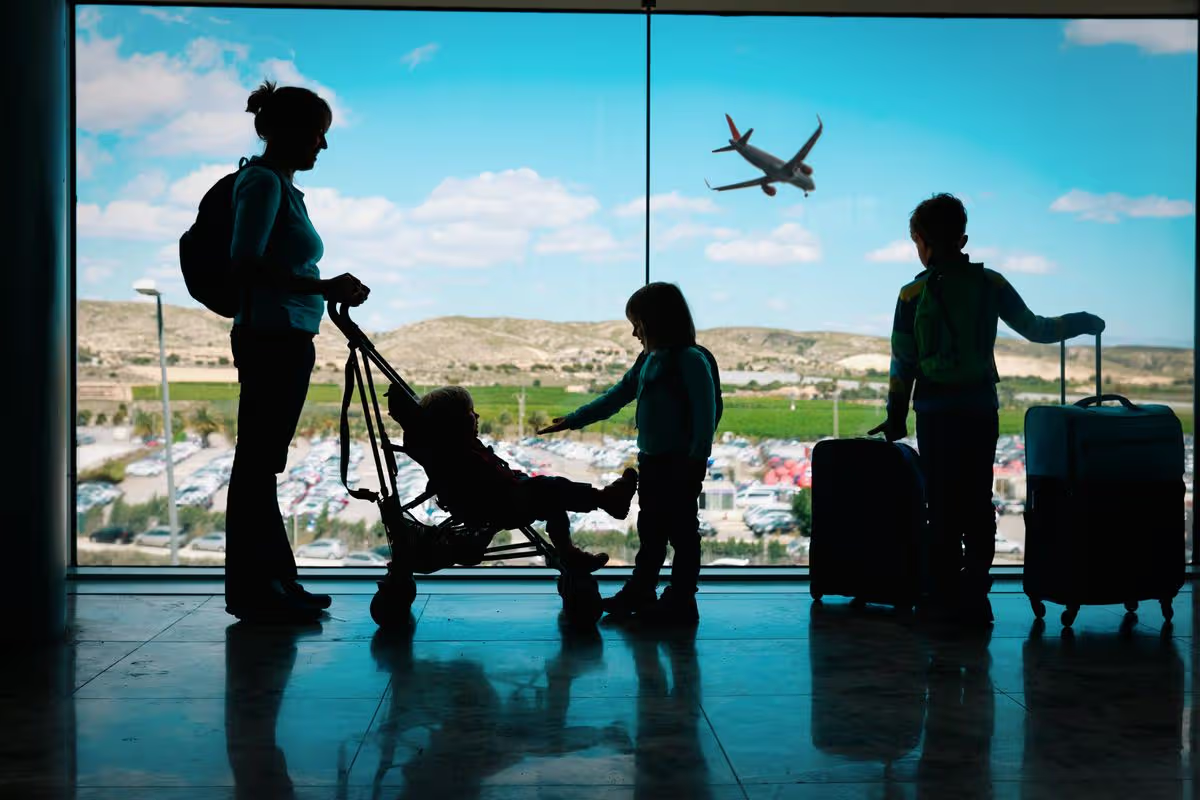
With many youngsters soon breaking up from school for the summer holidays, it won’t be long before families begin making their way to the airport.
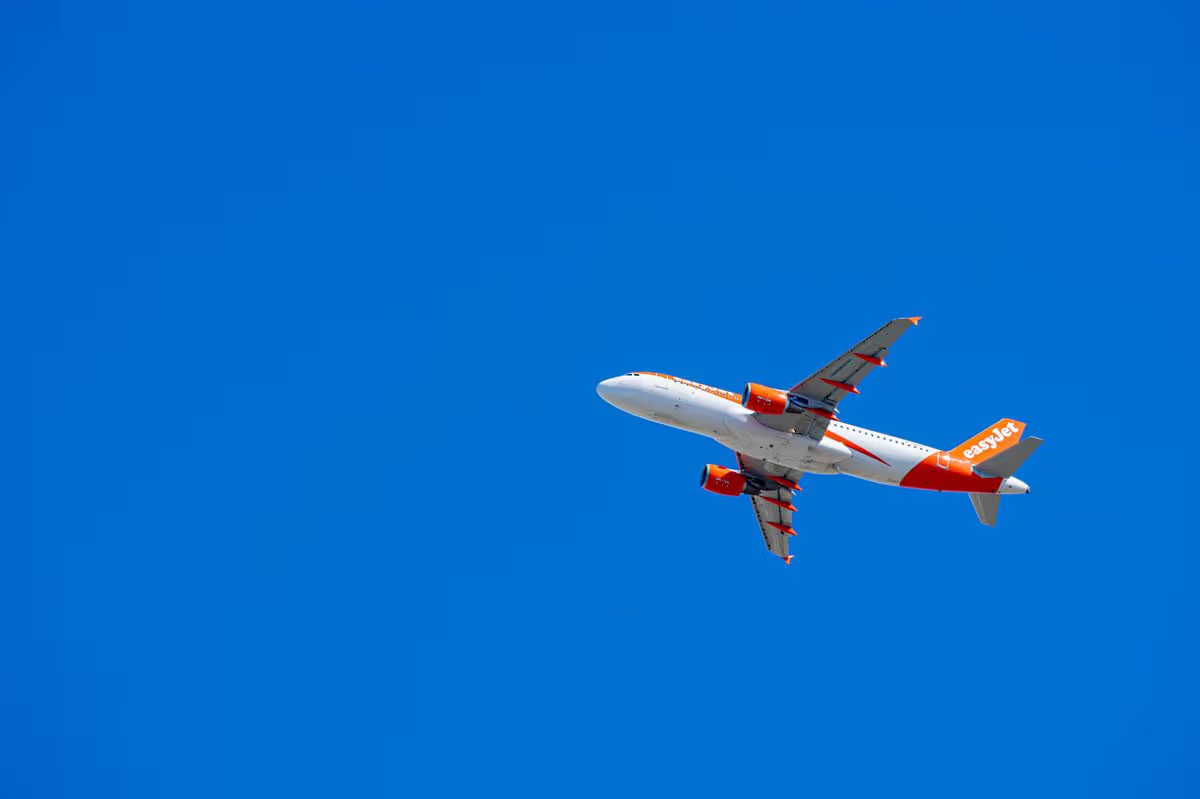
However, before loading up the car and wheeling out the luggage, it’s worth brushing up on the rules surrounding mobile boarding passes, as certain airports do not accept them. On top of location-specific restrictions, one budget airline has gone entirely paperless since November 2025. Here’s what you need to know if you’re travelling with easyJet or Ryanair.
What are easyJet’s mobile boarding pass rules?
The airline encourages travellers to use mobile boarding passes, as they allow all travel information to be stored in one secure, easy-to-access location. They also help reduce paper waste by eliminating the need for printed boarding passes.
For added convenience and offline access, you can also save your mobile boarding passes directly to your Apple Wallet or Google Wallet.
Not all airports accept mobile boarding passes. Easyjet explains: “The majority of our airports accept mobile boarding passes, however, the airports listed below do not currently accept mobile boarding passes.”
This includes:
ADB – Izmir
AGA – Agadir
AYT – Antalya
AQJ – Aqaba
BEG – Belgrade-Beograd
DJE – Djerba
ESU – Essaouira
EVE- Harstad
HRG – Hurghada
JSH – Sitia
LXR – Luxor
NBE – Enfidha-Hammamet
RAK – Marrakech
RBA – Rabat Sale
RMF – Marsa Alam
SCR- Scandinavian Mountains
SPX – Cairo Sphinx
SSH – Sharm El Sheikh
It adds: “If you’re flying from an airport that doesn’t currently accept mobile boarding passes, please check in online at www.easyJet.com and print out a paper boarding pass for your flight.
“Many of these airports require all passengers to complete a document check before going to security. If travelling from an affected airport, please make sure you, and anyone you’re travelling with goes to our Bag Drop for a document check before going through security.”
Ryanair confirmed it has “moved to 100% Digital Boarding Passes (DBP). This means all passengers will receive a DBP to their Ryanair App when they check-in online.”
Passengers simply need to check in online via Ryanair.com or through the Ryanair App before arriving at the airport. Once checked in, your DBP will appear automatically within the Ryanair App.
You should present your DBP at airport security and at the boarding gate for your flight. The airline explains the shift to fully digital means:
DBP lowers airport costs and fares for all Ryanair passengers.
Provides a better service (including flight info) for customers on day of travel.
Improves customer service and re-booking during flight disruptions.
Better for our environment (gets rid of 300 tonnes of paper annually).
If you have completed online check-in and your smartphone or tablet is lost, stolen, or runs out of battery, you can get a complimentary boarding pass at the airport.
It adds: “If passengers don’t have a smartphone or tablet, as long as they have already checked-in online before arriving at the airport, they will receive a free of charge boarding pass at the airport. However, they will not be able to access real-time flight updates or benefit from enhanced customer service during any flight disruptions.”
If passengers don’t check-in online before arriving at the airport, they will be required to pay the airport check-in fee.
IF you’ve got kids, you already know how the holiday hierarchy works.
A pool’s nice, a kids’ club’s helpful, but a hotel with its own on-site waterpark’s the holy grail – that’s the sort of currency that buys you good behaviour until Christmas.
Hotels aren’t just for sleeping in – some have some insane waterparks tooCredit: On The Beach
The only problem is that waterpark holidays usually carry an eye-watering premium and sell out for summer, FAST.
So, I dug straight into our summer average booking data to find the spots delivering all the splash, without the cash.
And I’ve unearthed 7 family favourites where you get the slides, the lazy rivers, and the splash zones without completely clearing out the savings.
Here’s where your budget goes furthest this summer.
7. PortAventura Hotel Gold River, Costa Dorada
PortAventura Hotel Gold River is part of the huge Spanish theme parkCredit: On The Beach
If you’ve got proper thrill-seekers in the family, they’ll love this hotel for more than just the waterpark.
Because you’re staying directly inside the PortAventura resort grounds, you get unlimited access to the main theme park and entry to the massive Caribe Aquatic Park, which features towering mega-slides, indoor play areas, and massive wave pools.
The real insider win at this hotel though, is the hotel’s private entrance to the park – it completely bypasses the main turnstiles, letting you stroll straight into the park before the main gates open to help you beat the August queues.
For this setup, the average summer price sits at £130 per person per night – but when I had a look, I tracked down a half-board stay at PortAventura Hotel Gold River for just £528pp in late August.
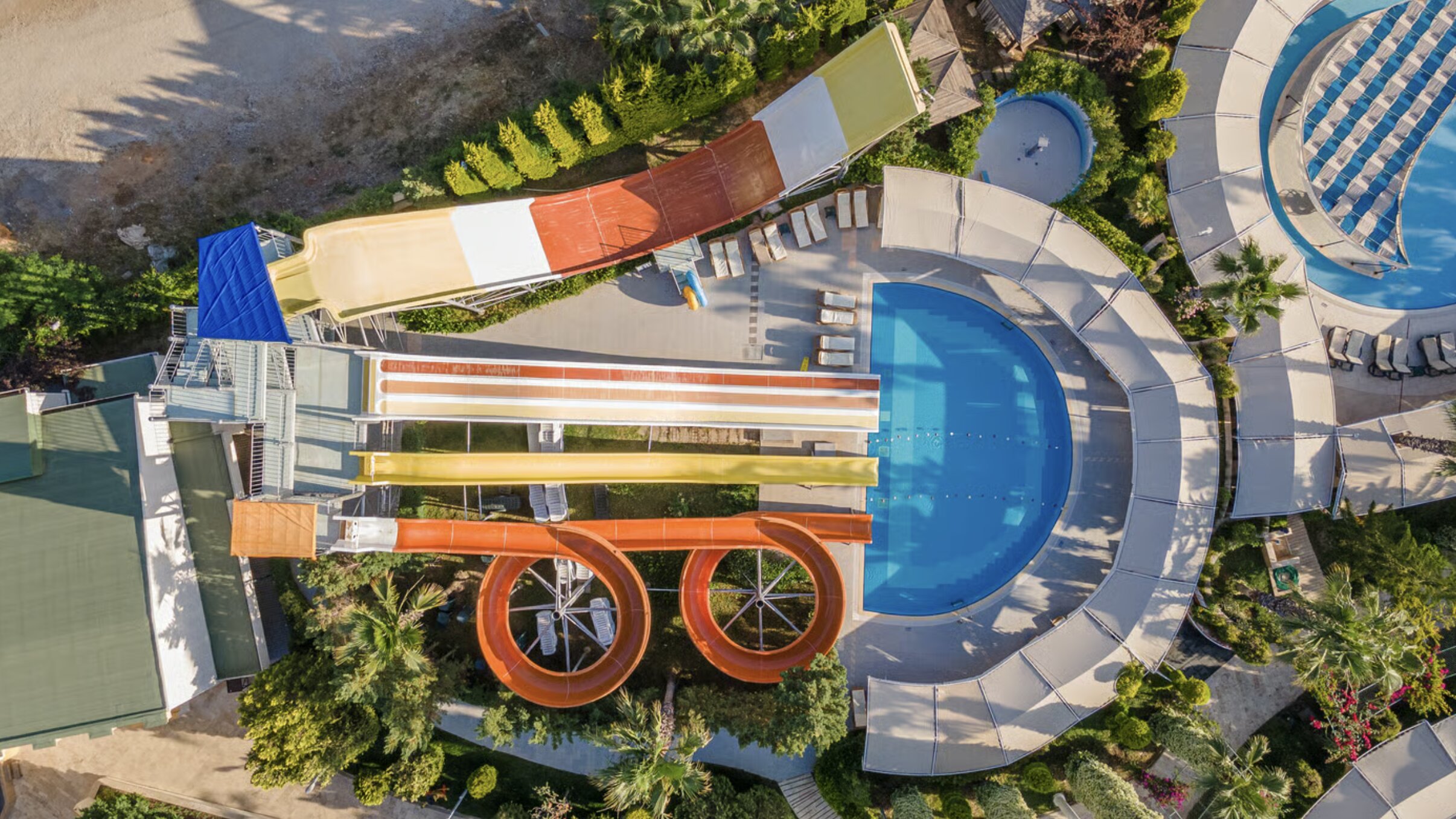
6. Mukarnas Spa & Resort Hotel, Turkey
Mukarnas Spa & Resort Hotel has all kinds of slides onsiteCredit: On The BeachStays are super affordable, with all-inclusives in August for £650ppCredit: On The Beach
The Mukarnas Spa & Resort Hotel in Alanya shows exactly why Turkey dominates family holiday value charts every single year.
The hotel boasts a serious aquapark packed with multiple high-speed drop slides, curved flumes, and dedicated pirate-themed splash zones for toddlers.
And what makes this hotel a certified winner for parents, too, is the layout of the beach pier – the resort positions its quiet cabanas just far enough from the waterslides that you can actually escape the noise and read a book while the animation team keeps the kids occupied.
The average summer price for this one comes in at £126 per person per night, but you can score the full package at Murkanas Spa & Resorton an all-inclusive basis for £650pp this August.
5. HYB Eurocalas, Majorca
Majorca’s HYB Eurocalas has a pirate themed splash park with cannons and mini slidesCredit: On The BeachInsanely cheap summer stays start from £540 eachCredit: On The Beach
The HYB Eurocalas is one of Majorca’s most reliable value family hotels year after year, and it’s an absolute paradise for younger kids.
The star of the show is its massive, pirate-themed splash park, which is completely packed with mini slides, water cannons, bucket drops, and enough colourful chaos to keep toddlers entertained for hours.
This hotel’s also kitted out with multi-room family apartments that come with proper partitions, meaning you don’t have to sit in the dark whispering from 8pm when the kids crash out after a day on the slides.
The average summer price sits at a very reasonable £125 per person per night, and when I went searching, I found a peak-summer, 5-night all-inclusive deal at HYB Eurocalasfor £540pp in August.
4. Club Mac, Majorca
Club Mac Alcudia has THREE hotels, with free access to the nearby waterparkCredit: On The BeachMake sure to try its late-night buffetCredit: On The Beach
Club Mac Alcudia is basically an institution for British families after years and years of popularity, and it’s famous for being an absolute beast for entertainment.
Aside from its own massive three-hotel pool complex, booking a room here gives your family free, unlimited access to the huge Hidropark waterpark right across the road, which features 15 different multi-lane racer slides and kamikazes.
The best bit of insider advice I can give you for this resort is their late-night buffet service – they run a dedicated midnight snack station that’s absolute gold dust if you’ve been out watching the family tribute acts and have kids suddenly complaining they’re starving at 11pm.
This classic family favourite has an average summer price of £124 per person per night. But right now, you can bag an all-inclusive stay at Club Mac this August for just £500pp.
3. Eftalia Splash Resort, Turkey
Eftalia Splash Resort is great value for how much you pay and how much is on offerCredit: On The BeachEftalia Splash Resort has beach club access tooCredit: On The Beach
Eftalia Splash Resort is where the value starts getting ridiculous, especially given the scale of the attractions on offer.
It features one of the most towering, intense waterpark setups you will find anywhere in Europe at this price point, boasting massive multi-lane racers, family raft flumes, black holes, and a huge splash tower.
The killer insider feature here is the ‘Eftalia Island’ beach club access. Because the hotel runs a seamless, free shuttle down to a massive beachfront complex where the all-inclusive food and drinks carry over to the sand, meaning you never have to budget extra for lunch by the sea.
The average summer price is sitting at £109 per person per night, and I clocked an all-inclusive package at Eftalia Splash for £613pp between 22–27 August 2026. Bargain.
2. Bellevue Club, Majorca
You’ll never want to leave the self-contained Bellevue ClubCredit: On The BeachSplash parks are great for younger guests who want some of the funCredit: On The Beach
The Bellevue Club in Alcudia is a big self-contained resort and one of Europe’s largest holiday complexes – but it’s different to your typical waterpark hotel in that the waterslides aren’t really the main attraction.
This place packs in multiple distinct pool zones, sports areas, and an on-site lake, alongside an array of family-friendly waterslides and splash zones.
And as this place is so sprawling, the insider trick is utilising their on-site supermarket and private guest laundry facilities, which means you can pack light, skip the airline checked-bag fees entirely, and sort breakfast in the room for pennies before heading out to the central flumes.
The average summer price is an incredibly low £107 per person per night, but I dug up a self-catering deal at Bellevue Club, in August, for just £335pp. This deal might be my pick of the bunch!
1. THB Tropical Island, Lanzarote
THB Tropical Island is my personal favouriteCredit: On The BeachThere is everything from kids splash parks to adult-only spasCredit: On The Beach
My absolute top waterpark hotel on the board is THB Tropical Island in Playa Blanca, which completely dismantles the theory that Canary Islands waterpark holidays require a second mortgage.
The resort features a massive array of splash zones, family slides, and premium cooling-off spots scattered across its massive grounds.
But what makes this hotel the absolute benchmark for value on this list for parents is its adult-only quiet zones.
The resort has cleverly cordoned off a premium, deep-water pool and thermal spa area strictly for adults, meaning you can trade waterslide shifts with your partner to get an hour of genuine peace while the kids are tearing up the splash park down the other end.
The average summer price is a stunning £91 per person per night, and when I went for a peek at the deals, I found an August self-catering stay at THB Tropical Island for an absurdly low £363pp, flying from Edinburgh from 22–27 August 2026.
Here’s who doesn’t need to scan their fingerprints to enter the Schengen area
Millions of Brits are expected to head to Spain this summer(Image: fhm via Getty Images)
Under new regulations, those travelling on a UK passport are permitted to visit the Schengen area for no more than 90 days within any 180-day period.
On top of this, upon entering the zone, which includes Spain, most British travellers will be required to scan their passport, have their photo taken, and provide four fingerprint scans under the new Entry/Exit System (EES). Once registered for travel via the EES, your digital record remains valid for three years or until your passport expires, whichever occurs first within that three-year window.
The Schengen area comprises the following countries: Austria, Belgium, Bulgaria, Croatia, Czech Republic, Denmark, Estonia, Finland, France, Germany, Greece, Hungary, Iceland, Italy, Latvia, Liechtenstein, Lithuania, Luxembourg, Malta, Netherlands, Norway, Poland, Portugal, Romania, Slovakia, Slovenia, Spain, Sweden, and Switzerland.
That said, not every traveller departing from the UK will be required to scan their fingerprints upon arrival in the Schengen zone.
The Government has confirmed that all children under 12 will not be fingerprinted. However, under the new EU regulations, all travellers, including babies, will be photographed and have digital records created.
British holidaymakers may be exempt from the EES if they are travelling on a non-UK passport. For instance, those holding an Irish passport will not be required to use the EES scheme.
According to recent estimates, more than a third of a million UK residents hold both UK and Irish passports – a figure that has risen sharply in the wake of Brexit.
A mum of twins was left baffled when her two infants were refused to sit next to each other on a flight, and she’s now urging others to be aware of little-known rule
10:43, 27 Jun 2026Updated 10:43, 27 Jun 2026
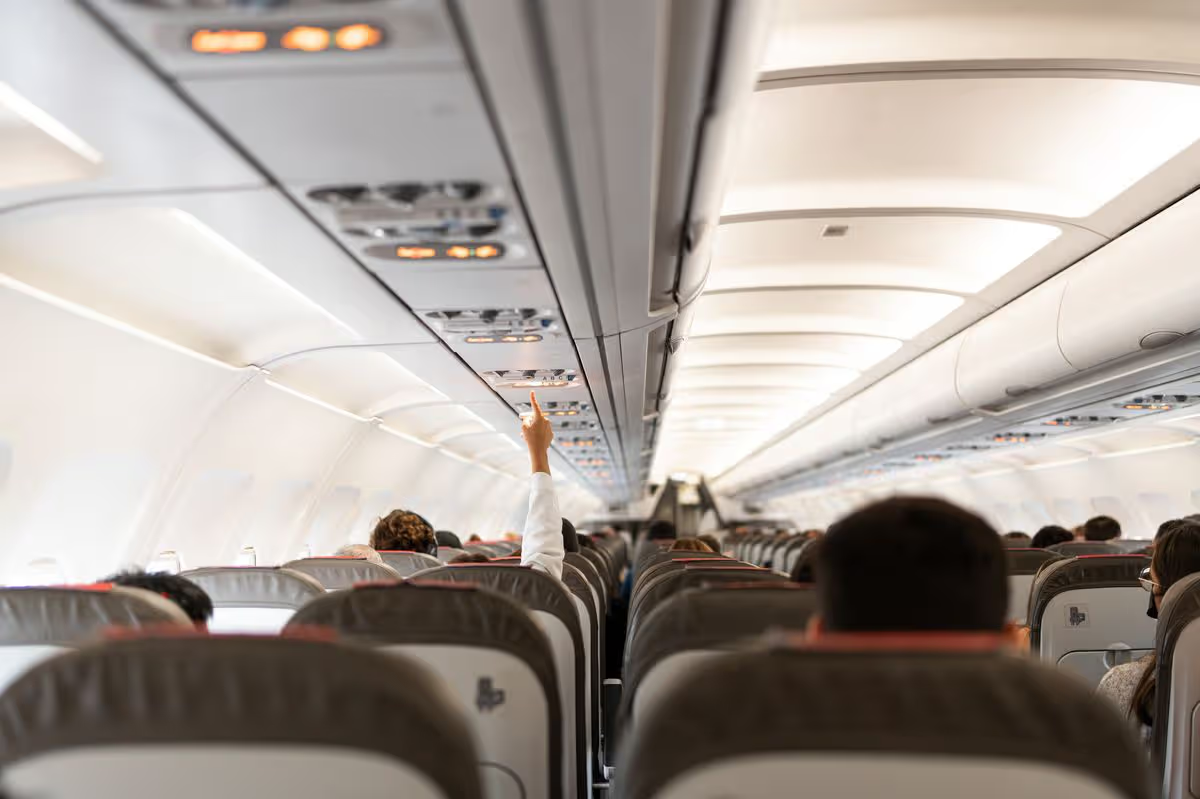
Parents with multiple kids are urged to beware of one rule on flights that many have ‘no idea’ even exists (stock image)(Image: Getty Images/iStockphoto)
As summer is officially here, many people will be taking the opportunity to travel for the summer holidays, either to soak up the sunshine in a tropical country, or even to visit people in a different part of the world. And if you’re bringing a young infant under the age of two, you’ll be happy to learn that most airlines will offer a cheaper fare if they don’t require their own seat.
But one twin mum named Savannah Gavigan was left baffled as she and her husband boarded their flight recently, as they had been forced to split up their twins on the flight due to a little-known rule they had ‘no idea’ even existed.
“Friendly reminder to all twin parents: two in-lap infants can’t sit in the same row,” Savannah wrote in the overlay text of her TikTok video, which showed her two twins playing with each other despite sitting on separate rows on the plane.
Content cannot be displayed without consent
“But they still find a way to spend time together,” Savannah jokingly added in the caption of her post.
Why can’t babies and young kids be seated next to each other on flights?
The main reason why only one lap infant (an infant sat in an adult’s lap) can be seated on each row of two or three seats of a plane is because of airline safety rules, as there are generally only enough oxygen masks in a row for the main passengers with one extra. So if there are multiple kids under the age of two in one row sitting in an adult’s lap, there would not be enough oxygen masks for them all to use.
Passengers will most likely encounter this on flights across most airlines as they often all follow the same rules and precautions.
But there are ways to get around this, such as if you’re flying with twins or just two infants under the age of 2. Many airlines will offer the opportunity to buy an extra, separate seat for one of the infants. If one infant is in their own seat (often in an approved car seat or with a harness), you can all sit together in the same row. Some airlines will also offer seats with bassinets that babies can lay in throughout the flight.
If both infants that you’re travelling with are lap babies, the closest you can sit together is across the aisle or directly in the row in front/behind each other, as it’s every three rows that will have four oxygen masks.
Keep in mind that some airlines require an additional accompanying adult if one adult is traveling with two infants, and at least one of the babies may need to be secured in a safety-approved car seat.
People soon took to the comment section of Savannah’s video to share their bafflement as many parents shared they’d never heard of the rule before.
“This should be in the disclaimer when you book a flight. How random I would’ve never known!” one person commented. Someone else said: “Will be traveling with the family in October and the grandbabies will be six months so this is a good thing to know now!”
Some flight attendants also appeared in the comments to verify the statement, as one said: “Hey flight attendant here! Thanks for bringing this up!!! It has to do with oxygen masks! Should they deploy we want everyone to have one in reach and easily accessible, reaching may take extra time that could be detrimental!”
Someone else went on to say: “You can though BUT – it depends on the aircraft type and where the bassinets are located. 2 bassinets on D & G on B777, A380 etc on many airlines ( Ex cabin crew )”
THIS may sound strange, but as we finished our first circuit around Yorkshire Wildlife Park, I was pleased we hadn’t seen all the animals who call this place home.
We hadn’t spotted them all because the amazing beasts — including giraffes, rhinos, zebras, lions, tigers, polar bears and wallabies — live in huge, free-roaming enclosures.
Sign up for the Travel newsletter
Thank you!
Visitors at Yorkshire Wildlife Park can see the baby cheetahs that were born on Valentine’s Day this yearCredit: Dominic Lipinski/Yorkshire Wildlife ParkThe attraction is home to amazing beasts including giraffes, rhinos, zebras, lions, tigers, polar bears and wallabiesCredit: supplied
They have areas to play, relax, eat and sleep instead of being squashed in small cages just so humans can instantly peer at them.
The humans on my trip included my son Alex and his friends Jack and Finn, together with their mum Laura. They travelled from London and we went from Manchester, meeting at the park in Auckley, Doncaster.
Even though our visit to the 175- acre adventure park was in February we were lucky with the weather and by the end of our day we were lucky with the animals we saw, too.
It takes about 90 minutes to walk the 3km circular route, and once you’ve done it the first time, you can do it all over again.
As we passed by the 30 life-size dinosaur models and then watched sea lions, the boys used the park’s app to decide which animals they wanted to see.
For Alex, it was the six polar bears. They live in ten acres, with grassy plains, rocky beaches, water pools and shaded caves, but thankfully seemed to love being near visitors.
One gigantic bear dipped in the pool and had a kickabout with a football right in front of us.
Finn chose the red pandas. Visitors can book 30-minute experiences with several of the animals, including the red panda, and feed them.
But Finn was thrilled just to see the “real-life Kung Fu Panda”. Jack’s wish was to see the tigers.
As we headed there, we first saw monkeys swinging through trees and playing, which the boys loved. Then we stopped at Leopard Heights, which has a large elevated viewing platform plus ground-level glass wall to see the big cats play on their huge wooden climbing frames.
The polar bears live in ten acres, with grassy plains, rocky beaches, water pools and shaded cavesCredit: suppliedVisitor Alex loved the Jungle lookout, climbing through wooden tree forts and over obstacle coursesCredit: Supplied
But as big cats go, they weren’t as majestic as the lions who sprawled out on rocks, seemingly oblivious to everyone gazing at their splendour.
Throughout the park, signs explain each animal’s back story. There is a big focus on environmental projects and it was lovely to read how the lions had been rescued from dangerous situations, including from Ukraine.
The Amur tigers were a highlight. One wandered right past us making moaning noises, which apparently indicated contentment. But as one man behind me rightly commented: “You wouldn’t want to hear that on a dark night, would you?”
There are several picnic spots here, too. One is sensibly inside and next time I visit I’ll shove a sandwich or two in a backpack.
But we weren’t that organised so had lunch at the Safari Cafe. Two very decent coffees for the adults, plus sandwiches and quiche with salad, and three portions of nuggets, chips, beans and apple juices for the kids came to £45 which, for a tourist spot, didn’t seem like bad value.
There are also many play areas and the boys loved the Jungle lookout, climbing through wooden tree forts, over obstacle courses and down slides as us adults had a catch-up.
Finally we returned to the Yorkshire Hive — a hub at the centre of the park with a beauty salon, shops, cafes and fitness centre plus hotel the Hex, where we were staying.
After dumping our bags, we went to Evolution Experience Restaurant where there were more roaring dinosaurs, illuminated dragons, smoke effects, crayons and colouring sheets for the boys.
They each had home-made pizza, apple juice and organic fruit lollies for £10 while we had ribs for £12 with a decent sauvignon blanc and prosecco.
The hotel ticked a lot of boxes — bunk beds and giant bean bags for the boys to sit on and watch Netflix plus black-out blinds, Temple Spa bathroom products, fresh coffee sachets and the cutest packets of mini Jammie Dodgers I’ve ever seen.
But without doubt the best bit of that room was two oblong windows in the walls — one at kids’ level and one at adult height — giving a bird’s eye view over the park.
We watched the wolves prowling and then eating their breakfast. It was the highlight of our trip.
After we had our own breakfast — a full English buffet at the Wilds Cafe Bistro — the boys had a final run around at the large soft play centre, while we relaxed and chatted.
That’s what is so perfect about this place — they catered for the needs of the animals, the kids and us. And for me, that was the real winner.
GO: Yorkshire
STAYING THERE: This summer, you can enjoy a stay at the Hex Hotel, including a one-day pass for the Yorkshire Wildlife Park, from £45pp, based on two adults and two children sharing a standard family room.
Narin Flanders hit le road with her family, stopping off at Disneyland and Eurocamp as part of a tour of the country that began with Brittany Ferries and ended with Le Shuttle
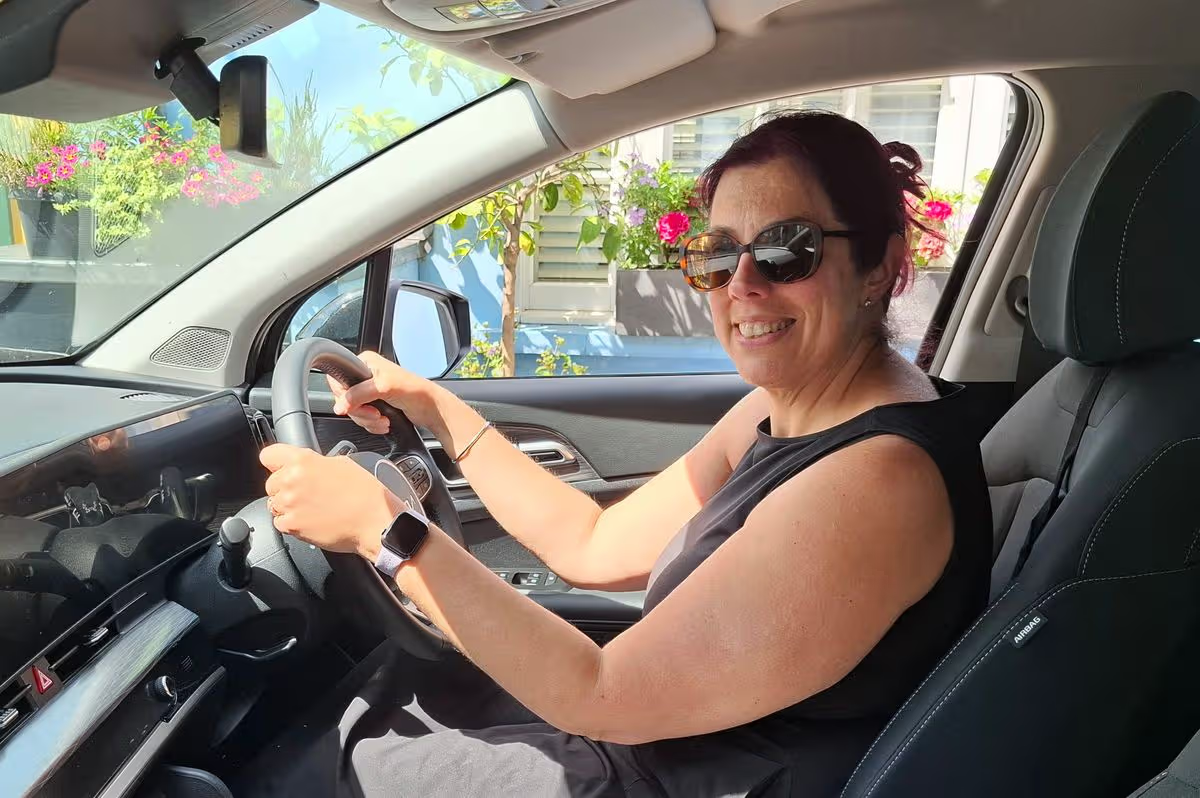
Writer Narin Flanders took her family on a road trip through France for half term instead of flying and was surprised by many of the perks(Image: Narin Flanders)
There are plenty of good reasons to swap flying for a driving holiday this summer: airline prices are creeping up, airport strikes are planned in several European hub cities and rumblings about jet fuel availability with the ongoing issues in the Strait of Hormuz.
However, why my family and I finally took the plunge, after months of reading about roadtrips online, was a reason much closer to home. As a family of four allergic to the concept of travelling light, the idea of being able to fill our Kia Sportage with everyone’s (admittedly often non-essential) essentials and travel to a few different places in one trip was a tempting prospect.
So we took the plunge and put together an itinerary, including a bit of something for everybody. We started by getting on a Brittany Ferry at Portsmouth, travelling five hours to Caen and then two hours cross-country to a Eurocamp in Domaine des Ormes, Brittany.
Do you have a travel story to share? Email webtravel@reachplc.com
We started with four days of Center Parcs style, living at a fraction of the price of a hotel. Swimming, ziplines, and playgrounds were aplenty (along with unlimited wifi – it wasn’t all Swallows and Amazons ). Then we meandered across to Le Mans as a treat for my husband and I, who are both major racing fans.
From the hallowed tarmac, we headed towards the capital to visit Disneyland Paris. After two full days at the European House of the Mouse, soaking up the new Adventure World Park as well as fulfilling all my son’s and my Marvel nerd dreams, we took Le Shuttle home.
While we were definitely nervous about driving abroad, what I realised quickly was that Gemini could answer lots of questions and even help plot the itinerary, right down to recommending great towns between our main destinations with things to do with the kids.
Planning ahead allowed us to get organised with essentials. In France, there’s a lot to consider to stay road legal. All cars driving in France need to have a safety kit in the boot in case of an emergency by law. They’re easily bought from Amazon for around £20, although make sure to buy extra high viz jackets if needed – everyone in the car needs their own.
Meanwhile, an Emovis tag is a £9 Bluetooth gadget that you can place on your dashboard and then just drive through tolls and be billed afterwards. It arrived in the UK in plenty of time for our trip, and we loved not having to faff with coins or payment cards at tolls along the way.
Cars driving in major cities that have been designated low-emission zones also need a Crit’Air sticker. These cost €4.71 (£4) including delivery and can be ordered from the French transport ministry – although beware the scam sites that come up on Google suggesting you order through them at a higher price. Cars without a Crit’Air can be fined €68, so if you think you’re going to stray into low-emission zones, it’s worth getting one for peace of mind.
While, of course, driving in France involves getting used to being on the wrong side of the road, once we were actually there, the experience was largely stress-free. I’d say French drivers are better at using motorways properly than we are – middle lane hogs didn’t seem to be much of a thing.
There are some differences, though. Notably, the responsibility for drivers to give way to cars joining the motorway, so remembering to move over took some getting used to. We were relieved to find Google Maps worked effectively everywhere we went, so it’s definitely worth paying for roaming data or picking up a temporary SIM from brands like Lebara or Smarty that include it free.
While a driving holiday was slightly out of our comfort zone, it turned into a fun family adventure we’d absolutely do again.
As well as the joys of the individual stops – and surprise diversions along the way, including discovering an unassuming restaurant with steak frites so epic it has become the stuff of family legend – we found, much to my surprise, that the time spent in the car watching the French landscape go by became part of the fun.
At home we’d be firmly in ‘are we there yet?’ territory, but a family Spotify playlist sharing our favourite songs and regular stops at French petrol stations for snacks made the drive as much a part of the adventure as everything else.
Book it
Narin stayed at the Domaine des Ormes Eurocamp. Currently, a four night stay for a two bedroom lodge through Eurocamp starting on Monday, July 20 is £975. For the October half term, Eurocamp is £289.64 for four nights.
A short trip from Benidorm will take you to a picturesque Costa Blanca town that is often compared to the Greek island of Mykonos – and it’s a must-see hidden gem for anyone visiting the area
08:57, 27 Jun 2026Updated 08:58, 27 Jun 2026
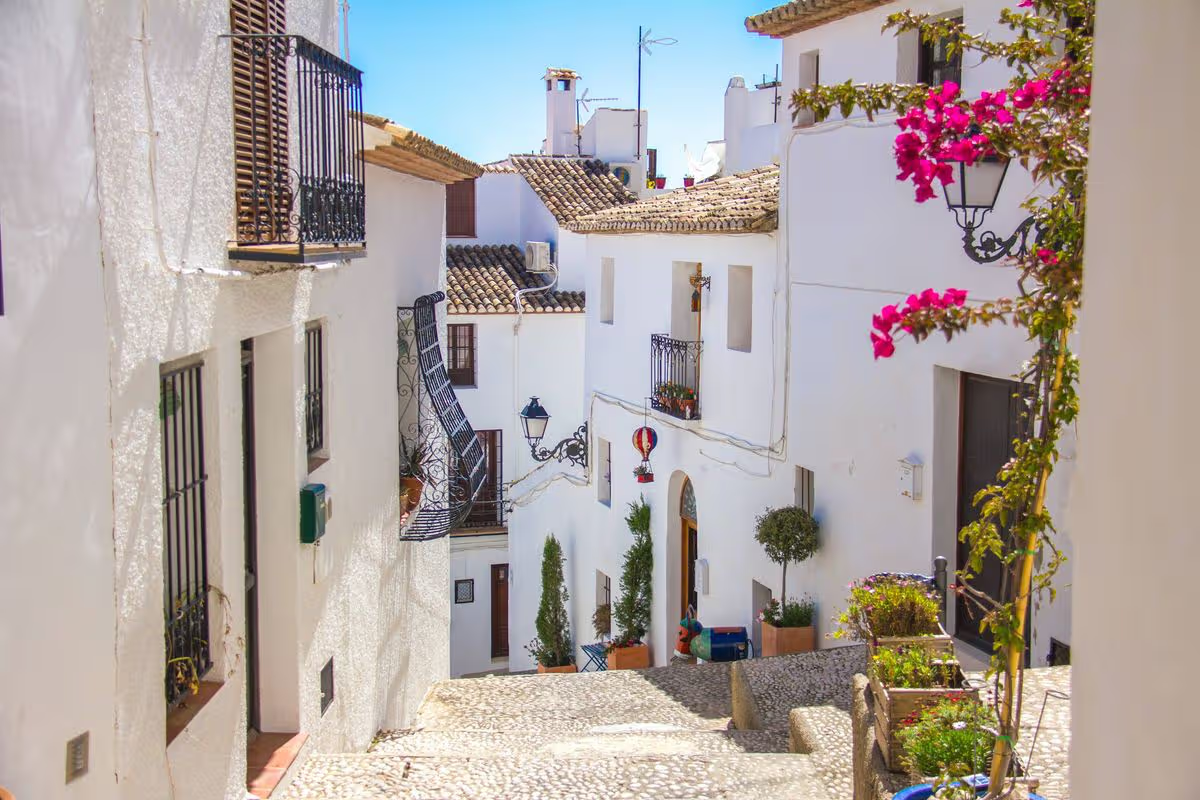
The Spanish town near Benidorm is often compared to Mykonos (stock image)(Image: MiniMoon Photo via Getty Images)
Benidorm, a firm favourite among British holidaymakers, is renowned for its sun-drenched beaches, budget-friendly breaks, and the vibrant Calle Gerona, lovingly known as ‘the strip’. However, beneath the surface of stag and hen parties, Benidorm conceals beautiful spots that countless visitors have yet to discover.
For those seeking an escape from the party scene, a brief trip unveils a peaceful town. Located just moments from Benidorm, it provides a calm alternative to the raucous nightlife, with comparisons drawn to the allure of Mykonos. A quick 18-minute drive or a short 12-minute bus journey from Benidorm Intermodal brings you to the picturesque Altea, Alicante.
Hailed as one of Spain’s “most iconic” towns, Altea whisks visitors back in time with its captivating old quarter, complete with winding cobbled streets and sparkling white houses. Wandering through Altea’s alleyways, the tempting aromas of freshly made coffee and mouth-watering food drift from intimate cafés and delightful restaurants.
The town’s jewel in the crown is the parish church, Nuestra Señora del Consuelo or Iglesia de Arriba, which mesmerises tourists with its splendour. From this elevated spot, the sweeping views stretch across the brilliant blue sea to the vast beach beneath.
Alice, an influencer who highlights Benidorm’s best features and reveals her favourite recommendations online, recently visited Altea and proclaimed it a must-see destination for any travel bucket list.
Content cannot be displayed without consent
Boasting more than 37,000 TikTok followers, Alice gushed: “Hidden gem only 15 mins from Benidorm! Maybe Altea isn’t a hidden gem for those in the know, but the way you could lowkey be just 15 mins away from this gorgeous slice of history and culture while on your holibobs in Benidorm!”
She went on to say: “It’s an absolute MUST see if you’re looking to escape for an afternoon to see some of the best views on the entire Costa Blanca. It’s giving cheeky Altea day trip, don’t you think?”.
The response was overwhelmingly positive — the short clip has racked up more than 17,900 likes alongside a flood of glowing comments.
One visitor shared: “I went there in December. Very nice.”
Another remarked: “There are stunning restaurants and bars. It’s not Benidorm. They may be close but they are worlds apart. Altea is beautiful.”
A third chimed in: “It’s simply a stunning old and new town.”
One commenter went as far as calling it their “favourite place of all time”, while another declared it had firmly earned a spot on their bucket list, writing: “Definitely heading here.. never knew it was so close.”
Flights from the UK to Alicante can be snapped up from as little as £40.
From there, you can hop on a bus, grab a cab or take the tram to Benidorm, which should take roughly 40 minutes by road.
The decision of where to sit on a plane could impact the rest of your holiday
08:31, 27 Jun 2026Updated 08:35, 27 Jun 2026
Picking the right seat could make a big difference(Image: Getty)
As millions of Brits gear up to jet off on their summer holidays, one decision that many may have overlooked could make or break their entire trip. Choosing the right seat on the plane might be the difference between relaxing on a sun-soaked beach or making endless trips to the toilet.
Research has revealed that whether passengers opt for a window, middle, or aisle seat could potentially affect their chances of catching a viral infection before the holiday has even got underway. However, your seat selection alone won’t be the sole factor determining your overall risk of falling ill.
How close you are to someone carrying a virus is the single biggest indicator of how likely you are to pick up an infection. This is followed by how busy the flight is, as the greater the number of passengers on board, the higher the likelihood that some will be carrying viruses.
Airflow throughout the cabin, passenger movement, contact with shared surfaces (such as in the bathroom) and whether or not you wear a mask will all have a bearing on your risk of catching a viral infection during a flight.
Dr Sophie Dix, Head of Medical Affairs at online pharmacy MedExpress, has offered guidance on how travellers can lower their risk of falling ill while flying, including advice on where to sit. She said: “Although there is no guaranteed way to avoid picking up an illness while flying, there are practical steps people can take to reduce their exposure to germs and viruses on planes.”
She shared her top tips for travellers looking to lower their chances of picking up an infection. Here’s what she advised.
Seat selection matters
“The best advice to avoid getting sick on the plane is to try and reduce as much contact with germs and other passengers as possible, so choosing where you sit may have more impact than you might have originally thought.
“Window seats are a great option as they are often far away from high traffic areas such as bathrooms and busy walkways. Aisle seats also increase your exposure to people who frequently pass by throughout the flight, queue for the toilet, and access luggage from overhead compartments. One study found that sitting in a window seat can reduce your interactions with other passengers or crew by up to five times compared to if you sit in a middle or aisle seat.”
She added: “Additionally, research may suggest that leaving the middle aisle free reduces the spread of airborne diseases by 37%, so choosing seats that appear to have middle aisles empty could be a strong choice. Whilst protection from illness is never guaranteed, this highlights that creating distance between other passengers greatly reduces your chances of getting sick.”
Wipe down any surfaces
“Surfaces such as tray tables, armrests, seatbelt buckles, touchscreens, magazines and window shutters can harbour germs easily as they are used so frequently by previous passengers. Wiping down surfaces with disinfectant wipes or sanitiser greatly reduces your risk of coming into contact with germs on them.
Wash your hands regularly
“Maintaining good hygiene standards while travelling can greatly reduce your chances of getting sick. Washing your hands regularly with soapy water or hand sanitiser, especially after coming into contact with surfaces, is a simple but effective way to stop the spread of germs while you’re on the plane.
Stay hydrated
“Cabin air on planes can be extremely dry and irritate your nose and throat whilst travelling, leaving you feeling more run down and vulnerable to picking up any viral infections. Make sure to drink plenty of water and keep on top of hydration throughout the flight to strengthen your immune system. Keep water easily accessible throughout the flight, and drink regularly, especially if you’re travelling with children.
Wear a face mask
“Wearing a face mask greatly reduces the spread of any airborne viruses, as we saw throughout the COVID-19 pandemic. Crowded flights may become a hotspot for any infections due to the cramped space and close proximity to other passengers, so taking preventative measures may help reduce the spread of any current infections.
Ensure you’re well rested
“Those who don’t get adequate rest before a flight are over 4 times more likely to catch a cold compared to those who are fully rested. This is due to your immune system being weaker when you haven’t got enough sleep, making you more susceptible to picking up any infections.
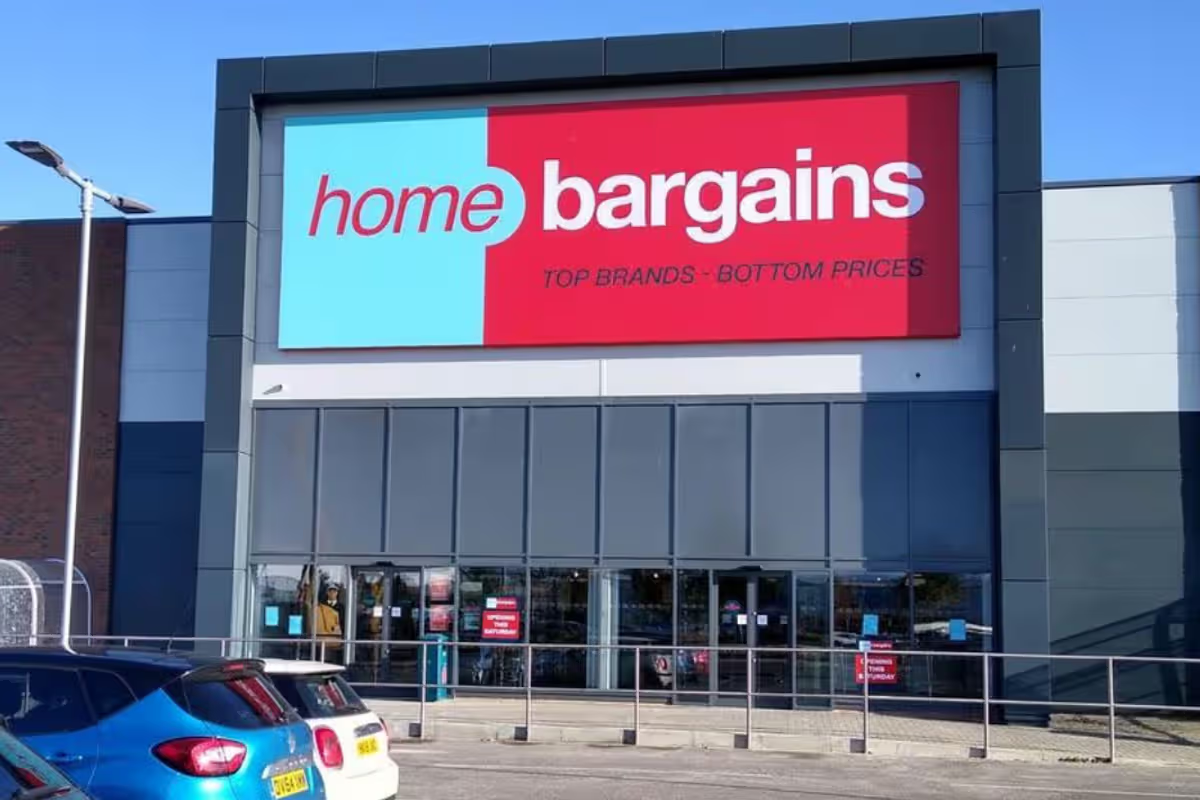
Shoppers looking to ‘travel in style’ could do just that with the latest travel deal at Home Bargains
Take a look at the latest deal at Home Bargains(Image: Home Bargains)
Home Bargains is helping shoppers prepare for their summer holidays with a “spacious yet compact” cabin bag that meets the hand luggage requirements of several major UK airlines. The discount retailer, which has over 600 stores nationwide, claims it is “perfect for your adventures”.
It may be renowned for its affordable homeware and furnishing deals, but Home Bargains’ range extends far beyond side tables, lamps and ornaments. From garden accessories and beauty buys to travel essentials, shoppers can find plenty of wallet-friendly options.
Take the Salisburys Carry-On Cabin Lightweight Backpack, for instance, which retails for a more-than-affordable £9.99. It comes in black, and boasts a very simple aesthetic to suit various tastes.
Describing the product, Home Bargains said: “Travel light and in style with the Salisburys Carry-On Cabin Lightweight Backpack in sleek black! Perfect for your adventures, this spacious yet compact backpack is designed for easy packing and effortless carrying.
“Every Salisburys product has been designed, manufactured and extensively tested to stand the rigours of today’s travel. Every Light Luggage product has been designed, manufactured and extensively tested to stand the rigours of today’s travel.”
According to Home Bargains, the cabin bag measures approximately 45 x 30 x 15cm, making it suitable for use with the cabin luggage allowances of most major airlines, namely easyJet, British Airways, Virgin Atlantic and KLM. Please note, it could be too long for Ryanair, Wizz Air and Jet 2.
Weighing around 760g, it features multiple zipped compartments for organising belongings, a fully lined interior and a lightweight construction designed for travel. Interested shoppers can find out more, and view additional product images, on the Home Bargains website.
It’s available both in-store and online as Home Bargains offers standard delivery across the UK mainland from £3.95, while orders over £100 qualify for free delivery. A £10 delivery fee applies to larger furniture items, and most standard parcels are expected to arrive within four working days.
Home Bargains is also selling the Salisburys Under Seat Bag which will also set you back £9.99. The product description reads: “Meet the Salisburys Under Seat Bag – your perfect travel companion!
“With its spacious zipped compartments and sleek design, it’s ideal for keeping your essentials close at hand while you jet off on your next adventure. Salisburys presents its broadest line-up of tried and tested luggage solutions with contemporary features to help the modern tourist navigate the hurdles of twenty-first century travel.
“Salisbury Under Seat Bags solve modern travel issues of the check-in case. A fantastic size bag that is versatile for the needs of your modern travel. Large open zipped storage compartment with small zip side pouch.”
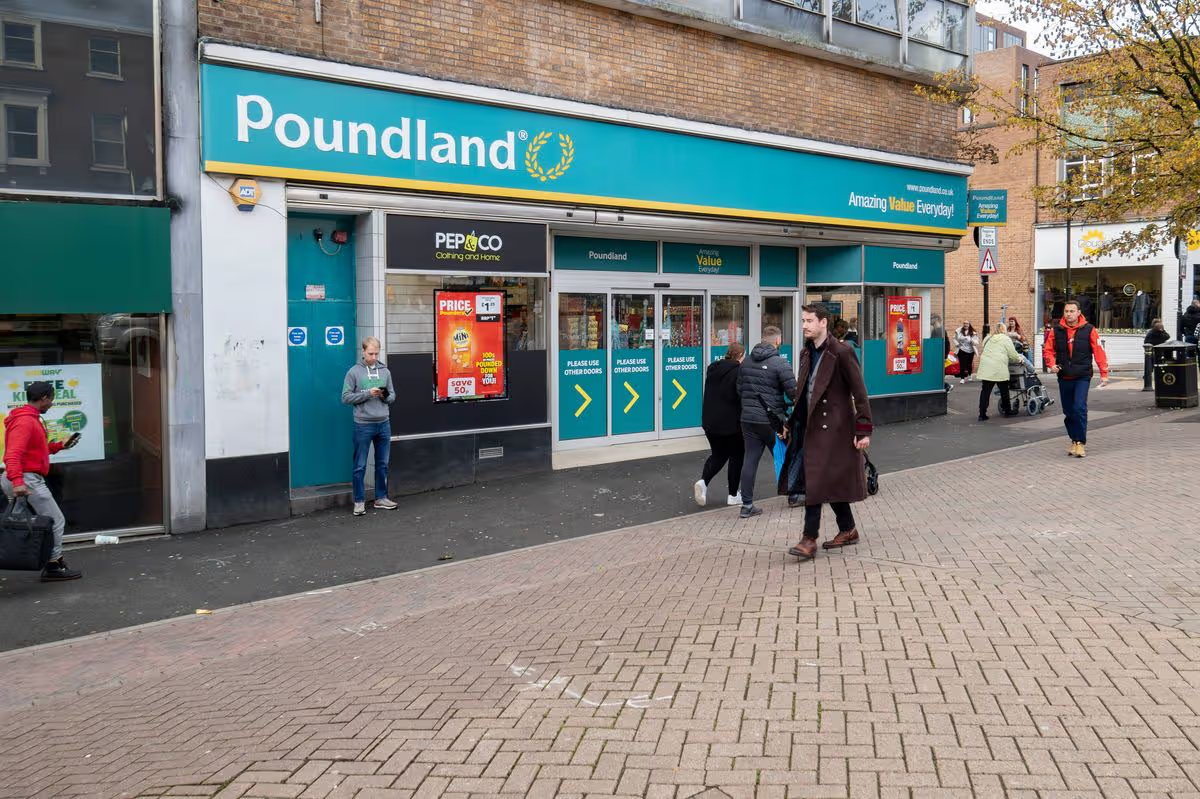
A savvy shopper has shared the travel essentials she found in Poundland, including 100ml travel-size suncreams and shampoos that are perfect for those travelling with only hand luggage
08:03, 27 Jun 2026Updated 08:03, 27 Jun 2026
She shared what she’d managed to find that would make life a lot easier when travelling (stock image)(Image: Ray Orton via Getty Images)
The prospect of travelling with only hand luggage can fill many holidaymakers with anxiety, prompting them to fork out for hold luggage when their liquids won’t fit in a carry-on bag. The reason, of course, is that when passing through airport security, liquids are restricted to 100ml — which can be a real headache, given that many suncreams come in 250ml bottles, or, even more frustratingly, 125ml — just over the limit.
However, a savvy traveller named Sham has flagged that Poundland stocks “100ml suncreams,” meaning you’ll have “no stress at security” as your liquids will be fully compliant with rules and regulations. Getting through airport security with hand luggage only can actually be a doddle with the right products in tow — and also spares you the nail-biting wait at the baggage carousel, desperately hoping your suitcase has made it to your destination in one piece.
She noted that the mini products are priced at £2, quipping: “We know Poundland’s not all a pound anymore.” Sham revealed that the store stocks suncream, sprays, and even travel-sized shampoos and conditioners — ideal for those heading away long enough to need a hair wash.
She also spotted towel clips for just £1, so you needn’t worry about your towel taking flight if your destination turns out to be a touch on the breezy side. Rounding things off, there was a Malibu fake tan that Sham said she was keen to try before her holiday, adding that she’d heard great things about it — and at just £2, it seemed well worth a go.
In the comments section, one user wrote: “Ah, I need to get to Poundland! Going away soon, so these would be perfect.”
Content cannot be displayed without consent
A second chimed in: “Buying s**** to take on holiday is the most British thing ever. You don’t need half that s***, it will be left in the bag in the hotel the whole holiday.”
However, Sham hit back: “It saves a right packet taking the small ones, perfect amount for your hol.” And there’s no denying that SPF is absolutely essential.
NHS advice on keeping yourself safe in the sun
Sunburn increases your risk of skin cancer. And it does not just happen on holiday. You can burn in the UK, even when it’s cloudy.
There’s no safe or healthy way to get a tan. A tan does not protect your skin from the sun’s harmful effects. Aim to strike a balance between protecting yourself from the sun and getting enough vitamin D from sunlight.
Spend time in the shade when the sun is strongest. In the UK, this is between 11am and 3pm from March to October.
You can also check the UV index on a weather app or website. If it’s three or higher, consider protecting your skin.
Make sure you:
spend time in the shade between 11am and 3pm
never burn
cover up with suitable clothing and sunglasses
take extra care with children
keep babies under six months out of direct sunlight
use at least factor 30 sunscreen – make sure to use enough and re-apply frequently
Do not rely on sunscreen alone to protect yourself from the sun. Wear suitable clothing and spend time in the shade when the sun’s at its hottest.
When buying sunscreen, the label should have:
a sun protection factor (SPF) of at least 30 to protect against UVB
at least four-star UVA protection
UVA protection can also be indicated by the letters “UVA” in a circle, which indicates that it meets the EU standard.
Make sure the sunscreen is not past its expiry date. This is marked by a symbol of an open jar, an M and a number, which shows how many months the sunscreen will last once it’s been opened. Do not spend any longer in the sun than you would without sunscreen.
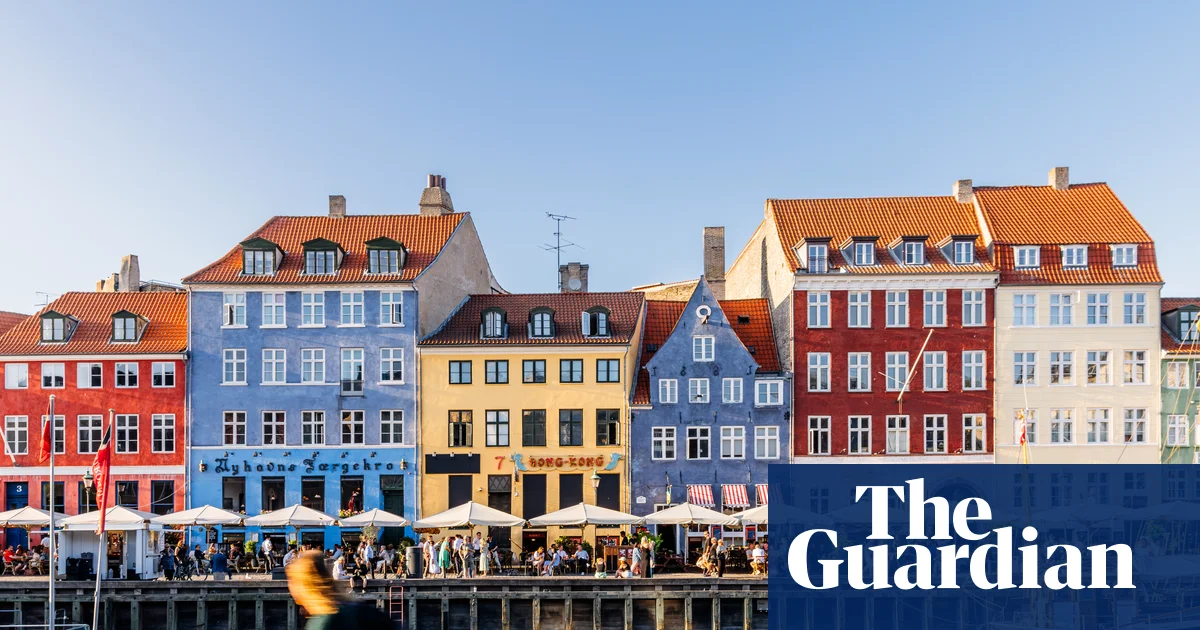
I didn’t realise I was a fussy eater until I left Denmark. During 12 years of living Danishly, with regular trips to the capital, I just … liked most things. Danes specialise in high-quality, organic produce, eaten as close to its natural state as possible. Denmark has very specific, diverse climatic conditions, making seasonal eating a science. Forget root vegetables in autumn and strawberries in summer – we’re talking micro seasons, week to week, with cabbage, kale, apples, potatoes, berries and rye a speciality. None are around for long, but when they are, they’re fabulous – and the seasonal Nordic diet has been proven to be as healthy as the renowned Mediterranean diet and better for the planet. No wonder Copenhageners look so smug.
But the city’s food scene hasn’t always been so good. Many who grew up in the 1970s and 1980s report being reared on canned food and frozen vegetables, with pork and potatoes, smørrebrød (open sandwiches) or junk food making up much of the offerings. (You’re never far from a pølservogn, or “hot dog wagon”, in Copenhagen – doling out bright red wieners baked in their own bready prophylactic.)
New wave … Kødbyens Fiskebar sits in the heart of the Meatpacking District. Photograph: Kødbyens Fiskebar
The capital’s culinary offerings finally got a facelift when Copenhagen was made European capital of culture in 1996. Then came Noma. Chefs René Redzepi and Claus Meyer turned a former warehouse in Christianshavn into a restaurant in 2003, named after a combination of the Danish words nordisk (Nordic) and mad (food). Noma eschewed the Mediterranean bias in fine dining at the time in favour of homegrown Danish produce. The following year, they brought together fellow chefs to develop a set of principles to help Nordic food move forward. Just as Dogme ’95 took things back to basics in film, the New Nordic Kitchen Symposium vowed to focus on the raw materials of cooking – using local, often foraged, seasonal produce.
After an 18-hour-long workshop, chefs formulated the New Nordic Kitchen manifesto. It’s outline: to express “purity, freshness, simplicity and ethics” by prioritising “ingredients and produce whose characteristics are particularly excellent in our climates”, and helping to “promote Nordic products and producers”. And it worked – encouraging everyone to up their game and influencing chefs globally. Copenhagen began hoarding Michelin stars (30 at last count), but in the kitchen, pressure built. Redzepi acknowledged as far back as 2015 that he had been a bully who “yelled and pushed people”, then in March this year he resigned from Noma amid allegations of physical and verbal abuse.
Noma alumni … Propaganda is run by former Noma chef Youra Kim. Photograph: Giulia Fontana/Propaganda, Copenhagen
What made Redzepi’s fall so spectacular was that it collided with Noma’s image as a progressive, sustainably driven, Danish restaurant. There’s no doubt that Noma helped normalise ideas of seasonality, foraging and ingredient-led storytelling in fine dining (sometimes it was more of a Ted Talk than a meal), but innovation can’t come at the cost of accountability. There’s hope that Redzepi will act as a cautionary tale for other chefs contemplating how to run their kitchens – with Noma alumni now heading up dozens of restaurants in the city, from Propaganda (run by Youra Kim, former chef), to Kødbyens Fiskebare (Anders Selmer, former restaurant manager) and the ubiquitous Bæst (Christian Puglisi, former sous chef).
Today, there’s still an emphasis on quality and attention to detail – from ingredients to cutlery, crockery and even candlesticks. Service culture has improved (you might get a smile now) and restaurants book weeks in advance, so it pays to plan ahead. Eating out in Copenhagen isn’t cheap, mind, but every bakery allowed to thrive in the city will have affordable options. And there’s nothing like biting into some dense, buttered rye topped with whatever’s in season as the sun bounces off the water that slices the city (hard recommend: Aamanns). .
Copenhagen is more relaxed than other capitals and more human in scale, dominated by four- to six-storey buildings, and biking Vikings outnumbering cars in the city. With hyper-local menus, climate-conscious cooking and a devotion to detail, it is still, in the words of Danny Kaye, “wonderful”.
Travelling to Copenhagen – what to do when you’re not eating
Imposing … Copenhagen’s iconic city hall. Photograph: arcady_31/Getty Images/iStockphoto
Where to stay
Steps from food market Torvehallerne, stylish Kong Arthur Hotel prides itself on offering a local feel with morning saunas and a social running club for guests. Double rooms start at £202 per night, two-night minimum stay. In Nordhavn, the newly opened Hotel Frihaven has 28 rooms and is well located for a morning swim. Double rooms start at £170. For a budget option, Next House, close to the foodie-orientated Meatpacking District in Vesterbro, has compact double rooms from £138.
Things to do
A forager’s delight … the beach at Amager. Photograph: Heini Kettunen/Alamy
If you don’t fancy going on a packed tourist-boat trip to see the city, take a bike ride or walk around the Harbour Circle Route instead, via some of the best Danish architecture and numerous swimming spots.
Speaking of swimming, the city’s floating pools are free for everyone – and something of a local obsession. Islands Brygge Harbour Bath has the largest and most central pool.
If you needed more incentive, the CopenPay initiative rewards visitors who participate in climate-friendly activities. Arrive by bike or metro, help with some gardening or bring a water bottle: all earn rewards such as drinks, free tours or a coffee.
If you want to bump into a Danish chef in the wild, try foraging in the Amager Strand area. The app VildeMad introduces the edible Danish landscape and has foraging guides to follow.
Copenhagen has a vibrant vintage shopping scene. Elmegade in Nørrebro is a great place to start. If you’re in the city on a Sunday, look out for flea markets. It’s a tradition to set up impromptu markets across the city, selling anything from vintage furniture to clothes.
Stop by Alma in Frederiksberg for a spot of supermarket tourism. The independent grocer is on a par with Waitrose and stocks specially produced chocolate from Michelin-starred restaurant Alchemist on its shelves.
Have you even been to Copenhagen if you don’t return with a biscuit tin? For the best iteration of the souvenir, head to Juno the Bakery, where they sell buttery cookies in chic containers. And yes, you can repurpose the tin for a sewing kit afterwards.
Places to see
Haunting … Cisternerne in Frederiksberg Park. Photograph: Design Pics Inc/Alamy
Amusement park Tivoli Gardens dates back to 1843 and is a classic day out with family-friendly attractions, thrill rides, arcades and parading peacocks in its lush gardens. Restaurants are – surprisingly – outstanding, including a pop-up that hosts some of the country’s most acclaimed chefs.
Copenhagen’s art scene is particularly exciting this year. At Arken, scrapwood artist Thomas Dambo’s first major exhibition Garbage Man displays his enormous and charming trolls, while at Cisternerne, Marina Abramović’s Seven Deaths offers a haunting experience.
The Coastal Route train line is a lovely trip once you’ve had your fill of wandering historic streets and hygge in the city. Take it to the Louisiana Museum of Modern Art or continue to Helsingør, home to the castle where Shakespeare set Hamlet
Our Mirror writer Georgia Reina discovers Portugal’s Alentejo region and its world-class food, wine and slow living
The unspoilt Portuguese region that’s home to incredible food, wine and history(Image: Calum Davidson 2011 Getty)
When you picture Portuguese getaways, you’re almost certainly thinking of city escapes in Lisbon or the golden sandy shores of the Algarve. However, if you’re after a holiday that combines sun-drenched heritage with a chilled-out, easygoing vibe — not to mention exceptional wine — the true gem lies an hour and a half inland.
You may not have come across Alentejo yet, but next year the region’s historic centre, the town of Évora, will claim the spotlight as the European Capital of Culture. It delivers the perfect small-town appeal with a rustic flavour.
Wandering its cobbled lanes, I instantly sensed it’s the lively sort of place where everyone appears to know each other, effortlessly swapping banter across open windows and sunlit squares.
There is a philosophy in Alentejo, an idea the locals embrace, called vagar. Literally meaning ‘to drift’, it’s the deeply rooted Portuguese practice of slow living.
Vagar is about taking things easy, relishing a leisurely lunch, enjoying a fine glass of red, and allowing the day to unfold without any frantic urgency. It became the spirit of our trip.
Where to stay
In the town centre, I stayed at the five-star M’ar De Ar Aqueduto, a contemporary design hotel set within a 16th-century palace. It has a captivating history, with a former life as a medical facility and monks residing just across the lane.
Its standout feature is the stunning garden pool, positioned directly beneath the soaring stone arches of the city’s renowned aqueduct. A short drive from town in Viana do Alentejo, Moagem Industrial Lodge is a masterclass in industrial-chic design.
Set within a converted historic grain mill, the property preserves its original machinery and rustic character while providing entirely modern comforts. An ideal place to embrace the region’s more relaxed rhythm.
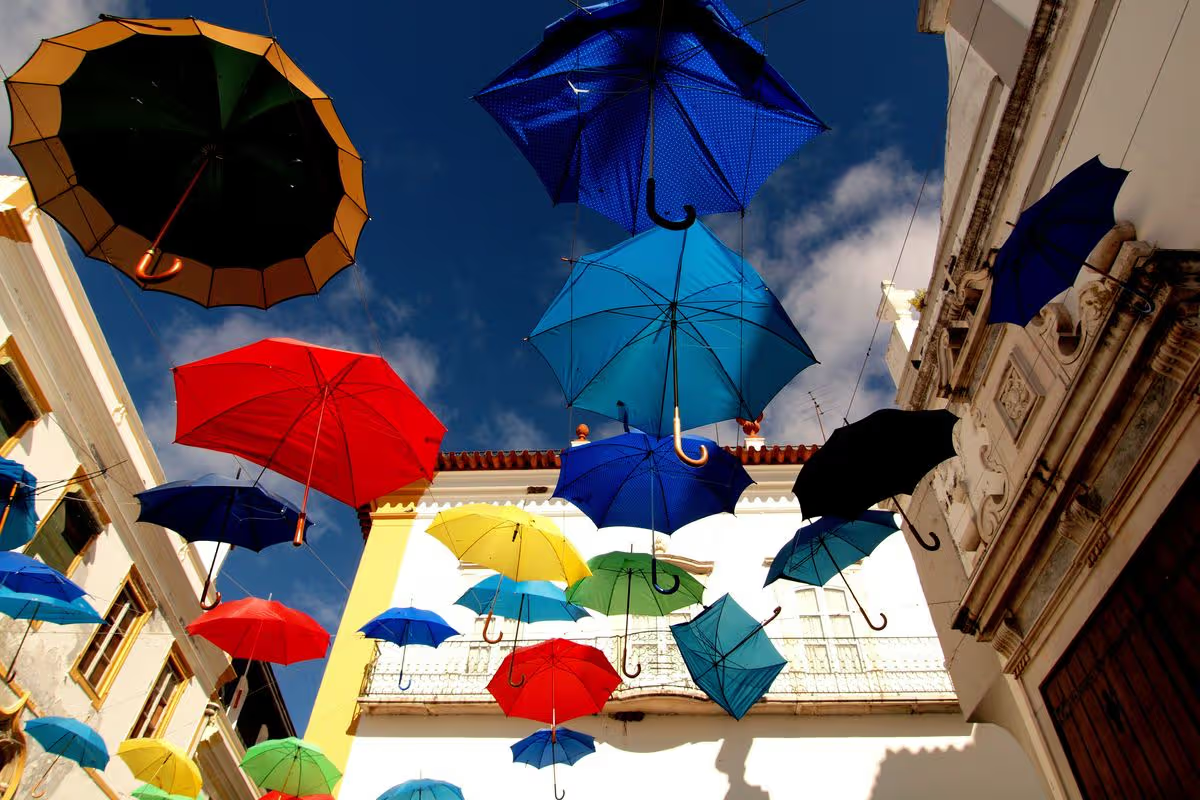
The architecture of Évora is a tribute to its history, with treasures around every corner. The city is awash with brilliant white buildings designed to deflect the Iberian sun, adorned with striking yellow and blue (a traditional choice intended to repel evil spirits, though it apparently also works as a natural insecticide).
History effortlessly blends into contemporary life; nowhere more evident than at the Aqueduto da Água de Prata (Silver Water Aqueduct). This 12km wonder has homes, cafés, and shops cleverly tucked into the narrow spaces beneath its soaring stone arches.
At the city’s highest point sits the iconic 1st-century Roman Temple – formerly the ancient city centre. Yet Évora’s Roman heritage is also concealed right beneath your feet.
As we entered the grand, iron-framed City Hall, we uncovered the Roman bath complex – discovered during renovations in 1987 and beautifully preserved within the municipal building. But no visit is truly complete without experiencing Évora’s most bizarre attraction: the Chapel of Bones (Capela dos Ossos).
Constructed by 17th-century Franciscan monks, its walls and columns are carefully adorned with thousands of human skulls and shin bones. Standing there, taking it all in, was a powerful reminder of mortality I won’t ever forget.
Eat, drink, be merry
Évora’s culinary scene is renowned – local produce refined through generations of tradition. We began with an icon – doces conventuais (convent sweets).
Born from a 16th-century sugar boom originating in Brazil, inventive nuns blended sugar with egg yolks to create indulgent delicacies like Pão de Rala. On the savoury front, I don’t need to suggest a specific restaurant – the streets are packed with charming trattorias to choose from.
At virtually all of them, the highlight is pork – not just in main courses (succulent suckling pig), but even in puddings, where crispy, salty crackling is combined with sweetness – and it simply works. Complete your meal with Queijo de Évora, a sharp sheep’s milk cheese, or enjoy a glass of Marquês de Borba Late Harvest – now my go-to dessert wine.
What really places Évora and Alentejo on the international stage, though, is its wine. If you can schedule your trip around the Évora Wine Festival in late May, you’re in for an absolute delight (although tastings are on offer throughout the year).
The festival transforms the historic squares into vibrant celebrations with crowds enjoying rich, fruity reds and sunshine whites. During my tastings, I absolutely adored the Comenda Grande Rosé – a wonderfully dry, balanced wine with intense raspberry aromas and a crisp acidity that virtually demands to be enjoyed on a sun-drenched terrace.
The striking Quinta do Quetzal ‘Arte’ Red completely captivated me too, with its intricate blend of wild berries and rich spices, which complements pork dishes superbly. For a white, the lively Porta da Ravessa is pure Alentejo sunshine bottled, delivering an incredibly fresh, tropical burst of citrus that serves as the perfect local aperitif.
It is this remarkable, authentic viniculture that continues to cement the region’s standing as an absolute essential destination for food lovers and wine enthusiasts alike.
Beyond the city walls
Venturing beyond Évora for a day excursion, I’d suggest making the journey up to the medieval village of Monsaraz. Sitting high atop a hilltop overlooking the Spanish frontier, this ancient, walled museum-village appears frozen in time.
It boasts narrow, twisting lanes bordered by striking slate and whitewashed houses, all converging towards a magnificent 14th-century castle constructed by King Dinis. Strolling along its peaceful ramparts provides panoramic vistas across the golden Alentejo plains and the glistening waters of the Alqueva reservoir beneath – an ideal spot to embrace the purposeless wandering of Portuguese vagar at sunset.
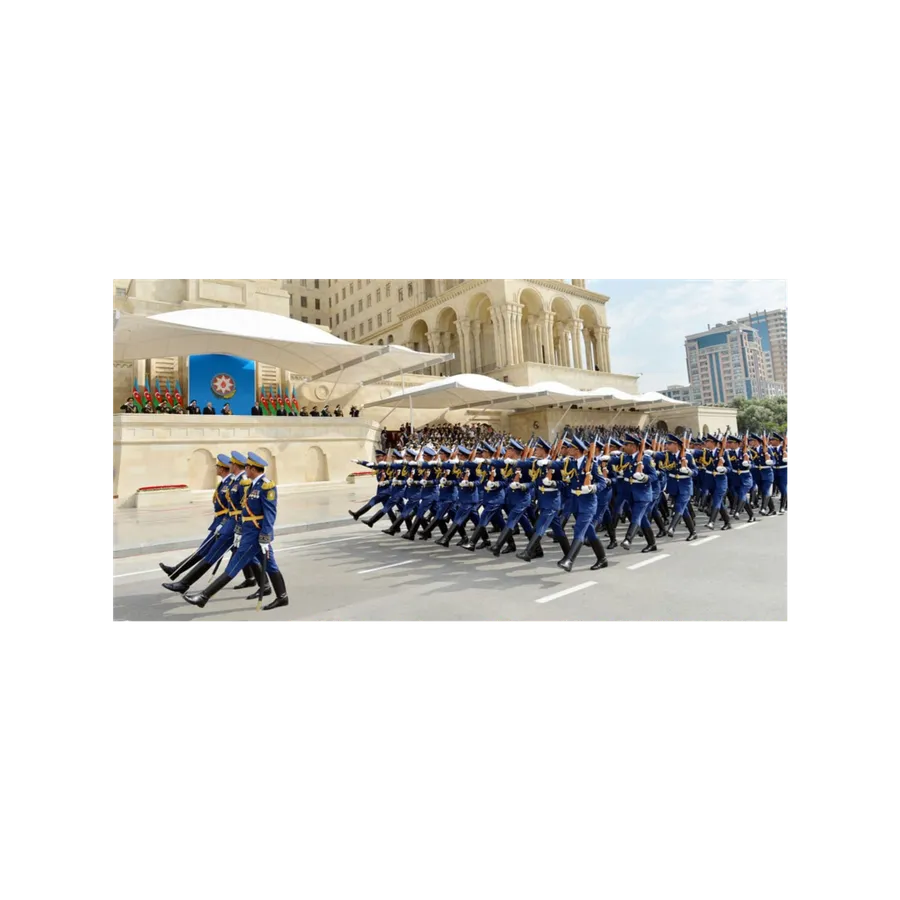
This text explores the historical origins and modern significance of Armed Forces Day in Azerbaijan, a public holiday observed annually on June 26th. The narrative traces the military’s beginnings back to 1918, when the newly independent Azerbaijan Democratic Republic first organized its national defense forces before being absorbed by the Soviet Union. Following the restoration of national sovereignty in 1991, the government officially reinstated the military and later designated this date as a formal day of celebration under a presidential decree. Today, the commemoration honors the various branches of the military, including the land, air, and naval forces, along with associated security services. Ultimately, the source highlights how the holiday serves as a s …
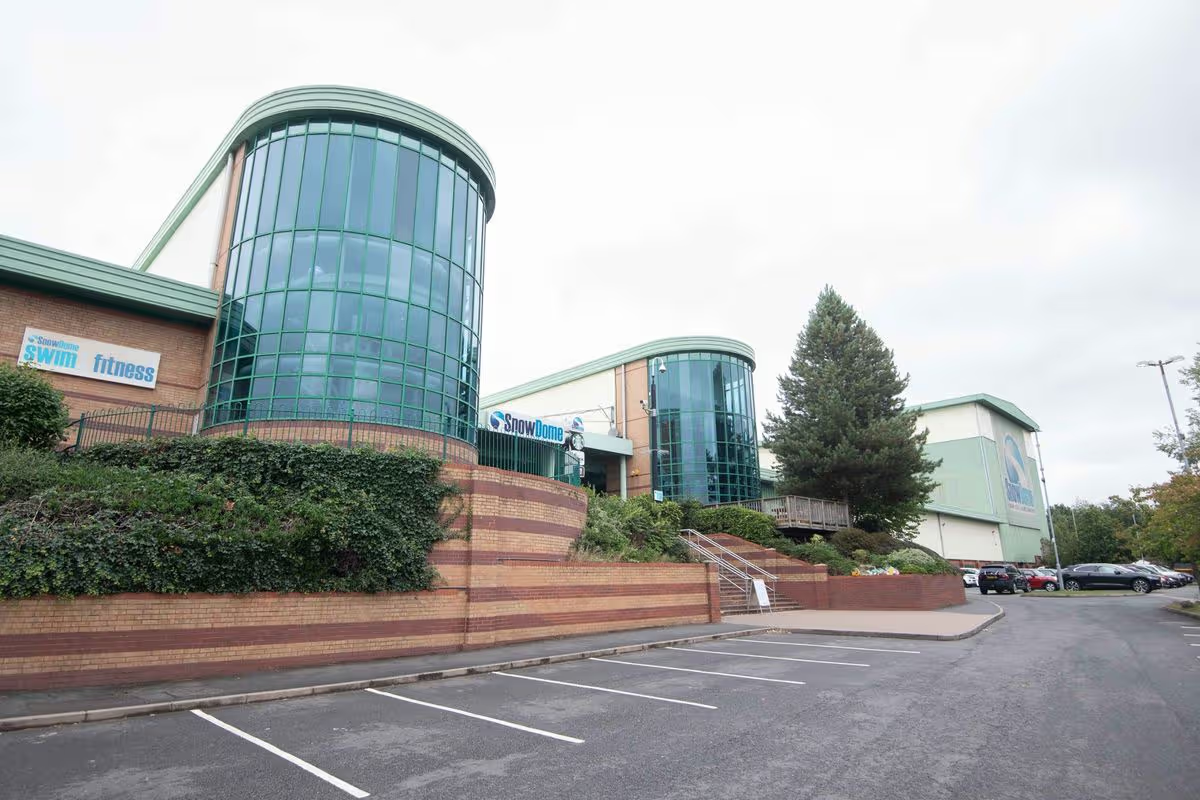
This indoor UK attraction could just be the heatwave hack you’ve been waiting for as families swap hot beaches and overcrowded swimming pools for some cold snow
These attractions offer the ideal escape from the hot weather(Image: Birmingham Live)
As temperatures continue to rise, with no promise that the UK won’t be thrown into a heatwave again this summer, this unlikely family day out may just be your saving grace.
As much as the UK loves to complain about rain, as soon as those summer temperatures soar, we’re really not different. As the fans are pulled out of storage and paddling pools assemble, there’s somewhere even cooler that you can escape to.
Families can turn the sun into snow by visiting indoor ski slopes this summer. SnowDome, which has dubbed itself the ‘Midlands’s biggest fridge’, is a good place to start.
Smack bang in the middle of the country, based in Tamworth, just 30 minutes from Birmingham, the indoor activity centre offers a whole load of snow-based activities. From ice skating to slope activities such as skiing and snowboarding, as well as climbing and swimming, there’s plenty to keep you busy all under one roof.
Kirsty Tucker, the head of marketing at SnowDome, said: “The UK isn’t always prepared for extreme heat, and when temperatures climb, families are often looking for fun ways to stay cool. SnowDome offers a unique escape, where guests can enjoy everything from snow slides and skiing to ice skating and swimming.
“Combined with our June Sale savings, it’s the perfect opportunity for families to enjoy a refreshing day out this summer.”
The indoor ski centre is offering 55% off selected activities in June for bookings made by 28th June for visits before 19th July 2026.
Having paid the place a visit in June, one recent skier shared on TripAavisor: “As we were visiting the area from Kent, we decided to book a beginner snowboarding lesson, having never tried before, and what an awesome 2hrs! Staff were friendly from the reception area right through to equipment hire helping guide us on correct equipment fitting.”
Alternatively, elsewhere in the country is The SnowCentre, which has two locations, one in Manchester and the other in Hemel Hempstead, for those both in the north and south of the country.
At both SnowCentre locations, visitors can enjoy a whole host of different ski and snowboard lessons, lift passes, and freestyle options.
The UK’s largest indoor snow centre can be found in Milton Keynes, called Snozone. The company has another site in Yorkshire, offering visitors a gateway from the warm summer, transporting them to a snow-filled day of fun. It works as the ideal space for sharpening up your snow-sports skills, all while providing a unique day out at this time of year.
It may not have been at the forefront of your mind, but it’s never too early to get the skis back on. In fact, there may be no better time to hit the snow as you find yourself slowly melting under the UK sun this month.
THERE’S a brand-new woodland playground opening this weekend with everything from slides and climbing walls.
The even better news is that they’re offering discounted tickets throughout the summerholidays.
Sign up for the Travel newsletter
Thank you!
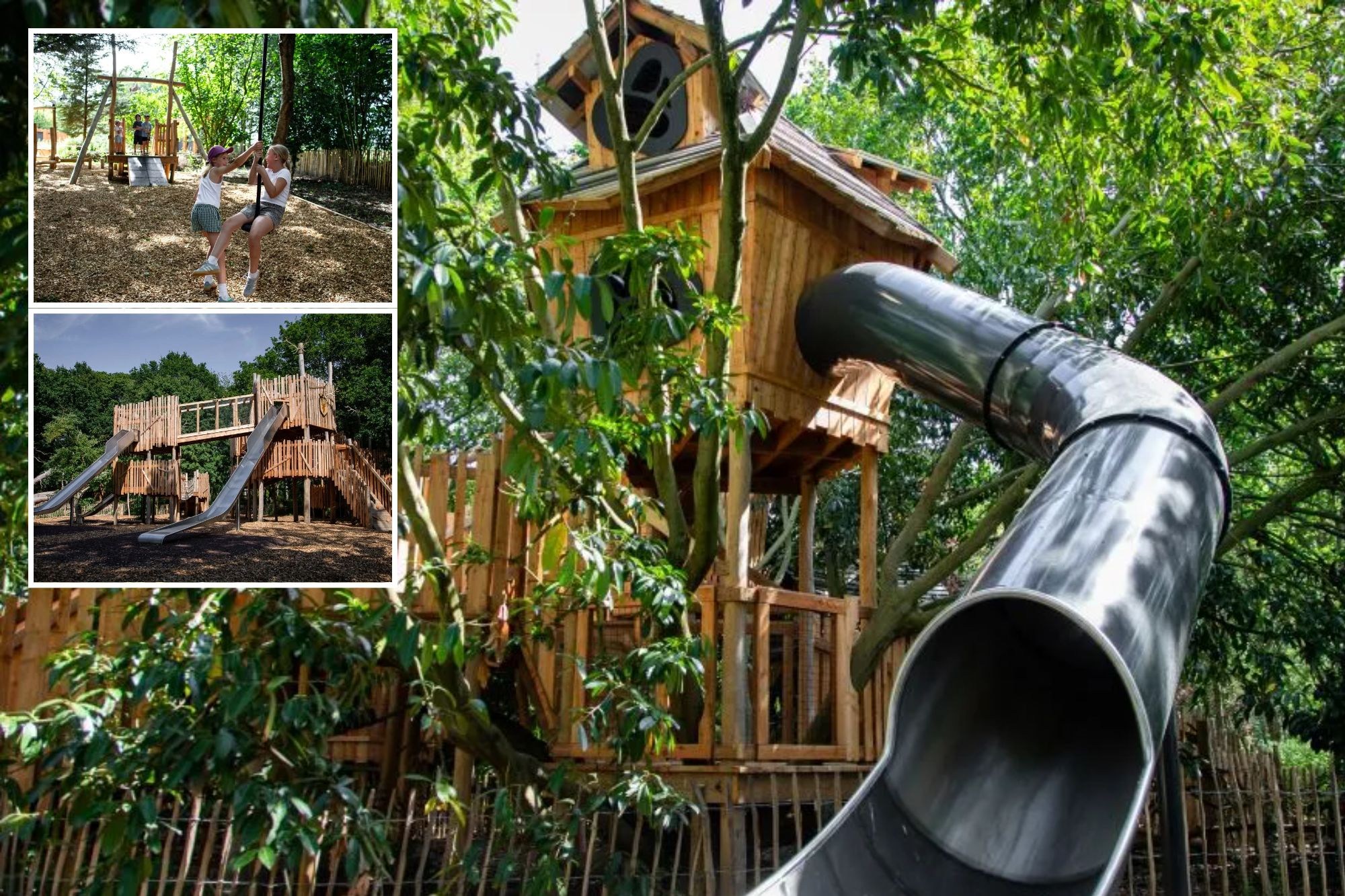
The new Guildenacre play area is opening tomorrowCredit: GuildenacreThere are four play areas within the playground some with climbing walls others with slidesCredit: supplied
Tucked away in the Helmingham Estate in Suffolk is Guildenacre – an immersive playground with slides, climbing walls and zip lines.
The play area is inspired by nature and animals is split into four.
The first part is Flint’s Hollow which is home to Flint the Badger and full of tunnels and burrows.
There are two-storey lookout spots too and a covered, twisty slide.
Up high in the trees is Eira the Owl’s Canopy Keep which has a rope ladder to climb and wooden walkways which lead up to a huge telescope on the stargazing deck.
The Elderglade is where kids will find Atlas the Stag.
It’s the largest play area featuring climbing walls, tunnels, ladders, multi-level walkways, bridges and impressive twin slides to race down.
Vex the Vixen’s Ember Den is designed for older children in mind, it has a more challenging climbing structure with monkey bars and balance beams.
It even has a zip line and the younger ones won’t miss out either as there’s a mini version for the youngsters.
Each area of the playground is linked through bark pathways – so anyone with pushchairs or wheelchairs can easily access it.
The woodland park also has a nearby cafe – and tickets are discounted for summerCredit: supplied
When it’s time to eat, visitors can pop into The Black Dog Deli for snacks, pastries, children’s lunchboxes and ice creams.
From when it opens until August 31, tickets booked online are £11.50 for children aged five and over, £8 for adults and £6 for children aged three and over.
You can buy tickets on the day too – these are £13 for children aged five and over, £9.50 for adults and £7.50 for children aged three and over.
Children under three go free.
There’s no restriction on how long you spend at Guildenacre either as there are no allocated time slots.
Visitors can spend as long as they like at GuildenacreCredit: supplied
Guildenacre will be open for weekends from June 27 and then daily for the summer holidays from July 18 until August 31, before returning to its weekend opening.
The play area is set in amongst the four-acre woodlands at Helmingham Hall which is a moated 16th century manor house with a 400-acre deer park.
It has Grade I listed gardens surrounding the house – those who visit Guildenacre will also receive a 25 per cent discount on.entry to the gardens
From the playground the gardens are a short 10-minute walk away or a two-minute drive away.
A woman has shared her experience on board a popular train route through Switzerland, which offers stunning views of Alpine lakes, waterfalls and mountain villages – and it’s only £30
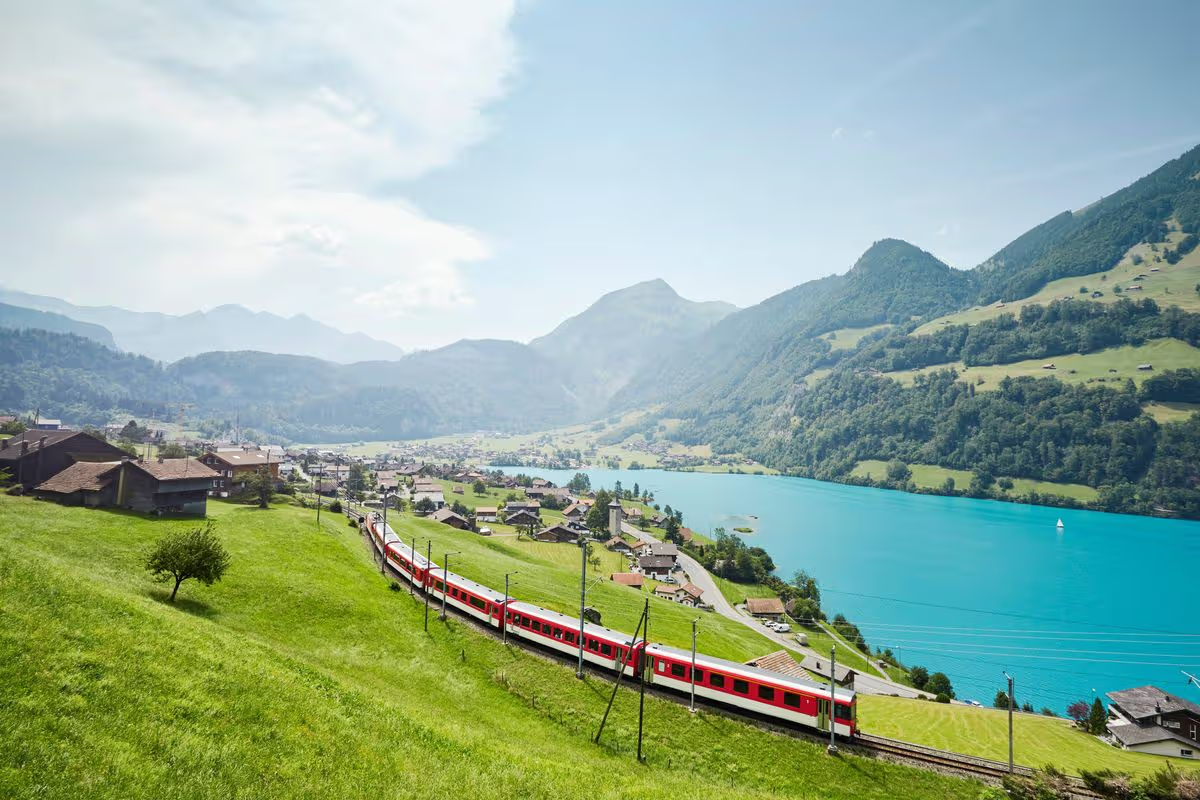
The train journey offers stunning views (stock image)(Image: JJ Landscapes via Getty Images)
A train journey boasting spectacular views of sweeping lakes, mountain villages and much more has been turning heads – and it’ll only set you back £30. Visiting new destinations ranks among life’s most fulfilling and thrilling experiences, opening up fresh cultures, cuisines, ways of living, and a wealth of things to see and activities to do.
For those eager to book a trip away but anxious about the financial burden, a scenic rail journey could be just the ticket. Switzerland sits near the top of many people’s travel bucket lists, owing to its breathtaking alpine landscapes, world-class public transport network, and its legendary reputation for chocolate and cheese.
There’s something for everyone, whether you’re after an action-packed outdoor adventure such as skiing or hiking, or something more laid-back like soaking in mineral-rich thermal baths, leisurely cruises across glacial lakes, or exploring car-free alpine villages such as Mürren or Wengen.
One woman has been full of praise for the iconic Luzern-Interlaken Express, which is billed as “an unforgettable journey right into the heart of Switzerland”.
The nearly two-hour trip carries passengers “along the shores” of at least five “crystal-clear lakes”, “past romantic waterfalls and over the magnificent Brünig mountain pass”.
Sweeping panoramic windows ensure travellers can fully soak up the stunning scenery throughout the journey.
Travel enthusiast Dani Dimitrova captured her onboard experience on camera and posted the footage to TikTok. Over the clip, she included text referencing Switzerland’s notoriously pricey reputation: “‘Switzerland is so expensive’. This panoramic train is only £30.”
Content cannot be displayed without consent
In the caption, she went into further detail: “Everyone says Switzerland is expensive… and then I found the panoramic train from Interlaken to Lucerne for around £30.
“The Lucerne-Interlaken Express is one of the most scenic train journeys in Switzerland, taking just under 2 hours and passing lakes, waterfalls, mountain villages and some of the most incredible Alpine views along the way.”
Dani also shared some handy tips for those thinking about making the journey. She said: “Sit on the right-hand side when travelling from Interlaken to Lucerne for some of the best lake and mountain views.”
She also encouraged travellers planning to visit during the busy summer season to “book in advance”. Dani also noted that for those holding a Swiss Travel Pass, the journey is covered but “seat reservations are optional and cost extra”.
Lastly, she suggested keeping cameras at the ready for “the entire trip” as “the views change every few minutes”.
Dani added: “Honestly, if you’re visiting Switzerland and only have time for one train journey, make it this one.”
In the comments section, other TikTok users asked how to book, with one person describing the train route as “magical”.
Train tickets can be booked directly through the Luzern-Interlaken Express website. If you’re eager to secure the best views, seat reservations can be made as early as six months before your departure date.
British tourists have been warned to be careful in France this summer after new rules were brought in during a heatwave as temperatures rise across the country
Tourists have been warned not to go topless in France(Image: Getty)
British tourists have been warned they could be hit with a fine of up to £129 this summer if they visit France. The ban, which applies to non-Brits as well, is in relation to public decency.
Just like the UK, though to a greater extent, France has been experiencing incredibly high temperatures in recent days. In response, several measures have been put in place to protect the public.
One of the laws brought into place has been a ban on men being topless in public places, resulting in a fine that could be as high as €150 (£129.62). The bans have been brought into force in coastal towns including Narbonne in southern France.
In some cases, the ban has been brought in to maintain respect for urban spaces, whilst others have brought it in for hygiene reasons. In places such as Narbonne, the ban will be in place until the end of September.
Residents have so far, it appears, backed the plan. Speaking to the Times, an Australian living in the town, Anthony Hill, 53, said: “This isn’t something the staff of our café can easily police on their own without getting into arguments with customers.
“So I think it’s a very good thing. Having bare-chested guys on the terrace can put off other customers.”
Meanwhile the local mayor Bertrand Malquier, added: “It’s about hygiene and avoiding exhibitionism.”
The attitude has been reflected in La Grande-Motte where local Marie, 37, expressed her support to the publication. She said: “If I’m out with my kids in the town centre I really don’t want to see guys without shirts. It’s a matter of decency — and there’s also the smell when they walk past you.”
A French Twitter user, Yannick Moreau, agreed: “This is inappropriate behaviour that has an unfortunate tendency to increase year after year. So it’s time to make it clear: it is forbidden to walk around shirtless or in swimwear in Les Sables d’Olonne. A bit of decency, please!”
This isn’t the only ban that has been introduced in France, with the country’s capital Paris also introducing a ban on drinking takeaway alcohol in the street.
The ban began at midday today (June 26) and will run all the way until 7 o’clock France time on Saturday morning. It will then return at midday on Saturday and the end again at seven o’clock on Sunday morning.
Talking about the ban, the city’s police chief Patrice Faure, told BFM TV: “As you know, drinking alcohol with the sun beating down can have a devastating effect. We are reaching a saturation point in hospital facilities.
“I must ensure that the pressure decreases.”
Hospitals in the city have been under increasing pressure as more people have come in after being affected by the heat which has been so high that the city’s LGBTQ+ Pride march has been delayed until September.
LESS than two hours from the UK is a fairytale-like city that is getting easyJet flights for the first time.
EasyJet is launching a new route between the UK and Nuremberg in Germany from three UK airports this year.
Sign up for the Travel newsletter
Thank you!
EasyJet is launching new flights to Nuremberg in Germany from three UK airportsCredit: Alamy
Flights to Nuremberg will head off from Manchester, London Luton and London Gatwick.
Manchester flights will start on November 2, flying on Mondays and Fridays.
Then in London, Gatwick flights will start on November 19 flying on Thursdays and Sundays and Luton flights will start on November 23 flying on Mondays, Wednesdays, and Fridays.
The city is known for its ‘old charm’ and famous Christmas marketCredit: Alamy
You may have heard of or even watched Nuremberg the film, but how much do you actually know about the city?
When in the medieval city make sure to head to the Imperial Castle (Kaiserburg), which looks over the city and Old Town.
Between 1050 and 1571, every Holy Roman Emperor lived at the castle and today visitors can see the main imperial palace, with different floors for different groups of nobility.
Visitors can head around the grounds for free, but if they want to go inside any of the buildings they’ll need to get a ticket.
There’s also Weißgerbergasse, which is one of the city’s only streets to survive the Second World War and is lined with colourful timber-framed houses.
The street is home to a number of independent cafes as well as galleries.
For some more souvenir shopping, drop by the Craftsman’s Courtyard where you can watch live sessions of artists making pottery, glass ornaments and keepsakes.
When in the city, you can explore the Imperial Palace or the courtroom where the Nuremberg Trials took placeCredit: Alamy
For history fans, you can learn more about the Nuremberg Trials at the East Wing of the Palace of Justice.
Here you can tour Courtroom 600, which is where the international war crimes trials were held and above the courtroom you will find an exhibition about the trials.
When exploring the city, make sure to also drop by Zum Gulden Stern, which is an 800-year-old bratwurst kitchen.
Inside, the restaurant has an old-world feel – ideal for enjoying with one of the kitchen’s famous hand- grilled, smokey pork sausages.
And for something sweeter, try Lebkuchen, which is Nuremberg’s version of gingerbread.
And with flights launching in time for the festive season, it is ideal for a winter break to one of Europe’s oldest Christmas markets.
The city is also known for its Christmas market with traditional giftsCredit: Getty
The Christkindlesmarkt dates back to the 16th century and visitors can explore around 180 wooden stalls, with red and white striped roofs.
Mass produced, plastic items are banned from being sold at the market, so instead you’ll find traditional handmade gifts including collectible figurines.
The new flight route comes as easyJet has also announced it will be launching other new routes,including to Morocco, France and Egypt.
Flights from London Luton to Rabat in Morocco will launch on November 5.
Over at London Southend Airport, flights to Lyon in France will start on December 3, with flights on Thursdays and Sundays.
A route between London Southend to Sharm El Sheikh in Egypt will start in the new year on January 4, with flights each Monday and Friday.
Flights will launch with easyJet in NovemberCredit: Alamy
The airline is also expanding flights to Budapest in Hungary, from Bristol, Belfast and Liverpool airports.
Scotland will get a new service as well, between Edinburgh to Tromsø, Norway from November 30.
And over in Manchester, there will be flights to Vienna, Austria, launching on November 19.
Isle of Man will get its first international route with the airline, to Geneva, starting on December 19.
IF you’re looking for a staycation with all the beauty of the Cotswolds but fancy somewhere different – maybe head to East Sussex this summer.
Rye has all the charm of the region and even better – it’s just 10 minutes away from the seaside.
Sign up for the Travel newsletter
Thank you!
Rye is a Cotswolds-alternative town in East SussexCredit: GettyIt has cobbled streets, historic houses and independent shopsCredit: Getty
Country lifestyle experts at Welligogs say that Rye is one of the UK’s most beautiful small towns and even dubbed it the “new Cotswolds”.
While it might be miles away from Oxfordshire and Gloucestershire, Rye actually shares lots of the same qualities as towns found in the Cotswolds.
Some of the most famous spots near the Cotswolds include Castle Combe, Bibury and Bourton-on-the-Water which have honey-coloured stone buildings and pretty streets.
In East Sussex, Rye has a similar look with cobbled streets lined with cottages and plenty of independent shops.
Tess Annan, manager at Welligogs said: “Part of Rye’s appeal is its storybook atmosphere.
“For those who love culture, you can spend the morning exploring antique shops and independent boutiques, before wandering up to Mermaid Street for some of the most photographed views in the UK.
“The 14th century Ypres Tower (Rye Castle) is also always worth a trip. Then head towards the nearby beaches for sea air and treat yourself to freshly-caught fish and chips.”
While the Cotswolds has plenty of rivers running through the villages, Rye offers a beach escape for those who want the delights of the seaside instead.
Camber Sands is just 10-minutes away in the car to get from the village to the dunes.
Rye is just 10-minutes from the delights of Camber SandsCredit: Alamy
Caroline said: “The medieval town of Rye in East Sussex isn’t strictly seaside, but you can see the sea from its cobble streets and it has a harbour where boats sail out to the English Channel.
“Plus, if you go back as far as the 15th century, the sea came much closer to the foot of the hill the town is built on.
“It’s the perfect place to spend a day out – taking an hour and six minutes on the train from Kings Cross St Pancras.
“If you fancy a morning on the beach, a bus runs from the town to the stunning Camber Sands beach – a three-mile stretch of golden sand backed by dunes.
“Or you can for a six-mile circular walk from Rye to Winchelsea beach. Back in the town after lunch, there are plenty of fantastic pubs to choose from, my favourites being the 12th century Mermaid Inn and the George In Rye, as well as the Globe Inn Marsh on the outskirts of the town.
“Equally, you could book a taxi and check out Tillingham vineyard in nearby Peasmarsh, with its Michelin Green Star wine tours and excellent pizzas.
“Make sure to save some time to rummage through the many, many antiques shops, as well as Knoops hot chocolate shop and the wonderfully old fashioned Britcher and Rivers sweet shop.”
Travel expert Simon has championed Montenegro as a breathtakingly beautiful yet criminally overlooked European gem, boasting a spectacular coastline, sweeping national parks and enchanting medieval towns.
The crown jewel of Montenegro is Kotor Bay, hailed as “a jewel of the Mediterranean,” and brimming with picturesque fishing villages and jaw-dropping scenery. On Tripadvisor, one visitor declared Kotor to be one of the “nicest places” they’d ever set eyes on.
Another wrote: “The bay is gorgeous with hills and mountains surrounding it. There are plenty of viewpoints to see it. The towns also look pretty with the red tiled roofs.”
A further holidaymaker gushed: “What a spectacular scene. Kotor Bay is winding and resembles a fjord. It is located in the Adriatic Sea and is a UNESCO World Heritage Site.
“The natural beauty is stunning, with Mediterranean landscapes, mountains, and cliffs in contrast with the historic buildings.”
Simon singles out Lisbon, along with the charming towns of Cascais, Estoril and Sintra as must-visit locations.
He said: “I love Lisbon, one of Europe’s most beautiful capital cities, and the locations on its western flanks – in particular Cascais, Estoril and Sintra.
“But until now I haven’t strayed south to the Setubal Peninsula: much less well known, but full of surprises.
“Do try O Barbas – an amazing seafood restaurant overlooking the Atlantic in Costa da Caparica; the wild, windy and atmospheric cape of Espichel; and Setubal itself, a sleepy, friendly city.”
He said: “We’ve been telling everyone for years that Bulgaria is a great holiday destination, about how wonderful the weather is, how soft the sandy beaches are, the excellent hotels and of course the low cost of living there.”
The Civil Aviation Authority (CAA) has issued a warning to passengers about the dangers of packing power banks in hold luggage after a surge in lithium battery incidents on UK flights
13:34, 26 Jun 2026Updated 14:16, 26 Jun 2026
BBC News showed footage of the power bank fire breaking out in the overhead locker of a flight(Image: Getty Images)
UK-based airlines have prohibited a common electrical device labelled the ‘number one safety risk to aircraft’ after footage emerged showing it erupting into flames inside a cabin. Passengers on flights are being urged not to place power banks or vapes in their checked luggage as the busy summer holiday travel season gets underway across parts of the UK.
Several carriers have begun implementing outright bans on power banks that travellers use to charge their phones and tablets amid mounting safety concerns. Generally, power banks are permitted only in hand luggage, not checked baggage, because of worries they could explode and catch fire mid-flight.
Power banks house rechargeable lithium batteries, which pack a considerable amount of energy into a compact space, and when defective can trigger fierce fires that spread rapidly.
Content cannot be displayed without consent
On BBC Breakfast today, correspondent Katy Austin described it as a ‘terrifying situation’ on a recent flight. She said: “Flames broke out in the overhead baggage compartment of an Air China plane last October. The cause is thought to have been a lithium battery. They’re in loads of commonly used devices like laptops, vapes, phones, and power banks. They can store a lot of energy in a small space, but if they overheat or are defective, this video of a test in a lab shows just how quickly a fire can start.
“Last year, UK authorities were informed of 643 incidents where lithium batteries were detected packed in hold bags. That’s nearly twice the number the year before. Reports of devices overheating or malfunctioning also nearly doubled to more than 200. Most were in the cabin where crew could deal with the situation. The fear is that incidents in the hold could not be discovered until it’s too late to control.”
“It contains a lot of energy in a very small space, which is fantastic for, you know, our devices. It means we can use them for longer. But the problem with that is when things go wrong, the fires can be quite ferocious and you can’t put these fires out in the way you can with a normal fire that you might have because these fires are like self fueling.
“The advice for plane passengers is to take items like mobile phones, vapes, and power banks on board with you. Never charge power bank on a flight and turn off laptops completely if they’re going to be put in check-in bags.”
The CAA revealed that reports of passenger devices overheating or malfunctioning last year were almost double the figure from 2024. Instances of lithium battery-powered gadgets being wrongly packed in hold baggage surged by 91% during the same timeframe.
CAA director of aviation safety Giancarlo Buono said: “Pack right for a safe flight, and that means don’t put your batteries in your checked bag. Take them into the cabin with you. This simple tip will make your flight safer for you, and the other passengers you’re flying with.”
Research involving airline passengers revealed that 36% have no idea about the risks associated with packing batteries in hold luggage.
easyJet
EasyJet enforces stringent rules stipulating that all lithium-ion batteries, spare batteries and power banks must be carried in cabin hand luggage only, with a blanket ban on hold luggage due to the risk of fire. Power banks below 100Wh (approximately 27,000mAh) are permitted without prior approval; those between 100-160Wh require authorisation from the airline.
Portable electronic devices containing batteries must be transported exclusively as carry-on baggage.
Should any of these items find their way into checked baggage, steps must be taken to prevent accidental activation and to safeguard the devices from harm; all devices must be completely powered down (not left in sleep or hibernation mode). EasyJet imposes a limit of 15 portable electronic devices per passenger.
Portable electronic devices housing non-spillable batteries must not exceed 12V or 100Wh, and passengers are permitted to carry a maximum of 2 spare batteries. When bringing smart baggage into the cabin, travellers must be able to quickly and easily detach and remove the lithium battery/power bank, although it may remain inside the bag.
Smart baggage will not be accepted for travel if the lithium battery/power bank cannot be readily detached and removed by the passenger. If smart luggage is to be checked into the hold, the lithium battery/power bank must be removed from the smart luggage at Bag Drop and taken into the cabin.
Any exposed terminals must be protected against short circuits. The lithium battery/power bank must be detachable, so if it cannot be removed from your luggage, the bag will not be permitted on board.
Passengers may carry up to 15 personal electronic devices (this includes but is not limited to: smartphones, tablets, laptops, cameras, handheld game consoles, headphones, power banks). Spare lithium batteries (including power banks) must be individually protected to prevent short circuits by placing them in their original retail packaging, or by otherwise securing terminals by taping over any exposed terminals or putting each battery in a separate plastic bag or protective pouch, and must only be transported in carry-on baggage.
Passengers are also permitted to bring up to 20 spare lithium batteries, as long as they don’t surpass 100Wh each. Spare lithium batteries, including power banks taken into the cabin, must not go beyond 100Wh and mustn’t be used to charge or power other portable electronic devices during taxi, take-off or landing.
They must not be placed in cabin baggage stored in the overhead locker. Rather, they ought to be kept in cabin baggage under the seat in front of you, or carried on your person.
Devices or batteries exceeding 100Wh are banned in both the cabin and hold, apart from electric wheelchair batteries. Spare batteries, including power banks, are not allowed in checked baggage.
TUI’s regulations forbid passengers from packing loose lithium batteries, power banks, or spare batteries in checked-in luggage. These items must only be carried in hand luggage.
Power banks must generally not exceed 100Wh, and terminals must be safeguarded against short circuits. Devices shouldn’t be recharged while on board.
Dry AA(A) batteries (type Alkaline, NiMh, NiC) for small personal items such as a pocket torch or a radio are permitted, provided they’re inside the device or contained in sturdy packaging. When devices are placed in hold baggage, measures must be taken to protect the device from damage and prevent accidental activation; the device must be completely switched off (not in sleep or hibernation mode).
Spare batteries and power banks should be individually protected against short circuits by keeping them in their original packaging, with terminals covered in tape or placed in a plastic bag in hand luggage.
Airline approval is always required for medical devices. For further information, see section Baggage – Medical baggage.
TUI fly requires that all power banks must be carried in hand luggage, never in checked baggage. They must be packaged to prevent short circuits (original packaging or terminals covered with tape).
Generally, capacity is limited to 100 Watt-hours (Wh) per battery, with power banks not permitted to be used for charging devices or recharged while onboard.
Hand Luggage Only: Due to fire risk, all lithium-powered battery packs must be in the cabin. Capacity Limits: Power banks up to 100 Wh (roughly 27,000 mAh at 3.7V) are generally permitted.
Safety Requirements: Terminals must be protected against short circuits, such as by taping them or keeping them in individual plastic bags.
In-flight Usage: Power banks cannot be used to charge phones or laptops during flight, nor should they be recharged using aircraft power outlets.
Storage: Keep them in your seat pocket or under your seat, not in overhead bins
The flights are booked, your passport is valid, the bags are packed, and excitement is building, but there’s one crucial check you must do at the time of booking your holiday
A travel expert has issued important advice if you’re booking a holiday(Image: Getty Images/Stock Image)
An aviation expert has outlined how to best prepare for your next getaway abroad, and there’s one vital task you must do.
Going on holiday is always an exciting time, and even the booking process can spark a buzz. What hotel will you stay at? What activities will you do? And what will the weather be like? But amongst the planning, there’s a checklist to ensure you’re fully prepared for any trip abroad.
Checking that your passport is valid before booking flights is vital, along with any documents or visas you might need when entering your chosen country. However, there’s one check that Brits could miss, and failing to obtain it could completely impact your holiday.
In crucial advice to Brits ahead of the summer holidays, travel expert and head of aviation at loveholidays, Gavin Brewer, said that booking travel insurance at the same time as your holiday “is one of the smartest moves you can make”.
While it’s vital to have in case anything happens while you are away, it also means you’re protected from the moment you hit confirm on your desired getaway.
Gavin explained: “That means if you need to cancel your holiday for unforeseen reasons, such as sickness or other medical circumstances, or even redundancy, you should get your money back from your insurer. Understanding your cover is just as important as picking your destination, because when the unexpected happens, the right policy can be the difference between jetting off with confidence and being left out of pocket.”
In further support for holidaymakers jetting abroad this summer, the travel expert advised booking a package holiday as it offers “more protection than booking flights and hotel separately”.
He commented: “Package holidays give built-in protection that you won’t get if you book your flights and hotels separately.
“In the rare event of disruption before you travel, such as a cancelled flight with no suitable alternative, you are fully protected under a set of consumer laws called the Package Travel Regulations. This entitles you to a full refund on your package holiday.”
Gavin added: “At Loveholidays, our holiday packages are also protected by the ‘gold standard’ ATOL scheme, so you can relax knowing your holiday is in safe hands from start to finish.”
And while it might be edging nearer to summer, it’s never too late to book that well-deserved break. If anything, it might just be the best time, as three European hotspots are cheaper than usual during the busy travel period.
Gavin revealed that Bulgaria, Montenegro, and Turkey have all seen substantial price cuts on seven-night packages during the summer. Bulgaria, with its golden beaches along the Black Sea and majestic mountain terrain, has dropped by an average of 60pp.
Montenegro, dubbed a ‘Balkan gem’ with dramatic mountain landscapes that meet the sea, has dropped in price by around £53pp. While Turkey, known for its striking architecture, culture, and colourful markets, has also seen a price cut of around £35pp.
Do you have a travel story to share? Email webtravel@reachplc.com