AZERBAIJAN is nicknamed the Land of Fire and is a fascinating mix of Eastern and Western culture.
Antoinette Cumberbatch shares her account of discovering the country’s delicacies, hot weather, rich history, plus a party scene reminiscent of Miami.
Azerbaijan’s capital city Baku is also famous for hosting a Formula 1 raceCredit: Getty ImagesThe Sea Breeze Resort on Azerbaijan’s golden coast is perfectly located for sports activities and beach clubsCredit: Supplied by PR
Watching US rapper Busta Rhymes work the screaming crowd in the balmy 32ºC heat, I feel like I’m in Miami.
In fact, I’m actually dancing the night away beside the Caspian Sea at Azerbaijan’s lively Dream Fest, held each July.
Sign up for the Travel newsletter
Thank you!
It takes place 35 minutes’ drive from the enthralling capital, Baku, at Sea Breeze Resort on the golden coast, also home to a huge array of sports activities and buzzing beach clubs.
Fish Box serves up excellent sushi, from £13.50 a platter, and with my spacious one-bed pad at White Villas, I get a private garden. Villas sleeping two start from £110 a night (Seabreeze.az).
Hours earlier, I’d explored another side of Azerbaijan, which straddles Europe and Asia, discovering why it’s nicknamed the Land of Fire.
On the outskirts of Baku, the Ateshgah Fire Temple vividly brings this to life.
Here, history isn’t tucked behind glass – instead, fire flashes red-hot between ancient stones from an altar in the middle, and I duck through low doorways to learn how merchants stopped here while travelling along the Silk Road. Entry costs £6.50 (Ateshgahtemple.az).
Another eternal flame is Yanar Dagh, a hillside of natural gas where fire burns continuously at a scorching 1,000ºC.
Succulent grilled beef saj is a delicacy at the traditional Novbahar restaurantCredit: Novbahar/InstagramOn the outskirts of Baku, the Ateshgah Fire Temple vividly brings the country’s nickname to lifeCredit: Getty Images
I finish my fiery sightseeing with a visit to Baku’s Bar19 at Flame Towers, an imposing structure by day and a dazzling sight at night, serving up city views alongside Flame cocktails – a sweet mix of Bacardi, Passoã, amaretto and lime juice, £13 (Fairmont.com).
Come morning, I stroll along the city’s waterfront, Baku Boulevard, to take in more futuristic landmarks, such as Deniz Mall and indoor arena Crystal Hall, plus the world’s largest flying flag in State Flag Square.
Then I explore Icherisherer, the official name for the Old City and a UNESCO World Heritage site since 2000.
I wander the labyrinth of passageways, where cats sleep in doorways and locals sell goods including carpets and pillbox sheepskin hats, haggling to nab one of the latter for £12. In other corners, I find locals offering home-made Turkish delight and playing draughts.
Partying at Azerbaijan’s lively Dream Fest made Antoinette feel like she was in MiamiCredit: Supplied by PRA stroll around Highland Park provided an ideal location to see the panoramic view of BakuCredit: Supplied by Antoinette Cumberbatch
A few minutes’ walk from Icherisherer and an array of designer shops, is Art Gallery Hotel, set in a grand Art Deco building with walls adorned with striking pieces.
Luxurious rooms feature quirky headboards, gold lamps and large showers, and stays start from £85 per night (Arthotelbaku.com).
Dumpling Day
Sitting among retro ornaments and mismatched furniture at restaurant Ryumochnaya By Beerbasha, I feast on delicious pasztet – a chicken pâté with jam – £2.20, and moreish chicken Kyiv, £5.65.
The most surprising but incredible dish is a sweet tomato salad with cherry sauce, £5.25 (@Ryumochnaya_beerbasha).
At the more traditional Novbahar, I fill up on dushbara – tiny dumplings in a savoury broth, £2.60 – gutab flatbread filled with pumpkin, £1.30, and succulent grilled beef saj, £17.50. The local pinot grigio pairs nicely, too (Novbahar.az).
As my trip draws to a close, I climb the 12th-century Maiden Tower – 28m high and one of Baku’s most recognisable landmarks – for the sea views.
Entry costs £6.50. But for vistas of the entire city, I find Highland Park unbeatable.
The funicular up to its beautiful gardens costs less than 50p and, as I soak up the panoramic view of Baku, it leaves me awestruck. Just like Azerbaijan itself.
BTW
Direct flights to Azerbaijan start from £466 return.
Find out more about Dream Fest at Dream musicfest.com.
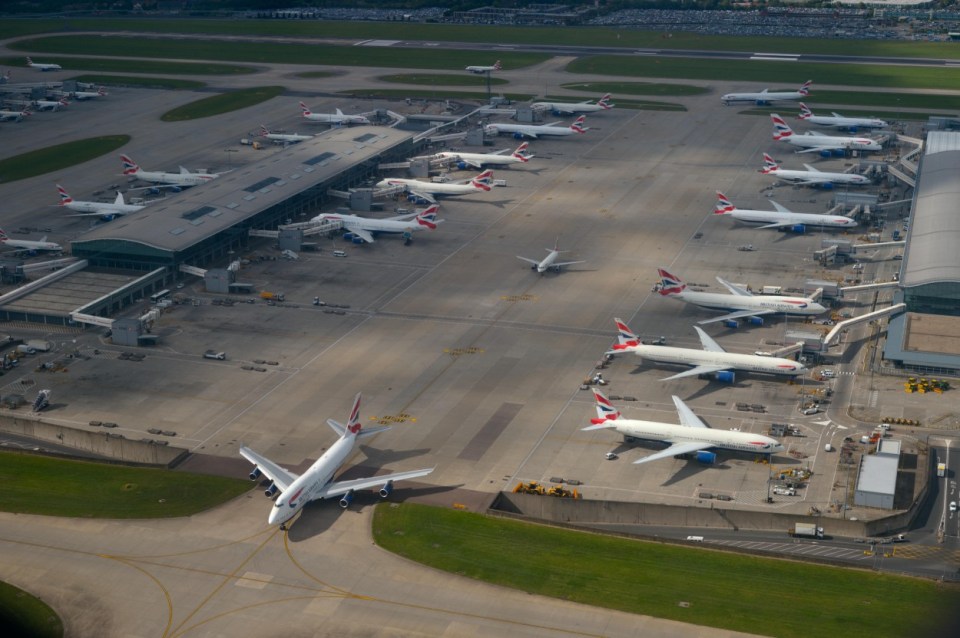
HEATHROW Airport bosses have warned plans for a third runway could be delayed by four years due to major planning rows.
The Government’s ambition had been to see flights take off from a new runway in London by 2035.
Heathrow Airport bosses have warned plans for a third runway could be delayed by four yearsCredit: Alamy Stock Photo
But airport bosses are believed to have told ministers that the deadline is not possible and won’t be ready until 2039, reports The Times.
The initial target had been set by then-Chancellor Rachel Reeves in January 2025 – but it was considered an ambitious goal at the time.
Sign up for the Travel newsletter
Thank you!
Ms Reeves used a major speech on infrastructure to announce the Government would be supporting the third runway project as a means of growing the economy, and also said it would create 100,000 jobs.
But London Heathrow has said they aim to “secure planning permission” by 2029 and “once achieved, the runway will be open within a decade”.
Its bosses believe it could be delivered more quickly, but that this may require further regulatory red tape to be removed beyond reforms that the Government has already made to planning law.
A spokesperson said: “It’s right that ambitious targets were set; the sooner expansion begins, the sooner the whole UK will benefit. Our focus has always been to secure planning permission by 2029.
“Once achieved, the runway will be open within a decade – and the benefits of expansion can be felt from today. At least 108,000 new jobs and billions invested in supply chains in every part of the country.
“This is a national project, 100% privately financed, which will support growth today and secure the UK’s position in the global economy once the runway opens.”
Meanwhile, the Department for Transport said the timeline for the plans “has always been ambitious”.
Gary Smith, General Secretary of GMB, said: “This is a deliverable, workable and practical timeline for Heathrow expansion that unlocks over 100,000 jobs.
“We need to put an end to decades of talk and lost benefits for working people across the country and get cracking.”
Transport Secretary Heidi Alexander insisted the project could go ahead in a way that would not fall foul of climate change commitments.
The Climate Change Committee, the expert panel that advises the Government, said earlier this month the expansion of Heathrow airport cannot go ahead unless the aviation industry is forced to clean up its emissions.
The cost of international flights might have to increase by hundreds of pounds by 2050 to pay for measures that will help the airline sector cut its carbon pollution to zero overall, known as net zero, the committee said.
Ms Alexander told the Daily Telegraph the committee had set out “one view” but there was “more than one pathway to meeting our climate mate change obligations”.
“We do remain committed to net zero, and we’re updating some of our wider decarbonisation plans in transport as well,” she said.
“But the UK’s climate change targets are ultimately economy-wide targets, and we really need to look holistically at how emissions are reduced across the economy as a whole.”
She said an expanded Heathrow could be “the country’s front door” to tourists from China and India.
The Heathrow proposals involve building a 3,500-metre runway and requires a new M25 tunnel and bridges to be built 130 metres west of the existing motorway.
It is estimated to cost £33 billion, including £1.5 billion on re-routing the motorway which would also see nearby villages demolished.
The Arora plan had proposed a shorter, 2,800-metre runway that would not require diverting the M25.
The new 3,500 metre runway will be in the northwest of the airport, and will eventually welcome up to 276,000 new flights a year.
This takes the annual flights from 480,000 to 756,000, with as many as 30 new flight routes a day.
A Department for Transport spokesperson said: “There is currently no live planning application for a third runway, and we cannot comment on ongoing consultation processes or prejudice them in a way that will only delay progress.
“The timeline has always been ambitious.
“We’ll continue to work with promoters, including Heathrow, and all other stakeholders at pace to ensure the right framework is in place for which a planning application for a third runway could be considered.”
The park has also revealed what to expect from the new Minecraft World Hotel.
Inside will be 69 rooms spread across four floors, ranging from standard to premium.
Guests can expect the famous Minecraft blocks and items within the rooms, while the ‘Nether Portal’ themed lifts and mine tunnel corridors will add more to the immersive experience.
Also inside will be a Woodland Mansion themed ‘potion’ bar as well as an underwater-themed restaurant.
This is alongside other retail and dining attractions in the land as well.
An official opening date for the new land is yet to be confirmed with it being sometime in 2027.
It will be the first hotel of its kind dedicated to MinecraftCredit: ChessingtonIt will open as part of the new Chessington land next yearCredit: Chessington
Daisy Mercedes, Creative Producer at Merlin Entertainments, said: “We promised something truly special when we announced Minecraft World earlier this year, and with Minecraft World Hotel we are offering even more.
“Not only will fans be able to experience the game imagined for real life, but they’ll be also able to sleep inside it, ensuring fans respawn exactly where they want to be.
“Seeing the Minecraft World Hotel take shape alongside the attractions we are building at Chessington World of Adventures theme park is a Minecraft fans biggest dream.
“Every room, corridor and detail has been crafted with immense love for this game, the stories made within it and its community.
Trains from London to Chessington take around 35 minutes. Tickets start from £34 each.
Causeway Guest Accommodation is owned and managed by ex-Manchester City and West Ham midfielder Steve LomasCredit: SuppliedThe B&B is located on the picturesque County Antrim coastCredit: supplied
Lomas was appointed first team captain at The Hammers and played more than 300 games in the Premier League, in addition to 45 international caps for his beloved Northern Ireland.
After 22 years as a player and manager, he has taken on a new role as maitre d’ and head chef at his family-run B&B in Bushmills.
Sign up for the Travel newsletter
Thank you!
The 13-bed property is less than three miles from the world famous Giant’s Causeway and roughly five from the renowned Royal Portrush golf course, which hosted the 2019 and 2025 Open Championships.
It is also staggering distance away from the popular Bushmills Whiskey Distillery – the first in the world to triple distill whiskey.
Lomas, 52, said: “The County Antrim coast is a hidden gem.
“The drive from Belfast up the coast to Bushmills is one of the top five or six drives in the whole of the UK for its outstanding beauty.
“Beautiful beaches, beautiful scenery, and the Giant’s Causeway is touted as the eighth natural wonder of the world.
“Game Of Thrones was shot predominantly around Northern Ireland and that has added to the prestige, but you think of Northern Ireland and the first thing that still comes to mind is the Troubles.
“People are still overlooking all the natural beauty we have.
“Fermanagh is regarded as the Lake District of Northern Ireland.
“Across the border in Donegal you have the 1,600-mile Wild Atlantic Way.
“Northern Ireland has moved on.
“More and more tourists are coming but it’s still understated.
“We get a lot of visitors from Spain, Germany, America and China.
“They all come over to see the Causeway.
“I love football and it’s no hardship to talk about it.
“But I’m usually slaving over the stove.
“Occasionally, when I am not cooking I will pop out and have a chat, and when guests check in.”
Steve’s B&B has all the comforts of homeCredit: suppliedFormer Man City player Steve LomasCredit: Getty
The B&B features spotless double and twin rooms, all of which have ensuite bathrooms, TVs and tea and coffee facilities.
And then there’s that full Irish breakfast – served in the light, bright kitchen dining room.
Tucking into one of his delicious fry-ups, it’s clear to see that Steve’s talents extend beyond the pitch.
GO: Co Antrim
Double or twin rooms at Causeway Guest Accommodation from £125 per night, including breakfast.
QUIET beaches, cosy hot chocolates in the caravan, loads of rainy day activities for the kids: October half term is the perfect time for a family getaway.
Especially when you can head off on holiday for as little as £2.75pp a night.
Parkdean Resorts are running Halloween activities across 59 holiday parks this OctoberCredit: Parkdean Resorts
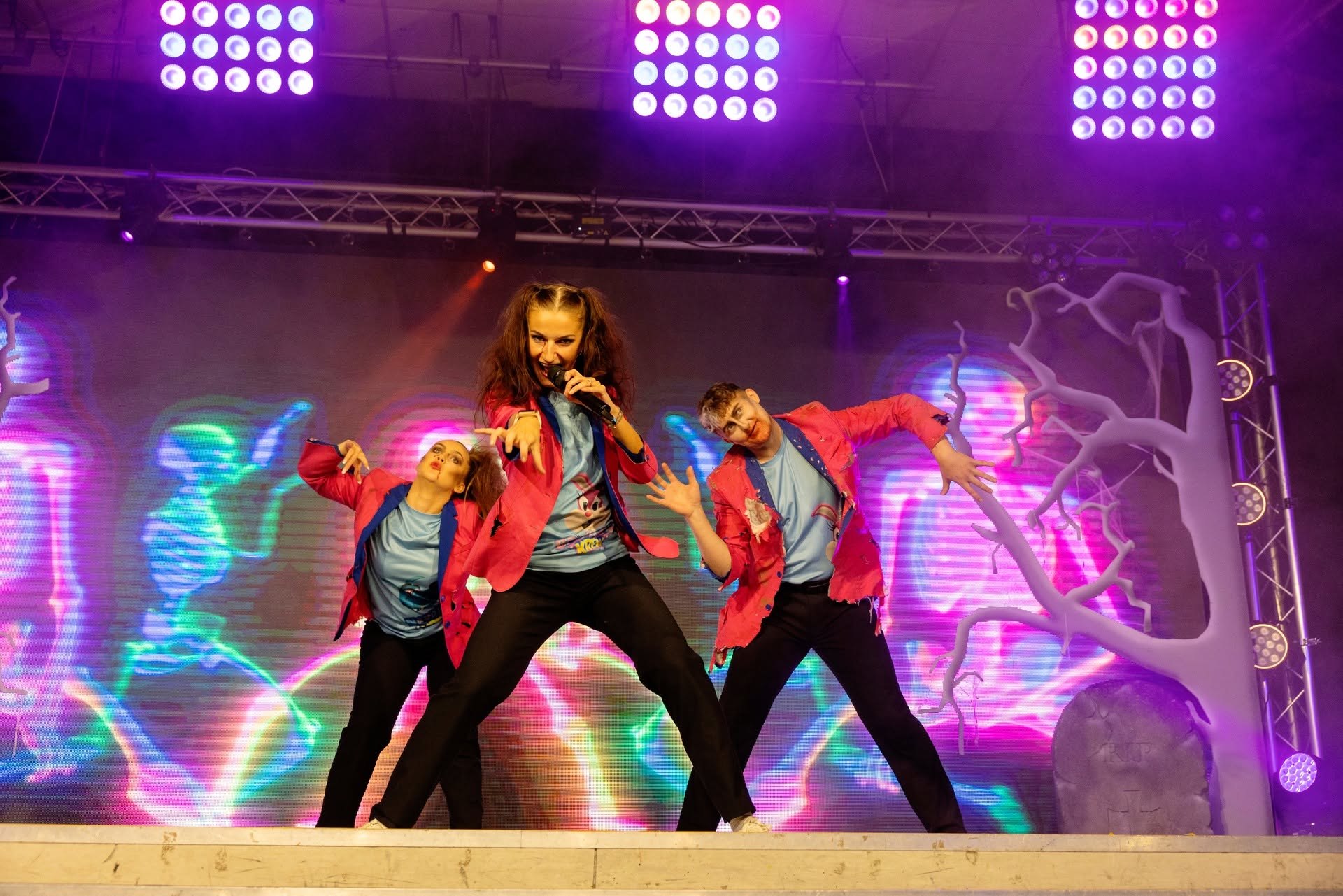
Rather than just offering a cheap bed for the week, these holiday parks are running action-packed Halloween activity schedules, with everything from monster talent shows to good-old pumpkin carving.
Plus we’ve purposely picked out spots with plenty more to do off-site, such as a scare fest takeovers at a seaside theme park and a Halloween steam train ride where kids go free.
Better yet, all of these affordable deals are for holidays within the October half term. Many of them begin from Friday night, meaning you collect the kids straight from school and head straight into half term fun.
From the misty Moray coast in Scotland to seaside Halloween fun in Skegness, here’s our favourite UK holiday parks to visit this October half term – from as little as £2.75pp per night.
Butlin’s October Half Term stays
Visit the fairground as it becomes the ‘Scareground’ this Halloween at Butlin’sCredit: Butlins
If you visit to Butlin’s this October half term, expect to find everything fully decked out for Halloween.
The fairground will become the ‘Scareground‘, where monsters lurk in thick fog and you can experience the rides at night in glowing neon green.
The classic ‘Night at Reds’ show held by the Butlin’s redcoats has been given a monster makeover, with Halloween-themed games, sing-a-longs and an ‘Eerily Silent Disco’.
Throw in a mega Halloween Welcome Party, character photo shoots, themed pottery painting and pumpkin-carving sessions, and you’ve got yourself a thoroughly spooky break.
Plus, new for 2026, you’ll find the Skyline Gang Monster Mash – a talent show starring the classic characters with a different winner each night.
We found a four night break at Butlin’s Minehead in a standard family room sleeping four for £44, which works out to £2.75pp per night.
Parkdean Heacham Beach, Norfolk
Let loose at the zombie rave at Parkdean Resorts Heacham BeachCredit: Facebook
Head to West Norfolk’s Heacham Beach holiday park for an autumn seaside break packed with plenty of spookiness.
Free themed activities include nighttime guided ghost walks around the park, and ‘Professor Slime’, where kids step into the slime lab to create their own concoctions.
In the evenings, settle down for the Quiz Nation Halloween Special where you can put your knowledge to the test against other holiday parks across the UK.
Or, if you come alive with energy at nighttime, stomp your way over to the Zombie Rave, where you can dance the night away.
If you fancy getting out and about, Church Farm Pumpkins sits on the edge of the village and is the perfect pumpkin patch for pictures and picking your own.
We found a three night stay from October 23 in a Bronze caravan sleeping six for £229, working out to £12.72pp per night.
Parkdean are running Halloween activities across 59 holiday parks between October 2 – November 1, with a more extensive activity program during the half term break.
If you’re looking to stay at another Parkdean resort, the following holiday parks won’t have the Halloween activities: Church Point, Fallbarrow, Gatebeck, Limefitt, and Todber Valley.
Haven Skegness
Make your own Halloween-themed bear on a Haven holiday this OctoberCredit: Haven
Whether you want to visit a seaside theme park for a creepy scare fest, or go ghost-hunting along the coast, Haven Skegness is ideal for a family Halloween break.
Haven are running loads of Halloween activities this year across their parks, including crafty activities like Halloween Make a Bear and build your own Halloween basket.
Even the food and drink will receive a Halloween twist, as grown-ups can grab a Ghoula Colada or Cursed Lagoon cocktail.
Make sure to step off-site to visit Fear Island, theme park Fantasy Island‘s scare fest where you can dip in and out of immersive zones like creepy cabins inhabited by clowns.
Fear Island takes place on the following dates: 17-18, 21-25 and 28 Oct October, as well as November 1. If you book ahead online you can save 10%.
We found a deal for a three night stay at Haven Skegness from October 23 in a Saver caravan sleeping four for £205, working out to £12.81pp per night.
Parkdean Node’s Point, Isle of Wight
There are special Halloween-themed character shows at Parkdean Resorts this HalloweenCredit: Facebook
This Isle of Wight holiday park isn’t just for visiting in the summer, it makes for a fantastic October break, too.
At Havenstreet Station, you can board the Isle of Wight Steam Railway for its magical ‘Witches, Wands and Whistles‘ event (17 – 31 October) where kids go free on a themed train ride (adults £26).
Or for a free afternoon out, go on a ghost hunt around the ancient stone walls of Carisbrooke Castle.
On-site, Milkshake Mornings will take a Halloween twist, with a spooky story time as well as themed arts and crafts.
Older kids can make Halloween tie-dye t-shirts, or take part in The Wizard Academy show.
We found a three night break in a Gold caravan sleeping eight for £259, working out to £10.79pp per night.
Haven Quay West, South Wales
Head off on a Halloween-themed nature trail at Haven Quay WestCredit: Haven
Take a trip to Haunted Haven in pretty South Wales this October with a stay at Haven Quay West.
The holiday park is putting on an ‘Eerie Entertainment’ series, with a fancy dress parade featuring giant pumpkins, spiders and ghosts, as well as a Halloween edition of the Seaside Squad show.
During the day kids can get creative with sand art, pumpkin carving and even a Halloween nature trail, where you’ll get up close to creepy crawlies.
This park is also in an ideal setting for breezy autumn walks, with a woodland trail that leads you directly down to the beach, where you may even spot wild dolphins.
If you time your trip for Halloween night, you can stroll down to the harbour for a huge, free fireworks display which lights up the sky over the waters of Cardigan Bay.
We found a four night break in a Saver caravan sleeping four for £265, working out to £16.56pp per night.
Park Holidays Silver Sands, Scotland
Take part in classic pumpkin carving at Park Holidays Silver SandsCredit: Haven
Take an autumn break to the misty Moray Firth coast in Scotland with a stay at Park Holidays’ Silver Sands resort.
If you don’t want to brave a brisk beach walk out in stunning Lossiemouth or Cairngorms National Park, you can stay on-site to make use of the indoor heated swimming pool.
During the October half term, there’ll be everything from ghost storytelling to costume contests and classic pumpkin carving.
During the day, kids activities start from 10am and include bead art classes, Segways and wax workshops.
In the evening, settle down to kids shows from the Krazy Krew or stay late for karaoke, cabaret and bingo.
We found a four night break in a Gold caravan sleeping six for £161, working out to £6.71pp per night.
I RAISE my fork to my mouth and lock eyes with Stevie. My heart stops. He’s 6ft, super-muscly and has a cracking set of teeth.
He spends the next hour watching me eat by candlelight, and he’s there again at breakfast the next morning.
The Maldives is widely known as the world’s most romantic honeymoon hotspotCredit: SuppliedUnderwater restaurants allow visitors to enjoy the diverse ocean life without getting their feet wetCredit: Supplied
But far from being my husband or an admirer, Stevie is a blacktip reef shark simply enjoying his natural habitat at Oblu Xperience Ailafushi — a four-star resort on a tropical island in Male Atoll of the Maldives.
The country is known as the world’s most romantic honeymoon hotspot, but I was there to check out its wilder side,
Sign up for the Travel newsletter
Thank you!
Of course, this included dining at Only Blu, the largest underwater restaurant in Asia.
Sitting 22ft below sea level, it’s a way to enjoy the diverse ocean life, without getting your feet (or hair) wet.
It’s not included in Ailafushi’s all-inclusive “Fushi” plan, but it’s well worth splashing out on (prices start from £95 per person).
I was just inches away from blue powder surgeonfish, humbug damselfish and dozens of parrotfish as I tucked into my decadent five-course meal — though I did feel slightly guilty as I stuffed forkfuls of the “reef catch of the day” into my mouth. I hoped I wasn’t eating any of their brothers or sisters!
As several sharks swam by, including the one I nicknamed Stevie, “oohs” and “aahs” spread like a Mexican wave.
This kind of restaurant could be gimmicky. But the food — which included pistachio scallops, tuna poke bowls and decadent chocolate desserts — was genuinely delicious.
There were so many fish displaying vivid colours, it was like being inside a Windows screensaverCredit: SuppliedMy over-water villa was stunning — exactly what you picture when you think of a Maldivian suiteCredit: Supplied
Just a 20-minute complimentary speedboat ride from Male airport, Ailafushi is a more affordable choice than many Maldives resorts, with all-inclusive packages starting at £160 per person per night.
But for the comparatively bargain price (most four-star resorts average at £300), you don’t miss out on the luxury.
My over-water villa was stunning — exactly what you picture when you think of a Maldivian suite, with an outdoor shower, private sundeck and stairs that drop you straight into the pale blue Indian Ocean.
Each night, I drifted off to the soothing sound of the waves beneath my floorboards. And every morning, I threw off my pyjamas and jumped directly into them.
It was the same at Ailafushi’s more upmarket five-star sister hotel, Oblu Select at Sangeli, where there’s even a window in the floor for 24-hour ocean life viewing.
But if the idea of sleeping and showering above sharks and stingrays gives you the creeps, both resorts offer beach houses and family suites far enough from the shore to put your mind at ease.
You should get out on the water, though, if your fears allow. Especially as guests can pick up a snorkel and fins to use for free throughout their stay.
I’ve never seen such amazing sea life, with reef sharks, unicorn fish, eagle rays and turtles just feet away.
The tropical resorts have their own spas for guests to feel even more relaxed – including free treatmentsCredit: GettyGuests can book local island excursions, fishing trips and moonlight cruisesCredit: Getty
Like many reefs around the world, the coral is sadly bleached. But there were so many fish displaying vivid colours, it was like being inside a Windows screensaver.
If you’d rather stay above the waves, though, there’s still plenty to see and do on dry land and boat.
Guests can book local island excursions, fishing trips and moonlight cruises.
My favourite was the sunset dolphin cruise. They might be wild animals, but they certainly put on a show, leaping in the air and gliding along the side of the boat.
At one stage, there were so many gasps and pointed fingers, it felt like I was watching a fireworks display. Guests also have access to free pedalos, kayaks and stand-up paddle boards.
And both resorts also have their own spas, ELE|NA Ayur — perfect for while your partner, kids or hungover pals are napping.
At Sangeli, where guests get a free 45-minute treatment for every four nights they stay, a stress-buster massage melted away the tension I built up during the 14-hour journey to get there from London Heathrow via Dubai.
Equally dreamy was the full-body Balinese treatment at Ailafushi, where prices start at $50.
Ailafushi is a more affordable choice than many Maldives resorts, with all-inclusive packages starting at £160 per person per nightCredit: SuppliedAlice tried out a sunset line-fishing trip and reeled in a giant remoraCredit: Supplied
Life is equally indulgent at the more peaceful Sangeli.
Alongside couples’ massages and intimate dinners, there’s a phenomenal free kids’ club with puppet making, cupcake decorating, palm leaf crafts and scavenger hunts.
There’s also a slide that plops you directly into the sea — fun for all ages. I howled with laughter as I sped round the tight bends before crashing into the gentle waves at the bottom.
If you’re feeling energetic — or simply want to work up an appetite for your next meal at one of each resort’s four restaurants — try the over-water gym with one of the best views in the world.
You could also attempt a sunrise yoga class, if you haven’t had too many of the hotel’s unlimited cocktails the night before.
By this point, you’ve probably seen plenty of fish from your villa, perhaps snorkelled with several and spotted them during a boat trip. So why not try catching a couple on a sunset line-fishing trip?
Whether you’re a seasoned fisherman or, like me, have never picked up a rod in your life, it’s the perfect way to spend an early evening.
And you might surprise yourself. I went in thinking I’d have no luck at all, but ten minutes before our time was up, I felt a hard tug on my line and eventually reeled in a giant remora.
I squealed with delight (and perhaps a little fear) as it flapped about in front of my face. But I quickly threw him back into the shimmering water.
Despite being a Muslim country where alcohol is all but banned, booze is freely available at all tourist resorts.
They also take international holidays incredibly seriously.
I’m told Christmas is an extravagant affair with Santa Claus arriving on a flyboard or parasail before descending to the beach with gifts.
I was there for Halloween and they did not hold back — think eyeball cupcakes, a terrifying haunted house, and dark red cocktails served in blood bags.
Four waiters dressed as zombies even carried a “body” in a coffin through the restaurant at dinner.
Yes, it costs more to get there (return flights start at £785 with Emirates) than Ibiza and your hotel will be a little more expensive, but you’ll barely spend a thing once your feet hit the white sands. And truly, it’s worth it.
Forget the White Isle — make the Maldives your next trip.
GO:
GETTING/STAYING THERE: A seven-night all-inclusive getaway to OBLU Xperience Ailafushi is from £1,831pp based on two sharing an Ocean View Room and including flights from Gatwick on November 11. See destination2.co.uk.
A seven-night stay at OBLU Select Sangeli in a Beach Villa is from £2,915pp including flights from Gatwick on November 18. See kenwoodtravel.co.uk.
This article highlights the public holiday in Victoria, Australia, known as Grand Final Eve, which serves as a precursor to the AFL championship match. The source details the cultural importance of Australian rules football, describing the traditional grand parade in Melbourne where fans can interact with their favorite players. Additionally, the text notes that Victoria is unique for observing two sports-related holidays, including the Melbourne Cup. Beyond the local festivities, the publication provides broader context through global news updatesregarding tennis, international politics, and financial exchange rates. This comprehensive digest ultimately captures a snapshot of significant events …
Normally we stay around Plaka, so Anana is the coffee shop I go to most often. There’s also Behold The Man in Exarchia, which is one of the coolest coffee shops I’ve been to. Exarchia has a really rebellious, anti-establishment feel and this place completely fits that – it has great music, great coffee and it’s just very cool. I don’t think there’s a coffee shop in London that’s quite like it. DC
‘Casual and low-key’: Anäna Cafe, Plaka, Athens.
My favourite is also Anana; It’s casual and low-key, with somewhere to sit down and relax. I’ll have a freddo espresso (espresso shaken over ice), which is basically the Greek national coffee now. NM
For pastries, Akra is one of the best places in Athens. The food itself is rustic, simple and delicious, and the pastries are unbelievably technical. There’s something almost incongruous about it – you eat very simple savoury food and then a dessert arrives that’s incredibly elaborate. It shouldn’t necessarily work, but it does. DC
Roll up! No Crumbs bakery.
No Crumbs opened this year and I’ve already been a few times. It’s a little outside the centre, but it’s where I’d go for breakfast or something to eat on the move. In central Athens, I also like Fillo, which specialises in traditional pies from around Greece. Last time I went, they had three different spanakopitas from three different regions. NM
Breakfast
I don’t really do breakfast in Athens. We’ll normally get coffee, then at about 11am go to Diporto, which is usually our first proper stop. It’s this incredible, old, rundown restaurant near the market: cash only, orders taken with a pen, massive wine barrels in the room, no choice of wine. They just put wine and water on the table. The food is incredibly simple: chickpeas, beans, vegetables cooked down slowly, sometimes grilled sardines or fish from the market. You could recreate a Greek taverna in London, but you could never recreate Diporto. There’s such magic in it. DC
If I want to start the day properly, I go to Ipiros inside the meat market, at about 10.30am. It’s not really breakfast; it’s a proper meal. They serve slow-cooked dishes in huge pots and we usually get the tripe soup, which is good for a hangover, with loads of bread. Then we walk around the corner to Diporto and have the opposite: braised beans, chickpeas, salad and, whatever time it is, wine. NM
Traditional tavernas
Whenever we fly into Athens, we try to go straight to Taverna To Trigono in Kalyvia, out by the airport. It’s as magic as a taverna gets. One side of the menu is salads, tzatziki, cheeses and breads; the other is grilled meat such as sausage, spit-roast lamb, offal, lamb chops, sheep chops. Everything is cooked to order and served with incredible abundance and generosity. It’s very simple: good produce, salt, oregano and lemon; nothing is over-embellished. I wouldn’t go to Athens without going there. DC
Chop-chop! Manári restaurant, Athens.
Manári is a proper meat chop house in central Athens. It’s relatively new, but it feels as traditional as possible, and you don’t need to travel into the mountains outside the city to find meat that good. I order the lamb chops, pasta with meat juices and tomato salad. The lamb chops are as good as – if not better than – a good dry-aged steak. Another favourite is Tavern Spanos in Kato Patisia, for lamb chops and meats cooked slowly on the spit. Once they run out, they run out. NM
New-wave restaurants
Linou Soumpasis & Sia is probably the most forward-thinking restaurant in Athens right now, and probably one of the best in Greece. It takes quite humble, seafood-led food and gives it a fine edge without losing its simplicity. The room is incredibly simple and every detail is really considered. Last time I went, they served a version of kakavia, the traditional fish soup, which was essentially a beautiful fish and vegetable broth with olive oil. Something that simple, done that well, is incredible. DC
‘Restrained and modern’: Linou Soumpasis and Sia restaurant, Athens.
Linou is one of my go-tos, too. It reminds me a bit of Lyle’s meets Brat. It has a restrained approach to food that still feels very modern. I’d also go to Pharaoh, particularly for the vegetables and whatever they’re doing with fermented wheat, and Ateno, which we went to twice in two days on my last trip. Get the Greek salad, stuffed vegetables and fries with mushrooms and eggs. I also really like Ex Machina: their saganaki is fried cheese but served cold, and I always want to see what [the chef] Adam Kodovas is doing with the seafood broth because the dish changes every few months, while the formula remains the same. I go to Akra for lunch because they serve smaller portions and I can order as many dishes as possible. NM
Seafood
Travolta is banging; it’s old-school and a bit like Bentley’s in London. You get huge plates of crudo and whole fish, and they have an amazing prawn and squid skewer with squid ink and olive oil that they mix at the table. It can get expensive (fish is incredibly expensive in Greece), but if you’re really into seafood it’s very cool. Phita is another good seafood place, a little further out. DC
Travolta would be my choice for more classic seafood, too. If you want something more elevated, I’d go to Iodio near Kolonaki. There’s one dish I’ll always remember, which is raw fish served cold with a crisp sheet of rice paper on top and a warm avgolemono sauce – a classic Greek sauce made with egg and lemon. You grab everything together in one bite and it’s great. NM
Cheap eats
For souvlaki, the best is often at little roadside or market stalls. Last time we were in Exarchia, we found a tiny souvlaki stall mainly serving the market vendors. For souvla, the bigger rotisserie-style meats, we go to Psitopoleio Peloponnhsos. They serve huge pieces of meat, lamb heads; all sorts of pretty gnarly stuff cooking on the rotisserie. DC
Gyros are a dangerous subject for Greeks because everyone has their favourite. Achilleas in Neos Kosmos is one of the few places that still makes their own [meat rotisserie] (rather than buying it ready-made). In the centre, I really like Hoocut. They aren’t technically gyros because they slice the meat raw, cook it and then chop it again into small strips, but the mentality is similar. For a late-night version, go to Mandraki in Kaisariani. They’re open until about 2am and cook meat on spits late into the night. Their gyros are huge and often sell out. It’s cheap, traditional and the sort of thing people actually eat every day. NM
Wine and cocktails
Wine is Fine is really good for a pre-dinner drink, and I also love Epta Martyres, from the people behind Loggia [on Sifnos]; I’d been to both loads of times before I even realised they were connected. In Greece, I tend to want wines that are light and bright. Assyrtiko is the obvious one; in that climate you want something really zippy. DC
Baba Au Rum, Athens.
Pharaoh has a great wine list, and Tanini Agapi Mou is an amazing wine bar. A Greek grape I discovered this year is Vidiano. Vidiano can lean quite dry but still feels really pleasant and crisp; depending on where it’s grown, the fruit and minerality change a lot. It’s easygoing but complex at the same time. NM
Line Athens is quite molecular and it’s the kind of place you stay for the night. The cocktails are some of the best I’ve ever had in my life, let alone Athens. Baba au Rum is right in the mix, too. There’s also Rumble in the Jungle behind The Bar in Front of the Bar. The first is a bar where you walk in and think, “This is cool,” then go through another door into the second, even cooler bar hidden behind it. It’s very Athens. DC
You have to mention Line and The Bar in Front of the Bar. At Bar in Front, they’re trying to be as zero waste as possible, and you basically order through a window in a wall and sit drinking in the street. I choose what to drink according to the weather – last time I had a frozen martini that was almost like a slushie. At Line, the Paloma is usually my go-to, although on my last two visits I had one of their punches, which changes regularly. NM
We always go to Athens’ central fish and meat markets. I particularly recommend being in Athens on a Saturday because that’s when you find all these farmers’ markets around the city. Some of my best times in Athens have been wandering around those. DC
Preparing fish ahead of a busy day at the central fish market. Photograph: Image Professionals GmbH/Alamy
Near Diporto there’s Miran, a charcuterie shop with a huge range of cheeses and cured meats that they make themselves. Buy something there, pick up some bread and take it home. There’s also a huge farmers’ market every Saturday around Exarchia with outstanding produce. NM
Out of town
I really like Vouliagmeni, down on the coast where the Four Seasons is. We used to drive down there in the morning for sunrise, or chase the sunset if we were filming. Lake Vouliagmeni is there, too. It’s much more suburban, with huge houses and tree-lined boulevards, and it’s absolutely beautiful. You probably need a car. I don’t have one particular restaurant to send you to; for me it’s the area itself. DC
Lake Vouliagmeni, near Athens. Photograph: Nito/Shutterstock
For meat, go out towards the airport to Kalyvia. There are two enormous tavernas, Christoforos and To Trigono. During the week they can be completely empty, but at the weekend you’ll struggle to get a table. People tend to swear allegiance to one or the other; I don’t have a favourite. It normally depends on who’s driving me and where they want to go. Although the last few times I’ve been to Christoforos. NM
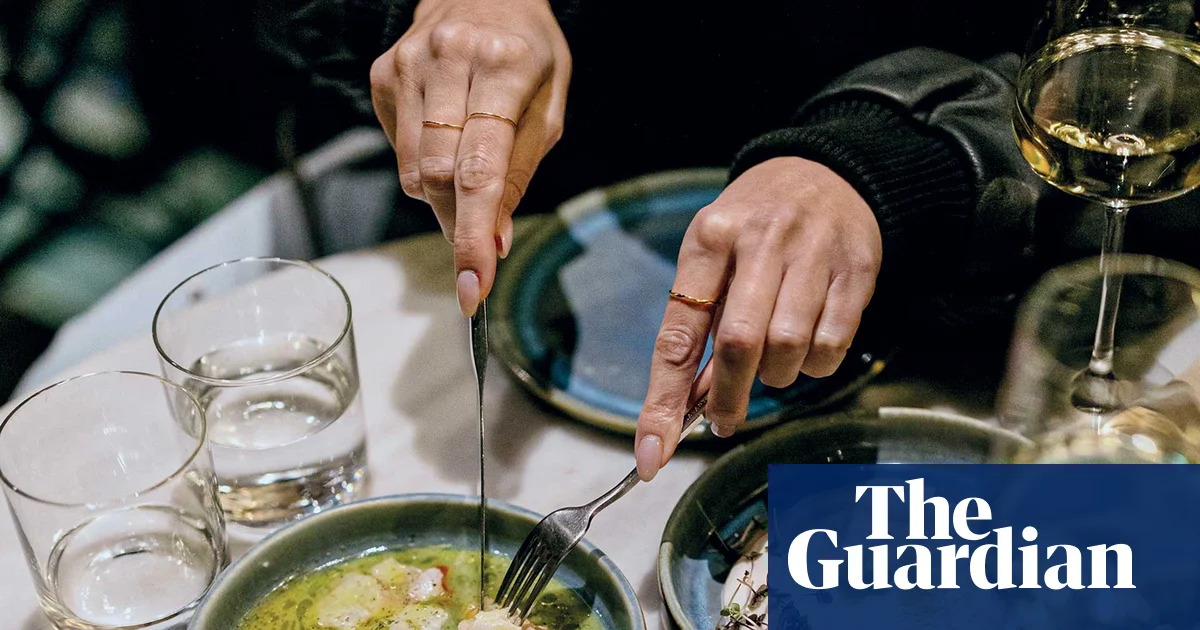
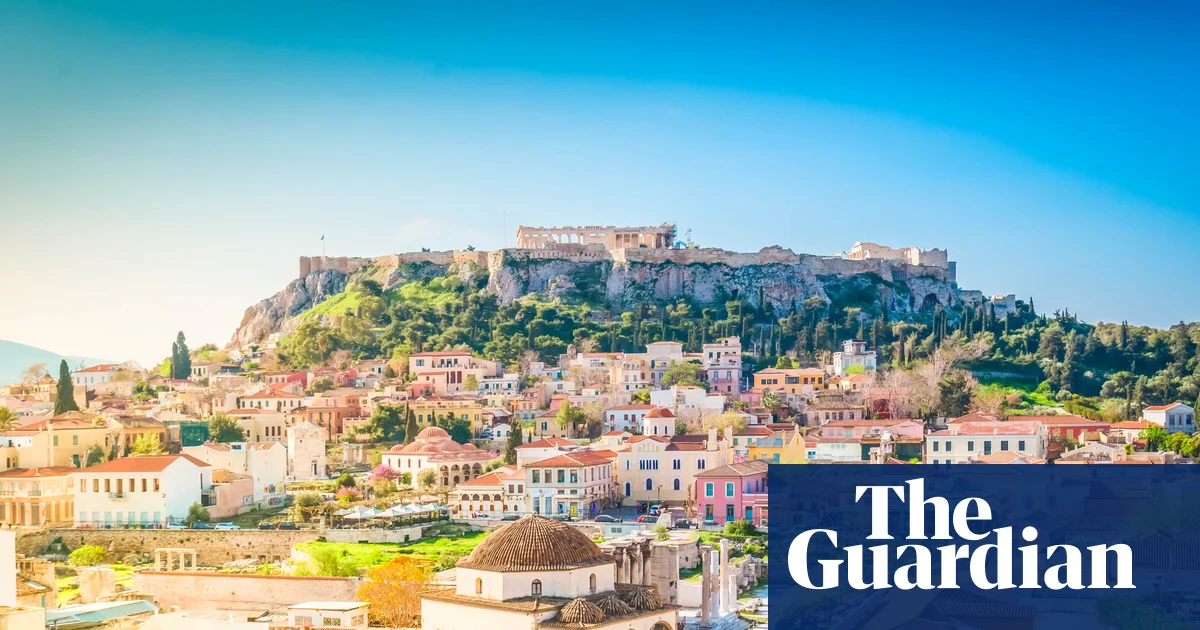
Visiting Athens for its food might have sounded like a joke to previous generations. Unlike many other Mediterranean countries, including Italy, Spain and Turkey, Greece had no renaissance and no aristocracy to fund chefs and develop sophisticated cuisines. Simple village dishes didn’t always translate well: in the past, tourists would suffer a summer scorching and some desiccated moussaka so they could puff up the Acropolis in August before skedaddling to an island. However, recently the Greek capital has undergone a gastronomic renaissance.
Athens always offered the joys of eating outdoors – by the sea in summer, or winter sunshine on the city’s streets – but these days chefs are rethinking the uses of Greece’s unrivalled ingredients, such as scented, sun-ripened tomatoes, barrel-aged feta, and the best olive oil in the world. Enlightened visitors are also re-thinking their trips, arriving at more temperate times of year, and taking advantage of how culinary traditions are moving in exciting directions. They’re exploring beyond the tourist traps and over-Airbnb-d areas around the Acropolis, finding treasures in humbler neighbourhoods such as Petralona, Keramikos, or hipster Kypseli. A bonus is the growing number of restaurants serving food from Asia, Africa, the Balkans and the Middle East.
A bustling outdoor farmers’ market in central Athens. Photograph: Dimitris Asproloupos/Alamy
In the 1980s, Athenians were leaving behind a history of rural poverty, fasoláda bean stew, and a largely vegetarian diet. They discovered fast food and began eating too much meat. The 1990s saw new levels of wealth; brunch, sushi and lobster spaghetti were aspirational goals for the upwardly mobile. By the time of the 2004 Athens Olympics, a cohort of Athenians existed who had never known hunger, war or dictatorship. Consequently, the economic crisis that began in 2009 was a devastating shock and the next decade saw severe unemployment and deprivation, accompanied by an influx of traumatised refugees and migrants.
Athenians who didn’t depart during the brain drain took stock. Unable to pay the rent, some moved back in with parents and grandparents, and others relocated to ancestral villages; rare is the person who has no toehold on an island or mountainside. Family olive groves beckoned, vineyards were tended, organic farming debated. Alongside the unlikely flourishing of the arts in Athens during the crisis (actors, musicians and artists often worked unpaid), there was a flowering of Greek foodies. They examined things previously taken for granted by most Athenians: eating seasonally, shopping at farmers’ markets, sourcing locally. Covid provided a final push.
A mix of modern and traditional: Travolta restaurant in Athens.
Boosted by foreign appreciation of the Mediterranean diet and its delicious, healthy basic ingredients, Athenians returned to their grandmothers’ kitchens – literally in the case of Anastasia Miari, who wrote the celebrated Yiayia: Time-perfected Recipes from Greek Grandmothers. This trend “isn’t just nostalgia or a return to tradition”, chef and writer Carolina Doriti told me. “It’s a new confidence in Greek cuisine, where tradition has become something alive that we can build on, rather than something fixed in the past.” Doriti celebrated this trend for “honest and rooted cooking” in her wonderful books Salt of the Earth and The Greek Islands Cookbook. For this sort of excellent but unpretentious food, she loves the restaurants Lesvion in the Galatsi neighbourhood of Athens and Athos in Votanikos.
Alongside simple and enlightened Athenian tavernas are Michelin-starred restaurants, where local ingredients are metamorphosed in exquisite concoctions for tasting menus. There are riffs on grandma’s chickpeas and wild greens as she never imagined, and Yiayia might be even more astonished at how her descendants dine on Japanese-Greek hybrids, such as soba noodles with tahini, Ethiopian doro wat, Georgian khachapuri and Lebanese fattoush. Eating in Athens has changed.
Sofka Zinovieff has lived in Athens for 25 years. Her latest novel is Stealing Dad. To buy it for £9.89, to go the Guardian bookshop
KEEN to get that winter sun break locked in? Holidaymakers on a budget should set their sights on Africa.
A new report released today by the Winter Sun Holidays Costs Barometer from The Post Office Travel Money reveals that Cape Town in South Africa, and Mombasa in Kenya, offer the best value for money for people seeking a sun-drenched winter break.
Cape Town came first making it the most affordable destination on the listPortugal’s Algarve came in sixth place overallCredit: Getty
To calculate which destination gives travellers more bang for their buck, the research considered the average costs of eight essential holiday items in 24 popular long-haul and short-haul destinations.
Items included a cup of filter coffee, a bottle of beer or lager, a can or bottle of cola, a glass of wine, a 1.5l bottle of water, suncream, insect repellent and a three-course evening meal for two with house wine.
Sign up for the Travel newsletter
Thank you!
The overall cost for all of the above came to just £58.24 in Cape Town, making it the most affordable destination on the list.
According to the Post Office, prices in the South African hotspot have fallen by 9.7 per cent in the last six months, which will have a hugely beneficial impact on tourists.
A three-course dinner with wine was shown to be cheaper here than anywhere else on the list, totalling £39.26 on average.
Despite its reputation for excellent wineries, Tokyo pipped Cape Town to the post for budget vino with a glass costing just £2.53 in Japan’s capital, on average, compared with £3.24 in Cape Town.
Tokyo came in third place overall on the affordability scale with a total barometer cost of £66.76, beaten by Mombasa, in second place, with an overall price tag of £63.66.
Prices haven’t dropped dramatically in this Kenyan city, but the rise of sterling against the Kenyan shilling does mean that you will now pay slightly less than when the country was last surveyed by the Post Office in March this year.
Coming in fourth place on the winter sun budget chart is Colombo in Sri Lanka, where a basket of all eight holiday essentials added up to £74.79, getting on for £20 more than the cheapest spot of Cape Town.
And be sure to ditch the wine and opt for beer instead, as a glass of red, white or rose will set you back £6.60 on average — over double the cost of a glass of wine in any of the previously named locations.
A bottle of beer, on the other hand, costs just £2.47.
Phuket in Thailand closely followed Colombo in fifth place with an overall barometer cost of £76.39 and cheap beer at £2.09 a bottle.
Of course, for the top five spots, the trade off for spending little while in the destination is shelling out for pricier flights to get there.
But remember that holidaymakers will be rewarded with better odds of sunshine and higher temperatures in these long-haul locations.
Those looking to stay a little closer to home still have budget-friendly options, however, including Portugal’sAlgarve which came in sixth place overall.
While the total cost of all holiday items came to a slightly steeper £82.35, coffee-drinkers won’t be complaining as this is the cheapest destination to grab yourself a cuppa (£1.27 on average).
Mombasa, in second place, with an overall price tag of £63.66Credit: Getty
The holiday location fared similarly to Spain’sCosta del Sol in seventh place and the Canary Island of Tenerife in eighth place, with overall costs of £83.58 and £87.46 respectively.
Prices for holiday items in all three short-haul destinations were on par with one another, although it was a bit pricier to eat out in Tenerife with a three-course meal for two with wine costing around £61.10.
At the opposite end of the scale, Scarborough was the priciest destination for winter sun — not the resort town on England’s North Sea, but the capital of the island of Tobago.
The Canary Island of Tenerife came in eighth place, with overall costs of £83.58 and £87.46 respectivelyCredit: Getty
Holiday item costs here rocketed to a whopping £144.15 in total — which is over double that of Cape Town.
A three-course meal here costs more than anywhere else on the list, at an eye-watering £119.26 for two people.
St. Georges in Grenada, Funchal in Madeira and Cancun in Mexico were also shown to be pricey, with total bills totting up to over £125.
Comparatively, the much-loved Sun reader resort of Orlando in the US came roughly in the middle, in 15th place overall.
Wine and beer was shown to be mean on the wallet in the Florida sunshine spot — at £6.81 and £5.30 respectively — but other items like suncream and insect repellent were more reasonable.
WITH its enormous Olympic Park, graffiti-clad buildings, old mills, new bars and neighbourhood pubs, it’s no wonder East London is one of the world’s trendiest neighbourhoods.
And actually, that’s why Alberto Cambus who was born and raised in Italy’s Sardinia, decided he was going to stick around when he moved to the London district over 10 years ago.
Alberto Cambus moved from Sardinia to East London over a decade agoCredit: Alberto CambusThe Stratford hotel in London, where Alberto works, has 145 rooms across seven floorsCredit: Marriot
Alberto Cambus, Director of Sales & Marketing, for The Stratford, explained why he has never left the quirky area of East London.
He explained: “I moved here 11 years ago to study, and I loved it – I embraced the pace, the lifestyle, the coffee – I’m even having cappuccinos after 11am now.”
Sign up for the Travel newsletter
Thank you!
“I’ve always lived in East London, so I’m definitely an advocate for it and Stratford is one of the areas I love the most.”
Here are some of his top tips on exploring the area.
As he works The Stratford, Alberto of course highly recommends the hotel as a great base for those visiting East London.
He said: “Our hotel is itself a triumph of architecture – our architects are the same that designed the Burj Khalifa, the tallest building in the world.
“It perfectly blends with the local area and community, making it well worthwhile popping in to take a look at our art – if you check out the lobby, we have many pieces that reference the London 2012 Olympics.
“On top of that, we have tours of the area, such as the Olympic venues.
“We do tend help our guests with the ease of access to these London institutions whether it’s to Sadler’s Wells for contemporary dance or the V&A.
“We can try to facilitate the sourcing of West Ham tickets, London Lions or London Aquatics too.”
The hotel is a stone throw away from the West Ham stadiumCredit: Alamy
Restaurants
Despite coming from the Italian island, he did say there was an Italian restaurant in the UK that was just as good.
He said: “I have to mention Santi, an Italian restaurant in front of a hotel – the menu is similar to the classic Italian food that you’ll find in Italy.
“The pizza is amazing, it’s so underrated, I’d say it’s one of the best pizza places in London.
“Another of my favourite restaurants is Hera, a beautiful Greek restaurant – it’s in front of West Ham stadium, it has a great atmosphere, very cosy, sophisticated, but not over the top.”
Bars and pubs
Alberto admitted that the hotel’s Stratford Lounge cocktails were amazing, with “mixing of the classics” as well as a recently launched autumn menu.
But he did shout out another local bar too.
He said: “Another one is Number 90 Bar in Hackney Wick, along the canal.
“It is always lively with amazing music playing, very good cocktails and reasonably priced.”
Mother Kelly’s pub is a staple of StratfordCredit: FacebookSanti has the best pizza in Stratford according to AlbertoCredit: Santi Ristorante
Being in the UK for more than a decade, Alberto is a pub convert – and he raved about one called Mother Kelly’s in the Olympic Village.
He explained: “It’s tiny, very cosy pub in Victory Parade, a neighbourhood pub that excels in craft beers, sour beers , IPAs and it’s a stone’s throw away from the hotel.
“I’ve been working in Stratford for three years now so I go in a fair bit.
“I still haven’t managed to try the whole selection of beer they have – there’s so much you’re spoiled for choice.”
Lesser-known spots
Despite East London being a popular tourist destination, there are still some spots only locals know about: “Three Mills Island isn’t very well-known; essentially, they are old flour mills between the river and navigation channel – it’s completely off the beaten track.
“It’s nothing short of an East London experience because it has a huge amount of history.
“I’d say it’s quite an unusual place for London, but beautiful – and you can take a long walk around it.
“If you’re in the area, visit now because I think that the landscape of East London in 10 years will be completely different – it’s transforming in front of my eyes.”
One must-do local experience
“You absolutely have to see a West Ham match – I’m so passionate about it, there is nothing like watching them play at the London Stadium.
“I’ve been a West Ham fan since I was about 10-ears-od thanks to a very strong Italian player called Paolo Di Canio.
“One of the first activities I did here was see a West Ham game at Upton Park, then they moved to the London Stadium right next door, I always say it was fate.”
Most people won’t be aware of Three Mills IslandCredit: AlamyThe Queen Elizabeth Olympic Park has an ‘oasis of green space’Credit: Alamy
Green spaces
“This area of London used to be a bit of an urban jungle, but then obviously they built the Queen Elizabeth Olympic Park, which is an oasis of green space.
“Stratford is so much more enjoyable now, and if you combine it with the canals in Hackney Wick, the Hackney Marshes, I’d say there’s lots of nature in East London.
“It’s well connected to Victoria Park too so you can actually walk between the two parks in 10-minutes then head along Regent’s Canal.
Family attractions
“The Olympic Park has so many options and activities for families – there’s the Tumbling Bay Playground and The Aquatics Centre.
“There’s Zip World at the ArcelorMittal, and a huge slide which goes down from the Orbit too – you name it, we have it.
“There’s the Olympic Pool, which is available for guests and for kids to swim, and all sorts of activities at the Velodrome.
“The V&A East opened earlier this year – I can’t say I enjoyed going around museums when I was a kid – but they do have activities for children.”
Shopping
“I’d recommend Hackney Wick for shopping, there are lots of small markets, particularly on the weekend that populate the area.
“They sell any type of quirky item – it’s very nice.
“And I know that most people won’t be going to a butchers but I love Appetite Steakhouse, they have a huge selection of Italian meats.
“I’m mentioning it’s also a restaurant – it has the best meat I’ve found in London.”
Sweet treats and coffee
“My favourite place is called Signorelli, which is an Italo-English” bakery.
“While I’m not a massive sweet tooth, I am a huge coffee lover and Signorelli is perfect for both.
“From time to time you can be lucky enough to find a Cornetto, which is the Italian version of a croissant, but it’s a bit different in terms of the dough, and in terms of coffee, definitely, I mean, they are the best in Stratford.
“Whenever I feel homesick, I have one of their coffees, and it takes me back to Italy.”
Signorelli is Alberto’s top spot for sweet treats and coffeeCredit: SignorelliOne free activities is doing a tour of the graffiti around Hackney WickCredit: Alamy
Free things to do
“Hackney Wick is full of street art so I’d suggest taking yourself on an unofficial graffiti tour.
“One artist, Helch, has always been known by his tag – like Banksy, he passed away recently, and Hackney Wick was a place he worked the most.
“Lots of the buildings in Hackney Wick are decorated by graffiti and you can probably see it all in around 20 minutes.
“Otherwise, take a stroll around the Queen Elizabeth Olympic Park – they also have lots going on there, so it’s worth checking out their site ahead of time to not miss out like live music to kids activities.”
Best views in East London
“Our rooftop at the hotel has the best view of Stratford.
“The view from the rooftop at Kokin is unbeatable – it’s our signature restaurant on the seventh floor and you can see the very best of East London from there.
“You can enjoy the dramatic views across to St Paul’s Cathedral and enjoy some of the best sushi in London – it’s not just sushi there’s all sorts of Japanese cuisine and the chef is incredible.
“They do special events up there too like tuna carving which takes place every Wednesday.”
The rooftop at The Stratford has incredible views across East LondonCredit: Marriot For daytrips out of Stratford, Alberto recommends WhitstableCredit: MEDITERRANEAN
Daytrips from Stratford
“The thing about Stratford is that it has so many transport links so really, you’re spoilt for choice, but I would definitely say head to Kent.
“You can get there so easily and the Kent coast is amazing, there’s Whitstable, Margate, Deal, Ramsgate – I was born by the sea in Sardinia so for me to be able to get away to the beach, it’s fantastic.”
From the chequerboard restaurant chairs to the disco ball-glittered bar and leopard print-cushioned bedrooms, this 41-bedroom hotel has more than a hint of Alice’s Adventures in Wonderland about it. The 2026 winner of Visit England’s gold award for best small hotel, the Tempus recently opened eight wooden cabins overlooking the estate’s lake, and runs stargazing breaks in partnership with nearby Kielder Observatory. This month sees the launch of wellness experiences, combining gentle yoga and sound baths, while foraging workshops celebrate the estate’s wild bounty. Alnwick, Bamburgh and kipper-smoking Craster are close by. Doubles from £121 B&B, thetempus.co.uk
The Old Bridge Inn
Aviemore, the Cairngorms
Photograph: Rupert Shanks
You can walk, cycle, swim or kayak straight from the door of this pub and bunkhouse on the banks of the River Spey in outdoorsy Aviemore. This mellow gastropub serves smoked haddock chowder and Caribbean lamb curry pies along with Cairngorm Brewery’s ales – and you’re likely to catch some live folk music too. Fresh from a recent revamp, its seven vintage-inspired bedrooms are decorated in autumnal shades of gold, green, rust and teal. Ranging from simple dorms to en suite doubles and family rooms, they come with access to a shared kitchen and dining room for DIY dinners and breakfasts. Family rooms for up to fivefrom £80 room-only, oldbridgeinn.co.uk
The Black Horse
Amberley, Sussex
Photograph: Dave Watts
Food is the big draw at this new pub with rooms in the South Downs. Run by farm-to-fork restaurateurs the Gladwin brothers, the 12-bedroom inn is their first venture outside London, and their first with accommodation. One thing they are deeply familiar with is local producers – not least their own family. Beef comes from their farm, wines from their vineyard, Nutbourne, and some of the pub’s artwork has been painted by family matriarch Bridget. Stay over and you can wake to breakfasts of homemade brioche with just-laid eggs, farmhouse sausages or trout gravadlax. Stroll around the village, with its castle hotel and pottery, or hike over to Arundel then catch a train back to Amberley. Doubles from £125 B&B, blackhorse-pub.com
The Abergwaun
Fishguard, Pembrokeshire
Pembrokeshire is home to spectacular beaches, but if an autumn storm blows in, it’s great to have galleries, cafes, pubs and cinemas where you can take cover. That’s where Fishguard comes in. This small harbour town has quietly blossomed over the last couple of years. The latest opening is the Abergwaun, a bistro with rooms launched in July by the folk behind the nearby Red Onion cafe. Feast on locally line-caught seabass with kelp beurre blanc, then drift off to sleep in one of five smart, latte-coloured bedrooms. The next day, take in a pottery workshop at Tŷ Clai, hike along the Pembrokeshire coast path for a Sunday roast at the Sailor’s Safety, or catch a gig at Ffwrn. Doubles from £140 B&B, theabergwaun.co.uk
The Lister Arms
Malham, Yorkshire Dales
Photograph: Jo Ritchie/The Guardian
Malham is one of the Yorkshire Dales’ great hiking hubs, with Malham Tarn, the amphitheatrical cliffs of Malham Cove, and Janet’s Foss and Gordale Scar waterfalls within easy reach – and staying in the village became a little easier this summer with the opening of Lister Farmhouse. Its 13 bedrooms pair smart taupe, olive and blueberry fabrics with warm wood and leather. Part of the expanded Lister Arms, which includes rooms at the inn itself and at a nearby barn conversion, the new farmhouse bedrooms are two minutes’ walk away, beside sister pub the Buck Inn. For breakfast, stroll across a packhorse bridge to the pub. Doubles from £135 B&B, listerarms.co.uk
The Great Decoy
Hurstbourne Tarrant, Hampshire
Photograph: Dave Watts
Formerly the George & Dragon, when this Test valley pub with rooms opened in June, its name was changed to the Great Decoy in a nod to the area’s second world war history, when the surrounding countryside was used as part of a network of decoy sites to draw enemy bombers away from strategic targets. These days, a tempting mix of pub bangers (venison steak frites, wood-fired pizzas), plump-pillowed bedrooms and affordable rates is luring a more peaceful crowd. The pub is a low-beamed, candlelit haven and its eight bedrooms mix antiques with bright modern art and jauntily striped, scalloped headboards. Doubles from £90 B&B, thegreatdecoy.co.uk
The Riverside Inn
Ross-on-Wye, Herefordshire
It was in Ross-on-Wye in the late 18th century that the artist and writer Rev William Gilpin set the blueprint for British tourism. Popularising the picturesque, he encouraged travellers to explore the local landscape for pleasure, helping to establish the idea of the British scenic escape (albeit infamously suggesting that “a mallet judiciously used” might improve the ruined charm of Tintern Abbey). More than two centuries later, five elegant new bedrooms have just opened at the Riverside Inn, giving modern-day visitors a suitably comfortable base from which to explore the area’s antiques and salvage shops, and stroll the leafy riverside pathways around Symonds Yat. Named after Charlie Mackesy characters, the rooms are decorated with finds from Baileys Home Store and other local businesses. Doubles from £180 B&B, riversideinn-wyestreet.com
The William Cecil
Stamford, Lincolnshire
On the edge of the Burghley estate, along one of Stamford’s cute-as-a-bonnet Georgian streets, this treasured hotel underwent a major renovation two years ago. Named after Lord William Cecil, chief advisor to Elizabeth I, the 18th-century building is home to 26 bedrooms decorated in Bridgerton-meets-Babington chic, all chalky pink and sage green stripes, ginghams, velvets and chintz. The latest addition is Wild Floral, a botanical-inspired room launched this summer in collaboration with Lincolnshire designer Sophie Allport. Head out to explore the copper-flecked parkland of Burghley House, then return for pheasant kiev and blackberry tart at Milly’s, the in-house bistro. Doubles from £155 B&B, thewilliamcecil.co.uk
Corsham House
Corsham, Wiltshire
Photograph: Dave Watts
It was no surprise that Corsham was chosen as a backdrop for the recent TV dramatisation of Jilly Cooper’s Rivals – the market town is a primetime destination. Wild peacocks roam its Georgian streets, a “secret” garden unwinds behind stately Corsham Court – home to one of Wiltshire’s finest private art collections – and independent shops and cafes rule. In the centre of it all is Corsham House, a new brasserie and bottle shop with rooms that opened in July. Once a bank, it’s now profiting from the town’s “Bath in miniature” credentials, serving its signature Corsham chips with chicken salt alongside fat rump cap steaks, and putting guests up in 11 small but daintily designed bedrooms painted in shades of rose, damson and beech. Doubles from £111 room-only, corshamhouse.com
The Copley Arms
Hessenford, Cornwall
Just off the A387, between Plymouth and Looe, this riverside pub with rooms is worth detouring off the beaten Cornish track for. Recently taken over by the couple behind Lydford’s award-winning Castle Inn, its 17th-century core has been elegantly refurbished. Fill up on fish tacos or the catch of the day, then head upstairs, or into the cottage just behind the inn, to slumber in one of eight earthily coloured, softly lit bedrooms (the cottage rooms are the quietest). The following morning, wake to a full Cornish before hiking a loop through the woods of the Seaton Valley or strolling a section of the South West coast path over to Looe. Doubles from £100 B&B (two nights for £160 from Sept-April), copleyarms.co.uk
The Swallow Falls Inn
Betws-y-Coed, Eryri (Snowdonia)
Photograph: Tinman Photography
Just across the road from its namesake waterfall, this former coaching inn reopened last year after a major overhaul, offering visitors a comfortable and affordable base for exploring Eryri national park. Its 38 bedrooms are painted in warm, muted shades and bookended by floral wallpapers, tongue-and-groove panelling and bright, metro-tiled bathrooms. Family rooms come with sturdy wooden bunk beds and, downstairs, you can order lasagne or sausage and mash in a space framed by fringed lampshades, floral curtains and mossy green paintwork. From the inn, you can follow a riverside trail into the village of Betws-y-Coed or soak up the autumn colours on one of the waymarked paths in the nearby Gwydir forest park. Doubles from £76 B&B, inncollectiongroup.com
The Crown
Bildeston, Suffolk
Photograph: Lucy Toms
Estate-to-plate dining is the cornerstone of this sunshine-hued Tudor inn between Bury St Edmunds and Ipswich. One of several Suffolk pubs and hotels owned by the Nedging Hall estate, who completed a sympathetic makeover this spring, it has 13 smartly understated new bedrooms. It’s fully plugged into the estate’s homegrown supply chain; the owners also operate a butchery, kitchen garden and East Anglia’s oldest brewery, Mauldons (for which they grow malt barley). Head out on a gentle three-mile loop walk to neighbouring Chelsworth, then take a seat by the dining room’s open fire to feast on treacle-cured pork ribeye with garlic croquettes, and deliciously wibbly Basque cheesecake. Doubles from £195 B&B, thebildestoncrown.com
The Customs House
Bowling, West Dunbartonshire
Photograph: Iain Masterton/Alamy
A hop, skip and jump (or 30-minute train ride) north-west of Glasgow, this stylish new hotel sits at the western end of the Forth and Clyde canal. Well-placed for towpath walks and cycles, it’s a grand reimagining of what was built in 1790 as the customs house for Bowling harbour. There are seven tweed-hued bedrooms in the main building, each with a view of the water and each named after a different cargo, and a floating lodge suite was added this summer, along with a sauna and cold plunge. When the restaurant opens in a neighbouring building next year, it will operate as a full-service hotel but, for now, staff are only on site during the day; evening arrivals are self check-in and continental breakfasts self-serve. Doubles from £120 B&B, thecustomshousebowling.co.uk
Le Strange Arms
Old Hunstanton, Norfolk
Photograph: Matt Keal Photography
Close to the RSPB reserve at Snettisham and the nature reserve at Holme Dunes, this stretch of north Norfolk coastline is a prime destination for spotting waders and waterfowl as they stop to rest on their way south, and is similarly restorative for humans. Follow a day of beach walks and sky-gazing with dinner at newly renovated gastropub the Ancient Mariner – menu highlights include Barsham’s beer-battered fish and chips, and cheeseboards ripe with local favourites Norfolk Dapple and Binham Blue – before walking across to sister hotel Le Strange Arms to sleep. Its more affordable standard rooms have yet to be updated, but recently renovated self-catering lodges and apartments put a modish mustard and navy spin on seaside chic. Doubles from £91 room-only, lestrangearms.co.uk
Wild Duck
Ewen, the Cotswolds
Photograph: Chris Terry
Open fires? A scene-stealing, carved wood bar? Plates of buttery chicken and chips? Double Diamond ale on tap? If you were Pinterest-boarding the fantasy Cotswolds pub after a yomp through the fields (or along the river – the Thames Path starts 10 minutes’ drive away), it would be something like the Wild Duck. Just south of Cirencester, this 16th-century gardeners’ cottage turned coaching inn has been stylishly overhauled by local hospitality luminaries Sam and Georgie Pearman. Reopened in March, it now has five bedrooms above the pub and 14 others in a new wing, each decorated with heritage wallpapers, Edward Bulmer paints, antique finds and custom-designed rugs. Doubles from £150 B&B, countrycreatures.com
Prices are for October-November and were correct at time of publication
WHAT makes a city the best in the world? Well, there are lots of factors that go into it, according to Oxford Economics which has just named the top 100.
Looking at subjects like governance and quality of life, it has created the Global Cities Index 2026 and four UK cities have made the cut, with one coming in second place.
London has been revealed as the second best city in the worldCredit: Getty New York City came in first place according to Oxford EconomicsCredit: Getty
It might be a surprise to some, but London was named second best city in the world – only beaten by New York City.
Oxford Economics made their decision on the factors of economics, human capital, quality of life, environment and governance.
Sign up for the Travel newsletter
Thank you!
Talking about the city, Oxford Economics said: “London remains one of the clearest examples of a truly global city.
“Its influence extends across business, science and technology, education, and the arts, giving it a reach that few other cities can equal.”
It named its top strengths with its universities, large GDP size and low emissions.
It’s not the first time London has been named one of the world’s best cities – earlier this year it was named THE best city by Tripadvisor.
Almost as many as 80,000 people visit every day to see its historic landmarks like Big Ben, the Tower of London, St. Paul’s Cathedral and Tower Bridge.
Or its more modern ones like the London Eye, The Shard and the Sky Garden.
And if you want some ideas on what to do in the capital for all ages, Sun Travel has some recommendations for you from its attractions to rooftop bars and free things to do.
The next UK city in the top 100 is Edinburgh in Scotland which came 71st on the list.
Edinburgh came in 71st place – it has a huge castle and cobbled streetsCredit: Getty Images
The historic city has cobbled streets – one of which being the Royal Mile which is considered one of the most beautiful in the world.
Edinburgh also has around 385 pubs, plenty of cafes, independent shops and of course it’s hilltop castle.
Another activity that lots of visitors embark on during a trip to Edinburgh is the hike up to Arthur’s Seat.
The extinct volcano is the highest peak in Holyrood Park just east of the city and you can see across the whole city from above.
Coming in at number 90 on the list is the city of Manchester – it was also named one of the world’s up-and-coming cities.
The publication described the city as “booming” thanks to its “productivity growth”.
It was also praised for its “thriving cultural scene” thanks to its two football clubs, Manchester City and Manchester United – as well as Co Op Live and AO Arena which both hold live events.
For more on what to do in Manchester, one local has lots of recommendations like exploring Warehouse Project for seeing live bands or DJs and stopping by the bars on Canal Street.
Dublin, known for its lively nightlife, came in sixth positionCredit: GettyEuropean cities like Stockholm took up 44 positions in the top 100Credit: Getty
Just about making the list is the city of Cambridge which placed in 100th position.
The city in the East of England is most famous for its prestigious university which is often ranked as being one of the best in the world.
Popular activities include exploring the historic colleges, punting along the River Cam and exploring the shops and its many pubs.
One of which, The Eagle, is where Francis Crick and James Watson burst in to announce they discovered the DNA.
Other cities that deserve a mention are Dublin in Ireland which came in at number six.
It’s is largely known around the world for its lively nightlife, but it also has world-class museums, restaurants and historical sites.
Also in the top 10 were Paris and Zurich, as well as Tokyo in Japan and American cities, Seattle, San Francisco and San Jose.
Within the top 100, Europe represents almost half with 44 cities, a lot also belong in North America with its 34 cities making the list.
There are the top 100 cities according to Oxford Economics…
ONE train station that sees over 167,000 passengers each day will completely close next week.
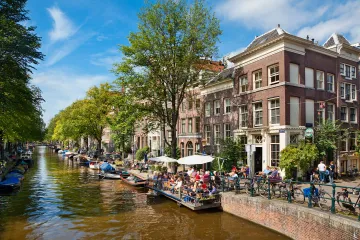
Due to essential works, no trains will run to or from Amsterdam Centraal on October 3 – this includes Eurostar services to and from St Pancras.
Amsterdam Centraal railway station will be disrupted over a weekendCredit: GettyThe busy train station will undergo important works that means it will closeCredit: Getty
The train station that serves the city of Amsterdam in the Netherlands is about to undergo ‘vital’ rail works.
As a result it will be closed for one full day on October 3 with schedules significantly reduced on the two following days between October 4-5.
Sign up for the Travel newsletter
Thank you!
The upgrades include connecting new tracks around Amsterdam Centraal to the rail network.
ProRail’s construction manager Wai Ko explained: “We are adapting the station step by step so that there will be more space for passengers and trains in the future.
“Over the weekend of October 3, together with contractor Dura Vermeer, we will connect track 11a to the rail network. We will also disconnect track 14a.
“That involves a great deal of visible work, such as physically joining the tracks, as well as a great deal of work that passengers never see.”
Other works taking place will be ‘invisible’, held within the signalling systems in technical rooms and at the traffic-control center.
It’s likely to cause major disruption over the weekend considering that Amsterdam Centraal is the second-busiest railway station in the Netherlands and one of the busiest in Europe.
As a result of the engineering works, Eurostar has said that there will be no trains between St Pancras and Amsterdam between October 3-5.
On its website, Eurostar apologised for the disruption.
From the UK there will be no Eurostar services to Amsterdam between October 3-5Credit: Getty
On Saturdays there are typically three direct Eurostar routes to Amsterdam Centraal and 15 indirect routes from London St Pancras.
There are also the same number of services between Amsterdam and London.
On Sundays there are usually four direct routes and nine indirect journeys with the same from Amsterdam to London.
Eurostar usually has five direct Amsterdam services on Monday and nine indirect services – on the return are typically five direct trains and six indirect.
Eurostar’s services to Rotterdam will remain unaffected.
If you were due to travel to Amsterdam on these dates – these are the options provided by Eurostar…
Eurostar has provided the following options for those affected by Amsterdam Centraal’s closure between October 3-5…
• Use your ticket to get on or off your train at the station before or after your cancelled stop if your planned journey is only partially disrupted.
• Exchange your booking for free to travel in the same travel class at a different time or date. It only takes a minute to rearrange your trip.
• Cancel your booking and get a refund. You’ll receive a refund for the value of your ticket but not for any booking or exchange fees. We’ll process your request within 28 days.
You have three months from the date you were due to travel to claim your preferred option.
JANE Austen knew what she was doing when she wrote her books in atmospheric locations.
And with a new movie based on her novel Sense & Sensibility coming out this weekend, the locations in the film are the perfect destination for a staycation.
The new Sense & Sensibility film used Dartmoor for several scenes – and having been hundreds of times I know the National Park very wellCredit: Cyann FieldingThe new film featuring Daisy Edgar-Jones is believed to have filmed in Princetown and TavistockCredit: YouTubeThey even shot a scene at Ditsworthy Warren House – which was also used in War HorseCredit: YouTubeThe National Park is around nine times the size of the City of ParisCredit: YouTube
I have visited Dartmoor National Park more times than I can count, including the spots used in the film – and I stand by that it is the best staycation spot in England.
The National Park spans 368 square miles and to put that into perspective, its around nine times the size of the City of Paris.
Sign up for the Travel newsletter
Thank you!
In fact, Dartmoor is so huge you could spend a whole week exploring it and you could still come back again and see new things.
But you won’t see skyscrapers and massive roads here – instead, rolling hills meet meandering rivers with winding country roads running alongside them.
The new Sense & Sensibility film starring Daisy Edgar-Jones as Elinor Dashwood and Esmé Creed-Miles as Marianne Dashwood, used the rugged and windswept landscapes of Dartmoor extensively to film scenes of the movie.
One location used was Gutter Tor – a large granite rock pile that makes for the ideal walk.
There is a small car park not too far away and after exploring the tor, head to Ditsworthy Warren House, just south of the tor, which was also used in film and it already featured in Steven Spielberg‘s film War Horse.
As a child and still now as an adult, I love searching for letterboxes on Dartmoor – a traditional hobby box with a rubber stamp inside and a visitor book.
Across the moors there are loads of places to explore, including Dartmeet where you can waddle through the riverCredit: Alamy
Obviously some are harder to find than others and while I haven’t found one at Gutter Tor, there are three officials ones in the area.
It is a great activity for kids, like the ultimate hide and seek.
You will usually find them in the crevices of the granite rocks, or even under some that are light enough to move.
Another spot the new blockbuster used as a filming spot was Princetown, which is one of the National Park’s villages.
The small village is home to the famous Dartmoor Prison, made entirely out of granite.
Many myths and folklore about Dartmoor originate at this prison and are usually about escaped prisoners.
I’d really recommend heading to the Dartmoor Prison Museum to learn more about the 200-year-old building.
And if you want to hear more about the folklore, book onto a Heart of Dartmoor Guided Walk, based in Princetown.
Gutter Tor is another spot used for filming – if heading on a walk to the Tor, make sure to look out for a letterboxCredit: AlamyThey aren’t regular letterboxes, but instead ones with a stamp in to say you were herein the guestbook.Credit: Alamy
For half a day (£40pp) or a full-day (£70pp) visitors head off on walks across open moorland and tracks with a guide who will share local folklore, history and hidden features.
Pop into Dartmoor Brewery’s shop as well and pick up some of their famous Jail Ales which have won numerous awards over the past few years.
The ales all come from the brewerynext door, which is England‘s highest brewery at 446.5 metres above sea level.
If you want to sit and enjoy a pint in a pub, then pop into the Plume of Feathers or the Prince of Wales.
The final Dartmoor filming spot was Tavistock – a historic market town on the edge of the National Park.
Known as the original home of the cream tea, it is well worth spending a day exploring.
The World Heritage status town is home to loads of independent shops, a famous pannier market and an award-winning farmers market.
The town has a heap of restaurants, pubs and cafes as well and if you want to extend your stay then book into the Cornish Arms for a night, costing from £124 per night.
Across the moors there are loads of award-winning pubs tooCredit: AlamyAnd you might see the famous Dartmoor poniesCredit: Alamy
Dartmoor has more to explore than just these filming spots though…
One of the most popular spots to visit – with good reason – is Haytor.
The towering tor at the edge of the moors provides the ideal walk for those who enjoy being outside but don’t want anything too rigorous.
By Haytor is also The Moorland Hotel, with stunning gardens and a large restaurant serving delicious comfort food.
Staying here is the perfect base to explore the National Park and what makes it even better is that it costs from just £80 per night – so £40 per person per night, with breakfast included.
And across the moors you will find more than 70 pubs in total, many of which have won awards for either their drinks or food.
For example, head to The Chagford Inn, which is recognised as a leading West Country gastropub and focuses on farm-to-table menus.
Tavistock was also used for filmingCredit: AlamyThe bustling town has lots of coffee shops as well as top restaurantsCredit: Alamy
Also in Chagford, drop into the Three Crowns which is the Gold Winner for Pub of the Year at the Visit Devon Tourism Awards and a Devon Life Food and Drink Awards finalist.
Another fun family spot – that is free to visit – is Dartmeet.
Here you can go for a dip in the river, head over a traditional clapper bridge and venture across giant stepping stones that span the river.
If all of this wasn’t enough, Dartmoor is actually the only place in England you can wild camp for free.
So, get your tent out and you’ll have free accommodation too.
St Cuthbert’s Way now ranks alongside the Darjeeling Himalayan Railway and France’s scenic Route Napoleon as the ‘Best in Travel’ for Lonely Planet guide.
15:35, 25 Sep 2026Updated 15:36, 25 Sep 2026
The traditional Good Friday Pilgrimage to Holy Island in 2024(Image: Getty Images)
A 62-mile walking route to England’s Holy Island has been named as one of the world’s top experiences in the ‘travel bible’ Lonely Planet.
St Cuthbert’s Way now ranks alongside the Darjeeling Himalayan Railway and France’s scenic Route Napoleon as the ‘Best in Travel’.
The list also highlights lesser-known destinations like Quebec and Veneto, and cities such as Dessau in Germany, Šibenik in Croatia, León in Spain and Rabat in Morocco.
St Cuthbert’s Way covers 100km from Melrose in the Scottish Borders through some of the most peaceful countryside in the UK to Lindisfarne in Northumberland.
The BBC featured “The Road to Holy Island’ in a series earlier this year, including sections of St Cuthbert’s Way. It featured celebrities Patsy Kensit, Ashley Banjo, Hermione Norris and Jayne Middlemiss.
Lonely Planet recommends its “moorlands” and “ghostly hillforts” and village pubs. The walk officially opened in the summer of 1996. It begins in Melrose where St Cuthbert started his religious life in 650 AD and makes its way through the Eildon hills, past Jedburgh to Morebattle and Town Yetholm.
From there it crosses the border into England passing through Wooler before ending up on Holy Island off the Northumberland coast where St Cuthbert was first laid to rest.
Most people walk it from west to east as that follows the chronology of the saint’s life and also benefits from having the prevailing wind at your back.
It is described as enjoying an “ever-changing variety of scenery and spectacular views” and can be “easily completed” in four to six days.
The walk offers dramatic views of the countryside of southern Scotland and northern England, and an area identified as the most peaceful in the UK.
It ends with a ‘bit of a bang’ at Lindisfarne, famous for its causeway, castle and beautiful views. St Cuthbert is recognised as one of the world’s earliest wildlife conservationists. He was born in 635 AD and, after a “divine vision,” the young shepherd entered the monastery in Melrose.
A decade later, the town was struck by the plague and afterwards, he helped victims throughout the countryside and was reported to have performed many miracles.
He transferred to Lindisfarne in 664 but, described as a “hermit by nature,” retired to Inner Farne in 676. His efforts to protect birds led to his recognition as one of the earliest wildlife conservationists.
Andrew Fox, Chair of Visit Northumberland, said: “We are thrilled to see Northumberland featured in Lonely Planet’s Best in Travel 2027.
This recognition shines a global spotlight not only on St Cuthbert’s Way, but on the wider range of world-class experiences that make Northumberland such a distinctive destination.
“St Cuthbert’s Way perfectly captures the growing demand for more meaningful travel experiences.
Whether visitors come to walk, reflect, explore our coast and countryside, discover our historic sites or simply slow down and reconnect with nature, Northumberland offers an unforgettable journey and a genuine sense of place.”
The Lonely Planets top places and experiences in Europe are:
Places
Veneto, Italy
Dessau, Germany
Swedish Riviera (Skanör-Falsterbo), Sweden
Šibenik, Croatia
León, Spain
Experiences
Road-trip through history on the Route Napoléon, France
Sail the Aeolian Islands, Sicily
Walk St Cuthbert’s Way to Lindisfarne, United Kingdom
Dive into an unexpected underwater world, Greece
Be wowed by wonderful Killary Fjord,Co Galway, Ireland
A UK-based theme park has beaten competition from across the globe to be named the best in the world, and a brand-new ride that only opened this summer also scooped a major award
The park has thrilled seaside visitors for generations(Image: PR Handout)
The Park World Excellence Awards has named its top theme park picks for 2026, and the coveted Best of the Best award has been given to a British theme park that has beaten competition from across the world.
The north west resort scooped the prestigious prize at the awards ceremony held on Wednesday (September 23). The awards, which focus on parks in Europe, the Middle East and Asia, included categories from the Best Roller Coaster to the Best Water Park, and competition was stiff, with nominations for huge theme parks including PortAventura, Futuroscope, and Land of Legends.
Pleasure Beach Resort in Blackpool took the top prize, which was described as being awarded to “theme parks, rides, or tourist attractions recognised for excelling as the best of all time within its respected industry.” The Best of the Best award is given to parks that offer “the absolute pinnacle, reflecting everything that is great about our industry”.
Formerly known as Blackpool Pleasure Beach, the iconic theme park has been celebrating its 130-year anniversary in 2026, making it one of Europe’s oldest, and it is fourth-generation family-owned. It’s the first UK theme park to win the award, with former recipients including Germany’s Europa Park and Siam Park in Tenerife.
The theme park also scooped Best Ride of the Year for Aviktas, the largest ride of its kind in the UK, which swings passengers 138ft in the air on a rotating pendulum. Aviktas opened in May 2026 and was an £8.27 million addition to the park. Meanwhile, Valhalla, a Viking-themed attraction, was the runner-up in the Best Water Ride category. It’s the fifth time the water-based ride has been nominated in this category.
The Pleasure Beach Resort is also home to the UK’s only Nickelodeon Land, which includes SpongeBob SquarePants and PAW Patrol-themed rides for all the family.
It’s Halloween event, Journey to Hell, is set to open on October 17, just in time for half term. Described as an “immersive scare experience”, it’ll include three new scare mazes and a selection of rides that stay open until 9pm.
Amanda Thompson, managing director of the Pleasure Beach Resort, said in a statement: “To be named Best of the Best is a massive achievement for our park. Our industry is full of so much talent, so to be recognised among the best speaks volumes on the dedication and hard work that has kept us moving forward for 130 years.
“Avitkas has been a hugely valuable addition to the park and I’ve been delighted by its reception so far. If they haven’t already I’d absolutely encourage people to visit Pleasure Beach and give our ride, now recognised as one of the world’s best a go!”
Have a story you want to share? Email us at webtravel@reachplc.com
Against the tidal wave of public opposition to those who go barefoot on a plane, there is a countercultural force of people determined to get up in the sky, unencumbered by socks
Not everyone loves seeing a barefoot on a plane(Image: reddit.com/Qwaymind)
They may be the most maligned group in modern society – the barefoot passenger.
There is something about a naked, sock-free foot at 30,000 feet that unifies the public in its fury and disgust in a way rarely seen in the 21st-century world of social media polarisation. And every now and again, there’s a particularly egregious case that captures the attention.
Back in October last year, Boston-based artist Ashley Eisenman filmed a man behind her propping his bare foot into the gap beside her seat for the entire hour-long flight, leaving them mere centimeters from her defenseless arm. “He 1000% should be on the no-fly list ASAP,” she wrote after the traumatic incident.
If a one-hour flight from Reno to San Francisco is bad, then a nine-hour journey from Zurich to New York is the stuff of flakey-skinned, wiggly-toed nightmares. That is what happened to Reddit user u/sarahfayejay, who posted an alarming photo with the caption: “I have a 9-hour flight ahead of me.”
And it’s not an issue that inflicts only those in economy. The alarming Instagram page Passenger Shaming shared a video of a woman lying on her back in first class, with both her bare feet resting against the plane’s wall.
Content cannot be displayed without consent
While you might assume that the dislike of this practice was universal and a given, Expedia decided to check. In a 2018 survey of 18,000 travellers it found that more than 90% said it’s never okay to go barefoot on a plane, while a later 2023 Kayak-led piece of peer reviewing found that 76% of travellers “prefer their vision free of toes” on a flight.
Against this tidal wave of public opposition, there is a countercultural force of people determined to get up in the sky, unencumbered by socks.
“I think the trick, generally, is not ask for consent. Idk (I don’t know) why you would anyway, but I’ve seen it done, and the answer was a negative. So don’t ask, just go… Hopefully you won’t get a Karen next to you who does the whole anti-barefeet on the plane shtick that is still doing the rounds…” one Reddit user wrote in response to a member of the r/barefoot community asking how flying with your feet in their birthday suit typically went down.
Another explained their method for getting on board without attracting attention. “I wear a pair of flip-flops or light sandals that I put on when I enter the airport. I go through security in them and take them off while I’m in the terminal. When they announce my flight, I put them back on to go to the gate, board the plane with them on, and once I’m seated, I take them off until the end of my trip,” they explained.
Content cannot be displayed without consent
A third wrote: “I flew back home from Florida in January barefoot without incident. Except a young female TSA agent insistently asked two or three times ‘Where are your shoes?’ I told her that ‘the government does not require me to wear shoes.’ She let me pass.”
While the US government may not require its citizens to wear shoes, American, Delta, and United all explicitly reserve the right to refuse or remove barefoot passengers, though enforcement in practice appears inconsistent based on these accounts. In the UK, none of the major airlines such as Ryanair, easyJet and Jet2 have rules specifically banning passengers from taking off their shoes.
While the majority of people may take issue with seeing a bare foot in a public place, there is a subset of people who sincerely believe in going without shoes, whether that be for foot health or spiritual reasons.
Kriss Sands is a no-shoes advocate whose blog, Born to Live Barefoot, details the ups and downs of living without shoes on. It is something he takes seriously. “In general, as a full-time 24/7 barefooter, the only reason I would ever put on shoes would be when there is imminent danger of my feet being damaged or injured otherwise, such as extreme weather conditions, caustic chemicals, fire, or similar conditions,” Kriss writes.
In one post, Kriss argues that a “passenger who chooses to travel barefoot on a plane is harming no one and should never be of anyone else’s concern.”
According to Kriss, it’s only the US airlines that specify that being barefoot is against their terms of carriage. “I have not seen all foreign based airlines’ contracts of carriage, but I have reviewed the ones from Aeroflot, Air Canada, Air France, Air New Zealand, British Airways, China Southern Airlines, Lufthansa, and Qantas. With the exception of Air Canada, none of these make any mention at all of bare feet or someone who is barefoot,” Kriss writes.
However, he says airports and planes are no places to argue with staff, given how seriously security is taken. From Kriss’s experience, most staff will allow you to board and fly barefoot, so long as you’re polite. Over a 20-year period, he took 114 flights without shoes on and was only asked to cover his feet eight times.
YOU’LL be able to travel to 34 more destinations with Jet2 from the UK soon.
The airline is launching a number of new routes for Winter 26/27, with destinations including winter sun spots, city breaks and pretty Christmas markets.
Jet2 is launching 34 new routes including winter sun spots with 25C weather in DecemberCredit: GettyOther destinations will be across Europe, such as Spain and DenmarkCredit: Alamy
It marks the airline’s biggest winter programme as well as its first winter season from London Gatwick Airport.
Destinations in Europe include La Palma in Spain, Copenhagen in Denmark and Vienna in Austria.
The Egyptian resort city sits on the Red Sea and is the ideal spot to head off scuba diving to see colourful coral reefs.
And there is sunshine year-round.
You’ll get the best of both worlds too as after exploring the water you can head to the desert, for a quad biking or camel riding experience.
Another destination getting Jet2 flights is a city that feels more like stepping into a Disney movie.
Often referred to as a fairytale city due to its winding medieval streets, Tallinn in Estonia takes just three hours to get to from the UK.
You could also head to a number of destinations with great Christmas markets – such as TallinnCredit: Mark Hannah
The old town of the city is full of interesting shops as well as grand medieval churches and walls.
For a city centre, it is very quiet as well.
And if you happen to visit in December, go the Christmas market, full of chalets selling handmade Estonian gifts as well as glögi – which is essentially Estonian mulled wine.
At the centre of the market is the world’s oldest recorded public Christmas tree as well, which dates back to 1441.
Steve Heapy, CEO of Jet2, said: “We are seeing strong demand from customers and independent travel agents for all kinds of winter holidays, so we have responded by putting a fantastic selection of brand-new routes on sale for Winter 26/27.
“Whether holidaymakers want winter sun, a festive Christmas market break, a ski holiday to the Alps or a city break, this expanded programme gives them more choice and flexibility than ever before.
“The addition of 34 new winter routes, three new destinations and our first winter season from London Gatwick Airport shows how we are continuing to grow in direct response to demand.
“This is about giving customers more of what they want for winter, with an exciting mix of destinations that caters for every type of getaway.”
Flights for the new routes cost from as little as £30 per way.
And if you don’t want to wait, the airline currently has 6.3 million seats on sale to 42 destinations for this winter.
Full list of the 34 new destinations
From Birmingham Airport: Copenhagen (Denmark); Sharm El Sheikh and Hurghada (Egypt)
From Bristol Airport: Cologne (Germany)
From East Midlands Airport: Agadir (Morocco); Gdansk (Poland); Sharm El Sheikh and Hurghada (Egypt)
From Edinburgh Airport: Strasbourg (France)
From Glasgow Airport: Hurghada (Egypt)
From Leeds Bradford Airport: Tallinn (Estonia); Sharm El Sheikh and Hurghada (Egypt)
From London Gatwick Airport: Agadir (Morocco); Funchal (Portugal); Tallinn (Estonia); Vienna (Austria); Cologne (Germany); Gdansk (Poland); Grenoble (France); Turin (Italy); Geneva (Switzerland); Salzburg (Austria); Chambery (France); Sharm El Sheikh and Hurghada (Egypt)
From Manchester Airport: Strasbourg (France); Sharm El Sheikh and Hurghada (Egypt)
From London Stansted Airport: La Palma (Spain); Strasbourg (France); Innsbruck (Austria); Sharm El Sheikh and Hurghada (Egypt)
Initially, the tech firm has said it will build 25 aircraft a year but will grow this number to 900 a year by 2035.
Vertical revealed they have already received 1,500 orders, largely from airlines, but is also planning on getting its planes accredited for commercial use by 2029.
The new facilities form part of Vertical’s larger existing flight test centre located at the airport, increasing the site by a further 60,000 sq ft.
Vertical Aerospace’s CEO, Stuart Simpson, told the BBC that we are “getting really close to this idea of flying cars, flying taxis”.
“Opening our aircraft assembly centre is an important step in Vertical’s transition from prototype developer to aircraft manufacturer,” added Simpson.
“Bringing a new category of aircraft to market is a once-in-a-generation opportunity and it is especially rewarding to do that here in Great Britain, drawing on the country’s proud aviation heritage.”
Later this year, plans for a separate full-scale production site are expected to be revealed with the aim of supporting a much larger volume of vehicle manufacturing.
In fact, it’s believed that Tangier was created by the son of Hercules, with the god himself staying in one of the caves.
It has a vibrant café culture thanks to its French influence, tapas culture from Spain – and a mix of languages too.
Thanks to its position in the north of the country, it has long, sandy beaches too like Plage de Tanger and Achakkar Beach.
The second cheapest for return flights is Seville which has an average price of £151.
Seville is Spain’s fourth-largest city – and is one of the hottest during the autumn, winter season.
During October, Seville can still reach highs of 26C and even in January can see highs of 16C.
The Greek island of Rhodes has seen the biggest decrease in price for return flightsCredit: Alamy
Here’s the list of the best value destinations for travel from Oct 2026 – Feb 2027…
These are the destinations and the average economy return flight price, according to Skyscanner…
Rhodes, Greece: Average price £218 (-21% YoY)
Montego Bay, Jamaica: Average price £764 (-13% YoY)
Tangier Morocco: Average price £105 (-13% YoY)
Seville, Spain: Average price £151 (-12% YoY)
Valencia, Spain: Average price £122 (-11% YoY)
Valletta, Malta: Average price £164 (-11% YoY)
Perth, Australia: Average price £1,425 (-6% YoY)
Some of the top attractions include the Royal Alcázar of Seville, Seville Cathedral and Plaza de Espana.
Rhodes in Greece has seen the biggest drop in flight prices year-on-year – it’s down 21 per cent.
The average return flight price is £218 – but in October, we found return flights for less than £60 with Ryanair.
The island is the fourth-largest in Greece, the biggest in the Dodecanese – and it’s considered quieter and cheaper than the likes of Santorini and Mykonos.
Lindos is a popular spot for visitors, the coastal village sits on the eastern coast with a clifftop Acropolis, whitewashed alleys, and sandy beaches.
Greece has incredible summers, but also mild winters with highs of 15C in January and February.
Seville is the fourth-warmest city in Spain during the autumn, winter seasonCredit: AlamyA long-haul option with cheaper flights this year is Montego Bay in JamaicaCredit: Alamy
Further afield, long-haul journeys that have cheap return flight include Montego Bay in Jamaica which from the UK has an average price £764.
Montego Bay on north-west coast of Jamaica is the capital of the parish of Saint James and is one of the most popular tourist spots on the island.
Of course Brits flock there for its great weather and beautiful bays like Doctor’s Cave Beach which is considered one of the most beautiful in the country with white sand and bright turquoise waters.
Aside from sunbathing and paddling, snorkelling is popular too as swimmers are likely to spot parrotfish, turtles, and small sharks.
Looking on Skyscanner, October is the cheapest month for flights with returns from £364.
Laura Lindsay, Travel Trends and Destination Expert at Skyscanner gives her top tips for cutting travel costs…
Head north For those able to depart from north of the border, Edinburgh airport has some of the best deals for those looking for school holiday breaks as Scottish schools aren’t off the same weeks as England.
Is there a better price when departing a day earlier or later? Searching by multiple dates and airports will give you the best chance of a bargain. Because some dates are more popular than others, prices will vary. The ‘whole month’ search tool allows you to see cheap flights at a glance and pick the right deal for you. Consider traveling a day before or a day after your original departure dates, flying on less popular days of the week is always cheaper.
Is there a comparable trip to a different destination? You see a deal from one airline to popular location like Naples, but is there a better price when you consider somewhere less well known, like underrated Bari in Puglia instead?
Can you get a better deal travelling with a different airline?Changing up the airlines you choose to fly with can seriously cut costs. Also, fares don’t have to be booked as returns. Look at flying out with one airline and back with another to save money. You can easily compare prices on Skyscanner’s cheapest month tool.
Is there a cheaper deal from a nearby airport? Travelling to an airport a bit further from home or further from your destination can unlock better pricing and routes. A great example of this is when flying from London to New York. There are so many options and going just a little bit further from your point of origin or destination could mean a saving of hundreds of pounds. Make sure to check using the ‘Nearby Airport’ search on Skyscanner.
If you’re still not sure, make a note “Setting up price alerts will ensure you’re the first to know as prices drop with any additional discounts or added supply. You can mark a flight you’re interested in and Skyscanner will email you whenever the price goes up or down.
Embrace spontaneity by exploring ‘Everywhere’ Re-embrace your spontaneous side and let Skyscanner’s algorithm find the cheapest deal. Just type in ‘Everywhere’ with your travel dates and the site will show you all the destinations that can be reached from your departure point listed in order of price so you can choose the most cost effective one.”
The Foreign Office is urging UK travellers to ‘avoid’
11:03, 25 Sep 2026Updated 11:07, 25 Sep 2026
UK travellers continue to be warned(Image: Daniel Garrido via Getty Images)
The Foreign, Commonwealth and Development Office (FCDO) has issued a stark warning to British holidaymakers, urging travellers to stay safe while abroad.
In a recent update on X, formerly Twitter, the FCDO said: “Free drinks aren’t worth the risk. To help reduce the risk of methanol poisoning abroad, avoid free cocktails or shots, unlabelled bottles, and unusually cheap or discounted drinks claiming to be brand-name alcohol.”
The FCDO is raising awareness following the deaths of several British travellers who consumed alcohol contaminated with methanol while overseas.
Kirsty McKie, 38, died in 2022 after inadvertently ingesting the substance while at home with a friend in Bali, where she had lived for eight years. As little as 10ml of methanol can result in blindness, while 30ml can prove fatal.
TravelAware warns: “In some parts of the world methanol products are sometimes illegally mixed with ‘real’ alcohol such as spirit-based drinks and cocktails.”
Holidaymakers are advised only to buy alcoholic drinks from licensed venues, bars and hotels, to avoid homemade alcoholic beverages, check bottle seals haven’t been tampered with, and look out for poor quality labels or spelling errors.
You should also get urgent medical help if you or anyone in your travel group falls ill after drinking alcohol. Early symptoms of methanol poisoning include impaired judgement, loss of balance, and drowsiness.
Between 12 and 48 hours after consumption, you may suffer abdominal pain, dizziness, hyperventilation, breathlessness, blurred vision and/or blindness, coma, and seizures. If you or anyone travelling with you experiences these symptoms, seek urgent medical attention.
Visual problems are a particularly significant warning sign, especially blurred vision, sensitivity to bright lights, and in some cases complete blindness. “Snowfield vision” (seeing snowy static resembling an old television) or tunnel vision may also occur.
If you experience any of these symptoms, seek urgent medical help.