Aug. 31 (UPI) — Finance ministers and other officials from the Group of 20 nations, as well as many CEOs, met Monday in Asheville, N.C., at a summit in which U.S. leaders intended to focus on growth and Iran — but also drew protests from other leaders for the inclusion of the Russian minister.
U.S. Treasury Secretary Scott Bessent told officials that the United States wants to focus on the mission of accelerating growth and said the countries need to work together
“The world is awash in debt, and the only way for us to get out of this is to grow our way out of this,” Bessent said, CNBC reported.
He also said a “durable” global economy” cannot rest on “beggar-thy-neighbor acts that stifle fair, market-based competition,” The New York Times said.
In introductory comments, U.S. Federal Reserve Chairman Kevin Warsh also focused on growth, saying the time is one of “secular growth.”
“If I were to try to characterize this moment, it would be one of a global investment surge,” he said.
Bessent said earlier Monday in a CNBC interview that the U.S. plan to pressure and isolate Iran through its economy can work without China, which opposes the sanctions. He is expected to ask the other finance ministers to join in those sanctions.
Russian Finance Minister Anton Siluanov was at the meeting — at the invitation of the Trump administration — for the first time since Russia’s invasion of Ukraine in 2022.
This drew protests from other European ministers, who have issued their own sanctions against Russia for that war. Finance Minister Lars Klingbeil told The Times that he scolded Siluanov over the war and said the European ministers demanded the Russian minister be left out of a traditional group photo. It was eventually taken without Siluanov.
“Receiving the Russian finance minister here sends a signal I find troubling,” he told reporters. “I would have preferred clear positioning from the U.S. side that he not be received like a regular guest.”
Ukraine’s finance minister was not present in person at the meeting.
In addition, European ministers protested that the United States did not invite representatives from South Africa, a G20 country, to the meeting. Trump administration officials also invited many U.S. business executives but denied requests to include business leaders from other G20 countries.
Parents recount desperate attempts to save their children after a ferry capsized off Northern Cyprus on 30 August. As search operations continue, their 12-year-old daughter and six-year-old son are among the 18 people still missing, while at least eight people have died.
Phil Tippett, the visual effects artist who crafted aliens in “Star Wars” and dinosaurs in “Jurassic Park,” is shutting down his Berkeley-based studios after more than 40 years of business.
The closing was marked by a weekend liquidation sale, where fans purchased memorabilia from movies like “Star Wars,” “Jurassic Park,” “RoboCop” and “Starship Troopers.” The sale included models of Imperial Walkers from “The Empire Strikes Back,” “Starship Troopers” miniatures, signed posters and equipment like computers and 3D printers.
“We have recently decided to evolve our physical footprint and production approach, and to exit our longtime Berkeley facility,” said the company in a statement on social media. “As we make this transition, Tippett Studio continues its visual effects and animation work across film, television and entertainment.”
The closure follows Tippett‘s sale of a majority stake in the company to PhantomFX, an India-based VFX studio, in 2024 and the Chapter 11 bankruptcy filing that followed. PhantomFX has completed the acquisition of Tippett Studio and will operate the studios under the same name.
Tippett and his wife, Jules Roman, founded the studio in 1984, by which point he’d already made his name in the world of visual effects through his work on the original “Star Wars” trilogy. He was instrumental in doing the stop-motion miniature chess scene in “Star Wars: A New Hope,” bringing the Imperial Walkers to life and creating aliens like Jabba the Hutt and tauntauns.
Under his own studio, he became best known for the dinosaurs in Steven Spielberg’s “Jurassic Park,” using computer generation to animate the prehistoric creatures. He also worked on effects for “The Matrix” films, “Hellboy” and the “Twilight” franchise.
Tippett had occupied the 6,200-square-foot Berkeley facility for 35 years, but as technology evolves, the studio no longer needs the large space.
“Stop-motion remains an important part of our creative capabilities, but maintaining a large permanent physical footprint is no longer necessary for our current requirements,” wrote Tippett Studios. “When projects require dedicated stages, fabrication, motion-control photography or other specialised physical infrastructure, we will work with appropriate external facilities to meet the needs of each production.”
The company‘s Toronto studio will keep running and is “currently in active production on a large feature film,” per the same statement.
Despite the sale, Tippett told CBS News he isn’t giving up or planning to retire. He does not have plans to retire. “I will die with my sword in my hand,” he said. “We had almost a 40-year run. It was a good run.”
India’s Prime Minister Narendra Modi told Russian President Vladimir Putin that India supports every effort to end the war in Ukraine. The two leaders met in Bishkek at the Shanghai Cooperation Organisation summit.
One person has died and 15 remain missing or unaccounted for after flash flooding swept through parts of the Grand Canyon, the National Park Service (NPS) has said.
The flood hit Bright Angel Canyon and the Phantom Ranch area on Saturday afternoon, wiping out footbridges and propelling boulders downstream.
The body of a 46-year-old man was found on Sunday evening near Crystal Rapids along the Colorado River, the park service told CBS News, the BBC’s US partner. Sixty-two people have so far been airlifted out of the area.
“The whole thing was terrifying,” said Nikki Baggs, 41, who was among those to be airlifted out of the bottom of the Grand Canyon with her two friends.
“It was a beautiful day and then people were screaming, running,” she told the BBC.
Baggs said she and her friends had just dropped off their belongings at a cabin in Phantom Ranch – a remote lodge at the bottom of the Grand Canyon – when they decided to venture out to enjoy the nice day. Before they knew it, a flood of water was sweeping through the area.
As soon as the rain hit, Baggs and her friends headed toward higher ground, where they sat at a picnic table, before rangers yelled to them to run again to a different ledge, where they waited with others for hours before they were evacuated at around 21:30 local time (04:30 GMT).
Baggs said she and her two friends had been looking forward to a steak dinner at Phantom Ranch – but were now just grateful to be alive thanks to a swift response from park rangers.
“It was a really uniquely co-ordinated effort,” she said. “That’s what made us feel safe about all of it in an unsafe situation.”
Baggs said she and her friends watched from higher ground as bridges were swept away.
KIMBERLEY Walsh gave a fans a look at her sunny family holiday – where she rocked several designer swimsuits.
The former Girls Aloudstar soaked up the sun at a lush resort in Cadiz, Spain with her three sons and hubby Justin Scott.
Girls Aloud’s Kimberley Walsh went on a family holiday to Spain with her kids and husband Justine ScottCredit: Instagram/ @kimberleywalshofficialThe singer looked amazing in a blue bikiniCredit: Instagram/ @kimberleywalshofficial
They looked tanned and relaxed on their holiday where the lads tried their hand at golf, they ate lots of yummy food and Kimberley looked sensational.
One of her eye-catching bikinis included an electric blue triangle set which showed off her incredible figure.
Sign up for the Showbiz newsletter
Thank you!
Kimberley sipped on a frozen margarita while wearing the suit and relaxing on a sunlounger.
The singer shared a photo dump from her holiday which showed the happy family having a great time.
The family soaked up the sun in CadizCredit: Instagram/ @kimberleywalshofficialKimberley rose to fame in Girls Aloud with (L-R) Nicola Roberts, Nadine Coyle, Sarah Harding and Cheryl ColeCredit: PAKimberley’s BFF Cheryl is making a comeback to TVCredit: GettyShe will be a guest judge on The Voice after six years away from tellyCredit: Shutterstock Editorial
“Sotogrande [resort] you were the perfect way to round off the summer! The resort is absolutely BEAUTIFUL and we had the most gorgeous few days!” she captioned the post.
She caught with Nicola Roberts and Cherylto celebrate the opening night of musical Hadestown UK in London’s Lyric Theatre – where Nicola was one of the stars.
The evening also marked Cheryl’s return to the spotlight and it was more recently announced that she would become a judge on The Voice UK.
The former X Factor judge has not been on prime-time TV for six years, with filming for the new series of theITVshow beginning on September 11 in Manchester.
It would be her first prime-time TV role since she was a dance captain on BBC1 show The Greatest Dancer in 2020.
According to data released by Colombia’s Search Unit for Missing Persons, known by its Spanish acronym UBPD, at least 137,000 people have been reported missing in connection with the country’s armed conflict since 1921. Photo by Mario Caicedo/EPA
Aug. 31 (UPI) — When Tobías Borda Cepeda disappeared in rural Colombia in 1921 amid local land disputes, his family could not have foreseen that his case would mark the beginning of a tragedy that would span a century.
According to data released by Colombia’s Search Unit for Missing Persons, known by its Spanish acronym UBPD, at least 137,000 people have been reported missing in connection with the country’s armed conflict since that year.
Marking the International Day of the Victims of Enforced Disappearances on Sunday, the agency said 48.5% of all cases occurred during the 2000s, with the highest concentration between 2001 and 2003.
Disappearances during the first decade of the 21st century represent a dark chapter in Colombia’s recent history. Between 2000 and 2010, the country experienced an escalation in violence marked by fighting among right-wing paramilitary groups, left-wing guerrillas and state forces in a war waged on multiple fronts.
During that period, armed groups used enforced disappearances to conceal the large number of victims, terrorize local communities and facilitate the illegal seizure of millions of acres of rural land.
Valle del Cauca, Antioquia and Meta have recorded the highest number of cases, according to the UBPD.
The concentration of cases in those regions reflected the broader strategic objectives of armed groups seeking to control key corridors for drug trafficking and arms smuggling, as well as natural resources and rural border areas.
“This is a crucial date to remember that disappearances have not stopped,” Luz Janeth Forero, director general of the UBPD, said in a statement.
Forero said records from the International Committee of the Red Cross show that another 2,659 people have disappeared since the Colombian government and the Revolutionary Armed Forces of Colombia, or FARC, signed a peace agreement in 2016.
The Red Cross warned Friday that at least one person has disappeared every two days this year as a result of Colombia’s armed conflict, with 99 cases recorded between January and July.
The international organization said in a statement that 36 of those reported missing were children and adolescents.
On Saturday, Colombia’s new president, Abelardo de la Espriella, ended negotiations with several illegal armed groups that had been launched by his predecessor, Gustavo Petro. He revoked the appointments of government representatives and withdrew recognition of the opposing delegations involved in talks under the so-called Total Peace plan.
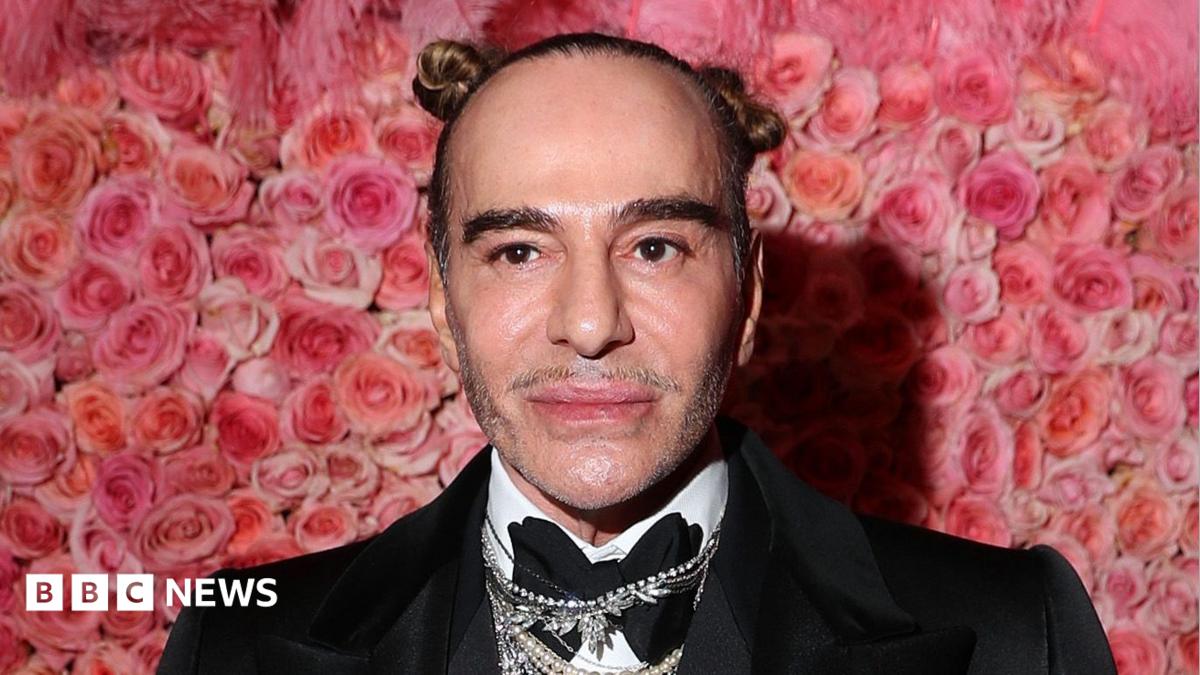
Others had previously voiced their opposition to the Met’s plan to commemorate Galliano.
Julie Menin, speaker of New York City Council, said, external: “After my numerous and lengthy meetings and conversations with the Met, I am pleased that they have agreed to not honour John Galliano.
“From the beginning, I have told them that I strongly disagreed with this decision, and at this rising time of antisemitism, it had served as a gut punch to the Jewish community.
“This is the correct decision, as the harm and pain this was causing was simply unacceptable.”
Meanwhile, Jonathan Greenblatt, chief executive of the Anti-Defamation League, which aims to counter antisemitism, said that with antisemitism at “crisis levels”, honouring Galliano would be “misguided”.
“Even Galliano ultimately recognised what the Met should have done from the start,” he added. “This was the wrong move at the wrong moment. Timing matters.”
Galliano is regarded by some as one of the greatest fashion designers and returned to the fashion industry following his conviction, serving as creative director of Margiela for a decade until 2024.
After oohing and aahing over “The Odyssey,” it’s time for the hot summer splash to make way for an intriguing fall lineup.
At the movies, Alexander Skarsgård plays a sexy wicker husband. Tom Cruise, a bizarro oil man. Jenna Ortega, a robot friend, and Kendall Roy, ahem, Jeremy Strong, is Mark Zuckerberg. Then we revisit classics of various stripes on the small screen, from a further-future “Blade Runner” to “A Different World” relaunch to “East of Eden” to “Pride and Prejudice.”
For new books, it’s an Emily fest. Emily St. John Mandel’s “Exit Party,” based in Los Angeles, is being called her best work since “Station Eleven.” And Emily Wilson, “The Odyssey” translator who launched 1,000 hot takes, lets us inside her process. As for arts, directors steal the spotlight: the Lucas Museum of Narrative Art opens with 20 inaugural exhibitions and a collection of David Lynch’s L.A. photography fills a local gallery.
Bookmark this page and come back daily this week as we share even more of the best of fall. — Brittany Levine Beckman
Wheat prices have risen sharply amid disruptions to Black Sea exports as the Russia-Ukraine war continues and as changing weather patterns cause droughts that have sharply reduced production.
Over the past month, Russia and Ukraine have stepped up attacks on each other’s grain terminals on the Black Sea. With Russia the world’s largest wheat exporter, and Ukraine among the top 10 grain-producing countries, these attacks have taken their toll on global wheat and grain supply.
Recommended Stories
list of 3 itemsend of list
Chicago wheat futures, the global benchmark for the grain market, hit a three-year high on Friday, before nudging down 0.54 percent on Monday to $7.79 per bushel by 02:00 GMT. Authorities in Russia’s Rostov region called a state of emergency on Friday after announcing that port closures and navigation disruptions in the Sea of Azov and Black Sea basin have led to a pile-up of agricultural products at farms.
Meanwhile, the rising temperatures and lack of rain have threatened to cut this year’s wheat harvest in South Africa’s Swartland, which produces about 20 percent of the country’s wheat.
Here’s what we know:
What impact is the Russia-Ukraine war having on prices?
Over the past month, strikes on ports, vessels and grain facilities amid the Russia-Ukraine conflict have disrupted grain terminals and forced shippers to delay or cancel cargo loadings during the peak export season.
While Russian missile attacks have impacted Ukraine’s grain exports, Ukraine’s drone attacks in the Sea of Azov have also sharply curtailed Russian shipments of both grain and wheat. At the same time, attacks on Russia’s Novorossiysk and Taman ports have increased shipping costs out of its Black Sea ports.
According to Ukraine’s Ministry of Infrastructure, in July, Ukraine suffered 35 Russian attacks on vessels in port, 22 at sea and 67 on port facilities. By comparison, the total number of vessel strikes for the whole of 2025 was just 14.
On Friday, Kyiv’s agricultural minister said recent Russian air attacks have destroyed around 90 percent of retailers’ food logistics. With transport of wheat curtailed, prices have risen, raising fears of food insecurity around the world.
Joe Glauber, a research fellow emeritus in the director general’s office at the International Food Policy Research Institute, said that the issue, therefore, is less the amount of wheat being produced and more about the cost of getting it to buyers and consumers.
“There’s plenty of wheat in Russia and Ukraine, and ultimately that wheat will make it out on to the market. But right now it can’t, or it comes out with a very high cost, and so wheat prices have reflected that,” he told Al Jazeera.
“There’s a lot of wheat in the world…it’s not a question of availability, it’s a question of affordability,” he added.
Egypt, the world’s largest wheat importer, usually spends around $3bn per year on importing wheat. In the first half of 2026, it sourced more than 82 percent of its stock from Russia and Ukraine.
In Asia, second-largest wheat importer Indonesia bought $361m of wheat from Ukraine and $102m from Russia between 2023 and 2024, according to the Observatory of Economic Complexity. Indonesia usually sources between 15 percent and 20 percent of its wheat from the two countries.
An official at Indonesia’s Flour Millers’ Association told Reuters last week that current stocks can meet immediate food-grade wheat requirements. “But we don’t have abundant or excess supply. We have to look at other origins such as Bulgaria, Australia, Romania and Argentina for cargoes that do not get shipped from Russia and Ukraine,” the official said.
How does climate change fit into this?
Besides the war in Ukraine, droughts and drier weather patterns have taken a toll on wheat production and contributed to rising prices.
According to the United States Department of Agriculture (USDA), as of July 1, the US, also one of the biggest wheat exporters, is forecast to yield “46.7 bushels per acre, down 0.1 bushels from last month and down 8.2 bushels from last year’s average yield of 54.9 bushels per acre”.
“If realised, the United States yield would be the lowest since 2015,” the USDA said.
In a report updated on August 14, the department wrote: “This year’s small crop is a product of long-term decline in US wheat acreage and widespread drought impacts on HRW [Hard Red Winter wheat] production in the Great Plains States. Total wheat supplies are forecast down 13 percent from the previous year, with larger beginning stocks dampening the effect of the smaller crop.”
For Canada, the world’s sixth-largest wheat producer, the USDA’s Foreign Agricultural Service found that for the 2026-2027 production year, total production is forecast to be 34.6 million metric tons (MMT) – also 13 percent lower than the year before – due to reduced planted area and a return to lower-than-average yields.
Amid the heatwaves that have hit European countries over the past three months, wheat production in the bloc has also reduced. According to COCERAL, the European association of trade in cereals, oilseeds, rice, pulses, olive oil, oils and fats, animal feed and agrosupply, the excessive heat is expected to reduce grain crops in 2026 by around 9 million tonnes to 286 million tonnes.
In a report published in July, COCERAL said: “The weather has started to affect corn pollination in the southern half of France and in Hungary. More damage is expected from the forecast heat in other parts of the EU.”
The El Nino weather pattern is also expected to bring drier-than-usual conditions to the Southern Hemisphere this year, with South Africa and Australia expected to experience droughts as a result.
What can be done to mitigate all this?
While the Russia-Ukraine war continues, in July 2022, the year the war started, a Black Sea Grain Initiative was brokered to allow for the safe exports of grain, food and fertiliser from Ukrainian ports to stabilise and lower global food prices.
While that agreement held, more than 1,000 ships full of grain and other foodstuffs left Ukraine, according to the EU. However, Russia ended the agreement in July 2023.
The answer to the current crisis is far from easy, experts say.
Bringing prices down now would necessitate a major shift in war strategy by both Russia and Ukraine, while the impact of climate change could be mitigated by governments implementing policies including improving water management on farms through the use of reservoirs to support drought-affected crops and reduce the loss of production.
Moreover, Glauber explained, while alternative routes exist to ship out grain from Russia and Ukraine, they are costly, adding that a return to a possible Black Sea Grain Initiative “would help calm wheat markets a lot”.
One answer may be for other countries to step in.
According to Glauber, during the 2022 global grain price surge, other wheat producing countries such as India exported more to make up for shortages.
“India, for example, had record exports in 2022. It’s probably less likely this year, just because of El Nino and other other factors affecting them, but they could also provide more wheat. I think the world wheat market proved very resilient in 2022, and I expect we’ll see the same in in 2026,” he said.
A mural commemorating late Cambridge professor Jason Arday, who died after intense media coverage of plagiarism allegations, is displayed at London’s Notting Hill Carnival. It features student testimonies and challenges claims by Nathan Cofnas, who accused Arday of plagiarism.
Based on the best-selling novel of the same name by Liane Moriarty, the mystery drama has a star-studded cast list with big Hollywood names such as Nicole Kidman and Melissa McCarth.
Luke Evans, Christine Baranski, Bobby Cannavale, Michael Shannon, Annie Murphy and Mark Strong also star.
A synopsis reads: “Nine Perfect Strangers is set at a boutique resort which promises healing and transformation to nine stressed city dwellers.
“Watching over them during the ten-day retreat is resort director Masha (Nicole Kidman), a woman on a mission to reinvigorate their tired minds and bodies. However, these nine perfect strangers have no idea what is about to hit them.”
Nine Perfect Strangers was directed by David E. Kelley, known for Big Little Lies, and has been described as a “suspense-filled drama” with lighter comedic moments. The series explores how far people will go to face their personal demons and get well, shining a light on the world of health and wellness and our constant quest for self-improvement.
And while the drama is new to ITV, those who watched it on Hulu back in 2021 have a lot to say about it.
One viewer wrote on IMDb: “This show is amazing I honestly could NOT stop watching, Great casting very thrilling and suspenseful it definitely had me hooked. Going into this show I honestly did not expect much but boy was I wrong, I’m not gonna spoil anything but trust me you should definitely give this show a watch it will not let you down. 100000 out of 10 perfection, thanks Hulu.”
While another added: “Modern masterpiece.Perfectly relevant. Wonderfully acted across the board. This is top tier production of story.
“Filled with character and drama and poignant climax each episode. There is direction and building and thorough relation with everything. No disappointment episode to episode and an overall positive outcome that closes with satisfaction and optimism. Fiction steeped with reality.The music, cinematography, acting, animation, and overall direction really sends this into the upper echelon. Brilliant.”
Overall, Nine Perfect Strangers has mixed reviews, with some calling the plot “confusing”. Reflecting on this, one fan of the book wrote: “The TV adaptation follows the novel very closely. If you read the book you’ll enjoy it on the screen. If you haven’t read the book, sit back, shut up, and get ready for a bumpy ride. THEN leave your review.”
Nine Perfect Strangers will land on ITVX on September 27.
Greece signs $3.5bn deal with Israel to acquire its first multi-layered air defence network by 2029.
Published On 31 Aug 202631 Aug 2026
Greece has signed a $3.5bn defence deal with Israel to provide its first integrated “multi-layered” air defence network.
Israel said the agreement, negotiated over three years, is one of the largest in the country’s history..
Recommended Stories
list of 2 itemsend of list
Engineers will set up an aerial defence shield for the Greeks, integrating three Israeli systems, including the SPYDER system, produced by Rafael Advanced Defense Systems, the BARAK MX system, made by Israel Aerospace Industries and David’s Sling air defence technology, an Israeli defence ministry statement said on Monday.
The agreement comes as Israeli weapons’ exports are soaring, despite widespread criticism over its genocidal war against Palestinians in Gaza and other wars in Lebanon and Iran.
Israeli weapons exports reached record highs with more than $19bn last year, a 30 percent increase from 2024, according to official data.
“Modern conflicts have already altered the parameters of military defence and deterrence,” Greece’s Defence Minister, Nikos Dendias, said in a statement after the agreement was signed.
“Technology, ballistic missiles, satellite communications, unmanned systems, cyber threats, hybrid forms of warfare and the interconnection of fields of operations have long rendered pre-existing defence doctrines completely unrealistic,” he said.
Reporting from Athens, Al Jazeera’s John Psaropoulos said the systems could counter a range of aerial threats.
“The SPYDER and David’s Sling are short-to-medium-range air defence missile systems. They fire missiles to intercept incoming aircraft, cruise missiles and large drones. The BARAK can do all these things, but it also intercepts incoming ballistics,” he said.
Separately, Greece signed a $30m deal with Israel for Rafael’s Drone Dome system, “to defend strategic sites against UAVs and drones and to reinforce existing defences”.
Europe’s changing security landscape
Greece is the second European Union member to agree to buy the David’s Sling system, after Finland.
“This is Greece interpreting the lessons from the war in Ukraine, which has changed the nature of armed conflict and realising that it needs much stronger air defences to intercept whatever might come in from the East.” Psaropoulos said.
“Now that the war in the Gulf has reawakened Iranian animosity towards US allies in Europe, there is a perceived threat from there as well as from other countries in the East,” Psaropoulos added.
Greece spends nearly 3.5 percent of its gross domestic product on defence, a higher proportion than many NATO allies due to its long-standing dispute with neighbouring Turkiye.
Andrew Griffith has replaced Sir Mel Stride as shadow chancellor as part of Conservative leader Kemi Badenoch’s reshuffle of her top team.
Claire Coutinho, previously the shadow energy secretary,after her maternity leave will replace Griffith as shadow business secretary and act as his deputy in the ongoing shake-up.
Badenoch is forming a newshadow cabinet before the party’s conference in October.
Badenoch paid tribute to Sir Mel’s work as shadow chancellor saying he helped the party rebuild economic credibility and become an effective opposition.
A senior Conservative source said: “Kemi is changing the way the Conservative Party approaches economic policy and creating a new economic leadership team for the next phase, focused on growth, higher living standards and fiscal credibility.”
Sir Mel, who was appointed to the role following Badenoch’s leadership election in 2024, described his time in the senior Tory role as a “great honour”.
“I am now looking forward to continuing to make a real contribution to the Conservative team in Parliament and beyond, to build and amplify our vision for Britain, from the back benches.”
New shadow chancellor Griffith said the Tories will deliver “an economic revolution” with lower taxes, Britain drilling again to bring energy costs down, slashing red tape and Labour’s Employment Rights Act.
“The Conservatives will always back the risk-takers and wealth creators who deliver growth, investment and jobs,” he said.
A senior Conservative source described Griffith as a “no-nonsense, pro-growth shadow chancellor with real business experience”.
Before he became MP for Arundel and South Downs in 2019, he served as a top executive at Sky and as chairman of Just Eat.
As Treasury minister Griffiths defended Liz Truss’ 2022 mini-budget. He also served as City minister responsible for financial services policy.
Liberal Democrat Treasury spokesperson Daisy Cooper said: “Griffith helped deliver the Truss mini-budget that sent mortgages soaring and the economy into turmoil.
“It’s clear Conservatives haven’t learned a thing. His appointment to shadow chancellor shows they’re happy to forfeit any claim to economic credibility in their race to the bottom with Reform UK.”
Dame Priti, who had been shadow foreign secretary since 2024, said she will take on a new international role strenghtening the Tories relationship with sister parties and centre-right movements abroad.
Long gone are the days of Mexican Americans’ alienation from Mexico — at least, if the Mexican government can help it.
On Sunday, hundreds of spectators gathered inside the Orpheum Theatre in downtown Los Angeles to watch the United States semifinals for “México Canta,” a binational music competition for rising artists from the U.S. and Mexico, organized by the latter’s Ministry of Culture.
Seven participants of Mexican descent from across the U.S. braved the stage with original songs, in what can only be described as a heartfelt singing contest, without the scorn of nitpicky judges or behind-the-scenes melodrama, but rather a zealous crowd made up of all age groups.
Voting was handed over to the public, as the segment broadcast live on public television across the United States and Mexico. Over 300,000 individuals tuned in to cast a vote to advance the top three contestants: Tiffany Galaviz, Joshua Soto and Rosalba Valdez. They will go on to compete in the grand finale of México Canta on Sept. 13 at the Auditorio Nacional in Mexico City for a chance at a record deal.
“There’s always that saying that if you’re Mexican American, you’re not Mexican enough, but I think that’s wrong,” said 18-year-old Soto, a Bronx native whose musical theater background and deep R&B groove gave depth to the bilingual country-corrido “Terco Callejero.”
“Ever since I was little, my parents always showed me my culture, my roots. It’s in my blood. It’s in the traditions that I follow and the music that I listen to every day,” added Soto, who is enrolled in New York University’s vocal performance program in music theater.
For 27-year-old semifinalist Valdez — a Chicagoan whose signature red hair and bedazzled fringe fit distinguished her onstage, as she sang her merengue-infused tune “Por Bonita” — being Mexican American is both a huge privilege and responsibility.
“When I was younger, I used to think the opposite, because of what our community went through,” said Valdez. “Now I see it as a superpower. [Being Mexican American is] something that I want more people to understand has power. We can create a lot of change when we realize the power that we have.”
Over 300,000 individuals tuned in live to cast a vote for the top three contestants: Joshua Soto, Tiffany Galaviz and Rosalba Valdez
(Ronaldo Bolanos / Los Angeles Times)
Speaking to The Times, Mexico Secretary of Culture Claudia Curiel de Icaza, stressed the importance of binational programming — adding that she believed that the singing contest can unite young people across the U.S.-Mexico border.
“We cannot think that we are merely divided by territory. Culture transcends borders, music transcends borders,” she said. “We are separated, but ultimately there is an extremely intimate and rich cultural development because culture has been the space of resistance, of resilience.”
As host and singer, Majo Aguilar — granddaughter of Mexican film and music legends Antonio Aguilar and Flor Silvestre — ushered vocalists on and off the stage. Large screens lit up with educational stories of the legacy of Mexican nationals, such as Pedro J. González, one of the first Spanish radio broadcasters in the U.S.
The show also paid homage to American-born individuals who have elevated Mexican music: including Texas-born Gloria Ríos, who helped pioneer rock ’n’ roll in Mexico in 1956 and Arizona-born Linda Ronstadt, whose 1987 album “Canciones de Mi Padre” became the bestselling non-English language record in U.S. history.
This year, the contest placed an emphasis on música mexicana. According to Spotify, global streams of the genre have grown by 295% since 2021; in the U.S. alone, its popularity has grown by 162% since 2021.
In large part, its popularity has been driven by corrido tumbados, or songs which blend traditional Mexican folk with trap, often underscoring street life, “the hustle” and the riches that can follow.
Its most prominent acts include Junior H, Fuerza Regida and Peso Pluma. These were the biggest streaming Latin musicians in the U.S. in 2024, just below reggaeton superstar Bad Bunny — yet none of these popular música mexicana artists were recognized during the competition.
“Mexican music is among the most consumed worldwide and it’s a matter of choosing a genre where young people feel identified and music that transcends borders,” said Curiel de Icaza. “And no, we are not censoring it.”
México Canta began in 2025 as state-sponsored programming to promote musical narratives beyond themes of violence and drug-trafficking.
Besides banning the use of artificial intelligence and other audio alterations, the contest did not permit “songs that glorify violence or drug use.” Failure to comply with the rules would result in disqualification for contestants.
“More than banning, it’s about educating, guiding, and getting young people to stop listening to that music,” President Claudia Sheinbaum said in a news conference last year when the program was first introduced.
President of Mexico Claudia Sheinbaum speaks during the daily morning briefing at Palacio Nacional on Aug. 6, 2025, in Mexico City.
(Manuel Velasquez / Getty Images)
The singing competition comes at a time when 10 out of 32 Mexican states have implemented bans or limitations on corridos in public spaces; namely narcocorridos, or ballads that recount or glamorize elements of drug culture or organized crime.
Some lawmakers assert that the lyrics in these songs promote violence, including Mexico City lawmakers who, in May, passed a law barring the songs from being played at public events.
“The bans, which come amid President Trump’s hyper-focus on drug trafficking in Mexico, have sparked debates here about freedom of expression and state censorship and have raised provocative questions: Do narcocorridos merely reflect reality in a nation gripped by powerful drug gangs? Or do they somehow shape it?” wrote Times correspondent Kate Linthicum in a May 2025 article.
In May, the second edition of México Canta was announced during Sheinbaum’s daily news conference, generating online buzz when famed corrido tumbado singer Junior H vocalized support for the contest — while also lamenting his past musical choices.
“In my initial [career], some of the stories that I shared in my music didn’t add to the positive message that reflect my current compositions,” said Junior H, whose real name is Antonio Herrera Pérez, in the news conference. “I kept growing and I learned that music, besides being a form of expression, also implies a responsibility when millions of people hear you worldwide.”
The 25-year-old rose to fame through popular narcocorridos such as 2023’s “El Azul,” which is believed to be about Sinaloan drug lord Juan Jose Esparragoza Moreno; as well as his 2022 banda-fused track, “El Hijo Mayor,” which some speculate to be about the son of Joaquín “El Chapo” Guzmán.
“When you grow up, you have a career path and you see that you have an impact on young people, you start to mature and evolve your career,” Curiel de Icaza said of Junior H. “And you realize you want to go in a different direction, that’s when he understood and decided that it was better to focus on something else.”
During the news conference, Sheinbaum denounced the idea that the music contest was a form of censorship. Curiel de Icaza also refuted those claims: “We’re not prohibiting anything. Music will continue to exist, different voices exist and we’re not prohibiting or censoring songs.”
To help amplify the values of México Canta, organizers enlisted the help of Los Tigres del Norte, one of the most successful regional Mexican acts in the U.S. The night before the semifinals in L.A., Los Tigres performed with Gustavo Dudamel at the Hollywood Bowl.
The band closed Sunday’s competition with a performance of “México Sigue De Pie,” a new song that underscores the grit of the Mexican community. “They’re legendary,” Curiel de Icaza said of the band.
Coincidentally, the esteemed guests were early pioneers of narcocorridos: including their 1974 song “Contrabando y Traición,” which details a fictional drug trade tale of Emilio Varela and Camelia la Texana, as well as their 1978 track “La Banda del Carro Rojo,” which describes cocaine trafficking across the state lines.
But over the last decade, the band, too, has been advised by concert organizers in Mexico to avoid playing these types of songs when performing in certain venues, leading them to voice concern over the criticism of corridos — which they argue provide listeners with details over real-life truths, in the same way journalists engage in storytelling.
“We’re narrators of people’s lives,” bandleader Jorge Hernández told El País last year.
The Zabaleen area, where the waste from Egypt’s capital is sorted, is seeing demand for its recycled materials surge as the war on Iran disrupts imports. But rising costs and new competitors mean the traditional recyclers aren’t necessarily better off.
Elias joins the Premier League club on a five-year contract, their sixth signing in the summer transfer window.
Published On 31 Aug 202631 Aug 2026
Manchester City have confirmed the signing of 22-year-old Brazilian winger Allan Elias from Palmeiras on a five-year contract, the club’s sixth summer arrival.
“Allan is a really exciting player, and we think he will be a big addition to the squad,” City’s Director of Football Hugo Viana said in a statement on Monday. “He has shown throughout his short career so far that he will fight to be the best he can be.”
According to reports in British media, City have agreed to pay around $47 million for the player who came through the academy ranks at the Sao Paulo club and made 96 first-team appearances.
Elliot Anderson, Geronimo Rulli, Ayyoub Bouaddi, Jeremy Monga and Pierce Charles have also joined the club during this transfer window.
“This is a surreal moment for me. Manchester City, with everything they have won over the past 15 years, are one of the most attractive clubs in the world for players,” Allan said.
“To be able to sit here today and say I have joined them is the proudest moment of my life. I love Palmeiras and always will — but the decision to come to City was an easy one.”
Florianopolis-born Elias said he hoped to be “another good Brazilian” in the Premier League and follow in the footsteps of the likes of Gabriel Jesus, Ederson and Fernandinho, who all won Premier League titles with City.
Chris Hansen has not seen “Primetime,” the A24 film in which Robert Pattinson plays him, and he probably won’t anytime soon. He walked out of an Aug. 20 screening arranged for him at the studio’s Manhattan offices after refusing to sign a nondisclosure agreement, which he believed would prevent him from raising any legal objection to the way he is portrayed.
But Hansen’s company has purchased preshow advertising in theaters showing “Primetime,” which opens Sept. 25. The spots promote TruBlu, the subscription streaming platform where the former “Dateline NBC” correspondent presents his current sting operations under the title “Takedown.”
“It’s a movie that uses my name, image and likeness,” Hansen told The Times in a recent interview. “Why not direct people to what the real Chris Hansen is doing? Here’s where you can see it.”
Moviegoers, in other words, will be asked to have a seat twice.
The film revisits one of the most provocative and scrutinized franchises in the history of TV news. “To Catch a Predator,” which ran as a periodic “Dateline” investigation from 2004 to 2007, exposed men who used online chat rooms to solicit sex with minors. It accelerated the popularity of the true crime genre while raising lasting questions over journalistic ethics.
Directed by Lance Oppenheim in his narrative feature debut, “Primetime” is based on Luke Dittrich’s 2007 Esquire article “Tonight on Dateline, This Man Will Die,” about the suicide of a Texas prosecutor targeted by one of the stings. It premieres Sept. 5 at the Venice Film Festival.
Hansen, 66, is ready to ride the wave of notoriety the film is bound to generate. He is still pursuing online predators and a new generation of fans have found him on TruBlu, his YouTube page and on social media. “I’ve got to be the only 66-year-old man in America with 1.1 million TikTok followers,” he said.
Hansen first heard from A24 regarding “Primetime” when an executive reached out to him in late May to ask whether he would participate in promoting the film, according to emails obtained by The Times. Over the two months that followed, the journalist and his business partners repeatedly asked to see the film or a script before making any commitment. They also raised the possibility of compensation or a production credit, although Hansen said no formal request was made.
Hansen and his partners repeatedly raised concerns that he had never been contacted about the use of his name and likeness, even as a courtesy, before production was completed. The studio said it wasn’t necessary.
“Chris’s work was an important inspiration for ‘Primetime,’ which is a dramatized film inspired by true events,” according to an Aug. 8 email from A24. “While the film didn’t require individual consultation or permission during production, we’d love to have Chris’s support of the film to the extent he feels comfortable. If not, we certainly understand.”
An A24 representative declined to comment for this story. A person involved with the film who was not authorized to discuss the matter publicly said the nondisclosure agreement Hansen was asked to sign is standard for a movie screened ahead of release, so that viewers do not reveal plotlines or spoilers.
The trailer, released earlier in August, has generated buzz in media business circles for the appearance of Jeff Zucker, former NBCUniversal chief executive, who appears as himself in a small role as a ratings-hungry network executive. Pattinson’s Hansen is later seen in the trailer screaming, “I’ll be bigger than ‘Lost’!” in reference to the ABC hit.
Robert Pattinson in a scene from A24’s “Primetime.”
(Sinna Nasseri / A24)
Hansen said he is not looking for a payout from the filmmakers. But he would like a clearer statement that the film is fiction rather than “inspired by true events,” as it says in the trailer, and perhaps a financial contribution to organizations for victims of child predators.
“I want some recognition that they used my name, image, and likeness in a largely fictional story,” he said. “They used my name, my colleagues’ names and some family members. Based upon what I know about this, it’s an insult to the thousands of people who work diligently, often at great risk, every day to protect children from predators.”
The conflict is hardly the first involving a living celebrity objecting to a fictional depiction. But legal challenges are often futile.
“You don’t own your life story,” said Domenic Romano, managing partner at Romano Law. “If you’re a celebrity, the filmmaker doesn’t need your permission to dramatize it. Even if you’re alive and you don’t like how you’re being portrayed, the 1st Amendment gives broad protection.”
Actor Olivia de Havilland went to court in 2017 over the FX series “Feud: Bette & Joan,” claiming the portrayal of her as a vicious gossip damaged her reputation. The court ultimately ruled in FX’s favor.
Actor Daryl Hannah took a different route, publishing an opinion piece in the New York Times in March objecting to her depiction in FX’s “Love Story: John F. Kennedy Jr. & Carolyn Bessette.” Hannah, who dated Kennedy before he married Bessette, wrote: “In the weeks since the series aired, I have received many hostile and even threatening messages from viewers who seem to believe the portrayal is factual.”
“When entertainment borrows a real person’s name, it can permanently impact her reputation,” Hannah wrote.
The rise and fall of “To Catch a Predator” provides enough drama for a big-screen treatment.
During his run at NBC News, Hansen was an Emmy Award-winning correspondent delivering hidden-camera investigative stories on such topics as identity theft and sex trafficking. But his “Predator” franchise, which used online decoys in chat rooms to draw men seeking sex with minors into police stings turned him into a global sensation, albeit a polarizing one.
NBC News conducted the investigations with the help of a civilian watchdog group called Perverted-Justice and local police in the towns and cities where the stings were set up. The suspects arrested and convicted included a rabbi, a teacher and a doctor.
Decoys posing as young teens lured the men to sting locations, mostly set up at private homes in quiet communities. Hansen would then enter and confront the men with his signature line: “Have a seat.” After a chat with the correspondent (“You see how this looks, right?”), the men were arrested by local police, while a camera crew captured it all.
The tableau of Hansen going face-to-face with suspects seated in suburban kitchens became so familiar it was spoofed in a comedy sketch that opened the 2006 Emmy Awards.
“Predator” remained a giant hit until a November 2006 sting in Murphy, Texas, went awry. Bill Conradt, a Rockwell County assistant district attorney, had been exchanging online messages and photos with a decoy posing as a 13-year-old boy. Unlike other targets, he never came to the sting house. Police obtained warrants and a SWAT team came to his home with a “Dateline” crew in tow. He shot himself to death after law enforcement entered.
Conradt’s family sued NBC, which settled out of court. The incident sharpened the debate over Hansen’s tactics, and as the “Predator” franchise became more popular, he was criticized in journalism circles for collaborating with police and an outside group of private citizens in his investigative work.
There have been many accolades as well. Law enforcement organizations credited the program for shedding light on a new form of criminal activity in the then-emerging internet age. Over the years, Hansen has helped promote advocacy groups and legislation protecting the rights of sexual abuse victims.
“Dateline” continued producing “Predator” investigations for another year after Conradt‘s death, airing its final installment in December 2007 before NBC retired the franchise in early 2008. Hansen has long maintained that the show simply ran its course. The library of his episodes continued to air on cable news channel MSNBC, now called MS NOW.
Hansen left NBC News in 2013 after the network declined to renew his contract. He continued to orchestrate the sting operations on a short-lived syndicated series, “Crime Watch Daily.” He also became one of the first well-known TV journalists to use a Kickstarter campaign to raise money to produce his own work to present on web platforms, which eventually led to the TruBlu site he has now. He also has a podcast series distributed by Red Seat Ventures called “Have a Seat,” a true crime podcast where he interviews figures in law enforcement.
Aug. 31 (UPI) — Oil prices surged early Monday after fighting flared in the U.S.-Iran conflict for the first time in four weeks since U.S. President Donald Trump announced a “pause” in U.S. military strikes on Aug. 1.
The contract for the benchmark Brent crude for November delivery jumped by 3.4% to $91.09 a barrel and the October contract for American crude saw a similar-sized increase to $86.22 after U.S. forces hit rocket launchers on Larak Island in the Hormuz Strait on Sunday night and Iran’s military retaliated, targeting American bases in Jordan.
The hikes were driven by the renewed hostilities stoking fears ongoing supply disruption caused by a drastic curtailment of tankers traffic transiting the Strait of Hormuz would be made worse and persist for longer, according to experts.
“Supply risk will persist and oil inventories will continue to deplete in the coming weeks and months. The Iranian crisis has likely changed the security status quo in the Middle East,” said PVM Oil Associates’ London-based analyst Tamas Varga.
Investment bank Goldman Sachs, the impact of destructive attacks on refining capacity was responsible for upward pressure on margins.
“Rising strikes on refineries in the Middle East and Russia have further constrained already-stretched global refining capacity, pushing refined products margins to new highs,” the bank said in a note.
Prices at the pump in the United States on Monday remained broadly flat from the previous day, with the average price of a gallon of regular unleaded up 0.2 cents at 4.08 a gallon, and diesel down by a little over 0.3 cents at $5.60 a gallon, according to the American Automobile Association.
The developments came as the United States’ Strategic Petroleum Reserve has fallen to its lowest level since 1982.
President Trump said Sunday he would restock it with oil from his Venezuela deal giving the United States secure a stake in more than 65 billion barrels of oil despite the fact it could to produce take many years to before the agreements yields any significant volumes because the oil is reserves, as yet to be drilled.
The price of oil has seesawed over the past two weeks after rising in response to Trump’s Aug. 19 threat to wage a “crushing economic operation” against Iran that his officials said would cause the regime to collapse, and then retreating again in the hours before the mainly-sanctions package of measures were unveiled on Aug. 24.
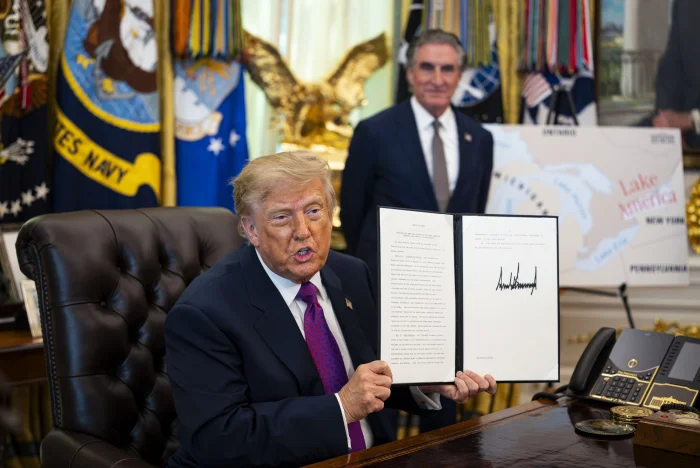
President Donald Trump signs an executive order to rename Lake Ontario as Lake America in the Oval Office of the White House on Thursday. Photo by Al Drago/UPI | License Photo
What does the increasingly brazen US approach to Latin America mean for Venezuela, and what can Haiti’s experience tell us about what may come next?
In Episode 47 of the Venezuelanalysis Podcast, Ricardo Vaz is joined by Jacqueline Luqman of the Black Alliance for Peace and Jake Johnston of the Center for Economic and Policy Research (CEPR).
They discuss the so-called “Donroe Doctrine,” the use of disaster and aid as tools of external control, and the parallels between Haiti’s experience after the 2010 earthquake and the current challenges facing Venezuela. They also look at how US foreign policy is connected to domestic politics, the implications of this new era for Venezuela and the wider region, and how resistance can be built over the longer term.
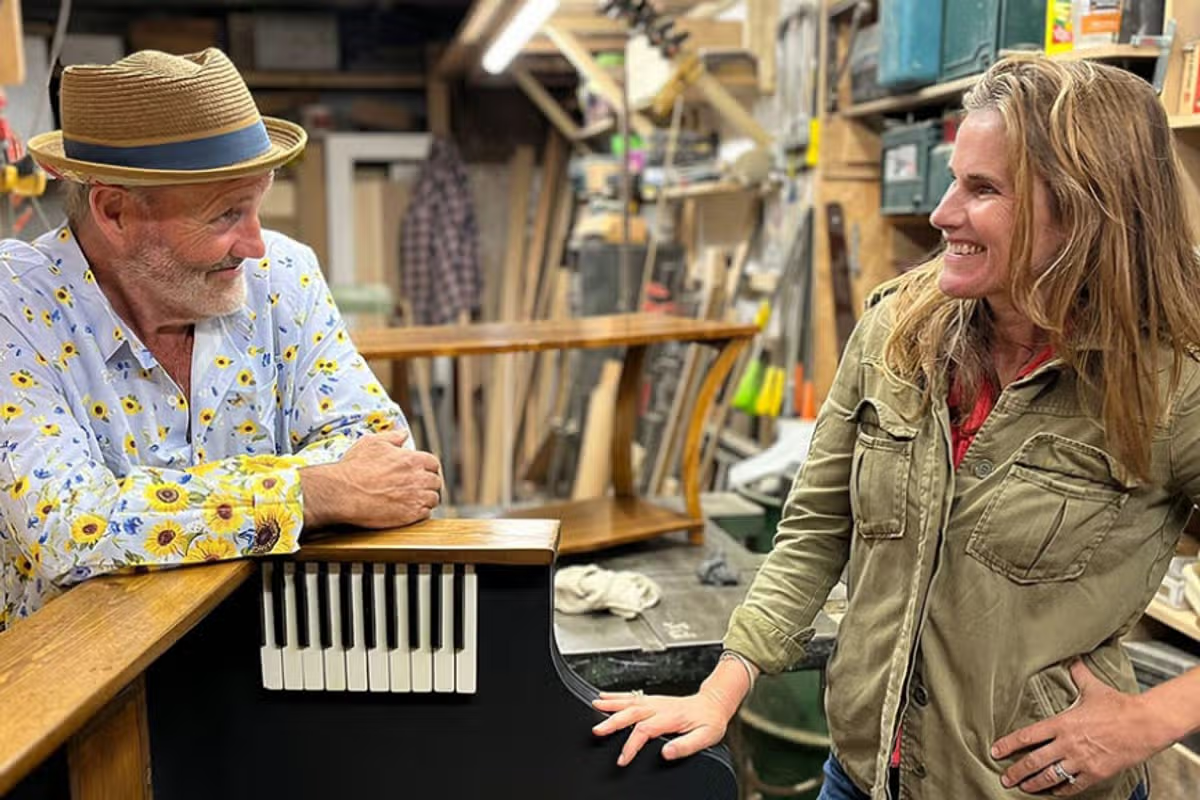
Master woodworker Norman Wilkinson is set to make a surprise return to television today after a lengthy break from the programme.
Sarah Moore revealed that her former co-star Norman will be back on screen when the new series returns on Monday (August 31) afternoon.
Speaking alongside fellow co-star Jacqui Joseph, Sarah was asked about her standout moments from the upcoming series, during which she revealed that Norman’s comeback was one of the things she was most excited about.
She explained that he had been away from the programme for “like eight, nine series”, despite being a firm favourite with viewers.
She said: “I think the standout item was Norman, who was off our screens for like eight, nine series. And he was absolutely the favourite of so many people who watched the series, and we couldn’t really comment on why he wasn’t on it anymore or anything like that.”
Now, however, Norman has returned to the show for a very different kind of project. According to Sarah, he was brought back to carry out an impressive transformation involving an old organ.
“But he came back to do an amazing transformation of an organ, a sort of small church organ,” she explained. Sarah admitted she was delighted to see him back and praised the work he had done on the unusual piece.
“I think it’s just so lovely that he’s back on, he made a great job of it. So I think people would be really pleased to see him.” She went on to describe the finished creation as one of the standout pieces from the new series. Sarah said: “The standout moment was Norman; he did such a solid job.”
The restoration involved transforming a smashed-up 1920s organ into a bespoke writing desk, with Sarah particularly impressed by how timeless the finished item looked.
“It just looks like the kind of furniture that you know in 200 years’ time people will be using it,” she said. “And it was a beautiful desk made out of an organ, and people won’t even know that it was ever anything else. It’s just such a great makeover.”
Norman’s return is set to be one of the talking points of the new series, particularly after such a long absence from the programme. He will appear in the first episode of the 19th series.
Money for Nothing broadcasts Monday – Thursday at 2pm on BBC One and is available to watch on BBC iPlayer.
A Russian attack on Kyiv overnight destroyed a printing plant that was in the process of turning out 1.3 million school text books, about 10% of the total required, just before the start of the academic school year which gets underway on Tuesday. File photo by Maxym Marusenko/EPA
Aug. 31 (UPI) — A Russian attack on Kyiv overnight destroyed a printing plant that was in the process of turning out 1.3 million school text books, about 10% of the total required, ahead of the start of the academic school year on Tuesday.
The blast and resulting blaze damaged the Konvi Group faciliity and printing presses beyond repair and reduced a large stockpile of books to ashes while printed material that was not burned was water damaged or otherwise rendered unusable.
It was the second strike on the company’s facilities in six weeks with Konvi Commercial Director Viktoriia Haida telling the BBC that it was part of a concerted Russian effort targeting Ukraine‘s national identity.
“I believe it is deliberate on the part of the Russian Federation. Over the past two months, some of the largest publishing houses have lost their logistics warehouses, where very large quantities of books were stored. The Russians are also destroying printing houses in an attempt to erase Ukraine as a nation. But frankly they will not succeed,” said Haida.
A ballistic missile strike on another of Konvi’s plants on July 19 destroyed production workshops, printing and binding equipment, office premises and nearly 250,000 school books and and destroyed the materials for print-runs for 350,000 books for more than a dozen Ukrainian educational publishers.
A drone attack on a Nova Poshta fulfilment and sorting center on Friday in Sviatopetrivske outside Kyiv destroyed more than 60,000 books being stored at the facility from Ukrainian publishers and retailers including Vivat, Osnovy, Readeat and Book.ua.
The strike on the privately-held mail and logistics provider was one of more than 30 similar attacks over the past three months that have destroyed at least 13 million books, equivalent to the industry’s entire 2025 output, according to the Ukrainian Publishing Association.
The two largest single attacks were the Aug. 1 destruction of the automated logistics center of the Ukrainian publishing corporation RNK-Ranok in Kharkiv in which about 8 million books were lost, including 600,000 school textbooks for the new school year, and a strike on the central warehouse of the logistics partner of BookChef Publishing House in which about 800,000 books were destroyed on July 2.
In an earlier open letter Ukraine Publishing Association President Artem Bidenko urged Ukrainian President Volodymyr Zelensky to call an urgent meeting of his National Security and Defense Council warning that the survival of the sector was at stake.
He called for “urgent measures’ from the cabinet amid what he said were systematic Russian attacks on printing houses, warehouses and bookstores that had caused losses of at least $27 million, including compensation and the inclusion of goods in circulation in war risk insurance.
Martin Luther King Jr. delivers his famed “I Have a Dream” speech from the steps of the Lincoln Memorial in Washington on August 28, 1963. The speech galvanized the nation’s civil rights movements and led to the passage of the 1964 Civil Rights Act, the 1965 Voting Rights Act and the 1968 Fair Housing Act. File photo by UPI | License Photo