CAROLINE Quentin has revealed she may never buy another home after selling her sprawling six-bedroom farmhouse, art collection and jewellery.
The Men Behaving Badly actress, 66, has deliberately stripped back her lifestyle after admitting her huge Devon property and its grounds had become “a bit too much”.
Caroline Quentin has revealed she may never buy another homeCredit: ShutterstockThe actress sold her sprawling six-bedroom Devon farmhouseCredit: Shutterstock
She and husband Sam Farmer now rent a smaller home in Somerset, with Caroline saying they are perfectly happy to remain tenants.
Speaking to Saga, she said: “We’ve been in Somerset for just over a year, with a more manageable garden. We’re really happy. I don’t think we’ll buy again.”
Sign up for the Showbiz newsletter
Thank you!
Opening up about her former property, she added: “It had a two-acre vegetable garden, a two-acre orchard and a pool. The veg alone was exhausting.”
Caroline also revealed she auctioned off her art collection and jewellery after deciding possessions were no longer important to her.
Caroline and Sam married in 2006 and share two grown-up childrenCredit: Can NguyenCaroline is best known for playing Dorothy in Men Behaving BadlyCredit: Getty
She said: “Possessions aren’t important to me any more. I got rid of a lot of things two years ago. I took them to auction and sold them.
“I had quite a big art collection and a lot of jewellery, and I sold it all.
“Now we live in a rented house and I don’t have much stuff. That was very deliberate.”
It marks a change of heart for the actress, who previously said she and Sam hoped to buy a smaller cottage and create a new garden.
Speaking to Gardens Illustrated in February 2024, she said: “My big beautiful garden in Devon came with a big house and it was all getting a bit too much for me.
“My husband Sam and I are renting a lovely cottage in Somerset and are looking for a cottage nearby where I can start a new garden and a new gardening adventure.”
Weekly insights and analysis on the latest developments in military technology, strategy, and foreign policy.
For about a month, the United States had refrained from attacking Iranian targets as the Trump administration turned toward economic warfare against the Islamic Republic. However, that changed last night when U.S. Central Command (CENTCOM) struck what it said were Iranian rocket launchers preparing to fire naval mines into the Strait of Hormuz. The problem is that mine-deploying rockets are not a common capability, so much so that the statement seemed bizarre at first glance. But it just turns out that Iran does claim to have such a system and that system would have a glaring application in the current state of play of the conflict. In fact, it would be absolutely critical to do exactly what CENTCOM did, blowing them up prior to launching, because if they didn’t, the final and very fragile energy lifeline between the Persian Gulf and the world could be severed at the worst possible time.
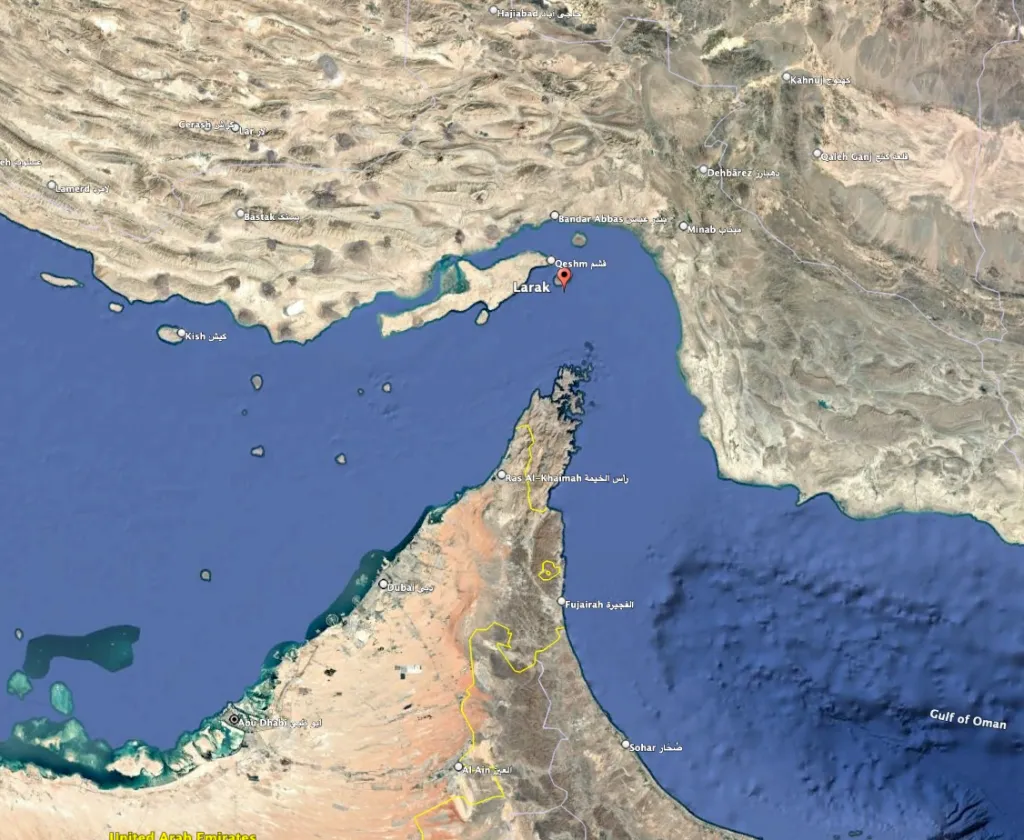
“I can confirm that earlier today U.S. forces struck two Iranian launchers on Larak Island,” Navy Capt. Tim Hawkins, CENTCOM’s spokesman, told us Sunday evening. “Islamic Revolutionary Guard Corps forces were observed preparing to launch rockets with sea mines into the Strait of Hormuz.”
Larak Island. (Google Earth)
The U.S. strikes against the launchers on Sunday spurred Iran to respond with ballistic missile attacks on a Jordanian air base housing U.S. troops. Jordanian officials said all eight missiles were intercepted, and no casualties or damage was inflicted.
Jordan’s @ArmedForcesJO say air defense systems intercepted eight missiles that entered the Kingdom’s airspace early Monday.
The military said the missiles were destroyed before posing a threat to civilians or property.
📍 Details:
🔹 A…
— Dana Zureikat Daoud دانا زريقات (@DanaZkat) August 31, 2026
Hawkins did not specify what exact type of rocket launcher was struck or whether this was the first time CENTCOM had seen Iran use this type of system to launch sea mines.
Though CENTCOM won’t comment on what kind of system was attacked, Iran did tout just this kind of a system last year with exactly the kind of range needed to be a huge problem for the U.S. and its allies. This system uses a variant of the Fajr-5 rocket that is converted with a sea mine warhead.
You can see a video of that system below.
Video of the Iranian rocket deployed naval mine system which is claimed to be able to deploy hundreds of mines in the sea from the coast in an hour. pic.twitter.com/ba897On0nV
The clip shows the rockets being fired from a truck-mounted multiple launch rocket system (MLRS). The video later cuts to nose cone-shaped mines that appear to float on the surface above the spent missile body, however, little is known about the Fajr-5 sea mine warhead conversion process that allows them to be delivered by rocket.
We also don’t know the full extent to which Iran has developed and/or fielded this particular capability, or whether it has other options for similarly deploying naval mines by rocket. Neither Behnam Ben Taleblu, a senior fellow at the Foundation for Defense of Democracies (FDD) think tank, nor the Ambrey maritime security firm has seen any indication that Tehran has used an MLRS to launch sea mines in the past.
At the same time, “the Fajr-5 is an Iranian calling card, a 333mm caliber rocket that can reportedly travel 75 km carrying between an estimated 90 to 170 kg warhead, depending on the payload,” Taleblu, an expert on Iranian weapons systems, told TWZ.
The Fajr-5 is an established design that traces its roots back to the 1990s and has been evolving since then. “The Fajr class was initially designed as unguided artillery rockets, though Iran claims to have developed a guided version,” Taleblu added.
A Fajr-5 rocket and launcher. (U.S. Army)
In general terms, being able to seed naval mines via artillery rockets would offer several advantages for Iran, most immediately by offering an alternative to traditional maritime mine-laying platforms. The destruction of Iran’s naval forces was a top stated objective for the U.S. military during the opening phases of the conflict earlier this year. Iranian vessels, including ones capable of laying mines, were heavily targeted. Still, Iran has retained a large number of its smaller boats that can be used for seeding minefields.
Regardless of what boats they have left, mining the area that actually matters most would be impossible to do as any vessel approaching the southern coast of the Strait of Hormuz would be destroyed. It’s through these tight and complex littorals that a reduced flow of commercial vessels are still traveling, under the kinetic umbrella of the U.S. and its Gulf state allies. The Fajr-5, fired from Iranian controlled islands in the strait, has the range to land in these waterways, seeding mines without risking any boat crews or other platforms. If the rocket-delivered mines splash down, the de-mining process would have to begin, which can be arduous and last weeks, potentially shutting down all shipping.
With that in mind, Iran’s weapon is remarkably relevant to the situation, assuming it works. But even if it doesn’t, it could still pose a risk to mariners even if its efficacy is questionable.
Furthermore, being able to turn any launcher for Fajr-5s (and/or potentially ones for other types of artillery rockets) into a naval mine layer rather than having to rely on specialized systems would be a boon unto itself. Artillery rockets and launchers are something Iran had deep stockpiles of before the war with the United States and Israel started earlier this year. How many naval mine rockets Iran might have, and whether it might be possible to convert existing types to that configuration, are open questions.
Using a road-mobile launcher would also give Iranians a ‘shoot-and-scoot’ option for deploying naval mines where the launch could be exposed only for a short period of time. This, in turn, would create additional targeting challenges for U.S. forces. It is possible that, as it does elsewhere, Iran has constructed tunnels under Larak Island to hide these systems, as well.
A Fajr-5 launcher. (U.S. Army)
Overall, the “deployment of naval mines by missile significantly speeds up the deployment process, improves the ability to penetrate airspace, and increases the standoff distance between the minelayer and the field, making it the least risky minelaying method,” a piece published by the Center for International Maritime Security (CIMSEC) think tank last year, which also highlighted Iran’s apparent demonstration of the Fajr-5-based capability, noted.
While the Fajr-5’s estimated payload capacity is “light compared to U.S. or Chinese naval mines,” the mines the rockets could deliver “are still heavier than diver-delivered limpet mines and could conceivably disable a ship if struck by enough mines from the field,” the piece added. “Most importantly, this field could be delivered rapidly and with little warning. Even though the explosive capacity of this mine individually is small, the psychological impact from inflicting minor damage on a small number of merchants could still be enough to force shipping companies to avoid the area.”
“Though it’s a bit unconventional, using a rocket launcher again signals that the regime is sensitive to cost and risk, and is trying to deploy mines in a way that doesn’t put as much personnel at risk as by dropping them overboard,” Taleblu posited. “It was reported in the military exercise over a year ago that the regime had used an MLRS system like the Fajr to deploy these, but I haven’t seen significant video confirmation of this most recent round.”
With all this in mind, the point about “psychological impact” mentioned in the CIMSEC piece could be particularly relevant in this case. By launching the attacks on Larak Island, CENTCOM has in a way given credence to Iran having a real capability to launch mines via rocket into the Strait of Hormuz. That threat by itself could be enough to cause commercial ship crews, their corporate operators, and insurance companies to think twice about attempted transits.
This is exactly the issue that President Trump, among others, has repeatedly sought to downplay, including multiple times just within the past week.
“We’re taking them in,” Trump told Glenn Beck last week. “The mines are gone. You probably saw that, we put it out yesterday, all the mines. We got rid of the mines. But the strait, it’s functioning, it’s a functioning strait. Uh, yes, every once in a while, there’ll be a drone or a rocket or something shot, but it is a very functioning strait.”
President Trump Exclusive: Dolly Parton, Canada, Iran and Rise of Sharia Law | Hour 1 | 8/26/26
“Last week, CENTCOM completed clearing sea mines from the strait’s international shipping routes,” Hawkins, the CENTCOM spokesman, told us yesterday. “U.S. forces are monitoring the area closely and remain prepared to protect the free flow of commerce through this essential waterway.”
“The U.S. military has achieved a major milestone in the Strait of Hormuz,” Adm. Brad Cooper, CENTCOM’s commander, stated last week. “We have successfully cleared sea mines in the strait’s international shipping lanes that were laid months ago by Iran’s Islamic Revolutionary Guard Corps. Internationally recognized transit routes in the strait are free of Iranian sea mines, thanks to the incredible work of the U.S. military.”
CENTCOM pushed back Monday on Iranian claims that an oil tanker was hit by mines in the command’s preferred transit route.
“CLAIM: Iran’s Islamic Revolutionary Guard Corps (IRGC) claims that a supertanker passing through the southern route of the Strait of Hormuz struck two mines and was brought to a complete stop. This is FALSE,” the command stated on X. “FACT: No ships have hit mines in the Strait of Hormuz. This is yet another IRGC attempt to intimidate regional commercial shipping through disinformation.”
🚫 CLAIM: Iran’s Islamic Revolutionary Guard Corps (IRGC) claims that a supertanker passing through the southern route of the Strait of Hormuz struck two mines and was brought to a complete stop. This is FALSE.
Still, the Joint Maritime Information Center (JMIC) — a group of international navies which provides timely information to the shipping industry — sees mines as an ongoing risk in the strait.
“Commercial traffic through the Strait of Hormuz remained at reduced levels, with a modest uptick from recent lows, still far below baseline,” JMIC stated on Sunday. “Independent tracking data indicated suppression with single-digit numbers transiting in both directions. There remained a continued risk of drifting or uncharted mines in and near the TSS, with mine danger areas still active.”
The combination of ongoing dangers in the strait continues to result in reduced traffic, the global trade intelligence firm Kpler noted on X.
“Vessel traffic through the Strait of Hormuz and Bab el-Mandeb declined on 25 August, while the IMO [International Maritime Organization] verified no additional attacks,” Kpler added. “Five vessels crossed the Strait of Hormuz, down 28.6% day on day from seven. All five used the Iranian Unilateral Scheme, with two entering the Middle East Gulf and three exiting. Four were classified as shadow vessels and one as sanctioned.”
Strait crossings remain subdued
Vessel traffic through the Strait of Hormuz and Bab el-Mandeb declined on 25 August, while the IMO verified no additional attacks. Five vessels crossed the Strait of Hormuz, down 28.6% day on day from seven. All five used the Iranian Unilateral… pic.twitter.com/BI9cFAaJRy
The latest flare-up in fighting came after the Trump administration last week unleashed the threat of harsh new sanctions to further isolate Iran. However, that failed to move Tehran to change its position on maintaining control over the Strait of Hormuz, its nuclear ambitions or support for proxies like the Houthis in Yemen and Hezbollah in Lebanon.
Monday morning, Trump told Fox News reporter Trey Yingst that he was going to retaliate for Iran launching ballistic missiles last night after the U.S. strike on Larak Island.
“We’re going to hit them hard,” Trump told the network. “There will be a response.”
President Trump says the United States will respond to the Iranian missile attack on U.S. forces overnight.
“We’re going to hit them hard,” President Trump told Fox News. “There will be a response.” pic.twitter.com/sjLOLSxm4g
Trump and his senior aides “have been consideringwaging limited strikes in the Strait of Hormuzto prevent Iran from reconstituting its radar and missile capabilitiesto attack ships,” Axios reported, according to three U.S. officials.
“One U.S. official said the idea behind the plan is to reduce the risk of Iranian attacks on oil tankers, U.S. Navy ships and Air Force aircraft — to ‘mow the lawn,’ as this person put it.”
It is unclear if Iran has used rockets to mine the strait or how well this system works if it did. However, the fact the U.S. resumed hostilities just to attack sea-mine-launching rocket systems shows the level of concern they engendered and the options Iran may still have to threaten the strait.
A 17-year-old girl has been indicted in North Carolina on murder and conspiracy charges over her alleged role in livestreaming and distributing footage of the May attack on a San Diego mosque that killed three people.
State lawmakers have approved a series of modest changes intended to bolster California’s film and TV tax credit program.
Among the key revisions, independent filmmakers would be exempted from the $5 million state corporate tax credit cap that was approved earlier this year as part of Gov. Gavin Newsom’s state budget.
Film industry advocates lobbied hard for a carve-out, saying the cap would undercut gains made under the current film and TV tax credit program at a time when Hollywood has been reeling from job losses.
The bill includes other changes intended to help Hollywood, such as allowing companies to carry forward older tax credits for up to 15 years (the old limit was nine) and reducing the discount they are charged when they opt to seek a cash refund on unused credits.
Producers will also be able to collect their refund money more quickly — within two years instead of five.
California offers tax credits of up to 35% on qualified expenses, which can be applied to any tax liabilities the production companies have in the state. The program allocates $750 million annually in film and TV tax breaks.
The budget trailer bill was introduced to the Senate on Friday by Assemblyman Rick Chavez Zbur (D-Los Angeles), chair of the Assembly Democratic Caucus and Senator Ben Allen (D-Santa Monica).
The new cap, issued by Gov. Newsom, would have undermined the “competitiveness” of the current California Film and Television Jobs Program, said the Entertainment Union Coalition, an advocacy group that supports the bill. But with these new modifications, the group — which represents the Directors Guild, SAG-AFTRA, IATSE and more — said the program will be able to continue to “support the fragile recovery of our industry here in California.”
“Most importantly, we want to recognize the major role our members played in today’s success as advocates for their industry in California,” Rebecca Rhine, the coalition’s president, said in a statement. “They sent an unprecedented 450,000 letters to the California legislature, making clear the negative impact that SB 122 [the new cap] would have on their livelihoods, their families, and their communities.”
Over the program’s first full year in its expanded $750-million form, the California Film Commission says it delivered $6.6 billion in direct production spending and $4.3 billion in qualified expenditures, supporting nearly 35,000 cast and crew jobs across 6,630 filming days statewide.
The bill cleared the Assembly floor by a vote of 68-2, with the Senate approving its companion measure by a vote of 32 in favor, 8 against the same day. It now awaits Gov. Newsom’s signature.
“It’s a good day that we took steps to strengthen the program and while we have to do more next year, this was a crucial first step,” Zbur said in an interview.
Zbur said he believes everyone in the state’s film and TV tax credit program should have been exempted from the corporate tax credit cap and he plans to look at that within the context of next year’s budget.
“There were budget implications to doing that, so we really did all the things that are viable to do in this legislative session,” Zbur said.
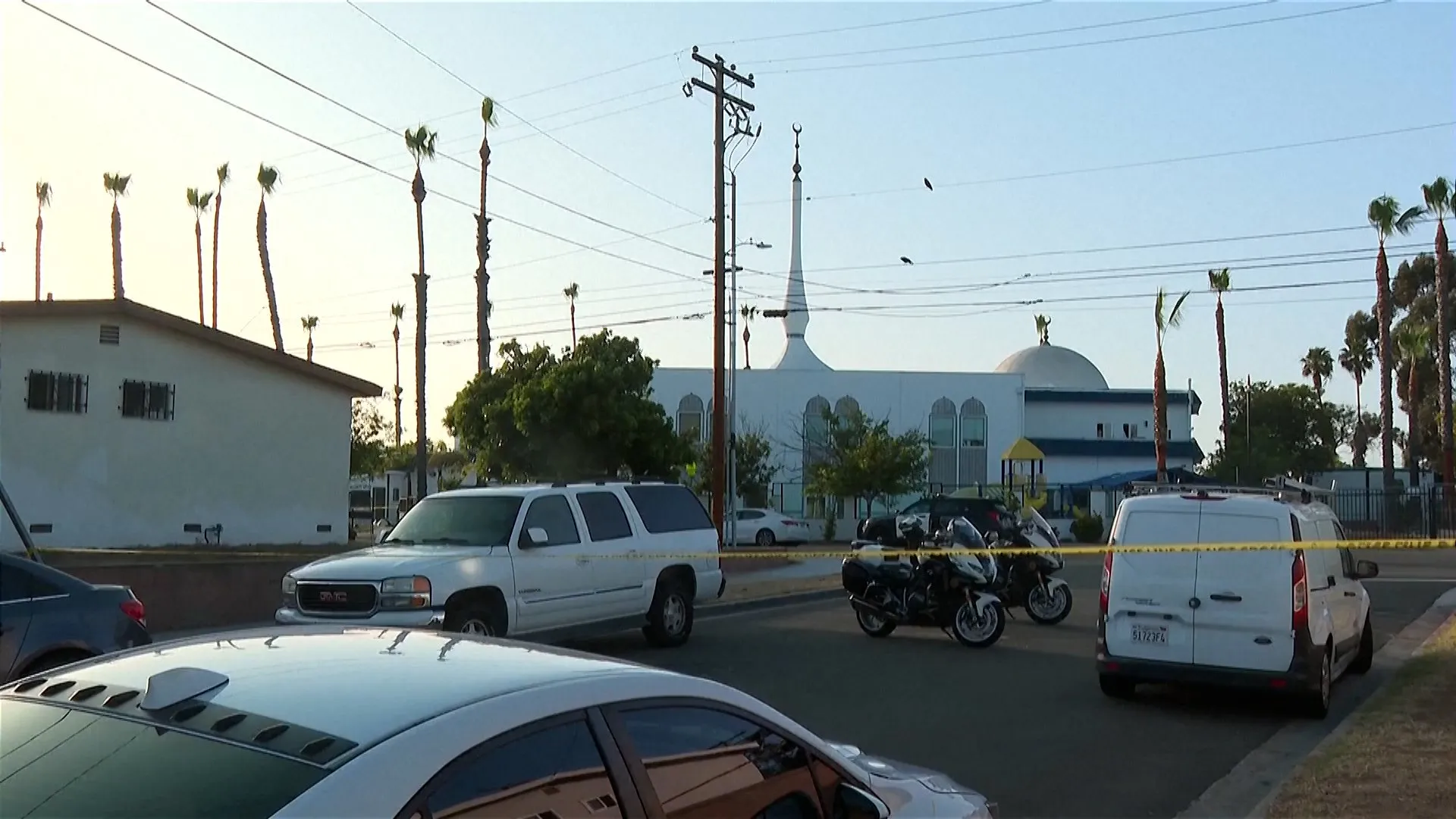
Sept. 1 (UPI) — A North Carolina grand jury has indicted a 17-year-old girl as an adult on charges of murder stemming from allegations that she aided and abetted two other teens who killed three people in a hate-filled attack on a San Diego mosque before taking their own lives.
Caleb Vazquez, 18, and Cain Clark, 17, are alleged to have shot and killed three people, including a security guard, at the Islamic Center of San Diego in California on May 18. Their bodies were found dead from apparent self-inflicted gunshots in a car parked near the scene.
On Monday, Forsyth County District Attorney Jim O’Neil told reporters during a press conference that a 17-year-old girl was arrested last week in North Carolina and that a grand jury indicted her on three counts of first-degree murder and one count of conspiracy to commit first-degree murder, on allegations that she livestreamed the attack, disseminated the recording afterward and released the manifesto the attackers authored to justify their crime.
Court documents identified the suspect as 17-year-old Sarah Lindsey Santiago.
“Today’s indictment sends a clear message: physical distance from an attack does not place someone beyond accountability for the role they allegedly played in making it happen,” Special Agent in Charge Mark Remily of the FBI San Diego Field Office said in a statement.
“In today’s threat environment, individuals may believe they can encourage or facilitate acts of violence from hundreds of miles away without facing consequences. This case demonstrates that law enforcement will aggressively investigate those connections and pursue accountability wherever the evidence leads, including when juveniles are involved.”
According to the indictment, she is also alleged to have purchased a “Sonnenrad” patch for Vazquez, which he wore during the attack. According to the advocacy organization Anti-Defamation League, the Sonnenrad, which translates to “Black Sun,” is a symbol associated with White supremacy and was adopted by the Nazis in the 1930s.
The court document states that the conspiracy charge stems from allegations that she, Clark and Vazquez planned to murder worshipers at the Islamic Center of San Diego but also worshipers at Kehilat Ariel Messianic Synagogue, which is also in San Diego, and Black students at an unnamed public high school.
O’Neil, in the press conference, said that aiding-and-abetting charges in North Carolina come with the same penalties as if the accused had perpetrated the crime.
“So, she didn’t have to be in California. She’s in our jurisdiction. And today, a grand jury indicted her and held her responsible for her actions,” he said.
According to police, the shooting occurred at about 11:42 a.m. on May 18.
Shortly before, at about 9:40 a.m. that morning, San Diego police received a call from Clark’s mother reporting her son was suicidal and that several of her weapons and her vehicle were missing. Her son was with a companion, both dressed in camouflage, she said.
San Diego police were working to locate the teens when the first calls of the shooting at the mosque came in.
The suspects parked in the Islamic Center’s parking lot, ran past security and opened fire, hitting 51-year-old Amin Abdullah, who exchanged gunfire, wounding Clark. Abdullah has been heralded as a hero who saved lives by initiating lockdown protocols before dying from his injuries. O’Neil said there were 140 children on the premises at the time of the shooting.
The two suspects entered the building, but then exited through the back door and into the parking lot, where they encountered Mansour Kazhia, 78, and Nadir Awad, 57, whom they shot and killed.
The suspects fled the scene in their vehicle, from which they shot at a gardener who was uninjured, before dying by suicide.
Searches of residences associated with the suspects uncovered more than 30 guns and a crossbow, including rifles, along with ammunition, tactical gear and electronics.
“There exists in our world an underground subculture. It’s an echo chamber of intense hate against different cultures and religions. Cain and Vasquez, by what is contained in their manifesto, seemed to hate everyone, regardless of skin color, politics, religion or ethnicity,” he said.
“And this underground subculture of hate, they listen to each other, they talk to each other in encoded platforms. It radicalizes one another to the point where they carry out these horrific crimes of violence and murder.”
Kuala Lumpur, Malaysia – Smoke from forest and peatland fires burning across Indonesia has pushed air quality in parts of Malaysian Borneo to hazardous levels, triggering a surge in respiratory illness and forcing the cancellation of outdoor Independence Day celebrations.
The smoke – drifting from fires in Kalimantan in the Indonesian portion of the island of Borneo – has settled over the Malaysian state of Sarawak, on the same island, for much of August. It has also reached peninsular Malaysia, Brunei and Singapore.
Recommended Stories
list of 4 itemsend of list
It is the region’s worst haze episode since 2015, when fires in Indonesia exposed tens of millions of people to toxic smoke and caused more than 500,000 people to suffer respiratory ailments.
On Tuesday, six areas in Sarawak recorded hazardous air quality, with readings above 300 on Malaysia’s Air Pollutant Index. Anything above 100 is considered unhealthy. In Kuching, the state capital, the index hit 407, while in Serian, a town close to the Kalimantan border, it hit 408.
Mia Emylia Hassan, 33, a mother of two in Kuching, said the smell of smoke was inescapable.
“The air here is very thick,” she said. “It smells like smoke, and it’s just white all over.” Visibility from her house, she said, had dropped to about a kilometre, or roughly half a mile. “We have not seen blue sky for over a month,” she said.
The haze arrived in early August, shortly after her 10-month-old daughter came home from the hospital after a lung infection. “She’s not healing properly because her lungs are still developing,” Hassan said. “She’s been on medication this whole month, and she has been coughing and vomiting.”
Twice, the family has had to rush the infant back to the emergency room because she could not breathe.
“It’s a mini heart attack for us every time,” Hassan said.
Asthma cases surge
Malaysia’s Ministry of Health has reported a sharp rise in illness nationwide. During the week of August 23 to 29, asthma cases climbed to 1,811, up from 219 the previous week, the ministry said on Saturday, while conjunctivitis cases also rose to 720, from 146.
In peninsular Malaysia, Karen-Michaela Tan, an asthma patient who lives near the capital, Kuala Lumpur, said that a week after the haze thickened, she was “wheezing audibly” and “breathless when climbing stairs”. The 52-year-old said she needed two nebuliser treatments back to back to stop the wheezing, along with a heavy dose of steroids.
“Doctors are erring on the side of caution when it comes to asthma patients, choosing to up dosages rather than risk a patient being hospitalised for shortness of breath,” she said.
Her house is sealed, and two purifiers run continuously. Still, “I battle throat scratchiness and nasal dryness even with these measures”, she said.
The Association of Southeast Asian Nations (ASEAN), a regional bloc, has activated a Level 3 transboundary haze alert – its highest – for the southern part of the region. The alert signals a high risk of severe cross-border haze. ASEAN cited an increase in fire hotspots and prolonged dry weather, fuelled by an intensifying El Nino weather pattern.
The toxic smoke has forced Sarawak to cancel its outdoor Independence Day celebrations on Monday, and officials warned that worse restrictions could follow. Any area where readings cross 500 will be placed under a local emergency, and all public and private offices will be closed, the deputy premier, Douglas Uggah Embas, told reporters. “Only essential services will be allowed to operate,” he added.
In Kuala Lumpur, where skies were grey for most of the month, the haze thinned enough to reveal blue sky for the first time in a week, just as the Independence Day parade got under way early in the morning.
Schools, too, have been hit hard. Under Ministry of Education rules, outdoor activities are suspended when the index reaches 100, and schools must close at 200. On August 20 and 21, nearly 600 schools in and around Kuching shut, affecting some 200,000 primary and secondary students. And on August 28, 30 more schools in Sarawak closed, keeping more than 4,000 children at home.
This week, schools are closed for the Independence Day holiday.
Youth sport has been affected, too. Yap Kai Jinn, 31, a coach at Square One Football, a Kuala Lumpur academy, said the club had cancelled all training sessions and matches since last week.
“Along with our parents, we decided that it is not healthy; it is not safe for our players to play under these conditions,” he said. “For now, we are looking for an enclosed area to do sessions, and for outdoor, we have to wait and hope that the weather gets better.”
Fires surge in West Kalimantan
The toll of the haze has been far heavier in Indonesia.
The country’s deputy health minister, Dante Saksono Harbuwono, told reporters on Monday that some 13,500 people were treated for respiratory infections in July and August, while about 5.5 million people on the islands of Borneo and Sumatra have been directly exposed to smoke.
Borneo is the world’s third-largest island and is divided between Indonesia, which controls the southern two-thirds as Kalimantan; Malaysia, whose states of Sarawak and Sabah run along the north; as well as the sultanate of Brunei.
According to the Indonesian government, fires between January and July burned more than 200,000 hectares (about 494,000 acres), an area three times the size of Indonesia’s capital, Jakarta, across Borneo and Sumatra. Nearly 95,000 hectares (about 235,000 acres) burned in July alone.
And despite efforts to control the blazes, the fires continue to surge in parts of Indonesian Borneo.
Hotspots in West Kalimantan nearly doubled on Monday, rising by 3,553 to 7,377, while the number of active fires rose by 88 to 104, and visibility fell below a kilometre, said Berton Panjaitan, an official at Indonesia’s National Disaster Mitigation Agency. In Central Kalimantan, hotspots declined by 147 to 5,244, while fire spots increased by 16 to 72, he said.
Cities in Kalimantan have recorded hazardous air, too.
Readings in Palangkaraya in Central Kalimantan reached 780 on Monday on the air quality index used by IQAir, a Swiss company that monitors pollution data. Pontianak in West Kalimantan reached 593.
The fires are largely set on purpose, analysts say, with plantation companies and smallholders alike burning rainforest and carbon-rich peatland to clear ground for palm oil, farming, and pulp and paper production. The practice is illegal, and Indonesian police said last week that they had arrested 72 people suspected of setting recent fires.
Super El Nino
Researchers warned people in Southeast Asia to brace for a long fire season.
El Nino – the naturally occurring pattern that shifts winds, air pressure and rainfall worldwide – appears headed for “super” strength, said Helena Varkkey, a specialist on transboundary haze at Universiti Malaya.
In Southeast Asia, she said, “the intensifying El Nino means hotter and drier conditions”, so “any fires that happen will have a bigger and longer regional impact”.
Jayaprakash Muralitharan, a Malaysian atmospheric scientist, said the worst was still ahead.
Haze conditions are “going to be severe and longer, because the hot weather started much earlier last year”, he said. “El Nino came in and made conditions drier. Now you have the extreme drying of the peatland.”
And peat can make fires stubborn, he said. What looks extinguished on the surface can smoulder underground for weeks and flare up again, and nothing short of sustained rain will soak the soil enough to put it out.
Until the rains arrive, Muralitharan said, there is little to be done.
“Human intervention now is only a temporary solution. It would go on until end of September or October when the rain comes in. I hope that rain comes in by then.”
DOLLY Parton has been laid to rest in a private funeral attended by her family.
The country music great was buried next to husband Carl Dean on Friday at the Woodlawn Memorial Park in Nashville, Tennessee.
Country legend Dolly Parton has been laid to rest in a private funeral attended by her familyCredit: GettyDolly was buried next to husband Carl Dean at Woodlawn Memorial Park in Nashville, Tennessee, on FridayCredit: Refer to Source
Their shared memorial bears both names, an image of two interlocking wedding rings, and the inscription “Married May 30, 1966”.
The send-off was “very simple” and what “Dolly would have wanted”, sources said.
An obituary posted by Woodlawn Memorial Park remembered “her timeless music and prolific songwriting, but also her wit, warmth, and kindness that made us all feel like family”.
Russian Finance Minister Anton Siluanov has made a surprise appearance at United States-hosted G20 finance talks in North Carolina, sparking frustration and dismay among European ministers and officials.
Siluanov’s appearance at the talks in Asheville on Monday marks the first time the minister, who was appointed in 2011, has attended a G20 meeting in person since Moscow launched its full-scale invasion of Ukraine in 2022.
Recommended Stories
list of 3 itemsend of list
He held a bilateral meeting with US Treasury Secretary Scott Bessent, with Russia’s Ministry of Finance saying the two men discussed financial cooperation within the G20 framework.
A US official said the meeting focused on US President Donald Trump’s peace plan for Ukraine.
Asked about the invitation to Siluanov, Trump told reporters: “We like getting along with everybody. One of the reasons I’m so successful, I get along with everybody.”
European officials, however, criticised the move.
Polish Finance Minister Andrzej Domanski said he was unhappy to see Moscow represented, although he recognised the right of G20 hosts to invite guests.
“We do not trust Russia. They lie constantly, and you need to be really, really cautious while discussing with them,” he told the Reuters news agency, stressing that Russia was the aggressor in its conflict with Ukraine.
“So for me, it would be very difficult to have any kind of conversation with Russia.”
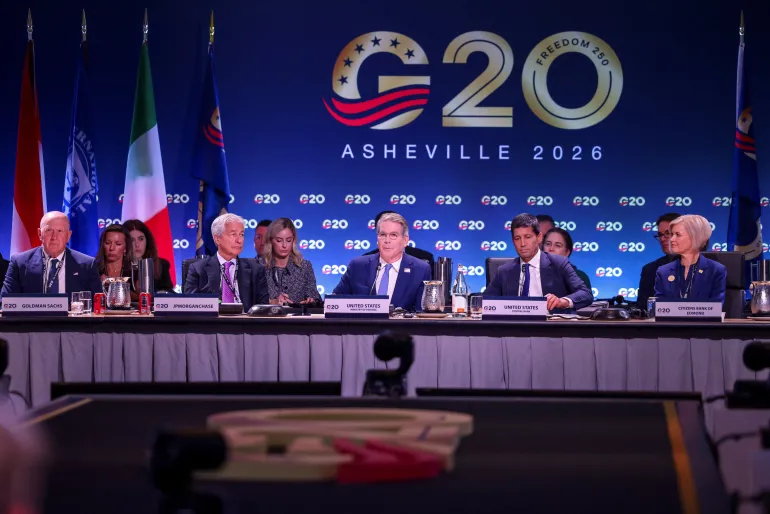
US Treasury Secretary Scott Bessent, Federal Reserve Chair Kevin Warsh, CEO of JPMorgan Chase Jamie Dimon and CEO of Goldman Sachs David M Solomon attend a plenary session as finance ministers and central bank governors from G20 countries meet in Asheville [Sam Wolfe/Reuters]
‘Troubling’ signal
German Finance Minister Lars Klingbeil said the US’s decision to welcome Siluanov sent a “signal I find troubling”.
He said he told Siluanov during a plenary session that Moscow had to end the war and “that we clearly support Ukraine”.
He also said Europe was preparing a further package of sanctions against Russia and hoped for close cooperation with Washington on the measures.
European ministers and central bankers also opposed appearing with Siluanov in the traditional G20 “family photo”, European officials said. The photograph was ultimately taken without the Russian minister.
Klingbeil said European officials, including European Central Bank President Christine Lagarde, had discussed Russia’s involvement on Sunday and agreed that maintaining an avenue for dialogue could allow them to deliver a frank message to Moscow.
“However, the mere fact that the Russian finance minister is back – after, I believe, four G20 meetings without Russian participation – indicates an attempt at normalisation, and that makes it all the more important for us to push back,” he said.
Siluanov’s appearance marked a sharp contrast with the G20 meeting in Washington, DC, in April 2022, when his virtual participation prompted officials from Canada, the United Kingdom, the US, and the European Central Bank to walk out.
White House defends talks with Russia
Asked about Siluanov’s attendance, White House spokesman Kush Desai told the AFP news agency that the Trump administration had been working with Russia to push for a deal that “would stop the endless bloodshed that the president has really condemned”.
“The president and the administration will never shy away from talking with the folks we need to talk to, to further that,” he said. “That’s what we’re working on here at the G20.”
Separately, Reuters and AFP, citing sources familiar with the Washington-Moscow talks, said Bessent had made clear that the US would not provide Russia with economic relief until war in Ukraine was over.
Trump has pushed Moscow and Kyiv to reach a deal to halt the fighting, but an initial 28-point plan that largely adhered to Russia’s demands was criticised by Ukraine and European governments.
The US, which currently holds the rotating G20 presidency, did not invite South Africa, last year’s G20 host, to the gathering. Poland, which is not a permanent G20 member, was invited.
Certain reporters from major US newsrooms, including The New York Times and Bloomberg News, were not granted credentials to cover the gathering.
The decision was condemned by the National Press Club, which said that “no administration should be allowed to handpick the press corps that scrutinizes it”.
The two-day meeting comes as global debt levels have reached a record of nearly $353 trillion and the global economy faces an energy shock triggered by the US-Israel war on Iran. The talks also come amid rising tensions over China’s large trade surplus and uncertainty over the effects of a surge in artificial intelligence investment.
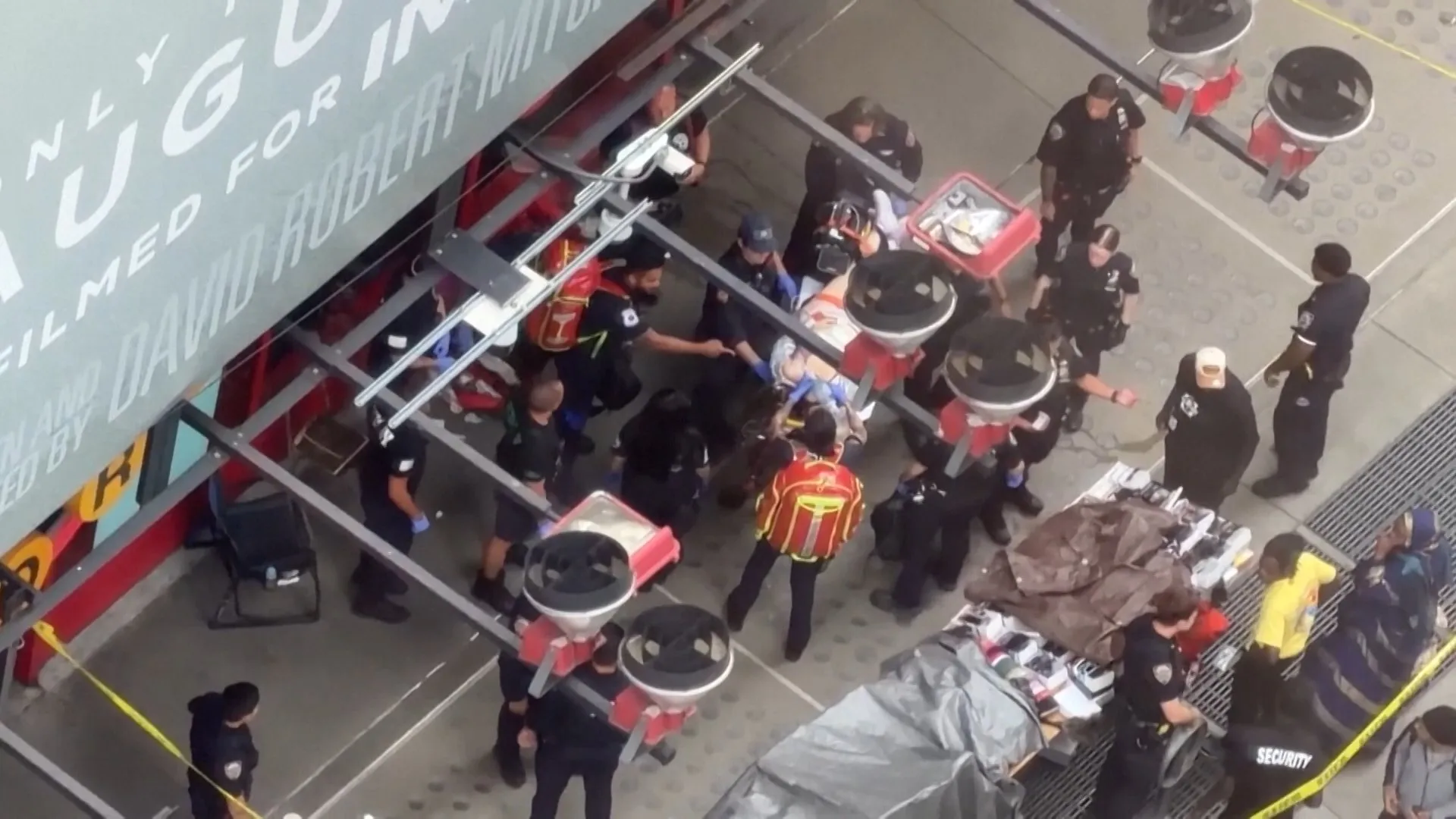
A woman has been shot dead by police in New York’s iconic Times Square. Police say the woman, who was armed with two large knives, had stabbed two people, one fatally. A warning this video could distress some viewers.
Loose Women star Grace Keeling says she no longer wants to suffer in silence over what happened to her a decade ago – and hopes it helps others to know they are ‘not alone’
Grace has written a book about her life experiences so far(Image: JAMES RUDLAND)
GK Barry says her decision to speak out on the sexual assaults she experienced as a teen was partly motivated by anger.
When the TV and social media star, real name Grace Keeling, was raped as a 17-year-old during her college work experience placement, she vowed to never tell a soul.
But a decade on, she has written a book about her many and varied life experiences in which she lays out what happened in the hope it will help other young women. And she told the Mirror that it “took a lot” for her to revisit the devastating ordeal.
“He was so confident about what he did, I’m sure I wasn’t the first and won’t have been the last, and maybe I could have stopped him from doing this to another girl,” she explains in the book. “But although I wish now I’d reported it at the time, I also feel really strongly that it’s not women’s f***ing responsibility to stop men raping us.”
Her attacker was her line manager for the week, who was 10 years her senior and had offered to give her a lift to work on her second day. But instead of taking her to the office, he drove her to a deserted park and demanded a sex act. “I didn’t know what else I could do except go along with what he was telling me – resisting or fighting back felt like it might make things worse,” she said. Horribly aware that she needed to finish the work experience in order to pass her college course and get to university, she felt she had to comply. “There was never a moment in my mind where I thought I could say no to what was happening,” she says. “When you’re 17 and scared as f***, thinking logically isn’t an option.”
There was worse to come. On her last day with the company, he took her into a side room with no cameras and asked her to remove her white jeans. “And then he rapes me,” she writes, admitting it took her a many years to accept that’s what it was. Agonisingly, she confesses that one of the reasons she vowed to never speak about what happened was “in case someone confirms my biggest fear that I was to blame”.
But a year on from the assaults, Grace found the courage to tell a teacher after learning that another girl from college was about to do work experience at the same company.
When she finally spoke to the police, she was told by a female officer that, because there was no evidence, it would be her word against his and she was highly unlikely to get a conviction. “At no point did the police officer say to me that what he’d done was wrong,” she reports, saying she was offered no support or counselling at any point.
With statistics showing that 1 in 4 women over 16 experience some form of sexual assault, and six out of seven rapes against women are carried out by someone they know, Grace wishes she’d known then about support group Rape Crisis. “I think people would be more confident coming forward and reporting assaults if we knew that people were on our side and willing to believe us.”
As she lays out what happened in her new book, the podcaster and Loose Women regular, 27, told the Mirror that the secrecy around these sorts of issues needs to stop. “I think it’s something that people don’t speak about. It’s something always kept very hidden. And I don’t think we should be ashamed about it.
“I haven’t put it in just for the sake of it, it took a lot for me to even speak about it,” she says quietly. “I wish I knew that you can say no, that rape can happen whether it’s someone you’re friends with, or close to, or a boss, that it comes in many forms.” And for anyone who has suffered anything similar, she says: “I would like them to know that it wasn’t their fault, because I spent a lot of years thinking it was.”
Grace, who grew up in Newmarket, Suffolk, and is a judge this year on The Mirror’s Pride of Britain Awards, is hoping her guide to surviving and thriving will also provide plenty of laughs. “The majority of it is just hilarious stuff that has happened to me,” she says. “I think people reading it can maybe learn from everything that I’ve done wrong.”
The book shows her devotion to footballer girlfriend of two years Ella Rutherford, an attacking midfielder for Millwall. Ella, 26, was her first relationship with a woman and it’s clear she thinks they will be together forever. Calling her the “undisputed love of my life”, Grace says she plans to eventually settle with Ella and their dogs on a farm.
Grace’s mother Loretta, and step-dad Andrew, have yet to learn about the many scrapes the TikTok star has had over the years. “My mum’s read the first couple of pages, but she has no idea what’s coming, God bless her,” she says. “I think maybe I won’t be able to look my mum and dad in the eye for a couple of months.”
Tunis, Tunisia – More than 15 years after Tunisians rose up to topple longtime President Zine El Abidine Ben Ali, familiar grievances are again being heard on the streets from north to south.
A slogan from the 2011 revolution is being heard again: “employment, freedom and national dignity”.
This time, those demands are being fuelled by water cuts, electricity outages, rising prices, medicine shortages and a struggle to make ends meet, problems increasingly affecting Tunisians across social and economic divides.
But the anger is unfolding in a very different political environment.
The discontent comes as Tunisia marks five years since President Kais Saied suspended parliament, dismissed the government and began ruling by decree, moves he described as necessary to end years of political paralysis and corruption.
Many Tunisians welcomed the move at the time, frustrated with a political system that had failed to address the country’s economic problems after the 2011 revolution.
Five years later, many of those grievances remain while the political space for challenging those in power has narrowed sharply.
Old demands, new anger
The decade that followed Ben Ali’s ouster brought competitive elections and greater space for political parties and civil society, but it also brought frequent government changes, political disputes and little improvement in the lives of many Tunisians.
Unemployment remained high, particularly among young people and in the country’s interior. Public services remained weak while rising prices continued to put pressure on household incomes. By the end of 2020, unemployment stood at 17.4 percent, according to the World Bank.
Tunisia also faced serious security threats, including attacks and political assassinations, adding to economic pressures and hitting sectors such as tourism.
Those frustrations helped Saied build support as an outsider promising to break with the traditional political establishment and what many Tunisians saw as a dysfunctional system.
On July 25, 2021, Saied suspended the Assembly of the Representatives of the People, dismissed Prime Minister Hichem Mechichi and lifted parliamentary immunity. He said he was acting to address a national crisis.
His opponents described the move as a coup.
Saied later dissolved parliament and oversaw the adoption of a new constitution in 2022 that significantly strengthened presidential powers.
Since then, opposition figures, journalists, lawyers and activists have been jailed or prosecuted in cases that rights groups describe as politically motivated. Civil society has faced increasing restrictions while critics have said institutional checks on presidential power have been weakened. Human Rights Watch, for example, has described the “conspiracy case” as part of a broader crackdown on dissent.
What is the “conspiracy case”?
The case centres on allegations by Tunisian authorities that opposition politicians, lawyers, activists and other public figures were involved in a conspiracy against state security and sought to destabilise the country and undermine the government. The defendants included figures from different parts of the political spectrum.
Tunisians protest against President Kais Saied in Tunis, demanding the restoration of democracy and the release of jailed activists and journalists amid growing anger over deteriorating living conditions and an economic crisis [Jihed Abidellaoui/Reuters]
In April 2025, a Tunis court sentenced 37 defendants to prison terms ranging from four to 66 years. Human Rights Watch described the case as politically motivated and criticised the trial for failing to provide adequate due-process protections.
On November 27, 2025, a Tunis appeals court upheld convictions against 34 of the 37 defendants, sentencing them to between five and 45 years in prison, and acquitted three.
Human Rights Watch and other rights groups continued to criticise the proceedings and describe the case as part of a wider crackdown on dissent.
The authorities reject those accusations and maintain that the defendants were prosecuted for serious offences against state security.
But the political transformation has yet to produce the economic turnaround Saied promised.
Unfulfilled promises
Many of Tunisia’s economic problems predate Saied. Years of underinvestment, financial pressures and ageing infrastructure have left public utilities and other state services struggling to meet demand.
But those failures have become harder to separate from Saied’s record because he came to power promising that a stronger state could overcome the weaknesses of the old political system.
Tunisians protest against President Kais Saied in Tunis amid growing frustration over political restrictions, rising living costs and deteriorating public services [Jihed Abidellaoui/Reuters]
This summer, temperatures approached 50 degrees Celsius (122 degrees Fahrenheit) in parts of Tunisia, pushing electricity demand to record levels. Kairouan reached 49.8C (121.6F) on Thursday, according to the Tunisian Observatory for Weather and Climate. The Tunisian Company of Electricity and Gas introduced rotating power cuts in several regions, and the outages affected water-pumping stations in some areas.
Some people reported going days without running water. Bottled water shortages added to the pressure. Long queues formed outside shops and water trucks delivering supplies to some areas.
For Rebh, a 40-year-old cleaner from Tunis, the demands are not about luxuries but about being able to afford and access the basics of everyday life.
“People are tired. They are choosing to cross the sea and die [trying to reach Europe] instead. I hope we can stand together and find a solution now,” she told Al Jazeera. “We are not asking for the impossible. This is about water and electricity. We want to live as humans. We are feeling dead while we’re still alive.”
For many Tunisians, the shortages are part of a broader squeeze on purchasing power that has made it increasingly difficult to afford basic necessities.
The extreme heat has also put pressure on an already strained health system as doctors warned of increased pressure on emergency departments.
The point, however, is not that Saied created Tunisia’s economic problems. He did not.
The question is whether the more centralised system he built has delivered the more effective government he promised.
A shrinking space for dissent
For journalist Manel Derbali, the change has been visible not only in the media but in the wider public space.
After the 2011 revolution, she said, Tunisians gained a new ability to speak openly and access information. Despite the protests and political turmoil of the period, journalists felt they were not alone in challenging those in power.
“After years of censorship and police repression, everything opened up. The journalist felt that the street was with you in one way or another,” Derbali said.
She said journalists also had channels to raise concerns about their working conditions and make proposals to officials, including through parliament and ministries, while access to decision-makers remained possible.
“After July 25, all of these spaces became closed,” she said.
Derbali said journalists now struggle to obtain even basic responses from government institutions with official bodies sometimes leaving requests unanswered for months.
Tunisians take part in a demonstration against President Kais Saied in Tunis, reviving demands for political freedoms and better living conditions that have remained unresolved since the 2011 revolution [Ons Abid/AP]
“Unfortunately, history is repeating itself, and we have returned to relying on citizens’ videos to investigate and verify information,” she said.
Her account reflects a broader concern among critics of Saied that the institutions and public spaces that emerged after the revolution have been steadily weakened.
Could economic anger become political?
The current protests are not limited to Tunisia’s traditional opposition.
The Nafas movement, which has organised recent demonstrations in Tunis, seeks to bring together political parties and independent figures beyond the country’s established opposition to Saied. Its protests have also attracted citizens who had not previously taken part in political demonstrations.
Rabii Qassem, a member of the Nafas collective, said comparisons between the past five years and the decade after the revolution should not be reduced to whether Tunisia was simply better or worse before Saied.
“I’m not saying that Tunisia between 2011 and 2021 was paradise,” he said. “There were very serious crises: unemployment, corruption, economic fragility, political conflicts and a failure to achieve a large part of the revolution’s goals.”
But according to Qassem, that period also brought gains, including greater freedom of expression and protest, a stronger civil society, a more diverse media and elections that allowed for peaceful transfers of power.
“After July 25, the economic and social problems that already existed were not solved,” he said. “They were joined by a decline in political checks and balances, freedoms and the space for civil society.”
For Qassem, many of the demands raised in 2011 remain unresolved.
“Where is employment? Where is the water? Where are the public services? Where is the dignity?” he asked.
He said economic hardship and political repression have been increasingly feeding into each other as people struggling with rising prices and deteriorating services have also found fewer avenues to express their frustration.
That does not mean Tunisia is experiencing another 2011.
Protesters voice anger as shortages and rising living costs increasingly converge with demands for political change under President Kais Saied [Mohamed Messara/EPA] (EPA)
Many Tunisians remain wary of the political parties and politicians who dominated the decade after Ben Ali while Saied continues to have supporters who blame that period for years of economic stagnation and political instability.
Nor does every person angry about a water cut, electricity outage or rising price necessarily oppose the president.
But the protests show how economic and political grievances can increasingly overlap.
Before 2021, Tunisians could blame a democratic political system they saw as ineffective for failing to improve their lives.
After 2021, Saied dismantled much of that system and promised that a stronger presidency would deliver better government.
Five years later, many of the same grievances remain.
The difference is that the avenues for challenging them have become narrower.
“Employment, freedom and national dignity” was a demand of the revolution that ended Ben Ali’s rule.
Fifteen years later, Tunisians are again asking for jobs, basic services and greater freedoms – but now from a president who came to power promising to address the failures of the system that followed the revolution.
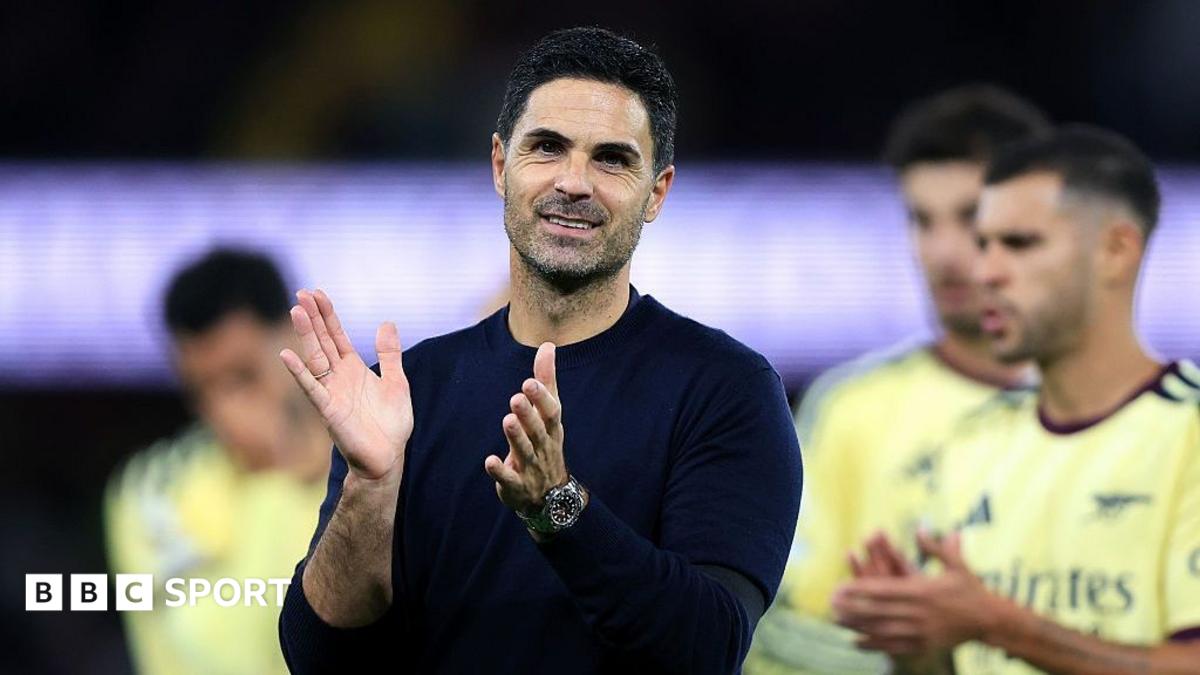
The Gunners spent £250m last summer bringing in eight players as they won the title and have already spent about £200m this year, turning Piero Hincapie’s loan deal into a permanent one (£34.5m), signing Bruno Guimaraes from Newcastle United (£75m), Christos Tzolis from Club Brugge (£34m) and bringing in Ezri Konsa from Aston Villa (£55m).
“That is what we need,” Arteta said, speaking to Sky Sports when asked about his squad depth.
“The players that come in make the difference. All of them contributed to create more dominance and more momentum.
“The level of focus and the way they want to contribute to the team, that is going to be decisive in the season.”
Arsenal‘s strength in depth cannot be understated, but one area they may still look to strengthen in is the forward area.
The Gunners have been on the hunt for an elite forward to lift their attack and still could be active on Tuesday’s deadline day.
They had an unsuccessful pursuit of Real Madrid winger Vinicius Jr, while they also have a long-standing interest in Atletico Madrid striker Julian Alvarez.
“We are trying to improve the squad and until tomorrow night we will try to do it,” Arteta said.
“I have been disconnected from the world for the last 24 hours because my energy has to be on the match, but I will get back on it now.”
When pushed about a deal for Alvarez, Arteta said: “I don’t know, that’s for the people upstairs.”
Whatever happens in Arsenal‘s search, they are going to be hard to keep off the top of the table with Arteta at the helm.
Emmerdale star Nicola Wheeler has warned there’s more trouble ahead for Nicola King following Jimmy King’s heartbreaking death, as the fallout from the crash continues
Jimmy has been hiding quite the secret
Emmerdale star Nicola Wheeler has warned there’s more trouble ahead for her character following Jimmy King’s death.
Nick Miles departed the ITV soap last week in sad scenes when Jimmy got caught up in the marquee incident. Devastatingly, Jimmy died with Nicola by his side in heartbreaking scenes, but the fallout from the death continues.
Next week, Nicola is anxious about affording to give Jimmy the funeral he deserves. She decides to turn to Jimmy’s haulage shares for Elliot and his future, before later discovering that Jimmy has sold them.
As Nicola realises the money from the sale of the shares is missing, she discovers that they are in more financial worries than she knew. The family home has been remortgaged and in arrears and Nicola is continuing to struggle.
Speaking about her own future, she said: “She can’t believe that life is going to exist without him (Jimmy), especially as the day was supposed to start with something very romantic, and it ended in tragedy.
“Why can’t Nicola have lots of different relationships? I’ve tried to pit she should start going on dating apps and just get horrendous dates and really bad experiences. It would bring quite a bit of fun back into it.”
Warning there was quite the surprise ahead, she added: ” think the audience are gonna be mighty surprised at the life Jimmy was leading that nobody knew about. It’s unsettling because it’s totally against his personality. You would never imagine that Jimmy in this world would behave like this.”
Filming Nick’s final scenes was “surreal” for Nicola, who has worked with the actor for years.
She said: “It was really surreal. It sort of ends, and you go, ‘Oh gosh, that’s it’. We’ll never be Nick and Jimmy again together. I was gutted because I think it’s the institution that Jimmy and Nicola were, where I was sort of like, ‘oh God, that’s over’.
“Even whilst we were filming it all, it never felt real because we film out of sync. When it came to doing all the scenes where he dies, it was odd. It’s almost like you didn’t want to do it. They were beautifully written scenes, so you want to do them justice but at the same time, you don’t want them to end because then it means this is final.”
As for what’s next, Nicola has hinted there could be a new romance on the cards – from an unlikely source.
“I can’t imagine the character would ever fully move on. I think there’s always going to be part of her that loves him. Her heart will grow to fit another love in, but she will never let Jimmy go,” she explained.
“Something happens in which I can only say Nicola behaves appallingly, and Kev is a gentleman, and I think from that moment she starts to see him in a different light.”
Rights groups warn that armed groups are increasingly recruiting children to their ranks through social media.
Published On 31 Aug 202631 Aug 2026
Three minors were among those killed in a Colombian military air strike on cocaine-trafficking rebels last week, authorities said, as President Abelardo de la Espriella intensifies operations against armed groups.
The August 27 bombing in the southern Guaviare department was the deadliest military operation since de la Espriella took office earlier this month. The National Institute of Legal Medicine and Forensic Sciences said that 10 people in total were killed in the operation. The Ministry of National Defence reported that two of the victims were 15 and another was 16.
Recommended Stories
list of 3 itemsend of list
The victims allegedly belonged to a dissident faction of the defunct Revolutionary Armed Forces of Colombia, or FARC, that rejected a 2016 peace agreement with the government.
De la Espriella, a right-wing leader and ally of United States President Donald Trump, said on Monday that another bombing in the same area killed eight members of a FARC dissident group led by commander Ivan Mordisco. It is not known whether any minors were among the dead.
“The bandits, who for decades have recruited minors to turn them into combatants or human shields, must pay for these crimes that violate International Humanitarian Law,” he wrote on X.
The Defence Ministry said on Monday that 24 suspected rebels have been killed in military operations since de la Espriella took office.
The strikes come as child recruitment by armed groups is again rising in Colombia, according to a Human Rights Watch (HRW) report published last week.
At least 1,500 children have been recruited by armed groups since 2021, with 625 cases reported in 2024, according to the report.
The watchdog said that criminal and rebel groups are using social media to recruit children, including to carry out increasingly dangerous tasks, such as operating drones loaded with explosives. They also reported that algorithms on platforms including Meta and TikTok “appear to have actively promoted” content encouraging children to join rebel groups.
“Armed groups in Colombia are recruiting children with impunity,” said Juanita Goebertus, HRW’s Americas director. “Protection systems are failing, and social media platforms have become a more effective recruiting ground.”
Meta and TikTok told HRW that they prohibit content promoting violence and had removed accounts flagged by the organisation.
The decision replaces a temporary order issued earlier this month.
Published On 31 Aug 202631 Aug 2026
A divided United States Supreme Court has allowed the White House to continue construction on a $400m ballroom project as lawsuits play out, a win for President Donald Trump as he flexes unprecedented executive power and remakes the capital in his image.
The apparent 5-4 decision replaces a temporary order that allowed construction earlier this month, shortly before a court-ordered halt would have gone into effect.
Recommended Stories
list of 3 itemsend of list
The temporary order was signed by US Chief Justice John Roberts, assigned to handle appeals from the capital. But he publicly disagreed with the latest decision, writing a strong dissent that referenced historical figures and calling the project “likely unlawful” because it has not been approved by Congress.
“Today’s decision is no victory for the separation of powers.” Roberts wrote. The court’s three liberal-leaning justices agreed.
The majority did not decide the legality of the project, but found that a preservation group likely did not have the legal right to challenge it. The unsigned opinion also cited the national security concerns that the government says the project would address.
The lawsuit will return to lower courts, but documents say that key portions of the project could be complete within months – a quick timeline compared with a typical legal case.
The Trump administration asked the justices to intervene after federal courts found the project must halt because it did not have congressional approval.
The lawsuit from the National Trust for Historic Preservation argued that Trump has no unilateral authority to undertake the work, which has included demolishing the East Wing. The group’s lawyers accused the White House of trying to “outrun the courts” by accelerating construction.
In lower courts, the Trump administration has argued that the president has total authority to renovate the White House and other federal buildings. Government lawyers said the ballroom project must be completed due to national security concerns, though those were not an initial focus when Trump announced the work and said it would be funded by private donations.
“This case involves an extraordinary and unlawful injunction that will halt the ongoing construction of the integrated military complex, including a totally secure ballroom space, at the East Wing of the White House, which is vitally required by national security,” the lawyers wrote in an August 14 filing.
The administration has said that crews are working 20 hours a day on the planned 8,400 square metre (90,000 square foot) ballroom. The framework is expected to be completed in November, and much of the facade done by April, with full completion slated for August 2028, according to court documents.
US District Judge Richard Leon ordered a stop to aboveground construction of the planned ballroom in April, though the order would allow work on bunkers and military installations below ground to continue. Leon was nominated by former President George W Bush, a Republican.
The ruling was suspended but later upheld by a divided appeals court panel. Two judges appointed by Democratic presidents found the project was for Congress to decide and “not a matter for Executive self-help”. A third judge, appointed by Trump, found that the preservationist group that challenged the project had no legal right to sue.
Solicitor General D John Sauer also made that argument to the justices and said the decision halting the work was “extraordinary and unlawful”. He said the completion of the project was “vitally required by national security.”
The administration has scored a series of other victories on the high court’s emergency docket, though the justices have ruled against some of the president’s signature policies after fuller review.
The demolished East Wing housed the first lady’s offices and the White House movie theatre. It was originally built in 1902, during Theodore Roosevelt’s presidency, and greatly expanded in 1942, during Franklin Roosevelt’s presidency.
Channel 4 will air part two of ‘The Ambush’ in a matter of days
24 Hours in Police Custody aired the first episode of its two-part special last night (Image: Channel 4)
24 Hours in Police Custody fans are being forced to wait days for a new episode.
The Channel 4 hit show kicked off its new two-part special, The Ambush, last night (August 30) and fans were instantly hooked. The harrowing episode centres on the case of a teenage boy who was found by the road with serious head injuries.
Viewers follow as the police try to uncover if the young man was the victim of a random incident or something more sinister. An official synopsis reveals: “A 17-year-old boy is found by the roadside with catastrophic head injuries. His twin says the boy had gone to meet a girl. But was it a trap?”
Those who tuned into part one were eager to discover how the case ended tonight (August 31), but they couldn’t find a new episode on the broadcaster’s schedule.
Taking to X, formerly Twitter, one fan questioned: “When’s the next episode? I can’t find it anywhere on the planner and Sky doesn’t have the next episode planned despite there apparently being one #24hoursinpolicecustody.”
Someone else shared their excitement to tune in, posting: “Tonight’s episode should provide us with more information.” But their hopes were quickly squashed as they learned that Channel 4 doesn’t have an episode scheduled until Sunday.
The furious fan shared: “What it’s not on tonight!!! You are joking me[…].” So exactly how long do viewers have to wait for the next instalment?
When does Part 2 of the 24 Hours in Police Custody special come out?
Channel 4 will air part two of 24 Hours in Police Custody ‘The Ambush’ next Sunday (September 6) at 9pm, meaning there is a week between part one and part two.
Part one is currently available to stream on the broadcaster’s on-demand service. Some viewers were already aware of the wait between the two episodes, but that hasn’t stopped them from issuing complaints.
Also writing on X, one viewer fumed: “Why are they making us wait a week for the conclusion? That’s really not on #24hoursinpolicecustody.”
Someone else added: “Are you serious @Channel4? We wait over 6 months for a new #24hoursinpolicecustody and now we’ve to wait a week for part 2?!.”
The two-part special comes after a long spell of the channel airing re-runs.
24 Hours in Police Custody’s The Ambush returns for part two next Sunday (September 6).
Construction continues on a new ballroom Aug. 11 on the South Lawn at the White House in Washington, D.C. On Monday, the Supreme Court ruled that ballroom construction could continue. Photo by Bonnie Cash/UPI | License Photo
Aug. 31 (UPI) — The Supreme Court ruled Monday that President Donald Trump‘s massive, $400 million White House ballroom project can continue — over dissent from Chief Justice John Roberts and three other justices.
In the 5-4 ruling, the high court said the National Trust for Historical Preservation likely lacks the legal right to challenge the project and that national security reasons favor its continuation. This could give the Trump administration time to finish the project as lawsuits over it continue.
The court did not say if the project was legal. In a dissent, Roberts said that it likely is not, as the project was not approved by Congress.
“The White House is not just any building,” he wrote. “In failing to appreciate as much, the court misconceives the plaintiff’s injury, allowing the executive’s likely infringement of the legislature’s power of the purse and authority to regulate federal property in the District of Columbia to continue.”
Roberts called Monday’s decision “no victory for the separation of powers.”
The decision replaces a temporary court order from earlier August that allowed construction to continue.
Federal courts said earlier that the ballroom project needed to halt because it had not been approved by Congress. Administration lawyers had argued that Trump has total authority to renovate federal buildings and that the ballroom and connected security features are necessary.
Manchester City have opened talks with Chelsea in their bid to sign midfielder Enzo Fernandez.
In what is set to be one of the key narratives on transfer deadline day, City have set the wheels in motion towards what would be one of the most expensive deals of the summer.
It is understood Chelsea want a minimum of £120m for Fernandez and talks are under way as both clubs negotiate a price.
Fernandez, 25, worked with City manager Enzo Maresca during the Italian’s reign at Chelsea.
Maresca is keen to work with the Argentina international again, while Fernandez is open to a move to City.
HARPER Beckham shows she has her mother’s expensive taste in fashion.
Her outfit while watching brother Cruz perform at Reading Festival at the weekend was worth about £2,750.
Harper Beckham’s outfit while watching brother Cruz perform at Reading Festival at the weekend was worth about £2,750Credit: GettyThe youngest Beckham wore a £2,500 Van Cleef & Arpels Alhambra necklace underneath her £130 jacket from mum Victoria’s collaboration with GapCredit: GettyCruz on stage with The BreakersCredit: PADavid and Posh in attendanceCredit: Alamy
The youngest of the Beckham children, 15, wore a £2,500 Van Cleef & Arpels Alhambra necklace underneath her £130 jacket from mum Victoria’s collaboration with Gap.
She finished her look with a pair of £120 Hunter wellies.
Sign up for the Showbiz newsletter
Thank you!
Harper is also following in her mother’s footsteps with her own beauty business.
A trademark application included facial scrubs and body washes, as well as acne treatments, including medicated facial cleansers.
Harper changed her Instagram bio from “Your fav blonde,” to “entrepreneur” last week as she gears up to launch her products.
Victoria said of her daughter: “She came to me with two PowerPoint presentations.
“One about this brand that she wanted to create because she was struggling with her skin.
Harper is also following in her mother’s footsteps with her own beauty businessCredit: Instagram Victoria BeckhamMeanwhile, dad David posted a video showing off his vegetable cropCredit: Eroteme
“She loves products, she loves formulas.
“You know, she’s, she’s even helped me select colours sometimes and I’ve been working on colour palettes.
“I mean, she’s been sitting on my lap taking part in beauty development meetings ever since she was little.
Stranded passengers wait Monday outside Jomo Kenyatta International Airport after operations were paralyzed for the second day by the Kenya Aviation Workers Union strike. International and local flights were disrupted and thousands of passengers were left stranded after KAWU members went on strike over pay and the lack of implementation of previous agreements. Photo by Daniel Irungu/EPA/
Aug. 31 (UPI) — Flight issues continued Monday at Jomo Kenyatta International Airport in Nairobi, Kenya, and other Kenyan airports, in which a workers’ strike has left hundreds of people stranded or delayed.
Kenya’s aviation workers started a “go-slow” strike Sunday, saying the government failed to honor the terms of a memorandum of understanding with the union.
“They have never committed to the negotiations and have failed to cooperate and show effort in resolving our grievances,” said Moss Ndiema, Kenya Aviation Workers Union secretary-general.
This has led to flight delays and cancelations, Kenya Airways said. It advised customers to travel to the airport only if they have been advised to do so or if their flight has been confirmed as operating.
“We sincerely apologize for the inconvenience this situation has caused to travel plans,” the airline said in a statement. “The safety of our customers and crew remains our highest priority. Our teams are working with the relevant aviation stakeholders to ensure safe operations and minimize the inconvenience and disruption to our customers’ travels.”
At times, the airline reported delays of more than 6 hours.
Talks between aviation worker unions and the airport were expected to continue Monday after they ended without resolution Sunday.
Meanwhile, Kenya Railways announced it is adding special Nairobi-Mombasa trains Monday and Tuesday to cope with “increased passenger demand.”
“Passengers are encouraged to make their bookings early and take advantage of the additional train services,” it said in a notice.
You paid for it. But do you actually own it? GTA 6 is exposing a bigger battle over the future of gaming – and the demand for physical media ownership. Al Jazeera’s Lina Serene breaks it down.
Viewers follow the tight-knit group as they attempt to scale the corporate ladder in New York City. English actress Ella Hunt leads the cast as main character AJ, an introverted financial analyst who moves to Manhattan for the role.
She shacks up with her former university flatmate Abby (played by Avantika Vandanapu), who is pursuing a career in celebrity styling. The rest of the ensemble is made up of rising stars Will Angus, Jack Martin and Nicholas Duvernay.
Despite its first season spanning just nine episodes, NSFW has garnered overwhelming praise from viewers. It achieved an impressive 82% audience score on Rotten Tomatoes, where one enthusiastic fan declared: “This series is everything and deserves the f***** best.”
The review continued: “Modern day ‘Friends’, and I say that as the most outstanding compliment. Mindy Kaling, wow! It felt fresh, new and necessary for the time,” reports OK!
Another fan compared it to the nineties classics, commenting: “The cast is brilliant. It clearly feels like an homage to 90’s sitcoms like Friends.” While a third person raved: “10/10 series, a breath of fresh air for comedy in 2026.”
Get Disney+ from £5.99
This article contains affiliate links, we will receive a commission on any sales we generate from it. Learn more
A Disney+ subscription is now available from £5.99 per month, offering hit shows like Andor, The Bear and Alien: Earth, plus countless titles from Star Wars and Marvel.
Yet another viewer shared their glowing verdict: “Such a good show! only complaint is that there are never enough episodes….give us 20 episode seasons.”
Unfortunately, it doesn’t look like NSFW will be releasing new episodes anytime soon. Hulu has decided to cancel the show after one season, although producers are said to be looking for a new streaming home.
Creator Kaling took to Instagram to express her love for the project following its cancellation. Sharing several snaps of the cast, she wrote: “I love this show, I loved making this show, I love these people, and I love all of you for all your sweet comments, messages, edits and for watching.”
All nine episodes of Not Suitable For Work are available to stream now on Disney Plus.















![Tunisians protest against President Kais Saied in Tunis, demanding the restoration of democracy and the release of jailed activists and journalists amid growing anger over deteriorating living conditions and an economic crisis [Jihed Abidellaoui/Reuters]](https://i0.wp.com/occasionaldigest.com/wp-content/uploads/2026/09/reuters_6a958da8-1788186024.jpg?w=640&ssl=1)

![Tunisians take part in a demonstration against President Kais Saied in Tunis, reviving demands for political freedoms and better living conditions that have remained unresolved since the 2011 revolution [Ons Abid/AP]](https://i0.wp.com/occasionaldigest.com/wp-content/uploads/2026/09/ap_6a958ddbcea04-1788186075.jpg?w=640&ssl=1)
![Protesters voice anger as shortages and rising living costs increasingly converge with demands for political change under President Kais Saied [Mohamed Messara/EPA]](https://i0.wp.com/occasionaldigest.com/wp-content/uploads/2026/09/epa_6a958e67f393-1788186216.jpg?w=640&ssl=1)