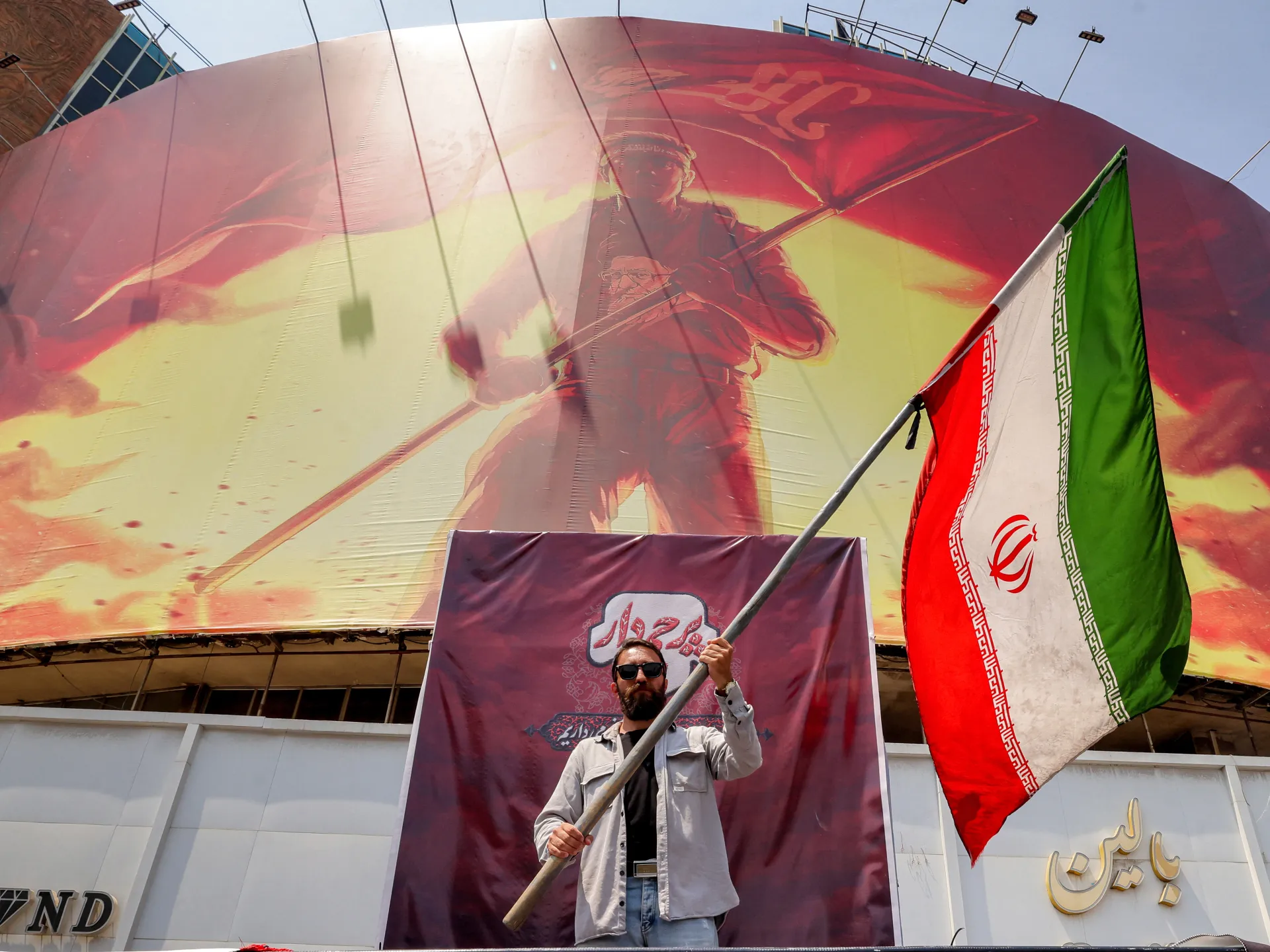
The latest Houthi attacks come less than 24 hours after an earlier barrage struck al-Makha (Mocha) and its commercial port.
Published On 10 Aug 202610 Aug 2026
Yemen’s Houthis have launched a new wave of missile and drone attacks on the Red Sea port city of al-Makha (Mocha), extending an assault on government-held areas along Yemen’s western coast and killing at least 11 people.
The latest attacks came on Sunday evening, less than 24 hours after an earlier barrage struck al-Makha and its commercial port. Yemeni government forces said air defences intercepted six drones during the renewed assault, while two ballistic missiles fell into the sea without hitting their targets.
Recommended Stories
list of 4 itemsend of list
Footage broadcast by the Houthi-affiliated Al Masirah TV showed several ballistic missiles and drones being launched. Houthi military spokesman Yahya Saree said the operation targeted Saudi troop concentrations and weapon depots in the area, according to the Reuters news agency.
At least 11 killed
Earlier on Sunday, Attacks on al-Makha killed at least 11 people, including eight military personnel and three civilians, and wounded 32 others, according to the latest toll cited by the AFP news agency.
The strikes also caused extensive damage at al-Makha’s port. Government authorities said buildings and commercial facilities were hit, while The Associated Press reported damage to port infrastructure, commercial goods and food supplies.
Government forces also said they intercepted and destroyed an unmanned explosive boat approaching the commercial port.
During the renewed attacks later on Sunday, the National Resistance Forces, which are aligned with Yemen’s internationally recognised government, urged residents of al-Makha to remain indoors, accusing the Houthis of carrying out indiscriminate shelling.
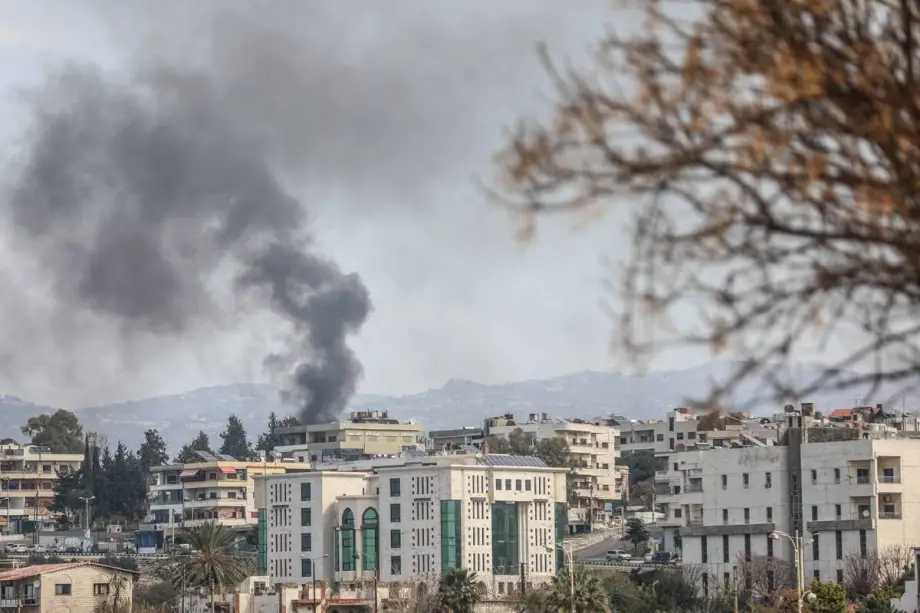
Smoke rises during Houthi missile and drone strikes on the Red Sea port city of al-Makha (Mocha), Yemen, August 9, 2026 [Reuters]
Houthis say Saudi military buildup prompted attack
The Houthis said the operation involved a large number of ballistic missiles and drones and was launched in response to an alleged continued Saudi military buildup, including the reinforcement of allied forces with weapons and equipment along Yemen’s western coast and in Taiz province.
Houthi political council member Hizam al-Assad separately claimed that continuing explosions, fires and columns of smoke from the port were caused by large quantities of weapons and military equipment stored there.
Attacks extend to al-Khokha
The escalation was not limited to al-Makha, but also targeted the al-Khokha district, south of the coastal city of Hodeidah.
Al-Jumhuriya television, which is affiliated with the National Resistance Forces led by Presidential Leadership Council member Tareq Saleh, said the government-appointed governor of Hodeidah, al-Hassan Taher, survived an assassination attempt on Sunday after a Houthi ballistic missile struck his residence in the district.
A TV boss has broken his silence on Ariana Grande quitting a hit drama show – after revealing her plan to step back from public lifeCredit: GettyAriana was originally annouced to be on series 13 of American Horror Story but she later exited the project to prioritise her Eternal Sunshine tourCredit: Reuters
This comes at the same time she revealed she would be stepping back from fame at the end of her tour.
US screenwriter Ryan Murphy explained that he and the singer were great friendsCredit: EPAAriana told Ryan at the time that there might be scheduling issuesCredit: Getty – Contributor
Ryan also revealed that he welcomed the star to appear in another season which she gladly accepted.
He added: “You have to be respectful. Who is busier than Ariana Grande? No one. She had told me at the time, ‘I have this album that’s dropping.’ It was really, truly a scheduling conflict.”
Ryan also revealed that Ariana is a big fan of horror and did Scream Queens for him and explained that he would always want to work with her.
He said: “I love her, and I support her. It was a very big swing, but I might bring that back for another season, per Ariana’s availability. I think the world of her.”
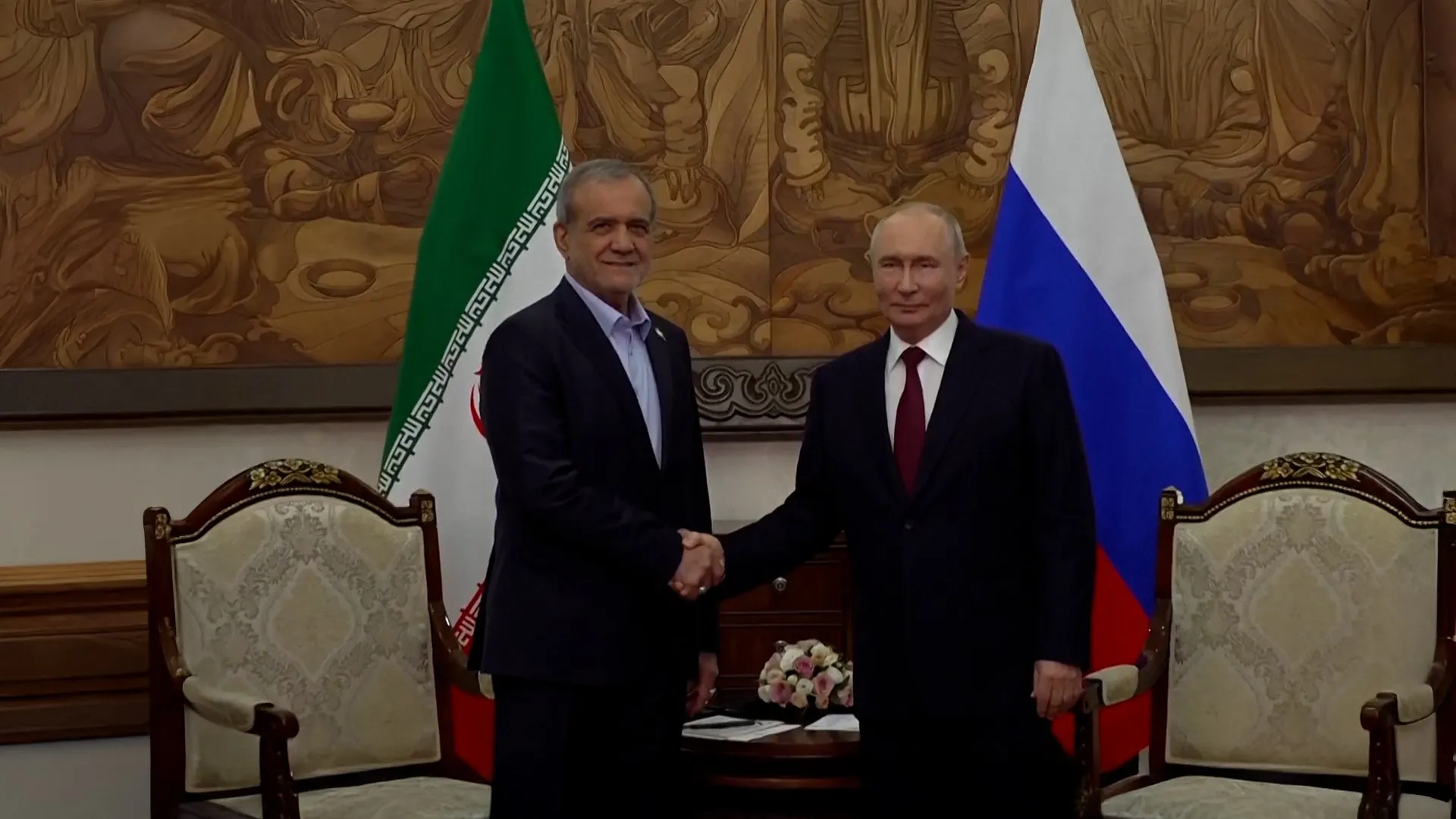
Aug. 9 (UPI) — Iran has replaced its top security official with another commander of its powerful Islamic Revolutionary Guards Corps, a spokesman for Iranian Masoud Pezeshkian said late Sunday.
Mohsen Rezaei, who had been an adviser to Supreme Leader Ayatollah Mojtaba Khamenei, will be the new secretary of the Supreme National Security Council. He replaced Mohammad Bagher Zolghadr, who resigned.
Zolghadr had been in the post since his predecessor, Ali Larijani, was killed in an Israeli air strike in March. He will serve as political adviser to Khamenei.
The shakeup came as Foreign Minister Abbas Araghchi said Iran is not talking directly with the U.S. to end the war with Tehran and open the Strait of Hurmuz, despite claims by U.S. officials that the sides are near a deal.
Araghchi was quoted by the Mehr news agency as saying that “messages are being exchanged through intermediaries” and Iran isn’t talking directly with Washington. He reportedly added Washington must meet conditions by Iran if a deal is reached with Oman to open a trade route through the waterway.
U.S. President Donald Trumptold Axios on Sunday his administration is “low keying it” in negotiations with Tehran.
“We are only semi-negotiating with them. We are just watching Iran with its huge inflation and the fact they have no money,” Trump said. “It will work out. It always works out. It’s like a chess game.”
Iran’s Supreme National Security Council and Khamenei would have to agree to any deal to open the strait.
On Saturday, Zolghadr said U.S. forces should be withdrawn from near Iran. He added that the U.S. should compensate Iran for war damages as well as lift sanctions.
Iranian diplomats said earlier last week that Tehran and Oman were near a new agreement to manage the strait.
The North American Aerospace Defense Command (NORAD) says F-16 fighter jets intercepted two civilian aircraft that entered restricted airspace over Bedminster, New Jersey, where US President Donald Trump was watching a tournament at his golf course.
In this week’s episode of The Envelope podcast, “The Pitt’s” Noah Wyle reflects on 25 Emmy nominations for the series, responds to criticism of casting decisions, and previews Season 3 of the HBO Max medical drama, now in production.
Kelvin Washington: Hello, and welcome back to The Envelope. It’s been a little while. Kelvin Washington alongside Yvonne Villarreal. We also have Mark Olsen. Good to see you. This is one of my favorite things, because I learn so much from you two. And by the way, I got a big shout-out from somebody at the other job that I do —
Yvonne Villarreal: You have another job?
Washington: Which one do you want to talk about? I have 17 of them. But she was saying how she was listening to something and then she said, “I want to hear more about it.” So she Googled, we came up and she was blown away to see it, and we did such great jobs. So she’s a big fan of you two. Shout out to Larissa if she watches again. But let’s get into, of course, Emmy nominations. You have surprises, you have ones you kind of expected, snubs, the whole nine. Let’s start with you, Yvonne. Anything jump out?
Villarreal: Leading the pack was “The Pitt,” which I think everyone expected, and coming in close second was “Hacks.” But I think the third most-nominated show that was thrilling to see have a big showing was “Widow’s Bay.” It was this latecomer to the race, and it’s just this show that has taken people by storm. The word of mouth has really grown. And I know, Mark, you got Matthew [Rhys] in an upcoming episode here. It’s just nice to see how that show’s performed.
I was a little bummed that we didn’t get a [big] showing of “The Comeback,” the third season. That was maybe my snub mark.
Mark Olsen: Not that it’s a causal thing, but I was excited to see a guest from the [podcast], Riz Ahmed, was nominated for the show “Bait,” [which is] kind of like a meta-psycho-emotional biography of an actor caught in conflict between his community and his career. And then also, I have to say, Meg Stalter from “Hacks,” I thought was exciting. For no other reason than to have her on that red carpet, to maybe get a little time on the telecast and the chaos that that just promises.
Villarreal: I want to know who she’s going to come dressed as. She always stuns on the red carpet with who she is sort of making fun of.
Washington: You need a little bit of that, a little chaos. That’s what makes those things interesting. For me, I was just thinking about, again, how we’ve had so many folks who were known for films now all of a sudden becoming television stars. Seems a little weird to say it, but Jason Bateman being one of them, nominated for a couple of shows. So it’s just been incredible to see some people’s transition into that, where 15, 20 years ago, it‘d almost be the downfall of your career to do so much TV. Now it’s a cool addition to your career. Let’s get into it. You mentioned “The Pitt,” Yvonne. And Noah Wyle, you had a chance to have a chat with him. Tell me a little bit more about it.
Villarreal: They got the big news about their 25 nominations while on set. They’re in production on Season 3. And when we caught up with Noah, he had just wrapped filming the episode that he wrote and directed this season, Episode 3. And it was really fun to catch up with him, especially considering how much he’s shouldered in portraying Dr. Michael Rabinovitch, a.k.a. Dr. Robby. You know, this is a character that’s had a really deep mental health journey the past two seasons. Season 2 picked up with him on the eve of a three-month sabbatical, and we think he’s finally going to get this break that he needs to deal with some of the things he’s been going through. But as the season progresses, we see him really confronting just how much of a mental breakdown he’s at right now. And we talked about that. He shared a lot about what’s coming up in Season 3. And we also get into some of the advocacy efforts he’s been involved with.
Washington: You know what I find interesting about that is, when you look at the folks from “Law & Order: SVU” and some other shows, [they’re] just a character, but all of a sudden folks really look at you as this advocate and they’ve turned around and become very passionate about those things, and I can see how that would be the case [here] as well. All right, let’s get into it. Yvonne and Noah, here’s their conversation.
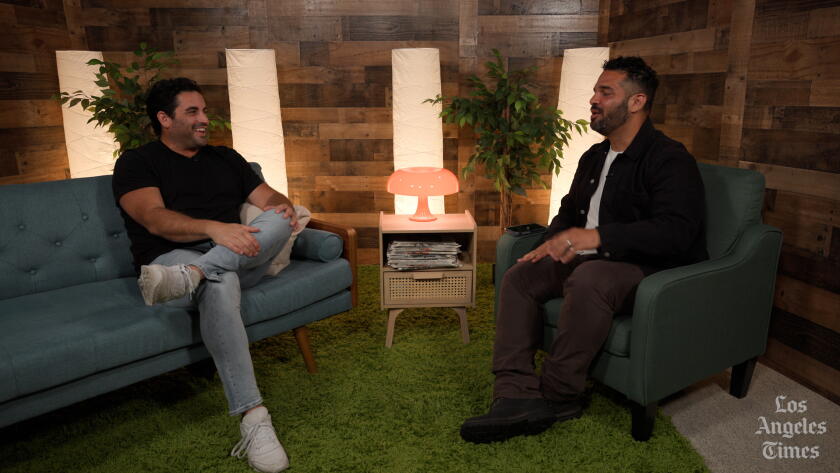
Wyle on the Warner Bros. lot in Burbank in June.
(Christina House / Los Angeles Times)
Yvonne Villarreal: Noah, thanks so much for taking the time. We’re on the Warner Bros. lot inside an office space because you are deep in the throes of production on Season 3 while navigating the awards circuit. Tell me what that’s like. What is your headspace right now? Have you learned anything from last year?
Noah Wyle: It feels like we’ve just come back, even though today we started shooting Episode 4 already, which is amazing that we’re almost a third of the way through the season. It feels really good to be back. It’s odd that this is Season 3. It still feels like a new show. Everybody’s still energetic and excited to be there. The awards stuff hasn’t really kicked into overdrive yet, so it hasn’t been too much of a distraction. It’s just been really exciting, especially for our cast and crew who are so well represented in the nominations.
Villarreal: It was really staggering. Is there a moment from the last award season that stands out? An interaction or an experience going through that?
Wyle: The first one that comes to mind was an impromptu meeting I had with Stephen Graham after the Emmys where we bumped into each other on the street and he said some lovely things to me, and I said some lovely things to him. It was the first time I’d ever met him, then Keith David walked by, who was an old friend. It was a very collegiate moment. That was the time I actually took a breath that night and was like, “Hey, look at this — oh, my God, look at all of this.”
Villarreal: Where are the trophies?
Wyle: They’re on the mantle at the moment, at home.
Villarreal: Next to the Golden Globe made by your daughter?
Wyle: Yep, it’s right there in the center.
Villarreal: I want to review the show’s chart. “The Pitt” leads this year’s Emmy nominees with 25 nominations overall. You are nominated in the lead actor category, as well as directing. Do you feel like you’re better equipped or prepared to deal with the spotlight and attention that the show’s receiving now versus when you were doing “ER” at the height of its moment?
Wyle: Oh, I thought you were going to compare it to last year. Comparing it to 30 years ago, yes, I’m way better equipped.
Villarreal: Tell me.
Wyle: Just older, wiser. You’ve been to the dance before, know it for what it is. There’s nothing that’s going to be shocking about the process. Also, I have enough life perspective to just be extremely grateful and present for it and just be really excited about it.
Villarreal: How aware are you that the spotlight is on you? What does that feel like?
Wyle: I’m not that aware of it because I feel mostly cloistered once we start production on Soundstages 21 and 22. Occasionally the tours go by and I see [people] get all excited. But for the most part, I live a pretty hermetic life when we’re working. So except for when I Instagram scroll or one of my kids brings me news from out there, I don’t really get out much.
Villarreal: Your mom is a nurse. What does she think of this moment? Does it feel any different than during your “ER” days?
Wyle: Yes. I think back then it was just a novelty that she was working in a hospital and her son was on this extraordinarily popular medical drama at the same time. Now we’ve had an opportunity, especially the last couple years, through the [medical apparel] company Figs, to go to Washington and do some lobbying together, which allows her career, my career, to sort of work hand in hand. And for me to have a different perspective on who she was as a woman while she was a nurse working, because I only really saw her as Mom through those years. To answer your question, how was her perspective different? I think she’s, dare I say it, maybe a little more proud of me than she used to be. She’s said as much. I think in the old days she was proud of me being successful in having my dream of becoming an actor come true. Now she’s proud of me because she feels that I’ve used that platform to do some humanitarian good works outside of personal aggrandizement.
Villarreal: How many times is she visiting the set?
Wyle: Oh, I don’t let anybody visit this. By design, we keep a very closed set. In fact, if you come as a visitor, you have to put on scrubs so you fit in — and you feel really uncomfortable and you can’t wait to leave. That’s how we roll.
Villarreal: I want to dig into Season 2. When we pick up with Robby, it’s the eve of his three-month sabbatical, and we think maybe it’s this much-needed break. But as hour by hour goes by, it becomes clear that he’s maybe viewing this as a death sentence. What intrigued you, what worried you, about what he was facing in Season 2?
Wyle: Once we decided that we wanted to put, at the center of this medical drama that was an exposé and sharp look at the medical world, in 2026, a mental health journey of one particular person and have as part of that mental health journey be suicidal ideation, which speaks to a lot of the prevalence of that in this profession, once we committed to that idea, it was really exciting to walk it through. And to play the first half of the season as a guy going on vacation to get his head clear and play the second half of a season as a man buttoning up every aspect of his life in the event that this was a one-way trip. And leaving that almost to the Fates to decide as the day unfolded, looking for signs and signals to determine which way that should go. And increasingly as the day goes on, to be met with both the increasing desire to make it a one-way trip and the community that desperately don’t want him to, and ultimately keep him on this side of that edge.
Villarreal: You wrote two episodes in Season 2, and in “8 p.m.” we really see Robby’s mental health journey come to a head. What was that like, to put dialogue to what he was feeling internally, for you as the actor playing him?
Wyle: That particular dialogue was gifted to me by a doctor who shared with me that that was exactly what he said to his wife one morning when he was going through something very similar. And the way that it resonated with me when he said it, the way it went straight to my heart, I knew if I spoke it as simply, it would speak to other people. And rather profoundly, I got a letter by a young man who said that exact dialogue was so reminiscent of what was going inside his own head that it kept him from harming himself and was the catalyst for having him reach out to get help. Because it was so truthful, because it came from such a truthful place, it had a multiplier effect when we put it on TV. So to get to voice it to the world, that was extremely significant to me. It was the masks just really starting to fall to the point where you can no longer keep it in. And the Duke character [played by guest actor nominee Jeff Kober] is the only person who he felt he could share it with, because it’s enough objectivity, away from the hospital, without any kind of preconceived history. And it’s obviously somebody who’s been down a very bumpy road himself and won’t judge the decision one way or the other. He’ll just sit there, almost Buddha-like, and absorb it.
Villarreal: I know during the pandemic — this was sort of what was the impetus for the show — you were getting a lot of messages during that time, people messaging you about “ER” and what that did for them. How do you shoulder those types of interactions?
Wyle: That one made me cry. My hands started shaking. … You always want your work to have impact, you want it to have meaning, you want people to glean something from it that’s relevant to their own lives. And I’ve been very fortunate in my career. I remember back in the “ER” days, when Carter got sober, people would write me and say, “You helped me deal with my drug addiction.” When I was on “Falling Skies” and played the grievous loss of a spouse, people reached out to me. I’ve been a lightning rod for pain a couple of times in my career. And you asked me, how do I shoulder it? I think I sort of see it as a gift. When you have that connection to somebody, when they respond that way, it’s the ultimate compliment. And you’ve built a bridge where there didn’t exist one before. It’s even better if you build them between two strangers that don’t know each other, that now have commonality that has nothing to do with you.
Villarreal: Not to compare the two professions, but does it make you see the work you do as an actor a form of public service? We see how, when people are at their lowest moments in the hospital, they’re watching TV, they’re connecting with characters, with their family members, in these rooms. And then also what you just described, the interactions that you’ve had with these people [who were] inspired to become healthcare workers, shows you how they connect with the characters.
Wyle: As you’re saying that, that’s what birthed “The Pitt.” I was getting letters from people telling me that my work had meaning to them at the very moment when I didn’t feel like my work had meaning at all, because it had no relevance, because we were in the middle of a pandemic. Who wants to see a guy jump around in a costume while people are out there really being sick? And suddenly, I felt like I didn’t have a skill that actually could hurt or help anybody. It was only sort of a frivolous skill. Then those letters turned into the DNA that the show became.
Villarreal: Seeing what Robby is facing, how do you establish boundaries for yourself in terms of taking it in — dealing with the burnout, and overwhelming emotion of it?
Wyle: It’s a process. I am engaged in several modes of therapy to offload this and be able to surf it from both an artistic curiosity perspective and a need for balance. It’s interesting work, this work, and I do it with the full support of a loving wife and family who understand that this is different than what most people do for a living.
Villarreal: You seem to be giving yourself a lot of work these days in addition to acting in this hit show. As the No. 1, you’re writing and your directing. Do you like stress, Noah?
Wyle: I know it sounds odd, but my brain works really fast and it works nonstop. I don’t know what to do with myself most of the time. But when I’m engaged in [creative work], especially directing, it is a full-course meal for me. I feel totally alive and in my happy place. This last week, getting to direct a piece that I wrote, was even more fun because I’d pictured it already in my mind when I was writing it, which is a form of prep. But then you get to give it to everybody else to see what they want to do with it and what you’re creating communally suddenly becomes the third version of it, which I think is really great.
Villarreal: We like a tease here. Is there a note from this recent episode that you wrote and directed that was interesting to give that won’t make sense to us until we watch it?
Wyle: A directorial note? More glitter!
Villarreal: The episode you directed in Season 2, you had the interesting job of dealing with vomit.
Wyle: Yes. Vomit is hard. We’ve been making movies for a long time and we still haven’t come up with a decent vomit rig. I’m not selling Rob Nary, our special effects supervisor, down the drain here with this comment, but it is really hard to come up with a piece that doesn’t look like it’s on the side of a guy’s mouth when he’s throwing up. And you can put stuff in a guy’s mouth and have him spit it out, but to really get a good projectile vomit, you need to have some sort of cannon apparatus. And it has to come from a place that looks localized to the mouth, and it has to be the same diameter of the actor’s mouth. We went through, I don’t know, five designs on that thing and still ended up with something I thought was passable but not impressive — not “Pitt”- level impressive.
Villarreal: Interesting. Do you feel like you’ve upped the ante —
Wyle: I feel like I’ve put a challenge out there to somebody to come up with a decent vomit [effect]. It’s not as easy as it sounds.
Villarreal: It was also the episode where we get the passing of Louie [guest actor nominee Ernest Harden Jr.], and it was such a heartfelt moment and a reminder of the people that are there day-to-day or frequently, and the humanity that you still want to show them.
Wyle: Valerie Chu wrote a hell of a script. Valerie is a wonderful writer, and that episode just dramaturgically was a little different than the other ones because it did put more of an emphasis on the nursing staff than it did the doctors. Usually, we walk into a room and walk out of a room with a doctor. This time, we walked into rooms and out of rooms with the nurses, and we really tried to highlight the whole range of services that nurses give — pushing medications, double-checking doctor’s orders, holding hands, bringing blankets, wiping asses; all of the dirty work that goes into palliative care and treatment. That was the thesis. How do we exemplify those actions? Then, of course, at the center of it was Louie’s passing and the conferring of dignity to somebody after they’ve died was the theme I wanted to focus on. In the beginning, he’s a bloody mess, almost unrecognizable, and certainly not dignified. Then, through the cleaning and the preparation and then eventually the service — that’s on a clock because we’ve got other Louies to treat — we confer him his dignity. We fill in the backstory of his narrative. We give context to his life and honor the man. That was the lens progression we were going for and heart progression we were looking for.
Villarreal: What did it say to you that Robby committed those life details to memory from those interactions?
Wyle: To me, that is what you carry with you. It’s odd, the things you remember about somebody. It’s odd, the things that land with you. Usually, they resonate with something that you’re vulnerable to or have experienced. But with Robby, who never had a family and always seemingly wanted one but never allowed himself, the idea of somebody who had one and lost one is particularly profound. And as we get into subsequent episodes that we’re dealing with now, we see that Robby’s sense of loss predates Louie and his mentor, Adamson, and it goes back to almost an original sin.
Villarreal: A lot of people wanted you to take home Baby Jane Doe to heal and deal with some of your stuff.
Wyle: I don’t think you should throw a drowning man a baby. It doesn’t seem like a good, logical thing to do for either one of them. I think Robby went home and wished that he had the capacity to be someone who could have taken that baby home for a little while. And that was probably one of the things that nagged at him along that trip. If you wish you were better, then why wouldn’t you come back and try? And as we watch him begin to try to evolve and work through some of the things that have been stumbling blocks for him in becoming a fully evolved human, that’ll be one of them, hopefully.
Villarreal: I want to return to an earlier point, which is, you’ve done a lot of advocacy work. Even before “The Pitt,” you were arrested in 2012 in Washington, D.C., alongside 100 activists from the disability rights group ADAPT during a demonstration urging Congress not to cut Medicaid. Recently, you joined healthcare workers along with your mom at a rally on Capitol Hill. You also spoke at a congressional hearing focused on declining entertainment jobs in L.A. and the push for federal production tax incentives. How has using this spotlight and your voice for causes that are important to you deepened your experience with “The Pitt”?
Wyle: Well, that’s a very apropos question because I wrote into Episode 3 [of Season 3] a character based on a guy I was with when I was arrested with back then. A really wonderful guy, sort of a self-advocate and kind of a grump, total badass activist who has muscular dystrophy and has a tracheotomy. And so I thought, why don’t we put that character on the show and put him as a patient? And then I thought, “Well, who the hell is going to play that guy?” I called this guy and said, “Hey, I got a part for you, man. I need you to do it for me.” And we flew him out with his aide. And he came in, shot two days last week. He was phenomenal. The representation that we are going to give people in that community is going to be unprecedented, but it comes from a 30-year friendship I’ve had with this guy from some of the wars we fought together through the years, so it all dovetails together. I’m using one to feed the other at the moment and seeing where it’s applicable and where I think it could do the most good.
It’s just an amazing confluence of events. I’m an Angeleno who thinks there should be work here. I have an opportunity to bring a show here and employ 300 people nine months a year and be an advocate for other shows to follow a similar economic model to try and take full advantage of the generational talent that’s here. That’s just an alignment of my values and opportunities that seems almost blessed at the moment, but it’s not effortful. When you read it like that, it makes it sound like Mr. Smith.
Villarreal: Well, so many choose not to put their voice out there in those ways, but you’ve decided to do it
Wyle: I’ll speak up for my city.
Villarreal: What’s so great about a show like “The Pitt” is we get to watch regular, decent people doing competent work. Some call it competency porn. What do you think is our attraction to that?
Wyle: I think it’s twofold. I think on one hand, it’s wish fulfillment. You want to believe that there’s really competent, smart people in those jobs, so that, God forbid, if anything happens to you, that’s what you’re gonna encounter. And then I just read an article, I forget who wrote it, I wish I could cite it, that talked about this other aspect of watching people do work that has meaning, that actually makes a difference, touches a vacuum that we feel we don’t have in our lives and it’s a different kind of wish fulfillment. It’s almost like, “I want to be doing something more with my life that has absolute physical and tangible connection to another human being that makes a difference, that has a net positive.” And I think that’s interesting.
Villarreal: Sort of what you were feeling during the pandemic.
Wyle: It’s exactly what I was feeling during the pandemic: “How can I make more of this time on Earth and serve more than myself?”
Villarreal: I want to talk about “The Pitt” fandom because they are passionate and vocal. Has anything surprised you about their response to the show?
Wyle: Only everything. The embracement, the passion, the creativity, the advocacy, the identification, the continued support. It’s really been incredibly gratifying. It’s exactly what you hope, you know, that your work will do, spark a conversation and maybe a bit of change. But you certainly, you never anticipate reaching the levels that this one has where people are just gaga for it.
Villarreal: Recent cast departures have obviously drawn some criticism. As the No. 1 on the show and an executive producer, how do you navigate fan response when it’s negative? What are you learning about how to take that in?
Wyle: It’s nuanced. It’s new for me, new for all of us in a way. You try to put it in perspective, and it’s relatively small in relation to the overall [response], in terms of the more vocal critics. But at the same time, this is who’s watching. This is why you’re telling a story. If it’s touching a nerve that’s unintended, address it. Figure out a way to do it more sensitively, to come at it from a different point of view. We’re certainly doing the best that we can in there, but it’s impossible to anticipate what’s going to resonate and why. And I can’t tell you how many times I was surprised at what people thought was funny or what people thought was horrific or offensive. And it’s an interesting barometer of where we are as a country. It’s an interesting cross section of where the population’s at. But in terms of how it affects the creative work, it becomes a slippery slope if that’s the tail that wags the dog. So every year, we come in and we sort of have to gut-check ourselves and do a postmortem on the season. What worked well, what didn’t work well. And what is going to be part of this narrative as we go forward? Cast changes are gonna be part of that. That’s inevitable.
Villarreal: How about in relation to your character? Some of the discussion about what’s playing out onscreen, it’s been interesting to see how people look at Robby and maybe some of his flaws that come out. What do you see as his blind spot?
Wyle: Well, can we start with [we’re] watching a guy who’s going to kill himself? The guy is going to kill himself today, most likely. He’s going to leave and not come back. And as that reality gets increasingly clear to him, he acts continually beneath his grace. He doesn’t necessarily want people to miss him. He doesn’t necessarily want [them] to overidealize him because he doesn’t want them to mythologize him. So some people he was really tender with, and some people he was really harsh with, and some he will carry regret with, and some he probably wishes he had gone further. But all of that pathology was on display as a cry for help for anybody that was really looking to see it, more than I felt it was indicative of how he felt in a normal frame of mind in those relationships. I think he pushed Abbot [Shawn Hatosy] so far away. He pushed Dana [Katherine LaNasa] so far away. He was overly harsh with Mohan [Supriya Ganesh]. He was almost paternal with Javadi [Shabana Azeez]. He had a different vibe and energy with everybody. But ultimately, it was to sort of say goodbye in a way that he felt would be most appropriate. And I’m glad people felt that it wasn’t appropriate, because it was a man setting fire.
I did say in casting, I was like, “Can we cast some guys that are like my size that I could yell at that so people feel like it’s a good, fair fight?”
Villarreal: And you were vetoed?
Wyle: No, no, we’re going to sort of figure that out because it’s nice to show volatility in character, but if it’s a character that’s surrounded by women, it’s very difficult thing to depict without it seeming disproportionate in power. So it’s something I was conscious of when I came back this year. I was like, “It‘s difficult to show this character’s rage when it would be super inappropriate to express it with every single person in this room.” So, bring somebody in that can handle it and match it a little bit. And for my money, that’s what Al-Hashimi [Sepideh Moafi] was. She gave as good as she got, and those scenes between us were terrific.
Villarreal: Season 3 will be taking place on Nov.r 12, 2026, right? A lot of that had to do with the anticipation of and preparation for the ramifications of the Big Beautiful Bill on people’s lives. Tell me about that.
Wyle: It’s Thursday, November 12th, which means that tomorrow is Friday the 13th. And there was something fun about playing with the eve of a day that is usually fraught with peril. But this day is fraught with peril for all sorts of reasons. And it isn’t Friday the 13th. It also is coming into the holidays and it’s getting colder. A lot of the social issues that Pittsburgh and a lot [of places] with colder climates deal with are going to come up. People are turning on their heaters for the first time, if they can afford to turn on their heaters; people that don’t have access to housing are gonna be feeling the pinch even more than that. All of that goes into our narrative. And then, as I think you were alluding to, this is in preparation for what’s gonna take place in January [2027] with [provisions of] the Big Beautiful Bill [going into effect], which is gonna throw a lot of people off the rolls in a lot of states and cause a whole ripple effect through the healthcare industry. In anticipation of that happening, people are gonna have to make some very hard choices. They’re going to probably want to hoard medication if they can. They’re gonna try and load up on as many treatments as possible, put as many things into place as they can for that eventuality. And we wanted to highlight what some of those struggles are gonna be because I don’t know that they’re gonna be reported in January.
Villarreal: How fast, when that decision came through, were you getting outreach from healthcare professionals wanting to meet with you, with the writers room, about how can they can help you think about what’s going to happen?
Wyle: We have a great organization that’s an adjunct to the Norman Lear Foundation called Hollywood Health. And they broker all sorts of meetings for us in the writers room with experts from every aspect of the healthcare spectrum you can imagine. And so we really were curious to find out from those experts what the statistics were going to be. And they run models on best-case scenario to worst-case scenario and tell us pretty much with a high degree of certainty what the bandwidth is gonna be. And then we take that data and try to figure out the storyline that would be most effective to tell it. But it starts with trying to get it as accurate as possible in our crystal ball, looking forward to where we’re gonna be.
Villarreal: If you could give one word to Dr. Robby’s mental state in Season 3, what would that word be? Or what would the song he’d be listening to at that moment, walking back into work?
Wyle: I don’t want to tip the bit on a song that we might use and the ones that are in my head are so corny and cheesy that I don’t want anybody to suddenly start cutting memes to it. [Looks at camera.] Because you know you will.
Villarreal: Come on, Noah. Give us a ’90s throwback.
Wyle: “Scar Tissue” [by the Red Hot Chili Peppers].
Villarreal: Oh, that’s a good one. OK, before I let you go, is there any PSA you want to give folks right now about whether they should be consuming lettuce? Is Dr. Robby consuming lettuce?
Wyle: Oh, my God, don’t ask me. My wife and I have huge fights about produce every night. I don’t know what the hell’s going on.
Villarreal: I’m always like: What would Dr. Robby do?
Wyle: I don’t know that Dr. Robby eats a lot of vegetables. I think all of your canned vegetables are safe, says Dr. Robby.
Tehran, Iran – Saudi Arabia and Pakistan have expanded their mutual defence pact to add Turkiye, raising questions about the emergence of a new security architecture at a time when the United States and Iran have yet to reach a final deal to end their war.
Under the agreement signed in Mecca on Friday, any external armed attack on either of the three countries will now be considered an attack on all.
The trilateral pact was announced more than five months after the US and Israel launched a bombing campaign against Iran, triggering a conflict that quickly spread to the Gulf and disrupted maritime traffic through the Strait of Hormuz.
Pakistan, Saudi Arabia and Turkiye, however, have been careful not to antagonise any regional or international actors while finalising what they said was the result of years of hard work and negotiations. They have stressed the pact, which does not identify a specific threat, is not targeted against any country – particularly Iran – and does not abrogate or replace any existing agreements with others.
In Tehran, the reaction has largely been subdued, with officials mostly focusing on aspects of regional and Muslim cooperation and what they perceive as a declining role for the US.
Iran’s Foreign Minister Abbas Araghchi said on Friday that when Muslims stand together, “we can face every challenge by malicious outsiders head-on”.
“Time to rely only on ourselves and embrace true brotherhood,” he wrote on X, without directly mentioning the trilateral agreement signed hours earlier.
But Iran certainly sees some reasons to be concerned in the long run, according to Hamidreza Azizi, a researcher and analyst on Iran and Middle Eastern geopolitical dynamics.
The associate at Clingendael Institute told Al Jazeera that the timing is important, since the agreement comes after months of a war in which Saudi Arabia has faced attacks from the Iran-aligned Houthis in Yemen and armed groups in neighbouring Iraq.
“From Tehran’s perspective, the concern is therefore not only that the pact could strengthen Saudi deterrence, but that it could eventually facilitate coordinated pressure on Iran in Yemen, Iraq, and even economically through Turkiye and Pakistan,” he said.
On Sunday, the Houthis claimed another successful drone strike on the Saudi Aramco refinery in Jizan. Saudi Arabia confirmed a fire was extinguished without inflicting casualties, but did not mention the cause.
Separately in Yemen, Houthi missiles and drones struck the Saudi-backed and internationally recognised government’s Red Sea port of al-Makha, with officials reporting at least seven people killed, 15 wounded and severe infrastructure damage. The Yemeni group, which has also been hitting or turning back Saudi-linked ships in the Red Sea over recent weeks, said it targeted weapons depots.
‘A strong bloc’
Iran’s Ministry of Foreign Affairs has not released a formal statement about the Pakistan-Saudi-Turkiye deal, but a senior official outlined Tehran’s diplomatic thinking in an interview with local media on Saturday.
Hossein Noushabadi, a director general for parliamentary and legal affairs, told the state-linked ISNA news service that the ministry predominantly regards the agreement within the context of a diminishing direct US presence in the region.
The pact “is being viewed as the beginning of the collapse of US security hegemony in West Asia and the Persian Gulf”, said Noushabadi.
“It appears that, in the not-too-distant future, a new regional security order based on cooperation among regional states will replace the power structures imposed by extra-regional actors, heralding the end of the prevailing security and geopolitical paradigm and West Asia’s departure from the sphere of vital US interests,” added the official, who is a former Iranian envoy to Oman.
Political scientist Vali Nasr said he does not believe the pact is currently a threat to Tehran.
“For now, these are all elements of a post-American security order in the Middle East,” the professor of international affairs and Middle East studies at Johns Hopkins University told Al Jazeera.
“This is also as much a balance to the Abraham Accords as a direct challenge to Tehran,” he added, in reference to the US-pushed regional normalisation effort with Israel, which US President Donald Trump last month tied with a civil nuclear deal sought by Saudi Arabia.
Mehran Kamrava, a professor of government at Georgetown University of Qatar, also agreed that decision-makers in Iran do not immediately feel threatened by the pact, especially since they have maintained cordial relations with both Pakistan and Turkiye even under trying circumstances.
“Ultimately, this pact is not that new, nor is it something that, at present at least, has a great deal of substance beyond its symbolic significance. For example, neither Turkiye nor Pakistan would be willing to get involved in Saudi Arabia’s war in Yemen despite recent Houthi attacks on the kingdom,” Kamrava told Al Jazeera.
Not all inside Iran are content with the pact, however, with some hardline lawmakers and media arguing that it could ultimately be directed against the “resistance front” of Tehran-backed armed forces across the region, and degrade Pakistan’s credibility as a main mediator between Iran and the US and others.
“It’s clear that Arab states finally understand security cannot be imported; it must be built within the region. However, a roadmap is still missing,” Ebrahim Azizi, a member of the Iranian parliament’s National Security and Foreign Policy Commission, said in a more hawkish viewing of the pact.
“Warning: Miscalculation is a historical mistake. Iran has proven that every error comes at a cost. Balance is the only way forward,” he wrote on X.
Ebrahim Rezaei, another member of the commission, also wrote on X that “a paper agreement with Turkiye and Pakistan” will not bring Saudi Arabia security, “just as years of one-sided dependence on the Americans did not bring them security”.
Is Iran missing out?
Clingendael Institute’s Azizi said Tehran’s priority will likely be to avoid turning the pact into an explicitly anti-Iranian coalition amid a war with regional repercussions, and that would mean preserving individual relations with each of the three countries.
He said Tehran can also continue to emphasise its long-standing argument that regional security should ultimately be organised by regional states rather than external powers.
“If those states come to see the pact as providing meaningful protection against Iran or Iran-aligned groups, that would make Iranian membership even more difficult,” said Azizi. “Over the longer term, however, if the arrangement evolves from a balancing coalition into a broader regional security architecture, the question of Iranian participation could look quite different.”
Experts also said it could be a possibility that Iran itself would be seeking potential membership in the pact in a distant future, but that would mean a sustainable end to attacks in the Strait of Hormuz and across the region, while expansion to other regional Arab states seems more plausible in the near term. Egypt has already been floated as a candidate, but that could be a complex decision for Cairo to make.
Sanam Vakil, director of the Middle East and North African Programme at Chatham House, said the trilateral pact reflects both short- and long-term security concerns and opportunities for Riyadh, Islamabad and Ankara.
“They are driven together to forge greater diplomatic and defence cooperation in reaction to US unreliability, Israeli revisionism and Iranian retaliation,” she told Al Jazeera.
The Telegraph’s Dominic Cavendish wrote, external: “At almost four hours, it’s a long evening, sometimes too dense with detail, and it lacks the grit and gore (not to mention the nudity) of the TV series.
“Still, it capably serves newbies and devotees, and speaks in a timely fashion to our age of unruly leaders.”
He added: “It’s not up there, yet, with the Harry Potter or Stranger Things prequels but, on balance, the Game of Thrones franchise has yet another worthwhile and lucrative spin-off on its hands.”
The Times’ critic Clive Davis, external had greater reservations, writing that while the play “gives hardcore GoT fans a chance to go hunting for ‘Easter eggs’, it seldom comes close to matching the grim aura of the TV series”.
“Duncan Macmillan’s script is sorely lacking in poetry. Events plod forward, one after the other, and although Michael Shaeffer is a thoroughly compelling presence as the cruel and chronically unstable monarch Aerys, other performances seem nuance-free. Too many lines are simply shouted. You expect better of the RSC.”
Davis concluded: “It goes without saying that there are more than enough GoT devotees to keep the box office ticking over for the rest of eternity, but only the most dedicated of them will have the energy for this marathon.”
Gillian Anderson was once a young person experimenting.
“I don’t even know if I was questioning my sexuality but there were a couple of moments during my teen years where I was with women,” Anderson tells me candidly on a recent afternoon at a Beverly Hills hotel. “I haven’t really spoken about that very much.”
Though she won’t go into details about those early interactions, she remembers the isolation that plagued her. “In interviews, I’ve alluded to a relationship that I had later in my post-college life, but not about that particular time and how not even confused, but just alone I felt and how different I felt to the rest of the kids in my high school,” she adds.
For some time now, the once and forever “X-Files” star has leaned into episodic television (Netflix, she says, has become a great partner). She earned her second Emmy in 2021 for her blistering turn as polarizing British Prime Minister Margaret Thatcher in “The Crown.” Yet a major shade of her public persona has become her activism around sex positivity, encouraging women to open up about their needs and wants, both in the bedroom and as individuals in every aspect of their lives.
“It seems to still be an important topic for women to hear other women speak about,” she says. “I have come to love talking about it in the context of women’s empowerment, finding ways to embrace their own integral agency.”
Clad in a sleeveless bright green dress, Anderson, 57, radiates an ageless grace, undeniably sophisticated yet unpretentious in her demeanor. Her hair in a braid evokes the look of a figure from ancient Rome. When speaking in her unmistakable throaty voice, her expressive body language (hand movements often complement her sentences) reveals her assertiveness. That confidence makes it difficult to imagine she ever was a fragile teen.
Hannah Einbinder and Gillian Anderson in the movie “Teenage Sex and Death at Camp Miasma.”
(Mubi)
In Anderson’s latest movie, the horror-tinged, dreamlike “Teenage Sex and Death at Camp Miasma” (in theaters Friday), Anderson plays Billy Presley, a reclusive former scream queen who was one of those “final girls” from a popular 1980s slasher horror franchise in which the killer was aptly called Little Death (a nickname for an orgasm, derived from a French phrase). Now Billy spends her days alone living in the woodsy location where her breakout movie was filmed long ago.
That is until auspicious indie filmmaker Kris (“Hacks” star Hannah Einbinder) comes to visit Billy with the intention of persuading her to act in a reboot. The two develop a friendship that empowers Kris to dive into her unspoken sexual yearnings — desires drenched in fear, violence and curiosity — with Billy as her mentor and, eventually, patient lover.
On top of her ability with accents (she does a Southern one here), Anderson physically commands the screen from the moment she makes an entrance worthy of a timeless diva. Her regal aura contrasts with the grotesque sensuality of a scene where fried chicken and dipping sauces take on an almost pornographic lure. Her Billy, a woman who can fluctuate between a loud cackle and an introspective speech about the lust-inducing “flesh and fluids” of horror movies, feels equal parts otherworldly and tethered to earthly urges.
“I knew on a deep level that I wanted to be a part of it, but it’s only in retrospect that I completely understand why it was so meaningful to me,” Anderson says. “It feels like such a salve for so many.”
“She put everyone at ease during those moments in a really beautiful way,” says director Jane Schoenbrun of Anderson’s work with Einbinder on their most daring scenes. “She is so physically tapped into her own abilities.”
(Mubi)
Einbinder, with whom Anderson shares scenes of blood-soaked eroticism, describes the veteran star as meticulous and diligent while also having a “lot of access to spontaneity.”
“I was a fan of her from, of course, ‘The X Files’ and a lot of her other work, so she just held this significance to me as an artist,” Einbinder tells me over the phone, “but meeting her, my expectations were surpassed because she’s really cool.”
“I didn’t want Billy to come across as a predator,” Anderson says. “I didn’t want her to be creepy or too maternal and so there were moments where she shows care, and it was a really fine line of how to play those beats. Even our first kiss and our sex scenes were very specific so that it didn’t feel not OK to be witnessing or representing.”
To Jane Schoenbrun, the movie’s writer and director, Anderson has the “elegance of old Hollywood, a classic mystique.” The filmmaker describes meeting her as a “strange coming home feeling,” since her “X-Files” character Scully held a special place in Schoenbrun’s formative years. “I spent as much time with her as I did with my siblings,” they add.
Schoenbrun credits Anderson as a “calming and nurturing presence” during the sex scenes between her and Einbinder — the first sex scenes the filmmaker had ever directed.
“Gillian had such an elegant, serious, professional but also caring perspective on how to talk about it and how to guide through it in a way that felt like it was going to be very present and alive on screen,” Schoenbrun recalls. “She put everyone at ease during those moments in a really beautiful way. She is so physically tapped into her own abilities.”
Anderson, seated with director Schoenbrun on the set of “Teenage Sex and Death at Camp Miasma.”
(David Astorga / Mubi)
Anderson found her way into playing Billy through the character’s distinct accent. Having played the tragically romantic Blanche DuBois from “A Streetcar Named Desire” on stage in the past, she aimed for a different version of Southern. “What I liked about it was this particular pitch that holds strength and vulnerability in it, which I think is very much where Billy lives at all times, from minute to minute,” she says.
Other recent TV roles have steered Anderson in the direction of an unabashedly queer storyteller like Schoenbrun. Jean Milburn, Anderson’s humorously matter-of-fact sex therapist from the series “Sex Education,” represented a watershed beginning in 2019.
It was because of the success of that show that she was approached to write “Want,” a 2024 book that collected the sexual fantasies of anonymous women (a follow-up, “More,” is out in September from Abrams Press).
“Sex Education” also inspired Anderson to launch her own brand of soft drinks cheekily called G Spot (they are caffeine-free and infused with vitamins and minerals). Some retailers, she says, have refused to use the drink’s name. “We’ve had so much pushback on the name and I refuse to be cowed, to be shut down, to be told that it’s a dirty word or that it shouldn’t be in public spaces,” she says.
“The strange thing is I don’t identify with Scully in the same way I do with other characters that I played for much less time,” Anderson says. “Part of that is because of how square she was. I have such an intrinsically rebellious nature.”
(Ian Spanier / For The Times)
For Anderson, humor is an important component of the conversations she wants people to have about sex and sexuality. During her time on “Sex Education,” she started posting pictures on Instagram of props on set that resembled both male and female genitalia. Some of her posts kept getting blocked.
“There were all these amazing things, from chess pieces that were phallic to a soap holder that was a yoni,” she says, smiling. “We started to call them ‘penis or yoni of the day.’ Then fans started posting back to me pictures of penises or yonis of the day they would see in nature.”
Anderson doesn’t quite understand the swath of Gen Zers who deride sex in movies and is, in general, uncomfortable with the subject of physical connection.
“For my younger kids, who are late-teens, the thought of picking up a phone to [call] somebody that they’re interested in feels so intimate,” Anderson says. “If a phone call is intimate and your conversations on a regular basis are snapshots of your face making funny images, then the idea of going into deep intimacy must be absolutely terrifying.”
She’s hopeful that young people might start to turn toward in-person activities to bond. But while the subjects of pleasure and open-mindedness captivate her, on screen Anderson is not letting the industry pigeonhole her.
Anderson’s recent output includes playing a shadowy operative with icy conviction in the thriller “Animals” opposite Ben Affleck, and a Nazi guard in the limited series “The Boys From Brazil,” both coming to Netflix in the near future. And in last year’s “Trespasses,” another TV show, she became a Northern Irish alcoholic mother. “I wouldn’t have guessed that at my age I would be having so many different and varied opportunities,” Anderson says.
In the aftermath of her time on “The X Files,” Anderson moved to London, both because she longed for the city where she partially grew up and for a chance at reinventing herself professionally.
“I’d never had my own publicist before that,” she says. “Had I had one, they probably would’ve tried to convince me that moving to London was the worst thing I could do for my career.”
For a long time, Anderson’s relationship with Dana Scully was complicated. “I felt like everything that I did was in an effort to get away from Scully,” Anderson admits. “Then when people would bring it up or I would do a 45-minute interview and they would ask one question about ‘The X-Files,’ they would use my refusing to talk about it as an excuse to make it the headline.”
It made it challenging for her to be considered for film roles and even for TV projects of a different vein.
“Now you have A-list actors, the Nicole Kidmans, moving between TV and film,” she says, “but back during ‘The X-Files,’ if you were on telly, it was the B, if not C version of what an actor’s life could be.”
In England, though, the likes of Judi Dench, Maggie Smith or Glenda Jackson had always navigated effortlessly between the big and small screen and the stage. “That’s the life that I wanted,” Anderson adds. “The minute I moved there, the quality of the stuff and also the range of characters that I was being offered was so different from what I’d been doing for almost 10 years as Scully.”
“The House of Mirth,” Terence Davies’ 2000 period drama based on the satirical 1905 novel by Edith Wharton, represented a breakthrough. “At the very beginning, I remember I was so surprised that there were other people who thought that I might be able to do something else other than Scully.” (When I tell her how extraordinary she is in “Mirth” as a socialite caught between stability and something more passionate, Anderson replies with a bashful, whispered “Thank you.”)
And while she can now think of “The X Files” as the “blessing” that it signified in her career, Anderson is clear that she has more often seen herself reflected in other women she’s inhabited, such as Blanche or Stella Gibson, the detective she played in the series “The Fall” starting in 2013.
“The strange thing is I don’t identify with Scully in the same way I do with other characters that I played for much less time,” Anderson confesses. “Part of that is because of how square she was. I have such an intrinsically rebellious nature. I can, obviously, play square, but I think because of that, she didn’t necessarily get her hooks inside me in the way that some of these other characters that really push against the establishment did.”
Anderson is not entirely opposed to appearing on Ryan Coogler’s just-announced “X-Files” reboot, but she is far more excited about several sci-fi projects she is currently developing (one of them she describes as “huge” in scale). They will bring her back to similar territory, but this time on her own terms.
“It’s the first time that I’m properly going into the genre and embracing it and instigating that work,” Anderson says. “I’m very excited about those but no doubt when it comes time to do press around them, there’s going to be a lot of ‘X Files’ talk, inevitably.”
She’ll be ready for it. At once pragmatic and playful, Anderson seems to be taking on the world these days like someone who’s unraveled a deeper mystery.
Ireland’s former President Mary Robinson says Israel is ‘erasing Palestine physically, economically, culturally and politically’.
After visiting the West Bank, the group of public figures known as “The Elders” has concluded that Israel “aims to make Palestine disappear physically, economically, culturally and politically”.
Mary Robinson, former president of the Republic of Ireland and one of the leading members of The Elders, tells host Steve Clemons that the delegation was “shocked” at how the situation has deteriorated since 2023.
“It starts with hate speech, clear talk about Jewish supremacy and annexation of the West Bank,” says Robinson, adding that the Israeli government affords “complete impunity” for settlers and soldiers grabbing land and disrupting the lives of Palestinians across the territory.
Espionage, sabotage, cyberattacks, and covert operations are a ‘constant reality’, says Germany’s interior minister.
Published On 9 Aug 20269 Aug 2026
Germany is facing daily “hybrid warfare” attacks from abroad, an official has said, days after an explosive-laden drone was discovered at Leipzig/Halle Airport.
Interior Minister Alexander Dobrindt told the local newspaper Bild am Sonntag on Sunday that foreign powers wanted to subdue Germany politically and socially by stirring up fear.
Recommended Stories
list of 4 itemsend of list
“We’re not at war, but we are the daily target of hybrid warfare,” Dobrindt said.
“Espionage, sabotage, cyberattacks, or covert operations by foreign powers aimed at destabilising Germany or inflicting direct harm are a constant reality.”
He did not identify any countries behind the alleged attacks.
The minister’s comments come after a drone loaded with explosives was discovered at the Leipzig/Halle Airport in eastern Germany on Tuesday.
Some German lawmakers pointed the finger at Russia, which has been at war with Ukraine since its full-scale invasion of the country in 2022.
The Russian embassy in Berlin on Friday dismissed the Leipzig event as a “fabricated provocation”, saying it was another example of unsubstantiated accusations against Moscow.
Germany plans to boost anti-drone capacity
Germany is planning to strengthen its ability to counter drones amid concerns over the threat, Bild reported, citing government sources.
The newspaper said Dobrindt’s ministry wanted to double the federal government’s team of anti-drone experts from 150 to 300 and increase its network of related bases from four to eight.
Germany’s armed forces said on Saturday that two drones were spotted late on Thursday over a German military base site in Mechernich, in the western state of North Rhine-Westphalia.
Bulgaria’s defence ministry said there was no reason to suspect the incident was intentional. Ukraine said it was working with Bulgarian authorities to clarify the circumstances.
The drone incidents across Europe have renewed concerns that Russia’s war in Ukraine could increasingly affect neighbouring NATO states.
NATO and European Union officials have blamed Russia for previous drone sightings. Russia has rejected all the allegations.
Tom Cruise’s daughter has ditched the Cruise nameCredit: ReutersActress Suri has swapped the name in favour of her mum’s middle name, NoelleCredit: Splash
It was May 2005 and Tom, who divorced fellow Hollywood A-lister Nicole Kidman in 2001, had been dating Dawson’s Creek beauty Katie for just a month.
It seemed the love was mutual, with Katie revealing she was taking lessons in Scientology, a controversial religion founded by science fiction writer L. Ron Hubbard and beloved by her husband.
“I’m really excited about it,” she said, while Tom emphasised: “She makes her own decisions.”
And it seemed TomKat, as they were nicknamed, were flourishing.
Just 11 months after his dramatic declaration of love, their daughter Suri was born.
Katie and Tom wed in November 2006, but after five and a half years of marriage, she apparently blindsided her husband when she unexpectedly filed for divorce in June 2012 because of Scientology and its impact on her daughter.
The move emerged after she publicly registered to vote in Pennsylvania, where she studies under the alternative name.
Suri during a performance of Shakespeare’s A Midsummer Night’s Dream at the Edinburgh Festival FringeCredit: Camera PressSuri’s name tweak in programmeCredit: Supplied
It is also reported she has been estranged from Tom, 64, since she was ten, while remaining close to Katie, 47, who is no longer a Scientologist.
And she seems to have inherited her father’s talent for acting, with critics saying the Carnegie Mellon uni student “stole the show”.
Journalist Tony Ortega, who has investigated the workings of Scientology for three decades, said of the family breakdown: “When Katie split with Tom, any normal Scientologist would be told she is an SP, a suppressive person — an enemy of the church.
“And Suri, being connected to Katie, would be considered a PTS — potential trouble source.
“Tom would be expected to disconnect from them and not have anything to do with them.”
The church says: “A suppressive person (SP) is a person who seeks to suppress other people in their vicinity.
“A suppressive person will goof up or vilify any effort to help anybody and particularly knife with violence anything calculated to make human beings more powerful or more intelligent.
“The suppressive person is also known as the antisocial personality.
“Within this category one finds Napoleon, Hitler, the unrepentant killer and the drug lord.
“But if such are easily spotted, if only from the bodies they leave in their wake, antisocial personalities also commonly exist in current life and often go undetected.”
Suri with mum Katie HolmesCredit: BackGridCruise with daughter Suri in 2007Credit: Getty
Bella and Connor were adopted by Tom and Nicole in 1992 and 1995 respectively.
As youngsters, the pair divided their time between Sydney and Los Angeles, although they also lived in Hertfordshire for three years.
When their parents split up, the stars would initially spend their time between the children.
With dad Tom, they visited Scientology sessions at the church’s main hub in Clearwater, Florida, where followers spoke about attaining “spiritual freedom”.
In 2004, instead of seeing their mum, they were packed off to a Scientology summer camp.
The next year, they were living full-time with their dad.
In 2019, Bella told in a promotional email for Scientology how she was “drowning in problems” before training as an “auditor” — which is basically a counsellor who helps other believers shed “spiritual distress” using an “E-meter”.
The device is similar to a lie detector and delivers low-voltage electricity to the subject.
The email said: “This is what I had been searching for. The missing piece. Thank you to my dad for everything. We all need to do this. Wow. What an accomplishment. It’s hard work. It’s a lot of effort.
“It’s a few meltdowns and running to the bathroom to have a mini- episode, but it is worth everything because you will get through.
“This is a gift to yourself and so many others. It doesn’t matter if you aren’t going to be an auditor or aren’t going to join staff. If you are going to make it as a being for the long run, you need this.
“That’s the truth. So stop messing around and get going.”
Tom Cruise leaping on a sofa while telling Oprah Winfrey about dating Katie HolmesCredit: Not known clear with Picture DeskTom does seem to be in contact with his two other childrenCredit: Alamy
However, despite her support of Scientology, Bella has not stayed living near her dad. Instead, she has switched the bright lights of Hollywood for the far less glitzy Croydon, South London.
She lives in an ordinary semi-detached house with her British husband, Max Parker, 34, an IT consultant she met through friends and married in 2015.
She works as an artist, selling trendy tote bags and T-shirts with her prints on, and posts Instagram pictures and videos of her artwork and trips to Brighton.
Previously, neighbours told The Sun: “I wouldn’t have known her if she’d come up and smacked me in the face. I don’t keep up with celebrity culture.
“They have a reptile of some kind — we can see the red light of the tank. That’s all anybody seems to know. She’s very mysterious.
Former Scientologist and US actress Leah Remini, 56, wrote a book about her time in the church called Troublemaker: Surviving Hollywood And Scientology.
In it, she said she asked Bella if she saw her mum often and claims Bella replied: “Not if I have a choice. Our mom is a f***ing SP.”
Nicole, who left Scientology around the time of her divorce from Tom, has previously said: “I’ve chosen not to speak publicly about Scientology. I have two children who are Scientologists and I utterly respect their beliefs.”
She reiterated this in 2018, saying: “They are able to make their own decisions. They have made choices to be Scientologists, and as a mother it’s my job to love them.”
Bella Kidman Cruise, the adopted daughter of Tom Cruise and Nicole Kidman, lives a normal lifeCredit: Instagram/@bellakidmancruiseConnor Cruise is another of Tom’s adopted childrenCredit: Getty – Contributor
Bella does follow her half-sister, Sunday Rose, 18 — from Nicole’s marriage to country singer Keith Urban — on Instagram as well as both parents.
However, neither Nicole nor Keith attended Bella’s wedding reception in London, and it’s said she turned down her dad’s offer of a £324,000-a-month rented penthouse when she first moved to the UK capital.
Connor, understood to live near Clearwater, Florida, has been pictured with Tom at various sporting events.
A source told People magazine in 2019: “Connor has been able to remain close with Tom because of Scientology.”
On Instagram, he has shared pictures of him with his father, writing: “Watching the Yankees beat the Dodgers a couple years back with my dad.”
Scientology has two major centres in London, and its UK base is at the Grade II-listed Saint Hill Manor in East Grinstead, West Sussex.
And while Bella is in Croydon, it is unclear if she will travel north to Edinburgh to see her half-sister Suri, who is busy making a name for herself on stage.
‘We’re going backwards.’ Palestinians in Gaza say Israeli Prime Minister Benjamin Netanyahu’s rejection of the US-backed 15-point plan has deepened uncertainty over an end to the war. Hamas says it remains committed to the agreement.
Kuwait has since the beginning of the Iran War in February been targeted by Iranian drones and missiles1,400 times. Why has this state—smaller than the US state of New Jersey—beentargeted more than any of its larger neighbors including Bahrain, Qatar, and the United Arab Emirates?
A military node
This question takes us all the way back to1991 when the US intervenes when Iraq under Saddam Hussein invades Kuwait. In return, Kuwait has since hosted one of the the largest US armies in the Middle East of13,000 troops, and has thefourth biggest deployment of the US military globally. Furthermore, Kuwait is one of five U.S. Army Prepositioned Stocks (APS) sites across the world— a cornerstone of the US’ global military strategy as it allows for rapid deployment and display of influence. And not only does Kuwaitnot charge the US for its land use, or restrict US troop movements on its territory—unlike most other host countries—but indeed pays the US for its troop presence, and subsidies energy and water costs for the military bases.
A geostrategic asset
Stay ahead of the geopolitical week.
MD Briefing delivers expert analysis across five global fronts — the Indo-Pacific, energy, geoeconomics, European security, and the Middle East — every Monday morning. Free.
In exchange, Kuwait’sgeostrategic location on the Arabian peninsula and along the air corridor between Asia and Europe makes the country an important location for the US to secure its interests and exert influence in the region and beyond. Indeed, the US has designated Kuwait as aMajor Non-Nato Ally since 2004, and has located its biggest air logistics facility in the Middle East in conjunction with Kuwait international airport. Thus, Kuwait has proven a key logistical hub for US military operations in the region including against the Islamic State and during the withdrawal from Afghanistan in 2021.
Furthermore, Kuwait holds7% of the world’s oil reserves, reinforcing its importance for the US and other oil consuming countries, while also making it strategically vulnerable to Iranian attacks onenergy plants in late July, as this adds to the ongoing energy insecurity created by the closure of the key oil trade route through the Strait of Hormuz.
The end of diplomatic balancing?
Despite these far-reaching strategic links with the US, Kuwait has long maintained a diplomatic balancing act, refusing to normalise relations with Israel while simultaneously refraining from condemning the Iranian regime. Moreover, Kuwait has often assumed the role ofneutral mediator in the Middle East. For example, Kuwait mediated the 2021rapprochement between Qatar, Saudi Arabia, Bahrain, the United Arab Emirates and Egypt, and has contributed to peace efforts inYemen. In addition, Kuwait has been muchmore cautious in its statements concerning the Iranian regime, unlike its vocally critical, yet less targeted neighbors such as the United Arab Emirates, and has even refused to allow the US to use military bases in Kuwait forlaunching attacks on Iran.
Geographic liabilities
Even so, Kuwait has fallen prey to its geography. For one, its geographical proximity to Iran makes Kuwait a comparativelycheap and easy target for Iranian missiles, while its lack of naturally occurring fresh water and consequentreliance on desalination provides Teheran an additional pressure point, as illustrated by Iranian attacks ondesalination plants in late July. Furthermore, its proximity to Iraq has exposed it to attacks byIraqi Shia militias, allied with Teheran.
And the risk of further attacks in the future is high. On1 August, Iranian Foreign Minister Abbas Araghchi declared that it would react ”decisively” against any US strikes, and warned Gulf states against permitting the US and Israel to use bases on their territories to launch attacks against Iran. Similarly,Iraq announced that its military forces stood ready to ‘thwart any attempts at targeting neighbouring countries within our regional sphere.’ Thus, recent developments suggest that Kuwait might no longer be able to remain an independent diplomatically oriented actor that can stay out of the conflicts in the Middle East.
Ideology
While Iran’s official rationale for the attacks has been to target US military targets and assets, the attacks on energy and desalination plants are neither; these are civilian infrastructures. Hence it is Kuwaiti civilians—not the US military capacity—that bear the brunt of the attacks. This suggests that Iranian attacks have not only immediate military objectives in context of the current war, but also underlying psychological and ideological motives, as these attacks can be seen as a way of scaring countries that go against Iran’s exhortations—reiterated since 1979–to its Gulf neighbors to cut ties with the US. In addition, the attacks expose the limitations of US security guarantee, and undermine the credibility of the US promises of stability and protection to its allies.
A change of strategy
Consequently, Kuwait may pivot toward building up more national military defence capabilities, as thedeterrence guarantee that the well-accommodated US presence was supposed to provide has ostensibly failed, while Kuwait’slack of domestic military resources to retaliate further enticed Iranian attacks.
Hence, it appears that the security order in the Middle East is set to become even more fragile, with the US increasingly proving incapable or unwilling to ensure what has long been considered a stabilising presence, and with regional actors increasingly divided and polarized, making neutral mediation harder.
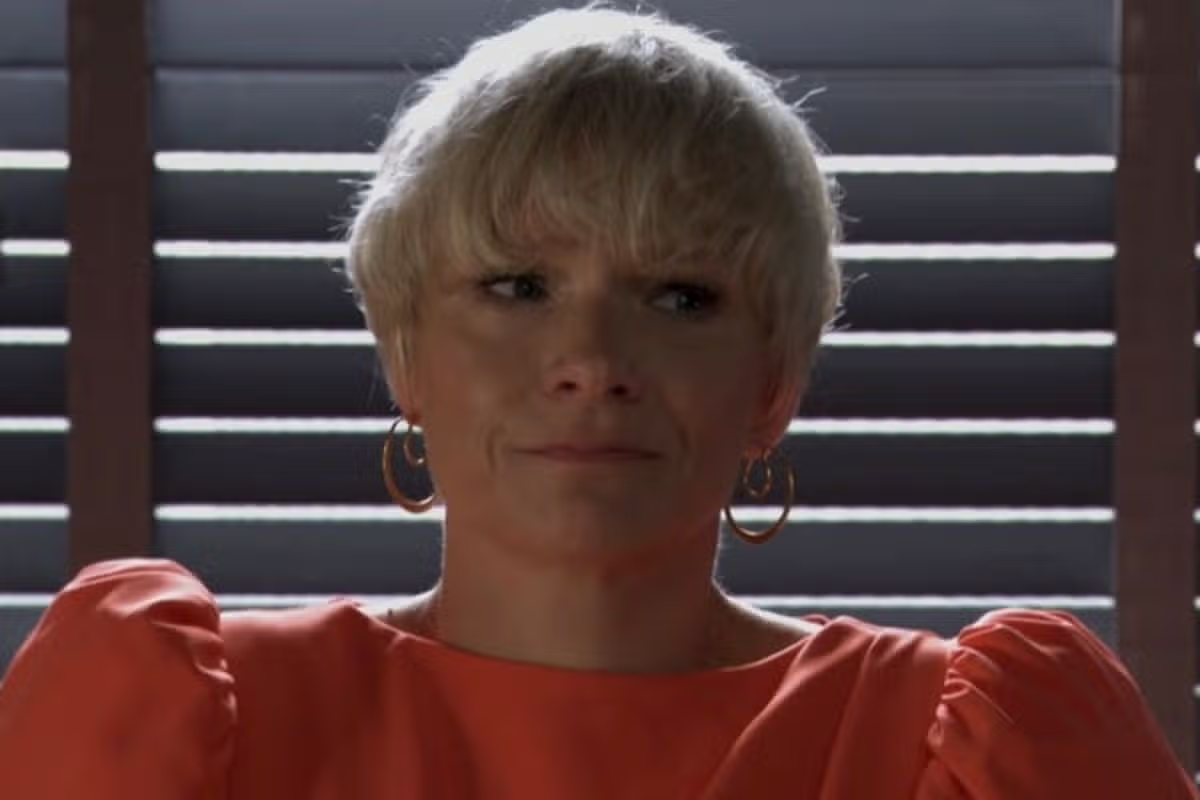
EXCLUSIVE Emmerdale boss Laura Shaw told the Mirror about the fallout to Sarah Sugden killing Dr Todd on the ITV soap, teasing Sarah could soon find out another big secret
20:27, 09 Aug 2026Updated 20:27, 09 Aug 2026
Emmerdale Mack Boyd star Lawrence Robb confirmed for Strictly Come Dancing
There could be another big shock for Sarah Sugden on the way on Emmerdale, in the fallout to her killing Dr Todd.
Speaking exclusively to the Mirror, soap boss Laura Shaw teased another huge secret would rock Sarah at some point. While fans are already in the know about a big twist that will no doubt derail her life, Sarah is yet to discover something rather huge.
On Sunday night we saw Sarah accidentally kill Todd, after a showdown with Charity Dingle. Charity had confronted her rapist, wanting a confession after the police closed the case.
Sarah walked in to the house and heard the accusation, realising Todd had raped Charity. It was just before Todd was about to expose Charity’s baby to Sarah that disaster struck.
Sarah pushed Todd, causing her to slip and fall. As she fell, Todd slammed her head on the table and died almost instantly, with Sarah and Charity watching on in horror.
Of course this was shocking, but for Sarah it’s not over it seems. Laura told us that another big shock was still to come for the character, as both Sarah and Charity deal with the aftermath of Todd’s demise.
She explained: “They are locked in a secret and that’s going to be long-lasting and going forward, that’s going to affect their relationship. Obviously, there’s still the baby secret to come out at some point.”
As we pointed out that the baby reveal was inevitably going to be exposed at some point, Laura agreed. She said: “It’s going to, it’s got to happen at some point.
“And how that will affect the story with regards to the murder and Todd, you’ll have to wait and see.” So, Sarah WILL find out about baby Leyla, meaning another huge shock is set to rattle her after she’s just turned killer.
We will see the turmoil threaten to rip Charity and her granddaughter Sarah apart, so will Charity’s betrayal regarding Leyla end their bond for good? It seems, according to Laura, this killer twist will impact the pair for a while yet.
As for the immediate fallout, the soap is keeping coy about what happens next. Very vague spoilers have revealed that in the fallout to Sunday’s death twist, Monday will see Sarah’s life turned upside down.
Charity will be desperate to cling onto her secret, meaning the baby lie. Whether Sarah could be exiting the soap after her killer actions remains to be seen for now!
Hundreds of people marched on Saturday in the town of Soller, in the island of Mallorca against mass tourism. Protesters exclaimed that tourism has had an impact on the cost of living for locals, and that access to housing has become more difficult.
Stalled for months, the peace process in the eastern Democratic Republic of Congo appears to be gaining momentum.
The Rwandan-backed M23 rebel group has accepted 15 prisoners released by the government in Kinshasa. The handover is part of a framework agreement signed last year, after talks mediated by Qatar.
Recommended Stories
list of 4 itemsend of list
It may be a small step, but it could pave the way to ending the fighting in the eastern DRC. Previous attempts have failed to bring peace to the region.
Could this mechanism address the core issues of the long-running conflict?
Presenter: Per Nyberg
Guests: Kambale Musavuli – Analyst at the Center for Research on the Congo-Kinshasa
Felix Ndahinda – Researcher on the Great Lakes region, specialising in conflict resolution, peace and transitional justice
Abdulla Al Etaibi – Assistant Professor in International Affairs at Qatar University
AARON Chalmers’ ex Talia Oatway has revealed she’s had to rush her son Oakley to hospital after he was left vomiting blood and “green liquid”.
The four-year-old was born with Apert syndrome, a rare genetic disorder that causes the bones in the skull, hands and feet to fuse together.
Talia Oatway has revealed she had to rush her son Oakley to hospitalCredit: TikTok/TaliaOatwayOakley was born with Apert syndrome and is in and out of hospitalCredit: Instagram/Talia.oatway
As a result, he lives with complex medical needs and is regularly in and out of hospital.
Worried mum Talia, 34, took to TikTok from the hospital to share news of the scary incident with her followers.
Sign up for the Showbiz newsletter
Thank you!
She began: “What a bloody day we’ve had. So two o’clock this morning, Oakley’s been vomiting since.
“Basically the back story is, Oakley had some PH testing done in hospital where they put a little device, attach it to the esophagus and you have to follow him around for two days with his bag.
“You can’t be more than two metres away from him.”
She went on to reveal that the device should have come out through him when the procedure happened three weeks ago.
“In the morning, he was covered in green sick and I found this little device in his bed,” Talia explained.
“So I phoned the hospital and they told me I need to bring him down, so I brought him down, he’s been vomiting ever since we got here.
“Oakley’s got a feeding tube in the belly, they attach a bag to the tube so instead of him vomiting orally, it’ll come out through the bag and through his belly and it was just pure green and blood. It was horrific.”
Talia said that Oakley was taken for an x-ray because the device could have damaged a part of his bowels.
However, he was required to have another x-ray to investigate further before they consider taking the surgery route.
Talia held her hand over her face and expressed: “I just don’t know what’s going on, it’s just horrific.
Talia revealed Oakley was vomiting blood and green liquidCredit: TikTok/TaliaOatwayThe worried mum updated her TikTok followers about what was going onCredit: Instsgram
“I just feel like it’s one thing after another for this baby and I feel so sorry for him. It’s just awful.”
It comes after his previous hospital dash last month which resulted in him having to have the device put inside him initially.
Speaking previously, the brave mum said: “Every hospital admission. Every surgery. It never gets easier. The fear, the waiting, the helplessness – it never goes away.
“But you keep going because your child needs you to be strong when they can’t be.”
Talia is also mum to three other children – Oakley’s siblings.
She shares Oakley, Romeo, six, and Maddox, four, with formerGeordie Shore star Aaron. She also has an older daughter from a previous relationship.
She said: “Oakley’s here every single night, he has been for over a year and the fact that this person can just go online and start talking about his medical care when he doesn’t attend any appointments, doesn’t attend hospital, is mind-blowing.”
Israel is trapped in a cycle it created. Occupation fuels resistance, and resistance is used to justify more occupation. Near Nablus, that cycle turned deadly yet again: five Palestinians killed as four new outposts were erected. Al Jazeera’s Leila Warah reports.
Wildfires have spread near Albania’s capital and in parts of southern Spain, prompting hundreds to evacuate. As firefighting teams attempt to contain the blaze in both countries.
EXCLUSIVE: The series will end after the 11th run and a plan to go out with a funeral got vetoed, despite many attempts to make it work
Try as they might, the producers couldn’t quite bring themselves to kill off the much-loved character(Image: ITV)
Grantchester’s producers planned to kill off Robson Green’s character in a tear-jerking series finale of the TV drama. But in the end they got cold feet and decided viewers would prefer a happier ending.
The final series of the ITV smash – starring Robson and Rishi Nair as crime fighting duo Det Geordie Keating and The Rev Alphy Kottaram – will air in the UK next year.
But viewers in the US have already the eleventh and last-ever series and got a shock when Keating was shot and left fighting for his life. Now screenwriter Daisy Coulam has revealed how she wrestled with the idea of killing him off altogether.
She confessed: “I mean the amount of times we tried to be like, ‘He should die. He should definitely die’. I mean he died probably about four times in the story meeting and we just couldn’t do it. It would just be too big.
“You’re like ‘No, because you need that moment at the end’. You need hope and you need joy because it’s a (platonic) love story and you need your two lovers alive at the end, I think.”
Instead fans will see Keating survive the shooting and decide to retire from the force. But he hands ‘the baton’ over to fellow officer Larry Peters (played by Bradley Hall) to carry on sleuthing with the help of The Rev for future cases.
And in a touching moment, Keating leaves his protégé his hat – which he has kept with him since the start.
Daisy added: “The hat moment … it was randomly filmed the day James Norton came to set for a little visit. We were sitting and we said to Robson ‘What kind of thing would you like to do? You know, what scene do you want?’
“And he said ‘I think you should give Larry the hat’. We were like ‘Yes’ because Emma and I are obsessed with Indiana Jones and it’s basically Indiana Jones, isn’t it? It’s ‘the putting the hat on’. So we were very happy and I just think Bradley acted his socks off and he doesn’t say anything but you really, really feel his pride. It’s so sweet.”
During filming of his final scenes on a hospital trolley Robson, 61, decided to lighten the mood. He sneaked in a sign which read ‘Available for panto’ – as the cast knew they needed to start looking for new projects now Grantchester is ending.
When the hospital porters wheeled him in and the cameras started rolling he held up the sign and made everyone burst out laughing.
Afterwards he told The Masterpiece Studio podcast: “I’m going to miss that feeling of when you look at a schedule, you’re going to a certain location. And in this case, it was Grantchester. I’d always look at the schedule and go, ‘When are we going to Grantchester?’ Because it’s like going on holiday with lots and lots of friends. That’s what I’ll miss.”
Plotlines for the final series will see The Rev Alphy question his faith in God and new fashion boutique owners Cathy Keating and Mrs C (Kacey Ainsworth and Tess Peake-Jones) get caught up in a murder.
Grantchester launched back in 2014 and has run for 11 series. It has had three vicars helping Keating along the way including James Norton as The Rev Sidney Chambers and Tom Brittney as The Rev Will Davenport.
Ahmed al-Jubouri and a close associate were arrested on charges of misusing contract funds in Saladin province.
Published On 9 Aug 20269 Aug 2026
The former governor of Iraq’s Saladin province, Ahmed al-Jubouri, also known as Abu Mazen, has been arrested on corruption charges, Iraqi media say.
Al-Jubouri was arrested in Baghdad on Saturday after allegedly embezzling funds from Saladin province contracts, a senior government source told the Iraqi News Agency said. The news was widely confirmed by other Iraqi media.
Recommended Stories
list of 3 itemsend of list
The politician served as governor of Saladin from 2013 to 2014, followed by a tenure as minister of state for provincial affairs between 2014 and 2015. He is currently secretary general of the National Masses Party, which holds three seats in Iraq’s parliament and is part of the ruling coalition.
Businessman Mohammed al-Hajaf, who has been described as al-Jubouri’s close associate, was arrested in Saladin province under the same charges.
The source did not reveal the amount of money that had been taken. Al-Jubouri and al-Hajaf have not publicly commented on the allegations.
The National Masses Party posted a photo of al-Jubouri on Facebook, captioned: “You can take pride in what you have done for sick and poor people.”
Both arrests come days after the State Administration Coalition, which consists of parties that form and support the government, reaffirmed the need to continue the anti-graft campaign and to support the prime minister’s efforts.
Earlier this year, new Iraqi Prime Minister Ali al-Zaidi assumed office amid growing United States pressure on Baghdad to tackle corruption and disarm Iran-backed armed groups that have targeted US facilities in Iraq.
Security forces arrested 47 prominent Iraqi politicians, lawmakers and officials in June, leading to the seizure of tens of millions of dollars and bringing renewed attention to the decades-long issue of corruption.
Al-Jubouri was previously arrested in November 2019 after his parliamentary immunity was revoked over alleged criminal activity related to the construction of student dormitories at Tikrit University. According to local media, he was later released on bail.