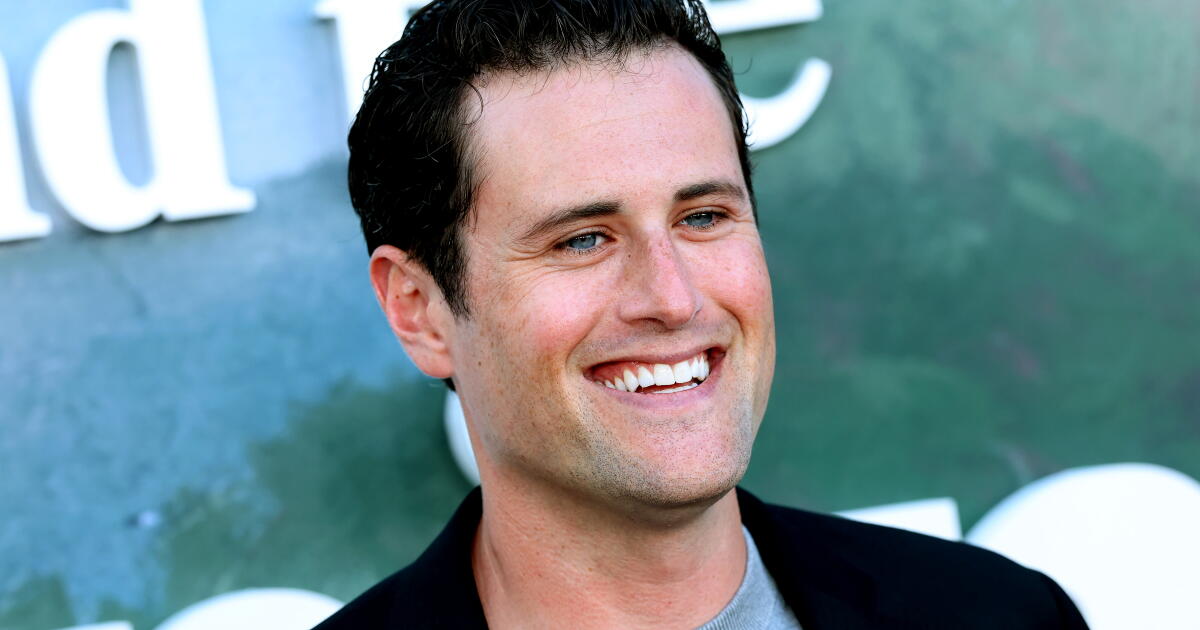
Dr Xand van Tulleken said people could make a key mistake as UK hit with killer salmonella outbreak
08:17, 02 Sep 2026Updated 08:46, 02 Sep 2026
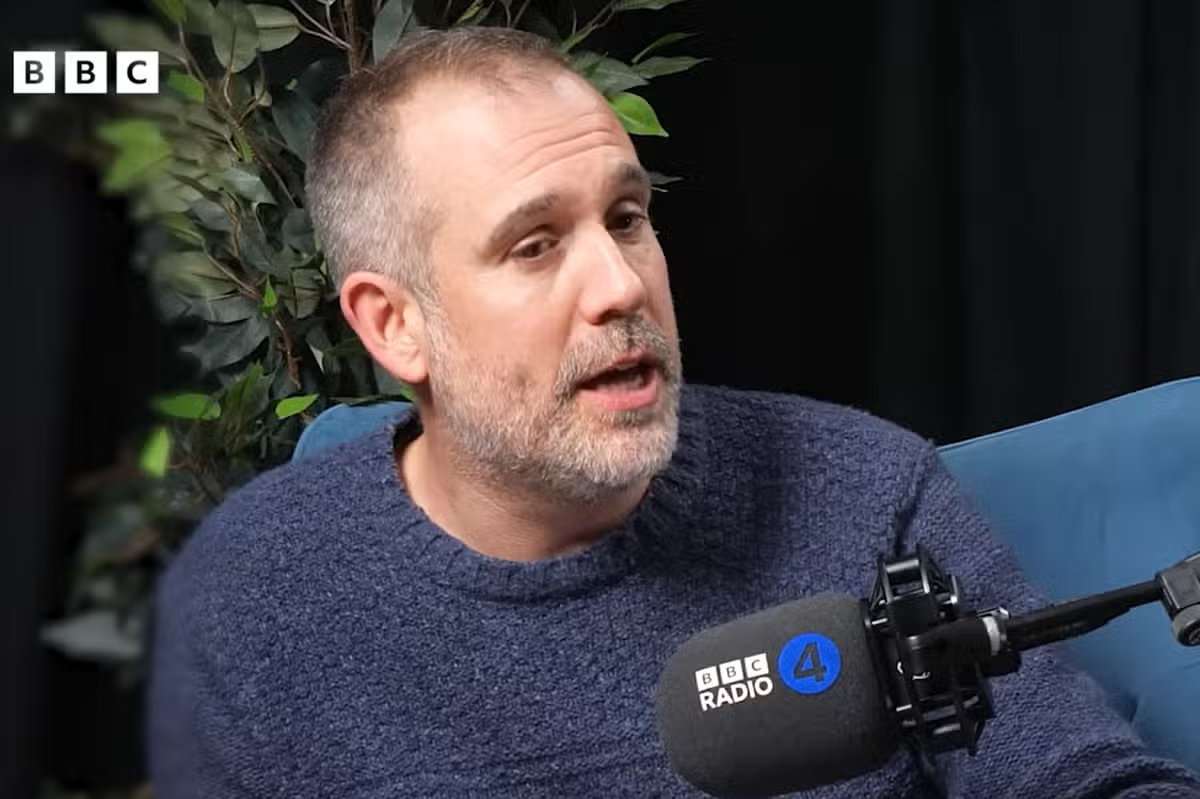
BBC Morning Live, Dr Xand van Tulleken said people need to consider how they store their eggs(Image: BBC)
A BBC expert has explained the ‘thing you should worry about’ with UK kitchen egg storage after Salmonella outbreak. Cases of salmonella linked to imported eggs have risen, according to new figures from the UK Health Security Agency (UKHSA).
Officials reiterated that babies, young children, pregnant women and older people should only eat thoroughly cooked eggs in restaurants and cafes. There is no evidence that eggs produced in the UK are affected and the risk to the public remains low.
As of August 25, there have been 259 cases of salmonella and one death, the UKHSA said. Appearing on BBC Morning Live, Dr Xand van Tulleken said people need to consider how they store their eggs – but added one thing they should not do is wash them.
On the subject of whether people should store eggs in the fridge, he said: “From the Food Standards Agency, the advice is that the fridge is good. That’s their gold standard. But it is fine to store your eggs outside the fridge provided it’s in a place that is a steady temperature below 20°.
“Now this summer, my eggs are just out in the kitchen and it’s well over 20° for a lot of the summer and the temperature is fluctuating as well. So you’re fine in the fridge, you’re fine outside the fridge, but you want to cool the kitchen.”
People need to be aware of a potentially dangerous situation in fridges which can allow bacteria to grow, Dr van Tulleken said: “So here, let me give you the thing that you should actually worry about. It’s condensation. So, the reason they say keep them in the fridge at a steady temperature, so you’re trying to avoid temperature fluctuations and condensation because condensation, moisture on the outside of the egg allows bacteria into the egg.
“And so, if you’re getting your eggs in and out of the fridge all the time, you’re getting a lot of condensation, that could be a problem. And so having them in a cool kitchen is fine, but you’ll get a longer life from the egg if you keep it in the fridge. But you’re not mad if you’re keeping your eggs outside the fridge, but on a on a warm summer, you might be better in the fridge in the box.”
He added that people should not wash them: “You don’t want to wash your eggs for the same reason. You don’t want to get your eggs covered in moisture. Your eggs are fine. Don’t wash them. Just crack them.”
Anyone eating in a restaurant should ask one question: “The other thing is I think if you’re eating out at the moment, you can either ask them and say, ‘Have you checked for the British lion? Can I check that your eggs are not imported?’ If you’re not feeling up for that conversation with the waiter, it would be fine to also avoid soufflé, mousse, hollandaise, and mayonnaise.
“The steak with the raw egg on it. Any of those things, soft-boiled eggs, poached eggs, all those things would, if you’re worried, particularly if you’re vulnerable, I think that would be reasonable at the moment. But if you if the kitchen uses UK eggs, you’re fine.”
Madrid, Spain – A wealthy American donor to Palestinian causes who faces extradition from Spain to the United States over alleged financial support of Hamas is a victim of “political persecution”, his wife and lawyers have told Al Jazeera.
James “Fergie” Chambers was arrested on the Spanish island of Ibiza in July while searching for a school for his son with his wife, actress Stella Schnabel.
Recommended Stories
list of 4 itemsend of list
US authorities have linked Chambers to the transfer of $7.5m to Tunisia and allege that the funds were ultimately used to provide financial support to the Palestinian armed group Hamas.
Director Julian Schnabel (centre), screenwriter Rula Jebreal (right) and actress Stella Schnabel pose during the ‘Miral’ red carpet event at the 67th Venice Film Festival, September 2, 2010 [Tony Gentile/Reuters]
The indictment remains sealed, so the specific allegations against Chambers – who denies wrongdoing – are not yet known.
Chambers, heir to one of the richest families in the US, has supported a handful of humanitarian projects in Gaza with funds totalling more than $1m, a member of his legal team said shortly after his arrest.
The extradition effort is believed to be the first of its kind involving a US citizen accused of providing support to Hamas.
Chambers, who describes himself as a Marxist-Leninist, has been held in a Madrid jail for six weeks as Spanish authorities consider the US extradition request.
Schnabel, who is also an activist, said she was driving through the Balearic island of Ibiza with her husband to search for a school for their five-year-old son, as they were moving from Ireland to Spain, when he was arrested.
“Suddenly, several unmarked cars cut us off. Police officers got out of the cars and told us to get out of the car. I got out my phone, and they told me not to phone,” she told Al Jazeera. “They handcuffed Fergie. We said we loved each other, and he said, ‘Tell the kids I love them’. And they bundled him into a car, and he was gone. That was July 10. Over six weeks ago.”
Schnabel said US President Donald Trump’s administration was targeting her husband for being one of the largest donors to humanitarian projects in Gaza. This included supplying bread, water and medical care.
“He should be at home with his family, continuing his humanitarian work. Instead, he is facing political persecution because he has stood with the Palestinian people,” she said. “This sets a terrifying precedent for repression of the wider movement for a free Palestine, including precedent for the Trump administration exporting its repression far beyond the US borders to target the people of Europe.”
The US Department of Justice declined to comment when contacted by Al Jazeera.
The US sent the indictment and documentation to Spain last week, in time to meet the 45-day deadline after Chambers’s arrest in July.
Al Jazeera understands that the indictment is still sealed and has not been revealed to his defence team.
Spanish authorities must now assess the US request. Among the issues they may consider is whether the extradition would amount to political persecution, a circumstance that could provide grounds for refusing it.
Chambers comes from the family behind Atlanta-based Cox Communications. In 2023, he reached an agreement with his relatives under which his stake in the family business was bought back for approximately $250m, following a break with the family.
Since then, he has been funding dozens of projects in 20 countries, Schnabel has said.
On the central allegation about funding Hamas, Schnabel said this was a “trumped-up charge” for which the US has not provided a “shred of evidence”.
“My understanding is that the US appears to rely on the fact that he transferred $7.5m of his own funds from the US to Tunisia. The reality is that this money was transferred to Tunisia because we were living there, and for philanthropic activities, including supporting Club Africain [a football team],” Schnabel said.
“The money sponsored the club, helped to pay its debts and overdue salaries, rebuild its training centre and develop football fields for young people.”
The Tunisian side secured the league title in May.
Lawyers for Chambers have also pointed to his outspoken views on Israel and its genocidal war on Gaza.
In the week after the October 2023 Hamas-led attacks on Israel, Chambers posted on X about Israel’s response: “Stop calling it ‘collective punishment’. There’s nothing to be ‘punished’ for. No faction of the Palestinian resistance, Hamas or other, has done anything wrong. It’s simply genocide. Like it has been.”
In the wake of the 41-year-old’s arrest, FBI agents raided the rented property in Ibiza where Chambers had been staying, The Guardian reported.
Chambers is represented by Spanish human-rights lawyer Baltasar Garzon, who has argued that the case against his client is politically motivated and connected to his humanitarian work in Palestine.
“We request our client’s provisional release and to file all necessary legal actions with the courts,” he told Al Jazeera.
In 1998, Garzon sprang to international attention when he sought the extradition from London of the former Chilean dictator Augusto Pinochet. He has also acted in human rights cases in Spain and Argentina.
“We hope that Spain will not grant extradition in what we consider to be a case of political persecution based on our client’s ideas and humanitarian aid to Palestine,” he added, referring to Chambers.
Search and rescue operations under way as authorities lose contact with 10 crew members after a vessel collision near Istanbul.
Published On 2 Sep 20262 Sep 2026
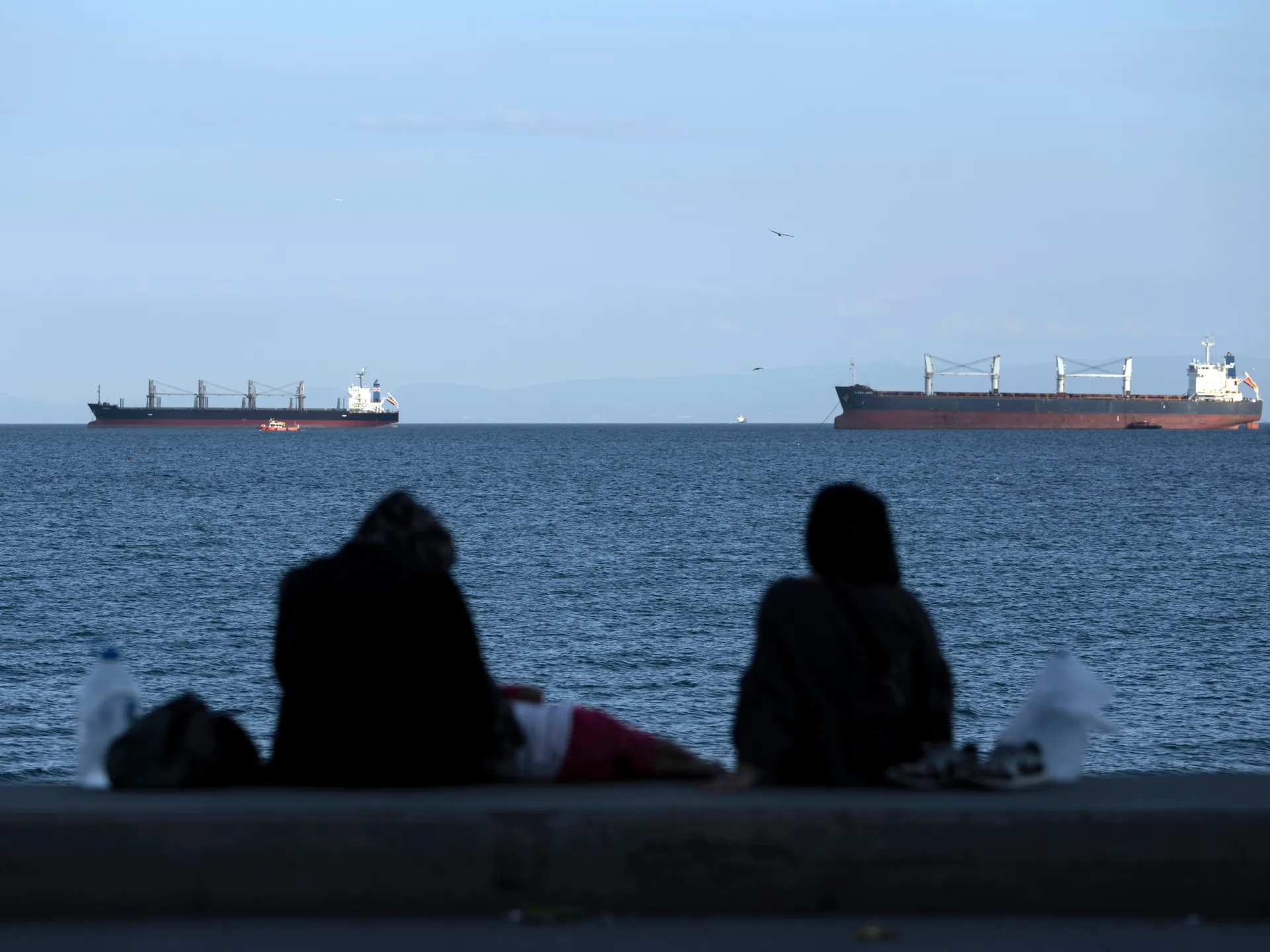
Turkiye’s coastguard has launched a search and rescue operation after two Turkish-flagged commercial vessels collided off Istanbul and contact was lost with one vessel and its crew of 10.
The collision took place at 3am (00:00 GMT) in the Marmara Sea a little more than 20 miles (32 kilometres) south of Silivri, a suburb of Turkey’s largest city, the Istanbul governor’s office said in a statement on Wednesday.
Recommended Stories
list of 2 itemsend of list
Contact was lost with the crew of the Tugberk Imamoglu, flagged to Turkey, after the collision with the Turkish-flagged Alsu, which appeared undamaged, the governor’s office said.
“Numerous naval units from the coast guard’s Marmara and Bosphorus Command and a coast guard helicopter were dispatched to the scene,” the office said.
MELANIE C is in fine shape after raking in £1million last year from her solo work and Spice Girls royalties.
New accounts for Mel’s touring company, Red Girl Media Ltd, show Sporty Spice raked in £550,000 from solo shows in the year to 31 August 2025.
Former Spice Girl Mel C earned £1million last year from her solo work and Spice Girls royaltiesCredit: SplashMel also earned her share of Spice Girls royalties worth £600,000Credit: Getty
During that time Mel embarked on a DJ tour of the UK, Ibiza and Australia.
Latest paperwork for her publishing firm, Red Girl Productions Ltd, shows she took home a further £300,000 last year from solo royalties.
Sign up for the Showbiz newsletter
Thank you!
She also earned her share of Spice Girls royalties worth £600,000.
The money is set to keep rolling in for the recently married singer, as the accounts don’t cover the release of her latest album Sweat earlier this year.
Shortly after saying I Do, Mel and Aussie model Chris were seen snogging in the sea during their Ibiza honeymoon – and her latest body art marks their first trip as husband as wife as well as her work on the White Isle.
In a new video posted to TikTok, Mel was seen having a cherry icon tattooed onto her forearm.
The cute design, which featured the striking red fruit on its stalks, also commemorated her fifth year DJing at Ibiza club Pacha, which has the twin cherry as its emblem.
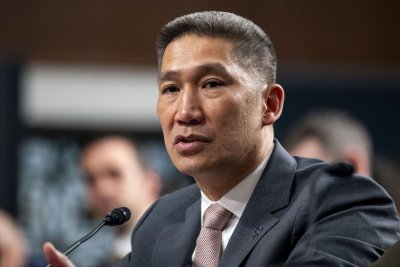
Sept. 2 (UPI) — President Donald Trump has nominated Hung Cao to be secretary of the Navy amid an ongoing shakeup of the U.S. military.
Trump announced his nomination of Cao for a position he has held on an interim basis for months on his Truth Social media platform Tuesday, calling him “a true WARRIOR.”
“We need Patriots like Hung leading our Navy and Marine Corps, and I can think of no one better than him to make sure our Great Navy and Marine Corps remain the FIERCEST and BEST Force the World has ever seen,” the commander in chief said.
“The Senate needs to confirm this Warfighter, ASAP, so he can continue the fantastic work he has been doing over the past 4 months.”
Cao has served as acting secretary of the Navy since April when his predecessor, John Phelan, was reportedly forced to leave the position over clashes with Defense Secretary Pete Hegseth, Deputy Defense Secretary Stephen Feinberg and Cao.
The announcement comes as there has been a high turnover rate in U.S. military leadership during Trump’s second administration, with high-ranking officers resigning, quitting or purged. On Monday, it was reported that Army Secretary Dan Driscoll resigned following months of clashes with Hegseth.
Cao in a statement late Tuesday thanked Trump for the nomination, saying “it’s an honor of a lifetime to lead the great warriors of the Navy and Marine Crops team.”
“I’m grateful for your leadership and support as we continue to get after shipbuilding and ensure the defense of the homeland.”
If confirmed by the Senate, Cao, as secretary, will oversee the entire Navy from recruiting to equipping and mobilizing as well as be in charge of construction, outfitting and repairing naval ships, equipment and facilities, among other responsibilities.
“Congrats to Hung Cao on being nominated as our nation’s next @SECNAV,” Sen. Rick Scott, R-Fla., said online.
“I know you will work hard to support our incredible Sailors and Marines.”
Last week, Israel attacked Syrian territory yet again. Israeli forces shelled a hilltop near Beit Jinn in the western Damascus countryside, while soldiers raided a village in Quneitra province.
The attacks came just days after Israeli fighter jets struck the Abu al-Duhur military base in northern Syria, inflicting significant damage. Israel said the strike was intended to prevent a possible Turkish military deployment there, although both Damascus and Ankara disputed these claims. The Israeli attacks have persisted despite Syrian efforts to de-escalate through diplomacy, and criticism from Washington of the Abu al-Duhur strike.
While avoiding confrontation, the government of Ahmed al-Sharaa continues to insist that Israel withdraw from Syrian territory it has occupied and that Damascus must remain free to rebuild its armed forces and cooperate with the partners of its choosing.
All this reveals more than Syria’s military weakness. It suggests that the new Syrian leadership believes sovereignty can be recovered by rebuilding state capacity first. This strategy, however, carries potential risks: Israel may continue to encroach on Syrian sovereignty while taking advantage of Syrian restraint; and the Syrian government may eventually begin to lose the trust of Syrians and the wider Arab public, among whom Israel is overwhelmingly viewed as a threat.
Syria’s weakness is real. In late 2024, after the army of former President Bashar al-Assad collapsed, Israel struck strategic military assets across the country. The new government then had to begin assembling a national security architecture from dysfunctional institutions and a patchwork of armed groups.
For now, a Syrian military response capable of altering Israel’s behaviour is difficult to imagine.
Instead, al-Sharaa has placed economic recovery and international legitimacy at the top of his priorities. His government has focused on rebuilding state institutions, restructuring the security sector, restoring energy supplies, improving foreign relations and reconnecting Syria to the international economy. But rebuilding Syria is an enormous challenge.
The World Bank estimates that reconstructing Syria’s damaged physical assets will cost about $216bn. A state facing needs on that scale cannot restore its authority through military institutions alone. It needs revenue, electricity, functioning administration, banking access, investment and external relationships.
Al-Sharaa has achieved significant progress on the international front. Washington dismantled the broad Syria sanctions programme in 2025, while the European Union lifted its economic sanctions, although targeted and security-related measures remain. On August 24, Washington also removed Syria from the State Sponsors of Terrorism list, eliminating another key obstacle to financial normalisation and investment.
For Damascus, these steps expand the resources with which the state can govern; they are not simply an economic dividend of avoiding war.
This also makes the dispute with Israel more consequential. Syria’s reconstruction strategy now depends heavily on precisely the international access that years of isolation denied it. A major military escalation with Israel could undermine investor confidence, complicate Syria’s reintegration into international banking and weaken the diplomatic support on which its recovery depends.
It could also expose Damascus to renewed political pressure by Washington and the EU, even if this does not automatically translate into the reimposition of broad sanctions.
The dilemma is therefore becoming sharper: Restraint helps Damascus preserve the international environment it needs to rebuild the state, but it also gives Israel room to constrain the very military and strategic capacity Syria is trying to reconstruct.
Israel has security concerns about the new Syrian government, whose leadership emerged from an armed Islamist movement, and it is increasingly alarmed by Turkiye’s military relationship with Damascus. But Israeli demands have extended well beyond preventing hostile forces from approaching its border.
Israeli Prime Minister Benjamin Netanyahu has called for the demilitarisation of Syria’s Quneitra, Deraa and Suwayda provinces. His government has also opposed the deployment of forces belonging to Syria’s new army south of Damascus and has sought to restrict the scope of Damascus’s military cooperation with Turkiye.
Israel clearly wants to limit the rebuilding of Syria’s military capacity. It sees such interference through the prism of preventive security. Damascus sees the same issue through the prism of sovereignty: A state that cannot decide where its army deploys or with whom it trains has not fully recovered strategic autonomy.
This is one of the central risks of al-Sharaa’s strategy. Syria is avoiding an unwinnable confrontation partly to rebuild the capacities of state power, while those same capacities are increasingly becoming objects of Israeli pressure.
There are limits to what restraint can achieve. Syria has the backing of other Arab states, while the United States and EU have supported the reconstruction of a functioning Syrian state as part of their approach to regional stability. Damascus has also repeatedly expressed interest in reaching a security agreement with Israel.
And yet, none of this has stopped Israeli military action.
The other risk concerns Syrian public opinion. Appearing indefinitely unable to respond to Israeli attacks could eventually damage al-Sharaa’s public standing and the legitimacy of his government.
A large survey by the Arab Center Washington DC conducted in 2025 found that 74 percent of Syrians opposed recognising Israel, 70 percent rejected an agreement that did not include the return of the Golan Heights, and 88 percent believed Israel threatened Syria’s security and stability. At the same time, 61 percent said the current government’s foreign policy reflected the views of the Syrian people.
The findings are important precisely because they complicate the picture. The survey predates the latest confrontations and does not tell us whether Syrians favour military retaliation. It establishes political red lines, not a public demand for war.
Wider Arab polling points in the same direction. Across the countries surveyed in the 2025 Arab Opinion Index, opposition to recognising Israel remained overwhelming.
That said, Syria under the al-Assads also generally avoided confrontation with Israel while retaining a reputation for belonging to the regional “resistance” camp. The old model combined avoidance of direct war with alliances and armed networks that gave Damascus regional leverage.
Al-Sharaa’s government appears to be making a different bet, focusing on consolidated institutions, economic recovery, international access and a rebuilt national military.
This does not replace territorial sovereignty. It is an attempt to rebuild the means of exercising it.
The bet will become harder to defend, both at home and abroad, if restored state capacity does not eventually give Syria greater control over its territory, its security choices and its foreign relations.
The views expressed in this article are the author’s own and do not necessarily reflect Al Jazeera’s editorial stance.
Raygun became a global phenomenon back in 2024, now she is speaking out in her own documentary
Untold Raygun: Breaking Badly can be streamed on Netflix now (Image: Netflix)
Netflix subscribers have said the same thing following the release of a documentary on a viral breakdancer.
Raygun, whose real name is Rachael Gunn, became a global phenomenon at the 2024 Olympics in Paris when her unconventional breakdancing routine went viral – for all the wrong reasons. Her unusual routine featured non-traditional movements including floor rolls and the now famous kangaroo hops, and she later found herself an internet meme.
After scoring zero points, the routine sparked controversy across the world, resulting in heightened mockery and online hate as she became one of the most talked about athletes of 2024.
Now, she has returned to cameras for her very own Netflix documentary titled ‘Untold: Raygun Breaking Badly’ which has today (September 1) landed on the streaming platform.
An official synopsis reads: “Nobody, least of all Rachael Gunn, expected to be an Olympian. But as Raygun’s performance at the 2024 Paris Olympics went viral overnight, so did an avalanche of memes, misinformation, and conspiracy theories questioning how she ever got there.”
Taking to Instagram, Netflix UK shared a teaser clip from the documentary as they captioned their post: “From Australian academic to global meme… Untold Raygun: Breaking Badly is now playing on Netflix!”
After landing on the streaming platform today, viewers are already having their say as opinions are divided. As some questioned “why” the documentary was released, one person penned: “There’s a Raygun documentary. That I have to watch!!! Surely there’s an interesting story behind those dances.”
Another said: “Just finished the Raygun documentary on Netflix and it is definitely a must-watch.” A third wrote: “Watching this Raygun documentary on Netflix and I’m in real tears lol Netflix the GOAT of documentaries btw but S/O to her for doing this too tho cuz [sic] she didn’t have to!”
On Instagram, one person said: “Fair play to her.”Another penned: “Just watched it. Jaw dropped to the floor all the way through. This screams Will Ferrell movie in all its aspects.”
Breakdancing, officially called breaking, made its Olympics debut in 2024. Away from the sporting event, Raygun was an academic as she has now opened up about the event that made history.
In the clip shared to social media today, Rachael can be heard saying: “Right before the Olympics, I went to my therapist, panicked. She was like ‘what’s the worst that could happen?’
“The whole world could laugh at me. She’s like ‘do you think that’s reasonable?'” She later adds: “There was this frenzy. It was this growing monster.”
Untold Raygun: Breaking Badly can be streamed on Netflix
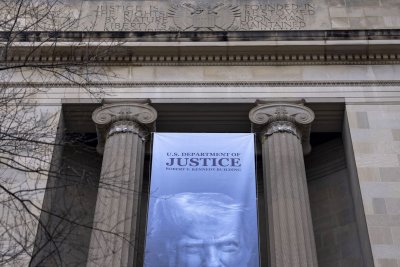
Sept. 2 (UPI) — The Trump administration sued a Kansas City school district on Tuesday, accusing it of violating federal law with guidelines concerning disclosure of a student’s gender identity to their parents.
The Justice Department described the lawsuit as the first it has filed against a school district alleging that gender-identity guidelines violate the Family Educational Rights and Privacy Act and the Protection of Pupil Rights Amendment.
“Parental rights are paramount in operation of America’s public schools, and Kansas City, Kansas Public Schools does not know children better than their own parents,” Assistant Attorney General Harmeet Dhillon of the Justice Department’s Civil Rights Division said in a statement.
“The department will not tolerate school districts playing fast and loose with federal law in the service of radical gender ideology.”
Having campaigned on an anti-“woke” platform that included opposition to transgender rights, President Donald Trump has repeatedly targeted policies benefiting transgender Americans, particularly minors and students, seeking to ban transgender girls and women from competing in female sports and restrict minors’ access to gender-affirming healthcare.
The lawsuit filed Tuesday challenges as unlawful KCKPS guidelines that allow students to request that their transgender or gender-nonconforming identity be withheld from their parents, with such requests considered on a case-by-case basis, as well as guidelines allowing school officials to consider using a student’s preferred name, gender, and pronouns. The Justice Department described such policies as “facilitating secret ‘gender transitions’ for children at school without their parents’ knowledge or consent.”
Federal prosecutors allege that the guidelines are unlawful because they require a meeting to be held to discuss the student’s request, creating records that the Justice Department argues FERPA requires school districts to provide to parents. FERPA also arms parents with the authority to challenge records, and the KCKPS guidelines deny them the opportunity to even see the gender plan for their child, let alone challenge, correct or delete it, the Justice Department argues.
Its PPRA claim is that the guidelines violate the law’s guarantee that minor students will not undergo a survey, analysis or evaluation that reveals certain information, including mental or psychological problems, sexual behavior or attitudes and religious beliefs, without parental consent.
U.S. Attorney Ryan Kriegshauser for the District of Kansas said the lawsuit should “not come as a surprise” given that public education only works when schools and parents work together.
“When schools withhold information from parents, they undermine trust and disrupt the essential balance between families and public educators,” he said in a statement.
KCKPS denies the allegations, stating it is in compliance with both FERPA and the PPRA and that it was “disappointed by the DOJ’s decision to file the lawsuit.”
The lawsuit comes more than a year after the Education Department initiated an investigation into the school district following receipt of a complaint against its guidelines from the conservative Defense of Freedom Institute for Policy Studies, which was founded by former Trump administration officials.
In July, KCKPS Superintendent Anna Stubblefield told local KSHB41 that what the Trump administration is targeting are guidelines, not policies.
“There’s nowhere in the guidance where we say ‘withhold information from parents.’ We have no reason or incentive to withhold information from parents about anything that they’re entitled to for their students,” she said.
“When they say we have a policy, we’ve never had a policy.”
Germany has now formally accused Russia of directing an attempted explosive-drone attack against Ukrainian cargo aircraft at Leipzig/Halle Airport, a story we previously reported on. At the same time, authorities are separately investigating a sophisticated sabotage attack against a critical power-grid node in Brandenburg, underscoring Germany’s growing concern over hybrid threats to its critical infrastructure.
The two incidents, occurring against the backdrop of growing German and European warnings about Russian hybrid warfare, underscore the expanding range of vulnerabilities facing critical infrastructure across the country.
We now know that Russia is responsible for the attempted explosive attack at Leipzig airport. Russia’s repeated hybrid attacks on Germany and Europe are unacceptable. (1/4) pic.twitter.com/o3vBjgpeb1
German Interior Minister Alexander Dobrindt and Foreign Minister Johann Wadephul said Tuesday that the Russian state had apparently provided the equipment and technical know-how for the Leipzig operation, with locally recruited “low-level agents” allegedly tasked with carrying it out.
The drone, discovered inside the secured area of Leipzig/Halle Airport during the night of August 4-5, was carrying approximately 1.3 pounds of explosives and was found close to a Ukrainian-operated Antonov An-124 heavy cargo aircraft used to transport weapons to Ukraine.
New footage of yet another act of Russian terrorism on EU soil, showing the drone loaded with explosives on the tarmac at Leipzig/Halle Airport, just meters from a Ukrainian Antonov An-124 cargo aircraft.
— SPRAVDI — Stratcom Centre (@StratcomCentre) August 5, 2026
The detonator on the device apparently failed, preventing what German officials said could have been a catastrophe.
The incident appears to have combined several characteristics of the emerging European hybrid threat: a relatively inexpensive drone, military-grade explosives, a strategically significant target, and the alleged use of local operatives to provide distance between the attack and its suspected state sponsor.
As we discussed at the time, the choice of target at Leipzig/Halle is particularly significant. The airport is an important cargo hub, and Ukrainian Antonov aircraft operating there have been used to move weapons to Ukraine. At the very least, an explosive device detonating near one of those aircraft could have disrupted a logistics link supporting Kyiv while simultaneously creating a major aviation safety incident.
Ukrainian An-124 aircraft were serviced at Leipzig/Halle Airport last month. Photo by Hendrik Schmidt/picture alliance via Getty Images
A successful attack on one of Antonov’s cargo aircraft could have caused casualties, damaged or even destroyed the aircraft, and disrupted airport operations. The presence of explosive material inside a secured airport area also demonstrates the potential for covert actors to penetrate or exploit security around critical aviation infrastructure. But above all else, the loss of an Antonov Airlines An-124 would have been highly symbolic as the huge aircraft are a global symbol of Ukraine and its resilience.
Investigators later found traces of hexogen, or RDX, a military explosive near the airport on August 14, together with another drone.
A police investigator works on the tarmac with a robot capable of defusing explosives near a Ukrainian An-124 cargo plane at Leipzig/Halle Airport on August 5, 2026. Photo by Jens Schlueter/Getty Images
Authorities initially believed the second drone could have been part of the planned attack, although investigators have since expressed doubts about that assessment. Nevertheless, German officials now say there is sufficient evidence to attribute the attempted operation to Russia, an accusation that Moscow rejects.
The Leipzig incident was not the only major security concern confronting Germany on Tuesday.
In the eastern state of Brandenburg, authorities said the power grid was deliberately targeted with specially prepared incendiary devices and rockets carrying conductive material. The attack targeted the Turnow-Preilack substation, a critical high-voltage node connecting the Jänschwalde power plant to the 50Hertz transmission network.
Police officers are standing in front of a barrier at the substation in Turnow-Preilack. A high-voltage power line can be seen in the background. Photo by Markus Lenhardt/picture alliance via Getty Images
According to Brandenburg Interior Minister Jan Redmann, rockets carrying conductive material were fired into extra-high-voltage transmission lines, producing two short circuits. Authorities recovered more than a dozen devices at the site, with the number still increasing as the search continued. Redmann said the design and deployment of the devices required substantial preparation.
The attack caused a brief power interruption, but 50Hertz said all affected lines had returned to operation and that the general electricity supply was never disrupted.
At the Jänschwalde power plant, the incident triggered an automatic shutdown of one generating unit. The unit was expected to return to service Tuesday evening.
A substation and Germany’s Jänschwalde coal-fired power plant were attacked today, knocking a generating unit offline.
Local authorities report that the attackers launched rockets carrying payloads of “conductive material,” causing short circuits. pic.twitter.com/dxPNmi2i9W
While the physical damage was limited, the nature of the attack is likely to attract significant attention from German security officials. Unlike Leipzig, German authorities are not currently attributing the Brandenburg sabotage to Russia. Redmann said authorities could not rule out the involvement of a foreign power, while also declining to exclude domestic extremist or activist groups. Left-wing activists have previously attacked German electricity infrastructure.
But the incident demonstrates the same underlying vulnerability Berlin is increasingly concerned about. In an age of hybrid warfare, relatively small-scale acts of sabotage exploiting weaknesses in infrastructure can have outsized consequences. Redmann described Germany’s critical infrastructure as excessively vulnerable.
“When it comes to our critical infrastructure, we in Germany are far too vulnerable,” he said, adding that the vulnerability extended to airports.
View of the power plant units at the Jänschwalde power plant. Unconventional explosive devices were found at the substation today. Photo by Markus Lenhardt/picture alliance via Getty Images
Taken together, the incidents illustrate the breadth of the threat German officials are attempting to address.
Germany’s assessment of the Leipzig operation also points to an increasingly familiar model of suspected Russian covert activity. German officials say Russian state actors supplied the expertise and equipment but relied on local agents to conduct the physical operation. That type of operation could provide Moscow with additional deniability while allowing sabotage to be conducted by individuals already inside the target country. It also complicates the security challenge for European governments.
German intelligence sources cited by German media have reportedly identified possible links between drone, explosive, and weapons incidents in Germany and other European countries, including Bulgaria, Italy, Poland, Romania, and the United Kingdom. Investigators are understood to be examining the incidents in parallel.
If those links are confirmed, the Leipzig operation could represent one element of a broader campaign involving recruited personnel, explosives, and uncrewed systems operating across multiple European countries. Europe has spent much of the past several years strengthening conventional military deterrence while simultaneously confronting an expanding gray zone of cyberattacks, espionage, sabotage, and influence operations. Critical infrastructure is an especially attractive target in that environment. Power grids, airports, railways, telecommunications networks, ports, undersea cables, and industrial facilities are typically dispersed, difficult to protect comprehensively, and often interconnected.
Police officers searching for evidence and recording the scene after unknown actors sabotaged a power cable in Gelsenkirchen, North Rhine-Westphalia, in April 2026. Photo by Christoph Reichwein/picture alliance via Getty Images
An attacker does not necessarily need to destroy infrastructure to achieve an effect. A temporary shutdown, disruption to logistics or forced security response can itself create economic and operational costs, and help generate a climate of fear and mistrust. This has already been seen in the mass drone incursions over sensitive locations across NATO countries, and especially in Germany.
There has been a growing acknowledgement of a new kind of threat, in which state-backed or state-directed actors could potentially use inexpensive systems, local recruits, and covert methods to create disruption without crossing the threshold of an overt military attack, for years now. Germany is now preparing measures aimed at increasing the costs of executing these kinds of operations for Moscow. The Russian consulate in Bonn is scheduled to close later this month. Berlin also intends to remove Russian House, a cultural and scientific organization in the German capital that German authorities have associated with alleged Russian intelligence activity.
Berlin is also preparing additional measures against Russia’s so-called shadow fleet, vessels used to transport Russian oil and other commodities while circumventing Western restrictions.
A border security vessel patrols the detained Smyrtos vessel outside the harbour, in Portland, England, in June 2026. The oil tanker was operating as part of Russia’s shadow fleet when it was intercepted by British forces in the English Channel. Photo by Finnbarr Webster/Getty Images
Germany also plans additional sanctions and tighter border controls for Russian nationals entering the country.
At the European level, Berlin is supporting the European Commission’s proposed 22nd sanctions package against Russia, reportedly covering approximately 1,600 additional companies and organizations linked to Russia. Russian Foreign Ministry spokeswoman Maria Zakharova said Russia would respond to what she called Berlin’s “anti-Russian action.”
NATO and EU officials have backed Germany following the Leipzig attribution. NATO Secretary General Mark Rutte said Berlin had presented clear evidence supporting its assessment of Russian involvement. European Commission President Ursula von der Leyen likewise pledged European solidarity.
I just spoke with @Bundeskanzler Friedrich Merz. NATO stands in full solidarity with Germany after the Russian hybrid attack in Leipzig on 4 August.
The evidence is clear. And I welcome the measures announced by Germany in response. NATO will continue to strengthen our ability…
The incidents at Leipzig/Halle Airport and in Brandenburg underscore Germany’s growing concern over hybrid threats to its critical infrastructure. Both demonstrate how an adversary could potentially impose costs on a NATO country while operating below the threshold of open warfare.
Regardless, for Germany and its European allies, the biggest question that needs to be answered may now be how many apparently isolated incidents could actually be pieces of a larger campaign?
ARIANA GRANDE broke down in tears on stage at what could be her final-ever concert.
The superstar, 33, sobbed as she opened up about her decision to step back from public life.
Ariana Grande has performed for the final time ahead of taking a step back from public lifeCredit: The Mega AgencyAriana was left tearful during the arena gigCredit: Supplied
Halting her final gig at London’s O2 Arena, Ariana said: “I just wanted to say thank you so much.
“This has been such an extraordinary experience.
Sign up for the Showbiz newsletter
Thank you!
“Thank you for ten beautiful London shows and 41 incredible Eternal Sunshine shows.”
Breaking down in tears, Ariana continued: “This has been one of the most beautiful extraordinary experiences of my life and I just wanted to express my gratitude without sobbing.
“It has been so special and I will cherish this experience always.
“I have loved every minute of this with you all and I just wanted to make sure I express how grateful I am.”
Signing off, she continued: “Thank you for being by my side all the way from Honeymoon Avenue to Hampsted.”
The star is stepping back from public life following the conclusion of the tourCredit: GettyThe star spoke out to the crowd ahead of her time-out from the spotlightCredit: SuppliedShe gave a poignant final message to the audienceCredit: SuppliedAriana has performed a run of 10 sold-out shows in LondonCredit: Getty
Ariana broke down in tears for a second time before performing Hate That I Made You Love Me.
The singer struggled to get her words out as she thanked everyone who has worked on the tour from hair and make up to the security.
For the final show of the tour Ariana added four songs from her new album Petal.
The singer belted out Oh Well, Like I Do and the record’s lead single Hate That I Made You Love Me.
Ari also performed Nowhere, Nobody for the first time.
During her performance of hit single Thank U, Next the star continued her recent trend of changing the words to reflect her rekindling things with dancer Ricky Alvarez.
Rather than singing “wrote some songs about Ricky, now I listen and laugh” the superstar sang: “Wrote some songs about Ricky, I’m trying to make him my last.”
Ariana’s Wicked co-star Cynthia Erivo watched her final show from the sound decks.
However, unlike on night two of the 10 London shows when she joined Ariana on stage, she opted to take a back seat and simply watch the show as a fan.
It was previously revealed that Ariana would be retreating from the public eye following the end of tonight’s run of 10 O2 Arena shows of the Eternal Sunshine Tour.
In a statement released last month, a rep for the 7 Rings singer said: “Ariana will be taking a step back from visibility after she completes the Eternal Sunshine Tour.
“She looks forward to finishing the tour and ending it on a high note, both healthily and happily, and then taking a much-deserved break from public-facing work and appearances, which have led to endless, ongoing public scrutiny.
“This tour has been a beautiful experience for her.
“She loves her fans and has loved every minute of this tour so much.”
Ariana herself later clarified that the decision had been months in the planning and was not in response to widespread concern for her health after visible weight loss over the past year.
The singer said: “It was not a reactive or impulsive thing. It is something that I have decided, a plan that I had quietly made a long time ago and it’s a decision that was made from a thoughtful and empowered place.
“And I want you to know that many things can be true at the same time.”
She added: “I heard that my fans were worried that negativity was ruining things for me, but I just have to say that could not be more the f*** opposite.
“This is not what that is. I just want to be very, very clear. Multiple things can be true at the same time.
“Boundaries need to be set.
“Human beings need a break sometimes. And also, this can be, and will continue to be, the greatest experience of my professional and creative life. So, I just wanted to make that quite plain.”
It comes a month after Ariana pulled out of making her West End debut in Sunday in the Park with George slated for next year at the Barbican.
Tropical Edouard made landfall Tuesday at the Texas-Louisiana border. The storm is expected to weaken into Wednesday. Photo courtesy of the NOAA.
Sept. 1 (UPI) — Tropical Storm Edouard made landfall Tuesday at the Texas-Louisiana border, moving inland toward the northwest with gusty winds and heavy rainfall.
The National Hurricane Center said a tropical storm warning was in effect from Port Bolivar, Texas, to the Vermilion/Cameron parish line in Louisiana. As of Tuesday afternoon, wind speeds had slowed to about 50 mph after measurements of about 60 mph at landfall.
“Continued weakening is expected during the next day or so, and Edouard is forecast to weaken to a tropical depression tonight and dissipate by Wednesday night,” the NHC said.
The storm’s small size will lessen its impact, CNN reported. “Locally significant flash flooding” is possible in southeast Texas, and river flooding was also possible. Texas Gov. Greg Abbott activated the state’s Emergency Operations Center to prepare, mobilizing more than 1,500 personnel.
The storm is expected to produce 3 to 7 inches of rainfall with some totals up to 12 inches for parts of the upper Texas coast inland through east-central Texas, the NHC said. There is the potential for 2 to 4 inches in far southwest Louisiana.
Tornadoes are possible through Tuesday evening across parts of southwest Louisiana and southeast Texas.
A storm surge/tide combination could cause normally dry areas near the coast to flood, the NHC said. The degree of this flooding depends on the timing of the surge and tidal cycle.
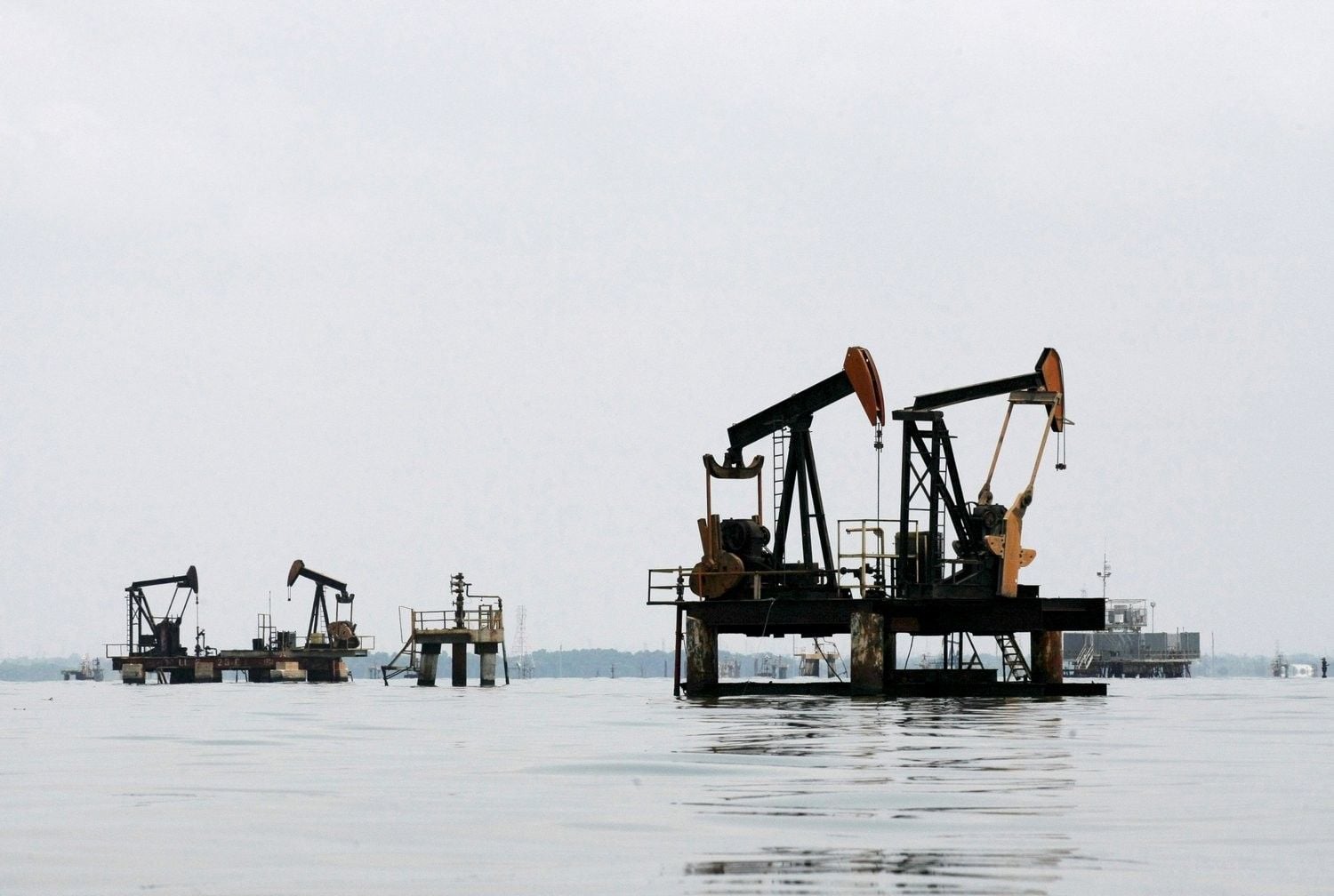
NABEP will operate several light and medium crude oilfields in Lake Maracaibo. (Reuters)
Caracas, September 1, 2026 (venezuelanalysis.com) – The Chinese government has called for its “legitimate rights and interests” in Venezuela to be protected following reports that joint ventures involving Chinese firms are set to be displaced by a US-backed corporation.
“China-Venezuela cooperation is protected by international law and the laws of both countries. China’s legitimate rights and interests in Venezuela must be guaranteed,” foreign ministry spokesman Guo Jiakun said in a press conference on Tuesday.
Guo added that the economic and trade relations between nations “should follow the principles of equality and mutual benefit.”
Beijing’s warning came in the wake of an announced US-Venezuela oil deal that Venezuelan Acting President Delcy Rodríguez termed “historic” and US President Donald Trump called “the biggest in history.”
Under the joint plan, Washington-backed North American Blue Energy Partners (NABEP) is set to receive long-term concessions to develop 17 oilfields, holding 65 billion barrels of proven crude reserves, in the Caribbean nation. The projects are split between light- and medium-crude fields in western Venezuela and extra-heavy crude ventures in the eastern Orinoco Oil Belt.
According to Reuters, five of the oilfields to be handed over to NABEP are joint initiatives with Chinese companies, including state-owned CNPC and Hong Kong-registered China Concord Petroleum. In 2025, China Concord installed a drill rig in Lake Maracaibo in what was the first major infrastructure investment in western Venezuela in many years.
Another project in the agreement is believed to be run by a joint venture between Venezuela’s state oil company PDVSA and a Russian enterprise.
NABEP is owned by Venezuelan oil mogul Alejandro Betancourt and has expanded its presence in the Venezuelan oil industry in recent years. Its current oil output is around 200,000 barrels per day (bpd). Betancourt has faced multiple international embezzlement and money laundering investigations but has never been formally charged, with US officials reportedly lobbying Swiss authorities not to bring criminal charges against the Venezuelan businessman.
In a statement posted on Monday, Betancourt said Venezuela is “blessed with an abundance of natural resources” that would be “unleash[ed] to the great benefit of both Venezuelans and Americans.”
The Trump White House published a “fact sheet” on Monday, claiming that the deal “secures US energy dominance for the next century.”
The administration stated that the Department of War’s Office of Strategic Capital (OSC) will receive a 35 percent stake in NABEP at no cost. The State Department will be given the right to purchase 20 percent of NABEP’s output at cost and hold the right of first refusal for the remaining 80 percent.
Washington will also have the final say on NABEP’s board of directors and the company will be subject to US laws and government audits. The document also pledged that the Betancourt-owned company will invest “up to $100 billion” in the oilfields.
The White House went on to explain that the concessions will conform to Venezuela’s reformed Hydrocarbon Law, which was “adopted with US support” and vastly expanded benefits for private corporations. Washington has exerted significant control over the Venezuelan oil industry since its January 3 military operation, issuing sanctions waivers for select companies while the US Treasury manages crude export revenues.
The Trump administration hailed NABEP’s takeover of oilfields previously run by Russian and Chinese companies as a triumph for the Monroe Doctrine, “ensuring American dominance in our hemisphere is never again questioned.”
The US factsheet insisted that the oil concessions will last 100 years, contradicting Rodríguez, who said the agreement is for 25 years. Venezuela’s acting president vowed that the accords would usher in a new era of “welfare and prosperity.”
According to Rodríguez, the initiative has a 1.5 million bpd target and Venezuela will collect an estimated US $19 per barrel extracted, a figure significantly below the benchmarks established under the prior hydrocarbon legislation enacted by former President Hugo Chávez.
The US-Venezuela deal has drawn widespread scrutiny over its lack of transparency and the unfavorable terms for Caracas, with popular movements rallying against “neocolonialism and imperialist attacks.”
For its part, the Venezuelan National Assembly approved a resolution on Tuesday endorsing the “binational energy accords.” The proposal was backed by the United Socialist Party (PSUV) and allies as well as some opposition deputies.
National Assembly President Jorge Rodríguez, the acting president’s brother, reiterated the government’s argument that “oil underground serves no purpose” and promised that crude production will reach “levels never seen before.”
US Energy Secretary Chris Wright landed in Venezuela on Tuesday night ahead of a scheduled press conference with Acting President Rodríguez on Wednesday. The Trump official, the Venezuelan government, and NABEP are expected to formally sign agreements at the ceremony.
Alongside the White House deal, several multinational corporations, including US-based Chevron and GE Vernova, India’s state-owned ONGC, and Italy’s Eni, are expected to ink contracts with Caracas in the coming days.
Some companies are slated to update existing agreements in accordance with reformed legislation, while others are set to enter into new deals in the South American country. According to Reuters, Chevron will expand its presence in the Orinoco Oil Belt while also securing access to light crude in Monagas State.
A contestant on The Great British Sewing Bee spoke about how proud they were to have made it so far.
One contestant was forced to leave The Great British Sewing Bee (Image: BBC)
A contestant on The Great British Sewing Bee has spoken of their pride in making it so far, as they were forced to leave the show. The BBC competition’s 12th series is well underway, with Patrick Grant and Esme Young returning as judges, while Sophie Willan replaced Sara Pascoe as presenter.
Just a week before the semi-finals, the remaining amateur sewers were challenged with Literary Icons week. As they channelled their inner bookworms, they were tasked with creating a deerstalker worn by Arthur Conan Doyle’s character Sherlock Holmes in the Pattern Challenge.
They were then asked to imagine what Roald Dahl’s Matilda would be like as a grown-up, creating an outfit from second-hand school uniforms. And finally, in the Made-to-Measure, the sewers created an outfit from the Regency period, inspired by the works of Jane Austen.
Despite her enthusiasm for the challenges, it was unfortunately Rebecca who missed out on a place in the semi-finals. She broke down in tears as Sophie announced she would be leaving the competition.
Sophie said: “Now for the difficult bit, one of you does have to go home today.” She went on: “You’ve all been amazing, it’s getting very serious now, it’s up here, so it’s very difficult for the judges. But unfortunately, the person going home today is Rebecca.”
Rebecca was supported by her co-stars as she wept over her exit, before sharing her pride in making it so far. She said: “I’m feeling incredibly proud of myself, I never thought I’d make it to the quarter-finals, so it’s been a privilege, every step of the way.”
Esme added: “I’ll really miss Rebecca. She was such fun, and making a dress and jacket was a lot of work. But she made so many mistakes.”
Rebecca continued: “Doing all of what I’ve achieved, being in pain the whole time, it’s just, I’m so proud of myself, and I hope that anyone who is living with an invisible disability or any disability, knows they can do incredible things.”
The Great British Sewing Bee continues next week, with the BBC teasing: “It’s the semi-final, and judges Patrick Grant and Esme Young set three challenges celebrating wardrobe heroes. These are items found in every wardrobe. However little or often they are worn, these clothes are must-haves and essentials.
“First, in the Pattern Challenge, the sewers must put their spin on the classic leather jacket, only this time, the judges have asked them to use plant-based leather.
“Next, for the Transformation Challenge, the sewers take men’s shirts and transform them into outfits for a wedding. Finally, in the Made-to-Measure, it’s the timeless little black dress that is the inspiration Four sewers remain, but only three will make it to the final.”
The Great British Sewing Bee is available to watch on BBC iPlayer.
UN watchdog says Syria ‘failed to report nuclear material, facilities and activities’ under Bashar al-Assad’s rule.
Published On 2 Sep 20262 Sep 2026
The United Nations nuclear watchdog has confirmed that Syria tried to construct a nuclear reactor in the eastern province of Deir Az Zor under ousted former President Bashar al-Assad.
The International Atomic Energy Agency (IAEA), in a confidential report seen by news agencies on Tuesday, said it visited several sites in Syria in August and carried out verification work.
Recommended Stories
list of 4 itemsend of list
Based on observations at the Deir Az Zor site, the agency said it confirms “that the cooling infrastructure which has now been uncovered is consistent with that of a nuclear reactor”. The agency said it would continue to monitor the activities at the site “as the excavation work progresses”.
Syria was believed to have operated an extensive undeclared nuclear programme under al-Assad that included a nuclear reactor built by North Korea in Deir Az Zor.
The site only became public knowledge after Israel launched air strikes in 2007 that destroyed the facility. Syria later levelled the site and never responded fully to the IAEA’s questions about it.
Israel is believed to have its own undeclared atomic weapons programme that makes it the only country in the Middle East with nuclear bombs. Israel neither confirms nor denies having atomic weapons.
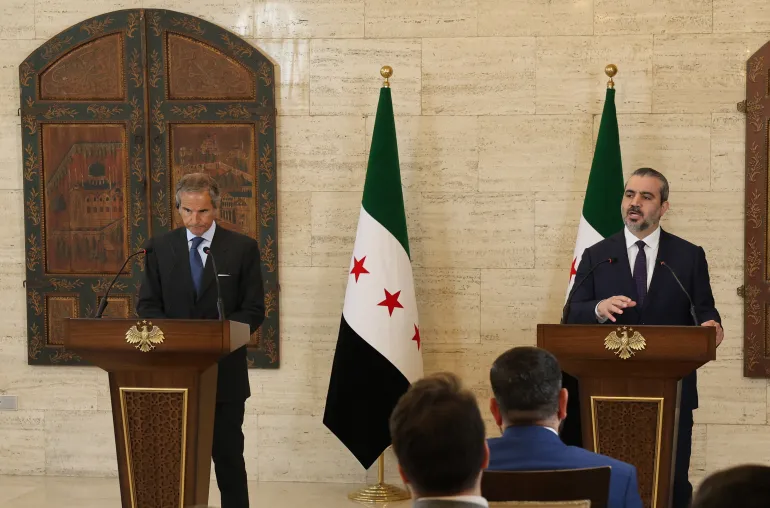
Syrian Foreign Minister Asaad Al-Shaibani speaks during a joint news conference with Rafael Grossi, director general of the International Atomic Energy Agency (IAEA), in the former presidential Tishreen Palace in Damascus, Syria, August 18 [Mohamed Al Rifai/EPA]
Following al-Assad’s removal in early December 2024, the new government agreed to give IAEA inspectors access to suspected former nuclear sites.
The agency took samples at the site in 2024 and reported last year that they contained uranium particles.
In its Tuesday report, the IAEA said it was also able to “establish that the former Syrian authorities had failed to report nuclear material, facilities and activities”.
Besides the nuclear reactor under construction at Deir Az Zor, the IAEA listed a fuel fabrication plant, where the nuclear fuel for the reactor was manufactured, and a location where the nuclear fuel, as well as uranium scrap and waste, were stored.
During the visit to Syria, IAEA Director General Rafael Grossi and a team of senior inspectors also visited a previously undeclared site.
The new Syrian administration notified the agency of the site’s existence in a July 17 letter and invited the IAEA “to cooperate with the Syrian authorities in the inspection and verification of the site and of any nuclear material to be potentially found”.
The IAEA said in its report that this new site contained “natural uranium metal in the form of fuel rods with cladding”.
The agency verified the material and confirmed “the presence of around 73 tonnes of natural uranium metal”. The agency reported that “all of this nuclear material is currently subject to Agency containment and surveillance measures”.
The new Syrian authorities have also expressed an interest in developing a civilian nuclear energy programme and said any nuclear material found in the country would remain in Syria’s custody under international safeguards.
Germany has formally accused Russia of attempting an attack last month at the Leipzig-Halle airport, a state-owned facility in the eastern part of the country.
On Tuesday, German Interior Minister Alexander Dobrindt said his country’s intelligence community had determined that a drone discovered at the airport was consistent with Russian technology. The drone had been bearing explosives, according to official reports.
Recommended Stories
list of 3 itemsend of list
The announcement triggered several retaliatory measures, including the announcement that Germany would shut down a Russian consulate.
The incident is seen as part of a growing trend in Europe, where officials fear Russia is mounting a campaign of intimidation against members of the NATO military alliance.
What was found at the Leipzig airport? How have officials responded? And what does it say about tensions between Europe and Russia as Moscow’s war in Ukraine drags on? Read on for a quick explainer on the basics.
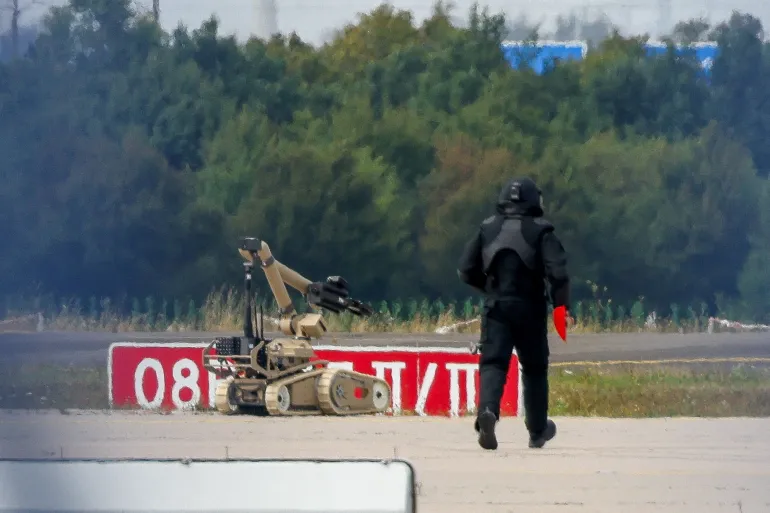
A police officer in protective clothing walks next to an explosive-disarming robot at the Leipzig-Halle airport in Schkeuditz, Germany, on August 5 [Axel Schmidt/Reuters]
What happened at Leipzig airport?
An explosive-laden drone was found near a cargo plane belonging to the Ukrainian firm Antonov Airlines on the evening of August 4.
An employee flagged the drone, which was located in a cargo area near a runway, resulting in a temporary shutdown at the Leipzig-Halle airport, a major cargo hub in the eastern German state of Saxony.
Specialists were called in to defuse the explosives with a robot. A second drone was reportedly destroyed after it collided with an aeroplane near the airport.
Why does Germany blame Russia?
Dobrindt, Germany’s interior minister, said investigators identified a configuration and components resembling those seen in Russia’s war against Ukraine.
“Taken together, the police investigations, the pattern and intelligence findings prove a Russian responsibility for the attempted attack at Leipzig airport,” Dobrindt said.
Germany’s government has not publicly shared specifics connecting the incident to Moscow or released all the evidence.
But Dobrindt said the device reflected “a high degree of technical expertise”. He added, however, that the task of carrying out the attack appears to have fallen to “low-level agents”, whom he described as people acting “on behalf of Russian state entities”. He did not specify which ones.
German Foreign Minister Johann Wadephul, left, and Interior Minister Alexander Dobrindt speak to reporters on September 1 about the failed drone attack at Leipzig airport [Sean Gallup/Getty Images]
How has Germany responded?
Germany has taken a series of retaliatory actions since announcing the intelligence community’s findings.
Starting on September 18, a Russian consulate in Bonn, a major German city on the Rhine River, will be shuttered. The Russian House, a cultural gathering place in Berlin, will also be closed, though the date has yet to be determined.
German leaders said they would also recommend more Russians be added to the European Union’s sanctions list and consider heightening entry controls for Russian citizens.
The German Foreign Ministry has also summoned Russia’s ambassador to the country to discuss the incident.
How has Russia reacted to Germany’s claims?
Moscow has denied it had anything to do with the drone. The Russian Embassy in Berlin called the claims absurd and warned that the accusations would have consequences.
Separately, Russian President Vladimir Putin accused the government of German Chancellor Friedrich Merz of pointing the finger at Moscow to distract from domestic problems and falling approval ratings.
He also suggested that Germany had planted evidence to frame Russia for the drone incident.
Russian President Vladimir Putin attends a meeting with Kyrgyzstan’s president in Bishkek on September 1 [Kristina Solovyova/Sputnik/AFP]
How have NATO and European allies responded?
NATO allies like Poland, Italy, the United Kingdom, Sweden and the Czech Republic have all backed Berlin’s claims against Moscow.
“Whenever Russian hybrid activities target one of our allies, we are all exposed,” the Czech Foreign Ministry posted on social media.
European Commission President Ursula von der Leyen said she would discuss the incident with NATO Secretary-General Mark Rutte, and EU foreign ministers are expected to prepare a joint response.
How has Ukraine responded?
Since February 2022, Ukraine has been battling a war that began with Russia’s full-scale invasion of its neighbour.
There has been speculation that Moscow’s increasing military threats in Europe are designed to weaken NATO support for Kyiv.
Ukraine has welcomed Germany’s measures against Russia, with Ukrainian Ambassador Oleksii Makeiev praising Berlin’s response on Tuesday.
Germany has been a key strategic partner for Ukraine, and in April, the two countries unveiled a security cooperation agreement that would strengthen joint air defences.
As part of the deal, Berlin agreed to fund missile contracts for Kyiv, and the two would collaborate on drone co-production.
Ukrainian President Volodymyr Zelenskyy has said that his country’s airspace is becoming increasingly unsafe for civilian aviation, with both sides in the war increasingly relying on drone warfare.
What other actions has Russia been accused of in Europe?
Critics have long warned that Russia is taking an increasingly aggressive stance towards Europe, which has opposed its invasion of Ukraine.
The Associated Press news agency has logged some 200 incidents of sabotage and malign activity in Europe since the 2022 invasion.
Those acts include cyberattacks, espionage, disinformation campaigns, arson and interference with infrastructure.
One case, in March 2024, involved a warehouse in east London being set on fire. The facility stored aid for Ukraine, and prosecutors blamed the attack on members of the Russian-backed Wagner Group, a paramilitary organisation.
Such low-level operations are often called “hybrid” attacks, as they remain below the threshold of open conflict but still succeed in sowing unease through violence.
A participant holds a poster featuring a portrait of Ulrich Siegmund, the far-right Alternative for Germany (AfD)’s main candidate in the Saxony-Anhalt state election, during an election campaign event in Haldensleben, eastern Germany, on September 1, 2026 [Ronny Hartmann/AFP]
Why are these tensions erupting now?
Germany says covert operations like the attempted drone attack at the Leipzig airport are meant to undermine the country’s political backing for Ukraine in its defence against Russia.
The war has stretched for more than four years, and Ukrainian officials have warned that the coming winter may prove the most challenging yet.
The attempted drone attack also comes at a pivotal time for German politics.
On September 6, the eastern province of Saxony-Anhalt is holding elections, and the far-right Alternative for Germany (AfD) party is hoping to make gains, building in part on public weariness with the war.
The AfD has called for strengthening ties with Russia and has been critical of support for Ukraine. It is currently leading in public opinion polls ahead of the vote.
Katie Price has called in top divorce lawyers following her turbulent marriage to Lee AndrewsCredit: wesleeeandrews/InstagramIt comes as Katie has continued to ditch her wedding ring – seen here just days ago without itCredit: rymi1/Instagram
Katie hasn’t returned to Dubai in monthsCredit: wesleeeandrews/instagramThe former glamour girl also said she would ‘never move to Dubai’Credit: wesleeeandrews/instagram
One of the biggest signs that Katie was not happy with her marriage to Lee is her refusal to go back to Dubai, where he lives.
The star hasn’t returned to the UAE since the end of June, which was just before Lee was sent back to jail, for a second time.
Previously speaking about how she would never move to Dubai to live with Lee, she said in a YouTube vlog: “I don’t know why people think I’m moving to Dubai.
“My family’s here. The husband is there, but the husband come here and I can go to Dubai when I can.”
Katie then added: “It’s a lot of hoo-ha.”
Katie openly flirts with Jake Quickended
Katie flirted up a storm with Jake QuickendenCredit: SplashKatie asked Jake if she was his ‘type’Credit: Splash
The star was seen publicly flirting with the former The X Factor star at The Hair and Beauty Awards.
It happened as they shared the stage to present an award, and Katie told him how This Morning host Ben Shephard had said to her that she would make a “good match” for Jake.
She then proceeded to see how Jake felt about that, and when he was left red-faced she said: “Are you blowing me out? Is that a yes or a no? I’m putting you on the spot.”
Never paid his bail
Lee is currently back in jail for the second time this yearCredit: Instagram/ @wesleeeandrewsKatie has refused to pay Lee’s debts that have landed him in jailCredit: Louis Wood
Lee was sent back to jail in July, just weeks after he was freed from prison the first time this year.
The con man was originally locked up in May for fraud, but was most recently nabbed for unpaid debts.
She told The Sun: “He’s in prison and the only way Lee will get out of prison, he has to sort it out himself.
“That’s the end of that. If not, he’ll be prison. There’s nothing I can do. I’m not here to pay anything for anyone. I’ve got my own life. Even though he’s part of my life.”
Stopped speaking about Lee
Last, but not least, Katie has stopped speaking about Lee on her podcast.
The star drops an episode of The Katie Price Show, which she does with her sister Sophie, every Thursday.
However, recently Katie has been very quiet on the topic of her jailbird husband.
Rep. Chuck Edwards, R-N.C., left, was formally censured Tuesday by the House Representatives over allegations of misconduct toward two female staff members. File Photo by Bonnie Cash/UPI. | License Photo
Sept. 1 (UPI) — The House of Representatives on Tuesday voted to censure Rep. Chuck Edwards, R-N.C., over allegations of misconduct toward two female staff members.
The House voted 412-2 in favor of the punishment. Edwards’ “highly unprofessional” behavior toward two staff members — one 19 years old and another in her 20s – led to a House Ethics Committee investigation earlier this year.
Censure does not remove a lawmaker from the House, so Edwards will finish out his term. The committee recommendation to formally censure a representative was the first since 2010.
The committee’s report said Edwards “engaged in persistent unprofessional and inappropriate conduct towards two young female staffers.”
“While Representative Edwards denied that any of his conduct was intended as a sexual or romantic advance, his pattern of behavior would lead a reasonable observer to interpret it as such,” the report said. “… Both women were uncomfortable with his behavior (which they attempt to communicate) but were put in an untenable position by virtue of his status as their boss and a member of Congress.”
Before the vote, Edwards apologized for his actions but denied he ever sexually harassed them.
“Regret is not an admission of sexual harassment,” he said, CNN reported. “I am imperfect. I have made mistakes, but I do not believe I committed sexual harassment.”
The report said that Edwards gave the two staff members lavish gifts, including jewelry and handguns, and frequently commented on their appearance and clothing. He also invited them to intimate dinners and vacations and sent them notes about his “effusive affection.”
Edwards wrote poems to one of the staffers, one of which he read at her going-away party, at which he cried. Other staff members also testified it made them feel uncomfortable.
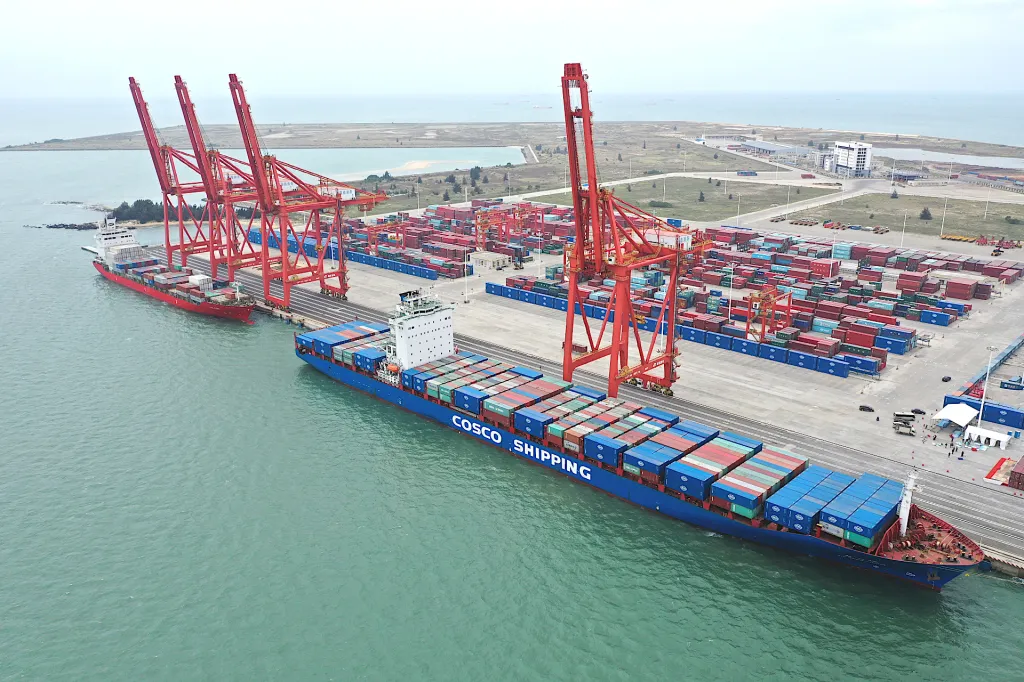
Chinese state-run shipping company COSCO has been using concealed systems on its vessels to gather signals intelligence around North American, European, and Asian coastlines for decades, it has been alleged. Similar claims have been made in the past, and overlap between nominally civilian enterprises in China and the country’s military and intelligence services is well established at this point.
Reuters first reported on the use of COSCO ships as discrete signals intelligence platforms earlier today, citing two unnamed officials within President Donald Trump’s administration.
“The officials, who spoke on condition of anonymity to discuss the U.S. assessment of the Chinese program, said COSCO has a decades-long intelligence-collection partnership with Beijing,” according to the report. “The arrangement allows China to collect communication signals from vessels and aircraft operating across Europe, North America and Asia, they said.”
COSCO container ships in port. COSCO
It is worth noting here that China’s National Intelligence Law, enacted in 2017, includes a specific provision that requires all organizations and citizens within the country to support state intelligence work as required. It also obligates the state to protect entities that do so.
“The advanced equipment aboard the ships is intended to enable China to gather information about ‘military communications technologies and encryption developments,’ one of the officials said,” Reuters‘ story today added. “The officials did not detail the type of equipment COSCO ships were allegedly using, but said they were ‘sophisticated signals intelligence collection’ platforms, not routine communications hardware.”
Officials at the Chinese Embassy in Washington, D.C., unsurprisingly denied these assertions, according to that outlet.
Purpose-built signals intelligence suites can range widely in size and shape, as can their capabilities. They can be very small and basic or far more elaborate systems. Even the latter could be concealed as modern commercial ships, which already feature lots of antennas.
COSCO
What might happen to intelligence collected by the ships is unknown. At the very least, systems onboard could record the data, which could then be batched out when safe to do so, either physically or via transmission. Basic passive signals suites can also run autonomously, or even be controlled from anywhere in the world if the ship is connected via satellite communications (SATCOM). High-bandwidth SATCOM is very common now on ships around the globe.
Personnel on the ship could also operate the systems, and even process receptions of interest. It might be possible to fit the ships with suitable datalinks to then transmit the collected data in near-real-time to other nodes, including ones back in China, for further analysis and exploitation.
Reuters‘ sources said scooping up data on “military communications technologies and encryption developments” was a priority for the commercial vessels turned spy ships. Signals intelligence can take many other forms, from emissions from radars to communications chatter. Depending on what is collected and how, specialists can use that information to glean details about how systems function, as well as insights into standard operating procedures and other details. This is especially true when multiple forms of intelligence are fused together. Generally speaking, signals intelligence is routinely used to help build out so-called ‘electronic orders of battle’ detailing the disposition and capabilities of an opponent’s forces, especially air defense and command and control networks. Fusing multiple forms
As mentioned, this is not the first time claims in this general vein have emerged, either. At least some evidence has been presented in the past, through open-source analysis. Reuters‘ sources directed that outlet to a report published last year by the China Maritime Studies Institute at the U.S. Naval War College exploring exactly this topic in relation to China’s quasi-military maritime militia. The maritime militia is made up of ostensibly civilian fishing fleets, but has direct ties to the People’s Liberation Army (PLA) and the Chinese Coast Guard. It is routinely used to harass and intimidate foreign vessels in disputed waters, especially in the South China Sea.
Chinese fishing vessels seen stopped right in front of US Navy’s ocean surveillance ship USNS Impeccable in 2009. USN
“Undergirding these operations is a cadre of maritime militia intelligence specialists called ‘information personnel.’ Information personnel are organized into force contingents that support operational militia forces,” according to that report. “Most have day jobs in the fishing industry, but many hale [sic; hail] from other sectors, including marine shipping and even maritime law enforcement units.”
“It is more likely than not that PRC [People’s Republic of China] vessels operating overseas have already begun embarking information personnel to serve intelligence collection and reporting functions. In the case of China’s fishing fleet, serving this foreign intelligence collection function could be as simple as adding a new duty to the ‘information personnel’ that already embark aboard some distant-water fishing vessels,” that report added. “Aside from their primary responsibilities of tallying and reporting production numbers, serving as experts on international and national fisheries regulations that affect their work, and handling interactions with foreign officials while at sea and in port, they might also be tasked with collecting and reporting military and political intelligence while operating overseas.”
“Similar processes may already be in place in the commercial shipping industry,” it continued. “For instance, Guangxi province’s Beihai city has built up its ranks of maritime intelligence specialists by recruiting from among marine shipping personnel.”
No explicit mention is made in the report about signals intelligence gathering.
French forces seen boarding the Comoros-flagged tanker Grinch, part of Russia’s so-called ‘shadow fleet,’ in January 2026. French Navy
There is other tangential evidence that also lends credence to today’s report from Reuters. As mentioned, in the midst of still mysterious drone swarms that harassed U.S. Navy ships off the coast of southern California back in 2019, U.S. authorities at least explored the possibility that a Hong Kong-flagged bulk carrier, the M/V Bass Strait, might have been a launch point. It remains unknown, at least publicly, whether the Bass Strait or another nearby ship might have been the source of the harassment, or if it came from somewhere else, potentially further away. TWZ was the first to report on this detail as part of a deeper investigation into these incidents, which came amid a spike in news about claimed sightings of what are now commonly referred to as unidentified aerial phenomena (UAP). We have been saying for years now that, while some UAP sightings do remain unexplained, many more are likely to have been drones (as well as balloons), which foreign governments could be using for intelligence gathering and other malign purposes.
A US Navy briefing slide discussing an interaction with the M/V Bass Strait on July 15, 2019. This says that at least at that time the bulk carrier was assessed to be “likely using UAVs to conduct surveillance on US Naval Forces while transiting to [a] scheduled port of call, [in] Long Beach, CA.” USN via FOIA
It’s also worth noting here that intelligence collection from international waters and airspace is a practice that nation state armed forces and intelligence agencies globally, including those in the United States, engage in regularly with varying degrees of openness. Leveraging nominally civilian ships, as well as aircraft, for these purposes is hardly new.
Despite the official denials to the Reuters piece today, it would be hard to imagine Chinese authorities not making use of commercial ships for this purpose, if possible, given that major deepwater ports worldwide are often dual-purpose civilian/military facilities. Radar sites and other critical facilities are often positioned along or near coastlines. Cargo ships and tankers often pass by major exercises and under major military operating airspace, where they could scoop up critical data.
With commercial ships already plying their routes, this would also just offer the Chinese government ways to readily bolster maritime intelligence-gathering capacity at low cost and low risk. China’s commercial fleets dwarf any other on Earth, making their presence commonplace and providing many opportunities to hide these operations.
Shipyard in Snow
A 2021 report published through the U.S. National Geospatial-Intelligence Agency’s (NGA) Tearline Project also highlighted the possibility of Chinese-owned facilities at ports around the world being used for intelligence gathering or even for launching non-kinetic attacks, including electronic warfare jamming. It specifically noted how COSCO’s facility in Belgium’s Port of Zeebrugge is “in close proximity to a Belgian Naval Base and thus could fulfill additional militarized requirements.”
Reuters‘ piece does not say what, if any, steps U.S. authorities have taken or may be planning to take now to monitor for or take more active countermeasures against Chinese-flagged ships being used for intelligence gathering, despite this being said to be a decades-old practice. The report does note that “the Pentagon put COSCO on its list of companies linked to China’s military in January 2025, a designation that carries serious reputational costs for companies as well as U.S. government procurement bans, but does not entail formal sanctions.”
Though no hard evidence has yet been provided, Chinese authorities using cargo ships as additional discreet signals intelligence-gathering assets is very plausible, and would certainly seem to be an issue that should be taken seriously, if it is not already being addressed.
Katie Price is divorcing Lee AndrewsCredit: Louis WoodThe pair married in a surprise ceremony in Dubai eight months agoCredit: wesleeeandrews/instagram
Katie has vowed never to visit Lee in Dubai againCredit: wesleeeandrews/InstagramShe hasn’t seen Lee in two monthsCredit: wesleeeandrews/instagram
The Sun revealed exclusively tonight that Katie had quietly consulted a top London divorce lawyer about ending her marriage.
She discovered he only had £2.22 in his crypto bank account — not the £37million he had promised her.
Katie told a pal on Tuesday: “I have come to my senses — Lee has lied and lied and lied. I am sick of it. It is over.”
A source added: “The marriage is done. She will never go to Dubai to see Lee again.
“It was, of course, an accumulation of many things but the final straw came after Lee had told Katie he had $50million (£37million) in a crypto wallet, and promised her some of the funds.
JANUARY 23, 2026: Katie announces she is engaged to Andrews just days after meeting him.
JANUARY 25: The former glamour model marries Andrews in a Dubai hotel and shares photographs of their big day with The Sun.
JANUARY 27: Andrews is exposed as a Walter Mitty who faked AI pics with celebrities, lied about top jobs and is on a travel ban.
JANUARY 28: Andrews’ ex Alana Percival and a business associate Crystal Janke warn Katie that Andrews is a conman and urge her to leave him.
FEBRUARY 17: Katie and Andrews legalise their marriage inside Abu Dhabi’s civil family court.
MARCH 3: In an interview with The Sun, Katie insists Andrews isn’t a con artist and claims he showed her proof of his wealth.
MARCH 27: In a shock U-turn, Andrews admits he did lie on his CV and blames his PA.
MAY 17: Andrews is listed as a missing person after telling Katie he was kidnapped in Dubai.
MAY 18: The Sun’s Clemmie Moodie’s bombshell investigation proves Andrews is a con artist after she invests £1,000 with him. And he has still not repaid her.
MAY 27: Katie confirms Andrews has been arrested in Dubai as he calls her from prison.
JUNE 12: Andrews is freed from Al Awir prison and Katie vows to interrogate him over the scam allegations.
JULY 11: Andrews is arrested again in Dubai put back in jail and is told he will need to pay a £120,000 fine to be released.
JULY 17: In a fresh twist, Andrews’ dad Peter is arrested and sent to the same prison over alleged fraud.
JULY 23: Clemmie Moodie releases the Lee Andrews files which expose him once and for all.
AUGUST 31: Katie removes her wedding ring as Andrews remains behind bars.
SEPTEMBER 1: She confirms to pals she is dumping Andrews after gaining access to his crypto account containing just £2.22. Katie calls in top divorce lawyer.
“He gave her the ‘recovery phrase’ — the passkey — to get into his account, and on Monday she had a financial expert access the wallet — and, to her shock, discovered it contained just $3, or £2.22.
“Lee never had $50million; he doesn’t have a bean. The most he ever had on any one day was in March for $14,490 (£10,720) which was sent out the very same day.
“Obviously over the past few months Kate has seen all the damning evidence building up against him — and was always planning her exit once the white noise became unavoidable.
“But after seeing his accounts — as opposed to his AI mock-ups — she lost her s***.
“He has deeply embarrassed her and, more importantly, has scammed, hurt and cheated so many other women. Enough is enough.”
The United States Equal Employment Opportunity Commission (EEOC) has found that the networking technology company Cisco may have violated the civil rights of Middle Eastern and Muslim employees amid a wave of anti-Arab and anti-Muslim comments on internal messaging platforms at the company.
In June, the EEOC, which is tasked with enforcing the US’s anti-discrimination laws, said Cisco subjected its employees to a hostile work environment, according to a letter of determination obtained by Al Jazeera.
Recommended Stories
list of 4 itemsend of list
The letter, which was first reported by Politico Pro, stemmed from a complaint filed with the EEOC in December 2024 by a group of Cisco employees called “Bridge to Humanity” (B2H), who had been voicing concerns that the company’s technology was provided to the Israeli military for use in Israel’s genocidal war on Gaza.
Several months earlier, the group of employees had sent a separate open letter calling on the San Jose, California-based company to stop providing its technology to the Israeli government. The document was signed by more than 1,700 of the company’s more than 86,000 employees.
In its December complaint filed with the EEOC, the employees alleged that Cisco had removed the open letter from an internal site and that it was “under review”, and that subsequently, many of the signatories were harassed. Among the allegations was a remark that one employee had told another to “quit living”.
The employees also alleged that Cisco had not responded to their complaints until they created a 76-page report cataloguing the hate comments they had been subjected to in an internal messaging group called Connected Jewish Network.
The report, which was provided to Cisco’s Employee Relations and Ethics offices, according to documents made public by The Guardian, outlined the waves of hate comments. In one of these, from November 2023, an unnamed employee had said that “Israeli passersby killed 2 members of a Palestinian family in Jerusalem this morning, and I for one am extremely grateful.”
“These Cisconians have, among other things, repeatedly glorified violence, joked about sending people to their deaths, likened Palestinians and those with opposing viewpoints to animals, labeled Palestinians, Arabs, and Muslims as murderous, violent terrorists, joked about respecting a person’s gender identity,” the 76-page report said. It added that the Connected Jewish Network was not even a “safe space for all of our Jewish colleagues”.
The EEOC’s determination said that the company had retaliated against one unnamed staffer for “her involvement in pro-Palestine efforts by terminating the individual”.
‘Important step’
The employees’ complaint with the EEOC was filed by Legal Aid at Work, a nonprofit legal services organisation.
“The EEOC’s determination is particularly significant because it appears to be the first time in any legal context where a governmental or judicial finding has sided with Big Tech workers who have collectively organised to fight for corporate accountability around their employers’ sales of their technology to Israel,” Christopher Ho, director of the national origin and immigrants’ rights programme at Legal Aid at Work, told Al Jazeera.
Advocacy groups like the Council on American-Islamic Relations (CAIR) praised the decision.
“The EEOC’s finding is an important step toward accountability and a reminder that federal civil rights protections apply equally to Muslim, Arab, Palestinian, and other employees who speak out about Palestine,” civil rights managing lawyer Jeffrey Wang at CAIR’s San Francisco Bay-area chapter said in a statement.
“Employers have a legal responsibility to address harassment and discrimination fairly and consistently. Workers should not have to fear retaliation or a hostile work environment because of their religion, national origin, or association with protected communities.”
According to reporting by The Guardian, although the EEOC issues its determination in June, the agency’s mediation with the company has “not gone anywhere”.
Legal Aid at Work told Al Jazeera that it has also submitted a complaint against Cisco to the National Labor Relations Board (NLRB) and the California Labor Commissioner.
“[The complaints] allege, respectively, that Cisco unlawfully interfered with our clients’ federally protected right to engage in concerted activity to improve working conditions, and unlawfully interfered with their right to engage in political activities that is protected by the California Labor Code. Both these complaints are still pending at the respective agencies,” Ho said.
Al Jazeera reached out to the EEOC for comment.
“Under federal law, both charges filed with, and charge inquiries made to the EEOC are confidential. The EEOC can neither confirm nor deny the existence of any charge or charge inquiry,” an EEOC spokesperson said.
Cisco did not respond to Al Jazeera’s request for comment.
US says its forces ‘successfully’ completed a wave of strikes against Iranian targets, accusing the IRGC of attempted attacks on shipping and US service members.
Rob and Michele Reiner’s son Jake Reiner has reportedly tied the knot with fiancée Maria Gilfillan.
The couple got married in a small ceremony in early August, TMZ reported Monday.
The duo has kept the relationship largely out of the spotlight. Jake shared images on Oct. 7, 2025, on Instagram of him and Gilfillan attending a wedding in Las Vegas. They went to the L.A. premiere of Rob’s film “Spinal Tap II: The End Continues” with his entire family in September.
In an interview with ABC7’s Marc Cota-Robles, released Aug. 27, Jake appeared to be wearing a wedding band.
Jake’s representatives did not immediately respond to a request for comment.
Jake’s sit-down interview with ABC7 marked the first time the former reporter spoke to the press after his parents were fatally stabbed in their Brentwood home on Dec. 14, 2025. His 27-year-old sister, Romy Reiner, discovered the bodies and his younger brother, 32-year-old Nick Reiner, was arrested in connection to the crime.
“Every moment that I wake up, I’m reminded of my reality, and you’re living through that every single day,” Jake, 35, told ABC7.
In July, a grand jury indicted Nick on murder charges with special allegations of committing multiple murders and lying in wait, making him eligible for life without parole or the death penalty if convicted. Nick has pleaded not guilty. A pretrial hearing is slated for Sept. 15.
“I don’t care how it’s explained to me. I don’t care what facts come out. I will never understand why this happened,” Jake shared with ABC7, adding that he has not spoken to his brother since his parents’ deaths.
In an essay written by Jake on his Substack in April, he expressed being robbed of many milestone moments following his parents’ deaths. “My parents won’t be at my wedding, they won’t get to hold their future grandchild, and they won’t get to see me have the successful career I’m still seeking,” Jake wrote. “It simultaneously breaks my heart and enrages me.”
Jake wrote that his dad helped him overcome personal obstacles: “No subject was ever off-limits.”
“Whenever I was in a difficult relationship, he would challenge me and say, ‘You need to really think about what draws you to a person like this, and once you figure that out and break that pattern, you’ll find the person who is truly right for you,’” Jake wrote in the April essay. “I’m proud to say I have found that person in Maria, and I couldn’t be more grateful she had the chance to know and love my parents.”
Times staff writer Richard Winton contributed to this report.