The US military says it has hit three Iran-linked oil tankers after ballistic missiles were launched towards two of its warships in the region.
US Central Command (Centcom) said on Saturday it had “permanently disabled” a tanker near Kharg Island and another near the Strait of Hormuz, and “completely destroyed” a third in the Gulf of Oman.
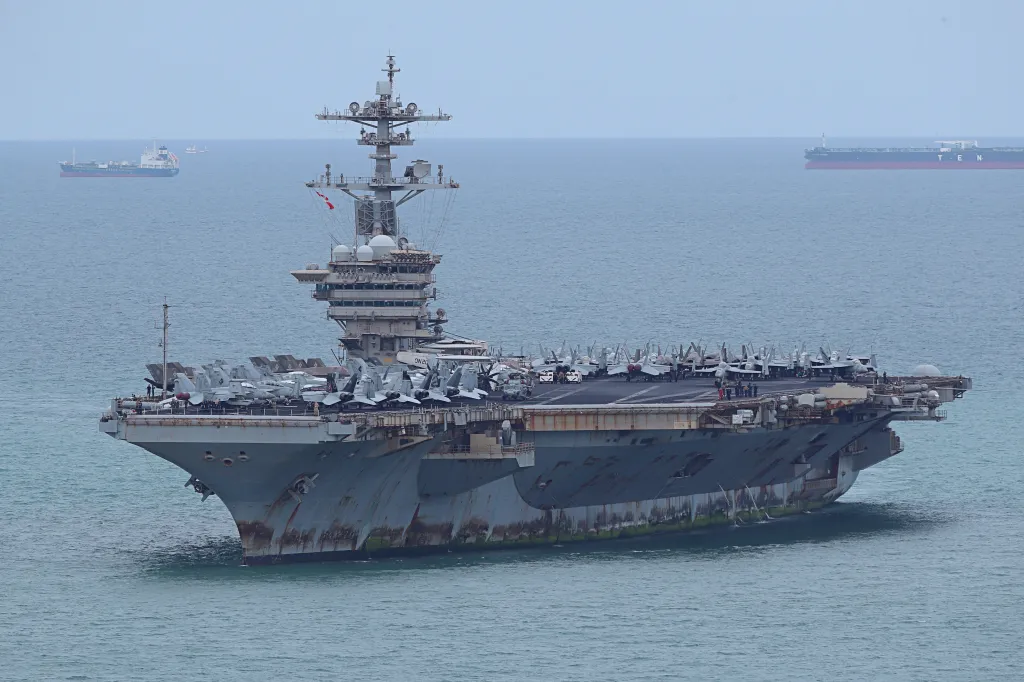
Centcom said it “successfully evaded” multiple attacks from the Islamic Revolutionary Guard Corps (IRGC) targeting a US aircraft carrier and guided-missile destroyer. No American troops were harmed, it said in a statement.
Iranian state media earlier reported that one of its tankers had been struck off the coast of Kharg Island.
Tehran did not immediately acknowledge attacks on US ships.
Admiral Brad Cooper, Centcom’s commander, said in a statement on Saturday: “Let the message to the IRGC be clear: If you shoot at two of our ships, we will impose an even higher economic cost – taking out three of yours.”
“We will not hesitate to defend American forces, and if necessary, destroy Iran’s limited and exposed oil fleet.”
Centcom, which oversees US military operations in the Middle East, claimed that the three Iranian oil tankers were “part of a multibillion-dollar shadow network that funds the IRGC and its regional proxies”.
The strikes come nearly a week after renewed attacks between the US and Iran, which followed a period of relative calm between the warring sides.
Michael Lomonaco can account for every minute of the morning of Sept. 11, 2001 — including the small decision that saved his life.
Lomonaco, the executive chef who ran Windows on the World on the 106th and 107th floors of the North Tower of the World Trade Center, was on his way up to his office when he stopped at an optometrist shop on the ground level to have his eyeglass frames adjusted.
He was still inside when American Airlines Flight 11 hit the tower above him at 8:46 a.m.
“I felt the buidling shake,” he recalled in the new CNN Films documentary “Top of the World.” “And I thought that can’t be the subway. That’s impossible.”
Lomonaco was evacuated. From the street, he watched employees of his own restaurant wave a white tablecloth from a window more than 100 floors up. Seventy-nine Windows on the World employees and 91 guests died that morning in the gastronomic soul of the Twin Towers — the one part of the complex that belonged to New Yorkers who didn’t work there, and to visitors from everywhere else.
“Top of the World” premieres Monday at 8 p.m. ET/PT on CNN and begins streaming the following day on the network’s subscription streaming platforms. The documentary short arrives on a double anniversary: 25 years since the attacks, and 50 years since Windows on the World opened on April 19, 1976.
It is the work of producer-director team Betsy West and Julie Cohen, who made “RBG,” the Oscar-nominated portrait of the late Supreme Court Justice Ruth Bader Ginsburg. The film is a production of CNN Films, TIME Studios and Tribeca Studios, in association with Montalto Pictures and Storyville Films, and was inspired by Tom Roston’s book “The Most Spectacular Restaurant in the World.” Actor Denis Leary voices the restaurant’s creator, Joe Baum, drawn from decades of archival recordings.
West and Cohen were reluctant to take it on. Both were working in network television news in 2001.
“There’s like a part of you that doesn’t want to go back there,” Cohen said in a recent interview. “But when we read this book and met some of the amazing people who had worked at Windows over its 25-year history, we realized this was actually a really good way into remembering there was a lot of beautiful stuff in the Twin Towers and like we shouldn’t let that disappear just because it ended so painfully.”
What emerges is a history of how a restaurant transformed the reputation of the monolithic Twin Towers, which received little respect from architecture critics and bafflement from a public that wondered why it was built in the 1970s by the Port Authority of New York and New Jersey as the city was fighting off financial collapse.
“This film tells a story of a restaurant that was very special to New York a time when New York was getting kicked in the teeth,” the Brooklyn-born Lomonaco said in a recent interview.
The World Trade Center operators turned to restaurant impresario Joe Baum to create a dining experience that would draw people to the Manhattan neighborhood largely known for its blocks of stores that sold radios and electronic parts. Baum was known for such New York dining landmarks as the Four Seasons and Tavern on the Green, and his new creation became an immediate hit after it opened in 1976, becoming a magnet for tourists and celebrities alike who came for the eye-popping views through the floor-to-ceiling windows.
At the time of the 9/11 attack, the World was the highest-revenue-generating privately owned restaurant in the U.S.
West noted another draw to the story was the stories of the many immigrants who worked at Windows, which proudly called itself “the U.N. of restaurants.” The film’s focus on the contribution of the foreign-born population to the restaurant industry stands in stark contrast to the image of immigrants conveyed by the Trump White House to justify its deportation efforts.
“Immigrants continue to make a contribution to our country and to the economy,” West said. “This was an opportunity to tell that positive story as opposed to what’s going on in our country now.”
Cohen and West scoured the Windows on the World Facebook page to find surviving former employees to help tell the story. Nathalie Tolentino was a hostess whose family came to the U.S. to escape political upheaval in Peru. Sekou Siby was a line cook from the Ivory Coast, who swapped shifts with one of the workers who died during a morning breakfast held in the restaurant on 9/11. Both talk about how the restaurant changed their lives.
Lomonaco is a central character in the “Top of the World,” as his arrival as the executive chef of Windows in 1997 boosted the restaurant’s culinary reputation. A hot chef who oversaw a turnaround at the 21 Club, another legendary New York dining spot, Lomonaco turned Windows into a destination for American cuisine along with the breathtaking views.
Lomonaco arrived after the restaurant was closed for three years following the first terrorist bombing of the World Trade Center in 1993 that killed six people and injured more than 1,000 but left the towers intact.
Once Windows on the World was gone, Lomonaco was offered high-profile restaurant jobs in other parts of the country. But he had unfinished business in New York.
“I didn’t want to abandon my city,” he said.
In the first days after the attacks, Lomonaco said, he read nothing about Windows on the World; coverage centered on the massive loss of life among the first responders and at the financial firms inside the World Trade Center. But over time, he got attention and support for the families of the employees who lost their lives that day.
Lomonaco and the restaurant’s owners formed Windows of Hope, a charitable foundation that raised more than $22 million to pay for healthcare and tuition costs for the children of the victims. “We were giving checks to people to pay their rent before federal funds came through,” he said.
Lomonaco said he still meets patrons who give him a matchbook or coaster from their visit to Windows. “They feel like they have to give me or send me these little artifacts,” he said. “That’s what has touched me the most.”
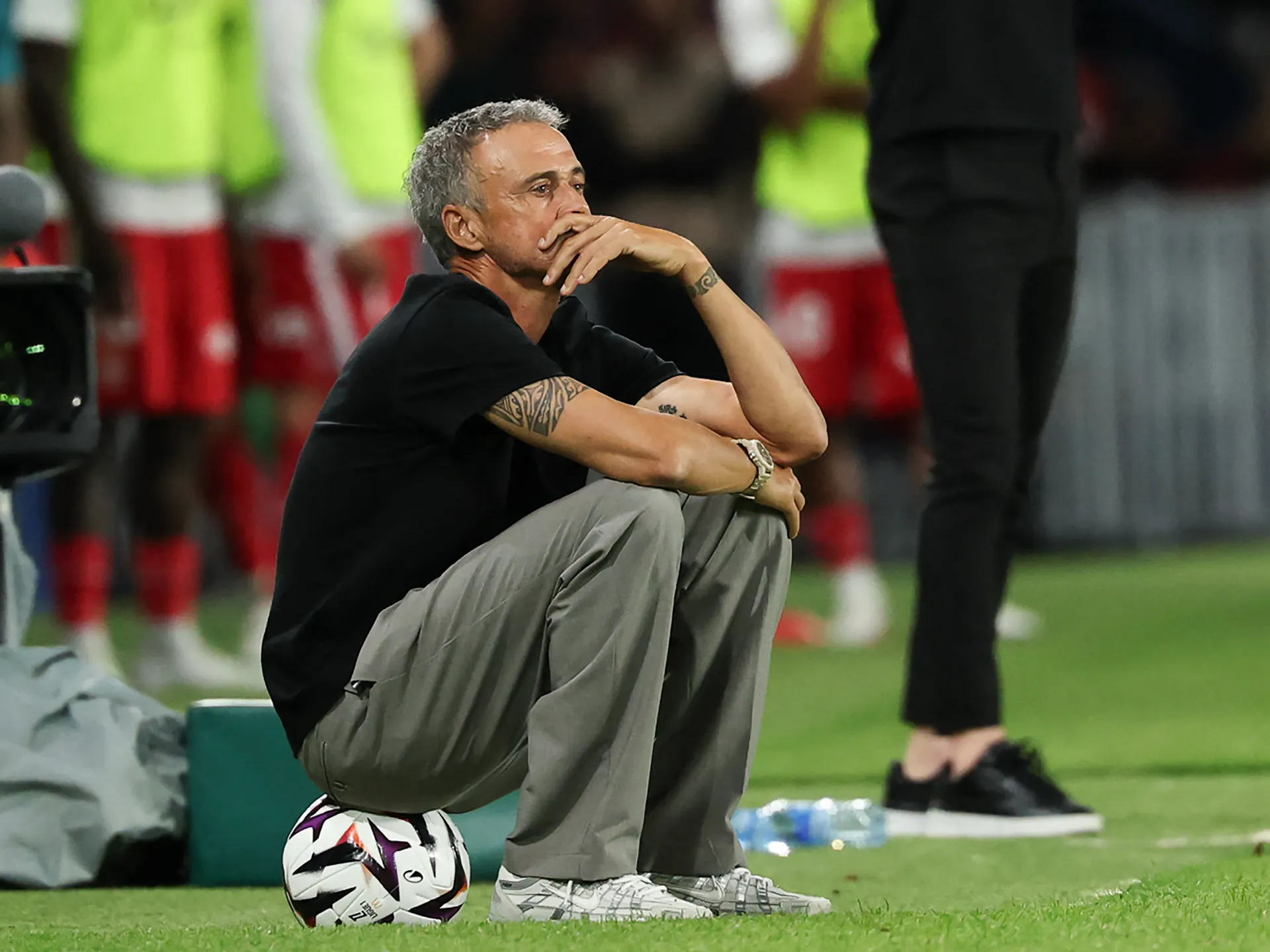
Two points from three matches is their worst start since the 2007-08 season, when PSG came close to relegation.
Published On 5 Sep 20265 Sep 2026
Paris Saint-Germain have not had as poor a start to a league season for 19 years, with Friday’s home loss to Monaco leaving them winless after three matches in the Ligue 1 season.
Days before they begin the defence of their Champions League title, however, the Parisians have handed coach Luis Enrique a contract extension until 2030.
“There is no reason to be concerned. I say that honestly. How many shots on target did Monaco have? Two. How many goals? Two. We’ll see at the end of the season whether things balance out,” he said after Friday’s 2-1 setback in which they were ahead at halftime but conceded twice after the break.
“What I want to get across is that you shouldn’t look only at the result,” Luis Enrique added.
“We pressed sensationally, much better than in many matches when we did not concede a goal. But luck was not on our side.
“Monaco know that if they play against us like this 10 times, we win eight, there’d be one draw and we’d lose once. This was that one defeat,” Luis Enrique insisted as PSG look ahead to hosting Slovan Bratislava on Wednesday in their first Champions League group game, chasing a third successive European title.
Two points from three matches is their worst start since the 2007-08 season, when PSG came close to relegation, finishing 16th. In that campaign, Paul Le Guen’s side had to wait until their sixth league game to record a victory and ended up only three points above the relegation places.
This time round, the Parisians are already seven points off the pace.
“It is incredible motivation for my players, for the team and for the club. If you want to bet on who will be champions at the end of the season, we can place a bet. Seven points? OK, we will try to make up that deficit as quickly as possible,” the coach added.
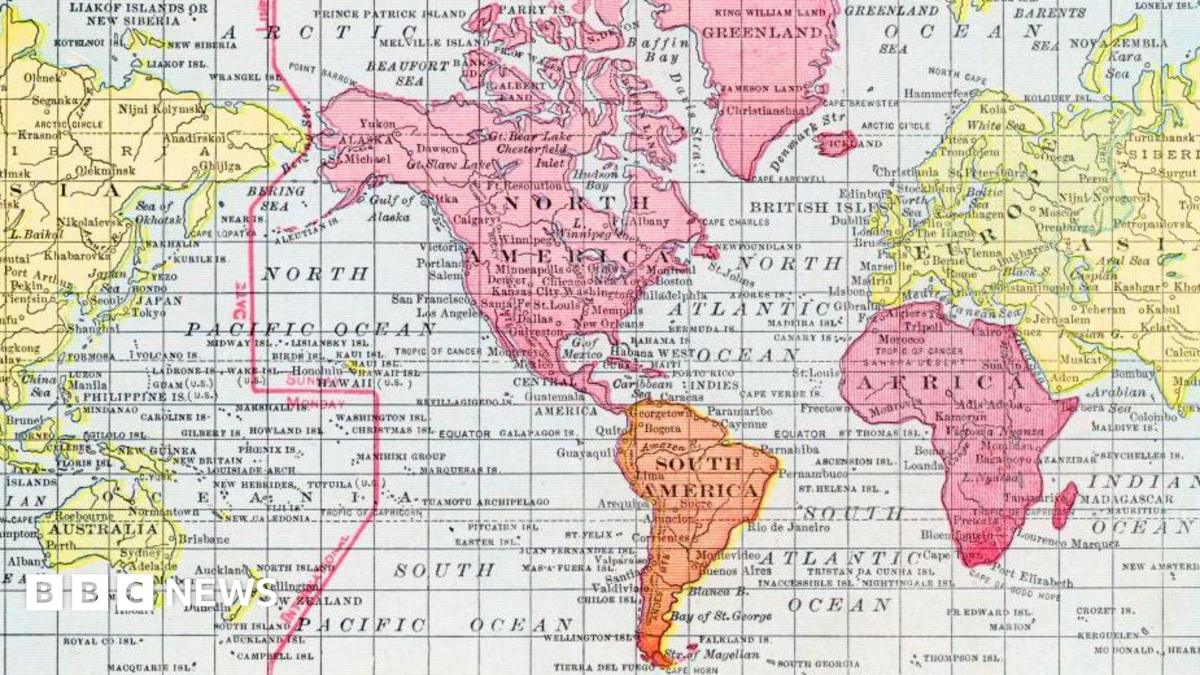
The now widely used Mercator map was created in 1569 by Flemish cartographer Gerardus Mercator.
Its main purpose was to help European sailors navigate the oceans, as cartography Professor James Cheshire at University London College explained.
“He wanted a straight line to be drawn on a map to look like a straight line in reality if you followed a compass bearing,” he told the BBC. “That was what it was intended to do, and that’s what it does brilliantly well.”
To keep those angles correct on a flat map, Mercator had to stretch the grid lines wider as they moved away from the equator toward the poles.
His map accommodates for the curvature of the Earth by making countries near the equator seem much smaller than they are, with countries nearer the poles appearing stretched.
The distortion is a result of it being impossible to accurately represent the surface of a globe on a two-dimensional chart.
More than 450 years on, Mercator’s creation is still the basis for many of the maps we see in classrooms, on TV and online, including Google Maps.
But critics of the Mercator map say there is a psychological effect to viewing some places as smaller than they actually are and others as larger, as we instinctively view bigger things as more important.
For Kenyan geographer Kioko Muendo, this has implicitly downplayed Africa’s vast resources, population and investment opportunities.
“Maps are more than just guides for travellers – they shape how regions are perceived politically and economically,” he told the BBC.
Penny, the daughter of local copper Jack Branning (Scott Maslen), has since been caught up in a drugs smuggling plot, has caused a dangerous club crush, and enjoyed a brief romance with Harry Mitchell (Elijah Holloway).
Most recently, she found love with local businessman Vinny Panesar (Shiv Jalota), but before the romance could blossom, she found out she was pregnant, and confirmed that Vinny was the father.
In an unexpected twist, a midwife appointment soon revealed her dates didn’t match up, and her unborn baby is biologically Harry’s after they shared one night of passion, casting doubt over her relationship with Vinny.
Penny is yet to reveal the truth about the baby’s paternity as she moves in with Vinny and they set up a loving family home. Will the truth come out as Penny’s due date edges closer?
Away from Albert Square, Penny actress Kitty Castledine leads a much simpler life with her family in London.
She is the daughter of television star Lucy Alexander, who is famed for hosting popular daytime shows such as Homes Under the Hammer and A Place in the Sun.
Kitty’s father is ex-Premier League footballer Stewart Castledine, who played for Wimbledon for over 9 years. He also featured for Wycombe in the second tier.
Stewart has also appeared on television screens, hosting BBC One’s Big Strong Boys and Houses Behaving Badly.
Stewart and Lucy are said to have wed in 2000, during a ceremony in Richmond, London, after meeting through a mutual acquaintance.
They have two children, including Kitty and a son, Leo Castledine, 21, who is also a footballer and currently plays for Middlesbrough.
Who is Leo Castledine?
Leo is a midfielder for the Championship team Middlesbrough after joining the club in January 2026.
Prior to his current move, Leo was on loan at Huddersfield Town from Premier League side Chelsea, where he impressed, scoring 12 goals in 27 games for the Terriers.
“I’m absolutely over the moon to join what is a massive, massive club,” Leo explained about joining his new club. “It’s a really big step for me in my career, and I’m very excited to be here.
“There’s always been trust in young players at this club if they can perform, and I want to perform at my highest level”, reported BBC News.
Leo joined Chelsea as an Under-15 from AFC Wimbledon and worked his way up to make one substitute appearance for the first team, a Carabao Cup semi-final against Boro in January 2024. He has also worn the England shirt for the U19s five times.
EastEnders airs Monday to Thursday on BBC One and iPlayer
Yemen’s internationally recognised government has launched a series of air attacks against Houthi positions in the country, marking a significant escalation in the conflict, with some of the country’s heaviest fighting since a fragile truce in 2022.
Government warplanes carried out at least 15 strikes on Friday against Houthi positions, gatherings and vehicles in the western provinces of Taiz and Hodeidah, according to the Yemeni military.
Recommended Stories
list of 4 itemsend of list
The air assault against Houthi positions provided support to government forces fighting a major Houthi offensive towards the Red Sea coast and the strategic Bab al-Mandeb Strait, one of the world’s most important shipping routes.
These are not the first air attacks by government aircraft since Yemen’s fragile truce began to unravel in July. On July 25, government aircraft struck Houthi missile and drone launch sites and weapons depots in Marib and al-Jawf, according to Yemeni military officials cited by the Reuters news agency.
And less than two weeks earlier, on July 13, Yemen’s internationally recognised government said its forces had struck the runway at the Houthi-held Sanaa International Airport to prevent an Iranian aircraft from landing.
However, the latest attacks mark a significant step up in the government’s use of its own air power against the Houthis, after Saudi-led coalition aircraft provided much of the aerial firepower supporting anti-Houthi forces during the most intense years of Yemen’s war.
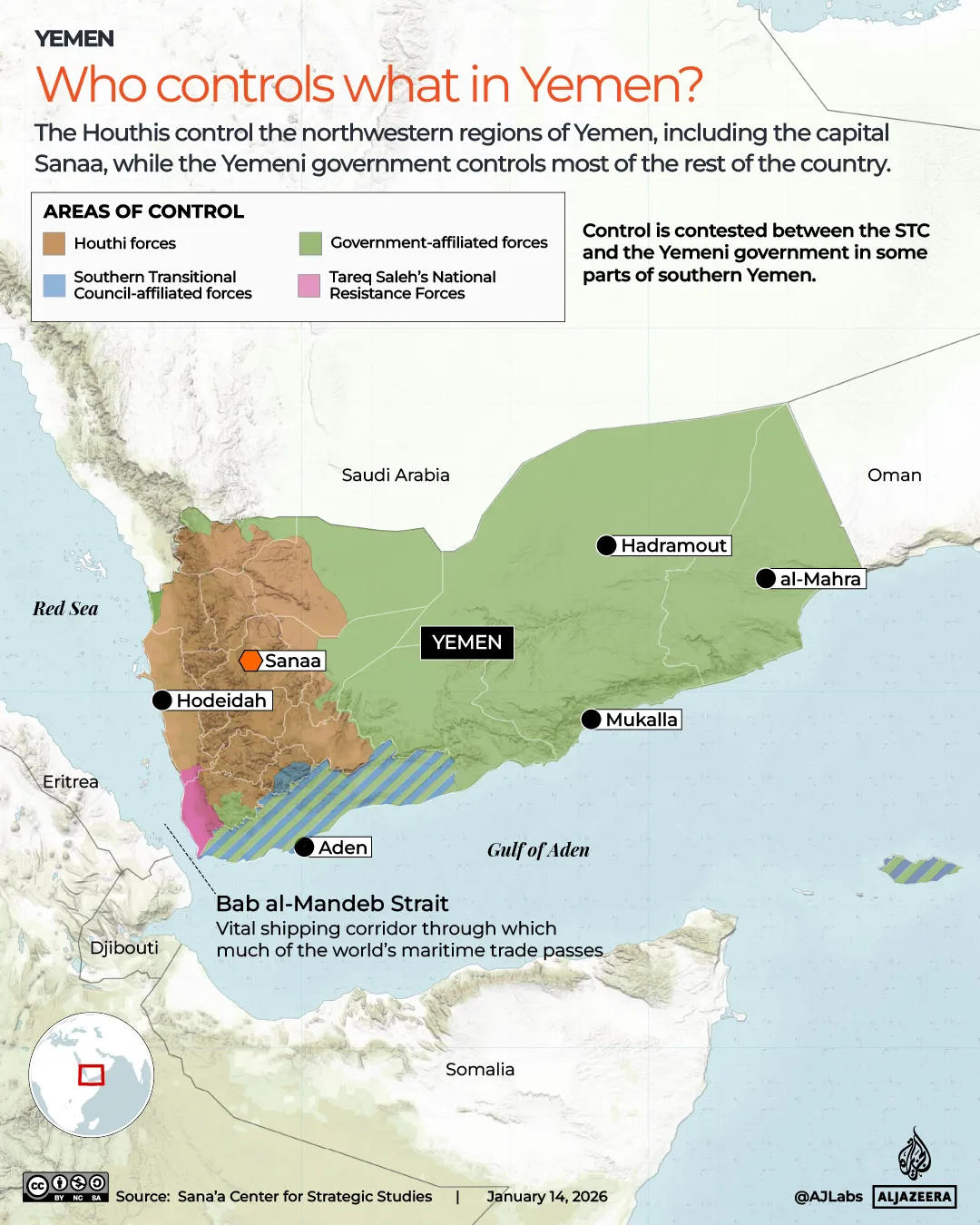
Friday’s air campaign comes as the Iran-backed Houthis, who have been vying for control of Yemen for years, attempt to advance through western Taiz and southern Hodeidah towards al-Makha (Mocha), and territory overlooking the critical Bab al-Mandeb Strait at the opening to the Red Sea.
Control of the area could strengthen the Houthis’ position along the Red Sea, where the group has previously attacked commercial and military vessels, while threatening a key government supply route.
The fighting unfolds against a backdrop of the wider regional conflict, with the Houthis recently declaring a Red Sea maritime blockade against Saudi Arabia, while disruption to shipping through the Strait of Hormuz during the US-Israel war with Iran has raised the strategic importance of alternative routes through the Red Sea. This means any expansion of Houthi influence around Bab al-Mandeb could have consequences for shipping far beyond Yemen.
Here’s what we know.
What has happened?
Fighting erupted on Thursday as Houthi forces launched a major offensive along front lines in western Taiz and southern Hodeidah, using ballistic missiles, drones and artillery as ground forces attempted to advance towards government-held territory along the Red Sea coast.
The fighting has centred on areas west of Taiz and around al-Makha, a government-held port near the Bab al-Mandeb Strait.
A Yemeni official in Aden told the AFP news agency that the Houthis were seeking to capture hills overlooking Bab al-Mandeb and al-Makha before pushing towards the coast.
Al Jazeera’s Yousef Mawry, reporting from Sanaa, said Houthi forces had made gains in western Taiz.
“According to military officials from the internationally recognised government, the Houthis have been able to take some of those territories,” Mawry said. “In western Taiz, they’ve managed to take over a strategic military base, which is settled on top of a strategic mountain and gives the Houthis an overview of the entire area.”
Mawry said there had been particularly heavy fighting around al-Barah and Maqbanah, where a main road is used to resupply government forces stationed in Taiz and al-Makha.
More than 120 fighters have been killed since the Houthi offensive began, according to an AFP tally, making the clashes among Yemen’s deadliest in years.
Several civilians were also reported killed and others injured after a ballistic missile hit a restaurant in the al-Makha area, according to government-run Saba TV.
On Saturday, at least four civilians were killed and nine others injured in a Houthi missile strike on a crowded road in southwestern Yemen, according to Saba news agency.
The attack by the Iran-backed group on Saturday targeted a gathering of civilians along the strategic Heijah al-Abd Road, south of Taiz city, Saba said, citing local and medical sources.
What is behind the latest tensions?
The Houthis seized Yemen’s capital, Sanaa, in September 2014 and subsequently took control of much of northern and western Yemen, prompting a Saudi-led coalition of Arab countries to intervene in support of the internationally recognised government in March 2015.
A United Nations-brokered truce in April 2022 sharply reduced fighting. Although the agreement formally expired six months later, large-scale hostilities between the Houthis and Saudi-backed government forces remained relatively limited and Saudi Arabia pursued negotiations with the group.
No comprehensive peace agreement followed, however, leaving front lines largely frozen rather than ending the conflict.
That fragile status quo came under increasing pressure after the United States and Israel launched their war against Iran on February 28, but tensions escalated further in July with the government air force strike on the Houthi-held Sanaa International Airport, preventing an Iranian aircraft from landing.
(Al Jazeera)
What do we know about Yemen’s air force?
The modern Yemeni Air Force was created after North and South Yemen unified in 1990, bringing together two militaries equipped with both Soviet and Western aircraft.
Its fleet subsequently included MiG-21 and MiG-29 fighters, Su-22 fighter-bombers, US-made F-5 fighters and a range of helicopters and transport aircraft.
But Yemen’s armed forces fractured when the Houthis seized Sanaa and the political crisis descended into war in 2014 and 2015.
When Saudi Arabia intervened soon after, its coalition targeted airbases, air-defence systems and combat aircraft in a bid to prevent the Houthis from making use of Yemen’s air force.
That left the Saudi-led coalition – rather than the Yemeni government’s own depleted air force – providing much of the air power supporting government forces during the subsequent war.
Saudi-led coalition aircraft conducted tens of thousands of air raids between March 2015 and the 2022 truce, striking Houthi military positions and providing air support during major government ground offensives. The campaign also caused extensive civilian casualties and became one of the most controversial aspects of the war.
Between 2014 and 2022, Human Rights Watch documented dozens of apparently unlawful coalition air attacks on homes, markets, hospitals, schools, detention centres and other civilian sites.
In 2024, the US and the United Kingdom launched a new round of air attacks against Houthi positions in Yemen following strikes on Israel-linked shipping in the Red Sea. Earlier this year, the US Pentagon disclosed that US military attacks against Yemen’s Houthis killed 153 civilians in 2025 and wounded another 243. The US had previously denied its attacks had caused civilian deaths.
The conflict in Yemen has caused a huge humanitarian crisis. In 2021, the UN estimated that 377,000 people had died in Yemen since 2014, with 60 percent the result of food shortages and lack of accessible health services.
Why is the Yemeni government using its own air power now?
Previously relying on Saudi-led coalition air force power, the government’s decision to deploy its own warplanes now comes as it tries to blunt a Houthi offensive that initially made gains across several fronts in western Taiz and threatened the main road linking Taiz with the Red Sea port of al-Makha.
Mohammed al-Basha, a Yemeni American analyst and former spokesperson for Yemen’s embassy in Washington, told Al Jazeera that the Houthis had achieved “some initial gains during a surprise, multi-axis offensive across western Taiz” this week, temporarily capturing positions and threatening areas overlooking the Taiz-al-Makha corridor.
But those advances did not produce the wider breakthrough the group appears to have sought, he said.
“The front did not collapse, the Taiz-al-Makha corridor was not severed, and attempts to expand the offensive towards other strategically important positions were stopped,” al-Basha added.
Government and allied forces recovered much of the territory lost during the first day of fighting, according to al-Basha, while Houthi advances on several other axes were contained or repelled.
The government has since sent reinforcements, and the use of aircraft gives those forces another means of attacking Houthi positions and concentrations as they try to retake high ground and prevent the group from cutting the Taiz-al-Makha road.
Why have the Houthis launched this offensive now – and what happens next?
Al-Basha said Jabal Numan, overlooking the Taiz-al-Makha road, is one of the most important remaining contested areas, while a Houthi attempt to capture Jabal Dhu Ba’s, north of Hays, was repelled by National Resistance forces.
Taking such high ground could allow the Houthis to observe and threaten government supply routes, while losing it could make further advances towards al-Makha substantially more difficult.
“The first day therefore ended with a mixed battlefield picture,” he said. “The Houthis gained ground through the initial surprise and speed of their multi-axis assault, but much of that ground was subsequently recovered.”
The arrival of new government-aligned forces, coupled with air support, could make it harder for the Houthis to repeat their initial breakthrough.
“The next phase is likely to be more difficult,” al-Basha said. “Both sides are reinforcing, several positions remain contested, and control of Jabal Numan remains a key immediate objective.
“The coming hours will likely centre on attempts by anti-Houthi forces to recover the mountain, consolidate their lines and prevent another Houthi push towards the Taiz-al-Macha corridor.”
The United Nations General Assembly has voted to back a resolution spearheaded by several African countries to adopt a map that shows the continent as much bigger than it is on conventional world maps.
On Friday, the resolution aimed at “a more accurate representation” of continental landmasses on the globe was supported by 164 countries, while the United States voted against it and six other states abstained.
Recommended Stories
list of 3 itemsend of list
The new map – known as the Equal Earth cartographic projection – “is a relevant option for improving the accuracy of the cartographic representation of the world”, the resolution stated.
Foreign Minister Robert Dussey of Togo, which drove the resolution, said maps “guide education, nourish the imagination, and influence collective perceptions”.
“The resolution adopted today reaffirms African reality,” he added.
But how does the new map differ from the traditional version, and why did the US object?
What has the UN decided?
The UN has urged member states to adopt a new map in place of the centuries-old, traditional Mercator projection, which was designed for maritime navigation by Flemish cartographer Gerardus Mercator in 1569.
That projection focused on accurate depictions of the shapes and angles of land masses, but their relative sizes were often inaccurate – in part because of the challenge of rendering a three-dimensional globe onto a two-dimensional surface.
It inflated northern regions and compressed equatorial ones, making Europe and North America appear much larger, while shrinking Africa and South America.
(Al Jazeera)
How big are Africa, Latin America, South Asia and Oceania?
It does not look like it on the conventional Mercator map, but Africa is a giant among the world’s continents at about 30.3 million square kilometres (11.7 million square miles).
It is large enough to contain the US, China, India and most of Europe, yet on a Mercator map it looks roughly the same size as Greenland, which is actually about 14 times smaller than the continent.
Latin America covers roughly 20 million sq km (7.7 million sq miles), of which South America accounts for 17.8 million sq km (6.9 million sq miles).
Oceania spans about 8.5 million sq km (3.3 million sq miles), almost all of it Australia.
South Asia is the smallest of the four at about 5.1 million sq km (2 million sq miles), though it is home to about a quarter of the world’s population.
Combined, the four cover about 64 million sq km (24.7 million sq miles), more than 40 percent of the world’s land surface.
Europe, by comparison, is 10.2 million sq km (3.9 million sq miles).
What has the response to the change of maps been?
Largely positive.
France, which co-sponsored the resolution in support of the new map, announced on Friday that it would abandon the Mercator projection.
In that map, “the United States, Russia and China take on a disproportionate visual prominence compared to Africa, Latin America or Southeast Asia”, while “Greenland appears almost as big as Africa,” Foreign Minister Jean-Noel Barrot said.
“Changing maps obviously doesn’t change the world,” he added. “But correcting a distorted representation is already an act of truth.”
Only the US voted against it, while six other countries – Serbia, Estonia, Georgia, Lithuania, Moldova and Ukraine – abstained.
US representative Yaryna Ferencevych said before the vote that the resolution is “the reason this institution is losing its credibility”.
“Instead of focusing on genuine problems … this body is debating map projects from the 16th century,” she said.
What is Equal Earth?
Equal Earth was launched in 2018 by three cartographers – Bojan Savric of the Environmental Systems Research Institute, Tom Patterson of the US National Park Service, and Bernhard Jenny of Monash University.
“Equal Earth preserves the relative surface areas of continents and, as much as possible, shows their shapes as they appear on a globe,” Savric told the AFP news agency in 2025.
The UN resolution encourages governments and institutions worldwide to adopt the Equal Earth projection.
Will the world map actually change?
Friday’s resolution is not binding, but is intended to encourage changes to maps used by default around the world.
The UN said in its report that it is not banning the Mercator projection or imposing a replacement, but is merely encouraging the use of the Equal Earth projection.
SHE is one of the most recognisable women in music – but what does it take for some people to be convinced Avril Lavigne is not who she says she is?
The punk-pop icon rose to international stardom in the Noughties – but as her popularity peaked, a strange and startling rumour was also gaining traction in the shadows.
Conspiracy theorists are claiming that Avril Lavigne has been replaced by a cloneCredit: GettyAn image shared online bizarrely claiming to show minute differences between the ‘real’ and ‘fake’ Avril
The theory is as puzzling as it is disturbing – a dead Avril, a body double named Melissa and a supposed Hollywood cover-up – and like the catchiest pop song, it refuses to leave.
Born in 1984 in Canada and raised in a strict Christian household in sleepy Napanee, Ontario, Avril grew up in a small town of roughly 5,000 where her parents closely monitored her music choices.
But the precocious teenager was already plotting her escape, writing poems, learning guitar and gravitating towards the town’s grunge scene before her singing talent caught the eye of her first manager at a 1999 bookstore performance, aged just 14
With her parents’ blessing, she quit school and headed to New York with her brother, where she worked with a professional producer before landing a two-album deal worth around $1.25million at just 16.
Avril’s 2002 album debut saw her rise to fame go stratospheric. However it also contained the germ of the conspiracy theory that would go on to haunt her for years.
The album, titled Let Go, would later be believed by theorists to be a symbolic reference to her being replaced by another lookalike young woman.
Adding fuel to the conspiracy was the star’s grief following her grandfather’s death in 2003 – which believers would later say was the final chapter in the “original Avril” story. They claim that grief was so overwhelming, tragic Avril took her own life.
The bizarre theory appears to have first appeared nine years later when in 2011, a Brazilian fan page called Avril Está Morta – meaning Avril is Dead – launched the morbid rumour into the world.
It claimed the eyeliner-clad star was no longer alive – and had been replaced by an eerily similar young woman.
For years, internet sleuths have remained convinced that the Sk8er Boi singer died by suicide shortly after achieving mainstream fame, allegedly overwhelmed by her grief and the pressures that came with becoming a global pop star.
But the story doesn’t end with her supposed death.
Her record label at the time, desperate to protect its lucrative investment, allegedly concealed the tragedy and brought in an actress named Melissa Vandella to replace Avril.
The theory claims Avril’s then-label, Arista Records, buried her death and installed Melissa in her place to keep the lucrative hitmaker churning out music. The Sun has contacted Arista Records for comment.
Melissa, believers say, looked sufficiently like the singer to fool the world – allowing the machinery of Avril’s career to keep moving while the real star was supposedly gone.
While deeply distressing, at that time the macabre theory was at least only circulating on the fringes of the internet.
That was until American journalists at BuzzFeed tweeted about the Brazilian blog and the obscure rumour was thrust into mainstream music folklore.
In 2017, a viral thread racked up hundreds of thousands of retweets, exposing millions of social media users to the supposed Avril “clone” theory.
The chilling truth behind this morbid phenomenon says more about those spreading it than its star subject.
Experts say these theories can often come from people who are seeking a purpose in life.
They will find and obsess over even the most minor changes in the life of another person – often a high-profile celeb – to feel as though they have achieved something.
Daniel Joll, an assistant Professor in Social Psychology at the University of Nottingham, tells The Sun: “Conspiracy theories are a fertile ground for people feeling uncertainty in life.
“When they find something they can be a part of and investigate, it makes them feel like they’re almost becoming a journalist and that makes them feel important.
“This is also about people wanting to be unique by saying something or being a part of something that is out of the ordinary.”
Conspiracy theorists have even latched onto supposed changes in Avril’s handwriting by sharing side by side pics from different time periodsCredit: TwitterThe theory claims Lavigne’s record label buried her death and installed Melissa – who has an uncanny resemblance to AvrilCredit: Getty
Conspiracy theorists began comparing photographs from the beginning of Avril’s career with images taken after the rumours started, searching for proof that the woman in front of the cameras was not the same person.
Online truth-seekers even saw that she once wrote “Melissa” on her hand in a photoshoot.
To believers, it was practically a confession hiding in plain sight.
But that is where the theory’s elaborate house of cards begins to wobble.
The “Melissa” photograph was later explained as part of a promotional photoshoot in which Lavigne wrote supporters’ names on her skin and on paper.
Theorists still argue this was either an intentional leak by the body double signalling her true identity, or an insidiously dropped clue by her record label.
It is catnip for the internet: just outrageous enough to be dismissed, yet just plausible enough to make you wonder whether there might be something hiding beneath the surface.
Avril is far from the first celebrity to become the subject of a completely unverified cloning conspiracy theory.
One of the most famous examples dates back to 1969, when fans became convinced Beatles legend Paul McCartney had died in a car crash and been secretly replaced by a lookalike.
The theory exploded after The Beatles released Abbey Road, with fans scouring songs and album artwork for supposed clues.
Some even believed John Lennon could be heard saying “I buried Paul” in Strawberry Fields Forever.
John later said the line was actually “cranberry sauce”, while McCartney himself dismissed the rumours in a November 1969 interview with Life magazine.
Fans have also claimed Tupac Shakur faked his death, while a 2020 music video featuring a deepfake of the rapper reignited speculation.
What is key to giving these theories life is that they are outrageous enough to grip people while remaining vaguely believable.
Prof Jolley adds: “The reason why people are so stuck on Avril is because the theory is plausible.
Online truth-seekers even saw that she once wrote ‘Melissa’ on her hand in a photoshootCredit: @AvrilLorgSome fans are even convinced that the shady puppet masters of the Illuminati had cloned AvrilCredit: GettyAvril often appeared in in baggy trousers and neckties before the suspected cloningCredit: GettyHer trademark middle finger was then tucked away, while the loose tie slung over a shirt disappearedCredit: Getty
“When there is the slightest chance of plausibility, people will cling onto it and keep going and keep digging.
“This one feels plausible because it could be true. The possibility of truth can tickle people’s fancy.”
Every perceived alteration became another piece of their puzzle.
Early Avril had become synonymous with the scruffy skater-punk image that helped make her famous, often appearing in baggy trousers and neckties.
Suddenly snaps of the eyeliner smeared rock queen appeared to have had been wiped off the internet.
Her trademark middle finger was tucked away, while the loose tie slung over a shirt – once part of her pop-punk armour – had been consigned to fashion history.
The woman who emerged afterwards looked markedly more polished, with skirts and dresses replacing the tomboyish uniform and pink make-up softening the rebellious image.
Some went as far as being convinced that the shady puppet masters of the Illuminati had cloned Avril and replaced her with an actual laboratory-grown clone rather than a hired lookalike. Bizarre, right?
Theorists started using photo overlay tools to track subtle shifts in her facial symmetry, jawline angle, and earlobe detachmentInternet sleuths claimed Avril had started looking markedly more polishedCredit: Unknown
The Illuminati, believers claim, is an elite society that frequently targets the world’s biggest pop stars and turns them into puppets of their secret cabal.
The new bubble-gum pink pop girl was allegedly spotted glitching during red-carpet interviews where she paused, blinked rapidly, and answered questions flatly.
Believers refer to these as “clone glitches” or memory-wipe side effects.
Theorists started using photo overlay tools to track subtle shifts in Avril’s facial symmetry, jawline angle, and earlobe detachment.
The theory claimed bones do not radically change shape after adolescence; therefore, differences in the bridge of her nose and her jaw structure prove a physical imposter.
Professor Jolley adds: “These theories are made up to captivate our attention.
“I believe clones are just an intriguing application.”
And then came the clue conspiracy theorists found hardest to scribble away: Avril’s handwriting.
To believers, the change was more than a few wonky letters.
They began placing samples of Lavigne’s handwriting from different periods side by and poring over the shapes, slants and flourishes as though they were forensic investigators examining a ransom note.
Every loop, every letter and every flick of the wrist became potential evidence.
Conspiracy theorists claiming that the handwriting before and after the alleged switch looked fundamentally different.
Then, Under My Skin, Avril’s second album released in 2004, became another supposed treasure trove for believers hunting for hidden messages.
Slipped Away is also repeatedly cited as evidence, with its lyrics about someone disappearing and life changing forever interpreted as a veiled admission of Avril’s supposed death.
My Happy Ending has also been dragged into the theory, with fans searching its lyrics for signs of guilt, grief or a woman struggling beneath an identity that was never hers.
Appearing on Call Her Daddy podcast with host, Alex Cooper, Avril directly addressed the long-running internet theory and laughed it off calling it “dumb”.
The host, half joking and half serious, asked her: “So, is your name Avril Lavigne or Melissa Vandella?” The singer wasn’t too bothered and replied: “Obviously I’m Avril Lavigne.” Obviously…
The 39-year-old went on: “On one end, everyone’s like, ‘You look the exact same. You haven’t aged a day.’ But then other people are like, there’s a conspiracy theory that I’m not me.
“Honestly, it’s not that bad. It could be worse, right?” Lavigne laughingly admitted. “I feel like I got a good one. I don’t feel like it’s negative. It’s nothing creepy.”
Cooper told the star: “What’s crazy is you haven’t aged. I’m staring at you. And, like, I’m picturing you with your auburn hair. And I’m like, oh my God. You literally look the same from when you were younger.”
It’s all fun and games turning freckles into “evidence” – counting spots on an arm as though a decade of sun exposure somehow comes with a cloning certificate.
But behind the bizarre conspiracy theories was a very real battle. Lavigne, who was diagnosed with Lyme disease in 2013, later described that period as the “worst time of my life”.
The Sun has reached out to Avril Lavigne’s management and past and current record labels for comment.
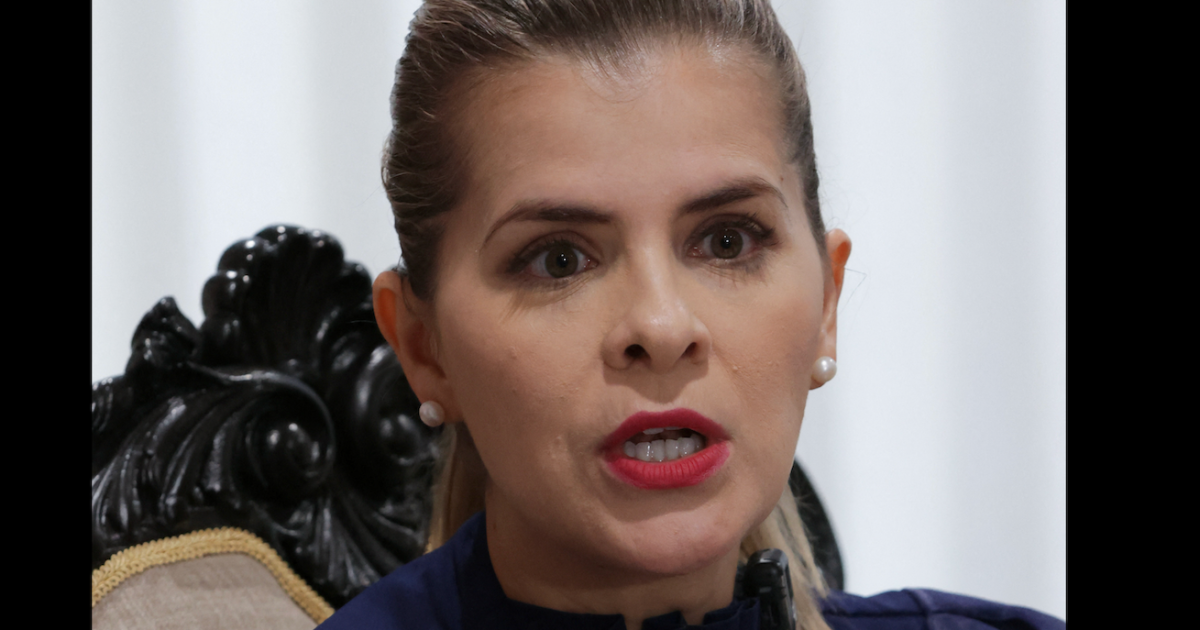
Costa Rican President Laura Fernandez said US ground operations could boost national security, but stressed no plans are currently in place and any deployment would require legislative approval.
Investors, however, are more bullish on the eatertainment model than they are on traditional restaurants, Camillo says.
“A padel [another racket sport rising in popularity] court or a bowling lane is a much more durable, less trend-driven revenue stream than a dining room seat, and it comes with better real estate economics. It’s not competing purely on per-seat turns. F&B just juices the model on top of that.”
Private equity isn’t just investing in dine-in pickleball concepts because the sport is popular among Americans. Landlords are eager to lease to pickleball concepts for multiple reasons. Large indoor pickleball facilities can absorb anywhere from 30,000sq ft (2,800sq metres) to 70,000sq ft (6,500sq metres), giving new leases of life to former sites of shuttered big-box retail stores, department stores and grocery stores. Look at where many of these pickleball venues are located on a map, and you’ll see that they frequently correlate with suburban developments needing traffic.
Pickleball is “a draw for strip centres and malls as well as it brings in traffic where people will shop and eat after they are finished”, says Jeff Lichtenstein, CEO and broker at Echo Commercial Properties. “In South Florida, there is a lot of demand for this, especially in the summertime or when it rains as the country clubs and other communities don’t have indoor facilities. People need AC to play in the summer.”
In other words, investors aren’t simply betting on pickleball remaining popular. They’re betting that these venues can generate recurring revenue while helping revive struggling retail corridors. The business appeals to landlords and investors for the same reason it appeals to customers: It keeps people in one place longer.
For consumers, that extra time translates into something that has become increasingly difficult to find in the restaurant industry: value. Indeed, when dinner is paired with a fun activity, patrons are happier to hand over their credit card: 21 percent of Americans said they were willing to pay more at an eatertainment venue than at a traditional restaurant, according to a 2019 study conducted by SevenRooms, a data-driven hospitality platform.
“These eatertainment venues, pickleball or otherwise, are very popular now as people look for greater value when dining out,” says Maeve Webster, president of the food industry consultancy Menu Matters.
“Restaurants have been struggling with prices, quality, consistency and, as a result, their value proposition,” Webster added. “Places like this offer guests more than just a meal, which makes for a far greater value proposition. And all of this is coming at a time when people are placing a far greater emphasis on experiences and human connections.”
Increasingly, meeting up has become about more than just eating and drinking; people want to do something together. OpenTable, an online platform for learning about restaurants and booking reservations, reports a 46 percent year-over-year rise in experiential dining from 2024 to 2025, with 37 percent of consumers saying they wanted more of it in 2026.
The Physical Activity Council, which conducts an annual study to establish levels of personal activity and identify key trends in sports, fitness and recreational participation in the US, estimates that since 2020, the number of “inactive” Americans has dropped by 13.6 million, or 18 percent.
Those changing habits have helped eatertainment concepts attract private equity interest. But these firms must ensure return on their investment, which has increasingly taken the form of private corporate events and membership models. Monthly membership fees at the nation’s most popular dine-in pickleball venues range from $75 to $149 a month but include perks like food and beverage discounts and dedicated court times.
“From a recurring revenue perspective, when you make it a subscription, the business can forecast revenue more accurately,” Bhasin says. “They’re not making margin off the superusers. The users who only come in every couple weeks are where they make their margin.”
We’ve seen the recurring membership model become standard at country clubs, golf courses and bowling leagues. The more successful these businesses become financially, the more exclusive they risk becoming socially.
Bhasin hopes pickleball club operators can find ways to preserve affordability.
“My request to private equity companies is: Can we find a way to offer deals?” Bhasin says. “It’s meant to be a ubiquitous experience, but the prices are a barrier to entry.”
Still, a dine-in pickleball venue membership is much more affordable for the average American than, say, a country club, where monthly dues can range from a few hundred dollars to $2,000 on top of a hefty initiation fee.
Electric Pickle offers free court reservations every day until 4pm from June through August. The promotion makes the experience more affordable, but it’s also smart business strategy. If most guests visit in the evening, free daytime court reservations may generate food and beverage sales that otherwise wouldn’t exist.
George Rainsford is returning to Casualty tonight as fan favourite Dr Ethan Hardy for the BBC medical drama’s 40th anniversary three years after his last apperance
George Rainsford played Dr Ethan Hardy in Casualty from 2014 until 2023(Image: BBC/Alistair Heap)
A former Casualty actor has admitted he was “ready to have a break” after nine years working on the medical drama.
George Rainsford is putting his scrubs back on and resuming his role as Dr Ethan Hardy for the BBC show’s huge 40th anniversary, which airs tonight (Saturday, September 5).
The actor played the popular doctor for almost a decade before leaving the BBC medical drama in 2023. Fans will know George’s charatcer Ethan was diagnosed with Huntington’s disease and left the E.D. three years ago to spend more time with his son, Bodhi.
Speaking exclusively to Betway about his exit, George explained: “At the time, I definitely wanted that time away. I was ready to have a break. It’s a fantastic place to work.
“I loved how generous they were with all the storylines I had over the years, and I loved everybody there but it’s filmed in Cardiff, and I’m not based there, so I needed to spend a bit more time at home. When you’re an actor, sometimes you want to challenge yourself and see what else is out there.
“After nine years, that feeling had gotten a bit stronger. I was keen to go back and do theatre for a bit and see what other screen work was out there.
“I’m glad we were able to have the conversation with the producers that it wasn’t final because I really enjoyed going back and I do think there would be a storyline there but at the same time, I was ready for a little break”
Since leaving Casualty, Jimmy has appeared in seven episodes of popular BBC period drama Call the Midwife as Jimmy Wilson and more recently played the role of Miles is movie Bank of Dave 2: The Loan Ranger.
Ethan isn’t the only familar face returning to Casualty this week with Derek Thompson also reprising his iconic role as nurse Charlie Fairhead. Fans last saw him during his final appearance in March 2024, where he retired after 38 years in the NHS.
Although bosses haven’t shared too many details of Ethan and Charlie’s involvement in the 40th anniversary, they have said: “The gripping, anniversary event centres on a high-stakes major incident that throws Holby into chaos.
“Lives hang in the balance and the ED team are pushed to their limits in a tense and emotionally charged story that brings together some of the show’s most beloved characters.
“As the fallout continues, a major rescue operation unfolds, forcing impossible life-or-death decisions and testing the courage, resilience and leadership of those at the heart of the hospital.
“As Dylan Keogh (William Beck) battles personal tragedy while leading his team through their darkest hour, Stevie Nash (Elinor Lawless) and Flynn Byron (Olly Rix) find themselves fighting for survival in a race against time.”
Casualty’s 40th anniversary specials will air on Saturday, September 5 from 8pm on BBC One and iPlayer
A mudslide triggered by days of heavy rain in Jiangxi province, eastern China, has killed one person and left 11 missing. Rescue teams have pulled three people from the rubble as authorities warn of continued flood risks.
Video emerged on social media of local workers cleaning the carrier. Two of them can be seen on a scaffolding platform, dressed in silver-colored protective clothing, yellow helmets, face shields and black boots, spraying the side of the big ship. You can see that most of the rust, as well as all of the green swath of algae, was removed from the section where they are working.
The camera also pans across the ship, showing the extent of the work still needed.
Those recent viral rust photos/footage of the USS Abraham Lincoln (CVN-72) in Thailand overstated the story.
Yes, the hull looked rough in pictures, but the ship itself was never in question, that’s the part the headlines skipped.
It is unclear whether this work had already been scheduled as part of routine maintenance or whether it had been ordered after images of the ship emerged showing its rough condition. The ship was a huge focus of attention even before it got to Thailand.
Interest in the Lincoln flared up anew after it arrived in Thailand due to its condition, as well as intense curiosity about how the crew would fare in a Thai port call after being at sea for so long.
The USS Abraham Lincoln (CVN-72) aircraft carrier arrives at Laem Chabang Port on Sept. 2, 2026 in Si Racha, Thailand. (Photo by Thananuwat Srirasant/Getty Images) Thananuwat Srirasant
“It’s terrible. I think they should be ashamed,” John Phelan told members of Congress at a hearing last year after being shown pictures of a very worn-looking Arleigh Burke class destroyer, the USS Dewey, during a stopover in Singapore. “Would you want to go on that ship?”
One driving factor in the condition of ships like Lincoln is the operational tempo of deployments, a Navy official noted earlier this year.
“We know what to do, but we choose not to do it,” Mark Lattner, director of the Navy’s Ship Integrity and Performance Engineering, Naval Systems Engineering Directorate, said in January during a panel at the Surface Navy Association’s annual symposium that TWZ attended. “And we choose not to do it because there’s always some other problem I’ve got to fix. I don’t have time. Our corrosion can wait. And so we don’t implement the fixes.”
Finding a solution to the Navy’s rust problem became one of Lattner’s main missions in the wake of the fallout from Trump’s late-night texts to Navy officials demanding answers about the condition of theArleighBurke class guided missile destroyer USS Dewey after he saw pictures of it covered in running rust as it pulled into Singapore last year.
A picture of the USS Dewey covered in ‘running rust’ during a recent port visit in Singapore is shown at the confirmation hearing for Secretary of the Navy nominee John Phelan on January 27, 2025. (Senate Armed Services Committee screen capture) Senate Armed Services Committee capture
Port calls offer critical time to fix long-standing issues and resupply the ship of pretty much everything you can think of, from jet fuel to food. So it’s no surprise that the Lincoln would be swarmed with support personnel and supplies while much of her crew enjoys being on land once again for a few days.
It’s unclear how long the clean-up work on the Lincoln will last or how much of it will be finished by the time the ship and crew leave port. Either way, from what we have seen so far, it will look much better leaving Thailand than when it arrived.
Actor and playwright Ellen McLaughlin, who originated the role of the Angel in Tony Kushner’s “Angels in America,” has put her own modern spin on ancient Greek dramas. Her “Helen,” a satirical reworking of Euripides’ tragicomedy and the eternal beauty myth, ought to be better known.
McLaughlin’s modern verse “translation” of Shakespeare’s “Pericles” is now receiving its West Coast premiere at Boston Court Pasadena. I’m traditionally more resistant to playwrights fiddling around with Shakespeare than I am with them updating Greek tragedy. Making Shakespeare’s plays accessible is a noble goal, but there are other ways to go about this beyond modernizing the text and diluting its lyrical beauty and nuance.
When actors understand what they’re saying, audiences tend to catch their characters’ drift while absorbing poetry that’s still at the root of the English language. But “Pericles” isn’t a play that should raise purist hackles. There is an authorship question. The first two acts and the final three may have been written by different writers. There’s an assumption that the second half is Shakespeare’s, but scholars continue to quarrel over attribution.
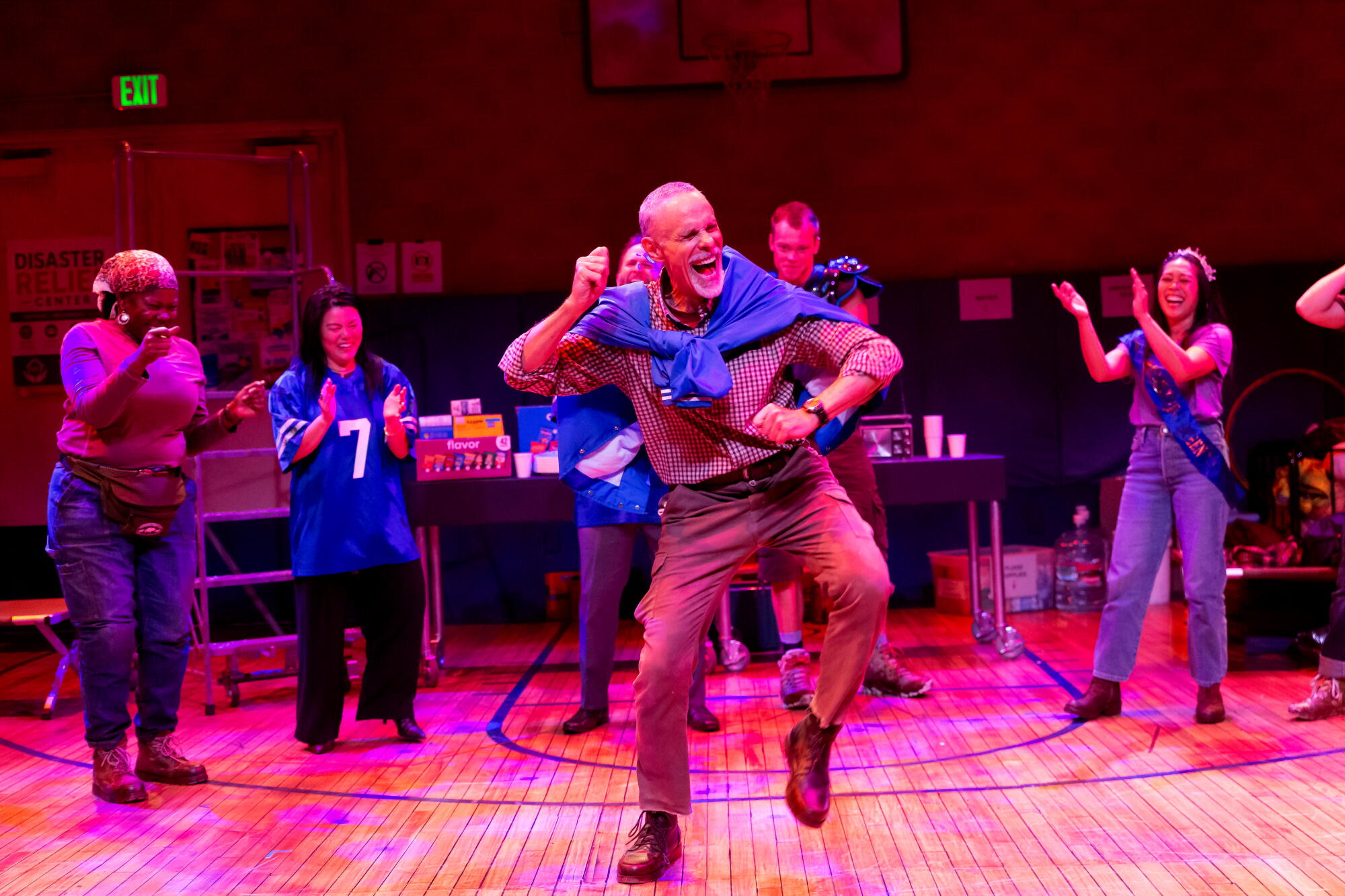
Julanne Chidi Hill, Desiree Mee Jung, Adam J. Smith, Joel Swetow (center), Rio Rasch, Nicole Javier and Alexander Matos in “Pericles” at Boston Court Pasadena.
(Brian Hashimoto)
Whatever the scholarly truth, it’s safe to say that “Pericles, Prince of Tyre,” to give this late romance its full title, is a patchwork. A strange epic yarn ignited by incest and attempted murder, the play is crammed with shipwrecks and miraculous rescues, devastating suffering and last-minute recoveries. I don’t think I’ve ever read the final act without shedding tears. That said, the play requires an extra-strength dose of willing suspension of disbelief.
McLaughlin’s most notable change concerns the frame of the play, which now unfolds in a disaster relief center. The conceit is that the worried and impatient evacuees amuse themselves with an impromptu performance of “Pericles,” of all unlikely theatrical works.
Outside, a monstrous storm rages. Inside, under flickering lights, a group of reluctant strangers is coaxed into acting out, in a converted gymnasium, a wild tale promising redemption from agonizing tragedy.
Randolph Thompson, Nicole Javier, Joel Swetow Adam J. Smith, Desiree Mee Jung and Rio Rasch in “Pericles” at Boston Court Pasadena.
(Brian Hashimoto)
The production, directed by Margaret Shigeko Starbuck, runs with the makeshift energy and comical freedom that this contextual shift allows. The characters aren’t professional actors, so it’s fine for them to wear their masks loosely. Flashlights illuminate darkened spaces. And props are improvised so that pool noodles are used for jousting and an earbud case serves as an engagement ring.
Joel Swetow, in the role of Gower, smoothly marshals the narrative, advancing the story from one delightful implausibility to the next, recapping what’s happened in the meantime and, when necessary, urging some of the more reluctant characters to stay with the performance. He also takes on the role of malevolent and benevolent kings, whom Pericles (an excellent Randolph Thompson) encounters on his tumultuous odyssey.
Most of the lead players lock into their roles once the performance of “Pericles,” the play within the adaptation, is underway. Thompson is particularly skilled at emotionally investing in his character’s plight even as the spontaneous production refuses to take itself too seriously.
Randolph Thompson, Joel Swetow and Nicole Javier in “Pericles” at Boston Court Pasadena.
(Brian Hashimoto)
A little meta-theatrical hamminess goes a long way, and actors in general have a tendency to overdo the joke. I appreciated the restraint that the cast imposes on itself without spoiling the fun. Nicole Javier who plays Thaisa, Pericles’ seemingly doomed wife, and Troy Leigh-Anne Johnson, who plays Marina, Pericles’ transcendentally good daughter born into sorrow, ensure that we care about the fate of a man who trails disaster behind him.
Julanne Chidi Hill, Desiree Mee Jung, Adam J. Smith and Alexander Matos adroitly flesh out the world of a play that sets virtue and vice in neon opposition. Their sporting way of differentiating their roles keep the staging brisk and lighthearted, qualities that are cleverly maintained by a design team that conjures ocean swells with a metallic-looking sheet, royal garb out of contemporary casual wear and a deadly threat from a pocket umbrella.
I missed the rhythms of Shakespeare’s music, though the most compelling poetic imagery in the adaptation is from the original. But the biggest sacrifice, one that is never fully restored unlike Pericles’ grievous losses, is the emotional weight of the play’s climax. It’s hard to allow yourself to fully believe in the incredible turn of events when the prevailing attitude is so emphatically tongue-in-cheek.
Adam J. Smith, Joel Swetow, Nicole Javier, Julanne Chidi Hill, Jamie Gallo, Randolph Thompson and Rio Rasch in “Pericles” at Boston Court Pasadena.
(Brian Hashimoto)
Johnson’s Marina performs with lovely gravitas, as do Javier’s Thaisa and Thompson’s Pericles. But the rollicking jollity that accompanies the final two acts, which includes the entrance of pirates and the abduction of Marina to a brothel, robs the ending of some of its pathos. A touch more solemnity would not have been amiss.
My eyes for once failed to moisten. But I was nonetheless relieved that Pericles’ happy ending is intact — a reassuring sight in our age of successive disasters.
‘Pericles’
Where: Boston Court Pasadena, 70 N. Mentor Ave., Pasadena
When: Check theater website for schedule. Ends Sept. 27
Fights between players and coaching staff broke out after the Turkish side won the Champions League playoff second leg.
Published On 5 Sep 20265 Sep 2026
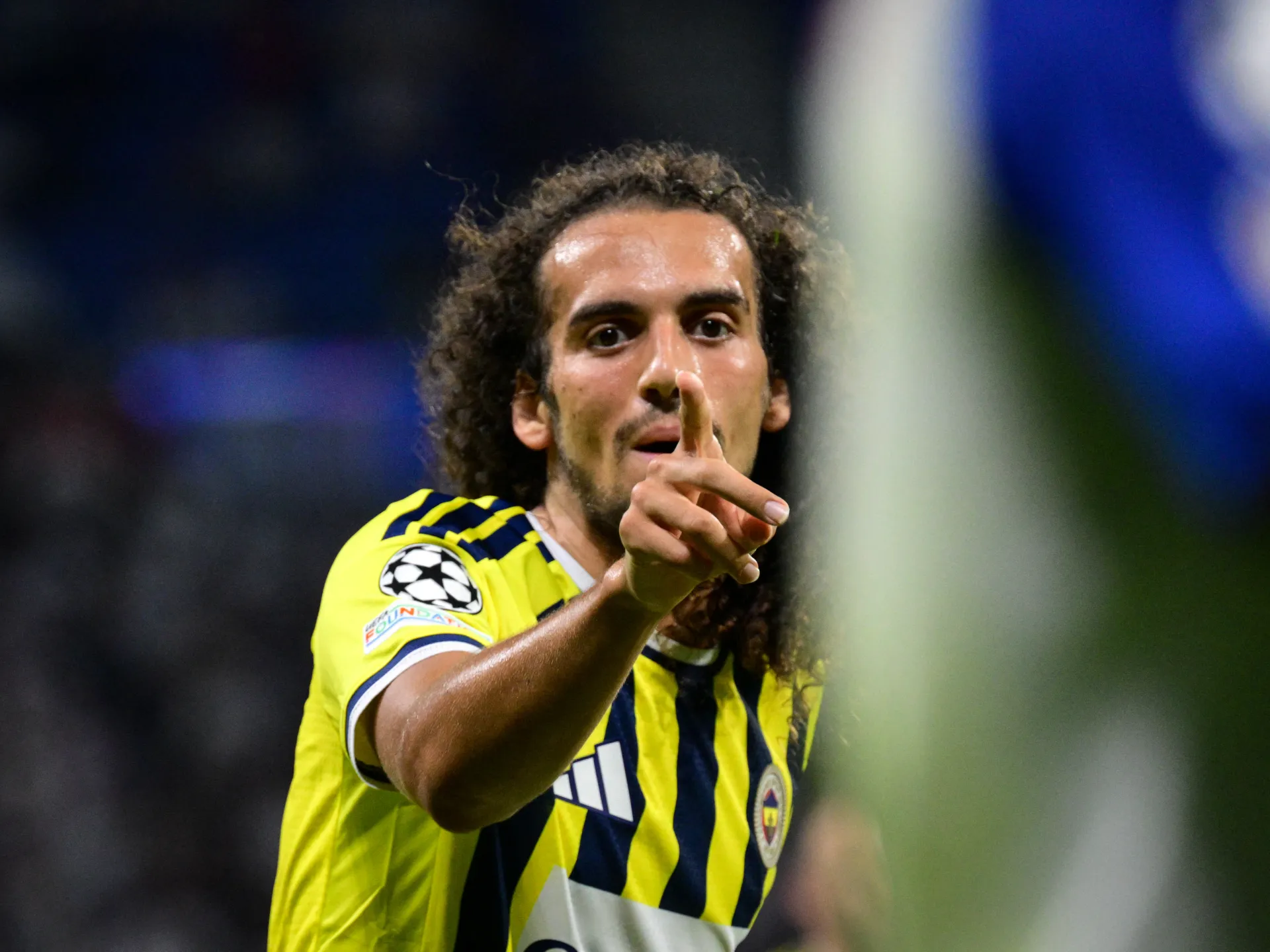
Fenerbahce duo Mason Greenwood and Matteo Guendouzi have been suspended and fined for their part in the chaotic scenes after their club’s Champions League playoff second leg against Lyon.
Last month’s 2-1 victory for Fenerbahce in France meant the Turkish side progressed 3-2 on aggregate, and, after the final whistle, Greenwood and Guendouzi, who both previously played for Lyon’s bitter rivals Marseille, were involved in a brawl with players and coaching staff from both sides.
Former Arsenal midfielder Guendouzi has been suspended “for a total of four UEFA club competition matches for which he would otherwise be eligible, for insulting others present at the match, provoking spectators and for violating the basic rules of decent conduct”, UEFA announced in a decision made public on Friday evening.
Two of the matches are subject to a “one-year probationary period”, European football’s governing body added in the statement.
Guendouzi, who was also fined 50,000 euros ($58,000), was found guilty, among other things, of giving the middle finger to Lyon supporters and of provocations that led to a scuffle after the match.
His English teammate Mason Greenwood, formerly of Manchester United, received a one-match suspended ban and was fined 30,000 euros ($35,000) for “violating the basic rules of decent conduct”.
The global ratings agency has also maintained the country’s sovereign rating at AA.
Published On 5 Sep 20265 Sep 2026
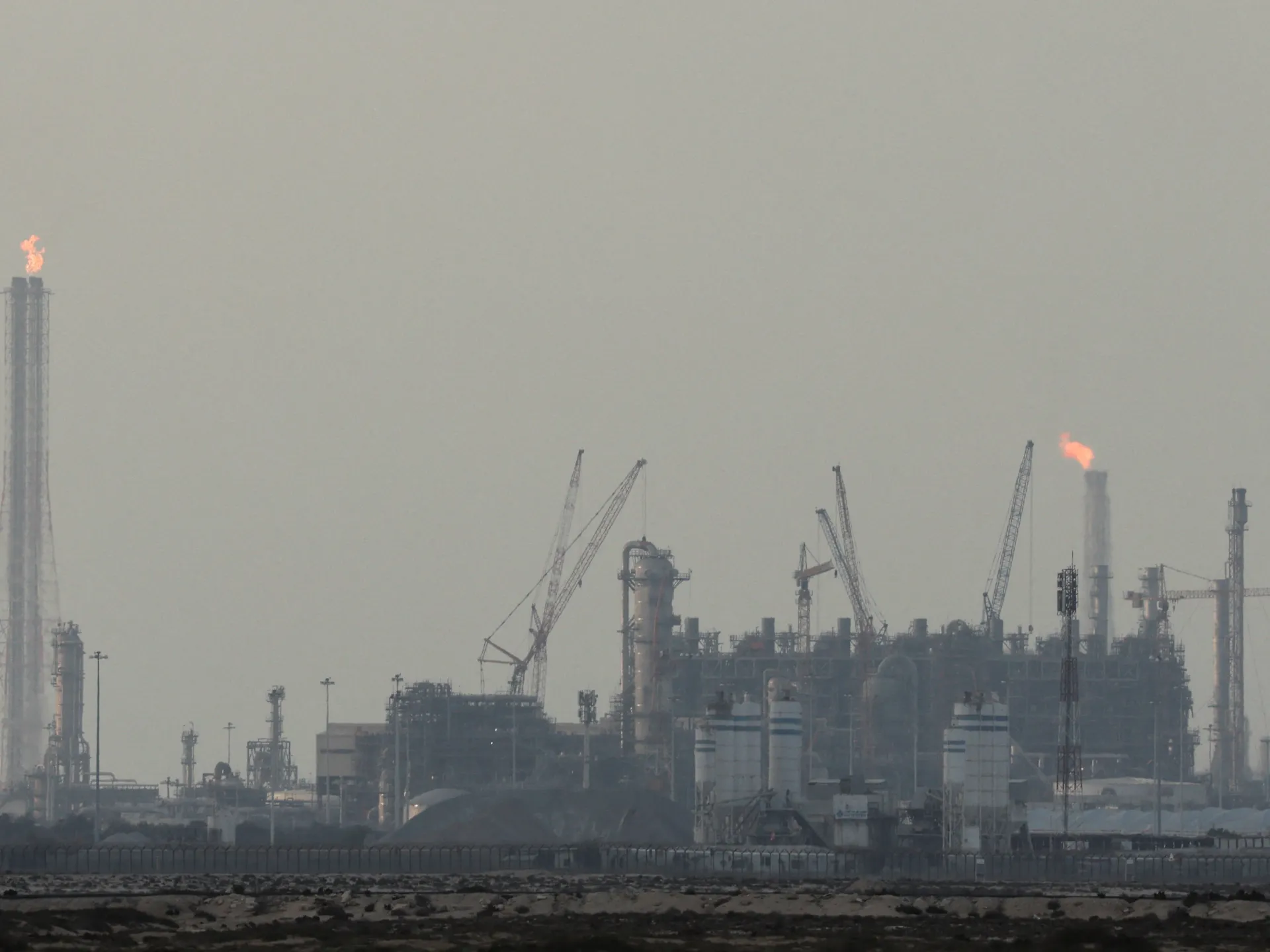
Fitch Ratings has removed Qatar from “Rating Watch Negative” while maintaining its sovereign rating at AA amid the US-Israel war on Iran and the Strait of Hormuz blockade.
The global ratings agency announced the decision on Friday, citing reduced risks to the country’s liquefied natural gas (LNG) facilities since March.
Recommended Stories
list of 3 itemsend of list
The agency, however, kept a negative outlook on the rating, citing ongoing risks surrounding the movement of gas exports through the blockaded Strait of Hormuz.
“The impact of the war on the credit profile will take longer to discern,” the agency said in a statement.
Qatar, one of the world’s largest gas exporters, continues to face export disruptions and shortages caused by damaged energy facilities during the war on Iran, which began six months ago.
Earlier this year, credit agencies S&P and Moody’s also affirmed Qatar’s ratings, noting that the country’s sizeable financial cushion helps protect it from the economic impact of the war.
Niger has blamed France for inciting an attack on a key military airbase by mutinous soldiers last week. Clashes at an airbase in the capital erupted during an attempted mutiny against the military junta that has ruled since 2023.
Defending singles champions Carlos Alcaraz and Aryna Sabalenka have sailed into the last 16 of the US Open as tennis icons Serena and Venus Williams suffered an agonising defeat on their long-awaited return to Grand Slam doubles.
Alcaraz, coming off a four-month injury absence, beat China’s Wu Yibing 6-3, 6-4, 6-1 on Friday to book his place in the fourth round, while Sabalenka was similarly dominant in a 6-3, 6-4 defeat of Kamilla Rakhimova.
Alcaraz will face 20th-seeded American Tommy Paul for a place in the quarterfinals after Paul beat 15th-seeded Alexander Bublik 6-4, 3-6, 6-7 (4/7), 6-1, 6-3.
“The way he plays is unbelievable, the rhythm he has on every shot – forehand, backhand,” Alcaraz said of Wu. “His balls skid a lot on the court and, for me, it’s really difficult to control sometimes.
“But I think I stayed there. I played aggressive. I played smart in the toughest moments.”
Wu recovered an early break in each of the first two sets, but Alcaraz pocketed both with breaks in the final games, and after saving a pair of break points in the first game of the third, the Spaniard rolled home.
“I think my level is really good,” he said. “I’ve got into the rhythm of the competition. I’m getting there.”
World number one Sabalenka did not face a break point in her dismissal of Rakhimova, firing 29 winners with 10 aces.
The numbers did not tell the whole tale of a match that saw 92nd-ranked Rakhimova challenge Sabalenka in a second-set slugfest.
Sabalenka was also unimpressed by the pervasive smell of marijuana – an increasingly common issue at the US Open – wafting down from the stands during her match.
“It’s a bit tricky to handle that smell while you’re trying to compete at your best,” said Sabalenka, who at one point complained to the umpire about the issue.
Sabalenka, who must repeat as champion to have a chance of remaining number one, next faces Taylor Townsend, the 96th-ranked American who beat 15th-seeded Russian Diana Shnaider 6-2, 6-7 (3/7), 6-3.
Williams sisters lose thriller
With Alcaraz and Sabalenka among the early starters, all eyes on the evening session were on the Williams sisters, partnering in a Grand Slam doubles event for the first time since 2022.
The duo returned to the US Open stage comes after 23-time Grand Slam singles champion Serena came out of a four-year retirement to play at Wimbledon.
But the most famous sister act in tennis – who won 14 Grand Slam doubles titles together along with three Olympic gold medals – were beaten 6-3, 6-7 (6/8), 7-6 (10/7) by 14th seeds Chan Hao-ching of Taiwan and Australia’s Maya Joint in a marathon three-hour battle.
The Williams duo had shown flashes of their brilliant best after recovering from losing the first set to level the match after taking the second set on a tie-break.
Momentum and a raucous New York crowd appeared to be carrying them towards victory after they sprinted into a 5-0 lead in the third-set tie-break. But Chan and Joint fought back superbly to erase the deficit before clinching victory.
Serena Williams, right, and her sister Venus shake hands with Chan Hao-ching, left, and Maya Joint after losing their women’s doubles first-round tennis match [Kena Betancu/AFP]
Pegula through, Muchova upset
In other singles action on Friday, third-seeded American Jessica Pegula, one of the players with a chance to knock Sabalenka off her No 1 perch, mounted a desperate fightback to beat Canadian Leylah Fernandez 1-6, 6-4, 6-3 in a battle of former finalists.
Elsewhere, Ukraine’s Marta Kostyuk beat Russian Ekaterina Alexandrova 6-3, 6-2 and American Emma Navarro upset seventh-seeded Czech Karolina Muchova 6-3, 7-5.
Back in the men’s draw, American 11th seed Frances Tiafoe was a comfortable 6-4, 6-2, 6-4 victor over Monaco’s Valentin Vacherot, seeded 22.
Tiafoe’s win earned him a last 16 showdown with Russian seventh seed Daniil Medvedev.
Medvedev was a similarly unfussy winner over French 26th seed Arthur Rinderknech, easing to a 6-4, 6-4, 6-4 win in just under two hours.
Unseeded former world number three Stefanos Tsitsipas – whose ranking has plummeted to 53 – meanwhile toppled 18th seed Jiri Lehecka, 2-6, 6-1, 7-6 (7/3), 6-1 to reach the US Open fourth round for the first time.
Tsitsipas will face American eighth seed Ben Shelton in the last 16. Shelton defeated Canada’s Denis Shapovalov 7-6 (7/3), 6-7 (5/7), 6-3, 6-4 in the late match.
MIS-TEEQ will reunite for a one-off 25th anniversary concert next Saturday – and have hand-picked a special line-up of UK garage artists to warm up the crowd.
Mis-Teeq, from left, Su-Elise Nash, Sabrina Washington and Alesha Dixon, are playing a huge reunion show next SaturdayCredit: Getty
We understand the supporting acts are Damage, Egypt, Kele Le Roc, Malika, Gracious Kay and Monsta Boy and Rampage Sound – who are presenting the acts on stage.
A source said: “This concert is all about celebration for Mis-Teeq and they knew they wanted to have multiple acts to really whip the audience up.
Sign up for the Showbiz newsletter
Thank you!
“They’ve secured Damage, Egypt, Kele Le Roc, Malika, Gracious Kay, Monsta Boy and Rampage Sound.
“It’s going to be off the charts.”
Kele Le Roc, performing during Kisstory On Blackheath in July, is among the supporting artistsCredit: GettyInsiders confirmed Damage, here in their hey-day in the Nineties, were also on the billCredit: Getty
Tickets have already sold out, as excitement builds for their reunion following their huge performance at Capital’s Summertime Ball in June.
Alesha and Su-Elise, both 47, and Sabrina, 45, confirmed they were reuniting for a one-off show in May, after The Sun exclusively revealed their plans earlier this year.
Speaking about their return, Alesha said: “We’ve been offered reunion stuff over the years, but it’s never felt right.
“This time, everything just lined up. “It feels like it is just slotting back into place.”
The band’s reunion is to celebrate the 25th anniversary of their debut album, Lickin’ On Both Sides.
The record, which came out in October 2001, peaked at No3 in the Official Album Charts and bagged them five Top Ten singles including All I Want, One Night Stand and B With Me.
The trio, pictured here during their chart-topping days, reunited to celebrate the 25th anniversary of their album Lickin’ On Both SidesCredit: Getty
An explosion at a military barracks in Viacha, Bolivia, has killed at least 10 people and injured dozens following a blast at a facility storing fireworks and other pyrotechnics.
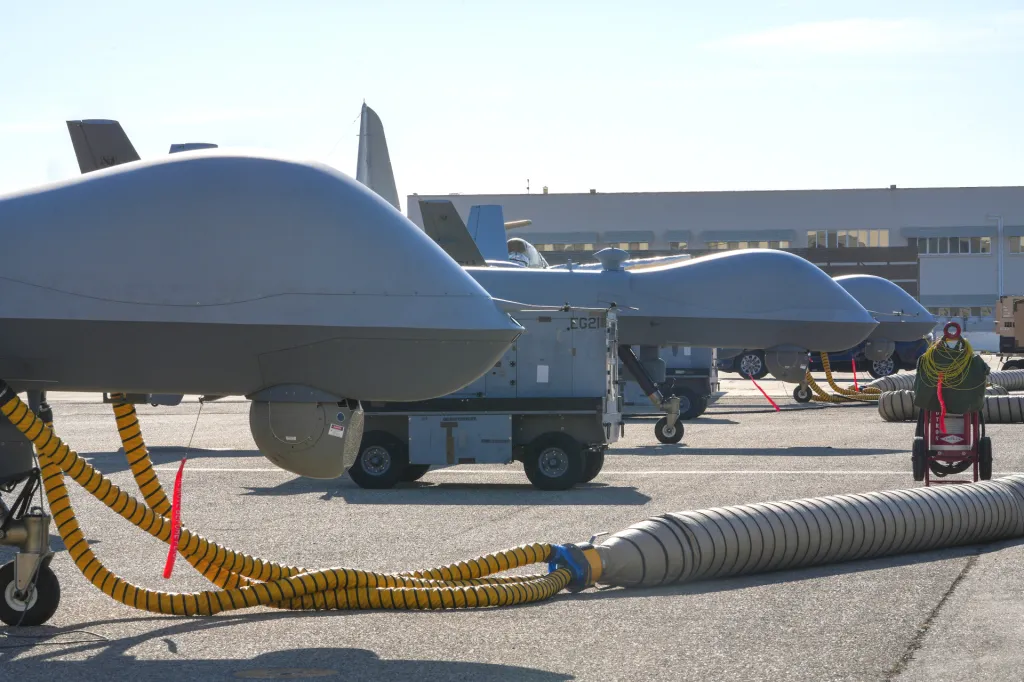
The U.S. Air Force is targeting an approximately $10 million unit price, excluding sensors and certain other systems, for a drone to succeed the MQ-9A Reaper. The cost of a fully kitted-out Reaper today is generally reported to be between $30 million and $50 million. The Air Force is also now pushing to accelerate the program to acquire the new drones, dubbed the Massed Modular Aircraft (MMA), amid what it admits are “concerning” Reaper losses in the course of recent operations against Iran.
Air Force Lt. Gen. Christopher Niemi, the service’s Chief Modernization Officer, told reporters that the goal was for the MMAs to be “closer to half” the cost of a Collaborative Combat Aircraft (CCA), at a roundtable at the Pentagon yesterday, according to Breaking Defense. He also said the service was hoping to see the price tag on its future CCAs fall to around $20 million after full-rate production of those drones gets underway.
A row of USAF MQ-9A Reapers. USAF/Staff Sgt. Ariel OShea
Beyond cost, the Air Force has previously said that it wants the MMA drone to perform the same general intelligence, surveillance, and reconnaissance (ISR) and strike missions as the MQ-9A. To that end, stated program requirements to date include a speed of at least 200 knots true airspeed, a munition and sensor payload capacity of at least 2,800 pounds, an unrefueled combat radius of at least 2,300 nautical miles with payload, the ability to self-deploy one-way at least 8,000 nautical miles, and the ability to operate from runways no longer than 6,000 feet. The MMAs also need to be highly modular and use open architecture mission systems to make it easier to integrate new capabilities and functionality down the line.
With all that in mind, Niemi’s MMA cost “estimate includes only the cost of the air vehicle, without being fully missionized,” an Air Force spokesperson clarified after yesterday’s roundtable, per Breaking Defense.
The MQ-9A is out of production, but, as mentioned, the full cost of each one in Air Force service today is generally pegged at between $30 million and $50 million, depending on the sensors, weapons, and other mission equipment they carry. Speaking yesterday, Lt. Gen. Niemi explicitly used the $50 million price point to underscore the MMA program’s unit cost target, as well as explain why the Air Force does not view the newer, in-production MQ-9B as a path to meeting its current needs. General Atomics developed the MQ-9B from the Reaper, but the former is a significantly evolved design with substantial differences from its predecessor.
“If you don’t like losing an MQ-9A that cost on the order of $50 million, with the sensors, you’re probably not going to like losing an MQ-9B at a higher price point,” Niemi said at yesterday’s roundtable, according to a separate report from Air & Space Forces Magazine.
An MQ-9B drone. General Atomics
“There’s a, I think, sort of a misconception that because the MQ-9B is in production, we can walk down there with a big fat check and have 100 of them this year,” the general also said, Breaking Defense also reported. “That’s not reality.”
Niemi acknowledged that tradeoffs will have to be made to find an MMA design that is substantially lower cost compared to the MQ-9A.
“You’re going to have to certainly give up something,” he said, per Breaking Defense. “There’s no doubt if we try and pursue the exact same approach that we had with things like the MQ-9, we’re going to get something that costs about the same as an MQ-9.”
However, “what makes the MQ-9 special has nothing to do with the aircraft itself. Like there is no cutting-edge technology for how fast it flies, how high it flies, how far it flies, all that is proven, decades-old technology,” he added, according to that outlet. “So, if you’re focusing on the truck, and you do it in a way where you’re able to make some smart design compromises … we do think you can drive the cost down.”
Niemi said that he expected the MMA, in very general terms, to look much like an MQ-9, including that it would likely also be turboprop powered and have a similarly shaped main wing.
A US Air Force MQ-9A Reaper. USAF
“I think it’s all going to be proven stuff, because that’s how I’m going to drive down the cost so I can get to that goal that I laid out,” Niemi, added.
For its part, General Atomics has had choice words in the past regarding discussions about the costs of the MQ-9A and MQ-9B, as well as their capabilities, particularly in light of recent losses. We will come back to the matter of attrition in a moment.
“Some say we need cheaper, disposable aircraft, so that we can use them and throw them away, or lose them and not feel bad about it. No one is talking about actual capability, ready today,” C. Mark Brinkley, a spokesperson for the company, told TWZ back in June after new discussions about a Reaper successor for the Air Force first began to surface. “No one is talking about all of the hard lessons, already learned, about icing and weather and weapons integration. No one is talking about the multiple survivability upgrades available for the existing platforms and the lack of investment in those.”
“These make-believe weapons that don’t exist have the luxury of being anything you imagine them to be,” Brinkley added at that time. “Unscratched lottery tickets, promising all of the win and none of the lose [sic].”
USAF
“I think it’s really unfortunate that MMA has been branded as a ‘Reaper replacement’ because it misrepresents what America needs now and what we need later,” he told us last month. “We need an immediate backfill solution to a critical shortage of unmanned MALE [medium altitude, long endurance] ISR/Strike. We need to get going on that now. MMA isn’t a backfill solution, or even a bridge to a backfill solution. This isn’t that.”
Brinkley was speaking here in the context of a discussion about Wildfire, a new drone General Atomics is now developing in response to the MMA requirements.
Wildfire “addresses all of the concerns posed by the MMA solicitation. We can deliver years earlier and maintain the same high quality. You can have everything that makes Reaper special, plus more, at a price that doesn’t break the bank,” Brinkley also told Breaking Defense for its story yesterday.
All of this brings us back around to the matter of MQ-9A losses and the Air Force’s efforts now to accelerate the schedule for the MMA program.
Air Force officials have offered glowing assessments of the MQ-9A’s performance in operations against Iran, despite these losses, but have also said that the level of attrition is worrisome. That reality, in turn, had major impacts on discussions that led to the current MMA program.
“Although we have plenty of MQ-9As today, we are going through them at a rate that is concerning to us,” Niemi said yesterday, according to Air & Space Forces Magazine. “There’s not a lot of good options to immediately replace those aircraft.”
When the MMA program was first announced in July, the stated goal was to have an initial operational fleet of 20 of the drones in service by 2031. The Air Force is now working to push that timeline to the left, but still sees fielding of the new drones as being around three years away, at least. The service eventually hopes to acquire at least 180 MMAs.
“I can’t buy an MMA today. The reality is, based on the budget and other constraints, that I’m not going to buy a whole lot of MQ-9Bs today either,” Niemi conceded, per Breaking Defense.
It is important to remember here that the Air Force has already tried multiple times to develop a replacement for the MQ-9 without success. In that time, the idea of what a successor to the Reaper would look like has changed dramatically. As we’ve written previously:
“The Pentagon has long worked on the basis that a future conflict with a peer rival, and especially with China in the Pacific, would see it facing highly robust anti-access/area-denial (A2/AD) scenarios. With that in mind, previous Reaper replacement studies had suggested that low observability would need to be incorporated into the design.”
“The latest thinking seems to reject that, or at least reorient the program toward a lower-cost platform of the kind that the Air Force would be able to field in mass, as well as to absorb the anticipated attrition in a high-end conflict. This does not preclude this airframe from featuring low-observable elements. In fact, it most likely will. But those would be more aggressively balanced against cost.”
MMA is also looking at a wider slate of potential vendors. General Atomics, which has long had a monopoly on the U.S. MALE combat drone market, is not the only one angling now for an MMA contract.
A rendering of a stealthy concept Northrop Grumman previously put forward as a possible MQ-9 replacement, underscoring how the thinking in this regard has changed over the years. Northrop Grumman
“…the U.S. drone landscape has changed considerably in terms of manufacturers. A few years ago, Northrop Grumman, Lockheed Martin, and General Atomics would have been seen as the front-runners for the MQ-9 replacement. Now, there are more contenders, often with a founding focus on rapidly scaling up production at low cost. Still, these firms have much to prove, especially considering the risk in replacing an aircraft as important as the MQ-9. At the same time, in the more advanced drone space, the legacy defense ‘prime’ contractors are also making major progress in leveraging new technologies to reduce production costs and migrating away from exquisite, very expensive drones as their default offerings.”
The possibility was reportedly raised yesterday that the MMA program could ultimately lead to the fielding of multiple types of drones through successive incremental development cycles. This is exactly how the Air Force is running its CCA program now.
With the Air Force now pushing for a more aggressive schedule for the MMA effort, more details about the designs it is considering may begin to emerge relatively soon. The service certainly has a pressing need already for these drones after so many MQ-9A losses.
ITV are screening this war film based on one of the most significant battles of all time, with a huge historic figure at the centre of it all
ITV are screening this war film based on one of the most significant battles of all time tonight(Image: PA)
History was turned into a legendary piece of storytelling when this film made its way to the big screen in 1970, retelling the real life events of war and now its set to appear on TV’s tonight.
Regarded as one of the great original epic war films, this movie helps to maintain the legacy of the decisive battle of the Napoleonic Wars, in the 1800s.
Waterloo is a sweeping historical movie which remains one of the most powerful entries in the genre, with acclaimed director Peter Jackson even crediting it as a key influence on his work on The Lord of the Rings and The Hobbit.
It is a film that depicts the real-life Battle of Waterloo, focusing not solely on the conflict itself but also on the pivotal days leading up to the campaign, widely known as the Hundred Days.
It charts Napoleon Bonaparte’s downfall and his return from exile ahead of his crushing defeat at the 1815 battle. Following his comeback, the French military swiftly rallies to his cause, prompting alarmed European powers to forge a new coalition, and war inevitably follows.
Many have praised the film for its historical accuracy, with one viewer writing on Rotten Tomatoes that it is “the most accurate historical film ever”, which is enough to make history buffs want to watch it.
The grand-scale production was a joint venture between Italy and the Soviet Union, helmed by director Sergei Bondarchuk and featuring Rod Steiger in the role of the legendary Emperor Napoleon I.
Following a viewing of the film, one audience member posted a review on Rotten Tomatoes, saying: “This is a classic, and Rod Steiger is immense, making the new Napoleon movie look like an amateur nightmare.”
Another wrote: “remarkable film. One for the ages. A film like it will never be made again.”
It features a number of historical figures played by actors such as Jack Hawkins as General Sir Thomas Picton, Virginia McKenna as the Duchess of Richmond and Orson Welles as the famed Louis XVIII of France.
The film’s most striking element is undoubtedly the combat sequences, which deployed an astonishing 17,000 authentically costumed extras. The battle scenes were meticulously recreated to achieve maximum realism, using genuine numbers and eschewing special effects, establishing a record that remains unbroken for the largest number of costumed extras in any film.
This commitment helped secure multiple accolades, including two BAFTAs for Best Costume Design and Best Art Direction. It’s the director’s unwavering dedication to crafting these teeming, lifelike scenes that continues to strike a chord with audiences.
One viewer wrote: “Easily one of the best movies ever made. Actual soldiers given a Napoleonic battle training playing the extras, one of the most historically accurate film ever made.
“It allows one to immerse oneself in the battle and provides excellent viewing. With brilliant casting this film remains one of my favourites of all time.”
Yet despite the film’s critical acclaim, it struggled to recoup the costs of these monumental scenes at the North American box office. Consequently, its disappointing financial performance triggered a significant industry-wide decline in backing for large-scale practical effects, driven by commercial anxieties.
You can catch the historical drama on ITV4 tonight at 7.40pm. Alternatively, the film is available to stream on ITVX at your convenience.