US sanctions Turkish bank over alleged IRGC ties, accusing it of facilitating millions in transactions for Iran.
Published On 5 Sep 20265 Sep 2026
The United States Treasury Department has imposed sanctions on a Turkish bank and its subsidiaries over alleged ties to Iran, as Washington seeks to economically isolate Tehran.
The Treasury Department accused Golden Global Yatirim Bankasi Anonim Sirketi (Golden Global Bank) on Friday of facilitating “tens of millions of dollars’ worth of transactions for the Islamic Revolutionary Guard Corps-Qods Force” and providing the Iranian government with banking access to move its funds internationally.
Recommended Stories
list of 4 itemsend of list
Washington alleged the bank “was established for the purpose of enabling Iran’s rahbar network [shadow banking system] to transfer oil revenues from China to Turkey” using gold and cash.
Golden Global Bank responded on Friday, saying it fulfilled all local and international banking compliance rules and would take legal action against the US-imposed sanctions.
There are no transactions conducted by Golden Global Bank that could substantiate the claims made by the US, the bank said in a news release.
“We will exercise all our rights of objection and legal recourse in the most effective manner and will take the necessary actions at the earliest against these allegations and the decision,” the Turkish bank added.
“Financial institutions continue to find out the hard way that we are serious about Operation Economic Outcast,” said Secretary of the Treasury Scott Bessent in a statement published by the department on Friday.
The sanctions place the bank and its two subsidiaries on the US Office of Foreign Assets Control (OFAC)’s Specially Designated Nationals list, cutting off access to the US financial system.
The bank said individuals and entities named in the OFAC decision “have never been and are not currently customers” of Golden Global.
US Ambassador to Turkiye Tom Barrack said on Saturday that it would be a mistake for Turkish officials “to read [the US’s] narrow measure as a judgement upon Turkiye”.
“The health of the Turkish financial system is not in question; the conduct of one institution was,” Barrack said on X.
Last week, the US took steps towards severing the UAE operations of Egypt’s second-largest bank from financial access after accusing it of processing transactions for companies linked to Iran’s shadow-banking system.
Bessent said on Tuesday on the sidelines of a G20 summit that Washington would likely announce a bank sanction this week and another next week, as it ramps up its economic campaign against Tehran.
The truth about the last words uttered by Australia’s famed ‘Crocodile Hunter’ have now been laid bare, two decades after the Wildlife Warrior’s untimely death
Rachel Vickers-Price UK and World News Reporter and Jamie Roberts Senior Showbiz and TV Reporter
03:18, 05 Sep 2026Updated 04:51, 05 Sep 2026
Steve Irwin poses with his daughter Bindi Irwin October 2, 2006 in Uluru, Australia. (Image: Getty Images)
A close confidant of legendary eco-warrior Steve Irwin has detailed the Aussie icon’s final moments, just as he realised death was moments away.
September 4 marks the anniversarry of Irwin’s untimely death. The passionate animal lover was known around the world for his infectious approach to conservation, capturing hearts with his zoo, TV show, and adoration for all creatures great, small, and even scaly.
It’s been two decades since Irwin’s shock death, and family and friends have paid tribute to a man considered an icon and animal-loving legend Down Under.
ICYMI: Irwin died while doing what he loved; he was out on Australia’s famed Great Barrier Reef off the coast of Cairns, filming a nature documentary about stingrays when he copped a barb to the heart from the very creature he was there to film.
Cameraman Justin had been filming the crocodile hunter at sea when disaster struck. Speaking on 60 Minutes’ Steve Irwin: A Wild Life, Justin revealed the devastating moment Steve realised he was dying, and his final moments.
Justin told the programme: “We zipped around for 10-15 minutes before we found the stingray. And then, it was like, okay, game on. I mean, we’d only filmed with stingrays a hundred times before. They were awesome to film with. So we both slipped over the side of the rubber ducky and, yeah, started filming this amazing massive — it was massive — bull ray.
“Anyway, we chatted about the final shot, which would be the opening shot, because by now, the stingray was calm. It had buried itself in the sand. I said, ‘We’ll start this thing. I’ll just be close in front of this stingray. I’ll be a couple of metres from it. You go round behind it and swim up behind it.'”
Justin went on: “He swims up, swims over the top of it. It doesn’t move. But as he’s directly over the top of it, of course, it thought he was a tiger shark and started stabbing madly towards him with its tail. The water just boiled. I couldn’t see anything that was going on. Bubbles and thrashing.
“And then, all of a sudden, it stopped. The stingray swam away, the water calmed, so I just panned with the stingray. And as I let it go out of shot, as I panned back to Steve, he came jumping up out of the water, screaming, and the water around him is now full of blood.
“And he screamed out, ‘It’s punctured my lung!’ I threw the camera into one of the rubber duckies, dragged Steve into the boat. His khaki shirt is open, and he’s just got blood pouring out of a gash like that in his chest, right over his heart. But he’s conscious, and he says to me, looks me right in the eye, and he says, ‘I’m dying’.”
Bindi was just eight years old when her father died, and she shared a video of him as he recounted “the most incredible wildlife encounter of my life” – the birth of his daughter. Bindi said: “Twenty years ago, today, the world lost the most passionate and dedicated wildlife conservationist. Our family lost our superhero. My mum lost the love of her life; my brother and I lost the greatest dad.
“Grief never truly leaves us; we walk alongside it every day. Where there is enormous grief, there is even greater love.I always thought that my dad’s legacy is wildlife conservation; it turns out, his legacy is love. For our planet and for each other.”
Bindi added that her five-year-old daughter watches her grandfather’s documentaries every morning and feels “utterly loved by her ‘grandpa crocodile’, despite never meeting him. She went on “My dad left a lasting impact so poignant that it will ripple out for generations to come. I believe with my whole heart that his love will live on forever.
“Dad, I love you with my whole heart. Thank you for being our guardian angel. And most of all, thank you for watching over my daughter now, too. She loves you so much. We all do.”
Robert also shared a snap of him and his father with the caption: “Your legacy is forever.” Terri, also remembered her final few weeks with her husband, saying “grief still walks with me like my shadow”. She said: “With the passing of time I have gained more perspective and understanding. We were together as a family, on our crocodile research expedition, for what was to be our final six weeks together.
Content cannot be displayed without consent
“Ours was to be a long and sweet goodbye. Steve spent time with Bindi and Robert building swings and climbing trees. We all slowed down. Time slowed down. I believe that all of us, every one of us, gets to say goodbye.
“We just may not know that we’re saying it. Hold every moment dear with the ones you love. Until we meet again.”
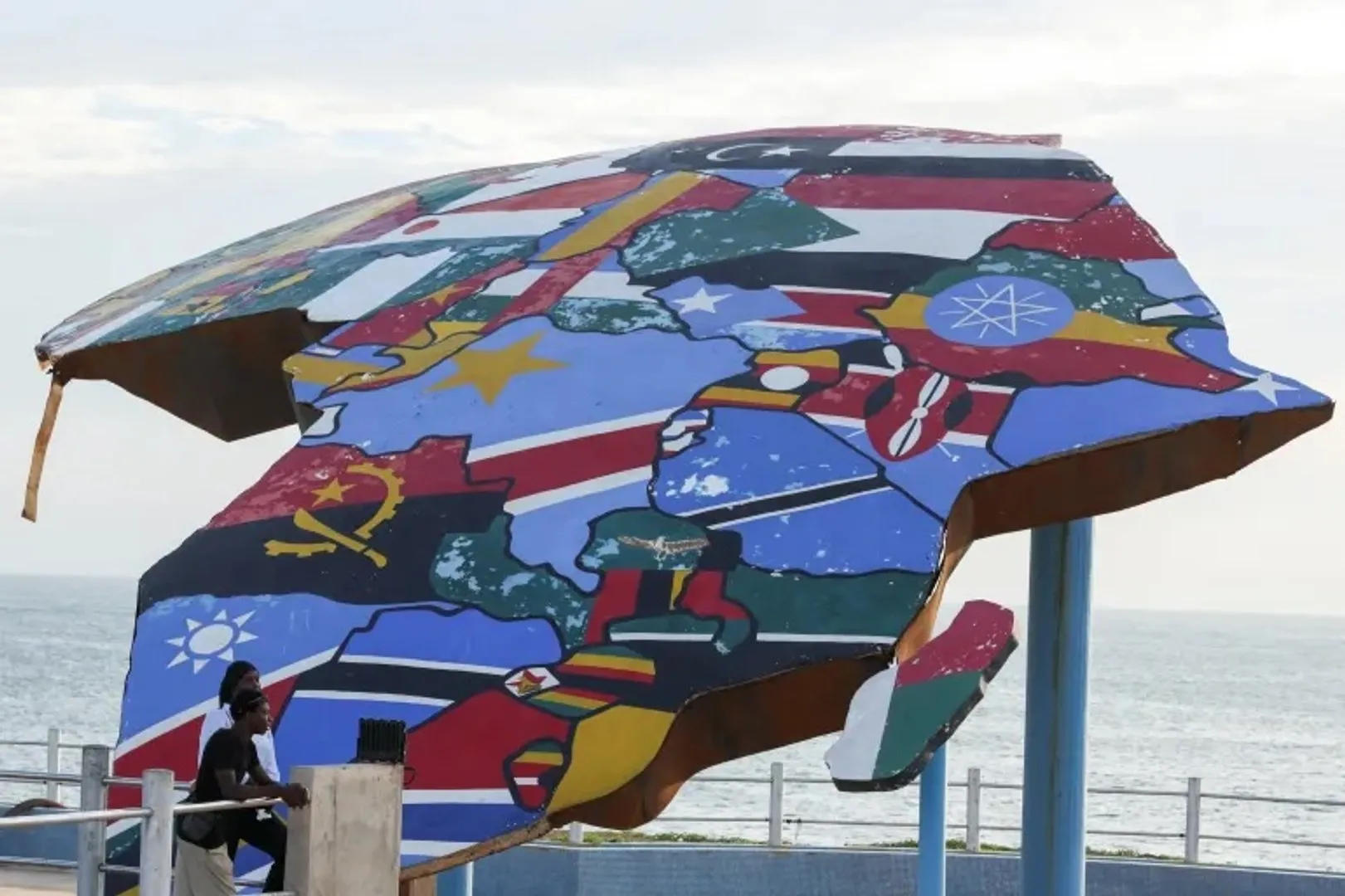
The UN General Assembly has backed a resolution to change to maps that more accurately show the true size of Africa. Supporters of the resolution say the widely used, and centuries-old, Mercator world map distorts the size of countries, thereby changing how they are seen.
Islamabad, Pakistan – Staff nurse Razia Noreen was at a medicine cupboard on the nursery ward of the Pakistan Institute of Medical Sciences (PIMS), Islamabad’s largest public-sector hospital. She was two doors from the babies in her care, preparing the morning’s injections.
As she shut the cupboard door, she saw through the nursery’s glass panel a light too sharp and too red to be anything ordinary. She did not wait to understand what it was.
Recommended Stories
list of 3 itemsend of list
It was 6:38am on Wednesday, August 26. Elsewhere in the ward, her colleague, Sister Nasreen, was already running out, shouting for help.
At 56 seconds past 6:38am, according to security camera timestamps later logged by a government inquiry committee, Noreen rushed into the nursery.
Eight seconds later, she emerged carrying a baby. She tried to go back in. She could not. By 6:40am, the room was gone, swallowed by smoke so thick that the security cameras could no longer see through it.
Noreen was recalling this eight days later, in a plain office beside the hostel warden’s room at PIMS, dressed in a pale pink shalwar kameez, her dupatta loose over one shoulder.
“There was a proper blast,” she told Al Jazeera. “Everything turned to smoke.”
Fifteen newborns had been in that nursery. Fourteen died. The baby Noreen carried out was the only one who lived.
On Thursday, Noreen was given an award by Prime Minister Shehbaz Sharif for her courage. But for the nurse, the trauma of that Wednesday morning was still raw.
Barely two hours after meeting the prime minister, she sat down and talked, at length, about what happened inside.
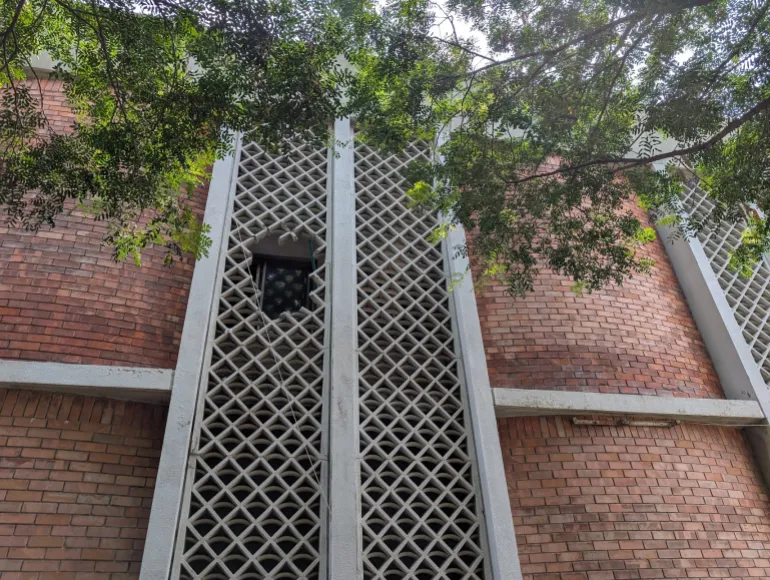
Rescue workers had to break the concrete grill and then a window to gain access to the ward [Abid Hussain/Al Jazeera]
‘Save the babies’
Noreen had been on duty since 8pm the previous night, working a routine dawn medication round with Sister Nasreen, with less than two hours left before the end of her shift.
When she saw the light through the nursery glass, she says she did not stop to work out what it was.
“I just told my sister nurse, save the babies,” she told Al Jazeera. “I went in. I didn’t think about what would happen next.”
Noreen said the fire was coming out of the side of the air-conditioning unit facing her.
“The AC was right in front of me, and the fire was coming out of its side,” she said. “We don’t know what was happening behind it. That’s just what I saw.”
The government’s interim inquiry, submitted on August 28, states that the precise cause of the fire “is not yet conclusively established”, with evidence pointing variously to the air conditioner, an incubator or an electrical short circuit.
Inside the nursery, Noreen reached the nearest baby. There was no time to choose between 15. She carried the infant out and handed her to Dr Abdul Rehman, a doctor who had been inserting a feeding tube in the next room and emerged into the corridor moments after her. Then she turned back.
“I thought I’d get five, six, seven, eight more of them out,” she said. “But the fire was moving faster than I was.”
A second doctor, Dr Rimsha, who had been doing rounds nearby and saw the same light Noreen had, followed her in.
The two of them, and later Sister Nasreen, tried to crawl back through the smoke below the worst of the heat. A sudden loss of power plunged the room into darkness. They could not get through.
Noreen’s phone, left behind on the medication table when she ran in, sat inside the burned ward overnight. Hospital guards found it and returned it to her the next afternoon. Its case is still scorched and cracked.
Noreen, Dr Rimsha and Sister Nasreen instead moved to where a separate rescue team was lowering babies from an adjoining gynaecology ward. They stood there catching newborns and running them to the neonatal intensive care unit until the smoke became too thick to remain.
The government’s inquiry later found that the available evidence “does not support generalised allegations that front-line medical and nursing staff simply abandoned the newborns”.
Ask Noreen what a nurse is to a newborn separated from its mother, and she has one answer: its first mother.
“A mother who gives birth endures a pain no one else can stand in for,” she said. “But once a baby is in our hands, no one else is watching over it the way we are, checking their oxygen, their feeding, whether they’re breathing right, every two hours, whatever else is happening around us. That is why we are their first mother.”
Noreen’s phone, left behind in the nursery during the fire. Hospital guards recovered it and returned it to her the next day [Abid Hussain/Al Jazeera]
‘I am very happy with the children’
Noreen, 38, has spent 21 years in government nursing, the last 17 of them at PIMS. She trained in Karachi right after school, at the age of 17, before a transfer brought her to PIMS in 2009. She has never married.
“Thank God, I am very happy with the children,” she said, when asked about it directly.
Born in Punjab’s city of Sahiwal, she was one of seven children. Her father, Victor John, was a pastor; he died when she was in the eighth grade. Two of her sisters have died; a third, also a nurse, lives in Lahore.
Her mother, 83, a retired government school teacher who is hard of hearing, lives in Lahore with one of Noreen’s brothers.
Noreen herself has lived in the PIMS staff hostel, across from the ward where she works, for most of the past two decades.
With her own phone trapped inside the burning ward, Noreen could not call her family herself.
Noreen’s niece happened to be staying with her that week. It was the niece the warden found, and who got word to the family in Lahore: Noreen was safe.
‘It’s always the two of us’
On the morning of the fire, Noreen and Sister Nasreen were the only two nurses on duty in a nursery holding 15 babies, backed by two doctors, one of them two rooms away. She says it was not an unusual night.
“Sometimes there are 20 babies, sometimes 25,” she said. “It’s always the two of us.”
Doctors on her ward work 36-hour shifts, she said, arriving at 8am and going off duty at 2pm the following day.
Handover between nursing shifts, checking each baby’s medication, feeding and vital signs, takes roughly 45 minutes given the numbers involved. The cost of drugs can also run to tens of thousands of Pakistani rupees per injection, all provided by PIMS to its patients.
“Sometimes we get a break, sometimes we don’t,” she said. “When the workload is heavy, even the water we carry with us goes back home untouched.”
No fire drill had been run in the nursery before August 26, not even after an earlier fire at a nearby PIMS hostel in July.
Asked what is required after an incident like this, she does not hesitate.
“We should all have proper drills. If a fire starts, everyone needs to already know what to do.”
She lists what should follow: extinguishers within reach, cross-ventilation to clear smoke, and a rehearsed evacuation route for babies who cannot walk or call out for help.
Broken windows at the PIMS building housing the nursery, hours after the August 26 fire [Abid Hussain/Al Jazeera]
‘Golden letters in history’
Until the fire, almost nobody outside her own ward knew her name, Noreen says.
“I have almost no presence in the main hospital,” she said. “Nobody there knows who I am. I work in the nursery, in my own department. I never imagined that saving one baby would take me this far.”
She travelled on Thursday to meet the prime minister in a car the government sent.
During the meeting, Sharif called her “the nation’s daughter” and said her act would be remembered “in golden letters” in Pakistan’s history.
He confirmed Noreen will formally receive the country’s Sitara-i-Khidmat (Star of Service) award at a ceremony on March 23, and handed her a cheque for 10 million Pakistani rupees ($36,000).
She used the meeting to say what she had already told her own colleagues privately.
“My fellow nurses work with just as much dedication,” she said. “This was a very heartbreaking incident.”
‘I haven’t slept since that day’
Eight days on, Noreen is unwell. She has had a fever of 102 to 103 degrees Fahrenheit (38.9C to 39.4C) on and off, and a cough she says came from smoke she breathed in from the fire that morning — a morning she will never forget. She takes an antibiotic and sleeping tablets at night. Neither has worked as it should.
“I haven’t slept, not since that day,” she said. “I take the tablets, I drink the cough syrup, but sleep doesn’t come. I close my eyes, and I open them again.”
Asked whether the same dawn shift keeps replaying in her mind, she did not need the question finished.
“The whole incident. The same babies. The mothers’ screams, and the babies’ screams, how they must have screamed. Those are the things that don’t let me sleep.”
She was signed off on medical rest only the day before this interview. Colleagues have been steadying her since.
“I would just start crying, sitting there,” she said. “They supported me like I was a child.”
But the nights are still hers alone.
“It comes back to the same thing,” she said. “When I’m in the hostel, when I’m alone, it all comes back.”
Nurse Razia Noreen meets Prime Minister Shehbaz Sharif in Islamabad on September 3, 2026, where he presented her with a cheque for 10 million Pakistani rupees ($36,000) and announced she will receive the Sitara-i-Khidmat (Star of Service) civil award [Handout/Pakistan Prime Minister’s Office]
‘That, I regret’
The baby Noreen carried out — she hasn’t been named yet, according to the nurse — remains in the neonatal intensive care unit a week on.
Born preterm at just over a kilogramme (2 pounds, 3 ounces), the baby was already unwell before the fire. She remains critical.
Noreen met the baby’s parents for the first time the day before the meeting with the prime minister.
“She [the baby’s mother Asifa] hugged me and thanked me, and cried, and I cried with her,” Noreen said, “because for the rest of the children, my heart is still exactly where it was.”
She has told the mother the same thing she tells herself.
“I said, look, your child survived such a huge storm, she will survive what comes next, too. You pray, and I will pray.”
Asked what she would tell other nurses, Noreen urged them to work with honesty and without conditions.
“When you work somewhere with honesty, the reward comes eventually,” she said. “It came to me after 21 years. Work with the same loyalty. That is our real strength.”
Then, unprompted, she returned to the 14 babies who died.
“I do regret it,” she said. “I could not save the rest of the children. That, I regret.”
One could say that I’ve been waiting my whole life for this moment.
It’s a musical event some might have thought unlikely or impossible — but to me, it wasn’t a matter of if Beyoncé would ever release a collaboration with Selena but when. And on Thursday night, with the release of the special anniversary edition of Beyoncé’s sophomore album, “B’Day,” it finally happened.
Alongside an expanded track list that includes remastered versions of the 2006 album’s original songs, plus new remixes and collaborations, there’s “Irreemplazable (Como La Flor),” a mashup of Beyoncé’s first Spanish-language release and one of Selena’s most beloved hits.
In her tragic absence, Selena’s estate gave a rare blessing to Beyoncé for the collaboration. A press release for the album noted that this “resounding approval” from the Quintanilla family “made it possible for this timely and meaningful duet.”
“Two women from Texas. Two unmistakable and irreplaceable voices that broke down and continue to break down barriers,” read the statement.
But not everyone was happy about the remix. Some fans viewed the collaboration cynically, criticizing it as a way for Beyoncé to capitalize on Selena’s legacy, or to court more Latino fans. Some voiced their dissatisfaction under a post from Selena’s husband, Chris Pérez, on Instagram — but he was quick to shut them down.
“Shout out to Beyoncé for showing respect to an ICON,” wrote Perez on Instagram. “In my opinion, nobody will ever, CAN ever, top Selena’s performance. But, dammit … can’t you just appreciate that another iconic/amazing artist chose to highlight Selena in this way?”
For those who need reminding: This isn’t Beyoncé’s first foray into Spanish-language music — and it’s not even her first tribute to Selena.
Long before Beyoncé reached superstardom, she was a girl from Houston who grew up listening to Selena on the radio. In 2007, she credited the “Queen of Tejano” with inspiring her to release “Irreemplazable,” a Spanish-language companion album to “B’Day.”
Working alongside Cuban American composer Rudy Pérez, the songs on that record were workshopped to retain the spirit of their English lyrics without being word-for-word translations: the catchy “To the left, to the left” refrain in “Irreplaceable” became “Ya lo ves, ya lo ves / Te olvidé, te olvidé” (“Now you see, now you see/I forgot you).”
Like Selena, Beyoncé learned to sing in Spanish phonetically, and in a 2007 MTV Tr3s documentary on the making of the album, you can see her angling toward perfection as Pérez and a friend corrected her pronunciation. Some of the lyrics she was tasked with delivering were tongue-twisters, even for native Spanish speakers. Try saying “Tú creías que eras imprescindible” five times fast and in key.
“I spent a lot of time on it making sure it was perfect because I didn’t want to disrespect the language, because it’s so beautiful,” Beyoncé told People en Español that year.
At the time, Beyoncé wasn’t the only major American artist making waves in Latin music. The pop landscape was undergoing a massive shift, thanks to the work of such crossover sensations as Daddy Yankee, Don Omar, and Shakira — and artists in the States were eager to tap into the burgeoning Latino market.
And while that was certainly a part of Beyoncé’s calculus when plotting “Irreemplazable,” she has a personal attachment to Spanish music. “A lot of my family, a lot of my friends who I grew up with speak Spanish, I grew up in Texas,” she said in the MTV doc. “I just have so much respect for the culture, and I really relate to it.”
“The heart and rhythm of the music and the drums and the spiciness,” she added, in her People interview, “it all reminds me of Creole, which is my heritage, and where I come from.”
While Beyoncé’s early solo releases were built on R&B, she demonstrated a curiosity for global sounds like reggae, Latin and Arabic music. Selena’s background was in Tejano, yet she was heavily influenced by heavy-hitters in pop, disco and R&B — namely Jody Watley, Janet Jackson and Donna Summer.
The two share a similar cultural background, one forged by migration, changing borders and centuries of history. And, as second- and third-generation Texans, Beyoncé and Selena were both able to take their heritage and interpret it, while also melding it with the melting pot of influences they were surrounded by.
Twenty years after the release of “B’Day,” Beyoncé has had the luxury of growing and maturing as an artist. She’s delivered masterful musical dissertations that challenge rigid ideas of “genre” and reemphasized the Black origins of traditions like country, rock and Americana.
Selena didn’t have the benefit of time; but in the years since her death, her music has been kept alive, replayed, reinterpreted, and remixed, so that new generations continue to celebrate her Tejano roots. With “Irremplazable (Como La Flor),” Selena and Beyoncé’s artistry gets to coexist.
It’s a blending of their worlds and voices — the merging of two songs empowering women to move on from their heartbreak, as well as a union of two artists who are so different, but so very much alike.
Country implements state of emergency in Sarawak’s Serian district after air pollution reaches ‘hazardous’ levels.
Published On 5 Sep 20265 Sep 2026
Malaysia has declared a state of emergency in a district in Sarawak state after haze caused by wildfires in neighbouring Indonesia increased air pollution to “hazardous” levels.
King Sultan Ibrahim “has consented to the declaration of emergency throughout Serian Division, Sarawak, following haze conditions that have reached air pollution levels hazardous to public health and safety”, Prime Minister Anwar Ibrahim’s office said in a statement on Thursday.
Recommended Stories
list of 3 itemsend of list
The declaration followed a formal request from the Sarawak Disaster Management Committee after the region’s Air Pollutant Index reached levels warranting consideration of a local emergency.
Under the order, 647 schools in Serian will close from Monday until at least the end of next week, alongside government and private offices, plantations, construction sites and quarries, with only essential services continuing to operate.
The state’s disaster management authorities said a three-day cloud-seeding operation launched on Thursday would be extended to at least Monday, citing forecasts of “more conducive cloud formations” during that period.
Sarawak State Disaster Management Committee chairman Douglas Uggah Embas, speaking at a news conference in Kuching, stressed that the emergency applied only to Serian, not the entire state, but urged residents there to take the situation seriously.
“Please minimise outdoor activities and avoid strenuous activities outdoors,” he said.
Sarawak, in the northern part of Borneo island, has been heavily affected by haze for weeks, as have the neighbouring states of Sabah and Peninsular Malaysia.
Other Southeast Asian countries like Brunei have also reported smoggy conditions. Singapore announced it would start providing daily haze advisories from Friday evening, after the 24-hour air quality readings entered the unhealthy range, the first since 2023.
It has also hit the Philippines, where President Ferdinand Marcos Jr. ordered the suspension of classes in the capital region, Metro Manila, as well as more than a dozen provinces on Friday.
This year’s transboundary haze, which originates from fires burning across Indonesia, particularly the Kalimantan region and Sumatra island, is part of a wider seasonal wildfire crisis in the archipelago country.
Scientists say temperatures are expected to peak this month, potentially intensifying the fires by bringing hotter and drier conditions across the region.
Authorities say seven people are still missing after deadly explosions at a facility storing pyrotechnic material.
Published On 5 Sep 20265 Sep 2026
Two explosions at a military facility in the Bolivian city of Viacha have killed at least 10 people and injured dozens of others, authorities said.
The blasts occurred on Friday in an area used to store pyrotechnic material, about 30km (18 miles) from the administrative capital, La Paz, Bolivia’s Ministry of Defence said.
Recommended Stories
list of 4 itemsend of list
Viacha health director Rita Nebraska told a local television station that between 10 and 15 people were believed to have been killed and 62 others were injured.
She said 14 of the wounded were transferred to hospitals in La Paz, including a girl with third-degree burns.
Fireworks were stored at the military facility, but the cause of the explosions remains under investigation, police spokesman Roger Roca said. He added that seven people were still missing.
Firefighters warned that a heat source remained at the site, Nebraska said, urging residents to stay at least 150 metres away because of the risk of another explosion.
Military personnel evacuating civilians near the site of an explosion at an army barracks in Viacha [AFP]
Police said dozens of nearby homes were damaged and that many civilians were injured by shattered glass.
About 50 civilians and six military personnel injured in the explosions “have been treated … by the different medical centres of Viacha”, Deputy Minister of Defence Ernesto Justiniano Urenda said in a statement.
An investigation is under way to determine the cause of the explosions, how the pyrotechnic material was stored and whether anyone was responsible, he added.
Footage posted on social media showed one of the explosions shattering windows in nearby buildings and sending debris into the air as thick black smoke rose from the facility.
A former ABC News employee is asking a court to drop CBS News chief correspondent Matt Gutman from her wrongful termination lawsuit, which claimed she was sexually harassed by him when they were colleagues.
Samira Said, a field producer for ABC News for four years, included the claims related to Gutman in a wrongful termination lawsuit filed Aug. 14 in Los Angeles County Superior Court against her former employer and its parent The Walt Disney Co.
Said’s lawyers filed a request with the court Friday to drop Gutman, who was named as a defendant. Lawyers for Said did not respond to an email asking why the request was made. ABC and Disney remain defendants in the suit.
The suit cited two incidents where Said claimed Gutman created a hostile work environment by making inappropriate sexual comments while on the job.
Gutman declined comment on the matter through a CBS News representative.
Said alleges she was wrongfully terminated from ABC News in 2025 after dealing with mental health issues. The suit accuses the company of violating California’s Fair Employment and Housing Act by not making accommodations for her. She is seeking compensatory and punitive damages along with her attorneys’ fees.
Gutman, 48, was the first high-profile talent hire by CBS News Editor-in-Chief Bari Weiss, who took charge of the division in October. He recently filled in as anchor of the “CBS Evening News” and scored higher ratings than Tony Dokoupil, the program’s regular anchor.
Gutman spent 17 years at ABC News, where he mostly reported from Los Angeles.
Sept. 4 (UPI) — President Donald Trump on Friday said the Iran war was “small potatoes” and “not a big thing.”
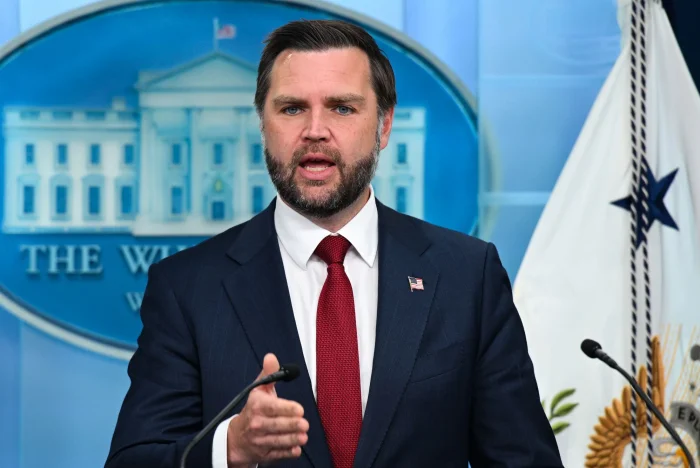
Trump was responding to questions about comments by Vice President J.D. Vance, who had said a day earlier that the conflict wasn’t a war.
“A lot of people don’t call it a war,” Trump told reporters. “I call it a military conflict because it’s small potatoes for us.
“It’s not a big thing. We did Venezuela, and we did this.”
Trump described the war as intermittent and a flare-up, USA Today reported.
Hours earlier, on his Truth Social platform, Trump explicitly called the conflict “the War in Iran.”
“The Radical Left Lunatics, Dumocrats, and Communists would rather have us LOSE the War in Iran, than have President Donald J. Trump WIN the War for America,” he wrote early Friday afternoon.
A day earlier, Vance told reporters there had been “no active shooting” and downplayed the severity of the war.
“I wouldn’t call it a war,” Vance told reporters at the White House.
Trump agreed with his vice president.
“I would say it’s a military conflict, if you want,” Trump said on Friday. “I don’t think it matters what you call it.
“What matters is the fact that we have had tremendous success.”
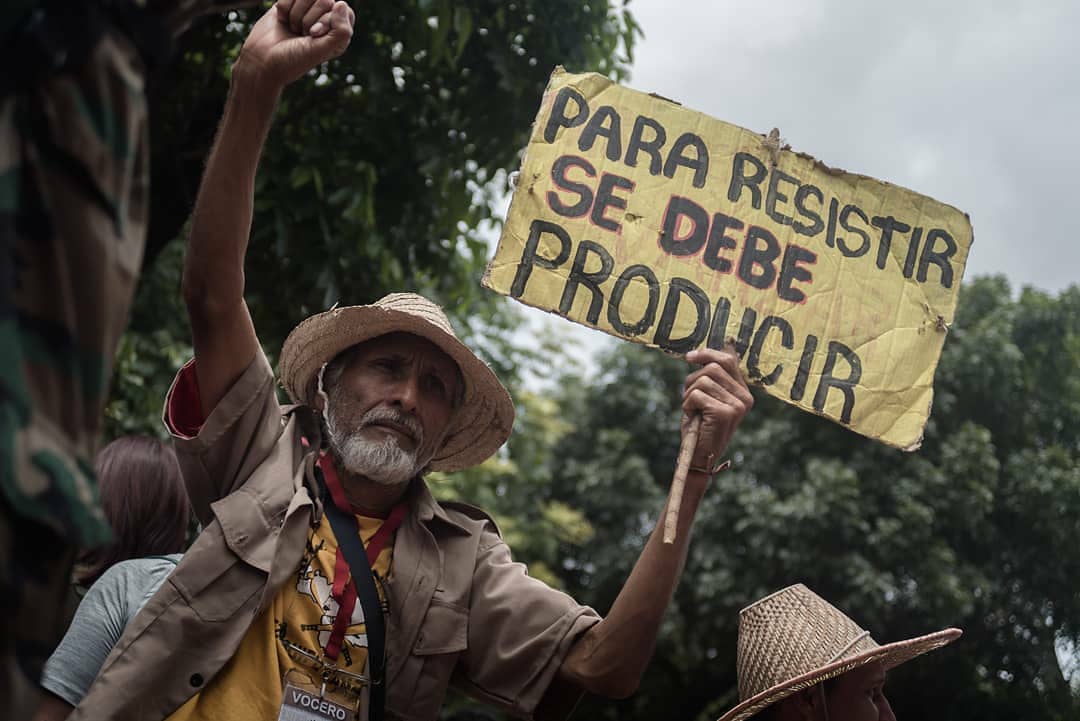
The Ojo de Agua campesino council joined the 2018 “Admirable March” to demand justice in the countryside. (Cacriphotos)
Caracas, September 4, 2026 (venezuelanalysis.com) – Dozens of campesino families in Bolívar State, southeastern Venezuela, are calling for support from the acting Delcy Rodríguez government after their land title was arbitrarily revoked.
“This should not happen. We have worked the land which we fought for and secured legally,” campesino spokeswoman Zurima Carvajal told Venezuelanalysis.
Carvajal belongs to the “Ojo de Agua Las 3 Raíces” campesino council, which brings together 41 families in a 470-hectare land estate with the same name located in the Padre Pedro Chien municipality of Bolívar state.
The rural organization denounced that their collective land title was arbitrarily revoked in 2024 but local authorities did not give any notice for more than two years. In recent weeks, the campesino families have denounced intimidation and attempts at eviction.
“A few days ago there were shots fired against my house,” Carvajal stated. “Local police came and wrote a report, but then nothing happened.”
The campesino leader denounced that a local family who claims to own the land has ties to military officials, National Assembly legislators, and Bolívar State Governor Yulisbeth García. Carvajal added that she has received recurring threats and that a group of men hired to intimidate the campesino council destroyed a fence, causing the families to lose five heads of cattle which ran into nearby fields.
“We urge national authorities, from Acting President Delcy Rodríguez to Agriculture Minister Vladimir Padrino, as well as the Land Institute (INTI), to investigate this case and restore our land deed,” Carvajal concluded. “There has to be a mechanism to protect those who work the land.”
The Ojo de Agua campesino council began its struggle in 2016, reporting to authorities that vast tracts of land were abandoned in the Padre Pedro Chien municipality. Shielded by Venezuela’s Land Law, which protects rural collectives who occupy and produce in idle estates, the campesino families began to settle in the area in 2018.
Carvajal recalled that the organization immediately faced intimidation and violence from would-be landowners who could not produce any property deeds after the INTI opened an investigation. However, they repeatedly destroyed the campesinos’ crops, while bringing legal charges that led to the jailing of several activists.
The Ojo de Agua organization had a decisive breakthrough after joining the 2018 Admirable Campesino March that saw hundreds of rural activists march for hundreds of kilometers to demand that the Nicolás Maduro government address agrarian issues, including landowner violence and the judicial persecution of local organizers.
With support from other campesino organizations, Ojo de Agua received its land title from the Maduro government in 2020. Carvajal affirmed that the land has been permanently productive, with a variety of crops including corn, sugar cane, beans, and vegetables, as well as a small herd of cattle.
Land struggles have recently intensified in rural Venezuela, with a growing number of rural collectives denouncing the arbitrary revocation of titles. Opposition party Vamos Vamos Venezuela, backed by agroindustrial and cattle rancher lobbies, has campaigned for the repeal of the landmark 2001 Land Law, approved by former President Hugo Chávez, in order to turn Venezuela into “a country of property owners.”
Campesino movements have vowed to fight to defend the popular gains in the countryside.
The Venezuelan acting government and parliament have yet to comment on a potential reform to the Land Law. However, the National Assembly preliminarily approved a law to “protect cattle rearing activities,” with legislature President Jorge Rodríguez publicly criticizing the nationalization of large land estates under Chávez.
In parallel with land issues, Venezuelan rural organizations have also denounced that national production is at risk due to unrestrained imports of foodstuffs such as corn, rice, and sugar. Small-scale producers have pointed the finger at agribusiness corporations for resorting to imports during harvest season in order to drive down crop prices.
The US is the second largest source of agricultural imports to Venezuela by volume, totaling $758 million in 2025. Researcher Felipe Pacheco reported that corn imports from the US more than quadrupled in the first five months of 2026, compared to the average of the prior five years.
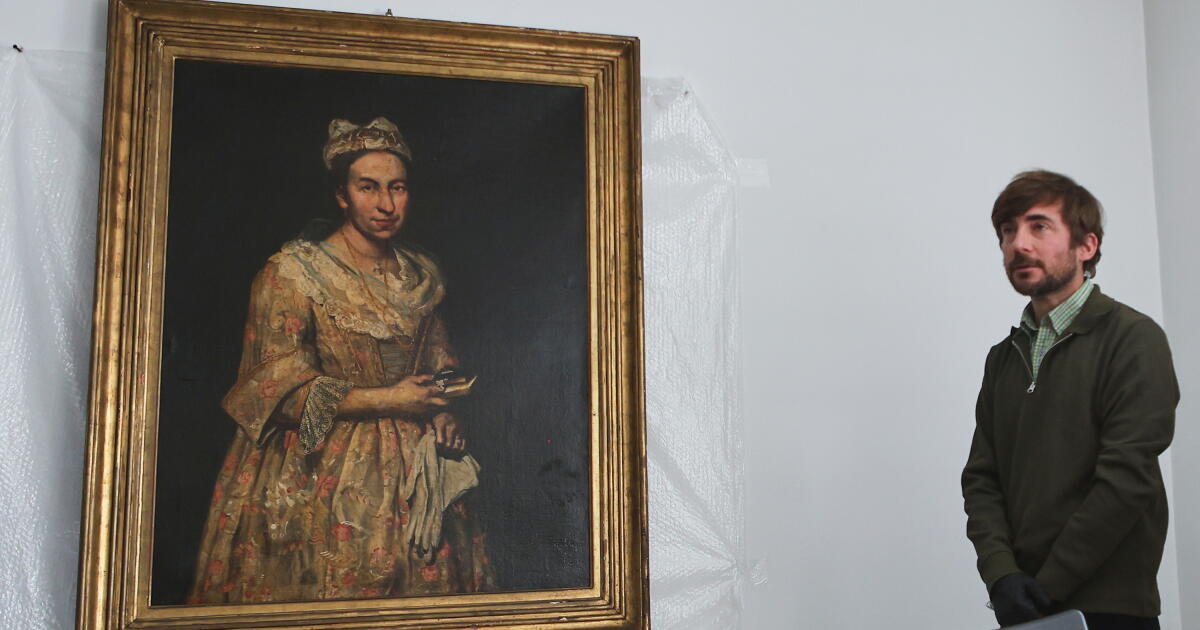
BUENOS AIRES — A long-lost Italian portrait looted from a prominent Jewish art dealer during World War II was set to be returned to his heir after an Argentine court on Friday approved a deal under which the daughter of a fugitive Nazi official agreed to give up her claim rather than face trial.
The agreement paves the way for the long-sought return of “ Portrait of a Lady ” to Marei von Saher, the sole surviving heir of Dutch-Jewish art dealer Jacques Goudstikker, whose celebrated collection was sold under duress to Nazi officials after Adolf Hitler’s Germany invaded the Netherlands in 1940.
Patricia Kadgien, the daughter of the late high-ranking Nazi official Friedrich Kadgien, and her husband, Juan Carlos Cortegoso, were charged with aggravated cover-up last year after authorities said they hid the 18th-century painting despite knowing it was being sought by Argentine and international investigators.
Under the agreement, a copy of which was obtained by the Associated Press, the couple agreed to give up any claim to the work and consent to its return to Von Saher in exchange for avoiding a criminal trial and spending two years under court supervision. During that time, they must make payments to a hospital in Argentina’s coastal city of Mar del Plata, where they live, and keep authorities informed of their whereabouts.
The deal ends a generations-long search for the missing portrait and a yearlong legal saga that began in August 2025. Dutch reporters investigating Friedrich Kadgien, a fugitive Nazi financial official who fled to Argentina after World War II, spotted “Portrait of a Lady” hanging above a green velvet couch in an online real estate listing for his daughter’s rustic home in Mar del Plata.
The listing disappeared within hours of the Rotterdam-based newspaper Algemeen Dagblad publishing its findings. Police raided the home several times but failed to find the painting. More than a week later, Kadgien’s lawyer turned it over to authorities.
For decades, the portrait had been identified as a work by the Italian Baroque painter Giuseppe Vittore Ghislandi. It appeared under that attribution in Goudstikker’s collection records and was exhibited as a Ghislandi in Amsterdam before the war. But a court-ordered examination by Argentina’s National Academy of Fine Arts reached a different conclusion, attributing the work to the Italian artist Giacomo Antonio Melchiorre Ceruti.
Experts authenticated the painting as part of Goudstikker’s collection and estimated its value at about $290,000.
Goudstikker was one of Europe’s leading art dealers before World War II, known for a collection that included works by Rembrandt and Vermeer. He died in a shipwreck while fleeing Amsterdam with his family as German forces swept into the Netherlands in May 1940.
An estimated 1,100 works from his collection were illegally sold to Hermann Göring, known as Hitler’s right-hand man, who amassed a vast art collection during the war. It remains unclear exactly how “Portrait of a Lady” came into the possession of Kadgien, Göring’s financial advisor, who handled foreign currency, precious metals and the sale of confiscated property for the Nazi regime.
Kadgien fled Europe after Germany’s defeat, first for Switzerland and later Argentina. He died in the South American country in 1978 without having been arrested or charged with war crimes.
Lawyers for Von Saher, who now lives in Greenwich, Conn., and spent decades trying to recover her family’s looted art, said she has agreed to let the painting be exhibited in Argentina before being returned to her.
During last year’s raids on homes owned by Kadgien and her sister in Mar del Plata, Argentine police also seized two 19th-century paintings, along with other prints and engravings. Authorities are still investigating whether any of them may also have been looted during World War II.
Farella and Calatrava write for the Associated Press. AP writer Isabel DeBre in Buenos Aires contributed to this report.
Dree Collopy, an immigration lawyer, says the new US visa policy risks turning the legal immigration system into another detention tool. She argues it could make people who lawfully enter the US more vulnerable to arrest and deportation when they later seek asylum.
Fans had travelled from across the UK and the world to see the rapper, including Prince Dean Sithole, who hailed Jay-Z as one of his role models.
“I think he’s very impacting, especially for us black people because we don’t get a lot of recognition,” the 19-year-old from Leeds told BBC Newsbeat.
“Seeing him today shows that dreams are possible and you can be that person that you want to be.”
Jay-Z, real name Shawn Carter, broke through with his 1996 debut album, but it was his third record, Vol. 2: Hard Knock Life, in 1998 which landed him the top spot in the US charts for the first time and a best rap album Grammy.
He went on to establish himself as one of the most influential figures in hip-hop, releasing 13 solo studio albums and several collaboration records, which have secured him 25 Grammy Awards.
He was also the first rapper inducted into the Songwriters Hall of Fame in 2017, as well being inducted into the Rock & Roll Hall of Fame in 2021.
Over the years, he has also become one of the most prominent music mogul’s in the world, with his company Roc Nation representing a host of top talent and, in recent years, it has been behind the Super Bowl half-time show.
In 2019, he was declared hip hop’s first billionaire by Forbes, having built an empire based on music, property, fashion and investments alongside his wife Beyoncé.
The power couple have three children, daughter Blue Ivy, 14, and 9-year-old twins, Rumi and Sir.
Netflix bosses have raised UK prices for the second time this year – with the cheapest plan going up by a third
Netflix users will have another price rise….(Image: Getty)
There is bad news for Netflix users after bosses raised the prices of UK subscriptions for the second time this year.
The streaming platform, which houses Stranger Things, Love Is Blind, Bridgerton, Selling Sunset and many other beloved programmes, has updated its pricing – with the cheapest rising by a third.
Customers will be given 30 days’ notice by email before the changes. Those with the standard plan with ads will now pay £7.99 a month, up from £5.99, while the advert-free option has moved from £12.99 to £13.99.
Users who have a premium plan, which allows them to add extra members and stream on more devices, will pay £20.99 from their next billing cycle, a change of £2.
For viewers who want to add an extra member for their subscription, they will have to pay £5.99 under new guidelines, up from £4.99.
This is the second time that the prices have increased this year, with previous changes being introduced in February.
A spokesperson said, via Deadline, that the changes “reflect improvements to our wide range of entertainment and the quality of our service.”
“Our approach remains the same: we continue offering a range of prices and plans to meet a variety of needs, and as we deliver more value to our members, we reinvest in quality entertainment and improve their experience by updating our prices,” the statement added.
“We know members have never had more choices in entertainment, and we’re committed to delivering an experience that meets and exceeds their expectations.”
The news was confirmed just after the second series of Guy Ritchie’s acclaimed drama, The Gentlemen, landed on the platform, with many high-profile releases still to come.
Keira Knightley will be returning in season two of Black Doves in November, while a documentary on late Friends actor Matthew Perry will hit screens at the end of October.
In recent years, original shows including Adolescence, Baby Reindeer, The Crown and Ozark have collected a string of awards. Fans have also raved about Netflix’s film slate, including Voicemails for Isabelle, Nonnas, Carry-On and Rebel Ridge.
The Food and Drug Administration on Friday approved a new, targeted breast cancer drug for patients who become resistant to hormone therapy. File Photo by Jim Lo Scalzo/EPA-EFE
Sept. 4 (UPI) — The Food and Drug Administration on Friday approved a new, targeted breast cancer drug for patients who become resistant to hormone therapy.
The drug, camizestrant, was approved under the FDA’s accelerated approval program.
It acts on ESR1 mutations, which are acquired resistances that tumors may develop during treatment for metastatic breast cancer.
“Women living with metastatic breast cancer face an uphill battle as their tumors continuously evolve to escape treatment,” acting FDA Commissioner Kyle Diamantas said in a statement. “We owe them every weapon in our arsenal.”
“Today’s approval delivers a win to these patients by granting them a targeted therapy designed specifically to overcome resistance, giving them more time before their disease progresses.”
Dr. Angelo de Claro, director of the FDA’s Oncology Center of Excellence, said, “I commend both the FDA and the sponsor for their commitment to advancing cancer care and securing this accelerated approval.”
“This marks the first FDA approval of a cancer therapy guided by the detection of a resistance mutation in circulating tumor DNA (ctDNA) before imaging tests show that the disease is progressing,” he added.
“But additional evidence is needed to confirm clinical benefit.”
Welcome to Bunker Talk. This is a weekend open discussion post for the best commenting crew on the net, in which we can chat about all the stuff that went on this week that we didn’t cover. We can also talk about the stuff we did or whatever else grabs your interest. In other words, it’s an off-topic thread.
This week’s caption reads:
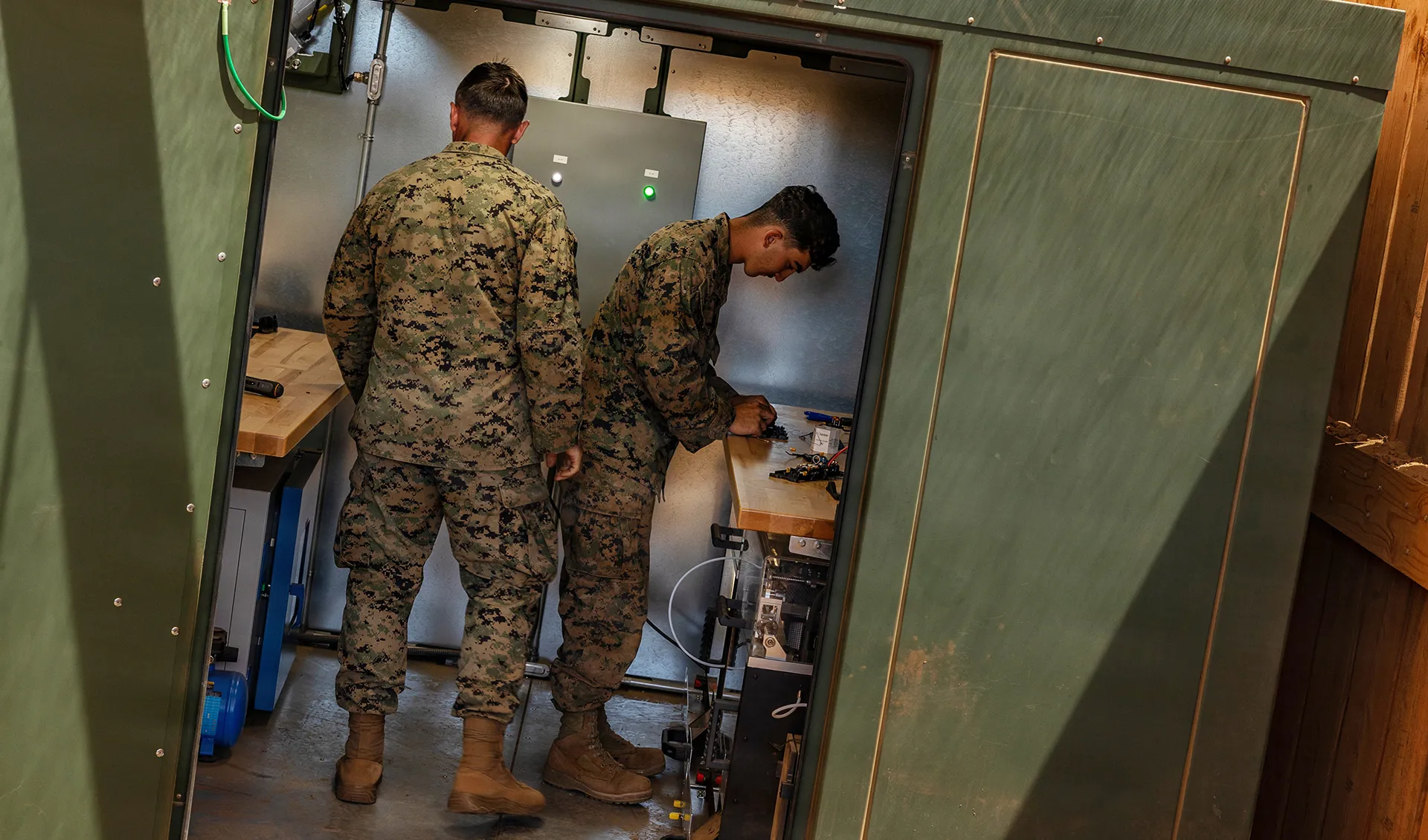
U.S. Marine Corps Lance Cpl. Vincenzo Morrison, right, a metal worker, and Chief Warrant Officer 4 Daniel Opper II, an engineer equipment officer, both with 1st Maintenance Battalion, 1st Combat Readiness Regiment, 1st Marine Logistics Group, utilize an underground bunker to repair a drone’s flight controller during a field exercise on Marine Corps Base Camp Pendleton, California, Aug. 19, 2026. The FEX focused on increasing proficiency in tactical communication networks, analog processes, field intermediate maintenance and supply operations, as well as refining Marine combat skills in an expeditionary environment in order to prepare for Exercise Steel Knight 27 at the end of the year. (U.S. Marine Corps photo by Cpl. Desiree Ruiz)
PRIME DIRECTIVES:
If you want to talk politics, do so respectfully and know that there’s always somebody that isn’t going to agree with you.
If you have political differences, hash it out respectfully, stick to the facts, and no childish name-calling or personal attacks of any kind. If you can’t handle yourself in that manner, then please, discuss virtually anything else.
No drive-by garbage political memes. No conspiracy theory rants. Links to crackpot sites will be axed, too. Trolling and shitposting will not be tolerated. No obsessive behavior about other users. Just don’t interact with folks you don’t like.
Do not be a sucker and feed trolls! That’s as much on you as on them. Use the mute button if you don’t like what you see.
So unless you have something of quality to say, know how to treat people with respect, understand that everyone isn’t going to subscribe to your exact same worldview, and have come to terms with the reality that there is no perfect solution when it comes to moderation of a community like this, it’s probably best to just move on.
Finally, as always, report offenders, please. This doesn’t mean reporting people who don’t share your political views, but we really need your help in this regard.
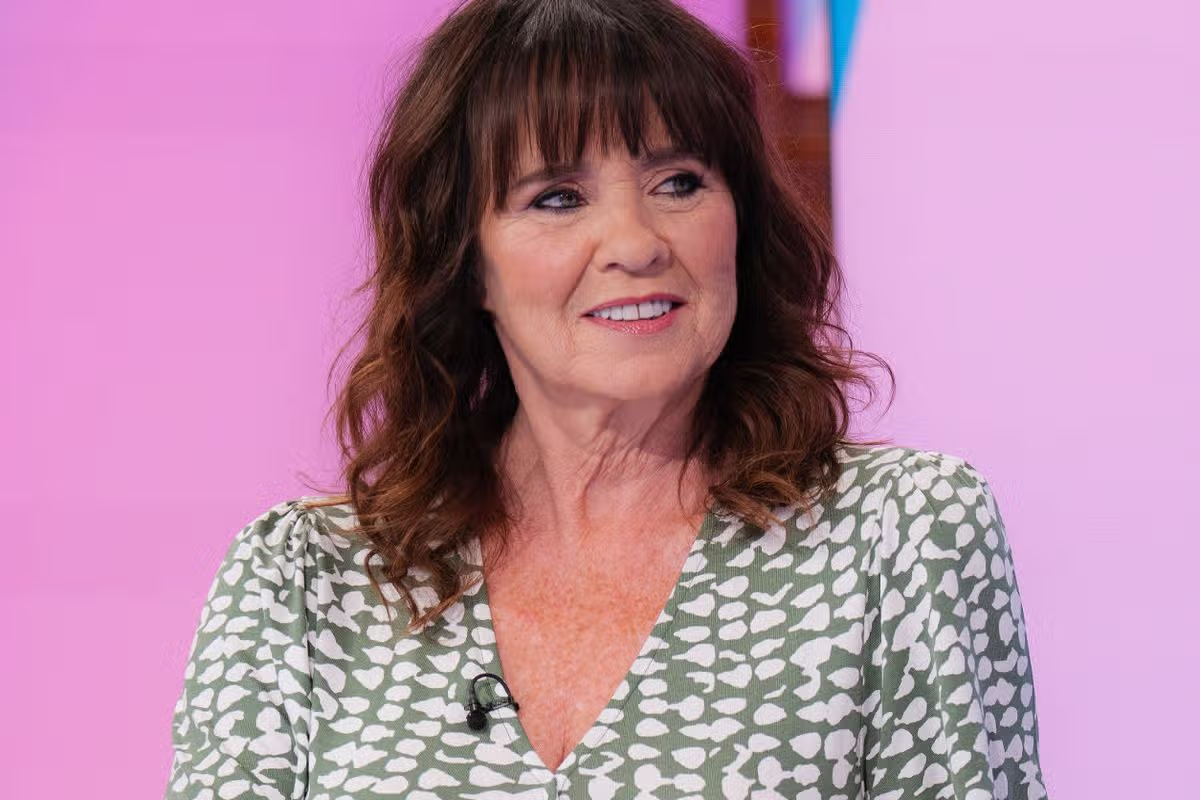
“It’s back to school for me on Monday. Loose Women is back on air and I’ve really missed it and can’t wait to see everyone,” she penned in her recent newsletter for the Mirror. “We’ll be missing two of our longest-serving Loose Women – Nadia and Denise – which I’m a bit devastated about.
“I love Nadia and she’ll be a big loss to the team. I’m so pleased for Denise, who left to focus on acting, which is her first love and she’s brilliant at it. At 66 she’s had a whole new lease of life and has never looked better.
“But it’ll be exciting to welcome new people in. One of the things I love most about the show is that it incorporates every age group, from women in their 20s to Gloria Hunniford, who’s 86. I think a show that offers that when women still have to battle ageism and having an opinion is something to be celebrated and cherished.”
Hitting back at scrutiny of a feud behind the scenes, she insisted: “I’m always reading stories about us not getting on, but it’s just not true – unless I’m missing something! I’ve never seen it and never felt it.
“So, thanks to those of you who’ve stuck by us through thick and thin for all these years, and hopefully we’ll be sticking around for years to come.”
There has been a shake-up on the panel in recent months, with Denise, 68, confirming her departure in a video in August, explaining that she would be focusing her attention on her acting career.
Nadia had been away from the show for a while before speaking out over her absence, telling the Mirror that she threatened legal action, claiming that ITV bullied her out of her job.
Discussing her exit, the 61-year-old previously said that she feared she was being targeted over speaking out for Palestinian rights.
It was recently claimed that singer Anastacia and entrepreneur Emma Grede – who recently stole the show on Dragons’ Den – were being lined up to join the panel, following the high-profile departures.
According to the Sun, they have been offered short two-month contracts with those behind the scenes hoping they will ‘bring in new perspectives’.
“If we are honest, Loose Women has become a bit of a train wreck. The past 12 months have seen scandal after scandal. Mix that with the cuts and it’s been a perfect storm,” a source told the Sun.
“ITV have offered both Emma and Anastacia contracts that will see them appear on the show as panellists. Both have been on as guests so they know the set up.”
The insider added: “Emma was a huge hit on Dragons’ Den and it’s hoped she would bring in a younger demographic to the show. Anastacia is a household name and brings in a new perspective and isn’t shy when it comes to speaking her mind.”
Sept. 4 (UPI) — President Donald Trump on Friday signed two executive orders aimed at strengthening the country’s ranching industry.
Trump has been facing criticism from beef producers since he waived tariffs on up to 300,000 metric tons of imported beef in an effort to ease rising costs as the nation heads into the midterm elections.
Trump’s first executive order directs the Interior Department to study removing gray wolves from the Endangered Species Act list, allowing ranchers to kill them on their properties. Gray wolves are a major threat to herds in the West.
The second executive order would allow ranchers to process their beef and sell directly to consumers, instead of going through USDA inspections.
“People have been asking for this change for decades, and we’re getting it done,” Trump told reporters at the White House. “This is the largest-ever government effort to change all federal rules and regulations necessary to support our ranchers and our farmers.”
Beef prices have risen this year due to drought and high feeding costs. The United States currently maintains the smallest herd since the 1950s.
The National Cattlemen’s Beef Association said it was “disappointed” by Trump allowing more foreign beef to flow into an industry already under severe stress.
“While America’s cattle producers share the goal of keeping groceries affordable for consumers, flooding the market with government-subsidized, below-market beef is not the way to rebuild the American cattle herd,” the association previously said in a statement.
“Cattle markets have already turned sharply lower this morning, to the detriment of farmers and ranchers.”
Vice President JD Vance briefs members of the media in the press room of the White House on Thursday. Photo by Annabelle Gordon/UPI | License Photo
The Eastern Economic Forum (EEF) has been described as a successful solid platform since its creation. It increasingly attracts guests from widely different countries, especially leaders of China, India, Malaysia, Mongolia, and Myanmar. The leaders of Vietnam, Kazakhstan, Laos, and Thailand have visited it in various capacities. The business segment of the forum has long gone far beyond the geographical boundaries of Eurasia. Its frequent unprecedented large number of guests includes businesspeople from South America, Africa, and the Middle East. That, however, it remains open for entrepreneurial contacts with everyone whose natural interests are primarily in the trade, economic, and social spheres. This cross-platform cooperation between the structures is developing, growing deeper and creating a new agenda. The most essential feature is that the platform is guided by the principles of equality, mutual benefit, and honest dialogue, which are entirely different from those of Western-oriented structures.
The EEF, which opened on 1st-4th September, in Russia’s Far Eastern city of Vladivostok, has become a solid platform for open and constructive dialogue among business leaders, government officials, and members of the expert community. It has also become a unique venue for discussing the strategic development of the Russian Far East and the country as a whole, while fostering and strengthening potential partnerships with counterparts, particularly from the Asia-Pacific region, in food production, infrastructure, logistics, industry, energy, and many other sectors of the economy. While recognizing the huge untapped economic potential of the region, it is also understandable that the development of the Far East largely depends on human capital, entrepreneurial efforts, and the ability of regions to create the necessary conditions for realizing the practical expectations.
On 2nd September, as part of the business program, the “Towards a Common Future: Inclusion as a Development Resource for the Far East” discussion was held with a strong focus on how to create an equal opportunity environment, develop human capital, and engage diverse groups in economic and social life. The following day, the majority of the participants in the “Inspiring Investments: A Development Strategy for Growth and Scaling” session touched on funding mechanisms for creative projects, opportunities to enter foreign markets, and collaboration between businesses, investors, development institutions, and government agencies. The key point focused on the development of the creative economy and international cooperation with Asia-Pacific countries, industry investments, the export of intellectual property and creative products, the media’s role in the development and positioning of regions in the Far East, new content formats, and training personnel for the economy of the future.
As part of the discussions at the forum, Russia and the United States continued their business dialogue, headed by Robert Agee, president and CEO of the American Chamber of Commerce in Russia (AmCham Russia), and with the participation of US representatives. It was spearheaded by the Roscongress Foundation in Russia. Anton Kobyakov, Adviser to the President of the Russian Federation, noted, however, that there is a strong appetite on both sides for direct professional engagement. What matters most is to sustain the momentum and possibly broaden the agenda to include bilateral entrepreneurial partnership.
Stay ahead of the geopolitical week.
MD Briefing delivers expert analysis across five global fronts — the Indo-Pacific, energy, geoeconomics, European security, and the Middle East — every Monday morning. Free.
“There is the need to facilitate more networking to identify specific strategic areas for cooperation,” said Robert Agee, president and CEO of the American Chamber of Commerce in Russia, and unreservedly agreed to continue their work on developing business ties and prepare for the participation of American representatives in the Russian Federation.
With many Asian and Pacific participants, explored opportunities for developing small and medium-sized enterprises. This is becoming increasingly important amid structural changes in the economy, as businesses look for new avenues for growth. The EEF made it possible not only to exchange experience but also to find concrete solutions that will help entrepreneurs adapt to changing conditions and unlock new opportunities for growth.
Developing trade, strengthening of interstate ties, and the creation of a common space for interaction among Asia-Pacific countries have assumed a new trend with Russia. The argument was logically based on Russia’s historical experience of cooperation with East Asian countries. It was further underlined that Russia and the Asia-Pacific attract politicians and entrepreneurs from around the world. In these current geopolitical circumstances, Russia needs to seek out new opportunities for development, particularly from the Asia-Pacific region, and with reference to the emerging new multipolar world. At the heart of the forum program was the search for new sources of growth and resilience for SMEs amid structural changes in the economy, from raising productivity and adopting new technologies to managing risks and adapting business models. One section of the program focused on the role of automation and artificial intelligence, changes in business processes, employees’ readiness to work with new technologies, and ways of improving productivity.
In addition to the above, a special session was devoted to analysis where experts outlined the key economic trends across the Asia-Pacific region. As monitored, this session was set out in the analytical review entitled “Asia Trends 2026: The AI Boom, Industrial Relocation, and Geopolitical Fragmentation,” prepared ahead of the opening of the Eastern Economic Forum on 1st September. The review clearly noted, among other things, that Asia accounts for around 60% of global GDP growth and is becoming the world’s new center of trade, industry, technology, finance, and military power. Within the region, however, economic growth is highly uneven, while technology and capital are concentrated in a small group of states, making consolidation difficult. The ASEAN countries, meanwhile, face competition from Chinese manufacturers while also coming under growing geopolitical pressure from Washington. More broadly, the Asia-Pacific region is more exposed than any other to the effects of the energy crisis and to climate risks such as a super El Niño.
According to the International Monetary Fund, Asian GDP grew by 5% in 2025, significantly ahead of global growth of 3.5%. Within the region, however, countries face a range of specific challenges, from high labor costs and insufficient industrial capacity to balance-of-payments difficulties and currency instability. These factors are driving increasingly divergent development paths among Asian economies. The region’s advanced economies, such as Japan and South Korea, posted lower growth rates, at 1.2% and 1%, respectively, in 2025. Asia’s emerging economies grew by 5.5% overall over the same period, with performance ranging from a 2% contraction in GDP in Myanmar to an 8% surge in Vietnam.
Countries with the strongest growth prospects are attracting investment, leaving others with fewer opportunities to draw in capital. According to the United Nations Conference on Trade and Development, developing countries in Asia attracted US$644 billion in foreign direct investment in 2025. That is around 40% of the global total and more than 70% of all investment in developing countries. Capital flows are unevenly distributed: eight of the ten largest recipients of foreign direct investment among developing countries are in Asia, and together they account for around 60% of all inflows to developing economies and more than 80% of inflows to the region.
Capital is becoming increasingly concentrated not only in a small number of countries but also in a narrow range of sectors, particularly artificial intelligence, clean energy, semiconductors, and critical minerals. In the longer term, this could deepen inequality and worsen the position of countries without a strong presence in these fields. Asia is one of the principal beneficiaries of the global AI boom. The investment cycle associated with its development has driven up demand for semiconductors, memory, servers, network equipment, and related electronics. The region occupies a central position in the global supply chain for these products. Technology exports will remain a powerful engine of economic growth in Asia, although the benefits will be distributed unevenly depending on each country’s position in the value chain.
South-East Asia’s role as an industrial center is growing as production capacity relocates there from China, which is no longer a low-cost manufacturing base. Chinese companies have begun redirecting production to Vietnam and Indonesia in particular in order to mitigate the impact of US tariffs. At the same time, China has increased its exports of industrial components and capital goods, supplying the equipment and parts needed by manufacturing centers in other countries. Exports of intermediate goods, including memory chips, other semiconductors, and industrial components, rose by 9% in 2025. Part of this represented an indirect offset to reduced shipments to the United States, as components, particularly in electronics, were used by manufacturers in other countries to produce goods that were subsequently exported to the US. A fall of roughly US$15 billion in smartphone exports, for example, was matched by a comparable increase in shipments of components, notably to India.
In many other cases, however, the growth in exports of components and equipment was not linked to replacing sales China had lost in the US. Instead, it supported the expansion of production in third markets, especially developing ones, reinforcing China’s role as a supplier of production inputs rather than an exporter of finished goods. The result is an integrated supply chain taking shape across the region, encompassing research and development and the manufacture of high-technology components in China, assembly and packaging in an ASEAN country such as Malaysia or Vietnam, and the subsequent shipment of products to markets within the region and beyond.
Amid the fragmentation of the global economy and trade, the development of the Eurasian space calls for resilient regional supply chains and logistical connectivity between states. Russia’s Far Eastern Federal District can play a strategically important role here. Thanks to its location, the district can serve as a resource and logistics gateway within the transport corridors linking European Russia with Asia. For a long time, infrastructure constraints held back the expansion of ties between Russia and Asian states, but the situation has begun to change with the development of the Eastern Operating Domain, which comprises the Baikal–Amur Mainline and the Trans-Siberian Railway.
A program to modernize the Eastern Operating Domain has been under way since 2013, aimed at eliminating bottlenecks on the railways of Siberia and the Far East. Over that period, its carrying capacity has increased by 84%, reaching 180 million tonnes in 2025. The modernization is expected to raise that figure to 210 million tonnes by the end of 2030 and 270 million tonnes by the end of 2032. The development of the rail network and port infrastructure will largely determine the prospects for Eurasia and for the Asia-Pacific region in particular, as the world’s economic, financial, and trade center shifts towards the region.
Emerging trends are reshaping the world; South-South economic partnership is seemingly becoming both the political and economic architecture. Logically, developing collaboration with Asian partners, anchoring discussions on technological leadership, and making breakthroughs in scientific fields and adopting innovative technologies are increasingly reshaping the world. Today, the role of academic institutions is to build a solid scientific and technological foundation that addresses applied industrial challenges while enhancing business efficiency, eco-friendliness, and sustainability. It is only through this synergy between science and the real economic sectors that can bring true multifaceted sovereignty. In conclusion, Asia-Pacific and Russia have to create a new model of economic and business and trade relations in the Global South.
As monitored from official reports, Russia is creating practically a new model of development of the Far East with maximally comfortable conditions for enterprises, as well as legal innovations for the investment climate in the region. Therefore, potential Asia-Pacific investors have to work on new ideas and new strategies for developing trade, agro-processing, industry, and other economic sectors in the Far Eastern region. The Eastern Economic Forum was held from September 1 to 4 on the campus of the Far Eastern Federal University. This year’s theme: “The Far East: Development for the Benefit of People.” It was the 11th EEF and organized by the Roscongress Foundation.
Patsy Kensit, who first appeared on Emmerdale in 2004 before leaving two years later, is back in the village and has recalled how she made one demand when she returned to Emmerdale as Sadie King for a six month stint
Sadie King is back with some big secrets(Image: Danielle Baguley/ITV)
Patsy Kensit made one demand when she returned to Emmerdale – that Sadie King wouldn’t be killed off.
Iconic character Sadie is back in the Dales, arriving this week by helicopter in a nod to her previous arrival in the village a number of decades ago. Patsy, 58, first appeared in 2004 before leaving two years later, but is back in the village once more after two decades for a six months stint.
She’s quickly at the heart of the action when it was revealed that Sadie had been having an affair with Jimmy King (Nick Miles), who died in a devastating marquee car crash and left Nicola King (Nicola Wheeler) struggling with the financial burden of raising their kids and trying to fund university education for their eldest.
It was a joy for Patsy to return, but she had one demand for bosses. “It came out of absolutely nowhere, which is sometimes the nicest way things can happen,” she says.
“I said, ‘I don’t want to kill the character off, though, because I would love to think that she may return again.’ So the team of writers are phenomenal… and people will be shocked.”
Such was her return a secret that she booked into a hotel up North with a fake name to keep things under the radar. “The hotel, I had to put under a fake name there. And my agent and I came up and sat and chatted and just was like, ‘Yeah, you know, why not? Let’s do it,'” she says. Of how it’s changed since her first stint 20 years ago, she added: “I think one episode I’m in 60 scenes or something… It used to be six days a week when I did it first time around.”
Her return doesn’t just impact grieving Nicola’s life, but Sadie soon crashes into a number of her character’s conquests.
Her tryst with Robert Sugden (then played by Karl Davies and now played by Ryan Hawley) was a big part of her original appearance, as was her romantic connection with Cain Dingle (Jeff Hordley).
“Ryan and I have had a lot of stuff to do together… He’s very funny, and that’s been great,” she says, “It was quite a daunting day with Jeff Hordley scenes. It was all about putting that relationship to bed. There was a lot she revealed that happened to her after he left her on the runway.
“Jeff’s such a brilliant actor, as is everyone on the show. I’m learning so much every day again… but we decided to sort of play against that and just make it a real conversation between two people that had shared some time together.”
Her return marks the reunion of two of the soaps ‘super b***ches’ as Claire King’s Kim Tate goes head to head with Patsy’s Sadie. On working with the soap legend, she says: “Claire King is the queen, and I’m so happy to be working with her.
“I’ve got so much respect for Claire… I’ve always been a super fan. Our paths cross a couple of times and then some barbed comments, which is very Dynasty.”
Despite her glittering acting career, it didn’t stem the nerves when she returned to Emmerdale this time around. “I was so nervous my first week. Mark [Charnock] called me up just to say, look, you know, ‘We’re so thrilled that you’re coming back,'” she says.
“And I said, ‘Mark, I’m just I’m absolutely s***ing myself.’ And he said, ‘You know what? It would be weird if you weren’t.'”
“There’s nothing like a warm Yorkshire welcome… It’s the nicest place to work. Everyone genuinely cares about the show. It’s hard work, I’m not going to say it isn’t, but it’s rewarding,” she says.
Patsy feels very “protective” over Sadie and she is thoroughly enjoying living vicariously through her character.
“For me, it’s a role that I’ve really cherished, and I’m very protective about her. It changed my life when I did it, you know, 20-odd years ago, and it’s just wonderful to be back for a little while and just get to say all those horrible things to people with delight,” she says.
“It’s wonderful to live vicariously through this woman who seems to have no shame in her game. But does she really have what she had before when she left? They’re really taking apart who the woman is.”
Costa Rican President Laura Fernandez has suggested that United States military operations in the country’s territory could bring national security benefits.
But she added caveats. In an interview published on Friday, Fernandez emphasised to the news service Reuters that such measures would require approval from the national legislature.
Recommended Stories
list of 3 itemsend of list
She also added there were no plans in the works for US forces to operate in the country.
“It would obviously be very good for national security if it were about pursuing a common objective against transnational crime, transnational drug trafficking, transnational terrorism,” said Fernandez, a right-wing populist who took office in May.
Fernandez succeeded her mentor, former President Rodrigo Chaves, after a February election in which concerns about security and rising violence in the Central American country played a prominent role.
Though she ran on a tough-on-crime platform, Fernandez has said that she is not currently considering a state of emergency to address the problem.
Such emergency declarations typically suspend key constitutional rights, in favour of giving police or the military added powers to crack down on violence.
That model has been popularised under the right-wing president of El Salvador, Nayib Bukele.
But critics point out that the states of emergency are meant to be short-term measures, not permanent ones. El Salvador has been under an emergency declaration since 2022, with the government extending it dozens of times.
Crime has become a top voter concern in Costa Rica. The Central American country’s homicide rate has doubled in the last decade, reaching 17.2 per 100,000 inhabitants in 2023.
That figure still places the country’s average well below many others in the region, but the change, partly attributed to increased drug trafficking activity, has startled many residents.
Fernandez’s remarks also reflect growing pressure from the US to reduce crime across the Western Hemisphere.
Since returning to office for a second term, US President Donald Trump has pushed to expand his country’s influence across Latin America, notably through military engagements.
Earlier this year, he launched the “Shield of the Americas”, also known as the Americas Counter Cartel Coalition (ACCC), to bring together right-wing leaders across the region to address drug trafficking.
Trump used the inaugural meeting to encourage Latin American governments to embrace a military-driven approach to crime, despite concerns about human rights.
He has also carried out and threatened military operations in sovereign countries, on the premise of combatting crime.
Some countries, such as Mexico, have baulked at the prospect of US military forces carrying out operations on their territory. Critics point to Washington’s long record of interventions and rights abuses in the region.
But other countries have been more receptive. US forces, for instance, have recently carried out military operations with the right-wing government of Ecuador, in an effort to lower crime rates.
Ecuador’s armed forces, however, have been accused of crimes such as torture and enforced disappearance, abuses that experts warn could be worsened by support from the US.
A July report from Human Rights Watch warns that the military collaboration between Ecuador and the US has already had dire consequences.
Ecuadorian fishermen have reported facing attacks at sea, and in one case, Ecuadorian soldiers allegedly detained and tortured four Colombian farm workers, using methods such as mock executions, beatings and electric shocks.
That incident reportedly took place during a raid near the border carried out with US support.
“The two countries’ security relationship is deepening at a moment when both governments have engaged in serious human rights violations fueled by their insistence on framing their confrontations with organised crime groups as a kind of war,” the report says.
Those raids come after Ecuadorian voters rejected a referendum last year that would have allowed foreign countries to set up military bases in the country.
Israeli forces bar Israeli and Palestinian activists from delivering food and medicine to homes besieged by settlers.
Published On 4 Sep 20264 Sep 2026
Israeli police have killed a Palestinian man in Jerusalem and the Israeli army has blocked humanitarian assistance from reaching an occupied West Bank village besieged by settlers for weeks.
Officers opened fire on a 33-year-old Palestinian near Damascus gate in Jerusalem on Friday. Israeli police said its border guard “neutralised” the man, claiming he was attempting to stab one of them.
Recommended Stories
list of 3 itemsend of list
The Palestinian Wafa news agency identified the man as Ibrahim al-Hendi from East Jerusalem’s Beit Hanina neighbourhood. He was pronounced dead at the scene.
Following the incident, Israeli forces deployed around Damascus Gate and the surrounding area of Jerusalem’s Old City, Palestinian sources told Al Jazeera.
Separately, the Israeli army said that it arrested Palestinians in the town of Qabatiya in the West Bank, alleging they were “planning to carry out an attack” against Israelis and security forces.
Ten other Palestinians were arrested during a 48-hour Israeli army operation in Nablus in the West Bank. The Israeli army said it seized more than “30 weapon production machines used to manufacture weapons” during the operation.
Meanwhile, Israeli settlers and soldiers carried out attacks across the occupied West Bank on Friday, Wafa reported. Settlers stormed the Khirbet al-Hamra community in the northern Jordan Valley and assaulted one resident.
Israeli settlers, accompanied by soldiers, also attacked Khalet a-Nahlah in southern Bethlehem. Israeli forces also fired tear gas and concussion grenades at a crowd of Palestinians who gathered to resist the attacks.
Israeli forces block peace activists carrying food and water from reaching Palestinian families whose homes have been cut off from supplies by Israeli settlers in the village of Qusra on September 4, 2026 [Jaafar Ashtiyeh/AFP]
Blocking access to Qusra
As violence and harassment of Palestinians continues across the occupied territory, the Israeli army on Friday also prevented around 100 peace activists from delivering food and medicine to Palestinians who have been under siege in the town of Qusra for 28 days.
Since August 9, Israeli settlers have besieged three Palestinian homes in the northern occupied West Bank village, while the Israeli army has also prevented the families from entering or leaving them, claiming the area is a “closed military zone”.
“Day 28 of the blockade on Qusra. About 100 activists arrived to deliver supplies to the besieged families,” the Israeli Peace Now movement said in a post on X.
“The army blocked us at first, claiming Qusra was a ‘closed military zone.’ Then let us in but on the way back detained us for ‘violating a closed military zone’,” it added.
Qusra Mayor Abdel Azim Wadi also told the state-run Turkish Anadolu news agency that the Israeli army has been “preventing the delivery of basic necessities to three families trapped on Mount Ras al-Ain”.
US ambassador to Israel Mike Huckabee told Israeli public broadcaster Kan on Friday that settler violence against Palestinians is “damaging the image of Israel as a nation and a people, warning that Israel “needs all the friends it can get” and “doesn’t need more enemies”.
Around 750,000 Israeli settlers live in 156 illegal settlements and 360 settlement outposts in the occupied West Bank, including East Jerusalem, and carry out attacks aimed at forcibly displacing Palestinians, according to Palestinian figures.



![Rescue workers had to break the concrete grill and then a window to gain access to the ward [Abid Hussain/Al Jazeera]](https://i0.wp.com/www.aljazeera.com/wp-content/uploads/2026/09/PXL_20260826_080628419-1788470176.jpg?w=640&ssl=1)
![Noreen's phone, left behind in the nursery during the fire. Hospital guards recovered it and returned it to her the next day. [Abid Hussain/Al Jazeera]](https://i0.wp.com/www.aljazeera.com/wp-content/uploads/2026/09/PXL_20260903_125757640-1788470002.jpg?w=640&ssl=1)
![Broken windows at the PIMS building housing the nursery, hours after the August 26 fire. [Abid Hussain/Al Jazeera]](https://i0.wp.com/www.aljazeera.com/wp-content/uploads/2026/09/PXL_20260826_065731518-1788470208.jpg?w=640&ssl=1)
![Nurse Razia Noreen meets Prime Minister Shehbaz Sharif in Islamabad on September 3, where he presented her with a cheque for 10 million Pakistani rupees ($36,000) and announced she will receive the Sitara-i-Khidmat civil award. [Handout/Pakistan Prime Minister's Office]](https://i0.wp.com/www.aljazeera.com/wp-content/uploads/2026/09/05c61766-36e0-4dae-b2da-2a70e872e3be-1788505507.jpg?w=640&ssl=1)


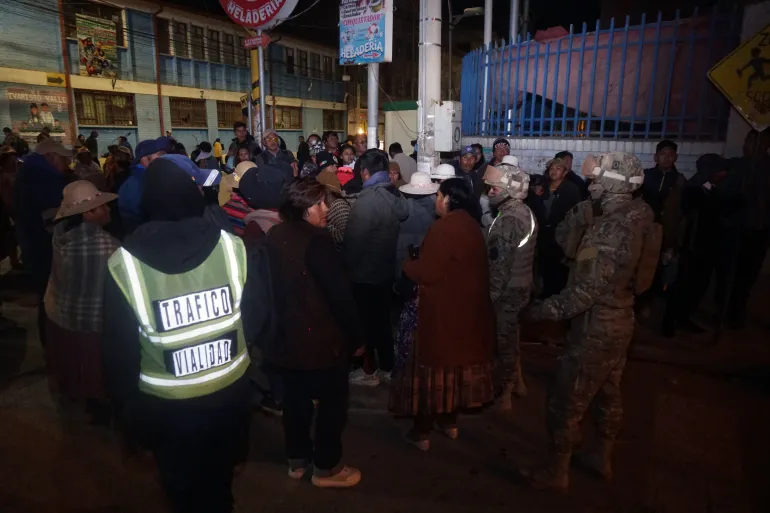
![Military personnel evacuating civilians near the site of an explosion at an army barracks in Viacha. [AFP]](https://i0.wp.com/www.aljazeera.com/wp-content/uploads/2026/09/afp_6a9b8149021c-1788576073.jpg?w=640&ssl=1)