The Channel 4 hit show returned to our TV screens on Friday (4 September) night, as the sofa watchers shared their hilarious reaction on the best and worst of this week’s TV. Long-running favourites Jenny and Lee, Pete and Sophie, Ellie and Izzi and the Malone family were all back as they welcomed viewers into living rooms yet again.
This time, they weren’t alone as fans of the BAFTA-winning series welcomed the show’s first cast member with Down’s syndrome as two new families joined the hit programme.
The newest additions include Newcastle brothers Steve and Mark, as well as Sandy and her TV fanatic son Max, who is the first person with Down’s syndrome to feature on the show. Opening up about joining the show, Max joked: “I’m much funnier than my mum, so that’s good.”
“I’m all about spreading the love and showing other learning-disabled people what we can achieve. And my mum is my greatest supporter,” he added.
Sandy called joining Gogglebox “total magic”, sharing: “To have people see the superstar, who is my son, and realise that a person with a learning disability can be smart, opinionated and hilarious is very important for me. My greatest joy is being his mum.”
Speaking about signing-up for the series Max further shared: “Friday nights with Gogglebox and wine has been a tradition in our house for years. It’s one of my favourite shows ever.
“So, it’s surreal that we’re going to be part of it, and it’ll be such a laugh doing this with my brother. He’s super funny and it’s a great excuse to hang out.”
Viewers watching at home have wasted no time sharing their reaction on social media to the newcomers and it’s clear they can’t get enough of mother and son duo, Max and Sandy.
One viewer wrote: “Go Max and Sandy! Lovely friends of mine, knocking it out of the #Gogglebox park.”
Another commented: “Really like Max #gogglebox.” A third said: “This was the first time I’ve ever instantly loved a new family on #gogglebox smiled from ear to ear with Max. How lovely. Not sure on the other new additions yet.”
Another said: “#gogglebox Loving Max and his mum! Brilliant!” Another fan commented: “Love Max and his mum. The new brothers are ok too. #gogglebox.”
One wrote: “Absolutely L-O-V-E Sandy and Max #Gogglebox.” Meanwhile another fan added: “Max and his mum are a good addition. They make me laugh in a good way.”
Israeli attacks against villages and towns across southern Lebanon continue despite truce agreements and diplomacy.
Published On 4 Sep 20264 Sep 2026
An Israeli air strike targeting a motorcycle has killed two people in the Lebanese town of Kfar Reman, the Ministry of Public Health has said, as Israeli forces intensify attacks on southern Lebanon.
Lebanon’s state-run National News Agency (NNA) reported on Friday that the strike hit in Nabatieh near the strategic Ali al-Taher ridge, which the Israeli army said it had captured, though Hezbollah did not confirm losing it.
Recommended Stories
list of 3 itemsend of list
Israeli Defence Minister Israel Katz on Friday claimed the military had cleared Hezbollah fighters embedded in tunnels under the strategic ridge, which overlooks a wide area that has become one of the most hotly contested.
Israeli raids and artillery shelling also targeted seven towns in the Tyre and Nabatieh districts, causing no casualties.
NNA said the attacks hit al-Mansouri, Majdal Zoun, Buyout al-Sayyad, Beit Lif and Srebbine in the Tyre district, as well as Zawtar al-Sharqiyah and Mayfadoun in Nabatieh.
The attacks come amid continued Israeli escalation against villages and towns across southern Lebanon despite two truce agreements – on June 4 and 26 – mediated by United States President Donald Trump’s administration.
The June 4 ceasefire was contingent on a “complete cessation” of Hezbollah fire and the evacuation of its fighters from the area south of the Litani River.
The June 26 framework agreement did not specifically call for the withdrawal of the Israeli forces and instead tied it to the disarmament of Hezbollah.
Since March 2, when the latest Israeli escalation in its war on Lebanon began, Israeli attacks have killed more than 4,000 people and injured at least 12,000 others, while forcing more than one million people from their homes, according to Lebanese authorities.
Israel has expanded its military presence across swaths of southern Lebanon since launching its new campaign against Hezbollah, which fired rockets into Israel in retaliation for US-Israeli air strikes that killed Iranian Supreme Leader Ayatollah Ali Khamenei.
On Friday, Israeli authorities separately released four Lebanese people who had been held in Israeli prisons after being detained in southern Lebanon.
They were transferred to Lebanese authorities via the International Committee of the Red Cross, a day after one Lebanese man was released as part of an agreement between the two countries.
Gloria Steinem always listened more than she spoke, which is one reason her words had such lasting impact.
Ten years ago, I went with my older daughter and a group of her classmates to see Gloria Steinem speak. Though they were part of a feminist group recently formed at their all-girls Catholic high school, some were not quite sure who Gloria was, exactly. My daughter knew her mostly as my former “boss”; my first job out of college had been as an editorial assistant at Ms. magazine. That was back in the ‘80s — ancient history.
I was a tiny bit nervous about how the evening would go. Gloria herself was in her 80’s by then; how would she connect with a group of teenagers who had come of age post-post-everything in a social media world of makeup tutorials, fit checks, and so much rage bait?
By being precisely herself, as it turned out. Calm and witty, impassioned and informed, clear-eyed yet hopeful, Gloria enthralled them — and the entire audience — for almost two hours. By the time we left, the girls were ready to follow her anywhere.
“She’s a rock star,” my daughter breathed.
That she was. Gloria Steinem did not invent feminism, not even its second wave, but for many years she was its most recognizable frontwoman. Tall, slender, with (for many years) aviator glasses framed by her signature long, straight hair, she was the Jackie Kennedy of the women’s movement: a physical dismissal of all those childish critics who deride feminists as an army of unlovely and unloved women, devoid of humor and, most likely, surrounded by far too many cats.
Even so, how she looked was beside the point. No feminist I know ever wanted to look like Gloria; we all wanted to be like her. Smart, funny, incisive, generous and, perhaps above all, unflappable.
For an activist organizer, she had a low center of gravity. Her speech was measured, her tone was mellow — even when calling out the most outrageous hypocrisies, the most sinister forms of oppression, she rarely if ever raised it. Though by her own admission she was often furious about many things, her sharpest weapon was always a deadly talent for stating the obvious. “If women could sleep their way to the top, there‘d be a lot more women at the top.” “I have yet to hear a man ask for advice on how to combine marriage and a career. ” “A pedestal is as much a prison as any small, confined space.” “This is what 40 [or 50] looks like.”
She believed in shaping the future by being fearlessly frank about the present and the past. For more than seven decades, she helped millions strip away the veils of hierarchy, patriarchy and all the stories spun about gendered expectations to confront the actual experience of women’s lives. “If the shoe doesn’t fit, must we change the foot?”
She never incited anger; she simply pointed out the facts as she saw them and let human nature take its course. “The truth will set you free, but first it will piss you off.”
Gloria listened as much as she spoke, and with great attention and democracy. When I worked at Ms., she was always running late, invariably having been pulled into some conversation or other. Her assistant groaned over her calendar; Gloria would say “yes” when asked for help, even if it meant being two places at once.
She often came in for staff meetings to which everyone was invited and, when discussing ideas for future issues, would ask for, and attentively listen to, the opinions of even a lowly editorial assistant like myself. Her interest was sincere, astonishing and made for very long meetings. Wherever she went, it was the same. She needed to know what all manner of women thought about a wide variety of topics. More important, she wanted them to learn the habit of speaking up. In a private meeting or a public forum, to colleagues, politicians, friends, the boss or even a feminist icon, she wanted women to be unafraid of saying what they thought.
When I worked at Ms., and for many years after, people would invariably ask me: “What’s Gloria Steinem like?” and it was, and remains, impossible to describe. She was kind when she didn’t need to be, generous with her attention when no one expected it. She didn’t want laws and social constructs to be fairer, less dangerous, more fulfilling for women as a concept; she wanted it for you, for me, for the lady in the back row.
She gave aura but also advice about where to find discount shoes. She instantly claimed any room she entered and then made sure there were snacks. She believed that the world could change, that with work, we could change it. But she also believed in having fun; otherwise why bother?
On the day Gloria Steinem died at 92, I awoke to a text from one of the friends I made all those years ago at Ms.; soon there were four of us on the thread. I had just arrived in New York to take my youngest daughter back to college, and we had planned to meet one of those friends in Union Square at noon. Instead, we met at Gloria’s brownstone and laid flowers along the fence outside her door. It seemed the least we could do.
My youngest never got to hear Gloria speak and, at 19, she is too young to know who Gloria was, exactly. Which was always the point of all that Gloria did. She didn’t want the future to feel beholden to the past; she just wanted it to be better. And despite the recent setbacks, particularly in reproductive rights, and all the work that still has to be done, it is.
There stood my daughter. Like her sister, she never doubts for one minute that she is a first-class citizen, entitled to equal rights, bodily autonomy, basic respect and a life of her choosing. God help the poor souls who try to tell them different.
“She’s a big part of why you are here,” I tell her. “Of why your life at 19 is so better than mine was, and why mine, at 19, was so much better than hers.”
That’s not just a rock star; that’s a revolutionary.
Germany, Austria, Greece, Denmark and the Netherlands did not outline where the centres would be located.
Published On 4 Sep 20264 Sep 2026
Five European nations have agreed on concrete steps towards a deal with an unspecified non-European Union country to host migrant return facilities, senior officials said, in a sign of mounting determination to counter immigration.
Germany, Austria, Greece, Denmark and the Netherlands, known as the Group of Five, aim to sign deals this year to send migrants without legal residency to countries outside the European Union. The nations expected to host return centres have not been named.
Recommended Stories
list of 3 itemsend of list
“Around New Year, we expect to have a common understanding with a partner country outside of the European Union,” Danish Immigration and Integration Minister Morten Bodskov told reporters on Friday at a news conference in Copenhagen, without elaborating.
“It’s a new chance to have a life in a partner country,” he said, adding that the five nations would be in dialogue with the International Organization for Migration and the United Nations Refugee Agency (UNHCR) on their next steps.
A spokesperson for UNHCR said the agency had not been approached with details of the proposal and therefore could not comment.
The Group of Five is set to reconvene in Munich, Germany, at the end of September to advance the plan.
German Interior Minister Alexander Dobrindt confirmed that the group wants “to reach an agreement with third countries this year that will enable the establishment of return hubs”.
The European Parliament in June approved an overhaul of migration policy aimed at speeding up deportations and allowing member states to set up centres abroad, in what some critics of the policy say could weaken safeguards for asylum seekers.
The Council of Europe, a non-EU body that promotes human rights, democracy and the rule of law, said in July that the proposed return hubs posed “considerable human rights risks”.
Danish Refugee Council Secretary-General Charlotte Slente said a better policy would be to implement the EU Pact on Migration and Asylum, which focuses on stricter border screening, faster return procedures and expanded digital systems for managing asylum claims.
“Return hubs focus on a small number of returns; they will not stop people from taking even more dangerous routes, and they could violate basic human rights,” she said.
It’s the dead of night when the buzz of the engines of a series of Shahed-136 one-way attack drones breaks the silence. Carrying their lethal payloads the drones slip into the darkness with a distant supply base as their target. Tracking, identifying, and then destroying this swarm of drones is no easy task.
The unmanned aircraft system (UAS) threat environment is changing rapidly with an increasing variety of killer drones that demand differing methods of tracking and identification to engage and defeat them. Operational users are learning from rapidly-evolving- conflicts, and modern air defense methods increasingly rely on scalable, layered, and persistent sensing teams that can detect and track small, fast, low-altitude, and even swarming, aerial threats in all kinds of complex situations, on land or at sea.
A layered system is required to tackle the toughest drone threats. USAF
Ray Bischoff served active-duty with the U.S. Army for nearly 25 years, and he’s now the senior director of business development at Leonardo DRS, specialising in evaluating tactical formations and defensive requirements at all operational levels throughout the Department of War and allied nations. He is particularly focused on emerging threats from drones..
Bischoff spoke at length with TWZ’s Jamie Hunter about the use of tactical radar systems as part of a layered counter-drone system that is sufficiently versatile to tackle the toughest drone problems now, and what may come in the near future.
JH: Can you set the scene with regards to how you see the counter-UAS mission right now from a sensing perspective.
RB: The counter-UAS environment is changing and advancing very quickly. At the top level, we need to employ a variety of sensor systems – in this particular case we’re talking about tactical radars – but there are many other types of sensors, and at the highest end of the threat level it’s about connecting these together into a networked architecture.
Layering different systems in depth is vital, both from a communications architecture perspective and physically layering them in different places to protect different routes or avenues of approach, or sensitive facilities.
Look at the Strait of Hormuz, for instance, which is a vast area, with a layered and networked system to maximize the depth of coverage. The primary reason for this is that the biggest enemy in many situations like these is time. That networked architecture and having sensors in depth really gains you time, which gives you opportunities to make a better decision, time to reposition, to better evaluate. You need time to evaluate what different things in space are doing, where they’re going or where they’re coming from.
JH: When you say layered, are you talking about different systems that can look in different ways over different distances and systems in different positions that help you with that time element? What does layered actually mean?
RB: You can layer different types of sensors. Think of baseball. If all your players are home-run hitters, you probably aren’t going to do very well. You need to have different skills across your team to succeed, and it’s the same thing here. Layering of radar sensing bands, different types of technology such as electro-optic and infra-red that “see” in long, short and midwave, acoustic sensors, electronic warfare sensors to look for signals and other types of energy. It’s also about physically layering them in space, or depth.
Large drone swarms are particularly challenging to defend against. U.S. Army
We often see large exquisite sensors that have a lot of range and cover a large area. But this makes them susceptible to being targeted and destroyed. Layering sensors gives you redundancy, retaining the ability to defend. So, this is layering both in physical location, and in different types of technology.
This way, if one of your sensors is taken down by any means – for example by electronic countermeasures – your other systems can theoretically continue to operate. Just think how you can see, smell, touch, taste – it’s the same concept with layering different types of technologies, which is exactly what we at Leonardo DRS do and we integrate them so we can interact and share information to maximize the benefits of this layered approach. A team ultimately makes the sensors more effective across networks and architectures.
JH: Presumably you get good indicators on developments from the current operations in Ukraine. You already mentioned the Strait of Hormuz as well. What are the big lessons that you’re getting here about different types and sizes of drones?
RB: Without going into the details of combat operations, the bottom line is you have to advance your technologies at the rate or as close to the rate of the advancement of the weapons systems that are being utilized. We’re seeing a mixture of things when it comes to the UASs; that’s larger craft that are getting faster and can carry heavier payloads, or smaller ones with longer ranges that can move through areas almost undetected.
There’s been so much investment in UAS technology, and they are becoming cheaper and easier to manufacture. People can 3D-print these things in their houses now. So, looking at this from a sensing perspective, that layering is becoming increasingly important.
We are looking to do things to counter these developments, such as maybe elevate the sensors to “see” across the top of the trees or place a sensor down in a valley – so that adds layering in altitude or elevation to remove blind spots. Just like the military, if you’re setting-up a defensive position, you have to cover what we called “dead space” where you can’t see with eyes or sensors from ground level.
Leonardo DRS’ 202 Expeditionary Skid (U-KIT-0091) is based on the company’s Extended Multi-Mission Hemispheric Radar. Leonardo DRS
JH: Can we dig further into the role of tactical radars in counter-UAS, specifically Leonardo DRS’ 202 Expeditionary Skid, which I believe is based on your Extended Multi-Mission Hemispheric Radar [exMHR].
RB: Radars “see” things that are physically present in space and time, and that’s why they are such great tools in the counter-UAS kit bag of sensors. That said, some radars are affected by weather and other factors, some work better in particular environments.
The 202 Expeditionary Skid is a new system from Leonardo DRS that uses our long-range exMHR, which is a software-defined AESA [Active Electronically Scanned Array] pulse-Doppler radar. It operates in the S-Band and that’s a very reliable band for all weather conditions including strong performance in dust storms and rain. When you get into K, Ku, and X-bands, they typically have smaller beams and therefore greater accuracy, but they suffer in poor weather and can become extremely degraded. S-band radar suffers significantly less degradation in that environment.
The 202 Expeditionary Skid, also known as U-KIT-0091, has a single radar panel that has a search area of 90 degrees by 90 degrees, so we often mount them in groups of four to provide full 360-degree coverage. Each panel has a really fast scan rate, much faster than a traditional spinning radar set. Plus, having multiple radar faces to make up a complete system is much more survivable. They can also overlap their field of regard without impairing each other.
We have sought to provide a solution that marries an appropriate level of range, accuracy, capability, and performance, that can still be very flexible in its ability to relocate or change mission sets. This is designed to be extremely versatile, meaning that it operates in different environments quickly. U-KIT-0091 has been purposefully designed to be mobile in a compact system that can either be used by itself or networked and fused together with other systems. Back to the baseball analogy, this is the kind of guy you really want on your team because you can use them wherever you need them.
The radar or set of radars sit on a small skid system that can slide into the back of a pickup truck, into the back of a tactical vehicle, onto a trailer, you can set it just about anywhere and it occupies a four-by-four-feet position. It has its own power generation, its own positional information that works in denied environments, basically it’s capable of working by itself from the get-go. The best part is that it’s truly mobile – the operator doesn’t have to stop the vehicle to make it work. You can turn it on and set-off. It’s working. If you come to a stop, it’s still working. It can be mounted on a ship, it can be taken airborne by an aircraft, so it’s got land, sea, and air applications. We’ve installed these on all types of ground platforms, water-based platforms, on top of a building or some sort of structure and it’s already in service, but I can’t specify where. It tracks drones very well, but of course it can track just about anything that can exist in that space.
The 202 Expeditionary Skid U-KIT-0091 mounted in the back of a pickup truck. Leonardo DRS
JH: So you could strategically locate several of your radars to look in different directions or be positioned to look in a certain direction if you knew the expected paths that the threats would use?
RB: The system is designed exactly for things like that. Instead of putting all of your eggs in one basket, you disperse your eggs, and focus on different avenues or approach angles so that you can then have sensors strategically located where they can pick up these things and then as long as they’re networked back into weapons systems that have the overlapping fields of fire or bubbles – coverage areas – then you can protect your area.
Any time you can decouple a sensor from a weapon system or multiple types of sensors from each other, you stand a far greater chance of survivability and optimizing accuracy. If you put all your eggs in one basket, and if you lose that basket, you lose everything. In addition, if you separate sensors, you gain accuracy because you have different angles and you can leverage simple geometry.
JH: Could you depict what an end-to-end engagement might look like using your tactical radar.
RB: The radar sensors will typically be emitting energy as they search for objects in a particular space. If something is detected and determined to be a valid target then the data is sent from the radar to some type of a command and control system, which may well be receiving information from other complementary sensors too. It then fuses that data and passes it to an effector, whether that’s a non-kinetic or a kinetic system, for engagement.
Meanwhile, the radar continues to track and it can determine whether that object was removed or if its path changed, and so on and so forth. But you know, a lot of these radars operate in a way whereby they can be turned on or off by different sensors to avoid them having to constantly transmit energy, they’re very customizable to meet the requirements and the emissions that are needed, whether that’s air defense, counter-drone, etc.
They can operate independently too, maybe covering a small area that needs to be protected, and integrated with a localized weapon system, or, as I already explained, they can be networked into a much larger set-up, they are modular, open system architecture and easily incorporated.
Most customers tend to choose their own command and control systems, which is why the plug-and-play part of our system is so important. It really doesn’t matter what they want to partner it with, what we provide enables that very easily.
A counter-drone exercise run by the Joint Task Force-National Capital Region/United States Army Military District of Washington. U.S. Army/Sgt. Zack Stine
JH: To be clear, your tactical radars could be deployed to defend the entire eastern seaboard of the U.S., they could be positioned to defend an air base, or they could be used to defend a ship in the Strait of Hormuz.
RB: The architecture can scale geographically through a distributed, networked sensor approach. The specific coverage area depends on factors including sensor density, the threat environment, command-and-control integration, and the available effectors.
Customers can deploy multiple radars and feed them into a single command-and-control system, positioning sensors to optimize coverage for the operational need. For example, one radar set could cover a valley vulnerable to low-flying drone ingress, while another positioned on higher ground provides longer-range surveillance. The key is a modular capability that enables users to tailor coverage and layer sensors where they are most needed – without relying on one large radar system to see everything from a single location.
JH: I’m keen to know what you consider to be the most challenging drones to detect and track. Is the challenge the speed they’re traveling out at, maybe new low observable designs, or the fact they’re flying very low. What are the big issues you’re seeing?
RB: It’s really all of the above. The other really challenging problem is when something is flying very low to the ground. The lower they bring them in altitude, they are harder to track as an independent target.
The challenge with drone swarms isn’t detection – if you can see the drones, you can track them. The harder problem is managing those tracks, deciding which threats matter most, and assigning the right effector to each one.
If 100 drones are inbound, it’s not just about having 100 weapons available. It’s about coordinating a fast, cost-effective response across a large number of simultaneous threats.
Ultimately, pairing radars and electro-optical/infrared sensors together is the way to go, because each of those have their own strengths. One of those sensors is going to see the drone better than the other, plus you have the redundancy that at least a couple of them will “see” the threat and give you enough information in sufficient time to prosecute it. Fitting into that team, however it is constructed, is exactly how we position our 202 Expeditionary Skid U-KIT-0091 radar.
ITV bosses have wiped “uncomfortable” footage of Miriam Margolyes from the edition of This Morning that appears on its ITVX service.
Miriam Margolyes’ appearance on This Morning sparked huge backlash(Image: Ken McKay/ITV/Shutterstock)
Miriam Margolyes has been met with a wave of fury after using a highly offensive term to describe Andi Peters’ skin colour during an ‘uncomfortable’ appearance on This Morning.
Viewers have branded the 85-year-old ‘disgraceful’ following her interview on the ITV show and bosses have scrubbed the remarks from the ITVX footage.
In the interview to promote her book, which aired on Thursday’s episode, she began dissecting Christine Lampard’s Northern Irish accent before turning her attention to her co-host.
“What accent would be normal for you? What are you?,” she asked the 56-year-old, leaving him baffled. The presenter responded: ”This is normal. What am I? I’m me!”
“You’re a mix, aren’t you? You’ve got a Black daddy and a white mummy,” she said. He explained that both of his parents are Black, jokingly questioning whether his make-up artist had used a “lighter shade than normal”.
“I think you’re high yella. That’s what they call it in America when someone isn’t deeply black,” she continued, with Andi quipping that he “didn’t even know there were shades”.
The presenter then pointed to his earpiece and revealed that bosses were intervening, explaining that they were “getting nervous”.
“There are shades and this is what we have to incorporate,” the Harry Potter actress added. “Don’t be nervous, we welcome everybody. That’s what I want to write about in my book, it’s about inclusion.”
The Merriam-Webster US dictionary defines the term – sometimes spelt high yaller – as a dated and often offensive piece of slang used to describe a black person with a light complexion.
ITV bosses have yet to issue a statement over the segment but the offensive footage has been removed from the episode on ITVX. However, the rest of her interview still remains.
Viewers were left reeling over the segment and quickly rushed to social media with one saying the term was “super racist” and many calling for further action to be taken.
One person wrote on social media: “That Miriam Margoyles clip is just about the cringiest thing I’ve ever seen. It’s like a scene out of The Office.” Another agreed: “I do not accept that it’s just her age or character. She uses words and phrases that are totally unacceptable. I hope #thismorning never brings her back on the show.”
One posted: “That Miriam Margolyes interview is the most uncomfortable thing to sit through what the hell was she thinking.”
Another said: “Just watched @thismorning interview from this morning Miriam Margolyes is disgrace what she said about Andi Peters is way out of line she should be banned from @ITV @SkyNews @BBCTheOneShow she was way out of order.” They added: “@andipeters i am standing with you [sic].”
The Mirror has approached ITV, This Morning, Andi and Miriam for a comment.
Trash fills a street in Havana in March. A U.S. Embassy health alerts issued Friday follows earlier reports of gastrointestinal illnesses on the island tied to water supply problems, garbage accumulation and prolonged power outages. File Photo by Ernesto Mastrascusa/EPA
Sept. 4 (UPI) — The U.S. Embassy in Havana issued a health alert Friday over a significant increase in diarrheal illnesses across Cuba, linking the rise to the continued deterioration of the island’s water and energy infrastructure.
The embassy said unreliable electricity and water supplies are affecting general hygiene as well as food refrigeration, storage and temperature control, accelerating spoilage.
Recent cases have shown a significant increase in pathogens including E. coli, norovirus and Shigella, as well as other gastrointestinal pathogens that can cause vomiting, fever and severe dehydration.
Health Alert – U.S. Embassy Havana, Cuba (September 4, 2026)
Location: Cuba
Event: The U.S. Embassy has noted a significant increase in diarrheal illness across Cuba, associated with the continuing degradation of the water and energy infrastructure. This degradation affects… pic.twitter.com/jSA636mete— Embajada de los Estados Unidos en Cuba (@USEmbCuba) September 4, 2026
The embassy advised travelers and U.S. citizens in Cuba to take extra hygiene precautions and exercise caution with dairy products, meat, seafood, eggs and other perishable foods if they are uncertain about how the products were stored.
It also recommended avoiding tap water and considering bringing a personal supply of basic medications, including acetaminophen, ibuprofen, antibiotics and oral rehydration solutions, “given local medication shortages.”
The latest alert follows earlier reports of gastrointestinal illnesses on the island. In July, Periódico Cubano reported an increase in people experiencing vomiting and diarrhea in several parts of Havana as residents complained of water supply problems, garbage accumulation and prolonged power outages.
The health warning came days after the embassy issued a security alert Wednesday over a notable increase in thefts and vehicle-related crimes in Havana.
Incidents included items taken from vehicles, including parts such as side mirrors and windshield wipers, and attempts to steal entire vehicles amid worsening economic conditions and rising crime, Martí Noticias reported.
Since receiving these tanks last year, the crews, serving with Ukraine’s 425th Separate Assault Regiment “Skala,” have used the Abrams in two combat operations in the fight for Pokrovsk, a key Ukrainian logistics hub and part of a defensive belt of towns in Ukraine’s eastern Donetsk region. They recounted their experiences to Hromadske, an independent media channel in Ukraine.
Чому «Скеля» їхала на Abrams у Покровськ / hromadske
Fighting around Pokrovsk
The first major deployment described by the crews took place in December of last year, when Abrams tanks were used to support assault groups entering Pokrovsk.
The crewmember with the callsign Kent described moving into the city behind a mine-clearing tank and ahead of two infantry fighting vehicles (IFVs) carrying assault troops, during a mission that was deliberately aggressive.
“Since a tank is a priority target — my task was to draw their attention, while our infantry dismounted and moved in successfully.”
The Abrams was also assigned three target points to engage along the route.
“We went right in there, poured it on, and drove back out,” he recalled.
A video showing the 425th Separate Assault Regiment in action in August 2025, soon after receiving the Abrams:
Танки Abrams в 425 ОШП “Скала” [Серпень 2025]
The second operation, on March 31, involved an attempt to enter and hold an industrial area near Pokrovsk to help block Russian movement toward Hryshyne, a contested village in the district.
The operation was prepared for more than two weeks. Ukrainian forces conducted reconnaissance flights, examined difficult sections of the planned routes, and provided crews with extensive video and imagery.
“They knew every meter of the route,” another of the unit’s commanders, with the callsign Kubik, said.
Weather was considered essential. The Ukrainians waited for fog and rain, hoping to limit the effectiveness of Russian drones.
“Without the right weather we wouldn’t have been able to pull off operations like that,” Kubik said.
The operation nevertheless resulted in the destruction of four out of five armored vehicles, some of which are seen in the video embedded below.
Russia’s Rubicon Drone Center FPV drones destroyed a Ukrainian assault group near Pokrovsk, hitting an M1A1 Abrams tank, M1117 APC and BMP-2 as the unit tried to advance near Hryshyne under fog cover. #Ukrainepic.twitter.com/ZzE52qAYxp
The commander acknowledged that the Russian side may have had advance knowledge of the operation.
“I can’t rule out the possibility that the enemy knew our plan,” he said.
His Abrams was not immediately destroyed. According to the crew, it completed its task and the assault troops dismounted before the weather changed.
“Once the fog lifted, they started working on it with an FPV drone,” the commander said.
Why use tanks at all?
The losses prompted criticism from Ukrainian military commentators, particularly after footage of the destroyed vehicles was published.
However, the crews defend the decision to use armored vehicles for the missions. According to the men of the Skala interviewed, the alternative was often to send infantry over several miles on foot while carrying weapons, ammunition, water, and other supplies.
“That takes more time,” Kubik explained. “And the enemy isn’t standing still — the enemy is moving toward them.”
🇦🇺🇺🇦 Australia-supplied M1A1 Abrams AIM main battle tank in service of the Ukrainian 425th Separate Assault Regiment “Skala.”
The argument that infantry could simply move more stealthily on foot also has limitations.
“Every day the Mavic drones are flying, the fixed-wing drones are flying,” he said. “No fog, guys are visible.”
Combined witu IFVs, the Abrams can provide the ability to rapidly move troops while simultaneously delivering heavy direct fire against enemy positions and offering substantial protection to its crew.
The crews argue that this capability remains worthwhile even when the tank itself may eventually be lost.
One commander was asked whether deploying a roughly $5-million tank makes sense if a single sortie can result in its destruction.
“Yes, of course it makes sense to deploy it,” he replied.
“First and foremost — it saves the lives of the crew inside it.”
Russian forces captured a relatively lightly damaged M1A1SA Abrams main battle tank operated by the 47th Separate Mechanized Brigade in the Pokrovsk direction.
— Status-6 (War & Military News) (@Archer83Able) October 27, 2024
A tank under attack by drones
The Ukrainian crews repeatedly highlighted the Abrams’ accuracy and survivability.
“What are the biggest advantages of the Abrams?”, Kent was asked.
“Accuracy.”
Its biggest disadvantage, he said, is equally obvious on a modern battlefield: “It’s very tall — and very large — so it’s hard to conceal.”
A video showing a U.S.-supplied Abrams under attack from Russian FPV drones:
🇺🇸🇺🇦 An Abrams tank withstands 9 FPV drones hits. Eventually, the tank was destroyed, but the tank crew successfully survived. pic.twitter.com/4NBKdg2zmW
He pointed to fairly basic modifications including rubber strips and a foldable wire cage mounted on the turret, as additional layers of protection against drone attacks.
“A drone doesn’t hit the actual penetrating element directly — it just can’t reach it,” he explained. “It hits the rubber, and then the blast wave travels from there.”
Even with their tanks festooned with explosive reactive armor (ERA) bricks, the crews acknowledge that such protection has limits.
A head-on view of an M1A1 of the 425th Separate Assault Regiment shows the ERA bricks installed around the turret and in front of the hull. Ukrainian Armed Forces
US-supplied M1A1 Abrams tank in service of the Armed Forces of Ukraine with added Kontakt-1 ERA on the frontal hull and standard ARAT ERA on the sides. pic.twitter.com/PC2kDfxefO
— Status-6 (War & Military News) (@Archer83Able) May 21, 2024
“They also protect very well. An effective thing,” he said.
A Russian tank with the ‘hedgehog’-type protective covering. Russian state media
For now, the drone threat has led the regiment to keep its Abrams out of combat, as we will return to later.
The Abrams as a machine
The crews’ assessment of the Abrams included praise for its mobility, roomy interior, gun, and fire-control system.
Kubik said he had personally driven an Abrams to 50 miles per hour cross-country.
“The engine is an absolute beast,” he added.
The tank can also rapidly perform a pivot turn, which the crews consider particularly useful when maneuvering in confined spaces. Despite its prodiguous weight, it only rarely becomes bogged down after the kind of very heavy snow-melt that effects all vehicles on the battlefield.
Loading a 120mm M1028 canister cartridge into an M1A1 AIM Abrams main battle tank of the tank battalion of the 425th Assault Regiment. pic.twitter.com/tMd8QcROQe
— 𝔗𝔥𝔢 𝕯𝔢𝔞𝔡 𝕯𝔦𝔰𝔱𝔯𝔦𝔠𝔱 🦩🇬🇪🇺🇦🇺🇲🇬🇷 (@TheDeadDistrict) June 21, 2026
Its disadvantages include its demanding maintenance requirements. The running gear was described as particularly sensitive, with crews inspecting, lubricating, and replacing components after every sortie.
Fuel consumption is another major burden. The crew cited roughly 400 to 700 liters (106 to 185 gallons) per 100 kilometers (62 miles) depending on terrain and operating conditions.
“On asphalt it burns about 400 liters,” one said. In boggy terrain, consumption can reach “700 liters or more.”
The Abrams thirsty gas turbine engine and extreme logistical demands have always been a criticism of the platform.
An M1A1 of the 425th Separate Assault Regiment fording a river. Ukrainian Armed Forces
The crews said the vehicle’s ability to operate on different fuels is useful, although diesel provides the best engine-hour performance in their experience. Prior to delivery, the gas turbine engines of the tanks were reconfigured to use diesel fuel instead of the standard JP-8 aviation kerosene, according to earlier reports.
They also praised the Abrams’ protected ammunition storage and crew space compared with Soviet-designed tanks.
The version operated by the Ukrainians is an M1A1 rather than the latest Abrams configuration, with less sophisticated electronics than newer variants. It also lacks the classified armor found on its U.S. Army counterpart.
“For me — as a tanker — this configuration, what we have right now, is more than enough,” Kubik said. “The sight is absolutely excellent. The gun is also great.”
Waiting for a solution to the drone problem
The interview ultimately presents a more complicated picture than either the declaration that tanks are obsolete on the Ukrainian battlefield.
At the time of writing, at least 25 Abrams have been confirmed visually to have been destroyed, damaged, or abandoned in Ukrainian service. This is from a total of 31 provided by the United States and 49 from Australia.
“For now, we’re not using them further — there’s no way to,” Kubik said. “The enemy has developed their drone component very heavily, and for now we don’t have the means to counter that.”
While tanks remain exceptionally powerful direct-fire and protected mobility platforms, the proliferation of inexpensive uncrewed aircraft has made operating them increasingly difficult.
M1A1 AIM Abrams tanks of the 425th Assault Regiment 🇺🇦. The reinforced upper glacis and turret roofs are clearly visible. pic.twitter.com/Sn9h8OWZ9P
— 𝔗𝔥𝔢 𝕯𝔢𝔞𝔡 𝕯𝔦𝔰𝔱𝔯𝔦𝔠𝔱 🦩🇬🇪🇺🇦🇺🇲🇬🇷 (@TheDeadDistrict) June 21, 2026
“If someone had told me, as a tanker, back in 2022: ‘Take this — we’re giving you an Abrams, we’ll give you time to train and you’ll fight in it,’” Kubik said, “I would never have climbed out of it.”
“I’d only be saying: ‘Bring me shells. I’ll drive non-stop wherever needed, arrive and work.’”
An M1A1 of the 425th Separate Assault Regiment firing its main gun. Ukrainian Armed Forces
As it stands, reconnaissance drones can find the Abrams, FPV drones can attack it, and persistent surveillance makes concealment difficult. Experience has shown that without more effective counter-drone capabilities, even a heavily protected tank can eventually be overwhelmed.
But Kubik believes that will change.
“The day will come when one of our bright minds figures out some excellent solution against drones — and we’ll start using them again.”
Asked whether the era of tanks is over, his answer was unequivocal.
“It’s not over … They’re just waiting it out for now, biding their time. Writing off tanks — in my opinion — is still too early.”
The buyer fell in love with two very different properties in Nottinghamshire but was left unable to put an offer in for any of them. During Friday’s (September 4) episode of the popular BBC show, presenter Denise Nurse was tasked with helping Shane with swapping his busy life in Greenwich, south-east London, for a quieter life in the Nottinghamshire countryside.
The former investment banker, who was born in Canada, was joined by his friend Chris, who was on hand to offer a second opinion during the property hunt.
Shane had a hefty budget of £1.1 million and a clear idea of what he was looking for. He wanted a spacious property with a modern interior and at least three bedrooms, as well as a garden big enough for his two dogs.
As he travels a lot, good transport connections to London were also important, while he wanted to live somewhere where he could become part of a community.
Denise arranged a number of properties for Shane to view, but it was the first two homes that really stole the show. Property number one was not what Shane initially thought he wanted. Having specifically asked for a modern home, he was surprised to discover just how much he liked the traditional property.
The 18th-century property was on the market for offers over £1 million and featured six bedrooms, four bathrooms and almost half an acre of land. Inside, the property had a huge kitchen and plenty of space, while the substantial grounds offered the kind of outdoor space Shane was looking for.
Despite initially believing a modern property was essential, Shane found himself seriously considering the traditional home. Then came property number two, which appeared to tick almost every box Shane had originally given Denise. The striking contemporary home was also on the market for offers over £1 million and offered spacious, modern living.
It featured a large open-plan kitchen and an impressive main bedroom with a split-level en-suite. The property was also energy efficient and had a high EPC rating, while outside there was a secure landscaped garden which was ideal for Shane’s two dogs.
When it came to making a decision, Shane admitted that Denise had made his choice considerably more difficult.
He said: “Country living is different for me, especially property number one. When I said I wanted something modern in a country setting, I was pretty sure that I wanted modern but property number one surprised me, how much I really liked it.
“You’ve given me a lot to think about that I wouldn’t have previously thought about, which for me has been the biggest takeaway. You’ve made it harder in a lot of ways, so thank you very much for that.” Denise quickly replied: “That was not the plan.”
Shane said his next step would be to explore the villages surrounding both properties before making a final decision. It was later revealed that Shane went back to view both property one and property two. Although the traditional first property had made a huge impression on him, property number two was the front runner.
However, there was one major problem standing in his way. Despite finding the home he appeared to favour, Shane was unable to put an offer forward because he had yet to sell his current property in London. His dream move to Nottinghamshire was therefore left hanging in the balance.
You can stream Escape to the Country on BBC iPlayer.
The United States economy has added 162,000 jobs in August, with large gains in local government education and food services.
The unemployment rate remained unchanged, according to the monthly jobs report released by the US Department of Labor’s Bureau of Labor Statistics (BLS) on Friday.
Recommended Stories
list of 4 itemsend of list
The data was well above analysts’ expectations. Economists polled by Reuters had forecast 56,000 gains, the Wall Street Journal forecast 53,000, and Bloomberg had forecast 55,000, following a loss of 23,000 in July.
Local government education, or public schools, accounted for nearly 42,000 of the jobs added as the 2026–27 school year begins across much of the US. Teachers typically fall off payrolls during the summer months when school is not in session.
Food service jobs also saw large increases, with the sector adding 59,000 jobs for the month of August compared with the month prior.
There were also gains in construction, which added 22,000 jobs, and healthcare, which added 12,000.
The information sector, which accounts for industries like data processing, web hosting, publishing, broadcasting and telecommunications, fell by 23,000, with notable layoffs at companies including Scripps TV and Zillow, which fall under the umbrella of these industries.
The financial activities sector, which accounts for industries like insurance, commercial banking and real estate, dropped by 12,000.
Mixed data
The data comes in sharp contrast to the ADP national employment report, which tracks private payrolls and found 38,000 jobs added across the US economy.
Meanwhile, the Labor Department’s Job Openings and Labor Turnover Survey (JOLTS) report released on Tuesday revealed job openings were slightly changed, with 7.3 million in July, up from 7.2 million the previous month, while total separations fell to 5.1 million in July from 5.3 million in June.
The move in job gains comes ahead of the US Federal Reserve’s policy meeting later this month, where the central bank will vote on interest rates. Amid the job gains, CME Group’s FedWatch, which tracks the likelihood of monetary policy decisions, had a 60 percent chance of a 25 basis point rate increase to 3.75–4.00 percent, up from 49 percent on Thursday.
US President Donald Trump was quick to comment on the jobs report and push for rate cuts.
“Lower the interest rates because the U.S.A. is a much stronger credit than it was a short time ago!” he said in a post on his social media platform Truth Social.
He also ramped up threats to cut off trade with nations that the US has a deficit with if the central bank does not cut rates.
Despite a strong jobs report, US markets are trending downwards. The Nasdaq is down 0.2 percent, the Dow Jones Industrial Average is down 0.5 percent, and the S&P 500 is down 0.3 percent amid Trump’s comments.
Meanwhile, Canada released its jobs report amid the ongoing trade dispute with the US. The Canadian economy lost 41,700 jobs, according to Statistics Canada, with the unemployment rate holding steady at 6.4 percent.
“We expect the economy will continue struggling to create jobs in the near term as mounting headwinds from new US-Canada tariffs, greater uncertainty from a flare-up in the trade war, and the ongoing Iran conflict and a shrinking population weigh on hiring,” Tony Stillo, director of Canada Economics at Oxford Economics, said in a note provided to Al Jazeera.
Rescue teams in Algeria are racing against time to save a 10-year-old boy named Ayoub, after he fell into an 80-metre-deep well in El Ghassoul municipality in southwest Algeria. Ayoub reportedly fell into the well two days ago.
Kristen Wiig stunned with her makeover for her spread in the latest issue of Perfect magazineCredit: Yasmine Diba/PerfectThe actress showed an edgy look in a black minidress with a super-high slitCredit: Yasmine Diba/PerfectKristen also showcased her figure in a skintight black dress with a see-through lace topCredit: Yasmine Diba/PerfectThe Saturday Night Live alum ditched her bra and shirt in another photo, covering her bare breasts with a black blazerCredit: Yasmine Diba/Perfect
Kristen, 53, looked completely transformed in her skimpy all-black outfits, which were considerably more revealing than her usual attire.
One photo captured the comedian posing in a body-hugging mini dress and a blazer.
Sign up for the Showbiz newsletter
Thank you!
The dress featured beading over her chest and a matching design on the cuffs of her coat.
Meanwhile, her legs were on full display, with her dress’s super-high slit showcasing her upper thighs.
Kristen finished the look with white pointed-toe heels, heavy makeup, and her tousled blonde hair at her shoulders.
The Bridesmaids star kept the edgy style in another photo, modeling a skintight dress with a see-through lace top.
She slouched in a chair, her hair covering half her face, showing off dark eye makeup and massive gold statement earrings.
Kristen’s third outfit again showed the TV star in a different light as she rocked pants and a matching blazer, with nothing underneath.
Most read in Entertainment
The Masters of the Universe star ditched her bra and a shirt to tease her bare breasts beneath the blazer.
She wore long, dangly earrings with the same messy hair-look and heavy makeup.
Kristen continued to stun in her photos, as another captured the Saturday Night Live alum standing by a pool in a bra and panty set.
She added see-through lace tights and high heels to her bottom half, keeping her abs and toned arms exposed on top.
Kristen posed in black lingerie with completely see-through black tightsCredit: Yasmine Diba/PerfectKristen flaunted her abs and toned arms in a black bra and leggings while baking in the kitchenCredit: Yasmine Diba/PerfectThe Palm Royale actress also stunned in a strapless black bra with a deep V-neckCredit: Yasmine Diba/PerfectKristen also donned a long-sleeved black sweaterdress with big fur sleevesCredit: Yasmine Diba/Perfect
The Despicable Me star concealed her eyes with a massive bucket hat, posing with her hands on her hips.
Kristen wore a similar ensemble during a baking session in the kitchen, including a tiny bra, leggings, and leather boots.
She perched one leg on a table while mixing ingredients in a bowl, oversized sunglasses covering her eyes.
A couple of other inside shots captured the Palm Royale actress in a form-fitting strapless dress with a deep V-neck, and a long-sleeved sweater dress with big fur sleeves.
It’s rare to see Kristen in such daring looks, worlds apart from her hysterical costume in her iconic Target Lady sketch on SNL.
She also wore a prim-and-proper wardrobe with bright colors and perfectly styled hairdos in her latest TV series, Palm Royale.
The Apple TV series, which follows her character Maxine Dellacorte-Simmons as she vies to become the belle of 1960s Palm Beach, was canceled earlier this year after two seasons.
Sept. 4 (UPI) — The Federal Communications Commission asked a federal court to dismiss a lawsuit from ABC claiming the commission was curbing its right to free speech.
The Walt Disney Company and its subsidiary ABC sued the FCC on Aug. 18 to block an early license renewal from the agency, claiming the Trump administration is attacking the company for content it doesn’t like.
The FCC argued in its motion that the lawsuit is premature because the agency hadn’t yet tried to remove the licenses from eight local stations that ABC owns. In April, the FCC called for an early review of the licenses, an unusual move. None of the licenses were up for renewal for several years.
The FCC claims it asked for the early review because of ABC’s response investigation into the company’s diversity, equity and inclusion hiring policies. But the review came right after President Donald Trump told ABC to fire Jimmy Kimmel after a joke about First Lady Melania Trump.
The eight stations with their licenses are in jeopardy cover New York, Los Angeles, Chicago, Philadelphia, Houston, San Francisco, Raleigh-Durham, N.C., and Fresno, Calif. They renew their licenses every eight years and are almost never revoked. The FCC hasn’t filed an early-renewal order in decades.
“This [lawsuit] would only hobble the Commission’s efforts to investigate and resolve serious allegations that Disney has engaged in unlawful discrimination, and from otherwise ensuring that Disney’s stations are serving the public interest,” the FCC wrote in its filing. “Plaintiffs, in return, would only free themselves from the burdens of proving their case in administrative proceedings.”
“They have shown (at most) minimal and self-inflicted effects on speech, and no harms that could justify” blocking the agency’s moves, the FCC’s document said.
ABC had filed for an emergency stay of the FCC’s activity, arguing it was using the regulatory process to suppress its right to free speech.
ABC in its filing said that President Donald Trump is sending a “message to every media company in the country — that they should “tell only the stories the Administration deems favorable, or face the coercive machinery of the federal government.”
“In such a world, the press could in no way be described as free,” ABC wrote. “The FCC Chairman [Brendan Carr] has left little doubt that this is his goal.”
Judge Loren L. AliKhan scheduled a hearing for the week of Oct. 5.
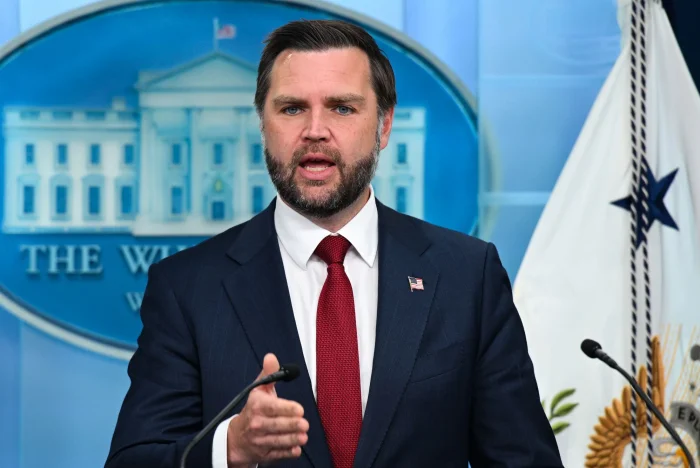
Vice President JD Vance briefs members of the media in the press room of the White House on Thursday. Photo by Annabelle Gordon/UPI | License Photo
As the war drags on in Ukraine, its civilians are again suffering.
Thirty-eight people were killed in the village of Myla on August 29, when a Russian drone attack struck an ammunition depot. Another 12 were killed in attacks across the country on September 1.
Recommended Stories
list of 4 itemsend of list
Civilian deaths have sharply increased this summer as Russia is using jet-powered drones, which fly at about half the speed of a passenger jet and are more difficult to intercept than propeller-powered drones.
Jet-powered drones numbered about 2,800 in August, said Ukraine Air Force spokesman Yurii Ihnat, compared with about 1,500 in July, several times the number launched in June. Ukraine has an interception rate of more than 90 percent against propeller-powered drones, but only 60 percent against the jet-powered variant, Ihnat said.
(Al Jazeera)
Ukraine said Russian forces suffered 42,020 casualties last month, as Moscow’s territorial gains dropped to a fraction of last year’s rate of advance.
Ukrainian armed forces figures showed Russia’s monthly casualties were only slightly below July’s 42,860 and well above the 39,290 in June.
Al Jazeera cannot independently verify casualty estimates by either side, but if accurate, those summer figures – 25.8 percent higher than the casualties Ukraine inflicted in the spring – suggest the high Russian casualty rate is not a passing event.
Russian recruitment rates are thought to be well below those totals, estimated by Ukraine at about 32,500 a month this year.
An area in Kyiv hit by numerous missile attacks, September 1, 2026 [Gleb Garanich/Reuters]
Ukrainian President Volodymyr Zelenskyy has publicly shared intelligence suggesting that Russian leader Vladimir Putin will conscript 300,000 or more troops next month.
Zelenskyy has said that up to 80 percent of Russian casualties were inflicted in Kostiantynivka, the southernmost of Ukraine’s “fortress belt” of cities in the eastern Donetsk region, whose capture Putin has repeatedly prioritised.
Russian forces are thought to control only a portion of the city, but have infiltrated more than 70 percent of it with scattered individual troops sent to drop supplies and await reinforcements. Ukrainian drone operators have been targeting the troops as Russia replenishes them.
This week it was revealed that Ukrainian commander-in-chief, Mykhailo Drapatyi, reinforced the Donetsk front around Sloviansk and Dobropillia, north and south of Kostiantynivka, respectively, but kept the Kostiantynivka front largely unchanged. That suggests Ukraine may be adopting the tactic of fighting a prolonged rearguard in the urban landscape to inflict attritional losses, as it did in the battles of Bakhmut, Pokrovsk and Chasiv Yar.
Police inspect parts of a Russian drone at an apartment building in Kyiv, September 1, 2026 [Gleb Garanich/Reuters]
The fight for Kostiantynivka has sapped troop strength elsewhere on the front line, where Ukraine liberated 130sq km (50 square miles) of its land in August, limiting Russia’s overall advance.
Russia seized just over 90sq km (35 square miles) in August, estimated the Institute for the Study of War, a Washington-based think tank that assesses territorial gains using open-source geolocated sources.
While still a net gain, that is less than a fifth of the land Russia seized in August last year.
During June, July and August this year, the ISW assessed that Russia gained firm control of 160sq km (60 square miles), compared with 1,440sq km in the summer months of 2025 (560 square miles) – a 90 percent decrease.
Family members attended the funeral on Monday of village leader Taras Didych, who was among 38 people killed in a Russian drone attack in Myla last week, August 31, 2026 [Alina Smutko/Reuters]
Ukraine’s response
Ukraine has turned its focus from Russian refineries to strikes against Russian air defences, radar systems and drone launch sites.
Ukraine’s Unmanned Systems Forces (SBS) destroyed 33 air defence elements in August, increasing the annual total to 263.
Ukraine also kept up some strikes on refineries, hitting 12 in August, along with two gas-processing plants and three oil transshipment terminals, according to its defence ministry.
During the past week, Ukraine struck the Yanos refinery in Yaroslavl and the Kirishi and Ust-Luga refineries near Leningrad, all 800km (500 miles) from its border.
Petro Ionov mourns his son Yevhenii in the town of Bilohorodka, August 25, 2026 [Anatolii Stepanov/Reuters]
Those strikes have caused petrol shortages, further hurting Russia’s economy.
Ukraine’s military intelligence reported that certain Russian exports had fallen by 80 percent compared with pre-war levels. Oil has been among the hardest hit, as Ukraine has struck terminals and hundreds of tankers carrying Russian oil in the Black Sea and Sea of Azov.
Russian oil exports from the Black Sea port of Novorossiysk fell from 800,000 barrels a day in July to 350,000 barrels per day in August, said Ukraine’s Foreign Intelligence Service.
“The Russian side acknowledges that its Black Sea Fleet ships are effectively blockaded in Novorossiysk due to our drone strikes and are unable to operate at sea,” said Zelenskyy.
“Since the Russian fleet is unable to provide escorts for the commercial and shadow fleet … one of the solutions being considered is to equip civilian ships with small arms, electronic warfare (EW) equipment and military personnel,” he said. “We will prepare appropriate countermeasures.”
The strikes on the oil industry have not only reduced exports. They have reverberated across the Russian economy, creating queues at petrol stations and raising prices for motorists.
This week, Russia extended its ban on diesel exports to the end of September to keep its army and transport industry supplied and sought to import petrol.
Occupied Crimea, where petrol distribution has been restricted to government-owned vehicles, has been hard hit.
The Russian-appointed governor of the region, Sergei Aksyonov, said on September 2: “Fuel supplies to the region are currently not fully meeting the needs of the residents. Unfortunately, some residents of Crimea will, at this stage, face limited access to gasoline”.
The hit Channel 4 true crime documentary series recently returned with a brand new special, but fans are still waiting for the second half to air.
24 Hours in Police Custody fans were left up in arms over the scheduling for a two-part special (Image: Channel 4)
Channel 4 has issued a fresh update on its beloved true crime series 24 Hours in Police Custody.
The long-running documentary series has amassed a devoted fanbase since its premiere back in 2014. It offers an unflinching look at police work in the UK and the lengths teams go to in order to bring criminals to justice.
Many fans were left confused when the second part didn’t air the following evening on the Bank Holiday Monday, as a number of fans had expected the double bill to unfold over two nights. They were sadly mistaken, as the second part had always been scheduled to air exactly one week after part one, meaning it will be shown on Sunday, September 6.
Channel 4 has now directly addressed the legion of baffled fans with a cheeky post on its dedicated documentaries Facebook page. The broadcaster posted a series of screenshots of the flurry of remarks regarding the special episodes, including fans asking “Can’t find part two?” and “When is part two?”
The post was captioned: “POV you’re the Social Media Manager reading the comments on the new 24 Hours in Police Custody,” before clarifying exactly when fans can see the new episode. It added: “Watch part two of ‘The Ambush’ this Sunday at 9pm on Channel 4.”
Reacting to the post, many fans admitted they had been left confused and preferred watching both back-to-back. “I wish you’d air the episodes over two nights rather than have to wait a week,” one fan said accompanied by a crying emoji.
Another fumed: “Next time I’ll binge both on the day the second is released. I hate that wait!” Meanwhile a third series fan added: “I’d prefer not to wait a whole week. Had I known in advance I would have waited and watched them both at the same time. Still looking forward to it though.”
Yet another posted: “I’m waiting till Sunday to watch both and ignoring the spoilers,” as one vented: “Please listen to the feedback and NEVER again make us wait a week for part two!!! Consecutive days is long enough.”
24 Hours in Police Custody: The Ambush returns to Channel 4 on Sunday, September 6 at 9pm.
The anti-immigration Reform UK party said two of its senior officials had stepped down on Friday, following allegations that they were secretly filmed appearing to discuss ways to circumvent UK electoral laws on foreign donations.
The far-right party, whose popularity has soared in the past two years, is already embroiled in several other funding scandals involving its leader Nigel Farage. On Friday, it announced an internal probe into the latest case, which was brought to light by a Channel 4 investigation.
Recommended Stories
list of 3 itemsend of list
Reform is currently holding its annual party conference in Birmingham, central England.
Here’s what we know about the foreign funding claims and how they could affect British politics.
What did the Channel 4 investigation show?
Channel 4, an independent broadcaster, aired footage of senior Reform officials Dan Jukes and James Orr meeting with undercover reporters who were posing as prospective Reform backers from the United States.
In one instance during the programme, which was broadcast on Thursday night, footage was shown of Jukes appearing to talk about a proposal for Reform to receive a 500,000-pound ($675,000) donation from one of the men, who was presenting himself as an American financier, through his son, who he said lives in the UK.
The “son” was actually another journalist from investigative group Verbatim, which recorded the exchange.
In separate footage, Orr appeared to discuss a plan for the US donor to fund opinion polls for Reform UK rather than donating the money directly.
He told the undercover reporter that “we just don’t have British-resident donors, British entities, that would support us”.
During the investigation, Verbatim reported that Reform officials arranged for the US donor to pay more than 30,000 pounds ($40,500) to fund three opinion polls, without disclosing the source of the funds.
Channel 4 said it had verified the findings from Verbatim, an offshoot of the Centre for Climate Reporting.
What are the UK’s rules against foreign funding for political parties?
Under UK electoral law, political parties may only accept donations from British voters or UK-registered businesses. Donations from individuals or organisations based overseas are strictly forbidden.
In a statement on Friday, a UK Electoral Commission spokesperson said political parties must report all “permissible donations” they accept exceeding 11,180 pounds ($15,120) and all “impermissible donations” exceeding 500 pounds ($676).
“Parties are responsible for ensuring their internal processes and controls are fit for purpose,” the spokesperson said. “Information about any potential attempt to evade the controls on donations is for the police to consider.”
How has Reform responded to the allegations?
Following the programme’s broadcast, Reform initially issued a statement denying any wrongdoing and claiming the allegations were a hoax.
In a later statement, however, the party said it was conducting an internal probe and that Orr and Jukes had stepped down pending its outcome.
Orr, the party’s policy head, said he had agreed to step down temporarily and would “cooperate fully” with the investigation.
Jukes, Farage’s long-term aide, denied any wrongdoing but said he had “stepped back from politics in order to clear my name”.
Advisor Dan Jukes speaks to UK Reform party leader Nigel Farage [File: Hollie Adams/Reuters]
Farage accused the undercover journalists of “entrapment” and told broadcaster LBC, “they got a couple of our contractors to say things that perhaps should not have been said”.
“And as a result of that, you know, they have been removed this morning. And yeah, you know, I’m not happy about it,” Farage said.
“The party has broken no laws, the party has not taken any dodgy money or anything like that whatsoever,” Farage insisted.
Will Reform face legal consequences?
It remains to be seen. The UK’s ruling Labour Party has written to the police asking them to investigate possible criminal offences.
The Metropolitan Police said it was aware of the allegations in the broadcast and would assess any information provided to them.
This does not amount to the formal launch of an investigation.
Why does this matter?
The latest donation scandal is another blow for Reform, which has seen its place as the UK’s most popular party slip in opinion polls in recent months.
Last year, polling by YouGov suggested that Reform had become the most popular political party, and would likely win a UK general election if one had been held then. At that point, Labour was trailing far behind in the polls – projected to win just 27.3 percent of parliamentary seats, compared with Reform’s 41.7 percent. The former ruling Conservative Party stood at just 7 percent.
But a poll this week by YouGov showed Reform now tied with the UK’s left-wing Labour Party with 23 percent support each. The Conservatives have caught up with 20 percent.
This is not the first funding scandal Reform has grappled with, either. In July, Farage dramatically stepped down as Member of Parliament for Clacton amid allegations, also revealed in the UK media, that convicted fraudster George Cottrell, 32, recruited and paid three staff to work on Farage’s social media before the 2024 general election and has continued to allow Farage to use a five-storey Georgian townhouse he rented near Buckingham Palace.
Farage ultimately re-won his seat in Clacton at a by-election but still faces the prospect of a parliamentary inquiry into undeclared funding of 5 million pounds ($6.7m) from Thailand-based billionaire and crypto investor Christopher Harborne, who paid for Farage’s personal security before he announced his candidacy in the 2024 general election. So far, Farage denies all wrongdoing.
This week, Farage told the BBC that the parliamentary inquiry was unfair. He said there was a “wilful attempt, and it’s gone on now for months, to say that everything to do with Reform, that every individual involved with Reform is somehow a crook”.
This is evidence of “the establishment in a very coordinated way fighting back”, he claimed.
However, Justin Fisher, professor of political science at Brunel University of London, told Al Jazeera Reform’s latest donation scandal would further hurt Farage’s standing both within and outside his party, and could cost Reform votes in the next elections.
“If this was an isolated incident, then Reform would probably be able to brush it off,” said Fisher. “But it comes on top of serious questions about a donation to Nigel Farage, and a donation to Reform which allegedly had overseas links. This all contributes to a narrative which Reform is having great difficulty avoiding.”
Lebanese President Joseph Aoun praises the release and thanks US President Donald Trump for his efforts.
Published On 4 Sep 20264 Sep 2026
Four Lebanese citizens who were held in Israel have been released and handed over to the International Committee of the Red Cross (ICRC), the day after a first prisoner was freed.
In a statement on Friday, Lebanon’s President Joseph Aoun thanked the United States after the Red Cross facilitated the transfer. The US has been brokering talks between Beirut and Tel Aviv aimed at ending hostilities between the neighbouring countries.
Recommended Stories
list of 4 itemsend of list
Aoun expressed his gratitude “for all the efforts exerted, particularly by the US under the leadership of President Donald Trump and by international bodies, especially the ICRC”.
The ICRC confirmed that “at the request of the relevant parties, [it] facilitated the transfer to Lebanon of five individuals released from Israeli detention”.
Associated Press and Anadolu news agency reporters said they saw a convoy of ICRC vehicles heading towards the Naqoura border crossing on Friday morning and later returning. The convoy then entered a Lebanese army barracks in Tyre.
The prisoner released on Thursday was identified as Malek Ghazi.
It was the first such handover since the outbreak of the latest Israel-Hezbollah war six months ago.
Other released prisoners include Hussein Ayash from the village of Harouf and Mohammed Juheir, a fisherman from the border town of Naqoura, AP reported.
Dozens of Lebanese citizens are believed to be held in Israeli detention centres, including civilians as well as Hezbollah members captured during fighting in southern Lebanon.
The ICRC called for its teams to be granted access to the remaining prisoners unjustly held by Israel, noting that it has not had access to detainees held in Israel since October 2023.
“Many families in Lebanon are still waiting for answers about the fate of loved ones who may be detained, deceased or otherwise unaccounted for,” it said.
Clashes between the Israeli army and Hezbollah began after Israel launched its genocidal war on Gaza in October 2023. That led to over a year of hostilities that escalated into a full-blown war in 2024.
Two years later, Lebanon was fully drawn into the conflict when the US and Israel launched a war on Iran. Hezbollah, a key ally of Iran, fired rockets into Israel in retaliation for the killing of Supreme Leader Ayatollah Ali Khamenei. Israel responded with air strikes and a ground invasion that have killed at least 4,300 people in Lebanon.
The brand new series shows the ‘unfiltered’ side of a well-known social media star
Alix Earle’s new Netflix show has been hit with brutal reviews (Image: Netflix )
A beloved social media star’s new Netflix show has come under fire just hours after landing on the platform.
The streaming giant added Earle Meets World to its lengthy reality TV roster on Friday (September 4), and it has already divided viewers. The eight-part show promised to showcase influencer Alix Earle’s “unfiltered” life away from social media feeds.
A synopsis teases: “Gen-Z’s ultimate It Girl, Alix Earle, is making the next big jump in her career. Can she balance her burgeoning business empire with being that unfiltered, twenty-something, hot mess that America fell in love with? Now she’s taking her candid chaos from your FYP to TV… and nothing is off limits.”
We follow the 25-year-old as she comes to terms with her first major breakup from long-term partner Braxton Berrios, as well address her ongoing feud with podcaster Alex Cooper.
Despite her online following of over 13 million, Alix’s venture into TV has been hit with brutal reviews. One viewer took to TikTok to confess they switched off the show during its first episode, penning: “I can’t get past the first 20 minutes and I love Alix and reality shows.”
Get Netflix free with Sky
This article contains affiliate links, we will receive a commission on any sales we generate from it. Learn more
Sky is giving away a free Netflix subscription with its new Sky Stream TV bundles, including the £15 Essential TV bundle.
This lets members watch live and on-demand TV content without a satellite dish or aerial and includes hit shows like Stranger Things and The Last of Us.
Critics have also shared scathing verdicts, with Variety stating: “The same relatability that makes Earle a dependable brand ambassador also makes her everyday life almost painfully boring to watch, with the few juicy nuggets either overhyped, downplayed or both.”
Time agreed, writing: “If the show made a genuine effort to fulfil the 25-year-old social media star’s vow to reveal the rawest, most intimate aspects of her life, then the only reasonable conclusion to draw from it would be that there just isn’t much to see.”
Meanwhile, The Sunday Guardian published a more generous review stating: “Fans of Alix Earle will probably enjoy getting more access to her family, career and personal life”. And it seems they were spot on because Alix’s fanbase are completely hooked on the series.
“I love the show so far,” someone posted on TikTok. Another person added: “LOVING already so excited to watch more.”
A third viewer praised the show for its authentic approach to the genre, saying: “As someone that is a chronic reality TV watcher, the show is not over-produced and that has been my biggest qualm with the reality TV shows that I watch.”
Someone else admitted: “No guys I’m so invested,” and a final captivated viewer shared: “Oh they got me hook, line and sinker!”
All eight episodes of Earle Meets World are streaming now on Netflix
Two Muslim female journalists allege they were detained and brutally assaulted by police in India’s capital, Delhi. Police have denied the allegations, claiming the journalists were brought to the station over an illegal parking dispute.
China is buying ninety percent of Iran’s oil exports, settling transactions in renminbi, and hiding the rest beneath layers of shell companies. This is not defiance. It is a demonstration, conducted in plain sight, of exactly how far American economic reach actually extends.
Scott Bessent promised, when he launched Operation Economic Outcast last week, that no one would be above the reach of US sanctions. China’s foreign ministry responded by saying Beijing would do everything necessary to safeguard its own rights and interests. That exchange, watched by the rest of the world, is not really about Iran. It is about whether the threat of American secondary sanctions can force a country that has already fought several trade wars with Washington to a standstill into changing its economic behaviour. The answer, which China has been demonstrating methodically for months, is no.
How China Made Itself Immune to US Secondary Sanctions
The architecture of Chinese-Iranian trade has been specifically designed to sit outside dollar-system jurisdiction. Chinese banks and companies that buy Iranian oil settle transactions in renminbi or through barter arrangements, making them effectively immune to American extraterritorial authority. The handful of Chinese entities that still touch dollar-denominated transactions do so through shell companies that can be discarded and replaced faster than Washington can identify and sanction them. The result is the regulatory whack-a-mole problem that American Treasury officials privately acknowledge, eliminate one entity, and three more appear in its place, each more obscured than the last.
Washington could escalate by sanctioning major Chinese banks and companies that have no Iran ties at all, using them as leverage to pressure Beijing to rein in those that do. That option exists on paper. In practice, it would constitute a declaration of economic war against China’s financial system at a moment when the US economy is already strained by six months of conflict with Iran, oil prices are elevated, and midterm elections are eight weeks away. The Trump administration knows this, which is why Bessent’s ultimatum came with no major Chinese institution on the sanctions list. The threat was real. The enforcement mechanism was not.
Stay ahead of the geopolitical week.
MD Briefing delivers expert analysis across five global fronts — the Indo-Pacific, energy, geoeconomics, European security, and the Middle East — every Monday morning. Free.
What a US Victory in Iran Would Cost Beijing
China sources roughly forty percent of its oil imports from the Gulf, with Iran accounting for ten percent of that total. If the US wins this war convincingly, meaning Iran’s government collapses or capitulates and Washington reinstalls itself as the dominant security guarantor across the Gulf, the energy architecture that China has spent two decades building becomes dependent on American goodwill. Every barrel of Gulf oil that China buys would effectively pass through a security framework Washington controls.
The regional knock-on effects compound that problem. The Mecca pact between Saudi Arabia, Turkey and Pakistan, the SCO’s deepening trade and financial architecture, the China-brokered Saudi-Iran normalisation of 2023: all of these represent years of Chinese diplomatic investment in a Middle East that is gradually reducing its security dependence on the United States. An Iranian defeat that pushes regional states back under the American umbrella undoes that investment at a stroke. From Beijing’s perspective, the cost of buying Iranian oil at a discount and absorbing American secondary sanctions is considerably lower than the cost of losing the regional influence that Iran’s survival helps sustain.
Neither Ally Nor Bystander
The SCO summit in Bishkek last week illustrated Beijing’s position with more precision than any official statement. Xi met Putin and Modi bilaterally. Iran’s President Pezeshkian attended the summit and held consultations at foreign minister level. He was not invited to Beijing. He did not get a Xi bilateral. That calibrated distance is deliberate, and it reflects a Chinese calculation that is more sophisticated than either alliance or abandonment.
Beijing does not want Iran to lose. It also does not want Iran to win so completely that Tehran’s regional hegemony destabilises the Gulf relationships China has been cultivating. The Chinese position, buying Iranian oil, refusing to arm Iran, keeping diplomatic engagement at arm’s length, is designed to keep Iran functional without making China responsible for Iranian behaviour. It is the foreign policy equivalent of keeping a fire burning without touching it.
Xi’s scheduled visit to Washington later this month, coming directly after the Bishkek summit, reinforces this reading. Beijing is simultaneously demonstrating to Iran that it has economic backing and demonstrating to Washington that it has strategic restraint. Both demonstrations serve Chinese interests. Neither requires China to choose a side.
Five Things Worth Watching
Whether Xi’s Washington visit produces any concrete understanding on Iran-related secondary sanctions. If the two sides agree on a framework that gives China cover to quietly reduce Iranian oil purchases over time, the sanctions architecture gains traction it currently lacks. If the summit produces only standard language about constructive competition, Operation Economic Outcast’s China problem remains unresolved.
The SCO Development Bank’s progress toward implementation. If the bank moves from agreement to operational institution in the coming months, it creates dollar-independent financing infrastructure that makes secondary sanctions significantly less effective not just for China-Iran trade but for the broader Eurasian trade network the SCO is building.
Whether any Chinese entity on the August sanctions list is large enough that its designation produces real disruption rather than being absorbed and routed around. The signal from August’s first wave was that Washington sanctioned deliberately small targets. The size and visibility of the next wave’s targets will tell you how seriously Washington is willing to press China.
India’s position on renminbi settlement for its own Iranian oil purchases. If Delhi follows Beijing’s approach and expands non-dollar settlement for energy trade, the secondary sanctions architecture faces a second major exemption that Washington is even less able to address given how carefully it has been courting India.
Iran’s currency trajectory. The rial has hit record lows despite Chinese oil purchases continuing. If the currency continues to deteriorate even with Chinese demand stable, it suggests Operation Economic Outcast is landing on Iran’s non-oil economy in ways that the Chinese lifeline cannot fully offset which changes the pressure calculus regardless of whether Beijing complies.
The Bottom Line
Washington designed Operation Economic Outcast to isolate Iran. What it has demonstrated is the outer boundary of American economic jurisdiction in a world where China has spent a decade building the infrastructure to sit outside it. Renminbi settlement, dark fleet shipping, teapot refineries, shell company networks, these are not improvised workarounds. They are a parallel financial architecture, constructed precisely for this contingency, and it works well enough to keep Iranian oil flowing at volumes Washington cannot stop.
The deeper problem for the Trump administration is not that China is defying its sanctions. It is that China is proving, transaction by transaction, that the sanctions cannot be enforced against a country of sufficient size and sufficient preparation. That demonstration has an audience well beyond Beijing and Tehran. Every country currently watching whether to comply with American secondary sanctions is learning the same lesson: the reach of US economic power has a ceiling, and China has found it.
Viewers tuning in to the new series of The Grand Tour have been left curious about the title card
The Grand Tour’s new series has finally landed on Prime Video(Image: PRIME VIDEO)
The Grand Tour fans have been left intrigued by a title card featured in one episode.
The six-part series premiered on Prime Video today (September 4) with a fresh set of hosts: Francis Bourgeois, James Engelsman and Thomas Holland. The trio replace veteran stars Jeremy Clarkson, James May and Richard Hammond, who gladly handed over the baton to the newbies.
The new series of The Grand Tour even saw the former Top Gear trio make appearances throughout the episodes. Jeremy appeared in the opening episode as he gave some blunt advice to the newbies, while Richard helped to judge a competition to find the toughest car, and James hosted the line-up in his pub.
Episode five of The Grand Tour featured an exciting race between Thomas in a hypercar against Francis and James on a train as they tried to get from the UK to the Belgian Grand Prix. The instalment titled A Relaxing Spa Weekend also featured James delving into the incredible history of the BMW Isetta and its Cold War history.
The episode ended with a title card which featured two images of Klaus-Günter Jacobi, who built the smallest-ever escape car used to cross the border between East and West Berlin during the Cold War. Many are curious about the figure mentioned in the title card. Here’s what you need to know.
Who is Klaus-Gunter Jacobi?
Klaus-Günter Jacobi was a mechanic who helped his best friend escape from East Berlin into West Berlin, crossing the heavily guarded border crossing of Checkpoint Charlie. He hid his best friend Manfred Koster in a tiny and concealed compartment in the BMW Isetta.
Manfred was trying to escape East Germany as he was set to be drafted into the army. Thankfully, his friend Klaus came up with the cunning plan.
Klaus-Günter modified the Isetta, reduced the fuel tank to a bare minimum and managed to build in the hiding space. He had also removed other unnecessary components and provided heat protection.
However, they only had an hour to cross the border before it closed for the night. The men were delayed and almost didn’t make it, with sniffer dogs checking for anything suspicious.
If they had been caught, the pair might have paid with their lives for trying to leave. The guards inspected the vehicle thoroughly and let Klaus through without suspecting what he was carrying.
Get Amazon’s Prime Video free for a month
This article contains affiliate links, we will receive a commission on any sales we generate from it. Learn more
TV lovers can get 30 days’ free access to tantalising TV like The Boys, Reacher and Clarkson’s Farm by signing up to Amazon Prime. Just remember to cancel at the end and you won’t be charged.
Klaus’ story was immortalised in the mini-film The Small Escape, which was produced by the BMW Group. After word spread of the escape, the Isetta was used by other defectors to escape East Berlin.
The BMW Isetta was conceived post-WWII by Italian refridgerator company boss Renzo Rivolta and his company Iso Spa. The car essentially had the engine of a scooter, the door of a fridge and seating for two people. BMW was on the verge of bankruptcy when they licensed the design from Iso Spa and set about making it more into one of their cars, thus saving the firm from ruin.
After sharing the unbelievable true story, James then asked Thomas to try and get into a similar-sized space. Despite his best efforts to assume a foetal position, Thomas was unable to get into the space and this illustrated just how tiny this compartment was.
Later in the episode, the two men stopped at a pedestrian crossing as Klaus walked across and waved at them. He now serves as a tourist guide at the Berlin Wall Museum in Friedrichstrasse.



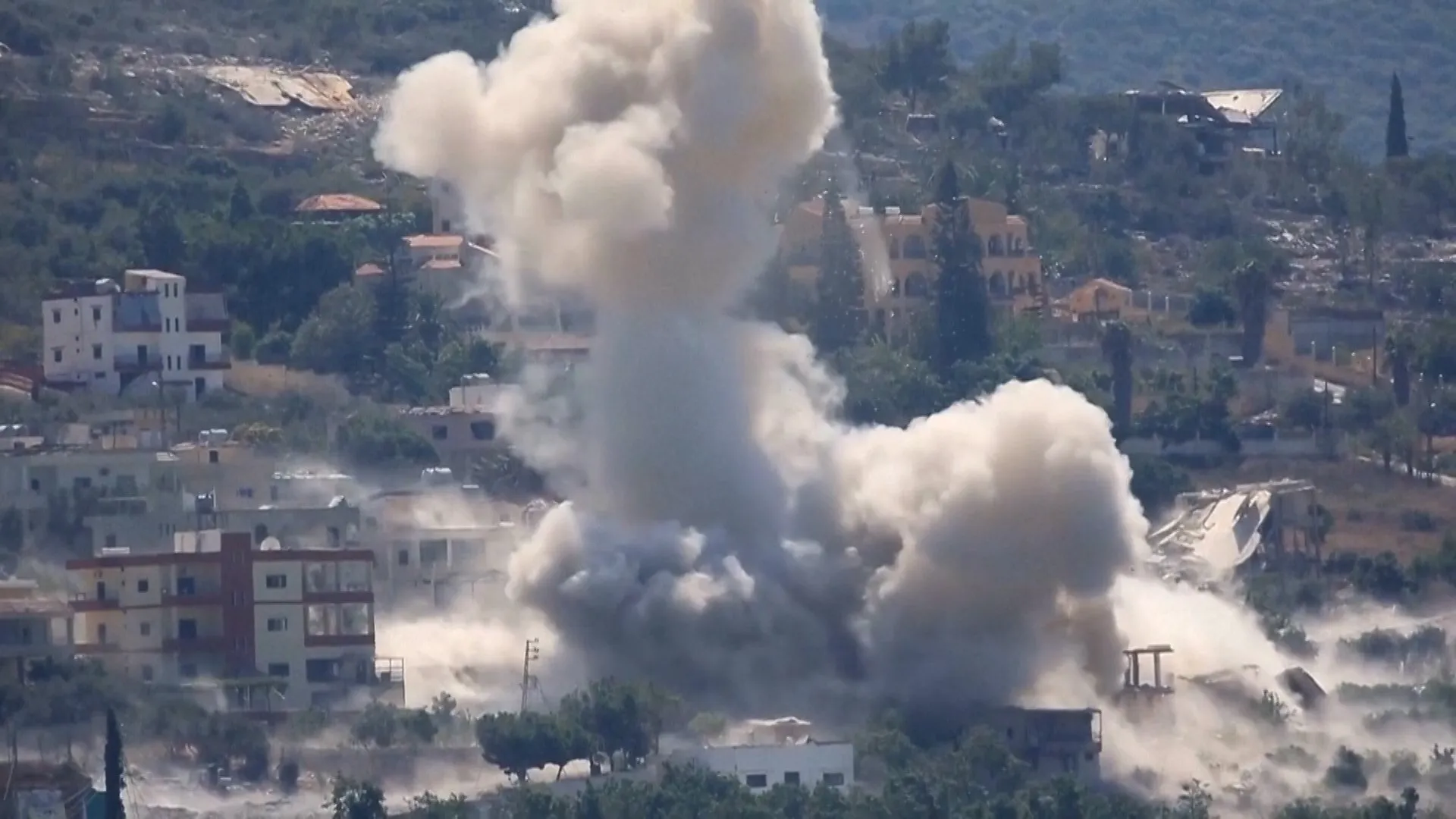











![Танки Abrams в 425 ОШП "Скала" [Серпень 2025] thumbnail](https://i0.wp.com/i.ytimg.com/vi/tAsBO3BCMn0/hqdefault.jpg?w=640&ssl=1)