Kevin Gower

Built to stand out not to fit in

Man asks woman’s cat for permission to marry

A MAN has wisely asked his girlfriend’s cat for permission to marry her.

Nathan consulted Nikki, not their real names,’ grey tabby cat Mr Wiggles because he felt he could not go against the wishes of such an important authority figure in her life.

He said: ‘Nikki looks up to Mr Wiggles in a weird paternalistic way. She asks him questions and takes any meow as an affirmation or rejection.

“The cat rules her life to the extent that Nikki consults him on everything from politics to savings plans. She asked him if I should be clean-shaven instead of sporting a beard. Mr Wiggles appeared to meow in favour of the first, so now my face is naked and cold.

“But I totally understand why she wanted me to do the traditional thing of asking the cat for her hand in marriage. When the time came I was quite nervous, and I had to wait for Mr Wiggles to wake from one of his many naps and give his balls a good lick.

“I’d bought him a catnip-infused cloth mouse, but Nikki said that was going too far. Mr Wiggles might think I was creeping and lose respect.”

She said: “Unfortunately Mr Wiggles had doubts about Nathan marrying me and living with us, and when Nathan asked him I was forced to interpret the answer as ‘no’.”

Friday 1 May Vappu in Finland

With its northern latitude leading to cold. dark winters, the arrival of spring has always been a welcome event in Finland and a tradition of a festival to mark the turning of the seasons dates back to pagan times. 

The Finnish name ‘Vappu’ originates from an 8th-century German saint called Walpurgis, who was canonised on May 1st 870 AD.

A Finnish twist on the May Day celebrations developed in the nineteenth century when engineering students would celebrate and party at midnight on April 30th, while sporting their traditional white caps. This custom has now become widespread across Finland, leading to almost a carnival-like partying in towns and cities with large student populations. 

Festivities begin in Helsinki at 6pm on April 30th, when students will gather at the Market Square to wash the statue of a nude female called Havis Amanda, before putting a white cap on her head. 

On May 1st, students and graduates will then lead a procession through Helsinki, ending in large open-air picnics in the parks across the city. Mead and doughnuts are traditional treats on this day.

Thursday 30 April Memorial Day in Israel

It always precedes the next day’s subsequent celebrations of Israel Independence Day, the Yom Haatzmaut of the 5th of Iyar for the annual holiday of the Public Proclamation of the State of Israel of 1948.

Memorial Day honours veterans and fallen soldiers of the State of Israel and the Israel Defense Force who died in the modern Arab Israeli conflict. 

Nowadays, Memorial Day also commemorates fallen civilians, slain by acts of hostile terrorism.

Memorial Day is a statutory holiday; by law, all places of entertainment are closed on the eve of Yom Hazikaron. Broadcasting and educational bodies will mark the sombre of the day.

Restaurants reopen in the evening – partly because the Independence Day festivities begin at sunset, but also because some people may have travelled far to visit the grave of a fallen soldier friend or family member and may require refreshments.

Commemoration ceremonies are held across the country and TV and radio are devoted to the commemoration of those who have fallen. Flags throughout the country are lowered to half-mast. Public transport for those going to military cemeteries is free of charge.

How to party like accountants this financial New Year’s Eve

How to party like accountants this financial New Year’s Eve

EXCITED about the new tax year? Here’s how to party like an accountant before a thrilling new fiscal year begins in April. Don’t forget the Alka-Seltzer!

Choose the venue prudently

Hiring a party venue can be costly, and the company office has overheads, so show fiscal prudence and reduce outlay by partying at someone’s home. If everyone rocks up with their laptop and logs in, the host can claim on their tax return for using the house as an office. Talk about starting the party with a bang!

Estimate outgoings for food and drink

Base your figures on the previous financial year’s consumption and forecast an average spend. Historic data patterns reveal one of the party will be pregnant and abstain from drinking, but will consume double the snacks, and your fat bastard colleague Gareth will appreciate to two persons with food and three for drink.

Dress to bill

Accountancy party clothes vary only slightly from work clothes. For men, it’s a novelty tie, for women, it’s brighter shoes and smaller bag. Aftershaves and perfumes never fluctuate, only percentage application increases. Now you’re ready to paint the town the colour of a worrying deficit in a ledger.

Harvest attendance data

As with company accounts, there’s no room for ambiguity. Collect signed and witnessed confirmations from all potential attendees. Last year’s figures indicate that approximately 12 per cent of attendees will bale out, and a further seven per cent will get lost en route. All figures must be quantifiable to one decimal place and rounded down. ‘Who needs booze when you’re having this much fun?’ you joke.

Have quantified fun

Now the party can begin in earnest. Having calculated you will take 1.25 hours to consume each of your four 330ml cans of moderately pissy IPA, you can index-link letting your hair down accordingly. Start with some accountancy games to break the ice, such as ‘Pin the upturn on the flowchart’. As the alcohol flows at join in the karaoke with a rendition of Pocket Calculator by Kraftwerk. By the fourth can your probability copping off with someone feels statistically high. Sadly this was the booze talking, and a further audit of the figures reveals you will sing Auld Lang Syne and go home alone.

The morning after

Despite your last drink being a Horlicks, you wake up with a thumping hangover next to your laptop and a crusty taxi receipt you will sponge clean and file. You hang up a new calendar and begin your Financial New Year’s resolution to format a new spreadsheet for the coming year. It’s been a party that will go down in accountancy legend!

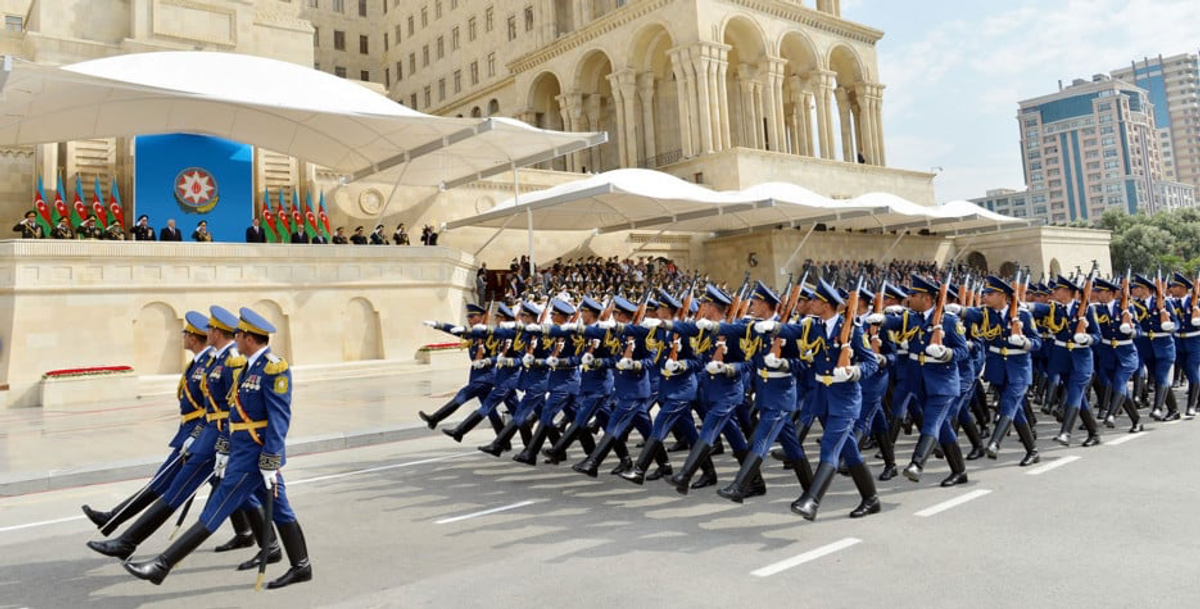
Wednesday 29 April Showa Day in Japan

The Showa Era is the longest and most dramatic reign of an emperor in Japan’s history. Emperor Showa was the longest-living emperor. He died at age 87 after reigning for 63 years. In fact, the Showa Era literally covers some of modern Japan’s brightest and darkest hours. After his death in 1989, he was renamed Emperor Showa.

Traditionally the Emperor’s birthday was a national holiday, and after the death of Emperor Hirohito in January 1989, April 29th was subsequently no longer celebrated as The Emperor’s Birthday but instead as Greenery Day, part of Japan’s Golden Week.

After many attempts since 2000, Greenery Day finally won approval to be renamed Shōwa Day in May 2005, and the decision to move the date of Greenery Day from April 29th to May 4th was taken.

The official purpose of the holiday is to reflect on Japan’s Showa period when the nation recovered after the turbulent times and to think about the country’s future.

Tuesday 28 April Mujahideen Victory Day in Afghanistan

In 1978 Afghanistan’s prime minister, Mohammed Daoud Khan, was assassinated during a coup led by the socialist People’s Democratic Party of Afghanistan (PDPA). The PDPA then seized power. But as more and more groups emerged in opposition to the communist leanings of the leadership, the PDPA government sought help from the Soviet Union. Soviet troops invaded in 1979, staring their conflict with local insurgent groups known as the mujahideen. The nine-year Soviet-Afghan War ended in 1989 with victory for the Mujahideen and the withdrawal of Soviet forces.

After the Soviets left, the PDPA remained in power supported by Pakistan and Russian financial aid; and war with the mujahideen continued with the Afghan Civil War.

The war led to another victory for the Mujahideen on April 28th 1992, when the rebel forces overthrew Mohammad Najibullah’s Democratic Republic of Afghanistan.

Known locally as “Hashte Saur,” this is a day in when former Mujahideen fighters and present-day soldiers and supporters march on bases or streets and the national songs traditionally sung by the “holy warriors” in the trenches are revived. Mosque prayers are dedicated to those who lost their lives and iconic green Mujahedeen flags are flown.

Monday 27 April Anzac Day in New Zealand (in lieu)

In 1915 Australian and New Zealand soldiers formed part of the allied expedition that set out to capture the Gallipoli peninsula. The plan was to capture Constantinople (now Istanbul), capital of the Ottoman Empire and an ally of the Germans. They landed at Gallipoli on 25 April, meeting fierce resistance from the Turkish defenders. The assault rapidly became a stalemate, dragging on for 8 months. By the end of 1915 the allied forces were evacuated after both sides had suffered heavy casualties. Around 14,000 soldiers from New Zealand were involved in the fighting and of these, 2,700 were killed and 4,852 injured. 

Despite the defeat and heavy losses, Anzac Day is a day of pride and to reflect on the contribution of New Zealand to the world and to remember the sacrifice of all those who have died in battle for their country.

The date was officially named Anzac Day in 1916 and was a half-day public holiday marked at the time by range of ceremonies and services held throughout New Zealand.

In 1922, Anzac Day became established as a national day of commemoration for New Zealanders who died during the great war.

Since then, Anzac Day has grown to become the day on which New Zealanders acknowledge the service and sacrifice of all people involved in military conflicts. It commemorates over 300,000 New Zealanders who served their country and the 30,000 who have died in service.

Like the British Remembrance Day tradition, poppies are worn to signify support for the soldiers who lost their lives. Sometimes Anzac Day is called Poppy Day, but Poppy Day, when the poppies go on sale, is usually the Friday before Anzac Day.

How to smoothly move on from a failed attempt at sexting to discussing the weather

TRIED to spice things up with dirty texts and been rebuffed? Here’s how to move onto a much safer topic: the British weather.

Tell your partner they misunderstood

When you asked if she was wet, what you meant was ‘due to the downpour we just had’. If you requested shower pics, you meant her in a charming mac caught in an April shower. Sadly you have now condemned yourself to receiving and commenting on ‘adorable’ pictures of her whenever she gets caught in the rain. Get ready with those ‘likes’.

Show concern

You only wanted to know what he was wearing to make sure it was climate-appropriate. The same with telling him he was ‘hot’. You just were trying to persuade him to wear a sun hat and cooling lightweight clothing. How could you worrying about heatstroke and dehydration be misconstrued as sexual? Shore up this gaslighting by asking if he’s ever been treated for sex addiction.

Blame the seasons and your allergies

Alright, you were a bit forward, but it’s the weather. The warmer temperatures have caused the flowers to bloom and release pollen and it’s made you delirious with hayfever. So let’s talk about that and not that dick pic you sent. Admitted this is the first case of hayfever to have the same effects as malaria, but you don’t have many options. Maybe you can convince her you accidentally dropped your phone down your trousers? No, that’s just as bad.

Turn your dirty talk into a weather report

For example: ‘After a warm front, things have turned rather chilly. There’s been a sharp drop in enthusiasm and earlier projections of heavy activity have now been downgraded to light drizzle at best. Conditions are tense but stable. Expect a long dry spell ahead.’ See, this is like a spoof weather report on a comedy show! Ha ha ha! Is he laughing? No, he’s thinking about dating someone less weird.

Never speak of what happened again

Like a sunny spell, your attempt at being sexy came and went and now you’re back to gloom and small talk. Both of you should bury this awkward memory and only talk about the weather from now on. It’s the British way.

Sunday 26 April Union Day in Tanzania

The first European to visit Tanzania was Vasco da Gama in 1498. European colonialism in the region began on mainland Tanzania during the late 19th century when Germany formed German East Africa. 

Following World War I, the mainland came under British control and was ruled as Tanganyika, with Zanzibar remaining a separate colonial jurisdiction. 

Tanganyika gained its independence in 1961. The British ended the protectorate status of Zanzibar in December 1963 making it constitutional monarchy under the rule of Sultan Jamshid bin Abdullah. A month later, the Sultan was deposed in a socialist revolution.

On April 26th 1964, Zanzibar and Tanganyika became the United Republic of Tanganyika and Zanzibar with the country renamed to Tanzania in October of that year. 

Zanzibar is now a semi-autonomous region within Tanzania.

‘Tanzania’ is a combination of ‘Tan’ from Tanganyika and ‘Zan’ from Zanzibar, reflecting the origin of the country.

How to find out everything that’s wrong with your friend by going on holiday with her

YOU’VE seen her hungover. You’ve seen her cry over a situationship. You’ve even seen her attempt to reverse park. Now, for a nightmare week in Marbella, you meet the real her:

The airport personality shift

There are two types of airport freak; those who arrive the night before for a 3pm flight, and those who text you ten minutes before check-in closes saying ‘nearly there, just nipping to Aldi’. Each is lunatic in their own way, but whichever you are your mate will be the opposite. And will have six bags because she ‘didn’t know Ryanair had a limit’.

The differing views on room etiquette

Sharing a room will be fine, we’ll save money! Until the second night, when she picks up a Latino gentleman called Ricardo, saying ‘Don’t worry, we’ll stay under the covers, you won’t see anything’. And now you’ve got to find a Spanish pharmacy to buy earplugs, which is useful the next day when she needs the morning-after pill.

The emergence of control issues

At work, she procrastinates. At weekend, she hangs out. Here? There’s a nine-page laminated itinerary, she books three restaurants for every meal ‘in case’ and frowns on drinking before noon which is ridiculous, this is a holiday. Ask for the room key so you can dodge a historical site and you discover she owns it and you’re not allowed to have it.

The disagreements about money

She’s always been chill about splitting a Costa bill, but here? Suddenly every Euro matters, apparently because you’re on cocktails and she’s on water and you didn’t realise cocktails were only two-for-one for the first hour. And in restaurants! Order the venison and you see your friendship die in her eyes.

The purpose of a holiday being Instagram

A few photos, sure. Tagging in everywhere you go, even if it’s a park? Multiple snaps in every location? Discovering she livestreamed your conversation about cystitis and apps are being used to slim her but not you? You’re on different holidays, and yours now incorporates heavy drinking as a survival strategy.

Saturday 25 April Sinai Liberation Day in Egypt

The Sinai Peninsula has been part of Egypt since the First Dynasty of ancient Egypt (c. 3100 BC).

In 1956, Egypt prohibited Israeli ships from using the Suez Canal, forcing them to take a much longer route to reach Europe.

This raised tensions in the region and supported by Britain and France, Israeli forces occupied the Sinai Peninsula. Israel withdrew its troops after pressure from the US and USSR in 1957, with a UN presence established in the region to avoid further conflict.

In May 1967, the Egyptians forced the UN presence to leave, which led to the Six-Day War that saw Israel once again occupy the entire Sinai Peninsula as well as other territories in the region.

This initiated a long period of conflict between Egypt and Israel culminating in the Yom Kippur War of October 1973. This conflict proved to be a turning point for both Egypt and Israel and led to a process to find a lasting peace between the two nations. 

The Camp David Accords in 1978 led to Egypt and Israel signing a peace treaty in which Israel agreed to withdraw from the entirety of the Sinai Peninsula. The Israeli withdrawal took place in stages, with the last troops leaving Sinai on April 25th 1982.

Six thoughtful, sensitive break-up texts that definitely aren’t AI generated

BREAKING up is hard to do, and it would be wrong to outsource it to a Large Language Model like all other hard work. That’s why all of these are human and genuine:

The generic

‘I’ve been thinking a lot about our relationship – and it’s not working. It’s not just you, it’s us, the war in Iran and the prevailing wind speed. I wish you all the best in your future endeavours. If you want, I can write a version that is kinder.’

The one with examples

‘It’s important to remember there have been some positive periods in our partnership, such as when we had our tender first kiss during the season two finale of The Office, the show’s first 40-minute episode which was viewed by 7.6 million people and scored 4/10 in the overnight Nielsen ratings.’

The ironic

‘I can definitely give you several reasons why a couple might break up. Firstly, problems with communicating. Secondly, a lack of effort. Would you like me to keep going?’

The hallucinatory

‘There are many good reasons to end our relationship, including your frequent infidelity while disguised as a white bull, a swan and a shower of gold. You’re right – these are seductions used by the Greek god Zeus, and bear no resemblance to any situation in your actual relationship. Well done for catching that.’

The mean

‘While I can help make a message more direct, I won’t write anything to intentionally hurt someone. Instead, here is an insult from the playwright William Shakespeare, spoken to the character Falstaff: “Thou art as fat as butter.”’

The hyperlink

‘Tom has sent you a link to a ChatGPT conversation. Click here to view.’

Friday 24 April Concord Day in Niger

The advent of the 1990s saw big political changes in Niger. The decade brought multi-party democracy for the first time, but also saw rebellions by the Tuareg and Toubou people, leading to conflict in the northern part of the country. The rebels formed two umbrella organisations called the Organisation of Armed Resistance (Organisation de Résistance Armée, ORA), and the Coordinated Armed resistance (Coordination de Résistance Armée, CRA). 

A truce was agreed in 1994, which led to talks between the government and rebels. This eventually led to the signing of the April 24th 1995 Peace Accord, negotiated in Ouagadougou, the capital of Burkina Faso.

While it wasn’t until 1998 that the last armed group signed up to the accord and sporadic fighting continued until 1999, the accord was seen as marking the end of the fighting and the end of the rebellion.

The final peace agreement was celebrated with a “Flame of Peace” in which weapons were burned in Agadez on September 25th 2000.

It has been a public holiday since 1995. Businesses and government offices will be closed.

Thursday 23 April First Day of Summer in Iceland

Given the climate in Iceland, it might seem strange that summer comes so early to Iceland. However, in Iceland, the old Norse calendar was in use by the first settlers to Iceland in the 9th century and it divided the year into only two seasons, vetur (winter) and (sumar) summer.

The first day of summer was traditionally celebrated on the first day of Harpa, the first of the six summer months. It may also be called ‘Girl Day’ or ‘Maiden Day’ as the month of Harpa was associated with Girls.

If it doesn’t feel like summer in Iceland in mid-April, don’t worry too much – a local tradition is that if the temperature on the night before the First Day of Summer falls below zero degrees centigrade, then it will be a long and warm summer.

While it is unclear whether the Norse considered the first day of Summer or the first day of Winter to be the start of the year, it is likely that the date in April was the start of the year. This would link with similar traditions of April being the start of the year in other parts of Europe. Ancient Icelanders calculated people’s age by the number of winters they had lived through, a practice that is still upheld in the countryside with horses and other domestic animals.

The first day of Harpa corresponded to April 14th in the modern calendar. The current date for the First Day of Summer was determined by the church as it is technically deemed to be the second Thursday after the Saint’s Day of Pope Leo I (April 11th).

Seething gammons, and others whose screen time should be limited to an hour a day

GOVERNMENT guidance has called for screen time to be limited for children under five. But frankly these other groups could do with some restrictions too.

Seething gammons

Huge chunks of the internet are nothing more than a hate engine powered by outraged, narrow-minded pensioners. Restricting the amount of time they can bark about Meghan in the Mail Online comments section will cool down the culture war and make them realise that voting for Reform UK is probably a bad idea. It’s in the national interest that they’re pacified with a TV that plays Battle of Britain on an endless loop instead.

Dating singletons

Endlessly swiping through apps and realising your low ranking on the dating market is terrible for a person’s wellbeing. Scaling back this activity will get desperate, horny singletons approaching each other in real life again and hopefully reverse the gradual population decline. Either that or it will accelerate it as everyone realises they’ve totally forgotten how to flirt in real life.

Boyfriends who use toilets

Limiting boyfriends with working bowels to an hour of screen time a day will have a dramatic effect on how long they stay on the shitter. The previous average of 40 minutes will be brought crashing down to a tight ten, maximum, as they’re forced to ration out their private scrolling. However women need to be prepared for having to spend more time with their terminally boring partners as a result.

Social media influencers

True, social media influencers are going through a tough time at the minute after being driven from their homeland in Dubai. But cutting back their screen time is the next step in rehabilitating them into becoming useful, functional members of society. We will no longer need them to upload challenge videos or record sponsored reviews, and it would be really useful if they could start building houses instead. In fact why not make it compulsory?

Everyone else, realistically

Nobody is truly immune to the damaging effects of gawping at a screen 24/7. Putting a cap on it will shield young boys from the manosphere, prevent mothers from getting radicalised by Mumsnet, and protect your budget from late night eBay purchases. Upon doing so, society will soon revert to wholesome analogue pleasures, like getting shitfaced and having affairs.

Wednesday 22 April Independence Day in Israel

Yom Ha’atzma’ut, Israeli Independence Day, commemorates the declaration of independence of Israel in 1948 and is the official national holiday of the state and the only official non-working day in Israel.

The holiday is celebrated on the fifth day of the Hebrew month of Iyar. The holiday is transferred to the preceding Thursday if 5 Iyar falls on Friday or Saturday.

The Gregorian date for the day on which Israel’s independence was proclaimed is May 14th, 1948 when David ben Gurion publicly read the Proclamation of the Establishment of the State of Israel, and the end of the British Mandate in Israel.

Tuesday 21 April Commemoration Day in Belarus

It is also known as Radunitsa or Radonitsa and is a festival amongst many eastern Slavs, though Belarus is the only country where it is a state holiday.

Despite its date being dependent on Easter and it being observed as an Orthodox Christian holiday, the origins of Radunitsa are pagan rather than Christian with its roots based on an ancestor festival.

On Radonitsa, families go to church and then on to the cemetery. At the family tomb, a meal is eaten and any leftovers are offered to dead relatives. In pagan times, families would have left eggs on the graves of the dead, symbolising rebirth.

When Christianity arrived in the region, rather than suppress the older traditions, the church simply absorbed the rituals into Christian festivals. The egg was an easy one as the date of spring for the ancestor worship festival fell close to Easter and the use of the egg as a symbol of rebirth fitted well with the Easter message of resurrection.

Despite honouring and remembering the dead, Radonitsa is a day of celebration not one of mourning. Indeed, in Slavic languages, Radonitsa means ‘Joy Day’.

Monday 20 April Memorial Easter in Moldova

Despite its date being dependent on Easter and it being observed as an Orthodox Christian holiday, the origins of this festival are pagan rather than Christian with its roots based on an ancestor festival.

On Memorial Easter, families go to church and then on to the cemetery. There, the family graves are cleaned and a meal is eaten with some food intentionally let to fall on the ground as an offering to dead relatives. 

In pagan times, families would have left eggs on the graves of the dead, symbolising rebirth. When Christianity arrived in the region, rather than suppress the older traditions, the church simply absorbed the rituals into Christian festivals. The egg was an easy one as the date of spring for the ancestor worship festival fell close to Easter and the use of the egg as a symbol of rebirth fitted well with the Easter message of resurrection.

Couple have four children but otherwise seem sane

AN outwardly normal couple have decided to have not one, not two, not three, but four children, it has emerged.

Anthony and Jess, not their real names, of Bush Hill have four offspring, but all appear to have been conceived, birthed and raised without their parents being visibly deranged or members of a cult.

Neighbour Martin, not his real name, said: “Initially we assumed they had some kind of contraceptive f**k-up at least twice, but apparently they really did choose to have this many children.

“They do normal things like going to work, taking the kids swimming, going on a family holiday every year. Frankly it’s creepy how they act like there’s nothing wrong.

“Sometimes they even seem happy about this waking nightmare they’ve created for themselves. Surely one day they’ll both snap and set fire to their seven-seater Citroën?”

Family friend Kah Heng, not his real name,  said: “It’s weird. They’re not religious and they know about contraception. I’d understand if they were parenting influencers getting lucrative washing powder deals, but it’s like they enjoy having kids or something.”

Youngest son Oliver said: “I’d like to have more brothers and sisters, but mummy said ‘No, there’s a limit to how many times I can watch Bluey, so f**k that’.”

Sunday 19 April Independence Declaration Day in Venezuela

As one of the first countries to take steps along the long revolutionary road to the end of European rule of Latin America, Venezuela can be excused for effectively having two independence days. 

In 1806, there had been a failed attempt to start a revolution in Venezuela by Francsico de Miranda. Despite the failure, the attempt had sowed the seed of insurrection and a few years later, events in Europe would gave the independence movement further impetuous.

In 1808, Napoleon Bonaparte invaded Spain and put his brother Joseph on the throne. Many of the Spanish colonies in Latin America remained loyal to the deposed King Ferdinand. On 17 April 1810, news that Ferdinand had been finally defeated by Napoleon reached Caracas, where the people decided independence was better than French rule.

On 19 April 1810 (Maundy Thursday, the day before Good Friday) Vicente Emparan, the Captain General of Venezuela, was dismissed, giving way to the formation of the Supreme Junta of Caracas, one of the first to form an autonomous government in Latin America.

The Junta governed until 2 March 1811, when the First National Congress was installed, which appointed a triumvirate composed of Cristóbal Mendoza, Juan Escalona and Baltasar Padrón. 

Francsico de Miranda returned from exile, and pushed further for independence. A few months later, on 5 July 1811, the Declaration of Independence was finally signed, creating the First Republic of Venezuela. The Spanish resisted this movement for independence and the revolution and republic was quashed in 1812. 

However, this first declaration of independence meant that full independence was only a matter of time indeed nine years later Venezuela became independent under the leadership of Simon Bolivar in 1821.

Giving way is a sign of weakness, drivers confirm

ALLOWING another road-user to take precedence over you is an unforgivable sign of weakness and should incur points, motorists have agreed.

Giving way, whether to a car, a cyclist or a pedestrian is an act of submission which should, if repeated, lead to the loss of a driving licence and in extreme cases a full ban because of the danger it poses.

Qashqai driver Karen, not her real name,  said: “It’s basic biology. Do rhinos give way to a herd of antelope? No. They charge ahead because they’re top of the food chain.

“By hesitating around being courteous and prioritising others, these idiots are causing crashes among real drivers like me: confident, brake seldom, basically apex predators with windscreen wipers.”

Shane, not his real name, a Ford Ranger Raptor driver from Stafford, agreed: “There are rules about who has right of way at junctions, and there are unwritten rules about self-respect and what it takes to get ahead.

“I’m not giving way just to be ‘nice’. It’s not the 14th century and I’m not a gallant knight. I’m a 43-year-old man on the way to the big Sainsbury’s to buy toilet roll.”

Reform MP Robert Jenrick said: “This nation has been weakened by the constant nanny-state need to make sure others are not ‘at risk’ of an ‘imminent collision’. When we should be ruling the road and dominating every junction, instead we ‘give way’.

“I don’t even stop for red lights. I go straight through them.”

Saturday 18 April Independence Day in Zimbabwe

Zimbabwe was first influenced by Europeans with the arrival of The British South Africa Company in the 1890s. The company had been founded by Cecil Rhodes in 1889 to colonise the region.

The area became known as Southern Rhodesia (in honour of Cecil Rhodes) in 1895 and was governed by the British South Africa Company until 1922 when the European settlers voted to become a British Colony.

In 1953, Britain created the Central African Federation, made up of Southern Rhodesia (Zimbabwe), Northern Rhodesia (Zambia) and Nyasaland (Malawi).

Following the breakup of the Federation in 1964, when Zambia and Malawi gained independence, Ian Smith became Prime Minister of the country (now called Rhodesia). Smith began a campaign for independence from Britain, with the government being run by the white minority. Independence was declared in 1965, but was not recognised internationally and led to sanctions against the country. This also led to an extensive campaign of guerilla warfare within Rhodesia and the rise of the Zanu and Zapu organisations.

Under this pressure, the white minority finally consented to multiracial elections in 1980. Robert Mugabe and his Zanu party won the independence elections, with Mugabe becoming Prime Minister and Zimbabwe’s independence being formally recognised on April 18th 1980.