Kevin Gower

Built to stand out not to fit in

Seemingly perfectly man on dating app a massive red flag

A MAN on Tinder who appears to be without significant perversions, addictions, commitment issues or a receding hairline is a huge red flag, women have agreed.

When 28-year-old Hannah, not her real name or age, matched with 32-year-old Guido, not his real name or age, she was immediately unsettled by his individually-tailored responses and failure to send a dick pic.

She said: “It was like I was talking to a human being, not an AI. So I was creeped out immediately.

“Tall, but he didn’t say ‘6ft cos apparently that matters’. No pictures in Lederhosen or by someone else’s sports car. Zero requests for nudes or feet pics. In every shot he’s fully clothed. My freak siren was screaming.

“Even worse, he seemed genuinely interested in getting to know me and ‘wants a monogamous relationship’. What unspeakable horror is this concealing? He’ll be asking me to shove a hairbrush up his arse on date one.

“He uses full sentences and correct spelling. How could he possibly be single? This is London. Any halfway normal man is chased by mobs of women the moment he leaves the house.”

Guido said: “Hannah’s right to be happy. I am in fact a 62-year-old about to interest her in an exciting crypto opportunity.”

Friday 17 April Women’s Day in Gabon

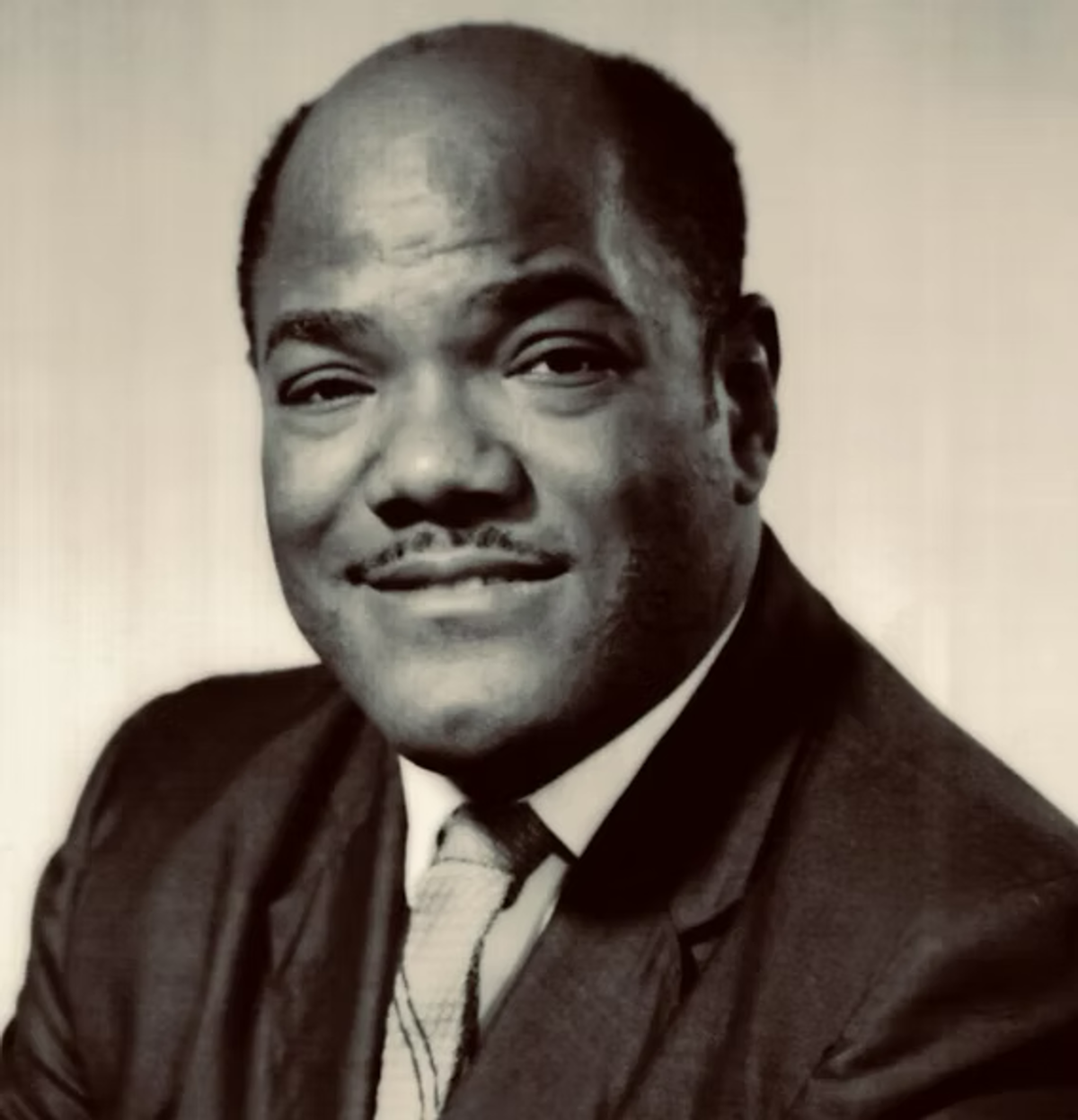
Rose Francine Rogombé was a Gabonese politician who became the Acting President of Gabon in June 2009 after President Omar Bongo Ondimba, who had led Gabon for 42 years, passed away after a heart attack. 

Rogombé was a lawyer by profession and a member of the Gabonese Democratic Party. She was elected as President of the Senate in February 2009 and as such constitutionally succeeded Bongo.

Rogombé’s interim presidency ended in October 2009 when Ali Bongo, the son of the late President, won the presidential elections. She then returned to her post as President of the Senate.

Rogombé died, aged 72, on April 10th 2015 at a hospital in Paris, where she had gone for medical treatment a few days prior.

Thursday 16 April Lao New Year in Lao

New Year celebrations in Lao last for four days, though the traditions and customs are similar to Songkran, Thai New Year. This is the most important festival of the year in Laos.

Day one

This is the last day of the old year. Statues of Buddha images are cleaned with water and people throw water at each other, to ‘wash away’ any bad will that related to the past year.

Day two

The second day is known as the ‘day of no day”, a day that falls in neither the old year or the new year. People parade to the local monasteries to hear services from the monks. A popular highlight of the day is the parade featuring the winner of the Miss New Year beauty pageant.

Day three

This is the first day of the New Year. Begins with an early morning procession of monks and almsgiving (‘tak bat’).

Many people in Lao believe in kwan (spirits that live inside humans, animals, plants and inanimate objects). On the first day of the new year, the tradition is that the kwan might leave the body and be exposed to bad omens for the coming year. To make sure the kwan return to the body, a ceremony called Baci is performed. Chants are made by a village elder to make the kwan return to the body, then white thread is tied around wrists to keep the kwan inside and wish the kwan good luck for the year ahead.

Day four

The most sacred images of Buddha images are put on temporary display and people will dress in their finest traditional clothes and make offerings to ask for good luck in the coming year.

Right. I’m buying a wind turbine

GAS is rising. Diesel’s already unaffordable. The time has come for me to install a 249ft wind turbine in the garden of my new build.

Solar panels? For wimps. I might have been forced against my will to go green, but I’m not being wet and environmental about it. Besides, the sun never shines in this bloody country, apart from now but you get my point.

No, it’s a wind turbine, and if it’s going to power my gaff it’s going to have to be a f**king big one. There’s not a room without at least a 55-inch telly and we don’t turn them off.

Plus there’s three Range Rover Evoques – mine, the wife’s and the one for our 14-year-old to grow into – which are all going to have to go electric. They’ll be a serious drain, especially as we plan to leave them idling 24/7 once it’s free.

The garden’s not large, as I say it’s a new build, but we should be able to squeeze it in between the summerhouse, the decking, the hot tub and the brick pizza oven. Most of it’s height after all.

And as luck would have it I know a few of the lads who’ve been installing them and they’ll do it for mates’ rates. Can’t get me one that’s fallen off the back of a lorry though. Broken Britain.

Should be up by summer and I’ve told the neighbours they can piss off. You don’t need planning permission if it’s green, do you? And the blades are only 144 feet so they’ll easily clear the roofs.

Bollocks to Iran, Qatar and the whole Middle East. They’ve had enough of my money. I’m going self-sufficient in a big way. And if local kids shin up it trying to scrump my amperage I’ll be out here with a bloody cricket bat.

Wednesday 15 April Public Holiday in Tarija Bolivia

Tarija in southern Bolivia is one of Bolivia’s oldest settlements. It was founded on July 4th 1574 by the conquistador Luis de Fuentes and was named in honour of Francisco de Tarija, who was the first Spaniard to visit the valley. At the forefront of nationalism in the region, Tarija declared independence from the Spanish rule in 1810.

While such declarations were ignored by the Spanish, this act of insurrection would lead to conflict, when on April 15th, 1817 at the Batalla de la Tablada, Tarija’s citizens won a major victory over the Spanish forces. The 1817 victory at Tarija is seen as an important milestone in the country’s history and is commemorated in the city with this public holiday.

After the War of Independence and despite interest from Argentina, Tarija opted to become part of Bolivia, which won its independence and formally established itself as a Republic in 1825. 

Interestingly for the first 100 years after the battle, the battle was commemorated on May 4th. It was only when a historian made the correction that it was moved to April 15th.

Cultural festivals take place in Tarija during the entire month of April in what has come to be called the April Days of Tarija (“Los Abriles de Tarija”). The festival revolves around the La Tablada anniversary celebrations and the central event is held on April 15th and 16th.

Cultural events include concerts, dance and theatre. Other events throughout the month also include fairs and handcrafts as well as the traditional Livestock Show and Rodeo Chapaco.