Finance Desk

Oil prices climb as Strait of Hormuz tensions reignite supply concerns

Published on Updated

The price of Brent crude, the international benchmark, gained 3.9% to $78.96 per barrel, while the US benchmark crude oil price rose 4% to $74.26 per barrel.


ADVERTISEMENT


ADVERTISEMENT

Prices for both types of crude oil had recently slipped back to the levels seen before the war with Iran began, after the two sides reached an interim agreement to end the conflict and ships resumed transporting oil through the Strait of Hormuz.

However, the United States launched several waves of strikes on Iran early on Monday morning following an Iranian attack on a container ship in the Strait of Hormuz that set the vessel ablaze and left one crew member missing over the weekend. Iran retaliated by targeting countries across the Middle East.

US stock futures fell, with the contract for the S&P 500 down 0.4% and that for the Dow Jones Industrial Average 0.3% lower. Nasdaq Composite futures lost 1%.

In Asian trading, Tokyo’s Nikkei 225 index lost 1.1% to 67,786.86, while in Seoul, the Kospi declined 5.6% to 7,060.69.

Shares in South Korean memory chipmaker SK Hynix, which soared 13% on their Wall Street debut on Friday, slumped 10.6% in Seoul. Its bigger rival, Samsung Electronics, fell 6.7%.

Elsewhere in Asia, Hong Kong’s Hang Seng edged 0.1% higher to 24,202.41, and the Shanghai Composite index shed 1.2% to 3,947.34.

In Australia, the S&P/ASX 200 declined 0.3% to 8,777.00.

US stocks ticked higher on Friday after investors showed sustained appetite for winners of the artificial intelligence (AI) boom. The S&P 500 rose 0.4% and the Dow Jones Industrial Average added 0.3%. The Nasdaq Composite climbed 0.3%.

SK Hynix’s shares jumped after trading began at midday after it raised roughly $26.5 billion by selling American depositary shares at a price of $149 each.

SK Hynix’s stock in Seoul had already surged more than 600% over the past year thanks to enthusiasm for AI. The boom has translated into real profits, driven by soaring demand for computer memory. But it has also raised concerns that AI stock prices have climbed too high and that the world’s spending on chips and data centres will not generate enough productivity and profit growth to justify the investment.

That has led to sharp swings in AI stocks, which have become some of Wall Street’s most influential because of their enormous market values.

Nvidia was the single biggest force lifting the S&P 500 on Friday, rising 4%.

Beyond the uncertainty surrounding AI, investors are turning their attention to the upcoming corporate earnings season.

Companies across industries will need to deliver strong profit growth to justify their elevated share prices, which remain close to record highs. This week will bring earnings reports from many of the biggest US banks, including Bank of America, Citigroup, JPMorgan Chase, Goldman Sachs and Wells Fargo, with several reporting on Tuesday alone.

Concerns about how the continued fighting with Iran will affect the global flow of crude oil are clouding the outlook for both energy costs and overall inflation.

High bond yields have been weighing on financial markets worldwide because more expensive oil and persistently high inflation could prompt the Federal Reserve and other central banks to raise interest rates.

Higher interest rates can help keep inflation under control, but they also slow economic growth and weigh on the prices of all kinds of investments.

Additional sources • AP

Source link

Key deals this week: MGM, PERF, VRTX, and more (PPLI:NASDAQ)

M A - concept waiting for mergers and acquisitions.3D rendering on yellow background.

fengdr

Here’s a list of key deals reported across sectors this week:

  • MGM Resorts (MGM) has reportedly started discussions with People (PPLI) for a potential buyout deal after Barry Diller’s media company offered to acquire the casino giant in

Source link

Chavismo, Not Sanctions, Depleted Venezuela’s Reconstruction Capital

The first days after the earthquake were defined by what had been lost. Apartment blocks lay in ruins, entire neighborhoods disappeared beneath the rubble, hospitals overflowed, hundreds of thousands of Venezuelans found themselves without a home. Yet as the emergency slowly gave way to recovery, another realization has emerged, one less dramatic but perhaps more consequential. 

Venezuela did not only lose buildings: it is now discovering that it has very little left with which to rebuild them.

Reconstruction is often described as something that begins after disaster strikes. In reality, it begins years earlier, with the reserves a country accumulates while times are good. Wealth matters, but so do things that rarely appear in economic statistics: functioning institutions, domestic industries, engineering firms, construction companies, reliable electricity, access to credit, insurance markets, emergency planning, skilled workers and the public trust needed to mobilize them all. These are the hidden reserves that allow societies to absorb shocks. The earthquake revealed that Venezuela had spent much of them long before the ground began to shake.

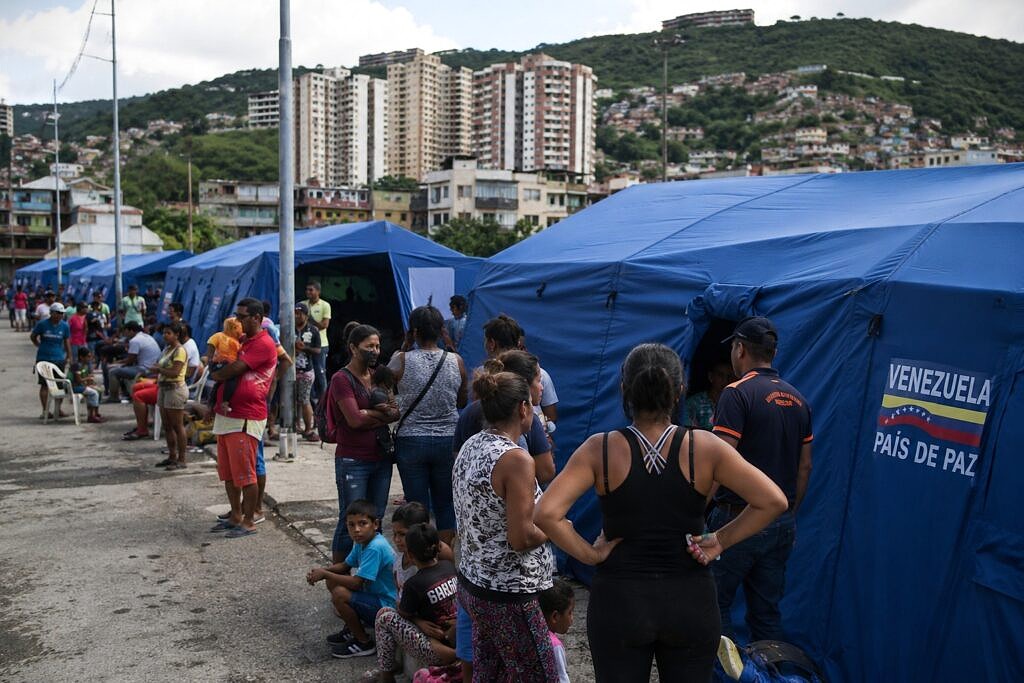
That depletion has become evident in almost every aspect of the response. Venezuela imports a significant share of the food it consumes and much of its medicine. The emergency quickly exhausted whatever inventories existed. Heavy machinery needed to clear debris had to be sought abroad. Medical supplies became scarce almost immediately. Temporary shelters proved insufficient, forcing thousands of survivors to remain in tents erected in parks and public spaces weeks after the disaster. The government is now considering housing many of them in schools, an understandable emergency measure made possible only because classes are suspended for the summer.

Temporary solutions, however, have a habit of becoming permanent in Venezuela. Families displaced by the Vargas Tragedy of 1999 and by the 2010 floods spent years, in some cases decades, living in shelters that were never meant to become homes. The earthquakes risk repeating a familiar pattern, not because Venezuelan authorities necessarily want it to, but because they have long lacked the capacity to offer anything else.

The Venezuelan diaspora contains an extraordinary concentration of precisely the human capital required to rebuild the country. Whether that expertise can be persuaded to return, even temporarily, remains an unlikely scenario.

Some will inevitably attribute this lack of preparedness primarily to sanctions. It is an understandable argument, but one that struggles to explain what the earthquakes actually exposed. The collapse of domestic industry, the deterioration of public infrastructure, chronic underinvestment in the electrical grid, the shrinking of Venezuela’s manufacturing base and the erosion of emergency response capacity all began years before oil sanctions were imposed.

Recent research has also challenged the idea that sanctions caused a discrete collapse in access to food and medicine, showing instead that essential imports had already fallen dramatically before sanctions and later stabilized as the government dismantled some of its own economic controls. The sanctions era itself demonstrated that Venezuela retained the ability to import consumer goods. Supermarkets gradually refilled for those able to pay. Construction cranes returned to Caracas’ wealthiest neighborhoods. Restaurants multiplied. Consumption recovered far more quickly than productive capacity.

The earthquake exposed the difference.

The destruction of resilience

Disasters ask questions that ordinary economic life does not. They care little about how many imported products sit on supermarket shelves or how many luxury apartments are being built in eastern Caracas. They ask whether a country can mobilize excavators, engineers, trauma surgeons, logistics networks, emergency housing, electricity, financing and public institutions at scale. They ask whether resilience has been accumulated or consumed. Venezuela’s answer has been painfully clear.

That is perhaps one of the least understood legacies of chavismo. Much has been written about the destruction of wealth, the collapse of oil production or the country’s prolonged recession. Less attention has been paid to the destruction of resilience itself. For years, the Venezuelan State approached institutions with the same extractive logic that governed its relationship with oil. Productive assets became sources of immediate political or fiscal returns rather than investments to be maintained and strengthened. Private companies were expropriated rather than incorporated into development. Public enterprises became instruments of patronage rather than production. Infrastructure was consumed faster than it was repaired. The country did not merely become poorer. It gradually spent the reserves that societies rely upon when catastrophe arrives.

Resources that may have financed future growth must now finance immediate recovery.

The consequences extend far beyond physical infrastructure. Reconstruction is ultimately carried out by people, and Venezuela has spent the last two decades exporting many of those it now needs most. Engineers who now design highways in Spain, petroleum specialists managing fields in Texas or Guyana, architects working across Latin America, doctors practicing in Colombia and Chile, electricians, project managers and construction supervisors who left because opportunities disappeared at home. The Venezuelan diaspora contains an extraordinary concentration of precisely the human capital required to rebuild the country. Whether that expertise can be persuaded to return, even temporarily, remains an unlikely scenario.

Money presents an equally daunting challenge. Before the earthquake, Venezuela’s slow economic reopening had begun to attract cautious international interest. Much of it remained exactly that, cautious. Memoranda of understanding outnumbered signed investment agreements, access to financing remained limited and investors continued to price Venezuela’s political risks accordingly. The expectation, however tentative, was that new investment would increasingly flow toward rebuilding the electrical grid, expanding oil production and modernizing neglected infrastructure. The earthquake has fundamentally altered those priorities. Resources that may have financed future growth must now finance immediate recovery. Every home rebuilt is a home that cannot wait. Every hospital repaired is indispensable. Every bridge reconstructed delays another project that might otherwise have expanded productive capacity. Reconstruction does not replace development. It postpones it.

Reconstruction-era uncertainty and challenges

The financing challenge has also become more complicated politically. Investors had already approached Venezuela with understandable caution. The humanitarian emergency has increased the country’s fiscal needs precisely as political uncertainty has deepened. The constitutional arrangements established after Nicolás Maduro’s removal were always presented as exceptional. As they become more prolonged and their legal basis increasingly contested, companies considering long-term reconstruction projects must ask whether contracts signed today will remain secure under whatever government eventually succeeds the current one. Investors do not need constitutional certainty, they simply need enough legal certainty to believe that agreements lasting ten or twenty years will survive political change. Venezuela offers remarkably little of it.

This is also why Delcy Rodríguez’s recent call for the lifting of sanctions misunderstands the country’s central problem. Whatever benefits further sanctions relief might provide, it cannot eliminate the uncertainty surrounding Venezuela’s legal and political environment. Investors deciding whether to finance ports, housing developments or power plants are unlikely to base their decisions on sanctions alone. They also ask whether contracts will survive a change of government, whether courts will enforce them and whether today’s authorities will still possess the legal authority to honor them tomorrow.

Reconstruction depends on trust, functioning institutions, access to capital, legal certainty and a productive economy capable of sustaining the effort long after international solidarity inevitably fades.

There is another irony hidden beneath the rubble. The Venezuelan insurance industry will likely survive this catastrophe better than many expected, not because losses have been modest, but because so much of what was lost was never insured. This was an under-insured disaster. Homes, businesses and families that lacked coverage will inevitably look toward the state for assistance. Yet the state that spent years hollowing out its own fiscal and institutional capacity now finds itself acting as insurer of last resort, precisely when it possesses the fewest resources to fulfill that role.

Natural disasters often become moments of national renewal. Reconstruction can modernize infrastructure, attract investment and accelerate reforms that politics alone struggles to produce. Those opportunities exist in Venezuela as well. Rebuilding cities will require new housing, new roads, new power systems, new telecommunications infrastructure and new industries capable of supplying them. But opportunities are only as valuable as a country’s ability to seize them. Reconstruction depends on trust, functioning institutions, access to capital, legal certainty and a productive economy capable of sustaining the effort long after international solidarity inevitably fades.

The earthquake destroyed thousands of buildings. Rebuilding them will take years. What it ultimately revealed, however, is something far more difficult to reconstruct. Over the last quarter century Venezuela has steadily depleted much of the industrial, institutional, financial, human and political capital that countries quietly accumulate before disasters occur. Those invisible reserves are what determine whether recovery becomes a matter of years or generations. They cannot be imported as easily as food or medicine. They have to be rebuilt, patiently, one institution at a time.

Source link

Swift Taps Global Banking Giants to Pilot 24/7 Blockchain Ledger

Seventeen major institutions sign on to test around-the-clock liquidity and instant global value transfer.

Swift announced that its blockchain ledger is ready for initial use, enabling early adopter financial institutions to support cross-border payments around the clock using tokenized deposits.

The global cooperative, known for its vast messaging network used by banks to move money, called it a decisive step in scaling the benefits of digital value.

Cross-Border Velocity and Efficiency

So far, 17 banks from six continents are preparing to pilot live transactions on the ledger. They include ANZ, BNP Paribas, BNY, Citi, DBS, First Abu Dhabi Bank, FirstRand Bank Limited, HSBC, Itaú Unibanco, Lloyds Bank, Mashreq, MUFG Bank, OCBC, Standard Chartered, UBS, UOB and Wells Fargo. The shared ledger gives these participating banks a more secure layer for bank-issued tokenized deposits on their own ledgers, Swift argues.

Swift said banks stand to gain an improved client experience and greater global liquidity efficiency—even overnight and on weekends—without compromising existing compliance, credit, risk, and control standards.

It is the first use case for the ledger, which Swift announced last year and said it designed and built with feedback from international financial institutions in nine months. Swift said the development sets the stage for further innovation and interoperability on infrastructure, which it said is trusted to move the equivalent of world GDP every two to three days between more than 200 markets.

“With our new ledger capability, we’re extending the trust and stability of established finance into the frontiers of digital money. It allows tokenised value to move across borders with the velocity and flexibility modern commerce expects, while maintaining the same high levels of resiliency, security, and compliance global finance requires,” Thierry Chilosi, chief business officer at Swift, said in a prepared statement. “The strong support from banks shows the practical value of this approach — one that will help scale benefits globally while creating a foundation for future innovation in areas like programmable money and agentic commerce.”

Meeting G20 Targets

Following its initial go-live phase, Swift plans to expand the ledger’s functionality and availability. This builds on its existing infrastructure, where 75% of network payments already reach beneficiary banks within 10 minutes, or even seconds. The upgrades aim to help the industry meet Group of 20 international transaction targets.

Swift said it is also implementing a retail payments framework with its community aimed at ensuring upfront transparency on fees, full value delivery, and a faster, more consistent experience for consumers. Together with the ledger, Swift said, those upgrades lay the groundwork for value to move in any regulated form, anywhere, with high levels of security and resilience.

Anthony Noto covers corporate finance and private credit. Contact him at anoto@gfmag.com

Source link

Only one president saw falling bond yields in each year of his term (US10Y:)

Jul 10, 2026, 10:22 AM ETUnited States 10-Year Bond Yield (US10Y), , , , , , , , , , , , , , , By: Monica L. Correa, SA News Editor
Increased bond yield and interest rates

Douglas Rissing

One president since Ulysses Grant in 1873 saw lower bond yields in each of their four consecutive presidential years, according to Bank of America.

Only William McKinley presided over four consecutive years of falling bond yields.

On the other hand, Woodrow

Source link

Global oil demand set for first annual drop since the COVID-19 pandemic, IEA says

Published on

Global oil demand will fall by one million barrels a day in 2026, the IEA said on Friday, making it the first annual contraction since 2020, when Covid lockdowns grounded aviation and shuttered industry.


ADVERTISEMENT


ADVERTISEMENT

The comparison flatters this year’s decline in one respect, since demand collapsed by around eight million barrels a day at the height of the pandemic, but it underlines how severely the closure of the Strait of Hormuz has damaged the global economy.

The contraction is “highly skewed in both product and regional terms”, the agency noted in its monthly report.

Earlier IEA analysis traced the sharpest losses to Asia’s import-dependent economies and to petrochemical feedstocks such as naphtha and liquefied petroleum gas, whose supply chains run through the Strait of Hormuz.

At the time of writing, the front month contract on Brent crude, the international benchmark, was trading at around $76 a barrel, roughly 6% higher than before the US and Israel launched strikes on Iran in late February, and far below the peaks near $120 reached in March at the height of the conflict.

The US benchmark, WTI, was trading lower at around $72 a barrel.

June’s fragile rebound

Supply improved sharply last month, if from a desperately low base.

Global production jumped by 4.1 million barrels a day in June to 98.8 million as the partial reopening of the Strait of Hormuz allowed Gulf producers to restart shut-in wells, though output was still running 9.4 million barrels a day beneath its pre-war level.

Gulf exports, counting cargoes rerouted around the strait, climbed by 6.5 million barrels a day to 16.1 million. Before the fighting began in late February, the region shipped an average of 24 million barrels.

Global oil inventories grew for the first time since US and Israeli strikes on Iran ignited the conflict, halting months of record drawdowns, although stockpiles in the wealthiest economies shrank further as buyers held back from importing.

The truce unravels

The IEA’s forecasts rest on an assumption now under visible strain which is that a ceasefire holds and the Strait of Hormuz gradually reopens.

On that basis, global supply would contract by 3.7 million barrels a day this year, leaving production 860,000 barrels a day short of demand, before expanding by 7.5 million next year and tipping the market into surplus.

Stronger output elsewhere and weaker demand than expected before the war could still restore a surplus by the end of the year, allowing countries to rebuild depleted reserves, the IEA noted.

This week brought the second and far larger breach of last month’s truce.

After Iranian forces struck three commercial vessels on Monday and Tuesday, US Central Command hit more than 80 targets across Iran, including air defences, coastal radar and over 60 Revolutionary Guard small boats, while Washington revoked the licence permitting Iranian oil exports.

Iran fired drones and missiles at Bahrain and Kuwait, causing no major damage, and US President Donald Trump has since declared the ceasefire over.

Tehran insists the only safe passage is the route it sets in the Strait of Hormuz as traffic fell to 13 tankers on Wednesday, against an average of 33 a day the previous week, according to shipping data from Kpler.

Additional sources • AFP

Source link

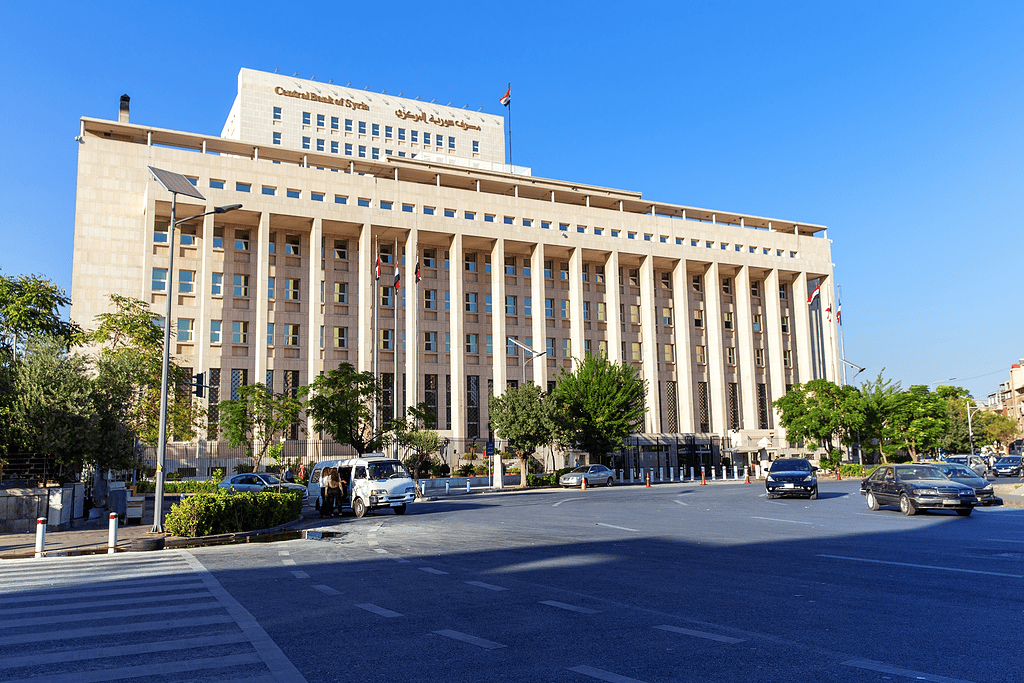
Syria Taps Safwat Raslan to Lead Central Bank

Syria’s new central bank governor faces a daunting task: economic reconstruction.

Safwat Raslan, a former refugee who fled to Germany during his country’s 14-year civil war, is the new governor of the Central Bank of Syria. His first order of the day will be to standardize banking operations, expand Sharia-compliant banking products, and stabilize the Syrian pound to restore confidence in international markets. 

The challenge is daunting.

The Assad regime, in power for more than 50 years before collapsing in 2024, left a hefty bill. The World Bank estimates direct physical damage to buildings and infrastructure from the Syrian conflict at $108 billion, with reconstruction costs of up to $345 billion.

Even though Western nations lifted most sanctions last year, Damascus is still in the early stages of reconnecting to the global financial system. Last year, the government executed its first international transfer via SWIFT since 2011. Still, Syrian banks remain relatively isolated, hampering efforts to attract outside capital.

Mixed Reactions to New Central Bank Governor

Raslan’s appointment has generated both optimism and skepticism. Supporters see him as part of a new generation of internationally experienced professionals returning from the diaspora to help rebuild state institutions. A former branch manager at Byblos Bank Syria, he also worked for EY and Deutsche Bank in Germany. Returning home in 2025, he successfully led the newly created Syrian Development Fund. Critics, however, point to his limited monetary-policy résumé at a moment when credibility matters.

“The fact that there have been three central bank directors in two years underscores the difficulty Syria is having in stabilizing its currency,” says Joshua Landis, the Sandra Mackey chair and professor of Middle East Studies at the University of Oklahoma. “The Syrian pound ranks as the world’s sixth-worst currency, and in the past year alone it has depreciated by 30% against the U.S. dollar, which is widely used as the currency of business.” 

Real investments, Landis notes, have been scarce: “Oil is the one sector that seems to be getting some love. It provided roughly 40% of export earnings under Assad and will again be a major source of state income once it can be brought back up and running, but it needs massive investment.” 

Having someone competent at the head of the central bank, Landis argues, will go a long way toward reassuring the business world: “Is Raslan that man? We will have to see.”

Luca Ventura is a contributing writer based in Italy.

Source link

Apollo hijacks easyJet takeover with £5.7bn bid, trumping Castlelake

Published on

EasyJet said on Friday it had agreed in principle to Apollo Global Management’s cash offer of £7.15 a share, worth about £5.7 billion (€6.6bn), which the board judged a “superior outcome” for shareholders than the £6.90 a share tabled by US private equity firm Castlelake.


ADVERTISEMENT


ADVERTISEMENT

Having accepted Castlelake’s proposal only last Sunday, the Luton-based airline said it was “no longer minded to recommend” it.

Investors welcomed the auction as easyJet shares climbed around 15% to roughly £6.75 on Friday morning, their highest level since early 2022, though they remain below Apollo’s offer price.

The bid represents an 81% premium to the £3.94 at which easyJet closed on 28 May, the last trading day before Castlelake’s interest became public, a valuation that reflects how badly the airline had been beaten down.

The conflict between the US and Iran sent jet fuel prices soaring and disrupted travel plans, with easyJet’s shares losing more than a third of their value before the takeover interest emerged.

The damage showed in the accounts.

In May the airline reported a headline loss after tax of £377 million (€442mn) for the six months to the end of March, 27% deeper than a year earlier, even as revenue grew 12% to £3.95 billion (€4.6bn).

It warned that the second half of the financial year would also be hit by higher fuel costs and reduced visibility over bookings, though CEO Kenton Jarvis said easyJet was “well placed” to weather the turbulence.

Industry-wide, the International Air Transport Association warned last month that global airline profits are on course to halve this year.

The Brussels problem

The obstacle now facing both bidders sits in EU law, which requires airlines flying within the bloc to be majority-owned and effectively controlled by EU member states or qualifying European nationals.

Castlelake had proposed to satisfy the rule by partnering with two Irish aviation executives, Peter Bellew and Mark Breen, who would have held a controlling stake through an EU-based company.

Concern over such regulatory hurdles helps explain why easyJet’s shares have lagged the bid prices on offer. Apollo, for its part, says it will take “all necessary steps” to win merger clearance and any approvals relating to the EU’s Foreign Subsidies Regulation.

Apollo has also promised to retain the easyJet name by extending the existing licence with easyGroup, the vehicle of founder Sir Stelios Haji-Ioannou, who with his family owns roughly 15% of the airline and collects a royalty on its revenue.

That pledge may prove decisive in winning over the carrier’s most influential shareholder as neither offer is yet firm.

Under British takeover rules, Castlelake must decide by 3 August whether to bid or withdraw, with Apollo facing a deadline of 7 August.

Should a deal succeed, easyJet would leave the London Stock Exchange, joining the latest wave of British companies bought by foreign capital this year.

Additional sources • AFP

Source link

WD-40 outlines FY 2026 reported net sales of $675M-$690M while shifting homecare brands to “held for use” (NASDAQ:WDFC)

Earnings Call Insights: WD-40 Company (WDFC) Q3 fiscal 2026

Management View

  • “Third quarter consolidated net sales increased 24% year-over-year to $195.1 million,” said CEO Steven Brass, adding that maintenance products “represented 97% of total net sales” and “exceed[ed] our long-term growth expectations and setting a new record for the

Seeking Alpha’s Disclaimer: This article was automatically generated by an AI tool based on content available on the Seeking Alpha website, and has not been curated or reviewed by humans. Due to inherent limitations in using AI-based tools, the accuracy, completeness, or timeliness of such articles cannot be guaranteed. This article is intended for informational purposes only. Seeking Alpha does not take account of your objectives or your financial situation and does not offer any personalized investment advice. Seeking Alpha is not a licensed securities dealer, broker or US investment adviser or investment bank.

Source link