
Nicolae Popescu
Google (GOOG) (GOOGL) is going head-to-head with Pinterest (PIN) with Google Images, a search engine that indexes images across the web, redesigned into a “place for discovery and inspiration.”

AI automation: The new margin defense in service industries
Source link

Nicolae Popescu
Google (GOOG) (GOOGL) is going head-to-head with Pinterest (PIN) with Google Images, a search engine that indexes images across the web, redesigned into a “place for discovery and inspiration.”

The European Central Bank (ECB) took the digital euro project into its next operational stage on Tuesday by naming 36 payment service providers to help test the future currency in a large-scale pilot programme beginning in the second half of 2027.

According to the ECB, the participants were selected from more than 50 applicants across the euro area and will work alongside the ECB and 19 of the euro area’s national central banks, excluding Bulgaria and Malta, during a 12-month testing exercise.
The pilot is intended to assess the digital euro’s technical infrastructure, operational processes and user experience, allowing person-to-person and person-to-business payments to be tested in both online and offline environments, before any decision is taken on issuing the currency.
The announcement moves the digital euro closer to practical testing with consumers, merchants and payment providers, making it one of the project’s most significant milestones since the ECB launched its preparation phase in late 2023.
The selected providers include traditional banks, digital banks and payment companies, with several of Europe’s largest financial institutions among those taking part, including Deutsche Bank, UniCredit, Revolut, Adyen and Stripe.
ECB Executive Board member Piero Cipollone said the level of interest demonstrated that the payments industry was ready to help shape the project’s next phase.
“The strong market interest in the pilot shows the private sector’s readiness to engage actively and quickly advance with the digital euro project to strengthen the European payments landscape,” Cipollone stated.
“We look forward to deeper engagement as we work with and learn alongside European payment service providers in developing a secure, efficient and inclusive digital euro,” Cipollone concluded.
The pilot comes as negotiations continue between the European Parliament, the Council and the European Commission on legislation that would establish the legal basis for a digital euro.
The ECB has consistently maintained that it cannot issue the currency unless the legislation is adopted by EU lawmakers.
Current planning foresees formal approval in 2027, followed by completion of the pilot and a possible public launch in 2029, although those timelines remain dependent on the legislative process.
The digital euro would be available free of charge to consumers through supervised payment providers and the ECB has repeatedly sought to counter concerns that it could lead to the disappearance of physical money or weaken privacy protections.
In the current plan for the launch, the digital euro would not pay interest and holdings would likely be capped to avoid significant outflows from commercial bank deposits.
Speaking to Euronews exclusively last week, ECB President Christine Lagarde welcomed the European Parliament’s decision to begin negotiations on the legislation and reiterated that the digital is intended to complement, rather than replace, cash.
“Cash and the digital euro will both be legal tender, which means that nowhere in Europe can someone say, ‘Sorry, I’m not taking your banknotes’,” Lagarde told The Europe Conversation with Maria Tadeo, reaffirming that cash would remain a permanent feature of Europe’s monetary system.
The digital euro is also designed to reduce Europe’s dependence on international payment providers and strengthen the bloc’s strategic autonomy in payments.
Lagarde also told Euronews that the project is about reinforcing Europe’s economic sovereignty as much as modernising payments, pointing to the bloc’s continued reliance on foreign-owned payment networks.
“We depend predominantly on US, but also sometimes Chinese, networks to organise payments. We need to have a European solution because we want to be sovereign at home,” Lagarde stated.
Published on
Deputy Director-General for Trade at the European Commission Denis Redonnet told MEPs on Tuesday that the EU will step up measures against Chinese imports before the October deadline it set to protect the bloc’s market from Chinese overcapacity.
The warning comes as Brussels started negotiations with Beijing last month to reduce its record-high €1 billion-a-day trade deficit with China, setting an October deadline for the two sides to make significant progress.
However, tensions remain high between the two trading partners, as Beijing has repeatedly threatened retaliation if the EU adopts measures closing its market to Chinese exports.
“Dialogue alone will not suffice,” Redonnet told EU lawmakers, adding that the EU needs to decide how “to protect and preserve the European industrial base.”
“We need to look at what the Chinese do. It is more than likely that we’ll have unilateral protection measures adopted atthe European Union level. So we’ll be taking various measures in parallel.”
The EU is fighting low-cost Chinese imports flooding its market and threatening its manufacturing industry in key sectors such as steel, chemicals, machine tools and electronics.
“What can we do ahead of that October deadline? We’ll look at a number of sectors, we’ll try to start rebalancing and rein in the export levels,” Redonnet said.
To defend its steel industry, the EU doubled tariffs on certain steel imports on 1 July and reduced quotas for the sector. Similar safeguard measures could be used in other industries in the coming weeks, the senior EU official said.
He added, however, that safeguards require the backing of a majority of member states and that not all EU countries share the same interests. Some have factories directly threatened by Chinese competition, while others have industries that rely on cheap Chinese products.
“If we had to defend European manufacturing in two to three member states, we would need the backing of a majority of all member states. And those other member states may be focused on users’ interests rather than producers’ interests,” he said.
In parallel, to rebalance the situation among EU member states, the Commission is working on a solidarity mechanism to compensate those most affected by a surge in Chinese imports.
The EU executive also plans to defend the EU market product by product as China heavily subsidises its exports to the EU prompting the Commission to resort to anti-dumping and anti-subsidy duties.
Last Thursday, it launched an anti-dumping probe into Chinese Peking duck producers.
Reviewing and adjusting trade defence tools is part of the mandate EU leaders gave the Commission in mid-June, asking the EU executive to engage with China while keeping all options on the table to defend the EU market.


AXT (AXTI) was in focus on Tuesday as Wedbush Securities said it believes demand is “tracking better” than investors currently believe.
Shares rose 6.6% in premarket trading.
“As a reminder, AXTI’s guidance was dictated by export licenses the company had received
Published on
When Kylian Mbappé and Lamine Yamal lead their sides out at AT&T Stadium in Arlington, Texas, on Tuesday evening, they will be doing more than chasing a place in Sunday’s final, they will be fronting the priciest collection of talent ever assembled for a men’s World Cup semi-final.
Transfermarkt’s latest figures value France’s squad at roughly $1.78 billion (€1.56bn) and Spain’s at $1.43 billion (€1.25bn), a combined total of around $3.2 billion (€2.8bn), which outstrips any previous last-four meeting in the tournament’s history.
Much of that financial weight is concentrated in a handful of individuals.
Barcelona’s Yamal, who turned 19 the day before kick-off, is the most expensive player left in the competition at around $234 million (€205m), with Mbappé close behind at roughly $211 million (€185m).
Michael Olise and Pedri follow, both valued at around $176 million (€154m).
Between them, the quartet accounts for four of the five costliest footballers in the world, with the fifth being Norway’s Erling Haaland, whose side did not reach this stage after losing to England.
France’s edge is starkest in attack, where forwards including Ousmane Dembélé and Désiré Doué push the unit’s combined worth to roughly $878 million (€770m), well ahead of Spain’s $489 million (€428m) attacking line, even with Yamal in its ranks.
France also lead in defence, valued at $473 million (€414m) to Spain’s $337 million (€295m), while Spain have the edge in goal, their goalkeepers are worth a combined $113 million (€99m), against France’s $67 million (€58m).
Market value has seemingly has not dictated demand for tickets at World Cup matches.
Resale prices for Wednesday’s second semi-final between England and Argentina in Atlanta have been running around $1,000 higher on average than for Tuesday’s tie, even though that fixture’s combined squad value, at roughly $2.5 billion (€2.2bn), trails France and Spain’s total.
Demand there is being driven largely by Lionel Messi’s possible farewell World Cup appearance.
As for the match itself, recent history offers Spain some reassurance against what the figures suggest.
La Roja have won six of the last 10 meetings between the sides, including victories at Euro 2024 and in last year’s Nations League, both by narrow margins.
Kick-off is at 2pm local time, 8pm in the UK and 9pm in Paris and Madrid, with the match falling, fittingly for the French camp, on Bastille Day.
Breaking a six-month record, the investment banking giant capitalizes on a surging wave of global megadeals.
Goldman Sachs said it had advised on more than $1 trillion of announced global mergers and acquisitions so far this year, the fastest any investment bank has reached that milestone in a six-month period, citing data from capital markets data provider Dealogic.
The bank attributed the milestone to a string of marquee mandates, including serving as co-financial adviser to Dominion Energy on its roughly $67 billion sale to rival utility NextEra Energy, announced last month, along with other major transactions.
Goldman reported that its investment banking fees rose 48%, to $2.8 billion in the first quarter. It’s a reflection of the “K-shaped” M&A market, where megadeals are the dominant force, but deal volumes are declining, and mid-market activity is subdued.
Data compiled by PwC revealed that the global M&A market is on track to reach $4 trillion in 2026, a 13% annual increase, with major sales estimated to account for 48% of deal value worldwide, a significant expansion from two years ago.
“Goldman has been the global leader in M&A advisory fees for more than 90 consecutive quarters. The fact that it’s reaping benefits from a moment of megadeal activity simply proves the strength of its franchise,” said Mark Narron, senior director at Fitch Ratings. “However, advisory revenues are generally a small share of total revenues. In 2021, which was Goldman’s record year for advisory, advisory revenues contributed only 10% of total revenues.”
Fitch says it’s difficult to forecast whether Goldman’s advisory revenues will continue to climb, given the cyclical nature of advisory fees and uneven regional M&A trends — with most deal activity still concentrated in the U.S.
Fitch expects M&A activity to be sensitive to market conditions, economic growth, geopolitical events, and interest rates. Global growth is estimated to decelerate to 2.8% this year, according to the latest OECD economic outlook report. Inflationary pressures are rising in advanced and emerging economies due to energy shocks from the Iran conflict. Prices in the G20 economies are expected to climb to 4% in 2026. In a “prolonged disruption” scenario, inflation could rise further, which may prompt hawkish interest rate responses from central banks.
Peter Taberner is a contributing writer based in the U.K.


Kirill Stytsenko/iStock via Getty Images
Tower Semiconductor (TSEM) said it plans to invest about $3B to expand its advanced semiconductor manufacturing capacity in Japan, backed by about $1B in grants from the Japanese government. The expansion is aimed at meeting rising demand from AI and data center
Published on
The price of Brent crude climbed to just over $84 a barrel after soaring nearly 10% on Monday. US benchmark crude was up 1.4% at $79.20 a barrel.
Oil prices are still below their wartime peak of nearly $120 a barrel, but uncertainty over the future stability of supplies deepened as the US and Iran each asserted they controlled the Strait of Hormuz.
US share futures were down 0.3% as the U.S. launched more strikes on Iran after President Donald Trump said Washington was “reinstating” a blockade on Iran in the strait.
Fighting in the region has kept oil tankers from using the waterway to deliver crude to customers from the Persian Gulf, driving up fuel prices worldwide.
In Asian trading, Tokyo’s Nikkei 225 lost 1% to 66,574.96 and the Kospi in South Korea declined 3.2% to 6,589.37.
The Shanghai Composite index lost 0.8% to 3,884.32, even though the government reported that China’s exports jumped 27% in June from a year earlier as adoption of artificial intelligence drove strong demand for computer chips and other technology.
Hong Kong’s Hang Seng edged 0.1% higher, to 24,230.46, while in Australia, the S&P/ASX 200 shed 0.5% to 8,767.00.
Monday on Wall Street, the S&P 500 fell 0.8%, coming off its fourth winning week in the last five. The Dow Jones Industrial Average dropped 0.3%, and the Nasdaq composite sank 1.6%.
Chip stocks like Micron Technology helped lead the way lower. Micron fell 4.4%, eating into what had been a stellar rise of 243.1% for the year so far.
Worries are rising that stock prices have shot too high and that the demand may not be sustainable if AI doesn’t deliver as much profit and productivity as expected.
Nvidia fell 3.5%. Because it’s the largest stock on Wall Street by value thanks to the euphoria around AI, it was the single heaviest weight on the S&P 500.
Much of Wall Street’s attention this week will be on profit reports from companies saying how much they earned during the spring. On Tuesday alone, Bank of America, Citigroup, JPMorgan Chase, Goldman Sachs and Wells Fargo are all releasing their latest quarterly results.
Analysts are forecasting that companies in the S&P 500 index will deliver overall growth of 23.6% from a year earlier, according to FactSet. If they’re right, it would be the second straight quarter of growth better than 20%.
Companies across industries will need to deliver strong growth to justify the big moves their stock prices have made. Indexes are near records despite their sharp recent swings due to worries around AI stocks.
More costly oil would push inflation higher, potentially leading the Federal Reserve and other central banks to raise interest rates. Higher rates can keep a lid on inflation, but they also slow the economy and hurt prices for all kinds of investments.
In other dealings early Tuesday, the US dollar slipped to 162.34 Japanese yen from 162.35 yen. The euro rose to $1.1391 from $1.1381.
Additional sources • AP


wildpixel/iStock via Getty Images

bombermoon/iStock via Getty Images
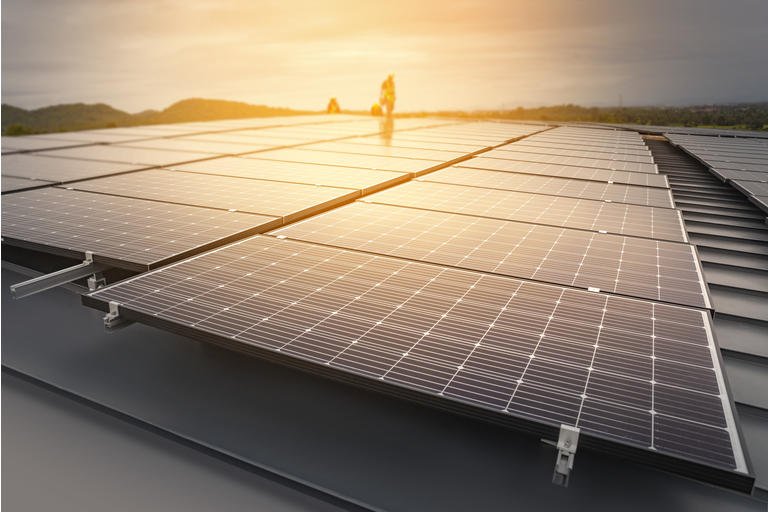
Sunrun (RUN) is piloting a program that would allow customers to earn hundreds of dollars per month by using electricity from rooftop solar installations to power home-computing systems for artificial intelligence, CEO Mary Powell said Monday.
The company is in


monsitj/iStock via Getty Images
Front-month gold futures plunged below $4,000/oz Monday after fresh strikes between the U.S. and Iran sent oil prices surging higher, reviving concerns about inflation and the potential for tighter monetary policy.
The latest escalation and President Trump’s declaration that the

undefined undefined
Thomson Reuters (TRI) is planning to eliminate up to 500 engineering jobs, the firm’s media arm reported on Monday.
The layoffs affect about 5.2% of the company’s 9,400 employees in its operations and technology unit. It represents about 1.8% of its overall workforce of

Hispanolistic
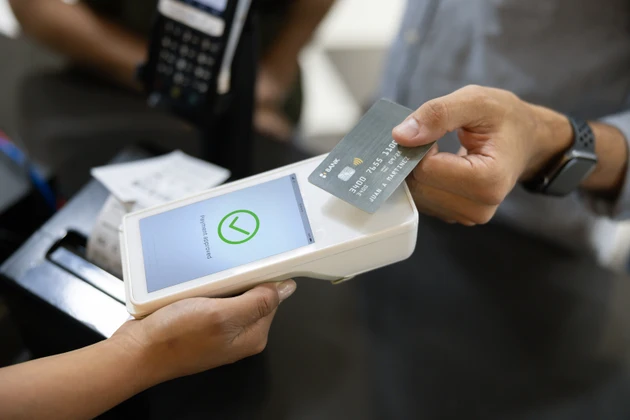
TD Bank Group’s (TD) merchant solutions business unit will offer the Clover commerce platform in Canada to help its clients accept payments and manage their business through a single, integrated ecosystem, the company said Monday.
The partnership between TD Bank


shaunl/E+ via Getty Images
Halliburton (HAL) up 2.5% in Monday’s trading after saying it secured major integrated drilling and completions contracts for the GranMorgu deepwater development offshore Suriname operated by TotalEnergies (TTE); financial terms were not disclosed.
Halliburton (HAL) said it will apply
The Ethiopia-Djibouti corridor sits at the centre of this transformation, serving as the primary gateway for Ethiopia’s import and export flows.
For financial institutions such as iibGroup, the role of banking extends well beyond liquidity provision. It is about deploying capital to support economic resilience, strengthen trade ecosystems, and deliver measurable social and environmental impact.
Unlike traditional ESG approaches that operate as standalone initiatives, iib East Africa integrates sustainability directly into its core financing model. As of 2025, over 80% of the bank’s loan portfolio was aligned with ESG-related financing, reflecting a deliberate shift towards impact-driven banking.
This represents a 20% increase in ESG-aligned financing since January 2025, driven by growth in renewable energy, infrastructure financing and trade finance solutions for ESG-compliant businesses. This scale of integration positions iib as the leading ESG-focused financial institution in Djibouti.
Trade finance remains central to East Africa’s economy, yet many SMEs in essential sectors continue to face limited access to structured financing.
iib East Africa has expanded its dedicated trade finance facilities for ESG-compliant SMEs, particularly those involved in food import/export and essential goods. These facilities support regional food security, responsible supply chains and cross-border trade resilience.
By aligning trade finance with ESG principles, the bank ensures capital supports not only commercial growth, but also broader economic stability and sustainability.

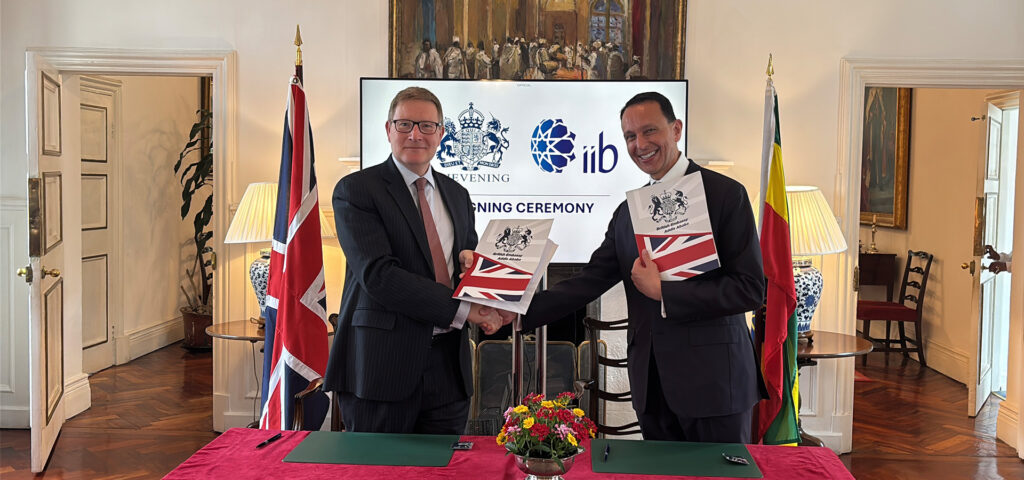
H.E. Darren Welch, UK Ambassador to Ethiopia & Permanent Representative to the African Union, and Sohail Sultan, Chairman of iibGroup at the signing ceremony for the Chevening Scholarship partnership in Addis Ababa.
Beyond trade finance, iib is mobilising capital at scale through structured sustainable finance initiatives.
A significant development is a pipeline of approximately US$72.5 million, comprising a planned US$30 million social bond programme, a US$25 million Green Bond, and a US$17.5 million Blue Carbon programme.
The social bond programme is designed to finance high-impact projects including affordable housing, regional food security, essential infrastructure for telecommunications, education and healthcare, and capital for ESG-aligned SMEs.
The Green Bond will improve the energy efficiency of industrial and logistics SMEs.
Meanwhile, the Blue Carbon programme will restore 1,675 hectares of mangroves, preserve a further 780 hectares, establish a 400-hectare protective green barrier and target the sequestration of 2 million tonnes of CO₂. And with a projected investment of US$17.5 million and an expected IRR exceeding 20%, it demonstrates how sustainable finance can generate both commercial returns and measurable environmental outcomes.
By establishing a Representative Office in Addis Ababa, iibGroup has taken an important step in extending this model into one of Africa’s largest and most promising markets.
This expansion supports iib’s strategy of operating as a regional financial intermediary, facilitating cross-border trade, investment and capital flows between East Africa and international markets.
Backed by a robust correspondent banking network of more than 30 relationships across Ethiopia and the wider region, the bank provides trade finance, structured trade, cross-border payments, foreign exchange settlement, liquidity management and risk participation solutions.
Through its presence in Djibouti and Ethiopia, iib is positioned to connect local businesses with international capital while supporting trade, infrastructure and private-sector growth across the corridor, reinforcing its role as a regional connector.
In frontier markets, sustainable finance extends beyond balance sheet activity. iib East Africa complements its financing activities with direct community engagement that promote inclusive growth.
In 2025, this included:
Additionally, the bank is financing a housing project in partnership with Qatar Charity, involving the construction of 79 houses, plus a mosque and Islamic academic centre, representing a total investment of approximately US$500,000.
These initiatives reinforce the principle that sustainable finance should create both institutional and community impact.
As East Africa’s financial systems continue to evolve, banks are becoming active enablers of economic development rather than just financial intermediaries.
iibGroup’s approach – anchored in ESG integration, trade facilitation and capital mobilisation – demonstrates how sustainable banking can be implemented effectively in frontier markets. By aligning financial performance with measurable impact, the bank is contributing to the development of a more resilient, inclusive and interconnected regional economy. Along the Ethiopia–Djibouti corridor, this model is not only relevant; it is essential.




cinquefx/iStock via Getty Images
The benchmark S&P 500 (SP500) has posted a respectable 10.1% gain year-to-date, yet a select cohort of 15 stocks within the index has delivered triple-digit returns of 100% or more, significantly influencing the benchmark’s performance.
These standout performers are concentrated

Published on
TSMC said on Monday that June revenue rose 67.9% year on year to NT$398.27 billion (€10.8bn), bringing the first-half of the year revenue to NT$2.4 trillion (€65.4bn), a 35.6% increase from the same period in 2025.
Based on the company’s monthly revenue disclosures, second-quarter revenue amounted to roughly NT$1.27 trillion, ahead of the NT$1.264 trillion (€34.4bn) consensus forecast from 20 analysts surveyed by LSEG.
Monday’s release covers June revenue and cumulative first-half sales only.
TSMC will publish its full second-quarter earnings on Thursday, including net profit, gross margin, operating margin and updated financial guidance.
At its April earnings presentation, TSMC said it expects full-year 2026 revenue to grow by more than 30% in US dollar terms and projected capital expenditure of between $52 billion (€45.5bn) and $56 billion (€49bn) as it expands manufacturing capacity to meet AI-driven demand.
New fabrication plants are under construction or in preparation in Arizona, Japan and Germany, reflecting both the scale of customer demand and government efforts to strengthen domestic semiconductor manufacturing.
Shares in TSMC rose about 1% following Monday’s revenue update.
Investors will now turn their attention to Thursday’s full earnings report for updates on profitability, margins, full-year guidance and the rollout of the company’s two-nanometre manufacturing technology, which is already attracting strong customer interest.
The company sits at the centre of one of the largest investment cycles in the semiconductor industry’s history.
Many of the world’s leading AI processors, including Nvidia’s GPUs and much of the custom AI silicon designed by Amazon, Google and Microsoft, are manufactured by TSMC in Taiwan.
At the company’s April earnings presentation, CEO Che-Chia Wei described AI demand as “extremely robust”, driven by the shift from chatbots that answer questions to agentic AI systems capable of taking actions.
That transition requires significantly greater computing power, increasing demand for the advanced chips TSMC manufactures.
Advanced technologies, defined as chips produced using process technologies of seven nanometres or smaller, accounted for 74% of wafer revenue in the first quarter.
TSMC’s three-nanometre technology alone contributed 25% of wafer revenue.
Reports have indicated that Nvidia has reserved roughly 60% of TSMC’s advanced chip-packaging capacity for 2026, highlighting continued supply constraints across the AI semiconductor market.
India’s primary bourse preps a landmark IPO alongside Jio, testing markets amid a global slowdown.
India’s National Stock Exchange (NSE) has filed for an initial public offering with the Securities and Exchange Board of India, in what is expected to be one of the most consequential listings in the country.
The official filing document revealed that a ceiling of nearly 149 million shares, each with a face value of 1 rupee (about one U.S. cent), is being offered. The NSE is India’s primary bourse and the leading market infrastructure company in the Indian capital markets.
Its IPO has been a long-awaited event, providing major investors — including the State Bank of India, the country’s largest public-sector bank; Singapore’s global investment firm Temasek; and Canada’s Pension Plan Investment Board — with an opportunity to monetize their stakes.
Formed by large Indian financial institutions, the NSE has attracted investors from global financial institutions and individual investors, has more than 35,000 individual shareholders, and has created long-term value.
India’s IPO boom in recent years has sharply waned, with the Iran conflict a significant geopolitical headwind for deal flow.
This is reflected internationally, according to S&P Global, which reported in a recent report that IPOs worldwide have fallen to their lowest level since the height of the COVID-19 pandemic. During the first quarter of 2026, completed global IPO transactions fell to 294, compared with 451 in the final quarter of last year.
Market sentiment in India may be shifting as IPOs on the NSE, including those of its largest telecom operator, Jio Platforms, are underway, with Jio Platforms having filed a draft prospectus for a public flotation.
The NSE IPO is entirely an offer for sale proposal, where investors may reallocate funds to their headquarters on a global scale after raising liquidity and reducing NSE stakes.
“NSE, along with JIO Platform’s IPO, will not only showcase the depth of India’s capital markets but also the confidence of global and domestic investors in India’s markets,” said Sanjay Doshi, head of KPMG India’s financial services advisory.
Shareholders earned handsome returns, and some may have made more than 10 times their investment in a company that has adopted technology since its inception, he added.
Ajay Shamdasani is a contributing writer based in Hong Kong.


mohd izzuan
SK Hynix (SKHYV) has detailed its comprehensive financial health and operational performance for the three months ended March 31, 2026, in its recent Form F-1 filing with the U.S. Securities and Exchange Commission.
The company reported a massive surge in
