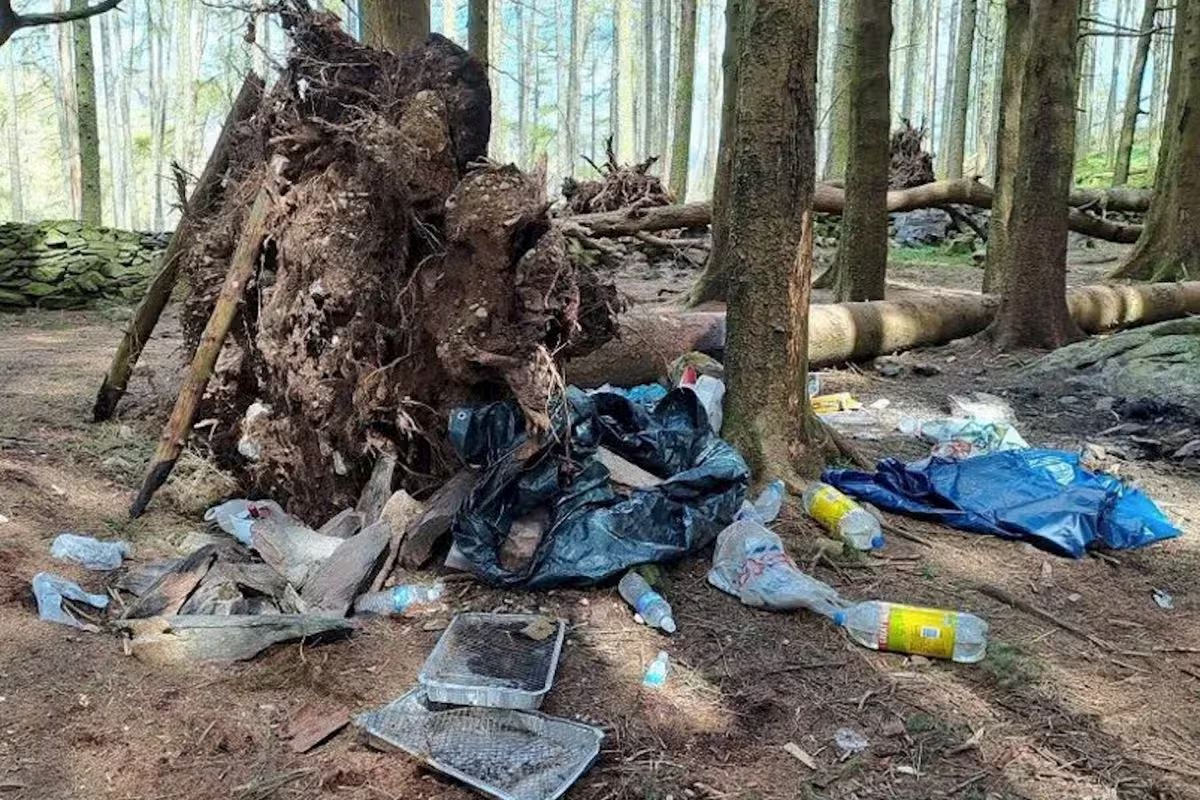
Millions visit the Lake District every year but those who help look after the national park in Cumbria say overtourism tensions are threatening to boil over

Local residents living in the Lake District National Park have complained about visitors’ behaviour(Image: United Utilities)
Wild campers visiting the Lake District are ignoring the long-standing Countryside Code – with human excrement, fly-camping and irresponsible behaviour surging this summer, campaigners say.
Those who manage the national park, which attracts millions of tourists every year, claim some guests are making life hell for locals. They say brainless parking, inconsiderate camping and mass littering is making a mockery of the “leave no trace” government guidelines to protect the environment. Paths blocked by campervans, discarded tampons and nappies and dogs let loose are just some of the other issues reported.
Judith Derbyshire, a Westmorland and Furness councillor, has referenced a report made by patrol officers who are responsible for tackling anti-social behaviour. She says, as enforcement officers and volunteers battle to preserve the stunning national parks, problems are only increasing.
Tourists risk huge fines in Lake District
She says the council has very few officers and a round-the-clock response service is a thing of the past. Local laws were tightened earlier this year in response to resident complaints.
Those causing environmental damage such as littering, starting fires, or the inappropriate use of motorhomes can now be fined up to £100 – but according to many locals, the rules are being flouted regularly.
Ms Derbyshire, who is responsible for community safety, says since Covid there has been a huge increase in visitors with many arriving without plans for accommodation. That leads to “fly-camping” – taking spots away from designated camp sites.
‘You shouldn’t be doing that’
Reading the report, she told the BBC: “Fifty-plus members of the public engaged with, 10 overnight campers spoken to, eight bags of rubbish collected and they had the joy of seeing one man using a bush as his toilet. I’m going to lower the standard of the conversation here but the issue is to do with human poo.
“Don’t feel you can just come up, park up on a lay-by and then go and put a tent up down by the lake shore – you shouldn’t be doing that.
“Putting it bluntly, we are going to have strong cutbacks from our funding as a local authority, we’re not going to have the staff to be able to put that sort of thing in place.”
She says people can contact police if they see anyone behaving in a dangerous way – such as lighting a bonfire that could spread to a large area. Working together with residents and visitors is vital to getting the situation under control.
Ms Derbyshire added: “We want people to come to Lake District and it’s good that there’s a wider range of people coming here, it’s just that we need to get them educated so they know what they can do and what they can’t do.”
‘It really saddens me to see’
Earlier this summer, footage showed the moment dozens of cars were covered in slurry after they parked in a private field just yards away from Rydal Water, one of the country’s prettiest beauty spots.
A large number of instances of littering, wildfires, and campers leaving equipment behind (known as fly camping) were logged in the Friends of the Lake District’s annual survey.
One unhappy local wrote in this year’s survey: “Some people have no social conscience and do not care about the impact of their behaviour on the environment or other people. We see litter on the fells, on lakesides and thrown out of cars onto grass verges. We even saw someone having a BBQ sat right next to a sign prohibiting it on Ullswater last year.
Another added: “I’m from the Lakes and have always appreciated the tourism and what it does for the area. However, I feel we have now got to the stage where tourism is over capacity and negatively impacting the area and the quality of life for residents and animals. Frequent traffic jams, poorly parked cars, and most upsetting of all, litter.
“Today we came across a discarded used nappy and a tampon. My children and I frequently go out with our litter pickers. It really saddens me to see the Lake District in environmental decline.”