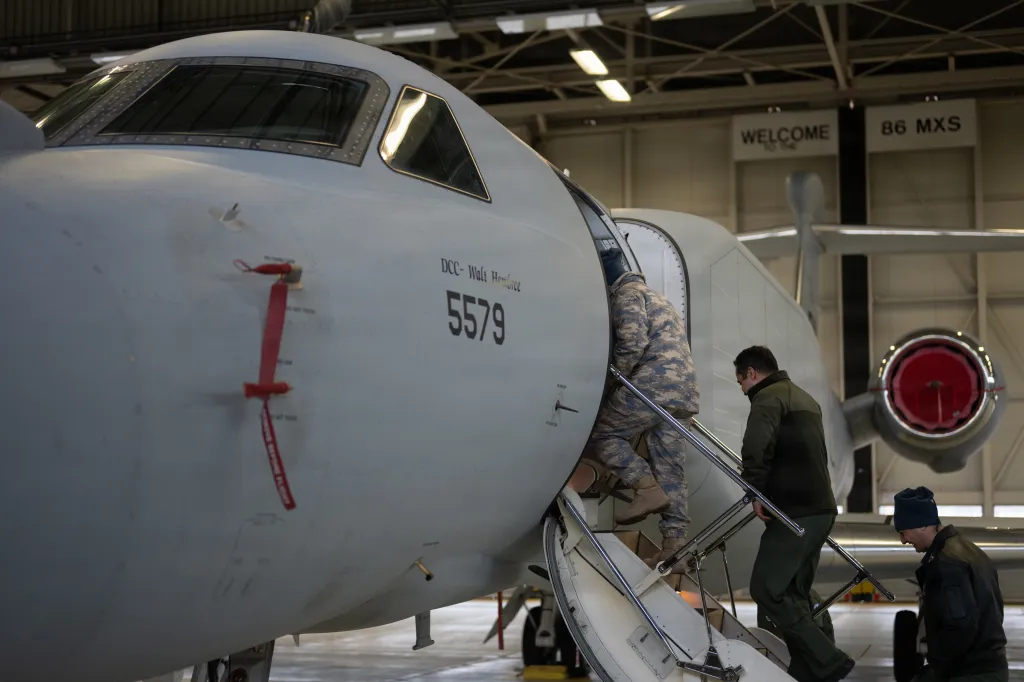
Despite rampant speculation that it would eventually head to the Middle East amid growing tensions with Iran, an EA-37B Compass Call’s arrival in Germany yesterday had nothing to do with current events, according to the U.S. Air Force. The specialized electronic warfare (EW) jet made its first trip to Europe to show off its capabilities as the U.S. Air Force transitions from the EC-130 Compass Call turboprop aircraft.
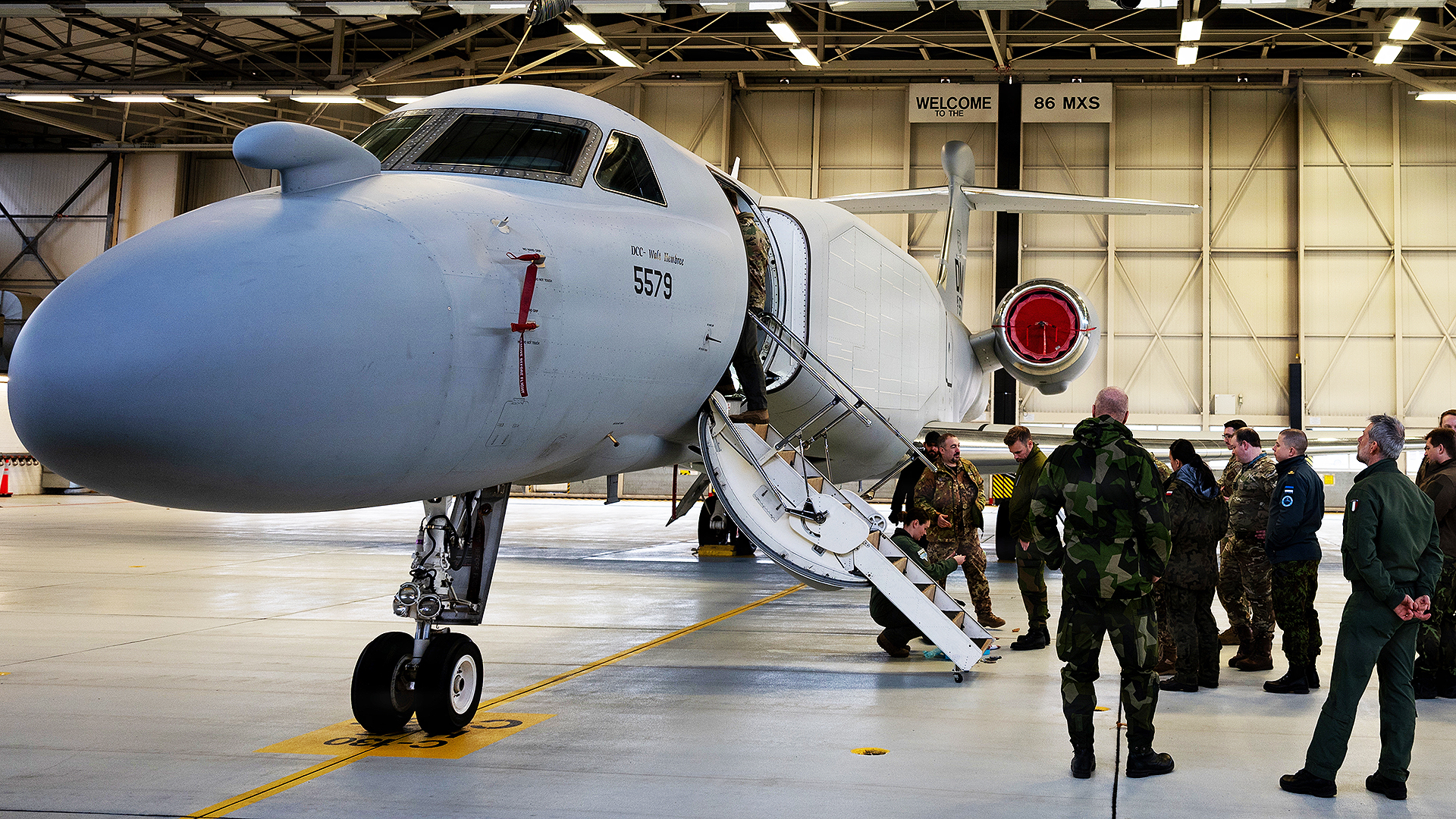
“The aircraft is also slated to visit Spangdahlem Air Base in Germany and RAF Mildenhall, England, marking the platform’s introduction to Airmen, units and NATO Allies in the U.S. Air Forces in Europe area of responsibility,” U.S. Air Forces in Europe-Air Force Africa (USAFE) stated in a release. “The roadshow’s inclusion of multiple installations and units highlights the aircraft’s flexibility to integrate into various mission sets and teams, serving as a key node for joint and coalition operations.”
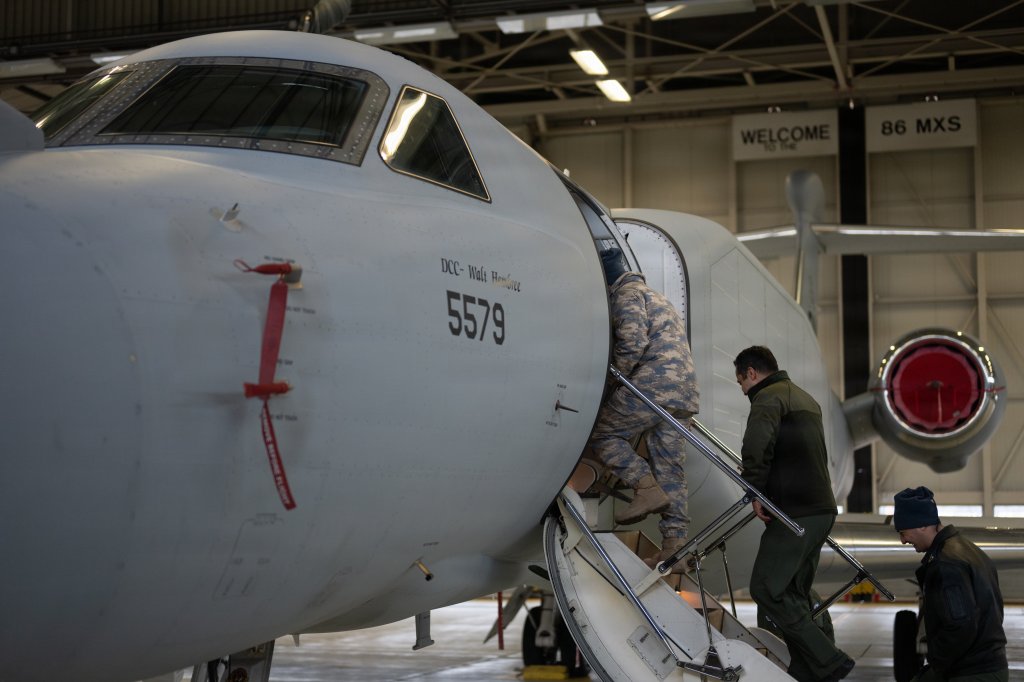
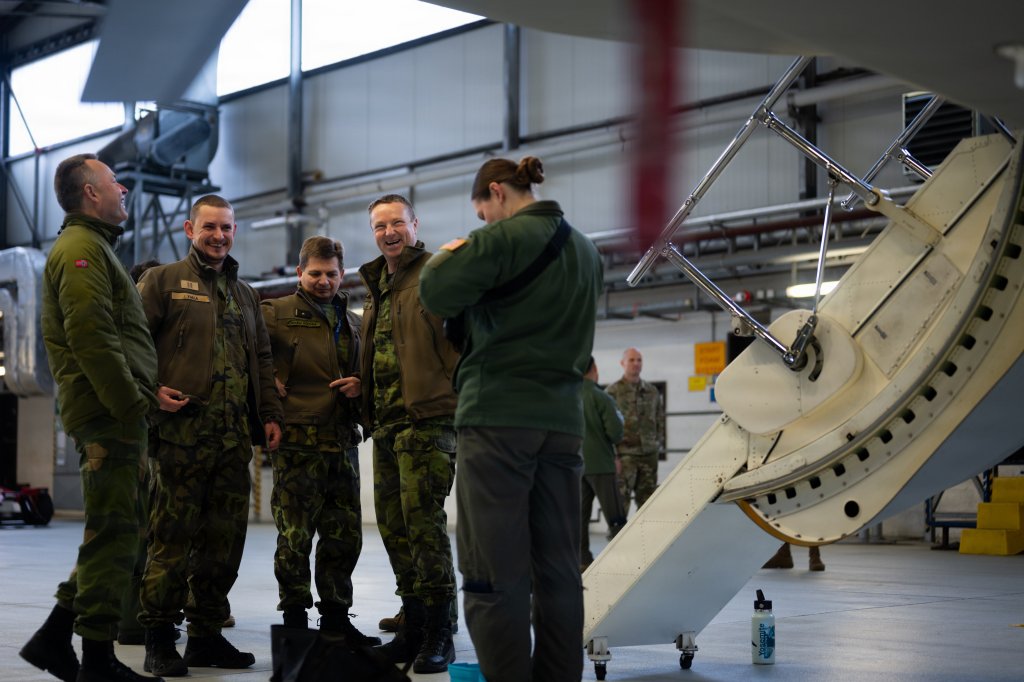
The Air Force statement about the EA-37B’s visit to Europe follows suppositions made in many posts on X and shows the limits of online speculation based just on tracking data. The conjecture is understandable given the electronic warfare capabilities such a jet could bring to the fight, jamming radars and interfering with Iranian communications and command and control.
The EA-37B, however, is not yet operational, Kris Pierce, spokesman for the 55th Wing at Offutt Air Force Base told The War Zone Tuesday afternoon.
“We are still in training and testing phase,” he said. “We are still trying to figure out the capabilities.”
The new Compass Call is a heavily modified Gulfstream G550 business jet. It leverages the Israeli-developed Conformal Airborne Early Warning (CAEW) configuration, which has large ‘cheek’ fairings on either side of the fuselage, among other distinctive features.
The Air Force is planning to procure 10 of these jets to replace the aging and ever smaller fleet of turboprop EC-130H Compass Call planes, of which only four remain. The 43rd Electronic Combat Squadron flew the first training sortie for the EA-37B on May 2, 2025.
Many of the EA-37B’s mission systems are directly ported over from the EC-130H, which is why the two very different aircraft share the same nickname. Both aircraft are designed to provide critical stand-off jamming support, including against enemy radars and communications systems. They also have a secondary intelligence, surveillance, and reconnaissance (ISR) function given their ability to spot, track, and geolocate various types of emitters.
The EA-37B also offers new capabilities that go beyond what is found on the EC-130H. The Air Force has said in the past that the aircraft’s designation reflects its ability to not only attack, but also destroy certain targets, as you can read more about here.
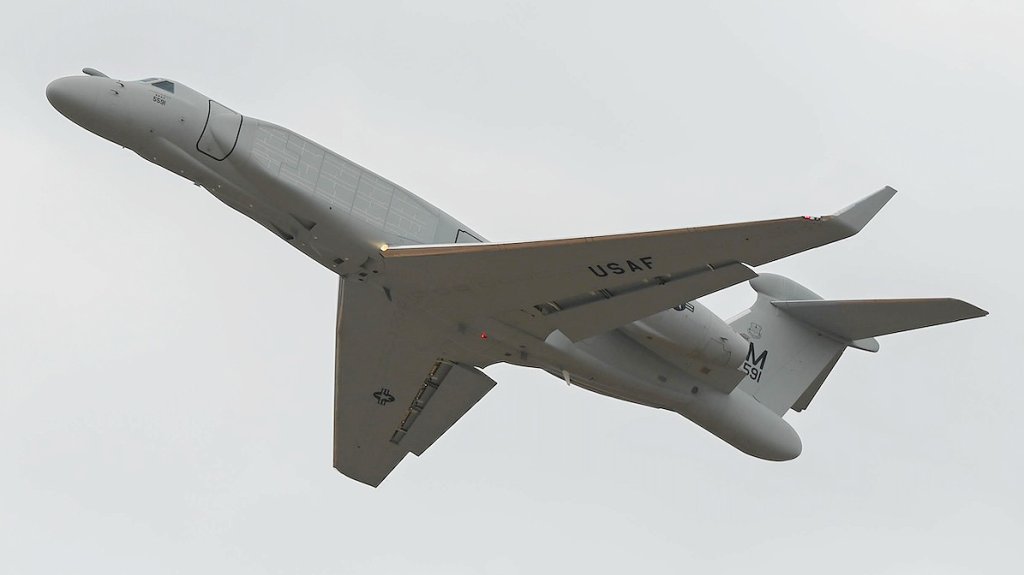
In addition, the G550-based aircraft can reach higher altitudes than the EC-130H, giving it a better field of view to provide effects across the electromagnetic spectrum (EMS) over longer distances and larger areas. The jet also offers speed, range, and endurance benefits over its turboprop predecessor.
“One of the most important aspects of success in conflict is information superiority,” said U.S. Air Force Capt. Tyler Laska, 41st Electronic Combat Squadron EA-37B pilot. “Every moment of hesitation that we can implant into an adversary’s decision-making process increases the survivability of our men and women on the leading edge of every domain.”
The value of Compass Call aircraft was recently highlighted during the recent pressure campaign against Venezuelan dictator Nicolas Maduro. An EC-130H likely played a role in jamming radars and communications to make it harder for Venezuelan forces to respond during Maduro’s eventual capture. E/A-18G Growler jets also played a major role in that effort.
You can see a video of the EC-130 arriving in the Caribbean below.
As we noted in an earlier story: “Previous iterations of the EC-130H-based Compass Call system have proven their value in combat zones on multiple occasions in the past two decades. A contingent of these aircraft was continuously forward-deployed in the Middle East, from where they also supported operations in Afghanistan, between 2001 and 2021. EC-130Hs supported the raid that led to the death of Al Qaeda founder Osama Bin Laden in Pakistan in 2011 and prevented the detonation of an improvised explosive device that might have killed then-Maj. Gen. James Mattis, who later rose to the rank of General and also served as Secretary of Defense under Trump, in Iraq in 2003, among many other exploits, according to a recent story from Air Force Times.”
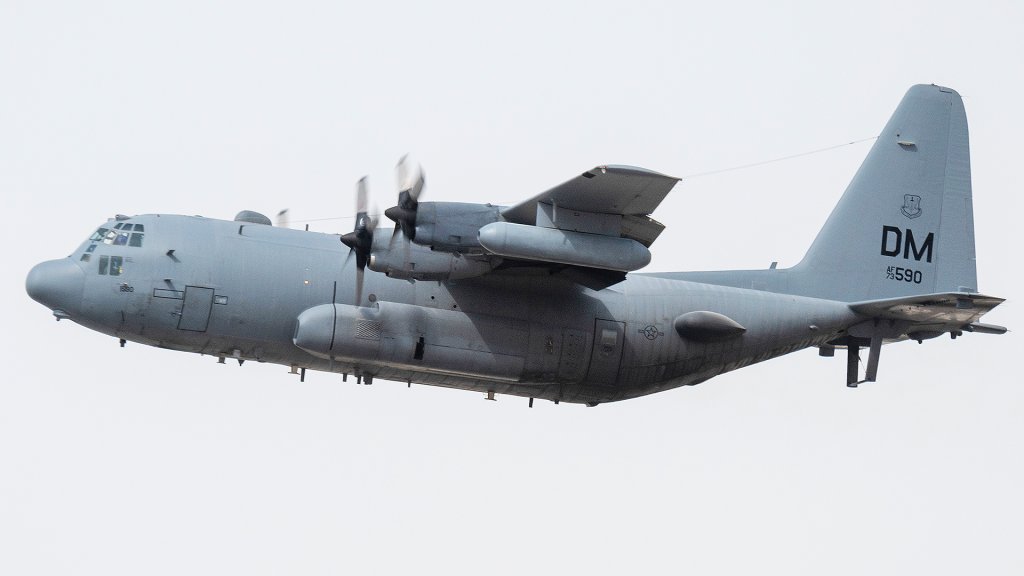
Had the EA-37B that landed at Ramstein been bound for the Middle East as online trackers posited, that would have been a big deal indeed, marking its first foray into potential combat. Still, this tour, following the two last year to Asia, is a first introduction to a large number of U.S. and allied airmen, of an important new airborne EW platform.
Contact the author: howard@thewarzone.com