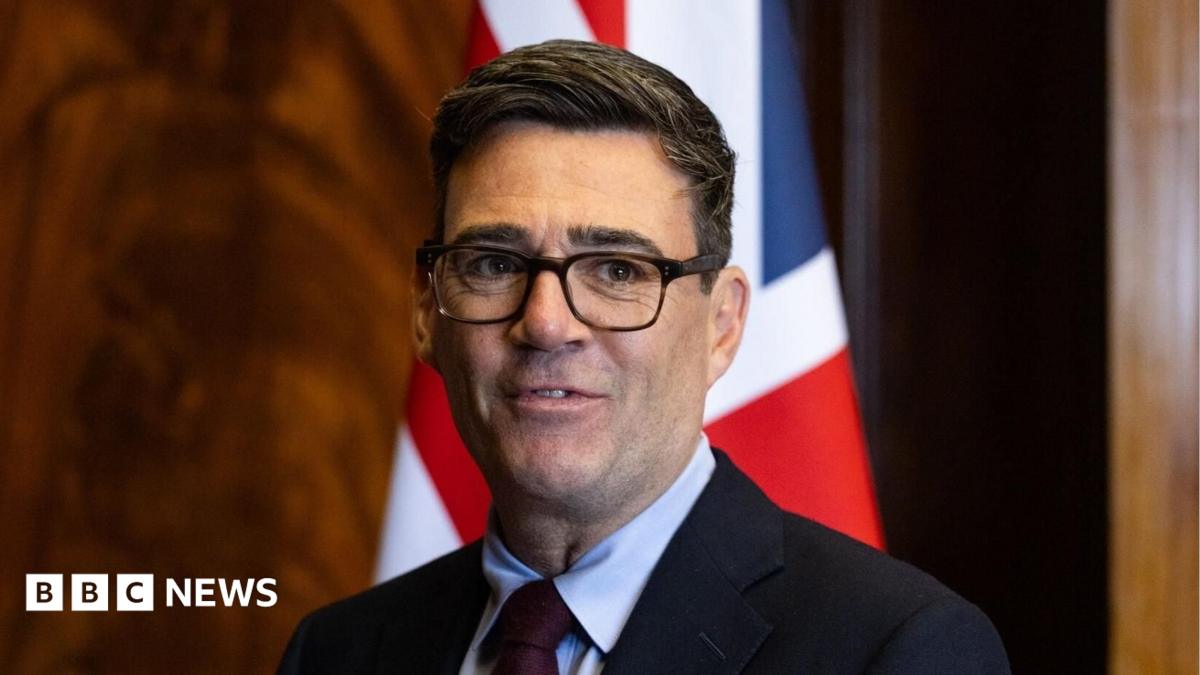
This lies behind the prime minister’s decision to open the door to the argument about rejoining the EU single market – along with the freedom of movement that would bring – and even the EU altogether.
But that longer-term ambition is dividing his cabinet and his party.
Some welcome his approach, including those with formerly Brexit-backing constituencies. Angela Rayner, for example, is understood to have been pushing former Prime Minister Sir Keir Starmer to be bolder on Brexit since at least autumn 2022.
The housing secretary is said to have been insistent that Labour needs to stick to its manifesto red lines – not to return to the EU single market, customs union, or freedom of movement – but is open minded to changing those at the next election.
Another cabinet minister said: “The best thing you can do in politics is tell the truth. And the truth is that Brexit has been hugely damaging to Britain.
“We are not leading a public conversation here, we are racing to catch up with the public.”
But others are watching nervously at a strategy one former minister described as “high risk”.
Home Secretary Shabana Mahmood, for example, has struck a more cautious tone warning about the “costs and consequences” of rejoining the EU as well as staying out.
Jonathan Reynolds, the Business and Trade Secretary, is supportive of getting closer to the EU and discussing the UK’s long term relationship.
But he has previously warned against joining the EU’s customs union and is also unsure about the prospect of rejoining the EU, highlighting the uncertainty of what terms the UK would face, and what the bloc could look like in years to come with nationalist parties in the ascendancy in several European countries.
A voice from the past has a different set of concerns.
Lord Cameron told Bloomberg’s Mishal Husain that starting a conversation about rejoining would be “very long and painful”.
The former prime minister warned “flirting with rejoining” could also harm Burnham’s attempts to renegotiate the Conservative’s Brexit deal.
“If you start endlessly producing this idea that we’re actually on a path to rejoining, I think you’re in danger of getting a less good partnership deal because of course the EU countries will just think: ‘Well, these guys are gonna rejoin anyway, so what’s the point in giving them a good partnership deal’.”
Attitudes in Labour towards the prime minister’s approach don’t divide along predictable lines. One Scottish Labour MP, personally opposed to Brexit and with a heavily Remain-voting constituency, said it was a “real problem”.
“How can I argue to my constituents that we had a Scottish referendum in 2014 that settled independence for a generation. but then say the 2016 referendum isn’t settled? My view is you accept democracy.”
For now though, that opposition hasn’t broken out into public rebellion, although Labour MP Gareth Snell is one who has warned about reopening the debate.
The MP for Stoke-on-Trent, where the Leave vote was 69.4%, told the BBC’s Westminster Hour that doing so would “monopolise an awful lot of time inside parliament, inside government” when there are other things MPs should be doing.
Two Labour MPs among those most unhappy about Burnham’s openness to Europe insisted “there are no plans” for any organised criticism of the prime minister.
Despite their concerns, particularly about free movement, they described their current mindset as “wait and see”. That temporary truce is likely to fracture if the prime minister’s lead in the polls begins to slide.
The many colourful festivals of this northeastern Indian state are opportunities to showcase the culture and traditions of the region’s unique communities and tribes.
Ningol Chakouba is no exception. It is a festival of the Meitei community, which is the majority ethnic group in Manipur.
Handily, if we translate the name of this festival from Manipuri, what happens at this festival becomes very clear – ‘Ningol’ means married daughter and ‘Chakouba’ means an invitation for a lunch at the mother’s house.
On Ningol Chakouba parents welcome their wedded daughters to their “mapam” (mother’s house) for a grand feast.
The married women visit in their finest traditional attire with their children. Gifts are offered with a blessing to the daughters and the grandchildren by the parents.
The son of the family formally does the invitation one week in advance, to his sister.
With no particular religious elements, this is a popular social celebration aimed at strengthening the bond of love and affection between married women and their parental families.
Christina Applegate has a theory about why she was misdiagnosed with multiple sclerosis: She’s been poisoned.
The “Married With Children” and “Dead to Me” star has been inundated with well-intentioned suggestions following the revelation of her misdiagnosis, but one stood out, Applegate recounted on the Tuesday episode of her “Messy” podcast with co-host Jamie Lynn Sigler.
“I’ve been thinking this for years: breast implant poisoning,” she said. “I actually had my double mastectomy in 2008, and I am way overdue for having them replaced, and I swear over the last five years or whatever I thought, ‘What if it’s — seriously — what if they’re leaking and they’re poisoning me?”
Someone sent her a study about breast implant leakage and poisoning presenting as MS, Applegate said, recounting some of her symptoms.
For one, she said, “I sleep, Jamie. I can’t stop sleeping. I slept, I think, almost the entire day yesterday. I had like one thing that was important for me to do and then other than that, I’m like — I’m, like, asleep right now.”
Then there’s the pain.
“I don’t know what’s going on in my joints, but I can’t move my right shoulder, like, at all now. I can’t lift my arm. I’ve got all sorts of other things going on,” Applegate told “Sopranos” star Sigler, who has lived with MS for over a decade. “It takes me 10 minutes at least to even sit up and get out of my bed, because I just hurt all over. And I don’t know if I’m doing that to myself by sleeping too much.”
MS is a central nervous system (brain, spinal cord, optic nerves) disease that “disrupts the flow of information within the brain and between the brain and the rest of the body,” according to the National Multiple Sclerosis Society. Symptoms may include fatigue, memory and mobility issues, mood swings, numbness, pain, tingling and vision impairment.
Applegate then regaled her co-host with a Halloween story that saw her miraculously fly down the stairs of her home without the assistance of her caregiver when she thought she heard her daughter Sadie, 15, screaming outside.
“You know that superhuman thing of being a mom, like the mama always lifts the car? I flew. I don’t know how I did that. I flew and was in the driver’s seat of the car before [my caregiver] could even get out of what she was doing. She was like, ‘How did you get here?’ And I’m like, ‘I don’t know, man.’”
When they drove toward the “blood-curdling screaming,” they discovered it was a fighting couple, who apparently didn’t need any assistance.
“My friend got out and said, ‘Hey, do you need help? … We can call the police.’ And this is what the girl said: She goes, “Get off my property, b—. I’ll f— kill you.” So, we were like, ‘Chick, ya on your own. So, hope it works out for ya. Hope those Bloody Marys treat you right in the morning, you drunk a—.’”
After President Trump’s unfounded claim that California’s slow vote count during the June primary indicated cheating by Democrats, state and local elections officials made changes to speed things up — in part to dispel any questions about this month’s crucial midterm elections.
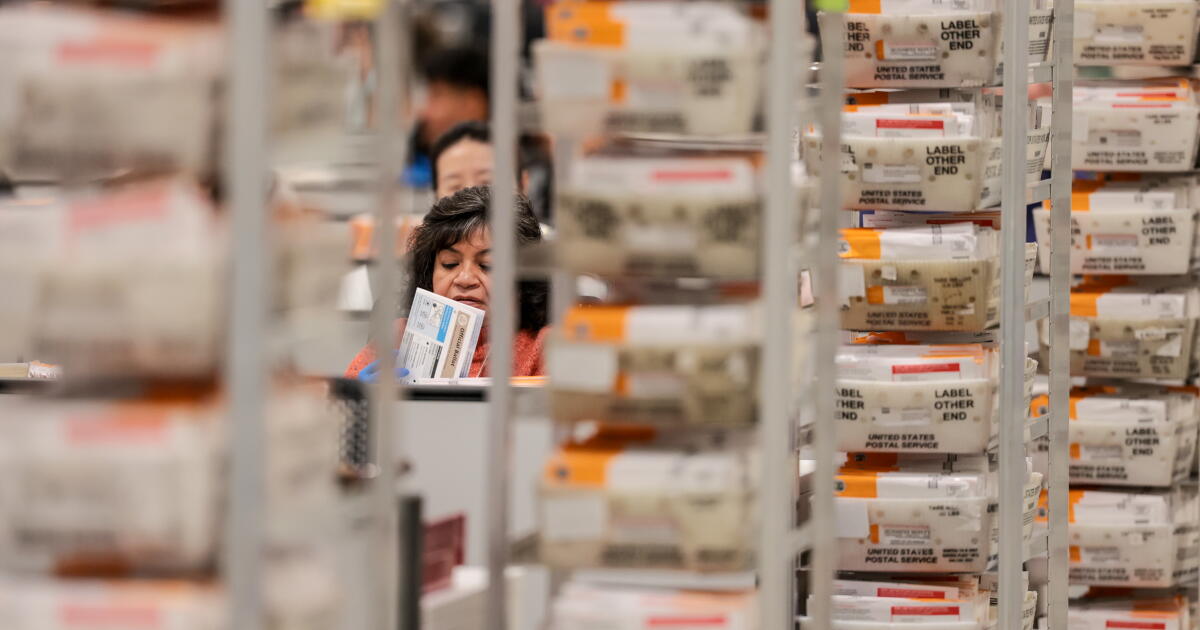
The state of California allocated $29 million for new equipment, election staffing and voter awareness campaigns statewide, about $6 million of which went to Los Angeles County. The county, which opened a massive new ballot processing center in 2024, announced it would shift to around-the-clock ballot counting in the days after the Nov. 3 election and used some of its state funding to purchase a third mail ballot processing machine.
A full analysis of the impacts of those efforts statewide has not been completed, and ballot counting is still underway. But one week after the polls closed, officials in L.A. County and independent election observers say the efforts clearly paid off.
A statewide report on unprocessed ballots as of 5:41 p.m. Tuesday found that L.A. County had processed about 99% of nearly 3.2 million ballots cast in the county, with just 37,800 ballots still to process. That’s well ahead of where it was at the same point after other recent elections.
Kim Alexander, president of the nonprofit, nonpartisan California Voter Foundation, which has for years tracked ballot processing, said that compared to L.A. County having processed 96.9% of ballots a week after the 2024 general election and just 73.3% of ballots a week after the 2022 general election. She said a similar 99.3% of ballots had been counted by the county a week after the June primary — but nearly a million fewer people voted in that election.
Alexander said L.A. County was also well ahead of the state average for ballots processed seven days after an election, which stood at 92.8% processed a week after the June primary, 84.2% processed a week after the 2024 general election, and 71.6% processed a week after the 2022 general election.
On Tuesday, L.A. County, the most populous county in the state, was outpacing other big counties, such as San Diego and Orange counties, which had both processed over 1 million ballots but had 185,000 and 116,660 left to count late Tuesday, respectively. It was also outpacing some of state’s smaller counties, such as Humboldt, which had counted more than 25,000 ballots but had nearly the same amount left to process.
L.A. County Registrar-Recorder/County Clerk Dean Logan said the success of this election was a result of the state funding, which “came very late in the process,” but also years of support from the county — especially for the new $10 million, 144,000-square-feet processing facility.
Before the new facility was opened, the county processed ballots in multiple different locations. “And even on election day, we had to stop processing vote by mail ballots so that we could process the ballots coming in from the vote centers,” Logan said. “Now we have a space that is designed and — provided we have the resources to staff it — we can keep those operations going on simultaneously.”
The county’s purchase of a third mail sorting machine, Logan said, also helped workers to more quickly process the massive influx of ballot envelopes that voters drop off at vote centers or in drop boxes on election day.
Logan said the count this election also may have been quickened slightly by more voters returning their ballots earlier in the process and voting in person.
Alexander called the quickened count, during an election with high turnout and a long and complicated state ballot, “remarkable” — and all the more so given the tremendous amount of pressure the Trump administration was putting on L.A. County.
“I feel this vote count in L.A. and across the state is remarkable in that it appears to be going smoothly and in L.A. clearly very efficiently, but it’s also remarkable given all of the hurdles that we had to overcome to conduct this election,” Alexander said.
The day after California’s primary election in June, President Trump took to social media to allege — with zero evidence — that Democrats were “trying to STEAL THE GOVERNOR OF CALIFORNIA PRIMARY, AND THE MAYOR OF LOS ANGELES, PRIMARY, AWAY FROM TWO GREAT REPUBLICAN CANDIDATES.”
“Votes are all tied up. May not be in for weeks. Under investigation by the U.S. Attorney’s Office in Los Angeles,” Trump wrote. “Why the vote counting DELAY???”
While dismissing such claims as baseless and a threat to democracy, Gov. Gavin Newsom in May acknowledged that the longer it takes to count votes, the “more mis- and disinformation spreads.” That’s why, he said, state lawmakers passed legislation in 2025 to speed up the process.
“We must do all that we can to tabulate votes quickly and accurately,” Newsom said in a letter to elections officials. “Time is of the essence in preventing election lies from taking hold.”
Other states do count votes and call elections faster than California, though California officials say that is for several reasons.
California counts far more ballots than any other state, provides voters with more options for voting than other states, provides a grace period for counting ballots postmarked by election day but received in the days that follow, and provides opportunities for voters whose ballots have an issue — such a signature discrepancy — to cure them in the days after an election.
None of those explanations have convinced Trump, however. And his comments criticizing California were not just bluster.
Instead, they were part of a much larger, highly-coordinated effort by his administration to wrest control over voting processes in the state to institute stricter rules and new federal oversight for mail ballots, stricter requirements around voter ID and proof of citizenship and stricter rules for when ballots must arrive to county officials in order to be counted, Alexander said.
Federal courts, including the Supreme Court, shot down all of those efforts. The Supreme Court also rejected federal demands that California and L.A. County halt the counting of 20,000 ballots the Trump administration alleged could be from noncitizens — but not before Justice Department officials sent letters to county elections officials across the state, threatening them with criminal prosecution if they counted those ballots. Litigation was playing out right up until election day.
Logan said the judicial branch played a pivotal role in defending California’s elections from the Trump administration, and prevented an election disaster. He and other county officials said in court filings that, had they been forced to begin segregating the 20,000 flagged ballots in the midst of the election, “chaos” would have ensued.
Logan also said that the success of this election “is not guaranteed going forward,” and should be understood by state and county officials as further proof that investments in elections in L.A. County and across the state are not only beneficial but critical moving forward — particularly ahead of 2028, when the Trump administration can be expected to target California once more.
“We will continue to be a target of the administration,” he said.
LAS VEGAS — The Dodgers’ early offseason to-do list includes a meeting with top free agent Tarik Skubal, the two-time Cy Young winner who they acquired at the trade deadline this year.
Other than the Dodgers’ National League Championship Series exit, the three-month fling was as happy of a partnership as either side could have hoped.
Skubal jelled with the group immediately, becoming especially close friends with fellow lefty Blake Snell, who promised that he’d worked to recruit Skubal back this offseason. And after posting a 2.61 ERA in 10 starts, Skubal, the Dodgers’ Game 1 starter in both playoff series, limited postseason opponents to a total of three runs.
“I know that he enjoyed his time here, we loved having him, so I think that’s certainly helpful as far as these conversations go,” Dodgers general manager Brandon Gomes said Tuesday at General Managers meetings. “And outside of that, he’s earned the right to be in this position and figure out what’s best for him and his family.”
That position, while it guarantees him a highly lucrative contract, is complicated by the impending lockout. Skubal’s agent, Scott Boras, when asked during his media availability Wednesday whether he’d consider a shorter deal with a higher average annual value, said he wouldn’t discuss contract negotiations. But creativity around the structure of a deal could help counter teams’ anxieties over a possible salary cap in the next Collective Bargaining Agreement.
It’s clear already that CBA uncertainty won’t fully freeze the market in November. But executives and agents alike have expressed skepticism that the expected lockout will inspire the same kind of spending flurry that arose in 2021, the end of the last CBA cycle.
Boras, however, argued against the notion that salary cap talk could put a damper on the superstar market before Dec. 1, when the lockout is expected to go into effect.
“Much like 2021, there’s a clear intent on a group of players, and we have no reservations by any teams that they’re going to operate within their abilities and freedoms because they want they don’t want to lose to their competitors,” Boras told reporters. “They want the market to be what it is for them, and they’re utilizing their rights to compete. I think they’re very concerned about losing the opportunity to sign select, key players, and they’re pursuing it aggressively.”
The Dodgers are among the teams planning to meet with Skubal, a group that reportedly includes the Mets, Padres and others.
The Dodgers certainly have a track record of splashy offseason deals with eye-popping numbers. Look no further than last offseason, when they broke records with their signings of closer Edwin Díaz (three years, $69 million, highest AAV for a relief pitcher) and right fielder Kyle Tucker (four years, $240 million, highest present-day AAV).
Even the Dodgers’ trade-deadline acquisition of Skubal appeared to be superfluous at the time. Once two-way phenom Shohei Ohtani’s health forced him to give up on pitching for the rest of the season, however, Skubal’s addition maintained the Dodgers rotation’s status as one of the most talented in MLB history.
They were not, however, among the most aggressive teams before the last lockout. And their approach to Skubal’s free agency will hinge, in part, on how they evaluate their starting pitching needs.
That picture isn’t clear, either.
“We’ve talked about the different paths that you can go down, and what does that look like,” Gomes said. “Do you need it? I don’t know. Do you want it? Maybe. You may not know that you need it until it’s too late. So I think it’s balancing all of this, as different scenarios play out. … The floor right now is really high. We do have a good amount of depth in our pitching. So now it’s just taking into account, what makes sense for us based on different avenues of how things shake out.”
As the Dodgers project out the potential of their rotation, they can reasonably expect improvement from some of their younger pitchers. They were pleased with the step forward that right-hander Roki Sasaki took this year.
“Expect him to take another big step forward,” Gomes said, “and really become the front-line-type guy that he knows that he can be and we know he can be.”
Regardless of lefty Justin Wrobleski’s second-half regression, he earned his first All-Star nod with a dominant first half. Though right-hander Emmet Sheehan had an up-and-down season, the Dodgers continue to believe in his upside. And they expect Gavin Stone, who last pitched in the majors in 2024, to be part of the equation, after a long road back from shoulder surgery.
They still have the star power of Yoshinobu Yamamoto, a two-time All-Star and 2025 World Series MVP, Snell, a two-time Cy Young winner, and Tyler Glasnow.
Ohtani’s return to the mound, however, raises the most questions. The Dodgers expect him to return to two-way duties, that much is clear. But they have yet to lay out a plan for how to keep him healthy for the season while doing so.
“I think it’s just making sure that we are taking all of the information into account and trying to set up a system that allows him to pitch and be successful and be healthy towards the end,” Gomes said. “Because we know how dominant he can be on the mound.”
Some young people could see reductions to the benefits they are entitled to, under a radical overhaul of the system to be recommended by a government-commissioned review.
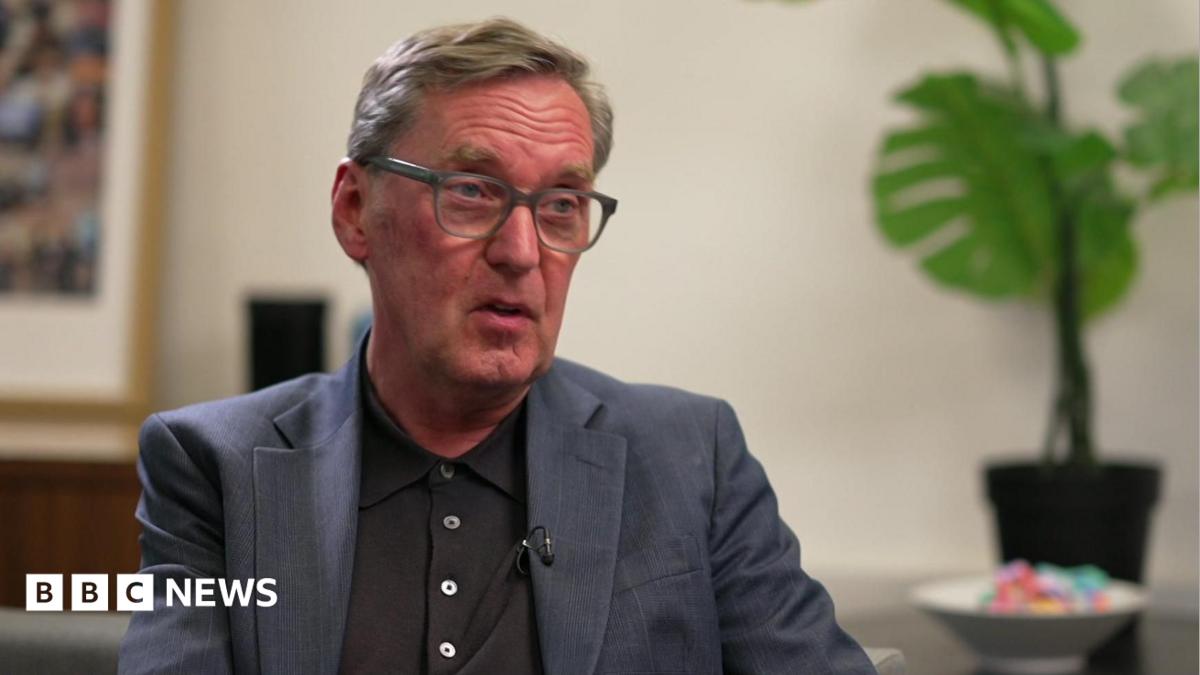
Alan Milburn’s year-long report, which will be published on Tuesday, will recommend moving under-25s off the main sickness and disability benefits, the Times reported, external.
Milburn, a former Labour health secretary, has been tasked by the government with helping reduce the one in eight 18- to 24-year-olds in the UK who are not in education, employment or training – or “Neet”.
He said on Wednesday night that his plans would not be “pain-free” and would affect both existing and new claimants.
Instead, they would receive an allowance on the same basic rate as universal credit.
Some could be eligible for a new “additional cost allowance” to cover day-to-day costs related to their conditions.
But many claimants would receive less under the plans, which the government is set to take forward into legislation in the new year.
Milburn, a Labour MP from 1992 to 2010, is also expected to recommend an investment of billions into more employment support for young people, including work placements, job subsidies and one-to-one personal advisers.
Those with more severe disabilities and unable to work would get a new benefit paid at a higher rate.
Speaking to the Times about his report, Milburn said: “Candidly, it could mean that some people will get less financial support at the beginning of their benefit claim than under the current system.
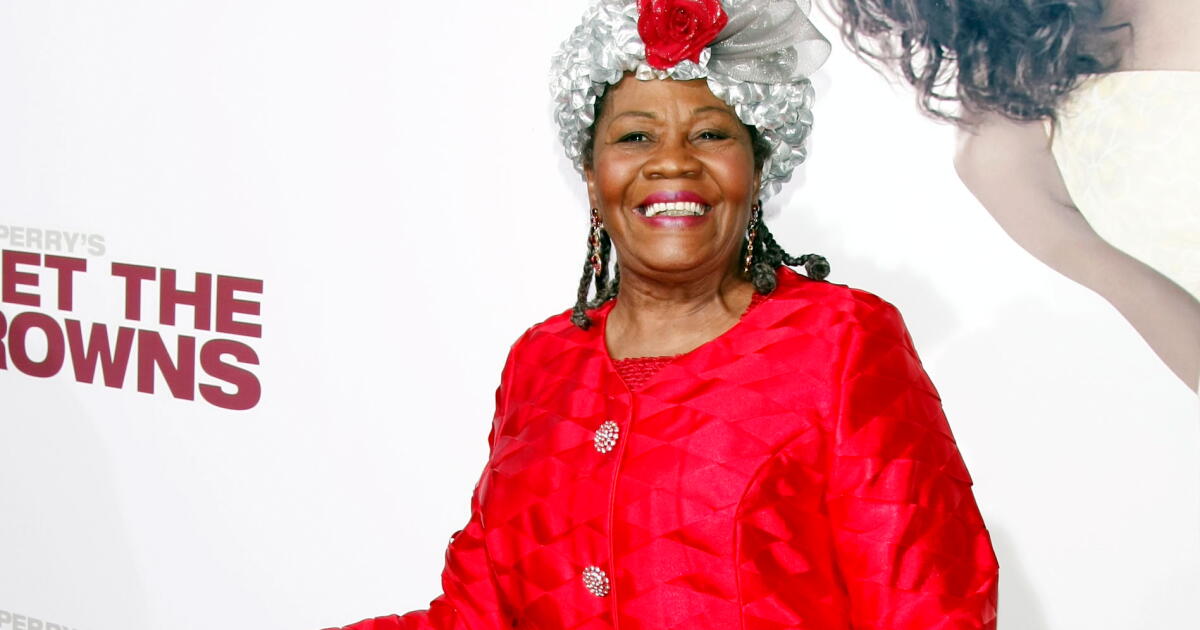
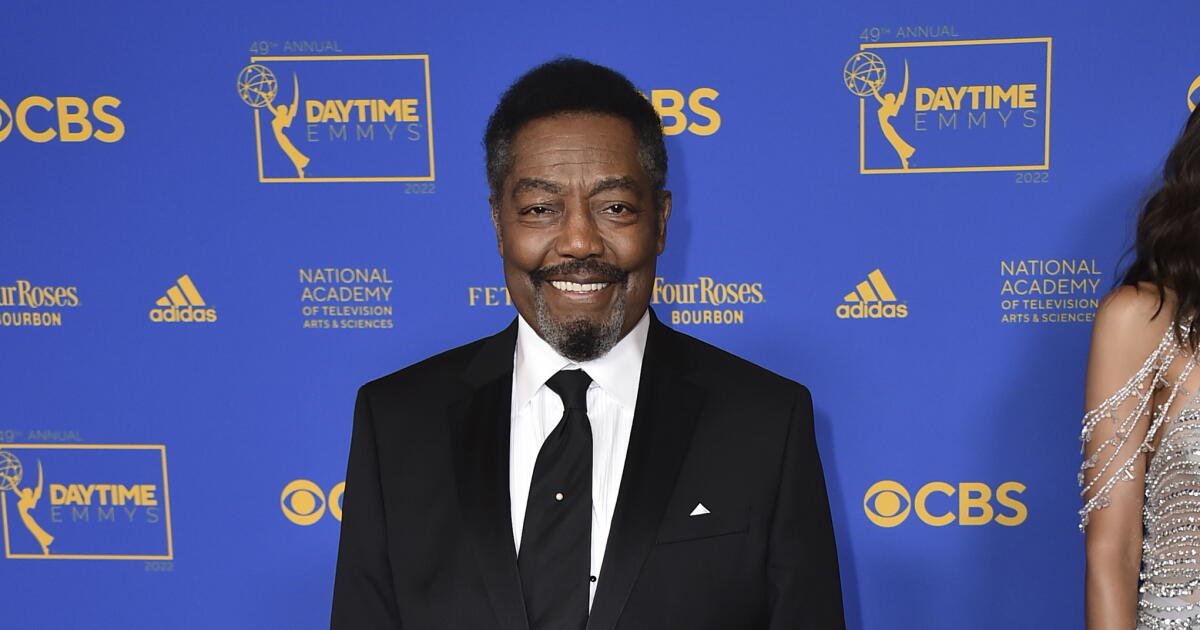
Actor Irma P. Hall, the former educator who pivoted to acting in her late 30s to star in films including “Soul Food,” “The Ladykillers” and “Meet the Browns,” has died. She was 91.
Hall died Tuesday in Dallas surrounded by her loved ones, her family announced Wednesday in a statement. Her family said the actor leaves behind a “remarkable legacy” that spans from her memorable characters on screen, her time as a teacher early in life and her role as a church leader in Dallas in her final years. A cause of death was not revealed.
“She started as a teacher in the classroom but ended up being a teacher to the world,” Hall’s daughter Irma Hall Crayton said in the statement. “My mom used to always say, ‘To the world you may be one person, but to one person you may be the world.’ And she was just that to many people.”
Hall, who was born in Texas and raised in Chicago, is best known to film fans for portraying scene-stealing, elderly types. She was Big Mama, the matriarch of the central Joseph family, in George Tillman Jr.’s 1997 “Soul Food,” starring Vanessa Williams, Vivica A. Fox and Nia Long as her three daughters. That same year she shared the screen with Kevin Spacey and John Cusack as witchy healer Minerva in Clint Eastwood’s Savannah-set “Midnight in the Garden of Good and Evil.” In the Coen brothers’ “The Ladykillers,” Hall was the religious and aging widow who rents a spare room to a deceiving “professor” (Tom Hanks) and his band of criminals posing as musicians (Marlon Wayans, J.K. Simmons, Tzi Ma and Ryan Hurst).
She earned numerous accolades for her work, including an NAACP Image Award for her work in “Soul Food” and a jury prize at the 2004 Cannes Film Festival for “The Ladykillers.”
“I’ve always found older women extremely interesting. In fact, as a child I’d be playing outside and when they couldn’t find me, they’d just start knocking at all the old people’s doors,” Hall recalled to The Times in 1996. “My mother used to say I was probably the only child that was born wanting to be old.”
Hall’s acting career spanned from the mid 1970s to the 2010s and also included roles in the 1998 film adaptation of Toni Morrison’s “Beloved” starring Oprah Winfrey, 1996’s “A Family Thing” with James Earl Jones and Robert Duvall, the TV series “Hap and Leonard” alongside “The Wire” star Michael K. Williams and Tyler Perry’s “Meet the Browns.”
She sharpened her ability to play older in TV, film and theater by channeling the women in her life and studying elders’ behavior, she told The Times in 1996. She made it a habit to visit nursing homes, speak with their residents and study their physicality from their gestures to their gaits.
“I practice little things like that all the time because I love to play old people and I don’t ever want them to be embarrassed or ridiculed by my performance,” she recalled at the time.
Irma Dolores Player was born June 3, 1935, in Beaumont, Texas. Her father was a saxophonist during the big-band era and her mother was a housekeeper. She returned to Texas for college, graduating from Texas College in Tyler. She remained in her birth state to work as a teacher in poor, segregated schools before her unexpected pivot to acting in her late 30s. She taught foreign languages and ultimately taught theater.
Actor-director Raymond St. Jacques discovered Hall after hearing her read poetry and cast her in his 1973 film “Book of Numbers,” paving the way for a decades-long career that would endear her to generations of TV and film audiences.
“I want to tell their stories so profoundly that no one will ever forget these characters,” she told the Dallas Morning News of her characters in 2017. “I don’t care if they don’t know who Irma P. Hall is.”
Hall later lived in Chicago, where she cared for her parents and pursued an award-winning theater career. She also dedicated her efforts toward nurturing upcoming talent in her home state, co-founding the Dallas Minority Repertory Theatre, and served as a longtime member of and church mother at Inspiring Body of Christ Church in Dallas.
Hall’s survivors include her daughter. A celebration of life will be announced at a later date.
JACKSON, Miss. — Democratic nominee Scott Colom has defeated Republican Sen. Cindy Hyde-Smith in Mississippi’s closely contested U.S. Senate race after a prolonged ballot counting process, giving the state its first Black U.S. senator since post-Civil War Reconstruction.
Colom’s narrow victory is a seismic shift in Mississippi, which has been controlled mostly by white conservatives for generations, and it will echo through the country as well. The outcome adds to a decisive midterm rebuke of President Trump, whose party suffered defeats in several Republican-controlled states, and it will bolster some Democrats’ argument that their future runs through the American South.
The Associated Press called the contest Wednesday in Colom’s favor after local elections officials spent several days processing absentee and provisional ballots, called affidavit ballots in Mississippi.
The last time Mississippi chose a new Democratic senator was 1947, and the winner then was a staunch segregationist. Colom, a 43-year-old local prosecutor, capitalized on the state’s large Black population, discontent with the economy and Hyde-Smith’s missteps as she sought a second full term.
“They actually deserve a senator that will listen to them, that actually cares about what they think, actually cares about what they’re going through,” Colom said in the campaign’s closing stretch.
Colom said during the campaign that he could represent all of Mississippi, a state where racial divisions have long defined its politics and society.
“It’s got to be about having a party that represents rural America again, suburban America, urban America — a party that makes sure we actually deliver for voters in ways that make their lives better, and we don’t come up with excuses as to why we can’t do it,” he said.
A race Washington once viewed as a longshot
The contest was a latecomer to the national spotlight, drawing attention from Democrats who belatedly infused cash into Colom’s candidacy. The son of a onetime Republican who worked for President Reagan, Colom garnered attention for his aggressive campaign as Democrats widened the Senate battleground map and Hyde-Smith’s vulnerabilities crystallized.
Colom attracted particular notice for some of the year’s most widely circulated ads. After Hyde-Smith, 67, seemed to brush off high beef prices by saying consumers could choose other proteins, Colom cut a 30-second spot depicting incredulous voters saying they’d “pick another senator instead.”
When Trump went to Corinth, Miss., in late October for a rally with Hyde-Smith, Colom walked the line of Trump supporters as they waited outside the gates. He introduced himself, asked about their concerns and explained his priorities.
Later that evening, when Trump called Hyde-Smith to the stage, she said nine words in six seconds: “Is this not the best president in our lifetime?”
Then she stepped away.
“I love that,” Trump replied when he continued his 80-plus minutes at the microphone. “Sometimes they get up and they talk for 10 minutes.”
The appearance tracked Colom’s tactic of criticizing Trump’s policies — especially the Iran war and tariffs that he said were especially hard on Mississippi farmers — without taking personal jabs at the president or people who voted for him.
Instead, he consistently put the onus on Hyde-Smith, framing her as a non-entity in Washington — a critique that resonated in a state that has been accustomed to long-serving senators like Thad Cochran, Trent Lott and John Stennis, who all rose to powerful posts and routed federal money back to Mississippi.
There is some irony to Hyde-Smith finding herself flat-footed against Colom. In 2022, then-President Biden nominated Colom to be a U.S. District Court judge in the Northern District of Mississippi. Mississippi’s senior Republican Sen. Roger Wicker and former Gov. Haley Barbour, who is also a former national Republican chairman, backed the nomination.
Hyde-Smith, however, blocked Colom’s confirmation under the Senate tradition that members can spike a president’s choices for federal judicial positions in their home state.
Colom said his Senate bid was never about getting even with Hyde-Smith.
Colom called on Mississippi’s history
The senator-elect concluded his campaign with an ad that featured him at the Jackson home of Medgar Evers, the civil rights leader who, in 1963, was gunned down in his driveway by a white supremacist and died in front of his family.
“In Mississippi, no one is above the law, and no one should be outside its protection,” Colom said, telling the story of Evers’ military service at Normandy in World War II, his voter registration efforts in Mississippi, his assassination and the three decades it took to win a conviction.
“He was killed for helping Mississippians vote,” Colom said. “On Tuesday, use your vote and honor everyone who died for that right.”
Black Democrats, including Maryland Sen. Angela Alsobrooks and Georgia Sen. Raphael Warnock, highlighted Colom’s bid early. Senate Majority Leader Chuck Schumer helped Colom raise money, and he drew financial support from other outside players, including Illinois Gov. JB Pritzker, a billionaire and potential presidential candidate.
Former President Clinton and former Vice President Kamala Harris campaigned on Colom’s behalf in the campaign’s closing weeks.
Despite Republicans’ domination, the path was always there
With the largest share of Black voters of any state, Mississippi’s general elections have been closer for years than its immediate Southern neighbors. Trump won by double digits in each of his three presidential contests, but in 2023, Republican Gov. Tate Reeves managed to win reelection by a margin of just 3 percentage points.
Colom and other Black party leaders and strategists insisted throughout 2026 that he could narrow the gap with strong Black turnout, Republican voter discontent and an uptick in Democrats’ usual share of the white vote in Mississippi.
Results showed strong turnout in the Mississippi Delta and its concentration of majority Black counties. But nearly all of the state moved leftward from the 2024 election, when Trump carried Mississippi by nearly 23 points.
Then-Gov. Phil Bryant first appointed Hyde-Smith, who was state agriculture commissioner, to the Senate in 2018 when Cochran resigned. She won a special election runoff in 2018 and a full term in 2020. Both times she defeated Democrat Mike Espy, a former U.S. agriculture secretary who’d also been Mississippi’s first Black congressman since Reconstruction.
During the extended vote count, Colom acknowledged the historic nature of doing what Espy could not. But he said he sees his place more in terms of other Mississippians, especially its youngest residents, than his individual story.
“My job is to do well enough as the next United States senator that the next time some young black boy or girl has the work ethic, the vision, and the values,” he said, “and they want to be United States senator, that nobody says because of anything I’ve done that they shouldn’t get a chance.”
Elina Svitolina says she “got a bit angry at myself” to inspire a comeback victory over Karolina Muchova at the WTA Finals and keep her semi-final hopes alive.
Ukraine’s Svitolina lost 6-4 6-0 in her first group match against Mirra Andreeva on Monday and made an equally poor start against Muchova.
It looked as though things were getting worse for Svitolina when she took a medical timeout for a right hip injury after losing the first set, before finding herself an early break point down.
However, the sixth seed saved it and then gradually wore down Wimbledon runner-up Muchova to win 3-6 6-2 6-2.
Muchova hit 39 unforced errors throughout the match – the majority of which came from her forehand – as Svitolina ground her down.
The Czech could not recover from giving up an early break in the third set and handed over another with her eighth double fault of the match.
Svitolina made no mistake, with the 32-year-old tipping her head back and roaring in celebration after securing the win.
“I was really angry at myself after the first match and the first set,” Svitolina told Sky Sports.
“Sometimes it [channelling frustration] happens in a good way and sometimes in a bad way.
“I tried to direct my anger towards the ball and I found my game in the end.”
It is Svitolina’s ninth victory over a top-10 player this year, and her first at the WTA Finals since she won the title in 2019.
Svitolina can still qualify for the last four in California – but she will not know what she needs to do until after Aryna Sabalenka’s match against Andreeva.
At the Stockholm Open, Britain’s Cameron Norrie fell 7-5 6-3 to world number 10 Taylor Fritz.
Denmark’s Holger Rune reached the quarter-finals of the tournament, a year after he ruptured his Achilles at the same event.
Rune only made his return to the ATP Tour in October after a gruelling 12 months recovering from the injury, but beat Miomir Kecmanovic 2-6 6-1 6-4 to advance.
The historic victory delivers an eighth US Senate seat to Democrats after last week’s pivotal midterm election.
Published On 11 Nov 202611 Nov 2026
Democrat Scott Colom has won Mississippi’s closely watched United States Senate race, giving his party a rare, historic victory in a Republican stronghold that has eluded them for decades.
Colom, a prosecutor who will become the state’s first Black senator in more than 140 years, garnered a narrow victory on Wednesday over incumbent Republican Senator Cindy Hyde-Smith in one of the US midterms’ biggest upsets.
Recommended Stories
list of 3 itemsend of list
The win builds on Democrats’ success after the party delivered an electoral drubbing last Tuesday, winning at least eight US Senate seats that are currently held by Republicans. A US Senate race in Alaska remains uncalled.
For more than a week, the Mississippi contest has remained too close to call as election officials worked to count more than 100,000 mail-in ballots. Thousands of other residents, who could not confirm their registration at voting sites, cast provisional ballots that required confirmation of their eligibility.
US Senator Cindy Hyde-Smith appears with President Donald Trump at a rally in Biloxi, Mississippi [File: Rogelio V. Solis/AP Photo]
Colom and Hyde-Smith took markedly different approaches as remaining ballots were counted.
Hyde-Smith, who was not seen publicly until she returned to Washington this week as the Senate returned to session, had expressed confidence she would win after “every legally cast vote is fully and accurately counted”. But after the election, Colom continued to hold a series of public events where he castigated his opponent.
“Ultimately, at some point, the senator needs to speak out. Where is Cindy Hyde-Smith?” Colom told reporters on Friday in Jackson, Mississippi. “We want to hear from her. She needs to answer questions. What is her path to victory? She doesn’t have one”.
The US Senate race also was not the first time the two had crossed political paths.
Hyde-Smith, citing concerns about Colom’s position on transgender athletes, previously blocked him from serving as a federal judge in 2023 after he was nominated by former US President Joe Biden. The position had required Senate approval.
Colom’s win defies political gravity in a state that US President Donald Trump won by just over 22 points in the 2024 presidential election.
The last Democrat to win a US Senate race in Mississippi was 1982, when John Stennis claimed victory over Republican challenger Haley Barbour, who later became governor of the state.
Colom, who has been a proponent of raising the minimum wage, increasing protections for rural hospitals and ending the US war in Iran, will be sworn in next January. He will be the chamber’s seventh Black lawmaker.
The Venezuelan government has turned to foreign corporations to complete unfinished hydroelectric projects. (El Universal)
Caracas, November 10, 2026 (venezuelanalysis.com) – The Venezuelan National Assembly approved on Tuesday a reform of the Organic Law of the Electrical System and Service to open the electrical grid to the private sector amid a crisis of rising demand and recurring blackouts.
The new legislation stipulates that power generation, transmission, distribution, and commercialization can now “be carried out by the state-owned operating company, as well as by mixed-ownership and private companies holding the corresponding authorization.”
“The reform will allow private entities to provide electricity services,” National Assembly President Jorge Rodríguez told reporters after the legislative session. “It will make self-generation possible, allowing private companies to generate and supply electricity to businesses, industries, shopping centers, etc. This will help increase supply.”
The Venezuelan parliament had preliminarily approved the reform in June. A commission incorporated adjustments to the text, which deputies reviewed across several parliamentary debates before Tuesday’s final vote. The final text, seen by Venezuelanalysis, will be published in the National Gazette in the coming days.
The updated law puts an end to the state monopoly over electricity established by former President Hugo Chávez. A 2007 law identified the sector as “strategic for the nation” and merged several companies into the National Electric Corporation (CORPOELEC).
Under the new rules, private companies can set up new power plants, build transmission infrastructure and charge a fixed toll, or receive distribution and commercialization rights in specific areas.
In addition, they can also receive concessions of state assets for a maximum of 25 years, with the responsibility of returning them to CORPOELEC or another designated state entity at the end of the period. The state will retain exclusive control over all hydroelectric generation in the Caroní basin as well as transmission and distribution responsibilities in “strategic” areas.
The law also provides that disputes or disagreements of any kind that cannot be settled amicably by the parties may be brought before Venezuelan courts or resolved “through alternative dispute resolution mechanisms.” US licenses allowing Western corporations to deal with Venezuela have demanded that disputes be settled in the US, the UK, France, or Singapore.
Regarding oil companies, the law stipulates that they must “ensure a reliable and stable supply of electricity for the execution of primary activities” through self-generation, cogeneration, or third-party contracts designed to secure operational autonomy. Oil and independent power generation firms will also not require state authorization to generate electricity for their internal networks, unless they connect to the national grid.
Rodríguez stressed that the changes do not to amount to privatizing electricity services but rather constitute an “expansion.”
“An appropriate sanctions framework has been established, along with guarantees for private entities to participate. This is not privatization, but an expansion that allows private companies to provide services, particularly to large consumers,” he stated.
The head of the legislature added that electricity consumption tariffs will be computed in foreign currency and converted using the official exchange rate set by the Central Bank of Venezuela (BCV). He also disclosed a policy of subsidies intended to shield vulnerable sectors.
“This will primarily benefit people who, because of their income level, cannot afford the full tariff, unlike industries or major retailers,” he concluded.
The legislation also establishes a National Electric System Superintendency, empowered to establish tariffs, initiate administrative investigations, and impose penalties on those who violate the law. Operators may face fines of up to 2 percent of their gross revenue for failing to comply with regulations governing electrical installations, disregarding instructions issued by competent authorities, refusing to provide requested information, or obstructing inspections.
Consumers, meanwhile, may be fined between US $50 and $10,000 for unauthorized use of electricity, with similar penalties for unauthorized consumption, and ten times larger ones for connecting equipment that causes disturbances. The same range of fines applies to tampering with, damaging, or modifying meters and supplying electricity to third parties without authorization, among other violations.
The new law also allows the Venezuelan government to grant tax breaks to private corporations at its discretion to “promote the expansion, efficiency, or environmental sustainability” of the electric system.
The electricity reform, which follows major legislative pro-business overhauls to the mining and energy sectors, comes amid a persistent electricity crisis that sees most of the country face daily blackouts, sometimes lasting up to 12 hours.
Residents have staged recurring protests. On Monday, a crowd blocked the Argimiro Gabaldón highway connecting Barcelona and Puerto La Cruz in Anzoátegui State for several hours.
The Venezuelan Observatory of Social Conflict (OVCS) registered 531 protests related to electricity services nationwide in September. For her part, Acting President Delcy Rodríguez has criticized the demonstrations, affirming that “burning tires does not add a single megawatt to the electric grid.”
Venezuela currently produces only around 12,000 MW, roughly 40 percent of its installed capacity, and faces a generation deficit of over 4,000 MW. Venezuelan authorities have pledged to add 1,300 MW to the grid before the end of the year and have negotiated agreements with GE Vernova, Siemens, and IMPSA to bring paralyzed power plants back online.
Targeting short-term improvements, CORPOELEC recently signed an agreement with Turkish company Karpowership to lease two power-generating vessels that would add 200 MW to the grid in western Zulia State, one of the states hardest hit by electricity shortages.
However, Venezuelan officials have not provided additional details on the contract, including its cost, duration, and fuel supply.
Ozzy Osbourne was rock ‘n’ roll’s Prince of Darkness — and also a much-beloved bumbling reality show dad. Inventive bassist Geezer Butler put words into Ozzy’s mouth as Black Sabbath’s main lyricist, his muscular playing anchoring the quartet’s rhythm section alongside drummer Bill Ward.
But it’s guitarist Tony Iommi whose iconic riffs built the Sabbath sound. The hugely influential aural architect found his signature style after a horrific accident at a sheet-metal plant when he was just 17. The teen was about to quit the factory, but on his last day, the tips of his middle and ring fingers of his right hand were sliced off in a piece of machinery. As a left-hander, Iommi used his right for fretting, and for creating a song’s mood and melody.
From the ominous timbre of the first song in their 1970 debut LP, “Black Sabbath,” to legendary cuts including “N.I.B.,” “Paranoid” and “Iron Man,” Iommi’s self-made fingertip “thimbles” and adaptive way of playing created unforgettable and hugely influential riffs. The guitarist’s instantly recognizable style and tone are as vital and memorable more than 50 years later on his new solo album, “From the Dark.”
Via phone from his home in the Cotswolds, England, a day before the London premiere of the concert documentary film “Ozzy & Black Sabbath: Back to the Beginning,” Iommi is humble, low-key and congenial. While he’s excited about “From the Dark,” he’s still stunned by the 2025 loss of his longtime friend and bandmate Osbourne.
He speaks with slight trepidation about his upcoming viewing of the concert documentary, which chronicles Osbourne’s final live performance and Sabbath reunion.
Tony Iommi’s amputated fingertips could have ended his guitar career. Instead, homemade thimbles and a new playing style helped create Black Sabbath’s defining, generations-shaping riffs.
(Ross Halfin)
“It’s weird for me,” Iommi says. “In my own heart, I don’t particularly really want to see it because it brings back so many memories with Oz of course. For me, on that last gig, seeing him not being able to move wasn’t particularly the way I’d seen him — all the years he’s been running around the stage. That’s how I know him, and then to see him sitting down on a throne…”
However, for most of the four-song final performance, which saw Sabbath reuniting with drummer Ward for the first time in more than two decades, Osbourne was not in the guitarist’s sights. “I stood at the back because Bill wanted me to stand by him. We hadn’t played live with Bill for 20 years, so Bill said, ‘Would you stand by me, if I forget anything or miss anything?’ I don’t know what I could have done, but I did do that,” Iommi says.
“[The event] was a very strange experience. It’s great for all the other bands who came to the show and supported Sabbath. That was fantastic, and they were all really nice and no egos. It was a great setup, and I was really proud of everybody coming along to be involved in it and tip their hat towards us. It was lovely, of course, for the fans.”
In rehearsal, while Osbourne was joking around, “you could see he was in pain,” recalls Iommi. “Basically, he was carried in, and we were all shocked. We just didn’t know what to say. It was a strange, strange feeling.”
When the singer died only 17 days after the concert, even his bandmates were shocked by the suddenness. “I spoke to him the night before he passed, and he said to me, ‘Oh, God, I’ve been really tired, I feel really tired. I can’t stay awake. I’m exhausted.’ I said to him, ‘You’re bound to feel it.” We’ve been rehearsing the show, it’s been a bit stressful. We’ve had a lot of things to do.’ Ozzy said, ‘But I just can’t.” I just feel tired.’ And of course, the next day he’d gone. Really, it was such a shock.”
At 78, the Birmingham-born guitarist is releasing From the Dark, a solo album built around his signature heavy sound and a new lineup of collaborators.
(Ross Halfin)
At that time, Iommi had the seeds of the songs that would become “From the Dark.” It began with a scent: “I did a couple of instrumental tracks for a perfume [ad campaign]. Then I thought, ‘I’ll start writing some instrumentals for an album,’ and I did three or four. Then I changed my mind and thought, ‘I want to do one with a vocalist.’ ”
If Tony Iommi were a perfume, he’d smell like cinnamon, patchouli and leather. In fact, he is one, with three unisex fragrances by Italian luxury brand Xerjoff under his name. One — with notes of rum, bergamot and Ambergris, is called Monkey Special, named after his 1964 Gibson SG guitar. “It’s not a cheap perfume, I might say,” Iommi says. “In England, they stock it in Harrods and Selfridges. It’s been very successful and very different for me to do something like that.”
Following his perfumey instrumentals, the songwriter began collaborating with journeyman Norwegian vocalist Jørn Lande, bassist Becky Baldwin and drummer Karl Brazil, who has worked with pop icons Robbie Williams and James Blunt. The latter two hail from Iommi’s and Sabbath’s hometown, Birmingham, England.
“I met Jørn years ago when I was going to do another album, and it ended up with [former Deep Purple bassist/singer] Glenn Hughes on it. But I’d done a track with Jørn, and I liked the idea. But at the time, the record company wanted to use somebody a bit more known, so I did the album with Glenn.”
Lande ended up singing on a 2010 live show following the death of second Black Sabbath singer Ronnie James Dio, stepping into the frontman’s shoes for the band, which was then going by the name Heaven & Hell. “I was really pleased with what he’d done, and I always had it in mind to use him somewhere along the line, doing an album together, and that’s how it worked out.”
Born 78 years ago, in Birmingham — the town where Sabbath first formed and later performed its final show in 2025 — Iommi remains defined by his signature look. It is hard to imagine the guitar legend without his trademark black shirt, large silver cross, blue-tinted glasses and leather coat. His playing — down-tuning his guitar to lower the pitch for a menacing and heavier sound — may have morphed very slightly over the years, but “I think you just do it naturally without even thinking about it. My writing ideas are still the same. I still come up with miserable stuff,” he says, chuckling. “I like to do riffs and whatnot, so I enjoy that.”
Tony Iommi with his band vocalist Jørn Lande (far right), bassist Becky Baldwin, and drummer Karl Brazil and producer Mike Exeter
(Tina Korhonen)
On “From the Dark,” lyrics are all Lande; Iommi has no interest in telling his own stories using words. Yet a new tune like “Beyond the Dead” seems as if it could be about Iommi’s 2011 diagnosis and treatment for early-stage non-Hodgkin lymphoma.
Not so, the guitarist affirms, while acknowledging that the lyrics could be read that way.
“It was about beyond the living, beyond the dead, and coming back. Really deep, but that’s good. I do love what he’s done. When somebody like Jørn comes in, as with Dio, they’d write their own lyrics, and I prefer that because they’re going to sing them,” Iommi explains. “It’s like somebody saying to me, ‘Play this and play that.’ I want to play what I feel and what’s coming from me.”
There was a time when Sabbath did take a slightly different approach to writing and recording, but it wasn’t at their own initiative. In 2001, the band recorded “13,” Sabbath’s 19th and final studio album. It was the first studio record with Osbourne since 1978’s “Never Say Die,” and producer Rick Rubin was on board for the reunion.
What did Iommi learn from Rubin?
“I learned not to use a producer again,” he quipped. “It was strange because Rick wasn’t there most of the time. He’d be there for a certain recording, then he’d disappear. I’d written a lot of the stuff, and then we’d play it, and he go, ‘I don’t like that bit, I don’t like that part,’ and then disappear.
“One Friday he phoned me up — because he wouldn’t talk to the others [Osbourne, Butler]. He wanted me to relate what he’d said to the others. He said, ‘Could you write a song over the weekend that’s like “Planet Caravan,” so we can record it on Monday?’ I went, ‘What?!!’ But it happens that I did do it.” The end result was “Zeitgeist.”
Iommi is still processing Ozzy Osbourne’s death, just 17 days after Black Sabbath’s final performance, and says watching the concert film will bring back painful memories.
(Ross Halfin)
Iommi’s key plans for his new lineup and record were to make sure the players brought a healthy dose of enthusiasm. Baldwin is the first female he’s been in a band with. Iommi has a comfort zone, so he’d originally wanted Butler on the new album, which didn’t work out logistically. “Becky happened to be a big fan of Geezer, so we got Becky over to my home studio, and I did throw her in the deep end a bit,” admits Iommi. “I gave her the first track, which was ‘World Alone.’ I said, ‘Play that.’ She listened to it a bit and started playing it. It was really good. I just wanted to see what she’d be like straight away, just to see what she came up with, which was a bit horrible of me, I suppose.
“She worked out really good. The other thing is enthusiasm,” he continued. “I wanted people involved in this that really love what they do and really enjoy playing, and she constantly wants to play and be involved in the music, and it’s a great attitude.”
Another Brit superstar who also opts to play with relatively unknown, ardent players is Zeppelin’s Robert Plant. “He’s the same,” Iommi acknowledges. “We spoke about this, myself and Planty, because obviously we’ve known each other a long time. He could have easily done Zeppelin, but he wanted to do what he wanted to do.”
What a collaboration Iommi and Plant would be.
“I did say to him one time about doing something together, but again, he got his own thing, and I did [too]. Who knows? We’ve talked about it a couple of times, but he’s into a certain flavor of music that he likes to play, which is different to what I play, really. I don’t discard anything that way. If something comes up that’s a good idea and somebody’s into it, then I’m going to have a go.”
It’s been 26 years since Iommi’s debut, a self-titled solo album with a roster of guest vocalists including Osbourne, Dave Grohl, Henry Rollins and Pantera’s Philip Anselmo. “How fast it goes,” Iommi says with a chuckle. “Twenty-one years ago was my last solo album. And that’s long enough, isn’t it? But I was just busy with the Sabbath thing and then other things, including the Sabbath ballet.”
While fans would adore a tour, Iommi says he’d only do the occasional “one-off.” He will allow a moment of supposition, if pressed. “I suppose if I did something like that, I’d probably do some Dio stuff and maybe [one-time Sabbath vocalist] Tony Martin and maybe ‘Paranoid,’ ‘Iron Man.’ I haven’t really thought about it. Again, it’s not Sabbath,” he concludes. “It would be an Iommi thing, but it is part of my background. So I suppose I would play some of the old ones.”
The son of former NBA dunk contest runner-up Chris Carr, Lakers rookie Cameron Carr envisioned his first NBA points coming on a lob. When asked before the draft in April, the first-round pick knew that if not on a sky-high alley-oop his first bucket would at least be something athletic.
He now gives himself half-credit for calling his shot.
The 21-year-old Lakers guard scored his first NBA points on a fastbreak dunk Monday in Atlanta, making the most of his opportunities during the Lakers’ hot start.
Carr had two points and three rebounds in seven minutes and 19 seconds in the Lakers’ win over the Atlanta Hawks in the first significant playing time of his professional career. The Lakers, who finish a three-game, four-day road trip in Milwaukee on Wednesday, have the top record in the NBA at 10-2 with a six-game winning streak.
Carr helped extend the Lakers’ streak by bolstering a shorthanded lineup against the Hawks. The Lakers needed the rookie Monday when they were without Austin Reaves (illness) and Quentin Grimes (right finger sprain).
Three weeks into his NBA career, Carr, the 24th overall pick the Lakers traded up to acquire from the New York Knicks, said he is still nervous any time he subs into a game. Getting the first of what he hopes will be many NBA points helped settle his nerves.
“Over time it’s only going to grow, it’s only going to get better,” Carr said. “I’m only going to get more and more confident, so every time I get a chance to step out there, just show what I can do and of course show my talents through God’s work.”
The 6-foot-5 guard is a skilled scorer and an athletic marvel. He couldn’t even touch the rim when, one summer, he begged his father, who was the runner-up in the 1997 dunk contest to Kobe Bryant, to teach him to dunk. He just needed one summer to master it. Carr set a single-season sophomore scoring record at Baylor last season and his 642 points rank fifth in program history regardless of class. An efficient shooter (37.4% from three in his final college season), Carr also led Baylor with 45 blocked shots.
Now in the NBA, defense is still where Carr can improve most, Lakers coach JJ Redick said. Although Carr is a talented offensive player, it is still difficult for young players to find their rhythm with limited playing time, Redick said. The Lakers staff has encouraged Carr to take advantage of stay-ready games against coaches and make the most of G League opportunities to get more reps. Carr had 13 points and four rebounds during the Coachella Valley Lakers’ season opener on Friday.
“Just being patient, man,” Carr said of his approach to the beginning of the season, “just putting my head down, working every day, knowing that I can be the best person I can be. And when my time, my name is called, just be ready.”
Carr subbed into Monday’s game with 3:35 remaining in the first quarter. The Lakers, trailing by two, soon flipped the game with 13 unanswered points to end the quarter. A steal by Luka Doncic with 1:44 remaining fueled the streak and the star point guard threw an outlet pass to Carr in transition, who collected the ball for an emphatic two-handed dunk.
Doncic dished out another assist after the game when he rushed to secure the game ball for Carr. The superstar said he wanted the rookie to remember his first NBA bucket.
Cameron Carr said he’s going to ask everyone to sign the game ball from Monday’s game when he scored his first NBA points and keep it in a case. On Luka Doncic chasing it down for him: “That’s big time, especially coming from him. That says a lot about who he is as a person.” pic.twitter.com/eEGrD7VJYy
“That’s big time,” Carr said Wednesday of Doncic’s kind gesture. “Especially coming from him, that says a lot about who he is as a person and how he views this team.”
Redick handed the game ball to Carr in the locker room after the win as teammates cheered. Carr broke the team huddle on the word “together.” He plans to have everyone sign the ball before keeping it in a trophy case.
“There’s no price on it,” Carr said. “It’s forever.”
Lakers sign two-way center
The Lakers swapped out two-way centers Tuesday, waiving Lawson Lovering and signing Carson Cooper, the team announced. Both previously played in the Memphis Grizzlies organization and Cooper made one NBA appearance for the Grizzlies after signing a two-way deal with the team.
Cooper didn’t become a regular starter in college until his senior season, when he started all 35 games for Michigan State. The four-year Spartan averaged 11.1 points on 58.4% shooting with 7.1 rebounds, 1.5 assists and one block in his final season.
Lovering, who signed a two-way deal with the Lakers on Oct. 28, appeared in Lakers blowouts against Miami and Sacramento with a rebound and a block.
Iran’s parliament speaker and top negotiator says Tehran is waiting for an official US response to its seven conditions for ending war.
Published On 11 Nov 202611 Nov 2026
Mohammad Bagher Ghalibaf, Iran’s parliament speaker and top negotiator, has told Al Jazeera that the Strait of Hormuz will “never return” to its status prior to the US-Israel war on Iran.
In an exclusive interview published on Wednesday, Ghalibaf said Iran and Oman reached an understanding to oversee the critical waterway as part of Tehran’s seven-point proposal to end the eight-month conflict.
Recommended Stories
list of 4 itemsend of list
“There are no ‘free waters’ [international waters] there, and the 1982 [UN Convention on the Law of the Sea] does not apply to the strait … The regulations within the Strait of Hormuz are governed by the laws of the two littoral states that border it,” he said.
Seven conditions
Ghalibaf said Tehran provided a clear response to the US through a Qatari mediator that included its seven conditions for peace talks, adding that Iran is waiting for an official response.
“The ball is now in the American court,” he said.
Iran’s conditions, as outlined by the chief negotiator, include lifting the US-imposed naval blockade and sanctions, the release of Iranian frozen funds, ending fighting on all fronts, and an explicit announcement of an end to the war.
He said these demands were part of the Islamabad memorandum of understanding signed in June and their implementation was necessary before entering negotiations with the US.
“If America limits itself to what has been agreed upon without making excessive demands or engaging in behaviour that breeds distrust, then, naturally, reaching an agreement is possible,” he said.
“What stands in the way of an agreement is our lack of trust in the United States.”
Renewed conflict
Ghalibaf said US officials asked Russian President Vladimir Putin to mediate direct negotiations with Tehran during a visit to Moscow.
He warned against new US attacks against Iran, saying that US President Donald Trump will face another defeat and political pressure from the new Congress that takes office in January.
Iran is determined to move beyond a state of “no war and no peace”, he said, urging a sustainable deterrent capability, including military capabilities.
Yemen mediation
On the ongoing fighting in Yemen between the Saudi-backed internationally recognised government forces and the Houthis, an armed group also known as Ansar Allah (Arabic for “Supporters of God”), Ghalibaf said that “no one should interfere” in it.
“If both the government in Yemen and Saudi Arabia were to ask for our help, we would certainly offer our assistance to help resolve their conflict,” he said.
Iran has previously offered to facilitate talks between Saudi Arabia and Yemen’s Houthi group in October following a series of deadly attacks on the kingdom.
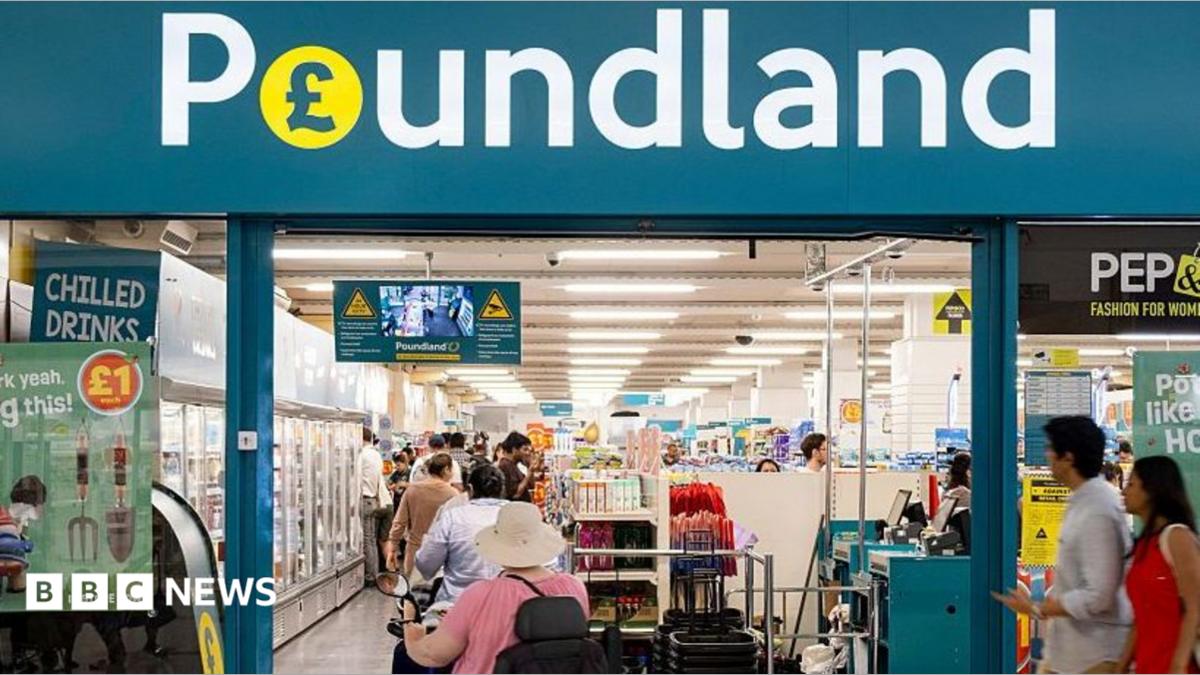
Poundland looks set to avoid immediate collapse after its US owners told MPs on Wednesday they were in favour of extending a deadline to find a rescue deal.
The discount chain, which has 11,000 employees, has been edging towards administration after being blocked by Gordon Borthers from accessing cash in its bank accounts.
A deadline to secure a buyer for the business is set to expire at midnight, but sources close to the situation told the BBC they expect more time will be given, thanks to the release of £10m in funding.
A committee of MPs questioned Gordon Brothers following accusations that the investment firm hopes to profit from selling off Poundland’s 600 stores and stock piecemeal.
Gordon Brothers – which bought the chain for just £1 last year – is accused of forcing that outcome by restricting Poundland’s access to available cash needed to restock stores and pay wages and rent, ahead of the crucial Christmas trading period.
The investment firm, which specialises in buying and restructuring distressed companies, has denied the claims.
But pressure remains on Poundland’s owners after a takeover bid was rejected. The decision prompted calls for answers from politicians, including Prime Minister Andy Burnham.
About £50m had been frozen by Gordon Brothers, the BBC understands, meaning Poundland bosses were unable to restock shelves across its 600 shops.
However, sources close to the matter told the BBC on Tuesday that a release of £10m by its owners, while “small in the scale of things” could help at least postpone the chain’s collapse while a longer term solution was explored.
Reynolds, who has portrayed Abe Carver on the long-running daytime soap for 45 years, discussed his experiences with the disease and the decision to incorporate his diagnosis into Abe’s storyline in an interview Tuesday with Entertainment Tonight.
“Well, it kind of goes back to when I thought I was hiding it,” Reynolds said in his sitdown with the outlet’s Nischelle Turner. “The writers also wanted to incorporate it because it was obvious. It was obvious. We play life here [on ‘Days’], and there are many other characters who have gone through real-life issues that then are mirrored on the show.”
The interview includes clips of Abe navigating his Parkinson’s diagnosis. While Reynolds admits the storyline is one born a bit out of necessity, he believes his character is well-suited for it.
“I feel like the the value of Abe [is] as a character who overcomes a lot, has tremendous amount of strength, deals with a lot of things with with humor as well as understanding,” the actor said.
Parkinson’s disease is a progressive disorder of the nervous system that affects movement. Symptoms can include problems with balance, uncontrollable shaking of one’s hands and stiffness.
The actor had kept his diagnosis private for “more than a few years,” telling only a few people including his wife and son. So Reynolds previously found himself apologizing as he tried “all these different ways” to unsuccessfully hide his symptoms.
“You could see my hand shaking. You could see different things,” Reynolds said. “You’re playing that game with yourself.”
Reynolds said that his “Days” colleagues have been “super, super just extraordinarily helpful and supportive” since he’s opened up about his diagnosis.
“It couldn’t be a better atmosphere. People are just so wonderful and that makes it a lot easier,” he said. “I do have more energy when I’m at work than in any other place.”
Raducanu made a gradual return to training in early September – and four months is a long time to train without any competitive action.
She may also not play any exhibitions between now and the end of the year but a spell of warm weather training is anticipated, with the Middle East a popular destination for players in the run-up to the Australian Open.
Recent practice sessions in London with head coach Andrew Richardson and LTA national coach Alex Ward have been increasing in intensity, according to observers.
But by the time Raducanu returns, she will have been on the sidelines for over six months. Playing a few tournaments in Asia would have helped her regain some match sharpness, and perhaps allowed for a faster start to 2027.
Her fellow Briton Sonay Kartal is a fine example, having enjoyed considerable success since returning from six months out with a stress fracture of the back in September.
After reaching the third round of the China Open in her first WTA Tour event back, she beat world number six Elina Svitolina and then world number 12 Belinda Bencic on her way to the Wuhan Open final.
Kartal says there were a “lot of conversations” about where she should make a return.
“I think I wanted to just go straight in. I trusted that I would be able to get my level back, I just didn’t know how quickly,” the 25-year-old said.
“But I still think there is a long way to go. I can produce the level, but can I sustain it?
“Rehab is draining, and the body is not used to a lot of matches on the tour, so I do feel the aches and the pains from that.”
There will only be 24 candles on Raducanu’s birthday cake later this week, but there is no escaping the amount of time she has missed since her stunning New York victory as a teenage qualifier.
She has averaged just 31 matches a season in the five years since that triumph. Players with aspirations to be inside the world’s top 20 would hope to play around twice that number.
Elena Rybakina, for example, played 68 matches across 20 tournaments this year as she rose to the top of the world rankings for the first time.
By contrast, Raducanu played just 21 matches, losing in the second round of the Australian Open and the first round at Roland Garros.
Last year, Raducanu contested a career-best 50 matches, and earlier this year rose to 23 in the rankings shortly after reaching the final in the Romanian city of Cluj.
But her early preparation was affected by bone bruising of the foot, and she did not play for two months between March and May because of a post-viral illness picked up in Cluj.
Raducanu said a stress fracture of the shin was only confirmed after a final scan on the night before Wimbledon. But in her desperation to play, she had continued to train at times in the run-up to the championships, when medical advice had suggested that might be unwise.
Palestinian footballer Mahmoud Abdel-Malek was killed in an Israeli attack on Tuesday, less than a week after playing in the Thousand Martyrs Cup, a tournament honouring athletes and sports officials killed in three years of genocidal war.
Saudi Arabia has boosted crude outputs to their highest levels since before the Iran war disrupted supplies in February, triggering a global energy and shipping crisis.
An OPEC report issued on Wednesday said the world’s biggest oil exporter pumped 10.563 million barrels per day (bpd) of crude in October, up by over two million bpd from its September output.
Recommended Stories
list of 4 itemsend of list
That is the highest level since the United States and Israel launched the war on Iran in late February, when Saudi Arabia produced 10.882 million bpd.
Rising oil production by Saudi Arabia and Russia helped increase outputs for the OPEC+ group, which includes the Organization of the Petroleum Exporting Countries (OPEC) and other nations including Russia.
OPEC+ pumped 41.23 million bpd in October, up by about 2.04 million bpd from September, according to its monthly report. Russia’s output increased as US President Donald Trump lifted sanctions on Russian energy and announced an “energy ceasefire” between Ukraine and Russia in mid-October.
Fuel prices ease
Riyadh sharply increased its production in February ahead of US and Israeli strikes on Iran.
Saudi Arabia’s reported increase in oil production “could help ease some of the inflationary pressure facing American consumers”, Umud Shokri, an energy strategist and senior visiting fellow at George Mason University, told Al Jazeera.
“When more oil enters the global market, prices generally come under downward pressure, which can eventually translate into lower gasoline, transportation, and production costs in the United States,” he said. “However, higher Saudi production does not automatically mean lower prices at American gas stations.”
While US prices for petrol or gasoline fell below $4 a gallon for the first time in months this week, concerns over the stubbornly high cost of living drove the Democratic Party’s sweeping victories in US midterm elections last week.
Inflation has spiked since February, when it stood at 2.9 percent. Annual personal consumption expenditures (PCE) shot to a three-year high of 4.1 percent in May, when energy prices soared as the conflict closed off roughly one-fifth of global oil supplies transiting through the Strait of Hormuz.
A tanker loaded with Saudi Arabian crude arrives in Mumbai, India after successfully transiting the Strait of Hormuz, where Iran has blocked and fired on tankers [File: Francis Mascarenhas/Reuters]
Other producers managed to regain their supply positions, including the US.
However, the report noted a decline in imports by one of the world’s largest economies – Japan – where “crude imports fell sharply in September amid renewed disruptions to trade flows”.
The report data, while based on secondary sources, indicate that Gulf oil producers are recovering exports by using workarounds such as ship-to-ship transfers to bypass disruptions caused by the conflict.
“The UAE regained its position as the top supplier in September with a share of 49 percent, compared with 25 percent the previous month. The US was second with 28 percent, followed by Saudi Arabia with 14 percent,” the OPEC report noted.
The report indicated that Saudi Arabia’s exports have stabilised despite a secondary oil supply route – Saudi’s East-West Pipeline – coming under attack by Houthi rebels in neighbouring Yemen. The Houthis, who are fighting the Saudi-backed internationally recognised government in Aden, continued to target the pipeline this week.
Shokri explained that “one reason Saudi Arabia has been able to recover some of its exports is its East-West Pipeline, which allows crude oil to move across the country to the Red Sea port of Yanbu without passing through the Strait of Hormuz”.
While no longer an OPEC member, the United Arab Emirates remains a major supplier and “has a similar advantage through its pipeline to Fujairah, located outside the strait”, he said.
“The bigger picture is that Gulf countries are learning how costly dependence on a single maritime chokepoint can be,” Shokri warned. “They are looking for ways to make their exports more resilient, but Hormuz remains too important to the global energy market to be easily bypassed.”
Oil forecasts unchanged
Oil output in October was equivalent to 97 percent of the 42.72 million bpd produced by OPEC+ in February, according to Reuters.
OPEC left its forecasts for global oil demand growth unchanged after cutting them for six straight months, and made no changes to its 2027 outlook.
The producer group expects global oil demand to rise by 2.55 million bpd next year to an average of 108.3 million bpd. It forecasts growth of 180,000 bpd in 2026.
The report also forecasted that Qatar, Canada, Brazil and Argentina will drive growth in energy-related liquids production in 2027.
The report offered an optimistic outlook for the Middle East’s economic performance in the near term.
“In 2027, the region’s economy is expected to rebound and economic activity to recover, supported by a resilient non-oil sector and robust domestic demand,” it said.