Windsor Illuminate in the historic Great Park offers a Christmas light trail with a twist, with party vibes for old and young, guaranteed to get you in the festive mood
Windsor Illuminated offers a party atmosphere from the start(Image: JOSHUA ATKINS / Windsor Illuminated.)
Once upon a time – six years ago to be precise – my Christmases were a delicious haze of boozy parties and velvet finery.
But with kids comes responsibility – not only to avoid hangovers but also to recreate the magic of Christmas that I grew up with in the 90s. From Father Christmas visits and pantomimes to nativities, carols and winning alcohol-free wine (who donated that?) on the school fair tombola, it’s a whole new playing field. But one that I love, I should add.
With a seemingly endless parade of festive outings for kids to pick from, it can be hard to choose which one will appeal the most to your little ones, and to you. This year, I took my five-year-old to Windsor Illuminated – a Christmas light trail that takes place annually in the historic Savill Gardens woodland in Windsor Great Park.
There’s a party atmosphere from the word go, with food trucks selling everything from Greek souvlaki to Alpine fondue while the Windsor Tavern serves the drinks around open fires.
There’s a traditional fairground with a big wheel and merry-go-round – no dodgy waltzers here, thank you very much.
The trail itself was enchanting. From the moment we stepped past the entrance, my son was entranced. We’re currently in the Pirates of the Caribbean era and the illuminated boat on the lake firing canons that seemed to explode before our very eyes was right up his street.
By the time we got to the Gingerbread House Party, he was fizzing. The usual Christmas music gets pushed aside for pumping tunes and a rave in a glade, complete with a smoke machine that blows out bubbles for the kids to pop.
I was heartened to see him bust out the kind of moves that wouldn’t have been out of place at Space, Ibiza, back in the day.
Plenty of the installations are interactive, including the fairy wings that children can pose in front of, and the tunnels where little ones navigate their way through strings of colourful lights.
In terms of practicalities, the trail is buggy and dog friendly. Taking between an hour and an hour and a half to complete, it is just the right length for little legs and there’s a pit-stop half way round, serving mountainous hot chocolates with cream and marshmallows, crepes and festive tipples.
The event runs until January 3, with tickets priced based on their time slots. Prices start at £19.80 for adults and £12.80 for children. To book, or for more information, visit the Windsor Illuminated website.
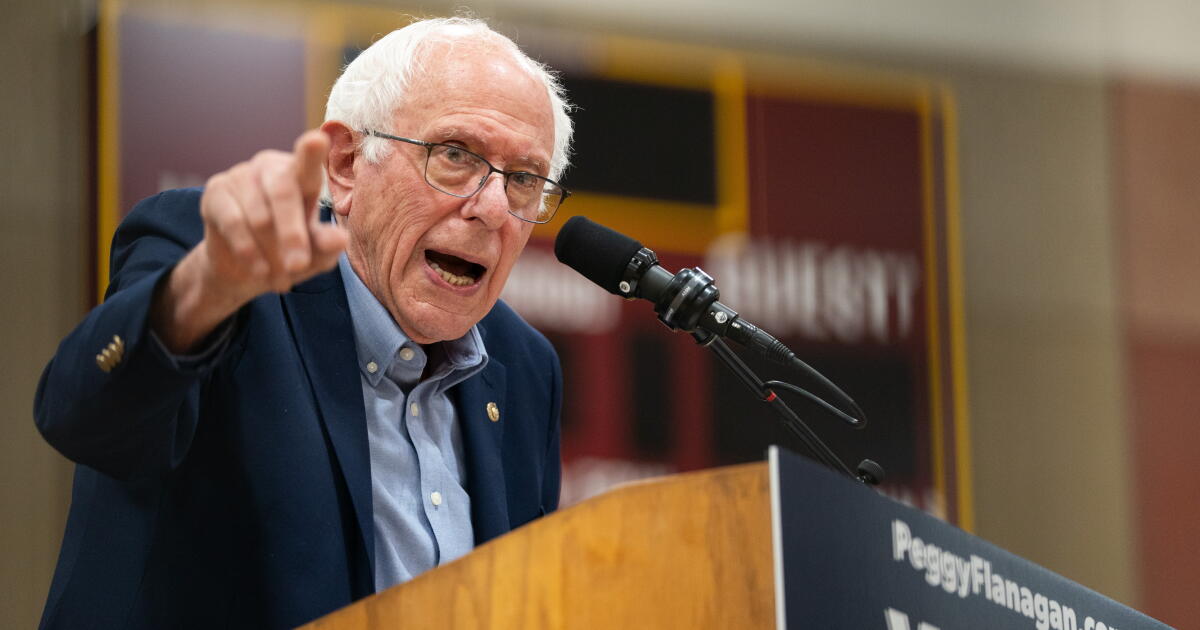
WASHINGTON — Sen. Bernie Sanders is preparing to use his return atop a powerful Senate committee to push for sweeping changes to the nation’s healthcare system, setting up an early test of how far Democrats are willing to go in embracing progressive priorities.
Sanders, a Vermont independent who caucuses with Democrats, is currently the ranking member on the Senate Health, Education, Labor and Pensions Committee and is expected to become its chairman when Democrats take control of the Senate in January. His agenda, first provided to the Associated Press, lays out the legislative implementation for proposals that he and progressive candidates championed on the campaign trail this cycle.
At the center is Sanders’ longstanding push for Medicare for All, a universal healthcare system that would be implemented over four years. The first year would lower the Medicare eligibility age from 65 to 55, expand coverage to include dental, vision and hearing care, and guarantee healthcare to children through age 18.
“This is no longer a utopian vision. This is where the American people are,” Sanders said in an interview with the AP.
The proposals offer an early glimpse of how progressives hope to shape the Democratic Party’s priorities after an election that delivered the party control of Congress but also exposed competing visions for its future. With the 2028 presidential election already looming, Sanders is seeking to push Democrats toward a populist economic agenda that he argues has gained broader support.
“I think the election, in my opinion, was a crying out for fundamental change in the way the government does business and the absolute need to protect a struggling working class,” Sanders said. “I think this is a time to bring about very significant changes in policies so that we can actually improve the lives of working families.”
Sanders keeps pushing for Medicare for All
Sanders has long championed a single-payer national health insurance program that would replace most private insurance with a federally administered system providing universal coverage.
His proposal for the new Congress lays out a four-year transition to that system, beginning with expanding Medicare eligibility and benefits. In the second year, the eligibility age would fall to 45, followed by 35 in the third year, before extending coverage to everyone in the fourth year.
“Transforming a system which is 18% of the GDP of America, you don’t do that overnight,” Sanders said of the transitional period.
But the costs of lowering Medicare eligibility are likely to lead to massive debate between the two major political parties as the national deficit stands at $2 trillion, or 6.2% of gross domestic product. And the Congressional Budget Office estimated in 2022 that lowering the age of Medicare eligibility to 60 would increase federal budget deficits by $155 billion over the 2026–2031 period.
Sanders’ prior proposals to pay for the program shift healthcare financing away from private insurance premiums and toward payroll contributions — including a combination of employer and household premiums, higher taxes on the rich and new taxes on Wall Street and large firms.
Sanders also argued that Democrats could pass the first stage of the transition through budget reconciliation, a process that allows certain tax and spending legislation to advance through the 100-member Senate with a simple majority rather than the 60 votes typically required to overcome a filibuster. Democrats will have a 56-44 Senate majority when the new Congress begins in January, marking the party’s largest advantage in the chamber in 16 years.
Along with pushing for greater access to primary care, Sanders says Democrats will push for lower prescription drug costs.
A changing political landscape
Sanders has previously balanced his progressive ambitions with the realities of governing. During his first stint chairing the HELP Committee from 2023 to 2025, he worked with Republicans on legislation to lower prescription drug costs and expand access to primary care. He also chaired the Senate Budget Committee from 2021 to 2023, helping advance major Democratic spending priorities.
But now, just weeks after the midterms, Sanders is laying out an ambitious agenda that he argues reflects a shift not in his own positions but in voters’ demands for sweeping changes to the healthcare system.
He sees signs of that shift among Democratic leaders. House Democratic leader Hakeem Jeffries of New York has pledged to get to work “right out of the gate” to restore Affordable Care Act subsidies and reverse Medicaid cuts enacted under Republicans.
Jeffries said Tuesday that Democrats know that simply returning to the status quo “is not acceptable” and they are preparing ways to further expand healthcare access by lowering the Medicare eligibility age, adding access to vision, hearing and dental coverage, and ensuring all kids are covered.
“Jeffries basically supported the first year of Medicare for All,” Sanders said.
But anything that passes Congress the next two years will still need to be signed by President Trump to take effect. Sanders rejected the notion that Trump, a Republican, wouldn’t sign something like Medicare for All into law.
“Donald Trump may be crazy, but he is not stupid. He’s a smart guy, and he’s a very good politician,” Sanders said.
An agenda beyond healthcare
Sanders is also preparing to use the committee to advance a broader economic agenda that includes raising the federal minimum wage from $7.25 an hour to $20 an hour and promoting the PRO Act, which would strengthen workers’ rights to unionize.
The proposed wage increase would nearly triple the federal minimum, which has remained unchanged since 2009, and could face resistance from lawmakers concerned about the impact on small businesses and employment. Sanders proposes to implement it over a four-year transition period.
Sanders’ agenda also calls for sweeping restrictions on artificial intelligence, including a moratorium on new AI data centers, a pause in advanced AI development and a ban on artificial superintelligence.
Cappelletti and Hussein write for the Associated Press.
HAVE you ever been tempted by one of Wowcher’s £99 mystery holidays, but worried that the price was too good to be true?
That was me until last winter, when I decided to try out their Christmas Market trip.
Wowcher’s mystery Christmas market trip costs £99 per personSource: Cyann FieldingI decided to test it out for myself, securing Tallinn as my destinationSource: Cyann Fielding
It is one of many different £99 trips they offer and they are available on a rolling basis.
The idea is simple – you buy the voucher and choose your travel dates, then are essentially sent to a surprise location, with more than 100 exciting destinations on offer.
You could get very lucky with a trip to New York (as one UK couple did back in 2024 describing it as the “holiday of a lifetime”) or Lapland, but most prizes are to somewhere in Europe – like mine.
My destination was Tallinn, the capital of Estonia.
Within 72 hours of paying for the trip and requesting your dates, an agent calls to sort your flight and accommodation details.
This is when the first cracks started to show….
My designated flight out from London was scheduled for late afternoon on November 25, returning very early on November 27 — giving me just one full day in the city.
To make matters worse, the hotel was two miles from the city centre.
That’s when the agent told me I could upgrade. As I had my ‘ah ha’ moment, he was thinking ‘cha-ching’.
In order to get decent flights and a hotel close to my destination, I needed to upgrade at an additional £43 per person.
To make the most of my Christmas weekend abroad, I did what I imagine many £99 holidaymakers do and chose to upgrade.
There are some hidden costs though – including upgrading your hotel and flights to maximise your time in the citySource: Cyann FieldingThe £43 per person upgrade fee for a better hotel and flights bumped my total up to £142 eachSource: Cyann Fielding
So instead of £99 per person, my total was now up to £142 per person, that’s £284 in total.
I flew with Wizz Air (with hand luggage included) to Tallinn and then stayed at the Rixwell Viru Square Hotel – part of the Rixwell brand – which was simple and clean, although it didn’t include breakfast.
As this was specifically a Christmas market trip, we went to the market, and while it was small, it really did feel like a fairytale.
Set in the town square, it was nice to see stalls selling handcrafted gifts, and there was glogi — Estonia’s take on mulled wine — for sale.
Tallinn is home to the world’s first publicly displayed festive fir, which appeared in the town square in 1441.
The market felt like a fairytale, complete with handmade crafts and hot mugs of glogiSource: Cyann FieldingBut you could also create your own Christmas market trip and spend less than you would if you paid for Wowcher’s mystery tripSource: Cyann Fielding
Traditionally, young unmarried people danced around it.
And it is believed that if you make a wish under the tree, it will come true.
If I were to have booked the trip myself though for the same dates to the same hotel, it would have cost me £183.25 for two people — more than £100 less than I spent on the Wowcher trip.
So while Wowcher seems like a fun ‘chance’ holiday, you could definitely book your own Christmas market trip for less.
Wowcher told Sun Travel: “Our Mystery Holidays are designed to be an affordable, fun way to discover a new destination, with every package including return flights, two nights in three-star accommodation and a minimum of 40 hours in destination, as well as the chance to win one of our top-tier trips.
“As with any package holiday, flight times depend on availability, and our travel partners offer optional upgrades, at an additional cost, for those who’d prefer specific flight times or hotels.
“Feedback on our Mystery Holidays is overwhelmingly positive, but we take every comment seriously and always welcome the chance to learn and improve.”
What does a £99 Wowcher Christmas holiday include?
ACCORDING to Wowcher, all you need to do is pick your dates – the rest is decided for you.
The website states: “Book any Mystery Holiday between 9th–22nd November and win a guaranteed prize, with rewards including Wowcher credit, hotel upgrades, and even a Maldives holiday!
“From just £99pp, you could be sipping mulled wine in Vienna, browsing market stalls in Berlin, or soaking up the Christmas atmosphere in Paris.
“Explore magical destinations across Europe, including Paris, Rome, Prague, Vienna, Krakow and more!
“You could even be heading further afield, with trips including Lapland with Santa Village, glass igloos in Finland, or a festive escape to New York.
“Enjoy return flights from London or regional airports, plus a minimum 3 star hotel stay in your own private en-suite room.
“Enjoy a minimum of 40 hours at your destination when departing from London or Manchester, and at least 36 hours from all other UK airports, or 60 hours for selected 3-night stays.”
What is NOT included:
Airport-to-hotel transfers
Food and drink
Checked luggage
Regional airport surcharges (flying from airports outside of London typically incurs an extra fee of around £40 per person and requesting a destination change costs extra £20 per person)
If you’d rather have more control over your winter getaway, we’ve found some fabulous festive breaks that are even cheaper than the Wowcher offer…
Memmingen, Germany
You could head to Memmingen, Germany for just £62.50 per personSource: AlamyHotels are relatively cheap in the city with Joesepp’s Hotel am Schweizerberg Memmingen costing just £73 per night – so £36.50 per personSource: Booking.com
In December, return flights from the London to Memmingen cost just £26 per person.
If you travelled with a small under seat bag – enough for a change of clothes and some pyjamas – you wouldn’t need to spend extra on luggage.
The Christmas market runs from November 27 to December 20 and can be found in the historic Marktplatz in the old town.
The market boasts a more intimate vibe to big cities, with 30 decorated stalls postioned around the Town Hall, Guildhall and pastel-coloured houses.
There are often live singers at the market, as well as a Punch and Judy puppet booth.
Just a six minute walk from the market square is Joesepp’s Hotel am Schweizerberg Memmingen, which costs from £73 per night in December – working out at £36.50 per person.
Total spend: £62.50 per person
Poznan, Poland
A DIY trip to Poznan in Poland works out the cheapest, with flights and accommodation coming to £48 eachSource: AlamyTraffic Hotel Stare Miastro is just a few minutes walk from where the market takes placeSource: hotels.com
In December, the cheapest flights to Poznan from the UK are from Liverpool, for £27 return.
This rises to £29 if flying from London or £31 if flying from Bristol or Manchester airports.
Poznan Christmas Market will run from November 21 to January 6 and can be found in Freedom Square.
There’s a huge Ferris wheel, carousel, festive rides and of course, food and craft stalls.
When visiting make sure to try out traditional grzaniec, which is a type of mulled wine, served in souvenir mugs.
Hotels in Poznan are cheap and there are many of them around, including Traffic Hotel Stare Miasto, which is just a few minutes walk from where the market takes place and costs from £36 per night in December.
Split this between two people sharing and it will only cost £18 per person.
Alongside you £27 flights, you could actually afford four nights in the city at the hotel and it would equal the same as the £99 Wowcher mystery trip.
Total spend: approx. £48 per person
Oslo, Norway
Or head to Oslo’s biggest Christmas market for £29 returnSource: AlamyAnd stay at the Oslo Guldsmeden for £105 a nightSource: Google maps
In December, the cheapest flights to Oslo from the UK are from London for £27 return or Manchester, for £29 return.
It is located right in the city centre and has quaint wooden stalls selling crafts and gifts, a Ferris wheel, ice skating, carnival rides and hot gløgg (mulled wine). Admission is free.
Head to Oslo between December 5 and 6 or 12 and 13 for the Norsk Folkemuseum Christmas market with horse carriages, open fires and traditional market stands.
There are also traditional Norwegian dance performances to enjoy.
Hotels in Oslo do tend to be more expensive, but you could book into Oslo Guldsmeden for a night for £105 which works out at £52.50 per person.
Add that to your flights and you are still under WOWcher’s £99 per person.
Total spend: approx. £80.50 per person
Sofia, Bulgaria
If you chose Sofia, Bulgaria, flights would cost as little as £28 per personSource: AlamyHotels in Sofia are cheap, costing as little as £16 per night in December but for a decent hotel such as Rila Sofia, you are more likely to pay £52 per nightSource: guestreservations
In December, the cheapest flights to Sofia from the UK are from Bristol and London, for £28 return.
The Bulgarian capital is home to two main Christmas markets – the traditional Deutscher Weihnachsmarkt in the City Garden and the larger Sofia Christmas Fest in front of the National Palace of Culture.
Running from November 14 to December 21, the Deutscher Weihnachsmarkt is Sofia’s oldest holiday market, with twinkling lights, live jazz music, visits from Santa and handmade crafts.
On the other hand Sofia Christmas Fest runs from November 20 to December 28 and is Sofia’s largest holiday event with loads of festive stalls selling gifts and food, as well as a winterfarmers’ market, a Ferris wheel and an ice skating rink.
Hotels in Sofia are cheap, costing as little as £16 per night in December.
However for something decent you are more likely to around £50 – such as Hotel Rila Sofia which is £52 per night and features sleek modern interiors and a rooftop terrace.
Total spend: £54 per person
Aarhus, Denmark
Aarhus Christmas market is lit entirely by lanternsIt costs around £82 per night to stay in Aarhus and flights are only £27 returnSource: hotels.com
In December, the cheapest flights to Aarhus from the UK are from London, for £27 return.
Aarhus is home to several Christmas markets across the city.
The main market is Den Gamle By which takes place from November 14 to December 31.
The market takes place in a massive open air museum with 75 relocated historic buildings dating back four centuries, which are then all dressed up in era-accurate decor.
The magical market is entirely lantern lit in the evenings and features horse draw carriages to get visitors around.
Townspeople as dress up and the shops open later selling gifts and traditional treats such as æbleskiver (pancake puffs) and gløgg (mulled wine).
Between November 27 and December 20, there’s also the Ridehuset Art & Christmas Market with local Danish artists selling their creations and handmade crafts.
And if you happen to be in the city on Saint Lucia’s Day, make sure to watch the parade as well as kayaks covered in fairy lights paddling down the river.
There aren’t too many hotels in Aarhus and prices do tend to rise in December, but there are still some affordable options.
For example, one minute from the cathedral you could stay at Cabinn Aarhus Hotel for £82 per night – with breakfast included.
Total spend: £68 per person
Nantes, France
Return flights to Nantes in France cost from £27 return, flying from LondonSource: AlamyHotels in Nantes range between £40 and £90, such as Appart’City Confort Nantes Centre for £57 a nightSource: appartcity
In December, the cheapest flights to Nantes from the UK are from London, for £27 return.
The Marché de Noël de Nantes is the largest Christmas market in western France, and will take place between November 19 and December 27.
Spread across Place Royale and Place du Commerce in downtown Nantes, the market is home to around 160 wooden chalets selling gifts, local crafts and food.
The market also has a number of attractions such as an ice skating rink and special art installations.
Nantes has loads of hotels between the £40 and £90 range.
The small city of Ancona has some of the cheapest flights costing from £25 returnSource: GettyFlights to the small city of Ancona in Italy are some of the cheapest, costing from £25 in DecemberSource: Booking.com
In December, the cheapest flights to Ancona from the UK are from London, for £25 return.
The small coastal city of Ancona hosts the BiAncoNatale festival at Christmas, which will take place between late November and early January.
Home to the historic Christmas market, visitors can explore 40 wooden chalets and stalls with tree decorations, Nativity scenes and figures, local crafted items and food.
For kids there are some attractions as well such as a big wheel, ice skating and family concerts.
Hotels in Ancona are generally affordable, but you won’t find any big brand names.
You could stay at The City hotel for £81 a night, with breakfast included.
Total spend: £65.50
Gothenburg, Sweden
Gothenburg is known as Sweden’s ‘Christmas City’ and has several festive marketsSource: AlamyYou could fly there for £30 return from London and stay at the Sure Hotel by Best Western Allen for £60 a nightSource: Booking.com
In December, the cheapest flights to Gothenburg from the UK are from London, for £30 return.
Known as Sweden‘s ‘Christmas City’, Gothenburg is home to numerous Christmas markets and events including Christmas at Liseberg – Sweden‘s largest and most famous Christmas market.
Taking place at Liesberg amusement park between November 14 and December 30, the market has its own Santa’s Village and a giant julbord (Swedish Christmas buffet).
The park boasts over five million lights as well as loads of wooden stalls and an ice skating rink.
There is also Kronhusjul – a traditional craft and design market set in the historic 17th-century courtyard of Kronhuset and Kronhusbodarna, in the city centre, running between November 25 and December 20, 2026.
Gothenburg has loads of affordable hotels with some costing as little as £30 per night.
If you want something semi-decent, you could book into the Sure Hotel by Best Western Allén for £60 a night, with breakfast included.
Total spend: £60 per person
Madrid, Spain
Fancy Spain? Madrid has cheap flights from lots of UK airports including Edinburgh and ManchesterSource: AlamyYou could stay at Hotel Exe Moncloa for £80 a night – and it has a rooftop poolSource: Eurostars Hotel
In December, the cheapest flights to Madrid from the UK are from London, for £26 return.
But you can also fly from Edinburgh for £29; Manchester for £30; Birmingham for £31 and Bristol for £35.
Madrid’s main Christmas market is the Plaza Mayor Christmas Market, which runs from late November to December 31.
The market has 104 traditional wooden stalls selling belenes (nativity scene figures), crafted gifts, instruments and food.
There is also a vintage carousel for the little ones.
If you are a massive foodie, it is also worth heading to the El Corte Inglés market, which is a food market with festive items such as panettone, and churros.
It takes place between December 1 and January 5.
Madrid is home to thousands of different places to stay, and if you don’t mind a hostel you could spend as little as £14 per night.
But for a decent hotel, you are more likely to spend around the £70+ mark.
For example, you could stay at the four-star Hotel Exe Moncloa with a rooftop terrace and pool for £80 a night.
Total spend: approx. £70 per person
Salzburg, Austria
While Salzburg is often considered expensive, flights start from £36 in DecemberSource: AlamyHotels are a bit more expensive, for example you could stay at Hotel Auerhahn for £116 per night, but between two this works out as still a few quid under Wowcher’s £99 tripSource: Booking.com
In December, the cheapest flights to Salzburg from the UK are from London, for £36 return.
Salzburg’s biggest Christmas market is the Salzburger Christkindlmarkt which takes place between November 19 and January 1, 2027.
It is located in the heart of the city’s UNESCO World Heritage centre and has two massive squares – Domplatz and Residenzplatz.
The market is home to around 100 traditional stalls and has events taking place throughout its duration such as brass musician performances.
Salzburg can be more expensive when it comes to hotels, with something decent usually costing over £100.
For example, you could stay at Hotel Auerhahn for £116 per night, scraping slightly cheaper than a WOWcher mystery holiday.
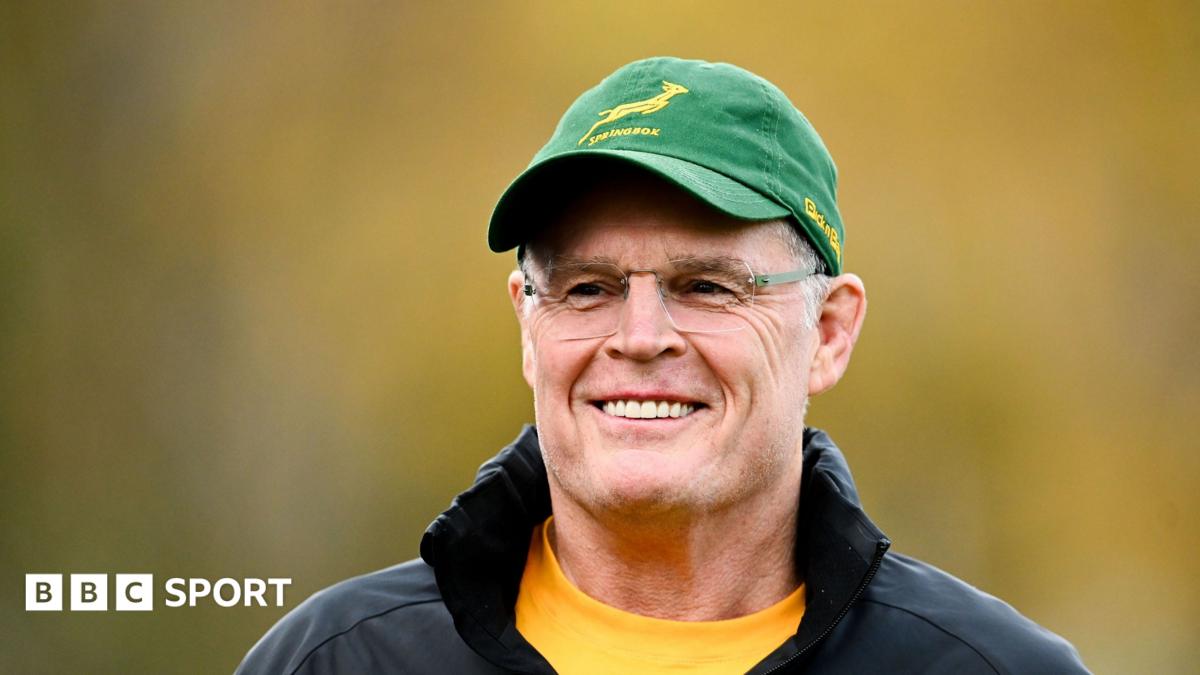
But there is no doubt, by the letter of the law, that Erasmus is wrong – certainly in terms of the platform and terms he chose for his complaints.
In July World Rugby introduced new rules around criticism of officials. It specifically targeted “comments which, viewed objectively, a reasonable person would conclude were an attack on the credibility or competence of the match officials”.
Mentioning “match-fixing” undermines the officials in exactly that way.
Considering Erasmus’ previous, including an hour-long monologue bemoaning officiating of a first-Test defeat by the Lions in 2021 and a series of tweets after a loss to France a year later, he may be fortunate to only be banned for six matches.
World Rugby, perhaps pre-empting the reaction in South Africa, was clear that it was not punishing Erasmus for asking questions.
“Robust, respectful debate is natural, but teams have access to well-established and supported channels and protocols for raising officiating matters before and after matches,” it said in its judgement.
“Challenging a decision is not the same as questioning an official’s integrity or making comments that expose them to personal abuse.”
For many South Africans, though, Erasmus is still an outlaw hero.
World Rugby, based in Dublin, is seen by them as tilted towards the north.
Australian Brett Robinson, the current chairman, is the first figure from outside the Six Nations countries to hold the organisation’s top job since it became an elected position.
The World Cup has been lifted by South Africa on four occasions, but held there only once.
Japan coach Eddie Jones, Erasmus’ fellow maverick, recently suggested Ireland’s political clout, external was behind his team’s home game being staged in Australia rather than Tokyo.
South Africa were a powerful voice against the possible moves to “depower” the scrum – a key part of the Springbok game – at a February conference to discuss future law tweaks.
Erasmus’ public pronouncements have fuelled conspiracy theories weaved from those threads. They have also made an all-time great team harder for outsiders to love.
Whether it is a deliberate ploy is hard to tell.
Certainly Erasmus is a repeat offender, but his offences have also come in his second language. He is an Afrikaans speaker.
Some also see instinctive honesty rather than premeditated ploy in his public speaking.
“He also has almost no filters, so he will speak his mind without fully appreciating the consequences of what he has done,” his biographer David O’Sullivan told BBC Sport in 2023.
Whatever the motivation, the consequences keep coming – for Erasmus, but also the rest of world rugby.
Referees Nic Berry and Wayne Barnes, previous targets of Erasmus’ criticism, have detailed the effects it had on them.
Berry described “a character assassination” that caused “immeasurable damage”. He has not refereed a South Africa game in the five years since.
Barnes’ wife and children were threatened over social media.
South Africa’s latest appeal to their supporters not to abuse officials, external may be too late for referee Andrea Piardi and his television match official Matteo Liperini, who oversaw France’s win on Friday.
There is a wider question too.
For a complex sport, the image of a world champion coach publicly criticising officials does not little to dispel a wavering viewer’s assumption that it is too intricate and confusing to justify their attention.
South Africa will always line up alongside their rebel chief.
But the patience of the rest of the rugby world with Erasmus’ antics is wearing ever thinner.
Jurf al-Sakhar, a stronghold of Iran-linked fighters in Iraq, has emerged as the focal point of a sweeping anticorruption campaign launched by Prime Minister Ali al-Zaidi’s government following accusations of oil smuggling.
Located some 60km (37 miles) southwest of Baghdad and spanning roughly 345 square kilometres (133 square miles), the area holds immense strategic significance along the Shia pilgrimage route between the Iraqi capital and the holy city of Karbala.
Recommended Stories
list of 3 itemsend of list
It was once the site of former President Saddam Hussein’s military-industrial complexes, making its geography ideal for testing, building and concealing weapons.
Following the US-led invasion of Iraq in 2003 that toppled Hussein, it became a hotspot for armed confrontations before the ISIL (ISIS) armed group seized it in 2014. Later that year, the Iran-backed Popular Mobilisation Forces (PMF), an umbrella organisation of mostly Shia armed groups, recaptured the territory from ISIL.
Kataib Hezbollah, one of the largest groups within PMF, subsequently took full control, renaming the area Jurf al-Nasr and barring state institutions from entering. The militia sealed the town, citing security concerns, effectively preventing the return of approximately 140,000 displaced residents.
Oil scandal
Last week, a leaked intelligence report said millions of dollars’ worth of crude oil had been siphoned from two state pipelines passing through the closed area since 2021. According to the document prepared by the Iraqi Ministry of Interior, the perpetrators allegedly constructed makeshift underground refineries to process the stolen resources.
The information led al-Zaidi to form a high-level investigative committee that entered the restricted zone on November 13 with military backing to confirm the existence of the illicit facilities. Earlier this week, the committee said it had identified several locations linked to smuggling operations in the area, without naming those allegedly implicated. As part of the anticorruption crackdown, nine senior security and administrative officials in Babil province, including the provincial police chief and the director of the Oil Pipelines Company, have also been dismissed.
According to the state Iraqi News Agency, the government has “ordered the armed forces to enter” Jurf al-Sakhar, setting a deadline “for the armed faction to exit the area”. Reports say the deadline for the withdrawal is Friday.
Kataib Hezbollah has denied the oil-smuggling allegations and, in harshly worded statements, accused al-Zaidi of corruption and framed the crackdown as a political extortion campaign. In a major show of force, the militia also mobilised approximately 8,000 fighters from various provinces towards Jurf al-Sakhar ahead of the government committee’s arrival.
Iraqi writer and journalist Hamza Mustafa told Al Jazeera that the military posturing masks underlying vulnerabilities. “What the brigades are doing through field mobilisation is perhaps the last line of defence for them after their position appeared weak regarding the oil-smuggling operations,” said Mustafa, noting that the previous narrative of fighting “terrorism” no longer held.
Security expert Saif Raad said the militia’s fierce resistance is driven by economics amid allegations that the restricted zone is also used to run thousands of illegal fish farms. “The desperation over this area is not for security reasons but for financial reasons,” said Raad, a former military officer.
Military standoff
Since taking office in May, al-Zaidi has made the disarmament of all armed factions in the country, including Kataib Hezbollah, a priority amid pressure from the United States, which has long demanded the decommissioning of the Iran-backed fighters. An initial September 30, 2026, deadline to bring all weapons under state control has since been pushed to June 2027.
“The issue here comes in the context of removing all pretexts from the armed factions after it was revealed that they are smuggling oil,” said Mustafa.
Fadel Abu Ragheef, an Iraqi political analyst, told Al Jazeera that al-Zaidi is in a distinctive position to take such unprecedented steps against entrenched interests. “He did not come from a partisan or bloc background, so his decisions are characterised by boldness and daring,” argued Abu Ragheef.
The standoff has deeply divided Iraq’s ruling Coordination Framework, prompting leaders such as Nouri al-Maliki, Hadi al-Amiri, Qais al-Khazali and Ammar al-Hakim to frantically mediate behind the scenes. Abu Ragheef suggested these factions are highly sensitive to issues such as disarmament.
“They harden their position if they hear the word disarmament or containment, so the concepts have shifted from disarmament and containment to organisation and management,” said Abu Ragheef, noting that the change has provided a crucial negotiating window until the June 2027 deadline.
With Friday’s deadline looming, Iran has also stepped in to avert a direct military clash. Esmail Qaani, commander of the Quds Force of the Islamic Revolutionary Guard Corps, headed to Baghdad to mediate the crisis and push for a solution. Qaani and al-Zaidi reportedly held talks until dawn on Tuesday, reaching a tentative agreement that would see Kataib Hezbollah withdraw “soon”.
Still, Mustafa warned that the crisis is not fully resolved.
“Qaani has not been able to dismantle the scene so far like he used to,” he said, referring to Iran’s historical influence, noting that Tehran had come to realise the issue is larger than expected due to al-Zaidi’s insistence.
Raad echoed this, emphasising al-Zaidi’s determination to centralise state arms, comparing it to his recent successful pacification of armed groups in the Sinjar district.
“The prime minister will not be prevented by Qaani or anyone else from going and restoring the authority of the commander in chief of the armed forces over all Iraqi territories,” he said. “This crisis is a beginning to restore the sovereign decision of the state.”
Guests can choose between Alton Towers’ different hotels including the Alton Towers Hotel, Splash Landings Hotel, CBeebies Land Hotel or the Woodland Lodges at The Enchanted Village.
The break can be booked between November 17 and December 2 for stays between January 22 and March 7.
Stays also include entry to Mutiny Bay, CBeebies Land and Towers Street, plus a selection of family rides and attractions.
You can head to the park for a short break from just £44 per personSource: Alamy
Inside the theme park families can explore numerous rollercoasters including The Smiler, which is the world’s first 14-looping rollercoaster.
Other rollercoasters include Nemesis Reborn and Oblivion – the world’s first vertical drop rollercoaster, which plunges riders into darkness below the ground.
The CBeebies Land is then ideal for smaller children with Bluey the Ride, Hey Duggee and live shows.
And if you like a water ride, head on the Congo River Rapids.
Tickets to the theme park usually cost from £34 per person.
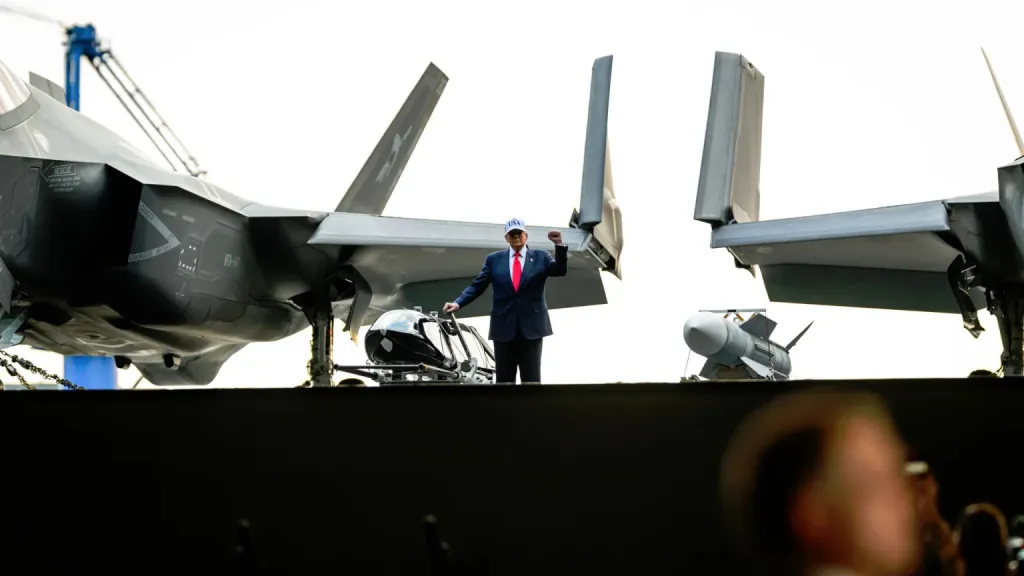
Senator Roger Wicker, the current chairman of the Senate Armed Services Committee, has said unequivocally that the idea of bringing back steam-powered catapults on U.S. Navy aircraft carriers is a “non-starter.” Earlier this year, President Donald Trump ordered the Navy to draw up plans for abandoning electromagnetic catapults and weapons elevators on the future Ford class aircraft carrier USS Doris Miller.
President Donald Trump descends to the hangar deck of the US Navy’s Nimitz class aircraft carrier USS George Washington during a visit to the ship in October 2025. White House
“Returning to steam is a non-starter, and everybody needs to understand that,” Wicker, a member of Trump’s Republican party from Mississippi, said while presiding over a hearing today.
He and other members of the Senate Armed Services Committee had gathered to consider the nomination of Hung Cao to become Secretary of the Navy. Cao has already been serving in this role in an acting capacity since April.
Wicker’s comments followed an exchange between Cao and Senator Tim Kaine, a Virginia Democrat, regarding Trump’s directive earlier in the year on the matter of aircraft carrier catapults and weapons elevators. The President’s instructions had been contained within a larger memo outlining various naval and shipbuilding industry priorities.
“On August 13th, the President released a memorandum that included language directing the Secretary of Defense [Pete Hegseth; also referred to currently as the Secretary of War] and the Secretary of the Navy to provide a plan for replacing the current electromagnetic launch system for aircraft carriers with steam and hydraulic systems,” Kaine said in introducing his question. “I recently visited the Ford, and I went on the flight deck, and I talked to the sailors on that flight deck, many of whom had worked on carriers that both had steam and hydraulic launch systems and the EMAL system, and they were very complimentary of the EMAL system.”
Electromagnetic Aircraft Launch System (EMALS)
The Navy’s public position historically, including during Trump’s first and second terms, has been that EMALS, as well as the Advanced Arresting Gear (AAG), on Ford class carriers are worth investing in despite ongoing challenges. The service regularly touts the benefits they offer for sustained flight operations, particularly when it comes to increased sortie generation rates, compared to steam-powered systems on older Nimitz class carriers. Just in February, the service put out a press release saying a preliminary review of data collected during a new round of testing aboard the USS Gerald R. Ford further supported these viewpoints.
“Should the U.S. return to steam systems to launch aircraft off aircraft carriers?” Kaine asked Cao today.
“The whole question is how can I get, [how] I can maintain 11 carriers at this point because of the delays with EMALS and the electromagnetic elevators,” Cao said in response. “It’s delaying our carriers by seven years. We’re going to have five years where we’re going to be down to nine carriers. I’m trying to accelerate that.”
Acting Secretary of the Navy Hung Cao testifies during his confirmation hearing today. Senate Armed Services Committee capture
“Does that mean that you’re considering return to steam launches?” Kaine asked.
“No, no, because just the electromagnetic elevators alone, I don’t know if you know that they require certain spacing, and so you weld – what they do is they weld the elevator in place,” Cao began to say before Kaine interrupted.
“I’m not asking about the elevators. I’m asking about the launches [sic; catapults]. Based again on what the folks on the flight deck told me, the EMAL system works very, very well. And to retrofit existing carriers or change the design – you talked about in an earlier instance changing designs causes problems, and to go back to an old way of doing it is going to have an increased cost with diminished capacity,” Kaine said. “So, just because the President directed it, I do hope you’ll consider the experience of those who’ve been operating these launches [sic; catapults] on the Ford and before you decide to go down a path that will be more expensive and also less capable.”
It should be noted here that it has already been a matter of public record that ongoing troubles with the AWEs are continuing to contribute to delays in the delivery of new Ford class. The Navy has said previously it is working to mitigate those issues and incorporate lessons learned.
Watch the Advanced Weapons Elevators on the aircraft carrier Gerald R. Ford
It is not entirely clear if Cao meant to voice his own opposition to returning to steam-powered catapults. He did not have a further opportunity to respond to Kaine’s questioning, and the topic did not come up again during the hearing, save for Senator Wicker’s brief additional interjection.
The comments today from Kaine and Wicker reflect already growing bipartisan pushback to Trump’s call for a return to steam and hydraulics on American carriers. The Senate Appropriations Committee drew separate attention to this matter just yesterday in an explanatory statement released along with a new draft defense spending bill for the 2027 Fiscal Year.
“The Committee notes the Department’s directed planning to replace the Electromagnetic Aircraft Launch System (EMALS) and Advanced Weapons Elevators (AWE) integrated into the Ford Class Aircraft Carrier with prior-generation steam and hydraulic systems. The Committee understands that recent combat experience of Ford Class Aircraft Carriers appears to demonstrate greater sortie rates, readiness rates, and combat lethality than previous generation carriers,” the statement declared. “Further, the Committee is concerned that such a major redesign would result in many billions of dollars in additional costs and many years in program schedule delays. The Committee, therefore, warns against such significant programmatic shifts without substantive analysis, justification, and Congressional approval.”
The video below shows flight deck operations aboard the USS Gerald R. Ford during operations against Iran in March 2026.
USS Gerald R Ford Continues Epic Fury On Iran • (MAR 2026)
“The Committee directs the Secretary of the Navy to submit to the congressional defense committees [which would include the Senate Armed Forces Committee], not later than 90 days after the enactment of this act: a report that shows comparisons of sortie generation rates between steam and electromagnetic catapults, a comparison of the manned and unmanned systems that can be launched by each type of catapult; costs of redesign for each type of air platform that was not designed to be launched under higher intensity shock and impact stresses associated with legacy catapults, comparisons of the speed and efficiency of the AWE compared to legacy weapons elevators, an estimate of the impact of such redesign on the cost and timeline for Ford Class Aircraft carrier construction and retrofitting, an analysis of the impact of such redesign on the survivability and combat effectiveness of the Ford Class Aircraft Carrier,” the statement continues. “The report shall also include separate analysis on the operational requirement changes including readiness challenges, increases in manpower needed to operate steam catapults and manpower needed for maintenance and sustainment during afloat deployments and scheduled maintenance periods.”
The explicit mention here of “unmanned systems” is worth noting. Another often cited benefit of the EMALS catapults, as well as the AAG, is that they can be more finely tuned when it comes to the forces they exert on aircraft during launch and recovery. This expands the types of platforms the systems can readily accommodate, including smaller and lighter drones, and provides additional margins of safety. For years now, the Navy has made clear that it sees the MQ-25 Stingray tanker drone and other uncrewed aircraft as central to its vision for future carrier air wings.
“As mentioned, any plans now to eliminate the EMALS catapults and AWEs from the Ford class design, even just on future carriers like Doris Miller, would be a major undertaking. The core physical structure of the ship, as well as its power generation requirements and other key elements of the design, are heavily rooted in these features. All-new steam piping and the large piston systems, among other elements, would have to be installed in spaces not currently designed to accommodate them. The ship’s flight deck would have been reconfigured, as well.”
“As a result of the base design decisions, the nuclear reactor plant on the Ford class is also notably set up to generate less steam overall compared to the one on the Nimitz class, according to a past report from the Project on Government Oversight (POGO), an independent non-profit. All of this, in turn, raises additional questions about how much time and effort it would take to retrofit future Ford class carriers to use steam catapults, in particular.”
…
“In a time of peace, without all the threats and operational demands the United States is currently facing, or if there was any kind of surplus carrier capacity, making fundamental changes to the Ford class carrier program might very well have been a logical decision. However, all of this also comes at a time when the Navy’s operational carriers are experiencing exceptional pressure.”
A stock picture of the USS Gerald R. Ford giving a good view of the layout of its flight deck, including the position of the island superstructure. USN
This all ties into an increasingly uncertain future for another one of the Trump administration’s high-profile naval initiatives, the nuclear-powered Trump class battleship program. Earlier this month, TWZ explored the prospects for these ships going forward in light of the Democratic Party’s historic blowout of its Republican opponents.
A rendering of a Trump class battleship. USN
As we noted then, bipartisan opposition has also already been growing to the battleship plan. This was reflected in the draft defense spending bill the still-Republican-controlled Senate Appropriations Committee released yesterday, which gutted funding for these warships. Not one Senator from either party used their time during Hung Cao’s confirmation hearing today to voice their support for this program, or mention it at all. Cao did make a brief, unprompted call to continue pursuing the new battleships, while also advocating for help in boosting overall domestic naval shipbuilding capacity.
A section of the draft defense spending bill the Senate Appropriations Committee released yesterday, showing the decision to eliminate hundreds of millions in proposed funding for the Trump class battleship program, referred to here as BBG(X). Senate Appropriations Committee
As we have reported previously, Congress is on track to clash with the Trump administration on a host of high-profile defense and other programs once Democrats take control next year. The Golden Dome missile defense initiative, the full scale and scope, as well as cost, of which remains murky, could be another major political flashpoint.
At least when it comes to Trump’s years-long push to go back to steam-powered catapults, as well as hydraulic weapons elevators, on Navy carriers, Senator Wicker’s comments make clear that there is already major opposition even from Republicans.
KATIE Price has teased a new nose job by sharing a glimpse of her bandages.
The former glamour model goes under the knife on a regular basis and it seems the latest surgery was on her nose.
Katie Price has teased a new nose job – after putting her wedding ring back onSource: @katie-pricey/SnapchatKatie reunited with husband Lee Andrews in Dubai over the weekend
Katie, 48, has had at least three previous nose jobs, including a rhinoplasty in 2023 to correct a “wonky” appearance linked to a prior lip lift incision.
Now Katie has taken to social media to tease what she’s had done, posting a picture of her face with her hand over her nose and a video.
Speaking in the video, Katie tells fans: “So I’ve literally just woke up from surgery two hours ago and I’m on my way home. Had my treatment done that I wanted and now on my way home. I love it that I can drive door to door.”
Katie also accidentally revealed plans for another fox-eye liftSource: SplashKatie has had at least three previous surgeries on her noseSource: David Fisher
The mum-of-five wrote across the pic: “Just a small touch up…I promise” alongside a winky face emoji.
An onlooker told The Sun: “They could have been honeymooners. They were really getting intimate. You’d never have guessed at all the problems they’ve had between them.”
Katie Price surgery
KATIE Price’s love for surgery is no secret – here’s the details
1998 – Katie underwent her first breast augmentation taking her from a natural B cup to a C cup. She also had her first liposuction
1999 – Katie had two more boob jobs in the same year, one taking her from a C cup to a D cup, and then up to an F cup
2006 – Katie went under the knife to take her breasts up to a G cup
2007 – Katie had a rhinoplasty and veneers on her teeth
2008 – Katie stunned fans by reducing her breasts from an F cup to a C cup
2011 – Going back to an F cup, Katie also underwent body-contouring treatment and cheek and lip fillers
2014/5 – Following a nasty infection, Katie had her breast implants removed
2016 – Opting for bigger breasts yet again, Katie had another set of implants, along with implants, Botox and lip fillers
2017 – After a disastrous ‘threading’ facelift, Katie also had her veneers replaced. She also had her eighth boob job taking her to a GG cup
2018 – Katie went under the knife yet again for a facelift
2019 – After jetting to Turkey, Katie had a face, eye and eyelid lift, Brazilian bum lift and a tummy tuck
2020 – Katie has her 12th boob job in Belgium to correct botched surgery and a new set of veneers
2021 – In a complete body overhaul, she opts for eye and lip lifts, liposuction under her chin, fat injected into her bum and full body liposuction
2022 – Katie undergoes another brow and eye lift-and undergoes ‘biggest ever’ boob job in Belgium, her 16th in total
2023 – Opting for a second rhinoplasty, Katie also gets a lip lift at the same time as well as new lip filler throughout the year
2024 – Katie has her 17th boob job in Brussels after revealing she wanted to downsize. She performed at Dublin Pride just days later and surgeons warned the lack of recovery posed a risk of infection
2025 – Katie headed to Turkey in early 2025 for a face lift and nose procedure, followed later in the year by fox-eye lift
2026 – Katie decided to get her biggest boobs ever in 2026 to address size and asymmetry. At the NTAs she hid facial bruising from face lift tweaks and filler injections
Another witness said: “She was in the bar all night, then they started acting outlandishly.
“It attracted a lot of attention. She didn’t care who saw them. It’s hard to keep up with Katie’s love life.”
I TAKE work seriously, which is why I allow myself a crucial three minutes of preparation time before clocking on for my work-from-home position. This is how I do it:
8.57am: Wake up
Sounds like I’m cutting things fine, but keep in mind that I don’t have to commute. With my laptop carefully nestled on the floor by my bed within a stack of takeaway pizza boxes, I can be ready to be productive in a matter of seconds. I’ve even got time spare for a 60-second appraisal of whether I’m up for a wank before getting on with the grind.
8.58am: Scroll on phone
It’s important to take time for yourself, and I like to decompress by bombarding myself with a flurry of short-form content. In 60 seconds I can go through 800 clips and the full gamut of human emotion. This leaves my dopamine levels nice and frazzled, meaning the stresses of my job will be a breeze.
8.59am and 50 seconds: everything else
Ten seconds before work I spring into action. I fly into the shower for a quick rinse while brushing my teeth and eating my breakfast burrito. A quick dry of my hair, I throw clothing on those parts of my torso that Teams sees, and I get it all fired up two seconds early to seem keen.
9am: Open Teams
Just because I work from home doesn’t mean I’m not punctual. At 9am sharp I brush the crumpled semen-stiffened tissues off my keyboard, log into, and waggle my mouse around a bit so I look productive. Sometimes I fire off a quick ‘morning’ in Slack so nobody will suspect that I was in deep slumber until three minutes ago. As far as HR knows, I’m a model employee.
9.01am: Enjoy a well-earned break
My crammed morning routine has left me exhausted. Once I’m 60 seconds into the day I tell the team I’m heading into a key client call, then I take a much-needed screen break and roll back into bed. Once I’m refreshed it’ll be lunch, which I like to drag out until it’s time to say a 6pm ‘whew!’ to my colleagues and log out. I earn more than nurses.
A HUGE new lido could soon be opening in the UK – at the same park which saw one close decades earlier.
Victoria Park Lido in London closed back in 1987 following storm damage and was later destroyed in 1990 and turned into a car park.
Victoria Park Lido closed back in 1987 after storm damageSource: GettyThe much-loved lido used to have diving boards and be able to host up to 1,000 people at a timeSource: Getty
The lido, which opened in 1936, allowed up to 1,000 bathers to visit at any one time with diving boards at the lido as well as a cafe.
Now new plans have been revealed to build a new lido at the park.
Sign up for the Travel newsletter
Thank you!
Tower Hamlets councillors have agreed to an initial £2.5million investment towards the development.
This will be used to carry out an assessment to see if building a new lido in the park is feasible as well as submit a planning application.
If the project went ahead, it is expected to cost around £30million.
It is unclear when the lido could open, but a planning application could be submitted around September next year and if approved, construction would be likely to start in early 2028.
The lido could then open to the public in summer 2029.
Lutfur Rahman, Executive Mayor of Tower Hamlets, said: “Bringing outdoor swimming back to Victoria Park is an exciting opportunity to create something that future generations can enjoy for decades to come.
Under new plans, the lido could be rebuilt in the parkSource: Alamy
“This decision allows us to take the next step in exploring how a new lido could be delivered in a way that is affordable, sustainable and accessible to local people.”
Councillor Minara Khatun, Cabinet Member for Leisure, Culture and Tourism, said: “A new lido at Victoria Park could become a fantastic asset for the borough, helping people of all ages and backgrounds to enjoy the physical and mental healthbenefits of outdoor swimming while supporting wider community wellbeing.”
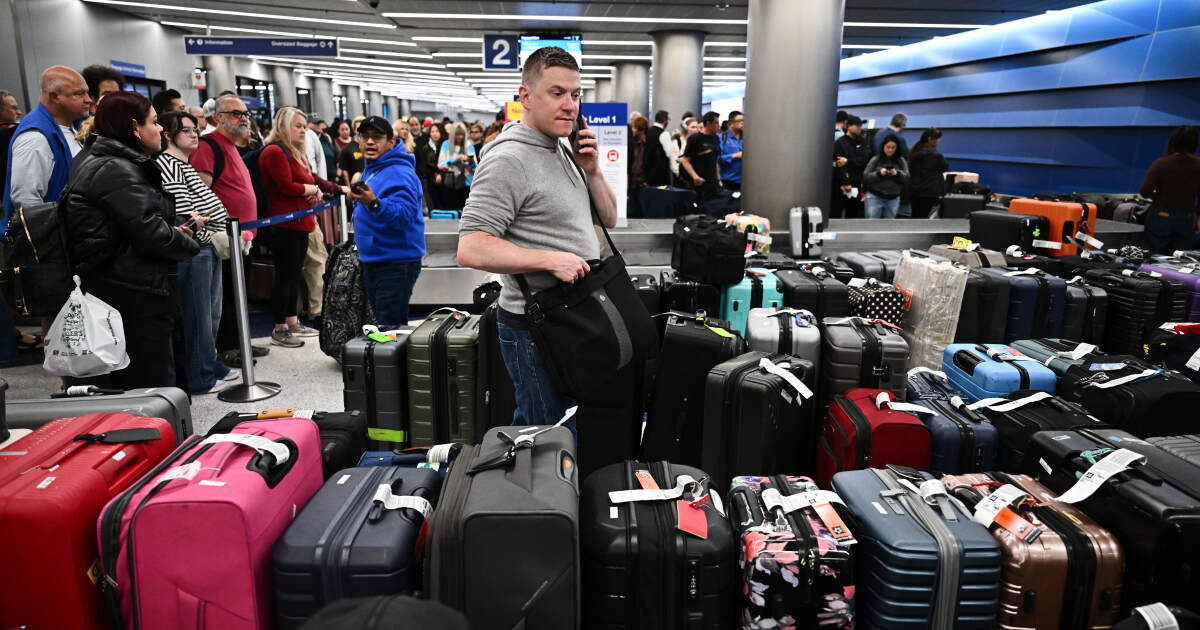
First, emails across the Microsoft system stopped working, then flights across the nation ground to a stop. Nationwide banking services at JPMorgan Chase went down on Monday and then major outages afflicted Apple and Marriott International on Tuesday along with the U.S. National Security Agency’s highly classified internal communications network.
As a spate of technology failures have disrupted critical United States infrastructure over the last several days, corporations and government officials have blamed many of the problems on system misconfigurations, faulty updates and technical errors. They have also played down any idea that the outages are part of a broader cyberattack or caused by artificial intelligence agents.
“It’s fine,” President Donald Trump told reporters in Manila, Philippines, where he was attending an international summit.
“This is not a cyberattack and this is not a coordinated action by a nation state,” Jay Clayton, Director of National Intelligence, said in Washington D.C., explaining the outages were the product of many companies and institutions patching and upgrading their vulnerable legacy digital systems.
But even if this week’s tech meltdown were random, experts in cyber policy and security said there is a need for more examination and accountability.
Some of the failures, they note, caused widespread disruption across critical sectors, from travel and banking to office work. Whatever the cause — small technical problems or a coordinated cyberattack — they argue it shows a pattern of vulnerabilities in internet security and the stability of the nation’s infrastructure.
“It’s not fine,” said Marcus Rogers, director of the Cyber Forensics Lab at Purdue Polytechnic Institute. “As time goes on, this is becoming a lot more of a muddy picture,” he said, noting that six incidents across different infrastructures starts to become “alarming.”
“There’s something wrong in the system itself and we can’t ignore that,” Rogers said. “‘Relax, it’s not cyberattacks and we don’t have to worry about it’ — that’s not the right message.”
If the problems were caused just by minor human errors or failure to upgrade infrastructure, he added, that made critical U.S. systems a potentially bigger target for bad actors: “If it’s that easy for this stuff to fail simply because of a tiny little human error,” he asked, “how much easier is it then for a targeted attack to go after these infrastructures?”
Rogers and others say there needs to be vigorous investigation into what went wrong.
“Six failures in a week, I don’t understand it,” said Herbert Lin, senior research scholar at Stanford University’s Center for International Security and Cooperation and a fellow in Cyber Policy and Security at the Hoover Institution. “Is there some common agent behind all of them? I think we don’t know the answer to that. It seems very unlikely, but we can’t rule out that possibility.”
T.J. Marlin, founder and CEO of Guardrail Technologies in Utah, said it was highly unlikely for a random breakdown of so many critical systems in such a short period of time. “Pure coincidence across this many critical systems is statistically improbable,” he said, “which points to something shared underneath, such as a common vendor, update or dependency (such as AI).”
Senate Intelligence Committee ranking member Mark Warner (D-Va.) said Tuesday that artificial intelligence appears to be playing a role in the outages as it transforms the cyber security landscape.
“AI is making it possible to identify vulnerabilities across enormous numbers of systems at unprecedented speed,” Warner said in a statement, “creating enormous pressure on companies and government agencies to patch those vulnerabilities immediately, often all at once, putting tremendous strain on systems that weren’t built to handle that pace of change.”
Companies and government agencies were releasing limited information, Rogers said, either because they don’t know or there was an active investigation or they don’t want to be liable for stockholder lawsuits when their stock starts tanking. What he found concerning, he said, is they’re delivering inconsistent messages right off the bat.
“All these companies, the first thing they say is ‘We’re not sure what’s causing this, but it’s not a cyberattack.’ Well, wait a minute. Either you know what’s causing it, or you don’t know. And if you don’t know, how do you know it’s not a cyberattack?”
After the Federal Aviation Administration halted flights nationwide on Friday, the agency and Department of Transportation scrambled to explain the problem, attributing the problem to a data overload and technical instability triggered by a newly installed router. Transportation Secretary Sean Duffy said the agency’s new artificial intelligence tool, SMART, played no role.
“First, it was a copper wire, then it was a vendor, then it was an overloaded network, then it was a router, there were data integrity issues,” Marlin said, noting the agency’s shifting explanations of the ground stop. “A lot was said, but it didn’t mean a heck of a lot.”
Four days after air traffic ground to a halt, Duffy told reporters: “The root cause of what happened, we don’t have clarity yet.”
After the disruption on Tuesday of the NSA’s NSANet system, a heavily isolated, classified internal network that does not connect to the public internet, the agency said in a statement that the incident was caused by “temporary degradation during scheduled routine maintenance.”
JPMorgan Chase attributed its outage to an internal software bug. Microsoft said a “latent defect caused servers to become overwhelmed and unresponsive under certain load conditions.” Apple blamed an unspecified internal update.
As alarm spread across the nation, some Republican lawmakers demanded Tuesday that the Trump administration brief them on the NSA incident and other outages. U.S. Rep. Mike Lawler (R-N.Y.) called on the administration to “immediately brief Congress on the exact nature of the problem, so that we can have an all of government response.”
When asked if artificial intelligence was going rogue, California Governor Gavin Newsom said “Trump has been a disaster when it came to creating truth and trust in AI.” California, he said, was “taking this very, very seriously in the absence of federal regulations.”
Asked by a reporter Tuesday if Californians should save up on food and toilet paper to prepare for a breakdown of more critical infrastructure, Newsom said “we should always be saving up for a rainy day.”
“It creates some anxiety certainly,” Newsom said of the outages. “And it requires mature leadership, requires someone who takes responsibility. The buck stops with the President of the United States.”
Concerns have accelerated over the last year over the threat of cyber hacking and rogue agents in the AI era.
Europe is facing a surge of high-impact cyberattacks targeting critical infrastructure, the energy sector, and commercial food supply chains. Last month, unidentified hackers took remote control of commercial refrigerators in hundreds of supermarkets across France, spoiling fresh food and igniting fires.
“We know that those were targeted attacks,” Rogers said. “If we look at this from a global picture, there’s a very concerning pattern that’s going on now.”
On Friday, the FBI issued a FLASH advisory warning that cyber criminals and state-aligned hackers were weaponizing ARTEX, an open-source, large language model-driven agentic platform to automate cyber intrusions at machine speed.
“Since at least August 2026, a variety of malicious cyber actors have used ARTEX to conduct campaigns targeting organizations globally across multiple sectors, including financial services, government, technology, defense, semiconductor, energy, healthcare, manufacturing, telecommunications, and legal industries,” the FBI said.
On Monday, Google warned the “era of autonomous attacks has arrived” driven by hackers using artificial intelligence.
“Imagine a hacker that doesn’t eat, sleep, or get tired, and never stops searching for a way in,” the company’s Google Threat Intelligence Group informed users. “According to the latest AI Threat Tracker report, bad actors are now using autonomous LLM frameworks to continuously scan software updates, figure out what flaw was patched, and build an attack for it — all without human involvement.”
Security researchers at Report URI also reported Monday that they had detected malicious code in Optimizely, a website tool used by 178 organizations, including CNN, the BBC, Peacock and Fox News and NPR. According to researchers, unidentified hackers targeted Optimizely, a service companies use to test different websites and layouts, inserting malicious code into web pages that allegedly enabled them to steal data from visitors to the websites with the goal of getting crypto payments and copying credit card information.
For Lin, the fundamental reality is we have gotten more dependent on very big and complicated networked information systems. When he went to buy a refrigerator recently, he noted, he could not get it without Wi-Fi.
“Buying more complexity, that means you’re buying more vulnerability,” Lin said. “At what point does the added functionality get outweighed by the risks that you’re going to take? Ultimately, in this, the enemy is ourselves.”
As the U.S. relies on more technology, many experts say that government should play a stronger role in preventing further outages and protecting the nation’s critical infrastructure.
“What steps are going to be taken to make sure it doesn’t happen again? “ Rogers asked, noting this is probably the new norm now. “I hate to say this, we’ve kind of hit that tipping point with infrastructure.”
Marlin said the system outages raise the question of “whether we need to take a step back in this moment” given the increased system risks posed by the widespread use of legacy government systems, interconnected services, and reliance on the same limited group of vendors for data, artificial intelligence and cyber security.
The outages, Marlin said, should serve as a wake-up call for government and citizens.
“We should be asking questions,” he said. “I don’t think we’re getting the true story here. I feel like we’re in this wag the dog moment because we don’t want to stoke public panic.”
Others suggested Americans make sure they are prepared for a breakdown of critical infrastructure.
“As a consumer, what should you do?” Lin said. “Well, make sure you have some cash on hand. Make sure you have emergency water.”
A bid to move the date of England striker Ivan Toney’s assault trial to avoid a clash with Euro 2028 has been refused.
The 30-year-old footballer, from Northampton, is accused of headbutting and punching Saber Da Silva during a confrontation at a nightclub in Wardour Street, central London, on 6 December.
Toney denied assault occasioning actual bodily harm at a court hearing last month and a date for a trial of up to four days was fixed for 12 June 2028, which is three days into the Uefa Euro 2028 tournament.
He represented England at this summer’s World Cup and has made 10 international appearances. It is not yet known if he will be selected for Euro 2028, but the application was made in case.
At a hearing at Southwark Crown Court on Wednesday, where Toney did not appear, his barrister Mozammel Hossain KC said: “It came to our attention that… there may be potentially a football match called the European Championship in 2028 between 9 June and 9 July.”
Hossain proposed a trial date in August that year, adding: “We ask you please that the matter be put back to then for a trial so that if the defendant is included in this football tournament he can play.
“My knowledge of football is very limited but I am told he was included in the last one in 2024 and the England squad for the World Cup.”
Judge Tony Baumgartner called it a “speculative” application.
He refused the request, saying: “It does not seem to me to be in the interest of justice to disturb the date that was already fixed.”
The judge said the application could be made again if Toney is selected for the England squad.
Toney missed out on the latest squad for the country’s Nations League ties.
Toney started his football career with Northampton Town and played for teams including Wigan Athletic and Peterborough United before signing for Brentford in 2020.
He scored 72 goals during four years with the Bees before making a surprise switch in 2024 to Saudi Pro League club Al-Ahli.
For months, Iran and the United States have been weighing a return to outright war over persevering towards a negotiated peace. But they appear to have settled on something in between.
While largely stopping short of full-blown military confrontation since July, when a June Memorandum of Understanding between the two sides fell apart, the two countries have instead intermittently traded attacks while using what economic levers they have to inflict as much pain as possible on the other side. Both have maintained blockades in and around the Strait of Hormuz, once the conduit for one-fifth of the world’s oil and natural gas supplies.
Recommended Stories
list of 3 itemsend of list
In recent days, Iran says it has targeted US military sites in Bahrain and Kuwait, while the US has carried out an air strike on Iran’s Qeshm island on Tuesday.
Iran has, meanwhile, continued to target ships it says have not followed its rules for passing through the critical Hormuz strait, as the US stands firm on its economic sanctions and naval blockade of Iran’s ports.
The result, if not precisely a frozen conflict, is certainly demonstrating a pattern of limited confrontation that could carry on for months without escalating into all-out war, analysts say. But sustaining this status quo would mean absorbing mounting economic and political costs that could eventually prove untenable for either side, but especially for Iran, they say.
“The two sides have very different calculations about the costs of prolonging the confrontation,” Hamidreza Azizi, senior Iran analyst at the International Crisis Group, told Al Jazeera. “As economic pressure mounts, Iran may become increasingly willing to take military risks to break the deadlock.”
Iran rejects ‘no war, no peace’ limbo
US President Donald Trump’s administration has appeared to shift gears on Iran following the ruling Republicans’ crushing defeat by the opposition Democratic Party in this month’s midterm elections, which both Trump and his Vice President JD Vance have acknowledged the deeply unpopular Iran war was partly to blame for.
Last week, Trump said the war was “effectively over” militarily, though he also warned that he “would not hesitate” to resume strikes if diplomacy failed.
Meanwhile, Trump’s Secretary of State Marco Rubio has suggested the US is pursuing economic pressure rather than military pressure.
“We don’t need to conduct military strikes if we’re achieving the same objective through economic means and economic pressure,” Rubio said last week. “The economic pressure on Iran is going to get even worse.”
But this plan to maintain an uneasy standoff with Iran while avoiding a return to full-blown war may not sit well in Tehran, where Supreme Leader Mojtaba Khamenei has told officials to end the state of “neither war nor peace”.
“We will not remain in a state of ‘neither war nor peace,” Mohammad Bagher Ghalibaf, Iran’s parliament speaker and top negotiator, told parliament on Sunday. “It makes absolutely no difference to us whether the United States wants negotiations or war.”’
‘Oil price floor’
The economic pain of a frozen conflict would be extensive for Iran, the Gulf and the global economy, analysts say.
Iran’s disruptions to shipping in the Strait of Hormuz have already triggered some of the most dramatic fluctuations in the oil price in years.
In late October, Brent crude, the world’s crude oil benchmark, was trading at $117 per barrel, its highest price since April when it reached a four-year high. The price, which was about $72 just before the war began, has since fallen back to $92 per barrel as vessels brave the Strait of Hormuz, despite an uptick in attacks. But that is still 30 percent higher than before the war.
Petrol and diesel prices in the US have trended similarly. The current average for petrol is $3.80 per gallon (3.8 litres), the lowest since March, but that is still a far cry from the pre-war average of $2.98, according to the American Automobile Association (AAA).
The average price for diesel stands at just over $5.93 per gallon as of November 17, 2026, according to the US Energy Information Administration. That compares with $3.72 in February before the war began, and has taken a particular toll on farmers and truckers in the US – many of whom form the backbone of Trump’s MAGA support base.
Ron Bousso, a columnist who analyses global energy markets for Reuters, said he estimates that a drawn-out, low-grade conflict between the US and Iran could “put a floor under oil prices” and force Gulf oil exporters to keep contending with massive freight and insurance costs.
The danger, he wrote for Reuters last week, “is not simply another dramatic surge in oil prices caused by renewed war. It is that the Middle East settles into something more durable and more insidious: a conflict intense enough to keep shipping dangerous, insurance expensive and energy infrastructure vulnerable, but contained enough for the world to learn to live with it.”
Such a scenario would mean longer-term economic strain on many of the US’s Gulf allies, while, according to Bousso, global energy disruption becomes the “new normal”.
‘Iran’s population is suffering’
The economic toll on Iran could be even more severe, however.
Week after week, the US has introduced more sanctions against not only Iranian entities, but entities it says are trading with or connected to Iran, further isolating the country from the outside world. Meanwhile, the US naval blockade has made it increasingly difficult for Iran to export its oil.
As a result, Iran’s government has continuously prioritised “short-term survival” over much-needed sustainable investment at a time when its economy is shrinking and its people are dealing with one of the world’s highest inflation rates, Mohammad Farzanegan, professor of Middle East economics at the interdisciplinary Center for Near and Middle Eastern Studies, told Al Jazeera.
Iran’s falling oil revenues, he said, “have introduced significant pressure on the government budget, increasing the need to raise taxes, reduce subsidies, especially on energy products, and plan painful economic reforms”.
“All these developments have amplified the feeling of deprivation among the population, especially the youth,” Farzanegan added.
Rouzbeh Parsi, an Iran analyst and affiliated researcher at Lund University’s Department of History and Human Rights Studies, agreed that “Iran’s population is suffering tremendously”, saying “they bear the brunt of this economic war”.
“While this is not sustainable, long term the question is, if it can hold until Trump leaves office,” Parsi told Al Jazeera.
‘Fragile conditions’
The economic pressure on Iran also risks triggering political upheaval, according to Azizi and Farzanegan.
“The [Iranian] leadership is particularly concerned about the possibility of renewed domestic unrest at a time when it is confronting the United States externally,” said Azizi. “Allowing the current situation to continue indefinitely could gradually weaken the economy, increase domestic instability and undermine the government’s position.”
Farzanegan said that any new major shock, such as a natural or human-made disaster, “could ignite a new round of violent protests”.
How long Iran can maintain the status quo hinges on the extent to which it can find ways to bypass the blockade, secure alternative trade partners and tame corruption and domestic economic grievances, he said. “It is unclear how long the government can maintain stability inside Iran under such fragile economic conditions,” he added.
Will the US or Iran deliberately escalate?
There are political costs to a drawn-out conflict for the US, too.
For one, it goes against one of Trump’s core campaign pledges – no new foreign wars. Maintaining the status quo keeps alive a conflict that more than 70 percent of Americans say they want to end, according to a Reuters/Ipsos poll on November 9.
“There is also the question of credibility,” said Azizi. “The United States has demonstrated its overwhelming military superiority, but it has so far been unable to compel Iran to abandon its control over the strait or accept Washington’s terms. The longer this situation continues, the more difficult it becomes to explain what the American strategy is ultimately supposed to achieve.”
As a result, analysts say, there are reasons that both Iran and the US could choose to escalate, triggering a return to war.
Iran’s government, said Azizi, “may eventually conclude that deliberately escalating the confrontation is preferable to allowing its economic and strategic position to deteriorate further”.
Trump’s blistering midterm election defeat, on the other hand, has “removed the last consideration we all thought would hold him back from a full-scale war”, said Parsi.
Trump still has the option of letting sanctions run their course, he added, but if he comes to believe that another military attack “will spell the end of the Islamic republic, or simply wants revenge, this ‘not-peace’ could easily become a full war”.
Strictly Come Dancing head judge, Shirley Ballas, has opened up about her future on the BBC show amid rumours she’s been courted by the US spin-off show, Dancing With The Stars
14:25, 18 Nov 2026Updated 14:25, 18 Nov 2026
Strictly Come Dancing head judge, Shirley Ballas, has opened up about her future on the BBC show
Strictly Come Dancing star, Shirley Ballas, insists she’s sticking with the show despite rumours she has been poached by the US.
The choreography queen, 66, has been the head judge on the BBC series since 2017, replacing show icon, Len Goodman, who died in 2023, aged 78. However, her contract is due to finish at the end of the current series, with no announcement, yet, from the BBC on the mum-of-one’s future on the show.
Shirley – whose son, Mark, 40, is a professional dancer – has been a huge hit with Strictly fans. However, there are rumours she may be moving to America to join Mark on the spin-off show, Dancing With The Stars where he is currently wowing viewers with Love Island’s Maura Higgins, 35.
To see more of the stories you love from The Mirror and to find them easily in Google then make us your preferred source. Free and easy-to-do, just clickon the link here to find more from The Mirror at the top of your feed.
Mark has made it to the final of the smash hit show – which launched a year after Strictly – with Celebrity Traitors star, Maura. Despite having zero dancing experience, the former ring girl from Ireland has impressed judges and viewers as she and her professional partner set their eyes on victory in the final next week.
Shirley says she’s delighted for Mark and Maura, however when asked if she’ll be joining her son on the show after making her debut on Dancing With The Stars as a guest judge in October for Horror Night, she insists: “I wouldn’t leave Strictly for all the tea in China.”
Talking to Chris Evans on his Breakfast Show on Virgin Radio, she says: “I am not moving to the United States, although my son and my grandson are there… He has made it through to the final, I was up all night so if I look a little dark under the eyes.”
Admitting she was “perplexed” when Mark made it the final despite him winning the show three times, she continues: “I’m so happy for him and Maura because Maura was the absolute beginner of all beginners, never danced a step in her life and to see somebody like that go to the final was.. my son was taking it week by week, but then when he made the final I think we were both perplexed, but obviously they’re loved.”
With millions of viewers all over the world, Dancing With the Stars is like Strictly’s more glamourous younger sister. Attracting a whole host of Hollywood A-listers, the show is high energy glamour with elaborate sets and costumes, although Shirley says the atmosphere can be a bit “manic”.
Comparing the series to Strictly, she says: “I feel like our show is very organised and actually for a Saturday night it’s quite calm. For me everybody seems to know what they’re doing and over there it was a bit manic for me, maybe because I didn’t know the system.”
Revealing the judges in the US are able to watch the celebrities’ performances on a TV, she continues: “But they have a TV in the desk. We don’t have that at Strictly.”
Shirley also admits she was a bit confused by the scoring on the show, saying: “You have to pick your number, press this button, press that one. Of course I pressed all the wrong buttons but that’s okay. Alfonso [Ribeiro] was shouting, your number Shirley, put your number in. So that was a little confusing for me.”
She also says she was cut off during her stint on the show, explaining: “So it’s a little bit different and because they have adverts, I have this thing up there that says you now have 12 seconds. Have you tried talking or commenting 12 seconds? Sometimes we get 45 seconds which is a privilege but you get 12 seconds and once it’s counted down it goes to adverts. They just cut you off. You’re in the middle of a sentence and then it’s gone to adverts.”
Strictly has undergone a huge change this year after its long-term hosts, Tess Daly and Claudia Winkleman were replaced. In news which divided fans, Emma Willis, comedian, Josh Widdicombe and professional dancer, Johannes Radebe, were announced as the new presenters, who have received mixed reviews after making their debut in September.
Their future on the show is not certain, however fans now know that Shirley isn’t going anywhere as she hails Strictly as “quite fantastic!”
Under Washington’s watch, Jorge Rodríguez and Dinorah Figuera signed an agreement in mid-August pledging to overhaul Venezuela’s Supreme Court through an unprecedented process.
When Marco Rubio outlined the Trump administration’s plans for Venezuela in January, the sequence appeared straightforward enough. First came stabilization, then economic recovery and reconciliation, and finally a democratic transition. The decision to leave Delcy Rodríguez and much of the chavista establishment in power was presented as a necessary precaution against the collapse of the Venezuelan state. Almost eleven months later, Washington is confronting a problem that was apparent from the beginning: the institutions it chose to preserve are not necessarily capable of delivering the democracy it promised.
Rubio now insists that Venezuela needs a new Supreme Court, a new electoral authority, and reforms to its security forces before credible elections can take place. In late October, he acknowledged that the country’s electoral infrastructure had been designed to manipulate elections. By November 9, he was describing a timetable under which new Supreme Court justices would be appointed by mid-December, followed shortly afterward by a new National Electoral Council and a declaration of presidential vacancy that would open the way to elections.
There is an irony in this sequence. The Supreme Court whose composition Washington now considers inadequate was the same institution whose interpretation of the Constitution allowed Rodríguez to assume the presidency after Maduro’s capture. Its authority was apparently sufficient to preserve the continuity of the chavista government, but not to establish the conditions for its eventual replacement.
Negotiations are taking place between actors who currently possess the means to make and enforce an agreement, not the ones who might deserve a seat at the table.
This does not necessarily mean that Washington’s initial decision was wrong. Preserving a functioning administration after January 3 avoided the enormous risks of dismantling the Venezuelan state or assuming direct responsibility for governing it. But the usefulness of those institutions for maintaining continuity never established their suitability for organizing a democratic transfer of power.
The problem is no longer whether Venezuela needs institutional reform. Even Washington now acknowledges that it does. The question is what those reforms will actually change.
The Pinochet next door
In an October essay for Caracas Chronicles, Paola Bautista de Alemán argued that Venezuelans must come to terms with the uncomfortable compromises of a negotiated transition. The revolution many had imagined never happened. Maduro was removed, but much of the political establishment that sustained him remained in place. The task now is to work within those circumstances rather than continue expecting a clean break with the past.
There is considerable historical precedent for that argument. Transitions rarely begin with everyone receiving what they believe they deserve. They involve negotiations between actors who distrust one another, concessions to people who may have committed serious abuses, and institutional arrangements that would be unacceptable under ordinary democratic circumstances.
Years ago, when I worked with Sergio Bitar in Washington, Allende’s Mining Minister and a political prisoner under Pinochet, he told me about the discomfort of serving in the Chilean Senate while Augusto Pinochet occupied a seat on the other side of the chamber. Pinochet had left the presidency in 1990, but remained commander in chief of the army for another eight years before taking his lifetime senate seat. For people who had opposed his dictatorship, and paid the price for that opposition, his continued presence in Chilean public life was an extraordinarily bitter pill. Yet the transition had proceeded without first eliminating every privilege the former regime retained.
Everyone understood that there would be bitter pills to swallow. They become considerably easier to swallow when there is something to wash them down with.
Venezuela will face its own version of those compromises. Some opposition institutions that have spent years asserting claims to legitimacy will have to accept that they no longer have a meaningful role in shaping the transition. The Supreme Court in exile, whose members have struggled to recover political relevance, is unlikely to find a place in the institutional arrangements now being negotiated. Other opposition figures will have to acknowledge that they are not the ones setting the terms of the agreement.
Even María Corina Machado, whose return in October demonstrated the mobilizing capacity she continues to command, faces that reality. Her supporters can influence the political environment, demand guarantees, and prepare for elections, but Washington has already empowered a particular set of Venezuelan actors to negotiate the institutional arrangements. Machado’s popular support does not automatically give her control over those negotiations.
None of this means that the resulting agreement must be accepted without criticism. It means recognizing that the negotiations are taking place between actors who currently possess the means to make and enforce an agreement, not the ones who might deserve a seat at the table.
The chavista establishment, for its part, will have to make concessions of a very different kind. It is being asked to surrender control over institutions that have been indispensable to its survival, beginning with the judiciary and the electoral authorities, and eventually, if Washington’s timetable holds, the presidency itself.
The danger is that a settlement negotiated between the government and a limited number of opposition parties could reproduce the very arrangements that prevented Venezuelans from choosing their leaders freely.
These are not equivalent sacrifices. Relinquishing a claim to political representation is not the same as relinquishing control of the institutions that determine who exercises power. But both reflect the uncomfortable reality of a settlement in which no participant will obtain everything they want.
The difficulty with the arrangement that emerged in January was that Venezuelans were being asked to accept these compromises long before they could see much in return. For months, the survival of the chavista establishment was defended as the necessary price of stability, while economic agreements and MOUs moved forward, and the institutional foundations of authoritarian rule remained largely untouched.
Everyone understood that there would be bitter pills to swallow. They become considerably easier to swallow when there is something to wash them down with.
The reforms Rubio is now demanding could finally provide that missing counterpart. Whether they end up helping will depend on three questions that remain unanswered.
New institutions, but who will run them?
The first concerns the Supreme Court. Replacing its current magistrates would address one of the most visible sources of the judiciary’s dependence on the chavista establishment. It would also allow a new court to address the constitutional question that its predecessor left unresolved: the permanent absence of Nicolás Maduro.
But will the new Court be genuinely independent?
The selection process has already introduced some encouraging changes. A reformed Judicial Nominations Committee now gives civil society a majority of its seats, while a separate council of jurists reviews candidates’ credentials. Hundreds of lawyers, including respected figures from well outside the chavista establishment, have applied for the 32 vacancies. Yet the final appointments remain in the hands of a chavista-controlled National Assembly, and candidates must still pass through institutions whose independence has long been questioned.
The question is whether the negotiations can produce a genuinely independent Supreme Court or merely a more sophisticated arrangement for distributing judicial appointments among the parties to the agreement.
The same problem applies to the National Electoral Council. Rubio has called for an electoral authority that is administrative rather than political, an understandable ambition in a country where the electoral system has been repeatedly subordinated to the interests of the government.
A broader national settlement will eventually require the participation of Venezuelans well beyond the elites negotiating today.
Yet the composition of the new CNE is only the beginning. Its independence will also be tested by its willingness to permit political competition, restore confidence in the Electoral Register, guarantee observation, and enable millions of Venezuelans living abroad to participate. Many of these tasks fall far beyond the control of the electoral authority and within the realm of government-aligned institutions, like identity office SAIME and the Foreign Ministry.
The danger is that a settlement negotiated between the government and a limited number of opposition parties could reproduce the very arrangements that prevented Venezuelans from choosing their leaders freely. An electoral council in which political factions merely exchange guarantees of mutual accommodation is not necessarily an independent electoral council.
The third question is the toughest one: what happens to the armed forces and the security apparatus?
Rubio has acknowledged that elections cannot produce a stable democratic government if the security forces refuse to obey whoever wins. But compared with the proposed judicial and electoral reforms, there has been remarkably little public discussion of what transforming Venezuela’s military and intelligence institutions would actually entail.
Replacing a defense minister or appointing new commanders would not necessarily change the loyalties, incentives, or informal networks through which the chavista establishment has exercised control. Nor can the question be resolved simply by demanding the removal of every officer associated with the previous government.
How much of chavismo’s coercive machinery can survive a democratic transition without continuing to determine the limits of civilian authority?
The military leadership will almost certainly seek assurances about its future. Those assurances may be necessary to obtain cooperation, but they also risk preserving the capacity of unelected actors to constrain whoever eventually assumes the presidency.
There have been reports of negotiations concerning a possible departure of Diosdado Cabello, including suggestions that he could receive guarantees allowing him to relocate abroad. Those reports remain unconfirmed, but they raise a question that applies well beyond Cabello himself. How much of the coercive machinery built under chavismo can survive a democratic transition without continuing to determine the limits of civilian authority?
Venezuela’s democratic history offers ample reason to take the question seriously. An elected president who cannot command the institutions responsible for enforcing the law would inherit the office without necessarily inheriting the power to govern.
A settlement under pressure
The Democratic victory in November’s midterm elections has added urgency to an already complicated transition. A new Congress will bring greater scrutiny of Washington’s arrangements with Rodríguez, particularly its financial and energy agreements, while limiting the administration’s political room for maneuver. Rubio’s institutional timetable predates the election, but the pressure to deliver results has only increased.
Meanwhile, Machado’s October return demonstrated that political influence extends beyond the negotiating table. The civic networks that exposed the fraud in 2024 remain capable of mobilizing Venezuelans and demanding accountability, even if they cannot dictate the terms of the agreements now taking shape.
Those agreements don’t need to resolve every grievance accumulated during 27 years of chavismo. Its immediate purpose should be to establish the conditions for competitive elections and ensure that whoever wins can actually govern. A broader national settlement, addressing justice, constitutional reform, civilian control of the military, and democratic coexistence, will eventually require the participation of Venezuelans well beyond the elites negotiating today.
After nearly a year of being told what they must accept in the name of stability, Venezuelans have every reason to ask what they will receive in return.
For pubs, make sure to visit The Highwayman Inn in Sourton which dates back to the 13th-century and is often dubbed the UK’s weirdest pub.
On the outside it looks like a giant shoe and on the inside it feels like a maze of fascinating items including an Egyptian sarcophagus, a 1.8 metre Minotaur and a secret passageway to a hidden bar.
You could stay at Boringdon Hall Hotel and Spa, which even has its own Michelin-starred restaurant and spa with rooms from £135 a night.
For something cheaper head to The Moorland, which sits just below Haytor – the most visited and accessible tor on Dartmoor with a car park close by as well as an information centre.
The hotel starts from just £85 per night and features a cosy lounge area and restaurant, and it’s dog-friendly too.
Alternatively, if you enjoy camping, Dartmoor is the only place in England where you can go wild camping for free – just make sure to clean up after yourself and take your rubbish with you.
Only one spot in the UK featured on the list – Dartmoor in Devon – where you can see granite tors and free-roaming poniesSource: GettyThe National Park is also the only place in England where you can wild camp for freeSource: AlamyOther spots to feature on the list include Corsica in France – known for its rugged coastline with clear water beachesSource: Alamy
There are many spots across the National Park that have also featured on our screens such as Princetown, Tavistock and Gutter Tor in the new Sense and Sensibility film.
Sherlock Holmes, War Horse and the new HBOHarry Potter series have all also used the park as a backdrop.
And it is now easier to get to the National Park as well thanks to the opening of a new train station called Okehampton Interchange.
When it comes to the other destinations across the world to feature on the list, there were lost in Europe.
This includes the Albanian Alps, Corsica in France and the Danish Riviera.
Alternatively, longer-haul trips include Cook Islands, Shanghai in China and the Sunshine Coast of Australia.
The Albanian Alps and Danish Riviera were other European destinations to feature on the listSource: AlamyShanghai in China was one of the numerous long-haul destinations on the listSource: Getty
Deputy Travel Editor Kara Godfrey recently visited Shanghai and said: “There’s never been a better time to visit China’s biggest city.
“Visas to visit the country, which usually involve an arduous and expensive process to obtain, have been scrapped until the end of the year.
“It is nicknamed the Magic City, and I was under its spell in a heartbeat.
“Best explored at night is Yu Garden, dating back to the Ming Dynasty in the 16th century.
“The bright red traditional pavilions transported me back hundreds of years, and this was only amplified by the many tourists dressed up in authentic hanfu clothing.”
The 27 best places to go in 2027, according to Conde Nast Traveller
When it came to setting expectations ahead of this football season, USC wasn’t exactly subtle about where it believed the program was headed. The school put up billboards all over town, declaring that the “Time is Now” for Trojan football.
But after suffering their third loss of the season on Saturday, the Trojans were effectively eliminated from contention for the College Football Playoff. So is this season a failure for USC football? Or is it possible for USC’s season to still be a success without making the playoff?
“It’s a fair question,” USC’s coach Lincoln Riley said when asked Tuesday. “It’s a very fair question.”
One he wasn’t quite ready to answer in mid-November.
“I’ll have no problem answering when we get to the end of this,” he explained.
The Trojans still have two games remaining in this season — one Saturday against Maryland, a team that fired its coach last month; the other a matchup at No. 4 UCLA that could be the most consequential in the crosstown rivalry in 20 years. Even without the playoff in play, USC’s performance during the next two games could determine whether Riley returns to coach USC next season.
The coach hasn’t given up on sneaking into this season’s playoff field even though it’s a pretty serious long shot. The Trojans remained No. 18 in this week’s playoff rankings, but they sit behind three other three-loss teams in the rankings — Ohio State (a team USC beat), Oregon (a team USC lost to) and Kentucky.
Only one three-loss team has ever been invited to the playoff — Alabama in 2023. But Riley said it was “a virtual certainty” that it would happen again this year.
“When you’ve got two leagues as strong as these leagues right now, there’s going to be some of the top 12 teams in the country that have three losses,” Riley said.
There’s not much evidence to support that USC should be among the three-loss teams in the 12-team playoff field. The Trojans beat No. 14 Ohio State late last month, but were dominated on the road two weeks before that by Wisconsin, a team that just lost last week to struggling Maryland.
Against Indiana, USC put up more yards on the defending national champions than any team during the past two seasons. But the Trojans managed just 13 points. And their defense gave up nine plays of 15 yards or more.
It was the sort of performance that had fans wondering what exactly happened to the team that was supposed to be on the precipice of competing for a national title? After the game, even Riley acknowledged that USC wasn’t there yet.
“We’ve definitely come a long way as a program,” he said at the time. “But we still have a ways to go.”
On Tuesday, Riley reiterated that message. He said that USC had “shown a lot of really, really good progress” of late.
That progress is unlikely to show this postseason, when the Trojans are sure to be shipped off to a second-tier bowl game, as opposed to competing in the Playoff for the first time. But none of USC’s players let on Tuesday that their mindset had changed. Even if their biggest goal was now out of reach.
“Just truly blessed to be able to play two last games,” safety Christian Pierce said. “Just control what we can control.”
“Just going 1-0 this week, really,” added left tackle Elijah Paige. “At the end of this season, we can look back at what this season was.”
It’s taken more than a decade and is estimated to have cost upwards of $1bn, but arguably the most anticipated release in gaming history is finally here. Well, almost.
Depending on where you live, Grand Theft Auto VI, better known as GTA 6, will be available to play in less than 12 hours. Digital intelligence company Sensor Tower estimates that Rockstar Games has already generated about $1.1bn in pre-order revenue, making it the largest pre-order launch in history.
Recommended Stories
list of 3 itemsend of list
So, what can gamers expect? And, more importantly, will it live up to the hype?
When will GTA 6 be released?
The latest instalment in the hugely popular franchise will be released across all regions at midnight local time today, Rockstar Games has confirmed. Those who have pre-ordered the game can already download it, allowing them to start playing GTA 6 as soon as the clock strikes midnight.
The action-adventure game will be available on PlayStation 5 and Xbox Series X/S. Gamers will also be able to play it on Xbox One through Xbox Cloud Gaming.
Depending on the console you own, you’ll need up to 212GB of free storage space to download GTA 6. The process could take several hours, depending on your internet speed. Connecting your console directly to your router using an Ethernet cable could significantly reduce download times.
What can gamers expect?
Video games have come a long way since the turn of the century, and so has GTA. The franchise has become the crown jewel of an industry that generated more than $201bn for the global economy in 2025, according to Newzoo.
In short, GTA is a cash cow, and its fans believe the profits are well-deserved. Reports suggest that GTA V Online, the previous instalment in the series, still generates an average of $1.3m a day for Rockstar Games.
GTA 6, like its predecessor, will feature more than one main protagonist. The game is set in the fictional Vice City, based on Miami, Florida.
The story centres on lovers and criminals Jason Duval and Lucia Caminos, whose lives resemble those of the notorious crime couple Bonnie and Clyde. The pair were gunned down by US law enforcement in 1934 during an ambush, after more than two years of robbing banks and killing police officers.
GTA 6 is set to feature even more crime and violence than previous editions, with the main story reportedly taking about 50 hours to complete. Meanwhile, achieving 100 percent completion could take as long as 200 hours.
The map is expected to be roughly twice the size of GTA V’s, with hundreds of enterable buildings, more than 170 animal species and enhanced artificial intelligence (AI), making it potentially the most realistic instalment in the franchise to date.
The wanted system, which is usually triggered when players commit crimes, has also been revamped. Players will be able to reach a wanted level of six stars for the most serious offences, while lesser crimes could attract as little as one star.
In a game where breaking the law is as normal as washing your face, Rockstar Games has focused on replicating the investigative processes used by real-life police. Computer-controlled characters, commonly known as non-playable characters (NPCs), will now be able to alert the police when they witness a crime.
Security cameras will also be able to capture Jason and Lucia, providing officers with additional intelligence. That means you’ll have to work harder to get the police off your tail. Officers will gather several clues about your misdeeds, forcing players to take multiple steps to avoid getting caught, including changing their appearance and switching vehicles.
What do die-hard fans say?
Employers around the world could face staffing difficulties tomorrow. Opinium, a market research agency, estimates that 4.1 million working days in the United Kingdom alone could be lost due to employees calling in sick so they can spend the day playing GTA 6.
Those who are more organised have booked the big day off in advance, including Karl O’Connor, 34, who lives in Watford, a town just outside northwest London. O’Connor works full-time as a cinema manager and says that Grand Theft Auto: Vice City, released in 2002, is his favourite video game ever.
“I was 10 years old when it was released,” he told Al Jazeera.
“It was very formative in the way I consume art. I was falling in love with music around this time and the [game] soundtrack accelerated that by expanding on the range of genres I enjoy. I have tomorrow off and have used my last day of annual leave to extend my two days off next week to three.”
Karl O’Connor says he’s been anticipating GTA 6’s release for years and has booked the day off work [Photo supplied by Karl O’Connor]
O’Connor isn’t alone. Andy Baker, 33, lives in Belfast, Northern Ireland. Baker works as a courier and will finish work Wednesday at 4pm local time and won’t return until Sunday.
“I’m trying not to get too excited in case it’s [the game] a letdown but realistically it shouldn’t be as the money they’ve spent is crazy.”
Baker said he’s “staying away” from social media to avoid any spoilers.
Tech giant Logitech has already priced in the productivity loss and has given all of its 7,000 employees a paid day off to play the game free of guilt.
“It’s time to retire the stereotype that gaming is a waste of time,” Hanneke Faber, Logitech’s chief executive officer, said in a statement. “As a company designing products for work and play, we see every day how engagement in one sphere supports performance in the other.”
According to reports, some economists predict GTA 6 could cost the US economy as much as $1bn in lost productivity. Rockstar Games won’t lose any sleep, however, with analysts expecting the company to make up to $5bn in global sales in just the first week of the release.
EXCLUSIVE: Former I’m a Celebrity star Gillian McKeith has revealed the reason she feels Wayne Rooney will be crowned King of the Jungle, but says he faces stiff competition from two campmates
12:07, 18 Nov 2026Updated 12:07, 18 Nov 2026
Wayne Rooney is tipped to win I’m a Celeb(Image: ITV/Shutterstock)
I’m a Celeb icon Gillian McKeith has tipped Wayne Rooney to be crowned this year’s King of the Jungle, but says he’ll be embarrassed if he doesn’t. The former England legend, 41, headed Down Under two years after his wife Coleen Rooney finished runner-up.
And Gillian claims he’ll be desperate to go one better than his other half, saying “there’s no room for failure”. Speaking to the Mirror after the show launched this week, the TV personality, 67, said she had been impressed with the start the ex-footballer has made to camp life.
She said: “Wayne Rooney will fare well. I do think that Wayne will go very far. I don’t think it’ll be too difficult for him really, because he’s competitive, he’s fit, he’s determined.
To see more of the stories you love from The Mirror and to find them easily in Google then make us your preferred source. Free and easy-to-do, just click on the link here to find more from The Mirror at the top of your feed.
“He has to get to the end, because it’d be embarrassing not to, because his wife did so well, and, he’s this football hero. You have to get to the end. You can’t fall by the wayside at all. There’s no room for that.”
But she said he will face stiff competition from two other famous faces. She believes Joanna Page will win the hearts of viewers as she is “hilarious”. She said the Gavin and Stacey star is also “determined” which will bode well as the show goes on.
And she was also taken by how well Ade Adepitan handles himself. “You can never complain about anything again after watching him,” she said. “It’s very powerful, and he just seems like someone who lives life truly in the moment, every minute. I was so impressed with him. I think he will go far.”
In Tuesday’s show, viewers watched as both Wayne and Ade opened up about their life to fellow campmates. Wayne praised the support he has received from Coleen, candidly saying he feels he would be dead if it wasn’t for her.
Wayne and Coleen have been married for over 18 years and share four children together. During a discussion about his football career with campmates, Wayne admitted: “It is hard when you’re a young player and you’re earning a lot of money to stay in the zone and try and get away from all that is so difficult.”
Asked how he did, he added: “I struggled, I turned to alcohol when I was in my early twenties. I didn’t wanna be around people so I’d drink in the house for a couple of days… I struggled with the pressure of it, yeah. To be honest, I’d be lying on a pool table in my house and I remember Kai walked in and found me asleep and then it was a wake up call, it was like, what are you doing?”
Claire Sweeney later said of Coleen: “She’s been good hasn’t she standing by you through thick and thin.” And Wayne replied: “She’s been amazing, I probably would’ve been dead, if I’m honest if it weren’t for her. She’s my absolute rock, still is.”
Gillian was speaking to the Mirror on behalf of Paddy Power.