Month: November 2026

From MAGA stardom to a U-Haul: Lauren Boebert considers her own and GOP’s losses

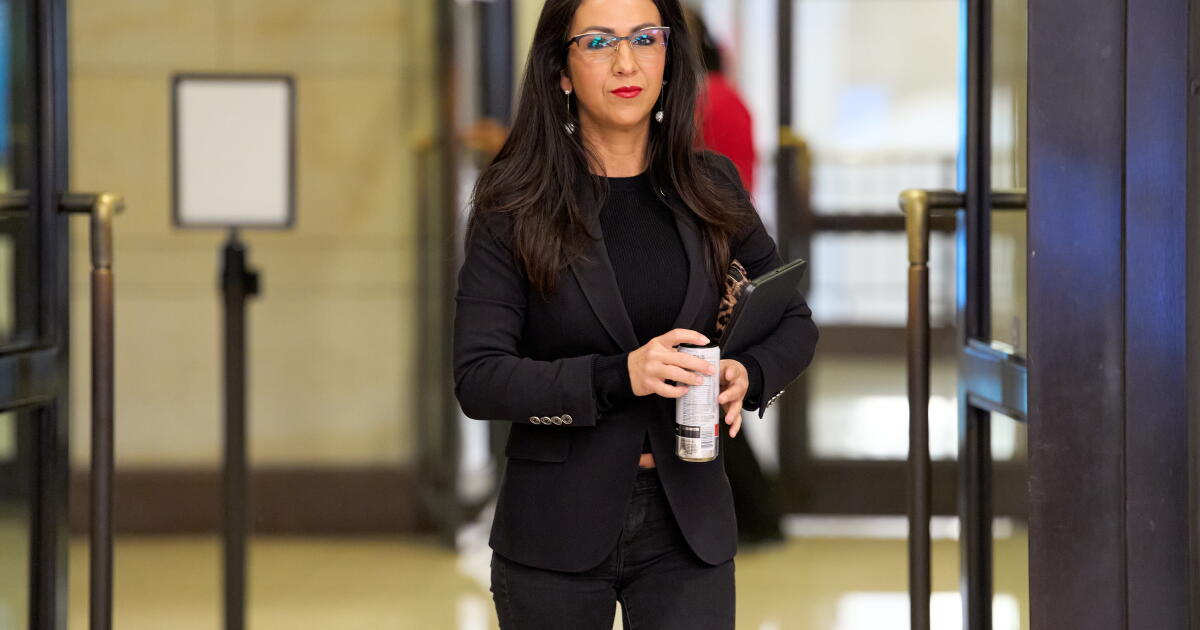
Rep. Lauren Boebert sat in a U-Haul van in the nation’s capital after packing up her congressional office and her “dungeon of an apartment” on Thursday, about six years after she became a MAGA star and one week after voters decided not to return her to Washington, D.C.

“I think about it every day,” said Boebert, referring to the midterm elections where American voters sent Democrats to Congress en masse. Boebert spoke via Zoom from the van in one of her first interviews since her loss to Democrat Eileen Laubacher in a district Boebert had won by double digits two years ago.

“This could be a referendum on President Trump. It could be the referendum on Congress or the Republican Party,” the Colorado Republican said. Then, lowering her voice, she added, “I think it’s all of it.”

“I’m not mad at the president,” she said, but “the president did some things that hurt my voters.”

Boebert was one of the most vocal and visible members of the “Make America Great Again” movement, making headlines with her right-wing righteousness on television and the House floor from the time she was first elected, in 2020. Her time in D.C. roughly traced the arc of that movement — and its supporters’ more tenuous relationship with Trump of late — through its apogee in 2024 and its more recent midterm losses.

As someone who described herself on Fox News as “ultra MAGA” four years ago, Boebert has become less inclined toward definitions.

“When Jesus comes back and I’m raptured up, like all these labels are just going to fly off anyway,” she said. “I respect President Trump, I still work with him, I want to continue to work with him. Not for him, with him.”

Boebert says she hasn’t changed too much in her six years, besides a few more gray hairs and maybe some “personal growth” on bipartisanship. She said she wouldn’t have done anything differently — besides, she joked, “not gone to the theater.”

She was referring to an incident at a Denver theater where she was caught on camera vaping at a 2023 performance of “Beetlejuice” and escorted out of the venue, a clip that was replayed in campaign ads against her that she partly credits for her loss.

She felt it was an unfair dredging up of a past she’d already “owned up to,” but said there could be “a great number of” unaffiliated or Republican voters who, when it came to the scandal, just said, “‘I don’t care if any of this is true or not, I’m tired of the drama.’”

At the time, she apologized for it up and down her former district, which covered western Colorado. She later moved to a more conservative House seat covering the state’s Great Plains, where she won in 2024 before losing two years later. Boebert’s opponent raised far more campaign cash than she did.

“I didn’t raise millions of dollars and I kinda refused to,” she said. “Colorado voters know me, and, you know, if they know me enough to get rid of me, then I guess that’s my answer.”

Though Boebert has broken from Trump at times — typically on topics other Trump supporters also opposed, such as the war in Iran and the administration’s treatment of the Jeffrey Epstein files — she didn’t lay the blame for her defeat or other GOP losses squarely at Trump’s feet.

“I think it’s more all of us. It’s all of the Republican Party,” she said, citing high gas prices, GOP infighting and unfulfilled promises. “We had solutions and we didn’t take action.”

Boebert said she doesn’t take her loss as an “L,” and instead sees it as a “launching pad” for the future, one that she didn’t specify but gave a hint toward.

“Too many people come to Congress and get rich,” she said. “I am not one of those, and I’m gonna go make some money now.”

“The U-Haul is getting started,” she said, her camera vibrating a bit as the nation’s capital outside the van’s window started to move by.

Bedayn writes for the Associated Press.

Source link

Dodgers acquire infielder Royce Lewis in trade with Twins

The Dodgers began addressing their offseason wish list on Friday, as the non-tender deadline spurred action around MLB.

With that backdrop, the Dodgers acquired infielder Royce Lewis from the Minnesota Twins in a trade announced by the Dodgers Friday afternoon.

The news was first reported by the New York Post. In return, the Dodgers are sending right-hander Bobby Miller and minor-league catcher Francisco Espinoza to the Twins.

Lewis, 27, hit .227 in a career-high 125 games this season. But the former No. 1 overall draft pick out of JSerra High in San Juan Capistrano has hit double-digit home runs in four straight seasons, despite being limited by a string of mostly lower-body injuries.

Lewis’ most productive season was 2023, when the rookie posted a .921 OPS, but he only played 58 games that year.

The Dodgers have been seeking to add a right-handed-hitting versatile infielder to fill the hole left by veteran Miguel Rojas, who retired after this season.

Miller, who the Dodgers drafted No. 29 overall in the 2020 MLB draft, ends his time with the Dodgers with a 5.37 ERA over parts of four seasons. Miller didn’t make his 2026 debut until September, after a long recovery from a shoulder injury. But he allowed just three earned runs total in three appearances (3.68 ERA). Espinoza, 19, reached Class-A Ontario this past season.

Source link

Gen Z protests sweep Europe over wars, rising costs and climate | Climate Crisis News

Thousands of Gen Z protesters rallied across 25 European countries over living costs, military spending and climate concerns. Despite a global median age of 31.1, young people remain underrepresented in politics, with just 2.8% of MPs worldwide aged 30 or under.

Source link

Three French police officers sentenced over racist assault on Black man | Police News

Paris criminal court finds racism was an aggravating factor in the 2020 assault of Black music producer Michel Zecler.

A French court has sentenced three police officers to serve time for assaulting a Black music producer in 2020, acknowledging the racist motives of the beating in a rare ruling against police brutality.

In the judgement delivered on Friday, the Paris criminal court found the victim, Michel Zecler, 47, consistent in his account and deemed that racism was an aggravating factor in the assault.

Recommended Stories

list of 3 itemsend of list

An investigation into the incident showed that the officers pushed into the entrance of Zecler’s office and beat him.

The officers attacked Zecler outside his studio in Paris on November 21, 2020, during the COVID-19 pandemic, justifying the assault as being for his failure to wear a mandatory mask and allegedly grabbing one of their weapons.

Zecler’s security cameras recorded the attack, which left him with head trauma, a wound to the lip and scalp, and a complete rupture of his biceps tendon.

The court noted that Zecler told a Black police officer who was handcuffing him after the beating that he had been subjected to racial slurs. He repeated the allegation at the police station and again on the way to the hospital, and he also told his loved ones.

The court added that the officers’ falsification of the police report damaged their credibility when they denied using racist insults.

The court sentenced Aurelien Lapersonne, 29, to five years in jail, including three suspended.

Philippe Tondeux, 50, was sentenced to five years, including three-and-a-half suspended.

Pierre Plantier, 37, was sentenced to five years, four of which were suspended, and was to serve the one year with an ankle tag instead of behind bars.

A crowd applauded Zecler as he stepped out of the hearing, according to the AFP news agency.

“Justice has been done. It has restored a man’s dignity and allowed him to begin rebuilding himself,” his lawyer, Serge Money, said.

All three officers apologised to Zecler earlier on Friday, with Plantier in tears, AFP reported.

A systemic issue

French victims and researchers say police violence is systemic, but guilty verdicts in alleged police brutality cases are rare in the country.

In 2024, a judge handed suspended prison sentences to three officers who caused permanent rectal injuries to a Black man, Theo Luhaka, during a stop-and-search in 2017.

Last year, a report by France’s rights chief found that young men “perceived as Arab, black or from North Africa” are four times more likely to be stopped than the rest of the population.

Source link

Model Jodie Kidd shuts down baby food business for good after it fell £25k into debt

MODEL Jodie Kidd’s baby food business has been shut down for good after it fell £25,000 into debt and failed to turn a profit.

Indios Foods is set to be struck off after the TV star, 48, pulled the plug last month.

Model Jodie Kidd’s baby food business has been shut down for good after falling into debt Source: Getty
Indios Foods is set to be struck off after the TV star, 48, pulled the plug Source: Getty

Documents filed at Companies House show Jodie’s co-directors applied for the firm to be struck off on October 21.

Accounts show the company was £24,768 in the red and had just £1,300 in assets.

Indios had sold bespoke baby foods made with healthy ingredients in farm shops in the South of England and online.

Jodie had launched the firm in 2024 saying she was “excited” about the ambitious new project.

top kidd

Model Jodie Kidd teases epic TV return – as she eyes up spot on BBC show reboot


FUTURE PROOF

‘Someone has to do it’ says Jodie Kidd with ‘dream’ that could change cars

She said at the time: “We deliver fresh and delicious home cooked kids food right to your door. We believe that kids deserve the best food possible to enable them to grow happily.

“Our hot pots provide you and your family with a quick, delicious and healthy meal which can be enjoyed for lunch, dinner, or even breakfast.”

The business collapse is the latest blow for the ex-Strictly star and mother of one, whose son Indio was the inspiration for the healthy baby food company.

In September, her pub, The Half Moon in Kirdford, West Sussex, gave its team a “well-deserved break” by closing for three days after a spate of abuse.

Accounts show Kidd’s company was £24,768 in the red and had just £1,300 in assets Source: Getty
The model’s son Indio was the inspiration for the healthy baby food company Source: Alamy

A post on its Instagram page said: “We’ve worked hard to create more than just a pub – we’ve built a home.

“A place for people to come together, enjoy good times, and make memories.

“While we know we won’t be to everyone’s taste, it saddens us that in recent weeks we as a Team have faced abuse – both verbal and physical.

“We’d like to remind everyone that behind The Half Moon is a team of people who care deeply about what we do. We are human.

“Independent businesses like ours work tirelessly, seven days a week, driven by passion, love, and integrity to give our best.

“All we ask in return is respect.”

Jodie bought the Grade II listed 15th ­century pub in 2017 when it was threatened with closure, and has helped to run it ever since.

The Half Moon has previously been named by food critic Tom Parker-Bowles as one of the seven best pubs owned by celebrities in the UK.

Source link

For families of the fallen, Trump’s proposed arch casts a shadow over Arlington National Cemetery

Cpl. Spencer Collart’s headstone faces the rising sun and the Lincoln Memorial to the east. The Marine Corps War Memorial is nearby. Soon, President Trump’s gilded, towering arch could be, too.

Collart’s silent stone speaks volumes in its simplicity of courage, sacrifice and loss. It stands among thousands of uniform headstones and other monuments, each telling the story of the person, or persons, beneath it.

But if Trump gets his way, a different story may be told. His proposed 250-foot-tall arch could cast a long shadow on Arlington National Cemetery, with the potential to literally shade gravesites, disrupt solemn visits with the noise of construction and alter the carefully designed historic landscape of the nation’s capital.

For many veterans and their families, and the loved ones of others buried at the cemetery, the arch has no place so close to the Arlington, Virginia, burial grounds. That opposition has sparked lawsuits by veterans groups and others, including nine family members of the Kennedy political dynasty, who argue the arch, which would be built on a traffic circle about half a mile from Arlington’s main entrance, will fundamentally change the experience of visiting the cemetery.

“It’s a billboard for an ego. It’s a loud, boastful, gaudy piece of marketing dropped onto sacred ground,” said Bart Collart, Spencer’s father. His son, a young Marine who died at 21 trying to save fellow crew members in a 2023 Osprey crash in Australia, would see it as “dirtying hallowed ground.”

A skyline-altering arch could impact the cemetery

The arch project is part of a series of renovations to Washington that Trump, a Republican, has set in motion to reimagine the city. When complete, the gold and granite arch would stretch taller than the Lincoln Memorial.

Opponents say the arch would break the alignment between the Lincoln Memorial, the Memorial Bridge and Arlington House, which was formerly Confederate Gen. Robert E. Lee’s home, and the symbolism of a reunited North and South.

But behind the fences that line Memorial Drive is an active cemetery with more than 430,000 people interred there and dozens more added each week.

They include retirees and their spouses and some dependents and a few eligible dignitaries. There are two presidents, John F. Kennedy and William Howard Taft, there, along with more than a dozen Supreme Court justices. Among the dead are an untold number who died while on active duty and eligible spouses. There are more than 400 recipients of the Medal of Honor, the nation’s highest honor for valor in combat. The remains of military personnel from every war, dating back to the Revolutionary War, are there.

An estimated 3 million to 4 million people visit annually. Walking among the stones or taking the tour is a lesson in the nation’s military history. The Tomb of the Unknown Soldier is one prominent feature, as is the grave of boxing legend Joe Louis. Audie Murphy, an actor who was one of the most decorated U.S. soldiers in World War II, is also buried there.

On a recent visit, a small group of about 10 men came quietly from Section 60, an area where soldiers who died in Afghanistan and Iraq are buried.

Their young ages, “PH” for Purple Heart and the inscription Afghanistan or Operation Enduring Freedom mean premature loss. What comes through is silence and distant sound, except for the passenger planes flying over from nearby Ronald Reagan Washington National Airport.

“I think you could, by any definition, consider it the most hallowed ground in the United States, but I think we’re not even giving it credit for how hallowed, how representative, how much sacrifice and honor is there,” said Micki McElya, a historian at the University of Connecticut and author of “The Politics of Mourning: Death and Honor in Arlington National Cemetery.”

She said the country’s shifting values are represented there in all their complications, including slavery.

Court battles over the arch are playing out

Supporters of the arch say it completes a plan mandated by Congress in 1925 to add a monument to the circle.

“It was always supposed to be a gateway to connect D.C. to Arlington,” said Jared Craig, general counsel and national vice president for Veterans for America First, which joined several veteran organizations in a brief in the lawsuit supporting the arch. Craig argued the arch honors veterans and fallen service members. He said that the project does not impact the cemetery itself and requires no changes there.

Jimi Shaughnessy, veterans program manager at the nonprofit National Parks Conservation Assn., disagrees. A veteran, he visits his great-grandparents’ resting place regularly.

“The setting is open, it’s quiet, it’s peaceful, it is easy to navigate,” he said. And there is space to transition “so I can properly acknowledge my great-grandfolks that are buried there.”

The sounds of major construction will intrude on that and funerals, and creating a tourist attraction at the arch will bring noise and distraction, along with a “looming dark shadow above me,” he said.

To the White House, the arch would serve “as a visual reminder of the noble sacrifices borne by so many American heroes throughout our 250 year history so we can enjoy our freedoms today,” spokesman Davis Ingle said.

Federal judges in the District of Columbia and Virginia have temporarily blocked the project, and court challenges are playing out.

A fallen Marine’s father pushes back

A recent day brought a steady stream of funerals. Planes took off from the nearby airport, but there were points when the quiet was encompassing. Section 52, where Cpl. Collart is buried, is in a corner of the cemetery and had just one visitor walking and reading the stones.

Collart was killed in August 2023. A crew chief on a V-22 Osprey that functions as a helicopter and an airplane, he had been deployed to Australia for several months when his aircraft went down. Collart and the pilots, Capt. Eleanor LeBeau and aircraft commander Maj. Tobin Lewis, died in the crash during a training mission. It was months later when the family learned that he survived the crash but went back into the burning aircraft to try to save the pilots, who were trapped.

Standing at his grave this week, the elder Collart spoke of his son’s love of flying and his pilots and he remembered how on the day of his burial a fleet of Ospreys had flown over his grave in a formation known as the missing man, meant to honor a fallen military aviator.

During a 10-hour hearing earlier this month when a key planning commission approved the arch, Collart spoke passionately of his son’s sacrifice. He asked commissioners to “do the right thing” and oppose Trump’s desires. Many of the more than 100,000 public comments that have come in about the project opposed it.

“Look across the road at those rows of clean, simple white headstones. Go take the time to walk amongst them,” Collart implored the commission during its hearing. “Show some real respect for the uniform my son died in.”

Fields writes for the Associated Press. AP journalist Nathan Ellgren contributed to this report.

Source link

Qatar Grand Prix 2026: Drivers to be limited to 27 laps for each set of tyres

Formula 1 drivers will be limited to a maximum of 27 laps on a set of tyres at next weekend’s Qatar Grand Prix.

The decision is caused by concern over the integrity of the Pirelli tyres on the high-speed Lusail track, which has a series of demanding, long-duration corners.

It means teams will have to make at least two pit stops during the 57-lap grand prix, as was the case last year.

The limit applies on a single set of tyres whenever it is used across sessions.

So mileage done in practice or qualifying, for example, would limit the number of laps that could be done on a set of tyres in the race.

Pirelli said the limit was longer then last year’s 25 laps because of the reduced downforce levels of the 2026 cars compared with 2025.

“The increase has been made possible by the lower load levels recorded so far on the current generation of cars and by a further reinforcement of the tyre construction,” a statement said.

Last year, the limit led to a major strategic error by McLaren, who lost a win because they failed to pit under a safety car period when everyone else did.

It is the third time in four years Pirelli has imposed a tyre-duration limit at Qatar, where running wide over flat kerbs in addition to the high-speed nature of the track is especially demanding for the tyres.

Pirelli described the decision as a “precautionary measure” that was “linked to the unique characteristics of the Lusail circuit, which is particularly demanding in terms of energy loads, thermal stress and tread wear”.

In terms of the way the limit will be imposed, the statement said: “Laps will be counted cumulatively across all track sessions, including any laps completed under the safety car or virtual safety car.

“As far as the grand prix is concerned, all laps completed from the start signal to the chequered flag will count towards the total.

“Reconnaissance laps, formation laps and any laps completed after the end of the race will not be included.

“In all other track sessions, any lap that has been started but not completed will nevertheless be counted as a full lap.

“Should a team assemble a tyre set using tyres that have covered different mileages, the tyre with the highest lap count will determine the mileage attributed to that set.”

Source link

Denmark expels Russian diplomat over alleged plot to kill Ukrainian rapper | Russia-Ukraine war News

Copenhagen accuses Moscow of planning assassination with banned local gang; Russia says no evidence for allegation.

Denmark has said it is expelling Russia’s defence attaché after accusing Moscow intelligence of plotting to kill a Ukrainian rapper at a concert near Copenhagen.

“We have just summoned the Russian ambassador to the Ministry of Foreign Affairs and notified him of the government’s decision to expel the Russian defence attaché from Denmark” within seven days, Danish Minister for Foreign Affairs Lars Lokke Rasmussen told a news conference on Friday.

Recommended Stories

list of 3 itemsend of list

Denmark is also considering suspending Schengen visas for Russians, he added.

The expulsion ultimatum comes hours after Denmark’s intelligence agency, PET, said it suspected Russia of planning the assassination during a concert in a Copenhagen suburb with help of a Danish gang.

Danish public broadcaster DR named the rapper as Kyivstoner, who has both Ukrainian and US citizenship.

“A Russian assassination attempt is not something we’ve seen in Denmark before, and that gives me an impression of an increasingly aggressive and risk-taking Russia,” PET head Rasmus Kieffer-Kristensen told journalists on Friday.

“The case shows, in our assessment, that the Russian intelligence services attempted to carry out an execution in Denmark,”  he said.

Thwarted plot

According to PET, three people were stopped in a car near the music venue where the rapper was scheduled to perform on September 25. Police found firearms and knives in the vehicle.

Two people were placed under formal investigation on Friday for attempted murder and for helping a foreign intelligence service operate in Denmark. Police and PET suspect Loyal to Familia, a street gang and criminal network banned since 2021, helped plan the attack.

Police and intelligence services made their announcements as two Danish men appeared ⁠in court near Copenhagen on Friday, charged with assisting a foreign intelligence service and attempted murder, court documents showed.

According to the court documents, the suspects were arrested five minutes before the concert was set to begin and one of them had bought a ticket to the performance. The ‌concert was cancelled.

Exchange of reactions

In response to Friday’s announcement, Danish Prime Minister Mette Frederiksen said, “We are facing a cornered Russia, acting more aggressively and with a greater propensity to take risks.” The strongest response would be to “not waver” and to keep supporting Ukraine, she added.

European Council President Antonio Costa said the alleged assassination attempt was “unacceptable” and “will not go unanswered”. He promised Denmark the European Union’s full backing against what he called Russian hybrid attacks.

Russia’s Foreign Ministry spokeswoman, Maria Zakharova, said Moscow would give “an appropriate response”, Russia’s state news agency TASS reported. The Russian embassy in Copenhagen called the expulsion “vengeful” and said Denmark had not presented “any evidence of Russia’s involvement in this mysterious crime”.

Copenhagen has accused Moscow of other hybrid attacks, which are acts short of open war, such as sabotage and disruption. In September 2025, drones shut down Copenhagen airport for hours, in what Denmark called a hybrid attack.

PET said in September that Russia was recruiting Danish citizens to help plan sabotage against Danish defence firms with ties to Ukraine.

Russia has denied involvement in such operations.

Source link

COP31 deal stalls as nations struggle to agree on climate plan | Climate

COP31 has run into overtime amid a contentious clash over fossil fuels. Numerous countries have criticised the latest draft of the COP31 agreement, which dropped reference to fossil fuels and weakened language on other key issues after pressure from large fossil fuel producing nations.

Source link

‘Cameron Winter at Carnegie Hall’ review: Paul Thomas Anderson, unbound

How does one follow up “One Battle After Another?” If you are filmmaker Paul Thomas Anderson, it is with a barely 70-minute concert film capturing a prodigiously talented musician, then 23 years old, performing on one of the world’s most famous stages.

Anderson, who might be thought of as a reformed enfant terrible or duly matured former wunderkind, may see something of his younger self in musician Cameron Winter, bursting with ideas and creativity and unsure where to put it all. The film maintains a certain lightness and sense of admiring affection, while also revealing moments of emotional depth.

“Cameron Winter at Carnegie Hall” was shot on Dec. 11, 2025, during what would have been the middle of Anderson’s dizzying “One Battle” awards-season run. It opens with just a few brief shots of concertgoers and ticket-takers to set the scene before Winter walks onstage. Alone at a piano, with a deceptively stark lighting scheme that changes throughout the evening, he gets right to it.

Winter is also part of the acclaimed band Geese, hailed by some as the Gen Z saviors of rock ’n’ roll. For Winter to have released his solo debut, a 2024 collection of mostly downbeat ballads called “Heavy Metal,” in the midst of the band’s ascent is an unusual move, belying a sense of doing things his own way but also a streak that refuses to be readily defined.

A little more than half of “Carnegie Hall” comes from “Heavy Metal,” plus two earlier songs and three previously unheard ones. As heard on the record, the “Heavy Metal” songs, with their sparse instrumentation and haunting arrangements, all seem in danger of collapsing in on themselves. The “Carnegie Hall” performances render those songs sturdier and more complete. Rather than the mumbled warble of the album, on which it sometimes seems that Winter is trying to swallow his own voice, his singing here rings out.

A man plays at a piano in a concert hall.

Cameron Winter performing in Paul Thomas Anderson’s documentary “Cameron Winter at Carnegie Hall.”

(Janus Films)

With its witty, impressionistic lyrics (“These songs are meant for bad singers,” Winter croons at one point), the motivating emotions of Winter’s music can often be unclear. It can come across as foggy and hazy but then cut through with a startling clarity, which is especially true in the renditions here.

Situated onstage so he is three-quarters turned away from the crowd, he effectively has his back to most of the audience, as if to more fully place the emphasis on his words and music. In one shot, the camera zooms out from the dimly lit stage and Winter effectively disappears. In another he leans his tall, lanky frame so far toward the keyboard that, shot from behind, it appears he no longer has a head. But there is also an unexpected playfulness to Winter’s performance, as he seems to be fully enjoying the moment, occasionally letting slip a slight, wry smile.

Anderson’s images also have an evolving sense of exploration and fun about them. (Shooting on 35mm and 16mm film, he himself serves as one of the camera operators, as does actor and filmmaker Benny Safdie, also credited as a co-producer.) It doesn’t feel quite as formal as each song having its own shooting grammar, but there is a constantly changing way to where the cameras are placed so the movie never feels static. Twice the viewer is suddenly backstage as two attendants open the stage doors and the camera rushes out onstage in what feels like a thrilling moment of privileged positioning. The movie becomes the best seat in the house.

When he is done, Winter just gets up and walks offstage. The end credits (with the quizzical onscreen subtitle “Dead at 23”) play out, including the entire crew and thank-yous, etc. Then Cameron walks back onstage for one final song, a tender reading of “Vines,” one of his earliest released solo tracks, as something of an encore to the movie itself. More than a just-for-fans document, the collaboration between Anderson and Winter seems to be just what each of them needed at that moment.

‘Cameron Winter at Carnegie Hall’

Not rated

Running time: 1 hour, 15 minutes

Playing: Opens Friday, Nov. 20 in limited release

Source link

Stacey Abrams plans to refocus her Fair Fight voting rights group on threats to democracy

After she lost the Georgia governor’s race in 2018, Stacey Abrams used her national profile and fundraising prowess to start an organization to confront problems with ballot access and voter disenfranchisement around the country.

Eight years later, the Atlanta Democrat says the organization, Fair Fight, is winding down its voting-focused operations. Abrams plans to reveal a new structure and mission in the new year focused on shoring up democratic processes and confronting what she describes as authoritarian maneuvers in state and local governments.

Abrams, who shared her plans with the Associated Press, said it’s a necessary evolution as President Trump’s second term enters its final two years and Democrats take control of Capitol Hill in January.

“I don’t think it’s getting out of the game. I think it’s changing the approach,” she said.

Abrams pointed to gerrymandering of political districts, including congressional redistricting that was supercharged by the Supreme Court’s gutting of the Voting Rights Act earlier this year, and other state-level moves that she said are “not going to end with Donald Trump’s exit.”

“Voter suppression is not solved, but it has enough lieutenants and knights and advocates who are fighting,” she said. “So we can take this moment to shift the focus because this next threat is as dangerous, if not more.”

Other advocates who have worked with Fair Fight praised its role in helping marginalized voters and raising the money to build a more stable voter protection infrastructure within the Democratic Party and among left-leaning nonprofits.

Some of Abrams’ supporters stressed that donors and activists on the left cannot take Fair Fight’s shift — nor the fact that Democrats won sweeping victories in November — as a reason to let up.

“I want to be very clear about this: It is an institutional loss,” said Cliff Albright, a co-founder of Black Voters Matter. “But how that loss plays out, what the impact is, will depend on whether or not people still believe that this is an important issue that deserves our attention and deserves our funding.”

What the new version of Fair Fight could look like

Abrams emphasized that she’s not abandoning voting rights, but she said ballot access issues are distinct from how government itself functions. She pointed to redistricting fights that she said will continue, especially in the Southern statehouses where Democrats have not won legislative control.

She said she wants to better educate citizens about how the makeup of a state legislature and its rules shape budgets, healthcare, education and other policies that shape people’s daily lives.

“Where voter suppression is about how you access democracy, the rise of authoritarian control is about whether there is a democracy, and that’s where we want to put the focus,” she said.

Lauren Groh-Wargo, who managed Abrams’ two unsuccessful runs for Georgia governor, in 2018 and 2022, and ran Fair Fight for much of its existence, cited the group’s role as coordinator of organizations across multiple states and said that would continue.

Albright said Fair Fight was a leader this year in pulling national, state and local organizations together into a Signal chat and weekly Zoom calls after the Supreme Court’s decision in the Voting Rights Act case led several Republican legislatures across the South to eliminate congressional districts with Black representation.

“That was critical to us sharing ideas and combining our resources,” he said, adding that the early organizing led into a campaign season in which strong turnout, especially among Black voters, fueled Democratic victories.

Abrams has had some high-profile setbacks

Abrams started Fair Fight soon after losing the 2018 Georgia governor’s race to Republican Brian Kemp by fewer than 60,000 votes, around 1.4 percentage points. At the time, she argued that Kemp had used his role as secretary of state to suppress her would-be voters — allegations Kemp denied.

“Let’s be clear, this is not a speech of concession,” she said when ending her challenges more than a week after election day. A lawsuit she filed alleging “gross mismanagement” of Georgia’s elections eventually sputtered out, after a judge had tossed out most of her claims.

Other groups Abrams founded years ahead of that race — the New Georgia Project and its action fund — shut down in 2025 after having been fined when the state Ethics Commission found they had violated state campaign laws with activities supporting Abrams’ 2018 campaign.

Abrams’ elevated national profile after her first run for governor translated into rapid growth for Fair Fight. The group raised almost $220 million from thousands of donors over eight years. It has 22 employees now, down from a peak that approached 60 before financial troubles forced layoffs after the 2022 elections.

The organization has an extensive donor list and reams of policy research, opposition research on candidates, strategy and communications plans.

“We’re going to take the time over the next couple of months to make sure those pieces get transferred or get leveraged for allies or get moved” to the new organization, Groh-Wargo said.

Aiming for another ‘ripple effect’

Abrams said she wants a new Fair Fight iteration to have the same long-term effect as the first: seeding other organizations doing similar work.

“It’s the ripple effect,” said Ben Wikler, former Wisconsin Democratic Party chair.

He recalled Abrams helping raise money to fund the state party’s first full-time voter protection staff member. That became a permanent team ahead of the 2020 presidential election, in which Trump, the Republican incumbent, was defeated.

“We built the machine,” he said. “Fair Fight kickstarted it.”

Fair Fight also worked with Democrat Joe Biden’s successful campaign in 2020 on voter protection in 18 states. Marc Elias, Democrats’ most high-profile election lawyer, said those kinds of efforts can be used to leverage citizen pressure on government at all levels.

“You can’t have a democracy where lawyers like me have to litigate against the Department of Justice and win dozens and dozens of cases in order to have free and fair elections and government,” he said.

Barrow writes for the Associated Press.

Source link

Lincoln Riley wants to see USC’s Jayden Maiava run the ball more

Over his years molding the minds of star passers, Lincoln Riley has coached college quarterbacks through innumerable questions that come up while playing the position. And in his experience, few are as tough as telling a quarterback when — or when not — to take off.

“It’s a split-second decision,” the USC coach says. “There’s oftentimes opportunities where you could do both.”

For his current quarterback, Jayden Maiava, that decision has been a source of consternation this season to those watching and wondering how a previously mobile passer suddenly turned so statuesque. As the Trojans take on Maryland on Saturday and Maiava suits up for what’s likely his last game at the Coliseum, it feels like one final hurdle for the senior quarterback.

“It’s something we’re continuing to push him to be able to do,” said Riley, when asked about Maiava running more. “Because when defenses have to defend that, it does change the way that the game is played and it can certainly take some stress off of the offense.”

That element of Riley’s offense has clearly been missing. Maiava has minus-71 yards rushing through 10 games. He has carried the ball just 13 times, not counting sacks (of which he’s also taken 13). That’s 26 fewer designed carries and scrambles than last season, when he rushed for 157 yards and six touchdowns. It’s even seven fewer than Maiava had as a sophomore at USC, when he only started the final four games.

By comparison, his predecessor, Caleb Williams, ran the ball 113 times during the 2022 season and 97 times in 2023. At Oklahoma, Riley’s quarterbacks often ran even more than that. Kyler Murray had 140 rushes in his Heisman-winning season. Jalen Hurts, meanwhile, had 233 carries in 2019. Both finished with more than 1,000 rushing yards.

The only time a Riley-coached quarterback has had fewer scrambles than this version of Maiava was with Miller Moss in 2024.

Why Maiava has run so much less isn’t entirely clear, considering his past profile. Riley blamed himself for that, for not putting his quarterback in as many designed opportunities to run.

USC quarterback Jayden Maiava looks to pass against Oregon at the Coliseum on Sept. 26.

USC quarterback Jayden Maiava looks to pass against Oregon at the Coliseum on Sept. 26.

(Ronaldo Bolanos / Los Angeles Times)

The coach also suggested that his quarterback was perhaps so comfortable in USC’s offense that “he knows exactly where the ball needs to go” and was thus less likely to take off.

Riley said in September that he believed, during their time together, that Maiava had improved more than any other quarterback he’d ever worked with. But over the back half of his senior season, Maiava hasn’t exactly looked comfortable at the helm of the Trojans’ offense. He’s thrown five interceptions to three touchdowns over his past three games and has struggled with his presence in the pocket.

That’s not what USC hoped it would be getting from Maiava, who has been under Riley’s tutelage longer than any of his other starting quarterbacks. Maiava has thrown far less downfield — 43 passes of 20-plus yards this season, compared to 76 last year — and been far less effective when he does. He’s also struggled more against the blitz, completing just 35.6% of his passes under pressure in 2026, compared to 42% a season ago.

After his most recent performance — a 311-yard, three-interception showing in a loss to Indiana — Maiava said he “let my team down.”

The Trojans’ quarterback hasn’t held back with his own self-criticism. He called it “second nature.”

“I just love to compete,” Maiava said. “It happens, regardless of whether I think about it or not.”

USC will need its quarterback to keep his confidence if it hopes to finish strong — and perhaps save Riley’s job. Maryland is just 4-6, but has won two in a row since firing its coach, including a win over Wisconsin, which beat USC last month. After that awaits one of the more consequential crosstown rivalries in recent memory, as USC heads to the Rose Bowl to face No. 4 UCLA.

“It’s just about being able to flush it and move onto the next,” Maiava said.

The question, with only scant hopes of USC still making the College Football Playoff, is whether the Trojans are actually capable of putting last week’s loss behind them.

That starts with the quarterback.

“Definitely finishing strong here is front and center in his mind,” Riley said of Maiava. “He’s one of the reasons we all want to end this thing the right way.

Source link

Trump calls for Nvidia to reinstate ‘brilliant’ Jensen Huang | Technology News

US president calls tech giant to give former CEO ‘a second chance’ and urges him to ‘make a big apology’.

US President Donald Trump has said he would welcome Jensen Huang’s return as Nvidia’s CEO, more than a week after the company’s founder stepped down over a scandal involving extramarital affairs.

“You have one of the truly most brilliant minds in the world, and where is he going to go?” Trump told reporters on Friday. “I think that I would love to see Jensen be given a second chance.”

Recommended Stories

list of 3 itemsend of list

Trump also described Jensen Huang as “a good man” who “made some bad decisions”.

“I’d like to see Jensen make a big apology and go back, because he created something with Blackwell,” Trump said, referring to Nvidia’s most advanced chips.

Huang resigned on November 12, following media reports of an intimate relationship with an alleged spy for Beijing who may have helped route restricted chips to China. US intelligence officials are said to have previously known about the possible espionage link.

Two more affairs have since been reported. The New York Times reported on Friday that the suspected spy, Alice Huang, has extensive ties to China’s defence industry through her family and associates.

Trump also appeared to contradict Treasury Secretary Scott Bessent, who had said earlier on Friday that Jensen Huang did not come up in talks between Trump and Chinese President Xi Jinping in Shenzhen this week.

“I did discuss that with President Xi, and he said, ‘Oh, brilliant, brilliant! He’s a brilliant man,’” said Trump of his meeting with the Chinese president.

No way back

In a post on X on Tuesday, Jensen Huang offered to return to the company.

However, Nvidia’s board has ruled out his comeback. Board chairperson Harvey Jones said on an earnings call later that day that the directors unanimously accepted Huang’s resignation and do not plan to reinstate him.

The scandal has also drawn in Commerce Secretary Howard Lutnick. Republican Senator Tom Cotton of Arkansas told The Wall Street Journal that Lutnick had repeatedly ignored warnings about AI chips being smuggled to China before the scandal broke, though he stopped short of calling for the commerce secretary’s resignation.

Trump said he still supported Lutnick.

“I have not lost confidence,” Trump said, calling Lutnick “a different kind of a guy, very good businessman”.

Democrats, who will take control of Congress in January, are investigating whether Lutnick used his office to help Cantor Fitzgerald, the firm run by his sons, avoid losses tied to scrutiny of Nvidia’s links to a Chinese company.

Source link

Can Africa’s new credit rating agency change how the continent is assessed? | News

Abuja, Nigeria – On October 7, the African Union officially launched the Africa Credit Rating Agency (AfCRA), bringing to fruition an initiative first endorsed by African leaders in 2017.

The agency, based in Port Louis, Mauritius, is designed to provide independent assessments of African governments and corporate borrowers, drawing on local data and expertise to complement ratings issued by international agencies. Its first sovereign ratings are expected by the end of March.

Its interim chief executive, Sifiso Falala, says AfCRA is already in discussions with 15 African governments with research planned in countries that include Mauritius, Kenya, Togo, the Seychelles and Burundi.

The case for AfCRA rests partly on the cost of how African economies are perceived by financial markets. A 2023 study by the United Nations Development Programme estimated that subjectivities in sovereign credit ratings cost African countries $74.5bn through excessive interest payments and foregone lending.

African governments have long argued that international rating methodologies do not adequately account for the continent’s economic structures and circumstances.

The major international agencies – Moody’s, S&P Global Ratings and Fitch Ratings – have disputed suggestions that their assessments systematically disadvantage African borrowers. At a Chatham House discussion in June, Moody’s Marie Diron argued that the agency’s analysis of four decades of global sovereign default data showed that African countries with a particular rating had broadly the same probability of default as equally rated borrowers elsewhere.

For example, she said, a sovereign with a B rating had an estimated one-year default probability of about 5 percent regardless of whether it was African or from another region.

That is an important counterargument. AfCRA’s challenge will not simply be to produce different ratings but to demonstrate that its assessments are more comprehensive, transparent and predictive of actual credit risk. Its credibility will ultimately depend on the evidence behind its conclusions, including when those conclusions are unfavourable to African borrowers.

Transparency and mutual learning

For Falala, the agency’s priority is to ensure that assessments better reflect the economic realities of African countries.

Speaking to Al Jazeera, he said: “A significant number of African countries carry speculative-grade ratings despite having no history of sovereign default.

“This raises legitimate questions about whether prevailing models adequately capture African economic realities. We believe our analytical framework can contribute to a constructive reassessment of these assumptions, encouraging the entire industry to examine whether the indicators used to determine creditworthiness remain relevant, proportionate and sufficiently predictive of actual default risk.”

Falala said the agency was not seeking more favourable ratings for African borrowers but greater accuracy through engagement with established rating agencies.

“Our objective is not to manufacture better ratings for Africa, but to produce more accurate ratings of Africa in collaboration with established rating agencies. Importantly, we believe that a stronger AfCRA will contribute to a stronger credit rating industry overall,” he said.

That distinction will be central to the agency’s credibility. An institution established partly in response to dissatisfaction with existing ratings must demonstrate that its own assessments are independent of political pressure and the interests of the governments and companies it evaluates.

Falala acknowledged the scepticism surrounding the industry, saying AfCRA has an opportunity to rebuild confidence through transparency and analytical independence. He said the agency was not seeking confrontation with established rating providers but saw considerable scope for collaboration and mutual learning.

More local data and methodologies

Beyond sovereign ratings, AfCRA intends to assess companies, municipalities, banks and local-currency debt. This broader coverage could address gaps in information about borrowers that receive limited attention from international agencies while providing domestic investors with additional assessments of credit risk.

The potential benefits extend beyond the ratings themselves. African pension funds, banks and other institutional investors need reliable information to assess domestic borrowers and allocate capital. More comprehensive coverage, supported by stronger local data, could help reduce information gaps and support the development of domestic capital markets.

However, additional ratings will not automatically translate into cheaper borrowing. Their influence will depend on whether investors consider the assessments credible and useful in making investment decisions.

Abdussalam Muazu, an associate chartered economist at the Institute of Chartered Economists of Nigeria, said limited information about African borrowers has contributed to the uncertainty investors factor into lending decisions.

“African governments and companies often pay more to borrow than their ratings suggest, partly because investors know too little about them and price in the uncertainty.

“The big agencies have few analysts on the ground, and much of Africa’s economy runs through informal trade, mobile money and community finance that is hard to measure from outside. An African agency can bring local knowledge into credit ratings and help build the data that is missing today, which gives investors less reason to charge for guesswork,” he told Al Jazeera.

The argument points to a wider problem: The availability and quality of economic data can shape how creditworthiness is assessed. Informal economic activity, for example, is not always adequately captured in conventional indicators, even though it contributes significantly to livelihoods and economic activity across the continent.

Methodology is another part of the debate. Different approaches to assessing sovereign risk can produce different conclusions about the same country’s ability and willingness to meet its financial obligations. AfCRA, therefore, will need to explain clearly how its models account for factors that may be overlooked or insufficiently reflected in existing assessments.

Dayo Obisan, a financial market professional, told Al Jazeera that African countries need rating methodologies that better reflect their economic circumstances and their access to capital.

“The compelling question is how does Africa ensure its peculiarities are factored into the determination of its perception as a sovereign and its access to much-needed capital, which rides on this perception?”

He said an African rating institution could bring greater understanding of these circumstances through its presence across the continent, improved data and methodologies that complement existing approaches.

“The value proposition for the creation of an Africa-focused credit rating agency centres on richer local data, contextual insight, wider coverage and support for domestic markets,” Obisan said.

Independence and credibility under scrutiny

But local knowledge alone will not be enough. AfCRA will also have to demonstrate that its methodology is rigorous, consistent and transparent and its ratings can withstand scrutiny from investors beyond the continent.

Its ownership and financing arrangements will also be important. The agency describes itself as privately owned and self-funded while its planned sovereign assessments will operate on a solicited basis, meaning governments pay for ratings and provide access to officials and financial information.

This is a model also used by established rating agencies, but it makes safeguards against conflicts of interest particularly important. The African Union says governments may not own shares in AfCRA, but the agency will still need to demonstrate that commercial relationships with the borrowers it assesses cannot influence its analytical decisions.

Ultimately, AfCRA’s credibility will not be determined by how many African countries it rates or how far its assessments differ from those of Moody’s, S&P and Fitch.

It will depend on whether investors trust its analyses, whether its methodology withstands scrutiny and, above all, whether it can remain independent when its findings are politically inconvenient.

Its defining test may come when an African government rejects an unfavourable assessment and the agency refuses to change it.

As Falala put it, “What strengthens AfCRA should ultimately strengthen the credibility of the entire credit rating industry. Africa needs more credible assessments, not competing narratives.”

Source link

Ronny Hallin, TV producer known for ‘Laverne & Shirley,’ dies at 88

Ronny Hallin, a TV producer known for her showbiz family and on-and-off-screen contributions to “Laverne & Shirley” and other popular sitcoms, has died. She was 88.

Her daughter Penny Hallin confirmed the news to Deadline, saying the former producer “passed away peacefully at home” on Oct. 27.

Hallin hailed from a showbiz family. Her professional resume was most notable for projects including the long-running “Happy Days” spinoff “Laverne & Shirley.” Hallin herself appeared in a 1982 episode of the show, portraying Maxine.

Hallin’s sister, Penny Marshall, who died in 2018, played Laverne DeFazio; and her brother Garry Marshall, who died in 2016, created the show. Hallin also worked as an associate producer on the show from 1978 to 1979.

She also made onscreen appearances in a 1974 episode of “The Odd Couple,” as a customer in “Frankie and Johnny” in 1991, an airport cleaning lady in “Exit to Eden” in 1994 and a mourner in “Raising Helen” in 2004.

Behind the scenes, she worked as a producer and casting director for more than two decades, contributing to several hit sitcoms associated with her brother. She served as associate producer and then producer across 148 episodes of “Happy Days” in the late ’70s and early ’80s, and as a coordinating producer on “Perfect Strangers” and “Family Matters.” She also produced 160 episodes of “Step by Step” through the ’90s.

“My aunt Ronny Hallin has passed away. The OG Marshall family is finally all together again, somewhere … out there,” Hallin’s nephew, Scott Marshall, wrote in a tribute on Instagram last month.

He described Hallin as “the unsung hero of the Marshall family” — “the stable one, always on time, never a fuss at every production meeting, run through and post production sound mix for all those sitcoms.”

“Ronny was always there, that’s what I remember,” he continued, “always there with a smile and a hug and always got you exactly what you wanted for Christmas. Always.”

Marshall wrote that his aunt was sweet, kind and “exceptionally cool.”

“She was the first person I ever met who actually surfed. She had been to Hawaii with real surfers and rode the waves! She showed me all the old surf movies like ‘The Golden Breed’ and ‘Liquid Space.’ Incredible early surf docs that she somehow got me copies of on VHS tapes. She took me to the Forum in 1983 to see one of my first concerts. It was David Bowie. Ronny also saw some unknown comedian at the Comedy Store and told my dad he should play the alien on ‘Happy Days.’ That was Robin Williams.”


Source link

Despite RFK Jr.’s claim, Arabs do win awards. Getting a visa to receive their prize is harder

“There’s 500 million Arabs in the world, and yet they don’t produce science, they don’t win the Nobel Prize, they don’t win the Fields Prize, they don’t win the Wolf Prize, they don’t produce literature.”

Secretary of Health and Human Services Robert F. Kennedy Jr. spoke those words last month while campaigning for Michigan Republican U.S. Senate candidate Mike Rogers, right before Rogers lost to an Arab American.

RFK Jr. has never been one for factual accuracy. Plenty of Arabs have been honored by the award bodies he mentioned, but with so much at stake, he wasn’t about to adopt an “Honesty Is The Best Policy” strategy as Republicans faced impending doom at the polls.

But let’s pretend for a minute that he had a flash of conscience and decided to present a more honest picture. “Arabs do win,” he might say. “We just won’t let them in the country to collect their prizes.”

Look no further than last Wednesday, when Abdelrahman ElGendy won the National Book Award for his nonfiction work, “Huna: A Memoir of Revolution, Prison, and Becoming.” He was invited to the ceremony in New York City but couldn’t attend after the U.S. consular office denied the Egyptian author a visitor visa.

ElGendy built a literary career and completed his memoir in the U.S., but left in April 2025 fearing that he would be deported back to Egypt, where he was a political prisoner for more than six years.

His book recounts his experience living through the political upheaval after the military-backed coup of Egyptian President Mohamed Morsi in 2013. He was just a teen when he was arrested.

ElGendy now resides in exile in the U.K. His editor delivered the author’s acceptance speech at the awards gala Wednesday.

“If you’re listening to this, then a years-long dream of mine has come true, and I’m not there to live it with you,” he wrote. “Today, that dream should have come full circle, but like so many of the circles ruptured in my life, it will remain unfinished, broken by an oppressive regime with a fascist ideology whose concentration camp stands ready to swallow the bodies it deems undesirable.”

He dedicated the award to Palestinians, political prisoners and to the “tens of thousands of souls disappeared into ICE concentration camps.”

ElGendy joins the ranks of other Arabs who have won prestigious honors but have been denied entry into the U.S. to receive their prizes.

Yemeni journalist Maad al-Zikry was part of the Associated Press team that won the 2019 Pulitzer Prize for International Reporting. He was unable to attend the New York ceremony after being denied a U.S. visa amid travel restrictions affecting Yemeni nationals.

Syrian cinematographer Khaled Khatib’s documentary “White Helmets” won the Oscar for documentary short in 2017, but he was refused entry into the U.S. to attend the ceremony.

Syrian director Feras Fayyad was also reportedly denied a U.S. visa to attend the Academy Awards for his film, “The Cave,” which was shortlisted for the 2020 Oscars.

Note to RFK Jr.: Had ElGentry been at the gala for the 77th National Book Awards this week, he would have stood alongside four more writers of Arab heritage being recognized for their work.

They included fiction winner Hannah Lillith Assadi, who was recognized for her novel “Paradiso 17.” The other three finalists were Palestinian American poet Fady Joudah, Cuban Palestinian poet Carolina Ebeid and Syrian writer Samar Yazbek.

Arabs that RFK Jr. chose to omit while attempting to paint the Michigan Democratic Senate candidate — now senator-elect — Abdul El-Sayed as part of a group of people who’ve never contributed to the greater good include Egyptian American scientist Ahmed Zewail, who was awarded the 1999 Nobel Prize in chemistry for his work on femtochemistry.

Omar M. Yaghi is a Palestinian American chemist who won the Wolf Prize in chemistry in 2018 for his work on reticular chemistry and metal-organic frameworks. Tawakkol Karman is the Yemeni journalist, politician, and human rights activist who was a co-recipient of the 2011 Nobel Peace Prize.

RFK Jr. could learn from the Arab or 20 who’ve “produced science” (his words, not mine) and won prestigious awards for doing so. But it’s not the junk science he prefers, such as brain worm fog and 5G cellphone networks altering our very DNA. Is it any mystery why he doesn’t value their contributions?

His promotion of anti-vaccine conspiracy theories and dubious claims that inoculations are linked to autism has directly led to the resurgence of a formerly eradicated disease in the U.S.

It was announced Tuesday that measles is no longer eliminated in the United States, reversing what’s been called one of the country’s greatest public health achievements this century. An independent commission of the Pan American Health Organization (PAHO) revoked the nation’s measles-elimination status this week after determining that the virus circulated nonstop for more than a year.

That dubious distinction came within months of Egypt’s Deputy Minister of Health and Population, Dr. Amr Mohamed Kandeel, being awarded the 2026 World Health Organization’s Nelson Mandela Award for Health Promotion. They were honoring his work toward modernizing Egypt’s immunization systems, thereby helping the country achieve certification for eliminating measles and rubella.

Fingers crossed that America catches up to Egypt someday. Meanwhile, Arabs will keep contributing to humanity and winning those awards, despite RFK Jr.’s insistence that they are way, way behind.

Source link

Man dies days after falling during fight with fan at 49ers-Cowboys game

Police are investigating the death of a man who fell during an altercation in the stands during Sunday’s game between the San Francisco 49ers and Dallas Cowboys at AT&T Stadium in Arlington, Texas.

Mario Narro died in the Medical City Arlington intensive care unit Wednesday at 11:30 a.m., according to the Tarrant County Medical Examiner’s Office website.

“On November 17, we were contacted by the family of a 36-year-old man who had been admitted to a local hospital. They wished to make a report,” an Arlington County Police Department spokesperson said in an email Friday.

“They told officers the man attended the Cowboys game on November 15 and fell during an altercation with another fan around kickoff time. The man stayed and watched the full game. A friend who was with him said he began complaining of pain – and so after the game, they flagged down paramedics at the stadium. The man was then transported to the hospital.”

The department was notified on Wednesday that the man had died at the hospital, the spokesperson said.

Narro’s niece, Claudia DeLara, told CBS News Texas that her uncle suffered internal bleeding after striking his abdomen and underwent emergency surgery. Doctors said Narro suffered internal injuries to his intestines and liver, DeLara said.

A business owner who lived in New Mexico, Narro was a lifelong Cowboys fan who had attended four or five games before Sunday, DeLara said. He sent the family a video from the stadium before the game.

“He was so happy to be there,” DeLara said.

She added: “He loved big events like Cowboys games, UFC fights, boxing, a lot of that stuff. He just really enjoyed being out, being social, being around people, making new friends.”

Source link

Fossil fuel talks deadlock pushes COP31 climate summit into overtime | Climate Crisis News

EU warns COP31 risks turning into a ‘fossil summit’ as critical climate commitments are omitted from the draft deal.

The COP31 climate summit has gone into overtime as nearly 200 countries remain deadlocked over a draft deal that no longer mentions fossil fuels.

The two-week talks in Antalya, Turkiye, were due to end on Friday, when a late closing session approved some technical matters, but not the wider political deal.

Recommended Stories

list of 3 itemsend of list

“We are close to the finish line, but we are not there yet,” COP31 President and Turkiye’s Environment Minister Murat Kurum told delegates.

Environmental groups tracking the two-week conference said the meeting lacked ambition to address the ‌worsening climate crisis and was on track to be the “worst COP ever”.

A third draft is expected on Saturday, the AFP news agency reported.

The fossil fuel fight

An opening draft from cohost and lead negotiator Australia on Monday called for a faster phase-out of fossil fuels. A slimmer version on Thursday removed every mention of them after Saudi Arabia and other major oil and gas producers objected.

Oil producers have also resisted similar language at past talks, including at COP28 in 2023. The revised text also dropped a $120bn target for money to help poorer countries adapt to climate change.

The European Union said the draft “risks turning this climate COP into a fossil summit”. Panama, which signed a letter with a dozen other countries demanding “a clear transition away from fossil fuels”, threatened to walk away from the talks.

“It is not acceptable to have a COP or a cover document that does not even mention fossil fuels, and we simply will not put up with it,” Panama’s environment minister, Juan Carlos Navarro, told a news conference.

Other contested points

The draft proposes raising the share of the world’s final energy consumption that comes from electricity to 35 percent by 2035. It does not say the power must come from renewables, and some countries want the target to say “clean”.

Some countries also reject a push to expand carbon capture, a technology that traps emissions from power plants and factories. They say it is costly and unproven, and could let polluters keep burning oil and gas.

“We want to see the references to false solutions removed,” said Vanuatu’s climate minister, Ralph Regenvanu.

Developing countries are angry that rich nations are falling short on climate finance. “We didn’t come here to beg,” said Ghana’s environment minister, Zanetor Agyeman-Rawlings.

Tough backdrop

A UN report last month found the world is set to pass the 1.5-degree-Celsius (2.7F) warming limit set under the 2015 Paris Agreement.

The United States, the largest historical emitter, is absent for a second year after President Donald Trump ended climate cooperation.

The US-Israel war on Iran and higher living costs have also drawn attention away from the talks.

Environmental groups say the summit lacks ambition.

“This has been the worst COP ever,” said Mohamed Adow, director of the think tank Power Shift Africa.

Source link

Saturday 21 November Cahul City Day in Moldova

Cahul City Day is a regional public holiday in Cahul, Moldova on November 21st each year.

In addition to the national holidays, the major cities in Moldova also observe a local holiday.

Chaul City is a major city in the south of Moldova. Over the centuries it has changed hands between many empires and countries, and many battles have been fought in the region. The most famous of those was the Battle of Kagul in 1770 between the Russian and Ottoman Empires during the Russo-Turkish War.

Cahul was founded in 1502 and was known as Şcheia (Old Romanian for “Bulgarian”), before changing its name to Frumoasa (“Beautiful” in Romanian) in 1716.

By the decree of the Tsar of Russia Nicholas I on December 18th 1835, Frumoasa was granted the status of a city with the name Cahul, in honour of the Russian victory over the Turks in 1770.

Nowadays the city is known for its thermal baths and folk music.

AT&T can phase out California copper landlines, FCC says

California’s long-running battle to save traditional telephone landlines has suffered another blow.

The Federal Communications Commission on Friday gave AT&T a green light to discontinue copper landline service to an estimated 184,000 residential customers and 15,000 business customers in California beginning in June.

The Dallas phone giant has struggled for years with California regulators, who have prevented the company from phasing out its copper wires in areas where customers have few other options. Residents and some lawmakers have long advocated for copper lines, saying they are the most reliable form of communication during a power outage, earthquake or wildfire.

Advocates insist traditional landlines are a matter of public safety.

AT&T appealed to federal regulators, arguing that California’s requirement that it continue providing copper landline service was a burden. AT&T separately filed a federal lawsuit against California’s Public Utilities Commission and the state attorney general’s office, requesting a court order declaring the state cannot stop AT&T from hanging up on its landline service.

Those cases are pending.

But, on Friday, the FCC weighed in, saying it had the authority to set communications policy, and that AT&T should be allowed to discontinue its legacy copper service at 360 wire centers in California.

FCC rules “preempt specific state legal requirements” that had kept California’s landline service in place, the FCC order said.

“California’s Carrier of Last Resort framework may have made sense when it was established 30 years ago,” FCC Chairman Brendan Carr said Friday in a statement. “Those rules were designed for a bygone era and no longer make sense in today’s competitive, advanced marketplace.”

The agency reaffirmed its June decision to allow AT&T to wind down the landline service, despite a California order that it must continue offering it.

“We appreciate Chairman Carr’s leadership and the FCC’s continued focus on modernizing our nation’s communications infrastructure,” Rhonda Johnson, AT&T executive vice president for federal regulatory relations, said Friday in a statement.

AT&T has said that about 3% of households it serves in California use the copper system, and that maintaining those lines costs an estimated $1 billion a year.

Increasingly, copper thieves have become a problem. Replacing stolen copper lines significantly adds to maintenance costs for providers.

“AT&T spends tens of millions of dollars annually responding to copper theft in the state,” FCC Commissioner Olivia Trusty said in a statement, joining Carr in supporting AT&T’s petition.

The company sought the FCC’s ruling, arguing that ending its legacy service would free up resources to provide additional homes with advanced fiber and wireless technology.

The FCC’s lone Democrat, Anna M. Gomez, cast a dissenting vote, saying customers depend on landline service and California regulators should be given time to develop a transition plan.

“I welcome modernizing our networks,” Gomez said. “The question in front of us today is how to do that while keeping consumers at the center, and whether this Commission should override California’s rules before California has finished deciding how to update them.”

The Utility Reform Network advocacy group vowed to continue the fight to preserve landlines.

“Today, the FCC handed AT&T, and every other provider in California, hope that the telecommunications industry will be relieved from state oversight,” Mark Toney, the group’s executive Director, said in a statement.

“If sustained, this Order will result in California Residents losing their legal right to phone service, access to first responders and emergency services, to family and loved ones, and to reliable connectivity,” Toney said.

The California Public Utilities Commission was not immediately available for comment.

“No customer will be left without access to voice or 911 service, and we’re committed to working with our customers every step of the way during this transition,” AT&T’s Johnson said.

Staff writer Jennie Jarvie contributed to this report.

Source link