Month: November 2026

News Analysis: In Shenzhen, Trump treats deference to adversaries as peace

In August of last year, President Trump hosted Russian President Vladimir Putin in Alaska for a summit labeled at the time as a historic event. This would mark the beginning of the end of the war in Ukraine, Trump vowed, the deadliest conflict of our time.

But as Trump greeted Putin with an outstretched hand this week in Shenzhen, over a year later, Moscow’s assault on Ukraine had only intensified. Russian ballistic missile attacks have surged sharply since the Anchorage summit, by over 60%, increasingly targeting civilians in urban areas, according to independent analysts.

In a similarly choreographed gathering in Beijing earlier this year, Trump huddled with Chinese President Xi Jinping, repeatedly calling him a friend and pledging to work through their most contentious differences. Yet behind the scenes, Beijing was orchestrating an elaborate effort to circumvent U.S. export controls, acquiring more than 1.5 million American chips through back channels to fuel its ambitions to beat the United States for artificial intelligence supremacy.

China’s covert effort came to a head days before the summit, when an alleged espionage campaign by Beijing targeting America’s largest chipmaker erupted into public scandal.

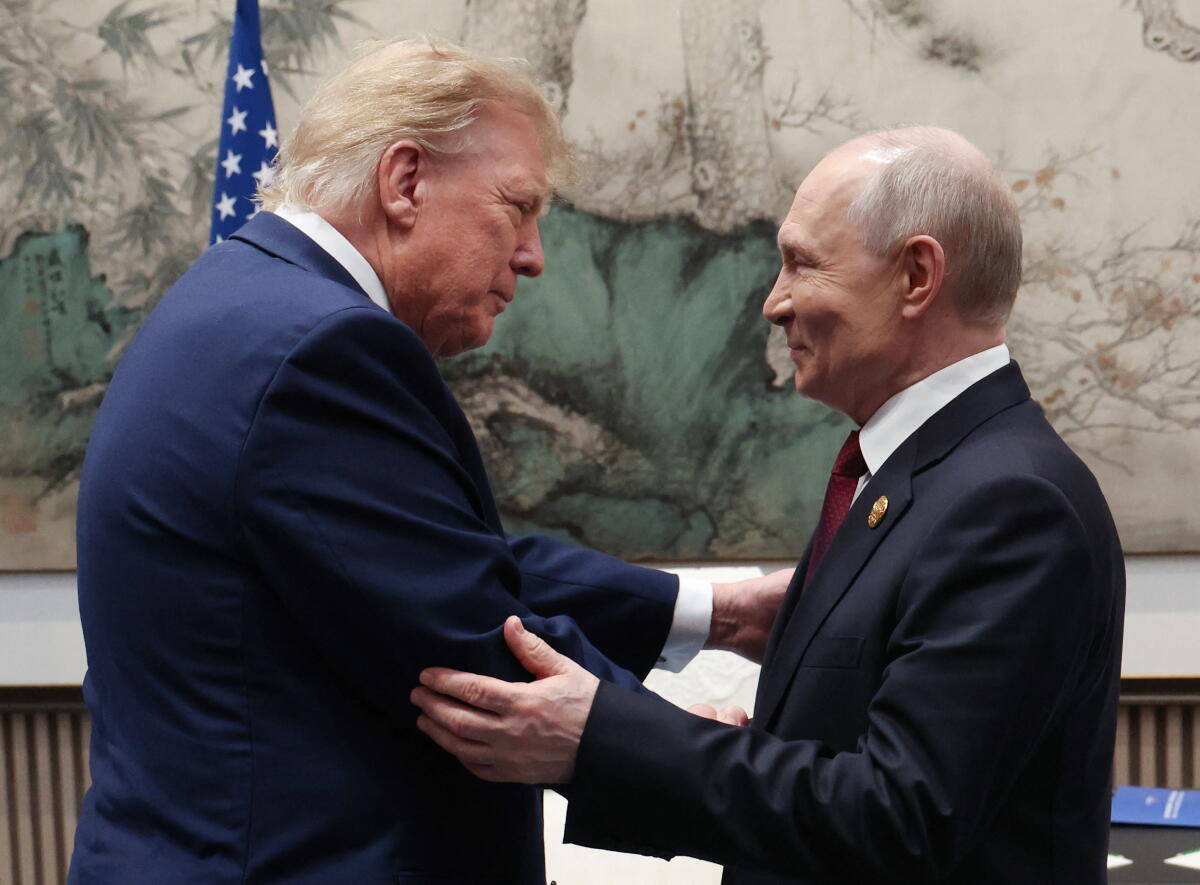
A hastily arranged gathering with all three men, held here Thursday in southern China, produced iconic images of cooperation and peace. It was a first of its kind. But the meeting ultimately continued Trump’s practice of summitry without substance, deferring to powerful adversaries over vital American interests, placating historical rivals to the consternation of long-standing allies.

President Vladimir Putin and President Trump shake hands

President Vladimir Putin and President Trump shake hands during a meeting on the sidelines of the Asia-Pacific Economic Cooperation (APEC) Summit in Shenzhen, in China’s southern Guangdong province, on Thursday.

(Vyacheslav Prokofyev / Pool/AFP via Getty Images)

“The meeting was a terrible signal to real U.S. friends around the world, but there was no lasting substantive outcome to the meeting,” John Bolton, who served as national security advisor to Trump in his first term, told The Times. “I suspect that the bilateral meetings Trump had with Xi and Putin respectively might have had more substance, but details on those meetings are still too sketchy to evaluate.”

Rather than promoting peace, the summit served to generate further angst and distrust across Asia and Europe, with several leaders publicly recoiling at Trump’s overtures of affection. “God, protect us from such friends,” Polish Prime Minister Donald Tusk said, reacting to Trump’s embrace of Putin.

“It was an interesting moment for the president to hold a trilateral with America’s two strategic rivals,” said Kyle Balzer, a national security fellow at the American Enterprise Institute. “Given the nature of Chinese and Russian behavior in their respective neighborhoods, a trilateral summit focused on strategic stability sends a confusing message to allies, who don’t see much ‘stability’ coming from Putin and Xi.”

Still, despite his professed friendship with Putin and Xi, Trump stopped short of explicitly abandoning U.S. support for Ukraine, Taiwan and other regional partners considered by China and Russia to be within their spheres of influence.

A discussion among the three leaders that resulted in a denunciation of nuclear war may sound obvious, but could be a mark of progress, experts said, after Putin has repeatedly kept open the door to using tactical nuclear weapons on the Ukrainian battlefield.

“The one positive thing I can identify from the meeting is the reiteration of the position that ‘a nuclear war cannot be won and must never be fought,’ ” said Brian Taylor, a professor of public policy at Syracuse University. “It’s good that they are at least willing to sign on to this condemnation of nuclear weapons use. Cheap talk, perhaps, but at least those are the right words.”

President Trump and President Xi Jinping shake hands

President Trump and President Xi Jinping shake hands before leaders gather for a group photo during the Asia-Pacific Economic Cooperation (APEC) Summit on Thursday in Shenzhen, China.

(Greg Baker / Pool / Getty Images)

Trump’s focus on nonproliferation in the end seemed to be not on the world’s three largest nuclear arsenals, but on Iran’s potential pursuit of the bomb, the primary justification he has given for starting a war with Tehran earlier this year.

Support from Russia and China was essential in securing an international agreement with Iran in 2015 governing its nuclear program.

Trump’s gestures of friendship to the two autocrats were notable, but not a new phenomenon from the American president, after a decade on the international stage.

In the past, he has dismissed the untoward behavior of U.S. adversaries as the type of activity that the United States, too, engages in with its foes.

“They’re talking about the spying,” Trump said of the Chinese during a visit to Beijing, in the spring, before the spy scandal erupted around chipmaker Nvidia. “Well, we do it too. We spy like hell on them too.”

Famously asked about Putin’s targeted assassinations, Trump replied in a Fox News interview in 2017: “There are a lot of killers. We’ve got a lot of killers. What, do you think our country’s so innocent?”

Trump has said he finds it unproductive to “insult” powerful leaders with confrontations around such activities. But he has continued to support counterintelligence operations against Moscow and Beijing, maintaining a flow of intercepted Russian communications to Kyiv despite consistent tensions with its government, and refusing to give Xi clarity on whether he would come to the defense of Taiwan if China attacked.

President Trump gestures as his boards Air Force One

President Trump gestures as he boards Air Force One before departing from Shenzhen Bao’an International Airport following the Asia-Pacific Economic Cooperation (APEC) Summit in Shenzhen, in China’s southern Guangdong on Thursday.

(Mandel Ngan/AFP via Getty Images)

The president could have accomplished more, experts said, had he come with a team prepared.

“Unlike Yalta, which some folks see as a sort of precedent, this is not a victory lap for geopolitical winners,” said Chester Crocker, who served as an assistant secretary of State in the Reagan administration, referring to a famous trilateral conference at the end of World War II between President Franklin Delano Roosevelt, British Prime Minister Winston Churchill and Soviet Premier Josef Stalin.

“Shenzhen could have been a seminal moment if the three had scripted a well-prepared agenda focused on strategic nuclear issues, and if the U.S. had reflected on its responsibilities as the leader of the world’s most politically and economically successful country,” Crocker added. “It could be an important moment if they agree to meet again.”

Source link

Lauren Price beats Kotaskova to become undisputed world welterweight champion

That is for the future, but this was a night for history – with the calibre of some of the former boxers in the stands a nod to that.

Champions know champions. Five Welsh world title winners were in the capital to watch their compatriot do something never been done before.

From Cinderella Man Steve Robinson and Barry Jones, to the more recent Joe Cordina, who may still be eyeing a stadium return of his own in the coming weeks.

All have been proud to fly the flag, but perhaps none have worn it quite as much on their sleeve – or shorts – as Price has done.

Here, entering to the strains of a Welsh male voice choir, the atmosphere moved from Friday night in a city centre to full-blooded patriotism.

The anthem stirred so much Kotaskova couldn’t help but raise an eyebrow before stepping out of her corner.

From then, she had no time to savour the moment let alone consider become an opportunity the Czech Republic’s first world champion.

She felt flurries of punches from the first moments and struggled with the unrelenting pace set by the champion.

Steely-eyed, Price refused to allow a breath and, while Kotaskova continued to try and come onto the front foot, she was met by angry, but calculated attacks.

Kotaskova’s problems only increased when she was cut in the fifth round, the hooks from the home fighter providing no let up.

At one point in the seventh, Kotaskova took a shot so fierce she almost turned her back to say no more, but still she came and still Price went hunting with hooks.

She could not find the decisive blow, finally letting the tempo slip, and even enjoying the final seconds as she accepted she had done more than enough to win and win a place in boxing history.

Source link

Rahul Gandhi backs strong India-Israel ties despite Gaza war | Israel-Palestine conflict

India’s opposition leader Rahul Gandhi, says New Delhi should continue to maintain strong strategic and defence ties with Israel. Gandhi is a leading challenger to PM Modi, the latter of whom has deepened the relationship between the two countries.

Source link

Sovereignty and Historical Memory: Anti-Imperialists Reject the US Secretary of War’s Presence in Caracas

Mural dedicated to independence hero Simón Bolívar. (Archive)

The history of dignified peoples is not erased by media operations or by false calls for a “peace” imposed over spilled blood. The presence in Caracas of Pete Hegseth, current Secretary of War of the supremacist administration led by pedophile Donald Trump, constitutes a direct affront to Venezuelan historical memory, to national sovereignty, and to the honor of every man and woman who defends the Bolivarian project.

It is deeply outrageous to watch the man who was the intellectual co-author and military executor of the armed aggression of January 3, 2026, jog with absolute impunity through the grounds of Fuerte Tiuna, the very sacred soil where brave patriotic soldiers, innocent civilians, and 32 Cuban internationalist brothers fell defending the dignity of our land. To desecrate that compound wearing a T-shirt bearing the words “This is War” while delivering cynical speeches claiming that “the war is over” is the ultimate expression of colonial arrogance.

Those who force their way into another’s home, loot, kill, and carry out the kidnapping of constitutional President Nicolás Maduro and Deputy Cilia Flores can never be received as guests of honor by a people with class consciousness and a sense of history.

It is imperative to lay bare before national and international public opinion the true moral and political nature of the emissary who today sets foot on Venezuelan soil. Pete Hegseth’s record is not that of a statesman, but that of an operative of the most reactionary warmongering, marked by serious allegations of violence and contempt for human dignity.

During his confirmation process before the U.S. Senate in January 2025, public accusations and sworn statements came to light – such as the one submitted by his own former sister-in-law, Danielle Hegseth – that exposed episodes of domestic intimidation in which his second wife, Samantha Hegseth, came to fear for her physical safety to the point of having to hide in a closet. Added to this are repeated reports of erratic behavior linked to alcohol abuse and a 2017 police investigation in California into an alleged sexual assault, which was closed through a private financial settlement. That is the ethical profile of the cadres who make up Donald Trump’s cabinet – a leader whose record of white supremacism, abuse scandals, and contempt for international law defines the moral rot of contemporary U.S. imperialism.

His deployment in our region corresponds precisely to the revival of the Monroe Doctrine under the so-called “Trump Corollary” and its three-phase plan of domination: military aggression, political tutelage, and natural resource plunder. It is no coincidence that, in an act of open ideological provocation, Hegseth dared to deny our historical identity by asserting that we are not Bolivarians. In doing so, he seeks to tear out the very root of our emancipation, for he knows full well that the thought of the Liberator Simón Bolívar is the irreducible antidote to any attempt at hemispheric recolonization.

In the face of this attempt to impose amnesia and normalize subordination, we raise our voices to sow memory and dignity. We issue a firm and conscious call to our working people, to revolutionary youth, to social movements, and especially to the patriotic and Bolivarian officers and troops of our Bolivarian National Armed Forces: loyalty to the martyrs of January 3 and to the epic struggle of our liberators demands that we keep our anti-imperialist morale intact.

Pete Hegseth, you are persona non grata in the Homeland of Bolívar. No agreement signed behind the people’s backs, and no staged performance at our military installations, will succeed in breaking the will of a people who chose to be free more than two hundred years ago. History will judge harshly the invaders and those who seek to open the doors to them, while the moral reserve of Bolivarian Venezuela will remain standing, defending its sovereignty and its irrevocable right to independence.

Caracas, Venezuela, November 20, 2026.

The views expressed in this article are the author’s own and do not necessarily reflect those of the Venezuelanalysis editorial staff.

Translated by Venezuelanalysis.

Source: Haize Gorriak

Source link

I’m A Celebrity’s Ant and Dec say ‘mortified’ Mariella needs to ‘get out of camp’

I’m A Celebrity 2026 star Mariella Frostrup was in tears after clashing with campmate AJ Odudu over the cooking, with AJ also upset, but hosts Ant and Dec suggested a break is needed

With I’m A Celebrity’s Mariella Frostrup taking on the next trial, hosts Ant and Dec said she needed to “get out of the camp”.

Unpacked host Sam Thompson agreed with this, as Mariella once again clashed with AJ Odudu. Mariella became tearful as she confided in Claire Sweeney about finding things unbearable in camp.

Moments later we saw her refusing to help AJ with the cooking, initially requesting instructions before declining them. As AJ tried to clear the air with her co-star, Mariella tried to explain why she was calling things out.

AJ didn’t seem to get anywhere, and Mariella walked off claiming she needed to go to bed. AJ broke down in tears in the jungle, alone, before suggesting she was facing “resistance” from Mariella.

Amid calls from some viewers for Mariella to leave the show, hosts Ant and Dec are now predicting some time out of camp will help her. They, and Sam, suggested she needed to “get out of the camp”, following the news she would be doing the next trial.

Sam told the hosts that Mariella was “clearly seething” about the burned beans and everything else, and “getting out of camp” would do her some good. Ant agreed, saying: “Otherwise that’s your narrative.

“Just whinging about the food, arguing… get out and do a trial. As horrible as it sounds. And she did look mortified when she was chosen but I think it will be good to get out, and get out of that headspace.”

Dec then added that Mariella had made a good point about the rice being used up, as campmates had run out by dinner. When the pair were asked about Wayne Rooney’s decision to make AJ and Mariella both camp cooks, Ant said: “I thought it was brilliant.”

Dec then added: “It was a disaster. It was a brave play. But it’s just like a football team, you don’t always gel with the other players. So it hasn’t quite worked in the short term.”

Just days ago, Ant called out Mariella over her apparent dig at Wayne Rooney. As footballer Wayne confessed he had glasses but was too embarrassed to wear them, his campmates were quick to encourage him. Wayne decided to try them on in front of Mariella and Joanna Page, but he did not get the reaction he was expecting.

Instead, Mariella told him “not those ones”, suggesting he could get way better frames. He was then advised to head out with his wife Coleen Rooney, so that she could pick him out a more stylish pair of glasses.

Ant watched the moment and called out the comments, suggesting it wasn’t nice. Ant said of Mariella: “Don’t say that to him! They’re going to go at the bottom of the bag now and we’ll never see them again.”

* Follow Mirror Celebs and TV on TikTok, Snapchat , Instagram , Twitter , Facebook , YouTube and Threads.


Source link

From transmission lines to pipelines: What the Senate’s permitting reform bill could mean for California

The U.S. Senate has advanced a major permitting reform bill that could fundamentally change how the federal government approves and builds energy and infrastructure projects, opening the door for new transmission lines, pipelines and renewables in California and across the nation.

The Bipartisan American Affordability and Jobs Act, or BAAJA, would be the most sweeping overhaul of federal energy and infrastructure permitting in decades, and the most consequential energy law since President Biden’s Inflation Reduction Act of 2022. It is expected to move to the House for consideration in early December.

Experts say it has become an important test of where lawmakers are willing to draw the line when it comes to weakening environmental protections in favor of faster infrastructure development. The bill would make it significantly easier to address the bottlenecks slowing the clean energy transition, but would also make it easier to build fossil fuel infrastructure and data centers.

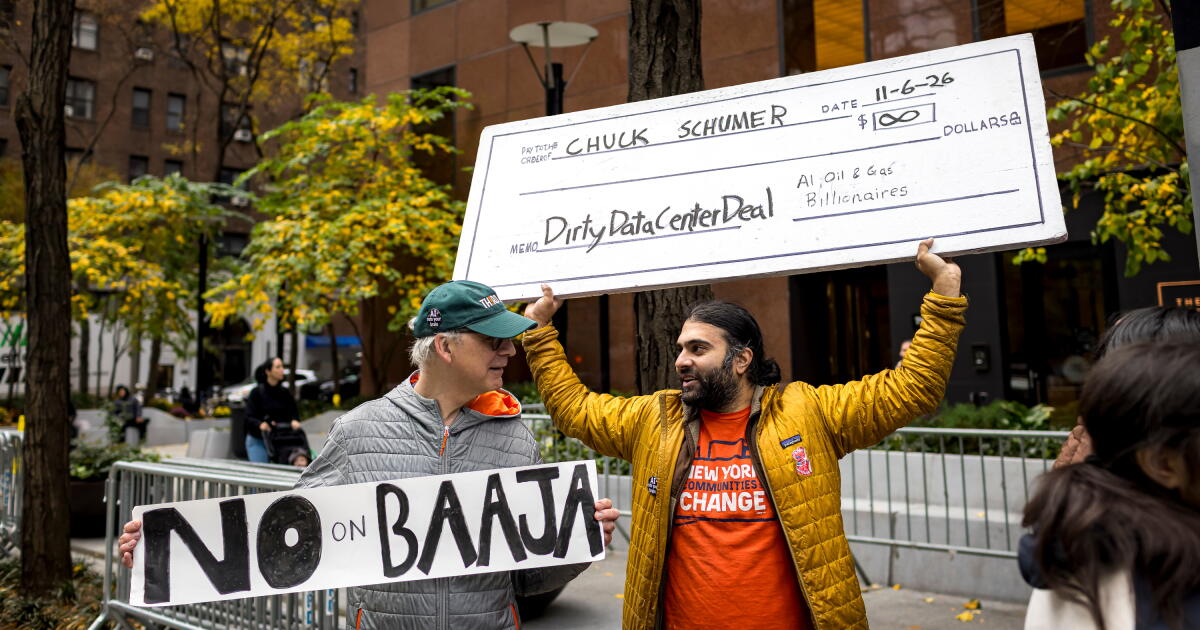
The Senate on Thursday voted 62 to 33 to pass the bill, with 15 Democrats in favor, including Minority Leader Chuck Schumer of New York. Both California senators, Adam Schiff and Alex Padilla, voted against it, saying it achieves some critically important priorities but falls short on others.

The bill is notably broad and includes provisions that would overhaul the National Environmental Policy Act, the Endangered Species Act, the Clean Water Act and the Historic Preservation Act in an effort to narrow the scope of some environmental reviews, shorten permitting timelines, limit opportunities for litigation and change how certain projects are treated.

It would also make it easier to permit new transmission lines, require utilities to participate in regional planning, make energy project permits harder to revoke, and establish new rules for artificial intelligence data centers to bear a greater share of the costs for their power demands.

“It is reasonable to feel both ways about this bill,” said Michael Wara, director of the Climate and Energy Policy Program at Stanford. “It does some concerning things to environmental law. On the other hand, it clears a pathway for permitting of infrastructure we need to build.”

One California project that might be fast-tracked by BAAJA is the proposed Western Gateway Pipeline from Phillips 66 and Kinder Morgan, Wara said. The pipeline would be the first ever to bring refined products directly to the West Coast, delivering gasoline, diesel and jet fuel to Arizona and California from as far east as Missouri.

While some Californians might not love the idea of new fossil fuel infrastructure, Wara said the project would end California’s status as a “fuel island,” which has made residents too dependent on in-state refineries and driven up gasoline prices.

The American Petroleum Institute, of which Phillips 66 is a member, supported the bill, describing the Senate’s vote Thursday as “a major breakthrough on historic permitting reforms that would deliver more affordable energy for consumers, cut costly delays, and build much-needed critical infrastructure.”

BAAJA would also open the door for new longer-distance transmission projects that could deliver more clean electricity to California. That might include connecting California to wind farms in Wyoming or New Mexico, or to solar fields in Nevada.

“We are not building that kind of regional Western grid at the pace that is required … and getting access to those resources at scale is how we keep the energy transition affordable for Californians,” Wara said.

That’s why many clean energy groups have supported the legislation, saying it will not only modernize the nation’s energy system and bring down soaring energy costs, but also help bring down the greenhouse gas emissions that are driving climate change.

Democratic Sen. Martin Heinrich of New Mexico, a coauthor of the bill, said in a statement it would avoid as much as 1.5 gigatons of cumulative carbon emissions and $54 billion in public health damages. He noted that the SunZia wind project in New Mexico — which recently began delivering electricity to California — took more than two decades to complete, and that BAAJA would help speed similar projects in the future.

“This was a hard-fought bipartisan agreement, and it wasn’t easy,” Heinrich said. “But we proved that Democrats and Republicans can put politics aside and deliver meaningful results for the American people.”

However, a number of prominent environmental and tribal groups oppose the legislation, saying it rolls back far too many protections for wildlife, public lands, clean water and tribes, and gives too many concessions to oil and gas companies and data center developers.

Schiff and Padilla pushed for an amendment that would have struck the legislation’s changes to the National Historic Preservation Act, which they said threaten tribal sovereignty.

“I strongly believe we need permitting reform and to build new infrastructure quickly and efficiently,” Schiff said in a statement. “But I also believe that this can be done in a way that does not needlessly degrade clean water, endanger wildlife, or disrespect tribal nations. And for those fundamental reasons, I opposed the bill.”

The bill is expected to face more resistance in the House, with Minority Leader Hakeem Jeffries (D-N.Y.) expressing concern about several of its provisions. California Rep. Jared Huffman, the top Democrat on the House Natural Resources Committee, told The Times recently that he would want to advance a Democratic permitting reform bill after the party takes control of the House and Senate next year.

But other California lawmakers say they’re ready to see it across the finish line, including Rep. Scott Peters (D-San Diego), who wrote some of the central components of the legislation.

“At the end of the day, I think we have a really good bill, and we should get this passed so that we can not be burdened in our new majority with the same issues,” Peters said in a phone call this week. “Because if we don’t, we start from zero.”

He said BAAJA will not only facilitate new clean energy projects in California, but also make it harder for the federal government to revoke approvals for projects underway — something President Trump did with offshore wind projects earlier this year.

And while the bill is technology-neutral — meaning it could support fossil fuel projects as much as renewable ones — Peters said it would effectively “change the mix toward clean energy because that’s what’s being held back now.” There are about 22 gigawatts of renewable energy projects in California that have been delayed because of transmission problems, he said.

Wara, of Stanford, said there’s another, less-discussed provision of the bill that would be “a big deal” for California. It would change how smoke pollution is treated under the Clean Air Act, and ultimately make it easier for the state to conduct prescribed burns — something many say will help reduce the spread and severity of wildfires.

As for opponents who say it would be better to wait until Democrats retake control of Congress, Wara said that would be a gamble.

“I think confidence that you would get a different and better deal is misplaced,” he said. “You might be able to — we can’t rule out that world — but you also might well end up with nothing.”
Source link

Duncan Ferguson: First defeat and first red for Scotsman as Glentoran falter

The Glens were second best for much of the first half in north Belfast, with Cliftonville dominating possession and creating the better chances.

Still, the awarding of the Reds’ first goal was controversial as it looked like defender Jarlath O’Rourke had been pushed by Liam McStravick, who then teed up Joe Sheridan to score the opener on 38 minutes.

Ferguson was incensed that the goal stood, protesting while his side went up the other end and scored an equaliser through Cal Weatherup’s deflected strike a minute later.

Such was the vehemence of his words towards the officials, referee Ben McMaster brandished a straight red card and Ferguson was forced to make the long walk to the tunnel all while being jeered by Cliftonville supporters.

“I think the manager got frustrated because it was a foul. It changes the dynamic [the sending off], he’s a leader, I’ve then got to step in and fill his boots and it’s a big set of boots to fill,” said Ferguson’s assistant Gary Bollan.

His side looked to have received a stern talking to from Bollan at half-time as they were much more competitive after the break.

They responded to Brian Healy putting the Reds ahead once again with a fine James Douglas strike on 86 minutes, which looked to be enough to secure a point and continue their unbeaten run.

However, they failed to stop midfielder Sheridan, who waltzed into the box before firing into the top corner two minutes later to seal a win.

Glentoran’s fifth league defeat of the campaign leaves them 14 points behind pacesetters Linfield.

Former Crusaders captain Colin Coates, who was on co-commentary duties for the game for BBC Sport NI, believes Ferguson and the club have “a lot of work to do” to get back challenging for major honours.

“Look at the squad, there is work to do in January and next summer,” he added.

“Duncan Ferguson will use this next few months to assess what he has, what he wants to keep and what he needs to bring in to make them competitive. Every time I watch them I want more from them.

“There is a real lack of quality particularly at the top end they don’t look like they can hurt teams aside from Jordan Stewart. A lot of work and soul searching to do and players will be playing for their futures.”

Stewart was suspended for the game at Solitude and was a big miss while Ferguson will hope to get more out of Conor McMenamin and the fit-again Pat Hoban, who both came on in the second half.

The Glens face two games against Larne, one in the BetMcLean Cup on Tuesday and one in the league next Friday and Ferguson will hope to mastermind two big results to really kick-start his reign.

Source link

Trump defends Putin relationship, warns AI data centres must stay in US | Donald Trump News

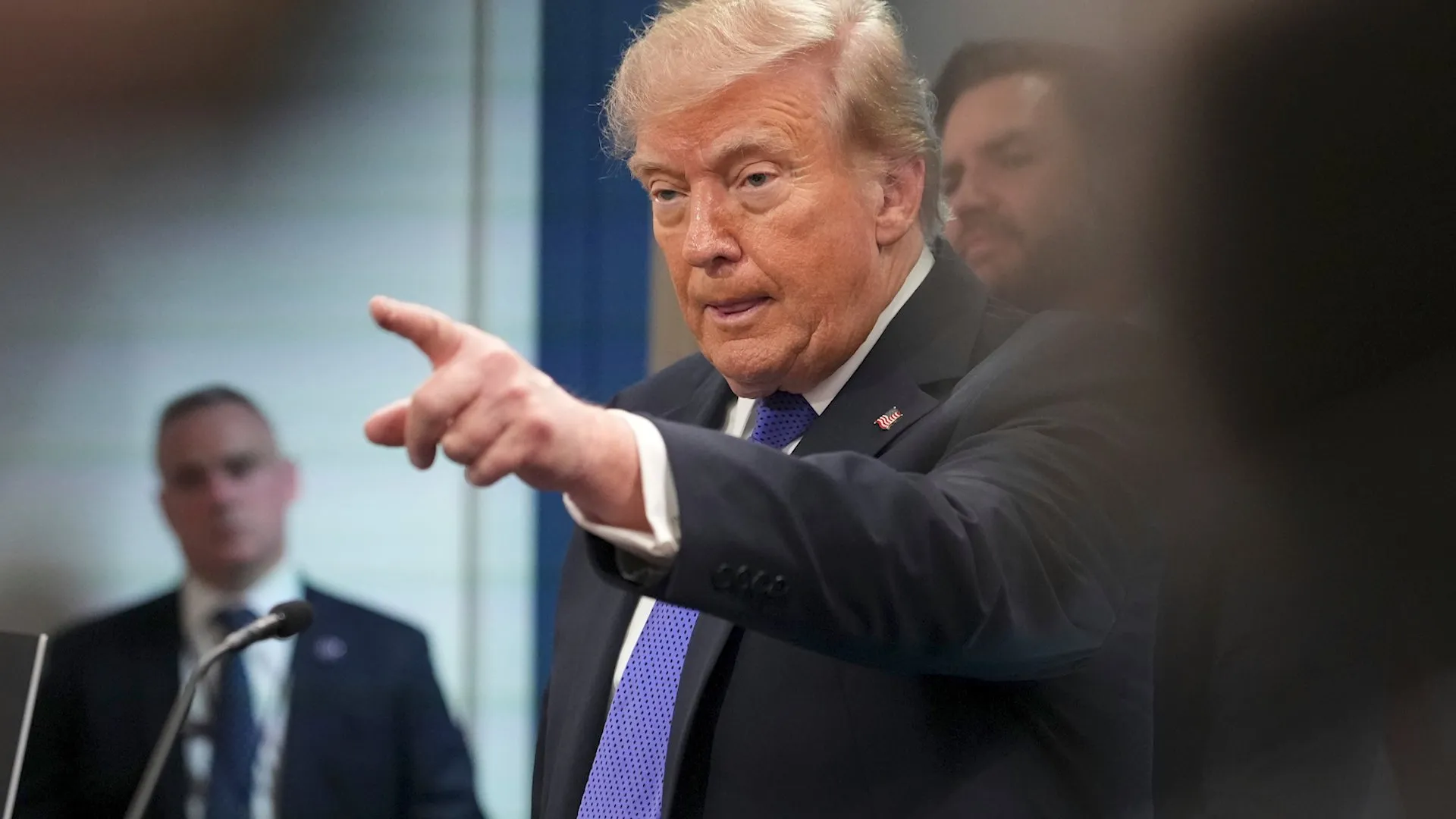
United States President Donald Trump has praised his recent trip to China and defended the relationship with his “friend” Vladimir Putin, but questioned whether the Russian president was a friend to the US.

On Friday, during a White House news briefing, Trump was asked about the “friend” remark — made during his historic summit with Putin and Chinese President Xi Jinping earlier this week — and whether the Russian leader was a friend to the US.

Recommended Stories

list of 3 itemsend of list

“I can’t speak to America,” Trump told reporters before saying Putin had been “very nice” during what he described as the “Russia hoax” investigation after his 2016 presidential campaign.

“I consider him to be somebody that I have a very good relationship. And it’s actually very good,” Trump added as he talked about Russia’s nuclear weapons capabilities.

“I think it gives us a lot of additional strength,” he said.

Trump also spoke about the historic nature of his meeting with Xi and Putin, praising the “first of its kind trilateral peace agreement”.

“We had one of the most momentous international summits in many years. That was the first ever trilateral meeting between the leaders of the United States, Russia and China,” Trump said.

No major deals were announced from the summit. But Trump, on Friday, played up his agreement with the two leaders to hold future discussions on nuclear proliferation.

The US president’s remarks came during a wide-ranging news conference, where topics from Iran to artificial intelligence were also discussed.

Trump accused Iran of negotiating in bad faith to end the war, which is about to mark its 10-month anniversary.

“They want to make a deal, but they don’t want to make a deal that’s acceptable to me,” he said. “We wanna make a real deal, not a fake deal.”

Trump added: “They’ve been b*********** people for 51 years.”

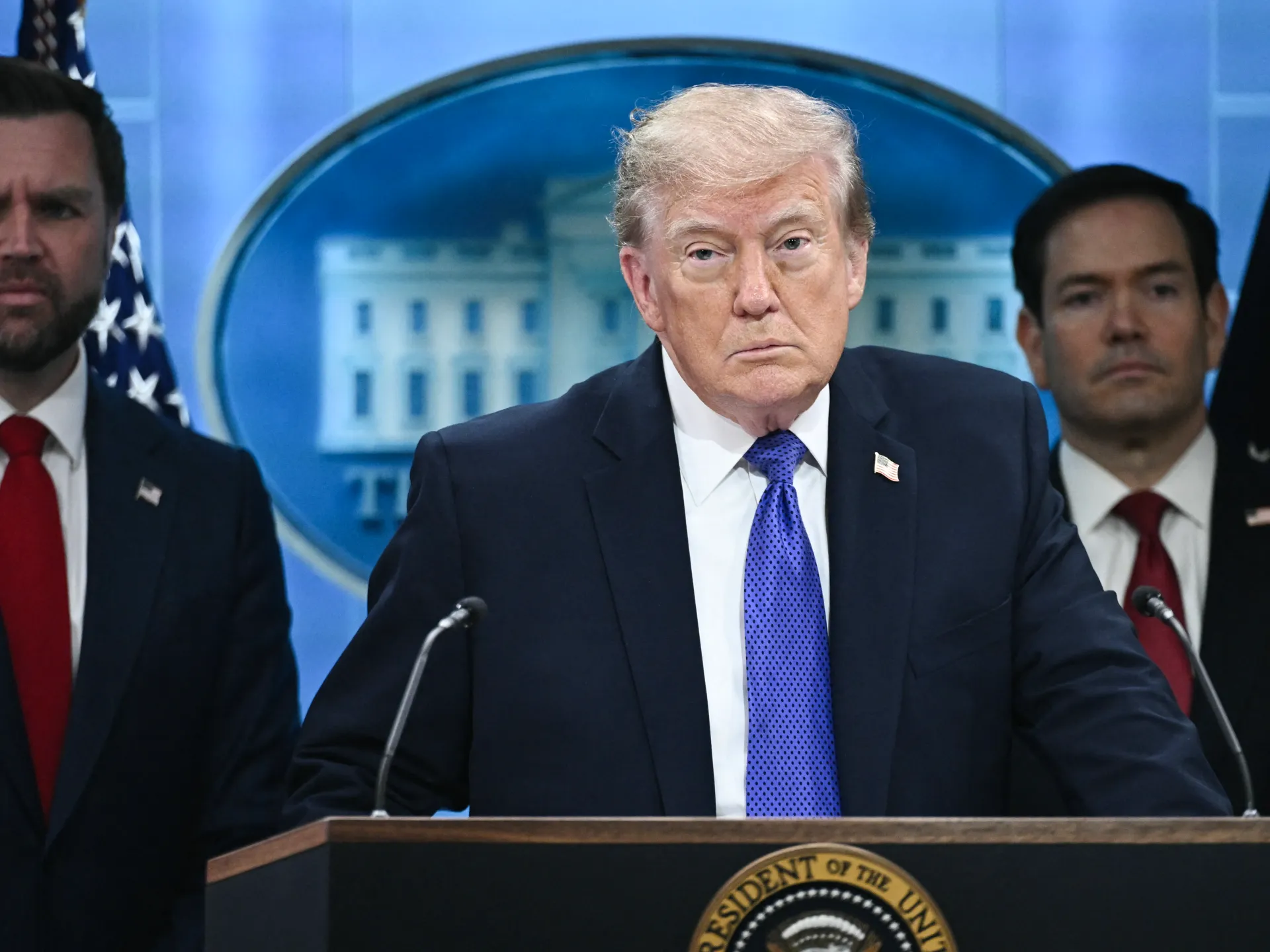
During the news conference, US Vice President JD Vance and US Secretary of State Marco Rubio, both possible 2028 presidential contenders, flanked Trump in the White House press briefing room.

US Treasury Secretary Scott Bessent and US Defence Secretary Hegseth, as well as newly minted White House chief of staff Stephen Miller, were also present.

Trump denied he was upset at Vance for blaming US Republicans’ historic midterm losses on the Iran war, saying, “People that work for me, they have a right to their opinion.”

“I thought his statement was fine, except I would have had one other thing that, if we were asked, I would have said that, would you do it again, and absolutely the answer is yes,” Trump said. “I saw that, but no problem there at all.”

No data centres abroad

Vance was asked by reporters about his thoughts on his party’s midterm drubbing.

“I think the president is the one who makes the decision. And the president has said he would do it again,” Vance said. “My goal, in my job, is to support the President of the United States.”

Trump also warned US tech companies against building new artificial intelligence data centres overseas. Otherwise, he said, they will face a “tremendous tax”.

“We’re not allowing data centres to go into other countries because China will take all of them”, Trump said. “And we’re going to put tremendous penalties on companies that try and do it.”

Trump did not provide details on how he would enforce such a policy and said he had not yet told his own officials about his plan.

Al Jazeera has reached out to the White House for comment but has not yet heard back.

Source link

US lawmakers push for tougher AI chip rules amid China export crackdown | Business and Economy News

United States lawmakers say more regulations are needed to protect advanced AI chips once they leave the country, even as they support the recently imposed chip export controls.

This week, the US Department of Commerce announced a new rule to restrict how advanced US AI chips can be accessed remotely in the wake of the previous Nvidia CEO’s affair with a suspected spy for Beijing. The move would close what officials described as a loophole that allows Chinese companies to tap into computing power through data centres in third countries, bypassing US restrictions.

Recommended Stories

list of 4 itemsend of list

The Bureau of Industry and Security (BIS), which sits under the Commerce Department, said the rule would require data centre customers in Thailand, Indonesia, Malaysia, Singapore and Brazil to apply for a special licence to buy advanced chips from US companies, including Nvidia, because they “present a higher-than-normal risk of diversion”.

“The export controls should have been in place, certainly,” Democratic Representative Pramila Jayapal told Al Jazeera. “I also think it’s a bigger conversation about who dominates the AI market. We should not have this consolidation of all the AI knowledge in a couple of companies because that poses an enormous threat on multiple levels, including national security.”

In October, Jayapal introduced a policy framework that would require every AI company operating in the US to obtain a federal charter in an effort to protect the public interest.

The AI charter, the framework says, is modelled after existing regulatory frameworks, combining the round-the-clock federal oversight, strict safety mandates, and structural separation built into national bank charters with the rigorous pre-release federal testing required for nuclear materials and dangerous weapons.

The framework also bans AI companies from building empires, releasing risky models, stealing through surveillance, exploiting workers, or causing harm.

Lutnick probe

Jayapal is a member of the House of Representatives Judiciary Committee, whose ranking members announced a probe to determine whether Commerce Secretary Howard Lutnick had blocked efforts to stop the suspected smuggling of advanced Nvidia chips to China.

Lutnick is facing criticism, including from members of US President Donald Trump’s cabinet, for allegedly refusing to impose restrictions on companies accused of diverting advanced chips to China, including Megaspeed, which is at the centre of the Nvidia probe.

The House Foreign Affairs Committee also announced that the Trump administration had approved exports of 879,000 chips manufactured by Nvidia and AMD to Chinese companies between December 2025 and May 2026.

Democrats, who will control both chambers of Congress in January, expressed a desire to better limit chip exports amid growing scrutiny over the extent to which US computing power may have reached China.

“I’m excited to get these gavels and go through the investigatory work that’s necessary, but also to rein in and regulate artificial intelligence. The very industry is asking to be regulated by Congress,” Democratic Representative Everton Blair told Al Jazeera.

‘Tremendous penalties’

The US accounts for nearly 75 percent of the world’s AI spending and computing power, followed by China.

US tech giants, including Amazon, Microsoft and Google, operate nearly 90 major AI computing hubs globally, according to an Oxford University study. The same research found that US companies were building 63 AI computing hubs outside the country as of 2025.

Stephen Ezell, vice president for global innovation policy at the Information Technology and Innovation Foundation (ITIF), said Washington would find it difficult to enforce the BIS rule.

China has rejected the restriction, calling it “economic coercion” by the US.

On Friday, after his return to the White House from his historic trilateral meeting with the Chinese and Russian presidents in Shenzhen, China, Trump promised to prohibit US companies from developing data centres in other countries.

“We’re going to put tremendous penalties on companies that try and do it,” Trump said.

It was unclear what Trump had envisioned, or how he would enforce it.

At the same time, he urged Americans to embrace data centres in their neighbourhoods, despite communities’ increasing concern about the centres’ impact on quality of life, environment and energy demands.

Analysts say the recent export regulation has likely not had much effect on China’s efforts to become the global leader in AI semiconductor chips.

“China does not want to depend upon American or other foreign semiconductors. They want to develop them themselves, and one can argue that we’ve slowed them down a little bit with our export controls, but in no way has it changed China’s aspirations to become the global AI semiconductor chip leader,” Ezell said on Al Jazeera’s This Is America.

Source link

At Casa 0101, Chicana punks revel in unapologetic mindset

Last Saturday night, a multigenerational crowd of about a hundred people packed the Casa 0101 Theater in Boyle Heights to watch supergroup Cron66 make its world debut. Some rocked facial piercings and wore all-black outfits, while others showed up with polos, sports coats and an occasional hearing aid here and there.

While the quartet has a folksy, singer-songwriter sound, Cron66 is anchored by L.A. punk legends Teresa Covarrubias — former frontwoman of the seminal band the Brat — and Monica Carrillo — key member of East L.A. group the Odd Squad.

An acoustic guitar, a ukulele and sound-dampening drum rods awaited the musicians onstage, along with vestiges of their rebellious past— an antifa flag hung from the top of an amplifier.

The performance was part of “Chicano Rock: the Women,” a three-day celebration of the women who helped shape the genre for more than four decades that featured live music, panel discussions and an exhibit. Saturday was devoted to highlighting the East L.A. Chicana punk movement of the late ’70s and early ’80s.

The three-day event was organized by David Reyes, 75, and Maria Elena Yepes, 76, of Brownfist Productions, an entertainment company promoting Latino heritage, history and culture. The duo say they were inspired to honor Chicana rockers after putting together an event this spring highlighting the work of ’60s East L.A. Chicano rock band the Midniters.

 Monica Carillo performs with Cron66 at Casa 0101 theater in the Boyle Heights area of Los Angeles, Calif. on Nov. 14 ,2026.

(Jill Connelly / For De Los)

“Greater society has made these artists feel less than, and we wanted to show just how talented they are and how much they contributed not just to our culture but to American rock ’n’ roll,” Yepes said of their decision to focus on these women.

Yepes added that she hoped the three-day affair would push young women toward exploring their own artistic endeavors.

“It’s very important they see women who are very much themselves, who are poised, who are open and that show people what it’s like to be an artist,” she said. “In these last few years, with the administration we’ve had in the U.S, they definitely need words of inspiration, they need music, they need art that brings them joy and encourages them to think.”

Covarrubias echoed Yepes’ sentiment, adding that she felt heartened by how vocal female rockers had become over the last few decades.

( L to R) Moderator Mrlen Rios-Hernandez, with panelists Erika Lares, Monica Carillo and Teresa Covarrubias at Casa 0101

(Jill Connelly / For De Los)

“The community now is really empowered and more organized too,” Covarrubias said. “Now the women say, ‘F— you’ and that should’ve been our attitude back then.”

She praised the younger rockeras currently leading the punk movement for creating safe spaces where they are included and heard in a society that is increasingly looking to silence them.

For Covarrubias and Carrillo, nothing is more punk than embracing blemishes artistically — they both rage against AI’s pursuit of perfection — or physically. Though they see punk’s future as resting in the hands of young people, they also have noted a resurgence among women in their 60s.

Erika Lares performs with her band Futura at Casa 0101 theater in Boyle Heights on Nov. 14 ,2026

(Jill Connelly / For De Los)

“In the ’80s we were the inspiration for this generation of women coming up, and now we could be the inspiration for how you age and how you embrace aging without feeling like you need to be eternally youthful or buying into this whole thing of believing you’re invisible because you’re older,” Covarrubias said. “Maybe I can make things easier for those coming up by embracing my wrinkles and my saggy, because that’s human.”

One Chicana in punk who has continually found a well of inspiration from her rocking elder sisters is Erika Lares, the 35-year-old frontwoman of the L.A. punk band Futura. Lares was part of a panel that featured Covarrubias and Carrillo.

In the few minutes before meeting Carrillo and Covarrubias in person and performing a headbanging set with her band, Lares told The Times she was grateful for her Chicana foremothers.

“Because of the whole history of Mexican Americans [in L.A.], it’s amazing knowing that they started making music in the ’70s and ’80s, just a couple of years after the whole Chicano movement,” Lares said. “People were still kind of weird about seeing Mexicans, so their presence makes me proud to be Chicana and see how far we’ve come.”

As Lares belted in her microphone and her bandmates banged away at their instruments, several young girls freely hopped along in the aisle to the music as some of the older folks reached back and pumped out a couple of headbangs.

Source link

Trump says he’ll penalize U.S. companies that build data centers abroad

President Trump on Friday vowed to punish American companies that build data centers abroad, threatening to levy “tremendous penalties” on any that try, as he returned from Asia eager to project confidence in his push to win the global race for dominance in artificial intelligence.

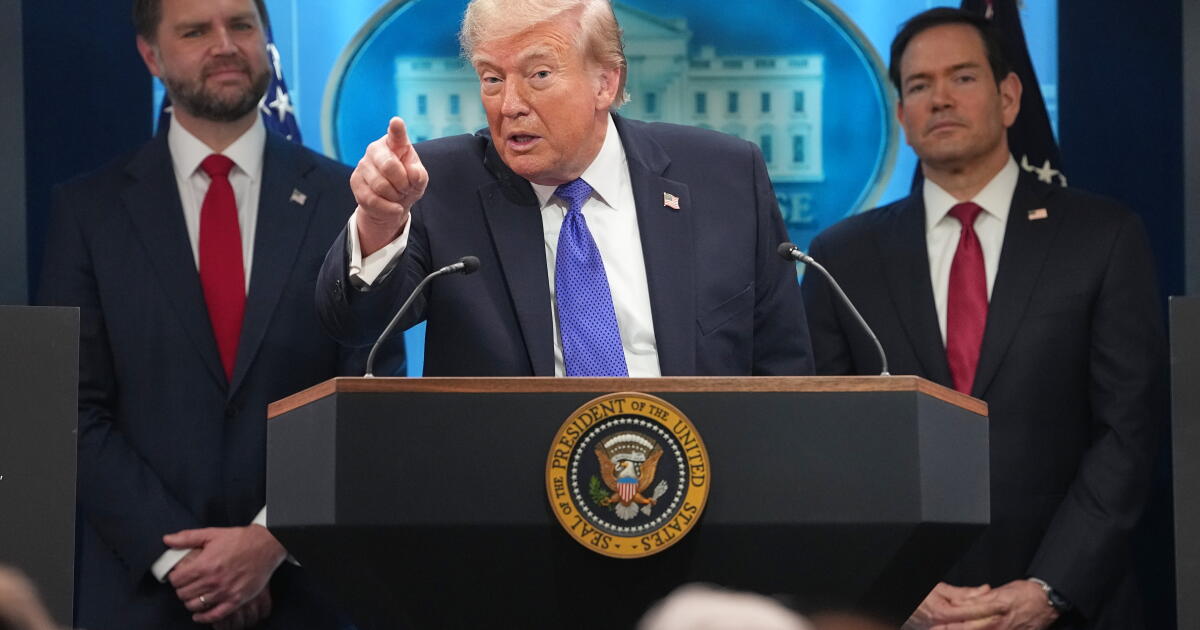
“We’re not allowing data centers to go into other countries because China will take all of them, and we’re not allowing that to happen,” Trump said during a sprawling news conference at the White House.

The threat was Trump’s latest bid to tighten his grip on a booming industry that has become central to the U.S. economy, and to show how America plans to set the pace in the AI race. The United States is leading, he said, China is second, and “there really is no third place.”

It was also part of a broader effort to sell what Trump called a “consequential trip” to the Philippines and China, one that ended with an unprecedented gathering with Chinese President Xi Jinping and Russian President Vladimir Putin.

“It was big. It was great, great electricity,” Trump said. “The relationship was fantastic between the three of us.”

While the summit produced few tangible plans, Trump said he and Xi agreed to do “some joint guardrails” on artificial intelligence, but did not offer specifics. And in a window into how Trump sees the influence of tech giants in the AI race, Trump told reporters that he thinks Nvidia should reinstate its co-founder Jensen Huang, who resigned last week amid a scandal involving an affair with a woman suspected of being a Chinese spy.

“He is a man who made some bad decisions but he is a brilliant person,” Trump said. “We have to protect our brilliant people … and Jensen is one of them.”

Trump’s remarks came on a turbulent day for the industry, as a sell-off in artificial intelligence stocks dragged the S&P 500 down 3.7% on Friday. It was the steepest weekly loss in more than 18 months, showing unease among investors. The drop came amid the scandal at Nvidia, and Anthropic making its debut on the public market.

Trump’s defense of the AI industry was among a medley of subjects the president addressed during a 87-minute news conference that included Vice President JD Vance, Secretary of State Marco Rubio, Defense Secretary Pete Hegseth, Treasury Secretary Scott Bessent and Stephen Miller, his new chief of staff.

As Cabinet members looked on, Trump praised his relationship with Putin, but when asked whether the Russian leader was a friend to the United States, he demurred, saying, “I can’t speak to America.” He also claimed that Putin told him Russia would never have invaded Ukraine in 2022 had Trump been president.

“Actually, I asked him. I said, ‘Would you have gone in if I was president?’ He said, ‘No, would have never happened.’ Trump said. “It was handled so bad by our country.”

Trump also renewed his criticism of the International Criminal Court, calling it a “fake power” that thinks it can “arrests heads of countries for no reason.” He said that he, Putin and Xi had condemned the court as a group. The court has a warrant outstanding for Putin’s arrest, accusing him of war crimes over the deportation of Ukrainina children.

Trump’s news conference came as Americans remain rattled by a series of outages that have disrupted air travel, email services and bank transactions in the last week.

Asked whether there is cause for concern, Trump said the disruptions were “all separate events,” and not part of a coordinated effort.

He said nationwide ground stop was due to an “ancient” air traffic control system, but insisted it is “very safe,” and that if there was a silver lining to the technical issues the FAA experienced it is that Congress has become receptive to modernizing the system.

Trump attributed the outages at private companies, including major banks and airlines, to routine technological upgrades.

“We have thousands of companies that are upgrading right now, and when they upgrade, bad things happen,” he said.

But the disruptions have also raised questions about the administration’s own cybersecurity leadership after Trump fired Sean Cairncross, the national cyber director on Thursday. When asked why, Trump said: “Because I didn’t think that person was good enough.” He has tapped Kirsten Davies, chief information officer at the Defense Department, to fill the post.

Trump, however, brushed aside questions about tensions between him and Vance.

Asked whether he was frustrated with his vice president after he blamed Republicans’ midterm losses on the war with Iran, Trump said he never said he was “unhappy” with his stance, just that he should have clarified that he agreed with the decision to launch the war if he had to go back in time and do it again knowing the political risks.

As Vance stood behind Trump, he was asked whether he believes the war had been worth the political fallout. He told reporters his job was to support the president, and the decision has been Trump’s to make to ensure Iran from obtaining a nuclear weapon.

With Democrats ready to take control of Congress in January, Trump signaled that he is open to working with them on legislation. He pointed to a federal tax credit for film and television production as one possible area of agreement.

“It has unbelievable support. I’ll tell you what, Adam Schiff said, ‘Wow, we love that bill,’” Trump said of the Democratic senator from California.

In a statement, Schiff said the proposal will create jobs and boost local economies, and achieve the long-sought goal for many in Hollywood of bringing production back to the U.S.

“Given the support from the president and Republicans and Democrats in both chambers, we can get this legislation across the finish line,” Schiff said.

On other legislative issues, Trump said he would not hesitate to use his veto power, calling it an “extreme power” he can wield to exert control over negotiations. Still, he rejected the idea that the midterms had been a verdict on his presidency and agenda.

“I wasn’t on the ballot,” he said. “I hope you remember that.”

Times staff writer Justine McDaniel, in Washington, contributed to this report.

Source link

ATP Finals: Carlos Alcaraz beats Flavio Cobolli to continue unbeaten run

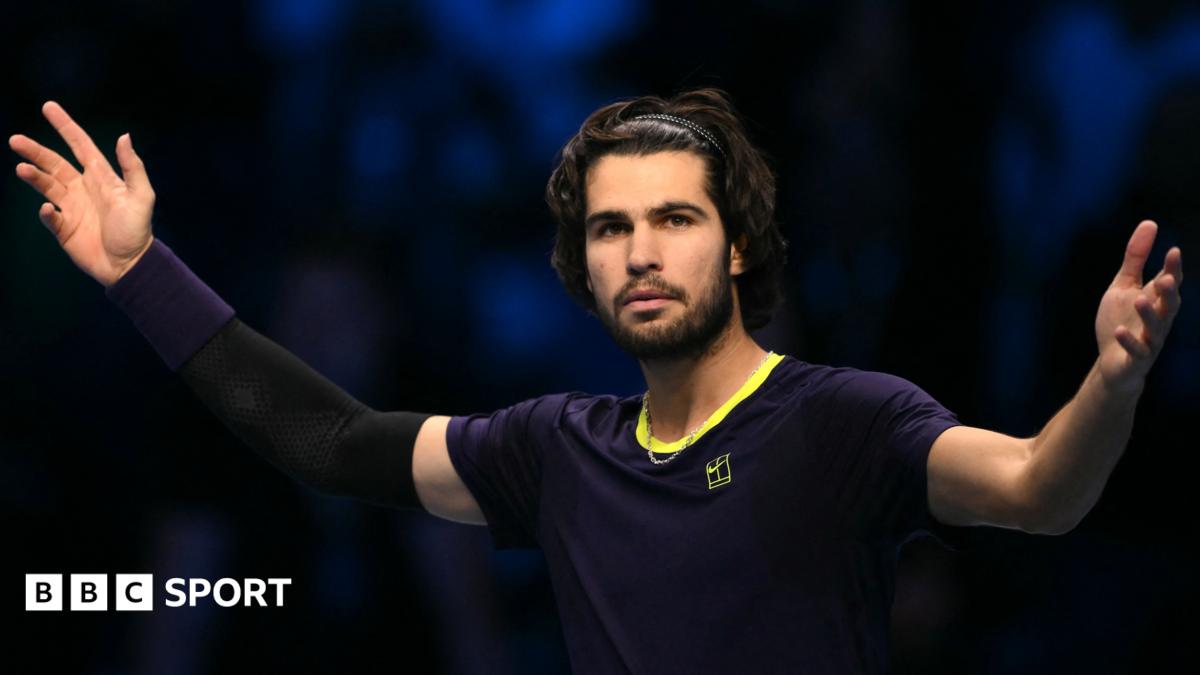
A ruthless Carlos Alcaraz put aside his injury concerns to dismantle Flavio Cobolli and ensure a perfect record in the ATP Finals group stages.

Spain’s Alcaraz hurt his left hamstring in his previous match against Daniil Medvedev and had a scan on the injury on Thursday.

He arrived for his match against Cobolli with strapping on his upper-left leg – as well as tape on his right knee and a sleeve on his right arm – but was brutally efficient in a 6-4 6-1 win.

The seven-time Grand Slam champion did not face a break point and bludgeoned 29 winners in a 65-minute victory.

“I tried not to move that much. I tried to be aggressive, to dominate the match as much as I can,” the 23-year-old said.

“I’m just really happy that I am getting more confident, the way I’m hitting the ball and seeing what’s going on in the match.

“The challenge now is not on the court, it’s off the court, to do whatever it takes to be in a good shape and feel physically ready for a battle tomorrow.”

Alcaraz is now on a 12-match winning streak and will face Ben Shelton, who he beat in the Paris Masters final last month, in Saturday’s semi-finals.

Medvedev will take on Alexander Zverev in the other last-four match after beating American Frances Tiafoe in straight sets in their winner-takes-all encounter.

The world number five came through 6-3 6-4 in an hour and 22 minutes.

Alcaraz was conservative in his movement, trying to avoid sliding in and out of the corners – but rather than diminishing his game, it allowed him to produce some astonishing shot-making.

Cobolli never looked as though he had the belief that he could challenge Alcaraz, and was broken in the first game of the match by a thumping return winner.

Alcaraz kept the points short, hammering his forehand and backhand to all corners, and targeted Cobolli’s second serve in particular.

An astonishing whipped 110mph forehand winner was the highlight of the first set, which Alcaraz wrapped up with a strong service hold.

Cobolli again lost his serve in the opening game of the second set and Alcaraz claimed five of the final six games to secure victory.

After converting match point with another return winner, Alcaraz embraced Cobolli at the net and offered the crushed Italian a few words of support.

Alcaraz has not had his serve broken once in his three group matches as he bids for a first title at the season-ending event.

He and world number one Zverev have both made it through the group stages without dropping a set, while Alcaraz has not lost more than four games in a set.

In the doubles, Britain’s Neal Skupski and American partner Christian Harrison reached the semi-finals with a 7-6 (7-5) 6-4 victory over Marcel Granollers and Horacio Zeballos.

The US Open champions will face fourth seeds Marcelo Arevalo and Mate Pavic for a place in Sunday’s final.

Source link

Iraq PM targets militia stronghold in bid to assert state control | Military

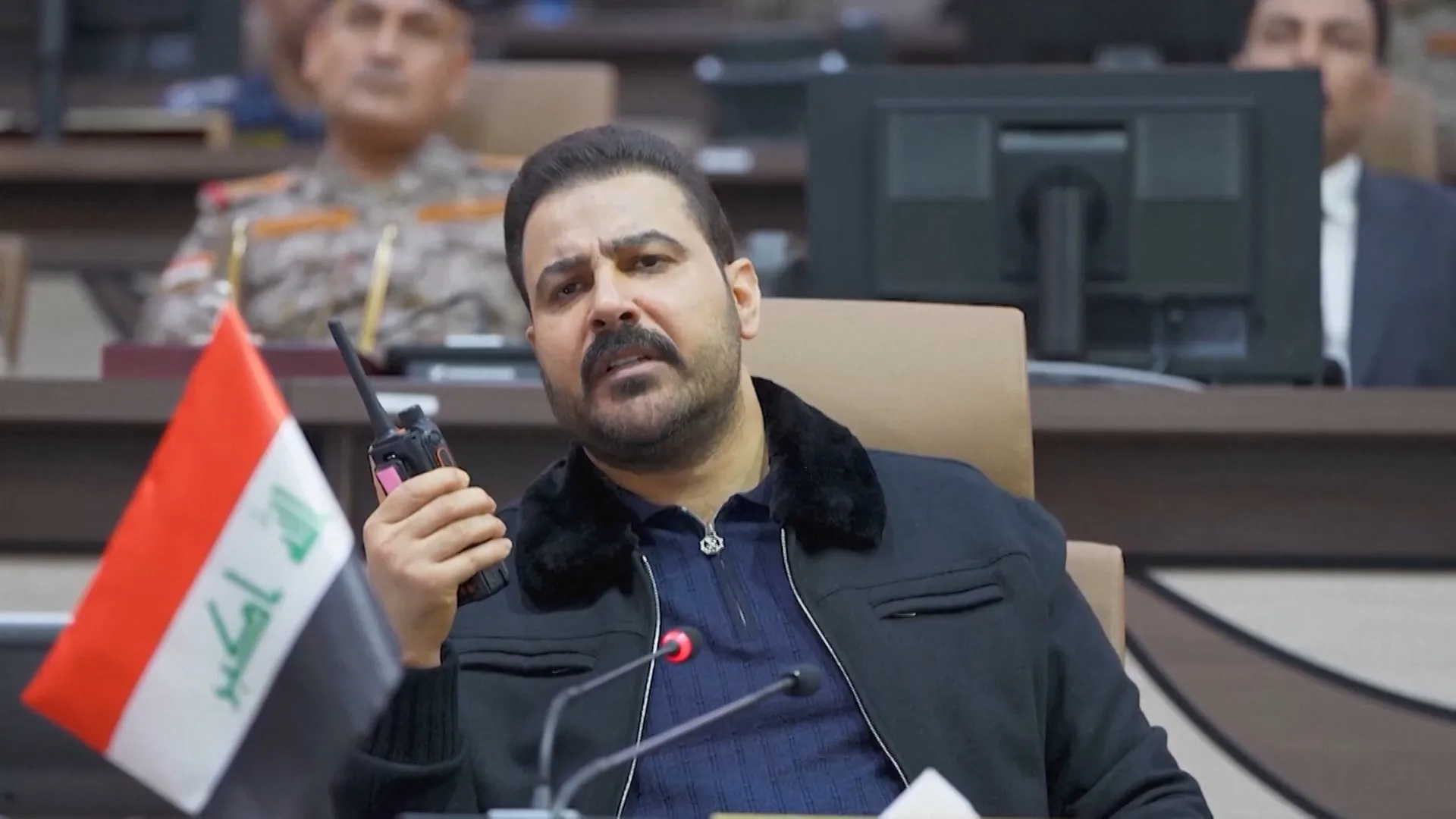
Iraqi Prime Minister Ali al-Zaidi said an operation in Jurf al-Sakhar marks the start of a nationwide push to assert state control, curb corruption and disarm groups operating outside government authority.

Source link

Trump threatens tax on US tech firms building AI data centres abroad | Donald Trump

US President Donald Trump warned that US tech companies will face “a tremendous tax” if they build AI data centres in other countries. He urged Americans to welcome data centre construction in their communities and while demanding concessions from developers.

Source link

‘On the Road’ review: Mexican film is the year’s queer triumph

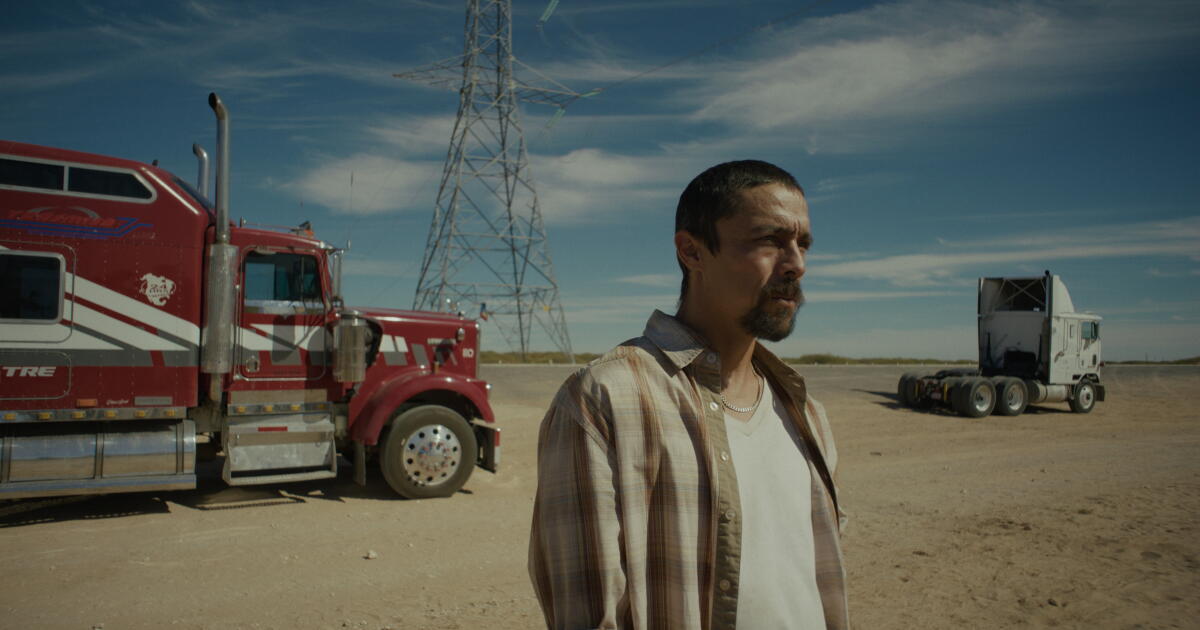
By the time the emblematic Colombian vallenato track “Los Caminos de la Vida” rings with its longing melody and heartsore lyrics about life’s unforeseen hardships, the two forlorn men at the center of “On the Road” have exposed more than their bodies to each other.

The gritty romance between these two battered souls unfolds in the unvarnished reality of truck drivers traveling along the desolate and dangerous roads of northern Mexico, where cartels rule and there’s little room for vulnerability. Sex in these parts, gay or straight, is a hot commodity, but also one of the few pleasures tethering these men to their humanity. If it weren’t for the physical touch they sometimes grab at, the grueling job might be unbearable.

Mexico’s current Oscar entry for international feature film, “On the Road” comes from writer-director David Pablos, an artist with a penchant for provocative subject matter. His 2015 movie “The Chosen Ones” looked at young women forced into prostitution, and the 2020 period drama “Dance of the 41” revived a real-life passage from early 20th century Mexican history about a group of gay men from society’s upper crust caught gathering in secret.

But for all the searing ideas he’s explored, “On the Road” is Pablos’ most daring and poignant feature to date. In a year overflowing with high-profile LGBTQ+ titles (from “La Bola Negra” to “Elsinore”), “On the Road” arrives on U.S. screens as the best queer film of the year that most people haven’t yet heard about. It distinguishes itself from the pack via a blend of unflinching realism and moments laced with spellbinding imagery, resulting in a ruggedly tender tale about the need for companionship in a merciless world.

Exchanging sex for rides, Veneno (Victor Prieto), a young gay drifter whose nickname translates to poison, comes across Muñeco (Osvaldo Sanchez), a trucker with a drug problem whose cheeky moniker means male doll. Muñeco agrees to bring him along after Veneno shares some of the cocaine he’s carrying. Later, in alluring flashbacks soaked in nightclub lights and ravaging flames (cinematographer Ximena Amann has an eye for the evocative), the past that Veneno is escaping comes to light.

The transient nature of the truckers’ existence grants them a certain freedom, if not anonymity, from the established norms of urban life. Drug use among truckers is rampant as is a general neglect of health. Pablos makes a point of capturing these lives, not only through Muñeco but the other men who share the road with him. The film, in turn, feels lived-in and imbued with a strong sense of place that’s unsettling but devastatingly honest. Mexican films tinged with cartel violence abound, but Pablos’ narrative employs this context to manifest a specific interrogation of suffocating masculinity.

For Veneno, there’s something enticing about hanging around stereotypically macho men like Muñeno with no qualms about urinating in a bottle while driving or showering in the open air at a junkyard. And yet, when Veneno looks at Muñeco, his eyes don’t express lustful desire but a certain curiosity, perhaps even admiration. There’s a glimpse of genuine friendship in the making.

Veneno is well versed in the ways of tough Mexican masculinity, both in regard to language and temperament. He speaks with the slang that heterosexual men from his same cultural and socioeconomic background will recognize as their own and rejects feminine mannerisms that might make those with ingrained homophobia uncomfortable — even if those are often the same men who secretly seek out his company. He’s been taught from childhood that, to survive, he must swim carefully in the waters of male codes and bonds.

Prieto’s quiet, observant performance as Veneno pulses with pent-up fury and heartache, playing off the more reassuring presence that the extraordinary Sanchez exudes. His Muñeco is a father whose addiction and work keep him from his children. Regret plagues him at night but, in front of others, a facade of nonchalance prevails.

Is Muñeco gay? Bi? Who knows. But even if he’s unwilling to label what he and Veneno have, the chemistry between them is tantalizing, especially as the stakes of their relationship become life or death. And yet, Pablos is not interested in the emptily salacious or the pornographic. All of the men in “On the Road,” whether they engage in gay sex or not, share a crushing loneliness. Even though explicit nudity permeates the story, the intimacy that Pablos elicits goes beyond carnal relief.

That emotional nakedness appears in a late-night embrace that brings these men, both desperate for affection, closer — or a shared dance that feels like an act of mutual soothing. In each other’s arms, Veneno and Muñeco cling to a lifeline, a possibility, a connection that’s bloomed in the most inhospitable place.

‘On the Road’

In Spanish, with subtitles

Not rated

Running time: 1 hour, 33 minutes

Playing: Opens Friday, Nov. 20 at Laemmle Glendale

Source link

A 2nd federal judge blocks construction of Trump’s memorial arch

Michael Kunzelman and Gary Fields

A second federal judge has blocked President Trump’s administration from building a 250-foot memorial arch in the nation’s capital, issuing an order Friday that keeps the construction work on hold indefinitely, according to plaintiffs’ lawyers who sued to challenge the project.

U.S. District Judge Leonie Brinkema in Alexandria, Va., issued her order from the bench in a lawsuit brought by the Arlington County Board. Brinkema ruled two days after a different judge in Washington extended a previous order that blocked the Trump administration from breaking ground on the arch on a more temporary basis.

The Virginia board claims Trump’s project will exacerbate traffic congestion and jeopardize public safety in the county, which is across the Potomac River from Washington.

“We are pleased that the court has recognized the irreparable harm that will come to people who live and work in Arlington and stopped the massive vanity project while our case is heard and considered by the court,” plaintiffs’ attorney Kate Talmor said in a statement after Friday’s hearing.

On Wednesday, U.S. District Judge Tanya Chutkan in Washington agreed to extend a temporary restraining order keeping the project on hold until Dec. 3. The injunction issued by Brinkema doesn’t have a specified expiration date.

Chutkan initially blocked the arch’s construction on Nov. 5, shortly after a hearing of the National Capital Planning Commission ended with the Trump-heavy panel giving the arch its final approval in an 8-4 vote, despite dozens of witnesses who opposed the construction.

The case before Chutkan was filed on behalf of Vietnam veterans and an architectural historian. Members of the Kennedy family filed a separate lawsuit last month, citing the effect the structure would have on Arlington National Cemetery, where family members are buried.

The arch is one of several projects around Washington that Trump, a Republican, has pushed in his efforts to leave a personal imprint on the capital’s historic landscape. The structure would be twice the height of the Lincoln Memorial.

Brinkema was nominated to the bench by Democratic President Clinton. Chutkan was nominated by Democratic President Obama.

Kunzelman and Fields write for the Associated Press.

Source link

Football gossip: Osimhen, Amad, Toney, Richarlison, Endrick, Mohya

Victor Osimhen keen on move to Manchester United, Aston Villa interested in Amad Diallo and Ivan Toney a target for Crystal Palace, plus more.

Galatasaray and Nigeria striker Victor Osimhen, 27, is willing to move to Manchester United in a £100m January deal if they can match his current salary. (Sun), external

Amad Diallo, 24, is prepared to leave Manchester United if he does not get regular playing time under new boss Mauricio Pochettino, with Aston Villa interested in the Ivory Coast winger. (Africa Foot, via Teamtalk), external

England striker Ivan Toney, 30, could be a target for Crystal Palace in January in a move which would involve him linking up with Eagles boss Thomas Frank, who the Al-Ahli striker played under at Brentford. (Talksport), external

Brazil forward Richarlison is expected to leave Tottenham in January but it is unlikely the 29-year-old will be allowed to join a fellow Premier League club. (Football Insider), external

Real Madrid boss Jose Mourinho wants to keep Endrick, 20, at the club, but would “respect” the decision if the Spanish giants’ hierarchy decide otherwise. The Brazil striker has been targeted by teams in England and Italy. (Gazzetta dello Sport – in Italian), external

Liverpool and Brighton are interested in Borussia Monchengladbach‘s highly rated 17-year-old attacking midfielder Wael Mohya, with Bayern Munich also interested in the German talent. (Caught Offside), external

NFL legend Tom Brady is in talks to buy a small stake in Chelsea after selling his minority share in Birmingham City. (Guardian), external

Germany forward Jamal Musiala, 23, and France centre-back Dayot Upamecano, 28, have release clauses in their Bayern Munich contracts which are valid next summer. (Sky Sport Germany), external

Newcastle United manager Matthias Jaissle wants to add more experience to his squad and bolster his attack during the January transfer window. (Northern Echo), external

Brentford, Bournemouth, Newcastle United and Juventus are keen on Lazio’s 24-year-old Dutch midfielder Kenneth Taylor. (Tuttosport – in Italian), external

Source link

Russia complains of ‘new Iron Curtain’ as Estonia shuts its borders | Border Disputes News

Tallinn’s decision to shut road border crossings comes after an attack on a drone manufacturer.

Moscow has accused Estonia of planning to build a “new Iron Curtain”, and promised to respond, after the small Baltic nation formally decided to close all border crossings with Russia to the east and south.

Estonia’s government on Friday approved a preliminary six-month closure of its road border crossings from December 1, and will decide next year whether to extend it.

Recommended Stories

list of 4 itemsend of list

Russian Ministry of Foreign Affairs spokesperson Maria Zakharova told a news briefing in Moscow that “should Tallinn proceed with these plans, our country will take the necessary political and diplomatic measures in response to safeguard its national interests.”

“Such moves are tantamount to attempts to erect a new Iron Curtain under the false pretence of some sort of threat from the East,” Zakharova added.

In Tallinn on Friday, Estonia’s Foreign Minister Margus Tsahkna described the border closure as “an important measure”.

“It will reduce opportunities to exploit cross-border movement to recruit people, conduct influence operations, organise acts of sabotage or circumvent sanctions,” he said.

Estonia, a NATO and EU member and a staunch supporter of Ukraine, first announced the border closure earlier this month, accusing Russia of being behind an attempted arson attack on drone maker Threod Systems.

The Kremlin denied the accusation at the time, saying it was part of what it called a pattern of false allegations levelled against Moscow by European countries.

Estonia’s northern neighbour Finland shut its Russia border crossings in 2023, and has kept them closed since then, while southern Baltic nations ⁠Latvia and Lithuania maintain open crossings.

Of the 760,000 people who crossed the Estonia-Russia border this year, 307,000 were Russian nationals, 175,000 were Estonian citizens and 54,000 held Finnish passports, Estonian ‌police ‌data showed.

Rail freight is not affected by the road closure, but remains subject to strict customs checks, Estonia said.

Source link

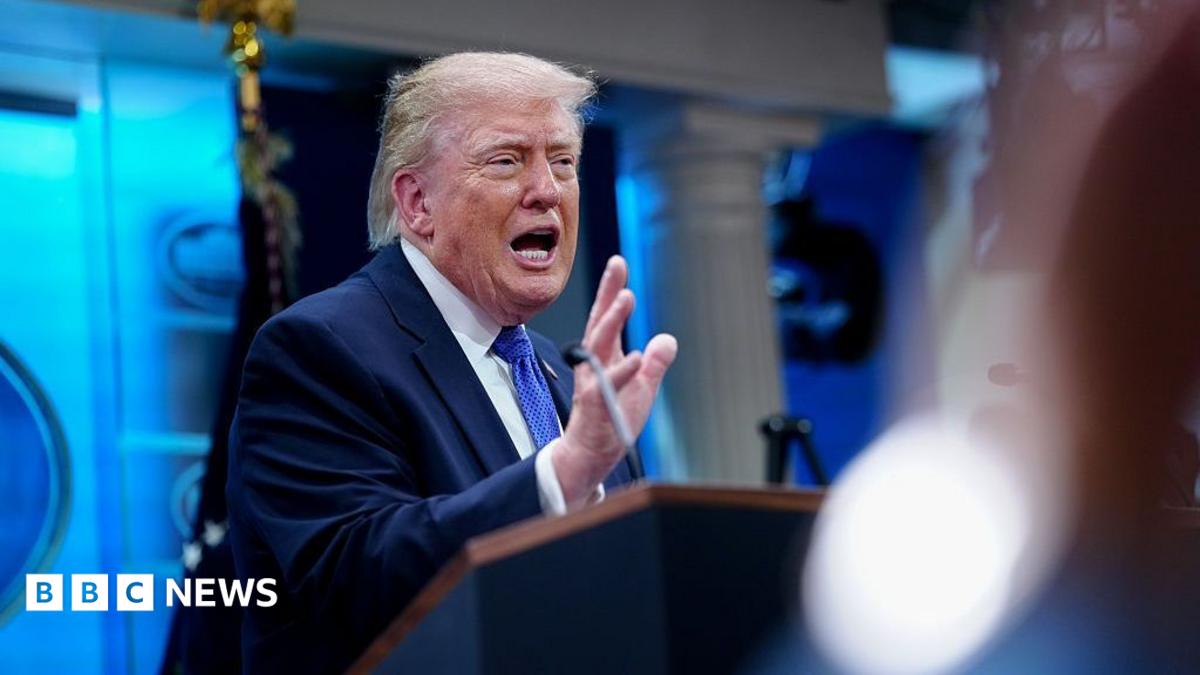
Trump threatens ban on US firms building AI data centres overseas

Data centres are crucial to the AI boom. The vast warehouse-style buildings house the advanced computer chips and servers that are needed to run AI programmes such as Claude and ChatGPT.

As of April there were about 3,000 data centres across the US, with another 1,500 in various stages of approval and construction, according to the Pew Research Centre.

Many of them are built in rural areas, and concerns about issues including noise pollution and energy consumption helped drive Democratic candidates promising tougher rules on data centre construction to wins on 3 November.

“You ought to take advantage of the data centres. Make them pay you, make them pay your community, but take advantage don’t shut them off,” Trump said.

“We have a lot of places that want them badly, and they’re great places. They have energy and they have everything. They’re tremendous assets.”

Large tech firms – often called AI hyperscalers due to the size of their investments in AI – have also been branching out, and Canada has made moves to step in to offer itself as an alternative location for these sites, with less local pushback against projects so far.

Meta has already broken ground on a data centre, external in the province of Alberta, and Anthropic has signed a long-term agreement to lease a proposed data centre in Nova Scotia.

The BBC has reached out to Meta for comment on Trump’s remarks.

In September Google announced a €13bn ($15bn: £11bn) investment in AI infrastructure in Finland, which included funding for three data centres.

Last month, building work for two of those centres was halted due to concerns over the clearance of more than 300 hectares of forest.

Trump called out the build in Finland specifically, saying his administration was “not allowing that to happen”.

Google has been contacted for comment.

Source link

Bond girl race heats up as fan campaign gets behind stunning TV star amid rumoured feud with Sydney Sweeney

EUPHORIA star Alexa Demie is being backed by fans to become the next Bond girl.

The actress has emerged as a popular choice to appear opposite Robert Pattinson after he was officially unveiled as the new 007.

Euphoria star Alexa Demie has emerged as a fan favourite to become the next Bond girl, with supporters backing her sultry screen presence and glamorous looks Source: Getty – Contributor
Alexa played feisty Maddy Perez in Euphoria, though she is rumoured to be feuding with co-star Sydney Sweeney Source: Getty

Supporters believe Alexa’s sultry screen presence and striking style would make her perfect for one of the franchise’s famously glamorous roles.

Her co-stars Zendaya and Hunter Schafer have also been tipped, with Hunter appearing on speculative shortlists, which would make her the first transgender woman to take the role.

Sydney Sweeney is another name rumoured to be in the running, meaning four of Euphoria’s biggest stars have now been linked to the coveted role.

Alexa’s growing support comes amid rumours that she has fallen out with co-star Sydney.

‘all or nothing’

Inside R-Patz’ and Suki Waterhouse’s secret wedding plans


girl power

Rumoured Bond Girl Sophie Cunningham strips topless for sizzling shoot

Sydney Sweeney has also been tipped for the iconic role, while rumours of an off-screen feud with her Euphoria co-stars continue to swirl Source: Eddy Chen/HBO
Zendaya and Hunter are other Euphoria beauties whose names have been linked to the coveted Bond girl role Source: Alamy

The pair played former best friends Maddy Perez and Cassie Howard, whose relationship spectacularly imploded after Cassie began sleeping with Maddy’s ex-boyfriend Nate Jacobs.

Some fans also speculated about tensions between Sydney and co-star Zendaya, linking the rumoured fallout to Sydney’s perceived political views after it emerged she was registered to vote as a Republican.

The speculation grew following Sydney’s controversial American Eagle “great jeans” campaign, which became part of a wider political row and was publicly praised by Donald Trump.

Fans also claimed Alexa gave a “side-eye” when Sydney’s name was mentioned in an interview.

More rumours erupted when Sydney was absent from behind-the-scenes footage showing Alexa posing with Zendaya, Hunter and Maude Apatow.

But a production source later insisted Sydney was simply filming another scene and said her absence had nothing to do with an alleged feud.

Further speculation surrounded the Euphoria premiere when Zendaya and Sydney did not pose together, although Sydney was later photographed alongside some of her cast mates.

Source link