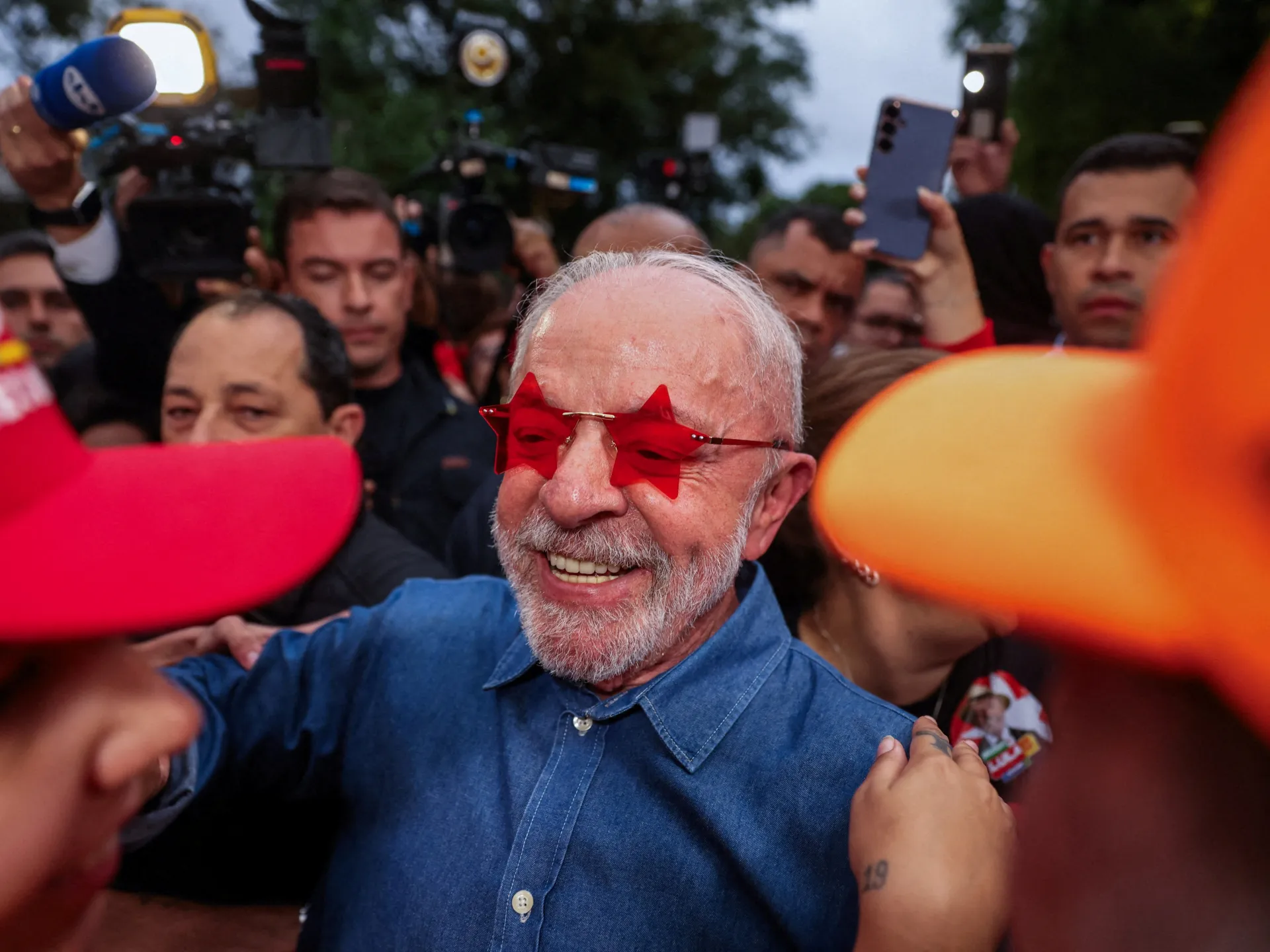
Leftist President Luiz Inacio Lula da Silva has defeated right-wing Senator Flavio Bolsonaro in Brazil’s contentious presidential race, pulling off a remarkable comeback after a first-round loss that galvanised the country’s political right.
Shortly after 9:00pm Brasilia time on Sunday (00:00 GMT), Brazil’s Superior Electoral Court called the race for Lula, who had earned more than 51 percent of the vote. More than 64 million ballots were cast for the incumbent.
Recommended Stories
list of 3 itemsend of list
Bolsonaro, meanwhile, netted 48 percent, or north of 59 million ballots. More than 4 million votes separated the two candidates, with the final votes still being counted.
With his victory, Lula has made history. No other politician in modern Brazilian history has lost the first round of a presidential election only to win the second round.
“A historic turning point for democracy,” Edinho Silva, the head of Lula’s Workers’ Party, posted on social media, along with a video of supporters chanting, “Ole, ole, ole, ole, ola! Lula, Lula!”
Still, the vote process was marred by allegations of voter suppression after reports emerged that public transport in some areas had been suspended.
Lula’s allies accused Bolsonaro’s supporters of reducing bus availability, in an attempt dampen the president’s working-class base.
Heavy rains, meanwhile, affected southern areas considered to be Bolsonaro strongholds.
The campaigns of both Lula and Bolsonaro ultimately petitioned the Supreme Court for a voting extension. Polls across the country were kept open two hours later than expected, until 7pm Brasilia time (22:00 GMT).
Sunday’s victory means Lula will retain the presidency of Latin America’s largest country, denying a crucial victory to the region’s right wing.
In recent years, right-wing leaders have swept presidential races in nearby countries like Peru, Colombia, Argentina, Bolivia and Ecuador. Many have ridden a wave of anti-incumbent energy and enjoyed support from United States President Donald Trump, who returned to office in January 2025.
A former union leader for metalworkers, Lula – at age 80 – will be sworn in on January 5, 2027, when he will beat his own record as the oldest Brazilian president to take the oath of office since the country’s return to democracy.
His victory has earned him an unprecedented fourth non-consecutive term.
Lula came into Sunday’s run-off as an underdog. While he narrowly led pre-election, the first round of voting on October 4 showed him trailing Bolsonaro.
He earned 45 percent of the first-round vote, compared with the right-wing senator’s 47 percent, both tallies short of the 50 percent needed to avoid a run-off.
But in the weeks since, Lula has rallied supporters around cost-of-living issues. He championed a constitutional amendment passed this month that shortened the Brazilian workweek, and floated the possibility of providing free public transport on weekends.
Having entered politics in the 1980s, during the twilight of the country’s military dictatorship, Lula has run for president seven times.
He won two consecutive terms from 2002 through 2010, as well as a third term in 2022, in what was the tightest race in modern Brazilian history up to that point.
His rival in that election, former far-right President Jair Bolsonaro, is the father of Senator Bolsonaro, Lula’s adversary in this race.
Jair Bolsonaro has since been sentenced to 27 years in prison for his role in plotting a coup following his loss to Lula.
Despite overseeing a decline in poverty and low unemployment during his third term in office, Lula has faced questions about his age, his ability to combat crime, and the country’s polarised political landscape.
An explosion of household debt has also left many Brazilians feeling their economic circumstances have worsened.
In September, Lula banned online gambling and sport betting apps to address the issue.
While the victory over Bolsonaro cements Lula’s status as one of the most significant and influential figures in Brazil’s modern history, efforts to advance legislative priorities during his fourth term could be stymied by the most right-wing Congress in recent memory.
The Declaration of Neutrality was a declaration by the Austrian Parliament declaring the country permanently neutral. It was enacted on October 26th 1955 as a constitutional act of parliament.
The declaration was a direct result of the allied occupation by the Soviet Union, the United States, the United Kingdom and France between 1945 and 1955. The Soviet Union would not have agreed to the signing of a State Treaty in May 1955 if Austria had not committed itself to declare its neutrality after the allied forces had left the country. The final foreign troops left Austria on October 25th 1955.
Since 1955, neutrality has become a deeply ingrained element of Austrian identity. Legally, Austrian neutrality is both a part of the Austrian constitution and of international law. There is some debate as to whether Austria could change this neutral status on its own account and whether Austria is still truly neutral, given it is a member of the EU.
Back in Healey’s time under Gordon Brown, there was no OBR. Back then it was not unknown for late budget maths problems to be settled with an optimistic tweak of a forecast, a date change to the economic cycle, or choosing a stronger rate of long term growth.
The OBR’s verdict is crucial now – to what extent it agrees with projected welfare savings or even the importance it places on stronger GDP figures matters now.
The bigger point here is that the chancellor must be shocked by the contrast between the sheer power of the Brown Treasury to do what it wanted, and the reality of what he currently faces: the constraints of the OBR, manifesto red lines, bond markets, significant debts and an energy shock.
There are reasons to postpone some of the toughest decisions beyond this Budget, such as how to fund desired increases in spending on defence and social care. The economic outlook could improve were the Iran war to settle at some point in the next few months, and after revised statistics the OBR may also have cause to rethink last year’s downgrade to long term economic growth.
There is an imaginable pathway to a forecast next year with higher growth, lower inflation and lower debt interest costs, plausibly improving the public finance projections by tens of billions.
This would be a much more agreeable basis upon which to decide the pace of those big ticket spending rises. It also may be a tempting option for anyone thinking about an election. Former Treasury officials lament: “There is always a reason for procrastination.”
Expect the Chancellor to laud the resilience and strength of the UK economy and seek to sustain it, and spread growth geographically. His key judgement, however, will be a balance between extra financial and economic support and the peril of still elevated borrowing costs.
He will try to offer breathing space. It may be needed not just for households and families, but for the Exchequer itself.
David Beckham has showed off his ripped torso in a shirtless snap from New York CityCredit: davidbeckham/instagramDavid also made a subtle nod to his estranged son BrooklynCredit: Instagram
David shared the stunning snap on Instagram, which showed him standing topless on a NYC balcony with his morning coffee.
Brooklyn said at the start of the year that he did “not want to reconcile” with his familyCredit: Getty Images – GettyBrooklyn revealed in a statement that he had been silent for yearsCredit: Instagram/Victoria BeckhamBrooklyn snubbed his father’s Hollywood star unveiling in JuneCredit: GettyBrooklyn also sent his parents David and Victoria a legal notice warningCredit: Instagram
His initial statement read: “I have been silent for years and made every effort to keep these matters private.
“Unfortunately my parents and their team have continued to go to the press, leaving me with no choice but to speak for myself and tell the truth about only some of the lies that have been printed.
“I do not want to reconcile with my family. I’m not being controlled, I’m standing up for myself for the first time in my life.”
He then went on to recall the night of his wedding and how his mother danced in an “inappropriate way”.
SK Hynix (SKHY) is preparing to distribute approximately 16 trillion won ($12 billion) to shareholders through a special dividend funded by gains from its investment in Japanese memory-chip maker Kioxia Holdings (KXIAY)(KXHCF), South Korea’s DongA Ilbo newspaper reported Monday.
Manchester City’s perfect record in the Women’s Super League is ended by rivals Manchester United after Elisabeth Terland scores a late equaliser to snatch a 1-1 draw.
Demonstrators allege Prime Minister Andrej Babis and his coalition’s proposed reforms pose a threat to press freedom.
Published On 25 Oct 202625 Oct 2026
Several thousand people have taken to the streets in Prague to protest against plans to change the funding system for the Czech Republic’s public media, accusing the government of stifling press freedom.
On Sunday, protesters demanded the withdrawal of legislation seeking to abolish household licence fees and replace them with state budget allocations for public radio and television.
Recommended Stories
list of 4 itemsend of list
The Czech lower house of parliament approved fast-tracking the bill in a rare overnight vote on Saturday after governing coalition lawmakers rushed to open the issue, limiting the opposition’s ability to engage in debate before the vote was held.
The bill, proposed by the governing coalition led by billionaire Prime Minister Andrej Babis, which includes two far-right parties, must still be passed by the upper house before becoming law.
The opposition has pledged to challenge the legislation in the constitutional court. The plan would cut funding for public media by about 15 percent, possibly as early as next year.
Czechs protest against a parliamentary vote to approve public media reforms in Prague, Czech Republic, on October 25, 2026 [Gabriel Kuchta/Getty Images]
At the protest in Prague’s Old Town Square, demonstrators chanted, “We’ve had enough”, “This must not be allowed to pass”, and “4:36”, referencing the early morning hour when the draft was approved by parliament.
Babis has said the plan is not an attack on media independence but a matter of funding transparency.
Critics warn the proposed change would allow the governing coalition to take control of the media. They compare it with the actions of populist governments, such as Hungarian Prime Minister Viktor Orban and Slovakia’s Prime Minister Robert Fico.
Babis and his coalition, whose agenda includes reducing support for Ukraine as it fights off a Russian invasion, have a record of attacks against the media.
Public media staffers announced they would go on strike on November 3. They are backed by labour unions, university rectors, churches, international media organisations and many others.
A rally is also planned at Prague’s Letna park on November 15, two days before the anniversary of the 1989 anti-communist Velvet Revolution that ended more than 40 years of totalitarian government.
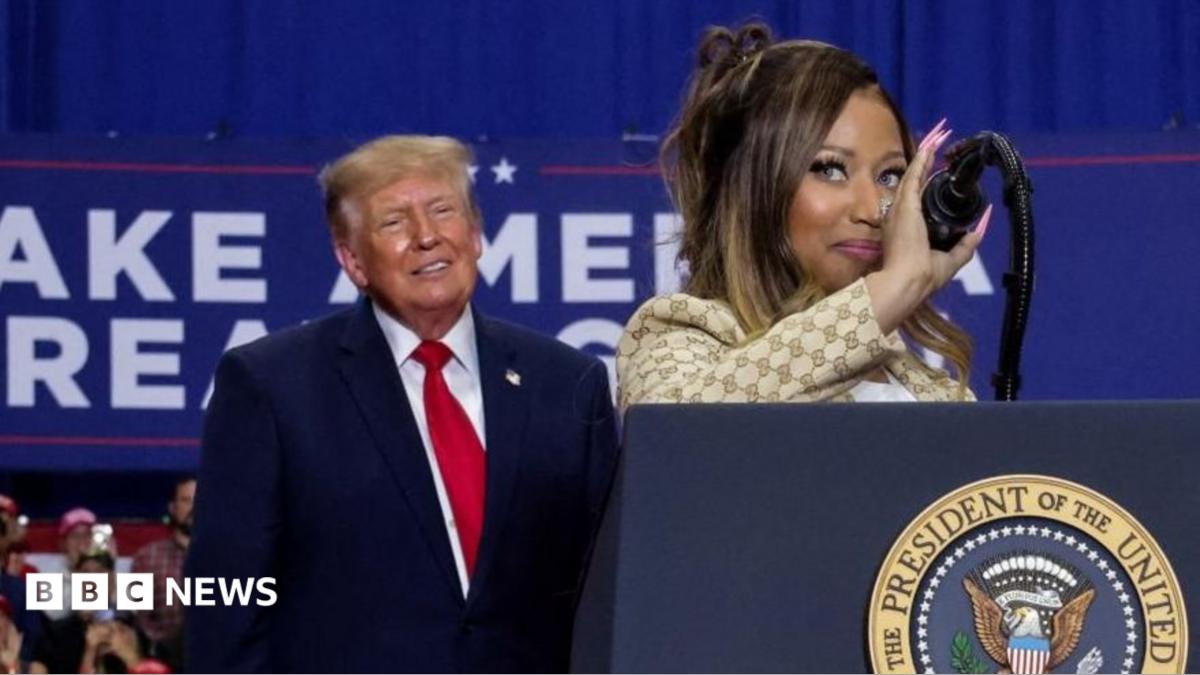
Rapper Nikki Minaj said President Donald Trump has “changed the energy of the country” as she joined him at a Michigan rally to stump for Republicans ahead of the nationwide midterm elections.
“He’s given us a future to look forward to,” she said, after Trump praised her figure and called her on stage to speak.
Minaj has called herself Trump’s “number one fan” despite criticising some of his policies in his first term.
Democrats are also aggressively hitting the campaign trail, with close elections taking place on 3 November which will decide which party controls Congress for the rest of Trump’s presidency.
In his remarks on Sunday, Trump focused on El-Sayed’s Muslim faith and background, alleging that he will “invite jihadists” into America if he wins.
El-Sayed has criticised similar remarks by Trump as Islamophobic, saying in an ad to voters last week that the US president “thinks he can use my name and my faith to distract us from the suffering his policies are inflicting on us at the pump, at the grocery store, and at the doctor’s office”.
In Port Huron on Sunday, Minaj, wearing a gold-coloured Gucci-branded suit, led the crowd in chanting Trump’s name, and the names of Republican candidates in Michigan.
“We really need all these great people to be elected, because this is a major turning point for our country,” she said.
“She never looked more beautiful,” Trump said as she left the stage. “She gets it. She’s smart,” he added.
Earlier in his speech, Trump praised the rear end of one male Republican candidate before turning the crowd’s attention to Minaj.
“By the way, I looked at a beautiful ass before,” he segued. “Nikki Minaj. That’s hard to miss.”
He then asked her to “stand up” as the crowd cheered, and added that he hoped she was not “insulted” by his remark.
CHRISTINE McGuinness left little to the imagination as she stripped off for a bath.
The model, 38, took to her Instagram account to share a video of her enjoying some downtime during a recent hotel stay.
Christine McGuinness almost bares all as she strips naked for bath and seductively drops towel to the groundCredit: InstagramThe model dropped her robe to the floorCredit: Instagram
Christine filmed herself in a robe as she walked towards the mirror in her room at the Meliá White House in London.
She then filled her bathtub with hot water, dropped her robe to the ground and stepped into the bath with her back facing the camera.
Sign up for the Showbiz newsletter
Thank you!
Christine captioned the post: “Solo System Season is going extremely well.
“Enjoying my body, bank and bath on an unapologetic, unavailable and uncompromising level because my solo system needs this on prescription!
In a rare Sunday hearing, a federal appeals court judge appointed by President Trump questioned how the Trump administration’s request to intervene in California’s ongoing midterm election in order to force state officials to set aside 20,000 ballots from voters whose citizenship it questions squares with the U.S. Constitution.
Judge Mark J. Bennett said that while the executive branch is “unhappy” with what California law requires for ensuring voters are citizens, the state has the right to determine the manner of its elections under the Elections Clause of the Constitution and Congress has not challenged that process, despite having the ability to do so.
“It seems to me that you want us to issue an injunction that is entirely inconsistent with the law the California legislature has adopted pursuant to the Elections Clause,” Bennett said. “How can we do that?”
Matthew Donnelly, a Justice Department attorney, said the Trump administration has good reason to believe those ballots are from ineligible noncitizen voters, and has the legal right under seperate federal criminal law to challenge their tabulation until state officials can prove otherwise.
Donnelly said both federal criminal law and state election law bar noncitizen voters from casting ballots, but “the problem is that California isn’t interested in enforcing that provision.”
The exchange came during an hour-long hearing before a three-judge panel of the U.S. 9th Circuit Court of Appeals, over the Justice Department’s unprecedented emergency request that the court order California Secretary of State Shirley Weber and Los Angeles County Registrar-Recorder/County Clerk Dean Logan to immediately stop counting ballots from the 20,000 flagged voters until they can definitively prove those voters are U.S. citizens.
The appellate panel — on which Bennett was joined by circuit Judges Patrick J. Bumatay, another Trump appointee, and Gabriel P. Sanchez, an appointee of President Biden — did not issue a ruling, though a decision is expected soon given the emergency nature of the appeal.
How it will rule is unclear, though both Bennett and Sanchez hammered Donnelly with questions about how the Trump administration’s position squared with the law.
Rick Hasen, director of the Safeguarding Democracy Project at UCLA School of Law, wrote online Sunday that the court seemed “very likely to reject” the Trump administration’s appeal, with Bennett and Sanchez having “expressed great skepticism on both jurisdiction and the merits.”
In addition to questioning its constitutionality, Bennett also questioned how the appellate court even had jurisdiction over the case, given that the Trump administration appealed the matter to the appellate court before the lower district court had a chance to assess the facts in the case or issue an order.
“How do we have jurisdiction when the district court has said it’s going to rule expeditiously?” Bennett said. “I don’t see how we have jurisdiction.”
Bennett also questioned why the appellate court should ignore the claims of state elections officials that having to comply with the Trump administration’s demands in the few remaining days before the Nov. 3 election would be catastrophically disruptive to the election, given that the lower court has had no chance to assess those claims.
“Isn’t that sufficient to give us pause as to whether we should do exactly what [a state expert] avers is going to cause a catastrophe?” Bennett asked.
Bennett’s questions evoked many of the arguments made by the state in its own filings in the matter, which were repeated by California Deputy Solicitor Gen. Samuel P. Siegel during the hearing.
Siegel said there was “nothing” for the appellate court to review, given there has been no fact finding and no order out of the lower court, and that the administration’s demands were unconstitutional and illegal. He said the court did not have to wrestle with many of the arguments being put forward by the Trump administration, because it should simply reject the appeal for lack of jurisdiction and send the matter back down to the lower court.
Bumatay appeared most interested of the three judges in the damage done when noncitizens do vote, and the underlying question of how the state should handle objections to alleged noncitizen voters when they arise.
Siegel and Seth Waxman, an attorney for Logan, said there are existing processes for that — which require the challenger to present extraordinary proof, which they said the Trump administration has not done for the 20,000 voters it has flagged.
Sanchez repeatedly questioned the provenance of the administration’s list, asking which third parties were involved in providing the data. Donnelly could not answer, which Sanchez said raised questions about the reliability of the list.
The Justice Department appealed the case after a lower district court judge declined to immediately rule last week on its request for a temporary restraining order barring California officials from tabulating the flagged ballots.
In court filings, the administration argued that once mail ballots are removed from their envelopes in California, or a ballot has been cast in person, there is “no way to associate the voter with the ballot” or resegregate it from other cast ballots.
Attorneys for California, Weber and Logan have argued the demands are illegal, impossible to comply with before the Nov. 3 election and based on deeply flawed federal immigration and third-party data sets shown to be inaccurate and inclusive of legitimate voters.
In court filings, they have argued that the Trump administration’s argument “rests on mere suspicion, aroused by suspect data,” and that its lawsuit is at best “a reckless political stunt” and at worst “threatens to disenfranchise thousands of Californians this election.”
Independent elections experts have said the Justice Department’s efforts break with longstanding department policy of not wading into election-related issues within 90 days of an election, to avoid disenfranchising legitimate voters.
They also have said the Trump administration’s lists of alleged noncitizen voters and its authority to intervene are both questionable, including because the U.S. Constitution empowers states to run elections with oversight from Congress, not the executive branch.
The Justice Department sued California, Weber and Logan on Oct. 15, two days after Acting Deputy Atty. Gen. Trent McCotter wrote to Weber and Logan giving them 48 hours to set aside the ballots for the 20,000 flagged voters — whom McCotter claimed were “likely noncitizens.”
First Assistant U.S. Atty. Bill Essayli, the lead federal prosecutor in L.A., has claimed federal authorities have “overwhelming evidence” that tens of thousands of noncitizens are registered to vote in California, and has defended the methods used to identify those voters. He and other federal prosecutors in the state also recently charged 28 legal permanent residents in California with election-related crimes, including illegally registering to vote.
On Friday, the Justice Department sent letters to county elections offices statewide with demands that they segregate ballots from voters the Trump administration believes are noncitizens, drawing from the same list of 20,000 at issue in the case against Weber and Logan. In those letters, the Justice Department gave the county officials 48 hours to comply, and threatened them with criminal punishment if they refuse.
State officials have said neither Essayli nor other Trump administration officials have provided proof to back up their claims, and that their list of 20,000 voters is clearly inaccurate. Logan said a preliminary review of a subset of those voters found many were born in the U.S., weren’t registered and had never voted.
More than 3 million people have already cast ballots in California — and more than 500,000 have already done so in Los Angeles County.
The challenge to the 20,000 ballots in California is just the latest Trump administration attempt to intervene in state-run elections ahead of the midterms.
Federal judges in dozens of states have rejected Justice Department lawsuits demanding the states turn over their voter rolls to the Trump administration. Federal judges also have rejected multiple Trump executive orders trying to institute national voter ID and citizenship checks, and his administration’s attempt to empower the U.S. Postal Service to vet mail ballots.
Other cases — including over the Trump administration using unproven and inaccurate federal data sets to question the citizenship of state voters — are pending.
Democrats and voting rights groups are also bracing for fresh litigation from the Trump administration to challenge the outcome of pivotal election results the president doesn’t like — and are already defending against a lawsuit the Justice Department brought at Trump’s urging in Alaska, preemptively challenging a Democratic win in the Senate race there based on a third candidate sharing a similar name as the Republican incumbent.
Times staff writer Brittny Mejia contributed to this report.
In the most complimentary way, I ask: What the heck was that first half, UCLA?
Yes, really. With Saturday’s 28-10 victory over Michigan State, Bob Chesney has the Bruins football team 7-0 for the first time since 2005. Still undefeated and still the only team in the Big Ten — and SEC — conferences that can say so. Ranked No. 9 in the nation and moving on up.
And so I ask: Two lost fumbles before halftime? Two drops? Two holding penalties? A meager 84 yards through the air and a modest 14-7 halftime lead? Against a majorly depleted Michigan State team fielding a freshman third-stringer at quarterback — that also lost two more of its best players to injury in the first half?
These Bruins are too good to be letting the wounded Spartans (2-6, 0-5 Big Ten) hang with them for even a half.
And yet, for a hot moment, doubt started to creep back in: Was this the day Chesney’s chariot turned back into a pumpkin? Was the last petal from the enchanted rose about to fall, this beauty of a season due to turn ugly? Was the fairy tale almost over?
No. The nation’s best second-half team gathered itself — “at halftime in the locker room, guys coming over, ‘Let’s go, man. We got you!” quarterback Ty Dieffenbach said — exerted its will and outscored the Spartans 14-0 in the third quarter. They mercifully ran out the clock with a commanding 28-7 lead going into the fourth and improved to a tidy 5-0 in the Big Ten.
It’s what Chesney’s teams do.
Last season at James Madison, the Dukes led the nation in second-half scoring, averaging 20.9 points per game.
And this charmed season at UCLA, the Bruins came into Saturday’s game averaging the second-most second-half points in the nation (20.8).
Being able to bear down and wear down opponents is a sign of a good team.
Being able to jump on them at the outset would be the sign of a great one.
Let’s fast-forward a year. You’ve stopped pinching yourself to make sure you aren’t dreaming and the Bruins — who were unranked and unheralded to start the season after so many years of ineptitude — really are in control of their own College Football Playoff destiny.
UCLA linebacker Donavyn Pellot celebrates with linebacker Sammy Omosigho, left, after a 67-yard interception return against Michigan State on Saturday.
(Allen J. Schaben / Los Angeles Times)
A year from now, you’ll have been conditioned to expect them to win these games, and you’ll no longer be worried about whether this was all a dream.
But you would be concerned about slow starts. You’d bemoan sluggish opening acts and fret about how that might bite the Bruins in the big games that are looming.
Chesney doesn’t have to make that imaginative leap into the future.
He’s worried about it now. And that’s why his Bruins are legitimately a team to contend with, because he’s coaching them to be that. He expects it: “When you walk on that field on Saturday, you walk out and know that you’ve done it the right way, and that’s how you treat something that’s important. Not special, but important.”
And so I ask: Why didn’t UCLA treat the first half like it was important Saturday?
“Two fumbles, two drops, two holding penalties? You can’t do it, you just can’t do it if you want to win really close games,” said Chesney, the first-year UCLA coach, who said he’d spend the week before the Bruins host Nevada in a nonconference Halloween game by emphasizing ball security at practice and that he’d watch the tape to determine what triggered the holding penalties.
“We’re taking three, four touchdowns off the board by doing that,” Chesney added. “Never going to let this happen again.”
UCLA can’t because it doesn’t have any room for error.
UCLA coach Bob Chesney works with players before a 28-10 win over Michigan State at the Rose Bowl on Saturday.
(Allen J. Schaben / Los Angeles Times)
If the Bruins win out, Chesney will have directed an underdog to a surprise CFP berth for the second consecutive season. But if the Bruins lose a game, it gets dicey.
Never mind the rows of recruits at Saturday’s victory, and forget for a moment about the fans who are slowly finding their way back to the Rose Bowl for Bruins football games. UCLA needs to continue to impress the computers and the pollsters and CFP committee members who could eventually determine UCLA’s fate if the Bruins don’t do it themselves.
And though no fault of Chesney’s, UCLA is playing a soft schedule. Per ESPN, the Bruins’ slate was the 51st easiest coming into the season and what remains of it is the 64th easiest.
And UCLA, which is winning behind a backup quarterback, which went 3-9 last season and which had so much ground to cover after starting the season outside of the top 25 — won’t likely get anyone’s benefit of the doubt if a first-half lull leads to a loss.
The Bruins are proving themselves probably the best team in the nation after halftime.
If they can do that, why not aim to be the best team in the nation?
Orleans, France – Marine Le Pen took to the stage with a clear message: She would lead France’s “renaissance” as the country sank into crisis – and she would do so soon.
The far-right figure’s words were met with cheers from thousands of supporters gathered in Orleans in central France on Sunday, as she launched her presidential campaign against a backdrop of mass demonstrations and widespread social and economic discontent.
Recommended Stories
list of 3 itemsend of list
“Marine présidente!” the crowd chanted, waving French flags beneath a sea of red and blue lights. Organisers said 8,500 supporters had gathered in a venue transformed into a fort for the event.
Standing tall on stage in a pink blazer, her hair impeccably coiffed, Le Pen spoke with the confidence of a leader who believes the presidency is within reach.
Riding high in the polls, with candidates from the right, left and centre trailing behind her, she presented the election as a historic opportunity to restore France’s past glory.
“This is a story to be written, a destiny to be fulfilled,” she told the crowd, which erupted in cheers.
Her pitch was a promise to restore authority and security in a country she portrayed as having lost control.
“We are going to re-establish the rule of law,” she said, drawing loud applause from supporters wearing “Marine présidente” T-shirts.
Manon Funeau, 21, a business school student, was among the supporters.
“What they propose are values that resonate with me, that vibrate within me,” she said. “Honestly, I feel at home here.”
Le Pen’s speech comes as the country is at a crossroads. France has been shaken by a wave of protests since mid-September, a movement sparked by high school students in a Paris suburb that grew into a nationwide mobilisation tapping into widespread discontent.
Over the past two weekends, largely peaceful protests have been accompanied by episodes of violence on a scale rarely seen in recent years.
On October 17, shops were looted and ransacked, and more than 2,000 people were arrested as hundreds of thousands took to the streets of French cities. A similar dynamic unfolded the following weekend, though on a smaller scale. The protests show little sign of abating, with calls for further demonstrations already circulating.
The unrest has given Le Pen’s National Rally (RN) an opportunity to play one of its favourite cards: presenting itself as the guarantor of law and order. It has fuelled criticism of President Emmanuel Macron over his handling of public security, allowing Le Pen to accuse him of incompetence and the far-left leader Jean-Luc Melenchon – a contender in the coming elections – of encouraging the violence.
‘My country is drifting off course’
“I believe that my country is currently drifting off course,” said Nadede, a 56-year-old who began voting for RN in 2024 over what she said was the country’s growing lack of security. She did not spell out any specific event.
“I think that the only person capable of setting it back on the right track is Marine Le Pen – especially since, up until now, everyone else who has run for office has struggled to do so,” she said.
Outside the convention hall, the scale of the security operation offered a glimpse of the tensions surrounding the event. Police checks began at departure stations in Paris and continued on arrival, while officers in full gear moved through train carriages during the journey.
Orleans itself had been brought to a near standstill. All businesses were shut and public transport suspended.
Standing almost alone in the city’s main square was the statue of Joan of Arc, surrounded only by fences. A day earlier, about 3,000 police officers had been deployed to prevent unrest as anti-RN protesters gathered against what they say is a xenophobic and racist party.
Orleans was no casual choice. For a party that has long sought to cast itself as the guardian of French identity and national sovereignty, the city is inseparable from the story of Joan of Arc, the 15th-century heroine who helped lift the English siege of Orléans in 1429 and became a symbol of France’s resistance and liberation.
For decades, the far right has claimed her as an emblem of national pride, invoking the image of a warrior who came to save France from foreign domination. Le Pen herself has drawn parallels between Joan’s mission and her political ambitions.
Eric Ciotti, Nice mayor and president of the Union des Droites (UDR) parliamentary group; French far-right leader Marine Le Pen, member of parliament from the French far-right Rassemblement National (National Rally – RN) party and candidate for the 2027 French presidential election; and Jordan Bardella, president of the RN party, stand on stage during a rally to launch the presidential campaign, after the party’s Congress in Orleans, France, October 25, 2026 [Nicolas Economou/Reuters]
The crowd at the RN Congress offered a glimpse of how the party has expanded its appeal to a wider section of society: from young people from urban centres to middle-class workers who used to vote for the centrist party.
Only a few years ago, the party was still considered on the fringes of French politics. Its growth has been driven in part by a carefully crafted strategy known as dédiabolisation, or de-demonisation, developed over the past two decades to broaden the party’s base while tempering its rhetoric and distancing it from positions that had made it toxic to many voters.
The party has long been associated with racism, xenophobia and anti-Semitism. Le Pen’s father, Jean-Marie Le Pen, was convicted of hate speech, including for describing Nazi gas chambers as “a detail of history”. He was expelled from the party in 2015.
Far right ‘gaining ground’
Marine Le Pen has sought to broaden RN’s appeal, combining restrictive immigration policies with promises of social protection. The party has gained ground in working-class areas traditionally associated with the left, including former Communist strongholds, by presenting itself as a defender of public services and the purchasing power of everyday people.
While RN has long abandoned some of its most radical proposals, including leaving the Eurozone and pursuing a fully fledged “Frexit”, the election of such a eurosceptic to the helm of the European Union’s second-largest economy would send shockwaves. She has pledged a referendum to challenge the primacy of EU law over migration policy, as well as an annual 11-billion-euro ($12.3bn) reduction in France’s contribution to the bloc.
The party’s membership has nearly tripled, with approximately 112,000 members now paying their dues, up from fewer than 37,000 in 2022.
“The party has been gaining ground at every level: mayors, deputies, senators. Usually, when a movement seems on the rise, people join,” said Baptiste Roger-Lacan, a historian and political analyst with a focus on far-right parties in Europe. “It also shows how it is less and less socially damaging to be a member of the RN.”
But the party’s programme “is still fraught with fiscal absurdity”, Roger-Lacan said. “They still want to implement racist laws, which are bound to provoke widespread anger, and their diplomatic agenda is still pro-Russian and anti-EU – even if they don’t advocate Frexit any more.”
Jordan Bardella, Le Pen’s second-in-command and Le Pen protégé – an impeccably dressed 31-year-old who looks like a cross between the Wolf of Wall Street and Superman’s alter ego, Clark Kent – also spoke at the event.
“No one should be intimidated by their political opinions,” he said, speaking ahead of his mentor.
Some observers say the October 17 protests and their aftermath have proved a gift to RN, allowing the party to not only reinforce its law-and-order message but also to shift attention away from recent difficulties.
In September, investigative outlet Mediapart published allegations that Bardella had expressed anti-Semitic views in private messages dating back to his teenage years. He denied the allegations and announced legal action against the journalists.
The episode posed a challenge for a party that has spent years trying to shed its xenophobic image and recast itself as a supporter of Israel.
Bardella has also reportedly differed with Le Pen over the party’s economic agenda and whether to make her proposed ban on the wearing of the Islamic headscarf in public spaces a central campaign issue.
Yet, at the Congress, those tensions appeared to have been set aside, at least publicly.
“Marine president – a Bardella government” was the slogan, projecting unity as Le Pen launched her presidential bid and Bardella positioned himself as her prospective head of government.
French superstar Kylian Mbappe scores brace for Madrid to inflict Barcelona’s first domestic defeat of the campaign.
Published On 25 Oct 202625 Oct 2026
Kylian Mbappe struck twice to earn Jose Mourinho’s Real Madrid a 2-1 El Clasico victory over La Liga leaders Barcelona at Camp Nou, cutting the gap to three points.
French superstar Mbappe opened the scoring before half-time on Sunday and then slotted home late on to inflict Barca’s first domestic defeat of the campaign after Raphinha had equalised for the champions.
Real Madrid remain third, behind Atletico Madrid and Hansi Flick’s Barca, who had won their first nine games before a chastening week.
The Catalans suffered a second straight defeat after losing on Tuesday against Paris Saint-Germain in the Champions League.
Barca had won six of the seven previous Clasicos since the German arrived but were surprisingly subdued against Mourinho’s side.
“In general we didn’t have a great game, in the first half we weren’t ourselves, there were a lot of things we could have done better,” Barcelona midfielder Pedri told DAZN.
“We wanted to win the Clasico in front of our fans, but the season is very long … a league is not won here.”
Los Blancos, without suspended winger Vinicius Junior, won their fifth straight game across all competitions and are finding their footing under veteran Portuguese coach Mourinho.
After two trophyless seasons Madrid turned back to Mourinho to try and stop Barca’s dominance, and this result will give them hope they are on the right track.
The opening period of the game was cagey, with few opportunities.
Barca defender Pau Cubarsi twice reacted well to shut down Mbappe, while Real Madrid’s Marc Cucurella took a rapid liking for Lamine Yamal’s shirt, constantly grabbing at the 19-year-old winger.
Anthony Gordon, playing in his first Clasico since joining Barcelona from Newcastle, backheeled the ball to Raphinha, who fired narrowly wide as Barca threatened.
The hosts were dealt a setback when young defender Xavi Espart pulled up hurt and needed to be replaced by Alejandro Balde before the half-hour mark.
Andriy Lunin, playing in goal for Madrid after Thibaut Courtois pulled out of the squad with flu, saved at his near post from Gordon before the visitors took the lead.
Mbappe scored his 10th league goal of the season and also his easiest, with Barca’s Gerard Martin clearing a cross straight at the Frenchman, who deflected it into the net.
Barca responded by carving out a glorious chance for an equaliser but teenage sensation Yamal for once miscued in front of goal, firing wide when poised to level.
The game opened up and Yan Diomande came close to doubling Madrid’s lead before half-time, drilling into the side-netting.
Martin redeemed himself early in the second half as he held off Jude Bellingham, who could neither beat the defender nor find a free Mbappe.
Raphinha, who had a quiet first half, pulled Barcelona level just after the hour mark.
Pedri fed the Brazilian, La Liga’s top goalscorer with 13, who fired through Bellingham’s legs and Lunin could not keep the shot out.
The Ukrainian goalkeeper did make a superb save to deny Martin at a corner, as Barcelona flowed forward with the wind finally in their sails.
Yamal bent an effort wide with Lunin at full stretch and Barca substitute Frenkie de Jong had a shot desperately blocked by Dean Huijsen.
There was a sting in the tail for the Catalans though as substitute Gabriel Jesus lost possession and Madrid raced through on goal.
Eduardo Camavinga beat Cubarsi and unselfishly cut the ball back for Mbappe to tuck home his second of the night into an empty net with Joan Garcia drawn out of position.
Louis Walsh has revealed that before he was diagnosed with a rare form of cancer, his doctors were unable to identify the disease in his body
Louis Walsh was diagnosed with a rare form of cancer
Louis Walsh has revealed that doctors initially ‘couldn’t find anything’ before he was diagnosed with a rare form of cancer. The TV star and music manager was diagnosed with Waldenström macroglobulinemia in 2024.
To see more of the stories you love from The Mirror and to find them easily in Google, make us your preferred source. Free and easy to do, just click on the link here to find more from The Mirror at the top of your feed.
“I had a cancer called Waldenström,” he said. Louis went on to add: “And I didn’t know I had it. And at the end of the X Factor series, I was just feeling very weak, and I went to the doctors.
“They couldn’t find anything. And then, one of the doctors called me back, and he said, ‘I think it’s this rare one’ — it would be rare for me — ‘called Waldenström.’ But I’m told, if you’re going to get a cancer, this is the one to get!”
When asked if he underwent any treatment, he disclosed: “I had chemo for a week. It wasn’t bad. It wasn’t bad at all – but I couldn’t sleep at night time, so the nurses gave me loads of tea. They were so nice, and I was smiling.”
Louis was later asked whether he was in remission and “100 per cent clear of cancer,” to which he responded: “I think so, oh totally, yeah.” Reflecting on his private health battle, he said in the Big Brother house: “I didn’t even know I had it until I went to the hospital. They checked me, and then they found it.”
He said that his diagnosis affected him mentally, saying: “It’s just up here; even when I go past a hospital, I almost get sick. It’s all gone, I’m fine. It was just the shock of being sick, and that word – nobody wants that word.
“I have it blocked out, a reality check. You see so many people sick, and it’s terrible. In my world, it was all about pop music and all that. I didn’t think of anybody getting sick or anything like that. And that was like, wow, reality check – you’re in the real world.”
During his time on the show, Louis was often seen sleeping. A source said at the time: “Louis is in remission currently but you can see how frail he is and that he has lost a lot of weight. It’s also the reason why he’s sleeping so much; it all took a lot out of him.
“The whole experience was the main driver behind signing up for the show. He’d been really ill and just wanted to enjoy life again and thought, ‘What the hell!'”
The Big Interview: Louis Walsh airs Tuesday, October 27, at 9pm on Virgin Media PLAY and Virgin Media One.
Proxy advisory firm Glass Lewis has recommended that Ethan Allen (ETD) shareholders support activist investor Doug Bergeron’s campaign to replace all five directors, including longtime Chief Executive Farooq Kathwari, intensifying a boardroom battle ahead of the furniture maker’s Nov. 4 annual meeting.
WASHINGTON — U.S. Atty. Gen. Todd Blanche on Sunday defended the Trump administration’s lawsuit to block certification of Alaska’s Senate results if Republican incumbent Dan Sullivan loses the race, arguing that the legal challenge was a necessary step to avoid confusing voters in the closely watched midterm race.
Some election experts have said the move is another attempt by the Trump administration to meddle in the Nov. 3 midterm elections in the event Republicans don’t fare well. Democrats as well as some Republicans have criticized it.
Blanche, however, said on CNN’s “State of the Union” that President Trump — who said Friday in reference to the lawsuit that he was “the one that said do it” — is not trying to overturn state election results “in any way, shape or form.”
“We wish that we didn’t have to do this. We hope for a resolution that works,” Blanche said.
Republicans fear that a second candidate on the ballot who is named Dan Sullivan — a retired teacher and school administrator from the tiny fishing community of Petersburg — could siphon away votes from the GOP senator and tip the outcome in favor of Democrat Mary Peltola, a former congresswoman. Because Alaska has ranked-choice voting, there are more than two candidates on the general election ballot.
A day after the lawsuit was filed Thursday, Peltola called it “just flagrant, flagrant corruption, in my opinion,” and a diversion tactic by Republicans. Alaska’s other Republican senator, Lisa Murkowski, also criticized the lawsuit in a social media post.
Trump told reporters Sunday that he believed the ballot was illegal because it was unfair and that Sen. Sullivan should be identified to voters as the sitting senator. Courts, however, have ruled otherwise, upholding both Sullivans’ spots on the ballot.
“At least let him use the name Sen. Dan Sullivan as opposed to incumbent, because a lot of people don’t know what incumbent means,” Trump said.
Alaskan voters will see “Dan S. Sullivan” identified as a “registered Republican” and “incumbent” on their ballots, while “Daniel J. Sullivan Jr.” is listed without party affiliation.
Blanche represented Trump as a personal attorney — including the case in which Trump was convicted of felony fraud — before the Republican president appointed him to lead the Department of Justice, which filed the lawsuit in Alaska. Blanche defended Trump in his election inference case before voters elected Trump to a second White House term, effectively ending the criminal prosecution.
Blanche told CNN host Dana Bash that it was “crazy” for her to ask him if Trump was trying to lay the groundwork for the same sort of election challenges that occurred before a mob of his supporters stormed the U.S. Capitol on Jan. 6, 2021 — the source of the election interference case, in which Trump was indicted on felony charges, and for which he was impeached.
“We are not doing anything improper. We’re not doing anything we’re not allowed to do. And we have to let the process play out,” Blanche said. “But I do think it’s important for the American people to understand that we are not — [and] President Trump is not — trying to take over a state election in any way shape or form.”
The lawsuit, Blanche said Sunday on CBS’ “Face the Nation,” is meant to “put guardrails in place” to preserve possible evidence of voter confusion at the polls.
“It’s not saying, ‘Don’t certify.’ It’s saying, ‘If a court ultimately determines that it was decided because of confusion and not the will of the voters, then we do not think the states should certify.’ And that’s consistent with federal law and consistent with even Alaskan law, if that happens,” he said.
Kunzelman writes for the Associated Press. AP writer Josh Boak contributed to this report.
KALAMA, Wash. — Colorado and Washington are reliably Democratic states where elected officials have rejected moves to ban transgender women and girls from female sports competitions. Now activists have gone around lawmakers to put proposed bans on both states’ ballots.
At a time when some Democratic leaders nationwide are recalibrating their approach to transgender issues, particularly sports, and polls show Americans generally back the bans, supporters are optimistic they will pass and open the door to similar efforts in other places where lawmakers have blocked bans.
Though the issue has been debated in many legislatures, this is the first time it’s going to voters.
“What is happening in 2026 is a testing ground for the future,” said Chris Melody Fields Figueredo, executive director of the Ballot Initiative Strategy Center, which supports LGBTQ+ rights.
Twenty-seven states — including all where Republicans control both the legislature and governor’s office — already have such laws.
The efforts are billed as a way to protect women and girls and keep separate spaces for them, tapping into a concern that’s gained momentum. President Trump has taken steps to roll back transgender rights. The Supreme Court has upheld state sports bans.
A June poll from Quinnipiac University found that about 7 in 10 registered voters think transgender women and girls should not be allowed to play on female sports teams. About one-quarter think they should. Democrats are divided, with about half saying transgender women and girls should be allowed and about half saying they should not.
Robert Preuhs, a professor of political science at Metropolitan State University of Denver, said the absence of public polls on Colorado’s ballot measure, which also covers college sports, makes it hard to predict whether it will pass. “It’s probably going to get more support than some of the Republican candidates that will run,” he said.
Since transgender restrictions gained traction this decade, states with Democratic-led governors’ offices and legislatures generally have rejected proposals such as banning transgender people from the bathrooms that match their gender identity and restricting gender-affirming care. Most Republican-led states have adopted those policies.
In addition to the two blue-state questions, a measure in Arizona would broaden an existing ban to include private schools, and one in Nebraska would add an existing state law to the state constitution.
There’s not a clear consensus on whether transgender women and girls have a competitive advantage. Factors include the age of the athlete, the sport, whether the athlete went through male puberty and how long they’ve received hormone therapy.
But the idea that girls are being cheated is personal for some athletes.
Ahnaleigh Wilson, a 17-year-old junior at Eastmont High School, about 25 miles north of Seattle, has been speaking out against allowing transgender girls to compete in girls’ sports since she was in junior high. She said she’d won all of her 1,600-meter races in seventh and eighth grade — until she finished second to a transgender athlete in a major meet.
“Women have fought for Title IX and our own categories and it’s very important that we keep the dignity of that, and let women have their own sports and their own spaces to be safe and completely fair,” she said, referencing the federal law that prohibits discrimination based on sex in education programs and activities.
Opponents say excluding transgender girls is also unfair.
“They will say that they want to protect kids and in particular, young girls,” said Nadine Bridges, executive director of One Colorado, which is leading the opposition to the measure there, “but I don’t understand how you can protect kids and discriminate against kids at the same time.”
The Washington measure would require that a healthcare provider verify the student’s “biological sex, relying only on one or more of the following: The student’s reproductive anatomy, genetic makeup, or normal endogenously produced testosterone levels.”
“We see that as being as simple as a checkbox,” said Let’s Go Washington spokesperson Hallie Herzberg. “Doctors can use the history of the patient from treating them all their lives or their medical history forms.”
But Dr. Libby Loft, who opposes the measure, says the language calls for a genital inspection as part of a physical, or expensive testing.
“I think it doesn’t make any sense to force the working families of … girl sports players in Washington to pay for unnecessary medical tests to be able to weed out an estimated five or 10 girls in the state of Washington, trans girls,” Loft said.
She fears the verification requirement will lead to fewer girls — transgender or not — playing sports.
Mulvihill and Cooper write for the Associated Press. Mulvihill reported from Haddonfield, N.J.
United States Attorney General Todd Blanche has defended the Department of Justice’s decision to sue to prevent the certification of a Republican loss in Alaska’s tight Senate race.
On Sunday, Blanche did a tour of the morning political shows in the US, making stops at CNN’s State of the Union TV programme and CBS’s Face the Nation.
Recommended Stories
list of 3 itemsend of list
In each appearance, he faced pointed questions about the legality of the Justice Department’s efforts, responding, in some cases, with open frustration.
“ Why is this controversial?” Blanche asked CNN host Dana Bash at one point. He proceeded to accuse one of the candidates in the Senate race of intentionally trying to confuse voters.
“We’re going to try to create a situation where that can be remedied,” he said. “That shouldn’t be something that is causing this shock and horror.”
But the Justice Department’s lawsuit, filed on October 22, has been the subject of bipartisan criticism.
Many have accused the administration of President Donald Trump of laying the groundwork to block a Democratic win in the race. Trump himself claimed to have authorised the lawsuit.
“I’m the one who said do it,” he told reporters on Friday.
Inside the Alaska Senate race
During the midterm elections on November 3, citizens in Alaska will be asked to vote in one of the closest Senate races in the country, one which will help decide whether Republicans maintain their majority in the chamber.
Senator Dan S Sullivan, the Republican incumbent, is seeking to defend his seat in the Senate. But he faces fierce competition from former US Representative Mary Peltola, a Democrat.
Also in the running is another candidate named Dan J Sullivan, a former Forest Service employee.
The second Sullivan’s decision to also run has raised concerns that he is a spoiler candidate, whose presence on the ballot is designed to draw votes away from the incumbent.
But the Forest Service worker has denied any such intent. Such allegations, he said, are “entirely false”.
“I am not a registered Democrat, and I have had no conversations whatsoever with the Peltola campaign about my candidacy,” the second Sullivan wrote in a letter to Alaska’s lieutenant governor before the state’s primaries.
“I have considered running for political office for over a decade. I made the decision to formally run for the United States Senate in the upcoming primary election because Senator Sullivan has routinely failed the people of Alaska, and they deserve a better representative. It is my right to do so.”
Four candidates advanced to the final round of voting after Alaska’s August primaries. They included Peltola and both Sullivans. The two men are running as Republicans.
A controversial lawsuit
The Department of Justice has argued that its lawsuit — filed less than two weeks before the midterm elections — is necessary “to protect the integrity” of the election.
Any result in the Senate race, it argues, would be “tainted by the inclusion on the ballot of Daniel J Sullivan”.
The department has therefore called on the US district court in Alaska to issue an order declaring the race’s certification “unlawful” and barring the state from “allowing such a certification to occur”.
Under the US Constitution, only states have the power to administer elections, though Congress has the right to pass regulations concerning federal votes.
It is highly unusual for a presidential administration to inject itself into issues of state election certification — and experts say such a move is likely to be deemed illegal.
Already, in June, Alaska’s Supreme Court ruled that both Sullivans could compete in the Senate race. The state’s Division of Elections has also taken steps to reduce voter confusion.
The November 3 ballot, for instance, will list Dan S Sullivan as the incumbent and as a “registered Republican”.
Dan J Sullivan, meanwhile, will have the suffix “Jr” added to his name, and his party affiliation will be left blank, despite the candidate identifying as Republican.
But in Sunday’s TV appearances, Blanche — who leads the Department of Justice and formerly served as Trump’s personal lawyer — argued that merely having two Sullivans on the ballot is a recipe for confusion.
“It is wrong,” Blanche told CNN. “Putting aside whether we’re going to win or lose in the courts, putting aside what the Alaskan Supreme Court has done, in our system we should not have a candidate who has to worry about another candidate being on the ballot for no other reason than to confuse voters.”
Blanche also denied any impropriety in Trump saying he ordered the lawsuit.
“He’s supposed to make sure that everything in this country is running right, including elections,” Blanche said.
The race for the Senate
Historically, the Department of Justice has embraced a norm of judicial independence, though critics have accused the Trump administration of wielding its prosecutorial powers for political gain.
Bash, the CNN host, raised some of those concerns, pointing to Trump’s comments accusing Democrats of cheating, as well as his history of election denialism.
The president has long denied his loss in the 2020 presidential race, and his supporters sought to block the certification of that election, notably by storming the US Capitol on January 6, 2021.
When Bash pointed to that incident, Blanche chided her: “Oh, you’ve got to stop it with that.”
“Why are you yelling at me?” Bash responded, as the two talked over each other.
“You are not being a real person. Come on, man,” Blanche continued. “That is crazy.”
He also denied that Trump was setting the stage for a contested election if the Democrat Peltola were to win. Instead, he framed the lawsuit as setting the stage for further investigations into any eventual results.
“The relief that we’re seeking — which, again, isn’t to determine who the senator is, it’s not to try to overturn something the state is going to do — it’s just to make sure that the ballots that come in are kept in a way that may allow a court to investigate further,” Blanche said.
Speaking to CBS, Blanche also dodged a question about whether Trump personally asked him to file the lawsuit.
“I will never, ever, ever talk about communications that I have with the president of the United States. I never have, and I never will,” Blanche said.
The race to control the US Senate is expected to be a nail-biter, with the Republicans holding a slim majority at present: They have 53 seats in the 100-member chamber.
Only a third of the Senate’s seats — 35 in total — will be up for grabs in the midterm races, though, as terms in the chamber last six years and are staggered across different election years.
Trump’s Republican Party is projected to face an uphill battle to protect its congressional majorities, amid backlash against the rising cost of living and Trump’s own withering poll numbers.
Roughly seven Senate elections are considered toss-ups, including the Alaska race.
In early October, The New York Times and Siena College released a poll finding Peltola leading the incumbent Sullivan by nearly seven percentage points, one of the widest margins of any of the toss-up states.
Church mourners die on Kenya’s Nairobi-Mombasa Highway weeks after another crash killed 17 people.
A bus carrying mourners has collided with a truck on a major highway in southeastern Kenya, killing at least 24 people, police say.
The crash happened in the Kanga area near Mtito Andei, on the road linking the capital, Nairobi, to the coastal city of Mombasa, at about 7:45am (04:45 GMT) on Sunday, October 25.
Recommended Stories
list of 2 itemsend of list
Another 24 people were injured, hospital officials said.
The deaths came just over three weeks after another crash on the highway killed 17 people, prompting fresh government promises to improve road safety.
The bus belonged to Power of the Word Church International in Mombasa and was taking passengers home from their pastor’s funeral in western Kenya.
They had stopped for breakfast shortly before the collision, according to one survivor.
The other vehicle was a truck transporting cement.
Violet Mwandonyi, who survived the crash, told the Associated Press on Sunday that she remembered passengers crying out for passing motorists to help.
She said she did not know what had happened to her two children, who had been travelling on the bus.
The cause of the crash remains under investigation.
Makueni County Commissioner Abdullahi Khalif, the government’s senior administrator in the area, told Kenyan newspaper The Standard that the bus driver had tried to overtake several vehicles before colliding with an oncoming truck.
Kenya’s National Transport and Safety Authority (NTSA) also identified dangerous overtaking as a possible cause. Another survivor said the truck struck the bus from behind.
On October 3, a crash involving several vehicles killed 17 people, most of them Catholic pilgrims travelling to a prayer site, near Salama on the same highway.
Police said a truck driver had tried to overtake another truck before the collision.
The NTSA had identified that stretch of road as an area with a history of crashes.
President William Ruto offered condolences on Sunday and ordered inspections of vehicles used for public transport.
Transport Minister Davis Chirchir said the government would step up enforcement against speeding and unsafe overtaking, improve dangerous sections of road and strengthen training and checks for commercial drivers.
In a statement on Sunday, Chirchir said the government would work with police, local authorities and lawmakers on the measures, including closer oversight of buses and heavy goods vehicles.
“We cannot continue treating road safety as business as usual,” he said, calling for stronger action to reduce deaths.
Figures from the NTSA, reported by Kenyan media, show that 5,009 people died in road crashes in 2025, with 2,150 deaths recorded in the first half of 2026.
The authority estimates that about 20,000 crashes occur across Kenya each year.
Following Sunday’s collision, it called for road crashes to be declared a national disaster.
Princess was left in stitches as she joked with her MumCredit: TiktokPrincess pulled a hilarious prank on her mum Katie PriceCredit: Shutterstock Editorial
Now, fans have loved the prank she pulled on her mum — and how clearly it showed the closeness between them.
Taking to TikTok, Princess said: “I’m going to call my mum and ask her if she was in the delivery room when she gave birth to me.”
Sign up for the Showbiz newsletter
Thank you!
When she rang, Katie asked why she wasn’t on video but Princess explained: “I’m at the doctors, and they’re asking if you were in the delivery room when I was born.”
“Was I?” exclaimed Katie as Princess giggled quietly in the background.
Leonardo Maria Del Vecchio, an heir to the fortune behind eyewear giant EssilorLuxottica (ESLOF)(ESLOY), is considering a €7.15 million ($8.3 million) takeover of the publisher of Italian newspaper Il Fatto Quotidiano, expanding his investments in the media industry.
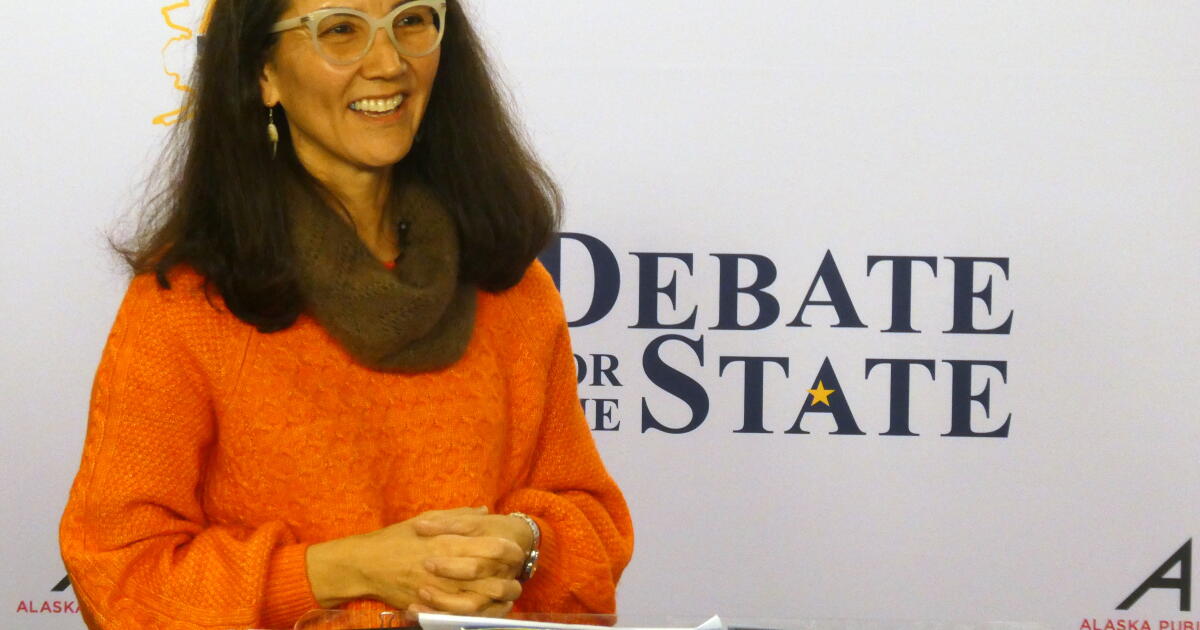
Alaska’s Democratic Senate candidate, Mary Peltola, and her family suffered minor injuries in a car crash while driving to a campaign stop, her campaign said Sunday.
Peltola required medical attention after the accident Saturday, which happened when another vehicle crashed into the one transporting Peltola and her family, the campaign said. The family was on their way to the Alaska Federation of Natives Annual Banquet in Anchorage.
Peltola, an Alaska Native and former congresswoman, is challenging Republican Sen. Dan Sullivan, hoping to become the first Democrat in nearly two decades to represent the state in the Senate.
Both candidates have tried to rally support from Alaska Native voters, a key constituency in the high-stakes race that has become one of the most watched in the nation.
On Friday, President Trump — who held a rally in support of Sullivan earlier this month — said he told his administration to sue to block certification of the race if the incumbent loses. The lawsuit cites potential confusion with another candidate who is listed on the ranked choice ballot as Daniel J. Sullivan Jr.
Peltola’s campaign manager, Cheryl Bruce, wrote in a statement that the candidate was in “good spirits” following the accident, but her medical providers recommended she reschedule events Sunday and Monday to recover.
The incident delayed what her campaign announced as the “Alaska Always Tour,” an eight-stop push through the last week before election day. Her campaign said she will resume events Tuesday, with a stop in Homer, Alaska.