McOsker, who represents the Harbor Area and parts of South L.A., said he’d like to spend less time on the 110 Freeway getting downtown and more time serving his community directly. He called the frequent council meetings the “most nonproductive part of my week.”
Many cities, including Long Beach, San Diego and Sacramento, have councils that meet just once a week, McOsker noted, adding that the council still could meet more frequently if needed.
Fewer meetings also would make it more likely for the council to settle issues at one meeting, he said — a benefit to constituents who show up at meetings only to see a vote on their issue deferred to another day.
Fewer meetings also may encourage people to instead attend council committee hearings, McOsker said, which often discuss measures in more detail and allow for robust public comment.
Rob Quan, an organizer with the watchdog group Unrig LA, opposes the amendment but said he would support fewer meetings if the council made other changes to improve public access to city government, including releasing meeting agendas further in advance and scheduling committee meetings in the evenings when more people can attend.
But Quan expressed skepticism the council would make those changes.
Rodriguez noted that Measure EE also includes a measure to raise fines for city ethics violations, which she described as a cynical attempt to shift the focus away from the reduced requirement for meetings.
“My big problem with EE is that it’s a ruse of reform,” she said.
Referendum signatures increase
Amendment EE also would make it harder for voters to overturn City Council actions through the use of ballot referendums.
To qualify a referendum for the ballot, petitioners must collect a number of signatures equal to 10% of the votes cast in the last mayoral election. Amendment EE would increase this threshold to 15% of ballots cast.
For example, 929,000 votes were cast in the 2022 mayoral general election — meaning referendums need about 93,000 signatures to qualify for the ballot. With a 15% threshold, nearly 140,000 signatures would be needed.
McOsker said the change makes the number of signatures needed for referendums and voter initiatives consistent in the city charter. Both methods should have enough support from the public to make it to the ballot, he said.
“Measure EE seeks to make the ballot box powers equal to either overturn or to adopt legislation,” he said.
Quan took issue with that, noting that with ballot initiatives, organizers have four months to collect the required signatures. With a referendum, they have just 30 days.
“It is going to be functionally useless. There is going to be nobody that has the money to pull this off in 30 days,” he said.
The city’s most recent referendum effort came last year, when business groups sought to repeal the $30 minimum wage for tourism workers. The effort fell about 9,000 signatures short despite backing from Delta Air Lines, United Airlines, the American Hotel and Lodging Assn. and others.
More power to police and fire watchdogs
The L.A. Police Department inspector general and Fire Department independent assessor provide civilian oversight over their respective departments. Amendment EE would remove the ability for the police and fire commissions to stop an audit by their independent inspectors.
“As an independent entity, it is important for them to be able to proceed with the work that they deem appropriate,” McOsker said.
Quan said the reform is potentially helpful but said he knows of no instances in which commissions blocked an audit. Quan speculated that this was included — at the very top of the ballot measure — as a sweetener to help sell the less palatable provision to reduce the number of required council meetings. “It’s a really marginal reform,” he said.
Ethics commission changes
Amendment EE would increase civil fines — those imposed by a judge through the court system — to the same level as administrative fines levied by the ethics commission.
McOsker said the higher penalty should lead to fewer violations.
Quan said this was another marginal change, noting that under Charter Amendment ER, approved by voters in 2024, the ethics commission can impose fines of up to $15,000. Under EE, private citizens or others filing ethics suits in civil courts could seek fines of the same amount.
In addition, Amendment EE would ban ethics commissioners or the executive director from running for City Council or the LAUSD Board of Education for five years after they leave office.
McOsker acknowledged that there hasn’t been a precedent, but said “we need to anticipate the potential that someone could get on the commission and take a look at the seat they want and use their position to improve their chance of getting that office.”
A final change proposed by the amendment would clarify the definition of a “stakeholder” in the charter as it relates to who can sit on a neighborhood council, which makes recommendations to the City Council but lacks formal legislative power.
Stakeholders currently are defined as anyone who lives, works or owns real property within the neighborhood boundaries, or community organizations like chambers of commerce or nonprofits.
Kay Hartman, president of the Palms Neighborhood Council and chair of the L.A. Neighborhood Council Coalition’s subcommission on charter reform, said there was “no substantive change” to neighborhood councils in the amendment.
“I want to know if Justin Herbert can dance,” the impassioned Bruschi said on ESPN. “Really, like dance on a dance floor. Does he have rhythm?”
Because, Bruschi said, quarterback Tua Tagovailoa seemed much more attuned to McDaniel’s offense when the two teamed up for the Miami Dolphins.
“When Tua ran this offense, he was dancing,” Bruschi continued. “All the fakes, all the rhythmic, on time, left-handed. I mean, you would watch Tua and it was like boom, boom, boom, boom, gone [throwing an imaginary football]. He was dancing back there in the pocket. It was smoke and mirrors. That, at its best, is what this system is.
“And you’ve got a cyborg back there [in Herbert], a quarterback who can do everything under the sun, and now he has to learn to dance? ‘No, man, I don’t dance. I play football.’ So there’s just a little bit of conflict going on.”
The Chargers are 0-3 and Herbert has yet to hit his stride heading into Sunday’s game at Seattle. He has three touchdowns, four interceptions and a ho-hum passer rating of 73.4 after never finishing a season with a rating lower than 93.2. Granted, it’s early and there’s plenty of time for him to course correct, and his receivers have had several key bobbles and drops. But the schedule doesn’t get any easier soon for the Chargers, whose next games are against Denver, Kansas City, the Rams, Houston and Baltimore.
In short, the Chargers had better learn to navigate that dance floor. The night is not so young anymore.
South African Lhuan-dre Pretorius hit 50 in 24 balls, needed 16 more to reach 100 and took another 18 to hit 150.
Published On 3 Oct 20263 Oct 2026
Lhuan-dre Pretorius hit 188 not out off 79 deliveries in Bloemfontein to break Chris Gayle’s record score in the T20 format.
Playing for the Titans against the Knights in the South African CSA Challenge, the 20-year-old left-hander opened the batting and hit 13 sixes and 14 fours in his innings to surpass Gayle’s 175 for Bengaluru in the Indian Premier League in 2013.
Recommended Stories
list of 4 itemsend of list
Pretorius reached 50 in 24 balls, needed 16 more to get to his century and took another 18 to hit 150.
Gayle scored his 175 off 66 balls, striking 17 sixes and 13 fours.
The 20-year-old has represented South Africa in all three international formats. He was making his first Titans appearance of the season after scoring 226 total runs, tied for most with Dewald Brevis, in a three-nation series in Namibia in September.
On Friday, he dominated the strike, facing the equivalent of more than 13 overs to tie Australians Aaron Finch and Marcus Stoinis for the most balls faced in a T20 innings.
The second-highest scorer was Sinethemba Qeshile with 14 as the Titans finished on 267-3.
They then bowled out the Knights for 143 to win by 124 runs.
The Titans total was the second-highest in the competition’s history, behind their 271 also against the Kings in 2022. In that match, Brevis hit 162, until Friday, a competition record. This time he made seven.
The Cricinfo website calculated that in 91 T20 games, Pretorius has a strike rate of 150.44.
COMPLAINING about people behind their backs yields better results than talking to them directly, scientists have found.
Research showed that while being more cowardly, bitching is a safer way of venting your frustration than telling someone how awful they are to their face, which could get you punched or fired.
Professor Frost, not her real name, of the Institute for Stories said: “Evidence suggests bitching is an evolutionary advantage. None of our ancestors ever got mauled for secretly slagging off a predator.
“Bitching is probably why humanity learnt to talk in the first place. Not to express needs or abstract thoughts, but to mock the sabre-toothed tiger skins the neanderthals in the cave next door are wearing. Civilisation as we know it has these snide comments to thank.
“However confrontation escalates until one side backs down or dies. The only risk associated with bitching is when someone grasses you up. And even then you can lie your way out of it if you’re a nasty little creep.”
She added: “Plus you can bitch from the comfort of your sofa with a big bottle of wine. What more proof do you need?”
Researcher Karen, not her real name, said: “We’re confident our findings are accurate. Unless Hannah f**ked up her data again, but what do you expect from a lazy cow like her?”
FORGET about home away from home, welcome to Rome away from Rome.
Millions of tourists visit Italy’s capital each year to marvel at the Colosseum, queue at other attractions and squeeze into the city’s packed squares.
Porec town and harbor on Croatia’s AdriaticCredit: GettyThe Sun’s Lloyd Canfield wanders around PulaCredit: Supplied
But you can experience a slice of Roman history without the crowds and steep prices — in ancient Croatian city Pula.
On the southern tip of the Istrian Peninsula — comprised largely of Croatia but also Italy and Slovenia in the north — it is also a more peaceful alternative to the country’s party city, Split, and postcard-pretty Dubrovnik.
Sign up for the Travel newsletter
Thank you!
This gem on the Adriatic coast features heaps of history and fabulous food but moves at a gentle pace — and is under three hours from the UK.
The most obvious comparison between Rome and Pula is one remarkable building.
Standing proudly in the latter’s city centre is the Pula Arena, one of the world’s largest and best-preserved Roman amphitheatres.
Built at the same time as the Colosseum — the daddy of all amphitheatres — it has a dramatically storied past.
Until the 5th Century, it was a place where Christians, criminals and slaves were executed and gladiators fought lions and bears.
In more recent years, it has hosted concerts by the likes of Robbie Williams and Dua Lipa — and was decked out in pink for a screening of the Barbie movie when that was released in 2023.
The historic Roman arena in PulaCredit: GettyThe Valamar Marea SuitesCredit: Supplied
A day tour of Pula, just one of the many trips offered by Jet2 Experiences, will allow you to discover the city’s highlights.
As well as the amphitheatre, you will visit the Roman Forum, Temple of Augustus and Old Town, and sample ale and local charcuterie at the Kampanjola Brewery, home of Istria’s only organic beer.
The Istrian Peninsula is often compared to Tuscany in Italy because of its rolling hills, vineyards and medieval hilltop villages that feel a world away from Split’s busy beaches in summer.
But it is also home to a prized traditional delicacy — truffles.
Arriving in the remote hilltop town of Buzet, we were welcomed by a guide who owned, for my money, some of the world’s smartest dogs.
From a few months old, they have been trained to associate truffles with reward, and so learn an extraordinary ability to sniff out the forest fungi.
On our truffle hunt, we followed pooch Sky through the woods.
She stopped in her tracks and within moments was clawing at a patch of ground, nose covered in mud, before unearthing a large black truffle.
The relaxing pool at the hotelCredit: SuppliedBlack truffles can fetch more than £400 a kilo, and their rarer white counterparts up to five times thatCredit: Supplied
These finds do not look glamorous but are worth a fortune.
Black truffles can fetch more than £400 a kilo, and their rarer white counterparts up to five times that.
Our day ended in the best possible way with a generous, three-course truffle feast, also featuring cheese, salami, sweet treats and wine.
I tucked into a plate of fresh truffles shaved over scrambled eggs, as well as truffle-honey vanilla ice cream — all of it absolutely delicious.
Nature lovers are equally well catered for while visiting Pula.
A short boat ride from the coast awaits the Brijuni National Park, an archipelago once the summer retreat of former Yugoslav leader Josip Broz Tito.
Down the years, the islands have also welcomed many a world leader and celebrity, as well as royalty including, in 1972, our own Queen Elizabeth II.
Today, visitors can explore Roman villas, churches and archaeological sites.
You will also meet some more surprising residents — a herd of zebras as well as Lanka, the only elephant in Croatia.
The islands are also home to one of the most ancient olive trees in the Mediterranean — estimated to be more than 1,600 years old, and still producing oil today.
Our base was the fabulous 5H Valamar Marea Suites hotel in the coastal town of Porec, 45 minutes north of Pula.
The family-friendly resort is an aquatic paradise with four outdoor pools including a stunning infinity one overlooking the sparkling Adriatic.
It also sits on the sandy Val Marea beach with water ideal for adults and children to enjoy.
The hotel’s ultra-modern, spacious suites come with their own balconies, and direct access on to the beach means you can quickly unwind after spending a day chasing dogs through the forest and snaffling truffles.
The hotel’s Maro Club is a kids’ facility offering fun tailored to different ages and featuring soft play and multimedia game rooms, as well as evening entertainment and free soft drinks and ice cream.
The hotel buffet promises a 5H experience for lunch and dinner, with a massive variety of options and unlimited ice cream to cool down after time in the sun.
One of the standout features of the hotel, though, is its location.
A scenic waterfront promenade links the hotel to Porec’s beautiful old town.
Cobbled streets are alive with ice-cream parlours and gift shops — and in one of these I picked up a bobblehead of Croatia footballing legend Luka Modric.
If you really want to push the boat out, you can even walk from the hotel to the Porec seafront — and from there take a catamaran to Venice.
But Croatia’s treasures might well mean you are happy to miss the boat — and just chill out right where you are.
GO: CROATIA
GETTING / STAYING THERE: Seven nights’ half-board at the 5H Valamar Collection Marea Suites is from £1,459pp including flights from Gatwick in May, 2027.
Departures from Manchester, Birmingham East Midlands and Stansted also available.
Includes 22kg baggage allowance and return transfers.
OUT & ABOUT: Brijuni National Park cruise, £48 per adult, £23 per child; Ancient Istria tour including Pula, from £82 per adult, £41 per child; Truffle huting including lunch, from £102 per adult.
AUTUMN is a fantastic season for a cheap UK staycation – you just have to know where to look.
Luckily, our team of travel experts have banded together to reveal their favourite UK holiday spots for the season… and each is paired with an amazingly cheap holiday deal.
Visit the royal estate of Sandringham on a trip to NorfolkCredit: Alamy
From coastal holiday parks with plenty of Halloween action for kids, to underrated charming Cotswolds towns, we’ve selected breaks that are even better in autumn.
Here’s our pick of affordable autumn UK holidays starting from less than a tenner per person.
Heacham, Norfolk
Travel Reporter, Jenna Stevens
North-west Norfolk might just be my favourite place to visit in autumn.
The royal estate of Sandringham is home to a 600-acre country park, where you’ll stroll down paths shaded by emerald evergreen trees and fiery red cypresses.
The blue and yellow walking trails are marked by giant sculptures of woodland animals. Make sure to also stop by the giant wooden playground with the kids, all for free.
In nearby Snettisham you can hand-feed deer on a Deer Safari at Snettisham Park (£13.50 per adult, £11.50 per kid) or settle down for a local pint by the fire in 14th century pub The Rose and Crown.
In the village of Heacham you’ll find Church Farm, where you can pick your own pumpkins to take back and carve (or simply pose for some family photos with their amazing hay bale displays). Drive a bit further to Brookhill Farm in Thursford and you’ll find a giant pumpkin house.
Base yourself at Parkdean Resorts Heacham Beach for a Halloween-themed October break with loads to do for kids, including rain-proof activities like indoor fancy dress contests, slime-making and a huge ‘Monster Ball’ party.
Plus here you’re only 15 minutes’ drive from Sandringham and Snettisham, and a short walk from Norfolk’s typical golden sands for a breezy beach walk.
You can book a three night weekend break from October 15 in a Bronze caravan sleeping six for £139 total. That works out to £7.72pp per night – plus the Halloween activities will already be up and running.
Witney, Oxfordshire
Deputy Travel Editor, Kara Godfrey
Deputy Travel Editor Kara Godfrey recommends a trip to Witney in OxfordshireCredit: Alamy
A hot chocolate, comfy walking boots and a stroll through the countryside to the pub is my idea of heaven in autumn.
And where is more beautiful that the Cotswolds? But skip the busier towns and head to Witney, often overlooked in favour of the nearby Burford and Bourton-on-the-Water.
The best coffees are found at Coffeesmiths, while a slice of cake from Hunter’s Cake Cafe is a must.
While it has a crazy amount of pubs (the Hollybush is my favourite), there is one that is worth the walk.
Then follow the river for an easy 2hr30 walk through the fields, ending at The Rose Revived Pub where you can warm up with a fantastic roast dinner.
Then hop in a taxi back to Witney and stay at The Blue Boar, a converted 16th century former coaching inn which recently underwent a huge makeover with rooms from around £64.
Salisbury, Wiltshire
Assistant Travel Editor, Sophie Swietochowski
Salisbury in Wiltshire makes for an ideal autumnal breakCredit: Getty
Autumn is, in my opinion, the most magical season for glamping. Nature is at its finest: woodlands are carpeted in crunchy golden leaves and there’s a brisk chill in the air that makes golden hour feel even more cherishable.
And there’s no better place to take advantage of all this than Liba Vineyard in Salisbury, home to just three cosy wooden cabins, sleeping up to four.
Buried in rugged countryside on a working vineyard, each bolthole comes with floor-to-ceiling windows offering spectacular views of the scenery, while bedrooms come with sky lights for night time observing.
You’ll actually feel grateful for the brisk weather here as that means you can take advantage of the wood-fired hot tubs and roaring outdoor fire pits (don’t forget to pick up some marshmallows for toasting)
While you can’t yet drink the wine from the vines grown outside your door, it’s still the perfect spot for hunkering down with a glass of red and a board game.
Cabins cost from £34.75pp (or £139 in total) per night.
North York Moors
Travel Reporter, Jenna Stevens
Visit the historic seaside town of Whitby on a trip to the North York MoorsCredit: Getty
The North York Moors National Park is best explored in the autumn, with waterfall walking trails, miles of heather moorland and quaint coastal towns that are far quieter than in the summer.
The Falling Foss walk takes you on a peaceful loop through ancient forests to reach a 30-foot waterfall, while the Mallyan Spout in Goathland is a more challenging route, but this waterfall is the tallest (70 feet).
Whitby is also a must-visit, with the spooky Whitby Abbey ruins to explore as well as plenty of Dracula history. Dip into the UK’s best fish and chip shop Trenchers for an award-winning lunch.
One of the best ways to take in the views is aboard the North Yorkshire Moors Railway, which covers 24 miles of scenery, stopping at pretty villages such as Goathland and Pickering and ending in Whitby. Day Rover tickets start from £42.70pp with one child going free per adult.
Book a cosy three-night cottage stay in Whitby for £17.94pp per night with this deal from cottages.com.
Peak District
Head of Travel, Lisa Minot
The Sun’s Head of Travel Lisa Minot recommends the Dark Tales of the Peak District tourCredit: Getty
Discover the dark side to the Peak District’s stunning countryside on a new guided walk launching this autumn that brings stories of plague, murder and highwaymen to life.
Dark Tales of the Peaks is a new experience that brings to life the tragic history of the village of Eyam – where the entire village isolated itself during a devastating plague in 1665.
Hear tales of the doomed lovers separated by the outbreak and learn about notorious highwayman Black Harry at Carlswark Cavern.
You’ll also follow ancient roads to Stoney Middleton and discover its historic Roman Bath House before enjoying a hearty meal inspired by food of the period at The Cupola Kitchen including pottage with flatbreads and Bakewell pudding.
And for a stunning stay nearby, Glenhurst in Holmesfield, Derbyshire is a five-bedroom modern country home sleeping up to ten.
The star of the show is the stunning view over the huge garden – and open countryside beyond – from the terrace that sits just outside the vast open-plan kitchen, living room and dining room.
Three nights’ self-catering this autumn is from £115pp, based on ten sharing.
Edinburgh, Scotland
Travel Reporter, Cyann Fielding
Travel Reporter Cyann Fielding recommends visiting Edinburgh – especially if you’re a Harry Potter fanCredit: Getty
Not many cities in the UK are prettier than Edinburgh in autumn and for families, it is full of exciting spots to explore.
Wannabe wizards should visit Greyfriars Kirkyard – while yes, it is a graveyard, you’ll find headstones with lots of the most famous characters’ names including Potter, McGonagall and even Tom Riddell.
Much-loved Victoria Street has Harry Potter-themed shops too, as well as colourful architecture.
For history buffs, Edinburgh Castle is definitely worth exploring and if you want a bit of exercise, head up Arthur’s Seat and take in the spectacular view.
For a gentler walk, gander long the river to Dean Village – a neighbourhood full of stone house that look as if they have been ripped from the pages of a fairytale.
It’s also worth getting lost in the National Museum of Scotland for an entire day, exploring thousands of objects across several grand galleries – for free.
Meninger Hotel Haymarket has funky family rooms with a double bed and a bunk bed, ensuite bathroom and free WiFi from £125 per night.
Anglesey, Wales
Travel Reporter, Alice Penwill
Head for a breezy beach walk in beautiful Anglesey, WalesCredit: Daniel_Kay getty hub
For crowd-free breaks filled with nature-watching and windy beach walks, I don’t think you can do better than Wales.
This year Anglesey has been named ‘unfashionable’ but ‘lovely’ by The Telegraph for the summer holidays, however I happen to think it’s pretty perfect for autumn.
My favourite beach on Anglesey is Traeth Lligwy which I discovered on a hike around the coast which is glorious in the summertime.
If you visit on the weekend, pop into the Lligwy Beach Cafe to pick up a hot chocolate to keep warm on the beach stroll and tuck into a pasty.
If you fancy a quaint village-stay, I’d suggest staying in Moelfre which is a short 20-minute drive to Beaumaris.
Don’t expect lots of entertainment or activities, but there’s a pub to to hunker down in called the Kinmel Arms, and my favourite spot is the cute little coffee shop called Ann’s Pantry.
I loved the cottage we stayed in called Bryn Awel and it sleeps up to six people.
With seven nights costing £567 (or £13.50ppn each), it’s snug with a cosy woodburner to fire up during the chillier months and views across the beach.
Being in Wales, take a rain mac and an umbrella to have on standby, because you never know when the weather will turn.
London city break
Deputy Travel Editor, Kara Godfrey
Visit London in the autumn for a budget-friendly city break with some stunning viewsCredit: Getty
I love a trip to London in autumn, as the summer crowds have gone, but it is still warm enough that you don’t need a huge coat when walking around, that becomes a pain to carry each time you step inside.
And there are so many ways to do it on a budget.
After all, it is one of the world’s best museum capitals when it comes to them being free, meaning you could visit the British Museum, the V&A and the Natural History Museum without paying a penny.
And while there are loads of good restaurant deals, my hack to trying all those viral bakeries is getting a Too Good To Go bag which, if you’re quick, means you can try some of the capital’s top snacks while spending a fraction of the price.
When it comes to how to stay cheaply, I have stayed in my fair share of absolute bargain hotels.
The ultimate budget stay is Zedwell Tottenham Court Road, where the underground rooms start from £71 (so around £35 each). But if you fancy a window, you can’t go wrong with a stay at The Drey, which has rooms under £100.
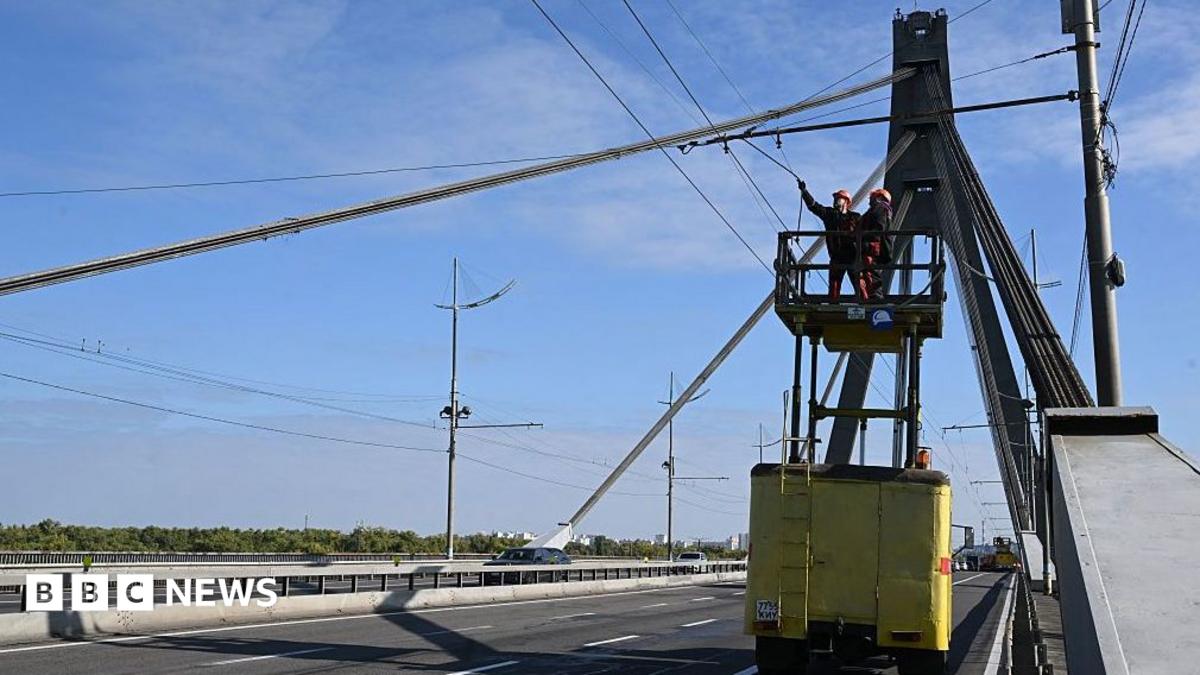
After the Pivdennyi Bridge was attacked, passengers described how dust from a blast wave entered their carriage through the ventilation system.
Ukrainian President Volodymyr Zelensky said Putin had decided that there were “no rules now” when attacking Ukraine.
In an interview with the Financial Times, he said: “The Russians have failed to occupy us. So now they are carrying out massive attacks and mass killings.”
He added: “They want to destroy our bridges… our data centres, the internet, mobile networks, hospitals, kindergartens, schools, universities – everything. They want people to flee their cities.”
Putin on Thursday insisted that Russia’s attacks on Ukrainian economic targets were a direct response to Ukraine’s strikes on Russia’s oil refineries and its ships in the Black Sea.
“Now from every direction we’re receiving calls ‘let’s stop’. But they started it,” Putin said after a wide-ranging speech at the Valdai foreign policy forum.
The Kremlin leader admitted Kyiv had “got some results” from its refinery attacks and Russia had lost about 1% of its GDP. Ukraine maintains it began attacking Russian oil infrastructure because it helps the Kremlin finance the war.
Russia has targeted Ukrainian energy infrastructure, ramping up attacks every winter since Putin launched a full-scale invasion in February 2022.
SHE’s the nepo-baby that has already got everybody talking – now Scarlett Thomas’ bid for fame continues and this month proves to be her most pivotal yet.
The daughter of soap’s most fractious real-life couple, Ryan Thomas and Tina O’Brien, Scarlett, 17, has been hellbent on using her parents’ fame and status to turn herself into a star ever since she became a teenager.
Scarlett Thomas is on a mission to turn herself into a major starCredit: Instagram/@@scarlettjthomas26The star is hoping to become a fully-fledged popstar when she turns 18 later this monthCredit: Instagram
Keen to soak up the spotlight and be more well-known than her parents could ever be, Scarlett has taken on various public-facing jobs since her early teen years – first as a TV actress on Waterloo Road and now she’s determined to make it as a popstar.
But the young star has already seen herself embroiled in plenty of controversies.
Sign up for the Showbiz newsletter
Thank you!
Having decided not to take ANY GCSEs in hopes of pursuing a showbiz career, she has also found herself at the centre of plenty of teenage TikTok drama that has seen her relationships questioned and even seen the star accused of being at the heart of a cheating scandal with a member of Simon Cowell‘s boyband, December 10.
But all this talk is secretly being used by Scarlett and her savvy team in order to give her career a major boost – and The Sun can reveal why October 2026 is pivotal for the budding fame wannabe as she looks set to make her biggest career move yet with a series of music singles.
The nepo-baby is gearing up for a huge careerCredit: Instagram/@tinaob83In some of her songs, she has already bragged about having no GCSEs and underage drinkingCredit: scarlettjthomas26 / Instagram
Scarlett is due to enter adulthood on 26 October and is expected to go full-throttle – especially after dropping her first single, Onezies.
Our insider said: “Scarlett and her team have come up with a well-crafted plan.
“She knows she gets people talking – the plan is to capitalise on that as soon as she hits 18.
“Scarlett’s plan is to be more famous than her parents and has been keen to get a head start.
“She wants to be more than a cosy Brit TV star – she wants to be worldwide and eclipse that of the success of her parents.”
Scarlett plans to emulate career moves of Miley Cyrus and Sabrina CarpenterCredit: AlamyShe wants to be more than just a TV starCredit: instagram/scarlettjthomas26
Our insiders have revealed that Scarlett’s 18th birthday will be a turning point for the star and she is aiming to have a full Miley Cyrus-esque rebrand from child star into a pop performer.
They tell The Sun: “Scarlett is planning to go fully wild when she hits 18.
“She wants to get everyone talking and is hoping to carve out something like Miley did when she left Disney behind.
“Scarlett looks at these popstars going all out and desperately wants a piece of the pie.
“Sabrina Carpenter is another inspiration of hers. She plans to emulate her showgirl-esque outfits and dance moves to help propel her career.
“Scarlett has never been a shy girl.
“She knows she can hold her own and crucially does not care what anyone says.
“She knows a lot of people will say she is acting beyond her years but she is laser-focused on her career goals.
She already has the backing of the Thomas side of the familyCredit: youtube/@AtHomeWithTheThomasBrosRyan has always supported his daughterCredit: Instagram/@ryanthomas84
“Controversey sells and Scarlett could care less what anyone thinks.
“Some may call it selfish but ultimately she does not care how she is viewed to the world – as long as people are talking about her, that is all thar matters to her.”
Already, she has bragged about having no GSCEs and underage drinking in one of her tracks.
Appearing at a gig last weekend, Scarlett’s lyrics included: “Baby do you like having no GCSEs in the alpha, but you’re gonna listen to it one more time.
“We’ve got buzzballs swimming in our tummy.”
She has also previously hit back at suggestion that she does not act her age in an appearance on her father and uncle’s podcast, The Thomas Bros.
Scarlett said earlier this year: “It’s a weird thing, people say you can pass for like 21 and like 12 at the same time.
“I’m 17. And I don’t know. I think my fan base is a little bit weird.
“People think I’m a lot younger than I am and I don’t think many people are ready that I’m growing up. It’s a bit weird.”
When directly asked if it frustrates her, Scarlett’s facial expression says everything as she rolls her eyes.
“It’s so frustrating. But a lot of like influencers my age, which is still the same kind of topic, don’t get the same kind of comments as I do.
“Like “why are you growing up so fast?
“But it can be a bit frustrating because, you know, I want to be taken seriously. I’m not a child.”
And it seems she mostly has the backing from her family when it comes to chasing fame and her dreams.
Our source says: “The Thomas side of the family have always backed it.
“They see Scarlett becoming famous and well-known a boost for their own brand anyway.
“The brothers have always had a very relaxed approach when it comes to parenting and family life.
“Ryan and his brothers back her completely – they are always cheering her on from the side.
“On the other hand, mum Tina has always been a bit more reserved.
“Whilst she does want Scarlett to be famous – she would have probably rather her stuck to the Waterloo Road and small scale TV circuit like her.
“Tina does not post about Scarlett as much as Ryan but it is a conscious decision.
“But she will always support her daughter and encourage her to do what makes her happy.”
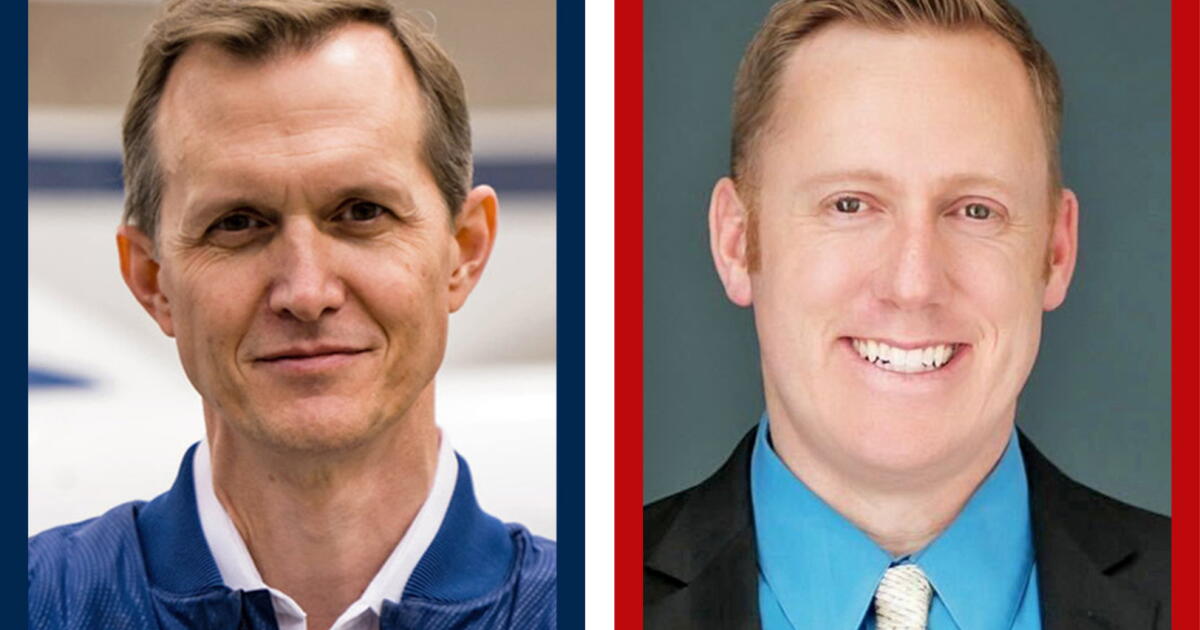
Whitesides was the first chief executive of Virgin Galactic, which employed hundreds of people in Antelope Valley. Previously, he worked on President Obama’s 2008 transition team and was chief of staff for NASA in the Obama administration. Whitesides co-founded nonprofit organization Megafire Action to advocate for policy solutions to prevent massive wildfires and served as a member of the Antelope Valley Economic Development and Growth Enterprise board of directors.
He was elected to Congress in 2024 and is running for reelection to continue creating jobs and expanding opportunity in California’s 27th District.
Gibbs was elected to Santa Clarita City Council in 2020 and chosen by his fellow council members to serve as mayor in 2023. He earned his bachelor’s and master’s degrees in mechanical engineering from Cal Poly and, according to his campaign website, worked on the the Delta II, Delta IV and Atlas V rocket launch systems in the local aerospace industry. Gibbs has served on the board of the Boys and Girls Club, the Valley Industry Assn. and the Salvation Army, according to his website.
He is running for Congress because he feels Washington is broken and believes in “common sense, accountability, and putting our community ahead of politics,” he says on his website.
Calabasas baseball coach Thomas Cassidy might be feeling a little pressure over the next two seasons considering he has one junior pitcher, Jayden Singer, committed to USC, and another junior pitcher, Cash Wiltgen, committed to Stanford.
That’s an impressive duo to build a team around. Now all Cassidy has to do is find fielders to catch the ball and hitters to drive in runs.
In truth, Cassidy is excited about both pitchers. Singer has been a standout since his freshman season at Calabasas. Wiltgen arrived from Sierra Canyon, had to sit out the first part of last season and battled back from an injury. He only pitched one inning but had a good summer.
“I’m happy for those guys,” Cassidy said. “It’s awesome to have those guys. It’s a great position to put themselves in.”
This is a daily look at the positive happenings in high school sports. To submit any news, please email eric.sondheimer@latimes.com.
The rebels are seen leaving the capital of the northern Tigray region, according to local sources.
Ethiopia’s federal army and pro-government fighters have recaptured the main airport in the capital of the northern Tigray region, with the rebels seen leaving the city, according to multiple unnamed sources.
The Ethiopian National Defence Forces regained control of Alula Aba Nega Airport in Mekelle, one source with knowledge of events in the city and a humanitarian source told Reuters news agency on Saturday.
Recommended Stories
list of 3 itemsend of list
The airport, which is about 10km (6 miles) from the centre of Mekelle, was one of three airfields in the region that were seized by the rebel forces at the start of the fighting on September 23.
The fighters, as well as the leaders of the Tigray People’s Liberation Front (TPLF), were seen retreating from the city, a local journalist and residents told the AFP news agency.
The journalist added that federal forces had not yet been seen inside Mekelle.
“I am concerned that government and public property could be exposed to looting because there are no security forces in the city,” a resident told AFP.
“I am worried that lawlessness could spread in the city, and I am also afraid for my life. I want us to quickly return to law and order,” added another resident.
Al Jazeera could not independently confirm these claims. Media access is currently heavily restricted in Ethiopia, and there have been significant communications blackouts.
Last month, rebels announced the formation of a seven-party rebel coalition led by the TPLF, the same armed group that fought in the 2020-2022 civil war against federal forces from Addis Ababa. The new coalition includes rebel groups of varying sizes from across the country.
Later that month, the coalition started an offensive, seizing three airports around the contested Tigray state and engaging in fighting on the borders with Amhara and Afar states.
The government is now engaged in a counteroffensive, pushing into Tigrayan territory along three axes towards Mekelle, according to the Critical Threats Project, part of the American Enterprise Institute think tank.
Fighting has so far been concentrated in Tigray. However, rebels have reportedly carried out drone attacks on Addis Ababa.
The TPLF and government have not commented on developments on the ground.
The fighting has seen drone attacks, intensified forced conscription, and attacks on civilian infrastructure, according to Amnesty International, a global rights group.
The renewed conflict has not yet reached the heights of the Tigray war, which lasted from 2020 to 2022 and saw hundreds of thousands of deaths, but it is quickly taking on an international dimension.
Risk of conflict spreading
The government of Prime Minister Abiy Ahmed has accused Eritrea, Sudan and Egypt of backing the opposition coalition. Khartoum and Cairo have denied involvement.
Eritrea has severed diplomatic ties with Ethiopia over the accusations.
On Thursday, Eritrea also denied involvement in the Tigray conflict, and accused Addis Ababa of “pursuing an agenda of incessant hostility”. It also said Ethiopia, which is landlocked, was planning to invade Eritrea to secure sovereign access to the Red Sea coast.
The TPLF’s leader, Debretsion Gebremichael, said in a video published on Thursday that “the war is regional and it is a war to control the Red Sea”.
Germany is moving ahead with plans to give its unusually large F125 frigates a medium-range air-defense capability, helping address one of the most conspicuous weaknesses of a four-ship class that has long attracted attention for having relatively little combat power for its size.
Diehl Defense and Germany’s Federal Office of Bundeswehr Equipment, Information Technology and In-Service Support (BAAINBw) have signed a contract to adapt and develop the IRIS-T SLM surface-to-air missile system for operational use aboard the German Navy’s F125 frigates. Under the agreement, Diehl will build prototypes and conduct comprehensive test firings intended to validate the system’s integration and performance within the existing F125 architecture. Each frigate will be fitted with two new launchers, each capable of holding 16 missiles, for a total of 32.
A rendering showing the location of the 32-cell IRIS-T SLM launchers on an F125 frigate. Diehl Defense
“The aim is to make the system mission-capable on the German Navy’s F125 frigates,” Diehl said in today’s announcement. The company described the prototype construction and test-firing phase as necessary to ensure “the seamless integration and maximum performance” of IRIS-T SLM within the frigate’s existing architecture.
The program has moved notably quickly, reflecting the urgency of the requirement.
Germany began examining the feasibility of integrating IRIS-T SLM with the F125 in 2024, with BAAINBw and Diehl studying the technical risks and requirements of adapting the normally land-based system for shipboard use. That effort led to the development of a navalized demonstrator in 2025. In October of that year, the F125 frigate Baden-Württemberg took part in a German Navy Maritime Firing Exercise off Andøya, Norway, carrying an experimental anti-air warfare module based on IRIS-T SLM. Diehl says the module went from concept to firing in less than 10 months and met all established test and evaluation objectives.
The IRIS-T SLM launcher on the frigate Baden-Württemberg. Bundeswehr
The Bundeswehr subsequently reported that Baden-Württemberg fired three live IRIS-T SLM missiles during the exercise. The ship’s radar supplied target data to the missile system, demonstrating the basic integration between the F125’s sensors and the navalized air defense architecture.
The exercise established that the concept could work at sea; the contract signed now is intended to turn that demonstration into a qualified fleet capability.
A night-time test of the IRIS-T SLM air defense missile system during the Maritime Firing Exercise 2025 in Andøya. Diehl Defense
The German parliament’s Budget Committee approved the adaptation effort on September 23, with the German Defense Ministry describing it as a means of expanding the F125’s self-defense capabilities in response to the current air threat. The ministry also pointed to IRIS-T SLM’s combat experience in Ukraine.
The effort needs to be seen in the context of why the F125 has been such a controversial warship in the first place.
As TWZexamined in 2017, the F125 is a roughly 7,200-ton, 490-foot warship with an unusually small core crew and a concept of operations centered on long-duration deployments, stabilization missions, crisis management, conflict prevention, and international intervention rather than high-end fleet combat. The class was designed to spend long periods away from Germany and operate with relatively modest manpower requirements.
German Navy frigate Baden-Württemberg sails in formation off the coast of Hawaii during Exercise Rim of the Pacific (RIMPAC) 2024. U.S. Navy photo by Mass Communication Specialist 1st Class John Bellino
But its armament does not remotely match the size and sophistication of the hull. A completed, the ships were equipped with eight RGM-84 Harpoon anti-ship missiles, a 127mm gun, remotely operated guns and, for close-quarters air defense, two RIM-116 Rolling Airframe Missile launchers. The F125 has no medium- or long-range surface-to-air missile capability and no organic sonar or dedicated anti-submarine warfare weapon system.
At the same time, the TRS-4D/NR radar and other sensors can see far beyond the engagement envelope of the close-in air-defense weapons, but there is little the ship itself can do with that information against an aircraft or incoming missile at medium range.
Nearly a decade later, IRIS-T SLM is emerging as an answer to at least part of that problem.
Even with IRIS-T SLM, the F125 is well short of being an air warfare destroyer. It also still lacks an organic anti-submarine warfare capability or the kind of large vertical-launch missile battery found on Germany’s F124 frigates.
However, it does fill a gap between the F125’s originl short-range defenses and the capabilities of other ships or aircraft operating around it.
IRIS-T SLM is designed as a medium-range surface-to-air system, with an engagement range of around 25 miles and an altitude envelope of approximately 65,000 feet. As shown in the 2025 demonstration, the F125’s radar can feed information directly into the missile system, exploiting the ship’s existing sensor capabilities.
IRIS-T SLM (Medium Range Ground-Based Air Defence)
Rather than rely heavily on escorts for protection against airborne threats outside the short range of RAM, an IRIS-T-equipped F125 could at least contribute to its own medium-range air defense. Recent operations in the Middle East hve underscored the importance of this in contested maritime environments.
It also gives the ships a more useful role in a task group. The threat environment has changed substantially since the F125’s original concept was drafted. Cruise missiles, drones, loitering munitions, and increasingly sophisticated aircraft mean that even ships operating away from a major naval war can face threats well beyond the range of their existing close-in defenses.
German Navy frigate Baden-Württemberg. U.S. Navy
In November 2024, Germany confirmed that the F125 frigate Baden-Württemberg, returning from an Indo-Pacific deployment, would avoid the Red Sea and sail around Africa because of the Houthi missile and drone threat. The German Defense Ministry explicitly cited the ship’s limited air defense capability and its inability to provide an effective air-defense umbrella for itself or its accompanying replenishment ship.
Ironically, the F125’s large hull, extensive electrical power, sophisticated radar, substantial aviation facilities, long endurance and relatively spacious mission areas were always supposed to provide room for a flexible approach to future missions. Yet the class’s original weight and integration constraints made adding major weapons difficult, a concern TWZ also highlighted in 2017.
IRIS-T SLM offers Germany a way to add a meaningful capability without undertaking the much more invasive redesign associated with installing a conventional vertical-launch system. The 2025 demonstration used an AAW module mounted on the ship’s deck rather than a conventional VLS installation, and today’s program is focused on adapting the system to the F125 architecture.
Once IRIS-T SLM is installed, the F125 will still be an unusual frigate. It is enormous by the standards of its mission, optimized for endurance, and lacks some of the weapons traditionally associated with a high-end surface combatant. But it will bring more to a contested fight.
The program should give the class a credible medium-range air-defense role, and provide Germany with a way to get considerably more utility out of four ships whose original design philosophy was always somewhat controversial.
Like any other building from 1971, or a democracy created in 1776, the Kennedy Center could use some attention and possibly some structural repair. But I was a vice president at that arts center in Washington, and I can tell you that maintenance is almost certainly not why it closed its doors last month.
Officially, it’s closed because a section of the Grand Foyer ceiling gave way in a storm, plaster crashing to the floor, and the building needed to be shut down for safety. The Justice Department itself has argued in court filings that there is no real emergency requiring the closure. The board, meanwhile, has approved a quarter-billion-dollar renovation plan, put together without competitive bidding, while the president muses openly about tearing the building down altogether if his own name isn’t affixed to it. This administration is effectively bulldozing arts infrastructure in an attempt to abolish an infrastructure of the imagination.
I watch all of this from the outside now. When the new “leadership” took over last year, my team and I were among the first let go. My department worked on free public programming, on creative equity, on cross-sector community development and on measuring the social impact of art. That we were among the first out the door probably tells you everything you need to know about who was put in charge of the place.
As an American, as an artist and as a former member of its labor force, I understand that the Kennedy Center is more than a building. It is a living memorial to a president who was taken from us too soon, a man who had the audacity to aim for the moon before the science existed to get us there. To honor that kind of visionary, this country built a center for the creative impossible, and gave it his name.
And true to that name, my job at the Kennedy Center was to investigate the correlation between the arts economy and the economy of civic aspiration. As a team, we believed that inspiration erodes apathy and yields empathy. The building is a container of federal infrastructure, but the arts that imbue the Kennedy Center make the argument that inspiration itself is part of the infrastructure of our democracy. An arts center is built to ask: “What are the conditions necessary to dream together in public?”
Who, if not artists, are the authors of the public imagination? When a baby is born, or your daughter gets married, do you read a piece of legislation to commemorate the occasion or do you quote a poem, or dedicate a song? Who, if not artists, might light the path to a post-fear economy?
So why invade an arts center? What could possibly be gained by shuttering a national citadel for creative excellence? How perverse that a president whose policies have underfunded education and the arts would gut a national sanctuary for curiosity, and then demand that his name be emblazoned on the shell of what was. This president has used executive orders to intimidate artists, banned writers and journalists, sabotaged arts education, created oppressive red lines within the National Endowment for the Arts and threatened philanthropic organizations that fund arts and culture, and then he turns around and wants his name on our national cultural center.
When I worked there, the Kennedy Center wasn’t perfect. No institution is. But the business was viable, the staff was talented and reliable, and the work we made together would, often enough, touch something close to the sublime. Our job, like those of so many arts workers across the country, was to activate creative magic in service of social cohesion and well-being.
This is what gets lost in the noise of storms and lawsuits and renovation budgets: Entertainment is everywhere, but inspiration is rare. Sometimes you are sitting in a dark theater with strangers and the right note gets struck, and you hear it with your ears but you feel it somewhere else entirely. In the gut and heart. And the person next to you, a stranger, feels it too, at the exact same moment. You can practically feel the room change. All that magic can happen in one theater, and the Kennedy Center has nine of them. If a solar panel uses the energy of the sun to power a building, an intentionally run theater can use the energy of its inspired audiences to power a city.
Art holds memory. It also holds the horizon, the sense of what a country could still become. Patriotism as enacted by the creative community takes the American experiment seriously enough to question, examine, remember what we’ve forgotten and catalyze collective American dreaming. That is what the Kennedy Center was named for: a president who dreamed of a country unafraid of beauty, unafraid of grace.
Thankfully, America’s creative labor force tirelessly stewards that sense of creative provocation and patriotic inquiry. It is alive everywhere, including in the work of individual artists such as Carrie Mae Weems or in the work of collectives such as For Freedoms and their “America, the Beautiful” initiative.
We, the chronically underwhelmed citizenry of the United States, can’t afford one less pillar of creativity. We should be fighting to reconstitute any and all artistic institutions with an eye toward an inspired future.
Marc Bamuthi Joseph, a spoken-word artist and actor, was vice president for social impact at the Kennedy Center.
Menopause has been having a moment lately, and Washington is taking notice. On Sept. 16, the Senate held its first hearing on the dismal state of federally funded menopause research and vast gaps in treatment and care. Within 24 hours, the Department of Health and Human Services also convened pharmaceutical manufacturers and physicians to troubleshoot the alarming lack of availability of estradiol patches, an essential menopause hormone treatment, and the Food and Drug Administration held a full day of expert panels on female-dosed testosterone, which is currently only FDA-approved for men.
One week later, Health and Human Services joined the American Urological Assn. for a discussion about a silent killer of postmenopausal women: urosepsis from recurrent urinary tract infections. There is a simple solution — localized vaginal estrogen — and yet because of outdated guidelines and lack of clinician training, the medication is too often ignored or denied. Nor is the prescription routinely covered by Medicare, despite its well-established health and longevity benefits for women over age 65.
These are among the attempts to now, finally, address decades of policy failures — a refreshing change, quite frankly, given neither political party has ever prioritized menopause. That 2026 marks the year when menopause has entered the policy arena comes as little surprise to me. I’ve been beating this drum for years. Every aspect of daily life that menopause touches — the soaring cost of medical care, inadequate access to health insurance, extreme underinvestment in scientific research focused on women’s health, even the myriad ways midlife women are stretched to the limit caring for kids and aging parents — is smack in the middle of the political zeitgeist. These are the kitchen table issues on the minds of voters this election.
Menopause moment, meet the midterms.
Another issue rightly revealed by menopause is the chasm of public trust in government. As one of the four expert witnesses who testified at the Senate, I was heartened that it was a true bipartisan endeavor. But that’s a rarity these days in Congress, an institution rife with dysfunction. Our federal health agencies have become so shamelessly politicized they are on a collision course with science — from HHS’ overt moves to undermine childhood vaccines, to the decimation of leadership at the Centers for Disease Control and Prevention, which is struggling to respond to the crisis of measles outbreaks across the country.
My goal as a policy advocate is to help turn the tide on this country’s long record of neglect when it comes to menopause. Like many other women’s and reproductive health advocates, after the 2024 election l turned my attention to state legislatures — not just as a consolation prize but as a way to test what range of reforms were feasible and to get as many good laws as possible passed. It was the right move. Over the last two years, more than 60 bills have been introduced in 28 states — to do things like require private insurance and Medicaid to cover menopause care and treatment, improve clinician training and public education, and bolster antidiscrimination protection in the workplace. Ten of those states now have 21 laws on the books.
California is one and can claim real leadership. Among the bills passed by the Legislature, Assembly Bill 2270 from 2023-24 incentivizes continuing medical education on menopause for clinicians, the majority of whom receive little to zero training while in medical school and residency. The California Department of Corrections is now collaborating with medical experts to help bring menopause resources to incarcerated women in state prisons.
Newsom also just vetoed AB 1940, which would have codified menopause as a protected category in the state’s workplace antidiscrimination laws.
The Legislature has been especially deft at easing access to FDA-approved hormonal treatments, including testosterone, often used off-label by menopausal women: AB 82 ends the requirement to report prescriptions to the state’s tracking database; AB 1778 proactively declassifies testosterone as a controlled substance under state law, should there be action in Washington to do the same under federal law.
Although Newsom twice vetoed bills to mandate insurance coverage for menopause treatment — and deserved all the flak he received — the 2026-27 state budget includes a minor course correct: a $3.4-million “trailer bill” to invest in public education and make menopause treatments more affordable; Medi-Cal patients are not fully covered by the addendum, though, making it a toothless reform for those who need support the most.
Why should California’s menopause agenda, or that of the other 27 states that have introduced reforms, matter to the rest of the country? They offer useful models of what to do — or in the case of Medicaid exclusion, what not to do — in crafting meaningful policies. Perhaps more important, they offer a rationale that can help persuade the public; those who might balk at a congressional bill or federal policy, in part because of skepticism of the federal government or the current administration, can listen to and learn from other stakeholders, including governors and state lawmakers and activists.
Take for example the FDA decision in November 2025 to remove the long-critiqued “black box” warning on estrogen products for menopause. This was the culmination of a decade-long campaign by physicians, researchers and scientists — who had been waging the fight for accurate labeling well before the acronym MAHA ever existed and regardless of which party held power. Yet the very image of Health Secretary Robert F. Kennedy Jr. using his moment at the podium to credit the Trump administration’s deep commitment to women’s health posed a serious credibility challenge. Aligned and contemporaneous state reforms offered much-needed reassurance and clarity to many.
Trust in government is understandably at a low point, but this happens to be when menopause finally has caught the attention of policymakers at all levels of power. Some are taking long-overdue steps for women’s health, however implausibly. Let’s take the wins.
Jennifer Weiss-Wolf is the author of “When in Menopause: A User’s Manual & Citizen’s Guide.” She is executive director of NYU Law’s Birnbaum Women’s Leadership Center.
LAS VEGAS — Leo Carlsson had a goal and an assist, Lukas Dostal made 27 saves, and the Ducks opened the season by holding off the Vegas Golden Knights 4-3 on Friday night.
The teams met last season in the second round of the playoffs, with Vegas winning in six games and going on to win the Western Conference. The Golden Knights opened Tuesday night at home with a 5-2 victory over Chicago.
Carlson set up Beckett Sennecke’s goal with eight seconds left in the first period, then scored at 7:03 of the second to cap a three-goal burst for a 4-0 lead. Alex Killorn and Jeff Malott also scored.
Shea Theodore, Tomas Hertl and Braeden Bowman scored for Vegas in the third period, with Bowman connecting with 2:50 left. Hertl struck on a power play.
Carter Hart stopped 16 shots for the Golden Knights.
Up next for the Ducks: vs. Florida at Honda Center on Sunday.
Real Madrid accuse Barcelona of paying former refereeing official Jose Maria Enriquez Negreira between 2001 and 2018.
Real Madrid have urged UEFA to conclude its ongoing investigation into the Negreira case with “utmost urgency” after European football’s governing body confirmed receiving a dossier from them on Thursday.
The case pertains to Barcelona football club allegedly paying millions of dollars to the company of Jose Maria Enriquez Negreira, the former vice president of Spanish football’s refereeing committee, between 2001 and 2018, to try to influence referee decisions.
Recommended Stories
list of 4 itemsend of list
Barcelona have denied any wrongdoing or conflict of interest and said they paid him for reports and advice related to refereeing.
Thursday’s statement by UEFA was the latest update in its investigation into the payments opened in 2023, while there is an ongoing Spanish criminal case as well.
Here’s everything you need to know about the case:
What is the Real Madrid vs Barcelona Negreira case?
Barcelona allegedly paid more than 7.3 million euros ($7.95m) between 2001 and 2018 to firms owned by Negreira, who was vice president of the refereeing committee of the Spanish football association from 1993-2018.
In March 2023, Spanish prosecutors formally charged Barcelona as well as two of the club’s former presidents, Josep Maria Bartomeu and Sandro Rosell, and Negreira and his son, Javier Enriquez Negreira, with corruption over the affair.
Barcelona was accused of corruption in sports, fraudulent management and the falsification of mercantile documentation; it denies any wrongdoing and says the payments were made for technical refereeing reports.
In June 2023, UEFA’s investigators decided that Barcelona would not face any punishment, and the club has continued to play in European competition since then.
Former FC Barcelona presidents Rosell and Bartomeu leave the court after being heard in the Negreira case on September 18, 2025 [Bruna Casas/Reuters]
What are Real Madrid’s accusations against Barcelona?
Real Madrid have primarily accused Barcelona of sports corruption and influencing refereeing decisions through payments to Negreira.
The club joined the complaint filed by Spanish prosecutors against Barcelona and expressed their “deep concern about the seriousness of the facts”.
According to reports in Spanish media, Real Madrid have requested that Barcelona be stripped of the nine titles they won between 2001 and 2018, the years in which the Catalan club paid Negreira.
What have UEFA, Real Madrid, and Barcelona said?
All three entities issued separate statements on Thursday night.
UEFA: The governing body confirmed receiving a “substantial amount of documents” — reportedly worth 50,000 pages — from Real Madrid pertaining to the investigation. “The UEFA Ethics and Disciplinary Inspectors have also received these latest documents which they will assess as part of their ongoing review,” it said in a statement.
Real Madrid: The club issued its statement following UEFA’s announcement and confirmed that it had provided “extensive documentation and evidence regarding events of extraordinary seriousness, which directly affect the integrity of the competition and confidence in the refereeing system.” It urged that UEFA’s investigation proceed with “utmost urgency until its full conclusion” now that the dossier has been handed over.
Barcelona: Accused party Barcelona issued a statement clarifying that the latest development pertains to the same ongoing investigation, and that “proceedings have not been reopened because they have never been closed.” “As of today, they have not made any new requests to FC Barcelona nor have they forwarded Real Madrid’s complaint to the Club. Should they do so, the Club will respond accordingly, as it has done up to now.”
What else is going on between Real Madrid and Barcelona?
Some reports in Spain claim that Real Madrid president Florentino Perez and FC Barcelona have been summoned to appear before a Madrid court on November 25 for a conciliation hearing ahead of possible criminal proceedings for defamation against Perez.
The hearing follows legal action launched by Barcelona on June 12 over comments made by Perez in May in the Negreira case.
Barcelona said the action was intended to force Perez to retract statements it described as knowingly false, defamatory and damaging to the club’s image and reputation.
The club warned that if the conciliation process failed, it would file a criminal complaint.
The dispute centres on comments Perez made at a May 12 news conference concerning the so-called Negreira case.
Perez described the affair as “the most serious case of corruption in football”, adding: “We could never have imagined Barcelona giving money to the head of the referees.”
He also claimed Real Madrid had been denied league titles, saying: “I’ve won seven leagues. I could have won twice as many. The others were stolen from me.”
Neither entity has issued any statement since UEFA acknowledged receiving Real Madrid’s dossier on Thursday.
Will the case have an impact on El Clasico?
The Spanish football giants will meet in the first leg of El Clasico on October 25 in La Liga. The case will have no bearing on the scheduling of the match but could provide an added touch of drama to what is known as one of the most bitter football rivalries in club football.
A Flydubai co-pilot accused of attacking the captain of a flight bound for Israel has been identified as an Omani national previously barred from flying in his home country over concerns about alleged extremist views, according to media reports.
There has been no official confirmation of the pilot’s identity or his beliefs.
Recommended Stories
list of 3 itemsend of list
The United Arab Emirates on Saturday described Wednesday’s incident on board Flight FZ1073 as an attempted “terrorist operation”, saying the co-pilot attacked Captain Smit Machchhar, an Indian national, with an emergency axe and attempted to take control of the aircraft.
But investigators are still working to establish the motive and whether anyone else was connected to the attack, which has raised concerns about pilot vetting and aviation security.
Here is what we know:
What do we know about the accused pilot?
The co-pilot suspected of attacking the captain of the Dubai-Tel Aviv flight carrying 174 people has been identified as Hamam al-Hammami, an Omani national, three people with knowledge of the situation, including a Gulf diplomat and a Western diplomat, told AP news agency.
All spoke on condition of anonymity because they were not authorised to speak to the media. The Gulf diplomat said investigations are under way to establish whether he acted as a “lone wolf or had any connection with any extremist groups”.
US media outlet CNN, quoting a source and an Israeli official, reported that al-Hammami is an Omani citizen who was born in the UAE to a Syrian mother and spent several years in the Emirates.
Questions have emerged about his previous aviation career and whether warning signs had been raised before he joined the Dubai-based low-cost carrier.
The Wall Street Journal, quoting unnamed sources, reported on Friday that Omani authorities had previously barred the accused co-pilot from flying in the country because of concerns that he had held extremist views.
Nevertheless, it remains unclear what those alleged views were or whether Oman informed other countries or airlines about its concerns.
CNN separately quoted a regional diplomatic source as saying that al-Hammami had been removed from flight training over similar concerns and was subsequently reassigned to another position.
The US-based network also reported that a LinkedIn profile bearing al-Hammami’s name said he had spent seven years at Oman Air before leaving in February 2025. The profile said he joined Royal Air Maroc in June 2025 and left in January 2026.
What happened on flight FZ1073?
At 7:05am (03:05 GMT) on Wednesday, Flight FZ1073 departed Dubai for Tel Aviv, climbing to 34,000ft (more than 10,000 metres), according to Flightradar24. A little more than two hours later, it suddenly began to descend, plunging before rising and then descending again.
Flight-tracking data showed the plane plunging more than 17,000 feet in about two minutes, before climbing and descending again.
Meanwhile, a fight had begun in the cockpit between the two pilots. The co-pilot had attacked the Indian captain of the plane, Smit Machchhar, by stabbing him.
Machchhar later described finding himself seriously wounded on the cockpit floor as the aircraft descended.
“When I was down, I could feel that the aircraft was plummeting, and I knew this is the last chance to do something,” he told Indian Prime Minister Narendra Modi from a hospital in Abu Dhabi.
“I knew that the aircraft was going down … I had fallen to the ground. I told myself that the door is right there, just open it. I managed to do it and people entered,” he said.
Passengers and crew members entered the cabin and overpowered the co-pilot. The aircraft eventually levelled out at about 15,000 feet. Its transponder was subsequently switched to code 7500, signalling unlawful interference.
Two reserve pilots who were on board took control of the jet and landed it in Tabuk, northwestern Saudi Arabia. The plane landed safely at 9:45am (06:45 GMT) local time. Saudi authorities said both pilots were taken to hospital. They were later transferred to Abu Dhabi after being medically cleared.
What has the UAE said about the attack?
UAE Attorney General Hamad Saif al-Shamsi said on Saturday that investigators had determined that the co-pilot had begun carrying out what he described as a “terrorist act”.
According to al-Shamsi, the co-pilot attacked the captain inside the cockpit using the aircraft’s emergency crash axe and “attempted to take control of the aircraft’s controls”.
A crash axe is a tool kept in a cockpit to help pilots cut through the plane in emergencies.
On Thursday, al-Shamsi had ordered investigators to determine whether the incident was connected to “terrorist activity or intent” or involved prior planning or direction.
The UAE has not yet publicly established a motive or announced whether investigators believe al-Hammami acted alone.
UAE presidential adviser Anwar Gargash on Saturday said that the latest ‘terrorist’ attack is new warning that region’s fight against extremism is not over.
“This underscores the importance of the UAE’s early and firm stance: no tolerance for extremism and no leniency towards its rhetoric. Security begins with confronting hatred and drying up the sources of extremism,” he posted on X
What is the latest in the investigation?
Abu Dhabi is now leading the investigation, with prosecutors examining the circumstances of the attack, its motive and any possible connections to others.
Previously, al-Shamsi said UAE judicial authorities have jurisdiction over the incident because the aircraft is registered in the UAE and flies under its flag, adding that UAE law applies to crimes committed on board “even if they occur outside the country’s territory”.
On Saturday, al-Shamsi said investigators are working “to uncover all the circumstances of the incident, its motives, and related connections, in addition to completing technical examinations and examining physical and digital evidence”.
The final results will be announced as soon as the necessary procedures are completed, he said.
Meanwhile, Flydubai flights to Israel remain suspended amid the investigations.
Saturday Kitchen Live underwent a huge schedule shake-up during the latest episode of the BBC One cooking show
BBC Saturday Kitchen host, Matt Tebbutt, was absent on the latest episode (Image: BBC)
Saturday Kitchen Live saw a new presenter on today’s episode.
The hit BBC One cooking show was back with a new instalment, welcoming chefs Jamie Oliver, Gennaro Contaldo and Julie Lin, as well as Stranger Things actor Gaten Matarazzo, in the studio.
However, viewers expecting host Matt Tebbutt got a surprise to see the presenter absent and instead Donal Skehan in presenting duties.
Addressing Matt’s, 52, absence, Donal, 40, said: “Welcome to the show, Matt is away, so Donal can play!”
It appears that Matt is busy on another project as he posted updates to his Instagram Story about working on The Go To Food Podcast, writing: “Did a fun thing with these two smashers! Coming soooooonnn!”
Prior to Saturday Kitchen Live airing, BBC Breakfast spoke to Donal to hear what the show had coming up, where Naga Munchetty spoke about Matt’s absence.
Naga, 51, said: “Donal! Good morning to you!” with Donal responding: “Good morning, Naga, this might be a nice little palate cleanser for you. You know, no Matt this week, but I’m here!”
With Naga joking: “Well, yeah, this is definitely a palate cleanser, in terms of no Matt!” the BBC Breakfast host then put Donal on the spot, asking if anyone had ever told him his recipe hadn’t worked after releasing an impressive 13 cook books.
A shocked Donal responded: “Never. Why?” with Naga admitting: “Because I don’t think… I don’t think they’re always accurate. Especially when it, you know, comes to time and whatever. What do you think?”
With Donal replying: “Naga! Well, I think you’re completely wrong, firstly, and we have Jamie Oliver in the house to prove you wrong, because we’re going to do 20 minutes of straight-through cooking, showing you can make anything delicious in no time at all!
“So, er, my cookbooks aren’t tested like that, but Jamie’s are, and we’re going to… we’re going to do great things, and hopefully prove you wrong.”
Donal then quipped: “I thought you were going to be nice to me after Matt’s out of the seat!” with Naga joking in response: “That was nice!”
Saturday Kitchen Live continues on BBC One and BBC iPlayer
When Maduro was taken and arrested on January 3rd, many Venezuelans brought out the good stuff. The old bottle of rum or whiskey they’d been saving for a special occasion, believing the incursion would inevitably lead to the return of liberty in Venezuela. Nine months later, the “transition” has not been what most Venezuelans wanted. Hundreds of political prisoners were released, but that is not enough. A few laws are being reformed, but not the institutions that carry them out. Delcy remains in power despite no lawful statute allowing it nor any sort of popular mandate for her to be the head of the Venezuelan State.
Many who brought out the good whiskey have soured on the transition, or at the very least lost their shiny optimism. But the mistake was not just to believe in a future that now seems a bit naive, but to yearn for the return of a past which was the precursor to our current tragic state.
The quest for a more liberal society
Yes, we were better off before the 2000s, but we’ve never had a truly free society without clientelism or corruption. Chavismo may have perfected the art of corruption in Venezuela, but they certainly did not invent it. Venezuela, since its inception, has not been able to ameliorate the very Latin American issue of inequalities of power. We tend to forget about the problem during oil bonanzas. Everyone is doing better, right? Why worry? Then the oil price inevitably falls, the party stops, the lights turn on and we see the naked truth that we are in a horrible state of disrepair.
Many say that the Venezuelan problem is economic (lack of diversification or investment in non-oil industries), political (once high polarization and weak rule of law), or even cultural (a tendency towards el guiso). But within these lies a deeper philosophical issue: for a society that claims to love liberty and our libertadores as much as we do, we don’t actually understand what it takes to create a liberal society.
This is hardly a Venezuela-specific issue, but we are a unique case in that so much of our self-perception is based on the idea of a people who achieved freedom from the yoke of Spanish tyranny, only to then continue to liberate other countries in South America, making Simón Bolívar the most famous person in the history of the continent.
What room is there to become “more liberal” once all citizens are recognized by the law and there is universal suffrage?
To understand what it means to be a liberal society, perhaps it would be best to understand what it means to be a more liberal society. When the classical liberal revolutions of the 18th and 19th centuries took place, it was the divine right of kings that fell. The power was taken from an individual and shared amongst parliaments, which were at the time controlled almost exclusively by rich landowners (including our own first few republics). Still, this was unquestionably a redistribution of power from the individual to the few. It took a long time, but eventually this distribution of power from the one to the few became a distribution of power from the few to the many. Nowadays, democratic societies are expected to allow every single citizen to vote, but this is a reality that is younger than the oldest person alive today. When English supercentenarian Ethel Caterham in the UK was born in 1909, her mother would not have been allowed to vote.
Liberal societies today hardly even question the idea that all people should be equal in respect to the law and that we ought to have a voice in the decisions of our country through voting. So what room is there to become “more liberal” once all citizens are recognized by the law and there is universal suffrage?
It’s true that the distribution of power in liberal countries these days is much improved when compared to 100 years ago, but is it better than 50 years ago? The laws may say that all people are equal, but systems don’t seem to provide that result. Even in societies where they have nominally distributed power amongst all citizens, the power has not been really distributed amongst them nearly as well. Throughout the current Trump presidency, there have been a string of pardons for white-collar criminals who have paid patronage to Trump and his family, including the former president of Honduras convicted of drug trafficking, or a Venezuelan oligarch indicted for allegedly bribing a Puerto Rico governor.
This is a clear example of a two-tiered justice system in which if you put the right money in the right pockets, you get preferential treatment.
A post-WW2 recipe?
I use these examples to show that although there is nothing ontologically wrong with wealth inequality, especially if the rich earned that money honestly, in practice inequality in resources leads to inequality in power and inevitably abuse of that power. This is the state of Venezuela now, but it was also the state of Venezuela long before Chávez caught a whiff of power and what ultimately led a majority of voters to choose a murderer and traitor over the “democracy” that was in place.
The issue, after nearly three decades of chavismo, is that although they entered power on the basis of railing against resource and power inequalities, in the time since they’ve been in charge they’ve done nothing to ameliorate those same inequalities. The people in government have simply taken the seats of the previously corrupt politicians and become even more clientelist, leading to greater inequalities in power and resources than ever before (on top of just a generally poorer country).
The vast majority of Venezuelans can clearly see what chavismo is now, even many who used to vote for it. And though we are still not through with it, we ought to give serious consideration to what we want to replace it with. Do we want a return to bipartidismo and clientelism with high inequality? Just hoping that the price of oil rises so we can keep our population happy whilst oligarchs accrue more and more power? Or do we actually want to achieve the liberty we say we value so much?
We can imitate post-WWII States who decreased inequalities by taxing the incomes of extremely wealthy people at extremely high rates whilst maintaining a belief in free markets, property and the rule of law.
When we get rid of chavismo, we will have an even greater challenge ahead. We’ll have the challenge of rebuilding a country destroyed by decades of mismanagement, a country filled with people who have gotten their wealth by enchufándose into a corrupt system that has oppressed the voice of its people. And we’ll have to decide how we want to go about bringing back liberty. I suggest we act like the previous liberal revolutions we venerate, and distribute more power from the few to the many.
So what is the solution to power inequalities and resource inequalities?
Thankfully, there is no need to reinvent the wheel. We can copy the policies of post-WWII countries (US, Japan, France, UK, Germany, etc) who decreased inequalities in their countries by taxing the incomes of extremely wealthy people at extremely high rates whilst maintaining a belief in free markets, property and the rule of law. This has the added benefit of diversifying government incomes away from just oil revenue or sales taxes, which are regressive and hurt consumers and small businesses (I could go on and on about the economic benefits, but I’ll stick to the institutional ones here). I specify the post-WWII liberal societies here and not the communist ones, because although communist countries seek to ameliorate resource inequalities they end up increasing power inequalities which lead to just as much abuse, if not even more than hyper-capitalistic oligarchic societies.
But before we can consider which policies we ought to copy from which societies, we must adopt the attitudes and political beliefs which made those policies implementable in the first place.
The world, not just Venezuela, is at a crossroads between greater authoritarianism or greater liberalism. If we are leaders of liberalism in our continent, as we have historically perceived ourselves to be, then we ought to understand the nature of liberalism and how we ought to achieve it. If we do not have a vision of how to recreate our institutions and our general idea of what a liberal society even is, then we will surely return to the sad state we are in right now, even after we get rid of the kleptocrats sitting in Miraflores.
The solution is simple, but it’s not easy. Entrenched interests are just that; entrenched. But if the people of the country yearn for liberty and we manage to understand what it takes to attain it, then it can be done through hard work and dedication, as ultimately all worthwhile goals are achieved.
DURANT, Okla. — David Coleman doesn’t know much about the Republican candidates who are running in November. But he knows President Trump, and he trusts that the president won’t steer him wrong.
The 54-year-old Oklahoman made his way to Trump’s midterm rally in Durant, Okla., on Thursday planning to support whomever Trump brought onstage with him.
“I am going to ask ChatGPT what their name is and vote for them,” Coleman said as he and thousands of others waited for the president to appear.
Voters like Coleman — who are fiercely loyal to Trump but only loosely attached to the rest of the Republican ticket — are part of those whom the president is trying to target in the final stretch before the Nov. 3 election.
Rather than prioritizing visits to battleground districts, which will decide which party controls Congress, Trump is rallying in Republican strongholds such as Texas, Oklahoma and Alabama, betting that his presence will be enough to energize a base that may be thinking about sitting out the election because his name isn’t on the ballot.
In Oklahoma, Trump told the crowd to imagine he is on the ballot because the future of his “America First” agenda depends on Republicans getting out to vote. He then urged them to vote for GOP candidates like Senate candidates Ken Paxton of Texas and Kevin Hern of Oklahoma.
“You have to get out and vote,” Trump said. “You can’t assume they are going to win.”
Supporters gesture after President Trump spoke during a campaign rally Thursday in Durant, Okla.
(Kevin Dietsch / Getty Images)
The red-state itinerary is a departure from what Trump initially promised to do in the 30 days leading up to the midterms. At a Rose Garden dinner with Republican lawmakers last month, he pledged to campaign in the country’s 35 most competitive districts. But in many of those races, the president is proving to be a political liability as his his approval dwindles, even among Republicans.
In Texas, Paxton, who is locked in a tight race against Democrat James Talarico, has lamented that Trump’s GOP convention in Dallas hurt him, according to a recording obtained by the New York Times. Since the report, Trump has told supporters to vote for Paxton “whether you love him or not” even while he said that “he can be a pain in the ass.”
“We need Ken so badly, that’s why I am here,” Trump told a crowd in Texas on Thursday, while noting that it would be a “horror” if Republicans lost the Senate seat to Talarico.
Democrats, meanwhile, are making heavy investments in winning back voters they lost to Trump in 2024, including Latino voters in south Texas. Some of those voters have said they feel betrayed by Trump’s policies on immigration and the economy.
Trump has dismissed the poll findings that he is losing the Latino vote. Asked what his message was to Latino voters who are dismayed by his policies, he said: “We have to do what we have to do.” The president has also brushed off comments that his unpopularity among Americans may be hurting Republican candidates, saying that “everybody that has me wins.”
But in recent days, Trump has publicly said Republicans are “worried” about several races, including those in Michigan, Texas and “a few other states.” These concerns come as even the most ardent Trump supporters grow concerned about the economy, particularly the cost of gas.
Ronnie Smith, 77, has voted for Trump every time he has been on the ballot, and his support for the president has not wavered. But, he said, “the only thing that I think is hurting him is the cost of diesel.”
Gas prices in the U.S. have soared during the seven-month Iran war, with the national average for a gallon of diesel reaching $6.37 on Friday, according to AAA. The cost of diesel hit a record $6.52 on Sept. 22.
Smith says he regularly hears complaints about the cost of fuel from trucker friends who have long commutes for work. But he said he is sure Trump can “take care of it.”
On Friday, Trump announced that the world’s wealthiest industrial nations had agreed to release 100 million barrels of diesel and fuel products from their strategic stockpiles in the coming weeks, a move that he is expected to tout in his upcoming midterm rallies.
Senate Majority Leader John Thune and other Republican lawmakers answer questions from reporters at the Capitol on Sept. 29.
(Andrew Harnik / Getty Images)
In these rallies, Trump has repeatedly said that he believes his administration has been doing a “tremendous” job with the economy, the problem is that “we’re doing an extremely poor job at promotion.”
A Republican source close to the White House said the president visited Durant because of its proximity to the Texas border, with the hope of helping candidates in both states. The strategy is similar to his Friday visit to Mobile, Ala., which is near Florida’s Panhandle.
Trump’s swing through GOP strongholds is seen as a way to get the word out to his base.
Senate Majority Leader John Thune (R-S.D.) told reporters this week that Republicans “need the president to turn out voters that are his voters.”
“In a non-presidential year, in a midterm election, that challenge is always voter turnout,” he said. “In this case you have a lot of voters out there who may not be inclined to go out there and vote.”
Sylvia Sigler, 66, a school cafeteria worker who attended Trump’s Oklahoma rally Thursday, said she normally votes in local elections but has not voted in a federal election since 2016.
When asked what would motivate her to get out and vote this November, she contemplated what to say.
“I haven’t thought about it, but maybe the economy,” she said. “I don’t even know who is running because I don’t keep up with it.”
But she was curious to attend Trump’s rally and see what the buzz was all about. Asked whether she thought his message would make a difference for her, she once again paused.
“It could,” she said. “But I am not making any promises.”
Take a deep breath in Hollywood’s Kimpton Everly Hotel and you may catch a whiff of sandalwood, leather, fennel, cardamom, violet and cedar.
And if you sniff the lobby of downtown Los Angeles’ Ritz-Carlton, you may detect “bright effervescent notes … layered with soft florals,” a custom fragrance known as Champagne & Shimmer.
For years now, hotels have been spending more and more on signature fragrances to woo and hook guests. But what if they make some people sick instead? Would those visitors be victims of discrimination?
One California law firm says yes, and has filed a barrage of lawsuits this year, targeting hotels in California and elsewhere over synthetic fragrances in common areas. (The Kimpton Everly and downtown Ritz-Carlton are not named.)
The conflict highlights an emerging debate about synthetic scents: Many hotels use them, but some sensitive guests consider those aromas as welcome as secondhand smoke.
For better and for worse, smells “can trigger so many things,” said Juliana R. V. Tkatch, an assistant professor at the Harrah College of Hospitality at the University of Nevada Las Vegas, who specializes in experience design, events and theme parks.
Tkatch added that there’s nothing new about using scent as a marketing tool, at least not since the first time “the owner of a restaurant cooked a pie and put it on the top shelf.”
The difference now, Tkatch said, is more advanced technology, making it easier to widely circulate synthetic fragrances and natural scents in a way that’s discreet and constant. Doing so can strengthen customer loyalty, she said, but “it’s a good practice to let people know up front.”
The current controversy began in May and June, when the Oakland-based law firm Cole & Van Note filed a series of class-action lawsuits representing California hotel customers with fragrance sensitivities and targeting major hotel chains.
Some cases, including a May 8 filing that targeted Marriott International Inc., have already been dropped. Others, including a June 4 filing that named Hyatt Hotels Corp., remain in early stages.
In general, the lawsuits allege that artificial fragrances used in many hotel public rooms violate the federal Americans With Disabilities Act (ADA) and California’s Unruh Civil Rights Act, because those fragrances make it dangerous or impossible for some people to share the space.
Attorney Scott Cole, founder of Cole & Van Note, described a recent visit to Las Vegas. “At least 95% of the places that I visited had some kind of fragrance or heightened VOC [volatile organic compound] levels,” Cole said. “I was shocked at how widespread it was there.”
In court filings, Cole’s firm asserts that 26.8% of adults suffer from asthma or asthma-like conditions and 27.5% suffer from chemical sensitivity. He contends that when hotels circulate synthetic fragrances through scent dispersion machines, they may be spreading toxic chemicals, potentially causing respiratory problems, headaches, skin irritation and gastrointestinal, cardiovascular and cognitive problems among vulnerable guests.
As his firm’s campaign has evolved, Cole said, some of the dropped federal cases are being refiled in state courts. He said he expects more filings outside California in coming months.
A spokesman for the California Hotel & Lodging Assn. said its members “work hard to create safe and accessible spaces” and that the industry “consistently reviews best practices to ensure guests are welcomed, comfortable, and safe.”
Representatives for Marriott, Hilton, Hyatt, Intercontinental Hotels Group and Loews hotel chains, all targeted in the first volley of lawsuits, did not respond to requests for comment. Nor did the American Hotel & Lodging Assn., the industry’s leading trade group.
But the association’s website asserts that the Americans With Disabilities Act “has been used as a weapon by scheming lawyers seeking to extort easy settlements … after alleging ambiguous violations of the law.”
This debate turns on several questions, including what constitutes a disability under ADA, what responsibilities businesses should shoulder and how the U.S. regulates fragrances.
Many of the companies that supply hotel fragrances belong to the Switzerland-based International Fragrance Assn. (IFRA), which sets voluntary guidelines for ingredients. But the U.S. government frequently doesn’t require disclosure of fragrance ingredients because blends are often trade secrets.
“It’s outside of the [Food and Drug Administration’s] domain and so the regulatory framework becomes much less stringent,” said Alexander M. Spokoyny, professor and chair of UCLA’s Department of Chemistry and Biochemistry.
Outside the courtroom, a broader conversation simmers on social media.
“It’s honestly time all these scents are banned the same way smoking has been banned pretty much everywhere,” one traveler complained on Reddit.
Another, citing their allergies, wrote that “it’s REALLY hard to find a place that doesn’t stink.”
Yet another responded that “I’m very sensitive to scents and never noticed this.”
Hotel industry veterans note that if guests call in advance, many hotels are able to prepare guest rooms without artificial scents. And some hotels with green leanings, like those in the Laguna Beach-based boutique Soul Community Planet (SCP) Hotels chain, use essential oil diffusers, which rely on plant-based ingredients instead of synthetic ones.
Meanwhile, sales figures suggest that strategic scents, synthetic and otherwise, are helping businesses win over travelers and other consumers. By one estimate, the global scent-marketing business now adds up to $4.1 billion yearly.
The Marriott chain sells candles and diffusers with “the signature scent of your favorite hotels,” including subsidiary brands Ritz-Carlton, St. Regis, Westin, Sheraton and Courtyard. You can even order up the scent of a Fairfield by Marriott, often favored by travelers on tight budgets.
Scentair, a scent-marketing company based in North Carolina, claims customers in 119 countries, including many hotels, and says its creation was “inspired by a Disney Imagineer’s Idea in 1994 to add scents to attractions.”
Another scent company, Australia-based Air Aroma, has created fragrances for Hilton’s Waldorf Astoria Beverly Hills (“notes of blackberry and Damascan Rose”), for DoubleTree properties (“uplifting notes of lemon, white tea, and freesia, and warm comforting notes of cedar and musk”) and for the Hilton Curio Collection’s Starling Atlanta Midtown (“ginger flower, orange, coriander, ivy, and lavender”).
Scent is “memory, mood and emotion, distilled into something you can’t see but never forget,” Air Aroma said in a Facebook post earlier this year.
Yet among skeptics, questions and doubts remain on the safety of chemical entities, fragrances included.
“Even if something might be natural, if you aerosolize it and spread it across buildings, it’s not necessarily great,” UCLA’s Spokoyny said. “I do think it requires more thorough public scrutiny. … You just don’t know what you don’t know.”