Month: October 2026

Unbelievably cheap UK staycation packages costing as little as £2.50pp a NIGHT… bargain Butlin’s trips & manor stays

CONSIDERING an all-inclusive break with drinks on tap or looking for a cheap midweek staycations that include theme park tickets?

Well, we’ve found some of the best package deals in the UK that you might not have even known existed – with breaks that start from an unbelievably low £2.43 per person, per night.

Away Resorts has cheap midweek deals to holiday parks, like Whitecliff Bay Credit: Whitecliff Bay Holiday Park
Other short breaks include tickets to theme parks like Blackpool Pleasure Beach Credit: Blackpool Pleasure Beach

Short Break Deals

Many holiday parks will drop the prices of midweek breaks and offer deals on outstanding dates they want to fill which make it perfect for a break if you have leftover annual leave.

Hoseasons has its own specific tab for breaks under £150 with holidays still on offer from now through December.

In Exmouth at Devon Cliffs, a family of four can stay in a Saver 2 Caravan between November 9 -16 for £89 – or £3.17pp per night.

The holiday park has direct access to an award-winning beach as well as a heated indoor swimming pool, arcade, climbing wall, as well as a bar, restaurant and Wetherspoons pub.

For those who want some added thrills, it’s very near Crealy Theme Park which has over 60 rides and attractions.

Away Resorts has a ‘Midweek Breaks 2026’ tab where you can select three or four night holidays – some of which are also under £150.

The cheapest is a four-night break to Whitecliff Bay on the Isle of Wight between October 12-16.

A family of four can stay in a Value Chalet from £80 – or £5pp a night. The accommodation has everything you need including a kitchen with all the essentials, a TV and comfy beds.

From the holiday park, it’s a short walk to the beach, there’s an indoor swimming pool with a flume, and plenty of activities like crazy golf and adventure playground.

There’s entertainment aplenty with shows for kids as well as karaoke, late DJs, quizzes and outdoor cinemas.

Butlin’s

Butlin’s now has self-serve bars with over 20 drinks Credit: Butlins

Butlin’s is renowned for cracking deals for less and those taking advantage of its ‘showtime term-time midweek’ will be even more enthralled by the price.

Midweek holidays start from just £39 – we found a family of four can stay at the Bognor Regis Resort for four-nights between November 2-6 in a Comfort Room for this price, which works out as £2.43pp per night.

That price doesn’t just cover accommodation either – included in the price are the live shows, daytime activities, fairground rides and waterparks.

There are restaurants and bars on-site too – but if families want to stay in control of their food and drink, Butlin’s also offers dining packages.

The cheapest is the food court dining plan which includes buffet breakfast and dinner from £25.95 per adult per day.

Prices for those age 6-14 start from £25.95 and children 2-5 can eat from £7.25, those under two years old can go free.

Check out the all-inclusive drinks package too which start from £25.95 per adult per day and £10.50 per child per day.

This includes use of the new self-serve bars which have than 20 drinks options including popular brands, including Madri, Guinness, Smirnoff and Butlin’s own cocktails.

UK Breakaways

Take two-night break at Adamton Country House in Ayrshire for under £80 Credit: http://www.britanniahotels.com

UKBreakaways.com offers ‘Sensational Value Superbreaks’ which start from £59.95 per person.

These can be across the UK ranging from seaside resorts to rural breaks.

Currently there’s an offer for a two-night break at Adamton Country House Hotel in Ayrshire from £79.95 per person.

This includes a three-course evening meal at the hotel restaurant each evening and full English breakfast in the morning.

The hotel itself is an 11th- century manor and sits just outside of Prestwick and is a 15-minute drive from Ayr.

The resort town has a stretching sandy beach and a mile-long promenade where on a sunny day visitors can see across to the Isle of Arran.

It’s also possible to add on an excursion to the Christmas market in Glasgow with a two-night stay available from December 11.

With the Christmas market addition, the break would start from £129pp.

Great Little Breaks

The Netherwood Hotel and Spa has overnight stays from £169pp Credit: Unknown

For anyone who wants a staycation with extras that make the break all-inclusive, Great Little Breaks has over 100 options.

For anyone who fancies a short stay in Harrogate, one break offers a bed and breakfast stay with dinner at The Old Swan Hotel.

On arrival there will be a chilled bottle of sparkling wine waiting for you, and enjoy dinner at the hotel (with a £30pp allowance).

This can be booked from £76.50pp with breaks available from now until December 17.

Other popular breaks include a two-night bed and breakfast holiday at Netherwood Hotel and Spa in the Lake District.

This includes dinner on the first night (£35pp allowance), access to the thermal suite for 90-minutes, a 25-minute treatment each, and late check out from £169pp.

The hotel is set in Grange-over-Sands and Morecambe Bay is steps away too.

Myhotelbreak

Two-night breaks at this impressive Scottish hotel start from £129.50pp Credit: Getty Images

Myhotelbreak specialises in packages across the country – it has some where breakfast is included every morning, as is dinner on at least one evening of the stay.

One of the best deals is a two-night dinner, bed and breakfast stay from £129.50pp at the Peebles Hydro Hotel & Spa in Scotland.

This includes a two-night stay in a double room, £30pp allowance towards dinner on the second night, a full Scottish breakfast each morning and full access to the pool and sauna.

The hotel is set in 30 acres of grounds, it also has a swimming pool, spa bath, sauna and steam room, along with games like table tennis and pool.

The Scottish hotel is set in amongst plenty of countryside so it’s the perfect spot for hikes and even mountain biking, or stay in the hotel and relax at the spa.

Another offer is at the Formby Hall Golf Resort & Spa where you can enjoy a two-night stay bed and breakfast with dinner on the first night from £130pp.

Included in this is a £25pp allowance towards dinner, two-nights’ accommodation, full breakfast each morning and complimentary use of the facilities.

These leisure facilities include a fitness suite, Himalayan salt sauna, steam room, relaxation area, indoor swimming pool, ice fountain, experience showers and heated loungers.

Virgin Experience Days

Some Virgin Experience hotel stays include Heritage Railway experiences Credit: Unknown

Sometimes a Virgin Experience day means skydiving, hot air ballooning or spa breaks – but did you know it can also include hotel stays?

We’ve found a couple that could really tickle your fancy – for those who want to combine the joys of the seaside with theme parks -there’s an offer for a one -night stay for £162 for two – or £81pp.

It includes an overnight stay at The Big Blue Hotel in Blackpool with breakfast in the morning, a three-course dinner at Blues Brasserie and access to Pleasure Beach Park.

For rail enthusiasts, check out the one-night break with a Heritage Railway trip for two for £194 – or £97 each.

The experience includes an overnight stay at the Mercure Tunbridge Wells Hotel, along with a £50 dinner allowance, a full English breakfast and a day out on the Spa Valley Railway.

Along the way, it stops at Eridge, Groombridge, High Rocks or Royal Tunbridge Wells.

If you fancy more of an experience along with an overnight stay rolled into one, Virgin offers a Sunday Night Manchester Dining Break and The Coronation Street Experience for £225 – or £112pp.

It includes a stay at Trafford Hall, a two-course dinner at the restaurant, and the following morning, a full breakfast.

During the day, head to Coronation Street for a 90-minute tour of the sets and see the likes of Roy’s Rolls and The Rovers Return for yourself.

Britannia Hotels

Britannia Hotels make it easy to explore cities – like Blackpool Credit: Alamy

As part of its packages, Britannia Hotels offers Relax & Refresh Breaks from £45pp.

It includes a one or two-night stay, full English breakfast each morning, three-course buffet meal for one evening.

There’s also a bottle of sparkling wine in the room and guests taking advantage of the offer will also have access to its leisure facilities.

The offer is available across 21 of its hotels with the cheapest being Europa Gatwick Hotel and Norbreck Castle Hotel Blackpool which start from £45pp.

This is available until December 22, 2026.

Potters Resorts

Potters Resort organises all-inclusive breaks which includes absolutely everything Credit: Potters Resorts Hopton on Sea

Potters Resorts prides itself on having ‘UK’s only Fully Inclusive Family Breaks’ where everything is included from food and drinks to activities and entertainment.

The five-star retreat has two UK resorts, Hopton-on-Sea is in Norfolk and Five Lakes is in Essex.

For a four-night midweek stay at Hopton-on-Sea from October 19, adults can book from £649pp – and this includes absolutely everything.

It’s full board dining involving four meals a day, accommodation and West End entertainment with musicals, and live music.

There’s a full schedule of activities including archery or laser clays, golf, go-karting, use of the heated indoor pool, sauna, climbing wall, table tennis, badminton, snooker, darts and bowls.

Drinks are fully included too like coffees, soft drinks after an activity, a glass of wine with lunch or a gin and tonic.

After a family break? It has all-inclusive over half-term too and at the moment there are October savings.

Rather than £719 per adult, half-term breaks can be booked for £649. Breaks for children between 10-17 will cost £489 and three to nine year olds start from £389 – those under three cost £30.

Just like with the adults midweek breaks, everything is included and kids can enjoy activities like the VR experiences, Cliffhanger Climbing Wall, assault course, quizzes and games.

The Cumberland, Bournemouth

If you’re heading to Bournemouth – The Cumberland offers package deals Credit: cumberlandbournemouth

Heading down the seaside? The Cumberland in Bournemouth has deals to take advantage of including dinner, bed and breakfast from £98.

It includes a buffet-style breakfast with both full English and continental available as well as a three-course dinner and an overnight stay.

The hotel has a spa too for those wanting a little extra with treatments and massages available to book.

The Cumberland is minutes away from the seafront, so it’s the perfect spot to take an autumn walk along the beach or head into the town.

For more to do in Bournemouth, one local has all the best bars, restaurants and attractions to visit.

The offers with The Cumberland are valid until April 2027.

There are lots of other deals too like the sea view winter escape two- night deal from £134.50 per night – this includes accommodation for two, a two-course dinner, breakfast and hot chocolate on arrival.

Best Westerns

The Centurion Hotel with Best Western has its very own soft play

Best Western has around 200 hotels in the UK – and many of them offer overnight stay packages too whether you’re after a weekend getaway or midweek break.

One stay Sun Travel found is for two adults and one child at the Best Western Plus Centurion Hotel from October 1-2 from £137 per night.

It not only includes an overnight stay with breakfast – but also included in the price is Planet Volt Soft Play Tickets.

This is the hotel’s own soft play and inflatable centre with lots of slides, tunnels, and interactive fun for all ages.

For an adult weekend, head to the Kings Court Hotel which includes a guided gin tasting at Shakespeare Distillery from £85.35 per night.

The deal includes an English breakfast buffet, guided gin tasting tour, a welcome gin and tonic – and of course, the overnight stay.

Source link

Love Island star Hayley Hughes gives birth to second child and reveals adorable traditional name and first picture

LOVE Island star Hayley Hughes has given birth to her second baby.

The reality star, 30, announced the arrival of her “dream girl” on Instagram this morning and shared her sweet name.

Hayley Hughes' newborn baby Etta sleeping in a crib.
Love Island’s Hayley Hughes has welcomed her baby daughter Credit: Instagram/@hayleyhughes.xx
London Celebrity Sightings - June 18, 2018
Hayley keeps her partner out of the spotlight Credit: Getty

Hayley wrote: “Our dream girl is here & we are obsessed. welcome to this little life my little girl, we love you so much Etta x x x.”

Her delighted friends and fans rushed to congratulate her.


Danielle Lloyd wrote: “Congratulations babe she is gorgeous.”

Kendall Rae Knight said: “Congratulations gorgeous girl.”

READ MORE ON HAYLEY HUGHES

IT’S A…..

Love Island’s Hayley Hughes announces baby’s gender in sweet reveal video


baby joy

Love Island’s Hayley Hughes expecting second child – three years after baby boy

Rosie Williams posted: “Congratulations beautiful family.”

Hayley revealed she was pregnant on her birthday in June and told her Instagram followers the news was “the best birthday gift I could wish for”.

The villa girl welcomed her first child, son Cody, three years ago. She said he was going to be “the best big brother in the world”.

Hayley keeps her partner out of the public eye, with the rare social media posts they do share not showing his face.

Source link

I went on a Christmas Butlin’s weekend with all my entire family

A PICTURE tells a thousand words. But how about a thousand pictures?

If the camera roll from our trip to Butlin’s is anything to go by, it tells of a jam-packed, non-stop, rip-roaring, grin-inducing, memory-filled festive-as-anything time of it.

The whole family can enjoy the magic at Butlin’s Credit: supplied
Top Red Coat Father Christmas Credit: Supplied

My two pre-teen daughters, husband and I hadn’t been to Butlin’s before but we were keen to hurl ourselves stocking-first into the resort’s Christmas spirit.

We decided that whatever the weather (pouring rain was forecast all weekend) we were going to have as much sparkly, festive Santa-filled fun as one still-believing family could in a single weekend.

And boy, did we meet our match at Butlin’s Bognor Regis. Arriving on a Friday after a long day, our Christmas spirits were a little on the low side.

But after the all-inclusive buffet, the magical call of the Bingo Bango hosts at the Reds venue (and a welcome glass of wine) I could feel my shoulders loosening and a smile spreading across my face.

WAIL OF A TIME

I drove Irish Route 66 with deserted golden beaches and pirate-like islands


TEMPTED?

Tiny ‘Bali of Europe’ town with stunning beaches, €3 cocktails and £20 flights

And once the Silent Disco got going — with a choice of hard house or Christmas hits — I couldn’t stop beaming.

And judging by the hols snaps, it stayed there the whole time.

We quickly discovered you could almost divide the resort into two.

There were the non-Christmassy activities — an incredible VR arcade, escape rooms of various types and the excitement of Laser Quest where we all shot each other repeatedly.

And then everything else.

Christmas arts and crafts? Tick. Puppet Castle’s Christmouse Wonderland? Shockingly blue panto Snow White And Her Magnificent Friends? A skyline ‘snowstorm’ involving singing reindeer? Tick, tick, tick.

And when you’ve raised a couple of true believers — expectations at Christmas events tend to be high.

But Father Christmas’ Express Delivery didn’t disappoint.

The world’s most famous Redcoat was ready to meet and greet our two in a grotto that could’ve been in a high-end department store.

There was a naughty or nice wheel, children’s letters to Santa whirring round the ceiling and elves busily spreading Christmas cheer.

Once the girls’ handwritten letters to Santa had been delivered through suction tubes, we were whizzed up in a lift through the snow to meet the big man himself — who had twinkly eyes and decent bants.

After more festive fun in the North Pool (the huge indoor swimming pool), it was a short walk back to our home, Butlin’s Ocean Hotel. Our family room was a decent size with a balcony. It was clean, comfortable and had a good bed.

Enjoy Silent Disco — with a choice of hard house or Christmas hits Credit: Supplied
There is no end of attractions at Butlin’s Credit: supplied

We’d opted for the hotel dining plan, giving us breakfast and dinner in the Kaleidoscope restaurant.

It goes without saying my girls were delighted by the beige buffet — hoovering up pizzas, hot dogs and chips.

There were pastas, curries, a roast and themed nights — and a salad bar for something lighter.

For lunch, you’ll find more high street faves from Burger King and Papa Johns to SOHO Coffee.

And there was just as much variety when it came to entertainment.

From gameshow bonanzas to tribute acts and singalongs, it never stopped.

And if you need some fresh air, the fairground stays open with bumper cars, an old fashioned helter skelter, waltzer and a chair-o-plane.

The best part? The fairground is all free. And our take home after the festive weekend?

We went into Butlin’s blind, but now we have seen the twinkling, tinselly light.

GO: BUTLINS

GETTING/STAYING THERE: A four-night Christmas Festive Wonderland break is from £41.

Four nights at Ocean Hotel start at £77, from Nov 23.

Butlins.com.

EATING/DRINKING THERE: All-inclusive drinks packages £25.95 per adult and £10.50 per child (age six to 14) per day.

Unlimited breakfast and dinner £25.95 per adult, per day, £15.50 per child (age six to 14) and £7.25 (two to five) per day.

Source link

Ulster Rugby: We need honest conversations after winless start – Tom Stewart

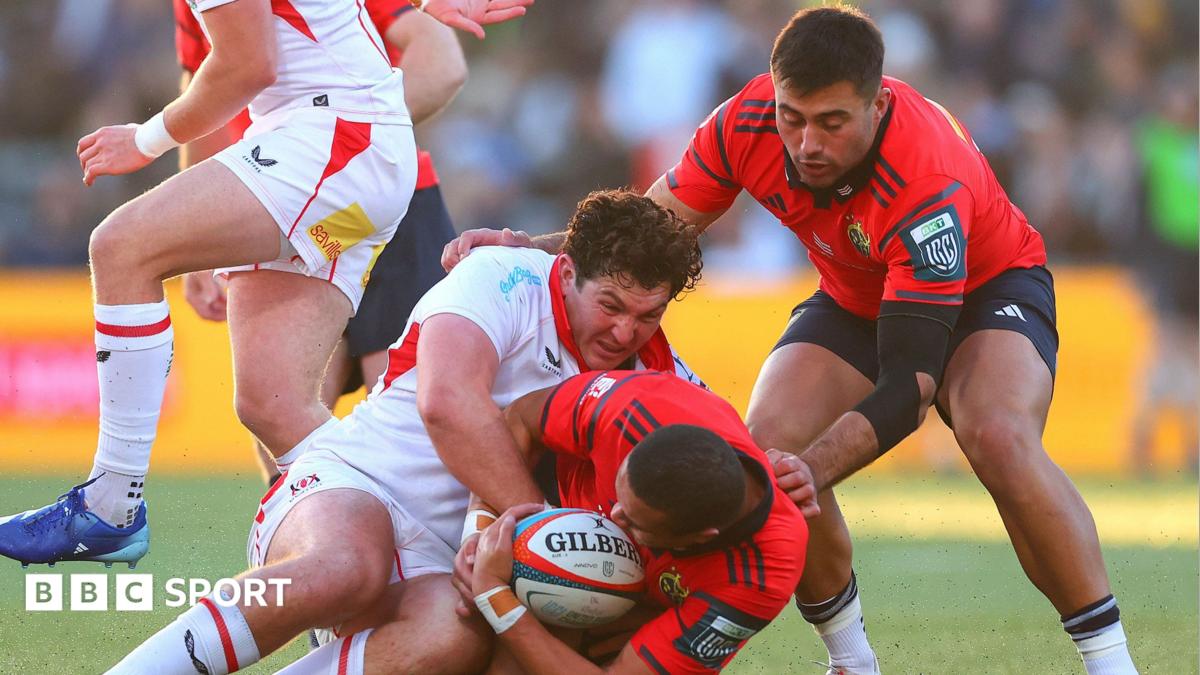
Ulster hooker Tom Stewart admits “I don’t think I’ve come to the party well enough” and says the squad must have “honest conversations” after an underwhelming start to the season.

Successive draws with Glasgow and Munster after a loss to Edinburgh leaves Ulster winless in the United Rugby Championship before starting their Challenge Cup campaign away to Zebre next week.

Head coach Richie Murphy said he was “bitterly disappointed” after his side were forced to fight back for a 26-26 draw with Munster, while Stewart questioned his own contributions to the game in Belfast.

“From a personal point of view, I’m not happy with my performances about it. I don’t think I’ve come to the party well enough, I don’t know if it’s my preparation or the mental side to the game,” said Stewart, who captained Ulster against Glasgow and Munster in the injured Iain Henderson’s absence.

“It’s something I really need to have a look at and plan better or whatever it is, but I need to start understanding why that is the case.”

Stewart, who marked his seventh Ireland cap with a try against Japan over the summer, added: “From my own point of view, I need to properly watch back my intent in some of the collisions and my actual process around what I’m doing.

“Then I think we need to have some honest conversations this week within ourselves, with the team, players and coaches to see where we’re at.”

Ulster travel to Zebre on Saturday (15:15 BST) before travelling to South Africa for difficult URC assignments against the Bulls and Stormers.

For Stewart, Ulster “can’t shy away” from the shortcomings in their performances as they strive to kick-start their season.

“It’s hard, when you have a game like that you don’t want to watch it back,” added the 25-year-old.

“You don’t want to review yourself properly, you don’t want to look at the hard stuff, the nitty-gritty that you haven’t done well, but that’s where you find the fixes, the learnings.

“The hardest stuff you watch will be the most impactful stuff going forward.”

Source link

US bombs cargo vessel in Gulf of Oman ‘trying to run Iran blockade’ | US-Israel war on Iran

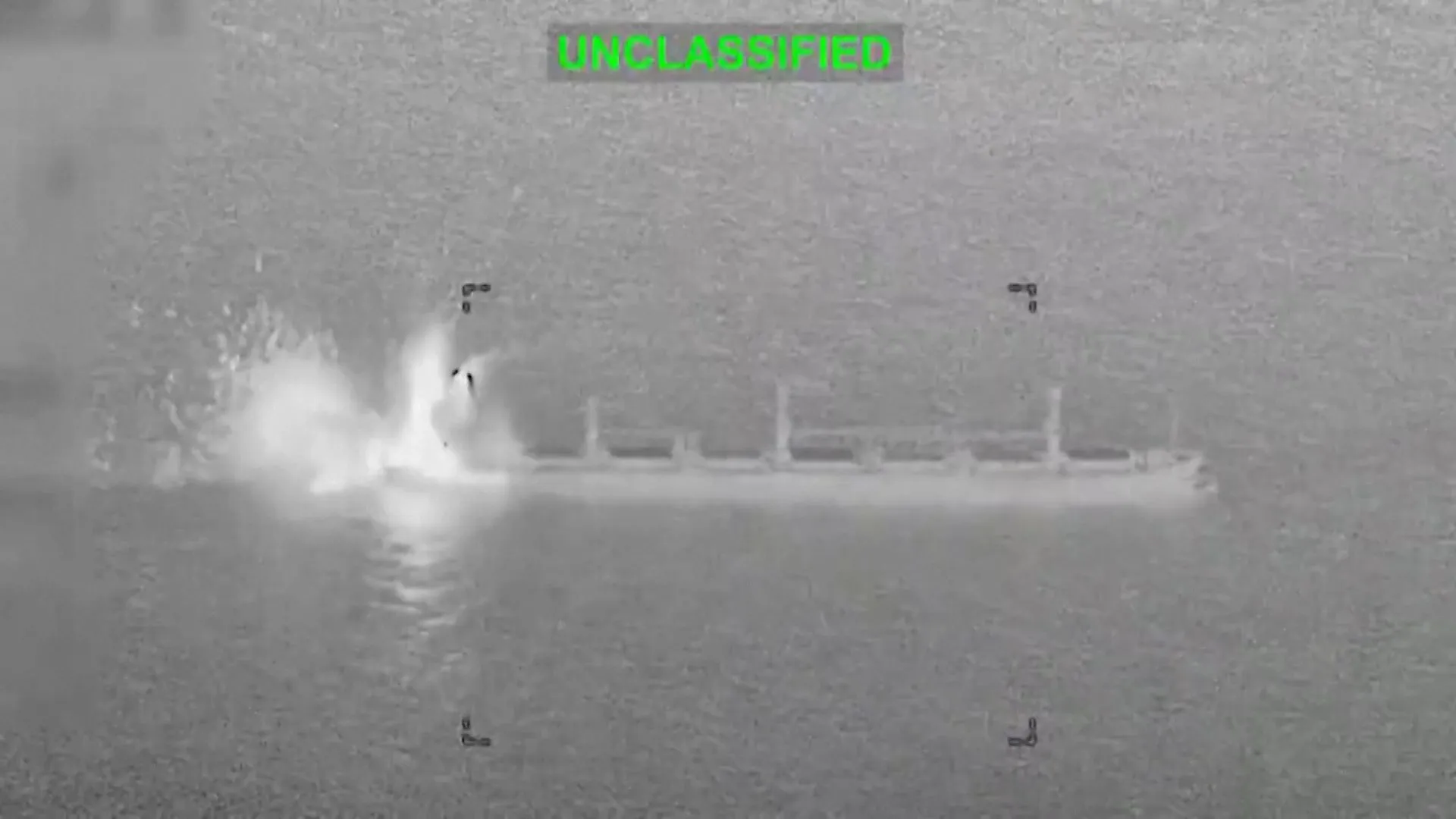
A US fighter jet bombed a commercial cargo ship in the Gulf of Oman, according to CENTCOM. The US military says the ship’s crew ignored repeated warnings and attempted to ‘breach its blockade’ of Iranian ports.

Source link

Musk vows ‘affordable’ Starlink in India as he escalates feud with Ambani | Business and Economy News

Elon Musk’s latest comments come days before Mukesh Ambani’s low-cost Reliance Jio’s parent launches India’s largest-ever initial public offering.

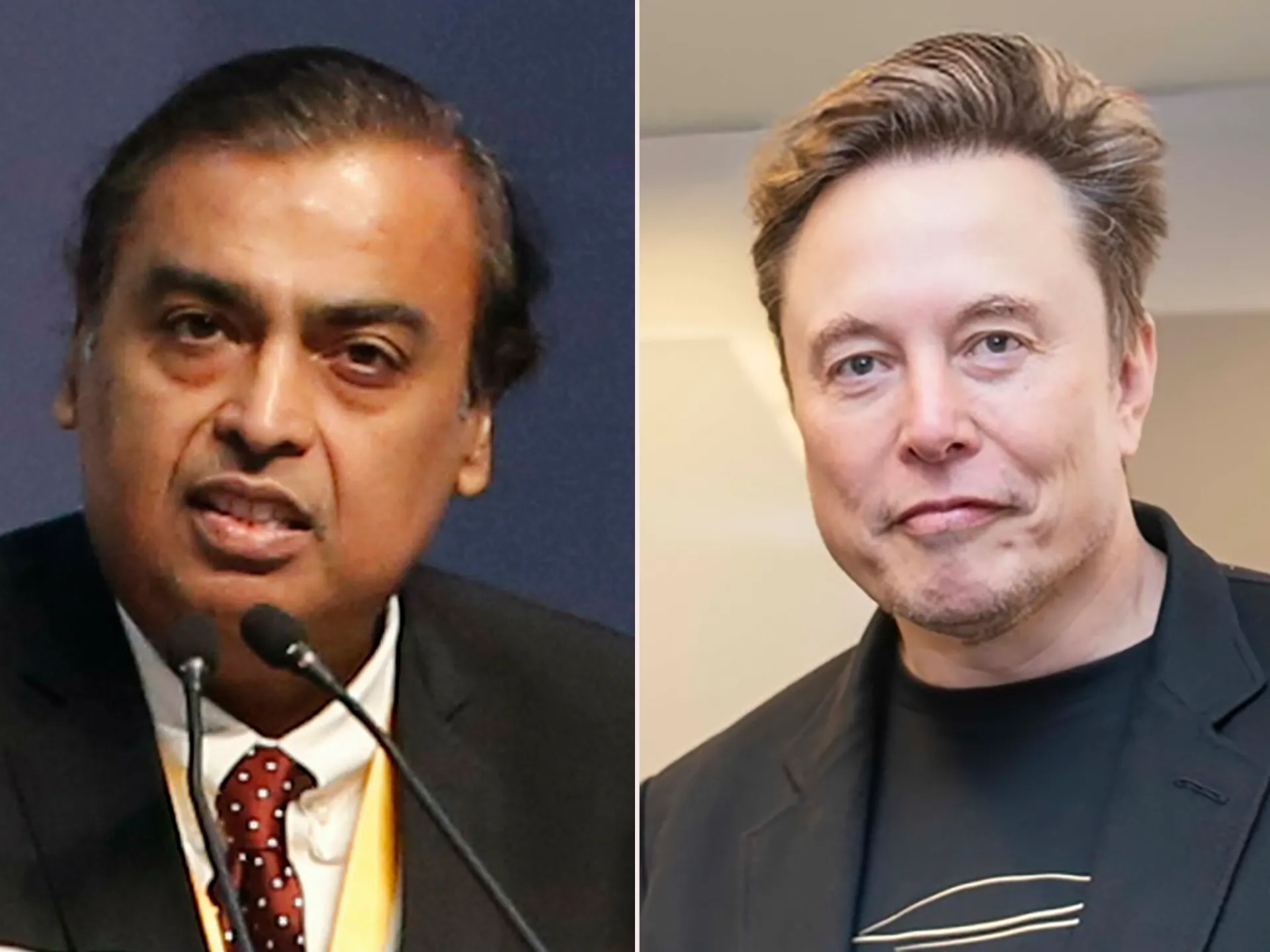
‌Billionaire entrepreneur Elon Musk has said he would price his Starlink satellite internet service affordably ⁠in India to take ⁠on Mukesh Ambani’s low-cost Reliance Jio, escalating his attacks on the rival tycoon days before Jio’s parent launches the country’s largest-ever initial public offering (IPO).

Jio Platforms, ⁠which owns the telecom arm, is targeting a valuation of $106bn in the offering. Much like SpaceX-owned Starlink, Jio’s satellite venture is also awaiting final ⁠security clearance to launch.

Cheap data is the playbook that built Jio in India, and the one Musk has used in markets like Kenya to unsettle local telecom players. SpaceX now plans to enter the mobile carrier market itself, starting in ‌the United States.

Musk did not specify prices for India, where mobile data costs about rupees 7.74 ($0.08) per gigabyte, among the lowest in the world.

“Obviously, if Starlink is too expensive in India, no one will buy it, so SpaceX will need to make pricing affordable,” he said in a post on his social media platform X on Saturday.

“The reality is that ⁠competition would greatly benefit the average citizen in India by ⁠giving them more choices, as it always does. Ambani’s profits will be lower, but he is not going out of business,” Musk added.

‘Prime Minister Ambani’

Musk’s remarks were the latest in ⁠a series of X posts in which he accused Prime Minister Narendra Modi’s government and Ambani of stalling Starlink’s entry ⁠into one of the world’s biggest internet markets to ⁠favour market leader Jio.

The posts have marked a sharp turn for Musk, who has long enjoyed a warm public rapport with Modi.

India’s government has denied any bias in its approval process, ‌noting that the three satellite ventures seeking to launch, including Starlink’s and Jio’s, are all awaiting final security clearance.

Late on Friday, Musk taunted Ambani directly, addressing ‌him as “Prime ‌Minister Ambani” and asking whether he would “consider allowing Starlink to compete”.

Reliance has not responded to Musk’s remarks.

Source link

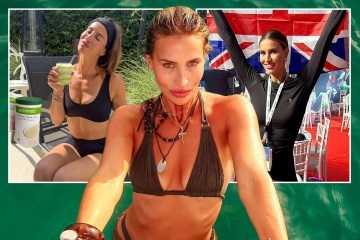
Kelly Osbourne, Ashley James and Nadiya Bychkova look incredible in glamorous gowns at star-studded London gala

KELLY Osbourne, Ashley James and Nadiya Bychkova looked incredible in their glamorous gowns at star-studded London gala.

Kelly looked stunning in a sleek off‑the‑shoulder black dress, finished with layered necklaces and a striking cross pendant.

Kelly Osbourne looked sensational as she attended the 2026 Mode EPS Gala in aid of Anna Freud at Spencer House Credit: Getty
Ashley James looked gorgeous in blue satin Credit: Getty

Broacaster and DJ Ashley looked gorgeous in a glossy turquoise satin gown, paired with a matching scarf draped softly around her shoulders.

Meanwhile, Strictly professional dancer, Nadiya stunned in a sleek satin slip dress with thin spaghetti straps, pairing the look with black heels and a small matching handbag.

Nadiya also performed in a dramatic pink gown, complete with a high slit that showed off her toned legs.

The stars turned out to support the MODE EPS gala in aid of Anna Freud, which was held inside the opulent Spencer House in Mayfair.

‘IT’S AN ILLUSION’

Inside Ferne McCann’s controversial new venture as star comes under fire


BAD BOY

Big Brother’s Omar arrested by police for flogging ‘hippy crack’ at carnival

Anna Freud is a mental health charity transforming care for children and young people through science, collaboration and clinical innovation.

Attendee Kelly opened up about her own struggles in The Sun this weekend, telling us it has been the worst year of her life following dad Ozzy’s death and her split from DJ Sid Wilson.

She said: “It’s been the worst year of my life. In so many ways, I can’t even explain to you. But it’s also been really beautiful because I’ve learned that my grief is an honour, as I truly love someone that much.”

“It’s been the worst year of my life,” she says. “In so many ways, I can’t even explain to you. But it’s also been really beautiful because I’ve learned that my grief is an honour, as I truly love someone that much.

London-born Kelly has since moved permanently back to England from LA, not only to be closer to her dad’s grave, but also to give her son a stable childhood.

And she has gained 2st in weight since an appearance at the Brit Awards earlier this year sparked concern about her well-being.

“I didn’t know that I looked like that until I saw the pictures,” she said. “When I saw them, I couldn’t f**king believe it. I was as shocked as everyone else.”

Kelly, who battled her weight in her teens before having gastric sleeve surgery in 2018, admits that it’s hard to have your body up for discussion.

Nadiya Bychkova looked stunning in a black satin slip dress Credit: Getty
Nadiya Bychkova looked pretty in pink Credit: Getty
Nadiya performed with her dance partner at the gala Credit: Getty
Kelly Osbourne looked gorgeous and relaxed as she posed for photgraphs at the event Credit: Getty

Source link

The beachfront city break destination with 300 sunshine days, wild sea lions and champagne vending machines

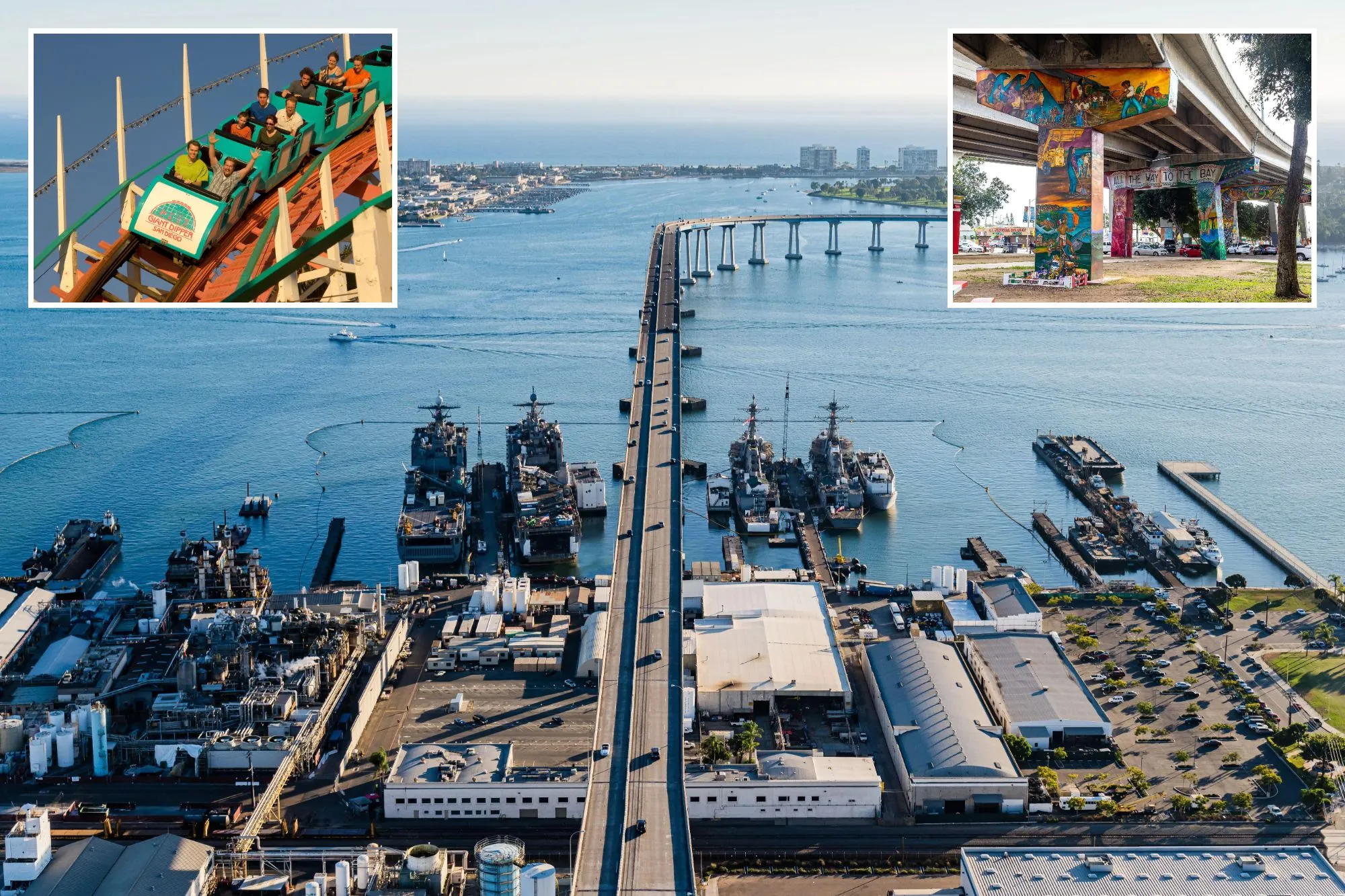
An image collage containing 3 images, Image 1 shows Aerial view of the San Diego Coronado Bridge, navy shipyard, and surrounding bay in California, Image 2 shows Barrio Logan murals in Chicano Park on the pillars of the Coronado Bridge, including the slogan "All the way to the Bay", Image 3 shows Thrilled passengers riding the Giant Dipper roller coaster at Belmont Park in San Diego

OUR Spotlight On column uncovers the top things to see and do in the best holiday destinations, as well as lesser-known spots, in the UK and abroad.

This week, we’re shining the light on the already well-lit destination of San Diego, which sees more than 300 days of sunshine a year.

San Diego has 300 days of sunshine, did you know? Credit: Alamy
Belmont is one of the world’s oldest theme parks Credit: Alamy

The Sun’s Deputy Travel Editor Kara Godfrey recently visited, and said: “I love exploring Belmont theme park, which dates back to 1925, which felt like going back to the 50s with wooden rollercoasters and spinning ice cream rides.

“Then hop over to South Mission Beach for some insane sushi at Cannonball overlooking the ocean, before a drink in Part Time Lover, a very cosy listening bar with a vinyl shop at the back.

“Save time for Barrio Logan too, named one of the best neighborhoods in the world with fantastic independent stores and street art.”

Here are some of our other top tips.

NOU YOU

See Barcelona at Nou Camp with official ticket and 2-night hotel deals from £309


ROME FREE

Ten cheap autumn city breaks from £59pp with £1.40 pints, 28C & thermal spas

MUST SEE/DO

You’ll want to take advantage of that glorious weather.

So head to La Jolla Cove which was recently named the best beach in the USA in the Tripadvisor’s Travellers’ Choice Awards.

The shoreline is home to crystal-clear waters that are ideal for snorkelling in – keep your eyes peeled for wild sea lions slouched on the rocks and sand, too.

If you’re not much of a snorkeller, grab yourself a kayak from one of the many rental stores or indulge in one of the gorgeous clifftop hiking trails that will take you along the coast.

HIDDEN GEM

Ditch the tourist attractions and crowded shores. Instead you should make a beeline for North Park, where the locals and creatives hang out.

Make sure you come thirsty as this area is crammed with independent coffee shops and some of the best craft beer in the States.

Make sure to admire the colourful murals splattered along the streets and pop into the vintage stores for a souvenir.

Take a look at the historic Observatory North Park ahead of your visit as you may time if perfectly to catch one of the regular gigs,

There is so much to do in the city Credit: Alamy
Barrio Logan is home to some beautiful street art Credit: Alamy

BEST VIEW

Take a stroll from Sunset Cliffs Natural Park, just south of Ocean Beach.

This dramatic 1.5-mile stretch of rugged coastline is one of San Diego’s most spectacular viewpoints, where you can watch the Pacific waves crashing into rock arches while the sun sets beyond the horizon.

If you’re not one for a nature walk, then Mister A’s is a cracking rooftop restaurant perched high above downtown with sweeping panoramic views across San Diego, the bay and the flight path into the city’s airport.

Cocktails are being continually shaken and the atmosphere is warm and buzzy.

RATED RESTAURANT

Exciting new openings are cropping up all over the city, including Ikaria in La Jolla which is due to open towards the end of this year.

The restaurant is inspired by the Greek island which shares its name and will feature a vibrant Mediterranean menu alongside wine tastings session and cooking classes.

For a slap-up brunch, Morning Glory is set a few streets back from the waterfront, near the Harbor View area, and stars in the Michelin guide for good reason.

Decorated in hues of candy floss pink, with mirrored furniture and a champagne vending machine, it’s got an air of Palm Springs about it.

Star dishes include the indulgent souffle pancakes and fried chicken and waffles.

BEST BARS

Swap your cocktail for a pint from one of San Diego’s independent breweries – after all, this city is known as the IPA capital of the world.

Mujeres Brew House in Barrio Logan is run entirely by women and offers a whole host of craft pours including crisp lagers and bold West Coast IPAs.

It hosts regular events, live music sessions and pop-up food stalls in a casual but lively setting.

HOTEL PICK:

The 4* Pearl Hotel in Point Loma is affordable and elegant, with retro-inspired furniture and decor that make it feel like its from another era.

It’s quickly become one of San Diego’s coolest places to stay with stylish rooms, excellent cocktails and easy access to both downtown and the beach.

Rooms cost from £115 per night based on two people sharing a double. See thepearlsd.com.

Source link

‘Travel tummy’ symptoms ‘improve’ with gastroenterologist’s ‘simple’ method

More than a third of British holidaymakers have experienced ‘travel tummy’ in the past 12 months

More than a third of British holidaymakers (36%) have suffered from ‘travel tummy’ over the past year, new research has revealed. The term describes stomach upset or illness experienced while on holiday.

Safa noted the findings indicated that digestive problems were a widespread concern amongst travellers, often having a detrimental effect on overseas trips. The Saga Travel Insurance study, which surveyed 500 UK holidaymakers, discovered that half (49%) had endured diarrhoea while away, with nearly one in 10 (8%) battling gut troubles on every single trip.

Those with pre-existing conditions, such as IBS, may face a heightened risk of digestive complications when abroad, as travel can worsen symptoms. Local chemists are the first stop for most holidaymakers grappling with travel tummy overseas (35%), while almost a third (30%) resort to Google and one in 12 (8%) consult AI to assess their symptoms before seeking professional advice.

Doctors create tumour-eating bacteria, infections cause cancer, why sleep is so important, and why Putin’s scheme to live forever won’t work – all this and more in our science newsletter

Saga Travel Insurance consulted Dr Nick Burr, a gastroenterologist at healthcare provider LivingCare, to explore why travel tummy happens and what holidaymakers can do to prevent problems on future getaways.

Bacteria often the cause of travel tummy

Travellers’ diarrhoea is a frequent problem among holidaymakers, especially when heading to destinations where food hygiene standards differ.

Dr Burr said: “Traveller’s diarrhoea is usually caused by bacteria, most commonly E. coli, picked up from contaminated food or water, particularly in parts of Asia, Africa, the Middle East and Central or South America. Symptoms can include loose stools, cramping, bloating and nausea, often within the first week of travel.”

Tap water standards differ significantly from one country to another. Numerous countries have updated plumbing infrastructure, which typically means tap water is safe for consumption.

In other nations, it may be wiser to opt for bottled water, as unsafe drinking water can harbour dangerous bacteria, parasites and chemicals.

According to the NHS, boiling water is the most dependable method to purify it and eliminate any bacteria or viruses. Chemical disinfectants, such as iodine or chlorine, can also be employed, but may prove less effective than thoroughly boiling water and allowing it to cool in a sterile container.

Water filters ranging from 0.2 to 1 micron can also be utilised to remove dirt or parasites from water before applying chemical disinfection.

Two-fifths of Brits reckon their symptoms were triggered by local food

Local cuisine emerged as one of the most frequently mentioned causes of travel tummy amongst holidaymakers in Saga Travel Insurance’s survey, with 44% of respondents blaming their holiday stomach troubles on this. Dr Burr explained: “Common sources [of infection] include untreated water, ice cubes, buffets, shellfish, undercooked meat and food left sitting in the heat. Exploring local food is one of the joys of travel and most people can do so safely as long as they apply common sense. For example, freshly cooked, piping hot food in a busy restaurant is usually OK.”

Dehydration poses one of the greatest threats to your wellbeing while travelling

Diarrhoea was the most frequently reported symptom of holiday tummy among UK travellers, with more than a quarter (28%) of individuals suffering from it while abroad over the past 12 months, according to Saga Travel Insurance’s survey. Loose and watery stools can lead to dehydration as your body is losing more fluids and electrolytes than you’re capable of replenishing.

Dr Burr said: “Dehydration [can be serious], especially in hot climates. Alcohol and caffeine can both worsen dehydration and have a laxative effect, so it’s best to limit these while symptoms are severe. Intense exercise while dehydrated or unwell may also slow recovery, so it’s usually best to rest, drink fluids, and stick to simple foods until symptoms improve.”

Rehydration solutions are an effective method to prevent dehydration and support recovery. If you’re unable to obtain rehydration sachets, Dr Burr points out that you can prepare your own from scratch.

He said: “If oral rehydration sachets are unavailable, a homemade solution can be made using six level teaspoons of sugar and half a teaspoon of salt in one litre of clean water.”

Routine disruption

While bacteria and infection remain the most frequent culprits behind traveller’s diarrhoea and stomach complaints, there may be more environmental factors at play when holidaymakers feel under the weather.

Dr Burr explained: “[In other cases], symptoms are not due to infection, but are related to changes in routine. Prolonged disruption to normal routines, including sleep patterns, hydration, alcohol intake, stress and diet, can make the digestive system more sensitive, particularly in people prone to irritable bowel syndrome (IBS) or functional gut symptoms.”

The survey by Saga Travel Insurance revealed that a third of holidaymakers (34%) said travel-related stress played a part in their travel tummy, while over a quarter (27%) pointed to long journeys as a contributing factor.

Dr Burr said: “For those who experience an upset tummy when flying, this is often linked to cabin pressure changes, dehydration, reduced movement, disrupted sleep, stress and unfamiliar foods. Staying hydrated, moving around during flights and eating lighter meals can help reduce discomfort.”

Michelle Cooper, director of Saga Travel Insurance, added: “If you’re on a longer flight, try to walk up and down the aisle every two hours to help with your circulation and digestion.”

Travellers with pre-existing conditions could be at greater risk

‘Travel tummy’ can present heightened dangers for those with underlying health conditions.

Dr Burr said: “People with diabetes, kidney disease, inflammatory bowel disease, or weakened immune systems may become unwell more quickly.”

For individuals with pre-existing conditions, advance preparation is particularly crucial – not only regarding health matters, but also in making certain adequate travel insurance protection is arranged.

Michelle explained: “Many insurers offer cover for pre-existing medical conditions, however, it’s essential to declare them when taking out your policy. If you have an underlying health condition, becoming unwell abroad can be more serious and may require quicker access to medical care or more specialised treatment. Making sure you have the right cover in place means you can get the support you need without facing unexpected costs while you’re away.”

Most travel tummy is mild, but severe cases need treatment

While a dodgy stomach abroad might amount to little more than mild discomfort, it can occasionally prove more serious and necessitate a trip to a local doctor – or a call to your insurer’s 24-hour travel GP, if it provides one.

Michelle said: “Getting sick abroad is never ideal and you may be tempted to wait until you’ve returned to the UK to get checked by your doctor. However, it’s important that you seek out medical attention as soon as possible if you think you might be ill.

“Treatment costs abroad can add up quickly, particularly in countries where healthcare is private. Call your insurance provider’s 24-hour emergency number to check if they cover everything you need, including medical translation services. Travel insurance can help provide both financial protection and peace of mind if the unexpected happens.

“Having the right cover in place means you can get the care you need without worrying about the cost, so you can focus on recovering and enjoying the rest of your trip with confidence. Taking simple precautions before and during your trip could be the difference between a disrupted holiday and a smooth, stress-free getaway.”

Should you fall ill while overseas, the Foreign, Commonwealth and Development Office holds a comprehensive list of English-speaking doctors, medical facilities and practitioners across the globe. In an emergency situation, don’t hesitate to contact the local emergency services in the country you’re visiting.

Source link

High school flag football: Friday and Saturday scores

Los Angeles Times staff

FRIDAY’S RESULTS

City Section

Arleta 45, Monroe 0

GALA 21, Verdugo Hills 0

Granada Hills Kennedy 57, Sylmar 0

Jefferson 28, Santee 6

Los Ángeles 28, Lincoln 10

North Hollywood 53, Sun Valley Poly 0

Panorama 27, San Fernando 0

San Fernando Arroyo 8, Grant 0

Southern Section

Aquinas 14, Yucaipa 6

Bishop Montgomery 45, Compton Early College 0

Chaminade 45, Immaculate Heart 0

Edison 25, Corona del Mar 7

Hueneme 35, Bishop Diego 0

Peninsula 32, Chadwick 0

Sherman Oaks Notre Dame 41, Louisville 0

Sierra Canyon 19, Harvard-Westlake 12

St. Mary’s Academy 21, Environmental Charter 0

Whitney 20, Oxford Academy 19

Intersectional

JSerra 44, Campo Verde 14

SATURDAY’S RESULTS

Southern Section

Adelanto 19, Arroyo Valley 0

Bloomington 6, Colton 2

Chaminade 32, Flintridge Sacred Heart 7

Kaiser 47, Rialto 8

Murrieta Valley 12, Temecula Prep 0

Rosary 15, Sunny Hills 13

San Dimas 42, Corona 28

Serrano 38, Arrowhead Christian 12

St. Bonaventure 41, Cate 6

Summit 25, San Gorgonio 0

Windward 7, Burbank Providence 0

Intersectional

Gilbert (Ariz.) 20, Channel Islands 19

Source link

Vinicius apologises for hair-pull red card but could miss El Clasico | Football

Real Madrid forward has a goal disallowed, is sent off for the hair-pull offence and could miss the next three games.

Real Madrid’s Vinicius Jr has apologised ⁠⁠to ⁠⁠his teammates and the club’s fans after being sent off in the 1-0 ⁠⁠win over Villarreal in La Liga at the Santiago Bernabeu but now faces a ⁠⁠nervous wait for a ruling by the disciplinary committee, which could see him miss Real’s fixture with rivals Barcelona in two weeks.

The Brazilian thought he had scored Real’s second goal in the match on Saturday, but his effort was disallowed after a video assistant referee (VAR) review found he should be dismissed for pulling Nathan Saliba’s hair in the build-up.

After the match, Vinicius, ⁠⁠who came on in the ⁠⁠52nd minute and was red-carded 20 minutes later, posted on social media, saying, “sorry to the team and the ⁠⁠fans”.

Vinicius was celebrating after scoring when referee Isidro Diaz de Mera was called by the VAR to review the moments before his goal. The referee waved off the goal and pulled out a red card for Vinicius.

When he thought Vinicius had doubled the lead, Real manager Jose Mourinho ran to join the celebrations with his players.

But moments later, Vinicius was left livid by the referee’s decision. He screamed at Diaz de Mera while his teammates tried to calm him down as he left the field.

Real Madrid's Brazilian forward #07 Vinicius Junior (C) is restrained by teammates as he argues with referee Isidro Escuderos after receiving a red card during the Spanish league football match between Real Madrid CF and Villarreal CF at the Santiago Bernabeu Stadium in Madrid on October 10, 2026. (Photo by Oscar DEL POZO / AFP)
Vinicius was restrained by his teammates as he argued with the referee [Oscar Del Pozo/AFP]

“I don’t think he meant to hurt anyone, but it is a red card,” Villarreal defender Juan Foyth said about the hair yank of Saliba.

Diaz de Mera wrote in his match report that after being shown the red card, Vinicius “protested my decision, raising his voice, toward where I was standing in an aggressive manner, and being held back by teammates”.

Royal Spanish Football Federation regulations state that pulling an opponent’s hair ⁠⁠is regarded as violent conduct.

The ⁠⁠sanction for violent conduct without causing injury to an opponent, according to Article 130 of the league’s rules, is a ban of one to three ‌‌matches.

Real’s next three La Liga games are against Sevilla, Barca and Racing Santander, but missing El ‌‌Clasico ‌‌would be a bitter blow for the 26-year-old Brazil international.

Mourinho did not appear at the mandatory post-game news conference.

Source link

Flash flood sweeps away buildings in Nepal | Floods

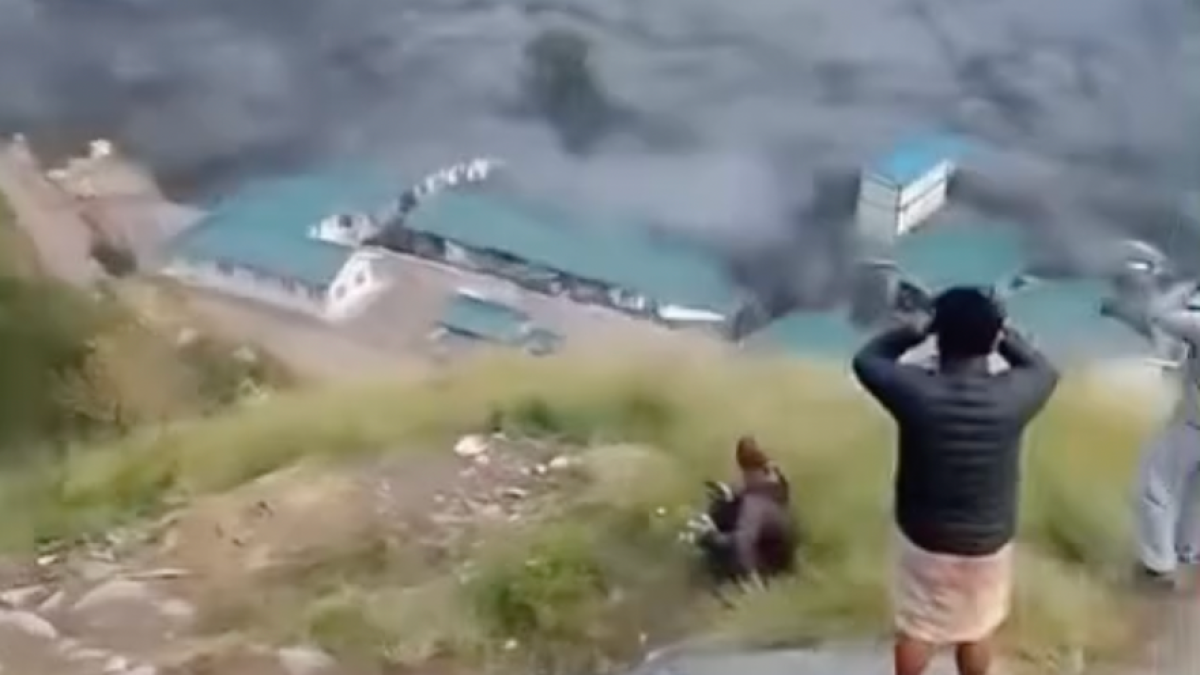
Flash flooding in Nepal has swept away buildings along the Budhi Gandaki river on Sunday. Terrified onlookers in Gorkha district filmed from higher ground, after a landslide triggered downstream flooding that also swept away a bridge and homes.

Source link

Coronation Street star’s tough storyline helped her relate to her inspirational mum

EXCLUSIVE Coronation Street’s Lisa Connor-Swain actress Vicky Myers speaks to me about Swarla, Lisa’s backstory and how Betsy’s storyline saw her reflect on her childhood

It’s been five years since Vicky Myers took on the guest role of Coronation Street detective Lisa Connor-Swain.

But a planned four-episode stint turned into the job of a lifetime for the actress, who has no plans to leave the famous Cobbles anytime soon. As long as she challenges me, then I’ll stay forever,” Vicky, 50, tells us.

“It’s unfamiliar territory for me because of the previous roles that I’ve played. She wasn’t a character that needed to be written for, and so as time has progressed, so has she.” Very little was planned for the character before she moved to Weatherfield full-time in 2024.

Since then, fans have seen Lisa at the centre of huge storylines, including her ex-wife Becky Swain faking her death, and Lisa’s teenaged daughter Betsy suffering a stroke, as a result of non-fatal strangulation.

Happier times have seen Lisa’s wedding to factory boss Carla Connor [Alison King], with Swarla, as they are known by adoring soap fans, being the first lesbian couple to marry on the soap. Vicky is thrilled to represent so many people with her character.

“There are so many women who can relate to what Lisa’s been through,” she says. “Also women that are in what used to be a male-dominated profession. For fans to be so loyal and to support Lisa and Carla, I think that’s a testament to how much these two have been needed by viewers. As is with all representation and visibility, it’s very much needed.”

Vicky hopes her latest storyline, which sees Lisa caring for her daughter Betsy [Sydney Martin] who is recovering from a stroke, will shine a light on accessibility issues. As Betsy faces challenges in her rehabilitation, Vicky says she’s reminded of her own experiences, growing up with her brother, Fran, who has cerebral palsy.

“I can relate to my mum,” she tells us. “She was a working mum, but in particular, when my brother was young and with his disability, she had to fight for everything. I watched her, and only as an adult now, and as a mother myself, I realise just how hard she had to fight.

“I’m in awe of her. She still continues, and she’s in her early 70s, but she has this drive and determination that seems endless. And even through exhaustion, she still pushes on, because she has to.”

Reflecting on the challenges faced by her brother Fran, who was born at 28 weeks, Vicky adds: “Looking back, I was a young child, but I remember seeing how she was relentless in her pursuit for accessibility, for understanding, for support, and also so determined that he was going to live as mainstream a life as she could possibly provide for him, her and my dad.

“It was a different generation, my dad worked all hours, we grew up in a pub, and they grafted really hard. I watched my mum, fight to get my brother into a mainstream primary school, they didn’t have accessibility like they have now, it was extremely poor.

“She’s a wonderful woman who I respect massively, and I admire. Lisa moving Betsy’s wheelchair around on set and things, I really wanted to make a point of how cumbersome it can be, but these are necessities, these are how people can navigate life.”

Vicky is grateful for the huge support she and her character have had during her time on the cobbles. Something else she’s grateful for is turning 50 earlier this year, with her sure it will be her “best decade yet”.

“I think as I’ve got older, a lot of my views have changed and I’m a lot calmer. 50 is the best! A lot of things happened in my 40s which were brilliant, but I have this thought process of don’t trip over something that you left behind.

“Take each day as it comes and embrace it, because you never know what’s around the corner. Treat every day as if it’s your last, and just go for it! I’m glad I’m not living my 20s and 30s now. I really wouldn’t like it.

“When I was growing up, we had the 80s, the music, the era, the times, there was freedom. There wasn’t always the thought process of getting my phone out. We were living in the moment, and there’s a real beauty in that.”

As for Lisa’s past, Vicky hopes it’s something the soap will explore. She shares: “I think it will be interesting to explore her family backstory, and why she’s not in touch with any of them. What happened to her as a child, what’s her story, and what was her journey with her sexuality?

“When did she realise that she was queer? All of these things intrigue me with her. I’ve got my ideas. I’ve sort of built things up, but they all need to align together with the storylines. Lisa’s a bit of an enigma. We don’t know everything about her.

“There are things that I know. She’s had a past, we’ve all had a past. Not everybody gets her, not everybody likes her. I’m not sure if I’d want to play somebody that everybody likes, and Lisa’s a challenge for me to play.”

Coronation Street airs weeknights at 8:30pm on ITV1 and ITV X. * Follow Mirror Celebs and TV on TikTok, Snapchat , Instagram , Twitter , Facebook , YouTube and Threads.


Source link

All the new things coming to Winter Wonderland this year

WINTER WONDERLAND returns next month – and you could nab TWO free tickets with The Sun – including entry to one of its most popular attractions.

As an avid fan who visits every year, this year has some very exciting new additions that will delight even frequent-goers.

Hyde Park Winter Wonderland returns on November 19 and you can get cheaper tickets with The Sun Credit: © Joshua Atkins

And we have 10,000 FREE tickets up for grabs for Sun Club members, so you can enjoy the 150 rides and attractions inside.

The tickets, on a first come, first service basis, even include entry Magical Ice Kingdom presents Neverland in Partnership with Great Ormond Street Hospital Charity – a world made up of 500 tonnes of ice and snow.


Join Sun Club now — don’t miss out.


Join The Sun Club – Join now

But how should you spend your time there?

Here’s a full rundown of what you MUST see from free things to do, to all of the new additions for 2026.

Read more on travel inspo

FREE FLY

All the best travel comps to enter NOW – £60k cabin, Lapland hol & £7k cruise


DIPPING IN

Best spa days & stays from just £28pp – dinner, free prosecco & 50min treatments

Free activities

Winter Wonderland actually has more free activities than you’d think.

Last year, the attraction launched a free Santa’s Grotto experience, which is the largest free grotto in London.

Visitors will head on a journey through the new Elves’ Workshop and visit Mrs Claus before meeting the big man himself.

Of course, you can browse the German-style Christmas markets for free too, where there are dozens of chalets selling handmade crafts, ornaments, food and gifts.

In the Bavarian Village, make sure to head to The Bavarian Village Hall where there are often live bands, acoustic performers and Oktoberfest-style singalongs.

The atmosphere of the park in general is brilliant as well, with twinkling festive light installations, giant illuminated Christmas trees and themed areas.

There are over 150 rides and attractions at Winter Wonderland Credit: © Justine Trickett
Collage of travel items including a plane, sunscreen, passport, suitcase, and plane tickets, advertising The Sun's travel Instagram account.

What’s new this year

There are several new features for this year too including Gandeys K-pop Dragon Circus.

The circus will be based on an adventure with dragons, magic and K-Pop music and dance. Tickets start from £10.45 per child and £13.75 per adult.

Bar Ice will have a new theme this year too, with tickets from £17.05pp.

As will Magical Ice Kingdom presents Neverland with tickets from £8 per child and £10.20 per adult.

Other new features this year include new packages Credit: © Justine Trickett
And there are loads of £1 off-peak tickets Credit: © Joshua Atkins

Best adult activity

Stepping into Bar Ice is as close as you will most likely get to experiencing an igloo.

The chilly cocktail lounge is kept at -10C and made entirely of giant blocks of carved ice.

Everything – I mean everything including the tables and chairs – is made out of ice.

And when you grab a drink, that will even be served in a glass made out of ice.

When you enter, staff will give you a coat and gloves to keep you warm too.

Inside, there are also a number of ice sculptures and neon lights illuminating the icy mythical creatures.

Each session lasts 20 minutes and includes one drink per person.

Tickets cost between £17 and £20 per person.


Join Sun Club now — don’t miss out.


Join The Sun Club – Join now

Best family activity

Magical Ice Kingdom presents Neverland, in Partnership with Great Ormond Street Hospital Charity is great for families and allows visitors to literally chill out.

Kept at -10C, this magical kingdom is made entirely out of ice and is a walk-though indoor exhibition.

This year the theme is the very exciting ‘Neverland’.

For the first time ever, visitors will step through the Jolly Roger and into a Magical Ice Kingdom inspired by the Neverland, with Peter Pan and Wendy.

All the sculptures inside will be hand-carved by ice sculptors from 500 tonnes of ice.

Many of the ice features are interactive too, making it the ideal place to snap some photos of the family.

You can explore the exhibition at your own pace, but I’d recommend no more than 30 minutes.

My visit last year I spent about half an hour in the exhibition before getting a little too chilly and heading back outside.

One of the best activities for adults is the Ice Bar Credit: © Justine Trickett
And if you have kids, make sure to go to The Magical Ice Kingdom Credit: © Joshua Atkins

Best food spot

Last year, Jingle Bell Bistro also launched and it is a great food spot.

Not as busy as the other food areas, the Jingle Bell Bistro is designed to be more child-friendly with options including simple burgers and chicken nuggets.

Adults can get food from here as well, but don’t expect fussy food with all the bells and whistles – more comfort food that pleases everyone.

You can even get Buddy the Elf’s famous spaghetti for £8.50. Prices vary, including £8 per child-sized pasta dish or £12 for an adult portion.

How to save your cash

There’s a whole host of new pre-bookable packages too for this year.

There’s the Explorer Pass for example, which includes the Real Ice Slide, Haunted Mansion, Snow Jet, Pirate Ship and Après Ski Party Funhouse.

It also includes free entry to the event.

There’s also Ride & Game Credit pass, which allows you to buy credit for the rides and attractions online in advance.

You can select from £20, £30 or £50 of pre-paid credit.

Of course, this year there are more £1 tickets than ever before as well.

Ig you want to save your money on entry make sure to book online in advance for an off-peak entry time.

Hyde Park Winter Wonderland will run between November 19, 2026 and January 3, 2027.


Join Sun Club now — don’t miss out.


Join The Sun Club – Join now

How to get your free tickets to Winter Wonderland

To claim your tickets, follow the steps below:

  • Step 1: Join thesun.co.uk/club for just £1.99 a month or £12 for the first year, then £19.99 thereafter.
  • Step 2: Go to the Offers Hub and select the Winter Wonderland page. You do not need to collect Sun Savers codes.
  • Step 3: Your unique booking code will appear on this page. Redeeming a code does not guarantee tickets. Click the ‘Copy’ button and then hit ‘Book’. You will be directed to the Winter Wonderland website.
  • Step 4: Select your preferred date and time, then choose ‘The Sun Winter Wonderland Entry & Magical Ice Kingdom Offer’. Two tickets will be added automatically to your basket. 
  • Step 5: Continue to checkout to complete your booking. You must book your tickets by Sunday, November 1.

Our tickets are available for visits between Thursday, November 19 to Sunday, December 6.

18+ UK only (exc. NI, IoM & CI). Sun Savers multiple code collect 10/10/26-14/10/26 or digital subscription required. Online access required. 5,000 pairs of tickets available (7,000 off-peak, 2,000 standard & 1,000 peak) on a first come, first served basis. Subject to availability, daily allocation limits apply. Tickets available between 19/11/26 – 06/12/26. 2 tickets per person only. Non-transferable and non-refundable. T&Cs apply, see sunsavers.co.uk  or club.thesun.co.uk/sun-club. New customer offer: £1.99 per month or £12 for the first year, then £19.99 thereafter unless you cancel at least 7 days before your next billing date. Full T&Cs apply, visit thesun.co.uk/terms-and-conditions.


Source link

Ryan Poehling injured on winning goal as Ducks beat Flames

Ryan Poehling broke a tie with a short-handed goal at 5:35 of the third period, but was injured on the play in the Ducks’ 4-2 victory over the winless Calgary Flames on Saturday night to start a home-and-home series.

The teams will meet against Tuesday night in Anaheim.

Poehling was injured when he slid into the post and Flames goalie Dustin Wolf. Poehling, who also had an assist, didn’t return to the game.

Jackson LaCombe, Frank Vatrano and Nikita Nesterenko also scored for the Ducks (4-1-0), who won a second road game in two nights after a 5-1 win over the Winnipeg Jets. The Ducks have won their first three road games to start a season for the first time.

Ville Husso stopped 27 shots in his first start of the season.

Morgan Frost and Aydar Suniev scored for Calgary (0-5-0), which started a season with five straight losses for the first time.

Matt Coronato had two assists and Wolf stopped 24 shots.

Source link

ICE agent in New York shooting also involved in assault of pregnant woman | Donald Trump

An ICE supervisor seen brandishing a rifle after the high-profile shooting in New York on Oct 8 was also involved in a controversial arrest in Minneapolis in December in which agents knelt on and dragged a pregnant woman through the street.

Source link

How genocidal war on Gaza is shaping Israel’s election | Israel Election 2026 News

As Israel entered the final month before its October 27 election, Prime Minister Benjamin Netanyahu had a chilling warning to share.

Israel’s enemies, he said on September 29, were plotting an attack on the country before the vote. Without providing any evidence, he then quickly referred to continuing attacks by Israeli troops in the Gaza Strip, where he said they had killed more than 100 “terrorists” in recent weeks.

That link drawn by Netanyahu – between the genocidal war on Gaza that began after the Hamas-led October 7, 2023 attacks, the upcoming elections, and Israel’s national security – was not coincidental, say analysts.

Netanyahu’s insistence that he alone can secure Israelis from a range of threats they face from across the country’s borders, they say, lies at the heart of his re-election campaign, even as his alleged failures during the attack three years ago and in securing the quick release of captives have offered his opponents ammunition.

When a Flydubai flight packed with Israeli passengers on their way from Dubai to Tel Aviv a day after his recent warning nearly crashed after a co-pilot attacked his pilot with an axe in the cockpit, Netanyahu was quick to seize on the incident to argue that he is still man for the country’s top job.

Polls suggest that he faces a stiff test in what is the first general vote since the 2023 attacks, which led to the killing of 1,139 people in Israel and triggered the genocidal war on the Gaza Strip, where Israeli have attacks have since killed more than 74,000 Palestinians.

Three years later, the war has become inseparable from the domestic debate over Israel’s direction while also accelerating a political shift to the right – with once-fringe positions on Palestinians now very much the mainstream view.

Few embody this transformation more than Israel’s far-right financial Minister Bezalel Smotrich, sanctioned by a number of Western countries and known for his incendiary and racist language and policies towards Palestinians.

In one of his characteristically inflammatory statements, Smotrich told Israeli outlet Ynet late last month that the Israeli army should “go to war” in the occupied West Bank and “do there what we did in Gaza”.

Less than two weeks later, Smotrich’s electoral ally Moshe Feiglin added fuel to the fire.

“The enemy is Gaza, not Hamas”, he told the Jerusalem Post, calling for the annexation of the besieged territory after the election. “The baby that will be born tomorrow in Gaza will do exactly the same,” he said, in reference to the 2023 attacks.

Palestinian political analyst Ahmed Najar said these are not “stray comments” from marginal figures but an electoral message from power-seeking politicians aimed at portraying Palestinians as “not a people with rights, but a demographic and security problem to be expelled, conquered or destroyed”.

He added: “The frightening reality is that the coming election risks becoming a competition not over whether Palestinian life should be protected, but over who can promise to erase it most aggressively.”

‘This is madness’

Following October 7, the younger generation in particular slid rightwards, said Ahron Bregman, an Israeli security analyst and senior teaching fellow at King’s College London.

He said the forces driving Israel to the right had been gathering for decades.

“The trend toward the right began after the Yom Kippur War in 1973, but it has intensified dramatically since October 7,” Bregman told Al Jazeera, referring to the bloody 19-day October War, or the 1973 Arab-Israeli War – a conflict between Israel and a coalition of Arab states led by Egypt and Syria.

More recently, the far right has been emboldened through electoral politics as part of Netanyahu’s government since 2022 – the most right-wing government in Israeli history.

Another outspoken cabinet member alongside Smotrich is Minister of National Security Itamar Ben-Gvir, a far-right provocateur who has previously been convicted of inciting racism and of supporting a terrorist organisation.

“Netanyahu’s greatest mistake – among many – was bringing figures like Ben-Gvir and Smotrich into his coalition,” said Bergman. “By doing so, he legitimised them as influential forces in Israeli politics.”

Ben-Gvir has been so cemented into Israel’s political system, he has hopes pinned on becoming the next Israeli defence minister, the analyst pointed out.

“This is madness. But that’s contemporary Israel,” said Bergman.

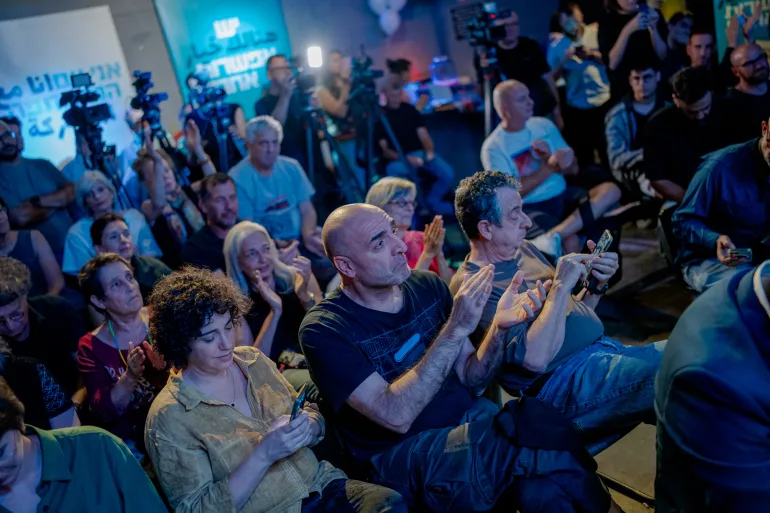
TEL AVIV, ISRAEL - OCTOBER 5: Attendees listen and applaud during an election campaign meeting on October 5, 2026 in Tel Aviv, Israel. The leadership of the Arab-majority joint list parties is announcing their Hebrew-language election campaign to appeal to Jewish voters. Last week, the country's high court overturned a temporary ban on Arab candidates by the Central Elections Committee. Israel is holding legislative elections on October 27th. (Photo by Erik Marmor/Getty Images)
Attendees listen and applaud during an election campaign meeting on October 5, 2026 in Tel Aviv, Israel [Erik Marmor/Getty Images]

Analysts also pointed out that several parties running, including ones that are currently in power and a number that are challenging the current coalition, all advocate for the expulsion of Palestinians from Gaza, as one of the examples of the shift to the right.

Omar Baddar, director of Palthink for Strategic Studies, said the messaging from across the Israeli political and military spectrum in the lead-up to the election shows that there is “a consensus” to continue the attacks on Gaza, where nearly 1,500 have been killed since a “ceasefire” last year.

“They’re using the threats to get more votes,” he said, pointing out to what he described as the radicalisation of the society.

With the election approaching, added Baddar, Israeli leaders are seeking to undo one another: “Who[ever]’s more radical is more likely to get more votes.”

As Ehab Jabareen, a Palestinian political analyst and researcher from inside Israel, writes, “what it means to be ‘right-wing’ in Israel today is above all to take a harder line on Palestinian national claims, security and territorial control.”

He adds: “On security and the Palestinians, a large part of Jewish Israeli politics already works from assumptions that would have been treated as right-wing a generation ago: Deep suspicion of a sovereign Palestinian state, a high tolerance for prolonged military control, and a stronger insistence on Jewish sovereignty as the starting point rather than one value among others.”

Observers and rights groups say the disparity is even evident in the electoral process. A prominent politician and Palestinian citizen of Israel, Sami Abu Shehadeh, has been forced to withdraw from the election over his remarks about the Gaza war, while Israeli far-right leaders have remained untouched despite their violent rhetoric against Palestinians.

Netanyahu’s security credentials endure

Recent polling indicates that the events of October 7 are top of mind for Israelis, who also have questions about who was responsible for the security failures of that day.

Just last month, reports surfaced indicating that Netanyahu had received two separate warnings about an imminent Hamas attack in 2023, from Egypt’s intelligence chief, Abbas Kamel, and United Arab Emirates President Sheikh Mohamed bin Zayed Al Nahyan.

Netanyahu’s two main rivals in the race for prime minister have cited the alleged warnings to call the prime minister “unfit” to remain at the helm of the country.

But Netanyahu has denied suggestions that he had been forewarned about the attack, and the reports do not appear to have had a significant effect on opinion polls.

While October 7 represents a profound rupture in Israelis’ sense of security, public trust in the Netanyahu government had already been badly shaken by its controversial judicial overhaul, introduced when the prime minister’s current coalition first came to power, said Mairav Zonszein, an Israel-Palestine analyst at the International Crisis Group based in Tel Aviv.

Despite these breaches of trust, the Israeli leader retains support.

“Israelis in general still see Netanyahu as kind of the guy on security. And more to the point, they don’t really see an alternative,” Zonszein told Al Jazeera.

A June survey by Mitvim – the Israeli Institute for Regional Foreign Policies found that the Israeli public supports its government’s military and security solutions, and rejects resolving the Palestinian issue and ending the Israeli occupation of Palestinian territory. This is the case even while it has been concerned about international isolation and the decline of Israel’s international standing since the beginning of the genocidal war on Gaza, the survey reported.

Yet Israelis are also increasingly war-weary, even as they back the use of more force. Its troops – stretched between six fronts of war in the last few years – are bearing the brunt of this fatigue in Israeli society.

Israel’s Ministry of Defence said on Tuesday that nearly 30,000 soldiers and security personnel are facing psychological trauma since the war.

The ministry said its rehabilitation department’s budget has increased by 88 percent over the past three years to 10 billion shekels ($3.3m), with the majority supporting treatment for mental health conditions and post-traumatic stress disorder.

As Israel expands, the two-state solution fades

Still, Israel in recent months has been more and more vocal about its expansionist vision, with officials brazenly stating the goal of “Greater Israel”. The claim for the conquest is based on a biblical verse (Genesis 15:18-21).

For decades, Israel has ignored international law in its continuous occupation of Palestinian and Syrian land, and has shown little respect for its neighbours’ sovereignty, occupying more land in Syria, as well as in Lebanon in more recent years.

According to Najar, the political economist, the “complete dehumanisation” of Palestinians as evidenced during the campaign reveal that Gaza “is being presented to Israeli voters not as a catastrophe or a crime for which there must be accountability, but as a blueprint to be repeated elsewhere”.

In southern Lebanon, where Israel has been carrying out near daily attacks and and has occupied large swathes of land, residents have told Al Jazeera they expect little to change even if Netanyahu is defeated in the election.

Netanyahu’s main political challenger, Gadi Eisenkot – head of the Yashar party and former army chief of staff – is the father of the so-called Dahiyeh Doctrine, and is just as hawkish about expansion. That doctrine, since Israel’s war with the Lebanese group Hezbollah in 2006, calls for the use of huge force, even against civilian infrastructure, as a deterrent against enemies and was deployed in Israel’s recent wars, particularly in Beirut’s southern suburbs.

If it were up to Eisenkot, the Lebanon front of war would have never scaled down: He has accused Netanyahu of bowing to US pressure to halt operations in Beirut, and has insisted that the military should be able to attack Hezbollah anywhere in Lebanon.

For Israelis still reeling from the events of October 7, Eisenkot could fill the security void many are feeling, said Zonszein.

“They really … see the world as kind of very hostile towards them, the world not understanding what they went through on October 7, and [therefore why] the need to have these security buffer zones in Lebanon, in Syria, and Gaza,” she said.

A two-state solution to the Israel-Palestine conflict is therefore out of the question, said the analysts – and has not even made a blip of an appearance in campaigning before the election.

The idea first emerged during the Oslo Accords more than 30 years ago, which set out a negotiating process aimed at resolving the Israeli-Palestinian conflict, predicated on the belief that the creation of a Palestinian state alongside Israel was imperative to forge peace.

But since the Oslo process began in 1993, the number of Israeli settlers in the West Bank has ballooned from about 260,000 to more than 700,000, embedded deep inside West Bank areas that would be needed for a contiguous Palestinian state.

“The concept of a two-state solution is currently irrelevant and likely will remain so for another decade or two, if not longer,” said Bergman. “It is unlikely to become a reality in the foreseeable future, as no Israeli leader can propose it to the Israeli public after the events of October 7.”

The only way it could regain prominence is if there is substantial international pressure, including severe sanctions on Israel, and a non-violent intifada, or an uprising by Palestinians, he said.

The outright rejection of Palestinian statehood has simply become much more “acceptable”, said Zonszein.

“There’s several parties who advocate these views, whereas there isn’t a single Jewish Zionist Party that puts the need for a two-state solution or a Palestinian political process at the forefront,” she said.

Taken all together, Israel’s election appears less a demand for change than a further entrenchment of the jingoism that surged after October 7, 2023.

“[There’s] more and more movement towards more military force, more need for pushing the borders … out of a lot of fear that another October 7 could happen,” said Zonszein.

Source link

Cheryl Tweedy makes surprise The Voice UK coaching debut as she ‘saves Saturday night TV’

Cheryl has made a surprise early return to The Voice UK and is set to appear in Saturday night’s episode for the Battle Rounds, joining long-time friend Will.i.am as his assistant coach

Cheryl has made her debut on The Voice UK as a guest mentor. The chart-topper has given fans a first glimpse of her new role as a coach ahead of the show’s 2027 series.

The Girls Aloud star, 43, appeared in the latest episode as the ITV singing competition continues its Battle Rounds, joining her longtime friend Will.i.am to help him decide which contestants deserve a place in the semi-finals.

Cheryl was confirmed as a coach for the next series last month, replacing Sir Tom Jones on the panel. Her appearance this weekend will give viewers an early taste of what to expect when she officially takes up the role. The singer arrived alongside Black Eyed Peas star Will.i.am, 51, looking stylish in a red tasselled leather jacket and light blue flared jeans.

To see more of the stories you love from The Mirror and to find them easily in Google, make us your preferred source. Free and easy to do, just click on the link here to find more from The Mirror at the top of your feed.

The pair embraced as they reunited for filming, having worked together on music projects over the years. Will revealed that he had been trying to have Cheryl join him for the last 13 years. Cheryl knows exactly what it takes to make it in the music industry, having found fame after being selected for Girls Aloud on Popstars: The Rivals in 2002.

Speaking to Team Will, the Call My Name songstress said: “I’m so excited for you. You couldn’t be in better hands than you are with my man Will. Will and I have collaborated a lot over the years, so we know what it’s like for two very different artists to come together. I wish you all the very best for what you’ve got today, and I’m excited to see you all!”

Reflecting on her own experience, having found fame on Popstars, Cheryl said during a solo interview: “I have stood in the shoes that the contestants are standing in, and I know what it feels like to perform in this environment. You’ve just got to know that you’re good, or you wouldn’t be here.”

And fans were overjoyed to see Cheryl back on screens. One said on X, formerly known as Twitter: “Cheryl looks amazing, oh my gosh.” “CHERYL ON #TheVoice Saturday night TV is SO back,” said a second. “Ah I’m buzzing,” commented a third. A fourth exclaimed: “So excited.” “I’m excited to see Cheryl and Will back together,” commented another.

Her appearance marks a return to television after a lengthy break from the spotlight following the death of her former partner, Liam Payne, in October 2024.

The singer had largely stepped back from public life in the wake of the tragedy, making her new coaching role a significant career move. While Cheryl once dominated the music industry and became the first female artist to have five records debut at Number One, her last single, Let You, was released in 2019 and peaked at Number 57 on the Official Charts Company.

Prior to this, her last album, Only Human, which peaked at Number 7, boasted the singles Crazy Stupid Love and Only Human, and was released in November 2014.

Cheryl’s appointment is part of a wider shake-up for The Voice UK, with Stacey Solomon and Alesha Dixon confirmed as the show’s new presenters. The pair will take over from Emma Willis, who is moving on after landing a presenting role on Strictly Come Dancing.

The Voice Australia coach and current Strictly Come Dancing contestant, Delta Goodrem, is helping Kelly after spending eight seasons on the Aussie edition of the programme.

Also, Danny and Tom were joined by their McFly band members Dougie Poynter and Harry Judd as they tried to win The Voice UK two consecutive years in a row following their success with AVA in 2024.

Last Saturday (October 3), the final round of the blind auditions aired, and the coaches finalised their teams, which consist of eight acts each.

Team will.i.am is made up of Diogo Ferreira, Sonna Rele, BMG, Triple Threat, Teodora Sava, Naná Aldrin-Quaye, Ardú, and Bella Popera. Team Kelly has Monique Nicholson-Porter, Ray Gelato, Lascel Wood, Aaren James, Cris Quammie, Samantha Udeke, Turah Sadiq, and Jessica Beth.

Cate McHugh, Vadé Amãlia Estradas, Harry Linacre, Eric & Jensen, Dakari Love, Molly J, Robbie McMinn represent Team Sir Tom and Ellie Harney, Ross McGuire, Ciiara Nyx, Finlay McKillop, Jack Algar, Frank Raven, Regan Preece, Adam Tucker have joined Team Tom and Danny.

The coaches and their advisors will now work with the acts to try to help them secure their place in the competition but not every act can progress.

The Voice UK returns to ITV1 and ITVX on Saturday, October 17 at 8.35pm

Like this story? For more of the latest showbiz news and gossip, follow Mirror Celebs on TikTok , Snapchat , Instagram , Twitter , Facebook , YouTube and Threads .


Source link

Healing waters: 10 of the best spa towns in Europe for a restorative autumn break | Spa breaks

Mariánské Lázně, Czechia

In 2021, Unesco designated 11 historic spa towns across Europe as one transnational world heritage site, recognising their “exceptional testimony to the European spa phenomenon, which gained its highest expression from around 1700 until the 1930s”. This was the original wellness tourism, and these grand health resorts include Bath in England and the town of Spa in Belgium, as well as the west Bohemia spa triangle of Karlovy Vary, Františkovy Lázně and Mariánské Lázně.

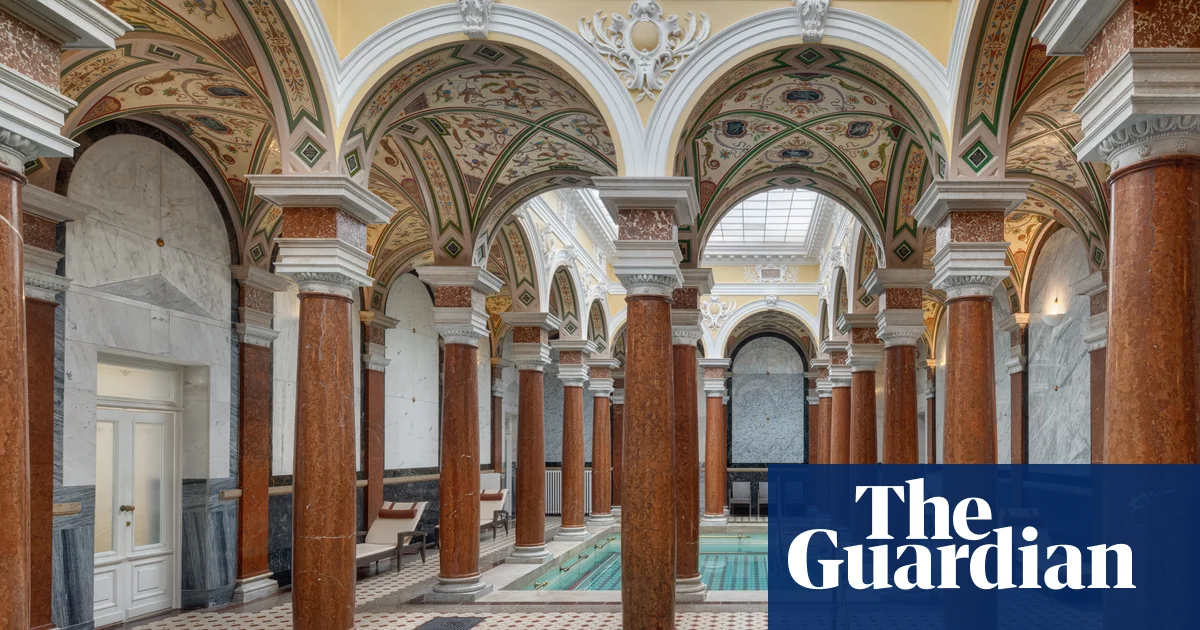
Of that trio, Karlovy Vary is the most well known and within a day trip of Prague, but Mariánské Lázně is arguably the prettiest. The town offers three natural healing traditions: mineral springs, carbon dioxide springs known as Maria’s Gas, and therapeutic peloids (mud and clay). Czech nationals are still prescribed weeks-long spa stays to recover from surgery, severe illness or chronic conditions, but anyone can check into the Nové Lázně hotel (doubles from €234 B&B, including spa access), a canary yellow neo-renaissance confection built in 1896 that faces the central park.

Its spa is a trip back in time: baths surrounded by marble columns and intricately decorated treatment cabins, including one built for King Edward VII, who visited nine times. Join tourists and locals drinking the waters from special porcelain cups while walking along the colonnades, and don’t forget to pair it with a spa wafer – large, thin, crispy confections with sweet fillings such as hazelnut or chocolate. It’s not all virtuous.

Bad Kissingen, Germany

Bad Kissingen in Bavaria is renowned for its architecture. Photograph: Moskwa/Alamy

Germany is home to about 350 designated spa towns, including three of the Unesco Great Spa Towns of Europe: celebrity favourite Baden-Baden, quiet riverside Bad Ems and elegant Bad Kissingen in Bavaria. The latter’s striking architecture is arguably the most interesting of the three, much of the central spa district having been rebuilt by star German architect Max Littmann in the early 20th century. This includes the grand fountain hall, with its stained-glass roof, where Brunnenfrauen (fountain women) dispense different mineral waters from bronze pipes, and the huge basilica-style Wandelhalle, where the town’s spa philharmonic orchestra performs several times a day.

Music has always been part of the spa experience – the Staatsbad Philharmonie Kissingen holds the world record for the most concerts performed in one year (727!) – and the beautiful art nouveau-style Regentenbau houses one of the best concert halls in Europe.

The modern KissSalis Therme (from €19 for two hours) on the southern edge of town is the main public bathhouse today, with indoor and outdoor thermal pools, mud treatments and various – clothing-free – saunas.

At the more classical end of the spa spectrum, the Grand Hotel Kaiserhof Victoria (doubles from €209 B&B, including spa access) sits next door to the Wandelhalle on the town’s Kurgarten. The water used in the spa here is pumped up directly from the brine spring, while the inhalation room has a wooden graduation tower covered in knobbly salt deposits, which mimics the healing effects of mineral-rich sea air.

Bad Wildbad, Germany

A pool at Palais Thermal in Bad Wildbad. Photograph: Cavan Images/Alamy

Deep in the north of the Black Forest, this spa town offers ways of immersing in nature beyond soaking in waters from the thermal springs. Rising above the town, Sommerberg (meaning “summer mountain”) will get pulses racing. A funicular railway whizzes visitors to the top, the starting point for hiking and biking routes. For more heart-pumping views, the accessible Treetop Walk (€12.50) spirals above the dense pine trees to an observation tower 40 metres up, with a tunnel slide back down the middle for extra thrills, while the Wildline suspension bridge (€9.50) – with its 380-metre walkway – arches over the Enz valley for maximum views.

Back in town, there are two thermal baths to dip into: the modern Vital Therme, where those with joint and back problems are prescribed movement therapy and spa treatments (€14 for three hours); and the historic Palais Thermal, where the pools are surrounded by marble pillars, statues of Venus and Moorish tiles (€21 for three hours). Mokni’s Palais Hotel is connected to the Palais Thermal building, meaning guests can pad over in their bathrobes (doubles from €183 B&B, including access to the spa).

Bagnoles-de-l’Orne, France

Château du Gué aux Biches at Bagnoles de l’Orne

Local legend has it that, after many battles, the medieval lord Seigneur Hugues de Tessé freed his faithful warhorse Rapide in Normandy’s Andaines forest to live out the rest of its days in peace. Much to the nobleman’s surprise, the horse later returned to him stronger and full of life, then led his master to the warm, sulphurous waters of Bagnoles’ spring. Centuries later, a spa resort sprang up so the Parisian bourgeoisie could also tap into this fountain of youth, with belle époque villas laid out on the shores of a lake in the middle of the forest (today, it’s also handily less than an hour and a half from the ferry at Caen for British wellness seekers).

That belle époque quartier was the vision of local politician Albert Christophle, whose former hunting lodge on the edge of the village is now the very lovely five-bedroom Château du Gué aux Biches (doubles from €195 B&B).

This summer, its Danish owners, Klaus Bentin and Soren Rasmussen, added a new restaurant in the old kitchen, serving up smørrebrød (open sandwiches).

The hotel has a partnership with the nearby spa at B’O Resort, meaning Klaus or Soren will line up your treatments, and there are bicycles to borrow so you can pedal a couple of kilometres over for that clay body wrap or hydromassage.

The surrounding forest is crisscrossed with hiking, biking and trail running routes. In autumn, take things more meditatively by going mushroom foraging among the more than 1,700 varieties sprouting from the Andaines forest floor.

Bad Gastein, Austria

Felsentherme thermal spa at Bad Gastein, Salzburg province. Photograph: Alamy

This genteel town in the Hohe Tauern Alps was built on water; indeed, a roaring waterfall cascades right through the middle of it. The healing reputation of its radon-rich waters, which bubble up from the town’s thermal springs, saw grand hotels built in the 19th century to house the emperors and aristocrats, writers and thinkers (Sigmund Freud among them) who came to be cured of their ills.

The fashion for “taking the waters” trickled away, but in recent years there’s been something of a revival, with a clutch of new hotels opening. The Cōmodo (doubles from €188 B&B) is one of them, a slick spot refashioned from a 1960s sanatorium. Bedrooms look out over the valley and mountains, as does the thermal water-filled indoor pool. There are several public fountains where you can still drink water straight from the source (warm, slightly salty and metallic tasting), but perhaps more palatable is to soak at the brutalist Felsentherme public bath complex with its numerous pools (€40 for a day pass).

Just as warming – but with fewer health benefits – is a bowl of Kaspressknödelsuppe (beef broth with cheese-infused dumplings) at the cosy cabin of Schafflinger Alm (soups from €4.50, mains from €17) after a bracing hike through the forest or carving up the Schlossalm-Angertal-Stubnerkogel ski area, where the season kicks off in late November.

Piešťany’s Spa Island, Slovakia

Irma Balneotherapy House in Piestany. Photograph: Piestany tourism board

Just before crossing the Colonnade Bridge to get to Piešťany’s Spa Island, there’s a statue of a man breaking his crutch, symbolic of the healing powers of the town’s thermal waters and sulphurous mud, harnessed on this enclave of wellness in the Váh River. The first simple wooden bathhouses were built on the island in 1778, but the opening of the Thermia Palace hotel and its Irma Balneotherapy House in 1912 turned it into a health resort.

Further hotels and spas are dotted between the trees and become increasingly concrete and functional as you get further from the bridge.

The Thermia Palace is still the fanciest option, with a raft of treatment programmes in the spa, from extensive diagnostics and lab tests to mud packs and pools (doubles from €210 half-board, including spa access). The blue-black goop is applied all over the body at a toasty 45C and left for about 10 minutes before being unceremoniously hosed off.

Outside, the spa park also feels restorative, with lily ponds, fountains and free-roaming peacocks.

In town, Elektrárňa Piešťany is a former power plant turned cultural centre that feels surprisingly vital, with film festivals and rock concerts, while the strikingly brutalist House of Arts hosts chamber orchestras and tango music trios.

Rogaška Slatina, Slovenia

The Grand hotel at Rogaška. Photograph: Andrija Majsen/Alamy

This town in eastern Slovenia is famed for Donat Mg, one of the world’s most magnesium-rich mineral waters, traditionally consumed for its digestive benefits. The company now sells millions of bottles of the stuff each year, but here at the source you can sip it for free from the fountains in the Pivnica Drinking Hall – although its salty, fizzy, metallic flavour is something of an acquired taste.

Like other towns of its ilk, Rogaška attracted the great and the good of Europe in the 19th century, and its confection of architecture is testament to that. A short stroll away from the drinking hall, through immaculately clipped gardens, the butter-yellow Grand Hotel Rogaška is straight out of the town’s golden age (doubles from €198 half-board include spa access). Bedrooms are traditional, but the spa has all the bells and whistles, from carbon dioxide baths and mineral water inhalations to reflexology and magnetotherapy.

Somewhat fittingly for a town famous for its drinking water, Rogaška is also known for its glassware – and visitors can tour the Rogaška crystal factory (€12) to see the glass-blowing in action before buying glasses for their Donat Mg from the on-site shop. The surrounding wooded hills are the place for autumn walks.

Salsomaggiore Terme, Italy

Terme Berzieri in Salsomaggiore, Emilia-Romagna. Photograph: Elena Dallari

In Emilia-Romagna’s so-called “food valley”, not far from Parma, this small spa town will help balance out some of that indulgence. Last year, the Italian thermal brand QC Spa of Wonders reopened the beautiful art deco-style Terme Berzieri, where the gilded interiors – all frescoes, mosaics, majolica and stucco – are as much of a draw as the salty spring waters, rich in iodine and bromide (five-hour spa sessions from €62). There’s the usual thermal attractions, as well as a sauna cinema and infinity rooftop pool, while treatments in wooden barrels nod to the area’s winemaking.

Try some of those wines at the Cantina Il Poggio vineyard in the hills outside Salsomaggiore, which produces a range of styles including the local sparkling Malvasia di Candia Aromatica (tastings from €30). Continue the tastings with a visit to a parmigiano reggiano producer, such as Caseificio Ugolotti (tour and tasting €23), before picking up some ham from Parma’s famous La Prosciutteria. Stop for a roast pork sandwich at legendary panini place Pepèn, before feasting your eyes on the Pilotta Palace complex with the Galleria Nazionale, Palatine Library and Farnese theatre, while the opulent Teatro Regio hosts the annual Verdi festival in October. The organic agriturismo Case Zucchi, about a 10-minute drive from Salsomaggiore, makes a suitably foodie base, with bedrooms named after herbs and the breakfast table piled with fresh bread, eggs, ham, cheese and fruit each morning (doubles from £104 B&B).

Caldas de Monchique, Portugal

The terraced fields of Serra de Monchique near Fóia, the highest mountain in the Algarve. Photograph: Image Broker/Alamy

High in the Serra de Monchique mountains, surrounded by cork oak and eucalyptus forests, the whitewashed hill town of Monchique offers a slower-paced autumn escape than the nearby Algarve coast. Its cobbled streets are lined with craft shops, ceramic workshops and simple taverns serving chouriço (smoked sausage) with a small glass of medronho (fruit brandy). In a wooded valley below town, the spa village of Caldas de Monchique is little more than a handful of 19th-century buildings around a shaded square and park, where you can drink slightly warm spring water from the public fountain.

Wallow in the alkaline waters a little longer at Caldas de Monchique Villa Termal Spa Resort (doubles from €84, thermal water circuit £17 for 90 minutes).

The spa offers hydro rituals including a Vichy shower, massage and bath, or thermal water circuits around the pools, sauna and Turkish baths, before a dip in the outdoor pool.

Afterwards, the 1692 restaurant, with its stained-glass windows, dishes up bacalhau à Monchique (salt cod stuffed with chouriço and ham). It’s not far from here to Fóia, the highest mountain in the Algarve at 902 metres. It’s worth the walk to the summit for the views, or hike on a further 2½ miles (4km) to the Barbelote waterfall, which cascades over a rocky cliff face in the wetter months.

Chaves, Portugal

Eco cabins at Pedras Salgadas Spa and Nature Park

There’s a little run of spa towns in the north of Portugal near the Spanish border, a curative route through Pedras Salgadas, Carvalhelhos, Vidago, Carlão and Chaves.

In Chaves, the waters are some of the hottest in Europe, coming out of the ground at a scorching 76C. The Romans built a large therapeutic bathing complex here, that was only rediscovered by accident in 2006 when work began on an underground car park. Now, the free Museu Termas Romanas de Chaves allows visitors to explore the pools and soaking baths, perfectly preserved thanks to an earthquake in the 4th century that sealed them for millennia.

To take the waters today, head to the Aquae Salutem Thermal Complex (€30 for 90 minutes), a circuit of outdoor pools, saunas, steam and showers that opened in 2025.

About half an hour down the road, the Pedras Salgadas Spa and Nature Park sits on the fringes of one of the other small spa towns. The owners have built 18 eco-houses and treehouses on stilts (doubles from £171 B&B, spa access additional £17 per room) among the pine trees at the source.

Guests can do a spot of forest bathing before dipping into the spa – redesigned by one of Portugal’s most famous architects, Álvaro Siza – for a thermal water hydro-massage, or wander between the pink spring pavilions in the park. Pedras Salgadas is also a popular, naturally sparkling mineral water brand.


Source link

From Depression to Enormous Wealth : War Turned Impoverished U.S. Into a Superpower

In September of 1939, just a week after World War II had erupted in Europe, The American Home advertised why a housewives magazine like itself mattered in a time of distant trouble. “Hitler threatens Europe,” the ad proclaimed, “but Betty Havens’ husband’s boss is coming to dinner–and that’s what really counts.”

The ad fixed an awful truth: World War II, the most fearsome and bloody cataclysm of world history, caught America napping and unawares. An enervated giant, the United States in 1939 was weak, poor, isolated and ignorant of the rest of the world. Eighteen other countries–even Turkey–had more soldiers than the United States. The American Army outnumbered the Bulgarian army, but only by 23,000.

Americans were so oblivious of events abroad that James McClure Clarke and his roommate left for a bicycle trip through Europe in the summer of 1939 just after their graduation from Princeton University.

“That was the sort of thing a lot of young men did,” Clarke, now a 72-year-old Democratic congressman from North Carolina, recalled in his Capitol Hill office recently.

Unaware that war was imminent, they cycled into Germany.

“On every train, at every station,” he said, “there were German soldiers. And if you greeted anybody, they would ‘Heil Hitler.’ And even when we climbed in the mountains, you would see young people, Boy Scout age, groups of them, and they would raise their hands, ‘Heil Hitler.’ When we were in the Black Forest, I remember seeing a big sign put up there by Hitler saying the Jew is our enemy and then talking about the Jew in North America, listing Franklin D. Roosevelt and Henry Morgenthau and so forth.”

That sign, of course, told a lie. Aside from its virulent anti-Semitism, it was wrong about Roosevelt, although correct about Secretary of the Treasury Morgenthau’s Jewishness. But for Clarke, it hit home: Morgenthau’s son was a Princeton classmate.

War was declared before Clarke and his friend could return to the United States. They boarded the British liner Antonio during the first week of the war. The Antonio’s sister ship, the Athenia, leaving only a few days earlier, had been stalked by a German U-boat and torpedoed. More than a hundred people died when the ship sank in the Atlantic.

Did these experiences make Clarke and others like him more vitally concerned about events in Europe?

“Not much, I’m afraid,” Clarke replied. “I think it took a while for America to wake up. It took Pearl Harbor.”

Yet, once America woke up, it somehow transformed itself swiftly into an enormous, engulfing and astounding dynamo that would shake and cow the world. By the end of World War II, a nation once bereft of military strength had turned itself into the most awesome military power ever seen; a nation once contemptuous of entangling alliances had turned itself, however reluctantly, into a natural leader of grand alliances, and a nation still impoverished and reeling from the Great Depression had turned itself into an Olympus of wealth.

Moreover, mobilization for war altered society in quiet but profound ways that would not make themselves obvious for two decades or more. Rural blacks migrating to the cities or fighting in American armies would never go back easily to sharecropping and oppression.

“Rosie the Riveter,” the popular song heroine working in a war factory while her boyfriend fought in the Marines, would return to the kitchen after the war, but her legacy would lead to the women’s liberation movement.

400,000 Lost Lives

Compared to the carnage suffered elsewhere, U.S. casualties in World War II were, relatively speaking, light. More than 400,000 military personnel lost their lives–about 292,000 in combat–a tragic and bitter waste, but no more than a small statistic when measured against the 50 million Europeans and Asians slaughtered. There were more American civilian deaths from pneumonia and tuberculosis during the war than deaths on the battlefield. The wartime population of the United States, in fact, increased by a healthy 6%. The enemy inflicted negligible damage on the American mainland in a handful of incidents, and the United States was the only belligerent to end the war richer than before.

Americans owed the relative comfort and low cost of their victory to geographic distance, natural resources and a good deal of luck. But many preferred to believe that God-given American pluck and ingenuity had counted far more. While many Europeans agitated for radical changes in the political systems that had driven them to Fascism and war, Americans felt more pride in their own system than ever before. An era of great self-confidence came after the war.

“American experience,” wrote Henry R. Luce in a Life magazine editorial, “is the key to the future.”

Looking back, the year 1939 now seems like a last, lost age of innocence in America, undarkened by the clouds in Europe. The Hit Parade was led by a song that asked:

Jeepers Creepers, where’d you get those peepers?

Jeepers Creepers, where’d you get those eyes?

A 23-year-old vocalist named Frank Sinatra joined the Harry James band. Only 3% of Americans earned enough money to pay income tax. Almost 50 million people glimpsed the wondrous sleek highways and blight-free cities of the future in the General Motors Futurama pavilion at the New York World’s Fair. New Pontiacs sold for $862 and Florsheim shoes for $8.75.

Shirley Temple and Clark Gable were the biggest box office stars of the year. Hoping to do something about what it called “our national shame,” Standard Plumbing Fixtures reported in its advertisements that 15 out of 100 homes in 213 American cities still had no indoor toilets. Lou Gehrig retired from the Yankees, and Ted Williams joined the Red Sox.

The New York Telephone Co. explained that it did not hire Jewish women as operators because their arms were too short to operate phone equipment. Two new products–DDT and nylon stockings–were introduced. “Gone With The Wind” premiered in a banner movie year that included “Stagecoach,” “Wuthering Heights,” “Four Feathers,” “The Wizard of Oz” and “Ninotchka.” Pepsi-Cola challenged Coca-Cola with a catchy jingle:

Pepsi – Cola hits the spot, 12 full ounces that’s a lot ;

Twice as much for a nickel too, Pepsi – Cola is the drink for you.

The war probably left the United States with no more dramatic legacy than its transformation from unabashed isolationism to eventual guardian of the Free World. The day war erupted in Europe, Washington correspondent Phelps Adams asked President Roosevelt in his crowded White House office, “Mr. President, can we stay out of it?”

The President, who had been awakened at 2:50 a.m. with the news of the war, sat silently, his eyes cast downward, for several long moments, and then replied solemnly, “I not only sincerely hope so, but I believe we can, and every effort will be made to do so.”

Later, Roosevelt, sounding more firmly convinced that America could avoid war, warned on radio, “Let no man or woman thoughtlessly or falsely talk of America sending its armies to European fields.”

As far as many Americans were concerned, Europe had botched the peace cemented for them by American intervention in World War I. They were in no mood to get involved again. Sen. Hiram Johnson of California admonished Americans against heeding the echoes of the First World War. “Beware the words ‘We cannot keep out,’ ‘Our entry into the war is inevitable,’ ‘We must fight to preserve democracy’ and all the Devil’s messages we heard 20 years ago,” he said.

Sen. Arthur Vandenburg boasted: “My passion is to keep America out of other people’s wars.”

Feted in Germany

Charles A. Lindbergh, who had touched the romantic fancy of both Europe and America with his solo flight across the Atlantic in 1927 and had been feted in Nazi Germany, told Americans at many isolationist rallies that a Nazi victory in Europe would not hurt the American way of life.

The isolationist mood was so strong that Roosevelt, accused by Republican candidate Wendell L. Wilkie of dragging America into war, pledged in a 1940 presidential election rally: “I have said this before, but I shall say it again and again and again: Your boys are not going to be sent into any foreign wars.”

Many skeptics believed that he never intended to keep that pledge. But the attack on Pearl Harbor in December, 1941, demolished the issue. With their infamous bombing of American territory and ships and citizens, the Japanese had turned World War II into an American war, not another people’s war, not a foreign war.

At the end of the war, no one could deny the United States the status of a superpower, bristling with more military and economic strength than any other country. It had led its allies to victory over Nazi Germany, Fascist Italy and militaristic Japan, and it now had the power and influence to lead much of the world in peace as well. It was reluctant to do so at first, but it finally faced the reality wrought by World War II: a world divided into two hostile camps led by superpowers, the United States and the Soviet Union, once allied against the Axis.

“In 1945,” recalled Don Cook, the 69-year-old retired foreign correspondent who wrote “Forging the Alliance,” a recent history of the founding of the North Atlantic Treaty Organization, “you could never have gotten a two-thirds majority in the Senate for entering an alliance with Europe. The rump element of isolationism in the United States was still extremely strong and still had electoral appeal.

“I knew most of the isolationist senators because I had covered the Senate in the prewar period. The extent of their conversion from isolationism was a reluctant readiness to get into the United Nations. They weren’t going to repeat the mistake after World War I of not joining the League of Nations. But the United States had no intention of using military force in its role in the world. The senators had not reached the point of committing our power.”

Yet, in five years, the United States learned to commit its power and entangle itself in Europe and elsewhere. The Truman Doctrine, the Marshall Plan, the Berlin Airlift, the NATO treaty and the Korean War followed swiftly. By 1950, isolationism was dead.

“This may have been the first real major sweeping change in foreign policy since the founding of America,” said Cook.

World War II also swept the United States into the terrors of the Nuclear Age, for much of America’s immense new power came from its monopoly of nuclear bombs, the kind that destroyed Hiroshima and Nagasaki in 1945 and brought the war to a close.

Refugee Scientists

That short-lived monopoly–the Soviet Union developed its own atomic bomb four years later–came out of the prescience of refugee scientists living in the United States in 1939. Unlike other Americans, they could not ignore the awful horror of Adolf Hitler, for they had fled from him. These scientists knew that scientific research had made an atomic weapon feasible and that, though Hitler had driven many scientists away in his obsession for ethnic purity, enough scientists remained in Germany to create a bomb that might ensure his infernal domination of this planet.

Three Hungarian refugee scientists–Leo Szilard, Eugene Wigner and Edward Teller–met with German-born Albert Einstein, probably the world’s best-known physicist, in Princeton in 1939 and urged him to write Roosevelt about the need for an American program to build an atomic bomb.

In a now famous letter, dated one month before the outbreak of the war in Europe, Einstein told Roosevelt that recent scientific research indicated “that it may become possible to set up a nuclear chain reaction in a large mass of uranium, by which vast amounts of power and large quantities of new radium-like elements would be generated.”

“This new phenomenon,” Einstein went on, “would also lead to the construction of bombs, and it is conceivable–though much less certain–that extremely powerful bombs of a new type may thus be constructed.”

It is unclear exactly what role Einstein’s letter played in the President’s decision, but Roosevelt finally ordered an all-out program known as the Manhattan Project in 1942 to develop an atomic bomb. American scientists, many of them refugees from Hitler, won the race with the German scientists but not in time to use the terrible weapon against Nazi Germany. The first and, thus far, only nuclear devastation in history, came in the American bombing of the two Japanese cities in August, 1945. The precarious reality of the Nuclear Age has governed American foreign policy ever since.

Most Americans now are too young to remember how poor their parents and grandparents were half a century ago. It was no accident that John Steinbeck’s “The Grapes of Wrath,” a long novel about impoverished Oklahoma farmers trekking to California, selling for $2.75 a copy, led the best-seller list in 1939. The Great Depression of the 1930s had weakened the United States far more than any country in Europe.

Despite all Roosevelt’s New Deal programs, 10 million people were unemployed in 1939, more than 15% of the work force. The American share of world manufacturing was lower than it had been at any time since 1910. At least one-third of Americans lived in or near poverty.

But the United States had enormous productive potential. In 1938, for example, two-thirds of its steel plants were idle. In 1939, it was spending less than 2% of its gross national product on defense. If Americans had the will to harness the potential, they could create a colossus of fearful military might and of enormous wealth. Once the Japanese attacked Pearl Harbor, Americans showed that will.

At the end of the war, the American economy overshadowed the economies of the rest of the world in a show of relative wealth never seen before. Americans had a higher standard of living than any other people in the world and produced more goods per capita than anyone else. Half of the world’s manufacturing now took place within the United States. Practically any American who wanted a job had one.

Some Americans feared that unemployment and depression would return after the demobilization of the armed forces. But, though the economy would experience ups and downs and though thick pockets of poverty would persist, especially for blacks, most Americans have lived for the last 50 years in an era of bounding prosperity.

World War II changed the United States in other, less obvious ways as well. In 1939, the Daughters of the American Revolution, citing the local customs of Washington, refused to allow the reknowned black opera singer Marian Anderson to sing in the DAR’s Constitution Hall in Washington. The blatant refusal struck many Americans as scandalous, and the federal government let Anderson sing instead, with Mrs. Eleanor Roosevelt and other prominent white Americans in attendance, on the steps of the Lincoln Memorial.

Yet the shame of the DAR refusal did not change most American attitudes toward blacks. Benny Carter, the 82-year-old black jazz saxophonist and composer, recalls what it was like taking his big band around the United States during World War II.

‘No Black Hotels’

“We weren’t interested in getting into any serious incidents, but it was the same old thing,” Carter said recently. “My bands were mostly black. There might be two out of 17 who were not minority musicians. We had problems about where to stay in the South. We stayed mainly in the homes of people–what they would consider bed and breakfast places now. There were no black hotels, and we weren’t welcome in the others.”

As industries girded for war, they tried to hire as few blacks as possible. In 1941, for example, Douglas Aircraft had only 10 blacks among its 33,000 employees. Under the threat of black demonstrations, Roosevelt created a Fair Employment Practices Committee in 1941 to ensure some kind of fairness in hiring.

The committee had little power, but its creation was looked on later as a significant first step toward civil rights. As the war progressed, blacks were drafted into the army or lured to jobs in the North. That began the enormous migration of blacks out of rural America into the cities of both the South and the North, making the problems of this repressed minority national rather than regional. Rioting soon erupted in Detroit. By 1945, the status of American blacks had not improved very much, but the war had laid the seeds for the civil rights movement that followed.

For women, the war offered, but only briefly, an immense opportunity. The Great Depression had made it even more difficult for women to work. With millions of men unemployed, a working woman was looked on by many as a usurper–snatching a job out of the hands of some family’s breadwinner. Public opinion polls showed that most Americans in 1939 would support laws to prohibit the employment of women whose husbands earned more than $1,600 a year.

The war changed all that.

Factories needed women to replace the millions of men drafted into the armed services. The number of women in the labor force increased during the war to 19 million from 14 million. Nearly half of all American women worked at some time from 1941 to 1945. Many took jobs once typed as masculine: riveting, welding and operating cranes.

There was a good deal of male anxiety about this. Columnist Max Lerner complained that the war may have created “a new Amazon” who could “outdrink, out-swear and out-swagger the men.” Social workers and journalists began to blame an increase in juvenile delinquency on absent, working mothers.

When the war ended, millions of women left or lost their jobs to make room for the returning men. In Los Angeles, for example, the proportion of women working in the aircraft industry dropped from a high of 40% during the war to 18% in 1946. The sexual division of labor reasserted itself, and many women were forced back into lower paying “women’s work.”

Yet, as Secretary of Interior Harold Ickes predicted in a magazine article in 1943, the role of women would never be the same.

“I think this is as good a time as any . . . to warn men,” he wrote, “that when the war is over, the going will be a lot tougher, because they will have to compete with women whose eyes have been opened to their greatest economic potentialities.”

After the war, the numbers of working women never dropped to the levels of the Depression and, in a decade, started to increase to levels well beyond what had been reached during the war. There is little doubt that the ground for the women’s liberation movement was set during World War II.

When the war ended, a nation that had produced 71,000 naval craft, 300,000 aircraft and 2.5 million military trucks now hungered for more ordinary goods. Radio still dominated popular culture, but television, delayed by the war, would come swiftly. New products such as dishwashers, garbage disposal units and aerosol sprays reached the market. Teen-agers, whose families could hardly afford to buy them toys five years earlier, now had loose change in their pockets and wanted records. By 1945, the sales of records had increased tenfold in a decade.

No one expected the United States to return to 1939. No one wanted to.

“For those of us like myself who came out of high school in the Depression,” said Cook, “the war offered us a sense of adventure and change. . . . I think practically anybody of my generation would say that the war was decisive in framing one’s life and one’s future. And, in varying degrees, a considerable majority would say these were the best years of our lives. They gave us momentum. . . . It was tragic for a number of people . . . but there was an exhilaration to those times.”

“One of the best things you realized (serving in the wartime military) was the great diversity of the country. Gosh, here you are thrown in with guys from Georgia Tech, Louisiana State, Iowa–it just made you realize what a big country it was and how a relatively small percentage of the world the Ivy League was. . . . And it was also good for making some of us more confident in being able to stand on your own.” North Carolinians returning from the war “realized there was a world beyond the mountains. They went all over the place. They went to the Pacific, they went to Europe, they were prisoners of war. It was an eye opener to them.”

— Rep. James McClure Clarke (D-N.C.), 72, a Princeton graduate who served as a naval officer on Guadalcanal during the war.

“Our soldiers were not fighting to make the world safe for democracy like in World War I. This was much more of a crusade of our own. . . . The war took over everyone’s life whether you were drafted or not. It had this sense of adventure. I don’t like the word ‘purity,’ but the war had an uplift about it, because we were fighting Nazis and fighting for ideals. It had an idealism about it.”

— Don Cook, 69, author and journalist, who covered World War II in Europe and spent 43 years as a foreign correspondent for the New York Herald Tribune and Los Angeles Times.

U.S. ACTIVE MILITARY PERSONNEL

Army Navy Marines Total 1939 189,839 125,202 19,432 334,473 1940 269,023 160,997 28,345 458,365 1941 1,462,315 284,427 54,359 1,801,101 1942 3,075,608 640,570 142,613 3,858,791 1943 6,994,472 1,741,750 308,523 9,044,745 1944 7,994,750 2,981,365 475,604 11,451,719 1945 8,267,958 3,380,817 474,680 12,123,455

Source: World War II Almanac
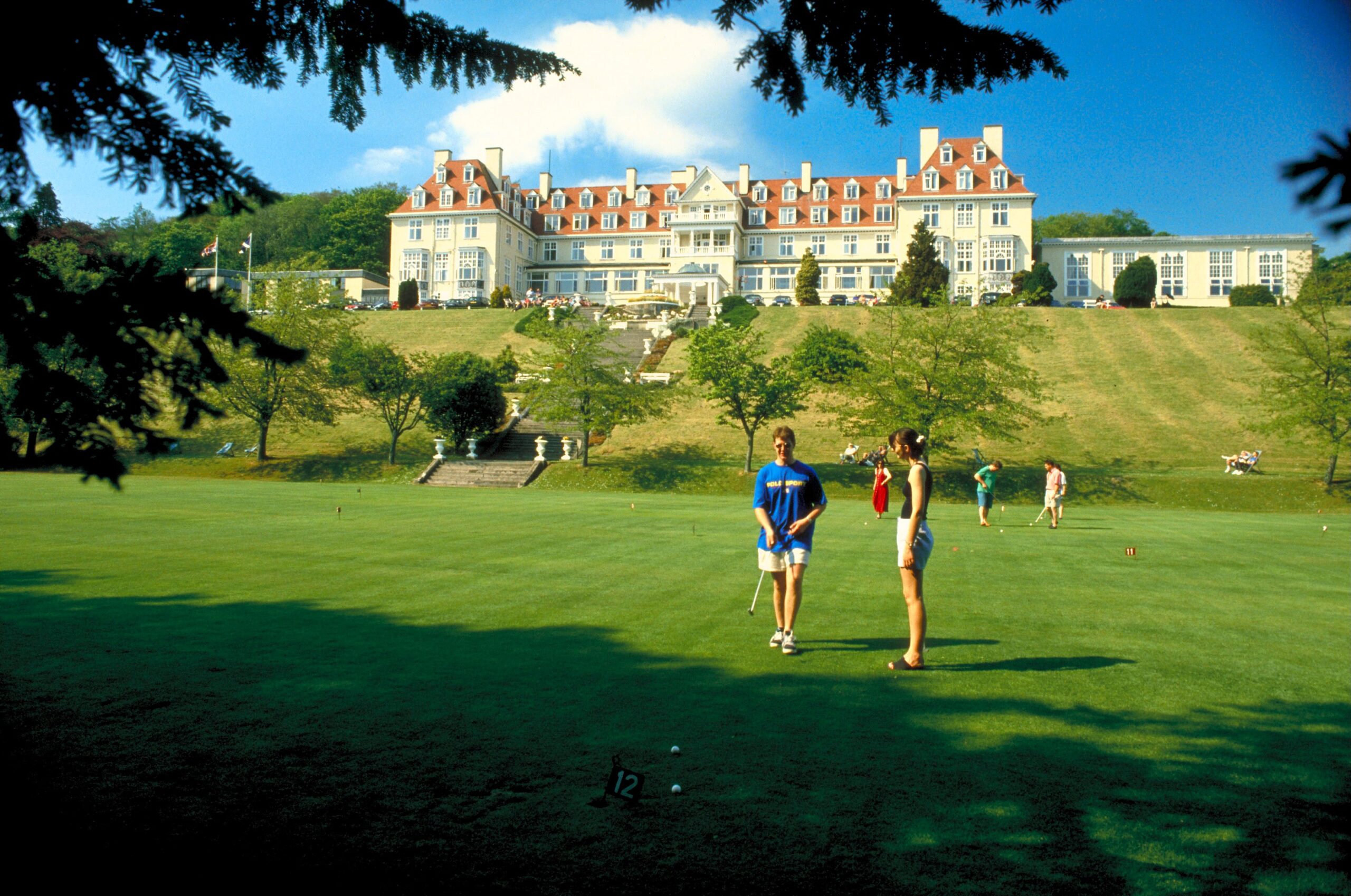
Source link

Hurricane Isaias kills four, leaves 650,000 without power in Florida | Climate Crisis

Hurricane Isaias kills four, leaves 650,000 without power in Florida

Hurricane Isaias has killed four people and left more than 650,000 people without power, with Pensacola, Florida, among the hardest-hit areas, as officials warn of further flooding from heavy rainfall.

Source link