Month: October 2026

‘Who will represent us?’ Palestinians react to election delay | Gaza News

Palestinians have reacted to President Mahmoud Abbas’ decision to postpone the Palestinian legislative elections to September 2027, citing Israeli restrictions and conditions in Gaza and the occupied West Bank.

Source link

Australia v South Africa: Pace attack and Steve Smith put tourists in charge

First Test, Durban (day three of five)

Australia 390 & 33-0: Maddinson 17*

South Africa 284: Bedingham 49; Cummins 3-54

Australia lead by 139 runs

Scorecard

Australia’s modern Test side remain a fascinating one to unpick.

Viewed by many in England as there for the taking in last winter’s Ashes despite a 4-1 win, they are also labelled too old by many observers at home.

The victims of recent shock defeats by West Indies and Bangladesh, they are still unbeaten in their past nine Test series.

But while their struggling batting line-up was bailed out by Matt Renshaw across the first two days of the first Test in Durban, they took control over South Africa on day three in an all-too familiar way.

Nine years after they first appeared together as Australia’s bowling quartet, Mitchell Starc, Josh Hazlewood, Pat Cummins and Nathan Lyon produced their latest relentless performance to dismiss South Africa for 284. There was even some magic from Steve Smith thrown in too.

Cummins took three wickets, Starc, Hazlewood and Lyon two apiece, in doing so brushing off any doubts about their effectiveness at the start of a run of Tests against the world Test champions, in-form New Zealand, India and England.

Source link

Inside Michael Douglas’s new memoir: Secret affairs, on-set battles and family secrets

Movie stars are an endangered species. They still exist, sure. Their beautiful faces still fill 50-foot screens, beaming down on us. Yet, there is a shortage of, say, Michael Douglas. A man who, over the span of decades, played an American president, a troubled detective, and a Wall Street tycoon so convincingly that the FBI recruited the actor to do a PSA for investment bankers about the perils of financial fraud.

On the Shelf

One Helluva Ride

By Michael Douglas
Grand Central Publishing: 496 pages, $35

If you buy books linked on our site, The Times may earn a commission from Bookshop.org, whose fees support independent bookstores.

The night before I meet Michael Douglas on Zoom, I have a hard time sleeping. I want to be well-rested before I meet the leading man — perhaps one of the last leading men from an era in Hollywood that felt limitless. What do I mean by that? He’ll tell you. His new memoir details his movie-making career as a prolific producer and actor, along with his affair with his “Romancing the Stone” co-star Kathleen Turner, mudslides in Mexico, snorting cocaine with O.J. Simpson, encounters with Princess Diana and screaming matches with Paul Verhoeven that end in blood. In short: the life of a movie star.

Michael Douglas in New York City

“People say to me: Michael Douglas. When I see your name, I don’t know what I’m going to get, but I know it’s going to be good,” Michael Douglas says.

(David Urbanke / For The Times)

Halfway through our conversation, something unanticipated happens: Douglas reveals that he doesn’t quite see himself as a movie star. After gentle pushback, he elaborates. Instead, Douglas sees himself as a chameleon.

“People say to me: Michael Douglas. When I see your name, I don’t know what I’m going to get, but I know it’s going to be good,” he says.

He’s speaking from his home in New York. Behind him is a moody 18th-century Orientalist painting, its scene too indistinct for me to make out. His smiling face — which, like most American moviegoers, I had watched 50 feet tall in the dark — glows with warmth even on my laptop screen. It seems abnormal even to witness him in miniature.

To be clear: Michael Douglas is a movie star, whether or not he wants to cop to it over Zoom. It’s in his blood. His father, Kirk Douglas — born Issur Danielovitch to Russian Jewish immigrant parents — was a legendary actor whose shadow Douglas struggled to escape, as he details in the early chapters of his memoir. He spent his childhood on movie sets, watching his father spar with iconic directors like Stanley Kubrick. Michael Douglas was subject to violent and angry outbursts as well. “Dad’s volatility kept us on edge,” he writes. He felt suffocated by his father’s legacy, often hoping to shake the title of “Kirk Douglas’ son.”

Early in his career, Douglas left his starring role on TV’s “The Streets of San Francisco” after producing his first film, “One Flew Over the Cuckoo’s Nest,” which became a breakout success. On that film, he had to deliver the shattering news to his father that he was too old to play the lead — essentially, firing his father from his dream role. It was a betrayal. Instead, the role went to Jack Nicholson, who would later win an Academy Award for his humanizing portrayal of Randle McMurphy. The film won multiple Academy Awards, launching Douglas’ career as a heavyweight producer and later an actor. Escaping the shadow of being Kirk Douglas’ son has been a lifelong battle for the actor.

"One Helluva Ride" by Michael Douglas

(Grand Central Publishing)

Occasionally, inheritance can be a burden. In his own life, Douglas details how he was a distracted father and husband who lost sight of his son, Cameron Douglas. During Cameron’s childhood, Douglas was elsewhere — on location in the Mexican jungle in “Romancing the Stone,” then a disastrous film production in Morocco for “Jewel of the Nile” that included a fatal plane crash that resulted in three crew members’ deaths. To cope with the breakneck pace of show business, Douglas sought refuge in women, cocaine and work.

Cameron’s troubled youth reached a crescendo when he was sentenced to five years in federal prison for drug smuggling, with an additional sentence for drug possession in prison — serving seven years in the end. It was enormously painful for Douglas, who also struggled with addiction, and had sought out treatment to provide an example to his son.

In a late chapter, he recalls confiding in Rob Reiner, who also had a son who struggled with addiction issues. In the memoir, Douglas addresses the killing of Rob and Michelle Reiner in December 2025; their son Nick has been charged with murder. “We both had sons with serious drug issues and we both, at times, had been at the end of our rope,” Douglas writes. “It was a heartbreaking confessional for us, but I know we gave each other some measure of comfort during the hard times.”

Why trudge through movie history, turning over every stone and every wound, in a nearly 500-page memoir? Because, according to Douglas, it’s time.

“Your 80s may be a good time to share,” the actor says, who recently turned 82. “People interested in movies, we give them a certain insight into the process, and maybe they could learn something. For others, it’s just gossip.” His battle with Stage 4 oral cancer brought the contours of his life into stark relief, sharpened by seven weeks of radiation and chemotherapy. His official diagnosis was tongue cancer, but he told the public he had throat cancer, hoping to stall speculation in the press about the possibility of disfigurement — and, more specifically, the prospect of losing his tongue. It was isolating, and Shane Salerno — the memoir’s co-author — stayed by Douglas’ side.

 Michael Douglas

Michael Douglas.

(David Urbanke / For The Times)

As much as Douglas’ memoir, “One Helluva Ride,” is a revealing and delightful account of a life in show business, it is also a love letter to California — a place where Douglas spent much of his adult life, beginning at UC Santa Barbara. The college travel brochure read: campus by the sea. “I remember the cover of it was a guy walking down the beach with a surfboard, two girls in two-piece bathing suits. In 1963, I never saw a two-piece bathing suit back east.” He was sold.

The California years made an impression. Douglas is still, at heart, a hippie. Raised in stiff East Coast prep culture, he was reborn in the California sunshine. “I transferred into becoming a hippie, influenced by the Maharishi Mahesh Yogi, hallucinatory drugs, and the world that existed in the early ‘60s in San Francisco.”

Strangely, Douglas argued that some of the utopic sentiments of the 1960s are returning. “People are beginning to look back at that time, and realize how important family is — cooperation, sharing,” he says. “Socialism is not a four-letter word or something that’s terrible. There are other things to pursue in life other than just making money.”

"Your 80s may be a good time to share," Michael Douglas says.

“Your 80s may be a good time to share,” Michael Douglas says.

(David Urbanke / For The Times)

Like the characters he portrayed, Douglas is far from perfect. He admits that he struggled — in his first marriage, and later as a father. After marrying Diandra Luker, Douglas was unfaithful, having relationships with co-stars, most notably Turner on the set of “Romancing the Stone” in the Mexican jungle. The two denied the relationship for years. Now, with Turner’s blessing, Douglas writes about their involvement in his memoir.

Before Turner, there was Diane Thomas, the film’s waitress-turned-screenwriter, with whom Douglas had an affair. Thomas’ life was tragically cut short in a car accident involving a Porsche that Douglas had gifted her.

Then there were the rumors. On the set of “Basic Instinct,” some speculated that Douglas and Sharon Stone were having an affair. They weren’t, he explains. Douglas was instead locked in a power struggle with director Verhoeven, who, during one particularly heated argument with the actor, suffered a burst artery in his nose, turning the confrontation into a bloody scene. Douglas, meanwhile, was involved with another co-star, Jeanne Tripplehorn. “They were so focused on a possible relationship between Sharon and me, they missed the real relationship happening between me and Jeanne,” he writes.

When he and his current wife, actor Catherine Zeta-Jones, made it official, Douglas went to the other room to make breakup calls to five other women. (By this point in the memoir, Douglas has enough goodwill to pass this off as charming.) “From the moment I met Catherine, and we formed our family, I was a new man,” he writes.

The memoir enshrines Douglas’ petty show-business grievances too: a repaired grudge against David Letterman, a TV co-star who stole his longtime girlfriend, and a bouquet sent to Julia Roberts to apologize for his drunken buffoonery. In Douglas’ words: “There’s two or three people that I share my hostilities with.” He clashed with Brian De Palma, who was originally attached to direct “Fatal Attraction” and tried to have Douglas fired. De Palma underestimated Douglas and was replaced by Adrian Lyne. Years later, De Palma apologized, but Douglas rejected it.

It is impossible to tell the story of Douglas’ career without the women he encountered. The films he championed helped establish a new type of female lead — in all their powerful, morally ambiguous and deranged glory. “An actress was not allowed to play a villain,” he says. In “One Flew Over the Cuckoo’s Nest,” the actor struggled to cast Nurse Ratched. “A whole number of leading actresses turned that part down until we found Louise Fletcher, who went on to win an Oscar.”

For Glenn Close, Sharon Stone and Kathleen Turner, acting opposite Michael Douglas was transformative. After her role as a murderous, sex-crazed bisexual in “Basic Instinct,” Stone became one of the biggest stars of the 1990s and earned an Oscar nomination for Martin Scorsese’s “Casino.” Close‘s portrayal of the mistress-turned-lovesick psychopath in “Fatal Attraction” earned the actor her first lead Oscar nomination after three supporting nods. Turner went from being primarily known as the sexy femme fatale of “Body Heat” to a Golden Globe-winning star with box-office clout after her collaboration with Douglas. Sure, she sued him, too, but their friendship survived.

However, it wasn’t until his role as Gordon Gekko, the fast-talking, impulsive tycoon in 1987’s “Wall Street,” that Douglas was in full force, winning an Academy Award for lead actor. Directed by Vietnam veteran Oliver Stone, Douglas delivered an unforgettable performance about the dangers of unchecked capitalism and greed. At an early New York screening, Douglas recalls Wall Street traders being stunned by the film’s stinging accuracy. “A lot of the Wall Street characters were there, very cocky at the time; they all were shocked because we caught them.”

To his surprise, Wall Street financiers approached him on the street to praise Gekko — anointing him as their hero. “I said, ‘I was the villain.’ ‘No, no, no,’” he said. “So it showed me a lot.”

It speaks to Douglas’ gifts as an actor that he could transcend the caricature of white male entitlement he portrayed with such precision. In “Falling Down,” filmed during the 1992 uprising triggered by the Rodney King verdict, Douglas plays an unemployed defense worker, a man so consumed by disillusionment and blinded by his own sense of victimhood that he cannot recognize the harm he inflicts on others. The character would prove eerily prescient, anticipating an archetype that would take shape in the decades to come. An entire generation mistaking the actor’s brilliance as an invitation.

Perhaps that is the strange thing about being a movie star: Audiences decide who you are, and what you mean to them. For a chameleon, an actor who spent a lifetime resisting other people’s definitions of him, that might be the ultimate paradox.

As our conversation winds down, I remind him of his immense contributions to filmmaking, through producing and acting. It seems redundant, but I say it anyway. His response is polite.

“Quirky,” he said. “‘Falling Down,’ ‘The War of the Roses’ — I love those quirky films.”

“I’m proud of my movies,” he says. “I’m very proud of my movies.”

Connors is a culture journalist in L.A. She covers books, food, entertainment and offbeat Los Angeles. She’s currently at work on a book of essays about tourism in all its forms.

Source link

Dodgers add Justin Wrobleski to NLCS roster and drop Hyeseong Kim

The Dodgers added left-handed reliever Justin Wrobleski to the National League Championship Series roster on Sunday, bolstering their bullpen with a pitcher who can cover multiple innings, as they take on the Milwaukee Brewers, the best team in the regular season.

In the Dodgers’ first best-of-seven series of the postseason, they will carry 13 pitchers and 13 position players — one more pitcher and one fewer position player than the previous round.

To even the balance, they left pinch-runner/defensive replacement Hyeseong Kim off the NLCS roster. Kim appeared in just one game in the NLDS, on defense in the ninth inning of Game 4.

Wrobleski was an All-Star for his first-half performance (2.69 ERA). But an up and down second half included a short stint in the injured list, as the team kept an eye on his workload, and a move to the bullpen. He finished the season strong, allowing just one run in his last eight appearances (8 ⅔ innings).

“Length, having a guy that can go two or three, is something where you essentially protect downside on the pitching,” manager Dave Roberts said Saturday when asked what traits the Dodgers would prioritize when considering which pitcher to add. “As far as handedness, they’re pretty balanced, so that really doesn’t come into play. For us, it’s more of who can take down a couple innings.”

Here’s the Dodgers’ full NLCS roster:

Infielders (6)

1B Freddie Freeman

3B Max Muncy

SS Mookie Betts

IF Miguel Rojas

UTL Kiké Hernández

UTL Tommy Edman

Outfielders (3)

LF Teoscar Hernández

CF Andy Pages

RF Kyle Tucker

Designated hitters (2)

DH Shohei Ohtani

PH Josue De Paula

Catchers (2)

C Will Smith

C Hunter Feduccia

Starting pitchers (4)

LHP Tarik Skubal

LHP Blake Snell

RHP Yoshinobu Yamamoto

RHP Tyler Glasnow

Relief pitchers (9)

RHP Roki Sasaki

RHP Edwin Díaz

RHP Edgardo Henriquez

RHP Evan Phillips

RHP Brock Stewart

LHP Tanner Scott

LHP Alex Vesia

LHP Kris Bubic

LHP Justin Wrobleski

Source link

At least five people missing as flash floods in Nepal sweep away houses | Climate Crisis News

Authorities urge villagers to move to safer places after a river bursts its banks in the central part of the country.

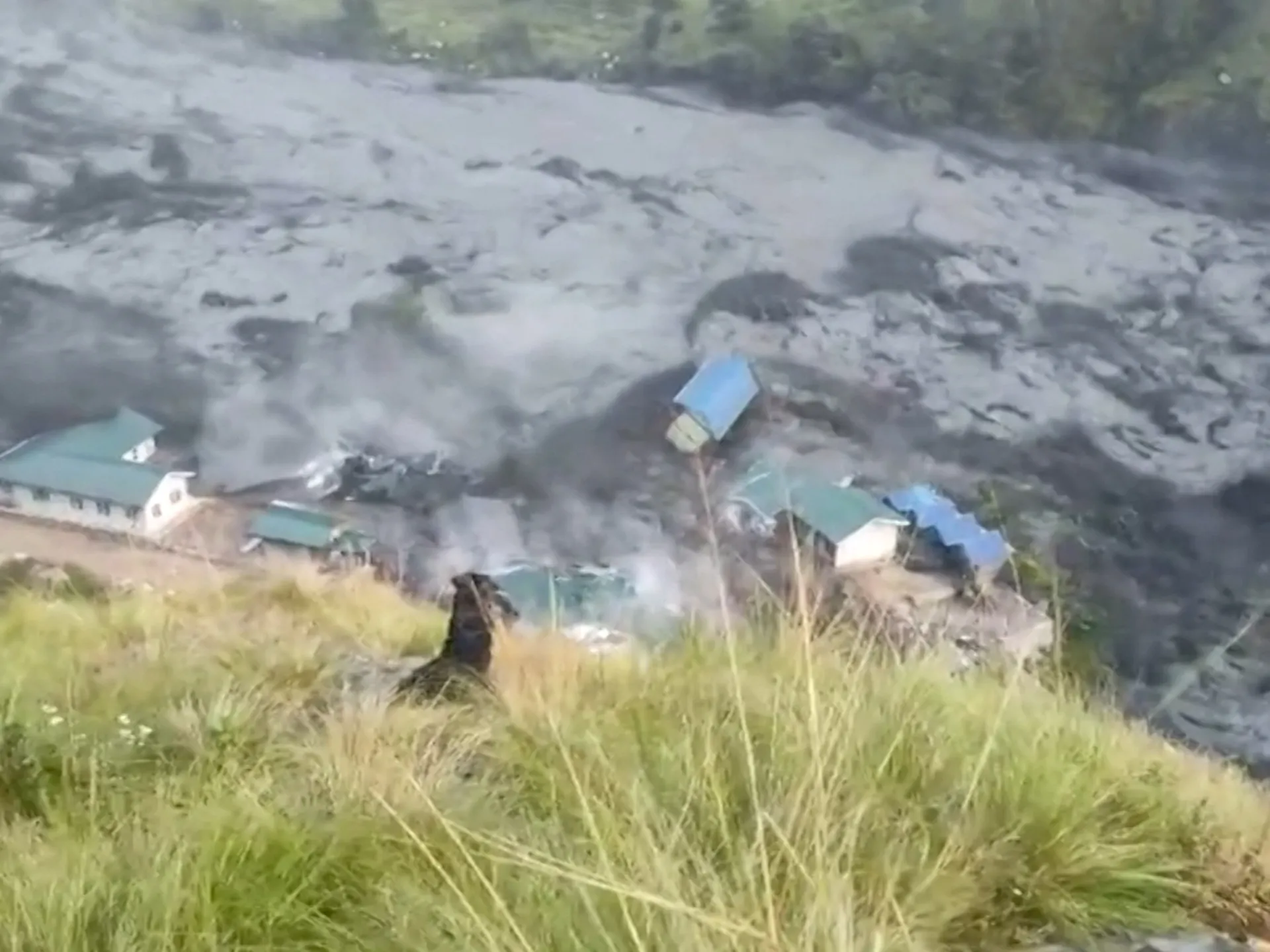
Flash floods have hit central Nepal, sweeping away houses and leaving at least five people missing, according to officials, weeks after devastating flooding in the country that killed hundreds.

A landslide in Chumnubri village in Gorkha district, about 100km (62 miles) west of Kathmandu, blocked the Budhi Gandaki River on Saturday, leading to downstream flooding, authorities said.

Recommended Stories

list of 4 itemsend of list

Two women and three men were unaccounted for, and there are no reports of casualties, said the National Disaster Risk Reduction and Management Authority (NDRRMA).

According to the agency, at least 82 people, including nine foreigners, have been rescued from the affected areas.

The flood swept away about a dozen houses and two suspension bridges and damaged a hydroelectric project camp, carrying some of the construction equipment away, authorities said.

A muddy torrent washed away a highway bridge connecting Gorkha with the neighbouring Dhading district, said NDRRMA Chief Executive Dharam Raj Uprety.

Evacuation order

The Budhi Gandaki is a tributary of the Trishuli River, downstream from another tributary where a glacier collapse caused a catastrophic flood in August that killed 1,457 people, with thousands still missing.

“We have asked villagers living along the riverbanks downstream to evacuate and remain safe,” said Dharmendra Kumar Mishra, Gorkha district’s most senior bureaucrat.

National disaster authorities alerted people living along the river in the Gorkha, Tanahun, Chitwan, East Nawalparasi and West Nawalparasi districts about the flood.

“Please help ensure that people in at-risk areas are moved to safe locations in time and assist search and rescue operations as needed,” the NDRRMA said in a social media post.

Officials said army and police rescue personnel had reached the area and were also monitoring the situation from a helicopter.

“The flood looked similar… It was very scary, and it still feels like a nightmare for us,” said local official Laxmi Gurung of Chumnubri rural municipality.

“Our house is gone, we have no electricity… but there have been no casualties.”

Heavy rainfall in late September also triggered floods and landslides, killing at least 21 people, according to the disaster agency.

Source link

‘Absolutely riveting’ BBC drama to end as creator says new series ‘will be the last’

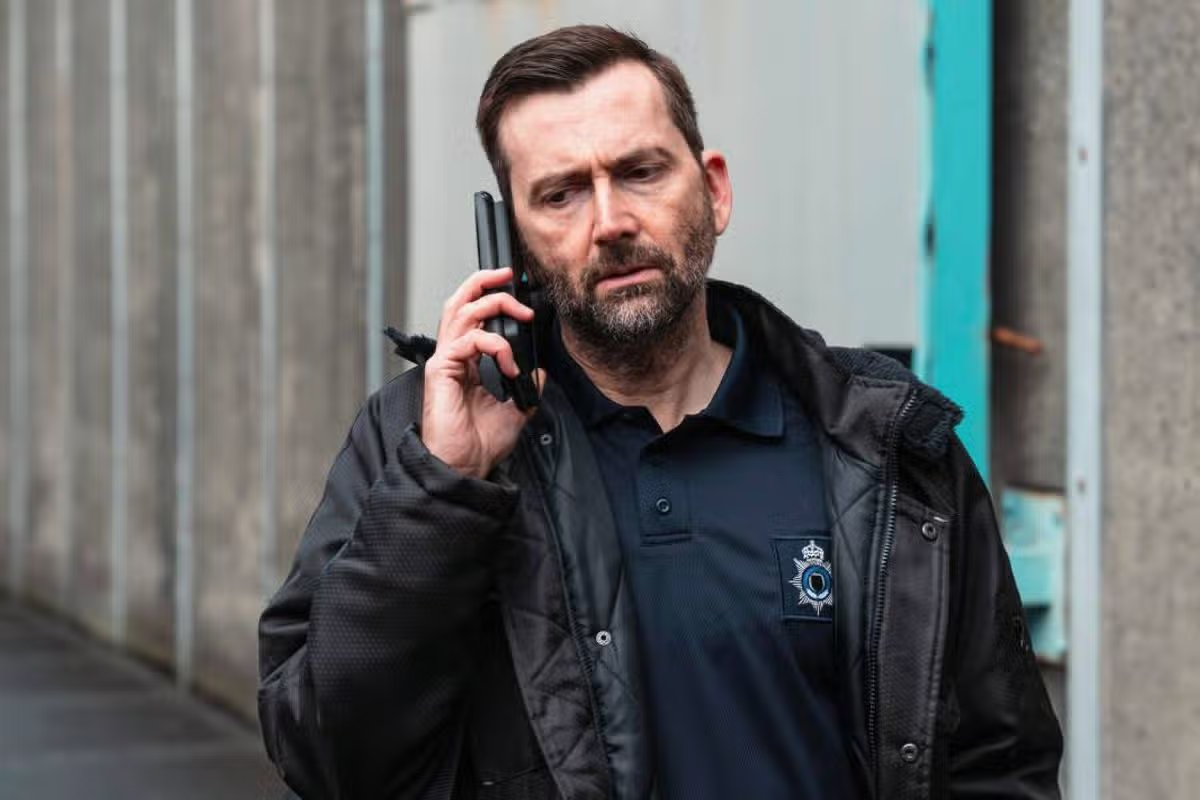
Jimmy McGovern’s BAFTA-winning BBC drama is returning to screens with David Tennant and Siobhan Finneran leading the cast

Time returns tonight for its third but there’s some bad news for fans.

The wait is almost over for a brand new instalment of the gripping BBC drama which first began in 2021 and has featured the likes of Stephen Graham, Jodie Whittaker and Bella Ramsey.

Creator Jimmy McGovern explained that while the first series focused on a male prison and the second series was based on a female prison, he knew he wanted to focus on young offenders next, but didn’t have a story.

That was until he found a real-life story in his research about a mother going to see her son in a young offender institution, whom she hadn’t seen for years. Although she didn’t speak English and he didn’t speak her language, which Jimmy shares is Swahili, in their BBC story.

However, the creator has shared that the upcoming series, which will being on Sunday night (October 11) will be its last. Speaking to RadioTimes, he said: “There’s very little altruism involved with these stories. I do them because I love doing them, although I think this will be the last time. I have said that many a time before, though, because these are also stories I feel bound to tell.”

A synopsis for the third series of Time details that viewers will see two young offenders struggle through the terrifying first weeks and months of their incarceration. However, an unlikely friendship between them looks to shift the trajectory of their futures.

The description further reads: “Meanwhile, Prison Chaplain Marie-Louise (Siobhan Finneran) comes to the young offender institution having lost her faith.

When tragedy strikes in the prison, Marie-Louise clashes with veteran officer Bailey (David Tennant), a man in the midst of his own crisis. Bailey knows more about the circumstances that led to this major incident – but will he come clean before the guilt gets too much?”

Since the series first began five years ago, it’s been highly praised by viewers, with some hailing it as a masterpiece. On Rotten Tomatoes, one person has said: “Absolutely riveting drama, a must-watch from start to finish. Brilliantly acted and excellent plot.”

Meanwhile, on IMDb, another added: “I expected a mediocre show, but got a well-crafted masterpiece. In its two seasons, each with three episodes, ‘Time’ tells the stories of two people who are imprisoned for the first time and, in my opinion, it does this excellently” While a third wrote: “Serious, realistic and brutal. If you want to see something serious and realistic, this is for you.”

Also joining David Tennant and Siobhan Finneran in the third series will be Vinette Robinson, Jo Joyner, Daniel Ryan, Warren Brown, Louis McCartney, Ollie McNulty and Chukwubuikem Molokwu will star in the third series.

Time airs on Sunday, October 11 on BBC One at 9pm

Source link

Prep talk: Volunteers fill multiple roles to help high school teams succeed

High school sports programs are filled with dozens of volunteers — manning the snack bar, taking tickets, helping provide security, cleaning floors, carrying equipment and taking statistics.

On and on it goes.

One of the most entrusted volunteers in football is the cameraman. That person must film the entire game, whether from the press box or the sideline.

Bennett Rogers is in his first year as Palos Verdes High’s cameraman. He sits in the end zone and has a camera that goes up so high on a tripod that it could be waving a flag. His son coaches for Palos Verdes, so he volunteered to shoot the games.

His most important equipment is a portable, comfortable chair that lasts through four quarters.

“That’s the key for my age,” he said.

To all the moms and dads volunteering, you’re the unsung heroes. Just make sure you have a sturdy chair when taking video.

This is a daily look at the positive happenings in high school sports. To submit any news, please email eric.sondheimer@latimes.com.

Source link

U.S. Makes F-35 Push As Portugal Weighs F-16 Replacement

The United States is stepping up its campaign to sell Portugal the F-35. Speaking in Lisbon today, Secretary of State Marco Rubio said the United States would make Portugal a “very competitive” offer to replace its F-16 fleet. The development adds a high-level political push to an increasingly intense competition over the Portuguese Air Force’s next fighter.

Portuguese Foreign Minister Paulo Rangel said after meeting Rubio that Lisbon is seriously considering the American proposal, while emphasizing that other options remain under consideration.

US Secretary of State Marco Rubio disembarks from a plane upon arrival at Lisbon Airport during a three-country European tour, in Lisbon on October 8, 2026. (Photo by Mark Schiefelbein / POOL / AFP via Getty Images)
U.S. Secretary of State Marco Rubio disembarks from a plane upon arrival at Lisbon Airport during a three-country European tour, in Lisbon on October 8, 2026. Photo by Mark Schiefelbein / POOL / AFP

“The Portuguese state will always decide in ‌accordance ⁠with the national interest,” Rangel said at a news conference after the meeting. “There is one point that is also clear: we are seriously considering the F-35 proposal, just as we are considering ⁠others.”

Portugal currently operates 25 modernized F-16AM/BMs, including 21 single-seat F-16AMs and four two-seat F-16BMs, from Monte Real Air Base, or BA5. The Portuguese Air Force, known as the Força Aérea Portuguesa (FAP), has not yet formally launched a replacement competition, but the aging fleet is increasingly becoming the focus of attention in Lisbon.

A Portuguese Air Force F-16 Fighting Falcon participating in NATO exercise Ramstein Flag 24 flies over the west coast of Greece, Oct. 4, 2024. Over 130 fighter and enabler aircraft from Greece, Canada, France, Hungary, Italy, Poland, Portugal, Romania, Spain, Sweden, United Kingdom and United States are training side by side to improve tactics and foster more robust integration, demonstrating NATO’s resolve, commitment and ability to deter potential adversaries and defend the Alliance. (U.S. Air Force photo by Tech. Sgt. Emili Koonce)
A Portuguese Air Force F-16 participating in NATO Exercise Ramstein Flag 24 flies over the west coast of Greece in 2024. U.S. Air Force photo by Tech. Sgt. Emili Koonce

Portugal acquired a total of 45 F-16A/B Block 15 aircraft through the Peace Atlantis I and II programs.

The first 20 aircraft were delivered beginning in 1994. These were new-build F-16A/B Block 15OCU aircraft, comprising 17 single-seat F-16As and three two-seat F-16Bs, and were used to equip Esquadra 201 “Falcões.”

A second batch followed in 1999, when Portugal received 25 former U.S. Air Force Block 15OCU aircraft. Twenty-one were F-16As and four were F-16Bs, with several intended as attrition replacements or spares. These aircraft had accumulated roughly 3,000 flight hours and underwent an extensive modernization program to bring them to the F-16AM/BM configuration. This means the aircraft are broadly comparable to the U.S. Air Force’s F-16C/D Block 50/52 fleet. 

Esquadra 301 “Jaguares” finally became operational with its upgraded aircraft in 2005, while Esquadra 201 did not receive its upgraded F-16s until 2011.

A Portuguese F-16 Fighting Falcon flies alongside a B-52H Stratofortress, assigned to the 96th Bomb Squadron, Barksdale Air Force Base, Louisiana, during a Bomber Task Force mission, June 2, 2021. The U.S. Air Force’s ability to quickly respond and assure allies and partners rests upon the fact that forces are in Europe, forward and ready. (U.S. Air Force photo by Staff Sgt. Jason Allred)
A Portuguese F-16 in special markings associated with the Esquadra 301 “Jaguares.” U.S. Air Force photo by Staff Sgt. Jason Allred

Since then, the Portuguese Vipers have continued to receive incremental improvements. Their configuration has progressed through several mission-software standards, while the aircraft have been equipped with night-vision goggles, Joint Helmet-Mounted Cueing Systems (JHMCS), and advanced targeting and weapons capabilities.

Among the more important additions are Northrop Grumman Litening II targeting pods, and the ability to employ weapons including GBU-12 Paveway II laser-guided bombs, GBU-31 Joint Direct Attack Munitions (JDAM), and GBU-49 Enhanced Paveway II dual-mode weapons.

Portuguese Air Force F-16s line up for takeoff. Portuguese Air Force

Twelve former Portuguese F-16s were transferred to Romania under a deal signed in 2013, with deliveries taking place in 2016 and 2017. Romania subsequently ordered five additional aircraft in 2019.

Structurally, the Portuguese F-16s could potentially remain in service into the mid-2040s. But maintaining their relevance against increasingly sophisticated air forces would require continued investment in avionics, sensors, communications, and self-protection systems.

The F-16AM/BM fleet continues to rely on the old AN/APG-66(V)2 pulse-Doppler radar. Replacing it with an active electronically scanned array (AESA) radar such as Northrop Grumman’s APG-83 would substantially improve detection and tracking performance, but would come at considerable cost.

A U.S. Air Force F-16C Fighting Falcon assigned to the 20th Fighter Wing receives 22 radar modification upgrades in conjuction with the U.S. Air Force Service Life Extension Program at Shaw Air Force Base, S.C., April 19, 2023. These upgrades replaced the APG-68 radar with the new APG-83 Scalable Agile Beam Radar, allowing 20th Fighter Wing F-16s to detect air-to-air and air-to-ground threats at much longer ranges. (U.S. Air Force photo by Airman 1st Class Erin Stanley)
A U.S. Air Force F-16C receives radar modification upgrades in conjuction with the U.S. Air Force Service Life Extension Program, which includes the APG-83 Scalable Agile Beam Radar. U.S. Air Force photo by Airman 1st Class Erin Stanley

Portugal faces a choice between continuing to invest in increasingly tired fourth-generation airframes or moving directly into the fifth generation.

Since the end of the Cold War, Portugal has become much more engaged in out-of-area operations and missions in support of NATO.

In the process, the Portuguese F-16 fleet has accumulated an impressive operational record.

The fighters have repeatedly deployed on NATO air-policing missions, including rotations to the Baltic States, Iceland, Romania, and Poland.

Portuguese Air Force F-16 military fighter jets participate in NATO's Baltic Air Policing Mission in Lithuanian airspace near Siauliai, on May 23, 2023. (Photo by Petras Malukas / AFP) (Photo by PETRAS MALUKAS/AFP via Getty Images)
Armed with live missiles, Portuguese Air Force F-16s participate in the NATO Baltic Air Policing Mission in Lithuanian airspace near Siauliai, on May 23, 2023. Photo by PETRAS MALUKAS/AFP via Getty Images

The F-35A would give Portugal a fifth-generation fighter built around low observability, sensor fusion, advanced electronic warfare, and networked operations.

The aircraft would also fit naturally into a NATO environment in which an increasing number of European air forces are adopting the F-35.

More than 900 F-35s are already in service or on order across Europe, according to previous comments by U.S. Ambassador to Portugal John Arrigo. Washington has repeatedly argued that joining that community would provide Portugal with a substantial interoperability advantage.

A U.S. Air Force F-35A Lightning II assigned to the 493rd Fighter Squadron taxis on the runway after arriving for the Beja International Airshow at Air Base No. 11 in Beja, Portugal, May 31, 2024. The 48th Fighter Wing's presence at the Beja International Airshow enhances interoperability, showcases seamless joint operations, and promotes the exchange of expertise, improving readiness and capability. (U.S. Air Force photo by Senior Airman Renee Nicole S.N. Finona)
A U.S. Air Force F-35A assigned to the 493rd Fighter Squadron taxis on the runway after arriving for the Beja International Airshow in Portugal, in May 2024. U.S. Air Force photo by Senior Airman Renee Nicole S.N. Finona

However, European competition includes the Eurofighter Typhoon, Dassault Rafale, and Saab Gripen E, with Airbus preparing an especially aggressive campaign for the Typhoon.

Airbus has said it intends to submit an unsolicited Eurofighter proposal to Portugal in late October or early November. That package is expected to encompass not just the aircraft, but financing, industrial participation and broader military cooperation.

Selecting the American stealth fighter deepens Lisbon’s military relationship with Washington at a time when European governments are wrestling with fundamental questions about their dependence on U.S. military capabilities.

Across the continent, uncertainty over Washington’s stance on NATO is encouraging European allies to examine ways of reducing their reliance on American military technology, even as those same countries continue to increase defense spending and purchase U.S. equipment.

Procurement of the UH-60 Black Hawk underscores the reliance of the Portuguese Air Force on U.S.-made hardware for many of its needs. Portuguese Air Force

If Washington can combine the F-35’s capability advantages with an attractive acquisition and sustainment package, Portugal could find itself facing a difficult choice between the strategic benefits of joining Europe’s growing F-35 fleet and the industrial and political advantages of selecting a European fighter.

The final decision on the replacement of the F-16 will also determine what combat jet spearheads the Portuguese Air Force for the next several decades.

Contact the author: thomas@thewarzone.com

Thomas Newdick is a staff writer at TWZ, where he covers military aviation, defense technology, weapons systems, and international security. Based in Berlin, Germany, he reports on conflicts, military modernization efforts, and emerging aerospace technologies around the world, with a particular interest in airpower and its role in contemporary warfare. His reporting is informed by deep expertise in modern and historical airpower, particularly in Europe, with a focus on military aviation, air campaigns, and aerospace developments across the continent and beyond.


Source link

Big Brother’s Twinks looks completely unrecognisable in unearthed snap

The new housemate has quickly become a frontrunner to win the ITV2 show

A Big Brother housemate looks almost unrecognisable in a snap taken before she found fame.

The ITV2 reality show originally welcomed 16 contestants into the famous house last month, but two new faces have just joined the chaos. East Londoner Twinks entered the house last Friday (October 2), alongside teaching assistant Catrin.

Fashion stylist Twinks has quickly become a fan favourite, although she struggled to bond with some of her co-stars straight away. She has quickly built a reputation for her eye-catching style and it seems to have started long before viewers met the reality star.

In a throwback snap shared by her close friend Louise O’Mahony, the Big Brother housemate is seen with pink hair, a far cry from her current blonde look.

The picture was posted by her fashion designer ‘best friend,’ whose designs have actually made it into the Big Brother house. Louise has revealed online that Twinks has been wearing outfits from her clothing brand on the show.

Louise also shared a sweet tribute about their friendship, writing on Instagram: “If you told me 13 years ago that Twinks would go into the BB house I honestly …wouldn’t be surprised.

“She has entered the Big Brother house as a new housemate of 2026!! Thank god frankly, because that house needs some sparkle and whimsy injected into it ASAP! Who better to bring the vibes back up than the Queen of charisma, curator of colour, the Party Princess!”

Content cannot be displayed without consent

The heartfelt statement continued: “One of the last things she said to me was “I’ll do anything to make my friends laugh” well, here we are…Who knows what chaos might come in the next few weeks! For any friends and fans seeing this, she’s going to need us to get behind her, sing her praises in the comments and make sure she doesn’t get voted off in any public votes.”

Twinks was immune from nominations during her first week in the house, but housemates will be free to put her up for the public vote during the next nomination vote. She has so far been a popular with the likes of Rob, Harry, Pauline and Sam.

But she initially failed to win over Rochelle,57, and Philip,53, who were sceptical about the Londoner from the moment she walked into the house. And it seems Twinks already anticipated some tension with the “mature members of the house”.

Just before joining the show, she told ITV: “I’m apprehensive about meeting the more mature members of the house from what I’ve seen. We’ve got a lot of youngers in there and I tend to go into big sis, mummy mode with youngers. I’m surprised at the more mature members of the House.”

On the flip side, the 36-year-old knew who she would instantly click with. “I’m excited to meet Rob and Sam – I think that’s where you’ll find me. I’m a silly goose in high glam,” she said. “I really have no interest in talking shit behind people’s backs or being shouted at. I do not want to be shouted at. I just want to sing some show tunes!”

Big Brother continues tonight at 9pm on ITV2 and ITVX

Source link

Singapore Grand Prix result: Max Verstappen wins from Charles Leclerc with Kimi Antonelli third

Hamilton had started on the medium tyres while Verstappen and Leclerc chose the softs. Despite his theoretically more durable tyres, the Briton pitted on lap 18 to switch to the softs, while Leclerc waited until lap 24 to swap his softs for mediums.

Leclerc came out of the pits from his stop just ahead of Hamilton, who had stronger pace on his softer tyres.

Yet Ferrari chose not to order Leclerc to let Hamilton through to maximise his pace, a decision that was questioned by Hamilton from the car.

A virtual safety car was called on lap 39 and Leclerc and Antonelli, who had chased the Ferraris closely from the start from his fourth place on the grid, took the opportunity for a cheap pit stop – it takes 10 seconds less to stop under a safety car than under racing conditions.

Yet Hamilton, despite having older tyres, did not stop, a decision that promoted him to second behind Verstappen.

As Leclerc was catching Hamilton, the Briton was told he needed to stop again; he pushed back to suggest he try to go to the end, but was told they were six laps short to make it in terms of tyre life.

Leclerc soon caught Hamilton and passed him on lap 46 and set off after Verstappen, but could get no closer than 7.3 seconds to the Red Bull.

Hamilton never did stop, but as his tyres lost grip he fell back into the clutches of Norris and Antonelli.

A passing attempt by Norris on lap 54 with eight to go saw Hamilton run off track and take to the escape road at Turn One, but as he did, Antonelli grabbed the chance to pass the McLaren, and then Hamilton later on the same lap.

Norris followed him through, and now Hamilton fell back towards the second McLaren of Oscar Piastri, who passed him on the final lap after a resolute attempted defence from Hamilton.

It was Hamilton’s call not to stop and he apologised for it on the slowing down lap – but there remain a number of questions as to the choices made.

Russell’s fight back through the field took him up to seventh as he delayed his pit stop as long as possible.

But after dropping back to 10th behind Audi’s Nico Hulkenberg and Alpine’s Pierre Gasly, he passed Gasly after trailing him for 10 laps or so, but could not make it past Hulkenberg, who was himself chasing Racing Bulls’ Liam Lawson.

Red Bull’s Isack Hadjar took the final point in 10th after starting from the back.

Source link

Ethiopia, Eritrea ramp up rhetoric: Are they inching towards war? | Explainer News

Ethiopia and Eritrea have exchanged accusations of aggression at the United Nations, raising fears of a new conflict in the Horn of Africa region as fighting intensifies in Ethiopia’s northern Tigray region.

The diplomatic spat comes as Ethiopian troops and allied armed groups advanced across Tigray, where forces from Asmara have allegedly crossed the border to support rebels fighting the government forces.

The two neighbours, which fought a deadly border war between 1998 and 2000, were allies during Ethiopia’s devastating 2020-2022 Tigray war.

However, they have since been at loggerheads over the 2022 peace agreement that ended a two-year civil war between the government in Addis Ababa and Tigray rebels, and over Ethiopia’s demands for access to the Red Sea.

So, what did Eritrea and Ethiopia accuse each other of, and are they inching towards war?

What did Eritrea and Ethiopia say at the UN?

Eritrean troops had advanced as far as 60km (37 miles) into Tigray, Ethiopia told the UN Security Council on Friday, accusing its neighbour of violating its sovereignty.

In a letter, Ethiopian Foreign Minister Gedion Timothewos described the alleged incursion as “a blatant act of aggression that engages Ethiopia’s inherent right to self-defence”.

He invoked Article 51 of the UN Charter, which recognises a country’s right to self-defence, but did not specify what measures Ethiopia was taking.

Eritrea, which won independence from Ethiopia in 1993, rejected the accusations of incursions into Ethiopia, calling them a pretext for an Addis Ababa offensive.

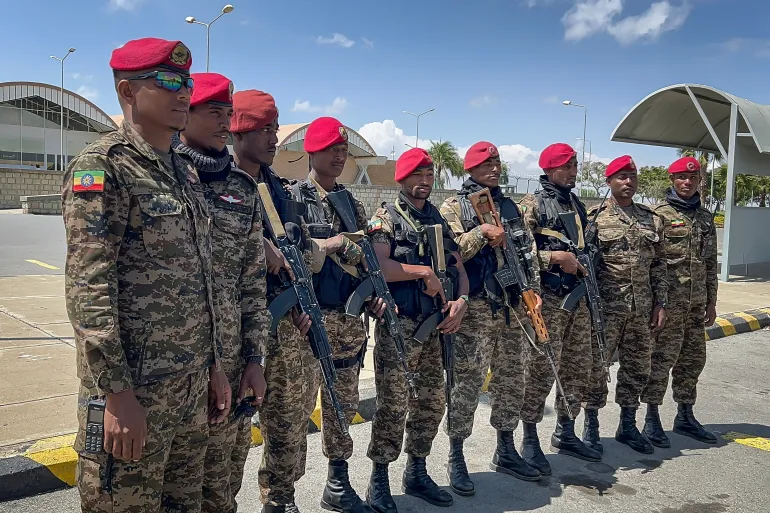
Members of the Ethiopian National Defense Force (ENDF) gather in front of Mekelle Alula Aba Nega International Airport after federal forces retook control of the facility in Mekelle, Ethiopia, October 6, 2026 [AFP]

Eritrean Foreign Minister Osman Saleh, in his own letter to the UN Security Council on Saturday, urged the body to condemn Ethiopia’s “deplorable declaration of war” and take “deterrent measures”.

He warned that an Ethiopian offensive would cause “huge devastation to the peoples of both countries and destabilise the whole region”.

The accusations come amid a broader dispute over access to the Red Sea.

Landlocked Ethiopia has repeatedly argued that securing direct sea access is essential, while Eritrea fears Addis Ababa intends to seize its port of Assab.

Ethiopian Prime Minister Abiy Ahmed reiterated on Monday that Ethiopia must have access to the Red Sea.

Hossamaldeen Ibrahim, an analyst at Bloomsbury Intelligence and Security Institute (BISI), said the narratives of both countries contain “verifiable elements”.

“The danger lies in the fact that each side now treats the other’s narrative as existential,” he told Al Jazeera.

Eritrea and Ethiopia fought a deadly border war from 1998 to 2000. Relations improved after Abiy came to power in 2018, but have soured again in recent years.

Professor Matthias Rompel from the Institute of Sociology at the Justus-Liebig-University Giessen in Germany, said that both sides have legitimate security concerns, but their accusations need to be distinguished from independently verified facts.

“Ethiopia’s allegations of Eritrean military incursions into Tigray… and …the scale of Eritrean involvement, and particularly allegations that Asmara is orchestrating the rebellion against Addis Ababa, remain difficult to substantiate independently,” he told Al Jazeera.

He added that the latest developments suggest that the confrontation is no longer merely about Tigray. “Ethiopia’s quest for Red Sea access, Eritrea’s concerns about sovereignty, and Egypt’s strategic rivalry with Ethiopia over the Nile are interconnected,” he said.

“The conflict, therefore, has the potential to destabilise the wider Horn of Africa, with repercussions for Sudan, Somalia and Red Sea security.”

What is the latest fighting about, and how is Eritrea allegedly involved?

Fighting escalated on September 23 when a rebel alliance, including the Tigray People’s Liberation Front (TPLF), launched attacks against Ethiopian government forces across Tigray, Amhara and Afar regions.

The rebels captured Tigray’s capital, Mekelle, and its airport before announcing their withdrawal on October 3. Government-allied forces subsequently entered the city.

In the latest on the battlefront, government and allied forces took Idaga Hamus early Friday and Abiy-Adi, in the Tembien area, on Thursday afternoon, according to Ermiyas Ababu, a commander of the government-allied Tigray Peace Force.

Residents, according to Reuters news agency, also reported the takeover of Idaga Hamus. Gebremedhin Kihishen, a business owner in Tembien, said government-allied forces controlled Abiy-Adi.

It was unclear from those accounts who held the towns immediately before the reported government advance or whether Eritrean troops were involved in the fighting.

Ermiyas previously reported Eritrean personnel entering Adigrat on Tuesday and Idaga Hamus on Wednesday, citing reports from his personnel. Al Jazeera was unable to independently verify the claims.

The Armed Conflict Location and Event Data Project (ACLED), a United States-based conflict monitor, reported that Eritrean troops crossed into Ethiopia near Zalambessa and came under Ethiopian drone attack while advancing towards Idaga Hamus. Eritrea has yet to comment on the development.

Addis Ababa accuses Asmara of financing, arming and directing armed groups, as well as deploying troops inside Tigray. Eritrea denies the allegations, which have not been independently verified.

The renewed fighting threatens to unravel the 2022 peace agreement.

That conflict began in November 2020 after months of tensions between Prime Minister Abiy Ahmed’s government and the TPLF, which had dominated Ethiopian politics for nearly three decades before Abiy took office in 2018.

Eritrea fought alongside Ethiopian federal forces against the TPLF, its longtime adversary. The war killed hundreds of thousands of people and was marked by allegations of massacres, sexual violence and widespread hunger.

The November 2022 Pretoria agreement ended major hostilities, but Eritrea was not a party to the deal. Relations between Addis Ababa and Asmara subsequently deteriorated.

Has Ethiopia sent troops north towards Eritrea?

Multiple media reports say Ethiopian government troops and allied militias entered Adigrat, a strategic city roughly 30km (19 miles) from the Eritrean border, on Saturday.

Three residents confirmed their presence to Reuters, while verified footage showed government-allied militia members walking through the city.

Associated Press news agency footage also showed Ethiopian military vehicles entering Adigrat as some residents welcomed the troops.

Government-allied forces have reported capturing Idaga Hamus and Abiy-Adi, while explosions and alleged drone strikes have been reported near Adigrat.

Are Ethiopia and Eritrea inching towards war?

Analysts warn that Ethiopia and Eritrea may already have moved beyond threats and into a dangerous phase of possible military confrontation.

BISI’s Ibrahim said the two countries have moved beyond “inching” towards war, noting that “The situation has entered a high-risk phase of limited but direct military confrontation with a real possibility of rapid escalation into interstate war.”


He warned that the severing of diplomatic ties removed the “last formal mechanism for crisis management”, while Ethiopian military advances towards the Eritrean border increased the risk of “miscalculation”.

Tom Gardner, a correspondent for The Economist, said the current tensions should be understood in the context of decades of hostility between the neighbours.

Their brief alliance during the 2020-2022 Tigray war was an exception and was driven by a shared hostility towards the TPLF, Gardner told Al Jazeera.

“The Ethiopian government’s strategic goal number one is access to the Red Sea, but also removing Eritrea’s government from the picture,” he noted.

“It’s very much looking like the most dangerous moment for the region since that 1998 to 2000 war.”

Rompel from Justus-Liebig-University Giessen said that the current situation is evolving. “The danger of a wider interstate conflict is real, and the situation has already moved beyond a purely diplomatic confrontation,” he said.

“The central danger is not necessarily that either government has decided to launch a full-scale war, but that military miscalculations, mutual distrust and domestic political pressures could trigger a further escalation neither side can easily control.

“A wider conflict is not inevitable, but the space for diplomatic de-escalation is rapidly narrowing,” he said.

Source link

Creating a ghost town: Lives in limbo behind Israeli gates and checkpoints | Occupied West Bank

Hebron, occupied West Bank – Badr al-Tamimi, 60, lives in Hebron’s Old City, where Israeli checkpoints, iron gates and road closures turn the simplest tasks into a dispiriting daily ordeal for Palestinian residents.

The situation goes beyond mere restrictions on movement. Israel has created a ghost town in parts of Hebron, where residents feel they are being driven out. This is most pronounced in an area known as H2, where Israel has complete control and Palestinians are subject to the dictates of the military.

Recommended Stories

list of 3 itemsend of list

A few days ago, Israeli authorities installed three iron gates across a 200-metre (656-foot) stretch of Hebron’s Old City – amounting to just 0.2 dunams (200 square metres) – as part of Israel’s apparent attempts to restrict Palestinians’ freedom to move around the city.

Hebron Mayor Yousef al-Jabari told Al Jazeera that one gate was erected on al-Zahid Road, the only route accessible to vehicles reaching the Old City entrance. A second was placed at the start of al-Shalala Street, which leads to shops connecting to the Bab al-Zawiya area in the city centre. A third towers over another section of al-Shalala Street, a thoroughfare used by pedestrians to access the shopping area.

They are part of a wider web of travel restrictions across the occupied West Bank, but Hebron, which has a strong settler presence, has suffered more than most Palestinian cities.

Approximately 40 percent of the 89 checkpoints in the West Bank and 11 percent of all 925 movement obstacles are located in the H2 area of Hebron, which is under tight Israeli control, according to the United Nations Office for the Coordination of Humanitarian Affairs (OCHA).

About 7,000 Palestinians in an area of Hebron where hundreds of settlers live are affected by the latest travel restrictions. Since October 2023, when the genocidal war on Gaza began, only Palestinians with specific identification numbers could enter this area. Checkpoints at the entrance to this zone are generally only open from 7am to 8pm.

Badr Al-tamimi is forced to move between iron gates to reach other parts of the old city where he lived his whole life Photo by Sari Jaradat -1791707986
Badr al-Tamimi is forced to move between iron gates to reach other parts of the Old City where he lived his whole life [Sari Jaradat/Al Jazeera]

Al-Tamimi, who lives in the al-Sheikh neighbourhood adjacent to the city’s famed Ibrahimi Mosque, owns a shop in the Old City.

Palestinians can be kept waiting for hours at the checkpoints, and the mood of a soldier manning one can decide the commute time of a Palestinian. Worshippers attempting to enter the Ibrahimi Mosque can be held up for hours by soldiers.

“They might allow a limited number of people to enter while others are forced to wait, whereas resident movement comes to a halt during incursions, Jewish holidays, and the associated security measures,” he added.

Repeated closures have paralysed economic activity in Hebron, making it increasingly difficult for shops and companies to do business.

“Our presence in the Old City is a matter of steadfastness, not the availability of the elements needed for economic life,” al-Tamimi said.

Even after Israel’s occupation of the city in 1967, Hebron was once a bustling city with lively shops and markets. Residents could move more freely between neighbourhoods, which helped with economic life in the city.

Things changed in 1994, the year of the Ibrahimi Mosque massacre, when a US-born Israeli settler murdered 29 Palestinian worshippers.

From that point, the Old City’s geography changed, becoming isolated from its surroundings, al-Tamimi said.

He points to Shuhada Street, once a vital artery for transport and commerce in the city before road closures and restrictions transformed the area’s reality.

“They committed the crime, yet they continue to punish us for it,” he said.

In 1997, the Hebron Protocol was signed between the Palestine Liberation Organization (PLO) and Israel, dividing the city into two zones: H1, which was under relative Palestinian jurisdiction, and H2 – an area which includes the Old City, the Ibrahimi Mosque, and illegal settlements – remained under Israeli security control.

Issa Amro, coordinator of the Youth Against Settlements group, said Israeli prohibitions intensified with the outbreak of the second Intifada in 2000 when Hebron became a centre of the uprising.

During this period, vast areas of the city were sealed off, shops were forced to close, and residents often remained confined to their homes or neighbourhoods.

Since Israel’s genocidal war on Gaza began on October 7, 2023, the number of checkpoints has risen to 32, while other obstacles impeding Palestinian movement now exceed 130.

Israel installed new iron gates in Hebron’s Old City to restrict the movement of Palestinians Photo By Sari Jaradat-1791707993
Israel installed new iron gates in Hebron’s Old City to restrict the movement of Palestinians [Sari Jaradat/Al Jazeera]

The “closed zones”, designated by Israeli authorities as areas of military activity with restricted access to Palestinians, have expanded around the Ibrahimi Mosque and the illegal settlements that lie in the heart of the city.

“The movement restrictions are effectively holding residents as hostages,” Amro said.

Mayor al-Jabari said approximately 10,000 Palestinians in the Old City and the surrounding closed zones are affected by these measures.

Some parts of Hebron are inaccessible to vehicles, and Palestinian residents are subject to curfews two or three days a week, usually over the weekend.

He believes these restrictions are aimed at hindering Palestinians’ ability to return home and stifle life in parts of Hebron.

Meanwhile, Israeli authorities have helped settlers expand in the area, imposing a new suffocating reality for Palestinians in the city.

Al-Jabari said Israel’s current government could be doing this to curry favour with settlers ahead of this month’s election.

Control of Hebron, its Old City, and the Ibrahimi Mosque is a key issue for settlers, and politicians in this group occupy key posts in the Israeli government.

This has coincided with a concerted effort by Israeli authorities to cement the settler presence in and around the city.

“The seizure of buildings and land, along with the installation of gates, is a continuation of Israeli policies that have been in place for decades,” al-Jabari said.

“These include the closure of Shuhada Street and the shutting down of over 500 shops, as well as the establishment of settlement outposts and military positions within the Old City.”

He has seen more restrictions on Palestinians’ freedom of movement over the past month, measures that will undoubtedly appease settlers.

Hebron municipality has responded to this by filing lawsuits in Israeli courts, despite its scepticism about the impartiality of the judiciary.

With these measures continuing, life for Palestinians is getting worse, making work, life and education a daily struggle.

Israel cites the security situation as a pretext for erecting more checkpoints and iron gates in Hebron, but there are no such restrictions on settlers.

Since 2015, Israel has limited the number of Palestinian residents of closed zones who can pass through these checkpoints. Students and teachers frequently have their bags searched by Israeli soldiers or are detained.

Ayat al-Jabari, a 40-year-old science teacher, worked for a year at Qurtuba School, located near the closed Shuhada Street, before transferring to her current position at Al-Fayha School, near the Ibrahimi Mosque.

Although reaching Qurtuba School from her home should have been a five-minute journey, it often took an hour.

On her unsettling morning route through a nearby cemetery, often in darkness during the winter months, settlers and soldiers often appear in the graveyard to block the path of Palestinians or abuse them.

“Every day, I was forced to take a long route and walk through a cemetery to avoid passing the checkpoint, as I don’t hold a [special identification card] number. Even those who do hold numbers are sometimes forced to take this path to escape the soldiers’ moods,” she said.

After moving to Al-Fayha School, al-Jabari hoped her commute would improve, but the situation is no better than before.

“Whenever Jewish holidays arrive, these schools are closed because all the students live in areas subjected to a total lockdown, to the point where residents are even forbidden from opening their front doors,” she said.

Source link

Strictly Come Dancing 2026: Delta Goodrem sparks concern as fans spot problem

A quick recap of tonight’s dances:

Lacey danced a samba and the judges thought it was a strong dance but she needed to be a bit more out there. She scored 26.

Will danced a waltz. the judges thought he’d improved. As such, he cracked the mid-20s and went away with 25 from the panel.

Shaun went next, with a brief cameo from dad Ian Wright in the training video. Shaun did a quickstep that Craig said was “everything a quickstep shouldn’t be”. He scored the lowest of the night with 15.

Cach briefly held the top of the leaderboard after his Couple’s Choice. The judges, who gave him 31, said it was a joy to watch.

Jaime was next with a Viennese waltz. The judges felt she could have been better, but was still dancing nicely. They gave her 28. No one was prouder than her dad Ray Winstone, who left a video message.

Melanie’s charleston featured a cameo from Neil Jones. The judges were impressed with her personality, but less so with the dancing. She got 17.

Sarah used the school run to feul her paso doble anger and the judges were split on whether they enjoyed it or not. They gave her 20.

Delta soared to the top of the leaderboard with a salsa that scored 33, as she earned the first 9 of the series.

Lawrence failed to impress with his rumba, which only got 20, but did get a 5 from Craig, which Jowita was happy with.

Dani’s tango showed improvement and the judges rewarded her with 27.

Graeme’s jive brought a tear to Craig’s eye, as he reminde the judge of the late Len Goodman. he earned a 25.

John’s first latin number was a cha cha cha and failed to reach the heights of his week one foxtrot. He walked away with 20.

Bethany was next up with an American Smooth that Shirley thought was “extremely impressive”. She got 27.

And Tabby was last with an Argentine tango that fans thought should have topped the leaderboard. But she came in joint second with 31.

(Image: PA Wire)

Source link

The beautiful ‘Hamptons of Wales’ that’s next to one of the cheapest seaside towns with stays under £20

ONE coastal road in Wales which is nicknamed Millionaire’s Row has been compared to the Hamptons in New York.

The houses on the rocky headland have epic sea views – but it’s also right next to one of the cheapest seaside towns where you can book a room for less than £20.

Marine Drive on Great Orme is nicknamed ‘Millionaire’s Row’ and the ‘Hamptons of Wales’ Credit: Alamy
The road is minutes away from Llandudno which is one of the country’s cheapest coastal spots Credit: Alamy

Marine Drive on Great Orme, which is a headland on the north coast of Wales, and it’s considered one of the country’s most expensive streets.

Currently, a home called Plas Craig is on sale for £2.5million – perched high up on the cliff the five-bedroom house has incredible views of the coastline.

The Hamptons is a celebrity hotspot where stars like Beyonce and Jay-Z, and Sarah Jessica Parker and Matthew Broderick own homes.

While Great Orme isn’t home to any celebrities (that we know of) it was recently visited by Sigourney Weaver and Miles Teller to film a new movie called The Gorge.

BE-LEAF IT

Perfect autumn attractions from £1.95 per kid from pumpkin patches to waterparks


DIG IN

Best UK garden centres with arcades, FREE soft play, fairgrounds… & even a beach

Interestingly, Marine Drive is just minutes away from one Wales‘ most budget-friendly seaside resort’s Llandudno.

Hotels are super cheap , looking at dates in October, a one-night stay or two adults on the beachfront can be as little as £23pppn.

This is the case at the Hydro Hotel which is across the road from the beach and half-a-mile from the town centre.

The Marine Hotel which is also on the promenade can be booked from £32pppn in October.

This hotel also has an indoor swimming pool, restaurant, bar and it’s a very short walk from the door to the pier.

Staying at the local Travelodge can cost £19.50pn in November.

Great Orme is a remote headland north of Llandudno Credit: Alamy
Collage of travel items including a plane, sunscreen, passport, suitcase, and plane tickets, advertising The Sun's travel Instagram account.

Llandudno itself is well-known for its beautiful promenade which has multi-coloured hotels and palm trees.

It also has two main beaches, North Shore which is the town’s main and busiest beach and then West Shore, considered its ‘quieter sister’.

Last year, Llandudno in Wales was also voted one of the most affordable places for a beach holiday and one of the best too by Which?.

One popular seaside activity is to ride the Great Orme Railway which heads along the Great Orme cliffside.

Llandudno has a beautiful promenade and two beaches Credit: Alamy
Visitors to the seaside town can take the cable car up to Great Orme Credit: Alamy

Return tickets for adults start from £11.25 with tickets for children (3-16) starting from £6.80.

For anyone wanting a more varied view of the hills and seascape, you can always head up on the cable cars, which are the longest in Britain.

Catch them from Happy Valley where they travel 679 feet up into the air all the way up to the summit of Great Orme.

By visitors, Llandudno has been called one of the “very best of British coastal resorts” to a “very grand old seaside town”.


Source link

A reporter on why the L.A. City Hall audio leak scandal should still matter

Do you remember what you were doing when the infamous L.A. City Hall racist audio leak scandal broke four years ago?

I always will: I was naked.

You’re reading the Essential California newsletter

L.A. Times reporters guide you through the most important news, features and recommendations of the morning.

Sunday morning, Oct. 9, 2022, around 8 a.m., I was about to take a shower when I decided to check my cellphone one more time. Thank God I did: If I hadn’t, I would’ve been half an hour late on assisting in one of the most explosive stories ever to hit L.A. politics.

Via Slack, Times assistant managing editor Steve Clow asked if I could serve as a second set of ears on audio that my colleagues had unearthed involving four of the most powerful L.A. políticos at the time: City Council President Nury Martinez, Councilmembers Gil Cedillo and Kevin de León, and L.A. County Federation of Labor President Ron Herrera. I was still in my birthday suit (sorry for the visual, gentle readers, but I’m sworn to report the facts on this job) when I played the snippet Clow shared: Martinez describing the Black son of then-Councilmember Mike Bonin as “su negrito” — his darky.

I put on my shorts and told my wife I wouldn’t be helping at her restaurant that day.

Clow sent me more clips over the next hour, each crasser than the other — I remember gasping audibly at the part when the four were laughing as Martinez referred to Oaxacans as “ugly.” That morning, my colleagues Benjamin Oreskes, Dakota Smith, Julia Wick and David Zahniser published their first story on the fiasco, which turned out to be a secretly recorded conversation from a year earlier that someone had posted on Reddit just the day before.

The scandal quickly became a national sensation, with even then-President Joe Biden weighing in. L.A. wretched in collective disgust and demanded action, which definitely came: Martinez and Herrera quickly resigned, while Cedillo — who had already lost his reelection bid — would stay on until his bitter end, and De León wouldn’t leave until challenger Ysabel Jurado destroyed him in his 2024 reelection bid. The electoral repercussions of the audio leak can still be felt four years later in this election, as Nithya Raman stages a strong challenge against incumbent Karen Bass — a sentence no one would’ve believed in the fall of 2022, when Bass was on the cusp of winning her first term, and Raman was the lone democratic socialist on the council.

I would’ve figured the anniversary of something as titanic as all of the above would’ve sparked more commemorations than just my columna this week. Nope! L.A. has moved on to the point that Cedillo wasn’t booted from a group photo that included current District 9 council candidate Jose Ugarte, former Assemblymember Wendy Carrillo, former Mayor Antonio Villaraigosa and current Assemblymember Mark Gonzalez — because even Chicanosauruses can survive a political asteroid, I guess?

Having political leaders spew racist, homophobic nonsense now seems like the good ol’ days in an era where infernos destroy or stink up swaths of L.A., immigration agents terrorize immigrants from Westwood to the Eastside, and a spokesperson for a sitting American president denies that the commander in chief suggested Iran bomb the City of Angels, even though he said it during a campaign rally.

I shouldn’t really be surprised, I guess: L.A. infamously loves to forget its own history. But I would urge all you readers to read the great, Pulitzer Prize-winning coverage my colleagues did in the aftermath of the audio leak scandal, because it captured the city at its worst — but also its finest as residents fought back and demanded politicians do better.

Four years later, we can only hope this upcoming election shows more of the same.

The week’s biggest stories

A man looks back as a large wave crashes on the shoreline in Laguna Beach

Domenic Hix looks back as a large wave crashes on the shoreline in Laguna Beach on Friday.

(Allen J. Schaben / Los Angeles Times)

Tropical Storm Rachel in SoCal

California real estate

California crime

In memoriam

More news

Editor’s pick

More picks

Things to do

Photo of a person on a background of colorful illustrations like a book, dog, pizza, TV, shopping bag, and more

(Illustrations by Lindsey Made This; photograph by Charles Phoenix)

Today’s recipe

Apple Butter on a plate and inside a jar

(Rebecca Peloquin / For The Times)

This recipe makes apple butter that is less sweet than most; use more sugar if you like, but don’t use less or there won’t be enough to properly preserve the pureed apples.

Photo of the day

Meals Clothing co-founder Sam Salad stands amid his food-inspired, L.A.-made workwear in his Highland Park store

(Stephanie Breijo / Los Angeles Times)

Games

Mini Crossword Logo

Here’s today’s mini crossword, plus our other free, daily crossword puzzle, sudoku, word search and jigsaw games.

Have a great day, from the Essential California team

Jack Dolan, investigative reporter
Hugo Martín, assistant editor, fast break desk
Kevinisha Walker, multiplatform editor
Andrew Campa, weekend writer
Karim Doumar, head of newsletters

How can we make this newsletter more useful? Send comments to essentialcalifornia@latimes.com. Check our top stories, topics and the latest articles on latimes.com.

Source link

Derry City: Silverware trumps Europe for Duffy

Duffy scored both goals in Derry’s win at Eamonn Deacy Park to send his side into the final and was understandably emotional at the final whistle, aware that ” it was so importnat we got to the final this year”.

“It’s been a tough year all round,” he continued.

“Now we can get a real buzz around the town this month, build it up and get that good feeling back between us all. We’ve a brilliant day to look for ward to.”

Derry City’s form has imporved since Connolly’s appointment in August as they have removed any fears of relegation while reaching the cup final.

Duffy praised the impact of the former defender who he feels has liberated the team to express themselves on the pitch.

“He’s letting us play free-flowing football, encouraging all the defenders to try and play football as we’re all good players,” Duffy said.

“He wants us to take risks and we’re constantly doing that every day in training. Before matches he’s saying that if we lose the ball, that’s on him.

“He’s enclouraging us so much and it’s so enjoyable to play in. I think you can see that in these last few weeks were we are dominant and playing some nice football, but the main thing is players are digging in massively.

“You can see on the pitch it means everything to every player.”

Source link

India’s crackdown on youth protesters: What next? | Protests News

India’s capital is bracing for a second day of protests after thousands of people, including the leaders of the “cockroach” youth movement and opposition politicians, were detained amid a major crackdown on demonstrators.

Abhijeet Dipke, the Cockroach Janta Party (CJP) leader, called Prime Minister Narendra Modi a “bully” shortly after he was released on Sunday. Thousands of other protesters, some of whom are members of left-wing student groups, were released on Sunday after the Supreme Court called their detention “illegal”.

Recommended Stories

list of 3 itemsend of list

“Modi, as PM, is an embarrassment to India. Never has this country seen a bigger coward and bully,” Dipke said in a post on X.

The protesters are demanding that Chief Election Commissioner Gyanesh Kumar resign over a revision of voter lists that they say disproportionately benefits Prime Minister Modi’s governing Bharatiya Janata Party (BJP).

Millions of voters, including Muslims, have been deleted from the rolls in a process marred by technical errors and a perceived lack of transparency.

The protests erupted across several Indian cities after an investigation by the Indian Express newspaper found that two election commissioners objected to many of Kumar’s decisions. India’s Election Commission is a constitutional body with three members, and decisions are taken by majority.

What was the scale of the government crackdown?

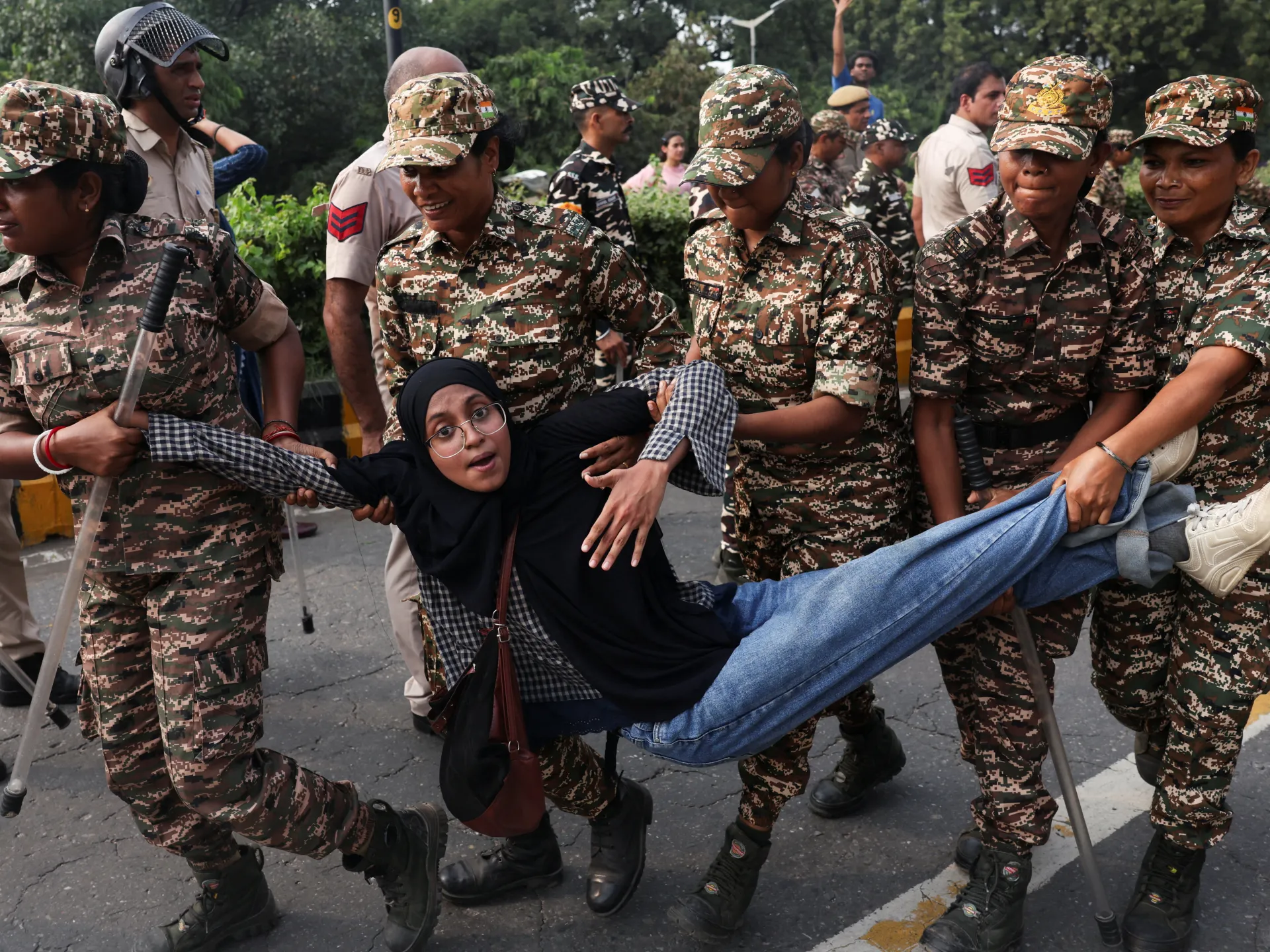
Ahead of Saturday’s protests, the capital, New Delhi, was turned into a fortress with tens of thousands of police and paramilitary forces deployed, trains and metros suspended, and markets and major roads blocked, to prevent protesters from reaching Jantar Mantar – a designated protest site close to India’s parliament. Jantar Mantar was sealed off.

Jantar Mantar was the site of the July protest that led to the resignation of Education Minister Dharmesh Pradhan. That protest, also led by the CJP, was triggered by a string of exam paper leaks.

Security forces also set ⁠up checkpoints on major roads and entry points across the city of 20 million people, checked buses and inspected vehicles searching for protesters.

Barricades and concrete blocks disrupted traffic, while anti-riot vehicles equipped with tear-gas launchers guarded key routes.

More than 30,000 police and paramilitary personnel were deployed across the ⁠city, according to local media, and mobile internet services were suspended across several areas of the capital to stop people from online mobilisation efforts by the CJP and other youth groups.

Police detained CJP founder Dipke, as well as his associates, Saurav Das and Ashutosh Ranka, from an airplane upon arrival in New Delhi from Mumbai.

Dipke shared a video on his Instagram channel, showing a team of police officers entering the Air India plane after it landed. As they came closer, he said: “I have come to get arrested. I am not afraid of you guys.”

In another video shared by Ranka, Dipke said: “This is dictatorship”.

Delhi police also detained YouTuber Dhruv Rathee and Neha Bora, the national president of the All India Students’ Association (AISA), a leftist group affiliated with the Communist Party of India (Marxist-Leninist).

Some opposition politicians, as well as former chief ministers – Mamata Banerjee of West Bengal, Arvind Kejriwal of Delhi, and Pinarayi Vijayan of Kerala – were also detained, television channels showed.

Despite the unprecedented crackdown, small protests took place elsewhere in the city, including at the popular crafts market “Dilli Haat”. But police also ended up quashing these protests and detaining journalists trying to cover the demonstrations.

Besides New Delhi, some 600 people were also arrested in Mumbai, India’s financial hub, over the protests, according to the ANI news agency.

Have protesters been released?

On Sunday, police officials said all detainees had been released.

The CJP leaders were released on the condition that there would be ‘no breach of peace’ for a year.

Speaking to reporters at a press conference in New Delhi on Sunday afternoon after their release, Saurav Das, the group’s co-convenor, slammed the police for “arriving like mafia dons” and “abducting” them on their plane.

After his release, Rathee said he was “KIDNAPPED.”

Several journalists from news outlets, including Scroll.in, Newslaundry and others were detained. They have all since been released, but Newslaundry said some of their reporters’ media equipment was seized during the detention.

The Committee to Protect Journalists told Al Jazeera on Saturday that it was deeply concerned by reports of journalists being temporarily detained.

“Just as police personnel are doing their jobs, journalists are also doing theirs. A free and independent press is essential to democracy,” Kunal Majumder, the CPJ’s Asia Pacific programme coordinator, said.

How were detainees treated?

Aban Raza, a 37-year old visual artist based in New Delhi who was detained on Saturday, said the “entire experience has left her shocked and angry”.

“We are protesting for the right to vote. It affects all of us. So why is the police suspicious of us and treating us with so much aggression? This makes me angry,” she told Al Jazeera.

Together with three other protesters, including economist Jean Dreze, Raza managed to get close to Jantar Mantar on Saturday morning.

“As soon as we reached close enough to the protest site, we started unfurling our banners which called for the resignation of Election Commission chief Gyanesh Kumar and for free and fair elections. But within minutes, police officials approached us, began tearing our banners and dragging us towards a bus to detain us,” she told Al Jazeera.

“We tried to resist as the police dragged us inside the bus. Both my arms feel very sore today,” she said.

Raza says that some of those detained were not even protesters.

“They were people who had just been picked up whilst they were going about their day. One person was going to the Gurudwara, another was going to meet his wife and they got detained. Most of these people were working class people,” she said.

Raza, who was released on Saturday night, said she is going back to protest on Sunday.

Will the protests continue?

Youth leaders have struck a defiant note, pledging to keep up protests in New Delhi. Some members were detained on Sunday.

The group’s co-convenor Saurav Das, who was released from detention on Sunday, said in a post on X: “After Modi-Shah [Amit Shah, India’s home minister] turned Delhi into a fortress and unleashed what can only be described as a war against their own citizens, one thing has become abundantly clear: Gyanesh Kumar is at the very heart of this government’s survival.”

“But we the young generation will continue to demand accountability. We shall neither be intimidated nor silenced. We are not backing down. We are returning with full strength!” he added.

The CJP has also announced protests in other Indian cities including Mumbai for Sunday evening.

Meanwhile, Neha Bora, the national president of the All India Students’ Association, began a protest on Sunday afternoon in central Delhi.

“Our peaceful protest has started at RK Ashram. Join us here and stand with us!” she said on X.

But shortly afterwards, Bora and several others were detained.

Are India’s opposition parties backing the protests?

The INDIA Bloc – India’s opposition alliance led by the Indian National Congress – has participated in protests alongside the youth-led groups, demanding the resignation of Chief Election Commissioner Kumar.

The Bloc is expected to hold a protest on Monday in the capital.

“Yesterday, we held a comprehensive meeting with various leaders to prepare for this march,” Congress general secretary K C Venugopal told reporters on Saturday.

“Gyanesh must go. There will be no backing down,” he added.

Congress party leader and the leader of the opposition in parliament, Rahul Gandhi, has been spearheading a campaign against the election commissioner for months. He was briefly arrested last week over the election protest in New Delhi.

“Modi government has turned the ‘Mother of Democracy’ into a ‘Muzzled Democracy’!” Congress party president Mallikarjun Kharge posted on X.

“Detentions, arrests, jails, lathis [batons] and pellets cannot deter the people of India. Since the days of our freedom struggle, the youth have been at the forefront of shaping the nation’s destiny.”

Why is India’s government refusing to talk to the protesters?

The protests intensified after the Indian Express reported last month that two election commissioners had ⁠questioned Kumar’s revisions that removed roughly 130 million names from voter lists.

The BJP says that of the 130 million names deleted from voter lists, 28 million are dead, 63 million have relocated, 10 million are duplicates and 30 million could not be traced by officials.

The ruling party has also said its electoral success reflects Modi’s popularity and India’s economic growth, and accuses opposition parties of spreading misinformation.

But these protests have become a larger question of democracy and the right to dissent under the Modi government.

While the government had briefly engaged in talks with the youth groups during the July 2026 protests, it has taken a much more hardline stance against demands targeting constitutional and electoral authorities.

The BJP’s officials have also characterised the protests and online opposition as a concerted political effort to destabilise the government rather than highlight legitimate public grievances.

On Saturday, BJP spokesman Sambit Patra dismissed the demonstrators as “anarchic elements” and said that “their flop show has been completely demolished”.

“What is happening at Jantar Mantar, what you can see on TV and a few social media handles, is not India’s story. India is calm and going ahead under good governance,” he told reporters.

Critics and analysts interviewed by Al Jazeera argue that conceding to demands for the election chief’s resignation would validate opposition accusations of vote theft and project weakness for a prime minister sensitive to his political aura.

But Sanjay Kapoor, editor of Hard News Magazine and a political analyst, told Al Jazeera on Saturday that most people coming to the protests do not want Modi’s BJP to continue to govern.

“Modi’s government has begun to lose a lot of credibility at the moment,” he said.

“BJP is afraid that the ground has shifted dramatically against them and they would find it very difficult to come back to power.”

What has been the global reactions to the protests?

On Saturday, the United Nations Human Rights Office expressed concerns over mass detentions before and during the protests.

“We call on the authorities to ensure that the right to peaceful assembly is fully respected and fulfilled,” UN Human Rights spokesperson Thameen Al-Kheetan said in a statement.

He also urged authorities to engage in “meaningful dialogue” to address the “broadly ‌held” concerns expressed.

Amnesty International told Al Jazeera that the detentions signal the Indian government’s desperate attempts to “suppress critical voices”, while Human Rights Watch said that “instead of addressing legitimate citizen concerns, institutions expected to uphold rights appear to be under the stranglehold of rising authoritarianism.”

The Indian mission to the UN in Geneva, however, called the global concerns “misplaced” and said they constitute “an unwarranted interference in the internal affairs of India”.

It stressed that the right to peaceful assembly was guaranteed by India’s Constitution.

“As in every democracy, Indian citizens exercise this right subject to reasonable restrictions in the interest of public order.”
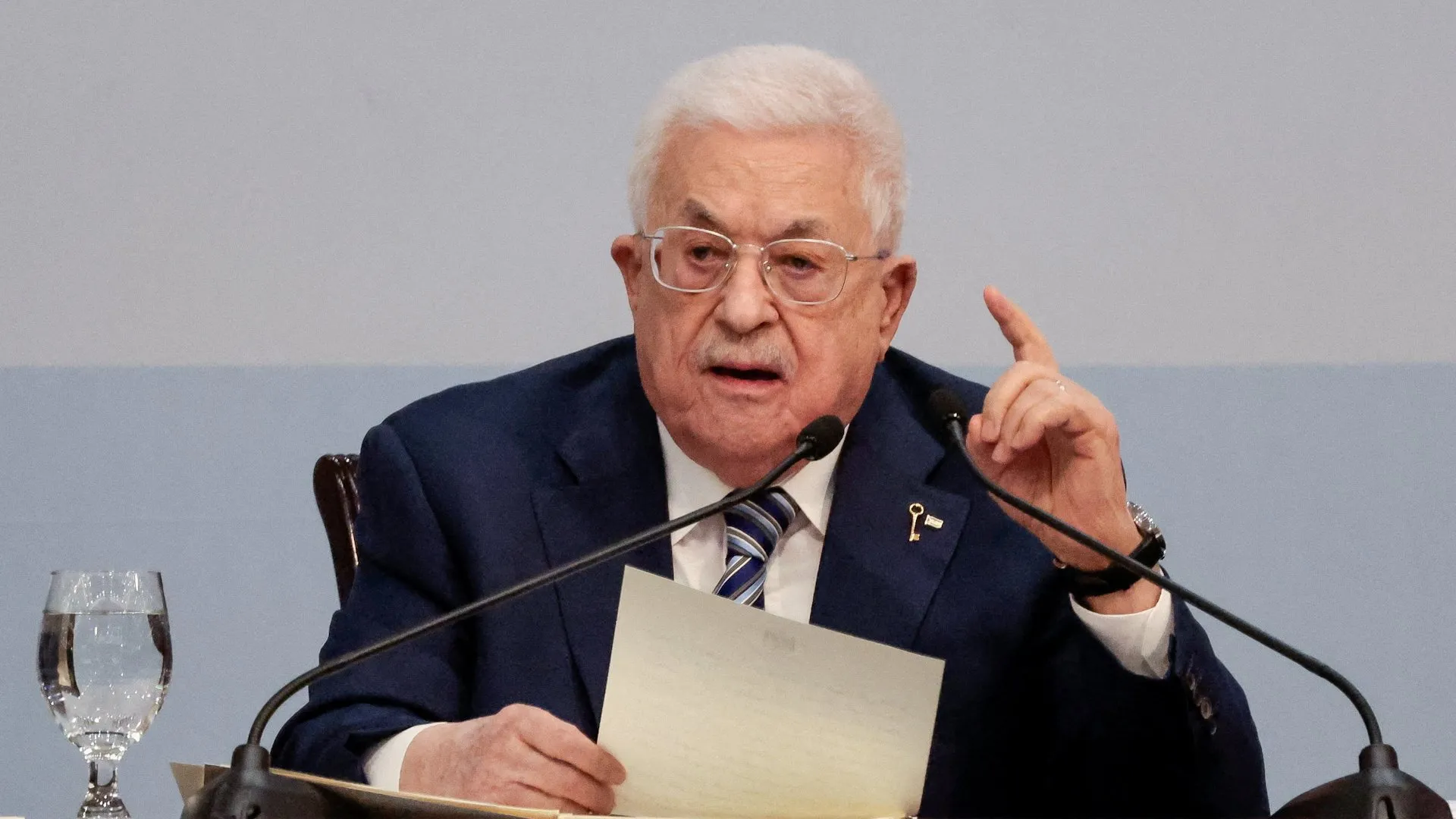

Source link

Yandex: Ukraine strikes Russian data centre again despite Trump warning

Both Russia and Ukraine have stepped up attacks on infrastructure in recent months as the war between them continues into its fifth year following Russia’s full-scale invasion.

Kyiv said it is targeting places that help the revenue streams for Moscow’s war machine, and that the latest attacks could force Russia to divert its resources to repair the damage at Yandex.

Writing on Telegram, the company confirmed that its data centre in Vladimir was damaged and that operations had been “completely suspended,” although they were working to restore connectivity.

The other strikes against Yandex facilities were on Thursday in Sasovo and Friday in in Kaluga, south-west of Moscow, causing operations to be suspended.

The tech company – which also runs a food-ordering and taxi app used by tens of millions of people – said its data centres were critical for the normal operation of its services, and that it was “very difficult to predict” when they would be back online.

Meanwhile, Russian strikes on Ukraine have also continued through the weekend.

The State Emergency Service of Ukraine said six people were injured in Russian attacks overnight on four districts in its south-eastern Dnipropetrovsk region.

On Saturday, at least 20 people including four children were killed in Russian attacks on Zaporizhzhia, local officials confirmed.

Source link