Simple marble counters contrasted with a euphony of colour in the form of multicoloured patterned wallpaper and accents.
It has everything you’d expect, from a tea and coffee station to a fully stocked minibar.
But it’s the little touches – the fleece lined dressing gown, the complimentary steamer – that set it above other London hotels.
Despite its central location, my room was blissfully quiet, with little trouble falling asleep in the huge king-size bed.
Options range from King Premium rooms or the suites which sleep up to four.
Rooms start from £283. See hilton.com.
The hotel is hard to miss from its beautiful exteriorMake sure to grab a drink at the beautiful bar
What is there to eat and drink?
On the ground floor of the hotel is Lavo, which makes you feel like you are world’s away from the busy high street just outside.
Start off at the bar which has a great cocktail menu which offers a twist on the classics – my tomato martini was the perfect start, alongside a fantastic DJ set.
Otherwise come to the restaurant with an empty stomach to fully enjoy the fresh Italian dishes and fantastic portion sizes.
My tuna tartare starter was piled high, while my penne a la vodka was rich and hearty.
I was tempted by the build-you-own cannoli but thought it would be remiss not to try the tiramisu, which was one of the best I’d eaten (outside of Italy, of course).
I was excited to return for breakfast, with a great spread from hot counters to pastries.
Need to grab something to go? Try Ground, the wellness cafe for a huge range of smoothies and healthy snacks.
What else is there?
Also at the hotel is triplebond, a wellness members club with spa, gym and rooftop pool.
Suite guests get access or you can book a day pass for £95.
Otherwise get your comfy shoes on and head out to Oxford Circus for a day of shopping, with all the top high street brands on offer.
Is it family friendly?
The hotel has connecting rooms for families while cots and high chairs can be requested.
The restaurant has a kids menu too.
Is the hotel accessible?
The hotel is wheelchair accessible, which includes to reception, the bar and restaurant.
There are 21 accessible guest rooms, with amenities including with roll-in showers and emergency call systems
The US tech giant is investing $15bn in a huge new data centre project in northern Finland.
Published On 29 Oct 202629 Oct 2026
Finnish police have launched a criminal investigation into suspected breaches of environmental law at the construction site of a planned Google data centre in northern Finland.
The project is part of a $15bn deal announced last month by Alphabet’s Google to invest in artificial intelligence (AI) infrastructure in Finland, which the US company described as its largest investment in Europe.
Recommended Stories
list of 4 itemsend of list
Authorities have said Tuike Finland, a local subsidiary of Google, conducted forest clearing and drainage at a planned site near the town of Muhos, before the environmental impact assessments required under Finnish law had been completed.
“We are investigating whether the company’s operations have breached the Water Act and resulted in environmental damage,” Detective Superintendent Kari Pakanen told the Reuters news agency on Thursday, adding that a guilty finding could lead to a corporate fine.
Pakanen declined to say whether any individuals could become a target of the investigation, and a Google spokesperson said the company would cooperate with the police investigation and continue to focus on maintaining compliance at its sites.
Tree felling prompts local anger
Videos and photographs showing the scale of the forest clearance at the site of the data centre, and Google’s initial reluctance to address the issue in the days after the news broke, have prompted widespread anger in Finland, where there is a high level of respect for the natural environment among the public.
“All the outrage and dismay directed at Google, I can very much share that, especially when we are talking about the parent company valued as the third-largest in the world,” Finnish Green MP Oras Tynkkynen told Al Jazeera. “There is just no excuse. You have to know the legislation of the country you are operating in; you can afford to hire the best legal experts to help you navigate the local legal requirements.”
Finnish authorities ordered Google to stop work at the data centre site at the start of October, and the latest information from the police highlights shortcomings in the drainage and water management at the site.
Tynkkynen called Google’s actions “unforgivable”, but cautioned that while the anger being directed at the US tech giant was justified, it was also diverting scrutiny away from legacy Finnish forestry companies, which he says are “by far the biggest contributors to biodiversity loss in this country”.
A scenic view of Lake Inari in Finnish Lapland shows clouds and trees in the background in September 2025 [David Mac Dougall/Al Jazeera]
What is Finland’s appeal for data centre construction?
Finland’s cool climate, low-carbon electricity and government endorsement of AI projects have contributed to making the country one of Europe’s main destinations for data centre investments in recent years.
Finland, similar in size to Germany – but with one-seventh of the population, less than six million people – has had less vocal opposition to data centre buildouts than other places, including in the United States.
AI data centres are among the main drivers of a projected rise of up to 40 percent in Finland’s electricity consumption in the coming years, if all agreed grid connection projects go ahead, grid operator Fingrid has said.
Google’s planned investments in Finland include data centres, electricity grid improvements and clean energy and battery projects to power services such as Gemini, Search, Maps and YouTube.
Supporting Google’s plan, Finland’s Prime Minister Petteri Orpo said in September that the deal would be a boost for the economy, playing down concerns that it would suck up energy and push up power prices.
It’s a bit early for holiday music, but I’ve been unable to stop myself from singing a tune.
“It’s the most wonderful time of the year!”
Although I love every season of hiking in Southern California, the fall and winter are my favorite times to explore massive swaths of our local deserts and the warmer parts of L.A. County, near Santa Clarita, Castaic and more.
It was with that joyful spirit, I wrote this week’s edition of The Wild, our weekly outdoors newsletter. Below, I will detail three great desert hikes within a two-hour drive of L.A. that are great for cool, crisp fall days. Let’s celebrate the end of this year’s heat waves!
You are reading The Wild newsletter
Sign up to get expert tips on the best of Southern California’s beaches, trails, parks, deserts, forests and mountains in your inbox every Thursday.
By continuing, you agree to our Terms of Service, which include arbitration and a class action waiver. You agree that we and our third-party vendors may collect and use your information, including through cookies, pixels and similar technologies, for the purposes set forth in our Privacy Policy such as personalizing your experience and ads.
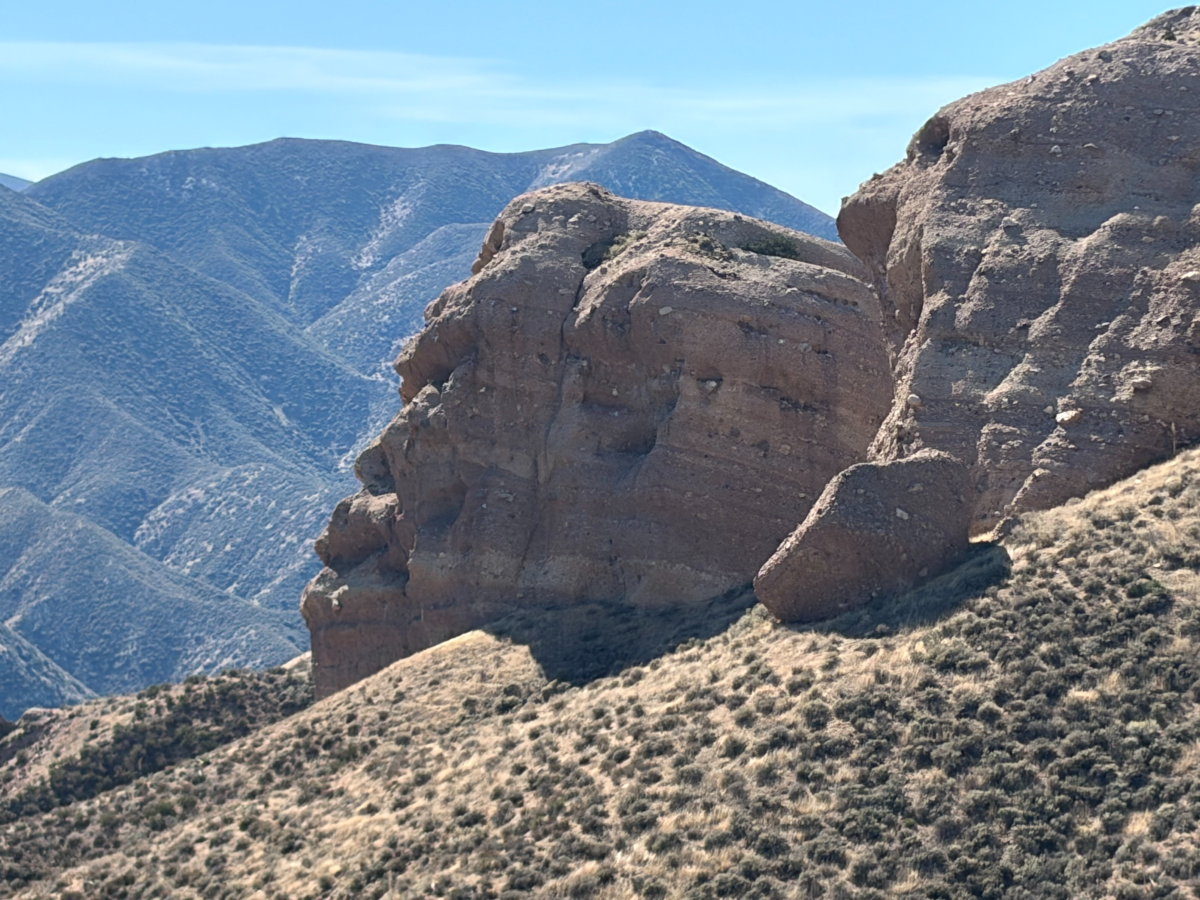
A segment of Three Sisters Rock near the Agua Dulce and Acton area of L.A. County.
(Jaclyn Cosgrove / Los Angeles Times)
1. Three Sisters Rock via the Pacific Crest Trail
Distance: 7.5 miles Elevation gained: About 1,700 feet Difficulty: Moderate Dogs allowed: Yes Nearest to: Agua Dulce and Acton Accessible alternative: Acton Park Loop
This 7.5(ish)-mile moderate hike to Three Sisters Rock, a massive rock formation perched on the hillside, includes a stretch along the Pacific Crest Trail through a high desert-esque landscape with stunning monoliths of conglomerate and more. It’s hikes like these that remind us of how small we are as we pass by these giant rock formations.
This hike has minimal shade, and what appears to be the only water source, which you must filter to drink, is at the beginning. Pack plenty of water — more than you think you’ll need — and make sure to hike this trail on a cool day to prevent heat exhaustion. Additionally, I recommend wearing pants, as the trail has some overgrown segments and spots where you’ll encounter tumbleweeds. Lastly, my friend who hiked with me used a hiking umbrella and found that really helped with the intensity of the sun.
To begin your hike, you’ll park either at the Indian Canyon Trailhead parking lot or on the shoulder of Soledad Canyon Road next to the trail’s starting point.
From Soledad Canyon Road, you will head north over the Santa Clara River. This short stretch is a bit overgrown and can be buggy, but it’s also five minutes of your hike.
The beginning of the hike crosses through a riparian area along the Santa Clara River.
(Jaclyn Cosgrove / Los Angeles Times)
As my friend Astraia and I turned out of the wetlands, we passed through dense vegetation, including what looked like rubber rabbitbrush with bright yellow blooms. Astraia cried out. She’d been stung by a bee that’d gotten stuck in her hair as we crossed through the blooms. Likely because of the proximity to water, this was an especially busy spot for the bees, so take good care as you move through here.
A bit of ice and first aid for Astraia’s hand, and we were back on track. We were headed over the train tracks — be careful here! — and continued onward along the Pacific Crest Trail, a 2,650-mile journey that spans from Mexico to Canada. You’ll immediately start gaining elevation as you crunch over the sandy dirt. Don’t forget to breathe and take in the views. You can see Mt. Gleason and Messenger Peak poking out from the San Gabriel Mountains.
The view from the Pacific Crest Trail of the canyons and foothills in the Agua Dulce and Acton area with the San Gabriel Mountains in the distance.
(Jaclyn Cosgrove / Los Angeles Times)
About a mile in, you’ll spot a giant multilayered stone. Friends, this is a bonus rock! You have almost three miles to go before you reach Three Sisters.
Astraia and I stared in wonder at this ancient specimen, and I entertained her with a story about the one time I tried to simplify local geology in The Wild and thought I might lose my mind because of how complicated it all was. That’s to say, I think this is a type of conglomerate, but I am far from an expert. (Experts: Please email me and tell me what you think.)
Regardless, it’s amazing to look at the layers of these giant rocks and think of the stories they tell about the way these lands have weathered many storms.
The first massive rock formation you pass as you take the Pacific Crest Trail toward Three Sisters Rock.
(Jaclyn Cosgrove / Los Angeles Times)
For the next mile after this, be mindful of where you walk, as I found a few spots on the trail with patches of soft soil where I could have tripped as my feet sank down. Thankfully, I was going slow, in awe of the landscape around me (including a formation to the east that resembles knuckles in the hillside).
At 2 miles in, you will turn off the Pacific Crest Trail onto a wide dirt fire road. I thought it would be a fairly straightforward hike to Three Sisters Rock from here, but the road ahead has multiple intersections where you can easily make a wrong turn. That said, on your return, keep your eyes peeled for where you rejoin the Pacific Crest Trail, as your local outdoors journalist completely missed it!
The first intersection comes shortly after you start the fire road, where you’ll bear right (or northeast). You’ll know you made a wrong turn if you end up at the base of a transmission tower. Shortly thereafter, you’ll bear right-ish again to avoid another dead end to a transmission tower.
Another one of the layered rock outcroppings you’ll pass as you take the Pacific Crest Trail toward Three Sisters Rock.
(Jaclyn Cosgrove / Los Angeles Times)
About 2.8 miles in, you’ll see an option to turn left. Continue west on the fire road, following it south around a bend and then up, past another turnoff to a transmission tower about 3.1 miles in where you will bear left, continuing on the fire road. You are almost to Three Sisters Rock!
You’ll turn at about 3.4 miles onto a narrow well-trodden dirt trail down to the rocks. You’ll find three massive rock formations near other smaller heaps of geological history. There’s a nice flat area near the base of the rocks where you can have a snack or lunch break. You should use serious caution if planning to climb up the rock face, as it is not a simple scramble and poses some serious risks if you fall.
Astraia and I were pleased with how we spent the day. She repeatedly commented that, despite the occasional traffic noise from the roadway, it was near silent on the trail. We spotted multiple red-tailed hawks and whiptail lizards and were awed as we watched a raven (or maybe a crow) fly upside down, which we agreed was a skill we’d like to have.
We hiked the trail on a Sunday and saw only two other people with a friendly Brittany spaniel named Boss. They were surprised to see us until we explained we were headed to Three Sisters Rock. I hope you find a similar serenity out in this gorgeous high desert landscape!
The Devil’s Chair is one of the best lookout points in L.A. County. It is located in the Devil’s Punchbowl Natural Area near Pearblossom.
(Jaclyn Cosgrove / Los Angeles Times)
2. The Devil’s Chair Trail
Distance: 7.4 miles Elevation gain: About 1,500 feet Difficulty: Moderate Dogs allowed? Yes Accessible alternative: Prime Desert Woodland Preserve walking trail in Lancaster
The Devil’s Chair Trail is a 7.4-mile out-and-back hike that takes visitors through ancient sandstone formations of every imaginable shape and size. It’s a great all-day adventure for adults, teenagers and older kids. The trail leads to one of the most epic lookout spots in L.A. County: The Devil’s Chair! (Less spooky than it sounds, though.)
About an hour-and-a-half drive from L.A. near Pearblossom, the hike starts in the Devil’s Punchbowl Natural Area, a 1,310-acre L.A. County park with massive sandstone rock formations and a healthy desert landscape of juniper and Joshua trees, along with native wildlife, including bighorn sheep.
Upon arriving in the large parking lot, you’ll find vault toilets and a visitor check-in area. The nature center is a great stop with live snakes, bugs and other crawly creepers inside. The rosy boa and tarantula are among my favorites to view.
The Devil’s Chair Trail was previously closed because of storm damage, but reopened thanks to the diligent work of county staff.
Its trailhead is in the southeast corner of the parking lot. The first mile of this hike is arguably the hardest part because you gain 500 feet in just under a mile.
The Devil’s Punchbowl Natural Area sits near the San Gabriel Mountains.
(Jaclyn Cosgrove / Los Angeles Times)
After catching your breath, you’ll turn left (or east), cross a seasonal creek and hike for just over 2½ miles on a gentle path.
As you hike along the trail, you’ll likely spot chipmunks and gray squirrels. I frequently hear a variety of birds when I hike in the park, including hawks, ravens, white-crowned sparrows and dark-eyed juncos (which are very cute).
You also get incredible views of the desert below and mountains in the distance, including nearby Table Mountain in Angeles National Forest and the Tehachapi Mountains in Kern County.
To reach the trail’s namesake, you will walk down a narrow fenced path to a small boulder, surrounded by a short fence, that overlooks the valley below. This is the aforementioned devil’s chair. It’s a great spot to take a family selfie, share snacks and reminisce. And if you’re lucky, you might spot bighorn sheep in the valley below.
A hiker celebrates from a peak at Vasquez Rocks Natural Area in Agua Dulce. The rocks were used in many television shows and movies. Vasquez Rocks are named for the outlaw Tiburcio Vásquez, who used the rocky hills as his hideout.
(Myung J. Chun / Los Angeles Times)
3. PCT and Apwinga Loop Trail at Vasquez Rocks Natural Area
Distance: 3.4 miles Elevation gain: 600 feet Difficulty: Moderate
The first time I visited Vasquez Rocks Natural Area, I drove up, explored its famous rocks that jut from the ground like massive flying saucers, and then left. But this park has more to offer than spots to reenact Captain Kirk’s fight with the Gorn in the original “Star Trek.”
To begin the loop, you can start at the gate after parking near the nature center (which features fun movie memorabilia of films made at Vasquez).
Follow the Pacific Crest Trail clockwise and you’ll soon find yourself with your first great view of the park, including its iconic slabs of earth. You’ll follow the trail as it passes next to large rocks — including one that resembles a T. rex — before entering an open area with a green picnic table beneath a pepper tree. Continue following the PCT.
The formations at Vasquez Rocks are diverse in shape and color.
(Jaclyn Cosgrove / Los Angeles Times)
Soon, you’ll notice trail signs noting that you’re on both the PCT and the Apwinga Loop Trail. The PCT will eventually jag southeast. You will continue following the Apwinga Loop. Here you’ll see so much more than those big famous rocks: sweeping vistas, purple-red rocks to scramble along, native desert plants, like buckwheat and yucca, and — depending on when you visit — plenty of solitude.
I enjoyed looking at the numerous rock formations and, like a high desert Rorschach test, deciding what I thought they looked like: a bolt screwed into the ground, stacks of vinyl records and pancakes. (Maybe I was getting hungry at that point.)
A section of the Pacific Crest Trail runs through Vasquez Rocks Natural Area in Agua Dulce.
(Myung J. Chun / Los Angeles Times)
In terms of difficulty, this trail is firmly moderate. Parts of it are flat or gently sloping, but you will run into a few stretches where you will briefly huff your way up. You will walk near the 14 Freeway for a bit, but unlike the drivers, you’ll have a close-up view of these remarkable rocks, formed an estimated 25 million years ago, when their “sediment was spread across alluvial fans — cone-shaped deposits that develop as fast-moving streams empty onto relatively flat plains,” according to NASA.
Vasquez Rocks has different hours depending on the season. From Nov. 1 to Feb. 28, it’s open from 8 a.m. to 5 p.m. Tuesday through Sunday. Its spring and summer hours, which run from March 1 to Oct. 31, are 8 a.m. to 7:30 p.m. Tuesday through Sunday.
3 things to do
A big brown bat is one of many bat species that call L.A. County home.
(Carolyn Cole / Los Angeles Times)
1. Behold bats in San Dimas The San Dimas Canyon Nature Center will host Bats of the Angeles National Forest from 6 to 7 p.m. Friday in San Dimas. Visitors will learn about multiple species of bats that flap about our mountains. Learn more at the nature center’s Instagram page.
2. Hike to the sound of ghost stories in L.A. Naturalist and outdoors educator Jason Wise will host Curse of Griffith Park Hike at 6 p.m. Thursday along the park’s trails. Wise will lead hikers on a 2-mile jaunt as he points out spiders, bats and owls, and shares about local lore and legend. Kids and dogs welcome. Suggested donation of $25. Register at eventbrite.com.
3. Hunt for treasure in Long Beach Real estate agent David Sanchez, a longtime organizer of paddling events in the South Bay, will host a Halloween scavenger hunt from 10 a.m. to noon Saturday in Long Beach. Participants will join the spooky hunt for hidden treasures on the water using their own (or rented) stand-up paddleboards, kayaks or other vessels. Register at eventbrite.com.
The must-read
Some of the infrastructure for the Mt. Waterman ski resort.
(Chris Erskine / Los Angeles Times)
The Mt. Waterman ski resort is for sale — again. In 2024, hikers collectively cringed when the news broke that an investment firm was angling to turn Mt. Waterman into an exclusive ski club with pricey memberships, which included chartered helicopters up the mountain. That plan shockingly didn’t work out. Times staff writer Lisa Boone wrote recently about how the ski resort has been relisted, this time for $3.275 million. “We have the steepest skiing in Southern California,” said listing agent Marc Ramirez of Pacific West Business Properties, referring to the black diamond slopes. “We offer advanced skiing you can’t find unless you drive to Mammoth.” He said he’s received about 25 calls a day since the listing went live and is in serious talks with two potential buyers.
May the next buyers understand the spirit of public lands.
Happy adventuring,
P.S.
Quickly, a bit of trunk-cated news: State and local officials secured $1 million to acquire private property in the Elephant Hill area of El Sereno. This will allow the public land known as Elephant Hill Open Space to grow more, providing even more green space for a community that’s fought long and hard for it. You can hike through Elephant Hill’s new trail using the route I developed that connects multiple green spaces in Northeast L.A. Enjoy!
For more insider tips on Southern California’s beaches, trails and parks, check out past editions of The Wild. And to view this newsletter in your browser, click here.
Dearborn, Michigan – Jake Lang, a far-right provocateur in a bulletproof vest, shouts anti-Muslim obscenities on a bullhorn outside a rally featuring former US President Barack Obama in Detroit.
His associates, wearing crusader-themed accessories – including a tin shield featuring a black cross – hold campaign signs for Mike Rogers, the Republican Senate candidate in Michigan, who is in a close race with Democrat Abdul El-Sayed.
Recommended Stories
list of 4 itemsend of list
If it weren’t for the bigoted slogans, the people lining up around them to attend the campaign event for El-Sayed and other Democrats could have mistakenly thought the protesters were in Halloween costumes.
“Get the f*** out, Muslims,” Lang shouted. “The crusade is coming. Self-deport.”
Lang may appear like a fringe agitator. But Muslim American activists say the bigotry he is spreading is going mainstream, especially in the context of the Senate race in Michigan.
Anti-Muslim attacks against El-Sayed have been perpetuated at the highest level of the US government, including by President Donald Trump and his cabinet members.
Suehaila Amen, a prominent Arab and Muslim advocate in the Detroit area, said bigotry against her community is reaching an all-time high.
“They make immediately post 9/11 look like a walk in the park for us. This has been absolutely disgusting to witness,” Amen told Al Jazeera.
One of Lang’s allies, Pastor Lorenzo Sewell, is an official faith adviser to the Rogers campaign.
Sewell helped Lang organise an anti-Muslim march in the Detroit suburb of Dearborn – home to a large Arab and Muslim community – in August.
Muslim American activist Suehaila Amen in Dearborn, Michigan, on October 26 [Ali Harb/Al Jazeera]
Abdullah Hammoud, the mayor of Dearborn, said the city – which has long been a target for anti-Muslim provocateurs – has been receiving an increased number of threats in recent months.
“The general public is unaware of how many threats are aimed towards the city of Dearborn on a daily basis, via social [media], via our dispatch when they’re calling 911 or calling our call centre, and lobbing these threats against the residents of the city each and every single day,” Hammoud told Al Jazeera.
“That does worry me.”
Escalating attacks
While the Rogers campaign did not respond to Al Jazeera’s request for comment about the Republican candidate’s links to Sewell, Rogers defended his focus on El-Sayed’s background, saying it was for national security.
“This is not about the way you pray; it’s the way you think,” Rogers told reporters after his debate with El-Sayed earlier this month.
Local leaders say their community is not cowering in the face of such threats and Trump’s near-daily attacks, and is pushing back through civic engagement and rallying around the El-Sayed campaign.
“Trump is a fascist,” Hammoud told Al Jazeera. “I think the best thing we can do, the best response, is to send Abdul to the US Senate, somebody who’s got two doctorates, someone who is a son of this country, a son of the state, someone who is the captain of his high school team … I think that that’s the best response that we can give fascism.”
Trump has repeatedly mocked El-Sayed’s name, misrepresenting it as Mohammed, and called the Democratic candidate a “jihadist”.
Amen said Arab and Muslim Americans are used to being targeted for their names, but when the president does it, it legitimises bigotry and racism.
“It’s not just some loser that lives around the block who may call you a racist expletive; it’s the loser who lives in the White House,” she said.
Amen added that Arab and Muslim communities are going about their daily lives and organising politically despite the escalating attacks, stressing that they reject attempts to cast them as foreigners or outsiders.
“We are an integral part of the fabric of this nation, whether people like it or not,” she told Al Jazeera.
Republicans across US target El-Sayed
As the Senate race intensifies, Rogers has been baselessly accusing El-Sayed of ties to the Muslim Brotherhood, Hamas, Hezbollah and Iran.
Last month, Rogers went as far as agreeing with a social media post calling El-Sayed, a doctor and former public health official, a “terrorist”.
Trump has suggested that El-Sayed would be a physical threat to the Capitol, saying that he would want him to go through a metal detector.
At an event in western Michigan earlier this week, Health and Human Services Secretary Robert F Kennedy Jr incorrectly claimed that Arabs do not produce literature or science and “don’t win Nobel Prizes”. He argued that the Muslim Brotherhood – which only briefly held power in Egypt between 2012 and 2013 – has destroyed Arab civilisation.
Texas Senator Ted Cruz joined in on such attacks, describing El-Sayed as a “jihadist leprechaun”.
Cruz warned that El-Sayed, a Michigan-born and raised father of two with a medical degree and a doctorate in public health, could end up on the Senate Intelligence Committee and endanger national security.
“If I am correct that he is a passionate supporter of the Muslim Brotherhood, there is a very real risk that Americans will die as a result,” he said.
On Wednesday, Ohio Republican gubernatorial candidate Vivek Ramaswamy invoked Dearborn – one of the safest and fastest-growing cities in Michigan – to drum up fear of immigration.
“Look at what’s happening in Dearborn, Michigan, for God’s sake. We’re not going to let that come to our state of Ohio,” he said.
Dearborn Mayor Abdullah Hammoud, October 28 [Ali Harb/Al Jazeera]
Trump supporters weigh in
El-Sayed, who is of Egyptian descent, has avoided focusing on the attacks, calling them “deflections and deceptions”.
It’s not clear how attacks linked to El-Sayed’s Muslim faith and Arab heritage will affect the race.
About 38 percent of respondents in a survey of potential voters conducted by Michigan State University said a candidate being a Muslim would make them less likely to offer support to their campaign.
After a Trump rally for Rogers in Port Huron, northeast of Detroit, where the president spent most of his nearly two-hour speech attacking El-Sayed, some attendees appeared to agree that El-Sayed may be a threat to national security.
As the US president spoke, shouts of “traitor”, referring to El-Sayed, erupted from the crowd.
Trump supporter David Beamer, whose son died in the 9/11 attacks in 2001, spoke at the event and questioned El-Sayed’s American identity.
“Abdul has a birth certificate. The birth certificate says he’s a citizen of America. You know what? A birth certificate doesn’t make you an American,” Beamer said.
Al Jazeera asked Duane Crempa, a 72-year-old Republican in a Batman mask who attended the Trump speech on Sunday, whether he believes that El-Sayed is a “jihadist” as Trump claims.
Crempa said he is a good judge of character. “Yeah, there is something not right with him. That’s all I’ll say; there’s definitely something not right,” he added.
Jermaine Miller, who also was at the rally, told Al Jazeera he hopes El-Sayed is not a “terrorist”.
“But I mean, it sounds convincing, but it is believable,” he said of Trump’s allegations that the Democratic candidate is a “jihadist”.
‘It’s awful to live this way’
In the Detroit area, Arab and Muslim advocates say the issue is bigger than a Senate seat, arguing that such rhetoric endangers their communities and risks ripping the social fabric of the state.
“We’ve seen the increase in hate marches and hate speech and people being very comfortable sharing their hateful views online and coming into our city and harassing people for no reason – people who are just trying to live and function in this country,” Amen said.
“It’s been tremendously heartbreaking to watch our community constantly have to question why people are maliciously maligning them in public.”
Earlier this year, two gunmen killed three people outside a mosque complex in San Diego in southern California in what authorities said was a hate crime.
Congresswoman Rashida Tlaib, who represents Dearborn and parts of Detroit, said she fears for her two Muslim boys, Adam and Yousif, amid the rise of hate with the election campaign.
“Yesterday, we were all watching the football game, and we literally had to turn off the ads every time in between [plays] because we didn’t want our babies to see these awful, racist ads,” Tlaib told Al Jazeera.
“It’s awful to live this way right now.”
With petrol in Michigan nearing record highs, Arab and Muslim advocates say their communities are being scapegoated to cover up the shortcomings of the Trump administration, including the war in Iran.
Abdelhalim Abdelrahman, communication director for American Muslims for Palestine (AMP), said the attacks against El-Sayed amount to “disgusting Islamophobia” that serves as a distraction.
“Abdul El-Sayed’s name is a visibly Muslim name, and it’s being treated as inherently suspicious, as if a Muslim American cannot willfully execute their duties as an active member of Congress to protect the American people,” Abdelrahman told Al Jazeera.
At the Trump rally in Port Huron, one of Trump’s allies appeared to weigh El-Sayed’s candidacy against petrol prices.
Brian Pannebecker, a retiree from an auto manufacturing company Trump invited to the stage on Sunday, stressed that Michiganders need to vote for the Republican ticket.
“I don’t care if they’re paying a buck and a half more a gallon for gasoline. That is no excuse to vote for a socialist Islamist for the US Senate,” Pannebecker said.
Liev Schreiber owned up to his intense behavior at the “Nocturne” premiere last week, apologizing for scolding a red carpet reporter.
“I didn’t do well,” the Emmy-winning “Ray Donovan” and “Spotlight” star said while recalling his side of the viral red carpet exchange for “Late Night with Seth Meyers” on Monday.
“She hit my Achilles’ heel,” Schreiber explained later in his late-night segment.
His exchange with an Apple TV reporter sparked headlines last week, with the actor berating the reporter on video for her question during his series’ Hollywood premiere. The 59-year-old star appeared to take issue with the reporter asking him to describe “Nocturne” in three words. He could be seen apparently telling the reporter to “talk to people like they value what they do.”
“Three words isn’t gonna do anything for anybody and the monkey who f— thought of that is shooting themselves in the foot,” he says in the video. “It’s not a f— sound bite, especially when we’re doing it in-house for our own people.”
He further suggested that the reporter “engage” with the individuals involved in the project, which is an Apple TV production.
During his late-night appearance, Schreiber made it quite clear he has a bone to pick with increasingly reductive language, lamenting the use of emojis to communicate thoughts. The Tony winner, directing William Shakespeare’s “Measure for Measure” for the USC School of Dramatic Arts, spoke on Monday about “what a responsibility it is to articulate” and joked, “I might not be the best person on the press line that ever was on the press line.”
Schreiber said he’s now “at that age where I don’t do things terribly quickly” and fessed up to his “terrible tirade about monkeys and profanity.”
“I apologize,”he said, adding he and the reporter smoothed things over and ultimately engaged in a “great” conversation about the series.
“Nocturne” stars Schreiber, “Atlanta” alumna Zazie Beetz and Emmy winner Stephen Graham and begins streaming Friday. Adapted from Lars Kepler’s bestselling novel, the series centers on Schreiber’s ex-cop whose move to a small western Pennsylvania town spurs a string of disappearances possibly tied to a serial killer.
“In the quarter, we achieved sales of just under $3.5 billion” and “our light vehicle eProduct sales were up 33%, primarily due to European growth,” said President, CEO & Director Joseph Fadool.
Seeking Alpha’s Disclaimer:This article was automatically generated by an AI tool based on content available on the Seeking Alpha website, and has not been curated or reviewed by humans. Due to inherent limitations in using AI-based tools, the accuracy, completeness, or timeliness of such articles cannot be guaranteed. This article is intended for informational purposes only. Seeking Alpha does not take account of your objectives or your financial situation and does not offer any personalized investment advice. Seeking Alpha is not a licensed securities dealer, broker or US investment adviser or investment bank.
WASHINGTON — A federal judge on Thursday set a September 2027 trial date for a man charged with attempting to kill President Trump at the White House Correspondents’ Assn. dinner in April.
Cole Tomas Allen’s trial is scheduled to start with jury selection on Sept. 7 in Washington, D.C., and is expected to last approximately three to four weeks. Prosecutors had recommended starting the trial in May, but U.S. District Judge Trevor McFadden set the later date after one of Allen’s attorneys asked for more time to prepare.
Allen, of Torrance, is accused of storming the WHCA dinner while armed with guns and knives and firing a shotgun at a Secret Service officer who tried to stop the attack at the Washington Hilton hotel. The officer, who was struck once in a bullet-resistant vest, fired five shots but didn’t hit anybody, authorities said. Allen was injured but not from gunfire.
The attack led to an early end to one of the highest-profile annual events in the nation’s capital. Trump returned to speak at the rescheduled dinner three months later.
In writings that he sent to relatives before the attack, Allen railed against Trump administration policies and referred to himself as a “Friendly Federal Assassin,” authorities said.
Allen faces an attempted assassination charge that carries a maximum possible sentence of life in prison. He also is charged with assaulting a federal officer with a deadly weapon and two additional firearms counts.
The first tentative steps to end the 3pm television blackout in the UK have been taken by Scottish football as it seeks offers for the next broadcast cycle.
The SPFL has said that it is “flexible about the number of games” that will form part of the new deal, which will kick in from the 2029-30 season.
BBC Sport understands this includes the possibility that broadcasters could bid to show all matches live – including those shown on a Saturday afternoon.
The SPFL has created a tender with the greatest flexibility on the basis that the broadcaster does not seek to impose Article 48 of the Uefa Statutes.
Article 48 allows leagues to set specific times when matches are banned from being shown live on television. It can only be enforced when 50% of matches in a country’s top two divisions are played at the same time.
While other parts of Europe have experimented with a blackout, it is now only present in the UK between 2:45pm and 5:15pm on a Saturday.
Other leagues now tend to stagger kick-off times so the top divisions do not all play at the same time, meaning the blackout could not be applied.
In the UK, 3pm remains the traditional, default kick-off time for all leagues from the very top down through non-league.
It was introduced due to fears that televised games at 3pm could affect attendances, not just at the clubs involved but at those down the divisions too.
But as streaming has grown in popularity, critics have argued that it hinders the ability of clubs to exploit this revenue stream.
This is especially the case in the lower levels, which have had to adhere to the blackout and not show any of their games online.
In August, Premier League chief executive Richard Masters indicated the direction of travel was to end the blackout, but any decision would be 18 months away and taken in consultation with the EFL and the FA.
The upcoming broadcast cycle provides a unique opportunity for all leagues to come together and reach a consensus, as the rights deals for the Premier League, EFL and SPFL all end in 2028-29.
While the possibility to take all games is on the table in Scotland, it is by no means certain the option will be taken up.
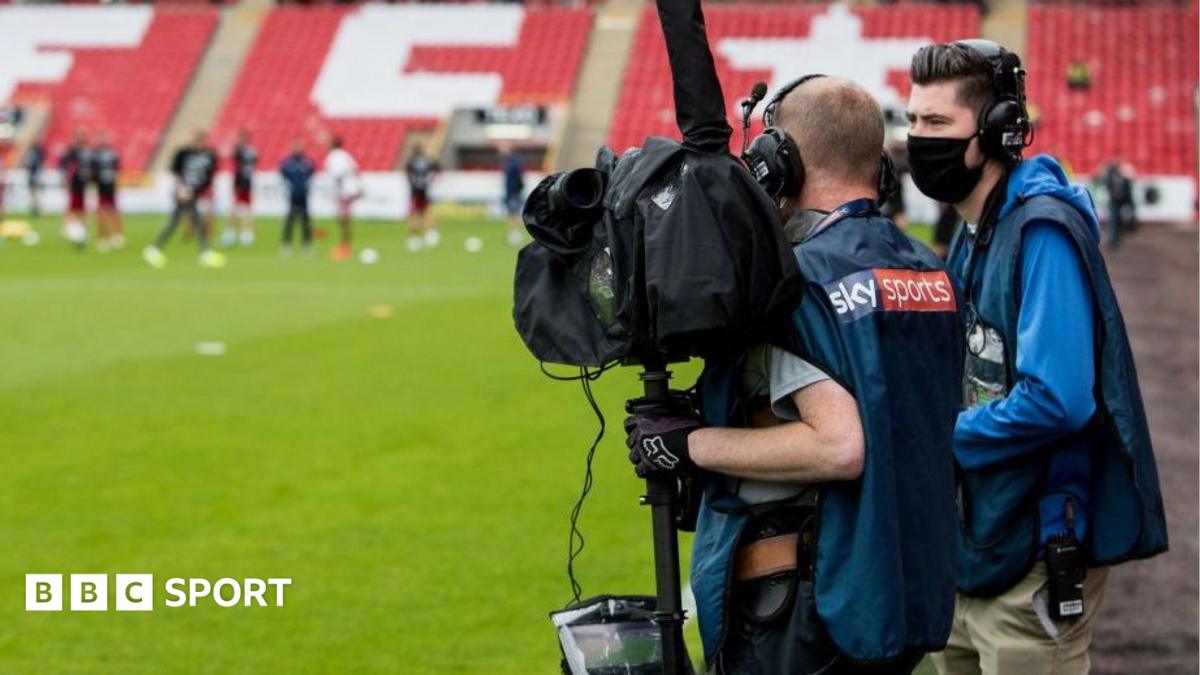
Under the current terms, Sky Sports can show up to 60 Premiership matches a season, with Premier Sports showing up to 22.
In total, there are 228 games in the top flight, meaning only 36% of matches are shown live under the current broadcast deal.
The tender allows broadcasters to present any proposition for live coverage they see fit.
Any decision would then be up to the Premiership’s 12 member clubs, with eight votes required to approve a deal.
Clubs could potentially opt to reject an offer which would include the Saturday 3pm games.
Scotland ending the 3pm blackout would not automatically mean English, Welsh and Northern Irish football follows suit.
Couple say they are ‘prisoners of conscience’ being made into an example by Pakistan’s military-backed authorities.
Published On 29 Oct 202629 Oct 2026
An antiterrorism court in Pakistan has sentenced prominent human rights lawyers Imaan Mazari and her husband, Hadi Ali Chattha, to 10 years in prison on terrorism-related charges.
Judge Tahir Abbas Sipra announced the verdict on Thursday, following their trial inside Adiala prison in the garrison city of Rawalpindi.
The couple were found guilty of putting “the security of [the England and Wales Cricket] team at risk”, the judge wrote, adding that it “clearly shows the intentions and objective of the accused to create a sense of terror”, according to a copy of the court judgement obtained by the AFP news agency.
At the same time, the ruling conceded that the security breach was “a very common nature ordinary type of incident apparently of removal of a barrier”.
The case relates to an October 2024 incident in which the couple removed road barriers in the capital, Islamabad, along a route designated for the touring England cricket team.
The couple were indicted on October 7, accused of obstructing police and inciting public interest, and pleaded not guilty.
In statements seen by the Reuters news agency, the couple denied the charges, while calling themselves “prisoners of conscience”, adding that they were being targeted for their human rights work.
In their defence document, the couple had earlier said they were “being made an example to further cement the chilling effect against those who stand (or want to stand) against tyranny, oppression and injustice”.
Relatives criticise judicial process
Shireen Mazari, who is Imaan Mazari’s mother and served as Pakistan’s human rights minister under incarcerated former Prime Minister Imran Khan, said it was a “sham trial without any due process”.
Mazari told the Reuters news agency the couple “were not permitted to defend themselves through their own lawyer, and were not provided with key legal documents”, adding that the defence would file a petition against the verdict in the Supreme Court.
Amnesty International called the convictions “an indictment of Pakistan’s justice system.”
“It was a test of the judiciary’s ability to uphold the principles of justice and the right to fair trial. It has failed that test miserably,” said Amnesty’s Yasmine Ahmend.
“It is clear that these ‘anti-terrorism’ charges are being used to punish Imaan and Hadi for their human rights advocacy,” she added.
Mazari and Chattha have been in custody since January 23, in a separate case over their social media posts.
A lower court sentenced them each to 17 years the next day under Pakistan’s Prevention of Electronic Crimes Act, which critics have said is designed to quash antigovernment dissent online.
Although the Supreme Court later suspended those sentences, police re-arrested the couple the same day in the security breach case.
“Imaan and Hadi’s re-arrest dispels any pretence that the charges against them are anything other than a politically motivated attempt to punish them for their human rights work”, said Babu Ram Pant, Amnesty International’s Deputy Regional Director for South Asia, adding that the case demonstrates once again the authorities’ willingness to weaponise the legal system against critical voices.
Pakistan’s law minister, Azam Nazeer Tarar, has repeatedly said the country’s judiciary is independent.
Few humans have flown a jet as high or as fast as Adelbert “Buz” Carpenter. During his six years as an SR-71 Blackbird pilot, the now-retired Air Force colonel flew 230 missions, frequently exceeding three times the speed of sound. Over the course of nearly 800 hours flying one of the world’s most iconic aircraft, Carpenter soared over Cuba, skirted North Korea and tracked Russian nuclear submarines in the Arctic. He also had a few close calls, in one case narrowly avoiding disaster.
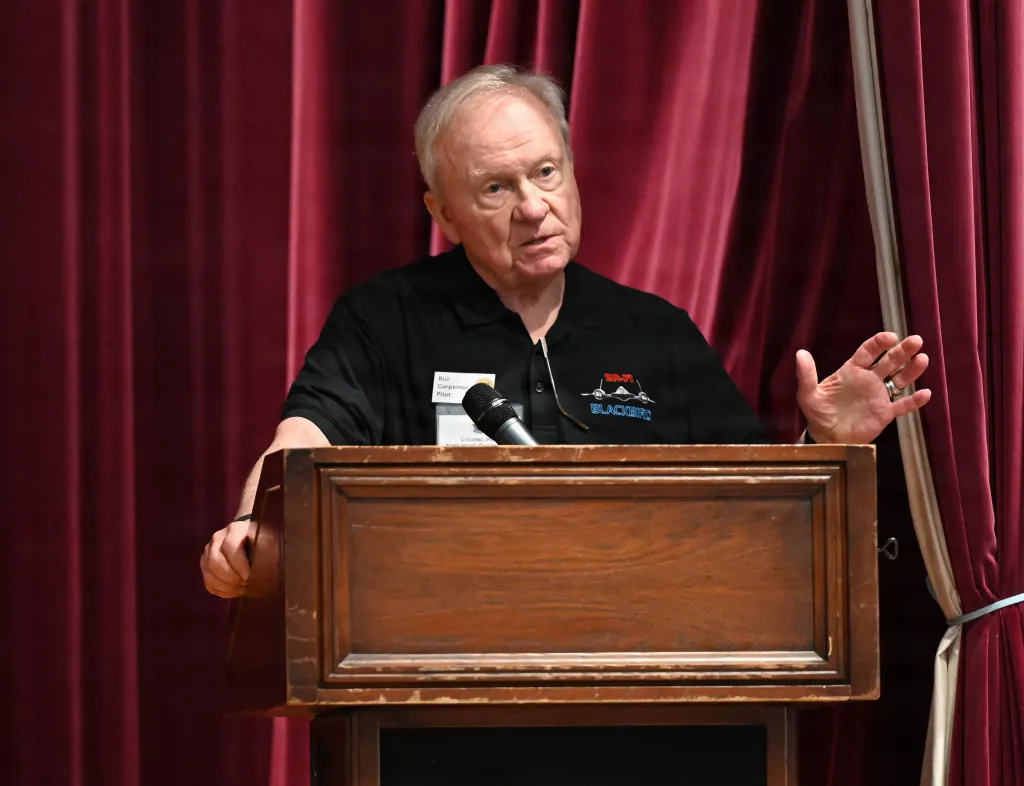
U.S. Air Force Col. (ret.) Buz Carpenter, former SR-71 Blackbird instructor pilot, shares some of his memories of flying the supersonic aircraft with the audience at RAF Mildenhall, England, July 27, 2026. (U.S. Air Force photo by Karen Abeyasekere) Karen Abeyasekere
Some of the questions and answers have been lightly edited for clarity.
Q: How did you become an SR-71 pilot? Walk me through your decision to join the program. What made you want to fly it? What was the qualification process like?
A: Well, it was a multi-step process… You had to fill out all this paperwork. You had to send them your flight records, all your flight checks, your physical records. What are your professional ratings in the Air Force? Do they rate you as superior?
The home base was Beale Air Force Base in California. If they liked you, you got called back for about a week. The first two days were a modified astronaut’s physical. I mean, they checked everything. You had a series of interviews. As a pilot, I had to fly with two current SR-71 pilots, not in the SR, but in the companion trainer, the T-38.
At any time, there were only 11 of us qualified to fly the SR-71. That’s how small a group it was for the whole program. Only 85 of us ever flew operational missions… So you can see it’s a pretty small group.
Lockheed Martin
Q: Did pilots have to be invited to apply for the SR-71 program?
A: Oh, you had to apply for it. When there was a pilot in the program and he knew somebody he used to fly with that was really super, the invitation would be: ‘fill out the paperwork, and once we get the paperwork and look you over, we’ll call you back’ and go through the same routine that I went through.
You’ve got to go through the physical. Sometimes it was shortened because they knew the person. A couple of them were actually T-38 instructors at Beale Air Force Base, and their invitation was a lot shorter because they had all the records there. They knew who you were, and they knew how you could fly.
About a week before Christmas, 1974, I got a telegram that says ‘you’ve been selected. You will report to Beale Air Force Base July 1975 and commence training in the SR-71.’ I couldn’t have been happier.
Q: What was the training like?
A: The first thing you’re going to do is you’re going to get checked out in the T-38, even though we had all flown it earlier. You had to become [requalified] in it, because as long as you’re in a program, you’re going to continue to fly the T-38.
Once you actually started the program, you’d be paired with your navigator, who then assumed the title Reconnaissance Systems Officer [RSO]. And in my case, it was the wonderful Capt. John Murphy. We trained and flew together for four years.
Your first month or so was mostly academics, because the airplane was so different. You had to learn the systems because the airplane operates in a very hot environment — an average temperature of almost 600 degrees [Fahrenheit]. The airplane grows three to four inches in length, an inch or two in width — it’s 93% titanium to deal with the high temperatures [associated with supersonic flight]. So during flights, you are going to have to deal with systems that are now straining or starting to fail because of the heat environment they’re operating in. So it is imperative that you understand exactly how this airplane is engineered, and what kind of options you might have if you start getting failures.
Then you start getting into the simulator, and obviously it’s a kind of crawl-walk-run type of a deal. This was the first simulator I’d ever seen that was a computer simulator. Up until that point, they called them part-task trainers. It had all the switches and everything, but it didn’t fly like the airplane. Like you’d be in the trainer and they want to simulate a fire. Somebody would bang against the side of this thing, and yell ‘fire’ and turn on the fire light, but they were just watching what you were doing. The SR simulator flew exactly like you [would fly the plane].
So even before John and I started training, we would find times when the simulator wasn’t being used at night, and we would go down there, and fly this simulator. And if you did something wrong, it reacted exactly how the airplane would react. I mean, it could crash if you did something bad enough.
An SR-71 flight simulator. (NASA Photo / Tammy Gill)
There’s no visual. The simulator could move a little bit motion-wise, not severely. It would react exactly how the airplane was going to react, but you couldn’t see anything. Your first visual of what the airplane was like was going to be on your first flight in the airplane.
That’s when you’re going to see what does a takeoff look like in 20 seconds? What does it look like to get behind a tanker and refuel? And as importantly, what does it look like to come back in at 175 indicated [airspeed] and land this airplane on a runway? It was a tremendous training aid because when you came back later on when you were doing your six weeks in Japan, maybe you took some vacation, but the first thing after that they’re going to put you in the simulator for four hours and see how you react to emergencies. It was very complex and defining. We washed people out who could not maintain the level of proficiency that we expected if you were going to fly this airplane.
Q: Could you practice refueling as well?
A: You could do takeoffs, because it was like an instrument takeoff, and you could do ‘quote’ instrument landings, but you had no visual to see how this whole thing would come together. Air refueling we didn’t mess with it because there wasn’t enough you could see. When you came to an air refueling in the simulator, they would just fill you up and say, ‘okay, you’ve been refueled.’ Because you needed the visual picture to understand what you’d be doing behind the tanker.
Q: Tell me about the first time you donned the pressure suit, which you had to wear to withstand the pressures of flying at altitudes of up to 80,000 feet or more.
A: If you were going to fly, you came in two and a half hours early. You had to pass a physical before every flight to make sure your sinuses and blood pressure and a number of other things were okay. You would then have a meal of steak and eggs, just like the astronauts, high protein, low bulk. They would brief you on the status of your airplane, and then about an hour and 15 minutes prior, you would go down where your suits were being maintained, and you’d put on cotton long johns because you’re going to perspire a little bit. Not profusely, but occasionally, if you were low on fuel. The fuel was the cooling system for the airplane, and if you’d been flying at the higher speeds, and you were low on fuel, the suit would heat up a little bit.
They’d suit you up. I’m going to stop there. The first time you ever suited up, you’re not going to the airplane. They’re just exposing you. It was a [NASA] Gemini suit that had been modified, and you put on the cotton long johns. You had two people that helped you into the suit. The suit is lying on the floor like a coverall. So you’re going to come through the back of the suit. You put your legs on like you would a coverall you’d have at home. You then put your arms through the sleeves, and at that point, the two technicians would grab that helmet ring, and they would lift it up, and then you would duck underneath and come up and stand.
Adelbert “Buz” Carpenter in his SR-71 pressure suit. (Courtesy of Adelbert “Buz” Carpenter)
So now the suit is fully on you, and the helmet ring is sitting on your shoulder. The first time you do that, it probably takes 25 minutes, because they’re explaining to you, this is the easiest way to do it. This is where you should step. This is how you get your legs in. This is how you get your arms in. And then the next thing they’re going to do, they’re going to hand you your helmet.
The suit weighs about 40 pounds. If you’re claustrophobic, this is not a program to be in. It’s not overpowering, but it’s your work suit and something to get used to. It’s not that uncomfortable in a sitting position because that’s where you’re going to use it most of the time, sitting in the cockpit.
They’re going to hand you your helmet, and in the helmet — which most people can’t see — there’s a seal that comes around your face. So once you get the helmet on, you’re going to crank down the seal so it seals tightly, because you are going to be breathing — once the visor comes down in the aircraft — you’re going to be breathing 100% oxygen until you land. The reason for that is that the cabin is pressurized to 26,000 feet to reduce the pressure on the airplane. So they want to reduce the nitrogen in your blood. You’re just like a diver when you go from sea level to 26,000 feet. It’s like a diver who’s been diving coming back up to sea level. So by breathing 100% oxygen, you get the nitrogen out of your system, and you avoid the bends.
There were very few, and possibly no episodes like that in the SR program, but in the U-2 sister program, they maintained an altitude of 28,000 feet, and they had to pre-breathe oxygen before they ever went out to the airplane. Because once they got to the airplane, start up, they go straight to altitude. When we take off, it takes us a half hour from the time our visor comes down, breathing 100% oxygen, before you can take off, and then you’re going to go to a tanker to refuel. So by time you were through at the tanker, you’ve been breathing oxygen, pure oxygen, for over an hour. And the reason for taking off light and going to a tanker: Early in the program, the test program, I think we lost two airplanes doing tests due do heavyweight takeoffs and aborts.
An SR-71 takes gas from an KC-135Q. National Archives
So to preclude that, instead of taking off with 80,000 pounds of fuel, we would take off with 40,000 pounds of fuel. It reduced the wear and tear on the tires, so we could accelerate quicker, less stress.
But there was a second piece. When the Concorde crashed in Paris in 2000, it lost two engines on one side. They could never get the airplane going fast enough. The airplane stalled. The powerful engines caused the airplane to roll over.
Flames shoot from the rear of the Air France Concorde as it takes off from Roissy on July 25, 2000, just minutes before the plane crashed in the town of Gonesse, claiming 113 lives—the 109 people on board (mostly German tourists) and four people on the ground (AFP via Getty Images) –
On the SR, it had been forecast through the simulations that if you lost one of your afterburners, lost an engine right after takeoff, there wasn’t enough airflow over your flight controls because you have to keep the other afterburner going. You were going to do the same thing. You were going to roll over and crash. So if you had a full load of fuel, it would take you about maybe 20 seconds, 30 seconds to get above 350 [knots] because at 350, you had more than enough air going across the flight controls to control an engine-out condition. By reducing the takeoff weight down to 40,000 pounds, that dead zone where you didn’t have control was probably 15 seconds. Never happened, but that was part of the theory behind why we took off with half a fuel load.
We took off with heavier fuel loads, occasionally. I think I may have taken off once or twice with a full load. It was a fairly rare exception, but we would take off with 50,000 pounds. I’ve taken off with 60,000 pounds a couple times.
Q: How was your first flight? When was it?
A: You’re not going to be impressed. My first flight, I think, was the 16th of July, 1976, and your first flight in the airplane is subsonic. You’re going to be fully suited up. You’re going to take off. It’s going to be the first time you ever see a takeoff. The takeoff is 20 seconds, and in 20 seconds, you’re going to go 4,500 feet from a dead stop. You’re going to lift off doing 230 miles an hour as you bring the nose up and accelerate to 400 knots. You’re going to pass through 20,000 feet less than two minutes from the time you start your takeoff roll, and then you’ll level off at 25,000 feet and head out to the tanker.
SR-71 taking off. (Courtesy of Adelbert “Buz” Carpenter)
On your first flight, you’re going to spend almost an hour and a half on the tanker, and that’s to teach you how you refuel this airplane behind our special tankers. Almost all the guys had prior refueling experience, so you’re helping them adjust to a new type of refueling regimen per se.
Occasionally, you’d get a guy who had no refueling experience, and that was more difficult to try to teach somebody for the first time how you do refuelings. And one of the trickier things with the tankers, you’d hook up with a tanker, and they’re doing 315 [mph] to 325 [mph] at 25,000 feet. That was where we liked to refuel. So, not every time, but it was not uncommon that by the time you were passing through, having accepted 70,000 pounds of fuel, you’re starting to get power limited, and there were two things you can do.
The preferred thing was you would light the left afterburner to the min-burner [minimum afterburner], and bring the right engine back to a point it would be your modulator. But now you’re going to put the rudder in, because you’re going to be slightly cocked, because your left engine is in min-burner, and what we want you to do is not drop off the boom.
An aerial refueling between SR-71 and KC-135Q. USAF/CMSgt Don Sutherland (left) Lockheed/Tony Landis (Right)
Strategic Air Command, our parent command in the Air Force, wanted you to drop off the tanker, stabilize, light the left burner, adjust the airplane speed, pull in and refuel. The critical thing for us in refuelings is that we wanted to have full tanks at the end of the air refueling point, and if it’s a timed mission, we would need to have that all done at a certain time because maybe there are other airplanes or satellites or that they’re going to use us as a cue.
So basically, I never dropped off, and as an instructor pilot, I taught my students to be able to light the afterburner, put the rudder in, use the right throttle as a modulation, and stay there. One of the good things in our tankers that others didn’t have, we could talk to the tanker crew through the boom, and the outside world couldn’t hear us. So, particularly on operational missions, when we’re running radio silent, we could give the tanker instructions that we wanted passed on without having to break radio silence.
Adelbert “Buz” Carpenter in the cockpit of an SR-71 Blackbird. (Adelbert “Buz” Carpenter)
Q: How did you prepare for your first flight?
I probably had a 150 hours in the simulator. I felt very comfortable. Came in like I told you for the physical, and we talked with my instructor about what we were going to do that day, and got suited up. I wouldn’t say so much nervousness, but anticipation.
You’re going to have your first flight. You go up, and when you get up in the cockpit, you sit down. You put your arms on the side rails, and those same two people, men or women, that suited you up are now going to reach in and make all the critical connections. This is the first time you’re really going to see the whole process with the dual oxygen system, your comm system, hooking up your survival pack, your parachute, everything.
You go through the same thing you’ve done in a simulator, but now you’re in the aircraft. You’re gonna, for the first time, be able to taxi it and get a feel for how sensitive are the brakes and find out what your turning radius is. Every airplane has a different radius, and how much do you anticipate when you start to make a turn as you’re heading out? You taxi on out when it’s that time. Go to the end of the runway, and they’ll do one more inspection to make sure everything looks good on the airplane, and you’ll just kind of go through, and then you’ll call the tower, and you’re cleared on the runway.
And once you’re cleared for takeoff, what you’ll do is you’ll release the brakes as you bring the power to mil [military power—full power without afterburner]. You’ll quickly check your engines. The instruments look good… You go to full afterburner, and you’re on your way. And like I said, the takeoff portion takes about 20 seconds. When you hit 180 [knots], you’re going to start bringing the nose up because you don’t have any flaps, so you’re looking for the airplane to start getting a lift because of the speed, and so you’re going to lift off with a 210 indicated, 210 translates to about 230 miles an hour, and then continue the nose up to 15 to 20 degrees because you’re going to be accelerating pretty quickly.
Like I said, you pass through 20,000 feet less than two minutes from the time you start. You just go through the routine. You’re gonna see the tanker. I’d seen many tankers before. Of course, this my first time in the SR.
SR-71 Takeoff at Edwards Air Force Base
One advantage to me and guys coming out of fighters is that sometimes fighters had the same behind-the-power-curve problem [when refueling], so you would end up having to light one of your afterburners and do the same process in a fighter because of the weight of the fuel. And maybe we didn’t carry bomb loads in the RF-4, but maybe I had three tanks, a center tank and two wing tanks that increased my weight up to the point that I was actually starting to slip behind the power curve.
You come back in, and the instructor is going to demonstrate the first landing, and then you’re going to go back out, and he’s going to have you do an ILS — instrument landing system — approach and touchdown, and then you go back out, and you may do a second one, or you may do a precision radar approach. And then you’re going to get into visual approaches. You’re going to come down, and into the runway, you’re going to go around with a closed pattern, so you can get more practice touch-and-goes until you get it down. If you’re in the traffic pattern, when we had about 7,000 pounds of fuel left, we would land the airplane at that point. We never wanted to get really low in case something should occur because we needed to have enough fuel to get down to McClellan or Sacramento Airport [to divert].
SR-71 Blackbird Arrives at RAF Greenham Common Airshow (IAT) 1983
Q: How long did your first flight last, how fast did you go and how high?
A: That first flight was two and a half hours. I reached about 25,000 feet, and probably hit 0.9 Mach for a little while. Then you fly around. You do not go supersonic. Your first supersonic flight is going to be your second flight.
Q: Did you first fly in the two-seater (SR-71B)?
A: We all flew in the two-seater first as a pilot for our initial pilot checkout.
Q: How does the B-variant fly differently from the A?
A: The SR-71 B-model flies just like the A-model mission operational aircraft.
Q: Was there a tradition to celebrate your first flight?
A: There were some people that met you. I think my family was there, but that’s not the important flight. That’ll come two days, two flights later. You know, people, other current crew members, pilots, and RSOs and my instructor pilot will come out and say, “Hey, congratulations, Buz.” But then, the real important one: your second flight. You’re gonna take off. You’re gonna go to the tanker. You’re gonna refuel, but now you’re gonna drop off the tanker, and you’re gonna start. And you go supersonic. You would start a climb from 25,000 feet at 0.9 Mach, and you would climb up. And we typically would go up to 33,000 because they did not want you supersonic below 30,000 feet because of the shock.
So at 30,000, 33,000 feet, you push the nose over, go full afterburner, and as you’re coming down, you’re going to accelerate really fast. And this is the high drag zone of the SR-71. So as you’re coming down, you’re going to go through the speed of sound very easily. Now you’re going to see [Mach] 1.05, 1.1, and about that point, then you’re going to start bringing the nose up and pick up your climb speed and basically use that climb speed until you’re fairly high up when you’re going to pick up a Mach, and that first supersonic flight, you’re going to fly it at 2.8 Mach, and I know this may sound unique, but at 2.8 Mach, this airplane is actually quite docile.
Lockheed SR-71 Blackbird: Afterburner
That’s the low speed. The sensitivity of the airplane is still there, but it’s fairly low.
Your third flight is Mach 3, and you do the same practice, you do the refueling. You come back in. You shoot patterns, but when you land this time, people come out, typically the wing commander, and he’s got a Mach 3 tie tack he’s going to give you. And all kinds of people are going to be out there because this is a significant time; you’ve had your Mach 3 flight. But there’s something else significant with it. You get to buy the bar that night, and we were always glad to buy the bar because that meant we’d finally had our Mach 3 flight, and we were part of the group.
Q: What was it like when you reached Mach 3 for the first time?
A: The aircraft actually reacts quite well. The thing that surprised you, or not surprised you, but it’s the first time you get to see the curvature of the Earth, the beautiful black sky up above, and the blue below you. It’s also very quiet. You are in a spacesuit, but you’re traveling at three times the speed of sound. The sound’s behind you. You can feel vibrations in the airplane.
An Earth view from a SR-71 Blackbird at 83,000 feet. (USAF / Brian Shul)
Later on, when you’ve flown this airplane for a while, you can actually feel at certain times when boost pumps are kicking out because that particular fuel tank is going dry, and little sensitivities like that. You’re very busy monitoring the cockpit instruments to make sure the airplane is doing exactly what you want it to do, because it can deviate. And what they’re looking for is we want pilots and RSOs that are going to make sure the airplane is doing what the mission calls for and the way it’s supposed to be flown.
So there’s an adjustment as you change temperatures aloft. The airplane’s going to fly a little differently, so you’re going to make adjustments. If you’re going from warm air to colder air because of a frontal passage, as soon as the engines get that colder air, the airplane wants to accelerate because now the air is denser, and the engines are producing more thrust. It’s a dynamic environment. This is not the kind of airplane that you sit back and put the autopilot on and let it do its thing.
You have an autopilot on, but the only thing the autopilot does is keep it on that track that the mission was planned for.
We don’t put any altitude hold on, because we allow the airplane — as it burns off fuel — to continue to climb. So you’re in a constant climb as the airplane becomes lighter and lighter, and with that, your fuel flow continues to go down. The higher you go, you’re carrying less weight. The amount of fuel you’re burning per mile or per minute is dropping, because the engines are becoming more and more efficient. It’s the only airplane in the world — because the way our engine inlets and nozzles are engineered — that the faster we go, the less fuel we burn. You talk about any other airplane you can think of. If you’re going to go faster, it’s going to cost you on fuel. It’s not the case with the SR.
An SR-71 in flight. (Photo by Getty Images)
Q: What altitude did you reach on that first Mach 3 flight?
A: 81,000 — 80,000 feet, something like that.
Q: How difficult was it to get used to the SR-71’s cockpit and all its additional gauges?
A: The core part of the cockpit were the attitude indicators, and it was very much like the F-4-type airplanes, the RF-4 that I came out of. You just had a lot more round dials and gauges because of the supersonic flight that was going to be involved with this airplane. In the RF-4 during test flights, I needed to bring the airplane, I think to 2.1 Mach. And you only did it momentarily because you were burning a tremendous amount of fuel, so you didn’t have all the different things that you were monitoring.
In the SR, you developed a way to cross-check so that you were constantly making sure that the engines and everything were performing correctly. That’s part of what you’d learned already in the simulator, and now you had it in the airplane. And now, you could see how some of the conditions — like actual operating engines and changing weather environment — affected you when you’re flying the airplane.
Q: Weather and atmospheric conditions play a big role in how the SR-71 flew, right?
A: That’s correct. Early on, when they were flying — we never overflew Russia or Red China — but we’d fly right on their border, and some of the early flights off the north coast of Russia. It may sound kind of strange to you, but there was some really warm air. You study in school that at 80,000 feet, the outside air should be about minus 50 degrees, 55 degrees, somewhere in there. The pressure is about 0.4 pounds per square inch. I’ve seen air as warm as minus 40. Now you’ll say, ‘But gee, that doesn’t seem like a big deal.’ It’s a huge difference on the engine because now the air is a lot thinner. But I’ve also seen the other scale off the north coast of Russia. I’ve seen minus 90 degrees. Now, when you starting pumping minus 90 degree air into the engine, it really wants to race because now the air is that much denser, and the engines are producing more thrust.
Q: How difficult was Blackbird to fly? How did it compare to other aircraft? What was the biggest challenge to learning to fly at speed and altitude?
A: One of the biggest challenges, if you came out of a fighter airplane, is that we could pull seven Gs. That’s what they were built for. The SR-71, because it expands in flight with heating, the G limit is 1.7 Gs. You’ve had that in a sharp turn in the car, clearly on a roller coaster, and that’s why we were limited to 45 degrees of bank because that’s 1.7 Gs being pulled. Now, if the airplane is cold, has not expanded, we can pull 3 Gs, but you can see it’s a much, much more limiting. Like if you’re cruising at Mach 3 and you want to make a turn, the radius is going to be around 75 degrees, around 75 miles. So you’re looking at 150 miles from where you are until you get over to do a complete 180 degree turn heading the other direction. So there’s a lot more of a planning factor on how much because you can’t yank and bang this airplane because when it’s expanded, you could bend it and titanium is really hard to repair.
Q: Did that ever happen to you?
A: It didn’t. But at an air show in England, one of the guys pulled more Gs than he should have, and the airplane flew once or twice more. And everybody said there was something wrong with this airplane. It was grounded. I don’t know how they got it back to the States, but it never flew again.
Q: How did the chine surfaces, those sloped surfaces at the edge of the fuselage, affect flight?
A: They gave you more lift. Other than that, it obviously limited your visibility somewhat because they’re flared out.
National Archives
Q: Give me a sense of your visibility in the SR-71 cockpit. What can you see and what can’t you see?
A: Well, one thing, you’re in a spacesuit. So, think about from the middle of your body, you can’t see aft of where your arms are. That’s all by feel. So everything you do in the cockpit, your sense of feel is considerably reduced. As you look forward, the two side windows are great for looking around. Many times we have multiple tankers because of how far the tankers had to go to be in our refueling position.
For our refueling track off the north coast of Norway, those tankers had to fly five hours to get there. So we would typically have three tankers to make sure that they could give us the fuel we needed. The windows you used most were those two pie [-shaped] windows in the front, because that’s what you’re going to be looking through when you take off. That’s what you’re looking through when you’re refueling, and that’s what you’re looking through when you come in to land. Now the side window you might browse a little bit when you come in to land to see, particularly in the trainer [SR-71B], how am I aligned with things that I know are along the runway to make sure I’m in the center per se. Because once you bring that nose up in the trainer, you can’t see forward. The runway disappears.
SR-71 Cockpit Checkout
Q: Did you have any close calls during training?
A: Not during training. Later flying operationally, I did. I took off from a runway where the wind was exceeding 50 knots, and the airfield was closed. This was in Okinawa, but Washington, D.C., wanted the flight off because it was critical that the SR show up in an area at a certain time.
I came back from another flight to Kadena where water had gotten into some of the systems. One of the afterburners didn’t light. I couldn’t get it to light, so I came back in. It’s a dual runway. The weather was about 200 feet [ceiling], half a mile visibility, and the radar controller put me on the wrong runway. And as I was breaking out [of the clouds], there was a DC-10 full of passengers, so I had to go around, and I’m starting to lose instruments. Doing a circling approach in an SR-71 is really hard, but fortunately I had been stationed there before, so I kind of knew the ground track I needed to maintain, so I could come around and successfully find the runway and put it down, which I did.
About the same time period, around 1979, 1980, coming back from a night mission to RAF Mildenhall, there had been some thunderstorms through England, and the weather in England was terrible. There was not an air base that was above minimums, so I was told that there was a tanker airborne waiting to give us fuel so we could fly to Madrid to Torrejón Air Base, the U.S. Air Force base there. But we were going to have a special mission in two days. The White House or the national security advisor had directed it, and I knew if I flew to Torrejón, by the time you got all the support equipment down there, there was no way we could make that mission.
As SR pilots, we had different rules than the rest of the pilots in the Air Force. If you’re a regular pilot in the Air Force and the airfield goes below minimums, you mandatorily have to go to the alternate location. You can’t shoot an approach. That was not the case in the SR-71. We had the option to shoot the approach to see if we could land, and if we couldn’t land, then you went to the alternate.
USAF/Brian Shul
One of the things in the back seat, the RSO had a periscope. He could look straight down, and he could also adjust the periscope so it could look, I think, 35 degrees forward. So that particular night, I mean, it is pea soup fog. I mean, it is terrible. I’m coming in. Oh, and the ILS had been hit by lightning, so there was no ILS. I’m using a British radar controller, who is good.
As we’re coming in, my back-seater John said, ‘Okay, I’m looking down, and I can see you’re on center line because I can see through the periscope the lights passing underneath the airplane.’ So we landed the airplane successfully. I brought it to a stop. The controller had forgotten to tell Mildenhall that I was coming in to land. They thought the airfield was closed, so when I called them and said, ‘Mildenhall Tower, this is so-and-so. Send out progressive [taxi instructions]. I can’t find the taxiway to be led back to the hangar where I have to put this airplane.’ And the controller came back and said, ‘You can’t be here. We’re closed.’ I said, ‘We’re here, sitting on the runway. Just get me a follow-me [truck] to get me back to where I need to park.’
Q: Tell me about the RSO relationship during flights. What was the RSO’s role and how did you communicate?
A: If you flew an operational mission, it had to be with your formed RSO. Couldn’t be with anybody else. The RSO ran the navigation system, the star tracker, did any updates required there. The RSO turned on and ran the cameras. Radar nose if it was going. The RSO ran the checklists. The defensive systems were all in the back. All the indicators about whether we were being tracked or being shot at — that was all in the back. He did the radio calls on training missions over the United States. I would do them in the traffic pattern, taking off and landing, but the rest of the radio calls were done from the back seat as we went from center to center.
He was the orchestrator back there. The pilot flew the airplane, took care of the refueling, made sure that it’s on track, and we’re doing what we’re doing. But the guy in the back is the one that’s the synthesizer.
The cockpit is really small. It would have been really tough to have carried a map and folding it and trying to move it. So the [the map was on 35 millimeter film], and it moved at your ground speed, and would show you, ‘okay, you got a turn coming up. This is the fuel you should have. RSO, you need to turn on this camera. You need to check that your defensive systems are on and working before you enter denied airspace.’ So the RSO was a very critical function. We trained and flew together for four years.
Adelbert “Buz” Carpenter (left) and John Murphy (right). (Courtesy of Adelbert “Buz” Carpenter)
Q: Walk me through your first operational mission. When was it? How was your preparation process different from others, and what did you do? What was the mission?
A: Um, I won’t say it was a vanilla mission, but it was the one where you’re going to go to Kadena because we can keep track of you the best there, and the missions are more controlled. So your first operational mission, you would have flown a local mission where you’re mostly flying around the island and doing stuff and just landing at Kadena. That would have been March of ’77, and your first mission. The thing that makes it different is you go through the same preparation, but the day before, you’re going to go in and do more of a mission planning. What does the mission look like? Where are the turns? Where are the things I need to be concerned about? And then the day of the mission, they’re going to come in and say, ‘Okay, this is what the weather is. This is what any intelligence activity you need to know of. These are special instructions from the State Department that might provide additional limiting factors on you that you have to take into consideration.’
That’s all around the time you’re having your breakfast, getting ready to go. You go down, you suit up like you normally would. There’s no difference in starting the airplane up. It’s a little more critical this time to make sure your tankers are where they’re supposed to be, and typically your first mission is probably going to be along the Korean DMZ. It’s going to be a two-and-a-half-hour sortie. You’re going to take off. You’re going to refuel at 25,000 feet. Head up the west coast of Korea. You’re going to see the Yellow Sea. Make a big sweeping right turn, and you’ll come north of Seoul. You go very close to the DMZ all the way across. Do a big turn over the Sea of Japan. Come back the same direction along the DMZ. Then turn south and come back and land, and this will probably be your first operational mission.
Q: What were you collecting? What kind of sensors did you have?
A: Oh, we would have the side cameras that could look out about 30 miles in. We might have the nose camera. The electronic sensors could pick up any radio, radar, other type of electronic signals out to about 350 miles anywhere around us. So you’d be sensing what the North Koreans have that was active at that time to better understand what their defense posture is, where missile sites were located, and things along those lines.
The side camera was a camera controlled by the computer. All you did was turn it on because of the astro tracker. We navigated directly off the stars, we didn’t navigate off the ground. We guaranteed the president 300 feet anywhere in the world traveling at 2,200 miles an hour. This is long before GPS, and so the president and the people around him had great — six presidents used us — comfort knowing that we would go where they wanted us to go, and in all likelihood we’d come back.
We weren’t going to get shot down, which never happened, so they wouldn’t have to deal with some kind of a hostage situation or some kind of a diplomatic problem. That was just part of it.
The SR-71 plethora of optional sensors. (Public Domain)
Later on, when I flew a flight for President Carter when the Saudis and the Yemenis were at war over their border, the nose camera was in there. The nose camera took a picture 72 miles wide, 36 miles either side of center, and in the center your resolution was two to four inches. You can see people, you can see tanks, cars, all kinds of things. You cannot recognize faces.
There’s another nose that came in while I was flying, probably in 1977, a ground-mapping radar, because there’s parts of the world where the sun rarely shines. So if you’re waiting for that picture, you may never get it. So you can’t see people with that. Cars are hard to identify. It’s more of an electronic blob, but a ship, an airplane, things like that, that would be on the ground or at sea, there’s enough radar return that most of the time they may not be able to give it the exact airplane or ship, but they know what kind it was, so that day or night, in any weather, when an enemy is trying to move things around that you can’t see, you could actually pick up what their activities are.
One of the SR-71’s interchangeable noses. Pacific Coast Air Museum
Q: You talked about working with other assets for collection missions and a lot of coordination. What did those include?
A: Other assets in our coordinated collection missions included other aircraft, ships at sea, land sites collecting and satellites overhead. Timing was important on these operations. I had as many as 28 sensors I was stimulating the Russians for.
Q: Give me an overall sense of your operational missions. What were the goals and what permissions did you need?
A: There’s something that’s still done today called the ‘Beige Book,’ and they go through, and it’s all the services, including submarines, and all that. Okay, what are we interested in? What are we going to plan? How important is the target? How much risk do these targets pose to the collectors, but also politically? If we do this, are there political consequences? And this goes to the whole government, including the State Department, CIA. So they publish this.
Now, when something occurs like the battle with Yemen that just pops up, then things are reprioritized.
Overflights are typically approved by the president, but sometimes by the National Security Adviser. Not below that level per se. The missions where you’re flying peripherally around Russia, around China, other places in the world, those would be approved as part of the monthly schedule. Places we overflew. I mean, we overflew Cuba every 45 days. We did work in Central America. After I left, I think there were some that went down to Colombia. I am one of the only two pilots that ever took the airplane to Diego Garcia. Originally, we were looking at that as a possible base to use to go image Iran and come from a different direction than we had in the past because they were much like today, harassing ships with their missiles and other stuff. We flew over North Korea a couple times.
Q: Did you ever fly over North Korea?
A: I didn’t, but the airplane did.
Q: How did you navigate?
A: We used the star catalog. We had 58 stars that were the northern stars that we used for tracking. To give you an idea. Took them an hour and 45 minutes to load our mission in the tracker, and we called it after the fact R2-D2 because it always knew where we were. It was told exactly where it was on the face of the earth to start. After we started the engines and we’re ready to taxi, when you came out of the hangar, if it was a clear day or clear night, within two minutes, the RSO in the back seat would get a starlight, and what that told you is we’re now automatically tracking the stars day or night, and it was a really accurate system.
SR-71 Astroinertial Navigation System (ANS). (National Air and Space Museum)
It was a wonderful system to fly with, but it also gave the planners and our leaders [the confidence] that if we can fly within 300 feet, like let’s say the north coast of Russia, well, most airplanes are going to have to put you a couple miles off just because we’re not sure exactly where you are. In our case, we could fly maybe 500 feet off their international border because we knew we would be exactly where we were supposed to be, and that was one of the great advantages.
Another great advantage was we had great range. There was a special mission that I flew. The Navy had lost track of a couple boomers [Russian nuclear ballistic missile submarines]. They’d come out of Murmansk, up there in northern Russia, and had slipped through what we call the Greenland-Iceland-U.K. gap, and so we were tasked for a quick reaction. And in this particular case, there was a a second SR that took off after me. To show you the importance of the mission, if I was not mission-capable at Goose Bay, the second SR, one hour behind me, was going to pick up the mission.
I was fully ready, so we proceeded across the Atlantic north of Norway. We refueled again. We did the double pass past Murmansk. I saw [the Russian submarines] once or twice making their way to the Arctic Ocean on the surface as the inland waters were too shallow to dive.
Russian submariners near Severmorosk. (Satellite image courtesty of the U.S. Geological Survey)
We refueled again off the north coast, crossed the Atlantic, refueled over Goose Bay, Labrador, came across Canada, and at 8:20 in the morning, Saturday morning, I landed back at Beale Air Force Base.
Q: What other countries have you flown over?
A: I’ve flown over Cuba. Obviously, flown in the Middle East, over Egypt, down to Yemen. Over West Germany. In the Pacific, we did more peripheral flights, and peripheral were sometimes actually more sensitive because they put you close to the border, and there were a lot of potential political issues.
For instance, around 1978 or 1979, I had a major emergency on the DMZ, and to follow what I needed to do to clear the problem — which had to do with the inlets — I needed to roll the airplane out, but I was already in a turn. If I’d rolled the airplane out, I would have overflown North Korea, which would have possibly been a political violation. So I had to keep the airplane in a turn. The airplane was damaged. I had to land at one of our U.S. Air Force bases in South Korea and have maintenance come up and work on the airplane, just to avoid a possible incident.
Public Domain
I’ll show you the difference between presidents. When President Ford’s term was coming to an end, he knew that President Carter felt it was immoral to overfly other countries and unethical. So we were flying over Cuba every 45 days to keep track of the Russians and the Cubans per se. So, on his last day in office, President Ford had tasked us: you were to take off, you’re to overfly Cuba, you have to land back in California. This was on the 20th of January, 1977. Not later than 10 minutes before Carter takes the oath of office, I was in the wing commander’s office when we called the White House and said, ‘Mission complete, aircraft on the ground.’
For a year, we didn’t overfly anybody because Carter thought it was immoral, and then he realized the Russians were doing stuff in Cuba we weren’t seeing. There were, you know, parts of the world that the SR had unique capabilities that he was foregoing because of his political view. So that changed.
Q: Why?
A: It changed because we were having intelligence failures, because we were being surprised with things that were taking place that our collection systems, had they been used like they were designed, would have probably picked up.
Q: Was the SR-71 used as a psychological weapon against adversaries?
A: Sort of. We sometimes flew over heads of state greeting each other and they would be covered with an excellent sonic shock wave to remind them they were doing things counter to U.S. and/or NATO policies. In the three days before Noriega decided to leave Panama, SR-71 aircraft overflew his home with the sonic boom to advise him it was time to go.
Q: Did you ever fly over China?
A: We did not overfly China. U-2s did, but the SR never overflew China. Now this will surprise you. Sometimes I’ve flown missions that the Russians knew ahead of time that I was going to be right on their border at a certain time, and the reason for that was that they really wanted to shoot down and get their hands on an SR. So when we would be into an area like other reconnaissance airplanes, they would hardly pay attention to it. We would go in the area, and a lot of their radars and other stuff would come up very closely, monitoring what we were doing.
So I landed in Okinawa, Japan, and the head of NSA for the Far East had been there and asked me, ‘Was there any unusual activity today?’ And I said, ‘No, about the same number of fighters tried to come up to intercept me, and I never had a missile fired at me.’ And he said, ‘Well, that’s unexpected. We told the Russians yesterday where you were going to be today, hoping that we’d get some greater fidelity on the collection.’ So they had great confidence we were going to come back.
Q: How close did the Russian fighters get to you?
A: Not that close. We were really a tough target. They would try to make a head-on [interception] with a conversion [turn]. Well, by the time they made a conversion, they had the same problem. They had to be above Mach 2 to come after us. By the time they made the turn, we were 100 miles down the road.
Q: The SR-71 had a reduced radar signature. Did this help in its survivability, or was it the speed and the electronic warfare capabilities that largely kept SR-71 crews safe?
A: It was a combination of capabilities that gave it such a remarkable survival capability. To start with, the stealthiness made it hard to find until it was very close to you, significantly compressing an enemy’s reaction timelines. Extremely high speed, Mach 3.2, and incredible altitude, up to 85,000 feet, put its operations in a difficult area to attack. If they did get contact and decided to engage you — all the missiles of our era had to be guided to the high-speed maneuvering target as they did not have onboard guidance capability. When the electronic jamming system became active, the adversary lost their ability to communicate with their missile, so basically it followed its last command and went stupid.
A: The number of missiles wasn’t well-tracked. I flew a mission on the Korean DMZ, and they were playing with me. When I say playing, they were using their long-range [radar]. Then the acquisition radar came up that was trying to ready for the missile, but the missile was never armed.
Six weeks later, my buddy had three missiles fired at him. So there were probably no more than 100. Part of the thing was they gave up. I mean, particularly over Vietnam, that’s where most of the missiles were fired, and they were just not working. And how many missiles do you want to fire to try to get an airplane?
The Day N Korea Fired A Missile At SR 71 Blackbird
Q: What were the orders if things went terribly wrong? Were there places you absolutely could not land at and had to destroy the aircraft instead of letting it fall into enemy hands? What about if the crew was captured after ejecting?
A: The aircraft was not to go into enemy hands. And in some cases not even allies’ hands. If the aircraft was impossible to control and out of control — ejection might be your only option. It was the safest USAF aircraft I ever flew. There were a total of 12 ejections in the test program and in operations. None were ever caused by enemy actions. There was never a USAF SR-71 crew member ever killed flying this aircraft — an incredible record! We all went to a special survival school to understand what we might expect if captured by an enemy which never happened or came even close to happening.
Q: What was the closest interception threat?
A: Probably the closest the Russians ever got to a successful intercept had nothing to do with their initial work. There’s a crew; they’re flying the Baltic, so they’re Mach 2.8. They head up past Lithuania, Latvia, and as they beam Estonia, the right engine explodes. The turbines come apart. So now you’re a single-engine airplane. You’re not going to be at Mach. You’re going to be probably around 12,000 feet subsonic. So the crew announces Mayday, starts a turn. They probably overflew some Soviet airspace. They start this big turn. The Swedes pick up the fact that they hear a Mayday call, and they have a pair of [Saab] Viggens that are airborne that are actually armed.
So as they make the turn, they descend. Get the airplane under control. The Russians send five flights of MiGs to come out. They’ll also send out a rescue helicopter with the idea maybe they can capture the SR crew. Some of those MiGs that were coming out we were sure were directed to shoot down the SR if it wouldn’t follow their signals.
But when they got there, all of a sudden they find there’s a Swedish Viggen on either wing. So the Russians decided this is not a good idea. Halfway down, the two Viggens were low on fuel. The Swedes sent two more Viggens up that replaced them, sat on the wings, continued their mission, and when they got to a certain point, United States Air Force F-15s came out of Germany, intercepted, joined with the SR-71, and led it to a safe landing on an air base in northern Germany.
The mission was classified for years and years. The Swedes wouldn’t even acknowledge it took place because they were a neutral country per se. One of my classmates from the academy, who was a lieutenant general, found out about it and said, ‘We’ve got to do something.’ So, in a very rare occasion, they put through the paperwork, and those four Swedish pilots at a ceremony in Stockholm were given United States Air Force Air Medals for what they did that day to save the airplane. That’s the closest that we ever came to actually losing an SR-71 that would have been related to combat. (You can read more about that award ceremony in our story about the event here.)
From left to right, Col. Lars-Erik Blad, Maj. Roger Moller, Maj. Krister Sjober, and retired U.S. Air Force Lt. Col. Tom Veltri stand beside the official photo which depicts the event that earned the Swedish pilots their U.S. Air Medals in Stockholm, Sweden, Nov. 28, 2018. The Swedish Airmen risked their lives to save an SR-71 and the aircrew, Tom Veltri and Duane Noll, on June 29, 1987. (U.S. Air Force Photo by Senior Airman Kelly O’Connor) Senior Airman Kelly OConnor
Q: What’s the highest you’ve flown? What’s the fastest?
A: My top speed is 3.35 Mach before I slowed it back down to 3.2 Mach because we got into cold air and the airplane really wanted to accelerate. My highest altitude is a little over 85,000 feet. Those were in the late ’70s, early ’80s. I don’t remember the specifics.
The high-speed one was off the north coast of Russia when I got into really cold air. You can’t just come out afterburner to try to slow the airplane down because you risk then having a compressor stall. So what you had to do was force the airplane into a climb, and as it was climbing, break its ability to maintain that speed. So once you got it back to the speed you wanted, you’d kind of lower the nose to where you wanted to cruise and go from there.
The faster you went in this airplane, the more dangerous it was, and the more sensitive it became, and that was part of the reason why 3.2 Mach — that’s where the inlets and the engines and the nozzles and everything was optimized for, because they were really afraid you had what we call an “unstart.” That’s when you lose a shock out of one of the inlets, and now the other engine is producing 100%. This engine is still running, but it’s only producing 30%. The airplane goes into a violent yaw and can pitch up on you. They were afraid there wasn’t enough flight control to be able to control the airplane.
Q: Was it harder to fly at that speed?
A: It’s just more sensitive. As you made inputs, the airplane was more reactive, and you had to be on your toes because if you had an unstart at that point, you needed to make sure that you prevented the airplane from doing a yaw slice and particularly pitching up.
One time off the coast of China around 1978 or 1979, I had an unstart and the nose started up. Of course John [the RSO] knew that we had an unstart, because you can’t miss it. You get banged up in the cockpit. I had to stick full forward, and I told John, I said, ‘we’ve got about three or four potatoes.’ That means in three or four seconds, if that nose doesn’t stop climbing, we’re going to have to leave this airplane because it’s going to disintegrate.
Q: You flew over Area 51 and later oversaw its funding when you were at the Pentagon. What is it like?
A: When I did the test flights in Area 51, I had to go through and do some briefings and sign off on stuff. I’m an Area 51 guy. I mean, I’ve been on the ground there. I was responsible for their funding for a couple years, and I used to take guests out there on certain occasions who needed to see something or understand something. It’s great. It looks like the movie The Martian. It’s God forbidden, but it’s a great place to do classified testing because it’s the only place in the country we can do that pretty much successfully.
Before I left the Pentagon, I completed the paperwork to withdraw 75,000 more acres of land that sat on a hillside. So now your closest point to have a direct view of the complexes is from 26 miles away at [Tikaboo Peak].
A satellite view of Area 51, Southern Nevada, United States. (Photo by Gallo Images/Orbital Horizon/Copernicus Sentinel Data 2024) Gallo Images
Q: Let’s talk about the present. Obviously, the Blackbirds are big news with rampant speculation about the future of Tail 844. What do you know about this, and what do you think that NASA is planning for it?
A: I think we know a number of things. The airplane’s been outside for what 30 years, so it may need some repair. NASA is trying to inspire the current and future generations about X planes.
One right now that’s got everybody’s attention is the X-59 that will start flying over the United States here pretty soon, and it’s to measure whether we have successfully come up with a shape that reduces the intensity of the Mach shock wave. Because where this will lead to is there’s a couple companies… that want to create a supersonic transport. One of the limitations on the Concorde, no European country would ever allow it to overfly. Nor did we, because that tremendous wing space created a really significant shock wave on the ground.
NASA’s X-59. Lockheed Martin
In the SR-71, we broke windows. I can remember a particular Cuban overflight. I came around, I did a descent over Mississippi. My tanker was over Mississippi. I refueled. Gave me enough fuel to get back to California. When I landed, the director of operations for the wing had left a message that when I got out of my spacesuit, give him a call. So I called him. I said, ‘Col. Lawson, what can I do?’ And he goes, ‘Oh, Buz, how’d the mission go?’ And I said, ‘You don’t ask me how the mission goes, unless there’s something you’re particularly [interested in]. What is it?’ He says, ‘Well, Hattiesburg, Mississippi. There’s 30 houses that have fewer windows, and we’re pretty sure it was you.’
We couldn’t predict where the shock would go. Now [what] we know from some of the tests is, that when you’re in a turn, a turning descent like I was, sometimes the shock wave actually concentrates and becomes more violent than it would if you’d passed over straight and level. So what the X-59 is trying to do is see if they can successfully get a shape and controls, so they can build this supersonic transport that, in fact, can fly over normal airspace.
A: It doesn’t make sense. It is high speed, but we’ve done all that. All that data is there. I mean, we’ve got hundreds of hours at Mach 3 and above that they don’t need to, and we’ve got air chambers now that can run the air at those Mach speeds to take a look at. I mean, they’re looking at the hypersonic. They’d like to have an engine like the J-58 that you could take off at a normal speed, and somewhere around Mach 3, you could open valves or do something that you could then accelerate to Mach 5 or Mach 6, and then when you were through with what you wanted to do, come back, and then go down through the Mach 3…2…1, and recover safely back at wherever you want.
Author’s note: Being able to test this exact transition area between Mach 3 and Mach 4, approaching hypersonic, potentially for a combined cycle engine like Buz describes, is what some think NASA will use the SR-71 for.
SR-71 Blackbird. (Courtesy photo via USAF)
I mean, basically that’s what the SR did. Except we went to Mach 3. The big transition in the SR-71 took place in Mach 2. Because when you hit Mach 2 or thereabouts, that’s when those bypass tubes, the six of them around the engine, started bypassing air around the engine, and the air, the engine inlet, everything became a pseudo-ramjet. Because the faster you went, the more thrust you were creating by the ram thrust, not by the thrust being created by the engine itself. The engine had to run; it was critical to the whole process, but the vast majority of the larger part of the thrust was being created by the bypass.
Q: Do you think other aircraft came after Blackbird, even experimentally, that broke its speed records? If so, why haven’t we seen them all these years later?
A: No operational jet-powered manned aircraft has come along to break the significant records we set 50 years ago.
Q: So what is NASA going to use Tail 844 for?
A: I think they’re going to try to see how useful is it. Something that’s sat outside with blowing sand and everything else — it’s really hard to know.
Q: How how difficult will it be for modern test pilots to fly Tail 844 or whatever aircraft is created from this project?
A: It would be challenging because there’s no simulator that works, and the simulator helps you go through all the things that you might face to successfully save the airplane. I mean, we consider the SR a national asset, so the last thing we were going to do was eject from the airplane. If you don’t have that simulator, it’s going to be much more difficult.
Q: And the simulators don’t exist anymore?
A: The simulator sits down in a museum in Texas. It’s not operable.
Q: Was boosting the speed of the SR-71 ever discussed during your career, and if so, what were the options considered to make that happen?
A: It was. The idea was that they were going — I can’t remember where it was a water injection or something — that they could take the SR up to 3.5 and beyond. I may have this wrong, but the SR shape and the materials that make up the body of the airplane, I think are good up to [Mach] 3.8, maybe even 4, and this was going to be a water injection that for 10 minutes you could take the airplane up to a faster speed. I think it was [Mach] 3.5, but it may have been [Mach] 3.6. But when they looked at the weight and all the different things, it was the Lockheed proposal. The decision was made. You didn’t gain that much by raising the speed because we were fully authorized to go to [Mach] 3.3.
I’ll tell you a number of my contemporaries never went there. When I was an instructor pilot, I made sure my student went there because if you needed to go there, I wanted you to feel the sensitivity of the airplane when you’re at those speeds.
Public Domain image
Q: So was the idea to flow liquid to cool the air going into the inlets?
A: I think that’s where it was. It was in that area, but it’s been so long. I don’t remember. But that never went anywhere, and it only gave you 10 minutes. Because the critical temperature on the airplane was not the airplane. In the cockpit, the CIT — compressor inlet temperature — we were not to exceed 427 centigrade, which is about 800 degrees [Fahrenheit]. Pratt & Whitney said beyond that point, our modeling says that you’re at a higher risk of the engine failing.
Q: Conners told us that during his time in the SR-71 program, he investigated whether it was possible to get the Blackbird close to Mach 4. Do you think a Blackbird could approach Mach 4 with the proper modifications?
A: The question is, what will Mach 4 give you? And I think the focus is more on unmanned vehicles that are Mach 5, Mach 6.
Q: Why?
A: You look at the weight that’s in an airplane to keep a man alive — that’s quite a penalty you’re paying. And when you get up to Mach 5 and Mach 6, the temperatures you’re dealing with are — it’s on a curve that is accelerating up, and the materials you have to use and try to put a person in there — it doesn’t make sense.
Q: How would the shock waves affect the ability to exceed Mach 3.3?
A: Obviously, they’re going to become steeper. At Mach 3.2, the shock sits just on the outer lip of the inlet. That is dealing with part of the shape of the airplane. Again, this is what was designed as your optimum speed.
Schlieren flow visualization of shock waves for started and unstarted inlet at Mach 2. NASA Glenn Research Center
Q: If you were a betting man, what would you say the odds are of the Blackbird flying again?
A: I could see it if they wanted to fly it for inspiration, particularly subsonic. The airplanes I’ve flown a couple times subsonic because we had some maintenance problems. 0.9 Mach. It’s a sweet airplane.
Q: Do you see it flying again?
A: I think part of the problem is engines that haven’t been used in those numbers of years. How difficult is it going to be for you to put them back in service? Because there’s no spare engines. When the program was taken apart finally in 2007, a number of those engines were ground up. Foolishly, they were ground up. So there’s not a lot of spares out there.
Q: So what’s NASA’s goal for Tail 844?
A: I think the goal is inspirational. I give tours regularly at the Air and Space Museum, and you’ve got multi generations that still love the SR. I just came back from organizing an SR-71 weekend down at the Museum of Aviation at Robins Air Force Base, and people come from all over to talk to us and see the airplane. When you look at it, young people can’t believe this airplane — like the one in the Smithsonian — came off the production line in 1966. It came off the production line before their parents were born. Yet you look at it, and partly because of the Star Wars influence, you think, ‘Oh, is it a space plane? Is it an airplane?’ I mean, it is something that creates visions and dreams, and I think that’s what NASA is trying to get back to: use it as a a dream generator to fly again. I don’t know. A number of people have already said that they can’t believe it’s going to fly. So it could fly, but I would say that the odds are against it.
Adelbert “Buz” Carpenter being inducted into the Virginia Aviation Hall of Fame. (Courtesy Adelbert “Buz” Carpenter)
Q: You’re at docent at the Udvar Hazy Center. What’s the scuttlebutt there about the plan for Tail 844?
Here’s everything to know about the UK dates and how you can get tickets.
Credit: AP
When are U2’s 2027 UK concerts?
So far the group has announced two UK stadium gigs:
18 June – London, Tottenham Hotspur Stadium
19 June – London, Tottenham Hotspur Stadium
U2’s full European dates
April 26 STOCKHOLM, Sweden – Strawberry Arena April 28 STOCKHOLM, Sweden – Strawberry Arena May 05 PARIS, France – Stade de France May 08 PARIS, France – Stade de France May 27 LISBON, Portugal – Estadio da Luz June 05 AMSTERDAM, Netherlands – Johan Cruijff ArenA June 06 AMSTERDAM, Netherlands – Johan Cruijff ArenA June 18 LONDON, UK – Tottenham Hotspur Stadium June 19 LONDON, UK – Tottenham Hotspur Stadium June 30 BERLIN, Germany – Olympiastadion July 05 MILAN, Italy – Stadio San Siro July 06 MILAN, Italy – Stadio San Siro
How to get tickets for the U2’s UK dates?
The Ticketmaster presale is taking place on Thursday, November 5 from 10am till 10pm. During the presale, you’ll be able to purchase up to 4 tickets per show.
In order to be part of the presale you must sign up via the Ticketmaster U2 presale page before 22.59 on Sunday, November 1.
Democrats, election officials and voting rights groups have long wondered whether President Trump, upon his return to the Oval Office, would again attempt to overturn an election when his party is trailing.
It’s no longer hypothetical.
Late last week, the president directed his Department of Justice to preemptively contest a potential Republican loss in the U.S. Senate race in Alaska. The department is demanding a court hold up certification of a possible Democratic win until it’s determined whether voters were confused by having two candidates with the same name on the ballot.
Trump followed that by calling for the prosecution of Democratic candidate Mary Peltola, a former congresswoman, based on a New York Times report that her campaign helped recruit someone named Dan Sullivan to siphon away votes from the Republican incumbent, also named Dan Sullivan. The governor has ordered an investigation.
Academics believe the lawsuit is the first time since the Civil Rights era that the federal government has sued to halt certification of an election, a duty the Constitution places in the hands of states.
Trump, for years, has claimed elections are rigged when he or his party loses, and this time is no exception. He has used his midterm rallies to say Democrats cheat, criticize election officials by name and call the ranked choice voting system in Alaska, which might hold the key to Senate control, a scam.
But the certification lawsuit elevates Trump’s crusade beyond mere rhetoric, indicating that he is preparing to use the power of the presidency to try to reverse a possible loss as his party struggles to hold its control of Congress in Tuesday’s elections.
Earlier this week, the president also announced a $1 million bounty for anyone who provides proof of prior or current voter fraud in the country. It wasn’t clear whether or how he planned to follow through.
“For at least the last year and a half, they’ve been laying that groundwork,” said Theresa Lee, a senior attorney with the ACLU. “We’ve been preparing for just as long, if not longer.”
Trump says he’ll accept results if the election is ‘honest’
Trump told reporters this week that he would accept the election results, but with his typical caveat: “If they’re honest elections,” he said.
That follows a pattern. Trump has preemptively claimed that upcoming elections will be rigged and labeled elections he’s lost as stolen. It started with the 2016 Republican Iowa caucuses, when he came in second to Texas Sen. Ted Cruz.
“Ted Cruz didn’t win Iowa,” Trump said at the time. “He stole it.”
Democrats and other groups that oppose Trump have been concerned that his words would turn into directives to have his administration interfere in the midterms. They have been running exercises for months and have lawsuits pre-written. They also plan to have tens of thousands of people monitoring the polls on Election Day.
So far, early voting has been quiet, with about 35 million people already casting ballots without any notable disruption.
In that respect, this year’s election so far resembles 2025’s off-year elections in New Jersey, Virginia and a handful of other states. Democrats braced for possible Trump action then, but the election proceeded with no major issues. But the Justice Department’s more aggressive actions this month already make 2026 different from any election in recent memory.
It has sued California to block it from counting ballots after it alleged the state had 20,000 noncitizens on its rolls and made a similar demand of Washington related to about 400 voters in that state. Both states said the demands came too close to the election to fulfill, and a federal judge Wednesday rejected the federal government’s California demands.
Earlier, the Justice Department seized ballots and election records related to the 2020 presidential election in Georgia’s Fulton County, and the administration launched a sweeping investigation of that vote, though it has yet to turn up evidence supporting Trump’s false claims of fraud.
Attorney General Todd Blanche said the Justice Department does not want to intervene in elections, but had no choice in Alaska.
“We are not doing anything improper,” Blanche said Sunday on CNN. “But I do think it’s important for the American people to understand that we are not — (and) President Trump is not — trying to take over a state election in any way, shape or form.”
After the lawsuit was filed, Trump told reporters he was the one who pushed for it: “I’m the one that said do it,” the president said.
Lawsuits seem more ‘impulsive’ than strategic
Though the Trump administration claimed to be acting on behalf of Alaska’s voters in its lawsuit to hold up certification, the president’s Republican allies in the state didn’t appear happy.
Sen. Sullivan would not say whether he supported the lawsuit. Alaska’s Republican-controlled state government filed court papers to try to have it dismissed. The state’s other Republican senator, Lisa Murkowski, said the administration “should never have filed” it.
While controversial, the situation in Alaska is not that unusual. Political parties often support extra candidates on the ballot to try to pull votes from their rivals. If state courts allow it, legal experts say, the federal government has no role challenging the results.
Derek Muller, a Notre Dame law professor, wrote that the Alaska lawsuit’s legal argument was “one of the worst ones I’ve ever seen.” He said that should reassure the public that Trump won’t be able to change election outcomes.
“The notion that there’s going to be something systemic that’s going to thwart the will of the voters seems much more speculative,” he said. “A lot of the conduct seems impulsive rather than strategic and planned.”
The courts have repeatedly rebuffed the administration, in many cases because the Constitution gives the president no direct power over how elections are run. Courts put on hold two Trump executive orders seeking to change voting procedures. The administration also has lost more than two dozen cases trying to get detailed voter information from the states.
That resembles 2020, when Trump and his allies tried to overturn his loss to Democrat Joe Biden and in the process lost dozens of lawsuits.
Can the institutions hold?
Pat McCrory, a former Republican governor of North Carolina, is part of Right Count, a group of conservatives pushing back against election conspiracy theories and intervention in local elections. He said he’s confident the system will hold.
“The only thing that protects us from anarchy is this thin piece of paper called the Constitution,” McCrory said. “That thin piece of paper is, to me, a cement wall.”
It’s one that many analysts expect will continue to stymie Trump in the courts.
“The courts are likely to throw most, if not all, of these charges out,” said Matt Dallek, a political historian at George Washington University. “But this is a way of intensifying the signal to Trump’s supporters that the elections are rigged.”
The Justice Department in 2020 refused to join Trump’s allies in litigation. In his second term, Trump has pushed out career staff and stocked his administration with people who helped him challenge the 2020 election. That’s led to mounting concern he could deploy immigration agents, the FBI or even the military to the polls or seize ballots or voting machines, although multiple administration officialshave denied they have such plans.
All of that could happen before courts even have a chance to weigh in, said Brendan Nyhan, a Dartmouth political scientist.
“The threat is that he’ll take actions that can’t be undone,” Nyhan said.
Riccardi and Swenson write for the Associated Press.
Six in 10 Brits will experience ‘sun withdrawal’ after the clocks go back, with Spain, Greece and Portugal among the top autumn sun holiday destinations according to new research
Brits are battling ‘sun withdrawals’ now the clocks have gone back(Image: Will Ireland/PinPep)
Six in 10 Brits will experience ‘sun withdrawal’ now the clocks have gone back, according to research. A poll of 2,000 adults revealed 45% long for warm temperatures as soon as they disappear, particularly following an unprecedented summer of sunshine.
The abrupt change has left almost three in 10 (29%) booking or planning a sunny autumn or winter escape amid fears of “sun withdrawal”. While 75% believe a week of guaranteed sun would positively affect their mood.
The all-inclusive holiday provider Club Med, which commissioned the research, marked the return to GMT by bringing a temporary dose of summer to London’s Southbank, installing a giant SAD lamp to brighten up the capital as the darker months set in.
The installation invited Londoners to take a moment out of their day, whether relaxing on a deck chair, soaking up the sunshine-inspired light or simply doing nothing for a few minutes.
The activation brought the all-inclusive’s ‘The Art of Free Time’ philosophy to life, highlighting the importance of taking time to switch off, both at home and on holiday.
Jérémie Hoss, managing director for Northern Europe & South Africa at the brand, said: “As the days get darker and daylight hours shrink, people are looking for ways to lift their spirits and make more time for themselves.
“Whether that’s finding little moments of calm closer to home or booking a winter escape to look forward to, making time for wellbeing becomes all the more important.
“We wanted to bring a much-needed dose of sunshine to Londoners when they need it most, and give people the freedom to switch off, recharge and spend their time exactly how they choose.”
The study also found the importance of daylight for Brits, with 83% considering access to natural daylight and sunshine important to their overall wellbeing, including 40% who described it as “very important”.
Long daylight hours were the one thing 26% would choose to enjoy all year round, ahead of warm temperatures (24%) and blue skies (16%). January was named the toughest month for mood and wellbeing by 35%, ahead of November (12%) and February (10%).
To lift spirits closer to home, 42% take walks outdoors during daylight hours, while 38% watch TV or films and 37% spend time with friends and family.
More than one in five (21%) research or plan holidays for a seasonal boost, while 19% go one step further and book a getaway, according to OnePoll figures.
Of those who knew where they would go for autumn sunshine, half would choose a destination for its warmth, while 33% prioritised relaxation and 32% wanted value for money.
More than three quarters (77%) agreed that having a holiday booked gives them something positive to look forward to during the winter months.
Guaranteed sunshine and warmth were cited as the biggest benefits of an autumn or winter getaway by 38%, while 36% wanted to escape darker days and evenings and 33% valued having something positive on the horizon.
When asked where they’d most like to escape to for an autumn sunshine boost, Spain took the top spot (41%), followed by Greece (28%), Portugal (27%), Sicily (24%) and the South of France (16%).
Cost and certainty also encourages booking a seasonal break, with more affordable prices (36%) the biggest incentive, followed by guaranteed warm weather (35%) and having plans to look forward to (31%).
To give Brits something extra to look forward to this winter, Club Med is offering the chance to win an all-inclusive holiday to the Seychelles, including flights, dining, drinks and activities.
The competition is open until 31 October, with entries submitted online.
Hoss added: “We’re seeing how much people value having something positive to look forward to during the darker months, and a winter escape can offer more than just a change of scenery.
“But planning a holiday shouldn’t add to the pressures of everyday life. We believe the real luxury is having the freedom to spend your time exactly as you choose.
“From exceptional dining to a wide choice of activities for all ages, every detail is designed to help guests leave the everyday behind, recharge in the sunshine and warmth and enjoy their holiday on their own terms.”
This road trip continues a series exploring California’s overlooked scenic highways, inspired in part by artist Earl Thollander’s 1971“Back Roads of California,” whose sketches and travel notes celebrated a slower way of traveling. After tracing Highway 127 along the edge of Death Valley and State Route 78 through the badlands of Anza Borrego, the journey now shifts to the north.
If you’ve ever found yourself driving along Highway 395, chances are good you’ve been craning your head west toward the Range of Light, staring at the formidable granite peaks of the Sierra Nevada.
I wouldn’t blame you.
The escarpment rises precipitously from the sagebrush-covered valley floor, climbing through pinyon and juniper woodlands into thick pine forests. Deep, twisted canyons cut into the mountainsides, their channels lined with aspen, before the forests give way to the exposed granite slopes and summits rising above 14,000 feet.
While I’ve spent countless days wandering that high country, camping in its meadows and watching shooting stars rip across the sky, I’ve spent the last decade driving up the 395 with my eyes fixed to the east. Here, the Sierra Nevada gives way to the sand-colored mountains and salty lakes of the Basin and Range, the arid region writer Mary Austin called the “country of lost borders.”
Much of this vast landscape is public land managed by the Bureau of Land Management, some of the least understood and most threatened public lands in the West. These are places I’ve traversed, documented and obsessed over for years, culminating in my book “The Enduring Wild.”
A view of Adobe Valley on River Spring Road off of Highway 120.
(Josh Jackson)
There are many routes that can take you east from the 395 and deep into the parched heart of these landscapes, but there is one route that stands above the rest. It’s what locals call Mono Mills Road and what road warriors nicknamed the “roller coaster highway” for its stomach-lifting undulations.
Welcome to State Route 120 East.
With the highway typically closing for the winter in December, there’s still time to experience this remarkable stretch of road before the snow arrives. The 45-mile route begins a few miles south of Lee Vining, where big sagebrush and rubber rabbitbrush paint the early miles in olive green and mustard yellow, a rich palette against the muted gravelly slopes of the Mono-Inyo Craters, a 25-mile-long volcanic chain of young rhyolite lava domes.
Soon, the highway cuts through miles of gray and white volcanic pumice and ash, creating a lunar-like landscape that manages to confuse the visual senses. Almost nothing grows here except the resilient Jeffrey pine, with its deep taproot and remarkably low metabolic demand. Each tree stands alone, as if carefully placed on the landscape. You can’t help but pull over and wander through the scratch-and-sniff trees, their bark releasing the scent of vanilla and butterscotch.
Ever present to the south, Mono Lake dominates the view from the highway. Its waters are part of the ancestral homeland of the Kootzaduka’a, whose name, meaning “brine fly eaters,” reflects their longstanding relationship with the lake and its ecology. My favorite time to visit is in late summer and fall, when migratory birds converge on the lake to feast on its abundant brine shrimp and alkali flies. For Wilson’s phalaropes, Mono Lake is often their last chance to fatten up before flying nonstop to South America.
Sagehen Summit offered spectacular views of fall foliage.
(Josh Jackson)
Wild horses roam.
(Josh Jackson)
In “Roughing It,” Mark Twain describes his visit to the lake, where he found “nothing but solitude, ashes, and heartbreaking silence.” For him, the area was “little graced with the picturesque.” You will still find solitude, but I doubt you’ll share Twain’s myopic opinion of beauty.
Twain wasn’t the last to overlook the value of Mono Lake. In 1941, the Los Angeles Department of Water and Power began diverting water from streams that feed the lake, sending it to the City of Angels via its controversial aqueduct. After just four decades, the lake had dropped nearly 50 feet, doubled in salinity and shrunk to half its original volume.
Without the formation of the Mono Lake Committee in 1978 by a group of upstart citizens, the lake might well have suffered the fate of Owens Lake, which had been drained decades earlier by the same Los Angeles aqueduct, leaving behind an eerily dry and dusty salt flat. A landmark 1994 decision curtailed LADWP water diversions, but three decades later, the lake remains roughly 10 feet below its state-established target elevation.
“We saved the lake from destruction,” Bartshé Miller, policy director for the Mono Lake Committee, told me by phone. “But we haven’t gotten the patient out of the hospital yet.” For those who want to help protect the lake, Miller suggests signing up for the committee’s newsletter to learn more about ongoing conservation efforts and ways to get involved.
Back on the highway, the road climbs steadily, surpassing 8,000 feet near mile 15. This is where Sagehen Meadows Road, a well-maintained gravel route, turns south. The 4-mile detour toward Sagehen Summit is worth your effort. In late September, the aspens covering the summit turn from green to amber gold, transforming the mountainside into an astonishing display of autumn color.
The sun kisses the mountains beyond in Adobe Valley.
(Josh Jackson)
Near the halfway point of the journey, another short dirt road leads to the BLM-managed Granite Mountain Wilderness, dominated by an 8,920-foot peak that resembles a stack of boulders glued together in the shape of a pyramid. With no trails on the mountain, reaching the top requires 1,800 feet of climbing. One sweltering July morning, two friends and I made the trek. We switchbacked up steep sandy pitches, scrambled over sections of class 3 granite, and reached the peak in the early afternoon. The summit register revealed roughly 40 names scribbled over the past decade, or what amounts to three or four people annually. Unbelievably, someone had already been there earlier that day, like a ghost we had neither seen nor heard nor felt. One of my companions added his name to the register and then wrote “sage for days.”
A few miles later, the highway earns its nickname as it quickly rises and falls over a succession of short hills that run through Adobe Valley. Between the crimson mesas rising above the flats, hidden lakes and springs, and the pronghorn and wild horses that roam the open country, this is my favorite place to venture off the highway and set up a camp chair. I would trade you a hundred Yosemite Valleys for the solitude and subtle beauty offered here at dusk, as the sun sets over the Glass Mountains and the sky turns mauve.
Forty-five miles after it began, the journey through volcanoes, salt lakes, pine forests, aspens and a valley that stretches across the horizon comes to an end at a lonely intersection with U.S. Route 6, which, improbably, runs all the way to Provincetown, Mass. I’ve made this drive a dozen times, and it’s the quiet and open spaces that always bring me back. The Sierra will always rightly command attention. But there’s an entire world waiting for those willing to turn east.
The route: State Route 120 East, between Highway 395 to U.S. Route 6
Distance: 45 miles (one way)
Drive time: 1.5 hours straight through; allow a full day for stops
Best time to go: With an average elevation of roughly 7,000 feet, the road is usually closed from December until late spring, when snowmobiles are the only way in (in 2023, the road didn’t open until July 1). You can find up to date Highway 120 closures on Caltrans website.
Fuel:
Lee Vining (Mile 0)
Benton (Mile 45)
Food/coffee:
Camping:
Lodging:
El Mono Motel: Charming, family-run boutique lodging and coffee house.
The Inn at Benton Hot Springs: Rustic elegance in a tranquil surrounding, the perfect spot to get away from it all and to relax and rejuvenate in the historic hot springs.
Lake View Lodge: Cozy lodge with basic amenities and a cafe.
Hike/Explore/Learn:
Notes:
These lands are the very definition of a landscape that requires all of us to “pack out what we pack in.” The only pit toilets are found at the South Tufa Interpretive Trail near mile 5.
Dispersed camping is allowed on BLM land and in the National Forest around Sagehen Summit. There are dozens of gravel roads skirting the area where you can pull off the highway and park/camp for the night (please look for spaces that have previously been occupied). Many of these side roads are 2WD friendly, but please exercise caution!
By the time Collin Sexton arrived at the Lakers’ practice facility Wednesday morning, just hours after a nearly three-hour slugfest against the Portland Trail Blazers, Jarred Vanderbilt was already deep into a morning workout. The Lakers were beginning a grueling five-game, seven-day stretch, but Vanderbilt was on the practice court in a full sweat at full speed.
It’s no surprise to Sexton that Vanderbilt approached his long-awaited regular-season debut the same way Wednesday against the Clippers.
“He’s always going to be ready for whenever his name is called,” Sexton said. “But that just shows a true professional.”
Vanderbilt starred in his bench role in his delayed season debut Wednesday in the Lakers’ 103-87 win over the Clippers at Intuit Dome. The offensive numbers are unremarkable: no points, one shot, one assist and a turnover. The impact was undeniable. The Lakers outscored the Clippers (1-3) by 22 points in his 21 minutes and two seconds on the court.
Vanderbilt, who had seven rebounds, was one of three Lakers bench players to have a plus-minus of plus-21 or better Wednesday, along with Sexton (plus-23) and Sandro Mamukelashvili (plus-21).
“The second unit, we have to come in and pick up where the starters left off,” said Sexton, who had 21 points, including 11 during the third quarter. “That’s the biggest thing. We got to come in and impact the game right away. We can’t come in and ease into it.”
Vanderbilt’s energy helped the Lakers (4-1) win the rebounding battle for the first time this season. He didn’t waste any time after he subbed in with 3:26 remaining in the first quarter. On his first possession in the game, Vanderbilt repeatedly tipped a loose ball up in the air to keep it alive long enough for Austin Reaves to grab an offensive rebound.
The 6-foot-8 forward did not appear in the Lakers’ first four games. He has been on the fringes of the Lakers rotation in part because his three-point shot is not reliable enough to offset his consistent defensive tenacity and energy. But with the Lakers struggling to find a backup center behind Walker Kessler, Lakers coach JJ Redick said Vanderbilt could get an opportunity to play out of position.
Redick said he had previously had conversations with Vanderbilt about ensuring he would be in a position to succeed. Redick views Vanderbilt more as a wing or a forward than a center, where he occasionally played during 2025 after the Lakers traded for Luka Doncic and were shorthanded in the frontcourt. But with Kevon Looney being the only other full-time center behind Kessler this season, there could be moments when Vanderbilt plays the five by necessity, Redick acknowledged Wednesday.
When Kessler wasn’t on the floor Wednesday, Redick said the duo of Vanderbilt and the 6-foot-9 Mamukelashvili was “the best pairing in terms of having another big out there that can space and shoot and play-make.” Mamukelashvili had 13 points, eight rebounds, three assists and two steals in 30 minutes.
Looney, who was minus-eight in five minutes on the court against the Trail Blazers on Tuesday, did not play Wednesday. The three-time NBA champion offers a completely different skill set than Kessler at the position, and only one week into the season, Redick said the staff is still figuring out how Looney best fits into the team’s scheme.
“You’re trying to figure out who you are as a group [at the beginning of the season],” Redick said. “You’re also, like, for a team with a lot of new guys, you’re trying to figure out what they are. You follow players for years. You can watch them play, and you got to figure out where they fit and how you can, again, put them in a position to succeed. So that’s still a work in progress with all regards.”
The Lakers looked to bolster their depth at center by signing 7-foot center Lawson Lovering to a two-way contract Wednesday and waiving forward AK Okereke. Lovering was with Memphis’ G League affiliate, where he averaged 7.7 points, 7.1 rebounds and 1.3 blocks in 30 games last season. He was undrafted out of Utah, where he finished his collegiate career that started at Colorado.
US sports team owners include some of the wealthiest people in the world, and many spend millions of dollars on US politics. But why? Ahead of the US midterm elections, Al Jazeera’s Samantha Johnson follows the money to explore why sports owners spend millions on politics.
Christine Lagarde will leave the post in February, nine months before the end of her eight-year term.
Published On 29 Oct 202629 Oct 2026
European Central Bank (ECB) President Christine Lagarde will step down months before her term ends, kicking off a race to succeed her against a turbulent backdrop in the eurozone.
Lagarde announced on Thursday that she will leave the post on February 7, about nine months before the scheduled end of her eight-year term. She said in a filmed statement posted on X that she was leaving “with a sense of good work done and an ECB that is fit for the future”.
Recommended Stories
list of 3 itemsend of list
The move gives European Union leaders time to choose her successor before April’s French presidential election, which polls have suggested far-right candidate Marine Le Pen is favoured to win.
The timing could allow current European Council members, including French President Emmanuel Macron, to take part in appointing Lagarde’s successor before France’s vote.
Macron, who is not allowed to run again, thanked Lagarde in a post on X for “the determined action she led at the head of the European Central Bank” during “a period marked by numerous crises”.
“The transition at the head of the ECB must now be prepared in an orderly and balanced manner with our European partners,” the leader of the eurozone’s second-largest economy added.
However, Markus Ferber, a German member of the European Parliament, warned: “If the impression arises that such a departure is timed around national elections, it damages trust in an institution that must stand above any domestic political calculation.”
German Chancellor Friedrich Merz, leader of the eurozone’s largest economy, said Lagarde had led the bank “with great aplomb during challenging times”, and European Union chief Ursula von der Leyen thanked Lagarde “for everything you have done for Europe and the euro”.
French Finance Minister Roland Lescure praised her tenure. “Christine Lagarde has been an exceptional President of the ECB. As Europe navigated through crises and difficult times, she brilliantly modernised and strengthened the institution,” he posted on social media.
Marcel Fratzscher, president of the German Institute for Economic Research, told the Reuters news agency the early exit gives governments “an opportunity to appoint a successor who will safeguard European values and protect the ECB’s independence”.
Markets appeared unfazed. “Our view is that institutional behaviour is likely to outlast Lagarde and be quite similar, whoever takes over,” Simon Dangoor, head of fixed income macro investing at Goldman Sachs told Reuters.
Lagarde, appointed in October 2019, steered the bank through the COVID-19 pandemic, Russia’s full-scale invasion of Ukraine and the United States-Israel war on Iran.
The ECB faced criticism for responding too slowly to the 2022 inflation surge, caused by post-pandemic supply chain bottlenecks and the war on Ukraine. Inflation is currently running at almost double the bank’s 2 percent target amid worries over France’s public finances.
A former French finance minister and head of the International Monetary Fund, Lagarde arrived in Frankfurt in 2019 as the first ECB chief with no formal economics training or central banking experience, prompting some market participants to warn of a “credibility risk”.
In March 2020 as the pandemic shook sovereign debt markets, she said the bank was not there to narrow the gap between Italian and German borrowing costs. She went on to show that political diplomacy could steer a central bank through historic shocks.
Sources told the AFP news agency that leaving early would give Lagarde “greater freedom to express her views”. She has hinted she could campaign in the French presidential race, saying a European voice was needed in the debate.
THE evenings are drawing in and the mornings are getting chillier – so now is the perfect time to plan your winter sun getaway.
For the next two weeks, the temperature in Agadir, Morocco, sits between 26C and 29C – making it the perfect spot to escape the UK.
Agadir is hitting highs of 29C over the next two weeksCredit: Getty
And the even better news is that return flights cost as little as £43 and take around four hours.
The city sits on southwestern coast of the country and is framed by the Anti-Atas mountains, which date back millions of years.
Sign up for the Travel newsletter
Thank you!
The city is home to three souks to explore, such as Souk El Had, which is the largest in the city with a staggering 13 entrance gates and and around 3,000 to 6,000 shops and stalls selling spices, leather goods, fresh fruit and crafted goods.
You could also visit La Medina d’Agadir, which is a craft village with workshops and smaller shops.
For a bit of history, head on the cable car to Agadir Oufella Kasbah, which is home to 16th century hilltop ruins as well as panoramic views of the city and marina below.
And of course, Agadir is home to a brilliant six-mile Plage d’Agadir beach with golden sand and a promenade lined with shops, cafes and palm trees.
If you are a keen outdoor explorer, take a half or full-day trip into the Atlas Mountains, with limestone canyons and natural rock pools ideal for a cooling dip.
North of the city, Taghazout Bay is another great day trip – it’s a small fishing and surfing village with secluded spots serving up fresh seafood.
Return flights to the city cost as little as £43 in NovemberCredit: Getty
Deputy Travel Editor Kara Godfrey, who has visited the city, said: “The Moroccan city is home to the country’s largest market, Souk El Had, as well as a bustling harbour and modern marina.
“Rebuilt following a devastating earthquake in 1960, the sprawling city nestles against the Atlantic Ocean and its palm-lined wide roads feel more Miami than Morocco.
“At Taghazout Beach, hordes of eager surfers took to the sea before I’d even finished my morning coffee.
“As a novice surfer, I opted to watch those riding the waves, while my companion made friends with the stray dogs and hawkers selling Moroccan breads.”
Soon there will also be a new TUI Magic Life all-inclusive beachfront resort in Agadir as well, set to open summer next year.
The resort will have more than 400 rooms, three restaurants, four bars and three outdoor swimming pools.
Can’t head to Agadir in the next couple of weeks? Well the good news is that the city benefits from around 300 days of sunshine each year.
A Netflix documentary has been described as ‘disturbing’ and ‘jaw-dropping’ by viewers, who say it’s ‘impossible to turn off’. Give it a go if you’re struggling to find something to watch
People have been struggling to switch it off (stock)(Image: Netflix)
Everyone with a Netflix subscription knows how overwhelming it can be to find something good to watch. And sometimes, they give up altogether, heading to bed without ever making it past the title screen.
But one user claims there’s no need to waste precious time searching on this occasion, as he’s got the ideal documentary recommendation – and believes everyone will soon be discussing it. EccyReviews, who watches and critiques films and television programmes across his social media channels, is encouraging Netflix subscribers to give Tell Me Who I Am a watch.
Ensure our latest headlines always appear at the top of your Google Search by making us a Preferred Source. Click here to activate or add us as Preferred Source in your Google search settings
What’s the plot?
The 2019 documentary chronicles the story of Alex Lewis, who suffered memory loss after an accident.
Its IMDb description reads: “Alex Lewis trusts his twin brother, Marcus, to tell him about his past only to discover that he’s hiding a dark secret about their childhood.”
Speaking about the documentary, EccyReviews said: “You’re going to be running to Netflix to go and watch this documentary because it is one of the most insane stories you will ever hear.
“Everyone I know who’s seen this documentary cannot stop talking about it. The documentary I’m talking about is called Tell Me Who I Am.
“It follows a young man who after a motorcycle accident, wakes up to find he has lost his complete memory.
“He doesn’t know who his brother is, who his father is or even his own mother. And when he returns home he knows that there is something strange going on in his house.
“After years and years of never really speaking about his past, he meets up with his brother across this table to find out his entire backstory.
“Now it is genuinely disturbing, emotional and jaw dropping once you hear what happened to him. And honestly, if you haven’t seen this documentary you are massively missing out. So get it on your watch list right now.”
Where to watch Tell Me Who I Am?
The documentary is available to stream on Netflix in a single viewing, with a runtime of one hour and 26 minutes.
If you’re more in to reading, the book is also available to purchase, having become a Sunday Times bestseller.
What do people say?
Commenting on the recommendation, one TikTok user said: “I don’t have the patience to watch full documentaries, but this actually had me glued to the tele, it’s so disturbing because it’s true, I’ll ask the question for everyone, would you have told him?”
Another added: “What an incredible story. Heartbreaking. An incredible watch.”
A third user said: “Watched this before and highly recommend… it’s so upsetting in parts but will keep you hooked.”
At a new luxury yacht club, boats will be outfitted with slatted decks, hulls and portholes, but they won’t be bobbing in a marina. Instead, they will be anchored to the dusty desert floor — in Joshua Tree.
Lucky Find Hospitality, a boutique hotel development and management firm, says the company is less than a year away from breaking ground on Compass Yacht Club, a nautical themed hotel where guests will stay in yachts designed to serve as hotel rooms. These rooms — specifically, 30 two-level luxury yachts and 28 boat houses — will be arranged in a circle around a central clubhouse that will feature a restaurant, bar and swimming pool, all just a five-minute drive from the entrance to the national park.
A rendering of one of the 58 boats that guests could book during their stay.
(Compass Yacht Club)
“You fall asleep in a yacht, wake up in the desert with a view of the mountains, and you’re a few minutes from one of the most beautiful national parks in the country,” said Nick Ovanessoff, managing director of the firm. “It sounds a little crazy, and that’s exactly why we love it.”
The improbable nautical-themed resort has been a long, hard labor of love, said Lucky Find Hospitality’s CEO, Rigel Bitterman. Born in Idyllwild and raised on a sailboat in San Diego, Bitterman grew up camping and rock climbing in Joshua Tree National Park. After helping to launch close to 40 boutique hotel projects around the globe, his company purchased a 23-acre parcel across the highway from Auto Camp in 2023. The team has been working ever since to clear the many geotechnical, biological and cultural hurdles that make developing anything in the high desert so challenging.
“It’s wild how long it takes to get things done out there,” Bitterman said.
A rendering of the interior of a room.
(Compass Yacht Club)
The property was already zoned for commercial use when Lucky Find Hospitality purchased it, but a section of the parcel is in a FEMA flood zone, which meant that the company had to work through the federal government as well as local municipalities to obtain permits and entitlements. Lucky Find has also prioritized environmentally friendly development processes, spending extra time to ensure that the Compass Yacht Club will use minimal water and be constructed of sustainable materials. To cause minimal impact on the environment, the yachts will be built off-site and placed on the desert floor by a massive crane.
Yet another challenge came from the local community, which has historically been hostile to new development. Bitterman has tried to play nice, hosting ongoing quarterly town hall meetings to keep locals abreast of the project and receive feedback from them, but the meetings are inevitably confrontational.
“I’m tarred and feathered every time,” he said.
One community member described the project as “gentrification at its finest” at a town hall last December. Another suggested that Lucky Find Hospitality replace the hotel’s yacht theme with something more appropriate for the desert: spaceships.
It seemed to be a popular idea.
“The whole room started chanting ‘Spaceships, spaceships,’” Bitterman said.
Each luxury yacht will be constructed of sustainable materials.
(Compass Yacht Club)
Despite the expected — and unexpected — challenges, Bitterman is confident the project will move forward. Approval on the final conditional use permit should be coming by the end of the year, which will allow portions of the property to open to the general public in addition to hotel guests. If all goes according to an already elongated schedule, the team will break ground in 2027 and Compass Yacht Club will open by the end of 2030. In the meantime, Lucky Find Hospitality together with its design partner Rad Labs, has a modular yacht hotel room design ready to go.
Over the past 10 years Lucky Find Hospitality has helped launch hotels where guests sleep in yurts, treehouses, glamping tents and Airstreams and. But Bitterman said Compass Yacht Club has been the company’s wildest, hardest and most dear to his heart projects yet.
“It’s partly my origin story, growing up on a boat and always being fascinated by boat design,” he said. “Everything we do is small and unique, but I’ve never been able to bring something to market quite like this.”
With less than a week until Election Day, Democrats remain divided over their nominee in Michigan’s pivotal Senate race. The question now is whether those divisions will outweigh voter frustration with President Trump and the Republican Party.
Criticism of Democrat Abdul El-Sayed has persisted for months, both privately and publicly, since a contentious primary divided voters and party leaders. Rather than focusing solely on uniting the party’s traditional coalition in the aftermath of the primary, El-Sayed has sought to bring new voters — particularly college students and rural residents — into the fold.
But the lingering Democratic tensions spilled into public view again Wednesday, when Jason Turkish, the fiance of El-Sayed’s former primary opponent, Rep. Haley Stevens, told The Detroit News that he would vote for Republican Mike Rogers.
Hours later, Stevens appeared on CNN to reaffirm that she would be voting for El-Sayed, but urged his campaign to “shut out the hate and call it out.”
“Make people who are in my coalition, right, make them feel comfortable about coming to the polls,” said Stevens, who drew significant support from Jewish and Black voters during the primary.
El-Sayed’s criticism of Israel, past remarks and associations with controversial streamer Hasan Piker have long drawn concern from some in Michigan’s large Jewish community. Turkish and others in the Jewish community have said El-Sayed hasn’t done enough to address concerns ahead of the general election.
The latest controversy centered on an ad by Rebellion PAC, an independent left-wing group, that linked U.S. support for Israel to high grocery prices.
“That has nothing to do with our campaign,” El-Sayed said of the ad. “It’s certainly not what I want to be talking about right now.”
Stevens and other Democrats urged him to go further to denounce the content of the advertisement rather than merely distancing himself from it.
Republicans face political challenges of their own, particularly voter dissatisfaction with Trump, the Iran war and high costs. Rogers has remained closely aligned with the president on most issues, appearing alongside him at a Michigan rally Sunday where he credited Trump with bringing manufacturing jobs back to the state.
El-Sayed has sought to capitalize on that dissatisfaction, holding campaign events in heavily Republican areas, including Michigan’s Upper Peninsula. His campaign even released an ad featuring clips of prominent conservative figures praising him, including Tucker Carlson. The former Fox News host has also been accused of antisemitism, which he has denied.
But that outreach has created another source of friction with some Jewish voters.
Rabbi Aaron Starr of Congregation Shaarey Zedek in Southfield criticized both the Rebellion PAC ad and El-Sayed’s campaign ad during a call with reporters.
“We are one week away from the election, and it feels like the temperature has turned way up,” Starr said. “Instead of things getting better over the last seven weeks, they’ve actually gotten worse.”