Asked what the return of star freshman wide receiver Trent Mosley brought to the USC offense, Trojans quarterback Jayden Maiava kept his answer simple.
“Score touchdowns,” Maiava said with a smile after practice Tuesday.
In a massive 31-23 road win over Penn State on Saturday, Mosley did just that and more, catching nine passes for 111 yards, including a 19-yard touchdown catch to end USC’s first drive and give his team an early lead.
Mosley was a game-time decision Saturday after he missed the Trojans’ last three games with an injury, including USC’s crushing loss to Oregon in late September.
USC quarterback Jayden Maiava looks to throw a pass during a win over Penn State Saturday in State College, Penn.
(Barry Reeger / Associated Press)
For his performance against Penn State, Mosley earned Big Ten Freshman of the Week honors, becoming the fourth Trojan to win the award this season. It was far from his first strong performance for USC.
Mosley caught 13 passes for four touchdown and 255 yards in his first three college games and returned a punt for a touchdown. The only game Mosley has played for USC during which he didn’t earn at least 100 receiving was the Trojans’ win over Louisiana, during which he was injured.
“I’m just trying to do my part,” Mosley said Tuesday.
The freshman, who came to USC in the spring out of Santa Margarita High, rejoined the Trojans ahead of the Penn State game while the team faced a variety of injuries to other key players on both sides of the ball. Fellow freshman standout tight end Mark Bowman and left tackle Elijah Paige were among the Trojans to miss Saturday’s game with injuries, while defensive tackle Jide Abasiri was significantly limited.
“He’s one of our best players,” Trojans coach Lincoln Riley said of Mosley. “Getting him back has added a huge boost for us. He’s a tremendous playmaker. He’s tough to tackle after the catch. We trust him a lot.”
Now, the Trojans are in a bye week before they play at Wisconsin on Oct. 24. During the bye, the first of two for USC this season, Riley said he hopes to see his team get healthier.
Riley did not address the status of any individual players Tuesday besides saying that Bowman is “getting better,” Riley said he would not rule anyone out for the Wisconsin game. USC’s next Big Ten availability report will be released on Oct. 21.
“I’m hopeful, going into Wisconsin, that just from a whole we’ll be as healthy as we’ve been the whole year,” Riley said. “We haven’t been able to see this team quite at full strength yet from a health perspective. So, I’m kind of excited and interested to see what that would look like.”
Vlad Dyakonov bolsters Trojans
With various starters injured, younger players have filled the gaps for the Trojans.
On Saturday, freshman Vlad Dyakonov took center stage filling in for the injured Paige.
Riley on Tuesday praised Dyakonov’s performance and said the lineman didn’t know he was going to start his first college game until pregame warmups. Paige was moved to a game-time decision on USC’s final availability report two hours before the Penn State game after being listed as available the entire week beforehand.
“There’s some young people across the country that if you told them that and they were in that position in that atmosphere and environment, [they] … would be a little wide-eyed,” Riley said of Dyakonov’s debut in front of more than 114,000 fans during Penn State’s annual White Out Game. “Vlad wasn’t. Vlad was like jacked. He was ready to go.”
USC’s King Miller carries the ball during a win over Penn State Saturday in in State College, Penn.
(Isaiah Vazquez / Getty Images)
In an appearance on Trojans Live on Monday, Riley recalled Dyakonov boldly calling out 6-foot-5, 295-pound star defensive tackle Jahkeem Stewart in a one-on-one drill during practice and holding his own.
“I think we all knew, look, he’s not going to play perfect, but I think we all knew like he’s going to go compete his you-know-what off,” Riley said Tuesday. “Nobody doubted that because that’s what he does every day. He’s built a lot of trust in here.”
Maiava echoed Riley’s sentiment when asked about Dyakonov, praising his ability to fill in for Paige on short notice.
“What an unbelievable player,” Maiava said. “He never flinched when he went out there, and we didn’t either.”
Though Dyakonov has become known for his intensity, Trojans running back King Miller, who rushed for 102 yards and a touchdown on 19 carries Saturday behind an offensive line that included Dyakonov, said he also has a sense of humor. Asked what Dyakonov was like off the field, Miller’s first description was “hilarious.”
“It’s great to have a guy like him in this room,” Miller said.
The former British Army member harboured ‘extreme right-wing’ views and was ordering explosives components, say police.
Published On 14 Oct 202614 Oct 2026
A British court has handed a former army chef a nearly four-year jail term for possessing weapons for “terrorist purposes”.
Mark Broadhurst, 28, was given the sentence on Wednesday at Sheffield Crown Court in England, two years after police uncovered online messages in which he expressed racist views and an intention to sell homemade firearms to right-wing groups.
Recommended Stories
list of 3 itemsend of list
Police found a stockpile of weapons at Broadhurst’s home address when they took him into custody in September 2024, including knives and crossbows, black powder, ammunition, air pistols and what officials described as “an improvised homemade cannon”.
The former British Army member was also found to be part of an online chat group with three other men who last year were jailed for planning to carry out a “terrorist” attack at mosques or synagogues as part of what they believed to be a coming “race war”.
Frank Ferguson, head of the special crime division of the UK’s public prosecution agency, the Crown Prosecution Service (CPS), said Broadhurst was “clearly interested in violence and developing weapons that had the ability to cause untold harm to innocent people”.
Detective Chief Superintendent James Dunkerley, who heads “counterterror” policing in the northeastern region, said Broadhurst was found to be harbouring an “extreme right-wing mindset” and was “proactively ordering components to make explosives”.
Broadhurst pleaded guilty to firearm possession and possessing an explosive under suspicious circumstances, but denied they were for “terrorism” purposes. A judge, however, ruled that Broadhurst’s offences were connected to “terrorism”.
His conviction comes against a backdrop of rising racial tensions and hate crimes in the UK, with marginalised communities increasingly targeted.
British police in July arrested 12 people in connection with an “extreme right-wing terrorism threat” targeting an Islamic gathering in eastern England.
Six months earlier, UK prosecutors said they were handling the highest number of hate crime cases referred by police in its history.
The head of the U.S. Army Space and Missile Defense Command (SMDC) was initially skeptical about the utility of high-altitude balloons, but now sees them as a “game-changing” capability. Lt. Gen. John Rafferty’s comments follow a separate disclosure that the Army axed plans for a balloon swarm test in the Pacific last year and instead sent those systems to support real operations in the Middle East. TWZ has been closely tracking the expanding use of high-altitude balloons and other lighter-than-air systems globally for intelligence gathering, as platforms for launching drones, and in support of other missions, for years now.
Lt. Gen. Rafferty was asked about high-altitude balloons during a media roundtable today, at which TWZ was in attendance, on the sidelines of the Association of the U.S. Army’s (AUSA) main annual convention. Army Col. Joseph Mroszczyk, head of SMDC’s Transformation Integration Directorate for Space Superiority (TID-Space Superiority), also discussed the service’s use of balloons during the roundtable. Breaking Defensefirst reported on the shift of balloon-based capabilities from the Pacific to the Middle East on Monday.
“I’ll just give a little personal history on high-altitude balloons. I started in the Army Futures Command in the Long Range Fires-Cross Functional Team. There was this talk of high-altitude balloons. I think it was the ISR [intelligence, surveillance, and reconnaissance] task force was talking about it,” Rafferty said. “It just sounded crazy to me that we were considering this.”
US Army personnel prepare to launch a high-altitude balloon during an exercise. US Army
“Then, a few years later, when the Sergeant Major [SDMC Command Sgt. Maj. Rickey Jackson] and I were together in the multi-domain community in Europe, I went with the 2nd MDTF [Multi-Domain Task Force] to Morocco for training and experimentation,” he continued. “[I] saw the high-altitude balloons in action, and I was immediately convinced after I understood better how they worked and how their ability to station-keep, and their ability to sense and even deliver effects from high altitude. It was game-changing for me.”
Broadly speaking, the main benefit that modern high-altitude balloons offer is their ability to be deployed persistently for days, weeks, or even months at a time. Designs available on the market today can hold their position, in spite of prevailing winds, and moderate their altitudes to keep on station, after precisely navigating to an assigned operating area.
On top of their persistence, the altitudes at which these balloons operate provide excellent fields of view for radars, cameras, and other sensors in all directions and across very broad areas. From a perch of 60,000 feet or more, they also offer a way to peer into certain denied areas while still soaring in international airspace and keeping further away from potential threats.
The video below from high-altitude balloon maker Aerostar offers a good general overview of the kind of capabilities on the market today.
Aerostar Thunderhead Balloon System Full Video Updated 1 5 23
As Lt. Gen. Rafferty noted today, ISR is not the only use case for high-altitude balloons, either. They can serve as communications relay nodes, as well as launch platforms for swarms of drones and other expendable payloads. These are all capabilities the Army has explicitly talked about as part of broader plans for balloons in the past. Other countries, especially China, are already actively employing high-altitude balloons for ISR and other missions, as we will come back to later on.
“In my former role as an MDTF commander, we experimented a lot in the Pacific with those [balloon-based] capabilities. We have leveraged different size platforms,” Col. Mroszczyk added today. “In this [TID-Space Superiority] role, as a proponent, what I’m pushing for is a family of stratospheric systems that really covers smaller size all the way up to larger size types of platforms in terms of balloons.”
“What that enables us to provide is space-like capabilities, really exploiting a transition point between what is normally considered the aerial layer and the space domain,” he continued. “Really, where you go from about 60,000 feet to 100,000 feet is what we focus on in the stratosphere. That operational space allows some persistence and broad coverage in an area where you can deliver space-like capabilities in terms of payloads, but then also take advantage of the deep access that you get from a stratospheric balloon.”
An element of a sensor payload called Wallabee designed to be carried aloft by high-altitude balloons. Urban Sky
“So, being able to go, take advantage of winds that are pushing you where you want to go already to be able to get either launched effects or other types of payloads for sensing and communications and extension of your launched effects portfolio,” he added. “That is a way that we can help exploit the stratosphere, and we’re looking to do that throughout multiple experiments over the course of the coming year.”
“Launched effects,” is a catch-all term the U.S. military now routinely uses to talk collectively about uncrewed aerial systems designed to be launched from other platforms in the air, on the ground, and/or at sea. This encompasses drones configured for a wide variety of missions, including surveillance and reconnaissance, electronic warfare, signal relay, and even kinetic attack.
A high-altitude balloon with an Apollo-R drone suspended underneath, seen demonstrated here during the U.S.-led Exercise Orient Shield 26 in Japan earlier this year. US Army
Col. Mroszczyk talked about plans to further demonstrate how high-altitude balloons will be commanded and controlled, as well as networked together with other Army capabilities, when asked to elaborate on what the forthcoming experimentation would entail.
As mentioned, the Army had also planned to demonstrate the ability of balloons to operate in swarms with a high degree of autonomy in the Pacific region last year before those assets were redirected to the Middle East. When exactly that deployment occurred and how long it lasted are unclear.
“We were asked to pivot and do some experimentation in combination with operations, and we pivoted and supported operations in CENTCOM [U.S. Central Command],” Andrew Evans, Director of Strategy and Transformation with the Office of the Deputy Chief of Staff of the Army, or G-2, told Breaking Defense, per the story that outlet published on Monday.
“They were effective for the mission that they were assigned,” he also said, but declined to elaborate further, according to Breaking Defense. “Balloons can be a little finicky in terms of temperature, and you have to contend with environmental characteristics.”
“We had a lot of help from vendors in this space, but as you think about employing your systems and going from something like a Pacific [theater] to something like a CENTCOM [theater], you learn where those friction points might exist between what the military might need to inherently own, and … what a vendor could help provide in terms of the service,” Evans added. Furthermore, “balloons can be a little finicky in terms of temperature, and you have to contend with environmental characteristics.”
Another stock picture of a US Army soldier inflating a high-altitude balloon during training. US Army/Staff Sgt. Brandon Rickert
The remarks today from Lt. Gen. Rafferty and Col. Mroszczyk underscore the Army’s commitment to fielding new high-altitude balloon-based capabilities and the immense benefits the service sees in them. However, the continued emphasis on testing and experimentation highlights a discrepancy with the state of the service’s current efforts, and even more so in light of global trends.
A graphic the Army released in 2020 showing a notional “operational view” for how a “Multi Domain Sensing System” made of various capabilities, including high-altitude balloons, might be employed. US Army
The Middle East deployment does show new efforts on the Army’s part to operationalize high-altitude balloons on a more widespread basis, but also that it is still relying on largely experimental capabilities to do so. Earlier this year, the service called attention to the establishment of a new schoolhouse for high-altitude balloon training to help further lay this groundwork, further underscoring how all of this is still very much in its infancy.
The remarks today from Lt. Gen. John Rafferty, especially, show there is substantial support within the Army for pushing ahead with high-altitude balloon programs. At the same time, there is clearly much work to be done if they are to have a truly game-changing impact, while the gap with China and others only continues to grow.
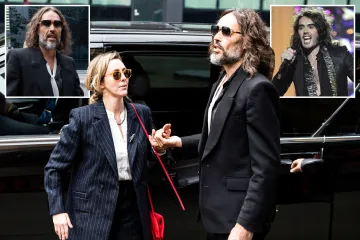
KATIE Price’s third and final day of evidence at Kieran Hayler’s alleged rape trial spiralled into fiery court outbursts and a stark warning from the judge.
The former glamour model lashed out at Hayler’s lawyer – accusing her of “slander” and ranting: “I won’t have anybody call me a liar”.
Katie Price’s evidence descended into fiery exchanges and outburstsCredit: Doug SeeburgShe was giving evidence at Kieran Hayler’s alleged rape trialCredit: PA
Despiter being slapped down about her outbursts, Katie continued to row with Arlette Piercy as her cross-examination became more heated.
In one tense exchange, she asked the defence lawyer: “Are you calling me a liar?”
Sign up for the Showbiz newsletter
Thank you!
Ms Piercy replied: “I am.”
Katie then responded: “I don’t need to be here. You can see in black and white something’s gone on.
Katie also branded Hayler, who is accused of raping and sexually a 13-year-old girl, a “wrong’un” and said: “You shouldn’t turn this case against me”.
She continued: “The real reason why we’re here is what he’s done to a child, not me.”
Ms Piercy then said she “can’t continue like this” after Katie repeatedly spoke over her.
She said: “Because you know I’m right.
“I won’t have anyone tell me I’m a liar. I’m not a liar.”
Hayler was married to Katie Price at the timeCredit: GettyHe and Katie married in 2013Credit: Dan Charity – The Sun
After Ms Piercy then referenced “cocaine and booze benders”, the reality star snapped back: “That’s discrimination.
“Everyone knows I self-medicated on coke due to Kieran introducing it.
“You are wrong and trying to discriminate me. The press know it all because of my journey. I ended up in therapy and tried to kill myself twice.
“You’re not going to slander my name. I don’t care if you are a barrister, you are not going to slander my name like that.
“I don’t need to sit here like a therapy session.”
Judge Mark van der Zwart was forced to intervene and told Katie to “stop talking please”.
He urged: “Take a drink, take a breath, take a moment.”
As she continued to try to talk, the judge continued: “Ms Price, let’s leave it there please.”
It came after she was given a prior warning by the judge to keep her views to herself following another rant yesterday.
Katie had claimed there were “other kids that haven’t come forward” during yet another tense exchange with Ms Piercy.
But the judge said: “When you’re being asked questions today please would you not mention any beliefs you may have whether Kieran Hayler has behaved inappropriately with anyone else apart from (the complainant).”
When she began repeating other allegations, she was slapped down by the judge.
He said: “I’m going to stop you there, Ms Price.
“Ms Price, golden rule: when I talk, nobody else does.”
She replied: “OK, sorry.”
Katie told jurors how she had confronted her then-husband over the allegationsCredit: PAShe called the allegations ‘disgusting’Credit: James Shaw
Hayler has denied the allegations, which allegedly took place in West Sussex while he was married to Katie.
The complainant is not a member of his or Katie’s extended family.
Katie, 48, yesterday told jurors she did not have “any venom” against her ex-husband and said their split was “amicable”.
She also said she had not read any media reports of his trial because she had been “handcuffed to Suella Braverman all week” for a Channel 4 show.
Jurors were told how she had messaged the girl and vowed to make her a “little star” while quizzing her about whether she had kissed Hayler.
The exchange happened in May 2017 – eight months after the last alleged attack by Hayler, it was said.
Katie wrote: “I WON’T say anything and I PROMISE I’ll protect you!
“I’m only asking as this is a serious allegation to say.”
The girl, who was 14 at the time of the message exchange, replied: “It was just a flirt thing and he knew it was wrong. Nothing happened.”
Katie said: “Was it just a flirt and what did he do to realise it was wrong? Did he try (to) kiss you?
“I won’t bring (it) up anymore (I) just want (the) truth! I will make you a little star.
“Please help and tell me… as long as I know the truth, I won’t say. I PROMISE.”
Giving evidence behind a screen, Katie said it was “just a figure of speech” and claimed there was “no agenda or nothing behind it”.
She also denied being “angry and vengeful” towards Hayler and said she did not have a “vendetta” against him.
She ended her evidence yesterday by opening up about her mum Amy, 74, who has lung condition Idiopathic Pulmonary Fibrosis (IPF).
Katie said: “My mum’s dying at the moment and I haven’t been able to see her (because) I’ve got a cold… she’s got days.
“I did promise my mum I’d see her tomorrow.”
The girl, now 23, reported her allegations to the NSPCC in 2021.
The children’s charity then referred it to police and she was interviewed by cops in December 2021, with Hayler questioned the following month.
He denied any of the allegations took place and that anything sexual occurred.
Jurors heard he also told police in his first interview of the allegations in January 2022 that he believed he was being “set up”.
He said “100 per cent” he had not raped the girl, adding: “No never, the thought someone thinks I would do that is horrible, it makes me feel sick.”
Hayler also said to officers that he believed Katie had “planted a seed to (the complainant)”.
He added: “It’s like a smear campaign to ruin me.
“For this to come completely out of the blue I feel like somebody here is trying to set me up.
“Kate would put pressure on anybody. For her to not have anything on me I think kills her a little bit inside.”
In court, Katie described the allegations as “disgusting” but said she never went to the press or police about it and it was the complainant who reported it.
Hayler, who has worked as a stripper and actor, married Katie at a luxury resort in the Bahamas in 2013.
He was her third husband following her marriages to singer Peter Andre and cage fighter Alex Reid.
Katie and Hayler split in 2018 and formally divorced in 2021.
COLUMBIA, S.C. — U.S. Rep. Nancy Mace’s former fiance and two of his business associates were charged with sex crimes and voyeurism on Wednesday over an episode the South Carolina congresswoman described in detail during a speech last year on the House floor about how crimes against women are not investigated thoroughly.
John Douglas Osborne committed sex acts on a 23-year-old incapacitated and intoxicated woman while Mace’s ex-fiance Patrick Bryant and Eric Bernard Bowman watched, according to sworn statements by agents from the State Law Enforcement Division, which brought the charges.
The men talked about who would assault the woman beforehand, took photos and recorded the assault, which was also seen on a security system feed at the home in Sullivan’s Island, an affluent suburb of Charleston, state agents said. The woman had fallen into a pool and was passed out on a couch covering herself with a pillow, agents said.
Another woman who happened to be watching the feed saw the assault and took pictures and wrote about it in a journal, police said. Mace and Bryant were not yet engaged at the time of the October 2018 assault.
Osborne, 46, is charged with first-degree assault and battery and two counts of third-degree criminal sexual conduct. Bryant, 53, and Bowman, 46, are each charged with voyeurism.
Along with the voyeurism charge, Bowman was also charged with obstruction of justice after agents said he did a factory reset on a cellphone he knew investigators were seeking in a search warrant, and with publishing the name of a victim of criminal sexual conduct after posting the victim’s name and a video of her on X.
Bryant didn’t return a message seeking comment on Wednesday, and attorneys who have been listed as representing Bowman and Osborne in other cases did not immediately return messages.
Mace, a Republican, described the assault at length in a nearly hourlong speech in February 2025 that named the men and described other photos and videos found when she looked at Bryant’s cellphone when they were still together.
Mace said she “accidentally uncovered some of the most heinous crimes against women imaginable. We’re talking about rape, non-consensual photos, non-consensual videos of women and underage girls, and the premeditated, calculated exploitation of women and girls in my district.”
At the time, Bryant completely denied the allegations. “I take this matter seriously and will cooperate fully with any necessary legal processes to clear my name,” he told the Associated Press.
The State Law Enforcement Division didn’t say if their investigation into any of the men is continuing.
After the arrests, Mace released a statement detailing the 25 bills she says will protect victims of sexual assault, harassment or discrimination, including in retaliatory defamation and libel lawsuits that may result from allegations they bring to light.
The Republican, who is leaving the House this term after losing her bid to be South Carolina governor, introduced a proposal this week to require that anyone who brings such a case and loses must pay attorney fees for the defendant.
“Protecting women and holding predators accountable isn’t a slogan. It’s been one of my top priorities in Congress. For too long, survivors have faced broken systems while predators exploited loopholes and walked free,” Mace said in her statement.
Kinnard and Collins write for the Associated Press.
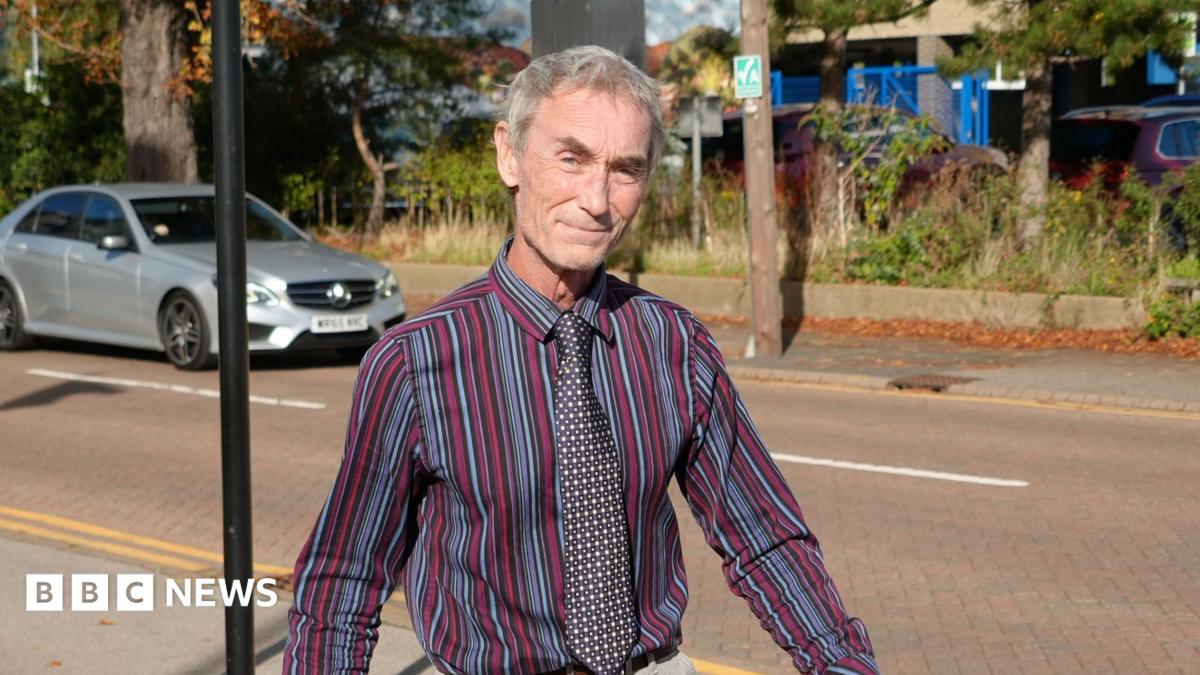
A man who fell from the upper tier of a stand during a football match and injured fans below has been found not guilty of assault.
Maidstone United supporter John Ryan fell on to Joanne Peters and her partner Aaron Rose at Ipswich Town’s Portman Road ground during an FA Cup clash in January 2024.
Ryan, 62, of Railway Street, Chatham, Kent, denied one count of assault by beating and one count of actual bodily harm and told Ipswich Crown Court he had been unable to stop himself during goal celebrations.
Ryan could be seen crying in the dock as the jury returned verdicts of not guilty to both charges and said afterwards “it’s been very stressful”.
Peters had been in tears when she told the court she initially thought the supporters’ box behind her had collapsed and she thought she “could have died”.
Ryan had been one of thousands of Maidstone United supporters who saw their non-league side win 2-1 over Ipswich, who were heading to promotion from the Championship that season.
He told the court the game had been “the biggest match in the club’s history” and he had been celebrating a “special” goal.
The jury was told he had been in Cobbold Stand upper tier when he fell, slid down the sloping roof that covers the boxes, and landed on the Ipswich supporters below.
Ryan told the jury he had been unsure if he had been pushed or his foot had slipped when he fell.
Tehran municipality has launched a series of welfare initiatives to help residents cope with soaring living costs, but the measures have raised questions about their financing and effectiveness, as well as whether the local authority is taking on responsibilities better handled by Iran’s national government.
The local authority has launched four projects it says are aimed at protecting citizens, including a housing project, freezes on the prices of 12 basic goods, and a maternity package.
Recommended Stories
list of 3 itemsend of list
Questions have been raised about how they will be funded and whether the municipality is overstepping its traditional functions.
In Iran, municipalities are responsible for local services and urban management, while the national government oversees broader economic policy, including efforts to control inflation.
Iranian law does give municipalities some responsibilites beyond conventional urban services, but Article 55 of Iran’s Municipal Law does call for municipalities to provide for public food markets, make certain essential goods more affordable, and provide social welfare facilities and low-cost housing.
The dispute is therefore less about whether Tehran municipality can provide the services, and more about their scale and financing.
The municipality’s price-freezing initiative, dubbed the “Zero Inflation” project, has been the most controversial. It comes as year-on-year inflation reached nearly 90 percent last month, while annual food inflation hit 108.8 percent.
Doubts have been raised about how the project will be funded and its effectiveness. Others believe that the measures could fuel inequality between the capital and other cities.
They are viewed as steps to address the huge economic challenges faced by Tehran residents, worsened since the United States and Israel launched a war on Iran on February 28.
Tehran Mayor Alireza Zakani said the municipality had recently guaranteed prices ranging between 5 percent and 50 percent below market rates for the next six months.
Yousef Akandeh, a political activist, told Al Jazeera that freezing the prices of some goods or providing free services will not reduce inflation to zero alone.
“Even if we assume that the Tehran municipality succeeded in stabilising the prices of 12 basic goods, what about the rise in rents, medicines, transportation prices, and the rest of living expenses,” Akandeh asked.
Real steps to tackle inflation, Akandeh said, would have to begin with controlling liquidity growth and monetary discipline, which he said are nearly impossible amid the ongoing war.
The municipality has also introduced a maternity support programme offering mothers of children born this year monthly credits worth up to 40 million rials ($15) for two years for each newborn.
Akandeh raised the issue of institutional overlap, noting that a similar national scheme already exists.
“The government implements a similar package and provides monthly financial amounts for all newborns across the country and not just in Tehran, and if the municipality’s package is independent of it, the Tehrani family may benefit from the national and municipal programme simultaneously,” Akandeh said.
Receiving support from both programmes would not, in itself, indicate wrongdoing. But critics are instead raising the question of whether it is an appropriate use of Tehran’s municipal resources, particularly when the city faces competing spending demands.
Amir Dabiri Mehr, a former adviser in the Tehran municipality, told Al Jazeera that although supporting the homeless falls under the municipality’s social responsibilities, the problem lies in a lack of transparency. The municipality is funded by taxes and building density licences.
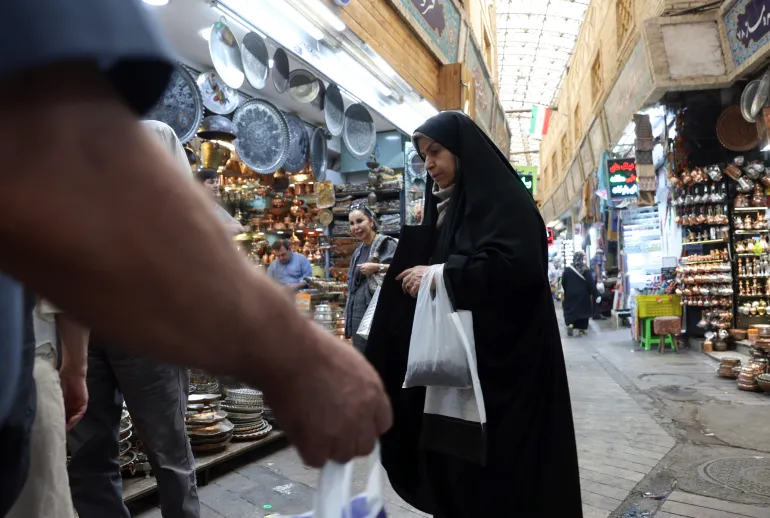
People shop at Tajrish Bazaar in northern Tehran, Iran, September 30, 2026 [Abedin Taherkenareh/EPA]
“The people have the right to know what the municipality spends within the framework of its original tasks, and in tasks it has chosen for itself, and where it gets its resources from?” Dabiri Mehr said.
The municipality-affiliated Hamshahri newspaper said that the “Zero Inflation” project is not funded by municipal budget subsidies, but through direct purchases from producers and reducing commercial profit margins in council-run stores.
The biggest crisis facing Tehran’s residents is housing, which is the national government’s responsibility, Mehr said. Food and living expenses are the national government’s responsibility.
“If the goal is to solve the people’s problems, it seems that the biggest problem facing the residents of Tehran today is the housing crisis, and this dilemma cannot be solved by building an apartment building consisting of a few residential units,” he said.
Al Jazeera attempted to contact the Tehran municipality for comment but received no response.
Tehran Mayor Zakani has, however, defended the financing arrangements, telling a local newspaper, Hamshahri, that the Zero Inflation initiative would not rely on direct subsidies from the municipal budget, but instead on purchasing goods directly from producers and reducing commercial profit margins in city-run stores.
Zakani also said that the programme would draw on municipal resources, bank financing, and partnerships.
Sikorsky has unveiled a concept for a containerized deployment package for its Nomad 100 vertical takeoff and landing uncrewed aircraft system (VTOL UAS), combining four aircraft and their support equipment inside a single 20-foot shipping container. The company is pitching the Nomad 100 Fast Pack as a way to rapidly establish autonomous air capabilities at locations without runways or other conventional support infrastructure.
Meet the Nomad™ 100 Fast Pack
The concept was unveiled on October 12 at the Association of the U.S. Army’s (AUSA) main annual convention in Washington, D.C., where TWZ is in attendance. It comes as the U.S. military seeks to expand its inventory of uncrewed systems and distribute capabilities across more dispersed operating locations, particularly in preparation for a potential large-scale conflict with China in the Indo-Pacific.
Rendering of the Nomad 100 Fast Pack in action. Courtesy of Sikorsky, a Lockheed Martin company Rendering courtesy of Sikorsky, a Lockheed Martin company
“Military commanders are asking for capability that enables them to deploy worldwide into austere environments,” said Ramsey Bentley, director of Sikorsky Advanced Concepts, speaking at AUSA. They want greater situational awareness, the ability to conduct targeting and deliver effects at range, and the capacity to control multiple assets simultaneously, he added.
A rendering of soldiers preparing Nomads for launch in a typical Indo-Pacific operating environment. Sikorsky screencap
The Nomad 100 Fast Pack is built around a standard 20-foot ISO container housing four aircraft, mission-command equipment, communications, power systems, and sustainment supplies. The aim is to deliver a self-contained package that can be transported to a forward location, brought into operation, and moved again quickly. A promotional video shows the Fast Pack being transported into a combat theater by one of the company’s Black Hawk helicopters as a slung load.
Sikorsky says two Nomad 100s can be prepared for flight “out of the box” in less than 15 minutes and that the other two aircraft — stored on the upper shelf of the container — can be made available within four to six hours.
The package is designed to support runway-independent operations from locations including naval vessels, tactical vehicle staging areas, and improvised landing zones.
“We no longer require a ground control station,” explained Sikorsky Vice President and General Manager Rich Benton. “We no longer require a large group of soldiers or operators.”
Beyond the containerized package, Bentley said Nomad can be transported by truck or trailer, or potentially self-deploy in a smaller package. Sikorsky is also developing containerized deployment concepts for larger members of the Nomad family.
As we have discussed in the past, the Nomad 100 combines vertical takeoff and landing with the ability to transition to fixed-wing flight, bringing airplane-like range and endurance to a compact, runway-independent package that can operate from confined locations.
Introducing the Nomad™ Family of Rotor Blown Wing Drones
“What is very unique about this aircraft is it’s able to roll over on its wing and also fly like an airplane,” Bentley said. “So you’re getting the vertical takeoff and landing capability, along with the endurance, range, and speed of a fixed-wing aircraft.”
Sikorsky cites an endurance of 10 to 14 hours, depending on payload, a range exceeding 800 nautical miles, and a cruising speed of 70 miles per hour, with a dash speed of 90 miles per hour.
Its hybrid-electric drivetrain uses combustion engines to drive a generator that supplies power to the aircraft’s rotors and mission systems. Nomad is designed to operate on multiple fuels, including JP-8, JP-4, and Jet A.
“Ten gallons of fuel provides over 10 plus hours of operation, so it’s a very efficient system,” Bentley said. He added that the hybrid-electric design reduces maintenance requirements, emphasizing line-replaceable units over more extensive traditional aviation maintenance.
The aircraft can carry a 60-pound mission payload, including supplies such as medical equipment. Bentley said its modular center fuselage can be configured as a cargo bay or adapted for other mission equipment.
Sikorsky says the Fast Pack can support intelligence, surveillance, reconnaissance and targeting (ISR-T), light attack, and contested logistics missions, depending on customer configuration.
On display at AUSA is a Nomad configured with a forward-looking infrared (FLIR) sensor turret with laser designation capability and four small Northrop Grumman Hatchet glide munitions.
Other potential payloads include electro-optical and infrared sensors, synthetic aperture radar, launched effects, and electronic warfare systems for jamming.
A launched effect is released from a Nomad drone in an earlier Sikorsky rendering. Sikorsky screencap
The combination of a small logistical footprint and long-range flight could be particularly useful for supporting expeditionary forces. The aircraft could deliver supplies without relying on a runway or crewed helicopter, while sensor-equipped variants could provide reconnaissance and target designation. Other configurations could carry weapons or deploy additional uncrewed systems.
The Fast Pack also relies on Sikorsky’s MATRIX autonomy technology to reduce operator workload. Rather than continuously piloting each aircraft, an operator can assign a mission through a tablet-based interface and let the aircraft execute it autonomously.
A drone operator uses a tablet to control a Nomad. Sikorsky screencap
“Now, Matrix autonomy is a very mature autonomy capability. We’ve had over 1,000 flight hours on Matrix,” Bentley said.
An operator selects a mission, designates a location on a map, and initiates the flight. MATRIX then manages engine start, preflight checks, launch, navigation, and mission execution.
“For the operator, very simply, he pulls up the display. He selects a mission, say reconnaissance, and then the operator would select a point on the map where he wants that reconnaissance to occur, and then he hits start,” Bentley explained. “The aircraft Matrix autonomy takes care of everything else along the flight.”
Bentley said the system can adapt to changing environmental and tactical conditions, using onboard sensors to navigate and avoid obstacles, including hazards around landing areas.
“Our whole approach here with the advanced Matrix autonomy is: How do we take the workload off the operator?” he said. “This is not remotely piloted, although you could do that. Our approach here is that this is fully autonomous.”
Communications are designed to be network-agnostic. Bentley identified Starlink or Starshield for beyond-line-of-sight connectivity in the current configuration, alongside tactical mobile ad-hoc networking (MANET) equipment for line-of-sight communications.
MATRIX is also used in other Sikorsky autonomy efforts, including the fully uncrewed U-Hawk drone, seen in the video below, and the company’s optionally piloted Black Hawk concept. A common tablet interface could help operators manage different autonomous aircraft without needing a separate control system for each.
H-60 U-Hawk uncrewed cargo helicopter walk-around tour
Nomad 100 originated under DARPA’s EVADE program, which sought to develop a vertical-lift uncrewed aircraft capability. Bentley said two customers associated with the program had placed initial orders, with additional interest from domestic and international customers.
Sikorsky has a contract for three Nomad 100s under EVADE. The company announced in July that the first had been delivered to the customer, while a second was entering flight testing at the time of the interview. The U.S. Marine Corps is also buying two Nomad 100s, Bentley toldArmy Times.
Sikorsky is developing the larger Nomad 500, which will offer greater payload capacity, longer range, and increased power output. One Nomad 500 can fit in a 20-foot container, while three can be transported in a 40-foot container, according to Bentley. The largest member of the family, the Nomad 1000, requires a 40-foot container for a single aircraft.
A rendering shows how the Nomad family of VTOL drones can be scaled for a variety of sea- and land-based missions. Sikorsky
The Fast Pack concept reflects a broader effort to make autonomous aircraft easier to deploy and sustain as military forces disperse across larger operating areas. Its appeal lies not just in the Nomad 100’s combination of vertical takeoff and long-range flight, but in packaging multiple aircraft and their supporting equipment into a single, relocatable system. That could be especially valuable in the Indo-Pacific, where long distances, limited infrastructure, and the vulnerability of fixed operating bases pose major challenges.
Sean “Diddy” Combs was rushed to hospital with a head injury early Saturday morningCredit: GettyCombs was reportedly Injured in fight with Jamaican drug lord known as “Dudus”Credit: U.S. Marshals Service
Page Six initially reported that the 56-year-old had smacked his head on a bunk bed.
But in the latest twist to the mystery hospital visit, insiders told TMZ that Combs was injured in a brawl with fellow inmate Christopher Coke, known as “Dudus”.
Sign up for the Showbiz newsletter
Thank you!
Multiple sources inside Fort Dix FCI told the outlet the pair came to blows last Friday but Dudus had the upper hand.
Combs suffered a severe head injury that required medical treatment.
Combs was reportedly conscious and able to speak after the alleged incidentCredit: APCombs was sentenced to 50 months in FCI Fort Dix prison on two charges related to prostitutionCredit: Obtained by CBS News
The Grammy winner was rushed out of the federal lockup in New Jersey at 1am local time on Saturday.
The fight was reportedly sparked over inmates’ anger at Combs for getting exposed in a recent NBC News report about his lavish lifestyle behind bars.
The shamed rapper reportedly had access to a cellphone, alcohol and had paid other inmates for their prescription medication.
As a result of the leak, prison officials conducted two raids and confiscated cell phones from inmates – including Dudas.
Most read in Entertainment
The convict – serving a 23-year sentence since 2012 – is a kingpin at the prison, sources told the outlet.
Combs was said to have been conscious and speaking following the alleged incident.
He was reportedly taken back to prison grounds before sunrise the same day.
After the punch- up, both men were reportedly hauled into solitary confinement for two week’ s punishment.
Combs was acquitted on more serious charges of racketeering and sex traffickingCredit: Getty Images – GettyDefense lawyers seen comforting Combs in a court sketch after jurors reached their verdictCredit: Reuters
A rep for the Grammy winner previously told Page Six: “We are aware of the reports concerning Sean Combs and are working to confirm the circumstances.”
“Sean’s health and well-being are our immediate concern,” they continued, “and we appreciate everyone who has reached out.”
The hip-hop star was sentenced to 50 months in FCI Fort Dix prison last year on two charges related to prostitution.
Combs was acquitted on more serious charges of racketeering and sex trafficking.
His recent hospital visit follows a turbulent few months for the disgraced music producer.
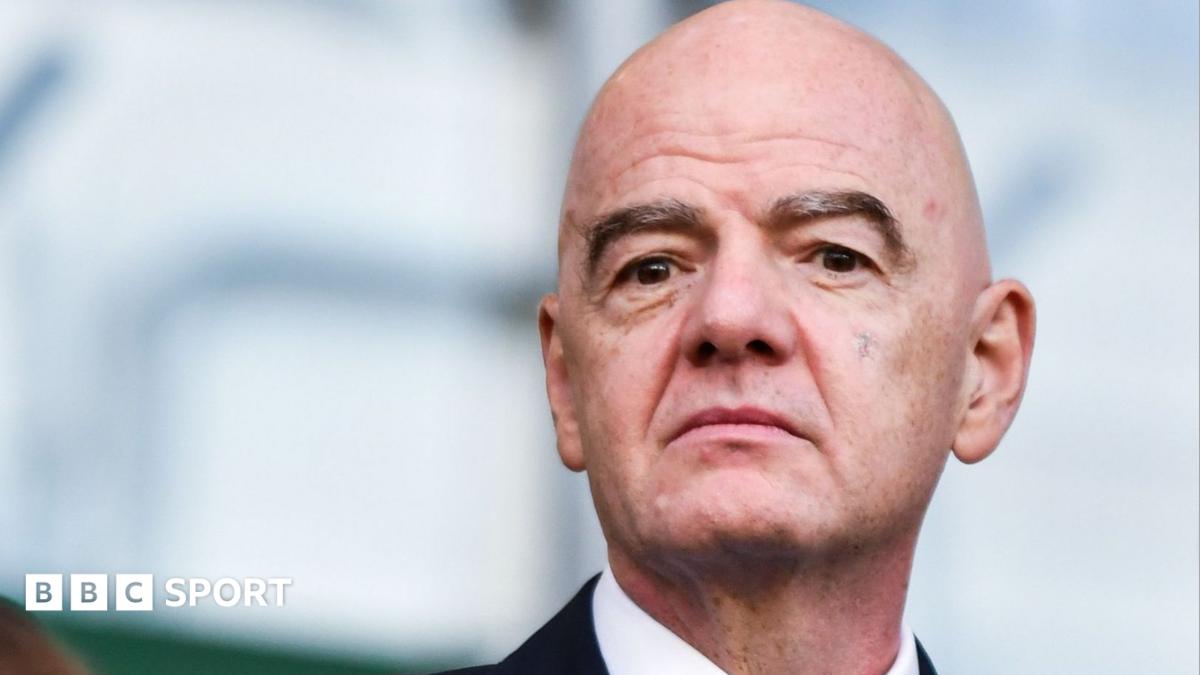
Fifa is set to propose a $3.4bn (£2.6bn) increase in the amount of money it hands out for football development across the world.
World football’s governing body wants to release the money from its reserves in a move which BBC Sport has been told would double the level of planned distribution funding for 2027-2030.
The proposal will be made at a meeting of Fifa’s council on Thursday and comes at a time when the organisation is under pressure following president Gianni Infantino’s aborted Fifa Forward Enterprise (FFE) plan.
Infantino wanted to sell stakes in the World Cup and other competitions to private investors but faced huge criticism for the proposal, with Uefa, Concacaf and the Asian Football Confederation questioning his position.
In a letter then sent to Fifa’s six continental confederations, Infantino – who will be standing for re-election for a fourth time in March 2027 – said he would support “the greatest level of additional funding that can responsibly be delivered”.
Fifa will now offer extra money from its reserves in addition to the current $2.7bn budgeted to be paid to all 211 member associations, the confederations, regional associations and certain non-Fifa affiliated associations.
The breakdown is as follows:
• $25m (£19m) per member association
• $99m (£75m) for each of the six confederations
• $8.25m (£6.3m) for each of the 13 zonal/regional associations
• $1.1m (£836,000) for 100 member associations for travel and equipment solidarity
The terms of the distribution would be as follows:
• One third would be allocated to women’s and youth football development
• One third would be allocated to infrastructure (of which there shall be equal access to women’s and youth football)
• One third would be allocated to projects
The plan, including the eligibility, application, approval, disbursement, control and audit requirements, will be finalised by the Fifa council at its next meeting in December 2026.
It will all be subject to approval by the 77th Fifa congress in March 2027.
Without a quick deal to move fertiliser through the strait, agricultural productivity would ‘significantly drop’.
Published On 14 Oct 202614 Oct 2026
A senior United Nations official has warned that parts of Asia and Africa could face a food security crisis unless Iran and the United States quickly agree on a UN-backed plan to move fertiliser through the embattled Strait of Hormuz.
UN Under-Secretary-General Jorge Moreira da Silva said on Wednesday that it was “absolutely critical” that the two countries agree to the proposal within weeks as planting season approaches. It calls for a UN-staffed coordination centre in Oman to help register vessels and oversee their safe passage in the waterway, through which a large portion of key global fertiliser inputs traditionally flow.
Recommended Stories
list of 3 itemsend of list
“If we miss that planting season, the productivity of agriculture would significantly drop and the impact on prices will significantly increase,” Moreira da Silva told Reuters on the sidelines of International Monetary Fund and World Bank meetings in Bangkok, Thailand.
Farmers operate strict crop calendars, and even slight delays could severely affect yield.
‘Negligible’ fertiliser shipments
Traffic in the Strait of Hormuz has been severely disrupted since the start of the US-Israel war on Iran, with Iran targeting vessels in the strait and the US and Iran exchanging fire in and around the waterway.
The disruption has hit global supplies of urea, the world’s most widely used nitrogen fertiliser, as well as seaborne sulphur, a key input. Before the war, roughly a third of global urea shipments and nearly half of seaborne sulphur passed through the strait.
Although some ships have been able to sail through amid the crisis, fertiliser products have made up a “very negligible” share of moving cargo, according to the Washington-based International Food Policy Research Institute.
Moreira da Silva said the UN-backed fertiliser mechanism, drawn up in March, could be activated within seven to 10 days if both Iran and the US agree.
Under the plan, UN monitors would work alongside local authorities at Gulf ports to verify cargo loading. Ships would be tracked during transit, and additional inspections could be carried out if countries raised concerns about a vessel or its cargo, said Moreira da Silva. He did not say why the US and Iran have not yet agreed.
The passage of only five vessels per day through the Strait of Hormuz could keep fertiliser supplies flowing to countries in critical need, he added.
‘Let us do our job’
The UN mechanism could work alongside negotiations for a “comprehensive deal” to restore freedom of navigation in the strait, Moreira da Silva said.
Iran and the US have exchanged proposals through intermediaries since a June interim ceasefire collapsed. Efforts to reopen the Strait of Hormuz have stalled over Tehran’s conditions and Washington’s insistence on addressing Iran’s nuclear programme from the outset.
“What we are telling them is, while you continue your discussions towards a comprehensive deal, let us work, let us do our job,” said Moreira da Silva.
His plea comes amid growing concern that fertiliser shortages could hit global food supplies.
In May, the UN’s Food and Agriculture Organization warned that fertiliser scarcity could tighten food supplies from late 2026 into 2027, and would likely hit countries facing climate or other crises much harder.
In South Asia, where most rely on imported fertiliser, farmers are already struggling because of soaring costs and fertiliser scarcity. On Wednesday, farmers in Spain took to the streets to protest rising production costs amid high oil and fertiliser prices.
Economists divided on Fed rate hike as inflation creates uncertainty in run-up to US midterm elections in a tense market.
United States consumer prices jumped in September in the final inflation report before the midterm elections, increasing chances of an interest rate hike later this month.
Annual inflation accelerated to 3.7 percent, up from 3.4 percent in August. On a monthly basis, prices rose by 0.6 percent, according to the Consumer Price Index report released by the Labor Department’s Bureau of Labor Statistics (BLS) on Wednesday.
Recommended Stories
list of 4 itemsend of list
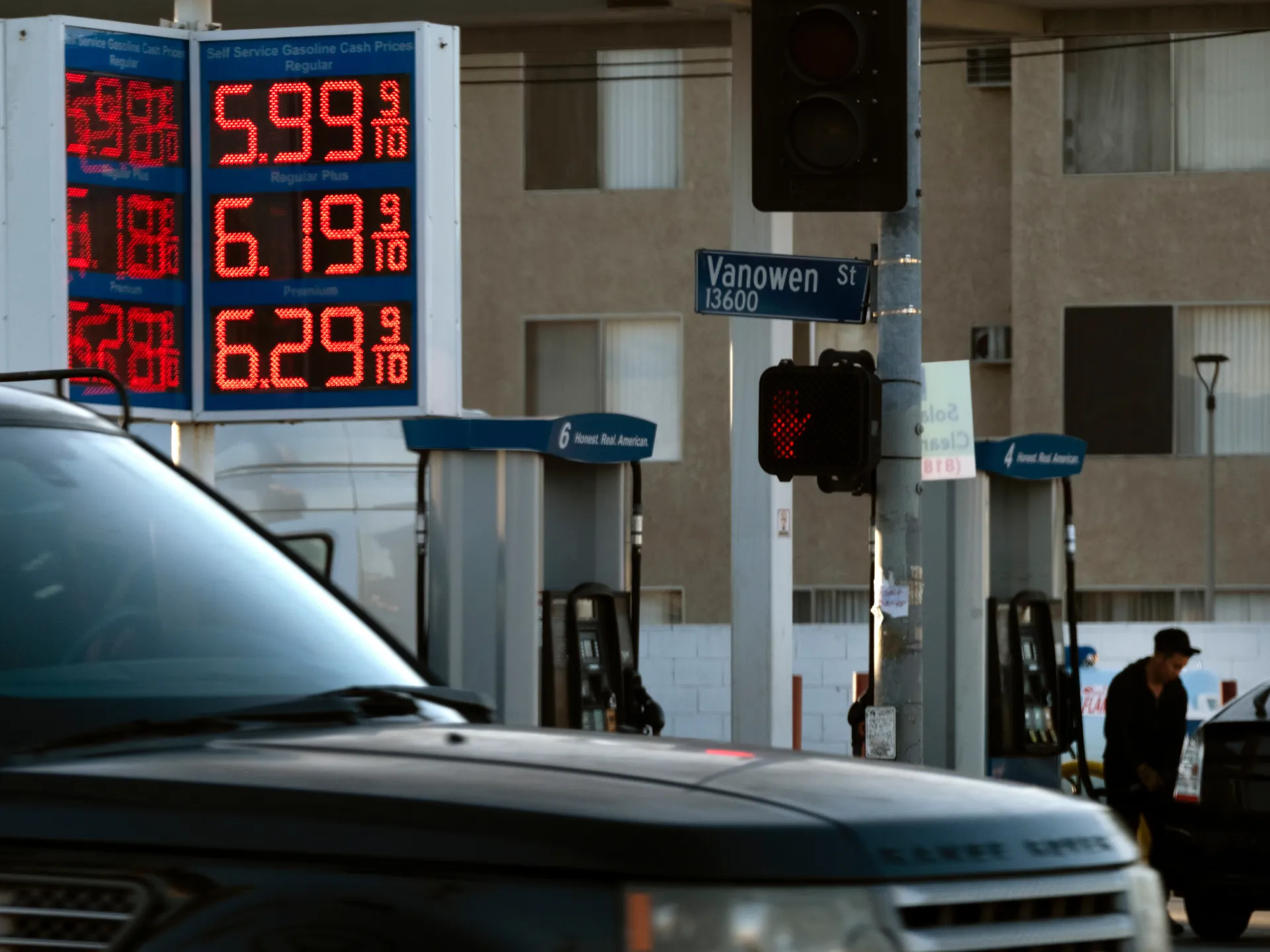
Petrol prices led the surge as tensions between the US and Iran, as well as Russia and Ukraine, weighed on global energy prices. Petrol prices rose 9.1 percent in September, accounting for more than half of the CPI monthly increase, according to the BLS. They were up 34.2 percent from the same time a year ago.
“The directionless war in Iran continues to disrupt global supply chains, driving up the prices of food and fuel,” Kyle Moore, chief economist at The Century Foundation, an economic think tank, said in a statement provided to Al Jazeera.
Petrol prices have continued to climb. The average price for a gallon of petrol is $4.33 ($1.14 per litre), compared with $4.31 a month ago, according to the American Automobile Association (AAA), which tracks daily petrol prices. Diesel prices are higher, at $6.29 per gallon (1.66 per litre), compared with $6.23 a month ago.
In a post on X, Patrick DeHaan, head of petroleum analysis for GasBuddy, said, “2026 has now seen more days with average gas prices over $4/gal than any year before: 158 days.”
Shelter costs also jumped 0.4 percent from the previous month, following a 0.3 percent increase in August. Food costs were a bright spot in the report, remaining unchanged overall.
Food away from home, including restaurant meals, rose 0.2 percent, but that increase was offset by a 0.1 percent decline in food-at-home prices, which track grocery costs.
At the grocery store, poultry prices jumped 0.7 percent, fruit and vegetable prices rose 0.5 percent, and juice prices increased 1.1 percent. However, milk prices dropped 2.1 percent and beef prices fell 0.9 percent.
Amid heavy investment in AI infrastructure, prices for computer software and accessories have jumped 28 percent from the same time last year.
“The AI boom is playing a huge part, and we have all read about the hundreds of billions being poured into data centers, AI firms, and models,” Rami Cassis, principal of Parabellum Investment, said in comments provided to Al Jazeera.
Fed pressures
The inflation data comes days before the US Federal Reserve’s interest rate decision later this month. Last month, the US central bank raised rates by 25 basis points, bringing the target range to 3.75–4.00 percent, the first hike in three years.
Economists are divided over whether the Fed will raise rates again or hold them steady. According to CME FedWatch, which tracks the likelihood of monetary policy decisions, there is a 52.9 percent chance that rates will remain in the 3.75–4.00 percent range, while a 47.1 percent chance of a quarter of a percentage point hike that would bring them to 4.00–4.25 percent.
The inflation data puts pressure on Republicans before the midterm elections on November 3. A recent Reuters/Ipsos poll showed that about 78 percent of Americans blamed US President Donald Trump’s policies for price increases.
US markets trended downward following the inflation report. The Nasdaq fell 0.8 percent and the S&P 500 dropped 0.6 percent, while the Dow Jones Industrial Average was roughly flat in midday trading.
The singer has been forced to bow out of this upcoming Icons Week on the BBC show after falling ill. She has broken her rib but is hoping to recover in time for next week and – following her doctor’s order – has been getting rest at home.
Taking to social media, she wrote: “Just wanted to come on here and say a big Thank you to everyone who has sent messages and wrote lovely comments the last couple of days, I see them all.
“Not the start to the week I’d hoped for but your support has meant the world. Also special big thank you to my amazing dance partner @kaiwidd who I will miss dancing with this weekend but I am so beyond grateful for his guidance and friendship through it all.. as well as the wonderful Strictly team!!”
To see more of the stories you love from The Mirror and to find them easily in Google then make us your preferred source. Free and easy-to-do, just click on the link here to find more from The Mirror at the top of your feed.
She added: “Resting and recovering at home and will be cheering everyone on from my couch on Saturday night xx.” Delta had previously said she was “absolutely gutted” to be out the show for the week, and hoped she’d be back the following week.
It was revealed today that Delta’s planned dance to Dolly Parton’s Jolene with Kai Widdrington will be performed instead by Amy Dowden.
A spokesperson for the show had said: “Due to injury, Delta Goodrem has been advised by doctors to rest and, as a result, will not dance on this weekend’s Strictly Come Dancing.
“In line with the rules of the show, Delta and Kai will receive a bye through to next week when it is hoped they will be able to dance again. We wish Delta the very best as she continues her recovery.”
Delta added: “I’ve been loving every second of this experience, so having to sit this one out is heartbreaking – especially after the high of Saturday night.
“I cannot tell you how much I love being a part of this magical show. I’m going to focus on resting and recovering, and hopefully I’ll be back on that dancefloor very soon. Thank you so much to everyone for all the love and support. It’s so appreciated. I’ll be cheering everyone on from the sidelines this week!”
Sources revealed that Delta’s rib injury “deteriorated” and she was “in absolute agony” performing. She was later rushed to hospital to undergo tests but is now resting at home.
A source said: “Delta has been pushing herself as far as possible to impress Strictly viewers. A small injury at the start of last week has quickly deteriorated. On Saturday night, despite putting on a brave face and smiling, she was in absolute agony.
“Filming didn’t wrap until late Saturday night and she was exhausted. The plan was to go home and get some rest but she could hardly sleep. On Sunday morning she was raced to A&E and then spent most of Monday also at the hospital.”
FORGET Mykonos, Saint Tropez and Dubai – if you want to holiday like a celebrity, there are plenty of spots loved by A-listers in the UK.
From English seaside towns to tiny Welsh village, all of these places are loved by celebrities – and you’re likely to see them there too.
Mawgan Porth in Cornwall has been dubbed ‘Hollywood-on-Sea’Credit: AlamyThe coastal village is home to celebrities like actress Cate BlanchettCredit: Getty
Mawgan Porth
Cornwall is sprinkled with beautiful beaches and pretty fishing villages, but there’s one spot in particular that has become a favourite hideaway for A-listers.
The small coastal village of Mawgan Porth is quite often less busy than other towns which is another reason why it’s drawn in celebrity names – it’s even been nicknamed Hollywood-on-Sea.
Sign up for the Travel newsletter
Thank you!
The likes of Cate Blanchett, Stanley Tucci and Jason Statham have properties in the area, while other big names have also been spotted.
Aquaman star Jason Momoa has been reportedly eyeing up a property in the town.
The Roslin Beach Hotel in Southend-on-Sea has drawn in celebrity visitorsCredit: Google mapsMichelle Keegan spent her first Mother’s Day as a mother at The Roslin HotelCredit: Getty
One local called Karen who works at the Osborne Cafe and Seafood merchant on the seafront, previously told The Sun: “We’ve had Boris Johnson, Priti Patel, Prime minister Rishi – oh and Bridget Jones’ dad – Jim Broadbent.
Leigh-on-Sea is the hometown of Helen Mirren, who moved there as a child.
The trendy seaside town has lots to explore like its high street filled with pubs, tearooms and cafes.
Some of the most popular spots include Ye Olde Smack, which overlooks the Thames Estuary, as well as the neighbouring The Boatyard.
Broadway is the spot for independent shops, antique stores and plenty of boutiques like Just Fox, Heatherbie of Leigh and The Magic Wardrobe.
Mumbles, Wales
The town of Mumbles sits on the Gower PeninsulaCredit: AlamyActress Catherine Zeta Jones grew up around the area and is rumoured to have property thereCredit: Getty
This popular coastal village in Swansea is considered the gateway to the Gower Peninsula.
It’s also considered an Area of Outstanding Natural Beauty where you’ll find the ruins of an old castle, a lighthouse, a promenade, and the Swansea Bay Rider Land Train.
The village is a great shopping spot, with a number of high-end shops, independent boutiques, and galleries.
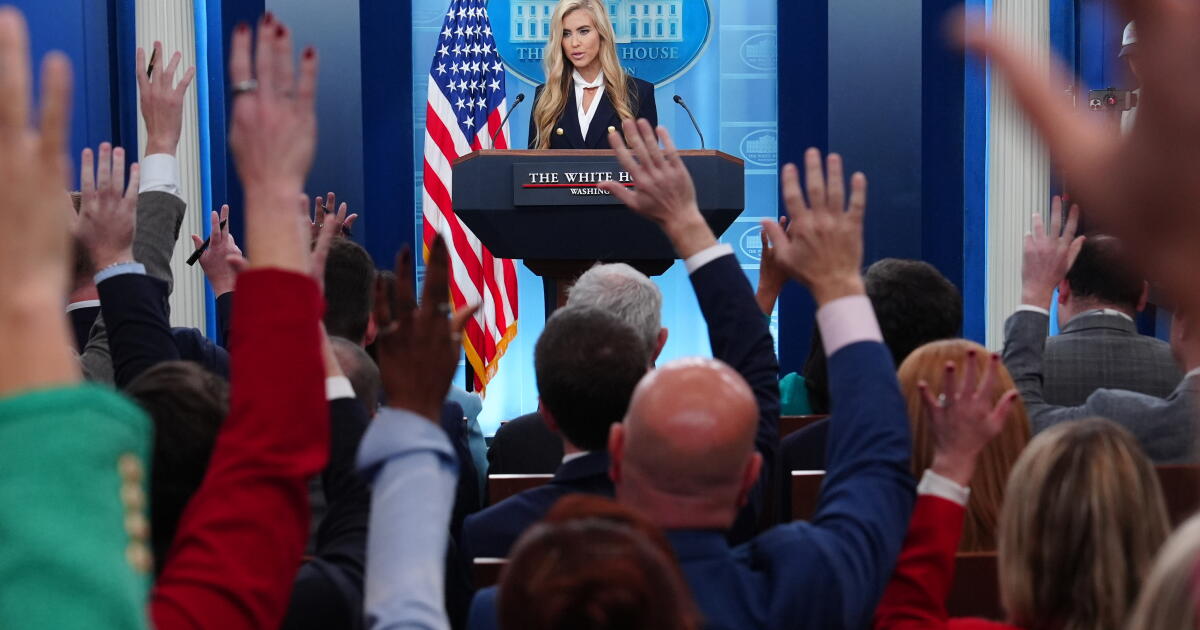
President Trump’s new press secretary stepped to the podium, the eyes of a packed room of journalists — and many in their audiences — upon her. She smiled broadly at the sea of faces both probing and friendly. With that, Katie Zacharia went live and became the official voice of the world’s most powerful person.
Fourteen minutes and just three questioners later, she was done. In the aftermath, it was clear that the former Newsmax commentator accomplished at least one thing: She put the “brief” back in briefing.
In her debut Tuesday, Zacharia looked downward and often read directly from a script. She paused and grinned when she uttered the words “Department of War.” She stumbled on a question about her background and mixed up the words “husband” and “president.” The few questions she took were nonconfrontational and from media outlets that have been sympathetic to the Republican president. In short: She made no memorable impression — or at least, to hear some tell it, not the one she likely wanted.
This would not be an easy job under any circumstances. Trump most frequently serves as his own spokesman. And his antagonism toward the media has created a new layer of tension. Zacharia is finding out on day one that she, too, will be under constant watch. Some — including a few of those who have stood in her shoes — didn’t think it went all that well.
In fractured times, in a national media scrum unimaginable just a few decades ago, what is the proper way to approach a job like this? How do you speak effectively when your boss speaks for himself so often that he commandeers the news cycle multiple times a day — and sometimes late into the night — with remarks provocative, unexpected and sometimes incendiary?
For one, you realize for whom you work: not your audience of millions but your audience of one, and the absolute need for his approval.
“I get to do what I was doing on the outside already, which was hoping to amplify, multiply and expand upon President Trump’s incredible agenda for the American people,” Zacharia said. Nowhere did she mention the task of disseminating accurate information to Americans.
The press secretary role has been many things
Over the nearly 10 decades since former journalist George E. Akerson made his and the office’s debut as Herbert Hoover’s press secretary in 1929, the job has served many purposes: deliverer of information, amplifier of policy, jouster with journalists, protector of the presidential reputation and, sometimes, overlord of obfuscation.
Under Trump and his second-term press secretary so far — Karoline Leavitt, who resigned in August — the job has been primarily one of acting as the immovable object against an irresistible, and in Trump’s eyes sometimes treasonous, force.
Leavitt got to know this terrain well in her 17-month tenure. She took a smiling but combative stance against a press that was increasingly coming under Trump’s criticism for coverage — and was named in at least one lawsuit about White House media access. She was not shy about interdicting what she considered media bias. “What a stupid question,” she said to one reporter at a briefing last year.
Trump, outside the White House on Tuesday shortly after Zacharia’s briefing, praised her debut as “excellent.” She was standing behind him at the time.
Other early reviews were more critical. MS NOW quoted one unnamed White House official as saying of the performance: “She needs to get much better fast, otherwise she’ll break Scaramucci’s record.” Anthony Scaramucci, an early White House communications director for first-term Trump, lasted 11 days in 2017. Said Scaramucci on X Tuesday afternoon: “I hope she makes it.”
Joe Biden’s former press secretary, Jen Psaki, now the host of a show on MS NOW, put it more succinctly, posting on X: “Well that briefing was basically an SNL skit….except it wasnt.”
Talking up Trump but taking few questions
While Zacharia’s performance — and of course, that’s what every briefing is — may have been bumpy to some, it was also mostly content-free except for news she broke about the White House asking U.S. Ambassador to Greece Kimberly Guilfoyle to quit, which she immediately did.
Predictably, also like Leavitt before her, Zacharia spent a great part of her opening monologue praising Trump and giving an “up ‘til now”-style update on his second term’s priorities and accomplishments so far. Talking points included a “booming economy,” “his historic boom in energy production” and “a great relationship with Venezuela.”
She was also fond of superlatives, a trait that likely will resonate with a president whose remarks are often equally if not more expansive: “President Trump is working to secure the Western Hemisphere for centuries to come.”
When it came to questions, though, she was downright parsimonious. She allowed three questioners, then answered an additional one as she prepared to depart. The three called on during the briefing were Breitbart, Fox News and the Daily Mail, all of which have been friendly to Trump in varying degrees during periods of his two terms. And she said she would continue Leavitt’s policy of bringing “new media” in — which has often meant outlets more sympathetic to Trump.
“We love new media and we want to be able to embrace it,” she said. Currently, three major outlets — CNN, MS NOW and Politico — are fighting to regain White House access after Trump banished them last month, saying he didn’t like their coverage and calling it “fake news.”
How will Zacharia fare in coming days and weeks and, if it lasts, months? That, like so much else, depends on one thing: Donald Trump.
The late U.S. Sen. Howard Baker once famously said that, when being asked difficult things, handle it something like this: If you don’t like the question being asked, just answer a different question. On Tuesday, a half-century later, Katie Zacharia found a different way in — pick three nonconfrontational questioners, then defer to your boss and say: The End.
Great Britain’s Joe Truman said team-mate Matt Richardson’s withdrawal was “not ideal” and they had started “on the back foot” as they exited in the first round of the men’s team sprint at the World Track Cycling Championships.
The 27-year-old, who had also been expected to contend for medals in the individual sprint and keirin, said he would co-operate with a British Cycling investigation into the allegations.
His withdrawal overshadowed preparations for the event in Shanghai, though Britain’s women did secure silver in the team sprint.
Emma Finucane, who is Richardson’s partner, Sophie Capewell and Rhianna Parris-Smith finished fastest in qualifying, and beat France but lost to hosts China in the gold-medal race.
The men’s team – Truman, Ed Lowe and Harry Ledingham-Horn – finished fifth in the qualifying stage but were beaten by fourth-placed Australia in the opening round of head-to-head races.
“We came with a bit of a last-minute change, obviously,” said Truman. “We all said this morning we’re here just to ride our bikes.
“We’re on the back foot a bit but let’s just put our best foot forward, put a time on the board at the start of Olympic quali and we got a time to be proud of.
“None of us are riding in ideal circumstances but we’re professional athletes and so it’s what we train to do – we train to race when it’s not perfect – so I think we did OK. We’re looking ahead to the next couple of years and think we’re in a great spot.”
Elsewhere on day one, Britain’s women and men progressed as first and second fastest respectively in qualifying for the team pursuit events.
Meanwhile, Abigail Miller finished 17th of 24 riders in the women’s scratch race.
United States federal agents have arrested a Saudi national and charged him with planting a hidden audio recording device in a conference room at the California offices of OpenAI, where he was working as an engineer.
Abdulrahman Alfozan, 35, had been working at the AI company since July 2025, the US Department of Justice said in a statement on Tuesday.
Recommended Stories
list of 2 itemsend of list
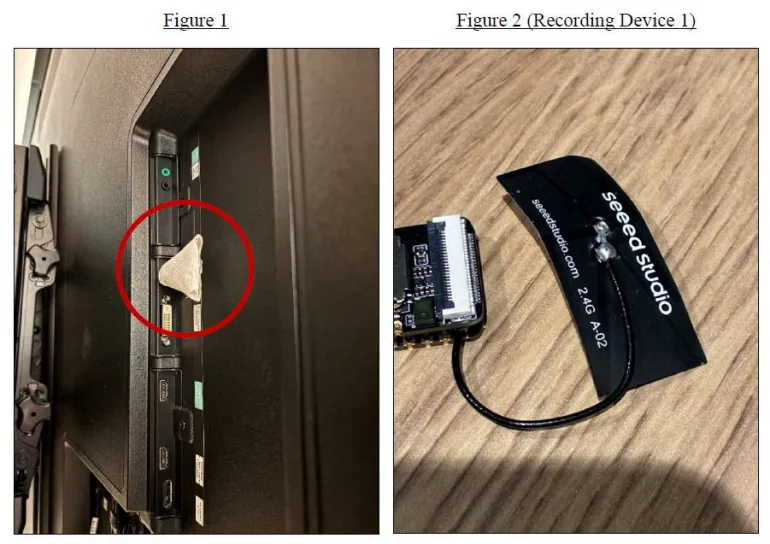
OpenAI discovered the device plugged into a USB port behind a television in an executive conference room at one of its San Francisco buildings on September 30, according to a criminal complaint filed by the Federal Bureau of Investigation (FBI).
Following the discovery, the company placed a camera in the room, which captured Alfozan entering last week and checking behind the television where the listening device had been installed, the FBI alleges.
The case highlights growing security concerns around sensitive AI research as companies and governments compete for the best talent and technology with the potential to alter regional economic and strategic dynamics.
Who is Abdulrahman Alfozan and what is he charged with?
Alfozan has been a legal permanent resident of the US since September 2020.
According to a LinkedIn profile in his name, he studied at the Massachusetts Institute of Technology (MIT) and the University of California, Berkeley. He previously worked at Meta and Microsoft, it said.
Before he joined OpenAI, he was a venture partner at Raed Ventures, headquartered in Riyadh in Saudi Arabia, which invested “in seed and early-stage startups in Saudi Arabia and MENA”.
Al Jazeera could not independently verify the details mentioned in this LinkedIn profile.
Alfozan made his first court appearance on Tuesday on a charge of “using or endeavouring to use an electronic, mechanical, or other device to intercept oral communications”.
It was not immediately clear if he has legal representation. He is expected to return to court on October 19.
If convicted, Alfozan faces up to five years in prison, a $250,000 fine, and three years of supervised release.
What happened at OpenAI?
The FBI says a thumb-sized device with a microphone, and which could connect to a camera, had been concealed in toilet paper and placed behind a television set in the conference room. It was installed around September 28, the FBI said. Its stored data was encrypted and inaccessible. Investigators later found a similar device in Alfozan’s personal bag.
In a post on X, OpenAI said it had evidence that the employee intended to place other listening devices throughout sensitive areas of its offices to secretly record meetings.
“At this time, we have no indications of this individual inappropriately accessing or exfiltrating model weights, source code, or customer data. The employee was terminated,” the company said.
The FBI complaint also alleges that Alfozan used an AI productivity tool to make multiple inquiries about the company’s building addresses, meeting rooms, meeting-room capacities and calendars, despite not having the authority to access these spaces or participate in meetings there.
“This alleged attempt by a Saudi national to steal sensitive communications from OpenAI was taken extremely seriously. Theft of intellectual property involving cutting-edge super intelligence technology poses a serious threat to our national security,” Attorney General Todd Blanche said in a statement on X.
A device, which the US Justice Department says is a hidden audio recording device installed in an OpenAI executive conference room by Saudi national Abdulrahman Alfozan [File: US Department of Justice handout/Reuters]
Hasn’t OpenAI been accused of helping to spy on civilians?
In an X post by OpenAI explaining how its own systems were used to trap Alfozan, the company said: “Our security program is designed to protect against a wide range of threat actors, from insider risks to cybercriminals to nation states, and this case is an example of how AI can help address these sophisticated security threats.”
But AI technology is used not only to catch spying, but conversely, to engage in it as well.
In February 2025, an investigation by The Associated Press found that US tech giants had enabled Israel to track and kill people in Gaza and Lebanon through AI and computing services. The AP reported that the Israeli military had bought advanced AI tools from tech companies including OpenAI, the maker of ChatGPT, through Microsoft’s Azure cloud platform, to assist with surveillance.
OpenAI denies having a relationship with the Israeli military. But OpenAI also faced criticism when it signed a deal with the US Department of Defense in February this year to supply its technology to the US military for use in classified settings, including intelligence gathering. OpenAI’s competitor, Anthropic, refused to sign the same deal unless the Pentagon barred mass surveillance of Americans.
There have been several incidents in which OpenAI models have gone “rogue” by independently breaking out of a testing environment and then hacking into other organisations and even government sites, leading to calls for stronger regulations against unchecked AI surveillance.
BRITS will get more choice of where to go on holiday next year as TUI has announced eight new routes.
These will take-off from London Gatwick to destinations from sunny Spanish cities to North African islands.
TUI is adding eight new routes from London Gatwick for summer 2027Credit: AlamyOne of these routes is to the popular winter sun city of SevilleCredit: arcady_31
For summer 2027, TUI is adding eight new routes which will contribute to its 17 million seats and 84,000 flights planned for next year.
There will be three new routes to Spain, one of which will be to Seville which is popular for winter sun thanks to its year-round sunshine.
Sign up for the Travel newsletter
Thank you!
Even in the winter, Seville can experience highs of 18C.
The city has plenty to see like Royal Alcázar of Seville, Seville Cathedral and Plaza de España which is a cobbled square with four bridges over its small river.
In Greece, one of the new routes is to the Greek city of AthensCredit: Getty
He added: “I climbed Mars Hill to catch the sunset over the city — an experience that’s usually a shoulder-to-shoulder fight in July, but in winter felt like my own private viewing platform.
Another of TUI’s new routes is to Mytilene (Lesvos) which is on the Greek island of Lesbos.
In the city, visitors can explore Mytilene Castle, stroll around Ermou Street Market and enjoy seafood at the tavernas along the waterfront.
It even has its own Statue of Liberty in the harbour.
One of the three Spanish routes is to ValenciaCredit: GettyThe island of Lesvos has bright blue Mediterranean watersCredit: Getty
TUI will also fly to Palermo, the capital of the Italian island of Sicily.
It sits on the northern coast of the country with both sandy and rocky beaches like Mondello Beach and Addaura.
One free attraction is San Domenico Square which is the entrance to La Vucciria a market selling things like food, jewellery and souvenirs.
TUI is also offering a direct route to Tangier in Morocco which sits along the Strait of Gibraltar.
The city itself has plenty to see including its medina, busy souks, and landmarks like the Kasbah and the Caves of Hercules.
The city itself has a blend of cultures; African, French and Spanish.
It has a vibrant café culture thanks to its French influence, tapas culture from Spain.
In the summertime, Tangier sits at around 30C so it’s warm, but still mild enough to explore.
Tangier in Morocco boasts souks and the Cave of HerculesCredit: DoraDaltonDjerba is off the coast of Tunisia and is hot all year-roundCredit: BTWImages
Another route is to Djerba, a large island off Tunisia’s southeastern coast.
It has sandy beaches and for any Star Wars fans, it was the filming location for Star Wars: Episode IV – A New Hope – and there are regular tours too.
Head of Sun Travel, Lisa Minot, visited Djerba last year, she said: “Relatively undiscovered by us Brits, Djerba is a great-value option for those looking to explore beyond the Med favourites.
“Sizzling in summer, temperatures remain high all the way through to November and rarely dip below the 20Cs, even in the depths of winter, making it ideal for out-of-season sunshine.”
Palestinian officials condemn move by Colombia’s new government that marked a major shift after former President Petro had severed ties with Israel.
Published On 14 Oct 202614 Oct 2026
Colombia has opened its embassy to Israel in Jerusalem, joining a small group of countries in taking the controversial step of backing Israel’s claim to sovereignty in the contested city.
Palestinian officials swiftly denounced the inauguration on Wednesday that came as Israel is facing mounting international pressure over the genocidal war on Gaza, where three years of attacks have killed more than 74,000 people.
Recommended Stories
list of 3 itemsend of list
The move by the administration of new Colombian President Abelardo de la Espriella is a major shift from his left-wing predecessor Gustavo Petro, who in 2024 severed ties with Israel over the war on Gaza.
De la Espriella, who was sworn in in August, has also restored a free trade agreement between Israel and Colombia that Petro terminated.
Colombian Minister of Foreign Affairs Omar Bula Escobar said on Wednesday that relations between the two countries “should never have been broken” and that Bogota was taking “taking a concrete step towards restoring diplomatic relations”.
“Israel is a strategic partner. It always has been, and from now on, it will be an even stronger one,” he said during a ceremony that marked the embassy’s opening.
The opening made Colombia the 10th country to establish its embassy in Israel in Jerusalem – most countries keep their formal diplomatic missions in Tel Aviv.
Israeli Foreign Minister Gideon Saar welcomed the move during the ceremony. “This is an important date for the State of Israel. It’s also an important date for the city of Jerusalem,” he said while signing the Colombian embassy’s guest book.
Colombian Ambassador Tania Gilinski said Israel had always been a “strategic partner” and that moving forward it “will be so with even greater determination and strength”.
‘Violation of international law’
The Palestinian Authority condemned Colombia’s embassy move, calling it “a violation of international legitimacy resolutions” that undermines “the international consensus on the legal status of the holy city”.
Jordan’s Ministry of Foreign Affairs also criticised the move as a “violation of international law and relevant international resolutions”.
United States President Donald Trump moved the US embassy to Israel from Tel Aviv to Jerusalem during his first term in 2018, angering Palestinians and sparking international condemnation. Previous US presidents, as well as nearly every other country, refrained from opening embassies in Jerusalem, arguing that the city’s final status should first be resolved in negotiations between Israelis and Palestinians.
The status of Jerusalem remains one of the core unresolved issues of the Israeli-Palestinian conflict, with Israel claiming the undivided city as its capital while Palestinians view occupied East Jerusalem as the capital of a future Palestinian state.
Israel occupied East Jerusalem and annexed it in 1967, in a move not recognised by the vast majority of the international community.
Since Trump relocated the US embassy to Jerusalem, only a handful of small, US-aligned countries have followed suit, namely Fiji, Guatemala, Honduras, Papua New Guinea, Paraguay and Nauru. Kosovo and Somaliland, which are not member-states of the United Nations, have also opened what they consider their embassies in Jerusalem.
Fans reported audience members walked out of cinemas when it was first released
The Substance teaser clip
Film fans say it is one of the best thrillers ever, so long as you can stomach it.
Ahead of Halloween, a number of horror movies have been added to BBCiPlayer for fans to enjoy at no extra cost. That includes The Substance, which was originally released in cinemas to great acclaim back in 2024.
It later landed on premium subscription services following its theatrical run. This includes the likes of Paramount+, where it can still be found, but the broadcaster’s platform states it can be watched at no extra cost on iPlayer for the next three months.
According to its synopsis, the film’s story follows fading actress Elisabeth Sparkle who becomes distressed when her chauvinistic boss fires her from her aerobics show. She soon injects herself with a new and mysterious serum that promises a younger, better version of herself. As you might expect, it’s not long before things go horribly wrong.
Despite being a relatively low-budget production at under $20 million, the title boasted an impressive cast list. This includes Demi Moore, Dennis Quaid, and Margaret Qualley.
It would go on to earn more than $80 million at the box office globally and even earned plenty of awards buzz both for the film and its stars. The Substance was also one of the highest-rated movie releases of the year it came out, boasting an 89% score on the website Rotten Tomatoes.
When it first arrived in cinemas, some reports claimed that moviegoers struggled to actually sit through the entire thing. There were claims on social media that people walked out, unable to stomach it all, while others stated that audiences applauded at the end.
A number of reviews backed this up, such as one which claimed: “The Substance is an incredibly difficult watch, even for the most hardened horror fan. “This film is exemplary, there’s no doubt about that, but it pushed me to my absolute limit – perhaps even just beyond it. Don’t be fooled by the big names in the cast, this does not operate in the boundaries of mainstream cinema, it shatters them completely and you’ll feel like you’re fighting for your life. Bravo.”
Another critic agreed and added: “It’s the kind of film that requires courage from everybody involved, including the caterers who were presumably tasked with preparing a menu that wouldn’t end up on the shooting floor every day.”
Despite this, many fans still recommend it, as one posted online: “What a spectacular film, out of the ordinary, what an incredible social critique, the ending was just a bit exaggerated, but that’s also part of the criticism, I thought it would be just another generic horror film, no, far from it…”
But some still urge caution: “Warning! This movie is insanely gruesome and bloody. So much so that if you can’t handle excessive gore, you might just find yourself gagging. But if you can stomach it, The Substance is an absolutely wild ride, delivering one of the best horror-thriller experiences in years.”
Someone else called it “bonkers” and added: “The last 45 minutes were one of the greatest cinema experiences of my life, listening to a group of humans howl with laughter and scream and cover their eyes and ears in equal measure.”
The Substance is streaming on BBC iPlayer and Paramount+
Kallum Watkins has been called up to England’s Rugby League World Cup squad as a late replacement after Morgan Smithies was forced to withdraw through injury.
The 35-year-old Leeds Rhinos second-row forward is set to take part in his fourth World Cup having previously featured in 2013, 2017 and 2022.
The loss of lock and second-row forward Smithies, who is set to join Perth Bears for the 2027 NRL season, comes as a blow to England.
However, in Watkins, head coach Brian McDermott has found a replacement he knows well having previously coached him during a trophy-laden spell at Leeds.
“It’s really unfortunate what has happened to Morgan with an injury picked up in training,” said McDermott.
“Morgan has been great since we entered camp. He’s a real team player and his work ethic and toughness are qualities that we will certainly miss.
“Kallum enjoyed a terrific season with Leeds this year and has been part of our England performance programme building into this World Cup.
“I look forward to welcoming him into camp as we step up our preparations.”
Watkins, who has 32 caps, is set to arrive in Perth before England’s World Cup opener against Tonga on Saturday (10:05 BST) but will not play.
He started his career as a centre before shifting into the pack in recent years and will be available for England’s other group matches against France and Papua New Guinea.
The attacks by the Iran-backed Houthis on Saudi Arabia have pushed the war in Yemen to a new level. The targeting of civilian infrastructure, including airports, which has killed at least a dozen people and injured hundreds, has left no room to maintain the “red lines” that previously outlined the limits of escalation.
This is a reckless gamble by the Houthis which is not in their interest. They are aware that the retaliation will be fierce, yet they continue to attack Saudi Arabia to fulfil Iran’s agenda that seeks heightened tensions before the United States midterms.
Given the motivation to escalate, the present situation has the potential to develop into two scenarios: A major region-wide operation against the Houthis or a war of attrition.
Scenario one: A united front against the Houthis
In response to the Houthi escalation, Saudi Arabia is striving to garner maximum international support while deepening its regional and international alliances. The aim is to come up with a united front capable of taking on what has become a regional threat.
Riyadh is certainly looking to its Gulf neighbours who, themselves, are impacted by the continuing conflict in the region. There is a collective realisation that everyone is in grave danger, not just Saudi Arabia.
Therefore, Gulf states – perhaps with the exception of Oman – will support Riyadh both directly and indirectly in the fighting in Yemen.
Pakistan and Turkiye are also likely to join the front, having signed with Saudi Arabia a defence agreement known as the Mecca Pact. The pact is to be ratified by the Turkish parliament in the next few days, opening the way for Turkish military deployment in support of Saudi Arabia. Meanwhile, indirect involvement by Turkiye and Pakistan, along with logistical and intelligence support, appears to be already well under way.
A US intervention is also possible, although it seems unlikely before the US midterms, as military engagements in the Middle East remain unpopular among US voters.
A region-wide coalition can help support the counteroffensive of the forces loyal to the internationally recognised Yemeni government already under way. This could give the necessary push to retake the western coastal region, including areas beyond Bab al-Mandeb and Dhubab.
Such gains could ease pressure on Red Sea shipping and potentially shift the military balance in favour of the government. The opening of additional fronts across other Yemeni cities and governorates could stretch Houthi forces, disperse their resources, and increase the likelihood of further government advances.
Retaking Sanaa could also be on the horizon. The primary obstacle delaying the Yemeni government’s recapture of the city is internal discord among the various factions within the government itself, compounded by negative external interference that exacerbates these rifts and weakens the collective effort to confront the Houthis.
Recent measures taken by the government, specifically efforts to unify its decision-making and consolidate its military operations command, have yielded noticeable progress on the ground. However, achieving the ultimate objective of retaking Sanaa requires sustained effort and focused determination.
If government forces make substantial gains, that could force the Houthis to offer concessions in exchange for a pause in fighting. They have done that before. Their purpose would not be to seek peace but to get enough breathing room to regroup and eventually go back to fighting. Negotiators should keep that in mind when approaching talks with the Houthis.
Scenario two: A war of attrition
If the Saudi-led coalition and the Yemeni government succumb to internal divisions and disagreements, this may slow progress against the Houthis. This would allow the Houthi fighters to hold on to their positions while increasing their pressure on the strategic town of Taiz and maintaining the campaign against civilian targets in Saudi Arabia.
Such a development could further complicate the conflict, increase civilian casualties and displacement, and prolong the war without producing a decisive military outcome.
This will have a significant economic impact on Saudi Arabia and complicate the implementation of its development goals, as it would have to prioritise defence spending.
The rest of the Gulf economies will also be negatively impacted because Saudi Arabia plays such a central role in the region. What is more, losing ground to the Houthis would mean that the crisis in the Strait of Hormuz would also continue, disrupting energy exports from the region.
In this scenario, there will be “no victor, no vanquished” deadlock in Yemen, but Iran would emerge as winner. A war of attrition along the Red Sea coast would provide Tehran with significant breathing room, allowing it to alleviate pressure on its own war efforts.
This would enable Iran to use the Houthi card as leverage in the intermittent negotiations it conducts with the international community, emboldening it to raise the bar regarding its conditions and demands during those talks.
This means that the only way to resolve the crisis in Yemen is decisive military action led by the Yemeni government and supported by a region-wide coalition. For that to happen, the government has to get its internal affairs and its relations with allies in order.
The views expressed in this article are the author’s own and do not necessarily reflect Al Jazeera’s editorial stance.