Month: August 2026

Hong Kong Tiananmen activists found guilty of national security charges | Hong Kong Protests News

Activist group says the ‘twisted’ Hong Kong judicial system had long ago decided that the pair were guilty.

A Hong Kong court has found two pro-democracy activists guilty on national security charges in a trial widely viewed as exemplifying the erosion of freedom of expression in the Chinese city.

Lee Cheuk-yan, 69, and Chow Hang-tung, 41, former leaders of the Hong Kong Alliance in Support of Patriotic Democratic Movements of China, were found guilty of “incitement to subversion” for their role in organising candlelit vigils to mark Beijing’s deadly 1989 Tiananmen crackdown, in a Hong Kong court on Friday. The two had pleaded not guilty and were charged in 2021.

Recommended Stories

list of 3 itemsend of list

The pair could face up to 10 years in jail. Sentencing is expected at a later date.

Prosecutors argued that the pair “endanger[ed] national security in the name of human rights”.

Chow, a human rights barrister who represented herself, told the court in May that the law itself was on trial.

Friday’s verdict was “no surprise”, said Mark Clifford, president of the Committee for Freedom in Hong Kong Foundation.

Hong Kong’s “twisted” judicial system had already decided the pair were guilty in 2021, he said. He described Lee and Chow as “true Chinese patriots” who were silenced because they “spoke truth to power” and “held up a mirror to the Chinese Communist Party”.

Pro-democracy activists Lee Cheuk-yan, left, Cheung Man-kwong and Chow Hang-tung, centre right, at a 2019 vigil for the victims of the Tiananmen Square massacre. [File: REUTERS/Tyrone Siu]
Pro-democracy activists, from left, Lee Cheuk-yan, Cheung Man-kwong and Chow Hang-tung, attend a 2019 vigil for the victims of the Tiananmen Square massacre [File: Tyrone Siu/Reuters]

Hong Kong’s crackdown

For three decades, the candlelight vigil organised by the alliance was the only large-scale public commemoration of the Tiananmen crackdown, drawing tens of thousands of people annually to mourn the victims in China. The event was banned in 2020 during the first year of the COVID-19 pandemic, weeks before Beijing imposed the security law on Hong Kong to quell the 2019 massive antigovernment protests.

The alliance’s leaders have been behind bars since they were charged.

Chow and Lee “exposed the Chinese government’s fears of the memory of its own atrocities”, Elaine Pearson, Asia director at Human Rights Watch, said, urging governments around the world to hold Beijing to account for erasing Hong Kong’s freedoms.

Earlier this year, Jimmy Lai, 78, a media mogul and high-profile rights campaigner in Hong Kong, was found guilty on national security charges and sentenced to 20 years behind bars.

Led ‘like a dog on a lead’

In a personal blog published in the days leading up to the verdict, Chow detailed her treatment by correctional services, in which she described being led “like a dog on a lead”, shackled at the wrists, waist and ankles.

She described a new method of restraint, with specialised handcuffs, as the source of significant pain during her long detention: “One can only ‘choose’ which part of the body shall suffer in turn” due to the bodily contortions forced by the restraints she has been held in.

Chow is one of the few high-profile political prisoners detained in Hong Kong to continue to speak out publicly against the authorities.

In June 1989, China’s government sent tanks and soldiers to crush a pro-democracy movement that had installed itself in Beijing’s central Tiananmen Square. Hundreds, possibly thousands, of people were killed by soldiers, and many were injured. Beijing has since sought to censor mention of the incident in China.

Source link

Steph McGovern’s new BBC show The Big Deal plunged into chaos amid ‘divide’

The brand new series hosted by Steph McGovern follows amateur art dealers putting their skills to the test

BBC Two’s brand new series has been plunged into chaos as contestants clash on air.

Former BBC Breakfast host Steph McGovern has returned to television screens for the hit BBC series that is set to rival The Apprentice.

The Big Deal with Steph McGovern follows seven trainee art dealers from around the UK who are putting their creativity, negotiating and profit making skills to the test as they battle it out to win a piece of art worth a staggering amount.

Airing new episodes every Thursday at 8pm on BBC Two, tonight’s instalment (Thursday, August 20) follows the six remaining amateur pairs who are split into two teams and challenged to sell contemporary art to furnish multi million pound homes.

A synopsis read: “Host Steph McGovern and series mentor Cordelia de Freitas are joined by Peter Staunton, an award-winning luxury interior designer who is on hand to tell the dealers about his clients’ tastes, as well as sharing tips and tricks when it comes to investing in art for the home.”

The dealers had a limited time to hunt for the best works before pitching their ideas directly to the homeowners – those with the lowest amount of commission would face elimination.

And it wasn’t long before tensions started to rise as the show was plunged into chaos. The teams were split into two larger groups, with opinions regularly clashing between Daisy and Darren.

Later, series mentor and art dealer Cordelia de Freitas and Peter Staunton, award-winning luxury interior designer met up with the teams to see what art work they had bought.

Despite a brief of a bronze sculpture, Daisy and Rebecca returned with two blue pieces as Cordelia said “talk about that” when it came to discussing the artist.

However, Daisy replied: “But guys, we’re not pitching to you right now”, as Cordelia added: “We’re here to help.” Daisy went on to say: “No, no it’s been a long day trust me, we can turn it on tomorrow.”

Speaking to cameras, team member Darren admitted: “Would I have picked those blue whatever they were? No absolutely not.”

Darren and Graham and Daisy and Rebecca clashed again later on the show when they butted heads choosing a sculpture design to pitch.

When Darren said they would get to the story behind their chosen design, Rebecca hit back: “Is there much point if we’re not going to pitch it”, to which Daisy stated: “Mum just leave it.”

Clashing on their opinions, the group continued to talk over one another as their co-stars looking on from the sidelines, Deborah and Rebeckah, told cameras: “I had to clock out because I found it distasteful and I’m not here to disgrace myself so I wanted to step out of it.”

Also speaking to producers, Darren said: “There’s definitely a divide there but again, this comes down to personality and taste. We’re not always going to like what other people like and they aren’t going to like what we like.”

The Big Deal with Steph McGovern airs every Thursday at 8pm on BBC Two

Source link

Saturday 8 August Tendong Lho Rum Faat in Sikkim


The provided text describes Tendong Lho Rum Faat, an ancient and significant festival celebrated by the Lepcha community in Sikkim. This annual event, typically observed in early August, serves as a tribute of gratitude to Mount Tendong, which according to local lore, protected the population from a catastrophic flood. Participants engage in a three-day celebration involving the construction of symbolic stone models, traditional masked dances, and religious offerings. In addition to spiritual rituals, the festivities include cultural exhibitions that showcase indigenous cuisine, traditional garments, and historical artifacts. This holiday remains a vital practice for preserving Lepcha mythology and honoring the natural landmarks that define their … 


Source link

Padres minor league coach seized by ICE en route home to Arizona

The San Diego Padres minor league catching coordinator is in the custody of the U.S. Immigration and Customs Enforcement and will remain so “pending removal proceedings,” a spokesperson for the Department of Homeland Security said Tuesday in a statement.

Oswaldo Pirela, a former Texas Rangers minor league player, was detained Sunday morning at El Paso International Airport.

Pirela, 34, was flying to Phoenix, where he lives with his wife and two daughters. The Padres’ triple-A affiliate is the El Paso Chihuahuas, and Pirela was with the team during its home game Saturday night against the Salt Lake City Bees, an Angels affiliate.

The Department of Homeland Security spokesperson said Pirela came to the United States from his native Venezuela in September 2014 and that his permission to remain expired Feb. 10, 2018.

Homeland Security said Pirela was not carrying his work permit at the time he was detained. Pirela’s brother Juan Pirela presented Phoenix multimedia news organization Arizona’s Family with Oswaldo’s work permit, which indicated it was issued in 2024 and is valid until 2029.

“It’s very hard. He’s authorized to work in the United States,” Juan Pirela said. “So, the same department, Homeland Security, issues a work permit but then somehow it’s not enough.”

The Homeland Security statement addressed the issue: “To be clear, work authorization or a pending application do NOT confer legal status in the United States.”

“In violation of our nation’s laws, [Pirela] overstayed his welcome. When approached by law enforcement officers, he was not in possession of legal documentation granting him status in the country. He will remain in ICE custody pending removal proceedings and will receive due process.

As a roving catching instructor, Pirela is based out of the Padres’ spring-training complex in Peoria, Ariz., and travels to the organization’s minor league affiliates in San Antonio, Fort Wayne, Ind., and Lake Elsinore in addition to El Paso. He spent the 2024 season as bench coach for the Class-A Lake Elsinore Storm and became the organization’s catching coordinator in 2025.

“We recently became aware of the detainment of minor league catching coordinator Oswaldo Pirela in El Paso, Texas,” the Padres club said in a statement. “We are working to gather additional information and will not have any further comment at this time.”

Pirela was signed by the Rangers at age 17 out of Barquisimeto, Venezuela, and played catcher, first base and the outfield from 2009 to 2011 for the team’s Dominican Republic Summer League affiliate.

Source link

After GERD, can Egypt shape Ethiopia’s next Nile dams? | News

Egypt’s response to Ethiopia’s new Nile dam plans is centred on diplomacy, international pressure and cooperation with Sudan, rather than trying to stop construction outright. However, the experience of the Grand Ethiopian Renaissance Dam (GERD) has exposed the limits of Cairo’s influence.

The revival of three proposed Blue Nile hydropower projects – Karadobi, Mandaya and Beko Abo – will test whether Egypt can turn more than a decade of opposition into practical leverage over how Ethiopia develops the river.

The projects have been discussed for years. A 2024 academic study drawing on Nile Basin Initiative-sponsored work listed all three among proposed Blue Nile projects and noted that Karadobi and Beko Abo were considered alternatives in one potential three-dam configuration.

What is new is Ethiopia’s reported move to advance them. In March, the country’s Water and Energy Ministry announced plans for the projects, according to subsequent reporting. Their combined generating potential has been reported at about 5,700 megawatts, although the figures and specifications could change because the projects remain at the planning stage.

The announcement came months after Ethiopia inaugurated the GERD in September 2025, despite years of objections from Egypt.

Why does Ethiopia want more dams?

For Ethiopia, developing the Blue Nile is closely tied to electricity generation, economic growth and energy security. Addis Ababa argues that expanding hydropower is essential for a country where millions of people have historically lacked reliable access to electricity.

The three projects fit into that wider strategy. However, their eventual impact on Egypt and Sudan will depend on what Ethiopia builds and how the facilities are operated.

Ezekiel Gebissa, an Ethiopian professor at Kettering University in the United States, told Al Jazeera that the consequences would depend on the scale and purpose of the projects. “Smaller dams could generate electricity for local communities without significantly reducing the volume of water reaching downstream countries,” he said, while projects linked to large-scale irrigation could have greater implications for Egypt and Sudan.

The impact will depend on various factors, including reservoir size, filling schedules, water releases and operating rules. A dam designed mainly for electricity generation would have different consequences from one linked to large-scale irrigation.

For now, the projects represent a potential new source of tension rather than proof that they will reduce the water reaching Egypt.

Why is Egypt concerned?

For Egypt, the Nile is the country’s main source of freshwater. Any major change upstream is viewed through the lens of national security.

Cairo’s concern is not Ethiopia generating electricity. It is what happens when water is stored and managed upstream, particularly during periods of drought. Egypt has therefore pushed for rules covering dam operations, drought management, water releases and information sharing.

Last September, Egypt again raised the issue at the United Nations Security Council, arguing that Ethiopia’s inauguration and operation of the GERD violated its international obligations and called for a binding agreement. Those were Egypt’s stated legal and political positions, not findings by the council.

The dispute reflects two different priorities. Ethiopia views the Blue Nile as a resource for development, while Egypt seeks guarantees over the water flows on which it depends.

What did the GERD change?

The GERD demonstrated both the reach and the limits of Egypt’s diplomatic strategy.

Ethiopia inaugurated the dam on September 9, 2025, after years of negotiations with Egypt and Sudan failed to produce the binding agreement Cairo wanted. The nearly $5bn project, funded largely by Ethiopia itself, has an installed generating capacity of about 5,150 megawatts and is now a major part of Ethiopia’s electricity system.

For Egypt, the lesson was clear: diplomatic pressure could raise international attention but could not prevent Ethiopia from completing the project.

The focus has therefore shifted. Instead of trying to stop a single dam, Cairo is now seeking a role in how existing and future projects are designed, filled and operated.

Sudan’s role

Sudan remains central to Egypt’s approach because it lies between Ethiopia and Egypt and is directly affected by developments on the Blue Nile.

However, Khartoum is not simply aligned with Cairo.

Sudan could benefit from more predictable river flows and Ethiopian electricity, while also seeking greater transparency, information sharing and safeguards around upstream projects.

Mekki Elmograbi, a Sudanese governance expert, said transparency from Ethiopia was the starting point for cooperation. “Ethiopia must share more information with Sudan and Egypt; transparency is the first step toward cooperation,” he told Al Jazeera. “Who knows whether the new projects are good or bad for Sudan if there is not enough information?”

Elmograbi said Sudan should seek cooperation with both Ethiopia and Egypt to ensure major projects do not harm its interests. But Sudan’s ability to play a larger diplomatic role is constrained by its ongoing war.

While Sudan shares some concerns with Egypt, it also has its own relationship with Ethiopia and its own priorities, including access to electricity and effective management of the river.

What leverage does Egypt have?

Egypt’s strategy has centred on diplomacy, international pressure and cooperation with Sudan, aimed at pushing Ethiopia towards greater transparency and negotiated rules.

The experience of the GERD shows that Cairo’s strongest tools are political and diplomatic rather than coercive. Egypt can raise international attention, seek support from regional partners and push for agreements on issues such as data sharing, drought management and dam operations.

The challenge is that these tools are unlikely to give Egypt the ability to stop Ethiopia from pursuing new hydropower projects or to control decisions made in Addis Ababa.

Horn of Africa analyst, Abdiwahab Sheikh, told Al Jazeera that Egypt has “meaningful but limited leverage” over Ethiopia. He said Cairo’s strongest tools are diplomacy, alliances, international law and coordination with Sudan, while economic pressure is weaker and military coercion carries significant risks.

The three Blue Nile projects will test whether Egypt can convert diplomatic pressure into practical influence. For Sheikh, the path forward lies in negotiated rules rather than confrontation.

“A practical arrangement is possible if Ethiopia, Egypt and Sudan accept transparent information exchange, advance notification, adaptive dam-management rules and mechanisms for addressing droughts and downstream impacts.”

Source link

Hong Kong’s Tiananmen Square activists guilty in national security trial

Lee and Chow were also leaders of the now-defunct Hong Kong Alliance (HKA).

The HKA was founded in May 1989 to support students holding pro-democracy rallies. Weeks later, the Communist Party crushed pro-democracy protests in Beijing’s Tiananmen Square with troops and tanks. Estimates of the death toll range from a few hundred to many thousands.

Over the next three decades, HKA called on authorities to accept responsibility for the crackdown, free dissidents and introduce democratic reform.

The Alliance’s leaders were charged in 2021 and have been behind bars since.

Rights group Amnesty International has said the case “relies on vague, overly broad and arbitrary definitions of ‘subversion'”.

Sarah Brooks, Amnesty International’s Deputy Regional Director, said Chow and Lee had “not committed any recognisable crime”.

“Chow Hang-tung and Lee Cheuk-yan are prisoners of conscience who should never have been prosecuted in the first place. They must be released immediately and unconditionally”, she added.

In a separate case, Chow was arrested in June 2021 for “inciting” the public to take part in that year’s vigil and later found guilty.

However, Hong Kong’s top court overturned that conviction in 2022, with a judge ruling the police hadn’t properly justified the vigil’s ban.

Chow Hang-tung spoke to the BBC in 2021, weeks before her arrest on 4 June 2022.

“I am prepared to be arrested. That is how Hong Kong is now,” she had said.

“I am willing to pay the price for fighting for democracy”.

Source link

Dragons’ Den star ‘lucky to be alive’ after ‘violent’ assault

A Dragons’ Den contestant opened up about the traumatic experience she suffered before launching her business.

A Dragons’ Den contestant has opened up about the harrowing experience that led to her business.

The BBC programme returned to screens on Thursday, August 20, after a months-long break.

Joining Peter Jones, Deborah Meaden and Steven Bartlett in the Den were guest Dragons Jenna Meek and Susie Ma, who stepped in for Touker Suleyman and Sara Davies after they announced their exits from the show.

Among the entrepreneurs pitching their companies in the Den was Louise Truman, the founder behind group travel company for young backpackers, Plotpackers.

As she convinced the Dragons to invest in her business, Louise opened up about her journey to building her company, focused on empowering women.

She began: “For as long as I can remember growing up, all I wanted to do was travel. And as much as that’s a cliche, I’m now 25 and my most treasured memories are from my adventures around the world and all of the incredible people I have met along the way.

“But I am also no stranger to the dangers of travel, from the environmental toll to the personal safety risks that I’ve faced.”

Louise said she suffered “an extremely traumatic event” at the age of 21 while she was on a solo backpacking trip, and started to look into group travel as a safety measure.

After discovering a lack of budget-friendly options that were also sustainable and ethical, Louise decided to found Plotpackers, adding: “I aimed to create a way for people to travel freely, whilst minimising risk to both themselves, and the world around them.”

As she went on to discuss her business, which helps young travellers like her by building itineraries and designing trips around the world, Louise was probed by Peter on the reason behind creating her own company.

“You said this came from an event that happened to you, but you didn’t explain what that is, do you not want to talk about it? If it’s private and you want to keep it private, please do, if it’s not too traumatic for you,” he asked.

Louise replied: “It is obviously a very traumatic thing. I was sexually assaulted very violently and consider myself very lucky to be alive.

“As much as I don’t enjoy talking about the topic, it is a big reason why I did this. 70% of the people who travel with us are women, and if you look at studies, women’s primary concern when it comes to solo travelling is safety.”

“I’m so dreadfully, dreadfully sorry, and you’re inspiring,” Peter told Louise, as the other Dragons praised her bravery in opening up.

Louise continued: “It could have made me never travel again, but I’m glad it led to this.”

Dragons’ Den airs Thursdays at 8pm on BBC One and iPlayer.

Source link

Incoming House intelligence chairman pushed for drone strikes

Five years ago, U.S. Rep. Mike Rogers (R-Mich.) was visiting a thinly guarded U.S. special operations base in a remote part of Afghanistan near the border with Pakistan. One of his hosts took him up to the roof, where he peered through binoculars at militants loading 122-millimeter rockets.

Those rockets soon will be raining down on this base, the officer told the congressman.

“What are you going to do about it?” Rogers asked with a note of concern, according to someone who was present.

“I can’t do anything about it,” the officer replied. “They are on the wrong side of the Durand Line” — the Pakistan side of the century-old British-decreed border between the two countries. Pakistan was off-limits.

Rogers and an aide were hustled onto a helicopter and flown out. The Afghan base indeed was rocketed. Rogers, whose resume includes a stint as an Army officer and another as an FBI investigator, returned to Washington determined to find out, as part of his role on the House Intelligence Committee, why the U.S. wasn’t doing more to strike Taliban militants in Pakistan.

The responses he received frustrated him, those close to Rogers say, and led him to mount a campaign to press the George W. Bush administration to do more. In a story known only to a small group of participants, Rogers played a role in convincing President Bush to issue a July 2008 order that dramatically expanded the scope of Predator drone strikes against militants in Pakistan, according to two former Bush administration officials close to the matter and two members of the House Intelligence Committee who were involved. The officials declined to be named speaking about secret deliberations.

Rogers’ unpublicized efforts as an advocate for that covert program, which has been expanded dramatically by President Obama, helped convince House Republican leader John Boehner last week to name Rogers incoming chairman of the intelligence committee.

“Mike went out and found out the ground truth on this stuff,” said U.S. Rep. Peter Hoekstra (R.-Mich.), who is retiring as the ranking Republican on the committee.

These days, unmanned U.S. Predator drones are raining Hellfire missiles on militants in Pakistan’s tribal areas at a rate of twice a week. But for much of his two terms, Bush used the drones sparingly. The State Department and some in the CIA opposed expanding the targeted killing program over fears it would destabilize the fragile Pakistani government, former U.S. officials said.

Military officials also argued that troops on the border already had authorization to call in airstrikes in Pakistan under “hot pursuit” doctrine.

But that wasn’t happening in practice, Rogers found, and front-line soldiers and spies were furious.

Rogers cut through a bureaucratic fog by confronting senior policymakers with anecdotes from his trips to CIA and special operations bases along the Afghan-Pakistan border, said a former senior U.S. intelligence official who played a key role in the debate.

Rogers also pressed the issue with senior U.S. diplomats and CIA officials in Pakistan and Afghanistan, and he worked back channels with junior CIA officers who shared his agenda but found themselves stymied by their cautious bosses, current and former U.S. officials said.

“I would say he played a unique role,” said the former official, who was involved in crafting the new policy. “There was no one who took this on like he did.”

Boehner spokesman Michael Steel would not discuss drone strikes in Pakistan, which are officially denied by the U.S. government. Rogers got the chairmanship, Steel said, in part because he “has traveled extensively to the real down-and-dirty areas, the front lines in our war on terrorism. And that’s gotten him a lot of respect from the intelligence community and a real hands-on feel for the challenges we face.”

Rogers declined to comment on the classified drone program. But he said his trips to remote corners of the U.S. war effort were grounded in basic investigative techniques he learned in the FBI: Go ask the people who actually know.

“Proper congressional oversight is a lot like the work of the FBI,” he said. “Especially in a business that is designed to be clandestine, you have to be a little more tenacious to get the whole story. You have to go to where things are happening.”

Rogers, 47, who is remarried with two teenagers, is an anti-abortion, down-the-line conservative from a solid Republican district in southern Michigan. As intelligence committee chairman, he can be expected to challenge the Obama administration aggressively over what he views as a law enforcement approach to terrorism. For example, he ripped the decision by federal authorities to read Miranda warnings to Umar Farouk Abdulmutallab, the Nigerian accused of trying to blow up a plane over Detroit last Christmas Day with a bomb sewn into his underwear. The priority should have been intelligence gathering, Rogers said, especially given the other evidence against Abdulmutallab.

Rogers also has blasted Obama’s decision to restrict CIA questioning of detainees to the strictures of the U.S. Army Field Manual, which he argues are more restrictive than the rules governing FBI agents when questioning criminal suspects.

And he made news when he said the death penalty should apply to Bradley Manning, accused of being the source of classified U.S. documents posted by WikiLeaks.

But Rogers has a knack for disagreeing without being disagreeable, a trait that has engendered warm feelings among at least some Democrats. CIA Director Leon Panetta, for example, said in a statement that Rogers “is one of Congress’ foremost experts on intelligence and the fight against terrorism,” and that “I have come to know him and respect his insights.”

Kansas Rep. Todd Tiahrt, a Republican who traveled with Rogers while he served on the intelligence committee, said Rogers is well-liked “because he’s very personable. He’s tough as nails, but he can do it with a way that’s not offensive.”

Rogers poked and prodded behind the scenes — and finally made a personal appeal to Bush — to force the U.S. military to better secure unguarded Iraq weapons and ammunition storage sites after the 2003 invasion, sites that were fodder for the burgeoning insurgency.

A 1985 graduate of Adrian College in Michigan, Rogers served three years in the Army and then joined the FBI, where he worked until he ran and won a state Senate seat in 1994. He served as Michigan Senate majority Leader from 1999 to 2000 and was elected to Congress that fall.

On the walls of his Capitol Hill office, Rogers displays a tomahawk made of metal from a Soviet tank given to him by Afghans, and a long knife given to him by Pakistanis.

There is also a framed Chicago newspaper front page about the biggest chapter of his FBI career. Rogers built the case that mushroomed into a massive public corruption prosecution in Cicero, Ill., just outside Chicago. The town that once hosted Al Capone’s gang was still, in the late 1980s, infiltrated by the mob. Betty Loren-Maltese, the town president, was sentenced to nine years in prison in 2002 after she and six others were convicted of stealing $12 million from the town.

It started with a telephone tip about a missing woman, Rogers said, which led him to set up surveillance on a Cicero strip club that fronted for a brothel. The place was under the protection of corrupt Cicero police officers, Rogers soon realized.

“I thought it was a few bad cops,” he said. It turned out to be a well-orchestrated conspiracy.

His biggest break came when he went to the hospital to see a woman who had been stabbed in the club, he said. She had previously refused to talk. But on this day, a mobster had just turned down her request to pay her medical expenses.

“She was upset,” Rogers said. “She asked, ‘Well, would you pay for my hospital bill?’ I said, ‘Yeah, sure,’ Then I said to myself, ‘Oh, my God, I hope the Bureau will pay for this.’ ”

Rogers showed her pictures, and she identified mob figures and police who frequented the club.

“That’s what really started the Cicero case,” Rogers said.

Rogers had a similar break in his effort to convince Boehner and other House leaders to press the Bush administration to expand drone strikes, according to some who were there.

One day in 2008, Rogers, Hoekstra and Boehner attended a meeting in the Capitol with a group of CIA officials. Some of the senior CIA officials expressed opposition to expanding drone strikes, say two of them who were there, and some argued that Rogers was overstating the targeting capabilities.

A junior CIA officer spoke up and acknowledged that there were targeting “packages” against militants in Pakistan that were viable but had not been used.

“The front-row guys, they didn’t have a clue what to say,” one meeting attendee said.

Not long afterward, then-CIA Director Michael Hayden briefed Bush on a series of more aggressive covert options in Pakistan, including drone strikes that went after Taliban networks, in addition to high-value al Qaeda targets.

ken.dilanian@latimes.com

Source link

UCLA defensive back Cole Martin embodied Bob Chesney’s values

With an ever-present smile, infectious spirit and larger-than-life personality, defensive back Cole Martin is always undeniably himself.

And that was evident when he introduced himself — alongside defensive backs Rodrick Pleasant and Scooter Jackson — to Bob Chesney during the head football coach’s first day in the UCLA facility.

“That’s him from Day One,” Chesney said, noting Martin has never changed the high energy he brought to the program on the day they met.

Martin is no stranger to the Bruins.

The Pasadena native grew up around the program and attended UCLA games at the Rose Bowl, where his dad, Demetrice Martin, was the defensive backs coach from 2012-2017.

“Growing up as a kid running around here, I just want to see this university back on top,” Martin said during UCLA spring workouts.

And while Cole Martin spent his first two seasons at Oregon and Arizona State, the defensive back followed his father back to Westwood ahead of the 2025 season.

During his inaugural year as a Bruin, Martin was one of three players to start all 12 games and ranked fourth on the team in total tackles with 65.

But after a 3-9 season, during which former head coach DeShaun Foster, defensive coordinator Ikaika Malloe and offensive coordinator Tino Sunseri departed the program, Cole entered the transfer portal.

And while his father left for Arizona State to become a defensive analyst, Martin, alongside Jackson and Pleasant, ultimately decided to stay after meeting Chesney and hearing his vision.

“California boys, we are all here after coaches parted and we were up here, and Chesney came and we had a conversation with him and we all got together after and we were like, ‘He’s different,’” Martin said. “Being able to have that conversation and be genuine with your brothers who you had a hard season with, and you got a coach that is trying to change the whole trajectory. You have got to believe in somebody, and he’s somebody you can believe in.”

UCLA defensive back Cole Martin lines up on the field during the Bruins' 2025 spring game.

UCLA defensive back Cole Martin lines up on the field during the Bruins’ 2025 spring game.

(Carlin Stiehl/Los Angeles Times)

After his first meeting with Chesney, Martin withdrew his name from the portal and got to work in Westwood.

While 10 transfers Chesney brought with him from James Madison know his system, Martin has demonstrated a natural understanding of the coach’s values.

Chesney selected Martin to be one of his first ambassadors to regional and national media outlets covering Big Ten football media days in Chicago, joining linebacker Sammy Omosigho and quarterback Nico Iamaleava representing the Bruins. Chesney called Martin an unbelievable leader and said that his energy will give people a window into what his program strives to look like.

“You just felt Cole’s personality and his infectious positivity, and I just said, ‘Man, we need this kid to stay. This kid is what I feel like our team should be like on a day-to-day basis,’ and he’s done a really good job of that,” Chesney said Monday while recalling his first impression of Martin.

Martin said Chesney’s focus on a family culture and competition has helped him thrive in a deep, experienced defensive back group.

“It’s a brotherhood. He does a great job of making sure that everybody buys into building that relationship with your brother next to you, the little things, such as more talking in the locker room, or doing things extra,” Martin said of Chesney. “He’s done a great job at doing that and it feels like a full brotherhood here.”

Chesney said that Cole is recovering from a minor injury during preseason camp, but he refuses to let his absence on the turf affect his impact on the squad.

“He’s been out for a little bit here, working through a muscle thing, but he’s still present,” Chesney said. “You watch him move around; he’s really close right now, and he’ll never stop being himself, which is great.”

Source link

Americans’ alcohol consumption remains at record low, poll shows

Aug. 20 (UPI) — The percentage of Americans who say they consume alcohol remains at record-low levels, according to a new survey by Gallup.

Some 54% of adults surveyed last month said they drink alcohol – the same as last year – and the lowest mark since the analytics firm started surveying Americans on the topic in 1939.

“We saw a significant decline in people’s use of alcohol last year, but whether that was a one-time reaction or a trend, we had to wait and see,” Gallup Director of U.S. Social Research Lydia Saad told Time. “This year’s result tells us that whatever is happening out there is a sustained change. Drinking has gone down across all age groups.”

The percentage of drinks began falling in 2022, when it was at 67%. In the mid-1970s, it was 71%.

A record low 13% said they drink too much sometimes. According to Gallup, the “decline in drinking since 2023 is evident across most demographic groups.”

They survey showed that the percentage of Republicans and independents said they drank has dropped more than 10%. Meanwhile, Democrats saw a 1% decline. Some 63% of Democrats said they drink, compared with 53% of Republicans and half of independents.

Increased public awareness of the risks of alcohol use may be a cause of Americans drinking less, the results of the poll indicated. Just over half of Americans this year said alcohol is “bad for health,” up from 26% in 2016.

This year, 86% of those surveyed said they were aware of recent studies on alcohol’s long-term effects, up from 79% two years ago.

“The decline in alcohol use coincides with a sharp increase in concern about the health risks of drinking,” Saad told Time.

Source link

Panama Canal to limit shipping ahead of extreme weather during El Nino | Transport News

The El Nino weather phenomenon is expected to increase the likelihood of drought and excess heat across the region.

The Panama Canal is expected to limit traffic starting in early September, as it prepares for lower water levels due to the El Nino weather phenomenon.

On Thursday, the Panama Canal Authority, the body that oversees the waterway, announced that daily transit caps would be set to address concerns about the drier weather conditions ahead.

Recommended Stories

list of 3 itemsend of list

Under the new measures, 34 vessels will be permitted to sail through the canal as of September 4. A further reduction will start on September 15, when the limit will be 32 ships.

The travel restrictions are a reversal for the Panama Canal Authority. Officials told the news service Reuters in May that they had no plans to limit crossings this year, citing water conservation measures imposed last year.

The canal, which handles about 5 percent of global maritime trade, usually has capacity to accommodate about 40 vessels per day.  Since June, it has seen a daily average of 35 transits.

Any significant decrease in travel through the canal is likely to translate into slower international shipping for industries that rely on the waterway. That, in turn, could increase costs.

A severe drought in 2023, for instance, cut traffic through the Panama Canal by roughly 36 percent, leading to disruptions in global supply chains.

The declining water levels that year were also attributed to El Nino, as well as climate change accelerated by human activities.

El Nino is a naturally occurring weather phenomenon that takes place every two to seven years, when the eastern tropical Pacific Ocean is warmer than usual.

The resulting weather patterns can have an impact across the region and even globally, putting some areas at risk of excessive heat and drought, while others suffer from flooding

Scientists expect a particularly strong El Nino in the coming months, potentially among the strongest on record. That could lead to an increase in cases of extreme weather events.

Panama Canal authorities have previously imposed vessel limits in order to conserve water.

The canal relies on a lock system that lifts and lowers vessels as they travel from the Pacific Ocean to the Caribbean Sea, and vice versa.

But the canal is fed, in part, by freshwater from nearby lakes and reservoirs, most notably Gatun Lake.

Panamanians rely on that lake as well to supply drinking water to nearby cities, including the capital Panama City, putting additional strain on the waterway during times of drought.

Source link

BBC Ludwig viewers say same thing just minutes into opening episode of series 2

The BBC series starring David Mitchell and Anna Maxwell Martin has returned after a hugely successful first series

It’s the murder mystery series with a difference.

When it launched two years ago viewers were full of praise for BBC’s Ludwig. Starring David Mitchell in the title role alongside Anna Maxwell Martin as his sister-in-law, the comedy drama about the awkward puzzler turned accidental detective became the BBC ’s biggest new scripted show since 2022, with 9.5m viewers discovering it after 28 days.

It was also the BBC’s highest-rating scripted show of 2024 at that time and the biggest comedy series launch since at least 2018. So little wonder it has finally made a comeback – even if viewers had to wait two years.

No longer having to impersonate his twin brother and following his successful closure rate for the major investigation team, puzzle setter John ‘Ludwig’ Taylor returns under his new job title of crime scene consultant.

In the opening episode on Thursday, August 20, an unusual double confession at a theatre saw John taking centre stage as he had to prove who didn’t commit the crime.

And just minutes into the opening episode of series 2, fans were rushing to social media to say how much they loved it – including the opening titles.

One said on X – formerly Twitter – “Binge watched S1 of #Ludwig Absolutely loving it. S2 here we come. It’s real life Scooby Doo.”

A second posted: “There should be a BAFTA for opening credits on a TV drama. Ludwig would win hands down.” A third added: “Like the title sequence.”

Another added: “Delighted that #Ludwig is back. One of the best new shows in recent years.” While a fifth commented: “#Ludwig is back. I am so happy.”

One fan simply reacted: “Nice to have #Ludwig back.”

While making series 2, lead star David kept a diary and ahead of the first episode airing, he shared excerpts of it with the Radio Times.

The first entry last September read: “Ludwig is starting to film again, more than a year after we shot the first series. I feel daunted. I love making this show (I always dreamed of playing a character who potters around thoughtfully in a mac, realising things) but, in another way, it’s like going back to school. I’m now going to be doing this thing every weekday until Christmas.”

He continued: “Making a single episode of a drama can take two or three weeks. The last thing I filmed was Would I Lie to You, which takes two or three hours. (Although this doesn’t seem like a short time to guests who are new to panel shows. I remember when Ronnie Corbett was on my team in 2010. He was used to the timing of the 1970s; he assumed it would take about 40 minutes. As we entered the third hour, the chuckles of this 79-year-old comedy hero became less jovial by the second).”

He added: “The first week of Ludwig series two involves a lot of car scenes. In the first series, my character (John Taylor, a puzzle-setter whose twin brother is a policeman who goes missing) was depicted humorously as a bad driver. I can’t actually drive at all. In the new series, John discovers that his driving licence isn’t valid and he has to be driven everywhere, which makes life easier.”

Ludwig is on BBC One and BBC iPlayer

Source link

Friday 21 August Day of Memory in Czech Republic

The full name of this holiday is the “Day of Memory of the Victims of the 1968 Invasion and subsequent occupation of Czechoslovakia by Warsaw Pact troops.”

According to the drafters of the legislation, the night of August 20th -21st 1968, was one of the most tragic dates of modern Czechoslovak history.

In 1968, Alexander Dubček was appointed to the key post of First Secretary of the Czechoslovak Communist Party. Dubček made changes that liberalised the nation, a period known as the Prague Spring. In response, after failing to persuade the Czechoslovak leaders to change course, five other members of the Warsaw Pact invaded, with Soviet tanks rolling into Czechoslovakia on the night of August 20th 1968.

The invasion put an end to the democratisation and the humanist efforts at reform of the Communist system in Czechoslovakia and it also caused the death of many innocent civilians, they added.

This holiday is to commemorate the memory of the victims of the invasion.

The Czech Senate approved the state holiday in December 2019.

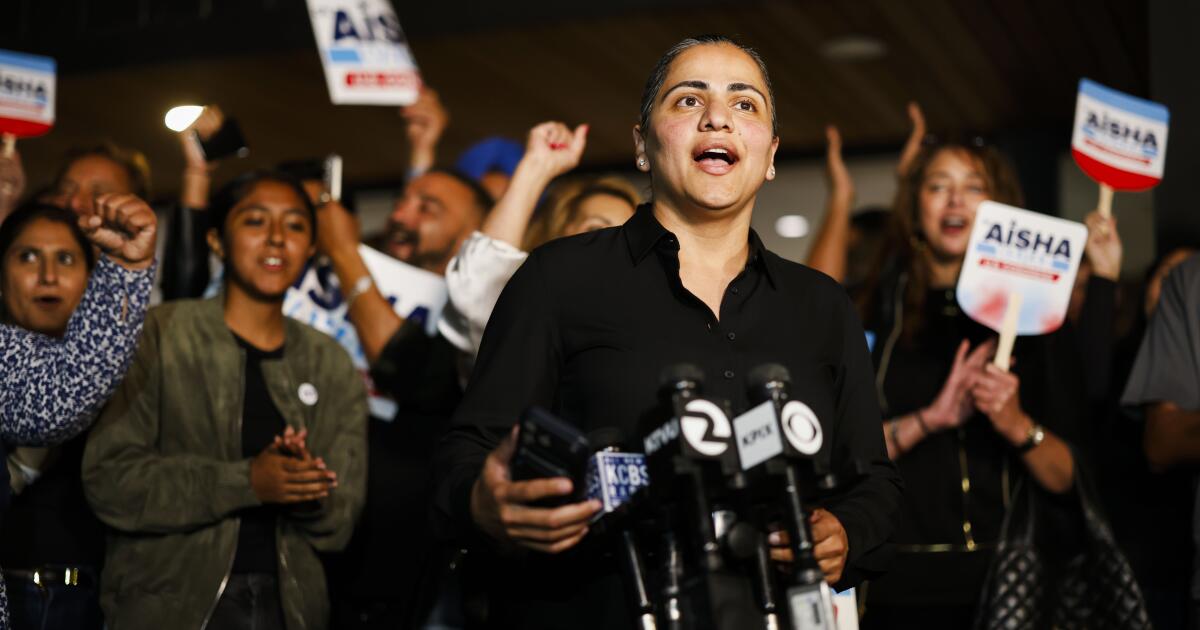
Aisha Wahab wins election to complete former Rep. Eric Swalwell’s term

Progressive state Sen. Aisha Wahab will replace former Rep. Eric Swalwell in Congress and finish his current term.

Wahab (D-Hayward) defeated Melissa Hernandez, the president of the Bay Area Rapid Transit Board and the former mayor of Dublin who was seen as the more moderate candidate. The two faced off in a special runoff election on Tuesday, and the Associated Press declared Wahab the winner Thursday afternoon.

The two Democrats will face each other again in the Nov. 3 general election to determine who will represent a slightly redrawn district in the East Bay for a full term beginning in 2027.

Following a Thursday update from Alameda County elections officials, Wahab led with 53.1% of the vote to Hernandez’s 46.9%, according to the secretary of state’s website. The additional ballots widened the slim lead Wahab held on election night.

“This victory belongs to the voters who made clear that our district cannot be bought,” Wahab posted on Facebook Thursday after the race was called. “Through one of the ugliest, most expensive elections we’ve ever seen, we never took the bait or went negative. We stayed focused on the people, and I will fight for this district that raised me. From foster care to Congress, this journey shows the possibility of the American Dream. Today this district made history by electing the first Afghan American to Congress.”

In an email to supporters, Hernandez said the November election “will be in the new district lines, adding 26,000 Dublin voters who didn’t have the chance to vote for me in August. We’re looking forward to winning this on November 3rd with a more favorable district and a much larger electorate. Game on!”

Swalwell, a Dublin Democrat, resigned from the seat and dropped his bid for California governor in April after multiple women accused him of sexual assault and misconduct, which he denies.

Though Wahab was favored to win the seat and finished first in both the regular and special election primaries, the race became more competitive after the pro-Israel group American Israel Public Affairs Committee spent millions of dollars on ads attacking her. Though the war in Gaza was not a central campaign issue, Wahab has criticized Israel’s military actions in Gaza and described it as a genocide. Hernandez has defended Israel’s right to defend itself.

Progressives celebrated Wahab’s victory despite the heavy spending against her.

Joseph Geevarghese, executive director of Our Revolution, a group founded by progressive Sen. Bernie Sanders (I-Vt.), said her campaign “should be studied by every progressive running for office in America.”

“The lesson from CA-14 is simple: Democrats do not have to surrender to the biggest checkbook in the race,” Geevarghese said. “Big money can buy television ads, mailboxes and endless attacks. It cannot buy the trust built through thousands of conversations between neighbors. That is the model: Unite the movement, organize everywhere, and make billionaire money fight us on our terrain.”

Source link

UCLA QB Nico Iamaleava learns, and builds, on his experiences

Nico Iamaleava became a household name among college football fans.

Not because of his five-star, blue-chip status, leaving Warren High as the second-ranked prospect in the 2023 class and top-ranked recruit out of California.

Not for leading Tennessee to its first-ever College Football Playoff appearance and a 10-3 record — tying for the Volunteers’ second-best finish since 2001.

Instead, Iamaleava is remembered for his tumultuous exit from Knoxville, a parting characterized by head coach Josh Heupel that the program would move on without its starting signal-caller, leading the Long Beach product to UCLA.

More than one year removed after his departure, Iamaleava reflected at preseason media day on his time with the Volunteers, the effect last season had on his mental health and his mindset heading into 2026.

“In Tennessee, I was in a rough mental state as far as being far from home, but that’s what came with me growing and maturing,” Iamaleava said Wednesday. “So coming back home has been a great transition, and I can’t wait to play this year.”

While returning to Southern California brought the Bruins’ starting quarterback closer to his roots and family, the social media ridicule chased him cross-country, targeting not just him, but his parents too.

To combat the animosity centered on his family, Iamaleava focused on his support system, leaning on those around him and strengthening relationships with the people that he loved.

“Mental health is huge, and having a great support system with you definitely helps. I’ve had that with my parents, going to them whenever I need something,” Iamaleava said. “I have brothers that I can go and rely on, and coming back home to my family has been easy. I don’t really focus on the outside noise.”

While the majority of Iamaleava’s criticism stemmed from his departure from Knoxville, it reignited after UCLA started out the season 0-4 and finished the 2025 campaign 3-9 — a program worst since 2018.

Iamaleava could have allowed the disparagement to compound, but the starting signal-caller is using it as fuel for a 2026 season where many have the Bruins painted as a potential dark horse.

“Everybody counted us out. Last year wasn’t a great year for us, so we’re not on anybody’s radar,” Iamaleava said. “That fuels us, and really playing for each other is going to be the main thing.”

Being one of the few returning starters, Iamaleava has embraced a “vet” role, and has subsequently taken the mantle and burden of being the team’s leader.

And despite all of the negative sentiment surrounding Iamaleava and his time at Tennessee, it was with the Volunteers when he learned how to effectively lead and cultivate camaraderie.

“I learned a lot of that in Tennessee. I had a great vet in Joe Milton. He was a great quarterback,” Iamaleava said. “He’s at the Cowboys now, so learning under him, and then my whole O-line from Tennessee, I love them boys, and they helped me a lot too.”

Iamaleava is building on everything — the good and the bad — he learned from his time in Knoxville and his first year in Westwood entering the new season.

And as he enters his senior season with professional football aspirations on the horizon, Iamaleava has learned to not let external voices interfere with his internal confidence.

“I like to let people assume. Not a lot of people know me on a personal level, so it’s kind of hard to really focus on what they have to say,” Iamaleava said. “Those who know me in this locker room, those who know me in the building, those are the people I care about.”

Source link

Iran war live: US vows toughest Iran sanctions, urges China support | Donald Trump News

Source link

US deports nearly 2,300 Mexicans to Guatemala over Mexico’s objections | Migration News

The United States has sent about 2,300 Mexican nationals to Guatemala, despite objections from the Mexican government, as President Donald Trump steps up deportations.

Guatemalan President Bernardo Arevalo confirmed on Wednesday that his country has received about 2,284 Mexican nationals deported from the US this year.

Recommended Stories

list of 3 itemsend of list

“They are arriving on planes carrying Guatemalan returnees,” Arevalo said in a news conference.

“In coordination with the Mexican government, what we have done is bring them through in transit so that we can return them to Mexican territory within 24 hours of their arrival in the country.”

The removals are part of a growing trend of third-country deportations under Trump, who has sent migrants and asylum seekers from the US to countries they may have no connection to.

Largely, the Trump administration has justified such deportations by saying that the immigrants in question are unable to return to their home countries.

But that is not the case with Mexico, which has consistently accepted deportations from the US.

Critics have blasted the third-country removals as a form of punishment, effectively stranding migrants and asylum seekers far from home.

Speaking about the Mexican nationals sent to Guatemala, Arevalo has said that the deportees are quickly repatriated to their country, with the costs covered by either the Mexican or US government.

But Mexican officials voiced concern about the US sending its citizens to third-party countries.

“The Mexican government has expressed its opposition to this practice to US authorities and has reiterated that every Mexican citizen has the right to enter the country,” Mexico’s Ministry of Foreign Affairs said in a statement on Thursday.

Following a meeting with Guatemalan officials on Tuesday, the Foreign Ministry also said that the two countries are united by shared values including shared security and “human mobility with dignity”.

Guatemala is not the only country to receive Mexican nationals from the US in recent months. Reports have also emerged that some Mexicans have been transported to Honduras as well.

“They didn’t tell us anything, just to get on the flight,” Arturo Trejo, a Mexican man who was deported to Honduras, told the TV channel Telemundo.

Mexico’s National Migration Institute (INM) told The Associated Press news agency that the US had justified the practice as a form of deterrence.

“The reason is that the United States wants to prevent them from crossing back into its territory,” the INM said.

The US Department of Homeland Security (DHS), meanwhile, responded to inquiries about the practice by saying that it was “utilising all lawful options to carry out the largest deportation operation in history, just as President Trump promised”.

But many human rights experts view the third-country deportations of Mexicans as an intimidation tactic.

“What we are seeing seems part of [a] broader trend towards a very severe US migration policy where they seek to instill terror and fear in migrants at all costs,” Ana Maria Mendez, the Central America director at migrants rights group WOLA, told the news service Reuters.

As neighbours, the US and Mexico have long had a close relationship. The two countries remain top trading partners for one another, with a cross-border exchange of roughly $964.1bn in 2025 alone.

But since Trump returned to the presidency last year, the Mexican government has had to strike a delicate balance.

It has sought to cooperate with the Trump administration on immigration enforcement, while defending the rights of its citizens against alleged abuse.

Critics have accused immigration agents of using excessive violence during raids, and experts have noted a rising number of deaths while in the custody of Immigration and Customs Enforcement (ICE).

Since Trump returned to office, at least 15 Mexican nationals have died in ICE custody, and another three died during enforcement operations.

In response, the Mexican government has filed complaints with state prosecutors in the US. It has also denounced conditions in ICE detention centres as “incompatible with human rights standards” and urged regular visits from Mexican consular officials.

Source link

Hayden Panettiere death: Ex Brian Hickerson’s history of abuse

Hayden Panettiere was candid in her memoir and book tour interviews about the extensive abuse by on-again, off-again boyfriend Brian Hickerson. Now he’s under the microscope as new details surrounding her death and their relationship emerge.

On Thursday, Panettiere’s mother, Lesley Vogel, whom the “Nashville” actor had a strained relationship with, pointed blame for the actor’s death toward an unnamed individual, but earlier this week she outright named Hickerson.

“Although my daughter and I were estranged, it was not for lack of care or love,” she said in a statement to “Entertainment Tonight.” “It was due to the involvement of a toxic individual who I believe led to her death.”⁠

⁠”It leads me to believe there are still questions surrounding what happened,” she said. “And I think we are all looking for answers.”⁠

And earlier this week, she told NBC, “This person in her life that we have been trying to get rid of for quite some time was with her at her death, and that was Brian Hickerson.”

Hickerson broke his silence for the first time since Panettiere died Sunday of an apparent overdose as his attorney Sloan Ellis made a statement on his behalf. “Hayden’s death remains under investigation and it is important to allow that investigation to proceed,” Ellis told TMZ. “As has been publicly reported, police confirmed there were no signs of foul play.”

“Out of respect for Hayden’s loved ones and the ongoing investigation, there will be no further comment at this time.”

Hickerson and his brother Zach Hickerson were present when emergency responders found Panettiere in cardiac arrest on Sunday. According to a report from Greenville, S.C., police, Zach was “very emotional” as paramedics attempted to revive Panettiere, and Brian “did not become emotional until EMS declared her officially deceased.”

According to TMZ, Narcan — a drug used to reverse an opioid overdose — was found at the scene, but it’s unclear whether it was used on Panettiere.

Brian and Zach Hickerson did not respond to The Times’ request for comment.

In the actor’s memoir, “This Is Me: A Reckoning,” which she published in May, she wrote that she and Hickerson met in 2018 at a West Hollywood bar. They fell fast into a whirlwind romance that soured after alcohol-fueled fights turned violent. “It was easy. The easiest happiness that I had come by in a long time,” she wrote in the memoir. “Then, one day, when we were on our second bottle of wine — the bottle that suffocates all the magic and obliterates your defenses — everything changed.”

Hickerson was arrested multiple times on suspicion of domestic violence against Panettiere, beginning in May 2019 in Los Angeles (the charges were later dismissed when prosecutors couldn’t secure a material witness) and again on Valentine’s Day in 2020 in Wyoming (misdemeanor battery charges were eventually dropped). Following an eight-count criminal indictment in July 2020 that covered multiple violent incidents between May 2019 and January 2020, Hickerson pleaded no contest in April 2021 to two felony counts of injuring a spouse or girlfriend. He was sentenced to 45 days in county jail (but served 13 days due to credit for time served) along with four years of formal probation, mandatory domestic violence classes, and a five-year protective order.

After his 2019 arrest was covered in the press, Panettiere wrote that she and Brian “shut ourselves inside” to avoid paparazzi and that she screened calls from friends and family who phoned and texted “constantly,” worried that she was in a “dangerous situation with Brian.”

“What I never told them was that the abuse I’d endured didn’t feel as bad as the thought of being alone,” she wrote.

In “This Is Me,” she graphically detailed the abuse. She claimed that, during one attack, he punched her in the face repeatedly and secretly recorded himself saying, “Why did you hit yourself?” and “You’re all bruised, why did you do that to yourself?” When he was subsequently booked on charges of felony domestic assault, he pleaded not guilty and claimed that Panettiere had done it to herself.

“I didn’t know the person Brian turned into when he started raging,” she wrote. “This other Brian seemed to be dissociating, like the rational Dr. Jekyll part of his brain shut off while the violent Mr. Hyde took over. I was sure he must have a serious mental illness, like bipolar or borderline personality disorder, that could make him change so quickly.”

She continued: “On July 16, 2020, authorities in LA arrested Brian again, charging him with four domestic assault felonies, one misdemeanor count of battery; two felony counts of assault with a deadly weapon (in particular, our garage floor and the stairs, both of which he’d once smashed my body into); and one felony count of dissuading a witness from prosecuting a crime.

“That witness was me. After we’d come back from Wyoming, Brian had called and tried to talk me out of pressing charges against him. As my heart broke into a million pieces, I told him it was too late, and then I told the police.”

Three days before Panettiere’s death, Hickerson attempted to expunge and reduce his past felony charges but was denied by a Los Angeles judge. He made the same request last July, which was denied.

During the press tour for “This Is Me,” Panettiere told podcaster Jay Shetty that she had cut ties with Hickerson but that, historically, he’d always found a way to reconnect just as she thought she was finally free of him. Reportedly, the two reconnected just weeks before her death.

“I thought I had gotten out of it and gotten away from it. … Abusers weave themselves like weeds into your life, and there’s always something that they left behind,” she told Shetty. “There’s always something that they have to come back for. There was always something that they find to keep that connection, keep you on the hook, keep that connection with you, no matter where you you go.”

In May, after Panettiere’s interview with Shetty went live, Hickerson spoke with TMZ and appeared intoxicated and slurred as he spoke about the actor. “Hayden Panettiere is the sweetest thing in the world,” he said. “It’s not about who you spend Saturday night with, it’s who you spend all day Sunday with, and Hayden Panettiere is a Sunday girl.”

“I would be an idiot not to walk away from her and let her flourish in her career,” he continued. “So we probably wouldn’t be good together. I’d like to see what she’s gonna do with the next like 30 years of her career, she’ll always hold a special place in my heart … we’re good buddies.”


Source link

OSI Systems forecasts $1.875B-$1.93B fiscal 2027 revenue as Middle East deliveries shift into 2H (NASDAQ:OSIS)

Earnings Call Insights: OSI Systems (OSIS) Q4 2026

Management view

  • Executive VP & CFO Alan Edrick said fiscal 2026 revenue of $1.79 billion ended below guidance and Q4 revenue of $484 million fell about 4% year-over-year because “the timing of approximately $50 million of planned security deliveries… moved

Seeking Alpha’s Disclaimer: This article was automatically generated by an AI tool based on content available on the Seeking Alpha website, and has not been curated or reviewed by humans. Due to inherent limitations in using AI-based tools, the accuracy, completeness, or timeliness of such articles cannot be guaranteed. This article is intended for informational purposes only. Seeking Alpha does not take account of your objectives or your financial situation and does not offer any personalized investment advice. Seeking Alpha is not a licensed securities dealer, broker or US investment adviser or investment bank.

Source link

Bass Win May Signal Political Shift in South L.A.

Community activist Karen Bass achieved a decisive victory in the Democratic primary for the 47th state Assembly district by assembling a coalition that extended beyond the traditional base of African American voters to include Latinos and organized labor.

That broader coalition, which allowed her to trounce two candidates who have long been part of the African American political establishment in the area, may signal a changing of the guard in South Los Angeles. The district extends from Westwood through Culver City to the Crenshaw area.

Bass captured 48% of the vote in the Democratic primary, while Nate Holden, who represented part of the area as a state legislator and city councilman for 20 years, received 21%. Attorney Rickey Ivie finished a distant third, despite support from many of the area’s most prominent black leaders, including current Assemblyman Herb Wesson (D-Culver City), County Supervisor Yvonne Brathwaite Burke, City Councilman Bernard C. Parks and state Sen. Kevin Murray (D-Culver City).

Bass and political experts said that her campaign had benefited from demographic shifts, grass-roots organizing and the power of organized labor.

The candidate said people had seemed to appreciate that, before running for office, she had toiled in the community for more than a decade as the executive director of the Community Coalition, a group that led the fight against rebuilding liquor stores in South Los Angeles after the 1992 riots, and championed education reform for schools in poor neighborhoods.

“I think the idea of new leadership resonated,” Bass, 50, said Wednesday. “People wanted a new style of leadership. I think they liked the fact that I was an activist who had been deeply involved in the community for years.”

Working in the community gave Bass a huge base of grass-roots supporters to draw on in one of the most ethnically diverse districts in the state, said Los Angeles City Councilman Antonio Villaraigosa, who, along with Assembly Speaker Fabian Nunez (D- Los Angeles), formed a powerful group of Latino leaders that backed Bass.

“She has demonstrated that successful candidates in multiracial districts are going to have to build coalitions, and Karen Bass has been building coalitions for 30 years,” Villaraigosa said. Bass benefited from a $250,000 independent campaign by the Los Angeles County Federation of Labor, which also flooded the district with 450 volunteers to get out the vote on election day.

“She is part of a new paradigm, of an African American/labor alliance for South Los Angeles,” said Miguel Contreras, head of the labor organization.

The 47th Assembly District was redrawn in 2002 to make it less heavily African American, making it imperative to build alliances beyond a single ethnic group. That’s an increasingly important skill in Los Angeles, where the growing Latino population means there are few areas where someone can be elected with the support of black voters alone.

Assemblyman Mark Ridley-Thomas (D-Los Angeles), a Bass backer, said Bass had done the best job of reaching out to diverse groups. Bass said she had courted Jewish voters in the western end of the district, while organized labor had helped her by targeting Latino voters on her behalf. Ideology also played a role, Ridley-Thomas said, saying that Bass is more liberal than Ivie, Wesson and Burke.

“Ivie is a middle-of-the road, moderate Democrat and Karen is definitely left of center and progressive,” said Jaime Regalado, executive director of the Pat Brown Institute at Cal State L.A..

A Baldwin Vista resident who teaches health communications at the USC School of Medicine, Bass agreed that she was a better ideological match with voters in the predominantly Democratic district.

The 47th Assembly District was one of 100 state Senate and Assembly contests that drew California voters to the polls Tuesday.

Though Tuesday’s winners must still compete in the November general election, most districts have been drawn to strongly favor either Republicans or Democrats. As a result, odds are good that the people who will take seats as new lawmakers in December will include Van Tran, who would become the first Vietnamese American elected to the Legislature, and Lori Saldana, a San Diego community college teacher who shocked the Democratic establishment by spending just $50,000 to beat other Democrats who enjoyed hundreds of thousands of dollars of support from some of the biggest interests trying to influence the Legislature.

Saldana’s clear win over former Gov. Gray Davis aide Vince Hall and Democratic pollster Heidi Von Szeliski was the biggest decided upset in the state, but three races were too close to call Wednesday as counties tallied absentee ballots.

Interest groups, including trial lawyers, business groups and unions, sank nearly $7 million into races, either directly or through independent expenditure campaigns, but no special interest group emerged as a clear winner.

The election allowed some politicians to extend their careers, including Board of Equalization member Carole Migden, who won the Democratic primary in a liberal San Francisco state Senate district, and Assemblyman John Campbell (R-Irvine), who beat fellow Assemblyman Ken Maddox (R-Garden Grove) for the Republican nomination in a conservative Orange County Senate district. Johan Klehs, a Democrat who has served eight years in the Assembly and six years on the Board of Equalization, appears headed back to the Assembly. Unopposed, he won the nomination in a Democratic-leaning district east of San Francisco.

Another former assemblyman seeking a comeback, Democrat Tom Umberg, had a slight lead of 51.2% to 48.8% over opponent Claudia Alvarez in the heavily Latino 69th Assembly District, which includes Santa Ana. Alvarez held out hope Wednesday that the absentee ballot tally could swing the race her way.

Also awaiting absentee ballot results were the trial lawyers who sank hundreds of thousands of dollars into the 21st Assembly District south of San Francisco. A four-way race among Democrats has been narrowed to a neck-and-neck contest between Redwood City Councilman Ira Ruskin, with 37.4% of the precinct vote and attorney Joe Carcione, with 36.6%.

Source link

Lawsuit against CIF is again dismissed in federal court

A lawsuit filed in Northern California federal court by former high school football player Dominik Calhoun against the California Interscholastic Federation was dismissed for a second time on Thursday after a hearing held by Magistrate Judge Laurel Beeler, who granted an 84 motion.

The judge will allow the plaintiff to file an amended complaint by Sept. 10. There’s also the chance to appeal.

Calhoun has been challenging CIF rules on high school transfers and NIL.

The CIF had stopped considering possible changes in several policies, including transfers, while the lawsuit played out.

The question is whether discussions will resume about possible transfer reforms that were discussed in April of 2025.

Source link

Walmart shares fall as comparable sales growth slows

Customers at a Walmart on Nov. 28, 2013 in Alexandria, Va. Shares of Walmart fell more than 9% after the retailer reported the lowest quarterly comparable sales growth since 2020. File Photo by Michael Reynolds/EPA-EFE

Aug. 20 (UPI) — Walmart on Thursday reported sales grew at their slowest pace in the retailer’s latest fiscal quarter in six years, sending its shares down more than 9%.

In the second quarter ended July 31, comparable sales in the US, including stores and digital channels open for at least a year, were 2.6%, the smallest advance since 2020, Walmart said.

“Customers tell us they’re still feeling some pressure,” Walmart CEO John Furner said on an earnings call with analysts.

Walmart blamed the disappointing sales growth partly on new federal rules on drug pricing that cut the prices of several costly medications for those enrolled in Medicare.

The company is also anticipating at least $2 billion in extra costs this year from higher gasoline prices due to rising oil prices due to the U.S.-Israeli war with Iran.

As the national average for a gallon of regular gasoline has risen to $4.10 from $2.98 and inflation spiked to 3.4% from 2.4% before the conflict, Walmart said consumers are making adjustments.

“As you go through month by month in the last quarter, you can tell when fuel prices increased and got above $4, and perhaps there’s a psychological impact to that, that there are choices that consumers are making,” Walmart finance chief John David Rainey told analysts. “It’s why we have leaned so heavily into lower prices.”

Meanwhile, Walmart said it has seen gains as more affluent customers trade down as their budgets tighten.

For the full year, Walmart expects net sales to rise 4% to 5%, up from 3.5$ to 4.5% previously. Operating income is expected to rise 7.5% to 8.5%, up from an earlier view for 6% to 8%.

Rainey told CNBC that Walmart is eligible for tariff refunds of around $2.9 billion, and it has yet to receive nearly $100 million of that. He said the funds would be used to lower prices.

Source link