Month: August 2026

Lawsuit against CIF is again dismissed in federal court

A lawsuit filed in Northern California federal court by former high school football player Dominik Calhoun against the California Interscholastic Federation was dismissed for a second time on Thursday after a hearing held by Magistrate Judge Laurel Beeler, who granted an 84 motion.

The judge will allow the plaintiff to file an amended complaint by Sept. 10. There’s also the chance to appeal.

Calhoun has been challenging CIF rules on high school transfers and NIL.

The CIF had stopped considering possible changes in several policies, including transfers, while the lawsuit played out.

The question is whether discussions will resume about possible transfer reforms that were discussed in April of 2025.

Source link

Walmart shares fall as comparable sales growth slows

Customers at a Walmart on Nov. 28, 2013 in Alexandria, Va. Shares of Walmart fell more than 9% after the retailer reported the lowest quarterly comparable sales growth since 2020. File Photo by Michael Reynolds/EPA-EFE

Aug. 20 (UPI) — Walmart on Thursday reported sales grew at their slowest pace in the retailer’s latest fiscal quarter in six years, sending its shares down more than 9%.

In the second quarter ended July 31, comparable sales in the US, including stores and digital channels open for at least a year, were 2.6%, the smallest advance since 2020, Walmart said.

“Customers tell us they’re still feeling some pressure,” Walmart CEO John Furner said on an earnings call with analysts.

Walmart blamed the disappointing sales growth partly on new federal rules on drug pricing that cut the prices of several costly medications for those enrolled in Medicare.

The company is also anticipating at least $2 billion in extra costs this year from higher gasoline prices due to rising oil prices due to the U.S.-Israeli war with Iran.

As the national average for a gallon of regular gasoline has risen to $4.10 from $2.98 and inflation spiked to 3.4% from 2.4% before the conflict, Walmart said consumers are making adjustments.

“As you go through month by month in the last quarter, you can tell when fuel prices increased and got above $4, and perhaps there’s a psychological impact to that, that there are choices that consumers are making,” Walmart finance chief John David Rainey told analysts. “It’s why we have leaned so heavily into lower prices.”

Meanwhile, Walmart said it has seen gains as more affluent customers trade down as their budgets tighten.

For the full year, Walmart expects net sales to rise 4% to 5%, up from 3.5$ to 4.5% previously. Operating income is expected to rise 7.5% to 8.5%, up from an earlier view for 6% to 8%.

Rainey told CNBC that Walmart is eligible for tariff refunds of around $2.9 billion, and it has yet to receive nearly $100 million of that. He said the funds would be used to lower prices.

Source link

USS George Washington’s Mideast Arrival Highlights Strain On Carrier Force

The aircraft carrier USS George Washington transited the Arabian Sea today after arriving in the U.S. Central Command (CENTCOM) region yesterday, the command announced via X. The move was designed to relieve the overworked USS Abraham Lincoln and comes as the U.S. continues to maintain a naval blockade of Iranian ports amid ongoing tensions with Tehran. However, the deployment also leaves the U.S. bereft of aircraft carriers in the western Pacific, at least for the moment, highlighting the strain on one of its most important assets for American power projection. Extended deployments across multiple carriers is putting extreme stress on the carrier force and could have major cascading effects as maintenance required to reset these ships after deployments draws on longer than originally planned. At the same time, delays in carrier production could also exacerbate the future availability of the force.

The need to redeploy the Washington from Yokosuka, Japan, where it is based, to the CENTCOM region was sparked by concerns about the condition of the crew of the Lincoln. That carrier reportedly endured grueling conditions amid round-the-clock operations without any liberty port calls since deploying last year. The issue sparked outrage from those worried about the mental and physical health of the sailors and Marines aboard, as well as pushback from U.S. officials who claimed the media was blowing the situation out of proportion.

The addition of the Washington comes as the Lincoln has departed. That means there are now two carriers in the Middle East at the moment. The USS George H.W. Bush arrived in the region on April 23.

U.S. Sailors work on the flight deck of USS George Washington (CVN 73), Aug. 20, as the aircraft carrier transits the Arabian Sea. The George Washington Carrier Strike Group is operating in Middle East during a scheduled deployment after arriving in the CENTCOM theater yesterday. Source: U.S. Central Command

While the U.S. and Iran have stopped firing at each other, the region remains a tinderbox. Both Washington and Tehran are claiming control over the Strait of Hormuz, and negotiations to end hostilities have broken down. 

With the ongoing blockade, as well as CENTCOM’s efforts to move millions of barrels of oil through its preferred southern route close to Oman, there is still a need for the aviation assets provided by carriers and the strike and defensive missile capabilities provided by their escort ships. This is especially true for contingency operations, deterring Iran, and pressuring them to conform to Washington’s demands.

TWZ/IAN ELLIS-JONES

As we noted earlier in this story, all this leaves Adm. Samuel Paparo, the commander of U.S. Pacific Command (PACOM), with no carrier coverage in theater to deter or counter potential PRC or DPRK aggression. Carrier gaps in the Pacific were rare up until 2024, which marked the first time in decades that the U.S. had no flattops in Asia. Though the U.S. military has been largely focused on the Middle East, the PACOM region remains the top concern among many within the national security apparatus, as China is America’s top pacing threat and North Korea remains unpredictable and dangerous. Russian operations in the Pacific are another issue, among a slew of others.

The extended deployment of the Lincoln, and the need to replace it, didn’t just create an issue, albeit temporary, for PACOM. Typical carrier deployments last about six to seven months, a period designed to ensure the ships can maintain readiness and the crews do not get worn out. When that doesn’t happen, it creates a cascading series of problems that affect not just the ships and crews, but the facilities that have scheduled repairs and lined up workers to make them happen.

The bottom line is that the longer these vessels stay out on cruise, the longer they have to stay in on deep maintenance, and past a certain point, the magnitude of this relationship skyrockets. Extra days out can turn into extra weeks in the yard, and so on. With yard facilities at a premium, especially those capable of dealing with a supercarrier, critical schedules can quickly implode, with work stacking up across multiple vessels, resulting in them being sidelined much longer than planned. You can read all about this in our past feature linked here.

For instance, after returning from a historic 11-month deployment, USS Gerald R. Ford transited to Pier 5N at Norfolk Naval Shipyard in July to begin its first post-deployment Planned Incremental Availability (PIA). Ford’s PIA will take longer than initially expected due to the stress from its journey, including a fire the laundry room that raged for more than 30 hours and will require an additional, concurrent availability. This will likely extend its time in dry dock, a situation experienced by the USS Dwight D. Eisenhower after it had an epic deployment. Of note is that the damage to the Ford meant it had to depart the CENTCOM region in March at the height of the war on Iran. That left just one carrier on station, which, ironically, was the Lincoln.

NAVAL SUPPORT ACTIVITY SOUDA BAY, Greece (Feb. 23, 2026) The world’s largest aircraft carrier, Ford-class aircraft carrier USS Gerald R. Ford (CVN 78) arrives at the NATO Marathi Pier Complex in Souda Bay, Crete, Greece, during a scheduled port visit on Feb. 23, 2026. NSA Souda Bay is an operational ashore installation that enables and supports U.S., Allied, Coalition, and partner nation forces to preserve security and stability in the European, African, and Central Command areas of responsibility. (U.S. Navy photo by Mass Communication Specialist 3rd Class Hannah Donahue)
The USS Gerald R. Ford (CVN 78) arrives at the NATO Marathi Pier Complex in Souda Bay, Crete, Greece, during a scheduled port visit on Feb. 23, 2026. (U.S. Navy photo by Mass Communication Specialist 3rd Class Hannah Donahue) Petty Officer 3rd Class Hannah Donahue

There are several other issues being faced by the carrier force as the Navy has had to juggle maintenance schedules to make up for construction delays.

The future Ford class USS John F. Kennedy is not scheduled for delivery until March 2027. JFK just completed Acceptance Trials Aug. 15, following a four-day underway period off the Atlantic Coast. The Navy had originally planned to take delivery of the Kennedy in 2022, but that was delayed until March 2027 “to support completion of Advanced Arresting Gear (AAG) certification and continued Advanced Weapons Elevator (AWE) work,” according to the Navy’s Fiscal Year 2026 budget request. To offset that, the decommissioning of the USS Nimitz was pushed back.

The future USS John F. Kennedy is seen leaving port to begin acceptance sea trials on August 12, 2026. (HII)

The entire Ford class program has been running years behind schedule and now the U.S. Navy is reportedly evaluating changes to the Ford class that could add further delays. This includes moving the island superstructure further forward on the flight deck and abandoning the Electromagnetic Aircraft Launch System (EMALS) catapults and Advanced Weapons Elevators (AWE) on the Ford class, starting with the future USS Doris Miller.

As for what carrier capacity is actually available today, four are currently offline or waiting to enter maintenance availabilities.

The USS John C. Stennis moved to complete a Refueling and Complex Overhaul (RCOH) period at Newport News Shipbuilding in Virginia in May 2021. When the contract was awarded to Huntington Ingalls Industries (HII) in February 2021, work was expected to be completed by October 2025, and the downstream effects of the extended delay have rippled across the fleet.

NEWPORT NEWS, Va. (April 8, 2024) The Nimitz-class aircraft carrier USS John C. Stennis (CVN 74) is moved to an outfitting berth in Newport News, Virginia, April 8, 2024. John C. Stennis is in Newport News Shipbuilding conducting refueling and complex overhaul to prepare the ship for the second half of its 50-year service life. (U.S. Navy photo by Mass Communication Specialist 2nd Class Simon Pike)
The Nimitz class aircraft carrier USS John C. Stennis (CVN 74) is moved to an outfitting berth in Newport News, Virginia, April 8, 2024. The carrier is in Newport News Shipbuilding conducting refueling and complex overhaul to prepare the ship for the second half of its 50-year service life. (U.S. Navy photo by Mass Communication Specialist 2nd Class Simon Pike) Petty Officer 2nd Class Simon Pike

Nimitz class aircraft carriers typically complete RCOH, a lengthy modernization and maintenance period that includes a nuclear refuel, at the halfway point of their expected 50-year service life. The Navy is rethinking its approach to speed up future such overhauls and cut down on labor requirements, beginning with USS Harry S. Truman.

Truman is pierside in Norfolk, Virginia, waiting to enter RCOH following the Stennis, as only one shipyard on the East Coast is capable of conducting such invasive maintenance.

USS Ronald Reagan is the only carrier on the West Coast that is unavailable to deploy today. It was previously forward-deployed to Yokosuka, Japan, completed a hull swap with USS George Washington in mid-2025 and is currently in dry dock at Puget Sound Naval Shipyard and Intermediate Maintenance Facility in Bremerton, Washington. When the contract for the Drydocking PIA (DPIA) was awarded in 2025, work was expected to be completed by August 2026, and the timeline appears to be on schedule. According to Stars & Stripes, Ronald Reagan is expected to wrap up the 17-month DPIA and return to service by the end of the month.

This leaves three carriers that could be pushed toward the Pacific in an emergency, one of which is largely ready for deployment. The USS Theodore Roosevelt, USS Carl Vinson, and USS Dwight D. Eisenhower, are in various states of readiness and working up in preparation for future deployments. Theodore Roosevelt, which completed COMPTUEX in May before participating in large-scale exercise RIMPAC 2026 over the summer, is expected to deploy in the very near term, and is the most likely to be sent to the Pacific. Also homeported out of San Diego, Carl Vinson pulled out of port on August 10 and is underway training off the West Coast. As of publication. Dwight D. Eisenhower finished a 16-month post-deployment PIA and completed sea trials in April, and most recently returned home on July 27 after conducting an ammo onload with dry cargo/ammo ship USNS Medgar Evers.

TWZ/IAN ELLIS-JONES

Lincoln, as we noted earlier in this piece, is heading home to San Diego after leaving the CENTCOM region, but when it will return to service is unknown. There is an upcoming DPIA scheduled for the carrier, according to Fiscal Year 2027 budget documents, but the timeline is unclear. Based on the history of other lengthy carrier deployments, that could be delayed as well.

So, it’s likely another carrier strike group will be heading toward the West Pacific soon and the gap won’t be a prolonged one, but after multiple prolonged deployments, America’s carrier force may be set up for a larger availability crisis down the line.

Contact the authors: howard@twz.com; ian.ellis-jones@recurrent.io

Howard is a Senior Staff Writer for TWZ. He writes frequently about conflict, focusing heavily on the Middle East and Ukraine, and interviews with military and intelligence officials and industry leaders from around the globe. He lives near Tampa, Florida, home of U.S. Central Command, U.S. Special Operations Command.


Ian executes TWZ’s full-spectrum social media strategy, brings his interpretive graphics skills to our editorial team as an OSINT analyst and researcher, and maintains the weekly carrier tracker and newsletter.


Source link

Dragons’ Den star Jenna Meek’s net worth and link to Love Island

Dragons’ Den is back on our screens tonight, and for the first time ever, the number of female Dragons outnumbers the males.

A Dragons’ Den star has a surprising link to Love Island.

The BBC programme is returning to screens tonight, and for the first time ever, the number of female Dragons outnumbers the males.

Following the departures of Touker Suleyman and Sara Davies from the beloved BBC show, a string of guest Dragons, including Gary Neville and Tinie Tempah, have joined regulars Peter Jones, Steven Bartlett and Deborah Meaden in the Den.

After a months-long break, the series is continuing with new episodes from Thursday, August 20.

Joining Peter, Steven and Deborah in the Den, North East businesswoman Jenna Meek and The Apprentice star Susie Ma are returning as investors, reports Chronicle Live.

After making her debut on Dragons’ Den earlier this year, Jenna was supported by her followers as she wrote on social media: “The secret is out… Your newest Dragon.

“Been manifesting this one for a long time and it still doesn’t feel real that it actually happened. It has always been a massive goal of mine to be on Dragon’s Den – it was this show (and Deborah sorry other Dragons haha) that inspired me from day one to want to be an entrepreneur.

“I used to watch this show all the time and would dream to pitch on it one day, never mind be a dragon beyond grateful for this incredible opportunity, it pushed me to new limits and had so much fun doing it.

“The most incredible incredible experience and so grateful for the amazing crew and all the incredible dragons who made me feel so welcome.”

Who is Jenna Meek?

Jenna is the co-founder and CEO of beauty brand REFY.

Since its launch in 2020, the company — which Jenna co-founded alongside influencer Jess Hunt — has grown into one of the UK’s fastest-rising beauty brands, boasting an annual turnover exceeding £40m.

Prior to REFY, Jenna held positions at Burberry and Rebecca Minkoff, and set up festival beauty label Shrine from her bedroom at just 20 years old.

First known as The Gypsy Shrine, the company popularised peel-and-stick face and body gems and biodegradable body glitters, with Jenna even visiting the Love Island villa to decorate the likes of Olivia Attwood and Montana Brown in her products for a glitter party.

She previously told Mail Online: “We were just brainstorming and thinking of new ideas. I was like, ‘Let’s get on to Love Island’.”

Content cannot be displayed without consent

She continued: “It was so crazy. I had nearly given up but my mum was like, ‘don’t let me down on this’, I had to figure it out and I kept pestering I guess.”

She went on to recall: “Kem [Cetinay] wanted [a lot of glitter], he was like ‘Do this do this!’ I had to tell him, ‘No we’ll keep it silver otherwise you are going to look like an idiot on TV!’”

The 33-year-old has firmly established herself within the industry, earning recognition in The Sunday Times beauty rich list and Forbes’ 30 under 30 list in 2022.

Jenna’s net worth is thought to be in the region of £52m.

Dragons’ Den airs from 8pm on BBC One and iPlayer.

Source link

U.S. sends more than 2,300 Mexican deportees to Guatemala and Honduras

The United States has deported nearly 2,300 Mexicans to Guatemala this year and sent at least dozens more to Honduras, according to official data, a shift from the beginning of President Trump’s second term when such transfers were minimal.

Until now, Mexicans deported from the U.S. were sent almost exclusively back to their country by air and land. Only a handful arrived in other countries.

Some civil organizations believe this change reported in recent days is a way to increase pressure on Mexico, whose government has protested the deaths of 17 Mexicans in U.S. immigration custody or during enforcement operations. This also comes as Trump has expanded agreements with allied Latin American countries to conduct joint operations in the region against criminal groups and has increased U.S. security demands on Mexico.

Sent to Central America by plane and Mexico by bus

Guatemalan President Bernardo Arévalo confirmed Wednesday night that, so far this year, 2,284 Mexicans deported from the U.S. have arrived in the country as part of a “transit stopover” before being taken to Mexico as part of an “arrangement” with the Mexican government, and without these individuals being under any refugee or asylum status.

“They are arriving on planes carrying Guatemalan returnees, and what we have done is bring them in transit so that, in coordination with Mexican immigration authorities, we can return them to Mexican territory within 24 hours of their arrival in the country,” he explained at a news conference.

The costs of these operations are covered by the Mexican government or, in some cases, by U.S. funding, he added.

Mexico’s National Migration Institute confirmed to the Associated Press in a brief message that Mexicans have been deported by the Trump administration to Guatemala and Honduras, primarily since April, and are then transported by bus to southern Mexico.

“The reason is that the United States wants to prevent them from crossing back into its territory,” the institute said. It did not provide figures or further details.

Asked about why the Mexicans were sent to Central America and not their home country, and for more details, the U.S. Department of Homeland Security, which oversees immigration enforcement, said in an emailed statement that the administration “is utilizing all lawful options to carry out the largest deportation operation in history, just as President Trump promised.”

“The Mexican government has expressed its opposition to this practice to U.S. authorities and has reiterated that every Mexican citizen has the right to enter the country,” the Mexican foreign ministry said in a statement Thursday. It added that Mexico is coordinating with the countries involved to ensure the safe return of Mexican citizens.

Third-country deportations raise concerns for Mexican migrants

Historically, Mexico has always been willing to receive its deported citizens.

Since Trump’s first term, it has also accepted deportees from third countries, although the details of immigration agreements with Washington have usually been opaque. In 2025, Mexico received about 12,000 deported foreigners, mostly Cubans and Venezuelans, according to figures provided by Mexican President Claudia Sheinbaum. The government has not updated these figures since December although the practice has continued.

Authorities in Honduras also did not respond to requests for comment, but according to official documents from the country accessed by the Associated Press, 82 Mexicans deported from the U.S. arrived in the Honduran city of San Pedro Sula on two flights on Aug. 13 and Saturday. An additional 35 were scheduled to arrive Thursday.

An additional 165 Mexicans were deported to Honduras between May and mid-July, according to the website Third Country Deportation Watch, run by the nongovernmental organizations Human Rights First and Refugees International, which track U.S. deportation flights to third countries.

The website does not clarify the source of its nationality figures, but both organizations have expressed concern because these transfers could endanger migrants who possibly sought asylum in the U.S. or have few resources in an unknown country.

The deportation tactic “seems to be to put pressure on the Mexican government,” said Savitri Arvey of Human Rights First. “They really don’t want any Mexicans crossing the border.” Some of those deported arrived in Honduras on U.S. military flights, she added.

A recent change in the deportation pattern

At the beginning of his second term, with immigration control as one of his priorities, Trump reached agreements with Mexico, Guatemala, El Salvador, Honduras, Costa Rica and Panama to act as “bridge” or destination countries for migrants from third countries expelled from U.S. territory. These agreements gradually expanded to more countries, including some African ones, most recently Liberia.

Until recently, only a handful of Mexicans had been expelled from the U.S. to countries other than Mexico.

Arévalo said Wednesday that Guatemala received 15 Mexicans in 2025. As of February 2026, Honduras had officially reported the arrival of six. Costa Rica has received 11 Mexicans since Trump’s return to the White House, and according to local immigration authorities, they remain in the country. Presumably, these individuals may have requested to not be returned to Mexico out of fear.

Immigration lawyers believe that the Trump administration is using deportations to third countries as a legal loophole to indirectly force asylum seekers to return to Mexico when the government cannot send them there because it would violate court orders from immigration judges that recognize the dangers. Organizations and politicians both inside and outside the U.S. have also questioned the use of force by U.S. immigration authorities.

Pérez, Verza and González write for the Associated Press. Verza reported from Mexico City and González from Tegucigalpa, Honduras.

Source link

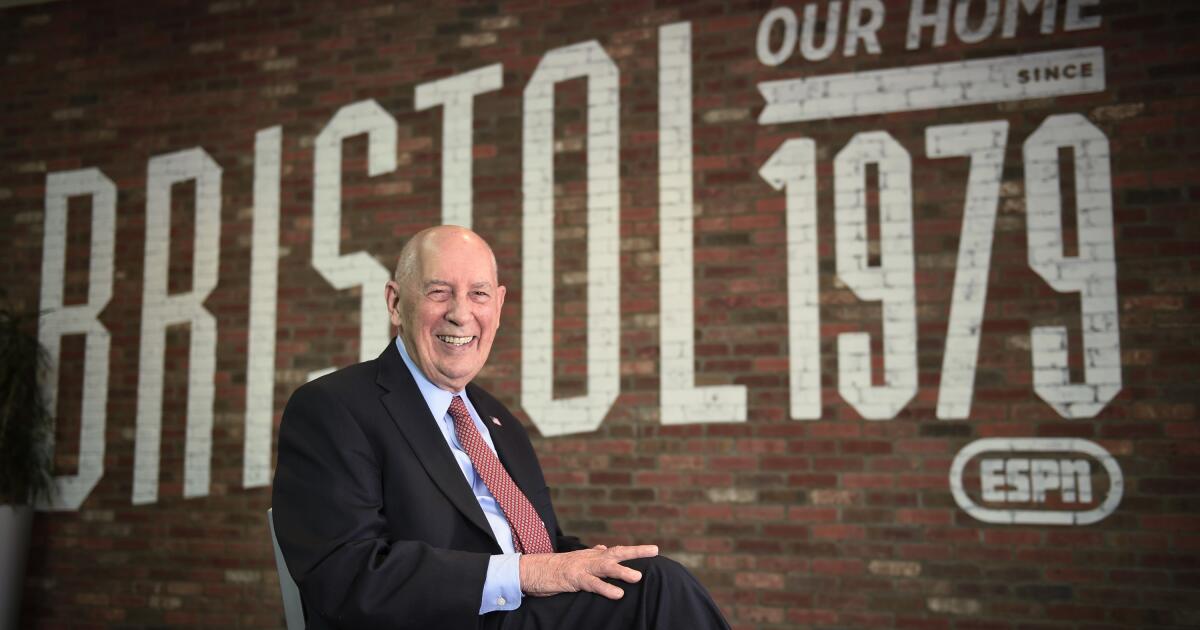
ESPN founder and sports media mogul Bill Rasmussen dies at 93

Bill Rasmussen, the founder of the world’s first 24-hour all-sports cable network ESPN, has died. He was 93.

The sports media company announced his death in a news release on Tuesday and said the cause was from the effects of Parkinson’s disease. The entrepreneur was first diagnosed with the movement disorder in 2014.

“Bill was a remarkable man — a visionary and an innovator who conceived the idea of a network entirely devoted to sports,” said ESPN Chairman Jimmy Pitaro in a statement. “Quite simply, none of us would be here today if it wasn’t for Bill’s passion and all the hard work and entrepreneurial spirit he put into building ESPN in the late 1970s.”

Rasmussen’s creation — which began in the small industrial town of Bristol, Conn., — became an integral part of the new television landscape that emerged from cable and satellite technologies in the 1970s. Before the launch of ESPN, consumers had a limited number of sports viewing options through the handful of local TV stations in their markets.

ESPN launched seven months before Ted Turner unveiled his 24-hour news channel CNN. The two channels became the most valuable assets in building the pay-TV business, as cable and satellite providers expanded across the country, forever changing consumer viewing habits by offering a wide array of choices. ESPN’s continued growth over the decades that followed also showed that viewers have an insatiable appetite for live sports programming.

William F. Rasmussen was born Oct. 15, 1932, in Chicago and raised in nearby Columbus Manor, Ill. As a child, he had a knack for sports and was considered an avid athlete. He attended DePauw University in Indiana and received his bachelor’s degree in economics. After he graduated, he served in the United States Air Force and later earned an MBA from Rutgers University in New Jersey.

He built an entrepreneurial venture in the advertising business and decided to pivot to a career in media in 1962 with a radio position in Massachusetts. A few years later, he moved to WWLP-TV, a broadcast news channel, where he worked for eight years as sports director and two years as news director. After leaving the station, he worked as the communications director for the New England Whalers but was later fired from the role in 1978.

Rasmussen and his son Scott had been chasing the new business of satellite television through the summer of 1978 and had secured space on an RCA transponder — Rasmussen financed the deposit on a credit card, using a $9,000 advance, by his own account. What they lacked was programming. Stuck in traffic on Interstate 84 on a Friday afternoon in August, driving toward the New Jersey shore, Rasmussen floated the idea of filling the channel with nothing but sports.

Their idea soon developed from a local station showing Connecticut sports to state residents to a larger 24-hour national sports network. They received financial backing from the Getty Oil Company, a contract for programming with the NCAA and an advertising agreement with Anheuser-Busch — marking the largest sponsorship deal in cable history at the time. The Entertainment and Sports Programming Network was soon founded in Bristol with around 80 employees.

ESPN officially launched to 1.4 million homes at 7 p.m. Eastern time on Sept. 7, 1979, with a short introduction followed by the opening show, “SportsCenter” hosted by Lee Leonard and George Grande. To this day, “SportsCenter,” remains a vital part of the network’s programming and holds the record for the most episodes in television history.

ABC acquired ESPN from Texaco, which had absorbed Getty for $237.5 million in 1984 after buying a small stake in the network earlier that year. The entity became part of the Walt Disney Co. after the media conglomerate purchased Capital Cities/ABC in 1996. ESPN absorbed ABC’s sports division in 2006.

ESPN currently employs more than 5,900 people worldwide and operates eight U.S. cable channels, according to the company, in addition to programming sports on ABC and running one of the most-used sports apps in the country. Rasmussen himself was gone from day-to-day operations roughly a year after launch, displaced by the professional managers and outside money his idea had attracted.

“Bill was our George Washington and a good friend,” said veteran ESPN anchor Chris Berman in a statement. He joined the network only three weeks after the original launch in 1979. “He was such a grateful person and every sports fan can be grateful for Bill.”

After leaving ESPN, Rasmussen continued to serve as a consultant to sports rights holders and media companies and also maintained his own startup ventures in sports.

He publicly disclosed his 2014 Parkinson’s disease diagnosis in 2019 and became an ambassador for Parkinson’s patients through both the American Parkinson Disease Assn. and the Michael J. Fox Foundation for Parkinson’s Research.

“I’m a positive guy . . . I always look at the positive side of people, projects, ideas, etc. For some reason, Parkinson’s is kind of an orphaned malady — people don’t like to talk about it, as if it were taboo,” said Rasmussen in an essay he wrote for ESPN that year. “Well, 40 years ago, people didn’t want to talk about a 24-hour sports network either as if competing with ‘The Big Three’ broadcast networks was taboo. We never stopped asking questions, solving problems and selling the dream. A lot of really good people did believe and we see the results of that effort today.”

Rasmussen’s wife of 56 years, Lois, died in 2011. He is survived by his three children, Scott, Glenn and Lynn Van Hollebeke, seven grandchildren, Andy, P.J., Wil, MaryAnn, Donna, Jessica and Sarah and two great-grandchildren, Otto and Adelaide.

Source link

Pakistan’s ex-PM Imran Khan reportedly moved to hospital from jail | Politics News

Former leader was escorted from Adiala jail to Shifa International Hospital, following court order, local media reports.

Pakistan’s former Prime Minister Imran Khan has been transferred from jail to hospital by police and security, according to local media reports.

The founder of the opposition Pakistan Tehreek-e-Insaf (PTI) party was escorted by authorities in Islamabad from Rawalpindi’s Adiala jail to Shifa International Hospital in the capital late on Thursday, following the Supreme Court’s order, Pakistan’s Geo News reported.

Recommended Stories

list of 4 itemsend of list

Sources told Geo that authorities had earlier in the day completed preparations to shift the ousted prime minister, who is 73, to the hospital.

The Supreme Court on Tuesday ordered the shift to be completed within two days.

The government had filed a petition against the decision.

PTI shared a live broadcast of the preparations for his transfer but has not yet released a statement about it. The Pakistani government is also yet to comment.

The transfer fulfils a demand that Khan’s party and family had been making for months, expressing concerns over his health.

Under the order, Khan is to be examined by a medical board that includes his personal physician.

Khan’s next hearing has been scheduled for September 16, and the former leader should remain hospitalised until at least then as per the order, according to one of Khan’s lawyers, Uzair Bhandari.

This would be the longest period Khan would be physically outside jail premises since he was imprisoned in August 2023 and convicted in several corruption-related cases that he and his party insist are politically motivated.

The former cricket-star-turned-politician was ousted in a parliamentary no-confidence vote in April 2022.

Source link

New York mayor Mamdani sues to block $10,000 teaching aide bonuses | Politics News

New York City, United States – Mayor Zohran Mamdani is challenging a new law that would give New York City’s teaching aides a one-time $10,000 bonus, arguing it goes against the city’s collective bargaining laws.

On Wednesday, the bill, which was passed by New York City’s City Council, automatically became law because the mayor had opted not to veto it. Instead, Mamdani filed a lawsuit to block it because the City Council had enough votes to override his veto.

Recommended Stories

list of 4 itemsend of list

The bill, called the Respect Check Act, was backed by the United Federation of Teachers (UFT), a labour union representing teachers across New York City’s public school system and was championed by City Council Speaker Julie Menin, who has often clashed with the mayor.

Teaching assistants are among the lowest-paid workers in the city’s school system, according to a statement released by Menin’s office on Wednesday. Their pay is as low as $32,000. According to MIT’s living wage calculator, the living wage in New York City is $79,469 for Manhattan, $67,558 for Brooklyn, $73,258 for Queens, $67,974 in Staten Island, and $60,341 for the Bronx.

When the bill passed in July, Mamdani argued that the law directly violated a state law called the Taylor Law, a nearly 60-year-old law that gives public sector workers the right to organise. The UFT, which endorsed Mamdani in July 2025 ahead of the city’s election, pushed back on the mayor’s claims. The group argued the City Council did not undermine collective bargaining.

“The City Council would not have introduced – let alone passed – this bill if it were illegal, and we would not have supported a bill that threatened our collective bargaining rights,” Michael Mulgrew, president of the UFT, said in a statement provided to Al Jazeera.

“This moment is an opportunity for Mayor Mamdani to create a new, fairer system and build the kind of city he said he wanted to lead. This administration must keep its promises, and we won’t stop until it does.”

The City Council crafted the law to avoid violating New York’s Taylor Law, a UFT representative told Al Jazeera.

Under a 2023 state appeals court ruling, additional payments to public employees are mandated to be independent of a worker’s regular salary and cannot be tied to collective bargaining, they argue.

“The Court of Appeals has found that the Taylor Law does not prevent a municipality from unilaterally providing an economic benefit,” Beth Norton, general counsel for the UFT, said in testimony in front of the City Council in 2025, provided to Al Jazeera.

Pushing back

New York City Hall sees it differently.

“Council labels these ‘stabilisation’ payments; they effectively function as stipends or salary bonuses and, regardless of terminology, are an additional form of compensation and, as such, a mandatory subject of bargaining,” the 18-page filing obtained by Al Jazeera said.

“I think the mayor is right that this sets a bad precedent,” Adin Lenchner, founder of the New York-based political consultancy Carroll Street Campaigns, told Al Jazeera.

“Him and his team are either posturing, negotiating, or using this as a moment to negotiate toward some other kind of deal. I think everyone would agree that, substantively and philosophically, this is aligned with the mayor’s public policy approach and his vision for the city,” Lenchner added.

“So, if I had to guess, this is, on the one hand, about not wanting to establish a bad precedent and, on the other hand, a step toward a longer-term negotiation.”

Citizens Budget Commission (CBC), a nonpartisan think tank, urged the mayor in July to veto the bill, arguing that City Council should not make this decision. It says the now-law would add $325m in city spending.

“The City should continue to determine employee compensation at the bargaining table, not the legislative chamber,” vice president for research at CBC, Ana Champeny, said in a press release in mid-July.

Mamdani echoed that sentiment when he was asked about the law earlier this month.

“Conversations around compensation are better left at the bargaining table,” Mamdani said in a news conference on August 6.

However, the mayor voiced support on the campaign trail for legislation that would provide support payments to these paraprofessionals. That legislation supported recurring payments, not a one-time payment.

“The version he supported last fall made the payment recurring; what passed last month only guarantees it for one year. That’s the line between then and now, so not much of a flip-flop,” Lenchner added.

“We will not allow the political process to replace the collective bargaining table. The City is filing a lawsuit to protect the right of every union to negotiate on behalf of its members, to fight for the workplace they deserve and ensure that workers – not politicians – determine their own futures,” Matt Rauschenbach, a spokesperson for the mayor, said in a statement provided to Al Jazeera.

“We will work towards a quick resolution that respects workers, protects the City’s finances, and ensures that the Council does not interfere with collective bargaining in the future.”

Rauschenbach declined to provide further comment.

Source link

ITV Racing host Francesca Cumani’s famous dad and romance with co-star

Francesca Cumani is a popular ITV Racing presenter, who regular appears on our TV screens

Francesca Cumani is a popular ITV Racing presenter – but who is her famous dad and co-star ex?

Francesca is known for presenting at a variety of horse racing events for ITV. She has previously been part of the coverage of the Melbourne Cup with Seven Network and 10 Sport.

She returned to screens on Thursday (August 20) to present ITV‘s coverage of the second day of the Ebor Meeting in York, alongside her co-star Ed Chamberlin.

Analysis came from Jason Weaver, Adele Mulrennan and Ruby Walsh, with reporting by Matt Chapman, Oli Bell and Mick Fitzgerald, and commentary from Richard Hoiles.

The coverage will continue on Friday (August 21), leading up to the feature race, Nunthorpe Stakes. As Francesca continues to delight ITV racing fans, some may be surprised to learn that the star has a famous dad and a co-star ex away from the cameras.

Who is Francesca Cumani’s famous dad?

Francesca’s father is Luca Cumani, a renowned former thoroughbred racehorse trainer.

The Italian trained racehorses for over four decades from Bedford House Stables in Newmarket. Luca notably trained numerous Group 1 winners globally, including two Epsom Derby victories.

Francesca remembers the day her father’s horse won the 1998 Derby. She previously told the Daily Mail: “I had to play in a [tennis] match that afternoon. Luckily my games teacher was a real racing fan and let me duck out of the match to watch the race. I was too excited to play the rest of the match.”

Luca was also a champion amateur jockey in his youth, before becoming a prominent trainer and mentor to top jockeys.

After attending university, Francesca worked in the family business of training and breeding race horses, before delving into the world of presenting.

Francesca Cumani’s co-star ex

Francesca was previously in a relationship with her ITV Racing co-star Oli Bell – the son of sports commentator Rupert Bell.

She married Australian international polo player Rob Archibald in 2014, two years before their son, Harry, was born. The couple split in 2018, with Francesca later exploring a romance with Oli.

But ahead of the 2020 Cheltenham Festival, Oli and Francesca decided to end their relationship. Despite their split, they have continued to work together at various ITV Racing events over the years. In April, they notably attended ITV’s 2026 Showcase together, alongside their colleague Ed Chamberlin.

Francesca is now in a relationship with triathlete Max Johnson. They welcomed their first child together, Teddy, in 2022, before Francesca gave birth to another baby in December 2023.

ITV Racing is free to stream on ITVX

Source link

Royal High investigates incident involving football coach and player

Video obtained by The Times shows Royal High football coach Adam Brubaker kicking a football toward a student and hitting him in the groin area, which has resulted in the school beginning an investigation on the eve of the team opening its season on Friday.

Brubaker is no longer coaching the team, with the existing coaching staff taking over and the team still planning to play Monroe on Friday, according to a Simi Valley Unified School District official.

Brubaker, a former Panorama coach, took over as head coach at Royal in the middle of the 2025 season.

Source link

Belgian former car salesman, 26, quietly becomes a prince

Prince Laurent of Belgium celebrates King’s Day on Nov. 15 2024. The prince recognized 26-year-old Clement Vandenkerckhove as his son. File Photo by Olivier Matthys/EPA

Aug. 20 (UPI) — Belgium has a new prince after the 26-year-old former car salesman was recognized by the king’s brother as his son.

Clement Vandenkerkhove reportedly joined the royal family in February in a low-key town hall ceremony, which was disclosed Wednesday. The ceremony was required for him to become a prince.

Prince Laurent, King Philippe’s younger brother, last year publicly acknowledged Vandenkerckhove, who was born during Laurent’s seven-year relationship with Flemish former model turned singer Iris Vandenkerckhove.

The younger Vandenkerckhove now has a royal title and a claim to an inheritance after Prince Laurent, 62. He is not included in the line of succession and will not receive a royal allowance.

Vandenkerckhove told Belgian daily Nieuwsblad that he was unsure if he would adopt the royal name of van Saksen-Coburg. “I am proud of the name Vandenkerck­hove,” he said. “Sacrificing that surname would be a betrayal to everything my mother did for me.”

Vandenkerckhove said he suffered anxiety as a child over his identity.

“My whole childhood I struggled with the question, ‘Who is my father?’ When I knew, the secrecy weighed heavily on me,” he told the newspaper. “Imagine: You know who your father is, but you aren’t allowed to tell anyone. After school, I became a car salesman. I liked that job and did it well. But panic attacks were destroying me.”

He said the anxiety eased after he established a relationship with Prince Laurent.

“What matters most to me right now is that I am a son who is allowed to get to know his father,” Vandenkerckhove said, adding that the men share a love of cars.

Prince Laurent later married British-born Claire Louise Coombs, and they have three children.

Source link

Venezuela: Hunt Oil, SLB Strike Deals as BP Joins US’ Handpicked Crude Resellers

Oil Minister Paula Henao pitched investment opportunities to US corporations. (PDVSA)

Caracas, August 20, 2026 (venezuelanalysis.com) – The Venezuelan government has signed agreements with Texas-based Hunt Oil and SLB amid ongoing efforts to court foreign oil firms.

Venezuelan Oil Minister Paula Henao finalized the deals on Tuesday on behalf of Acting President Delcy Rodríguez.

Hunt Oil, originally founded by far-right tycoon H.L. Hunt in the 1930s, signed “Productive Participation Contracts,” which are concession-type deals, to operate the mature Caro and Carisito oilfields in eastern Venezuela. The two projects, belonging to the Oriente branch of state oil company PDVSA, produce light crude and natural gas.

CEO Hunter L. Hunt said in a statement that his firm “wants to play a constructive role in revitalizing and growing Venezuela’s oil and gas production.” Hunt Oil previously leveraged its close ties to the George W. Bush administration to secure energy contracts in Iraqi Kurdistan following the 2003 US invasion.

For its part, SLB, formerly Schlumberger, inked deals focused on reservoir studies and provision of services. SLB is the world’s largest oilfield services provider. According to Reuters, the multinational will work to reactivate 15 oil rigs in the Caribbean nation, with only two onshore rigs presently active.

Crossover Energy, a company created in 2022 with no prior energy track record, is also reportedly close to finalizing agreements to run Venezuelan oilfields, having acquired an operating firm in eastern Venezuela. Crossover Energy had signed a memorandum of understanding with the acting Rodríguez administration in May.

The Colorado-based firm showed no verifiable commercial registration, public website, or operating history before its agreement with the Venezuelan government. Crossover CEO Eric McCrady previously ran Sundance Energy Inc., which filed for bankruptcy in 2021 with over $250 million in debt, before being sold and liquidated in 2022. 

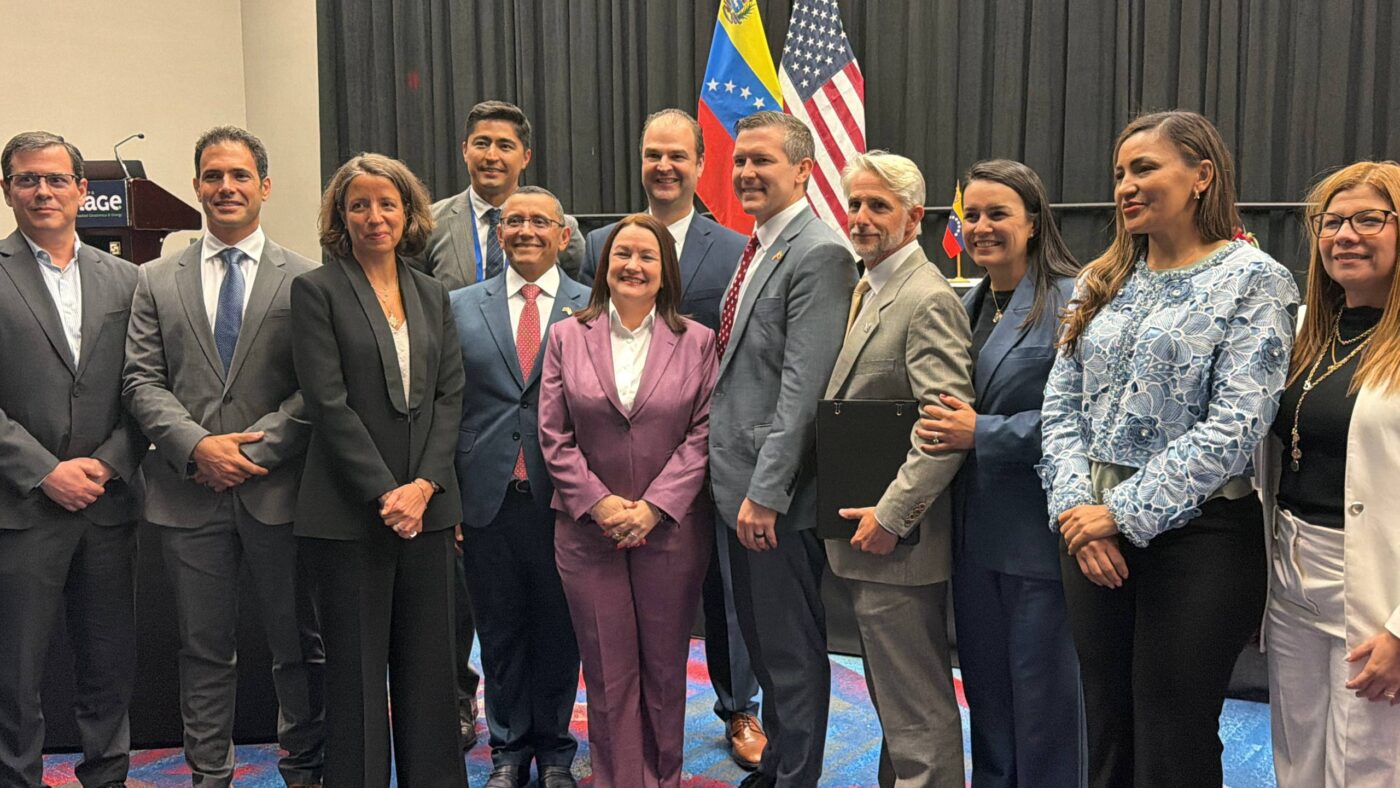
Henao traveled to Houston alongside PDVSA executives to participate in an event titled “Empowering Venezuela: Energy, Investment & Opportunity” on Tuesday as part of the August 17-20 International Meeting for Applied Geoscience and Energy (IMAGE). She was joined by US Energy Undersecretary Kyle Haustveit.

According to Venezuelan state broadcaster VTV, Henao presented “investment opportunities” while also detailing “the benefits of recent reforms and joint work with the US Department of Energy.” The Venezuelan minister went on to hold meetings with US officials to “consolidate the cooperation agenda.”

In parallel, ONGC Videsh Ltd (OVL), the overseas arm of India’s state-owned Oil and Natural Gas Corporation (ONGC), recently secured a US Treasury waiver to resume its activities in Venezuela. 

“Now we have full freedom to work on the Venezuela project because earlier we were restricting our operations there because of the sanction-related risks,” ONGC executive Anupam Agarwal said in a press conference last week.

OVL owns 40 and 11 percent respective stakes in the San Cristóbal and Carabobo-1 extra-heavy crude ventures in the Orinoco Oil Belt. Agarwal stated that the company was in talks with Venezuelan authorities to renegotiate agreements and assume operational control of the projects.

Furthermore, ONGC is also looking to collect around US $500 million in overdue dividends that state oil company PDVSA was unable to pay due to US sanctions.

Hunt Oil, SLB, and OVL have followed energy majors such as Shell, Chevron, and Repsol in taking advantage of Venezuela’s pro-business overhaul of the energy sector. A reformed Hydrocarbon Law slashed royalties and taxes, turned over control of operations and sales to private corporations, and subjected disputes to international arbitration bodies.

In addition to securing a favorable environment for Western corporations, the Trump administration has also seized control of Venezuelan oil revenues, which are deposited in a US Treasury account before US officials decide when and how much should be returned to Caracas. The White House is also reportedly deducting the costs of its January 3 military operation against Venezuela from the export earnings.

According to Bloomberg, BP received a US Treasury license to join Vitol and Trafigura in lifting and re-selling Venezuelan crude. A BP tanker loaded fuel oil headed for Houston on Tuesday. The intermediary companies secure cargoes at below-market rates and deposit the proceeds into a designated US Treasury account before rerouting them to final customers for a profit.

The London-based multinational is likewise moving forward in multiple offshore natural gas projects in Venezuelan waters. BP, alongside Qatar’s UCC and the UAE’s XRG, is set to develop the second phase of the Loran Field. It will also explore the Cocuina-Manakin Field alongside Trinidad and Tobago’s NGC. The Venezuelan state holds no stake in either project, with the owed royalties and taxes also significantly reduced under the reformed legislation and likewise to be deposited in the US Treasury account.

Edited by Lucas Koerner in Philadelphia.

Source link

Sandra Bullock says Bryan Randall’s ALS battle was isolating

Sandra Bullock has opened up about her late partner Bryan Randall’s private battle with ALS.

The “Practical Magic 2” star discussed what it was like to care for Randall while honoring his request to keep his amyotrophic lateral sclerosis diagnosis a secret for years during her appearance on the “SmartLess” podcast.

“I wasn’t allowed to speak about it,” Bullock told hosts Jason Bateman, Will Arnett and Sean Hayes in a clip of the episode posted by TMZ. “That was the request, and I honored it. … He asked me not to share … and it isolated me in the process.”

She explained that Randall, who died in 2023 at age 57, had been ill for half of their relationship and that his diagnosis came amid the COVID-19 pandemic.

Bullock and Randall had also kept their relationship fairly private. The couple started dating in 2015 after they reportedly met at Bullock’s son Louis’ fifth birthday party. Randall, a photographer, had been hired to capture images of the celebration. Bullock also has a younger daughter, Laila, whom she adopted in 2015. The couple was also raising Randall’s older daughter, Skylar.

Over the years, Bullock and Randall debunked rumors about their engagement and marriage numerous times.

“I don’t need a paper to be a devoted partner and devoted mother,” Bullock said in 2021.

The “Ocean’s 8” star described Randall’s diagnosis as “traumatic” and that she had started grieving him four years before his death. Bullock’s sister, Gesine Bullock-Prado, had been the only person who had known about Randall’s diagnosis “for a while” although the actor eventually also confided in friends Jennifer Aniston and Bateman’s wife, Amanda Anka, according to People.

“My person left a lot earlier than the body left,” Bullock said in the podcast. “I don’t think I ever dealt with that until after he passed.”

Bullock’s episode of the “SmartLess” podcast will be released on Aug. 24 but is available now to SiriusXM early access subscribers.

Source link

Westlake High kicker Gabriel Goroyan is ready for big moments

Ninth and final in a series of stories profiling top high school football players by position. Today, Gabriel Goroyan, Westlake kicker.

Gabriel Goroyan, a senior kicker at Westlake High with a 4.77 grade-point average, revealed stunning news during an interview.

“I’m OK with being normal,” he said.

That goes against everything previously known about kickers. They’re almost always surfer dudes with the fearless spirit of a pole vaulter and the willingness to experiment. If anyone were going to volunteer for a mission to Mars, it would be a kicker.

“I would like to think I’m not one of the weirder personalities,” Goroyan said.

He is like most kickers — a former soccer player. He began in eighth grade when he was still playing soccer but beginning to like kicking.

At a camp, when he made a 54-yard field goal in a competition, that’s the moment he realized, “I can do this.”

“I started taking it more serious,” he said. “I was hungry for that No. 1 spot.”

He enters his senior season as No. 1 at his position in the Southland and committed to Stanford. The 5-foot-11, 180-pounder makes booming kickoffs, was 50 of 51 on PATs last season and made seven field goals. He also averaged 40.3 yards on punts. He kicks balls with his left foot, which requires long snappers to make an adjustment and change blocking schemes because most kickers use their right foot.

He’s never received a grade other than A on his report card at Westlake. His father is Armenian and his mother Bulgarian. He has an 8 handicap in golf and can drive a ball 300 yards from the tee, so if you need a ringer for a charity tournament, Goroyan will play the role.

He has figured out the mental requirements needed to deal with the highs and lows of being a kicker.

“A lot of it is staying calm and not getting too hyped up and too energized,” he said. “l feel a good kicker is able to come back from a miss and a lot of it is being yourself. You have to know not to overthink things and be able to go back to your normal mental state and not get trapped in a cycle of you’re not good enough. A lot of it is trusting yourself.”

He stands on the sideline waiting for his moment. You’ll never see him asking coach Rick Clausen to put him in for a field goal.

“I let them tell me,” he said.

It’s all about preparation and routine. His soccer background has provided him the tools to succeed.

“Train like a sprinter,” he said. ”That’s where the leg speed comes from. It’s not about having to squat 500 pounds but more being able to run and have fast legs. That’s where the power comes.”

As for dealing with pressure, Goroyan said camp competitions such as “last man standing,” where you have to make a kick to stay in the competition, provides preparation for a game-winning field-goal attempt that he has yet to experience.

He’s already demonstrated that he’s different — otherwise known as normal. When he made that 54-yard field goal, the longest of his career, in eighth grade, he did not scream.

“I gave a quiet clap and ran to get my ball,” he said.

Kickers to watch

Noah Ahari, Chino Hills, 6-2, 155, Sr. Made nine of 10 field goals last season

Peter Batsaras, Cypress, 5-10, 170, Sr. A summer of success sets the stage for big senior season

Ayden Brannum, Fontana, 6-3, 190, Sr. Averaged 48 yards on punts and made 47-yard field goal

Colin Elia, Temecula Valley, 6-0, 160, Sr. Made 10 of 11 field goals as a junior

Gabriel Goroyan, Westlake, 5-11, 180, Sr. Stanford commit has worked relentlessly on mastering his technique

Jackson Hauducoeur, Upland, 5-6, 140, Sr. All-CIF kicker made eight of 10 field goals

Ethan Miller, San Clemente, 6-2, 175, Jr. Made nine fields, cool under pressure

Jerry Shifman, Mater Dei, 5-10, 165, Jr. Had nine field goals, with a long of 43 yards

Carter Sobel, Sierra Canyon, 5-9, 160, Sr. Strong on kickoffs and made nine field goals

Caleb Sylvia, Mission Viejo, 5-10, 190, Sr. Had 49-yard field goal last season


Source link

La Oreja de Van Gogh to receive Agent of Change award

Leire Martinez, from the Spanish group La Oreja de Van Gogh, performs during the Mexico 2022 Tour, at the National Auditorium, in Mexico City2in March 2022. File Photo by Isaac Esquivel/EPA

Aug. 20 (UPI) — Spanish band La Oreja de Van Gogh will receive the Agent of Change award for three decades of commitment to social causes during Premios Juventud, which will hold its first European edition Sept. 3 in Marbella, Spain, TelevisaUnivision announced.

The group will also make its performance debut at the awards show with “Rosas,” one of its best-known songs. The track surpassed 1 billion streams on Spotify in February, according to their record label, Sony Music.

Organizers said the award recognizes the band’s participation in initiatives including “Guitarras Solidarias,” which helped people affected by flooding in Spain, as well as the anti-cancer campaign “Cadena 100 Por Ellas” and “Ay Haití,” which was created to raise money after the 2010 earthquake.

La Oreja de Van Gogh is celebrating its 30th anniversary this year following the return of original lead singer Amaia Montero, who rejoined the band in 2025 after nearly two decades. The group began a tour of Spain titled “Tantas cosas que contar” in May.

Montero is joined in the band’s latest chapter by Xabi San Martín, Álvaro Fuentes and Haritz Garde. Founding guitarist Pablo Benegas announced he would not participate in the tour to devote more time to his family and other projects, although he has not permanently left the group, El País reported.

The band is also nominated for Favorite Group or Duo of the Year and Best Euro-Song.

TelevisaUnivision also announced that Alleh, Camila Fernández, Eladio Carrión, Elena Rose and Silvestre Dangond have joined the ceremony’s lineup.

Alleh and Rose will perform their collaboration “Tututu” on television for the first time. Rose will also perform “Quién Contra Mí” and join Dangond for the first live performance of “Efectos Secundarios.”

Carrión will perform “Polaroid” and “Body,” while Fernández will perform “Suéltame.” Dangond will also sing “Cásate Conmigo.”

Premios Juventud will air live from Starlite Marbella on Univision, UNIMÁS, Galavisión, ViX and YouTube at 7 p.m. EDT, 6 p.m. CDT and 4 p.m. PDT. In Mexico, Canal 5 will broadcast the ceremony at 5 p.m. local time.

Source link

Como mayor hit by electric bike and issues blanket ban in Italian city

The mayor of Como has banned riding bicycles in certain areas of the historic Italian city after he was hit by an electric one.

Alessandro Rapinese said the ban was necessary to improve public safety. It means from September, cyclists will have to dismount through an area of around 30 streets.

He told Italian news agency Ansa: “People act based on their own experiences and I know what it’s like to be hit by one of these beasts.”

Several other local authorities around Europe, including in the UK, have restricted where and how e-bikes and other single-person vehicles can be used.

The measure put forward by Rapinese is part of a package of new traffic regulations, establishing a Limited Traffic Zone (ZTL) to manage tourist growth, and which impose stricter rules on cars and vans in the city centre.

Many of the roads covered by the ban are the widest in the old town and are popular with delivery drivers.

The measure applies to both electric and push bikes, as the Italian highway code does not distinguish between models.

Rapinese explained his decision in a video as part of a series of online videos he produces himself, known as RapiNews24.

He recounted an incident in which he had been leaving city hall in July and collided with an e-bike shortly after his administration had discussed traffic restrictions in the city centre.

The cyclist involved in the collision has not been identified.

“In this case, I didn’t even end up in the hospital,” Rapinese said. “I was hit by a bike. I gathered information, and that’s where the measure came from.”

Source link

Jacob Elordi splashes £60,000 on hotel suite to impress girlfriend Kendall Jenner as he promotes new film The Dog Stars

BIG screen star Jacob Elordi booked a hotel’s £60,000-a-night penthouse to impress girlfriend Kendall Jenner.

The Wuthering Heights Heathcliff actor splashed out on the Claridge’s suite so she could “see the stars” sources said.

Jacob Elordi and Kendall Jenner seen at posh Italian restaurant Cipriani in London Credit: Goff
The actor secured the penthouse suite at Claridge’s, which is billed as the most expensive in London Credit: Claridges

Reality TV star Kendall, 30, joined Jacob, 29, for his whistlestop London visit as he promotes Ridley Scott’s new post apocalyptic thriller, The Dog Stars.

The pair were pictured out with his dad John at posh Italian restaurant Cipriani in London on Wednesday night.

Insiders said Australian Jacob secured the Mayfair suite, billed as the most expensive in London, for Kendall while he worked.

A source said: “Jacob is a proper romantic and he wanted Kendall to have that amazing view over London where you can see the stars.

Read more on Jacob Elordi

GOLDEN GUYS

All the rumours on who will be the new James Bond


DINNER DATE

Kendall Jenner and Jacob Elordi seen cuddling up at Tokyo restaurant

Jacob splashed out on the suite at the posh London hotel to impress his new girlfriend Credit: Alamy
Kendall Jenner has been dating the actor since February Credit: Getty

“It costs £60,000 a night to stay there.

“But upgrading was worth the money.”

The couple arrived yesterday ahead of last night’s premiere in Leicester Square.

They started dating in February and have since been seen on a number of double dates with Kendall’s sister, Kylie, and her boyfriend, film star Timothee Chalamet.

Jacob at The Dog Stars world premiere in London Credit: PA
Jacob is said to have wanted Kendall to have an ‘amazing view over London’ Credit: Getty

Jacob was photographed at the premiere with co-stars, including Josh Brolin and Margaret Qualley.

The Dog Stars is released next Friday.

Source link

The Dodgers are Mark Walter’s crown jewel. Can he hold on to it amid federal probe?

When the news broke last week that Mark Walter was selling the Lakers just one year after buying the storied basketball franchise, executives working for another crown jewel in his sports empire — the Dodgers — were quick to say the billionaire had no plans to sell the team.

The Dodgers have won three of the last six World Series and 12 division titles since an ownership group led by Walter bought the then-bankrupt team in 2012, and the Dodgers now are considered the most successful — and lucrative — franchise in Major League Baseball.

Yet, amid Walter’s financial difficulties, including a federal inquiry into his insurance empire regarding $16 billion to $21 billion in undisclosed loans to his own companies, questions remain over whether the blowback will hit the Dodgers.

Walter has denied wrongdoing, and sports business experts say it’s far too soon to know whether the Dodgers will be in play. No charges have been filed against Walter or anyone associated with his businesses.

“If you’re judging on that — winning and revenue created — he’s been at the helm of all of that. … He does truly look like a white knight as it relates to his ownership of the Dodgers,” said Patrick Rishe, executive director of the Sports Business Program at Washington University in St. Louis. Still, “we don’t know what the issues are, and we don’t know the severity and the magnitude.”

Sign up for Essential California

The most important California stories and recommendations in your inbox every morning.

Aside from the Lakers, the Dodgers are, by far, the most valuable of Walter’s handful of sports franchises, and industry sources not authorized to speak publicly about any potential sale told The Times that the team could fetch $10 billion to $13 billion.

Walter’s sports portfolio includes the Los Angeles Sparks of the Women’s National Basketball Assn.; the Cadillac Formula 1 racing team; a premier women’s tennis competition, the Billie Jean King Cup; and the entire Professional Women’s Hockey League. The Bloomberg Billionaires Index estimates Walter has a net worth of $18.3 billion.

There have been reports that he is putting his shares of his most valuable professional soccer franchise, the Chelsea Football Club of the English Premier League, on the market.

But the Dodgers are the greatest show in baseball, playing before stadiums packed with fans willing to shell out top dollar to see a roster that includes international superstars Shohei Ohtani and Yoshinobu Yamamoto.

Last week, Dodgers president and part-owner Stan Kasten said the Lakers sale “really has nothing to do with the Dodgers” and that “there are no changes here or contemplated here.” And Dodgers manager Dave Roberts said at a news conference that he was “shocked” by news of the Lakers sale and had not heard of any potential changes to Dodgers ownership.

Andrew Granato, a law professor at the University of Texas at Austin who specializes in corporate finance and insurance, said that although it was not yet clear whether Walter would offload the Dodgers, it would not be impossible, given the speed and scale of the billionaire’s recent financial transactions and the mounting federal and public scrutiny.

“I imagine that no fan feels particularly comfortable if the owner of their favorite team is under … investigation. Certainly, it’s not an ideal situation,” he said.

Walter was riding high after the Dodgers’ success and his $10-billion purchase of the Lakers last year. But the last few months have been challenging.

The loans by two Delaware life insurers that Walter owns were made to companies tied to him or his TWG Global holding company but were not disclosed as “related party” transactions as required, the Wall Street Journal reported. Related-party transactions made by insurers are required to be reported to limit conflicts of interest and protect policyholders, who have an interest in the financial strength of their insurers.

Walter, the 66-year-old chief executive of Chicago investment firm Guggenheim Partners, led a group that included another Guggenheim executive and Magic Johnson in acquiring the Dodgers for $2.15 billion in 2012, then a record for an MLB team.

The Times has reported that he tapped the insurers he owned for financing, a deal that was later vetted by state insurance regulators.

However, the amount of related-party loans made by the two affiliated life insurers now under federal scrutiny is vastly more, amounting to 40% of the invested assets of Delaware Life as of Dec. 31, according to Fitch Ratings. The credit rating firm said that is the most of any North American life insurers it reviews.

It’s unclear where the money went, but the Wall Street Journal reported that billions were passed through a third party before being received by entities tied to Walter or his TWG Global holding company.

Last week, Walter stunned the sports world by selling a majority stake in the Lakers for $12.5 billion to former Disney Chief Executive Bob Iger and venture capitalist Joshua Kushner, who is the brother of President Trump’s son-in-law Jared Kushner.

Walter has declined to comment on whether the sale was tied to the federal investigation.

The framework for a deal was consummated in a matter of days, Iger told interviewers last week. It still must be approved by the NBA Board of Governors, which meets in September.

Projecting an exact value for the Dodgers is difficult because MLB and its players union are engaged in contentious collective bargaining negotiations that many experts believe could result in a lockout when the current agreement expires in December.

Should a salary cap be agreed upon for the first time in MLB history, the valuation could jump to the high end, the source said. And about $1 billion of any sale would be subtracted to cover the Dodgers’ future commitments on deferred contracts.

The Dodgers’ massive local television deal with SportsNet LA directly elevates the franchise’s overall valuation.

Listing potential buyers should the Dodgers be for sale is challenging because the estimated value of the franchise is so much greater than almost any other MLB team. The record price for a sports franchise was the $12.5 billion for the Lakers.

Besides Kushner and Iger, those who have bid for teams aren’t in the $10-billion-plus ballpark. The San Diego Padres were sold last week for $3.9 billion to José E. Feliciano and Kwanza Jones.

Are you a true-blue fan?

Get our Dodgers Dugout newsletter for insights, news and much more.

Another question that has arisen as Walter’s financial troubles have garnered headlines is whether MLB would conduct its own investigation into Dodgers ownership or pressure the billionaire and his partners to sell the team.

“Any time there is any kind of public question about owners, they look into it,” former Dodgers president Bob Graziano told The Times. “I would guess, because there is a federal investigation going on, they’re not launching their own investigation, but they are going to wait to see what comes out of the federal investigation.”

No investigation of any kind into the matter has been announced by MLB.

MLB has never formally stripped an owner of a franchise or forced an outright sale through a vote of franchise owners. But the league forced Frank McCourt to sell the Dodgers in 2012 by exerting pressure and threatening a financial takeover or disciplinary action that would have stripped operational control.

When McCourt sold the team to Walter’s Guggenheim group, the franchise was in Chapter 11 bankruptcy.

When Guggenheim purchased the team in 2012, it outbid billionaire hedge fund manager Steven Cohen, who now owns the New York Mets. A group headed by former Yankees and Dodgers manager Joe Torre and L.A. developer Rick Caruso dropped out of the bidding ahead of Cohen. Additional bidders included media executive Leo Hindery, billionaire Tom Barrack, then-St. Louis Rams owner Stan Kroenke and Jared Kushner.

Times staff writer Laurence Darmiento contributed to this report.

Source link

Walmart sees sales drop as US consumer spending retreats | Retail News

Walmart sales are slumping as US consumer spending pulls back, with the economic impact of tariffs and the United States’ tensions with Iran weighing on consumers, the big-box retailer’s most recent earnings report shows.

US same-store sales rose 2.6 percent in the second quarter, according to the company’s earnings released on Thursday, falling short of the 3.8 percent forecast by analysts at LSEG. That marked the slowest quarterly increase in six years.

Recommended Stories

list of 4 itemsend of list

The Bentonville, Arkansas-based retailer said heightened petrol prices are to blame for the slowdown in spending.

“When fuel prices increase and get above $4, perhaps there’s a psychological impact to that … consumers are making trade-offs,” CFO John David Rainey said on a call with analysts on Thursday.

Prices are continuing to jump. The average price for a gallon (3.78 litres) of petrol rose to $4.10 on Thursday, up from $4.07 a week ago, according to the American Automobile Association, which tracks daily petrol prices. By comparison, the average price was $2.98 when the US and Israel first struck Iran.

The big-box retailer also said it expected $2bn in incremental fuel-related costs above its original guidance.

Sales dropped in Walmart’s US pharmacy business and also dipped elsewhere. Overall, quarterly revenue rose 3.4 percent, the slowest pace since the first quarter of fiscal 2023.

Consumers are spending more in the checkout line — 1.1 percent higher than the previous quarter — but it is still well below the 3.1 percent jump this time last year.

That comes as consumer inflation ticked up last month by 0.1 percent from the month prior and 3.4 percent from this time last year, according to the US Labor Department’s Bureau of Labor Statistics (BLS).

The price of fresh fruit jumped 2.2 percent from a month ago, butter by 0.8 percent, and fresh fish by 1 percent, according to the BLS report.

This as overall retail sales dipped in July, dropping 0.6 percent, marking the biggest decrease since May 2025, according to the US Commerce Department data released last week.

Walmart also announced price cuts on Wednesday on 11,000 items, to be fuelled in part by the $2.9bn in tariff refunds it has received – a one-time boon – and a strategy also being deployed by rivals including Target.

Walmart said, however, that price changes took effect in July, so the effects might be more apparent in the company’s next earnings report.

“You don’t necessarily expect to have that offsetting benefit to the lower prices in the immediate period,” Rainey said.

However, fewer consumers are venturing into brick-and-mortar stores, with foot traffic increasing by 1.5 percent for the quarter, a drop from 3 percent in the previous quarter. However, Walmart’s e-commerce sales are on the upswing, with sales jumping 24 percent in the US.

As a result, Walmart upgraded its forecast for net sales growth, from 3.5–4.5 percent to 4–5 percent.

But that is limited because in-store sales are still the company’s premier offering.

“The bread and butter of the company is still in-store and in-person shopping,” Melius Research analyst Jacob Aiken-Phillips told the Reuters News Agency.

Mixed big-box earnings

Other big-box retailers also reported earnings in the last couple of days, with a pullback in consumer spending being an undertone. TJX, the parent company of TJ Maxx and Marshalls, reported sales growth of 1 percent for the quarter, a slowdown from 6 percent the quarter before.

“Our fear is that it relates to lower ticket [less purchases per shopping trip] given wider signs of consumer weakness and price increases over the last year-and-a-half,” William Blair analyst Dylan Carden told Reuters.

That comes alongside earnings from Target, one of Walmart’s closest competitors. On Wednesday, the Minneapolis, Minnesota-based big-box retailer reported net sales jumping 5.3 percent for the quarter compared to this time last year, at $26.5bn.

That was driven by a 3.6 percent rise in in-store traffic. The company has also cut prices over the last year on more than 10,000 items and received a $1bn tariff refund.

On Wall Street, Walmart is taking a hit on the heels of its earnings report, with shares down by 9.6 percent since the market opened. Other big-box retailers are lower, but not showing nearly as stark a drop. TJX stock was down 1.7 percent, and Target was down by 0.1 percent.

Source link

The Patriot Problem: America Can’t Build Missiles Fast Enough

On July 23, Volodymyr Zelensky told Ukrainians that Raytheon wanted to help produce Patriot interceptors on Ukrainian-linked lines. Five days later, Lockheed Martin signed a second license, this one for the PAC-3 MSE — the hit-to-kill missile that has spent three years picking Russian ballistic warheads out of the sky over Kyiv. For a moment it looked like a watershed: the United States handing a country still absorbing nightly missile and drone barrages the blueprint to build its own air defense. Then, within days, the story came apart in public. US Ambassador Matthew Whitaker said Washington would not allow Ukraine to build PAC-3s at all. Donald Trump called the technology transfer “a hard thing to give away.” NATO’s own envoy said no agreement would close before winter. Something had clearly been decided. Nobody could agree on what.

The Patriot system is the closest thing the West has to a proven shield against ballistic missiles, and it is scarce almost everywhere it is needed. Roughly twenty countries now compete for a production line that turns out about 650 PAC-3 MSE interceptors a year worldwide — Lockheed Martin’s entire global output, shared among Ukraine, Israel, Taiwan, Gulf states and the US Army’s own depleted stocks. Russia, meanwhile, has been firing 55 to 60 Iskander ballistic missiles a month at Ukraine alone, before counting the nightly Shahed drone waves that push crews to expend scarce interceptors on cheaper threats out of necessity. The Pentagon has spent much of the past two years quietly rationing Patriot allocations across allies, reportedly diverting orders meant for Taiwan and Ukraine to replenish American stockpiles. Against that backdrop, “Ukraine will build its own Patriots” is not primarily a sovereignty story. It is a story about whether the system that makes Patriots for everyone else can keep up at all.

What the deal actually requires

Start with what was actually signed, because the headlines overstate it. Raytheon’s license covers the PAC-2 GEM-T, an older blast-fragmentation interceptor effective against aircraft and cruise missiles. Lockheed Martin’s covers the PAC-3 MSE, the missile that actually stops Iskanders and Kinzhals. Neither license includes the radar, the fire-control system or the launchers; those still come from existing Patriot batteries. And neither company has committed to building these missiles on Ukrainian soil in the near term. Reporting from Reuters and Ukrainian officials both point to Germany, which already runs its own PAC-2 line, as the likely first production site, with capacity shifting to Ukraine only “after the war ends.” What was announced in July, in other words, is not a factory. It is paperwork that keeps a door open.

Stay ahead of the geopolitical week.

MD Briefing delivers expert analysis across five global fronts — the Indo-Pacific, energy, geoeconomics, European security, and the Middle East — every Monday morning. Free.

Even so, the paperwork matters, because of what it concedes. Every PAC-3 MSE round carries a 24-month production lead time for the missile itself and 30 months for its solid rocket motor. Boeing manufactures every active radar seeker that guides it from a single facility in Alabama, capped at 650 to 700 units a year — a bottleneck no amount of Ukrainian factory floor changes. Aerojet Rocketdyne is the sole source for the motor. These are not obstacles a co-production agreement dissolves; they are structural limits on how fast the United States can arm anyone, Ukraine included. A government does not open its most tightly export-controlled missile program to a country still under nightly bombardment unless it has concluded that the existing pipeline, working alone, cannot meet demand. That is the admission buried in the announcement: not that Ukraine’s industrial base is ready, but that Lockheed’s and Raytheon’s are strained, and Washington needs help from a country it would ordinarily be supplying, not licensing.

The contradictions among American officials sharpen the point rather than undermine it. Whitaker’s flat denial that Ukraine would ever build PAC-3s, arriving days after Zelensky announced the license, is not really about Ukraine’s trustworthiness. A Republican congressional official close to the process gave the more candid version: the manufacturers are less worried about Ukraine leaking American technology to Moscow than about Ukraine improving on it and producing it “at scale, faster and for much less money.” That fear has a track record behind it. Fire Point’s Flamingo cruise missile, built in Ukraine during the war, reportedly costs around $600,000 — roughly a sixth of a Tomahawk and a fraction of a $2 million PAC-3 ACE round — while Ukraine’s home-grown Freyja interceptor is priced at roughly a fifth of the Patriot missile it is meant to substitute for. A country that has spent three years learning to manufacture air defense under fire, at a fraction of Western unit costs, is not the industrial partner a legacy prime wants loose inside its own supply chain. The reluctance is commercial before it is strategic.

The strongest objection to this reading is that Kyiv already produces a large share of its own weapons, so extending that into Patriots is a natural next step rather than a crisis signal. Zelensky puts the domestically produced share of Ukraine’s frontline weapons at close to 60 percent, up from roughly 40 percent a year earlier — drones, the Bohdana howitzer, the Neptune and Flamingo missiles. That is true, and it matters. But those are systems Ukraine designed and built from scratch under wartime pressure, with no legacy export-control regime standing in the way. Patriot is different: it is Washington’s most sensitive interceptor program, run by companies that have spent decades keeping production onshore for precisely the security reasons Whitaker cited. Handing over any piece of it, even nominally, to a country under active bombardment breaks with everything the export-control system was built to prevent. That the United States is doing it anyway — however slowly, however contested internally — says less about confidence in Ukraine than about how thin the interceptor pipeline has become.

Three ways this goes

What happens next depends on which of the deal’s obstacles proves harder to move: engineering or politics.

Base case (our estimate: roughly 55 percent probability). The license survives, but production stays offshore. Germany’s existing PAC-2 line absorbs the first Ukrainian-linked output sometime in 2027; Lockheed and Raytheon leave the seeker and motor bottlenecks unresolved; and Zelensky’s own target of “production capability by the end of 2026” slips the way most Patriot-related deadlines have slipped since 2022. The deal functions mainly as a signal — to Moscow, to Congress, to the manufacturers themselves — that the West is willing to widen its supplier base, without actually widening it before the war’s most dangerous phase has passed.

Downside case. Export-control friction, not battlefield risk, kills momentum outright. Boeing declines to license seeker technology, Congress balks at formally notifying an ITAR transfer into an active conflict zone, and the agreement quietly becomes what several earlier Patriot-adjacent announcements already have: a signed memorandum with no factory behind it. Unable to close its ballistic-missile gap through licensed production, Ukraine leans harder into Flamingo and Freyja — cheap and available, but not full substitutes for hit-to-kill interception. Iskander and Kinzhal strikes on Ukrainian cities continue at close to current tempo through 2027.

Upside case. Ukraine’s wartime manufacturing culture forces the restructuring the primes have been resisting. Facing a credible cheaper competitor, Lockheed and Raytheon accelerate second-sourcing of seekers and motors — the actual chokepoints — to defend market share rather than out of goodwill toward Kyiv. Patriot output rises for every operator, not only Ukraine, and Kyiv becomes the proving ground for a lower-cost interceptor variant that outlives the war. This is the scenario in which an admission of scarcity turns into a fix for it — plausible, but it requires the manufacturers to treat competition, not politics, as the threat that finally moves them.

The takeaway

So: is licensing Patriot production to a country under bombardment an admission? Yes — but not the one the announcements were built to convey. It does not say Ukraine’s industrial base has arrived. It says the American one has not kept pace with a war of attrition it did not plan for, and that Washington is now willing to test its most sensitive export controls against the same scarcity that has Israel, Taiwan and its own Army competing for the same missiles.

Watch for: whether groundbreaking on a German or Polish production line actually begins before the end of 2026 — Zelensky’s own deadline for “technical capability.” If it hasn’t started by then, treat every subsequent announcement as the political theatre this one increasingly resembles: a scarcity confession dressed up as an industrial handshake.

Source link

Hayden Panettiere’s boyfriend Brian Hickerson breaks silence after her sudden death with cold statement on investigation

HAYDEN Panettiere’s on-off boyfriend Brian Hickerson has broken his silence on the actress’ sudden death from a suspected overdose.

The Nashville star died on Sunday afternoon at her South Carolina Airbnb, where she was staying with Brian and his brother Zach Hickerson.

Hayden Panettiere’s on-off boyfriend Brian Hickerson has broken his silence on the actress’ sudden passing Credit: Rex
Hayden died on Sunday at her South Carolina Airbnb from a suspected overdose Credit: Getty

An investigation is currently ongoing into what led to the 36-year-old’s death, and the Drug Enforcement Administration has joined the team.

Brian, 37, has spoken out for the first time since the incident through his attorney, Sloan Ellis, from the Ellis Hinton law firm.

“Hayden’s death remains under investigation, and it is important to allow that investigation to proceed,” Brian’s attorney told The U.S. Sun on Thursday.

“As has been publicly reported, police confirmed there were no signs of foul play.”

SECRET STRUGGLE

Hayden got ‘nitrous oxide & booze’ delivered to hotel 3 months before death

The statement concluded, “Out of respect for Hayden’s loved ones and the ongoing investigation, there will be no further comment at this time.”

Brian was spotted on Wednesday in Greenville, South Carolina, close to where Hayden died, wearing a hat, sunglasses, and a hoodie.

He’d been keeping a low profile since his brother discovered Hayden unconscious in a chair in the living room, where she was later declared dead, per a police report obtained by The U.S. Sun.

Police said that while Zach was very emotional upon the discovery, Brian apparently didn’t shed a tear until Hayden was officially declared dead.

Most read in Entertainment

Brian also told cops that the Remember the Titans star regularly took a “bag of medication.”

All eyes have since been on Brian’s family, as more questions surface about Hayden’s unexpected passing.

Hayden’s estranged mother, Lesley Vogel, slammed Brian in an interview with NBC News on Tuesday, saying, “This person in her life that we have been trying to get rid of for quite some time was with her at her death, and that was Brian Hickerson.”

It wasn’t a secret that Hayden and Brian had a tumultuous, years-long relationship since meeting in 2018.

All eyes have been on Brian since he was with Hayden when she died Credit: Getty
Brian was arrested and jailed in 2021 for hitting Hayden with a closed fist Credit: Splash

Brian was arrested for domestic violence and served 45 days in jail in 2021 for hitting Hayden with a closed fist.

He pleaded no contest to two felony counts of injuring the former child star.

However, they appeared to have reconciled as Brian has been staying with Hayden in her Los Angeles apartment for the last two years, The U.S. Sun exclusively reported.

The Heroes star’s neighbors have also raised alarm about the pair’s relationship and were even warned by the Homeowner’s Association to call the police if they saw Brian on the property last August.

Hayden’s neighbor, Mia Terrazzas, claimed to Inside Edition that notices were distributed on the property urging residents to be wary of Brian.

Mia also said she herself even called 911 numerous times over disturbances involving Brian inside Hayden’s unit.

Hayden’s history with addiction is also of great concern, as sources claimed she sought out whippets and booze just months earlier at a Nashville hotel, despite her efforts to get clean.

Source link